All Activity
- Past hour
-
 We may earn a commission from links on this page. Deal pricing and availability subject to change after time of publication. Presidents' Day sales are around the corner, and the deals are coming in early; right now, Amazon has the latest Kindle Paperwhite from 2024 in "Like-New" conditions for $114.99 (originally $143.99). This Paperwhite in new condition would cost you $159.99, making the refurbished version a much cheaper choice to get while it lasts (discounted Kindle Paperwhites usually sell out quickly). Amazon Kindle Paperwhite 16GB 7" eReader (Like-New, Black) $114.99 at Amazon $143.99 Save $29.00 Get Deal Get Deal $114.99 at Amazon $143.99 Save $29.00 The Kindle Paperwhite is the most popular reading tablet from Amazon, and it's the best for most people, according to PCMag's "outstanding" review. It offers many improvements over the 11th-generation version from 2021—mainly a larger seven-inch display and a much faster boost in performance. It still retains all of the great attributes that made the previous version great, like a fully waterproof design with an IPX8 rating, enough storage to hold more than 10,000 books, and unlimited cloud storage. If you want an ad-free experience with some better features, get the Signature Edition. If you're not sure if this is the right Kindle for you, check out the Colorsoft version—it offers color, so it can make reading manga or comics more lively. We also have a breakdown of every kind of Kindle to help you decide. If you already own the 11th generation, there might not be enough here to warrant an upgrade, unless you just want the latest Amazon has to offer. However, any devices older than that may be worth an upgrade for features like Bluetooth compatibility, which is great for audiobooks. The screen features a 300 ppi (pixels per inch) display with 16 levels of background lighting, and optional warm lighting as well. I use this feature to read before bed and not strain my eyes. I also love the absurdly long battery life. This one is estimated at up to 12 weeks on a single charge, depending on your use and brightness settings. Our Best Editor-Vetted Presidents' Day Deals Right Now Apple AirPods 4 Active Noise Cancelling Wireless Earbuds — $139.99 (List Price $179.00) Apple Watch Series 11 [GPS 46mm] Smartwatch with Jet Black Aluminum Case with Black Sport Band - M/L. Sleep Score, Fitness Tracker, Health Monitoring, Always-On Display, Water Resistant — $329.00 (List Price $429.00) Apple iPad 11" 128GB A16 WiFi Tablet (Blue, 2025) — $299.00 (List Price $349.00) Bose QuietComfort Noise Cancelling Wireless Headphones — $229.00 (List Price $349.00) Dell 16 DC16255 (AMD Ryzen 7 250, 512GB SSD, 16GB RAM, 2K Display) — $649.99 (List Price $869.99) HP Omen 35L (Intel Core Ultra 9 285K, RTX 5080, 2TB SSD, 64GB RAM) — (List Price $3,099.99 With Code "PRESDAYPC100") HP OmniBook X Flip Ngai 16-Inch (AMD Ryzen AI 7 350, Radeon 860M, 512GB SSD, 16GB RAM, 2K Display) — (List Price $649.99 With Code "PRESDAYPC50") Deals are selected by our commerce team View the full article
 - Today
-
A quarter of those under 30 say they’ve used AI for companionship, according to Associated Press-NORC polling. The one thing missing? Somewhere to take your AI Valentine on a date. Ahead of Valentine’s Day, EVA AI decided to solve that problem. The app—where users can text or, more recently, video chat with AI dates—organized a pop-up social experiment at Same Same Wine Bar in Manhattan this week. Over February 11 and 12, the dimly lit space was filled with patrons seated at tables for one, their AI companions propped up on phone stands. Attendees could bring their own existing AI partners or speed date from a selection of 100 characters. “This is another step in the company’s long-term strategy to push the boundaries of interaction with AI and make AI relationships a new normal,” EVA AI said in a press invite to the event, Wired reports. The platform connects users with a virtual partner “who listens, supports all your desires and is always in touch with you,” its website reads. It promises that you can “build relationships and intimacy privately on your terms.” While this may sound like the future the sci-fi movie Her was warning about back in 2013, organizers say the goal is not to replace human relationships. Instead, they aim to normalize AI companionship for those already interested in it, or curious about trying it. Surveys suggest younger adults are increasingly open to the idea. A nationally representative survey of 1,060 teens ages 13 to 17 found that 72% have used AI companions at least once, and more than half qualify as regular users in 2025. Of those surveyed, 13% say they use them daily. More broadly, people are turning to AI platforms for romantic connection. Indiana University’s Kinsey Institute, a leading sex research center, found that 16 percent of participants were using AI as a romantic partner in its Singles in America survey published last year. That shift comes as singles grow increasingly disillusioned with dating other humans. Amid an era of “swipe fatigue” and “dating app burnout,” AI is playing a growing role in people’s dating lives. Just over a quarter of singles already use AI wingmen to enhance their dating prospects—up 333% from 2024, according to a recent study. Not everyone would feel comfortable sitting across from an AI companion in a crowded bar, surrounded by human couples. But the experiment underscores how quickly AI is seeping into everyday life. If you’re single this Valentine’s Day, there’s always Chad the AI chatbot waiting for the chance to sweep you off your feet. View the full article

-
Team bonding activities play an essential role in improving workplace collaboration and communication. Engaging in various activities, from trust-building exercises to creative brainstorming sessions, helps nurture stronger relationships among team members. Each type of activity serves a unique purpose, addressing different aspects of teamwork and productivity. Comprehending which activities best suit your team can lead to improved performance and morale. Let’s explore ten engaging options that can make a significant impact on your team’s dynamics. Key Takeaways Communication Activities: Engage in icebreakers like “Two Truths and a Lie” to enhance dialogue and foster interaction among team members. Problem-Solving Challenges: Participate in a “Virtual Escape Room” to improve critical thinking and boost team morale through collaborative achievements. Trust-Building Exercises: Incorporate activities like trust falls to promote vulnerability and strengthen relationships, enhancing overall communication and productivity. Creative Collaboration Sessions: Organize brainstorming sessions or innovation tournaments to nurture innovative thinking and competitive collaboration among team members. Outdoor Team Activities: Engage in obstacle courses or nature-based experiences to improve physical fitness while fostering strong team relationships and reducing stress. The Importance of Team Bonding Activities Team bonding activities are essential for nurturing a cohesive work environment, especially since they greatly improve communication among team members. Engaging in team bonding activities for sports, like team building games for volleyball, can greatly improve collaboration. Research shows that successful teams communicate face-to-face or via video 12 times more often than their less successful counterparts, highlighting the importance of direct interaction. In addition, companies that invest in team bonding see a 21% increase in profitability, demonstrating the financial advantages of strong team dynamics. Activities that promote trust and collaboration not only encourage a positive workplace culture but also improve employee retention, as individuals feel more connected to their peers. By participating in sports team building activities, team members can identify their strengths and weaknesses, leading to more effective skill utilization and a 12.5% boost in productivity. Different Types of Team Bonding Activities In relation to team bonding activities, comprehending the different types can greatly improve your team’s dynamics. Communication activities, like “Two Truths and a Lie,” promote dialogue and personal connections, whereas problem-solving activities, such as the “Virtual Escape Room Challenge,” sharpen critical thinking and collaboration skills. Each type serves a unique purpose, contributing to stronger teamwork and improved relationships. Communication Activities Overview Effective communication activities play a crucial role in enhancing interpersonal skills and nurturing strong connections among team members, ultimately leading to improved collaboration and comprehension. These activities can take various forms, including icebreakers, which serve as light-hearted engagement tools to introduce new employees and promote interaction. Trust-building activities require team members to depend on one another to complete tasks, greatly enhancing trust within the group. Furthermore, collaborative challenges encourage creativity and innovative thinking, allowing teams to tackle problems together as they cultivate a culture of support. Problem-Solving Activities Benefits Problem-solving activities serve as a potent tool for nurturing collaboration and innovation within teams. These activities improve critical thinking skills by challenging you to collaborate and devise creative solutions in a supportive environment. Engaging in structured tasks promotes effective communication as team members negotiate ideas to achieve common goals. Research indicates that teams participating in problem-solving activities experience a 21% increase in performance, leveraging individual strengths for success. These activities additionally promote a sense of achievement, boosting morale and workplace satisfaction. Activity Type Benefits Examples Team Bonding Activities for Sports Improve teamwork Relay races, obstacle courses Sports Team Building Exercises Enhance communication Strategy games, problem-solving challenges Team Bonding Games for Sports Encourage creativity and resilience Team scavenger hunts, trivia games Communication-Focused Activities To strengthen team dynamics, consider incorporating communication-focused activities like open dialogue sessions and interactive games. These exercises not merely improve verbal and non-verbal skills but additionally promote trust and comprehension among team members. Open Dialogue Sessions Open dialogue sessions serve as a vital tool for enhancing communication within teams, as they provide a structured platform where members can freely express their thoughts and ideas. These sessions promote active listening and comprehension, allowing team members to clarify their perspectives, which is fundamental for effective collaboration. Regularly engaging in open dialogue sessions can considerably boost employee engagement, making team members feel valued in their contributions. This dynamic is particularly beneficial for sports teams, as team bonding activities for sports teams that include these sessions help build trust and rapport. To maximize effectiveness, guarantee a safe and inclusive environment where everyone feels comfortable sharing insights without fear of judgment, finally leading to improved performance and resilience. Interactive Games Experience Interactive games experience, especially those focused on communication, can significantly improve team dynamics by cultivating both verbal and non-verbal skills. Engaging in training games for adults, like “Two Truths and a Lie” or “Back-to-Back Drawing,” helps break the ice and encourages rapport among team members. These activities promote open dialogue and collaborative problem-solving, enhancing overall communication patterns. When you participate in structured communication-focused games, you’re likely to notice higher morale and engagement within your team. For instance, team bonding activities for volleyball can integrate these games to promote teamwork. Exploring team bonding ideas for sports can lead to substantial improvements in productivity, with studies showing a potential 21% increase in profitability from highly engaged teams. Trust-Building Discussions Building on the importance of interactive games in enhancing team dynamics, trust-building discussions play a pivotal role in cultivating effective communication among team members. These discussions create a safe environment where everyone can share ideas openly and honestly. Just like sports team bonding activities in high school, engaging in trust-building exercises can lead to a significant increase in team performance, sometimes by up to 50%. Active listening and vulnerability are key components of these discussions, nurturing deeper interpersonal relationships. Teams that prioritize trust-building are five times more likely to achieve high performance, as trust reduces conflicts and encourages collaboration. Incorporating trust-building exercises into regular meetings can markedly improve overall morale and engagement, contributing to a more positive workplace culture. Problem-Solving Challenges When teams engage in problem-solving challenges, they not just improve their critical thinking skills but in addition promote collaborative decision-making, which is essential for a strong team dynamic. Structured activities like virtual escape rooms or innovation tournaments require team members to think creatively and work under pressure. This environment encourages communication patterns that are directly relevant to work projects, enhancing overall collaboration. Research indicates that teams participating in these challenges show higher engagement levels and improved performance. Furthermore, these challenges create a low-stakes setting where experimentation is encouraged, allowing you and your colleagues to learn from both successes and failures. As a result, problem-solving challenges not only refine individual skills but likewise solidify team cohesion, making it easier to tackle future projects together. Trust-Building Exercises Trust-building exercises are crucial for enhancing team reliability and nurturing a collaborative environment. Activities like partner trust falls or blindfolded obstacle courses require you to communicate effectively and depend on one another, which strengthens your team’s interpersonal relationships. Building Trust Through Activities Effective team dynamics hinge on the ability to nurture trust among members, and engaging in trust-building exercises is a proven way to achieve this. Such activities improve team cohesion by requiring you to rely on your colleagues to complete tasks, promoting a sense of safety and support. As you participate in these exercises, you’ll likely notice improved communication; team members feel more comfortable expressing thoughts and feelings in a safe environment. Studies indicate that teams involved in trust-building activities experience a 25% increase in productivity because of reduced conflict and improved collaboration. Exercises like trust falls encourage vulnerability, strengthening interpersonal relationships. Regularly incorporating these activities can maintain high morale, leading to a 21% increase in employee engagement, according to Gallup. Enhancing Team Reliability Building on the foundation of trust established through previous activities, improving team reliability involves creating an environment where members can depend on each other for support and collaboration. Trust-building exercises encourage open communication, prompting you to rely on teammates, which can lead to improved performance. Engaging in activities that require vulnerability, like sharing personal experiences or tackling group challenges, strengthens interpersonal relationships and promotes a safe space for risk-taking. Studies show that teams with high trust levels achieve their objectives and maintain higher morale. Incorporating these exercises into regular routines can improve communication patterns, identify individual strengths, and ultimately optimize team dynamics and productivity, leading to a potential 25% increase in overall team performance. Fun Icebreaker Games How can fun icebreaker games improve team dynamics? These activities create an inviting atmosphere where team members can share personal stories, nurturing connections. Games like “Two Truths and a Lie” and “Would You Rather?” are perfect for small to large groups, lasting around 5-15 minutes. “M&M Personality” uses color-coded candies to express traits, whereas “Human Bingo” encourages mingling among larger teams, improving cohesion through shared experiences. Here’s a quick overview of some engaging icebreaker games: Game Duration Two Truths and a Lie 5-10 min M&M Personality 10-15 min Human Bingo 15-20 min Emoji Check-In 3-5 min These games help build rapport and comprehension, making team members feel more comfortable collaborating. By incorporating fun icebreakers, you can greatly improve your team’s overall dynamics. Creative Collaboration Sessions Creative collaboration sessions serve as a potent tool for nurturing innovative thinking among team members, especially when they come together to brainstorm solutions. These sessions encourage you to explore diverse perspectives, which can lead to improved problem-solving capabilities and augmented team synergy. Activities like virtual art galleries and design thinking workshops create an environment where creativity flourishes, allowing you to tackle real challenges collaboratively. Engaging in collaborative storytelling can deepen your listening and idea-building skills, as everyone contributes to a shared narrative, encouraging cohesion. Furthermore, implementing structured challenges, such as the Innovation Tournament, promotes a competitive yet collaborative atmosphere where you can present and vote on innovative solutions. Outdoor Team Bonding Experiences Outdoor team bonding experiences not just improve physical fitness but furthermore promote strong relationships among team members through shared challenges. Activities like obstacle courses, hiking, and team sports improve communication and collaboration, as you’ll need to rely on each other to succeed. Engaging in nature-based activities likewise cultivates a positive atmosphere, leading to improved mental health and reduced stress. Here’s how outdoor experiences can impact your team: Benefit Description Physical Fitness Encourages active lifestyles and well-being. Improved Communication Builds trust and reliance among team members. Confidence Building Stepping outside comfort zones nurtures growth. Inclusivity Customizable activities cater to all skill levels. Morale Boost Creates a positive and enjoyable team environment. Volunteering as a Team Engaging in team bonding activities can take many forms, and one impactful option is volunteering together. When you and your team participate in community service projects, you create shared experiences that nurture real intra-team relationships. This not just improves collaboration but also minimizes conflicts, as everyone works toward a common noble purpose. Volunteering deepens bonds, leading to improved trust and communication among team members. Teams that engage in volunteering report higher morale and job satisfaction, which contributes to a positive workplace culture and better employee retention. By aligning volunteer activities with the unique talents of the team, you can maximize impact and reinforce a sense of purpose within the group. Studies indicate that volunteering together improves team performance by encouraging collaboration, empathy, and a collective sense of achievement. Evaluating the Effectiveness of Team Bonding Activities How can you determine if your team’s bonding activities are truly effective? Start by gathering employee feedback to understand their perceptions and experiences. This insight is vital for continuous improvement and adaptability in your approach. Regularly assess which activities yield the best results in collaboration, communication, and morale. Tracking specific metrics like productivity, communication improvements, and overall employee satisfaction can help measure success. Here’s a simple table to help you evaluate: Activity Type Success Metrics Feedback Insights Outdoor Challenges Increased teamwork Enjoyable, engaging Workshops Improved skills Valuable, insightful Social Events Enhanced morale Fun, promotes relationships Volunteer Projects Community impact Rewarding, meaningful Team Retreats Boosted communication rejuvenating, productive Frequently Asked Questions What Are Some Fun Team Bonding Activities? Some fun team bonding activities include virtual escape rooms, where you solve puzzles together, enhancing problem-solving skills. Outdoor scavenger hunts encourage effective communication as you strategize to complete tasks. Culinary challenges allow you to collaborate in cooking competitions, nurturing creativity. Personality assessments, like Myers-Briggs, help you understand individual strengths, improving interactions. Finally, volunteering on team projects builds camaraderie through shared goals, reinforcing team spirit and enhancing overall collaboration. What Are the 5 C’s of Collaboration? The 5 C’s of collaboration are Communication, Coordination, Cooperation, Commitment, and Conflict Resolution. You need effective Communication to nurture clear dialogue among team members, enhancing comprehension. Coordination guarantees everyone’s tasks align and resources are used efficiently. Cooperation involves working together in the direction of shared goals with mutual respect. Commitment highlights the dedication of team members to their roles, whereas Conflict Resolution helps address disagreements constructively, maintaining harmony and focus within the team. How to Enhance Collaboration in a Team? To improve collaboration in your team, focus on clear communication and establish shared goals. Regularly engage in problem-solving activities that encourage critical thinking and teamwork. Incorporate trust-building exercises to improve interpersonal skills and cultivate open dialogue. Tailor activities to diverse team dynamics and individual strengths, ensuring everyone feels valued. Continuously assess the effectiveness of these activities through feedback, adapting your approach to create a supportive environment that promotes collaboration and boosts performance. What Are Some Games That Encourage Teamwork? To encourage teamwork, consider games like board game gatherings, which promote strategic thinking and reduce conflicts among small teams. Virtual escape rooms challenge your group to solve puzzles collaboratively under time constraints, enhancing critical thinking. Trust-building activities, such as the Human Knot, cultivate reliance on teammates. Furthermore, creative challenges like the Grab Bag of Creativity encourage innovative brainstorming, whereas competitive events like mini hackathons boost motivation by addressing real company problems together. Conclusion In summary, team bonding activities are vital for improving collaboration, communication, and overall team effectiveness. By participating in various activities—ranging from problem-solving challenges to creative sessions—teams can strengthen their relationships and boost productivity. Evaluating the effectiveness of these activities guarantees they meet the team’s needs and promotes continued growth. By incorporating a mix of trust-building, creative collaboration, and outdoor experiences, you can create a more cohesive and engaged workplace, finally benefiting everyone involved. Image via Google Gemini This article, "10 Engaging Team Bonding Activities to Boost Collaboration" was first published on Small Business Trends View the full article
-
Team bonding activities play an essential role in improving workplace collaboration and communication. Engaging in various activities, from trust-building exercises to creative brainstorming sessions, helps nurture stronger relationships among team members. Each type of activity serves a unique purpose, addressing different aspects of teamwork and productivity. Comprehending which activities best suit your team can lead to improved performance and morale. Let’s explore ten engaging options that can make a significant impact on your team’s dynamics. Key Takeaways Communication Activities: Engage in icebreakers like “Two Truths and a Lie” to enhance dialogue and foster interaction among team members. Problem-Solving Challenges: Participate in a “Virtual Escape Room” to improve critical thinking and boost team morale through collaborative achievements. Trust-Building Exercises: Incorporate activities like trust falls to promote vulnerability and strengthen relationships, enhancing overall communication and productivity. Creative Collaboration Sessions: Organize brainstorming sessions or innovation tournaments to nurture innovative thinking and competitive collaboration among team members. Outdoor Team Activities: Engage in obstacle courses or nature-based experiences to improve physical fitness while fostering strong team relationships and reducing stress. The Importance of Team Bonding Activities Team bonding activities are essential for nurturing a cohesive work environment, especially since they greatly improve communication among team members. Engaging in team bonding activities for sports, like team building games for volleyball, can greatly improve collaboration. Research shows that successful teams communicate face-to-face or via video 12 times more often than their less successful counterparts, highlighting the importance of direct interaction. In addition, companies that invest in team bonding see a 21% increase in profitability, demonstrating the financial advantages of strong team dynamics. Activities that promote trust and collaboration not only encourage a positive workplace culture but also improve employee retention, as individuals feel more connected to their peers. By participating in sports team building activities, team members can identify their strengths and weaknesses, leading to more effective skill utilization and a 12.5% boost in productivity. Different Types of Team Bonding Activities In relation to team bonding activities, comprehending the different types can greatly improve your team’s dynamics. Communication activities, like “Two Truths and a Lie,” promote dialogue and personal connections, whereas problem-solving activities, such as the “Virtual Escape Room Challenge,” sharpen critical thinking and collaboration skills. Each type serves a unique purpose, contributing to stronger teamwork and improved relationships. Communication Activities Overview Effective communication activities play a crucial role in enhancing interpersonal skills and nurturing strong connections among team members, ultimately leading to improved collaboration and comprehension. These activities can take various forms, including icebreakers, which serve as light-hearted engagement tools to introduce new employees and promote interaction. Trust-building activities require team members to depend on one another to complete tasks, greatly enhancing trust within the group. Furthermore, collaborative challenges encourage creativity and innovative thinking, allowing teams to tackle problems together as they cultivate a culture of support. Problem-Solving Activities Benefits Problem-solving activities serve as a potent tool for nurturing collaboration and innovation within teams. These activities improve critical thinking skills by challenging you to collaborate and devise creative solutions in a supportive environment. Engaging in structured tasks promotes effective communication as team members negotiate ideas to achieve common goals. Research indicates that teams participating in problem-solving activities experience a 21% increase in performance, leveraging individual strengths for success. These activities additionally promote a sense of achievement, boosting morale and workplace satisfaction. Activity Type Benefits Examples Team Bonding Activities for Sports Improve teamwork Relay races, obstacle courses Sports Team Building Exercises Enhance communication Strategy games, problem-solving challenges Team Bonding Games for Sports Encourage creativity and resilience Team scavenger hunts, trivia games Communication-Focused Activities To strengthen team dynamics, consider incorporating communication-focused activities like open dialogue sessions and interactive games. These exercises not merely improve verbal and non-verbal skills but additionally promote trust and comprehension among team members. Open Dialogue Sessions Open dialogue sessions serve as a vital tool for enhancing communication within teams, as they provide a structured platform where members can freely express their thoughts and ideas. These sessions promote active listening and comprehension, allowing team members to clarify their perspectives, which is fundamental for effective collaboration. Regularly engaging in open dialogue sessions can considerably boost employee engagement, making team members feel valued in their contributions. This dynamic is particularly beneficial for sports teams, as team bonding activities for sports teams that include these sessions help build trust and rapport. To maximize effectiveness, guarantee a safe and inclusive environment where everyone feels comfortable sharing insights without fear of judgment, finally leading to improved performance and resilience. Interactive Games Experience Interactive games experience, especially those focused on communication, can significantly improve team dynamics by cultivating both verbal and non-verbal skills. Engaging in training games for adults, like “Two Truths and a Lie” or “Back-to-Back Drawing,” helps break the ice and encourages rapport among team members. These activities promote open dialogue and collaborative problem-solving, enhancing overall communication patterns. When you participate in structured communication-focused games, you’re likely to notice higher morale and engagement within your team. For instance, team bonding activities for volleyball can integrate these games to promote teamwork. Exploring team bonding ideas for sports can lead to substantial improvements in productivity, with studies showing a potential 21% increase in profitability from highly engaged teams. Trust-Building Discussions Building on the importance of interactive games in enhancing team dynamics, trust-building discussions play a pivotal role in cultivating effective communication among team members. These discussions create a safe environment where everyone can share ideas openly and honestly. Just like sports team bonding activities in high school, engaging in trust-building exercises can lead to a significant increase in team performance, sometimes by up to 50%. Active listening and vulnerability are key components of these discussions, nurturing deeper interpersonal relationships. Teams that prioritize trust-building are five times more likely to achieve high performance, as trust reduces conflicts and encourages collaboration. Incorporating trust-building exercises into regular meetings can markedly improve overall morale and engagement, contributing to a more positive workplace culture. Problem-Solving Challenges When teams engage in problem-solving challenges, they not just improve their critical thinking skills but in addition promote collaborative decision-making, which is essential for a strong team dynamic. Structured activities like virtual escape rooms or innovation tournaments require team members to think creatively and work under pressure. This environment encourages communication patterns that are directly relevant to work projects, enhancing overall collaboration. Research indicates that teams participating in these challenges show higher engagement levels and improved performance. Furthermore, these challenges create a low-stakes setting where experimentation is encouraged, allowing you and your colleagues to learn from both successes and failures. As a result, problem-solving challenges not only refine individual skills but likewise solidify team cohesion, making it easier to tackle future projects together. Trust-Building Exercises Trust-building exercises are crucial for enhancing team reliability and nurturing a collaborative environment. Activities like partner trust falls or blindfolded obstacle courses require you to communicate effectively and depend on one another, which strengthens your team’s interpersonal relationships. Building Trust Through Activities Effective team dynamics hinge on the ability to nurture trust among members, and engaging in trust-building exercises is a proven way to achieve this. Such activities improve team cohesion by requiring you to rely on your colleagues to complete tasks, promoting a sense of safety and support. As you participate in these exercises, you’ll likely notice improved communication; team members feel more comfortable expressing thoughts and feelings in a safe environment. Studies indicate that teams involved in trust-building activities experience a 25% increase in productivity because of reduced conflict and improved collaboration. Exercises like trust falls encourage vulnerability, strengthening interpersonal relationships. Regularly incorporating these activities can maintain high morale, leading to a 21% increase in employee engagement, according to Gallup. Enhancing Team Reliability Building on the foundation of trust established through previous activities, improving team reliability involves creating an environment where members can depend on each other for support and collaboration. Trust-building exercises encourage open communication, prompting you to rely on teammates, which can lead to improved performance. Engaging in activities that require vulnerability, like sharing personal experiences or tackling group challenges, strengthens interpersonal relationships and promotes a safe space for risk-taking. Studies show that teams with high trust levels achieve their objectives and maintain higher morale. Incorporating these exercises into regular routines can improve communication patterns, identify individual strengths, and ultimately optimize team dynamics and productivity, leading to a potential 25% increase in overall team performance. Fun Icebreaker Games How can fun icebreaker games improve team dynamics? These activities create an inviting atmosphere where team members can share personal stories, nurturing connections. Games like “Two Truths and a Lie” and “Would You Rather?” are perfect for small to large groups, lasting around 5-15 minutes. “M&M Personality” uses color-coded candies to express traits, whereas “Human Bingo” encourages mingling among larger teams, improving cohesion through shared experiences. Here’s a quick overview of some engaging icebreaker games: Game Duration Two Truths and a Lie 5-10 min M&M Personality 10-15 min Human Bingo 15-20 min Emoji Check-In 3-5 min These games help build rapport and comprehension, making team members feel more comfortable collaborating. By incorporating fun icebreakers, you can greatly improve your team’s overall dynamics. Creative Collaboration Sessions Creative collaboration sessions serve as a potent tool for nurturing innovative thinking among team members, especially when they come together to brainstorm solutions. These sessions encourage you to explore diverse perspectives, which can lead to improved problem-solving capabilities and augmented team synergy. Activities like virtual art galleries and design thinking workshops create an environment where creativity flourishes, allowing you to tackle real challenges collaboratively. Engaging in collaborative storytelling can deepen your listening and idea-building skills, as everyone contributes to a shared narrative, encouraging cohesion. Furthermore, implementing structured challenges, such as the Innovation Tournament, promotes a competitive yet collaborative atmosphere where you can present and vote on innovative solutions. Outdoor Team Bonding Experiences Outdoor team bonding experiences not just improve physical fitness but furthermore promote strong relationships among team members through shared challenges. Activities like obstacle courses, hiking, and team sports improve communication and collaboration, as you’ll need to rely on each other to succeed. Engaging in nature-based activities likewise cultivates a positive atmosphere, leading to improved mental health and reduced stress. Here’s how outdoor experiences can impact your team: Benefit Description Physical Fitness Encourages active lifestyles and well-being. Improved Communication Builds trust and reliance among team members. Confidence Building Stepping outside comfort zones nurtures growth. Inclusivity Customizable activities cater to all skill levels. Morale Boost Creates a positive and enjoyable team environment. Volunteering as a Team Engaging in team bonding activities can take many forms, and one impactful option is volunteering together. When you and your team participate in community service projects, you create shared experiences that nurture real intra-team relationships. This not just improves collaboration but also minimizes conflicts, as everyone works toward a common noble purpose. Volunteering deepens bonds, leading to improved trust and communication among team members. Teams that engage in volunteering report higher morale and job satisfaction, which contributes to a positive workplace culture and better employee retention. By aligning volunteer activities with the unique talents of the team, you can maximize impact and reinforce a sense of purpose within the group. Studies indicate that volunteering together improves team performance by encouraging collaboration, empathy, and a collective sense of achievement. Evaluating the Effectiveness of Team Bonding Activities How can you determine if your team’s bonding activities are truly effective? Start by gathering employee feedback to understand their perceptions and experiences. This insight is vital for continuous improvement and adaptability in your approach. Regularly assess which activities yield the best results in collaboration, communication, and morale. Tracking specific metrics like productivity, communication improvements, and overall employee satisfaction can help measure success. Here’s a simple table to help you evaluate: Activity Type Success Metrics Feedback Insights Outdoor Challenges Increased teamwork Enjoyable, engaging Workshops Improved skills Valuable, insightful Social Events Enhanced morale Fun, promotes relationships Volunteer Projects Community impact Rewarding, meaningful Team Retreats Boosted communication rejuvenating, productive Frequently Asked Questions What Are Some Fun Team Bonding Activities? Some fun team bonding activities include virtual escape rooms, where you solve puzzles together, enhancing problem-solving skills. Outdoor scavenger hunts encourage effective communication as you strategize to complete tasks. Culinary challenges allow you to collaborate in cooking competitions, nurturing creativity. Personality assessments, like Myers-Briggs, help you understand individual strengths, improving interactions. Finally, volunteering on team projects builds camaraderie through shared goals, reinforcing team spirit and enhancing overall collaboration. What Are the 5 C’s of Collaboration? The 5 C’s of collaboration are Communication, Coordination, Cooperation, Commitment, and Conflict Resolution. You need effective Communication to nurture clear dialogue among team members, enhancing comprehension. Coordination guarantees everyone’s tasks align and resources are used efficiently. Cooperation involves working together in the direction of shared goals with mutual respect. Commitment highlights the dedication of team members to their roles, whereas Conflict Resolution helps address disagreements constructively, maintaining harmony and focus within the team. How to Enhance Collaboration in a Team? To improve collaboration in your team, focus on clear communication and establish shared goals. Regularly engage in problem-solving activities that encourage critical thinking and teamwork. Incorporate trust-building exercises to improve interpersonal skills and cultivate open dialogue. Tailor activities to diverse team dynamics and individual strengths, ensuring everyone feels valued. Continuously assess the effectiveness of these activities through feedback, adapting your approach to create a supportive environment that promotes collaboration and boosts performance. What Are Some Games That Encourage Teamwork? To encourage teamwork, consider games like board game gatherings, which promote strategic thinking and reduce conflicts among small teams. Virtual escape rooms challenge your group to solve puzzles collaboratively under time constraints, enhancing critical thinking. Trust-building activities, such as the Human Knot, cultivate reliance on teammates. Furthermore, creative challenges like the Grab Bag of Creativity encourage innovative brainstorming, whereas competitive events like mini hackathons boost motivation by addressing real company problems together. Conclusion In summary, team bonding activities are vital for improving collaboration, communication, and overall team effectiveness. By participating in various activities—ranging from problem-solving challenges to creative sessions—teams can strengthen their relationships and boost productivity. Evaluating the effectiveness of these activities guarantees they meet the team’s needs and promotes continued growth. By incorporating a mix of trust-building, creative collaboration, and outdoor experiences, you can create a more cohesive and engaged workplace, finally benefiting everyone involved. Image via Google Gemini This article, "10 Engaging Team Bonding Activities to Boost Collaboration" was first published on Small Business Trends View the full article
-
We may earn a commission from links on this page. If you own a home with an unfinished attic, you’ve probably thought about all that precious space and how you might make it more useful. Your attic already serves an important purpose in temperature and moisture regulation in the house, of course, but that doesn’t mean it can’t do more. If you’ve got the budget, you can transform an attic into a bedroom or office space, or a crisp, well-lit storage option. If you don’t have the budget to really build out your attic, though, you can still make it into a more useful space, even if it’s small or slightly scary. With just a few modest purchases (and possibly some sweat equity), you can make your attic an ideal storage space. Install easy, modular flooring on the attic's floorYour first step towards making your attic useful is to make it safe to walk around. Even if your attic is shallow and standing up straight is impossible, having a stable surface will reduce your chances of falling through the ceiling. Putting down plywood or oriented strand board (OSB) is a cheap and relatively easy option, but it’s also labor-intensive and pretty permanent. If you want a faster solution, floor panels like these from Attic Dek are sized to fit most standard joist spacings and are designed to just snap together, allowing you to quickly drop a floor into place without needing to cut them. They come with screws, and it’s a good idea to secure them in place, but if you just need a temporary floor that can bear weight (up to 250 pounds) you can just click them into place and bolt them down later. Add no-wiring lights to the attic's ceilingIf your attic isn’t wired up or lacks light fixtures, you don’t need to hire an electrician and spend a mountain of cash. Just pick up one or two of these rechargeable ceiling lights and stick them to the ceiling or overhead joist (literally—you place a magnetic sticker on the ceiling and that holds the light in place—no screws required). It’s motion-activated, so every time you haul yourself up into the attic, the light will come on and save you from stumbling about in the dark. Install adjustable storage that fits the spaceOnce you have a sturdy, safe floor in your attic, you can start installing storage options. You could, of course, just pile up some boxes or bins and call it a day, but you can do a lot better than that without breaking the bank: Installing some hanging rods designed for slanted surfaces (like an attic ceiling or rafters) will give you the option of hanging clothing or storage bags without cluttering up the floor. A few cheap, adjustable shelving units like this one can add all the shelf space you need to keep bins of stuff organized and off the floor, making it easy to store or retrieve items. If your attic is tight and trusses make it difficult to store anything, you can install some truss-friendly shelving. This can be a relatively easy DIY job involving screwing some support brackets into the trusses (as seen here). If you don’t have a floor in your attic, you have to avoid placing heavy storage boxes or bins directly on insulation—compressed insulation isn’t very effective. You can purchase some truss brackets that support plastic bins or other storage boxes off the floor. Install a way to transport your stuff into the atticOnce you’ve got storage, you need a way to get stuff up into the attic, which can be more challenging than you expect. Carrying awkward, heavy boxes up flimsy, pull-down attic stairs is a recipe for accidents, so consider rigging up some mechanical assistance. You can spend a fair amount of money on a fancy lift system that will make bringing stuff up to your attic pretty easy, but if that’s too rich for your blood, you could opt for a simpler winch system that will allow you to haul up to 440lbs of stuff up there at a time. If that’s still a little too much, you could also opt for a classic pulley system, using good old-fashioned mechanical advantage to get your stuff up into the attic. View the full article
-
Could a film industry entirely crafted from AI ever exist? Social media is abuzz with movie scenes made with Seedance 2.0, the latest tech in AI video generation, including everything from a fight scene between Brad Pitt and Tom Cruise to an alternate ending for The Lord of the Rings. The tech’s proponents predict AI is the future of movies—but an actual brain behind Hollywood hits, Ben Affleck, is trending for his counterargument: AI may be a powerful tool, but it’s nothing without human creativity. Affleck recently shared his take on AI-generated writing in an appearance on a podcast. As an Oscar-winning screenwriter himself for Good Will Hunting (not to mention an acclaimed actor, director, and producer), Affleck knows a thing or two about the movie business, and he summed up AI-generated creative writing in one word: “shitty.” “By its nature, it goes to the mean, to the average,” he said on a January episode of The Joe Rogan Experience. “And it’s not reliable. I mean, I can’t even stand to see what it writes.” “I actually don’t think it’s very likely that it’s going to be able to write anything meaningful or, and in particular, that it’s going to be making movies from whole cloth,” Affleck said. He predicted instead that for filmmaking, AI is “gonna be a tool, just like visual effects.” As a guy who works in tech, is building with AI, and writes a weekly newsletter on the topic, I can't explain as well as Ben Affleck. How is that possible? pic.twitter.com/Gj6dNwaDgj — Katyayani Shukla (@aibytekat) February 12, 2026 But if Affleck is right, then why are artists of all kinds being fed the narrative that AI will be stealing their jobs? Fearmongering from the AI industry is to blame, he claims. “There’s a lot more fear, because we have this sense, this existential dread: ‘It’s gonna wipe everything out!’ Affleck explained on the podcast. “But that actually runs counter, in my view, to what history seems to show, which is, A, adoption is slow. It’s incremental.” “I think a lot of that rhetoric comes from people who are trying to justify valuations around companies, where they go, ‘We’re gonna change everything! In two years, there’s gonna be no more work!’” he continued. “Well, the reason they’re saying that is because they need to ascribe a valuation for investment that can warrant the cap expend they’re gonna make on these data centers.” (Affleck’s comments come as Big Tech spending on AI data centers has swelled in the last year.) Affleck’s take went viral again this week, thanks to a post on X, from a self-described “guy who works in tech” who is “building with AI and writes a weekly newsletter on the topic”—which joked that Affleck could explain AI’s applications better than industry experts. Affleck concluded that in filmmaking, LLMs will likely “be good at filling in all the places that are expensive and burdensome,” but that “it’s always gonna rely fundamentally on the human artistic aspects of it.” Now, some on social media are pointing out that in a sense, Affleck’s point proves itself: The human touch of a creative writer led to clear, digestible communication. Funny how that works. View the full article

-
Cloudflare yesterday announced its new Markdown for Agents feature, which serves machine-friendly versions of web content alongside traditional human-facing pages. Cloudflare described the update as a response to the rise of AI crawlers and agentic browsing. When a client requests text/markdown, Cloudflare fetches the HTML from the origin server, converts it at the edge, and returns a Markdown version. The response also includes a token estimate header intended to help developers manage context windows. Early reactions focused on the efficiency gains, as well as the broader implications of serving alternate representations of web content. What’s happening. Cloudflare, which powers roughly 20% of the web, said Markdown for Agents uses standard HTTP content negotiation. If a client sends an Accept: text/markdown header, Cloudflare converts the HTML response on the fly and returns Markdown. The response includes Vary: accept, so caches store separate variants. Cloudflare positioned the opt-in feature as part of a shift in how content is discovered and consumed, with AI crawlers and agents benefiting from structured, lower-overhead text. Markdown can cut token usage by up to 80% compared to HTML, Cloudflare said. Security concern. SEO consultant David McSweeney said Cloudflare’s Markdown for Agents feature could make AI cloaking trivial because the Accept: text/markdown header is forwarded to origin servers, effectively signaling that the request is from an AI agent. A standard request returns normal content, while a Markdown request can trigger a different HTML response that Cloudflare then converts and delivers to the AI, McSweeney showed on LinkedIn. The concern: sites could inject hidden instructions, altered product data, or other machine-only content, creating a “shadow web” for bots unless the header is stripped before reaching the origin. Google and Bing’s markdown smackdown. Recent comments from Google and Microsoft representatives discourage publishers from creating separate markdown pages for large language models. Google’s John Mueller said: “In my POV, LLMs have trained on – read & parsed – normal web pages since the beginning, it seems a given that they have no problems dealing with HTML. Why would they want to see a page that no user sees? And, if they check for equivalence, why not use HTML?” And Microsoft’s Fabrice Canel said: “Really want to double crawl load? We’ll crawl anyway to check similarity. Non-user versions (crawlable AJAX and like) are often neglected, broken. Humans eyes help fixing people and bot-viewed content. We like Schema in pages. AI makes us great at understanding web pages. Less is more in SEO !” Cloudflare’s feature doesn’t create a second URL. However, it generates different representations based on request headers. The case against markdown. Technical SEO consultant Jono Alderson said that once a machine-specific representation exists, platforms must decide whether to trust it, verify it against the human-facing version, or ignore it: “When you flatten a page into markdown, you don’t just remove clutter. You remove judgment, and you remove context.” “The moment you publish a machine-only representation of a page, you’ve created a second candidate version of reality. It doesn’t matter if you promise it’s generated from the same source or swear that it’s ‘the same content’. From the outside, a system now sees two representations and has to decide which one actually reflects the page.” Dig deeper. Why LLM-only pages aren’t the answer to AI search Why we care. Cloudflare’s move could make AI ingestion cheaper and cleaner. But could it be considered cloaking if you’re serving different content to humans and crawlers? To be continued… View the full article
-
Starbucks competitor Dutch Bros saw its stock price rise in premarket trading on Friday after the coffee chain posted double-digit revenue growth in its most recent quarter. However, shares were flat as of late morning, with the stock (NYSE: BROS) hovering at just over $50 a share. Perhaps even more important for the stock—and for those investors who are long on it—is the coffee chain’s announcement that it is on track to nearly double its store footprint by 2029. Here’s what you need to know. Dutch Bros has a record Q4 2025 Dutch Bros was founded in 1992, but it’s only in recent years that the coffee chain started to become a household name, thanks to its ever-expanding footprint. And while the chain isn’t yet as well known as Starbucks, the company is increasingly looking like a significant threat to the Seattle coffee giant. Yesterday, Dutch Bros reported its fourth-quarter fiscal 2025 results, showing impressive gains in nearly every key metric, including: Total revenue: $443.6 million (up 29.4% year over year) Net income: $29.2 million (versus $6.4 million in the same quarter a year earlier) Systemwide same shop sales: up 7.7% Adjusted EBITDA: $72.6 million (up 48.8%) The company also issued strong guidance in many metrics for its current fiscal year 2026, including projected total revenue of between approximately $2 billion and $2.03 billion, and same shop saels growth of 3% to 5%. But besides its financial numbers, Dutch Bros also revealed something else: that its aggressive store expansion plans are on track for 2029, and if it achieves the goals, the company’s footprint could nearly double in the next three years. Dutch Bros plots new store opening for 2026 and beyond While same-store sales are increasing for Dutch Bros, one of the fastest ways for any chain to boost overall sales is to open more locations. And that is exactly what Dutch Bros has been doing. In its full-year fiscal 2025, which just ended, Dutch Bros said it opened 154 new stores across 22 states. That put its total number of locations at 1,136 stores in 25 states, as of December 31. And its aggressive rollout is continuing in 2026. In a supplemental earnings slide deck the company released, it revealed that it expects “at least” 181 new Dutch Bros stores to open in 2026. Those new openings are in service of the company’s lofty 2029 goals. By that year, the company says it aims to have 2,029 stores across the United States. BROS stock rises today, but is still red for the year After announcing its record-breaking fiscal 2025 results, Dutch Bros stock jumped by nearly 4% in early-morning trading. However, as of the time of this writing, much of those gains have been given back. The early-morning stock price gain was no doubt welcome to investors. However, the company, which began trading on the New York Stock Exchange half a decade ago, still has a ways to go if it wants to regain its all-time highs. Since 2026 began, BROS stock has now declined by nearly 13%. Over the past year, BROS is down more than 36%. During those same periods, the NYSE Composite Index is up about 5.8% year to date, and over 15% over the past twelve months, according to Yahoo Finance data. Dutch Bros stock hit an all-time high of above $79 a year ago this month. View the full article

-
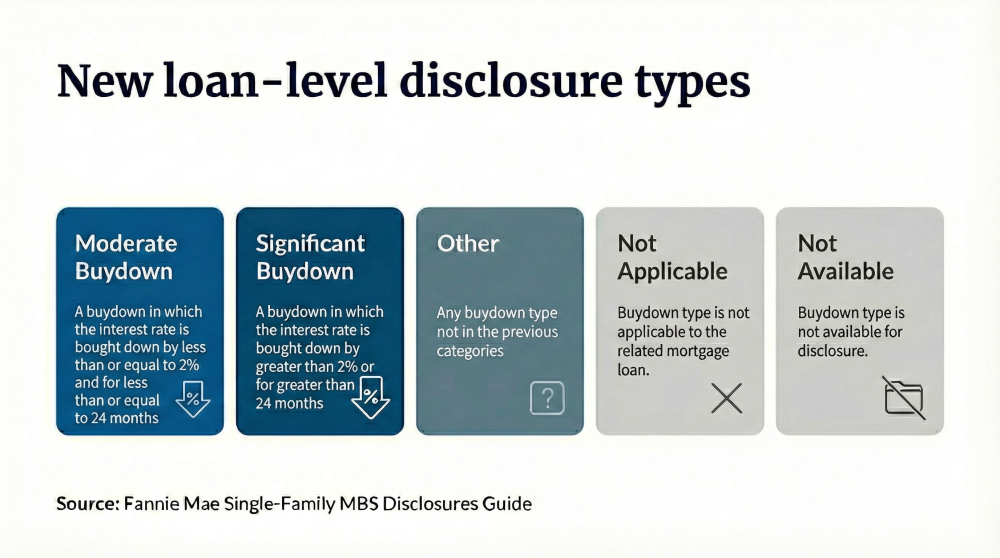
Fannie Mae and Freddie Mac will add loan-level buydown data to MBS this spring, giving investors clearer insight into prepayment risk tied to temporary rate incentives. View the full article
-
Google Ads is rolling out a feature that lets advertisers calculate conversion value for new customers based on a target return on ad spend (ROAS), automatically generating a suggested value instead of relying on manual estimates. The update is designed for campaigns using new customer acquisition goals, where advertisers want to bid more aggressively to attract first-time buyers. How it works. Advertisers enter their desired ROAS target for new customers, and Google Ads proposes a conversion value aligned with that goal. The system removes some of the guesswork involved in estimating how much a new customer should be worth in bidding models. The feature doesn’t yet adjust dynamically at the auction, campaign, or product level. Advertisers still apply the value at a broader setting rather than letting the system vary bids based on context. Why we care. Assigning the right value to a new customer is a weak spot in performance bidding. Many advertisers manually set a flat value that doesn’t always reflect profitability or long-term goals. By tying suggested conversion values to a target ROAS, advertisers can now optimise towards a more strategy-driven bidding, potentially improving how acquisition campaigns balance growth and efficiency. What advertisers are saying. Early reactions suggest the feature is a meaningful improvement over static manual inputs. Founder of Savvy Revenue, Andrew Lolk argues the next step would be auction-level intelligence that adjusts values depending on campaign or product performance. What to watch. If Google expands the feature to support more granular adjustments, it could further reshape how advertisers structure acquisition strategies and value lifetime customer growth. For now, the tool offers a more structured way to calculate new customer value. First seen. This update was first spotted by Founder and Digital Marketer Andrew Lolk who showed the new setting on LinkedIn. View the full article
-
A key measure of inflation fell to nearly a five-year low last month as apartment rental price growth slowed and gas prices fell, offering some relief to Americans grappling with the sharp cost increases of the past five years. Inflation dropped to 2.4% in January compared with a year earlier, down from 2.7% in December and not too far from the Federal Reserve’s 2% target. Core prices, which exclude the volatile food and energy categories, rose just 2.5% in January from a year ago, down from 2.6% the previous month and the smallest increase since March 2021. Friday’s report suggests inflation is cooling, but the cost of food, gas, and apartment rents have soared after the pandemic, with consumer prices still about 25% higher than they were five years ago. The increase in such a broad range of costs has kept “affordability,” a topic that helped shape the most recent U.S. presidential election, front and center as a dominant political issue. And on a monthly basis, consumer prices rose 0.2% in January from December, while core prices rose 0.3%. Core inflation was held down by a sharp drop in the price of used cars, which fell 1.8% just in January from December. “Inflation continues to decelerate and is not threatening to move back up, and that will enable more rate cuts by the Fed,” said Luke Tilley, chief economist at Wilmington Trust. There were signs in the report that retailers are passing on more of the costs of President Donald The President’s tariffs to consumers for goods such as furniture, appliances, and clothes. But those increases were offset by falling prices elsewhere. In other areas, The President has delayed, scrapped, or provided exemptions to his duties. Furniture prices jumped 0.7% in January from the previous month and are up 4% from a year ago. Appliances rose 1.3% in January though are only slightly more expensive than a year earlier. Clothing price rose 0.3% in January from December and have increased 1.7% in the past year. Some services prices also rose: Airline fares soared 6.5% just in January, after a 3.8% jump in November, though they rose only 2.2% from a year earlier. Music streaming subscriptions increased 4.5% in January and are 7.8% higher than a year ago. Yet those increases were largely offset by price declines, or much slower price growth, in other areas, including many that make up a greater share of Americans’ spending. The cost of used cars, for example, plunged 1.8% in January, the biggest decline in two years. Gas prices fell 3.2% last month, the third drop in the past four months, and are down 7.5% from a year earlier. Grocery prices rose just 0.2% in January, after a big 0.6% rise in December, and are up 2.1% from a year ago. Hotel prices ticked down 0.1% in January and have fallen 2% from last year. Rental prices and the cost of owning a home, which make up a third of the inflation index, both rose just 0.2% in December, while rents increased only 2.8% from a year earlier. That is much lower than during the pandemic: Rents rose by more than 8% in 2022. The tariffs have increased some costs and many economists forecast companies will pass through more of those increases to consumers in the coming months. A study released Thursday by the Federal Reserve Bank of New York found that U.S. companies and consumers are paying nearly 90% of the tariffs’ costs, echoing similar findings in studies by Harvard and other economists. Yet the increases haven’t been as broad-based as many economists feared. Tilley said that the higher tariffs have pulled some consumer spending away from other services, which has forced companies to keep those prices a bit lower as a result. “We don’t think consumers are in a place to take on price increases across the board, so you’re not seeing those price increses,” he said. Hiring was particularly weak last year, slowing wage growth, and many Americans remain gloomy about the economy. Some economists note that the rental figures were distorted by October’s six-week government shutdown, which interrupted the Labor Department’s gathering of the data. The government plugged in estimated figures for October which economists say have artificially lowered some of the housing costs. Companies are still grappling with the higher costs from The President’s duties, though some have benefited from tariffs being delayed or scrapped. Arin Schultz, chief growth officer at Naturepedic, which makes organic mattresses in Cleveland, breathed a sigh of relief when The President postponed import duties on upholstered furniture until 2027. They would have substantially pushed up the cost of the headboards the company imports. Schultz welcomed the decision to lower tariffs on imports from India to 18%, from 50%. Naturepedic sources a lot of the cotton fabrics and bedding that it sells from India. When that reduction kicks in, he said, the company could even cut some prices. Still, Naturepedic’s costs jumped because of duties on imports from Vietnam and Malaysia, where it sources its organic latex, which can’t be grown in the United States. Naturepedic makes its mattresses in the United States at a factory in Cleveland and employs about 200 workers. “We’re paying more now for that,” he said, and the company raised its prices about 7% last year as a result. “Tariffs are awful. We are less profitable now as a company because of tariffs.” If inflation gets closer to the Federal Reserve’s target of 2%, it could allow the central bank to cut its key short-term interest rate further this year, as The President has repeatedly demanded. High borrowing costs for things like mortgages and auto loans have also contributed to a perception that many big-ticket items remain out of reach for many Americans. Inflation surged to 9.1% in 2022 as consumer spending soared as supply chains snarled after the pandemic. It began to fall in 2023 but leveled off around 3% in mid-2024 and remained elevated last year. At the same time, measures of wage growth have declined as hiring has cratered. With companies reluctant to add jobs, workers don’t have as much leverage to demand raises. —Christopher Rugaber, AP economics writer View the full article

-
When most founders begin their journey, they focus on a good product and the right market. But what happens when your customers don’t yet know they have a problem? What happens when there’s no market, even when you know you have a solution people need? It’s rare to find success stories of simultaneous company and market building because it’s not a challenge that every organization faces. But if you’re innovating within your industry, it’s a problem you should expect and prepare for because it means having to operate in two realities—the internal reality where you know the challenges in your industry and how you’re going to solve them, and the external reality where nobody else has recognized the problem that needs to be solved. In a highly regulated industry like healthcare, safety, and stability create an inertia that often works against innovation. Many products fail simply because they lack market demand and infrastructure. To succeed, you should look beyond the solution and craft a compelling narrative that tells the entire story of your product and why it’s needed. As a founder of Paragonix, I navigated these two worlds firsthand during the development of our organ preservation technology. For decades, people transported fragile human organs on ice in coolers you can find in a hardware store. No one was really asking “Is there a better way to do this?” until we did. Here are five things I learned about bridging the gap between internal conviction and market skepticism: 1. Name the market When you’re defining a market that doesn’t exist yet, one of the most overlooked steps is giving it a name. A name gives stakeholders a tangible anchor and helps sell the version of reality where the market is already real. Then the focus shifts to creating shared belief, and that only happens by getting out there and talking to people. It’s a lot like painting a landscape. Your company may ultimately be just a small piece of the background, but the more detail you give your audience, the more they’ll come to understand the whole picture and how you fit into it. Ironically, you may start to see competitors using the language you’ve created, but that’s still a win. After all, if someone else uses the market terminology I created, it’s a huge validation of the landscape I painted. 2. Compile ample data Particularly in the healthcare industry, compelling data about your product is the proof of concept that unlocks belief. You need strong basic science or engineering validation to demonstrate how your product works, which helps your future customers realize that something they’re doing isn’t working. Then, you need clinical science showing that your product is not only effective but safe and superior to the existing standard of care. In my experience, that massive data collection effort is what ultimately convinces the market that they need your product. Before we created the Paragonix SherpaPak Cardiac Transport System, our first portable donor organ preservation system, close to 100% of donor hearts arrived at their destination without any temperature control, monitoring, or reporting, potentially impacting patient outcomes by injuring donor hearts. From the data we collected, we knew there was a dire need for a solution and that our technology could provide the answer. 3. Amplify early adopters Healthcare is an industry where adoption risk is high, and validation relies heavily on peer trust, making it vital that you amplify success cases from early adopters. These initial risk-takers are more than customers; they are essential co-creators of the new market category and can help you actively cultivate conviction within the industry. Whether you choose to create a structured advisory council or not, check in often and give them ample opportunity to provide feedback. Doing so doesn’t just secure their commitment to sharing positive outcomes with the public; it helps you transform implementation hurdles into strategic operations. 4. Consider the entire ecosystem As your market scales, it’s important to study the entire product journey and its surrounding ecosystem. You need to know the adjacent problems, complementary products, and be able to spot future technological needs that sit on the border of your current solution. This is the part that keeps you innovating in a smart, seamless direction, putting you one step ahead of the competition. As a founder, I’ve seen firsthand the importance of talking to not just stakeholders but also end-users—the clinicians, administrators, buyers, and even patients who aren’t decision-makers but can amplify your product and market vision. They can offer feedback on workflow integration, usability, and pain points that ensure you’re delivering solutions people both love and leverage. 5. Listen to negative feedback When you’re in the early stages of company development, a positive outlook is almost a requirement for overcoming the fear, anxiety, and worry that can threaten to hold you back. That’s one reason that it can be hard to accept feedback from people who don’t like your product, don’t grasp your vision, or who actively avoid collaborating with you. But as a company leader, you need to listen to what detractors say. When they’re right about something, it can be a tough pill to swallow, but acting can protect the health of your company as it grows. If they’re wrong, it’s still important to listen. Developing thick skin is a skill that no one can take away from you and will be useful throughout the entire journey. FINAL THOUGHTS Building a company is hard, but building an industry is harder. Markets don’t emerge on their own, but leaders who are willing to question long-standing assumptions and replace them with evidence and structure can build them. When you succeed, the impact extends far beyond your organization because you did more than win the market; you raised the standard for an entire industry. Lisa Anderson is the president and cofounder of Paragonix Technologies, a Getinge company. View the full article

-
The secretary of state has gone from presidential rival to loyal lieutenant amid a foreign policy blitzView the full article
-
Software work rarely falls apart because of bad ideas; it unravels when timelines slip, dependencies clash and expectations drift. That’s where delivery planning becomes critical. Instead of reacting to chaos, teams shape a clear delivery plan that aligns scope, sequencing and capacity before code hits production. What Is Delivery Planning? Delivery planning is the structured process of organizing how software work moves from approved requirements to production release. It brings together product managers, delivery managers, developers, QA engineers and sometimes DevOps to decide what will be delivered, in what order and within what time frame. The process typically starts with prioritizing backlog items, reviewing technical dependencies and assessing team capacity. From there, the group maps work into iterations or release increments, stress-tests assumptions and adjusts for risks. Trade-offs are discussed openly, especially when scope, time and resources compete. The central output of this effort is a delivery plan, a practical roadmap that outlines milestones, release targets and the sequence of work needed to ship reliably. ProjectManager is an award-winning project portfolio management software that offers advanced planning, scheduling and tracking tools for software development and IT teams, allowing them to create visual roadmaps for their delivery plans, allocate resources, track costs and manage waterfall and agile workflows. Additionally, ProjectManager integrates with Jira, Azure Devops and features an open API that facilitates integration with other software development tools. Get started for free today. /wp-content/uploads/2024/02/light-mode-CTA-1600x918.jpgLearn more What Is a Delivery Plan? A delivery plan is a structured schedule that outlines how approved work will be executed and released within a defined timeframe. It specifies deliverables, sequencing, milestones, dependencies and target release dates. In IT, software and product development environments, a delivery plan translates strategic objectives and prioritized scope into a coordinated project timeline that guides teams from build through testing and deployment. When to Make a Delivery Plan In IT and product environments, a delivery plan is created once the project scope has been approved and the team is preparing to commit to release dates. It is typically used before major releases, large initiatives or cross-team programs where coordination, sequencing and realistic timelines must be agreed upon before execution begins. Here are the most common scenarios in which a delivery plan helps organizations plan and schedule work. Enterprise IT & Digital Transformation Projects Coordinating multi-system upgrades that require strict sequencing and integration testing. Planning phased ERP, CRM or infrastructure modernization initiatives across departments. Aligning cybersecurity improvements with regulatory deadlines and audit requirements. Managing cloud migration programs involving internal teams and external vendors. Structuring data center consolidation projects with clearly defined transition milestones. Software Development Organizing major application releases that bundle multiple new features together. Planning incremental feature rollouts across several sprint cycles. Coordinating backend, frontend and DevOps deployment activities for production releases. Preparing performance optimization initiatives with staged testing checkpoints. Managing refactoring efforts while maintaining ongoing feature development commitments. Product Management Translating roadmap priorities into quarterly or release-based execution plans. Structuring beta launches before full public product availability. Coordinating go-to-market readiness alongside engineering release timelines. Managing feature bundles tied to contractual or enterprise customer commitments. Planning market expansion releases that introduce region-specific capabilities. What Should Be Included In a Delivery Plan? A delivery plan should clearly outline what will be delivered, in what order, by whom and by when, so execution decisions are anchored in visible, agreed-upon commitments. Objectives and Work Scope Clear objectives keep the team focused on outcomes instead of just activity. Defining the work scope prevents uncontrolled expansion once development begins. When both are written into the delivery plan, everyone understands what problem is being solved and what is intentionally excluded, reducing confusion, rework and misaligned expectations. Project Deliverables and Features In IT and software environments, project deliverables are the concrete outputs that must be completed and released. These can include functional features, APIs, integrations, infrastructure updates, configuration changes or performance improvements. Each deliverable represents something testable and releasable, not just a task or internal activity. /wp-content/uploads/2025/08/Project-deliverables-template-600x296.pngFree project deliverables template for Excel Listing deliverables clearly shapes the delivery plan because timelines are built around them. Sequencing decisions, resource allocation and release groupings all depend on what must be shipped. When deliverables are well defined, teams can estimate effort accurately, identify dependencies early and avoid vague commitments that lead to missed deadlines. Delivery Plan Timeline A delivery plan timeline is built from scheduled deliverables, key milestones, dependency links and target release dates. It shows when major features are expected to be completed, when reviews occur and when releases go live. Milestones mark decision points or readiness checks, while dependencies clarify what must finish before the next activity begins. /wp-content/uploads/2024/10/Gantt-chart-template-for-Excel-600x264.pngFree Gantt chart template for Excel Teams usually represent a delivery plan timeline using Gantt charts, roadmap views or structured release calendars. Gantt charts are common because they visualize sequencing and dependencies clearly. Product roadmaps are often used for higher-level communication. In some environments, shared planning boards or portfolio tools provide timeline views aligned with sprint cycles and release windows. Release Structure A release structure defines how completed deliverables are organized and deployed to users. It determines the pattern the team follows, including how functionality is grouped and how frequently releases occur. Within delivery planning, the release structure clarifies whether work is shipped continuously, in fixed cycles or bundled into coordinated releases aligned with business priorities. Common release structures include continuous delivery, where updates are deployed frequently, and time-based models such as monthly or quarterly releases. Some teams use phased rollouts to reduce exposure, while others package features into major version launches. Enterprise programs may synchronize releases across multiple systems and teams. The chosen release structure shapes sequencing decisions, testing intensity and stakeholder expectations. When the structure is unclear, confusion builds around what ships and when. Clear release logic keeps the delivery plan realistic and aligned with deployment capabilities. Resource Plan A resource plan within a delivery plan defines who will perform the work, what skills are required and how availability aligns with the delivery timeline. It maps people, roles and supporting assets to specific deliverables. In IT and software development, this ensures commitments are grounded in real capacity rather than assumed bandwidth. /wp-content/uploads/2023/03/Resource-Plan-Screenshot-600x213.jpgFree resource plan template for Excel Some of the most important roles to include in a resource plan within a delivery plan for software development or IT projects are: Frontend developers assigned to user interface feature development. Backend engineers responsible for APIs and database logic. QA analysts allocated for manual and automated testing cycles. DevOps engineers supporting CI/CD pipelines and deployments. UX designers contributing wireframes and usability validation. Cloud infrastructure environments required for staging and production. External vendors providing integrations or specialized technical services. Risk Register & Risk Mitigation Plan A risk register in a delivery plan is a structured list of identified threats that could impact timelines, scope or quality. It documents each risk, its likelihood, potential impact and assigned owner. In IT and software projects, this often includes technical uncertainty, integration challenges, resource gaps or external dependencies. /wp-content/uploads/2024/11/Risk-assessment-template-screenshot-600x212.pngFree risk assessment template for Excel A risk mitigation plan outlines the specific actions the team will take to reduce the probability or impact of identified risks. It may include contingency timelines, fallback technical approaches, additional testing cycles or escalation protocols. Within delivery planning, mitigation planning prevents reactive decision-making when issues arise during execution. Governance Roles Governance within a delivery plan defines how decisions are made, who approves scope changes and how performance is monitored. In IT and software projects, governance ensures delivery stays aligned with business priorities, budget constraints and risk tolerance while maintaining clear accountability for outcomes. Executive Sponsor: Provides strategic direction and approves major scope, budget or timeline changes. Steering Committee: Reviews progress, resolves escalated issues and validates continued business alignment. Product Owner: Approves backlog priorities and confirms feature-level acceptance decisions. Delivery Manager: Monitors execution performance and enforces agreed planning controls. Technical Authority: Validates architectural decisions and ensures compliance with technical standards. Communication Plan A communication plan within a delivery plan defines how progress, risks and changes are shared with stakeholders. It outlines what information is communicated, how often updates occur and through which channels. In IT and software environments, clear communication prevents misaligned expectations between engineering teams, product leadership and business sponsors. Defined reporting cadence such as weekly delivery status updates. Stakeholder audience list with communication responsibilities assigned. Standard status report format including milestones and risks. Escalation channels for urgent blockers or critical issues. Release announcement templates for internal and external audiences. Integration of dashboard metrics from project management tools. Meeting structure for sprint reviews and release readiness checkpoints. Who Participates in the Delivery Planning Process Although many voices contribute, accountability typically sits with the delivery manager or project manager overseeing execution. That person facilitates planning sessions, aligns scope with capacity and ensures commitments are realistic. In product-led environments, a product manager may co-lead, but ownership of the delivery planning process remains clearly defined. Here’s a quick overview of the key roles and responsibilities in the delivery planning process. Product Manager: Defines priorities, clarifies business outcomes and confirms what must be delivered in each release. Protects value, challenges unnecessary scope and ensures planning decisions align with customer and stakeholder expectations. Delivery Manager: Coordinates planning cadence, manages timelines and tracks dependencies across teams. Translates strategic goals into executable increments and holds the group accountable for realistic commitments and achievable release targets. Engineering Lead: Evaluates technical complexity, identifies architectural constraints and flags sequencing risks. Shapes effort estimates and determines whether proposed timelines are feasible given existing systems and technical debt. Developers: Contribute effort estimates, surface hidden dependencies and explain implementation constraints. Provide practical insight that grounds planning discussions in reality, preventing overly optimistic schedules disconnected from actual build effort. QA Lead: Defines testing scope, automation coverage and release readiness criteria. Ensures sufficient time is allocated for validation so quality is not sacrificed under deadline pressure. DevOps Engineer: Reviews deployment pipelines, infrastructure readiness and environment constraints. Ensures releases can be deployed smoothly without last-minute operational bottlenecks. Business Sponsor: Validates timelines against external commitments. Confirms that release targets support market, regulatory or contractual obligations while understanding the trade-offs required to meet those dates. Main Steps in the Delivery Planning Process Delivery planning is not a a mere documentation exercise. It is a series of working sessions where product, engineering and delivery leaders make real commitments, challenge assumptions and decide what can realistically ship. The steps below reflect the conversations and decisions that turn ambition into an executable delivery plan. 1. Clarify Overall Project Objectives & Success Criteria The process usually begins with the product manager explaining the business outcome the initiative must achieve. The executive sponsor confirms why it matters now. The delivery manager pushes for clarity: what problem are we solving, and what result proves success? Engineering leaders question feasibility early, while the group agrees on measurable targets that will later determine whether the release actually delivered value. 2. Define the Work Scope and Identify Deliverables After alignment on outcomes, the team breaks the idea into concrete work. Product walks through prioritized features. Engineering challenges assumptions and flags hidden complexity. QA raises questions about testability. The delivery manager keeps the discussion focused on what will be included and what will not. Together, they separate essential functionality from optional enhancements before effort discussions begin. 3. Identify Task Dependencies and Constraints Before anyone talks dates, the engineering lead maps technical sequencing realities. Backend may need to finish before frontend begins. DevOps confirms environment readiness. If vendors or external systems are involved, timelines are validated directly with them. Compliance or security representatives call out mandatory checkpoints. The delivery manager documents these constraints so the plan reflects real-world blockers, not assumptions. 4. Sequence Work With constraints visible, the group debates order. Product argues for early delivery of high-impact features. Engineering weighs complexity and risk. The delivery manager tests whether value-driven sequencing conflicts with technical flow. The team decides whether to release incrementally or bundle functionality into phases. By the end of this step, the order of execution reflects deliberate trade-offs, not optimism. 5. Estimate Required Effort and Validate Capacity Developers provide effort estimates based on experience, not pressure. The engineering lead reviews whether specialists are overallocated and balances workload. The delivery manager compares proposed work against actual team availability, including vacations and parallel initiatives. If the math does not work, scope or sequencing is adjusted. No timeline is accepted until capacity and workload are visibly aligned. 6. Build and Review the Delivery Timeline Once estimates are accepted, the delivery manager maps work against proposed release windows. Milestones are proposed and challenged. QA confirms testing windows are realistic. DevOps validates deployment timing. Integration points across teams are reviewed out loud. The draft timeline is pressure-tested in the room before being shared more broadly to stakeholders. 7. Agree on Risk Responses and Escalation Paths Before closing the session, the team openly discusses what could derail the plan. Engineering highlights technical uncertainty. Product identifies market timing risks. The delivery manager asks what happens if assumptions fail. Mitigation actions are assigned, buffers are added where justified and clear escalation paths are confirmed so issues can move quickly if they surface. ProjectManager Can Help with IT & Software Development Projects ProjectManager is an award-winning project portfolio management software equipped with powerful features for IT and software development teams, such as Gantt chart roadmaps that can be used to manage individual delivery plans and complete project portfolios, dashboards for monitoring resource utilization, project costs and progress in real time and kanban boards that are ideal for agile sprints and iterative planning. ProjectManager also has robust resource management features such as workload charts to balance teams’ workloads and timesheets for detailed time tracking. On top of that, ProjectManager integrates with Jira and Azure DevOps and has an open API so that organizations can integrate its powerful project portfolio management functionality with their favorite tools. Watch the video below to learn more! The post Delivery Planning In IT & Software Development: Making a Delivery Plan appeared first on ProjectManager. View the full article
-
Much of healthcare still operates like a series of snapshots. For most routine care, you go in once a year for a physical. Maybe you get a few labs drawn. If something looks off, you might get a follow-up or a prescription. But within the constraints of a short visit and limited longitudinal data, care often ends with broad guidance like “eat better” or “check back next year.” Meanwhile, your health is changing every day. Metabolic function, inflammation, aging, and chronic disease don’t switch on overnight. They unfold gradually over time, shaped by lifestyle factors including sleep, nutrition, movement, stress, as well as genetics and environment. But unless you cross a diagnostic threshold or show up with symptoms, the system doesn’t intervene. Too often, care is triggered only when something has already gone wrong. That’s because we’re still practicing episodic, event-driven care, not trend-based care. THE LIMITS OF EPISODIC DATA You can’t deliver truly personalized proactive prevention with episodic data alone. A single cholesterol reading can be clinically meaningful, particularly at extremes. The same is true for a day of elevated blood sugar. But outside of acute thresholds, context and trajectory matter. To detect risk early and intervene meaningfully, we need a care model informed by continuous trends, not isolated events. This is where AI, and specifically agentic AI, can make a difference. WHAT AGENTIC AI REALLY MEANS When people hear agentic AI, they often assume it means handing over decisions entirely to machines. In reality, agentic AI refers to systems that can act autonomously within defined goals, constraints, and oversight. Think of autopilot in aviation. Autopilot manages routine complexity by continuously monitoring conditions, detecting turbulence, and making micro-adjustments. Pilots maintain oversight and control, but they’re no longer burdened with manually managing every variable. In healthcare, agentic AI functions the same way. It continuously observes multiple data streams, identifies subtle but meaningful changes, and delivers timely, relevant insights that enhance clinical judgment, not replace it. This is not theoretical. Health systems are already integrating AI into diagnostics, operations, and clinical workflows, embedding it into electronic health records, imaging systems, and decision-support tools to manage complexity and surface risk earlier. These deployments signal a shift from isolated AI applications toward infrastructure-level intelligence operating continuously alongside clinicians. FROM VOLUME TO MEANING We already have more health data than we know what to do with. The challenge isn’t collection. It’s synthesis. Agentic AI helps us move from data overload to actionable insight. By analyzing longitudinal signals, including biological, behavioral, and environmental data, it reveals patterns that allow us to act before risk escalates. This is especially powerful in managing chronic conditions, aging, and metabolic health, areas where prevention is possible, but only when signals are caught early. Research shows that combining longitudinal wearable data with clinical records improves our ability to predict future risk. What agentic systems add is the ability to translate those predictions into timely, predefined actions rather than leaving insights dormant until the next visit. PATIENTS ARE ALREADY LIVING IN A CONTINUOUS WORLD At the same time, people are increasingly turning to AI tools to fill the gap. Recent reporting from OpenAI shows that more than 40 million people use ChatGPT daily for health questions, with roughly 70% of those conversations occurring outside normal clinic hours. OpenAI also reported about 600,000 health-related queries per week from underserved rural communities. The behavior is clear: People want real-time answers that the healthcare system is often not structured to provide between visits. This creates a growing gap between how people live and how medicine is practiced. Agentic AI offers a way to close it by acting as the connective tissue between daily life and clinical care. It doesn’t replace clinicians. It doesn’t make healthcare autonomous. It makes it responsive. A NEW INFLECTION POINT Autopilot didn’t revolutionize aviation by removing the pilot. It changed aviation by making the system manageable, extending human capability through continuous support. Healthcare is now at a similar inflection point. Data volumes will continue to rise. Clinical capacity will remain limited. And episodic care will grow more misaligned with how disease and aging actually develop. Agentic AI offers a path forward by enabling systems to take bounded, predefined actions in response to continuous monitoring, whether by surfacing emerging risk patterns to clinicians or by triggering patient-facing actions like scheduling follow-up visits when concerning trends persist. The result is care that occurs earlier, with better timing, rather than at the moment of acute decline. The technology for agentic AI already exists. Regulatory pathways are emerging as well, but adoption depends on whether incentives, workflows, and leadership priorities evolve to support continuous care. Like autopilot in aviation, agentic AI in healthcare will be introduced gradually, first in well-bounded, lower-risk workflows, then expanding as systems, incentives, and governance structures evolve to support continuous intelligence at scale. To unlock its full potential, healthcare needs reimbursement models that reward prevention, clinical architectures designed for longitudinal data, and governance frameworks that enable responsible deployment without freezing progress. Agentic AI doesn’t require a reinvention of regulation, but it does require modernizing operations, governance, and accountability. The systems that move first will define the next era of healthcare. Noosheen Hashemi is founder and CEO of January AI. View the full article

-
Mortgage delinquencies increased across loan types, and while 30-day late payments showed overall improvement, later-stage distress worsened. View the full article
-
US Secretary of State cancels attendance at last minute in move that EU official called ‘insane’View the full article
-
Ellie Frazier first started posting content three years ago, sharing day-in-the-life vlogs and content tips for fellow creators. As her following grew, she began noticing other creators posting videos with uncannily similar scripts to her own. The clips felt the same. The editing style, identical. In one example, Frazier stretched in front of a window; another creator stretched in front of a window. Frazier chopped vegetables; the other creator chopped an orange. On its own, that might not seem especially striking. But the voiceover script used by the other creator was also almost verbatim Frazier’s words. “There’s a very stark difference between taking inspiration from everybody and giving credit, versus stealing somebody’s voiceover script word for word multiple times in a row,” says Frazier in a recent post. “Taking credit in the comments for it being their own work.” Plagiarism—presenting another person’s ideas, words, images, or work as your own without credit—while often difficult to litigate, is a cardinal sin in most industries. And yet social media largely operates as a law unto itself. TikTok will remove content that “violates or infringes someone else’s intellectual property rights, including copyright and trademark.” However, many posts on the platform do not clearly meet the legal threshold for copyrightable intellectual property, meaning enforcement is often left to creators themselves. With swaths of content uploaded every day, copycat creators frequently weigh the risk of being discovered against the possibility of profiting from a viral concept with minimal effort. There is even content devoted to explaining exactly how to plagiarize others’ work. Determining who copied whom is also largely a futile exercise. On a platform that thrives on mimicry, true originality is rare. The lifecycle of a trend is familiar: One person creates an original video. If it goes viral, thousands copy it. Some tag the original creator. But as the trend snowballs, that credit is often lost to the algorithm. Once it has been replicated enough times to be labeled a trend, the concept is widely regarded as fair game. Frazier isn’t the first to spotlight the growing issue of digital plagiarism. In a first-of-its-kind lawsuit brought in 2024, one TikTok creator attempted to sue another for copying her “neutral, beige, and cream aesthetic” and posting content with “identical styling, tone, camera angle and/or text.” More than a year later, the so-called “Sad Beige Lawsuit” was dismissed after the claimant chose not to move forward. Imitation may be described as the sincerest form of flattery, but online plagiarism ultimately benefits no one. The original creator loses credit for their idea. The copycat forfeits an opportunity to develop a distinct voice. And audiences are left scrolling through an endless stream of low-quality videos, each one nearly indistinguishable from the last. View the full article

-
Head of Wall Street bank calls attorney a ‘tremendous’ person hours after she quit over links to Jeffrey EpsteinView the full article
-
As outrage spreads over energy-hungry data centers, politicians from President Donald The President to local lawmakers have found rare bipartisan agreement over insisting that tech companies — and not regular people — must foot the bill for the exorbitant amount of electricity required for artificial intelligence. But that might be where the agreement ends. The price of powering data centers has become deeply intertwined with concerns over the cost of living, a dominant issue in the upcoming midterm elections that will determine control of Congress and governors’ offices. Some efforts to address the challenge may be coming too late, with energy costs on the rise. And even though tech giants are pledging to pay their “fair share,” there’s little consensus on what that means. “‘Fair share’ is a pretty squishy term, and so it’s something that the industry likes to say because ‘fair’ can mean different things to different people,” said Ari Peskoe, who directs the Electricity Law Initiative at Harvard University. It’s a shift from last year, when states worked to woo massive data center projects and The President directed his administration to do everything it could to get them electricity. Now there’s a backlash as towns fight data center projects and some utilities’ electricity bills have risen quickly. Anger over the issue has already had electoral consequences, with Democrats ousting two Republicans from Georgia’s utility regulatory commission in November. “Voters are already connecting the experience of these facilities with their electricity costs and they’re going to increasingly want to know how government is going to navigate that,” said Christopher Borick, a pollster and director of the Muhlenberg College Institute of Public Opinion. Energy race stokes concerns Data centers are sprouting across the U.S., as tech giants scramble to meet worldwide demand for chatbots and other generative AI products that require large amounts of computing power to train and operate. The buildings look like giant warehouses, some dwarfing the footprints of factories and stadiums. Some need more power than a small city, more than any utility has ever supplied to a single user, setting off a race to build more power plants. The demand for electricity can have a ripple effect that raises prices for everyone else. For example, if utilities build more power plants or transmission lines to serve them, the cost can be spread across all ratepayers. Concerns have dovetailed with broader questions about the cost of living, as well as fears about the powerful influence of tech companies and the impact of artificial intelligence. The President continues to embrace artificial intelligence as a top economic and national security priority, although he seemed to acknowledge the backlash last month by posting on social media that data centers “must ‘pay their own way.’” At other times, he has brushed concerns aside, declaring that tech giants are building their own power plants, and Energy Secretary Chris Wright contends that data centers don’t inflate electricity bills — disputing what consumer advocates and independent analysts say. States moving to regulate Some states and utilities have started to identify ways to get data centers to pay for their costs. They’ve required tech companies to buy electricity in long-term contracts, pay for the power plants and transmission upgrades they need and make big down payments in case they go belly-up or decide later they don’t need as much electricity. But it might be more complicated than that. Those rules can’t fix the short-term problem of ravenous demand for electricity that is outpacing the speed of power plant construction, analysts say. “What do you do when Big Tech, because of the very profitable nature of these data centers, can simply outbid grandma for power in the short run?” Abe Silverman, a former utility regulatory lawyer and an energy researcher at Johns Hopkins University. “That is, I think, going to be the real challenge.” Some consumer advocates say tech companies’ fair share should also include the rising cost of electricity, grid equipment, or natural gas that’s driven by their demand. In Oregon, which passed a law to protect smaller ratepayers from data centers’ power costs, a consumer advocacy group is jousting with the state’s largest utility, Portland General Electric, over its plan on how to do that. Meanwhile, consumer advocates in various states — including Indiana, Georgia, and Missouri — are warning that utilities could foist the cost of data center-driven buildouts onto regular ratepayers there. Pushback from lawmakers, governors Utilities have pledged to ensure electric rates are fair. But in some places it may be too late. For instance, in the mid-Atlantic grid territory from New Jersey to Illinois, consumer advocates and analysts have pegged billions of dollars in rate increases hitting the bills of regular Americans on data center demand. Legislation, meanwhile, is flooding into Congress and statehouses to regulate data centers. Democrats’ bills in Congress await Republican cosponsors, while lawmakers in a number of states are floating moratoriums on new data centers, drafting rules for regulators to shield regular ratepayers and targeting data center tax breaks and utility profits. Governors — including some who worked to recruit data centers to their states — are increasingly talking tough. Arizona Gov. Katie Hobbs, a Democrat running for reelection this year, wants to impose a penny-a-gallon water fee on data centers and get rid of the sales tax exemption there that most states offer data centers. She called it a $38 million “corporate handout.” “It’s time we make the booming data center industry work for the people of our state, rather than the other way around,” she said in her state-of-the-state address. Blame for rising energy costs Energy costs are projected to keep rising in 2026. Republicans in Washington are pointing the finger at liberal state energy policies that favor renewable energy, suggesting they have driven up transmission costs and frayed supply by blocking fossil fuels. “Americans are not paying higher prices because of data centers. There’s a perception there, and I get the perception, but it’s not actually true,” said Wright, The President’s energy secretary, at a news conference earlier this month. The struggle to assign blame was on display last week at a four-hour U.S. House subcommittee hearing with members of the Federal Energy Regulatory Commission. Republicans encouraged FERC members to speed up natural gas pipeline construction while Democrats defended renewable energy and urged FERC to limit utility profits and protect residential ratepayers from data center costs. FERC’s chair, Laura Swett, told Rep. Greg Landsman, D-Ohio, that she believes data center operators are willing to cover their costs and understand that it’s important to have community support. “That’s not been our experience,” Landsman responded, saying projects in his district are getting tax breaks, sidestepping community opposition and costing people money. “Ultimately, I think we have to get to a place where they pay everything.” —Marc Levy, Associated Press View the full article

-
The companies are among a number the Pentagon believes could pose a threat to American national securityView the full article
-
A new report by Intuit’s Mailchimp highlights the critical importance of the opt-in moment for brands aiming to foster strong relationships with consumers. Titled The Art of the Opt-In: Why List Building is Only the Beginning, the study reveals that building quality email and SMS lists goes far beyond simply assembling contacts; it’s about creating trust, personalizing experiences, and ultimately driving engagement. Matt Cimino, product manager at Intuit Mailchimp, emphasizes, “As tracking and re-targeting become more complex, the opt-in stands out as one of the few moments when a brand can earn a direct relationship – with permission.” The insights from this report offer small business owners a roadmap to navigate the opt-in landscape effectively. One of the report’s major findings indicates a disconnection between what marketers believe consumers are willing to share and the reality of consumer privacy concerns. For instance, while 65% of brands ask for a phone number during sign-up, only 28% of consumers are comfortable providing that information. This gap underscores the need for brands to rethink their approach to data collection, focusing on high-intent actions like browsing and checkout moments to optimize their opt-in strategies. The report showcases that many marketers—nearly all of whom maintain email and SMS lists—struggle with quality. Less than a third consider their lists “very high quality,” and only 8% report opt-in conversion rates exceeding 20%. These disappointing statistics may stem from a lack of sophisticated tools and insights; only 20% of marketers fully automate their email and text campaigns, and just a third are confident in tracking sign-up sources. Trust also appears to be generational. The study found that while 39% of Gen Z consumers believe brands will adhere to privacy laws, this figure drops to 19% among Baby Boomers. For younger consumers, a clean and simple design is critical for comfort when engaging with a brand for the first time. Diana Williams, VP of Product at Intuit Mailchimp, notes, “This research reinforces what marketers are feeling every day: relevance comes from clarity, not volume.” With consumers seeking valuable content, businesses must shift from generic pop-ups to targeted opt-in strategies that resonate with specific audience segments. Automation plays a pivotal role in enhancing the quality of engagement. Brands that regard their contact lists as best-in-class are three times more likely to utilize full automation in their communications. They often employ welcome series and upsell flows more effectively than their less organized counterparts. Moreover, coordinated omnichannel strategies that synchronize messaging across various platforms yield better engagement and conversion rates. Brands that execute these strategies are likely to see higher returns across channels like organic and paid social media. However, many small businesses may find it challenging to harness the data necessary for effective segmentation and personalization. As the report points out, marketers often have access to data but struggle to transform it into actionable insights. Overcoming this friction requires the use of platforms that can aggregate fragmented data and facilitate smarter decision-making. Ultimately, the findings provide actionable insights for small business owners looking to improve their marketing efforts. By understanding consumer preferences, refining opt-in strategies, and leveraging automation, small businesses can build stronger relationships with their customers. The opt-in moment not only sets the tone for future interactions but also serves as a key performance indicator for brand engagement. For more in-depth insights, small business owners can access the full report here. As brands continue to navigate an increasingly complex marketing landscape, the importance of a well-crafted opt-in strategy cannot be overstated. Understanding the nuances of consumer trust, leveraging automation, and focusing on high-intent moments can make all the difference in fostering lasting relationships. Image via Google Gemini This article, "New Study Reveals How Trust Shapes Consumer Engagement at Sign-Up" was first published on Small Business Trends View the full article
-
A new report by Intuit’s Mailchimp highlights the critical importance of the opt-in moment for brands aiming to foster strong relationships with consumers. Titled The Art of the Opt-In: Why List Building is Only the Beginning, the study reveals that building quality email and SMS lists goes far beyond simply assembling contacts; it’s about creating trust, personalizing experiences, and ultimately driving engagement. Matt Cimino, product manager at Intuit Mailchimp, emphasizes, “As tracking and re-targeting become more complex, the opt-in stands out as one of the few moments when a brand can earn a direct relationship – with permission.” The insights from this report offer small business owners a roadmap to navigate the opt-in landscape effectively. One of the report’s major findings indicates a disconnection between what marketers believe consumers are willing to share and the reality of consumer privacy concerns. For instance, while 65% of brands ask for a phone number during sign-up, only 28% of consumers are comfortable providing that information. This gap underscores the need for brands to rethink their approach to data collection, focusing on high-intent actions like browsing and checkout moments to optimize their opt-in strategies. The report showcases that many marketers—nearly all of whom maintain email and SMS lists—struggle with quality. Less than a third consider their lists “very high quality,” and only 8% report opt-in conversion rates exceeding 20%. These disappointing statistics may stem from a lack of sophisticated tools and insights; only 20% of marketers fully automate their email and text campaigns, and just a third are confident in tracking sign-up sources. Trust also appears to be generational. The study found that while 39% of Gen Z consumers believe brands will adhere to privacy laws, this figure drops to 19% among Baby Boomers. For younger consumers, a clean and simple design is critical for comfort when engaging with a brand for the first time. Diana Williams, VP of Product at Intuit Mailchimp, notes, “This research reinforces what marketers are feeling every day: relevance comes from clarity, not volume.” With consumers seeking valuable content, businesses must shift from generic pop-ups to targeted opt-in strategies that resonate with specific audience segments. Automation plays a pivotal role in enhancing the quality of engagement. Brands that regard their contact lists as best-in-class are three times more likely to utilize full automation in their communications. They often employ welcome series and upsell flows more effectively than their less organized counterparts. Moreover, coordinated omnichannel strategies that synchronize messaging across various platforms yield better engagement and conversion rates. Brands that execute these strategies are likely to see higher returns across channels like organic and paid social media. However, many small businesses may find it challenging to harness the data necessary for effective segmentation and personalization. As the report points out, marketers often have access to data but struggle to transform it into actionable insights. Overcoming this friction requires the use of platforms that can aggregate fragmented data and facilitate smarter decision-making. Ultimately, the findings provide actionable insights for small business owners looking to improve their marketing efforts. By understanding consumer preferences, refining opt-in strategies, and leveraging automation, small businesses can build stronger relationships with their customers. The opt-in moment not only sets the tone for future interactions but also serves as a key performance indicator for brand engagement. For more in-depth insights, small business owners can access the full report here. As brands continue to navigate an increasingly complex marketing landscape, the importance of a well-crafted opt-in strategy cannot be overstated. Understanding the nuances of consumer trust, leveraging automation, and focusing on high-intent moments can make all the difference in fostering lasting relationships. Image via Google Gemini This article, "New Study Reveals How Trust Shapes Consumer Engagement at Sign-Up" was first published on Small Business Trends View the full article
-
Help them embrace it to reach their goals. By Aaron Klein and Dan Bolton The Holistic Guide to Wealth Management Go PRO for members-only access to more Rory Henry. View the full article
-
Help them embrace it to reach their goals. By Aaron Klein and Dan Bolton The Holistic Guide to Wealth Management Go PRO for members-only access to more Rory Henry. View the full article