All Activity
- Past hour
-
In 1998, submitting a website to search engines was manual, methodical, and genuinely tedious. I remember 17 of them: AltaVista, Yahoo Directory, Excite, Infoseek, Lycos, WebCrawler, HotBot, Northern Light, Ask Jeeves, DMOZ, Snap, LookSmart, GoTo.com, AllTheWeb, Inktomi, iWon, and About.com. Each had its own form, process, and wait time, and its own quiet judgment about whether your URL was worth including. We submitted manually, 18,000 pages in all. Yawn. Google was barely a year old when we were doing this. But they were already building the thing that would make submission irrelevant. PageRank meant Google followed links, and a site that other sites linked to would be found whether it submitted or not. The other 17 engines waited to be told about content. Google went looking, and within a few years, they got so good at finding content that manual submission became the exception rather than the norm. You published, you waited, the bots arrived. For 20 years, that was the deal, and SEO optimized for a crawler that would show up sooner or later. The irony is that we’re now shifting back. Not because Google got worse at finding things, but because the game has expanded in ways that pull alone can’t cover, and the revenue flowing through assistive and agentic channels doesn’t wait for a bot. Pull isn’t the only entry mode The pull model (bot discovers, selects, and fetches) remains the dominant entry mode for the web index. What’s changed is that pull is now one of five entry modes into the AI engine pipeline (the 10-gate sequence through which content passes before any AI system can recommend it), not the only one. The pipeline has expanded, and new modes have been added alongside the existing model rather than replacing it, and the single entry mode that has been the norm for 20 years has expanded to five. What follows is my taxonomy of those five modes, with an explanation of the advantages each one gives you at the two gates that determine whether content can compete: indexing and annotation. Your customers search everywhere. Make sure your brand shows up. The SEO toolkit you know, plus the AI visibility data you need. Start Free Trial Get started with The five entry modes differ by gates skipped, signal preserved, and revenue reached Mode 1: Pull model Traditional crawl-based discovery where all 10 pipeline gates apply and the bot decides everything. You start at gate zero and have no structural advantage by the time your content gets to annotation (which is where that content starts to contribute to your AI assistive agent/engine strategy). You’re entirely dependent on the bot’s schedule and the quality of what it finds when it arrives. Mode 2: Push Discovery The brand proactively notifies the system that content exists or has changed, through IndexNow or manual submission. Fabrice Canel built IndexNow at Bing for exactly this purpose: “IndexNow is all about knowing ‘now.’” It skips discovery, improves the chances of selection, and gets you straight to crawl. The content still needs to be crawled, rendered, and indexed, because IndexNow is a hint, not a guarantee. You win speed and priority queue position, which means your content is eligible for recommendation days or weeks earlier than a competitor who waited for the bot. In fast-moving categories, that window is the difference between being in the answer and being absent from it. Note: WebMCP helps with Modes 1 and 2 by making crawling, rendering, and indexing more reliable, retaining signal and confidence that would otherwise be lost through those three gates. Because confidence is multiplicative across the pipeline, a higher passage rate at crawling, rendering, and indexing means your content arrives at annotation with significantly more surviving signal than a standard crawl delivers. The structural advantage compounds from there. Mode 3: Push data Structured data goes directly into the system’s index, bypassing the entire bot phase. Google Merchant Center pushes product data with GTINs, prices, availability, and structured attributes. OpenAI’s Product Feed Specification powers ChatGPT Shopping that supports 15-minute refresh cycles. Discovery, selection, crawling, and rendering don’t exist for this content, and the “translation” at the indexing phase is seamless: it arrives at indexing already in machine-readable format, four gates skipped and one improved. That means the annotation advantage is significant. This is where the money is for product-led businesses: where crawled content arrives as unstructured prose the system has to interpret and feed content arrives pre-labeled with explicit machine-readable entity type, category, and attributes. By structuring the data and injecting directly into indexing, you’re solving a huge chunk of the classification problem at annotation, which, as you’ll see in the next article, is the single most important step in the 10-gate sequence. As the confidence pipeline shows, each gate that passes at higher confidence compounds multiplicatively, so this is where you can get the “3x surviving-signal advantage” I outline in “The five infrastructure gates behind crawl, render, and index.” Mode 4: Push via MCP Model Context Protocol (MCP) — a standard that lets AI agents query a brand’s live data during response generation — allows agents to retrieve data from brand systems on demand. In February 2026, four infrastructure companies shipped agent commerce systems simultaneously. Stripe, Coinbase, Cloudflare, and OpenAI collectively wired a real-time transactional layer into the agent pipeline, live with Etsy and 1 million Shopify merchants. Agentic commerce is key. MCP skips the entire DSCRI pipeline and then operates at three levels, each entering the pipeline at a different gate: As a data source at recruitment. As a grounding source at grounding. As an action capability at won, where the transaction completes without a human in the loop. The revenue consequences are already real: brands without MCP-ready data are losing transactions to those with it, because the agent can’t access their inventory, pricing, or availability in real time when it needs to make a decision. This is where you see multi-hundred percent gains in the surviving signal. MCP is already simultaneously push and pull, depending on context. There’s a dimension to Mode 4 that most people don’t think about much: the agent querying your MCP connection isn’t always a Big Tech recommendation system. It’s increasingly the customer’s own AI, acting as their purchasing agent, evaluating your inventory and pricing in real time, with their credit card behind the query, completing the transaction without them opening a browser. When your customer’s agent (let’s say OpenClaw-driven) comes knocking, agent-readable is the entry requirement. Agent-writable — the capacity for an agent to act, not just retrieve — is where you’ll make the conversion. The brands without writable infrastructure will be losing transactions to competitors whose systems answered the query and handled the action. Mode 5: Ambient This is structurally different from the other four. Where Modes 1 through 4 change how content enters the pipeline, ambient research changes what triggers execution of the final gates. The AI proactively pushes a recommendation into the user’s workflow without any query: Gemini suggesting a consultant in Google Sheets, a meeting summary in Microsoft Teams surfacing an expert, and autocomplete recommending your brand. Ambient is the reward for reaching recruitment with accumulated confidence high enough that the system fires the execution gates on the user’s behalf, without being asked. You can’t optimize for ambient directly. You earn it — and the brands that earn it capture the 95% of the market that isn’t actively searching. Several people have told me my obsession with ambient is misplaced, theoretical, and not a real thing in 2026. I’ve experienced it myself already, but the clearest demonstration came at an Entrepreneurs’ Organization event where I was co-presenting with a French Microsoft AI specialist. He demonstrated on Teams an unprompted push recommendation: a provider identified as the best solution to a problem his team had been discussing in the meeting. Nobody explicitly asked. Copilot listened, understood the problem, evaluated options, and push-recommended a supplier right after the meeting. Ambient isn’t theoretical. It’s running on Teams, Gmail, and other tools we all use daily, right now. Get the newsletter search marketers rely on. See terms. Every mode converges at annotation Five entry modes, each with a different starting point, and they all converge at annotation. Annotation is the key to the entire pipeline. Every algorithm in the algorithmic trinity (LLM + knowledge graph + search) doesn’t use the content itself to recruit, it uses the annotations on your chunked content, and nothing reaches a user without being recruited. Why is that important? Because accurate, complete, and confident annotation drives recruitment, and recruitment is competitive regardless of how content entered. A product feed arriving at indexing with zero lost signal competes at recruitment with a huge advantage over every crawled page, every other feed, and every MCP-connected competitor that entered by a different door. You control more of this competition than most practitioners assume, but skipping gates gives you a structural advantage in surviving signal. It doesn’t exempt you from the competition itself. That distinction matters here because annotation sits at the boundary. It’s the last absolute gate: the system classifies your content based on your signals, independently of what any competitor has done. Nobody else’s data changes how your entity is annotated. That makes annotation the last moment in the pipeline where you have the field entirely to yourself. From recruitment onward, everything is relative. The field opens, every brand that passed annotation enters the same competitive pool, and the advantage you carried through the absolute phase becomes your starting position in a winner-takes-all race. Get annotation right, and you have a significant head start. Get it wrong, and no matter how much work you do to improve recruitment, grounding, or display, it will not catch up, because the misclassification and loss of confidence compound through every gate downstream. Nobody in the industry was talking about this in 2020. I started making the point then, after a conversation on the record with Canel, and it still isn’t getting the attention it deserves. Annotation is your last chance before competition arrives. Search is one of three ways users encounter brands — and it’s the least valuable The research modes on the user’s side have expanded, too. The SEO industry has traditionally focused on just one: implicit, when the user types a query. There was always one more: explicit brand queries, and now we have a third. Each research mode is defined by who initiates and what the user already knows. Explicit research is the deliberate query, where the user asks for a specific brand, person, or product, and the system returns a full entity response (the AI résumé that replaces the brand SERP). This is the lowest-confidence mode of the three, because the user has already signaled very explicit intent: you’re only reaching people who already know your name. Bottom of the funnel, decision. Algorithmic confidence is important here to remove hedging (“they say on their website,” “they claim to be…”) and replace it with absolute enthusiasm (“world leader in…,” “renowned for…”). Implicit research removes the explicit query. The AI introduces the brand as a recommendation (or advocates for you) within a broader answer, and the user discovers the brand because the system considers it relevant to the conversation, staking its own credibility on the inclusion. Top- and mid-funnel, awareness and consideration. Algorithmic confidence is vital here to beat the competition and get onto the list when a user asks “best X in Y market” or be cited when a user asks “explain topic X.” Ambient research requires the highest confidence of all. The system pushes the brand into the user’s workflow with no query, no explicit request, the algorithm is making a unilateral decision that this user, in this context, at this moment, needs to see your brand. That requires very significant levels of algorithmic confidence. The format is small: a sentence, a credential, a contextual mention. The audience reached is the largest: people not yet in-market, not yet actively looking, who encounter your brand because the AI decided they should. And the kicker is that your brand gets the sale before the competition even starts. For me, this is the structural insight that inverts how most brands prioritize, and where the real money is hiding. They optimize for implicit research, where competition is highest, the target you need to hit is widest, and the work is hardest. Most SEOs underestimate explicit research (where profitability is highest) and completely ignore ambient, which reaches the 95% who aren’t yet looking and requires the deepest entity foundation to trigger. I call this the confidence inversion, first documented in May 2025: the smallest format requires the highest investment, and it reaches the most valuable audience. The entity home website is the single source that feeds every mode In 2019, AI engineers spent 80% to 90% of their time collecting, cleaning, and labeling data, and the remaining 10% to 20% on the work they actually wanted to do. They wryly called themselves data janitors. Today, Gartner estimates 60% of enterprises are still effectively stuck in the 2019 model, manually scrubbing data, while the companies that got organized early compound their advantage. The same split is happening with brand content and entity management, for the same reason. Every push mode described in this article draws on data: product attributes for merchant feeds, structured entity data for MCP connections, and corroborated identity claims for ambient triggering. If that data lives in scattered, inconsistent, contradictory sources, every push attempt is expensive to implement, structurally weak on arrival, and liable to contradict the previous one. Inconsistency is the annotation killer: the system encounters two different versions of who you are from two different push moments, and confidence drops accordingly. The framing gap, where your proof exists but the algorithm can’t connect it to a coherent entity model, is a direct consequence of disorganized data, and it costs you in recommendation frequency every day it persists. The entity home website — the full site structured as an education hub for algorithms, bots, and humans simultaneously, built around entity pillar pages that declare specific identity facets — becomes the single source that feeds every mode simultaneously. Pull, push discovery, push data, MCP, and ambient all draw from the same clean, consistent, non-contradictory data. You build the structure once, maintain it in one place, and you’re ready for push and pull modes today, and any to come that don’t yet exist. AI handles 80%, humans protect the other 20% That foundation is only as strong as the corrections made to it. How this works in practice depends on where you’re starting from. For enterprises, the website typically mirrors an internal data structure that already exists: Product catalogs. CRM records. Service definitions. Organizational hierarchies. The website becomes the public representation of structured data that lives inside the business, and the primary challenge is integration and maintenance. For smaller businesses and personal brands, the direction often runs the other way: building the entity home website well is what forces you to figure out how your business is actually structured, what you genuinely offer, who you serve, and how everything connects. The website imposes discipline. We’re doing exactly this: centralizing everything as the structured data representation of the entire brand (personal or corporate). Getting the foundation right (who we are, what we offer, who we serve) is generally the heaviest lift. Building N-E-E-A-T-T credibility on top of that foundation is now comparatively straightforward, and every new push mode draws from the same organized source. Here’s where using AI fits into this work. It can handle roughly 80% of the organization: extracting structure from existing content, proposing taxonomies, drafting entity descriptions, mapping relationships, and flagging gaps. What it does poorly, and what humans need to correct, are the three failure modes that propagate silently through every downstream gate: Factual errors, where something is simply wrong. Inaccuracies, where something is approximately right but imprecise enough to mislead. Confusions, where two different concepts are conflated, or an entity is ambiguous between interpretations. Confusion is the sneakiest because it looks like data, passes automated quality checks, enters the pipeline with apparent confidence, and then causes annotation to misclassify in ways that compound through every gate downstream. Alongside the errors sit the missed opportunities, which are equally costly and considerably less obvious: Lost N-E-E-A-T-T credibility opportunities, where the systems underestimate or undervalue the entity because credibility signals exist but aren’t structured, corroborated, or framed in a way the algorithmic trinity can read. The authority exists, but the machine doesn’t understand it. Annotation misclassification, where the entity is indexed coherently but placed in the wrong category, meaning it competes for the wrong queries entirely and never appears in the contexts where it should win. Correctly classified competitors take the recommendation: your brand is present in the pipeline, but absent from the competition that matters to your business. Untriggered deliverability, where understandability is solid and credibility has crossed the trust threshold, but topical authority signals haven’t accumulated densely enough to push the entity across the deliverability threshold for proactive recommendation. The machine knows who you are and trusts you. It just doesn’t advocate for you yet. The human doing the correction and optimization work is the competitive advantage. Because the errors are surreptitious and the opportunities non-obvious, the trick is finding where both actually are, fixing one, and acting on the other. The errors are surreptitious. The opportunities are non-obvious. Finding both is the work that compounds. See the complete picture of your search visibility. Track, optimize, and win in Google and AI search from one platform. Start Free Trial Get started with Organize once, feed every mode that exists and every mode to come The push layer is expanding. The brands that organize their data now — not perfectly, but consistently, and with a system for maintaining it — are building the infrastructure from which every current and future entry mode draws. The brands still publishing and waiting for the bot (Mode 1) are optimizing for the least advantageous mode in a five-mode landscape, and that disadvantage gap widens with every passing cycle. This is the seventh piece in my AI authority series. The first, “Rand Fishkin proved AI recommendations are inconsistent – here’s why and how to fix it,” introduced cascading confidence. The second, “AAO: Why assistive agent optimization is the next evolution of SEO,” named the discipline. The third, “The AI engine pipeline: 10 gates that decide whether you win the recommendation,” mapped the full pipeline. The fourth, “The five infrastructure gates behind crawl, render, and index,” walked through the infrastructure phase. The fifth, “5 competitive gates hidden inside ‘rank and display’,” covered the competitive phase. The sixth, “The entity home: The page that shapes how search, AI, and users see your brand,” mapped the raw material. Up next, “How AI decides what your content means (and why it gets you wrong).” View the full article
-
As the Iran war intensifies, President Donald The President has prioritized efforts to calm the financial markets — trying to keep oil prices from exploding upward, stocks from cratering and interest rates from surging. When the markets have flashed danger, The President has been quick with a social media post or a remark to claim the war he launched last month could soon end. He’s publicly declared that the markets are doing better than he expected, even with the S&P 500 stock index declining over the past five weeks and the global oil benchmark up roughly 60%. “I thought oil prices were going to go up higher than they are now,” The President said at a Friday investor summit. “And I thought that we would see a bigger drop in stock. It hasn’t been that bad.” With the Iran war, the White House has largely refrained from messaging more aggressively to voters about the economic consequences — choosing instead to try to contain any damage in the financial markets, which have swung wildly on the prospects of ceasefire or escalation in what has become a high-stakes guessing game about The President’s next moves. The Republican president showed the extremes of his messaging Monday before the U.S. stock market opened, writing in a social media post that great progress had been achieved on peace talks with Iran while also threatening civilian infrastructure such as desalination plants if a deal wasn’t reached “shortly.” The White House sees the stock, energy and bond markets as a way to indirectly reach voters. The President has staked his economic agenda on cheap prices at the pump, robust gains in 401(k) accounts and cheaper mortgage rates. But that messaging appears to be wearing thin as the president’s various pronouncements have done little to change the reality that a large chunk of the world’s energy supplies is stranded by the conflict. Just 38% of U.S. adults approve of how he’s handling the economy and only 35% support him on Iran, according to a March survey by The Associated Press-NORC Center for Public Affairs Research. The president has tried to dictate to markets instead of talking directly to Americans Gene Sperling, a top economic adviser in the Democratic Clinton, Obama and Biden administrations, said voters can make a direct connection between prices at the pump and The President’s choice to attack Iran. He said “simplistic jawboning” to the markets is insufficient for a public that is stuck paying the price as gasoline soars past $4 a gallon nationwide. “Most advisers would say the president has to speak directly to the American people and fully acknowledge the economic pain that his policy has so directly caused in a short amount of time and make the case for why the national security concerns justify it,” Sperling said. “Instead, you have a strategy of not recognizing or even dismissing people’s economic pain.” White House press secretary Karoline Leavitt on Monday called the oil price increases a “short-term fluctuation.” The President’s strategy of giving mixed messages has started to work against him, said Jeffrey Sonnenfeld, a professor at the Yale University School of Management and co-author of the new book “The President’s Ten Commandments: Strategic Lessons from the The President Leadership Toolbox.” “The uncertainty is now soaring,” Sonnenfeld said. “As the messaging to calm markets with false reassurances is having diminishing credibility in financial markets, so, too, has The President diminished public confidence.” The President’s desire for flexibility on the war limits his ability to offer clarity The President has embraced having flexibility in how he chooses to conduct the war, even though this has muddled his stated objectives. During a Cabinet meeting Thursday, he said Iran was “begging” for a deal even as he threatened further military action — all the while maintaining that any economic damage to the U.S. would reverse itself. On Friday after the markets closed, he extended his deadline for Iran to open the Strait of Hormuz, a key waterway for the flow of oil, saying he would hold off on bombing Iran’s energy plants in the meantime. Treasury Secretary Scott Bessent said Monday on Fox News Channel’s “Fox & Friends” that Iran was letting some tankers through the Strait of Hormuz and that the “market is well supplied” because countries are releasing their strategic petroleum reserves and sanctions have been removed for Russian and Iranian oil already on tankers. “We are seeing more and more ships go through on a daily basis as individual countries cut deals with the Iranian regime for the time being,” Bessent said. “But over time, the U.S. is going to retake control of the straits, and there will be freedom of navigation, whether it is through U.S. escorts or a multinational escort.” Graham Steele, a Biden-era Treasury official, said The President’s messaging techniques “can work temporarily, but they have diminishing returns, over time,” if they’re detached from actual policies and results. “We saw a lot of the volatile market reactions initially, when he kept announcing these things and then walking them back,” Steele said. “The market reaction now is just a steady trend upward in prices,” he noted, adding that markets are “not responding to it in the same way anymore.” Confidence in the economy and The President is fading without clear results The University of Michigan’s Index of Consumer Sentiment on Friday fell to a reading of 53.3 in March, its lowest level since December. Joanne Hsu, director of the surveys of consumers, pointed to the financial market volatility “in the wake of the Iran conflict” as reducing confidence in the economy for households with middle and higher incomes. Hsu noted that the survey indicated that people do not expect the higher energy costs and stock market declines to persist, but that could change if the war “becomes protracted or if higher energy prices pass through to overall inflation.” Gus Faucher, the chief economist at PNC Financial Services, stressed that low levels of consumer sentiment do not automatically signal a recession. But he said consumers would have to see lower gas prices, a steady stock market and decreased mortgage rates to feel better about the economy, which likely means a definitive resolution to the conflict rather than a series of pronouncements by The President. “The proof is in the pudding,” Faucher said. “People need to see some substantive improvements before they feel better about conditions.” Follow the AP’s coverage of the Iran war at https://apnews.com/hub/iran. —Josh Boak and Fatima Hussein, Associated Press View the full article

-
OpenAI now allows users of ChatGPT to share their device location so that ChatGPT can know more precisely where the user is and serve better answers and results based on that location. The feature is called location sharing, OpenAI wrote, “Sharing your device location is completely optional and off until you choose to enable it. You can update device location sharing in Settings > Data Controls at any time.” What it does. If ChatGPT knows your location, it can return better local results. OpenAI wrote: “Precise location means ChatGPT can use your device’s specific location, such as an exact address, to provide more tailored results.” “For example, if you ask “what are the best coffee shops near me?”, ChatGPT can use your precise location to provide more relevant nearby results. On mobile devices, you can choose to toggle off precise location separately while keeping approximate device location sharing on for additional control.” Privacy. OpenAI said “ChatGPT deletes precise location data after it’s used to provide a more relevant response.” Here is how ChatGPT uses that information: “If ChatGPT’s response includes information related to your specific location, such as the names of nearby restaurants or maps, that information becomes part of your conversation like any other response and will remain in your chat history unless you delete the conversation.” Does it work. Does this work? Well, maybe not as well as you’d expect. Here is an example from Glenn Gabe: I shared about the "Near Me ChatGPT Update" the other day and just let ChatGPT use my device location. This is supposed to enhance results for local queries. I just asked for the "best steakhouses near me" and several of the restaurants are ~45 minutes away. Both restaurants… pic.twitter.com/gRkMeuzMQt — Glenn Gabe (@glenngabe) March 30, 2026 Why we care. Making ChatGPT local results better is a bit deal in local search and local SEO. Knowing the users location and better yet, precise location, can result in better local results. Hopefully this will result in ChatGPT responding with more useful local results for users. View the full article
-
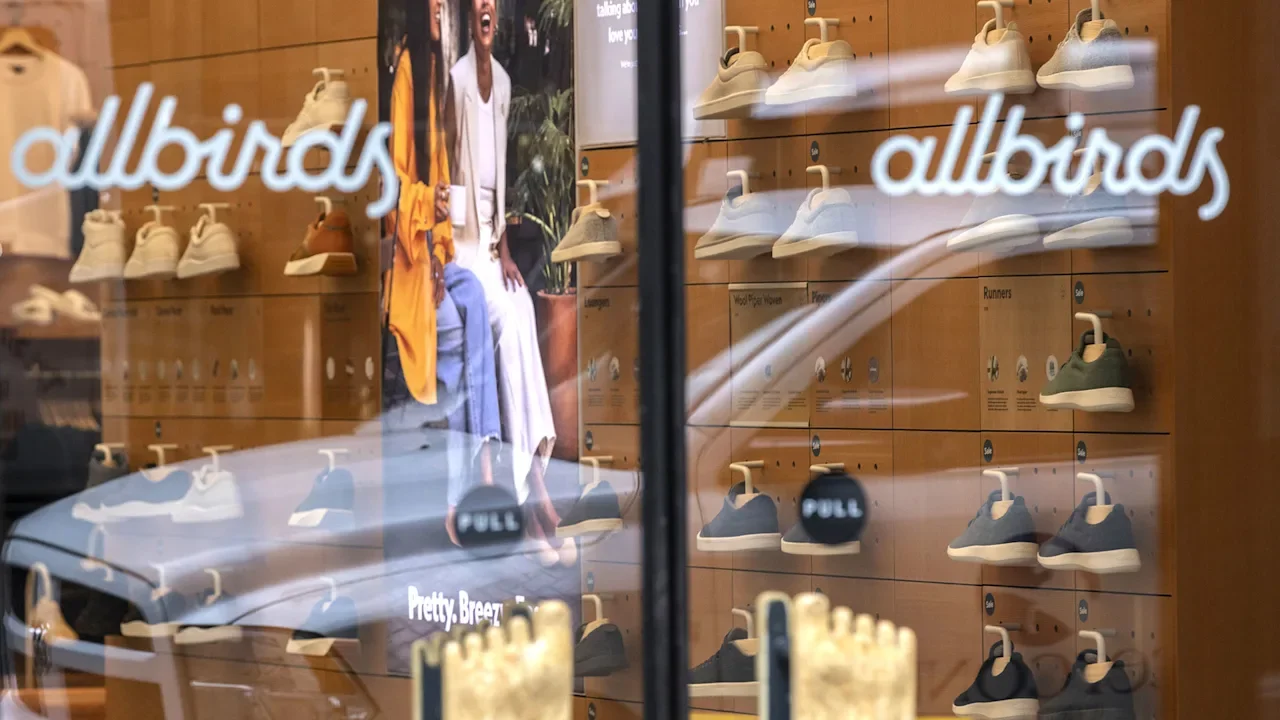
AllBirds Inc. was valued at $4 billion less than five years ago. Now, it will be sold for just $39 million. The shoe company on Monday announced a definitive agreement with American Exchange Group (AXNY), which involves selling all of its intellectual property, assets, and liabilities. Privately held AXNY owns a number of brands, including Aerosoles, Ed Hardy, and Jonathan Adler. “We are incredibly thankful to our teams for the work they have been doing to fuel our product engine, build awareness of Allbirds and deliver an engaging customer experience,” Allbirds CEO Joe Vernachio said in a statement. The sale has already been approved by Allbirds’ board of directors, but still requires the go ahead from the company’s common stockholders. Allbirds plans to file its request for stockholder approval by April 24, complete the transaction in the second quarter, and distribute a yet-to-be-determined amount of net proceeds to stockholders in the third quarter. Vernachio continued: “Over the past decade, Allbirds has evolved into a lifestyle footwear brand known for modern design, innovative materials and unparalleled comfort. This next chapter with AXNY builds on the foundational work already completed and sets up the brand to thrive in the years ahead.” What’s next for Allbirds on the Nasdaq? The company will no longer release its quarterly earnings press release or hold a related call on Tuesday, March 31. Instead, Allbirds will solely file its 2025 annual report with the U.S. Securities and Exchange Commission (SEC). On Monday, shares of Allbirds (Nasdaq: BIRD) closed 6.29% down. Following the sale announcement, shares rose more than 20% in after-hours trading. In Tuesday’s premarket, shares of Allbirds were still up more than 17%. Allbirds stock cratered post-COVID, and never really recovered. In 2024, the company had to do a reverse stock split (1-for-20) in order to keep Nasdaq’s minimum bid price and avoid delisting. How did Allbirds fall so far? Allbirds was a phenomenon in 2021 when it made its $4 billion IPO. Founded in 2015, the company promised—and delivered—comfortable shoes for everyone. But, it also tried to expand into apparel, finding less success in that market. Allbirds has also faced the same problems that many apparel and retail brands face: reduced foot traffic and tighter purse strings. In 2023 cofounder Tim Brown stepped down as co-CEO. His partner Joey Zwillinger followed suit the following year. Vernachio took on the role of CEO after holding the position of COO since 2021. Store closures accompanied the change. In January, Allbirds announced that it would shutter almost all of its brick-and-mortar stores. Allbirds has recently been funding its operations, in part, through borrowings in its credit agreement. In 2025, the company had a net loss of $77.3 million and used $55.1 million in net cash for operating activities. At the end of the year, Allbirds had $26.7 million between its cash and cash equivalents, with $17.4 million outstanding in its credit agreement. In an SEC filing, the company said it “does not expect to continue its operations” once the sale is complete. View the full article

-
Part 3 of this analysis reveals what AI actually rewards in content, from entity types to structure, across seven verticals. The post The Science Of What AI Actually Rewards appeared first on Search Engine Journal. View the full article
- Today
-
Organic traffic is declining, but answer engines are driving higher-intent conversions. Here’s how CMOs should rethink strategy, structure, and measurement. The post So Your Traffic Tanked: What Smart CMOs Do Next appeared first on Search Engine Journal. View the full article
-
We may earn a commission from links on this page. Deal pricing and availability subject to change after time of publication. Amazon’s Big Spring Sale is wrapping up, and the Nothing Phone (3) has dropped to $599 (originally $799) for the 12GB RAM and 256GB model. According to price trackers, that's the lowest price the phone has reached so far. This is Nothing’s most ambitious phone yet (according to this PCMag review), and it shows in how it tries to compete directly with flagship devices while still doing its own thing. Nothing Phone (3) $599.00 at Amazon $799.00 Save $200.00 Get Deal Get Deal $599.00 at Amazon $799.00 Save $200.00 The design, as noted in our own review of the Nothing (3), is what draws you in first. The transparent back is back again, now paired with a Glyph Matrix that uses 489 tiny LEDs to light up for calls, timers, and a few playful extras. It’s a neat idea, and you’ll probably play around with it at the start, but there’s a good chance it fades into the background once the novelty wears off. Beyond that, the phone feels well put together. It uses recycled aluminum, Gorilla Glass 7i, and has an IP68 rating, so it’s built to handle everyday spills and dust without much worry. It has a 6.67-inch AMOLED screen that looks sharp and gets bright enough for outdoor use, and a 120Hz adaptive refresh rate that keeps everything smooth when you’re scrolling or watching videos. The cameras, too, feel more consistent than before, with natural-looking photos across all three lenses instead of overly processed shots. It also has a battery life that comfortably lasts a full day, and fast charging support means you can top it up quickly when needed. In everyday use, the Snapdragon 8s Gen 4 keeps things feeling smooth without much effort. Apps open quickly, switching between tasks is easy, and even heavier games like Genshin Impact run without noticeable slowdowns. That said, the major downside of the Nothing Phone (3) is that it skips many of the AI-heavy features competitors are pushing, so it may feel limited if you care about cutting-edge extras. Our Best Editor-Vetted Amazon Big Spring Sale Deals Right Now Apple AirPods Pro 3 Noise Cancelling Heart Rate Wireless Earbuds — $199.00 (List Price $249.00) Apple iPad 11" 128GB A16 WiFi Tablet (Blue, 2025) — $299.00 (List Price $349.00) Samsung Galaxy Tab A11+ 128GB Wi-Fi 11" Tablet (Gray) — $202.00 (List Price $249.99) Apple Watch Series 11 (GPS, 42mm, S/M Black Sport Band) — $329.00 (List Price $399.00) Blink Video Doorbell Wireless (Newest Model) + Sync Module Core — $35.99 (List Price $69.99) Fire TV Stick 4K Max Streaming Player With Remote — $34.99 (List Price $59.99) Sony WH-1000XM5 — $243.00 (List Price $399.99) Deals are selected by our commerce team View the full article
-
Google Business Profile (GBP) may be getting shoved down the SERPs by ads and AI Overviews more than ever, but it’s still a top source of inbound leads for local businesses — and one of the fastest ways to improve rankings with simple fixes. Here’s a five-step audit to find and fix the gaps most businesses miss. 1. Evaluate Google review velocity and recency It’s a common misconception that the business with the most Google reviews wins in Google Maps ranking. While a high review count provides social proof, Google’s algorithm has more of a “what have you done for me lately?” attitude. The number of reviews you get a month, and how recent your last review was, often outweigh the total count for all important map pack positions. We call these metrics review velocity and review recency. Think about it like this: If you have 500 reviews but haven’t received a new one since 2024, a competitor with 100 fresh reviews from the last month will likely blow past you. So, how do you measure your review velocity and recency? Analyze competitors to see how top-ranking businesses perform on those metrics. Follow these steps: Run a geo-grid ranking scan: Identify which competitors are outranking you for your top keywords. Analyze the last 30 days: Note how many reviews they received this month, and when their most recent one was posted. Benchmark your data: Create a simple table comparing your monthly count and recency. Recommended tools: Places Scout, Local Falcon, or Whitespark for automated grid scans and review data. You don’t just need more reviews. You need to match or exceed the consistency of top-ranking listings. You can automate this with Places Scout API data. That’s what our agency does, tracking it consistently to keep clients ahead of competitors. Automated charts make it easier to see how you stack up. Dig deeper: Local SEO sprints: A 90-day plan for service businesses in 2026 2. Add keywords to your business name Including keywords in your business name is one of the most powerful local ranking signals. Sometimes a profile will rank in the map pack based solely on its name, beating out businesses with better reviews and higher recency. Google’s algorithm hasn’t fully filtered out this type of keyword targeting, so it remains an opportunity. Take this business: only 21 reviews, yet it ranks first in the map pack for an extremely competitive term, thanks to the keywords in its business name. You can’t simply keyword-stuff your name, though. Google can verify your legal name and take action to remove keywords from your profile — or worse, require reverification or suspend it. Your best option is a legal DBA (doing business as) certificate, also known as a trade name, or fictitious name certificate, in some areas. For example, if your legal name is “Smith & Sons,” you’re missing out. Registering a DBA as “Smith & Sons HVAC Repair” allows you to update your GBP name while technically adhering to Google’s guidelines. Competitor analysis: Are your competitors outranking you simply because their name contains the keyword? If yes, you need to take action to match those tactics. Make it legal: Check your local Secretary of State website. Filing a DBA is an effective SEO tactic for moving from Position 4+ into the map pack for certain keywords. Update business website: Update your website with the new name. Google uses website content to verify business details and may update your GBP accordingly. Make sure it only finds the new name, not outdated versions. Your customers search everywhere. Make sure your brand shows up. The SEO toolkit you know, plus the AI visibility data you need. Start Free Trial Get started with 3. Optimize categories (primary vs. secondary) Choosing the wrong primary category for your GBP is a leading reason businesses fail to rank. If you’re a personal injury lawyer, but your primary category is set to “trial attorney,” you’re fighting an uphill battle to rank for those highly competitive terms like “personal injury lawyer” searches. How to pick the best primary category: Competitor analysis: Use Chrome extensions like Pleper or GMB Everywhere to see exactly which primary categories the top-ranking businesses are using. Max out secondary categories: You have 10 total slots. Fill all of them with relevant subcategories. Check off all relevant services: Under each category, Google lists specific services. Select the ones relevant to your business. Dig deeper: How to pick the right Google Business Profile categories Get the newsletter search marketers rely on. See terms. 4. Improve your GBP landing page Many businesses link their GBP to their homepage and stop there. For multi-location businesses, this is a mistake. You should link to a dedicated local landing page optimized for your top keywords that mentions the city your GBP address is in. Linking your GBP to a hyper-local city page (e.g., /tampa-plumbing/ instead of the homepage) reinforces “entity alignment.” When the information on your GBP matches a unique, highly relevant page on your site, Google’s confidence in your location increases, often leading to a jump in the local pack. Make sure your GBP landing page is optimized with all your services and links to dedicated service pages to boost your listing for service-specific searches. Watch out for the diversity update. Sometimes a business ranks well in the map pack, but its website is nowhere to be found in organic results. This is often due to Google’s diversity update. If you suspect you’re being filtered out organically, try linking your GBP to a different localized interior page. This is often a quick fix that helps your site reappear in organic search. Here’s an example of a client I recently helped beat the diversity update with a simple GBP landing page swap. Dig deeper: Google’s Local Pack isn’t random – it’s rewarding ‘signal-fit’ brands 5. Understand proximity and city borders Your business’s physical location within the city and its proximity to the city center are extremely strong ranking signals. It’s not something you can easily manipulate, though, because it’s not always easy to move your office, store, or warehouse. However, you need to know your “ranking radius” and how much room there is to improve rankings for certain keywords within it. Identify the ranking ceiling in your market. I use Local Falcon’s Share of Local Voice (SoLV) metric to do this. If your top competitors only have a 53% SoLV, as in this example, it’s unlikely you’ll be able to get more than that either. This shows when you’ve “maxed out” a keyword and need to target new keywords or open a new location outside that radius. It can also show there’s room to improve — and that you need to increase your SoLV score. Keep in mind that certain keywords are harder to improve based on where your business is physically located. If you’re not physically located within a city’s borders, and your map pin sits anywhere outside the Google-defined border of your city, you will struggle to rank for explicit terms like “Plumber Tampa FL,” and within the city borders in general. Always do this analysis on a keyword-by-keyword basis. Tip: In the current local search landscape, expanding your physical footprint, and verifying more GBPs, is the most reliable way to grow visibility. Max out your current GBPs first, then look for your next location. Dig deeper: The proximity paradox: Beating local SEO’s distance bias Prioritize where you can win now This is a strong starting point, but it’s just the beginning. From review strategy and category selection to city borders and the diversity update, every detail counts. Between overreaching ads and ever-expanding AI Overviews, staying proactive with your GBP strategy is the only way to keep your leads flowing from the map pack. Build your GBP foundation, max out your current locations, and strategize new locations to keep your business in the top spot across your service area. View the full article
-
It’s finally happening. The Artemis II mission—returning humans to the lunar neighborhood for the first time in more than 50 years—is set to launch on April 1 from Kennedy Space Center in Florida during a two-hour window that opens at 6:24 p.m. (EDT), with additional launch opportunities through April 6. The first crewed Artemis mission will send NASA astronauts Reid Wiseman, Victor Glover, and Christina Koch, along with Canadian Space Agency astronaut Jeremy Hansen, on a 10-day journey around the moon. Objectives include testing the Orion spacecraft’s life support systems in situ for the first time with people, gathering additional data on how spaceflight affects the human body, and laying the groundwork for future crewed Artemis missions. It may also offer views of the moon never before seen. This mission will break six major records: the first Black astronaut (Glover, as Orion’s first pilot), first woman (Koch), first non-American (Hansen, his maiden voyage to space), and oldest (Wiseman, aged 50) to visit the lunar arena, traveling the farthest from Earth (250,000 miles), and returning with the fastest re-entry speed (25,000 mph). NASA is streaming a series of prelaunch, launch, and in-flight mission events and briefings on NASA’s YouTube channel, NASA+, as well as its other social media platforms. The public can find a full list of activities here. Enthusiasts can register for the mission’s virtual guest program and receive curated launch resources, notifications about related opportunities or changes, and a NASA virtual guest passport stamp. Likewise, C-SPAN will offer Artemis programming on C-SPAN.org, its YouTube channel, radio station, and mobile app. Fun fact: The Zero Gravity Indicator—the plush toy flying with the astronauts to visually confirm when they’ve reached weightlessness—was designed by Lucas Ye, a second-grader from Northern California, chosen from 2,600 entries submitted in 50+ countries through the Moon Mascot: NASA Artemis II ZGI Design Challenge run by Freelancer on behalf of NASA. Beginning April 2, NASA will conduct daily updates from the Johnson Space Center in Houston and on the Artemis Blog, and the crew will engage in live conversations throughout the mission. To track Orion in space, visit: nasa.gov/trackartemis. New York-based folks still jonesing for more post-launch space theatrics can check out We Chose to Go to the Moon, an immersive experience recounting America’s Apollo moon race, on April 7 and 8, featuring Broadway stars and Neil Armstrong’s son and granddaughter. Here’s to smooth sailing after a turbulent couple of months. First, NASA scrubbed the initial February 6 launch to repair hydrogen leaks and helium flow issues in the Space Launch System (SLS) rocket. In early March, NASA Administrator Jared Isaacman announced a revamped schedule for subsequent Artemis missions to standardize the SLS configuration, push back the moon landing to Artemis IV in 2028, and align workforces with private contractors to enable more frequent launches. On March 20, the 322-foot SLS and Orion rolled back out to Launch Pad 39B. Now, let’s light this candle. View the full article

-
Here is a selection of Posts from March 2026 that you will want to check out: Difficult Conversations Don't Have To Be So Difficult by @davidburkus Why Your Leadership Training isn't Working by @stopyourdrama Marlene Chism Lindy Library: The 0.1% Of Ideas I've Found by @george__mack Excellence Is Not a Performance Target via @AdmiredLeaders Beneath the Surface of Leadership Development by @DanReiland The Quiet Signals Every Great Leader Notices (That Others Miss) by @WScottCochrane Why Being Good, Fast and Cheap Is the Most Radical Thing a Brand Can Do via @MusebyClio by John Stapleton If Your Email Is Too Long, Your Thinking Isn’t Finished by @PhilCooke Before hitting send, ask yourself a simple question: What is the one thing I’m trying to say? Be Better by @James_Albright The world we live in needs it. The people we serve and lead need it. Be better. Monomaniacal by @KevinPaulScott Obsessive focus on a single idea, goal, or pursuit Why AI May Lead to More Work, Not Less by Jacqueline Isaacs via @FaithWorkEcon In many cases, AI tools are actually expanding human work. Are You Empowering or Controlling? by @samchand 2:27 VIDEO AI Makes Designing Faster. But Are We Thinking Less? by @gokhankurt This applies to leadership as well. The Psychology of Prediction by @morganhousel 12 common flaws, errors, and misadventures that occur in people’s heads when predictions are made POV: The creative agency model is dead – that’s why I shut mine down by Madison Utendahl via @itsnicethat When the Crisis Isn’t Your Fault—But It’s Still Your Responsibility by @PhilCooke Why Gifted Leaders Still Fail: Lessons from 25 Years of Ministry with Allen Holmes with @richbirch The Right Plane by @KevinPaulScott The Two Paths Leaders Take After Success: Death and Destruction or Sustainable Success? by @BrianKDodd on Leadership Be the Person that People Want to follow by @James_Albright Visibility Versus Credibility. Two Different Things and Why It Matters. by @PhilCooke Resolve Your Personal Dilemmas with Greater Confidence by Haywood Spangler What Your Conversations Reveal About Your Culture by @stopyourdrama Marlene Chism See more on Twitter. * * * Follow us on Instagram and X for additional leadership and personal development ideas. View the full article
-
We may earn a commission from links on this page. Deal pricing and availability subject to change after time of publication. Spending $300 on a gaming monitor usually means picking a lane: You either go for resolution or speed and live with the compromise. The ASUS ROG Strix XG27UCG tries to ease that trade-off. It’s currently down to $299 (originally $449) as part of Amazon’s Big Spring Sale, which ends today, and this is the lowest it has dropped, according to price trackers. The idea is simple: use it as a sharp 4K display most of the time, then switch to a faster 1080p mode when you care more about responsiveness. ASUS ROG Strix Gaming Monitor $299.00 at Amazon $449.00 Save $150.00 Get Deal Get Deal $299.00 at Amazon $449.00 Save $150.00 In everyday use, the 4K mode is what you’ll spend most of your time on. Text looks clean, videos look detailed, and games have that extra clarity you notice right away on a 27-inch panel. Colors are well-balanced out of the box, and while the HDR support is basic, it does add a bit more brightness in highlights. The 1080p mode is more situational. On the desktop, it looks soft enough that you’ll want to switch back quickly. In games, though, it starts to make sense—the jump to 320Hz is noticeable if you play fast-paced shooters, and the lower input lag helps. It’s not something everyone needs, but if you switch between slower single-player games and competitive ones, it gives you flexibility without needing a second monitor. There are a few practical limitations to keep in mind. The USB-C port is there, but at 15W, it’s more of a convenience than a real charging solution. You also don’t get a USB hub, so it won’t replace a proper docking setup. The bigger problem is the dual-mode switching itself. Moving between 4K and 1080p takes a few seconds and forces the display to resync, which can get frustrating if you plan to switch often. Over time, that delay starts to break the flow and makes the feature feel less practical than it sounds. Our Best Editor-Vetted Amazon Big Spring Sale Deals Right Now Apple AirPods Pro 3 Noise Cancelling Heart Rate Wireless Earbuds — $199.00 (List Price $249.00) Apple iPad 11" 128GB A16 WiFi Tablet (Blue, 2025) — $299.00 (List Price $349.00) Samsung Galaxy Tab A11+ 128GB Wi-Fi 11" Tablet (Gray) — $202.00 (List Price $249.99) Apple Watch Series 11 (GPS, 42mm, S/M Black Sport Band) — $329.00 (List Price $399.00) Blink Video Doorbell Wireless (Newest Model) + Sync Module Core — $35.99 (List Price $69.99) Fire TV Stick 4K Max Streaming Player With Remote — $34.99 (List Price $59.99) Sony WH-1000XM5 — $243.00 (List Price $399.99) Deals are selected by our commerce team View the full article
-
Here’s a familiar scenario: The product development team creates a hot new app. The client is excited to launch it, and the PR team is preparing the campaign for its release. And then this happens: The manager in charge of the project steals the spotlight and takes all the credit for the work. There’s no praise for the team, no celebration of everyone’s success, and no recognition of team members’ contributions. When that happens, it’s quite likely that team morale will take a nosedive. This behavior has frequently appeared in research as a bad-boss trait that leads to employee disengagement and even turnover. In a study I tracked a few years ago, “taking credit for employees’ work” was rated the worst managerial behavior by 63 percent of respondents and something they would consider worth quitting over. It’s worth considering: Can taking credit for employees’ work actually be an effective management tactic for advancement? Or might it hold leaders back and hinder their progress? A study highlighted in Forbes, which looked at 3,800 managers and assessed how effective they were when claiming credit, found that those who took credit for others’ work were seen as quite ineffective (13th percentile). In contrast, leaders who made a genuine effort to give credit to their team members were regarded as some of the most successful (85th percentile). Having trained numerous managers and executives in my leadership course, I see this harmful tendency to dominate the spotlight and claim all the credit as a reflection of individual performance. Managers with this mindset focus on personal recognition, caring primarily about their accomplishments and how they are perceived by superiors. Identify more servant leaders To stop the cycle of bad managers in our midst, we need to identify, develop, and promote more servant leaders—people naturally inclined to give their people credit for their contributions, shine a spotlight on them, and show them appreciation. In fact, Gallup research found that employees who regularly receive credit increase their productivity, achieve higher customer loyalty and satisfaction scores, and are more likely to stay with their organization. Great leaders with loyal followers don’t seek glory or validation; they recognize their own achievements. They highlight others’ successes, and then take a step back to celebrate these accomplishments, fostering greater confidence and trust among their followers. —Marcel Schwantes This article originally appeared on Fast Company’s sister website, Inc.com. Inc. is the voice of the American entrepreneur. We inspire, inform, and document the most fascinating people in business: the risk-takers, the innovators, and the ultra-driven go-getters that represent the most dynamic force in the American economy. View the full article

-
It has been a bruising 24 hours for investors in memory chip storage companies, including Micron Technology, Inc. (Nasdaq: MU), Sandisk Corporation (Nasdaq: SNDK), Western Digital Corporation (Nasdaq: WDC), and Seagate Technology Holdings (Nasdaq: STX). Yesterday, all four leaders in the memory chip space ended the day significantly lower. Here’s what’s happening—and why some are questioning whether the RAM shortage that has driven these companies’ stock prices to new heights will soon come to an end. Memory chip stocks get pummeled—again Just a few weeks ago, the sky seemed to be the limit for memory chip makers. After all, the world is in the middle of a full-blown RAM shortage, which means memory chips are in high demand. This demand has caused the stock prices of four companies—Micron, Sandisk, Western Digital, and Seagate—to surge over the past six months, with performance that has been, simply put, eye-watering. For example, the least best-performing stock of the four companies is Seagate, but even its stock price has risen 53% in the past six months. Micron’s stock price has performed even better, rising 92%. Western Digital is up even more, rising 109% over the past six months. As for Sandisk, its stock performance over the same period has been phenomenal, up more than 410%. And keep in mind that those were the gains even after the memory chip makers’ stock prices began getting pummeled last week. Yesterday, that pummeling continued, with Micron shares dropping nearly 10% during the trading session, while Western Digital lost 8.6%, Sandisk lost 7%, and Seagate dropped 4.6%. With yesterday’s dips, all four major memory chip makers have seen massive stock price declines over the past five days, with Micron down more than 20%, Sandisk down 18.5%, Western Digital down almost 15%, and Seagate down more than 10%. The question is, why? What the AI boom gives, it can take away The AI boom of the past several years has led many of the world’s largest tech giants to spend hundreds of billions building massive data centers to run their AI systems. These data centers require servers that in turn require massive amounts of RAM to run the AI. The staggering RAM requirements for the AI boom have led to a memory chip shortage. And while that is bad for everyday retail customers like you and me, that shortage has been very good for the memory chip makers themselves. Their once-cheaper RAM technology now sells at a premium—and they have no shortage of deep-pocketed enterprise customers snapping up all the RAM they can make. But what the AI boom gives, it can take away. Last week, one of the world’s AI leaders, Google, announced it had developed a new technology called TurboQuant. As Fast Company previously reported, Google says the tech is “a compression algorithm that optimally addresses the challenge of memory overhead in vector quantization.” Without going into too much detail, the tech essentially means that AI giants like Google might soon be able to run compute-intensive AI tasks on computers that require up to six times less RAM than they do now. While this is great news for the AI giants, it’s horrible news for memory chip makers, as demand for their chips could drop by as much as 6x. Why did memory stocks get hit so hard yesterday? Importantly, Google’s TurboQuant news was released last week (RAM makers also took a beating when it was first announced), so why did memory chip stocks fall again yesterday? It’s always impossible to know the exact motivations for any large-scale selloff in the markets, but investors probably spent the weekend digesting the TurboQuant news. And when markets opened on Monday, enough investors thought it might be a good idea to start taking some profits on the four memory chip makers, which have seen such impressive gains in recent months. Such profit-taking can often trigger a snowball effect, resulting in significant falls in a stock in any given trading session. The only other thing likely to have affected memory chip stocks yesterday is the same event that has affected most other stocks over the past month: lingering uncertainty around the war in Iran. The markets have been generally down this month, with the Wall Street Journal reporting that we could be heading for our worst quarter in four years. What investors will be watching for in particular with memory chip stocks is whether the RAM shortage may indeed be coming to an end sooner than most expected. That answer will likely have the greatest influence on memory-chip stocks in the months ahead. View the full article

-
U.S. gas prices jumped past an average of $4 a gallon for the first time since 2022 on Tuesday as the Iran war pushed fuel prices to soar worldwide. According to motor club AAA, the national average for a gallon of regular gasoline is now $4.02 — over a dollar more than before the war began. The last time U.S. drivers were collectively paying this much at the pump was nearly four years ago, following Russia’s invasion of Ukraine. The price is a national average, meaning drivers in some states have been paying well over $4 a gallon for a while now. Prices vary from state to state due to factors ranging from nearby supply to differing tax rates. Since the U.S. and Israel launched a joint war against Iran on Feb. 28, the cost of crude oil — the main ingredient in gasoline — has spiked and swung rapidly. That’s because the conflict has caused deep supply chain disruptions and cuts from major oil producers across the Middle East. Motorists around the world are also coping with higher gas prices due to the war. In Paris, for example, gas is at 2.34 euros per liter ($2.68), which is about $10.27 a gallon. Expensive gas could drag on the economy and drive up other prices Higher gas prices are impacting consumers and businesses as many households continue to face wider cost of living strains. And as drivers pay more to cover necessities like gas, many may be forced to cut their budgets in other places. More expensive fuel can also push up other spending, from utility bills to the price of many goods consumers buy each day. Consumer prices and the cost of living already have become flashpoints in this midterm election year, with Democrats especially hammering The President and Republicans as the GOP tries to hold majorities on Capitol Hill. A recent AP-NORC poll found that 45% of U.S. adults are “extremely” or “very” concerned about being able to afford gas in the next few months, up from 30% shortly after The President won the 2024 presidential election with promises to lower costs. In the immediate future, analysts point to groceries, which have to be restocked frequently and could also see price hikes as businesses’ transportation costs pile up. But hauling other cargo and packages has also been impacted. The United Postal Service, for example, is seeking a temporary 8% added charge on some of its popular products including Priority Mail. U.S. diesel prices — the fuel used for many freight and delivery trucks — is now going for an average of $5.45 a gallon, up from about $3.76 a gallon before the war began, per AAA. If the war drags on, it’s possible that those prices could tick up even higher. Most tanker movement in the key Strait of Hormuz, where roughly one-fifth of the world’s oil typically sails through, remains at a halt. That’s led to cuts from major producers in the region who have no way of getting their crude to market. Meanwhile, Iran, Israel and the U.S. have all struck oil and gas facilities, worsening supply concerns. Reserves open in an effort to cut prices In a search for some relief, the International Energy Agency pledged to release 400 million barrels of oil from emergency stockpiles of member nations. That includes the U.S., despite The President initially downplaying the need for reserve oil. The The President administration has also eased sanctions to free up some oil from Venezuela, and temporarily Russia. The White House also says it’s waiving maritime shipping requirements under a more than century-old law, known as the Jones Act, for 60 days. It’s not yet clear if those efforts will bring relief for consumers. A lot of factors contribute to gas prices. Refineries buy crude oil in advance, meaning some could be work with more expensive oil for a while, and it will take time for any new supply to trickle down to consumers. And while steep crude prices are a leading driver behind today’s surge, U.S. gas prices typically tick up a bit at this time of year. More drivers are hitting the road and trying to fuel up while they can, so there’s higher demand. Warming weather also brings a shift to summer blend fuel, which is more expensive to produce than winter blend. The US is an oil exporter, but it’s still affected by global prices The U.S., which is a net oil exporter, hasn’t seen as stark a shock as other parts of the world that rely more heavily on fuel imports from the Middle East, notably Asia. But that doesn’t mean America is immune to price spikes. Oil is a globally-traded commodity. And most of what the U.S. produces is light, sweet crude — but refineries on the East and West coasts are primarily designed to process heavier, sour product. As a result, the country also needs imports. Escalating geopolitical conflicts have disrupted oil flows and contributed to a surge in gas prices in the past. The U.S. average for regular gasoline climbed to its highest level of more than $5 a gallon in June 2022, nearly four months after the Ukraine war began and world leaders imposed sanctions against Russia, a leading oil producer. Prices at the pump later fell from that record. Before Tuesday, per AAA data, the national average had stayed below the $4 mark since mid-August of 2022. Associated Press journalists Angela Charlton and Bill Barrow contributed to this report. —Wyatte Grantham-Philips Associated Press View the full article

-
UK Liberal Democrats had called for royal trip to be cancelledView the full article
-
As marketing leaders, we don’t wake up thinking about algorithms. We wake up thinking about growth. For CMOs, the job has always been the same: drive real business impact, improve ROI, and prove—repeatedly—that marketing is a growth engine, not a cost center. Long before generative AI entered the conversation, marketing leaders were under pressure to connect activity to revenue, align tightly with sales, and make performance visible. The pressure to quantify value didn’t start with AI. It started when the business demanded proof. What has changed is the speed and precision with which we can now deliver that proof. AI ISN’T REINVENTING MARKETING. IT’S REWIRING DISCOVERY. There’s a growing narrative that AI is reinventing marketing from scratch. That’s not quite right. The fundamentals haven’t changed. Customers still want clarity, differentiation still matters, and trust still closes deals. What has changed—dramatically—is how buyers discover information. Artificial intelligence is accelerating marketing’s ability to connect actions to outcomes. Predictive models surface intent earlier. Personalization is finally scalable. Attribution is sharper and more defensible. In many ways, marketing’s contribution to growth has never been more measurable. At the same time, AI is quietly breaking the discovery model most marketing strategies were built on. Search engines, feeds, and clicks are no longer the primary gateways to information. Increasingly, buyers encounter brands through AI systems that summarize, synthesize, and recommend—often without ever sending them to a website. That creates a paradox for CMOs: just as we get better at measuring impact, the signals we’ve historically relied on—traffic, rankings, and engagement—are becoming less reliable indicators of influence. Many marketing tactics that dominated the last decade were designed for a discovery model that rewarded volume: more content, more keywords, more posts, more gates. Large language models don’t work that way. They reward clarity. They don’t favor noise. They surface authority, structure, and context. Content optimized for feeds and rankings often performs poorly in an AI-mediated environment, while rigorously built content performs better than ever. Once you accept that discovery has changed—but accountability has not—the leadership challenge becomes clear: CMOs must decide what no longer deserves attention. A “KEEP. DROP. SCALE.” FRAMEWORK FOR AI-FIRST GROWTH In an AI-first discovery world, the question isn’t “How do we do more?” It’s “What should we stop, what should we protect, and what should we scale—so our efforts compound instead of dilute?” A simple. “Keep. Drop. Scale.” matrix gives us CMOs a practical way to reallocate effort without disrupting momentum while modernizing content for AI-driven visibility and improving ROI and attribution—even as clicks decline. Keep: What signals authority What keeps showing up in AI-driven discovery is content that was built to last. CMOs should keep and protect: Deep expert content grounded in real data, not opinion. Clean structured content using consistent headings and schemas. Content clusters organized around real customer problems, not internal narratives. Structured content retains visibility in AI‑generated results even as traditional click‑through rates decline. AI doesn’t need flash. It needs a signal. Drop: What exists to feed the machine This is the hardest part—and the most freeing. It’s time to reduce or eliminate: Keyword-stuffed content that answers no real question. Social output optimized for cadence rather than insight. Gated assets that summarize information buyers can now get instantly from AI. If content exists primarily to game the system, AI will route around it. In an AI‑first discovery world, volume without substance becomes invisible. Scale: Explainability, provenance, and context This is where the biggest opportunity lies. Prioritize explainers over announcements. Make authorship, sources, and timestamps explicit. Provide context that connects facts to meaning. Create modular content that can be cited, summarized, and reused accurately. AI favors content that is easy to attribute, summarize, and trust. This can be a strategic advantage that improves buyer confidence and accelerates late‑stage conversations. WHY THIS MOMENT MATTERS FOR MARKETING LEADERS AI doesn’t replace marketing fundamentals. It exposes the weak ones. The marketers who win in this transition will not be the ones chasing every new tool or metric. They will be the ones who make deliberate choices about what to stop, preserve, and scale. A “Keep. Drop. Scale.” framework gives leaders: Air cover to say no to legacy work that no longer compounds. A clear narrative for teams navigating constant change. A credible way to report impact as discovery decouples from click.s In an AI‑first world, visibility isn’t about being everywhere. It’s about being understood, trusted, and surfaced when it matters. That’s not the end of marketing. It’s the next chapter. Felicity Carson is senior vice president and chief marketing officer at onsemi View the full article

-
After failing to stop multiple offshore wind projects from moving forward on the East Coast, the The President administration is trying a new tactic: paying companies not to build wind farms. Last week, the government announced that it would pay TotalEnergies approximately $1 billion to give up on building two planned offshore wind farms in the U.S. and to invest in oil, gas, and LNG production instead. But experts say that the federal government can’t legally spend taxpayer money this way. And Total was already planning to build new fossil fuel projects before striking the deal. In the past, when energy companies decided to give up offshore leases, they ate the loss. Other companies, for example, have given up offshore oil and gas leases in Alaska. “They may or may not have spent a lot of money on the lease, but they routinely will expire, and the companies are not going to ask for reimbursement because they’re not going to get it,” says David Hayes, a law professor at Stanford who worked on climate policy in the Biden administration. “That money has gone into the U.S. Treasury. The Interior Department can’t simply on its own say to the U.S. Treasury, ‘Please give that money back because the company decided it doesn’t want to proceed with the lease.’” The French company TotalEnergies bought two leases for planned wind farms in 2022: one off the coast of North Carolina, for more than $133 million, and one off the coast of New York for $795 million. Then The President took office, and started to attack wind farms. The president has a longstanding grudge against offshore wind; his allies in the fossil fuel industry also don’t want competition from large wind projects. Last year, the The President administration ordered five large offshore wind projects that were already under construction to stop work. The administration cited unspecified national security concerns, though all of the projects had already been thoroughly vetted by the military. The energy companies sued and each won in court. The government didn’t appeal the verdicts, in a sign that it knew it wouldn’t win. (Separately, the government is also now using military reviews to delay more routine approvals for wind farms on land.) Earlier this month, one of the offshore projects, Vineyard Wind, finished construction. Revolution Wind, another project, started delivering power. Last week, Coastal Virginia Offshore Wind also started delivering power to the grid. When that project is fully complete, it will power around 660,000 homes; Dominion, the utility building it, says that it will save customers $3 billion on fuel costs over its first decade. Those companies lost millions because of the delays and had to battle to keep going. In TotalEnergies’ case, instead of struggling to begin new projects in the face of a hostile administration, the company decided to pull out. The CEO has said that he approached the administration to make the new deal. (Neither TotalEnergies nor the Department of the Interior responded to Fast Company‘s requests for comment.) But experts say the deal, as described, isn’t legally viable. The Bureau of Ocean Energy Management “does not have the authority to give a so-called refund if an entity that is holding a lease wants to relinquish the lease,” says Elizabeth Klein, who led the agency under Biden and is now director of domestic policy programs at Penn Washington. BOM also doesn’t have the funds. Klein says that its annual budget is only around $200 million. “BOM is not sitting on a billion dollars,” she says. The administration may reportedly use the Judgment Fund to pay—but that fund is supposed to be used for settlements when the government has been sued and is likely to lose in court. In this case, Total never tried to start building the wind farms, the government never tried to stop it, and Total never sued. “The government hasn’t taken any action to cancel those leases,” says Klein. “There is no litigation. “In my view, it’s as if the government is saying, you know, we were about to break the law, and instead of breaking the law, we’re going to pay you the money out.” In a press release about the deal, the Department of the Interior cited the Rio Grande LNG plant that Total plans to expand in Texas as part of the new fossil fuel work that the federal government will reimburse “dollar for dollar.” But Total had already committed to that work. Even if it were legal to use, the money isn’t incentivizing anything new. Congress could object to the misuse of taxpayer money. “These are U.S. funds that are being inappropriately applied, without Congressional approval, for liability that does not exist,” says Hayes. The states that were supposed to get the power, New York and North Carolina, could also potentially sue, since residents there will lose out on clean power that could have helped lower energy bills. View the full article

-
AI search engines like ChatGPT, Google AI Mode, and Perplexity are changing how consumers discover and purchase products online. If your product pages aren’t optimized for these AI assistants, you could be missing out on a growing source of traffic and revenue. The challenge? AI assistants don’t evaluate product pages in the same way traditional search engines do. They need to fully understand your products so they can confidently recommend them to different users with different needs. To help you assess how well your product pages are optimized for AI search, here’s a simple scorecard covering the six most important factors. 1. Product specifications Does the product page clearly display the product’s attributes and specifications? AI assistants need clearly stated specifications to better understand your products and match them to customer needs. If a shopper asks an AI assistant for “an airline-friendly crate for a 115-pound dog,” the AI must be able to see the maximum weight limit of a product before it will recommend it. Without clear specifications, some products won’t get recommended, even if they’re actually a perfect match. Amazon does this really well, and it’s likely one of the many keys to their strong performance in AI search. Just look at all the helpful specifications they clearly lay out on their product pages. Action item: Go through your product pages and make certain all applicable specifications are clearly displayed. Don’t bury them in the main product description or other marketing copy. Clearly lay them out in a structured table or bulleted list. Your customers search everywhere. Make sure your brand shows up. The SEO toolkit you know, plus the AI visibility data you need. Start Free Trial Get started with 2. Unique selling points Are the product’s unique benefits clearly described? AI needs to understand both what makes your product stand out and why your products should be recommended over the competition. If a product page reads like every other industry website, AI assistants have no compelling reason to recommend the listed products. Think about it from the AI’s perspective: If a user asks “what’s the best L-shaped sofa,” the AI will look for products with clear differentiators (hidden storage, machine-washable, modular parts, durability, etc.). The characteristics that make your product stand out should be explicitly stated on the page. Here’s a great example from Home Reserve. Their product pages have a section called “Key Features” that lists the unique selling points that separate them from the competition. Action item: Make sure your product pages clearly state what makes them better and why it matters to the customer. Keep your key features specific. Generic selling points like “high-quality craftsmanship” or “premium materials” are too vague and don’t give AI assistants enough information to establish a clear differentiation. Dig deeper: How AI-driven shopping discovery changes product page optimization 3. Use cases and target audience Are the product’s intended use cases and audience clear? AI assistants don’t match products to keywords — they match products to people and their unique needs. When a user asks ChatGPT, “what’s the best desk for a small apartment,” the AI looks for products intended for compact spaces, small rooms, or apartment living. If a product page only describes the desk’s dimensions without connecting them to a particular use case, AI assistants may not recommend the product when users ask about those scenarios. Any given product could have a multitude of use cases and audiences. A standing desk could be ideal for remote workers, people with back pain, gamers, or small business owners outfitting a home office. If a product page only speaks to one of these audiences, it might not get recommended to the others in AI search. Action item: For each product, include the top three to five specific use cases or audience segments on the page. Go beyond demographics and think about situations, pain points, and goals. Get the newsletter search marketers rely on. See terms. 4. FAQ section Does the product page include an FAQ section answering common questions about the product? AI assistants always try to connect products with the right buyer. When a user asks a question like, “what’s the best waterproof sealant for a flat roof,” the AI looks for information on product pages demonstrating they’re a good fit for the particular use case. This is what makes FAQ content so valuable. A well-structured FAQ section can give AI assistants additional confidence that the product is a good fit for the user and worthy of a mention. The more specific and detailed your FAQ answers are, the more prompts your product can match within AI search. For example, Liquid Rubber sells mulch glue and waterproof sealants. They do a great job of providing a clear list of frequently asked questions on their product pages. This type of FAQ content can help their products get recommended more often when users ask ChatGPT specific questions: What’s the best VOC mulch glue? Can I get mulch glue that will last up to 12 months? Is there a mulch glue that delivers within one week? Action item: Review your customer support inquiries, product reviews, competitor pages, and relevant Reddit threads to identify the most common customer questions. Then add these questions directly to your product pages with clear and concise answers. Dig deeper: AI citations favor listicles, articles, product pages: Study 5. Product reviews Does the product page display customer ratings and review counts? AI assistants will recommend highly rated products with strong reputations. A product with 500+ reviews and a 4.8-star rating is a much safer recommendation than a product with zero reviews or a low rating. Just ask ChatGPT for product recommendations, and you’ll see the product ratings front and center. Take, for example, the prompt, “What’s the best medium roast caramel flavored coffee?” It’s clear that ChatGPT relies heavily on product reviews and only recommends products with a high rating. When you click on any of these products, you’ll see that product ratings and the number of reviews are clearly displayed on the product page. Note: Your product’s rating in ChatGPT may differ from what’s on your product page. This is because ChatGPT calculates an aggregate rating across multiple merchants (e.g., Walmart, Target, etc.), rather than only pulling from your product page. But having a strong rating isn’t enough — you need a lot of reviews as well. I recently reviewed 1,000 ecommerce-focused prompts and found that the median number of reviews was 156. So, if you want to increase your chances of getting recommended by ChatGPT (and other AI assistants), aim for at least 150+ product reviews. Action item: Make sure your product pages clearly display customer ratings, review counts, and (ideally) some actual reviews. Third-party review platforms like Yotpo, Judge.me, and Shopper Approved can solicit product reviews from customers for you. Dig deeper: How to make ecommerce product pages work in an AI-first world 6. Product structured data Does the product page include structured data for price, availability, reviews, and other key attributes? It’s easier for AI search engines to understand information presented in a clear structure (e.g., tables, lists). But there’s nothing more structured than the JSON format for structured data (also known as schema markup). There’s a common claim in AI SEO that structured data is some kind of magic bullet for AI visibility. The reality is more nuanced. Structured data experiment An interesting experiment conducted by SEO consultant Dan Taylor tested the impact of structured data on AI search. He included a physical address for a made-up company in the JSON-LD structured data, but didn’t include it anywhere in the page content itself. Then, when he asked ChatGPT for the address, it still pulled it from the structured data. This experiment shows that AI assistants are indeed crawling structured data. But they’re not necessarily parsing it the same way a traditional search engine would. Instead, they’re simply treating it as another source of text on the page. If the content in your schema is relevant to a user’s prompt, AI assistants will pick it up. But it doesn’t matter whether the schema is valid or completely made up. Where structured data helps most So, if AI assistants treat structured data like any other text, is it still worth adding it to your product pages? The short answer is “yes.” Presenting important product information clearly and well formatted can always help AI assistants understand your product pages. But the real advantage is in the product cards found within the AI responses. Google is using its Knowledge Graph data in their AI systems, and this type of structured data, or schema markup, can feed into it. There are also reports of ChatGPT using Google Shopping data for its product recommendations. So, the main advantage of structured data is how it plays into Google’s Knowledge Graph of products, which can directly impact product recommendations across Google AI Overviews, AI Mode, and even ChatGPT. With the rise of agentic commerce, product data will only become more important as AI agents rely on it to compare, evaluate, and even purchase products on behalf of users. See the complete picture of your search visibility. Track, optimize, and win in Google and AI search from one platform. Start Free Trial Get started with Putting the scorecard to work Here’s a quick overview you can use to audit your product pages: Once you’ve scored your highest-priority pages, any gaps become the priority on your AI product optimization roadmap. Tackle the “No” items first, since those represent the biggest missed opportunities, then work on upgrading the “Partial” scores. This type of product optimization is still a blind spot for many ecommerce brands, which means every factor you improve is a chance to get recommended where they don’t. The sooner you close these gaps, the harder it becomes for competitors to catch up. View the full article
-
Google's John Mueller explained, one again, why it takes weeks to roll out a core update. It is often because there are different components to core updates through the rollout stages, and each needs to be pushed individually. View the full article
-
Cost of oil likely to keep climbing until Strait of Hormuz reopens to shipping View the full article
-
Microsoft is at it again with its sponsored labels tests. This time, Microsoft is testing almost transparent sponsored labels within the Bing search results. The labels are super grayed out and super hard to see.View the full article
-
Last week, OpenAI announced a new feature for ChatGPT named location sharing. This allows you to share your precise location with ChatGPT, so ChatGPT can give you more localized and near me results.View the full article
-
Unless the war ends quickly, a rise in Eurozone interest rates looks inevitableView the full article
-
As his poll numbers tank, the president’s trade and immigration agendas are encountering judicial resistance tooView the full article
-
Google Ads is rolling out asset group theming for Performance Max campaigns. This lets you copy an asset group and apply this theme to your text and images using Google AI.View the full article