All Activity
- Past hour
-
 Google's Search Relations team discussed whether you still need a website in 2026, and outlined when social, apps, or the web make sense. The post Google’s Search Relations Team Debates If You Still Need A Website appeared first on Search Engine Journal. View the full article
 -
Investors in Pinterest, Inc. (NYSE: PINS) are waking up to a wall of red this morning. The stock price of the popular digital image-sharing board has fallen off a cliff after the company reported its Q4 2025 results yesterday. Here’s what you need to know. Pinterest’s Q4 2025 results From a quick glance, Pinterest’s results for its fourth quarter of fiscal 2025 didn’t look too bad. The company reported some impressive gains in a couple of key metrics. Those metrics include: Total revenue: $1.32 billion (up 14% year over year) Global Monthly Active Users (MAUs): 619 million (up 12% year over year) However, despite those gains, the company’s $1.32 billion in revenue came in below what analysts were expecting. As noted by CNBC, LSEG consensus estimates were that Pinterest would post $1.33 billion in revenue. The company also reported an adjusted earnings per share (EPS) of 67 cents. That was below analyst expectations of an EPS of 69 cents. Worse, Pinterest said it expects its current-quarter revenue, for Q1 of its fiscal 2026, to be between $951 million and $971 million. While that range represents year-over-year growth of between 11% and 14%, even the high-end estimate is well below the $980 million analysts were expecting. Pinterest blames tariffs for earnings miss So what is behind the worse-than-expected results? The company blamed one primary thing: tariffs. At first, a tariff’s impact on Pinterest’s revenue might seem a little unbelievable. After all, Pinterest does not import and sell physical goods, which would seem to lessen any potential impact that President The President’s erratic traffic policies could have on the company’s bottom line. That problem for Pinterest is that while the company may not be in the business of selling imported goods, many of Pinterest’s main customers—its advertisers—are. And those advertisers are responding to increased tariff costs by cutting back on their ad spend, which impacts Pinterest’s bottom line. “Many of the largest retailers have been disproportionately impacted by tariffs and have been pulling back on advertising spend across the industry as they seek to protect their margins,” Pinterest’s CEO, Bill Ready, said on the company’s financial call, according to a PitchPook transcript of the call. “Our higher mix of large retailers relative to some of our peers has resulted in us feeling more of an impact.” But while Ready shifted the blame to tariffs, he also conceded that the company wasn’t diversified enough when it came to its range of advertisers. “This highlights the need for us to further accelerate our growth with a broader set of mid-market, SMB, and international advertisers with less than $30 billion of GMV [gross merchandise volume],” Ready said. “This is the next phase of our sales and go-to-market transformation.” Pinterest’s stock price has had a bad year Even before today’s 20% premarket decline, PINS stock has been having a rough time lately. The company’s stock price closed at $18.54 yesterday. That represented a fall of more than 28% since the year began, and a staggering 52% drop over the past twelve months. At its current premarket price of around $14.56 a share, PINS stock has not seen a price this low since early 2020. To put Pinterest’s recent share price doldrums into a broader context, the stock market Pinterest trades on—the New York Stock Exchange (NYSE)—has seen gains while PINS continues to drop. Data from Yahoo Finance shows the NYSE Composite Index has risen 5.3% year to date, and more than 15.5% over the past 12 months. View the full article

-
Since Spencer Rascoff took over as Match Group CEO in early 2025, he has set about trying to revive its portfolio of dating apps, in part by winning back user trust and courting Gen Z. “Trust is the foundation of real connections, and we are committed to rebuilding it with urgency, accountability, and an unwavering focus on the user,” Rascoff said last March in a letter to employees sharing his vision. As part of that turnaround and effort to cultivate trust, Match Group—the parent company of Tinder, Hinge, and OkCupid—has also sought to revamp its internal culture over the last year, in the interest of imbuing the company with greater transparency. A few months into Rascoff’s tenure as CEO, the company also announced layoffs, which affected 13% of its workforce. In a LinkedIn post today detailing Match Group’s culture shift, Rascoff argued that transparency had been “critical” to the company’s transformation over the last year. “I’ve seen a noticeable shift: stronger collaboration, faster ideas sharing, and sharper execution,” he wrote. “It’s a sign to me that the culture of transparency has taken hold.” Rascoff shared how, exactly, Match Group fostered that transparency, starting with giving employees a direct line to ask questions or provide feedback. Employees have the option of remaining anonymous or including their name and engaging in a back-and-forth with Rascoff if appropriate. “I read every single submission, and I respond to every message that comes in,” he wrote, adding, “If the sender includes their name, I follow up with that person directly, and many great conversations have been sparked in this way. If the sender chooses to remain anonymous, then I write up an answer and share it broadly with the company monthly.” This feedback channel has prompted more than 300 messages and led to several changes at Match Group, including a shared GitHub repository for engineers across the company and a standing monthly meeting between Rascoff and the Gen Z employee resource group. Rascoff also claims to answer every question that is submitted prior to the company’s all-hands meetings. “Transparency only works if it goes both ways,” he wrote on LinkedIn. “You can’t expect people to speak up if you don’t show them it makes a difference.” Rascoff has also taken the unusual step of not only asking for feedback but actually receiving feedback on his own performance in a public forum. Match Group’s head of talent management conducted his mid-year review in an all hands meeting last year, allowing employees to listen in on his performance evaluation and see the goals that would govern his priorities for the rest of 2025. In March, Rascoff also plans to share his 2025 self-assessment with the whole company. It’s not yet clear whether Match Group’s overhaul will prove successful. But Rascoff claims the push for transparency has already moved the needle on company culture. At Tinder, employee engagement has jumped by 10% over the last six months. And in Match Group’s annual employee survey, there was a 13% increase in the share of people who agreed with the statement that the executive team keeps them informed. “One year as CEO, what’s mattered most to me is creating the conditions where great people can thrive,” Rascoff told Fast Company. “When teams are trusted and aligned, they move faster and feel more connected to the work. Watching that happen has been deeply motivating for me, and it makes me excited about the progress we can continue to make from here.” View the full article

-
For a long time, PPC performance conversations inside agencies have centered on bidding – manual versus automated, Target CPA versus Maximize Conversions, incrementality debates, budget pacing and efficiency thresholds. But in 2026, that focus is increasingly misplaced. Across Google Ads, Meta Ads, and other major platforms, bidding has largely been solved by automation. What’s now holding performance back in most accounts isn’t how bids are set, but the quality, volume, and diversity of creative being fed into those systems. Recent platform updates, particularly Meta’s Andromeda system, make this shift impossible to ignore. Bidding has been commoditized by automation Most advertisers today are using broadly similar bidding frameworks. Google Smart Bidding uses real-time signals across device, location, behavior, and intent that humans can’t practically manage at scale. Meta’s delivery system works in much the same way, optimizing toward predicted outcomes rather than static audience definitions. In practice, this means most advertisers are now competing with broadly the same optimization engines. Google has been clear that Smart Bidding evaluates millions of contextual signals per auction to optimize toward conversion outcomes. Meta has likewise stated that its ad system prioritizes predicted action rates and ad quality over manual bid manipulation. The implication is simple. If most advertisers are using the same optimization engines, bidding is no longer a sustainable competitive advantage. It’s table stakes. What differentiates performance now is what you give those algorithms to work with – and the most influential input is creative. Andromeda makes creative a delivery gate Meta’s Andromeda update is the clearest evidence yet that creative is no longer just a performance lever. It’s now a delivery prerequisite. This matters because it changes what gets shown, not just what performs best once shown. Meta published a technical deep dive explaining Andromeda, its next-generation ads retrieval and ranking system, which fundamentally changes how ads are selected. Instead of evaluating every eligible ad equally, Meta now filters and ranks ads earlier in the process using AI models trained heavily on creative signals, improving ad quality by more than 8% while increasing retrieval efficiency. What this means in practice is critical for marketers. Ads that don’t generate strong engagement signals may never meaningfully enter the auction, regardless of targeting, budget, or bid strategy. If your creative doesn’t perform, the platform doesn’t just charge you more. It limits your reach altogether. Dig deeper: Inside Meta’s AI-driven advertising system: How Andromeda and GEM work together Creative is now the primary optimization input on Meta Meta has repeatedly stated that creative quality is one of the strongest drivers of auction outcomes. In its own advertiser guidance, Meta highlights creative as a core factor in delivery efficiency and cost control. Independent analysis has reached the same conclusion. A widely cited Meta partnered study showed that campaigns using a higher volume of creative variants saw a 34% reduction in cost per acquisition, despite lower impression volume. The reason is straightforward. More creative gives the system more signals. More signals improve matching. Better matching improves outcomes. Andromeda accelerates this effect by learning faster and filtering harder. This is why many advertisers are experiencing plateaus even with stable bidding and budgets. Their creative inputs are not keeping pace with the system’s learning requirements. Your customers search everywhere. Make sure your brand shows up. The SEO toolkit you know, plus the AI visibility data you need. Start Free Trial Get started with Google Ads is quietly making the same shift While Google has not branded its changes as dramatically as Meta, the direction is the same. Performance Max, Demand Gen, Responsive Search Ads, and YouTube Shorts all rely heavily on creative assets to unlock inventory. Google has explicitly stated that asset quality and diversity influence campaign performance. Accounts with limited creative assets consistently underperform those with strong asset coverage, even when bidding strategies and budgets are otherwise identical. Google has reinforced this by introducing creative-focused tools such as Asset Studio and Performance Max experiments that allow advertisers to test creative variants directly. As with Meta, the algorithm can only optimize what it is given. Strong creative expands reach and efficiency. Weak creative constrains both. Dig deeper: A quiet Google Ads setting could change your creative The plateau problem agencies keep hitting Many agencies are seeing the same pattern across accounts. Performance improves after structural fixes or bidding changes. Then it flattens. Scaling spend leads to diminishing returns. The instinct is often to revisit bids or efficiency targets. But in most cases, the real constraint is creative fatigue. Audiences have seen the same hooks, visuals, and messages too many times. Engagement drops. Estimated action rates fall. Delivery becomes more expensive. This isn’t a platform issue. It’s a creative cadence issue. Creative testing is the missing optimization lever in mature accounts. Get the newsletter search marketers rely on. See terms. The agency bottleneck: Creative production Most agencies are structurally set up to optimize bids, budgets, and structure faster than they can produce new creative. Creative takes time. It requires strategy, copy, design, video, approvals, and iteration. Many retainers still treat creative as a one-off or an add-on rather than a core performance input. The result is predictable. Accounts are technically sound but creatively starved. If your account has had the same core ads running for three months or more, performance is almost certainly being limited by creative volume, not optimization skill. High-performing accounts today look messy on the surface with dozens of ads, multiple hooks, frequent refreshes, and constant testing. That isn’t inefficiency. That’s how modern PPC works. Creative testing is a process, not a campaign One of the biggest mistakes agencies make is treating creative testing as episodic. Launch new ads. Wait four weeks. Review results. Declare winners and losers. That approach is too slow for how fast platforms learn and audiences fatigue. High-performing teams treat creative like a product roadmap. There’s always something new in development. Always something learning. Always something being retired. Effective creative testing focuses on one variable at a time: hook, opening line, visual style, offer framing, social proof, or call to action. It’s not about finding “the best ad.” It’s about building a library of messages the algorithm can deploy to the right people at the right time. Dig deeper: Your ads are dying: How to spot and stop creative fatigue before it tanks performance What agencies should do differently Once you accept that creative is the constraint, the operational implications are unavoidable. If creative is the main constraint, agency processes need to change. Creative should be planned alongside media, not after it. Retainers should include ongoing creative production, not just optimization time. Testing frameworks should be explicit and documented. At a minimum, agencies should be asking: How often are we refreshing creative by platform? Are we testing new hooks or just new designs? Do we have enough volume for the algorithm to learn? Are we feeding performance insights back into creative strategy? The best agencies now operate closer to content studios than optimization factories. That’s where the value is. Creative is the performance lever Bidding, tracking, and structure still matter. But in 2026, those are table stakes. If your PPC performance is stuck, the answer is rarely another bidding tweak. It’s almost always better creative. More of it. Faster iteration. Smarter testing. The platforms have told us this. The data supports it. The accounts prove it. Creative is no longer a nice-to-have. It’s the performance lever. The agencies that recognize that will be the ones that continue to grow. Dig deeper: Cross-platform, not copy-paste: Smarter Meta, TikTok, and Pinterest ad creative View the full article
-
Kathy Ruemmler, the top lawyer at storied investment bank Goldman Sachs and former White House counsel to President Barack Obama, announced her resignation Thursday, after emails between her and Jeffrey Epstein showed a close relationship where she described him as an “older brother” and downplayed his sex crimes. Ruemmler said in a statement that she would “step down as Chief Legal Officer and General Counsel of Goldman Sachs as of June 30, 2026.” Up until her resignation, Ruemmler repeatedly tried to distance herself from the emails and other correspondence and had been defiant that she would not resign from Goldman’s top legal post, which she had held since 2020. While Ruemmler has called Epstein a “monster” in recent statements, she had a much different relationship with Epstein before he was arrested a second time for sex crimes in 2019 and later killed himself in a Manhattan jail. Ruemmler called Epstein “Uncle Jeffrey” in emails and said she adored him. In a statement before her resignation, a Goldman Sachs spokesperson said Ruemmler “regrets ever knowing him.” In her statement Thursday, Ruemmler said: “Since I joined Goldman Sachs six years ago, it has been my privilege to help oversee the firm’s legal, reputational, and regulatory matters; to enhance our strong risk management processes; and to ensure that we live by our core value of integrity in everything we do. My responsibility is to put Goldman Sachs’ interests first.” Goldman CEO David Solomon said in a separate statement: “As one of the most accomplished professionals in her field, Kathy has also been a mentor and friend to many of our people, and she will be missed. I accepted her resignation, and I respect her decision.” During her time in private practice after she left the White House in 2014, Ruemmler received several expensive gifts from Epstein, including luxury handbags and a fur coat. The gifts were given after Epstein had already been convicted of sex crimes in 2008 and was registered as a sex offender. “So lovely and thoughtful! Thank you to Uncle Jeffrey!!!” Ruemmler wrote to Epstein in 2018. Historically, Wall Street frowns on gift-giving between clients and bankers or Wall Street lawyers, particularly high-end gifts that could pose a conflict of interest. Goldman Sachs requires its employees to get preapproval before receiving or giving gifts from clients, according to the company’s code of conduct, partly in order to not run afoul of anti-bribery laws. As late as December, Goldman CEO David Solomon described Ruemmler as an “excellent lawyer” and said she had his full faith and backing. —Ken Sweet, AP Business Writer View the full article

-
If you are dealing with an employee or colleague who consistently underperforms and makes excuses, it can be extremely frustrating. When someone underperforms it not only slows down team progress and lowers the quality of work, but also forces others to take on extra tasks. This increases the workload for the rest of the team, which often means more stress and potential burnout for those left picking up the load. It can also create a sense of unfairness and lead to conflicts among team members due to the uneven distribution of effort and responsibility. For managers, handling underperformance adds extra work as well, taking up valuable time and energy that could be spent on other important tasks. If the issue goes unaddressed, it can erode trust among team members. When leaders fail to act, people may see the situation as unfair and believe there is little accountability for behavior. This doesn’t just impact how the team works together in the short term; over time, it can lower team morale and slow down progress toward goals. If leaders don’t step up, people don’t feel safe. When someone keeps making excuses, it’s important to approach the situation constructively. Here are some steps you can take as a colleague, team, or leader. Be clear on your goals Whatever your company’s style, one thing is key: Make sure the goals you are working on are crystal clear and connected to the team’s overall purpose. If you are a leader, you can schedule a team meeting or, if needed, a one-on-one meeting in advance to discuss the team members’ role and responsibilities within the team. If you notice behavior that’s full of excuses and lacks focus on goals: Spell out what good, bad, and totally unacceptable results look like. Clearly communicate what you require from your colleagues or the team, including deadlines, outcomes, and standards. Once you agree on these expectations, you can hold them accountable and give specific feedback if the work isn’t meeting expectations. Make sure everybody understands the importance of their responsibilities. Next, get on the same page about the process. Together break down the steps needed to do their job well, maybe even walk them through it or ask what they need. And answer any questions they have early on to avoid future excuses about not knowing what to do. Find out why It’s important to delve deeper by asking open-ended questions to uncover the root cause if somebody is not working as expected or needed. “Why are you not meeting your goals?” can be a simple but helpful question. Start by listening to their explanations without jumping to conclusion or immediate judgment. Sometimes, what initially appears as an excuse may actually come from valid concerns or obstacles that you hadn’t previously recognized. There might be underlying issues that individuals may be hesitant to tell you directly. If we know what the reasons are behind their excuses, we might be able to help them. Is the task too challenging for them? Are they bad at time management? Do they need training or other resources? Ask them what support they need to overcome their challenges and see if you are able and willing to offer it. Explain the impact We should communicate to people the impact their behavior has on the work, themselves, or others. This way, they’ll understand how their actions slow everyone down and why it’s important to do better. If they don’t know, they can’t change their behavior. Give feedback that is specific, objective, and focused on behavior and outcomes, not personality. “I’ve noticed that you’ve missed a deadline three times now. You often have an explanation, which I understand, things come up. But when it happens more than once, it comes across as avoiding ownership and it impacts the team’s momentum. Meeting deadlines is a basic expectation, so I need you to take full responsibility and let me know early please if something might slip.” Explain clearly what happens if they don’t improve and what they gain if they do. Adjust the work If things aren’t working out, as a leader you may decide it’s time to rethink an employee’s tasks. Instead of letting excuses become a pattern, encourage a shift towards finding solutions. If necessary, consider reassigning some of their tasks (temporarily) to better align with their capabilities. The feedback may not only focus on their content or goals but also on their overall approach to life. It’s important to address how their actions affect both others and their own professional development. Encourage them to reflect on why they often resort to making excuses. Set Boundaries Sometimes enough is enough. You have to let people know in advance what’s at stake. Explain how doing their job successfully can create opportunities and build their reputation. On the flip side, not getting the job done will have consequences. If after support and opportunities to improve, the behavior doesn’t change, it may be necessary to take more formal steps depending on the context. At that point you may need to have that difficult conversation and part ways. Sometimes reaching a breaking point is unavoidable. With these actions, you can help your colleagues or employees step up their game and create a more productive work environment. Remember, the goal is to create a safe culture of accountability and growth that benefits everyone involved. Keep motivating and supporting your team towards excellence but don’t be afraid to set boundaries along the way. You can always remember the phrase: We help first, but we hold firm. View the full article

-
Data release comes after Fed held interest rates last monthView the full article
-
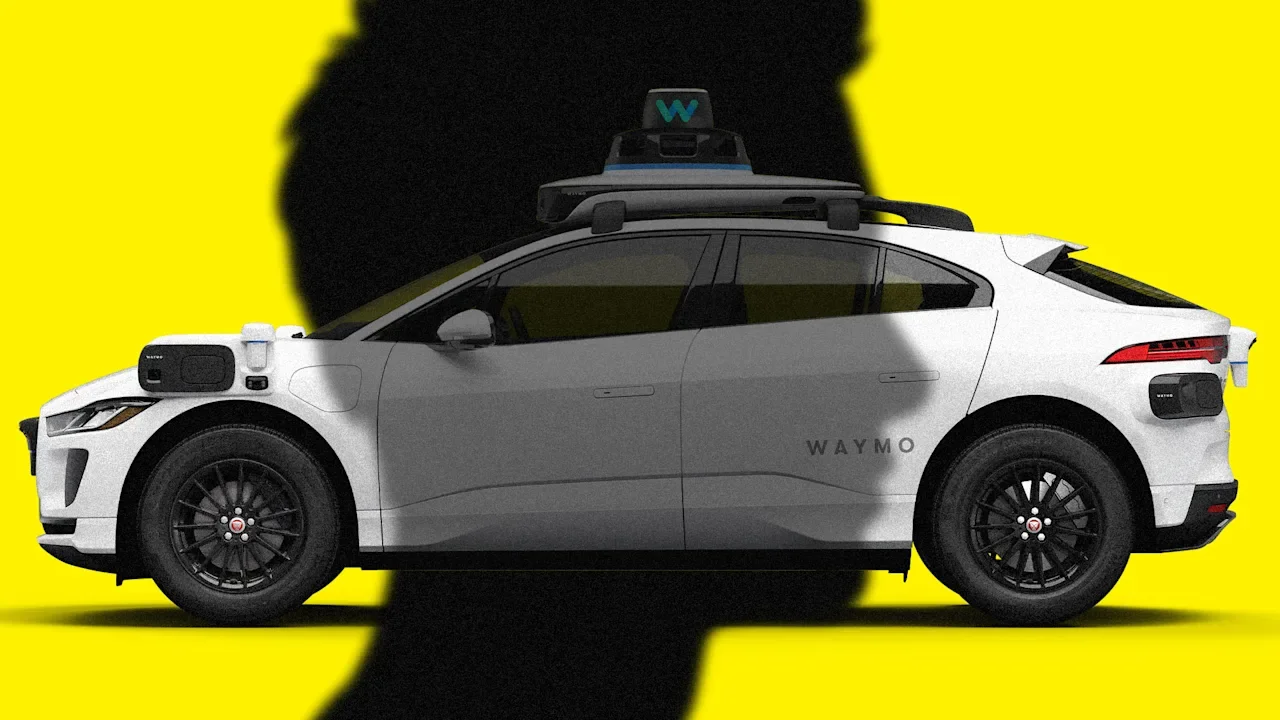
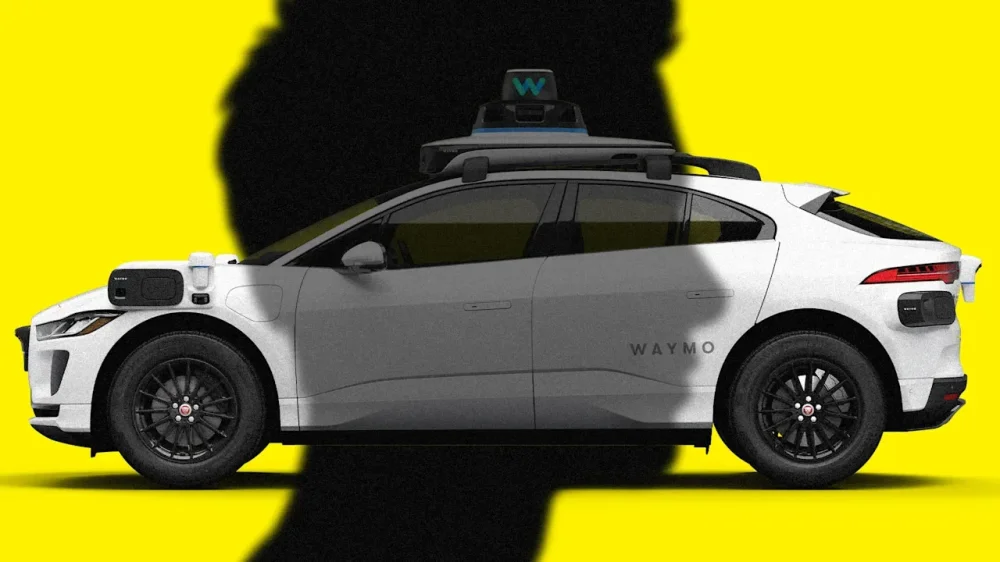
From AI tools to self-driving cars, new technologies regularly tout themselves as being autonomous. Yet, their companies often have to recruit us humans for help in unexpected ways. The most recent example comes courtesy of Waymo’s self-driving cars. The Alphabet-owned company has been hiring DoorDash drivers to close vehicle doors after a passenger leaves them open, CNBC reports. Yes, Waymo’s whole thing is driverless cars, but it needs another type of driver to show up and fix the simplest things. The arguably embarrassing predicament came to light when an Atlanta-based DoorDash driver shared Waymo’s request on Reddit. It reportedly offered the gig worker $11.25 to close a Waymo door less than a mile away. The driver was guaranteed $6.25 with the remaining $5 sent after verified completion. The request also showed a deadline to complete the task and clearly stated that it didn’t require pickup or delivery. Waymo and DoorDash have confirmed to CNBC that the companies are running a pilot program in Atlanta to get cars quickly on their way. Waymo claims that automated door closures are coming to future vehicles. Fast Company has reached out to Waymo and DoorDash for more information, including when Waymo will roll out automated door closures. We will update this post if we hear back. Atlanta is one of the limited cities where Waymo vehicles operate without a safety driver. Notably, though, riders in Atlanta call the cars through Uber, which operates UberEats, a DoorDash competitor. However, Waymo and DoorDash announced in October that they would be testing autonomous delivery services in Phoenix. Waymo has also used Honk, an independent roadside assistance company, to shut doors. The Washington Post reports that users have received $24 a door in Los Angeles. Fleet response workers on call from abroad This isn’t Waymo’s first time relying on humans for support. Earlier this month, Waymo’s chief safety officer, Mauricio Peña, told senators during a hearing that the company has some fleet response workers stationed abroad. These individuals, based in countries such as the Philippines, can provide suggestions when a vehicle is in an unusual circumstance. Senator Ed Markey of Massachusetts called this “unacceptable,” Business Insider reports. He continued: “Having people overseas influencing American vehicles is a safety issue.” View the full article
- Today
-
This week's voluminous news from across the world of Wi-Fi - enjoy. The post Roundup: Spectrum launches ‘Invincible Wi-Fi™’ plus news from eero, Brightspeed, Sparklight, and Broadcom appeared first on Wi-Fi NOW Global. View the full article
-
Creating an effective customer service development plan starts with grasping customer needs and expectations. This involves gathering feedback and conducting research to identify what your customers truly value. Once you have this insight, you can define clear goals and a vision for your customer service strategy. By developing an all-encompassing playbook and implementing ongoing training for your staff, you can guarantee consistency and excellence in service delivery. But how do you measure success and drive continuous improvement? Key Takeaways Research customer needs and expectations to tailor service strategies and enhance satisfaction. Define clear and measurable goals for customer service performance to guide team efforts. Develop a comprehensive playbook outlining best practices, training resources, and guidelines for consistent service delivery. Implement ongoing staff training programs to equip employees with essential skills and knowledge for effective customer interactions. Measure success through KPIs and customer feedback to continuously refine and improve service processes. Understanding Customer Needs and Expectations How can you truly understand your customers’ needs and expectations? Start by researching their unique requirements; this lays the groundwork for effective customer service strategies. Mapping the customer experience, from initial contact to potential offboarding, helps you identify pain points and themes in support inquiries, ultimately allowing for more effective customer service communication. Gathering customer feedback through surveys, focus groups, and social media monitoring is essential in highlighting areas for improvement and recognizing strengths in the service experience. Furthermore, conducting competitor analysis offers insights into customer expectations and market gaps, enabling you to tailor your offerings. Utilizing customer personas, informed by data and analytics, helps you grasp the demographics and motivations of your target audience. This approach guarantees a strong customer service focus and a customer care focus, allowing you to meet specific needs and improve overall satisfaction. Defining Goals and Vision for Customer Service Understanding your customers’ needs and expectations lays the foundation for effective customer service, but defining clear goals and a vision for service is what truly drives improvement. Start by establishing goals using the SMART criteria—Specific, Measurable, Achievable, Relevant, and Time-bound. These goals improve focus and alignment among your team, advancing service delivery. Develop a shared vision of exceptional customer service to unify your team and strengthen your brand’s reputation, cultivating customer loyalty. Setting service level objectives for response and resolution times is likewise crucial, as timely responses can boost satisfaction scores markedly. Articulate core values that reflect the characteristics of great customer service, ensuring consistency across interactions. Regularly revisit and update your customer service goals based on feedback and market changes, which can lead to increased employee engagement, ultimately improving the overall customer care experience. This structured approach is key to a successful development plan for customer service. Developing a Comprehensive Customer Service Playbook An effective customer service playbook is important for any team looking to deliver consistent and high-quality support. This playbook serves as a significant reference guide, detailing customer service guidelines that your representatives need to follow. It should encompass: Best Practices: Outline effective communication strategies and problem resolution techniques that highlight the characteristics of good customer service. Training Resources: Equip your staff with fundamental customer service representative skills through role-playing scenarios and customer personas to understand diverse needs. Feedback Mechanisms: Integrate continuous feedback loops to refine processes based on customer care and support insights. Implementing Training and Support for Staff To guarantee your customer service representatives are well-prepared for their roles, implementing effective training and support is essential. Start by developing thorough programs that focus on product knowledge, communication skills, and empathy—key characteristics of customer service. Incorporate customer service skills examples into role-playing scenarios, which prepare staff for real-life interactions, improving their problem-solving skills and confidence. Ongoing training is significant to adapt to changing customer needs and technologies. Regular workshops and updates keep your team informed of best practices and company policies. Utilizing a customer service playbook standardizes procedures for handling various customer scenarios, promoting consistency across the team. Furthermore, providing access to AI tools and customer service software boosts efficiency, supporting your staff in delivering quick, accurate responses. Measuring Success and Continuous Improvement Strategies How do you know if your customer service strategies are truly effective? Measuring success involves tracking specific metrics and gathering customer feedback to inform continuous improvement. Here are three key strategies to contemplate: Establish KPIs: Utilize important metrics like the Customer Satisfaction Score (CSAT) and Net Promoter Score (NPS) to gauge customer sentiment and service effectiveness. Collect and Analyze Feedback: Regularly gather customer feedback through surveys and focus groups. This data provides insights into areas needing attention and informs process advancements. Conduct Routine Audits: Review your customer service processes and performance metrics periodically. This guarantees your team remains accountable and responsive to changing customer expectations. Frequently Asked Questions What Is a Development Plan for Customer Service? A development plan for customer service outlines specific goals and actions to improve service quality. It identifies measurable objectives, such as increasing customer satisfaction scores and improving response times. You’ll track key performance indicators to assess progress and make adjustments as needed. Furthermore, the plan includes regular training for staff, ensuring they’ve the skills required to deliver excellent service. Ongoing feedback mechanisms help adapt strategies to meet changing customer needs efficiently. What Are the 7 R’s of Customer Service? The 7 R’s of customer service are crucial for effective service. They include the Right person, ensuring customized interactions, and the Right information, which empowers customers. It’s additionally important to deliver at the Right time, as quick responses boost satisfaction. The Right place makes services accessible, whereas the Right product/service meets customer needs. Finally, a streamlined Right process improves efficiency, creating a smoother experience for customers, ultimately nurturing loyalty and satisfaction. What Is the 10 to 10 Rule in Customer Service? The 10 to 10 Rule in customer service suggests you should respond to customer inquiries within 10 minutes. This quick response time is critical as the first 10 minutes greatly influence customer satisfaction and their perception of your brand. Research shows that a rapid reply can lead to a 90% satisfaction rate. What Are the 4 P’s That Improve Customer Service? To improve customer service, focus on the 4 P’s: People, Processes, Products, and Physical Evidence. Train your staff to improve interaction quality, as skilled representatives boost customer satisfaction. Streamline workflows to increase efficiency, leading to better service outcomes. Guarantee your products meet customer expectations, as quality correlates with higher willingness to pay. Finally, create an inviting environment—both physical and digital—to positively influence customer perceptions and improve their overall experience. Conclusion In summary, an effective customer service development plan is essential for meeting and exceeding customer expectations. By grasping customer needs, defining clear goals, and developing an all-encompassing playbook, you can create a structured approach to service excellence. Ongoing staff training and support, combined with measurable performance metrics, enable continuous improvement. In the end, implementing these strategies guarantees your organization remains adaptable and responsive to changing demands, nurturing higher levels of customer satisfaction and loyalty over time. Image via Google Gemini and ArtSmart This article, "Creating an Effective Customer Service Development Plan" was first published on Small Business Trends View the full article
-
The latest SEO Pulse examines AI citation dashboards, invisible homepage pitfalls, and what new crawl data means for technical teams. The post Bing AI Citation Tracking, Hidden HTTP Homepages & Pages Fall Under Crawl Limit – SEO Pulse appeared first on Search Engine Journal. View the full article
-
I rely heavily on my digital calendar—as far as I'm concerned, if something isn't there, it doesn't exist. It's annoying, then, when someone hands me a piece of paper or even an email stating when multiple meetings are going to happen. I need to either manually add everything to my calendar—which is time consuming—or try to keep track of everything separately from my calendar. I've found a better way, though. As of this week, even the free version of Claude can create files for you, including iCal ones. These files are handy for quickly adding multiple appointments to the Apple, Google, and Microsoft calendar services. How Claude can create custom iCal files for youFor example, say you wanted every Olympic men's hockey game on your calendar (I'm Canadian—what else was I going to use as a demonstration?) All you need to do is take a screenshot of the schedule, upload that screenshot to Claude, and ask for it to create an iCal download using the information. I tried this and it worked perfectly. The Olympics thing is just an example, though. Say you're at a conference and the staff gives you a paper schedule—you could take a photo, ask Claude for the iCal file, and add everything to your calendar at once. Note that you might need to inform Claude about time zones. In my example, the screenshot I had mentioned what time zone the events were happening in, and Claude worked it out. In other tests, I found I needed to mention any potential time zone complications before asking for the file. How to import Claude's iCal files to your calendarUsing these files on a Mac is easy: just open it and the Calendar app will ask you which calendar you want to add the appointments to. But it's also not hard on Google Calendar or Outlook. On Google Calendar, click the gear icon near the top-right corner, then click Settings and find the Import option in the left side bar. Click "Select file from your computer" and point it toward the file you downloaded from Claude. Credit: Justin Pot The steps for Microsoft Outlook are similar. In Outlook, click File, then Open & Export, then Import/Export, then select Import and iCalendar (.ics) or vCalendar (.vcs). Select which calendar you want to add the appointments to and you're done—the appointments will all show up. View the full article
-
Cloudflare launched Markdown for Agents, converting HTML pages to markdown automatically when AI crawlers request it through content negotiation. The post Cloudflare’s New Markdown for AI Bots: What You Need To Know appeared first on Search Engine Journal. View the full article
-
In relation to enhancing collaboration within teams, incorporating quick and engaging activities can make a significant difference. Icebreaker games, problem-solving exercises, and creative collaboration initiatives create opportunities for team members to connect and work together effectively. Trust-building activities likewise play an essential role in forming stronger bonds among colleagues. Finally, fun social activities can boost morale and camaraderie. Discover how these five activities can transform your team’s dynamics and improve overall productivity. Key Takeaways Two Truths and a Lie: This icebreaker promotes communication and helps team members get to know each other better in just a few minutes. Marshmallow Tower Challenge: Teams collaborate to build the tallest structure using limited resources, enhancing teamwork and problem-solving skills under time constraints. Collaborative Storytelling: Participants take turns adding to a story, improving listening and creative thinking while fostering a sense of unity. Virtual Trivia: Engage in a fun, competitive quiz that helps break down barriers and improves team morale through shared experiences. Puzzle Race: Teams race to complete puzzles, encouraging quick decision-making and effective collaboration in a high-energy environment. Icebreaker Games for Quick Connections How can icebreaker games transform team dynamics in just a few minutes? These quick team building games are particularly designed to create immediate connections among team members, often requiring only 5 to 20 minutes to complete. Engaging in quick team building activities can improve communication considerably; research shows that teams with effective communication are 12 times more likely to succeed. Activities like “Two Truths and a Lie” or “Human Bingo” help break down initial barriers and nurture a relaxed atmosphere that encourages open dialogue. By allowing team members to share personal interests and experiences, icebreaker games promote team cohesion and lead to stronger interpersonal relationships. Incorporating these games into meetings not only boosts morale but additionally increases employee engagement, making individuals feel more valued and connected to their peers and the organization. Problem-Solving Activities to Foster Teamwork Building on the connections established through icebreaker games, problem-solving activities offer a more structured approach to improve teamwork within a group. These activities require collaboration to tackle challenges, improving critical thinking skills and encouraging creative solutions. Engaging in exercises like the Marshmallow Tower can considerably improve communication patterns and teamwork dynamics that are relevant to workplace projects. Time-bound challenges, such as the Puzzle Race, instill a sense of urgency, promoting quick decision-making and strategic planning among team members. Furthermore, collaborative storytelling activities improve listening and idea-building capabilities, leading to increased innovation and collective problem-solving. Research indicates that companies emphasizing collaborative problem-solving skills experience higher overall performance, making these activities vital for team development and productivity. Creative Collaboration Exercises Creative collaboration exercises play a crucial role in enhancing teamwork by encouraging members to brainstorm and develop innovative solutions together. Engaging in collaborative storytelling allows you to share unique perspectives, improving listening skills and idea generation as well as cultivating camaraderie. Activities like virtual art galleries promote creative expression, inviting everyone to showcase their artistic interpretations, which can lead to innovative problem-solving. Utilizing design thinking workshops helps your team apply structured methodologies to tackle real-world challenges collectively, enhancing critical thinking and team synergy. Moreover, working on collaborative murals or group projects provides an opportunity for artistic expression and serves as a visual representation of shared goals, reinforcing team unity and purpose. Trust-Building Activities for Stronger Bonds Trust is a fundamental component of effective teamwork, as it nurtures a safe environment where team members can rely on each other. Engaging in trust-building activities is crucial for improving team cohesion, creating a culture of support and collaboration. These exercises can markedly enhance communication among team members, leading to better overall performance. When teams participate in trust-building activities, they often experience reduced conflict and misconceptions, promoting a more harmonious workplace atmosphere. Furthermore, trust-building boosts accountability, as members gain a deeper grasp of each other’s strengths and weaknesses, allowing for more effective task delegation. Regularly implementing trust-building exercises can contribute to higher employee satisfaction and retention rates, as team members feel valued and connected. Fun Social Activities to Boost Morale Even though many workplaces focus on productivity and performance, incorporating fun social activities can greatly improve team morale and cultivate a sense of belonging among employees. Engaged teams, which participate in social activities, tend to be 21% more profitable, showing a clear link between morale and productivity. Activities like virtual trivia and scavenger hunts not only promote camaraderie but additionally improve communication, which is essential for successful collaboration. Consider integrating the following activities into your workplace culture: Icebreaker Games: These encourage employees to share and connect, breaking down barriers. Team Lunches: Regular meals together encourage informal interactions, strengthening relationships. Themed Events: Organizing fun events can create excitement and a shared experience among team members. Frequently Asked Questions What Are 5-Minute Team Building Activities? Five-minute team building activities are quick exercises that help strengthen team connections and improve communication. Examples include “Two-Minute Life Updates,” where team members share personal insights, or “Emoji Check-Ins,” allowing participants to express their current mood visually. These brief interactions can cultivate a positive atmosphere, energize participants, and promote open dialogue. Incorporating such activities into regular meetings can lead to improved collaboration and overall team performance, making them valuable for busy schedules. How to Enhance Collaboration in a Team? To improve collaboration in your team, prioritize effective communication. Use regular feedback sessions to nurture open dialogue, helping everyone understand each other’s perspectives. Incorporate problem-solving activities that stimulate critical thinking and drive innovation. Encourage face-to-face or videoconferencing interactions, as they greatly increase the likelihood of success. Finally, consider implementing icebreaker games during meetings to build connections and reduce barriers, ultimately improving teamwork and creating a more cohesive work environment. What Are the 5 C’s of Collaboration? The five C’s of collaboration are communication, commitment, coordination, conflict resolution, and creativity. Communication guarantees everyone understands the goals, whereas commitment nurtures dedication to shared objectives. Coordination allows team members to work together efficiently, enhancing productivity. Conflict resolution helps maintain a positive atmosphere by addressing disagreements constructively. Finally, creativity inspires innovative solutions, making teams more effective. Together, these elements create a strong foundation for successful collaboration in any environment. What Are Some Fun Team Building Activities for Work? You can improve teamwork with several fun activities. Consider playing “Two Truths and a Lie” for an icebreaker, or try “Marshmallow Tower” to boost critical thinking and collaboration. Virtual teams can benefit from Online Pictionary or a Virtual Escape Room, which promote interaction in spite of distance. Furthermore, creative options like a “Collaborative Mural” encourage team expression and innovation. These activities not merely cultivate connection but likewise improve overall team dynamics in a professional setting. Conclusion Incorporating these five team-building activities can greatly improve collaboration within your team. Icebreaker games initiate connections, whereas problem-solving exercises promote teamwork and critical thinking. Creative collaboration allows for innovative expression, and trust-building activities strengthen interpersonal bonds. Finally, fun social activities boost morale, creating a more cohesive work environment. By regularly engaging in these activities, you can cultivate a culture of collaboration, leading to improved performance and satisfaction among team members. Image via Google Gemini This article, "5 Quick Team Building Activities to Enhance Collaboration" was first published on Small Business Trends View the full article
-
When I spoke at the Arabian Business Awards a few years ago, I showed a slide describing research that shows meetings literally make people dumber: a study published in Transcripts of the Royal Society of London found that meetings cause you to (during the meeting) lose IQ points. A bunch of people in the audience took photos of that slide. The same was true when I presented a slide describing research published in Journal of Business Research showing that not only do 90 percent of employees feel meetings are unproductive, but when the number of meetings is reduced by 40 percent employee productivity increases by 70 percent. A bunch of people took photos of that slide, too. Both findings seem easy to remember, if only because the research confirms what most people feel about meetings: Most of the time, the only person who thinks a meeting is important is the person who called the meeting. But what if you really wanted to remember that meetings tend to make participants dumber, and tend to negatively impact overall productivity? Or, more broadly, have a better shot of remembering things you really want to remember? Don’t take photos. In a study published in Journal of Experimental Psychology: Applied, researchers evaluated the effectiveness of a variety of memory-boosting strategies: taking photos, typing notes, and writing notes by hand. As you can probably guess, people who wrote notes by hand scored the highest on subsequent recall and comprehension tests, even when people who took photos or typed verbatim notes were allowed to review those items before they took the tests. Or maybe you couldn’t guess that: The researchers also found that “learners were not cognizant of the advantages of longhand note-taking, but misjudged all three techniques to be equally effective.” So why does taking notes by hand work so well? According to the researchers: Which makes sense. Taking a photo requires no “mental participation” at all. You don’t have to consider, synthesize, decide how you’ll capture the information in shorthand, etc. Typing notes verbatim — for example, transcribing a lecture or meeting recording — is more of a process than a thought exercise. The focus is on accuracy, not retention. (I can type fast enough to capture everything someone says in real time, but that doesn’t mean I remember any of it without reviewing what I’ve typed.) Maybe that’s why Richard Branson carries a notebook everywhere he goes. (Literally: I’ve seen him with one at least 10 times.) Summarizing, putting concepts or ideas in your own words, deciding not just what to write, but how to write it — all those things engage different parts of your brain, and therefore improve your retention and recall. Especially if you don’t stop there. According to a study published in Psychological Science, people who study before bed, then sleep, and then do a quick review the next morning can not only spend less time studying, they also increase their long-term retention by 50 percent. Try it. At night, take a quick look at notes you’ve written during the day. Take a few moments to remember not only what, but why: why you’ll use what you jotted down. When you’ll use it. Why it will make a difference in your professional or personal life. Then do a quick review the next morning. Unless you’re a compulsive note-taker, both exercises will take only a minute or two. After all, if it was important enough to write down, it’s important enough to remember — and more to the point, to do something with. Because knowledge is useful only if you do something to make it useful. —Inc. This article originally appeared on Fast Company‘s sister publication, Inc. Inc. is the voice of the American entrepreneur. We inspire, inform, and document the most fascinating people in business: the risk-takers, the innovators, and the ultra-driven go-getters that represent the most dynamic force in the American economy. View the full article
-
This week in search we have more ongoing Google search ranking volatility. Bing Webmaster Tools rolled out new AI Performance reports with a new design. Google AI Overviews tests new overlay cards. Grokipedia is seeing a decline in visibility in Google Search and ChatGPT...View the full article
-
We may earn a commission from links on this page. In Apple TV's Silo, Rebecca Ferguson stars as Juliette Nichols, an engineer who gets wrapped up in an investigation involving the local sheriff (David Oyelowo)—usual procedural stuff, except that the characters all inhabit a massive silo, 144-levels deep, protecting the remaining 10,000 humans from the allegedly poisoned world above. It's an addictive show in spite of its smart, dystopian vibe and, it's been renewed through a concluding fourth season, doing one better than the three-book Hugh Howey novel series on which it's based. Season three is expected sometime in 2026. In the meantime, you can catch these other shows that blend dystopian settings with existential mysteries. Stream Silo on Apple TV Snowpiercer (2020 – 2024) Though initially feeling like an unnecessary extension of Bong Joon Ho's allegorical post-apocalyptic film, Snowpiercer the show ultimately takes on a life of its own as a clever sci-fi melodrama, smartly recognizing that there are no heroes and few true villains at the end of the world—it's mostly just people doing whatever they can to survive. In a frozen future (2026, to be precise), humanity survives on an extremely long train that circumnavigates the globe. If it stops, the power will go out and everyone (literally everyone) will die. Those who came aboard with wealth live near the front in relative luxury, while the poor live on scraps (or worse) in the tail. Daveed Diggs stars as former detective Andre Layton, a "Tailie" deputized by Jennifer Connelly's Melanie Cavill, engineer and the train's head of hospitality, to solve a series of murders. The inevitable uprising that follows sets the two of them on different sides of a violent conflict, as each comes to realize they're just pawns of elites—same as it ever was. Stream Snowpiercer on AMC+ or buy episodes from Prime Video. Snowpiercer (2020 – 2024) at Prime Video Learn More Learn More at Prime Video Station Eleven (2021 – 2022) The miniseries, based on the Emily St. John Mandel bestseller, was released at either the best time or the worst possible time: The story of the world 20 years after a devastating flu pandemic hit HBO square in the middle of COVID—and don't all of our current apocalypse dramas owe just a bit to that waking nightmare? The adaptation follows two tracks. In the past, Kirsten Raymonde is a young stage actor whose performance in a production of King Lear is cut short by the onset of a virus with a 99% fatality rate. We also visit Kirsten 20 years on, still an actor, but in a world very much changed. This one is a slow-burn, picking up steam only after a couple of episodes, but ultimately, it makes a moving case for the power of art, even (or especially) in moments when survival is on the line. Stream Station Eleven on HBO Max. Station Eleven (2021 – 2022) at HBO Max Learn More Learn More at HBO Max Pluribus (2025 – ) The tones here aren't a match, with Pluribus leaning toward very dark comedy, but, as far as post-apocalyptic mysteries go, you could do a lot worse than this sci-fi dystopia from Breaking Bad's Vince Gilligan. Well, I say dystopia, but the world of Pluribus is about as good as it gets for just about everyone but our main character. Rhea Seehorn plays Carol Sturka, a fantasy romance author and general grouch who becomes one of only 13 people on the planet immune to the "Joining"—the result of an alien virus that transforms the rest of humanity into a peaceful, perky, and perpetually content hive mind. Carol refuses to surrender her miserableness in the face of a loss of identity, fighting instead to restore humanity to its admittedly cruddy ways. Thrilling, heartbreaking, and oddly funny, the show manages to address some big questions about what it means to be human, and what we'd be willing to give up to change. Stream Pluribus on Apple TV+. Pluribus (2025 – ) at Apple TV+ Learn More Learn More at Apple TV+ Black Knight (2023) Decades after a comet impact killed most of the Earth's population and left a barely breathable atmosphere, survivors in Seoul live in wildly segregated conditions: QR codes tattooed on hands determine your level of access to resources including air: supplemental oxygen is a necessity for survival, to the point that cutting off the hand of someone with a better code than yours is seen as a viable means of moving up. It's all controlled by the mega-corporation that's building an underground refuge for survivors of its choosing, and that doles out oxygen via couriers who've taken on legendary status. One such deliveryman, known only as 5-8 (Kim Woo-bin), is also running an underground operation to help out the neediest of Seoul's population—which soon puts him at odds with the powers that be. The sepia-toned dystopia of Black Knight is absolutely stunning. Stream Black Knight on Netflix. Black Knight (2023) at Netflix Learn More Learn More at Netflix Wayward Pines (2015 – 2016) While we're talking high-concept sci-fi, let's head off to Wayward Pines: from which you will never leave. Based on a trilogy of Blake Crouch novels, this one stars, initially, Matt Dillon as a Secret Service agent investigating the disappearances of two fellow agents in the Idaho town of Wayward Pines. Things go awry pretty much immediately, and he wakes up from a car accident to find one of the agents (Carla Gugino), who's also his ex, having settled down in the seemingly idyllic community—and she's 12 years older than when he last saw her a few weeks ago. Even more dramatically, the local sheriff (Terrence Howard) enforces a strict "no one ever leaves" policy, on pain of having one's neck slit. As in Silo, the mysteries pile up from there. Stream Wayward Pines on Hulu. Wayward Pines (2015 – 2016) at Hulu Learn More Learn More at Hulu Paradise (2025 – ) Paradise reunites This is Us creator Dan Fogelman with one of that ensemble's stars, Sterling K. Brown, for something quite different. The series looks more like a political thriller at the outset: We're in, apparently, an affluent suburban town in which everything looks fairly tidy—it's the home of Brown's Xavier Collins, a widower and Secret Service agent, which would be more impressive if the President he'd been serving (James Marsden) hadn't been murdered (much of the narrative here is revealed in flashbacks). Oh, and that cute little town? Turns out that it's an underground bunker, albeit a fancier one than in Silo...but just as ominously mysterious. Stream Paradise on Hulu. Paradise (2025 – ) at Hulu Learn More Learn More at Hulu The Rain (2018 – 2020) Leave it to those melancholy Danes to center an apocalypse around precipitation. In this three-season import, a virus spread by rainfall that wipes out most of the population of Scandinavia. Siblings Simone and Rasmus emerge from their bunker six years later, setting off across the countryside with the hope of finding a safe haven, and maybe track down their father. It turns out that one of them holds the key to wiping out the virus and saving the world. It’s not the most original premise (The Last of Us game came out five years earlier), but the setting gives it a unique feel, and the series comes to a decisive ending. Stream The Rain on Netflix. The Rain (2018 – 2020) at Netflix Learn More Learn More at Netflix War of the Worlds (2019 – 2022) The War of the Worlds industrial complex is never far from churning out new adaptations, this being one of two competing series that started just in 2019. There was a period-faithful BBC miniseries, and then this French co-production serving as a much looser, modern-set adaptation. Gabriel Byrne and Elizabeth McGovern lead the cast as estranged couple Bill and Helen, among the few survivors of an alien pulse that leaves the world sparsely populated, humans under constant threat from the mysterious invaders who aren't done with us yet. It's as dark as they come, which feels appropriate, with traumatized individuals nursing secrets and making calculations as to whom they might be willing to sacrifice in order to survive our new overlords. Stream War of the Worlds on MGM+ or buy it from Prime Video. War of the Worlds (2019 – 2022) at MGM+ Learn More Learn More at MGM+ Battlestar Galactica (2003 – 2009) Going from an underground dystopia to an outer-space dystopia only to find that things aren't all that different: unless we're concerned that the giant hunk of metal that contains the bulk of surviving humanity is horizontal in space rather than vertical and underground. Humans will figure out how to take our problems with us anywhere, being the point. Here, the trigger is the monotheistic Cylons, an artificial intelligence once relegated to serve as a labor force and who evolve, rebel, and have a plan involving wiping out their former masters in twelve colony worlds. The relatively few survivors, all that remains of humanity, escape on the title ship accompanied by a handful of others. Politics follow them, with military commander Adama (Edward James Olmos) frequently at odds with Mary McDonnell's Laura Roslin, the Education Secretary promoted to President when the entire political structure was wiped out. One of the smartest shows of the aughts, in spite of the silly name. Buy Battlestar Galactica from Prime Video. Battlestar Galactica (2003 – 2009) at Prime Video Learn More Learn More at Prime Video Severance (2022 – ) Another prestigious, high-concept sci-fi series, Severance makes tremendous use of its primary setting: one maze-like floor of what looks like, at first blush, a typical office workspace. Talk about your dystopias: I think I'd rather live in the silo, tbh. Late-stage capitalism encourages “work-life balance” while simultaneously making it impossible, and then makes us feel guilty about it. In Severance, biotechnology giant Lumon Industries has a solution: They split your consciousness between your life at work and your life outside of it. For our lead characters (played by Adam Scott, Patricia Arquette, Britt Lower, and more) the work- and home-based consciousnesses grow apart to the point that they become entirely different people. The show blends the conventions of office-based dark comedies with movies like Brazil and Eternal Sunshine of the Spotless Mind, and dives into the dangers of modern American-style totalitarian capitalism while providing a reminder that technology often promises to improve our lives while only making them worse. Stream Severance on Apple TV+. Severance (2022 – ) at Apple TV+ Learn More Learn More at Apple TV+ Fallout (2024 – ) Like Silo, we're stuck with a large chunk of humanity being forced to live underground for reasons that aren't entirely legit. In the world of Fallout, adapted from the video games, the aesthetic of the 1950s hung on for a lot longer than it did in our own, so plot similarities give way, in part, to Fallout's very unique sense of style. The background is a little complicated, but not belabored in the show itself: It's 2296, on an Earth devastated two centuries earlier by a nuclear war between the United States and China. Lucy MacLean (Ella Purnell) emerges from the underground fallout shelter where she's lived her entire life in order to find her father, kidnapped by raiders. The aboveground wasteland is dominated by warring factions, each of which considers the others cults and believes that they alone know the correct way forward for mankind. Amid this conflict, the landscape is also overrun by Ghouls, Gulpers, and other wild radiation monsters, with Lucy just about the only human with any lingering belief in humanity. Stream Fallout on Prime Video. Fallout (2024 – ) at Prime Video Learn More Learn More at Prime Video Under the Dome (2013 – 2015) Not to be confused with The Simpsons Movie, this is the other one about an entire town trapped under a giant dome. Adapted, rather loosely, from the Stephen King novel, the show finds an entire community cut off from the rest of the world—their own personal apocalypse. As resources begin to dwindle, social structures begin to collapse, and the squabbling residents need to figure out how to survive and, if they're ever to escape, to figure out why they've been trapped under this dome to begin with. Stream Under the Dome on Paramount+. Under the Dome (2013 – 2015) at Paramount+ Learn More Learn More at Paramount+ View the full article
-
We’re in a new era where web content visibility is fragmenting across a wide range of search and social platforms. While still a dominant force, Google is no longer the default search experience. Video-based social media platforms like TikTok and community-based sites like Reddit are becoming popular search engines with dedicated audiences. This trend is impacting how news content is consumed. Google’s current news SERP evolution is directly influenced by the personalization of query responses offered by LLMs and the rise in influencer authority enabled by social media platforms. Google has responded by creating its own AI-powered SERP features, such as AI Overviews and AI Mode, and surfacing more content from social media platforms that provide the “helpful, reliable, people-first content” that Google’s ranking systems prioritize. Now that search and social are more intertwined than ever, a new paradigm is needed – one in which newsroom audience teams made up of social media, SEO, and AI specialists work holistically on a daily basis toward a cohesive content visibility goal. When optimizing news content for social platforms, publishers should also consider how those posts may perform in the Google SERP. I’ll cover optimizing for specific SERP features below, but first, you’ll want to think about making your news content social-friendly. Optimize news content for social media platforms First, a dose of sanity. Publishers should resist the temptation to optimize content for every social media platform. It’s better to pick one or two social platforms – where an audience is already established and that offer the best opportunity for growth – than to create accounts on every social platform and let them languish. Review analytics and conduct audience surveys to gain insights into which platforms your audience already consumes news content. Here’s a breakdown by platform of which content types work best and how content from each platform can appear on Google. YouTube If you’re producing YouTube video content, make sure to follow video SEO best practices. This comprehensive YouTube SEO guide will help you develop a successful video strategy and ensure video titles align with your content. Per Google, YouTube’s search ranking system prioritizes three elements: Relevance: Metadata needs to accurately represent video content to be surfaced as relevant for a search query. Engagement: Includes factors such as a video’s watch time for a specific user query. Quality: Video content should show topic expertise, authoritativeness, and trustworthiness. One trend I’ve noticed in YouTube videos on the Google SERP is that older event content can continue to drive visibility rankings long after the event has ended and well after the related article has faded in search rankings. Explainer videos also demonstrate longevity on the Google SERP. In this government shutdown explainer video, Yahoo Finance includes the expert’s credentials in the description box, further emphasizing the topic expertise element that YouTube’s ranking system prioritizes. YouTube can also help your visibility in AI Overviews. Nearly 30% of Google AI Overviews cite YouTube, according to BrightEdge. YouTube was cited most often for tutorials, reviews, and shopping-related queries. Dig deeper: YouTube is no longer optional for SEO in the age of AI Overviews Facebook While Facebook may not be the cool kid on the block anymore, the social platform has served a diverse set of users over its long history, from its initial audience of college kids to now attracting an older, majority female audience, per Pew Research Center data. Community-based content and entertainment news that sparks conversation is key to engagement success on Facebook. While Meta removed the dedicated news tab on Facebook in 2023-2024, leading to cratering Facebook referrals for news publishers, it’s worth noting that Facebook posts have been rising in Google SERP visibility over the last year, so it may be time to reconsider the platform from a search perspective. In my review of Google search visibility, Facebook posts about holidays and the full moon appear consistently, and the short-form video format is popular. Your customers search everywhere. Make sure your brand shows up. The SEO toolkit you know, plus the AI visibility data you need. Start Free Trial Get started with X Since Elon Musk took over the platform in 2022, the audience has shifted to the political right. While the left’s exodus made headlines, usage of X for news is stable or increasing, especially in the U.S., according to the 2025 Digital News Report from the Reuters Institute. Breaking news, live updates, and political news dominate X feeds and Google visibility, but don’t overlook sports content, where X posts perform well on both the Google SERPs and Discover. Instagram This platform emphasizes stylish, visually driven stories and topics, such as red-carpet fashion at award shows. Health topics, especially nutrition and self-care, are also popular. Sports posts from Instagram, especially game highlights, often surface on the Google SERP as part of a dedicated publisher carousel or in “What people are saying.” Reddit A unique aspect of Reddit is that its user base is often not on other social platforms. For news publishers, this can mean a golden opportunity for niche community engagement, but also requires a dedicated strategy that may not translate well to other platforms. A wide range of news content can perform well on Reddit, from trending topics to health explainers to live sports coverage, but having a deep understanding of the platform’s audience is critical, as is following the Reddit rules of conduct. Publishers should spend time studying the types of news articles and conversations that drive strong engagement on subreddits before posting anything. Per Reddit, the platform’s largest audiences gravitate toward the following topics: Technology. Health. Direct to consumer (DTC). Gaming. Parenting. The community discussion forum content from Reddit makes it a natural to appear in the Google SERP as part of the “What people are saying” carousel. The Reddit posts I see most often surfaced by Google are related to sports, entertainment, and business. Dig deeper: A smarter Reddit strategy for organic and AI search visibility TikTok The TikTok user base leans female and has a greater share of people of color. Approximately half of 18- to 29-year-olds in the U.S. self-report going on TikTok at least once daily, per Pew Research data. Visual, conversational, and opinion-based content for younger audiences performs best on TikTok. Niche community content also works well; think fashion, #BookTok, etc. Remember that short-form video requires a dedicated strategy to maximize engagement and reach, and it’s important to keep in mind that TikTok audiences value authenticity over the polish of a professional newsroom production. Entertainment and shopping content (sales, product reviews) are the categories in which TikTok demonstrates the most Google visibility. Pinterest While Pinterest may feel like an old-school social platform, Gen Z is its fastest-growing audience. That being said, Pinterest attracts users from across a wide range of age groups. According to Pinterest’s global data, its audience is 70% women and 30% men. Don’t overlook the power of Pinterest for lifestyle content niches. Trends around fashion, home decor, DIY, crafts, recipes, and celebrity content are top performers on this visual social platform. News publishers interested in this platform should have robust lifestyle content that is actionable and delivered with a motivational tone. How-to and before/after formats are popular. Excellent quality visuals in a vertical format with a 2:3 aspect ratio and text overlays are recommended. Pinterest supports a more relaxed posting schedule compared to other social platforms. Weekly posting is ideal, since much of the content on Pinterest is evergreen. Similar to Google Trends, Pinterest Trends can help news publishers stay on top of trending topics on the platform. Get the newsletter search marketers rely on. See terms. Social content opportunities by Google SERP feature If you’re looking to appear in a particular SERP feature, it’s helpful to know how social platform content appears in each type. Top Stories (or News Box) The crown jewel of the Google SERP for news publishers, this feature is dedicated to breaking news and developing news stories as well as capturing updates for the big news stories and trends of the moment. Thumbnail selection is critical for Top Stories. Publishers should pay close attention to the News Box descriptive labels to ensure content is optimized to match the specific intent or angle Google is seeking. While historically a SERP feature that showcased traditional news publishers, Google is now including relevant social media content in the mix. The Instagram post in Top Stories below is an Instagram Reel from the Detroit Free Press. Live update articles are often featured in the News Box and are a great format to embed social media posts. It helps break up walls of texts and serves as a showcase for a news publisher’s live, original reporting from the scene, eyewitness accounts, and related social content that demonstrates a publisher’s subject expertise. What people are saying This Google SERP feature is ideal for capturing audience reaction and user-generated content from a variety of social platforms. Short-form video is often featured in this space. It’s a showcase for any story or topic that drives emotional engagement, including reactions to everything from a celebrity death to a sporting event outcome to a viral trend. Severe weather is also a recurring topic. Knowledge Panel There’s a growing interest in this Google SERP feature among news publishers, especially those publishers who produce entertainment content. Depending on the configuration, publishers have the opportunity to earn a ranking for an image, social post, or article, such as a celebrity biography. While content opportunities are limited in the Knowledge Panel, they offer more exclusivity, which can increase CTR. YouTube and Instagram are commonly cited here, but X and TikTok have also been growing in visibility. Google Discover This social-search hybrid product, which features trending, emotionally engaging content based on a user’s web and app activity, requires a separate optimization strategy. The keys to Discover visibility are identifying topics that spark curiosity and ensuring articles are formatted for frictionless consumption. Discover has been considered a “black box” when it comes to content optimization, but there are several basic elements to implement that can increase visibility. Viral hits may spike a news publisher’s Discover performance temporarily, but as Harry Clarkson-Bennett outlines, publishers need to analyze their Discover performance over time at the entity level to build a smart optimization strategy. Google’s official Discover optimization tips discourage clickbait practices that actually work quite well on the platform, such as salacious quotes in headlines and content about controversial topics and strong opinion perspectives. I would never recommend a publisher produce clickbait, but for tabloid publishers, content with a strong, contentious perspective overperforms on Discover, regardless of the official Google guidance. Headlines and images require serious consideration. While Google is running an experiment in which their AI tool rewrites headlines for Discover, direct, action-oriented, and emotion-driven headlines traditionally perform best. There’s no specific character count recommendation, but at a certain point (typically 100+ characters), the headline will get truncated and an ellipsis will be used. Images must be formatted to Discover specifications (at least 1,200 pixels wide) and should be eye-catching to make people stop and click. Keep articles short or include a summary box at the top of longer articles. Format articles for scanability. This Forbes X post featured on my Discover feed nails the elements essential for inclusion. Politics, sports, and entertainment topics that favor an opinion-driven perspective can drive strong engagement on Discover. For YMYL (Your Money Your Life) content, which can also perform well on Discover, focus on accuracy, expert sources, and lean into the curiosity gap. YouTube and X are the dominant social platforms featured on Discover, according to a Marfeel study. This was further confirmed by Clara Soteras, who shared insights from Andy Almeida of Google’s Trust and Safety team as presented at Google Search Central Live in Zurich in December 2025. Almeida noted that Discover’s algorithm has been updated to “include content from YouTube, Instagram, TikTok, or X published by content creators.” See the complete picture of your search visibility. Track, optimize, and win in Google and AI search from one platform. Start Free Trial Get started with Threat or opportunity? Instead of feeling dismayed by the increased competition from social media platform content appearing on Google’s SERPs and Discover, news publishers should welcome the additional opportunities for their content to be seen. In a social and AI-powered search landscape, brand visibility is the key metric. Whether that visibility comes from a news publisher article, video, or social post, it still counts toward brand engagement. While search strategies have long focused on algorithms, optimizing content for a social-forward SERP requires a different focus. The merging of social and search will spark a holistic audience team revolution in newsrooms, reduce redundant practices, and inspire a content strategy powered by people over algorithms. View the full article
-
In drone vs drone combat, valuable personnel can be pulled back from the frontView the full article
-
Barclays chief collected £15mn last year, with Lloyds and NatWest leaders pocketing £7.4mn and £6.6mn respectivelyView the full article
-
Last November and December, Google announced a slew of new features for Google Search Console. But it seems like most of us still do not have access to those features.View the full article
-
Google Ads added to the Products section of your ads account the ability to see product eligibility directly in the Status column. This lets you see very quickly where each product is eligible across different campaigns in your Google Ads account.View the full article
-
Google's John Mueller said he still recommends you have visible anchor text for your links in order to "provide more context for search engines." Don't just use title elements in the link attribute; make sure the link has actual visible anchor text.View the full article
-
The latest PPC Pulse highlights Google’s AI Mode ad experiments, Microsoft’s AI discovery framework, and the continued evolution of search campaign structure. The post Shopping Ads Testing In AI Mode, Microsoft’s AI Search Guide & Keyword Strategy Shift – PPC Pulse appeared first on Search Engine Journal. View the full article
-
Hello again, and welcome back to Fast Company’s Plugged In. A February 9 blog post about AI, titled “Something Big Is Happening,” rocketed around the web this week in a way that reminded me of the golden age of the blogosphere. Everyone seemed to be talking about it—though as was often true back in the day, its virality was fueled by a powerful cocktail of adoration and scorn. Reactions ranged from “Send this to everyone you care about” to “I don’t buy this at all.” The author, Matt Shumer (who shared his post on X the following day), is the CEO of a startup called OthersideAI. He explained he was addressing it to “my family, my friends, the people I care about who keep asking me ‘so what’s the deal with AI?’ and getting an answer that doesn’t do justice to what’s actually happening.” According to Shumer, the deal with AI is that the newest models—specifically OpenAI’s GPT-5.3 Codex and Anthropic’s Claude Opus 4.6—are radical improvements on anything that came before them. And that AI is suddenly so competent at writing code that the whole business of software engineering has entered a new era. And that AI will soon be better than humans at the core work of an array of other professions: “Law, finance, medicine, accounting, consulting, writing, design, analysis, customer service.” By the end of the post, with a breathlessness that reminded me of the Y2K bug doomsayers of 1999, Shumer is advising readers to build up savings, minimize debt, and maybe encourage their kids to become AI wizards rather than focus on college in the expectation it will lead to a solid career. He implies that anyone who doesn’t get ahead of AI in the next six months may be headed for irrelevance. The piece—which Shumer told New York’s Benjamin Hart he wrote with copious assistance from AI—is not without its points. Some people who are blasé about AI at the moment will surely be taken aback by its impact on work and life in the years to come, which is why I heartily endorse Shumer’s recommendation that everyone get to know the technology better by devoting an hour a day to messing around with it. Many smart folks in Silicon Valley share Shumer’s awe at AI’s recent ginormous leap forward in coding skills, which I wrote about last week. Wondering what will happen if it’s replicated in other fields is an entirely reasonable mental exercise. In the end, though, Shumer would have had a far better case if he’d been 70% less over the top. (I should note that the last time he was in the news, it was for making claims involving the benchmark performance of an AI model he was involved with that turned out not to be true.) His post suffers from a flaw common in the conversation about AI: It’s so awestruck by the technology that it refuses to acknowledge the serious limitations it still has. For instance, Shumer suggests that hallucination—AI stringing together sequences of words that sound factual but aren’t—is a solved problem. He writes that a couple of years ago, ChatGPT “confidently said things that were nonsense” and that “in AI time, that is ancient history.” It’s true that the latest models don’t hallucinate with anything like the abandon of their predecessors. But they still make stuff up. And unlike earlier models, their hallucinations tend to be plausible-sounding rather than manifestly ridiculous, which is a step in the wrong direction. The same day I read Shumer’s piece, I chatted with Claude Opus 4.6 about newspaper comics—a topic I often use to assess AI since I know enough about it to judge responses on the fly—and it was terrible about associating cartoonists with the strips they actually worked on. The more we talked, the less accurate it got. At least it excelled at acknowledging its errors: When I pointed one out, it told me, “So basically I had fragments of real information scrambled together and presented with false confidence. Not great.” After botching another of my comics-related queries, Claude said, “I’m actually getting into shaky territory here and mixing up some details,” and asked me to help steer it in the right direction. That’s an intriguing glimmer of self-awareness about its own tendency to fantasize, and progress of a sort. But until AI stops confabulating, describing it as being “smarter than most PhDs,” as Shumer does, is silly. (I continue to believe that human capability is not a great benchmark for AI, which is already better than we are at some things and may remain permanently behind in others.) Shumer also gets ahead of himself in his assumptions about where AI might be in the short-term future when it comes to being competently able to replace human thought and labor. Writing about the kind of complex work tasks he recommends throwing AI’s way as an experiment, he says, “If it even kind of works today, you can be almost certain that in six months it’ll do it near perfectly.” That seems extraordinarily unlikely, given that all kinds of generative AI have been stuck in the “kind-of-works” era for years now. A decent rule of thumb: Don’t believe AI will be able to do something well until it actually does. Ultimately, the takeaway from Shumer’s post I’ll remember most isn’t anything he wrote. In the spirit of AI experimentation, I fed his piece to ChatGPT, Gemini, and Claude with the prompt “Give me an analysis/critique of this essay. Tell me whether it’s overly cautious, not cautious enough, what your own take is on the subjects discussed, etc.” I was prepared for them all to respond with something facile but shallow, more a bullet-point summary than anything. ChatGPT and Gemini lived up to those expectations. However, Claude’s swing at the topic—which it popped out in seconds, and you can read in its entirety here—startled me. It took issue with some of the same things about the piece that bothered me, but also raised other weaknesses I hadn’t considered. I felt smarter after reading it, which still isn’t what I expect from AI prose. A few nuggets: Coding is a uniquely favorable domain for AI — the outputs are verifiable, the feedback loops are tight, the training data is abundant, and the environment is fully digital. Lawyering, medicine, and management involve ambiguity, institutional context, human relationships, regulatory accountability, and adversarial dynamics that are qualitatively different. He acknowledges this briefly and then waves it away. …. Yes, many people tried GPT-3.5 and wrote off the whole field. That’s a real problem. But plenty of serious, current users — including people paying for the best models — still encounter significant limitations: hallucination (reduced but not eliminated), brittleness on novel problems, inability to maintain coherent context over truly long projects, poor calibration about its own uncertainty, and difficulty with tasks requiring real-world grounding. Shumer treats all skepticism as outdated, which is intellectually dishonest. …. He also doesn’t seriously engage with the possibility that the economic incentives might not play out as smoothly as “AI can do the job, therefore the job disappears.” Adoption friction is real. Liability concerns are real. Organizational inertia is real. The history of technology suggests that even transformative tools take much longer to restructure industries than the pure capability timeline would suggest. Electricity took decades to reshape manufacturing even after it was clearly superior to steam. … I think the underlying signal Shumer is pointing at is real. AI capabilities are improving faster than most people outside the industry appreciate, and the gap between public perception and current reality is genuinely large. He’s right that most people should be engaging with these tools more seriously than they are. But I think the essay is doing a thing that’s very common in Silicon Valley: mistaking the potential trajectory for the inevitable trajectory, and compressing timelines based on vibes and extrapolation rather than grappling seriously with the many real-world frictions that slow adoption. The piece reads like it was written in the immediate emotional aftermath of being impressed by a new model release — and those moments tend to produce overconfidence about pace. To recap: In the same day that I found Claude Opus 4.6 writing something about Shumer’s piece that was not only coherent but insightful, it also devolved into a hallucinogenic fit. That’s just how AI is these days: amazing and terrible at the same time. Somehow, that reality is tough for many observers to accept. But any analysis that ignores it is at risk of badly misjudging what will come next. You’ve been reading Plugged In, Fast Company’s weekly tech newsletter from me, global technology editor Harry McCracken. If a friend or colleague forwarded this edition to you—or if you’re reading it on fastcompany.com—you can check out previous issues and sign up to get it yourself every Friday morning. I love hearing from you: Ping me at hmccracken@fastcompany.com with your feedback and ideas for future newsletters. I’m also on Bluesky, Mastodon, and Threads, and you can follow Plugged In on Flipboard. More top tech stories from Fast Company Developers are still weighing the pros and cons of AI coding agents The tools continue to struggle when they need to account for large amounts of context in complex projects. Read More → AI expert predicted AI would end humanity in 2027—now he’s changing his timeline The former OpenAI employee has rescheduled the end of the world. Read More → Discord is asking for your ID. The backlash is about more than privacy Critics say mandatory age verification reflects a deeper shift toward routine identity checks and digital surveillance. Read More → A Palantir cofounder is backing a group attacking Alex Bores over his work with . . . Palantir Current and former employees tell Fast Company the ad campaign is driven by opposition to the Democratic hopeful’s support for AI regulation. Read More → Facebook’s new profile animation feature is Boomerang for the AI era The feature is part of a wider push toward AI content in Meta apps. Read More → MrBeast’s business empire stretches far beyond viral YouTube videos Banking apps, snack foods, streaming hits, and data tools are all part of Jimmy Donaldson’s growing $5 billion portfolio under Beast Industries. Read More → View the full article