All Activity
- Past hour
-
 Google may finally be starting to address a popular SEO and AI visibility “tactic”: self-promotional “best of” listicles. That’s according to new research by Lily Ray, vice president, SEO strategy and research at Amsive. Across several SaaS brands hit hard in January, a pattern emerged. Many relied heavily on review-style content that ranked their own product as the No. 1 “best” in its category, often updated with the current year to trigger recency signals. What’s happening. After the December 2025 core update, Google search results showed increased volatility throughout January, according to Barry Schwartz. Google hasn’t announced or confirmed any updates this year, but the timing aligns with steep visibility losses at several well-known SaaS and B2B brands. According to Ray: In multiple cases, organic visibility dropped 30% to 50% within weeks. The losses were not domain-wide. They were concentrated in blog, guide, and tutorial subfolders. Those sections often contained dozens or hundreds of self-promotional listicles targeting “best” queries. In most cases, the publisher ranked itself first. Many of the articles were lightly refreshed with “2026” in the title, with little evidence of meaningful updates. “Presumably, these drops in Google organic results will also impact visibility across other LLMs that leverage Google’s search results, which extends beyond Google’s ecosystem of AI search products like Gemini and AI Mode [and AI Overviews], but is also likely to include ChatGPT,” Ray wrote. Why we care. Self-promotional listicles have been a shortcut for influencing rankings and AI-generated answers. If Google is now reevaluating how it treats this content, any strategies built around “best” queries are in danger of imploding. The gray area. Ranking yourself as the “best” without independent testing, clear methodology, or third-party validation has been considered (by most) to be a sketchy SEO tactic. It isn’t explicitly banned, but it definitely conflicts with Google’s guidance on reviews and trust. Google has repeatedly said that high-quality reviews should show first-hand experience, originality, and evidence of evaluation. Self-promotional listicles often fall short, especially when bias is not disclosed. Yes, but. Self-promotional listicles likely weren’t the only factor impacting organic visibility. Many affected sites also showed signs of rapid content scaling, automation, aggressive year-based refreshes, and other tactics tied to algorithmic risk. That said, the consistency of self-ranking “best” content among the hardest-hit sites suggests this signal could now carry more weight, especially when used at scale. What to watch. Whether self-promotional listicles earn citations and organic visibility. Google rarely applies changes evenly or instantly. If this volatility reflects updates to Google’s reviews system, the direction is clear. Content designed primarily to influence rankings, rather than to provide credible and independent evaluation, is becoming a liability. For brands chasing visibility in search and AI, the lesson is familiar: SEO shortcuts work until they don’t. The analysis. Is Google Finally Cracking Down on Self-Promotional Listicles? View the full article
 -
Navigate the complexities of information retrieval and find out how to get into model training data for AI success. The post Information Retrieval Part 2: How To Get Into Model Training Data appeared first on Search Engine Journal. View the full article
-
AI search hasn’t killed SEO. Now you have to win twice: the ranking and the citation. Google searches for almost anything today, and there’s a good chance you’ll see an AI Overview before the organic results, sometimes even before the ads. That summary frames the query, shortlists sources, and shapes which brands get considered. AI Overviews now appear for about 21% of all keywords, according to Ahrefs. And 99.9% are triggered by informational intent. Search rankings still matter. But AI summaries increasingly determine who wins early consideration. Here’s what we’re seeing: brands aren’t losing visibility because they dropped from position three to seven. They’re losing it because they were never cited in the AI answer at all. This article draws on research conducted by Search Influence and the online and professional education association UPCEA, which examined how people use AI-assisted search and how organizations are adapting. (Disclosure: I am the CEO at Search Influence) Key takeaways AI citations are becoming a trust signal: Being cited by AI influences credibility and early consideration – before users ever compare sources directly. AI visibility is cumulative: AI systems pull from your website, YouTube, LinkedIn, and third-party publishers to assemble answers. Your URL isn’t the only thing that matters. Authority doesn’t guarantee inclusion: Even established brands get sidelined when their content doesn’t match how users ask questions. Most organizations know AI search matters but lack a plan: The gap isn’t awareness – it’s ownership, prioritization, and repeatable process. Content structure affects whether you get cited: Pages built for retrieval, comparison, and decision-making outperform narrative or brand-led content. Examining both sides of the search equation To understand what’s happening, we need to look at two sides of the same equation – how people are searching today and how organizations are responding (or aren’t). “AI Search in Higher Education: How Prospects Search in 2025” surveyed 760 prospective adult learners in March 2025. It examined: Where online discovery happens. How AI tools are used alongside traditional search. Which sources people trust during early research. While the study focused on professional and continuing education, these behaviors mirror what we’re seeing across industries: more AI-assisted discovery, earlier opinion formation, and trust signals shifting. A separate snap poll of 30 UPCEA member institutions in October 2025 looked at the other side: AI search strategy adoption. Barriers slowing progress. How visibility in AI-generated results gets tracked. Together, these datasets show a widening gap between how people search and how organizations have adapted. So what does the data actually tell us? The search patterns worth paying attention to The research highlights several search behaviors that consistently influence how people discover and evaluate options today. AI tools and AI summaries are influencing trust early The data makes one thing clear: AI-driven search has moved from the margins into the mainstream. 50% of prospective students use AI tools at least weekly. 79% read Google’s AI Overviews when they appear. 1 in 3 trust AI tools as a source for program research. 56% are more likely to trust a brand cited by AI. Trust is forming earlier now, often before users compare sources directly. If you’ve been putting off your AI search strategy because “people don’t trust AI,” the data says otherwise. AI citations are becoming a credibility signal – a trust shortcut before deeper research begins. Search behavior is diversified Search doesn’t happen in one place or follow one clean path anymore. 84% of prospective students use traditional search engines during research. 61% use YouTube. 50% use AI tools. These behaviors aren’t sequential. Users move between surfaces, carrying context with them. What they see in an AI summary influences how they read a search result. A YouTube video can establish trust before a website ever earns a click. This is where many strategies fall out of sync. Teams optimize one channel at a time – usually their website – and treat everything else as optional. But AI search engines pull from everywhere your brand has a presence: Your website. Your YouTube channel. Your LinkedIn content. Third-party and publisher sites. Your AI credibility is cumulative. It’s built anywhere your brand shows up, not just where you own the URL. Search engines and brand-owned websites still matter The rise of AI search doesn’t mean the end of traditional search. It raises the bar for it. Even as AI summaries reshape early trust, people still rely heavily on first-party sources and organic results when they evaluate options: 63% rely on brand-owned websites during research. 77% trust university-owned websites more than other sources. 82% are more likely to consider options that appear on the first page of search results. AI engines prioritize content that search engines can already crawl, interpret, and trust. If your core content isn’t clearly structured, accessible, and eligible to rank in traditional search, it’s far less likely to be pulled into AI-generated answers. Dig deeper: Your website still matters in the age of AI Get the newsletter search marketers rely on. See terms. Organizational readiness lags behind Most organizations recognize that AI search is reshaping discovery. Far fewer have translated that awareness into coordinated action. AI search strategy adoption remains uneven Most institutions sit somewhere between curiosity and commitment: 60% are in the early stages of exploring AI search. 30% have a formal AI search strategy in place. 10% haven’t started or believe AI search will have limited impact. The majority of teams know something important is happening. But ownership, process, and prioritization remain unresolved. What’s slowing progress When asked what’s holding them back, institutions cited execution constraints: 70% report limited bandwidth or competing priorities. 37% report a lack of in-house expertise or training. 27% report unclear ROI, leadership buy-in, or uncertainty around how AI search works. For many organizations, AI search has entered the roadmap conversation. It just hasn’t earned consistent operational focus yet. (Sound familiar?) Dig deeper: Why most SEO failures are organizational, not technical What teams say they’re prioritizing When teams do take action, their priorities cluster around two themes: 59% focus on the accuracy of AI-generated information about their offerings. 48% focus on improving visibility and competitive positioning. Those goals are linked. Clear, structured information makes it easier for AI systems to represent a brand. Visibility follows clarity. When that clarity is missing, AI fills in the blanks using third-party sources and competitor content. Tracking AI visibility remains inconsistent AI visibility tracking varies widely: 57% know their institution appears in AI-generated answers. 27% have seen their brand referenced occasionally but don’t actively monitor it. 13% are unsure whether they appear in AI-generated responses at all. Among teams that do track AI visibility: 64% use dedicated tools or formal tracking methods. 29% rely on informal checks or don’t track consistently. This creates a familiar blind spot. Teams feel the impact of AI search anecdotally but lack consistent visibility into where, how, and why their brand appears. Dig deeper: How to track visibility across AI platforms Why higher ed is a useful lens Universities bring everything search engines are supposed to reward: High domain authority. Deep, long-standing content libraries. Strong brand recognition. Yet in AI-generated answers, those advantages often don’t translate. When AI systems generate answers, they cite content that already matches the way users ask questions. That often means: Comparisons. “Top tools,” “top programs,” or “top options” lists. Third-party explainers written about brands. Those formats are dominated by aggregators and publishers – not the institutions themselves. AI doesn’t look for the biggest brand. It looks for the best answer. Higher education shows what happens when brands rely on authority alone and why every industry needs to rethink how it publishes. So what do you do about it? 1. Get your foundations in order before chasing AI visibility The most common question right now: “How do we show up in AI results?” In many cases, I think the honest answer is to fix what’s already broken. AI systems rely on the same signals that traditional search does: crawlability, structure, clarity. If your pages are blocked, poorly organized, or weighed down by technical debt, they won’t surface cleanly anywhere. We’ve seen teams invest energy in AI conversations while core pages still struggle with: Indexing issues. Bloated or unclear page structures. Content written for storytelling, not retrieval. Start with your traditional SEO foundation. AI systems can only work with what’s structurally sound. Dig deeper: AI search is growing, but SEO fundamentals still drive most traffic 2. Optimize content for retrieval, not just reading AI search engines favor content that can be lifted cleanly and reused without interpretation. The job of content shifts from “telling a complete story” to “delivering clear, extractable answers.” Many brand pages technically contain the right information, but it’s buried in long-form prose or brand language that requires context to understand. Content that performs well in AI answers tends to: Lead with direct answers, not setup. Use headings that map to search intent. Separate ideas into self-contained sections. Avoid forcing readers (or machines) to infer meaning. This isn’t about shortening content. It’s about sharpening it. When intent is obvious, AI knows exactly what to pull and when to cite you. 3. Compete on format, not just authority If AI keeps citing comparisons, lists, and explainers – and it does – brands probably need to own those formats themselves. AI systems pull from content that already reflects how people evaluate options. When those pages don’t exist on your site, AI cites the aggregators and publishers instead. To compete, brands need to publish: Comparison pages that reflect real decision criteria. “Best for X” content tied to specific use cases. Standalone explainers that help buyers choose. Put simply: publish what AI actually wants to cite. Dig deeper: How to create answer-first content that AI models actually cite 4. Prioritize third-party platforms Your website shouldn’t be doing all the work. AI answers routinely pull from a mix of sources: YouTube videos. LinkedIn posts. Instagram content. Reddit threads (when relevant). Brand content published on third-party platforms. In some cases, being cited from a third-party platform matters more than where your site ranks. We’ve seen AI Overviews where a brand’s YouTube video is cited alongside their webpage and third-party sources – all shaping the same answer. That blended source set is becoming the norm. If your content strategy only prioritizes on-site publishing, you’re narrowing your chances of earning AI visibility. Dig deeper: YouTube is no longer optional for SEO in the age of AI Overviews Where things stand AI search is moving faster than most SEO strategies are built to respond. Discovery is happening earlier. Trust is being assigned sooner. Visibility is being decided before rankings ever come into play. The question isn’t whether AI search will matter to your industry. It’s whether you’ll be cited, overlooked, or summarized by someone else. The brands that adapt now – not later – will be the ones that win. View the full article
- Today
-
As Super Bowl Sunday approaches, the battle off the field for advertisers to win over 120 million-plus viewers will be just as heated as the rivalry between the New England Patriots and Seattle Seahawks. Dozens of advertisers are pulling out all the stops for Super Bowl 60, airing Sunday on NBC. They’re hoping that audiences tuning in will remember their brand names as they stuff their ads with celebrities ranging from Kendall Jenner (Fanatics Sportsbook) to George Clooney (Grubhub), tried-and-true ad icons like the Budweiser Clydesdales, and nostalgia for well-known movie properties such as “Jurassic Park” (Comcast Xfinity). Each year Super Bowl ads offer a snapshot of the American mood — as well as which industries are flush with cash that particular year: from the “Dot-Com Bowl” of 2000 to the “Crypto Bowl” of 2022. This year’s trends include health and telehealth companies advertising weight loss drugs and medical tests, tech companies showing off their latest gadgets and apps and advertisers showcasing AI in their ads. Villanova University marketing professor Charles Taylor said because of the heavy headlines in the news lately — from the immigration enforcement surge in Minnesota to conflicts abroad — he expects a advertisers to stick to a light and silly tone. “Because of the Super Bowl’s status as a pop culture event with a fun party atmosphere, the vast majority of brands will avoid any dark or divisive tone and instead allow consumers to escape from thinking about these troubled times,” he said. Record-breaking prices Advertisers flock to the Super Bowl each year because so many people watch the big game. In 2025, a record 127.7 million U.S. viewers watched the game across television and streaming platforms. Demand is higher than ever, since live sporting events are one of the few remaining places in the fractured media landscape where advertisers can reach a large audience. NBC sold out of ad space in September. Space sold for an average of $8 million per 30-second unit, but a handful of spots sold for $10 million-plus, a record, said Peter Lazarus, executive vice president, sports & Olympics, advertising and partnerships for NBCUniversal. He said he was calling February, with the Super Bowl, Olympics and the NBA All-Star Game, “legendary February.” Lazarus said 40% of advertisers bought across all of NBC’s major sports properties, and 70% of Super Bowl advertisers bought the Olympics as well. Celebrities galore Featuring celebrities is a tried-and-true way advertisers can get goodwill from viewers. This year, Fanatics Sportsbook enlists Kendall Jenner to talk about the “Kardashian Kurse,” in which bad things happen to basketball players she dates. George Clooney appears in a Grubhub add to promote a deal that the delivery app offers to “Eat the Fees” on orders of $50 or more. Several ads feature more than one celebrity or sports star. Michelob Ultra shows Kurt Russell training actor Lewis Pullman, as Olympic snowboarder Chloe Kim and hockey player T.J. Oshie watch on a ski slope. Xfinity reunites Sam Neill, Laura Dern and Jeff Goldblum in a tongue-and-cheek reimagining of “Jurassic Park” that shows an Xfinity tech bringing power back to the island so nothing goes awry. And Uber Eats enlists Matthew McConaughey for the second year in a row to convince celebrities — this year it is Bradley Cooper and Parker Posey — that football is a conspiracy to make people hungry so they order food. AI takes the stage For the second year in a row, AI is making waves in Super Bowl ads. Oakley Meta touts their AI-enabled glasses in two action-packed spots showing Spike Lee, Marshawn Lynch and others using the glasses to film video and answer questions. Wix Harmony debuted an ad that features its web design software that uses AI tools. Wix is also airing an add for Base44, an AI app builder. And OpenAI will advertise during the game with a yet-to-be revealed ad. Svedka Vodka enlisted Silverside AI, an AI studio, to help create their ad, which features their robot mascot FemBot along with a male counterpart, BroBot. They took that approach because of Svedka’s positioning as the “vodka of the future,” said Sara Saunders, chief marketing officer at Sazerac, which bought the Svedka brand in 2025. “We reimagined the robot via AI,” Saunders said. “It took us many, many months to rebuild her, to give her functionality, to give her that human spirit that we wanted to show up on behalf of the brand.” Health and telehealth Health and telehealth providers are everywhere during Super Bowl 60. Two pharma companies are advertising tests: Novartis touts a blood test to screen for prostate cancer with the tagline “Relax your tight end,” featuring football tight ends relaxing. Boehringer Ingelheim’s ad stars Octavia Spencer and Sofia Vergara, who encourage people to screen for kidney disease. Liquid I.V., which makes an electrolyte drink mix, has teased an ad about staying hydrated. Telehealth firm Ro is using Serena Williams in their ad for GLP-1 weigh loss drugs. Novo Nordisk, which makes Wegovy and Ozempic, has teased that it will have a spot as well. Hims & Hers — another company that offers GLP-1 weight loss drugs — has an ad that says the company gives people better access to health care that usually only rich people get. “You could call this the GLP-1 Super Bowl,” said Tim Calkins, a clinical professor of marketing at Northwestern University. “Often you don’t see a lot from pharmaceutical companies on the Super Bowl, but this year we’re going to see quite a few showing up.” Tried-and-true themes Some advertisers are sticking to the tried and true. Budweiser’s heartwarming ad shows a Clydesdale foal growing up with a bald eagle to the tune of Lynyrd Skynyrd’s “Free Bird.” The ad celebrates Budweiser’s 150th anniversary. And Pepsi tries to reignite the Cola wars with their ad showing polar bears — Coca-Cola’s famous mascots — picking Pepsi Zero Sugar over Coke Zero in a blind taste test. The ad ends with the bears being caught on a “kiss cam.” Surprises While the majority of Super Bowl advertisers release their ad early to try to capitalize on buzz, some hold back until game day to reveal their ad. Pepsi-owned soft drink Poppi teased that pop star Charli XCX and actress Rachel Sennott will star in their ad. Ben Affleck is back in an ad for Dunkin’ Donuts. A teaser spot showed him with ’90s sitcom legends Jennifer Aniston and Matt LeBlanc of “Friends” and Jason Alexander from “Seinfeld.” And there are fewer car advertisers this year, but Cadillac is hinting that it will show off its new Formula 1 car in an ad. —Mae Anderson, AP Business Writer View the full article

-
Well-timed short bets make group led by Bian Ximing a big winner after recent precious metals sell-offView the full article
-
If you’re looking to save money during shopping, knowing the right store coupons can make a significant difference. Coupons from stores like Target, Walmart, and CVS can reduce your expenses effectively. Each offers unique benefits, from cash rewards to price matching. By strategically combining these coupons, you can maximize your savings during sales. Comprehending how these programs work will improve your shopping experience, ensuring you get the best deals possible. Let’s explore how each of these can benefit you. Key Takeaways Urban Decay Coupons: Get discounts on popular beauty products like eyeshadow palettes and lip products, starting at just $7.65 on Amazon. The North Face Discounts: Save up to 40% on jackets and 30% on backpacks, perfect for outdoor apparel enthusiasts during Black Friday. Atari Console Offer: Grab the Atari 7800+ for $49.99, featuring a classic game library, ideal for retro gaming fans and collectors. Winn-Dixie Digital Coupons: Use user-friendly digital coupons for immediate discounts at checkout, and earn points through their Rewards program. Store Loyalty Programs: Sign up for loyalty programs to access exclusive coupons and maximize savings during seasonal sales and promotions. Top Black Friday Urban Decay Deals on Amazon: Prices Start at Just $7.65 As you prepare for Black Friday shopping, you’ll find that Urban Decay offers an enticing range of makeup products on Amazon, with prices starting at just $7.65. This sale includes popular items like eyeshadow palettes and lip products, which are perfect for both personal use and gifting. The limited-time discounts encourage you to make quick purchases, ensuring you don’t miss out on these great deals. Urban Decay’s diverse product range caters to various beauty needs, making it easy to stock up on necessities or explore new items. To maximize your savings, consider using printable coupons available online, which can further reduce your total. These exclusive Black Friday deals from a well-known brand provide a fantastic opportunity to invest in high-quality makeup without breaking the bank. With these options at your fingertips, you’re well-equipped to take advantage of this year’s Black Friday event. The North Face Black Friday Deals on Amazon With the holiday season approaching, it’s an excellent opportunity to explore the Black Friday deals from The North Face on Amazon. You can find impressive discounts on a variety of outdoor apparel, making it the perfect time to stock up on winter gear. Whether you’re looking for jackets, backpacks, or accessories, there’s something for everyone. Item Type Discounted Price Coupon Availability Jackets Up to 40% off Available for coupons printing Backpacks Up to 30% off Available for coupons printing Accessories Up to 25% off Available for coupons printing These deals cater to both men and women, ensuring you can find quality gear for your outdoor adventures. Limited-time offers during Black Friday encourage quick purchases, so don’t miss the chance to save considerably during holiday shopping for friends and family. Official Atari 7800+ Console and Controller, Now $49.99 on Amazon If you’re looking to immerse yourself in retro gaming, the Official Atari 7800+ Console and Controller, priced at $49.99 on Amazon, is a great place to start. This console comes pre-loaded with a classic game library, giving you instant access to nostalgic gaming experiences. You’ll find that the package includes a controller, allowing you to engage in gameplay right out of the box without needing any additional purchases. The Atari 7800+ appeals not just to collectors but also to gamers who appreciate a blend of vintage charm and modern convenience. With the growing interest in retro gaming culture, this console serves as the perfect gift option for gamers. Plus, don’t forget to check for home store coupons that may apply to your purchase, enhancing your savings even further. Enjoy the thrill of retro gaming as you keep your budget in check with this fantastic deal on Amazon. Save With Winn-Dixie Digital Coupons After enjoying some retro gaming with the Atari 7800+, you might be looking for ways to save on your next grocery run. Winn-Dixie offers a fantastic way to cut costs with their digital coupons. You can easily activate these coupons online, ensuring immediate discounts at checkout. By signing in to your account, you’ll find a user-friendly interface to manage your savings. Here’s how to make the most of Winn-Dixie digital coupons: Clip and view all your coupons in the app. Check featured offers for active discounts. Earn points through the Winn-Dixie Rewards program. Receive notifications for expired or redeemed coupons. Access exclusive “just for you” offers customized to your shopping habits. Utilizing these digital coupons can streamline your shopping experience, making savings more accessible. Just log in, clip your coupons, and enjoy the benefits during your next visit! Additional Tips for Maximizing Your Savings To maximize your savings during shopping, it’s essential to adopt a strategic approach that combines various methods. Start by signing up for store loyalty programs to access exclusive in store coupons and promotions. Digital coupon apps like Coupon24 can simplify your experience, allowing you to browse and redeem without printing. Keep an eye on limited-time offers and seasonal sales, especially during major events like Black Friday, for substantial discounts. Combining manufacturer coupons with store-specific promotions can lead to impressive savings. Regularly check for online and in-store promotions at your favorite retailers, as they frequently update their offers. Strategy Benefits Join loyalty programs Access exclusive coupons Use digital coupon apps Streamlined shopping experience Watch for seasonal sales Higher discounts on popular items Combine coupons Maximize savings potential Check for updates Stay informed about new offers Frequently Asked Questions Is Extreme Couponing Illegal Now? Extreme couponing isn’t illegal, but it can breach store policies if you misuse coupons, like using expired ones. Retailers often set limits on how many coupons you can use per transaction, which you need to follow. Some states have laws regulating coupon use, but no federal laws particularly target extreme couponing. Although it’s legal, you should be mindful of how you conduct your couponing to avoid negative perceptions from cashiers and other shoppers. What’s the Best Store to Coupon At? When considering the best store to coupon at, it depends on your shopping needs. Walmart offers a variety of digital and printable coupons, ideal for grocery and household items. CVS has a strong rewards program, enhancing savings with ExtraBucks. Kroger allows coupon stacking with sales, maximizing your grocery budget. Target’s Cartwheel program combines discounts with manufacturer coupons, whereas Publix features “BOGO” deals, perfect for frequent purchases. Evaluate these options based on your preferences. What Is the GIMME10 Code? The GIMME10 code is a promotional coupon that provides a $10 discount on your purchase, but certain conditions must be met. Typically, it applies to orders exceeding a specified minimum amount. To use it, you’ll need to enter the code at checkout on participating retail websites or apps. Keep in mind that the code may have an expiration date, so make sure to use it within the allowed timeframe to benefit from the savings. What Is the Trick to Extreme Couponing? The trick to extreme couponing lies in preparation and organization. You should start by collecting various coupon types and using apps to track them efficiently. Planning your shopping trips around weekly sales can greatly improve your savings. Keep a close eye on expiration dates and store policies to maximize your coupons’ effectiveness. Building rapport with store employees can likewise provide insights into additional savings opportunities, making your couponing experience smoother and more rewarding. Conclusion In summary, leveraging these five must-have store coupons can greatly improve your shopping experience and savings. By utilizing Target’s Cartwheel, Walmart’s Savings Catcher, Kohl’s Cash, CVS ExtraBucks, and Ulta Beauty’s loyalty program, you’re well-equipped to maximize discounts. Furthermore, consider exploring specific Black Friday deals and digital coupons for further savings opportunities. By combining these strategies, you can effectively reduce your overall spending, ensuring that you get the most value during your shopping endeavors. Image via Google Gemini This article, "5 Must-Have Store Coupons for Big Savings" was first published on Small Business Trends View the full article
-
Google has updated two of its help documents to explain the limits of Googlebot when it crawls. Specifically, how much Googlebot can consume by filetype and format. The limits. The limits, some of which were documented already and are not new, include: 15MB for web pages: Google wrote, “By default, Google’s crawlers and fetchers only crawl the first 15MB of a file.” 64MB for PDF files: Google wrote, “When crawling for Google Search, Googlebot crawls the first 2MB of a supported file type, and the first 64MB of a PDF file.” 2MB for supported files types: Google wrote, “When crawling for Google Search, Googlebot crawls the first 2MB of a supported file type, and the first 64MB of a PDF file.” Note, these limits are pretty large and the vast majority of websites do not need to be concerned with these limits. Full text. Here is what Google posted fully in its help documents: “By default, Google’s crawlers and fetchers only crawl the first 15MB of a file. Any content beyond this limit is ignored. Individual projects may set different limits for their crawlers and fetchers, and also for different file types. For example, a Google crawler may set a larger file size limit for a PDF than for HTML.” “When crawling for Google Search, Googlebot crawls the first 2MB of a supported file type, and the first 64MB of a PDF file. From a rendering perspective, each resource referenced in the HTML (such as CSS and JavaScript) is fetched separately, and each resource fetch is bound by the same file size limit that applies to other files (except PDF files). Once the cutoff limit is reached, Googlebot stops the fetch and only sends the already downloaded part of the file for indexing consideration. The file size limit is applied on the uncompressed data. Other Google crawlers, for example Googlebot Video and Googlebot Image, may have different limits.” Why we care. It is important to know of these limits but again, most sites will likely never even come close to these limits. That being said these are the document limits of Googlebot’s crawling. View the full article
-
Top PPC specialists create outsized impact by combining paid media expertise with business strategy, profit modeling, and cross-channel insight. The post The PPC Skills That Won’t Be Replaced By Automation appeared first on Search Engine Journal. View the full article
-
Tory criticism of Sir Keir Starmer’s foreign policy shows the party is unseriousView the full article
-
One of the biggest reasons new advertisers end up in underperforming Performance Max campaigns is simple: they followed Google’s advice. Google Ads reps are often well-meaning and, in many cases, genuinely helpful at a surface level. But it’s critical for advertisers – especially new ones – to understand who those reps work for, how they’re incentivized, and what their recommendations are actually optimized for. Before defaulting to Google’s newest recommendation, it’s worth taking a step back to understand why the “shiny new toy” isn’t always the right move – and how advertisers can better advocate for strategies that serve their business, not just the platform. Google reps are not strategic consultants Google Ads reps play a specific role, and that role is frequently misunderstood. They do not: Manage your account long term. Know your margins, cash flow, or true break-even ROAS. Understand your internal goals, inventory constraints, or seasonality. Get penalized when your ads lose money. Their responsibility is not to build a sustainable acquisition strategy for your business. Instead, their primary objectives are to: Increase platform and feature adoption. Drive spend into newer campaign types. Push automation, broad targeting, and machine learning. That distinction matters. Performance Max is Google’s flagship campaign type. It uses more inventory, more placements, and more automation across the entire Google ecosystem. From Google’s perspective, it’s efficient, scalable, and profitable. From a new advertiser’s perspective, however, it’s often premature and misaligned with early-stage needs. Dig deeper: Dealing with Google Ads frustrations: Poor support, suspensions, rising costs Performance Max benefits Google before it benefits you Performance Max often benefits Google before it benefits the advertiser. Because it automatically spends across Search, Shopping, Display, YouTube, Discover, and Gmail, Google is given near-total discretion over where your budget is allocated. In exchange, advertisers receive limited visibility into what’s actually driving results. For Google, this model is ideal. It monetizes more surfaces, accelerates adoption of automated bidding and targeting, and increases overall ad spend across the board. For advertisers – particularly those with new or low-data accounts – the reality looks different. New accounts often end up paying for upper-funnel impressions before meaningful conversion data is available. Budgets are diluted across lower-intent placements, CPCs can spike unpredictably, and when performance declines, there’s very little insight into what to fix or optimize. You’re often left guessing whether the issue is creative, targeting, bidding, tracking, or placement. This misalignment is exactly why Google reps so often recommend Performance Max even when an account lacks the data foundation required for it to succeed. ‘Best practice’ doesn’t mean best strategy for your business What Google defines as “best practice” does not automatically translate into the best strategy for your business. Google reps operate from generalized, platform-wide guidance rather than a custom account strategy. Their recommendations are typically driven by aggregated averages, internal adoption goals, and the products Google is actively promoting next – not by the unique realities of your business. They are not built around your specific business model, your customer acquisition cost tolerance, your testing and learning roadmap, or your need for early clarity and control. As a result, strategies that may work well at scale for mature, data-rich accounts often fail to deliver the same results for new or growing advertisers. What’s optimal for Google at scale isn’t always optimal for an advertiser who is still validating demand, pricing, and profitability. Dig deeper: Google Ads best practices: The good, the bad and the balancing act Smart advertisers earn automation – they don’t start with it Smart advertisers understand that automation is something you earn, not something you start with. Even today, Google Shopping Ads remain one of the most effective tools for new ad accounts because they are controlled, intent-driven, and rooted in real purchase behavior. Shopping campaigns rely far less on historical conversion volume and far more on product feed relevance, pricing, and search intent. That makes them uniquely well-suited for advertisers who are still learning what works, what converts, and what deserves more budget. To understand how this difference plays out in practice, consider what happened to a small chocolatier that came to me after implementing Performance Max based on guidance from their dedicated Google Ads rep. Get the newsletter search marketers rely on. See terms. A real-world example: When Performance Max goes wrong The challenge was straightforward: The retailer’s Google Ads account was new, and Performance Max was positioned as the golden ticket to quickly building nationwide demand. The result was disastrous. Over $3,000 was spent with a return of just one purchase. Traffic to the website and YouTube channel remained low despite the spend. CPCs climbed as high as $50 per click. ROAS was effectively nonexistent. To make matters worse, conversion tracking had not been set up correctly, causing Google to report inflated and inaccurate sales numbers that didn’t align with Shopify at all. Understandably, the retailer lost confidence – not just in Performance Max, but in paid advertising as a whole. Before walking away entirely, they reached out to me. Recognizing that this was a new account with no reliable data, I immediately reverse-engineered the setup into a standard Google Shopping campaign. We properly connected Google Ads and Google Merchant Center to Shopify to ensure clean, accurate tracking. From there, the campaign was segmented by product groups, allowing for intentional bidding and clearer performance signals. Within two weeks, real sales started coming through. By the end of the month, the brand had acquired 56 new customers at a $53 cost per lead, with an average order value ranging from $115 to $200. More importantly, the account now had clean data, clear winners, and a foundation that could actually support automation in the future. Dig deeper: The truth about Google Ads recommendations (and auto-apply) Why Shopping ads still work – and still matter By starting with Shopping campaigns, advertisers can validate products, pricing, and conversion tracking while building clean, reliable data at the product and SKU level. This early-stage performance proves demand, highlights top-performing items, and trains Google’s algorithm with meaningful purchase behavior. Shopping Ads also offer a higher level of control and transparency than Performance Max. Advertisers can segment by product category, brand, margin, or performance tier, apply negative keywords, and intentionally allocate budget to what’s actually profitable. When something underperforms, it’s clear why – and when something works, it’s easy to scale. This level of insight is invaluable early on, when every dollar spent should be contributing to learning, not just impressions. The case for a hybrid approach Standard Shopping consistently outperforms Performance Max for accounts that require granular control over product groups and bidding – especially when margins vary significantly across SKUs and precise budget allocation matters. It allows advertisers to double down on proven winners with exact targeting, intentional bids, and full visibility into performance. That said, once a Shopping campaign has been running long enough to establish clear performance patterns, a hybrid approach can be extremely effective. Performance Max can play a complementary role for discovery, particularly for advertisers managing broad product catalogs or limited optimization bandwidth. Used selectively, it can help test new products, reach new audiences, and expand beyond existing demand – without sacrificing the stability of core revenue drivers. While Performance Max reduces transparency and control, pairing it with Standard Shopping for established performers creates a balanced strategy that prioritizes profitability while still allowing room for scalable growth. Dig deeper: 7 ways to segment Performance Max and Shopping campaigns Control first, scale second Google reps are trained to recommend what benefits the platform first, not what’s safest or most efficient for a new advertiser learning their market. While Performance Max can be powerful, it only works well when it’s fueled by strong, reliable data – something most new accounts simply don’t have yet. Advertisers who prioritize predictable performance, cleaner insights, and sustainable growth are better served by starting with Google Shopping Ads, where intent is high, control is stronger, and optimization is transparent. By using Shopping campaigns to validate products, understand true acquisition costs, and build confidence in what actually converts, businesses create a solid foundation for automation. From there, Performance Max can be layered in deliberately and profitably – used as a tool to scale proven success rather than a shortcut that drains budget. That approach isn’t anti-Google. It’s disciplined, strategic advertising designed to protect spend and drive long-term results. View the full article
-
I was hoping, well, not really, that Google would calm down a bit since we had such a volatile January. But the Google Search results volatility is still very volatile, and the shuffling in those results is still shaking up. View the full article
-
Microsoft announced the expansion of the Microsoft Publisher Content Marketplace. This marketplace is designed to give publishers a new revenue stream, provides AI systems with scaled access to premium content, and deliver better responses for consumers. In short, it will pay for using your content in its AI.View the full article
-
Olive Garden parent company Darden Restaurants has announced that it will shut down its Bahama Breeze restaurant chain for good. But in an unusual move, some current Bahama Breeze locations will live on as a different brand, while the remaining stores will close. Here’s what you need to know. What’s happened? On Tuesday, Darden Restaurants revealed the fate of one of its restaurant chains. The restaurant group, which is based in Orlando, Florida, owns LongHorn Steakhouse, Olive Garden, and Ruth’s Chris Steak House, and others. In a news release, it announced the closure and conversion of all of its Bahama Breeze restaurants. That Darden is jettisoning Bahama Breeze is no surprise. Last May, the company closed 15 Bahama Breeze locations and, in June, it announced that the brand’s 28 remaining locations were no longer “a strategic priority” for the company. At the time, CEO Ricardo Cadenas said the company would be “considering strategic alternatives for Bahama Breeze, including a potential sale of the brand or converting restaurants to other Darden brands.” Jump forward to yesterday, and Darden did indeed confirm the final fate of Bahama Breeze. A buyer for Bahama Breeze never materialized, so instead, the company has revealed that it will simply shut down the brand. Yet not all 28 locations are actually closing. Instead, half will shutter their doors for good, while the other half will continue running until they can be converted into locations of other restaurant chains Darden owns. These Bahama Breeze locations will close The following 14 Bahama Breeze locations will be closing for good. According to Darden, the closures should be completed by April 5, 2026. Those permanently closing locations include stores in 9 states: Delaware 500 Center Blvd., Newark, DE Georgia 3590 Breckenridge Blvd., Duluth, GA Florida 12395 SW 88th St., Miami, FL 10205 Rivercoast Drive, Jacksonville, FL 1251 West Osceola Pkwy., Kissimmee, FL 11000 Pines Blvd., Pembroke Pines, FL 1540 Rinehart Road, Sanford, FL Michigan 19600 Haggerty Road, Livonia, MI New Jersey 2000 Route 38, Cherry Hill, NJ North Carolina 3309 Wake Forest Drive, Raleigh, NC Pennsylvania 320 Goddard Blvd., King of Prussia, PA 6100 Robinson Center Drive, Pittsburgh, PA Virginia 2714 Potomac Mills Circle, Woodbridge, VA Washington 15700 Southcenter Pkwy., Tukwila, WA These Bahama Breeze locations will be converted As for the remaining 14 Bahama Breeze locations, they will be converted into other Darden-owned restaurants. Darden did not disclose which brands the stores will transition into. “The company believes the conversion locations are great sites that will benefit several of the brands in its portfolio,” Darden said in a statement. The 14 transitioning Bahama Breeze locations are expected to continue operating until their temporary closures are needed for the conversion. Those converting locations include stores in five states: Florida 499 E Altamonte Drive, Altamonte Springs, FL 805 Brandon Town Center Drive, Brandon, FL 14701 S Tamiami Trail, Ft. Myers, FL 8160 Irlo Bronson Memorial Hwy., Kissimmee, FL 25830 Sierra Center Blvd., Lutz, FL 5620 W. Oak Ridge Road, Orlando, FL 8849 International Drive, Orlando, FL 8735 Vineland Ave., Orlando, FL 1200 N Alafaya Drive, Orlando, FL 3045 N Rocky Point Drive East, Tampa, FL Georgia 755 Earnest W Barrett Pkwy NW, Kennesaw, GA North Carolina 570 Cross Creek Mall, Fayetteville, NC South Carolina 7811 Rivers Ave., Charleston, SC Virginia 4554 Virginia Beach Blvd., Virginia Beach, VA How is Darden Restaurants stock reacting? It seems investors have taken the news of Bahama Breeze’s demise in stride, most likely because Darden had previously announced that it was seeking to divest itself of the chain. Yesterday, shares of Darden Restaurants Inc. (NYSE: DRI) closed up about 2.2% to $205.49. As of this writing, in premarket trading, DRI shares are down slightly by about 0.4%. So far this year, the company’s stock price has risen more than 11%. That is nearly triple the return of the broader New York Stock Exchange during the same period. However, shares are currently down from their all-time high of around $228 in June of last year. Darden’s brands, like many restaurant chains, are facing tough times as inflationary pressures increase costs and make diners more choosy about where they spend their discretionary dollars. Darden is far from the only company closing restaurants in 2026. In January alone, FAT Brands disclosed that it would close a number of restaurants (including some Smokey Bones, Johnny Rockets, and Yalla Mediterranean locations) as it seeks Chapter 11 bankruptcy protection. Meanwhile, Noodles & Company said it would close between 30 and 35 locations, and Salad and Go announced it would close more than 32 locations. View the full article

-
Google may have hit those self-promotional and self-serving listicle articles in one of the more recent unconfirmed Google search ranking updates. Lily Ray dug into a pattern she spotted with these types of pieces of content, mostly in the SaaS space, being hit hard with the January Google updates.View the full article
-
Google's John Mueller responded to a question on the pros and cons of serving raw markdown pages to LLM crawlers and bots. John didn't say much but he did list a number of concerns and things you should be on top of, if you do go down that avenue. View the full article
-
Mike Ryan posted data on the percentage of invalid clicks on the Google Ad Network, broken down by fraudulent clicks or likely accidental clicks. It shows the Google Display Network has the most invalid clicks, but search partners have the most fraudulent invalid clicks.View the full article
-
TV host, producer, author, and United Nations Development Program Goodwill Ambassador Padma Lakshmi has some candid advice for business leaders when it comes to speaking out, showing courage, and staying true to themselves, particularly amid the The President administration’s violent immigration crackdown. A passionate voice at the intersection of food, culture, and identity, Lakshmi shares how she’s shaking up food media with her new series America’s Culinary Cup, and offers a refreshingly human take on modern work life. This is an abridged transcript of an interview from Rapid Response, hosted by the former Fast Company editor-in-chief Robert Safian. From the team behind the Masters of Scale podcast, Rapid Response features candid conversations with today’s top business leaders navigating real-time challenges. Subscribe to Rapid Response wherever you get your podcasts to ensure you never miss an episode. Your work, the book, your Hulu show Taste the Nation, you’re drawing on multicultural experience, immigrant experience. With all the stuff that’s going on right now with crackdowns on immigration, how do you feel about that? How does that impact what you’re trying to do? I feel horrible. I feel horrible about all of it. It’s unconscionable, it’s unethical, it’s immoral. It’s antithetical to what this country has not only been about, but what makes it so unique and singular on the world stage. I mean, there are more migration today on Earth than there has been in the history of humankind, but America in particular is shaped and evolved into the superpower it is because of immigration, specifically because of immigration. Because we are able to attract talent from around the world and with the promise of, you can make your life here peacefully, and in turn, in exchange, make America better through whatever skill you bring, however you contribute to the economy, to the educational system, to the medical system, or whatever. And I think it is very shortsighted of this administration. I mean, it’s racist. Of course it’s racist. Let’s just call a spade a spade, but it’s also from pragmatic view, really stupid because first of all, all you have to do is open your social media to see this farmer who voted for The President crying about carrots in his field that cannot be harvested because all of the people are scared and have run away and not come to work. We can thank The President for that. He can thank The President for losing his family farm, and if anyone else wants to pick that vegetable or fruit under those conditions for that money, they would have, but they don’t. When I talk to and ask business leaders about this kind of question, there’s a lot of wariness about being as clear about the way they feel as you are being here. They’re worried about poking the administration. They’re worried about alienating customers, potential audiences. I understand. Do you worry about that? I know that I turn some people who don’t think like me off. I know that I cannot credibly be anyone but who I am, and I think that me leaning into who I am has made me sleep better at night, but also has brought me a modicum of success that I feel I’ve earned. And so yes, of course I’m afraid of losing business, but I’m more afraid of losing my soul. Your new show is on CBS. You’ve talked about what great partners they’ve been. CBS itself has been a little bit of a lightning rod with the Paramount and Warner Bros. deal and what’s happening at Stephen Colbert’s show or 60 Minutes. Have you felt any of that? To be honest, I have not because I’m not in the news department. I personally think food is very political, but the show we are making is not at all political. You’re also a United Nations Goodwill Ambassador. The environment around the U.N. has become more fraught also with this administration. Is what you hear when you go to other countries as an ambassador about America, is that changing? I mean, it’s been changing for 10 years. It’s not just changing now. I remember having a book tour in India, early 2017, and I felt like I was The President’s press secretary. People kept saying, “What is going on?” And so all I could say was, “I’m so sorry.” I kept apologizing and saying, “I’m so sorry. I didn’t vote for him. On behalf of all Americans, we are sorry,” and those such innocent times. But that was happening even 10 years ago, and I think it’s a shame because we have squandered a lot of the goodwill that America had in spite of its very questionable foreign policy for decades and decades. We still had a lot of goodwill because we were that beacon on the hill. We were that shining light that said, “Listen, we don’t care where you’re from. As long as your values align with American values, i.e., the Declaration of Independence, i.e., the Bill of Rights, i.e., the Constitution, you too have a fair shot in this country.” And that is a beautiful sentiment, that the only club there is is what your efforts bring to the table or what your assets or resources, however you want to say it. That is a wonderful thing and very unique and something that I think every American can feel proud of, but it’s going to take decades to repair a lot of the damage that has been done and it’s too late. It’s too late to go back to how it was. That peoples’ trust in what we say we are as Americans doesn’t— No, not that, because I think people are intelligent enough to make the distinction between one man and his administration in office and the average American citizen. I mean it’s too late for, no matter what they do, what this administration does with ICE or border patrol or any of the other ways they’re trying to impede the natural progression of what this country looks like, they want a white America. They do. They want only European descendants to be in this country, and it’s too late. It’s too late. Who’s going to program your computers? Who’s going to be your cardiac surgeon? And also the thing that is terrible, and I want to get away from this for a second, it’s not only about what you can contribute to this country, okay? A person’s worth should not only be based on their skills or resources. There’s nothing that is more valuable between my child and that child in the Congo and Gaza, in Brazil. My child’s blood is just as red as theirs. When we see each other that way, that will be a turning point, but this administration does not hold that belief at all. You integrate all of this into your work though, too, right? I’m lucky. I’m very fortunate, and I know this, to be able to make a living out of what naturally interests me. I didn’t get into food professionally until I was in my late twenties or almost 30, and so I was a literature and theater major. I was an actress, and then I made this change. Most of us spend most of our life at work, and so you’ve got to believe in what you’re doing because work is hard regardless. Even when you do, there are very difficult days and that’s why they call it work. So I think the more you can find a way to spend your time doing things guided by your principles, the happier one will be. My producers were talking about the videos that you post with your daughter and how genuine your connection is to your community. A lot of the listeners of the show, they’re business people who are trying to come across as being authentic in their communications internally, social media, otherwise. Do you have a suggestion about how you do that? It was hard. For so long, especially when I was still an actor, I tried so hard to figure out and be what any one person who could give me the job wanted me to be. I mean, it’s inherent when you’re an actor, I guess. But I have now realized that there’s a difference between trying to be authentic and just being authentic. One is conscious of an observer, of an audience. The other is not conscious of the self being observed. So obviously my videos are edited. They’re also edited to protect my child and certain privacy issues in my home. But I am like, I am on those videos whether the camera is on or off, which is different, obviously. That’s a different version of me than you see on my television shows or in my op-eds for The Times or The Washington Post. How can corporate leaders be more authentic? The only piece of advice I have for them, especially when they’re doing media, whether it’s just an internal video or it’s something public facing, try to do it without the camera on or try to do it when you don’t know the camera’s on and someone on your staff that you trust, try not to be aware of being watched. View the full article

-
We have known for a long time that Google can crawl web pages up to the first 15MB but now Google updated some of its help documentation to clarify that it will crawl the first 64MB of a PDF file and the first 2MB of other supported file types.View the full article
-
I was a latchkey kid. Most afternoons, I came home to an empty house, let myself in with my own key, and figured it out—homework and snacks. There was inherent trust from my parents that I’d figure it out, and everything would be alright. You learned fast. If you got stuck, you improvised. If you were scared, you got practical. If you needed help, you decided whether it was “worth” bothering anyone. And if you were the oldest—if you were parentified—you were given responsibilities without guidance, expected to “just know.” Thirty years later, I’m watching middle managers experience the exact same thing. We hand them keys instead of house rules, responsibilities instead of resources, and expectations instead of authority—then act surprised when they’re exhausted, disengaged, or quietly looking for a way out. Harvard Business Review recently reported that middle managers feel less psychologically safe than their bosses and their teams. That should stop us in our tracks, because middle managers are the layer we rely on to translate strategy into reality—and reality into feedback that leaders can actually use. Middle managers aren’t failing. They’re experiencing organizational latchkey syndrome: They’re isolated, underresourced, expected to “figure it out,” and blamed when things break. The anatomy of organizational latchkey syndrome Middle management strain isn’t mysterious. It’s structural. And it tends to show up in three predictable conditions. 1) Responsibility without resources Many middle managers are promoted because they were excellent individual contributors—not because anyone developed their leadership capacity. They inherit people management and “culture” the way latchkey kids inherited independence: abruptly, without training, with a quiet expectation that they’ll rise to it. And the scope keeps expanding. A Gusto analysis (reported by Axios) shows managers’ span of control has roughly doubled in recent years, from about three direct reports in 2019 to nearly six by 2024. That’s more emotional labor—more check-ins, more conflict, more coaching, more crises—without more time. (You can read the underlying Gusto write-up here.) 2) Accountability without authority This one is the quiet killer. Many middle managers are told they have “autonomy,” but what they actually have is responsibility for outcomes without control over inputs. They’re accountable for performance, but key decisions get overridden. They’re asked to “drive engagement,” but can’t influence the policies that drain morale. So they manage the gap between what people need and what the organization is willing to support. That gap becomes a daily exercise in emotional labor: translating “strategy” into reality, making contradictions sound coherent, and absorbing frustration without passing it up. It’s not autonomy. It’s abandonment with a title. Here’s what that looks like in real life: A manager is expected to improve engagement scores but can’t approve a raise, adjust workloads, or backfill an open role. They’re told to “retain top talent,” but the promotion path is unclear and compensation decisions live two levels above them. So they become the messenger for decisions they didn’t make—and the buffer for frustration they can’t solve. 3) Connection without cover Here’s the question I rarely hear anyone ask: Who can middle managers actually be safe with? They can’t be fully candid with their boss because they’re expected to look like they have it together. They can’t fully exhale with their team because they’re expected to provide steadiness. And they can’t always be honest with peers when everyone is competing for scarce resources and recognition. So they do what latchkey kids do: They hold it alone. They become the ones sitting at the lunch table keeping everyone else company—while they eat by themselves. The psychological safety paradox Organizations are asking middle managers to create psychological safety for their teams while failing to create it for them. That’s not just unfair. It’s strategically shortsighted. Psychological safety is permission to raise problems, admit uncertainty, ask for help, and tell the truth without punishment or humiliation. Middle managers are often the only group expected to do that up and down while being safe in neither direction. If speaking up makes them look incompetent, they’ll stop speaking up. If flagging risk is political, they’ll manage optics instead of reality. If vulnerability gets weaponized, they’ll teach their teams to keep their heads down—not by instruction, but by example. This is how a culture becomes emotionally unsafe while still talking about emotional intelligence, and why leadership pipelines start to break. Why your current “solutions” aren’t working Many companies respond to middle manager strain with quick fixes: a wellness app, encouragement to “set boundaries,” training on psychological safety, a reminder to use the employee assistance program. Those supports can help. But they can also become a way to avoid the real conversation: You can’t self-care your way out of a structurally unsafe role. You can’t keep demanding emotional intelligence while designing work that forces managers to stay in constant survival mode. In my work, I call this a W.E.L.L gap: We ask leaders to model well-being, emotional intelligence, psychological safety, and sustainable self-care—inside systems that undermine all four. What needs to change This isn’t primarily a training problem. It’s a design problem. Here’s what actually helps. For senior leaders Model the behaviors you want repeated. Invite candor before you demand it. Reward early risk-flagging instead of punishing the messenger. Make priorities real. Decide what matters most—and what will wait. Clarify decision rights. If managers are responsible for outcomes, they need authority over inputs. If they don’t have that authority, stop pretending they do—and stop evaluating them as if they did. Protect their capacity. If you flatten layers, expand scope, and speed up change, you can’t also expect deep coaching, high connection, and flawless execution. Something has to give. Choose intentionally. For HR and People Ops Prepare people before promotion. Don’t wait until after the promotion to teach coaching, feedback, conflict navigation, and psychological safety. The “accidental manager” pipeline is a predictable culture leak. Create “manager-safe” spaces. Peer cohorts, confidential coaching, facilitated circles—places where managers can say, “I don’t know” without it becoming a ping on their performance review. Build respected paths for non-managers. If leadership is the only path to status, you’ll keep promoting people who don’t want the job—and burning out the ones who do. Measure psychological safety by layer, not as an org average. If middle managers are the lowest-scoring group, you have a structural bottleneck. Treat it like one. Stop leaving your leaders home alone Latchkey kids often grow into capable adults. They become resourceful, responsible, self-directed. They also learn how to carry too much without asking for support. If your middle managers are struggling, it’s not because they’re weak. It’s because the organization is asking them to be the stable center of a system that won’t stabilize itself. This is how execution quietly breaks: Priorities blur, feedback stops traveling upward, burnout rises, and the leadership pipeline thins right when you need it most. Survival shouldn’t be the standard for your culture. It’s time to stop leaving your middle managers home alone. View the full article

-
Google posted its first Winter Olympics Doodle, special logo, for the 2026 Winter Olympics. The first sport Google covered is curling. The Doodle is an animated GIF of an Olympian pushing the curling stone down the ice.View the full article
-
WomenVenture, a Minneapolis-based Community Development Financial Institution, was already under strain from stalled federal CDFI funding. The recent immigration crackdown added significant uncertainty for its customers as well. View the full article
-
Pulte says a GSE stock offering remains likely in 2026, but other policy paths are in play. NMN survey data shows the industry expects broader changes first. View the full article

-
On a recent stroll by my local Allbirds store in Harvard Square, I had to do a double take. In the window, the brand was advertising its new Varsity collection: a ’70s-inspired sneaker line with a rubber sole and a feminine color palette that weaves together pink, olive green, mustard, and brick red. It’s an unmistakably fashionable shoe that wouldn’t look out of place at New Balance and Saucony, or even Valentino and Celine. Allbirds, which launched in 2014, isn’t known for chasing trends. It has always led with sustainability, starting with the “wool runner” that quickly became a cult sneaker in tech circles. Over the years, it hasn’t strayed far from this original aesthetic. It’s made high-tops, performance running shoes, and slip-ons with a quiet, minimal design so the focus would remain on the materials. Allbirds has never marketed itself to sneaker heads, but a decade later, the sneaker landscape looks very different. Sustainability is no longer a differentiator; it’s table stakes. Meanwhile, fashion has swung decisively toward vintage silhouettes, expressive color, and sneakers that feel as considered as the rest of one’s outfit. Against that backdrop, Allbirds began to feel static—and customers, it seems, noticed. Since going public in 2021, the company’s stock has fallen roughly 80%, leaving it with a market capitalization of approximately $32 million as of early 2026. In 2024, Allbirds reported $190 million in revenue, down from $254 million the year before. More recent financial reports show continued revenue declines and ongoing losses. In January, the company announced it would close all 20 of its full-price U.S. stores by the end of this month as part of a broader effort to cut costs. (Two outlet stores, in California and Massachusetts, will remain open.) The stakes are high. A brand that once felt like a category disruptor is now in reset mode. Inside Allbirds, the design team isn’t just chasing financial survival—it’s chasing relevance. The company’s comeback strategy hinges on a clear pivot: leaning harder into fashion, targeting women more intentionally, and expanding its aesthetic without abandoning its commitment to sustainability. Moving Beyond the Wool Runner The Varsity collection is the clearest expression yet of the brand’s attempt to broaden its visual language without losing its identity. “The question we’ve been wrestling with is how to stay true to what Allbirds is while pushing into new spaces and becoming more relevant to more people,” says Erin Sander, who joined Allbirds a year ago as VP of product and merchandising after a decade at Sorel. Over the past five years, vintage sneakers have dominated fashion, as heritage brands like New Balance, Adidas, and Saucony dug into their archives to revive styles from the ’70s and ’80s. Varsity draws from that same retro runner tradition—but filters it through the restraint, comfort obsession, and materials philosophy of Allbirds. Compared with competitors’ chunky soles, Varsity’s rubber outsole is slim and pared back. The silhouette is streamlined rather than bulky. Inside, the shoe is lined with wool, a familiar touch for longtime Allbirds customers. Where the shoe really distinguishes itself, though, is in its materiality. Most sneakers rely on conventional cotton, leather, and petroleum-based plastics. Varsity, by contrast, is built entirely from more sustainable alternatives. The upper is made from a blend of organic cotton and hemp, a carbon-negative crop. The leather accents come from recycled leather scraps. And the sole is made from a sugarcane-derived plastic. Developing Varsity has given Allbirds a new design playbook: Take popular, in-demand sneaker styles and retrofit them with lower-impact materials. That same approach is now extending into more elevated footwear. The company has identified demand for leather sneakers that can plausibly replace dress shoes—and has gone searching for a material that looks and feels like leather without carrying the same environmental cost. That search led Allbirds to Modern Meadow, whose suede-like material Innovera is made from plant proteins, biopolymers, and recycled rubber. It’s being used in footwear for the first time in the newly launched Allbirds Terralux collection, which includes skater, runner, and vintage-inspired silhouettes. Speaking to Women The Varsity collection also reflects a deeper strategic shift. Allbirds is now explicitly designing and marketing with women in mind. While the brand has always had female customers, it has often been perceived as male-coded, partly because it first took off among the male-dominated Silicon Valley set. Elaine Welteroth When CMO Kelly Olmstead joined Allbirds after two decades at Adidas, she found that this perception doesn’t align with the data. The customer base actually skews slightly female, and this discovery helped her crystalize a new direction. “Women control north of 80% of the purchase decisions in a household,” Olmstead says. “Women need to be top of mind when we’re thinking about what we make, how we make it, and what she wants.” Justine Lupe Color has become a key tool in that repositioning. After years of neutrals and subdued tones, the brand is embracing richer, more feminine palettes—dusty reds, earthy blues, warm yellows—that feel expressive without turning the shoe into a statement piece. “Footwear is an accessory, especially for her,” Sander says. The brand’s recent marketing reinforces that message by spotlighting women. Its spring campaign features actress Justine Lupe (of Nobody Wants This), editor and TV host Elaine Welteroth, celebrity makeup artist Nikki DeRoest, and entrepreneur Grace Cheng. Olmstead says they embody the Allbirds customer: women juggling careers, families, and social lives, who want footwear that looks polished but works all day long. Grace Cheng For Olmstead, this push to expand the brand’s aesthetic and audience feels like a natural next step. Coming from Adidas, a 75-year-old heritage brand, she sees Allbirds as just emerging from startup mode—and entering a more demanding phase of its life. “Ten years in, it kind of feels like we’re coming through our teenage years,” Olmstead. “Now it’s about growing up.” View the full article

-
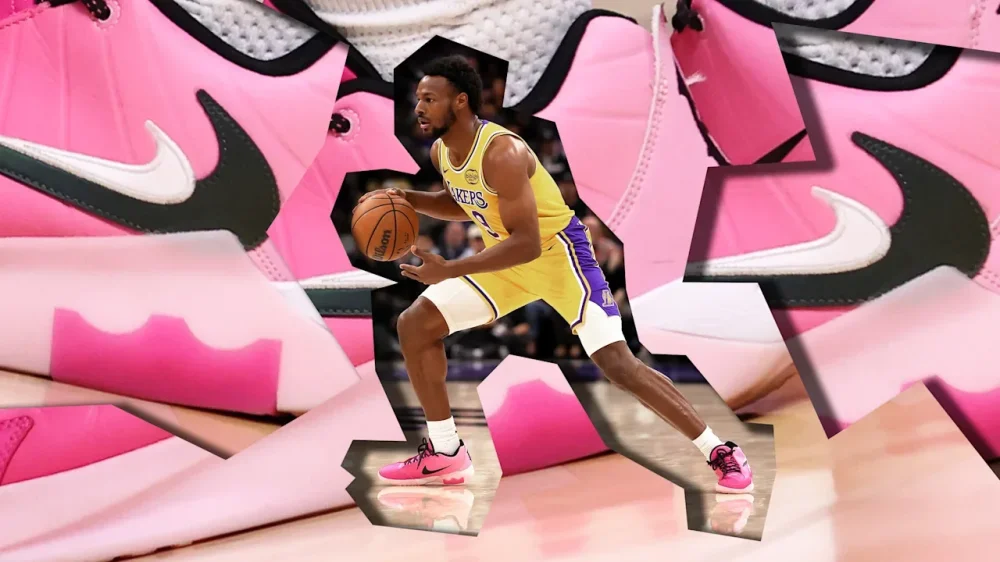
Los Angeles Lakers guard Bronny James quietly debuted a new logo for his signature shoe during last week’s game against the Cleveland Cavaliers: a lowercase b (for Bronny) that features a 9 (for his jersey number) inside the letterform. The logo appeared on a bright pink pair of James’s father’s shoe, the LeBron Witness IX, but there was another logo on the shoe that was notable: a backwards Nike Swoosh. Since debuting in 1971, the Nike Swoosh has become one of the most iconic brand logos of all time. Still, Nike designers have occasionally had some fun with it by breaking brand guidelines and flipping the logo around. Though there’s no formal rule for who gets the backwards swoosh, throughout Nike history, the flipped logo has shown up on shoes worn by some of the strongest-willed players across sports and culture. The history of Nike’s backwards swoosh The backwards Swoosh appeared first in 1994 on the Nike Air Darwin, the big, chunky, boot-like sneaker worn by Dennis Rodman, and the mark later reappeared on Rodman’s Nike Air Ndestrukt. The backwards logo made sense for an eccentric player like Rodman, who was known for his hairstyles and tattoos as much as for his skills on the court. Dennis Rodman Rodman set the pattern for when Nike pulls out the backwards logo. It also appeared on the 1994 Nike Air Flare worn by tennis player Andre Agassi, another athlete at the top of his game who was recognized widely for his style and attitude. In the 2010s, the backwards logo appeared on the shoes of other superstars and made appearances in youth-oriented crossover collaborations. The backwards Swoosh appeared on James’s dad shoe, the 2012 Nike LeBron X, as well as on the Nike Kobe AD NXT in 2017, one year after Kobe Bryant retired. On Giannis Antetokounmpo’s 2019 Nike Freak shoes, the backwards Swoosh was iridescent and memorably set on the midsole to make them look like they’re from the future. The backwards logo on the PG 2, a 2018 collaboration with Playstation, was bright neon colors. Travis Scott has popularized the backwards Nike logo since 2019, when the Travis Scott x Air Jordan 1 became the first in a string of Nike shoes from the rapper to use the backwards mark. Though Rodman complained that Scott “copied” him, the pair made up in 2024 when Rodman appeared in an ad for a velvet brown color way of Scott’s Air Jordan 1 Low OG, which, yes, had a backwards logo. Other global brands with a simple, well-known logos like McDonald’s and Coca-Cola have found creative ways to deconstruct or reinvent their logos by crushing them or turning them upside down, and Nike turned its Swoosh on the side in 2024 on women’s soccer jerseys to celebrate the growing popularity of the game. For such a valuable brand asset like the Swoosh, tweaking it signals a break from conventions. By debuting his signature Nike logo alongside the backwards mark, James joins a storied design tradition. View the full article
-
ECB expected to hold interest rates on ThursdayView the full article