All Activity
- Past hour
-
 Cloudflare yesterday announced its new Markdown for Agents feature, which serves machine-friendly versions of web content alongside traditional human-facing pages. Cloudflare described the update as a response to the rise of AI crawlers and agentic browsing. When a client requests text/markdown, Cloudflare fetches the HTML from the origin server, converts it at the edge, and returns a Markdown version. The response also includes a token estimate header intended to help developers manage context windows. Early reactions focused on the efficiency gains, as well as the broader implications of serving alternate representations of web content. What’s happening. Cloudflare, which powers roughly 20% of the web, said Markdown for Agents uses standard HTTP content negotiation. If a client sends an Accept: text/markdown header, Cloudflare converts the HTML response on the fly and returns Markdown. The response includes Vary: accept, so caches store separate variants. Cloudflare positioned the opt-in feature as part of a shift in how content is discovered and consumed, with AI crawlers and agents benefiting from structured, lower-overhead text. Markdown can cut token usage by up to 80% compared to HTML, Cloudflare said. Security concern. SEO consultant David McSweeney said Cloudflare’s Markdown for Agents feature could make AI cloaking trivial because the Accept: text/markdown header is forwarded to origin servers, effectively signaling that the request is from an AI agent. A standard request returns normal content, while a Markdown request can trigger a different HTML response that Cloudflare then converts and delivers to the AI, McSweeney showed on LinkedIn. The concern: sites could inject hidden instructions, altered product data, or other machine-only content, creating a “shadow web” for bots unless the header is stripped before reaching the origin. Google and Bing’s markdown smackdown. Recent comments from Google and Microsoft representatives discourage publishers from creating separate markdown pages for large language models. Google’s John Mueller said: “In my POV, LLMs have trained on – read & parsed – normal web pages since the beginning, it seems a given that they have no problems dealing with HTML. Why would they want to see a page that no user sees? And, if they check for equivalence, why not use HTML?” And Microsoft’s Fabrice Canel said: “Really want to double crawl load? We’ll crawl anyway to check similarity. Non-user versions (crawlable AJAX and like) are often neglected, broken. Humans eyes help fixing people and bot-viewed content. We like Schema in pages. AI makes us great at understanding web pages. Less is more in SEO !” Cloudflare’s feature doesn’t create a second URL. However, it generates different representations based on request headers. The case against markdown. Technical SEO consultant Jono Alderson said that once a machine-specific representation exists, platforms must decide whether to trust it, verify it against the human-facing version, or ignore it: “When you flatten a page into markdown, you don’t just remove clutter. You remove judgment, and you remove context.” “The moment you publish a machine-only representation of a page, you’ve created a second candidate version of reality. It doesn’t matter if you promise it’s generated from the same source or swear that it’s ‘the same content’. From the outside, a system now sees two representations and has to decide which one actually reflects the page.” Dig deeper. Why LLM-only pages aren’t the answer to AI search Why we care. Cloudflare’s move could make AI ingestion cheaper and cleaner. But could it be considered cloaking if you’re serving different content to humans and crawlers? To be continued… View the full article
 -
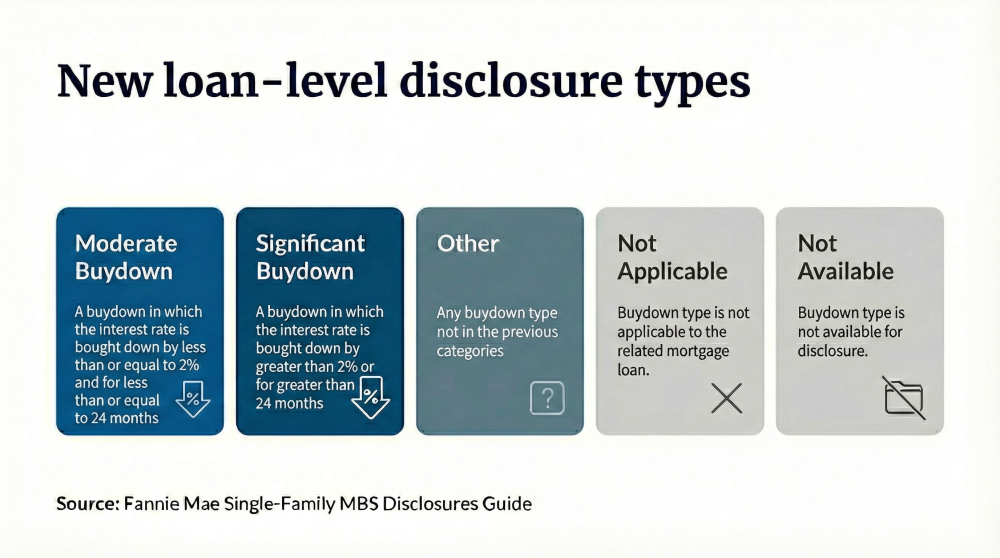
Fannie Mae and Freddie Mac will add loan-level buydown data to MBS this spring, giving investors clearer insight into prepayment risk tied to temporary rate incentives. View the full article
-
Google Ads is rolling out a feature that lets advertisers calculate conversion value for new customers based on a target return on ad spend (ROAS), automatically generating a suggested value instead of relying on manual estimates. The update is designed for campaigns using new customer acquisition goals, where advertisers want to bid more aggressively to attract first-time buyers. How it works. Advertisers enter their desired ROAS target for new customers, and Google Ads proposes a conversion value aligned with that goal. The system removes some of the guesswork involved in estimating how much a new customer should be worth in bidding models. The feature doesn’t yet adjust dynamically at the auction, campaign, or product level. Advertisers still apply the value at a broader setting rather than letting the system vary bids based on context. Why we care. Assigning the right value to a new customer is a weak spot in performance bidding. Many advertisers manually set a flat value that doesn’t always reflect profitability or long-term goals. By tying suggested conversion values to a target ROAS, advertisers can now optimise towards a more strategy-driven bidding, potentially improving how acquisition campaigns balance growth and efficiency. What advertisers are saying. Early reactions suggest the feature is a meaningful improvement over static manual inputs. Founder of Savvy Revenue, Andrew Lolk argues the next step would be auction-level intelligence that adjusts values depending on campaign or product performance. What to watch. If Google expands the feature to support more granular adjustments, it could further reshape how advertisers structure acquisition strategies and value lifetime customer growth. For now, the tool offers a more structured way to calculate new customer value. First seen. This update was first spotted by Founder and Digital Marketer Andrew Lolk who showed the new setting on LinkedIn. View the full article
-
Software work rarely falls apart because of bad ideas; it unravels when timelines slip, dependencies clash and expectations drift. That’s where delivery planning becomes critical. Instead of reacting to chaos, teams shape a clear delivery plan that aligns scope, sequencing and capacity before code hits production. What Is Delivery Planning? Delivery planning is the structured process of organizing how software work moves from approved requirements to production release. It brings together product managers, delivery managers, developers, QA engineers and sometimes DevOps to decide what will be delivered, in what order and within what time frame. The process typically starts with prioritizing backlog items, reviewing technical dependencies and assessing team capacity. From there, the group maps work into iterations or release increments, stress-tests assumptions and adjusts for risks. Trade-offs are discussed openly, especially when scope, time and resources compete. The central output of this effort is a delivery plan, a practical roadmap that outlines milestones, release targets and the sequence of work needed to ship reliably. ProjectManager is an award-winning project portfolio management software that offers advanced planning, scheduling and tracking tools for software development and IT teams, allowing them to create visual roadmaps for their delivery plans, allocate resources, track costs and manage waterfall and agile workflows. Additionally, ProjectManager integrates with Jira, Azure Devops and features an open API that facilitates integration with other software development tools. Get started for free today. /wp-content/uploads/2024/02/light-mode-CTA-1600x918.jpgLearn more What Is a Delivery Plan? A delivery plan is a structured schedule that outlines how approved work will be executed and released within a defined timeframe. It specifies deliverables, sequencing, milestones, dependencies and target release dates. In IT, software and product development environments, a delivery plan translates strategic objectives and prioritized scope into a coordinated project timeline that guides teams from build through testing and deployment. When to Make a Delivery Plan In IT and product environments, a delivery plan is created once the project scope has been approved and the team is preparing to commit to release dates. It is typically used before major releases, large initiatives or cross-team programs where coordination, sequencing and realistic timelines must be agreed upon before execution begins. Here are the most common scenarios in which a delivery plan helps organizations plan and schedule work. Enterprise IT & Digital Transformation Projects Coordinating multi-system upgrades that require strict sequencing and integration testing. Planning phased ERP, CRM or infrastructure modernization initiatives across departments. Aligning cybersecurity improvements with regulatory deadlines and audit requirements. Managing cloud migration programs involving internal teams and external vendors. Structuring data center consolidation projects with clearly defined transition milestones. Software Development Organizing major application releases that bundle multiple new features together. Planning incremental feature rollouts across several sprint cycles. Coordinating backend, frontend and DevOps deployment activities for production releases. Preparing performance optimization initiatives with staged testing checkpoints. Managing refactoring efforts while maintaining ongoing feature development commitments. Product Management Translating roadmap priorities into quarterly or release-based execution plans. Structuring beta launches before full public product availability. Coordinating go-to-market readiness alongside engineering release timelines. Managing feature bundles tied to contractual or enterprise customer commitments. Planning market expansion releases that introduce region-specific capabilities. What Should Be Included In a Delivery Plan? A delivery plan should clearly outline what will be delivered, in what order, by whom and by when, so execution decisions are anchored in visible, agreed-upon commitments. Objectives and Work Scope Clear objectives keep the team focused on outcomes instead of just activity. Defining the work scope prevents uncontrolled expansion once development begins. When both are written into the delivery plan, everyone understands what problem is being solved and what is intentionally excluded, reducing confusion, rework and misaligned expectations. Project Deliverables and Features In IT and software environments, project deliverables are the concrete outputs that must be completed and released. These can include functional features, APIs, integrations, infrastructure updates, configuration changes or performance improvements. Each deliverable represents something testable and releasable, not just a task or internal activity. /wp-content/uploads/2025/08/Project-deliverables-template-600x296.pngFree project deliverables template for Excel Listing deliverables clearly shapes the delivery plan because timelines are built around them. Sequencing decisions, resource allocation and release groupings all depend on what must be shipped. When deliverables are well defined, teams can estimate effort accurately, identify dependencies early and avoid vague commitments that lead to missed deadlines. Delivery Plan Timeline A delivery plan timeline is built from scheduled deliverables, key milestones, dependency links and target release dates. It shows when major features are expected to be completed, when reviews occur and when releases go live. Milestones mark decision points or readiness checks, while dependencies clarify what must finish before the next activity begins. /wp-content/uploads/2024/10/Gantt-chart-template-for-Excel-600x264.pngFree Gantt chart template for Excel Teams usually represent a delivery plan timeline using Gantt charts, roadmap views or structured release calendars. Gantt charts are common because they visualize sequencing and dependencies clearly. Product roadmaps are often used for higher-level communication. In some environments, shared planning boards or portfolio tools provide timeline views aligned with sprint cycles and release windows. Release Structure A release structure defines how completed deliverables are organized and deployed to users. It determines the pattern the team follows, including how functionality is grouped and how frequently releases occur. Within delivery planning, the release structure clarifies whether work is shipped continuously, in fixed cycles or bundled into coordinated releases aligned with business priorities. Common release structures include continuous delivery, where updates are deployed frequently, and time-based models such as monthly or quarterly releases. Some teams use phased rollouts to reduce exposure, while others package features into major version launches. Enterprise programs may synchronize releases across multiple systems and teams. The chosen release structure shapes sequencing decisions, testing intensity and stakeholder expectations. When the structure is unclear, confusion builds around what ships and when. Clear release logic keeps the delivery plan realistic and aligned with deployment capabilities. Resource Plan A resource plan within a delivery plan defines who will perform the work, what skills are required and how availability aligns with the delivery timeline. It maps people, roles and supporting assets to specific deliverables. In IT and software development, this ensures commitments are grounded in real capacity rather than assumed bandwidth. /wp-content/uploads/2023/03/Resource-Plan-Screenshot-600x213.jpgFree resource plan template for Excel Some of the most important roles to include in a resource plan within a delivery plan for software development or IT projects are: Frontend developers assigned to user interface feature development. Backend engineers responsible for APIs and database logic. QA analysts allocated for manual and automated testing cycles. DevOps engineers supporting CI/CD pipelines and deployments. UX designers contributing wireframes and usability validation. Cloud infrastructure environments required for staging and production. External vendors providing integrations or specialized technical services. Risk Register & Risk Mitigation Plan A risk register in a delivery plan is a structured list of identified threats that could impact timelines, scope or quality. It documents each risk, its likelihood, potential impact and assigned owner. In IT and software projects, this often includes technical uncertainty, integration challenges, resource gaps or external dependencies. /wp-content/uploads/2024/11/Risk-assessment-template-screenshot-600x212.pngFree risk assessment template for Excel A risk mitigation plan outlines the specific actions the team will take to reduce the probability or impact of identified risks. It may include contingency timelines, fallback technical approaches, additional testing cycles or escalation protocols. Within delivery planning, mitigation planning prevents reactive decision-making when issues arise during execution. Governance Roles Governance within a delivery plan defines how decisions are made, who approves scope changes and how performance is monitored. In IT and software projects, governance ensures delivery stays aligned with business priorities, budget constraints and risk tolerance while maintaining clear accountability for outcomes. Executive Sponsor: Provides strategic direction and approves major scope, budget or timeline changes. Steering Committee: Reviews progress, resolves escalated issues and validates continued business alignment. Product Owner: Approves backlog priorities and confirms feature-level acceptance decisions. Delivery Manager: Monitors execution performance and enforces agreed planning controls. Technical Authority: Validates architectural decisions and ensures compliance with technical standards. Communication Plan A communication plan within a delivery plan defines how progress, risks and changes are shared with stakeholders. It outlines what information is communicated, how often updates occur and through which channels. In IT and software environments, clear communication prevents misaligned expectations between engineering teams, product leadership and business sponsors. Defined reporting cadence such as weekly delivery status updates. Stakeholder audience list with communication responsibilities assigned. Standard status report format including milestones and risks. Escalation channels for urgent blockers or critical issues. Release announcement templates for internal and external audiences. Integration of dashboard metrics from project management tools. Meeting structure for sprint reviews and release readiness checkpoints. Who Participates in the Delivery Planning Process Although many voices contribute, accountability typically sits with the delivery manager or project manager overseeing execution. That person facilitates planning sessions, aligns scope with capacity and ensures commitments are realistic. In product-led environments, a product manager may co-lead, but ownership of the delivery planning process remains clearly defined. Here’s a quick overview of the key roles and responsibilities in the delivery planning process. Product Manager: Defines priorities, clarifies business outcomes and confirms what must be delivered in each release. Protects value, challenges unnecessary scope and ensures planning decisions align with customer and stakeholder expectations. Delivery Manager: Coordinates planning cadence, manages timelines and tracks dependencies across teams. Translates strategic goals into executable increments and holds the group accountable for realistic commitments and achievable release targets. Engineering Lead: Evaluates technical complexity, identifies architectural constraints and flags sequencing risks. Shapes effort estimates and determines whether proposed timelines are feasible given existing systems and technical debt. Developers: Contribute effort estimates, surface hidden dependencies and explain implementation constraints. Provide practical insight that grounds planning discussions in reality, preventing overly optimistic schedules disconnected from actual build effort. QA Lead: Defines testing scope, automation coverage and release readiness criteria. Ensures sufficient time is allocated for validation so quality is not sacrificed under deadline pressure. DevOps Engineer: Reviews deployment pipelines, infrastructure readiness and environment constraints. Ensures releases can be deployed smoothly without last-minute operational bottlenecks. Business Sponsor: Validates timelines against external commitments. Confirms that release targets support market, regulatory or contractual obligations while understanding the trade-offs required to meet those dates. Main Steps in the Delivery Planning Process Delivery planning is not a a mere documentation exercise. It is a series of working sessions where product, engineering and delivery leaders make real commitments, challenge assumptions and decide what can realistically ship. The steps below reflect the conversations and decisions that turn ambition into an executable delivery plan. 1. Clarify Overall Project Objectives & Success Criteria The process usually begins with the product manager explaining the business outcome the initiative must achieve. The executive sponsor confirms why it matters now. The delivery manager pushes for clarity: what problem are we solving, and what result proves success? Engineering leaders question feasibility early, while the group agrees on measurable targets that will later determine whether the release actually delivered value. 2. Define the Work Scope and Identify Deliverables After alignment on outcomes, the team breaks the idea into concrete work. Product walks through prioritized features. Engineering challenges assumptions and flags hidden complexity. QA raises questions about testability. The delivery manager keeps the discussion focused on what will be included and what will not. Together, they separate essential functionality from optional enhancements before effort discussions begin. 3. Identify Task Dependencies and Constraints Before anyone talks dates, the engineering lead maps technical sequencing realities. Backend may need to finish before frontend begins. DevOps confirms environment readiness. If vendors or external systems are involved, timelines are validated directly with them. Compliance or security representatives call out mandatory checkpoints. The delivery manager documents these constraints so the plan reflects real-world blockers, not assumptions. 4. Sequence Work With constraints visible, the group debates order. Product argues for early delivery of high-impact features. Engineering weighs complexity and risk. The delivery manager tests whether value-driven sequencing conflicts with technical flow. The team decides whether to release incrementally or bundle functionality into phases. By the end of this step, the order of execution reflects deliberate trade-offs, not optimism. 5. Estimate Required Effort and Validate Capacity Developers provide effort estimates based on experience, not pressure. The engineering lead reviews whether specialists are overallocated and balances workload. The delivery manager compares proposed work against actual team availability, including vacations and parallel initiatives. If the math does not work, scope or sequencing is adjusted. No timeline is accepted until capacity and workload are visibly aligned. 6. Build and Review the Delivery Timeline Once estimates are accepted, the delivery manager maps work against proposed release windows. Milestones are proposed and challenged. QA confirms testing windows are realistic. DevOps validates deployment timing. Integration points across teams are reviewed out loud. The draft timeline is pressure-tested in the room before being shared more broadly to stakeholders. 7. Agree on Risk Responses and Escalation Paths Before closing the session, the team openly discusses what could derail the plan. Engineering highlights technical uncertainty. Product identifies market timing risks. The delivery manager asks what happens if assumptions fail. Mitigation actions are assigned, buffers are added where justified and clear escalation paths are confirmed so issues can move quickly if they surface. ProjectManager Can Help with IT & Software Development Projects ProjectManager is an award-winning project portfolio management software equipped with powerful features for IT and software development teams, such as Gantt chart roadmaps that can be used to manage individual delivery plans and complete project portfolios, dashboards for monitoring resource utilization, project costs and progress in real time and kanban boards that are ideal for agile sprints and iterative planning. ProjectManager also has robust resource management features such as workload charts to balance teams’ workloads and timesheets for detailed time tracking. On top of that, ProjectManager integrates with Jira and Azure DevOps and has an open API so that organizations can integrate its powerful project portfolio management functionality with their favorite tools. Watch the video below to learn more! The post Delivery Planning In IT & Software Development: Making a Delivery Plan appeared first on ProjectManager. View the full article
- Today
-
Mortgage delinquencies increased across loan types, and while 30-day late payments showed overall improvement, later-stage distress worsened. View the full article
-
US Secretary of State cancels attendance at last minute in move that EU official called ‘insane’View the full article
-
Ellie Frazier first started posting content three years ago, sharing day-in-the-life vlogs and content tips for fellow creators. As her following grew, she began noticing other creators posting videos with uncannily similar scripts to her own. The clips felt the same. The editing style, identical. In one example, Frazier stretched in front of a window; another creator stretched in front of a window. Frazier chopped vegetables; the other creator chopped an orange. On its own, that might not seem especially striking. But the voiceover script used by the other creator was also almost verbatim Frazier’s words. “There’s a very stark difference between taking inspiration from everybody and giving credit, versus stealing somebody’s voiceover script word for word multiple times in a row,” says Frazier in a recent post. “Taking credit in the comments for it being their own work.” Plagiarism—presenting another person’s ideas, words, images, or work as your own without credit—while often difficult to litigate, is a cardinal sin in most industries. And yet social media largely operates as a law unto itself. TikTok will remove content that “violates or infringes someone else’s intellectual property rights, including copyright and trademark.” However, many posts on the platform do not clearly meet the legal threshold for copyrightable intellectual property, meaning enforcement is often left to creators themselves. With swaths of content uploaded every day, copycat creators frequently weigh the risk of being discovered against the possibility of profiting from a viral concept with minimal effort. There is even content devoted to explaining exactly how to plagiarize others’ work. Determining who copied whom is also largely a futile exercise. On a platform that thrives on mimicry, true originality is rare. The lifecycle of a trend is familiar: One person creates an original video. If it goes viral, thousands copy it. Some tag the original creator. But as the trend snowballs, that credit is often lost to the algorithm. Once it has been replicated enough times to be labeled a trend, the concept is widely regarded as fair game. Frazier isn’t the first to spotlight the growing issue of digital plagiarism. In a first-of-its-kind lawsuit brought in 2024, one TikTok creator attempted to sue another for copying her “neutral, beige, and cream aesthetic” and posting content with “identical styling, tone, camera angle and/or text.” More than a year later, the so-called “Sad Beige Lawsuit” was dismissed after the claimant chose not to move forward. Imitation may be described as the sincerest form of flattery, but online plagiarism ultimately benefits no one. The original creator loses credit for their idea. The copycat forfeits an opportunity to develop a distinct voice. And audiences are left scrolling through an endless stream of low-quality videos, each one nearly indistinguishable from the last. View the full article

-
Head of Wall Street bank calls attorney a ‘tremendous’ person hours after she quit over links to Jeffrey EpsteinView the full article
-
As outrage spreads over energy-hungry data centers, politicians from President Donald The President to local lawmakers have found rare bipartisan agreement over insisting that tech companies — and not regular people — must foot the bill for the exorbitant amount of electricity required for artificial intelligence. But that might be where the agreement ends. The price of powering data centers has become deeply intertwined with concerns over the cost of living, a dominant issue in the upcoming midterm elections that will determine control of Congress and governors’ offices. Some efforts to address the challenge may be coming too late, with energy costs on the rise. And even though tech giants are pledging to pay their “fair share,” there’s little consensus on what that means. “‘Fair share’ is a pretty squishy term, and so it’s something that the industry likes to say because ‘fair’ can mean different things to different people,” said Ari Peskoe, who directs the Electricity Law Initiative at Harvard University. It’s a shift from last year, when states worked to woo massive data center projects and The President directed his administration to do everything it could to get them electricity. Now there’s a backlash as towns fight data center projects and some utilities’ electricity bills have risen quickly. Anger over the issue has already had electoral consequences, with Democrats ousting two Republicans from Georgia’s utility regulatory commission in November. “Voters are already connecting the experience of these facilities with their electricity costs and they’re going to increasingly want to know how government is going to navigate that,” said Christopher Borick, a pollster and director of the Muhlenberg College Institute of Public Opinion. Energy race stokes concerns Data centers are sprouting across the U.S., as tech giants scramble to meet worldwide demand for chatbots and other generative AI products that require large amounts of computing power to train and operate. The buildings look like giant warehouses, some dwarfing the footprints of factories and stadiums. Some need more power than a small city, more than any utility has ever supplied to a single user, setting off a race to build more power plants. The demand for electricity can have a ripple effect that raises prices for everyone else. For example, if utilities build more power plants or transmission lines to serve them, the cost can be spread across all ratepayers. Concerns have dovetailed with broader questions about the cost of living, as well as fears about the powerful influence of tech companies and the impact of artificial intelligence. The President continues to embrace artificial intelligence as a top economic and national security priority, although he seemed to acknowledge the backlash last month by posting on social media that data centers “must ‘pay their own way.’” At other times, he has brushed concerns aside, declaring that tech giants are building their own power plants, and Energy Secretary Chris Wright contends that data centers don’t inflate electricity bills — disputing what consumer advocates and independent analysts say. States moving to regulate Some states and utilities have started to identify ways to get data centers to pay for their costs. They’ve required tech companies to buy electricity in long-term contracts, pay for the power plants and transmission upgrades they need and make big down payments in case they go belly-up or decide later they don’t need as much electricity. But it might be more complicated than that. Those rules can’t fix the short-term problem of ravenous demand for electricity that is outpacing the speed of power plant construction, analysts say. “What do you do when Big Tech, because of the very profitable nature of these data centers, can simply outbid grandma for power in the short run?” Abe Silverman, a former utility regulatory lawyer and an energy researcher at Johns Hopkins University. “That is, I think, going to be the real challenge.” Some consumer advocates say tech companies’ fair share should also include the rising cost of electricity, grid equipment, or natural gas that’s driven by their demand. In Oregon, which passed a law to protect smaller ratepayers from data centers’ power costs, a consumer advocacy group is jousting with the state’s largest utility, Portland General Electric, over its plan on how to do that. Meanwhile, consumer advocates in various states — including Indiana, Georgia, and Missouri — are warning that utilities could foist the cost of data center-driven buildouts onto regular ratepayers there. Pushback from lawmakers, governors Utilities have pledged to ensure electric rates are fair. But in some places it may be too late. For instance, in the mid-Atlantic grid territory from New Jersey to Illinois, consumer advocates and analysts have pegged billions of dollars in rate increases hitting the bills of regular Americans on data center demand. Legislation, meanwhile, is flooding into Congress and statehouses to regulate data centers. Democrats’ bills in Congress await Republican cosponsors, while lawmakers in a number of states are floating moratoriums on new data centers, drafting rules for regulators to shield regular ratepayers and targeting data center tax breaks and utility profits. Governors — including some who worked to recruit data centers to their states — are increasingly talking tough. Arizona Gov. Katie Hobbs, a Democrat running for reelection this year, wants to impose a penny-a-gallon water fee on data centers and get rid of the sales tax exemption there that most states offer data centers. She called it a $38 million “corporate handout.” “It’s time we make the booming data center industry work for the people of our state, rather than the other way around,” she said in her state-of-the-state address. Blame for rising energy costs Energy costs are projected to keep rising in 2026. Republicans in Washington are pointing the finger at liberal state energy policies that favor renewable energy, suggesting they have driven up transmission costs and frayed supply by blocking fossil fuels. “Americans are not paying higher prices because of data centers. There’s a perception there, and I get the perception, but it’s not actually true,” said Wright, The President’s energy secretary, at a news conference earlier this month. The struggle to assign blame was on display last week at a four-hour U.S. House subcommittee hearing with members of the Federal Energy Regulatory Commission. Republicans encouraged FERC members to speed up natural gas pipeline construction while Democrats defended renewable energy and urged FERC to limit utility profits and protect residential ratepayers from data center costs. FERC’s chair, Laura Swett, told Rep. Greg Landsman, D-Ohio, that she believes data center operators are willing to cover their costs and understand that it’s important to have community support. “That’s not been our experience,” Landsman responded, saying projects in his district are getting tax breaks, sidestepping community opposition and costing people money. “Ultimately, I think we have to get to a place where they pay everything.” —Marc Levy, Associated Press View the full article

-
The companies are among a number the Pentagon believes could pose a threat to American national securityView the full article
-
A new report by Intuit’s Mailchimp highlights the critical importance of the opt-in moment for brands aiming to foster strong relationships with consumers. Titled The Art of the Opt-In: Why List Building is Only the Beginning, the study reveals that building quality email and SMS lists goes far beyond simply assembling contacts; it’s about creating trust, personalizing experiences, and ultimately driving engagement. Matt Cimino, product manager at Intuit Mailchimp, emphasizes, “As tracking and re-targeting become more complex, the opt-in stands out as one of the few moments when a brand can earn a direct relationship – with permission.” The insights from this report offer small business owners a roadmap to navigate the opt-in landscape effectively. One of the report’s major findings indicates a disconnection between what marketers believe consumers are willing to share and the reality of consumer privacy concerns. For instance, while 65% of brands ask for a phone number during sign-up, only 28% of consumers are comfortable providing that information. This gap underscores the need for brands to rethink their approach to data collection, focusing on high-intent actions like browsing and checkout moments to optimize their opt-in strategies. The report showcases that many marketers—nearly all of whom maintain email and SMS lists—struggle with quality. Less than a third consider their lists “very high quality,” and only 8% report opt-in conversion rates exceeding 20%. These disappointing statistics may stem from a lack of sophisticated tools and insights; only 20% of marketers fully automate their email and text campaigns, and just a third are confident in tracking sign-up sources. Trust also appears to be generational. The study found that while 39% of Gen Z consumers believe brands will adhere to privacy laws, this figure drops to 19% among Baby Boomers. For younger consumers, a clean and simple design is critical for comfort when engaging with a brand for the first time. Diana Williams, VP of Product at Intuit Mailchimp, notes, “This research reinforces what marketers are feeling every day: relevance comes from clarity, not volume.” With consumers seeking valuable content, businesses must shift from generic pop-ups to targeted opt-in strategies that resonate with specific audience segments. Automation plays a pivotal role in enhancing the quality of engagement. Brands that regard their contact lists as best-in-class are three times more likely to utilize full automation in their communications. They often employ welcome series and upsell flows more effectively than their less organized counterparts. Moreover, coordinated omnichannel strategies that synchronize messaging across various platforms yield better engagement and conversion rates. Brands that execute these strategies are likely to see higher returns across channels like organic and paid social media. However, many small businesses may find it challenging to harness the data necessary for effective segmentation and personalization. As the report points out, marketers often have access to data but struggle to transform it into actionable insights. Overcoming this friction requires the use of platforms that can aggregate fragmented data and facilitate smarter decision-making. Ultimately, the findings provide actionable insights for small business owners looking to improve their marketing efforts. By understanding consumer preferences, refining opt-in strategies, and leveraging automation, small businesses can build stronger relationships with their customers. The opt-in moment not only sets the tone for future interactions but also serves as a key performance indicator for brand engagement. For more in-depth insights, small business owners can access the full report here. As brands continue to navigate an increasingly complex marketing landscape, the importance of a well-crafted opt-in strategy cannot be overstated. Understanding the nuances of consumer trust, leveraging automation, and focusing on high-intent moments can make all the difference in fostering lasting relationships. Image via Google Gemini This article, "New Study Reveals How Trust Shapes Consumer Engagement at Sign-Up" was first published on Small Business Trends View the full article
-
A new report by Intuit’s Mailchimp highlights the critical importance of the opt-in moment for brands aiming to foster strong relationships with consumers. Titled The Art of the Opt-In: Why List Building is Only the Beginning, the study reveals that building quality email and SMS lists goes far beyond simply assembling contacts; it’s about creating trust, personalizing experiences, and ultimately driving engagement. Matt Cimino, product manager at Intuit Mailchimp, emphasizes, “As tracking and re-targeting become more complex, the opt-in stands out as one of the few moments when a brand can earn a direct relationship – with permission.” The insights from this report offer small business owners a roadmap to navigate the opt-in landscape effectively. One of the report’s major findings indicates a disconnection between what marketers believe consumers are willing to share and the reality of consumer privacy concerns. For instance, while 65% of brands ask for a phone number during sign-up, only 28% of consumers are comfortable providing that information. This gap underscores the need for brands to rethink their approach to data collection, focusing on high-intent actions like browsing and checkout moments to optimize their opt-in strategies. The report showcases that many marketers—nearly all of whom maintain email and SMS lists—struggle with quality. Less than a third consider their lists “very high quality,” and only 8% report opt-in conversion rates exceeding 20%. These disappointing statistics may stem from a lack of sophisticated tools and insights; only 20% of marketers fully automate their email and text campaigns, and just a third are confident in tracking sign-up sources. Trust also appears to be generational. The study found that while 39% of Gen Z consumers believe brands will adhere to privacy laws, this figure drops to 19% among Baby Boomers. For younger consumers, a clean and simple design is critical for comfort when engaging with a brand for the first time. Diana Williams, VP of Product at Intuit Mailchimp, notes, “This research reinforces what marketers are feeling every day: relevance comes from clarity, not volume.” With consumers seeking valuable content, businesses must shift from generic pop-ups to targeted opt-in strategies that resonate with specific audience segments. Automation plays a pivotal role in enhancing the quality of engagement. Brands that regard their contact lists as best-in-class are three times more likely to utilize full automation in their communications. They often employ welcome series and upsell flows more effectively than their less organized counterparts. Moreover, coordinated omnichannel strategies that synchronize messaging across various platforms yield better engagement and conversion rates. Brands that execute these strategies are likely to see higher returns across channels like organic and paid social media. However, many small businesses may find it challenging to harness the data necessary for effective segmentation and personalization. As the report points out, marketers often have access to data but struggle to transform it into actionable insights. Overcoming this friction requires the use of platforms that can aggregate fragmented data and facilitate smarter decision-making. Ultimately, the findings provide actionable insights for small business owners looking to improve their marketing efforts. By understanding consumer preferences, refining opt-in strategies, and leveraging automation, small businesses can build stronger relationships with their customers. The opt-in moment not only sets the tone for future interactions but also serves as a key performance indicator for brand engagement. For more in-depth insights, small business owners can access the full report here. As brands continue to navigate an increasingly complex marketing landscape, the importance of a well-crafted opt-in strategy cannot be overstated. Understanding the nuances of consumer trust, leveraging automation, and focusing on high-intent moments can make all the difference in fostering lasting relationships. Image via Google Gemini This article, "New Study Reveals How Trust Shapes Consumer Engagement at Sign-Up" was first published on Small Business Trends View the full article
-
Help them embrace it to reach their goals. By Aaron Klein and Dan Bolton The Holistic Guide to Wealth Management Go PRO for members-only access to more Rory Henry. View the full article
-
Help them embrace it to reach their goals. By Aaron Klein and Dan Bolton The Holistic Guide to Wealth Management Go PRO for members-only access to more Rory Henry. View the full article
-
Huw Pill pushes back against calls for reductions from more dovish voices on MPCView the full article
-
After 25 years of obsessing over Mars, Elon Musk announced that SpaceX has shifted focus from invading the Red Planet to invading the Moon. He claims he will build a self-sustainable lunar metropolis in less than a decade—a sharp contrast to his proposed Mars colony, which he says would now take at least 20 years. Both timelines are as fictional as Star Trek, but at least now his plan makes sense. It is a jarring plot twist from January 2025, when Musk dismissed the Moon as a “distraction.” Now, he says, the satellite is the “overriding priority” to secure civilization. Musk argues a lunar base is necessary because a “natural or man-made catastrophe” on Earth could cut off the supply lines a Mars colony would need to survive. Musk might actually be making sense this time. As Harvard physicist Avi Loeb points out, Musk is right to pivot. The Moon is closer, making it faster to get to, and it aligns with the geopolitical objectives of the United States (the government pays a lot of SpaceX’s bills). It makes sense financially, opening the opportunity for the return of investment that may come from mining the lunar surface and orbiting asteroids, as well as his absurd plan to put one million AI satellites in orbit (made and launched from the Moon, no less). The financial aspect is the key. Really, it’s the whole end game. By choosing a target that’s more accessible—and lucrative—than Mars, Musk is crafting a realistic illusion for investors and bull analysts. He needs to inflate the immediate financial expectations of SpaceX, so his company can get as much money as possible in its programmed 2026 IPO. Hard limits The unavoidable fact that forced him to pivot from Mars is, above everything, basic physical limitations. “[The Moon] is much more practical to bring people back and forth,” Loeb told NewsNation. Musk described his “self-growing city” on X as a settlement that would be capable of expanding rapidly using local resources. It’s not something that that has ever been demonstrated. Still, Loeb argues that “the moon makes much more sense” before we attempt to leap into the deep void of the solar system. The physics of space travel don’t care about Musk’s marketing tweets. The Moon is simply a more forgiving target. Musk says that SpaceX can launch to the Moon every 10 days, allowing for rapid iteration; whereas Mars missions are shackled to planetary alignments that only occur every 26 months. The commute is also drastically different: a two-day hop versus a six-month deep-space haul exposed to radiation and all sorts of space dangers. As Quentin Parker, a professor of astrophysics at the University of Hong Kong, points out: “If you have some issue or emergency, you’re a few days away from Earth. You’re months away if you’re on Mars.” That’s the difference between a rescue mission and a lot of funerals. Whenever it is ready, Starship’s massive capacity to haul over 110 tons of cargo makes it a powerful workhorse to send everything Musk needs to build his fabled city as fast as possible. Base alpha and lava tubes Musk is calling his proposed self-sustaining lunar city “Moon Base Alpha,” a direct homage to the 1970s British-Italian science fiction television series Space: 1999. In the show, Moonbase Alpha is a high-tech scientific research center located in the lunar crater Plato. Musk city’s hardware is radically different from the series’ shiny sets and spaceships. The workhorse for his plan is the Starship Human Landing System, a modified version of the regular Starship stripped of its heat shield and flight flaps since it will never need to re-enter Earth’s atmosphere. Instead of massive engines at the base, this ship uses smaller hull-mounted thrusters for touchdown to avoid blasting a crater into the landing zone and kicking up lethal dust. Once landed, a massive elevator would lower crews and cargo from the high-altitude cabin. The sheer volume of a Starship offers nearly 35,000 cubic feet of pressurized space—dwarfing the Apollo Lunar Module’s cramped 160 cubic feet—which allows for actual living quarters rather than just survival pods. SpaceX also envisions landing and tipping Starships horizontally and burying them under five meters of regolith to shield crews from cosmic radiation. Powering this buried city requires overcoming the lunar night, which lasts for two weeks of freezing darkness. For that, SpaceX will need nuclear reactors like those designed by Kilopower, 10-kilowatt fission units that can run continuously for a decade—rather than relying solely on solar. The city will still need solar arrays, especially in the initial phase. NASA and SpaceX are developing Vertical Solar Array Technology (VSAT)—32-foot-tall masts designed to capture sunlight that grazes the horizon at the lunar South Pole. To move around, astronauts won’t just be walking; they will live inside pressurized rovers, essentially mobile habitats that allow them to explore for weeks without returning to base. But the ultimate goal is to go underground. Musk’s engineers are exploring another old idea for lunar bases: lava tubes. These massive natural tunnels were formed millions of years ago by ancient lunar volcanic flows. They offer ready-made protection with stable temperatures of around 63 degrees.Inside these subterranean cathedrals, SpaceX can build habitats using regolith-based 3D printing tech, like those imagined by 3D-printing construction companies Luyten and Icon. Giant rovers can also weave fibers from moon dust to construct inflatable module supports inside the lava tubes. However, the chasm between rendering and reality remains vast. SpaceX targets a 2026 orbital refueling test for Starship—a critical prerequisite for any lunar mission—a date that has been pushed repeatedly and doesn’t look like it’s going to happen. Aside from part of its elevator, the company hasn’t delivered most of the hardware for Starship HLS. It’s all on the drawing board, which is why NASA reopened the bids for the lunar lander in 2025 after SpaceX failed to progress on their promised milestones. Icon’s lunar construction system is still in R&D, and the Kilopower nuclear reactors, while promising, are still in the ground-testing phase with deployment unlikely before the 2030s. Musk’s “less than a decade” timeline assumes a flawless convergence of technologies that, right now, exist mostly on paper. Follow the money But we know Musk’s pivot isn’t about practicality. It’s about business and valuation. On February 2, SpaceX merged with Musk’s artificial intelligence venture, xAI, creating a corporate titan valued at $1.25 trillion. Sources indicate SpaceX is preparing for a mid-June 2026 IPO that could target a valuation as high as $1.5 trillion, potentially the largest listing in history. Investors love many fast catalysts, not multi-decade pipe dreams. Musk wants to dominate AI, and he knows he needs raw power so he plans to build orbital data centers to feed this AI obsession, allegedly bypassing the power and cooling constraints of terrestrial facilities. Musk’s narrative is selling the idea that the only way to put one million xAI servers in orbit is to exploit the Moon’s resources. Mine it for silicon and oxygen. Build the factories to make the servers. Build a magnetic cannon system to launch the servers into Earth orbit. The Moon becomes the construction site for the “vertically-integrated innovation engine” he promised during the xAI merger announcement. Musk appears to believe he can build this infrastructure before his life ends. It doesn’t matter that multiple experts think that’s impossible. It doesn’t matter that he’s basically proposing building a potential weapon of mass destruction—a cannon satellite launcher—on the Moon. It doesn’t matter that he wants to put a one-million satellite orbital minefield around Earth. And it doesn’t matter that thermodynamics makes his idea of cooling xAI servers in space extremely hard. Space is not “the cheapest place to put AI in 36 months or less,”as Musk has said. In fact, according to Lluc Palerm, research director for satellite at consulting firm Analysys Mason, Musk’s plan to make money out of space servers has the same magnitude of challenge as a Mars mission. Still, building a lunar city aligns perfectly with NASA’s Artemis program—which recently saw the SLS rocket lift off for the first time in 50 years—and offers immediate revenue potential through government contracts that a distant Mars colony simply cannot match. The Bezos threat Which brings us to the second player in this Moon race: Musk is suddenly battling a competent Jeff Bezos. For years, SpaceX’s factory in Texas stood unrivaled. But Blue Origin has finally started delivering. It’s landing its New Glenn rocket and planning a Blue Moon Mark 1.5 lander that doesn’t require complex orbital refueling. That’s competition to Musk in terms of actual Earth dollars. “Multiple sources have told Ars that Bezos has told his team to go “all in” on lunar exploration,” writes Ars Technica’s space editor Eric Berger. This creates a genuine threat that Blue Origin could put humans on the lunar surface before Starship gets there. Bezos isn’t just playing catch-up either. He is building a parallel industrial machine. Blue Origin has successfully tested Blue Alchemist, a technology that melts lunar regolith to autonomously manufacture solar cells and transmission wire without needing any materials from Earth. The company has also launched Project Oasis, a mission to map lunar water ice and helium-3 using low-orbit satellites equipped with neutron spectrometers. To cut costs, Blue Origin is developing Project Jarvis, a reusable stainless-steel upper stage for the New Glenn rocket, mirroring the reusability of Starship. Bezos’s vision is not to build underground cities on the Moon but to build O’Neill colonies, massive orbiting habitats. He sees the Moon not as a colony, but as the mine that will build them (again, a crazy long-term plan). So Musk’s pivot appears to be a calculated move to seize the commercial opportunity of the Moon before his rival does. Red Moon rises While Musk tweets about future cities and Bezos powers up, the most dangerous enemy for the United States’ space hegemony is on a fast collision course. China is the last part of Musk’s wild turn. The Asian giant is executing a concrete, century-long roadmap. On January 29, the China Aerospace Science and Technology Corporation (CASC) officially launched the Tiangong Kaiwu program, a massive national plan named after a 1637 Ming explorer’s encyclopedia to extend Chinese industrial dominance across the solar system. The plan treats space not as a scientific frontier, but as an economic zone. According to academic Wang Wei, who architected the proposal, the goal is to secure strategic minerals from near-Earth objects to fuel Earth’s sustainable development. According to the regime’s official China Space Daily, “among the 1.3 million asteroids in our solar system… about 700 are relatively close to Earth and estimated to be worth over $100 trillion U.S. dollars each. Taking technical feasibility and cost-effectiveness into consideration, 122 of them are economically suitable for mining and use.” This is a four-stage industrial conquest. CASC’s roadmap dictates that by 2035, China will establish a lunar resource development system and begin mining near-Earth asteroids. By 2050, operations will expand to Mars and the main asteroid belt. The timeline extends to 2075 for the exploitation of Jupiter and Saturn, aiming for a fully operational solar-system-wide resource network by 2100. Unlike Musk’s private ventures, this is state policy: verify feasibility by 2030, build the supply chain by 2035, and dominate the market by mid-century. China has already poured concrete for this launchpad. They have successfully deployed the Queqiao satellite constellation—including the recently launched Queqiao-2—creating the world’s first permanent communication relay for the lunar far side. This network is the backbone for future autonomous mining operations. Furthermore, the plan includes a gigawatt-class space-based digital infrastructure that integrates cloud computing and space debris monitoring, essentially creating a space traffic control system that China intends to manage. While Musk is pivoting his company to catch up, Beijing’s machine has been methodically laying the tracks for decades. And it has a plan to catch up and surpass the U.S. While Musk may want us to believe that only he has the key to our future and that his new Moon plan is now what we all need, there are clearly other people on the planet who think otherwise. For now, what we really have is yet another erratic plot twist, a radical course change masquerading as “The New Way to Save Humanity” while he makes lots of money in the process. View the full article

-
Of course we have a recommendation. By Jody Grunden Building the Virtual CFO Firm in the Cloud Go PRO for members-only access to more Jody Grunden. View the full article
-
Of course we have a recommendation. By Jody Grunden Building the Virtual CFO Firm in the Cloud Go PRO for members-only access to more Jody Grunden. View the full article
-
A hybrid loan for business is a unique financing solution that blends fixed and variable interest rates, making it adaptable to your financial needs. Initially, you’ll benefit from a fixed interest rate for a set period, often three to five years, which helps manage cash flow. After this introductory phase, the loan shifts to a variable rate. Comprehending how these loans function and their key features could be essential for your business’s financial strategy. Key Takeaways A hybrid loan combines fixed and variable interest rates, providing flexibility in business financing options. It typically starts with a fixed interest rate for 3-5 years, followed by variable payments. Borrowers can choose between a lump-sum loan or a line of credit, with interest-only payments during the draw period. Eligibility requires a minimum annual revenue of $100,000 and a credit score of 700 or higher. Common uses include refinancing debts, bridging cash flow gaps, and funding inventory purchases. Understanding Hybrid Loans When you’re considering financing options for your business, grasp of hybrid loans can be crucial. A hybrid loan for business combines fixed and variable interest rates within a single product, providing you with flexibility. These loans can either be structured as a lump-sum loan or a credit line hybrid, allowing access to funds customized to various business needs. Typically, they start with a fixed interest rate for an initial period of three to five years, which is beneficial for managing costs. Nevertheless, once this period concludes, the loan shifts to a variable rate, meaning your payments could fluctuate. This structure offers lower initial rates but requires you to be prepared for potential changes in your payment amounts. Comprehending these features will help you make informed decisions about financing that best suits your business’s financial strategy and goals. Key Features of Hybrid Loans Hybrid loans for businesses offer a unique combination of fixed and variable interest rates, giving you the advantage of lower payments during the initial fixed-rate period. You additionally have flexible borrowing options, whether you choose a lump-sum loan or a line of credit, which can adapt to your business needs. During the initial draw period, you can access funds and typically only pay interest, making it easier to manage your cash flow. Fixed and Variable Rates Comprehending the structure of fixed and variable rates in hybrid loans is vital for businesses considering this financing option. Usually, hybrid loans start with a fixed interest rate for three to five years, allowing for predictable monthly payments during this period. Once the fixed-rate term ends, the loan shifts to a variable interest rate, which can fluctuate based on market conditions, potentially leading to varying monthly payments. Fixed rates are typically influenced by the current Federal Reserve prime rate, with lenders adding two or more percentage points. As variable rates can change markedly, it’s important for borrowers to budget for possible increases in payments. This dual structure enables businesses to enjoy lower initial payments as they prepare for future rate adjustments. Flexible Borrowing Options Comprehending the flexible borrowing options offered by hybrid loans can greatly benefit your business’s financial strategy. These loans allow you to access funds as needed, providing a versatile approach to financing. You can choose between a lump-sum loan or a line of credit, depending on your unique needs. Make interest-only payments during the initial draw period, reducing upfront costs. Enjoy lower initial fixed rates compared to traditional loans, which helps manage cash flow. Convert to a fixed-rate installment loan after the draw period, ensuring predictable monthly payments. These features cater to various business scenarios, enhancing your ability to adapt to changing financial demands throughout keeping budgeting manageable. Initial Draw Period After exploring flexible borrowing options, it’s important to understand the specifics of the initial draw period in hybrid loans. This period usually lasts between six months to a year, allowing you to access funds up to the lender’s limit without needing to make full repayments right away. Throughout this time, you’ll typically make interest-only payments, which helps keep your upfront costs low as you meet your business needs. The loan often functions as a revolving line of credit, giving you the flexibility to withdraw and repay as required. After the draw period, the loan converts to a fixed-rate installment loan, providing predictable monthly payments. Keep in mind that interest rates during this period are usually variable, affecting future repayment amounts. Types of Hybrid Loans When exploring the types of hybrid loans available for businesses, you’ll find two primary structures that cater to different financial needs. The first type is a lump-sum loan, which comes with a fixed interest rate for an initial period, typically lasting three to five years. This structure often features lower initial rates before shifting to a variable interest rate. The second type is a hybrid business line of credit. This option allows you to withdraw funds up to a specified limit during a draw period, typically lasting six months to a year, requiring only interest payments during this time. After the draw period, it converts to a fixed-rate installment loan, which offers predictable monthly payments for the remaining term. Lump-sum loan with fixed initial rates Hybrid business line of credit for flexible access Predictable payments after the draw period How Hybrid Loans Work Hybrid loans combine fixed and variable interest rates, giving you a unique structure for financing your business. Initially, you’ll enjoy a fixed rate for three to five years, which then shifts to a variable rate that can fluctuate based on market conditions. Comprehending these payment terms and the dynamics of your interest rates is essential for managing your financial obligations effectively. Loan Structure Explained Comprehending how a hybrid loan works is essential for businesses considering this financing option. Hybrid loans typically start with a fixed interest rate for three to five years, then shift to a variable rate, which can lead to fluctuating payments. During the draw period of six months to a year, you can access funds up to the lender’s limit and usually make interest-only payments. After this period, the loan converts to a fixed-rate installment structure, allowing for predictable payments for the rest of the term. Key aspects to remember include: Fixed rates are often based on the Federal Reserve prime rate plus additional points. Lenders evaluate credit scores and business revenue. Minimum operational history of two years is required. Payment Terms Overview Comprehending the payment terms of a hybrid loan can greatly impact your business’s financial planning. Typically, these loans start with a fixed interest rate for an initial period of three to five years, giving you predictable payments. After this period, the loan adjusts to a variable interest rate, which can result in fluctuating monthly payments based on market conditions. This variability may challenge your budgeting efforts, leading some borrowers to contemplate refinancing options. Furthermore, hybrid business lines of credit often allow for interest-only payments during the initial draw period, lasting six months to a year, which helps ease immediate financial pressure. Interest Rate Dynamics Comprehending how interest rates function in hybrid loans is crucial for managing your business’s finances effectively. Typically, hybrid loans start with a fixed interest rate for three to five years, offering you predictable payments. Once this fixed-rate period ends, the loan changes to a variable interest rate, which can result in fluctuating monthly payments influenced by market conditions. Here are some key points to reflect on: The initial fixed rates are often based on the current Federal Reserve prime rate, plus an additional margin set by the lender. After the fixed period, you might face challenges with budgeting because of variable payments. Hybrid business lines of credit allow for interest-only payments during the initial draw period before moving to a fixed-rate installment loan. Benefits of Hybrid Loans As you explore financing options for your business, it’s essential to understand the benefits of hybrid loans, which effectively blend fixed and variable interest rates. These loans provide lower initial rates during the fixed-rate period, typically lasting three to five years, before shifting to a variable rate. They offer flexibility, allowing you to draw funds as needed and often requiring only interest payments initially, which helps minimize costs. Additionally, hybrid loans can simplify financial management by consolidating multiple debts into one loan, potentially reducing overall interest expenses and monthly payments. They’re particularly advantageous for businesses facing fluctuating cash flow, as you can access necessary funds without the immediate pressure of fixed repayments. With the potential for lower rates than traditional loans, hybrid loans improve overall financial stability and adaptability for businesses maneuvering various growth phases. Benefit Description Impact on Business Lower Initial Rates Enjoy reduced rates during the fixed period Decreased upfront costs Flexibility Draw funds as needed, with interest-only payments Improved cash flow management Debt Consolidation Combine multiple debts into one loan Simplified financial management Cash Flow Management Access funds without fixed repayment pressure Enhanced adaptability Potential Cost Savings Lower rates compared to traditional loans Improved financial stability Draw Period and Repayment Terms Comprehending the draw period and repayment terms of a hybrid loan is crucial for effective financial planning. The draw period typically lasts between six months to a year, during which you can withdraw funds as needed and make interest-only payments. This flexibility helps manage cash flow and cover unexpected expenses. Once the draw period ends, the loan converts to a fixed-rate installment loan, resulting in predictable monthly payments over about 60 months. Here are some key points to reflect on: The fixed-rate period usually lasts three to five years before shifting to a variable interest rate. Budgeting can become challenging once the repayment begins, as your monthly payment amount will change. Some borrowers may explore refinancing options to maintain more stable payment terms. Understanding these elements will help you plan effectively and avoid potential financial strain. Interest Rates Explained When you take out a hybrid loan, you’ll first encounter a fixed interest rate for a set period, usually three to five years, which makes your payments predictable. After that, the rate shifts to a variable one that can change based on market conditions, impacting your monthly payments considerably. Comprehending this shift and how it affects your budget is essential for effective financial planning. Fixed vs. Variable Rates Comprehending the differences between fixed and variable interest rates is crucial for anyone contemplating a hybrid loan for business. Hybrid loans typically begin with a fixed interest rate for three to five years, allowing for predictable payments. After this period, they shift to a variable rate, which can fluctuate based on market conditions and lender pricing. Here are some key points to reflect on: Fixed rates are often based on the Federal Reserve prime rate plus a lender’s margin, making them competitive with traditional loans. Variable rates can change considerably, impacting your monthly payments and overall borrowing costs. Be prepared for payment adjustments after the fixed-rate period, as this can complicate budgeting and repayment planning. Rate Adjustment Period Grasping the rate adjustment period in a hybrid loan is vital for effectively managing your finances. Typically, these loans start with a fixed interest rate for three to five years, based on the Federal Reserve prime rate plus a margin of at least two percentage points. Once this fixed-rate period ends, your loan converts to a variable interest rate, which means your monthly payments can fluctuate based on market conditions. This variability can complicate your budgeting, making it important to prepare for potential changes in your payments. You might even want to reflect on refinancing into another fixed-rate loan before the variable-rate phase begins to maintain more predictable payments. Comprehending this period helps you navigate financial planning effectively. Impact on Payments Comprehending how interest rates in hybrid loans affect your payments is crucial for effective financial management. Hybrid loans typically start with a fixed interest rate for three to five years before shifting to a variable rate, which can lead to fluctuating monthly payments. Here are a few key points to reflect on: Fixed rates are often based on the Federal Reserve prime rate plus a margin, impacting your overall borrowing costs. After the fixed period, your payments may change notably, influenced by market conditions and the lender’s variable rate structure. During the initial draw period, interest-only payments are usually required, helping you manage cash flow before switching to a fixed repayment schedule. Understanding these dynamics can help you plan your finances effectively. Eligibility Requirements for Hybrid Loans To qualify for a hybrid loan, businesses must meet several key eligibility requirements that demonstrate their financial stability and operational history. Typically, lenders look for a minimum annual revenue of around $100,000 and at least two years of operational history. Requirement Description Importance Annual Revenue Minimum of $100,000 Indicates business viability Credit Score Score of 700 or higher, clean history Reflects creditworthiness Business Plan Clear outline of loan usage Shows responsible planning Collateral Possible requirement for larger loans Secures favorable loan terms Additionally, lenders assess personal credit scores, requiring a clean history free from liens or bankruptcies. A solid business plan, along with financial documentation like balance sheets and cash flow statements, is often necessary. Thankfully, hybrid loans usually demand fewer documents than traditional loans, making the application process simpler. Pros and Cons of Hybrid Loans Although hybrid loans can be a strategic financing option for businesses, they come with a mix of advantages and disadvantages. On one hand, you benefit from lower initial interest rates during the fixed-rate period, making it a cost-effective choice. Moreover, the flexibility of interest-only payments in the early stages can help manage your cash flow effectively. Nevertheless, these loans have their drawbacks. After the fixed-rate period, your monthly payments may fluctuate, complicating your budgeting. The shorter draw periods may limit your access to funds when you need them most. If interest rates rise, you risk facing considerably higher payments during the variable rate phase. Understanding these pros and cons can help you make an informed decision about whether a hybrid loan aligns with your business’s financial needs and goals. Alternatives to Hybrid Loans When considering financing options for your business, it is essential to explore alternatives to hybrid loans that may better suit your needs. Here are some viable options: Option Description Pros Traditional Business Loans Fixed amounts, predictable repayments, often require collateral Good for those with weaker credit profiles Business Lines of Credit Flexible withdrawals, longer draw periods Extended access to capital Business Credit Cards Short-term funding, potential cashback rewards Attractive promotional offers SBA Loans Lower interest rates, longer terms Suitable for small businesses Invoice Factoring Sell accounts receivable for immediate cash flow Quick funding solution without debt Each of these alternatives has its own benefits and considerations, so evaluate them carefully to find the best fit for your unique situation. Common Uses for Hybrid Loans Hybrid loans serve a variety of purposes for businesses, making them a versatile financing option. They can be particularly beneficial in several key areas, allowing you to meet different financial needs efficiently. Refinancing existing debts: You can consolidate multiple loans into one, simplifying repayment and potentially lowering interest rates. Bridging cash flow gaps: Hybrid loans provide crucial funds during slow periods, helping you cover operational expenses without stress. Funding inventory purchases: These loans allow you to buy in bulk, taking advantage of discounts as you manage your cash flow effectively. Additionally, hybrid loans can serve as a financial safety net, giving you access to funds for unexpected expenses or emergencies. Tips for Managing a Hybrid Loan Managing a hybrid loan effectively requires careful planning and attention to detail, especially given the unique structure of these loans. Start by creating a detailed budget that considers both the fixed-rate and variable-rate periods. This guarantees you’re prepared for payment fluctuations once the initial fixed term ends. Keep an eye on market interest rates; refinancing to a fixed-rate loan before the variable period can save money if rates are expected to rise. During the draw period, make interest-only payments to ease cash flow strain, giving you more flexibility for operational expenses. It’s vital to maintain a good credit score, as a strong credit history and low debt-to-income ratio will help you qualify for better refinancing options. Regularly review your financial statements to assess cash flow and confirm you can meet repayment obligations, particularly during the shift to fixed payments. Frequently Asked Questions What Is a Hybrid Business Loan? A hybrid business loan blends fixed and variable interest rates, giving you initial lower rates and predictable payments for a set time. Usually, it’s available as a lump sum or line of credit, providing flexibility as your business grows. You might pay only interest during the initial draw period, minimizing upfront costs. To qualify, you’ll typically need a solid business plan, good credit, and annual revenue of at least $100,000. What Is the Monthly Payment on a $50,000 Business Loan? The monthly payment on a $50,000 business loan depends on several factors, including the interest rate and loan term. For a traditional loan with a 7% fixed interest rate over five years, you’d pay about $1,000 per month. If it’s a hybrid loan, initial payments might be lower, possibly interest-only for the first six months. Always consider additional fees, as they can greatly impact your total monthly payment amount. What Is an Example of a Hybrid Loan? An example of a hybrid loan could be a business loan that starts with a fixed interest rate of 4% for the first three years. After that period, it shifts to a variable rate, which might change based on market conditions. This structure allows you to manage initial cash flow better, as your payments remain predictable initially. You can additionally consider refinancing before the variable rate kicks in to maintain budget control. How Does Hybrid Financing Work? Hybrid financing works by combining fixed and variable interest rates, giving you a stable payment initially, usually for three to five years. After this period, your rate shifts to a variable one, which can fluctuate based on market conditions. You might receive the funds as a lump sum or a line of credit, allowing for flexible cash flow management. Lenders assess your credit score and revenue to determine eligibility for this financing option. Conclusion In conclusion, a hybrid loan for business offers a blend of fixed and variable interest rates, providing initial stability with the potential for flexibility as your financial needs evolve. It can help manage cash flow during the early stages, making it easier to handle payments. Nevertheless, it is crucial to weigh the benefits against potential risks, such as fluctuating rates after the initial period. By comprehending how hybrid loans work, you can make informed decisions that align with your business goals. Image via Google Gemini and ArtSmart This article, "What Is a Hybrid Loan for Business and How Does It Work?" was first published on Small Business Trends View the full article
-
A hybrid loan for business is a unique financing solution that blends fixed and variable interest rates, making it adaptable to your financial needs. Initially, you’ll benefit from a fixed interest rate for a set period, often three to five years, which helps manage cash flow. After this introductory phase, the loan shifts to a variable rate. Comprehending how these loans function and their key features could be essential for your business’s financial strategy. Key Takeaways A hybrid loan combines fixed and variable interest rates, providing flexibility in business financing options. It typically starts with a fixed interest rate for 3-5 years, followed by variable payments. Borrowers can choose between a lump-sum loan or a line of credit, with interest-only payments during the draw period. Eligibility requires a minimum annual revenue of $100,000 and a credit score of 700 or higher. Common uses include refinancing debts, bridging cash flow gaps, and funding inventory purchases. Understanding Hybrid Loans When you’re considering financing options for your business, grasp of hybrid loans can be crucial. A hybrid loan for business combines fixed and variable interest rates within a single product, providing you with flexibility. These loans can either be structured as a lump-sum loan or a credit line hybrid, allowing access to funds customized to various business needs. Typically, they start with a fixed interest rate for an initial period of three to five years, which is beneficial for managing costs. Nevertheless, once this period concludes, the loan shifts to a variable rate, meaning your payments could fluctuate. This structure offers lower initial rates but requires you to be prepared for potential changes in your payment amounts. Comprehending these features will help you make informed decisions about financing that best suits your business’s financial strategy and goals. Key Features of Hybrid Loans Hybrid loans for businesses offer a unique combination of fixed and variable interest rates, giving you the advantage of lower payments during the initial fixed-rate period. You additionally have flexible borrowing options, whether you choose a lump-sum loan or a line of credit, which can adapt to your business needs. During the initial draw period, you can access funds and typically only pay interest, making it easier to manage your cash flow. Fixed and Variable Rates Comprehending the structure of fixed and variable rates in hybrid loans is vital for businesses considering this financing option. Usually, hybrid loans start with a fixed interest rate for three to five years, allowing for predictable monthly payments during this period. Once the fixed-rate term ends, the loan shifts to a variable interest rate, which can fluctuate based on market conditions, potentially leading to varying monthly payments. Fixed rates are typically influenced by the current Federal Reserve prime rate, with lenders adding two or more percentage points. As variable rates can change markedly, it’s important for borrowers to budget for possible increases in payments. This dual structure enables businesses to enjoy lower initial payments as they prepare for future rate adjustments. Flexible Borrowing Options Comprehending the flexible borrowing options offered by hybrid loans can greatly benefit your business’s financial strategy. These loans allow you to access funds as needed, providing a versatile approach to financing. You can choose between a lump-sum loan or a line of credit, depending on your unique needs. Make interest-only payments during the initial draw period, reducing upfront costs. Enjoy lower initial fixed rates compared to traditional loans, which helps manage cash flow. Convert to a fixed-rate installment loan after the draw period, ensuring predictable monthly payments. These features cater to various business scenarios, enhancing your ability to adapt to changing financial demands throughout keeping budgeting manageable. Initial Draw Period After exploring flexible borrowing options, it’s important to understand the specifics of the initial draw period in hybrid loans. This period usually lasts between six months to a year, allowing you to access funds up to the lender’s limit without needing to make full repayments right away. Throughout this time, you’ll typically make interest-only payments, which helps keep your upfront costs low as you meet your business needs. The loan often functions as a revolving line of credit, giving you the flexibility to withdraw and repay as required. After the draw period, the loan converts to a fixed-rate installment loan, providing predictable monthly payments. Keep in mind that interest rates during this period are usually variable, affecting future repayment amounts. Types of Hybrid Loans When exploring the types of hybrid loans available for businesses, you’ll find two primary structures that cater to different financial needs. The first type is a lump-sum loan, which comes with a fixed interest rate for an initial period, typically lasting three to five years. This structure often features lower initial rates before shifting to a variable interest rate. The second type is a hybrid business line of credit. This option allows you to withdraw funds up to a specified limit during a draw period, typically lasting six months to a year, requiring only interest payments during this time. After the draw period, it converts to a fixed-rate installment loan, which offers predictable monthly payments for the remaining term. Lump-sum loan with fixed initial rates Hybrid business line of credit for flexible access Predictable payments after the draw period How Hybrid Loans Work Hybrid loans combine fixed and variable interest rates, giving you a unique structure for financing your business. Initially, you’ll enjoy a fixed rate for three to five years, which then shifts to a variable rate that can fluctuate based on market conditions. Comprehending these payment terms and the dynamics of your interest rates is essential for managing your financial obligations effectively. Loan Structure Explained Comprehending how a hybrid loan works is essential for businesses considering this financing option. Hybrid loans typically start with a fixed interest rate for three to five years, then shift to a variable rate, which can lead to fluctuating payments. During the draw period of six months to a year, you can access funds up to the lender’s limit and usually make interest-only payments. After this period, the loan converts to a fixed-rate installment structure, allowing for predictable payments for the rest of the term. Key aspects to remember include: Fixed rates are often based on the Federal Reserve prime rate plus additional points. Lenders evaluate credit scores and business revenue. Minimum operational history of two years is required. Payment Terms Overview Comprehending the payment terms of a hybrid loan can greatly impact your business’s financial planning. Typically, these loans start with a fixed interest rate for an initial period of three to five years, giving you predictable payments. After this period, the loan adjusts to a variable interest rate, which can result in fluctuating monthly payments based on market conditions. This variability may challenge your budgeting efforts, leading some borrowers to contemplate refinancing options. Furthermore, hybrid business lines of credit often allow for interest-only payments during the initial draw period, lasting six months to a year, which helps ease immediate financial pressure. Interest Rate Dynamics Comprehending how interest rates function in hybrid loans is crucial for managing your business’s finances effectively. Typically, hybrid loans start with a fixed interest rate for three to five years, offering you predictable payments. Once this fixed-rate period ends, the loan changes to a variable interest rate, which can result in fluctuating monthly payments influenced by market conditions. Here are some key points to reflect on: The initial fixed rates are often based on the current Federal Reserve prime rate, plus an additional margin set by the lender. After the fixed period, you might face challenges with budgeting because of variable payments. Hybrid business lines of credit allow for interest-only payments during the initial draw period before moving to a fixed-rate installment loan. Benefits of Hybrid Loans As you explore financing options for your business, it’s essential to understand the benefits of hybrid loans, which effectively blend fixed and variable interest rates. These loans provide lower initial rates during the fixed-rate period, typically lasting three to five years, before shifting to a variable rate. They offer flexibility, allowing you to draw funds as needed and often requiring only interest payments initially, which helps minimize costs. Additionally, hybrid loans can simplify financial management by consolidating multiple debts into one loan, potentially reducing overall interest expenses and monthly payments. They’re particularly advantageous for businesses facing fluctuating cash flow, as you can access necessary funds without the immediate pressure of fixed repayments. With the potential for lower rates than traditional loans, hybrid loans improve overall financial stability and adaptability for businesses maneuvering various growth phases. Benefit Description Impact on Business Lower Initial Rates Enjoy reduced rates during the fixed period Decreased upfront costs Flexibility Draw funds as needed, with interest-only payments Improved cash flow management Debt Consolidation Combine multiple debts into one loan Simplified financial management Cash Flow Management Access funds without fixed repayment pressure Enhanced adaptability Potential Cost Savings Lower rates compared to traditional loans Improved financial stability Draw Period and Repayment Terms Comprehending the draw period and repayment terms of a hybrid loan is crucial for effective financial planning. The draw period typically lasts between six months to a year, during which you can withdraw funds as needed and make interest-only payments. This flexibility helps manage cash flow and cover unexpected expenses. Once the draw period ends, the loan converts to a fixed-rate installment loan, resulting in predictable monthly payments over about 60 months. Here are some key points to reflect on: The fixed-rate period usually lasts three to five years before shifting to a variable interest rate. Budgeting can become challenging once the repayment begins, as your monthly payment amount will change. Some borrowers may explore refinancing options to maintain more stable payment terms. Understanding these elements will help you plan effectively and avoid potential financial strain. Interest Rates Explained When you take out a hybrid loan, you’ll first encounter a fixed interest rate for a set period, usually three to five years, which makes your payments predictable. After that, the rate shifts to a variable one that can change based on market conditions, impacting your monthly payments considerably. Comprehending this shift and how it affects your budget is essential for effective financial planning. Fixed vs. Variable Rates Comprehending the differences between fixed and variable interest rates is crucial for anyone contemplating a hybrid loan for business. Hybrid loans typically begin with a fixed interest rate for three to five years, allowing for predictable payments. After this period, they shift to a variable rate, which can fluctuate based on market conditions and lender pricing. Here are some key points to reflect on: Fixed rates are often based on the Federal Reserve prime rate plus a lender’s margin, making them competitive with traditional loans. Variable rates can change considerably, impacting your monthly payments and overall borrowing costs. Be prepared for payment adjustments after the fixed-rate period, as this can complicate budgeting and repayment planning. Rate Adjustment Period Grasping the rate adjustment period in a hybrid loan is vital for effectively managing your finances. Typically, these loans start with a fixed interest rate for three to five years, based on the Federal Reserve prime rate plus a margin of at least two percentage points. Once this fixed-rate period ends, your loan converts to a variable interest rate, which means your monthly payments can fluctuate based on market conditions. This variability can complicate your budgeting, making it important to prepare for potential changes in your payments. You might even want to reflect on refinancing into another fixed-rate loan before the variable-rate phase begins to maintain more predictable payments. Comprehending this period helps you navigate financial planning effectively. Impact on Payments Comprehending how interest rates in hybrid loans affect your payments is crucial for effective financial management. Hybrid loans typically start with a fixed interest rate for three to five years before shifting to a variable rate, which can lead to fluctuating monthly payments. Here are a few key points to reflect on: Fixed rates are often based on the Federal Reserve prime rate plus a margin, impacting your overall borrowing costs. After the fixed period, your payments may change notably, influenced by market conditions and the lender’s variable rate structure. During the initial draw period, interest-only payments are usually required, helping you manage cash flow before switching to a fixed repayment schedule. Understanding these dynamics can help you plan your finances effectively. Eligibility Requirements for Hybrid Loans To qualify for a hybrid loan, businesses must meet several key eligibility requirements that demonstrate their financial stability and operational history. Typically, lenders look for a minimum annual revenue of around $100,000 and at least two years of operational history. Requirement Description Importance Annual Revenue Minimum of $100,000 Indicates business viability Credit Score Score of 700 or higher, clean history Reflects creditworthiness Business Plan Clear outline of loan usage Shows responsible planning Collateral Possible requirement for larger loans Secures favorable loan terms Additionally, lenders assess personal credit scores, requiring a clean history free from liens or bankruptcies. A solid business plan, along with financial documentation like balance sheets and cash flow statements, is often necessary. Thankfully, hybrid loans usually demand fewer documents than traditional loans, making the application process simpler. Pros and Cons of Hybrid Loans Although hybrid loans can be a strategic financing option for businesses, they come with a mix of advantages and disadvantages. On one hand, you benefit from lower initial interest rates during the fixed-rate period, making it a cost-effective choice. Moreover, the flexibility of interest-only payments in the early stages can help manage your cash flow effectively. Nevertheless, these loans have their drawbacks. After the fixed-rate period, your monthly payments may fluctuate, complicating your budgeting. The shorter draw periods may limit your access to funds when you need them most. If interest rates rise, you risk facing considerably higher payments during the variable rate phase. Understanding these pros and cons can help you make an informed decision about whether a hybrid loan aligns with your business’s financial needs and goals. Alternatives to Hybrid Loans When considering financing options for your business, it is essential to explore alternatives to hybrid loans that may better suit your needs. Here are some viable options: Option Description Pros Traditional Business Loans Fixed amounts, predictable repayments, often require collateral Good for those with weaker credit profiles Business Lines of Credit Flexible withdrawals, longer draw periods Extended access to capital Business Credit Cards Short-term funding, potential cashback rewards Attractive promotional offers SBA Loans Lower interest rates, longer terms Suitable for small businesses Invoice Factoring Sell accounts receivable for immediate cash flow Quick funding solution without debt Each of these alternatives has its own benefits and considerations, so evaluate them carefully to find the best fit for your unique situation. Common Uses for Hybrid Loans Hybrid loans serve a variety of purposes for businesses, making them a versatile financing option. They can be particularly beneficial in several key areas, allowing you to meet different financial needs efficiently. Refinancing existing debts: You can consolidate multiple loans into one, simplifying repayment and potentially lowering interest rates. Bridging cash flow gaps: Hybrid loans provide crucial funds during slow periods, helping you cover operational expenses without stress. Funding inventory purchases: These loans allow you to buy in bulk, taking advantage of discounts as you manage your cash flow effectively. Additionally, hybrid loans can serve as a financial safety net, giving you access to funds for unexpected expenses or emergencies. Tips for Managing a Hybrid Loan Managing a hybrid loan effectively requires careful planning and attention to detail, especially given the unique structure of these loans. Start by creating a detailed budget that considers both the fixed-rate and variable-rate periods. This guarantees you’re prepared for payment fluctuations once the initial fixed term ends. Keep an eye on market interest rates; refinancing to a fixed-rate loan before the variable period can save money if rates are expected to rise. During the draw period, make interest-only payments to ease cash flow strain, giving you more flexibility for operational expenses. It’s vital to maintain a good credit score, as a strong credit history and low debt-to-income ratio will help you qualify for better refinancing options. Regularly review your financial statements to assess cash flow and confirm you can meet repayment obligations, particularly during the shift to fixed payments. Frequently Asked Questions What Is a Hybrid Business Loan? A hybrid business loan blends fixed and variable interest rates, giving you initial lower rates and predictable payments for a set time. Usually, it’s available as a lump sum or line of credit, providing flexibility as your business grows. You might pay only interest during the initial draw period, minimizing upfront costs. To qualify, you’ll typically need a solid business plan, good credit, and annual revenue of at least $100,000. What Is the Monthly Payment on a $50,000 Business Loan? The monthly payment on a $50,000 business loan depends on several factors, including the interest rate and loan term. For a traditional loan with a 7% fixed interest rate over five years, you’d pay about $1,000 per month. If it’s a hybrid loan, initial payments might be lower, possibly interest-only for the first six months. Always consider additional fees, as they can greatly impact your total monthly payment amount. What Is an Example of a Hybrid Loan? An example of a hybrid loan could be a business loan that starts with a fixed interest rate of 4% for the first three years. After that period, it shifts to a variable rate, which might change based on market conditions. This structure allows you to manage initial cash flow better, as your payments remain predictable initially. You can additionally consider refinancing before the variable rate kicks in to maintain budget control. How Does Hybrid Financing Work? Hybrid financing works by combining fixed and variable interest rates, giving you a stable payment initially, usually for three to five years. After this period, your rate shifts to a variable one, which can fluctuate based on market conditions. You might receive the funds as a lump sum or a line of credit, allowing for flexible cash flow management. Lenders assess your credit score and revenue to determine eligibility for this financing option. Conclusion In conclusion, a hybrid loan for business offers a blend of fixed and variable interest rates, providing initial stability with the potential for flexibility as your financial needs evolve. It can help manage cash flow during the early stages, making it easier to handle payments. Nevertheless, it is crucial to weigh the benefits against potential risks, such as fluctuating rates after the initial period. By comprehending how hybrid loans work, you can make informed decisions that align with your business goals. Image via Google Gemini and ArtSmart This article, "What Is a Hybrid Loan for Business and How Does It Work?" was first published on Small Business Trends View the full article
-
Americans expressed their preference for alternatives to the Super Bowl this year, and Kid Rock wasn’t it. The Puppy Bowl brought in 15.3 million viewers last Sunday according to official Neilsen numbers released Thursday, the pup-centered event’s biggest audience since 2018. The Super Bowl side event featuring romping baby dogs, now in its 22nd year, offers a lighthearted alternative for anyone alienated by the yearly American football ritual. In the Puppy Bowl, two teams of puppies (Team Ruff and Team Fluff) wrestle, romp and nap their way down a miniature football field featuring live play-by-play commentary, referees, and even a “Lombarky” trophy. The event raises money for animal shelters and also adopts out most of its own star pups, whether they emerge victorious or not. Last year, 12.8 million viewers tuned in to the Puppy Bowl, which airs on Animal Planet, Discovery, TBS, truTV, and HBO Max. The fluffy Super Bowl alternative drew in 6 million viewers in its first year and has been averaging around 12 million viewers in the last handful of years. “This year’s Puppy Bowl delivered its strongest performance in nearly a decade, and its success across linear and streaming highlights our unique ability to unite audiences around content that feels good and does good,” Discovery Channel Head of Content Joseph Boyle said in a press release. “We’re grateful to bring viewers so much joy and are deeply proud of the purpose at the heart of this event.” The Puppy Bowl wasn’t the only alternative Super Bowl show in town. Billed as the “All-American Halftime Show,” conservative org Turning Point USA promoted a MAGA-approved alternative show headlined by Kid Rock for people angry about Bad Bunny’s booking at Super Bowl LX. This year, Super Bowl LX’s official halftime show starring Bad Bunny averaged 128.2 million viewers – enough to put it in the all-time top four, but a dip from Kendrick Lamar’s record-setting 133.5 million viewers in 2025. The performance was almost exclusively in Spanish, a choice that inspired outrage from President The President and others in his orbit, but still inspired a massive swath of people to tune in. MAGA’s hater halftime While the Kid Rock halftime show was originally expected to stream on X, by game time Turning Point USA hit a snag and was pointing followers solely to its YouTube stream. “UPDATE: Due to licensing restrictions, we are unable to stream The All-American Halftime Show on X,” the organization wrote on X. “Head on over to our YouTube channel tonight around 8PM ET to watch the full show 🇺🇸.” On YouTube, the competing performance pulled six million concurrent viewers at its peak. On MAGA-friendly video site Rumble, the concert had been viewed 2.3 million times as of Thursday morning. If all two million of those views happened live, which isn’t likely, that could leave the Kid Rock-led show at around 8 million viewers without factoring in some of the niche networks with relatively small audiences like OAN that aired the performance. Much like the Puppy Bowl, Turning Post USA’s alternative Super Bowl halftime show was pre-taped. An intro video from U.S. Defense Secretary Pete Hegseth kicked things off, praising the organization founded by the late Charlie Kirk for its courage. During the headline performance, Kid Rock visibly struggled to lip sync the words to his own hit song “Bawitaba,” joining the backing track only occasionally – a fact made even more puzzling given that it was pre-recorded. MAGA-approved musicians Brantley Gilbert, Lee Brice and Gabby Barrett also performed during the alternative halftime show. By Thursday afternoon, Turning Point USA’s video of the Kid Rock-led concert was up to 21 million views, which is closer to the only numbers that Turning Point has provided publicly. The NFL’s official YouTube channel racked up more than 78 million views of Bad Bunny’s performance during the same time frame. Republicans vs. Bad Bunny In a Truth Social post following Bad Bunny’s halftime show, President The President called the international superstar’s notably joyful celebration “absolutely terrible.” “Nobody understands a word this guy is saying,” The President said, sidestepping the fact that the NFL itself chose Bad Bunny to reach a massive, untapped audience within the U.S. and abroad. The game itself wasn’t always riveting, but Bad Bunny’s Super Bowl halftime show was widely considered to be a performance for the ages. The inventive Spanish language set showcased energetic choreography, intricate street scenes of New York and Puerto Rico, many nods to the island’s culture and its struggles, and even a real, live wedding. The President wasn’t the only one to criticize Bad Bunny. House Speaker Mike Johnson told a reporter last year that the NFL made a “terrible” decision when it invited Bad Bunny, one of the most popular musicians in the world. “There are so many eyes on the Super Bowl, a lot of young, impressionable children,” Johnson said. The irony is rich given the fact that Kid Rock’s own songs have glorified statutory rape. The 2001 Kid Rock song “Cool, Daddy Cool” features the lines “Young ladies, young ladies, I like ’em underage,” and “See, some say that’s statutory, but I say it’s mandatory” – lines that drew fresh outrage leading up to the Super Bowl. Other members of the MAGA base questioned or outright denied Bad Bunny’s status as an American citizen, including super influencer-turned-boxer Jake Paul, who called the performer a “fake American citizen” – a claim so plainly racist that even his brother called him out. “Puerto Ricans are Americans & I’m happy they were given the opportunity to showcase the talent that comes from the island,” Logan Paul wrote on X. View the full article

-
Part of a figure skater’s job is to make their routine look as effortless and graceful as possible, as if they’re floating on ice and soaring into the air through sheer force of will. In reality, they’re often launching themselves multiple feet into the air with what amounts to sand bags on their feet; generating hundreds of pounds of centripetal force through rotations; and landing on a blade that’s just 3/16 of an inch wide. At the 2026 Winter Games in Milan and Cortina, Italy, NBC is using an AI tool developed by a former MIT researcher to help audiences understand just how mind-boggling the feats of today’s Olympic athletes are. Jerry Lu Jerry Lu is a 2024 MIT graduate and the founder of OOFSports, a sports analytics company that uses AI to analyze program footage, document performance data in real time, and allow commentators to give viewers a more concrete understanding of athletes’ feats. At Milan Cortina, he’s partnering with NBC Sports on its figure skating, snowboarding, and skiing programming, collecting data like the height of jumps, athletes’ speed, and their rotational paths. As figure skaters continue to break new ground in the sport—like landing more and more jumps with quadruple rotations (see American skater Ilia Malinin’s first-ever quad axel landed at the Olympics), Lu’s AI-powered tech can help make sense of their routines, moment by moment. A big ask from NBC Lu’s career in sports analytics began with his own interest in competitive swimming. During his undergraduate studies at the University of Virginia, he worked with the mathematician Ken Ono to develop a wearable device that let the school’s swimmers analyze their strokes, which helped them to increase propulsion and reduce drag. Lu later served as a technical consultant for five swimmers who won medals at the Tokyo Olympics in 2020, followed by 16 medalists at the Paris Olympics in 2024. During his time at MIT in its dedicated sports lab, Lu began experimenting with sports analytics technology for other fields, including a program designed to help Australia’s BMX freestyle team optimize its strategy. Following the Paris Olympics, he says, NBC approached him directly to ask if he could create a data analytics system for figure skating in Milan Cortina. “At that point, some of the artistic sports were missing this data-driven storytelling ability—if you watch hockey on TV, it looks slow, but if you watch it in person, it looks fast,” Lu says. Similarly, he explains, if one were to watch American figure skater Amber Glenn perform a jump on screen, it might not look mind-blowing—but in person, she would be soaring unbelievably high in the air. NBC needed a way to bridge the gap between those two experiences. Building an AI model for the Olympics For Lu and his team—none of whom are skaters—the first step toward building this tool was jumping on a call with former Olympic skaters and longtime NBC analysts Tara Lipinski and Johnny Weir. Unlike sports like swimming or track and field, the judging parameters for figure skating can involve quite a bit of grey area, meaning that Lu’s team needed a full run-down of what the judges would be looking for. “They essentially taught us the sport,” Lu says. “They taught us exactly what they were looking for, what the judges are looking for, what, from their understanding, is a virtue, and what’s a vice. We needed to come up with ways to quantify those and essentially give them the metrics with which they can compare across athletes.” Making a tool for analyzing figure skating required a completely different system from swimming, Lu says. Whereas propulsion and drag were the two main variables in that sport, figure skating is all about the speed and rotation needed to complete complicated jumps. To calculate those metrics without wearables, his team trained an AI model to analyze program footage and identify a variety of rotational points on the athlete’s body, from their head to shoulders, elbows, hips, and ankles. Using those data points, the team then taught the model to categorize different jumps based on body positioning—like the toe loop, luxe, and axel—and, further, to count the athlete’s total rotations in order to classify the jumps as a double, triple, or quad. By understanding exactly where the skater is at any given point, the AI model can calculate statistics like their speed when entering a jump, total jump height, jump exit speed, and the ground they cover across the rink; all crucial elements of their performance. These kinds of numbers can help commentators like Lipinsky and Weir paint a much more detailed picture for this year’s Olympic viewers. Will AI ever replace Olympic figure skating judges? This researcher says no Outside of his collaboration with NBC, Lu has turned his figure skating model into an app called OOFSkate, which lets skaters of any level film their routines and instantly understand their own stats. The app became an official partner of U.S. Figure Skating in December 2025. Lu’s next step is creating a version of this technology that not only tracks skaters’ routines, but also scores them. Right now, he already has a model in the works, which he plans on debuting some time during the skating off-season. Ultimately, he says, the model will be able to assist in evaluating technical performance on a select number of skills, but it will never replace human judgements on athletes’ artistic performance. “Figure skating is this very unique blend of artistic and technical abilities,” Lu says. “The Olympics is all about athletes going higher, faster, stronger—otherwise you don’t deserve to be here. Figure skating has a part of that, which is that the bigger jumps get awarded bigger points, which is correct—if you did a quad and I did a triple, you should get more points. But at the same time, this artistic element is also part of the thesis of figure skating.” View the full article

-
For investors, DraftKings has been anything but a sure bet. The company reported earnings on Thursday, which showed revenue of nearly $2 billion—an increase of 43% year-over-year—and earnings per share of $0.25. “We closed 2025 on a high note. Fourth quarter revenue increased 43% year-over-year and we achieved records for revenue and Adjusted EBITDA. Our core business is strong as we enter 2026,” said Jason Robins, DraftKings’ Chief Executive Officer and Co-founder, in a statement included with the earnings release. However, despite the strong numbers, DraftKings’ stock was down more than 15% during pre-trading on Friday morning, and is now down almost 30% since the beginning of the year. Further, over the past calendar year, it’s down more than 45%. The catalyst? Future uncertainty. Specifically, the company is forecasting “fiscal year 2026 revenue guidance range of $6.5 billion to $6.9 billion and a fiscal year 2026 Adjusted EBITDA guidance range of $700 million to $900 million,” which is below estimates and softer than anticipated. The broader issue is that the sports gambling and prediction markets are evolving quickly, and there’s the distinct possibility that regulation could rein things in, or that individual states could start to tax the companies or users themselves to different degrees. Further, prediction market companies like Kalshi and Polymarket are now in the fray, and both of those companies may offer users a different way to scratch their itch by offering betting products that are exempt from state taxes due to the way they’re structured. DraftKings, too, has a predictions app (DraftKings Predictions) available to users in 38 states, while its sports betting app is available in 28 states. DraftKings isn’t alone in taking it on the chin from the markets. Flutter Entertainment, the largest sports betting stock by market cap, and parent company of FanDuel and others, was likewise down more than 4% before the market opened on Friday, and down more than 35% year-to-date. MGM, which also runs a betting app, was down by similar amount, as was Caesars. View the full article

-
Germany explores joining France’s nuclear umbrella as European fears grow over US reducing its military footprint View the full article
-
We may earn a commission from links on this page. Who among us has not looked at a newly framed picture, then looked at their wall and thought, "Eh, surely I can eye-ball it this time." Hanging pictures should be an easy feat, but so often they end up uncentered or slightly crooked, causing us to add more holes the wall than intended or desired. The next time you hang pictures or artwork in your home, use one of these 10 hacks so they're level and evenly spaced on the first try. Use a small ball as a makeshift level to hang picturesA level is essential when hanging art—a frame that’s even slightly crooked will be an eyesore, and if you’re hanging multiple pieces in a group, it’s even more important that everything be level. If you forgot to grab your level, or you don’t have one, you can use a small ball, like a ping pong ball or a marble. Place it on top of the frame and adjust until the ball sits still, then mark it on the wall. Use painter’s tape to accurately space two nails when hanging a pictureIf your frame has two widely spaced hooks, knowing where to insert your nail, screw, or other fastener on the wall can be a mind-bending challenge. But if you have some painter’s tape on hand, it’s easy: Place a piece of tape across the back of the frame, with the top of the tape lined up with the top of the hooks. Mark the position of the hooks with a marker or pen, then remove the tape and place it on the wall at the desired height. Using a level, adjust the tape until it’s placed correctly. Then drive your nails right through the tape at the marked locations, remove the tape, and hang your picture. Here's a visual tutorial. Use toothpaste to help you mark the spots where hooks or nails need to goAn alternative to the painter’s tape method is to use some toothpaste (or any gooey, sticky stuff that will wash off your wall easily). Mark the hooks on the back of the frame with a gob of toothpaste, check that it's level and at the desired height on your wall, then press the frame against the wall. The toothpaste will mark the precise spot where you need to drive your nails to hang the frame. Insert your fasteners, clean everything up, and hang that picture in the perfect spot. Here's a visual tutorial. Make this quick DIY tool to mark the spot for a hook or nail when hanging a pictureIf you have spare cardboard (a cereal box will do) and a pin or thumbtack, you can make a little DIY tool that will make marking the spot for a hook or nail easy. Cut out a rectangle of cardboard, then cut a tab at the bottom that’s narrow enough to fit through the hook on the back of the frame. Slide the tab through, and push a pin or tack through from the back. Then push the picture into the wall at the right spot, and the pin will create a tiny hole where your hook or nail needs to be. Here's a visual tutorial. Use string to guide a hook onto a nail when hanging a pictureGot the nail in the wall, but can’t seem to catch the hook on the picture frame? Get a piece of string and loop it around the nail, then adjust so the ends are even. Take both ends together and run them through the hook, then pull the string tight as you bring the frame toward the wall. The string will guide the hook right onto the nail, no guesswork required. Here's a visual tutorial. Use a fork to guide wire onto a nail when hanging a pictureIf your frame uses a wire across the back to catch a nail or hook in the wall, you know that sometimes you question your own perception of reality as you repeatedly fail to catch the hook on the wire. There’s an easy hack: Grab a fork from the kitchen and place it on the nail or hook in the wall so it leans outward. Then hook the wire onto the stem of the fork and slide the frame down, letting the fork guide the wire down. When it’s hooked, remove the fork and admire your work. (And wash the fork, probably.) Here's a visual tutorial. Hang pictures with Monkey Hooks if you don't want to use any toolsHanging art on drywall and dread all the mess and trouble of drilling or nailing? Skip it by using Monkey Hooks instead. These are self-drilling pieces of wire—you just poke them through the wall with a tiny bit of elbow grease—that spin around and provide strong, secure hooks that can hold up to 50 pounds of weight, all without a single tool. Here's a visual tutorial. Monkey Hooks Picture Hangers Home and Office Pack, Gorilla Hook, Drywall Hooks for Hanging Pictures, Wall Hooks, Picture Hangers, Picture Hanging Kit, 30 pc set $15.49 at Amazon Shop Now Shop Now $15.49 at Amazon Make this paper template when you're hanging multiple pictures in one areaIf you’re going to be hanging multiple frames on the wall, grab some paper and create a template first. You can use wrapping paper, butcher paper or any kind of paper you have lying around or can get your hands on cheap (you can also use cardboard if that’s what you have on hand). Lay your frames out on the paper and trace them carefully. Then use the toothpaste or cardboard/nail hacks described above to mark where the nails need to be placed. Hang the template on the wall (ensuring it’s level), hammer in your nails, remove the template, and hang your frames. Here's a visual tutorial. Use an envelope to catch dust when drilling to hang a pictureIf you’re going to drill or nail into your walls to hang pictures, you’re going to get a lot of annoying dust all over the place, unless you use a very simple hack: Tape an envelope to the wall underneath where you’ll be drilling. It will catch all that dust and save you the extra step of vacuuming afterward. If you don’t have any envelopes (or tape), some Post-it Notes will do in a pinch—just fold one in half and stick it to the wall under the spot where you’ll be drilling, and it will catch that dust. You can combine more than one Post-it if you need to. Here's a visual tutorial. Use your own saliva to mark the spot where you need to hang a pictureIf all else fails, and you need to hang a framed picture but you are short on time or patience, there’s a simple solution: Lick the back of your finger, curl it over the hanging hook on the back of the frame, and place it against the wall at the desired height (typically around 57-60 inches from the floor). Your own saliva will leave a faint, temporary mark on the wall where you can confidently place your hook without fuss or delay. View the full article