All Activity
- Past hour
-
Google announced they are testing a new “conversational search experience to complement how you already search on YouTube.” It is called “Ask YouTube” and it lets you “dive deeper into the topics you’re curious about in a more interactive way,” Dave from YouTube wrote. What it looks like. Here is a GIF of it in action: How can I try it. If you want to try it out, you can go to youtube.com/new and try to opt into it. This experiment is currently available for YouTube Premium members 18+ in the US who opt-in. Google is working on expanding the experiment to non-Premium users in the future. What it does. Dave from YouTube posted this example: “If you’re in the experiment, you can try it out by selecting “Ask YouTube” in the search bar. For example, you can ask for help planning a 3-day road trip from San Francisco to Santa Barbara, and you’ll get a structured, step-by-step itinerary instead of a list of videos. The response will bring together a new mix of long-form videos, Shorts, and informative text featuring local tips and must-see stops. You can ask follow-up questions like, “where can I find good coffee?” to explore local spots along your route. We’ll surface videos and relevant video segments, accompanied by their titles and channel details, to make it easy to discover new creators and jump into the most helpful content from your search.” Why we care. AI search is creeping into every search interface across Google’s properties. YouTube is no exception. Expect more and more AI search experiences in more Google surfaces and expect them to change and adapt over time. You can find more coverage of this across Techmeme. View the full article
-
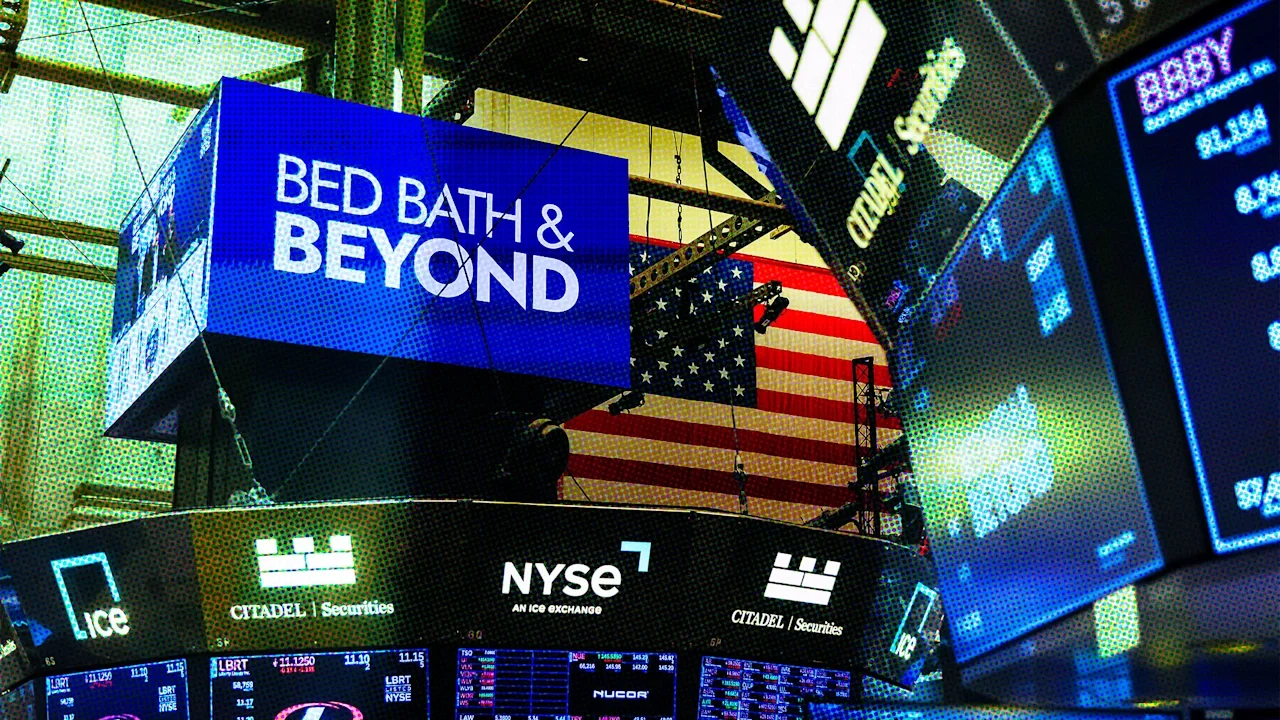
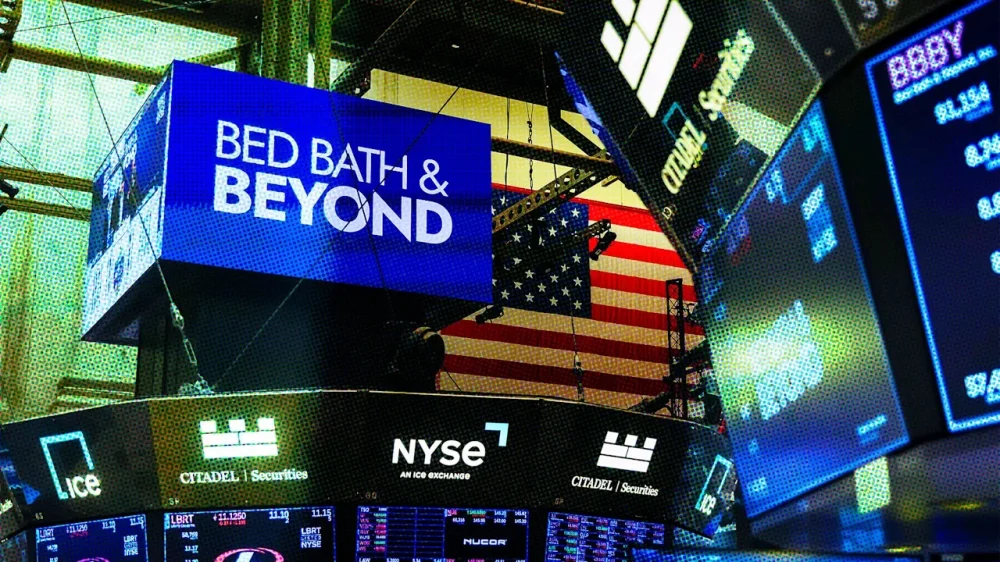
Shares of Bed Bath & Beyond Inc (NYSE: BBBY) are surging this morning, a day after the company reported its Q1 2026 results. Despite the company reporting a loss for the quarter, BBBY stock is significantly higher, as many investors see evidence that the once-iconic home goods retailer’s turnaround efforts are finally showing results. Here’s what you need to know. What’s happened? Yesterday, Bed Bath & Beyond reported first-quarter results for its fiscal year 2026. While many will recognize the company due to its “Bed Bath & Beyond” name, the firm actually owns several businesses under its corporate umbrella, including Bed Bath & Beyond, Overstock, buybuy BABY, Kirkland’s, and Kirkland’s Home. It is also in the process of merging with The Container Store. In the early 2000s, Bed Bath & Beyond was a suburban staple, but in the decades that followed, the company struggled with declining foot traffic as customers shifted their buying habits online. The chain ultimately filed for bankruptcy in 2023, and its IP was bought by Overstock.com shortly after. In early August 2025, the retail partner of Overstock owner Beyond Inc announced that it was reopening the Bed Bath & Beyond chain with a store in Nashville. Shortly after, Beyond Inc changed its name to Bed Bath & Beyond Inc, going all-in on the brand as it worked to turn around its fortunes. Now, it seems that the company’s initiative may be working. In its Q1 earnings report, Bed Bath & Beyond announced that it had achieved its first “significant revenue growth in 19 quarters.” The revenue growth signaled “strong brand awareness among customers,” according to the company. But it also appears to have motivated investors, who have poured money into the company’s shares this morning. Bed Bath & Beyond still didn’t make a profit Announcing the company’s surprising Q1 revenue growth, which totaled $248 million, up 6.9% year-over-year, CEO Marcus Lemonis said that its results “show that the work we’ve been doing to stabilize and rebuild the business is taking hold.” “We delivered real year-over-year revenue growth, something we haven’t seen meaningfully in several years, while continuing to take costs out of the business and operate more efficiently,” Lemonis continued. “That combination matters.” However, while the company is right to call out its revenue growth—and investors are clearly buoyed by the results—it’s important to note that Bed Bath & Beyond still racked up losses for the quarter. The company achieved a net revenue of $248 million, but it had a net loss of $16 million for the quarter. That equated to a loss per share of 24 cents. At the same time, losses marked a $24 million improvement over the same period a year ago. More stores and a larger retail footprint Despite the better-than-expected Q1 earnings, investors will now likely shift their focus to Bed Bath & Beyond’s immediate future, which is expected to usher in a growing retail footprint for the company’s goods. First up, Bed Bath & Beyond Inc is expected to close its merger with The Container Store this summer. Once that happens, 30% of retail space in Container Store locations will be dedicated to selling Bed Bath & Beyond’s wares, expanding the reach and awareness of the once-beloved, Millennial-nostalgic chain. Additionally, the company will open a dozen combined Container Store and Bed Bath & Beyond locations in California, further expanding its retail footprint, and in a state where the brand once had one of its most loyal customer bases. Whether these moves will have a material impact on Bed Bath & Beyond’s future earnings remains to be seen. But as for today, the company’s stock price is surging, thanks to its Q1 results. As of this writing, BBBY stock is currently up nearly 24% to $6.63 in premarket trading. That is a high the company stock price has not seen since January. As of yesterday’s close at $5.34 per share, BBBY stock had declined by about 2.2% since the year began. But with its nearly 24% jump this morning, the company’s stock price is now significantly in the green for 2026. Over the past 12 months, as of yesterday’s close, BBBY shares had risen 30%. View the full article
-
Fragmentation, local engines, and bundled AI tools are redefining competition in APAC, making multi-system visibility the new benchmark for search success. The post APAC Search Strategy Goes Beyond Google & Baidu appeared first on Search Engine Journal. View the full article
-
Understanding the ins and outs of paid media can seem like an overwhelming process when you’re first entering the field. As AI has rapidly changed ad platforms in recent years, keeping up can feel challenging. Thankfully, you’re not alone. You’re part of a supportive industry with a wealth of content and knowledge to share. Here are seven tips to help you learn and become a more confident PPC manager. 1. Be curious Curiosity is foundational to growth in PPC. You’ll learn best by taking initiative to understand ad platforms, how campaigns are structured, and what options are available on the backend. Of course, be careful about tweaking settings you’re not familiar with, but don’t be afraid to dig in on your own. If you’re part of a team, ask your colleagues why they use a particular setup. If you’re not familiar with a platform and have a team member who frequently uses it, ask if they can walk you through it. Your customers search everywhere. Make sure your brand shows up. The SEO toolkit you know, plus the AI visibility data you need. Start Free Trial Get started with 2. Absorb content and find community There are countless industry professionals producing content to teach PPC. Whether you learn best from reading, listening to podcasts, or watching videos, you’ll find options that fit your style. Looking up the authors of articles on this site is a great starting point to build a list to follow. Block out time in your schedule for education. Even setting aside a couple of hours a week helps you gain perspective from others in the industry and keep up with constant platform updates. The PPC industry has long been known for its welcoming, supportive community. Seek out individuals and organizations who are actively sharing, and don’t be afraid to engage with them on social media. Conferences are also a great way to network with other PPC professionals and sometimes discuss their approaches in a more informal setting. A brief word of caution: Vet recommendations you see from others against your own experience in ad accounts. Just because a “best practice” worked for one account doesn’t mean it’ll work for every account. Depending on the tactic, you may want to test it as an experiment to measure impact, or compare results before and after. Dig deeper: What 10 years of PPC testing reveals about breaking best practices 3. Take industry certifications with a grain of salt While ad platform certifications can serve as a starting point for demonstrating basic functionality, be cautious about relying on them as the end-all proof of PPC expertise. Certifications often lean heavily on platform-recommended best practices, which may conflict with tactics that align with a brand’s goals. Academic knowledge can’t match the insight gained from practical, hands-on experience in accounts. 4. Don’t chase what’s new and shiny While I’d encourage staying aware of ad platform updates and current tactics, I’d discourage implementing a new campaign type or expanding into a new platform just because it’s new. Make sure you have sufficient budget and a clear reason to test. Additionally, avoid making adjustments without a rationale. If campaigns are performing and driving qualified leads or sales, keeping the status quo may be best. Basic marketing principles still apply, such as knowing your target audience, addressing their problem with a solution, and presenting a clear call to action. Focus on aligning your channel choices with these goals, and the rest will follow. Dig deeper: 10 keys to a successful PPC career in the AI age Get the newsletter search marketers rely on. See terms. 5. Translate jargon for stakeholders As you become more embedded in PPC, you may naturally use industry terms and acronyms such as CTR, CPC, ROAS, and CPA. However, these metrics are often meaningless to stakeholders who aren’t immersed in your world. One of the most vital skills for a paid media professional is translating abstract metrics into language that connects with what stakeholders care about. For instance, I often default to “conversions,” even though the term can be ambiguous in reports. Referencing the actual action being tracked (such as account open, form fill, or purchase) is more concrete and ties directly to what stakeholders are tasked with driving. 6. Use AI, but don’t neglect the human touch AI is an inevitable part of a future-forward career, and ignoring it will be detrimental to career development. However, don’t lose the human oversight that sets a seasoned PPC practitioner apart. When writing ad copy, LLMs can offer a strong starting point and help refine wording. But don’t rely on AI to produce all your copy, as it may pull irrelevant content from your site (or elsewhere), and may not reflect your brand’s voice and perspective. Also, learn where AI can save time on “busy work” tasks, such as reviewing search terms and placements for exclusions, while still reviewing the output for accuracy. While most ad platforms default to automated campaign setups and encourage a hands-off approach, a standout PPC manager understands the levers they can pull to maintain control when needed. Examples include: Setting target bids or cost caps. Excluding irrelevant keywords, placements, and audiences. Pinning headlines and descriptions in responsive search ads. Restricting geographic targeting to avoid unwanted locations. Tailoring creative to specific demographics. Dig deeper: The new PPC playbook: From media buyer to profit engineer 7. Don’t change things for the sake of showing activity One common temptation for both new and seasoned paid media practitioners is to make changes just to appear busy. The motivation may be valid, as you want to prove to your client or boss that you’re attentive to PPC account management. However, particularly with campaigns that rely heavily on data to drive automated bidding, too many changes in a short period are often detrimental. Be sure to allow for data significance and enough time before pausing ads and keywords or tweaking bid targets. If you can show positive performance trends and provide readouts on which campaigns and channels are driving those results, you can validate your decisions to take or not take action when presenting to stakeholders. See the complete picture of your search visibility. Track, optimize, and win in Google and AI search from one platform. Start Free Trial Get started with Keep learning, start sharing Becoming a confident PPC manager requires mastering a blend of technical, interpersonal, and marketing skills. As you build your knowledge, look for opportunities to share what you’re learning with peers. It’s one of the fastest ways to reinforce what you know and keep improving. Dig deeper: 7 power moves to accelerate your PPC career View the full article
-
When Malibu launched its “Get Ready With Malibu Pink” campaign this spring, the rum brand had all the necessary ingredients for a modern influencer campaign. Creator partnerships with Sabrina Brier and other influencers, on-trend “get ready with me” style videos, all centered on the debut of a new flavored rum with guava, coconut, and pineapple. But there was also one element that was surprisingly new terrain for Malibu’s parent company Pernod Ricard: its first major campaign designed specifically for TikTok. A platform once off-limits Until very recently, alcohol brands like Malibu were completely absent from TikTok. But over the past two years, TikTok’s stronger age-gating protocols, which help guarantee to marketers like Malibu that the content they publish is only seen by legal-age users, have opened the platform for greater experimentation. The growing, cross-generational popularity of TikTok, with four in ten U.S. adults active on the platform and 80% over the age of 21, was also heralded as a key factor. “It’s important for us to connect with Zillennials,” Caroline Begley, Pernod Ricard’s vice president of marketing, tells Fast Company of the importance of the microgeneration of younger millennials and older Gen Z. “Malibu has been around for decades, but it’s always important to introduce new consumers to the brand.” The rush to catch up Boozy TikTok campaigns have proliferated, including Grey Goose vodka’s “Devil Wears Prada 2” content starring supermodel Heidi Klum, Espolòn Tequila’s “Shot Kings Week” celebration with actor and comedian Ken Jeong, St-Germain liqueur’s spritz-making session with actress Sophie Turner, and a behind-the-scenes look at a commercial for the ready-to-drink brand -196 with content creator Pooja Tripathi. Heidi KlumKen Jeong They are now playing catch-up to connect with the highly coveted Gen Z crowd that dominates the cultural conversation and trends on an app that’s already almost a decade old and generates more than $14 billion in U.S. advertising spending annually, according to data from market researcher eMarketer. How the rules changed Pernod Ricard and Bacardi were early adopters, launching limited pilots beginning in 2024. At the same time, TikTok was in active discussions with the Distilled Spirits Council of the United States (DISCUS), the liquor trade advocacy group responsible for setting the protocols for advertising across television, print media, out-of-home advertising, and social platforms including Facebook and Instagram. Liquor brands were allowed to create their own TikTok branded accounts in July 2024, when paid ads were also authorized to target users above 25. Organic brand pages and content were fully “age gated” beginning in July 2025, according to DISCUS, and influencer-related alcohol content began to flow by early 2026. There are still a few restrictions, including most notably that TikTok Shop doesn’t permit the sale of alcohol. “Social media companies have gotten really good at also identifying when somebody is misreporting their age using signal data,” says Courtney J. Armour, chief legal officer of DISCUS, in an interview with Fast Company. TikTok’s advertising policies for alcohol include never featuring people below the age of 25, avoiding the portrayal of excess drinking or intoxication, stating the alcoholic content level, and carrying a responsible drinking disclaimer. One sticking point that was recently resolved involved user comments left on a brand’s TikTok page. DISCUS wanted more guardrails to ensure age verification before allowing brands to turn that feature on. Learning TikTok’s language While most liquor brands still have minuscule TikTok follower counts, they’re actively setting up pages and developing unique strategies for the platform that they say cannot mirror what works on Instagram. “It’s more raw, it’s imperfect, and I think that’s what people gravitate to,” Ned Duggan, global CMO and president of Bacardi Global Brands, tells Fast Company. He adds that TikTok users are more motivated to discover new products and be entertained, while Instagram is more curated and polished. “TikTok is more like behind the scenes, whereas Instagram and other platforms are more front-of-stage,” he adds. TikTok says that 42% of users have discovered a new alcohol brand on the platform. Users over the age of 21 are 1.6 times more likely to buy alcohol or try a new cocktail recipe versus those not using TikTok, the company says. Speed, volume, and experimentation Italian liquor maker Campari Group debuted on TikTok in June 2025 and has since rolled out several campaigns for brands including Espolòn Tequila, Wild Turkey bourbon, and the aperitif Aperol. “When we jumped into TikTok, we quickly learned that it plays by a totally different set of rules than other platforms,” Brian Chang, Campari’s head of consumer marketing and ecommerce, tells Fast Company. Karrueche Tran Liquor marketing executives have quickly learned the need for speed when it comes to effective TikTok storytelling. “We wanted to make a point where the zoom-in mouth effect will be the first few seconds that people would see on TikTok, so that they’re not consistently doomscrolling past the content,” says Chang, of the “Bring Your Own Courvoisier” content that began with a close-up of actress Karrueche Tran’s mouth. Last year, Suntory piloted content centered on -196 with STEM-focused videos that explained how the company uses whole fruits that are frozen in liquid nitrogen, then crushed and infused into vodka. “The category as a whole lends itself, I think, to TikTok as a channel, given the Gen Z connectivity with RTDs,” Davin Nugent, president of global RTD at Suntory Global Spirits, tells Fast Company. Turning views into sales The benchmarks that Suntory is monitoring include ad recall, a marketing metric that measures how many consumers remember seeing an ad, as well as awareness, favorability, and, of course, sales. “If we have great campaigns, but we aren’t getting new purchase intent, then we’re just creating new work and making people smile,” says Nugent. “It has to result in an uptick in consumer purchases.” The ecommerce platform ReserveBar is one of the key players that helps enable brands like Bacardi and Campari to link campaigns to direct sales, as liquor manufacturers aren’t allowed to directly sell to consumers due to the three-tier system in the U.S. that mandates that alcohol flows from producers, to distributors and then retailers before reaching consumers. ReserveBar’s links are now allowed on TikTok and the brand set up its own organic handle a couple of months ago. “There’s not a playbook, because everyone in the industry, we’re starting from scratch,” ReserveBar Chief Marketing Officer Kate Zaman tells Fast Company. But she says the industry can take some cues from lessons learned from non-alcoholic consumer product brands that have had more time to cultivate their TikTok strategies. Success on TikTok isn’t just about speed and cultural tie-ins; there’s also a thirst for volume. “The pure amount of content that you really need to be successful on TikTok is much more than I think what you need on Meta,” says Zaman. View the full article

-
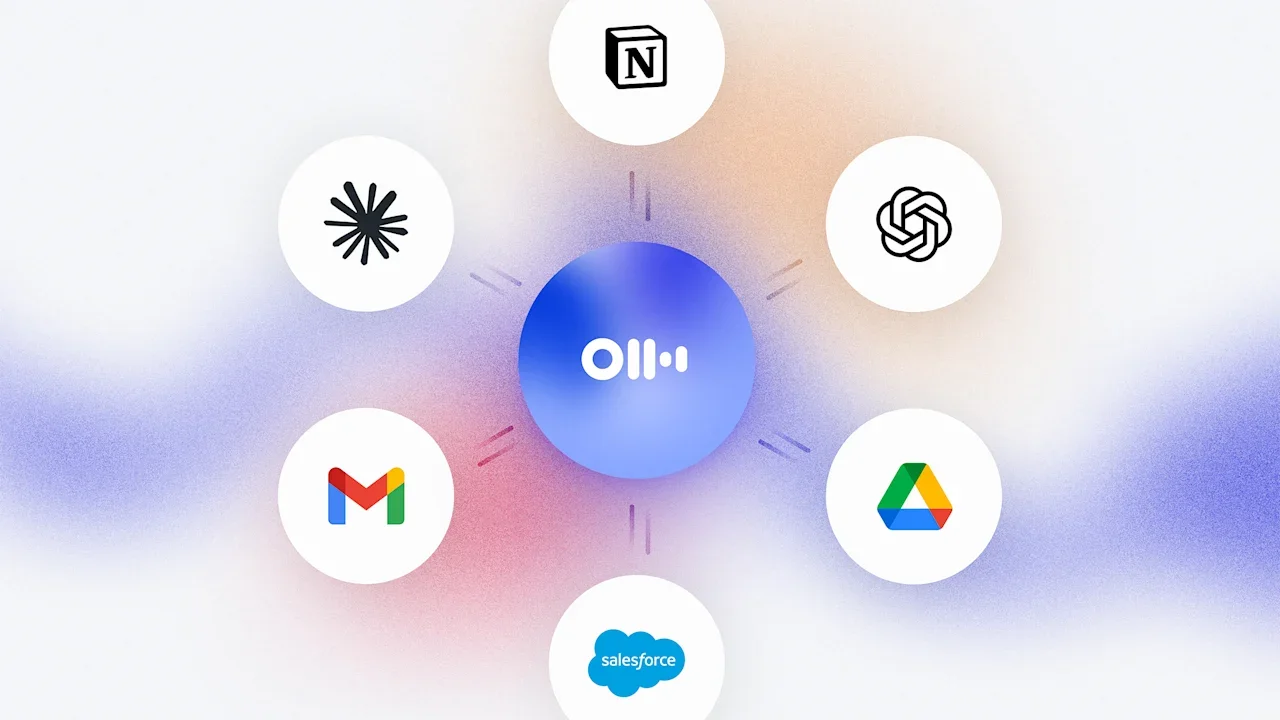
Otter wants to turn your work meetings into institutional knowledge. The company is known for its audio transcription tool, which has evolved over the years to be able to join and transcribe online meetings in real time and answer questions about them via an AI chat tool. It’s now adding additional AI features to make it easier to integrate knowledge from those recorded meetings with other information, including integrations with other software like Google Drive, Jira, Salesforce, and Notion. Those will let Otter’s AI access live data from those apps, so it can pull data from an email or customer database as needed to best answer a follow-up question from a recorded meeting. Otter has also now added server functionality that lets other AI tools, including ChatGPT and Claude, connect to it via the popular model context protocol (MCP), so other AI agents can also access data from Otter with permission. Additionally, enhancements to the AI chat feature itself will make it easier for users to specify when to pull insight from particular meetings, from multiple meetings, and from other data sources to which they have access. The aim is to help unlock knowledge that’s primarily or exclusively shared in meetings and make it available to both human workers and AI agents, says Otter cofounder and CEO Sam Liang. One challenge for corporate knowledge bases, he says, is that information stored in written documents can lag behind reality. “People create documents, but documents become obsolete really fast,” he says, with the latest updates presented via meetings. But even when that’s known to be the case, and even as research repeatedly shows white-collar workers spend a big portion of their time attending meetings, information from those meetings often isn’t easy to access in a systematic way. Even AI-generated transcripts can end up stored in the accounts of individual users rather than broadly available. Otter has already developed what it calls channels—essentially groups of users who have shared access to meeting recordings and transcripts—and the company suggests its AI agents will be able to surface new insights from collections of meetings, like aggregating trends from multiple sales calls or departmental meetings. An improved Otter desktop client for Mac and Windows will also make it easier to record more meetings from a computer, Liang says, though he says many companies do prefer Otter’s AI agent which can conspicuously join calls on platforms like Zoom, giving everyone clear notice the meeting is being recorded. In general, broader recording of meetings and harnessing AI notes may raise privacy and legal concerns at some organizations. But Liang emphasizes that Otter’s channels allow companies to control who has access to meetings internally and that it gives organizations control over how long both audio and transcripts are retained. “We provide a data retention mechanism so that enterprises can decide how long they want to keep the audio recording,” he says, and users can also pause recording—and even eject Otter’s AI notetaker entirely—if they want some of a meeting to be off the record. The new Otter features come as a growing number of companies vie to become an organization’s central AI hub, with AI labs like OpenAI and Anthropic, workplace productivity businesses from Slack to Asana, and office software makers like Google and Microsoft all offering tools to command AI agents and regulate their access to corporate data. Otter also faces no shortage of competition in the meeting transcription market, with comedy website Clickhole noting earlier this month that “all the random AI programs on your computer are desperately fighting for permission to summarize your meeting” and even pasta sauce maker Prego looking to record household dinner table conversations. But Liang says Otter still has features that competitors don’t, like the ability for AI to cleanly separate opinions of different speakers in a meeting, and the option to set up custom templates for how meetings are summarized. Additionally, Liang says, Otter’s AI is optimized to be able to reliably answer questions using information from hundreds of meetings, letting users quickly analyze what took place in sales calls they didn’t personally conduct or get up to speed on what’s already been discussed about a particular project. “You get intelligence from hundreds or thousands [of] meetings, even though you didn’t attend them,” he says. View the full article
-
Cancer has a way of touching lives without warning. Nearly everyone in our community has a story—someone they love, someone they’ve lost, or someone still fighting. At MG2, that shared reality is why Swing for the Cure to benefit the Fred Hutchinson Cancer Center has become so deeply meaningful to us. It isn’t just a charity event. It’s a collective response to something that has affected so many of us personally. Swing for the Cure began as a golf tournament, but it quickly became much more. Driven by the loss of his first wife, Patricia, our former CEO Jerry Lee believed that no one should lose a friend, family member, or loved one to breast cancer. That conviction helped our firm shape the heart of the event from the very beginning. Jerry and his wife Charlene, herself a breast cancer survivor for more than 25 years, continue to inspire us through their resilience, optimism, and unwavering commitment to this mission. What makes Swing for the Cure special is the common bond it creates. People come together not as job titles or companies, but as individuals with shared experiences and deeply personal reasons for being there. Some are survivors. Some are caregivers. Some are honoring those they’ve lost. That sense of connection transforms a day on the golf course into something far more powerful: a community united around a clear goal, which is to support research and move closer to a cure. A SENSE OF PURPOSE MATTERS Over the years, MG2 has intentionally worked to make Swing for the Cure bigger, deeper, and broader. What started as a standalone experience has grown into a purposeful annual gathering that reflects our values. We challenged ourselves to think beyond a traditional fundraiser and create something hopeful—an experience where people feel connected, motivated, and part of something meaningful. Clients, partners, and colleagues come together not out of obligation, but because they believe in what the event represents. That sense of purpose matters. When people gather with intention and when they know why they’re there and what they’re working toward, then good things happen. Energy builds. Conversations deepen. Commitment follows. Swing for the Cure demonstrates that goodwill is not abstract; it’s something that grows when people are aligned around a shared cause. And goodwill, when cultivated thoughtfully, benefits everyone. IMPACT FROM SHOWING UP CONSISTENTLY For MG2, this commitment mirrors how we approach our work. Just as strong design is rooted in care, collaboration, and long-term thinking, meaningful community engagement requires the same. Swing for the Cure, going strong for almost a quarter century, has raised more than $2 million to date, and it reminds us that real impact comes from showing up consistently, staying focused on the goal, and inviting others to take part. Last year was by far our biggest year. Our 2025 Swing for the Cure raised $250,000. Thanks to our close ties with Fred Hutch, we can choose the specific research we want to fund. That adds a personal touch to the entire experience. This year we awarded the total amount raised to one radiation oncologist, whose upcoming trial will work to improve how physicians deliver concurrent radiation and chemotherapy and enhance outcomes for high-risk patients. Grants like this are important for the larger health community, and it’s an emotional moment for researchers—and for us—to push for cures. When we come together with purpose, we can honor those we’ve lost, support those still fighting, and move closer to a future where fewer families face this journey alone. Mitch Smith AIA, LEED AP, is the CEO and chairman of MG2, an affiliate of Colliers Engineering & Design. View the full article

- Today
-
Krishna Madhavan from Microsoft Bing demo'ed some new AI reporting features that should launch within Bing Webmaster Tools soon. They include citation share, grounding query intent, semantic topic label, and GEO-focused recommendations. View the full article
-
As you know, Google announced a new search spam penalty for back button hijacking. Site owners have until June 15, 2026 to remove any such functionality from its site or it will be subject to a manual action and/or automated algorithmic adjustment. Now, Google is sending email notifications through Search Console as reminders.View the full article
-
Google is now showing the number of reviews that were deleted on a specific Google Business Profile due to defamation complaints. This seems to be live in Germany and not other countries right now.View the full article
-
If you’re managing a trading business, choosing the right accounting software can greatly affect your efficiency and financial management. Wave Accounting offers a free starter plan with unlimited invoicing, making it a great choice for budget-conscious traders. Conversely, Xero provides robust inventory management features, which can streamline your stock handling. Comprehending these options and their unique benefits is essential, as it can help you make an informed decision customized to your specific needs. Key Takeaways Wave Accounting: Offers a free starter plan with unlimited invoicing, making it cost-effective for small trading businesses. Xero: Provides excellent inventory management features and integrates with over 1,000 apps for seamless operations. QuickBooks Online: Ideal for complex financial needs, it supports multi-user access and robust financial management tools. Zoho Books: Scalable solution with a free plan, suitable for managing inventory and multiple bank accounts efficiently. FreshBooks: Excellent for invoicing and expense tracking, designed specifically for service-based trading businesses. Top Accounting Software Options for Trading Businesses Regarding managing finances in trading businesses, selecting the right accounting software is crucial. You’ll find several top accounting software options that cater to your specific needs. QuickBooks Online, highly rated for its extensive capabilities, is perfect if you require robust financial management tools and multi-user access. Xero, starting at $15 per month, shines in inventory management and integrates seamlessly with over 1,000 apps, providing real-time data management and multi-currency support. Sage 50 Accounting stands out for its strong desktop capabilities, ideal for businesses needing thorough reporting and advanced inventory tracking. If your trading business is service-oriented, FreshBooks, starting at $19, offers excellent invoicing and expense tracking. Finally, for very small businesses, Wave Accounting provides a free starter plan, allowing unlimited invoicing and access to a mobile app. These accounting packages in India represent some of the best accounting software for trading businesses. Key Features to Consider in Accounting Software When selecting accounting software for your trading business, it’s essential to focus on features that align with your operational needs. Look for multi-currency support, as trading often involves transactions across different countries, requiring effective management of various currencies. Robust inventory management features are critical to track stock levels, orders, and supplier information, which directly impact your trading activities. Automated invoicing and receipt management can greatly improve efficiency by minimizing manual data entry and speeding up billing processes. Furthermore, consider integration capabilities with other tools like CRM systems and e-commerce platforms to guarantee seamless operations and consistent data management. Finally, thorough reporting features are indispensable; they provide insights into sales, expenses, and cash flow, empowering you to make informed decisions. To conclude, these key features will help your trading business thrive when using a trading ERP solution. Pricing and Subscription Models Pricing for accounting software can vary widely, making it crucial to comprehend the options available to find what fits your trading business best. Here’s a quick overview of some popular choices: Software Starting Price QuickBooks Online $35/month FreshBooks $19/month Xero $15/month (50% off for first 3 months) Wave Accounting Free Starter plan, $16/month for Pro plan Zoho Books Free for micro businesses, paid plans start at $0/month Subscription models often offer tiered pricing based on features, user access, and the number of invoices handled. This flexibility allows you to choose a plan that meets your specific accounting needs. Whether you’re a small trader or managing larger transactions, comprehending these options will help you make a more informed decision for your business. User Experience and Customer Support User experience and customer support are critical factors to evaluate when choosing accounting software for your trading business. QuickBooks Online stands out with its live support and user-friendly interface, making it ideal for complex accounting needs. If you run a service-based trading company, FreshBooks may be a better fit, as it emphasizes customer service and offers an intuitive dashboard for easier navigation. Xero also shines with its user-friendly design and context-sensitive settings, which simplify financial management while providing extensive reporting features. For small trading businesses, Wave Accounting offers a free, straightforward mobile app and reporting dashboard, ensuring accessibility without financial strain. Finally, Zoho Books caters to diverse trading enterprises with exceptional customer support and multi-lingual invoicing, allowing for thorough accounting solutions customized to your business’s specific needs. Evaluating these aspects will help you choose the right software for your trading operation. Recommendations for Different Business Needs If invoicing and expense tracking are your priorities, FreshBooks offers an excellent user experience starting at $19 per month. On the other hand, Zoho Books provides a scalable solution with a free plan, perfect for managing inventory and multiple bank accounts. Finally, for small trading businesses on a tight budget, Wave Accounting is an ideal option, offering unlimited invoicing and estimates for free. Each software serves unique needs, so assess your business requirements carefully. Frequently Asked Questions What Is the Best Accounting Software for a Small Business? When considering the best accounting software for your small business, QuickBooks Online stands out because of its extensive features, including inventory management and multi-user access. FreshBooks is excellent for service-oriented businesses, offering easy invoicing and expense tracking. Xero provides strong multi-user support and real-time data management. If you’re looking for a cost-effective solution, Wave Accounting offers free invoicing, whereas Zoho Books delivers robust tools at competitive prices. Evaluate these options based on your specific needs. What Is the Best Accounting Software for Sole Traders? When choosing accounting software as a sole trader, consider options like Wave for free unlimited invoicing and bookkeeping, or FreshBooks, which starts at $19 per month and offers time tracking. Xero is another option, allowing 20 invoices monthly for $15. QuickBooks Online provides robust tools from $35, and Zoho Books offers a free plan for those earning less than $50,000, allowing up to 1,000 invoices annually. Each has unique features customized to your needs. Is Quickbooks Good for Sole Traders? Yes, QuickBooks is good for sole traders. It offers customizable features like invoicing, expense tracking, and tax assistance, starting at $35 per month. The platform supports multiple sales channels and provides live support, simplifying financial management. With integration options for over 750 apps, including PayPal and Square, you can improve functionality. Its user-friendly interface and mobile app access allow you to manage accounting efficiently, ensuring you stay organized and up-to-date. Is Xero or Quickbooks Better for Small Business? When deciding between Xero and QuickBooks for your small business, consider your specific needs. Xero starts at $15 per month and outshines in user-friendliness and integrations, whereas QuickBooks, starting at $35, offers robust features like tax assistance and extensive user support. If you need multi-user access and advanced functionalities, QuickBooks may serve you better. For straightforward accounting and lower costs, Xero could be the right choice. Evaluate both based on your business requirements. Conclusion In summary, selecting the right accounting software is essential for trading businesses to streamline financial management. Wave Accounting offers a cost-effective solution with its free starter plan, whereas Xero stands out with its advanced inventory management capabilities. By considering key features, pricing models, and user experience, you can find software that best suits your needs. In the end, investing in the right tools can help you manage your finances more effectively and support your business growth in a competitive market. Image via Google Gemini This article, "Best Accounting Software for Trading Businesses" was first published on Small Business Trends View the full article
-
If you’re managing a trading business, choosing the right accounting software can greatly affect your efficiency and financial management. Wave Accounting offers a free starter plan with unlimited invoicing, making it a great choice for budget-conscious traders. Conversely, Xero provides robust inventory management features, which can streamline your stock handling. Comprehending these options and their unique benefits is essential, as it can help you make an informed decision customized to your specific needs. Key Takeaways Wave Accounting: Offers a free starter plan with unlimited invoicing, making it cost-effective for small trading businesses. Xero: Provides excellent inventory management features and integrates with over 1,000 apps for seamless operations. QuickBooks Online: Ideal for complex financial needs, it supports multi-user access and robust financial management tools. Zoho Books: Scalable solution with a free plan, suitable for managing inventory and multiple bank accounts efficiently. FreshBooks: Excellent for invoicing and expense tracking, designed specifically for service-based trading businesses. Top Accounting Software Options for Trading Businesses Regarding managing finances in trading businesses, selecting the right accounting software is crucial. You’ll find several top accounting software options that cater to your specific needs. QuickBooks Online, highly rated for its extensive capabilities, is perfect if you require robust financial management tools and multi-user access. Xero, starting at $15 per month, shines in inventory management and integrates seamlessly with over 1,000 apps, providing real-time data management and multi-currency support. Sage 50 Accounting stands out for its strong desktop capabilities, ideal for businesses needing thorough reporting and advanced inventory tracking. If your trading business is service-oriented, FreshBooks, starting at $19, offers excellent invoicing and expense tracking. Finally, for very small businesses, Wave Accounting provides a free starter plan, allowing unlimited invoicing and access to a mobile app. These accounting packages in India represent some of the best accounting software for trading businesses. Key Features to Consider in Accounting Software When selecting accounting software for your trading business, it’s essential to focus on features that align with your operational needs. Look for multi-currency support, as trading often involves transactions across different countries, requiring effective management of various currencies. Robust inventory management features are critical to track stock levels, orders, and supplier information, which directly impact your trading activities. Automated invoicing and receipt management can greatly improve efficiency by minimizing manual data entry and speeding up billing processes. Furthermore, consider integration capabilities with other tools like CRM systems and e-commerce platforms to guarantee seamless operations and consistent data management. Finally, thorough reporting features are indispensable; they provide insights into sales, expenses, and cash flow, empowering you to make informed decisions. To conclude, these key features will help your trading business thrive when using a trading ERP solution. Pricing and Subscription Models Pricing for accounting software can vary widely, making it crucial to comprehend the options available to find what fits your trading business best. Here’s a quick overview of some popular choices: Software Starting Price QuickBooks Online $35/month FreshBooks $19/month Xero $15/month (50% off for first 3 months) Wave Accounting Free Starter plan, $16/month for Pro plan Zoho Books Free for micro businesses, paid plans start at $0/month Subscription models often offer tiered pricing based on features, user access, and the number of invoices handled. This flexibility allows you to choose a plan that meets your specific accounting needs. Whether you’re a small trader or managing larger transactions, comprehending these options will help you make a more informed decision for your business. User Experience and Customer Support User experience and customer support are critical factors to evaluate when choosing accounting software for your trading business. QuickBooks Online stands out with its live support and user-friendly interface, making it ideal for complex accounting needs. If you run a service-based trading company, FreshBooks may be a better fit, as it emphasizes customer service and offers an intuitive dashboard for easier navigation. Xero also shines with its user-friendly design and context-sensitive settings, which simplify financial management while providing extensive reporting features. For small trading businesses, Wave Accounting offers a free, straightforward mobile app and reporting dashboard, ensuring accessibility without financial strain. Finally, Zoho Books caters to diverse trading enterprises with exceptional customer support and multi-lingual invoicing, allowing for thorough accounting solutions customized to your business’s specific needs. Evaluating these aspects will help you choose the right software for your trading operation. Recommendations for Different Business Needs If invoicing and expense tracking are your priorities, FreshBooks offers an excellent user experience starting at $19 per month. On the other hand, Zoho Books provides a scalable solution with a free plan, perfect for managing inventory and multiple bank accounts. Finally, for small trading businesses on a tight budget, Wave Accounting is an ideal option, offering unlimited invoicing and estimates for free. Each software serves unique needs, so assess your business requirements carefully. Frequently Asked Questions What Is the Best Accounting Software for a Small Business? When considering the best accounting software for your small business, QuickBooks Online stands out because of its extensive features, including inventory management and multi-user access. FreshBooks is excellent for service-oriented businesses, offering easy invoicing and expense tracking. Xero provides strong multi-user support and real-time data management. If you’re looking for a cost-effective solution, Wave Accounting offers free invoicing, whereas Zoho Books delivers robust tools at competitive prices. Evaluate these options based on your specific needs. What Is the Best Accounting Software for Sole Traders? When choosing accounting software as a sole trader, consider options like Wave for free unlimited invoicing and bookkeeping, or FreshBooks, which starts at $19 per month and offers time tracking. Xero is another option, allowing 20 invoices monthly for $15. QuickBooks Online provides robust tools from $35, and Zoho Books offers a free plan for those earning less than $50,000, allowing up to 1,000 invoices annually. Each has unique features customized to your needs. Is Quickbooks Good for Sole Traders? Yes, QuickBooks is good for sole traders. It offers customizable features like invoicing, expense tracking, and tax assistance, starting at $35 per month. The platform supports multiple sales channels and provides live support, simplifying financial management. With integration options for over 750 apps, including PayPal and Square, you can improve functionality. Its user-friendly interface and mobile app access allow you to manage accounting efficiently, ensuring you stay organized and up-to-date. Is Xero or Quickbooks Better for Small Business? When deciding between Xero and QuickBooks for your small business, consider your specific needs. Xero starts at $15 per month and outshines in user-friendliness and integrations, whereas QuickBooks, starting at $35, offers robust features like tax assistance and extensive user support. If you need multi-user access and advanced functionalities, QuickBooks may serve you better. For straightforward accounting and lower costs, Xero could be the right choice. Evaluate both based on your business requirements. Conclusion In summary, selecting the right accounting software is essential for trading businesses to streamline financial management. Wave Accounting offers a cost-effective solution with its free starter plan, whereas Xero stands out with its advanced inventory management capabilities. By considering key features, pricing models, and user experience, you can find software that best suits your needs. In the end, investing in the right tools can help you manage your finances more effectively and support your business growth in a competitive market. Image via Google Gemini This article, "Best Accounting Software for Trading Businesses" was first published on Small Business Trends View the full article
-
I am seeing new signs of the Google search ranking volatility heating up. When I reported on it last week, the tools began to show volatility trend upwards. But now, while some of the tools are calm, the chatter within the forums has spiked over the past 24 hours or so.View the full article
-
Tehran has a strong incentive to keep the conflict goingView the full article
-
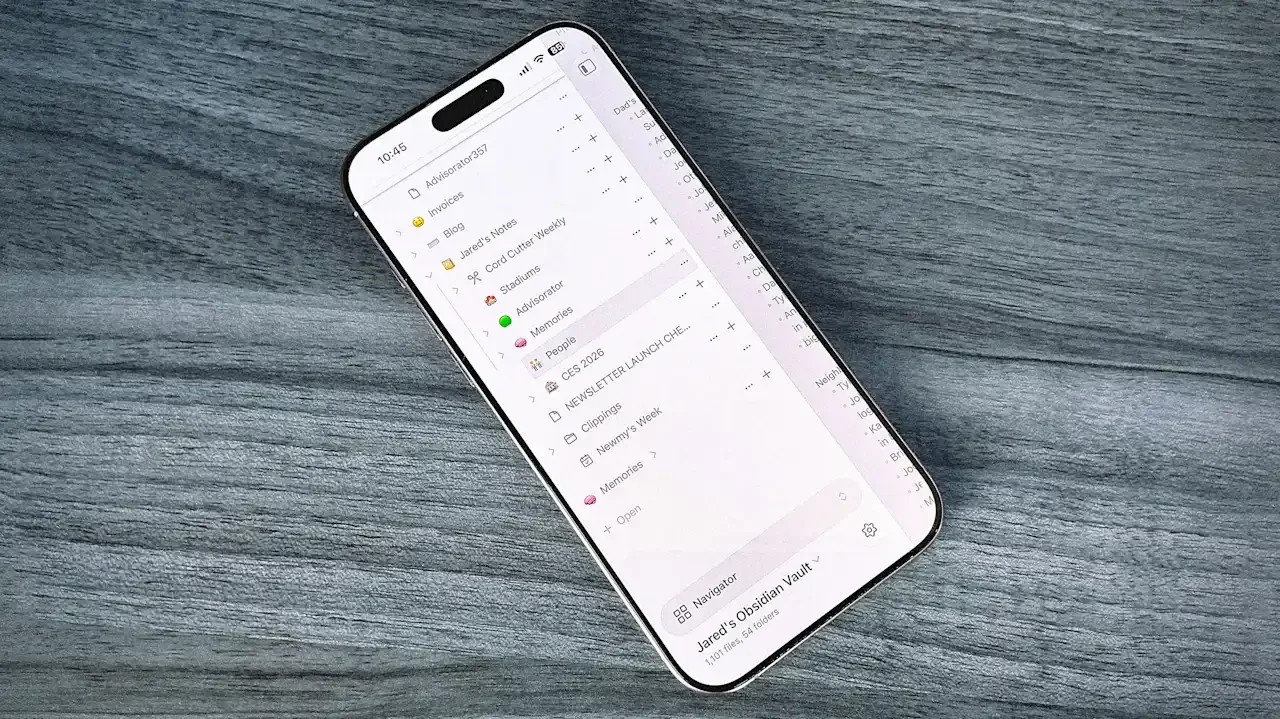
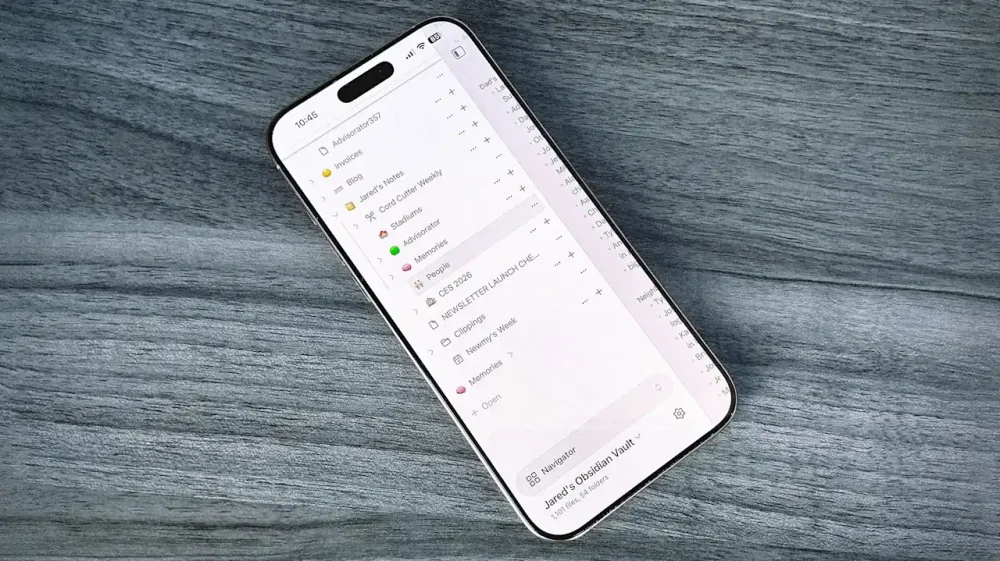
Let me tell you my trick for remembering the names of people I meet: I don’t. It’s not for lack of caring. It’s just that my stupid brain seems to only excel at remembering trivial things, like my family’s exact food orders at a random restaurant we went to in 2023. That same brain is largely worthless at matching names to faces, especially when it’s been a while. So a couple years ago, I swallowed my pride and started maintaining a “People” note on my phone, which is basically just a list of folks I’ve met with some basic descriptions to help me remember them. It’s not fancy, but it’s already spared me from potential embarrassment on several occasions. This story first appeared in Advisorator, Jared’s weekly tech advice newsletter. Sign up for free here. Here’s how it works: In Obsidian (my note taking app of choice) I have a note called “People.” The note has a series of headings for various social contexts, like “Neighborhood” and “School Parents.” Each heading has a list of people that I’ve met in those contexts, along with enough basic details to help me identify them in the future. I’ll try to glance over the list before heading into certain social scenarios, and will take a minute afterwards to add more people if needed, while the information is still fresh in my mind. I’m not building entire dossiers here. Most of my notes are one-liners like “Steve: Tall dude, likes baseball,” which along with how I met this is usually enough to remember who’s who. Occasionally I’ll fill in some extra details to help with future conversations, but not so many that I can’t easily scan through the notes later. You don’t have to use Obsidian for this purpose. Apple Notes, Google Keep, or any other note taking app will work. The important thing is being able to access your People note quickly and easily, even on your phone. You shouldn’t have to open a laptop to log your notes or dig through numerous menu layers to reference them. It’s worth noting that an entire class of apps exist for the purpose of remembering details about people, such as Clay, Dex, and Monica. These “Personal CRM” apps, named after the Customer Relationship Management software that business use to keep track of clients, have extra features such as contact reminders, relationship mapping, and activity logging. But these apps have always struck me as being overly heavy for the task. They might work for some folks, but I just wanted a fast and easy way to write down basic details, not an entire system for managing my social life. Besides, the important birthdays are already in my calendar, while the phone numbers and emails are in my contacts app. Sometimes, instead of another app, all you really need is a note, plus a clear sense of what it’s for. If your brain is as bad at remember folks as mine is, maybe it’s time for a People note of your own. This story first appeared in Advisorator, Jared’s weekly tech advice newsletter. Sign up for free here. View the full article
-
Google is testing using a superscript font for the cents portion of the pricing in the Shopping Ads. So when you see a price for a product and it is listed for $99.99, the 99 cents is in superscript.View the full article
-
Branded search is often treated as predictable and easy to manage. In practice, it isn’t. PPC teams see rising CPC on brand terms. SEO teams see declining branded CTR, even when rankings hold. These issues are usually investigated separately, with different dashboards, hypotheses, and fixes. Both signals often stem from changes within a single SERP. What look like two separate problems are, in reality, one shared environment reacting to shifts in competition and visibility. The issue isn’t a lack of data. Most teams already have basic reports and brand monitoring tools, including PPC and SEO platforms. The problem is how the data is used. To understand what’s happening in branded search, teams must manually piece signals together. This takes time, doesn’t scale, and delays decisions. Here’s why that fragmentation is harmful and what to do about it. What’s actually happening in branded search Branded search is often described in terms of channels — paid and organic. For users, that distinction doesn’t exist. A single SERP brings together multiple layers: PPC ads Competitor ads or comparison pages Organic results, including brand-owned pages Affiliate listings promoting the same brand Review platforms and aggregators All of these elements appear at once, within the same decision-making space. From a SERP analysis perspective, this isn’t a set of isolated placements. It’s a dynamic environment where each element influences the others. A competitor ad above your organic result can reduce CTR. An affiliate listing can compete with your paid campaign. A review page can shift user intent before a click. In practice, this creates a mismatch. For users, branded search is a single page. Inside the company, it’s split across workflows and handled by different functions. PPC focuses on bids and efficiency. SEO focuses on rankings and organic traffic. Affiliate activity is often tracked separately, if at all. Competitor tracking may exist, but usually within a single channel. The result is a fragmented view of what is, in practice, a shared space. Understanding what’s happening in branded search often requires manual effort. The data is there, but building a complete, up-to-date view of the SERP on a regular basis is time-consuming and hard to scale. That makes it difficult to understand how these elements interact — and even harder to respond to changes as they happen. What PPC teams see (and often miss) From a PPC perspective, teams focus on these signals: Brand CPC starts to rise. More players appear in the auction. Branded campaigns become less efficient over time. At first glance, this suggests increased competition. The typical response is to adjust bids, defend impression share, or refine targeting. All of it makes sense within paid media. But this is where context changes everything. What PPC teams don’t always see is who’s driving that competition. Not every new entrant in the auction is a direct competitor. Often, it’s affiliate activity — partners bidding on branded terms outside agreed-upon rules. Without deeper competitor tracking, these cases can look identical while requiring different actions. There’s also the organic layer. Changes in SERP structure — more ads, different layouts, stronger third-party rankings — can directly affect paid performance. Even if the campaign setup stays the same, the environment shifts. Without ongoing SERP analysis, these changes are easy to miss. In many cases, brands aren’t just competing with others — they’re competing with themselves. Over 40% of advertised pages already rank #1 organically (Ahrefs, 2025). PPC teams rarely see the full page in context. They see auction data, metrics, and reports — but not always how their ads appear alongside organic results, affiliates, and other placements in real time. But beyond missing context, there’s a more practical limitation. Ad platform reporting rarely explains what changed. It shows performance shifts — but not how the SERP looked to users, who appeared alongside the ad, or how placements were arranged. This creates a gap. Competitor tracking without context doesn’t explain the situation — it only signals change. Without broader SERP-level brand monitoring, PPC teams often optimize on partial visibility, reacting to symptoms while the root cause must be reconstructed manually. What SEO teams see (and often miss) From the SEO side, branded search issues tend to surface differently. The most common signals look like this: Branded CTR starts to decline. Rankings remain stable, often still in top positions. SERP appearance shifts — new elements, richer features, or different page layouts. On the surface, it looks like an SEO problem. The natural response is to review snippets, adjust metadata, or check for technical or content issues. But in many cases, performance drops aren’t driven solely by SEO factors. SEO teams generally know that paid activity, competitors, and affiliates can influence branded search. The challenge isn’t awareness — it’s consistent visibility over time. To understand what changed, teams need to see how the SERP looked at a specific moment: Which ads appeared and where. Whether competitors or affiliates were present. How organic results were positioned in context. This isn’t what standard SEO workflows are built for. Teams often have to manually check results, compare snapshots across tools, or rely on incomplete data. Then there’s the SERP itself. Modern branded SERPs aren’t static. Layout changes, added modules, and mixed result types can significantly affect click behavior. Without consistent SERP analysis, it’s hard to isolate the cause. As a result, SEO teams may keep optimizing — and see no stable results. Why PPC and SEO issues are actually connected At a glance, PPC and SEO issues in branded search may look unrelated — different metrics, dashboards, and teams. But when you look at the SERP as a whole, the connection is hard to ignore. Studies show this overlap isn’t an edge case. Nearly 38% of websites advertise on keywords where they already rank in the top 10 organically (Ahrefs, 2025). In branded search, the overlap is even higher. That means both channels operate in the same environment — and compete for the same user attention. Changes within that environment rarely affect just one side: Increased ad presence can push organic listings lower or draw clicks away. Aggressive bidding (from competitors or affiliates) can raise CPC while also reducing organic search visibility. New entrants in the SERP can affect both paid efficiency and organic CTR simultaneously. In this context, it’s not unusual for PPC performance to decline while SEO metrics shift in parallel. These aren’t isolated issues — they’re different reflections of the same underlying change. Yet they’re rarely analyzed together. The real problem isn’t visibility — it’s fragmentation. Most teams already have access to data. Specialized tools make SERP analysis, competitor tracking, and brand monitoring possible. The limitation isn’t what can be seen, but how it’s used. PPC and SEO operate in separate systems — different platforms and reporting environments, KPIs, and workflows. To understand what changed in branded search, teams must align manually by comparing reports, checking SERPs, validating assumptions, and sharing findings across functions. As a result, insights are delayed, alignment lags behind SERP changes, and decisions are made with incomplete or outdated context. How to improve branded search performance Most teams don’t miss the signals — a spike in CPC, a drop in CTR, unexpected competitors in the auction. These changes rarely go unnoticed. The challenge comes next: confirming what happened and deciding how to respond. This is where branded search performance slows. Teams dig through separate reports, trying to reconstruct what the SERP looked like at a specific moment. By the time the picture is clear — if it ever is — the window to react has already passed. Improving performance here isn’t about adding more data. It’s about changing how it’s collected and used. With the right setup, SERP analysis becomes continuous instead of manual. Changes in branded search are captured automatically, including competitor and affiliate activity that might otherwise require manual checks, post-fact validation, or go unnoticed. Tools for branded search monitoring such as Bluepear provide: Unified look on SERP in a specific moment. Automated alerts when meaningful changes occur. Pre-collected, timestamped evidence that removes the need to manually gather screenshots or reconstruct past states. Instead of spending time collecting screenshots, comparing reports, and reconstructing what happened, the information is already structured. This shifts the process from reactive to operational. Instead of investigating issues after the fact, teams receive a clear signal or a complete case. This creates a reliable record of what actually happened: When a new player entered the SERP. How placements shifted over time. Where potential violations or conflicts appeared. Instead of scattered evidence and manual reconstruction, teams get structured, ready-to-use context. Reporting becomes simpler. Insights can be shared across PPC, SEO, and affiliate teams without rebuilding context each time, reducing internal alignment time. Most importantly, decisions can be made faster. With Bluepear, brand monitoring and competitor tracking become continuous. Teams receive structured signals instead of raw fragments and can act without rebuilding the situation from scratch. To see how Bluepear can improve your workflow, create an account and start your free trial. Final takeaways PPC and SEO teams don’t lack data — they interpret different signals from the same SERP. But these signals are connected. They’re shaped by the same changes in the search environment, even if they appear in different reports. When SERP analysis is fragmented, it’s harder to see the full picture — and even harder to act quickly. What makes the difference is not more data, but better coordination: Continuous brand monitoring instead of occasional checks. Shared visibility across PPC, SEO, and affiliate teams. A consistent view of the SERP, not separate channel reports. When branded search is managed holistically, teams don’t just react to performance changes — they understand what drives them and respond with clarity. To simplify how your team tracks and responds to branded search changes, start using Bluepear to automate monitoring, capture SERP changes, and centralize evidence in one place. View the full article
-
Phasing out of electric vehicle subsidies has driven slump in domestic sales growth following years-long boom View the full article
-
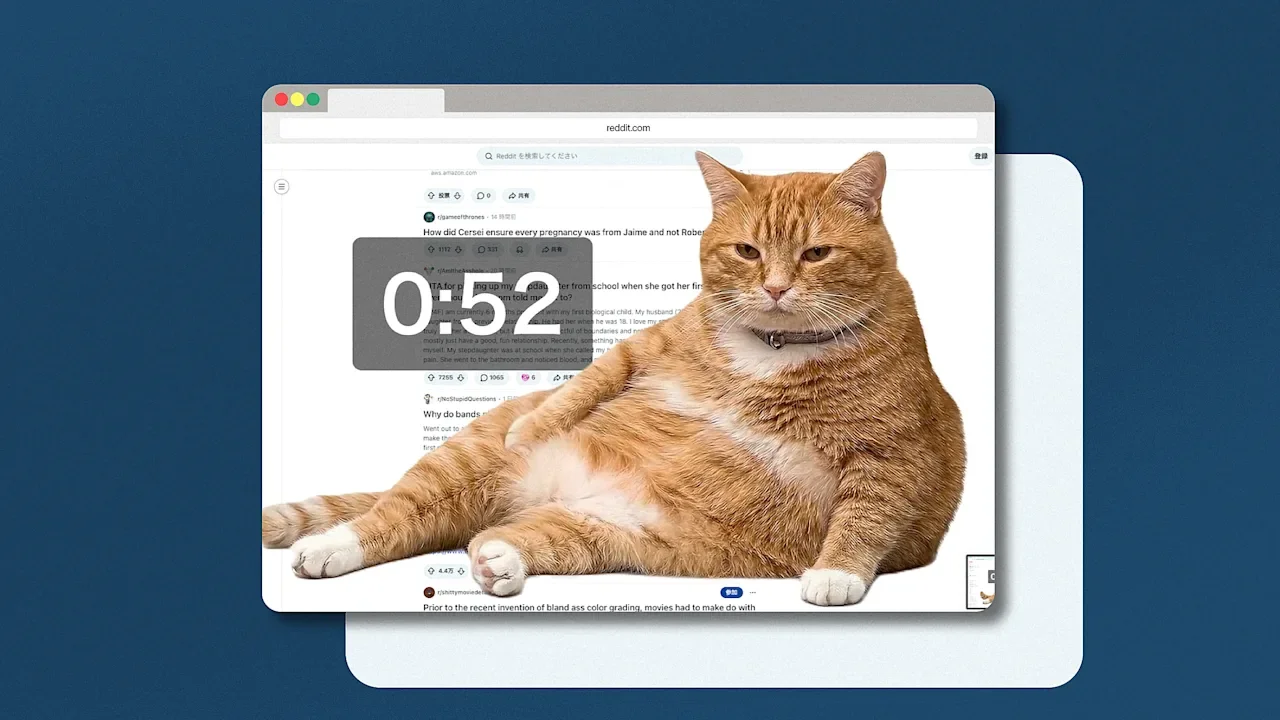
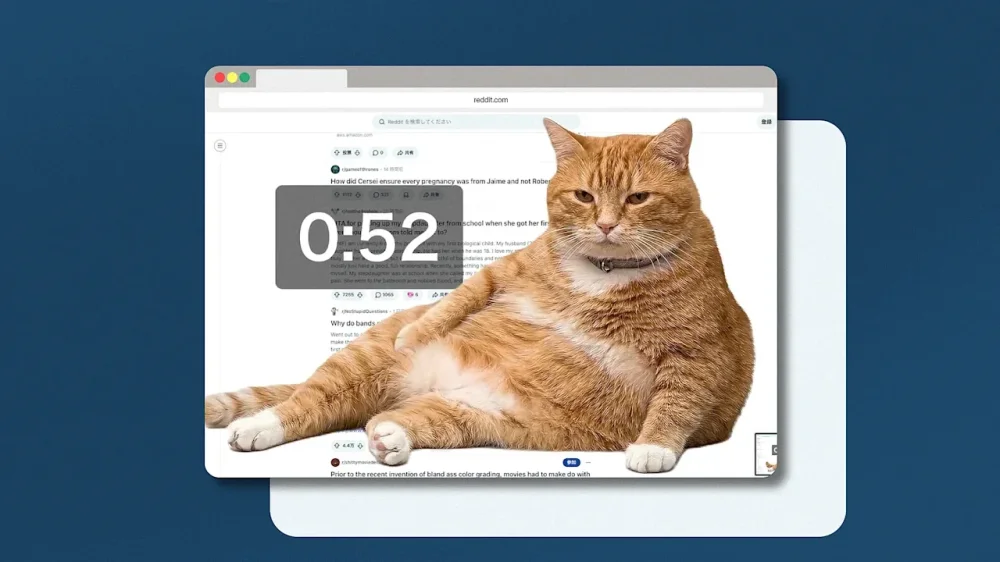
There are plenty of different hacks, tools, and apps designed to break social media addiction or otherwise reduce your screen time. This is just the cutest one. Cat Gatekeeper is a new Chrome browser extension designed by the developer Zokuzoku, and it reminds you to stop scrolling by sitting a cat on your browser as a clock counts down until your break time is over. The browser extension is meant for anyone who keeps opening social media without thinking, and it’s inspired by the all too real experience of cats who want attention at the exact moment that it’s time to get to work. “We’ve recreated that classic cat-owner experience in your browser,” the developer wrote. After downloading the extension, users can set up their own personal time limits, but the default usage limit before triggering the cat is an hour, and the default break time is five minutes. Cat Gatekeeper only counts time when tabs are active on supported social networks, which now includes Bluesky, Facebook, Instagram, Reddit, Threads, TikTok, YouTube, and X. When you hit your time limit, the cat walks on screen and a countdown clock appears. The cat then sits itself down in the middle of your browser and waits, breathing, blinking, and moving its ears and tail until the time is finally up. The cat then vanishes and you can go back to your regularly scheduled doomscrolling. Those looking to spend less time on social media are recommended to delete apps or use their phone’s native screen time controls to set limits. Some people swear by turning their smartphones to grayscale. Apps like Steppin, which locks you out from social media apps until you hit step goals, or Brick, a physical block that users have to tap to log into certain apps, serve an urgent need. There are plenty of tricks and tips to break your screen time habits, and touching more grass is within reach. At least on desktop, Cat Gatekeeper will remind you of the importance of taking time to log off in the most adorable way possible. View the full article
-
Ikea design manager Johan Ejdemo is looking years into the future. A towering Swede with a six-inch beard, Ejdemo is a trained cabinetmaker who has nearly 30 years of experience at Ikea. Since 2022 he’s been the company’s design head, leading a team of 20 in-house designers in Sweden and a roster of freelancers from around the world. Together they give shape to the 1,500 to 2,000 new products Ikea releases every year. Most have been brewing in the company’s design department for several years, if not more than a decade. I recently met with Ejdemo at Ikea’s headquarters in Älmhult, Sweden, the city a two-hour train ride from Copenhagen where the company was founded in the 1940s. Before leading me on an exclusive tour of the company’s prototyping shop—the first tour Ikea has ever granted to a journalist—we sat down to talk about what’s guiding the brand’s design approach in 2026. As he looks to shape what products Ikea stores will be selling years down the line, he says the focus isn’t so much on individual items or areas of the home, but rather on things like material choices and emotional responses. It’s all in service of what Ikea refers to as democratic design, or high quality products that have been so precisely optimized and scaled that they hit the lowest possible price point. Achieving that ideal, Ejdemo argues, is the real work of Ikea’s designers. “We are very nerdy,” he says. “We go very deep in the details.” This interview was edited and condensed for clarity. Fast Company: How is design changing for Ikea in 2026, and what are the things that are driving those changes? Ejdemo: One thing that we are considering a lot in design today is circularity. And it sits in the complete value-chain perspective. That is the thing that is dramatically new in the context of designing products. What types of products are you prioritizing? The desire for optimism, playfulness, and human interaction is very close to us today in designing and developing products. That’s very evident in some of the launches and collection drops that we have done recently, and they will be even more evident into the future. But it’s not only about silliness and playfulness and color. It could be in natural materials and warmth. There are many dimensions to this. Are there specific types of products or parts of the home that you find yourself focusing on today? No, but there’s always a challenge when there’s a desire for certain products that are big and bulky. Those are always challenging areas for us because things have to be transported and it costs a lot to transport them, and also they can consume a lot of material if you’re not thinking through them smartly. A lot is connected to the comfort of mattresses and sofas, but I think we are ahead of the game there. We’re very good in building premium comfort in our products in a very material-efficient way—reducing the use of foam and still achieving even better comfort than when these products were very foam-dependent. And on wardrobes, for example, we just recently launched a new kind of easy assembly so we aren’t putting it in the hands of the consumer to do all the work. It’s making it easy for the consumer and at the same time makes production more efficient. Those wardrobes are made out of particle board, but there’s more density in the areas where you drill holes for shelves, less density where you don’t it. So even there, we are very nerdy. We go very deep in the details of where we can save material. It’s like, here we need extra and we don’t have it where it doesn’t make sense. We’re distributing value and cost within the product. How, if at all, is AI changing how you work or influencing choices you make about what moves on from concept to product? We don’t use AI in design. There’s still a lot of implications [to the technology]. We are all regulated by the tools that we use, and they need to be approved to use. There might come some kind of AI support that could be helpful for designers, but we don’t have it today. There’s a legal aspect to it, too. If you use AI in the design process you can’t claim design rights, for example. We try to avoid getting into that ditch. But in the process, making a visualization of how a picture could look for material that could be used in communication later on, just to make a mock-up, there I’ve seen AI come in quite handy to enable people to see like, oh yeah, that’s the direction we’d like to go. It’s not designing the end product that they use. It just comes in like any other tool that has simplified something. Image making used to be painting and then you had photography and then it became digitalized and so on. And now you can add an AI layer to it as well that could be helpful. As you’re leading this team of designers both in-house and outside the organization, how do you encourage them to take creative risks when they’re developing new concepts? I really have to force them. I mean, if you’ve been designing for 20 years, plus or minus, you start to edit yourself too quickly because you know too much. But that’s also one of the more strategic reasons why I always have three to four interns on a team; they just add something else to the dialogue. They explore, they do things, and they are all mentored by in-house designers so you get that conversation and interaction going. It’s hard to tell someone you need to dare more. It’s like, how do you just get it into the culture of the design team? It’s also on an individual level. Someone will always stretch a lot, someone else will be more straight on the job, and for someone else maybe we could dare them a little bit more. So it’s also coaching on an individual level. They’re not one person. They think differently and do things differently and their creative processes look different as well. View the full article

-
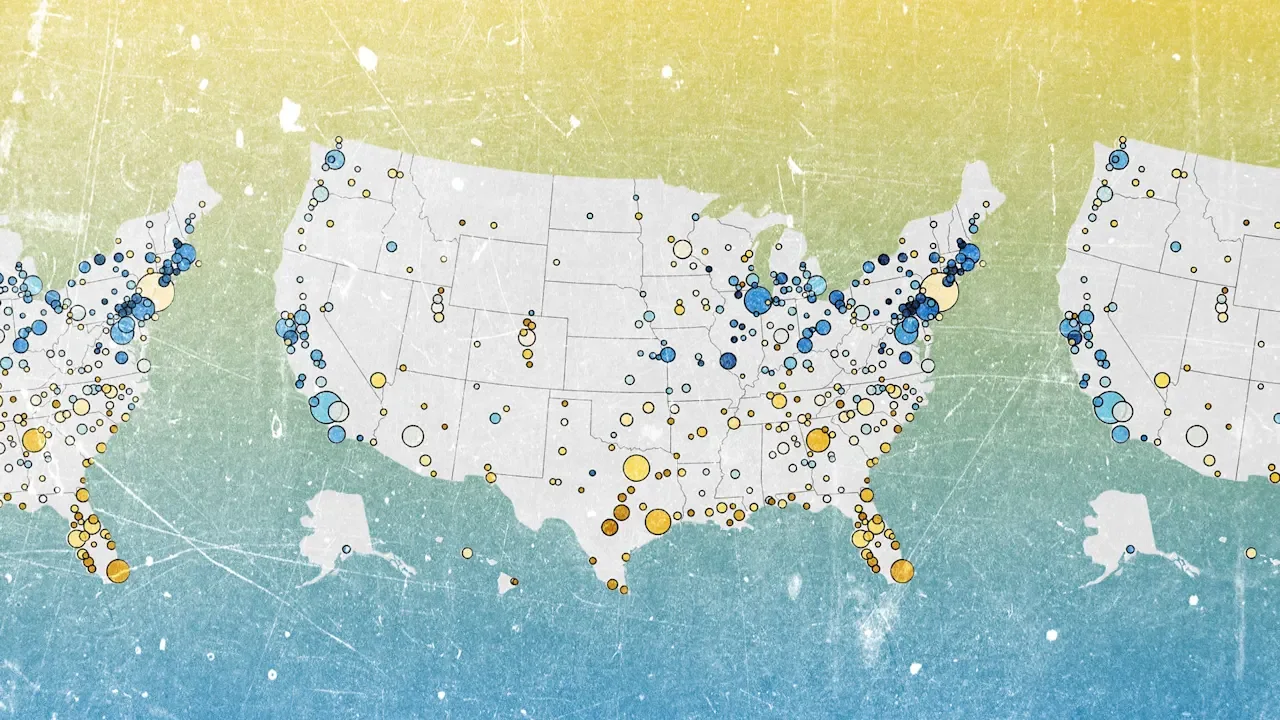
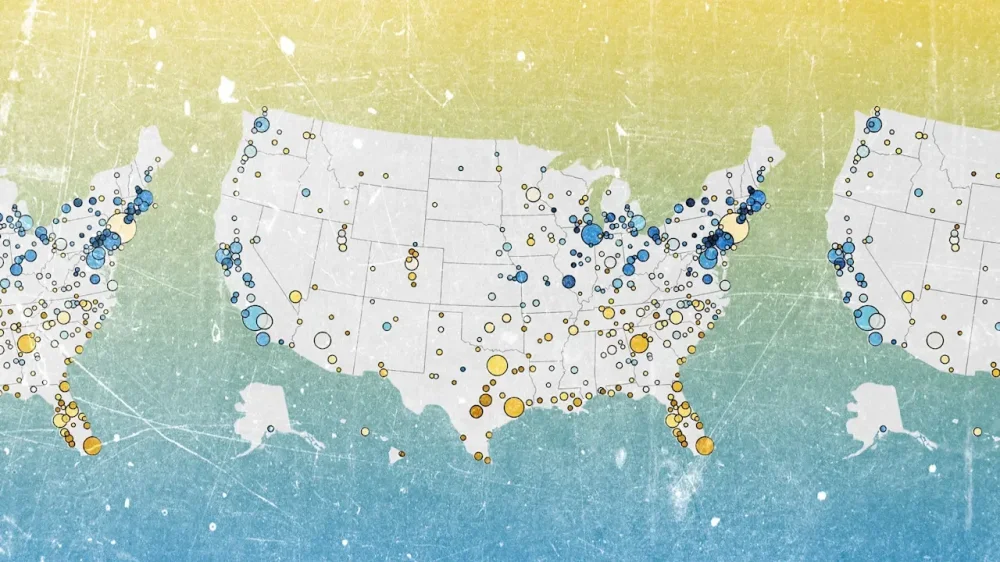
Want more housing market stories from Lance Lambert’s ResiClub in your inbox? Subscribe to the ResiClub newsletter. One of the ways I’ve been tracking shifts in the supply-demand equilibrium of local housing markets for years is by monitoring changes in active inventory/months of supply. If active listings begin to rise rapidly while homes remain on the market longer, it may indicate pricing softness or weakness. Conversely, a sharp decline in active listings/months of supply could suggest a market that is heating/tightening up. Since the national Pandemic Housing Boom fizzled out and mortgage rates spiked in summer 2022, directionally, that supply-demand equilibrium has been shifting in the favor of buyers. Indeed, while decelerating, national active inventory for sale is still up +8.1% year-over-year—and now active inventory for sale is only -13.6% below pre-pandemic 2019 levels. Broadly speaking, the reason isn’t that there are significantly more new listings. Instead, it’s that, relatively speaking, sellers in the post-Pandemic Housing Boom period are finding more resistance. As a result, homes are spending more time on the market and are therefore being counted as inventory for longer. How long the typical U.S. home listed for sale on Zillow.com before it went pending: Spring 2019 —> 41 days Spring 2020 —> 36 days Spring 2021 —> 14 days Spring 2022 —> 10 days Spring 2023 —> 26 days Spring 2024 —> 25 days Spring 2025 —> 33 days Spring 2026 —> 39 days Active housing inventory for sale = All properties for sale in a given month, excluding pending listings. If homes take longer to sell, and begin to rollover into the next month, it begins to build active inventory for sale even if new listings coming onto the market don’t spike. That’s exactly what many housing markets have been experiencing. In other words, it’s no coincidence that both the national median days to pending and the national active housing inventory for sale are just about back to pre-pandemic 2019 levels—to a degree, they’re interconnected. Of course, this story varies a lot across the country right now. The softer/weaker housing market pockets in the Southwest and Southeast have seen median days to pending rise more than in their relatively tighter peer markets in the Northeast and Midwest. Among the nation’s 250 largest metro area housing markets, these 15 markets had the highest median days to pending in February 2026: Asheville, NC —> 105 days McAllen, TX —> 86 days Laredo, TX —> 83 days Houma, LA —> 83 days Austin, TX —> 82 days Daphne, AL —> 81 days Longview, TX —> 78 days Lake Charles, LA —> 78 days Crestview, FL —> 77 days Panama City, FL —> 77 days San Antonio, TX —> 74 days Myrtle Beach, SC —> 72 days Killeen, TX —> 71 days Ocala, FL —> 71 days Naples, FL —> 69 days Among the nation’s 250 largest metro area housing markets, these 15 markets had the lowest median days to pending in February 2026: Lancaster, PA —> 9 days Hartford, CT —> 11 days Rochester, NY —> 11 days Reading, PA —> 11 days Manchester, NH —> 11 days Springfield, IL —> 11 days Norwich, CT —> 12 days Rockford, IL —> 13 days Syracuse, NY —> 15 days York, PA —> 15 days St. Louis, MO —> 16 days San Jose, CA —> 16 days Allentown, PA —> 16 days Bridgeport, CT —> 17 days New Haven, CT —> 17 days View the full article
-
What’s the closest you’ve ever stood to a drone? I’m not talking about a cute quadcopter, but a military-grade death machine that can carry enough warheads to obliterate a bridge, a tank, or a building? Sure, I’d heard of them. I’d seen them on the news. I’ve closely followed the paper, scissors, rock war in Ukraine where every six weeks the Ukrainians or Russians break the rules with new drone hacks. But it wasn’t until I was standing in front of the Fury, an autonomous plane meant to fly alongside F-16s and other military jets, that our Terminator era of warfare really hit me. This thing looks mean in an unknowable way, like a deep-sea predator that’s shed its gills and taken to the skies. It’s hard to look at the Fury without feeling a little afraid, and even a little disgusted. And yet for all my qualms around military spending and my dreams about a peace-filled world without war, ultimately I respond exactly like I’m supposed to: I’m relieved that the Fury is on our side. Or I should say, it can be, for a price. I’m standing next to Jen Bucci, the leather-jacket-clad head of design at Anduril, America’s hottest defense startup. She’s giving me a tour of the showroom, which looks a little like a Costco, with its unadorned concrete floors and stockpile of products—in this case, underwater missiles, an autonomous submarine mothership, and a variety of vertical-launching drones—that are sold in bulk. We’re heading toward the design lab, where Bucci’s team of 50 designers help craft the look and feel of Anduril’s offerings, from the shape of the weapons to the way they’re marketed. I’m the first journalist to be invited inside, and from the moment I step into the space, it’s clear Anduril isn’t interested in being a traditional defense contractor. Anduril is a defense manufacturer founded in 2017 by technologists Palmer Luckey, Brian Schimpf, Trae Stephens, Matt Grimm, and Joseph Chen—a group of technologists and venture capitalists with strong ties to the secretive surveillant software company Palantir, which powers the ImmigrationOS software used by the U.S. Immigration and Customs Enforcement agency. While the traditional “Primes” like Northrop Grumman, Boeing, and Lockheed Martin court mega government contracts to develop new weapons, Anduril acts more like a traditional product company. It forecasts the wars of tomorrow, spending hundreds of millions of its own funds to develop and acquire a range of interoperable (oft autonomous) products that it bets are too irresistible for the government to pass up. José MandojanaFast Company It’s easy to see how this vision plays out in the showroom. Each weapon is painted in matching gunmetal tones and accented in Chrysler “national safety yellow” (a hue that sits in the spectrum of “world’s most visible color” while giving the weaponry an enticing, Nike-like glow). A simple, machined curve is mirrored across products. As I eye a 13-foot underwater Copperhead missile in one corner, I realize how it could slot right into the expandable Dive-XL submarine in the other. I mention to Bucci that the model feels like Apple; the more you buy, the more you want to buy. She agrees, but points out that it also fits the Android model when analyzing the actual technological stack, because other products can plug into Anduril’s Lattice software, which maps conflicts in real time by treating every connected device as another data source. So far, Anduril is a fraction of the size of its traditional competitors. In 2025 the company pulled in an estimated $2.1 billion in revenue to Lockheed Martin’s $75 billion. But with multiple government contracts that could add up to nearly $50 billion over the coming decade, Anduril’s private stock is trading at 40% over its value as analysts anticipate an initial public offering in 2027. Meanwhile, Bucci—who sits at an unusual perch as the head of design at a major defense contractor—leads her homebuilt team of cross-functional designers to ensure the Anduril brand articulates a new way of doing things across its products, marketing, and user experience. From industrial design to merch to the creation of what she jokingly calls the Anduril Cinematic Universe, Bucci is shaping the identity of the future of warfare as something more inspiring, or even aspirational. “I think that defense is an industry that needs design the most,” she says. “It’s the dirtiest, dullest, most dangerous job—you’d want to design for an audience [facing] that.” Trae Stephens, cofounder and executive chairman at Anduril, minces no words that he’s invested in design in order for the company to be viewed with the same sheen as a SpaceX. José MandojanaFast Company “[SpaceX] is essentially a rocket and satellite company that 99.9% of people in the world have no touchpoint to. They’re not gonna buy anything . . . and yet everyone’s excited about it,” he says. “There’s like a retail component to SpaceX that people understand. It’s cool and it’s new and it’s fresh, and it’s growing really fast. . . . So what does that do for them as a business? It de-risks them. It de-risks them on capital. It makes it much easier for them to raise money.” But Anduril’s strategy is actually more nuanced and ambitious than that. Anduril is using design to redefine patriotism for a generation that grew up on Gunpla, anime, and video games. It’s inventing a future of warfare that’s only been the stuff of war gazey sci-fi fantasy. That’s the ad, that’s the brand, and that’s the product—to stunt to taxpayers, soldiers, politicians, and military buyers, showing them where the money’s going to work. José MandojanaFast Company Inside the Anduril design lab The scene opens with an idyllic cloudy blue sky reminiscent of a Studio Ghibli film. Even as the drones fly past, it’s almost pastoral. That is until the synths come in and the camera is submerged underwater. We see hands typing at a red-hued military workstation, a shot straight out of 1990s war anime. Then the cartoon segues into a diametric explainer, as Anduril’s submerged ship comes into view, deploying its Seabed Sentry mesh network and Copperhead missiles that swirl like sharks feeding. While perhaps a strange scene for a defense contractor, this anime ad on YouTube has successfully educated me on the intricacies of Anduril’s complex weapons systems, and the commenters on the internet love it. “We kind of view fiction as being a window into the future. Science fiction, anime, manga,” Bucci says, noting that references to Gundam are commonplace with founder Palmer Luckey when ideating future products. “A lot of the things that will become critical to the future of war have already been described and explored in great detail in fiction. And so capturing that aesthetic, I think, is part of inspiring humanity.” José MandojanaFast Company As a self-described ’90s kid, Bucci grew up on Sailor Moon and Power Rangers. She became obsessed with the 007 films. Pierce Brosnan, whom she declares to be “the most underrated Bond,” was her first crush. Bond was always “so stylish doing all the badass things,” she says, and the movies introduced both a passion for vehicles like his Aston Martin and the desire to be something like a CIA agent herself. Bucci dropped out of an ROTC program in the eighth grade, but she did attend ArtCenter College of Design and pursue automobile design. After landing a job at Ford, she faced the same realization that a lot of eager young designers do: Maybe one person gets to design the silhouette of the vehicle. Everyone else toils away at small details. “I don’t know how many wheels I’ve done. I must have done, like, hundreds of them,” she says. “I’m like, ‘I don’t know how else to slice up the circle! I’m tapped out.’” José MandojanaFast Company But auto design lured her to auto marketing, and she ventured into photography and branding, stretching her skill set. Eventually, Bucci’s desire to be part of something bigger had her shoot for the moon with NASA but ultimately land at Boeing, where she designed liveries and “everything was blue.” She got her first taste of how conservative the Primes are when it comes to the role of design across the company. “At Boeing, I don’t think I met a single industrial designer, if I’m being honest,” she says. “There were a lot of design engineers, you know, but there wasn’t, like, an industrial design department.” So when she saw Anduril’s job listing for an industrial designer, she concluded it must be “very modern, thinking about this stuff.” Little did she know, Anduril was trying to be modern—to build an enticing, Apple-like model in defense—but failing. Stephens had spent nearly four years searching for the company’s head of design. He interviewed more than 50 people for the position, but was left inspired by all of them. But during their interview in 2021, Stephens and Bucci discovered they were kindred spirits. Stephens, too, had something of a 007 complex, having started his career in the intelligence industry, only to be heartbroken when he was issued an old Windows 98 laptop instead of a laser watch. (Cue his inspiration for Anduril.) When he asked Bucci about her favorite car—a question she always hated—she offered, “Aston Martin.” Not realizing Stephens was a car buff himself, he wanted her to name a model. So she mentioned being fond of the design of the Vantage in the early 2000s. “He turns around, and he picks up a car model. He’s like, ‘This one?’” Bucci recounts. “And it was exactly the model. It was exactly in that moment that we clicked.” Instead of an industrial design role, Bucci was offered the entire design department. Roughly five years later, she tours me through the design lab she’s built. “I really wanted design to be a central function and a core function, so it’s a pillar of every decision that we’re making as a business, but also that it’s one team that is centralized,” she says. “You have to infiltrate the whole thing for this to work. It’s setting that standard and having everybody kind of go through that machine.” José MandojanaFast Company The first thing I note, walking into Anduril’s design lab, is how much natural light comes in through the windows. Visit design labs at tech companies like Microsoft and Google, and you’ll find yourself in secure rooms built without windows. Bucci admits that Anduril has a similar space she’ll use a few hours a month on high-clearance secret projects. But otherwise, the team works here together. In the very front of the lab is the design dojo, an open space with a large shared table where teams hold weekly or biweekly meetings. I spot Anduril posters along the walls—all of which use Helvetica with a respect for the Swiss grid. José MandojanaFast Company The bulk of the design team can be found in the loft above the dojo. Here, industrial designers, brand designers, motion designers, interaction designers, environmental designers, concept designers, sound designers, and animators all work elbow-to-elbow. A photography and media production studio brings in the tail of the setup, where the team keeps every U.S. military uniform and several sizes of boots on hand so they can customize imagery for each branch of the armed forces. I can’t help but notice a black-and-white Hawaiian shirt at the end of the rack, which I can only assume is the more serious uniform of the luau-ready Luckey. Peeking at monitors as Bucci introduces me to the team, I begin to understand how her Anduril strategy comes together. I see NASCAR liveries for its stock car sponsorship. Plans for Anduril’s brutalist Arsenal-1 factory that opened in Ohio in March but whose entire buildout will extend to 2035. Schematics for its augmented reality Eagle Eye helmet and glasses (3D-printed mockups sit nearby and serve as form studies to explore various sizes of temple tips). Each disparate project is a unique articulation of the brand. José MandojanaFast Company As we walk, I meet the designers of Anduril’s OV-1s. That’s a technical term, but think of them as detailed tactical mission maps, oft-used to sell the government on hardware. OV-1s from competitors look like a cheesy board game weekend gone wrong, with flat maps covered in seemingly senseless arrows. But Anduril’s are presented with 3D terrain and hyperrealistic graphics—like little terrariums of war. It’s a demonstration of how Bucci’s team challenges the design tropes of war. And how it’s even more responsible for marketing, branding, and selling Anduril as it is designing products; you’ll find just three industrial designers on Anduril’s 50-person design team. José MandojanaFast Company “The hyperreal look works here because we’re trying to communicate things accurately,” Bucci explains, noting how visualizations offer creative leeway that Anduril wouldn’t dare use elsewhere. “But for the products that we’re putting out into the public, it’s very important that none of them are renderings, none of them are 3D models. It’s only practical photography and video, because we’re trying to show that these are real and in action and storytelling of the operator.” Anduril is playing with different ways to design these maps. On one screen, I see a moodboard with video game HUDs and worlds rendered in Miami-style neon colors. They don’t represent the Anduril style of today, but the company is always looking to evolve. “We are world-building,” Bucci says. “I want each product line to have its own suit.” The designers joke internally that they’re building the Anduril Cinematic Universe, which I tease is the ACU to Marvel’s MCU. But don’t expect that universe to stick around in anime, or any other single rinse-and-repeat aesthetic. “Anime fits us because anime is always about conflict, like these machines fighting each other. It’s always good and bad, and we as people who are basically building that future, it’s a medium that really fits us,” Bucci says. “But I don’t want to use it as a trick constantly. We’re going to do one more installation of it and we’re done.” José MandojanaFast Company Defining the Anduril product Building the Anduril brand is about a lot more than marketing. Ultimately, Bucci’s role is to ensure design impacts every part of the business, especially the presentation and experience of products. That’s difficult, she admits. Engineering is king in the defense world, as it dictates specifics around aerodynamics and other mission-critical details. “Early conversations with engineering weren’t always that smooth,” Bucci says. “It was a lot of questions around, like, ‘Why would we do this? Why should we do this?’ We’re adding more steps to the process. Contrasting that with now . . . it is a complete collaboration, where they understand the value of what industrial design is—that it’s not just decorating.” Key to this collaboration has been getting design involved earlier in the development process of new products. A good example is Anduril’s Dive-XL submarine. It basically looks like a big whale. José MandojanaFast Company You can appreciate the utilitarian decisions at play: The four panels making up the front and rear are actually just one piece repeated four times. Its side walls are flat panels for easy manufacturing. All are the sort of engineering efficiencies that Anduril prioritizes to ensure its products can be produced easily, on typical assembly lines. But designers always look for opportunities to add speed. And in this case, Bucci’s team gave the design more of a spine (like a car), and adjusted the mast angle from vertical, like The Titanic, to swept, like an oceanic carnivore. The overall form is but another “squircle”—and Anduril’s penchant for chamfering details across its product portfolio always makes me think of the space war Xbox franchise Halo—which we see repeated whenever aerodynamics doesn’t get in the way. Bucci works squircles into everything. Anduril’s sensor tower, for instance, is built largely from off-the-shelf parts, with circular cutouts on many pieces. But a single brace the Anduril team added has squircle cutouts. We see squircles incorporated into Eagle Eye, into drones, into equipment bags, into the very silhouette of the Dive-XL. José MandojanaFast Company One of my biggest surprises is that, even on submarines and missiles, screws are exposed for simple serviceability. Across the board at Anduril, weapons are made to be modular, fixable, and often quickly assembled and deployed in the field. Designers point to such features with plain-language liveries and the aforementioned safety-yellow highlights. It all adds up to better UX for soldiers on the battlefield and also, Bucci hopes, a certain confidence that comes with knowing they’re using an Anduril product. José MandojanaFast Company “I’m constantly looking for ways we can infuse a little bit of our design language that’s lightweight and easy into a system that is predominantly not designed,” she says. In the case of fold-out Bolt drones, that’s as simple as adding a two-tone, black-and-white “water line” to articulate the shapes. Meanwhile, the team leaves elements like heat sinks and fans exposed. Sometimes, it’ll even coat those elements with a bit of Anduril yellow, dunking an otherwise drab chicken wing into some hot sauce. Much of Bucci’s focus is on developing repeatable systems that can service every product in Anduril’s arsenal, to get every product on the same page so that it looks its best. Color is a big part of that effort, and Anduril has its own versions of military colors it uses solely for marketing—like an “artichoke” green that I see listed alongside a line of dusty colors that look straight out of a Skims ad. That insight was born from an early misstep with engineering, in which they were wrapping a large truck in military tan. The engineer assured Bucci he had “the perfect tan,” and he’d seen a swatch. But when Bucci went to see the finished vehicle in a warehouse? “It was Ken doll tan. Fleshy—a little pink,” she says with a laugh. “Ever since then, I was like, ‘This is the variance. Here are exactly the three tans you’re allowed to use. That’s it.’ Nobody gets to pick tans anymore. Actually, nobody gets to pick any colors anymore.” Anduril’s more thoughtful approach to branding has caught on. While armed forces still use their own spec, Anduril has begun to branch out and design the livery that will appear on the tail wing of a product it sold to the U.S. Air Force. Bucci believes it’s the first time an external contractor has ever done so. With this move, Anduril is no longer just branding its own products. It’s actually branding the U.S. armed forces—which seems to be the greater, tacit goal of Anduril’s design language across the board. José MandojanaFast Company The business of war Ask anyone at Anduril how they feel about building weapons for a living, and you won’t get an apology. Bucci says she sleeps well at night by framing her work around the end user—that young soldier on the battlefield. “It’s what makes the work very deeply human for me,” she says. “Anytime I talk to candidates, I’m very clear: You’re joining a company that is going to be manufacturing weapon systems. That shouldn’t be something that we’re straying away from or trying to hide in some way. . . . If the motivation isn’t there . . . it’s very hard to succeed here.” Beyond its role manufacturing autonomous weapons and some field reports that have questioned the performance of Anduril products, the company has been criticized for its involvement in surveillance through its Autonomous Surveillance Towers and its Ghost drones, which monitor border crossings from Mexico. When I ask Bucci how she would feel if products she helped design were used in ways she disagreed with, she says she’s not hired for her opinions on politics, but so far that hasn’t happened. “We’ve supported the Ukraine deterrence efforts,” she notes, “and I’m really proud of that.” Outside the company, she knows this viewpoint is less common. “The first project I actually got was redesigning our website, and that was interesting, because I think I got a glimpse of the perception of our company at the time—because none of the agencies wanted to work with us,” she recalls. “They’re like, ‘We don’t want anything to do with you.’ When that happened, I thought, Oh, this is going to be hard. But I believed strongly that we could change that.” Today, the perception around Anduril has evolved from punch line to uncomfortable investment to darling IPO waiting to happen. Part of that credit belongs to the political climate during the second The President administration, where defense spending is up and the Department of Defense was literally renamed the Department of War. And part of the credit belongs to Bucci and her team, whose rebrand of war seems crucial to this mind shift. There may be no greater evidence of Anduril’s increasing palatability than the fact that while Bucci used to face an environment where “nobody was applying,” so she was barely able to fill design positions, now she has countless applications for every open designer role. In the meantime, Anduril doesn’t mind framing itself as an unlikely source of innovation to move humanity into its sci-fi era—embracing a return to the paradoxical optimism of midcentury defense initiatives like RAND and DARPA that brought us technologies ranging from the internet to GPS. Before I end my call with Stephens, he brings up the 2013 Matt Damon movie, Elysium. Despite the fact that it’s a dark popcorn flick in which Damon’s character is a poor, radiated worker who dons a super suit to escape a rotting Earth, break into a wealthy galactic suburb, and use a special med bay to cure himself, Stephens argues it’s more inspiring than people give it credit for. “That’s remembered as being a dystopian movie about wealth inequality, which I get. I’m not saying that wealth inequality is a good thing,” he says. “But they had a machine that could cure all human disease. Why are we not talking about that?” View the full article
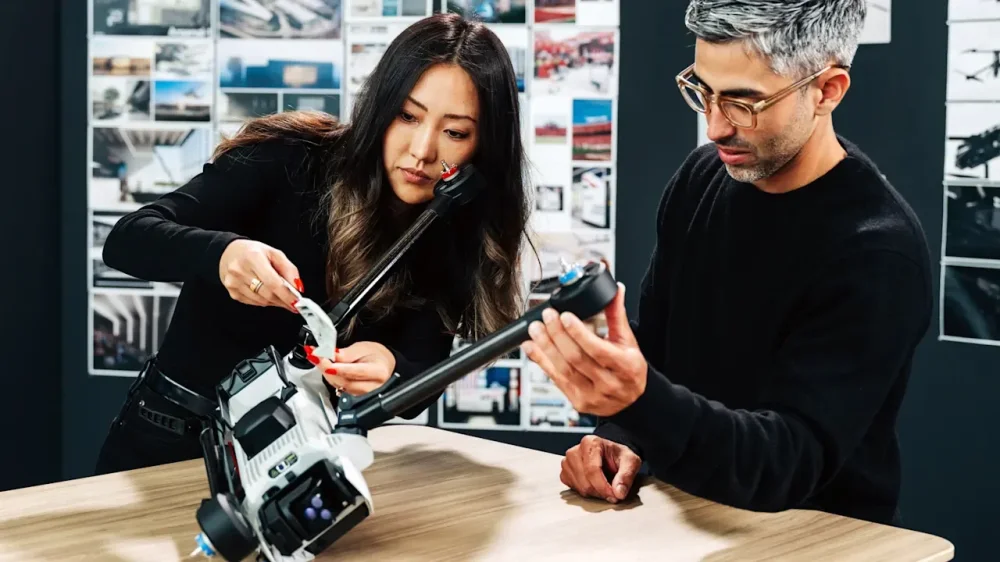
-
Top mortgage originators ranked 175-101 share their client retention strategies, from face-to-face meetings to AI and CRM tools, as the industry eyes a 2026 purchase market shift. View the full article
-
True Footage claims a startup founder signed up for its products using false MLS credentials and used large language models to copy its software. View the full article
-
A dv01 paper finds while no one single cause exists and elements like the lack of transportation infrastructure make a return to historic affordability unlikely. View the full article