All Activity
- Past hour
-
 Google’s page indexing report within Google Search Console is missing a block of data earlier than December 15th. It seems like some sort of reporting bug that is impacting all users. Google has not yet commented on the reporting issue but again, it is widespread and impacting everyone. What it looks like. Here is a screenshot from Vijay on X but you can see it yourself by checking your page indexing report: Why we care. I’d check back in a day or two to see if this data returns or if Google posts a notice about the issue. Right now, no one is able to access that data, so everyone is in the “same boat.” Google will hopefully fix the data, and you can run your reporting and analysis if you have not done so yet for those data ranges. View the full article
 - Today
-
The best keyword research tools include Keyword Magic Tool, Google Keyword Planner, and ChatGPT. View the full article
-
New York City is a city of walkers. More trips are made on foot than by car (41% versus 28%) and the city’s “80X50” climate action plan envisions that 80% of all trips by 2050 will be made either on foot, by biking, or by public transit. The problem is that pedestrian movement in the city has remained largely unmapped and underestimated—until now. Together with a team of researchers, Andres Sevtsuk, an associate professor in MIT’s Department of Urban Studies and Planning, has built what he says is the first complete model of pedestrian activity in New York City—and it’s a model that can now be applied to any U.S. city. The model, which maps foot traffic across all sidewalks, crosswalks and footpaths in NYC during peak periods, reveals surprising patterns about the way people move around the city, as well as where they are most vulnerable to vehicle crashes (hint: it’s not Midtown Manhattan). It could have tremendous benefits for city planners. The pitfalls of a car-centric country Much ink has been spilled on the car-centricity of American cities. Americans average two vehicles per household (among the highest rates in the world) and car ownership has shaped everything from suburban sprawl to infrastructure spending priorities. Over the past decades, transportation agencies have become experts at modeling traffic and predicting vehicle flows, but as Sevtsuk points out in a study accompanying the model that was published in the journal Nature Cities, “what gets counted, counts.” The amount of transportation infrastructure funding that states receive from the Federal Highway Administration, for example, relies on vehicle miles traveled in that state. The more residents of that state drive cars, the more funding the state receives. If cities could count the number of pedestrians that walked across their streets, they could steer more federal money into urban, people-oriented infrastructure. But while car domination in the U.S. has long relied on tremendous lobbying from automakers, the pedestrian movement has had no champion pushing for data collection. “Nobody has monetized walking,” says Sevtsuk, “and this is actually a good thing.” Until 1994, the U.S. didn’t even have an accurate roadway map. That year, President Bill Clinton signed an executive order directing federal agencies to build a standardized digital road network. As Sevtsuk explains, this helped revolutionize traffic modeling and paved the way for more efficient deliveries and various location-based services. If a similar order were to help develop and standardize a pedestrian network nationwide, it would highlight where communities have systematically worse pedestrian infrastructure, and help target public space investments in places where they affect the most people. The “Manhattan bias” Over the past decade, Sevtsuk and his team have built various district-wide models in places like Melbourne, Australia, and Cambridge, MA, but they have never built a model at this scale. “A lot of cities don’t even know where their sidewalks are,” he says, “and the sad part is, some cities don’t want to know where sidewalks are.” Indeed, cities face legal obligations under the Americans with Disabilities Act to maintain accessible sidewalks, but a comprehensive tracking system also exposes them to greater liability. The result, according to Sevtsuk, is a perverse incentive whereby cities that don’t systematically inventory their sidewalk conditions can more easily defend themselves against injury claims by arguing they weren’t aware of specific hazards. In New York City, Sevtsuk’s model revealed illuminating findings. One of them has to do with the way street improvements are funded in the city. In 2020, the NYC Department of Transportation released a New York City Pedestrian Mobility Plan that laid out a road map for ongoing improvements for pedestrians and other road users. The plan laid out five corridor classification types intended to serve as a guideline for pedestrian infrastructure renovations. Most streets with the highest classification type—”global corridors” that would receive priority funding for sidewalk widening, pedestrian plazas, and other improvements—were located in Manhattan. Sevtsuk acknowledges that many of these streets, including Broadway and Fifth Avenue, are important corridors, but his team’s model shows that 26 streets in the outer boroughs had higher pedestrian volume than 75% of the “global corridors” designated by NYC DOT, yet they were categorized lower, meaning they won’t receive the treatment or investment they deserve. “We discovered there is a Manhattan bias in policymaking,” he says, noting the discrepancy was likely due to a lack of metrics. “They were guesstimating, and with guesstimation, we’re all flawed and have biases,” he added. Another finding had to do with car crashes. For years, transportation officials have thought the highest number of pedestrian injuries involving vehicle crashes was around Times Square, in Manhattan. But these numbers never took crash rates per pedestrian into account, meaning they simply looked at where the most crashes occur, without considering the fact that there were more crashes simply because there were more people. “We need to take into account how many people actually walk there, then look at crash rates per pedestrian,” says Sevtsuk. Using data from the model, the researchers mapped the rate of pedestrian crashes and found the highest concentration in The Bronx, Staten Island, as well as outer regions of Brooklyn and Queens. Not a single street below 125th in Manhattan lit up on the map. “Midtown sees a lot of crashes but it’s a safe place to walk because it has very high level of foot traffic,” says Sevtsuk. A template for cities worldwide The implications of the team’s work extend far beyond New York City. In fact, what makes the model particularly powerful for other cities is how adaptable it is. The researchers’ approach builds on a framework called Urban Network Analysis that Sevtsuk and his team have been developing for a decade. The team started by assembling data on where in NYC sidewalks, crosswalks, and footpaths are located, then mapping major trip origins and destinations—think home to school, job to subway, or restaurant to park. They then simulated how pedestrians move between these locations, accounting for the fact that people don’t always take the shortest route and often have multiple subway stops to choose from. Using pedestrian counts from over 1,000 locations from NYC DOT as “ground truth,” the team calibrated the model using machine learning to ensure the estimates matched real-world observations. Once calibrated at those locations, the model could predict pedestrian volumes across every street in the city. The process took about a year to complete, “but relatively speaking, it’s still much easier than building a full-fledged traffic model,” says Sevtsuk. The researchers are now working with 140 cities across the state of Maine to better understand the kinds of upgrades and safety improvements they could make for pedestrians. They have also partnered with LA Metro to identify opportunities where the city could do small but important interventions that would help them better prepare for the LA28 Olympic Games, but also everyday users. “They are trying to use [the interventions] as a kind of legacy, using some of the Games’ budget to support walking in the city,” says Sevtsuk. View the full article

-
Ghost jobs are postings for positions that don’t actually exist for various reasons, and they waste countless hours for job seekers who apply to roles that were never meant to be filled. Experts in recruiting and career strategy have identified specific warning signs that reveal when a posting is likely fake or abandoned. This guide breaks down how to recognize these red flags before investing time in an application, so you can better focus your efforts on genuine opportunities. Prioritize Responsive Employers that Show Immediate Engagement One reliable way to identify a ghost job is to see whether applying to it leads to any human response at all. Today, silence has become the norm. I’ve watched thousands of job seekers reach out to employers saying it feels like they’re reaching out into a void. The numbers tell a similar story; research shows that only about 20% to 25% of applications submitted on large job boards, like Indeed, receive any response, which means the majority of applicants never hear back. That is why so many job seekers feel stuck. Many are not being rejected, but they’re being ignored by jobs that were never truly open. Some listings exist to build applicant pipelines, satisfy internal posting requirements, or because job distribution is automated even when no recruiter is actively reviewing candidates. We’ve learned to spot the difference between a real opening and a ghost job by watching for one thing: action. When a role is genuinely open, employers engage quickly by reviewing candidates, sending messages, or moving applicants into next steps. When there is no engagement at all, the listing may exist in name only. Job seekers can better focus their efforts by looking for signals of immediacy and accountability. Listings that include clear location details, shift times, pay ranges, or start timing are far more likely to be tied to real hiring needs. Applying locally and prioritizing roles where employers are actively engaging candidates leads to better outcomes than applying broadly and hoping for a response. —Debbie Emery, Cofounder & CSO, Juvo Jobs Follow Projects and Investment Signals for Reality Another good way to spot a ghost job is to look at how disconnected the posting feels from what’s actually happening in the sector. In energy, where I specialize, hiring is almost always tied to a real project, a capital investment, or some kind of regulatory timeline. So that’s a key indicator: If a role keeps getting reposted for months, the description never really changes, and there’s no clear business reason behind it, it might just be a ghost job. I’ve seen this happen a lot with software and data roles at utilities. There was one utility that kept reposting a cloud engineering role for close to a year. On paper it looked urgent. In reality, their digital transformation project had been paused while they waited on regulatory approval, but HR kept the job live to collect résumés. Candidates were spending hours interviewing for a role that couldn’t even be funded yet. Internally, everyone knew what was going on. Externally, it looked like a great opportunity. For job seekers, I’d say the safest move is to follow the money and follow the projects. Pay attention to which companies just secured funding, announced expansions, or won major contracts. In energy, hiring tends to follow infrastructure. If a company just broke ground on a new facility or announced a big grid modernization program, those roles are usually real. Your sector likely has its own red and green flags; take a minute to establish them early on. Then, keep your eyes open. —Jon Hill, Managing Partner, Tall Trees Talent Target Newly Posted Positions with Urgency An easy way to spot a ghost job listing is when the same role sits online for months with no real changes. In real hiring cycles, things usually move fast, or at least you see progress. When a job keeps showing up again and again, or never fully closes, it is often there to collect résumés or test the market, not to hire right now. We constantly update our job postings on Indeed. I work closely with our team managers to shape each listing, tweak the wording, and pull roles down when hiring pauses. That is why ghost jobs stand out to me so clearly. There was this one company in particular that always seemed to have the same opening listed on Indeed. It was a marketing manager’s role that got reposted every 30 days for almost a year. We’ve posted and filled at least five positions over the past six months, but that specific position was still open. Behind the scenes, I’m guessing candidates kept applying and following up for that role. But no interviews were happening at all. The post stayed live only to build a future talent pool, which felt unfair to job seekers putting in real effort. To focus on real opportunities, I usually tell job seekers to look for roles posted within the last 14 to 30 days and scan for signs of real activity. This can be a named hiring manager, clear next steps in the process, or recent team growth on LinkedIn. From what I have seen, applying to fewer roles with stronger signals of urgency works better than sending out dozens of applications and hoping one sticks. —Lauren Byrne, Co-Owner and Head of HR, My Biz Niche Watch for Reposts, Research Beyond the Listing Job searching requires time, emotional energy, and vulnerability. When a role turns out to be a ghost job, or worse, a risky one, it understandably erodes trust in the hiring process and in employers more broadly. One reliable way to spot a ghost job is when a role has been posted or repeatedly reposted for months with no visible hiring activity or meaningful evolution. These listings are often vague, evergreen, and disconnected from a clear, time-bound business need. I see this most often with fast-growing companies that are fundraising or planning for future scale. From an employer perspective, building a talent pipeline is strategic. From a candidate perspective, applying to a role that is not actively being filled can feel misleading. A strong candidate experience depends on transparency. If a role is exploratory or pipeline-based, say so clearly. Candidates deserve to know whether an opportunity is immediate or future-facing. Other things to be mindful of: Legitimate employers do not ask for personal or financial information such as banking details, SIN/SSN, or government ID during the application or interview process. That information is only collected after a formal offer has been made and accepted, typically through secure onboarding systems. I have seen candidates targeted through fake or misleading job postings that quickly move conversations off platform and request personal details under the guise of “pre-onboarding” or “payroll setup.” These are clear red flags. For job seekers, taking your research further can make a meaningful difference. Look beyond the posting itself. Review the company’s website, its LinkedIn employer profile, and the profiles of potential hiring managers or team members. Platforms like Glassdoor can also provide useful context when viewed thoughtfully. Pairing this research with a focus on recently posted roles and clear ownership, and combining applications with targeted outreach, helps reduce wasted effort and job search burnout. For employers, the takeaway is simple. Hiring practices are part of your brand. If you are building a pipeline, be transparent about it. Trust is built through clarity, not ambiguity. —Heidi Hauver, Executive Advisor & Mentor | Fractional VP, People & Culture Spot Vague Descriptions Vague job descriptions paired with little or no movement in the hiring process are another red flag. If a posting lists generic responsibilities, lacks clear success metrics, and there’s no defined next step or timeline; it’s often a sign that the company isn’t truly ready to hire. I’ve seen this firsthand when companies post roles before aligning internally. They think they’re hiring, but they haven’t clarified what success in the role actually looks like. That lack of structure leads to stalled searches and leaves candidates hanging. To avoid ghost jobs and focus on real opportunities, job seekers should look for postings that are outcome-based, with clear expectations and a transparent process. Companies that understand job fit, and define the role based on competencies, tend to move faster and hire more intentionally. —Linda Scorzo, CEO, Hiring Indicators Chase Recently Funded Firms where Demand Exists Another reliable way to spot a ghost job is to step back and look at the hiring context of the company, not just the job description itself. First, pay attention to the total number of open roles a company is posting and whether the employer is actually a recruiting or staffing agency. Agencies often publish large volumes of roles to build résumé pipelines, even when no active opening exists. If a company consistently posts dozens or hundreds of similar roles without clear hiring updates, that’s a strong red flag. Second, if the company has only a few openings, check who the company is and why they might be hiring now. Well-known brands or Fortune 500 companies often keep roles open continuously for “evergreen” hiring or future needs. In contrast, genuine hiring urgency is usually tied to recent business events, such as a funding round or rapid expansion. You can verify this by checking sources like TechCrunch or recent press releases. From my experience, the most efficient strategy is to focus on startups that raised significant funding within the last one to three months. Fresh capital almost always translates into real hiring pressure, defined roles, and faster decision cycles. Platforms like Wellfound (AngelList Talent) make this especially easy, as many startups there are actively converting funding into immediate hires. In short, job seekers should shift their effort from volume-based applying to signal-based targeting: companies with recent funding, clear growth drivers, and a concrete reason to hire right now. This dramatically reduces wasted applications and increases the odds of engaging with real, active opportunities. —Bogdan Serebrykaov, Founder & CEO, Careery Favor Definite Steps toward Live Interviews One reliable red flag is a process that never outlines clear steps toward a live interview. At the SHRM25 Executive Network Experience, HR leaders told me they are bringing candidates into the office earlier to confirm identity because of deep fakes, and processes that outline this process upfront are more credible than those that are vague. Job seekers should focus on employers that clearly describe those in-person steps in the job description and early communications. —Colleen Paulson, Executive Career Consultant, Ageless Careers Match Role Scope to Company Stage One thing I’ve learned is that a job posting can sound way bigger than the company actually is, and that’s a strong sign it might be a ghost job. If the role promises “global leadership,” “building a world-class team,” or “executive-level strategy” for a startup that only has a handful of employees, it usually means the posting was created to attract clicks or collect résumés, not to fill a real position. I once saw a listing for a “VP of Growth” at a tiny SaaS company with no marketing team and only a couple of customers. The job description read like it was written for a large enterprise. When I checked the company’s LinkedIn and website, there was no evidence they were scaling at that level, so it didn’t feel genuine. To avoid wasting time, I recommend focusing on companies whose job descriptions match their real size and stage. A genuine opportunity will clearly describe the team structure, the current product roadmap, and what success looks like in the first 90 days. If those details are missing or exaggerated, treat it as a red flag. So my advice is to avoid chasing roles that sound too big for the company. Instead, focus your energy on listings where the job scope matches the company’s real-world reality. That’s how you find real opportunities. —Monica Panait, CMO, Brizy Cross Check Ads against Employer-Owned Channels I would say that one reliable way to spot a ghost job is to check when the job was posted against the company’s own careers page or their social media activity. I tend to see roles on LinkedIn which say that the job was posted two days ago. But if you really dig into the company’s website, the same role has been listed with the exact same description for several months now. You should focus on the active signals instead of just open roles. I recommend looking for a hiring manager posting about the role personally on their LinkedIn profile or on Twitter in the past week. If you’re only able to find evidence of that job on an automated feed on a job board, then it’s quite likely just a “pipeline builder” and not something the company is taking very seriously. But if there’s a human behind it talking about the role, then there is a real budget attached to that role right now. —Jeremy Chatelaine, Founder & CEO, MonsterOps Verify Local Contact Numbers before You Proceed Job seekers should know that an out-of-town—or country—phone number is often a red flag. On its own, it seems like a small detail. People move and often keep their old numbers. But businesses are different. A legitimate company hiring for a real, funded role should have a local presence tied to the market they operate in. Even large national or global companies still maintain local recruiting numbers, local HR contacts, or at minimum a clear corporate line that routes internally. So, when a posting claims to be hiring in Dallas, Chicago, or Toronto, but every call comes from an overseas call center or a rotating set of untraceable numbers, that’s worth paying attention to. In my experience, real hiring teams want to be reachable. They want candidates to be able to call back, verify who they spoke with, and feel confident about who is on the other end of the process. When a company refuses to provide a local number, hides behind VOIP lines, or routes all recruiting through offshore screening centers with no accountability, it often means the role itself isn’t real. It doesn’t mean you walk away immediately. But it does mean you proceed carefully, protect your time, and keep your expectations realistic. —Ben Lamarche, General Manager, Lock Search Group Ask Specific Questions, Confirm Real Work The most reliable signal of a ghost job is how the hiring manager responds to technical questions about the actual work. When I’m actively hiring, I can tell you exactly what technologies you’d be working with, which client projects need support, and what the team structure looks like. If you ask specific questions about the tech stack, the development process, or what the first month would look like and get vague answers or deflection, that’s your warning sign. Real hiring managers are usually eager to talk about the work because they need to fill the role and want candidates who understand what they’re signing up for. Job seekers should treat initial conversations like due diligence, not auditions. Ask about timelines, who you’d report to, what problem this hire solves, and why the position is open. A legitimate manager will answer these directly because they’re trying to assess fit just as much as you are. I’ve seen candidates waste months chasing roles where the company was “just collecting résumés” or the position was frozen but still posted. The ones who filtered fast by asking pointed questions about the actual work moved on to real opportunities while others were still waiting for callbacks that would never come. —Sergiy Fitsak, Managing Director, Fintech Expert, Softjourn Review Team Activity around Announced Vacancies If the hiring team or recruiter don’t have activity regarding the open position, that can be a red flag. Let’s assume a company advertises open roles. If the hiring team or internal recruiters haven’t posted, shared, or commented on these open positions, it is likely a ghost job. Companies tend to be loud and very active about their open positions and willingness to recruit people to join their mission. Check for activities from the company’s hiring team or internal recruiters. Even better, use LinkedIn to search for people who worked at the company and if they started new jobs elsewhere within the last month. If they did, then the company is trying to fill their vacuum and the opportunity is real. —Anush Gasparian, Human Resources Director, Phonexa Treat Easy Apply as a Red Flag I have seen the job search process from all sides, and for me, the most striking indicator of ghost job postings is the use of LinkedIn’s Easy Apply feature. When an employer posts an Easy Apply job, they instantly receive hundreds or thousands of responses, most of which are irrelevant, while worthy candidates get lost in the white noise. In addition, candidates sometimes simply don’t remember that they applied for your job and may not respond to your messages. In short, from the perspective of a recruiter or hiring manager, digging through hundreds of résumés is simply not practical. In my opinion, if you see an “easy apply” button, then something is wrong with this vacancy. And I know at least a couple of reasons why these ghost vacancies are posted: To gain followers. When a candidate applies for a vacancy, they automatically subscribe to the company’s page. This allows companies to grow their followers and raise their authority on LinkedIn. To show potential investors, clients, or partners that the company is growing. If I were looking for a job right now, I would perceive the easy apply button as one of the warning signs. Of course, there are genuine vacancies among them, but this is the first red flag. —Michael Vavilov, Product Manager, Glozo View the full article

-
After officials released millions of pages of documents related to the late sex offender Jeffrey Epstein, revelations in his emails and other files have led to the resignations of multiple corporate executives, new investigations into abuses by Epstein and potential accomplices, and even the arrest of the United Kingdom’s former Prince Andrew. For those looking to research Epstein’s vast correspondence and web of connections across industry, government, and academia, some of the most effective tools have been built not by federal investigators or big-name news organizations but by a scrappy team of volunteer developers. Starting with a website called Jmail, which made Epstein’s publicly released emails searchable through an interface cheekily copied from Gmail, they have since built a set of web apps modeled after familiar sites like Google Drive, Wikipedia, Amazon, and YouTube. The goal: to turn messy PDFs and other files released in bulk by federal officials into something members of the public—including journalists—can more easily search and understand. Key to the project’s speedy success is the technical talent of the team of around 15 named core contributors. But equally vital, they say, is the current wave of AI tools that helped them rapidly generate code and process huge troves of data. “So not only do we have an app that we were able to make very quickly, we have data that can populate that app with real content,” says Luke Igel, among the project’s initial creators. “Both those things had to come together; both of those were not possible a few years ago.” Igel, an MIT grad who is cofounder and CEO of video software company Kino, says the inspiration for the project came after he and a friend were discussing an initial tranche of Epstein-related documents released by members of Congress in November. They were struck by the extent of Epstein’s ties to political figures across party lines and around the world but questioned whether the public would be able to fully understand the story as the data was initially presented. Igel then reached out to Riley Walz, a developer and entrepreneur known for creative internet projects (including a recent parody of Apple’s “Find My” interface that tracked San Francisco parking enforcement officers) about collecting the emails in a Gmail-style interface. Thanks to AI development tools like Cursor and Anthropic’s Claude models, the pair was able to put together the first version of Jmail in just a few hours, Igel says. “We cloned Gmail, except you’re logged in as Epstein and can see his emails,” Walz announced in a viral X post in November. When the Department of Justice released an additional trove of files in December, spurred by the Epstein Files Transparency Act passed by Congress the previous month, a group of about 10 collaborators gathered at Igel’s San Francisco home and via video conference to build the next iteration of the software. The team also had help from a company called Reducto—a maker of software that turns messy PDFs and other complex documents into structured data—to parse the newly released files, which had become too complex for general-purpose AI tools to decipher reliably. “A lot of these PDFs are scans of printouts or handwriting,” says Adel Wu, who works on growth at Reducto. “It was actually very messy.” The company—which is located in the same building as Kino—had already been considering doing something with the Epstein files and quickly decided to support the Jmail effort after hearing about it, says founding engineer Omar Alhait, noting, “We very quickly went through all of the documents and parsed out all relevant email information from them.” Reducto’s software helped accurately render redactions within the documents and even let the team extract complex information like Epstein’s flight data, which was made available in a Google Flights-style interface called JFlights. Again, AI—including Anthropic’s then-new Claude Opus 4.5 model—helped the Jmail team rapidly develop new features and apps and merge thousands of code updates in a short time. “So much of what I thought was core to software engineering is actually something that this model can help you with and help you blast through very quickly,” Igel says. The team’s investment in infrastructure let them quickly import, process, and share additional documents released just before Christmas, though the project drew even more attention after a massive DOJ release of millions of Epstein-related files on January 30. Handling that release required not only processing the new documents—Alhait says it took Reducto about three days to crunch through the data—but also beefing up the project’s infrastructure to handle an influx of traffic as public interest in the files continued to grow. “Tons of people came to the house again, and this time we really just had to make it scale,” Igel says. “Everything broke. Tons of scaling issues we thought we had solved, with database outages and caching failing, came through again.” With the help of AI tools, the team stabilized the site, which has now served more than 500 million page requests to more than 50 million unique visitors. The project has also expanded beyond Jmail and JFlights to include an AI guide to the files called Jemini, a video repository called JeffTube, a file repository known as JDrive, and even a searchable log of Epstein’s Amazon orders called Jamazon. The team works to ensure information in the files is properly redacted to protect sensitive details, taking care to update the site’s available materials to reflect any new redactions by federal officials. “It’s very, very important to us to be as responsible as possible when surfacing information to the public,” says Melissa Du, an AI research engineer who works on the project. “We obviously don’t want to be over-redacting, but also the privacy of the victims is of utmost importance.” Du, another MIT grad, says she became “morbidly fascinated” by the first set of files released on Jmail, including documents referencing MIT-linked academics such as former Media Lab director Joi Ito and professor emeritus Noam Chomsky. She has since worked on aspects of the project such as JDrive for data management and the Wikipedia-style Jwiki, which was first populated with write-ups of key Epstein-linked figures generated by AI and then carefully vetted before publication. Perhaps most striking about the project is that a small group of developers was able to do what major media organizations had done in organizing previous viral data repositories, like former intelligence contractor Edward Snowden’s revelations about government surveillance or the offshore finance leaks known as the Panama Papers. The team has received about $32,000 in donations to cover various costs, along with donated technical services from Reducto, Kino, and cloud provider Vercel. But the core work has been carried out by developers with their own day jobs and startups. Though at times Igel wondered whether the project would be effectively scooped by big news organizations building their own Epstein data explorers, data from the Jmail project has actually been cited by news outlets including The Economist. The team has also been in touch with congressional staffers about passing on crowdsourced requests for release of potentially excessively redacted files. And additional features are being considered, including a Google Calendar-style interface to explore calendar data in the repository, says Igel, who notes that the underlying code from the project will also likely be released as open source in the future. Already the project stands as an example of what’s possible for a talented team equipped with the latest in AI development and data processing tools. “We’ve really relied on the new AI models,” Du says. “And we’ve also just had a very high level of trust across the team.” View the full article

-
Google's John Mueller points to site content as the reason for Search Console sitemap error messages The post SEO Fundamental: Google Explains Why It May Not Use A Sitemap appeared first on Search Engine Journal. View the full article
-
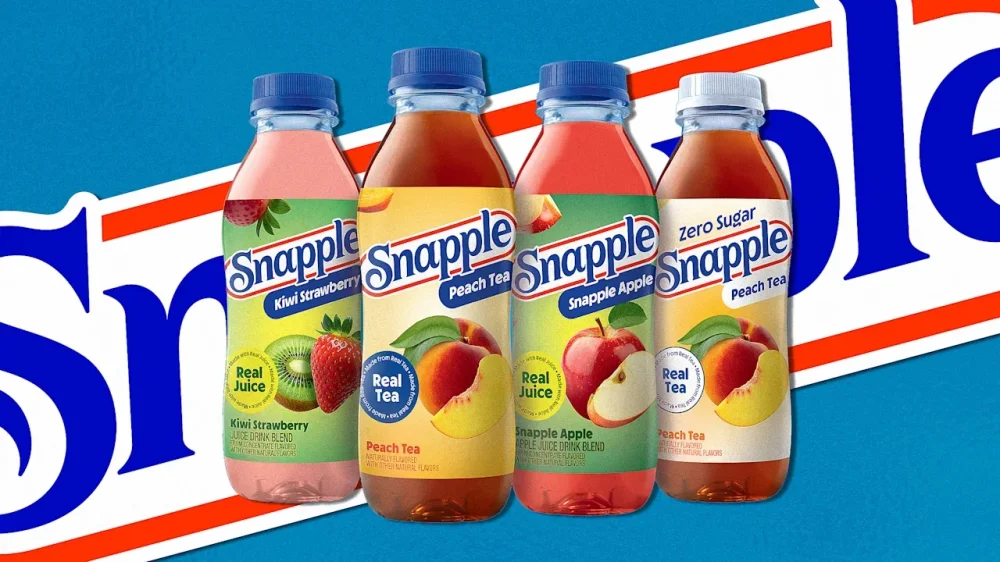
Snapple might be gearing up for a long-awaited comeback by taking a page out of its ‘90s playbook. On February 18, Snapple’s parent company, Keurig Dr Pepper, announced that the beloved tea brand is unveiling a refreshed visual identity designed to “return the Snapple brand to icon-status.” The new look, which will roll out beginning this March, includes new graphics, a logo inspired by the brand’s ‘90s look, and an updated bottle design that hearkens back to its original glass packaging. At the same time, Keurig Dr Pepper told Fast Company that it’s reinvesting in marketing efforts for Snapple, including through an ongoing campaign focused on the drink’s hometown of New York City. For Snapple, the new look and marketing boost represent a return to form that’s been a long time coming. After Snapple’s heyday in the ‘90s—characterized by its scrappy roots, funky packaging, and wacky ad strategy—the brand has struggled to hold onto cultural relevance amidst a catastrophic sale, ownership changes, and several ill-advised rebrands. Now, it’s looking to tap back into the playful energy that once made it the beverage of choice for ‘90s kids. Snapple’s rollercoaster of a brand history Snapple was founded in 1972 in Long Island, New York, by three friends. Their initial idea was for a company called “Unadulterated Food Products,” which would capitalize on a new wave of interest in better-for-you foods by selling fruit juices to health stores. One founder, Leaonrd Marsh, would later say of the venture that he knew “as much about juice as about making an atom bomb.” As The New York Times noted in Marsh’s 2013 obituary, the three men “did wind up making a bomb of sorts: a batch of carbonated apple juice that accidentally fermented, shooting scores of bottle caps skyward.” Thankfully, this happy accident sparked a transition from the name “Unadulterated Food Products” to “Snapple,” a portmanteau of “snappy” and “apple.” Snapple’s bottles were made from a rounded glass, featured bright colors and a slightly cursive logo, and emitted a satisfying “snap” sound when the cap released the beverage’s carbonation. Snapple’s original business model involved partnering with independent distributors to stock the beverage in smaller stores. The brand truly took off in the early ‘90s, when it began to enter the cultural zeitgeist through a series of zany, irreverent ads that emphasized its underdog status compared to big names like Coca Cola and Pepsi. Undoubtedly, though, its biggest asset was a spokesperson named Wendy Kaufman, who, after appearing in several ads, became a beloved representative known as “Wendy the Snapple lady” (see this spot and this spot of Kaufman answering fan questions). Between 1992 and 1994, sales jumped from $232 million to $774 million. Then, in 1994, Quaker Oats acquired Snapple in a $1.7 billion transaction that would go down in marketing textbooks as a prime example of how not to make a deal. Quaker swooped in, sanded down Snapple’s edgy personality, made its bottles bigger, relegated Kaufman to the back burner, and scrapped its independent distribution model, only to sell the company just three years later to Triarc Companies for $300 million. A brand disaster, indeed. A post-“Quakergate” challenge Since “Quakergate,” Snapple has been fighting an uphill battle to maintain cultural relevance—a journey that’s involved multiple rebrands and several ownership changes. Along the way, it has shed many of the brand assets that originally made it an outlier on grocery store shelves. In 2008, Snapple became part of the Dr Pepper Snapple Group when Cadbury spun off its beverage business. Then, in 2018, Snapple joined Keurig Dr Pepper through a merger of Dr Pepper Snapple Group and Keurig Green Mountain. Between 2016 and 2017, Dr Pepper Snapple reported a 3% decline in the sale of Snapple products. According to Derek Dabrowski, SVP of brand marketing at Keurig Dr Pepper, Snapple has seen overall retail sales growth since the 2018 merger, but “more recently that momentum slowed as shelf presence declined and marketing support eased.” Undoubtedly, a not insignificant part of the brand’s struggles has emerged from the fact that Snapple has lost its quirk. The brand got refreshes in both 2008 and 2015, and in 2021 Keurig Dr Pepper gave it a full-on rebrand. Snapple’s new logo was ultra-modernized into a blue-and-white sans serif; its glass bottles were replaced with recycled plastic; and its charmingly kitschy graphics were swapped for more commercial imagery. The company also attempted to reach younger consumers with a new line called “Snapple Elements,” which ultimately fizzled out. Longtime fans of the brand bemoaned the changes, with many claiming that Snapple tasted better out of glass. Gone was the quintessential Snapple “snap,” replaced with a quotidian plastic sigh. A return to Snapple’s quirky form Now, it seems, Keurig Dr Pepper is realizing that its rebrand may have been a bit too hasty. “Looking back, some of these efforts, especially chasing multiple trends at once, left the brand feeling a bit fragmented,” Dabrowski says. Snapple’s upcoming brand refresh spans graphics, logo, packaging communication, and bottle design. The bottle’s illustrations will call back to earlier iterations of Snapple with bolder colors and a slightly more retro look. Flavor signalers like “Real Tea” and “Real Juice” will take center stage on the packaging, connecting to the brand’s origins as a “healthy” beverage. And the sans serif logo will be replaced with a modernized version of the Snapple logo that defined the brand in the ‘90s. “The new Snapple logo isn’t a carbon copy of the one from the late ’80s and early 2000s, but it’s very intentionally inspired by that era,” Dabrowski says. “We brought back the iconic racetrack shape and heritage cues people recognize, then refined them to work better on today’s shelves—with clearer readability, bolder color, and stronger flavor storytelling.” Marketing to match Snapple has also been slowly tapping back into its irreverent advertising roots. Last fall, the brand launched a new campaign called “Snapsolutely Refreshing” with a media buy in its NYC hometown, including out-of-home placements across subways, street panels, office elevators and Times Square. It ran a one-day bodega takeover featuring free Snapple and branded merch. For a limited time, the brand even brought back glass Snapple bottles at a few retailers across the city. And the ad accompanying “Snapsolutely Refreshing” feels charmingly similar to something Snapple might have made in its ‘90s underdog glory days: A man in an NYC bodega is confronted by a series of slightly creepy, talking “wellness culture” beverages, like kombucha and probiotic soda, before ultimately choosing to sip a Snapple instead. Still, for diehard Snapple fans, a key question remains: Will the glass bottle ever make a real comeback? That remains a bit of a mystery. Dabrowski says that in September, Snapple will roll out a new plastic bottle that mimics the original’s shape and embossed logo. And, when pressed, a spokesperson shared that the brand is “continuing to test glass bottles and learn from consumer response.” Whether Snapple ever gets its “snap” back remains to be seen—but, for now, the brand is at least looking (and sounding) a little more like itself. View the full article
-
With uncertainty as the new norm, leaders are understandably searching for psychological anchors. They’re looking for ideas that can steady people and sustain energy through change. One of those anchors is hope. Across corporate mission statements, fresh publications from thought leaders, and HR manifestos, corporations have elevated hope from a state of being to a strategic imperative. But what happens when an emotion becomes a business model? How to define hope in an organizational context Psychologically, hope is a cognitive and motivational state defined by three elements: agency (belief in your capacity to shape outcomes), pathways (the ability to identify routes toward goals), and goals themselves. Psychologist C.R. Snyder conducted research in the 1990s that reframed hope as a measurable construct. Snyder correlated the concept with performance, well-being, and perseverance. Hope’s modern strategic allure has deep cultural roots. In ancient philosophy, hope oscillated between virtue and vice. The Greeks saw it as both a comfort and a trap. When they opened Pandora’s box, hope was the last thing left inside, which they ambiguously positioned between salvation and delusion. By the 20th century, hope became a secular virtue central to progress and humanism. In psychology, post-war theorists viewed hope as a coping mechanism that could inoculate individuals and societies against despair. More recently, the positive psychology movement of the early 2000s further codified hope as a measurable, trainable mindset. Today, in a world shaped by disruption—technological, social, and ecological—hope has reemerged as a leadership commodity. In the absence of predictability, it’s a currency of cohesion. The upside of hope at work In organizational life, hope can offer the following tangible benefits: Motivational fuel: Hope maintains focus on goals when there are distant or ambiguous outcomes. Resilience amplifier: Employees with strong hope scores typically recover faster from setbacks and see alternative routes when plans fail. Cultural glue: Hope-based narratives can create psychological safety. This allows people to see themselves as coauthors of a positive future rather than passive recipients of corporate fate. Innovation driver: Hope enables experimentation by reframing failure as learning, not loss. In these ways, hope can act as a psychological lubricant, reducing the friction caused by doubt, fatigue, and fear. So why does hope in a corporate setting leave a bad taste in my mouth? Hope’s hidden downsides Hope’s fierce glow can be blinding. When hope decouples from reality, it risks morphing into delusion or denial. This is particularly dangerous in workplace cultures that prize positivity over honesty. Untampered, hope can produce three organizational distortions: Deferred reality: Leaders may avoid confronting hard truths, preferring to “hope things improve.” This delays critical decisions about restructuring, investment, or strategic pivoting. Toxic positivity: Teams pressured to “stay hopeful” may feel unable to surface legitimate concerns or dissenting views. The result is conformity disguised as belief. Chronic stress and burnout: Sustaining high levels of hope in the face of repeated setbacks can exhaust employees, which produces emotional dissonance when one’s lived experience doesn’t match the optimistic messaging. In essence, hope without realism becomes institutionalized avoidance. Why hope isn’t strategic The current corporate positioning of hope as a strategy often stems from crisis communication. During market downturns, layoffs, or rapid transformation, hope becomes both a message and a salve. Yet, when you wield hope as a rhetoric rather than a practice, it erodes trust. Employees can sense when a message from leadership is inconsistent with conditions on the ground. The gap between them declaring hope and observable action breeds cynicism. This is a core component of workplace burnout, and a form of psychological corrosion that is far more damaging than pessimism. The case for realistic optimism A more sustainable alternative is realistic optimism—a mindset that balances hopeful vision with clear assessment. Martin Seligman, one of positive psychology’s founders, described optimism as the expectation that “good things can happen,” while realism ensures those expectations align with evidence and constraints. Realistic optimism doesn’t deny difficulty: it contextualizes it. Leaders who embody realistic optimism model three habits: Evidence-based hope: They openly acknowledge setbacks and uncertainties while identifying genuine paths forward. Transparent communication: They link belief with action by showing how they’re addressing challenges, not merely stating that “things will get better.” Adaptive goal-setting: They recalibrate expectations when circumstances change, preserving motivation through clarity rather than blind positivity. For example, a startup facing funding shortfalls might cultivate realistic optimism by acknowledging fiscal pressure while outlining tangible cost-saving measures and revised growth trajectories. Realistic optimism transforms hope from sentiment into discipline. It requires intellectual honesty, emotional agility, and the courage to engage with uncertainty without succumbing to fantasy. In cultivating this balance, leaders create cultures that are not only hopeful, but credible. A quick guide to leading with realistic optimism If you’re a leader and you want to know how to go about leading in a way that combines optimism and reality, start with the following steps below: Start with the facts. Before inspiring your team, ensure the data supports your message. Sustainable morale begins with credibility. Name the challenge, then the path. Hope grows when people see a route forward, not just a reason to believe. Pair optimism with concrete steps. Model uncertainty tolerance. Encourage dialogue about what’s unclear. When leaders admit they don’t have all the answers, hope becomes collective rather than performative. In an era when “believing in better” has become a hollow corporate refrain, leaders who master realistic optimism stand apart. They demonstrate that the most enduring form of hope is not a declaration, but a practice. And it’s one that they build with clarity, accountability, and shared ownership of reality. View the full article

-
Last month, The Atlantic published an article with an alarming headline: “The Film Students Who Can No Longer Sit Through Films.” The author of the piece, Rose Horowitch, spoke with professors around the country who have begun to complain about this trend. What she learned was disheartening: “I used to think, if homework is watching a movie, that is the best homework ever,” Craig Erpelding, a film professor at the University of Wisconsin at Madison, told me. “But students will not do it.” I heard similar observations from 20 film-studies professors around the country. They told me that over the past decade, and particularly since the pandemic, students have struggled to pay attention to feature-length films. What’s the source of this attention span crisis? The professors interviewed for Horowitch’s article point to a clear culprit: smartphones. The founding director of Tufts University’s Film and Media Studies, for example, tried to ban electronics during screenings, but found the rule impossible to enforce. “About half the class ends up looking furtively at their phones,” she said. Meanwhile, a Cinema and Media Studies professor at USC reports that his students remind him of “nicotine addicts going through withdrawal…the longer they go without checking their phone, the more they fidget.” The mechanism at play here is an ability that reading scholar Maryanne Wolf calls cognitive patience, which is defined as the “ability to [maintain] focused and sustained attention and delay gratification, while refraining from multitasking.” The presence of smartphones degrades cognitive patience because they activate neuronal bundles in our brain’s short-term reward system that anticipate a high expected value from picking up the device. These bundles effectively vote for the distracting behavior, creating a cascade of neurochemicals that are experienced as motivation to grab the phone. After a while, due to a lack of practice, you lose your comfort with sustained attention altogether. It’s no wonder more and more people lack the cognitive patience to make it through a two-hour film! But as I elaborate on my podcast this week, in this specific problem with movies, we can find a solution to the more general issue of weakened attention. Why not make the ability to watch an entire film a training goal for the attempt to reclaim our brains? Like the new runner working up to completing their first 5k, it’s a milestone that’s challenging, but not too challenging, and therefore a great way to begin an effort toward attention autonomy. Assuming you take on this goal, what’s the best way to improve your cinematic cognitive patience? Here are my three suggestions: Keep your phone in a different room. This prevents your short-term reward system from firing out of control with distracting impulses. Watch better movies. If you have a meaningful viewing experience, your long-term reward system will more strongly associate movies with lasting benefits, making it easier to delay gratification in the future. To help get through these movies at first, practice the thirty-minute rule. Before you start the movie, read a review or analysis that helps explain why it’s good. Pause the movie every thirty minutes or so to read another review or analysis. This helps reorient your brain toward a perspective of critical appreciation, allowing you to continually find value and avoid the sense of slogging for the sake of slogging. I appreciate the irony here: I’m suggesting you watch one screen to reduce the distracting impact of another. But it’s become clear to me recently that although many people are fed up with the impact of digital devices on their brains, they don’t know how to push back. Maybe rediscovering the patient joys of movies can be a part of that answer… In Other News: AI Vibe Reporting I’m experimenting with including a section like this more often, in which I briefly discuss news relevant to technology, distraction, and the fight for depth. Judging by the increasing volume of distressed messages I now receive from people I know, the quantity of AI vibe reporting out there is on the rise. I want to help you navigate this media landscape without becoming unnecessarily worried. With this in mind, let’s tackle a case study. Last week, The Atlantic published a vibe-filled article titled “The Worst-Case Future for White-Collar Workers.” I want to take a critical look at several quotes from this piece: “[T]he labor market for office workers is beginning to shift. Americans with a bachelor’s degree account for a quarter of the unemployed, a record.” Clearly, the intention here is to imply that this trend is caused by AI eliminating knowledge work jobs. But we have no solid evidence that these two issues are related. Indeed, as this critique notes, the decline in jobs for college grads began well before the more recent generative AI revolution. “Occupations susceptible to AI automation have seen sharp spikes in joblessness.” This is classic vibe reporting. The author doesn’t directly say that joblessness spikes are due to AI automation – carefully read how she words the sentence – but she clearly wants to imply that it’s true. This implication, however, is not currently supported by the evidence. As I’ve reported, job reductions in the tech sector are better explained by corrections to over-hiring during the pandemic. Something like this is happening in the advertising world as well. On Friday, Cade Metz published an article in the Times that made a similar point. “Businesses really are shrinking payroll and cutting costs as they deploy AI.” Another classic vibe reporting technique: this sentence implies the shrinking payroll is due to AI deployments. But in most cases, these are unrelated. Lots of companies are deploying some sort of AI products for their employees. Some of these companies are also shrinking their payroll (especially those that overhired during the pandemic). This doesn’t mean one causes the other. This is the classic post hoc ergo propter hoc fallacy. “In recent weeks, Baker McKenzie, a white-shoe law firm, axed 700 employees, Salesforce sacked hundreds of workers, and the auditing firm KPMG negotiated lower fees with its own auditor.” By placing these specific examples of shrinking payroll immediately after discussions of AI automation, the author once again implies, without a direct claim, that these job losses were due to AI. But let’s look closer. Consider Salesforce: They did indeed lay off around 1,000 workers earlier this month, but not because they automated these jobs using AI. It was instead the result of a restructuring aimed at combining their Agentforce and Slack products under a single executive. Here’s how one close observer of the company described it: “Cross-team layoffs like these are not unusual for a company of Salesforce’s size, especially at this time of year, before announcing end-of-fiscal-year earnings.” What’s actually going on with AI and jobs? Generative AI might very well create broad disruptions in the job market. But we’re not there yet. The first major shift will likely occur in software development, but its magnitude remains unclear. (More on this soon: I’m in the middle of a reporting project in which I’ve now heard from over 300 computer programmers about how they’re currently using AI; tl;dr: it’s complicated!) In the meantime, however, the actual stories related to AI are important enough on their own. We don’t also need reporters working backward to support trends that they feel like should be true. (To be clear: The rest of the article is quite good. It explores, more hypothetically, how the government could respond to massive economic disruptions, and it’s written by a journalist who I respect and who knows a lot about that topic. It’s worth reading! Just don’t get freaked out by the vibe reporting in the opening section.) The post Film Students Can No Longer Sit Through Films appeared first on Cal Newport. View the full article
-
Last month, The Atlantic published an article with an alarming headline: “The Film Students Who Can No Longer Sit Through Films.” The author of the piece, Rose Horowitch, spoke with professors around the country who have begun to complain about this trend. What she learned was disheartening: “I used to think, if homework is watching a movie, that is the best homework ever,” Craig Erpelding, a film professor at the University of Wisconsin at Madison, told me. “But students will not do it.” I heard similar observations from 20 film-studies professors around the country. They told me that over the past decade, and particularly since the pandemic, students have struggled to pay attention to feature-length films. What’s the source of this attention span crisis? The professors interviewed for Horowitch’s article point to a clear culprit: smartphones. The founding director of Tufts University’s Film and Media Studies, for example, tried to ban electronics during screenings, but found the rule impossible to enforce. “About half the class ends up looking furtively at their phones,” she said. Meanwhile, a Cinema and Media Studies professor at USC reports that his students remind him of “nicotine addicts going through withdrawal…the longer they go without checking their phone, the more they fidget.” The mechanism at play here is an ability that reading scholar Maryanne Wolf calls cognitive patience, which is defined as the “ability to [maintain] focused and sustained attention and delay gratification, while refraining from multitasking.” The presence of smartphones degrades cognitive patience because they activate neuronal bundles in our brain’s short-term reward system that anticipate a high expected value from picking up the device. These bundles effectively vote for the distracting behavior, creating a cascade of neurochemicals that are experienced as motivation to grab the phone. After a while, due to a lack of practice, you lose your comfort with sustained attention altogether. It’s no wonder more and more people lack the cognitive patience to make it through a two-hour film! But as I elaborate on my podcast this week, in this specific problem with movies, we can find a solution to the more general issue of weakened attention. Why not make the ability to watch an entire film a training goal for the attempt to reclaim our brains? Like the new runner working up to completing their first 5k, it’s a milestone that’s challenging, but not too challenging, and therefore a great way to begin an effort toward attention autonomy. Assuming you take on this goal, what’s the best way to improve your cinematic cognitive patience? Here are my three suggestions: Keep your phone in a different room. This prevents your short-term reward system from firing out of control with distracting impulses. Watch better movies. If you have a meaningful viewing experience, your long-term reward system will more strongly associate movies with lasting benefits, making it easier to delay gratification in the future. To help get through these movies at first, practice the thirty-minute rule. Before you start the movie, read a review or analysis that helps explain why it’s good. Pause the movie every thirty minutes or so to read another review or analysis. This helps reorient your brain toward a perspective of critical appreciation, allowing you to continually find value and avoid the sense of slogging for the sake of slogging. I appreciate the irony here: I’m suggesting you watch one screen to reduce the distracting impact of another. But it’s become clear to me recently that although many people are fed up with the impact of digital devices on their brains, they don’t know how to push back. Maybe rediscovering the patient joys of movies can be a part of that answer… In Other News: AI Vibe Reporting I’m experimenting with including a section like this more often, in which I briefly discuss news relevant to technology, distraction, and the fight for depth. Judging by the increasing volume of distressed messages I now receive from people I know, the quantity of AI vibe reporting out there is on the rise. I want to help you navigate this media landscape without becoming unnecessarily worried. With this in mind, let’s tackle a case study. Last week, The Atlantic published a vibe-filled article titled “The Worst-Case Future for White-Collar Workers.” I want to take a critical look at several quotes from this piece: “[T]he labor market for office workers is beginning to shift. Americans with a bachelor’s degree account for a quarter of the unemployed, a record.” Clearly, the intention here is to imply that this trend is caused by AI eliminating knowledge work jobs. But we have no solid evidence that these two issues are related. Indeed, as this critique notes, the decline in jobs for college grads began well before the more recent generative AI revolution. “Occupations susceptible to AI automation have seen sharp spikes in joblessness.” This is classic vibe reporting. The author doesn’t directly say that joblessness spikes are due to AI automation – carefully read how she words the sentence – but she clearly wants to imply that it’s true. This implication, however, is not currently supported by the evidence. As I’ve reported, job reductions in the tech sector are better explained by corrections to over-hiring during the pandemic. Something like this is happening in the advertising world as well. On Friday, Cade Metz published an article in the Times that made a similar point. “Businesses really are shrinking payroll and cutting costs as they deploy AI.” Another classic vibe reporting technique: this sentence implies the shrinking payroll is due to AI deployments. But in most cases, these are unrelated. Lots of companies are deploying some sort of AI products for their employees. Some of these companies are also shrinking their payroll (especially those that overhired during the pandemic). This doesn’t mean one causes the other. This is the classic post hoc ergo propter hoc fallacy. “In recent weeks, Baker McKenzie, a white-shoe law firm, axed 700 employees, Salesforce sacked hundreds of workers, and the auditing firm KPMG negotiated lower fees with its own auditor.” By placing these specific examples of shrinking payroll immediately after discussions of AI automation, the author once again implies, without a direct claim, that these job losses were due to AI. But let’s look closer. Consider Salesforce: They did indeed lay off around 1,000 workers earlier this month, but not because they automated these jobs using AI. It was instead the result of a restructuring aimed at combining their Agentforce and Slack products under a single executive. Here’s how one close observer of the company described it: “Cross-team layoffs like these are not unusual for a company of Salesforce’s size, especially at this time of year, before announcing end-of-fiscal-year earnings.” What’s actually going on with AI and jobs? Generative AI might very well create broad disruptions in the job market. But we’re not there yet. The first major shift will likely occur in software development, but its magnitude remains unclear. (More on this soon: I’m in the middle of a reporting project in which I’ve now heard from over 300 computer programmers about how they’re currently using AI; tl;dr: it’s complicated!) In the meantime, however, the actual stories related to AI are important enough on their own. We don’t also need reporters working backward to support trends that they feel like should be true. (To be clear: The rest of the article is quite good. It explores, more hypothetically, how the government could respond to massive economic disruptions, and it’s written by a journalist who I respect and who knows a lot about that topic. It’s worth reading! Just don’t get freaked out by the vibe reporting in the opening section.) The post Film Students Can No Longer Sit Through Films appeared first on Cal Newport. View the full article
-
A CEO sits in a boardroom, staring at a strategy deck generated overnight by AI. The analysis is sharp. The recommendations are confident. The numbers line up. And yet something feels off. It feels flat, almost a little too perfect . . . This moment is becoming increasingly common for leaders. Artificial intelligence is now one of the most powerful management tools ever created. It can analyze markets in seconds, surface patterns no human team could find, and generate plans on demand. For many executives, AI already feels indispensable. But as intelligence scales at unprecedented speed, a quieter question is emerging inside organizations: How do we ensure AI is focused on human flourishing? Intelligence Is Scaling. Wisdom Is Not AI excels at intelligence. It detects patterns, predicts outcomes, and optimizes for efficiency. What it does not possess is contextual wisdom: the ability to understand why a decision matters, how it will land emotionally and culturally, or what it reinforces over time. Leadership has never been about having the most information. It has always been about deciding what matters when information conflicts. In an AI-rich environment, where intelligence is being commoditized, leaders face a subtle temptation to outsource judgement itself. When dashboards look precise and recommendations feel objective, optimization can easily be mistaken for wisdom. But AI cannot answer the questions leaders are increasingly accountable for: How is this affecting the precious humans in my care? What values are driving this decision? Is this decision indicative of the kind of world we are trying to build together? These are not computational questions. They are human ones. The Real Risk: Abdicated Leadership Much of the public conversation about AI risk focuses on bias or misuse. Those concerns are real. But inside organizations, a quieter risk is emerging: outsourcing thinking that affects humans to “the machine.” When leaders defer too often to AI-generated recommendations, they slowly lose confidence in their own judgment. Leadership shifts from sense-making to system-monitoring. Teams stop debating. Leaders stop interpreting reality and start validating outputs. The result isn’t better leadership. It’s thinner leadership. Over time, this shows up as cultural drift, ethical blind spots, employee disengagement, and loss of trust—especially during moments like layoffs, restructures, or major strategic shifts. When leaders can’t clearly explain why a decision was made, people feel optimized instead of led. Strong leaders don’t just decide what to do. They articulate why it matters. They connect decisions to shared meaning, values, and narrative. They help teams understand how today’s choices fit into a longer human arc of transformation and evolution. AI can propose solutions. Only humans can author meaning. Why Clarity Is Becoming a Core Leadership Skill In an AI-saturated world, clarity is a force multiplier. Clarity about purpose. Clarity about values. Clarity about what not to optimize. Put simply: Clarity is deciding what you refuse to let AI optimize. AI will happily optimize for speed, efficiency, engagement, or cost reduction. It will not ask whether those optimizations erode trust, creativity, resilience, or long-term cohesion. Leaders must. This is why clarity, not charisma or technical expertise, is becoming one of the most critical leadership capabilities of the next decade. Clarity allows leaders to: Set boundaries around how and where AI is used Frame AI insights within human context Decide when efficiency should yield to ethics Protect creativity where optimization would flatten it Without clarity, leaders risk becoming reactive to machine intelligence instead of responsible for human outcomes. How Effective Leaders Use AI Without Becoming Dependent on It The goal is not to resist AI. It is to place AI correctly within leadership practice. Three principles can help leaders do that: Treat AI as an advisor, not an authority. Use AI to surface options, test assumptions, and explore scenarios—but make it explicit that final judgment remains human. In practice, this means leaders own decisions in their own words, not by pointing to an algorithm. Slow down at meaning-making moments. When decisions affect people, culture, or identity (hiring, layoffs, strategy shifts, values) pause. Ask not only “What does the data suggest?” but “What does this decision communicate about who we are?” Invest in judgment, not just AI literacy. AI skills matter. But judgment skills matter more. Organizations that thrive will be led by people trained to reason ethically, think systemically, and articulate values under pressure—not just operate tools efficiently. Meaning Is the Leadership Advantage AI Can’t Touch In moments of uncertainty, people don’t look to leaders for perfect predictions. They look for orientation. They want to know: What matters now? What should I focus on? How does my work connect to something meaningful? AI cannot provide that orientation. Leadership can. As machine intelligence accelerates, meaning potentially becomes more scarce and more valuable. Leaders who offer clarity amid complexity and purpose amid acceleration don’t just build better cultures. They drive stronger innovation, greater organizational resilience, and long-term value creation. The Capability That Endures Every technological shift reshapes leadership. This one is no exception. But the core truth remains: leadership is not about knowing more. It is about seeing more clearly and exercising wisdom under pressure. AI will continue to evolve. Capabilities will expand. Tools will improve. What must deepen alongside them is human leadership’s capacity for clarity, judgment, and meaning-making. Because in an AI world, the leaders who matter most won’t be the ones who rely on the smartest machines. They’ll be the ones who remember in wisdom what it means to be human while using them. View the full article

-
Once-a-week injection achieved weight loss of 23%, which is lower than some existing treatmentsView the full article
-
Here's something worth knowing upfront: You don't need millions of followers or superstar status to make money on Instagram. Micro and even nano-influencers on Instagram are supplementing — or even replacing — their income with content creation. I now have over 15,000 followers on Instagram, but when I started experimenting with monetization, I had no idea what would actually work. And I tried everything. Affiliate links that made me a few bucks, brand partnerships that weren't really sustainable, and eventually a few income streams that started stacking up month after month. One of the most important things I've learned is that there no ‘easy money’ switch here — turning posts into paychecks still takes consistent, thoughtful work. In this article, I'll share 12 of the most effective ways for you to make money on Instagram. What's really working right now, what's worth skipping, and how you can layer these streams no matter your follower count. Whether you’re just starting on Instagram or already have a sizable following, there are options here for everyone. Key takeawaysLow barrier to entry: You don't need millions of followers; nano and micro-influencers can successfully monetize through niche communities.Three core strategies: Monetization happens via in-app features (subscriptions, gifts), brand collaborations (UGC, sponsored posts), or self-promotion (selling your own products/services).Diversified income: Relying on multiple streams, such as affiliate marketing and digital courses, provides more stability than platform-specific bonuses alone.Quality is mandatory: Regardless of the method, consistent high-quality content and community engagement are the foundations for conversion. Jump to a section: The three ways most creators make money on Instagram 1. Offer exclusive content via subscriptions 2. Receive gifts from fans 3. Monetize live sessions with badges 4. Qualify for Instagram bonuses 5. Partner with brands through influencer marketing 6. Create user-generated content for brands 8. Set up an Instagram shop and shoppable posts 9. Promote your own products or services 10. Sell courses or membership programs 11. Run Instagram ads to drive sales 12. Design and sell merch Convert your posts to paychecks FAQ about making money on Instagram More Instagram resources The three ways most creators make money on InstagramMaking money via the Instagram app: You can earn directly through Instagram's built-in features like subscriptions, gifts, and badges.Making money via collaboration with brands: Some creators make money on Instagram by promoting other brands on their account or creating content that companies can repurpose (like ads).Making money by promoting your small business: The third approach is a bit different — using Instagram as a promotion tool for your own business. This could be an online store, a service, a course, memberships, a community, etc.Whichever route you pick, steady growth comes from showing up for a clearly defined audience and engaging with them consistently. Let's start with what I call Instagram native income — the features built right into the app that help you earn without ever leaving it. ⚠️Note: These options are only available in certain regions, but hopefully they can still spark some ideas for you.1. Offer exclusive content via subscriptionsSubscriptions are a way to share exclusive content with your community on the platform — you charge a monthly fee for that content. Subscriptions let you offer exclusive content to your biggest supporters in exchange for a monthly fee — kind of like having your own membership program built right into Instagram. Your most engaged followers can become paid subscribers and get access to exclusive content you create just for them. Subscriptions are a great way to build steady, predictable income from your Instagram content. When setting your price, think about the value you're offering while keeping it accessible enough that your followers can actually join in. Image sourceWith an Instagram Subscription, you can share exclusive posts, reels, lives, stories, and chats with your subscribers. Subscribers can find the content easily on your Instagram feed in a new tab using the crown icon. When I tested subscriptions, I realized something very quickly. People don't pay for content. They pay for meaningful access. Things like your creative process, unfiltered behind-the-scenes thoughts, tutorials, or personal updates that don't always make it to your main feed. 💡Pro tip: You can also spot your subscribers easily with their purple crown symbol in your posts’ comments — make replying to them a priority.To enable subscriptions on your Instagram account, you must: Be at least 18 years oldHave a professional Instagram account with at least 10,000 followersReside in the country where it’s available (here’s a list for your reference)Have an Instagram profile that meets Instagram’s Content Monetization and Partner Monetization policies⚠️Note: Subscriptions aren’t available for Instagram accounts that primarily post content focused on children. 2. Receive gifts from fansYour followers can show appreciation for your Instagram Reels by giving you a gift (aka, money). Image sourceHow gifts work Currency: Fans purchase virtual "stars" to send as giftsPayout Rate: You earn $0.01 USD for every star receivedConversion: 100 stars = $1 USDMinimum Payout: You can withdraw funds once your balance reaches $25 USDThe key here is consistency. If you're creating content that makes people feel something, whether that's entertained, inspired, or educated, they'll want to give back. I know a few creators who mention gifts casually in their captions. Something like, "If you enjoyed this tip, send a gift to keep the series going. It's subtle, human, and never salesy." It might start small, but those micro earnings stack up over time, especially when you're posting regularly. ⚠️Note: Instagram offers gifts only to creators with a professional Instagram account and at least 500 followers. It’s also available in selected countries only — you can find the eligible countries here. 3. Monetize live sessions with badgesWhen you go live on the Instagram app, people watching can purchase badges for you as a sign of support and appreciation. It's like your audience buying a front row ticket to your stream. The creators I've seen do this best make their lives feel like mini experiences. They pick a consistent day theme. Think self-care chats, behind-the-brand Fridays, or even community happy hours. You’ll see a heart next to the names of people who've bought a badge. Image sourceYou can earn badges in increments of $0.99, $1.99, and $4.99 (all USD). To make the most of badges, let people know they're available at the start of your live — and again when new viewers join. ⚠️Note: Badges are only available to Instagram creators who are at least 18 years old and qualify for badges. You must also live in one of the countries on this list. 4. Qualify for Instagram bonusesRight now, bonuses are the only way Instagram pays creators directly — no audience purchases or subscriptions required. You get these bonuses paid on 31 December, New Year’s Eve — and they are available for reels, carousels, and single-image posts. Image sourceThese programs are usually invite-only and vary by region, but it's worth keeping an eye out in your professional dashboard. If you receive the invitation, you’ll see it on your dashboard. Once you complete the onboarding flow, the platform will count up to 150 pieces of content shared from the week that you activate until the end of the bonus opportunity. The more views and/or plays (replays not included) your content receives, the more money you earn. I like to think of bonuses as the cherry on top. They're not a core strategy, but when they appear, take them. If you're already consistent with your content, it's a welcome reward for the effort you're already putting in. 💡Note: Instagram Bonuses are seasonal — they’re offered for a limited time. Ensure you regularly check your professional dashboard to avoid missing your invite. You must add a payout account to receive a bonus payout. Learn how to set up your payout account.Right now, earning money solely through Instagram's built-in features works best if you already have a large following and strong personal brand. As Instagram's Head Adam Mosseri explains: “If you have a few thousand followers, it doesn’t make sense to focus on trying to monetize that audience,” Mosseri says. “You should instead focus on growing that audience or using Instagram in other ways.” Even so, there are good reasons to explore these features: Become an early adopter of Instagram’s monetizing featuresSupplement your income from other sources (which includes the other ways to earn on Instagram, below)Where most creators actually start seeing bigger paychecks is through working with brands. There are loads of ways to do this, and number five on this list is actually super underrated. 5. Partner with brands through influencer marketingThe most common way to partner with brands is through influencer marketing: You create sponsored posts on your Instagram page for a brand in exchange for a fee. This partnership between creator Jade Beason and Adobe Express shows how it works: Sponsored content usually includes a “paid partnership” tag or an #ad hashtag. Brands pay Instagram creators for a spot in their feed because they can build brand awareness and earn money by reaching the creator’s audience. How much can you earn from sponsored posts? It varies based on your niche, location, content quality, follower count, engagement rate, and negotiation skills. Influencer Marketing Hub’s study found nano-influencers (Instagram influencers with 1,000 – 10k followers) earn between $10 and $100 per post — it only goes up from there. Influencer tier Follower count Estimated rate per post Nano 1,000–10K $10–$100 Micro 10K–50K $100–$500 Mid-tier 50K–500K $500–$5K Macro 500K–1M $5K–$10K Mega 1M+ $10K+ It’s worth noting that the numbers vary a lot — sometimes, with little changes in the scope of work. For example, a brand will pay more to get usage rights for your sponsored posts. When you partner with a brand you already love, it doesn't feel like selling. It feels like natural storytelling. At 15,000 followers, I've had brands pay me hundreds of dollars per post because my audience fits their target perfectly. One of my earliest partnerships with Etihad Airways came from me tagging a brand I already trusted and was a frequent flyer with in a casual reel. They saw the post, reached out, and it turned into a long-term collaboration. If you're highlighting a brand you love, tag them. It's free visibility for them, and it plants the seed for future paid work for you. How do you find these brands? Many brands — those that actively practice influencer marketing — might reach out to you proactively when they notice you have an engaged social media community that overlaps with their target audience. They might use third-party tools (like influencer discovery software) for this, but you can also grab their attention by tagging them in your posts whenever you create content about them. This can also be an excellent way to showcase your content creation abilities. If you are in eligible countries, it’s also worth joining Instagram’s creator marketplace. It’s a hub for helping brands connect with the right Instagram influencers for their customers. Image sourceLastly, it’s also worth directly reaching out to the influencer marketers of your favorite brands or even popping them a DM. One thing to keep in mind: Don’t overload your feed with brand-related posts. It can make your account feel less authentic to your followers. Annie-Mai Hodge, founder of Girl Power Marketing, says an overload of brand collabs (especially inauthentic ones) can be harmful to growing your Instagram following and engagement long term. “If your feed starts to feel like a media kit, people stop engaging, and that hurts your chances of monetizing in the long run,” she says. “Brands want creators who have influence, not just reach. That means your content should always be designed to serve, entertain, or connect with your audience first.” 6. Create user-generated content for brandsThese days, brand partnerships aren't just about sponsored posts. User-generated content (UGC) is when you create branded content, but don’t post it on your Instagram page. Brands might post your content on their own account or use it for Instagram advertising. For example, hair care brand Fix My Curls often reshares videos by creators who mention their products and credits them in post captions. Creating user-generated content is a great way to earn money while keeping your feed focused on your own content. Plus, you don't need a large following to create UGC — brands care more about your content creation skills and style. Wondering how to land your first UGC deal?Many creators find brands by pitching via DMs on Instagram, responding to comments from brand accounts, or reaching out through email with a few simple videos and a clear offer. 💡Pro tip: UGC is perfect if you're more of a behind-the-scenes creative. You can film unboxings, product demos, tutorials, all without ever needing a huge audience.7. Share affiliate links and codesAffiliate income is one of the most beginner-friendly monetization paths. You earn a commission every time someone buys through your link or code. Companies will share promo codes or a trackable link (with a UTM code) to calculate how many sales you bring in. These links or promo codes usually include discounts, which give your followers an extra reason to check out the product. Buffer has a free UTM builder that can help you create these unique links in a few steps. When I started, I promoted products I was already obsessed with, just things I genuinely used and wanted to recommend. This includes skincare, coffee, kitchen appliances, and more. Authenticity drives conversions. If your followers trust you, they'll trust your suggestions. This post by creator Hitika Sachdev is a perfect example of an affiliate partnership. The brand can use the code “Hitika94” to track every sale coming via her. 💡Pro tip: Add your trackable URL in your Instagram bio link so your followers can find it easily (and where it’s clickable). If you're working with promo codes instead of trackable links, you've got options too. Use a link in bio tool like Buffer’s Start Page where you can customize the text associated with the link — add your discount code in the text and link to the brand’s website. Often, affiliate relationships grow out of existing brand partnerships. A brand might collaborate with you a few times for sponsored content and then offer a performance-based incentive to transition to affiliate marketing. You can also join affiliate programs that are open to all creators, like Amazon Associates or Pura Vida, which has an affiliate program offering a 15% commission on each sale you bring in. You can apply through their form, and if you meet their requirements, you're in. With programs like these, you won't have a dedicated brand contact. You’ll probably have a dashboard that will calculate all your earnings, and you’ll have to buy the brand’s products on your own. It's still a solid way to earn from your content — especially when you're promoting products that genuinely fit your audience. 💡Pro tip: Make a list of all the existing products you use and check if they have an affiliate program you could participate in. This will help you create authentic affiliate posts about things you already use.One of the biggest advantages of branded content is that you can start without a huge following or your own product to sell. Plus, you've got multiple ways to work with brands, depending on what fits your style. Monetizing beyond the app is where Instagram becomes more than just a content platform. It turns into your business engine. Next up, we'll take a look at some ways to do just that. 8. Set up an Instagram shop and shoppable postsInstagram Shop lets you sell your products directly through the Instagram app. If you sell physical products, Instagram shop is your digital storefront. You can post a picture or a reel of your product with a tappable link that goes directly to your product catalog. When users click this link, they’ll see all the info about the product, including prices. Image sourceInstagram Shop is available in select countries, and only users with an Instagram business account are eligible to use this feature. If Instagram Shop isn't available in your region, Buffers Shop Grid is a perfect workaround. It creates a clickable, shoppable feed experience that still feels native to Instagram. When someone taps your bio link, they'll see exactly what you want them to — whether that's your bestsellers, latest posts, or anything else you choose to highlight. You'll also be able to track clicks on each link, so you can see what your audience is most interested in. 💡Pro tip: The goal is to reduce friction. The fewer steps between your audience seeing something and buying it, the better.9. Promote your own products or servicesInstagram is a great place to build awareness for your own products or services. You can do this by creating a brand account and forming an Instagram strategy. You might not sell products right away, but you will educate people about your brand and its products. From digital templates to handmade jewelry to coaching services, what matters most is storytelling. Show people why you created your product and what problem it solves. Creators like Modern Millie have built strong value around their content. Millie teaches creators how to grow on social and monetize their platforms, and she uses Instagram to promote everything from digital courses to free templates to YouTube tutorials. It's a great example of how clear positioning plus consistent content can lead to real revenue without needing a huge team or a complicated setup. 10. Sell courses or membership programsIf you’re a creator, you can also earn money by sharing an online course or a membership program that teaches your audience to do something you’re an expert in. Adriana Blanc often promotes her fitness membership program using her Instagram account. Promoting courses, memberships, or exclusive communities is not much different from selling products or services. Focus on highlighting the value prop of your offer and hitting the pain points of your target audience. 11. Run Instagram ads to drive salesSometimes, you may have to spend money to make money. If you're selling a digital product or service, investing in Instagram advertising campaigns can amplify your reach. Running Instagram ads means boosting some content on your feed, so it reaches a broader audience. Ideally, this boosted content helps you sell products and earn more money than you are spending. From left: An Instagram Feed ad, Instagram Story ad, and Instagram Reel adAdvertising can help you reach new users and build your audience — in turn, helping you sell more products — but that doesn’t mean hitting ‘boost’ and hoping for the best. Start with around $50 to $100 to test which videos or messages resonate. Use the data to refine your organic content as well. You learn what hooks, visuals, or topics attract your ideal audience. It's not about scaling fast; it's about learning smart. 🌱I recommend you check out our guide to getting started with Instagram ads to learn the best practices and build a simple strategy to give you the highest return on investment (ROI).12. Design and sell merchSometimes your brand becomes your product. If you've built a strong personal brand on Instagram, you can monetize it by designing unique merchandise. Maybe it's a phrase you repeat often, an aesthetic your followers love, or an inside joke your community enjoys. Sabrina Zohar, a dating coach and influencer, did this brilliantly. Born from simple phrases she uses in her podcast, The Sabrina Zohar Show, she created a recognizable brand. Convert your posts to paychecksRemember that monetization on Instagram isn't about chasing every single income stream. It's about finding what feels authentic to you and your audience. Start small. Pick one or two ideas from this list and test them for at least a few months. See what feels sustainable, what excites you, and what naturally fits your content rhythm. No matter which route you take, applying a few timeless principles — solving a real problem for your audience and standing out with a clear, differentiated niche — will boost your chances of success. And as your followers add up, the admin work only increases — you have to respond to comments, juggle DMs, analyze performance, and much more. It can quickly become overwhelming. Enter: Buffer. It takes the admin tasks off your plate so you can focus on what really matters. Whether you need help scheduling posts, engaging with your audience, analyzing performance, or creating a custom bio link — it’s got you covered. Start for free today. FAQ about making money on InstagramDo Instagram users get paid directly by the app?Sometimes. Instagram can pay creators through in-app tools like subscriptions, gifts, badges, and (in some cases) bonuses. But many creators earn most of their income outside the app through brand partnerships (like sponsored posts and UGC), affiliate marketing, and selling their own products or services. How much does Instagram pay for 1,000 views?There isn’t a single guaranteed rate. In practice, creators often see rough ranges around $0.01–$0.05 per 1,000 views, but it varies a lot based on the specific program, your eligibility, your audience, and what Instagram is offering at the time. What do I need to qualify for Instagram’s money-making tools?Depending on the feature, there are a couple of requirements you need to meet, like being at least 18 years old, using a professional account, following Instagram’s Content Monetization and Partner Monetization policies, meeting any follower or engagement thresholds, living in a country where the feature is available, and setting up payouts so Instagram can send you earnings. How do I start earning money on Instagram if I’m new?Start by choosing a clear niche, posting consistently, and engaging with the people who comment or reply to your stories. Then pick one income path to focus on first (like UGC, affiliate links, or promoting a small offer), and build from there. Tools like Buffer can help you stay consistent by scheduling posts ahead of time. More Instagram resourcesHow to Get Verified on Instagram: 2 Ways to Get Your Blue Check13 Trending Sounds on Instagram (+ How to Use Them)Replying to Your Instagram Comments Can Boost Engagement by 21%Best Time to Post on Instagram: New Data from 9.6 Million PostsHow to Use Instagram for Business: The Complete GuideInstagram Stories: The Complete Guide to Using Stories to BoostHow to Share Instagram Feed Posts to Stories: 3 Simple Steps View the full article
-
If you walk into a grocery store in the Netherlands or Germany, you might not realize you’re being steered toward plant-based protein, from vegan tortellini to plant-based yogurt. But across Europe and the UK, major retailers are quietly driving that shift. And they’re seeing results at a time when plant-based sales are struggling in the US. Lidl, a budget supermarket, grew UK sales of its private-label plant-based line by nearly 700% from 2020 to 2025. In Germany, France, and Italy, plant-based retail sales are growing across multiple categories, with most of that growth coming from supermarkets’ own brands. Lidl is one of several retailers with a deliberate strategy to nudge consumers away from meat and dairy and toward plant-based food. In the Netherlands, major supermarkets now have an ambitious target: by 2030, they’re aiming for plant-based protein sales to outweigh animal-based food, in a 60-40 split. Climate is the biggest motivation. As grocery stores look at their own carbon footprints—driven by policies like the EU’s climate reporting rules—nearly all of the impact comes from food production in their supply chains. And nearly half of those emissions come from meat and dairy. “It’s huge—this is the biggest lever for a retailer in terms of reducing the climate impact,” says Joanna Trewern, director of partnerships at ProVeg International, a Berlin-based nonprofit that advocates for grocery stores to prioritize plant-based protein. In the Netherlands, where stores have gone farthest to adopt new strategies, the organization co-founded a working group that helped retailers plan the transition. The Dutch government also issued a policy paper saying that the population was consuming more protein from animal sources than they should for a healthy diet—the opposite of the new dietary guidelines in the U.S. Stores have taken several steps to boost plant-based sales. First, since the cost of plant-based alternatives is still a barrier, they’ve built up their own low-cost, private-label offerings. “A core element of our strategy is ensuring that plant‑based foods are just as affordable as animal‑based alternatives,” a spokesperson for Lidl Netherlands told Fast Company. “At Lidl, the prices of our plant‑based staple items are already equal to or even lower than their animal‑based counterparts. This price parity ensures that cost is never a barrier for customers who want to make a more sustainable choice.” Lower costs are critical for plant-based protein to grow, and private label products offer the biggest opportunity, Trewern says. “Retailers have more control over ingredient sourcing, it’s easiest for them to scale, and there’s more they can do in terms of price and investing in categories to bring the price down for the consumer,” she says. As plant-based sales have grown, Lidl keeps adding more products to its range. That includes more traditional plant-based protein, like tofu or chickpea-based products. “The initial innovation in this space was very focused on convenience—products that really mimic meat,” says Trewern. “Now what we’re seeing is consumers are looking for something else. That’s led a lot of people to say plant-based is not doing well, the category’s failing. Actually, what we’re seeing now in many European countries is they’re starting to come back and the category is consolidating with a different type of product. More clean-label, whole-food product sales are going up massively.” (Sales of tofu and tempeh are also growing in the U.S., though in both locations, they’re still a small fraction of overall plant-based meat.) Some stores are also offering new hybrid products. Lidl was the first to start selling a partly plant-based burger—60% beef, 40% pea protein—that tastes like beef but is priced lower than its regular ground beef and has a much lower carbon footprint. The store has also cut back on promotions on meat; twice a year, it makes sure its promotional flyers are meat-free and feature plant-based products instead. It’s also tested other strategies, like placing vegan meat next to animal-based products in the meat aisle. Partnerships with other brands can also help. The French retailer Carrefour worked with manufacturers like Danone and Unilever to bring new plant-based products to market, and met its original sales target seven years ahead of schedule. “Real behavior change happens when retailers and manufacturers work together to deliver products people love that reach price and taste parity with conventional options,” says Abby Sewell, corporate engagement manager at the Good Food Institute, an American nonprofit focused on the industry. The work can’t guarantee on its own that plant-based protein sales always grow—country-wide sales dipped in the Netherlands in 2024, for example, while some other markets expanded. But it’s a useful tool. In the U.S., supermarkets don’t yet have similar goals and strategies. And the growth of private-label brands offers more evidence that price is key. There’s still a large opportunity for more affordable, better-tasting products; almost three-quarters of American consumers are open to eating more plant-based food. “U.S. consumers say the most important factors that would make them more willing to eat plant-based meat are if it tasted better and was more affordable,” says Jody Kirchner, associate director of market insights at the Good Food Institute. “This is an opportunity for the plant-based meat industry to continue to evolve and position itself for the next wave of growth.” “We’ve seen this before with electric cars and solar panels—early hype, a dip, then a return to growth,” Kirchner adds. “With the right investment and innovation, plant-based meat can find that same curve.” View the full article

-
Corporate culture isn’t built by policies. It’s built by moments—the unscripted experiences that catch us off guard, bring us closer, and quietly shape how we show up for one another. But many efforts labeled “culture-building,” including onboarding programs, leadership retreats, and all-hands meetings, still feel like productivity theater: tightly scheduled and heavy on performance. Today, it’s worth asking whether that model has simply run its course. Consider this: what if the future of culture-building isn’t about managing people, but about designing experiences that allow people to feel something real together? What if awe, story, and shared creativity weren’t treated as indulgences, but as foundational elements of how trust, courage, and belonging actually form? Beyond the Mission Statement While leaders like to bring up the idea of team culture, few can describe what theirs feels like in practice. That’s because culture doesn’t live in a mission statement or a values deck. It lives in the stories people tell when no one is watching. It lives in how they feel after a team gathering. It lives in the space between intention and lived experience. The data reinforces this gap. Deloitte reports that only 23% of organizations believe their employees are strongly aligned with corporate purpose. Gallup finds that just two in ten employees feel connected to their company’s culture on a daily basis. These aren’t engagement or communication problems; they are failures of experience design. When culture is reduced to language and artifacts, it stays abstract. When it’s shaped through shared experience, it becomes something people carry with them. Designing a Culture People Can Actually Feel Imagine replacing a traditional all-hands meeting with a creative exercise in which each team member contributes a visual expression of what matters most to them at work. Or imagine a leadership offsite that trades breakout rooms for a story circle, where leaders share pivotal moments that shaped how they lead today. People may forget the fourth bullet on slide 37, but they remember the moment they felt genuinely seen. That’s where culture actually forms. Across my work with teams and leaders ranging from early-stage companies to established organizations navigating change, the most durable cultural shifts don’t come from tighter processes or clearer messaging. They come from intentionally designed experiences built around three elements humans have relied on for connection long before modern organizations existed: art, ritual, and awe. These lay the grounds for emotional experiences—which can determine trust, risk-taking, and follow-through. Art as a Medium for Meaning When teams create something together—without relying on words—hierarchies soften, safety increases, and unspoken dynamics surface naturally. Art invites play and perspective, two capacities most workplaces quietly suppress. At a recent leadership offsite, I facilitated a collaborative art experience where each participant expressed a core value visually, without explanation. What emerged was more than a collective artwork; it was a shared mirror. People recognized one another in new ways. Long after the offsite ended, the exercise continued to shape conversations. Art creates space for truth to surface without requiring debate or performance. Ritual as Emotional Architecture Ritual has a way of slowing us down and signaling significance. Simple, intentional gestures—opening a meeting with a shared intention, closing an offsite with a moment of gratitude, marking transitions with presence—turn routine interactions into moments of coherence. In my Campfires of Connection work, gatherings begin and end with ritual: lighting a fire, sharing a single word, or pausing together in silence. These gestures don’t demand belief or explanation; they communicate something more fundamental: this moment matters. One of my clients began opening weekly meetings with a 60-second pause and a single prompt: “What are you bringing here today?” Over time, that slight shift deepened trust more effectively than any formal team-building program. Ritual isn’t soft; it’s the emotional structure. It creates the container in which change becomes possible. Awe as a Catalyst for Connection Modern workplaces are loud, fast, and cognitively overloaded. Many people aren’t disengaged because they don’t care; they’re overstimulated and starved of wonder. Awe interrupts that pattern. It resets the nervous system and expands perspective. In one of my facilitation sessions, participants were invited to sketch places from their childhood and share the stories behind them. The drawings were simple and imperfect, yet deeply personal. As each was revealed, the room changed. Colleagues who had known one another only through polished professional roles suddenly encountered one another as whole people with layered histories. That collective pause created a sense of awe. These moments don’t happen accidentally. They’re carefully designed to allow people to encounter something beyond their roles. In environments driven by metrics and deadlines, awe reminds us why collaboration matters and why people choose to stay, contribute, and stretch together rather than simply comply. When Culture-Building Falls Flat To understand why this approach matters, it helps to consider the alternative. I once observed a leadership retreat that checked every conventional box. The agenda featured well-known speakers, the breakout sessions were smartly facilitated, and participants left entertained, informed, and exhausted. But within weeks, nothing had changed. The retreat generated momentum but not meaning. What was missing wasn’t effort; it was emotional resonance. There was no moment when people could set aside the performance of leadership and engage with one another more honestly. The experience was efficient, but forgettable. Months later, a much smaller intervention with the same group, a single evening structured around reflection, had a disproportionate impact. Leaders spoke openly about uncertainty, named tensions they had been avoiding, and listened without trying to fix or impress. That evening reshaped how they worked together more than any previous retreat had. Culture doesn’t shift because information is delivered; it shifts when people feel something together that changes how they see one another. For leaders designing their next team gathering, the most useful questions may not be logistical at all. What do we want people to feel when they leave this room? What truth needs space to surface here? What has been rushed past that deserves reverence? What might become possible if we slowed down just enough to let meaning catch up? The organizations people love working for aren’t those with the slickest branding or the most polished values decks. They’re the ones where people leave a meeting or retreat feeling more alive, more trusted, and more willing to take risks together. View the full article

-
Our capacity to juggle several tasks at once is among the most important capabilities of the human cognitive system. Just consider a typical day in the life of a modern human: you glance at your phone while waiting for coffee to brew, skim headlines while half-listening to a podcast, mentally rehearse a client pitch while walking your child to school, reply “noted” on Slack during a meeting while updating a slide deck, check your bank balance while standing in line, and, in a moment of entirely optional productivity theatre, scroll through a friend’s Facebook feed to see what their cat had for breakfast (admittedly, not the most important addition to our already heavy repertoire of multi-tasks). If these familiar episodes of multitasking barely register as effort, it is because they have been absorbed into habit, woven into the fabric of daily life, quietly showing how often we coordinate competing goals, priorities, and impulses at once. For all the noise about AI agents, it is worth remembering that human agents remain remarkably capable. That said, generative AI and AI agents add yet another layer of temptation to multitask, and a respectable excuse for doing so. Now we can draft an email while an agent prepares slides, ask a chatbot to summarize a report while we skim LinkedIn, generate code while answering Slack, or prompt three models at once while half-editing a memo. This feels like augmented productivity, but often becomes cognitive diffusion or an increase in work intensity. As I illustrated in I, Human, when machines take over fragments of thinking, we become supervisors of many shallow streams rather than authors of one coherent argument. The result is not just intellectual sloppiness, but a steady erosion of focus, as attention shifts from solving a problem to managing tools that promise to solve it for us. A bad rap To be sure, multitasking tends to get a bad rap, especially among cognitive psychologists and behavioral scientists. This skepticism is well grounded. In a widely cited meta-analysis, researchers showed that alternating between tasks produces measurable “switch costs” in both speed and accuracy, even when tasks are simple. Subsequent research also found that heavy media multitaskers performed worse on tests of attention control and working memory, suggesting that frequent task-switching may erode the very cognitive filters that make focus possible. A more recent synthesis including examination of social media effects linked media multitasking during studying to significantly poorer academic outcomes. More recent neuroscientific evidence also shows that habitual multitasking is associated with reduced grey-matter density in regions linked to cognitive control, and some scholars have pointed out that multitasking deducts the equivalent of 10-IQ points from our performance and is therefore more debilitating than smoking weed (presumably minus the benefits or self-perceived creativity!). Taken together, the evidence is rather compelling: multitasking is not a sign of superior efficiency but a tax on attention, trading depth for the comforting illusion of productivity. It makes us feel busy, sometimes even clever, yet especially for complex, analytical, or creative work it is usually worse than doing one thing well at a time, or learning to focus. “Supertaskers” And yet, that is not to say that we are all equally bad at multitasking. In fact, as in most areas of cognition, there are meaningful individual differences. A small but influential line of research has even identified a group sometimes labelled “supertaskers.” In a dual-task experiment involving simulated driving and mental arithmetic, researchers identified a minority of participants who showed virtually no performance drop when handling two demanding tasks at once. These individuals tended to score higher on measures of working memory capacity and executive control (proxies for higher IQ), suggesting that cognitive resources, more than motivation or confidence, set the ceiling on multitasking ability. Working memory is analogous to a computer’s RAM, in that it determines how many pieces of information can be actively held and processed at once. Individuals with greater working-memory capacity possess more cognitive bandwidth to manage competing demands, though the limits remain real for everyone. In line, studies consistently show that people with higher working memory capacity, stronger attentional control, and better fluid intelligence incur smaller task-switching costs. Working memory capacity predicts resistance to distraction, while Unsworth and Engle (2007) linked it to superior performance in complex attention tasks, and executive attention explains substantial variance in multitasking performance. The role of personality Unsurprisingly, personality also plays a role: most notably, traits linked to self-regulation and planning, such as conscientiousness, tend to buffer against the negative effects of multitasking, while impulsivity and related tendencies are associated with poorer performance. Broader Big Five traits such as extraversion, neuroticism, and openness show mixed effects, often influencing how people approach multitasking rather than how well they actually perform it. Even training and domain expertise matter. Air-traffic controllers, surgeons, and experienced gamers show reduced switching costs in their domains because practice automates sub-tasks, freeing cognitive bandwidth. This does not mean that people know how good they actually are at multitasking. As in most domains of competence, the share of people who claim to excel far exceeds the share who truly do. In a classic experiment, researchers found that heavy media multitaskers rated themselves as effective jugglers of attention yet performed worse on tests of working memory and attentional control. The pattern echoes a broader principle from behavioral science, familiar from the Dunning–Kruger literature: when a skill is poorly understood and rarely measured, confidence tends to rise as competence falls. Multi-tasking, like leadership or emotional intelligence, is easy to overestimate because busyness looks like effectiveness, and we remember the rare occasions when juggling worked, not the many when it quietly degraded our thinking. Taken together, the evidence paints a nuanced picture. The average human is indeed a poor multi-tasker, especially when tasks are novel or cognitively demanding. But some individuals, by virtue of higher executive capacity (raw mental horsepower), disciplined habits, specialized training, and the right personality, are less bad at it. That distinction matters for leadership and talent assessment, because it reminds us that multitasking ability is not a universal virtue or vice. It is a measurable cognitive skill, unevenly distributed across people, and often confused with confidence, busyness, or the social theatre of productivity. View the full article

-
If you have ever interviewed for a job, there is a non-trivial probability that you have encountered “tricky” or quirky interview questions. These are questions that are intentionally unexpected, abstract, or only loosely related to the actual requirements of the role. Rather than systematically assessing job-relevant skills, they are designed to surprise candidates, test composure, or signal creativity. Interviewers often defend these questions as clever ways to evaluate problem-solving ability, cultural fit, or performance under pressure. The evidence tells a different story. Decades of research in industrial-organizational psychology show that unstructured, brainteaser-style interviews have low predictive validity. They generate noise, not insight. At best, they measure how comfortable someone is with improvisation. At worst, they measure how similar the candidate is to the interviewer. Cases in point To illustrate the point, here are some common examples, ordered from least absurd, or at least somewhat defensible, to most absurd: 1. What is your biggest weakness? Nominally job-related, though usually answered strategically rather than honestly. The only rational way to respond is to disguise a strength as a flaw. It is less a test of self-awareness than an audition for plausible humility. 2. Sell me this pen. Some relevance for sales roles, but still an artificial performance detached from real context. Popularized by The Wolf of Wall Street, it reinforces the myth that great sales is about fast talk rather than listening, diagnosing needs, and building trust. 3. Tell me about a time you failed. In principle, a legitimate behavioral question. In practice, often an invitation to narrate a carefully curated setback that highlights resilience, grit, and eventual triumph. It rewards storytelling ability more than learning agility. 4. How many tennis balls can fit inside a Boeing 747? A classic “guesstimate” puzzle meant to test structured thinking. Geeks may love it, but it predicts little beyond prior exposure to similar puzzles. If you want to measure cognitive ability, there are far more reliable and validated tools. 5. How many windows are there in New York City? Same logic, further removed from any realistic job task. For what it’s worth, large language models estimate the number in the tens of millions, depending on assumptions. Which illustrates the deeper point: if ChatGPT can answer it in seconds, why are we using it to judge human potential? 6. If you were an animal, which one would you be and why? A thinly veiled personality quiz. It feels like a BuzzFeed throwback disguised as talent assessment. The answer often reveals more about the interviewer’s projections than the candidate’s traits. 7. If you could have dinner with any historical figure, who would it be? A pleasant icebreaker masquerading as a values assessment. It doubles as a signaling exercise: how curious, cultured, contrarian, or provocative can you appear in under 30 seconds? Say Nelson Mandela and you signal virtue. Say Steve Jobs and you signal ambition. Say Machiavelli and you signal strategic depth. But say Stalin and suddenly the interview turns into a moral inquiry. Was that intellectual curiosity, dark humor, or deeply questionable judgment? The question reveals less about your leadership potential than about your risk appetite for reputational self-sabotage. 8. If you were a kitchen utensil, which one would you be? At this point, the exercise has drifted into sheer parody – shows like The Office come to mind. Spoon suggests reliability. Knife signals edge. Spork implies versatility. The real variable being tested may simply be how badly you want the job, signaled by the fact that you haven’t just walked out of the room. The science So, what does the actual science of interviewing say? First, there is evidence that some interviewers are not merely misguided, but derive a certain Machiavellian pleasure from putting candidates on the spot. Research on interviewer behavior shows that individuals higher in everyday sadism or dominance are more likely to ask stress-inducing or intentionally uncomfortable questions. In other words, the brainteaser may sometimes be less about assessing you and more about interviewers’ enjoying the deviant power dynamic. Second, the predictive validity of unstructured interviews is consistently low. Meta-analyses spanning decades show that traditional, free-flowing interviews correlate only modestly with later job performance. The problem is not conversation per se, but inconsistency. Different candidates get different questions. Interviewers rely on intuition. Evaluation criteria shift midstream. The result is noise, bias, and overconfidence, and unfortunately, these issues often go undetected because of the subsequent confirmation bias or failure to admit mistakes by hiring managers. In essence, if an interviewer likes you, they will either continue to like you after you are hired or pretend you are doing a great job to avoid looking like a fool. By contrast, structured interviews work. The formula is hardly mysterious: define the competencies that matter for the job; ask all candidates the same job-relevant questions; anchor evaluations to predefined scoring rubrics; and combine interview data with other validated predictors such as cognitive ability or work samples. Behavioral questions about past actions and situational questions tied to realistic job scenarios consistently outperform seemingly clever riddles and quirky brain teasers. The role of AI And then there is AI, not so much the elephant in the room as the bull in the china shop, already rearranging the furniture while we are still debating the seating plan. In a world where candidates can rehearse flawless answers with generative tools, the theatrical interview becomes even more obsolete. Chatbots can generate polished responses to “biggest weakness” or “sell me this pen” in seconds. Ironically, the more predictable and formulaic the question, the easier it is to game. This raises the bar for employers: assessment must shift toward observable skills, simulations, job trials, and multi-source data. This does not mean interviews become irrelevant. It means they must evolve. When information is abundant and answers are cheap, the premium shifts from rehearsed narratives to demonstrated capability. Instead of asking candidates what they would do, employers can observe what they actually do: solve a real problem, analyze a live case, critique a flawed strategy, or collaborate with a future teammate. AI can help candidates prepare, but it cannot fully fake sustained performance in a realistic simulation. There is also a deeper irony. The very tools that allow candidates to polish their answers can help employers design better assessments. AI can assist in standardizing questions, generating competency-based scenarios, flagging bias in evaluation, and even predicting which interview questions correlate with outcomes. In other words, AI exposes the weakness of theatrical interviewing while simultaneously offering the tools to fix it. The real risk is not that candidates use AI. It is that employers fail to upgrade their methods accordingly. In sum, the future of interviewing is not about trickier questions. It is about better design. The uncomfortable truth is that quirky interview questions persist because they are fun, easy, and ego-affirming. But hiring is too important to be left to entertainment. If organizations are serious about talent, they must replace improvisational theatre with evidence-based assessments, and have the humility and self-critical honesty to truly test the outcome of their decisions to acknowledge when they are wrong, and make an effort to tweak things and improve. View the full article

-
The workplace presents a distinctive set of disclosure dilemmas, beginning with the strange fan dance of interviewing. We are trying to put our best foot forward; to convince our potential employer we’re a perfect fit and consummate professional, yet we’re asked, “What are your weaknesses?” and “What are the biggest mistakes you’ve made?” Even the seemingly laidback “So, tell me about yourself” can feel like a trap. Where should we start? There has been a lot of buzz in recent years about the benefits of “bringing your whole self” to work. There’s some evidence for those benefits. Letting others see more of you than you might ordinarily show them forges bonds, including in the workplace. We saw this in the early pandemic, when hardened leaders suddenly turned into endearing softies the moment their toddlers mischievously ran into their home offices. But for compartmentalizers who prefer to keep work and personal life separate, the “bring your whole self to work” movement can be something of a nightmare. For others, like me, it’s freeing. But this new terrain is filled with land mines, and it can be hard to know when you’re going to step on one. The question of how much of our authentic selves to share at work is a pivotal one. It’s also a difficult one to answer. We want to share enough to feel understood and connected to others, but not so much that we alienate people or cause them to question our competence or our seriousness. Making matters even more complicated, each workplace has its own culture and its own norms about the degree of self-disclosure that’s deemed appropriate. That doesn’t mean they’re clearly articulated, usually far from it. We must discover them. And by no means should everyone decide to simply conform to those norms; bucking them might be good not only for one’s own happiness and engagement at work, but for the whole team and for society at large. So how do we find the right balance? What are the trade-offs between being a little more open at work and keeping strict professional boundaries intact? How much “backstage access” can we give to our colleagues and our bosses without risking our workplace image? Backstage versus Front Stage: transparency versus vulnerability According to my colleague Monique Burns Thompson, who works closely with members of Gen Z, “Today’s generation craves a level of openness that is different from when I was a young professional.” New York University organizational scientist Julianna Pillemer’s research suggests that revealing aspects of our backstage selves at work, when done thoughtfully, can help us build rapport and stand out in a good way. In workplace contexts, she recommends what I’d call discerning authenticity—a balancing act that involves giving colleagues some, but not total, access to our inner lives. When done well, Pillemer argues, it helps build trust and sparks more meaningful conversations. Over time, this kind of thoughtful openness can deepen workplace relationships, enhance collaboration, and even improve performance. What does it mean to be discerningly authentic—to be open in a thoughtful way? Pillemer specifies two types of backstage access. The first, which she calls transparency, involves “conveying openness” by giving people a window into your thoughts, beliefs, or preferences. For example, you might say, “I’ve always been more drawn to the creative side of things, even though I’m technically in a data-heavy role.” This kind of sharing can carry some risk—especially if your perspective is unpopular or unexpected—but it generally offers only a glimpse beneath the surface. The second level of access, which Pillemer calls vulnerability, goes deeper and carries more risk. It involves “sharing potentially sensitive inner states such as intimate emotions,” especially negative ones—like admitting that you feel insecure about public speaking or disclosing a disability that might lead others to underestimate you. For instance, someone might say, “I get nervous presenting in front of senior leadership, even when I know the material cold” (revealing a performance-related insecurity), or “This kind of ambiguity is tough for me. I like having more structure, and I’m trying to get more comfortable with the gray area” (revealing a trait that might not align with organizational norms). One shortcut I find helpful is to think of transparency as cognitive openness and vulnerability as emotional openness. In contexts where impressions really matter, the line between transparency and vulnerability becomes a strategic one. Pillemer doesn’t draw a hard line, but she emphasizes that vulnerability is riskier—especially in high stakes, evaluative settings like job interviews, where disclosing insecurities might chip away at perceptions of competence. If in doubt, transparency is the safer bet. Vulnerability should generally be avoided in those contexts unless, say, it’s framed as a story of growth or overcoming a challenge (“I used to struggle with public speaking, so I joined Toastmasters”). Even when you’re explicitly invited to share something personal—like in the dreaded “tell me about a weakness” question—transparency often does the trick. You might offer cognitive openness: “I think better in writing than I do speaking off the cuff.” You could also frame it as growth: “I’ve learned to prep more deliberately for meetings so I can articulate my ideas clearly in real time. But if you give me a moment to organize my thoughts, I’ll always bring sharper insight.” This kind of thoughtful disclosure lines up with what Pillemer would call transparency: revealing how your mind works in a way that’s candid but not risky. Vulnerability, by contrast, might involve admitting that you often doubt your abilities or fear being judged—disclosures that could raise red flags unless carefully framed. Still, even in high-stakes settings, being a bit more open can help. From Revealing: The Underrated Power of Oversharing by Leslie John published on February 24, 2026 by Riverhead Books, an imprint of Penguin Publishing Group, a division of Penguin Random House LLC. Copyright © 2026 by Leslie John View the full article

-
Gold and Treasury yields rise as markets price in uncertainty over president’s trade agendaView the full article
-
Troubles at New York-based asset manager have made investors nervous about the wider industryView the full article
-
You’re interested in AI but you’re human: You’ve got emails to answer, deadlines to meet, and you don’t have 40 hours a week to sift through academic papers on large language models. You just want to know what’s happening, why it matters, and maybe how to use it to get home a little earlier. In that spirit, here are five AI podcasts to help you get smarter and stay informed without wasting your time. The AI Daily Brief For the busy professional who needs the headlines fast, there’s The AI Daily Brief. It’s usually about 20 minutes, which is perfect for the commute or while you’re brewing that second pot of coffee. Host Nathaniel Whittemore does a great job of cutting through the noise, but he doesn’t just read the news. He analyzes what the big moves by OpenAI, Google, and Microsoft actually mean for the rest of us. AI for Humans AI for Humans is for the “rest of us” who just want to have a good time learning. Hosted by Kevin Pereira and Gavin Purcell, this show is exactly what it says on the tin: AI news and tools explained by two guys who’ve been in the tech and media world forever but don’t take themselves too seriously. They demo new tools, they crack jokes, and they make the whole “impending robot takeover” feel a lot less scary. If you want to keep up with the latest without feeling like you’re sitting in a lecture hall, give this one a shot. Practical AI If you’re looking to actually get stuff done, check out Practical AI. The name says it all. Hosts Chris Benson and Daniel Whitenack aren’t here to wax poetic about the singularity. Instead, they talk about real-world applications. They interview people who are actually shipping AI products and solving real problems. Their podcast is accessible enough for enthusiasts but technical enough to be useful if you’re trying to implement this tech in your business. The Artificial Intelligence Show For marketers and business leaders, The Artificial Intelligence Show is required listening. Hosts Paul Roetzer and Mike Kaput from the Marketing AI Institute were beating the AI drum long before ChatGPT showed up. They look at AI through a business lens: How does the latest news change your career? How does it change your company? If you’re in marketing or management and you’re trying to figure out how to navigate the next five years, you’d be crazy not to listen. Eye On AI Eye On AI is a podcast for anyone interested in seeing the bigger picture. Hosted by longtime New York Times correspondent Craig S. Smith, this one slows things down a bit. It’s biweekly, and the interviews are deep. Smith talks to the researchers and people building AI systems to better understand the “why” and the “how.” It’s less about the “tool of the week” and more about understanding the fundamental shifts in the technology. It’s a great weekend listen when you’ve got a little more headspace. View the full article

-
If you’re looking to streamline your social media efforts, using post scheduling apps can be a pivotal factor. These tools help you automate your content distribution, analyze performance, and improve collaboration among team members. With options like SocialBee and Hootsuite, you can find features customized to your needs, whether that’s user-friendly interfaces or advanced analytics. Exploring these options will reveal how they can greatly enhance your social media strategy. Let’s examine each one closely. Key Takeaways SocialBee offers an AI copilot for strategy generation and automation, ideal for curating engaging content across major social networks. Pallyy provides a visual content focus with its Feed Planner, ensuring an aesthetically pleasing Instagram grid and easy scheduling. Sendible is scalable for agencies, featuring Smart Queues to automate post timing based on engagement metrics and integrates with design tools. Metricool includes a free plan with valuable analytics and competitor analysis, making it accessible for users looking to manage up to 50 posts/month. Agorapulse and Buffer streamline engagement with unified inboxes and user-friendly interfaces, catering to teams managing multiple accounts effectively. SocialBee When you’re looking to streamline your social media management, SocialBee stands out as a potent tool that simplifies content scheduling and curation. As a top recommendation for a post scheduler, it supports major networks like Facebook, Twitter, and Instagram. With its Instagram scheduling app, you can easily plan your posts and engage with your audience. SocialBee’s unique AI copilot aids in generating effective social media strategies and automating tasks, enhancing your efficiency. You can categorize posts, use a post variant feature, and leverage hashtag collections to organize and boost engagement. Moreover, its integration with tools like Canva and Unsplash allows you to create visually appealing content effortlessly. Pricing starts at $29/month with a 14-day free trial, making it the best post scheduling app to try. Pallyy Pallyy offers a streamlined solution for social media scheduling, particularly appealing for those focused on visual content platforms like Instagram and TikTok. Renowned as one of the best Instagram schedulers, it features a user-friendly drag-and-drop scheduling workflow that simplifies content planning. The Feed Planner helps you maintain an aesthetically pleasing Instagram grid, enhancing your visual branding. With a generous free plan, you can schedule up to 15 posts per month for one social set, making it accessible for individual creators and small businesses. Pallyy’s unified social inbox allows you to manage interactions across multiple platforms, streamlining engagement with followers. For those seeking more, the premium plan starts at $25/month, offering advanced analytics and customizable templates, making it a robust social marketing platform. Sendible Sendible stands out as a scalable social media scheduling tool, making it suitable for both agencies and individual users. It offers multiple client dashboards and a white label option for branding, which improves flexibility in managing various accounts. Sendible integrates seamlessly with popular media tools like Canva and Pexels, boosting your content creation and curation capabilities with features like Google News alerts and RSS feeds. The Smart Queues feature automates post scheduling, optimizing your posting times based on audience engagement. Furthermore, Sendible provides robust social listening and reporting features, giving you insights into content performance and audience interactions. Pricing starts at $29/month, and you can explore its functionalities with a 14-day free trial for new users. Metricool Metricool stands out with its user-friendly interface, making it easy for you to schedule and manage posts across multiple social media platforms. Its affordable pricing plans, including a free option for up to 50 posts per month, cater to various users, from individuals to businesses. Furthermore, the platform provides valuable analytics and insights, allowing you to track post performance and make informed decisions without breaking the bank. User-Friendly Interface Steering through the intricacies of social media management becomes considerably easier with a user-friendly interface like that of Metricool. You’ll find that its layout simplifies navigation, allowing you to manage multiple social media accounts effortlessly. The drag-and-drop planner is particularly helpful, making post scheduling accessible for everyone, even those with limited technical skills. Everything you need, from analytics to competitor insights, is available on a single dashboard, which improves your efficiency. Plus, the streamlined design minimizes clutter, letting you focus on content creation without distractions. If you’re part of a team, Metricool‘s intuitive interface supports seamless collaboration, making it ideal for agencies and businesses with multiple users working together on social media strategies. Affordable Pricing Plans Regarding social media management, affordability is a crucial factor for many users. Metricool offers a free plan that lets you schedule up to 50 posts per month across major platforms, though it excludes LinkedIn and Twitter analytics. If you need more features, paid plans start at just $22 per month, allowing for increased scheduling capabilities. Opting for annual payments provides a generous discount, making it a cost-effective solution for small businesses and individuals. The pricing structure is designed to cater to various user needs, ensuring that both free and paid plans deliver valuable tools for managing your social media. Furthermore, the free plan includes competitor analysis and three months of historical data, enhancing its value without extra costs. Analytics and Insights With a strong foundation in affordability, users can now leverage Metricool’s robust analytics and insights to improve their social media strategies. The platform offers extensive features, including competitor analysis, which allows you to benchmark your performance against industry peers. On the free plan, you can access three months of historical data, enabling you to track content performance over time without financial commitment. Metricool’s analytics cover engagement rates, audience growth, and post performance, guiding you to refine your strategies based on data-driven insights. Moreover, you can generate and download detailed reports for easy sharing. The Smart Links feature helps track click-through rates, providing valuable insights into audience behavior and the effectiveness of your content. Agorapulse Agorapulse serves as a robust social media management tool designed for agencies and brands, offering a unified inbox that streamlines the management of comments and messages across various platforms. This feature improves your engagement and response efficiency considerably. Here are some key benefits of using Agorapulse: Advanced Reporting: Analyze social media performance and engagement metrics effectively for strategic planning. Social Media Monitoring: Track brand mentions and keywords to enhance reputation management and competitive analysis. Collaboration Features: Facilitate seamless management of posts, approvals, and workflows among team members, ideal for larger teams. With pricing starting at $69 per month, Agorapulse provides an all-encompassing feature set designed for social media marketers and agencies managing multiple clients. Buffer Buffer stands out as a user-friendly social media scheduling tool that effectively helps individuals and small businesses manage multiple accounts across various platforms. Its simple interface allows you to easily schedule posts, analyze performance, and track engagement metrics without needing advanced technical skills. Buffer offers a free plan with basic scheduling features, whereas paid plans start at $15 per month, providing improved analytics and engagement tracking capabilities. The tool seamlessly integrates with a browser extension, allowing for quick content sharing, which boosts your social media management efficiency. Users often praise Buffer for its straightforward scheduling process, even if it may lack some advanced features found in more all-encompassing tools, making it ideal for those seeking simplicity in their social media strategy. Hootsuite Hootsuite stands out as a thorough social media management tool that combines scheduling, monitoring, and analytics across various platforms like Facebook and Twitter. You’ll find its team collaboration features particularly useful, allowing seamless communication and engagement tracking. Although Hootsuite‘s pricing might be on the higher side, its extensive capabilities make it a solid choice for larger organizations looking to improve their social media strategies. Comprehensive Management Features Effective social media management requires a tool that combines various features into one platform, and Hootsuite thrives in this area. With Hootsuite, you can streamline your efforts and improve your strategies through its extensive management features: Multi-stream view: Track engagement across various social media platforms simultaneously, making it easier to manage multiple feeds. Social listening tools: Respond to comments and messages directly from the dashboard, enhancing your engagement efficiency. Analytics and reporting: Analyze social media performance to gain insights into audience behavior and content effectiveness. Additionally, Hootsuite integrates with third-party apps, allowing you to manage paid ads and marketing efforts centrally. Its auto-scheduling and content publishing features save you time by automating posts across multiple channels effectively. Team Collaboration Tools Collaboration is key when managing social media accounts, especially for larger teams or agencies. Hootsuite offers robust team collaboration features that allow multiple users to manage accounts efficiently. Its unified inbox consolidates messages and comments from various channels, streamlining communication among team members. With approval workflows, you can guarantee that content goes through a review process before publication, helping maintain brand consistency. Furthermore, Hootsuite enables you to assign specific tasks to team members, cultivating effective delegation and accountability within your campaigns. The platform supports real-time collaboration, allowing teams to work together on posts and strategies seamlessly. These features improve overall productivity and engagement, making Hootsuite an excellent choice for organizations looking to optimize their social media management efforts. Pricing and Plans When managing social media accounts, comprehension of pricing and plans is vital for maximizing your investment in tools like Hootsuite. The platform offers various options to fit different needs and budgets: A free plan for 30 days lets you explore its features before committing. Paid plans start at $19/month per social set, with costs increasing based on user numbers and features. A 14-day free trial for paid plans allows you to test all functionalities before making a financial decision. Hootsuite’s pricing structure varies considerably based on the number of accounts and additional features required, so it’s important to evaluate your specific social media management needs before selecting a plan that works best for you. Frequently Asked Questions What Is the Best App to Schedule Social Media Posts? Choosing the best app to schedule social media posts depends on your needs. If you want strong content curation, consider SocialBee. For visual platforms like Instagram, Pallyy is user-friendly. Sendible is great for managing multiple clients with features like Google News alerts. Metricool offers a budget-friendly option with a drag-and-drop planner, whereas Agorapulse focuses on advanced reporting and collaboration for agencies. Evaluate these options based on your specific requirements and budget. What Is the Best App to Post to All Social Media at Once? If you want to post to all your social media accounts at once, consider apps like SocialBee and Sendible. SocialBee offers vast content curation features, whereas Sendible integrates well with tools like Canva. Metricool allows batch scheduling and provides a free plan, making it accessible. Buffer simplifies scheduling but lacks advanced analytics in its free version. Hootsuite provides thorough management features, though it starts at a higher price point. Choose based on your specific needs. What’s a Good Social Media Posting Schedule? A good social media posting schedule typically involves posting 1-2 times daily on platforms like Instagram and Facebook, whereas Twitter may require 3-5 tweets. Aim to post during peak times, such as between 10 AM and 2 PM on weekdays for Instagram. Consistency is essential, as regular posting can boost engagement rates considerably. Utilize analytics tools to track audience activity, and consider A/B testing different times to refine your strategy effectively. Which Tool Is Best for Managing and Scheduling Social Media Posts Across Multiple Platforms? When deciding on a tool for managing and scheduling social media posts across multiple platforms, consider your specific needs. Tools like SocialBee and Sendible offer robust features for agencies, whereas Pallyy’s focus on visual content suits Instagram and TikTok users. If analytics and competitor research are important, Metricool could be beneficial. For Instagram-centric strategies, Later‘s visual planning and optimization features might help improve your engagement. Evaluate these options based on your priorities. Conclusion Choosing the right post scheduling app can greatly improve your social media strategy. Each of the seven tools—SocialBee, Pallyy, Sendible, Metricool, Agorapulse, Buffer, and Hootsuite—offers distinct features that cater to various needs. By automating your postings and utilizing advanced analytics, you can streamline your content management and boost audience engagement. Evaluating each app’s capabilities will help you select the best fit for your brand, eventually leading to increased efficiency and a stronger online presence. Image via Google Gemini This article, "7 Best Post Scheduling Apps to Maximize Your Social Media Strategy" was first published on Small Business Trends View the full article
-
If you’re looking to streamline your social media efforts, using post scheduling apps can be a pivotal factor. These tools help you automate your content distribution, analyze performance, and improve collaboration among team members. With options like SocialBee and Hootsuite, you can find features customized to your needs, whether that’s user-friendly interfaces or advanced analytics. Exploring these options will reveal how they can greatly enhance your social media strategy. Let’s examine each one closely. Key Takeaways SocialBee offers an AI copilot for strategy generation and automation, ideal for curating engaging content across major social networks. Pallyy provides a visual content focus with its Feed Planner, ensuring an aesthetically pleasing Instagram grid and easy scheduling. Sendible is scalable for agencies, featuring Smart Queues to automate post timing based on engagement metrics and integrates with design tools. Metricool includes a free plan with valuable analytics and competitor analysis, making it accessible for users looking to manage up to 50 posts/month. Agorapulse and Buffer streamline engagement with unified inboxes and user-friendly interfaces, catering to teams managing multiple accounts effectively. SocialBee When you’re looking to streamline your social media management, SocialBee stands out as a potent tool that simplifies content scheduling and curation. As a top recommendation for a post scheduler, it supports major networks like Facebook, Twitter, and Instagram. With its Instagram scheduling app, you can easily plan your posts and engage with your audience. SocialBee’s unique AI copilot aids in generating effective social media strategies and automating tasks, enhancing your efficiency. You can categorize posts, use a post variant feature, and leverage hashtag collections to organize and boost engagement. Moreover, its integration with tools like Canva and Unsplash allows you to create visually appealing content effortlessly. Pricing starts at $29/month with a 14-day free trial, making it the best post scheduling app to try. Pallyy Pallyy offers a streamlined solution for social media scheduling, particularly appealing for those focused on visual content platforms like Instagram and TikTok. Renowned as one of the best Instagram schedulers, it features a user-friendly drag-and-drop scheduling workflow that simplifies content planning. The Feed Planner helps you maintain an aesthetically pleasing Instagram grid, enhancing your visual branding. With a generous free plan, you can schedule up to 15 posts per month for one social set, making it accessible for individual creators and small businesses. Pallyy’s unified social inbox allows you to manage interactions across multiple platforms, streamlining engagement with followers. For those seeking more, the premium plan starts at $25/month, offering advanced analytics and customizable templates, making it a robust social marketing platform. Sendible Sendible stands out as a scalable social media scheduling tool, making it suitable for both agencies and individual users. It offers multiple client dashboards and a white label option for branding, which improves flexibility in managing various accounts. Sendible integrates seamlessly with popular media tools like Canva and Pexels, boosting your content creation and curation capabilities with features like Google News alerts and RSS feeds. The Smart Queues feature automates post scheduling, optimizing your posting times based on audience engagement. Furthermore, Sendible provides robust social listening and reporting features, giving you insights into content performance and audience interactions. Pricing starts at $29/month, and you can explore its functionalities with a 14-day free trial for new users. Metricool Metricool stands out with its user-friendly interface, making it easy for you to schedule and manage posts across multiple social media platforms. Its affordable pricing plans, including a free option for up to 50 posts per month, cater to various users, from individuals to businesses. Furthermore, the platform provides valuable analytics and insights, allowing you to track post performance and make informed decisions without breaking the bank. User-Friendly Interface Steering through the intricacies of social media management becomes considerably easier with a user-friendly interface like that of Metricool. You’ll find that its layout simplifies navigation, allowing you to manage multiple social media accounts effortlessly. The drag-and-drop planner is particularly helpful, making post scheduling accessible for everyone, even those with limited technical skills. Everything you need, from analytics to competitor insights, is available on a single dashboard, which improves your efficiency. Plus, the streamlined design minimizes clutter, letting you focus on content creation without distractions. If you’re part of a team, Metricool‘s intuitive interface supports seamless collaboration, making it ideal for agencies and businesses with multiple users working together on social media strategies. Affordable Pricing Plans Regarding social media management, affordability is a crucial factor for many users. Metricool offers a free plan that lets you schedule up to 50 posts per month across major platforms, though it excludes LinkedIn and Twitter analytics. If you need more features, paid plans start at just $22 per month, allowing for increased scheduling capabilities. Opting for annual payments provides a generous discount, making it a cost-effective solution for small businesses and individuals. The pricing structure is designed to cater to various user needs, ensuring that both free and paid plans deliver valuable tools for managing your social media. Furthermore, the free plan includes competitor analysis and three months of historical data, enhancing its value without extra costs. Analytics and Insights With a strong foundation in affordability, users can now leverage Metricool’s robust analytics and insights to improve their social media strategies. The platform offers extensive features, including competitor analysis, which allows you to benchmark your performance against industry peers. On the free plan, you can access three months of historical data, enabling you to track content performance over time without financial commitment. Metricool’s analytics cover engagement rates, audience growth, and post performance, guiding you to refine your strategies based on data-driven insights. Moreover, you can generate and download detailed reports for easy sharing. The Smart Links feature helps track click-through rates, providing valuable insights into audience behavior and the effectiveness of your content. Agorapulse Agorapulse serves as a robust social media management tool designed for agencies and brands, offering a unified inbox that streamlines the management of comments and messages across various platforms. This feature improves your engagement and response efficiency considerably. Here are some key benefits of using Agorapulse: Advanced Reporting: Analyze social media performance and engagement metrics effectively for strategic planning. Social Media Monitoring: Track brand mentions and keywords to enhance reputation management and competitive analysis. Collaboration Features: Facilitate seamless management of posts, approvals, and workflows among team members, ideal for larger teams. With pricing starting at $69 per month, Agorapulse provides an all-encompassing feature set designed for social media marketers and agencies managing multiple clients. Buffer Buffer stands out as a user-friendly social media scheduling tool that effectively helps individuals and small businesses manage multiple accounts across various platforms. Its simple interface allows you to easily schedule posts, analyze performance, and track engagement metrics without needing advanced technical skills. Buffer offers a free plan with basic scheduling features, whereas paid plans start at $15 per month, providing improved analytics and engagement tracking capabilities. The tool seamlessly integrates with a browser extension, allowing for quick content sharing, which boosts your social media management efficiency. Users often praise Buffer for its straightforward scheduling process, even if it may lack some advanced features found in more all-encompassing tools, making it ideal for those seeking simplicity in their social media strategy. Hootsuite Hootsuite stands out as a thorough social media management tool that combines scheduling, monitoring, and analytics across various platforms like Facebook and Twitter. You’ll find its team collaboration features particularly useful, allowing seamless communication and engagement tracking. Although Hootsuite‘s pricing might be on the higher side, its extensive capabilities make it a solid choice for larger organizations looking to improve their social media strategies. Comprehensive Management Features Effective social media management requires a tool that combines various features into one platform, and Hootsuite thrives in this area. With Hootsuite, you can streamline your efforts and improve your strategies through its extensive management features: Multi-stream view: Track engagement across various social media platforms simultaneously, making it easier to manage multiple feeds. Social listening tools: Respond to comments and messages directly from the dashboard, enhancing your engagement efficiency. Analytics and reporting: Analyze social media performance to gain insights into audience behavior and content effectiveness. Additionally, Hootsuite integrates with third-party apps, allowing you to manage paid ads and marketing efforts centrally. Its auto-scheduling and content publishing features save you time by automating posts across multiple channels effectively. Team Collaboration Tools Collaboration is key when managing social media accounts, especially for larger teams or agencies. Hootsuite offers robust team collaboration features that allow multiple users to manage accounts efficiently. Its unified inbox consolidates messages and comments from various channels, streamlining communication among team members. With approval workflows, you can guarantee that content goes through a review process before publication, helping maintain brand consistency. Furthermore, Hootsuite enables you to assign specific tasks to team members, cultivating effective delegation and accountability within your campaigns. The platform supports real-time collaboration, allowing teams to work together on posts and strategies seamlessly. These features improve overall productivity and engagement, making Hootsuite an excellent choice for organizations looking to optimize their social media management efforts. Pricing and Plans When managing social media accounts, comprehension of pricing and plans is vital for maximizing your investment in tools like Hootsuite. The platform offers various options to fit different needs and budgets: A free plan for 30 days lets you explore its features before committing. Paid plans start at $19/month per social set, with costs increasing based on user numbers and features. A 14-day free trial for paid plans allows you to test all functionalities before making a financial decision. Hootsuite’s pricing structure varies considerably based on the number of accounts and additional features required, so it’s important to evaluate your specific social media management needs before selecting a plan that works best for you. Frequently Asked Questions What Is the Best App to Schedule Social Media Posts? Choosing the best app to schedule social media posts depends on your needs. If you want strong content curation, consider SocialBee. For visual platforms like Instagram, Pallyy is user-friendly. Sendible is great for managing multiple clients with features like Google News alerts. Metricool offers a budget-friendly option with a drag-and-drop planner, whereas Agorapulse focuses on advanced reporting and collaboration for agencies. Evaluate these options based on your specific requirements and budget. What Is the Best App to Post to All Social Media at Once? If you want to post to all your social media accounts at once, consider apps like SocialBee and Sendible. SocialBee offers vast content curation features, whereas Sendible integrates well with tools like Canva. Metricool allows batch scheduling and provides a free plan, making it accessible. Buffer simplifies scheduling but lacks advanced analytics in its free version. Hootsuite provides thorough management features, though it starts at a higher price point. Choose based on your specific needs. What’s a Good Social Media Posting Schedule? A good social media posting schedule typically involves posting 1-2 times daily on platforms like Instagram and Facebook, whereas Twitter may require 3-5 tweets. Aim to post during peak times, such as between 10 AM and 2 PM on weekdays for Instagram. Consistency is essential, as regular posting can boost engagement rates considerably. Utilize analytics tools to track audience activity, and consider A/B testing different times to refine your strategy effectively. Which Tool Is Best for Managing and Scheduling Social Media Posts Across Multiple Platforms? When deciding on a tool for managing and scheduling social media posts across multiple platforms, consider your specific needs. Tools like SocialBee and Sendible offer robust features for agencies, whereas Pallyy’s focus on visual content suits Instagram and TikTok users. If analytics and competitor research are important, Metricool could be beneficial. For Instagram-centric strategies, Later‘s visual planning and optimization features might help improve your engagement. Evaluate these options based on your priorities. Conclusion Choosing the right post scheduling app can greatly improve your social media strategy. Each of the seven tools—SocialBee, Pallyy, Sendible, Metricool, Agorapulse, Buffer, and Hootsuite—offers distinct features that cater to various needs. By automating your postings and utilizing advanced analytics, you can streamline your content management and boost audience engagement. Evaluating each app’s capabilities will help you select the best fit for your brand, eventually leading to increased efficiency and a stronger online presence. Image via Google Gemini This article, "7 Best Post Scheduling Apps to Maximize Your Social Media Strategy" was first published on Small Business Trends View the full article
-
It’s five answers to five questions. Here we go… 1. Employee was upset they had to use PTO for bereavement leave A few years ago, I worked at a large nonprofit that had generous PTO, but no other “buckets” of time. Sick, vacation, family care, all time off fell under PTO. One of my reports was caring for a terminally ill relative. Our working relationship was a bit tense as I was having productivity issues from this person, but I tried to separate those conversations and be supportive and offered them any time off they needed (though minimal to none was taken that I can remember.) Unfortunately, the family member passed. I told them to take all the time they needed. I remember them saying X days and then calling back for more time. Each time, I told them, “Of course, take what you need.” We sent flowers and a fruit basket. This was during a major project due date and the December holidays, and I had to take up the slack and also cover holes in the staff member’s work that I discovered along the way. I said nothing to them about having to do this. After two weeks, they called to check in again and said they would come back on Monday. Monday morning came and we had our normal 1:1 scheduled. From go, they were hostile. They said they were very upset that they had to use so much PTO (two weeks) for their bereavement and that staff shouldn’t have to use PTO at all for bereavement. I was shocked. Here I was thinking I was being supportive by encouraging this amount (and more) and covering both positions and they were mad. I think I said something about being sorry the PTO system didn’t have buckets but that they were free to take as much time as needed. I suspect this person was saving all their PTO to be paid out when they leave. They had oodles of time available (over 200 hours?) even after the two weeks. I was pretty offended, but in hindsight, could I have handled this differently? Were they clear ahead of time that the leave you were encouraging them to take would come out of their PTO or did they assume the company offered separate bereavement leave? If they assumed the latter and then discovered after the fact that it was being deducted from their PTO balance, I can see them being upset and feeling like while you were encouraging them to take all that time, you should have made sure they understood that it wasn’t separate bereavement leave. “Take all the time you need” doesn’t necessarily mean “and we will subtract it from your PTO”; in some companies it means “this is an unusual situation, someone died, and we are handling it separately from our normal policies.” It’s pretty normal for companies to offer separate bereavement leave so it’s not surprising that your employee didn’t know that. (That said, it’s also true that bereavement leave is usually only a few days, not two weeks. The idea isn’t to provide enough time for full grieving — that would be months/years! — but to provide time for some of the logistical things that come up around a family death.) On the other hand, if they definitely knew it was coming out of their PTO the whole time and were just expressing that they disagreed with that policy, the hostility was misplaced — but they were grieving, grieving people often have strong emotions come up around all sorts of things, and it makes sense to cut them some slack on that (within reason). 2. My boss socializes with my husband and leaves me out My boss texts my husband, who they met through me, to make weekend plans (for example, to watch movies at my boss’s house). Not only am I not copied on the text, I’m also not invited . I’m keeping this gender-neutral because I suspect the answer is different for men vs women. I’m not worried they’re having sex but my relationship with my boss isn’t great, and I need my marriage to not overlap with work. I wish I could stop this but I can’t afford to piss off my boss and don’t want to lose my marriage. This is something to address with your husband! If you don’t want your marriage to overlap with your work life — which is very reasonable — you’ve got to talk to your husband and explain that. If your husband disregards that, it’s squarely a marriage issue. To be clear, your boss is being weird too — why on earth are they pursuing a social relationship with an employee’s spouse, particularly an employee who they have a a strained relationship with? — but the best person to resolve it with is your husband. 3. I’m doing most of the work on my volunteer team I’m in a voluntary role in a team of five for a national nonprofit. Three members joined a couple of months ago and two (including me) have been here for almost a year. We do not have a dedicated leadership role and are expected to share equally in the work. We are familiar with our tasks and duties. As the person who has volunteered to do most of the systems and communications problem-solving, it seems I have inadvertently become the “leader.” The goal for this team is for us to share equally in task allocation, but this is not happening and, so far, I have done most of the work. I’m keen to make the three new staff members welcome and show them the ropes, but I’m not available to do everything (this is voluntary). I am expecting everyone to engage and respond to calls-out for tasks, but I’m not seeing this. I do have an annoying habit of being the first to respond to tasks that come through, and I think this is reinforcing my leadership role. The point of this voluntary work is to allow those who are interested to gain some relevant experience and make a positive contribution to this area of service. If I am taking on most of the tasks, I am blocking the opportunities of others to achieve their goals in this area. I’m also starting to feel like I dominate and this seems to be actively deterring engagement. How can I change my behavior to encourage my other team mates to get involved in upcoming tasks and contribute equally? Make a point of not responding first. Hang back and wait to see if others step up if given the room to. If you let some time go by and no one has responded to claim a task, then instead of claiming it yourself, ask, “Is anyone up for taking this?” or “We still need someone to claim this — does anyone want to?” I have the same tendency to just see stuff and do it, but people work at different paces and you may be claiming the work before they’ve even seen it needs to be done. If you don’t force yourself to hang back and give your teammates room to take things themselves, you’re absolutely going to reinforce (and probably worsen) the existing dynamics. If you do this for a while and nothing changes, then you need to talk to whoever above you organizes your team (unless you’re happy just handling everything yourself or leaving things undone) — but step one is to give people more room to participate, because right now you don’t know whether they will or not. 4. I’m concerned about my safety working alone on weekends My office just moved to a new space that does not have a security presence on my weekend work hours. That means I will be alone in an approximately 30,000 square feet building, with security cameras and badge readers as my sole protection. The office is located in an office park surrounded by a densely wooded area. I want to draft a letter expressing my concern for safety. I do wear an electronic device that reads my heart activity, so if there is an emergency situation, it would alert Emergency Services, but what good would that do if they cannot enter the building, utilize the elevator, or access my office suite? What do you think? Am I overthinking this? I don’t think you’re wrong to have concerns, but I think you need to figure out specifically what you want to ask for, and then have a conversation with your boss rather than writing a letter. Do you want to work from home or a different location on the weekends? Have a panic button that alerts someone who can access the building? Be assured that emergency responders can access the building when needed? Something else? Start there, and then talk to your boss. 5. Writing my own job description when interviewing for an undefined role I am in the middle of a job search after a layoff due to restructuring. It’s been rough! Luckily, I’ve build an amazing network over the last several years, and many people have been willing to chat or connect me with other contacts. I was recently connected with an organization that is building a team that aligns really well with my skillset. I’ve had several interviews and believe they went well, but I’ve been interviewing without job descriptions for positions that still haven’t fully been defined. It would be a higher level role and, while the specifics haven’t been written out, it’s clear that this organization is ready to grow. This has made the interviews conversational but also difficult since I can’t speak to specific skills or requirements. It’s been a while since my last interview with this group, and I was chatting with a former boss who mentioned they actually wrote and submitted a proposed position to a potential employer to see if the role resonated with them. I really like this idea, as it can show that you’re listening to what they need as an organization and maybe move things along in the process if role is new. I think if it’s well written, this would be a great way to reconnect and show initiative. Is this a good idea? Yes! If the job hasn’t been clearly defined but through your conversations with them you’ve developed a good sense of what they need and how a role could be structured, it can be helpful to write that up and say something like, “From our conversations, my sense is that the role could look like this.” It demonstrates your takeaways from those conversations, and it gives them something concrete to consider and respond to (and if done well, ideally can elicit a response of, “Yes! This person gets what we need”). The post employee was upset they had to use PTO for bereavement, boss is friends with my husband, and more appeared first on Ask a Manager. View the full article
-
iShares’ sale to BlackRock holds lessons for the UKView the full article