All Activity
- Past hour
-
 While others are dragging their feet, the FCC is racing ahead with more innovations in 6 GHz unlicensed regulation. The post FCC creates new ‘GVP’ class of indoor/outdoor Wi-Fi devices & wants to boost indoor 6 GHz Wi-Fi power levels appeared first on Wi-Fi NOW Global. View the full article
 -
For a long time, SEO had the simplest math in marketing: Rank higher → Get more traffic → Fill the sales pipeline To the dissatisfaction of marketing executives, that linear world is breaking fast. Between AI Overviews, zero-click SERPs, and users getting answers directly from LLMs, the old “rank to get traffic and leads” equation is failing. Today, holding a top keyword position often yields significantly fewer clicks than it did just two years ago. This has forced many uncomfortable conversations in boardrooms. CMOs and CEOs are looking at traffic dashboards and asking tough questions, especially: “If traffic is down… how do we know SEO is actually working?” The answer forces us to confront a hard truth: The traffic model has collapsed, but executives still want measurable ROI. We have to stop treating SEO like a traffic faucet and start treating it like what it actually is: a brand-dependent performance channel. Why traffic and pipeline are no longer in lockstep Linear attribution has never fully captured the reality of organic search. ChatGPT is not replacing Google; rather, it is expanding its use. And that’s because users are skeptical of search and LLM results, so they need to validate the information they find on both platforms. In the past, the research loop happened inside Google’s ecosystem (clicking back and forth between results). Today, organic search behaves like a pinball machine. Buyers bounce across channels and interfaces in ways that traditional attribution software cannot track. A user might find an answer in an AI Overview, verify it on Reddit, check a competitor comparison on G2, and finally convert days later via a direct visit. This complexity has broken the correlation marketing executives are hungry for. In the past, if you overlaid traffic and pipeline charts, the lines moved together. Now, they often diverge. Across B2B SaaS portfolios, I am seeing a consistent pattern: Organic sessions are flat or declining year over year. Rankings for high-intent terms remain stable. Pipeline and inbound demos from organic search are going up. Dig deeper: How to explain flat traffic when SEO is actually working This divergence doesn’t mean SEO is failing. It means that traffic is no longer a reliable proxy for business impact. The traffic being lost to zero-click searches is often informational and low-intent. The remaining traffic is higher-intent and closer to conversion. We are witnessing the “atomization” of search demand. As Kevin Indig notes in his analysis of The Great Decoupling, demand for short-head, broad keywords is in permanent decline. Users are either bypassing search entirely for AI interfaces, or they are refining their queries into specific, long-tail questions that have lower volume but significantly higher intent. The “fat head” of search – the generic terms that used to drive massive vanity traffic – is being eaten by AI. The long tail is where the pipeline lives. The mistake many leaders make is seeing the sessions drop and instinctively pushing to “get the numbers back up.” But chasing lost clicks usually leads to publishing broad, top-of-funnel content that inflates session counts (and other vanity metrics) without actually driving qualified leads. Dig deeper: How to align your SEO strategy with the stages of buyer intent Get the newsletter search marketers rely on. See terms. SEO ROI is now the downstream outcome of brand traction This is where the debate between “brand” and “performance” breaks down. For a decade, SEO masqueraded as a pure performance channel. We convinced ourselves that if we just optimized the H1s and built enough backlinks, we could rank for anything. We treated brand awareness as a nice bonus, but not a prerequisite. In reality, SEO has always been downstream of brand. AI interfaces are simply exposing that truth. The rise of LLM-based search has flipped the script. These engines don’t just match keywords to pages; they synthesize reputation. When an LLM constructs an answer, it is looking for verification across the entire web: What do actual customers say on G2 and Reddit? Is the brand cited in expert, non-affiliate content? Is the product mentioned alongside category leaders? You cannot brute-force these outcomes via SEO techniques. If your brand lacks digital authority, no amount of technical optimization will save you. That is why I call this brand-conditioned performance. It means that your brand strength sets the ceiling for your organic performance. You can no longer out-optimize a weak reputation. The search engines are looking for consensus across the web, and if the market doesn’t already associate your brand with the solution, the algorithm won’t recommend you. So, what does brand strength actually mean to an LLM? In this new environment, brand strength is composed of four specific signals: Topical authority: Do you own the complete conceptual map of your industry, or just a few disconnected keywords? Ideal customer profile (ICP) alignment: Are you answering the specific, messy questions your actual buyers ask, or just publishing generic definitions? Validation: Are you cited by the category-defining sources that LLMs use as training data? Positioning clarity: Can an AI clearly summarize exactly what you do? As Indig points out, “Vague positioning gets skipped; sharp positioning gets cited.” Bottom line: SEO doesn’t create demand out of thin air. It captures the demand your brand has already validated. Dig deeper: The new SEO imperative: Building your brand The new defensibility metrics for SEO When traffic stops being the headline KPI, leadership still needs proof that SEO is working. The strongest teams are pivoting to defensible signals that track revenue and reputation rather than just volume. We need to anchor on metrics that prove business impact, even if top-of-funnel sessions are leaking: Top-10 rankings for commercial and BOFU keywords remain stable. (You hold the ground where money changes hands). Ahrefs traffic value increases, even if sessions decline. (You are trading high-volume informational traffic for high-value commercial traffic). Product, solution, and comparison page traffic stabilizes. (Buyers are still finding your money pages). Homepage traffic grows YoY. (The strongest proxy for brand demand). LLM referral traffic emerges and accelerates. (The newest frontier. Tracking referral sources from ChatGPT, Gemini, or Perplexity indicates that you are part of the new conversation, even if the volume is currently low.) Inbound demos and pipeline from organic growth relative to traffic. That last point is the one that changes executive thinking. When you show that pipeline per organic visitor is rising – even as sessions fall – the conversation shifts from “SEO is broken” to “SEO is evolving.” Dig deeper: Why AI availability is the new battleground for brands Modern SEO is moving from acquisition to influence The most successful SEO teams are no longer asking, “How do we get the traffic back?” They understand that the game has changed from acquisition to influence. They are asking: How does our brand show up for buying questions? How do we dominate consideration-stage queries? How do we turn organic visibility into real buying influence? They recognize that in an AI-first world, zero-click does not mean zero-value. If a user sees your brand ranked first in an AI Overview, reads a snippet that positions you as the expert, and remembers you when they are ready to buy – SEO did its job. SEO is no longer a hack for cheap traffic; it is the primary way brands condition the market to buy. View the full article
-
President Donald The President said he plans to announce his choice for chairman of the Federal Reserve on Friday morning, a long-awaited decision that could set up a showdown on whether the U.S. central bank preserves its independence from the White House and electoral politics. For the past year, the president has aggressively attacked Fed Chair Jerome Powell, whose term as the head of the U.S. central bank ends in May. The President maintains that Powell should cut the Fed’s benchmark interest rates more drastically to fuel faster economic growth, while the Fed chair has taken a far more judicious approach in the wake of The President’s tariffs because inflation is already elevated. “I’ll be announcing the Fed chair tomorrow morning,” The President told reporters Thursday night as he went into a screening of the documentary “Melania” about his wife. “It’s going to be, somebody that is very respected, somebody that’s known to everybody in the financial world. And I think it’s going to be a very good choice. I hope so.” The President stayed relatively cryptic about his pick. His search was led by Treasury Secretary Scott Bessent with four known finalists: Kevin Warsh, a former Fed governor; Christopher Waller, a current Fed governor; Rick Rieder, an executive with the financial firm BlackRock; and Kevin Hassett, director of the White House National Economic Council. The President previously suggested Hassett was the frontrunner, only to recently say that he wanted him to remain in his current post. The President did say on Thursday night that “a lot of people think that this is somebody that could have been there a few years ago,” fueling speculation that he had chosen Warsh, who was a finalist in the 2017 search for Fed chair that led to Powell’s selection. Tensions between The President and the central bank had been steadily mounting as the president used the renovation costs of the Fed’s headquarters to further lambaste Powell, a campaign that resulted in the Fed getting subpoenas from the Justice Department earlier this month. The Fed chair took the rare step of issuing a video statement in which he said, “The threat of criminal charges is a consequence of the Federal Reserve setting interest rates based on our best assessment of what will serve the public, rather than following the preferences of the president.” The President has long teased his Fed choice while saying his nominee would slash interest rates that influence the supply of money in the U.S. economy, the rate of inflation and the stability of the job market. On the cusp of The President’s announcement, Powell might have the ability to block him in an effort to ensure the Fed preserves its credibility by staying away from political considerations. While his term as chair ends in roughly three months, Powell’s term on the Fed’s board of governors runs through 2028 and he could choose to remain in that post, likely blocking The President’s ability to have his nominees control the majority of the seats on the board. Of the seven Fed governors, former President Joe Biden picked three of them in addition to renominating Powell to a second term as chair. If Powell stays on the board, he could also create a small procedural hurdle for The President’s ability to nominate someone new to the board. This would mean The President would either have to choose an existing board member as chair or replace Stephen Miran, who is on leave from his job as chair of the White House Council of Economic Advisers to fill a term as governor that technically ends on Saturday. If The President chooses to replace Miran, he could name someone new to the board. At a Wednesday news conference, Powell declined to say whether he would leave the board. But he did offer some advice to any successor about balancing the need for independent judgment with public accountability. “Don’t get pulled into elected politics — don’t do it,” Powell said. “Another is, that our window into democratic accountability is Congress. And it’s not a passive burden for us to go to Congress and talk to people. It’s an affirmative regular obligation.” —Josh Boak and Darlene Superville, Associated Press View the full article

-
Google is testing showing third-party endorsement content on Search ads, a Google Ads spokesperson confirmed. This "third-party endorsement content" may include content from third-party websites under the ad description, including the site's name, logo, and a short endorsement from that site.View the full article
-
Several weeks after Google rolled out support for Preferred Sources globally, Google added official help documentation for site owners to use to help them understand what it is all about and how to encourage their readers to subscribe to your site as a preferred source.View the full article
-
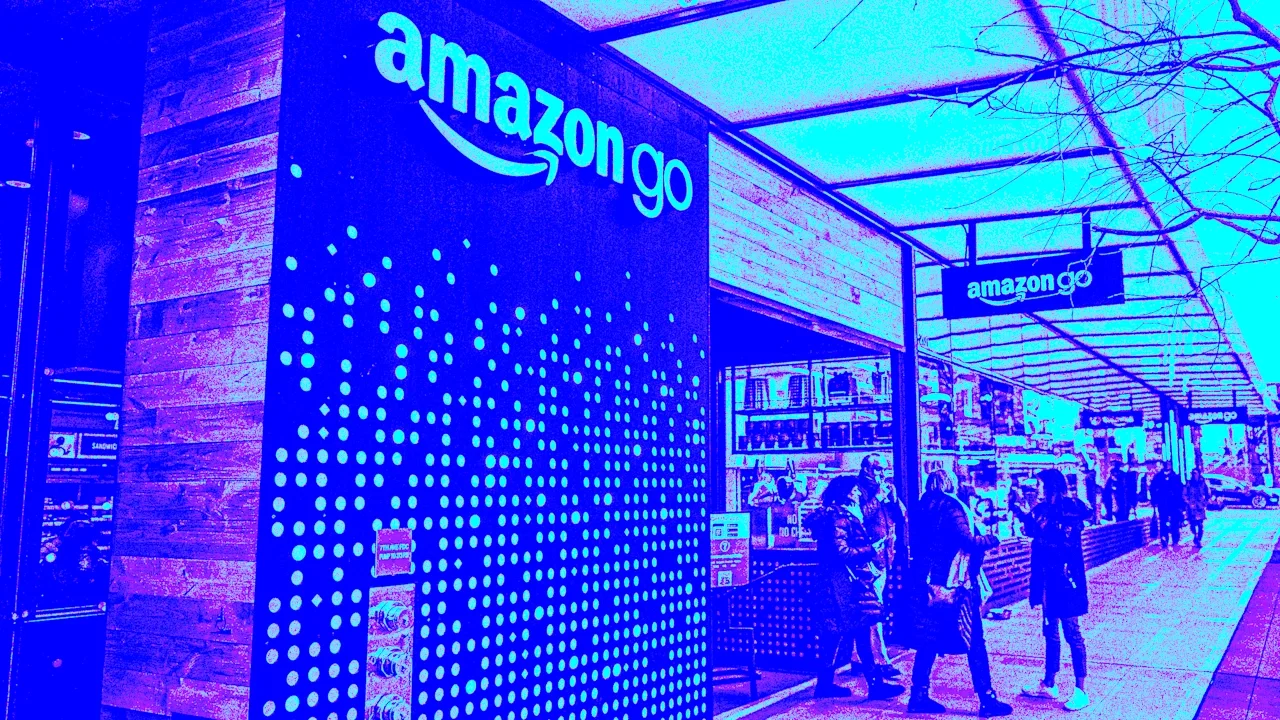
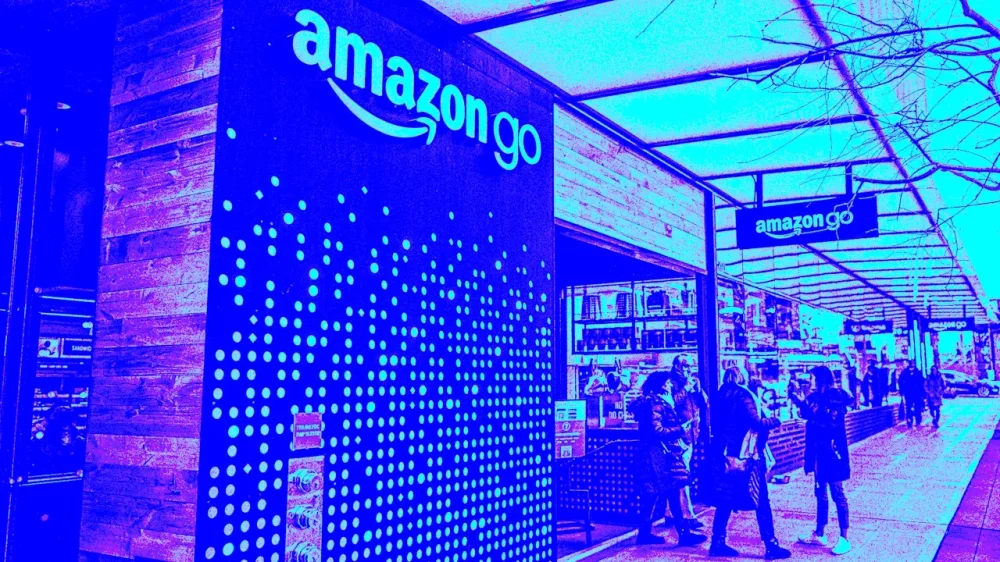
Hello, and welcome back to Fast Company’s Plugged In. When Amazon announced this week that it’s shutting down Amazon Go, its 8-year-old chain of cashierless convenience stores, the news did not come as a shocker. Almost two years ago, the company shuttered all its Go stores in San Francisco, along with some locations in New York and Seattle. Another round of closures came in 2024. Now it’s going from a few stores to no stores, a footnote given that the same day brought the news that Amazon is laying off 16,000 people across the company. Having shopped at the Amazon Go near my San Francisco office almost 200 times, I counted myself as a fan. Even back then, though, it felt like the company either didn’t understand what it had created or had already lost interest. The piece I wrote when the San Francisco stores closed felt like an obituary, even though other locations remained in business. I said at the time that regardless of what happened to Amazon Go, I hoped startups would pursue the goal of freeing us from the drudgery of waiting in line to pay for stuff. One I mentioned in that piece, Grabango, folded the following year. Reportedly, the expense and complexity of equipping stores with its technology—which, like Go, involved a bevy of cameras using AI to keep track of shoppers and the products they’d plucked from shelves—played a part in its demise. I should note that cashierless retail is not entirely dead. Amazon is still working on the “Just Walk Out” technology that powered the Go stores, which it makes available to other retailers. Some of its Whole Food Market stores continue to offer a variant of the tech in the form of smart shopping carts called Dash Carts, which it recently upgraded. Startups that remain in the game include Zippin, whose Go-like technology is widely used at sporting and concert venues, and Mashgin, which eliminates the need to configure an entire store with cameras by having shoppers place items on a tray for AI-assisted checkout. The one place I’ve encountered checkout-free shopping lately is at airports, where I’ve bought items using both Amazon’s and Mashgin’s platforms. My experiences were positive. Let’s be honest, though: It isn’t tough to improve on airport retail in its traditional form. Cashierless checkout surviving for niche applications would be a dramatic reversal from the days when the first Amazon Go stores opened and I wondered whether human-dependent checkout was on its way to becoming as quaint as sales transactions involving someone eyeballing price tags on items and laboriously punching keys on a cash register. Maybe it will someday. But surely not in this decade, and I wouldn’t bet on the one after that. Why is that? Along with the cost of the tech, there’s the question of how well it works at all. In 2023, The Information’s Theo Wayt reported that Amazon had 1,000 people in India reviewing transactions from its stores, and that 70% of sales required a human in the loop. That made it sound like the main thing the company had achieved was to remote-control the checkout process rather than eliminate it. It was also a reminder that shopping in Amazon Go stores involved being monitored by cameras, giving the whole process a Big Brother vibe. Amazon disputed details of Wayt’s report. And the fact that considerable human labor was required to train the Just Walk Out AI doesn’t mean it would be so forever. Still, the more you know about how technology of this sort works, the more daunting it sounds—especially in the context of retail, a business that has traditionally been resistant to experimentation and long-term thinking. Back when I was popping into my neighborhood Amazon Go several times a week, I thought of what it was doing as being centered on making my life slightly better. Ultimately, though, retail technology is not about direct customer satisfaction. It’s about increasing sales. Making shoppers happier is only one way to accomplish that, and probably not the easiest one. In 2018, my colleague Sean Captain wrote about Standard Cognition, which had opened a 1,900-foot demo cashierless shop in San Francisco and had plans to help retailers take thousands of stores cashierless in just a couple of years. That didn’t happen. Now known as Standard AI, the company has pivoted away from grab-and-go toward using cameras to “understand what shoppers actually see and respond to,” its website says. “Our proprietary models continuously track awareness, engagement, and conversion to prove media impact, refine promotions, and optimize performance across every in-store placement.“ Standard AI is not performing facial recognition or otherwise associating this data with specific identifiable individuals. But even in anonymized form, the idea of being monitored as I shop for the purpose of maximizing sales makes me wince. The company’s site—with close-up imagery of shoppers contemplating products, overlaid with stats Standard has collected about them—doesn’t help. (Yes, I am aware that club cards have long tied shoppers to purchases, and that online shopping has always been a minefield when it comes to merchants spying on customers.) Much has changed since Amazon Go was a novelty. AI is now everywhere in our lives, and the list of areas where its impact is potentially transformative is almost literally endless. I still like the concept of grab-and-go shopping. For now, however, it seems most useful as a case study in why technology that works—kinda, in certain circumstances—can fall so short of working as a real-world business. You’ve been reading Plugged In, Fast Company’s weekly tech newsletter from me, global technology editor Harry McCracken. If a friend or colleague forwarded this edition to you—or if you’re reading it on fastcompany.com—you can check out previous issues and sign up to get it yourself every Friday morning. I love hearing from you: Ping me at hmccracken@fastcompany.com with your feedback and ideas for future newsletters. I’m also on Bluesky, Mastodon, and Threads, and you can follow Plugged In on Flipboard. More top tech stories from Fast Company Yahoo claps back on AI search engines with Yahoo Scout The legacy web company still commands staggering internet mindshare as it pivots into the AI age with an AI search engine of its own. Read More → In Rochester, pay phones are working again—and they’re free The GoodPhone Project upcycles old pay phones, converts them to VoIP, and places them in neighborhoods where some residents still don’t own mobile phones. Read More → Where is Donald The President’s strategic Bitcoin reserve? The government seems to be amassing more Bitcoin. But little work seems to be happening to enact the terms of the executive order The President signed to start the ‘strategic reserve.’ Read More → TikTok is tracking you now. Here’s how to protect yourself TikTok, under new ownership, is monitoring your physical location, internet activity, and anything you upload into its AI. It’s time to put some shields up. Read More → The founders of Uber and Habitas want to disrupt your apartment As more young, wealthy people choose to rent, Sekra aims to give them what they want: luxury living, game nights, and blackout shades. Read More → AI face swapping video could be a bonanza for scammers A new class of video generation tools could fool phishing victims, especially the elderly, into divulging information or sending money. Read More → View the full article
-
Before the December holidays, Google posted a notice that review appeals for Google Business Profiles were delayed. Well, Google just removed the notice, which likely means the extended delays for review appeals are no longer an issue.View the full article
-
From the outside, it looks like a generational standoff. Baby boomers are retiring earlier than expected, frustrated by workplace change, technology shifts, and growing tension with younger colleagues. At the same time, Gen Z talks openly about quitting jobs that feel misaligned or draining. Many leaders interpret this as a clash of values. Older workers cannot adapt. Younger workers lack commitment. The data tells a more complicated story. New research from Clari and Salesloft, conducted in partnership with Workplace Intelligence, surveyed 2,000 U.S. sellers and sales leaders across industries. The study found that 19% of baby boomers are planning to retire early because they are tired of dealing with Gen Z at work. At the same time, 28% of Gen Z respondents said they are actively searching for a role where they will not have to interact with baby boomers as much. The cost of that friction is not abstract. The research estimates that generational conflict is costing organizations roughly $56 billion each year in lost productivity, driven by miscommunication, burnout, and uneven adoption of new technologies like AI. On its own, that data suggests a workplace pulling itself apart. But another study complicates the narrative. Research from Southeastern Oklahoma State University, based on a survey of 1,000 employees, found that 71% of Gen Z workers are staying in a job or career longer than they want simply because they do not know how to leave. Nearly half say they are actively transitioning toward something new, while 68% report that their employer has no idea they are planning a change. Taken together, these findings reveal something leaders often miss. Baby boomers are leaving because they can. Gen Z is staying because they do not know how not to. This is not a motivation problem. It is a clarity problem. A shifting environment For many boomers, the workplace they are navigating today barely resembles the one they mastered. AI tools, shifting communication norms, and changing definitions of productivity have disrupted identities built on decades of experience and institutional knowledge. When those changes arrive without context or support, frustration grows. Early retirement becomes less about age and more about opting out of an environment that no longer feels coherent. Gen Z is facing the opposite challenge. They entered a workforce defined by constant change, but very little guidance. Career paths are opaque. Loyalty feels risky. Advice is often abstract. While they are often labeled as eager to quit, the reality is that many are stuck in roles they have already outgrown, unsure how to move on without harming their future. AI has intensified this divide rather than resolving it. For example, the same Clari and Salesloft research found that 39% of Gen Z would rather be managed by AI than by a baby boomer, while 25% of boomers say they would prefer working with AI over a Gen Z colleague. This preference is less about technology being superior and more about predictability. In environments where expectations feel unclear or inconsistent, AI can appear easier to work with than people. The leadership factor That is where leadership enters the equation. Engaged empathy is not about lowering standards or avoiding difficult conversations. It is about understanding how different generations experience the same systems and responding with clear, actionable communication. Without that effort, organizations allow frustration to turn into disengagement. For Gen Z, engaged empathy shows up as explicit career navigation. Not platitudes about growth, but concrete conversations about skills, timelines, and options. Many young employees are not afraid of hard work. They are afraid of making irreversible mistakes in a system that rarely explains the rules. For baby boomers, engaged empathy means recognizing that resistance to new tools is often rooted in identity, not stubbornness. When experience feels discounted rather than translated, trust erodes. Leaders who intentionally connect new technologies to existing strengths reduce defensiveness and preserve institutional wisdom. However, none of this works without clarity. High-performing organizations do not assume alignment across generations. They create it. They explain what success looks like now, how it is measured, and how employees at different stages can contribute and grow. They introduce AI as a shared resource rather than a silent evaluator. Boomers retiring early and Gen Z wanting to quit are not signs that work is fundamentally broken. They are signals that employees are responding rationally to unclear systems and inconsistent leadership. The solution is not fewer generations in the workplace. It is leaders willing to practice engaged empathy and communicate clearly enough that fewer people feel the need to escape in the first place. View the full article

- Today
-
The President’s pick will take the reins of the world’s top central bank during one of the most consequential periods in its historyView the full article
-
Google Ads has this new way to preview your Performance Max campaign ads, with one click. Now you can easily preview your PMax asset group ads from the table by clicking on the images.View the full article
-
Stop guessing when clicks fall and use a structured process to get Google Ads performance back on track. The post 4 Reasons Your Google Ads Clicks Are Down & What You Can Do appeared first on Search Engine Journal. View the full article
-
President’s decision on successor to Jay Powell comes at pivotal moment for world’s most important central bank View the full article
-
Last year was a brutal one for layoffs, with large cuts coming from Amazon, UPS, Microsoft and Verizon. And as things get rolling for 2026, it’s looking like this year won’t be any less uncertain for workers. This week has seen a slew of sizable job cuts from a wide variety of companies. As of Thursday morning, more than 61,650 positions have been eliminated. The actual number is likely a fair bit higher as many of the companies announcing layoffs—such as Shopify, Expedia, and Vimeo—did not release the number of jobs that were impacted. Dow Inc. was the most recent well-known company to announce cuts. On Thursday, the chemical maker said it would do away with 4,500 positions as part of a streamlining operation it calls “Transform to Outperform.” The company says it plans to rely more on artificial intelligence and automation in the months ahead. Those layoffs represented approximately 12% of the company’s workforce. Dow was hardly alone this week, though. The staff trimmings are occurring at tech and tech-adjacent companies around the world and are adding up fast. Here are some other notable reductions in staff that have been announced this week. Pinterest On Monday, social media platform Pinterest filed a notification with the Securities and Exchange Commission (SEC) that it was planning “a reduction in force that is expected to affect less than 15% of the Company’s workforce.” With an estimated workforce of 5,200 people, that puts the layoffs between 700 and 800. The company said it plans to utilize AI to fill many of those roles. Nike The footwear giant confirmed plans to lay off 775 employees in the U.S., the third year in a row that it has cut jobs. Nike said it would rely on automation to handle the duties of those workers. United Parcel Service (UPS) During an earnings call with analysts on Tuesday, Brian Dykes, chief financial officer of UPS, revealed plans to reduce operational hours at the delivery giant by 25 million, which will result in 30,000 workers losing their jobs. The cuts come as the company winds down its long-standing partnership with Amazon. The Home Depot The Home Depot confirmed plans Wednesday to lay off 800 workers, including 150 at its Atlanta headquarters. “We’re simplifying our corporate operations to better support our stores and our customers,” a spokesperson for the home improvement retail chain told Fast Company. “These changes include a reduction in roles associated with our store support center . . . This was a difficult decision, and we’re focused on doing the right thing and supporting associates who were impacted.” Amazon Just months after laying off 14,000 workers last fall, Amazon on Wednesday said it was eliminating another 16,000 jobs. And the company did not rule out additional cuts in the months to come (though it said none were currently planned). “Some of you might ask if this is the beginning of a new rhythm – where we announce broad reductions every few months,” wrote Beth Galetti, senior vice president of people experience and technology at Amazon. “That’s not our plan. But just as we always have, every team will continue to evaluate the ownership, speed, and capacity to invent for customers, and make adjustments as appropriate.” Other companies laying off workers Beyond the cuts this week, January has also seen notable workforce reductions from Autodesk (1,000 workers), Ericsson (1,600 employees), Meta Platforms (1,500 people), and ASML (1,700 staffers), according to job cut tracking sites Layoffs.fyi and trueup. Savings and productivity gains that come with AI and automation will almost certainly be pointed at by companies that lay off workers as layoffs in 2026 continue, but several businesses that have decided to become AI-first workplaces have come to regret the move. Two years ago, Klarna Group instituted a hiring freeze as it embraced the notion that AI could do the work of hundreds of employees. Last May, however, it reversed course, saying it might have been too ambitious with its AI goals. Meanwhile, language learning platform Duolingo saw its push to embrace AI attacked on social media. Shares of Duolingo are down more than 61% over the last 12 months. View the full article
-
It’s Friday afternoon. Your inbox looks like a battleground, your calendar is a collage of back-to-back calls, and the strategic plan you built last quarter already feels outdated. You’ve spent the week reacting, extinguishing fires, and juggling unexpected demands you didn’t plan for. You’ve been busy, but not necessarily productive. You’ve managed the chaos, but you haven’t had space to lead through it. This is the trap many leaders find themselves in today. Our attention is consumed by the urgent, leaving almost no cognitive room for the deep thinking, creativity, and strategic foresight that leadership requires. Working harder isn’t the answer. Neither is downloading yet another tool. Under time pressure and limited mental bandwidth, leaders tend to fall back on fast, intuitive shortcuts that erode decision quality in complex situations. What leaders need is a simple operating system reset: a weekly practice that converts disruption into insight and momentum. From Extinguishing Fires to Using Their Heat In nature, fire isn’t only destructive; it’s regenerative. Giant sequoias, for example, rely on the heat of a forest fire to release their seeds. Flames clear the underbrush, enrich the soil, and make way for new growth. High-performing leaders work the same way. Instead of viewing disruption as something to resist, they learn to harness its heat. They recognize that crises, customer surprises, shifting priorities, and unexpected wins all contain valuable signals about how the world is changing and where opportunity sits. Some fast-moving organizations have formalized reflection into their operating rhythms. For example, Spotify’s engineering teams have publicly described the use of agile retrospectives to turn surprises into learning. Taking time for a short weekly reset can help leaders capture those signals. Set aside 18 minutes at the end of each week to pause, asking yourself three deceptively simple questions and sitting with each for six minutes. 1. What must I clear away? Every ecosystem needs deadwood cleared before new things can grow. Your work is no different. Look back at your week and ask yourself: What assumption I held on Monday was proven wrong by Friday? What meeting, process, or habit is creating drag instead of value? Which “zombie project” is still consuming time or budget despite having no strategic future? The goal here is subtraction. Leaders tend to underestimate how much cognitive clutter weighs them down. Clearing it ruthlessly creates room for better decisions and more ambitious ideas. 2. What did this week’s disruption teach me? Once the underbrush is cleared, you can see what nutrients remain. Disruption is information. Your job is to extract meaning from it. This is benefit-finding: the discipline of intentionally looking for insight in unexpected places. Consider: What surprising customer comment, employee concern, or performance issue taught me something important? Where did our team get an unexpected win, and what were the conditions that enabled it? What new skill, workaround, or capability emerged that might be worth formalizing? This step shifts you from reacting to events to learning from them in real time. It builds future intelligence, the ability to read signals and adapt ahead of the curve. 3. What is one bold move I can take? Reflection without movement creates stagnation. Regeneration requires action. Choose one consequential decision, not a long list: What is the single conversation that will unlock progress next week? What experiment is worth running? What important decision have I been avoiding that I will now make? Choosing just one forces focus. It ensures you enter Monday intentionally. It’s a shift from managing the week to shaping it. Lead the Future, One Week at a Time Taking a weekly reset isn’t a productivity hack; it’s a leadership discipline that helps you step above the noise and recalibrate your direction. In an era defined by constant change, the leaders who thrive aren’t the ones who avoid disruption. They’re the ones who know how to convert it into insight, energy, and action. They learn to use disruptions to leap forward. This discipline becomes even more important in a world shaped by accelerating AI adoption, geopolitical volatility, climate-driven shocks, and continual shifts in customer expectations, as highlighted in recent global risk assessments from the World Economic Forum. Leaders who thrive build regenerative capacity, the ability to clear noise, extract meaning, and act decisively through practices like the weekly reflection tool. Research on adaptive leadership consistently shows that learning-oriented organizations are better at turning change into innovation. This 18-minute ritual is how you start. By clearing space, extracting meaning, and choosing one bold move each week, you reclaim your agency in a world that constantly pulls you into reaction. Disruption isn’t going away. But with the right rhythm, you can stop being managed by it and start using it as fuel for your next breakthrough. View the full article

-
President expected to announce Kevin Warsh as next chair of US central bankView the full article
-
New research paper about creating a dataset for training deep research AI agents (SAGE) also provides SEO insights for content. The post Google’s SAGE Agentic AI Research: What It Means For SEO appeared first on Search Engine Journal. View the full article
-
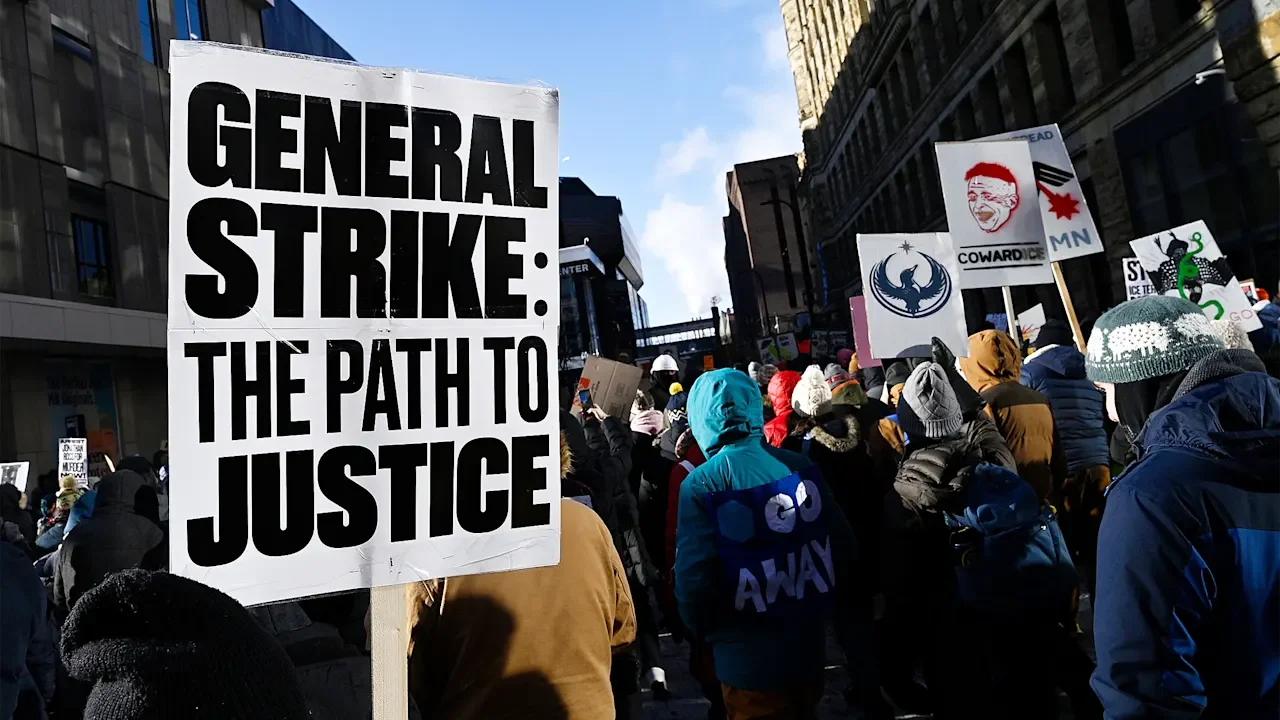
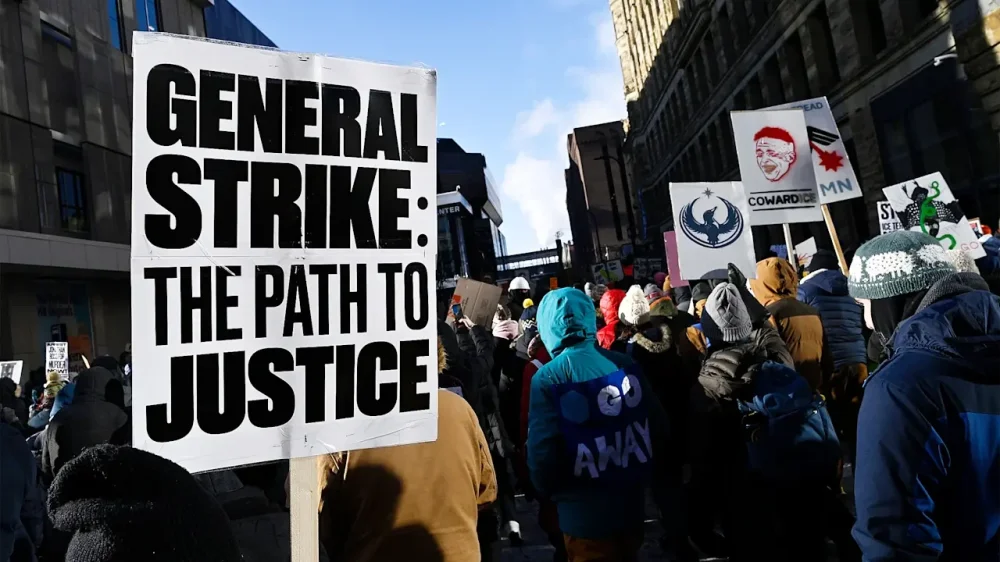
Today, thousands of Americans are participating in a general strike. The instructions are simple: no work, no school, no shopping. The aim is ambitious—to pressure the The President administration to remove ICE from local communities. The strike is a response to the fatal shootings of Alex Pretti and Renee Good in Minnesota. In the days since, calls for a nationwide shutdown have spread rapidly across social media, shared by activists, nonprofits, and everyday people urging a halt to economic activity. Celebrities including Pedro Pascal, Edward Norton, and Jamie Lee Curtis have amplified the message to their followers. Some businesses—mostly small, independent ones—have heeded the call. Clothing label Misha and Puff, olive oil maker Brightland, and underwear brand Oddobody have all closed for the day, forgoing revenue as a form of protest. “The only thing the The President administration responds to is the market,” says Polly Rodriguez, founder of the sexual wellness company Unbound Babes, who has shuttered her business for the day. “Our goal is to raise awareness today, link people to other resources, and gather donations for organizations on the ground in Minnesota.” The General Strike US The Organizers Behind This Strike Although the strike has been organized in a decentralized way, with no single leader at the helm, many participants have turned to the website and Instagram account of The General Strike US, which offer guidance about organizing a general strike. Eliza Blum, a longtime labor organizer, built the site in 2022, alongside other activists. “I wouldn’t say I’m a founder,” she says. “We’re very much a non-hierarchical, decentralized network.” Through her work with Fight for $15, the campaign for a $15 minimum wage, Blum saw firsthand how strikes forced companies and policymakers to pay attention. As the The President administration pursued what she viewed as increasingly authoritarian policies, she began to see labor as a central tool of resistance. “When Roe v. Wade was overturned, I hit a personal breaking point,” she tells me. “Protesting in the streets, holding signs, calling our representatives—it wasn’t enough. We live in an extremely capitalist society where our greatest weapon is our labor. If working people stopped working, we could shut down the country until our demands were met.” Other prominent voices have echoed that view. “What does a national civic uprising look like?” Robert Reich, a U.C. Berkeley law professor, wrote in his Substack last April. “It may look like a general strike—a strike in which tens of millions of Americans refuse to work, refuse to buy, refuse to engage in anything other than a mass demonstration against the regime.” The General Strike website calls for people to sign a “strike card,” pledging their participation in future actions. The long-term goal, Blum says, is to secure commitments from 3.5% of the U.S. population—roughly 10.5 million people. The figure comes from research by political scientists Erica Chenoweth and Maria Stephan, which suggests that when 3.5% of a population engages in sustained protest, authoritarian governments are likely to collapse. So far, about 435,730 people have signed the pledge. Once the number reaches 10.5 million, organizers plan to coordinate a nationwide strike. In the meantime, Blum argues that smaller, recurring actions are essential for building momentum. Reich agrees. “[It will take more than] just one general strike, but a repeating general strike,” he writes. “A strike whose numbers continue to grow and whose outrage, resistance, and solidarity continue to spread across the land.” Last Friday, hundreds of Minnesota businesses closed as a show of opposition to ICE. For Blum, this was an important turning point. She saw local unions come together with community organizers to work collectively. This local strike had an impact, making headlines in the New York Times and the BBC. “It was the first time, since I’ve been doing this that I saw a general strike actually happen,” she says. The History of General Strikes The term “general strike” is most closely associated with events in Britain in 1926, when trade unions organized coal miners to walk off the job after mine owners slashed wages and lengthened working hours. Workers across other industries—including transportation, printing, and manufacturing—joined in solidarity, bringing large parts of the country to a standstill. The government quickly intervened, framing the strike as a threat not just to employers, but to the nation itself. Union leaders soon found themselves in direct confrontation with the state, and after nine days, they called off the strike. “It was a total failure,” says Jonathan Schneer, a British historian whose book, Nine Days in May: The General Strike of 1926 comes out this summer. (Disclosure: Schneer is my father-in-law.) “The coal miners were ultimately left isolated and forced to work under even worse conditions.” Schneer notes that while today’s general strike draws inspiration from the events of 1926, there are also crucial differences—most notably the level of coordination involved. In England at the time, between a third and half of all workers were unionized, and labor leaders were able to mobilize a significant share of the population. “It took enormous organization to pull something like that off,” Schneer says. Nearly a century later, the landscape has shifted. Today’s action is being organized largely online, at a moment when labor unions are far weaker than they were in early-20th-century Britain. The United States also has a much larger and more geographically dispersed population. What remains constant, however, is the central role of capitalism in everyday life—and the idea that halting economic activity can still be a powerful way to command the government’s attention. When enough people participate, Schneer argues, the signal is impossible to ignore. The Demands For Blum, the fact that the strike isn’t centrally organized is one of its strengths. Like other activist groups that emerged during The President’s second term—including Indivisible—she believes organizing works best at the local level, allowing communities to respond to their own conditions. Her role, she says, is less about directing the movement than equipping others with the tools to organize within their own networks. That decentralized structure also means there is no single, unified set of demands. The General Strike US website lists a wide range of causes worth striking for, from universal healthcare to voting rights. For now, however, participants appear to be coalescing around a more immediate goal: removing ICE from local communities. On social media, posts frequently express solidarity with protesters in Minnesota and call for the abolition of ICE altogether. While organizers encourage people to stay home from work and school, the most accessible form of participation is refusing to spend money. A number of small businesses have chosen to close for the day in solidarity, though no major corporations have followed suit. “I am very disappointed in the lack of reaction from companies that are far more powerful and influential than we are,” says Melody Serafino, founder of the communications agency No.29, which also shuttered operations. “Let me be clear: posting on Instagram and shutting down our business for a day is not brave. Real courage is being exemplified by the people on the ground who are putting their lives at risk.” For Blum, however, this moment is just the beginning. She sees the current action as the first in what she hopes will be a series of escalating strikes—and says it is already producing results. In recent days, tens of thousands of people have signed strike cards through her website. There is still a long road ahead to reaching the 3.5% threshold of the U.S. population, but the numbers, she says, are rising steadily. “Movements that reach that level of participation never fail to bring about radical change,” Blum says. “But it takes time.” View the full article
-
Last Saturday, more than six million people held their breath as Alex Honnold took his first step up Taipei 101. The Free Solo climber, who went on to ascend Taiwan’s tallest building without the safety of a rope and harness, drew crowds all around the building, as well as on Netflix, where the ascent was live-streamed as part of a show called Skyscraper Live. Some of these people had likely already watched Honnold scale the 3,000-foot rock wall of Yosemite’s El Capitan. But for many, the climber’s ascent up a man-made structure was likely an introduction to an altogether different kind of climbing: not on the face of a cliff, but the side of a building. This type of sport is called “buildering” (from bouldering, to climb boulders) and it has been happening for more than a century. Unsplash From rock to concrete For decades, the ultimate challenge for climbers was nature itself. Modern rock climbing took shape in the late 19th century, when alpinists ventured beyond traditional mountaineering and onto steeper, more technical cliffs. By the mid-20th century, climbers embraced “free climbing,” meaning they relied on their hands and feet to move upward while using ropes only as a safety backup in case of a fall. Then, in the ’70s and ’80s, free-soloists like John Bachar pushed the sport to its extreme, stripping away the rope entirely and turning every move into a high-stakes commitment. Now, “buildings are the next challenge,” says 70-year-old American climber Dan Goodwin, who has climbed a dozen buildings, including the North Tower of the World Trade Center in Manhattan, and Millenium Tower in San Francisco. Today, more than half of the world’s population lives in cities, and the majority of climbers train in gyms. “They get out of the gym and what are they looking at? High rises,” says Goodwin. But climbing a building isn’t the same as climbing the face of a mountain. With rock climbing, every move is different, but climbing a building calls for repetition, which Goodwin says “attacks the muscle.” Hips cramp, shoulders start to burn: “It gets real quick, and I want to start educating people about how dangerous it is.” Dan Goodwin A brief history of “buildering” The thought of scaling the face of a building may send the average person into a tizzy, but people have been climbing buildings for almost as long as there have been buildings to climb. The earliest documented example dates back to 1901, when British alpinist Geoffrey Winthrop-Young anonymously published The Roof-Climber’s Guide to Trinity College, mapping the architecture of the campus as a series of climbing routes. Some decades later, “human flies” like George Polley and Harry Gardiner scaled buildings in cities like New York City and Boston. Dan Goodwin By the 1980s and ’90s, buildering had entered mainstream with televised (not live) ascents by “SpiderDan” Goodwin, and French climber Alain Robert, who went on to scale the Empire State Building, with no rope, and the Burj Khalifa with a safety rope and harness. (While Roberts was the first to ascend Taipei 101, Honnold was the first to do it rope-free.) Over the course of those years, buildings have changed drastically. According to Young’s original guide, buildings with good holds featured recessed window frames, narrow chimneys, and continuous parapets—architectural quirks that made climbing easier. With the advent of steel and concrete construction, many of these features disappeared in favor of sleek glass curtain walls, and climbing buildings became so much harder that some climbers have resorted to aids like suction cups and sky hooks—small devices that help climbers hang off tiny edges—to scale smooth facades. Goodwin was one of those climbers. In 1981, he climbed Chicago’s Sears Tower (now known as the Willis Tower) using suction cups and sky hooks. “As climbers, we would prefer relying on our physical strength than on a suction cup,” he told me. “I almost died because of my suction cups.” But “architecture dictates everything,” as Goodwin put it, and the tower had no suitable hand or foot holds. Plus, the climber had recently been issued a challenge he had to rise to. In 1980, a fire engulfed the MGM Grand fire in Las Vegas and killed 85 people after smoke spread rapidly through the building. Goodwin was deeply affected by the fire, and as he watched firefighters struggle to reach people trapped on upper floors, he argued that climbers could be trained to scale skyscrapers during emergencies. When a local fire marshal dismissed the idea and challenged him to climb a building himself, Goodwin took it literally—and went on to climb the Sears Tower, then the tallest building in the world. “That conversation changed my life,” he says. Goodwin, whose memoir, Untethered, is set to come out in the spring, went on to climb over a dozen buildings around the world, including the CN Tower in Toronto, which he climbed in 1986—twice in the same day—using only his hands and feet. The hardest climbs, he said, were those with slick glass that called for suction cups. The easiest were buildings with clearly defined features. Taipei 101, with its stacked, bamboo-like segments and decorative dragon heads, fits into the latter category. “So many beautiful handhold features,” he says. Alex Honnold The next era of “buildering” Perhaps these complications are the reason why, after more than 100 years of existence, the sport today remains dominated by just a few big names—from legacy figures like Robert and Goodwin, to younger climbers like the 26-year-old George King, who famously climbed The Shard in 2019 before base jumping off the top, and Honnold, whose career focused on rock climbing before he took on Taipei 101. George King Today, the buildering community remains small. In fact, according to Andy Day, a climber and photographer who wrote a paper on buildering in 2017, to call it a “community” would be generous. “It’s a more niche, sub-cultural level of interest,” he says, noting interest has largely ebbed and flowed over the years. “The discipline required to do what someone like Alain Roberts or Alex Honnold do is just so unique that it’s not going to happen very often,” he told me, adding, with a laugh, that there are enough well-equipped gyms serving hot coffee to keep climbers satisfied. But “SpiderDan” believes Honnold’s live-streamed climb might usher in a new era for urban climbers. “I know every climber is going to be walking through cities now and looking at what buildings they could climb,” he says. Honnold—who kicked off his ascent with a casual nod to the camera and ended it 91 minutes later with a low-key “sick!”—made his climb look like a walk in the park. But Goodwin knows urban climbers need the same regulations as rock climbers, so he is now working on a separate book in the hopes of making urban climbing safer. “We need to come up with standards, and ethics, and rules that govern future generations,” he says, “because you think you’re the only ones right now, but I know other people climbing buildings, and in the next year or two, I wouldn’t be surprised if we see fifty to 100 ascents.” View the full article

-
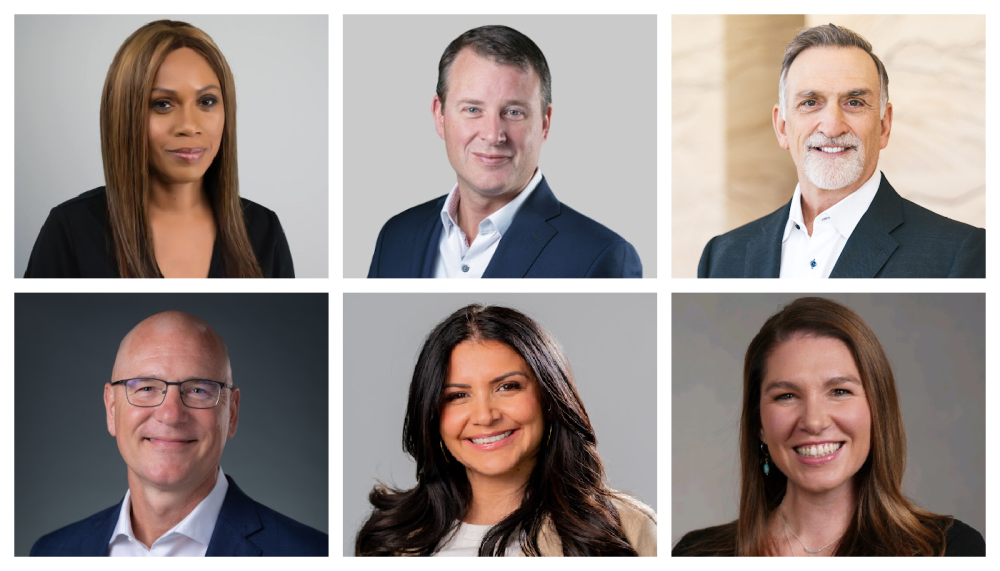
Former Rocket CEO takes new board position, Tidalwave welcomes MBA and ICE alums, NFM promotes at the top and Evergreen, Dark Matter add to their C-suites. View the full article
-
Finance, banking and professional services seek to grow footprint in mainland market despite past challengesView the full article
-
You probably know filmmaker and actor Taika Waititi from directing work like the Marvel movie Thor: Ragnarok or the Oscar-award-winning film Jojo Rabbit. What you might not know is that he’s also the creative mind behind multiple Old Spice ads, a bout of early 2010s PSAs for his home country of New Zealand, and some of the most iconic Super Bowl commercials of all time. From the early days of his career, between directing short films and appearing in acting gigs, Waititi has kept up a consistent cadence of ad work, ranging from spots for local names like the New Zealand Transport Agency to bigger brands like Samsung. Even as his Hollywood work has expanded, ad work remains a consistent part of his creative churn. In 2025, Waititi directed three different spots for the Super Bowl. This year, he’s returning to America’s biggest game with a new spot for Pepsi. Waititi says he keeps coming back to the Super Bowl for the same reason he’s done ad work for decades: it keeps his creative muscles firing. “Selfishly, I’ve used the world of making commercials as my filmmaking gym,” he says. Inside Pepsi’s new Super Bowl spot Waititi’s 2026 return to the Super Bowl comes via a Pepsi spot titled “The Choice,” set to Queen’s I Want to Break Free. The ad carries on Pepsi’s long tradition of lightheartedly bashing its main rival, Coca-Cola, by signaling the superiority of its cola’s taste. This time, Pepsi turned to one of Coca-Cola’s most iconic symbols as the star of its new Cola War spot: the Coca-Cola polar bear. “I feel like I’ve been watching the [Cola Wars] all my life, and so it was pretty fun just to take part in that and because it’s an iconic relationship that they’ve got,” Waititi says. He adds that the spot’s bear-centric storyline was already established before he joined the project, and that “my main job when it comes to these things is just to help solidify the tone, carry that through, and make sure that it’s fun and watchable.” The bear has appeared in Coca-Cola’s advertising as far back as 1922, including in some of its most beloved Christmas ads. In “The Choice,” he’s faced with the reality that he actually prefers Pepsi over Coke after conducting a blind taste-test of the two sodas. The realization drives him to his therapist (played by Waititi himself), before he ultimately “breaks free” from Coca-Cola and enjoys a Pepsi in, weirdly enough, a parody of the viral Coldplay kiss cam moment from last summer. Why ads are Taika Waititi’s creative gym Before Waititi ever became a household name, many of his clever, absurdist spots had already cemented themselves in the canon of advertising acclaim. Along the way, those projects were quietly shaping his creative voice and informing his larger projects. In 2008, Waititi directed a series of ads for Pot Noodle, including one surrealist spot called “Moussaka Rap”; a loosely Eminem-inspired song about the greek casserole. In 2011, he tackled another rap video for Sour Patch Kids and an underwater ballad for Cadbury. His first big break in the ad world—and one of his most recognizable spots to this day—was NBC’s 2012 Super Bowl bash “Brotherhood of Man,” which featured talent from on-air shows at the time like The Office and Parks and Recreation (as well as a now cringe-inducing cameo from The Apprentice’s Donald The President), and which had such a fraught production that it’s inspired entire think pieces. “What I remember about that was just how fun it was to visit all of these different TV shows and work with all of these people,” Waititi says, adding with a laugh, “Let’s not talk about everyone that I worked on that with.” Waititi took a hiatus from the big game to produce iconic spots like Air New Zealand’s 2014 Lord of the Rings-inspired “The Most Epic Safety Video Ever Made,” featuring Elijah Wood; and a 2018 series of heavy hitters for Old Spice. By the time he returned to directing for the Super Bowl in 2025, Waititi was both an Oscar and Grammy winner. His spots last year—a heartstring-pulling ad for Lays, two shorts for Homes.com featuring Morgan Freeman, and a brain-rottingly ridiculous ad for Mountain Dew starring humanoid seals—were all met with a hearty dose of acclaim. For Waititi, ad direction isn’t just a side gig; it’s a tool that’s shaped his career. In the periods between filming larger projects, he uses commercials to test new jokes, try out character ideas, experiment with VFX, and work on new camera and lighting techniques. If he feels like they’re “really good,” he says, he can use them in a film at some point down the road. “It’s fun to play with the creative space, and it’s not as risky for me when I’m making commercials,” Waititi says. “It’s just kind of a play space, really—a nice big sandpit.” View the full article

-
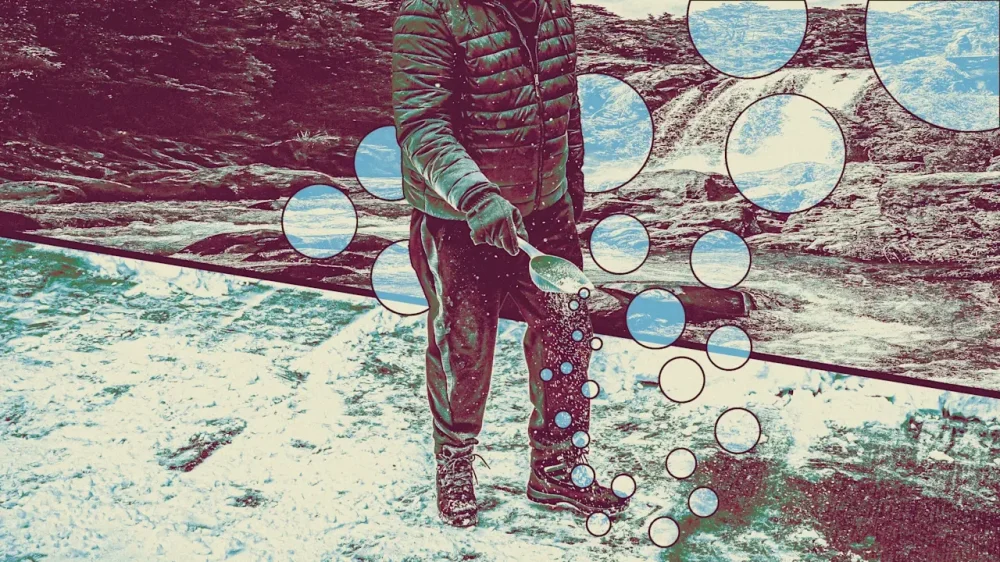
Snow has returned to the Philadelphia region, and along with it, the white residues on streets and sidewalks that result from the overapplication of deicers such as sodium chloride, or rock salt, as well as more modern salt alternatives. As an environmental scientist who studies water pollution, I know that much of the excess salt flows into storm drains and ultimately into area streams and rivers. For example, a citizen science stream monitoring campaign led by the Stroud Water Research Center in Chester County (about 40 miles west of Philadelphia) found that chloride concentrations in southeastern Pennsylvania streams remained higher than levels recommended by the Environmental Protection Agency not only after winter snowfalls but also in many cases during some summer months—showing salt persists in watersheds year-round. Once there, it can have a profound impact on fish and other aquatic life. This includes a decrease in the abundance of macroinvertebrates, which are small organisms that form the base of many freshwater food webs, and reductions in growth and reproduction in fish. Increased salt concentrations can also degrade and pollute the local water supply. Working with other researchers at Villanova University, I have measured spikes in sodium levels in Philadelphia region tap water during and immediately after snow melts. These spikes can pose a health risk to people on low-sodium diets. What local governments can do In recent years, many state and local governments nationwide have adopted best management practices—such as roadway brining, more efficient salt spreaders, and improved storm forecasting—to limit damage from salt to infrastructure, including roads and bridges. Roadway brining works by applying a salt solution, or brine, that contains about 23% sodium chloride by weight prior to a storm. Unlike road salt, brines adhere to all pavement and can prevent ice from sticking to the roadway during the storm. This potentially reduces the need for subsequent road salt applications. The environmental benefits of these best practices, when properly administered, are promising. The Maryland State Highway Administration reduced its total salt usage on roadways by almost 50% by using multiple best practices. The extent to which these strategies will continue to reduce the salt burden on roads and, by extension, improve the water quality of streams elsewhere will largely depend on political will and corresponding economic investments. Yet, roads are not the only source of salt to our streams. Recent studies have suggested that the cumulative amount of salt applied to other impervious surfaces in a watershed, such as parking lots, driveways, and sidewalks, can exceed that applied to roads. For example, one survey of private contractors suggests their application rate can be up to 10 times higher than that of transportation departments. I do not know of any studies that have been able to determine a household application rate. How to salt at home To better understand how individuals or households deice their properties, and what they know about the environmental impacts of deicing, I collaborated with a team of environmental scientists and psychologists at Villanova University and the local conservation-focused nonprofit Lower Merion Conservancy. In winter 2024-2025, the Lower Merion Conservancy disseminated a survey in a social media campaign that received more than 300 responses from residents in southeastern Pennsylvania. We are completing the analysis to determine a household application rate, but some of our initial findings provide a starting point for engaging households on how to limit the environmental impact of deicers. One key finding is that only 7% of respondents reported being aware of municipal ordinances regarding deicer use on residential sidewalks. Of those who applied deicers to their property, 55% indicated they were unsure whether they used them in a way that would reduce environmental harm. About 80% of all respondents indicated interest in learning more about the environmental impacts of road salt. Based on these survey results, here are several actionable steps that homeowners can take to reduce their deicer use. 1. Check your local municipal ordinance. Most municipalities in the greater Philadelphia area do not require deicer use but instead require clearing a walkable path—in most cases, 3 feet wide—free of snow and ice within a certain time frame after a storm event ends. For example, the city of Philadelphia requires this to be done within six hours, the borough of Narberth within 12 hours and Lower Merion and Haverford townships within 24 hours. Narberth and Lower Merion specify which abrasives—such as sand, ashes, and sawdust—or deicers, like rock salt, can be used if ice persists. 2. Use rock salt and other deicers judiciously. The recommended amount from conservation organizations is one 12-ounce coffee mug of deicer for every 10 sidewalk squares. Keep in mind that “pet-friendly” deicers are not necessarily environmentally friendly. Many of these deicers contain magnesium chloride, which is harmful to plants and aquatic life. Deicers coupled with dyes might be a good choice to visually prevent over-application. They can also temporarily reduce concrete’s surface reflectivity, thereby increasing its warming effect and enabling melting. Finally, it’s important to know that many deicers become ineffective at or below certain temperatures. Rock salt/sodium chloride loses its effectiveness at 15 degrees Fahrenheit (minus 9 Celsius), magnesium chloride at 5 F (minus 15 C) and calcium chloride at minus 20 F (minus 29 C). If temperatures are expected to fall below those numbers, it might make sense to skip the salt. 3. Sweep up after. We have all seen rock salt on sidewalks for days on end, especially when a storm never materializes. If the next storm brings rain, this leftover salt will form a concentrated brine solution that will wash down the nearest storm drain and into a local waterway. Leftover salt can be swept up and reapplied after the next storm event, saving money and supplies. Read more of our stories about Philadelphia and Pennsylvania, or sign up for our Philadelphia newsletter on Substack. Steven Goldsmith is an associate professor of environmental science at Villanova University. This article is republished from The Conversation under a Creative Commons license. Read the original article. View the full article
-
Platinum and copper also fall on expectations The President will pick Warsh as next Fed chairView the full article
-
Bloc’s performance in the face of geopolitical and trade tensions has surprised policymakersView the full article
-
How much would you pay for a gray fleece? Yes, the type that’s ubiquitous in corporate cubicles and business-casual work conferences across America. What if it had the Miu Miu logo stitched on the left chest? If you said $2,500, you’d be on the money. Miu Miu’s $2,500 fleece sweatshirt, specifically in gray, has been trending online in recent months, spotted on celebs and featured in dozens of videos across social media platforms. You might think it looks like any other gray fleece. And you’d be right. Yet the Miu Miu version has inspired dupes and influenced people to unearth 4imprint jackets from their dad’s closet or old thrift finds to participate in the trend. For more than a decade, banks, investment firms, and tech companies have co-branded corporate logos on gray fleece vests for their workforces. Worn by everyone from interns to executives, this look, dubbed the “Midtown uniform” in major cities like New York, has become as ubiquitous in workplaces as the sad desk salad. “As my boyfriend was leaving for work this morning he put on the fleece that his company gave him,” New York City-based influencer Danielle Carolan said in a recent TikTok while wearing the Miu Miu version. “I was like, oh my god, this is literally like a fleece your tech company would give you.” Still, in influencer circles “the Miu Miu fleece”—to be uttered with the same reverence as Andy Sachs’s coveted Chanel boots in The Devil Wears Prada—has become a cultural shorthand. “The Miu Miu fleece is a wearable argument about how taste, comfort, and status work now,” according to a recent Substack post from Dot Dot Dot. “In simple terms: the ability to look relaxed without looking irrelevant.” And for the $2,500 price tag surely there’s something fashion normies must be missing to justify the cost? Something about the garment construction or fabric composition, perhaps. No. It’s really just a gray fleece made of 80% polyester and 20% recycled polyester. Some have suggested it’s a social experiment. Or is it a sign of the times? Coinciding with the RTO push, fashion houses have been tapping into the workplace discourse, taking inspiration from the office in runway collections and ad campaigns. Throughout 2025, designer brands like Prada and Miu Miu and more affordable high-street retailers like Uniqlo and Aritzia put their own spin on workwear fashion as companies ushered employees back in the office. That interest in corporate style has continued in 2026, with views on #OfficeOutfits up 811% over the past week, according to Vogue Business. From power dressing to business casual, corp-core is in vogue—even if the Miu Miu fleece is worn predominantly by influencers on their way to Pilates and brunch. View the full article