All Activity
- Past hour
-
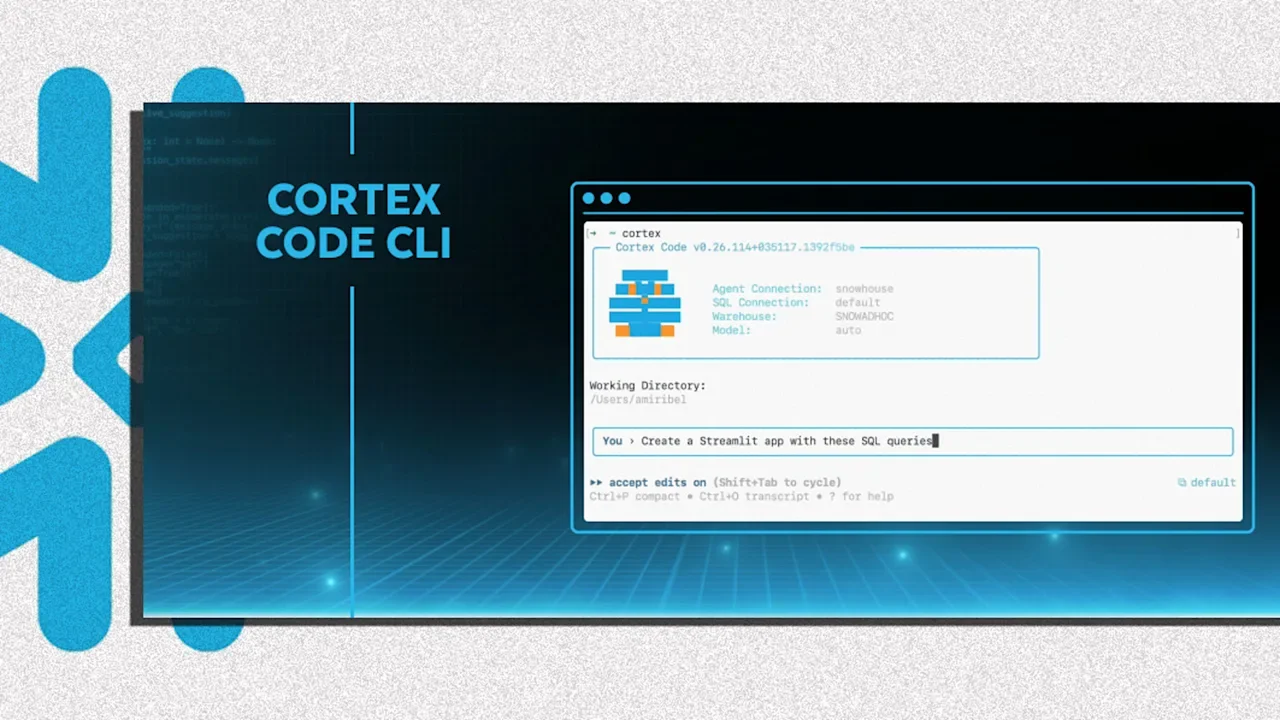
 AI coding agents are suddenly everywhere, the latest thing Silicon Valley cannot stop talking about. From venture-backed startups to splashy big tech keynotes, the promise sounds the same: just describe what you want, and the AI will build it for you. It is a seductive idea, especially in a world where software projects are notorious for moving slowly. But inside large companies, that vision is already starting to unravel. What looks impressive in a demo often falls apart in the real world. As soon as AI-generated code runs into actual enterprise data, the problems show up. Schemas clash, governance breaks down, and a supposed breakthrough can quickly turn into a liability. “Coding agents tend to break down when they’re introduced to complex enterprise constraints like regulated data, fine-grained access controls, and audit requirements,” Sridhar Ramaswamy, CEO of Snowflake, tells Fast Company. He says most coding agents are built for speed and independence in open environments, not for reliability inside tightly governed systems. As a result, they often assume they can access anything, break down when controls are strict, and cannot clearly explain why they ran a certain query or touched a specific dataset. This gap between what AI can write and what it actually understands is becoming one of the most expensive problems in enterprise AI. Gartner predicts that 40% of agentic AI projects will be canceled by 2027 because they lack proper governance, and only 5% of custom enterprise AI tools will ever make it into production. Ramaswamy says the core issue in enterprise AI is writing functional code in a way that is secure, transparent, and compliant from the start. He argues that companies need to put trust, accuracy, and accountability ahead of unchecked automation, and that most coding agents today sit outside existing data governance systems instead of being built into them. Snowflake’s answer is Cortex Code, a data-native AI coding agent designed to work directly inside governed enterprise data, not as a layer sitting on top of it. It comes alongside with a newly announced $200 million partnership with OpenAI. Together, they reflect a contrarian bet that the real battle for enterprise AI will be won at the data layer. AI Coding Agents Don’t Understand Enterprise Context Most AI coding agents are great at writing code on their own, but they struggle once that code has to run inside a real company. Large organizations live with constant constraints, from security rules and uptime demands to shared business logic that evolves over time. Agents trained mostly on public code and synthetic examples rarely absorb those realities, and the disconnect shows up almost right away. Enterprise data also lives across data warehouses, third-party platforms, and legacy systems, and it carries layers of organizational meaning with it. Most coding agents treat that data like any other dataset, instead of the most tightly regulated asset a company has. The fallout shows up fast in production. Some enterprises say they spend weeks cleaning up AI-generated code that ignores internal data standards. “In production, agents most often fail due to poor data integration, lax identity and security permissions, and hallucination for complex code workflows,” says Arun Chandrasekaran, vice president and analyst at Gartner. “Vendors often underestimate the gap because they assume that enterprises have centralized data and codified access policies, which isn’t true in most large enterprises.” Chandrasekaran adds that AI agents are embedded into developer IDEs without grounding in enterprise system semantics, which is the key reason why this issue persists. “This can result in trust erosion and security exposure,” he says, “which can hinder production.” According to a CodeRabbit study, AI-generated code introduces 1.7 times more issues than human-written code, including 75% more logic errors and up to twice the security vulnerabilities, conflicting with enterprise standards. Likewise, another study found that 45% of AI-generated code samples fail security tests, posing critical web application security risks. Ramaswamy says the most immediate consequence is slowed development. In some cases, teams quietly abandon agents altogether after early pilots fail governance checks. “Even when the consequences are minor in nature, the perception of risk alone can cause organizations to roll back or freeze AI initiatives until stronger guardrails are in place,” he says. According to Anahita Tafvizi, Snowflake’s chief data analytics officer, this pattern points to a deeper design problem: Many coding agents can generate technically correct code, but they do not understand how business rules are applied, how access controls limit what is allowed, or how audit requirements determine whether a system can actually be trusted once it goes live. “Meaningful enterprise innovation depends on context,” she says. “When an agent understands not just how to write code, but why certain controls exist and how decisions are governed, teams can build with confidence.” Snowflake’s Thesis: Context Beats Cleverness Snowflake’s latest product, Cortex Code, is a data-native AI coding agent built directly into its governed data platform, rather than layered on top of it. That distinction matters. Instead of trying to guess enterprise rules from prompts, Cortex Code is designed with built-in awareness of schemas and operational constraints. The company says the goal is to make AI follow the same rules people already do. Ramaswamy says Cortex Code is not just about producing code faster than tools like Claude Code, but about understanding the realities of enterprise environments. Its value, he argues, comes from what he calls its “deep awareness of the context and constraints” that shape how large organizations operate, which allows a much wider range of employees to build solutions that are safe and reliable, even without advanced technical skills. Snowflake’s $200 million partnership with OpenAI further reinforces its architectural bet. “It’s a direct, first-party relationship that allows OpenAI’s models to operate natively inside Snowflake, on top of enterprise data,” Ramaswamy says. “By bringing OpenAI’s frontier model capabilities into Snowflake, we remove the operational friction of stitching together disparate tools and significantly lower the barrier to deploying advanced AI responsibly.” An Inflection Point or a Higher Bar? Industry experts say that while Snowflake is making a big bet on a data-first approach with Cortex Code, it is far from alone. Rivals such as Databricks, Google BigQuery, and AWS Redshift are moving in the same direction, putting governance and auditability ahead of raw speed. Experts say Snowflake’s main point of differentiation is how closely Cortex Code is tied to production data. As Doug Gourlay, CEO of data storage company Qumulo, puts it, most companies have “grafted increasingly capable agents onto developer tools” and then tried to manage risk after the fact. Snowflake, he says, is flipping that model by treating governance and data semantics as the foundation on which AI operates. (While rivals excel in niche strengths like machine learning flexibility or platform scale, Cortex Code is built for teams that need governed, low-maintenance AI coding directly on live enterprise data.) “Over time, this approach is likely to become table stakes. Enterprises will increasingly view AI that operates outside their governed data fabric as an unacceptable risk, regardless of how impressive its capabilities appear in isolation,” says Gourlay. Coding tools such as Anthropic’s Claude Code, for instance, are largely optimized for developer-centric workflows, emphasizing controls like explicit change approvals and tight IDE integrations. Claude Code, in practice, requires being combined with additional governance layers or secure platforms for enterprise compliance. Snowflake and Anthropic recently partnered to enable the direct integration of Claude models into Snowflake Intelligence and Cortex AI, allowing its models to run inside Snowflake’s governed data environment. Snowflake says its edge comes from working directly with enterprise metadata and semantic context. The company is betting that as organizations grow more cautious, they will turn away from agents that appear powerful but act unpredictably. If that proves true, those who ignore data context may define today’s hype, while those who embrace it will shape what comes next. View the full article
-
Right now, it’s hard to find a marketing conversation that doesn’t include two letters: AI. SEOs, strategists, and marketing leaders everywhere are asking the same question in different ways: How do we use AI to cut manpower, streamline work, move faster, and boost efficiency? Much of that thinking makes sense. If you run a business, you can’t ignore a tool that turns hours of grunt work into minutes. You’d be foolish to try. But we’re spending too much time asking, “Can AI do this?” and not enough time asking, “Should AI do this?” Once the initial excitement fades, some uncomfortable questions show up. If every title tag, meta description, landing page, and blog post comes from AI, where does differentiation come from? If every outreach email, proposal, and report is machine-generated, what happens to trust? If AI agents start talking to other AI agents on our behalf, what happens to judgment, creativity, and the human side of business? This isn’t anti-AI. I use AI. My team uses AI. You probably do, too. This is about using AI well, using it intentionally, and not automating so much that you accidentally automate away the things that make you valuable. What ‘automating too much’ looks like in SEO The slippery part of automation? It rarely starts with big decisions. It starts with small ones that feel harmless. First, you automate the boring admin. Then the repetitive writing. Then the analysis. Then client communication. Then, quietly, decision-making. In SEO, “too much” often looks like this: Meta titles and descriptions generated at scale, with barely any review. Content briefs created by AI from SERP summaries, then passed straight to an AI writer for drafting. On-page changes rolled out across templates because “the model recommended it.” Link building outreach written by AI, sent at volume, and ignored at volume. Reporting that is technically accurate but disconnected from what the business actually cares about. If this sounds harsh, that’s because it happens fast. The promise is always “we’ll save time.” What usually happens is you save time and lose something else. Most often, you lose the sense that your marketing has a brain behind it. The sameness problem: if everyone uses the same tools, who wins? This is the question I keep coming back to. If everyone uses AI to create everything, the web fills up with content that looks and sounds the same. It might be polished. It might even be technically “good.” But it becomes interchangeable. That creates two problems: Users get bored. They read one page, then another, and it’s the same advice dressed up with slightly different words. You might win a click. You’ll struggle to build a relationship. Search engines and language models still need ways to tell you apart. When content converges, the real differentiators become things like: Brand recognition. Original data or firsthand experience. Clear expertise and accountability. Signals that other people trust you. Distinct angles and opinions. The irony? Heavy automation often strips those things out. It produces “fine” content quickly, but it also produces content that could have come from anyone. If your goal is authority, being indistinguishable isn’t neutral. It’s a liability. When AI starts quoting AI, reality gets blurry This is where things start to get strange. We’re already heading into a world where AI tools summarize content, other tools re-summarize those summaries, and someone publishes the result as if it’s new insight. It becomes a loop. If you’ve ever asked a tool to write a blog post and it felt familiar but hard to place, that’s usually why. It isn’t creating knowledge from scratch. It’s remixing patterns. Now imagine that happening at scale. Search engines crawl pages. Models summarize them. Businesses publish new pages based on those summaries. Agents use those pages to answer questions. Repeat. Remove humans from the loop for too long, and you risk an internet that feels like it’s talking to itself. Plenty of words. Very little substance. From an SEO perspective, that’s a serious problem. When the web floods with similar information, value shifts away from “who wrote the neatest explanation” and toward “who has something real to add.” That’s why I keep coming back to the same point. The question isn’t “can AI do this?” It’s “should we use AI here, or should a human own this?” The creativity and judgment problem There’s a quieter risk we don’t talk about enough. If you let AI write every proposal, every contract, every strategy deck, and every content plan, you start outsourcing judgment. You may still be the one who clicks “generate” and “send,” but the thinking has moved somewhere else. Over time, you lose the habit of critical thinking. Not because you can’t think, but because you stop practicing. It’s the same way GPS makes you worse at directions. You can still drive, but you stop building the skill. In SEO, judgment is one of our most valuable assets. Knowing: What to prioritize. What to ignore. When a dip is normal and when it is a warning sign. When the data is lying because the tracking is broken. AI can support decisions, but it can’t own them. If you automate that away, you risk becoming a delivery machine instead of a strategist. And authority doesn’t come from delivery. The trust problem: clients do not just buy outputs Here’s a reality check agency owners feel in their bones. Clients don’t stay because you can do the work. They stay because they: Trust you. Feel looked after. Believe you have their best interests at heart. Like working with you. It’s business, but it’s still human. When you automate too much of the client experience, your service can start to feel cheap. Not in price, but in care. If every email sounds generated, clients notice. If every report is a generic summary with no opinion, clients notice. If every deliverable looks like it came straight from a tool, clients start asking why they are paying you instead of the tool. The same thing happens in-house. Stakeholders want confidence. They want interpretation. They want someone to say, “This is what matters, and this is what we should do next.” AI is excellent at producing outputs. It isn’t good at reassurance, context, or accountability. Those are human services, even when the work is digital. The accuracy and responsibility problem If you automate content production without proper oversight, eventually you’ll publish something wrong. Sometimes it’s small. A definition that is slightly off. A stat that is outdated. A recommendation that doesn’t fit the situation. Sometimes it’s serious. Incorrect medical advice. Legal misinformation. Financial guidance that should never have gone live. Even in low-risk niches, accuracy matters. When your content is wrong, trust erodes. When it’s wrong with confidence, trust disappears faster. The more you scale AI output, the harder quality control becomes. That is where automation turns dangerous. You can produce content at speed, but you may not spot the decay until performance drops or, worse, a customer calls it out publicly. Authority is fragile. It takes time to build and seconds to lose. Automation increases that risk because mistakes don’t stay small. They scale. The confidentiality problem that nobody wants to admit This is the part that often gets brushed aside in the rush to “implement AI.” SEO and marketing work regularly involves sensitive information—sales data, customer feedback, conversion rates, pricing strategies, internal documents, and product roadmaps. Paste that into an AI tool without thinking, and you create risk. Sometimes that risk is contractual. Sometimes it’s regulatory. Sometimes it’s reputational. Even if your AI tools are configured securely, you still need an internal policy. Nothing fancy. Just clear rules on what can and can’t be shared, who can approve it, and how outputs are reviewed. If you’re building authority as a brand, the last thing you want is to lose trust because you treated sensitive information casually in the name of efficiency. The window of opportunity, and why it will not last forever Right now, there’s a window. Most businesses are still learning how to use AI well. That gives brands that move carefully a real edge. That window won’t stay open. In a few years, the market will be flooded with AI-generated content and AI-assisted services. The tools will be cheaper and more accessible. The baseline will rise. When that happens, “we use AI” won’t be a differentiator anymore. It’ll sound like saying, “we use email.” The real differentiator will be how you use it. Do you use AI to churn out more of the same? Or do you use it to buy back time so you can create things others can’t? That’s the opportunity. AI can strip out the grunt work and give you time back. What you do with that time is where authority is built. Where SEO fits in: less doing, more directing I suspect the SEO role is shifting. Not away from execution entirely, but away from being valued purely for output. When a tool can generate a content draft, the value shifts to the person who can judge whether it’s the right draft — for the right audience, with the right angle, on the right page, at the right time. In other words, the SEO becomes a director, not just a doer. That looks like this: Knowing which content is worth creating—and which isn’t. Understanding the user journey and where search fits into it. Building content strategies anchored in real business value. Designing workflows that protect quality while increasing speed. Helping teams use AI responsibly without removing human judgment. If you’re trying to build authority, this shift is good news. It rewards expertise and judgment. It rewards people who can see the bigger picture and make decisions that go beyond “more content.” The upside: take away the grunt work, keep the thinking AI is excellent at certain jobs. And if we’re honest, a lot of SEO work is repetitive and draining. That’s where AI shines. AI can help you: Summarize and cluster keyword research faster. Create first drafts of meta descriptions that a human then edits properly. Turn messy notes into a structure you can actually work with. Generate alternative title options quickly so you can choose the strongest one. Create scripts for short videos or webinars from existing material. Analyze patterns in performance data and flag areas worth investigating. Speed up technical tasks like regex, formulas, documentation, and QA checklists. This is the sweet spot. Use AI to reduce friction and strip out the boring work. Then spend your time on the things that actually create differentiation. In my experience, the best use of AI in SEO isn’t replacing humans. It’s giving humans more time to do the human parts properly. Personalization: The dream and the risk There’s a lot of talk about personalized results. A future where each person gets answers tailored to their preferences, context, history, and intent. That future may arrive. In some ways, it’s already here. Search results and recommendations aren’t neutral. They’re shaped by behavior and patterns. Personalization could be great for users. It also raises the bar for brands. If every user sees a slightly different answer, it gets harder to compete with generic content. Generic content fades into the background because it isn’t specific enough to be chosen. That brings us back to the same truth: unique value wins. Real expertise wins. Original experience wins. Trust wins. Automation can help you scale personalization — but only if the thinking behind it is solid. Automate personalization badly, and all you get is faster irrelevance. A practical way to decide what should be automated So how do we move from “can AI do this?” to “should AI do this?” The better approach is to decide what must stay human, what can be assisted, and what can be automated safely. These are the questions I use when making that call: What happens if this is wrong? If the cost of being wrong is high, a human needs to own it. Is this customer-facing? The more visible it is, the more it should sound like you and reflect your judgment. Does this require empathy or nuance? If yes, automate less. Does this require your unique perspective? If yes, automate less. Is this reversible? If it’s easy to undo, you can afford to experiment. Does it involve sensitive information? If yes, tighten control. Will automation make us look like everyone else? If yes, be cautious. You may be trading speed for differentiation. These questions are simple, but they lead to far better decisions than, “the tool can do it, so let’s do it.” What I would and would not automate in SEO To make this practical, here’s where I’d draw the line for most teams. I’d happily automate or heavily assist: Early-stage research, like summarizing competitors, clustering topics, and extracting themes from customer feedback. Drafting tasks that a human will edit, such as meta descriptions, outlines, and first drafts of support content. Repetitive admin work, including documentation, tagging, and reporting templates. Technical helper tasks, like formulas, regex, and scripts—as long as a human reviews the output. I would not fully automate: Strategy: Deciding what matters and why. Positioning: The angle that gives your brand a clear point of view. Final customer-facing messaging: Especially anything that represents your voice and level of care. Claims that require evidence: If you can’t prove it, don’t publish it. Client relationships: The conversations, reassurance, and trust-building that keep people with you. If you automate those, you may increase output, but you’ll often decrease loyalty. And loyalty is a form of authority. The real risk is not AI. It is thoughtlessness. The biggest risk isn’t that AI will take your job. It’s that you use it in a way that makes you replaceable. If your brand turns into a machine that churns out generic output, it becomes hard to care. Hard for search engines to prioritize. Hard for language models to cite. Hard for clients to justify paying for. If you want to build authority, you have to protect what makes you different. Your judgment. Your experience. Your voice. Your evidence. Your relationships. AI can help if you use it to create space for better thinking. It can hurt if you use it to avoid thinking altogether. Human involvement It’s easy to get excited about AI doing everything. Saving on headcount. Producing output 24/7. Removing bottlenecks. But the more important question is what you lose when you remove too much human involvement. Do you lose: Differentiation? Trust? The ability to think critically? The relationships that keep clients loyal? For most of us, the goal isn’t more marketing. The goal is marketing that works — for people we actually want to work with — in a way we can be proud of. So yes, ask, “Can AI do this?” It’s a useful question. Then ask, “Should AI do this?” That’s the one that protects your authority. And if you’re unsure, start small. Automate the grunt work. Keep the thinking. Keep the voice. Keep the care. That’s how you get the best of AI without automating away what makes you valuable. View the full article
-
What can viewers expect from Bad Bunny’s highly anticipated Super Bowl halftime performance? So far, all we know is that he’s expected to perform solely in Spanish, bringing Latin identity at the center of America’s most-watched television event. But Bad Bunny could reveal more details Thursday in San Francisco when the Grammy winner speaks ahead of Sunday’s game. Apple Music’s Zane Lowe and Ebro Darden will interview Bad Bunny and pregame performers beginning at 10 a.m. Pacific time on Thursday. The Puerto Rican superstar has become one of the world’s most streamed artists with albums such as “Un Verano Sin Ti” and “Debí Tirar Más Fotos,” which won album of year at Grammys Sunday night. It’s the first time an all Spanish-language album has taken home the top prize. Last year, Bad Bunny’s historic Puerto Rico residency drew more than half a million fans. Apple Music will broadcast the interview on its platform and social media sites like YouTube and Facebook. The pregame media session might reveal some details about the performance, but headliners often keep a few secrets. Rihanna sure did, waiting until her Super Bowl performance in 2023 to reveal she was pregnant with her second child. The Super Bowl will be held Sunday at the Levi’s Stadium in Santa Clara, with the Seattle Seahawks facing off against the New England Patriots. Who else is performing at the Super Bowl? The Super Bowl pregame show will open with several standout performers in Northern California: Charlie Puth will hit the stage to sing the national anthem, Brandi Carlile will take on “America the Beautiful” and Coco Jones will sing “Lift Every Voice and Sing.” The national anthem and “Lift Every Voice and Sing” will be performed by deaf performing artist Fred Beam in American Sign Language. Julian Ortiz will sign “America the Beautiful.” Before the game, Green Day will play a set to celebrate the 60th anniversary of the Super Bowl. The band, which has its roots in the Bay Area, plans to “Get loud!” according to lead singer Billie Joe Armstrong. In a historic first, the halftime show will include a multilingual signing program featuring Puerto Rican Sign Language, led by interpreter Celimar Rivera Cosme. All signed performances for the pregame and halftime shows will be presented in collaboration with Alexis Kashar of LOVE SIGN and Howard Rosenblum of Deaf Equality. For more on the Super Bowl, visit https://apnews.com/hub/super-bowl —Jonathan Landrum Jr., AP Entertainment Writer View the full article

-
Customer retention is vital for long-term business success, yet many overlook effective strategies to keep their clientele engaged. By comprehending key tactics, you can improve customer loyalty and satisfaction. From personalizing experiences to implementing robust loyalty programs, each tactic plays a significant role in retaining customers. Furthermore, leveraging technology can streamline communication and gather valuable feedback. Discover how these approaches can transform your customer relationships and drive your business forward. Key Takeaways Implement personalized experiences using customer data to enhance engagement and satisfaction, as 71% of consumers expect tailored interactions. Establish an effective loyalty program with immediate rewards to motivate customers and improve retention rates. Adopt an omnichannel support strategy to provide seamless communication across various platforms, ensuring consistent customer interactions. Utilize AI-driven tools for 24/7 customer support, enhancing response times and overall customer satisfaction. Foster employee engagement and prioritize their experience to create a positive workplace culture that translates into better customer service. Understand the Importance of Customer Retention Grasping the importance of customer retention is vital for any business aiming for long-term profitability and growth. Customer retention directly impacts your bottom line, as a mere 5% increase can lead to profit boosts ranging from 25% to 95%. Retaining existing customers not just costs considerably less than acquiring new ones—it’s up to five times more expensive to attract new clientele. Focus on customer satisfaction and effective customer retention tactics to guarantee that your offerings meet expectations. Loyal customers often provide valuable feedback and become brand advocates, driving word-of-mouth referrals that improve your market presence. A high retention rate indicates that your product and service quality aligns with customer needs, which is fundamental for sustained success. Measure Key Customer Retention Metrics To effectively measure customer retention, you should focus on analyzing your retention rate and tracking your churn rate. The retention rate tells you how many customers continue to engage with your business over time, whereas the churn rate highlights those who stop buying from you. Analyze Retention Rate Comprehending customer retention rates is vital for any business aiming to boost loyalty and improve profitability. By analyzing metrics like Customer Retention Rate (CRR) and Repeat Customer Rate, you can gauge customer satisfaction and loyalty. Grasping these rates will help you identify areas needing improvement. Metric Definition Importance Customer Retention Rate Percentage of customers retained over a period Indicates loyalty and satisfaction Customer Lifetime Value Total revenue from a single customer Helps prioritize retention efforts Repeat Customer Rate Percentage of customers making multiple purchases Insight into loyalty Purchase Frequency Rate Frequency of customer purchases within a timeframe Measures engagement Churn Rate Percentage of customers lost during a period Signals retention issues This analysis is fundamental in any retention department, helping you strategize effectively. Track Churn Rate Comprehending retention metrics lays the groundwork for tracking churn rate, which reveals how many customers you’re losing over a specific time period. The churn rate is essential, indicating the percentage of customers lost and signaling potential retention issues. A low churn rate suggests strong customer satisfaction, whereas a high rate can raise acquisition costs and hurt profitability. Regularly tracking churn rates helps you identify trends, allowing for targeted strategies to reduce customer loss. Different industries experience varying average churn rates; for example, SaaS companies typically see 5% to 7%, whereas retail can reach over 30%. Personalize Customer Experiences Personalized experiences are crucial for retaining customers, as 71% of consumers expect customized interactions. By utilizing customer data effectively, you can create bespoke recommendations and improve their shopping experience, addressing the frustration felt by 76% of users when personalization falls short. Comprehending your customers’ preferences not merely improves engagement but additionally presents opportunities to stand out in a competitive market. Tailored Interactions Matter In an environment where consumer expectations are constantly evolving, brands can’t afford to overlook the significance of customized interactions. With 71% of consumers expecting personalized experiences, it’s clear that customizing your approach can greatly improve customer loyalty. Conversely, 76% of consumers express frustration when they feel personalization is lacking, indicating a pressing demand for individualized service. Implementing personalized recommendations in loyalty programs is vital, especially since less than half of businesses currently offer these personalized options. Furthermore, over 50% of businesses utilize exclusive content to engage customers, maintaining brand visibility. Comprehending generational preferences, such as younger customers favoring digital interactions, can further refine your personalized strategies, helping to meet varied customer needs effectively. Utilize Customer Data Utilizing customer data effectively can transform how businesses engage with their audiences. Over 71% of consumers now expect personalized interactions from brands, so leveraging customer insights is vital. Surprisingly, less than 50% of businesses provide personalized recommendations in their loyalty programs, signaling a significant opportunity. By tracking preferences and behaviors, you can create offerings that resonate with individual customers, enhancing emotional connections. Implementing targeted communications based on customer segments can boost engagement rates, especially since over 50% of businesses share exclusive content through loyalty programs. Furthermore, comprehending generational differences in communication preferences allows you to tailor outreach strategies, catering to younger customers’ digital interactions and older customers’ in-store preferences. This approach guarantees your business stands out in a competitive market. Implement Omnichannel Support As you seek to improve customer retention, implementing omnichannel support can be a transformative factor for your business. This approach guarantees a seamless customer experience by integrating various communication channels. With 70% of consumers expecting consistent interactions, omnichannel support becomes crucial for meeting expectations. Companies that adopt this strategy can boost customer retention rates by 91%, creating a more connected and personalized experience. Here’s a quick overview of the benefits of omnichannel support: Benefit Impact on Customers Comparison to Single-Channel Consistent interactions Improved satisfaction (30% higher) Less cohesive experience Increased retention rates 91% improvement Lower retention Greater comfort in engagement 10% increase in average order value Reduced order value Respond Quickly to Customer Inquiries Responding quickly to customer inquiries is vital for retaining their loyalty. When you acknowledge their questions immediately, it boosts satisfaction and reinforces their decision to return. Immediate Acknowledgment Benefits Quick responses to customer inquiries are crucial for enhancing satisfaction and nurturing loyalty. When you respond swiftly, you boost customer satisfaction considerably; 88% of customers claim that good service leads to repeat business. Immediate acknowledgment reduces frustration and helps customers feel valued. By implementing quick response strategies, you can lower customer churn rates, as delays often lead to dissatisfaction and increase the likelihood of customers switching to competitors. Utilizing AI tools and chatbots for 24/7 support allows you to provide instant assistance, ensuring timely responses regardless of the hour. Furthermore, 60% of consumers expect a reply within an hour of reaching out via social media, so meeting this expectation can greatly improve your brand perception. Multiple Support Channels Offering multiple support channels can greatly improve the way customers interact with your business. By providing options like phone, email, live chat, and social media, you allow customers to choose their preferred method of communication, improving their experience. Quick responses are essential; in fact, 88% of customers say good service influences their decision to return. Implementing AI-driven chatbots can offer immediate support around the clock, reducing response times considerably. Acknowledging inquiries within an hour can boost customer satisfaction by up to 90%. This approach not merely increases loyalty but also improves your brand reputation, driving word-of-mouth referrals. Support Channel Benefits Phone Immediate, personal interaction Email Detailed responses, flexible timing Live Chat Instant assistance, real-time support Personalized Response Importance How important is it to respond quickly to customer inquiries? It’s essential for nurturing loyalty, as 88% of customers say good service leads to repeat business. Responding swiftly boosts satisfaction, with 76% of consumers frustrated by a lack of personalization in responses. Implementing 24/7 customer support improves accessibility, allowing you to engage with customers whenever they need assistance. Utilizing AI tools for immediate support can further enhance response times, ensuring timely help outside normal business hours. Furthermore, proactive communication, such as regular check-ins and updates customized to customer needs, strengthens relationships and shows your commitment to their satisfaction. This approach not only resolves issues quickly but encourages repeat interactions, ultimately supporting your business’s long-term success. Create and Promote Loyalty Programs Creating and promoting effective loyalty programs is essential for businesses looking to improve customer retention and engagement. Successful programs not merely offer immediate rewards but additionally provide long-term benefits, with over 70% of consumers prioritizing discounts and points. Implementing tiered loyalty systems can motivate customers to reach higher levels of rewards, further enhancing engagement. Consider these key elements for your loyalty program: Immediate rewards: Offer discounts and points that customers can use right away. Tiered levels: Create a hierarchy that encourages customers to aspire for greater rewards. Exclusive access: Provide unique events or content that customers can’t find elsewhere. Regularly analyzing customer feedback related to your loyalty initiatives can help identify areas for improvement, ensuring your program evolves with customer expectations. Foster a Positive Employee Experience Even though effective loyalty programs are crucial for retaining customers, the experience of your employees plays an equally significant role in driving customer satisfaction. Happy employees are 12% more productive and excel in providing better customer service, which directly impacts your retention rates. When you prioritize employee experience, you can reduce turnover by 25% to 65%, leading to more consistent interactions with customers. This consistency cultivates stronger relationships, improving customer loyalty. Moreover, engaged employees contribute to a 21% increase in profitability, highlighting the connection between employee satisfaction and overall business success. By investing in employee well-being and creating a supportive work environment, you not only improve service quality but also motivate employees to advocate for your business. A positive workplace culture leads to employees who are willing to go above and beyond for customers, further solidifying your retention strategies. Prioritize this aspect, and you’ll see a noticeable impact on your customer loyalty. Gather and Act on Customer Feedback Gathering and acting on customer feedback is essential for any business that aims to improve customer loyalty and satisfaction. Regularly collecting feedback through surveys and social media not just helps you understand customer needs but likewise helps you identify areas for improvement. Here are three key benefits of implementing a systematic feedback collection process: Improve Customer Satisfaction: Addressing pain points nurtures trust and encourages repeat business. Adapt in Real Time: A continuous feedback loop allows you to make timely adjustments to your offerings based on customer insights. Increase Referrals: Satisfied customers are more likely to share their positive experiences, leading to new business opportunities. Utilizing tools for feedback collection guarantees you can efficiently analyze opinions, identify trends, and implement changes that improve the customer experience, eventually leading to higher retention rates. Listening to your customers demonstrates a commitment to their satisfaction and builds lasting loyalty. Build a Strong Customer Community Building a strong customer community not merely boosts brand loyalty but additionally creates a platform for customers to connect and share their experiences. With 41% of consumers expecting increased involvement in online communities by 2024, it’s crucial to engage your customers effectively. Utilizing social media and encouraging user-generated content improves brand advocacy, as loyal customers often share their positive experiences. Consider creating forums or loyalty programs to cultivate participation and ownership among your customers. Platforms like LEGO’s IDEAS illustrate how community involvement can influence product designs, increasing engagement. When customers feel connected to your brand, they’re more likely to remain advocates and make repeat purchases. By nurturing these community ties, you not only increase loyalty but also create a lively space for customers to interact, share feedback, and contribute to your brand’s growth. In the end, a strong customer community is vital for sustained business success. Leverage Technology for Continuous Improvement To improve customer retention, utilizing technology for continuous improvement is essential for modern businesses. By employing data analytics, you can gain valuable insights into customer behavior, allowing you to tailor retention strategies effectively. In addition, implementing cohesive technology strategies can boost customer engagement, as only 31% of businesses have achieved true omnichannel loyalty integration. Here are key areas to focus on: Customer Feedback Mechanisms: Regularly collect and analyze feedback to adapt your strategies based on real-time insights. Automation: Use AI technology to automate routine tasks, improving response times and overall customer support efficiency. Mining Unstructured Feedback: Continuously analyze unstructured data to cultivate a cycle of improvement, adapting to customer preferences as they evolve. Frequently Asked Questions What Are the Tactics to Retain a Customer? To retain a customer, you should focus on personalization, as customized interactions meet consumer expectations. Implementing loyalty programs encourages repeat purchases, making customers feel valued. Providing 24/7 customer support guarantees that your customers receive help whenever they need it, promoting goodwill. Engaging customers through community building can improve loyalty, and actively utilizing customer feedback allows you to identify areas for improvement, making sure customers feel heard and appreciated, eventually increasing retention rates. What Are the 4 Pillars of Retention? The four pillars of retention are personalization, exceptional customer service, strategic loyalty programs, and community engagement. Personalization addresses individual customer preferences, whereas exceptional service builds trust and encourages repeat business. Strategic loyalty programs offer immediate rewards and long-term benefits, appealing to consumer desires for discounts. Finally, community engagement nurtures connections, as customers increasingly seek involvement in brand communities. Together, these pillars create a robust framework for maintaining lasting customer relationships. What Are the 4 C’s of Customer Loyalty? The 4 C’s of customer loyalty are Commitment, Connection, Communication, and Community. Commitment reflects the emotional bond customers form with your brand, boosting repeat purchases. Connection involves creating personalized experiences that resonate with customers’ needs. Communication guarantees you maintain transparent dialogue, making customers feel heard and valued. Finally, Community nurtures a sense of belonging, encouraging customers to engage more and advocate for your brand, leading to increased loyalty and referrals. What Are the 8 C’s of Customer Retention? The 8 C’s of customer retention include Customer-centricity, which focuses on prioritizing customer needs; Convenience, ensuring easy access to products and services; Communication, maintaining clear dialogue; Consistency, delivering reliable experiences; Community, nurturing a sense of belonging; Commitment, showing dedication to satisfaction; Customization, personalizing interactions; and Credibility, building trust. Each element plays an essential role in retaining customers and enhancing their loyalty, ultimately contributing to your business’s long-term success. Conclusion In summary, implementing effective customer retention tactics can greatly improve your business’s longevity and profitability. By personalizing experiences, utilizing omnichannel support, and responding swiftly to inquiries, you create a more engaging environment for customers. Furthermore, nurturing a positive employee experience and building a strong community can lead to increased loyalty. Regularly gathering and acting on feedback guarantees continuous improvement. In the end, focusing on these strategies will help you retain customers and drive your business forward. Image via Google Gemini This article, "10 Powerful Customer Retention Tactics Your Business Needs" was first published on Small Business Trends View the full article
-
Customer retention is vital for long-term business success, yet many overlook effective strategies to keep their clientele engaged. By comprehending key tactics, you can improve customer loyalty and satisfaction. From personalizing experiences to implementing robust loyalty programs, each tactic plays a significant role in retaining customers. Furthermore, leveraging technology can streamline communication and gather valuable feedback. Discover how these approaches can transform your customer relationships and drive your business forward. Key Takeaways Implement personalized experiences using customer data to enhance engagement and satisfaction, as 71% of consumers expect tailored interactions. Establish an effective loyalty program with immediate rewards to motivate customers and improve retention rates. Adopt an omnichannel support strategy to provide seamless communication across various platforms, ensuring consistent customer interactions. Utilize AI-driven tools for 24/7 customer support, enhancing response times and overall customer satisfaction. Foster employee engagement and prioritize their experience to create a positive workplace culture that translates into better customer service. Understand the Importance of Customer Retention Grasping the importance of customer retention is vital for any business aiming for long-term profitability and growth. Customer retention directly impacts your bottom line, as a mere 5% increase can lead to profit boosts ranging from 25% to 95%. Retaining existing customers not just costs considerably less than acquiring new ones—it’s up to five times more expensive to attract new clientele. Focus on customer satisfaction and effective customer retention tactics to guarantee that your offerings meet expectations. Loyal customers often provide valuable feedback and become brand advocates, driving word-of-mouth referrals that improve your market presence. A high retention rate indicates that your product and service quality aligns with customer needs, which is fundamental for sustained success. Measure Key Customer Retention Metrics To effectively measure customer retention, you should focus on analyzing your retention rate and tracking your churn rate. The retention rate tells you how many customers continue to engage with your business over time, whereas the churn rate highlights those who stop buying from you. Analyze Retention Rate Comprehending customer retention rates is vital for any business aiming to boost loyalty and improve profitability. By analyzing metrics like Customer Retention Rate (CRR) and Repeat Customer Rate, you can gauge customer satisfaction and loyalty. Grasping these rates will help you identify areas needing improvement. Metric Definition Importance Customer Retention Rate Percentage of customers retained over a period Indicates loyalty and satisfaction Customer Lifetime Value Total revenue from a single customer Helps prioritize retention efforts Repeat Customer Rate Percentage of customers making multiple purchases Insight into loyalty Purchase Frequency Rate Frequency of customer purchases within a timeframe Measures engagement Churn Rate Percentage of customers lost during a period Signals retention issues This analysis is fundamental in any retention department, helping you strategize effectively. Track Churn Rate Comprehending retention metrics lays the groundwork for tracking churn rate, which reveals how many customers you’re losing over a specific time period. The churn rate is essential, indicating the percentage of customers lost and signaling potential retention issues. A low churn rate suggests strong customer satisfaction, whereas a high rate can raise acquisition costs and hurt profitability. Regularly tracking churn rates helps you identify trends, allowing for targeted strategies to reduce customer loss. Different industries experience varying average churn rates; for example, SaaS companies typically see 5% to 7%, whereas retail can reach over 30%. Personalize Customer Experiences Personalized experiences are crucial for retaining customers, as 71% of consumers expect customized interactions. By utilizing customer data effectively, you can create bespoke recommendations and improve their shopping experience, addressing the frustration felt by 76% of users when personalization falls short. Comprehending your customers’ preferences not merely improves engagement but additionally presents opportunities to stand out in a competitive market. Tailored Interactions Matter In an environment where consumer expectations are constantly evolving, brands can’t afford to overlook the significance of customized interactions. With 71% of consumers expecting personalized experiences, it’s clear that customizing your approach can greatly improve customer loyalty. Conversely, 76% of consumers express frustration when they feel personalization is lacking, indicating a pressing demand for individualized service. Implementing personalized recommendations in loyalty programs is vital, especially since less than half of businesses currently offer these personalized options. Furthermore, over 50% of businesses utilize exclusive content to engage customers, maintaining brand visibility. Comprehending generational preferences, such as younger customers favoring digital interactions, can further refine your personalized strategies, helping to meet varied customer needs effectively. Utilize Customer Data Utilizing customer data effectively can transform how businesses engage with their audiences. Over 71% of consumers now expect personalized interactions from brands, so leveraging customer insights is vital. Surprisingly, less than 50% of businesses provide personalized recommendations in their loyalty programs, signaling a significant opportunity. By tracking preferences and behaviors, you can create offerings that resonate with individual customers, enhancing emotional connections. Implementing targeted communications based on customer segments can boost engagement rates, especially since over 50% of businesses share exclusive content through loyalty programs. Furthermore, comprehending generational differences in communication preferences allows you to tailor outreach strategies, catering to younger customers’ digital interactions and older customers’ in-store preferences. This approach guarantees your business stands out in a competitive market. Implement Omnichannel Support As you seek to improve customer retention, implementing omnichannel support can be a transformative factor for your business. This approach guarantees a seamless customer experience by integrating various communication channels. With 70% of consumers expecting consistent interactions, omnichannel support becomes crucial for meeting expectations. Companies that adopt this strategy can boost customer retention rates by 91%, creating a more connected and personalized experience. Here’s a quick overview of the benefits of omnichannel support: Benefit Impact on Customers Comparison to Single-Channel Consistent interactions Improved satisfaction (30% higher) Less cohesive experience Increased retention rates 91% improvement Lower retention Greater comfort in engagement 10% increase in average order value Reduced order value Respond Quickly to Customer Inquiries Responding quickly to customer inquiries is vital for retaining their loyalty. When you acknowledge their questions immediately, it boosts satisfaction and reinforces their decision to return. Immediate Acknowledgment Benefits Quick responses to customer inquiries are crucial for enhancing satisfaction and nurturing loyalty. When you respond swiftly, you boost customer satisfaction considerably; 88% of customers claim that good service leads to repeat business. Immediate acknowledgment reduces frustration and helps customers feel valued. By implementing quick response strategies, you can lower customer churn rates, as delays often lead to dissatisfaction and increase the likelihood of customers switching to competitors. Utilizing AI tools and chatbots for 24/7 support allows you to provide instant assistance, ensuring timely responses regardless of the hour. Furthermore, 60% of consumers expect a reply within an hour of reaching out via social media, so meeting this expectation can greatly improve your brand perception. Multiple Support Channels Offering multiple support channels can greatly improve the way customers interact with your business. By providing options like phone, email, live chat, and social media, you allow customers to choose their preferred method of communication, improving their experience. Quick responses are essential; in fact, 88% of customers say good service influences their decision to return. Implementing AI-driven chatbots can offer immediate support around the clock, reducing response times considerably. Acknowledging inquiries within an hour can boost customer satisfaction by up to 90%. This approach not merely increases loyalty but also improves your brand reputation, driving word-of-mouth referrals. Support Channel Benefits Phone Immediate, personal interaction Email Detailed responses, flexible timing Live Chat Instant assistance, real-time support Personalized Response Importance How important is it to respond quickly to customer inquiries? It’s essential for nurturing loyalty, as 88% of customers say good service leads to repeat business. Responding swiftly boosts satisfaction, with 76% of consumers frustrated by a lack of personalization in responses. Implementing 24/7 customer support improves accessibility, allowing you to engage with customers whenever they need assistance. Utilizing AI tools for immediate support can further enhance response times, ensuring timely help outside normal business hours. Furthermore, proactive communication, such as regular check-ins and updates customized to customer needs, strengthens relationships and shows your commitment to their satisfaction. This approach not only resolves issues quickly but encourages repeat interactions, ultimately supporting your business’s long-term success. Create and Promote Loyalty Programs Creating and promoting effective loyalty programs is essential for businesses looking to improve customer retention and engagement. Successful programs not merely offer immediate rewards but additionally provide long-term benefits, with over 70% of consumers prioritizing discounts and points. Implementing tiered loyalty systems can motivate customers to reach higher levels of rewards, further enhancing engagement. Consider these key elements for your loyalty program: Immediate rewards: Offer discounts and points that customers can use right away. Tiered levels: Create a hierarchy that encourages customers to aspire for greater rewards. Exclusive access: Provide unique events or content that customers can’t find elsewhere. Regularly analyzing customer feedback related to your loyalty initiatives can help identify areas for improvement, ensuring your program evolves with customer expectations. Foster a Positive Employee Experience Even though effective loyalty programs are crucial for retaining customers, the experience of your employees plays an equally significant role in driving customer satisfaction. Happy employees are 12% more productive and excel in providing better customer service, which directly impacts your retention rates. When you prioritize employee experience, you can reduce turnover by 25% to 65%, leading to more consistent interactions with customers. This consistency cultivates stronger relationships, improving customer loyalty. Moreover, engaged employees contribute to a 21% increase in profitability, highlighting the connection between employee satisfaction and overall business success. By investing in employee well-being and creating a supportive work environment, you not only improve service quality but also motivate employees to advocate for your business. A positive workplace culture leads to employees who are willing to go above and beyond for customers, further solidifying your retention strategies. Prioritize this aspect, and you’ll see a noticeable impact on your customer loyalty. Gather and Act on Customer Feedback Gathering and acting on customer feedback is essential for any business that aims to improve customer loyalty and satisfaction. Regularly collecting feedback through surveys and social media not just helps you understand customer needs but likewise helps you identify areas for improvement. Here are three key benefits of implementing a systematic feedback collection process: Improve Customer Satisfaction: Addressing pain points nurtures trust and encourages repeat business. Adapt in Real Time: A continuous feedback loop allows you to make timely adjustments to your offerings based on customer insights. Increase Referrals: Satisfied customers are more likely to share their positive experiences, leading to new business opportunities. Utilizing tools for feedback collection guarantees you can efficiently analyze opinions, identify trends, and implement changes that improve the customer experience, eventually leading to higher retention rates. Listening to your customers demonstrates a commitment to their satisfaction and builds lasting loyalty. Build a Strong Customer Community Building a strong customer community not merely boosts brand loyalty but additionally creates a platform for customers to connect and share their experiences. With 41% of consumers expecting increased involvement in online communities by 2024, it’s crucial to engage your customers effectively. Utilizing social media and encouraging user-generated content improves brand advocacy, as loyal customers often share their positive experiences. Consider creating forums or loyalty programs to cultivate participation and ownership among your customers. Platforms like LEGO’s IDEAS illustrate how community involvement can influence product designs, increasing engagement. When customers feel connected to your brand, they’re more likely to remain advocates and make repeat purchases. By nurturing these community ties, you not only increase loyalty but also create a lively space for customers to interact, share feedback, and contribute to your brand’s growth. In the end, a strong customer community is vital for sustained business success. Leverage Technology for Continuous Improvement To improve customer retention, utilizing technology for continuous improvement is essential for modern businesses. By employing data analytics, you can gain valuable insights into customer behavior, allowing you to tailor retention strategies effectively. In addition, implementing cohesive technology strategies can boost customer engagement, as only 31% of businesses have achieved true omnichannel loyalty integration. Here are key areas to focus on: Customer Feedback Mechanisms: Regularly collect and analyze feedback to adapt your strategies based on real-time insights. Automation: Use AI technology to automate routine tasks, improving response times and overall customer support efficiency. Mining Unstructured Feedback: Continuously analyze unstructured data to cultivate a cycle of improvement, adapting to customer preferences as they evolve. Frequently Asked Questions What Are the Tactics to Retain a Customer? To retain a customer, you should focus on personalization, as customized interactions meet consumer expectations. Implementing loyalty programs encourages repeat purchases, making customers feel valued. Providing 24/7 customer support guarantees that your customers receive help whenever they need it, promoting goodwill. Engaging customers through community building can improve loyalty, and actively utilizing customer feedback allows you to identify areas for improvement, making sure customers feel heard and appreciated, eventually increasing retention rates. What Are the 4 Pillars of Retention? The four pillars of retention are personalization, exceptional customer service, strategic loyalty programs, and community engagement. Personalization addresses individual customer preferences, whereas exceptional service builds trust and encourages repeat business. Strategic loyalty programs offer immediate rewards and long-term benefits, appealing to consumer desires for discounts. Finally, community engagement nurtures connections, as customers increasingly seek involvement in brand communities. Together, these pillars create a robust framework for maintaining lasting customer relationships. What Are the 4 C’s of Customer Loyalty? The 4 C’s of customer loyalty are Commitment, Connection, Communication, and Community. Commitment reflects the emotional bond customers form with your brand, boosting repeat purchases. Connection involves creating personalized experiences that resonate with customers’ needs. Communication guarantees you maintain transparent dialogue, making customers feel heard and valued. Finally, Community nurtures a sense of belonging, encouraging customers to engage more and advocate for your brand, leading to increased loyalty and referrals. What Are the 8 C’s of Customer Retention? The 8 C’s of customer retention include Customer-centricity, which focuses on prioritizing customer needs; Convenience, ensuring easy access to products and services; Communication, maintaining clear dialogue; Consistency, delivering reliable experiences; Community, nurturing a sense of belonging; Commitment, showing dedication to satisfaction; Customization, personalizing interactions; and Credibility, building trust. Each element plays an essential role in retaining customers and enhancing their loyalty, ultimately contributing to your business’s long-term success. Conclusion In summary, implementing effective customer retention tactics can greatly improve your business’s longevity and profitability. By personalizing experiences, utilizing omnichannel support, and responding swiftly to inquiries, you create a more engaging environment for customers. Furthermore, nurturing a positive employee experience and building a strong community can lead to increased loyalty. Regularly gathering and acting on feedback guarantees continuous improvement. In the end, focusing on these strategies will help you retain customers and drive your business forward. Image via Google Gemini This article, "10 Powerful Customer Retention Tactics Your Business Needs" was first published on Small Business Trends View the full article
- Today
-
It’s a hard time to be an XRP investor. The token, the fifth-largest cryptocurrency by market cap, has been on a downward trajectory for nearly half a year. And this week, things have gotten much worse. Here’s what you need to know about XRP and the beating the coin is taking. What’s happened? The price of XRP is getting pummeled today. In the last 24 hours, the token’s value has plunged nearly 14.5% as of the time of this writing, falling from above $1.50 per coin to around $1.36. And that’s just the most recent price shock for the coin. Looking back over the past month, XRP is down more than a staggering 41%, according to Yahoo Finance data. On January 5, the coin was trading as high as $2.41. Even more astounding: XPR topped $3.60 a coin in July 2025, meaning it’s now down more than 60% from its summer high. For XRP investors, the token’s fall over the past six months is difficult to stomach. Many had high hopes for the rising cryptocurrency star, especially after Donald The President entered the White House for a second term last January, leading an administration seen as very crypto-friendly. Why is XRP falling? It’s important to note that XRP is not the only token that has been hit hard in the past several months. Most major cryptocurrencies are on the decline as of late, including Bitcoin (down nearly 25% in the past month), Ethereum (down 35%), and BNB (down 25%). As Fast Company previously reported, two main factors are driving the fall of cryptocurrencies this year. The first is the renewed strength of the U.S. dollar (USD). At the end of last month, President The President announced his pick for the new chair of the Federal Reserve, Kevin Warsh. The news sent the U.S. dollar surging. But because cryptocurrencies are generally priced in U.S. dollars, a stronger dollar means more tokens can be bought with the same amount of fiat currency, making them appear cheaper and thus lessening their value. The rising dollar has led to a selloff in some cryptocurrencies as investors try to protect their digital gains before they fall further. And then there is the seemingly unending geopolitical uncertainty rocking the world, most of it spurred on by The President himself. First it was America’s attack on Venezuela, then it was The President’s threats to take Greenland from America’s allies by force, and now it’s the possibility of military strikes on Iran. All this geopolitical uncertainty breeds risk, and increased risk typically sends investors into safe-haven assets: typically gold or U.S. dollars. Given that cryptocurrencies are historically highly volatile, the digital coins are seen as anything but a safe haven. Ripple comments anger XRP ardents Given that XRP is the fifth-largest cryptocurrency by market cap, it’s no surprise the digital token has a large number of ardent supporters behind it. Recently, some of those supporters were angered by comments made by David Schwartz, CTO emeritus of Ripple. Ripple is a private company that offers software to financial institutions that facilitate international money transfers. Ripple is also the largest owner of XRP tokens in the world. This connection is one of the reasons why some supporters of XRP may have been angered by online comments that Schwartz had made earlier this month. As noted by Benzinga, Schwartz said he thought it was unlikely XRP would ever hit the $50 to $100 price range. But Schwartz noted that his past predictions had been wrong before. While Schwartz’s comments don’t seem to be a big driver of XRP’s price in either direction, they may have contributed to fears that astronomical gains for the coin are out of reach for the foreseeable future. Indeed, as CoinDesk reports, XRP is now at its lowest level since October 2024—wiping out all the gains it had achieved after the crypto-friendly The President administration returned to office. And now there are fears that the token may fall to the $1 mark if its trajectory does not change course. Whether that actually happens remains to be seen. View the full article

-
I love a five-minute workout video. What I don’t love is when the clickbait YouTube title promises this video will “transform my body.” Can’t I work out for five minutes just for the sake of moving my body? Why is fitness culture always so “all-or-nothing?” Before I started running marathons, I was someone who simply worked a few squats into my day here and there. These brief bursts of movement—call it "exercise snacking" or "micro-movement"—are a great way to get into more consistent physical activity. Even if you don’t have bigger fitness goals, performing exercise “snacks” are valuable in their own right. Because when it comes to physical activity, something is always better than nothing. What is exercise snacking?When I say “exercise snacking,” I’m referring to short bouts of physical activity scattered throughout your day, typically lasting anywhere from 30 seconds to 10 minutes. Unlike traditional workouts that require dedicated time, special equipment, or a trip to the gym, exercise snacks fit seamlessly into your existing routine. They might include a set of squats while your coffee brews, wall push-ups during a work break, or calf raises while standing in line. The concept challenges the conventional wisdom that exercise must be sustained and structured to really “count.” Instead, it embraces the reality of modern life: Most people struggle to find 30 consecutive minutes for fitness, but nearly everyone has scattered pockets of time they're already spending on routine tasks. The science behind short bursts of activityResearch increasingly supports the effectiveness of these brief movement sessions. Studies have demonstrated that exercise snacks improve glucose control, helping regulate blood sugar levels throughout the day. They've also been shown to reduce blood pressure, enhance strength when performed consistently, and boost cognitive function across adult populations. "Short bouts of movement throughout the day can improve energy, circulation, and blood sugar regulation, and they're especially powerful when paired with habit stacking to build consistency, " says Nora Minno, a registered dietitian and personal trainer. Perhaps most importantly, these micro-workouts are highly accessible. Research shows they're well-tolerated across different fitness levels and age groups, making them an inclusive approach to fitness. Participants in various studies consistently report improved mood and energy levels, even from sessions lasting just a few minutes. Can micro-workouts deliver real results?The honest answer depends on what you mean by “results.” Exercise snacking is a proven strategy for reducing sedentary behavior and improving overall health markers. If your goal is to feel better, move more, regulate blood sugar, or simply establish a foundation of physical activity, micro-workouts can absolutely deliver tangible results. However, if you’re imagining a dramatic weight loss transformation, it’s important to adjust your expectations. "While micro-workouts alone won't replace longer training sessions for specific performance goals,” Minno says, “they can deliver real health benefits and can create momentum toward a more active lifestyle." If you're training for a marathon, building significant muscle mass, or pursuing sport-specific performance, you'll still need dedicated, longer training sessions. But for general health—namely breaking the cycle of sedentary living—exercise snacks are a great way to approach your fitness journey. How to use habit stacking with exercise snacking"One of the biggest barriers I see is the belief that a workout requires a lot of time or preparation to be worthwhile,” Minno says. “As a result, people miss the short windows they already have because they don't feel ready to start." It’s a major mental barrier, the feeling like you wouldn’t even know how to start incorporating exercise snacks into your daily routine. One of the most effective strategies for making exercise snacking work is habit stacking, which boils down to attaching new behaviors to existing routines. "Habit stacking is all about linking a new action with something you already do, making it easier to stay on track," says Lannay Dale-Tooze, a personal trainer at Gymshark. "We all have daily habits, like brushing our teeth, putting on shoes before heading out, or watching TV after dinner. If you attach a new habit to something you're already doing, it's easier to make it stick." I know that for me, habit stacking is like a sneaky workaround to always have endless willpower or motivation. Instead, you only need to create a little space for movement in your existing routines. Practical exercise snacks you can start todayWhatever your fitness levels, there are plenty of ways movement can be woven into your life: Stretch while watching TV. A mini-stretching routine is a great way to improve and protect your mobility. A few years ago my colleague Beth Skwarecki took us on her journey to get into stretching, and I highly recommend the routine she settled on here. Posture work while listening to your favorite podcast. Roll your shoulders up and back five times, tuck your chin in and down, or rest your forearm on the doorframe at a 90-degree angle to stretch tight chest muscles against a doorframe. Squat while your food heats up. Next time you boil the kettle or microwave leftovers, take the opportunity to fire up your glutes with a quick set of 10 body weight squats. This will activate your quads and hamstrings, boosting blood flow and reducing stiffness from sitting. Pacing on work calls, following a five-minute pilates video, doing lunges on your way to the restroom—a little something is better than nothing. Exercise snacking certainly can’t replace traditional workouts entirely. But for anyone intimated by the gym or struggling to find the time to work out, this is a way to make physical activity more accessible and sustainable. The research is clear: these brief bouts of activity can improve your strength, mood, and energy. They're time-efficient, require minimal equipment, and can be performed almost anywhere. Most importantly, exercise snacking challenges the harmful narrative that fitness is all-or-nothing. It recognizes that movement exists on a spectrum, and every bit counts. View the full article
-
Learn how to evaluate internal linking structures to ensure they reinforce topical authority instead of weakening page relevance and intent. The post Is Your Internal Linking Helping Or Hurting Topical Authority? Ask An SEO appeared first on Search Engine Journal. View the full article
-
As AI-driven bidding and automation transform paid media, first-party data has become the most powerful lever advertisers control. In this conversation with Search Engine Land, Julie Warneke, founder and CEO of Found Search Marketing, explained why first-party data now underpins profitable advertising — no matter how Google’s position on third-party cookies evolves. What first-party data really is — and isn’t First-party data is customer information that an advertiser owns directly, usually housed in a CRM. It includes: Lead details. Purchase history. Revenue. Customer value collected through websites, forms, or physical locations. It doesn’t include platform-owned or browser-based data that advertisers can’t fully control. Why first-party data matters more than ever Digital advertising has moved from paying for impressions, to clicks, to actions — and now to outcomes. The real goal is no longer conversions alone, but profitable conversions, according to Warneke. As AI systems process far more signals than humans can handle, advertisers who supply high-quality customer data gain a clear advantage. CPCs may rise — but profitability can too Rising cost-per-clicks are a fact of paid media. First-party data doesn’t always reduce CPCs, but it improves what matters more: conversion quality, revenue, and return on ad spend. By optimizing for downstream business outcomes instead of surface-level metrics, advertisers can justify higher costs with stronger results. How first-party data improves ROAS When advertisers feed Google data tied to revenue and customer value, AI bidding systems can prioritize users who resemble high-value customers — often using signals far beyond demographics or geography. The result is traffic that converts better, even if advertisers never see or control the underlying signals. Performance Max leads the way Among campaign types, Performance Max (PMax) currently benefits the most from first-party data activation. PMax performs best when advertisers move away from manual optimizations and instead focus on supplying accurate, consistent data, then let the system learn, Warneke noted. SMBs aren’t locked out — but they need the right setup Small and mid-sized businesses aren’t disadvantaged by limited first-party data volume. Warneke shared examples of success with customer lists as small as 100 records. The real hurdle for SMBs is infrastructure — specifically proper tracking, consent management, and reliable data pipelines. The biggest mistakes advertisers are making Two issues stand out: Weak data capture: Many brands still depend on browser-side tracking, which increasingly fails — especially on iOS. Broken feedback loops: Others upload CRM data sporadically instead of building continuous data flows that let AI systems learn and improve over time. What marketers should do next Warneke’s advice: Step back and audit how data is captured, stored, and sent back to platforms, then improve it incrementally. There’s no need to overhaul everything at once or risk the entire budget. Even testing with 5–7% of spend can create a learning roadmap that delivers long-term gains. Bottom line AI optimizes toward the signals it receives — good or bad. Advertisers who own and refine their first-party data can shape outcomes in their favor, while those who don’t risk being optimized into inefficiency. View the full article
-
Google has launched what it calls Multi-party approval for Google Ads. "Multi-party approval (MPA) is a security feature for Google Ads designed to protect your account from unauthorized activity by requiring a second account administrator to verify high-risk changes," Google wrote.View the full article
-
Google is testing labeling some photos in the local hotel listings with "Good to Know" AI-generated descriptions of some of those photos. These labels seem to summarize what the photo and reviews say about the specific area of that hotel.View the full article
-
Google AdSense seems to be rolling out new metrics for the AdSense reports in the console. These include Browser breakdown, Hosting App breakdown and Operating system breakdown metrics.View the full article
-
Prime minister faces criticism from Labour MPs but insists he is not about to quitView the full article
-
Did you know that when Google AI Mode uses Personal Intelligence, Google will add icons of the various connected Google apps used to tailor your message. So you might see a Gmail icon, or Google Photos icon or Search or something else show up as a citation or source near the responses.View the full article
-
Emails from 2010 show former UK minister asking child sex offender how to win political and corporate clients View the full article
-
Microsoft Advertising is testing a new ad format within its newish Answer Card format called a magazine layout. These load ads in the card formats you see at the top of some of the Bing search results.View the full article
-
Central bank awaits stronger evidence that inflation is on track to fall to targetView the full article
-
Chevrolet’s latest splashy ad has all the hallmarks of a campaign strategically tied to America’s 250th anniversary. There’s the modern interpretation of a 75-year-old jingle that’s sung by an up-and-coming country singer. A bird’s-eye view of a pickup truck atop a natural landmark in Utah. A television debut on February 6 during the opening ceremony for the Winter Olympics. In every choice, Chevrolet is carving out friendly, apolitical terrain at a moment when Americans have mixed feelings about such patriotism. A record-low 58% of U.S. adults say they are “extremely” or “very” proud to be American, according to a Gallup survey from last year. That’s down 9 percentage points from 2024. “It feels like modern patriotism has to walk a fine line between celebrating what’s great about America but also being careful not to anchor to just glib symbols and slogans that potentially could be dividing or polarizing,” Paul Frampton-Calero, CEO of digital marketing agency the Goodway Group, tells Fast Company. A calendar built for America250 The United States Semiquincentennial—America250, A250, Quarter Millennium—whatever one would like to call it, may be too enticing for marketers to ignore. This year’s calendar is overstuffed with holidays like Independence Day and Memorial Day, as well as major sporting events like the Winter Olympics and the FIFA World Cup, which align nicely with patriotism. “There’s just a little bit more attention on America, American pride, and what the Olympics spirit is about,” Steve Majoros, Chevrolet’s chief marketing officer, tells Fast Company. Throughout 2026, Chevrolet will revisit some of the auto brand’s classic campaigns and update them with a modern interpretation that coincides with major American moments, including the beginning of the baseball season this spring and Independence Day. Brands rush in, politics close behind The allure of the semiquincentennial has led large corporations including Amazon, Coca-Cola, and Cracker Barrel to sponsor the bipartisan “America250” initiative, which is planning programming to promote the 250th anniversary of the signing of the Declaration of Independence. Patriotism is also a major theme in Budweiser’s Super Bowl campaign called “American Icons,” starring a galloping Clydesdale and flying bald eagle as “Free Bird” by Lynyrd Skynyrd roars in the background. But America’s anniversary was also the focus of a “traditional values” marketing campaign promoting faith and marriage between a “husband and wife” funded by the Heritage Foundation, a conservative think tank. That spot aired during the NFL playoffs. A generational divide in American pride The Gallup poll showed less U.S. pride among Democrats and even some independents, which may not be a surprise given that the Republican Party fully controls all branches of government in Washington, D.C. But there could also be a generational divide that brands may need to consider when activating around America250. When contextual advertising platform Chicory surveyed 1,000 U.S. consumers last month, it found that while 58% of Americans plan to celebrate the nation’s anniversary, enthusiasm was far weaker for younger adults. “There’s a lot more hesitation within the Gen Z cohort,” Yuni Baker-Saito, cofounder and CEO of Chicory, tells Fast Company. The risk calculus for CMOs Marketers who opt into messaging that celebrates the birth of the nation will largely aim to avoid wading too far into cultural war controversies that sparked boycotts and fiery criticism for marketing initiatives from Bud Light, American Eagle, and Cracker Barrel. Americans are divided on whether they want corporate entities to weigh in on political or social issues, and CEOs are also wary. Target and Starbucks have been perennial targets for right-leaning activists for their more “left” positioning. But as they have moved to carve out more central and moderate corporate identities, both retailers have also angered more liberal-leaning consumers who have also called for boycotts. Risk-averse CMOs will have to be thoughtful about every creative decision they make for any patriotism-themed ads this year. “The board wakes up when choosing the wrong ad, the wrong song, or the wrong talent,” says Frampton-Calero. He believes that Chevrolet’s classic branding, which is frequently anchored in freedom of the moment, family, and road trips, avoids polarization. “I think they’re quite a good example of staying on the right side of patriotism that connects into personal, collective well-being that resonates to an American,” Frampton-Calero adds. Nostalgia as a safe bridge Nostalgic elements of Chevrolet’s “See the USA in your Chevrolet” include a song first performed by actress and singer Dinah Shore on her namesake TV variety show. The new version is sung by country artist Brooke Lee. Most new viewers won’t make the connection to the old reference, but according to the company, it ties into the brand’s musical lineage. “Chevrolet” or “Chevy” has been name-checked in more than 1,000 songs, including “Tim McGraw” by Taylor Swift. Airlifting a 2026 Chevrolet Silverado ZR2 to the top of Castle Rock in Utah for the ad spot is also a nod to two of the brand’s past campaigns, when it put a Chevy Impala atop the 400-foot rock in TV and print advertisements that aired in 1964 and 1973. Universal values, global appeal Majoros says Chevrolet’s patriotic-forward campaign rests on universal themes that most Americans can agree on, including “hard work, hope, optimism, opportunity, building families, communities, neighborhoods, and creating memories.” Many of those values also surface in research that’s conducted in markets ranging from China to South America. The brand’s current slogan, “Together let’s drive,” is also intentional wording that allows Chevrolet to “step to the side of that divisiveness,” he adds. When asked about the Gallup poll, Majoros sees opportunity. “That means there’s 42% of people who are thirsty to connect to something and who want to be part of something,” he says. “The majority of people probably fall in that big, huge middle. If we can be the kind of a brand that speaks to the things that people are thinking about—and longing for—I think that number would be much higher.” View the full article

-
The Super Bowl is mere days away and chances are you’ve seen most of the ads already. Right? Let’s rewind for a 10-second Super Bowl ad history lesson that goes like this: In 2011, Volkswagen decided to drop its full ad—called “The Force”—online the Wednesday before the Super Bowl. This was brand marketer blasphemy! But it worked. Ever since, more and more brands began dropping ads earlier and earlier, which then evolved into creating teasers for the ads to run even earlier. If you’re confused as to why this happens, don’t sweat it, even Christopher Walken wasn’t sure in BMW’s 2024 Super Bowl teaser. Super Bowl commercials are no longer just Super Bowl commercials. They are Super Bowl campaigns that run for weeks before and after the game. Now, say it in your best Walken voice, “Why would they do that?” So much more than $8M The last time the Patriots and Seahawks met in the Super Bowl in 2015, 30 seconds of commercial time on NBC went for about $4.4 million. This year, a 30-second spot averaged $8 million, plus another $8 million in required spend for other NBC sports broadcasting and the 2026 Milan Cortina Winter Olympics, according to Ad Age. That price tag could go as high as $10 million, when you consider expanding that to Peacock and Telemundo. And that’s all before you spend a dime on actually making the ad. With this much at stake, brands are investing even more to extend the life of their Super Bowl ads. Which is why we start hearing about them in early to mid-January. Given the sheer size and scale of the Super Bowl season, we decided to do a power-rankings list to break down the five brands we believe have the most momentum heading into the game. 1. Budweiser Created by BBDO New York, “American Icons” traces the friendship and bond between a foal and an eaglet. I mean, come on. Bud’s done it before with a puppy in 2014, so why not adapt the audience-winning concept to celebrate Bud’s 150th (horse!) and America’s 250th (eagle!) anniversaries? Creative data firm Daivid analyzed early-release Super Bowl commercials to identify those that are most likely to resonate with consumers. This spot topped its pregame rankings after generating intense positive emotions among 54% of viewers—11% higher than the U.S. average. It was also 155% more likely than the average ad to evoke intense nostalgia, and nearly twice as likely to generate strong feelings of warmth (+99%). Per Daivid’s analysis, the spot drove elevated feelings of adoration for its use of animal characters (+80%) and joy (+71%)—and maintained above-average attention throughout. Budweiser consistently puts out top-rated ads, from comedy with the frogs and “Wassup” to all the variations on heartwarming puppies, dogs, and horses. It’s so iconic, even Jason Kelce’s Garage Beer made a funny Clydesdales spoof for this year’s game. Here Bud is going full ’Murica, but manages to thread the nonpartisan needle to find a sweet spot that everyone can enjoy. Just don’t be surprised if the guy next to you spontaneously holds his light in the air. 2. Pepsi Back in 1995, Pepsi dropped an iconic Super Bowl ad in which a Coke delivery truck driver takes an impromptu Pepsi Challenge in a diner. Many brands shy away from directly challenging their biggest rivals, especially on such a big ad stage, for fear of giving any oxygen to another brand. But Pepsi famously rode the Pepsi Challenge to success, constantly trolling Coca-Cola and scoring an impressive eight spots in the USA Today Ad Meter’s 10 Best Super Bowl Ads of the 1990s. Here, the brand goes back to the well and puts Coke’s famous polar bear mascot in the delivery truck driver’s role—another symbol of Coke choosing Pepsi. The simplicity may seem like a waste of Taika Waititi’s talents, but it’s going to score big with Super Bowl audiences. According to the Daivid survey, the spot is 56% more likely to make viewers laugh than the average ad, and most likely to make viewers’ mouths water. 3. Rocket and Redfin Here’s an idea: Let’s get one of the biggest pop stars on the planet to reimagine a childhood classic. Right then and there you have a potential winner. That’s exactly what Rocket Mortgage and Redfin’s teaser featuring behind-the-scenes footage of Lady Gaga singing Fred Rogers’s “Won’t You Be My Neighbor?” does. This looks like it might be one of those vibe-shift ads—the one people shush the party for because they want to hear it. The Daivid data backs this up, reporting it generated the most intense positive emotions of any teaser or full Super Bowl ad so far. 4. State Farm Just a Super Bowl shopping list of good stuff here: funny? Danny McBride and Keegan-Michael Key. (Check.) Celebrity? Hailee Steinfeld and Katseye. (Check.) Nostalgic sing-along? Bon Jovi remix. (Check.) And the teasers with McBride and Key doing full ads for Halfway There Insurance are also a nice touch. This continues State Farm’s long-running formula for its Super Bowl ad campaigns. In 2024, it was Arnold Schwarzenegger making the brand’s tagline his own with “Like a Good Neighbaaa.” Last year, it was Jason Bateman becoming a less-than-ideal version of Batman. (The brand actually pulled that spot out of the big game due to sensitivities around the Los Angeles wildfires, but ran it a month later for March Madness.) CMO Kristyn Cook told me the strategy has been working. “Insurance is very complex, and we’re able to break it down in a way that’s humorous enough for people to hopefully pay attention and get them thinking about it,” she says. “Do I have the right coverage? Are people going to be there when I need them? Just trying to create those opportunities for people to think about it and then drive action. It’s a formula for us, but it’s a big stage and we want to do it really well with the standards that we have that are very high.” 5. Novartis I’m not saying this spot involves a poop joke, but it’s pretty close. And it’s not going full Raisin Bran, but we’re in the vicinity. Directed by Eric Wareheim, “Relax Your Tight End” stars celebrated NFL tight ends and a playful double entendre for prostate cancer screening awareness. Set to Enya’s “Only Time” (shout-out to Volvo and Van Damme), getting big tough guys talking about an uncomfortable health issue is important. Showing them all relaxing their buns when they hear it’s just a blood test will definitely clinch (clench?) some major attention. According to Daivid, so far the campaign has generated intense positive emotions among 52.6% of viewers—8% higher than the U.S. norm. View the full article
-
On most golf courses, silence is sacred. At the WM Phoenix Open’s 16th hole, noise is the point. Every year, tens of thousands of fans pack into a stadium-like enclosure at TPC Scottsdale, turning a short par 3 into one of the most recognizable—and rowdiest—settings in sports. Missed putts are booed. Holes in one trigger cascades of beer. The atmosphere is closer to a college football rivalry than a PGA Tour stop. But as iconic as the 16th hole has become, its future wasn’t guaranteed by tradition alone. Behind the spectacle, the structure itself had reached a limit—architecturally, operationally, and environmentally. “We made the decision that that was as good as that structure was going to get,” says Jason Eisenberg, the 2026 tournament chairman. “If we want to continue to have an amazing fan experience, if we want fans to come back and see something new, we were going to have to elevate that experience.” That realization sparked a full redesign of the 16th hole—one that goes far beyond aesthetics. What’s emerging ahead of the 2026 tournament is a case study in how physical design, systems design, and cultural design can align to quietly change how large-scale events are built and run. The result isn’t just a louder or flashier venue. It’s a reusable, modular structure designed to last decades, embedded within one of the world’s largest certified zero-waste sporting events—and supported by a culture that treats experimentation as essential, not optional. TPC Scottsdale is a publicly owned course, operated by the City of Scottsdale and host to the Phoenix Open for decades. Its ownership structure—and the regulatory constraints that come with it—means that even the tournament’s most iconic spaces must be built to appear and disappear each year. Design Change Like every structure on the PGA Tour, the 16th hole at the WM Phoenix Open is built from scratch each year and dismantled once the tournament ends. What makes it unusual isn’t that it’s rebuilt annually, but that it has reached the practical limits of how much a temporary structure can evolve without fundamentally changing how it’s designed. “Every year, we would add to the 16th hole,” says Danny Ellis, senior vice president of sales and business development at InProduction, the company that has built the structure for nearly three decades. “Every year it would take on another section, another layer. Eventually, we reached a point where the footprint couldn’t expand anymore.” By 2020, the grandstand had reached three levels wrapping fully around the hole. The Thunderbirds, who operate the tournament, were satisfied with its location and scale. What wasn’t sustainable was how it was built. The structure relied heavily on timber and cut plywood, requiring all three levels to be recut, modified, and refinished every year—a process that was increasingly misaligned with both modern fan expectation and the tournament’s zero-waste ambitions. Across the PGA Tour, temporary construction is the norm. Each week, courses are outfitted with general-admission grandstands, hospitality structures, media centers, broadcast towers, volunteer headquarters, and fan walkways, all designed to exist for a single event. A typical Tour stop might involve roughly 200,000 square feet of temporary flooring spread across an entire course. At most tournaments, those elements are distributed across multiple holes; at the WM Phoenix Open, they are concentrated, layered, and intensified within a single one. From disposable to reusable The 16th hole alone doubles that footprint. With approximately 400,000 square feet of flooring contained within a single hole, it operates less like a golf installation and more like a stadium build—rebuilt annually, but engineered for one of the most densely packed fan environments in sports. By both scale and construction method, the 16th hole now occupies a category of its own—without direct analogue on the PGA Tour or at any other sporting event worldwide. The redesign addresses that mismatch by shifting from disposable construction to modular reuse. Levels two and three have been rebuilt using fully modular decking systems encased in metal frames, eliminating the need for annual cutting on two-thirds of the structure. Only the first level still relies on plywood, reducing construction—related waste at the 16th hole by roughly two-thirds compared to previous builds. Designing for reuse also changed the structure’s internal logic. Long-span engineering allows for wider interior spaces, fewer vertical supports, and cleaner sight lines—subtle changes that have an outsized impact on how fans move through and experience the space. Robert MacIntyre “The spans we created inside literally took out every other leg in the structure,” Ellis says. “Before, we had a support every 10 feet. Now, it’s every 20 feet.” The materials themselves reflect a shift toward permanence without permanence. The structure is built from galvanized steel and aluminum, and incorporates I-beams, bar joists, and glass guardrails—components typically associated with fixed buildings rather than temporary events. Reducing material use Dismantling and load-out takes roughly eight weeks, after which the modular components will be stored locally at InProduction’s facility in Goodyear, Arizona. Because much of the structure is custom-sized for the 16th hole, about 20% of the decks and beams will be redeployed to other events, while the remaining components will be reserved for annual assembly. Across InProduction’s broader inventory, those same modular systems will be reused across roughly 300 events each year, allowing materials to circulate continuously rather than being rebuilt from scratch. For InProduction, aligning with the tournament’s sustainability requirements was a core design constraint. As Ellis explains, the shift to a fully reusable structure was driven in part by a long-running effort to reduce material usage, particularly wood, scrim, and paint that previously had to be recycled, donated, or discarded after each event. From the outset, the goal was to cut construction-related material use. While the cassette flooring system required a higher upfront investment than traditional lumber, Ellis says it delivers long-term savings while eliminating painting and significantly reducing scrim usage, bringing the rebuild into closer alignment with the tournament’s zero-waste strategy. This is a different interpretation of temporary architecture: one that still appears overnight and disappears just as quickly, but behaves more like infrastructure than spectacle. In doing so, the 16th hole becomes less a one-off anomaly and more a case study in how large-scale events can rethink durability, waste, and experience. Designing for Experience The new structure firmly aligns with and reflects the Phoenix Open’s long-standing zero-waste ambitions. For Tara Hemmer, chief sustainability officer at WM, that significance of the redesign lies less in any single material choice than in how the structure fits into a broader closed-loop system. (Waste Management became the named sponsor of the Phoenix Open in 2010 and rebranded to WM in 2022.) “Reimagining the construction of the 16th hole and making it modular and completely reusable really speaks to the heart of what it means to be a zero-waste event,” Hemmer says. “This is just another step in that evolution.” The WM Phoenix Open officially became a zero-waste event in 2013, but Hemmer is quick to point out that it didn’t start with a playbook. “When we decided to try this, we had no idea how to get to a 100% zero-waste event,” she says. “So we had to try a lot of different things.” What emerged is a system designed across time, not just space. The process begins months before the tournament, immediately after the previous one ends. The minute the tournament ends, Hemmer and her team are already working on matters for the following year’s tournament. Aligning with vendors WM works directly with vendors, specifying which materials can and cannot be used. “We go to them and say, ‘These are the types of materials that you can and can’t use'” Hemmer explains. “Those are selected by the WM team, embedded by the WM team.” Vendors can propose alternatives, but only if those materials fit into the broader system. “Sometimes we take those and say, ‘That might be a best practice for all of our vendors,’” she says. The goal is simple but demanding: How can each item that comes onto the course be reused, donated, or recycled. That lifecycle thinking extends into unexpected areas. “One example I’m really proud of on 16 is beverages,” Hemmer says. “There are a lot of cold beverages, kept cold by ice. Ice melts, and that water has to go somewhere.” Instead of discharging it, WM designed a reuse loop. “Several years ago, someone came up with the idea: Can we take that water as it’s melting and use it as gray water for our portable toilets?,” said Hemmer. “That’s a great example of design thinking that happens throughout the year. The WM Green Scene At the Phoenix Open, there are no trash bins—only compost and recycling. The success of that approach depends as much on psychology as infrastructure. “We have to make things exciting but also easy,” Hemmer says. “Especially on 16, which tends to be very crowded.” Signage, bin placement, and staff engagement are carefully designed to reduce contamination. But the ambition goes further. WM spends a lot of time in researching how fans take their messaging home, and apply it. The WM Green Scene, an interactive fan zone, functions as the tournament’s sustainability classroom. Staffed by WM employee volunteers, the space uses golf-themed games and hands-on demonstrations to teach fans how to identify recyclable and compostable materials. In past years, visitors chipped items resembling cans, bottles, and food waste into the correct bins. This year, the space will also feature a three-dimensional WM Phoenix Open logo that allows fans to recycle bottles and cans directly. Free hydration stations encourage reusable bottles, while the tournament’s 50/50 raffles tie sustainability engagement to charitable giving. “We’ve learned so much by watching how fans interact,” Hemmer says. “And yes, we’ve also learned how many beverage containers can be consumed in a short period of time.” Behavior-led system design “We’ve all seen those cup snakes [collection of stacked cups] going up the 16th hole,” Hemmer says. “That’s important because we need to think through what fans are going to do and how we get those materials back.” On the 16th hole, behavior is part of the system design. All cold beverages cups used on course are recyclable. WM anticipates misplacement, cup snakes, and even thrown cups, collecting materials from the course and manually sorting every bag to ensure proper processing. Why Sports Are the Perfect Test Lab Sporting events offer a rare advantage for experiments such as the modular system: controlled chaos. “These events are remote,” Ellis says. “They always need infrastructure built temporarily—on a racetrack or a golf course. The level of detail increases every year.” Hemmer agrees. “The Phoenix Open is a closed event across several hundred acres,” she says. “We can test things at the 16th hole that we test differently at the 12th hole and see what works.” The stakes are high, but so is the payoff. All of this depends on leadership willing to push past comfort zones. “The WM Phoenix Open is the WM Phoenix Open because we take chances,” Eisenberg says. “We do things that not just other golf tournaments, but most other events don’t do.” Min Woo LeeAkshay Bhatia Nearly a century of community commitment That confidence comes from trust that has been built over 90 years of community involvement. “We have faith that if we build something and say it’s going to be great, our fans will support us,” he says. The Thunderbirds’ rotating leadership structure reinforces that mindset. “There is no dictator sitting on the throne for 10 years,” Eisenberg says. “Everybody comes in with fresh ideas, each trying to make it better.” That culture extends beyond spectacle. Eisenberg points to accessibility improvements and the addition of a family care center as examples of design that’s easy to overlook but deeply intentional. “I hope they don’t feel any burden getting in and out,” he says of fan accessibility. “I hope it just runs in the background.” When asked what other tournaments would struggle to replicate, Eisenberg is blunt. “It’s hard to replicate the time we’ve invested,” he says. “We have 90 years of goodwill in our community.” But he also believes the responsibility is clear. “If we can do this at our size and scale, no event has an excuse.” This weekend, fans will pack into the 16th hole once again. They’ll cheer, boo, and raise their cups skyward. What they likely won’t notice is the modular decks beneath their feet, the materials already destined for reuse, or the systems designed months earlier to make the experience feel effortless. “I hope they walk away thinking it was the most incredible temporary structure they’ve ever been in,” Eisenberg says. “And the best sporting event they’ve ever attended.” View the full article

-
Officials say they have foiled cyber attacks ahead of Milano-Cortina opening ceremony on FridayView the full article
-
When discussing a personalized approach, you might encounter various terms that highlight its customized nature. Phrases like “tailored solutions” and “unique strategies” emphasize the focus on individual needs. Furthermore, terms such as “client-centric tactics” and “bespoke methods” reflect the attention to detail necessary for effective engagement. Grasping these synonyms can improve your comprehension of how personalization manifests across different contexts. What implications do these terms have in practical applications? Key Takeaways Tailored Solutions emphasize customization to meet the unique needs of individuals or groups. Unique Approaches highlight distinctive methods designed for specific situations or challenges. Customized Techniques adapt processes to enhance user experiences and satisfaction. Individualized Plans create pathways that cater to the unique characteristics of each client. Bespoke Techniques focus on craftsmanship and attention to detail, ensuring personalized service. Customized Method When you consider a personalized method, it’s important to grasp how it’s designed to meet the specific needs of individuals or groups. This approach improves relevance and effectiveness across various applications, including personalized education. By utilizing data-driven insights, customized methods adjust services or products to individual preferences, which greatly boosts engagement and satisfaction. In educational settings, customized learning plans cater to diverse learning styles and paces, leading to improved student performance. For instance, students who receive personalized educational experiences often demonstrate higher retention and comprehension of material. Moreover, businesses employing individualized marketing strategies have seen up to a 35% increase in customer retention, showcasing the benefits of customization beyond education. In healthcare, personalized treatment plans improve patient outcomes, demonstrating the versatility of customized methods across different fields. Overall, this targeted approach is crucial for optimizing effectiveness and satisfaction in various applications. Client-Centric Strategy A client-centric strategy emphasizes comprehension of your clients’ unique needs and preferences to boost satisfaction and loyalty. By gathering feedback and utilizing audience-specific techniques, you can tailor your services or products, creating a more personalized experience. This user-focused methodology not only improves customer retention but can additionally lead to significant advancements in your business’s overall profitability. User-Focused Methodology Comprehending the specific needs and preferences of users is vital for enhancing their overall experience with any product or service. A user-focused methodology prioritizes these aspects, gathering feedback directly from users to inform design and development. This guarantees that personalized instruction aligns with their unique demands, ultimately increasing customer satisfaction and loyalty. Benefits of User-Focused Methodology Key Strategies Higher customer satisfaction Gather user feedback regularly Customized solutions Utilize data analytics and research Increased efficiency and effectiveness Prioritize user preferences Audience-Specific Techniques Comprehending your audience’s specific characteristics and preferences can greatly improve your marketing effectiveness. Audience-specific techniques focus on customizing your communications and strategies to meet the unique needs of different customer segments. By utilizing data analytics, you can identify and understand the demographics and behaviors of your target audiences, leading to more effective engagement. Implementing client-centric strategies allows you to leverage personalized content, ensuring that your marketing messages resonate deeply. This approach not only improves the personalized learning experience but also increases conversion rates. Targeted Engagement Targeted engagement is all about crafting focused interactions that resonate with specific audiences. By using precision outreach strategies, you can tailor your messaging to align with the unique preferences and behaviors of your target demographic. Employing specialized communication methods not merely boosts connection but additionally improves the overall customer experience, leading to greater loyalty and higher conversion rates. Focused Interaction Techniques Focused interaction techniques play a crucial role in improving engagement with specific audiences. By prioritizing direct communication and involvement, you can improve personalized learning experiences. Here are four key benefits of focused interaction techniques: Tailored Messaging: Use data-driven insights to craft messages that resonate with your audience’s preferences. Higher Conversion Rates: Align your messages with audience interests, making them feel valued and understood. Identifying Niche Segments: Leverage social media and analytics to discover unique audience segments for precise outreach. Stronger Relationships: Cultivate loyalty and satisfaction through improved connections with customers. Implementing these techniques not just boosts your engagement efforts but also leads to more meaningful interactions that benefit both your organization and your audience. Precision Outreach Strategies In today’s competitive environment, many organizations recognize the value of precision outreach strategies to improve their engagement efforts. These strategies focus on tailoring communications to specific audience segments, ensuring that your messaging is relevant to their needs and preferences. By utilizing data analytics, you can identify target demographics, leading to more effective engagement and higher conversion rates. This personalized learning definition highlights the importance of addressing unique pain points in your marketing campaigns. Research shows that precision outreach can increase response rates by up to 50% compared to generic approaches. When you implement these strategies, you often see a significant boost in brand loyalty, as personalized interactions cultivate a deeper connection with consumers, ultimately enhancing customer satisfaction. Specialized Communication Methods When organizations recognize the importance of specialized communication methods, they can greatly improve their engagement with specific audience segments. By focusing on targeted engagement, you can boost the effectiveness of your messaging with these strategies: Data Analytics: Utilize data to identify audience preferences and craft messages that resonate. Personalized Education Programs: Develop content that addresses the unique needs of specific demographics. Niche Engagement Strategies: Concentrate marketing efforts on particular segments to guarantee relevance and impact. Precision Outreach Techniques: Deliver personalized content and offers directly to consumers, improving conversion rates. These methods cultivate long-term relationships with clients by demonstrating an awareness of their unique needs, which builds loyalty and trust. Eventually, this improves customer satisfaction. Unique Solution While many businesses rely on standard products and services, a unique solution stands out by offering a distinctive method particularly crafted to meet the individual needs and preferences of customers or organizations. This approach is especially relevant in personalized learning, where customized educational experiences cater to diverse learner styles. By addressing niche demands that generic offerings can’t fulfill, unique solutions drive customer loyalty and satisfaction. Companies often leverage data analytics to gain insights into their target audience, allowing them to create products and services that resonate on a personal level. Examples of unique solutions include bespoke software designed for specific industries, customized marketing strategies that align with client goals, and individualized customer service experiences created to address specific needs. Specific Tailoring Specific tailoring takes the concept of unique solutions a step further by focusing on the precise adjustments made to products or services that cater to the unique needs and preferences of individual clients. This method improves the relevance and engagement of your experience. Here are some key aspects of specific tailoring: Customization: Products or services are adjusted to meet your specific expectations and desires. Customer Satisfaction: Businesses that adopt specific tailoring often see higher customer satisfaction and loyalty. Data-Driven Decisions: Organizations leverage data analytics to identify and implement effective personalized solutions. Personalized Learning: In educational settings, specific tailoring results in individualized learning plans that cater to diverse learning styles and paces, improving overall outcomes. Synonyms of Personalized When discussing synonyms of personalized, it’s important to recognize terms like “tailored solutions,” which highlight the customization of strategies to fit individual needs. You might likewise encounter “unique approaches,” emphasizing distinctive methods designed for specific situations. Furthermore, “customized techniques” offer insights into how processes are adapted to improve user experience and effectiveness. Tailored Solutions Explained In today’s diverse environment, personalized solutions play a crucial role in addressing the unique needs of individuals and clients. Customized solutions explained often involve specific strategies designed for effective outcomes. Here are four key aspects: Individualized Plans: These create specific pathways that cater to distinct characteristics, enhancing engagement. Bespoke Techniques: They emphasize craftsmanship and attention to detail, resulting in exclusive offerings. Personalized Learning: This approach adjusts existing frameworks to meet particular requirements for relevance and impact. Specialized Adaptations: These modifications guarantee precision in addressing varied demands and contexts. Unique Approaches Defined Grasping unique approaches in personalized solutions reveals a range of terms that convey the essence of customization. These terms highlight the importance of tailoring strategies to meet individual needs, particularly in personalized learning. Term Definition Customized Method Tailoring strategies to specific needs for better outcomes. Individualized Plan Creating unique solutions that improve engagement and satisfaction. Bespoke Technique A highly personalized approach crafted with attention to detail. Each of these unique approaches emphasizes the significance of addressing specific characteristics and preferences. For instance, targeted engagement guarantees communication resonates with a particular audience, as unique solutions tackle distinct challenges effectively. Grasping these terms enriches your perspective on personalized strategies. Customized Techniques Overview Customized techniques play a crucial role in enhancing personalized experiences across various fields. These methods focus on tailoring strategies to meet individual needs effectively. Here are some significant terms associated with customized techniques: Client-centric strategy: This emphasizes a user-focused approach, prioritizing customer requirements. Targeted engagement: It refers to precise outreach efforts aimed at connecting with specific audiences. Unique solutions: This highlights the importance of original techniques that address individual challenges. Specific tailoring: This involves detailed customization to align services or products with personal desires. In the context of personalized learning, these customized techniques guarantee that educational experiences are adjusted to suit each learner’s unique needs, ultimately nurturing better engagement and comprehension. Recent Examples of Individualized Usage As industries continue to evolve, the application of customized approaches has become increasingly prominent across various fields. In education, personalized student learning experiences employ AI-powered insights to create bespoke programs that improve academic outcomes based on specific needs and goals. In healthcare, systems are focusing on individualized care, particularly for chronic conditions like endometriosis, providing personalized treatment plans that adapt to patients’ different life stages. Similarly, professional sports teams, such as the Cubs, implement individualized pitching plans to optimize player performance, ensuring that investments yield the best returns. Consumer feedback plays a vital role in many industries, driving personalized recommendations that align closely with individual tastes and preferences. Nevertheless, nutritionists face challenges in delivering individualized meal plans because of regional regulations, which can limit the customization available to clients. These examples illustrate the growing importance of individualized approaches in various sectors. Contextual Applications Grasping how personalized approaches can be effectively applied in various contexts is crucial for achieving desired outcomes. By embracing a customized education model, you can better meet individual learning needs. Here are four contextual applications of personalized approaches: Client-Centric Strategy: In marketing, focus on grasping customer preferences to improve engagement and satisfaction. Targeted Engagement: Utilize specialized communication methods to connect with specific audiences, ensuring your message resonates. Unique Solutions: Develop distinctive methods to address specific challenges faced by individuals or organizations, leading to more effective problem-solving. Specific Tailoring: Customize products or services to meet the exact requirements of users, creating a more satisfying experience. Incorporating these strategies can greatly enhance outcomes across various fields, from education to marketing, ensuring that you cater to individual needs effectively. Related Definitions Grasping the terminology associated with personalized approaches is essential for effectively implementing these strategies. A personalized approach can be referred to as a “customized method,” which is designed to meet the unique needs of individuals or groups. Another related term, “client-centric strategy,” emphasizes focusing on the customer, ensuring that services or products align with the user’s preferences. Furthermore, “targeted engagement” underscores the importance of focused interactions aimed at specific audiences, improving relevance and effectiveness. You may encounter “unique solutions,” which are distinctive approaches customized to address specific challenges that standard solutions might overlook. Finally, “specific customization” indicates a detailed modification process, involving precise adjustments to adapt offerings to individual circumstances. In the context of customized learning, these definitions illustrate how personalizing education can improve the learning experience by addressing diverse needs and preferences. Grasping these terms helps create effective strategies in various fields. Application of Synonyms in Various Roles Comprehension of the application of synonyms in various roles is crucial for effectively communicating customized strategies across different fields. By using appropriate terms, you can improve clarity and engagement in your communications. Here are some examples of how personalized learning can be articulated through synonyms: Marketing: “Customized strategies” highlight bespoke campaigns that resonate with specific audience needs, boosting engagement. Education: “Individualized learning plans” emphasize unique educational experiences that cater to each student’s strengths, enhancing outcomes. Healthcare: “Differentiated treatment plans” reflect personalized care, addressing each patient’s medical history and preferences effectively. Customer Service: “Client-centric strategies” demonstrate a commitment to customized support that meets individual customer needs. Understanding these synonyms helps in clearly conveying your message, ensuring that your approach remains both effective and relevant in various professional contexts. Strong Vs Weak Uses of Personalized Comprehension of the difference between strong and weak uses of “personalized” is critical for effective communication in various contexts. When discussing personalized learning, strong uses include specific, measurable outcomes that demonstrate effectiveness, like “developed customized marketing strategies that increased customer engagement by 40%.” Such statements convey clear results and impact. Conversely, weak uses lack specificity and fail to quantify achievements, as seen in phrases like “provided personalized service,” which don’t illustrate the service’s effectiveness. For a more robust statement, describe initiatives with detailed results, such as “implemented individualized training plans that improved employee performance by 25%.” Strong statements highlight unique contributions, like “crafted bespoke content that led to a 30% rise in audience retention.” To improve your communication, always aim to include clear metrics or achievements, ensuring your descriptions of personalized approaches are impactful and informative. Common Misuses of Personalized While the term “personalized” is often used to suggest a customized approach, many common misuses dilute its effectiveness. When you encounter vague or generic statements, it’s essential to question their validity. Here are some frequent misuses of “personalized” that you should be aware of: Vague Descriptions: Saying “provided personalized service” without specifics leaves it unclear what was done. Lack of Measurable Results: Claims like “created personalized marketing campaigns” lose impact without data to back them up. Generic Claims: Statements such as “developed personalized training programs” fail to demonstrate effectiveness without quantifiable outcomes. Ambiguous Solutions: Phrases like “offered personalized solutions” don’t clarify how they meet unique client needs. Recognizing these common misuses of “personalized” helps you appreciate genuine claims backed by concrete achievements, ensuring you remain informed in your decision-making. Frequently Asked Questions What Is a Synonym for Personal Approach? A synonym for a personal approach is “customized method.” This term highlights how strategies can be adjusted to meet individual needs effectively. When you focus on creating a unique solution, you’re ensuring the approach aligns with specific circumstances. Another related term is “client-centric strategy,” which prioritizes the preferences of those you serve. What Is Another Name for Personalized Healthcare? Another name for personalized healthcare is “precision medicine.” This term highlights the customized approach to medical treatment based on individual characteristics, such as genetics and lifestyle. By analyzing data from genetic tests and biomarkers, healthcare providers can create tailored treatment plans that improve effectiveness. Precision medicine likewise focuses on preventive care, allowing you to reduce disease risk according to your unique health profile, finally aiming for enhanced patient outcomes and satisfaction. What Is Another Name for Personalized Marketing? Another name for personalized marketing is “targeted marketing.” This approach focuses on delivering customized messages and offers based on consumer data and preferences. You might likewise hear terms like “one-to-one marketing,” which emphasizes unique experiences for each customer. Furthermore, “relationship marketing” stresses building long-term connections through personalized interactions. Finally, “behavioral marketing” involves using consumer behavior data to improve the relevance of marketing efforts, ensuring your messages resonate more effectively with the audience. What Are Synonyms for Personalization? When discussing synonyms for personalization, several terms come to mind. You might hear “customized method,” which emphasizes tailoring strategies to individual needs. “Client-centric strategy” focuses on specific customer requirements, while “targeted engagement” involves concentrated interaction with an audience. Furthermore, “unique solution” refers to distinctive approaches crafted for specific challenges, and “specific tailoring” highlights precise adjustments to services to meet user demands. Each term underscores the importance of addressing personal preferences effectively. Conclusion In conclusion, a personalized approach encompasses various synonymous terms such as customized solutions, unique methods, and individualized plans. These terms all emphasize customization to meet specific needs and preferences, enhancing user experiences across different contexts. Comprehending the nuances of these phrases can help you communicate more effectively and apply the right terminology in various scenarios. By recognizing the differences, you can better customize your strategies, ensuring they effectively address the unique characteristics of individuals or situations. Image via Google Gemini and ArtSmart This article, "What Other Terms Are Also Referred to as a Personalized Approach?" was first published on Small Business Trends View the full article
-
When discussing a personalized approach, you might encounter various terms that highlight its customized nature. Phrases like “tailored solutions” and “unique strategies” emphasize the focus on individual needs. Furthermore, terms such as “client-centric tactics” and “bespoke methods” reflect the attention to detail necessary for effective engagement. Grasping these synonyms can improve your comprehension of how personalization manifests across different contexts. What implications do these terms have in practical applications? Key Takeaways Tailored Solutions emphasize customization to meet the unique needs of individuals or groups. Unique Approaches highlight distinctive methods designed for specific situations or challenges. Customized Techniques adapt processes to enhance user experiences and satisfaction. Individualized Plans create pathways that cater to the unique characteristics of each client. Bespoke Techniques focus on craftsmanship and attention to detail, ensuring personalized service. Customized Method When you consider a personalized method, it’s important to grasp how it’s designed to meet the specific needs of individuals or groups. This approach improves relevance and effectiveness across various applications, including personalized education. By utilizing data-driven insights, customized methods adjust services or products to individual preferences, which greatly boosts engagement and satisfaction. In educational settings, customized learning plans cater to diverse learning styles and paces, leading to improved student performance. For instance, students who receive personalized educational experiences often demonstrate higher retention and comprehension of material. Moreover, businesses employing individualized marketing strategies have seen up to a 35% increase in customer retention, showcasing the benefits of customization beyond education. In healthcare, personalized treatment plans improve patient outcomes, demonstrating the versatility of customized methods across different fields. Overall, this targeted approach is crucial for optimizing effectiveness and satisfaction in various applications. Client-Centric Strategy A client-centric strategy emphasizes comprehension of your clients’ unique needs and preferences to boost satisfaction and loyalty. By gathering feedback and utilizing audience-specific techniques, you can tailor your services or products, creating a more personalized experience. This user-focused methodology not only improves customer retention but can additionally lead to significant advancements in your business’s overall profitability. User-Focused Methodology Comprehending the specific needs and preferences of users is vital for enhancing their overall experience with any product or service. A user-focused methodology prioritizes these aspects, gathering feedback directly from users to inform design and development. This guarantees that personalized instruction aligns with their unique demands, ultimately increasing customer satisfaction and loyalty. Benefits of User-Focused Methodology Key Strategies Higher customer satisfaction Gather user feedback regularly Customized solutions Utilize data analytics and research Increased efficiency and effectiveness Prioritize user preferences Audience-Specific Techniques Comprehending your audience’s specific characteristics and preferences can greatly improve your marketing effectiveness. Audience-specific techniques focus on customizing your communications and strategies to meet the unique needs of different customer segments. By utilizing data analytics, you can identify and understand the demographics and behaviors of your target audiences, leading to more effective engagement. Implementing client-centric strategies allows you to leverage personalized content, ensuring that your marketing messages resonate deeply. This approach not only improves the personalized learning experience but also increases conversion rates. Targeted Engagement Targeted engagement is all about crafting focused interactions that resonate with specific audiences. By using precision outreach strategies, you can tailor your messaging to align with the unique preferences and behaviors of your target demographic. Employing specialized communication methods not merely boosts connection but additionally improves the overall customer experience, leading to greater loyalty and higher conversion rates. Focused Interaction Techniques Focused interaction techniques play a crucial role in improving engagement with specific audiences. By prioritizing direct communication and involvement, you can improve personalized learning experiences. Here are four key benefits of focused interaction techniques: Tailored Messaging: Use data-driven insights to craft messages that resonate with your audience’s preferences. Higher Conversion Rates: Align your messages with audience interests, making them feel valued and understood. Identifying Niche Segments: Leverage social media and analytics to discover unique audience segments for precise outreach. Stronger Relationships: Cultivate loyalty and satisfaction through improved connections with customers. Implementing these techniques not just boosts your engagement efforts but also leads to more meaningful interactions that benefit both your organization and your audience. Precision Outreach Strategies In today’s competitive environment, many organizations recognize the value of precision outreach strategies to improve their engagement efforts. These strategies focus on tailoring communications to specific audience segments, ensuring that your messaging is relevant to their needs and preferences. By utilizing data analytics, you can identify target demographics, leading to more effective engagement and higher conversion rates. This personalized learning definition highlights the importance of addressing unique pain points in your marketing campaigns. Research shows that precision outreach can increase response rates by up to 50% compared to generic approaches. When you implement these strategies, you often see a significant boost in brand loyalty, as personalized interactions cultivate a deeper connection with consumers, ultimately enhancing customer satisfaction. Specialized Communication Methods When organizations recognize the importance of specialized communication methods, they can greatly improve their engagement with specific audience segments. By focusing on targeted engagement, you can boost the effectiveness of your messaging with these strategies: Data Analytics: Utilize data to identify audience preferences and craft messages that resonate. Personalized Education Programs: Develop content that addresses the unique needs of specific demographics. Niche Engagement Strategies: Concentrate marketing efforts on particular segments to guarantee relevance and impact. Precision Outreach Techniques: Deliver personalized content and offers directly to consumers, improving conversion rates. These methods cultivate long-term relationships with clients by demonstrating an awareness of their unique needs, which builds loyalty and trust. Eventually, this improves customer satisfaction. Unique Solution While many businesses rely on standard products and services, a unique solution stands out by offering a distinctive method particularly crafted to meet the individual needs and preferences of customers or organizations. This approach is especially relevant in personalized learning, where customized educational experiences cater to diverse learner styles. By addressing niche demands that generic offerings can’t fulfill, unique solutions drive customer loyalty and satisfaction. Companies often leverage data analytics to gain insights into their target audience, allowing them to create products and services that resonate on a personal level. Examples of unique solutions include bespoke software designed for specific industries, customized marketing strategies that align with client goals, and individualized customer service experiences created to address specific needs. Specific Tailoring Specific tailoring takes the concept of unique solutions a step further by focusing on the precise adjustments made to products or services that cater to the unique needs and preferences of individual clients. This method improves the relevance and engagement of your experience. Here are some key aspects of specific tailoring: Customization: Products or services are adjusted to meet your specific expectations and desires. Customer Satisfaction: Businesses that adopt specific tailoring often see higher customer satisfaction and loyalty. Data-Driven Decisions: Organizations leverage data analytics to identify and implement effective personalized solutions. Personalized Learning: In educational settings, specific tailoring results in individualized learning plans that cater to diverse learning styles and paces, improving overall outcomes. Synonyms of Personalized When discussing synonyms of personalized, it’s important to recognize terms like “tailored solutions,” which highlight the customization of strategies to fit individual needs. You might likewise encounter “unique approaches,” emphasizing distinctive methods designed for specific situations. Furthermore, “customized techniques” offer insights into how processes are adapted to improve user experience and effectiveness. Tailored Solutions Explained In today’s diverse environment, personalized solutions play a crucial role in addressing the unique needs of individuals and clients. Customized solutions explained often involve specific strategies designed for effective outcomes. Here are four key aspects: Individualized Plans: These create specific pathways that cater to distinct characteristics, enhancing engagement. Bespoke Techniques: They emphasize craftsmanship and attention to detail, resulting in exclusive offerings. Personalized Learning: This approach adjusts existing frameworks to meet particular requirements for relevance and impact. Specialized Adaptations: These modifications guarantee precision in addressing varied demands and contexts. Unique Approaches Defined Grasping unique approaches in personalized solutions reveals a range of terms that convey the essence of customization. These terms highlight the importance of tailoring strategies to meet individual needs, particularly in personalized learning. Term Definition Customized Method Tailoring strategies to specific needs for better outcomes. Individualized Plan Creating unique solutions that improve engagement and satisfaction. Bespoke Technique A highly personalized approach crafted with attention to detail. Each of these unique approaches emphasizes the significance of addressing specific characteristics and preferences. For instance, targeted engagement guarantees communication resonates with a particular audience, as unique solutions tackle distinct challenges effectively. Grasping these terms enriches your perspective on personalized strategies. Customized Techniques Overview Customized techniques play a crucial role in enhancing personalized experiences across various fields. These methods focus on tailoring strategies to meet individual needs effectively. Here are some significant terms associated with customized techniques: Client-centric strategy: This emphasizes a user-focused approach, prioritizing customer requirements. Targeted engagement: It refers to precise outreach efforts aimed at connecting with specific audiences. Unique solutions: This highlights the importance of original techniques that address individual challenges. Specific tailoring: This involves detailed customization to align services or products with personal desires. In the context of personalized learning, these customized techniques guarantee that educational experiences are adjusted to suit each learner’s unique needs, ultimately nurturing better engagement and comprehension. Recent Examples of Individualized Usage As industries continue to evolve, the application of customized approaches has become increasingly prominent across various fields. In education, personalized student learning experiences employ AI-powered insights to create bespoke programs that improve academic outcomes based on specific needs and goals. In healthcare, systems are focusing on individualized care, particularly for chronic conditions like endometriosis, providing personalized treatment plans that adapt to patients’ different life stages. Similarly, professional sports teams, such as the Cubs, implement individualized pitching plans to optimize player performance, ensuring that investments yield the best returns. Consumer feedback plays a vital role in many industries, driving personalized recommendations that align closely with individual tastes and preferences. Nevertheless, nutritionists face challenges in delivering individualized meal plans because of regional regulations, which can limit the customization available to clients. These examples illustrate the growing importance of individualized approaches in various sectors. Contextual Applications Grasping how personalized approaches can be effectively applied in various contexts is crucial for achieving desired outcomes. By embracing a customized education model, you can better meet individual learning needs. Here are four contextual applications of personalized approaches: Client-Centric Strategy: In marketing, focus on grasping customer preferences to improve engagement and satisfaction. Targeted Engagement: Utilize specialized communication methods to connect with specific audiences, ensuring your message resonates. Unique Solutions: Develop distinctive methods to address specific challenges faced by individuals or organizations, leading to more effective problem-solving. Specific Tailoring: Customize products or services to meet the exact requirements of users, creating a more satisfying experience. Incorporating these strategies can greatly enhance outcomes across various fields, from education to marketing, ensuring that you cater to individual needs effectively. Related Definitions Grasping the terminology associated with personalized approaches is essential for effectively implementing these strategies. A personalized approach can be referred to as a “customized method,” which is designed to meet the unique needs of individuals or groups. Another related term, “client-centric strategy,” emphasizes focusing on the customer, ensuring that services or products align with the user’s preferences. Furthermore, “targeted engagement” underscores the importance of focused interactions aimed at specific audiences, improving relevance and effectiveness. You may encounter “unique solutions,” which are distinctive approaches customized to address specific challenges that standard solutions might overlook. Finally, “specific customization” indicates a detailed modification process, involving precise adjustments to adapt offerings to individual circumstances. In the context of customized learning, these definitions illustrate how personalizing education can improve the learning experience by addressing diverse needs and preferences. Grasping these terms helps create effective strategies in various fields. Application of Synonyms in Various Roles Comprehension of the application of synonyms in various roles is crucial for effectively communicating customized strategies across different fields. By using appropriate terms, you can improve clarity and engagement in your communications. Here are some examples of how personalized learning can be articulated through synonyms: Marketing: “Customized strategies” highlight bespoke campaigns that resonate with specific audience needs, boosting engagement. Education: “Individualized learning plans” emphasize unique educational experiences that cater to each student’s strengths, enhancing outcomes. Healthcare: “Differentiated treatment plans” reflect personalized care, addressing each patient’s medical history and preferences effectively. Customer Service: “Client-centric strategies” demonstrate a commitment to customized support that meets individual customer needs. Understanding these synonyms helps in clearly conveying your message, ensuring that your approach remains both effective and relevant in various professional contexts. Strong Vs Weak Uses of Personalized Comprehension of the difference between strong and weak uses of “personalized” is critical for effective communication in various contexts. When discussing personalized learning, strong uses include specific, measurable outcomes that demonstrate effectiveness, like “developed customized marketing strategies that increased customer engagement by 40%.” Such statements convey clear results and impact. Conversely, weak uses lack specificity and fail to quantify achievements, as seen in phrases like “provided personalized service,” which don’t illustrate the service’s effectiveness. For a more robust statement, describe initiatives with detailed results, such as “implemented individualized training plans that improved employee performance by 25%.” Strong statements highlight unique contributions, like “crafted bespoke content that led to a 30% rise in audience retention.” To improve your communication, always aim to include clear metrics or achievements, ensuring your descriptions of personalized approaches are impactful and informative. Common Misuses of Personalized While the term “personalized” is often used to suggest a customized approach, many common misuses dilute its effectiveness. When you encounter vague or generic statements, it’s essential to question their validity. Here are some frequent misuses of “personalized” that you should be aware of: Vague Descriptions: Saying “provided personalized service” without specifics leaves it unclear what was done. Lack of Measurable Results: Claims like “created personalized marketing campaigns” lose impact without data to back them up. Generic Claims: Statements such as “developed personalized training programs” fail to demonstrate effectiveness without quantifiable outcomes. Ambiguous Solutions: Phrases like “offered personalized solutions” don’t clarify how they meet unique client needs. Recognizing these common misuses of “personalized” helps you appreciate genuine claims backed by concrete achievements, ensuring you remain informed in your decision-making. Frequently Asked Questions What Is a Synonym for Personal Approach? A synonym for a personal approach is “customized method.” This term highlights how strategies can be adjusted to meet individual needs effectively. When you focus on creating a unique solution, you’re ensuring the approach aligns with specific circumstances. Another related term is “client-centric strategy,” which prioritizes the preferences of those you serve. What Is Another Name for Personalized Healthcare? Another name for personalized healthcare is “precision medicine.” This term highlights the customized approach to medical treatment based on individual characteristics, such as genetics and lifestyle. By analyzing data from genetic tests and biomarkers, healthcare providers can create tailored treatment plans that improve effectiveness. Precision medicine likewise focuses on preventive care, allowing you to reduce disease risk according to your unique health profile, finally aiming for enhanced patient outcomes and satisfaction. What Is Another Name for Personalized Marketing? Another name for personalized marketing is “targeted marketing.” This approach focuses on delivering customized messages and offers based on consumer data and preferences. You might likewise hear terms like “one-to-one marketing,” which emphasizes unique experiences for each customer. Furthermore, “relationship marketing” stresses building long-term connections through personalized interactions. Finally, “behavioral marketing” involves using consumer behavior data to improve the relevance of marketing efforts, ensuring your messages resonate more effectively with the audience. What Are Synonyms for Personalization? When discussing synonyms for personalization, several terms come to mind. You might hear “customized method,” which emphasizes tailoring strategies to individual needs. “Client-centric strategy” focuses on specific customer requirements, while “targeted engagement” involves concentrated interaction with an audience. Furthermore, “unique solution” refers to distinctive approaches crafted for specific challenges, and “specific tailoring” highlights precise adjustments to services to meet user demands. Each term underscores the importance of addressing personal preferences effectively. Conclusion In conclusion, a personalized approach encompasses various synonymous terms such as customized solutions, unique methods, and individualized plans. These terms all emphasize customization to meet specific needs and preferences, enhancing user experiences across different contexts. Comprehending the nuances of these phrases can help you communicate more effectively and apply the right terminology in various scenarios. By recognizing the differences, you can better customize your strategies, ensuring they effectively address the unique characteristics of individuals or situations. Image via Google Gemini and ArtSmart This article, "What Other Terms Are Also Referred to as a Personalized Approach?" was first published on Small Business Trends View the full article
-
After more than two decades as a psychosexual therapist, I have learned to listen carefully for what people are not saying. When vulnerability is close to the surface, uncertainty shows up quickly. Am I doing this right? Do I belong here? What am I allowed to ask for, and what will it cost me if I do? At its core, psychosexual therapy is not really about sex. It is about how humans relate when the stakes are high, when power is present, and when much of what matters remains unspoken. It is about noticing how meaning is made in moments of vulnerability and choosing how to respond rather than react. What continues to surprise me is how familiar these same dynamics feel when I step into boardrooms, leadership teams, and global organizations as a social psychologist. The context changes. The language becomes more polished. But the relational patterns remain strikingly consistent. Over years of working across more than forty countries, I came to realize that my clinical work and my leadership work were asking the same essential question: how do humans make meaning together when the cues are subtle and the consequences matter? Our jobs are rarely just jobs anymore. Many of us are seeking purpose, belonging, and fulfillment beyond a financial transaction. This is where I often see a widening gap between traditionally informed organizations and leadership styles, and those that have evolved alongside shifting sociocultural norms. We talk a great deal about generational differences. What if instead we looked at work through a relational lens? I am often described as a relationship architect. My work is about helping people make sense of their relational spaces so they can direct their energy, attention, time, and resources to where they actually bear fruit. Through this lens, I have come to see that thriving relationships, whether in the bedroom or the boardroom, are built on the same six fundamental ingredients. 1. Respect Respect is often misunderstood as politeness, obedience, or walking on eggshells. In intimate relationships, respect looks like keeping the other person’s priorities in mind, honoring boundaries, including your own, and practicing what I call the platinum rule: not treating others how you want to be treated, but how they want to be treated. In professional life, respect shows up in much the same way. It is reflected in how leaders honor boundaries around time, attention, and capacity. It appears when managers understand that what motivates one team member may exhaust another. Cultures of respect are built through everyday actions, arriving on time, being fully present, and not being distracted by a phone call in the middle of a conversation. 2. Trust Trust, in both intimate and professional relationships, is built through reliable and consistent actions repeated over time. Trust allows people to relax, to be vulnerable enough so connections could form, and to take risks. This looks like doing what you say you will do, taking accountability when you cannot, and repairing when things go off course. It means saying yes only when you can follow through, and saying no early rather than offering a lingering maybe. At work, trust functions the same way. Teams trust leaders who show up predictably and communicate clearly. Trust erodes when expectations shift without explanation or when people feel they must stay guarded. In organizations, low trust quietly taxes performance. People spend more time managing risk and protecting themselves than doing their best work. Over time, this shows up in burnout and avoidable turnover. 3. Attraction Attraction is often reduced to chemistry, but in reality it is about reciprocity and choice. In intimate relationships, attraction grows when people feel wanted and when there is space to be seen and chosen again and again. Attraction can take many forms, intellectual, emotional, social, physical, or financial. In professional settings, attraction shows up as engagement. Why do people want to be in the room? Why do they choose to stay with an organization or lean into a project? Leaders often underestimate how much attraction shapes retention. When attraction is absent, organizations rely on incentives. When it is present, people stay because they feel drawn to the work, the purpose, and the people. 4. Loving behavior Loving behavior is not about romance. It is about how we make others feel. In intimate relationships, it includes making the other person feel seen, special, and given the benefit of the doubt. It often means responding with generosity rather than suspicion when something goes wrong. At work, loving behavior translates into psychological safety. It shows up when leaders assume positive intent, acknowledge effort, and recognize unique contributions. People are more willing to stretch and innovate when mistakes are met with curiosity rather than punishment and they think their contribution is unique and it matters. 5. Compassion Compassion is often confused with empathy, but they are not the same. Empathy is feeling with another. Compassion is staying present without making the other person’s experience about yourself. In intimate relationships, compassion allows partners to witness each other’s struggles without collapsing into them or turning away. In leadership, compassion means to be there for the other in a meaningful way. Leaders who can hold space for difficulty without over relating or becoming defensive are better able to guide teams through uncertainty and change. 6. Shared vision Finally, shared vision gives relationships direction. In intimate relationships, it helps couples navigate priorities, negotiate and compromise intentionally, and make sacrifices that feel meaningful rather than resentful. In organizations, shared vision determines where resources go, how decisions are made, and what success looks like. Without it, teams may work hard while pulling in different directions. With it, even difficult choices feel coherent and strategic rather than personal. The architecture of effective human systems What I have learned, sitting with couples and working with leaders across cultures, is that relationships do not thrive by accident. Across every context I have worked in, the relationships that truly thrive share these six foundations. They are not optional and they are not interchangeable. Respect, trust, attraction, loving behavior, compassion, and shared vision are the conditions that allow people to bring their full capacity into a shared space. When they are missing, no amount of strategy or incentive can make up for it. The bedroom and the boardroom are not as far apart as we like to think. Both are spaces where power, vulnerability, and belonging are negotiated. These are not soft skills. They are the architecture of effective human systems. At the end of the day, the way we do one relationship is the way we do them all. View the full article

-
This is truly grim for Keir Starmer, raising questions about his ethics as well as his judgmentView the full article