All Activity
- Past hour
-
 Google is launching Scenario Planner, a no-code tool that lets you test budget scenarios and forecast ROI using its Meridian marketing mix model without needing data science expertise. What’s new. Scenario Planner turns complex MMM outputs into actionable marketing insights: Intuitive, code-free interface: You can test different budget allocations and view ROI estimates without writing any code. Forward-looking planning: The tool lets you simulate investment scenarios and stress-test strategies, moving beyond retrospective reporting. Digestible insights: Technical model outputs are visualized in clear, easy-to-understand formats so you can leverage them for strategy decisions. Why we care. With predictive marketing insights at your fingertips, you can test budgets, predict returns, and adjust campaigns in real time — so you plan smarter and make the most of every dollar. Closing the MMM actionability gap. Scenario Planner bridges the long-standing “usability gap” in Marketing Mix Models, which traditionally required specialized skills. Nearly 40% of organizations struggle to turn MMM outputs into actionable decisions, according to Harvard Business Review. Bottom line. By combining the rigor of MMM with an intuitive, interactive interface, Scenario Planner helps you plan smarter, optimize your spend, and make confident, data-driven decisions — without relying on technical experts. View the full article
 -
If the thought of AI smart glasses annoys you, you’re not alone. This week, the judge presiding over a historic social media addiction trial took a harsh stance on the AI-powered gadgets, which many bystanders find invasive of their privacy: Stop recording or face contempt of court. Here’s what you need to know. What’s happened? Yesterday, Meta CEO Mark Zuckerberg took the stand in a trial that many industry watchers say could have severe ramifications for social media giants, depending on how it turns out. At the heart of the trial is the question of whether social media companies like Meta, via its Facebook and Instagram platforms, purposely designed said platforms to be addictive. Since the trial began, many Big Tech execs have taken the stand to give testimony, and yesterday it was Meta CEO Mark Zuckerberg’s turn. But while Zuckerberg was there to talk about his legacy products—Facebook and Instagram, particularly—for a brief moment, the presiding judge in the case, Judge Carolyn B. Kuhl, turned her attention to a newer Meta product: the company’s Ray-Ban Meta AI Glasses. Judge warns AI smart glasses wearers According to multiple reports, at one point during yesterday’s trial, Judge Carolyn B. Kuhl took a moment to issue a stark warning to anyone wearing AI glasses in the courtroom: stop recording with them and delete the footage, or face contempt. Many courts generally forbid recording during trials, though there are exceptions. However, while the judge did seem to be worried about recording in general, she also had another concern: the privacy of the jury. “If your glasses are recording, you must take them off,” the judge said, per the Los Angeles Times. “It is the order of this court that there must be no facial recognition of the jury. If you have done that, you must delete it. This is very serious.” Currently, Meta’s AI glasses do not include the ability to identify the names of the people a wearer views through them, but that’s not likely what the judge meant in her concerns about “facial recognition.” Instead, it is likely the judge was concerned that the video recorded by the AI glasses could then be later viewed and run through external facial recognition software to identify the jury in the video. Some of Meta’s AI glasses can record video clips up to three minutes long. From reports, it does not appear as if the judge singled out any specific individuals in the courtroom, but CNBC reports that ahead of Mark Zuckerberg’s testimony, members of his team, escorting him into the building, were spotted wearing Meta Ray-Ban artificial intelligence glasses. As the LA Times reported, the judge’s “admonition was met with silence in the courtroom.” Broader social concerns over AI glasses The privacy of jurors is critical for fair and impartial trials, as well as their own safety. Given that, it’s no surprise that the judge did not mince words when warning about AI glasses recording. But the judge’s courtroom concerns also mirror many people’s broader concerns over AI glasses: People are worried about wearers of the glasses violating their privacy, either by recording them or using facial recognition to identify them. This concern first became evident more than a decade ago after Google introduced its now-failed smart glasses called Google Glass. Wearers of the device soon became known as “glassholes” due to what many bystanders felt was their intrusive nature. When talking to a person wearing smart glasses, you can never be sure you aren’t being recorded—and that freaks people out. That apprehension about smart glasses has not gone away in the years since Google Glass’s demise. Modern smart glasses are much more capable and concealed. At the same time, everyday consumers are more concerned about their privacy than ever. These privacy concerns will continue to be a major hurdle to AI smart glasses adoption—especially as AI smart glasses manufacturers, including Meta, reportedly plan to add facial recognition features in the future. The judge’s admonishment of AI glasses wearers in the courtroom yesterday won’t help the devices’ already strained reputation. View the full article

- Today
-
Rapid Support Forces sought to eliminate non-Arab communities in and around El Fasher, report findsView the full article
-
This week's Ask a PPC explains why goal-based bidding can overspend budgets and how ROAS, CPA, and pacing actually behave inside ad auctions. The post Why Do Budgets Overspend Even With A Target ROAS or CPA? – Ask A PPC appeared first on Search Engine Journal. View the full article
-
We may earn a commission from links on this page. Claire Danes is grieving mother and author Aggie Wiggs; struggling with her next book, she decides to focus it on her neighbor—which is obviously a good idea, even more so because he was accused of murdering his first wife. What could go wrong? Matthew Rhys plays Nile Jarvis, the maybe-murderer neighbor, who gets caught up in the mix when Abbie's story becomes about way more than just one death. You can stream The Beast in Me on Netflix, and then check out some of these other shows about deadly secrets, vicious lies, and phenomenally bad decisions. The Girlfriend (2025 – ) In a similar "am I just being paranoid?" vein, The Girlfriend stars Robin Wright as Laura Sanderson, a wealthy art gallery owner in London. Her son (Laurie Davidson) brings home a new, working-class girlfriend, Cherry Laine (Olivia Cooke) who immediately strikes Laura as not-our-kind. But is there more to it? Can someone with the name "Cherry Laine" truly be trusted? There's definitely something off, and we're kept guessing as to whether or not this is the story of a dangerous con artist or an overbearing mom—or maybe a little of each. It was released as a miniseries, but there's some interest in continuing the story, so TBD on a second season. Stream The Girlfriend on Prime Video. The Girlfriend (2025 – ) at Prime Video Learn More Learn More at Prime Video Surface (2022 – ) There's a theme in these shows about the extent to which women can trust their own instincts—this one cuts to the heart of that in the story of Sophie Ellis (Gugu Mbatha-Raw), who survives an (apparent) attempt at death by suicide to find that she's lost huge chunks of memory. She settles back into life with her husband, but learns that she'd been having an affair. And that her husband might have been embezzling money, among other things, though it all turns on how much she can trust the men in her life and her own fragmented memories, questions which lead her to take on an entirely new identity and sort it all out. Stream Surface on Apple TV+. Surface (2022 – ) at Apple TV+ Learn More Learn More at Apple TV+ Fool Me Once (2024) Based on a Harlan Coben novel, Fool Me Once is a bit more on the political-thriller end of whatever spectrum we're on here, but the vibes aren't dissimilar: Michelle Keegan plays Maya Stern, a former special ops pilot dealing with the murder of her husband—whom she then catches playing with their daughter on a nanny cam. The resulting mystery ties into the earlier death of her sister, and leads to a web of conspiracy involving her husband's family and a shady pharmaceutical company. Stream Fool Me Once on Netflix. Fool Me Once (2024) at Netflix Learn More Learn More at Netflix Disclaimer (2024) Created, written, and directed by four-time Oscar winner Alfonso Cuarón, Disclaimer has as impressive a pedigree as you could hope for on streaming TV. Cate Blanchett and Kevin Kline (both, incidentally, Oscar winners) star alongside Sacha Baron Cohen and Leila George. Blanchett plays Catherine Ravenscroft, an award-winning journalist who receives a mysterious manuscript—a novel in which she, herself, appears to be the main character, and which reveals secrets of her past that she thought were long buried. Stream Disclaimer on Apple TV+. Disclaimer (2024) at Apple TV+ Learn More Learn More at Apple TV+ Sharp Objects (2018) Author on the hunt for a new story that leads her into danger and treachery? Check. In this adaptation of the Gillian Flynn novel, Amy Adams stars as Camille Preaker, a troubled reporter with substance abuse issues who's only recently been released from a psychiatric hospital. I'm not sure what step of recovery involves returning to her hometown of Wind Gap, Missouri in order to investigate the murder of one girl and the apparently related disappearance of another—all under the watchful, critical eye of her socialite mother Adora (Patricia Clarkson). Stream Sharp Objects on HBO Max. Sharp Objects (2018) at HBO Max Learn More Learn More at HBO Max His & Hers (2026) The first of at least three Alice Feeney thrillers getting streaming series adaptations, His & Hers is a glossy and appropriately twisty mystery starring Tessa Thompson and Jon Bernthal. Thompson plays Annie Andrews, a has-been news reporter who decides to get back on the horse when she learns of a murder in her Georgia hometown. Bernthal is the local detective on the case and—surprise!—he's also her ex. Can she trust him? Things are definitely going to get personal. Stream His & Hers on Netflix. His & Hers (2026) at Netflix Learn More Learn More at Netflix Down Cemetery Road (2025 – ) The genre here isn't quite the same as that of The Beast in Me—this one's more of a detective story with some spy stuff thrown in. Where there's overlap, though, is in its protagonist: a woman who dives into a mystery without understanding quite how deep and dark and personal things are going to get. Ruth Wilson plays Sarah Trafford, a married art restorer who nobody takes very seriously (including her husband), even after she becomes invested in the fate of a young girl whose family is killed in an (allegedly) accidental gas explosion down the street. Emma Thompson co-stars as hard-living, hard-drinking private investigator Zoë Boehm, who gets involved, rather against her will. The orphaned girl disappears into the system, and no one really seems to care until Sarah hires Zoë and her husband to look into it. Both women soon find they are in way over their heads, as the missing girl points to a much broader conspiracy. Stream Down Cemetery Road on Apple TV+. Down Cemetery Road (2025 – ) at Apple TV+ Learn More Learn More at Apple TV+ Behind Her Eyes (2021) Any psychological thriller worth your time is going to swing for the fences—big twists are the essential ingredients in all of these shows. And then there's Behind Her Eyes, which builds to a climax so cuckoo bananas that you'll either applaud its audacity or cackle at its outrageousness. Louise (Simona Brown) is a single mother who starts an affair with her boss—and his wife. And then gets involved with his former mistress following a mysterious death. It all turns on the increasingly complicated set of relationships before it gets really wild. Stream Behind Her Eyes on Netflix. Behind Her Eyes (2021) at Netflix Learn More Learn More at Netflix The Undoing (2020) David E. Kelley brought us this twisty psychodrama (adapted from the Jean Hanff Korelitz bestseller You Should Have Known) starring Nicole Kidman as Grace Fraser, a Manhattan psychologist married to oncologist Jonathan (Hugh Grant). She keeps running into a woman named Elena whose increasingly strange behavior disturbs Grace, more so when the woman is murdered. Things get really alarming, though, when she tries to contact Jonathan, who's disappeared, leading her into a web of secrets in lies that are entirely too close to home. Stream The Undoing on HBO Max. The Undoing (2020) Learn More Learn More Smother (2021 – 2023) Smart and addictive, Smother starts with a body on a beach and then flashes back to a 50th birthday party for Val (Dervla Kirwan) hosted by her husband, Denis. That celebration takes a turn when Denis announces, in front of their kids and assorted guests, that he and Val are getting a divorce and that she's going to live with her rather much younger boyfriend, who Denis tacitly threatens. Naturally, it's Denis whose body we saw earlier, and, while there a lot of people with motives, Val is determined to get to the bottom of it. Stream Smother on Peacock. Smother (2021 – 2023) at Peacock Learn More Learn More at Peacock Agatha Christie's Seven Dials (2026 – ) A bit of counter-programming here, perhaps, in that we're traveling back to the Jazz Age for an explicitly Agatha Christie-style detective story. And yet! Mia McKenna-Bruce's Bundle Brent has a lot in common with the modern-era women in the rest of these shows: She's smart, curious, and surrounded by men (mostly) looking to gaslight the hell out of her. Bundle lives with her mother (Helena Bonham-Carter) in a decaying manor house that they rent out to pay the bills. A party hosted by a steel magnate ends with one of the guests dead—a friend who'd been hinting all night that he planned to propose to Bundle but, according to the police and pretty much everyone else, he died by suicide. Nothing to do but move on. She doesn't, of course, and manages to convince Christie mainstay Superintendent Battle (Martin Freeman) that there might be more to it, especially when things start to tie back to the death of her father years earlier. Stream Agatha Christie's Seven Dials on Netflix. Agatha Christie's Seven Dials (2026 – ) at Netflix Learn More Learn More at Netflix The Last Thing He Told Me (2023 – ) Jennifer Garner stars as Hannah Hall, a successful woodturner (which, I've learned, is a thing) trying to forge a bond with her stepdaughter—in order to help solve the mystery of her missing husband. The standalone first season ranked as Apple's most watched limited series ever, so we're getting a second based on another bestseller from Laura Dave. Stream The Last Thing He Told Me on Apple TV+. The Last Thing He Told Me at Apple TV+ Get Deal Get Deal at Apple TV+ View the full article
-
Generative AI has rapidly become core infrastructure, embedded across enterprise software, cloud platforms, and internal workflows. But that shift is also forcing a structural rethink of cybersecurity. The same systems driving productivity and growth are emerging as points of vulnerability. Google Cloud’s latest AI Threat Tracker report suggests the tech industry has entered a new phase of cyber risk, one in which AI systems themselves are high-value targets. Researchers from Google DeepMind and the Google Threat Intelligence Group have identified a steady rise in model extraction, or “distillation,” attacks, in which actors repeatedly prompt generative AI systems in an attempt to copy their proprietary capabilities. In some cases, attackers flood models with carefully designed prompts to force them to reveal how they think and make decisions. Unlike traditional cyberattacks that involve breaching networks, many of these efforts rely on legitimate access, making them harder to detect and shifting cybersecurity toward protecting intellectual property rather than perimeter defenses. Researchers say model extraction could allow competitors, state actors, or academic groups to replicate valuable AI capabilities without triggering breach alerts. For companies building large language models, the competitive moat now extends to the proprietary logic inside the models themselves. The report also found that state-backed and financially motivated actors from China, Iran, North Korea, and Russia are using AI across the attack cycle. Threat groups are deploying generative models to improve malware, research targets, mimic internal communications, and craft more convincing phishing messages. Some are experimenting with AI agents to assist with vulnerability discovery, code review, and multi-step attacks. John Hultquist, chief analyst at Google Threat Intelligence Group, says the implications extend beyond traditional breach scenarios. Foundation models represent billions in projected enterprise value, and distillation attacks could allow adversaries to copy key capabilities without breaking into systems. The result, he argues, is an emerging cyber arms race, with attackers using AI to operate at machine speed while defenders race to deploy AI that can identify and respond to threats in real time. Hultquist, a former U.S. Army intelligence specialist who helped expose the Russian threat actor known as Sandworm and now teaches at Johns Hopkins University, tells Fast Company how AI has become both a weapon and a target, and what cybersecurity looks like in a machine-versus-machine future. AI is shifting from being merely a tool used by attackers to a strategic asset worth replicating. What has changed over the past year to make this escalation structurally and qualitatively different from earlier waves of AI-enabled threats? AI isn’t just an enabler for threat actors. It’s a new, unique attack surface, and it’s a target in itself. The biggest movements we will see in the immediate future will be actors adopting AI into their existing routines, but as we adopt AI into the stack, they will develop entirely new routines focused on the new opportunity. AI is also an extremely valuable capability, and we can expect the technology itself to be targeted by states and commercial interests looking to replicate it. The report highlights a rise in model extraction, or “distillation,” attacks aimed at proprietary systems. How do these attacks work? Distillation attacks are when someone bombards a model with prompts to systematically replicate a model’s capabilities. In Google’s case, someone sent Gemini more than 100,000 prompts to probe its reasoning capabilities in an apparent attempt to reverse-engineer its decision-making structure. Think of it like when you’re training an analyst, and you’re trying to understand how they came to a conclusion. You might ask them a whole series of questions in an effort to reveal their thought process. Where are state-sponsored and financially motivated threat groups seeing the most immediate operational gains from AI, and how is it changing the speed and sophistication of their day-to-day attack workflows? We believe adversaries see the value of AI in day-to-day productivity across the full spectrum of their attack operations. Attackers are increasingly using AI platforms for targeting research, reconnaissance, and social engineering. For instance, an attacker who is targeting a particular sector might research an upcoming conference and use AI to interpret and highlight themes and interest areas that can then be integrated into phishing emails for a specific targeted organization. This type of adversarial research would usually take a long time to gather data, translate content, and understand localized context for a particular region or sector. But using AI, an adversary can accomplish hours worth of work in just a few minutes. Government-backed actors from Iran, North Korea, China, and Russia are integrating AI across the intrusion lifecycle. Where is AI delivering the greatest operational advantage today, and how is it accelerating the timeline from initial compromise to real-world impact? Generative AI has been used in social engineering for eight years now, and it has gone from making fake photos for profiles to orchestrating complex interactions and deepfaking colleagues. But there are so many other advantages to adversary—speed, scale, and sophistication. Even a less experienced hacker becomes more effective with tools that help troubleshoot operations, while more advanced actors may gain faster access to zero-day vulnerabilities. With these gains in speed and scale, attackers can operate inside traditional patch cycles and overwhelm human-driven defenses. It is also important not to underestimate the criminal impact of this technology. In many applications, speed is actually a liability to espionage actors who are working very hard to stay low and slow, but it is a major asset for criminals, especially since they expect to alert their victims when they launch ransomware or threaten leaks. We’re beginning to see early experimentation with agentic AI systems capable of planning and executing multi-step campaigns with limited human intervention. How close are we to truly autonomous adversaries operating at scale, and what early signals suggest threat velocity is accelerating? Threat actors are already using AI to gain scale advantages. We see them using AI to automate reconnaissance operations and social engineering. They are using agentic solutions to scan targets with multiple tools and we have seen some actors reduce the laborious process of developing tailored social engineering. From our own work with tools such as BigSleep, we know that AI agents can be extremely effective at identifying software vulnerabilities and expect adversaries to be exploring similar capabilities. At a strategic level, are we moving toward a default machine-versus-machine era in cybersecurity? Can defensive AI evolve fast enough to keep pace with offensive capabilities, or has cyber resilience now become inseparable from overall AI strategy? We are certainly going to lean more on the machines than we ever have, or risk falling behind others that do. In the end, though, security is about risk management, which means human judgment will have to be involved at some level. I’m afraid that attackers may have some advantages when it comes to adapting quickly. They won’t have the same bureaucracies to manage or have the same risks. If they take a chance on some new technique and it fails, that won’t significantly cost them. That will give them greater freedom to experiment. We are going to have to work hard to keep up with them. But if we don’t try and don’t adopt AI-based solutions ourselves, we will certainly lose. I don’t think there is any future for defenders without AI; it’s simply too impactful to be avoided. View the full article

-
You’re tracking the wrong numbers – and so is almost everyone else in SEO right now. We’ve all been there. You present a chart showing organic traffic up 47%, only to get blank stares from the CMO who wants to know why revenue hasn’t budged. Or you celebrate a top-three ranking for a keyword nobody’s actually searching for anymore. The metrics that made you look good in 2019 are actively misleading your decision-making in 2026. With AI Overviews dominating search results, zero-click searches becoming the norm, and personalized SERPs making traditional rankings less meaningful, sticking with outdated measurements puts your strategy and budget at risk. Let’s walk through the exact metrics your SEO team needs to retire this year and what you should measure instead. Traffic metrics 1. Organic traffic As a standalone KPI, organic traffic has been the primary metric in SEO reporting since SEO began. But on its own, it lacks context. Not all traffic is created equal. A thousand visitors who bounce in three seconds aren’t helping your business. A hundred visitors who convert at 8%? That’s a different story. I worked with a local HVAC company that saw traffic drop 22% year over year. Panic mode, right? Except revenue from organic actually increased by 31%. We’d pruned low-intent informational content and doubled down on high-intent service pages. Fewer visitors, better visitors. Before you panic about any traffic drop, look at where you’re losing traffic. If it’s informational articles and customer login pages, that’s not a revenue problem. It’s noise leaving your dashboard. 2. Total impressions without intent segmentation This metric is equally misleading. A million impressions from informational queries like “what is SEO” might generate awareness, but zero revenue. Ten thousand impressions from commercial queries like “best enterprise SEO agency” could fill your pipeline. Google Search Console gives you this data, but most teams don’t slice it intelligently. 3. Traffic growth without revenue correlation This one gets SEO teams in trouble with executives. You walk into a quarterly review, proudly show a 35% increase in organic traffic, and the CFO asks, “Great, how much revenue did that drive?” If you can’t answer that question, you’re just showing noise. Your customers search everywhere. Make sure your brand shows up. The SEO toolkit you know, plus the AI visibility data you need. Start Free Trial Get started with Ranking metrics 4. Average keyword position This looks useful in a dashboard but falls apart under scrutiny. If you rank No. 1 for a keyword with 10 monthly searches and No. 50 for a keyword with 50,000 monthly searches, your average position might look decent, but you’re getting crushed where it actually matters. The metric treats all keywords as equal when they aren’t. And with personalized search results, “average position” varies widely by user and location. 5. Isolated keyword tracking Searchers don’t think in isolated keywords. They ask questions, explore topics, and refine queries. Google has shifted to semantic search and topic modeling. Tracking “lawyer” alone is useless without intent — criminal defense, divorce, or someone researching what lawyers do. 6. Share of top 10 rankings This metric sounds smart until you realize 80% of your top 10 rankings may be low-intent, low-volume informational queries. Meanwhile, competitors hold the top three spots for every high-intent commercial query in your niche. One No. 1 ranking for a high-converting transactional keyword is worth more than 50 top-10 rankings for informational fluff. Authority and engagement metrics 7. Domain authority and domain rating DA and DR aren’t Google metrics. They’re proprietary scores created by SEO tool companies. Yet I see teams setting goals like “increase DA from 42 to 50 by Q3.” You can have a DA of 65 and get crushed by a DA 35 competitor if that competitor’s content better matches search intent. Stop putting these in executive dashboards. 8. Total backlink volume This is another vanity metric. Google’s algorithm weighs link quality, relevance, and context. A single link from a highly relevant, authoritative site in your niche is worth more than 500 spammy directory links. I’ve audited sites with 100,000+ backlinks that couldn’t rank for anything meaningful because 95% were junk. 9. Bounce rate This metric has been misunderstood for years. If someone searches “business hours for [your company],” lands on your contact page, finds the hours, and leaves, that’s a successful session with a 100% bounce rate. Google replaced bounce rate with “engagement rate” in GA4 for good reason. Similarly, session duration and pages per session need context. A high pages-per-session metric on your pricing page might mean users are confused rather than engaged. Get the newsletter search marketers rely on. See terms. Why these SEO metrics are failing now The search landscape has fundamentally shifted. Up to 58.5% of U.S. Google searches and 59.7% of EU searches now end without a click to any external website, according to SparkToro’s zero-click study. That means for every 1,000 searches, only 360 clicks go to the open web. AI Overviews, ChatGPT, and Perplexity are pulling information and synthesizing answers without requiring a click. Your content can be highly visible and influential without generating a single session in Google Analytics. In many verticals, AI is now the primary discovery layer. About 24% of CMOs now use AI tools like ChatGPT and Perplexity to research vendors, up from zero mentions just a year earlier, Wynter’s B2B buyer research found. Meanwhile, 94% of B2B buyers use LLMs during their buying process, according to 6sense’s Buyer Experience Report. Buyers are discovering vendors inside AI tools, then turning to Google to confirm what they’ve already heard. This means your SEO team’s goal is no longer just to “drive traffic.” It’s to make sure your brand shows up when buyers are deciding which options to consider. Modern customer journeys are also messy. A prospect might discover you via organic search, return through a paid ad, sign up for your email list, and finally convert through direct traffic. If you’re using last-click attribution, SEO looks ineffective. But without that initial organic touchpoint, the conversion never would’ve happened. Dig deeper: Measuring zero-click search: Visibility-first SEO for AI results What to measure instead Revenue and pipeline contribution from organic For ecommerce, track revenue from organic sessions by product category and landing page. For lead-gen businesses, track qualified leads from organic and how many convert to customers. Use CRM integration to connect the dots. Nobody cares about your DA if you can show organic contributed $1.2 million in revenue last quarter. Conversion-weighted visibility Track your visibility specifically for high-value terms that actually drive conversions. A franchise client shifted to this metric and discovered they were dominating low-intent queries but barely visible for high-intent local service terms. We reallocated resources, and qualified leads doubled in four months. Topic cluster performance This replaces individual keyword rankings. Track how well you rank across entire topic clusters, how many related keywords you rank for, average visibility across the cluster, and total traffic and conversions from that cluster. This gives you a holistic view of topical authority. SERP real estate ownership Measure how much of the search results page you own, not just organic listings, but featured snippets, knowledge panels, local packs, and People Also Ask boxes. Owning multiple SERP features for a high-value query means you’ve effectively blocked out competitors. AI platform visibility and brand mentions How often is your brand mentioned or recommended in AI-generated responses? Brand recommendations now matter as much as clicks. If you have a 90%+ recommendation rate across ChatGPT, Perplexity, and Google AI Overviews for your core topics, you’re winning, even if your click-through traffic looks flat. Tools are emerging to track this, but you can also do manual spot checks. This visibility builds authority and awareness, leading to brand searches and conversions down the line. Branded search and direct traffic as AI visibility proxies Here’s something most teams miss: When buyers discover your brand through AI tools or zero-click searches, they don’t click through. They search your brand name directly or type your URL into their browser. That traffic shows up in your branded search and direct channels, not organic. If your nonbranded organic traffic is flat but branded searches and direct visits are climbing, that’s often a sign your content is being cited in AI Overviews and LLM responses. Track these together. A client of mine saw organic traffic plateau while brand search volume increased 40%. Their content was being cited in AI Overviews, building awareness without the click. Dig deeper: 12 new KPIs for the generative AI search era How to transition your reporting Changing your reporting framework is scary. Stakeholders have stared at the same metrics for years. Start by auditing your current dashboard. Does each metric connect to a business outcome, or is it just activity? Retire vanity metrics gradually. If you’ve reported organic traffic as a standalone KPI, introduce “organic traffic by intent segment” and “organic-attributed revenue” alongside it. Over a few reporting cycles, shift focus to the new metrics and phase out the old. When introducing new metrics, explain them in business terms. Don’t say “conversion-weighted visibility.” Say “visibility for the search terms that drive the most leads and revenue.” Be transparent about why change is necessary. AI Overviews, zero-click results, and personalization have made old metrics less reliable. That’s not admitting failure. It’s demonstrating you’re evolving with the reality of search in 2026. See the complete picture of your search visibility. Track, optimize, and win in Google and AI search from one platform. Start Free Trial Get started with The metrics that prove SEO’s value The metrics you retire this year — organic traffic as a standalone number, average keyword position, domain authority, and bounce rate — aren’t bad. They’re incomplete. Worse, they create the illusion of progress while competitors focus on metrics that drive revenue. The metrics you adopt — revenue contribution, conversion-weighted visibility, topic authority, SERP real estate ownership, and AI platform mentions — connect SEO directly to business outcomes. They prove ROI, justify budget, and align your strategy with what matters. Take a hard look at your dashboard. Identify the metrics that make you look busy instead of effective. Retire them. Replace them. No one cares how much traffic you drove or your DA score. They care whether SEO drove growth. Make sure your metrics prove it. View the full article
-
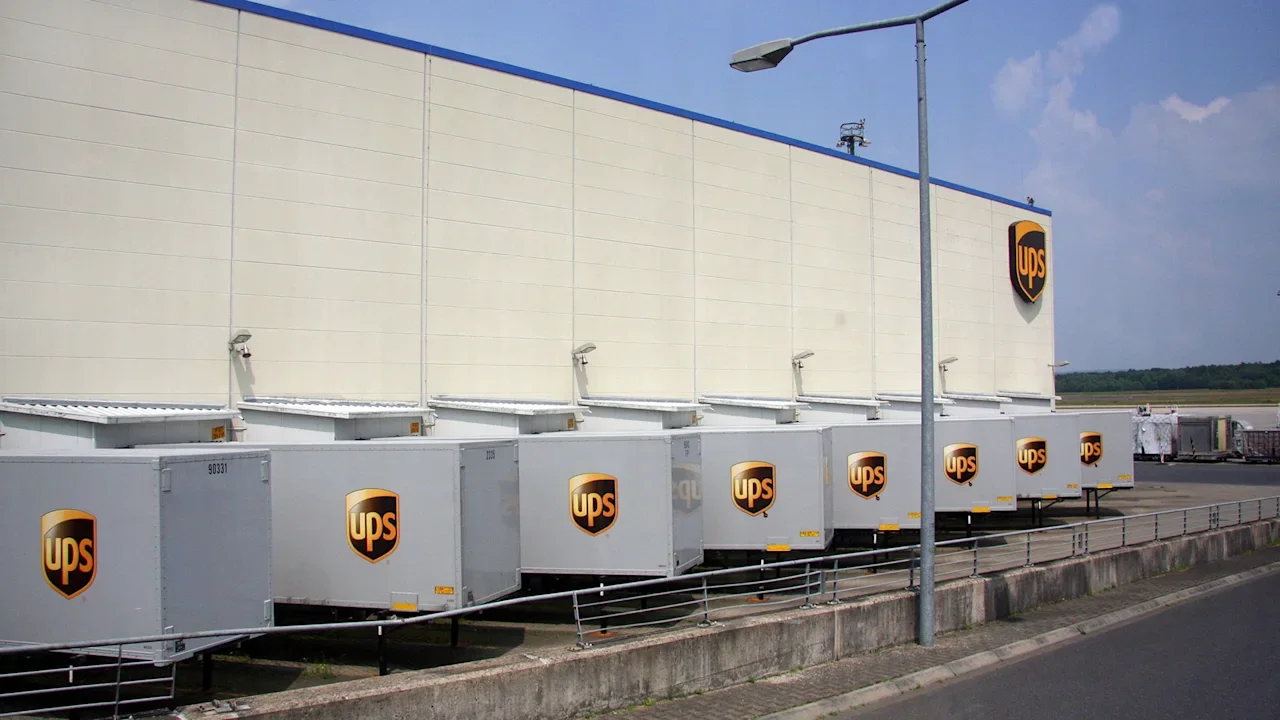
United Parcel Service (UPS) is planning to close dozens of packaging facilities this year, the shipping giant revealed in a court filing this week. The plans include shuttering facilities in Texas, Florida, Georgia, Maryland, and several other states. It includes locations that have union employees, according to a docket made public as part of a lawsuit between UPS and the Teamsters Union. UPS revealed in January that it will cut 30,000 jobs over the coming year. The move was announced as its partnership with Amazon was winding down and amid a broader push toward automation. At the time, it also revealed plans to close 24 total facilities, though it did not reveal the locations. Now the locations of 22 of those facilities have been made public. In the court filings, UPS said “the applicable Local Unions have been notified of these closures and informed of the anticipated impacts.” Which UPS package facilities are closing? The facilities marked for closure are spread across more than 18 states. They appear below: Jamieson Park facility in Spokane, Washington Chalk Hill facility in Dallas, Texas Jacksonville, Illinois Rockdale, Illinois Devils Lake, North Dakota Laramie, Wyoming Pendleton, Oregon North Hills, California Las Vegas North in Las Vegas, Nevada Quad Avenue in Baltimore, Maryland Wilmington, Massachusetts Ashland, Massachusetts Sagamore Beach, Massachusetts Miami Downtown Air in Miami, Florida Camden, Arkansas Blytheville, Arkansas Kosciusko, Mississippi Atlanta Hub in Atlanta, Georgia Columbia Hub in West Columbia, South Carolina Kinston, North Carolina Austinburg, Ohio Cadillac, Michigan What has UPS said about the closures? “We’re well into the largest U.S. network reconfiguration in UPS history, creating a nimbler, more efficient operation by modernizing our facilities and matching our size and resources to support growth initiatives,” a UPS spokesperson told Fast Company when reached for comment. “Some positions will be affected, though most changes are expected to occur through attrition. We’re committed to supporting our people throughout this process.” The facility closures were reported earlier by Freight Waves. Last year, UPS also shed 48,000 workers. The primary drivers for the closures are a broader rightsizing effort, outlined back in 2024. Shares of United Parcel Service Inc (NYSE: UPS) are up almost 15% so far in 2026. But the stock is down significantly from highs it had seen during the early pandemic years. However, the impact of the closures will affect members of the International Brotherhood of Teamsters. In response, the Teamsters filed a lawsuit over a planned voluntary buyout program for union drivers, called the Driver Choice Program, or DCP, saying it violates its contract. The Teamsters have asked the court for an injunction pending the two sides’ initiation of the grievance process outlined in their contract. In a statement, the Teamsters have said that they have “detailed at least six violations of its National Master Agreement by UPS in the rollout of the buyout program, including direct dealing of new contracts with workers, elimination of union jobs when UPS contractually agreed to establish more positions, and erosion of the rights and privileges of union shop stewards, among other charges.” “For the second time in six months, UPS has proven it doesn’t care about the law, has no respect for its contract with the Teamsters, and is determined to try to screw our members out of their hard-earned money,” said Teamsters General President Sean M. O’Brien, in comments included in the statement. UPS’s spokesperson tells Fast Company that the company is “disappointed” in the response. “The world is changing, and the rate of change is accelerating,” UPS says. “As we navigate these changes and continue to reshape our network, our drivers appreciate having choices, including the option to make a career change or retire earlier than planned.” This story is developing… View the full article
-
Google has added 53 new languages to AI Mode, which means the AI Mode works in just under 100 languages. This was announced by Nick Fox from Google on X yesterday.View the full article
-
Google's John Mueller responded to a concern about having bad title tags and how that might impact your site in Google Search. He said on Bluesky "I don't think our systems have a "we don't like this one guy's titles" filter."View the full article
-
There has been an uptick in complaints from businesses around Google local reviews disappearing or being removed. We had something similar last October and it was fixed in December and now I am seeing more complaints about reviews going missing.View the full article
-
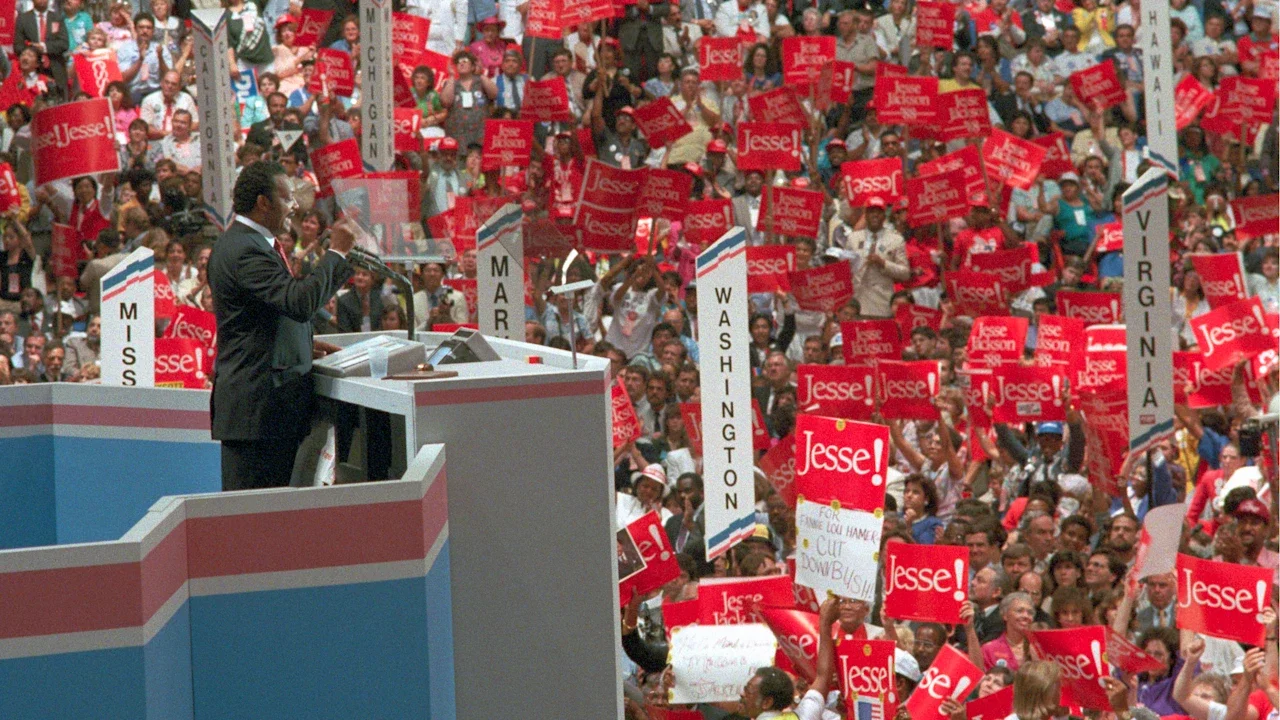
Former Florida Governor Jeb Bush’s 2016 presidential campaign is remembered a decade on for the exclamation point in its “Jeb!” logo, but Jesse Jackson’s campaign actually used the punctuation 28 years before him. Jackson, the civil rights activist who died Tuesday at the age of 84, ran for president twice, in 1984 and 1988. At the 1988 Democratic National Convention, his supporters held red signs that said “Jesse!” in white. Jackson came in second in the 1988 primary with nearly 30% of the vote against the party’s nominee Michael Dukakis, and since then, candidates from Bush to 2012 Republican presidential candidate Mitt Romney and former U.S. Sen. Lamar Alexander, a Tennessee Republican, have used the punctuation mark in their logos to give their names some added emphasis. Though Jackson never held political office, the visual brand of his historic campaigns still resonates today for standing out in a sea of sameness. A protege of Martin Luther King Jr., Jackson was the founder of the civil rights nonprofit Operation PUSH (People United to Serve Humanity) when he announced his campaign in 1983 without any experience in elected office and became the first Black presidential candidate for a major party since Shirley Chisholm. Jackson’s exclamation mark logo was far from the only logo used in support of his presidential campaigns in a time before standardized, consistent branding was expected for political campaigns. He campaigned in serifs and sans serifs, and sometimes in bright yellow, a color that signaled a break from the standard red, white, and blue color palette of U.S. politics at the time. His campaign used slogans like “Now is the Time” and “Keep Hope Alive.” During a speech at the 1984 Democratic National Convention, Jackson explained his idea of the nation as a rainbow, a symbol that became associated with his candidacy and advocacy. “Our flag is red, white, and blue, but our nation is a rainbow—red, yellow, brown, black, and white—and we’re all precious in God’s sight,” he said. That message, along with Jackson’s push to build a “rainbow coalition” that transcended racial and class lines, inspired rainbow-themed buttons and ephemera. Buttons depicted rainbows that were red, white, and blue or the full ROYGBIV spectrum. In the window after designer Gilbert Baker designed the Pride flag in 1978 but before the rainbow became as closely associated with the LGBTQ movement as it is now, Jackson’s political brand made the symbol its own. Jackson’s political branding remains an inspiration today for candidates and designers looking for a more unconventional political aesthetic, from added punctuation or color schemes that break from tradition. The Jackson political brand has also proven strangely popular overseas. A K-pop star wore a shirt in a 2018 music video showing Jackson’s 1988 campaign logo, and Jackson ’88 tees for a time became a trend in Asia. It wasn’t about Jackson, specifically, but about the generic look of a nostalgic American political logo. A candidate unlike any other, Jackson had a visual brand that stood apart at the time. Today, it just looks all-American. View the full article
-
The other day, Google released the Google Search Console AI-powered configuration tool and we continued to wonder when the other features, like branded queries and the social channels would go live. Well, Google's John Mueller confirmed Google is still testing those two features before they are more fully rolled out to more users.View the full article
-
Jailing of couple on motorcycle trip for alleged spying ‘totally unjustifiable’, foreign secretary Yvette Cooper saysView the full article
-
Google is rolling out an update for Google Ads advertisers to certify for some cryptocurrency and complex speculative financial products. This is "incrementally to all advertisers over a period of time and not all advertisers and certification applications will be affected immediately," Google wrote.View the full article
-
A new 3D-printed construction technique turns corn into a novel building material. Corncretl is a biocomposite made from corn waste known as nejayote that’s rich in calcium. It’s dried, pulverized, and mixed with minerals, and the resulting material is applied using a 3D printer. This corn-based construction material was made by Manufactura, a Mexican sustainable materials company, and it imagines a second life for waste from the most widely produced grain in the world. The project started as an invitation by chef Jorge Armando, the founder of catering brand Taco Kween Berlin, to find ways he could reintegrate waste generated by his taqueria into architecture. A team led by designer Dinorah Schulte created corncretl during a residency last year in Massa Lombarda, Italy. “The material combines recycled nejayote derivatives with limestone and Carrara marble powder, connecting pre-Hispanic construction knowledge from Mexico with material traditions from northern Italy,” Schulte tells Fast Company. Growing momentum for clean cement alternatives Many sustainable materials studios are researching concrete alternatives. And while corncretl is just in the prototyping stage, food waste has been tested as a potential building material more broadly. Researchers at the University of Tokyo made a construction material it said was harder than cement in 2022 out of raw materials like coffee grounds, powered fruit and vegetable waste, and seaweed. Last year, researchers at the Royal Melbourne Institute of Technology developed a rammed earth material encased in cardboard, which eliminated the need for cement completely, and Manufactura experimented with building materials made from coffee too. Designers have turned to 3D printers to build everything from train shelters to houses, and developing alternative materials to print with could lead to cheaper, more durable, and more sustainable construction methods. After Schulte’s team developed corncretl, they then moved to practical application, prototyping three panels for modular construction using a Kuka robotic arm. “The project employs an internal infill structure that allows the 3D-printed wall to be self-supporting, eliminating the need for external scaffolding during fabrication,” Schulte says, and the geometry of the system was inspired by terrazzo patterns found in the Roman Empire, particularly Rimini, Italy, where the team visited. “During a visit to the city museum, we were struck by the expressive curved terrazzo motifs, which became a starting point for translating historical geometries into a contemporary, computationally designed 3D-printed wall, culturally rooted yet forward-looking,” she says. Corn, or maize, is native to Mexico, and the country produces 27 million metric tons of it annually, according to the Wilson Center, a think tank. Finding an alternative use for nejayote, then, could then turn a waste stream from a popular food into the basis for building physical structures. If the byproduct from cooking tortillas proves to be one such source, taquerias could one day find themselves in the restaurant and construction businesses. View the full article

-
In the early days of SEO, authority was a crude concept. In the early 2000s, ranking well often came down to how effectively you could game PageRank. Buy enough links, repeat the right keywords, and visibility followed. It was mechanical, transactional, and remarkably easy to manipulate. Two decades later, that version of search is largely extinct. Algorithms have matured. So has Google’s understanding of brands, people, and real-world reputation. In a landscape increasingly shaped by AI-powered discovery, authority is no longer a secondary ranking factor – it’s the foundational principle. This is the logical conclusion of a long, deliberate evolution in search. From links to legitimacy: How authority evolved Google’s first major move against manipulation came with Penguin, which forced the industry to evolve. That’s when “digital PR” began emerging as a more palatable framing than link building. Google also began experimenting with entity-based understanding. Author photos appeared in search results. Knowledge panels surfaced. Brands, authors, and organizations were treated less like URLs and more like connected entities. Although experiments like Google authorship were eventually retired, the direction was clear. Google was redefining how it assessed website and brand authority. Instead of asking, “Who links to this page?” the algorithms increasingly asked, “Who authored this content, and how are they recognized elsewhere?” That shift has only accelerated over the past 12 months, as AI-driven search experiences have made the trend impossible to ignore. Dig deeper: From SEO to algorithmic education: The roadmap for long-term brand authority Helpful content and the end of synthetic authority The integration of the helpful content system into Google’s core algorithm marked a turning point. Sites that built visibility through over-optimization saw organic performance erode almost overnight. In contrast, brands demonstrating depth, experience, and strong brand authority gained ground. Search systems are now far better at evaluating whether content reflects lived expertise. Over-optimized sites – those with disproportionately high link metrics but limited brand recognition – have struggled as a result. In recent core updates, larger, well-known brands have consistently outperformed smaller sites that were technically strong but lacked brand authority. Authority, not optimization, has become a key differentiator. Your customers search everywhere. Make sure your brand shows up. The SEO toolkit you know, plus the AI visibility data you need. Start Free Trial Get started with Authority in an AI‑mediated search world Large language models (LLMs) learn from the open web: journalism, reviews, forums, social platforms, video transcripts, and expert commentary. Reputation is inferred through the frequency, consistency, and context of brand mentions. This has profound implications for how brands approach SEO. Reddit, Quora, LinkedIn, YouTube, and trusted review platforms such as G2 are among the most heavily cited sources in AI search responses. These aren’t environments you can fully control. They reflect what people actually say about your brand, not what you claim about yourself. In other words, authority is now externally validated – and much harder to influence. Visibility is no longer driven solely by what happens on your website. It’s shaped by how convincingly your brand shows up across the wider digital ecosystem. This doesn’t mean the end of Google Market share data continues to show Google commanding over 90% of global search usage, with AI platforms accounting for a fraction of referral traffic. Even among heavy ChatGPT users, the vast majority still rely on Google as part of their search behavior. Google is absorbing AI-style answers into its own interface through AI Overviews, AI Mode, and other generative enhancements. Users aren’t abandoning Google. They’re encountering AI within it. The opportunity lies in building authority that performs across both traditional and AI-mediated search surfaces. I’ve previously written about the concept of building a total search strategy. Brand building is the new SEO multiplier One of the more uncomfortable realizations for SEO practitioners is that some of the most effective authority signals sit outside traditional search channels. Digital PR, brand advertising, events, partnerships, and even offline activity increasingly influence organic performance. A physical event can generate listings on event platforms, coverage in local press, and organic social discussion – each feeding into a broader perception of legitimacy. This is where paid and organic disciplines begin to converge. Brand awareness improves click‑through rates. Familiar names attract citations. Mentions on YouTube or in long-form journalism reinforce topical authority in ways links alone never could. We’ve even seen a recent study showing YouTube comments as a leading factor correlated with AI mentions. As someone who works across both paid and organic strategy, I see this multiplier effect repeatedly. Strong brands don’t just convert better – they now perform better organically, too. Dig deeper: The new SEO imperative: Building your brand Get the newsletter search marketers rely on. See terms. A practical framework: The three pillars of authority Building authority requires a holistic approach – one that starts with brand strategy, category understanding, and a broader set of tactics than traditional SEO. I’ve developed a simple framework that ensures consistent focus on three core pillars: 1. Category authority: Owning the truth, not just the traffic This is about defining how the category itself is understood, not merely competing within it. Authority begins upstream of content production, with a clear point of view on what matters, what’s outdated, and what’s misunderstood. Rather than chasing keywords, the goal is to become the reference point others defer to when making sense of the space. This is the layer search engines and LLMs increasingly reward because it signals genuine expertise rather than tactical optimization. 2. Canonical authority: Creating the definitive explanations If category authority sets the belief system, canonical authority operationalizes it. This is where brands invest in explanation-first content that answers questions properly, not superficially. Canonical explanations are designed to be cited, reused, and paraphrased across the ecosystem: by journalists, analysts, creators, forums, and AI systems. They form the backbone of content infrastructure – hubs, guides, FAQs, and explainers that are structurally sound, consistently updated, and clearly authored. In an AI-mediated search environment, these assets become the raw material models learn from and reference, making them central to long-term visibility. 3. Distributed authority: Proving legitimacy beyond your website What matters isn’t just what you publish, but how your brand shows up across platforms you don’t control. This includes: PR coverage. Social mentions. Video platforms. Communities. Reviews. Events. Even product experiences. Distribution and amplification aren’t afterthoughts. They’re how authority is stress-tested in public. Consistent, credible presence across these surfaces feeds both human perception and algorithmic inference, reinforcing legitimacy at scale. Dig deeper: How paid, earned, shared, and owned media shape generative search visibility Building authority beats chasing algorithms Every evolution in search presents the same choice. You can react – scrambling to interpret updates, tweaking tactics, and hoping the next change favors you. Or you can invest in becoming the recognized authority in your space. This requires patience, cross-channel collaboration, and genuine investment. But it’s the only approach that’s proved durable across decades of algorithmic change. The tactics influencing performance today feel less like legacy SEO and far more like classic marketing and PR: building authority, earning attention, and influencing demand rather than engineering visibility. No doubt Google will continue to evolve. AI systems will mature. New discovery platforms will emerge. None of that changes the underlying truth: Authority has always been the hardest signal to earn – and the most valuable once established. View the full article
-
The President’s latest plans for a White House annex could subtly reshape the path around the South Lawn, and its resulting irregularity says a lot about the Administration’s capacity for design nuance. The latest renderings for a new proposed building on the site of the demolished East Wing were briefly posted to the National Capital Planning Commission website on February 13, and then deleted. The plans call for a ballroom much bigger than the rest of the White House. So big, in fact, that it ruins the shape of the South Lawn driveway. Under the proposal, a new garden would cover the site of the Jacqueline Kennedy Garden, which was demolished alongside the East Wing last year, while a roughly 22,000-square-foot ballroom would jut out ever so slightly into the path of the looping driveway that encircles the most famous backyard in the U.S. The elongated oval drive would then have to be pushed in on one side to accommodate the footprint of the enlarged ballroom, like the side view of an spherical exercise ball under pressure. Rather than maintain the intentional harmony of the current drive, the proposed path turns the South Lawn into a deferential design afterthought that makes way for The President’s dream ballroom. In the grand scheme of The President’s presidency—and the White House’s overall facade—a rerouted driveway is a minor thing. But the effect on this subtle element reflects the lengths his team will go to shoehorn his design ideas into reality, even if it means upsetting core design principles like balance elsewhere. Gold-obsessed, unless it’s the golden ratio Of course, nothing about The President’s proposed ballroom has ever been symmetrical, nor have any of his other White House design projects been particularly subtle. He started by tearing out the Rose Garden and putting a car lot-sized flag poll on the North Lawn and then got to work tearing down portions of the White House before anyone could okay it or say no. The President replaced the original architect for the ballroom in December after clashes over its size. A National Park Service report last year found the plans would “disrupt the historical continuity of the White House grounds and alter the architectural integrity of the east side of the property.” The latest proposed elevations for the ballroom, which were designed by Shalom Baranes Associates, a Washington, D.C., architectural firm, are more than twice the size of the since-demolished East Wing. The drafted design gives the White House complex the look of a male fiddler crab, which has one claw that’s bigger than the other. The planned ballroom dwarfs the West Wing in sheer footprint, which would make the overall visual balance of the White House grossly asymmetrical upon its completion. Heightwise, however, the building appears in the renderings to rise about as tall as the Executive Mansion itself, and the proposal takes great pains to show that it won’t be visible from various vantage points in Washington, D.C., like from the Jefferson Memorial or from the U.S. Capitol steps facing northwest. The building is designed with a neoclassical facade, Corinthian columns, and a wide staircase entrance, matching the call for classical architecture The President asked for in an executive order. Fine arts fueled by cash, but not the arts Construction of the ballroom will be paid for by corporate donors, raising thorny ethical questions for a president who once claimed to “drain the swamp.” Two-thirds of known corporate donors to the ballroom have received $279 billion in government contracts over the past five years. Some donors, including Amazon, Apple, Meta, Microsoft, Nvidia, and T-Mobile are facing federal enforcement actions, according to a review from Public Citizen, a nonprofit consumer advocacy group. Earlier this month, the watchdog group Citizens for Responsibility and Ethics in Washington (CREW) found that many donors failed to disclose their contributions in lobbying disclosure filings. The President has taken steps to remove friction or opposition to his plans to build the new building. Last October, he fired every member of the U.S. Commission of Fine Arts board, the agency that would have reviewed his construction plans. Now, his 26-year-old executive assistant Chamberlain Harris, who has no background in the arts, is set to be named to commission Thursday, according to The Washington Post. View the full article

-
Microsoft co-founder cancels plans to deliver keynote speech at high-profile event on ThursdayView the full article
-
The pressure to adopt AI is relentless. Boards, investors, and the market tell us that if we don’t, we’ll be left behind. The result is a frantic gold rush to implement AI for AI’s sake, leading to expensive pilots, frustrated teams, and disappointing ROI. The problem is that we’re treating AI like a magic wand—a one-size-fits-all solution for any problem. But true transformation comes from strategically applying it where it can make the most impact. This is the “AI sweet spot,” where the real competitive advantage lies. It’s not about having the most advanced AI, but about having the right AI, applied to the right problems, with the right people. Here are five ways to find it. 1. Start with Your Biggest Bottleneck, Not Your Biggest Budget Many organizations fall into the trap of allocating their AI budget to the department that shouts the loudest. It’s a recipe for wasted resources. Instead of asking, “Where can we spend our AI budget?” ask, “Where is our biggest organizational bottleneck?” Identify the most time-consuming, repetitive processes in your company. Is it the hours your marketing team spends on pre-meeting research? The manual data entry bogging down your finance department? These pain points are your starting line. For example, one company I worked with found their sales team was spending over five hours preparing for a single client meeting. By implementing an AI agent to handle the research and data compilation, they reduced that prep time by 87%, saving nearly $300,000 a year in productivity costs. The AI wasn’t flashy, but it solved a real, costly problem. That’s a sweet spot. 2. Ask ‘Will This Enhance or Replace?’ The quickest way to kill an AI initiative is to make your employees feel threatened by it. When people hear “AI,” they often think “job replacement.” This fear breeds resistance and undermines adoption. As a leader, your job is to reframe the conversation from replacement to augmentation. Before implementing any AI tool, ask a simple question: Will this technology enhance our team’s capabilities, or simply replace a human function? The sweet spot is almost always in enhancement. Think of AI not as a new employee, but as a tireless intern or a brilliant colleague for every member of your team. It can handle the grunt work, analyze massive datasets, and surface key insights, freeing up your people to do what they do best: think critically and make strategic decisions. When your team sees AI as a partner that makes their jobs better, they will champion its adoption. 3. Build Trust Before You Build the Tech We don’t use tools we don’t trust. If your team doesn’t understand how an AI system works or why it makes certain recommendations, they will find workarounds to avoid using it. Trust isn’t a feature you can add later; it has to be the foundation of your implementation strategy. This starts with creating a culture of psychological safety, where employees feel safe to ask questions and even challenge the AI. Be transparent. Explain what the AI does, what data it uses, and where its limitations are. Appoint human oversights for critical processes, ensuring that a person is always in the loop for high-stakes decisions. In my work, I use the framework “13 Behaviors of Trust,” and it applies as much to AI as it does to people. An AI system earns trust when it is competent (delivers results) and has character (operates with integrity). Without that trust, even the most powerful AI is just expensive code. 4. Tie Every AI Initiative to a Business Goal “Exploring AI capabilities” is not a business strategy. Too many AI projects exist in a vacuum, disconnected from the company’s core objectives. If you can’t draw a straight line from your AI initiative to a specific goal—like increasing customer retention or reducing operational costs—you shouldn’t be doing it. Before you approve any AI project, map it directly to your company’s OKRs or strategic pillars. How will this tool help us achieve our vision? How does it support our mission? This forces a level of discipline that prevents you from chasing shiny objects. It ensures that your AI strategy is not an isolated IT function, but an integral part of your overall business strategy. AI that doesn’t align with your core purpose will always be a cost center. AI that does becomes a powerful engine for value creation. 5. Create Space for Learning, Not Just Execution Leaders often expect an immediate, seamless return on their AI investment. But there is no magic switch. Successful adoption requires moving your team from a zone of comfort, through the uncertainty of fear, and into zones of learning and growth. This takes time and patience. Don’t just budget for the technology; budget for the learning curve. Create sandboxes where teams can experiment with new AI tools without fear of failure. Celebrate the small wins and the lessons learned from missteps. The organizations that are truly winning with AI aren’t the ones that got it perfect on day one. They are the ones that fostered a culture of continuous learning, empowering their employees to adapt and grow. The long-term ROI from an empowered, AI-fluent workforce will far exceed any short-term gains from a rushed implementation. Finding your AI sweet spot is less about technology and more about psychology, strategy, and culture. It’s about shifting your focus from what AI can do to what it should do for your organization and your people. Stop chasing the AI hype and start solving your real-world business problems. That’s where you’ll find the lasting advantage. View the full article

-
Three individuals contacted Whitehall over past conduct after former consul emerged as cabinet secretary frontrunner View the full article
-
The credit reporting agency must revise its customer agreements because a judge disagreed with its attempt to end the case through an arbitration clause. View the full article

-
The 2026 Milan-Cortino Winter Olympics is set to debut a new sport: ski mountaineering, also known as skimo. Over the course of two days at the Stelvio Ski Centre located in Bormio, Italy, 36 athletes will compete in three main events: men’s sprints, women’s sprints, and mixed relay. The race is part endurance and speed, as typical skimo competitions feature athletes racing against each other as they ascend uphill with support of climbing skins before skiing downhill. The Winter Olympics version, however, differs in format. This version compresses the competition into a roughly three-minute race. Each leg of a skimo race requires its own specialized equipment. And that equipment matters. Who wins and loses in skimo is often a matter of milliseconds, determined during the transitions between the three distinct moments of the race: ascent, boot-packing (mountaineering), and descent. That’s where a 76 year-old German company comes in. Dynafit created the DNA Sprint Collection, a six-product line engineered specifically for the Olympic stage that 11 out of 36 athletes will use during the competition. The remaining athletes will use similar equipment provided by different brands in line with the International Ski Mountaineering Federation’s (ISMF) requirements. Dynafit’s Design Philosophy A typical skimo competition features rough, high alpine terrain and harsh, snowy conditions that are physically demanding on athletes. To maneuver this challenging terrain, athletes rely on gear such as skis, boots, poles, gloves, backpacks (to hold equipment while transitioning from one part of the race to the other), crampons (a spike attachment for athletes boots to grip onto ice while on foot), and avalanche gear. All of this gear is specifically designed to be lightweight to assist athletes in navigating the challenging, mountainous terrain. Historically, Dynafit is known for pioneering the boots and tech binding (a mechanism that lets athletes lift their heel while climbing uphill and lock into place to descend downhill) critical for performing the sport. Now, as the dominant brand in the $1.24 billion skimo equipment market, the company produces a range of products, including helmets, race suits, boots, skis, and skins, for the casual and elite skier. “ The biggest challenge in our development [is] to find the balance between weight and safety,” says Manuel Aumann, Dynafit’s Operations and R&D Director Bindings. Aumann explains that the company has an abundance of testing experience to ensure their products’ durability and safety. “We have to save every gram . . . but also [deliver] high safety products,” explains Aumann. “[For] every 100 grams you save on your boot or the ski, or on the binding, you could carry seven times more weight on the backpack. For our customers and for the athletes, [that] pushes them to the next level.” Re-Thinking Skimo Designs This will not be the first time that skimo qualifies as a Winter Olympic sport. Between 1924 and 1936, the International Olympic Committee (IOC) included skimo in the Winter Games but later discontinued it in part due to its dangerous nature. Then in July 2021, the IOC unanimously approved skimo’s inclusion in the 2026 Winter Olympics. For the occasion, Dynafit developed a unique line specific for the Olympics, including skis, bindings, poles, gloves, and backpacks. Creating a line of products to help elevate athletes’ performance involved a two-step process. First, in 2022, Dynafit hosted an international summit with 25 of its sponsored athletes to curate their feedback on equipment constraints. That input served as the foundation for the company’s four-year process from the redesign to market availability of its specialty product line. Aumann and his team dissected the Olympic format to inform their design process. The Olympic race focuses on sprint races. Athletes will be required to complete an uphill ascent on skis, transition into a short bootpacking section, then transition again for a downhill descent. This race format requires fast transitions between each phase. “The two minutes 30, you can split [in] time slots,” says Aumann. The rough estimation [is] two minutes for the uphill and 30 seconds for the downhill. We got into the analysis of where we can have the most benefit if we change something.” The team determined that the first half of the race, involving the ascent with skis and the transition where athletes remove their skis and place them into their backpacks just before continuing onto bootpacking (a foot race on skis with the assistance of poles), would yield the most benefit. The Dynafit team learned that while most of the new product line required minimal adjustments, their skis and bindings would require significant design alterations. “The handling operations, they’re quite important on this high level,” explains Aumann. “It’s really about the second[s] they can save during [these] transitions.” The rough alpine terrain of a standard skimo competition requires skis to have increased “skiability,” meaning they are carved and built for those conditions in order for athletes to make safe turns. Since the Olympics course will have smoother slopes with fewer steep curves and banked turns to help athletes, it allows skis to have less “skiability.” In other words, the skis do not need to be optimized for tough terrains, allowing Aumann and his team to focus on narrowing the ski-waist from 64 mm to 61 mm. “With this [slimmer] ski, we could save weight,” says Aumann. While a traditional race touring ski weighs 690 grams, the altered ski weighs only 650 grams. Another benefit of this slimmer version of the ski, particularly its narrower tail, is that it allows athletes to better handle transitions. For instance, when athletes move from skiing uphill to bootpacking, they must quickly loop their skis onto their backpack for the foot race and then later unhook them for the descent downhill. Ultimately, this design change is intended to help athletes shave off incremental seconds, which is critical in a sprint where every tenth of a second counts. Further, during the uphill transition from skis to bootpacking (the foot race), athletes will need to release themselves from their ski bindings, where steel pins meet the boot inserts to secure the boots within the binding. Then on the descent portion of the course, athletes need to step back into their ski bindings. The act of stepping in and out of skis presented additional time-saving opportunities and speed optimization. Aumann and his team made three key design changes to their fully aluminum, binding product. “What we did is to really make [the grip zone], where the athlete can grab, wider,” explains Aumann. [The athletes] don’t have to look down, but can grab it in a very easy way without looking.” The team widened the grip zone for the heel piece as well as the locking lever of the binding. Providing athletes with a larger grip zone surface allows athletes to use one hand to release their boots from the binding, saving at least a few tenths of a second. Lastly, the team redesigned its ski race stoppers, a safety feature required by the ISMF. Generally, standard ski touring stoppers deploy a small metal arm, or wire, into the snow to slow the ski if an athlete loses it or releases from the binding. According to Aumann, each stopper includes a plastic cap at the end to help it grip and fix into the snow. While a traditional alpine ski touring stopper features sharp contours and edges that can easily snag on a loop in an athletes’ backpack, Dynafit’s re-designed stopper lacks these features. Rather, the team modified the transition point where the plastic cap meets a metal wire by creating a smooth, rounded curve surface. By rounding out the curve, the updated design reduces the risk of catching onto other surfaces while improving overall reliability, all without adding weight. The modified race stopper alone weighs just 30 grams, compared to the 70 to 100 grams typical of standard touring models. Another important aspect of the redesign is that the stopper automatically retracts when athletes switch to the descend/downhill model, eliminating an additional step for manual adjustment. Aumann acknowledges that this design process helped accelerate a trend already happening across the industry. As the sport has grown in the past couple of years, manufacturers have increasingly considered tradeoffs rather than focusing solely on making lighter products. “Within the last two years that [has] changed,” says Aumann. “Perfect handling of the products [is] a very high priority. So, it is [acceptable] to have a product with a few [more] grams if the handling is better and can save time.” Dynafit has already begun incorporating these design tweaks into its commercial products. View the full article

-
Police raid follows release of documents detailing former prince’s ties to late sex offenderView the full article
-
Most leaders understand their message needs to define exactly who their work is for. Fewer realize that it should also define who it’s not for. Fewer still realize that their message is unintentionally excluding some of the very people they want to attract. Effective messaging repels on purpose. Careless messaging excludes by accident. And for leaders, knowing the difference can make or break your organization’s credibility. REPEL TO ATTRACT The idea of intentionally turning away potential customers can make leaders uncomfortable. It seems counterintuitive, even reckless, to deliberately shrink your total addressable market when you’re trying to grow. But trying to message to everyone can come at a high cost, resulting in: Misaligned employees. People who don’t share your organization’s values may become unhappy and disengaged, ultimately eroding your culture and reputation. Wrong-fit customers. They’ll never be satisfied with what wasn’t designed for them, leading to negative reviews, returns, and reputation damage. Wasted resources. Messaging too broadly can result in additional expenses, from advertising to (and trying to convert) a larger pool of prospects, all the way through to customer service. The costs of attracting the wrong audience compound over time, while organizations with the deepest loyalty are often the ones explicitly saying “this wasn’t created for you.” Two particularly effective ways to do this are through values-based declarations and explicit audience definition. Values-based repelling involves taking a strong public stance on the ideas that matter most to your brand, effectively filtering out those who don’t share those values. When Patagonia launched their edgy “Don’t Buy This Jacket” campaign with a full-page ad in the New York Times on Black Friday, they weren’t just making a statement about overconsumption; they were signaling to impulse buyers and fast-fashion hunters that Patagonia isn’t for them. It was a bold expression of “this is what we stand for, and this is what we don’t.” Meanwhile, explicit audience definition expresses who an organization stands for. Basecamp takes this approach by saying: We are for this group. We are not for that group. This builds community and loyalty by creating a “small business” Us (“We stand with the underdogs. Freelancer? Underfunded non-profit? Small team feeling stuck in a large enterprise? Start-up battling established competitors? You’re our people.”) versus a “big business” Them (“They’re slow. They’re conservative. They talk too much. They’ve stopped taking risks. They’re resting on their laurels, gliding on their reputation.”) dynamic that makes their ideal customers feel seen and understood. So when does repelling cross over from “good” to “bad”—and is it possible to repel too much? In many cases, it’s not a matter of degree (turning the repelling dial up or down), but of intentionality. Often, the smallest details create unexpected barriers. Seemingly minor messaging decisions, invisible to internal teams who know what they meant to say, can alienate the very people you’d like to attract. BARRIERS YOU DIDN’T MEAN TO BUILD Every message draws a line: inviting some in, leaving others out. The risk is when that line is invisible to you but glaringly obvious to your audience. Strategic narrowing is, by definition, intentional. You decide who—and only who—you’re speaking to and why, shaping your message around what will resonate most. Careless narrowing happens when you filter people out by default through assumptions, jargon, stereotypes, unconscious bias, or unclear values. This type of exclusion isn’t deliberate. It’s built into the words we use, the assumptions we make, and the systems we design. It often feels harmless in the moment; after all, you didn’t mean to exclude anyone. But messaging missteps stack up, often in ways we don’t see until it’s too late. And when a message ends up alienating the very people you’re trying to reach, it can undermine everything you’re building: your team, your customers, and your reputation. Unintentional exclusion carries real costs: 1. Talent loss Talented candidates self-select out because they don’t see themselves reflected in your language, imagery, or values, leaving roles harder to fill. Current employees who feel overlooked or alienated disengage, and that disengagement can wreak havoc on your culture. This shows up in a number of quiet ways, for example: A company says it values a diverse workforce but schedules events on days that are major holidays for some employees. A strong candidate doesn’t apply because the job description uses jargon or must-haves that don’t actually matter. Company headquarters are accessible by public transport but the company offsite is not. Leadership talks a big game when it comes to its global perspective, but every quarter the big all-hands meeting is only live in US time zones. 2. Missed growth Customers who don’t see themselves in your story won’t buy in. People who could have been strong advocates never consider your product because the way you described it suggested it wasn’t for them. This shows up in many ways: Product positioning that assumes sameness. Parenting apps marketed “for busy moms” can unintentionally exclude dads, grandparents, or other caregivers who share the same challenges. Language that creates barriers. A landing page filled with jargon can leave first-time buyers feeling shut out rather than invited in. Product design with hidden friction. An app that assumes constant high-speed internet excludes rural users. Low-contrast color palettes exclude those with low vision. Visuals that signal who belongs. When websites or ads feature only one demographic, they subtly suggest others aren’t welcome, even if they are part of the intended audience. Peloton learned this the hard way. An early campaign centered on ultra-fit people in luxury apartments projected an elite, upper-class image that excluded people who weren’t wealthy and who represented a wider range of body types. The campaign also came under fire for portraying a sexist dynamic. While the intent was to be inspirational and aspirational, it didn’t take into account where many of its potential customers were starting out, and it wasn’t aligned with Peloton’s founding goal of democratizing fitness. The brand smartly course-corrected in 2023 with new messaging and ethos, emphasizing “fitness offerings for all ages, levels, and walks of life.” 3. Damaged credibility Beyond costing you potential customers and engaged employees, accidental exclusion damages how the broader market perceives your brand. When your company’s behavior contradicts your stated mission or core values, stakeholders notice the gap between what you claim to stand for and what your words and actions actually signal. The resulting erosion of trust can be imperceptible until it turns into a full-blown reputation crisis. Once trust is lost, it’s difficult to win it back. The difference between strategic and careless narrowing is intention and awareness: one sharpens your message, the other shrinks your reach. The result is always the same: qualified candidates opt out, customers conclude “not for me,” and stakeholders lose trust. You didn’t choose a niche—you just made yours significantly smaller. HOW TO REPEL, NOT EXCLUDE People are highly attuned to language. They notice who’s acknowledged and who’s overlooked, especially when it’s them. In a crowded market, intentional communication determines whether you expand opportunity or reinforce barriers. Inclusive messaging doesn’t mean trying to be everything to everyone. It means being deliberate about the language you use and the lines you draw so the right people feel welcomed in, not left out. To avoid missteps, regularly pause to ask: Who might this message unintentionally exclude? Are we relying on assumptions that not everyone shares? Does our language and imagery draw people in or push them away? Build guardrails into your processes throughout your organization: Choose words and imagery carefully. Intentionally repel those who are not ideal customers or employees, but incorporate safeguards and checks to make sure you’re not using language or visuals that unintentionally exclude. When creating a customer avatar, consider relying less on demographics and more on psychographics. What are their attitudes, values, and interests? Consider how your message might land differently based on someone’s lived experience, perspective, and motivations. Run language and formatting through an inclusivity check, test job posts with employees from different backgrounds, and test brand copy with focus groups who have different points of view and lived experience. When diverse perspectives are considered, accidental exclusion decreases. The business case is clear: employees are attracted and retained, brand messages land with the right audience, and teams better identify products and services for a broader customer base. According to a BCG study, companies with more diverse leadership boast 19% higher innovation revenue. And McKinsey finds that companies with diverse leadership teams are 39% more likely to outperform their peers financially. Make checking for accidental exclusion and unintended barriers a regular practice. Invite perspectives from people who don’t look, think, or work like you. Brands that do this consistently don’t just avoid costly mistakes—they build stronger cultures, retain better talent, attract the right customers, and gain credibility that lasts. View the full article