All Activity
- Past hour
-
 Banks and credit unions are pairing AI-driven efficiency with stable staffing and cross-training to scale mortgage production as originations rebound and technology expands capacity. View the full article
 -
In early February, the 22-year-old design brand Areaware announced it will close on May 1 citing tariffs and “mounting pressures on the home goods industry” in a letter posted to its Instagram account. “Every product we’ve made has been an act of optimism—a belief that good design can make our world a little better,” the letter said. “Lately though, our world has been making that difficult for us to do.” It’s been a challenging few months for good design brands. In December, Food52, the parent company of Schoolhouse and Dansk, declared bankruptcy; earlier in February, it was stripped for parts and sold at auction. While Areaware and Food52 don’t share the exact same business model, both brands were curators and manufacturers that assembled an eclectic mix of goods targeted toward an aspirational shopper who valued design, affordability, and storytelling in everyday objects. It’s a type of company that looks like it’s on its way out. “To be both a curatorial voice and a manufacturing voice are two disparate and incompatible forces,” says Noel Wiggins, Areaware’s cofounder and CEO. “It is not a great business model. It’s a wonderful creative model.” A ‘record label’ for industrial design Areaware has been a fixture in the home goods landscape since launching its first collection in 2005. It established itself as a publisher of stylish, playful, and accessibly priced products that cut across categories. If you wanted to buy something distinctive but tasteful—a minimalist silver baby rattle, brightly patterned napkins, pastel candles shaped like blobs—you could find it on Areaware’s website. From the start, Areaware primarily licensed pieces from independent designers, who received a 6% royalty fee, and manufactured them. Less than 10% of products were designed in-house. Through this model, it forged an entire ecosystem of design, from product development to manufacturing to wholesale and eventually direct-to-consumer retail, which it began strategically investing in four years ago. By 2024, direct sales accounted for 26% of overall revenue, domestic wholesale was responsible for 64%, and international accounts and global partners made up 10%. Artists and designers who wanted to mass produce their work knew they had a partner in the brand, which took care of manufacturer sourcing, marketing, and sales. This included legends like Susan Kare and Tobias Wong along with emerging studios that eventually became heavyweights like RBW, Jason Miller, and Chen Chen and Kai Williams. “In many ways we function like a small record label,” Wiggins says. “There’s this kind of sound to that label and it’s the feeling of ideas coming before function in industrial design.” Over the past 22 years, Areaware collaborated with over 50 artists, distributed its products internationally, and produced true icons of design (David Weeks’s Cubebot, and its many iterations, generated $18.7 million in sales). A fragile ecosystem While most manufacturers specialize in a specific material or one technique, Areaware was more focused on authorship and doing something interesting with an artist who wanted to experiment. This helped Areaware built a loyal following throughout the design community, but it also created issues on the business side. “The ecosystem was fragile,” Wiggins says. This is because the company made so many different types of materially different goods—from glass butter dishes to wood bottle openers and stainless-steel flasks. The variety that gave Areaware its creative identity was also a weak business point. “This multidisciplinary approach created structural challenges,” says Roberto Fantauzzi, Areaware’s chief design officer. “Unlike companies focused on a single category, Areaware did not benefit from the same economies of scale or pricing efficiencies. Developing across multiple categories required higher upfront investment, increased tooling and mold costs, and a careful allocation of in-house resources across a range of product types.” Depending on the type of new product, like a color update of an existing SKU or entirely new object, product development could cost anywhere from “a few hundred dollars to several thousand,” Fantauzzi says. While the brand was able to pay its bills and not carry debt, margins were always tight. According to Wiggins, Areaware generated $4 million in sales annually on average, but profits vacillated—$40,000 one year, zero the next, then minus $20,000. Still, the company was able to manage. That is, until The President’s tariffs entered the picture. “Maintaining that balance between design integrity and affordability at times meant operating with slimmer margins,” Fantauzzi says. “When tariffs took effect in 2025, those margins were significantly compressed, making it increasingly difficult to sustain certain collections and SKUs at the standards and prices the company strives to uphold.” It takes around 18 months for Areaware to bring a product into production and the constantly changing landscape made it extremely challenging to plan ahead and manage the risks involved. “It wasn’t only the tariffs, which were horrible as they were, but it was the unknown,” Wiggins says. “You don’t know whether to wait out if the tariffs are going to change. It creates this enormous stall in the system.” Around 80% of Areaware’s products are made in China. The rest are mostly produced in Indonesia (mostly furniture), India (cast-iron pieces), Vietnam (candles), and Mexico (silver baby rattles). Wiggins explored manufacturing the Cubebot with a wood toy maker in Vermont, but the extra cost wasn’t justifiable. Production would have cost four times more for the toy itself, turning a $10 product into a $30 product for shoppers. These pressures are also particularly challenging since Areaware’s business model revolves around small product runs. Aside from the Cubebot blockbuster and few products that have sold tens of thousands of units, most pieces sell in the thousands and hundreds. “It wasn’t even only price; it was just the ability to make small batch,” Wiggins says. “We can’t set up a local factory to do small numbers.” Another casualty of the attention economy Wiggins—who was inspired by the SoHo design emporium Moss, the conceptual Dutch collective Droog, and the Milanese brand Danese—compares the trajectory of design businesses to art movements. “They kind of have their generational moment and then it ends,” he says. Lisa Cheng Smith, who once served as the chief design officer of Areaware and has developed products for Hay and Design Within Reach, says the brand’s closure signals a shift in what type of design is most valued today. When the brand started, the job of a “product designer” meant you made physical objects, but now it means digital experiences. “That speaks to me about the status a product or object has in our material consciousness,” Smith says. “The voices of creatives are more often seen on digital platforms now. It’s like cooking videos, YouTube—that’s how people are accessing culture. It’s less about buying a meticulously thought-through object.” Wiggins echoes the impact of digitization on his business, particularly how information travels today. It’s a lot easier for everyone to directly find what they need. Shoppers can go on any number of social media platforms to find new brands, and designers can go directly to manufacturers without an intermediary like Areaware. “You don’t need the gatekeepers as much,” he says. “Pre-internet, the role of a curator was, in some ways, more important because if you were a store and you had to find neat things, you couldn’t really search for [them] easily.” At the same time, the landscape has become noisier than ever and the constant firehose of content drowns out anything that isn’t viral, which poses another challenge to Areaware’s model. Wiggins describes Areaware as a media company that sells “three-dimensional stories,” and getting customers to listen is tough. “Every time there’s a piece of The President news, the attention economy is going towards someone else’s story,” Wiggins says. “You’re constantly in competition for attention. There’s such a domination of fear in the attention system that it gets hard to get people’s attention in a way that’s sustainable.” The business of designers So where do object makers fit into this new landscape? The wholesale model of affordable designer objects can’t sustain itself. Meanwhile, few big brands today seem willing to take risks on emerging studios; instead they’re reissuing heritage pieces, which have baked-in fan bases and greater chances of becoming a break-out hit. That leaves out collectible design, which relies heavily on concept and authorship. “It’s a place where the voice of the designer can really be preserved,” Smith says. Beyond sales, licensing is still important to emerging studios. Sophie Collé, a furniture designer based in Brooklyn, licensed one of her earliest designs, a plant stand with an amoeba-like silhouette that she had been making by hand herself, to Areaware in 2022. The Splat table then went on to be sold at MoMA Design Store, the Guggenheim, and Coming Soon—places that are retailer-curators first and don’t typically manufacture their own goods. The deal became an important income stream for her small business, and through it her work reached a wider audience that led to custom commissions, and larger brand deals and collaborations. “Not only has Areaware done so much for my career, but it really was a support system for emerging designers,” Collé says. “I honestly don’t really know another company that does what they did with such grace and respect for the designers themselves. Finding manufacturers and fabricators is such a beast, and not every creative has the time or even wants to be doing that side of the business. That is what really makes Areaware irreplaceable in that sense, at least in my eyes.” Ellen Van Dusen, founder of the textiles and home goods brand Dusen Dusen, has collaborated with Areaware for eight years on objects that her company isn’t able to make in-house. This includes a plywood tissue box cover painted with faces and a night light. “They took risks with products that were a little weird and unconventional that became huge successes,” Van Dusen says. Van Dusen adds that the distribution channels brought her work to all corners of the world. “People will text me pictures of the pepper grinders in New Zealand, umbrellas on the street in Japan, and the tissue box in Mexico,” she says. “We don’t have those same distribution channels in house, so Areaware brought an awareness to Dusen Dusen that I don’t think we would have gotten on our own. They were an integral part of our growth. And I must mention, the tissue box was on Succession.” Beyond being a shopping destination Areaware was also an important industry connector, which is important since the design industry runs on relationships. Laura Young, managing director of collectible design gallery the Future Perfect, met many of the artists she represents now through her work at Areaware directing product development. “Areaware laid the foundation for my career,” she says. And Smith, who now runs Yun Hai, a retail shop and online store specializing in Taiwanese cooking, met many of the manufacturing partners she works with today through Areaware. “The way that I do business is based on everything I learned there,” she says. Like the reshuffle of Food52, there’s a chance some parts of Areaware might not completely disappear. For example, Wiggins is in talks with Weeks to take over production of the Cubebot. “Honestly, we’re trying to find someone to take over the arduous and difficult business model,” Wiggins says. “And because it’s arduous and difficult and very unprofitable, it’s hard to find someone to do that.” View the full article

-
I’ll admit it: I still secretly prefer cooking on a gas stove despite knowing that I’m breathing in benzene and adding to methane emissions. What can I say, I like the tactile control of an open flame. But recently I tested an induction range that made my gas stove seem antiquated. Charlie, from the Bay Area-based startup Copper, offers a high-end range that can do everything I expect from my current stove—and more. The appliance, which started to roll out nationally last year, has been called “the Tesla of induction stoves” by The New York Times and lauded by chefs including Christopher Kimball. I wanted to try it out as a home cook with only basic skills. An oven that’s 30x more accurate Like most electric ovens, Charlie’s performs better than its gas counterparts. But it also surpasses the typical electric version. It preheats to 350 degrees in about four minutes, thanks in part to a large battery hidden at the base of the stove. (More on the battery later.) I tried baking some cookies, which browned up perfectly, and then turned the heat down to 80 degrees to test another unique feature: The oven can hold a steady low temperature, making it possible to proof bread or pastry quickly when needed. Gas ovens tend to cycle heat more aggressively, and even the pilot light alone can push temperatures too high. Standard electric ovens are better, but also can’t reliably keep the temperature low enough. I’d brought along some chocolate croissants and tried proofing them; the oven worked like a professional proofing drawer, which meant not having to wonder how the temperature and humidity in the kitchen would affect the rise of the dough. The oven is incredibly precise. Most ovens fluctuate as much as 30 degrees above or below the set temperature. But incorporating a battery enables Copper’s Charlie to use more sophisticated controls, including modern temperature sensors and actuators. Thanks to a recent firmware update, Charlie’s temperature varies no more than a single degree. Put another way, it’s 30 times more accurate than a typical oven. The seesawing temperatures in other ovens lead to baked goods with burnt edges, soggy bottoms, or mushy middles. The software update—dubbed “Soufflé” after the notoriously finicky dish it was designed to master—makes Charlie’s baking capability even more consistent. Sure, it might take away some entertainment: Would you watch the Great British Baking Show without the suspense of unpredictable results? But in real life, it’s the kind of tool that actually makes me want to bake more often. The cooktop is intuitive and more precise than gas Unlike some other induction stoves, the cooktop is easy enough to use without turning to the instruction manual. It has knobs, like a traditional range, rather than a touchscreen. When you turn one of the knobs, a display shows how hot the “burner” is. On the cooktop, to stand in for the visual cue of a gas flame, a bar of lights shows whether you’ve cranked up the heat a little or a lot. Like other induction stoves, it can boil water incredibly quickly. (The battery gives an extra boost: A pot of 8 ounces of water boils in 4 minutes and 10 seconds.) It can also precisely control temperature. I tried melting chocolate in a pan, something that would normally be a more complicated process with a double boiler on a regular stove, and the steady low temperature helped it melt evenly. Though I didn’t try making dinner, the stove seems more than capable of handling anything I might normally prepare. It’s possible, for example, to crank up the heat and stir-fry something in a flat-bottomed wok, as Copper has demonstrated in previous tests; despite the lack of flames, the pan can get hot enough to char noodles for a dish like pad see ew. Why there’s a battery inside Some induction stoves have an annoying buzz, caused by pulsing AC power from the outlet that creates vibrations that are especially noticeable in tri-ply pans with multiple different kinds of metal. The Charlie stove, by contrast, is remarkably quiet, thanks to its battery. That battery, with 5 gigawatt-hours of energy storage, also means the stove can keep running for days even if the power goes out in a storm (notably, most modern gas stoves won’t work if the electricity goes out, since they use electric ignition and electric safety valves). The battery also has other advantages that I didn’t get to test. First, it means the stove doesn’t require expensive electrical upgrades, something that’s necessary with most other powerful induction stoves. The stove needs a large boost of power when it starts, but it can pull that from the battery. Because the battery can charge when power is cheapest—for example, in the middle of the day in California, when the grid has extra solar power—it can help keep customers’ bills lower. As the network of appliances grows, they form a virtual power plant that can also help the grid itself. A distributed network of batteries in appliances is easier to deploy than larger utility-scale batteries. Copper is now beginning to work with some large manufacturers to design other types of appliances, like heat pumps, that can also add more energy storage to the grid. The range is expensive, at around $6,000. But because of the energy and climate benefits, a number of states provide generous incentives. In California, for example, if a homeowner with a gas stove replaces it with Copper’s stove, and if the stove was the last gas appliance in the home, they can get a rebate that will cover the entire cost. Some of the first customers include large apartment buildings that want to make the switch away from gas. The New York City Housing Authority is an early adopter, recognizing that the stoves are a way to avoid expensive upgrades to its aging gas infrastructure, to comply with local emission laws, and to improve air quality for residents. It’s a rare case of premium tech scaling up from multiple directions, adopted as much for infrastructure pragmatism as for performance. Whether it’s for public housing or a high-end kitchen, the pitch is the same: cleaner air, better performance, and a new way to support the strained electric grid. View the full article

-
For consumer packaged goods, the path from product idea to store shelves runs directly through the center of Unilever‘s new North American headquarters, and not just because the company makes market-saturating products like Hellmann’s mayonnaise and TRESemmé shampoo. This new headquarters space was designed specifically to put the entire process of product creation on display in its office, from ideation to development to marketing to retailing. Spread across 111,000 square feet in downtown Hoboken, New Jersey, Unilever’s newly opened headquarters is centered around an accessible spine of rooms and facilities that are optimized for bringing new products to market. There are “innovation labs” where ideas for new products come to life, workstations where ideas can take shape, a test kitchen and salon where products get sampled and refined, and a retail lab where the company and its retail partners can see the products as they’ll look on store shelves. “We want people to walk in and just immediately know what it is we stand for and what it is we do,” says Nathaniel Barney, Unilever’s global head of workplace services, travel, and fleet. “Not just to see it on the walls, because images come and go, but actually to feel it in the design.” Unilever’s new headquarters is about a third of the size of the company’s previous suburban campus, 12 miles north in Englewood Cliffs, New Jersey. The smaller size prioritizes the collaboration required to develop its wide range of consumer products across personal care, beauty and wellbeing, foods, and home care. In the post-pandemic context, it’s also a recognition that the company didn’t actually need its big suburban footprint, according to Herrish Patel, president of Unilever USA. “When you’re like we are, now three days a week [in the office], actually those three days are all about connection, creativity, collaboration,” he says. “That’s why this design was built for the future.” Bringing Unilver’s products to life Unilever worked with the architecture firm Perkins & Will to design the space, centering its most collaborative product development functions in a spine that connects the entire office. Accessible by anyone passing by or taking a meeting in a nearby private room or sitting aside one of the picture windows with wide angle views across the Hudson River to Lower Manhattan, the product development spine is meant to draw in people—and ideas—from across the company. One easy draw, especially for a company in the food business, is the flavor-wafting test kitchen. “It’s the first thing you see when you walk into the space,” says Mariana Giraldo, design principal at Perkins and Will’s New York studio. “Right behind reception, there are two windows into the kitchen, so there’s no way you can miss it.” Employees get a chance to see new foods and flavors being developed live, and also get a chance to taste products that may be coming to market years down the line. The test kitchen is also part of the product pipeline, where new ideas get piloted and refined. Down the spine, “innovation labs” are intended to be blank spaces where those ideas can be born. Intentionally open and flexible in their furnishings and equipment, the labs leave themselves open to interpretation and reconfiguration. For products farther along in the product development timeline, there are spaces with a higher gloss and purpose, including the test kitchen and a fully equipped salon. Both can be used for research and development as products take shape, but also for marketing purposes when products are heading to shelves. Each doubles as a stage set. Beyond serving the product development process, these spaces are meant to attract employees and encourage more engagement with the creative side of the business. Giraldo says the design team approached these spaces as amenities within the workplace. “Here, the amenities didn’t have the purpose of just being amenities for the for the sake of it, but really being amenities that connected back to the product, and that connected back to exactly the work being developed here,” she says. Shrinking desk space Product development also relies on heads-down and desk-centric tasks, so there are regular workstations and meeting areas in Unilever’s headquarters. But even these are shaped by the company’s focus on collaboration. Barney says that the new office carved out much more space for one-on-one meetings and smaller group interactions, and ditched formal conference rooms for large spaces that could expand or contract to host larger groups and events. (The test kitchen, for one, opens out to a common area, making it easy to integrate into an all-hands meeting or a large-scale taste test.) “Today we need probably two times the number of small rooms to what we had five or six years ago,” Barney says. “What we see a huge need for is places where we can have groups of 35 to 50 people come together and then have another 20 to 30 people on screen, if not more . . . We had to create spaces that were designed around a very different set of criteria.” While Unilever’s headquarters was designed to create products and, by extension, profits, there’s an emphasis on informality across the space. That’s tied to an ethos Patel says is integral to the company’s culture. “We wanted to create a space and a location where our organization would love wasting time with each other,” he says. “We believe wasting time together is when culture blossoms. That’s when you get to know the person, you get to know what’s going on in their lives. There’s so much more than just work.” If that time wasting among employees leads to an idea for a new body wash concept or mayo recipe, all the better. They won’t have to go far to start turning those ideas into the products of the future. View the full article

-
Recently, I made myself a promise: I would not buy any more Lego for at least a year. That plan has quickly been foiled. Lego’s first-ever Peanuts set is just too good, too iconic, too beautiful (plus, my son loves Snoopy and Woodstock.) This perfect brick rendition—with the classic red doghouse and even the campfire and marshmallows to toast—is too cool pass up. Lego’s addiction to licensed intellectual property—the company now sells 25 IP-based themes out of 45 total, often burying the open-ended, creativity-first sets that built the brand—is still a problem, but this Snoopy’s Doghouse set proves exactly why these licenses work so extraordinarily well to burn your credit card. The magnetism of that simple beagle silhouette, combined with Lego’s three-dimensional engineering and the bricks’ intrinsic attractive power, is a perfect formula to trash all my financial constraints. Plus, Charles M. Schulz created something so visually strong, clear, and emotionally direct that translating it into 964 plastic bricks feels less like exploitation and more like homage. Snoopy debuted on October 4, 1950, just two days after Peanuts launched, and he spent decades evolving from a puppy shuffling on four legs into the anthropomorphic dreamer who sleeps on top of his doghouse and imagines himself as the “Red Baron,” a World War I flying ace. Schulz based him on Spike, his childhood black-and-white mixed breed who was unusually intelligent and could understand about 50 words. The name Snoopy came from Schulz’s mother, who once suggested it as a good name for a future family dog. (Fun note: Schulz had considered Sniffy before remembering her advice). Over 75 years, Snoopy became more than Charlie Brown’s pet—he became a vehicle for fantasy, playing shortstop on Charlie Brown’s baseball team, typing novels as the “World Famous Author,” and strutting around as “Joe Cool.” He ascended the cultural ladder enough that even NASA adopted him as a mascot, naming the Apollo 10 lunar and command modules after him and creating the Silver Snoopy Award for astronaut achievement in 1968. Woodstock, the small yellow bird who first appeared in 1966 but wasn’t named until June 22, 1970, cemented Snoopy’s status as a character who operated in his own emotional universe. Schulz named Snoopy’s avian pal after the 1969 Woodstock Music Festival, whose logo featured a bird perched on a guitar. The origin story is pure Schulz sentiment: A mother bird built a nest on Snoopy’s belly, then abandoned it, leaving Snoopy to raise the hatchlings—one of whom became Woodstock. Schulz never specified Woodstock’s species (fans guess canary or goldfinch), and he once drew a strip where Snoopy gave up trying to identify him. Like many of us, Atlanta-based designer Robert Becker is a die-hard fan of the characters, so he spent about a year developing the concept before submitting it to Lego Ideas, the Danish company’s program that accepts designs made by anyone who signs up for an account and submits a build. Submissions get considered for mass production after they receive 10,000 votes by other Ideas members. That’s when they may get approval by a company committee to be refined by Lego’s own designers in a long collaborative process. “This set has so much character,” Monica Pedersen, marketing director at the Lego Group, says in the set’s press release. “We were delighted that the Snoopy Campfire product idea received over 10,000 votes on the Lego Ideas platform.” I’m glad, too, Monica. At 964 pieces and a $90 price tag, the set also hits the Lego complexity-affordability-granularity sweet spot, unlike many of the huge sets the company has produced in the past few years. Snoopy legs and neck are adjustable, letting you pose him and Woodstock in multiple display positions. The red doghouse opens to reveal a typewriter inside, which you can move anywhere. And the campfire scene—which can also be hidden inside Snoopy’s home—is set against a starry sky backdrop. The set is already available for preorder; it will be sold in stores starting June 1. And yes, my kid and I will be counting the days till it ships to us. View the full article

-
What really holds people back from stepping up as allies in support of their marginalized colleagues? For example, why don’t more men say something when they see a colleague or a customer make a sexist remark about a female co-worker? Our research, published in the European Journal of Work and Organizational Psychology, suggests that people often hesitate to intervene when co-workers are mistreated because they themselves feel disempowered in their organizations and experience distrust and polarization. Our findings run counter to the common assumption that people don’t step up to support marginalized colleagues because they don’t care or are unmotivated. Not seeing much action against inequity and injustice can drive this cynical idea. It’s built into many diversity, equity and inclusion training programs that rely on motivational tactics of persuasion, guilting and shaming to get people to act. We are psychology researchers interested in how people can use their strengths to effectively support others who are marginalized. We surveyed 778 employees in Michigan and 973 employees across all provinces of Canada, representative of urban and rural areas, working-class and professional jobs, and across all demographics, including gender, race, and sexual orientation. We asked them, “What makes it hard for you to be an ally for underrepresented and marginalized people (e.g., people of color, women, persons with a disability) in your organization?” Low motivation represented just 8% of the barriers people cited. And lack of awareness that marginalized groups face inequities accounted for only 10% of the barriers people mentioned. Most diversity training money tends to be devoted to teaching employees about these topics—suggesting why many diversity training programs fail. The most common barrier to allyship that our participants named was distrust and tension between people in their organization, which had them second-guessing themselves and self-censoring. People also reported feeling disempowered, like they didn’t have the power, opportunity or resources to make a real difference for their colleagues. Why it matters Researchers, specialists and consultants alike approach issues of workplace inequity with the assumption that to drive action, they need to first unblock potential allies’ deep-seated resistance to change. For example, specialists assume that people need to become more motivated, more courageous, less biased or better informed about existing inequities in order to act as allies. In this study, we temporarily set aside all preexisting assumptions and directly asked people what made it hard for them to be an ally, in their own words. Our goal was to identify practical roadblocks at the top of people’s minds that stop them from taking the first step, or the next logical step. When popular messaging, like on social media, and organizational interventions misunderstand the causes of people’s inaction, they risk exacerbating frustration and tensions. Interventions need to account for their audience’s true perspectives on what makes allyship difficult. Otherwise, they’ll lack credibility, and people will likely be less receptive to program content. What still isn’t known We’d like to further investigate the impacts of the specific barriers mentioned in our study. More insight could help workplaces focus interventions on addressing barriers that are the worst pressure points and avoid overspending on interventions that can move the needle only so much. More than a quarter of respondents said they experienced no barriers to standing up for colleagues. We’d like to investigate whether these respondents simply didn’t want to engage with our question, are uncertain about the barriers, or are already engaging in some form of allyship. Our team’s previous research has shown that even loud allies who publicly call out bias often also engage in quiet allyship actions, such as privately checking in on how a victim of bias is doing and assisting in strategizing next steps. What’s next Our research team is investigating whether programs designed with this study’s findings in mind—starting with building trusting relationships and helping people feel empowered—can increase allyship action. When diversity programs built on inaccurate assumptions don’t show the desired results, they risk having funding withdrawn or being halted altogether. Instead, as organizations take stock and pivot, evidence from our study and others can help them more effectively plan their next move. The Research Brief is a short take on interesting academic work. Meg A. Warren is a professor of management at Western Washington University. Michael T. Warren is an assistant professor of psychology at Western Washington University. This article is republished from The Conversation under a Creative Commons license. Read the original article. View the full article

- Today
-
Rob Shaver is a 49-year-old retail worker who recently had a streak of running at least 1 mile every day for three years. He’s also been living with Stage 4 bone and lung cancer for more than 20 years. Shaver’s commitment to living in spite of illness is chronicled in the short film The Life We Have, which uses his life as a lens through which to examine questions at the heart of the human experience: What gives life meaning when time feels fragile? How do we keep moving forward when suffering feels endless? Though profoundly sad, the film, directed by Sam Price-Waldman, is also thoughtfully inspiring. We see Shaver on his good days, running and spending time with his brother and mom. We see him on his bad days, at the hospital for chemo, or pulling out his hair at home as a result of his treatments. Smiling on the road. Crying at the kitchen table. It’s a quiet film, built on moments of happiness and hardship. Perhaps one of the most surprising aspects of the project is that it’s produced by REI, and Shaver works at the outdoor retailer’s San Antonio store (as do his mother and brother). Up until now, The Life We Have has been screened only at film festivals, but on February 18 the brand is launching the film on its website and YouTube channel. Paolo Mottola, VP of brand marketing at REI, says Shaver and his store manager just cold-called him a few years ago. They liked what REI Studios, the brand’s content division, had been doing and thought they had a story to tell. While REI Studios has done more traditional outdoors action-based work, it’s also produced more narrative-based work like Frybread Face and Me. Executive produced by Taika Waititi, the comedy-drama is about a boy who spends a summer with his grandmother on a Navajo reservation. REI Studios also put out Canary, a documentary feature that follows adventurer and climate scientist Lonnie Thompson. “We want to tell human stories that people can empathize with and resonate with,” says Mottola. “This story [The Life We Have] isn’t about achievement or accomplishment in the traditional outdoor sense. This is an achievement and an inspiration by someone doing something really, really hard in a hospital bed, or getting out of their own bed to just jog a mile. It’s about that connection to each other and that connection to the outdoors and how we’re better people for that.” Life worth living Director Price-Waldman and producers at Wondercamp have been documenting Shaver’s story since mid-2023. Joe Crosby, REI’s director of brand and content marketing, says that based on initial conversations REI Studios wanted to make the film, even if it would be viewed only by the brand’s roughly 15,000 employees. “That was inspiration enough for us to tell the story,” Crosby says. “As Wonder Camp plugged in, they were embedded, and his health circumstance was changing while they were producing the film. It took on a different life through the production and execution of the film into what you’re seeing now, and it will now see a wider audience than our employee community.” Over the course of the 25-minute film, Shaver’s illness recedes from and steps into the spotlight, conveying the unpredictability of his everyday life. The role of running, even if it’s just a mile, in affirming his purpose and providing him with joy is clear. “Everyday, be thankful for your body, be thankful for your mind,” he says. Over the past year the film has received numerous awards, including Best Short at the AmDocs Film Festival, the Audience Choice Award at the Telluride Mountainfilm Festival, and Best of the Fest at the 5Point Film Festival. REI challenges The film lands at a time when REI could use an inspirational story of its own. It’s faced financial declines in the past few years, with sales down 2.4% in 2023 and 6.2% in 2024. In October 2025, the company announced it would be shutting down its Soho store in Manhattan, as well as locations in Boston and Paramus, New Jersey. CEO Mary Beth Laughton joined REI a year ago to help right the ship that has been rocked by employee unrest over the company’s reported efforts to slow unionization, as well as a damning internal report on racial equity within the company. Mottola says the brand’s broader film work is not just a marketing effort, but also a way to advocate for the best parts of the company’s internal culture. He sees work like The Life We Have building on REI Studios’ consistency of telling employee stories like 2020’s The Mighty Finn, about Cleveland store manager Ethan Sheets and his 7-year-old son Finn. “Our role is to build the brand and keep people excited about it, and keep audiences and our members engaged in the brand,” Mottola says. Evolving studio As hyped as brand entertainment is these days in marketing circles, REI was in relatively early on establishing an internal division devoted to content and entertainment. Originally launched in 2021, REI Co-Op Studios has projects on Netflix and Hulu, and produces everything from short films to weekly podcasts and an online newsletter. Mottola says the strategy has shifted based on those early experiences. The brand is being more selective in the long-form projects it chooses to invest in, and is focused on retaining distribution control. “It’s been a huge learning curve for us the last few years,” he says. “But I think we found the partners we like to work with, understand the ecosystem we need to work in, and the time we need to take to get a story from concept to audience.” This week, the brand is launching a nationwide “Run for Rob” screening tour with regional run clubs and raising funds for local nonprofits including Cancer Support Community. Screening events have already been hosted in New York, Los Angeles, and Seattle, and the tour continues in Denver on March 1 and additional cities in the coming weeks. It’s not often (or ever) that brand content can be described as profound, but Shaver’s story and how he’s able to articulate his journey certainly qualifies. It’s a message any viewer—and the brand itself—can take to heart. “It’s about so much more than running,” Shaver says in the film. “It’s about making a choice every day to live deeply and thoroughly. And with beautiful effort. Not for results. Not for money or fame or lifestyle. But for the richness of being alive.” View the full article

-
Do women board members make a company more innovative or risk-averse? The answer is both, according to our recent study. It all depends on how the company performs relative to its goals. Professors Małgorzata Smulowitz, Didier Cossin and I examined 524 S&P 1500 companies from 1999 to 2016, measuring innovation through patent activity. Patents reflect both creative output and risk-taking. They require significant investment in novel ideas that might fail, disclosure of proprietary information and substantial legal costs. In short, patents represent genuine bets on the future. Our findings revealed a striking pattern. When companies performed poorly in relation to their goals, they produced fewer patents after more women joined their boards. However, companies exceeding their performance targets saw increased patent output as their number of women directors grew. Similarly, when companies were financially flush, there were more patents generated when their boards had more women. The situation changed when we examined radical innovations, those patents in the top 10% of citations. For these high-risk, high-reward innovations, the risk-averse effect of women board members dominated. When a company’s performance fell below aspirations, there were fewer radical innovations as its board gained female members. We found no corresponding increase in radical innovations when performance exceeded goals. One finding surprised us. We predicted that boards with more women would reduce innovation when companies approached bankruptcy. Instead, it was the opposite: Boards with more women actually increased patent output as bankruptcy loomed. This suggests that women directors may fight harder for a company’s survival through innovation when facing existential threats. Why it matters Between 2000 and 2024, the number of women on S&P 500 boards increased from 27% to 34%. But previous research has painted conflicting pictures on the effect that women board members may have. Some studies showed that women reduce corporate risk-taking, while others demonstrated they increase innovation and creativity. Our work suggests both perspectives are correct under different circumstances. For companies and regulators pushing for greater board gender diversity, this research provides practical guidance. Companies performing well can expect increased innovation by adding women to their boards. These directors can bring diverse perspectives, improved decision-making and better resource allocation that translate into more patents. Conversely, poorly performing companies can expect boards with more women to focus on stability over risky innovation. This isn’t necessarily negative. Research shows that banks led by women were less likely to fail during the financial crisis, and companies with more women directors experience less financial distress. Reduced innovation during tough times may reflect prudent risk management rather than risk aversion. Traditional theories predict that poor performance triggers risky searches for solutions. But boards with more women appear to prioritize organizational survival over uncertain innovation when performance suffers. They may assess that failed innovation attempts could worsen an already precarious situation. This research also speaks to the “glass cliff” phenomenon, where women often join boards during crisis periods. Our findings suggest these directors may bring exactly what struggling companies need: careful risk assessment and focus on survival rather than potentially wasteful innovation spending. What still isn’t known We measured innovation through patents, but many innovations never become patents. How women directors affect other forms of innovation—such as copyrights, trade secrets and first-mover advantage—remains unclear. What are the mechanisms driving the differences? Do women directors actively advocate for different innovation strategies? Do they change board discussion dynamics? Do they influence CEO and management team decisions indirectly? Future research needs to open the “black box” of boardroom decision-making. Finally, the long-term consequences need examination. We measured patent output, but not whether the patents translated into commercial success or competitive advantage. Understanding whether the innovation patterns we documented ultimately benefit company performance would provide crucial insights for decision-makers. The Research Brief is a short take on interesting academic work. Stephen J. Smulowitz is an assistant professor of strategic management at Wake Forest University. This article is republished from The Conversation under a Creative Commons license. Read the original article. View the full article
-
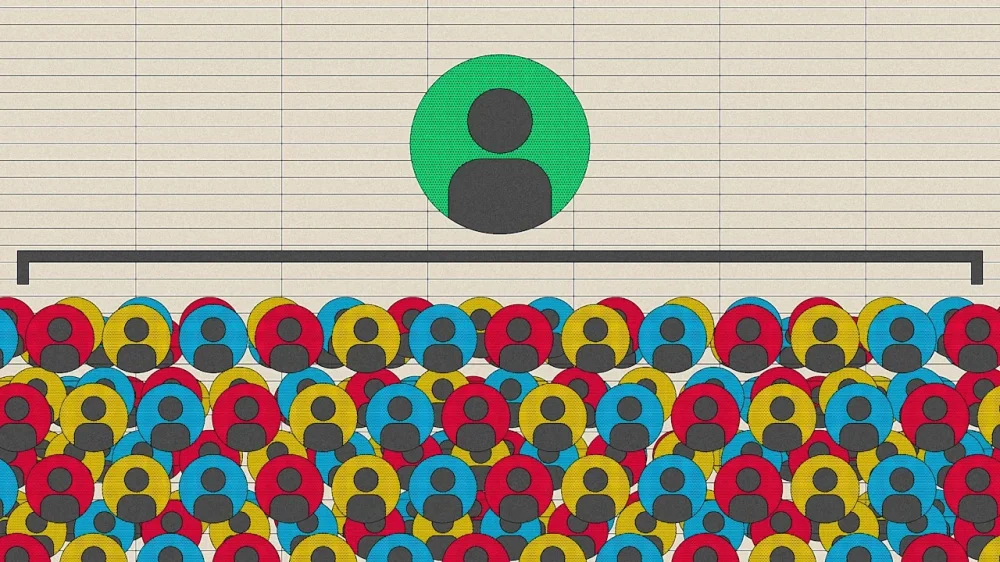
If you’re a manager today, your job may well be changing. That is, if it hasn’t already. As companies continue to compress their org charts and axe layers of middle management, a new role is emerging: the “supermanager.” Leaders are finding themselves responsible for significantly more direct reports and broader responsibilities. And in many industries, the trend shows no sign of slowing. A Gallup survey published in January, citing data from the Bureau of Labor Statistics, found that the average number of reports managers have increased from 10.9 in 2024 to 12.1 in 2025. The share of managers overseeing 25 or more employees has also grown in the past year, with 13% now supervising teams that large. This long-term increase in managerial span of control has been described as part of the “Great Flattening.” It is being driven by several forces, including leadership churn, layoffs targeting middle management layers, and the AI boom, and organizations increasingly see fewer reasons to maintain multiple management layers. Some workplace experts argue the shift is overdue, pointing to years of bloated management structures. Others warn the trend is backfiring, leaving employees lost in the noise and saddled with unrealistic demands. Either way, the supermanager is becoming commonplace across countless industries. When bigger teams lead to burnout and turnover “The role is changing,” Jennifer Dulski, the CEO and founder of the AI-assisted team performance platform Rising Team, tells Fast Company. “Every manager can now become a supermanager.” Michele Herlein, a former senior HR leader turned leadership expert who holds a doctorate in business administration, tells Fast Company that slimming down an organization can have immediate benefits, like reducing costs, and speeding up decision-making. But when organizations increase spans of control without redesigning the role itself, the consequences ripple quickly. “When people are reactive instead of proactive—putting out fires instead of preventing them—chaos follows,” Herlein says. “When one megamanager is burnt out, the entire department feels it.” Leena Rinne, vice president of leadership, business, and coaching at Skillsoft, tells Fast Company that companies are effectively creating a new leadership role without acknowledging it. “If you’re going to have a flat organization and a lot of direct reports, you better be thinking about what the skills are that that leader needs and equipping them with those skills,” Rinne says. She believes the supermanager era can work—but “most organizations are skipping that step,” she says. Rinne experienced the shift firsthand, managing 80 direct reports in one previous role. It was very different from managing eight: She needed absolute clarity on her vision and strategy rather than filling her time with individual one-on-one meetings. The problem, she argues, is that many organizations are flattening their structures, but not evolving how they support managers. “Organizations think, ‘oh, if we just put more pressure on them, they’ll figure out how to do it more effectively’,” she says. “Then they don’t give them the training, the tools, the skills, the clarity, the vision—all of these things that should come from higher levels of leadership.” The model isn’t necessarily broken—but the support often is Dulski, who previously held leadership roles at Yahoo, Google, and Facebook, agrees that the supermanager era can work if companies rethink what management is for. Before the flattening, she argues, many managers oversaw too few people. “My personal view is that five to seven has been the right zone,” she says. “And with the right tools, we can probably get to 10 or 12 fairly easily.” But the benefits aren’t automatic. To make it work, supermanagers should spend less time on administrative tasks and more time on what Dulski calls “the two C’s”: clarity and compassion. That means prioritizing fewer, clearer goals and using systems to replace constant supervision and micromanagement, which some have relied on to climb the traditional career ladder. “Great managers are like great sports coaches—they show clearly what winning looks like, have everybody clear on what their role is, and then they step back,” she says. “Managers are not doing a good job when you put very little support into helping them understand their role and training them to be good at it.” AI can help with this, but technology alone won’t solve everything, Dulski warns. “It’s counterintuitive to a lot of people,” Dulski says, “but the success of future managers and leaders lives at the intersection of deep human connection and AI—one without the other will no longer be enough.” When a supermanager hasn’t been given the time and resources to develop those skills, burnout follows. Gallup data has already shown that the workforce is disengaged, so piling additional responsibilities on top of people and expecting them to simply deal with it is only going to compound the problem. As Rinne says: “You can’t flatten your way to growth.” How to survive and succeed as a supermanager The “Great Flattening” is likely to continue, fueled by hybrid working, cost pressures, faster decision cycles, and the reduced need for oversight enabled by AI tools. It looks like supermanagers are becoming the norm as a result, so those suddenly thrust into this role should try to make it work, but only if their organization is implementing the model thoughtfully and intentionally, rather than out of panic. The supermanager era will be defined about leading differently, with clear goals, transparent communication, and leadership development to make it a sustainable one, experts say. “I think most organizations don’t invest in their leaders enough, period,” Rinne says. Herlein agrees, adding that a lot of supermanagers are stuck on a hamster wheel, not advancing, because they’re running on fumes. “It’s not that the model is broken,” Herlein says. “They just can’t do it without the broader organizational support and resources—they can’t do it alone.” Thriving as a supermanager means distinguishing between the two paths ahead: embrace this new way of leading, or recognize when the environment isn’t sustainable, and jump ship. View the full article
-
I’ve worked remotely since 2006 (way before it was common). However, my days were filled with calls to colleagues and DMs to chat about everything from work to what we had planned for the weekend. Now I’m a solopreneur. I have occasional calls with clients, but they’re rare. Most of my days are spent working alone. In many ways, this is great since I have the freedom to work however and whenever I want. But staying motivated when it’s just me requires being really thoughtful about how I work. According to a 2025 report by Leapers, nearly half of self-employed professionals feel lonely occasionally or some of the time. One in five feels lonely or isolated often or always. It can be really hard to stay motivated when you’re working in isolation. You have to create your own structure and find ways to keep going without other people around. Design your own workday Traditional 9-to-5 hours don’t always make sense when you work alone. You don’t have to start at 8 a.m. just because that’s when your clients start working. You can work when you’re most productive—but you have to make sure you actually get stuff done during that time. For example, I still mostly follow a traditional workday schedule because I have kids, and that’s when they’re in school. However, I also find that I’m incredibly productive early in the morning, before anyone else is awake. I have the least energy in the evenings, so my day often ends at 3:30 or 4 p.m. Time-blocking helps create structure, even when no one is holding you accountable. I block off chunks for deep work, admin tasks, and meetings. Seeing my calendar filled in is like making an appointment with myself—like I have somewhere to be (even if that somewhere is my home office). If you’re not sure when you do your best work, track it for a week. Note when you feel focused versus when you’re dragging. Then build your schedule around when you have the most energy, not traditional working hours. Create a “work mode” environment When your home is also your office, it’s really easy to blur boundaries. The dishes and laundry are right there. Creating separation—even artificial separation—can help signal to your brain that it’s time to focus. Small rituals work surprisingly well. For me, it’s making a cup of coffee, closing the door to my home office, and putting on a specific playlist to start my morning. These are my mental switches to get into “work mode.” I do work only at my desk (unless I’m traveling). If you don’t have a dedicated workspace, find other ways to create that boundary. Some solopreneurs work in a specific corner of a shared room or use only certain apps during work hours. You can use headphones to block distractions. The ritual is the important part, not the specifics. Work alongside other people When you work for an employer, you have some outside accountability to get your tasks done. Whether it’s your manager or a teammate, you know that other people are “watching” you (either in an office or metaphorically). When you work alone, you have to actively find ways to be around other people. Working with others can improve your focus, increase your motivation, and reduce procrastination (a concept known as “body doubling”). If you find it hard to stay on task while running your solo business, body doubling can make a huge difference. Virtual coworking has become popular for this reason. Platforms like Flow Club or FLOWN let you work alongside other people on video for a specific period of time (one hour, two hours, etc.). I’ve also done casual video calls with fellow solopreneurs where we just work together silently. If you join a virtual coworking session, come with a specific project or task that you’d like to complete during the allotted time. If virtual coworking isn’t your thing, try working from a coffee shop, library, or coworking space occasionally. Even once a week can break up the isolation and give you a change of scenery. You still get the benefit of body doubling when you’re in a room with other people, even if they’re not connected to you in any way. Make working alone work for you Working solo means you don’t have a lot of external cues. You don’t realize how much you rely on other people and your work environment to keep you motivated until you’re on your own. Suddenly, it’s a random Tuesday at 10 a.m. and you have no desire to work—even with a looming client deadline. When you intentionally design your workday and find small ways to simulate accountability, motivation will follow. You’ll realize that you don’t need a boss, coworkers, or an office to stay on track. You just need systems that work for you. View the full article

-
Explore the essentials of AI prompt tracking. Discover strategies to improve your visibility in AI search engines and analytics. The post How To Set Up AI Prompt Tracking You Can Trust [Webinar] appeared first on Search Engine Journal. View the full article
-
Figures come as BoE considers when next to cut interest ratesView the full article
-
AI models default to familiar brands. What makes them mention your company instead of a bigger or more established competitor? The post 5 Ways Emerging Businesses Can Show up in ChatGPT, Gemini & Perplexity appeared first on Search Engine Journal. View the full article
-
The business world’s most exclusive club has always been the boardroom. For decades, it has operated as a roped-off circle of experience, where pattern recognition, war stories, and collective gut instinct guided the biggest decisions. But the most recent quarterly earnings calls and 2026 spending projections across industries from tech to finance make it clear: That era is ending. As business complexity explodes and competitive cycles compress, those old methods are showing their limits. Artificial intelligence is exposing blind spots, surfacing inconvenient truths, and rewriting how boards govern, challenge, and lead. The transformation goes beyond adding new tools and technologies to the boardroom playbook. AI is changing how directors think, what they question, and how they hold management accountable. And as AI matures, it’s transforming boardrooms from bastions of intuition into engines of continuous intelligence. Here are three ways that shift is unfolding, and how forward-thinking boards are adapting. Data Finally Beats Anecdotes “In my experience” doesn’t cut it anymore. AI can process customer behavior patterns, market signals, and competitive shifts faster and more accurately than any human can. When a director recalls how a similar situation played out 15 years ago, AI can instantly test whether that approach worked then, and whether it would still work today. Leading boards are now requiring management to back up claims with AI-driven analyses alongside traditional reports. Gut instinct still has a role, but it’s being paired with evidence-based validation. Boards and leaders must learn to partner with AI’s analytical horsepower, even (or especially) when it feels unnatural or risk being left behind. Predictive Intelligence Forces Long-Term Thinking Boards often fall into the trap of short-termism, reacting to the last quarter rather than anticipating the next disruption. AI changes that. Predictive models can now forecast churn months in advance, identify market shifts before they appear in analyst reports, and simulate how strategic moves might play out under different scenarios. This pushes boards to engage in true foresight: asking what’s next, not what happened. It extends the time horizon of governance from postmortem analysis to strategic anticipation. New Skills Are Redefining Who Belongs in the Boardroom Board composition must evolve. The traditional mix of former CEOs, financial experts, and industry veterans, valuable as they are, is no longer sufficient. Boards now need directors who understand data governance, algorithmic bias, and digital operating models. That doesn’t mean replacing experience with youth, but pairing wisdom with fluency. Forward-thinking boards are addressing this through structured approaches: creating dedicated AI oversight committees, partnering long-serving directors with AI-savvy advisors, and requiring all directors to complete AI governance education programs. The goal isn’t to turn every director into a technologist, but ensure that every director can think critically about AI’s strategic and ethical implications. What’s Next? Boards have always made decisions based on data—but until now, that data arrived slowly, selectively, and often filtered through human bias. AI changes the tempo and texture of governance. It challenges assumptions in real time. Companies whose boards resist this shift will find themselves making yesterday’s decisions about tomorrow’s challenges. Those who embrace it will lead with sharper foresight, faster adaptation, and deeper accountability. The choice isn’t whether to embrace AI in governance—it’s whether boards will use it to lead or follow. View the full article
-
When managing payroll, small businesses need reliable software to streamline their processes. The top five automated payroll solutions can help you handle tax calculations, integrate HR functions, and guarantee compliance with ease. Each option offers unique features customized to different needs. For instance, some excel in flexibility, whereas others provide extensive integrations. Comprehending these differences can greatly impact your payroll efficiency. Let’s explore how each solution stands out and what it means for your business. Key Takeaways ADP RUN offers Payroll AutoPilot for accurate tax calculations and timely payments, specifically designed for small businesses. Gusto provides integrated payroll and HR management with unlimited payroll runs and next-day direct deposits, starting at $49/month plus $6/employee. QuickBooks Payroll features extensive integration capabilities, automating tax calculations, and providing a user-friendly interface for managing payroll reports. OnPay adapts to diverse workforces, offers employee self-service features, and ensures compliance with automated tax calculations, starting at $49/month plus $6/employee. SurePayroll delivers affordable payroll processing with customizable reports and supports various employee types, ensuring tax compliance and customer support accessibility. ADP RUN: The Comprehensive Payroll Solution for Small Businesses When you’re managing a small business, having reliable payroll software can make a significant difference in your operations. ADP RUN stands out as a thorough automated payroll system designed particularly for small businesses. Its Payroll AutoPilot feature guarantees accurate tax calculations and timely employee payments, simplifying payroll automation. The platform likewise includes advanced HR tools and compliance management to help you navigate federal, state, and local regulations as your business grows. With a top-rated mobile app, you can manage payroll tasks on-the-go, further enhancing accessibility for both you and your employees. ADP RUN’s AI-powered error detection minimizes payroll mistakes, reducing the risk of costly penalties associated with incorrect payroll processing. Moreover, you receive one-on-one support from HR professionals, guaranteeing personalized assistance customized to your particular needs. This combination of features makes ADP RUN an ideal choice for small businesses looking to streamline their payroll operations effectively. Gusto: Integrated Payroll and HR for Seamless Management Gusto provides an integrated payroll and HR platform that simplifies management for small to medium-sized businesses, starting at just $49 per month plus $6 per employee. This service automates tax calculations and filings, guaranteeing your business complies with federal, state, and local regulations effortlessly. With Gusto, you can run unlimited payrolls and enjoy next-day direct deposits, making payroll processing both efficient and timely for you and your employees. Furthermore, Gusto integrates with over 100 applications, including popular accounting software like QuickBooks, enhancing your overall business operations. You likewise receive dedicated onboarding support across all packages, which helps guarantee a smooth shift to Gusto’s payroll solutions. Whether you’re new to payroll management or looking to streamline your existing processes, Gusto’s features are designed to meet your needs, allowing you to focus more on growing your business rather than getting bogged down in administrative tasks. Quickbooks Payroll: Payment Management With Extensive Integrations For businesses seeking a streamlined approach to payroll management, QuickBooks Payroll stands out with its extensive integration capabilities. This platform connects seamlessly with various accounting software, including QuickBooks itself, simplifying financial management. With unlimited payroll runs and next-day direct deposit, you can guarantee timely payments, improving flexibility for everyone involved. Additionally, QuickBooks Payroll automates tax calculations and compliance support, helping you avoid costly mistakes. The user-friendly interface makes managing employee data and payroll reports straightforward, as bundled features like expense tracking and automatic payment reminders further boost your payment management. Feature Benefit Unlimited Payroll Runs Flexibility for pay schedules Next-Day Direct Deposit Timely payments for employees Automated Tax Calculations Reduced risk of costly errors User-Friendly Interface Simplified payroll management With these capabilities, QuickBooks Payroll is an excellent choice for small businesses looking to optimize their payroll processes. OnPay: Flexible Payroll Options for Diverse Workforces OnPay offers flexible payroll options that adapt to the unique needs of diverse workforces, making it an ideal solution for businesses with both employees and contractors. This platform simplifies payroll management with a user-friendly interface, allowing you to run payroll as often as needed without incurring extra charges. Key features include: Automated tax calculations and filings to guarantee compliance with federal, state, and local regulations. Support for both employees and contractors, streamlining payment processes. Employee self-service features, providing access to pay stubs and tax documents. A budget-friendly pricing model, starting at $49 per month plus $6 per employee. These features not just improve transparency and engagement among your workforce but additionally minimize the risk of costly errors. With OnPay, you’ll have an all-encompassing payroll system that meets the demands of your growing business. Surepayroll: Affordable Payroll Processing With Essential Features When you’re looking for an affordable payroll processing solution, SurePayroll stands out as a practical choice for small businesses seeking vital features without the burden of high costs. Starting at a competitive rate, it offers fundamental online payroll processing that fits your budget. You’ll appreciate its ability to generate customizable payroll reports, allowing you to gain insights customized to your specific needs. SurePayroll supports various employee types, including both contractors and full-time employees, which adds flexibility for your diverse workforce. Furthermore, the platform handles tax services, ensuring compliance with federal, state, and local regulations, which helps reduce the risk of costly penalties. If you ever need assistance, customer support is readily available via phone, email, and chat during weekdays, ensuring you’re never left without help. Frequently Asked Questions What Are the Best Payroll Softwares? When considering the best payroll software, you’ll find several strong options. Gusto and OnPay both start at $49 per month, offering extensive features for small businesses. If you’re already using QuickBooks, QuickBooks Payroll integrates seamlessly, starting at $50. ADP RUN thrives in detailed reporting but lacks transparent pricing. For affordability, Square Payroll starts at $35, providing unlimited payroll runs. Evaluate your business needs to choose the right software for you. Who Is Better Than Paychex? When considering alternatives to Paychex, Gusto and ADP RUN emerge as strong contenders. Gusto offers an integrated payroll and HR solution, ideal for small to medium-sized businesses, whereas ADP RUN provides advanced payroll processing with AI-driven error detection. OnPay is another budget-friendly option, praised for its user-friendly interface. If you prioritize seamless accounting integration, QuickBooks Payroll might suit your needs better than Paychex, providing extensive payroll management features to improve efficiency. What Is the Best Technology Tool to Create Automated Payslips? To create automated payslips efficiently, you should consider using payroll software that integrates vital features like customizable templates and direct deposit options. Tools like Gusto or ADP offer these functionalities, allowing you to tailor payslips to include deductions, bonuses, and contributions specific to your business needs. Additionally, AI-powered error detection helps you minimize inaccuracies, ensuring compliance with tax regulations as you streamline the payroll process for timely employee payments. Does ADP Automate Payroll? Yes, ADP automates payroll processing effectively. With features like Payroll AutoPilot, it calculates wages, deductions, and taxes automatically, reducing errors. The platform likewise handles tax calculations, filings, and payments, ensuring compliance with various regulations. You can access ADP’s mobile app, which allows you to manage payroll anytime, anywhere. Furthermore, its AI-driven error detection helps maintain accurate payroll records, simplifying your payroll tasks markedly and enhancing overall efficiency in your business operations. Conclusion In conclusion, choosing the right automated payroll software can greatly improve your business’s efficiency and accuracy. Each of the top five solutions—ADP RUN, Gusto, QuickBooks Payroll, OnPay, and SurePayroll—offers unique features customized to different needs. By comprehending these options, you can select a solution that best aligns with your business requirements, ensuring streamlined payroll processes, reduced errors, and enhanced compliance. Investing in the right payroll software is crucial for maintaining smooth operations and supporting your workforce effectively. Image via Google Gemini and ArtSmart This article, "Top 5 Automated Payroll Software Solutions" was first published on Small Business Trends View the full article
-
When managing payroll, small businesses need reliable software to streamline their processes. The top five automated payroll solutions can help you handle tax calculations, integrate HR functions, and guarantee compliance with ease. Each option offers unique features customized to different needs. For instance, some excel in flexibility, whereas others provide extensive integrations. Comprehending these differences can greatly impact your payroll efficiency. Let’s explore how each solution stands out and what it means for your business. Key Takeaways ADP RUN offers Payroll AutoPilot for accurate tax calculations and timely payments, specifically designed for small businesses. Gusto provides integrated payroll and HR management with unlimited payroll runs and next-day direct deposits, starting at $49/month plus $6/employee. QuickBooks Payroll features extensive integration capabilities, automating tax calculations, and providing a user-friendly interface for managing payroll reports. OnPay adapts to diverse workforces, offers employee self-service features, and ensures compliance with automated tax calculations, starting at $49/month plus $6/employee. SurePayroll delivers affordable payroll processing with customizable reports and supports various employee types, ensuring tax compliance and customer support accessibility. ADP RUN: The Comprehensive Payroll Solution for Small Businesses When you’re managing a small business, having reliable payroll software can make a significant difference in your operations. ADP RUN stands out as a thorough automated payroll system designed particularly for small businesses. Its Payroll AutoPilot feature guarantees accurate tax calculations and timely employee payments, simplifying payroll automation. The platform likewise includes advanced HR tools and compliance management to help you navigate federal, state, and local regulations as your business grows. With a top-rated mobile app, you can manage payroll tasks on-the-go, further enhancing accessibility for both you and your employees. ADP RUN’s AI-powered error detection minimizes payroll mistakes, reducing the risk of costly penalties associated with incorrect payroll processing. Moreover, you receive one-on-one support from HR professionals, guaranteeing personalized assistance customized to your particular needs. This combination of features makes ADP RUN an ideal choice for small businesses looking to streamline their payroll operations effectively. Gusto: Integrated Payroll and HR for Seamless Management Gusto provides an integrated payroll and HR platform that simplifies management for small to medium-sized businesses, starting at just $49 per month plus $6 per employee. This service automates tax calculations and filings, guaranteeing your business complies with federal, state, and local regulations effortlessly. With Gusto, you can run unlimited payrolls and enjoy next-day direct deposits, making payroll processing both efficient and timely for you and your employees. Furthermore, Gusto integrates with over 100 applications, including popular accounting software like QuickBooks, enhancing your overall business operations. You likewise receive dedicated onboarding support across all packages, which helps guarantee a smooth shift to Gusto’s payroll solutions. Whether you’re new to payroll management or looking to streamline your existing processes, Gusto’s features are designed to meet your needs, allowing you to focus more on growing your business rather than getting bogged down in administrative tasks. Quickbooks Payroll: Payment Management With Extensive Integrations For businesses seeking a streamlined approach to payroll management, QuickBooks Payroll stands out with its extensive integration capabilities. This platform connects seamlessly with various accounting software, including QuickBooks itself, simplifying financial management. With unlimited payroll runs and next-day direct deposit, you can guarantee timely payments, improving flexibility for everyone involved. Additionally, QuickBooks Payroll automates tax calculations and compliance support, helping you avoid costly mistakes. The user-friendly interface makes managing employee data and payroll reports straightforward, as bundled features like expense tracking and automatic payment reminders further boost your payment management. Feature Benefit Unlimited Payroll Runs Flexibility for pay schedules Next-Day Direct Deposit Timely payments for employees Automated Tax Calculations Reduced risk of costly errors User-Friendly Interface Simplified payroll management With these capabilities, QuickBooks Payroll is an excellent choice for small businesses looking to optimize their payroll processes. OnPay: Flexible Payroll Options for Diverse Workforces OnPay offers flexible payroll options that adapt to the unique needs of diverse workforces, making it an ideal solution for businesses with both employees and contractors. This platform simplifies payroll management with a user-friendly interface, allowing you to run payroll as often as needed without incurring extra charges. Key features include: Automated tax calculations and filings to guarantee compliance with federal, state, and local regulations. Support for both employees and contractors, streamlining payment processes. Employee self-service features, providing access to pay stubs and tax documents. A budget-friendly pricing model, starting at $49 per month plus $6 per employee. These features not just improve transparency and engagement among your workforce but additionally minimize the risk of costly errors. With OnPay, you’ll have an all-encompassing payroll system that meets the demands of your growing business. Surepayroll: Affordable Payroll Processing With Essential Features When you’re looking for an affordable payroll processing solution, SurePayroll stands out as a practical choice for small businesses seeking vital features without the burden of high costs. Starting at a competitive rate, it offers fundamental online payroll processing that fits your budget. You’ll appreciate its ability to generate customizable payroll reports, allowing you to gain insights customized to your specific needs. SurePayroll supports various employee types, including both contractors and full-time employees, which adds flexibility for your diverse workforce. Furthermore, the platform handles tax services, ensuring compliance with federal, state, and local regulations, which helps reduce the risk of costly penalties. If you ever need assistance, customer support is readily available via phone, email, and chat during weekdays, ensuring you’re never left without help. Frequently Asked Questions What Are the Best Payroll Softwares? When considering the best payroll software, you’ll find several strong options. Gusto and OnPay both start at $49 per month, offering extensive features for small businesses. If you’re already using QuickBooks, QuickBooks Payroll integrates seamlessly, starting at $50. ADP RUN thrives in detailed reporting but lacks transparent pricing. For affordability, Square Payroll starts at $35, providing unlimited payroll runs. Evaluate your business needs to choose the right software for you. Who Is Better Than Paychex? When considering alternatives to Paychex, Gusto and ADP RUN emerge as strong contenders. Gusto offers an integrated payroll and HR solution, ideal for small to medium-sized businesses, whereas ADP RUN provides advanced payroll processing with AI-driven error detection. OnPay is another budget-friendly option, praised for its user-friendly interface. If you prioritize seamless accounting integration, QuickBooks Payroll might suit your needs better than Paychex, providing extensive payroll management features to improve efficiency. What Is the Best Technology Tool to Create Automated Payslips? To create automated payslips efficiently, you should consider using payroll software that integrates vital features like customizable templates and direct deposit options. Tools like Gusto or ADP offer these functionalities, allowing you to tailor payslips to include deductions, bonuses, and contributions specific to your business needs. Additionally, AI-powered error detection helps you minimize inaccuracies, ensuring compliance with tax regulations as you streamline the payroll process for timely employee payments. Does ADP Automate Payroll? Yes, ADP automates payroll processing effectively. With features like Payroll AutoPilot, it calculates wages, deductions, and taxes automatically, reducing errors. The platform likewise handles tax calculations, filings, and payments, ensuring compliance with various regulations. You can access ADP’s mobile app, which allows you to manage payroll anytime, anywhere. Furthermore, its AI-driven error detection helps maintain accurate payroll records, simplifying your payroll tasks markedly and enhancing overall efficiency in your business operations. Conclusion In conclusion, choosing the right automated payroll software can greatly improve your business’s efficiency and accuracy. Each of the top five solutions—ADP RUN, Gusto, QuickBooks Payroll, OnPay, and SurePayroll—offers unique features customized to different needs. By comprehending these options, you can select a solution that best aligns with your business requirements, ensuring streamlined payroll processes, reduced errors, and enhanced compliance. Investing in the right payroll software is crucial for maintaining smooth operations and supporting your workforce effectively. Image via Google Gemini and ArtSmart This article, "Top 5 Automated Payroll Software Solutions" was first published on Small Business Trends View the full article
-
It’s five answers to five questions. Here we go… 1. Should I speak up about a management failure as I’m leaving? I’m a former teacher who resigned to take on a couple of lower key and much less stressful jobs. One of them is as an assistant at an after-school science club for pre-teens run by a nonprofit. It appealed because I could bring my skills and interact with kids (which I miss) but I had little responsibility or admin hassle. I am supposed to rock up and find everything planned and resourced. I’m a “pair of hands” for the session (and am paid accordingly!). But the course leader, Meg, is in her first job out of college and not equipped to do the job, so I have had to take on responsibility for making the sessions succeed. She’s enthusiastic, passionate about the topic, and very grateful for my help. But she has absolutely no teaching experience (or experience working with kids) and her bosses seem to have no interest in training or supporting her. The club leadership is only part of her job and has been mashed together with other, quite different roles within the organization to make a full-time job. No one else is on site when we run the club and I never see the other members of staff. Despite the directors forecasting they are going to expand this program to three times as many kids, they seem to have minimal interest in making sure that anything is done properly. After broaching the need for more in-depth and structured planning with our manager by email, I have been paid an extra hour each week to help Meg prep and set up for that week’s session, but this doesn’t solve the complete lack of structure for this enterprise (for which parents are paying handsomely in the belief that the club is run by trained and qualified teaching staff). Meg tells me that when she raises issues about the club, she is told to circle round to me, her supposed assistant. I am capable of being her support system or even spearheading the development of the program, but a) I didn’t sign up for this, b) I should be being paid more than minimum wage and c) I’m pretty annoyed that her bosses (who include a former teacher) seem to regard delivering interesting and educational science activities as an unskilled job. After the drama of my last job, I have no energy for this. I have already handed in my notice and will not return after the next school holiday. My letter was minimal – just stating that I was giving notice as per my contract. It was acknowledged with a one-line email and that’s it. I feel strongly that Meg has been failed by her bosses and that the club may fold soon unless they find someone who is willing to hold it together for/with her. But is there any mileage in me telling them this in the hope that they might support and train this poor woman in the future? The teacher in me is screaming that someone should say something so that the club is worthwhile for these kids. Or should I just walk away and divest myself of stuff that is exhausting without giving it a second thought? You can do either! Either one is reasonable and defensible. The argument for just walking away is: you’re not paid to solve this level of problem for them, nor did you sign on to do that, and you’ve already told them about the issues. They’ve chosen not to care. Moreover, Meg is well positioned to raise the issues she’s encountering and the support she needs (less so by virtue of only being a year out of college — but it’s still more in her purview than in yours). You’re not obligated to push and push and push until someone listens — especially when, from what you’ve already seen, they may not be interested in listening. On other hand, the argument for speaking up is: if you feel strongly that you want to, and you’ll have more peace of mind by knowing that you did, well … why not? There’s nothing to lose, and if you want to speak your mind, feel free to. But for what it’s worth, an alternative might just be speaking to Meg — telling her that you’re worried she’s being failed by her bosses and explaining what kind of support she should ask for. That might be a useful reality-check for her if she doesn’t have the experience yet to know that this isn’t reasonable … and also to ensure that if the program does fail, she won’t feel like she personally owns that failure. 2. My boss questioned whether it was OK for me to use bereavement leave for a funeral I’ve worked at a small nonprofit for over 20 years. Most employees are remote but, due to the nature of the work, my team is in the office along with several members of senior management including the president, COO, and the head of HR. Last month, my mom passed from Alzheimer’s and no one in management has acknowledged my loss. Senior management expressed concern about the amount of FMLA leave I took when my mom went into hospice just before Thanksgiving, almost like they thought I was lying to get a couple extra days off around the holidays. My supervisor also questioned HR about the “appropriateness ” of using bereavement leave for her funeral. I’m hurt and angry that the organization I’ve devoted 22 years to can’t cough up a sympathy card or that not one of the people I work for, the people I see almost every day can’t be bothered to utter the basic “my condolences. ” I’ve been treated with suspicion rather than sympathy. Before I rage quit, I need to know if this is normal? Or does my office suck? Your office sucks. People who knew about your mom should have given you condolences. And questioning the appropriateness of using bereavement leave for a funeral? What does she think bereavement leave is for? That said, don’t rage quit just yet. Think about how this fits in with what you already knew about this organization and these people. Is it out of character or does it match up with patterns you’d already seen? It’s probably the latter; it just might not have pushed its way to the forefront of your consciousness as much as it’s doing now due to their sheer callousness in this incident. But it’s helpful to see the full picture, even if you do end up ultimately rage quitting over it — both because it’ll help you better understand the environment you’ve been operating in and because it’ll help you spot it better in potential future jobs. 3. Does anyone really like managing? After 15 years in the workforce and seven in my field of specialty, I’ll be starting my first leadership role next week. I’m excited! Leadership and management have always been career goals of mine and even though I know I have a lot of work ahead of me I really think I will make an impact. I’m ready to make mistakes, learn from them, and figure out over the next few years how to be a truly great manager. But I can’t help feeling naive or like I’m missing something. So many people seem to dislike management roles and I know a lot of people who have switched back to individual contribution because they hated it so much. I know it can’t be impossible to like being a manager and I’d love to know how I can increase my chances of actually enjoying this career change, or is it totally personality-based and if I don’t already have the aptitude for it, is it too late for me? There are a lot of reasons why I think I’ll actually be a better leader than IC but based on what I hear from so many people I am worried my confidence is totally ignorant. Managing people is a pain in the ass. It can also be really rewarding if you’re someone who likes people and likes having the tools to make things run the way you can see they should run. Personally, those are the two things I like about it: I find other humans endlessly interesting, and I find it satisfying to be able to solve problems, remove obstacles, and lift up talented people. I’m also willing to have difficult conversations (and mostly see them as interesting opportunities to move everyone forward rather than as events to be dreaded), which is key — if you have the other two things but not that, it’s going to be a struggle. I think if you talk to other people who like managing, you’ll hear similar things. You do need to see authority as just a tool in your toolbox to make things happen. If you like it too much, you can become a tyrant, and if you’re scared of it you’ll become a wimp. Getting the balance right — and having a matter-of-fact orientation toward it — really matters. Related: does anyone actually like being a manager? 4. My boss says we can’t talk about our wages with each other A couple of days ago, our manager called a group together and threatened all of us with write-ups if we were caught discussing our wages. Someone in the group pointed out that it is illegal to try to prevent this. The manager doubled down and said that we had signed away our right to discuss wages when we were all hired. I researched the law and what others had to say, and discovered that this isn’t true. The trouble is, I don’t know what to do. What if I’m wrong and I’m missing information? I asked and it seems that the discussion was only with a single group and not the whole factory, so should I report it to HR? The factory is owned by an international entity, so does that have an effect? I really want to know what to do. I feel like this needs to be reported if this is against our rights but I need my job and I don’t want a target on my back. Yes, if you’re in the U.S. and not in a supervisory role, this is illegal. Your right to discuss your wages and working conditions with coworkers is protected by the National Labor Relations Act, and you can’t sign that away regardless of what paperwork they put in front of you when you were hired. (And if they did ask you to sign that right away, that itself is illegal conduct from your employer.) Whether or not to do anything about it is a different question and depends on (a) your sense of how good your HR is, (b) how much capital you personally have, and (c) how much you care. There are some companies where taking this to HR would very much put a target on your back, even though it shouldn’t (although they should appreciate you highlighting a legal liability for them). So you have to know your own company. But the other option is to just let your coworkers know this policy is illegal and can be disregarded, and continue to discuss wages if you want to. If they try to discipline you over it, you could point out to HR at that point that they’re violating the law. Related: my company wants to stop me from discussing my salary with coworkers 5. My boss is out for several months — will my promotion still move forward? I suddenly got a call from my boss’s boss today, letting my team know that due to unforeseen circumstances, my boss isn’t going to be around for at least the next couple of months. My boss has always been my biggest champion and was actually in the middle of sorting out a promotion for me. I believe his boss would be aware of this, but I’m not fully sure how best to bring it up. What’s appropriate to ask about here? Asking about ongoing ownership of projects seems reasonable to me, along with more logistical stuff, but things like the change of role seem a bit more nebulous. I’m generally a very anxious person so it’s difficult dealing with a sudden change like this. This depends very much on how your office operates and also how far along your boss was in making the promotion happen, but it’s definitely possible that it’s just going to be on hold until he’s back. Still, though, it’s reasonable to say to your boss’s boss (ideally on a call when you’re discussing other things that need to be covered in your boss’s absence), “Agamemnon and I had been talking about moving me to a X role. Is that something that can still progress while he’s away or is it more likely to be on hold until he’s back?” The post should I speak up about a management failure, boss questioned using bereavement leave for a funeral, and more appeared first on Ask a Manager. View the full article
-
Sequoia Capital leading funding deal for David Silver’s start-up Ineffable Intelligence at $4bn valuationView the full article
-
Regulator’s planned climbdown follows lobbying by banks and car groups with in-house lendersView the full article
-
Central banker wants to give Emmanuel Macron and Friedrich Merz the chance to pick her successorView the full article
-
Shipping engines and heat pumps business is being valued at between €5bn and €6bnView the full article
-
Policy decisions grounded in Maga talking points are helping to fuel a PhD exodus from governmentView the full article
-
Arguments about the dangers of falling fertility deserve much closer scrutinyView the full article
-
Bending the UK’s fiscal rules would risk a bond market backlash and a self-defeating rise in borrowing costsView the full article
-
The founder of the $4bn UK start-up talks about his mission to reinvent content creation and how Europe can compete in the global AI raceView the full article