All Activity
- Past hour
-
When the NFL Draft comes to Pittsburgh next week, civic leaders will be using the spotlight to celebrate football’s Steelers—and the city’s growing reputation as a technology and artificial intelligence hub. The events include an AI pitch competition where judges including area native Mark Cuban will award startups from a 1.75 million prize pool—with preference given to companies with a presence in Pennsylvania. There’s a growing number of startups that fit that bill. As the name suggests, VC firm Valley Capital Partners is based in Silicon Valley. But for the past few years, firm general partner Mitchell Kokko has been living across the country in Pittsburgh. The firm considered expanding to a number of cities but was drawn by factors like the area’s universities, relatively affordable housing, a strong business environment, and its location in the Eastern time zone. In Pittsburgh, he says a growing startup scene is taking advantage of strong talent networks, a close-knit business community including nationally known firms, and the area’s low cost of living. “Pittsburgh really offers differentiated networks to founders who are looking to sell to enterprise companies,” says Kokko. “Because it’s a smaller hub than a San Francisco or New York City, the major companies all do business with one another.” And local business leaders are willing to give startups a chance and directly work with their founders, which Kokko says can be critical to the enterprise businesses his firm invests in. “They get faster feedback cycles, and in early-stage startups that can mean the difference between life and death,” he says. Mayor Corey O’Connor, who took office in January, ran on a platform that included support for businesses large and small, through an economic development program he said would help revitalize business districts across Pittsburgh and also keep affordable housing available even as the city grew. Startups are increasingly setting up shop in the city, though some long-time residents have expressed concern about gentrification with rents on the rise, even while still low by national averages. One such startup is Factify, a Valley Capital Partners-backed firm that in January announced a $73 million seed round supporting its efforts to build a next-generation document format that it sees as a potential successor to the PDF. The Tel Aviv-based company deliberately chose Pittsburgh as its first U.S. “base of operations,” says founder and CEO Matan Gavish. That was in part based on its desire to work with a tight-knit community of businesses in regulated industries that would adopt the software and collaborate with one another using Factify’s document standard. The city’s closely linked business community made it a natural choice, he says. “That led us to Pittsburgh from first principles,” says Gavish. In general, Pittsburgh has long had a presence in AI, robotics, biotech, and other areas of technology thanks in part to institutions like Carnegie Mellon University and the University of Pittsburgh. But though it’s been home to buzzy tech businesses from Duolingo to Gecko Robotics, startup founders, college grads, and other young Pittsburghers looking for work have often historically made the trek to the Bay Area or other industry hubs. Nearly half of all Pittsburgh-area college grads leave town after graduation, the Pittsburgh Post-Gazette reported last year. “The joke is that almost every [Steelers] NFL game is a Steelers home game,” says Kokko. “Because there’s so many people that moved all over the country.” In recent times, though, that’s been changing, with startups setting up shop and remaining in the western Pennsylvania city, says Mayor Corey O’Connor. “Now, more and more are starting to stick around, and from those companies you’re seeing spinoffs that create more of a hub in Pittsburgh,” says O’Connor. That sort of a feedback loop can be important to building an entrepreneurial scene, alongside factors like a skilled workforce, a ready stream of business ideas, and funding, says Olav Sorenson, a professor at the UCLA Anderson School of Management who has studied the geography of entrepreneurship. “Oftentimes, some initial startups and startup success are important, almost like an autocatalytic process just to get things started,” he says. Bust and boom The city itself is also looking to help jumpstart the process. O’Connor, who took office in January, has emphasized offering support to businesses looking to start or grow in Pittsburgh, including making it easier to get necessary permits and providing workforce training to get residents ready for today’s jobs. He also fields between 10 and 20 calls per week with businesses, promoting the city’s amenities, including the arts and culture scene and the easy access to the area’s rivers and trails. Of course, those calls also promote the idea that support for business development is available at the highest levels of local government, and O’Connor emphasizes a belief that business growth will help the city’s long-term residents as much as newcomers. “It’s opportunities for the residents in Pittsburgh that may have never thought they’d see a boom like this before,” he says. It’s also a city that can offer businesses physical room to grow, he says, including dormant manufacturing centers dating back to its time as a steel and factory hub. It also delivers relatively affordable housing for employees, with local officials pointing to home and rental prices substantially lower than the national average, let alone high-priced hubs like New York and San Francisco. “The problem with a place like the Bay Area is that it’s become so phenomenally expensive,” says Sorenson. “The same startup could probably get going in a place like Pittsburgh for maybe a third or a quarter the amount of money.” After all, while Pittsburgh’s population has been on the rise in recent years, its Census-estimated 2024 population of just under 308,000 is still far below its official peak of 676,806, last seen around 1950. And the city was last year named the country’s lowest-price large U.S. housing market by realtor.com and frequently makes other lists of affordable American locales. “I think Pittsburgh has a unique advantage that’s driven by some of the structural shifts that happened during the collapse of the steel industry,” says Kokko. “And so, what you have is one of the cities in the United States that at one time was the third-largest business hub in the United States, and so you have infrastructure that can support much larger populations.” “Equitable Development” As the city’s mayor, and the son of a long-time Pittsburgh politician who was himself elected mayor in 2005, O’Connor naturally emphasizes residents’ longstanding pride in the city despite the decline in size. “When you’re a visitor and you go into a neighborhood, or you run into a Pittsburgher, they’re going to tell you what’s so great about Pittsburgh,” he says. Still, the rapid growth of the tech sector has gone hand-in-hand with rising costs and gentrification in many cities, and some local advocacy groups have expressed concern about affordable housing in Pittsburgh in recent years, especially for working class residents. Thousands of low-income families, especially Black families, have been displaced from the city in recent years, according to civic organization Pittsburgh United, which has called for “equitable development” in Pittsburgh. “Our vision of a growing Pittsburgh is a responsibly growing Pittsburgh—a Pittsburgh that includes the folks that have been here forever and for a very long time,” says communications director Kyla Rollins. “And that people that built the city have equitable opportunities to grow alongside this vision of the new Pittsburgh.” It’s a message that’s not outwardly at odds with City Hall, where O’Connor emphasizes work by the city to promote affordable housing. That includes a Housing Opportunity Fund to assist renters and homeowners, and the possibility of working with community groups to turn vacant city-owned lots into new housing. “Big emphasis for us [is] to make sure that if you’re living in your neighborhood now, you’re going to live there 20 years from now,” he says. View the full article

-
My first job was an unusual one, but I learned so many lessons from it that I carried with me throughout my career. I was in my last year at Cambridge and was planning to leave the next year for the Kennedy School of Government at Harvard when a British publisher approached me. He had seen me at a televised Cambridge Union debate speaking on the changing role of women and he wrote to me asking me if I would write a book on the subject. I replied, “Thank you, but I can’t write.” He replied: “Can you have lunch?” So I took the train to London and ended up getting both lunch and a book contract with a modest advance. That was my first lesson: take risks. People starting out, especially women, often think they’re not ready. But we’re usually more ready than we think. You don’t have to know everything before taking a leap — you can learn on the job. So when an unexpected opportunity arises, trust yourself. It was a lesson that has served me well not only as a writer, but also in launching a company (The Huffington Post), which I’d never done before, and then in leaving a successful media company to launch another company (Thrive Global) in a completely new field, healthcare. My first book turned out to be an international bestseller, published around the world, then everybody wanted me to write another book on a similar topic. And that was my second lesson. I wanted to explore new territory. I didn’t want to be stuck writing about the same topic again and again. So I wrote a book about political leadership and learned the lesson of pivoting. Careers are rarely linear and that’s a good thing. We can often plod along in the comfort and security of what we know. That can even be a very successful strategy, if we’re defining success in the narrow terms of a career. But leaving our comfort zone and pivoting to something new forces us to learn new things, challenge ourselves, question our old assumptions and ways of working. In other words, it forces us to grow and evolve, which is a broader metric of success. My third lesson came from the fact that my second book was rejected by 36 publishers. By then, I’d run out of money. And at that point, I might have said, “You know what, 36 publishers think this is not worth publishing. Maybe I’ve picked the wrong career.” As I was walking down St. James’s Street in London, where I was living at the time, depressed and wondering what I should do, I saw a Barclays bank. Armed with little more than Greek chutzpah, I asked to see the bank manager and asked for a loan. And for some reason, he gave it to me, even though I had zero assets! That made it possible for me to continue submitting my manuscript until finally I got a yes! So that lesson was one of perseverance and resilience. My mother always said that failure is not the opposite of success, it’s a stepping stone to success. Sometimes, as in my case, there are lots of stepping stones. And perseverance and resilience are what carries us across them. And some Greek chutzpah doesn’t hurt either. My First Job is a recurring series in which prominent business leaders share what their first job was and what they learned from it. View the full article

-
Threat comes as tensions rise between Washington and London over Iran warView the full article
- Today
-
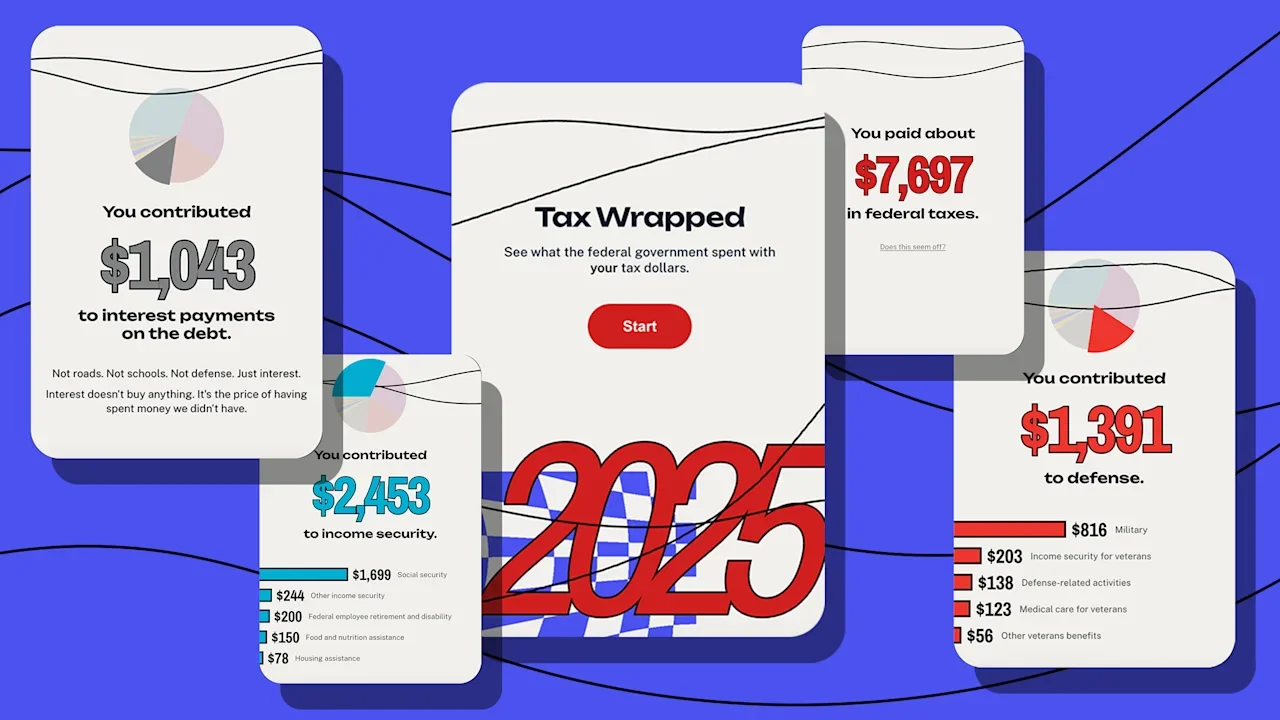
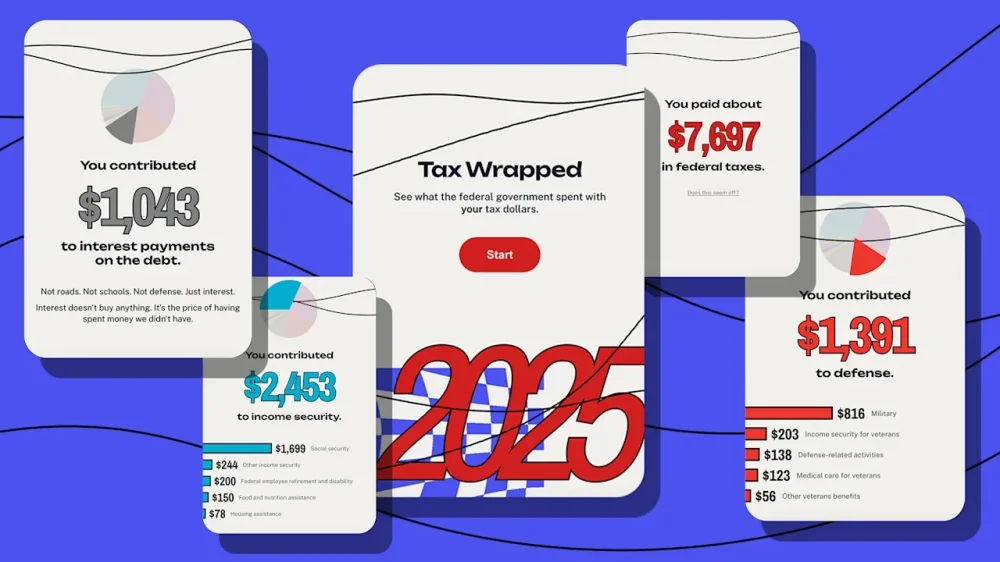
It’s April again, and that means hundreds of millions of Americans have been logging on to H&R Block or heading to their accountant to see how much they owe in taxes for 2025. For many who file, that dreaded number can feel like a nebulous sum. So how does the federal government use that hard-earned cash? There’s a website breaks it down for you, Spotify Wrapped-style. Tax Wrapped is the latest digital project from Riley Walz, the technologist responsible for viral websites including Find My Parking Cops, a tool to track San Francisco’s parking authorities; Looksmapping, a map that ranks restaurants based on the “hotness” of their patrons; and, most recently, the JSuite, a series of tools designed to help users navigate the Epstein files. Walz’s projects almost always combine a trendy, eye-catching format with an underlying thread of social commentary, and Tax Wrapped is no different. It remixes the Wrapped format—which is so popular that it’s become ubiquitous across brands such as Uber Eats, YouTube, Snapchat, and even LinkedIn—with a genuine lesson in financial literacy. How to use Tax Wrapped When users open Tax Wrapped, they’re greeted with a welcome screen that’s clearly taking a page out of 2025’s Spotify Wrapped design—this time rendered in red, white, and blue rather than a mix of neons. The tool requires a few details to calibrate: the user’s total taxable income, filing status, number of dependents, and work status. From there, it makes an educated calculation on how much the user owed in taxes in 2025, which can be manually edited to the exact sum if needed. Walz broke down your contribution to the federal goverment’s annual spending using a few different touchpoints, according to the website’s methodology section. He derived the government’s top-line spending totals from the U.S. Treasury’s monthly treasury statement, which Walz writes is “the standard source for deficit math and official category totals.” For more granular budgetary breakdowns, he pulled data from USAspending’s File A accounts-balance data, which helped him split larger categories, like income security, into smaller subcategories, like Social Security and housing assistance. The data appears in both bar chart and pie chart form to help users digest it visually. By hovering over a given category, users can read a short description of what each subheading means and how it’s calculated. An American who made $50,000 in 2025, for example, can see that they contributed $95 to natural resources, $2,124 to health, and $1,391 to the military (just $123 of which went to medical care for veterans). They can also dive deeper into how the federal government used taxes to pay off national debt—which, as the tool explains, has been racking up since 2001 and currently sits at more than $39 trillion. “The catch?” it reads. “Just like credit cards, the national debt has interest payments the government needs to pay.” The aforementioned worker will have contributed $1,403 to interest payments on the national debt in 2025. “Not roads. Not schools. Not defense,” Tax Wrapped reads. “Just interest. Interest doesn’t buy anything. It’s the price of having spent money we didn’t have.” Tax Wrapped may not necessarily be an uplifting tool, but it’s an eye-opening exercise in understanding how the American tax system works—and in internalizing that our tax money isn’t simply floating into the void. “Federal spending is usually described in ways that feel abstract,” the site reads. “Everything is huge, everything is rounded, and the scale is hard to feel. This project makes those numbers personal.” View the full article
-
Editor’s note: Dr. Cree Scott spent her career solving a critical puzzle: why some leaders inspire unwavering loyalty while others struggle with constant turnover, despite similar technical skills and business acumen. As a psychologist and workplace performance expert, her expertise lay in helping leaders navigate the psychological dynamics that drive performance, organizational resilience, and sustainable growth. She was the CEO/founder of Serenity Psy Consulting and served on the Harvard Business Review Advisory Council. Her book, The Missing Peace in Leadership: Reclaiming Connection and Purpose in a World of Distraction, was published on April 14, 2026. Dr. Scott completed her book just weeks before she passed away in December 2025. She did not live to see it published. What follows is an excerpt from that book. Let me tell you about Paulo. He joined our video call with his usual polished demeanor, revealing none of the turbulence beneath. A mid-level manager with a track record of success, he was the kind of person others described as “driven, sharp, and always in control.” But his team was disengaged, his decisions were being questioned, and his confidence was quietly unraveling. And he had no idea why. At first, he blamed the usual suspects: company politics, shifting market demands, generational differences. But when I asked him to describe his own role in recent conflicts, he paused, genuinely confused by the question. “What do you mean, my role?” Through our coaching sessions, the pattern became clear. Paulo would dominate meetings, cutting off team members mid-sentence without realizing it. He dismissed feedback as “resistance to change” without considering that his approach might be the problem. When frustrated, he’d become cold and withdrawn—with no awareness of how that was shutting his team down. Paulo’s story isn’t unusual. It’s everywhere. Brilliant, capable people unknowingly disconnected from the one thing they need most to lead, succeed, and thrive: themselves. The Myth Leaders Tell Themselves Here’s the story most leaders carry: I’m different at work. I’m on. I’m focused. Whatever is going on at home stays at home. I understand the appeal. It feels like discipline. Like professionalism. Like exactly the kind of thing a high performer should be able to do. But it’s not true. And the cost of believing it is enormous. You’re a whole person—not a work person and a home person operating separately. The leader who learns to pause and respond thoughtfully instead of reacting brings that same presence to a tense board meeting, a difficult conversation with their spouse, and every space in between. You can’t be disconnected at home and magically connected at work, or vice versa. How you show up is who you are. The colleague who stops listening the moment they feel challenged? They’re doing the same thing at dinner. The leader whose team never brings them bad news? Their kids probably don’t either. Disconnection doesn’t respect your calendar. It doesn’t punch out at 6 p.m. It travels with you. What Conscious Connection Actually Is The answer isn’t trying harder to be present. The answer is building what I call integrated connection—a framework rooted in three simultaneous practices: connection to yourself, connection to the people around you, and connection to something larger than any single outcome. Most people focus on one at a time. But sustainable peace—and sustainable leadership—requires all three working together. When any one breaks down, you feel it everywhere. As unease. As irritability. As that low-grade sense that something is off but you can’t name it. Connection to me isn’t self-care Sundays or journaling. It’s uncovering the hidden parts of yourself that are quietly shaping everything you do. What drives you? What holds you back? What are you not seeing about yourself that’s affecting every room you walk into? Organizational psychologist Tasha Eurich found that while 95% of people think they’re self-aware, only 10–15% actually are. That means most of us are walking around with blind spots the size of billboards, completely unaware of how we come across or how our actions affect others. When Paulo finally saw his own pattern—the control, the dismissiveness, the defended confidence—he didn’t just become a better manager. He became a better father. A better partner. Not because he applied a leadership framework to his personal life. But because he was finally seeing himself clearly, and that clarity travels. Finding Your Missing Peace When you lead from integrated connection, something shifts that people can’t quite name but immediately feel. You become the one who makes the difficult look manageable. The one people want to follow. Not because you work harder—but because you’re operating from a fundamentally different foundation. Peace is not separate from leadership. It is the missing piece of leadership. That peace doesn’t live in your office, your title, or your next performance review. It lives in knowing yourself—fully, honestly, without excuses. It lives in the willingness to see that the way you lead and the way you live are not two different things. They never were. View the full article

-
Large investment banks have become increasingly reliant on markets financing, report saysView the full article
-
Google just handed SEOs a new way to hit spammy sites with manual actions and get them deindexed from search results. The post Google Just Made It Easy For SEOs To Kick Out Spammy Sites appeared first on Search Engine Journal. View the full article
-
Loanstream allegedly made over 272,000 calls to over 53,000 unique numbers on the Do Not Call registry over a 10-month period, according to a case filing. View the full article
-
In case you didn’t hear, we just went back to the moon. NASA has been heavily promoting the Artemis II mission for months, which concluded on April 10 after its four astronauts splashed down off the coast of California. No doubt, this venture was an objectively awe-inducing feat. The space agency successfully demonstrated the most powerful rocket it’s ever built, the Space Transportation System, and tested Orion, its crew vehicle, with a crew for the first time. NASA’s astronauts also traveled farther into space than ever before, and humans saw the dark side of the lunar surface with their own eyes (another major first). But how excited did the rest of humanity get? Social media analytics companies that Fast Company reached out to shared the numbers. Muck Rack found that between April 1 and 13, there were more than 42 million engagements on major platforms. On April 6 and 7, around the time the crew passed by the moon, there were about 1.3 million mentions of terms related to Artemis II, according to media intelligence platform Cision. Analytics tool Sprout Social says that overall there were more than 100 million engagements on both TikTok and Instagram related to the mission throughout that week. NASA’s YouTube Live coverage saw 61% growth in views from 2022, during the first Artemis I launch, up from 11.4 million to 18.4 million, again according to Sprout. Most of the streaming platforms that aired the lunar mission didn’t respond to Fast Company’s request for comment, but during the 6 p.m. hour on the day of the launch, NBC News Now saw its fourth-largest audience on record, according to Adobe Analytics and CloudFront. The rocket ship emoji was—unsurprisingly—the most popular emoji used in Artemis-related posts, according to the SaaS platform Sprinklr. NASA, meanwhile, plans to release its own calculations soon. While there certainly was excitement about Artemis and the return to the moon, the viewing numbers came nowhere near those of the Apollo 11 moon landing in 1969, which roughly 500 million people watched on television. To some, this comparatively more limited engagement with Artemis is evidence that space has lost its shine and is no longer as galvanizing as it once was. For others, the attention Artemis II did attract is evidence that space can still be a major global news story, even a positive one, despite an increasingly bifurcated media environment chock-full of serious and often depressing headlines. Consider some other numbers: Nielsen, which tracks networks like Fox News and CNN, reports that about 18.1 million people in the U.S. watched live coverage of the Artemis II launch on the evening of April 1. That’s a lot, but also notably fewer than the Super Bowl on February 8 (125.6 million), or even the president’s State of the Union address later that month (32 million). Muck Rack found that the number of articles written about the Iran war far exceeded coverage of the Artemis mission from launch day on April 1 to splashdown 10 days later. Even NASA administrator Jared Isaacman, before the launch, seemed to acknowledge that Artemis would be competing with other stories. “Space captivates everyone,” Isaacman told Politico. “Now, I understand there’s a lot going on in our lives these days. As I tell a lot of folks, when they’re like, ‘Do people realize that we’re about to send astronauts farther into space than ever before, around the moon, to set up for subsequent lunar landing events—do enough people realize that’s happening right now?’ There’s a lot more than the three channels on the television set than there was in the 1960s.” This is not to say that NASA didn’t plan an impressive publicity operation, which included plenty of social media posts and media engagements. NASA promoted a playlist with songs the crew listened to during the mission, and has continued investing in an astronauts-as-influencers approach. The space agency also partnered with streaming companies like Netflix and HBO Max, and provided coverage on its own streaming service. In fact, NASA has a legal obligation to promote and share its content, per the terms of the 1958 Space Act, to the “widest practicable audience.” “Our goal is to reach as many people as possible, whether that is via NASA+ directly, or through other streaming platforms,” Lauren Low, a NASA spokesperson, tells Fast Company. “We are open to working with all platforms and would like to make sure that NASA is available on the platform of your choice.” This largely paid off. A liftoff post on Instagram picked up more than 6 million likes, nearly as many as NASA’s most popular post ever: a shot of the Carina Nebula, captured by the James Webb telescope. TikTok drove the most engagement, with 121 million interactions, which included likes and reposts, according to Sprout Social. That’s despite NASA employees, including astronauts, not being allowed to use TikTok themselves, due to government regulations on some entities associated with China. The mission got a healthy showing in pop culture, too, though some of the earlier efforts—like interviews with Time—ended up coming far ahead of the actual launch, which was delayed several weeks. There were canonical brand replies to NASA tweets, Pop Base coverage, and Saturday Night Live even put on a playful skit about the mission. But for all that effort, it was hard not to get the feeling that a lot of people simply didn’t care. I, admittedly, have the “space bug” and watched the Artemis II launch alongside my father, who remembers seeing the original moon landing. The rest of my family, however, tuned in for a bit, but seemed mostly uninterested. At a party over the weekend, a friend confessed she wasn’t even sure what this mission was about. At a professional meeting, someone told me they found it objectionable that the media was spending so much time covering something that seemed unconnected to the problems on Earth. The attention we did—and didn’t—pay to the mission is a reflection of how much our media environment has changed since the Apollo era. Space activity is always notable, but audiences are far more used to seeing people, even space tourists, bouncing around in orbit than they were in the 1960s. People increasingly get their news from social media, not cable, a transition that favors short-term videos, not weeklong coverage. Today, audiences are segmented via algorithm, which means people are seeing increasingly personalized, and often radically different, feeds. This makes it very hard to galvanize an entire species to tune in to a singular event. Jack Kiraly, director of government relations at the nonprofit Planetary Society, says it’s remarkable that Artemis received the attention that it did, given the crowded news environment. People are genuinely invested in space exploration and want to see progress toward those goals, he says, adding, “The challenge is making sure we bring them along for the full journey of discovery, not just the headline moments.” Asheley Landrum, a professor at Arizona State University who focuses on science engagement, argues, “This administration is really good at thinking about things in terms of ‘Made for TV.’ They’re really thinking about an audience-first approach . . . making sure people know who the astronauts are, talking about it, having it on streaming as well as on television.” Overall, she says, Artemis II was a rare positive news story. As we settle into the next space age, whatever we’re doing up there might just be in the eye of the beholder. Landrum notes that we may refract our memories of prior space missions onto the milestones of the present. For the Apollo generation, the Artemis program evokes nostalgia. For the generation that witnessed the Challenger and Columbia disasters, this potentially provides some catharsis—a moment to see a major manned space launch actually go well. Meanwhile, for even younger generations it’s difficult to disentangle human missions to space from the tech billionaire class building rockets and going on their own joyrides in low Earth orbit. View the full article

-
There’s a good chance you have a Great Value product in your home right now: perhaps chicken nuggets in the freezer, or paper towels on your counter. The brand (Walmart’s largest private label, which launched in 1993) turns up in 9 out of 10 American households. By Nielsen’s count, that makes it the largest consumer packaged goods brand in the United States—bigger than Coca-Cola and Pampers. Until now, Great Value’s packaging has been designed to telegraph low prices: Walmart estimates that these products save the average family more than 35% annually compared to national brand equivalents. Its white background, blocky letters, and straightforward blue logo were meant to signal a no-frills brand with products that are good for your wallet. But in focus groups, Walmart customers expressed that while they appreciate how much money they save, they’re not necessarily proud to have the products out when company comes over. “They want to be proud to buy Great Value,” says Scott Morris, SVP of private brands, food, consumables, and manufacturing at Walmart U.S. “They want to be proud to have it in their home, to share it with their friends and family.” Walmart has heard its customers. Today, the biggest retailer in America announces a comprehensive redesign of Great Value, the first full refresh of the brand in more than a decade. It’s a big task, involving the overhaul of nearly 10,000 food and consumable items across more than 100 categories, that will take place over the next 18 months. The rise of the “shoppy shop” dupe The timing of the rebrand is apt. Inflation has pushed grocery prices up across the board over the past few years, and consumers who might once have defaulted to Whole Foods or a specialty grocer started filling their carts at Walmart, often for the first time. On the company’s February earnings call, Walmart CFO John David Rainey noted that shoppers earning more than $100,000 a year were among the biggest contributors to growth in the quarter—due to those broad economic headwinds, and to the big-box retailer’s strategic response: a deliberate effort to attract those higher-income shoppers over the past five years. Walmart’s Great Value rebrand is part of a broader effort among retailers to make their private labels as compelling to customers as the premium national brands that sit on their shelves. Given how crowded the consumer packaged goods industry is, upscale direct-to-consumer food startups like Brightland, Fishwife, Fly by Jing, and Ghia have historically broken through online with highly branded packaging. Those brands soon landed in small, curated, upscale boutiques (so-called shoppy shops) before securing deals with big retailers like Whole Foods, Target, and, yes, Walmart. This has influenced how the larger retailers like Walmart have designed the branding and packaging of their private-label brands, by presenting them as an affordable alternative with the same quality and shelf appeal. In 2019 Target launched Good and Gather, a food brand that stands out for its approachable, color-on-color premium branding. And discount grocery chain Aldi modernized its own private-label food products last fall. Meanwhile, Walmart has been quietly reshaping its private-label portfolio for years. It launched a premium food line called Bettergoods in 2024 that focuses on global flavors and better ingredients, with the kind of colorful, illustration-forward branding familiar to modern consumers who might also buy upscale DTC products. In terms of product quality improvements, last fall Walmart committed to removing synthetic dyes from all of its private-label food brands by January 2027. It’s also growing its fresh food business under the Marketside and Freshness Guaranteed labels. The efforts appear to be paying off by driving sales among higher-income shoppers. A 2025 survey conducted by A&M Consumer and Retail Group revealed that higher-income shoppers are increasingly choosing private-label products at least in part because they look just as chic as national brands. Great Value doesn’t have to “look cheap” The redesign is a deliberate move to close the consumer sentiment gap between Great Value products and their look by making the packaging cleaner and more elevated, according to David Hartman, VP of creative design at Walmart. The results follow years of consumer testing, such as at a mock store at Walmart’s Bentonville, Arkansas, headquarters, walking through shelf sets to understand how designs read in context. Customer feedback—from call centers, online ratings, and third-party testing—was collected continuously. “The feedback is always on,” Morris says. “We’re able to aggregate it in a manner that helps us drive action.” Great Value scored well on quality, efficacy, and price, but low on packaging. “We wanted to bring the external expression of the brand up to par to what the customer experiences when they buy the brand,” Hartman says. That called for an aesthetic solution that appropriately communicated the products’ high quality. Walmart’s internal creative team was responsible for every part of the redesign, including redrawing the Great Value logo from scratch in a bespoke typeface. It’s larger and more prominent on the packaging, and it comes in a deeper, richer shade of blue than the old version, giving the brand more gravitas. But it’s still within the blue color palette that Walmart is known for. The team tightened up the typography, with careful attention paid to details that most shoppers will never consciously register: Hartman mentions the angle of the two E’s in “Great Value,” which creates a subtle linking shape, like the hint of a smile. But the team was also interested in making sure the packaging communicated important information clearly. Nutrition information is now consistently placed in the upper right corner across all food items, with a color-coded tab system—yellow for key facts—making it easier for shoppers to quickly parse what they’re grabbing, whether they’re in the aisle or scrolling through the app. “We believe great design should be accessible to everyone,” Hartman says. “At our scale, that means creating something that works clearly and intuitively across thousands of individual items so customers can find what matters, faster.” Morris argues that Walmart has spent decades developing its reputation for offering consumers the lowest prices on the market, so it no longer needs to use the packaging to communicate that these products are inexpensive. “We don’t need to make things look cheap to be inexpensive,” Morris says. After all, a product conveys value when it has a sense of being worth your money, and that happens when a brand communicates great quality—at the right price. View the full article

-
Learn how to do a website audit that covers your site’s SEO, AI visibility, user experience, and more. View the full article
-
Government fights off claims of ‘complacency’ from former Nato chief George RobertsonView the full article
-
If you’re looking for free accounting software for your Mac, you have several strong options available. Each software offers unique features customized to different needs, such as invoicing, reporting, and multi-currency support. Some are better for small teams, whereas others cater to micro businesses or offer scalability for growing enterprises. Comprehending which software aligns with your financial management requirements can greatly improve your workflow. Let’s explore these top choices and find the right fit for you. Key Takeaways Wave offers unlimited invoicing and estimates, making it ideal for Mac users without monthly fees. NCH Express Accounts is perfect for small teams, supporting up to five employees with invoice automation. Manager provides robust offline access and extensive features for free, suitable for macOS users. Akaunting is a customizable open-source solution allowing unlimited invoice creation and multi-currency support. GnuCash emphasizes data privacy, featuring a double-entry accounting system and extensive reporting options for personal and small business management. Wave: Best for Invoicing and Estimates Wave stands out as an excellent choice for Mac users looking for free accounting software, particularly regarding invoicing and estimates. This platform allows you to create unlimited invoices and estimates without any monthly fees or hidden costs, making it an ideal solution for freelancers and small businesses. You can manage your finances on the go with its mobile apps, ensuring you have access to your accounts from any device. The extensive reporting dashboard helps you effectively track your income and expenses. Additionally, Wave integrates seamlessly with payment processors like PayPal and Square, streamlining the payment process. Although there are various Linux accounting programs available, none quite match the user-friendliness and financial flexibility of Wave for Mac users. If you’re seeking reliable free accounting software for Mac, Wave is a strong contender that meets your invoicing needs without financial commitment. Zoho Books: Ideal for Micro Businesses If you’re running a micro business, Zoho Books offers a user-friendly interface that simplifies accounting tasks. With thorough reporting features, you can easily track your income and expenses, helping you stay on top of your financial health. Plus, the invoicing and expense tracking capabilities guarantee you manage your transactions effectively, making it a solid choice for small operations. User-Friendly Interface How can a user-friendly interface transform the accounting experience for micro businesses? With Zoho Books, managing finances becomes straightforward and efficient. The intuitive design allows you to navigate the software easily, making accounting tasks less intimidating. Here are some benefits that highlight this ease of use: You can send up to 1,000 invoices, simplifying billing for small operations. The platform’s extensive reporting and expense tracking capabilities provide clear financial insights without complicated navigation. Integration with various payment gateways streamlines invoicing and payment processes. Rated 5.0/5 for ease of use, Zoho Books guarantees that you can focus on running your business, rather than getting bogged down by accounting intricacies. This user-friendly interface makes it an excellent choice for micro businesses. Comprehensive Reporting Features When managing a micro business, having access to extensive reporting features can greatly improve your ability to monitor financial health. Zoho Books stands out by allowing you to generate detailed financial reports, including profit and loss statements, balance sheets, and cash flow reports, which are crucial for businesses earning $50,000 or less. You can create customized reports with specific date ranges and filters to analyze performance trends effectively. With over 40 insightful reports available, it helps track expenses, invoices, and profitability at a granular level. The real-time dashboard visualizes key metrics, facilitating informed decision-making. Furthermore, built-in tools enable you to export reports in various formats, such as PDF and CSV, making sharing with stakeholders easy. Invoicing and Expense Tracking Effective invoicing and expense tracking are crucial for micro businesses, especially those earning $50,000 or less. Zoho Books stands out as an ideal solution, allowing one user and an accountant to manage finances effortlessly. You can send up to 1,000 invoices, ensuring you have ample room for your invoicing needs. The platform’s user-friendly interface simplifies the invoicing process, making it quick and efficient. Here are some key features you’ll appreciate: Comprehensive reporting tools to monitor financial health Expense tracking capabilities for better budget management A free trial to explore Zoho Books before committing With these features, you’ll find it easier to keep your business organized and on track financially. ZipBooks: Unlimited Invoicing and Payments ZipBooks stands out as an excellent choice for Mac users seeking unlimited invoicing capabilities without the burden of additional costs. With ZipBooks, you can create and send invoices freely, ensuring you never hit a limit. The platform integrates seamlessly with payment processors like Square and PayPal, making it easy to receive payments swiftly. You can additionally track your expenses and manage cash flow through its extensive reporting features, all presented in a user-friendly interface. Flexibility in billing is key; you can invoice based on specific projects or on a monthly basis. Furthermore, the mobile app allows you to handle invoices and track time on the go, enhancing your productivity. Feature Description Unlimited Invoicing Create and send invoices without limits Payment Integration Connects with Square and PayPal Expense Tracking Extensive cash flow management Flexible Billing Invoice per project or monthly Mobile App Manage invoices and track time anywhere NCH Express Accounts: Best for Small Teams For small teams looking to streamline their accounting processes, NCH Express Accounts offers a robust solution that caters particularly to businesses with up to five employees. This software helps you manage your finances effectively without the burden of extra costs, as it’s available for free. You’ll appreciate features like invoice automation, which simplifies your billing process, and the ability to generate over 20 financial reports, providing valuable insights into your business performance. Here are some key benefits that make NCH Express Accounts stand out: Supports multiple currencies for international operations Ideal for small teams, promoting collaboration Streamlines accounting without additional expenses With these features, you can focus more on growing your business and less on complicated accounting tasks. NCH Express Accounts truly is a great choice for small teams aiming for efficiency and clarity in their financial management. Akaunting: Customizable Open-Source Software When you’re seeking a flexible accounting solution, Akaunting stands out as a customizable open-source software option that adapts to your business needs. This platform allows you to tailor invoicing and expense management features particularly for your operations, ensuring you’re not bound by generic templates. With Akaunting, you can create and manage an unlimited number of invoices, making it especially suitable for small businesses and freelancers who require extensive billing capabilities. The user-friendly interface simplifies accounting processes, allowing Mac users to navigate the software with ease. Furthermore, the multi-currency support enables you to manage transactions in various currencies, which is vital for businesses dealing with international clients. Collaboration is likewise a key feature, as multiple users can access and work on the same accounting data simultaneously, promoting teamwork in financial management. BrightBook: User-Friendly for Freelancers BrightBook caters particularly to freelancers and self-employed professionals, providing a straightforward platform for managing finances effectively. With its user-friendly interface, you can easily handle invoicing and expense tracking without feeling overwhelmed. Plus, you can create multiple free accounts, making it simple to manage finances across different projects or clients. Here are some features that make BrightBook an excellent choice for you: Basic bill and expense tracking: Keep your financial records organized without unnecessary complexity. Online accessibility: Manage your finances from any device with internet connectivity, ensuring you can work on the go. Intuitive design: Quickly navigate the app, enhancing productivity and reducing the time spent on accounting tasks. Manager: Desktop Software With Offline Access If you’re looking for a robust accounting solution that doesn’t require an internet connection, Manager could be the perfect fit for your needs. This free software for macOS offers a thorough array of features designed for small businesses and freelancers. With Manager, you can handle unlimited invoicing and expense tracking, creating detailed financial reports effortlessly. One notable feature is its multi-currency support, which allows you to manage transactions in various currencies without hassle. Furthermore, the desktop version guarantees your financial data remains private and secure, as everything is stored locally on your Mac. Regular updates keep the software functional and user-friendly, so you’ll always benefit from the latest features and improvements. Odoo: Best for Profit Tracking and Budgeting Odoo stands out as an excellent accounting solution for profit tracking and budgeting, especially for small to medium-sized businesses. This platform offers a highly customizable accounting experience, allowing you to tailor features to meet your specific needs. With Odoo, you can benefit from: Detailed Financial Reports: Analyze your income, expenses, and overall financial health effortlessly. Scalability: Support unlimited users and a variety of financial applications as your business grows. Effective Budgeting Tools: Set financial goals and track your performance against them for improved planning. Starting at just $31.10 per month, Odoo provides you with flexible options to choose the features that best suit your accounting needs. Its combination of profit tracking and budgeting capabilities makes it a robust choice for managing your business finances efficiently. LedgerSMB: ERP Software for Growing Businesses LedgerSMB stands out as a flexible ERP solution customized for small to medium-sized businesses, offering seamless integration of various functions like accounting and inventory management. You’ll appreciate its user-friendly interface, which makes maneuvering its extensive tools a breeze, while customization and scalability options allow you to adapt the software as your business grows. With features that support multi-currency transactions and strong reporting capabilities, LedgerSMB is designed to meet the evolving needs of your organization. Comprehensive Business Integration For businesses looking to integrate various functions seamlessly, open-source ERP software like LedgerSMB offers an extensive solution customized for growth. This influential tool provides numerous features that can streamline your operations effectively. Budgeting capabilities let you plan and control expenses efficiently. Multi-currency support enables you to navigate global markets without hassle. Extensive reporting tools allow you to generate detailed financial reports, aiding in informed decision-making. With its open architecture, LedgerSMB allows for easy integration with other business applications, enhancing your overall operational efficiency. Customization and Scalability Options Businesses often face the challenge of adapting their software solutions as they grow and evolve. LedgerSMB offers extensive customization and scalability options, allowing you to customize features to fit your specific operational needs. Its open architecture supports seamless integration with various applications, making it easier to scale as your business expands. Additionally, LedgerSMB includes budgeting capabilities, which help you manage financial performance effectively. Community-driven support encourages user involvement in development, promoting continuous improvement. Feature Customization Options Scalability Benefits Accounting Customized reports Multi-user support Inventory Management Custom workflows Integration with apps CRM Flexible modules Adaptable to growth User-Friendly Interface Design A user-friendly interface is vital for any accounting software, especially when catering to those who may not have extensive financial expertise. LedgerSMB stands out in this area, offering intuitive navigation that simplifies the learning curve for new users. You’ll find it easy to manage your finances, thanks to its clear layout and accessible features. Extensive integrations adapt to your business needs. Budgeting and time tracking tools help manage resources effectively. All-encompassing reporting delivers insights for informed decision-making. The community-driven support further improves usability, allowing you to connect with other users for tips and troubleshooting. With LedgerSMB, you can feel confident as you navigate your financial environment, making it an excellent choice for growing businesses seeking free accounting software for Mac users. GnuCash: Best for Data Privacy and Security In regard to managing your finances, GnuCash stands out as a top choice for those who prioritize data privacy and security. This free, open-source software is designed for personal and small-business financial management, ensuring your data remains private with no reported data collection practices. GnuCash features a robust double-entry accounting system and supports multiple currencies, which improves your financial tracking capabilities. You’ll appreciate its extensive reporting options, allowing for detailed insights into your finances as you maintain control over your data storage. Compatible with various operating systems, including macOS, GnuCash lets you manage your financial records securely on your preferred platform. It likewise supports importing financial data from formats like QIF and OFX, facilitating seamless integration with existing systems. Maintained by a community of volunteers, GnuCash emphasizes user privacy and data protection, making it an excellent choice for those concerned about their financial information. Frequently Asked Questions What Is the Free Accounting App for Mac? If you’re looking for a free accounting app for Mac, consider GnuCash. It offers double-entry accounting, extensive reporting, and supports multiple currencies. With GnuCash, you can efficiently track your bank accounts, stocks, income, and expenses. The software allows for easy data integration, importing financial information from formats like QIF and OFX. Being open-source and developed by a community, it receives regular updates and support, making it a reliable choice for your accounting needs. What Is the Best Personal Accounting Software for Mac? When considering personal accounting software for Mac, GnuCash stands out because of its robust features and user-friendly interface. It offers a double-entry accounting system, enabling you to track income, expenses, and investments efficiently. With multi-currency support and various import options, GnuCash caters to diverse needs. Furthermore, it provides detailed financial reports and graphs, helping you analyze your financial situation effectively. The community-driven updates guarantee you receive ongoing support and improvements. Does Mac Have an Accounting Program? Yes, Macs do have various accounting programs available. You can use options like GnuCash, which is open-source and offers double-entry accounting, or Wave, known for its user-friendly interface and unlimited invoicing. Furthermore, ZipBooks provides seamless payment integrations, whereas Manager supports payroll management. Akaunting is another choice, offering customizable invoicing and expense tracking. With these programs, you can manage your finances effectively on your Mac without any cost. What Is Better Than Quicken for Mac? When evaluating alternatives to Quicken for Mac, you’ll find several strong options. GnuCash offers robust features like double-entry accounting and multi-currency support. ZipBooks includes unlimited invoicing and integrates effortlessly with payment platforms. Wave Accounting simplifies expense tracking and provides mobile access. Akaunting allows for customizable invoicing, whereas Manager supports payroll management. Each of these programs delivers thorough features without ongoing costs, making them suitable choices for your financial management needs. Conclusion Choosing the right accounting software can greatly improve your financial management. Each option listed offers unique features customized to various needs, whether you’re focused on invoicing, team collaboration, or data security. By evaluating your specific requirements, you can select a suitable tool that streamlines your accounting processes. These free accounting software options for Mac users not only provide vital functions but additionally support your business growth without incurring additional costs. Explore these tools to find your best fit. Image via Google Gemini This article, "10 Best Free Accounting Software for Mac Users" was first published on Small Business Trends View the full article
-
Google’s Knowledge Graph is an information database with entity details. Here’s how to optimize for it. View the full article
-
Sand was thrown in the gears of President Donald The President’s grand White House ballroom plans on March 31, 2026, when U.S. District Court Judge Richard Leon ordered a pause on construction. The president, the judge wrote, was the “steward” of the residence, not its “owner.” In response, the Justice Department filed an emergency motion, asking that construction be allowed to resume due to security risks caused by the project being in a state of limbo. Presidents of the United States, unlike other world leaders, have not typically sought to impress their own architectural tastes on national monuments. In this regard, The President is the exception. His approach to remaking federal architecture has mirrored his approach to university funding and immigration enforcement: move fast and break things. But The President’s imposition of his aesthetic preferences doesn’t just threaten to erase chapters in the story of the nation’s federal architecture. It also risks undoing the legacies of presidential wives, influential designers, and the egalitarian ideals that many of these buildings embody. Gaudy grandeur Since his second term began in January 2025, The President has paved over the storied White House Rose Garden—established by first lady Ellen Wilson in 1913 and redesigned by renowned horticulturalist Bunny Mellon in 1962—complaining that ladies’ high-heeled shoes sank into the ground. The art deco bathroom off the Lincoln Bedroom now reflects The President’s penchant for polished marble. And gold-colored decorative elements have been affixed to the simple woodwork throughout the White House, with some of the ornamentation brought from Mar-a-Lago, The President’s Florida estate. Most notably, the East Wing, which housed the offices of the first lady and her staff, was flattened in fall 2025 to make way for a grand ballroom projected to cost some $400 million. The building, if completed as planned, will dwarf the historic White House. The ballroom also reflects The President’s taste for grandiosity and opulence—the same aesthetic that’s reflected in the 250-foot “Independence Arch” that The President has proposed for the National Mall. The President has repeatedly complained that public buildings in Washington, D.C., lack grandeur. He was even quoted by Golf magazine in 2017 as having described the White House as a “real dump,” although he later denied it. Yet many of the structures he has demolished or has sought to revise embody, in their form and decoration, certain republican ideals, such as government by the people, civic virtue, and opposition to concentrated power. Buildings that embody egalitarianism The President has added accents to the White House to mimic the imposing homes of British and European monarchs. But the residence’s original “republican simplicity”—a concept attributed to Thomas Jefferson— ctually had a purpose: It signaled the egalitarian outlook of the founders. In 1792, when Jefferson was George Washington’s secretary of state, he anonymously entered the competition to design a new presidential home. His submission, which didn’t end up winning, was inspired by Renaissance architecture like Andrea Palladio’s Villa Rotonda. Completed around 1570 in northern Italy, the Villa Rotonda features symmetrical facades and harmonious proportions that have been equated with Renaissance humanism and rationalism. Elsewhere, Jefferson advocated for modeling the young nation’s government architecture on the classical tradition, due to its associations with ancient Greek and Roman democracy. This often meant using classical design principles like restraint, order and geometric harmony, and adapting them by either simplifying the elements or using locally available materials instead of the expensive marble and other stones favored by the ancients. A repudiation of “republican simplicity” In August 2025, The President signed an executive order, Making Federal Architecture Beautiful Again, directing that this same classical style inform the design of all future federal buildings. Yet The President’s own vision for the White House design doesn’t align with this directive. For one, the sheer enormity of the proposed ballroom transgresses the foundational belief in classical restraint. The columns that will support the ballroom’s south colonnade have Corinthian capitals, the most ornate type of decorative top for a column. In contrast, Ionic capitals, which are more restrained, currently grace the columns at the entrance of the White House. One of The President’s appointees, however, wants to swap these out in favor of Corinthian capitals. And the temple-style portico on the east facade of the planned ballroom is awkwardly shifted to the far north end, rather than being centered as the classical tradition would dictate. Rodney Mims Cook Jr., the The President appointee who chairs the Commission of Fine Arts, is proposing replacing the columns that frame the White House's main entrance. Many architects and designers say they’re baffled or even horrified by Cook’s proposal. https://t.co/MTiFcT1RMV pic.twitter.com/XXIBo3XTrm — The Washington Post (@washingtonpost) March 16, 2026 Glossing over history This is not to say that classical principles have never run up against contemporary design trends. In 1888, architect Alfred B. Mullett completed the State, War, and Navy Building, now known as the Eisenhower Executive Office Building. Mullet had been inspired by Boston’s Old City Hall, which had been completed in 1865 and was itself inspired by the government architecture of the French Second Empire. The President has said that he finds the Eisenhower building’s gray granite facade dreary, and that he’d like to paint it white. Yet the material itself is a crucial element, tying the structure to the “Boston Granite Style.” If the office building is painted white—in a process that would degrade the granite—a visual key to understanding its architectural and political history would be lost. Architectural historian Henry-Russell Hitchcock argued how forward-looking the building was for its time, and showed how it mirrored the first skyscrapers erected in New York City: Richard Morris Hunt’s Tribune Building and the Western Union Building designed by Hunt’s pupil George B. Post. For these reasons, preservationists have sued The President to try to prevent these alterations. Design that’s bottom up, not top down I think it’s also important to note that in the original design and construction of many of the buildings The President disparages, women played outsize roles. As I note in my 2025 book, Women Architects at Work: Making American Modernism, which I coauthored with Mary Anne Hunting, the contributions of women in architecture and design have often been overlooked. The The President administration’s projects in and around Washington will only further obscure the women who shaped the federal buildings and landscapes of the capital. While the Rose Garden reflected the efforts of Bunny Mellon and Jacqueline Kennedy, the East Wing came under the watchful eye of Edith Roosevelt, the wife of President Theodore Roosevelt. Edith worked hand-in-hand with famed classicist architect Charles Follen McKim on its redesign as the primary entrance, in 1902. And had it not been for the public fundraising efforts of Jacqueline Kennedy, the capital may never have had a performing arts venue of national significance, the Kennedy Center for the Arts. In early 2026, the The President administration announced that the center would close for two years to undergo an estimated $200 million renovation. While all buildings are living organisms that are frequently adapted to changing functional requirements, they are also the repositories of national memory. In 1961, a young Daniel Patrick Moynihan, who, as a U.S. senator from New York, would later go on to advocate for historic preservation, penned “Guiding Principles for Federal Architecture” on behalf of an ad hoc government committee on office space. “The development of an official style must be avoided,” he wrote. “Design must flow from the architectural profession to the Government, and not vice versa.” As Judge Leon made clear in his ballroom ruling, no government officials—not even presidents—“own” federal architecture. The American people do. And it’s up to their representatives in Congress to decide whether to destroy or renovate it, bearing in mind that it’s an inextricable part of the country’s history. This article was written with the collaboration of Mary Anne Hunting, PhD, an independent scholar in New York City. Kevin D. Murphy is a professor and chair of history of art at Vanderbilt University. This article is republished from The Conversation under a Creative Commons license. Read the original article. View the full article

-
Google made agentic restaurant booking through AI mode globally available. See what it means for you. View the full article
-
Operators in 15 countries report disruption as new EU electronic entry/exit system fully comes into forceView the full article
-
A lot of people go out on their own after a layoff, especially in the current economy. And when they do, they tend to focus on what they don’t know: how to find clients, how to set pricing, how to market themselves. But a long corporate career also builds some core competencies that translate directly into running a solo business. I spent 15 years in a corporate environment, including a role on an executive team. I pivoted to a new career, and then found myself laid off 18 months later. I made the snap decision to start my solo business the next day. While a lot of aspects of starting a solo business were intimidating, there were things I knew I could do well based on my corporate experience. If you find yourself in a similar situation, here are a few corporate skills that might translate well to your solo career. Project management In a corporate environment, you learn to scope work, set milestones, and track deliverables across teams and timelines. As a solopreneur, the “team” is just you—but the fundamentals are the same. Solopreneurs who struggle with organization often never had that structure to learn from. You already know how project management systems can keep client work and your own business on track. One of the first things I set up when I started my own business was a project management tool. The specific tool doesn’t matter as much as the principles. I knew the longer I waited, the harder it would be to implement project management as my business grew. Take the time to apply what you know about project management to your business from the beginning. It’s worth the effort. Stakeholder management Managing up, across, and down in a corporate environment means navigating competing priorities and communicating with people who have different agendas. As a solopreneur, that’s called client management. The skills are knowing how to have uncomfortable conversations about scope, timeline, and money without damaging the relationship. In corporate, you might have pushed back on an executive who kept adding more requests to a project. As a solopreneur, you’re doing the same thing when a client asks for “one more change” to something you delivered. Keep in mind that you are a stakeholder in everything you do. Your clients may be competing for your time and attention, but you also have to balance them against your business’s needs. Financial management When I sat on an executive team, I routinely reviewed the company’s profit and loss (P&L) statements. I also made decisions about software purchases and other expenses within my department. Every year, I participated in budget planning. According to Bureau of Labor Statistics data, roughly half of small businesses close within five years. Financial mismanagement is consistently cited as one of the top reasons. If you’ve ever managed a team budget, you’re ahead of the curve. Many solopreneurs are learning this from scratch (and find it intimidating). You understand how to forecast expenses, weigh costs against expected returns, and make a business case for an investment. You’ve got a solid foundation to learn other concepts like managing cash flow or reading a P&L. Decision-making Corporate life forces you to make decisions, often under time pressure. They may involve product launches, hiring, pivoting strategy based on market signals, and so much more. You learn to gather enough information to make a reasonable call and move forward, rather than waiting for certainty. No one starts a corporate career knowing how to make decisions; it’s a skill you develop over time. And these skills can make you a lot more comfortable with running your solo business. You’ll wrestle with decisions like whether to take on a client, how to price a new service, and whether to invest in growth versus saving your money. But the underlying skill is the same: collecting information, making a decision, and sticking to it. Your corporate tool kit While I would have preferred a less abrupt transition to a solo career, I knew instinctively that I was better equipped than most. Plus, I could make choices based solely on my experience and how I wanted to move forward, rather than operating by group consensus. You may not have chosen to leave corporate life. But the skills you developed aren’t left behind. They become part of the infrastructure of your solo business. View the full article

-
No matter how talented and ambitious you are, your ability to do well in your job and career, and especially enjoy your professional life, largely depends on where you work—in particular, the workplace culture. Defined broadly as the formal and informal rules that determine “how we do things around here,” workplace culture is a sort of human algorithm that governs the social dynamics in organizations, much like national culture does so for countries. Although there is no such thing as a universally good culture, and there are many different ways of creating positive working environments under which people thrive, there are rather consistent patterns when it comes to the opposite: places where people feel unhappy, disengaged, or unfairly treated, and where politics corrode meritocracy while nepotism eclipses any attempt to reward people on the basis of talent, effort, or actual value. In these toxic cultures, a few individuals may thrive, often in a parasitic way, at the expense of the majority. Corporate history offers no shortage of cautionary tales—from Enron to WeWork’s early days to Uber’s well-documented cultural crises, where dysfunction at the top eventually undermined performance at scale. Theranos exemplified a culture of secrecy, intimidation, and blind loyalty, where dissent was punished, expertise was ignored, and narrative consistently The Presidented scientific reality. Microsoft’s transformation under Satya Nadella illustrates the opposite shift—from a combative, arrogant, know-it-all culture to a more open, learning-oriented mindset grounded in humility, curiosity, and collaboration. Unfortunately, it is often too late to recognize a toxic culture. People tend to ignore early warning signs, fall prey to wishful thinking, or normalize dysfunction over time. With that in mind, here are six red flags that should prompt serious reflection. 1. Performance is disconnected from rewards In healthy cultures, there is at least a loose alignment between contribution and reward. In toxic ones, that link is weak, inconsistent, or entirely absent. Promotions, bonuses, and recognition are driven less by what you do and more by who you know, how visible you are, or how well you manage impressions. This often manifests in subtle ways. High performers are overloaded with work but overlooked for advancement, while politically savvy individuals rise quickly despite modest contributions, such that the incentive to perform is weaker than the incentive to engage in the performative arts of work performance—“pretending to work” beats “doing the actual work.” Over time, this creates learned helplessness among the most capable employees and overconfidence among the least capable. A classic example can be seen in organizations where “face time” or proximity to senior leaders outweighs actual output. The result is predictable: Talent disengages, mediocrity spreads, and the organization becomes less effective, even if it continues to look successful on the surface. In many professional services firms, for example, “client exposure” or internal visibility often outweighs actual contribution to project outcomes. This creates a pervasive tendency of organizational systems to reward employees for their visibility and self-promotion rather than their substantive contributions. 2. Leadership is high on charisma, low on integrity Toxic cultures are often anchored by leaders who are impressive in style but deficient in substance. These individuals may be visionary, confident, and persuasive, but they lack consistency, accountability, and moral grounding. They say one thing and do another, reward loyalty over competence, and tolerate behaviors they claim to oppose. This is not just about “bad apples.” It is about systems that select and amplify such profiles. For instance, organizations that overvalue confidence and decisiveness in hiring and promotion often end up with leaders who are overconfident but underqualified. The early success of figures like Adam Neumann at WeWork illustrates how charisma can mask deeper issues until it is too late. In these environments, people quickly learn that integrity is optional, and that aligning with power matters more than doing the right thing. A similar pattern was observed in the case of Theranos, where Elizabeth Holmes’s ability to craft a compelling narrative delayed critical scrutiny. As research suggests, people systematically confuse confidence with competence. 3. Psychological safety is low, but politics are high In theory, many organizations claim to value open dialogue and constructive disagreement. In practice, toxic cultures punish dissent and reward conformity. People become reluctant to speak up, challenge ideas, or admit mistakes—not because they lack ideas, but because the perceived cost of doing so is too high. At the same time, political behavior flourishes. Information is hoarded, alliances are formed behind closed doors, and decisions are influenced by hidden agendas rather than transparent criteria. Employees spend more time managing impressions than solving problems. A common scenario is the “meeting after the meeting”: formal alignment in public, followed by informal dissent in private. This dual system signals not only fear, but also a breakdown in collective accountability. Over time, this erodes trust and reduces the quality of decisions, as critical information is either suppressed or distorted. Decades of research on psychological safety highlight its impact on team performance—without it, people learn quickly that staying quiet is safer than being right. 4. Busyness is valued more than effectiveness Another hallmark of toxic cultures is the glorification of activity over outcomes. Long hours, constant meetings, and visible exhaustion are interpreted as signs of commitment, even when they do not translate into meaningful results. People are rewarded for being busy rather than being effective. This is particularly common in organizations that lack clear metrics of success or where leaders equate control with oversight. Studies show that excessive meetings and poorly structured interactions significantly reduce productivity. For example, a McKinsey survey found that 61% of executives say much of their decision-making time is ineffective. And employees may be expected to respond instantly to emails, attend unnecessary meetings, or produce elaborate presentations that add little value. Ironically, this often reduces productivity, as attention is fragmented and time is consumed by low-impact tasks. In extreme cases, it creates a performative work culture where the appearance of effort matters more than actual contribution. 5. Talent is retained, but not trusted Some organizations appear to retain top talent, but fail to truly empower it. High performers are hired for their expertise, yet sidelined in decision-making or constrained by excessive control. In these environments, leaders often signal openness, but fail to genuinely listen or incorporate dissenting views. Over time, this creates a subtle but powerful form of disengagement: People stay but mentally check out—a pattern consistent with global engagement data showing that a large proportion of employees are disengaged at work. They contribute less of their judgment, creativity, and initiative—not because they lack capability, but because they have learned it is neither valued nor safe to use it. 6. There is a significant gap between stated values and actual behavior Most organizations have a set of stated values, often prominently displayed on websites, walls, or onboarding materials. In healthy cultures, these values are reflected in everyday decisions and behaviors. In toxic cultures, they are little more than marketing slogans. The gap becomes evident in moments that matter: how underperformance is handled, how conflicts are resolved, how promotions are decided, and how leaders behave under pressure. This disconnect is particularly visible during crises, when organizations revert to their “real” values. As culture scholars often note, culture is not what organizations say, but what they repeatedly do under pressure. For instance, a company may claim to value collaboration but reward individual competition, or emphasize diversity and inclusion while promoting a narrow and homogeneous leadership group. Employees quickly notice these inconsistencies, and over time, cynicism replaces commitment. As culture research suggests, culture is defined less by stated values than by repeated behaviors. When values are not lived, they lose credibility, and the organization loses its moral compass. Asymptomatic challenge The uncomfortable truth is that toxic cultures rarely announce themselves openly. They emerge gradually, often masked by short-term success, charismatic leadership, or strong branding. By the time the consequences become visible—in the form of disengagement, attrition, or even reputational damage—the underlying issues are deeply embedded. For individuals, the key is to develop the ability to spot these signals early and act accordingly. For organizations, the challenge is even greater: to design systems that reward merit, promote integrity, enable open dialogue, and focus on real performance rather than appearances. In a world where talent is the ultimate competitive advantage, culture is not just a backdrop. It is the operating system that determines whether that talent will thrive or be wasted. View the full article

-
If you’re considering self-employment, it’s vital to start with a clear comprehension of your skills and passions. This path involves several key steps, from defining your business idea to conducting thorough market research. You’ll need to create a solid business plan and choose the right structure for your venture. As you move forward, managing finances and taxes will likewise be critical. Let’s explore each of these steps in detail to guarantee you’re well-prepared for success. Key Takeaways Identify your skills and passions to define a viable business idea that meets market demand. Conduct thorough market research to understand your target audience, competitors, and industry trends. Create a comprehensive business plan outlining your goals, financial projections, and marketing strategies. Choose a suitable business structure (e.g., sole proprietorship, LLC) that aligns with your needs and legal requirements. Manage finances effectively by separating personal and business accounts, tracking expenses, and understanding tax obligations. Understanding Self-Employment Comprehending self-employment means recognizing the various ways individuals can earn an income outside traditional employment. The self-employed meaning encompasses a broad range of activities, including owning a business, freelancing, or contracting. The definition of self-employment highlights that you’re responsible for your own work schedule and operations, allowing for greater control over your professional life. If you’re reflecting on how to become self-employed, think about the different forms of self-employment available, such as tutoring or artistic professions. Meanwhile, the benefits include flexibility in work hours and the potential for higher income; there are drawbacks to contemplate. Self-employed individuals must handle their own taxes, which means making quarterly estimated payments. Furthermore, you’ll need to provide your own benefits and may face income uncertainty. Weighing these factors can help you decide if self-employment aligns with your career goals and lifestyle preferences. Steps to Define Your Business Idea To define your business idea, start by identifying your passion and skills, as these will be the foundation of your venture. Next, research market demand to guarantee there’s a viable audience for your concept, which includes analyzing competitors and comprehending customer needs. Finally, define your unique value proposition to differentiate your business and effectively attract your target market. Identify Your Passion Identifying your passion is crucial when defining a business idea, as it lays the foundation for a fulfilling self-employment expedition. Reflect on your interests and strengths; activities you enjoy can lead to a more sustainable self-employed job. Analyze your unique skills and experiences to stand out from competitors. Consider the feasibility of your idea by evaluating startup costs and potential earnings. Testing your concept through freelancing or part-time projects helps refine your business idea before fully committing. Passion Area Business Idea Creativity Graphic Design Technology App Development Health Personal Training Writing Content Creation Education Tutoring Services This approach clarifies what self-employed means for you and how to self-employed effectively. Research Market Demand Comprehending market demand is a crucial step in defining your business idea after you’ve pinpointed your passion. Start by conducting surveys or interviews with potential customers to gather insights into their needs and preferences. Analyze industry trends and reports from sources like IBISWorld or Statista to identify growth areas your business could target. Utilize tools like Google Trends to gauge interest in your product or service, validating your concept. Research competitors in your niche, examining their offerings and pricing strategies, and gather feedback to understand what works in the marketplace. Furthermore, join relevant online forums or local business groups to engage with potential customers and industry experts, collecting firsthand information about demand and expectations. Don’t forget to reflect on how this impacts your tax form for self employed. Define Unique Value Proposition A unique value proposition (UVP) serves as the cornerstone of your business identity, clearly explaining what differentiates you from competitors and why customers should choose your offerings. To define your UVP, start by identifying the specific benefits your products or services provide. Consider how they address the needs or pain points of your target audience. Conduct a competitor analysis to understand how similar businesses position themselves, which will help you pinpoint gaps that your business can fill. Gather feedback from potential customers through surveys or focus groups to validate your UVP and ascertain it resonates with your market. Once established, consistently communicate your UVP across all marketing channels to strengthen brand recognition and attract your ideal clients. Conducting Market Research During immersion into self-employment, conducting thorough market research is vital for your success. This process involves gathering information about target customers, competitors, and industry trends to spot opportunities and challenges. You can use methods like surveys, interviews, and focus groups to gain insights into customer preferences and behaviors. Here’s a quick overview of key research methods: Method Description Primary Research Directly collects data through surveys or interviews. Secondary Research Utilizes existing reports and publications. Competitor Analysis Examines rivals’ products, pricing, and marketing. Trend Analysis Identifies shifts in industry and consumer behavior. Continuously revisiting your research is vital, as consumer preferences and market conditions change swiftly, impacting your business decisions. Stay informed to adapt your strategies effectively. Creating a Business Plan Creating a business plan is a fundamental step in your expedition toward self-employment, as it acts as a roadmap for your business’s future. A solid business plan outlines your goals, strategies, and financial projections, guiding your operations and helping attract potential investors. Key components include an executive summary, market analysis, marketing strategy, organizational structure, and detailed financial projections. Conduct thorough market research to identify target customers, analyze competitors, and understand industry trends, guaranteeing you make informed decisions. Your financial projections should encompass startup costs, revenue forecasts, and break-even analysis, which are imperative for evaluating your business’s viability and securing funding. Finally, remember to regularly review and update your business plan. Doing so allows you to adapt to changing market conditions and guarantees that your strategies remain aligned with your evolving goals. A well-crafted business plan is critical for your expedition to successful self-employment. Choosing a Business Structure Selecting the right business structure is vital as it greatly impacts your liability, tax obligations, and fundraising potential. You have several options: sole proprietorships, partnerships, limited liability companies (LLCs), and S-corporations. A sole proprietorship is the simplest and least expensive to establish, giving you complete control, but it offers no personal liability protection. An LLC provides personal liability protection while maintaining flexible management and tax options, making it a popular choice for many self-employed individuals. If you opt for an S-corporation, you’ll gain limited liability and potential tax advantages, since owners can avoid self-employment taxes on part of their income. Nevertheless, S-corporations come with more regulations and paperwork. Each structure has distinct implications for taxes, liability, and compliance, so evaluate your specific business needs carefully. Consulting with legal or financial advisors is vital before making your decision to guarantee you choose the best structure for your situation. Registering Your Business When you’re ready to register your business, start by choosing a unique name and registering it with your state to protect your brand identity. You’ll likewise need to select a suitable business structure, like an LLC or Sole Proprietorship, which will influence your taxes and legal obligations. Don’t forget to gather any necessary licenses or permits specific to your industry to guarantee you’re compliant with local regulations. Choosing Business Structure Choosing the right business structure is vital, as it impacts your tax obligations, personal liability, and the level of paperwork you’ll need to manage. Common options include sole proprietorships, LLCs, and S-corporations. An LLC, or Limited Liability Company, is popular due to its provision of personal liability protection for your assets during flexible taxation options. You should likewise consider the tax implications of each structure, as some allow for pass-through taxation, which can be beneficial. Furthermore, depending on your state, you might need specific licenses or permits related to your business activities. Carefully evaluating each structure will help you make an informed decision that aligns with your business goals and protects your interests. Registering Business Name How can you guarantee your business name effectively represents your brand during compliance with legal requirements? First, choose a memorable name that reflects your identity. Next, check its availability to avoid duplication and legal issues. Once you’ve selected a name, register it with your state government, providing legal protection and establishing your brand. Depending on your business structure, such as an LLC or sole proprietorship, additional registration requirements may arise. It’s also essential to understand the tax implications related to your chosen name and structure. Step Action Required Choose a Name Confirm it reflects your brand Check Availability Verify it’s not already taken Register Business File necessary paperwork Setting Up a Business Bank Account Setting up a business bank account is a significant step for anyone looking to become self-employed. This account helps you maintain clear financial boundaries between your personal and business expenses, which is critical for accurate bookkeeping and tax reporting. Many banks offer business checking accounts customized to your needs, often featuring lower fees and online banking. You’ll need fundamental documentation, like your business license and tax ID number. A business account improves your professional image, making clients more comfortable paying a business entity. Regularly reconciling your business bank statements helps identify discrepancies and guarantees accurate financial management. Marketing Your Business Effective marketing is crucial for any self-employed individual aiming to attract clients and grow their business. Start by developing a thorough marketing strategy that includes both online and offline tactics. Utilize social media platforms like Facebook, Instagram, and LinkedIn to improve your visibility; studies show that 73% of marketers find these efforts effective. Create a professional website showcasing your services, testimonials, and contact information, as 75% of consumers base their trust on website design. Blogging about industry-related topics can improve your website’s SEO, driving organic traffic and establishing authority, since businesses that blog receive 97% more links. Furthermore, network with local businesses and join community groups; 85% of small businesses rely on word-of-mouth marketing to attract new customers. Managing Finances and Taxes Managing your finances and taxes as a self-employed individual is essential for maintaining a successful business. To effectively manage your finances, consider the following key practices: Keep organized records of invoices, expenses, and income to assess your financial situation accurately. Pay quarterly estimated taxes to avoid penalties, since income taxes aren’t automatically deducted. Understand tax deductions and credits available, like home office expenses, which can greatly lower your taxable income. Additionally, maintaining separate business and personal bank accounts simplifies tracking expenses and is important for tax reporting. Familiarize yourself with self-employment taxes, including Social Security and Medicare contributions, as you’re responsible for both portions. By staying organized and informed, you’ll navigate your financial obligations more effectively, ensuring your business remains compliant and profitable. Frequently Asked Questions How Do I Go Self-Employed for the First Time? To go self-employed for the first time, start by identifying your skills and passions, which will help you create a viable business idea. Next, research the market and competitors to assess demand and feasibility. Develop a business plan outlining your goals and strategies, then register your business name and choose a structure, like an LLC or sole proprietorship. Finally, open a separate business bank account and obtain any necessary licenses or permits. What Is the 50 30 20 Rule for Self-Employed People? The 50/30/20 rule is a budgeting method that can guide your finances effectively. You allocate 50% of your income to needs like housing and business expenses, 30% to wants such as entertainment, and 20% to savings and debt repayment. For self-employed individuals, this approach guarantees you set aside enough for taxes and maintain financial balance, especially during income fluctuations. Following this framework helps you manage your budget systematically and prepares you for unexpected expenses. What Are the Requirements to Be Considered Self-Employed? To be considered self-employed, you must operate a business or freelance, earning income directly from your efforts. You’ll need to obtain a federal business tax ID number and possibly register your business name with your state. Choosing a business structure, like a sole proprietorship or LLC, is crucial, as it affects your taxes and liability. Furthermore, you’re responsible for managing your own taxes and ensuring you comply with relevant laws and regulations. What Are Common Tax Mistakes for Self-Employed? Common tax mistakes for self-employed individuals include failing to maintain accurate records of income and expenses, which can result in missed deductions. Underestimating quarterly tax payments often leads to penalties, whereas not comprehending the tax implications of different business structures can increase liability. Many overlook eligible deductions, like home office expenses and mileage, which can lower taxable income. Furthermore, neglecting self-employment taxes may create unexpected financial burdens during tax season. Conclusion In summary, becoming self-employed requires careful planning and execution. Start by identifying your skills and passions, then conduct market research to validate your business idea. Create a solid business plan, choose the right structure, and register your business. Don’t forget to open a dedicated business bank account and implement effective marketing strategies. Finally, manage your finances diligently, comprehending tax obligations to guarantee long-term success. By following these steps, you can navigate the shift to self-employment effectively. Image via Google Gemini and ArtSmart This article, "How to Become Self Employed: A Step-by-Step Guide" was first published on Small Business Trends View the full article
-
If you’re considering self-employment, it’s vital to start with a clear comprehension of your skills and passions. This path involves several key steps, from defining your business idea to conducting thorough market research. You’ll need to create a solid business plan and choose the right structure for your venture. As you move forward, managing finances and taxes will likewise be critical. Let’s explore each of these steps in detail to guarantee you’re well-prepared for success. Key Takeaways Identify your skills and passions to define a viable business idea that meets market demand. Conduct thorough market research to understand your target audience, competitors, and industry trends. Create a comprehensive business plan outlining your goals, financial projections, and marketing strategies. Choose a suitable business structure (e.g., sole proprietorship, LLC) that aligns with your needs and legal requirements. Manage finances effectively by separating personal and business accounts, tracking expenses, and understanding tax obligations. Understanding Self-Employment Comprehending self-employment means recognizing the various ways individuals can earn an income outside traditional employment. The self-employed meaning encompasses a broad range of activities, including owning a business, freelancing, or contracting. The definition of self-employment highlights that you’re responsible for your own work schedule and operations, allowing for greater control over your professional life. If you’re reflecting on how to become self-employed, think about the different forms of self-employment available, such as tutoring or artistic professions. Meanwhile, the benefits include flexibility in work hours and the potential for higher income; there are drawbacks to contemplate. Self-employed individuals must handle their own taxes, which means making quarterly estimated payments. Furthermore, you’ll need to provide your own benefits and may face income uncertainty. Weighing these factors can help you decide if self-employment aligns with your career goals and lifestyle preferences. Steps to Define Your Business Idea To define your business idea, start by identifying your passion and skills, as these will be the foundation of your venture. Next, research market demand to guarantee there’s a viable audience for your concept, which includes analyzing competitors and comprehending customer needs. Finally, define your unique value proposition to differentiate your business and effectively attract your target market. Identify Your Passion Identifying your passion is crucial when defining a business idea, as it lays the foundation for a fulfilling self-employment expedition. Reflect on your interests and strengths; activities you enjoy can lead to a more sustainable self-employed job. Analyze your unique skills and experiences to stand out from competitors. Consider the feasibility of your idea by evaluating startup costs and potential earnings. Testing your concept through freelancing or part-time projects helps refine your business idea before fully committing. Passion Area Business Idea Creativity Graphic Design Technology App Development Health Personal Training Writing Content Creation Education Tutoring Services This approach clarifies what self-employed means for you and how to self-employed effectively. Research Market Demand Comprehending market demand is a crucial step in defining your business idea after you’ve pinpointed your passion. Start by conducting surveys or interviews with potential customers to gather insights into their needs and preferences. Analyze industry trends and reports from sources like IBISWorld or Statista to identify growth areas your business could target. Utilize tools like Google Trends to gauge interest in your product or service, validating your concept. Research competitors in your niche, examining their offerings and pricing strategies, and gather feedback to understand what works in the marketplace. Furthermore, join relevant online forums or local business groups to engage with potential customers and industry experts, collecting firsthand information about demand and expectations. Don’t forget to reflect on how this impacts your tax form for self employed. Define Unique Value Proposition A unique value proposition (UVP) serves as the cornerstone of your business identity, clearly explaining what differentiates you from competitors and why customers should choose your offerings. To define your UVP, start by identifying the specific benefits your products or services provide. Consider how they address the needs or pain points of your target audience. Conduct a competitor analysis to understand how similar businesses position themselves, which will help you pinpoint gaps that your business can fill. Gather feedback from potential customers through surveys or focus groups to validate your UVP and ascertain it resonates with your market. Once established, consistently communicate your UVP across all marketing channels to strengthen brand recognition and attract your ideal clients. Conducting Market Research During immersion into self-employment, conducting thorough market research is vital for your success. This process involves gathering information about target customers, competitors, and industry trends to spot opportunities and challenges. You can use methods like surveys, interviews, and focus groups to gain insights into customer preferences and behaviors. Here’s a quick overview of key research methods: Method Description Primary Research Directly collects data through surveys or interviews. Secondary Research Utilizes existing reports and publications. Competitor Analysis Examines rivals’ products, pricing, and marketing. Trend Analysis Identifies shifts in industry and consumer behavior. Continuously revisiting your research is vital, as consumer preferences and market conditions change swiftly, impacting your business decisions. Stay informed to adapt your strategies effectively. Creating a Business Plan Creating a business plan is a fundamental step in your expedition toward self-employment, as it acts as a roadmap for your business’s future. A solid business plan outlines your goals, strategies, and financial projections, guiding your operations and helping attract potential investors. Key components include an executive summary, market analysis, marketing strategy, organizational structure, and detailed financial projections. Conduct thorough market research to identify target customers, analyze competitors, and understand industry trends, guaranteeing you make informed decisions. Your financial projections should encompass startup costs, revenue forecasts, and break-even analysis, which are imperative for evaluating your business’s viability and securing funding. Finally, remember to regularly review and update your business plan. Doing so allows you to adapt to changing market conditions and guarantees that your strategies remain aligned with your evolving goals. A well-crafted business plan is critical for your expedition to successful self-employment. Choosing a Business Structure Selecting the right business structure is vital as it greatly impacts your liability, tax obligations, and fundraising potential. You have several options: sole proprietorships, partnerships, limited liability companies (LLCs), and S-corporations. A sole proprietorship is the simplest and least expensive to establish, giving you complete control, but it offers no personal liability protection. An LLC provides personal liability protection while maintaining flexible management and tax options, making it a popular choice for many self-employed individuals. If you opt for an S-corporation, you’ll gain limited liability and potential tax advantages, since owners can avoid self-employment taxes on part of their income. Nevertheless, S-corporations come with more regulations and paperwork. Each structure has distinct implications for taxes, liability, and compliance, so evaluate your specific business needs carefully. Consulting with legal or financial advisors is vital before making your decision to guarantee you choose the best structure for your situation. Registering Your Business When you’re ready to register your business, start by choosing a unique name and registering it with your state to protect your brand identity. You’ll likewise need to select a suitable business structure, like an LLC or Sole Proprietorship, which will influence your taxes and legal obligations. Don’t forget to gather any necessary licenses or permits specific to your industry to guarantee you’re compliant with local regulations. Choosing Business Structure Choosing the right business structure is vital, as it impacts your tax obligations, personal liability, and the level of paperwork you’ll need to manage. Common options include sole proprietorships, LLCs, and S-corporations. An LLC, or Limited Liability Company, is popular due to its provision of personal liability protection for your assets during flexible taxation options. You should likewise consider the tax implications of each structure, as some allow for pass-through taxation, which can be beneficial. Furthermore, depending on your state, you might need specific licenses or permits related to your business activities. Carefully evaluating each structure will help you make an informed decision that aligns with your business goals and protects your interests. Registering Business Name How can you guarantee your business name effectively represents your brand during compliance with legal requirements? First, choose a memorable name that reflects your identity. Next, check its availability to avoid duplication and legal issues. Once you’ve selected a name, register it with your state government, providing legal protection and establishing your brand. Depending on your business structure, such as an LLC or sole proprietorship, additional registration requirements may arise. It’s also essential to understand the tax implications related to your chosen name and structure. Step Action Required Choose a Name Confirm it reflects your brand Check Availability Verify it’s not already taken Register Business File necessary paperwork Setting Up a Business Bank Account Setting up a business bank account is a significant step for anyone looking to become self-employed. This account helps you maintain clear financial boundaries between your personal and business expenses, which is critical for accurate bookkeeping and tax reporting. Many banks offer business checking accounts customized to your needs, often featuring lower fees and online banking. You’ll need fundamental documentation, like your business license and tax ID number. A business account improves your professional image, making clients more comfortable paying a business entity. Regularly reconciling your business bank statements helps identify discrepancies and guarantees accurate financial management. Marketing Your Business Effective marketing is crucial for any self-employed individual aiming to attract clients and grow their business. Start by developing a thorough marketing strategy that includes both online and offline tactics. Utilize social media platforms like Facebook, Instagram, and LinkedIn to improve your visibility; studies show that 73% of marketers find these efforts effective. Create a professional website showcasing your services, testimonials, and contact information, as 75% of consumers base their trust on website design. Blogging about industry-related topics can improve your website’s SEO, driving organic traffic and establishing authority, since businesses that blog receive 97% more links. Furthermore, network with local businesses and join community groups; 85% of small businesses rely on word-of-mouth marketing to attract new customers. Managing Finances and Taxes Managing your finances and taxes as a self-employed individual is essential for maintaining a successful business. To effectively manage your finances, consider the following key practices: Keep organized records of invoices, expenses, and income to assess your financial situation accurately. Pay quarterly estimated taxes to avoid penalties, since income taxes aren’t automatically deducted. Understand tax deductions and credits available, like home office expenses, which can greatly lower your taxable income. Additionally, maintaining separate business and personal bank accounts simplifies tracking expenses and is important for tax reporting. Familiarize yourself with self-employment taxes, including Social Security and Medicare contributions, as you’re responsible for both portions. By staying organized and informed, you’ll navigate your financial obligations more effectively, ensuring your business remains compliant and profitable. Frequently Asked Questions How Do I Go Self-Employed for the First Time? To go self-employed for the first time, start by identifying your skills and passions, which will help you create a viable business idea. Next, research the market and competitors to assess demand and feasibility. Develop a business plan outlining your goals and strategies, then register your business name and choose a structure, like an LLC or sole proprietorship. Finally, open a separate business bank account and obtain any necessary licenses or permits. What Is the 50 30 20 Rule for Self-Employed People? The 50/30/20 rule is a budgeting method that can guide your finances effectively. You allocate 50% of your income to needs like housing and business expenses, 30% to wants such as entertainment, and 20% to savings and debt repayment. For self-employed individuals, this approach guarantees you set aside enough for taxes and maintain financial balance, especially during income fluctuations. Following this framework helps you manage your budget systematically and prepares you for unexpected expenses. What Are the Requirements to Be Considered Self-Employed? To be considered self-employed, you must operate a business or freelance, earning income directly from your efforts. You’ll need to obtain a federal business tax ID number and possibly register your business name with your state. Choosing a business structure, like a sole proprietorship or LLC, is crucial, as it affects your taxes and liability. Furthermore, you’re responsible for managing your own taxes and ensuring you comply with relevant laws and regulations. What Are Common Tax Mistakes for Self-Employed? Common tax mistakes for self-employed individuals include failing to maintain accurate records of income and expenses, which can result in missed deductions. Underestimating quarterly tax payments often leads to penalties, whereas not comprehending the tax implications of different business structures can increase liability. Many overlook eligible deductions, like home office expenses and mileage, which can lower taxable income. Furthermore, neglecting self-employment taxes may create unexpected financial burdens during tax season. Conclusion In summary, becoming self-employed requires careful planning and execution. Start by identifying your skills and passions, then conduct market research to validate your business idea. Create a solid business plan, choose the right structure, and register your business. Don’t forget to open a dedicated business bank account and implement effective marketing strategies. Finally, manage your finances diligently, comprehending tax obligations to guarantee long-term success. By following these steps, you can navigate the shift to self-employment effectively. Image via Google Gemini and ArtSmart This article, "How to Become Self Employed: A Step-by-Step Guide" was first published on Small Business Trends View the full article
-
From the outside, ambitious professionals look confident and in control. Promotions, leadership roles, packed calendars—they all signal someone who has it figured out. But many high achievers are quietly struggling with something else: they’ve stopped trusting their own instincts. Ambition trains you to listen outward. Performance reviews, promotions, praise, and metrics reward the ability to meet external expectations. Over time, that habit can drown out the internal signals that tell you when something feels aligned and when it does not. Rebuilding self-trust rarely happens in a single breakthrough moment. It happens gradually as you start recognizing the patterns that disconnect you from your own judgment—and begin changing how you respond to them. In my experience, four patterns show up repeatedly for ambitious people. Shifting them can fundamentally change how you make decisions and how your life feels. 1. Stop thinking you have to carry everything Early in my career I believed the way to succeed was simple: outwork everyone around me. I didn’t need to be the smartest person in the room, just the one willing to grind the hardest. That mindset helped me advance quickly. But it also turned me into someone who said yes to everything—answering calls and texts at all hours, taking on extra work without hesitation, managing career and household and young kids without ever asking for help. I was feeling stretched then, and when I paused to examine why, I realized the issue was not just the workload. It was that I had never learned to set boundaries or share the load. I started with a time and energy audit—going through the relationships, commitments, and routines filling my week and noting which left me energized and which consistently depleted me. What I found was uncomfortable: I was giving enormous time and attention to people and obligations out of duty, not because they reflected my actual priorities. This led to me establishing some real boundaries and asking for help in ways I never had before. But, more importantly, it gave me a new approach to handling asks for my time: The question I use now isn’t “Can I handle this?” It’s “What will this cost me?” This helps me override the “should” signals that my ambitious brain sends me, and ensures my decisions are aligned with what I really want. 2. Define your own version of success For a long time, I thought success meant what a lot of ambitious people chase: higher income, impressive titles, a lifestyle that looked like achievement. That definition was everywhere—baked into workplace culture, all over social media, embedded in how the people around me talked about their careers. When some serious health issues hit, and I became a mother, I was forced to actually stop and reassess. I realized that no career milestone would matter much if my health fell apart or my relationships suffered in the meantime. I’d been pursuing a version of success that was widely celebrated but not really aligned with the life I wanted. To reset, I created a simple personal scorecard. Instead of measuring success through one metric like income or career status, I began evaluating my life across several areas: health, hobbies, spirituality, friendships, love, finances, and mission. Every few months I review each and ask: Is this thriving, holding steady, or being neglected? This practice keeps me grounded in the fact that my life is bigger than my career output, and has helped me trust that my values of freedom, relationships, and well-being deserve an equal share of my attention. 3. Break the achievement treadmill Ambitious people are excellent at setting goals and reaching them. The challenge is that many rarely pause long enough to feel satisfied once they arrive. I noticed this pattern during a major milestone in my own life. When I graduated with my master’s degree, I walked across the stage, received my diploma, and almost immediately thought: That’s it? Of course I was proud. I had completed the program while working full-time and raising a baby. But within minutes, my mind had already shifted to the next goal on my mental checklist. The problem with this cycle is that it gradually disconnects you from the meaning behind your work. When every milestone becomes a stepping stone to the next one, you rarely pause to ask whether the direction still feels right. Solving this didn’t mean I needed to abandon my ambitious goals. Instead I started building in small ways to stay present during the process. For example, each morning I take a moment to name one to three things I feel grateful for or excited about that day. In less than a minute, this shifts my attention from what’s next to what’s already here. I also started acknowledging progress along the way rather than saving recognition for the finish line, such as by taking myself out for ice cream after hitting a work milestone or booking a spa appointment after pushing through a demanding weekend before a major project launch. The journey should be part of your success—the lessons learned, the relationships built, and the person you become along the way. Paying attention to those elements reconnects you with why you started in the first place. 4. Let go of the illusion of control One of the harder things ambitious people have to learn is how much simply cannot be controlled. For years, my way of managing uncertainty was to think ten steps ahead. I’d analyze every possible outcome, anticipate every risk, try to account for everything before making a move. That strategy felt responsible. In reality it often created more anxiety than clarity. I learned this lesson most clearly when my business partner and I had to make one of the hardest decisions we have faced so far, letting go half our team so we could rebuild the systems needed for the next phase of growth. We spent months trying every adjustment we could before accepting that we needed to rebuild from the ground up. I made pros and cons lists, wrote scripts for the termination meetings, and mapped out transition plans in an effort to control the process. Some of that preparation helped, but it also showed me how little can actually be managed in advance. During one of the meetings, a team member told us he had already accepted another opportunity and had not known how to bring it up, which made me realize how much time and energy we had spent delaying a decision that, in some ways, was already making itself. Preparation and effort matter, but they are not the same as control. Learning to trust yourself means making thoughtful decisions even when you cannot predict every outcome. It means focusing on the next step instead of trying to solve the next ten. The shift that helped me most was treating decisions like experiments. Rather than waiting for certainty that never quite arrives, I gather what information I can, make a choice, and trust that I can adjust if things change. Over time, that changes your relationship with uncertainty. You stop trying to manage every variable and start trusting your ability to navigate whatever comes next. Relearning how to listen inward Trusting yourself is not a personality trait some people are born with and others lack. It is a skill anyone can develop over time. Ambition often teaches people to listen outward first. External expectations become louder than internal signals. Ambition often teaches you to listen outward first—external expectations get louder than internal signals. But when you start setting real boundaries, defining success on your own terms, noticing progress as it happens, and loosening your grip on outcomes, something subtle shifts. You begin listening inward again. And once that internal voice becomes clearer, trusting where it leads becomes much easier. View the full article

-
Fed chair nominee Kevin Warsh will lack ‘credibility’ in arguing rates should fall, says former Treasury secretaryView the full article
-
YOU can have an amazing business plan and strategy, but if there are issues with recruiting and keeping your people, your strategy will fail. Finding the right people and incorporating essential elements so that they will stay, are key to managing your organization’s greatest asset — your people. It starts with hiring for fit. Let’s say, hypothetically, that you could have two companies in the same industry in adjacent buildings. They may have very similar business models and customer bases; however, the two owners have very different values and personal philosophies — which lead to very different cultures and, therefore, very different strategies and plans. The target candidates for each company will be very different given the values and cultural differences. The way candidates are sourced, hired, trained, deployed, engaged, and evaluated might be very different. I know of two competing companies in which one has a strict uniform policy, and the other doesn’t. Can you see how that would affect everything? Looking back at my career, I can remember working for companies where I didn’t fit in. I can also recall places where I felt fully engaged. From a talent management perspective, it’s necessary to clearly define — and relay as early in the recruiting process as possible — what it means to “fit in” with your company. Strategies and plans can then be formulated to increase the company’s chances of attracting and hiring the candidates that fit that definition. Some organizations think that fitting in somehow happens by chance. Nothing could be further from the truth. When you successfully define the criteria and apply it in the selection process, employee retention will go up. As a result, all the associated time, effort, and costs of employee turnover will evaporate. This is how you begin to build your amazing culture based on sincerity and integrity. One way to define the culture fit for your organization is to ask employees their top three reasons why they work here. In one organization where we asked the question of the employees, one word, “community,” came up in every response even though they hadn’t discussed the assignment with each other. We then crafted an employer brand with the word “community” as the centerpiece. From the top to the bottom of the organization, everyone agreed that the employer brand was them. From that point forward, candidates could review the employer brand and know whether they’d fit in. If not, they knew not to bother applying. Aligning the 7 Elements for Success From my years of experience, I’ve identified seven elements associated with exceptional talent management: plan, attract, invest, deploy, engage, reward, and retain. Each of the seven elements must have a strategy that fits with the other six to provide the needed talent results. Too many organizations try to implement strategies for each element as if they were silos and essentially end up canceling each other out. Whenever conflicts exist among the seven elements, you won’t get the overall talent results you want and need. As you examine the seven elements, think about how each connects to the others. 1. Plan: This involves creating tactical plans that define what skills are needed, when, where, and their associated cost. This is a huge area of opportunity in most companies. Many organizations trade planning for fighting fires. Don’t overcomplicate it —keep it simple. 2. Attract: What avenues or sources will you use to attract talent? I’ve found that many companies have no idea about the variety of avenues available. They don’t understand or use their employer brand, or know how to recognize their target candidates when they walk in the door. 3. Deploy: Onboard employees in the organization, establishing employee connections and maximizing the opportunity for success. It’s critical that organizations do this on a consistent basis over time and across departments. 4. Engage: Define the norms, principles, and behaviors that your company embodies and reinforce them within the organization. 5. Invest: Analyze new skills and competencies you must develop in your people and know how they’ll be delivered. Your greatest asset is made even greater when you invest in them. Knowing what needs to be taught and the best way to do so provides personal and professional development — a key component in reducing turnover. 6. Reward: Establish how you will measure and reward success, alongside identifying future leaders. This, when combined with the earlier elements, enables your organization to realize infinite advantages. 7. Retain: Finally, agree on the strategies and processes used to retain employees who perform at the desired level. This element is the final scorecard of the other six elements. The more you can get each element to work well and work together with the other elements, the more your employee turnover rate and associated costs will nosedive. Together, the seven elements provide the formula for effectively managing your greatest asset — your people. And the end result: your people are as invested as you in building your business. * * * Clark A. Ingram is the Founder and President of People Profits, LLC, which focuses on the three greatest human capital problems affecting organizations: employee turnover, chronically open positions, and skills gap. He consults with a spectrum of companies and has consistently reduced turnover by more than 40 percent in the first year and achieved staffing at more than 90 percent. His new book is Churn: Proven Strategies to Overcome Failing Conventional Talent Management and Achieve Zero Turnover. Learn more at peopleprofits.com. * * * Follow us on Instagram and X for additional leadership and personal development ideas. * * * View the full article
-
It’s five answers to five questions. Here we go… 1. My manager has been freezing me out since I talked to HR about her Last May, I finished my masters and in September landed a job in my field and specialty. The first few months were great with my boss, Claire. She was super nice, let me know everything that was going on in the department, I got along with my other coworker in my department, and I finally felt like I had found my job and people. I even told Claire I had a disability that I put on my application. She was very understanding and supportive. Then in January, things changed. Claire accused me of trying to do her job anytime I suggested something and said I needed to stick to the things I was hired to do and to stop acting like the smartest person in the room. I was pulled into HR about this time and was told Claire made an off-hand comment about my disability and I needed to fill out official paperwork so I would be legally protected. The final straw when Claire yelled at me for making a judgment call when another department needed something from us and I was the only one in our department there, and then asked what my problem was while giving a textbook description of my disability. I went to our department head, John, and told him everything. He told me he’d talk to her and that I should go to HR. I went to HR and everything led to a hostile work environment investigation. I did not want that. The conclusion was there was no hostile work environment and my boss and I have different communication skills. However, during it, it was discovered I had made my coworker, Maddie, feel uncomfortable. No one was written up and nothing was done. Claire, John, and I were each given a different HR class to take. I had to take one about bullying in the workplace. My boss had to take one about the Americans with Disabilities Act. Since this happened, Claire has given me the silent treatment. 95% of our communication is through email. I am no longer privy to all the happenings of our department. I find out things by accident, when I walk in on her and Maddie talking. Claire goes out of her way to be passive-aggressive and petty to me in the emails. My cubicle is right across from her office and she used to always keep her door open, but now she keeps it closed most of the time. She didn’t wish me happy birthday on my birthday, when several people in other departments brought me gifts and cards. However, Maddie’s birthday was a week later and she came in with a card for her. John gives me good feedback, as do the other departments I work with. Is there anything I can do? I’m not exactly ready to run back to HR since this is how we got here. I didn’t expect Claire’s and my relationship to be the same. I just didn’t expect this. Jobs in my field are rare. HR probably did have a legal responsibility to investigate after you reported Claire’s comments; once they’re aware of something like that, they’re legally obligated to take action, even if that’s not what you wanted. But Claire is retaliating against you for talking to HR and for the subsequent investigation, and that’s illegal. Federal law makes it very clear that it’s illegal to retaliate against an employee for making a good-faith complaint of discrimination, even if the complaint were eventually found to be baseless. I know you don’t want to go back to HR, but if you want the situation to change, that’s really the only option. You’d go back to them and explain that Claire’s behavior toward you has noticeably changed since the investigation, that you’re concerned she’s retaliating against you for making a good-faith report, and that you’re formally requesting the company’s assistance in shutting down the retaliation. If you don’t trust HR to handle this competently and think it will make things worse, this may not make sense to do — but it’s really the only form of recourse available, or possibly a similar conversation with John. (I am curious about what happened between you and Maddie that led them to send you to an anti-bullying training and whether you think there was any merit to that. The answer wouldn’t change the steps that are available now, but if there were legitimate concerns about your behavior toward Maddie, that probably puts you in a less sympathetic position, although HR would have the same obligations regardless. It would make it messier, though.) 2. We’re written up for being one minute late I have worked for manufacturing companies for over 20 years, all in the office and a few of those years as mid-level management. I have a college degree, further education, and am salary. My current employer just implemented writing office staff up for being late. This is not a situation of being 10, 15, or 30 minutes late, nor of chronically being late. This is, “You were one minute late today.” Performance doesn’t matter, staying late or otherwise being early or on time doesn’t matter. Bad weather is not an excuse. Really, no excuse is allowed. And you can be terminated for a few instances in a year. None of these roles see clients in-person or are call center type jobs. Of all the companies I have worked for, this is the second one to implement this. I left the first in part because of it and will be leaving this one. It seems bananapants to me. Is this typical for what others see in this type of company? I get that is exists for then product floor but for salaried office staff? No, this is not typical and yes, it is bananapants. There are jobs where you really do need to be at your desk and ready to work by a specific starting time because you need to answer client calls, etc., and that can be true regardless of whether you have a degree, are salaried, and so forth. But that is not most jobs, and “writing people up” (a fairly ridiculous concept in itself) for being a minute later, regardless of context, is absurd and infantilizing. Related: ridiculously rigid attendance policy 3. My company can’t move past my conduct five years ago I have been with my construction company for 14 years, during which time I have significantly expanded my skill set and reached a senior level with a strong salary. However, my history here is complicated. Five years ago, while struggling with severe alcoholism, I had a significant professional lapse that resulted in my employer giving me an ultimatum: I had to complete rehabilitation and maintain sobriety to remain employed. I have now been sober for five years and have consistently performed as an exemplary employee. While my manager has forgiven me, it is clear that the family who owns the business has not. Despite my contributions, I am consistently passed over for public recognition and achievements, and the environment feels increasingly hostile. I am weighing whether it is better to stay and maintain my current status and salary or if it is time to cut my losses and move to a company where I can have a fresh start. I can sense that they can barely stand the sight of me; I feel like the ultimate pariah and it is very uncomfortable. I would appreciate any guidance you could offer on whether I should stay or begin looking for new opportunities. Yes, start looking! Without question. For whatever reason, they can’t get past what happened, and you’re better off going somewhere else where you can start fresh. Sometimes that happens! When people get used to seeing you a certain way, sometimes it can be really hard for them to see you differently, no matter how much you demonstrate that you’re no longer that same person. Sometimes that’s a failing on their side. Sometimes it’s because the earlier breach of trust can just never really be repaired, even when everyone hopes to. Either way, you’re better making a clean start with a company that doesn’t have that history with you. 4. Employer wants us to report all outside work, not just conflicts of interest My company likes to say they are not trying to be “Big Brother” but seem to enact policies that probe much beyond what other companies in the same industry ever do. I am very used to anti-moonlighting policies and those make sense: don’t do what we pay you to do for other people. Well, my company has a policy we’ve somewhat gotten around but they have recently been changes that makes it a bit harder. They want to know all outside work, including your hat-knitting business, working for a family business, unpaid time you may volunteer for anything that may constitute a business, how many hours per week, etc. Everyone must submit a form with “nothing to report” or report anything else and attest that they’ve covered all scenarios. My work is in technical compliance, and I would never moonlight without explicit transparency for a number of reasons. I have a part-time side hustle in a creative realm completely unrelated to this work. There is zero overlap, and I do the side work under an alias. You could never google my name and find my side project. My boss knows the general nature of the side work, and has been fine with me not reporting it. Many of us feel this policy is reaching too far into our personal lives and demanding information that doesn’t impact our jobs or our time at work. How should we handle this? Our company is shifting more and more toward Big Brother tracking and monitoring and it may be a mass exodus around here… Most likely, they’re requesting it because they’re concerned that if they leave it up to each individual employee to decide what’s relevant, someone may make the wrong call and not report something that’s actually a potential conflict of interest. They’ve decided it’s safer to ask you to report it all so that they can decide if it’s a conflict or not. Depending on the type of work you do for your company, that’s not necessarily outrageous; there are jobs where that would make sense. If you think it doesn’t make sense for your line of work, you and a group of coworkers can certainly try pushing back, explaining why you think it’s unnecessary — but all it takes to cause this kind of policy change is them having one person who decided something wasn’t relevant to report when it actually was. They may be overreaching in other areas, but this one probably isn’t worth the capital to try to fight. Related: interview with a conflict of interest professional 5. Companies promoting their businesses in comments on my LinkedIn posts I post regularly on LinkedIn and have a good following in my industry. This past week, a company liked my post and added a comment, which was a promotion for their business. I’m considering deleting it because I don’t want my posts/profile used to promote other businesses. On the other hand, it reflects on them and maybe it seems quite dramatic to delete it. What are your views? Delete it without hesitation. It’s spam! There’s nothing dramatic about deleting spam. The post manager is freezing me out, written up for being one minute late, and more appeared first on Ask a Manager. View the full article