All Activity
- Past hour
-
 A reader writes: I’ve become very good friends both in and out of work with a small group of colleagues (four total). This question is about one of them, Samantha. Samantha has always been a bit dry and sarcastic in her sense of humor. Over the past several months, however, she has become increasingly, well, mean. Samantha is shockingly blunt in meetings, often pulls faces that show her keen displeasure, and has been condescending (in person and in emails) to support staff. While she is sometimes right in her complaints, her delivery is frankly atrocious. While everyone complains about work, she seems to really hate it here. At the same time, though, we work in a niche, prestigious field, and I think she derives much of her identity from that, so I don’t see her leaving. She’s become so deeply unpleasant to be around that I’ve taken to avoiding her at work. She’s been better in social situations outside of work, thankfully, so our friendship remains mostly intact. However, I worry that as she burns her reputation to the ground at work, mine is going to be collateral damage, as most people know that we are close friends. Is this something worth talking to my manager about? Samantha doesn’t report to her, so I don’t know what she’d be able to do, but I’ve also worked so incredibly hard to get where I am, and I also don’t want people to think I endorse Samantha’s behavior. Can you talk to Samantha instead? You describe her as a good friend, so is there room to sit down with her and say something like, “You seem really unhappy at work, to the point that I think it’s affecting how you’re perceived, and it’s making it hard to spend time around you at work. You’re not like that outside of our jobs, and I didn’t know if you knew how noticeable it’s become.” You could say you’re worried about the ramifications for her professionally, but you’re also worried about her as a friend. I don’t think you need to talk to your manager about it unless you’ve seen signs that the two of you are seen a unit in some way. It is true that if you’re known to be good friends with someone who is A Problem, their reputation can sometimes rub off on you. It’s most likely to happen if you’re seen to be following their lead, even in minor ways — like if someone overhears you complaining to/with them (even if it would be seen as less weighty if you were blowing off steam with someone else), or if you seem to fight each other’s battles. And one trap to particularly watch out for is if you’re trying to support her as a friend by saying sympathetic-sounding things, but it sounds to someone overhearing as if you’re agreeing with her. But if you avoid those things and you make a point of being scrupulously professional and you’re reasonably upbeat and otherwise un-Samantha, your manager is going to be able to tell that you’re two different people. The post will my angry work friend harm my reputation? appeared first on Ask a Manager. View the full article
 -
On the heels of his recent, political hit song “Streets of Minneapolis” about President Donald The President’s deployment of Immigration and Customs Enforcement (ICE) agents into that city, Bruce Springsteen and The E Street Band announced the spring 2026 dates for their “Land Of Hope And Dreams Tour” dubbing it the “No Kings” Tour. The tour kicks off in Minneapolis on March 31. Last month, Springsteen performed the single there during a live benefit concert organized by former Rage Against the Machine guitarist, Tom Morello. Springsteen also dedicated his song “Promised Land” to Renee Good during a recent concert in his home state of New Jersey, and spoke out against the president and ICE. “Right now we are living through incredibly critical times,” Springsteen told the audience. “The values and the ideas [of the United States] have never been as endangered as they are right now… If you believe in democracy, in liberty, if you believe truth still matters, and it’s worth speaking out and worth fighting for, if you believe in the power of law and that no one stands above it, if you stand against heavily armed masked federal troops invading an American city, using gestapo tactics against our fellow citizens… send a message to this president… ‘ICE should get the f– k out of Minneapolis.” Good, the mother of three, was shot and killed by an ICE agent in Minneapolis, as was a 37-year-old ICU nurse Alex Pretti. “The movement is growing, and we’re glad to have the Boss join the chorus,” Eunic Epstein-Ortiz, a national spokesperson for the “No Kings,” said. “He understands what Americans know: we don’t do kings.” Here are the tour dates: March 31: Minneapolis, MN – Target Center April 3: Portland, OR – Moda Center April 7: Inglewood, CA – Kia Forum April 9: Inglewood, CA – Kia Forum April 13: San Francisco, CA – Chase Center April 16: Phoenix, AZ – Mortgage Matchup Center April 20: Newark, NJ – Prudential Center April 23 Sunrise, FL – Amerant Bank Arena April 26: Austin, TX – Moody Center April 29: Chicago, IL – United Center May 2: Atlanta, GA – State Farm Arena May 5: Belmont Park, NY – UBS Arena May 8: Philadelphia, PA – Xfinity Mobile Arena May 11: New York, NY – Madison Square Garden May 14: Brooklyn, NY – Barclays Center June 6: New York, NY – Madison Square Garden June 19: Pittsburgh, PA – PPG Paints Arena June 22: Cleveland, OH – Rocket Arena June 24: Boston, MA – TD Garden June 27: Washington, D.C. – Nationals Park Tickets go on sale Friday, February 20 and Saturday, February 21. When is the next ‘No Kings’ protest? The third “No Kings” nationwide protest is set to take place in a little over a month on March 28, in all 50 states, with over 1,000 locally organized events already confirmed, including a flagship gathering in the Twin Cities, with thousands more anticipated. Organizers predict the March event will be larger than the previous ones: In June, over five million people attended the first “No Kings” protest, growing to over seven million people at the second “No Kings” protests in October. View the full article

-
Google Analytics is adding AI-powered Generated insights to the Home page and rolling out cross-channel budgeting (beta), moves designed to help marketers spot performance shifts faster and manage paid spend more strategically. What’s happening. Generated insights now appear directly on the Google Analytics Home screen, summarizing the top three changes since a user’s last visit. That includes notable configuration updates, anomalies in performance and emerging seasonality trends — all without digging into detailed reports. The feature is built for speed. Instead of manually scanning dashboards, marketers get a quick snapshot of what changed and why it may matter. Cross-channel budgeting (Beta). Google is also introducing cross-channel budgeting in beta. The feature helps advertisers track performance across paid channels and optimize investments based on results. Access is currently limited, with broader availability expected over time. Why we care. These updates make it faster to spot performance shifts and easier to connect insights to budget decisions. Generated insights surface key changes automatically, reducing the time spent digging through reports, while cross-channel budgeting helps marketers allocate spend more strategically across paid channels. Together, they streamline analysis and improve how quickly teams can Bottom line. Together, Generated insights and cross-channel budgeting aim to reduce reporting friction and improve decision-making — giving marketers faster answers and more control over how they allocate budget across channels. View the full article
-
While the Freddie Mac survey recorded a weekly decline, the benchmark 10-year Treasury yield had moved back up by 6 basis points around midday on Thursday. View the full article
- Today
-
Eileen Gu, the 22-year-old Chinese freeskier who just became the most decorated Olympian in women’s freestyle skiing, stood up for herself when speaking to a reporter at a press conference this week. In doing so, the skier unwittingly gave women everywhere an absolute masterclass in knowing their worth. The skier, who previously earned a gold medal and two silvers at the Beijing winter games in 2022, has earned two more silver medals at the current Milan Cortina games, becoming the most decorated athlete in her sport. And she’s not finished yet—Gu is still set to compete in the women’s halfpipe qualifier on Thursday and the halfpipe final on Saturday. The skier is also the only female freeskier to compete in three disciplines (slopestyle, halfpipe and big air) at the 2026 Winter Olympics. Regardless of the athlete’s incredible run thus far, a reporter asked Gu a question that raised some eyebrows on Monday. Most notably, Gu’s. The reporter asked the Olympian whether she was proud of her two new silver medals, or if she considered them to be “two golds lost.” The question seemed to minimize Gu’s incredible accomplishments in her sport, given her success. However, the athlete (who burst out laughing at first) did not shy away from making one thing abundantly clear: no one is going to cast a shadow over her or her achievements. Gu launched into an articulate and fierce response that was brimming with self-assuredness. “I’m the most decorated female freeskier in history, I think that’s an answer in and of itself,” she began. “How do I say this? Winning a medal at the Olympics is a life-changing experience for every athlete. Doing it five times is exponentially harder because every medal is equally hard for me, but everybody else’s expectations rise, right?” She continued: “The ‘two medals lost’ situation, to be quite frank with you, I think is kind of a ridiculous perspective to take. I’m showcasing my best skiing, I’m doing things that quite literally have never been done before so I think that is more than good enough, but thank you.” The exchange was nothing short of extraordinary. Not just because the question was, well, embarrassing (for the reporter), but because it showed that you can be the most decorated female athlete in your sport and still have your accomplishments diminished. More frustratingly, it’s hard to imagine a male athlete being asked if he considered his Olympic medals a failure. Still, the phenomenon of diminishing women’s most incredible accomplishments isn’t new. In fact, most successful women experience it at some point. According to a 2023 study led by Women of Influence+, women in the workplace feel persistently penalized for being ambitious. In a survey of 4,710 respondents across 103 countries, over 86% of women said they experienced being undermined, cut down, or diminished due to their success. Who is doing the cutting down? When it comes to successful women, usually, a man. Specifically, it’s male leaders who are the most likely to dim women’s accomplishments, the survey found. For women, that’s part of why being at the top of your game can feel like a blessing and a curse. Because while women often feel they have to work harder than men to get recognized, earning their keep can also come with this unpleasant side effect. Thankfully, Gu just showed us exactly how to stand tall, own our success, and name our accomplishments in the face of dismissal. Because, whether you’re on top of a mountain, or starting at the lowest rung in the office—there will likely be someone who doubts you no matter what. Knowing your worth is the only surefire way to win. View the full article

-
The Reese’s brand just took a hit from an unlikely source: the descendant of its founder. In 1919, H.B. Reese created his eponymous candy company. In 1928, he invented the flagship peanut butter cups that would define his brand, and in 1963, his sons sold the company to The Hershey Co. Now, H.B. Reese’s grandson Brad Reese is standing up for his grandpa’s original recipe, alleging that Hershey has replaced a portion of Reese’s Peanut Butter Cups’ key ingredients with lower-quality alternatives. Reese addressed Hershey via a LinkedIn post on Valentine’s Day that has since gone viral, claiming that the company now uses “compound coatings” instead of milk chocolate, and “peanut‑butter‑style crèmes” instead of peanut butter. “How does The Hershey Company continue to position REESE’S as its flagship brand, a symbol of trust, quality and leadership, while quietly replacing the very ingredients (Milk Chocolate + Peanut Butter) that built REESE’S trust in the first place?” Reese asked in his post. In a statement to Fast Company, Hershey defended its recipes, saying that Reese’s Peanut Butter Cups “are made the same way they always have been,” from milk chocolate and peanut butter. “As we’ve grown and expanded the Reese’s product line, we make product recipe adjustments that allow us to make new shapes, sizes and innovations that Reese’s fans have come to love and ask for, while always protecting the essence of what makes Reese’s unique and special: the perfect combination of chocolate and peanut butter,” Hershey said. But Hershey consumers across social media are siding with Reese, claiming that they’ve noticed the difference in taste across Reese’s products and lamenting the apparent decline of their favorite candy. “I love my Reese’s but I stopped eating them last Halloween because that’s when I noticed a big change. They got mad nasty. The chocolate was off and the peanut butter got really grainy and disgusting,” one user shared. he's absolutely right. they are different. started realizing it when little kids in our classrooms started wasting them or not picking them from the treat jar UNLESS they were the Miniatures. we thought we got a stale batch, then tried different sizes. the only way to describe… https://t.co/20dWSUrzAp — Sassington, M.C. (@MissSassbox) February 18, 2026 I have been saying this for years and no one believed me https://t.co/Gvmfruui5e — Jessica Smetana (@jessica_smetana) February 19, 2026 I love my Reese's but I stopped eating them last Halloween because that's when I noticed a big change. They got mad nasty. The chocolate was off and the peanut butter got really grainy and disgusting. They just weren't the same anymore. I didn't ask for any for Christmas either. https://t.co/dVeGsgauNs pic.twitter.com/YdJ4hzC8AK — Southern Fried StoNerD (@southernstonerd) February 19, 2026 Others took Reese’s claim as evidence that the “enshittification” phenomenon is coming not just for our online platforms, but for our candy. Why is so much of the stuff we all grew up with slowly getting shittier with each passing year? https://t.co/1k6v89dd1Z — Oliver Jia (オリバー・ジア) (@OliverJia1014) February 19, 2026 EXCUSE ME WHY HAVEN'T WE HEARD ABOUT THIS YET THE ENSHITIFICATION MARCHES ON https://t.co/HHMxoLcP3Y — mastaprincess (@mastaprincess) February 19, 2026 Reese himself also offered a firsthand account in an interview with the Associated Press. He tried a new Valentine’s Day-themed product, Reese’s Mini Hearts, but ultimately threw out the bag. The candy’s packaging seemed to affirm Reese’s suspicions, listing “chocolate candy and peanut butter creme” as primary ingredients, not milk chocolate and peanut butter. “It was not edible,” Reese told the AP. “You have to understand. I used to eat a Reese’s product every day. This is very devastating for me.” He added that Hershey should take a cue from its own founder, Milton Hershey, who famously said, “Give them quality, that’s the best advertising.” “I absolutely believe in innovation, but my preference is innovation with quality,” Reese said. View the full article

-
For all the talk from employers who claim to understand the needs of working parents, childcare benefits remain elusive in many workplaces. Surveys have repeatedly shown that employees strongly value these benefits, which can run the gamut from childcare subsidies to backup care options. As working parents have demanded more from their employers, these perks have grown in popularity in certain workplaces, alongside more generous parental leave policies. But the companies that offer childcare benefits are still in the minority. The latest edition of an annual study from national childcare provider KinderCare compiled in partnership with the Harris Poll finds that one in three employers do not offer any kind of childcare benefits. And yet, the vast majority of parents surveyed—85%—said childcare benefits were “essential,” on par with health insurance and retirement benefits. Childcare ranks as a top-three benefit Of the more than 2,500 respondents, 70% expressed that health insurance was the most crucial workplace benefit, while 56% cited paid time off. But childcare ranked just after healthcare and PTO—making it one of the top three benefits that was most important to working parents. For a quarter of low-income parents, childcare was actually the leading benefit. Even when companies do offer childcare benefits, however, many working parents find that there is little clarity around what that means for them. Over half of the people surveyed said it was “difficult to understand my current childcare benefits,” while 71% claimed their employer “rarely highlights support for working parents.” In fact, 69% said it was a red flag if a company did not broach the subject of support for parents during a job interview. Less support equals more pressure These findings underscore the bind many working parents find themselves in, as they struggle to juggle their caregiving responsibilities and cover the sky-high cost of childcare. A growing number of parents now expect their employers to help them bridge the gap, in no small part because raising children can take a toll on their careers and require a job with more flexibility. KinderCare found that over 60% of people surveyed would reduce their hours or take on a less demanding job—or had already done so—due to their childcare needs. That was even more common among low-income parents, with 80% of them saying they had switched jobs or would consider doing so because of childcare issues. Younger parents who identified as Gen Z were also more likely to make career changes to accommodate having children. Two-thirds of parents say that unreliable childcare has had an impact on their productivity at work, while about three in four parents say that even jobs with more flexibility still put implicit pressure on them to be “always available.” Women bearing the brunt—again The lack of adequate support is impacting plenty of working parents, as this study makes evident: Over half of the parents surveyed by KinderCare claim to be searching for new jobs that promise better childcare benefits, and 60% worry they will have to dial back work commitments to accommodate their parenting duties. But it is women who often bear the brunt of caregiving responsibilities—and, in turn, tend to get penalized in the workplace for those obligations. During the pandemic, many women were forced to step away from work when their childcare arrangements fell through and schools went remote, which left them struggling to continue working while watching their children. After years of a strong recovery, working mothers seem to be facing hurdles yet again, as childcare costs continue to climb and perks like remote work have slipped away; the The President administration has also repeatedly targeted childcare funding for low-income families. In 2025, about 212,000 women exited the workforce between January and June; according to a Washington Post analysis, the number of working mothers between the ages of 25 and 44 dropped by nearly three percentage points. The December jobs report showed that 81,000 workers left the labor force—and an analysis by the National Women’s Law Center revealed that all of those workers were women. There’s a lot at stake for companies that fail to invest in childcare benefits or support workers who are parents, between employee turnover and declining productivity. In the KinderCare study, nearly 80% of people surveyed said they would be more loyal to their employer if they felt more supported as parents. As working parents increasingly look to their employers to help navigate childcare challenges, companies have an opportunity—and perhaps a responsibility, too, to try and retain some of their best workers. View the full article

-
Police action sets up extraordinary possibility of senior royal standing trial View the full article
-
An index of contract signings fell 0.8% last month to the lowest level in data from 2001, following a revised 7.4% decline in December, according to National Association of Realtors figures released Thursday. View the full article

-
It’s “where are you now?” month at Ask a Manager, and all December I’m running updates from people who had their letters here answered in the past. Here are four updates from past letter-writers. 1. How common is swearing at work? (#2 at the link) I always thought that if you answered a question for me, I would engage with the commentariat and also send in an update! But when I saw the post was up, I was experiencing severe pregnancy-induced anxiety … and promptly avoided the site for around a year. Today I went and looked at the published post for the very first time. (And I felt like the responses from everyone were actually quite lovely, so I don’t know what I was anxious about.) Someone asked in the comments how I know all my coworkers’ religious affiliations. I don’t! But I belong to one of those religions where it’s pretty obvious if you aren’t a member. For example, you know when people aren’t Hasidic Jews because they don’t cover their heads or wear prayer shawls. Personally, I try to avoid talking about religion at work. It just doesn’t seem the place. In contrast, Lesley frequently talked about religion in offhand comments, and so did some of my other coworkers. So it felt blatant when he started acting completely differently. I think the main thing that bothered me was that Lesley was pretty unprofessional in general. It seemed like he was trying to be my friend (think Leslie Knope, but more tone deaf), but I just wanted him to be my boss. When his behavior around religion changed, it felt like he was forcing us all to be party to his faith crisis or whatever was happening. And as some people guessed on the original post, it was also jarring since frequent swearing wasn’t part of the workplace culture. The anxiety probably also wasn’t helping. On to the update. Since I wrote in, a lot has happened. While I was on parental leave, Lesley stopped being my boss and moved to a different department, so I no longer had to deal with anything he was doing. My baby had health problems, but instead of focusing on that, I spent a good portion of my leave responding to emails about medical paperwork issues that were supposedly taken care of before I left. It wasn’t a great time. When I returned, there were lots of crises at my job, including our CEO going viral for saying some insensitive things. I kept my head down and just tried to do my job despite everything crumbling around me. I recently had another baby, and this time, my company told me the day before I was supposed to return that they’d supplied paperwork with the wrong dates and that I therefore couldn’t come back to work (!). Long story short, that was the last straw. I have since resigned to do freelance work and spend more time with my beautiful infant and now-healthy toddler. I’m glad I was Lesley-less for the last few years working there, but I do sometimes wonder if I could have harnessed Lesley’s excessive, boundary-stomping friendliness to get him on “my team” to push back against the parental leave paperwork weirdness. I guess I’ll never know. 2. Can I just let difficult coworkers be wrong? Even before I wrote in, I guess things were brewing internally. I wasn’t the only person aware of this part of our culture. I think I was downplaying it too much. We ended up having a big company-wide meeting about not being jerks to each other. Then we all had some smaller meetings with HR individually and in groups just after your answer went live. From the scuttlebutt around the office, one of the HR managers got sick of exit interviews where people said they were leaving with nothing lined up because the company culture was too toxic. This made the CEO and executives send in a third party company to do an audit of culture, output, leadership, and stuff like that. I was asked to meet with someone from the audit company and HR to specifically discuss the logo incident. Other people had brought it up multiple times as an example of bad culture and bullying (1) because Leslie went on for a while and (2) none of the managers stepped in to redirect. HR asked why I didn’t say anything during the meeting or after the fact so I told them that I prefer to just let people be wrong, almost everyone knew that it was a contractor’s design, and I was more concerned about looking argumentative because engaging in these things tend to make it worse. They noted that but also told me not to accept bullying just because it’s easy. This and your response along with the comments really opened my eyes that I thought was staying out of things was actually a freeze-response to confrontation and this place is more confrontational than a boxing match. This is also what my partner and friends were trying to address with me, too. I guess they saw it for what it was early on. Because my field is entertainment-adjacent, it has a long history of backstabbing and bad behavior. My company is newer and they want to get rid of that industry environment, so we’ll see how this plays out. Leslie is now part of a group of my coworkers who are not necessarily in deep crap but they’re being monitored closely. Good. 3. How to respond when a candidate discloses autism in an interview (#2 at the link) I saw my initial question from a few years ago was reposted and thought this would be a good time for an update. First off, I changed some details for anonymity’s sake, but one important detail is that the colleague who responded to the candidate saying they shouldn’t disclose their autism diagnosis was actually my boss and the head of the organization. This was also my first time hiring anyone, and the unease I felt in my initial letter was my gut instinct telling me my boss was not handling this properly, but not feeling comfortable enough to say anything. We ended up getting a new head of the organization a couple years later and when I told them about this specific experience, they were horrified that our last boss had said that to a job candidate. We also learned over time that there were many, many things our old boss had said or done that were misguided at best and potentially illegal at worst, so … let’s just say there was a lot of unlearning that needed to happen. Thankfully, I learned and grew a lot from our new boss, and although I’m no longer at that job, I feel much more equipped to handle these situations if/when they come up. The post updates: swearing at work, letting difficult coworkers be wrong, and more appeared first on Ask a Manager. View the full article
-
Investment group’s decision sends shivers through industryView the full article
-
Small business owners eager to enhance their e-commerce marketing efforts can look forward to fresh innovations from Intuit’s Mailchimp. On February 10, 2026, Intuit announced a suite of product upgrades designed to streamline data management and automate marketing processes. These enhancements target the core challenges many small and mid-sized businesses face in optimizing customer acquisition and growth strategies. Mailchimp’s updated capabilities now empower users to connect data sources more effectively, driving improved return on investment (ROI) for marketing campaigns. According to Diana Williams, Vice President of Product at Mailchimp, this release not only provides businesses with “26% more ecommerce triggers” but also creates a unified platform for data, automation, and analytics. This means better execution of campaigns and clearer visibility into how each marketing initiative translates to sales. For businesses grappling with the intricacies of marketing, the benefits are substantial. Mailchimp’s enhanced features help convert data into actionable insights, allowing entrepreneurs to build precise customer segments such as high-value buyers or at-risk customers. By integrating data from platforms like Shopify and customer review sites, small business owners can optimize their marketing campaigns without juggling multiple tools. Moreover, the expansion of SMS marketing into 34 new countries, including Belgium, Norway, and Greece, allows brands to engage customers via mobile messaging—an increasingly important avenue in today’s digital landscape. Features like unique discount codes and instant opt-ins through pop-ups can tie campaigns directly to sales, helping businesses track effectiveness in real time. Another significant innovation is the revamped omnichannel marketing dashboard, which unifies performance metrics across email, SMS, and ecommerce events. This holistic view enables entrepreneurs to see which strategies yield results and where they might need adjustments. Coupled with AI-driven analytics that predict customer behaviors, businesses can make data-backed decisions to drive revenue. Mailchimp also aims to ease the onboarding process for newcomers, offering new migration tools that facilitate a seamless transition. For businesses switching from other platforms, this means less downtime and more quick-to-market campaigns. Ali Mann, a customer from Kaylin + Kaylin Pickles, noted an impressive turnaround, stating, “I was so blown away…our open rates more than doubled” after making the switch. However, while these advancements present considerable opportunities for small business owners, it’s essential to consider potential challenges. The emphasis on data integration requires an ongoing commitment to maintaining accurate customer insights. Additionally, as competition in the e-commerce space intensifies, small business owners must be ready to adapt swiftly to leverage these new tools effectively. Many Mailchimp users report substantial time savings—averaging about 16 hours per week—after implementing these features. E-commerce clients leveraging SMS marketing have even witnessed ROIs soaring up to 22 times their investment. Such statistics suggest that the right tools can lead to significant efficiencies and heightened customer engagement. Intuit emphasizes that these innovations are crucial for small and mid-sized businesses looking to thrive in a competitive market. Ciarán Quilty, Senior Vice-President for International at Intuit, highlighted the essential nature of these tools: “We’re giving small and mid-size businesses connected data, automation and AI that simply work together.” This sentiment underscores a broader trend where accessible, efficient marketing solutions become indispensable for success. Overall, Mailchimp’s new features represent a pivotal step for small businesses aiming to hone their marketing strategies effectively. By leveraging integrated data, powerful automation, and meaningful insights, entrepreneurs can optimize their marketing efforts, drive profitability, and navigate the challenges of today’s e-commerce landscape. As these tools begin rolling out globally, businesses stand poised to capitalize on their potential impact. For more details about these innovations, you can check the original press release here. Image via Google Gemini This article, "Intuit Unveils Mailchimp Upgrades, Enhancing E-commerce Marketing Global Reach" was first published on Small Business Trends View the full article
-
Small business owners eager to enhance their e-commerce marketing efforts can look forward to fresh innovations from Intuit’s Mailchimp. On February 10, 2026, Intuit announced a suite of product upgrades designed to streamline data management and automate marketing processes. These enhancements target the core challenges many small and mid-sized businesses face in optimizing customer acquisition and growth strategies. Mailchimp’s updated capabilities now empower users to connect data sources more effectively, driving improved return on investment (ROI) for marketing campaigns. According to Diana Williams, Vice President of Product at Mailchimp, this release not only provides businesses with “26% more ecommerce triggers” but also creates a unified platform for data, automation, and analytics. This means better execution of campaigns and clearer visibility into how each marketing initiative translates to sales. For businesses grappling with the intricacies of marketing, the benefits are substantial. Mailchimp’s enhanced features help convert data into actionable insights, allowing entrepreneurs to build precise customer segments such as high-value buyers or at-risk customers. By integrating data from platforms like Shopify and customer review sites, small business owners can optimize their marketing campaigns without juggling multiple tools. Moreover, the expansion of SMS marketing into 34 new countries, including Belgium, Norway, and Greece, allows brands to engage customers via mobile messaging—an increasingly important avenue in today’s digital landscape. Features like unique discount codes and instant opt-ins through pop-ups can tie campaigns directly to sales, helping businesses track effectiveness in real time. Another significant innovation is the revamped omnichannel marketing dashboard, which unifies performance metrics across email, SMS, and ecommerce events. This holistic view enables entrepreneurs to see which strategies yield results and where they might need adjustments. Coupled with AI-driven analytics that predict customer behaviors, businesses can make data-backed decisions to drive revenue. Mailchimp also aims to ease the onboarding process for newcomers, offering new migration tools that facilitate a seamless transition. For businesses switching from other platforms, this means less downtime and more quick-to-market campaigns. Ali Mann, a customer from Kaylin + Kaylin Pickles, noted an impressive turnaround, stating, “I was so blown away…our open rates more than doubled” after making the switch. However, while these advancements present considerable opportunities for small business owners, it’s essential to consider potential challenges. The emphasis on data integration requires an ongoing commitment to maintaining accurate customer insights. Additionally, as competition in the e-commerce space intensifies, small business owners must be ready to adapt swiftly to leverage these new tools effectively. Many Mailchimp users report substantial time savings—averaging about 16 hours per week—after implementing these features. E-commerce clients leveraging SMS marketing have even witnessed ROIs soaring up to 22 times their investment. Such statistics suggest that the right tools can lead to significant efficiencies and heightened customer engagement. Intuit emphasizes that these innovations are crucial for small and mid-sized businesses looking to thrive in a competitive market. Ciarán Quilty, Senior Vice-President for International at Intuit, highlighted the essential nature of these tools: “We’re giving small and mid-size businesses connected data, automation and AI that simply work together.” This sentiment underscores a broader trend where accessible, efficient marketing solutions become indispensable for success. Overall, Mailchimp’s new features represent a pivotal step for small businesses aiming to hone their marketing strategies effectively. By leveraging integrated data, powerful automation, and meaningful insights, entrepreneurs can optimize their marketing efforts, drive profitability, and navigate the challenges of today’s e-commerce landscape. As these tools begin rolling out globally, businesses stand poised to capitalize on their potential impact. For more details about these innovations, you can check the original press release here. Image via Google Gemini This article, "Intuit Unveils Mailchimp Upgrades, Enhancing E-commerce Marketing Global Reach" was first published on Small Business Trends View the full article
-
Welcome to AI Decoded, Fast Company’s weekly newsletter that breaks down the most important news in the world of AI. You can sign up to receive this newsletter every week via email here. The AI ‘arms race’ may be more of an ‘arm-twist’ The big AI companies tell us that AI will soon remake every aspect of business in every industry. Many of us are left wondering when that will actually happen in the real world, when the so-called “AI takeoff” will arrive. But because there are so many variables, so many different kinds of organizations, jobs, and workers, there’s no satisfying answer. In the absence of hard evidence, we rely on anecdotes: success stories from founders, influencers, and early adopters posting on X or TikTok. Economists and investors are just as eager to answer the “when” question. They want to know how quickly AI’s effects will materialize, and how much cost savings and productivity growth it will generate. Policymakers are focused on the risks: How many jobs will be lost, and which ones? What will the downstream effects be on the social safety net? Business schools and consulting firms have turned to research to find those answers the question. One of the most consequential recent efforts was a 2025 MIT study, which found that despite spending between $30 billion and $40 billion on generative AI, 95% of large companies had seen “no measurable P&L [profit and loss] impact.” More recent research paints a somewhat rosier picture. A recent study from the Wharton School found that three out of four enterprise leaders “reported positive returns on AI investments, and 88% plan to increase spending in the next year.” My sense is that the timing of AI takeoff is hard to grasp because adoption is so uneven and depends a lot on the application of the AI. Software developers, for example, are seeing clear efficiency gains from AI coding agents, and retailers are benefiting from smarter customer-service chatbots that can resolve more issues automatically. It also depends on the culture of the organization. Companies with clear strategies, good data, some PhDs, and internal AI enthusiasts are making real progress. I suspect that many older, less tech-oriented, companies remain stuck in pilot mode, struggling to prove ROI. Other studies have shown that in the initial phases of deployment, human workers must invest a lot of time correcting or training AI tools, which severely limits net productivity gains. Others show that in AI-forward organizations, workers do see substantial productivity improvements, but because of that, they become more ambitious and end up working more, not less. The MIT researchers included an interesting disclaimer on their research results. Their sobering findings, they noted, did not reflect the limitations of the AI tools themselves, but rather the fact that organizations often need years to adapt their people and processes to the new technology. So while AI companies constantly hype the ever-growing intelligence of their models, what ultimately matters is how quickly large organizations can integrate those tools into everyday work. The AI revolution is, in this sense, more of an arm-twist than an arms race. The road to ROI runs through people and culture. And that human bottleneck may ultimately determine when the AI industry, and its backers, begin to see returns on their enormous investments. New benchmark finds that AI fails to do most digital gig work AI companies keep releasing smarter models at a rapid pace. But the industry’s primary way of proving that progress—benchmarks—doesn’t fully capture how well AI agents perform on real-world projects. A relatively new benchmark called the Remote Labor Index (RLI) tries to close that gap by testing AI agents on projects similar to those given to remote contractors. These include tasks in game development, product design, and video animation. Some of the assignments, based on actual contract jobs, would take human workers more than 100 hours to complete and cost over $10,000 in labor. Right now, some of the industry’s best models don’t perform very well on the RLI. In tests conducted late last year, AI agents powered by models from the top AI developers including OpenAI, Anthropic, Google, and others could complete barely any of the projects. The top-performing agent, powered by Anthropic’s Opus 4.5 model, completed just 3.5% of the jobs. (Anthropic has since released Opus 4.6, but it hasn’t yet been evaluated on the RLI.) The test puts the question of the current applicability of agents in a different light, and may temper some of the most bullish claims about agent effectiveness coming from the AI industry. Silicon Valley’s pesky ‘principals’ re-emerge, irking the White House and Pentagon The Pentagon and the White House are big mad at the safety-conscious AI company Anthropic. Why? Because Anthropic doesn’t want its AI being used for the targeting of humans by autonomous drones, or for mass surveilling U.S. citizens. Anthropic now has a $200 million contract allowing the use of its Claude chatbot and models by federal agency workers. It was among the first companies to get approval to work with sensitive government data, and the first AI company to build a specialized model for intelligence work. But the company has long had clear rules in its user guidelines that its models aren’t to be used for harm. The Pentagon believes that after paying for the technology it should be able to use it for any legal application. But acceptable use for AI is different from that for traditional software. AI’s potential for autonomy makes it more dangerous by nature, and its risks increase the closer to the battle it gets used. The disagreement, if not resolved, could potentially jeopardize Anthropic’s contract with the government. But it could get worse. Over the weekend, the Pentagon said it was considering classifying Anthropic as a “supply chain risk,” which would mean the government views Anthropic as roughly as trustworthy as Huawei. Government contractors of all kinds would be pushed to stop using Anthropic. Anthropic’s limits on certain defense-related uses are laid out in its Constitution, a document that describes the values and behaviors it intends its models to follow. Claude, it says, should be a “genuinely good, wise, and virtuous agent.” “We want Claude to do what a deeply and skillfully ethical person would do in Claude’s position.” To critics in the The President administration, that language translates to a mandate for wokeness. The whole dust-up harkens back to 2018, when Google dropped its Project Maven contract with the government after employees revolted against Google technology being used for targeting humans in battle. Google still works with the government, and has softened its ethical guidelines over the years. The truth is, tech companies don’t stand on principle like they used to. Many have settled into a kind of patronage relationship with the current regime, a relatively inexpensive way to avoid MAGA backlash while keeping shareholders satisfied. Anthropic, in its way, seems to be taking a different course, and it may suffer financially for it. But, in the longer term, the company could earn some respect, trust, and goodwill from many consumers and regulators. For a company whose product is as powerful and potentially dangerous as consumer AI, that could count for a lot. More AI coverage from Fast Company: OpenAI, Google, and Perplexity near approval to host AI directly for the U.S. government New AI models are losing their edge almost immediately Meta patents AI that lets dead people post from the great beyond These 6 quotes from OpenClaw creator Peter Steinberger hint at the future of personal computing Want exclusive reporting and trend analysis on technology, business innovation, future of work, and design? Sign up for Fast Company Premium. View the full article

-
From afar, Lego’s new set inspired by Claude Monet’s painting Bridge over a Pond of Water Lilies looks like a slightly more vivid version of the original. Step a bit closer, though, and you’ll find that its intricate brushstrokes are composed of Lego bananas, katana swords, and carrot tops. The new 3,179-piece set was created in collaboration with The Metropolitan Museum of Art, where Monet’s original 1899 artwork, inspired by his idyllic garden in Giverny, is on display. Lego’s designers spent more than a year working in tandem with the museum’s curators to faithfully re-create the original painting’s iconic Impressionist scene. The set will be available to the public starting on March 4 for $249.99. Over the past few years, as Lego has begun to invest heavily in its sets and products targeted at an adult audience, its designers have had to develop new construction techniques to re-create a wide range of historical artworks. These include sets based on Vincent van Gogh’s Starry Night and Sunflowers, which use chunky Lego bricks to represent thick layers of paint; a set based on Art Hokusai’s The Great Wave, which achieves a 3D effect though cleverly layered bricks; and a re-creation of Keith Haring’s dancing figures, which relies on clear Lego pieces to imitate Haring’s line work. The new Bridge over a Pond of Water Lilies may be their most technically challenging effort yet. How Lego’s designers cleverly mimicked Monet’s style From the beginning, Lego’s collaboration with The Met was a hands-on process. “This piece was chosen through close dialogue between The LEGO Group and The Met,” says Stijn Oom, a Lego designer. “Together, we identified a fan‑favorite artwork that would translate well into an immersive build. Throughout the process, we worked with curators, reviewed color references, and explored how to mirror the painting’s layered techniques with LEGO elements. The aim was to let the build itself echo the feeling of creating the original artwork, while giving fans new entry points into Monet’s world.” The process started with Lego’s design team visiting The Met to see Bridge over a Pond of Water Lilies in person. There, they got an up-close look at Monet’s image of the Japanese-style bridge arching over his backyard pond, rendered in soft hues and small, densely packed brushstrokes. As Oom’s team began work on the Lego version, Met staffers also made trips to Lego’s headquarters in Denmark to review their drafts. In an interview with Artnet, Alison Hokanson, a European paintings curator at The Met, explained that the painting represented a major undertaking for Lego’s team because of its intricate Impressionist technique, which is difficult to replicate with small Lego pieces. Oom describes the process as “both thrilling and challenging.” Because Lego’s color palette was “more limited than what Monet could mix on his canvas,” Oom’s team opted for a brighter palette and blended tones to strike the right color balance. Another key obstacle was accurately recreating the painting’s sense of scale and depth. To create the optical illusion of forced perspective, Lego’s designers carefully layered smaller, darker elements behind the bridge, while positioning larger, brighter elements in front. While experimenting with ways to mimic Monet’s depictions of light and movement, Oom’s team stumbled across several clever uses for some unexpected Lego bricks. The work’s waterlily pads, for example, are made from a combination of tiles, painter’s palettes, brushes, and shields, all layered and overlapped to echo the varied thickness and direction of the real paint strokes. The willow tree in the work’s top left corner uses bars and carrot tops to mimic long, cascading green strokes. And in the vegetation under the bridge, horns, bananas, and katana swords are all carefully placed to guide the eye across the scene. “There are plenty of delightful ‘wait, is that…?’ moments built into the model, as we used a diverse array of LEGO elements including many pieces chosen to reflect Monet’s love of the natural world,” Oom says, adding, “Those unexpected parts are what make the build so enjoyable. You’re not just recreating a masterpiece—you’re discovering it piece by piece.” View the full article

-
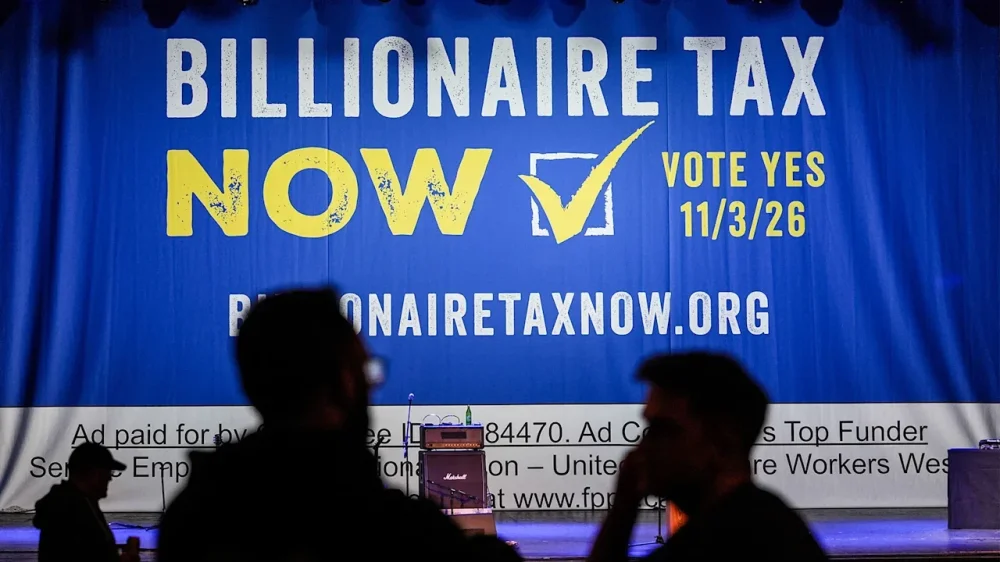
As national Democrats search for a unifying theme ahead of the fall’s midterm elections, a California proposal to levy a hefty tax on billionaires is turning some of the party’s leading figures into adversaries just when Democrats can least afford division from within. Vermont Sen. Bernie Sanders traveled to Los Angeles on Wednesday to campaign for the tax proposal, which has Silicon Valley in an uproar, with tech titans threatening to leave the state. Democratic Gov. Gavin Newsom is among its outspoken opponents, warning that it could leave government finances in crisis and put the state at a competitive disadvantage nationally. At an evening rally near downtown, Sanders told cheering supporters that the nation has reached a crisis point in which “massive income and wealth inequality” has concentrated power over business, technology, government and the media within the “billionaire class,” while millions of working-class Americans struggle to pay household bills. He said enactment of the proposed tax would show “we are still living in a democratic society where the people have some power.” “Enough is enough,” Sanders said to a pulse of applause. “The billionaire class cannot have it all. This nation belongs to all of us.” The senator, a democratic socialist, is popular in California — he won the 2020 Democratic presidential primary in the state in a runaway. He’s been railing for decades against what he characterizes as wealthy elites and the growing gap between rich and poor. Health care union is pushing proposed tax to fund services A large health care union is attempting to place a proposal before voters in November that would impose a one-time 5% tax on the assets of billionaires — including stocks, art, businesses, collectibles and intellectual property — to backfill federal funding cuts to health services for lower-income people that were signed by President Donald The President last year. Debate on the proposal is unfolding at a time when voters in both parties express unease with economic conditions and what the future will bring in a politically divided nation. Distrust of government — and its ability to get things done — is widespread. The proposal has created a rift between Newsom and prominent members of his party’s progressive wing, including Sanders, who has said the tax should be a template for other states. “The issues that are really going to be motivating Democrats this year, affordability and the cost of health care and cuts to schools, none of these would be fixed by this proposal. If fact, they would be made worse,” said Brian Brokaw, a longtime Newsom adviser who is leading a political committee opposing the tax. Split among Democrats comes as midterm elections loom Midterm elections typically punish the party in control of the White House, and Democrats are hoping to gain enough U.S. House seats to overturn the chamber’s slim Republican majority. In California, rejiggered House districts approved by voters last year are expected to help the party pick up as many as five additional seats, which would leave Republicans in control of just a handful of districts. “It is always better for a party to have the political debate focused on issues where you are united and the other party is divided,” said Eric Schickler, a professor of political science at the University of California, Berkeley. “Having an issue like this where Newsom and Sanders — among others — are on different sides is not ideal.” With the idea of taxing billionaires popular among many voters “this can be a good way for Democratic candidates to rally that side and break through from the pack,” Schickler added in an email. It’s already trickled into the race for governor and contests down the ballot. Republicans Chad Bianco and Steve Hilton, both candidates for governor, have warned the tax would erase jobs. San Jose Mayor Matt Mahan, a Democratic candidate for governor, has said inequality starts at the federal level, where the tax code is riddled with loopholes. Sanders did not mention Newsom in his nearly 30-minute speech but name-checked a handful of billionaires, including Meta CEO Mark Zuckerberg and Google co-founder Sergey Brin, as examples of a wealthy elite that in many respects “no longer sees itself as part of American society.” Sanders urges support for billionaires tax Citing protests against federal immigration raids in Minnesota, he urged the crowd to support the tax, saying Californians can show that “when we stand together, we can take on the oligarchs and the billionaires.” Coinciding with the Sanders visit and an upcoming state Democratic convention this weekend, opponents are sending out targeted emails and social media ads intended to sway party insiders. It’s not clear if the proposal will make the ballot — supporters must gather more than 870,000 petition signatures to place it before voters. The nascent contest already has drawn out a tangle of competing interests, with millions of dollars flowing into political committees. Newsom has long opposed state-level wealth taxes, believing such levies would be disadvantageous for the world’s fourth-largest economy. At a time when California is strapped for cash and he is considering a 2028 presidential run, he is trying to block the proposal before it reaches the ballot. Analysts say an exodus of billionaires could mean a loss of hundreds of millions of tax dollars for the nation’s most populous state. But supporters say the funding is needed to offset federal cuts that could leave many Californians without vital services. —Michael R. Blood, AP Political Writer View the full article
-
Today's Bissett Bullet: “Every business owner you meet will have a unique set of goals, both business and personal, but they will fall under one of three motivations.” By Martin Bissett See more Bissett Bullets here Go PRO for members-only access to more Martin Bissett. View the full article
-
Today's Bissett Bullet: “Every business owner you meet will have a unique set of goals, both business and personal, but they will fall under one of three motivations.” By Martin Bissett See more Bissett Bullets here Go PRO for members-only access to more Martin Bissett. View the full article
-
Comprehending today’s business interest rates is essential for making informed financial decisions. Current loan rates can vary greatly, with term loans averaging between 10% to 28% APR and SBA loans ranging from 10% to 15%. Several factors influence these rates, including credit profiles and economic conditions. Knowing whether to choose fixed or variable rates can impact your financial stability. As you navigate this environment, strategic timing for loan applications can play a key role in securing the best terms. There’s much more to explore. Key Takeaways Current business loan interest rates range from 9.9% to 36% depending on the loan type and lender. Fixed rates provide stable monthly payments, while variable rates can fluctuate based on market conditions. SBA loans typically offer lower rates compared to conventional loans, making them a favorable option for businesses. Timing loan applications after Federal Reserve rate cuts can secure better terms and lower rates. Securing loans with collateral can lead to more favorable interest rates and reduced borrowing costs. Current Business Loan Interest Rates As of November 2025, business loan interest rates vary greatly, depending on the type of financing you’re considering. Business term loans typically range from 10% to 28% APR, whereas SBA loans offer variable rates between 10.00% and 13.50%, with fixed rates from 12.00% to 15.00%. If you’re looking for flexible financing, business lines of credit likewise have rates between 10% and 28% APR. Equipment financing ranges from 9.9% to 24% APR, reflecting the associated risks. Nevertheless, if you need immediate cash flow, Accounts Receivable financing can carry higher rates, ranging from 24% to 36% APR. To effectively navigate these options, you can use an IRS compound interest calculator to better understand your potential costs. Learning how to determine interest rate is essential, as business interest rates today can markedly impact your financial decisions. Always consider the specifics of each loan before making a commitment. Factors Influencing Interest Rates Interest rates on business loans aren’t set in stone; they’re shaped by several key factors that you should know about. First, the type of lender matters; traditional Bank of America typically offer lower rates than online lenders. Your credit profile is essential too; a higher credit score usually means better rates, whereas new businesses often face higher rates owing to perceived risk. Economic conditions likewise play a notable role, as the federal funds rate set by the Federal Reserve directly impacts borrowing costs. When rates are low, borrowing becomes cheaper. Furthermore, the loan type matters; for instance, SBA loans typically provide more favorable rates compared to conventional loans. Finally, collateral influences loan terms markedly; secured loans usually come with lower interest rates than unsecured ones as they present less risk for lenders. Comprehending these factors can help you make informed decisions when seeking business financing. Fixed vs. Variable Interest Rates When choosing a business loan, you’ll encounter fixed and variable interest rates, each with distinct characteristics. Fixed rates offer stability, ensuring your monthly payments stay the same throughout the loan term, which can simplify budgeting. Conversely, variable rates may start lower but can change over time based on market conditions, leading to potential cost fluctuations that you need to take into account. Definition of Fixed Rates Fixed rates provide businesses with a stable borrowing option, as the interest remains unchanged throughout the life of the loan. This stability allows for predictable monthly payments, making budgeting easier. Fixed rates are commonly offered on business loans, appealing to those who prioritize financial predictability. Typically, the annual percentage rates (APRs) for fixed loans range from 10% to 28%. Feature Fixed Rates Variable Rates Interest Stability Unchanged Fluctuates Payment Predictability High Low Common APR Range 10% – 28% 10% – 28% (variable) When choosing between fixed and variable rates, carefully consider your financial situation and market forecasts, as this choice can profoundly affect affordability. Definition of Variable Rates Variable rates on business loans can be an appealing option for borrowers looking to take advantage of changing market conditions. Unlike fixed interest rates, which offer predictable monthly payments that remain unchanged throughout the loan term, variable rates fluctuate based on market conditions. This means you might enjoy lower initial payments when market rates are low, but there’s a risk of increasing costs if economic conditions change. Most small business loans are structured with fixed rates, providing stability for budgeting. Comprehending the difference between fixed and variable rates is essential for you to make informed decisions based on your financial situation and market predictions. Weighing these options carefully can help you choose the right loan structure for your needs. Pros and Cons Choosing between fixed and variable interest rates involves weighing various pros and cons that can considerably impact your business’s financial health. Fixed interest rates offer predictable monthly payments, making budgeting straightforward, whereas variable rates might start lower but can increase based on market conditions. As of November 2025, fixed SBA loan rates range from 12.00% to 15.00%, compared to variable rates between 10.00% and 13.50%. Fixed-rate loans protect you from future rate hikes, ensuring stability. Nevertheless, if you have strong cash flow, a variable rate might provide initial savings. Ultimately, comprehending these pros and cons is crucial for aligning your financing choices with your financial strategy and risk tolerance, ensuring you make the best decision for your business. Impact of Federal Rate Cuts When the Federal Reserve cuts interest rates, as it did by 0.25% in October 2025, businesses often experience immediate financial benefits that can improve their operations. Lower business loan interest rates typically follow such cuts, which makes borrowing more affordable. This reduction in borrowing costs can encourage you to make large purchases, as financing becomes more financially attractive. If you have adjustable-rate loans, expect your payments to decrease within one billing cycle after the rate cut, positively impacting your cash flow. Moreover, lower borrowing costs can boost consumer spending, enhancing your business revenues and stimulating overall economic activity. Although businesses with fixed-rate loans won’t see immediate changes in their payments, they should consider refinancing options if rates continue to decline, allowing for potential long-term savings. Timing for Financing Applications When you’re considering financing, timing can considerably impact your loan’s terms and rates. Applying right after a rate cut might help you secure a better deal, whereas waiting too long could mean facing higher rates if economic conditions shift. It’s vital to stay informed about market trends and consult with a financial professional to pinpoint the best moment for your application. Best Timing Strategies Comprehending the best timing strategies for financing applications can greatly influence your borrowing costs. The ideal time to apply often aligns with anticipated rate cuts, allowing you to secure better rates than previously offered. Applying right after a rate cut can lead to significant savings, especially for long-term loans. Nevertheless, consider your financial outlook and goals when deciding whether to wait for potentially lower rates or secure financing now. Remember, there are risks in waiting, such as possible rate increases or economic downturns that could limit your options. Consulting a financial professional can provide customized guidance based on current market conditions and your unique circumstances. Timing Strategy Description Apply after rate cuts Secure lower rates immediately post-cut. Assess financial goals Decide based on your business’s financial outlook. Consult professionals Get expert advice customized to your situation. Rate Cut Considerations Comprehending the timing of your financing applications is vital, especially in light of potential rate cuts. Applying for financing during a rate decrease can secure lower borrowing costs, making it an advantageous time for large purchases. Nevertheless, if you choose to wait for further cuts, there’s the risk of rate increases or economic downturns that may affect loan availability. After recent Federal Reserve cuts, it’s important to evaluate your application timing to maximize savings. Consulting with financial professionals can offer insights into the best course of action, whereas monitoring economic indicators and Fed meetings will help you make informed decisions. Staying proactive about these factors guarantees you optimize interest rates and improve your financing strategy. Economic Environment Impact The economic environment plays a significant role in determining the right timing for financing applications. With recent Federal Reserve rate cuts, businesses should evaluate their financial outlook and goals. As anticipating further cuts might tempt you to delay applications for better rates, this strategy carries risks, including potential rate increases or economic downturns. Current market conditions suggest that securing financing now could lead to lower borrowing costs, making it a favorable time for many businesses. Consulting a financial professional can offer customized insights to navigate this changing terrain effectively. Timing Strategy Advantages Risks Apply Now Lower current rates Potential for future rate hikes Wait for Further Cuts Chance for even lower rates Risk of economic downturns Assess Market Conditions Customized approach Missed opportunities Understanding Business Loan Fees When you’re considering a business loan, it’s important to look beyond just the interest rate, as various fees can greatly impact the total cost of borrowing. Business loan fees, like origination, underwriting, and closing costs, can add several percentage points to your loan amount. If you’re exploring SBA loans, keep in mind that they often include a guarantee fee that varies based on the loan size, increasing your overall expenses. Moreover, you should account for annual service fees on outstanding balances, which can accumulate over time. Some lenders might likewise impose processing fees or prepayment penalties, so it’s critical to review the loan agreement carefully. Comprehending all associated fees, including those not included in the APR, is fundamental for accurately calculating the true cost of a business loan, helping you make informed financial decisions. How to Secure the Best Rates Securing the best business loan rates can markedly impact your company’s financial health, especially since even a small difference in interest rates can lead to substantial savings over time. To start, maintain a strong credit profile; higher credit scores often result in lower interest rates, potentially saving you thousands in total interest. Consider exploring various loan types, such as SBA loans, which typically offer lower fixed rates between 12.00% and 15.00%, compared to traditional bank loans that may reach 28% APR. Providing collateral can also improve your chances of obtaining a loan with better terms, as secured loans typically come with lower rates. Furthermore, timing your application around expected interest rate cuts can lock in favorable borrowing conditions. Finally, use business loan calculators to compare offers and understand the total cost, ensuring you factor in both interest and any extra fees. Rate Change Frequency Interest rates for business loans can change frequently, often on a monthly basis, based on economic conditions and market dynamics. Lenders have the flexibility to adjust rates at any time, influenced by factors like inflation and unemployment figures. Since even minor fluctuations can affect your borrowing costs, it’s essential to keep an eye on rates and anticipate possible changes before applying for financing. Monthly Rate Adjustments Comprehending how monthly rate adjustments can impact your business is crucial for effective financial planning. Interest rates on business loans can fluctuate from month to month, driven by various economic factors. These adjustments often reflect decisions made by the Federal Reserve and current market conditions. Here are some key points to reflect upon: Banks can update rates as needed, ensuring they align with prime rates. Rate cuts from the Federal Reserve usually lead to immediate borrowing cost changes. Economic indicators, like inflation and employment data, heavily influence rate adjustments. Regularly monitoring interest rates helps you stay informed and prepared for potential changes. Economic Indicator Influence Comprehending the frequent fluctuations in business loan interest rates requires a look at the economic indicators that drive these changes. Business loan rates can shift monthly, influenced by economic conditions and market dynamics. Key indicators, such as inflation rates and employment data, play an essential role in the Federal Reserve’s decisions on interest rate adjustments. When these indicators signal economic shifts, lenders, particularly banks, can adjust their rates accordingly. Typically, rate changes are implemented quickly, with adjustable-rate loans reflecting new rates within one billing cycle after a federal rate cut. To navigate these changes effectively, you should stay informed and monitor economic reports and Federal Reserve meetings, as they can provide valuable insights into potential future changes in interest rates. Lender Rate Flexibility During the process of traversing the terrain of business financing, it’s important to recognize that lenders have significant flexibility in adjusting their loan rates. Loan rates can change frequently, influenced by various economic conditions. Here are some key points to keep in mind: Lenders often adjust rates on a month-to-month basis. Changes are typically driven by economic indicators like inflation. A shift in the Federal Reserve’s interest rate can lead to immediate lender adjustments. Regularly monitoring rates can help you identify potential savings or increased costs. Understanding when and how rates change is essential for your financing strategy, as it directly impacts the overall cost of loans and your decision-making process. Stay informed to make better financial choices. Future Predictions for Interest Rates As businesses navigate the evolving economic terrain, it’s essential to understand the potential future of interest rates. The Federal Reserve’s recent rate cuts may lead to lower business loan rates in the coming months, presenting opportunities for you to secure financing at reduced costs. Economic indicators suggest that the Fed will likely continue monitoring labor market conditions, which could influence future decisions and potentially result in further cuts. Predictions indicate that if current trends persist, you might see a stable or declining interest rate environment throughout 2025. Nevertheless, anticipated delays in economic data releases because of government shutdowns could affect the Fed’s decision-making process regarding future adjustments. Overall, market sentiment leans toward a favorable outlook for businesses seeking loans, as softening labor market conditions provide the Fed with the flexibility to implement additional rate cuts. This makes it an essential time to evaluate your financing options. Strategies for Managing Borrowing Costs Comprehending how to manage borrowing costs is crucial for businesses, especially in a fluctuating interest rate environment. To effectively reduce your borrowing expenses, consider implementing the following strategies: Refinance high-interest debt into lower-interest loans when rates drop, greatly lowering your repayment amounts. Monitor current business loan rates regularly, as they change with economic conditions, allowing you to secure financing at favorable times. Utilize business loan calculators to estimate monthly payments and total interest, aiding informed decision-making based on different loan terms. Secure loans with collateral, which can lead to better interest rates; evaluate your assets when seeking financing. Additionally, explore microloans or business lines of credit for competitive rates and flexible qualifications, particularly if you’re a newer business. Frequently Asked Questions What Is the Business Interest Rate Right Now? The current business interest rates vary considerably depending on the type of financing. For term loans and lines of credit, rates range from 10% to 28% APR. SBA loans offer variable rates between 10.00% and 13.50%, with fixed rates from 12.00% to 15.00%. Equipment financing has rates from 9.9% to 24% APR, whereas accounts receivable financing is higher, with rates between 24% and 36% APR, reflecting greater risk. What Is the Impact of Interest Rates on Businesses? Interest rates greatly impact your business’s financial decisions. When rates are low, borrowing becomes more affordable, allowing you to invest in growth, equipment, or expansion without straining your budget. Conversely, high interest rates increase borrowing costs, potentially discouraging you from seeking loans for crucial projects. Moreover, fluctuations in rates as a result of economic conditions can affect your overall financing strategy, leading to adjustments in your cash flow management and long-term planning. What Is a Good Interest Rate for a Business? A good interest rate for a business loan usually ranges from 6.7% to 11.5% when offered by banks, depending on factors like loan type and your credit profile. If you’re considering an SBA loan, expect rates between 10% and 15%. Nevertheless, online loans often have higher rates, ranging from 10% to 28%. It’s essential to evaluate the total borrowing cost, including fees and terms, to determine the best rate for your specific situation. Are Interest Rates Projected to Go up or Down? Interest rates are projected to trend down in the near future, largely influenced by recent economic indicators such as a cooling labor market. Analysts anticipate that the Federal Reserve may implement further rate cuts to stimulate economic activity, which could lower borrowing costs for businesses. Nevertheless, fluctuations may occur as a result of new economic developments and inflation uncertainty. Keeping an eye on these factors will help you stay informed about potential changes. Conclusion In conclusion, grasping current business interest rates is crucial for making informed financing decisions. By considering factors like credit profiles and economic conditions, you can better navigate fixed and variable rates. Timing your loan applications strategically, especially post-Federal Reserve rate cuts, can lead to more favorable terms. To secure the best rates, stay informed about market trends and manage your borrowing costs effectively. This knowledge empowers you to optimize your business financing and achieve your financial goals. Image via Google Gemini and ArtSmart This article, "10 Key Insights on Business Interest Rates Today" was first published on Small Business Trends View the full article
-
Comprehending today’s business interest rates is essential for making informed financial decisions. Current loan rates can vary greatly, with term loans averaging between 10% to 28% APR and SBA loans ranging from 10% to 15%. Several factors influence these rates, including credit profiles and economic conditions. Knowing whether to choose fixed or variable rates can impact your financial stability. As you navigate this environment, strategic timing for loan applications can play a key role in securing the best terms. There’s much more to explore. Key Takeaways Current business loan interest rates range from 9.9% to 36% depending on the loan type and lender. Fixed rates provide stable monthly payments, while variable rates can fluctuate based on market conditions. SBA loans typically offer lower rates compared to conventional loans, making them a favorable option for businesses. Timing loan applications after Federal Reserve rate cuts can secure better terms and lower rates. Securing loans with collateral can lead to more favorable interest rates and reduced borrowing costs. Current Business Loan Interest Rates As of November 2025, business loan interest rates vary greatly, depending on the type of financing you’re considering. Business term loans typically range from 10% to 28% APR, whereas SBA loans offer variable rates between 10.00% and 13.50%, with fixed rates from 12.00% to 15.00%. If you’re looking for flexible financing, business lines of credit likewise have rates between 10% and 28% APR. Equipment financing ranges from 9.9% to 24% APR, reflecting the associated risks. Nevertheless, if you need immediate cash flow, Accounts Receivable financing can carry higher rates, ranging from 24% to 36% APR. To effectively navigate these options, you can use an IRS compound interest calculator to better understand your potential costs. Learning how to determine interest rate is essential, as business interest rates today can markedly impact your financial decisions. Always consider the specifics of each loan before making a commitment. Factors Influencing Interest Rates Interest rates on business loans aren’t set in stone; they’re shaped by several key factors that you should know about. First, the type of lender matters; traditional Bank of America typically offer lower rates than online lenders. Your credit profile is essential too; a higher credit score usually means better rates, whereas new businesses often face higher rates owing to perceived risk. Economic conditions likewise play a notable role, as the federal funds rate set by the Federal Reserve directly impacts borrowing costs. When rates are low, borrowing becomes cheaper. Furthermore, the loan type matters; for instance, SBA loans typically provide more favorable rates compared to conventional loans. Finally, collateral influences loan terms markedly; secured loans usually come with lower interest rates than unsecured ones as they present less risk for lenders. Comprehending these factors can help you make informed decisions when seeking business financing. Fixed vs. Variable Interest Rates When choosing a business loan, you’ll encounter fixed and variable interest rates, each with distinct characteristics. Fixed rates offer stability, ensuring your monthly payments stay the same throughout the loan term, which can simplify budgeting. Conversely, variable rates may start lower but can change over time based on market conditions, leading to potential cost fluctuations that you need to take into account. Definition of Fixed Rates Fixed rates provide businesses with a stable borrowing option, as the interest remains unchanged throughout the life of the loan. This stability allows for predictable monthly payments, making budgeting easier. Fixed rates are commonly offered on business loans, appealing to those who prioritize financial predictability. Typically, the annual percentage rates (APRs) for fixed loans range from 10% to 28%. Feature Fixed Rates Variable Rates Interest Stability Unchanged Fluctuates Payment Predictability High Low Common APR Range 10% – 28% 10% – 28% (variable) When choosing between fixed and variable rates, carefully consider your financial situation and market forecasts, as this choice can profoundly affect affordability. Definition of Variable Rates Variable rates on business loans can be an appealing option for borrowers looking to take advantage of changing market conditions. Unlike fixed interest rates, which offer predictable monthly payments that remain unchanged throughout the loan term, variable rates fluctuate based on market conditions. This means you might enjoy lower initial payments when market rates are low, but there’s a risk of increasing costs if economic conditions change. Most small business loans are structured with fixed rates, providing stability for budgeting. Comprehending the difference between fixed and variable rates is essential for you to make informed decisions based on your financial situation and market predictions. Weighing these options carefully can help you choose the right loan structure for your needs. Pros and Cons Choosing between fixed and variable interest rates involves weighing various pros and cons that can considerably impact your business’s financial health. Fixed interest rates offer predictable monthly payments, making budgeting straightforward, whereas variable rates might start lower but can increase based on market conditions. As of November 2025, fixed SBA loan rates range from 12.00% to 15.00%, compared to variable rates between 10.00% and 13.50%. Fixed-rate loans protect you from future rate hikes, ensuring stability. Nevertheless, if you have strong cash flow, a variable rate might provide initial savings. Ultimately, comprehending these pros and cons is crucial for aligning your financing choices with your financial strategy and risk tolerance, ensuring you make the best decision for your business. Impact of Federal Rate Cuts When the Federal Reserve cuts interest rates, as it did by 0.25% in October 2025, businesses often experience immediate financial benefits that can improve their operations. Lower business loan interest rates typically follow such cuts, which makes borrowing more affordable. This reduction in borrowing costs can encourage you to make large purchases, as financing becomes more financially attractive. If you have adjustable-rate loans, expect your payments to decrease within one billing cycle after the rate cut, positively impacting your cash flow. Moreover, lower borrowing costs can boost consumer spending, enhancing your business revenues and stimulating overall economic activity. Although businesses with fixed-rate loans won’t see immediate changes in their payments, they should consider refinancing options if rates continue to decline, allowing for potential long-term savings. Timing for Financing Applications When you’re considering financing, timing can considerably impact your loan’s terms and rates. Applying right after a rate cut might help you secure a better deal, whereas waiting too long could mean facing higher rates if economic conditions shift. It’s vital to stay informed about market trends and consult with a financial professional to pinpoint the best moment for your application. Best Timing Strategies Comprehending the best timing strategies for financing applications can greatly influence your borrowing costs. The ideal time to apply often aligns with anticipated rate cuts, allowing you to secure better rates than previously offered. Applying right after a rate cut can lead to significant savings, especially for long-term loans. Nevertheless, consider your financial outlook and goals when deciding whether to wait for potentially lower rates or secure financing now. Remember, there are risks in waiting, such as possible rate increases or economic downturns that could limit your options. Consulting a financial professional can provide customized guidance based on current market conditions and your unique circumstances. Timing Strategy Description Apply after rate cuts Secure lower rates immediately post-cut. Assess financial goals Decide based on your business’s financial outlook. Consult professionals Get expert advice customized to your situation. Rate Cut Considerations Comprehending the timing of your financing applications is vital, especially in light of potential rate cuts. Applying for financing during a rate decrease can secure lower borrowing costs, making it an advantageous time for large purchases. Nevertheless, if you choose to wait for further cuts, there’s the risk of rate increases or economic downturns that may affect loan availability. After recent Federal Reserve cuts, it’s important to evaluate your application timing to maximize savings. Consulting with financial professionals can offer insights into the best course of action, whereas monitoring economic indicators and Fed meetings will help you make informed decisions. Staying proactive about these factors guarantees you optimize interest rates and improve your financing strategy. Economic Environment Impact The economic environment plays a significant role in determining the right timing for financing applications. With recent Federal Reserve rate cuts, businesses should evaluate their financial outlook and goals. As anticipating further cuts might tempt you to delay applications for better rates, this strategy carries risks, including potential rate increases or economic downturns. Current market conditions suggest that securing financing now could lead to lower borrowing costs, making it a favorable time for many businesses. Consulting a financial professional can offer customized insights to navigate this changing terrain effectively. Timing Strategy Advantages Risks Apply Now Lower current rates Potential for future rate hikes Wait for Further Cuts Chance for even lower rates Risk of economic downturns Assess Market Conditions Customized approach Missed opportunities Understanding Business Loan Fees When you’re considering a business loan, it’s important to look beyond just the interest rate, as various fees can greatly impact the total cost of borrowing. Business loan fees, like origination, underwriting, and closing costs, can add several percentage points to your loan amount. If you’re exploring SBA loans, keep in mind that they often include a guarantee fee that varies based on the loan size, increasing your overall expenses. Moreover, you should account for annual service fees on outstanding balances, which can accumulate over time. Some lenders might likewise impose processing fees or prepayment penalties, so it’s critical to review the loan agreement carefully. Comprehending all associated fees, including those not included in the APR, is fundamental for accurately calculating the true cost of a business loan, helping you make informed financial decisions. How to Secure the Best Rates Securing the best business loan rates can markedly impact your company’s financial health, especially since even a small difference in interest rates can lead to substantial savings over time. To start, maintain a strong credit profile; higher credit scores often result in lower interest rates, potentially saving you thousands in total interest. Consider exploring various loan types, such as SBA loans, which typically offer lower fixed rates between 12.00% and 15.00%, compared to traditional bank loans that may reach 28% APR. Providing collateral can also improve your chances of obtaining a loan with better terms, as secured loans typically come with lower rates. Furthermore, timing your application around expected interest rate cuts can lock in favorable borrowing conditions. Finally, use business loan calculators to compare offers and understand the total cost, ensuring you factor in both interest and any extra fees. Rate Change Frequency Interest rates for business loans can change frequently, often on a monthly basis, based on economic conditions and market dynamics. Lenders have the flexibility to adjust rates at any time, influenced by factors like inflation and unemployment figures. Since even minor fluctuations can affect your borrowing costs, it’s essential to keep an eye on rates and anticipate possible changes before applying for financing. Monthly Rate Adjustments Comprehending how monthly rate adjustments can impact your business is crucial for effective financial planning. Interest rates on business loans can fluctuate from month to month, driven by various economic factors. These adjustments often reflect decisions made by the Federal Reserve and current market conditions. Here are some key points to reflect upon: Banks can update rates as needed, ensuring they align with prime rates. Rate cuts from the Federal Reserve usually lead to immediate borrowing cost changes. Economic indicators, like inflation and employment data, heavily influence rate adjustments. Regularly monitoring interest rates helps you stay informed and prepared for potential changes. Economic Indicator Influence Comprehending the frequent fluctuations in business loan interest rates requires a look at the economic indicators that drive these changes. Business loan rates can shift monthly, influenced by economic conditions and market dynamics. Key indicators, such as inflation rates and employment data, play an essential role in the Federal Reserve’s decisions on interest rate adjustments. When these indicators signal economic shifts, lenders, particularly banks, can adjust their rates accordingly. Typically, rate changes are implemented quickly, with adjustable-rate loans reflecting new rates within one billing cycle after a federal rate cut. To navigate these changes effectively, you should stay informed and monitor economic reports and Federal Reserve meetings, as they can provide valuable insights into potential future changes in interest rates. Lender Rate Flexibility During the process of traversing the terrain of business financing, it’s important to recognize that lenders have significant flexibility in adjusting their loan rates. Loan rates can change frequently, influenced by various economic conditions. Here are some key points to keep in mind: Lenders often adjust rates on a month-to-month basis. Changes are typically driven by economic indicators like inflation. A shift in the Federal Reserve’s interest rate can lead to immediate lender adjustments. Regularly monitoring rates can help you identify potential savings or increased costs. Understanding when and how rates change is essential for your financing strategy, as it directly impacts the overall cost of loans and your decision-making process. Stay informed to make better financial choices. Future Predictions for Interest Rates As businesses navigate the evolving economic terrain, it’s essential to understand the potential future of interest rates. The Federal Reserve’s recent rate cuts may lead to lower business loan rates in the coming months, presenting opportunities for you to secure financing at reduced costs. Economic indicators suggest that the Fed will likely continue monitoring labor market conditions, which could influence future decisions and potentially result in further cuts. Predictions indicate that if current trends persist, you might see a stable or declining interest rate environment throughout 2025. Nevertheless, anticipated delays in economic data releases because of government shutdowns could affect the Fed’s decision-making process regarding future adjustments. Overall, market sentiment leans toward a favorable outlook for businesses seeking loans, as softening labor market conditions provide the Fed with the flexibility to implement additional rate cuts. This makes it an essential time to evaluate your financing options. Strategies for Managing Borrowing Costs Comprehending how to manage borrowing costs is crucial for businesses, especially in a fluctuating interest rate environment. To effectively reduce your borrowing expenses, consider implementing the following strategies: Refinance high-interest debt into lower-interest loans when rates drop, greatly lowering your repayment amounts. Monitor current business loan rates regularly, as they change with economic conditions, allowing you to secure financing at favorable times. Utilize business loan calculators to estimate monthly payments and total interest, aiding informed decision-making based on different loan terms. Secure loans with collateral, which can lead to better interest rates; evaluate your assets when seeking financing. Additionally, explore microloans or business lines of credit for competitive rates and flexible qualifications, particularly if you’re a newer business. Frequently Asked Questions What Is the Business Interest Rate Right Now? The current business interest rates vary considerably depending on the type of financing. For term loans and lines of credit, rates range from 10% to 28% APR. SBA loans offer variable rates between 10.00% and 13.50%, with fixed rates from 12.00% to 15.00%. Equipment financing has rates from 9.9% to 24% APR, whereas accounts receivable financing is higher, with rates between 24% and 36% APR, reflecting greater risk. What Is the Impact of Interest Rates on Businesses? Interest rates greatly impact your business’s financial decisions. When rates are low, borrowing becomes more affordable, allowing you to invest in growth, equipment, or expansion without straining your budget. Conversely, high interest rates increase borrowing costs, potentially discouraging you from seeking loans for crucial projects. Moreover, fluctuations in rates as a result of economic conditions can affect your overall financing strategy, leading to adjustments in your cash flow management and long-term planning. What Is a Good Interest Rate for a Business? A good interest rate for a business loan usually ranges from 6.7% to 11.5% when offered by banks, depending on factors like loan type and your credit profile. If you’re considering an SBA loan, expect rates between 10% and 15%. Nevertheless, online loans often have higher rates, ranging from 10% to 28%. It’s essential to evaluate the total borrowing cost, including fees and terms, to determine the best rate for your specific situation. Are Interest Rates Projected to Go up or Down? Interest rates are projected to trend down in the near future, largely influenced by recent economic indicators such as a cooling labor market. Analysts anticipate that the Federal Reserve may implement further rate cuts to stimulate economic activity, which could lower borrowing costs for businesses. Nevertheless, fluctuations may occur as a result of new economic developments and inflation uncertainty. Keeping an eye on these factors will help you stay informed about potential changes. Conclusion In conclusion, grasping current business interest rates is crucial for making informed financing decisions. By considering factors like credit profiles and economic conditions, you can better navigate fixed and variable rates. Timing your loan applications strategically, especially post-Federal Reserve rate cuts, can lead to more favorable terms. To secure the best rates, stay informed about market trends and manage your borrowing costs effectively. This knowledge empowers you to optimize your business financing and achieve your financial goals. Image via Google Gemini and ArtSmart This article, "10 Key Insights on Business Interest Rates Today" was first published on Small Business Trends View the full article
-
Baby care brand Frida is facing online backlash after screenshots of sexual innuendos in its marketing materials began circulating on social media. Frida, which describes itself as “the brand that gets parents,” sells a range of baby care, fertility, and postpartum products through major retailers, including Target. Last week, an X user shared images of several products’ packaging, writing: “sexual jokes to market baby products is actually sick and twisted @fridababy this is absolutely appalling and disgusting.” The post has since gained almost five million views on X. Among the examples highlighted is a social media graphic promoting the company’s 3-in-1 True Temp thermometer. The image shows the device next to a baby’s bottom, accompanied by the caption: “This is the closest your husband’s gonna get to a threesome.” sexual jokes to market baby products is actually sick and twisted @fridababy this is absolutely appalling and disgusting pic.twitter.com/cXhiksoaY8 — stace 🩵🪲 (@staystaystace) February 12, 2026 Other screenshots highlighted by critics include phrases such as “How about a quickie?” printed on a thermometer box. An apparent Instagram post from 2020 that has since resurfaced also features a baby with what seems to be snot on its face. The caption reads: “What happens when you pull out too early.” Parents and critics online have accused the company of sexualizing children in its marketing choices, with posts on parenting forums calling for boycotts of the company’s products. A Change.org petition to “hold Frida Baby accountable” has more than 4,000 verified signatures at the time of writing. Not everyone agrees with the criticism. “IMO, this is akin to Disney putting in jokes that only parents will get,” one Reddit user wrote. “They know who the decision-makers are. Frida is marketing to the parents.” Others argue the tone crosses a clear line. A statement from Frida emailed to multiple publications reads in part: “Our products are designed for babies, but our voice has always been written for the adults caring for them. Our intention has consistently been to make awkward and difficult experiences feel lighter, more honest, and less isolating for parents. It continued: “That said, humor is personal. What’s funny to one parent can feel like too much to another.” Fast Company has reached out to Frida Baby for comment. A scroll through Frida’s social media shows the brand has long leaned into a deliberately risqué tone, often relying on double entendres and innuendo to target parents. In April, it teased a new product on Instagram with the line, “Take your top off.” Its current “Show us what your boobs can do” campaign aims to destigmatize breastfeeding by spotlighting what it calls “milk-making boobs.” As more brands adopt informal, attention-grabbing voices online, the lesson here is clear: context matters. View the full article

-
Neel Kashkari hits out at The President adviser who criticised research showing tariffs harm AmericansView the full article
-
About 1.3% of residential properties in the United States were vacant at the beginning of the year, Attom found. View the full article

-
Search is no longer a blue-links game. Discovery increasingly happens inside AI-generated answers – in Google AI Overviews, ChatGPT, Perplexity, and other LLM-driven interfaces. Visibility isn’t determined solely by rankings, and influence doesn’t always produce a click. Traditional SEO KPIs like rankings, impressions, and CTR don’t capture this shift. As search becomes recommendation-driven and attribution grows more opaque, SEO needs a new measurement layer. LLM consistency and recommendation share (LCRS) fills that gap. It measures how reliably and competitively a brand appears in AI-generated responses – serving a role similar to keyword tracking in traditional SEO, but for the LLM era. Why traditional SEO KPIs are no longer enough Traditional SEO metrics are well-suited to a model where visibility is directly tied to ranking position and user interaction largely depends on clicks. In LLM-mediated search experiences, that relationship weakens. Rankings no longer guarantee that a brand appears in the answer itself. A page can rank at the top of a search engine results page yet never appear in an AI-generated response. At the same time, LLMs may cite or mention another source with lower traditional visibility instead. This exposes a limitation in conventional traffic attribution. When users receive synthesized answers through AI-generated responses, brand influence can occur without a measurable website visit. The impact still exists, but it isn’t reflected in traditional analytics. At the core of this change is something SEO KPIs weren’t designed to capture: Being indexed means content is available to be retrieved. Being cited means content is used as a source. Being recommended means a brand is actively surfaced as an answer or solution. Traditional SEO analytics largely stop at indexing and ranking. In LLM-driven search, the competitive advantage increasingly lies in recommendation – a dimension existing KPIs fail to quantify. This gap between influence and measurement is where a new performance metric emerges. Your customers search everywhere. Make sure your brand shows up. The SEO toolkit you know, plus the AI visibility data you need. Start Free Trial Get started with LCRS: A KPI for the LLM-driven search era LLM consistency and recommendation share is a performance metric designed to measure how reliably a brand, product, or page is surfaced and recommended by LLMs across search and discovery experiences. At its core, LCRS answers a question traditional SEO metrics can’t: When users ask LLMs for guidance, how often and how consistently does a brand appear in the answer? This metric evaluates visibility across three dimensions: Prompt variation: Different ways users ask the same question. Platforms: Multiple LLM-driven interfaces. Time: Repeatability rather than one-off mentions. LCRS isn’t about isolated citations, anecdotal screenshots, or other vanity metrics. Instead, it focuses on building a repeatable, comparative presence. That makes it possible to benchmark performance against competitors and track directional change over time. LCRS isn’t intended to replace established SEO KPIs. Rankings, impressions, and traffic still matter where clicks occur. LCRS complements them by covering the growing layer of zero-click search – where recommendation increasingly determines visibility. Dig deeper: Rand Fishkin proved AI recommendations are inconsistent – here’s why and how to fix it Breaking down LCRS: The two components LCRS has two main components: LLM consistency and recommendation share. LLM consistency In the context of LCRS, consistency refers to how reliably a brand or page appears across similar LLM responses. Because LLM outputs are probabilistic rather than deterministic, a single mention isn’t a reliable signal. What matters is repeatability across variations that mirror real user behavior. Prompt variability is the first dimension. Users rarely phrase the same question in exactly the same way. High LLM consistency means a brand surfaces across multiple, semantically similar prompts, not just one phrasing that happens to perform well. For example, a brand may appear in response to “best project management tools for startups” but disappear when the prompt changes to “top alternatives to Asana for small teams.” Temporal variability reflects how stable those recommendations are over time. An LLM may recommend a brand one week and omit it the next due to model updates, refreshed training data, or shifts in confidence weighting. Consistency here means repeated queries over days or weeks produce comparable recommendations. That indicates durable relevance rather than momentary exposure. Platform variability accounts for differences between LLM-driven interfaces. The same query may yield different recommendations depending on whether a conversational assistant, an AI-powered search engine, or an integrated search experience responds. A brand demonstrating strong LLM consistency appears across multiple platforms, not just within a single ecosystem. Consider a B2B SaaS brand that different LLMs consistently recommend when users ask for “CRM tools for small businesses,” “CRM software for sales teams,” and “HubSpot alternatives.” That repeatable presence indicates a level of semantic relevance and authority LLMs repeatedly recognize. Recommendation share While consistency measures repeatability, recommendation share measures competitive presence. It captures how frequently LLMs recommend a brand relative to other brands in the same category. Not every appearance in an AI-generated response qualifies as a recommendation: A mention occurs when an LLM references a brand in passing, for example, as part of a broader list or background explanation. A suggestion positions the brand as a viable option in response to a user’s need. A recommendation is more explicit, framing the brand as a preferred or leading choice. It’s often accompanied by contextual justification such as use cases, strengths, or suitability for a specific scenario. When LLMs repeatedly answer category-level questions such as comparisons, alternatives, or “best for” queries, they consistently surface some brands as primary responses while others appear sporadically or not at all. Recommendation share captures the relative frequency of those appearances. Recommendation share isn’t binary. Appearing among five options carries less weight than being positioned first or framed as the default choice. In many LLM interfaces, response ordering and emphasis implicitly rank recommendations, even when no explicit ranking exists. A brand that consistently appears first or includes a more detailed description holds a stronger recommendation position than one that appears later or with minimal context. Recommendation share reflects how much of the recommendation space a brand occupies. Combined with LLM consistency, it provides a clearer picture of competitive visibility in LLM-driven search. To be useful in practice, this framework must be measured in a consistent and scalable way. Dig deeper: What 4 AI search experiments reveal about attribution and buying decisions How to measure LCRS in practice Measuring LCRS demands a structured approach, but it doesn’t require proprietary tooling. The goal is to replace anecdotal observations with repeatable sampling that reflects how users actually interact with LLM-driven search experiences. 1. Select prompts The first step is prompt selection. Rather than relying on a single query, build a prompt set that represents a category or use case. This typically includes a mix of: Category prompts like “best accounting software for freelancers.” Comparison prompts like “X vs. Y accounting tools.” Alternative prompts like “alternatives to QuickBooks.” Use-case prompts like “accounting software for EU-based freelancers.” Phrase each prompt in multiple ways to account for natural language variation. 2. Confirm tracking Next, decide between brand-level and category-level tracking. Brand prompts help assess direct brand demand, while category prompts are more useful for understanding competitive recommendation share. In most cases, LCRS is more informative at the category level, where LLMs must actively choose which brands to surface. 3. Execute prompts and collect data Tracking LCRS quickly becomes a data management problem. Even modest experiments involving a few dozen prompts across multiple days and platforms can generate hundreds of observations. That makes spreadsheet-based logging impractical. As a result, LCRS measurement typically relies on programmatically executing predefined prompts and collecting the responses. To do this, define a fixed prompt set and run those prompts repeatedly across selected LLM interfaces. Then parse the outputs to identify which brands are recommended and how prominently they appear. 4. Analyze the results You can automate execution and collection, but human review remains essential for interpreting results and accounting for nuances such as partial mentions, contextual recommendations, or ambiguous phrasing. Early-stage analysis may involve small prompt sets to validate your methodology. Sustainable tracking, however, requires an automated approach focused on a brand’s most commercially important queries. As data volume increases, automation becomes less of a convenience and more of a prerequisite for maintaining consistency and identifying meaningful trends over time. Track LCRS over time rather than as a one-off snapshot because LLM outputs can change. Weekly checks can surface short-term volatility, while monthly aggregation provides a more stable directional signal. The objective is to detect trends and identify whether a brand’s recommendation presence is strengthening or eroding across LLM-driven search experiences. With a way to track LCRS over time, the next question is where this metric provides the most practical value. Get the newsletter search marketers rely on. See terms. Use cases: When LCRS is especially valuable LCRS is most valuable in search environments where synthesized answers increasingly shape user decisions. Marketplaces and SaaS Marketplaces and SaaS platforms benefit significantly from LCRS because LLMs often act as intermediaries in tool discovery. When users ask for “best tools,” “alternatives,” or “recommended platforms,” visibility depends on whether LLMs consistently surface a brand as a trusted option. Here, LCRS helps teams understand competitive recommendation dynamics. Your money or your life In “your money or your life” (YMYL) industries like finance, health, or legal services, LLMs tend to be more selective and conservative in what they recommend. Appearing consistently in these responses signals a higher level of perceived authority and trustworthiness. LCRS can act as an early indicator of brand credibility in environments where misinformation risk is high and recommendation thresholds are stricter. Comparison searches LCRS is also particularly relevant for comparison-driven and early-stage consideration searches. LLMs often summarize and narrow choices when users explore options or seek guidance before forming brand preferences. Repeated recommendations at this stage influence downstream demand, even if no immediate click occurs. In these cases, LCRS ties directly to business impact by capturing influence at the earliest stages of decision-making. While these use cases highlight where LCRS can be most valuable, it also comes with important limitations. Dig deeper: How to apply ‘They Ask, You Answer’ to SEO and AI visibility Limitations and caveats of LCRS LCRS is designed to provide directional insight, not absolute certainty. LLMs are inherently nondeterministic, meaning identical prompts can produce different outputs depending on context, model updates, or subtle changes in phrasing. As a result, you should expect short-term fluctuations in recommendations and avoid overinterpreting them. LLM-driven search experiences are also subject to ongoing volatility. Models are frequently updated, training data evolves, and interfaces change. A shift in recommendation patterns may reflect platform-level changes rather than a meaningful change in brand relevance. That’s why you should evaluate LCRS over time and across multiple prompts rather than as a single snapshot. Another limitation is that programmatic or API-based outputs may not perfectly mirror responses generated in live user interactions. Differences in context, personalization, and interface design can influence what individual users see. However, API-based sampling provides a practical, repeatable reference point because direct access to real user prompt data and responses isn’t possible. When you use this method consistently, it allows you to measure relative change and directional movement, even if it can’t capture every nuance of user experience. Most importantly, LCRS isn’t a replacement for traditional SEO analytics. Rankings, traffic, conversions, and revenue remain essential for understanding performance where clicks and user journeys are measurable. LCRS complements these metrics by addressing areas of influence that currently lack direct attribution. Its value lies in identifying trends, gaps, and competitive signals, not in delivering precise scores or deterministic outcomes. Viewed in that context, LCRS also offers insight into how SEO itself is evolving. See the complete picture of your search visibility. Track, optimize, and win in Google and AI search from one platform. Start Free Trial Get started with What LCRS signals about the future of SEO The introduction of LCRS reflects a broader shift in how search visibility is earned and evaluated. As LLMs increasingly mediate discovery, SEO is evolving beyond page-level optimization toward search presence engineering. The objective is no longer ranking individual URLs. Instead, it’s ensuring a brand is consistently retrievable, understandable, and trustworthy across AI-driven systems. In this environment, brand authority increasingly outweighs page authority. LLMs synthesize information based on perceived reliability, consistency, and topical alignment. Brands that communicate clearly, demonstrate expertise across multiple touchpoints, and maintain coherent messaging are more likely to be recommended than those relying solely on isolated, high-performing pages. This shift places greater emphasis on optimization for retrievability, clarity, and trust. LCRS doesn’t attempt to predict where search is headed. It measures the early signals already shaping LLM-driven discovery and helps SEOs align performance evaluation with this new reality. The practical question for SEOs is how to respond to these changes today. The shift from position to presence As LLM-driven search continues to reshape how users discover information, SEO teams need to expand how they think about visibility. Rankings and traffic remain important, but they no longer capture the full picture of influence in search experiences where answers are generated rather than clicked. The key shift is moving from optimizing only for ranking positions to optimizing for presence and recommendation. LCRS offers a practical way to explore that gap and understand how brands surface across LLM-driven search. The next step for SEOs is to experiment thoughtfully by sampling prompts, tracking patterns over time, and using those insights to complement existing performance metrics. View the full article
-
It’s the Thursday “ask the readers” question. A reader writes: I live in a lovely touristy small city with a university. It’s a great place to live, with lots of services and things to do for its size. I have a job in my field which I still enjoy in some ways, but I’ve been in it for 10 years and am terribly bored. I’ve really pushed the boundaries of my position and am feeling so stuck. I’ve been actively applying in town for three years. It’s rare that positions come up, and when they do, they are inundated with candidates. Our city is known for having a “scenery tax” and having wildly educated baristas. So in the past year, I’ve started applying to positions in different states and have received two offers, but I’d go to visit and they just didn’t seem like as nice of places to live, so I turned them down. I don’t know what to do. Part of me feels selfish for thinking about moving. We have a great community and I have two little kids who are doing well here. But I get really sad when I think about this job being my whole career. I know people living here face this problem all the time. I’d love to hear from folks who either stayed or went and how it shook out. Readers, please share your thoughts in the comment section. The post ask the readers: should I leave a great city that I love to expand my job options? appeared first on Ask a Manager. View the full article