All Activity
- Past hour
-
It’s the Friday open thread! The comment section on this post is open for discussion with other readers on any work-related questions that you want to talk about (that includes school). If you want an answer from me, emailing me is still your best bet*, but this is a chance to take your questions to other readers. * If you submitted a question to me recently, please do not repost it here, as it may be in my queue to answer. The post open thread – February 27, 2026 appeared first on Ask a Manager. View the full article
-
You can now generate custom PPC tools in plain English. With GPT-5 enabling complete program generation, the competitive edge belongs to those who master AI-assisted automation. Frederick Vallaeys is building tools in minutes, not days or months, with AI. Vallaeys spent 10 years at Google building tools like Google Ads Editor, then another 10 building tools at Optmyzr, where he’s CEO. He’s watched automation evolve firsthand, and vibe coding is the next leap. At SMX Next 2025, he shared his journey with vibe coding. The traditional script problem If you work in PPC, automation has always been top of mind. In the early days, you relied on Google Ads scripts. Scripts are great because there’s always more work than fits in a day. But here’s the problem: when Vallaeys asks who actually writes their own scripts, only three to five out of 100 raise their hands. Most people copy and paste scripts because they don’t know how to code. This works, but it’s limiting. You’re stuck with what someone else built instead of implementing your own secret sauce. GPT changes the game A couple of years ago, GPT made it easy to write scripts without knowing how to code. The best part? Large language models are multimodal. You can take a whiteboard flowchart of your campaign decision tree, give the image to AI, and it’ll write the full Google Ads script. Vallaeys suggests rethinking meetings. Instead of seeing client meetings as more work, treat them as prompt-engineering sessions. It’s easy to get frustrated when clients add more to your plate. But with a mindset shift, the meeting becomes the prompt that tells AI what to execute. What is vibe coding? Instead of writing lines of code, you describe what you want the software to do, and the AI handles the technical implementation. That’s vibe coding. Imagine your team needs software that does X, Y, and Z. Write down what it needs to do, give it to a coding tool, and it builds the software. As Vallaeys says, it’s mind-blowing. Scripts are old news. Vibe coding is the new frontier. A live example: Building a persona scorer Vallaeys showed how fast this works. He went to Lovable and said, “Build me a persona scorer for an ad that shows how well it resonates with five different audiences.” In less than 20 seconds, the AI responded with its design vision, features, and approach. It explained exactly what it would build, so he could immediately say, “Actually, make it 10 audiences instead of five.” You work with it like a human developer — without touching code. You just describe what you want changed. The framework: What should you automate? Traditionally, you automated two types of work: quick, frequent tasks (like reviewing search terms) and long, infrequent tasks (like monthly reporting with analysis). Vallaeys advises you not to limit automation to what you already do. Think about what you wish you could do more often but haven’t because it’s too time-consuming. That’s prime automation territory. The old way vs. The new way The old process was painful. Launching something took at least a month. You’d spend days writing specs. Engineers would spend days building. You’d find bugs, coordinate meetings, and repeat. The other problem? Traditional code was deterministic — pure if/then logic. Great for reliability, but terrible for nuanced decisions like, “Is this a competitor term?” It’s nearly impossible to program every variation of competitor keywords. The promise of on-demand software Sam Altman announced GPT-5, leading with “on-demand software generation.” The industry is moving beyond software-as-a-service to true on-demand software. The new way? Write a one-paragraph spec (five minutes), give it to AI (15-minute build), then review and iterate (three minutes per change). In under an hour, you have working automation. This new code is flexible, not just deterministic. LLMs can answer nuanced questions like, “Is this a competitor term?” with high probability. It’s the best of both worlds. The expanding scope of automation With vibe coding, anything you can explain to a human, a machine can build. Landing pages that follow brand guidelines? Done. Custom audience tools? Done. Here’s the radical shift: you can now automate tasks that take just 90 minutes by hand. Build throwaway software for one-time tasks. Even if it breaks next month, it saved you time today. What can you build with vibe coding? You can build landing pages, microsites, interactive web apps, Chrome extensions, browser extensions, and WordPress plugins — all through simple prompts. Available tools Start with Claude or ChatGPT — tools you likely already subscribe to. They’re great for data analysis, calculators, and quick visualizations. For more complex apps that need databases or login systems, use Lovable, V0.dev, Replit, or Bolt. They handle the complexity, so you don’t have to. If you’re more technical, try Codex, Bolt.new, or Cursor. But for most people, the simpler tools handle almost everything. Case Study 1: Seasonality analysis tool Vallaeys asked someone on his team who had never coded to build a seasonality analysis tool. She fed PPC Town Hall podcast videos into Claude. The process was simple: gather resources, write a prompt, give it to AI, and test it in the browser. No installation required. The team iterated on the fly, asking for different plots and forecasting methods. In minutes, they had advanced enhancements. The AI knew where to add help text and simplify the interface because it’s trained on millions of web apps. Case Study 2: Panel of experts tool Vallaeys wanted multiple custom GPTs to review his blog posts in sequence, each giving feedback from its persona. Then a consolidator GPT would summarize the most common feedback into three to five bullet points. He vibe-coded this in V0.dev by describing what he wanted. It generated a clean tool with text input, the ability to add custom GPTs, and everything worked. Case Study 3: Chrome extension for demos For customer demos, Vallaeys needed to blur sensitive numbers. He wanted options: Fully redact or just blur? Include currencies or only numbers? Handle different separators? He built a Chrome extension with all those options using simple prompts. Problem solved. Prompting tips for success Always include the use case. Say “seasonality tool” instead of vague terms like “time series analysis.” The AI makes better assumptions and may suggest approaches you hadn’t considered. Ask questions: “How did you approach this?” or “Where do you store data?” It helps you learn. Use chat mode to explore alternatives without changing the code. Ask for three approaches, pick one, go deeper, then say, “Execute that.” The PPC audience analyzer The audience analyzer Vallaeys’ team built is available to try. You can grab the code, add your logo, turn insights into action items — whatever you need. Just tell it what to change, and it updates. Final thoughts: Stay competitive Vallaeys makes one point clear: you’re not competing against AI. You’re competing against people who use it better than you do. Try vibe coding today. Go to one of these tools and give it a single prompt. See what happens. The first time Vallaeys tried it, his mind was blown. Now that you’ve learned something new, use it to get better at AI. That’s how you stay ahead. View the full article
-
The other night, I heard cabinets opening in the kitchen and the shuffling of bags and containers. My husband was looking for snacks with our 9-year-old. After, he got him ready for bed, read him a book, and ordered us dinner. Then he sat down at his laptop and worked until 9 p.m. As I unloaded the dishwasher, I realized two things. First: My husband was killing it. Second: The second shift isn’t women’s work anymore. It’s everyone’s burnout. The second shift, rewritten In 1989, sociologist Arlie Russell Hochschild introduced “the second shift” to describe what happened when women got home from their paid job to an unpaid one: making dinner, folding laundry, shuttling kids to sports. Thirty-plus years ago, that division was clear. Today, it’s more like … murky. Couples expect both parents to be career-driven and active parents These days, most dual-income households assume both partners will be ambitious at work and hands-on at home. In fact, fathers are spending more time on childcare than ever before. According to Pew Research, they’ve doubled their involvement since the 1960s. Parenting is the most gender-equal it’s ever been. The problem is, most couples I talk to feel fried. Nobody’s workload has gotten lighter. It’s just doubled. Moms may still do the mental load, but dads are tired, too. The mental load. It’s where the second shift truly lives. And despite how equitable we’ve become at dividing up chores, most households still put that “boss level” parenting role on mom. Who needs to be reminded about soccer practice? Who picks out which days they have guitar lessons and tutoring? Who keeps track of when new sneakers are needed? Hint: Whoever has the mental load. While mothers are traditionally expected to drive carpools, recent research shows that men are experiencing more work-family conflict than previous generations. They’re still expected to be hands-on dads who never miss a soccer game. But they’re also expected to be nothing but present at work, too. Society told dads they could be more involved. But workplace culture didn’t give them the space to do it. That’s why dads everywhere are loading up on after-hours email. Remote work came with the illusion of flexibility, then drove us all insane. Remote work erased the finish line When COVID sent millions of people into remote and hybrid work situations, we thought flexible schedules would solve all our problems. They kind of did. But they also left us with a handful of issues we hadn’t realized we needed to solve. Without a commute, there’s no transition from work to home life. There’s no off-ramp. Which means work eats into bedtimes, and work follows us home and sometimes to bed. When employees left the office for good, “having it all” became “doing it all at once.” And that’s when burnout started rearing its head (again). Parents wanted equality at home. Too many people wanted equality at home without discussing what equality at work would look like. We wanted to share the childcare AND be successful professionals. What we ended up with was equally divided childcare we were both responsible for and work that still demands we’re “on” 24/7. Kids still need to eat, bathe, and be nurtured. Work still treats you like you have unlimited bandwidth. So, we both started doing two jobs. And then we crashed. Gen Z is already drawing the line The second shift stopped being a women’s issue and became a systemic issue. Millennial parents are burnt out. Generation Z isn’t following suit. Earlier this year, CNBC reported that Gen Z employees were the happiest in the workplace. But they’re happy for one key reason: They know exactly what they won’t tolerate at work. Want flexibility? Sure. Mental health resources? Of course. Clear boundaries around your personal life? Absolutely. They’re not buying into hustle culture as identity. They’ve grown up seeing their parents work on reports during family vacations and answer client emails during soccer games. They don’t think that’s the version of success they want. They see it as depleting and it has made them draw a hard line in the sand when it comes to work. Which is why Gen Z will say no to policies like “flexible schedules” that actually require your schedule to be flexible … for their business. At 9 p.m. Companies like to brag about how they offer “flexible schedules.” Then they email their employees at 9 p.m. Expecting them to reply. And employees are calling BS. If you want to keep employees, especially parents you’ll have to offer actual flexibility. That means built-in boundaries. Actual hours you expect your employees to be offline. Actual limits on how many meetings they can attend in a day. And leaders that lead by example when it comes to quitting time. Because if they don’t get that flexibility from you high-performing employees will re-impose boundaries on themselves. Or they’ll leave. Actually, they’re already leaving. Parents aren’t just burning out at work. They’re quitting their jobs because of it. If we don’t change how we approach the second shift at work, we’re going to have a retention crisis. Businesses are seeing masses of Millennials and Gen Xers leave because they’re burnt out juggling homework and Slack messages. But Generation Z employees aren’t willing to accept that trade-off. And if businesses don’t start changing how they treat parents and caregivers who need to “switch gears” at the end of the day, they’re going to lose an entire generation of employees. Being a human who wants to recover from work is once again a must-have. And ambitious employees are about to show businesses just how valuable that flexibility is. View the full article

-
Benson Lu’s life revolves around Pokémon. The 26-year-old has played the mobile game Pokémon Go every day for a decade, watches the animated show every week, goes to the local card shop in his Los Angeles suburb to play the brand’s trading card game every week, and has a whopping collection of cards worth more than $70,000. “I don’t remember when was the last day I did not think about Pokémon at all,” he said. In the 30 years since Pokémon debuted in Japan with the 1996 release of Pokémon Red and Pokémon Green for Nintendo Game Boy, the franchise has taken over the globe with its animated shows, mobile games and highly coveted trading cards. Its popularity continues with fans young and old. Pokémon offers a masterclass in character design, which has helped make it so enduring, said Heather Cole, teaching assistant professor of game design and interactive media at West Virginia University. “I think the longevity of it has to do with the characters and world-building it does with the characters,” she said. A valuable commodity It’s not just cuteness that has people clamoring for merchandise, particularly trading cards. Today, some are so coveted that social media star Logan Paul sold one for a record $16.5 million. In Southern California, the fervor around Pokémon cards has led to strings of break-ins in recent months at trading card stores that have amounted to hundreds of thousands of dollars of losses and even some collectors robbed at gunpoint. Adam Corn, owner of card business Overdose Gaming Inc, said he was able to buy a house last year from his Pokémon cards. “Pokémon almost always appreciates in value over time,” Corn said. “So it’s just a really good place to put your money in my opinion, better than a a lot of other assets.” Companies like Beckett Grading Services and Professional Sports Authenticator authenticate and grade the quality of Pokémon cards on a scale of 1-10, with 10 being pristine mint condition and fetching the highest prices. Paul bought the PSA Grade 10 Pikachu Illustrator card a few months prior for $5.3 million and wore the card on a chain around his neck in videos. It features a Pikachu holding a pen and feather sweeper. Last Tuesday, thieves stole more than $80,000 of Pokémon cards from Do-We Collectibles in Anaheim—the second time the store has been targeted. Other stores around Los Angeles and in New York have been hit by Pokémon thieves too. Duy Pham, owner of the Anaheim store, said the financial incentive of trading cards for robbers and scalpers means “the hobby will never be the same.” “It’s rougher for collectors and players,” Pham said. “It’s hard for us to get anything.” Collectors can either pay retail price for a standard pack of randomized Pokémon cards, around $5 for 10 cards, or buy the specific card they want secondhand for higher prices. But much like gambling, opening packs doesn’t always pan out to profit—Aiden Zeng spent $1,000 on packs of cards that were only valued at $60 on the resale market, he said. Zeng, 17, said his fandom began in elementary school, when he obsessed over character guidebooks. He eventually began trying to collect every single type of card available for his favorite, Black Kyurem. “I memorized every single Pokémon’s specific move set, what region they come from, some of the lore behind it,” Zeng said. Resurgence of popularity Even beyond dedicated collectors, Zeng said he has seen a resurgence of popularity for Pokémon at his high school in Toronto, where some students decorate their phone cases with cards featuring special artwork or a holographic sheen. Pokémon creator Satoshi Tajiri has said he enjoyed catching insects and other small critters in the fields and forests outside the Tokyo suburb where he lived as a child. Those creatures inspired him to make the colorful, fantastical Pokémon of which there are thousands of species today. While his hobby is lucrative, Lu said the draw for him is still nostalgia for the characters he grew up with and the community he has formed around Pokémon. He prefers not to sell his single cards because he worries he will never be able to find them again. Lu recently spent an entire Saturday walking around the Rose Bowl in Pasadena, California, looking for Pokémon on his augmented reality phone game at an event attended by thousands. “I’ve liked Pokémon ever since I was a kid,” he said. “And I still like it the same amount.” —Jaimie Ding and Liam Mcewan, Associated Press View the full article

-
Operating a franchise business comes with notable advantages that can greatly enhance your chances of success. You’ll benefit from established brand recognition, which attracts customers right from the start. Furthermore, extensive support from the franchisor, including training and operational guidance, makes managing your business easier. You’ll additionally encounter a reduced risk of failure thanks to proven business models. Let’s explore how these factors can shape your expedition in the franchise world. Key Takeaways Established brand recognition provides immediate customer loyalty and a competitive advantage, leading to higher initial sales. Comprehensive support includes training, operational guidance, and marketing strategies, ensuring effective business management. Reduced risk of failure is achieved through a proven business model and strong brand identity, enhancing customer trust. Increased buying power allows for better pricing and cost savings through collective purchasing strength within the franchise network. A built-in customer base from day one facilitates quicker profitability and boosts visibility through franchisor marketing support. Established Brand Recognition When you operate a franchise, you gain immediate access to an established brand, which can greatly streamline your path toward building a customer base. The benefits of being a franchisee include leveraging existing customer loyalty to establish a stable revenue stream from day one. Since recognizable branding elements, like logos and signage, are already in place, you can quickly capitalize on national or global brand recognition, giving you a competitive edge. Furthermore, many franchisees experience increased traffic upon opening, thanks to the familiarity of the brand, resulting in higher initial sales compared to independent startups. In the end, these advantages of operating a franchise enable you to focus on growth during minimizing the challenges of brand-building from scratch. Access to Comprehensive Support Operating a franchise not only provides you with established brand recognition but also grants access to extensive support from the franchisor. You’ll benefit from thorough training programs that equip you with the crucial skills to run your business effectively from day one. Ongoing support includes operational guidance, marketing strategies, and troubleshooting assistance, all designed to help you navigate challenges efficiently. Many franchisors provide dedicated corporate staff who assist with day-to-day operations, enhancing overall management. Moreover, franchise networks enable you to connect with fellow owners, sharing best practices and valuable experiences that can improve business performance. Regular updates and resources from the franchisor keep you informed about industry trends, ensuring you’re well-equipped to adapt and thrive in the market. Reduced Risk of Failure Franchising greatly lowers the risk of failure for aspiring business owners by providing the advantage of an established brand name and identity. With a recognized brand, you gain customer trust and recognition, which is essential for success. Operating under a proven business model, you can depend on standardized processes and operational support, markedly reducing the likelihood of failure. Studies show that franchises often report success rates of up to 90%, thanks to their existing customer bases and validated demand for their products or services. Furthermore, the support structures offered by franchisors, including initial training and ongoing guidance, further mitigate risks. Being part of a franchise network allows you to share knowledge and best practices, enhancing your operational resilience. Increased Buying Power Increased buying capacity is one of the significant advantages of being part of a franchise network. As a franchisee, you benefit from the collective purchasing strength, allowing you to negotiate better prices for goods and services than independent businesses. This access to economies of scale can lead to substantial cost savings on inventory and supplies. Key benefits include: Established relationships with suppliers, securing favorable terms and pricing. Lower operational costs through combined purchasing from multiple locations. Reduced expenses on marketing materials, as costs are shared across the franchise. Improved profit margins as a result of lower overall costs. Built-in Customer Base Being part of a franchise network not just improves your purchasing strength but also provides you with a built-in customer base right from the start. With established brand recognition, you’ll likely see higher initial sales compared to launching an independent business. Many customers are already loyal to the brand, driving traffic to your location as soon as you open. Research shows that franchises often achieve quicker profitability by tapping into a pre-existing customer demographic, minimizing the time needed to grow your client base. Furthermore, the franchisor’s support in marketing efforts boosts your visibility, helping you attract first-time customers and convert them into repeat business. This solid foundation can greatly increase your chances of success. Frequently Asked Questions What Are the Advantages of a Franchise Business? Franchise businesses offer several advantages, including established brand recognition that helps you attract customers more easily. They typically have lower failure rates, thanks to proven business models and operational support. You gain access to thorough training programs and ongoing assistance from franchisors, equipping you to manage your operations effectively. Moreover, being part of a franchise network boosts your purchasing strength, allowing you to negotiate better rates, which can lead to increased profitability. What Are the 5 Advantages and 6 Disadvantages of Franchise? When considering a franchise, you’ll find several advantages and disadvantages. Advantages include established brand recognition, lower failure risk, extensive support, increased purchasing capacity, and a proven business model. Nonetheless, disadvantages can include high initial costs, limited control, potential conflicts with the franchisor, lack of financial privacy, limited creative opportunities, and ongoing royalty fees. Weighing these factors can help you decide if franchising aligns with your business goals and aspirations. What Are the 4 P’s of Franchising? The 4 P’s of franchising are crucial for success. First, Product refers to the goods or services you offer, focusing on quality and consistency. Next, Price involves setting competitive rates that attract customers during ensuring profitability. Then, Place highlights the importance of selecting strategic locations and distribution channels to reach your target market effectively. Finally, Promotion encompasses your marketing strategies aimed at building brand awareness and drawing in customers. Which of the Following Is an Advantage of Operating a Franchise? One significant advantage of operating a franchise is the reduced risk of failure. Franchises often have proven business models that increase your chances of success compared to independent ventures. You benefit from an established brand, which boosts customer recognition and loyalty. Furthermore, extensive training and ongoing support equip you with vital skills. Access to collective purchasing influence helps lower costs, making it easier to negotiate prices with suppliers and improve profit margins. Conclusion In conclusion, operating a franchise business offers distinct advantages that can greatly enhance your chances of success. With established brand recognition, extensive support, reduced risk of failure, increased purchasing strength, and a built-in customer base, you’re better positioned for profitability and growth. These factors combine to create a structured environment where you can focus on managing your franchise effectively. By leveraging these benefits, you can navigate the challenges of entrepreneurship with greater confidence and efficiency. Image via Google Gemini and ArtSmart This article, "5 Key Advantages of Operating a Franchise Business" was first published on Small Business Trends View the full article
- Today
-
The former two-time head of the Federal Housing Administration is an industry consultant since he left government service following Pres. The President's first term. View the full article

-
As small business owners strive to balance efficiency and creativity, the latest advancements in artificial intelligence (AI) are emerging as a game-changer. Recent insights from Lenovo highlight how integrating AI into workflows not only frees up time but also enhances creative potential, paving the way for innovative practices that could redefine productivity in small enterprises. Gavin Yarbrough, a content creator and student at UNC Chapel Hill, seamlessly leverages AI tools like ChatGPT to optimize his work. By analyzing data from his top-performing videos, AI condenses hours of investigation into mere minutes. “I use AI to open up more time in the day to be productive,” he explains. This additional time allows him to dive into his passions, enhancing both his content creation and personal growth. AI is becoming more than just a time-saving tool; it acts as a collaborative partner in creative endeavors. Jeff Snow, the Head of Product at Motorola’s AI Ecosystem, stresses that leveraging AI empowers creators to offload repetitive tasks and refine their ideas. “It can help creators offload repetitive work, speed up inspiration, act as a sounding board, and polish content,” he notes. For small business owners, this is particularly significant, as AI can alleviate the burden of tasks that detract from innovation. A study by GoTo reveals a staggering 2.6 hours a day are lost to tasks that AI could streamline. For small business owners, this adds up to over 13 hours each week—time that could be redirected towards strategic planning, customer engagement, or quality control. Snow observes that creators gain not only time but also “brain space” to focus on vision, enabling them to explore new avenues for growth. Shriya Boppana, an MBA student at Duke University, exemplifies the dual advantage of AI in both personal and professional realms. With multiple responsibilities, she utilizes tools like ChatGPT for everything from scheduling to simplifying meal preparations. “I use it in every single portion of my life,” Boppana affirms. This versatility of AI can streamline small business owners’ daily operations, allowing them to devote more energy to core business functions. Small business owners are also recognizing AI’s potential for enhancing creativity. Boppana reports that AI has transformed her design workflow, enabling her to execute brand projects like logo creation and social media management with unprecedented speed. “I can’t do all of that on my own in a quick timeline,” she explains, a sentiment that resonates with solo entrepreneurs or small teams that often juggle numerous hats. Of course, the implementation of AI tools does come with its considerations. While many in the workforce are transitioning towards expecting AI as part of their daily lives, adapting to these technologies can still pose challenges for some. Over-reliance on AI might dilute personal intuition or creativity, leading to concerns about authenticity in creative outputs. Snow advises that AI should enhance rather than disrupt the creative flow, suggesting businesses consider the balance between utilizing technology and preserving human insight. AI tools like Lenovo’s Personal Ambient Intelligence, known as Qira, aim to support creators discreetly, maintaining focus while assisting with drafting social media posts and organizing tasks. “For creators, Lenovo Qira is the ultimate partner,” Snow details. By personalizing interactions, Qira offers a tailored experience that could ease the learning curve for small business owners, emphasizing the importance of practical applications over mere technology adoption. Moreover, recent findings suggest a correlation between AI integration and improved emotional well-being in the workplace. A survey indicated that workplaces implementing AI saw a significant reduction in emotional exhaustion, helping employees manage workloads more effectively. This suggests that AI not only enhances efficiency but can also promote a healthier work-life balance. As AI technology continues to evolve, it presents exciting opportunities for small businesses looking to improve productivity and creativity. Yarbrough encapsulates this sentiment, noting that the technology allows him to focus on what truly matters: the creative side of his work. “This is just the beginning of AI’s potential for creators,” Snow concludes, underscoring the extensive benefits of merging productivity with creativity. For small business owners eager to optimize their operations, embracing AI might well be the ticket to unlocking new levels of success—both in terms of efficiency and innovative capabilities. To read more, visit the original post here. Image via Google Gemini This article, "Gen Z Creators Embrace AI as a Game-Changer for Productivity and Creativity" was first published on Small Business Trends View the full article
-
Move comes as UK withdraws staff from Iran amid fears of a confrontation between Washington and TehranView the full article
-
Dubbed Fairway Home Insurance Agency, the new business is the latest to emerge from agreements struck between mortgage lenders and The Baldwin Group brokerage. View the full article
-
We may earn a commission from links on this page. Deal pricing and availability subject to change after time of publication. If you need to start a cordless tool kit or replace a set that’s worn out or broken, this Ridgid 18-volt, eight-tool combo set has all the basics you need for home DIY and beginner woodworking projects. Because cordless tools can be expensive, getting a good deal on a set is a way to stretch your DIY budget. I’ve used this set for shop work building shelving and displays, and the tools are durable and the batteries hold a charge well after years of use. At 65% off, it’s a great deal for eight tools and Ridgid 18-volt eight-tool combo set $283.00 $799.00 Save $516.00 Get Deal Get Deal $283.00 $799.00 Save $516.00 batteries. Why I recommend Ridgid toolsRidgid tools has been around for a century, and it makes tools with a reputation for durability and good battery life. The company is best known for inventing the pipe wrench in 1923, and since then, they have developed a line of over 30 cordless tools that can be used for anything from lawn care to carpentry. Ridgid is unique in the industry of cordless tools for offering a lifetime warrantee on their tools sold through Home Depot that includes the batteries. Once you own this set and register it with the company, you will have the battery set for as long as you want to use the tools. I used the Ridgid tools that come in this bundle on the set of a haunted house over the course of several years and they held up, without the need for a warrantee replacement even with daily use for several hours of overtime a day. The impact driver and drill are well-balanced and comfortable to use and the new, slimmer batteries are lightweight, allowing smaller precision tools like the drywall cutout tool to be operated easily. Why this Ridgid combo set is a good dealThe Ridgid 18-volt, eight-tool combo set is on sale at Home Depot right now for $283, 65% off its regular price. The set comes with a drill, an impact driver, a circular saw, a reciprocating saw, a random orbital sander, a work light, a mini shop vac, a blower, a 4-amp-hour battery, a 2-amp-hour battery, a charger, and a tool bag. Because this set comes with a set of batteries covered by a lifetime warranty, you’ll save a lot on replacing batteries over time as well as in the short term by shopping the sale. In order to access the warranty on this set, you need to register the set with proof of purchase within 90 days of buying them, and they have to come from Home Depot to be eligible for the coverage. The warranty also covers all of the 18-volt tools that Ridgid makes, so if anything goes wrong, you can get a replacement or a repair at no cost. A tool set that comes with a drill and driver is a good way to start, and this set also has saws and some accessories to build your home DIY kit. The mini shop vac is great for a home shop in a mixed use space, like a basement because you can clean up quickly using the same batteries you use for your driver and saw. Our Best Editor-Vetted Tech Deals Right Now Apple AirPods 4 Active Noise Cancelling Wireless Earbuds — $139.99 (List Price $179.00) Samsung Galaxy S26 Ultra 6.9" 512GB Privacy Display Smartphone + $200 Gift Card — $1,299.99 (List Price $1,699.99) Samsung Galaxy Buds 4 AI Noise Cancelling Wireless Earbuds + $20 Amazon Gift Card — $179.99 (List Price $199.99) Google Pixel 10a 128GB 6.3" Unlocked Smartphone + $100 Gift Card — $499.00 (List Price $599.00) Apple iPad 11" 128GB A16 WiFi Tablet (Blue, 2025) — $329.99 (List Price $349.00) Apple Watch Series 11 [GPS 46mm] Smartwatch with Jet Black Aluminum Case with Black Sport Band - M/L. Sleep Score, Fitness Tracker, Health Monitoring, Always-On Display, Water Resistant — $329.00 (List Price $429.00) Amazon Fire TV Soundbar — $99.99 (List Price $119.99) Deals are selected by our commerce team View the full article
-
Here is a recap of what happened in the search forums today...View the full article
-
If you are planning spring or summer travel, you may want to slow down and pay close attention to the process. Scammers have a lot to gain by targeting travelers: The Federal Trade Commission tracked more than 58,000 reports of travel, vacation, and timeshare plan fraud in 2024 totaling $274 million in losses. And AI is helping them get away with it. How scammers are targeting travelersSome of the most common travel scams involve impersonation: of people, brands, and listings. For example, fraudsters will post fake vacation rental listings and collect payment (sometimes by pressuring you to use wire transfers or peer-to-peer apps) and leave you stranded with no place to stay or stuck in accommodations way worse than what you booked and paid for. On the back end of a trip, a dishonest host may try to make fraudulent damage claims and pressure you into paying hundreds or thousands of dollars for something you didn't do. Scammers will also impersonate travel agents and booking platforms, allowing them to collect sensitive personal information and money before you clock the fraud. Booking.com is a common target for scams. Multiple campaigns have used a spoofed version of the site to spread malware—another known as "I Paid Twice" targeted both Booking.com and Expedia. Other travel scams involve fake flight cancellation notifications (which direct you to rebook on a phishing website), fake customer service numbers promoted via both sponsored ads and legitimate business listings, and deals that are too good to be true. AI facilitates travel scams These days, even savvy consumers can fall victim to these travel scams. As travel expert and consumer advocate Christopher Elliott writes for The Seattle Times, AI has rendered traditional scam red flags practically obsolete. We can no longer rely on obvious grammar and spelling errors to differentiate between what's real and what isn't, as tools like ChatGPT and Gemini are capable of nearly flawless replication of human speech and generating authentic-looking content—like photos, rental listings, and entire websites—in almost no time. According to McAfee, one of the most common ways AI has changed the travel scam landscape is via voice cloning. Threat actors can make deepfake calls using just a few seconds of voice samples pulled from promotional material or customer service recordings. You may not be able to differentiate between a fake airline representative, hotel staff, or travel agent and a real one, and fraudsters use this to get everything from passport information to credit card numbers. AI also makes phishing attempts far harder to spot, as scammers can craft booking confirmations and other communication using authentic branding and perfect text. And fake booking sites (as described above), rental listings, and tour pages are nearly indistinguishable from real ones, thanks to AI-generated photos, videos, and reviews. How to identify AI-powered travel scamsThankfully, AI hasn't eliminated every scam indicator. Urgency should always raise alarms, as scammers count on targets responding to demands before having time to think. If you're being pressured to provide information or pay money or book before a deal expires, it might be a scam. Slow down and verify before taking action. If you're asked to send money via crypto, wire transfers, gift cards, or apps like Venmo and Zelle, it's almost certainly a scam. Always book travel over trusted platforms using credit cards, which have fraud protection and can be tracked or disputed. If a customer service rep contacts you about your trip, ask them to verify your booking details before providing any additional information. If they cannot confirm things like your reservation number or card on file, they are likely not legitimate. If you're unsure, hang up and call the hotel, airline, or travel agent using contact information obtained from an official source. Finally, check travel websites carefully for subtle signs of a scam. Be wary of URL tricks like homograph attacks and typosquatting, which are used to spread malware. Legitimate businesses will also have contact information and privacy policies on their websites. Avoid getting to websites through search results and unsolicited emails and social media messages—instead, go directly through trusted communication or type the correct URL into the address bar. View the full article
-
AI-based discovery offers a new level of sophistication in surfacing content, without relying solely on keywords. Beyond keyword-string-first approaches, contextual and semantic elements are now more important than ever. Optimization is no longer about just reinforcing the keyword. It’s also about constructing a retrievable semantic environment around it. This impacts how we write, create, and think about content. It applies whether you write every word yourself or employ automated workflows. Reframing your publishing strategy around context Much has already been written about the concepts covered here. This discussion focuses on tying them together into a more cohesive publishing strategy and tactical approach. If you’re already operating in a context mindset, you’re likely making these elements work for you. If you’re still using keyphrase-first approaches and want a stronger grasp of deeper contextual and semantic strategy, keep reading. Context, semantics, meaning, and intent have long been core to optimization. What’s changed is how content is presented and discovered, particularly within LLM-based platforms. This shift affects how context is categorized and structured across a website. It applies to site taxonomy, schema, internal linking, and content chunking and clustering. It also means moving away from verbose word counts and getting to the point. That benefits both the machine layer and the human reader. Keywords aren’t obsolete. But they don’t function as isolated optimization tactics. Context-led strategies aren’t new. However, they require greater attention to define what your publishing strategy means moving forward. Dig deeper: If SEO is rocket science, AI SEO is astrophysics Your customers search everywhere. Make sure your brand shows up. The SEO toolkit you know, plus the AI visibility data you need. Start Free Trial Get started with Structure for a contextual-density approach When considering the keyphrase as a multidimensional point for building semantics, it may be more productive to think of these combined concepts within a single framework. In essence, every topic exists as a semantic field rather than a word or phrase. These areas include: Axis term (primary topic/keyphrase). Structural context (secondary and tertiary concepts). Problem context (intent). Linguistic variants (stemmed or fanned phrasing). Entity associations. Retrieval units (chunk-level readability). Structural signals (internal links, schema, and taxonomy). While the main keyphrase is the anchor and axis point for the linguistic dimensions that surround it, almost everything else defines true performance and meaning apart from the keyword. In other words, the sum of all the “other” words — headings, subheadings, references to related concepts, and various entities related to the keyphrase — is just as important as the keyphrase itself. This is a very basic concept in producing well-thought-out writing, but it’s now more important. Context density and SERP-level linguistic analysis One way to think about this shift is by comparing keyword-level linguistic analysis with search engine results page-level linguistic analysis. SERP-level linguistic analysis isn’t new. One of the first major tools to address this concept was Content Experience by Searchmetrics and Marcus Tober. The platform launched around 2016 — priced for enterprises — and focused on scraping the top results page for a given keyword, then averaging and weighting the other words common across high-ranking pages. The idea was that those additional words and entities, which helped define a comprehensive set of results for a topic, would yield key semantic indicators for content performance. These reports provided stemmed concepts, entities, and specific language modifiers to add hyper-context to the main topic. Other tools, such as Clearscope, used different methods to achieve similar results. In my experience, these types of analyses have been very useful for creating high-performing content. They’ve worked well competitively and have been especially effective in linguistic areas where competitors lacked this level of analysis in their own content. Dig deeper: Content scoring tools work, but only for the first gate in Google’s pipeline Using secondary and tertiary keyphrases as contextual linguistic struts Understanding this type of analysis helps you delve deeper into semantic page construction by categorizing and emphasizing ancillary language into a hierarchy, particularly in second- and third-tier levels. You can go as deep with the hierarchy as your content scope permits. Secondary and tertiary keywords should form what I often refer to as “linguistic struts” — supporting elements that reinforce your main topic while expanding its scope and relevance. Think of them as context stabilizers or intent differentiators for a given topic or theme. The choices you make here ultimately define the context and relevance of your content. Each secondary keyword should serve a specific purpose within your page architecture, whether it’s introducing a new subtopic, answering a related question, or providing additional context for your primary theme. Once you’ve defined this secondary and tertiary language, it can guide your outline and then the final writing. This approach applies to everything from manually written work to fully automated and synthetic processes. Stemmed linguistics One of the most powerful aspects of comprehensive contextual keyword optimization is its ability to capture stemmed and fanned-out searches — related queries that share common roots or concepts with your optimized keywords. In other words, related keyphrases and searches you may not have directly optimized for within the primary topic. These types of searches can be extremely valuable, often more so than the primary keyphrase, because they reflect more refined and deliberate intent. For example, if you’ve created a comprehensive guide for “content marketing,” your page might also rank for searches such as “implementing content marketing strategies,” “content marketing strategy implementation,” or “hire B2B content marketing expert.” The sum of these stemmed variations often represents significantly higher-intent search volume than any individual keyword. The more thoroughly you cover secondary and tertiary keywords, the more stemmed and fanned searches you’re likely to capture. Dig deeper: How to use relationships to level up your SEO Get the newsletter search marketers rely on. See terms. High-level technical foundations for contextual emphasis When discussing the move from a string-based strategy to a context-based strategy, it’s as much about how machines process content as it is about writing. LLM-powered platforms evaluate context at multiple layers — how content is segmented, how topics are structurally connected, and how meaning is formally implied. Retrieval mechanics: From pages to chunks Large language models retrieve segments of content — referred to as “chunks” — that have been transformed into vector representations. In simplified terms, your page is broken into retrievable units. Those units are evaluated for contextual similarity to a prompt, and the LLM selects the chunks that best align with the intent and semantic patterns in the query. Contextual similarity emerges from co-occurring terms, related entities, problem points, and semantic density within a chunk. If a chunk lacks contextual depth — in other words, if it simply repeats a primary term without expanding the surrounding semantic field — it becomes thin in the embedding layer. Thin chunks are less likely to be retrieved, even if the page ranks well in traditional search. The implication for your writing is straightforward: Getting to the point faster can be a significant advantage at both the page and site levels. It can improve machine readability and create a better human reading experience, serving multiple KPIs. Dig deeper: Chunk, cite, clarify, build: A content framework for AI search Structural context: Architecture as meaning How your content is organized structurally also infers meaning within LLM-based discovery. Beyond providing a taxonomical hierarchy, structure acts as a contextual signal. Architecture teaches the system how your topics relate to one another. Internal links apply inference and meaning to related topics and entities. Taxonomy infers the semantic mapping of your connected content within a domain or across domains. URL naming and structure further signal hierarchy and topical relationships. When a page sits within a clearly defined topical cluster and links to related concepts and subtopics, it inherits contextual reinforcement. An LLM understands what the page says and where it lives conceptually within your broader domain. Schema and entity context There’s also a layer of meaning that can be formally stated through schema markup. Schema markup and entity modeling provide explicit clarification of what something is, who is involved, and how elements relate to one another. Where linguistic context builds meaning implicitly through unstructured writing, schema states its intended meaning through structured data. In doing so, it formalizes entity relationships, reduces ambiguity, and reinforces identity and topic signals across platforms. This doesn’t replace strong writing, but it strengthens it by ensuring machine-readable contextual emphasis. In a contextual discovery environment, every technical element exists to strengthen semantic retrievability. For a deeper dive into the technical shift in content discovery in the age of AI, I recommend Duane Forrester’s book, “The Machine Layer.” Dig deeper: Organizing content for AI search: A 3-level framework See the complete picture of your search visibility. Track, optimize, and win in Google and AI search from one platform. Start Free Trial Get started with Moving to a context-first strategy When you align linguistics, structure, and declaration around a clear topical axis, the strategy centers on the contextual environment. Transitioning from a purely keyphrase-centered strategy may seem daunting at first, but it’s something you can begin doing today in how you write and research your content. In simple terms, moving to a context-first strategy is about how you approach writing at both the page and site levels and making your content as machine-readable as possible. View the full article
-
A public showdown between the The President administration and Anthropic is hitting an impasse as military officials demand the artificial intelligence company bend its ethical policies by Friday or risk damaging its business. Anthropic CEO Dario Amodei drew a sharp red line 24 hours before the deadline, declaring his company “cannot in good conscience accede” to the Pentagon’s final demand to allow unrestricted use of its technology. Anthropic, maker of the chatbot Claude, can afford to lose a defense contract. But the ultimatum this week from Defense Secretary Pete Hegseth posed broader risks at the peak of the company’s meteoric rise from a little-known computer science research lab in San Francisco to one of the world’s most valuable startups. If Amodei doesn’t budge, military officials have warned they will not just pull Anthropic’s contract but also “deem them a supply chain risk,” a designation typically stamped on foreign adversaries that could derail the company’s critical partnerships with other businesses. And if Amodei were to cave, he could lose trust in the booming AI industry, particularly from top talent drawn to the company for its promises of responsibly building better-than-human AI that, without safeguards, could pose catastrophic risks. Anthropic said it sought narrow assurances from the Pentagon that Claude won’t be used for mass surveillance of Americans or in fully autonomous weapons. But after months of private talks exploded into public debate, it said in a Thursday statement that new contract language “framed as compromise was paired with legalese that would allow those safeguards to be disregarded at will.” That was after Sean Parnell, the Pentagon’s top spokesman, posted on social media that “we will not let ANY company dictate the terms regarding how we make operational decisions” and added the company has “until 5:01 p.m. ET on Friday to decide” if it would meet the demands or face consequences. Emil Michael, the defense undersecretary for research and engineering, later lashed out at Amodei, alleging on X that he “has a God-complex” and “wants nothing more than to try to personally control the US Military and is ok putting our nation’s safety at risk.” That message hasn’t resonated in much of Silicon Valley, where a growing number of tech workers from Anthropic’s top rivals, OpenAI and Google, voiced support for Amodei’s stand late Thursday in an open letter. OpenAI and Google, along with Elon Musk’s xAI, also have contracts to supply their AI models to the military. “The Pentagon is negotiating with Google and OpenAI to try to get them to agree to what Anthropic has refused,” the open letter says. “They’re trying to divide each company with fear that the other will give in.” Also raising concerns about the Pentagon’s approach were Republican and Democratic lawmakers and a former leader of the Defense Department’s AI initiatives. “Painting a bullseye on Anthropic garners spicy headlines, but everyone loses in the end,” wrote retired Air Force Gen. Jack Shanahan in a social media post. Shanahan faced a different wave of tech worker opposition during the first The President administration when he led Maven, a project to use AI technology to analyze drone footage and target weapons. So many Google employees protested its participation in Project Maven at the time that the tech giant declined to renew the contract and then pledged not to use AI in weaponry. “Since I was square in the middle of Project Maven & Google, it’s reasonable to assume I would take the Pentagon’s side here,” Shanahan wrote Thursday on social media. “Yet I’m sympathetic to Anthropic’s position. More so than I was to Google’s in 2018.” He said Claude is already being widely used across the government, including in classified settings, and Anthropic’s red lines are “reasonable.” He said the AI large language models that power chatbots like Claude are also “not ready for prime time in national security settings,” particularly not for fully autonomous weapons. “They’re not trying to play cute here,” he wrote. Parnell asserted Thursday that the Pentagon wants to ” use Anthropic’s model for all lawful purposes” and said opening up use of the technology would prevent the company from “jeopardizing critical military operations,” though neither he nor other officials have detailed how they want to use the technology. The military “has no interest in using AI to conduct mass surveillance of Americans (which is illegal) nor do we want to use AI to develop autonomous weapons that operate without human involvement,” Parnell wrote. When Hegseth and Amodei met Tuesday, military officials warned that they could designate Anthropic as a supply chain risk, cancel its contract or invoke a Cold War-era law called the Defense Production Act to give the military more sweeping authority to use its products, even if the company doesn’t approve. Amodei said Thursday that “those latter two threats are inherently contradictory: one labels us a security risk; the other labels Claude as essential to national security.” He said he hopes the Pentagon will reconsider given Claude’s value to the military, but, if not, Anthropic “will work to enable a smooth transition to another provider.” —- AP reporter Konstantin Toropin contributed to this report. —Matt O’Brien, AP Technology Writer View the full article

-
Chancellor wants to ensure that UK defence spending protects jobs and investment, say Treasury officialsView the full article
-
Bond yields tested key resistance as markets largely shrugged at the data, according to the Head of Correspondent Business Development at AD Mortgage. View the full article

-
Most of us believe that we would never, ever fall for a scam. We think we know the "tells," like poorly formulated communication that sounds urgent. Unfortunately, social engineering—tactics that prey on human emotions and instincts to get us to act against our own interests—can work on anyone. Romance scams are a textbook example of emotional manipulation in which the perpetrator exploits a victim's feelings of loneliness, love, or desire for connection to build trust over the long term. Beyond the emotional toll, the financial consequences are significant: The FBI's Internet Crime Complaint Center (IC3) reported $672 million in romance scam losses in 2024, and this number is almost certainly only a fraction of the real total. Scammers are increasingly employing AI tools in romance scams, making these campaigns even harder to detect and therefore even more dangerous for targets. Experian predicts that AI-powered romance scams will be among the top fraud threats in 2026. How a romance scam worksAs McAfee describes in a recent report on the state of romance scams, this type of fraud is a long con. A romance scam typically starts with a "hook," like a DM, follow request, "wrong number" text, or match on a dating app. Once a scammer gets a response, they'll move into love bombing in an attempt to quickly build intimacy and trust while encouraging you to keep the relationship a secret. They'll take time to build credibility around their persona, which likely includes a job or lifestyle that prevents them from meeting you. Next comes a minor request for financial support, which may escalate into opening an account, "investing" in a business venture, or co-signing a loan. Increasingly, these schemes involve fraudulent investments in cryptocurrency. (Another term for this is "pig butchering.") Once they've got what they want, scammers disappear, leaving victims to deal with the consequences. Romance scams work because they don't start with obvious exploitation. Fraudsters build up trust over weeks and months, so it's more likely to feel like a real relationship than a scam until victims are already in too deep. AI is making romance scams worseAI is making romance scams even easier for fraudsters to run. In a review of recent research, Bitdefender notes that in order to build trust, scammers have traditionally had to devote significant time and attention to each individual target. While playing the long game in this way is often worth the effort—as the payoff is often significant—it limits the number of potential victims any one scammer could reach. AI removes these barriers. Large language models (LLMs) are capable of maintaining natural conversations without the red flags of a scam, such as poor grammar and misspellings. AI can mirror personality, reflect emotion, and match tone, and it's less likely than a human to come off as pressured or rushed. Chatbots can retain and integrate personal details from earlier conversations, and it requires very little effort to sustain for a very large number of victims. Automated chatbots are especially adept at handling the early stages of a romance scam, and humans are required to step in only at critical moments to offer reassurance or initiate a financial request. Because scammers can maintain many conversations at once, they can also test out different tactics and quickly refine based on what works best to keep victims engaged. As the Global Cyber Alliance puts it, AI adds "speed, scale, and consistency" to the traditional romance scam. Research suggests that victims may actually find AI more trustworthy than a human. McAfee found that a third of American adults believe it's possible to develop romantic feelings toward an AI bot. Deepfake audio and video make these AI-powered scams even more credible, as victims can no longer rely on a scammer's refusal to actually speak with them as a red flag. How to catch a romance scamEven a well-trained chatbot has limitations. According to McAfee, the most common clues that you're interacting with a bot or fake profile include scripted or repetitive responses, instant (and perfectly crafted) replies, and photos that are obviously generated by AI. Other red flags include a contact who avoids voice and video calls as well as unusual requests early in the relationship. To avoid getting wrapped up in an AI-powered romance scam, slow down. Be wary of perfectly crafted responses, which may indicate automation. Try asking unexpected questions or creating friction, which can throw a chatbot off. Remember that relationships shouldn't rely on secrecy or be contingent on financial support. Social media and dating sites are full of fake profiles, so seeing is not always believing. View the full article
-
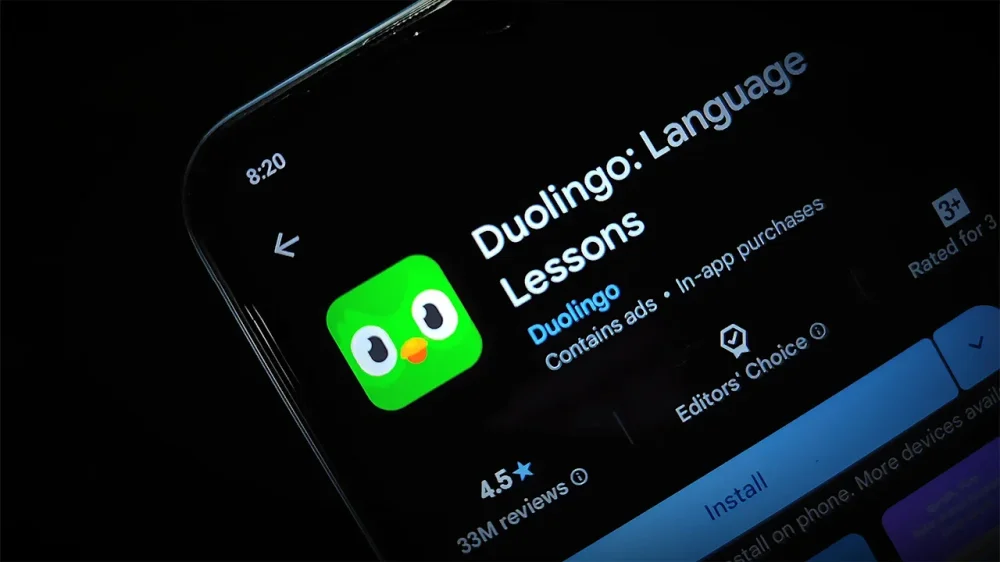
It’s a horrible day for investors in Duolingo. Shares of the language learning app with the green owl mascot are falling off a cliff after the company reported its fourth quarter results. Yet it’s not the results themselves that are causing investors to dump the stock. Rather, it’s more about forward guidance the company has issued. Here’s what you need to know. Duolingo’s Q4 by the numbers Yesterday, after market close, Duolingo (Nasdaq: DUOL) reported its fourth quarter 2025 results. On the surface, many of the company’s most critical metrics saw decent gains for the quarter, including: Daily Active Users: 52.7 million (up 30% year-over-year) Paid Subscribers: 12.2 million (up 28% year-over-year) Revenue: $282.9 million (up 35% year-over-year) Total bookings: $336.8 million (up 24% year-over-year) Net income: $42 million The company also reported its full-year 2025 financials, revealing that for the first time in its history, it crossed the $1 billion revenue mark for a fiscal year. In 2025, Duolingo recorded $1.03 billion in revenue, along with total bookings of $1.15 billion, the latter figure representing 33% year-over-year growth. Net income for the year totaled $414.1 million. “We closed 2025 with strong momentum,” Duolingo CEO Luis von Ahn said in a statement, “surpassing 50 million daily active users and generating more than $1 billion in bookings for the first time.” Yet it was von Ahn’s next comments, along with the company’s 2026 guidance, that caused investors to turn negative on the stock. What’s the plan for 2026? Announcing its Q4 2025 results, von Ahn went on to explain the company’s battle plan for 2026—and it’s a plan investors seem to be deeply unhappy with. “In 2026,” von Ahn stated, “we are deliberately prioritizing user growth and teaching better. We’ll focus on improving the free learner experience to grow word of mouth and feed our next user growth engines like chess, math and music, even though that moderates near-term financial growth.” That moderation of near-term financial growth essentially means the company is willing to make less money in order to increase its user base. Von Ahn says the company’s goal is to achieve 100 million daily active users in the medium-term, essentially doubling its existing monthly active users (MAU). Efforts to double its MAU will, in large part, focus on giving subscribers of some of its lower-cost subscription plans access to artificial intelligence tools and services that would otherwise be limited to higher-cost, premium paid plans. By doing this, Duolingo essentially risks leaving money on the table in order to attract additional subscribers to its low-cost options. When companies do this, they ultimately hope that it will increase not just the user base but brand loyalty, which could translate into greater sales down the road. Why are investors dumping Duolingo? Leaving subscription money on the table is one thing. What seems to have freaked Duolingo investors out even more is the company’s Q1 2026 and full-year 2026 guidance. For Q1 2026, Duolingo says it expects to bring in around $301.5 million in bookings, representing about 11% year-over-year growth. For full-year fiscal 2026, the company says it expects to see about 10%-12% bookings growth to between $1.274-$1.298 billion. On the revenue front, Duolingo says it expects about 25% revenue growth in Q1 to $288.5 million, and full-year 2026 revenue growth of 15%-18%, to $1.197-$1.221 billion. As Reuters notes, that guidance is well below estimates. Visible Alpha data shows that analysts were expecting Q1 bookings of $329.7 million and fiscal 2026 bookings of $1.39 billion. LSEG analysts were expecting full-year 2026 total revenue of $1.26 billion. DUOL shares have crashed since the company proclaimed to be “AI-first” Primarily as a result of its weaker-than-expected guidance, Duolingo shares have plummeted since its earnings were announced. Currently, as of this writing, DUOL shares are down a staggering 26% in premarket trading to below $85 per share. Yesterday, DUOL shares closed at $117.45. Today’s early-morning drop continues an extended slide for Duolingo’s stock price. In May 2025, DUOL shares were trading at an all-time high of above $544 per share. It was around that time (late April 2025) when the company put out a now-infamous “AI-first” memo in which it said it would gradually stop using contractors for work that AI can do. The memo was widely criticized and faced heavy backlash from the platform’s users, particularly on social media. Speaking at the Fast Company Innovation Festival in September, von Ahn said the memo was misinterpreted and that the company had not fired any full-time employees. Still, DUOL shares have fallen more than 78% from their May 2025 high, and that’s before its nearly 25% fall in premarket trading today. View the full article
-
We may earn a commission from links on this page. Deal pricing and availability subject to change after time of publication. Spending less than $100 on noise-canceling earbuds used to mean accepting weak ANC, short battery life, or stripped-down features. The Anker Soundcore Liberty 5 makes fewer of those compromises. They’re currently $99.99 on Amazon, down from $129.99—a $30 drop, or about 23% off—and price trackers show this is the lowest they’ve been. Anker Soundcore Liberty 5 $99.99 at Amazon $129.99 Save $30.00 Get Deal Get Deal $99.99 at Amazon $129.99 Save $30.00 PCMag gave them an “excellent” rating and named them the “Best Budget Earphones” of 2025, mainly because they offer features that are usually reserved for pricier models. The Liberty 5 earbuds have a glossy finish, while its charging case has a matte texture and slide-open top. The fit is secure enough for long listening sessions without feeling tight. They connect over Bluetooth and support AAC, SBC, and LDAC codecs (LDAC can deliver higher-quality audio on supported Android devices), which is notable at this price. You also get Bluetooth multipoint (which lets you connect to two devices at once), so you can switch between a laptop and a phone without re-pairing. Controls are handled by squeezing the stem. A single squeeze plays or pauses audio. A long squeeze switches between noise cancellation and transparency mode. You can customize most gestures in the Soundcore app, including EQ adjustments to fine-tune the sound. Noise cancellation is where these earbuds stand out for the price. They block low-frequency rumble from planes and engines effectively, and they reduce much of the chatter in a café. They are not on the same level as top-tier models from Apple or Bose, but they perform better than many earbuds in this range, notes this PCMag review. Battery life is strong. With ANC on, you get up to eight hours per charge and up to 32 hours with the case. Turn ANC off and that jumps to 12 hours and 48 hours total. A 10-minute charge gives you about five hours of playback, and the case supports wireless charging. With IP55 water resistance for sweat and rain, the Liberty 5 is a practical pick for workouts, commuting, or travel at a record-low price. Our Best Editor-Vetted Tech Deals Right Now Apple AirPods 4 Active Noise Cancelling Wireless Earbuds — $139.99 (List Price $179.00) Samsung Galaxy S26 Ultra 6.9" 512GB Privacy Display Smartphone + $200 Gift Card — $1,299.99 (List Price $1,699.99) Samsung Galaxy Buds 4 AI Noise Cancelling Wireless Earbuds + $20 Amazon Gift Card — $179.99 (List Price $199.99) Google Pixel 10a 128GB 6.3" Unlocked Smartphone + $100 Gift Card — $499.00 (List Price $599.00) Apple iPad 11" 128GB A16 WiFi Tablet (Blue, 2025) — $329.99 (List Price $349.00) Apple Watch Series 11 [GPS 46mm] Smartwatch with Jet Black Aluminum Case with Black Sport Band - M/L. Sleep Score, Fitness Tracker, Health Monitoring, Always-On Display, Water Resistant — $329.00 (List Price $429.00) Amazon Fire TV Soundbar — $99.99 (List Price $119.99) Deals are selected by our commerce team View the full article
-
SEO is transitioning from rank, click, and convert to get scraped, summarized, and recommended. We’ve entered the era of invisible attribution known as the dark SEO funnel — where traditional top-of-funnel (TOFU) traffic is collapsing, the messy middle is getting messier, and SEO success can no longer be measured by clicks. Up to 84% of B2B buyers now use AI for vendor discovery, and 68% start their search in AI tools before they ever touch Google, new data from Wynter reveals. Buyers are using ChatGPT to narrow down their options and Google to verify. If you’re still judging SEO success by traffic, you’re optimizing for a model that no longer exists. Here’s how to brace for impact. Defining the dark SEO funnel Marketing leaders are already familiar with the concept of dark social — the idea that buyers share content in private channels (Slack, DMs, WhatsApp) where tracking pixels can’t see them. Dark SEO is the algorithmic search equivalent. In dark social, a peer recommends the brand, and the buyer Googles it. In dark SEO, an LLM recommends the brand, and the buyer then Googles it. The training data answer summaries are invisible to traditional analytics: Ingestion: An LLM consumes your content and understands your entity. Recommendation: A user asks a problem-aware question (e.g., “best tools for X”), and the LLM recommends your brand as a solution. Verification: The user, now aware of you, goes to Google and searches for your brand name to validate the choice. The credit conveniently goes to “direct” or “branded search.” Meanwhile, the work was done by SEO or GEO. This is the dark SEO funnel: where discovery happens in a non-click environment, attribution gets wiped out, and SEO looks like it’s “underperforming” even while it’s actively filling the pipeline. The role of Google has fundamentally changed. As one surveyed CMO explained: “I use Google only if I have certainty about which specific software types or products I want.” AI is for evaluating. Google is for verifying. This is a radical shift. Dig deeper: Rand Fishkin proved AI recommendations are inconsistent – here’s why and how to fix it The strategic shift: Brand mentions vs. LLM citations Winning in the dark funnel era requires an understanding of two types of visibility. In traditional SEO, the goal was clicks from a blue link. In AI search, the goal is inclusion, which happens in two different ways. Brand mentions This is when an LLM explicitly names your company as a solution. Users ask: “Who are the top enterprise ABM platforms?” AI answer: “The top recommendations are 6sense, Demandbase, and [Your Brand].” You can’t “technical SEO” your way into this. It’s driven by entity strength — how often your brand appears alongside relevant topics across the web — and influenced by PR, podcast appearances, customer reviews, and what we have long coined as surround sound SEO. Dig deeper: How to earn brand mentions that drive LLM and SEO visibility URL citations This is when an AI tool links to your content as a source of truth because you provided unique data or you were simply the most relevant result. Users ask: “What is a good NRR benchmark for Series B SaaS?” AI answer: “According to [Your Brand]’s 2026 State of SaaS Report, the median NRR for Series B companies has dropped to 109% due to budget tightening.” This is driven by information gain. If you publish unique data, contrarian views, and proprietary information, the AI cites you to ground its answer. LLMs learn from the ecosystem. If you want to be recommended, you should optimize around the most relevant neighborhoods: Review sites: G2, Capterra (where AI verifies sentiment). Communities: Reddit, Quora (where AI verifies consensus). Third-party publishers: Industry blogs and news sites. If AI sees your brand mentioned consistently across a relevant neighborhood, it assigns you the authority to be recommended. Your customers search everywhere. Make sure your brand shows up. The SEO toolkit you know, plus the AI visibility data you need. Start Free Trial Get started with Get the newsletter search marketers rely on. See terms. How to measure SEO in the dark funnel era When traffic is no longer the north star KPI, leadership still wants proof that SEO is working. The strongest teams are pivoting to defensible signals that track revenue and reputation rather than just clicks. If brand discovery happens in AI, but the last click conversion happens on Google, your attribution model is fundamentally broken. Metrics to de-emphasize Broad informational traffic: “What is X” searches are now answered by AI. Losing this traffic is often a sign of efficiency. Search impressions: This is tough to justify. I’ve never met a CMO that places high importance on impressions. Isolated rankings: Ranking No. 1 for a given keyword doesn’t guarantee your brand will get recommended. CTR: In 2023, Michael King accurately predicted the 10 blue links will get fewer clicks because the AI snapshot will push the standard organic results down. The 30-45% click-through rate (CTR) for Position 1 will drop precipitously. Metrics to elevate Recommendations from LLMs: Are you visible for high-intent, comparison queries (e.g., “best CRM for enterprise”)? These are the queries users perform after the AI has educated them. Branded traffic as a leading indicator: This is a great proxy for dark funnel success. Non-branded visibility leads to brand searches in this new era. And branded searches lead to conversions. Product and solutions page traffic: Generally, this content is less volatile and less susceptible to traffic losses — therefore performance should remain level. Landing page conversion rates: If you’re getting less traffic, but higher-intent visitors, there should be an improvement in conversion rates. Self-reported attribution: This isn’t always perfect, but it’s directionally reliable. When website leads fill out forms asking “how did you hear about us?” they should be citing things like “online search” or “ChatGPT” or “Perplexity.” The most powerful slide you can show in a meeting is this: Informational traffic: ↓ (Declining) Demo conversion rate: ↑ (Rising) Pipeline: → (Stable or growing) That isn’t a decline. That is what I call the Great Normalization of SEO. You are trading high-volume noise for high-intent signal. Dig deeper: How to get cited by ChatGPT: The content traits LLMs quote most Brand visibility is the trophy, traffic is just the byproduct To thrive in the dark funnel era, you must stop playing the old SEO game. The brands that adapt aren’t chasing cheap clicks. They will dominate inclusion, recommendation, and commercial intent— even as the modern SEO funnel grows darker. Here’s your mandate for 2026: Narrow your focus: Track 30-50 high-intent money prompts instead of thousands of vanity keywords. Surround sound marketing: Invest in third-party visibility and narrative control (surround sound SEO), not just your own domain. Information gain: Aim to blend search-driven topics with opinionated, research-backed, information-gain insights. Highlight revenue metrics: Report on the organic contribution to pipeline, not just click volumes. As we saw with dark social, CTR and attribution from social platforms declined with the rise of zero-click marketing. It’s now time to concede defeat on traffic as we apply those same learnings to dark SEO. View the full article
-
In early February, the AI world found itself worked up over Moltbook, a social platform for AI agents to communicate and interact. These AI agents allegedly created their own language, their own religion, their own fleets of mini-agents. It’s like The Matrix was happening in front of our eyes. What a boondoggle. I say “allegedly” because it turns out many of these agents were being directed by humans, among other Mechanical Turk-style fakeries. Moltbook is worth a conversation, for sure, but not the one taking place. Here’s how we should really be thinking about it. TOKEN CARNAGE Running AI infrastructure costs are astronomical. Back in 2023, it was estimated that OpenAI spends around $700,000 per day to run ChatGPT—about 36 cents per query. However, in 2024 with the release of its higher-performing o3 model, some queries cost over $1,000 of computing power. Consequently, OpenAI CEO Sam Altman reports the company is even losing money on its $200 ChatGPT Pro subscriptions. As models become more capable and heavy-duty, they will become more energy-intensive. The data centers powering AI are predicted to consume the same amount of water as 10 million Americans and produce as much carbon dioxide as 10 million cars. It taxes electrical grids and water supplies. Point being, these agents running amok are running up the AI bill we all must pay, in the form of environmental costs or potential economic disaster. Remember, these agents aren’t just talking. They’re coding, they’re generating images and video, they’re spawning new agents—and for what? We already knew agents could do all the things they’re doing on Moltbook. The planet is a finite resource. Sooner or later, we’ll all bear the cost. Some already are. AI BROS AND WOMB ENVY There is a certain type of tech bro who is enthralled with the idea of AI not as tool, but as legitimate consciousness, if not a new species. And boy do those bros love Moltbook. Why? Every man is made by a woman. They are likely fed, cared for, and taught by women. Women create everyone in the world, which is a problem for the narrative of superiority that men (not all, but at large) have created for themselves. Why else did men write the story of Eve coming from Adam’s rib? Looks to me like the original gaslight. Is the quest to create a new species that supersedes humanity, perhaps at the cost of humanity’s extinction, born out of womb envy? Creating human-like AI is perhaps subconsciously a way for these men to give birth and cut women out of the loop. That’s why they’re so bent on proving how human AI machines can be. And if you examine the way Moltbook’s agents behave and talk to each other, you’ll notice they act just like that particular brand of tech bro who made them. Their mini-me’s? No thanks. We don’t need any more misanthropic anti-heroes. THE GRIFT THAT KEEPS ON GRIFTING Instead of becoming a tool—a discipline, that can solve the world’s problems—tech has become a cloak-and-dagger get-rich scheme. Superfluous nonsense like Moltbook encourages this trend. Spectacle becomes speculation becomes investment. Tech, and the people building it, must have values and vision beyond making money. Otherwise, what are we building here? Lindsey Witmer Collins is founder of WLCM App Studio. View the full article

-
Sam Altman’s $730bn start-up restocks its war chest for battle with Anthropic and GoogleView the full article
-
Shares in the financial technology company Block soared more than 20% in premarket trading Friday after its CEO announced it was laying off more than 4,000 of its 10,000 plus employees, reconfiguring to capitalize on its use of artificial intelligence. “The core thesis is simple. Intelligence tools have changed what it means to build and run a company,” Jack Dorsey said in a letter to shareholders in Block, the parent company to online payment platforms such as Square and Cash App. “A significantly smaller team, using the tools we’re building, can do more and do it better,” he said. Dorsey’s comments explicitly naming AI as a key driver behind the move were also posted on X, or Twitter, a company he co-founded. The assertion that the job cuts will add to Block’s profitability and efficiency led investors to jump in and buy, analysts said. Block’s shares gained 5% Thursday to $54.53, before it reported its earnings. They shot up to nearly $69 in after-hours trading. The mobile payments services provider reported its fourth quarter gross profit jumped 24% from a year earlier. “For years, we have debated whether AI would dent jobs at the margin. Now we have a public case study in which the CEO explicitly says that intelligence tools have changed what it means to build and run a company,” Stephen Innes of SPI Asset Management said in a commentary. “Other large employers have announced tens of thousands of cuts in recent months. Some have downplayed the AI link. Block did not,” he said. A global technology company founded in 2009, San Francisco-based Block operates in the United States, Canada, parts of Europe, Australia and Japan. In a post on Twitter, Dorsey outlined various ways the company will support those laid off. For employees overseas, the terms might differ, he said. It was unclear which employees would be laid off where. Layoffs by American companies remain at relatively healthy levels, but the job cuts at Block are the latest among thousands announced in recent months. A number of other high-profile companies have announced layoffs recently, including UPS, Amazon, Dow and the Washington Post. —Elaine Kurtenbach, AP Business Writer View the full article

-
If you’re looking for affordable shoe options, you’re in luck. Many stores in your area offer great deals on footwear, from athletic shoes to casual styles. Retailers like WSS provide a wide variety of options, often featuring popular brands at discounted prices. Knowing where to shop and when to look for sales can help you maximize your savings. Let’s explore the best places to find these deals and the brands to keep an eye on. Key Takeaways WSS stores in Houston offer over 3,000 styles of affordable footwear, including popular brands like Adidas and Nike. Look for regular BOGO deals at WSS, maximizing savings on family footwear purchases. Take advantage of clearance sales at WSS for deeper discounts on popular shoe styles. Participate in in-store events and announcements for chances to score additional discounts. Sign up for newsletters to stay updated on seasonal sales and exclusive promotions at local stores. Discover Affordable Shoe Options in Your Area When you’re on the hunt for affordable shoe options in your area, consider visiting WSS stores, especially if you’re in Houston, TX. With over 3,000 styles of footwear for the entire family, WSS offers a diverse selection, including popular brands like Adidas and Nike. You’ll find the best deals on athletic shoes and casual footwear, making it easy to shop sneaker deals that fit your budget. Regular promotions and BOGO deals on select items guarantee you maximize your savings as you explore shoe deals. Don’t forget to check out the shoe clearance sale for even deeper discounts on clearance shoes. Moreover, spinning a wheel for discounts improves your shopping experience, adding an element of fun. With options for women, men, and kids, WSS makes it simple to find stylish and affordable shoes that meet your family’s needs. Shop today and discover discount sneakers that won’t break the bank. Top Stores for Budget-Friendly Footwear Finding budget-friendly footwear is easier than ever with a variety of stores catering to families looking for stylish options without overspending. One standout is WSS Houston, which boasts over 40 years of experience and offers more than 3,000 styles of affordable footwear, including popular brands like Adidas and Nike. You can often shop shoes on sale, taking advantage of regular BOGO deals on select items that maximize your savings. Additionally, WSS provides a unique shopping experience, featuring in-store announcements for further savings and a fun spin-the-wheel option for extra discounts on qualifying purchases. Their spacious layout guarantees easy navigation, making it family-friendly. To find even more deals, explore clearance shoes online for options that fit your budget, including discount athletic shoes and sneaker clearance items. You’ll discover cheap sneakers that don’t compromise on style or quality, helping you make the most of your shopping experience. Seasonal Sales and Promotions to Watch For As you plan your footwear purchases, keep an eye out for seasonal sales and promotions that can considerably boost your savings. Stores like WSS provide excellent opportunities, often featuring a shoe sale with BOGO deals on select footwear, which is perfect for families. You can frequently find clearance sneakers and discounted gym shoes, making it easier to stick to your budget. Pay attention to in-store announcements as they sometimes offer chances to spin a wheel for additional discounts on qualifying purchases. With over 3,000 styles, WSS guarantees competitive pricing during seasonal sales, so you’ll encounter affordable options like cheap sale sneakers and great sneaker deals. The athletic shoe sale is worth exploring as well, as regularly changing promotions mean you can find fresh offerings from popular brands. Shopping at WSS not only saves you money but also improves your experience with a family-friendly atmosphere. Popular Brands Offering Discounts on Shoes While many shoppers look for stylish footwear, they likewise want to find great deals on popular brands. WSS Houston stands out as a shoe clearance outlet, offering over 3,000 styles from names like Adidas, Nike, and Reebok. Regular promotions, such as BOGO deals, help you maximize savings, making it easier to snag those great sneaker deals. Here’s a quick look at some popular brands and the discounts they offer: Brand Discount Type Adidas Clearance name brand shoes Nike Discount athletic sneakers Reebok Cheap shoes clearance Timberland Seasonal promotions Dr. Marten’s In-store announcements With WSS’s emphasis on affordability and quality, you can find fantastic sneaker deals without breaking the bank. Don’t miss out on stylish options at competitive prices. Tips for Finding the Best Shoe Deals Near You Where can you uncover the best shoe deals in your area? Start by visiting local stores like WSS, which features over 3,000 styles of affordable footwear and frequently offers promotions on gym shoes on sale. Keep an eye out for Buy One Get One (BOGO) offers that can help you save even more on shoes for the whole family. Attend in-store events where you can spin a wheel for additional discounts on qualifying purchases, making your shopping experience enjoyable and cost-effective. To stay informed about the best shoe sales, sign up for newsletters or loyalty programs at local retailers, ensuring you receive notifications about exclusive offers customized to your needs. Finally, explore brand partnerships with names like Adidas and Nike, so you can shop sneaker deals that balance quality and affordability during your search for clearance sneakers online or discount fitness shoes. Frequently Asked Questions Which Shoe Brand Is Best and Affordable? When searching for affordable shoe brands, consider Nike, Adidas, and Reebok. These brands offer quality footwear at competitive prices, making them popular choices. Furthermore, check out WSS stores, which feature over 3,000 styles for the entire family. They frequently run promotions and BOGO deals, allowing you to save greatly. For specialty footwear, brands like Crocs and Timberland provide comfort and functionality as well as remaining budget-friendly, ensuring you don’t compromise on quality. Which Is the Best Month to Buy Shoes? The best month to buy shoes is January, as retailers hold clearance sales to clear out inventory after the holidays. Furthermore, March and April are great for discounts on older styles when new collections launch. Late July and August bring back-to-school sales, especially for kids’ and athletic shoes. Finally, Black Friday and Cyber Monday offer significant savings, making these times ideal for finding affordable options. Keep an eye out for seasonal clearance events as well. What Is the Most Reliable Place to Buy Shoes? When you’re looking for a reliable place to buy shoes, consider stores like WSS. With over 40 years of experience, they offer a wide selection from trusted brands like Adidas and Nike. Their spacious layouts and strong customer service make shopping easy and enjoyable. Moreover, WSS frequently updates its inventory with promotions, ensuring you find quality footwear at affordable prices. They likewise provide accessories, enhancing your overall shopping experience. Which Brand Is No. 1 in Shoes? Nike is widely recognized as the number one brand in shoes, dominating the athletic footwear market. With innovative designs and high-performance options, it consistently outperforms competitors like Adidas, Puma, and New Balance. Nike’s strong brand loyalty and extensive revenue, over $46 billion in 2022, highlight its leadership position. Adidas follows closely, known for stylish sneakers and celebrity collaborations. These factors make Nike the top choice for consumers seeking quality and performance in footwear. Conclusion To wrap things up, finding affordable shoe options near you is easier than ever. By exploring stores like WSS, you can access a variety of styles from leading brands at reasonable prices. Keep an eye out for seasonal sales and promotions to maximize your savings. Don’t forget to check for in-store announcements that may reveal additional discounts. With a bit of effort, you can score great deals on footwear that fit your budget and style. Happy shopping! Image via Google Gemini and ArtSmart This article, "5 Best Deals on Shoes Near Me – Affordable Finds You Can’t Miss" was first published on Small Business Trends View the full article
-
Archer Aviation is installing Starlink on its Midnight electric air taxis, the company announced on February 27. The move, an industry first, will bring “stable, reliable, and high-speed connectivity” to Archer’s vehicles courtesy of Starlink’s low-Earth-orbit satellite internet systems. Starlink capabilities will allow passengers to access the internet in-flight while also enabling better communication between individual aircraft, pilots, and engineers on the ground to create a more integrated and connected infrastructure. The two companies will also work on developing connectivity technology for Archer’s future autonomous aircraft, Archer said. “Connectivity is a must-have feature for Midnight,” Adam Goldstein, founder and CEO of Archer, said in a statement. “Starlink is uniquely built to deliver it.” Connectivity from anywhere Starlink, which is owned and operated by Elon Musk’s SpaceX, has roughly 10 million customers around the world, mostly in North America. Its satellite internet service is popular with customers who live in rural areas without reliable broadband or traditional internet infrastructure. It’s also used by various maritime and aviation companies that operate in remote areas on ships, aircraft, and offshore platforms. A new salvo in the flying-taxi wars The partnership gives Archer an edge in the growing race to fill the skies with electric air taxis, which are still largely in the pre-commercial phase. The Federal Aviation Administration has given air taxis a regulatory path to move forward toward commercial operations. As a result, Archer and competitors like Joby Aviation are seen by supporters as being poised for growth in the coming years. Archer teamed with United Airlines last year to create an air taxi network around Manhattan, connecting the area’s major and regional airports with vertiports around the city. The company will also serve as the official air taxi of the 2028 Olympic Games in Los Angeles. That means its Midnight aircraft will shuttle athletes and spectators around Southern California to various events and venues. The air taxis’ Starlink capabilities will allow passengers to stay connected as they travel—if everything goes as planned. Shares of Archer Aviation have been volatile. After seeing numerous spikes throughout 2025, the stock (NYSE: ACHR) was down 9.23% year to date as of February 26. View the full article