All Activity
- Today
-
Small businesses face a silent but looming danger. The password credentials to a growing number of apps vital to operations remain vulnerable. And U.S. businesses seem more at risk than their counterparts in other markets even though they spend more on security. A recent survey conducted by Tigon Advisory Corp uses 3,322 responses worldwide from nine regions and six industries to better understand the level of threat. Despite awareness of the problem however, a stunning number of companies have done little or nothing to address it. “Workforce password security sits at a critical inflection point,” the report explains. “Organizations understand the risk in theory but have not converted that understanding into deployed security infrastructure.” Fortunately, Zoho Corp., who commissioned the survey, offers a few solutions to consider when trying to avert the issue. Contact the Zoho team today or read on for more about the threats your business faces. U.S. Small Businesses Face Especially High Threat You may operate a car rental business in Phoenix, Arizona or a lawn and garden business in Lynchburg, Virginia. Though not specifically technology companies, either of these businesses may use software from digital booking apps to invoicing and client CRMs that make them vulnerable. In fact, in either case, these businesses stand a better chance of being a victim of a cyber attack simply because they are based in the United States. You read that right! According to the Tigon survey, 34% of U.S. businesses reported being victims of a cybercrime last year compared to just 32% worldwide. Application Sprawl Heightens Danger of Cyberattacks A big reason for this vulnerability comes down to something called application sprawl. You may run a chain of Cuban coffee shops in and around Miami, Florida. Or perhaps you founded a bike messenger service in New Orleans, Louisiana. In either case, growing reliance on everything from payment portals to scheduling apps and digital task management software also elevates risk. “As organizations grow more dependent on digital applications with most employees now accessing more than 15 business apps daily, credentials have become the most consistently exploited vulnerability in modern organizations,” the report adds. The Disappearance of Single Logins Leads to More Security Challenges Maybe you operate a vacation rental business in the Adirondacks in New York State. Or perhaps you manage a biotech company based in Salt Lake City, Utah. In either case, the use of more and more applications and more hybrid or even remote work, means greater security challenges. According to the survey, 63% of U.S. respondents say their employees use 15 or more apps daily, four points above the 59% global average. These statistics again demonstrate how those operating a business in the U.S. face a greater threat than those doing so in other global markets. Add to this the fact that only 40% of workers on average now work on site at businesses surveyed worldwide. Meanwhile, 35% of employees work hybrid while 25% now work fully remote. “The modern workforce no longer operates from a single login,” the survey concludes. “Employees access a sprawling constellation of business applications. Each application represents a credential that must be created, secured, and governed, creating an attack surface that most organizations cannot fully see.” Security Stacks Lack Future Readiness Most businesses surveyed admit they are not ready for the security risks of the future. Sure, 75% of U.S. businesses plan to increase their security budgets over the next five years. Only 72% of respondents worldwide plan to do so. But even this may not be sufficient. Afterall, 80% of responding organizations worldwide say their software architecture lacks the capabilities to stand up to tomorrow’s threats – even with added budgets. Risks Increase For Businesses With Smaller Teams Small businesses in particular will face risks related to password credential security both now and in the coming years. More than 50% of businesses with 250 employees or fewer don’t even have a dedicated security team, the survey says. This forces them to rely upon informal security policies. Imagine depending on your already busy employees to implement regular password updates, for example. But making the changes necessary to protect your businesses may not be optional. Your company’s very survival may depend upon it. Survey Highlights How U.S, Companies Face Greater Risk Despite Spending And again, businesses around the world from China to the Middle East face many of the same challenges when it comes to password credential security. But for U.S. businesses, the problem seems worse despite the fact that these companies budget consistently higher for security. The thesis these numbers suggest seems obvious. Budget matters less when protecting your business from cyberattacks than software architecture. Better Software Architecture Offers Greater Security “The organizations that will navigate the next five years most effectively are those investing in architectural simplicity, building governance models that scale with identity growth, and adopting AI-enabled orchestration to reduce friction,” says Helen Yu, founder and CEO of Tigon Advisory Corp. Fortunately for all businesses but especially those SMBs, you can take steps to future proof your security without big expenditures. “Budget is not the primary constraint on security maturity; architecture, talent, and visibility infrastructure are. The data in this report is a call to sequence correctly: fix foundations before chasing advanced capabilities,” Yu adds. To learn more about how software architecture helps shield your small business from devastating cyberattacks, contact Zoho today. The Digital Landscape Contains Many Threats The digital landscape has become a minefield. You may run a tour guide service in Nantucket, Massachusetts, or a fintech company in Burlington, Vermont. The threats to your business remain the same. Here are some of the top ranked risks according to survey responders from businesses just like yours. Phishing Phishing or some other kind of social engineering ploy topped the list of threats with 71% of U.S. respondents. A classic version of this attack involves a deceptive email sent to one of your employees. Perhaps this email appears to originate from a customer or supplier. But once your employee clicks on an innocent looking link inside the email, you’re hooked like a flounder. The link allows the sender to steal sensitive information, distribute malware or gain unauthorized access to your system. Weak Passwords We’re all guilty of this one. Nonetheless, 63% of U.S. respondents listed this as a major threat in the survey. Say your employees need to log into 15 or more apps during the course of their day as we’ve determined many do. They need a different password for each. But instead of picking a hard to guess password with letters, numbers and other symbols, they choose the first 12 letters of the alphabet. Then to make matters worse, they use the same password for all 15 apps so guessing one gives a cyberattacker access to them all. Inside Threats Sure, you like to trust all your people. And you want to believe none of them would do anything to intentionally jeopardize your business. But an unscrupulous employee with access to your payment portal or online bank accounts or a subcontractor with access to sensitive client information could certainly spell trouble. It seems a threat from the inside keeps at least 57% or U.S. survey responders up at night. Credential Stuffing This attack further amplifies the danger of weak or reused passwords. Though even businesses with strong passwords for each individual app could find themselves vulnerable if these passwords aren’t routinely updated. The scenario goes something like this. An attacker buys a list of passwords from a data breach, then uses a bot to stuff these passwords into multiple apps until access is gained. If your employees have carelessly failed to update their passwords or have reused them for multiple apps, an attacker could quickly gain complete control of your business. According to the survey, 49% of U.S. respondents worry about this threat regularly. Third Party Access Finally, 41% of business respondents to the survey worldwide fret about unmanaged third party access. Think of this as the digital equivalent of giving contractors or other non-employees unsupervised 24-hour access to your business office or other facilities. Suppose you run a massive website with hundreds of freelancers including content creators, designers, SEO consultants and web developers. Giving them access to your site so that they can load content, change banners and logos, optimize pages and update code makes sense. Otherwise you need to do all this work yourself. But giving hundreds of contractors unlimited and unmanaged access to your website may lead to trouble. Unscrupulous contractors might insert unwanted content, steal digital assets, sabotage SEO to benefit other clients or maliciously destroy website functionality. Threats Ranked Globally AI Provides A Better Option for Password Credential Security Most respondents to the Tigon survey agree AI holds the key to better security. However, almost no businesses seem ready to implement it. AI provides a more robust protection against cyberattacks and delivers better password credential security. It does so in a variety of ways and offers an attractive option for small businesses who lack a dedicated security team. Here’s what the survey reveals about preferred AI security features amongst respondents world wide. Anomaly and Threat Detection A reported 68% of respondents indicated a preference for anomaly and threat detection. AI alerts your team of unauthorized access to sensitive files. Perhaps you manage a physician’s office and need a way to detect suspicious attempts to access patient records, for example. Or perhaps the credentials of one of your team based in the U.S. is suddenly used to attempt access to your system from somewhere in Eastern Europe or South Asia. AI uses machine learning to detect unusual activities that might constitute a threat to your business and stops them in their tracks. Automated Policy Enforcement Another 61% of survey respondents favored automated policy enforcement as a preferred AI security feature. You may recall one of the greatest challenges facing small businesses lacking a dedicated security team. Employees need to rely on their own informal security policies. This would include things like remembering to update passwords and trying not to use weak or reused passwords. With AI, much of this can be automated leaving employees to focus on more high level tasks without interruption. AI can even detect when a user attempts to update a password by using a breached credential and blocks their access immediately. Behavioral Analysis An additional 54% of survey respondents believe behavioral analysis might be most helpful in neutralizing threats to your password credential security. AI can go the extra mile to secure your company’s logins. Again, using machine learning it establishes behavioral baselines. Then it springs into action if it detects activities deviating too far from those baselines – even if a user has the correct password. Suspicious logins by an employee at 4 a.m. on Sunday when they generally work 10 to 6 weekdays might raise a red flag, for example. Risk Based Access Control Finally, 47% of respondents worldwide indicated a preference for risk based access control. This AI security feature assigns risk scores to unusual actions like attempts to login from a previously unknown device. The AI then requires additional authentication from the user assuring against unauthorized access. U.S. Businesses Show Widest Gap Between Awareness and Implementation Whether you own a bakery in Des Moines, Iowa, or a PR firm in Peoria, Illinois, implementing AI security would put you at the head of the pack. While 91% of U.S. business respondents understand the importance of AI to their security, just 9% are ready to integrate AI security into their operations. This 82% AI gap between awareness and integration is wider than for businesses in any other region in the survey. What’s more, many U.S. businesses are far from ready to implement AI security for logins, the survey says. With password security still being managed by shared spreadsheets and browser saves, U.S. businesses must be prepared for big changes before adopting AI password security. In Conclusion You may operate a pick and pack plant in Tamaqua, Pennsylvania. Or you may manage a light manufacturing company in St. Paul, Minnesota. Even in these businesses where employees traditionally work onsite, hybrid and remote roles are emerging. These hybrid and remote workers may perform logistics planning, data entry or inventory management tasks using a variety of software and with multiple logins. As discussed earlier, this multiple login environment combined with application sprawl creates greater risk to password credential security. This makes your business ever more vulnerable to an invisible army of cyberattackers scattered across the internet and around the world. But don’t panic! Future proof your security stacks with solutions that safeguard your business today and tomorrow. Contact the Zoho Sales team today. Images via Zoho This article, "Zoho Survey Warns of Huge Password Security Threat" was first published on Small Business Trends View the full article
-
The Google Local Service Ads account access tab has not been loading and working for advertisers for the past several days. There are numerous reports of it failing throughout the day and it has become a huge frustration for a number of Google advertisers.View the full article
-
For over two decades, parked domains generated income for advertisers and publishers. Recent Google Ads policy changes restricting ads on parked, expired, or mistyped domains show that nothing lasts forever. If industry shifts have affected you, this article may interest you. Today, we’ll take a deeper look at domain monetization and whether you can still stabilize and optimize income from domain traffic. The domain market shake-up In 2025, Google began rolling out significant changes to its Search Partner Network to improve inventory quality. These updates tightened controls and limited ad delivery across parked, expired, and mistyped domains. That process concluded Feb. 10, “Parked Domains” were removed as a dedicated ad placement option. Since then, ads no longer appear on these sites through the previous opt-in setup, signaling a broader shift away from this inventory. Given Google’s scale, this change affected many publishers and domain owners and couldn’t be ignored. It drove a notable market adjustment: some long-standing domain parking and monetization businesses shut down, others rebuilt their frameworks from scratch, and new entrants began exploring opportunities in the evolving landscape. New developments in domain monetization This shift is clear in recent developments. Across domain forums, users show uncertainty as they navigate the transition and assess new ways to monetize idle domains. At the same time, the rise of domain conferences worldwide highlights growing interest, attracting new players and creating new opportunities. Though this transformation is still in its early stages, a positive trajectory is emerging. Opportunities to monetize domains remain — this is a phase where new structures are taking shape. New players are building and testing solutions, some of which will likely prove viable and help move the market toward a more stable, sustainable direction. RollerAds’ domain monetization solution In response, several monetization platforms have adapted their infrastructure to better support domain traffic. One example is RollerAds, which supports parked domain traffic through its existing ad delivery ecosystem. The platform draws on experience in domain traffic monetization and focuses on formats such as Direct Click ads. A key factor in performance stability is a monetization model based on content-safe, high-demand verticals like eeommerce, which tend to deliver stronger payouts. A large share of revenue also comes from RSOC (Related Search on Content) units that guide users to sponsored search results, capturing and monetizing intent-based traffic. Through simple DNS integration, the platform lets you connect large domain portfolios at scale, turning them into ongoing revenue streams instead of unused holdings. Domain monetization example from RollerAds Here’s a representative example of monetization results from the RollerAds platform. A publisher acquired the ******.ws domain for $5.95 to monetize it. After connecting it exclusively to the platform, the domain began generating about $7 per month consistently, covering its initial cost relatively quickly. While the amount is modest, it comes from a single low-traffic domain and requires no ongoing management, making it a fully passive income stream. Now consider a scenario where the same publisher owns hundreds or thousands of similar domains. Instead of managing each individually, they can focus on expanding their portfolio or core business while maintaining automated revenue streams. With higher-quality domains and stronger traffic, earning potential scales upward. During its operation, this domain did not generate any abuse reports. Domains sale & monetization One key advantage of modern domain monetization setups is that you don’t have to choose between earning from a domain and selling it. You can do both in one place. A domain can keep generating income from traffic while it’s listed for sale, so it doesn’t sit idle. At the same time, the revenue it generates provides a clearer picture of its actual value instead of relying on guesswork. This combined approach is also available on RollerAds, where you can monetize domains and list them for sale within the same platform. Adapting to change in domain monetization The domain market is undergoing a period of change that brings challenges and new opportunities. In this environment, the key is to stay flexible, test different approaches, and use available tools — whether to monetize domains or sell them. If you’re facing monetization challenges or looking to list domains for sale, RollerAds may be the right partner. Get in touch with the managers to find a convenient, profitable solution for your needs. Domain monetization remains active and continues to build a more stable foundation as the market evolves. View the full article
-
This article is republished with permission from Laser Wars, a newsletter about military laser weapons and other futuristic defense technology. The U.S. military has a message for America’s directed energy industry: it’s time to build. In a written posture statement submitted to the House Armed Services Committee ahead of a hearing on the U.S. Defense Department’s fiscal year 2027 budget request on April 29, Secretary of Defense Pete Hegseth stated that the Pentagon plans on buying “tens to hundreds” of directed energy weapons like high-energy laser systems in the coming years—the beginning of what Hegseth dubbed a “strong and consistent demand signal” to the U.S. defense industrial base that, after years of producing just “a limited number of prototypes,” the U.S. military is deadly serious about fielding such capabilities at scale. Here’s the relevant section from Hegseth’s posture statement: Directed Energy (DE) weapons represent a transformative capability, yet the Defense Industrial Base (DIB) is currently postured to produce only a limited number of prototypes. There are significant vulnerabilities and gaps in our DE defense manufacturing capabilities. To address this, the Department must create a strong and consistent demand signal for the production of greater quantities of these weapons, on the order of tens to hundreds of units. This increased demand is essential to enable the DIB’s manufacturing capacity to mature and scale to meet the tactical innovation of the warfighter. Overcoming the “business as usual” acquisition mindset is paramount. The Department must reform its procurement processes, warfighting tactics, and policy limitations to “demystify” Directed Energy weapons and facilitate their integration into the force structure. This includes developing new concepts of operation, training programs, and support infrastructure to ensure that these advanced weapons can be effectively fielded to our warfighters and employed on the battlefield. The successful integration of Directed Energy weapons will require a concerted effort to overcome institutional inertia and embrace a new way of thinking about warfare. The Department’s commitment to creating a demand signal is the first and most critical step in this process. While senior military and defense officials have vocally endorsed fielding directed energy weapons at scale in 36 months or installing “a laser on every ship,” Hegseth’s statement offers a more grounded (and familiar) diagnosis for observers of the U.S. military’s decades-long laser weapon ambitions: the technology has advanced, but the institutional mechanisms to transition mature systems to the field have not. The defense industrial base simply cannot invest in the manufacturing and supply chain capacity required for production at scale if it can’t predict how many systems it will actually be asked to build, especially if promising initiatives continually perish in the “valley of death” between research and development and procurement The defense industry has been making this point for years. A January 2024 report from the National Defense Industrial Association (NDIA) trade group on directed energy weapon supply chains, which is on based in-depth research and interviews with dozens of key industry stakeholders and subject matter experts, found that the lack of a consistent demand signal “was raised many times by industry leaders as negatively impacting all levels of the supply chain.” “Existing [directed energy weapon] supply chains can only produce small numbers of systems with long lead times,” the NDIA report says. “Once DoD’s strategic goals are articulated, appropriate DEW systems should be transitioned to programs of record and multi-year contracts used to send an extended demand signal. A clear, sustained demand signal, accompanied by the overarching strategic vision, will provide industry with the assurance that they can begin to make the internal investments necessary to secure DEW supply chains for the future.” This assessment isn’t wrong. Despite ramping up laser weapon efforts following a deliberate shift from bulky chemical systems to more reliable, compact, and efficient solid-state and fiber laser technology in the 2000s, the last two decades have been marked by abandoned projects. Here are some recent examples: U.S. Army officials touted its 50 kilowatt Stryker-mounted Directed Energy Maneuver-Short Range Air Defense (DE M-SHORAD) as a major breakthrough when it deployed to the Middle East for real-world operational testing in 2024, but the U.S. Government Accountability Office (GAO) concluded the system “was not mature enough” to transition to a program of record. Army officials told Congressional Research Service as recently as this past January that they planned on transitioning the ambitious cruise missile-killing 300 kw Indirect Fire Protection Capability-High Energy Laser (IFPC-HEL) weapon to a program of record, but now say they only plan on taking delivery of a single system to use as a testbed to inform future laser weapon development efforts. The U.S. Navy’s 60 kw High Energy Laser with Integrated Optical Dazzler and Surveillance (HELIOS) weapon system, which only recently began testing at full power and frying drones aboard Arleigh Burke-class guided missile destroyer USS Preble after years of delays, has effectively disappeared from the service’s fiscal year 2027 budget request outside of a handful of sustainment dollars. The U.S. Marine Corps returned its five Compact Laser Weapon System (CLaWS) units to Boeing in pursuit of a “more deliberate programs of record,” years after touting the system as “the first ground-based laser approved by the Department of Defense for use by warfighters on the ground” (and without any explicit funding for laser weapon R&D in its fiscal year 2027 budget request). The U.S. Air Force spent years experimenting with Raytheon’s High-Energy Laser Weapon System (HELWS) for counter-drone missions but abandoned the effort without successfully transitioning the system to a program of record, although the service appears poised to once again pursue ground-based laser weapons for airbase defense. These failures share a common pattern, according to a detailed 2023 GAO report on the Pentagon’s directed energy weapons efforts: projects advanced through prototyping without ever securing formal transition partners or drafting agreements that would bind developers and the acquisition community to shared requirements, timelines, and funding responsibilities. The Navy’s HELIOS effort, for example, identified a notional transition partner but never documented agreements detailing how to resolve various power and cooling integration challenges before the system headed to an actual warship for installation. The Air Force’s HELWS spent more than three years in development before the service even identified a transition partner, and when it did, the relevant program office had neither the funding nor the mandate to take it on. The Army’s comparatively more disciplined approach—embedding transition teams in prototyping efforts, drafting early capabilities documents, and regularly convening stakeholders to plan for future doctrine, training, and maintenance—shows what the other services didn’t do, and even that wasn’t enough to save DE M-SHORAD from demilitarization. There is simply too much “institutional inertia,” as Hegseth put it, to allow promising systems to drift toward obsolescence rather than fight the bureaucratic battles required to turn them into programs of record. So what does a “clear, sustained demand signal” actually look like? The Pentagon’s fiscal year 2027 budget request contains a few elements that indicate the beginnings of a firm institutional commitment to fielding laser weapons (although, as one defense official recently reminded me, justification books rarely survive contact with the budget process). First, the Joint Laser Weapon System (JLWS): a containerized 150-300 kw laser weapon designed to defeat incoming cruise missile threats as part of the The President administration’s new “Golden Dome for America” missile defense shield. As I’ve previously reported, the fiscal year 2027 budget documents lay out a planned R&D investment of $675.93 million through fiscal year 2031 to develop the joint Army-Navy system based on lessons from HELIOS and IFPC-HEL, among other higher-power laser weapon efforts. And while there are no explicit procurement plans yet, this investment will likely be augmented by additional funds from the $452 million the Pentagon has requested specifically for directed energy weapons as part of Golden Dome separate from the services. Second, the Enduring High Energy Laser (E-HEL): the modular 30 kw laser weapon the Army envisions as its counter-drone system of choice and eventual program of record. Beyond ongoing directed energy R&D efforts, the service has stated that it plans to “produce and rapidly field” 24 E-HEL systems over a five-year period, with plans to purchase two at a time for roughly $17 million apiece for the first two years before subsequently ramping up to batches of five. This program appears to be moving faster than most laser efforts before it, with the first E-HEL prototype expected no later than the second quarter of fiscal year 2026 and initial procurement units slated for delivery by end of fiscal year 2027. Even the Navy is exploring the E-HEL’s potential naval applications, per the service’s fiscal year 2027 budget request. It’s also worth noting that Hegseth’s posture statement invokes the 23 new Portfolio Acquisition Executives (PAE) that the Pentagon has already established across the services, which are designed to transform the U.S. military acquisition processes to “prioritize performance and accountability.” A dedicated directed energy PAE with real budget authority behind it could prove a concrete test of whether this new framework changes outcomes rather than just incentive structures (although the posture statement doesn’t explicitly commit to one). Are bold declarations from military and defense leaders, a massive R&D budget, and renewed promises of programs of record a strong enough directed energy demand signal for the defense industrial base? Recent laser industry moves, both domestic and international, suggest as much. Huntington Ingalls Industries announced a new laser integration and test facility in support of the E-HEL effort in September 2025. The following November, IPG Photonics announced the grand opening of a new manufacturing facility in Huntsville, Alabama, dedicated to developing and producing laser weapons for defense applications. In January, nLight announced a 50,000-square-foot laser weapon manufacturing addition in Colorado before unveiling an expansion of Italy operations to support European directed energy development in April. Australia’s Electro Optic Systems (EOS) opened a laser weapon production hub in Singapore in February amid ongoing discussions with the U.S. and other potential customers. AV, the maker of the LOCUST Laser Weapon System that has become a fixture of U.S. counter-drone operations, announced a $30 million manufacturing expansion in Albuquerque, New Mexico earlier in March. Finally, start-up Aurelius Systems announced a brand new division focused on building fiber laser source modules in the U.S. in late April. But manufacturing expansions alone aren’t enough for the U.S. military to meet its near-term goal of rapidly fielding directed energy weapons at scale. Part of the problem is that laser weapons are arguably more complex and time-consuming to produce than, say, Raytheon’s Coyote interceptors; the new EOS Singapore hub, for example, can only produce five to 10 laser weapon systems annually, per company executives. But more importantly, a demand signal hundreds of laser weapons is only meaningful if the entire directed energy supply chain is ready to answer the call—and according to the NDIA report, it is far from ready. First, many critical components in laser weapons currently face long lead times due to lack of capacity. As the NDIA report notes, the precision mirrors and lenses that shape and direct laser beams require highly specialized grinding and polishing to tolerances that can take 12 to 18 months to produce for a single large optic. Beam directors, the devices responsible for precisely aiming and controlling the laser beam, are built by just two or three companies in the U.S., with lead times that regularly stretch beyond two years. Adaptive optics, which compensate for atmospheric distortion in real time, have only two or three suppliers for non-medical applications, with lead times of 18 to 24 months. Specialized optical fibers essential for efficient energy transmission are so niche that one NDIA interviewee mentioned a Scandinavian company as among the few viable suppliers. Ceramic laser gain materials are sourced from a single company in Japan. Diffraction gratings critical to laser amplification come from a single industry supplier. Beam dumps used in testing—a component so routine it barely registers in program discussions—are manufactured exclusively by one company in Israel, with lead times that have stretched to a year. Second, the raw materials required to make these components are subject to their own geopolitical bottlenecks, as I’ve previously noted. The essential lasing medium in most high-energy laser weapons is a solid-state or fiber gain medium doped with rare earth elements—neodymium, erbium, thulium, ytterbium. Unfortunately, Chinese exports accounted for 74% of U.S. rare earth element imports between 2018 and 2021, while Beijing controls more than 85% of global processing capacity. The laser diode pumps that drive most solid-state laser systems are typically built from gallium arsenide, but China controls 98% of global gallium production and announced fresh export controls in the summer of 2023. Germanium, a primary material in the infrared optics, is similarly exposed: 54% of U.S. imports come from China and are subject to those 2023 export controls. Even the copper used in laser weapon thermal management systems runs through Chinese processing, with 41% of all refined copper originating in China as of 2022 despite the US’s substantial domestic ore production. A determined U.S. effort to scale military laser weapon production to hundreds of units would face Beijing-controlled chokepoints at almost every major component layer. There’s a third constraint lurking beneath the manufacturing and materials challenges: the U.S. simply does not have enough people trained to build laser weapons at scale. The NDIA report identified three specific workforce categories facing acute shortages in the directed energy sector: optical coatings specialists, power electronics engineers, and opto-mechanical engineers. Optical coating construction and application is, in the words of industry participants, an “artform” that takes years to master, and there are only a handful of U.S. companies devoted to defense-grade coatings. Optics graduates are also scarce: only a handful of schools in the U.S. have dedicated optics programs, and they face intense competition from the medical device and consumer optics industries, which pay better and don’t require security clearances. Finally, power electronics engineers with the unique experience needed for the power conversion and charging systems in directed energy weapons are increasingly hard to find as broader demand for electrification across commercial industries drains the same talent pool. Taken together, these challenges are the reason “tens to hundreds” of directed energy weapons has remained an aspirational goal rather than a reality for so long—and they won’t be solved by a demand signal alone. A long-term solution will require sustained, coordinated investment across manufacturing, materials, and workforce development. While the Pentagon is already pursuing potential solutions with $100 billion requested in fiscal year 2027 to “supercharge” the defense industrial base, those investments will take years to translate into consistent production capacity, Still, Hegseth’s posture statement represents the clearest and most senior articulation yet that the Pentagon understands the systemic problems that have held back its directed energy programs and intends on addressing them. Whether it’s also a sufficient step will depend on whether E-HEL’s transition to a program of record actually happens on schedule, the $675 million JLWS investment survives the budget process, and the supply chain and workforce investments needed to back up a demand signal for hundreds of systems materialize alongside it. The defense industrial base has heard this kind of rhetoric before. What it needs now is the multi-year contracts, programs of record, and upstream investments in materials and workforce that will empower it to actually respond. The next budget cycle will reveal whether this time is different. This article is republished with permission from Laser Wars, a newsletter about military laser weapons and other futuristic defense technology. View the full article

-
Ride-hailing company posts weaker than expected first-quarter revenues but issues optimistic outlookView the full article
-
A yearslong battle between Sony PlayStation and its customers might soon be coming to an end after the approval of a preliminary settlement agreement for a class-action lawsuit on April 29. The lawsuit dates back to 2023, involving Sony’s decision to stop selling game-specific vouchers by third-party vendors, meaning the company would no longer allow the purchase of digital download cards from retailers like Amazon, GameStop, or Walmart, leaving Sony as the sole seller. Plaintiffs argue that the company violated federal antitrust law by eliminating competition for the sale of the game-specific vouchers, according to a press release by the plaintiffs’ law firm. Sony has denied wrongdoing. The settlement has undergone several revisions since 2024. Still, no court has ruled that Sony did indeed break any laws, and Sony has in the past come out and said the reasoning behind settling was “to avoid the further expense and distraction of continued litigation,” Reuters reported. Here’s what to know about the settlement. How big is the payout? The preliminary settlement approved by a judge in the Northern District of California could provide $7.85 million distributed to those affected. According to court documents, around 4 million users were automatically enrolled in the class-action. The amount distributed to individuals is still unclear, although reports state that around 25% of the settlement funds will go toward attorneys’ fees. Who is eligible for a payout? Users who are U.S. residents and purchased at least one digital game between April 1, 2019, and December 31, 2023, via the PlayStation Store may be eligible. Eligible games are listed here, including popular titles like The Last of Us, Resident Evil 4, and FIFA. How can I claim a payout? Most users who still have an active PlayStation Network profile will not need to take further action, with payments deposited to the wallet associated with the user’s account. Those with deactivated profiles will need to file a written request by emailing info@PSNDigitalGamesSettlement.com and sending in proof of purchase. Those wishing to opt out of the settlement will retain their rights to sue and will need to send a written request by July 2, 2026. View the full article

-
Whataburger is rethinking the fast-food kids meal. The Texas-based burger chain just relaunched its Kids Whatameal with a new focus on an engaging packaging experience over a singular plastic toy. In a sense, the packaging is now the toy: The meals come in a bright, white-and-orange box with a handle on top, an interactive maze printed on the side, and one of five collectible sticker packs inside. “We wanted to build something that was a bit more intentional and experience-led,” Scott Hudler, Whataburger’s chief marketing officer, tells Fast Company. But the experiential strategy is first visible in the food options themselves—essentially by providing kids with choice. “Kids are more likely to eat that full meal when they can have some control of the entrée, the sides, and the drink,” Hudler says. As such, kids can choose from a burger, grilled cheese, and chicken strips or bites, plus french fries or Mott’s applesauce, a drink, and a treat. The packaging came out of extensive user research that took place online and in person at Whataburger’s innovation center, which found that while food is a big driver of the decision, so is agency. The team adapted its design with those findings in mind. Whataburger considered several different formats for the kids meal packaging but ultimately decided on a box with a small handle that’s easy for kids to hold and carry—a handled box tested best because it gave kids a sense of independence and ownership. The packaging is also fun to play with. Whataburger’s research found that while traditional character-based plastic toys are “a nice to have,” sensory toys or activities outperformed plastic toys and even desserts. “In testing, tactile, sensory-driven items performed better,” Hudler says. “Kids consistently gravitated toward things they could actively touch and manipulate,” like stickers, games, activities, and fidget-style pieces. (For a limited time last year, McDonald’s launched blank Happy Meal packages kids could draw on, later returning to its classic red.) Ultimately, Whataburger sought to make its packaging “unmistakably Whataburger” by emphasizing visual brand assets like the orange-and-white stripes and the flying W. The box also shows the smiling face of Whataguy, the chain’s superhero mascot who first appeared on kids meal bags in 1999. Actress Eva Longoria, a longtime Whataburger fan, stars in a campaign promoting the kids meals with her son. The redesign better competes with McDonald’s brightly packaged Happy Meals, but it also serves much the same function as a butcher paper table covering and crayons for the kids at a sit-down restaurant. Sometimes the best toy is the box it comes in. View the full article

-
It’s hard enough to publish a book, but getting people to buy it is an entirely different battle. As new platforms reshape how readers gather and interact online, authors are finding that sometimes platforms built to showcase writing can also double as powerful engines for discovery. The most high-profile example so far might be Girls creator Lena Dunham, who bolstered the traditional press tour for her new memoir Famesick with interviews and features on the newsletter platform Substack. In an interview with Arielle Swedback for her On Substack newsletter (which is published, of course, on Substack), Dunham made the case in blunt terms: “Someone I trust told me that, in book sales at least, every single Substack follower is the equivalent of many more Instagram or X followers … While I don’t have the actual numbers, that feels anecdotally true to me. There’s an appreciation of the written word that suffuses this whole place.” While promoting her memoir, Dunham did interviews with a range of the platform’s newsletters, from Emilia Petrarca’s Shop Rat, which has 32,000 subscribers, to Emily Sundberg’s Feed Me, with more than 150,000 readers. To Dunham’s point, many of these newsletters are built around tightly defined audiences that tend to be more engaged than those on broader social platforms. “It’s been really interesting to see how committed certain audiences are. I love that a newsletter with more followers but a less engaged audience doesn’t have the same value as someone with a tiny but rabid fan base,” Dunham added. And while Dunham may be the latest high-profile convert, she’s hardly alone. “Ten years ago the publishing industry’s center of gravity was the bookstore and the New York Times list,” Andrea Barzvi, an agent and president of Empire Literary, tells Fast Company. “Today, discovery has been outsourced to algorithms. And the publisher relies more heavily than ever on social media—whether it’s the author’s own platform, or the mere power of social media.” Social media’s influence on book sales takes many forms, including the wildly popular TikTok community BookTok, which has driven major sales for titles like The Song of Achilles, It Ends With Us, and The Seven Husbands of Evelyn Hugo. But while those platforms often depend on algorithmic luck, Substack offers something more direct: a line of communication between author and reader. Jenn Lueke, author of Don’t Think About Dinner, says Substack offers a rare level of reliability. “I know my subscribers will actually see my posts,” she says, noting that the consistency makes readers more likely to try her recipes and follow her guides. For Lueke, Substack became a tool for building her own community, one that followed her work before the book even reached the market. “I think someone who enjoys reading a newsletter might be more likely to enjoy reading a book,” she says. “My strategy was to utilize all social platforms I had to promote the book in different ways, with my Substack home being the center of it all.” Some experts say Substack’s rise fits into a longer arc in publishing, one shaped by the early wave of self-publishing tools like Amazon Kindle Direct Publishing and Smashwords in the late aughts. Those platforms opened the door for self-published authors, but didn’t solve the marketing problem. “That lack of support required self-published authors to be resourceful,” says Kris Austin, CEO of the self-publishing platform Draft2Digital. “Major publishing houses have taken note of indie authors’ business savvy and their ability to create fervent fanbases who are eager to purchase. This has led to traditional publishers moving away from status quo marketing spend, like print advertising, and leaning into newer opportunities.” Those opportunities now extend well beyond Substack, giving authors multiple ways to cultivate an audience before a book even hits shelves. “Press tours are decentralized now,” says Bookshop.org CEO Andy Hunter. “Individual creators can have a much bigger impact than old-school media.” Dunham’s approach reflects that shift, and judging by early sales figures, it’s already paying off in a big way. View the full article

-
Here are the 50 women who did the most dollar volume for the previous 12 months in this year's Top Producers survey. View the full article
-
The The President administration just elected designer Peter Arnell “chief brand architect” of the National Design Studio. It’s a role that could have massive ripple effects for how the American government presents itself. Arnell has worked with a multitude of well-known companies, including PepsiCo, McDonald’s, Apple, Reebok, and Disney. His work spans disciplines from photography to digital interfaces and physical products, often embracing a creative direction that is simultaneously simple, clean, and bold. In his new position with the U.S. government, Arnell will serve under Joe Gebbia, cofounder of Airbnb and President The President’s pick for chief design officer of the National Design Studio, which was created in January 2025 with the mission of improving the “usability and aesthetics” of federal digital services. So far, that’s included creating new websites like The PresidentRx, a federal pharmaceutical provider; redesigning the food pyramid to prioritize protein; and turning the official White House website into a fan reel for the president. Arnell’s role will entail leading “strategic and creative development of a unified design and brand system for the U.S.” and ensuring “every interaction that people have with the government is clear and consistent,” starting with rethinking the Social Security system and the passport acquisition process, Gebbia explained in an interview with Dezeen. An overhaul of the federal government’s digital presence has actually been in the works for years: The Biden administration began working on it in 2024, after data collected in 2023 showed that of more than 10,000 federal websites, 45% weren’t mobile- friendly and 60% had possible accessibility issues. At the time, experts estimated that the redesign effort would take around 10 years. (It’s unclear exactly how many federal websites are operational today, though Arnell has put the figure closer to a whopping 27,000.) What is clear is that Arnell’s new role has a huge scope that’s likely to touch thousands of digital experiences. He’ll bring 30-plus years of design experience to the job, including dozens of projects for iconic American brands, one epically bad rebrand, and a penchant for ruffling feathers. (Arnell did not respond to a request for comment by the time of this writing.) Three decades of brand work In 1993, Arnell founded his own design firm, Arnell Studio, where he worked as chief creative officer until 2011. In 2012, he founded a multidisciplinary firm called Intellectual Capital Investments, where he currently serves as a designer and CEO. Over the course of his career, Arnell has worked with a vast portfolio, developing dozens of products for Home Depot, putting the dog on the Mug root beer can, creating exhibitions for Jeep, designing glasses for Disney, and making ads for Apple, among many other projects. One line from a 2009 i-D magazine profile that’s now posted on Arnell’s website still holds true almost 20 years later: “He’s known for working across multiple disciplines (design, branding, marketing, architecture, and photography are among the skills in what he calls his “large, powerful toolbox”); for probing how these disciplines can entwine to create new forms, strategies, and products; and for occasionally rubbing people the wrong way.” A rebrand fail for the marketing textbooks Given Arnell’s portfolio of products and marketing campaigns, it’s likely that almost every American has come across his work at one point or another. For better or worse, though, arguably his most iconic project is also his biggest misstep. Arnell famously led a 2009 rebrand of Tropicana orange juice, taking away the distinctive image of an orange pierced by a straw, then simplifying the logo and flipping it vertically. Customers hated the effort so much that Tropicana pulled the new packaging from shelves altogether. In the wake of the backlash, Arnell attempted to defend his choices at a PepsiCo conference: “We thought it would be very, very important to take this brand and evolve it into a more modern state,” he said at the time. “Emotionally, it was very, very difficult—and it remains difficult—for people to grasp the importance of that change, because it’s so dramatic.” Unfortunately, that commentary didn’t stop the Tropicana rebrand from being widely panned and becoming so notorious for missing the mark with consumers that it’s now a cautionary tale in marketing textbooks. Arnell ultimately acknowledged the rebrand was a miss. “Regarding what would I have done different, I probably would’ve just said, ‘This thing isn’t for me,’” he said on the Design Matters podcast in 2023. “Because at the end, if you really look at what we did with Tropicana, it wasn’t a great design. There was nothing magical or innovative about any of it.” Yes, that Mike Tyson ad Prior to his appointment as chief brand architect, Arnell had already worked with the National Design Studio on one of its most high-profile campaigns. As part of the The President administration’s Make America Healthy Again (MAHA) movement, Arnell partnered with the NDS on a 2026 Super Bowl ad featuring heavyweight boxing champion Mike Tyson. In the ad, Tyson is shown in an extreme close-up black-and-white shot, recounting his own experience with obesity and encouraging viewers to “Eat real food” (a MAHA slogan). The ad immediately stoked controversy among viewers and commenters, some of whom found its language caustic and fatphobic. “I was so fat and nasty, I would eat anything,” Tyson says in the ad over a dark piano track. “I was like 345 pounds. I ate a quart of ice cream every hour. I had so much self-hate when I was like that, I just wanted to kill myself.” Immediately after that statement, the ad cuts to two quick shots of Tyson biting into a carrot and an apple. In a LinkedIn post, Arnell described the ad as “just Mike, raw and real, sharing what he’s been through and what’s at stake,” adding, “This isn’t advertising. It’s truth-telling.” Based on Arnell’s roller coaster of a career, in his new role as America’s chief brand architect he won’t be afraid to make big decisions and take a risk or two—whether the public likes it or not. View the full article

-
No matter who you are, searching for work while unemployed is a difficult, sometimes soul-crushing endeavor. Across the country, job seekers are desperately looking for ways to stand out in an increasingly competitive job market as AI complicates the search process and career boards fill up with nonexistent “ghost jobs.” Still, some job seekers apparently enjoy an advantage that others don’t: they have wives who’ve stepped in, leveraging their own resources and networks to try and find them a job. Journalist and writer Anne Helen Petersen first noticed this phenomenon on her own Substack Culture Study. There, she saw multiple requests from women looking for job opportunities . . . for their husbands. “I found it super interesting,” Petersen tells Fast Company, “because the demographic of my readership is very feminist and liberal, and very focused on thinking about things like division of labor in the home.” When Petersen asked her Instagram followers to sound off on whether or not this is a “thing,” commenters came back with an overwhelming “yes”—sending countless anecdotes and screenshots from Facebook groups where women had made similar requests. She decided to dig deeper into the trend for her newsletter, where she asked: “Why Are Women Doing Their Husband’s Job-Searching?” Petersen’s article attributes this phenomenon to a few interrelated social forces: in many cases, she argues, women maintain stronger social networks than men do; men, especially those who are white, can be more resistant to asking others for help; and some women even might step in to help their husbands for their own self-protection. When asked to identify a thematic link between all of these motivators, Petersen referenced the widely covered “male loneliness epidemic.” From her perspective, “This is absolutely the same story.” Socialized Gender Differences “The fact that [men] don’t have a larger network where [they] can find jobs or try to make connections? That is part and parcel of this,” Petersen says. She also posits that society generally conditions women to see themselves as problem-fixers, so they might feel obligated to step in when their husbands’ unemployment creates broader challenges for their families. Jessica A. Kennedy, Associate Professor of Management at Vanderbilt University, had a similar suspicion after reading Petersen’s piece. “I thought there was a dynamic here of over-functioning women and under-functioning men, and I was trying to think through what gender theories would help explain that.” Ultimately, Kennedy says women could find themselves trying to compensate—especially if they are feeling the stress of an unemployed partner, are aware of the psychological damage the job loss is causing, and have been socialized to be helpful and giving. “But [that’s] also how women end up exhausted.” Kennedy also cites a construct called “relational self-construal,” where one defines themselves more in terms of relationships than independently. “There’s a gender difference,” she says, explaining that women are “higher” in relational self-construal. “They’re really experiencing a threat to their relationship—and a threat to people that they’re in relationship with—in a different way than a man would.” That, combined with the male loneliness piece, could result in a lopsided dynamic. When “Mankeeping” Becomes a Full-Time Job Last summer, the New York Times published a widely read feature that unpacked an expectation called “mankeeping”—that is, the idea that many men rely on their female partners as their sole source of emotional and social support. Months later, The Cut published a feature in which three women described the experience of supporting their husbands while they searched for work. In this economy, married women in heterosexual relationships face an increasingly impossible Catch-22: research has shown that even as women’s earnings have increased over time, they have also continued to do more work at home. At the same time, women who earn more than their husbands experience more strain in their relationships. In other words: damned if you earn, damned if you don’t. Some women have apparently reached out to their parenting groups on Facebook—social ties borne out of a pre-existing disparity in the common division of household labor—looking for leads on their husbands’ behalf. Others even seem to be seeking work for their husbands within spaces created to address gender disparities in male-dominated industries. This is especially ironic given that to this day, women still face discrimination at every stage of the hiring process. “I am sometimes surprised that that topic is controversial,” Kennedy says. “There are a lot of data showing it.” A Double Standard The job market is undeniably tough for everyone right now. Total unemployment amongmen is slightly lower than among women, but nevertheless, as Petersen points out, husbands do not seem to be showing the same Herculean levels of support for their wives—a disparity that’s led to some resentment in her comments section. “There were a couple comments specifically that were like, ‘My husband didn’t do this when I was out of work,’” Petersen says. At the end of the day, this dynamic reflects what we expect from men versus women. When a man is out of work, Petersen says, there seems to be an idea that his only task is finding work. But when women are out of work, they might not find similar relief from domestic duties. More than anything, Petersen says, couples who want to navigate these difficult situations as a team need to talk to one another. And for those who can afford it, counseling and therapy can be invaluable tools. “Having someone out of work who wants work is hard—always, always,” she says. Still, when gender disparities seep into relationships when one partner might be spending extra time and energy helping the other look for a job: “I do think it builds resentment.” View the full article

-
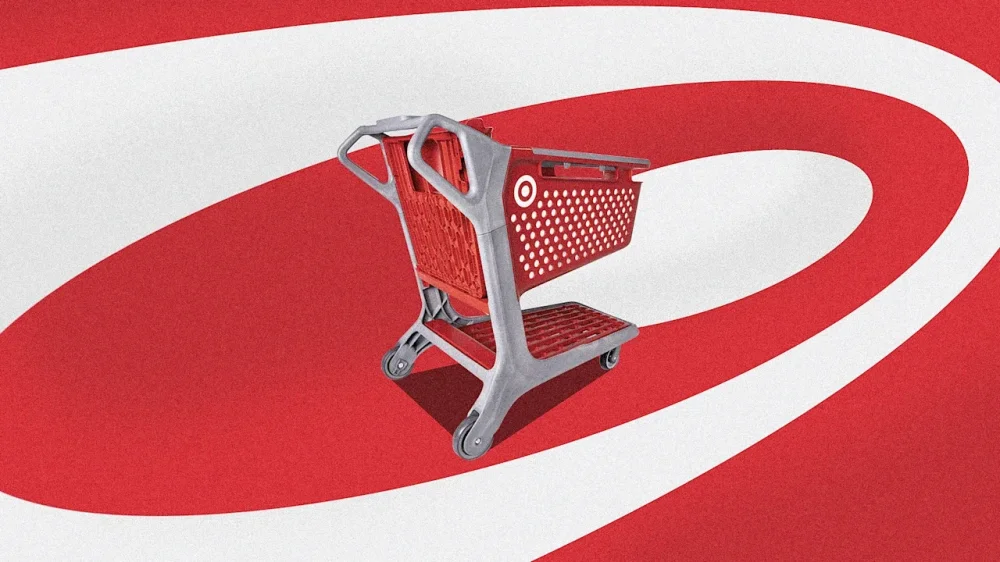
It’s the three-row SUV of big-box retail. Target’s bold red shopping cart has always anchored customers inside a Target store, promising a middle-class fancy experience. For the next few years, Target will be replacing its fleet of half a million shopping carts with an even beefier model that promises to hold more stuff while making it easier to maneuver around the store. It’s the first all-plastic design Target will launch nationwide, while paradoxically being more sustainable than Target carts of yore. And yes, it’ll even hold your big dumb cup. “The cart for us is the first touchpoint that the guest meets right when they walk in the store,” says Sarah Deuth, VP of store design at Target. “It’s the most used item in our store, and then also it’s that item that carries you throughout the store.” In recent years, Target has seen its share of troubles. It has faced boycotts after reversing course on DEI, and watched its stock price tank as consumers swapped Target’s ever-so-more premium retail brand for Amazon’s ease of ordering and Walmart’s clean UX and commitment to affordability. Target’s new CEO, Michael Fiddelke, plans to turn things around by going back to the company’s roots in an affordably chic retail experience. That alone might not work. But customer experience will always be an important differentiator in retail, and since introducing its iconic red cart in the 1970s, Target has been refining that cart’s design. Now the company is rolling out its latest version, the Series 3, informed by its last 20 years of consumer research and a few more modern trends. It’s an investment in the most literal touchpoint of shopping possible. What’s new in Target’s shopping cart? As Target considered the latest iteration, which it designed in-house, it focused on the one thing it had heard and observed to be the most important part of any shopping cart: how it drives. “You’ll see guests, they’ll have their phone in one hand, beverage [in the other], and they’re pushing it with their elbows. Or they’re pushing it with one hand,” Deuth says. “We are doing a million things while we’re shopping, so maneuverability and what they called ‘ease,’ ‘smooth ride,’ and ‘a cart going straight’ was more important than anything.” A decade ago, Target had already addressed part of this issue by swapping out its polyurethane wheels for rubber, which grips floors better. But a lot of controlling the cart has nothing to do with the wheels, casters, or bearings. If the frame bends, it stops steering predictably. This insight led Target to reconsider its “hybrid” cart design that had been in use since 2014, which, like most shopping carts, used a metal frame—but wrapped that frame in plastic components. This seemed like a good idea: Metal is durable and plastic is durable. But metal is more prone to bending. And when fused together in Target’s shopping cart design, it was common for plastic and metal components to get misaligned at their junctions. So Target built the Series 3 completely out of plastic (save for a few components in the wheels)—which stays rigid so the cart should always drive straight. It also has modular components that can be swapped in and out if one breaks. Truth be told, Target dreamed of an all-plastic cart 20 years ago, with a model it crafted in 2006, but it wasn’t considered good enough to scale. Its latest cart iteration has optimized the plastic build, with geometries and ergonomics Target insists make it easier to steer. Its handles look something like Theragun grips. Notably, the plastic used in Target’s carts is recyclable for a cart’s end of life. Also, overall, it’s more durable than the older metal designs, according to the company, which has seen cart lifespan increase two- to threefold in early testing. No doubt about it, the cart’s thick plastic frame gives it borderline maximalist proportions, but the overall sensation that this is a bigger cart is more than a visual trick. Target increased the cart’s payload by a “slight” amount because “guest behaviors have changed,” according to Deuth. “In some instances, they are looking to buy more bulk,” she notes, hinting at the budget-minded nature of shoppers today. “And so that was important for us to look at that average basket of the guests and design into that.” Other creature comforts Beyond durability and payload, the new cart is full of improved ergonomics. Anyone who has taken a child to Target knows that the child seat in front is a standout feature. Customers complained, though, that the seat’s incline was too shallow, making it hard for a child to sit up straight—while possible for them to climb out. The new version features a steeper backrest and a deeper bowl. Around the seat, the cart now features two prominent cupholders. Before, the cupholders were nothing but round holes, designed to catch a Starbucks drink. These holes have been replaced with fully molded cupholders (complete with edges and bottoms). Their capacity is also supersized for snacks and beverages that no longer fit in a rapidly shifting drink vessel culture. And a squared-off design ensures they can accommodate cups of different shapes and sizes. “Yes [it’s for] the Stanley Cups and the Starbucks,” says Deuth with a laugh. “Those are important, and sometimes both of those at the same time.” Call it an SNL punch line, or call it knowing your base. In any case, Target’s new cart does seem to demonstrate the company’s ongoing obsession with its customer experience. But for Target, it’s also time to lock in on every other aspect of its retail business, too. View the full article
-
Generative AI has done something strange to the economics of knowledge work: it has dramatically lowered the cost of generating ideas. Any reasonably capable professional with a chatbot can now produce a dozen plausible strategies, memos, product concepts, or marketing plans before lunch. In some cases, AI lowers the cost of execution too—but not nearly as far or as fast. Shipping even one of those ideas still takes weeks, months, or years. The result is already showing up across workplaces: more initiatives than teams can carry, more tools than anyone can learn, and more priorities than any reasonable person can hold in their head. Leaders keep layering on new work because the cost of imagining new work has fallen close to zero. But the cost of actually doing it hasn’t. This creates a new management challenge: in an AI-saturated workplace, the bottleneck is no longer ideas. It’s execution. A cutting-edge genomics lab solved this problem about a decade ago—twice. The Broad Institute’s lesson in doing less to get more done The Broad Institute, an MIT-Harvard biomedical research center, experienced one of the fastest cost collapses in modern technological history. When the first human genome was sequenced in 2003, it took more than a decade and cost roughly $3 billion. Today, sequencing a human genome can take hours and cost under $200. That collapse created obvious opportunities, but also two separate crises at Broad. The first was operational. As sequencing became faster, samples moved through the pipeline more quickly than downstream teams could process them. Work piled up at bottlenecks. The lab became so overloaded that technicians started losing samples. The fix was to move from a “push” system—where each stage sends work downstream as fast as possible—to a “pull” system, where each stage only takes on new work when it has capacity. Then came a second crisis, one that looks a lot like the AI workplace problem. Once sequencing itself became cheap and routine, the Broad’s innovation team faced an explosion of ideas. New projects were started constantly. Few were ever finished. As an MIT case study put it, the group was “losing the technology leadership position it had worked so hard to gain.” The solution was the same discipline applied to ideas. The team created a visual map—literally Post-it notes on a wall—of every active project and tracked where each sat in the development funnel. The exercise made two things obvious: some projects were redundant, and there were at least twice as many underway as the team could realistically handle. They created a project funnel on the wall, and added a “hopper” before it—a holding area where ideas waited until capacity opened up in the funnel. In two years, the team cut active projects by more than half and increased the number of projects that actually got done. Why leaders keep adding work The Broad’s fix seems obvious in hindsight. It rarely happens in practice because humans are biased toward addition. A 2021 Nature study led by researchers at the University of Virginia found that when people are asked to improve a design, document, or process, they systematically default to adding rather than subtracting. In the workplace, that bias compounds. A new tool gets rolled out, but the old ones stay. A new priority is announced, but old priorities aren’t retired. More meetings. More dashboards. Longer strategy decks. Most organizational complexity is the sediment of individually reasonable additions made without subtraction. AI accelerates this dramatically. It’s now trivial to generate a seventeenth strategic priority, a fourth product line, or a third dashboard. The bottleneck is no longer imagination. It’s the humans being asked to execute. What high-performing teams do differently The companies adapting best to this shift are applying some version of the Broad’s discipline. Make active work visible You can’t manage what you can’t see. Put every in-process initiative on one shared surface—a wall, a dashboard, or a single document. Visibility forces triage. Stop starting and start finishing In operations research, limiting work in progress is one of the simplest ways to improve throughput. New work waits until something else is finished. Define “done” before you begin Before a project starts, define success clearly. Tony Fadell, who led the design of the iPod and co-founded Nest, told me his most important advice to startup founders is to write the press release before starting the project. It forces teams to clarify priorities and define the goal line upfront. None of this is about accomplishing less. It’s about actually finishing the work that matters. In an AI-saturated economy, ideas are becoming a commodity. The advantage will go to organizations that can decide which ideas are worth doing, and which are worth ignoring. Adapted from INSIDE THE BOX: How Constraints Make Us Better, by David Epstein. Copyright © 2026 by David Epstein. Published by Riverhead Books, an imprint of Penguin Publishing Group, a division of Penguin Random House LLC. View the full article

-
Revised constitution scrubs references to original doctrine while defining country’s bordersView the full article
-
Tony Soprano was a master of coercion. Through violence, extortion, and bribery, he rose to the top of his industry, crushing competitors and delivering strong margins, despite some unfortunate employee turnover along the way. But even Soprano began to suspect there might be another way. His psychiatrist, Dr. Jennifer Melfi, encouraged him to try a more collaborative approach, to become a better listener, and to engage with subordinates more thoughtfully. Soprano paused, thought about it, and, after considering the implications, asked, “Then how do I get people to do what I want?” That’s the Tony Soprano Problem. And today, every leader feels it. We want to be thoughtful managers, to motivate our teams, and to be effective collaborators. But we also want—and need—people to do what we want. We want customers to buy our products, stakeholders to buy into our vision, and our team to execute our plans. Good leaders learn to square that circle. How Strong Leaders Lead Years ago, one of my best managers left to take a job at another company. At our company, she was responsible for a single brand and could always check in with me on any decision. But in her new role, she was leading the entire digital effort and, despite her talent and experience, she found herself struggling. She called me one day and asked me how I was so confident in all the decisions I made. I was a bit taken aback because I was rarely confident in my decisions. Managing an organization of more than 800 people, every decision I had to make was one that 799 others couldn’t. I didn’t get to make easy calls, only uncertain ones. Being in a position of responsibility means you have to make decisions without all the facts, in a rapidly changing context. You do so in the full knowledge that if you’re wrong, you will bear the blame and no one else will. You can never be certain of your decision, only that it’s you who has to make one. That’s what made Soprano a formidable leader. It’s why so many successful managers are able to thrive, even though they lack the softer qualities that management books say we’re supposed to have. The primary role of a leader is to make decisions, make sure they’re executed, and take accountability for them. That’s what my former protégé was struggling with. She was smart, energetic, and capable, but wasn’t able to cross that Rubicon. It’s not hard to see why so many leaders make the mistake of surrounding themselves with people who agree with them. The Loyalty Trap In his book On the Grand Trunk Road, Pulitzer Prize-winning reporter Steve Coll chronicled his two decades of reporting from Central Asia. One of the things he noted is that powerful leaders in autocratic regimes, like Rajiv Gandhi in India or Benazir Bhutto in Pakistan, built a “culture of insularity” that blinded them to dangers to their regime. Every leader needs loyal people around them, those who will faithfully carry out their will. But if you only have loyalists, you cut yourself off from important sources of information. When you blind yourself to alternative views and perspectives, you slant your decision-making to the data sources that are most accessible—those that already reflect your own views—creating a circular reasoning environment. Cognitive scientists call this availability bias and, when combined with confirmation bias, it can create the illusion of alignment. Leaders make their views known and their cadre of loyalists reflect those same views. Dissenting perspectives, to the extent they are given any space at all, are quickly rejected in favor of the perceived majority consensus. Yet that consensus exists only in the leader’s domain, which is why autocrats often don’t see trouble coming. It was relatively easy for Gandhi and Bhutto to dismiss domestic unrest as some isolated opposition; after all, everyone in their immediate environment showed nothing but adoration. Both failed to see the danger until it was too late. Gandhi was assassinated in 1991, Bhutto in 2007. Learning to Listen Much like Soprano, Kevin Sharer was a strong-minded leader, rising through the ranks to become CEO of biotech firm Amgen. He would later write: “My approach was: ‘I’m the smartest guy in the room. Just let me prove that here, in the first five minutes.’ I would even interrupt people and tell them what they were going to tell me, to save us time so that we could get to the really important stuff, which was me telling them what to do. And I got away with it. It worked.” But then a near-disaster moment hit. The Food and Drug Administration noticed problems with Epogen, which accounted for a third of Amgen’s profits, leading to restrictions on its use and a significant blow to the company. For the first time in its history, the Amgen announced layoffs; 2,600 employees, or 14% of its workforce, would have to go. Sharer realized that his leadership style was a big part of the problem and vowed to do better. Every semester in my class at Wharton, we play a video of him explaining how he changed. He said he learned to listen for comprehension, not to critique, object, or convince, but to understand the information being put in front of him. That not only increased his access to information, it also showed respect for the people who worked for him. They, in turn, felt empowered to go out and find new perspectives and new insights, compounding the positive effects of those conversations. It also allowed him to relax. Without having to control and dominate every exchange, he had more energy to devote to more productive endeavors. Empowering the Edges In thinking about social justice, philosopher John Rawls proposed a thought experiment known as the veil of ignorance. What kind of society would you design if you didn’t know what position you’d occupy in the social order—rich or poor, powerful or powerless, advantaged or marginalized? Rawls was focused on justice, not management, but the veil of ignorance offers a useful way to think about how access and influence are structured within organizations. When coaching business leaders, I often pose a similar question: If a junior employee had a game-changing idea, how would they get it implemented and scaled throughout the organization? How would a transformational idea make its way to the top? For most, the exercise is an eye-opening experience. In other words, how do you know you’re not being disrupted this very minute? The answer is that you don’t know. As Tony Soprano would tell you, it’s the dangers you don’t see that get you in the end. That’s why strong leaders learn to listen and empower people across their enterprise. That’s how you get access to the information you need to spot trouble ahead, identify viable strategies to overcome them, and make good decisions. You don’t learn to listen and empower others just to be “nice.” You do it because it’s a survival skill. Or, as Andy Grove famously put it, only the paranoid survive. View the full article

-
Generative AI has made it possible for individuals to perform tasks that once required entire teams. Today, a single marketer can produce campaign assets, analyze data, and generate content at scale. A product manager can prototype, test, and iterate without relying on engineering; and developers can ship reams of high-quality code written by machines. The result is the rise of the “superpowered individual” who can do the work of many. It’s tempting to extrapolate from this that human collaboration is becoming obsolete. If AI can replicate or augment the cognitive contributions of multiple individuals, why bother with the friction of teamwork at all? In our work with top companies—Tomas as an organizational psychologist and author of I, Human: AI, Automation, and the Quest to Reclaim What Makes Us Unique, and Dorie as a keynote speaker and consultant for companies reinventing themselves in the face of AI—we’ve encountered a wide range of experimentation, with companies using agents to stress-test strategy, deliver key functions such as finance and operations, and serve as quasi-autonomous development teams. Still, we believe that teamwork is here to stay—though AI will almost certainly reshape it. Specifically, we believe teamwork will shift in three key ways: 1. Team composition will change. Teams are likely to become smaller (and perhaps more nimble) because individuals can do more on their own, and teams may include both human and nonhuman contributors. As a result, it won’t be sufficient for a few people to be “good with AI.” AI literacy has to become a core team capability, not an individual skill. Teams need shared norms around emerging topics like: When to rely on AI (and when not to); Understanding the difference and trade-offs between speed and quality, efficiency and accuracy, low-value and high-value work; and How to interrogate AI’s outputs and combine them with human judgment. Effective teams will need to develop a mechanism for rewarding people not just for using AI efficiently, but for spotting when it’s wrong. In practice, that may mean making “AI skepticism” a formal part of performance evaluation. 2. The focus of teams will change. Today, many teams focus on logistical issues—a hodgepodge of analysis, reporting, and coordination across divisions and departments. (Status update, anyone?) That kind of task-based teamwork may soon be obsolete, because AI can handle it faster and more efficiently. But teamwork was never just about task execution—and in the AI era, teamwork will evolve into a higher-value activity that unlocks new possibilities for organizations. Indeed, as transactional collaboration declines, relational collaboration becomes more important. Leaders should invest in trust-building deliberately: fewer but higher-quality interactions, more in-person time when possible, and structured opportunities for disagreement. Psychological safety matters, but so does intellectual friction. The goal is not harmony, but productive conflict. As a result of this change, teamwork is likely to feel increasingly meaningful—like a core component of both your job and your professional identity. When you can connect deeply with other people through shared goals and activities, it becomes a highly meaningful experience that increases loyalty to your team and your company. 3. The role of leaders will also shift. Leaders in the AI era will need to make three major changes in how they guide their team members. Specifically, that means: Becoming more intentional about focusing the team on high-value work. With AI handling more of the analytical and operational workload, leaders will need to redesign teams around judgment, not tasks. Teams should be explicitly chartered around higher-order goals: framing problems, making trade-offs, and aligning on priorities. In other words, the “soft” skills of leadership may become the hardest to replace. A simple rule is that if a meeting could be replaced by an AI-generated summary, it probably should be. Reconceptualizing your role as an orchestrator, not the source of answers. Leaders should begin to think of themselves as the architects of how humans and machines work together. That means clarifying roles between AI and people, setting decision rights, and ensuring accountability. It also requires resisting the temptation to defer to AI when stakes are high. Judgment, not output, remains the leader’s ultimate responsibility. Measuring what actually matters. In many organizations, performance is still evaluated based on visible activity rather than quality of thinking. In an AI-enabled world, this becomes dangerous. Leaders should shift metrics toward decision quality, learning speed, and long-term outcomes, rather than short-term productivity gains. In short, the old teamwork of processing and coordination is on its way out. But the new teamwork—integrated with AI and suffused with human talent and judgment—will be more essential than ever, and organizations will need to figure out how to evolve. The risk is not that AI will destroy teamwork, but that it will expose how much of what we have previously called teamwork was never that valuable to begin with. The opportunity is to rebuild it around what humans do best: thinking critically, connecting meaningfully, and deciding wisely so that the sum of a team is greater than its parts. View the full article

-
This content is password-protected. To view it, please enter the password below. Password: The post Protected: Madrid 5-Day Itinerary: A Guide to Culture, Gastronomy, and Local Life appeared first on Nomadic Matt's Travel Site. View the full article
-
Maximize your local search visibility by optimizing your Google Business Profile and staying consistent on every platform. The post Is Your Small Business Showing Up in Local Search? Here’s How To Find Out [Webinar] appeared first on Search Engine Journal. View the full article
-
Strong quarterly trading in Latin America helps FTSE 100 group beat forecasts despite US spirits slumpView the full article
-
Shares in Danish drugmaker surge on positive signal from resultsView the full article
-
Xi Jinping could seek to use relationship with Tehran as leverage in talks with US president, analysts sayView the full article
-
After a long day in the office, you catch a sight of yourself in the bathroom mirror: Hair, frizzy. Skin, dry. Eyes, puffy. “Office air” has claimed yet another victim. The term, which has recently gone viral on TikTok, puts its finger on a complaint office workers have suffered in silence for years. Coined by content creator Noa Donlan, her videos documenting the phenomenon have recently amassed millions of views across TikTok and Instagram. “I first noticed it as a student, but it became unmistakable once I started working full-time four years ago,” Donlan told People in a recent interview. “I’d leave the house feeling put together, then catch myself in the office bathroom mirror at noon and look… different.” Something is in the air. Donlan is also not alone in noticing this slow undoing that occurs over the course of a full day in the office. And according to experts, it’s not all in their head. “I don’t think this is anything necessarily new — we’ve been talking about interior air quality since the ’70s,” workplace designer Ellen Barker, at TPG Architecture, told Fast Company. “What’s interesting is that this conversation is now being rebranded by Gen Z as ‘office air’.” The difference this time is rather than a focus on health (or “sick building syndrome” as it was previously coined), the “office air” conversation is far more concerned about how the office impacts our appearance. So what exactly is going on? Irritants, allergens, malaise Mostly, it’s to do with humidity levels, Barker and her fellow designer Chasen Bloch told Fast Company. “Especially in winter, when systems are running constantly, it really dries your skin out,” said Barker. “Low humidity damages the skin barrier, which is why people notice their skin feeling tight, dry, or more reactive after long days at the office,” added Dr. Joel Spitz, Co-founder & Chief Medical Officer, Board Certified Dermatologist at skincare provider platform Honeydew. This leads to dehydrated, flaky skin that becomes especially noticeable after a long day at your desk. “It dries out the scalp too, and counterintuitively, that can lead to oilier hair, because your body overproduces sebum to compensate for the dryness,” he continued. “Nails get more brittle over time for the same reason. None of this requires an exotic explanation. It’s just the air.” The other culprit is recycled air. Working from home, you may regularly crack a window to circulate some fresh air. “In an office, that’s not necessarily the case,” said Bloch. If filters aren’t being changed regularly, a buildup of allergens and pollutants can cause irritation and allergic reactions. “That might explain why some people experience puffy eyes,” added Barker. Because the air is often recycled, there can also be a build up of carbon dioxide. “There’s been more research coming out about how that can affect decision-making,” said Bloch. “It makes it harder to think and can impair cognitive function.” Indeed, other symptoms of poor office air quality may not be as clearly visible, with studies showing it may also affect cognitive function and productivity levels. “Companies do have a financial incentive to design with HVAC and air quality in mind,” said Barker. “If it leads to more productivity and fewer employees going home sick, that matters.” Designing a better office to create better air Most healthy workers won’t develop health issues from office air alone. But sick building syndrome is a real phenomenon. “With sick building syndrome specifically, it presented as symptoms like a sore throat, itchy eyes, or a mild cough that you noticed went away when you left the building and spent time outside,” said Bloch. “Those are important symptoms to look out for.” What those on TikTok and elsewhere are noticing, however, are the surface-level effects of spending too much time indoors chained to a desk: Lighting quality is another factor to consider. Harsh overhead lighting is not only unflattering, but Barker says there are studies that suggest possible negative effects fluorescent lighting has on the skin’s aging process, potentially accelerating it. “One of our main suggestions to clients has been switching to LED, which is more sustainable, and uses a warmer tone instead of the blue light tone that often comes with fluorescents,” Barker says. Another aspect to be mindful of when designing office spaces is using low-VOC (volatile organic compounds) finishes and furniture to reduce the amount of chemicals being circulated in the air. “For example, if we’re using vinyl flooring, we make sure to specify a low-VOC product,” said Barker. Low-VOC means less chemicals are released into the air as invisible fumes or vapors (think the smell of new carpet or freshly painted walls) at normal room temperatures, which can have adverse health impacts when breathed in. There are also a number of ways to build up defense against office air if replacing the entire office HVAC system and lighting isn’t a viable option. “Getting the moisture balance right addresses the skin, scalp, and nail issues all at once, and it costs a lot less than overhauling the lighting or the ventilation system,” said Dr. Spitz. “If they have their own office, they could purchase an air purifier,” suggested Barker. “Going for walks outside, taking breaks from screens—these are things we all know, but it’s about being more conscious and getting ahead of the problem.” Too much time indoors limits exposure to sunlight, increasing the risk of vitamin D deficiency and potentially causing dry skin, increased acne, and premature aging. Other options include “blue light glasses, protecting yourself with sunscreen, or using an application on your computer to filter out blue light,” says Bloch. Other easy fixes to reduce the impact of office air include “making sure you’re well hydrated, both with water and beauty products,” said Bloch. “A lot of what people attribute to the building itself is really the cumulative wear of a long workday,” added Dr. Spitz. “Makeup and hair don’t hold up after eight or ten hours. Eyes get puffy and dark circles deepen when you’re not sleeping enough or staring at a screen.” “The office gets the blame, but the lifestyle around the office is doing a lot of the work.” View the full article

-
Value soars in ongoing fundraising discussions as investors including Tencent seek slice of AI labView the full article
-
In relation to small business tax preparation, selecting the right software is essential for efficiency and accuracy. With various options available, each caters to different needs, such as user-friendliness, integration with existing financial tools, and pricing structures. You’ll find choices like H&R Block for extensive features, TurboTax for QuickBooks users, and more budget-friendly alternatives like FreeTaxUSA. Grasping the unique strengths of each software can greatly ease your tax filing process. Which one suits your business best? Key Takeaways H&R Block is the best overall choice for small businesses, offering extensive features and strong customer support for various business entities. Intuit TurboTax excels for QuickBooks users, providing seamless integration and access to live CPA support for complex tax situations. TaxAct is an affordable online filing solution with a maximum refund guarantee, supporting multiple business structures with user-friendly guidance. TaxSlayer is ideal for self-employed filers, featuring low pricing and personalized one-on-one support from tax experts. FreeTaxUSA and Cash App Taxes provide budget-friendly options, with free federal filing and competitive pricing for state filings, appealing to cost-conscious users. H&R Block: Best Overall for Small Businesses In regard to tax preparation for small businesses, H&R Block stands out as the best overall option due to its extensive features and user-friendly design. This professional tax preparation software caters particularly to various business entities, including sole proprietorships, partnerships, and S Corporations, making it versatile for different tax situations. With pricing between $125 and $220, including state filing fees, H&R Block offers value for small business tax preparation software. Furthermore, the software provides a maximum refund guarantee and audit support, which boosts your confidence during the filing process. You can likewise access one-on-one support from tax experts, ensuring you get professional income tax services for any complex inquiries. Rated 4.8 out of 5 stars by Investopedia, H&R Block is recognized for its effective tax preparation tools, making it the best tax software for small business owners looking for reliability and thorough support. Intuit TurboTax: Best for QuickBooks Users If you’re a QuickBooks user, Intuit TurboTax is a strong option for your tax preparation needs because of its seamless integration with the accounting software. Its user-friendly interface and extensive support for various business structures, like sole proprietorships and corporations, make it accessible for many small businesses. With a range of pricing tiers and expert assistance available, TurboTax guarantees you can navigate your tax filing efficiently and accurately. Seamless Integration With Quickbooks When you’re looking for tax preparation software that pairs well with QuickBooks, Intuit TurboTax stands out due to its seamless integration capabilities. This feature simplifies your tax filing process by allowing you to import financial data directly from QuickBooks, which reduces manual entry errors. Here are some key benefits of this integration: Supports various business structures, including partnerships, S Corps, and sole proprietorships. Maximizes deductions and credits based on your QuickBooks data. Offers live CPA support for expert guidance on complex tax situations. Positioned as the best tax software for self-employed individuals needing professional tax preparation software. TurboTax’s compatibility justifies its higher pricing, making it a solid choice for small business owners seeking reliable tax pro software. User-Friendly Interface Design Intuit TurboTax is designed with a user-friendly interface, making it an ideal choice for QuickBooks users who may not have extensive tax preparation experience. This tax preparation software for tax preparers simplifies the filing process, allowing you to import financial data directly from QuickBooks without manual entry. With step-by-step guidance, you can easily navigate through tax forms and maximize deductions, which is crucial for effective professional tax solutions. The intuitive layout and navigation tools reduce the risk of errors, enhancing your overall experience. Furthermore, TurboTax offers access to live support from tax experts, providing assistance during preparation. For those seeking the best tax software for tax preparers, TurboTax consistently receives positive tax software for tax professionals reviews, affirming its reliability as professional tax preparation software. Comprehensive Business Entity Support For small business owners maneuvering the intricacies of tax preparation, thorough business entity support is essential, especially when using TurboTax alongside QuickBooks. This professional tax software stands out as the best tax software for S Corporations and offers robust C Corporation tax software options. TurboTax supports various business structures, ensuring you can file accurately regardless of your entity type. Here are some key features: Seamless integration with QuickBooks for easy data transfer. Extensive coverage for partnerships, sole proprietorships, and corporations. Accuracy guarantees that maximize refunds and minimize errors. Access to expert assistance for complex tax situations. Choosing TurboTax means you’re investing in reliable professional tax preparation software customized for small CPA firms and diverse business needs. TaxAct: Best Online Business Tax Filing Software TaxAct stands out as an excellent choice for small business owners seeking an efficient online tax filing solution. This professional tax preparation software offers a maximum refund guarantee and a 100% accuracy guarantee, boosting your confidence during the filing process. With pricing ranging from $129.99 to $284.99, it remains an affordable option among competitors like TurboTax, especially for those looking for the best online tax filing for self-employed individuals. TaxAct supports various business entities, including Partnerships, S Corps, C Corps, Sole Proprietors, and Self-Employed individuals. Its user-friendly, step-by-step guidance interface makes it suitable for all levels of experience with tax programs for tax preparers. Moreover, state filing fees are competitively priced at $64.99, enhancing its cost-effectiveness. For those in search of reliable tax software for small business, TaxAct is a solid choice, ensuring both ease of use and thorough support. TaxSlayer: Best for Self-Employed Filers If you’re self-employed, TaxSlayer offers an affordable solution starting at $42.95, plus state filing fees. Its user-friendly interface makes tax preparation straightforward, whether you’re a novice or experienced filer. With extensive support features, including access to tax experts, you can navigate your unique tax situation with confidence. Affordable Pricing Options When considering affordable pricing options for self-employed tax filers, TaxSlayer stands out as a cost-effective solution. With plans starting at just $42.95, it’s budget-friendly and customized for your needs. Here are some key features that make it a good choice: 100% accuracy guarantee, ensuring you can file confidently. One-on-one support from tax experts for efficient navigation. Support for various business structures, including sole proprietors. Low state filing fees, enhancing overall affordability. Whether you’re looking for business tax software for Mac or the best professional tax preparation software, TaxSlayer provides vital features and tax software with bank products, making it a practical option for self-employed individuals. Comprehensive Support Features Beyond affordability, TaxSlayer thrives in providing extensive support features that cater particularly to self-employed filers. The software offers one-on-one assistance from tax experts, ensuring you receive personalized guidance throughout the tax preparation process. With a guarantee of 100% accuracy, you can file confidently, knowing that you’ll be reimbursed for any penalties resulting from errors. TaxSlayer includes all necessary IRS forms for self-employment, streamlining your experience with this professional tax preparation software with bank products. Its competitive pricing starts at just $42.95, making it an excellent choice among top-rated tax programs. As a user, you’ll benefit from tax filing software for tax preparers that simplifies your tasks and improves your efficiency in managing your finances. User-Friendly Interface TaxSlayer stands out for its user-friendly interface, which makes the tax filing process accessible even for those without extensive tax knowledge. This software is especially effective for self-employed individuals, offering an intuitive experience that simplifies complex tax situations. Here are some key features: Clean Design: The layout is straightforward, allowing you to navigate easily. Affordable Pricing: Plans start at $42.95 for federal filing, making it budget-friendly. TaxSlayer: TaxSlayer guarantees 100% accuracy, providing peace of mind. Expert Support: Access to one-on-one help from tax professionals improves your experience. FreeTaxUSA: Best for Free Federal Filing If you’re looking for a cost-effective solution for federal tax filing, FreeTaxUSA stands out as a top choice for small business owners and individual filers alike. This free tax software offers complimentary federal filing for most tax situations, ensuring you can file without breaking the bank. The platform guarantees maximum refund and accuracy, giving you confidence in your tax submissions. Although state filing costs $14.99, the overall pricing remains competitive compared to other professional tax programs. However, it’s essential to recognize that FreeTaxUSA has limited access to tax pro support unless you opt for the top-tier plan, which might be a drawback for those requiring extensive assistance. Furthermore, the software doesn’t support 1099 import, meaning you’ll need to manually enter your income information, potentially increasing the time spent on tax preparation. In spite of these limitations, FreeTaxUSA is a solid choice for budget-conscious users. Cash App Taxes: Best for Freelancers For freelancers seeking a budget-friendly tax filing solution, Cash App Taxes proves to be an excellent choice, as it offers completely free federal and state tax filing. This tax prep software for professionals is customized particularly for sole proprietors and self-employed individuals, addressing their unique needs effectively. Here are four key features that make Cash App Taxes ideal for freelancers: Support for Various Income Types: It accommodates self-employment income, crucial for freelancers juggling multiple revenue streams. User-Friendly Interface: You can navigate your tax return with ease, even without extensive tax knowledge. Faster Refunds: Cash App Taxes delivers refunds directly to your Cash App account, streamlining the payment process. Cost-Efficiency: With no fees involved, it minimizes your professional income tax expenses. Customer Support Comparison of Tax Software Options How do you choose the right tax software when customer support varies considerably among options? TaxSlayer stands out with personalized one-on-one support from tax experts, ensuring you receive customized assistance. TurboTax offers live support for an extra fee, which can be invaluable for complex returns, especially when maneuvering through their tax pro website. FreeTaxUSA, on the other hand, limits pro support unless you select their top-tier plan, which could hinder those needing extra help. H&R Block likewise provides one-on-one support, but their limited customer service hours may affect you during peak times. TaxAct features Xpert Assist, granting direct access to professionals at a flat fee, balancing affordability and support. When evaluating options, reviewing Intuit tax software comparisons can guide your decision based on the level of support you require for a professional tax refund. Choose wisely, as your needs will dictate which tax preparer website works best for you. Frequently Asked Questions Which Tax Software Is Best for Small Businesses? When choosing tax software for your small business, consider factors like pricing, features, and ease of use. H&R Block is user-friendly and covers multiple business entities, whereas TurboTax offers seamless QuickBooks integration but at a higher cost. For budget-conscious options, TaxAct and FreeTaxUSA provide affordable plans with strong support. If you’re self-employed, TaxSlayer may be your best bet because of its low starting price and accuracy guarantee. Assess your needs carefully before deciding. What Is the Best Financial Software for a Small Business? When you’re looking for the best financial software for your small business, consider options like TurboTax, which offers detailed tax preparation features. H&R Block provides user-friendly tools, whereas TaxAct is a budget-friendly choice. TaxSlayer stands out for its affordability and expert support. FreeTaxUSA allows for free federal filing, making it ideal for cost-conscious owners. Evaluate these tools based on your specific needs, budget, and the complexity of your business structure. What Is the Best 1099 Software for Small Business? When you’re looking for the best 1099 software for your small business, consider options like TurboTax, which integrates well with QuickBooks, or TaxSlayer, known for its affordability and accuracy guarantee. FreeTaxUSA offers free federal filing, making it budget-friendly. H&R Block provides personalized support, whereas TaxAct focuses on maximizing refunds. Each option has unique features, so evaluate your specific needs, such as cost, support, and integration capabilities, to find the right fit for you. What Is the Best Professional Tax Preparation Software? When considering the best professional tax preparation software, you should evaluate options based on features, pricing, and support. TurboTax is popular for its user-friendly interface and extensive resources. H&R Block offers both software and in-person help, making it versatile. TaxAct is a cost-effective choice for small businesses, whereas FreeTaxUSA provides free federal filing, appealing to budget-conscious users. Furthermore, integrating accounting software like QuickBooks can streamline your tax preparation process greatly. Conclusion In conclusion, choosing the right small business tax preparation software can greatly ease your filing process. Each option, from H&R Block’s thorough tools to FreeTaxUSA’s free federal filing, offers distinct advantages customized to different needs. By evaluating your business type, budget, and specific requirements, you can select the software that best fits your situation. This consideration not just streamlines your tax preparation but furthermore guarantees compliance and maximizes potential deductions for your business. Image via Google Gemini and ArtSmart This article, "Top 7 Small Business Tax Preparation Software Options" was first published on Small Business Trends View the full article
-
In relation to small business tax preparation, selecting the right software is essential for efficiency and accuracy. With various options available, each caters to different needs, such as user-friendliness, integration with existing financial tools, and pricing structures. You’ll find choices like H&R Block for extensive features, TurboTax for QuickBooks users, and more budget-friendly alternatives like FreeTaxUSA. Grasping the unique strengths of each software can greatly ease your tax filing process. Which one suits your business best? Key Takeaways H&R Block is the best overall choice for small businesses, offering extensive features and strong customer support for various business entities. Intuit TurboTax excels for QuickBooks users, providing seamless integration and access to live CPA support for complex tax situations. TaxAct is an affordable online filing solution with a maximum refund guarantee, supporting multiple business structures with user-friendly guidance. TaxSlayer is ideal for self-employed filers, featuring low pricing and personalized one-on-one support from tax experts. FreeTaxUSA and Cash App Taxes provide budget-friendly options, with free federal filing and competitive pricing for state filings, appealing to cost-conscious users. H&R Block: Best Overall for Small Businesses In regard to tax preparation for small businesses, H&R Block stands out as the best overall option due to its extensive features and user-friendly design. This professional tax preparation software caters particularly to various business entities, including sole proprietorships, partnerships, and S Corporations, making it versatile for different tax situations. With pricing between $125 and $220, including state filing fees, H&R Block offers value for small business tax preparation software. Furthermore, the software provides a maximum refund guarantee and audit support, which boosts your confidence during the filing process. You can likewise access one-on-one support from tax experts, ensuring you get professional income tax services for any complex inquiries. Rated 4.8 out of 5 stars by Investopedia, H&R Block is recognized for its effective tax preparation tools, making it the best tax software for small business owners looking for reliability and thorough support. Intuit TurboTax: Best for QuickBooks Users If you’re a QuickBooks user, Intuit TurboTax is a strong option for your tax preparation needs because of its seamless integration with the accounting software. Its user-friendly interface and extensive support for various business structures, like sole proprietorships and corporations, make it accessible for many small businesses. With a range of pricing tiers and expert assistance available, TurboTax guarantees you can navigate your tax filing efficiently and accurately. Seamless Integration With Quickbooks When you’re looking for tax preparation software that pairs well with QuickBooks, Intuit TurboTax stands out due to its seamless integration capabilities. This feature simplifies your tax filing process by allowing you to import financial data directly from QuickBooks, which reduces manual entry errors. Here are some key benefits of this integration: Supports various business structures, including partnerships, S Corps, and sole proprietorships. Maximizes deductions and credits based on your QuickBooks data. Offers live CPA support for expert guidance on complex tax situations. Positioned as the best tax software for self-employed individuals needing professional tax preparation software. TurboTax’s compatibility justifies its higher pricing, making it a solid choice for small business owners seeking reliable tax pro software. User-Friendly Interface Design Intuit TurboTax is designed with a user-friendly interface, making it an ideal choice for QuickBooks users who may not have extensive tax preparation experience. This tax preparation software for tax preparers simplifies the filing process, allowing you to import financial data directly from QuickBooks without manual entry. With step-by-step guidance, you can easily navigate through tax forms and maximize deductions, which is crucial for effective professional tax solutions. The intuitive layout and navigation tools reduce the risk of errors, enhancing your overall experience. Furthermore, TurboTax offers access to live support from tax experts, providing assistance during preparation. For those seeking the best tax software for tax preparers, TurboTax consistently receives positive tax software for tax professionals reviews, affirming its reliability as professional tax preparation software. Comprehensive Business Entity Support For small business owners maneuvering the intricacies of tax preparation, thorough business entity support is essential, especially when using TurboTax alongside QuickBooks. This professional tax software stands out as the best tax software for S Corporations and offers robust C Corporation tax software options. TurboTax supports various business structures, ensuring you can file accurately regardless of your entity type. Here are some key features: Seamless integration with QuickBooks for easy data transfer. Extensive coverage for partnerships, sole proprietorships, and corporations. Accuracy guarantees that maximize refunds and minimize errors. Access to expert assistance for complex tax situations. Choosing TurboTax means you’re investing in reliable professional tax preparation software customized for small CPA firms and diverse business needs. TaxAct: Best Online Business Tax Filing Software TaxAct stands out as an excellent choice for small business owners seeking an efficient online tax filing solution. This professional tax preparation software offers a maximum refund guarantee and a 100% accuracy guarantee, boosting your confidence during the filing process. With pricing ranging from $129.99 to $284.99, it remains an affordable option among competitors like TurboTax, especially for those looking for the best online tax filing for self-employed individuals. TaxAct supports various business entities, including Partnerships, S Corps, C Corps, Sole Proprietors, and Self-Employed individuals. Its user-friendly, step-by-step guidance interface makes it suitable for all levels of experience with tax programs for tax preparers. Moreover, state filing fees are competitively priced at $64.99, enhancing its cost-effectiveness. For those in search of reliable tax software for small business, TaxAct is a solid choice, ensuring both ease of use and thorough support. TaxSlayer: Best for Self-Employed Filers If you’re self-employed, TaxSlayer offers an affordable solution starting at $42.95, plus state filing fees. Its user-friendly interface makes tax preparation straightforward, whether you’re a novice or experienced filer. With extensive support features, including access to tax experts, you can navigate your unique tax situation with confidence. Affordable Pricing Options When considering affordable pricing options for self-employed tax filers, TaxSlayer stands out as a cost-effective solution. With plans starting at just $42.95, it’s budget-friendly and customized for your needs. Here are some key features that make it a good choice: 100% accuracy guarantee, ensuring you can file confidently. One-on-one support from tax experts for efficient navigation. Support for various business structures, including sole proprietors. Low state filing fees, enhancing overall affordability. Whether you’re looking for business tax software for Mac or the best professional tax preparation software, TaxSlayer provides vital features and tax software with bank products, making it a practical option for self-employed individuals. Comprehensive Support Features Beyond affordability, TaxSlayer thrives in providing extensive support features that cater particularly to self-employed filers. The software offers one-on-one assistance from tax experts, ensuring you receive personalized guidance throughout the tax preparation process. With a guarantee of 100% accuracy, you can file confidently, knowing that you’ll be reimbursed for any penalties resulting from errors. TaxSlayer includes all necessary IRS forms for self-employment, streamlining your experience with this professional tax preparation software with bank products. Its competitive pricing starts at just $42.95, making it an excellent choice among top-rated tax programs. As a user, you’ll benefit from tax filing software for tax preparers that simplifies your tasks and improves your efficiency in managing your finances. User-Friendly Interface TaxSlayer stands out for its user-friendly interface, which makes the tax filing process accessible even for those without extensive tax knowledge. This software is especially effective for self-employed individuals, offering an intuitive experience that simplifies complex tax situations. Here are some key features: Clean Design: The layout is straightforward, allowing you to navigate easily. Affordable Pricing: Plans start at $42.95 for federal filing, making it budget-friendly. TaxSlayer: TaxSlayer guarantees 100% accuracy, providing peace of mind. Expert Support: Access to one-on-one help from tax professionals improves your experience. FreeTaxUSA: Best for Free Federal Filing If you’re looking for a cost-effective solution for federal tax filing, FreeTaxUSA stands out as a top choice for small business owners and individual filers alike. This free tax software offers complimentary federal filing for most tax situations, ensuring you can file without breaking the bank. The platform guarantees maximum refund and accuracy, giving you confidence in your tax submissions. Although state filing costs $14.99, the overall pricing remains competitive compared to other professional tax programs. However, it’s essential to recognize that FreeTaxUSA has limited access to tax pro support unless you opt for the top-tier plan, which might be a drawback for those requiring extensive assistance. Furthermore, the software doesn’t support 1099 import, meaning you’ll need to manually enter your income information, potentially increasing the time spent on tax preparation. In spite of these limitations, FreeTaxUSA is a solid choice for budget-conscious users. Cash App Taxes: Best for Freelancers For freelancers seeking a budget-friendly tax filing solution, Cash App Taxes proves to be an excellent choice, as it offers completely free federal and state tax filing. This tax prep software for professionals is customized particularly for sole proprietors and self-employed individuals, addressing their unique needs effectively. Here are four key features that make Cash App Taxes ideal for freelancers: Support for Various Income Types: It accommodates self-employment income, crucial for freelancers juggling multiple revenue streams. User-Friendly Interface: You can navigate your tax return with ease, even without extensive tax knowledge. Faster Refunds: Cash App Taxes delivers refunds directly to your Cash App account, streamlining the payment process. Cost-Efficiency: With no fees involved, it minimizes your professional income tax expenses. Customer Support Comparison of Tax Software Options How do you choose the right tax software when customer support varies considerably among options? TaxSlayer stands out with personalized one-on-one support from tax experts, ensuring you receive customized assistance. TurboTax offers live support for an extra fee, which can be invaluable for complex returns, especially when maneuvering through their tax pro website. FreeTaxUSA, on the other hand, limits pro support unless you select their top-tier plan, which could hinder those needing extra help. H&R Block likewise provides one-on-one support, but their limited customer service hours may affect you during peak times. TaxAct features Xpert Assist, granting direct access to professionals at a flat fee, balancing affordability and support. When evaluating options, reviewing Intuit tax software comparisons can guide your decision based on the level of support you require for a professional tax refund. Choose wisely, as your needs will dictate which tax preparer website works best for you. Frequently Asked Questions Which Tax Software Is Best for Small Businesses? When choosing tax software for your small business, consider factors like pricing, features, and ease of use. H&R Block is user-friendly and covers multiple business entities, whereas TurboTax offers seamless QuickBooks integration but at a higher cost. For budget-conscious options, TaxAct and FreeTaxUSA provide affordable plans with strong support. If you’re self-employed, TaxSlayer may be your best bet because of its low starting price and accuracy guarantee. Assess your needs carefully before deciding. What Is the Best Financial Software for a Small Business? When you’re looking for the best financial software for your small business, consider options like TurboTax, which offers detailed tax preparation features. H&R Block provides user-friendly tools, whereas TaxAct is a budget-friendly choice. TaxSlayer stands out for its affordability and expert support. FreeTaxUSA allows for free federal filing, making it ideal for cost-conscious owners. Evaluate these tools based on your specific needs, budget, and the complexity of your business structure. What Is the Best 1099 Software for Small Business? When you’re looking for the best 1099 software for your small business, consider options like TurboTax, which integrates well with QuickBooks, or TaxSlayer, known for its affordability and accuracy guarantee. FreeTaxUSA offers free federal filing, making it budget-friendly. H&R Block provides personalized support, whereas TaxAct focuses on maximizing refunds. Each option has unique features, so evaluate your specific needs, such as cost, support, and integration capabilities, to find the right fit for you. What Is the Best Professional Tax Preparation Software? When considering the best professional tax preparation software, you should evaluate options based on features, pricing, and support. TurboTax is popular for its user-friendly interface and extensive resources. H&R Block offers both software and in-person help, making it versatile. TaxAct is a cost-effective choice for small businesses, whereas FreeTaxUSA provides free federal filing, appealing to budget-conscious users. Furthermore, integrating accounting software like QuickBooks can streamline your tax preparation process greatly. Conclusion In conclusion, choosing the right small business tax preparation software can greatly ease your filing process. Each option, from H&R Block’s thorough tools to FreeTaxUSA’s free federal filing, offers distinct advantages customized to different needs. By evaluating your business type, budget, and specific requirements, you can select the software that best fits your situation. This consideration not just streamlines your tax preparation but furthermore guarantees compliance and maximizes potential deductions for your business. Image via Google Gemini and ArtSmart This article, "Top 7 Small Business Tax Preparation Software Options" was first published on Small Business Trends View the full article