All Activity
- Today
-
 This week’s SEO Pulse covers potential opt-outs from AI search, deeper AI Overviews integration, and what model tradeoffs mean for content workflows. The post SEO Pulse: Google Explores AI Opt-Outs, Gemini 3 Powers AIOs appeared first on Search Engine Journal. View the full article
 -
We may earn a commission from links on this page. Deal pricing and availability subject to change after time of publication. There’s no shortage of outdoor security cameras, but finding one that balances video quality, battery life, and ease of use without pushing past $100 is rare. Right now, the Tapo MagCam 2K+ is on sale for $64.98 on Amazon, down from $89.99, which is its lowest price to date, according to price trackers. TP-Link Tapo C425 2K Wire-Free MagCam Security Camera $64.98 at Amazon $89.99 Save $25.01 Get Deal Get Deal $64.98 at Amazon $89.99 Save $25.01 PCMag named it the best security camera of 2024, pointing out that while battery-powered cameras often trade convenience for frequent recharging, the MagCam 2K+ avoids that issue with a 10,000mAh battery rated to last up to 300 days per charge, depending on how often it records. Charging happens over micro-USB, though there’s an optional Tapo A200 solar panel ($35.99) if you want to avoid manual recharging altogether. Video tops out at 2K resolution, with a wide 150-degree field of view that works well for driveways or side yards. During the day, footage looks sharp and detailed. At night, the camera can switch between infrared black-and-white or color video using its built-in spotlights and starlight sensor. Storage is flexible. You can record locally to a microSD card, up to 512GB (card not included), or you can go with cloud storage through a Tapo Care plan starting at $3.49/month. Alerts can distinguish between people, pets, and vehicles, and those intelligent notifications are free, as highlighted by PCMag in its “outstanding” review of the MagCam 2K+. It also integrates smoothly with Alexa, Google Assistant, and IFTTT, though it doesn’t support Apple’s HomeKit. You also won’t find mechanical pan or tilt, but the fixed lens covers enough ground for most yards or porches. As for managing the camera, its companion app is intuitive, offering settings for motion sensitivity, siren activation, spotlight brightness, firmware updates, and more. Overall, the MagCam 2K+ handles the basics well and throws in a few smart features usually reserved for pricier models. Our Best Editor-Vetted Tech Deals Right Now Apple AirPods Pro 3 Noise Cancelling Heart Rate Wireless Earbuds — $199.00 (List Price $249.00) Apple Watch Series 11 [GPS 46mm] Smartwatch with Jet Black Aluminum Case with Black Sport Band - M/L. Sleep Score, Fitness Tracker, Health Monitoring, Always-On Display, Water Resistant — $399.00 (List Price $429.00) Amazon Fire TV Stick 4K Plus — (List Price $24.99 With Code "FTV4K25") Samsung Galaxy Tab A9+ 64GB Wi-Fi 11" Tablet (Silver) — $159.99 (List Price $219.99) Deals are selected by our commerce team View the full article
-
Custom GPTs can help SEO teams move faster by turning repeatable tasks into structured workflows. If you don’t have access to paid ChatGPT, you can still use these prompts as standalone references by copying them into your notes for future reuse. You will need to tweak them for your team’s specific use cases, because they are intended as a starting point. Working with AI is largely trial and error. To get better at writing prompts, practice with small tasks first, iterate on prompts, and take notes on what gets you good outputs. AI also tends to ramble, so it helps to give strict guidelines for formatting and to specify what not to do. You can upload resources and articles to follow and provide clear context, such as defining the role and audience upfront. The seven prompts below are designed to help you start building custom GPTs for planning, analysis, and ongoing SEO work. 1. Project plan GPT Using past examples of project plans, create a GPT that will help you make a draft for this year’s focus areas. How to set it up Input project plans from previous years. Give it a specific format to follow. Consider how many items or sections to include. Add specific details based on you or your team. (Optional) Copy notes and feedback from your team or retrospective. Example prompt Based on last year’s project plan, make my project plan for this year. Here are the focus areas and problem areas to include. Give me a bulleted list with the three most important items for me (or my team) to focus on for each quarter of this year. At least one item should cover link building. Include a one-sentence summary of why you recommend each item and at least two KPIs to measure success. [Insert last year’s plan.] Now poke holes in your plan. Give me three reasons I should not focus on these items based on the risks. Include sources for your notes. Dig deeper: How to use ChatGPT Tasks for SEO 2. Site performance GPT Hook up your performance dashboards or custom GA reports to ChatGPT and let it do the initial legwork in identifying issues. Then make a list of items to investigate yourself. How to set it up Connect your reporting tools or upload reports directly. Give specific direction for what to look for. Include the cadence you want to look at, like a daily or weekly report. Give examples of types of pages or categories to compare. Example prompt Here is the weekly site report. Give me your analysis of how the site performed compared to last week. Include a three-sentence summary of the sessions, conversions, and engagement. List three wins and three misses in bullet format. Color-code each item based on how good or bad each item is. [Insert report doc.] 3. Competitor analysis GPT Check out what’s working and what’s not on competitor sites and get insights for yours. It’s most helpful to connect to a tool like Semrush or Ahrefs. How to set it up Connect tools like Ahrefs or Semrush, or upload a report. Identify competitors to analyze and top pages and folders. List key metrics to compare. Set up unique prompts for page, keyword/topic, folder, and domain-level comparison. (Optional) Create documentation on identifying which metrics to dig deeper. Example prompt You are an SEO analyst performing competitor analysis to identify areas to improve your website. Check out these URLs and compare them. Give me a table with each URL in the rows and these columns: backlinks, average rank, top keyword, sessions, and estimated value. Below that, give a two-sentence summary of who wins in each category and why. Use the criteria in this link to make your judgments, citing sources for each. URL 1: URL 2: URL 3: Article reference: Dig deeper: How to use advanced SEO competitor analysis to accelerate rankings & boost visibility Get the newsletter search marketers rely on. See terms. 4. SERP analyzer GPT AI has gotten much better over the last few months at analyzing images. Plug in SERP screenshots from your own searches and compare it to a web search from the GPT. Build this into a competitive SERP landscape analysis to see things like who appears in both searches vs. only one. How to set it up Identify search results and keywords to compare. Take screenshots in incognito mode for comparison. Example prompt Do a web search for [your keyword here]. Show me what you are seeing in the search results. Compare it with this screenshot and list the differences. Then include a bulleted list of what the results seen most often have in common. Dig deeper: How to build a custom GPT to redefine keyword research 5. UX GPT Turn your design or UX team’s resources into an easy-to-use helper. This is especially helpful for editorial teams that do not want to search through endless documentation for quick advice. How to set it up Upload your team’s documentation or your favorite UX articles. Find pages with poor bounce or engagement stats. Integrate the tool into standard page updates. Example prompt You are an SEO writer working on improving user engagement. Open this page. Check to make sure it follows all of our design rules. List each violation, along with a source, explaining what is wrong and what to do instead. Then check to see whether there are any relevant page template patterns from the brand book that could apply to this type of page. 6. Tech SEO check GPT Set up a daily or weekly tech SEO check to do the bulk of the analysis for you. How to set it up Connect any tools like Google Search Console, or upload reports. List the top metrics to check, like Core Web Vitals, page speed, and console errors. Identify top pages to run a more comprehensive check. Set up reminders to run it daily or weekly, or connect it to Slack to export results directly. Example prompt Based on the latest CWV report, identify problem pages that need a speed improvement audit. Create the list in a table, with the URLs in rows and columns for speed, issues identified, and suggested fixes. Make a separate list of pages that have improved, along with the actual scores. Dig deeper: A technical SEO blueprint for GEO: Optimize for AI-powered search 7. Presentation GPT While ChatGPT cannot directly create slides yet without an add-on or third-party connector, it can create the content for you to paste into your slides. Combine it with your performance, testing, tech SEO, and competitor GPTs for a well-rounded summary of overall site status with relevant context. How to set it up Gather data from your other GPTs. Choose the ones to present. (Optional) Upload past presentations for reference. Example prompt Pretend you are setting up a slide deck. The audience is other members of the SEO team. Format this summary from my Performance GPT into a slide. Give me a header, subheader, and key bullets and takeaways. The tone should be straightforward but professional. Limit bullets to one line. Round all numbers to zero decimals. Suggest three examples of imagery and graphics to use. [Insert summary.] Dig deeper: How to balance speed and credibility in AI-assisted content creation Where custom GPTs fit into day-to-day SEO work Custom GPTs are most useful when they sit alongside the tools and processes SEO teams already use. Rather than replacing dashboards, audits, or documentation, they can handle first passes, surface patterns, and standardize how work gets reviewed before a human steps in. Used this way, the prompts in this article are less about automation for its own sake and more about reducing friction in common SEO tasks, from planning and reporting to SERP analysis and technical checks. View the full article
-
Gold and silver have had an exceptional year, breaking record high prices on what’s felt like a daily basis. But, as the saying goes, what comes up must come down. On Friday, January 30, gold fell over 6.4%, to $4,962 per ounce in the lead-up to President The President’s announcement that Kevin Warsh is his pick to be the new Federal Reserve chair. Even a week ago, gold reaching over $4,900 would have been a record-breaking feat. The precious metal only topped $5,000 per ounce for the first time this past Monday. But, by Thursday, gold hit more than $5,580 per ounce, meaning it was up 23% for 2026 and more than 80% over the last 12 months. The idea of celebrating gold being worth below $5,000 was already long gone. As of publication, gold was at about $5,132 an ounce, over a 4% one-day drop. Silver, too, took a tumble on Friday. It fell more than 15% to near $95 per ounce after reaching a record high of over $121 per ounce the day before. The latter had meant that silver was up more than 65% this year and over 252% in the last 12 months. At publication, silver was at about $103 an ounce, just over an 11% one-day drop. Once again, this figure would have been remarkable until very recently, with silver reaching over $100 an ounce for the first time last Friday, January 23. Why are gold and silver dropping? The swift increase in gold and silver’s worth has been primarily attributed to their status as safe-haven assets during a time of increasing geopolitical turbulence. Their fall came as The President said on Thursday that he would be announcing his proposed replacement for Federal Reserve chair Jerome Powell, whose term ends in May. The President has continually criticized Powell, particularly for not lowering rates as fast as The President would like. Earlier this week, the Fed voted to maintain interest rates. On Friday morning, The President announced that he had chosen Warsh as Powell’s replacement. Warsh previously served as a Fed governor and has supported lowering interest rates. A stronger dollar is likely another reason for the falling price of gold and silver, as Barron’s points out. As the Financial Times reported, the U.S. dollar strengthened on Friday after The President announced Warsh as his nominee. View the full article

-
President The President's announcement Friday morning that former investment banker and Fed Governor Kevin Warsh would be his selection as the next chairman of the Fed ends months of speculation and gives the president a key ally at the central bank. View the full article

-
Apple’s iPhone sales soared to a new quarterly record during the holiday season, despite artificial intelligence blunders that prompted the technology trendsetter to get a helping hand from Google. The October-December results announced Thursday reflect the allegiance of Apple’s fans, who eagerly snapped up the latest iPhone 17 models even though the company still hasn’t delivered on its 2024 promise to smarten up the device’s Siri assistance with AI. Apple tried to offset its AI miscues with a new “liquid glass” design for the iPhone 17 and older models installed by way of a free software upgrade released last September. That formula helped produce iPhone sales of $85.3 billion, a 23% increase from the same time in the previous year. It marked Apple’s highest iPhone sales for a three-month period since the device’s debut in 2007. “The demand for iPhone was simply staggering,” Apple CEO Tim Cook crowed during a conference call with analyst while predicting the device will become a cutting-edge platform for AI. The iPhone’s robust performance propelled Apple to a profit of $42.1 billion, or $2.84 per share for the quarter, a 16% increase from the previous year. Total revenue also rose 16% from the previous year to $143.8 billion. Both the earnings and sales exceeded the analyst projections that steer investors. Apple’s shares rose by about 1% in extended trading after the numbers came out. But the stock price still remains slightly down so far this year, and isn’t that much higher from where it finished at the end of 2024. Zacks Investment Research analyst Ethan Feller said the worries about Apple’s late start in AI appeared to have been overblown and now appears well positioned to roll out more of the technology “as a feature that scales naturally across its ecosystem,” which also includes iPads, Mac computers and smartwatches in addition to iPhones. Apple said more than 2.5 billion active devices worldwide are now running on its various operating systems. The Cupertino, California, company will try to sustain the momentum by finally releasing a batch of delayed AI features, including an Siri upgrade that is supposed to make the assistant more conversational and versatile. To pull it off, Apple is tapping into Google’s latest AI model, Gemini 3, in a tacit acknowledgment of its own shortcomings in a technology that’s widely considered to be the industry’s biggest breakthrough since the iPhone’s introduction. Despite its AI deficiencies, the iPhone ended last year as the worldwide sales leader with a nearly 20% market share that ranked just ahead of Samsung, according to the research firm International Data Corp. In a show of its confidence, Apple forecast its revenue for the January-March period will climb by at least 13% from last year, above the roughly 10% bump that analysts had been anticipating. The AI boom is confronting Apple with another challenge: a shortage of memory chips that for smartphones and laptops amid the voracious demand for the same processors in the massive data centers that are being built to power AI features. Besides threatening to curtail iPhone production, the memory chip crunch is also driving up their prices — a factor that has already been eroding Apple’s profit margins. That financial pressure could eventually push Apple to raise the prices on iPhones and other products to help offset the rising memory chip costs “We do continue to see market pricing for memory increasing significantly,” Cook told analysts Thursday. “As always, we’ll look at a range of options to, to deal with that.” —Michael Liedtke, AP Technology Writer View the full article

-
The implications of The President’s choice for markets and economiesView the full article
-
When it relates to customer retention analysis, comprehending key metrics is vital for any business. You’ll want to focus on five fundamental metrics: Customer Retention Rate (CRR), Customer Churn Rate (CCR), Customer Lifetime Value (CLV), Repeat Purchase Rate (RPR), and Net Promoter Score (NPS). Each of these metrics provides valuable insights into customer behavior and satisfaction, which can directly impact your company’s bottom line. Knowing how to interpret these metrics can lead to more effective retention strategies. What are these metrics telling you about your business? Key Takeaways Customer Retention Rate (CRR): Measures how well a business retains customers over time; a high CRR indicates successful retention efforts. Customer Churn Rate (CCR): Indicates the percentage of customers who stop using a service; a low churn rate suggests effective customer engagement. Customer Lifetime Value (CLV): Estimates total revenue expected from a customer; higher CLV reflects better retention strategies and long-term profitability. Repeat Purchase Rate (RPR): Measures the percentage of customers making additional purchases; a higher RPR typically correlates with increased revenue. Net Promoter Score (NPS): Assesses customer satisfaction and loyalty; a high NPS often leads to lower turnover rates and improved retention strategies. Customer Retention Rate (CRR) Customer Retention Rate (CRR) is an important metric that indicates how well a business maintains its customer base over a specified period. You can calculate the customer retention rate using the retention rate formula: ((End number of customers – New customers gained) / Starting number of customers) x 100. This percentage reflects the proportion of customers retained, and comprehending this figure is significant for retention analysis. A CRR of around 95% is considered a good customer retention rate for Software as a Service (SaaS) businesses. Monitoring your client retention rate regularly helps identify trends in customer loyalty and the effectiveness of your retention strategies. A high CRR signals successful retention efforts, whereas a low CRR prompts deeper investigation into customer behavior and potential areas for improvement. As a result, effective customer retention calculation is fundamental for nurturing long-term relationships and enhancing overall business performance. Customer Churn Rate Grasping how many customers stop using a service over a specific period is crucial for any business, especially in the SaaS sector. The customer churn rate (CCR) measures this percentage, calculated using the formula (Customers Lost / Customers at Start) × 100. A healthy churn rate typically falls between 3% and 8%; higher rates might signal issues with product satisfaction or engagement. Comprehending your churn rate helps pinpoint critical drop-off points in the customer experience, allowing you to adjust strategies effectively. Regularly analyzing your client turnover rate can lead to actionable insights that improve customer retention. Remember, it’s often more cost-effective to retain existing customers than to acquire new ones, with estimates suggesting that acquiring a new customer can cost 5 to 25 times more. Customer Lifetime Value (CLV) Comprehending Customer Lifetime Value (CLV) is essential for evaluating the long-term profitability of your business. CLV estimates the total revenue you can expect from a customer throughout their relationship with you. For ecommerce, you can calculate CLV by multiplying the average order value by the average purchase frequency rate and the average customer lifespan. In SaaS, the retention value formula involves dividing the average revenue per user (ARPU) by the churn rate. Higher CLV indicates better customer retention, reflecting effective engagement strategies. To improve your comprehension, consider using a customer retention rate calculator and explore customer retention analytics. Repeat Purchase Rate (RPR) One important metric for evaluating customer loyalty is the Repeat Purchase Rate (RPR), which indicates the percentage of existing customers who make additional purchases. You can calculate it using the formula: (Number of customers who made more than one purchase / Total number of customers) x 100. The average RPR across industries is around 28.2%. High RPR values often lead to increased revenue. Tracking RPR helps identify opportunities for improvement. Strong customer relationships contribute to a higher RPR. Feedback tools can reveal reasons for low repeat purchases. Understanding what’s a good client retention rate is vital for evaluating your business’s performance. By focusing on retention calculation and user retention rate, you can improve strategies that reduce customer retention cost. Learning how to find retention rate effectively will enable you to tailor approaches that nurture loyalty and drive sustainable growth in your business. Net Promoter Score (NPS) Customer loyalty metrics play an important role in evaluating how well your business retains and engages its customers, and the Net Promoter Score (NPS) stands out as a key indicator in this regard. NPS measures customer satisfaction and loyalty by asking how likely customers are to recommend your service. Scores range from 0 to 10, categorizing feedback into promoters, passives, and detractors. A high NPS often correlates with a low customer turnover rate and a solid retention rate, making it vital for comprehension of your customer retention formula. By regularly tracking NPS, you can effectively determine retention rates and adjust strategies to improve your website retention rate. Score Range Category Description 0-6 Detractors Unlikely to recommend 7-8 Passives Neutral, may switch 9-10 Promoters Loyal and likely to refer Frequently Asked Questions What Are the Metrics for Customer Retention? To measure customer retention effectively, focus on key metrics like Customer Retention Rate (CRR), Churn Rate, Customer Lifetime Value (CLV), and Repeat Purchase Rate (RPR). CRR helps you understand the percentage of retained customers, whereas Churn Rate shows the rate of customer loss. CLV estimates the total revenue a customer generates, and RPR indicates how often customers make repeat purchases. Analyzing these metrics provides insights for improving retention strategies and enhancing customer engagement. What Are the 8 C’s of Customer Retention? The 8 C’s of customer retention are essential for maintaining a strong relationship with your customers. They include Customer Satisfaction, reflecting how well your offerings meet expectations; Customer Loyalty, showcasing emotional commitment; Customer Engagement, emphasizing meaningful interactions; Customer Experience, focusing on the overall path; Customer Feedback, which helps identify pain points; Customer Trust, building reliability; Customer Advocacy, encouraging brand promotion; and Customer Value, ensuring perceived benefits exceed costs. Comprehending these elements strengthens retention efforts. What Are the 4 Pillars of Retention? The four pillars of retention are Customer Service, Product Quality, Customer Engagement, and Customer Feedback. You need to guarantee timely and personalized support to improve customer satisfaction through effective service. High-quality products that meet expectations encourage repeat purchases. Creating meaningful interactions, such as customized communications and loyalty programs, drives deeper connections. Finally, gathering and acting on customer feedback helps identify pain points, allowing for continuous improvement and nurturing long-term loyalty. What Are the Top 3 KPIS for Customer Success? The top three KPIs for customer success are Customer Retention Rate (CRR), Customer Lifetime Value (CLV), and Net Promoter Score (NPS). CRR measures the percentage of customers retained over a specific period, ideally around 95% for SaaS. CLV estimates the total revenue a customer contributes during their relationship, helping you justify acquisition costs. NPS gauges customer loyalty by asking about their likelihood to recommend your product, with a score of 60 or higher considered excellent. Conclusion In conclusion, comprehension and utilizing the five vital metrics—Customer Retention Rate, Customer Churn Rate, Customer Lifetime Value, Repeat Purchase Rate, and Net Promoter Score—are imperative for effective customer retention analysis. By consistently monitoring these metrics, you can gain valuable insights into customer behavior and satisfaction, enabling you to refine your strategies. This approach not only aids in retaining customers but also enhances overall profitability and loyalty, nurturing a sustainable business model. Image via Google Gemini This article, "5 Essential Metrics for Effective Customer Retention Analysis" was first published on Small Business Trends View the full article
-
We may earn a commission from links on this page. Valve's Steam Deck revolutionized PC gaming when it came out in 2022, popularizing the handheld gaming PC format. In 2026, it's still got a great performance-to-price ratio, and is plenty relevant compared to more expensive and more finicky alternatives like the Asus Rog Xbox Ally X. But that doesn't mean it's fully stacked right out of the box. SteamOS presents a more intuitive pick-up-and-play experience than I've used on any other handheld gaming PC (or gaming PC in general, to be honest), but there are plenty of hacks and customizations you can use to make it truly yours. Steam Deck's desktop mode basically turns it into a mini PCThis one's simple, but vastly increases what you can do with your Steam Deck. Yes, the Steam Deck's biggest strength is that you can easily hop into games right from the home screen using the built-in controls, but did you know that you can also use it like a more traditional desktop? To swap the device over to its built-in desktop mode, press the Steam button (the one on the device itself), then select Power. From there, select Switch to Desktop. Bam, you'll be taken right to a more traditional PC interface, and one that will look extra familiar to you if you've ever used Linux, the base operating system SteamOS is built on. You'll need desktop mode to enable a lot of the other hacks on this list, but it's also great on its own. With it, you can install your favorite Linux productivity apps, or even just browse the web using Microsoft Edge, which comes pre-installed (you can install your browser of choice later). You can use the right trackpad, the thumbsticks, or the touchscreen to move the mouse cursor, and press Steam + X to bring up a keyboard, but you can also plug in an external accessory or dock using the USB-C port on top of the device, too. Play this right, and you can basically turn the Steam Deck into a full-fledged Mini PC, complete with a built-in screen. To leave desktop mode and re-enter the Steam Deck's default interface, click on the Return to Gaming mode icon in your desktop's top left corner. You can play games that aren't from SteamBy default, the Steam Deck will show you games from your Steam Library, and that's where the Store page will take you, too. That makes sense—Valve wants you to buy games from its store. But because the Steam Deck is essentially just a highly specialized mini PC, it won't stop you from playing games from other PC gaming stores. There are a few ways to do this, but by far, the most convenient one is Heroic Launcher. This allows you to install games from your Epic Game Store, Amazon, and GOG libraries by picking them from a handy, scrollable list. Installing Heroic Game Launcher is easy. First, go to desktop mode, then click on the Discover store, which is the little shopping bag icon to the left of the folder icon. Search for Heroic, and install the app called Heroic (it'll likely be the first entry, and will have an icon that looks like a shield with a sword in it). Once it's installed, open it, either by clicking the shortcut on your desktop or by searching for it using SteamOS' version of the classic Windows Start menu (it'll be to the far left of your taskbar, and will look like the Steam Deck logo). From here, log into your various alternative game launcher accounts using the Log in button in the top left corner. After that, you could simply install your games and stop here, navigating to desktop mode and opening Heroic Launcher every time you want to play them. But let's go one step further, so you can access them right from gaming mode (the Steam Deck's default interface). First, let's try installing a game of your choice from the Library tab, to get used to the process. Select the game you want to install, then click Install. You may see the option to change the Install Path or change the "Wine" settings. The latter can help with compatibility, but you likely won't need to mess with these. You may need to allow a C++ install to actually run certain games, but you can simply click "Install" on the pop-up that shows up when you try running these games to do this. Once your game is installed, click the three-dot menu in the top right corner and select Add to Steam. This will add the game to your Steam library, so you can open it right from the handheld's gaming mode. You could also stop here, just adding games to Steam on a case-by-case basis. But for ultimate convenience, you can add Heroic Launcher itself to the Steam Deck's gaming mode, to make accessing games in it easier. To do this, click the Steam shortcut on your desktop (or open it from the "Start" menu). From here, click the Add a game button in the bottom left corner, next to the plus sign. Click Add a Non-Steam Game, and in the list that pops up, find and click on Heroic Game Launcher. Click Add Selected Programs. With this, you'll be able to access Heroic Game Launcher from within gaming mode by navigating to Library > Non-Steam. This is also where any games you've added to Steam from Heroic Game Launcher will show up, and you can use these same steps to add and view other third-party apps within Steam too, even mainstays like Google Chrome. You'll notice that the art for these might be a little barren. There are a few ways to fix this, but I'll touch on my favorite below. Install plugins to customize your experienceBy default, SteamOS is pretty snappy and easy to navigate, but fans have taken it upon themselves to make various plugins to help you customize it further. You'll find these in a program called Decky Loader. Unlike Heroic Launcher, Decky Loader needs to be installed from a browser. Enter desktop mode, open your browser of choice (Edge is the default), then navigate to decky.xyz. From here, click Download in the top-right corner. Find the install file, either from your browser or the Steam Deck's File Manager (the folder icon in the taskbar) under Downloads. Double click on it, and then proceed with the installation. For the most stable experience, choose the recommended install option. Now, to actually use Decky Loader, go back to gaming mode and press the physical three-dot button on your Steam Deck (I'll refer to that as the "quick settings button" for the rest of this article). Scroll down to the Decky Loader menu, which looks like a plug. Here's where you can start toying with your plugins. You've got a number of options here, so let's navigate through where to find plugins and what some of my favorites are. First, select the icon that looks like a market stall (in the top-right corner), and from here, you'll see all available plugins. By default, these will be arranged alphabetically, but I have the best luck by navigating to "Sort" and selecting "Most Downloaded First." This will put the most popular plugins up top. Some of my favorites include CSS Loader, which allows you to change your Steam Deck's look and theme, and Animation Changer, which allows you to change what animations your Steam Deck plays when it boots or suspends. Download whatever strikes your fancy, and access them through the plug menu when pressing the quick settings button. Note that, sometimes, installing a new Steam Deck system update might break your plugins. To fix them, navigate to the plug menu and click the cog in the top-right corner, then select "Plugins" and reinstall the ones that have updates. You might also need to update Decky Loader itself, in the General menu on the same page. And if you're not seeing the plug menu, you'll need to exit back out to desktop, reinstall Decky Loader using the install file you grabbed earlier, and restart. Let's close with an example, and an answer for how to get artwork for your Non-Steam games. In the Decky store, grab the SteamGridDB plugin. Now, with it installed, go to any of your installed Steam games and click the Start button (the three horizontal lines above the right thumbstick). From the menu that pops up, select Change Artwork. You'll see a number of community-made options that will change how the game's various icons and posters will show up across your Steam Deck. This will work with almost any game in your library—most have art uploaded to the database this plug-in pulls from—and some non-game programs, too. Most importantly, it will allow you to easily add art to games that don't have it by default, like Non-Steam games. Get yourself a dockThe Steam Deck might be a handheld, but that doesn't mean you can't use it like a regular desktop pc, too. I've already covered how to access desktop mode on the Steam Deck, but if you want to go the extra mile and use it on the big screen, you'll probably want a dock. You've got a few options for this. I use the unofficial JSAUX dock, mostly because I bought mine before the official Steam Deck dock came out. For firmware support from Valve, you're going to want the more expensive official Steam Deck dock, but this will merely increase stability—it's not required. Credit: Valve Whatever you pick, you'll just want to ensure it has either a DisplayPort or HDMI 2.1 connection (ensure your TV or monitor supports these, too), since those will support high resolutions and fast refresh rates. A built-in ethernet port is also nice, so you can have a wired internet connection, as are extra USB ports. With a dock, you'll be able to connect your Steam Deck to a big screen using the USB-C port at the top and the appropriate HDMI or DisplayPort cables for your dock. You'll also be able to connect as many accessories as your dock will allow. And some docks come with handy bonuses. For instance, storage company Sabrent sells a Steam Deck dock with room for an M.2 SSD, for expanded external storage. JSAUX sells one too, although I can't speak to it, since it's not the model I have. Once you have your dock and it's all set up, just turn on your Steam Deck and set your TV or monitor to the right input, and you should able to play on the big screen, just like with a standard PC. Note that, depending on your screen's resolution, you might want to take advantage of manually setting per-game screen resolutions (available in the cog menu after selecting any game, under General > Game Resolution), as some games might need to be set to a lower resolution to run at full speed if connected to a 4K TV. Or, you could set a global max resolution for games by pressing the Steam button and navigating to Settings > Display > Advanced > Maximum Game Resolution. You can also take advantage of the Steam Deck's built-in FSR upscaling to help make games look better when running at lower resolutions, by pressing the quick settings button, selecting the lightning bolt icon (this will take you to the Steam Deck's performance settings), and scrolling down to Scaling Filter. Select Sharp to start upscaling the way I usually do, but there are other filters and modes for you to play with to find the right settings for you, too. Make emulating games from older systems easyAside from playing PC games, you can also use the Steam Deck to emulate games from older systems, too. While you could install emulators yourself (programs that are legal, as long as they don't come with copyrighted software), industrious fans have created a tool to make installing all the emulators you could possibly need on your Steam Deck way simpler. It's called Emudeck, and installing it as as simple as going to desktop mode, opening a browser to emudeck.com, clicking the Download button in the top-right corner, selecting steamOS, and running the install file from either your browser or the Downloads tab in the File Manager. Honestly, there are a lot of install options you can select here—too many to list. If you're new to emulation, I suggest selecting Easy Mode, which will get you set up with EmuDeck's recommended settings. These should work for most people, but if you want to customize things like aspect ratios, filters, and which emulators you install, choose Custom Mode. Go through the install process, and then to find your emulators, either open Emulation Station (or the alternative frontend you installed using Custom Mode) in gaming mode under Library > Non-Steam Games, or Steam ROM Manager by opening it in the "Start" menu. As for actually getting games onto your device, you're generally on your own there: It relies on your collection of retro games and methods for getting files from it. However, many of the same steps outlined in this article will apply. Make the Steam Deck's fan quieterIf your Steam Deck's fan is too loud, you don't have to just accept it. You've actually got multiple steps to control it, including one easy official toggle and one more advanced fan-made option. Let's start with the official toggle. If your fan is too loud, press the Steam button on your device, then select System and scroll all the way down until you see Enable updated fan control. Toggle that on to make your fan quieter, but note that doing so could reduce performance, as your system won't handle heat as well (if this is already toggled, you can actually toggle it off to gain a potential performance boost). Credit: NGnius For more detailed control, install Decky Loader using the "Install plugins" hack on this list. Then, install the Fantastic plugin. This will allow you to set a custom fan curve for your Steam Deck, which will change the fan speed based on your Steam Deck's current temperature. Simply open the plug-in and tap on the curve under the FAN menu to adjust it to your liking. Adjust the power draw for better battery lifeNot every game needs your Steam Deck's full power. If you're playing a more lightweight title, considering lowering your Steam Deck's performance to save some battery life. To do this, press the quick settings button and select the lighting bolt icon to access the performance menu. From here, you can adjust the TDP Limit to lower how much power your Steam Deck is allowed to use. By default, it's set to 15 Watts, but on some lightweight games, I've been able to get away with 8 watts or less. Play around to find the right power-to-performance balance for you, depending on your game. While you're here, you can also set a Manual GPU Clock, which will lower your GPU's performance, and could also help you gain more battery life. Similarly, you can set your screen's refresh rate, which will reduce how many frame your system will be able to display per second, but could similarly extend your playtime. Get a Steam Deck for cheapEver since Valve discontinued the Steam Deck LCD, the base price for the Steam Deck has been $550. Not bad for an OLED screen and all this device can do, but much more expensive than the former $400 starting price. However, Valve will sometimes drop new batches of "certified refurbished" Steam Decks on its store page. These can go for as low as $279, and while these drops are rare, it's a hefty discount if you can find it. Valve is your best bet to get a refurbished Steam Deck without any issues, but if you absolutely need one and can't wait for the next drop, you can try a third-party program. GameStop also sells its own refurbished Steam Decks, although at time of writing, stock is also low there. Refurbished Steam Decks are probably worth keeping an eye out for, but don't plan on getting one if you really want a Steam Deck now. Get Steam beta updatesValve is constantly iterating SteamOS, but it can take a while for new features to reach the general public. If you can't wait to get the next big SteamOS update, though, you can easily sign up for beta features. To do so, press the Steam button, then navigate to Settings > System > Beta Participation. From here, join either the Beta or Preview update channels. These will let you get new SteamOS features more quickly, although they can introduce instability. Still, if you're fine with tinkering, this will let you get your hands on features like display-off downloads more quickly. Make your Steam Deck more colorful Credit: Michelle Ehrhardt Finally, let's make that screen look a little more vibrant. This can be especially helpful if you're like me, and you have one of those discontinued LCD Steam Decks. This used to be limited to a fan-made plugin, but Valve has now added official support for adjusting your Steam Deck's color settings. To access this, press the Steam button, and navigate to Settings > Display. From here, click Adjust Display Colors. You'll be taken to a menu where you can adjust the device's color temperature and vibrance, and see the results on a demo image right up top. View the full article
-
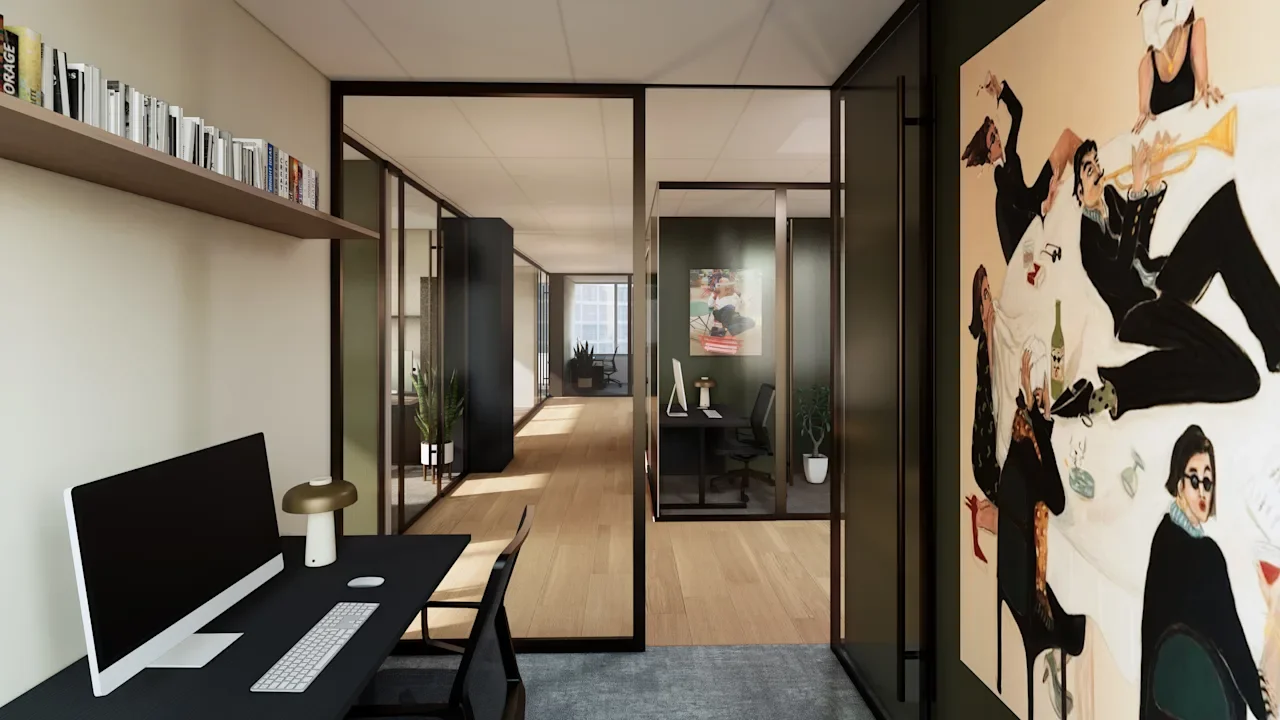
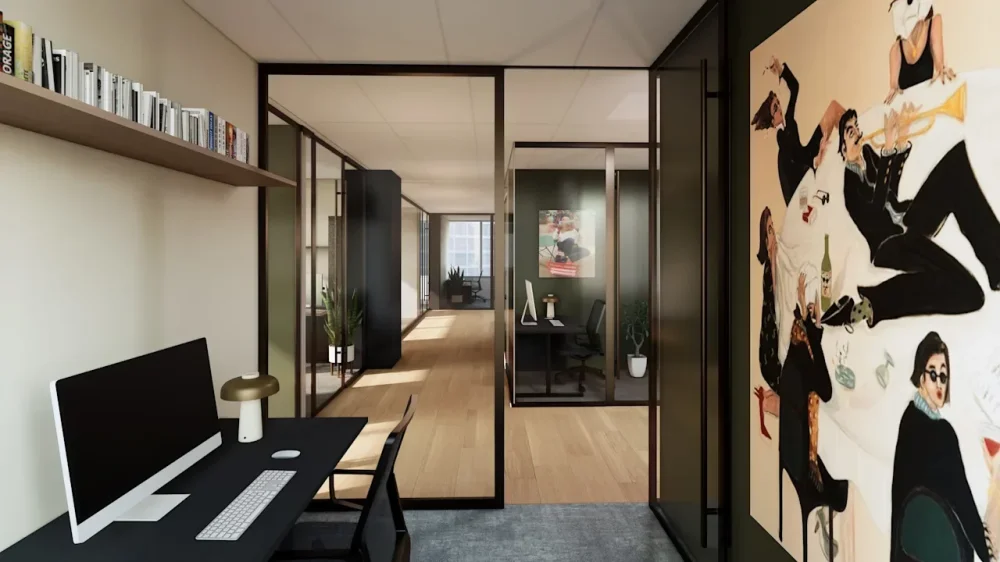
Imagine that you pull up to a skyscraper in Midtown Manhattan. You step out of the car and walk into the lobby, where the staff greets you by name and ushers you to an elevator. Upstairs, another staff member brings you coffee just the way you like it, minutes after you arrive. A barber is on hand to give you a fresh shave before an important Zoom call, and afterwards, you drop by a caviar tasting that’s happening in the shared lounge. Amid an interior of travertine, green marble, and glass, a dedicated hospitality team and concierge service wants to make sure clients don’t waste time with the “little frictions” of everyday life. This “sanctuary” might sound like one of Manhattan’s luxury members-only clubs, but in fact, it’s a new kind of coworking space that caters to the 1% of workers. Industrious Reserve is a high-end coworking space meant for CEOs and business leaders. It’s supposed to give “the prestige of Park Avenue and the quiet luxury of a private club,” according to marketing materials. It’s designed for leaders with all-remote teams, or with home offices in other cities, who will now have a place to hold court. “What we observe in our business is that people want a private club experience, but they also want their own office,” says Industrious President Anna Squires Levine, whose firm was recently bought by real estate services giant CBRE. “Just this morning, I had a private equity executive tell me ‘this is the product I’ve been waiting for. I do not want to sign my own 10-year lease. Why would I do that? Then I have to build it and manage it and figure out the Wi-Fi for 10 years. I want somewhere I can show up and feel like a boss.’” The first location of Industrious Reserve, a high-end coworking space meant for CEOs and business leaders, will open soon inside the fifth and sixth floors of Manhattan’s Lever House, a famous modernist skyscraper. Reserve access starts at $7,000 a month per person, $9,500 if it includes one of the 44 private office suites (monthly membership costs for other Industrious locations in New York City vary between $399 and $1,700.) The new ‘corner office’ The Reserve offering represents a significant departure from the classic corner office layout for corporate leadership, a design for status and hierarchy that reached its apex shortly after the International-Style Lever House opened in 1952. As much as it’s a story of service firms finding new ways to cater to increasingly wealthy clientele—after all, there’s no shortage of private club space or budget for high-end office amenities—it also speaks to the changing role of a modern CEO and their workspace. Corporate leadership needs to showcase accessibility, transparency and cultural presence, says Todd Heiser, principal and co-managing director of Gensler’s Chicago office. But that doesn’t mean having the face of the company operate out of the lunchroom, or like many famous tech leaders, flipping open a laptop and sitting with the rank-and-file. What Heiser says leaders desire now—and Reserve seeks to provide—is a place to work in close collaboration with the trusted team that makes a modern business function, almost like a capitalist situation room. In a world that requires lightning-fast decision-making, CEOs want proximity; they want to be able to assemble the executive team in minutes and work in a space that fosters faster alignment. Heiser pointed to Logan Roy’s office on Succession or Rebecca’s office on Ted Lasso as examples of leadership spaces that were both characters in their own right and typically open for rapid-fire meetings with advisers. One real-world example, the new HQ for Hyatt, includes space for leadership to quickly huddle, assemble, and lead team meetings outside of a stiff boardroom. The Capitalist Situation Room In the 1950s, office designers, influenced by notions of hierarchy and congruence theory, laid out workspaces to cleanly delineate hierarchy. Meanwhile, with today’s more open plan and collaborative design, the workplace power dynamic is dramatically demonstrated by access, says Heiser. It helps that shrinking office footprints also means axing luxurious private offices. Gensler found one in five workers today doesn’t have assigned seating, though execs do tend to have a reserved spot in most offices. As opposed to the classic corner office—long a symbol of hierarchy and corporate power—this new functional layout that’s emerging more post-pandemic displays the leadership style of today’s LinkedIn CEO. “Employees read leadership spaces like cultural text,” says Heiser. “The layout, the openness, the adjacency all tell people what the organization values. It actually comes clearly from the top.” Reserve, in both its name and lofty privacy, communicates exclusivity—it’s a considerable expense to join—but it also gets described as the type of space where a leader can collaborate with a team. Levine spoke about the design, by the in-house team at Industrious, as a fusion of physical, technological, and experiential, trying to create a turnkey experience for execs while also creating a sort of townhouse on Park Avenue vibe. The feeling of intimacy should be akin to a “secret, top-floor, light-filled brownstone in the middle of New York,” says Levine. What sets Reserve apart, argues Levine, is the dichotomy; leaders can enjoy an intimate private office to meet with advisers, offering that connection to their top staff, as well as a semi-public space—members and guests only in the club—for socializing for larger gatherings. It’s a space for using time impactfully, being in the bunker with trusted advisers, and being the best version of yourself. Compared to the gigantic floorplates of modern high-rises, the Lever House is slim and elegant; in the afternoon, the sunlight from the window hits the middle of the floor. So far, membership interest has come from private equity firms, venture firms, hedge funds, and high-end retail and fashion shops. Levine says it’s either firms with big headquarters elsewhere who want a Manhattan outpost, or smaller, super distributed teams seeking a central meeting place. Levine expects the small handful of drop-in memberships and private offices to be snapped up well before the space opens in the spring, and Industrious plans further expansions of the concept in “pinnacle cities” such as Singapore, Tokyo, and Berlin. “It takes a very special building and a very special landlord partner to make it happen,” says Levine. “We like to be thoughtful and methodical about the way that we expand so we know we can do it with a high degree of execution. View the full article
-
The President’s choice of chair will shift from Powell’s data-dependent approach to policyView the full article
-
US stock futures and Treasuries pared losses after President Donald The President nominated Kevin Warsh as the next Federal Reserve chair, with traders debating how far he would cut interest rates. View the full article

-
This week, we covered more ongoing Google search ranking volatility - January was a heated month. Google AI Overviews show more button officially flows to AI Mode...View the full article
-
Saks Global, owner of luxury retail chains Saks 5th Avenue and Neiman Marcus, has announced the closure of most of its discount outlet stores, Saks Off 5th and Last Call. The store closures come weeks after Saks Global announced that it was filing for Chapter 11 bankruptcy protection. Here’s what you need to know about the store closures, including a full list of the locations being shuttered. What’s happened? Yesterday, Saks Global said it would close a majority of its discount outlet stores. While Sak Global is best known for its high-end luxury department store chains, Saks 5th Avenue and Neiman Marcus, the company owns several other retailers, including Bergdorf Goodman, Saks Off 5th, Last Call, and Horchow. The company has now announced that two of these retailers will be hit by store closings. The first is Saks Off 5th, the company’s outlet store chain, which sells discounted apparel and accessories for shoppers on a budget. The company also announced that it will close all its Last Call stores. Last Call is the discount outlet chain originally owned by Neiman Marcus, which Saks Global acquired for around $2.7 billion in 2024. Why are Saks Off 5th and Last Call stores closing? Saks Global is closing these locations as part of its Chapter 11 bankruptcy process, which the company filed for earlier this month. The goal of the bankruptcy is “to strengthen the foundation of our business and position it for the future,” Saks Global CEO Geoffroy van Raemdonck stated earlier this month. Over the past several years, the company now known as Saks Global has become saddled with debt, driven by factors affecting many retailers, including reduced sales, declining foot traffic, increased online competition, and inflationary pressures. But the company’s debt problems also increased significantly after it acquired competitor Neiman Marcus in 2024. This week’s announcement of store closures doesn’t come out of the blue. Earlier this month, when Saks Global announced it was filing for bankruptcy, the company said it was “evaluating its operational footprint to invest resources where it has the greatest long-term potential.” That evaluation has now led to the closure of a majority of its Saks Off 5th and all of its Last Call stores. Saks Global now says the store closures are the result of “a thorough review of its off-price business.” Which Last Call stores are closing? Saks Global has confirmed that all of its remaining Last Call stores will close. This encompasses five locations in three states. Those locations are: California Desert Hills Premium Outlets (Cabazon, CA) The Outlets at Orange (Orange, CA) Florida Sawgrass Mills (Sunrise, FL) Texas Grapevine Mills (Grapevine, TX) San Marcos Premium Outlets (San Marcos, TX) Which Saks Off 5th stores are closing? Unlike its Last Call stores, Saks Global will not shutter all of its Saks Off 5th stores. However, the majority of the stores will be closing. The company says that 12 Saks Off 5th locations will remain open, while the other 57 locations will close. Those 57 locations are spread across 18 states. Here is the full list of Saks Off 5th stores that are closing: Arizona Glendale, AZ Phoenix, AZ Scottsdale, AZ Tucson, AZ California Cabazon, CA Camarillo, CA Costa Mesa, CA Livermore, CA Beverly Connect, Los Angeles (West), CA Milpitas, CA Palm Desert, CA Petaluma, CA Ontario, CA San Diego, CA Woodland Hills, CA Conneticuit Clinton, CT Stamford High Ridge (Stamford), CT Florida Destin, FL Ellenton (Tampa), FL Tampa (Lutz), FL Naples Park Shore (Naples), FL Orlando, FL Orlando (Vineland), FL Georgia Atlanta (Woodstock), GA North Atlanta (Woodstock), GA Hawaii Ala Moana (Honolulu, HI) Hawaii (Honolulu, HI) Illinois Aurora Chicago (Aurora), IL State Street (Chicago), IL Northbrook, IL Rosemont, IL Massachutses Boston (Somerville), MA Wrentham, MA Maryland Clarksburg, MD Arundel (Hanover), MD Minnisota Eagan, MN Navada Las Vegas N (Las Vegas), NV Las Vegas S (Las Vegas), NV New Hampshire Merrimack, NH New Jersey Bridgewater, NJ Elizabeth, NJ Shrewsbury, NJ New York Deer Park, NY Eastchester, NY Greenburgh, NY Riverhead, NY North Carolina Charlotte, NC Mebane, NC Ohio Columbus, OH South Carolina Hilton Head (Bluffton), SC Charleston, SC Texas Cypress, TX Dallas Park (Dallas), TX Grand Prairie, TX Katy, TX San Antonio, TX Sugarland, TX In addition to the above Saks Off 5th closing locations, Saks Global also announced that the retailer’s website, Saksoff5th.com, “is winding down operations.” When do closing sales begin? Saks Global says Saksoff5th.com online closing sales will begin today, Friday, January 30. Physical store closing sales will begin on Saturday, January 31. The company says that gift cards to these physical retail stores will continue to be accepted, but only until Saturday, February 14th. Gift cards for saksoff5th.com will only be accepted until Friday, February 13th. All merchandise purchased during the closing sales is non-returnable or exchangeable. View the full article

-
This week's PPC Pulse recaps early details on ChatGPT’s premium ad pricing and key takeaways from the first Ads Decoded episode on Google Analytics. The post PPC Pulse: ChatGPT Ads CPMs, Ads Decoded Talks Analytics appeared first on Search Engine Journal. View the full article
-
While others are dragging their feet, the FCC is racing ahead with more innovations in 6 GHz unlicensed regulation. The post FCC creates new ‘GVP’ class of indoor/outdoor Wi-Fi devices & wants to boost indoor 6 GHz Wi-Fi power levels appeared first on Wi-Fi NOW Global. View the full article
-
For a long time, SEO had the simplest math in marketing: Rank higher → Get more traffic → Fill the sales pipeline To the dissatisfaction of marketing executives, that linear world is breaking fast. Between AI Overviews, zero-click SERPs, and users getting answers directly from LLMs, the old “rank to get traffic and leads” equation is failing. Today, holding a top keyword position often yields significantly fewer clicks than it did just two years ago. This has forced many uncomfortable conversations in boardrooms. CMOs and CEOs are looking at traffic dashboards and asking tough questions, especially: “If traffic is down… how do we know SEO is actually working?” The answer forces us to confront a hard truth: The traffic model has collapsed, but executives still want measurable ROI. We have to stop treating SEO like a traffic faucet and start treating it like what it actually is: a brand-dependent performance channel. Why traffic and pipeline are no longer in lockstep Linear attribution has never fully captured the reality of organic search. ChatGPT is not replacing Google; rather, it is expanding its use. And that’s because users are skeptical of search and LLM results, so they need to validate the information they find on both platforms. In the past, the research loop happened inside Google’s ecosystem (clicking back and forth between results). Today, organic search behaves like a pinball machine. Buyers bounce across channels and interfaces in ways that traditional attribution software cannot track. A user might find an answer in an AI Overview, verify it on Reddit, check a competitor comparison on G2, and finally convert days later via a direct visit. This complexity has broken the correlation marketing executives are hungry for. In the past, if you overlaid traffic and pipeline charts, the lines moved together. Now, they often diverge. Across B2B SaaS portfolios, I am seeing a consistent pattern: Organic sessions are flat or declining year over year. Rankings for high-intent terms remain stable. Pipeline and inbound demos from organic search are going up. Dig deeper: How to explain flat traffic when SEO is actually working This divergence doesn’t mean SEO is failing. It means that traffic is no longer a reliable proxy for business impact. The traffic being lost to zero-click searches is often informational and low-intent. The remaining traffic is higher-intent and closer to conversion. We are witnessing the “atomization” of search demand. As Kevin Indig notes in his analysis of The Great Decoupling, demand for short-head, broad keywords is in permanent decline. Users are either bypassing search entirely for AI interfaces, or they are refining their queries into specific, long-tail questions that have lower volume but significantly higher intent. The “fat head” of search – the generic terms that used to drive massive vanity traffic – is being eaten by AI. The long tail is where the pipeline lives. The mistake many leaders make is seeing the sessions drop and instinctively pushing to “get the numbers back up.” But chasing lost clicks usually leads to publishing broad, top-of-funnel content that inflates session counts (and other vanity metrics) without actually driving qualified leads. Dig deeper: How to align your SEO strategy with the stages of buyer intent Get the newsletter search marketers rely on. See terms. SEO ROI is now the downstream outcome of brand traction This is where the debate between “brand” and “performance” breaks down. For a decade, SEO masqueraded as a pure performance channel. We convinced ourselves that if we just optimized the H1s and built enough backlinks, we could rank for anything. We treated brand awareness as a nice bonus, but not a prerequisite. In reality, SEO has always been downstream of brand. AI interfaces are simply exposing that truth. The rise of LLM-based search has flipped the script. These engines don’t just match keywords to pages; they synthesize reputation. When an LLM constructs an answer, it is looking for verification across the entire web: What do actual customers say on G2 and Reddit? Is the brand cited in expert, non-affiliate content? Is the product mentioned alongside category leaders? You cannot brute-force these outcomes via SEO techniques. If your brand lacks digital authority, no amount of technical optimization will save you. That is why I call this brand-conditioned performance. It means that your brand strength sets the ceiling for your organic performance. You can no longer out-optimize a weak reputation. The search engines are looking for consensus across the web, and if the market doesn’t already associate your brand with the solution, the algorithm won’t recommend you. So, what does brand strength actually mean to an LLM? In this new environment, brand strength is composed of four specific signals: Topical authority: Do you own the complete conceptual map of your industry, or just a few disconnected keywords? Ideal customer profile (ICP) alignment: Are you answering the specific, messy questions your actual buyers ask, or just publishing generic definitions? Validation: Are you cited by the category-defining sources that LLMs use as training data? Positioning clarity: Can an AI clearly summarize exactly what you do? As Indig points out, “Vague positioning gets skipped; sharp positioning gets cited.” Bottom line: SEO doesn’t create demand out of thin air. It captures the demand your brand has already validated. Dig deeper: The new SEO imperative: Building your brand The new defensibility metrics for SEO When traffic stops being the headline KPI, leadership still needs proof that SEO is working. The strongest teams are pivoting to defensible signals that track revenue and reputation rather than just volume. We need to anchor on metrics that prove business impact, even if top-of-funnel sessions are leaking: Top-10 rankings for commercial and BOFU keywords remain stable. (You hold the ground where money changes hands). Ahrefs traffic value increases, even if sessions decline. (You are trading high-volume informational traffic for high-value commercial traffic). Product, solution, and comparison page traffic stabilizes. (Buyers are still finding your money pages). Homepage traffic grows YoY. (The strongest proxy for brand demand). LLM referral traffic emerges and accelerates. (The newest frontier. Tracking referral sources from ChatGPT, Gemini, or Perplexity indicates that you are part of the new conversation, even if the volume is currently low.) Inbound demos and pipeline from organic growth relative to traffic. That last point is the one that changes executive thinking. When you show that pipeline per organic visitor is rising – even as sessions fall – the conversation shifts from “SEO is broken” to “SEO is evolving.” Dig deeper: Why AI availability is the new battleground for brands Modern SEO is moving from acquisition to influence The most successful SEO teams are no longer asking, “How do we get the traffic back?” They understand that the game has changed from acquisition to influence. They are asking: How does our brand show up for buying questions? How do we dominate consideration-stage queries? How do we turn organic visibility into real buying influence? They recognize that in an AI-first world, zero-click does not mean zero-value. If a user sees your brand ranked first in an AI Overview, reads a snippet that positions you as the expert, and remembers you when they are ready to buy – SEO did its job. SEO is no longer a hack for cheap traffic; it is the primary way brands condition the market to buy. View the full article
-
President Donald The President said he plans to announce his choice for chairman of the Federal Reserve on Friday morning, a long-awaited decision that could set up a showdown on whether the U.S. central bank preserves its independence from the White House and electoral politics. For the past year, the president has aggressively attacked Fed Chair Jerome Powell, whose term as the head of the U.S. central bank ends in May. The President maintains that Powell should cut the Fed’s benchmark interest rates more drastically to fuel faster economic growth, while the Fed chair has taken a far more judicious approach in the wake of The President’s tariffs because inflation is already elevated. “I’ll be announcing the Fed chair tomorrow morning,” The President told reporters Thursday night as he went into a screening of the documentary “Melania” about his wife. “It’s going to be, somebody that is very respected, somebody that’s known to everybody in the financial world. And I think it’s going to be a very good choice. I hope so.” The President stayed relatively cryptic about his pick. His search was led by Treasury Secretary Scott Bessent with four known finalists: Kevin Warsh, a former Fed governor; Christopher Waller, a current Fed governor; Rick Rieder, an executive with the financial firm BlackRock; and Kevin Hassett, director of the White House National Economic Council. The President previously suggested Hassett was the frontrunner, only to recently say that he wanted him to remain in his current post. The President did say on Thursday night that “a lot of people think that this is somebody that could have been there a few years ago,” fueling speculation that he had chosen Warsh, who was a finalist in the 2017 search for Fed chair that led to Powell’s selection. Tensions between The President and the central bank had been steadily mounting as the president used the renovation costs of the Fed’s headquarters to further lambaste Powell, a campaign that resulted in the Fed getting subpoenas from the Justice Department earlier this month. The Fed chair took the rare step of issuing a video statement in which he said, “The threat of criminal charges is a consequence of the Federal Reserve setting interest rates based on our best assessment of what will serve the public, rather than following the preferences of the president.” The President has long teased his Fed choice while saying his nominee would slash interest rates that influence the supply of money in the U.S. economy, the rate of inflation and the stability of the job market. On the cusp of The President’s announcement, Powell might have the ability to block him in an effort to ensure the Fed preserves its credibility by staying away from political considerations. While his term as chair ends in roughly three months, Powell’s term on the Fed’s board of governors runs through 2028 and he could choose to remain in that post, likely blocking The President’s ability to have his nominees control the majority of the seats on the board. Of the seven Fed governors, former President Joe Biden picked three of them in addition to renominating Powell to a second term as chair. If Powell stays on the board, he could also create a small procedural hurdle for The President’s ability to nominate someone new to the board. This would mean The President would either have to choose an existing board member as chair or replace Stephen Miran, who is on leave from his job as chair of the White House Council of Economic Advisers to fill a term as governor that technically ends on Saturday. If The President chooses to replace Miran, he could name someone new to the board. At a Wednesday news conference, Powell declined to say whether he would leave the board. But he did offer some advice to any successor about balancing the need for independent judgment with public accountability. “Don’t get pulled into elected politics — don’t do it,” Powell said. “Another is, that our window into democratic accountability is Congress. And it’s not a passive burden for us to go to Congress and talk to people. It’s an affirmative regular obligation.” —Josh Boak and Darlene Superville, Associated Press View the full article

-
January has been an insane month with Google Search ranking volatility, and I guess it is no surprise to see the most heated time right now, as we end the month. I am seeing a significant spike in SEO chatter and many of the tools are showing very heated Google search ranking volatility over the past 24 hours or so.View the full article
-
Google is testing showing third-party endorsement content on Search ads, a Google Ads spokesperson confirmed. This "third-party endorsement content" may include content from third-party websites under the ad description, including the site's name, logo, and a short endorsement from that site.View the full article
-
Several weeks after Google rolled out support for Preferred Sources globally, Google added official help documentation for site owners to use to help them understand what it is all about and how to encourage their readers to subscribe to your site as a preferred source.View the full article
-
The Oscar winner on the liberating power of film, what Hollywood still has to offer — and realising his 20-year ambition to produce and star in his own ‘Hamlet’View the full article
-
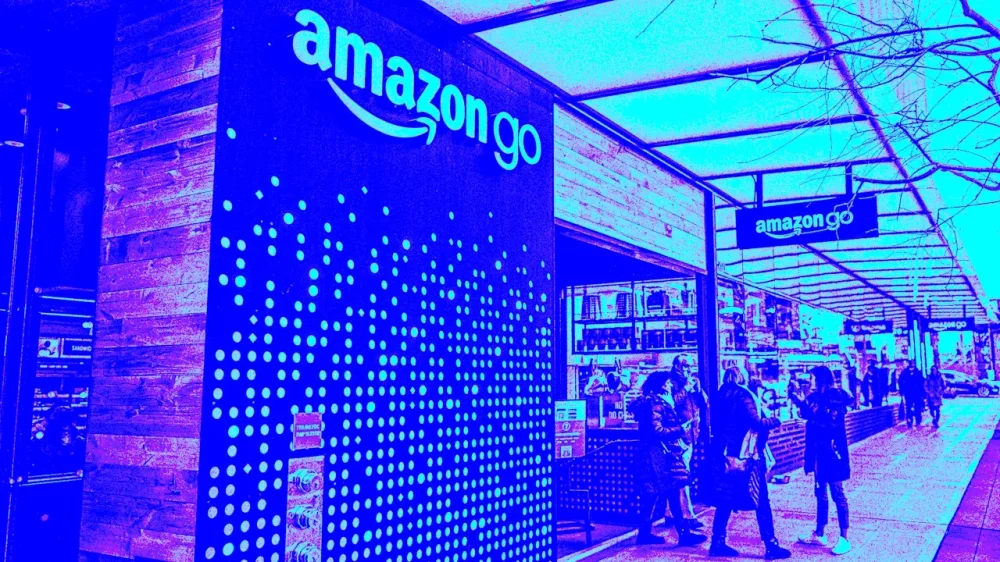
Hello, and welcome back to Fast Company’s Plugged In. When Amazon announced this week that it’s shutting down Amazon Go, its 8-year-old chain of cashierless convenience stores, the news did not come as a shocker. Almost two years ago, the company shuttered all its Go stores in San Francisco, along with some locations in New York and Seattle. Another round of closures came in 2024. Now it’s going from a few stores to no stores, a footnote given that the same day brought the news that Amazon is laying off 16,000 people across the company. Having shopped at the Amazon Go near my San Francisco office almost 200 times, I counted myself as a fan. Even back then, though, it felt like the company either didn’t understand what it had created or had already lost interest. The piece I wrote when the San Francisco stores closed felt like an obituary, even though other locations remained in business. I said at the time that regardless of what happened to Amazon Go, I hoped startups would pursue the goal of freeing us from the drudgery of waiting in line to pay for stuff. One I mentioned in that piece, Grabango, folded the following year. Reportedly, the expense and complexity of equipping stores with its technology—which, like Go, involved a bevy of cameras using AI to keep track of shoppers and the products they’d plucked from shelves—played a part in its demise. I should note that cashierless retail is not entirely dead. Amazon is still working on the “Just Walk Out” technology that powered the Go stores, which it makes available to other retailers. Some of its Whole Food Market stores continue to offer a variant of the tech in the form of smart shopping carts called Dash Carts, which it recently upgraded. Startups that remain in the game include Zippin, whose Go-like technology is widely used at sporting and concert venues, and Mashgin, which eliminates the need to configure an entire store with cameras by having shoppers place items on a tray for AI-assisted checkout. The one place I’ve encountered checkout-free shopping lately is at airports, where I’ve bought items using both Amazon’s and Mashgin’s platforms. My experiences were positive. Let’s be honest, though: It isn’t tough to improve on airport retail in its traditional form. Cashierless checkout surviving for niche applications would be a dramatic reversal from the days when the first Amazon Go stores opened and I wondered whether human-dependent checkout was on its way to becoming as quaint as sales transactions involving someone eyeballing price tags on items and laboriously punching keys on a cash register. Maybe it will someday. But surely not in this decade, and I wouldn’t bet on the one after that. Why is that? Along with the cost of the tech, there’s the question of how well it works at all. In 2023, The Information’s Theo Wayt reported that Amazon had 1,000 people in India reviewing transactions from its stores, and that 70% of sales required a human in the loop. That made it sound like the main thing the company had achieved was to remote-control the checkout process rather than eliminate it. It was also a reminder that shopping in Amazon Go stores involved being monitored by cameras, giving the whole process a Big Brother vibe. Amazon disputed details of Wayt’s report. And the fact that considerable human labor was required to train the Just Walk Out AI doesn’t mean it would be so forever. Still, the more you know about how technology of this sort works, the more daunting it sounds—especially in the context of retail, a business that has traditionally been resistant to experimentation and long-term thinking. Back when I was popping into my neighborhood Amazon Go several times a week, I thought of what it was doing as being centered on making my life slightly better. Ultimately, though, retail technology is not about direct customer satisfaction. It’s about increasing sales. Making shoppers happier is only one way to accomplish that, and probably not the easiest one. In 2018, my colleague Sean Captain wrote about Standard Cognition, which had opened a 1,900-foot demo cashierless shop in San Francisco and had plans to help retailers take thousands of stores cashierless in just a couple of years. That didn’t happen. Now known as Standard AI, the company has pivoted away from grab-and-go toward using cameras to “understand what shoppers actually see and respond to,” its website says. “Our proprietary models continuously track awareness, engagement, and conversion to prove media impact, refine promotions, and optimize performance across every in-store placement.“ Standard AI is not performing facial recognition or otherwise associating this data with specific identifiable individuals. But even in anonymized form, the idea of being monitored as I shop for the purpose of maximizing sales makes me wince. The company’s site—with close-up imagery of shoppers contemplating products, overlaid with stats Standard has collected about them—doesn’t help. (Yes, I am aware that club cards have long tied shoppers to purchases, and that online shopping has always been a minefield when it comes to merchants spying on customers.) Much has changed since Amazon Go was a novelty. AI is now everywhere in our lives, and the list of areas where its impact is potentially transformative is almost literally endless. I still like the concept of grab-and-go shopping. For now, however, it seems most useful as a case study in why technology that works—kinda, in certain circumstances—can fall so short of working as a real-world business. You’ve been reading Plugged In, Fast Company’s weekly tech newsletter from me, global technology editor Harry McCracken. If a friend or colleague forwarded this edition to you—or if you’re reading it on fastcompany.com—you can check out previous issues and sign up to get it yourself every Friday morning. I love hearing from you: Ping me at hmccracken@fastcompany.com with your feedback and ideas for future newsletters. I’m also on Bluesky, Mastodon, and Threads, and you can follow Plugged In on Flipboard. More top tech stories from Fast Company Yahoo claps back on AI search engines with Yahoo Scout The legacy web company still commands staggering internet mindshare as it pivots into the AI age with an AI search engine of its own. Read More → In Rochester, pay phones are working again—and they’re free The GoodPhone Project upcycles old pay phones, converts them to VoIP, and places them in neighborhoods where some residents still don’t own mobile phones. Read More → Where is Donald The President’s strategic Bitcoin reserve? The government seems to be amassing more Bitcoin. But little work seems to be happening to enact the terms of the executive order The President signed to start the ‘strategic reserve.’ Read More → TikTok is tracking you now. Here’s how to protect yourself TikTok, under new ownership, is monitoring your physical location, internet activity, and anything you upload into its AI. It’s time to put some shields up. Read More → The founders of Uber and Habitas want to disrupt your apartment As more young, wealthy people choose to rent, Sekra aims to give them what they want: luxury living, game nights, and blackout shades. Read More → AI face swapping video could be a bonanza for scammers A new class of video generation tools could fool phishing victims, especially the elderly, into divulging information or sending money. Read More → View the full article
-
Before the December holidays, Google posted a notice that review appeals for Google Business Profiles were delayed. Well, Google just removed the notice, which likely means the extended delays for review appeals are no longer an issue.View the full article
-
From the outside, it looks like a generational standoff. Baby boomers are retiring earlier than expected, frustrated by workplace change, technology shifts, and growing tension with younger colleagues. At the same time, Gen Z talks openly about quitting jobs that feel misaligned or draining. Many leaders interpret this as a clash of values. Older workers cannot adapt. Younger workers lack commitment. The data tells a more complicated story. New research from Clari and Salesloft, conducted in partnership with Workplace Intelligence, surveyed 2,000 U.S. sellers and sales leaders across industries. The study found that 19% of baby boomers are planning to retire early because they are tired of dealing with Gen Z at work. At the same time, 28% of Gen Z respondents said they are actively searching for a role where they will not have to interact with baby boomers as much. The cost of that friction is not abstract. The research estimates that generational conflict is costing organizations roughly $56 billion each year in lost productivity, driven by miscommunication, burnout, and uneven adoption of new technologies like AI. On its own, that data suggests a workplace pulling itself apart. But another study complicates the narrative. Research from Southeastern Oklahoma State University, based on a survey of 1,000 employees, found that 71% of Gen Z workers are staying in a job or career longer than they want simply because they do not know how to leave. Nearly half say they are actively transitioning toward something new, while 68% report that their employer has no idea they are planning a change. Taken together, these findings reveal something leaders often miss. Baby boomers are leaving because they can. Gen Z is staying because they do not know how not to. This is not a motivation problem. It is a clarity problem. A shifting environment For many boomers, the workplace they are navigating today barely resembles the one they mastered. AI tools, shifting communication norms, and changing definitions of productivity have disrupted identities built on decades of experience and institutional knowledge. When those changes arrive without context or support, frustration grows. Early retirement becomes less about age and more about opting out of an environment that no longer feels coherent. Gen Z is facing the opposite challenge. They entered a workforce defined by constant change, but very little guidance. Career paths are opaque. Loyalty feels risky. Advice is often abstract. While they are often labeled as eager to quit, the reality is that many are stuck in roles they have already outgrown, unsure how to move on without harming their future. AI has intensified this divide rather than resolving it. For example, the same Clari and Salesloft research found that 39% of Gen Z would rather be managed by AI than by a baby boomer, while 25% of boomers say they would prefer working with AI over a Gen Z colleague. This preference is less about technology being superior and more about predictability. In environments where expectations feel unclear or inconsistent, AI can appear easier to work with than people. The leadership factor That is where leadership enters the equation. Engaged empathy is not about lowering standards or avoiding difficult conversations. It is about understanding how different generations experience the same systems and responding with clear, actionable communication. Without that effort, organizations allow frustration to turn into disengagement. For Gen Z, engaged empathy shows up as explicit career navigation. Not platitudes about growth, but concrete conversations about skills, timelines, and options. Many young employees are not afraid of hard work. They are afraid of making irreversible mistakes in a system that rarely explains the rules. For baby boomers, engaged empathy means recognizing that resistance to new tools is often rooted in identity, not stubbornness. When experience feels discounted rather than translated, trust erodes. Leaders who intentionally connect new technologies to existing strengths reduce defensiveness and preserve institutional wisdom. However, none of this works without clarity. High-performing organizations do not assume alignment across generations. They create it. They explain what success looks like now, how it is measured, and how employees at different stages can contribute and grow. They introduce AI as a shared resource rather than a silent evaluator. Boomers retiring early and Gen Z wanting to quit are not signs that work is fundamentally broken. They are signals that employees are responding rationally to unclear systems and inconsistent leadership. The solution is not fewer generations in the workplace. It is leaders willing to practice engaged empathy and communicate clearly enough that fewer people feel the need to escape in the first place. View the full article