All Activity
- Past hour
-
Recently we heard from people who work at events — their horror stories and wins — and here are 10 of my favorite stories they shared. 1. The applause I was part of a round of lightning talks. The event organizers told us we had five minutes apiece, and for enforcement they told the audience to applaud violators off the stage. I was done in 90-odd seconds because I’m cool like that. “Blowhard Bob” the CISO, however, adored the sound of his own voice and did not believe time limits applied to him. He was barely halfway through his slides when the applause started. He tried to talk over it, being Blowhard Bob, but the audience only raised the volume of clapping until he had no choice but to leave the stage. I saw his thunderous face as he left the event venue. I never liked Blowhard Bob, so it was a petty treat to see him so uselessly offended. 2. The secret access I’m a vegetarian in a company that frequently hosts customers or suppliers (on the order of 100+ per week) for all-day meetings, where they are very much trapped and unable to get their own food. A large number of our visitors are also vegetarian/vegan. I have the fortunate ability to bring my own food, but the visitors cannot. There is almost never a veg option for our catered lunches. The options exist at every location we cater from, but the hosts never select one. I attempted for a year to get the hosts to start adding vegetarian options, but for unknown reasons this ask is impossible. Finally, I appealed to my network admin friend to give me backdoor access to the catering request website. Each Monday, my Good Deed of the Week is to log in and edit every single new catering form to include a veg option. The hosts often make surprised noises at finding themselves with a tray of veg food (and take the credit when it comes in handy), but no one ever tries to figure out how it keeps happening. Going on 2 years now executing my petty act of good will. 3. The nature soundtrack Each year, Big Corporation honored retiring 25-year employees with a fancy dinner and dancing at an expensive venue. The location chosen that year was an exclusive brand new hotel, and the company was excited to be able to show it and themselves off. As the guests arrive to the lounge for drinks, oohing and ahhing about the luxurious appointments suddenly stops as the piped-in music becomes audible. Tradition held that the music chosen for the cocktail hour be top 40 hits from the year these folks started at the company, but the intern charged with assembling the playlist decided that because the big new hotel displaced a wetland, recorded sounds of a swamp including croaking frogs and chirping crickets filled the cocktail lounge. People were confused as they held crystal champagne flutes. 4. The medical simulation One year, we invited a medical simulation team (similar to an emergency simulation, but for medical events) to present at the nursing conference I used to run. They did not tell us the simulation they would be running would involve copious fake blood – which got squirted in lots of different places, including the people sitting in the front row. I think the venue ended up charging us for carpet cleaning too. 5. The grape Kool Aid and the geese At a corporate headquarters campus preparing for the July 4th outdoor concert and fireworks, that summer had been extremely dry, and special permission and pre-show requirements were needed for the fireworks display to happen to prevent grass fires. Coincidentally, the campus ponds and fountains were attracting huge flocks of Canada geese because of the drought. Did you know that goose droppings are the size of small dog droppings? Before the hundreds of families came ready to spread their blankets to picnic on the lawns before the concert, vast quantities of goose doodoo had to be removed and said geese needed to be convinced not to return until July 5th . A two-pronged approach was to bring in border collies to scare off the fowl and then sprinkle huge quantities of grape flavored Kool Aid powder, because of course that would send the geese back to Canada (they hate one of the ingredients). Luckily, the problem with this plan was realized before the day of the concert when the landscape crew were doing the required lawn watering in compliance with the fire marshal. 6. The mini figurines Several years ago, I worked at a nonprofit where we spent all day, every day doing hard (rewarding) work with kids. Once a year, we had a fundraiser that revolved around Legos. We had 1000+ people (kids and adults) come in and pay to do Lego activities with us. That year, the fundraiser had an add on where you do a minifig (mini figurines) scavenger hunt type thing — join a session, help find minfigs and pick one to take home with you. For budget reasons, they were knockoff minifigs. They were things like Spiderman’s head on a construction worker body on purple and pink legs. Randomly put together pieces that had come in a giant grab bag. In the second session of scavenger hunt, someone pointed out that some of them were apparently historical figure minifigs? And someone handed me one and I looked carefully … huh, it had a red armband and double lightning bolts. Crap. Off brand Lego knockoffs provide minifigs for historical dioramas and apparently if you get the “grab bag,” they have Nazis mixed in with the superheros. We shut things down for a few minutes for us to panic and find all the hidden minifigs. They were replaced with “safe” figs, and we had one poor staff person spend the rest of the day sorting through the offensive and non-offensive minifigs, keeping us one session ahead of the scheduled sessions of scavenger hunt. As far as we know, no Nazis were sent home with children. Apparently the organization now only uses official minifigs for the Lego event. 7. The cast wrap party The catering company I used to work for was hired to cater the series wrap party for Game of Thrones. All the stars were there and most of us caterers were fans of the show, so we were psyched to be there. On the night itself, we wondered why the energy in the room seemed so off and oddly subdued. Then of course, the final season came out a few months later and we understood. 8. The invitation I worked in higher education development at an institution where the fellows had strongly resisted appointing a professional fundraiser and instead appointed a senior fellow in History as development director – a charming chap but not a fundraiser at all. This manifested in many ways, but perhaps the best one was the event we held to thank a major donor who had contributed a significant sum. We booked a nice location, sorted out some catering, briefed team members ahead of the event, arrived on the day and waited. And waited. And waited some more. DD had one job, which was to invite the donor; he had not done it. I left soon after this. 9. The chickens I run a small performing arts venue that hosts over 200 performances/events per year. Here is a recent favorite story that, while low-stakes and neither full disaster nor victory, exemplifies the weirdness of running a public event space. We had an event that was a collaboration between two very large, community-focused performance groups. Our venue has a strict no pets except licensed service animals and pre-approved on-stage animals policy. One of the performers had a service dog who came to the venue. This was fine. But it wasn’t clearly stated to the myriad other performers that this was a service dog. All of a sudden, the next day, several other cast members brought their dogs and then got deeply offended when we made them take them home. The next day was the public performance and, as audience started arriving, a man walked in with a hard-sided cat carrier. Imagine my surprise when I approached and discovered that it contained two chickens! Turns out his wife was in the show and wanted a picture in costume with her pet chickens. She had told her husband to wait outside for her, but he ignored that fact and was quite rude when we asked him to do so. So here I am, running all over the building, trying to figure out whose chickens these were and having to explain over and over again that no, I wasn’t joking. Yes, chickens. And then my staff kept pulling me aside and going, “Um … there’s a dude with chickens in the lobby?” It all worked out – they went outside and got their chicken picture and then the husband and the chickens went home and they were never free range in our venue … but its become an ongoing joke whenever things go sideways: Look out for the chickens! 10. The teenager I used to work fundraising walk events and we’d usually have a grab bag of random volunteers to help us run the event. One year, this older teenage boy who’d been signed up by his mum as part of his community service requirement (I think he was working off a traffic ticket) was assigned to my area. This kid was only supposed to be there for a short shift of a few hours and since I’m sure it wasn’t his first choice of how to spend his Saturday, I wasn’t expecting too much. He wound up being one of the last people to leave the site, having worked for something like eight or nine hours hauling a lot of stuff around and doing a really good job at whatever we told him to do, all on a really warm day. He said that he had a great time and he really enjoyed himself. I always wondered if that day was the start of his events career. The post the aggressive applause, the secret meal access, and other stories from event workers appeared first on Ask a Manager. View the full article
-
Nato’s top official urged key alliance members to offer help to US to reopen key waterwayView the full article
-
The artificial intelligence-based technology automates manual processes associated with the financing, including draws, for homes under construction. View the full article
-
Confidential SEC submission sets up summer listingView the full article
- Today
-
HERE'S A LOOK at some of the best leadership books to be released in April 2026 curated just for you. Be sure to check out the other great titles being offered this month. Design Love In: How to Unleash the Most Powerful Force in Business by Marcus Buckingham Think about the last time you said, "I love that." Maybe it was about a product that exceeded expectations, a service experience that built instant loyalty, or a moment when your work brought out the best in you. That reaction isn't just emotional—it's electric. In the organization, it fuels engagement, strengthens performance, and drives lasting success. Yet most leaders don't even acknowledge it, let alone measure or make use of it. In Design Love In, leading researcher on human performance and bestselling author Marcus Buckingham reveals how love—the deep connection that makes people feel seen, valued, and inspired—isn't just a soft feeling. It's a measurable driver of performance and growth. He shows how leaders, as experience-makers, can intentionally "design love in" to everything we do: our interactions with team members, our company policies and practices, the products and services and experiences we create for those we lead and serve. Leading in Chaos: A Clarion Call To A New Future From Two Pioneers In Leadership Development And Transformational Change by Nicholas Janni and Amy Elizabeth Fox Increasingly today we find ourselves surrounded by chaos, turbulence and existential threats. We are at a destiny-shaped moment for humanity that calls for a next level of consciousness, courage and compassion from business leaders, who have a chance to contribute to the common good. In this context, and building on the main themes of Janni’s first book, he has come together with another pioneering leadership expert, Amy Elizabeth Fox to create Leading in Chaos, based on their mutual recognition of the unique demands the world faces today. Together, they encourage leaders to take one step further on the journey of self-discovery and self-mastery. Today’s fast-changing, uncertain times call for leaders to develop new capacities of consciousness and to view leadership as a sacred vocation – to become a blessing in the world through presence, coherence and deep human connection. Making Organizational Culture Great: Moving Beyond Popular Beliefs by Jennifer Chatman and Glenn R. Carroll Can a manager really influence an organization’s culture, or do executives just try to impose a culture on their employees? Is the concept of culture too vague to measure objectively and improve? What happens to valuable employees who feel left out by the prevailing culture? Even if a “good” culture makes team members happy, does it actually affect the bottom line? This essential book answers the biggest questions about organizational culture, offering research-backed insights for leaders on shaping and managing an environment that spurs achievement. The authors draw on social-scientific findings to evaluate and debunk common misconceptions. They show how research on culture empowers managers to identify what really matters and deploy it productively. Chatman and Carroll also provide actionable levers to build and maintain organizational culture, from crafting a culture that supports strategic objectives to ensuring that it can adapt as conditions change. Fearless Persistence by Adam Leipzig Fearless Persistence is about the systems that quietly shape creative success and why so many talented people struggle without ever understanding why. Drawing on decades inside film studios, creative institutions, and leadership classrooms, Adam Leipzig reveals the hidden systems that support and constrain success-how power, pressure, time, belief, and structure shape whose work travels and whose work stalls, regardless of talent. Rather than offering inspiration or hustle culture, Fearless Persistence reframes persistence as design. It shows how creators and leaders build structures that allow their work to continue when conditions change, as they always do. Clear-eyed, deeply practical, and grounded in real experience, this book helps readers see the system beneath the story and redesign their creative lives for endurance, integrity, and impact. Creative success is shaped by systems. This book shows how to design a life that thrives inside them. The Core: 8 Principles for Building Strong, Authentic Leadership by Matt Paden with Dr. L. Ken Jones Every leader reaches a moment when skill isn’t enough.When the challenge cuts deeper and tests conviction, humility, and heart. The Core takes readers into that defining space, introducing us to Clint Smith and his mentor, Dr. Bill Jackson, and revealing that the foundation of lasting influence doesn’t come from power or position—it comes from the strength of one’s core. Through the journey of a young man whose plans are upended by tragedy, The Core blends a compelling story of mentorship with timeless principles of leadership. Under Dr. Jackson’s guidance—a hospital CEO who leads with quiet strength and deep conviction—Clint discovers that great leadership grows from the inside out. Uncommon Sense: Rethinking Ordinary Problems in Extraordinary Ways by William R. Brody with Mike Field Why do some of the most successful people in the world―from Bill Gates to Steve Jobs, Oprah Winfrey to Ralph Lauren―never finish college, while others with every academic advantage still struggle to find their way? For William R. Brody, a renowned physician-scientist and the former president of Johns Hopkins University, the answer lies in a truth higher education all too often overlooks: life, unlike textbooks, has no answer key. Most of the truly important questions we face rarely have a ready rubric and a simple solution. In Uncommon Sense, Brody distills lessons from decades in medicine, engineering, entrepreneurship, and academic leadership into a thoughtful, surprising, and often humorous exploration of how to think―and live―beyond the syllabus. Born from his popular Johns Hopkins seminar aimed at graduating seniors, the book exposes the gap between classroom achievement and real-world wisdom, offering readers a practical framework for navigating the unpredictable opportunities and sometimes contrarian decisions that define success and fulfillment. For bulk orders call 1-626-441-2024 * * * “Books are the quietest and most constant of friends; they are the most accessible and wisest of counselors, and the most patient of teachers.” — Charles W. Eliot * * * Follow us on Instagram and X for additional leadership and personal development ideas. View the full article
-
If you’re considering an ERP implementation, it can help to know what benefits to expect. These include cost savings, improved collaboration, streamlined operations, and stronger business growth. More benefits here. The post 15 Top Benefits of Enterprise Resource Planning Software appeared first on The Digital Project Manager. View the full article
-
Clear visual workflows help teams understand processes faster, and flowchart templates make that easier to build, standardize and reuse across projects, operations and decision-making scenarios in any organization size today. When to Use Flowchart Templates Flowchart templates can be applied across many situations where teams need to map processes, clarify responsibilities and improve decision making. From simple task sequences to complex operational workflows, they help structure activities, reduce confusion, identify inefficiencies and support consistent execution across multiple projects, departments and business functions over time in practice. Mapping business processes to understand how work flows from start to finish Designing standard operating procedures to ensure consistent execution Planning project workflows and task sequences before execution begins Identifying bottlenecks or inefficiencies in existing processes Documenting decision trees for approvals, escalations or compliance steps Training new employees by visualizing how tasks and systems connect Improving cross-functional collaboration by clarifying handoffs Analyzing customer journeys to optimize service or product experiences Whenever you’re ready to start managing projects, give ProjectManager a try. ProjectManager is an award-winning project management software designed to plan, schedule and track projects from start to finish. Build detailed project schedules, allocate resources, monitor costs and compare estimates against actual performance using a complete set of powerful project management tools. Get started for free today. /wp-content/uploads/2024/04/Light-mode-portfolio-dashboard-CTA-1600x851.pngLearn more 1. Flowchart Template for Word This flowchart template for Word includes explanations of key symbols, a practical example showing how workflows are represented and a built-in drawing canvas that makes inserting and connecting shapes easier, something that is otherwise difficult when working from a blank Word page without structured visual support. /wp-content/uploads/2026/04/Flowchart-template-for-Word.png Here’s a quick overview of some of the flowchart symbols included in this free flowchart template for Word. These same symbols can also be used in the other free flowchart templates listed in this blog. Oval: Represents the start or end points of a process clearly Rectangle: Defines a specific action or task within the workflow sequence Diamond: Indicates a branching point where outcomes depend on conditions Parallelogram: Shows data entering or leaving the system or process Circle: Links different parts of a flowchart across sections or pages Arrow: Illustrates the direction of flow between steps in the process Document (wavy-bottom rectangle): Represents a document used within workflows Double-lined rectangle: Refers to a predefined process defined elsewhere Trapezoid: Indicates a step requiring manual input from a user Cylinder: Represents structured data storage used or accessed in processes 2. Flowchart Template for PowerPoint Presentations often require more than text to explain processes, especially when stakeholders need quick clarity. Building a flowchart in PowerPoint allows teams to visually walk through workflows or processes during meetings, and this template simplifies that by providing structured shapes and connections that are ready to edit, rearrange and present without design friction. /wp-content/uploads/2026/04/Flowchart-Template-for-PowerPoint-600x615.png 3. Flowchart Template for Excel Some workflows are tightly connected to data, calculations or structured tracking, making Excel a practical place to map them. Creating a flowchart in Excel helps align processes with underlying data, and this template adds a visual layer on top of spreadsheets, allowing users to design workflows without disrupting their existing data structure. /wp-content/uploads/2026/04/Flowchart-Template-for-Excel-600x745.png 4. Swimlane Flowchart Template A swimlane flowchart is a process mapping diagram that organizes workflow steps into horizontal or vertical lanes, characterized by role-based separation of tasks, often driven by cross-functional processes, and resulting in clearer accountability, improved coordination and better visibility into how responsibilities move across teams or systems during execution. /wp-content/uploads/2024/11/Swimlane-Diagram-Template-2-600x330.png This swimlane flowchart template provides a structured layout where users can assign tasks to specific roles, departments or systems using clearly defined lanes. It includes standard symbols, guidance on placement and connection rules, helping teams map responsibilities, visualize handoffs and identify inefficiencies while keeping complex workflows organized and easy to interpret. 5. Flowchart Template for Google Slides Collaborative environments demand tools that multiple users can access and edit in real time, especially when mapping processes. Creating a flowchart in Google Slides enables shared editing and instant feedback, and this template accelerates that by offering prebuilt structures that teams can quickly adapt without starting from a blank presentation. /wp-content/uploads/2026/04/Flowchart-Template-for-Google-Slides-600x502.png ProjectManager Is an Award-Winning Project Management Software ProjectManager offers robust project management features such as Gantt charts, task lists, workload management charts, timesheets and real-time dashboards and reports. In addition to that, it’s also equipped with AI project insights, online team collaboration features and unlimited file storage that further help project managers ensure nothing falls through the cracks. Watch the video to learn more! If you need a tool to help you manage projects, then signup for our software now at ProjectManager. Our online software helps teams across industries plan, track and oversee projects as they unfold. Sign up for a free 30-day trial today! The post 5 Free Flowchart Templates appeared first on ProjectManager. View the full article
-
The government’s approach to policymaking has been self-defeatingView the full article
-
In a bold move that could reshape the landscape for independent contractors in Minnesota, the National Federation of Independent Business (NFIB) has joined a coalition to challenge a recently enacted law that imposes strict classification requirements. The measure, introduced as part of the Jumbo Omnibus Bill in 2024, establishes a cumbersome fourteen-factor test, leaving many small business owners concerned about compliance risks. Jon Boesche, NFIB’s Minnesota State Director, describes the new law as placing “an impossible position” on small businesses. The complexity of these regulations not only heightens the burden of understanding but also opens up the possibility of severe financial repercussions for well-meaning businesses that inadvertently misclassify workers. “The level of responsibility that this statute places on small businesses is preposterous,” he said, highlighting the dire consequences that look to plunge idealistic operations into uncertainty. The statute’s rigid requirements can impact how businesses interact with independent contractors, prompting many to reconsider using such arrangements altogether. The consequences of misclassification are steep—including significant monetary and potential criminal penalties—forcing some to weigh compliance against operational viability. Small business owners must now grapple with the reality that they might need to overhaul their workforce strategies. Traditional methods of hiring independent contractors may no longer be feasible. This shift could affect the very fabric of how these businesses operate, particularly for sectors reliant on gig workers. Moreover, the legal action taken by NFIB and its partners—such as the Minnesota Chapter of Associated Builders and Contractors, Builders Association of Minnesota, and J&M Consulting—challenges the legitimacy of the law on constitutional grounds. They argue that the law violates Minnesota’s Single Subject and Title Clause found in Article IV, Section 17, claiming that the omnibus bill covers too many disparate topics without a clear focus. This legal strategy aims not just to protect small businesses but also to assert that legislative practices should adhere to transparency and clarity. For small business owners, the implications extend well beyond legal proceedings. They may need to invest in legal expertise or compliance training, which can divert resources and distract from core operations. As businesses struggle to navigate this challenging terrain, they should consider proactively engaging with industry groups to stay informed about law changes and advocacy efforts. One key consideration for small business owners is the potential disruption in workforce management. The new law could push some towards formal employment models, potentially raising labor costs and altering traditional practices. Additionally, depending on the outcome of NFIB’s legal challenge, businesses may find themselves in limbo, awaiting clarity on the law and its enforcement. As an organization dedicated to championing small businesses, NFIB emphasizes the crucial need for fair regulations that encourage growth rather than hinder it. Their ongoing involvement in legal cases across the nation underscores a commitment to protecting small business rights, with the current case in Minnesota spotlighting the urgent need for change. While the road ahead remains uncertain, small business owners should remain vigilant. Keeping abreast of both the legal proceedings and the practical consequences can help them navigate these turbulent waters. Engaging with industry partners and utilizing available resources will be crucial as they strive to continue their operations amidst heightened scrutiny. For a more in-depth look at the lawsuit and its context, the original press release from NFIB can be found here: NFIB Press Release. Image via Google Gemini This article, "NFIB Challenges New Independent Contractor Rules in Minnesota Lawsuit" was first published on Small Business Trends View the full article
-
Google Ads quietly added an auto-apply setting to its experiments feature — and it’s turned on by default, meaning winning experiment variants can be automatically pushed live without manual review. How it works. Advertisers can choose between two modes — directional results (the default) or statistical significance at 80%, 85%, or 95% confidence levels. There is one built-in safeguard: if a chosen success metric performs significantly worse in the test arm, the change won’t be automatically applied. Why we care. Experiments are one of the most powerful tools in a Google Ads account. Automating the apply step could speed up testing cycles, but it also removes a critical checkpoint where advertisers catch unintended consequences before they affect live campaigns. The catch. Experiments only allow two success metrics. That means a third metric you care about — one you didn’t or couldn’t select — could quietly be declining in the background, and the auto-apply setting would never catch it. The guardrails protect what you told Google to watch, not everything that matters. The bottom line. The auto-apply feature is a reasonable shortcut for straightforward tests, but for anything consequential, manual review is still worth the extra step. Run the experiment, let it reach significance, then dig into the full data before pulling the trigger yourself. First seen. This update was spotted by Google Ads specialist Bob Meijer who shared the update on LinkedIn. View the full article
-
New drug Foundayo sets up battle with Novo Nordisk for oral obesity drugsView the full article
-
We may earn a commission from links on this page. Amazon MGM Studios has a rather massive hit on its hands with Project Hail Mary, a sci-fi adventure based on the book by Andy Weir, whose novel The Martian was also met with stellar success when adapted to film around a decade ago (pun intended, by the way). It's a fun and fairly smart popcorn movie, starring a charming Ryan Gosling and his spider-rock-thing best buddy, who save two worlds through the application of science and the power of interspecies friendship. Though Weir's book stands alone, there's already talk of turning the movie into a franchise. Even if I'm not remotely sold on the idea of some kind of wider Hail Mary-verse, I certainly wouldn't mind seeing more movies like it. In that spirit, here are more brainy, adventure-packed stories that show us the promise and peril of reaching for the stars, in a literal sense. The Martian (2015) This one is a given. Also from a book by Andy Weir and a screenplay by Drew Goddard, The Martian finds a likable middle-aged guy—nerdy but not too weird for a mass audience—trapped on his own in a near-future space scenario. Here it's Matt Damon as Mark Watney, a member of a 2035 Mars expedition who finds himself stranded on the red planet after an accident leads the rest of his team to believe him dead. His best chance of rescue is four years away, so he's forced to improvise to survive using only the resources left behind, employing his scientific knowhow to do things like make water from old rocket fuel and grow potatoes in his poop. It was nominated for seven Academy Awards, including one for Best Picture, and became one of the biggest hits of director Ridley Scott's career. Rent The Martian from Prime Video and Apple TV. The Martian (2015) at Prime Video Learn More Learn More at Prime Video Silent Running (1972) Douglas Trumbull, fresh off of his effects work on 2001: A Space Odyssey, directed this environmental parable (don't tell Andy Weir) in which Bruce Dern takes it upon himself to save the last of Earth's plants and animals. Following the complete depopulation of Earth's forests, specimens have been preserved aboard a fleet of ships orbiting Saturn. When the company that owns it all decides that there's no profit to be had in maintaining a bunch of plants, they order everything jettisoned and destroyed, leading to a revolt by botanist and ecologist Freeman Lowell and three reprogrammed service robots. Lowell fakes the destruction of a single biosphere and heads off on his own, hoping to survive long enough to save the trees and plants before he's discovered. Dern is great, and the screenplay was written by the impressive trio of Deric Washburn and Michael Cimino (The Deer Hunter) alongside Steven Bochco (Hill Street Blues, NYPD Blue). Rent Silent Running from Prime Video. Silent Running (1972) at Prime Video Learn More Learn More at Prime Video Apollo 13 (1995) An all-star docudrama that also stands as Ron Howard's best directorial effort, Apollo 13 revisits the doomed(-ish) 1970 lunar mission, which was filled with at least as much drama and far more pathos than the more often dramatized Apollo 11 moon landing. Tom Hanks, Bill Paxton, Kevin Bacon, Gary Sinise, and Ed Harris lead the cast as the astronauts and ground crew involved in what would have been the third lunar landing, were it not for an electrical short on the third day that changed the mission into one focused simply on everyone returning home alive. It's thrilling in the way it generates tension not just out of the dangerous situation itself, but from the variety of clever fixes and science hacks employed to solve for it. Rent Apollo 13 on Prime Video. Apollo 13 (1995) at Prime Video Learn More Learn More at Prime Video Contact (1997) Adapted from scientist Carl Sagan's only fictional novel, Contact finds Jodie Foster's SETI researcher Dr. Eleanor Arroway tracking an extraterrestrial signal containing a sequence of prime numbers, and tens of thousands of pages of encoded data that's ultimately revealed to be a set of blueprints—but to build what? As the message ignites political and religious firestorms, the movie privileges the importance of science while acknowledging the perspectives of people like Matthew McConaughey's Palmer Joss, a well-meaning faith leader who, nonetheless, clashes with Ellie on the signal's broader meaning. Rent Contact from Prime Video. Contact (1997) at Prime Video Learn More Learn More at Prime Video Interstellar (2014) The Earth faces extinction in a near future of blight and dust storms, but there's just the tiniest bit of hope in Christopher Nolan's epic: a wormhole discovered near Saturn that leads to a system with a dozen potentially inhabitable planets orbiting a massive black hole. A volunteer mission has already traveled there, and sent back some favorable results. Former NASA pilot-turned-farmer Joseph Cooper is cajoled into flying a follow-up mission alongside Anne Hathaway's Dr. Amelia Brand, their goal being to colonize a world with human embryos as a back-up plan for the survival of humanity. It's a story of survival on both a personal and a species level, grounded in some impressively rigorous science on display: Theoretical physicist Kip Thorne conceptualized the movie's black hole, and it's become the gold standard; Interstellar also builds one of the movie's most heart-wrenching moments out of the complications of gravity and time dilation, which most other space movies just ignore. Stream Interstellar on Paramount+. Interstellar (2014) at Paramount+ Learn More Learn More at Paramount+ Sunshine (2007) It's literally about saving the sun, so in terms of premise, we're very much on the right track here. In the near-ish future (2057), the sun is dying and a team is on its way to deliver a type of stellar bomb that will reignite the star. They're not the first ones to try it, as it happens, and a distress signal from the original team redirects the mission, whose members (lead by Cillian Murphy's physicist Robert Capa) hope that information and resources retrieved from the earlier ship will improve their chances. Not the best idea, it turns out, as they incur near-catastrophic damage in the process. With resources at a premium, they'll face practical and existential life-and-death questions before all hell breaks loose. Director Danny Boyle re-teamed with his 28 Days Later screenwriter Alex Garland for the contemplative (until it isn't) film, with a cast that also includes Chris Evans, Rose Byrne, and Michelle Yeoh. Rent Sunshine from Prime Video. Sunshine (2007) at Prime Video Learn More Learn More at Prime Video Oxygen (2021) A similar set-up to Project Hail Mary leads to a rather different outcome in this French psychological thriller. A woman (Mélanie Laurent) awakens in an airtight pod; suffering profound memory loss, she quickly comes to realize that her oxygen is rapidly depleting. An AI assistant nicknamed M.I.L.O. is helpful, but only to a point—it won't open the pod, though it does help her make contact with a mysterious woman who tells her that, if she does open the pod, she'll die. It's left to her to figure out where she is, and how to survive and escape...if that's even possible. Stream Oxygen on Netflix. Oxygen (2021) at Netflix Learn More Learn More at Netflix Gravity (2013) Alfonso Cuarón won a Best Director Oscar for this space thriller with a relatively simple premise so elegantly and impressively orchestrated as to place it among the best films of its year. Sandra Bullock plays Dr. Ryan Stone, an engineer on her first space mission to repair the Hubble Space Telescope. Very cool—until space debris collides with her shuttle while she's on a spacewalk, sending her and the only other survivor, team commander Matt Kowalski (George Clooney) hurtling through space in near-Earth orbit. If they can reach the International Space Station, they might just have a chance at survival. It's a character piece with just characters drifting through space, thrilling from the first minute to the last, and believably (if not completely) accurate in its physics. Rent Gravity from Prime Video. Gravity (2013) at Prime Video Learn More Learn More at Prime Video Spaceman (2024) Spaceman is more dour by far than Hail Mary, which is a tiny bit surprising given it stars Adam Sandler, but here we are. He plays Jakub Procházka, on a six-month mission to investigate a strange particle cloud hanging out near Jupiter. It's also a handy way to escape his personal life, which includes an unborn child and a crumbling marriage. As his mental state deteriorates, he encounters a spider-like creature whom he nicknames Hanuš—a being who, unlike Rocky, might just be a figment of his imagination. Stream Spaceman on Netflix. Spaceman (2024) at Netflix Learn More Learn More at Netflix Europa Report (2013) A stylish, real-feeling space thriller hybrid that presents a mission to Jupiter's moon of Europa with an almost documentary look and feel. Director Sebastián Cordero and cinematographer Enrique Chediak apply found footage-style techniques to a film that does an awful lot on a limited budget. Six months into the journey, a solar storm severs communication with Earth, puts the crew in mortal danger, and sets in motion a cascading series of disasters. Even as it plays out a bit like a horror movie in space, there's a sense of realism (Europa being, after all, a legit candidate for hosting life), and also a commitment by members of the crew to complete a mission that might change everything. Stream Europa Report on Prime Video, Hulu, and Tubi. Europa Report (2013) at Prime Video Learn More Learn More at Prime Video Enemy Mine (1985) Enemy Mine suggests, at the outset, that it's going to go a bit harder in its science fiction trappings but, ultimately, it's about two very different people learning to work together. A 2092 space battle between Terrans and reptilian Dracs sees human fighter pilot Willis E. Davidge (Dennis Quaid) and Drac "Jerry" Shigan (Louis Gossett Jr.) both crash-landing on a hostile planet. After battling nearly to the death, the two come to realize that they're going to have to work together to survive...especially after "Jerry" gets pregnant (call the woke police). Rent Enemy Mine from Prime Video. Enemy Mine (1985) at Prime Video Learn More Learn More at Prime Video 2001: A Space Odyssey (1968) Similar on the surface, 2001 nevertheless serves as a bit of counter-programming: both it and Project Hail Mary involve astronauts on lonely space missions, but where the latter is focused on the utility of science and the importance of making friends, 2001 offers an equally timely message about the dangers of artificial intelligence and the existential threats of evolution. (The onboard computer in Hail Mary is less deadly than 2001's HAL, but just as frustratingly literal.) The development of technology in Kubrick's film is just a stop on a road that began with the first act of mammalian violence and that concludes, perhaps, among the stars. Stream 2001: A Space Odyssey on HBO Max. 2001: A Space Odyssey (1968) at HBO Max Learn More Learn More at HBO Max The Moon (2023) There are bits and pieces of other survival space movies here (particularly The Martian), but South Korean import The Moon is so fun, it's hard to worry too much. In 2029, Korea has embarked on its second crewed lunar mission following a disastrous attempt five years earlier—and this one isn't going to go much better. A massive solar storm causes a malfunction that kills two of the three mission crew members, leaving only Hwang Seon-woo (Do Kyung-soo), who is forced to survive and traverse the lunar surface in order to reach the only spot from which he has a chance of being rescued. There's plenty of human drama going on among the team plotting his rescue, but the real draw is his beautifully realized, and at least accurate feeling journey across the Moon. Stream The Moon on Prime Video and Tubi. The Moon (2023) at Prime Video Learn More Learn More at Prime Video Robinson Crusoe on Mars (1964) The science might be a bit (OK a lot) on the dodgy side by modern standards, but War of the Worlds' director Byron Haskin's '60s sci-fi adventure film represents an attempt to get things right—no mean feat given that the Mariner 4's first flyby of Mars was then still in the future. In the movie, there's life on Mars, but not much of it, and there's an atmosphere, but it's far thinner than on Earth. The desolate landscape on which Paul Mantee's Commander Kit Draper finds himself following a crash (copilot Adam West, sadly, doesn't survive, but test monkey Mona does) is more believable than the anything-goes planetscapes of many earlier films. The first portion, before things get a little wild, is all about Draper trying to survive with whatever he can scrape up from the unexplored plant. It's an enjoyable, if less-well-known, sci-fi classic, and a fascinating trip to a Mars pulled from a collective imagination that was about to change dramatically. Rent Robinson Crusoe on Mars from Prime Video and Apple TV. Robinson Crusoe on Mars (1964) at Prime Video Learn More Learn More at Prime Video Arrival (2016) The movie that really put director Denis Villeneuve on the map when it comes to grand sci-fi adventures, and adapted from a story by award-winning writer Ted Chiang, Arrival sees linguist Louise Banks (Amy Adams) desperately trying to communicate with the seven-limbed aliens who've suddenly arrived on Earth. The connection worth highlighting here primarily has to do with interspecies communication—Rocky's relationship with Ryland in Project Hail Mary seems a little too easy, while Arrival suggests that forming a dialogue with another species will be far more complex, weirder, more interesting, and at least as rewarding. Stream Arrival on Paramount+. Arrival (2016) at Paramount+ Learn More Learn More at Paramount+ View the full article
-
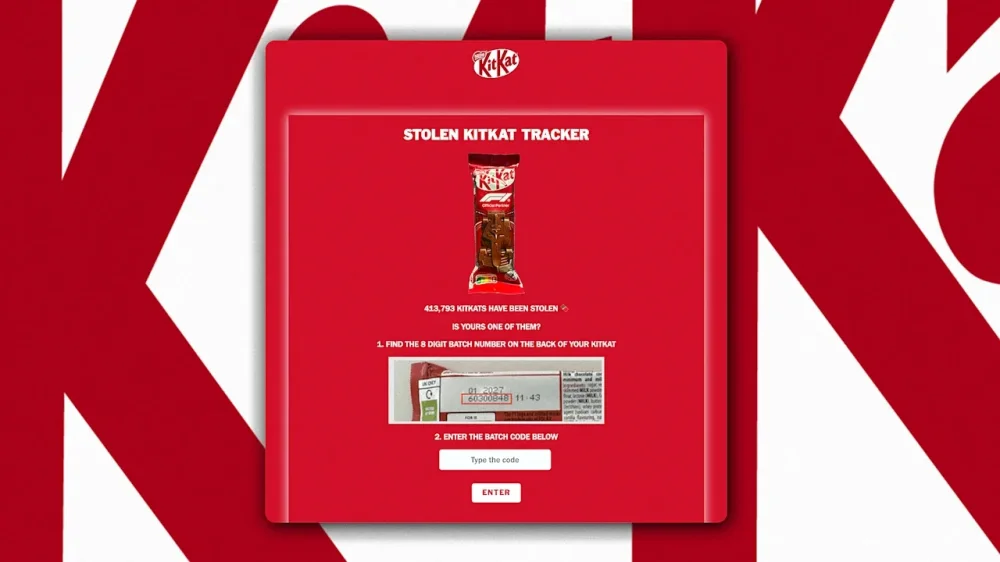
Did you hear the one about the 12 tons of stolen KitKat bars? No really, it’s a true story. And now, Nestlé is asking the public for help in tracking down the chocolate bars with the aid of a simple website. During the week of March 23, Nestlé reported that 413,793 KitKat bars went missing in Europe when a truck carrying the candy was stolen. Nestlé followed up with a post on April 1 announcing a website where people can check to see if their candy was among the stolen stash the company believes might end up for sale in Europe. The Stolen KitKat Tracker is single-purpose landing page with an exceedingly simple layout. The red-washed website shows consumers where they can find the batch number on KitKat packaging, and it asks them to enter the code in a small text box at the bottom of the page. For Nestlé, the microsite serves two purposes: It helps the company locate where the stolen candy bars ended up, and it extends interest in the story, like a twisted take on a brand activation. Stolen product is bad news for any brand, but Nestlé is doing the candy bar version of turning lemons into lemonade. By using the theft as a chance to engage consumers, it puts the focus on its F1-branded candy bars right before Easter, one of the biggest seasons for candy sales annually, and it gives KitKat fans a call to action. If your batch code isn’t a match for the stolen KitKats, you’re shown a message that says, “This KitKat Wasn’t Stolen – Keep Searching And Help Us Widen The Search By Sharing.” If it was stolen, the company asks consumers not to attempt to “locate, handle or recover any stolen goods and to not take any direct action,” but instead share relevant information with local law enforcement. Nestlé tells Fast Company that users who enter a matching batch code will be prompted to upload a photo for verification and provide contact details so the case can be escalated to security. “Whilst we appreciate the criminals’ exceptional taste, the fact remains that cargo theft is an escalating issue for businesses of all sizes,” a KitKat spokesperson said in a statement. “With more sophisticated schemes being deployed on a regular basis, we have chosen to go public with our own experience in the hope that it raises awareness of an increasingly common criminal trend.” Brands have long used microsites like the Stolen KitKat Tracker for sweepstakes and contests, but Nestlé is using it to help solve an operations problem with some uncomplicated UI and a marketing solution. View the full article
-
Bing appears to be testing a significantly expanded sponsored products section in its shopping search results, featuring a double-rowed carousel that takes up considerably more real estate than its current format. What was spotted: The test was flagged by Digital Marketer Sachin Patel, who noticed the expanded layout while searching for cushions on Bing. The format pairs a large double-rowed sponsored carousel with organic cards from individual websites beneath it. Why we care. If this format rolls out broadly, it means significantly more screen space dedicated to sponsored products — which typically translates to higher visibility and more clicks for retailers running Microsoft Shopping campaigns. The double-rowed carousel format is also a more visually competitive layout, putting Bing’s shopping ads closer in prominence to what Google Shopping already offers. The catch: The test appears to be limited — not all users are seeing it. Search industry veteran Mordy Oberstein checked his own results and got a noticeably more compact layout, suggesting Bing is still in early experimentation mode. The bottom line: Bing quietly runs a lot of SERP experiments that never make it to full rollout, so this one is worth watching but not banking on. Retailers running Microsoft Shopping campaigns should keep an eye out for any uptick in impressions if the format expands. First spotted. This test was was spotted by Sachin Paten who shared a screenshot of the test on X. View the full article
-
In 2019, Colorado adopted a law prohibiting conversion therapy for minors. It defined the controversial term as any practice or treatment attempting “to change an individual’s sexual orientation or gender identity.” But a talk therapist from the state, Kasey Chiles, said the law inhibited her right to free speech in her practice—and as of a ruling on Tuesday, March 31, the Supreme Court voted overwhelmingly in her favor. The Supreme Court decided 8-1 to strike down Colorado’s ban on conversion therapy for minors, setting a precedent that could undermine similar laws in 23 states and the District of Columbia. Writing for the majority, Justice Neil M. Gorsuch justified the decision via the First Amendment. “Colorado may regard its policy as essential to public health and safety,” Gorsuch wrote. “Certainly, censorious governments throughout history have believed the same. But the First Amendment stands as a shield against any effort to enforce orthodoxy in thought or speech in this country.” “Every American possesses an inalienable right to think and speak freely, and a faith in the free marketplace of ideas as the best means for discovering truth,” the opinion continued. “However well intentioned, any law that suppresses speech based on viewpoint represents an ‘egregious’ assault on both of those commitments.” Crossing ideological lines Though the Supreme Court currently has a conservative majority, the 8-1 outcome reflects an unprecedented move by liberal justices Elena Kagan and Sonia Sotomayor, who sided with that majority. Only one justice, Ketanji Brown Jackson, dissented, warning that “the fallout could be catastrophic” for medical care in America. “Before now, licensed medical professionals had to adhere to standards when treating patients: They could neither do nor say whatever they want,” Brown wrote in her dissension. “The Constitution does not pose a barrier to reasonable regulation of harmful medical treatments just because substandard care comes via speech instead of scalpel.” Indeed, conversion therapy has proven time and time again to be markedly harmful to queer people, not just anecdotally, but by leading medical researchers. The American Psychological Association recognizes that undergoing conversion therapy is linked to myriad mental health issues, including depression, anxiety, suicidal thoughts and behaviors, substance abuse, and post-traumatic stress. A study out of UCLA also found that LGB individuals who experienced conversion therapy had 92% greater odds of lifetime suicidal ideation, 75% greater odds of planning to attempt suicide, and 88% greater odds of attempting suicide compared to other LGB people. (The study did not account for trans individuals who’d been through conversion therapy.) The Supreme Court’s decision ignores that medical reality in favor of protecting free speech. In a separate opinion, Justice Kagan explained why she and Justice Sotomayor sided with the conservative majority. Kagan presented a hypothetical situation where Colorado had a law prohibiting the support or affirmation of LGBTQ+ identity for minors, saying that law would equally violate the First Amendment. “Because the state has suppressed one side of a debate, while aiding the other, the constitutional issue is straightforward,” she wrote. Kagan’s hypothetical law isn’t reality—but the harmful impact of conversion therapy has been proven. And the court’s decision is only its latest strike against LGBTQ+ rights in the U.S. Another decision against LGBTQ+ Americans In recent years, SCOTUS has repeatedly ruled against the rights of LGBTQ+ Americans, often citing the First Amendment. That includes a 2023 case where the court ruled that a web designer could refuse to create a wedding website for a gay couple, and a 2018 case where a baker was permitted to deny a wedding cake to a queer couple on the basis of his religion. Both those cases also came from Colorado, spearheaded by the Arizona-based Alliance Defending Freedom. The court’s latest decision also stands in contrast to a case from June 2025, where it ruled to uphold laws in 25 states that prohibit “gender affirming” puberty blockers and hormone treatments for minors. In that 6-3 decision, the court said it was deferring to state lawmakers’ choice to prohibit certain medical treatments, though that logic was seemingly abandoned in the Colorado case. LGBTQ+ advocacy organizations have spoken out against the ruling, including the Trevor Project, a charity dedicated to preventing suicide among queer youth. “The Supreme Court’s decision to treat the dangerous practice of conversion therapy as constitutionally protected speech is a tragic step backward for our country that will put young lives at risk,” Chief Executive Jaymes Black said in a statement. “These efforts, no matter what proponents call them, no matter what any court says, are still proven to cause lasting psychological harm.” View the full article

-
Last month, news broke about "DarkSword," a malware kit that makes it easy for hackers to scrape passwords, emails, crypto wallets, and more from your iPhone. You don't have to do much to put yourself in harms way, either: Visiting a malicious website is all it takes for DarkSword to get to work, which makes it particularly dangerous. It's not totally clear what DarkSword's risk is to the average user. Google Threat Intelligence Group (GTIG) says it identified "multiple commercial surveillance vendors and suspected state-sponsored actors" using the malware against targets in Saudi Arabia, Turkey, Malaysia, and Ukraine, appearing as if the victims were highly-specific. That said, the malware kit leaked onto the internet last week, which, theoretically, makes it much more accessible to your everyday hacker. While DarkSword hackers were previously highly organized, and, in some cases, funded by state governments, perhaps now the type of hacker who would go after the average user would be intrigued—especially considering the pool of users who could be targeted. DarkSword affects more iPhones than you might thinkThat's the other major issue with DarkSword: so many iPhones are potentially vulnerable. According to GTIG, all iPhones running iOS 26 prior to version 26.3, and all iPhones running iOS 18 prior to version 18.7.3 are vulnerable. If you're the sort who keeps their iPhone updated to the latest OS at all times, you're set. But there are plenty of users out there who don't, which poses multiple issues. For one, those users might not update their iPhones frequently, so they may be running an outdated, vulnerable version without realizing it. But there are also the people who are deliberately avoiding Apple's controversial iOS 26 update, even if their iPhones support it. Whether they're unhappy about Liquid Glass, or they're concerned about performance issues, many users have opted to stay on iOS 18. This doesn't jive with Apple's security philosophy. Typically, if you're running an older version of iOS on a device that can update, Apple will cut you off from security updates until you update to the latest version. An iPhone 16 running iOS 18, for example, received iOS 18.7.3—but not iOS 18.7.7. That means that, shy of updating to the latest version of iOS 26, that iPhone 16 is vulnerable to any and all new vulnerabilities that emerge—including potential DarkSword exploits. An iPhone XS running iOS 18 can update to 18.7.7, but that's because it can't update to iOS 26. That iPhone 16, however? Update, or bust. All iPhones can now update to protect against DarkSword Now, the company is changing its tune. Apple told Wired that it will issue a new security patch for all devices running iOS 18 on Wednesday—regardless of whether or not they can update to iOS 26. The move shows how serious the situation really is: Not only is DarkSword a threat to iPhone users, it shows that there are enough users sticking with iOS 18 that Apple feels the need to issue them patches. It isn't in a position to make these users choose between a specific OS and the latest security updates. Interestingly, it's the second time in a month Apple has had to issue this type of expansion security program. In early March, the company issued patches for older iPhones to protect against the "Coruna" exploit kit. Apple typically releases updates around 10 a.m. PT (1 p.m. ET), so expect this update sometime around then. If you have auto-updates enabled, you won't have to do anything to update, but if you want to install it as soon as possible, you'll need to head to Settings > General > Software Updates to manually download the update. View the full article
-
Not-for-profit business loans are crucial financial tools designed particularly for nonprofit organizations. These loans help cover operational costs or fund projects that align with your mission. Typically, you’ll need to provide documentation proving your nonprofit status and financial health. The types of loans available, including term loans and lines of credit, cater to different needs. Comprehending how these loans work can greatly impact your organization’s ability to thrive. So, what’s the best way to secure one? Key Takeaways Nonprofit business loans are designed specifically for nonprofit organizations, requiring proof of financial stability and repayment capability. Types of nonprofit loans include term loans, lines of credit, bridge loans, and mortgages, often with smaller amounts typically under $50,000. Community Development Financial Institutions (CDFIs) and specialized nonprofit loan funds offer financing options, often with higher interest rates due to perceived risks. The application process involves extensive documentation, including proof of nonprofit status and a detailed business plan, making it challenging for some organizations. Nonprofits can also explore alternative funding options like grants, crowdfunding, and business credit cards to diversify their financial resources. Understanding Nonprofit Business Loans When you’re looking to secure funding for a nonprofit organization, grasping nonprofit business loans is crucial. These nonprofit loans are particularly customized for nonprofits and often require extensive documentation to prove financial stability and repayment capability. Lending to nonprofits can come from various sources, including banks and Community Development Financial Institutions (CDFIs), each with unique eligibility criteria and interest rates. As you seek loans for nonprofit organizations, be prepared for stricter requirements, such as demonstrating your nonprofit status, providing recent financial statements, and outlining a detailed business plan for fund usage. It’s significant to recognize that interest rates for these loans may be higher than traditional loans owing to perceived risks, and some lenders might request collateral. Grasping these factors can help you navigate the complex environment of nonprofit funding and make informed decisions that support your organization’s mission. Types of Nonprofit Business Loans Securing the right type of funding is crucial for nonprofit organizations, and grasping the various options available can greatly improve your ability to meet financial needs. One common option is term loans, which give you a lump sum upfront with repayment over a set period, often up to 25 years. Lines of credit offer flexible funding, allowing you to borrow as needed during only paying interest on the drawn amount, which helps manage cash flow. For urgent expenses, bridge loans serve as short-term solutions until longer financing is available. Moreover, mortgages are useful for purchasing or renovating property, structured over extended terms to accommodate larger amounts. Nonprofit lenders often cater to mission-driven organizations, providing smaller loans, typically $50,000 or less, with competitive rates and resources for financial management. Grasping these types of not-for-profit business loans can help you choose the right fit for your organization’s needs. Community Development Financial Institutions (CDFIs) Community Development Financial Institutions (CDFIs) play a crucial role in providing financing to nonprofit organizations and small businesses that often face challenges securing traditional bank loans. These specialized organizations focus on serving underserved communities and typically offer smaller loan amounts, often under $50,000. Because of the perceived higher risk associated with lending to nonprofits, CDFIs may charge higher interest rates compared to traditional banks. While applying for a CDFI loan, you might encounter extensive documentation requirements and longer approval times, as these institutions prioritize evaluating the financial health and potential impact of the organizations they support. To find a CDFI that aligns with your mission and funding needs, you can use specific locator tools. Notable examples include People Fund in Texas and Propel Nonprofits in the Midwest, both dedicated to enhancing economic opportunities in disadvantaged communities. Nonprofit Loan Funds Nonprofit loan funds serve as specialized financial institutions designed to provide loans exclusively to nonprofit organizations, often at more favorable interest rates and terms than traditional lenders. These funds typically focus on established nonprofits with a proven operating history, making it harder for newer organizations to qualify. Examples include: Nonprofit Finance Fund Open Road Ventures Propel Nonprofits Many nonprofit loan funds offer interest-free loans or grants for specific projects, which helps organizations improve their financial health and impact without incurring debt. The application process usually demands detailed documentation of your financial status, project plans, and evidence of community impact, ensuring effective allocation of funds. Traditional Bank Lenders When you approach traditional bank lenders for a nonprofit loan, be prepared to meet specific requirements that reflect the unique challenges nonprofits face. These lenders often ask for detailed documentation of your financial health, including revenue, expenses, and fundraising strategies, which can impact your approval chances. Furthermore, keep in mind that interest rates may be higher for nonprofits compared to for-profit entities, so it’s essential to weigh these factors before seeking funding. Loan Requirements Overview Securing a loan from traditional bank lenders involves several specific requirements that nonprofits must meet to qualify. You’ll need to show a solid financial profile, including documentation of your revenue, expenses, and fundraising plans. Here are some key requirements: Proof of nonprofit status, which may include recent tax returns. Detailed financial documents to demonstrate your organization’s ability to repay the loan. A thorough business plan outlining how you intend to use the funds. Expect extensive paperwork, as lenders require thorough evidence of your financial stability. Since nonprofits are often regarded as higher risk because of their lack of profit generation, meeting these requirements is essential for securing the funding you need. Interest Rate Considerations How do interest rates for loans from traditional bank lenders impact your nonprofit’s financial decisions? Traditional Bank of America typically charge higher interest rates for nonprofit loans compared to for-profit businesses, mainly because of the perceived higher repayment risk. To secure favorable rates, you must provide detailed documentation of your revenue, expenses, and fundraising plans, demonstrating your financial stability. Interest rates can vary greatly based on your organization’s credit score, cash flow, and collateral. Moreover, be aware of extra costs, such as application fees or early repayment penalties, which can inflate the total borrowing cost. Although traditional Community Development Financial Institutions (CDFIs) may offer loans, consider exploring alternative lenders, for potentially lower rates and more flexible terms customized to your needs. Corporate Giving Programs Corporate giving programs represent a strategic way for for-profit companies to engage with their communities by providing financial support to nonprofits. These initiatives can take various forms, including grants, donations, and in-kind gifts, allowing nonprofits to improve their operations without repayment obligations. Companies like Hilton, Google, and General Mills run extensive giving programs, each with unique offerings. To effectively navigate these programs, consider the following: Many require nonprofits to align with the company’s mission. Specific social issues relevant to the business are often prioritized. Comprehending the application process for each program is essential. Nonprofit Grants Nonprofit grants offer organizations a valuable source of funding without the burden of repayment, making them an appealing option for those looking to finance specific projects or support overall operations. These grants come from various sources, including federal and state governments, private foundations, and corporate giving programs, each with specific eligibility criteria that your nonprofit must meet. The application and approval processes can be lengthy, often requiring detailed proposals, budgets, and documentation of your nonprofit’s mission and impact. Many grants are recurring, allowing you to reapply after the grant period ends, which can provide ongoing financial support for your initiatives. Nevertheless, it’s crucial to be discerning in your grant pursuits, as competition is often high. Not all opportunities will align with your mission or operational goals, so focus on those that best fit your organization’s needs and objectives to maximize your chances of success. Business Credit Cards In terms of managing your nonprofit’s finances, business credit cards can be a valuable tool. They offer immediate access to funds for purchases and can even help you earn rewards on eligible expenses, maximizing your budget. Nevertheless, it’s essential to understand the application process and usage strategies to guarantee you’re making the most of this financing option during the process of building your credit history responsibly. Benefits of Business Credit Utilizing business credit cards can be a strategic move for organizations seeking flexibility in their funding options. These cards provide immediate access to capital for various needs, like operational expenses and marketing, without the lengthy approval process of traditional loans. Here are some benefits of using business credit cards: Rewards Programs: Many cards offer cash back or travel points, maximizing your spending on crucial purchases. Credit Building: Responsible usage helps you build your credit history, improving eligibility for larger loans in the future. Additional Features: Cards often include expense tracking tools, purchase protection, and extended warranties, aiding in effective financial management. Application Process Overview Applying for a business credit card involves several key steps that can streamline the process for your organization. First, gather necessary documentation, including your nonprofit’s tax identification number and financial statements. Next, research various credit card options, noting their terms, fees, and interest rates, as these can vary greatly. Since nonprofits often face less stringent credit requirements, you may find that you qualify even with limited credit history. Once you select a card, complete the application form, ensuring that all information is accurate. After submission, you might receive a decision quickly, allowing you to access funds for purchases and manage cash flow effectively. Establishing a business credit card can likewise help improve your organization’s credit history for future borrowing. Responsible Usage Strategies To guarantee effective management of business credit cards, nonprofits should adopt responsible usage strategies that prioritize financial health. Here are some key approaches to reflect on: Monitor spending: Keep track of expenses to avoid exceeding your budget, ensuring you can meet repayment obligations without strain. Make timely payments: Pay off the balance each month to avoid interest charges, improve your credit score, and boost future borrowing opportunities. Leverage rewards programs: Take advantage of cash back or points earned through purchases, which can help fund mission-related activities. Eligibility Requirements for Nonprofit Loans When seeking a nonprofit loan, it is vital to understand the eligibility requirements that lenders typically impose. Nonprofits must prove their status by providing documents like articles of incorporation and 501(c)(3) designation. Recent financial documents are likewise important; lenders often ask for tax returns, income statements, and cash flow projections to evaluate your organization’s financial health. Here’s a quick look at some key eligibility factors: Requirement Description Nonprofit Status Proof of 501(c)(3) designation and incorporation Financial Health Recent tax returns and cash flow projections Revenue Generation Demonstrated ability to generate revenue Collateral Often required to secure the loan Having a detailed business plan that outlines the loan’s purpose and benefits is usually necessary to support your application. Meeting these requirements can improve your chances of securing funding. Strengthening Your Loan Application To strengthen your loan application, it’s essential to provide thorough financial documentation, which includes recent tax returns and income statements. A well-crafted business plan not just outlines your nonprofit’s mission and purpose for the loan but additionally demonstrates your financial health and how you’ll use the funds effectively. Documentation Requirements Overview As nonprofits prepare to apply for a loan, they must guarantee they’ve all necessary documentation to bolster their application. This includes several key items that lenders typically require: Proof of 501(c)(3) status, confirming your tax-exempt designation. Extensive financial documents, such as recent tax returns, income statements, and cash flow projections to illustrate financial health. A detailed business plan outlining the loan’s intended use, community needs, and projected outcomes. Additionally, lenders often seek collateral to secure the loan, which could be organizational assets or personal guarantees from board members. Demonstrating a solid operating history is essential, as lenders prefer organizations with a track record of revenue generation and financial stability to mitigate perceived risks. Financial Health Assessment A thorough financial health assessment is essential for nonprofits aiming to secure a loan, as lenders want clear evidence of your organization’s ability to manage cash flow, revenue, and expenses effectively. To strengthen your application, gather detailed financial documentation, including recent tax returns, income statements, and cash flow projections. Demonstrating a solid operating history with consistent revenue generation will improve your chances of securing a loan with favorable terms. Furthermore, if your nonprofit has collateral, providing it can boost your application by offering security against the borrowed funds, potentially lowering interest rates. A well-prepared financial health assessment not only showcases your organization’s viability but also builds trust with lenders regarding your repayment capacity. Business Plan Importance Clarity in your business plan is crucial for nonprofits seeking loans, as it serves as a roadmap for both your organization and potential lenders. A well-structured plan outlines your mission, operational strategies, and detailed financial projections that show your ability to repay the loan. To strengthen your loan application, consider including: A clear explanation of how you’ll use the funds, which helps lenders understand their purpose and potential impact. Recent financial documents like tax returns and income statements to demonstrate financial health. A detailed fundraising strategy that reassures lenders of your nonprofit’s revenue generation and expense management. Highlighting past successes can likewise showcase your track record and capacity for effective funding utilization. Challenges in Securing Nonprofit Loans Securing nonprofit loans presents a unique set of challenges that can complicate the funding process for organizations endeavoring to fulfill their missions. Many lenders impose stricter eligibility requirements, asking for proof of nonprofit status, detailed financial documentation, and a thorough business plan. This can complicate the approval process considerably. Furthermore, lenders often perceive nonprofits as higher risk because of their lack of profits, resulting in higher interest rates and potential collateral requirements. If your organization operates at a loss, qualifying for a loan becomes even more difficult, as lenders usually need solid cash flow and revenue history. The lengthy application process can involve extensive documentation and careful reviews of your financial health, making timely funding a challenge. In addition, you may find fewer loan options available compared to traditional businesses, as many lenders hesitate to lend to organizations with uncertain revenue streams. Alternative Funding Options for Nonprofits Even though traditional loans may present considerable hurdles for nonprofits, there are several alternative funding options that can help organizations secure the necessary capital to support their missions. These alternatives can provide flexibility and accessibility, ensuring nonprofits can thrive. Grants: These are funds that don’t need to be repaid and can greatly boost your organization’s resources. Crowdfunding: Utilize online platforms to gather small contributions from a broad audience, allowing you to raise funds without debt. Community Development Financial Institutions (CDFIs): These institutions offer customized lending options at lower interest rates compared to traditional lenders. Additionally, corporate giving programs can provide financial support through donations or sponsorships, whereas online lenders may offer quicker access to funds with lenient qualification criteria. Finally, business credit cards offer flexibility for purchases and expenses, helping you build a credit history as your nonprofit grows. Next Steps for Securing Funding How can nonprofits effectively secure the funding they need to fulfill their missions? Start by evaluating your organization’s financial health and clearly defining your funding needs. This helps in creating a focused plan for how you’ll use and repay any loans. Next, research suitable funding sources like Community Development Financial Institutions (CDFIs) and nonprofit loan funds, in addition to traditional banks that support nonprofits. Prepare a thorough business plan detailing your mission, financial projections, and loan usage. Gather all necessary documentation, including proof of your nonprofit status, recent financial statements, and a cash flow analysis to showcase your repayment capability. Finally, don’t forget to explore alternative funding options, such as grants and corporate giving programs. Diversifying your funding sources can reduce reliance on loans, ensuring your organization remains financially stable during the pursuit of its mission. Frequently Asked Questions Can You Get a Small Business Loan for a Non-Profit? Yes, you can get a small business loan for a nonprofit, but it often involves stricter eligibility requirements and higher interest rates. Many nonprofits turn to Community Development Financial Institutions (CDFIs) or nonprofit loan funds, which may offer more favorable terms. Traditional banks likewise provide loans, but expect to submit extensive documentation, including proof of cash flow and a solid business plan, to demonstrate your organization’s financial health and repayment capability. What Is the Monthly Payment on a $50,000 Business Loan? The monthly payment on a $50,000 business loan varies based on the interest rate and loan term. For instance, at a 7% interest rate over five years, your payment would be about $1,000, whereas at 10%, it rises to around $1,061. If you extend the loan to ten years, the payment drops to approximately $580 at 7% and increases to about $660 at 10%. Consider any additional fees that might affect your total repayment. What Is the 33% Rule for Nonprofits? The 33% Rule for nonprofits suggests that no more than 33% of your organization’s total revenue should come from a single source. This strategy helps you diversify funding, reducing reliance on one donor or grant. By implementing this rule, you can improve financial stability and credibility, demonstrating broad support. A balanced mix of income, donations, grants, and corporate sponsorships nurtures resilience, encouraging you to seek new funding opportunities and partnerships. What Credit Score Do You Need to Get a $30,000 Loan? To secure a $30,000 loan, most lenders require a credit score of at least 650. Nevertheless, some may approve loans for scores as low as 600 if other factors, like cash flow and organizational history, are favorable. Nonprofits with credit scores above 700 typically access better terms and rates. In addition, nonprofit lenders, such as CDFIs, often focus more on cash flow and mission alignment rather than strict credit score criteria. Conclusion In conclusion, nonprofit business loans play an essential role in helping organizations achieve their mission by providing necessary funding. Comprehending the various types of loans, such as those offered by CDFIs and traditional banks, can help you make informed decisions. Strengthening your loan application is critical for success, as is being aware of the challenges in securing funding. Exploring alternative funding options can likewise be beneficial. By taking these steps, you can effectively navigate the financial environment for nonprofits. Image via Google Gemini This article, "What Are Not for Profit Business Loans and How Do They Work?" was first published on Small Business Trends View the full article
-
Want more housing market stories from Lance Lambert’s ResiClub in your inbox? Subscribe to the ResiClub newsletter. During the Pandemic Housing Boom, rapid home price appreciation supercharged fix-and-flip activity. The 2022 mortgage rate shock ended that run and caused the biggest pullback in home flipping activity since 2007. Profit margins compressed, days on market increased, and many newer investors exited the space. However, over the past couple of years, home flipping activity has stabilized around 2019 levels. The first LendingOne–ResiClub Fix-and-Flip Survey in Q1 2025 showed a market recalibrating to that new reality. The latest results tell a similar story: Flipping activity has stabilized, and seasoned flippers are still planning to execute deals in 2026—even in a slower national appreciation environment. Today, we’re breaking down the full results from the LendingOne–ResiClub Fix and Flip Survey for Q1 2026, fielded between February 9 and March 5, 2026. In total, 201 home flippers took the survey. The data suggest the market remains steady: demand expectations are holding up across many regions, and margins—while no longer pandemic-level—remain workable for disciplined flippers. 1. Home flipper sentiment and intent Shifts over the past year: Market sentiment has remained steady over the last year: 53% of U.S. home flippers describe their primary market as somewhat strong (44%) or very strong (9%), compared to 56% in Q3 2025 and 54% in Q1 2025. Expectations for demand remain resilient: 75% of flippers expect somewhat strong (53%) or very strong (22%) demand over the next 12 months, compared to 72% in Q3 2025. Fix and flip activity: A strong majority of flippers (90%) say they are somewhat or very likely to conduct a fix and flip in the next 12 months, including 75% who say they are “very likely.” Just over half (52%) plan to convert 1 to 5 projects into rentals using the fix-to-rent method, while 38% do not plan to convert any projects. Home flippers in the Midwest are the most confident in buyer demand, with 83% describing conditions as either somewhat strong or very strong—the highest share of any region. Market outlook: 58% of survey participants expect the fix and flip market to stay the same over the next 12 months, compared to 42% in Q3 2025. 29% expect the market to strengthen, compared to 31% in Q3 2025. 13% expect the market to weaken, down from 22% in Q3 2025. Optimism runs highest in the Midwest (33% expect strengthening) and West (31%), while the Northeast shows the highest weakening share (15%). 2. Financial considerations Leverage: 61% of U.S. home flippers say their use of leverage is about the same compared to 12 months ago, meanwhile, 21% say they are using less leverage, and 18% say they are using more. Financing priorities: Interest rate (31%) and speed to close (24%) are the top considerations when choosing financing. Speed to close (47%) is overwhelmingly the top consideration reported by home flippers in the West. 3. The biggest concerns across U.S. markets Organization and timeline stress: The sale phase causes the most delays (30%) for U.S. home flippers, followed by rehabbing/construction (24%) and acquisition (23%). Lower holding costs would most improve returns according to 56% of flippers, followed by better contractors (32%), faster draws (9%), and more reliable inspections (3%). Let’s view the full results View the full article

-
A reader writes: A few years ago, I appeared in a series of videos about “how I got my job.” My job is pretty niche and there really isn’t a ton of institutional information about it yet, so it got a lot of attention. Since then, I’ve consistently gotten two to three LinkedIn messages per week from people looking to break into my field. About 20% are just saying that they found the videos inspiring (which I love to hear!), 30% are just asking to connect, and the remainder are asking for more career advice — but in a very general way. Think “I’d love to get your thoughts on how to break into the industry/get hired at your company.” I’m of two minds: I really want to help, but the volume of requests I get is much too high to respond to every single one. (I am working on a template email with generic info.) Also, maybe I’m being a bit of a Grinch here, but I bristle at how general the requests are. They make me feel like the person writing hasn’t actually done any of their own research (which, incidentally, is a huge part of this job). There even seems to be a trend now of people asking to grab 30 minutes for a phone call in their opening email! So, it’s probably not my place, but part of me wants to say, “Hey, this is not how to do it.” Any advice for how (if at all) to respond to the more labor-intensive requests? I answer this question over at Inc. today, where I’m revisiting letters that have been buried in the archives here from years ago (and sometimes updating/expanding my answers to them). You can read it here. The post how to respond to requests to “pick your brain” appeared first on Ask a Manager. View the full article
-
Does AI content rank on Google? We analyzed 42,000 blog posts to find out. The answer depends less on whether you used AI — and more on whether your content shows it. View the full article
-
How to continue providing value for clients. By Jackie Meyer The Balanced Millionaire: Advisor Edition Go PRO for members-only access to more Jackie Meyer. View the full article
-
How to continue providing value for clients. By Jackie Meyer The Balanced Millionaire: Advisor Edition Go PRO for members-only access to more Jackie Meyer. View the full article
-
We may earn a commission from links on this page. Google hasn’t launched a new Fitbit device since 2023, instead seeming to pour all its hardware efforts into Pixel watches. But all along the company refused to confirm that Fitbit hardware was truly dead, and a new promotional video appears to show why—it looks like there’s a Whoop-style smart band on the way. What was teasedThe video was posted to Steph Curry’s Instagram page on March 31, so it’s not an April Fool’s stunt. In a few short clips, we see a gray and orange fabric band around Curry’s left wrist. He says “I’m excited for what this is going to mean for health for the world and wellness. It’s a first of its kind, in a way. I don’t want to spoil it. You kind of have to see for yourself.” Text on the screen states: “A new relationship with your health. Coming soon. [Google logo].” What we actually knowGoogle has not publicly confirmed any details. News and rumor sites, and user forums, are converging on the explanation that this is a Whoop-style smart band with no screen, and that it will be Fitbit-branded. Visually, I agree with the smart-band theory—it certainly looks like one, and the only way it would be something else is if there’s a screen that has been turned to the inside of the wrist. The Fitbit branding isn’t confirmed—we only see a Google logo in the video, not a Fitbit one. A Bloomberg article cites “a person with knowledge of the matter” as saying that Google is working on a Fitbit-branded smart band. Right now, Fitbit's only real offerings are the Charge 6, released in 2023, and a few 2022-era models: the minimalist Inspire 3, and two smartwatches (Versa 4 and Sense 2) that Google still sells but does not seem excited about. Smart bands, meanwhile, seem to be a growing product area. Whoop was the undisputed leader in this area for years, but last year we got the Polar Loop, Amazfit Helio/Core, and a Garmin sleep band. This year, fertility-tracking app Natural Cycles began selling a temperature-tracking smart band, while Luna and Speediance announced new smart bands at the CES trade show. (Neither of those two has launched yet.) Fitbit Charge 6 $139.99 at Amazon Learn More Learn More $139.99 at Amazon Why I think they’re announcing it nowIronically, the fitness gadget internet has lately been abuzz with expectation for a new Whoop-style smart band. But not from Fitbit! The rumor (here, for example) was that Garmin was about to announce one. A listing for a “Cirqa smart band” appeared briefly on some Garmin websites earlier this year, but if it’s a real product, it doesn’t seem to be ready yet. This reminds me of something that happened last year in the smart band space: Amid rumors of a Garmin smart band, Polar announced it was working on its own smart band. Garmin’s Index Sleep Band dropped the next day. So this feels like round two. Garmin’s new band might be a proper Whoop competitor (which the Index sleep band wasn’t), and Fitbit might be trying to get ahead of an imminent Garmin product announcement. I don’t have any inside information on when or whether either of these two rumored products are launching, but I wouldn’t be surprised if Garmin’s arrives before Fitbit’s. Also this week, Google announced an expansion of the AI health coach in the Fitbit app. (Yes, this the the same AI coach that told me the Pixel Watch 4 didn’t exist, and that was comically bad at the actual coaching part. Maybe it’s gotten better.) The AI coach is now available to free users and not just subscribers, and has incorporated more features. Smart bands are having a moment, and I think it's because gadget makers have run out of new things they can stuff into a watch. Once you've got sensors for motion and heart rate, you have the main functions a fitness watch needs. Extra bells and whistles don't add enough excitement to justify higher prices or frequent upgrades, so companies are realizing they can pare down the hardware and pivot to software features and subscription services. The smart ring market is already a bit further down this path, as I've written before. Now it's time to see what happens with smart bands. View the full article
-
SEO tools were the most replaced martech application in 2025 — but not for the reason you might expect. According to the 2025 MarTech Replacement Survey, SEO platforms topped the list of replaced tools for the first time, overtaking categories like marketing automation platforms (MAPs), which had led for the past five years. At first glance, that might suggest instability in SEO. After all, the discipline is being reshaped by LLMs, AI-generated answers, and the rise of zero-click search experiences — all of which challenge traditional keyword tracking and ranking-based workflows. But the data tells a more nuanced story. SEO tools: most replaced, but stabilizing Even though SEO tools were the most replaced category in 2025, they were replaced at a slower rate than in prior years. In other words, they’re now the most commonly replaced — but also more stable than before. That shift suggests a maturing category. Rather than widespread churn, you appear to be consolidating, upgrading, or refining your SEO stack as search evolves. Meanwhile, several other major martech categories saw sharper year-over-year declines in replacements: CRM replacements fell more than 12% from 2024 to 2025, reaching their lowest level in the survey’s history. MAPs, email platforms, and CMS tools also declined compared to 2024. Why SEO tools are being replaced So if SEO tools aren’t being swapped out due to instability, what’s driving the changes? The survey points to three primary factors: 1. AI capabilities For the first time, the survey asked about AI’s role in replacement decisions — and the impact was significant. 37.1% cited AI capabilities as an important factor. 33.9% said they wanted AI capabilities when replacing a tool. This reflects a broader shift in SEO tooling, with platforms rapidly integrating AI for: Content generation and optimization. SERP analysis and intent modeling. Workflow automation. In many cases, replacing your SEO tool isn’t about abandoning SEO — it’s about upgrading to AI-native capabilities. 2. Cost pressures Cost has become a major driver of martech replacement decisions, including SEO tools: 43.8% of marketers cited cost reduction as a reason for replacing an application in 2025. That’s up sharply from 23% in 2024 and 22% in 2023. This suggests growing pressure to optimize and rationalize your SEO tech stack, especially as you evaluate overlapping functionality across tools. 3. Changing needs in a shifting search landscape As search behavior changes, so do expectations for SEO platforms. Traditional rank tracking and keyword monitoring are no longer sufficient on their own. Teams are increasingly looking for tools that can: Surface insights across AI-driven SERPs Track visibility beyond clicks Integrate with broader marketing and data systems That evolution is likely contributing to replacement activity — even as overall stability increases. AI is reviving custom-built SEO tools One of the more notable trends in the 2025 survey is the resurgence of homegrown solutions, including for SEO workflows. Replacing commercial martech tools with homegrown applications accounted for: 8.1% of replacements in 2025 Up from 3.4% in 2024 and 5% in 2023 This marks a meaningful shift after years of near-total reliance on commercial platforms. “AI-assisted coding is changing the calculus of build vs. buy,” said martech analyst Scott Brinker. “It’s easier and faster to build than ever before. Companies should still buy applications where they have no comparative advantage. But in cases where they can tailor capabilities to differentiate their operations or customer experience, custom-built software is an increasingly attractive option.” For SEO teams, this could mean more organizations building: Custom data pipelines. Proprietary SERP tracking systems. AI-driven analysis tools tailored to their specific needs. Other martech categories show even greater stability While SEO tools led in total replacements, the broader martech landscape is becoming more stable. Several major categories saw declining replacement rates in 2025, including: CRM platforms (down more than 12% year over year) Marketing automation platforms Email distribution tools Content management systems This suggests that many organizations are settling into core systems while selectively updating areas — like SEO — that are changing faster. Methodology Invitations to take the 2025 MarTech Replacement Survey were distributed via email, website, and social media in Q4 2025. A total of 207 marketers responded. Findings are based on the 154 respondents (60%) who said they had replaced a martech application in the previous 12 months. Download the 2025 MarTech Replacement Survey, no registration required. View the full article
-
There are five steps and you can’t skip ahead. By August Aquila MAX: Maximize Productivity, Profitability and Client Retention Go PRO for members-only access to more August J. Aquila. View the full article