All Activity
- Past hour
-
 Digital marketing teams have long debated the balance between SEO and PPC. Who owns the keyword? Who gets the budget? Who proves ROI most effectively? For years, the division felt clear. SEO optimized for organic rankings, while paid media optimized for auctions. Both fought for visibility on the same results page, but operated under fundamentally different mechanics and incentives. ChatGPT ads are beginning to erase that line. The separation between organic and paid isn’t just blurring, it’s breaking down inside conversational AI. The new battleground isn’t the SERP. It’s the prompt. The intersection of PPC and SEO now lives inside ChatGPT ads. From SERP-based strategy to prompt-based demand insights Search marketing has always revolved around keywords: bidding strategies, landing page optimization, and even attribution modeling. Generative AI doesn’t operate on keyword strings the same way. It operates on intent-rich, multi-variable prompts. “Best CRM” becomes “What’s the best CRM for a B2B SaaS company under 50 employees?” “Project management tool” becomes “What project management tool integrates with Slack and Notion?” These prompts carry deeper layers of context and specificity that traditional keyword research often flattens to accommodate SERP coverage rather than answer an individualized question. When ChatGPT introduces sponsored placements beneath its answers, ads don’t appear next to a head term. They show under a fully articulated need. That changes everything. ChatGPT ads are structurally different. They: Appear underneath an AI-generated response. Are clearly labeled as “Sponsored.” Don’t influence the answer itself. Are primarily contextual and session-based. This isn’t a classic auction layered over a keyword strategy. It’s contextual alignment layered over a conversational experience. For marketers, that means three things: Intent is richer. Context matters more. SEO and PPC must coordinate at the prompt level. Dig deeper: Ads in ChatGPT: Why behavior matters more than targeting Your customers search everywhere. Make sure your brand shows up. The SEO toolkit you know, plus the AI visibility data you need. Start Free Trial Get started with The new playbook: Prompt intelligence as the bridge If ChatGPT ads represent a new demand capture environment, the first strategic question becomes, “How do we know which prompts to prioritize?” The answer isn’t buried in Google Search Console, Keyword Planner, or any other SERP research or keyword mining tool. It’s surfaced in LLM performance that SEO counterparts have been analyzing for the past several months. The first intersection of PPC and SEO begins with organic LLM visibility. We can start developing a ChatGPT ads strategy by mining high-performing LLM prompts. To do this, we’ll need to understand: When does your brand appear organically in ChatGPT responses, and when do competitors appear? What types of prompts surface the kinds of discussions we want to be part of? Which use cases are most commonly referenced? This is prompt intelligence. Instead of asking, “What keywords are we ranking for?” the question becomes, “Which conversational queries are surfacing our brand?” When you analyze those prompts, you uncover something even more valuable: fanout keywords. Fanout keywords: The new long tail Fanout keywords are contextual signals embedded within prompts. For example, take this prompt: “Best CRM for B2B SaaS startups with under 50 employees that integrates with HubSpot.” Traditional keyword tools might surface relevant targets as “CRM for SaaS,” “best CRM,” and “B2B CRM,” focusing on the root terms and the core subject of the prompt. The fanout structure would include “SaaS startups with under 50 employees,” “HubSpot integration,” “budget sensitivity,” and “growth-stage scaling,” focusing not only on the root terms and core subject but also on factors like company size, growth trajectory, and pain-point considerations. These aren’t simple keyword variations to cover semantic phrasing. They’re layered qualifiers that reveal nuance and support us as marketers in identifying additional high-intent segments, highlighting underserved or undiscovered audience segments, and identifying potential gaps in paid keyword coverage. This is an example of PPC and SEO converging. Dig deeper: Why AI optimization is just long-tail SEO done right Aligning fanout keywords with paid coverage After extracting fanout keywords from high-performing LLM prompts, run a paid coverage audit to see whether your strategy addresses the nuanced variants that surfaced, whether you’re over-indexed on root terms while missing higher-intent expansions, and whether competitors dominate contextual areas you’ve overlooked. You can prioritize where to activate paid media based on this audit: If LLM organic presence is high and paid media coverage is high: Great. Continue reinforcing your strategy to dominate. If LLM organic presence is high and paid media coverage is low: Consider testing ChatGPT ads to increase overall coverage. If LLM organic presence is low and paid media coverage is high: Work on improving organic LLM and SEO visibility and strength. If LLM organic presence is low and paid media coverage is low: This is a lower priority. Focus on building foundational marketing strategies to increase overall coverage. The opportunity lies where organic LLM visibility and paid gaps intersect. If your brand frequently appears in conversational responses for “CRM for early-stage SaaS,” but you aren’t targeting that intent via paid placements, you’re leaving incremental demand on the table. ChatGPT ads can become a mechanism for defending and amplifying organic AI authority. Landing pages: An overlooked leverage point Until now, PPC and SEO teams may have both sent traffic to the same landing pages, but each team optimized them based on independent factors. That approach won’t hold in conversational AI. When prompts become hyper-specific, landing pages must mirror that specificity. Consider this group of queries: “Best CRM for 10-person SaaS team,” “Affordable CRM for startups,” and “CRM with simple onboarding for founders.” If all of those drive to a generic “CRM software” page, conversion friction increases and conversion rates drop. Instead, we can use these groups to build intent-specific landing pages, add content tied to common keyword fanout themes, adjust messaging to mirror conversational phrasing, and highlight deeper, relevant information for the customer. The more your landing page reflects the nuance of the prompt, the stronger alignment becomes across ad relevance, user experience, conversion performance, and even LLM organic authority. The critical loop is this: Improved landing page clarity doesn’t just increase conversion. It increases the likelihood that LLMs understand and surface your brand appropriately in future prompts. This is the new feedback cycle between SEO and paid. Get the newsletter search marketers rely on. See terms. The closed loop between LLM visibility and paid media In traditional search, SEO influenced PPC through factors like Quality Score and brand demand. Paid media influenced SEO indirectly through brand lift. With conversational AI, the loop tightens. Organic LLM visibility surfaces prompt clusters. Prompt clusters inform ChatGPT ad prioritization. Paid performance identifies high-converting conversational segments. Landing page optimizations improve both conversion and LLM clarity. Improved clarity increases organic AI mentions. This isn’t parallel channel management anymore. It has to be a unified system. Dig deeper: SEO vs. PPC vs. AI: The visibility dilemma Measurement: Moving beyond last click One of the most common objections to emerging ad formats is the ability to accurately measure performance and report ROI. ChatGPT ads operate with privacy-forward controls and aggregate reporting. We won’t have pixel-level behavioral depth or cross-session tracking parity with traditional paid media. This continues to force a shift in how marketing performance is evaluated, away from click-based attribution models. Instead of relying exclusively on click-based ROI, teams should prioritize: Incrementality testing. Assisted conversion analysis. Prompt-level lift. Brand search lift post-exposure. LLM visibility shifts before and after paid media campaign coverage. If ChatGPT ads reinforce high-intent conversational exposure, that impact might show up downstream in branded search, direct traffic, and higher close rates in assisted funnels. We shouldn’t think of this as a purely demand capture channel, but as a hybrid of capture and demand influence or creation. Organizational implications: SEO and PPC can’t be siloed This shift is less about media buying and more about team structure. To execute effectively, marketing organizations need to prioritize. 1. Shared prompt taxonomies SEO and paid teams must work together to group queries into prompt categories. For example, role-based queries (e.g., CMO, founder, or operations lead); industry-based queries (e.g., SaaS, healthcare, or ecommerce); and constraint-based queries (e.g., budget, team size, or integrations). These groupings should inform both content and paid media structure and bidding strategies. 2. Unified reporting dashboards Instead of separate keyword and ranking reports, teams should see: Query group performance. LLM visibility by segment. Paid coverage by segment or query group. Landing page conversion by prompt type or category. 3. Integrated budget planning Paid media budget allocation should consider where: Organic AI authority is strongest. Competitors dominate conversational mentions. Incremental coverage via ChatGPT ads can defend or expand. This isn’t about shifting dollars from Google Ads to ChatGPT. It’s about reallocating dollars based on a deeper understanding of user demand and behavior. Dig deeper: Why 2026 is the year the SEO silo breaks and cross-channel execution starts The bigger shift: AI as the primary discovery layer Zoom out. Search engines were the gateway to information. Social feeds were the gateway to discovery. Conversational AI is becoming the gateway to decision-making. If that trajectory continues, optimizing for LLM visibility becomes as critical as ranking on Google once was. Now that ads are layered into that experience, paid media and SEO become inseparable. The future won’t be defined by organic rankings or paid media CPC efficiency alone. It will be defined by how effectively brands show a unified message and experience across: Prompt intelligence. Contextual ad placement. Landing page alignment. Conversational authority. See the complete picture of your search visibility. Track, optimize, and win in Google and AI search from one platform. Start Free Trial Get started with Think in systems, not channels The introduction of ads into ChatGPT isn’t just another platform beta. It’s a structural signal. The channel divide between SEO and paid media, a debate that has shaped marketing teams for as long as they’ve existed, is dissolving inside conversational AI. The brands that win will: Mine prompt data like they once mined keyword reports. Extract fanout signals that reveal hidden demand. Align paid media coverage to conversational intent. Build landing pages that mirror prompt nuance. Measure incrementally and holistically, not myopically. The intersection of paid and SEO is no longer a shared SERP. It’s a shared intelligence system. ChatGPT ads may be the first clear signal that conversational AI isn’t just changing how people search. It’s changing how we structure growth. View the full article
 -
The social media trial brought by a 20-year-old Californian plaintiff known as Kaley or KGM, putting Meta and YouTube in front of a jury, has captured the world’s attention. The bellwether trial is a test case for the liability of social media platforms and how much they could be on the hook financially if found to have caused harm to their users. KGM, for her part, alleges that she faced anxiety, depression and body image issues after using Instagram. The proceedings could establish the first real legal boundaries for what has been up to now largely unregulated algorithmic design, determining whether amplifying harmful content amounts to negligence. A verdict against Meta or YouTube in this bellwether case could open the door to other suits, and finally force disclosure of internal research that has so far remained confidential. The first day that Mark Zuckerberg, Meta’s CEO, was on the stand on February 18 was a major moment—not necessarily for what Zuckerberg said, but for the fact the case has gotten this far. “This is a significant moment in terms of these platforms finally being seen to be held to account by their own users,” says Steven Buckley, lecturer in media digital and sociology at City St George’s, University of London. While Zuckerberg withstood rigorous questioning from Mark Lanier, the lawyer representing Kaley GM, the fact that he was there at all and the case got to trial is a significant happening. As Fast Company has previously reported, 2026 is the year that the world is getting tough on online safety, particularly for kids. And this trial is notable because it managed to sidestep the usual way social networks swerve liability: Claiming Section 230 protections, which have been in place since the mid-1990s and insulate platforms from bearing responsibility for the actions of their users. If jurors agree that product design, rather than user behavior, is the root cause of harm, big tech’s decades-long legal shield could begin to fracture. That possibility alone has Silicon Valley watching nervously, with billions in potential damages on the line. Prior to the trial beginning, Snap and TikTok settled with the claimant without admission of liability, leaving YouTube and Meta to fight the trial. A Meta spokesperson tells Fast Company the firm “strongly disagree with these allegations and are confident the evidence will show our longstanding commitment to supporting young people.” They add: “The evidence will show she faced many significant, difficult challenges well before she ever used social media.”(YouTube responded to Fast Company’s request for comment.) “It’s not particularly surprising that these large platforms are finally facing some legal repercussions from their actual users,” says Buckley. A steady drumbeat of reporting, alongside other smaller legal cases, have revealed information that suggests social media can be harmful to younger users. This case is therefore a potential watershed because the plaintiffs argue that Instagram’s and YouTube’s underlying product design—features like the infinite scroll, autoplay and recommendation algorithms that serve up progressively more engaging content—constitutes a defective product. But most of those other cases haven’t received as much attention because they’ve not gotten as far as this one has—nor have been as likely to succeed in some way. “Zuckerberg did not come across as someone with children’s best interests at heart,” says Tama Leaver, professor of internet studies at Curtin University in Australia. Leaver contrasts Zuckerberg’s performance in court with Adam Mosseri a few days earlier, who the researcher says “had the tenacity to argue that the term addiction is being misused”. In contrast, “Zuckerberg didn’t feel like someone who’d done their homework, but rather someone who was surprised they had to turn up and answer these questions,” Leaver explains. “If his job was to convince the listening world that he could be a trusted figure in the lives of teens and young people, then he failed.” Despite that poor performance by Zuckerberg, and despite the strength of the case in comparison to others that have gone before, some think that a decision against the social media firms—or a general movement to recognize the issues inherent with social media—could backfire. “One concern I have is that people will think that the simple solution to many of the issues raised in these lawsuits is to simply ban under-16s from using the platforms,” says Buckley. “This is a woefully misguided reaction. The scientific evidence regarding the link between social media use at a young age and addiction is still not well established.” Whether the jury agrees with that assessment or not, the trial has already achieved something that years of congressional hearings and regulatory hand-wringing haven’t: Putting the people who designed these systems under oath and making them answer difficult questions—then be responsible for the consequences of what they say. “One of the reasons I think we have gotten to this stage is that some people have come to the conclusion that their governments are not going to do anything meaningful to hold these companies to account and so have felt compelled to take them on themselves,” says Buckley. The rest of the tech industry will be watching closely to see what comes next. View the full article

- Today
-
Tariffs paid by midsized U.S. businesses tripled over the course of last year, new research tied to one of America’s leading banks showed on Thursday — more evidence that President Donald The President’s push to charge higher taxes on imports is causing economic disruption. The additional taxes have meant that companies that employ a combined 48 million people in the U.S. — the kinds of businesses that The President had promised to revive — have had to find ways to absorb the new expense, by passing it along to customers in the form of higher prices, employing fewer workers or accepting lower profits. “That’s a big change in their cost of doing business,” said Chi Mac, business research director of the JPMorganChase Institute, which published the analysis on Thursday. “We also see some indications that they may be shifting away from transacting with China and maybe toward some other regions in Asia.” The research doesn’t say how the additional costs are flowing through the economy, but it indicates that tariffs are being paid by U.S. firms. It’s part of a growing body of economic analyses that counter the administration’s claims that foreigners pay the tariffs. The JPMorganChase Institute report used payments data to look at businesses that might lack the pricing power of large multinational companies to offset tariffs, but may be small enough to quickly change supply chains to minimize exposure to the tax increases. The companies tended to have revenues between $10 million and $1 billion with fewer than 500 employees, a category known as “middle market.” The analysis suggests that the The President administration’s goal of becoming less directly reliant on Chinese manufacturers has been occurring. Payments to China by these companies were 20% below their October 2024 levels, but it’s unclear whether that means China is simply routing its goods through other countries or if supply chains have moved. The authors of the analysis emphasized in an interview that companies are still adjusting to the tariffs and said they plan to continue studying the issue. The The President administration has been adamant that the tariffs are a boon for the economy, businesses, and workers. Kevin Hassett, director of the White House National Economic Council, lashed out on Wednesday at research by the New York Federal Reserve showing that nearly 90% of the burden for The President’s tariffs fell on U.S. companies and consumers. “The paper is an embarrassment,” Hassett told CNBC. “It’s, I think, the worst paper I’ve ever seen in the history of the Federal Reserve system. The people associated with this paper should presumably be disciplined.” The President increased the average tariff rate to 13% from 2.6% last year, according to the New York Fed researchers. He declared that tariffs on some items like steel, kitchen cabinets and bathroom vanities were in the national security interest of the country — and declared an economic emergency to bypass Congress and impose a baseline tax on goods from much of the world last April at an event he called “Liberation Day.” The high rates provoked a financial market panic, prompting The President to walk back his rates and then engage in talks with multiple countries that led to a set of new trade frameworks. The Supreme Court is expected to rule soon on whether The President surpassed his legal authority by declaring an economic emergency. The President was elected in 2024 on his promise to tame inflation, but his tariffs have contributed to voter frustration over affordability. While inflation has not spiked during The President’s term thus far, hiring slowed sharply and a team of academic economists estimate that consumer prices were roughly 0.8 percentage points higher than they would otherwise be. —Josh Boak, Associated Press View the full article

-
Long-form content doesn’t fail because it’s weak. It fails because LLMs lose the middle. This article explains how to engineer it to survive. The post Why AI Misreads The Middle Of Your Best Pages appeared first on Search Engine Journal. View the full article
-
Collapse follows revelations about former peer’s relationship with Jeffrey EpsteinView the full article
-
As AI automates compliance, value shifts to measurable outcomes and client aspirations. Gear Up for Growth With Jean Caragher For CPA Trendlines Go PRO for members-only access to more Jean Marie Caragher. View the full article
-
As AI automates compliance, value shifts to measurable outcomes and client aspirations. Gear Up for Growth With Jean Caragher For CPA Trendlines Go PRO for members-only access to more Jean Marie Caragher. View the full article
-
Dive into the discussions around SEO adaptations and LLM impact on the industry with host Shelley Walsh and industry veteran Grant Simmons. The post 35-Year SEO Veteran: Great SEO Is Good GEO — But Not Everyone’s Been Doing Great SEO appeared first on Search Engine Journal. View the full article
-
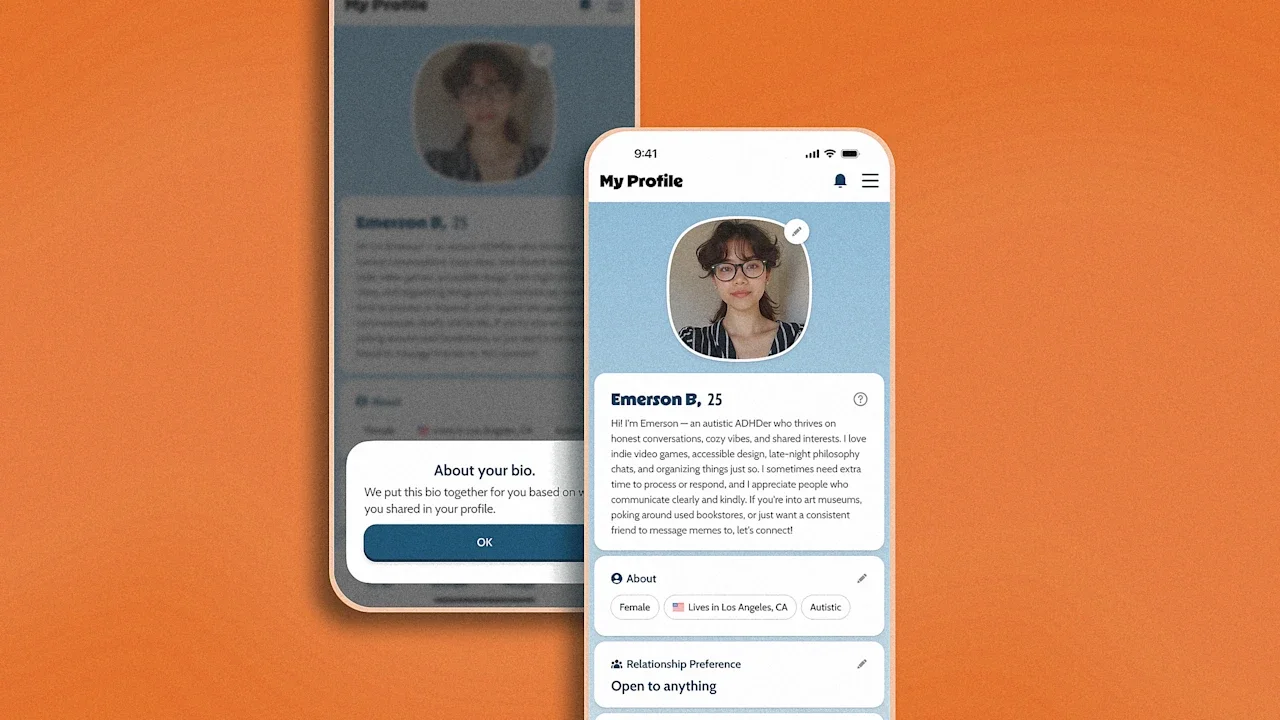
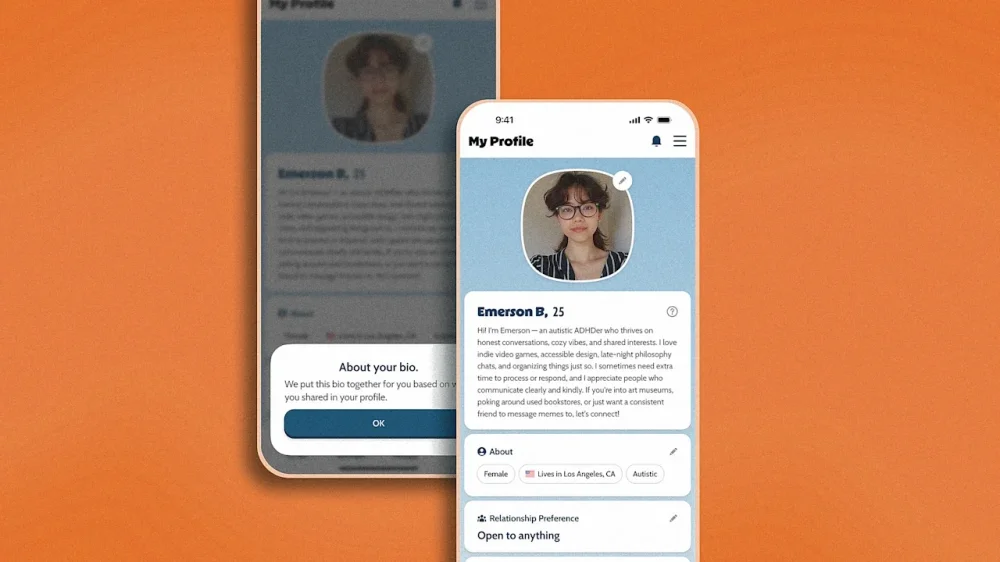
Can AI help neurodivergent adults connect with each other? That’s the bet of a new social network called Synchrony, which believes AI and a well-designed social network with the right safeguards can reduce social atomization and calm the overwhelming cacophony of socializing online. Launching February 19, the social network debuts during a moment when social media, chatbots, and doomscrolling has made digital communications a hot button topic for parents. “No other app for the neurodiverse is focusing primarily on reducing social anxiety and encouraging friendship,” says cofounder Jamie Pastrano. “I think that’s the biggest piece of it, and no other app is focusing on building an authentic community.” Synchrony also has support from Starry Foundation and Autism Speaks, two large U.S. advocacy groups, and approval from the Apple App Store. “I was really blown away about what they’re trying to do,” says Bobby Vossoughi, president of the Starry Foundation. “These kids are isolated and their social cues are off. They’re creating something that could really change this community’s lives for the long term.” A parenting challenge without a solution The idea for Synchrony came from Pastrano, a former management consultant and executive sales leader, whose son, Jesse, 21, is autistic. As Jesse experienced teenagerhood, Pastrano became frustrated with the challenges she saw her son facing around the friendship gap; she saw him as a social kid, but planning, timing, even saying the appropriate thing often tripped him up. Unlike other challenges she’d faced as a mother of a neurodivergent child, this one didn’t seem to have a solution. Research shows that people with autism or neuro developmental differences—roughly 1 in 5 people according to the Neurodiversity Alliance—face increasing loneliness as they transition between adolescence and adulthood. New social responsibilities and expectations for life after school, combined with the loss of support systems that may have been embedded in secondary and university education, can lead to isolation. One of the cofounders, Brittany Moser, an autism specialist who teaches at Park University in Missouri, says that she’s held crying students who, forced to operate in a world that’s not built for them, are desperate for social connection. She hopes this network can foster it. “Autism doesn’t end at 18,” Pastrano says. “There was this huge gap in services to support social, emotional, and community needs.” Pastrano sold her company in 2024 and devoted herself to solving the issue with what would become Synchrony. Part of Pastrano’s inspiration came from reality television. The dating show Love on the Spectrum piqued her interest, causing her to think not about romance, but about connection, friendship, and community. She even contacted a coach on the show, who suggested she get certified at the PEERS program at UCLA, which teaches social and dating skills to young adults on the spectrum. Broadly speaking, Synchrony is built with the same digital infrastructure as a dating site, but is meant for fostering friendships amid a unique population. A big part of the design challenge was making sure it was suitable for the audience, and wasn’t too distracting or loud. Profiles focus much more on interests, Pastrano says, since interests weigh much more heavily as a reason to communicate among this population. There’s also a space to list neurodiversity classifications and communication style and preferences (“I prefer text to phone calls,” or “I take a few days to reply,” etc.) as part of the effort to front-load key details. Simplified menus and colors and no ads help reduce distractions. Pastrano also wants to respect the community and focus on healthy experiences and not push for rapid growth; users pay a monthly fee of $44.99 after a free 30-day trial, allowing the network to avoid advertisements. Part of the registration process includes two-step verification—both the user and a trusted person, either a teacher, doctor, or parent needs to input personal details and a photo ID—to make sure bad actors outside the community aren’t given access. Social Coach, or ‘Seductive Cul-de-sac’ Part of Synchrony’s strategy is the use of Jesse (named after Pastrano’s son), marketed as an “AI-powered social support tool that goes far beyond chat assist technology.” By providing real-time conversation support, the chatbot aims to overcome social anxiety and a lack of confidence around socialization. Talking with Jesse online, developers claim, will bolster user self-assurance and communication skills, eventually manifesting in real life. When Synchrony users get stuck in an online conversation, they can tap an icon to summon Jesse, who will provide editable solutions to advance or end an interaction. The AI coach offers three main options: a tool to help express yourself, that will offer solutions to continuing the conversation; a button that can help parse through the conversation to help better understand what happened, and whether something might have been meant as flirty or friendly; and a final option to protect, and offer suggestions to set boundaries and exit a conversation quietly. Built using the Amazon Bedrock large language model and trained by Synchrony staff, Jesse is scanning conversations constantly to provide social coaching when asked. The use of AI among the neurodivergent population has sparked the same debates as the technology’s use among the population at large. Research by a team at Stanford found that an AI chatbot they developed called Noora, designed to improve communication skills, can improve empathy among users with autism. Some members of the community have claimed AI coaches have helped them with relationships and “transformed” their lives. At the same time, some advocacy groups have warned that chatbot’s emotional manipulation can be more severe for the neurodiverse, and some researchers are concerned AI might reinforce bad communication habits. British researcher Chris Papadopoulos sums up the state of play in a recent paper, concluding that while “the technology holds the potential to democratize companionship… left unchecked, AI companions could become a seductive cul-de-sac, capturing autistic people in artificial relationships that stunt their growth or even lead them into harm’s way.” Amid awareness of the sometimes destructive and even deadly consequences of chatbot use, there are significant guardrails built into Jesse, says Moser, including a long list of activities and actions to avoid, like not sharing personal addresses. Jesse is also told not to dispense medical advice. Jesse is not a therapist, and as the founders are clear to note, this isn’t a clinical app. If users start asking Jesse about off-topic concepts, Moser says it will be programmed to reply something to the effect of, “Hmm, I don’t know if that’s really going to help you connect with the other members.” There will also be warnings if someone is spending too much time just talking with Jesse. Synchrony is launching with human moderation to provide extra safeguards. Lynn Koegel, a professor and researcher at Stanford University who has studied autism and technology, says her team has spent time updating and changing their models of Noora, to make sure it’s not too harsh, such as not reinforcing communication attempts or being too strict around grammar issues. She says it’s very important to do more in-depth studies and clinical research to make sure these tools do work well and as intended (she has not seen or tested Synchrony). “My gut feeling is these tools can be very good support,” she says. “The jury is out about whether individual programs that haven’t been tested can be assistive.” As the Synchrony team works out bugs and final design issues before launch, the challenge becomes building a robust enough community to drive more organic growth. Early user testing that started in December, both an alpha test of 14 users, and closed beta tests among university support groups for autistic students, helped them refine the model and layout. The marketing strategy at launch doesn’t focus on the users themselves, but rather neurodiverse employer groups, universities that have neurodiverse programs (who can create their own closed-loop, campus versions of the app), advocates, and relevant podcast hosts. “Success is about awareness and attention,” says Pastrano. “It’s not a numbers game for me. It’s a really personal game.” View the full article
-
Google is launching Scenario Planner, a no-code tool that lets you test budget scenarios and forecast ROI using its Meridian marketing mix model without needing data science expertise. What’s new. Scenario Planner turns complex MMM outputs into actionable marketing insights: Intuitive, code-free interface: You can test different budget allocations and view ROI estimates without writing any code. Forward-looking planning: The tool lets you simulate investment scenarios and stress-test strategies, moving beyond retrospective reporting. Digestible insights: Technical model outputs are visualized in clear, easy-to-understand formats so you can leverage them for strategy decisions. Why we care. With predictive marketing insights at your fingertips, you can test budgets, predict returns, and adjust campaigns in real time — so you plan smarter and make the most of every dollar. Closing the MMM actionability gap. Scenario Planner bridges the long-standing “usability gap” in Marketing Mix Models, which traditionally required specialized skills. Nearly 40% of organizations struggle to turn MMM outputs into actionable decisions, according to Harvard Business Review. Bottom line. By combining the rigor of MMM with an intuitive, interactive interface, Scenario Planner helps you plan smarter, optimize your spend, and make confident, data-driven decisions — without relying on technical experts. View the full article
-
Military build-up and fraught rhetoric leave a narrow path to securing a deal that would allow both sides to save faceView the full article
-
If the thought of AI smart glasses annoys you, you’re not alone. This week, the judge presiding over a historic social media addiction trial took a harsh stance on the AI-powered gadgets, which many bystanders find invasive of their privacy: Stop recording or face contempt of court. Here’s what you need to know. What’s happened? Yesterday, Meta CEO Mark Zuckerberg took the stand in a trial that many industry watchers say could have severe ramifications for social media giants, depending on how it turns out. At the heart of the trial is the question of whether social media companies like Meta, via its Facebook and Instagram platforms, purposely designed said platforms to be addictive. Since the trial began, many Big Tech execs have taken the stand to give testimony, and yesterday it was Meta CEO Mark Zuckerberg’s turn. But while Zuckerberg was there to talk about his legacy products—Facebook and Instagram, particularly—for a brief moment, the presiding judge in the case, Judge Carolyn B. Kuhl, turned her attention to a newer Meta product: the company’s Ray-Ban Meta AI Glasses. Judge warns AI smart glasses wearers According to multiple reports, at one point during yesterday’s trial, Judge Carolyn B. Kuhl took a moment to issue a stark warning to anyone wearing AI glasses in the courtroom: stop recording with them and delete the footage, or face contempt. Many courts generally forbid recording during trials, though there are exceptions. However, while the judge did seem to be worried about recording in general, she also had another concern: the privacy of the jury. “If your glasses are recording, you must take them off,” the judge said, per the Los Angeles Times. “It is the order of this court that there must be no facial recognition of the jury. If you have done that, you must delete it. This is very serious.” Currently, Meta’s AI glasses do not include the ability to identify the names of the people a wearer views through them, but that’s not likely what the judge meant in her concerns about “facial recognition.” Instead, it is likely the judge was concerned that the video recorded by the AI glasses could then be later viewed and run through external facial recognition software to identify the jury in the video. Some of Meta’s AI glasses can record video clips up to three minutes long. From reports, it does not appear as if the judge singled out any specific individuals in the courtroom, but CNBC reports that ahead of Mark Zuckerberg’s testimony, members of his team, escorting him into the building, were spotted wearing Meta Ray-Ban artificial intelligence glasses. As the LA Times reported, the judge’s “admonition was met with silence in the courtroom.” Broader social concerns over AI glasses The privacy of jurors is critical for fair and impartial trials, as well as their own safety. Given that, it’s no surprise that the judge did not mince words when warning about AI glasses recording. But the judge’s courtroom concerns also mirror many people’s broader concerns over AI glasses: People are worried about wearers of the glasses violating their privacy, either by recording them or using facial recognition to identify them. This concern first became evident more than a decade ago after Google introduced its now-failed smart glasses called Google Glass. Wearers of the device soon became known as “glassholes” due to what many bystanders felt was their intrusive nature. When talking to a person wearing smart glasses, you can never be sure you aren’t being recorded—and that freaks people out. That apprehension about smart glasses has not gone away in the years since Google Glass’s demise. Modern smart glasses are much more capable and concealed. At the same time, everyday consumers are more concerned about their privacy than ever. These privacy concerns will continue to be a major hurdle to AI smart glasses adoption—especially as AI smart glasses manufacturers, including Meta, reportedly plan to add facial recognition features in the future. The judge’s admonishment of AI glasses wearers in the courtroom yesterday won’t help the devices’ already strained reputation. View the full article

-
To effectively boost customer loyalty, it’s vital to adopt best practices that improve retention rates. Start by prioritizing exceptional customer service, which sets a solid foundation for positive experiences. Next, actively seek and value customer feedback, allowing you to comprehend their needs better. Personalizing interactions can make customers feel valued, whereas implementing loyalty programs rewards their continued support. Finally, nurturing a culture of continuous improvement guarantees your strategies remain relevant. Recognizing these fundamentals is key to long-term success. Key Takeaways Prioritize exceptional customer service to enhance satisfaction and retention, as 70% of consumers make purchases based on service quality. Actively seek and value customer feedback to foster a sense of community and improve loyalty through systematic analysis. Personalize customer interactions by offering tailored recommendations and understanding generational preferences to boost engagement and satisfaction. Implement effective loyalty programs with immediate rewards and exclusive perks to encourage repeat purchases and brand loyalty. Foster a culture of continuous improvement by using customer insights to refine strategies and ensure consistent service across all channels. Prioritize Exceptional Customer Service In today’s competitive market, prioritizing exceptional customer service is vital for retaining customers and nurturing loyalty. Studies show that 70% of consumers have made purchases based on the quality of service they received. By focusing on customer service, businesses can achieve a 90% increase in customer retention, emphasizing its direct correlation with loyalty. Empowering and training your staff improves their ability to provide knowledgeable service, as 63% of customers prefer returning to businesses that exhibit expertise. Furthermore, timely responses to inquiries boost satisfaction rates by 87%, highlighting the need for quick resolutions. In the end, implementing these customer retention best practices can greatly increase customer lifetime value, with loyal customers generating ten times more revenue than one-time buyers, reinforcing the importance of exceptional service. Actively Seek and Value Customer Feedback Exceptional customer service creates a strong foundation for customer loyalty, but actively seeking and valuing feedback can take that loyalty to the next level. To effectively learn how to retain customers, implement regular feedback collection through surveys and direct communication. Research shows that 96% of professionals prioritize gathering customer insights to identify improvement areas. By systematically analyzing this feedback, you can adapt your offerings, leading to higher satisfaction and loyalty. When customers see their opinions valued, they feel appreciated and are more likely to stay engaged with your brand. Furthermore, involving customers in the feedback process cultivates a sense of community, which improves loyalty and encourages positive word-of-mouth referrals, ultimately increasing your retention rates and strengthening your brand. Personalize Customer Interactions When businesses prioritize personalization in customer interactions, they greatly improve their chances of retaining customers. With 71% of consumers expecting customized experiences, it’s vital to integrate customer retention marketing strategies that focus on individual preferences. For instance, sending personalized recommendations based on past purchases can greatly improve customer satisfaction. Nonetheless, less than 50% of businesses currently provide such customized suggestions in their loyalty programs, revealing a considerable opportunity for improvement. Furthermore, comprehending generational communication preferences allows you to engage effectively; younger customers may prefer digital interactions, whereas older customers may favor in-store experiences. Implement Loyalty Programs Implementing effective loyalty programs can greatly improve customer retention and drive repeat purchases for your business. To improve your program, consider these strategies on how to increase customer retention: Offer Immediate Rewards: Consumers love discounts and points. Providing instant benefits encourages repeat visits and purchases. Create Tiered Programs: By implementing levels of rewards, you incentivize higher spending and cultivate brand loyalty through exclusive perks and recognition. Personalize Marketing Efforts: Use customer data to offer customized recommendations, which can markedly improve satisfaction and engagement. Foster a Culture of Continuous Improvement Nurturing a culture of continuous improvement is vital for businesses aiming to boost customer retention and satisfaction. By regularly gathering customer feedback, you can identify areas for refinement that directly impact loyalty. For instance, 96% of Voice of Customer professionals use surveys to analyze customer input. Implementing changes based on this feedback, like hardware stores adjusting inventory according to contractor needs, can lead to increased satisfaction. Additionally, since 87% of customers seek service consistency across channels, engaging in a continuous improvement cycle helps you adapt swiftly to their expectations. By leveraging insights from unstructured feedback, you can refine your customer service retention strategies, ensuring long-term growth and higher retention rates through consistently meeting customer needs. Frequently Asked Questions How Can Small Businesses Implement Customer Retention Strategies Effectively? To implement customer retention strategies effectively, you should focus on comprehending your customers’ needs. Start by collecting feedback through surveys or direct communication to identify areas for improvement. Next, personalize your services or products based on this feedback to improve customer experience. Furthermore, create loyalty programs that reward repeat purchases, and guarantee your customer service is responsive and helpful. Regularly engaging with customers through newsletters or social media can likewise strengthen relationships. What Role Does Social Media Play in Customer Retention? Social media plays an essential role in customer retention by facilitating direct communication between you and your customers. It allows you to share updates, respond to inquiries, and gather feedback quickly. For instance, you can use platforms like Facebook or Instagram to post engaging content that keeps customers informed about promotions or new products. Furthermore, showcasing customer testimonials on these platforms can improve trust and encourage loyalty, making customers feel valued and connected to your brand. How Can Data Analytics Improve Customer Retention Efforts? Data analytics can greatly improve your customer retention efforts by identifying trends and behaviors. By analyzing purchase history, you can tailor marketing strategies to meet customer preferences. For instance, segmenting customers based on their buying patterns allows you to create personalized offers. Furthermore, tracking customer feedback through surveys helps pinpoint areas for improvement. Implementing these insights guarantees you address customer needs effectively, leading to increased satisfaction and loyalty over time. What Are Common Mistakes to Avoid in Customer Retention Strategies? When developing customer retention strategies, avoid common mistakes like neglecting feedback, failing to personalize communication, and ignoring data analytics. If you don’t listen to customer concerns, you miss opportunities for improvement. Personalization helps customers feel valued, so generic messages can alienate them. Furthermore, not leveraging data analytics means you might overlook trends and behaviors that indicate when a customer is likely to disengage. Prioritizing these aspects can improve your retention efforts greatly. How Often Should We Review Our Customer Retention Practices? You should review your customer retention practices at least quarterly. This frequency allows you to assess the effectiveness of your strategies and make timely adjustments. For instance, if you notice a drop in engagement, you can quickly analyze customer feedback and adapt your approach. Furthermore, annual reviews can help you evaluate long-term trends. Regular assessments guarantee you stay aligned with customer needs and market changes, ultimately improving retention and loyalty. Conclusion Incorporating these five best practices can greatly improve your customer retention efforts. By prioritizing exceptional service, valuing feedback, personalizing interactions, implementing effective loyalty programs, and promoting continuous improvement, you create a more engaging experience for your customers. These strategies not merely strengthen loyalty but also encourage long-term relationships. When customers feel valued and understood, they are more likely to return and recommend your business to others, finally driving sustained growth and success. Image via Google Gemini and ArtSmart This article, "5 Essential Best Practices for Customer Retention to Boost Loyalty" was first published on Small Business Trends View the full article
-
To effectively boost customer loyalty, it’s vital to adopt best practices that improve retention rates. Start by prioritizing exceptional customer service, which sets a solid foundation for positive experiences. Next, actively seek and value customer feedback, allowing you to comprehend their needs better. Personalizing interactions can make customers feel valued, whereas implementing loyalty programs rewards their continued support. Finally, nurturing a culture of continuous improvement guarantees your strategies remain relevant. Recognizing these fundamentals is key to long-term success. Key Takeaways Prioritize exceptional customer service to enhance satisfaction and retention, as 70% of consumers make purchases based on service quality. Actively seek and value customer feedback to foster a sense of community and improve loyalty through systematic analysis. Personalize customer interactions by offering tailored recommendations and understanding generational preferences to boost engagement and satisfaction. Implement effective loyalty programs with immediate rewards and exclusive perks to encourage repeat purchases and brand loyalty. Foster a culture of continuous improvement by using customer insights to refine strategies and ensure consistent service across all channels. Prioritize Exceptional Customer Service In today’s competitive market, prioritizing exceptional customer service is vital for retaining customers and nurturing loyalty. Studies show that 70% of consumers have made purchases based on the quality of service they received. By focusing on customer service, businesses can achieve a 90% increase in customer retention, emphasizing its direct correlation with loyalty. Empowering and training your staff improves their ability to provide knowledgeable service, as 63% of customers prefer returning to businesses that exhibit expertise. Furthermore, timely responses to inquiries boost satisfaction rates by 87%, highlighting the need for quick resolutions. In the end, implementing these customer retention best practices can greatly increase customer lifetime value, with loyal customers generating ten times more revenue than one-time buyers, reinforcing the importance of exceptional service. Actively Seek and Value Customer Feedback Exceptional customer service creates a strong foundation for customer loyalty, but actively seeking and valuing feedback can take that loyalty to the next level. To effectively learn how to retain customers, implement regular feedback collection through surveys and direct communication. Research shows that 96% of professionals prioritize gathering customer insights to identify improvement areas. By systematically analyzing this feedback, you can adapt your offerings, leading to higher satisfaction and loyalty. When customers see their opinions valued, they feel appreciated and are more likely to stay engaged with your brand. Furthermore, involving customers in the feedback process cultivates a sense of community, which improves loyalty and encourages positive word-of-mouth referrals, ultimately increasing your retention rates and strengthening your brand. Personalize Customer Interactions When businesses prioritize personalization in customer interactions, they greatly improve their chances of retaining customers. With 71% of consumers expecting customized experiences, it’s vital to integrate customer retention marketing strategies that focus on individual preferences. For instance, sending personalized recommendations based on past purchases can greatly improve customer satisfaction. Nonetheless, less than 50% of businesses currently provide such customized suggestions in their loyalty programs, revealing a considerable opportunity for improvement. Furthermore, comprehending generational communication preferences allows you to engage effectively; younger customers may prefer digital interactions, whereas older customers may favor in-store experiences. Implement Loyalty Programs Implementing effective loyalty programs can greatly improve customer retention and drive repeat purchases for your business. To improve your program, consider these strategies on how to increase customer retention: Offer Immediate Rewards: Consumers love discounts and points. Providing instant benefits encourages repeat visits and purchases. Create Tiered Programs: By implementing levels of rewards, you incentivize higher spending and cultivate brand loyalty through exclusive perks and recognition. Personalize Marketing Efforts: Use customer data to offer customized recommendations, which can markedly improve satisfaction and engagement. Foster a Culture of Continuous Improvement Nurturing a culture of continuous improvement is vital for businesses aiming to boost customer retention and satisfaction. By regularly gathering customer feedback, you can identify areas for refinement that directly impact loyalty. For instance, 96% of Voice of Customer professionals use surveys to analyze customer input. Implementing changes based on this feedback, like hardware stores adjusting inventory according to contractor needs, can lead to increased satisfaction. Additionally, since 87% of customers seek service consistency across channels, engaging in a continuous improvement cycle helps you adapt swiftly to their expectations. By leveraging insights from unstructured feedback, you can refine your customer service retention strategies, ensuring long-term growth and higher retention rates through consistently meeting customer needs. Frequently Asked Questions How Can Small Businesses Implement Customer Retention Strategies Effectively? To implement customer retention strategies effectively, you should focus on comprehending your customers’ needs. Start by collecting feedback through surveys or direct communication to identify areas for improvement. Next, personalize your services or products based on this feedback to improve customer experience. Furthermore, create loyalty programs that reward repeat purchases, and guarantee your customer service is responsive and helpful. Regularly engaging with customers through newsletters or social media can likewise strengthen relationships. What Role Does Social Media Play in Customer Retention? Social media plays an essential role in customer retention by facilitating direct communication between you and your customers. It allows you to share updates, respond to inquiries, and gather feedback quickly. For instance, you can use platforms like Facebook or Instagram to post engaging content that keeps customers informed about promotions or new products. Furthermore, showcasing customer testimonials on these platforms can improve trust and encourage loyalty, making customers feel valued and connected to your brand. How Can Data Analytics Improve Customer Retention Efforts? Data analytics can greatly improve your customer retention efforts by identifying trends and behaviors. By analyzing purchase history, you can tailor marketing strategies to meet customer preferences. For instance, segmenting customers based on their buying patterns allows you to create personalized offers. Furthermore, tracking customer feedback through surveys helps pinpoint areas for improvement. Implementing these insights guarantees you address customer needs effectively, leading to increased satisfaction and loyalty over time. What Are Common Mistakes to Avoid in Customer Retention Strategies? When developing customer retention strategies, avoid common mistakes like neglecting feedback, failing to personalize communication, and ignoring data analytics. If you don’t listen to customer concerns, you miss opportunities for improvement. Personalization helps customers feel valued, so generic messages can alienate them. Furthermore, not leveraging data analytics means you might overlook trends and behaviors that indicate when a customer is likely to disengage. Prioritizing these aspects can improve your retention efforts greatly. How Often Should We Review Our Customer Retention Practices? You should review your customer retention practices at least quarterly. This frequency allows you to assess the effectiveness of your strategies and make timely adjustments. For instance, if you notice a drop in engagement, you can quickly analyze customer feedback and adapt your approach. Furthermore, annual reviews can help you evaluate long-term trends. Regular assessments guarantee you stay aligned with customer needs and market changes, ultimately improving retention and loyalty. Conclusion Incorporating these five best practices can greatly improve your customer retention efforts. By prioritizing exceptional service, valuing feedback, personalizing interactions, implementing effective loyalty programs, and promoting continuous improvement, you create a more engaging experience for your customers. These strategies not merely strengthen loyalty but also encourage long-term relationships. When customers feel valued and understood, they are more likely to return and recommend your business to others, finally driving sustained growth and success. Image via Google Gemini and ArtSmart This article, "5 Essential Best Practices for Customer Retention to Boost Loyalty" was first published on Small Business Trends View the full article
-
A party that once mocked the ‘magic money tree’ appears to have built its own house in the branchesView the full article
-
We may earn a commission from links on this page. Deal pricing and availability subject to change after time of publication. The OnePlus Buds Pro 3 are down to $129.99 on Amazon, from their usual $179.99. That is their lowest price so far, according to price trackers. PCMag gave them an “excellent” rating, largely because they deliver strong sound and active noise cancellation without pushing into premium pricing. At this price, they sit in the crowded midrange category, but they offer a feature set that competes with more expensive earbuds. OnePlus Buds Pro 3 Wireless ANC Earbuds (Midnight Opus) $129.99 at Amazon $179.99 Save $50.00 Get Deal Get Deal $129.99 at Amazon $179.99 Save $50.00 These IP55-rated earbuds use a dual-driver setup, with 11mm and 6mm drivers working together to produce a wide 10Hz–40kHz range. In practice, that means deep bass that feels full but not bloated, and highs that stay clear instead of sounding harsh. The Buds Pro 3 support Bluetooth 5.4, multipoint connectivity, and codecs like AAC, SBC, and LHDC 5.0 for compatible devices. If you own a recent OnePlus phone, you can access high-res audio and most settings directly through the Bluetooth menu. On other Android or iOS devices, the HeyMelody app unlocks nearly everything, including five EQ presets, a six-band custom EQ, and features like a fit test and Golden Sound tuning (which adjusts the audio profile to match the unique shape of your ear canal). As for its ANC performance, it holds up well for the price. It cuts down low engine rumble on planes and buses and reduces background chatter in busy cafes. That said, its transparency mode (while serviceable) sounds slightly artificial, notes this PCMag review. Battery life is solid but not class-leading. With noise cancellation on, you get up to six hours per charge, plus another 19 hours from the case. Turn ANC off and that jumps to about 10 hours, with 33 more from the case. It charges via USB-C and also supports wireless charging. At $129.99, these are not flawless, but they cover the essentials well. You get strong sound and noise cancellation, and a long list of features that are often reserved for pricier models. te View the full article
-
Rapid Support Forces sought to eliminate non-Arab communities in and around El Fasher, report findsView the full article
-
This week's Ask a PPC explains why goal-based bidding can overspend budgets and how ROAS, CPA, and pacing actually behave inside ad auctions. The post Why Do Budgets Overspend Even With A Target ROAS or CPA? – Ask A PPC appeared first on Search Engine Journal. View the full article
-
We may earn a commission from links on this page. Claire Danes is grieving mother and author Aggie Wiggs; struggling with her next book, she decides to focus it on her neighbor—which is obviously a good idea, even more so because he was accused of murdering his first wife. What could go wrong? Matthew Rhys plays Nile Jarvis, the maybe-murderer neighbor, who gets caught up in the mix when Abbie's story becomes about way more than just one death. You can stream The Beast in Me on Netflix, and then check out some of these other shows about deadly secrets, vicious lies, and phenomenally bad decisions. The Girlfriend (2025 – ) In a similar "am I just being paranoid?" vein, The Girlfriend stars Robin Wright as Laura Sanderson, a wealthy art gallery owner in London. Her son (Laurie Davidson) brings home a new, working-class girlfriend, Cherry Laine (Olivia Cooke) who immediately strikes Laura as not-our-kind. But is there more to it? Can someone with the name "Cherry Laine" truly be trusted? There's definitely something off, and we're kept guessing as to whether or not this is the story of a dangerous con artist or an overbearing mom—or maybe a little of each. It was released as a miniseries, but there's some interest in continuing the story, so TBD on a second season. Stream The Girlfriend on Prime Video. The Girlfriend (2025 – ) at Prime Video Learn More Learn More at Prime Video Surface (2022 – ) There's a theme in these shows about the extent to which women can trust their own instincts—this one cuts to the heart of that in the story of Sophie Ellis (Gugu Mbatha-Raw), who survives an (apparent) attempt at death by suicide to find that she's lost huge chunks of memory. She settles back into life with her husband, but learns that she'd been having an affair. And that her husband might have been embezzling money, among other things, though it all turns on how much she can trust the men in her life and her own fragmented memories, questions which lead her to take on an entirely new identity and sort it all out. Stream Surface on Apple TV+. Surface (2022 – ) at Apple TV+ Learn More Learn More at Apple TV+ Fool Me Once (2024) Based on a Harlan Coben novel, Fool Me Once is a bit more on the political-thriller end of whatever spectrum we're on here, but the vibes aren't dissimilar: Michelle Keegan plays Maya Stern, a former special ops pilot dealing with the murder of her husband—whom she then catches playing with their daughter on a nanny cam. The resulting mystery ties into the earlier death of her sister, and leads to a web of conspiracy involving her husband's family and a shady pharmaceutical company. Stream Fool Me Once on Netflix. Fool Me Once (2024) at Netflix Learn More Learn More at Netflix Disclaimer (2024) Created, written, and directed by four-time Oscar winner Alfonso Cuarón, Disclaimer has as impressive a pedigree as you could hope for on streaming TV. Cate Blanchett and Kevin Kline (both, incidentally, Oscar winners) star alongside Sacha Baron Cohen and Leila George. Blanchett plays Catherine Ravenscroft, an award-winning journalist who receives a mysterious manuscript—a novel in which she, herself, appears to be the main character, and which reveals secrets of her past that she thought were long buried. Stream Disclaimer on Apple TV+. Disclaimer (2024) at Apple TV+ Learn More Learn More at Apple TV+ Sharp Objects (2018) Author on the hunt for a new story that leads her into danger and treachery? Check. In this adaptation of the Gillian Flynn novel, Amy Adams stars as Camille Preaker, a troubled reporter with substance abuse issues who's only recently been released from a psychiatric hospital. I'm not sure what step of recovery involves returning to her hometown of Wind Gap, Missouri in order to investigate the murder of one girl and the apparently related disappearance of another—all under the watchful, critical eye of her socialite mother Adora (Patricia Clarkson). Stream Sharp Objects on HBO Max. Sharp Objects (2018) at HBO Max Learn More Learn More at HBO Max His & Hers (2026) The first of at least three Alice Feeney thrillers getting streaming series adaptations, His & Hers is a glossy and appropriately twisty mystery starring Tessa Thompson and Jon Bernthal. Thompson plays Annie Andrews, a has-been news reporter who decides to get back on the horse when she learns of a murder in her Georgia hometown. Bernthal is the local detective on the case and—surprise!—he's also her ex. Can she trust him? Things are definitely going to get personal. Stream His & Hers on Netflix. His & Hers (2026) at Netflix Learn More Learn More at Netflix Down Cemetery Road (2025 – ) The genre here isn't quite the same as that of The Beast in Me—this one's more of a detective story with some spy stuff thrown in. Where there's overlap, though, is in its protagonist: a woman who dives into a mystery without understanding quite how deep and dark and personal things are going to get. Ruth Wilson plays Sarah Trafford, a married art restorer who nobody takes very seriously (including her husband), even after she becomes invested in the fate of a young girl whose family is killed in an (allegedly) accidental gas explosion down the street. Emma Thompson co-stars as hard-living, hard-drinking private investigator Zoë Boehm, who gets involved, rather against her will. The orphaned girl disappears into the system, and no one really seems to care until Sarah hires Zoë and her husband to look into it. Both women soon find they are in way over their heads, as the missing girl points to a much broader conspiracy. Stream Down Cemetery Road on Apple TV+. Down Cemetery Road (2025 – ) at Apple TV+ Learn More Learn More at Apple TV+ Behind Her Eyes (2021) Any psychological thriller worth your time is going to swing for the fences—big twists are the essential ingredients in all of these shows. And then there's Behind Her Eyes, which builds to a climax so cuckoo bananas that you'll either applaud its audacity or cackle at its outrageousness. Louise (Simona Brown) is a single mother who starts an affair with her boss—and his wife. And then gets involved with his former mistress following a mysterious death. It all turns on the increasingly complicated set of relationships before it gets really wild. Stream Behind Her Eyes on Netflix. Behind Her Eyes (2021) at Netflix Learn More Learn More at Netflix The Undoing (2020) David E. Kelley brought us this twisty psychodrama (adapted from the Jean Hanff Korelitz bestseller You Should Have Known) starring Nicole Kidman as Grace Fraser, a Manhattan psychologist married to oncologist Jonathan (Hugh Grant). She keeps running into a woman named Elena whose increasingly strange behavior disturbs Grace, more so when the woman is murdered. Things get really alarming, though, when she tries to contact Jonathan, who's disappeared, leading her into a web of secrets in lies that are entirely too close to home. Stream The Undoing on HBO Max. The Undoing (2020) Learn More Learn More Smother (2021 – 2023) Smart and addictive, Smother starts with a body on a beach and then flashes back to a 50th birthday party for Val (Dervla Kirwan) hosted by her husband, Denis. That celebration takes a turn when Denis announces, in front of their kids and assorted guests, that he and Val are getting a divorce and that she's going to live with her rather much younger boyfriend, who Denis tacitly threatens. Naturally, it's Denis whose body we saw earlier, and, while there a lot of people with motives, Val is determined to get to the bottom of it. Stream Smother on Peacock. Smother (2021 – 2023) at Peacock Learn More Learn More at Peacock Agatha Christie's Seven Dials (2026 – ) A bit of counter-programming here, perhaps, in that we're traveling back to the Jazz Age for an explicitly Agatha Christie-style detective story. And yet! Mia McKenna-Bruce's Bundle Brent has a lot in common with the modern-era women in the rest of these shows: She's smart, curious, and surrounded by men (mostly) looking to gaslight the hell out of her. Bundle lives with her mother (Helena Bonham-Carter) in a decaying manor house that they rent out to pay the bills. A party hosted by a steel magnate ends with one of the guests dead—a friend who'd been hinting all night that he planned to propose to Bundle but, according to the police and pretty much everyone else, he died by suicide. Nothing to do but move on. She doesn't, of course, and manages to convince Christie mainstay Superintendent Battle (Martin Freeman) that there might be more to it, especially when things start to tie back to the death of her father years earlier. Stream Agatha Christie's Seven Dials on Netflix. Agatha Christie's Seven Dials (2026 – ) at Netflix Learn More Learn More at Netflix The Last Thing He Told Me (2023 – ) Jennifer Garner stars as Hannah Hall, a successful woodturner (which, I've learned, is a thing) trying to forge a bond with her stepdaughter—in order to help solve the mystery of her missing husband. The standalone first season ranked as Apple's most watched limited series ever, so we're getting a second based on another bestseller from Laura Dave. Stream The Last Thing He Told Me on Apple TV+. The Last Thing He Told Me at Apple TV+ Get Deal Get Deal at Apple TV+ View the full article
-
Generative AI has rapidly become core infrastructure, embedded across enterprise software, cloud platforms, and internal workflows. But that shift is also forcing a structural rethink of cybersecurity. The same systems driving productivity and growth are emerging as points of vulnerability. Google Cloud’s latest AI Threat Tracker report suggests the tech industry has entered a new phase of cyber risk, one in which AI systems themselves are high-value targets. Researchers from Google DeepMind and the Google Threat Intelligence Group have identified a steady rise in model extraction, or “distillation,” attacks, in which actors repeatedly prompt generative AI systems in an attempt to copy their proprietary capabilities. In some cases, attackers flood models with carefully designed prompts to force them to reveal how they think and make decisions. Unlike traditional cyberattacks that involve breaching networks, many of these efforts rely on legitimate access, making them harder to detect and shifting cybersecurity toward protecting intellectual property rather than perimeter defenses. Researchers say model extraction could allow competitors, state actors, or academic groups to replicate valuable AI capabilities without triggering breach alerts. For companies building large language models, the competitive moat now extends to the proprietary logic inside the models themselves. The report also found that state-backed and financially motivated actors from China, Iran, North Korea, and Russia are using AI across the attack cycle. Threat groups are deploying generative models to improve malware, research targets, mimic internal communications, and craft more convincing phishing messages. Some are experimenting with AI agents to assist with vulnerability discovery, code review, and multi-step attacks. John Hultquist, chief analyst at Google Threat Intelligence Group, says the implications extend beyond traditional breach scenarios. Foundation models represent billions in projected enterprise value, and distillation attacks could allow adversaries to copy key capabilities without breaking into systems. The result, he argues, is an emerging cyber arms race, with attackers using AI to operate at machine speed while defenders race to deploy AI that can identify and respond to threats in real time. Hultquist, a former U.S. Army intelligence specialist who helped expose the Russian threat actor known as Sandworm and now teaches at Johns Hopkins University, tells Fast Company how AI has become both a weapon and a target, and what cybersecurity looks like in a machine-versus-machine future. AI is shifting from being merely a tool used by attackers to a strategic asset worth replicating. What has changed over the past year to make this escalation structurally and qualitatively different from earlier waves of AI-enabled threats? AI isn’t just an enabler for threat actors. It’s a new, unique attack surface, and it’s a target in itself. The biggest movements we will see in the immediate future will be actors adopting AI into their existing routines, but as we adopt AI into the stack, they will develop entirely new routines focused on the new opportunity. AI is also an extremely valuable capability, and we can expect the technology itself to be targeted by states and commercial interests looking to replicate it. The report highlights a rise in model extraction, or “distillation,” attacks aimed at proprietary systems. How do these attacks work? Distillation attacks are when someone bombards a model with prompts to systematically replicate a model’s capabilities. In Google’s case, someone sent Gemini more than 100,000 prompts to probe its reasoning capabilities in an apparent attempt to reverse-engineer its decision-making structure. Think of it like when you’re training an analyst, and you’re trying to understand how they came to a conclusion. You might ask them a whole series of questions in an effort to reveal their thought process. Where are state-sponsored and financially motivated threat groups seeing the most immediate operational gains from AI, and how is it changing the speed and sophistication of their day-to-day attack workflows? We believe adversaries see the value of AI in day-to-day productivity across the full spectrum of their attack operations. Attackers are increasingly using AI platforms for targeting research, reconnaissance, and social engineering. For instance, an attacker who is targeting a particular sector might research an upcoming conference and use AI to interpret and highlight themes and interest areas that can then be integrated into phishing emails for a specific targeted organization. This type of adversarial research would usually take a long time to gather data, translate content, and understand localized context for a particular region or sector. But using AI, an adversary can accomplish hours worth of work in just a few minutes. Government-backed actors from Iran, North Korea, China, and Russia are integrating AI across the intrusion lifecycle. Where is AI delivering the greatest operational advantage today, and how is it accelerating the timeline from initial compromise to real-world impact? Generative AI has been used in social engineering for eight years now, and it has gone from making fake photos for profiles to orchestrating complex interactions and deepfaking colleagues. But there are so many other advantages to adversary—speed, scale, and sophistication. Even a less experienced hacker becomes more effective with tools that help troubleshoot operations, while more advanced actors may gain faster access to zero-day vulnerabilities. With these gains in speed and scale, attackers can operate inside traditional patch cycles and overwhelm human-driven defenses. It is also important not to underestimate the criminal impact of this technology. In many applications, speed is actually a liability to espionage actors who are working very hard to stay low and slow, but it is a major asset for criminals, especially since they expect to alert their victims when they launch ransomware or threaten leaks. We’re beginning to see early experimentation with agentic AI systems capable of planning and executing multi-step campaigns with limited human intervention. How close are we to truly autonomous adversaries operating at scale, and what early signals suggest threat velocity is accelerating? Threat actors are already using AI to gain scale advantages. We see them using AI to automate reconnaissance operations and social engineering. They are using agentic solutions to scan targets with multiple tools and we have seen some actors reduce the laborious process of developing tailored social engineering. From our own work with tools such as BigSleep, we know that AI agents can be extremely effective at identifying software vulnerabilities and expect adversaries to be exploring similar capabilities. At a strategic level, are we moving toward a default machine-versus-machine era in cybersecurity? Can defensive AI evolve fast enough to keep pace with offensive capabilities, or has cyber resilience now become inseparable from overall AI strategy? We are certainly going to lean more on the machines than we ever have, or risk falling behind others that do. In the end, though, security is about risk management, which means human judgment will have to be involved at some level. I’m afraid that attackers may have some advantages when it comes to adapting quickly. They won’t have the same bureaucracies to manage or have the same risks. If they take a chance on some new technique and it fails, that won’t significantly cost them. That will give them greater freedom to experiment. We are going to have to work hard to keep up with them. But if we don’t try and don’t adopt AI-based solutions ourselves, we will certainly lose. I don’t think there is any future for defenders without AI; it’s simply too impactful to be avoided. View the full article

-
You’re tracking the wrong numbers – and so is almost everyone else in SEO right now. We’ve all been there. You present a chart showing organic traffic up 47%, only to get blank stares from the CMO who wants to know why revenue hasn’t budged. Or you celebrate a top-three ranking for a keyword nobody’s actually searching for anymore. The metrics that made you look good in 2019 are actively misleading your decision-making in 2026. With AI Overviews dominating search results, zero-click searches becoming the norm, and personalized SERPs making traditional rankings less meaningful, sticking with outdated measurements puts your strategy and budget at risk. Let’s walk through the exact metrics your SEO team needs to retire this year and what you should measure instead. Traffic metrics 1. Organic traffic As a standalone KPI, organic traffic has been the primary metric in SEO reporting since SEO began. But on its own, it lacks context. Not all traffic is created equal. A thousand visitors who bounce in three seconds aren’t helping your business. A hundred visitors who convert at 8%? That’s a different story. I worked with a local HVAC company that saw traffic drop 22% year over year. Panic mode, right? Except revenue from organic actually increased by 31%. We’d pruned low-intent informational content and doubled down on high-intent service pages. Fewer visitors, better visitors. Before you panic about any traffic drop, look at where you’re losing traffic. If it’s informational articles and customer login pages, that’s not a revenue problem. It’s noise leaving your dashboard. 2. Total impressions without intent segmentation This metric is equally misleading. A million impressions from informational queries like “what is SEO” might generate awareness, but zero revenue. Ten thousand impressions from commercial queries like “best enterprise SEO agency” could fill your pipeline. Google Search Console gives you this data, but most teams don’t slice it intelligently. 3. Traffic growth without revenue correlation This one gets SEO teams in trouble with executives. You walk into a quarterly review, proudly show a 35% increase in organic traffic, and the CFO asks, “Great, how much revenue did that drive?” If you can’t answer that question, you’re just showing noise. Your customers search everywhere. Make sure your brand shows up. The SEO toolkit you know, plus the AI visibility data you need. Start Free Trial Get started with Ranking metrics 4. Average keyword position This looks useful in a dashboard but falls apart under scrutiny. If you rank No. 1 for a keyword with 10 monthly searches and No. 50 for a keyword with 50,000 monthly searches, your average position might look decent, but you’re getting crushed where it actually matters. The metric treats all keywords as equal when they aren’t. And with personalized search results, “average position” varies widely by user and location. 5. Isolated keyword tracking Searchers don’t think in isolated keywords. They ask questions, explore topics, and refine queries. Google has shifted to semantic search and topic modeling. Tracking “lawyer” alone is useless without intent — criminal defense, divorce, or someone researching what lawyers do. 6. Share of top 10 rankings This metric sounds smart until you realize 80% of your top 10 rankings may be low-intent, low-volume informational queries. Meanwhile, competitors hold the top three spots for every high-intent commercial query in your niche. One No. 1 ranking for a high-converting transactional keyword is worth more than 50 top-10 rankings for informational fluff. Authority and engagement metrics 7. Domain authority and domain rating DA and DR aren’t Google metrics. They’re proprietary scores created by SEO tool companies. Yet I see teams setting goals like “increase DA from 42 to 50 by Q3.” You can have a DA of 65 and get crushed by a DA 35 competitor if that competitor’s content better matches search intent. Stop putting these in executive dashboards. 8. Total backlink volume This is another vanity metric. Google’s algorithm weighs link quality, relevance, and context. A single link from a highly relevant, authoritative site in your niche is worth more than 500 spammy directory links. I’ve audited sites with 100,000+ backlinks that couldn’t rank for anything meaningful because 95% were junk. 9. Bounce rate This metric has been misunderstood for years. If someone searches “business hours for [your company],” lands on your contact page, finds the hours, and leaves, that’s a successful session with a 100% bounce rate. Google replaced bounce rate with “engagement rate” in GA4 for good reason. Similarly, session duration and pages per session need context. A high pages-per-session metric on your pricing page might mean users are confused rather than engaged. Get the newsletter search marketers rely on. See terms. Why these SEO metrics are failing now The search landscape has fundamentally shifted. Up to 58.5% of U.S. Google searches and 59.7% of EU searches now end without a click to any external website, according to SparkToro’s zero-click study. That means for every 1,000 searches, only 360 clicks go to the open web. AI Overviews, ChatGPT, and Perplexity are pulling information and synthesizing answers without requiring a click. Your content can be highly visible and influential without generating a single session in Google Analytics. In many verticals, AI is now the primary discovery layer. About 24% of CMOs now use AI tools like ChatGPT and Perplexity to research vendors, up from zero mentions just a year earlier, Wynter’s B2B buyer research found. Meanwhile, 94% of B2B buyers use LLMs during their buying process, according to 6sense’s Buyer Experience Report. Buyers are discovering vendors inside AI tools, then turning to Google to confirm what they’ve already heard. This means your SEO team’s goal is no longer just to “drive traffic.” It’s to make sure your brand shows up when buyers are deciding which options to consider. Modern customer journeys are also messy. A prospect might discover you via organic search, return through a paid ad, sign up for your email list, and finally convert through direct traffic. If you’re using last-click attribution, SEO looks ineffective. But without that initial organic touchpoint, the conversion never would’ve happened. Dig deeper: Measuring zero-click search: Visibility-first SEO for AI results What to measure instead Revenue and pipeline contribution from organic For ecommerce, track revenue from organic sessions by product category and landing page. For lead-gen businesses, track qualified leads from organic and how many convert to customers. Use CRM integration to connect the dots. Nobody cares about your DA if you can show organic contributed $1.2 million in revenue last quarter. Conversion-weighted visibility Track your visibility specifically for high-value terms that actually drive conversions. A franchise client shifted to this metric and discovered they were dominating low-intent queries but barely visible for high-intent local service terms. We reallocated resources, and qualified leads doubled in four months. Topic cluster performance This replaces individual keyword rankings. Track how well you rank across entire topic clusters, how many related keywords you rank for, average visibility across the cluster, and total traffic and conversions from that cluster. This gives you a holistic view of topical authority. SERP real estate ownership Measure how much of the search results page you own, not just organic listings, but featured snippets, knowledge panels, local packs, and People Also Ask boxes. Owning multiple SERP features for a high-value query means you’ve effectively blocked out competitors. AI platform visibility and brand mentions How often is your brand mentioned or recommended in AI-generated responses? Brand recommendations now matter as much as clicks. If you have a 90%+ recommendation rate across ChatGPT, Perplexity, and Google AI Overviews for your core topics, you’re winning, even if your click-through traffic looks flat. Tools are emerging to track this, but you can also do manual spot checks. This visibility builds authority and awareness, leading to brand searches and conversions down the line. Branded search and direct traffic as AI visibility proxies Here’s something most teams miss: When buyers discover your brand through AI tools or zero-click searches, they don’t click through. They search your brand name directly or type your URL into their browser. That traffic shows up in your branded search and direct channels, not organic. If your nonbranded organic traffic is flat but branded searches and direct visits are climbing, that’s often a sign your content is being cited in AI Overviews and LLM responses. Track these together. A client of mine saw organic traffic plateau while brand search volume increased 40%. Their content was being cited in AI Overviews, building awareness without the click. Dig deeper: 12 new KPIs for the generative AI search era How to transition your reporting Changing your reporting framework is scary. Stakeholders have stared at the same metrics for years. Start by auditing your current dashboard. Does each metric connect to a business outcome, or is it just activity? Retire vanity metrics gradually. If you’ve reported organic traffic as a standalone KPI, introduce “organic traffic by intent segment” and “organic-attributed revenue” alongside it. Over a few reporting cycles, shift focus to the new metrics and phase out the old. When introducing new metrics, explain them in business terms. Don’t say “conversion-weighted visibility.” Say “visibility for the search terms that drive the most leads and revenue.” Be transparent about why change is necessary. AI Overviews, zero-click results, and personalization have made old metrics less reliable. That’s not admitting failure. It’s demonstrating you’re evolving with the reality of search in 2026. See the complete picture of your search visibility. Track, optimize, and win in Google and AI search from one platform. Start Free Trial Get started with The metrics that prove SEO’s value The metrics you retire this year — organic traffic as a standalone number, average keyword position, domain authority, and bounce rate — aren’t bad. They’re incomplete. Worse, they create the illusion of progress while competitors focus on metrics that drive revenue. The metrics you adopt — revenue contribution, conversion-weighted visibility, topic authority, SERP real estate ownership, and AI platform mentions — connect SEO directly to business outcomes. They prove ROI, justify budget, and align your strategy with what matters. Take a hard look at your dashboard. Identify the metrics that make you look busy instead of effective. Retire them. Replace them. No one cares how much traffic you drove or your DA score. They care whether SEO drove growth. Make sure your metrics prove it. View the full article
-
United Parcel Service (UPS) is planning to close dozens of packaging facilities this year, the shipping giant revealed in a court filing this week. The plans include shuttering facilities in Texas, Florida, Georgia, Maryland, and several other states. It includes locations that have union employees, according to a docket made public as part of a lawsuit between UPS and the Teamsters Union. UPS revealed in January that it will cut 30,000 jobs over the coming year. The move was announced as its partnership with Amazon was winding down and amid a broader push toward automation. At the time, it also revealed plans to close 24 total facilities, though it did not reveal the locations. Now the locations of 22 of those facilities have been made public. In the court filings, UPS said “the applicable Local Unions have been notified of these closures and informed of the anticipated impacts.” Which UPS package facilities are closing? The facilities marked for closure are spread across more than 18 states. They appear below: Jamieson Park facility in Spokane, Washington Chalk Hill facility in Dallas, Texas Jacksonville, Illinois Rockdale, Illinois Devils Lake, North Dakota Laramie, Wyoming Pendleton, Oregon North Hills, California Las Vegas North in Las Vegas, Nevada Quad Avenue in Baltimore, Maryland Wilmington, Massachusetts Ashland, Massachusetts Sagamore Beach, Massachusetts Miami Downtown Air in Miami, Florida Camden, Arkansas Blytheville, Arkansas Kosciusko, Mississippi Atlanta Hub in Atlanta, Georgia Columbia Hub in West Columbia, South Carolina Kinston, North Carolina Austinburg, Ohio Cadillac, Michigan What has UPS said about the closures? “We’re well into the largest U.S. network reconfiguration in UPS history, creating a nimbler, more efficient operation by modernizing our facilities and matching our size and resources to support growth initiatives,” a UPS spokesperson told Fast Company when reached for comment. “Some positions will be affected, though most changes are expected to occur through attrition. We’re committed to supporting our people throughout this process.” The facility closures were reported earlier by Freight Waves. Last year, UPS also shed 48,000 workers. The primary drivers for the closures are a broader rightsizing effort, outlined back in 2024. Shares of United Parcel Service Inc (NYSE: UPS) are up almost 15% so far in 2026. But the stock is down significantly from highs it had seen during the early pandemic years. However, the impact of the closures will affect members of the International Brotherhood of Teamsters. In response, the Teamsters filed a lawsuit over a planned voluntary buyout program for union drivers, called the Driver Choice Program, or DCP, saying it violates its contract. The Teamsters have asked the court for an injunction pending the two sides’ initiation of the grievance process outlined in their contract. In a statement, the Teamsters have said that they have “detailed at least six violations of its National Master Agreement by UPS in the rollout of the buyout program, including direct dealing of new contracts with workers, elimination of union jobs when UPS contractually agreed to establish more positions, and erosion of the rights and privileges of union shop stewards, among other charges.” “For the second time in six months, UPS has proven it doesn’t care about the law, has no respect for its contract with the Teamsters, and is determined to try to screw our members out of their hard-earned money,” said Teamsters General President Sean M. O’Brien, in comments included in the statement. UPS’s spokesperson tells Fast Company that the company is “disappointed” in the response. “The world is changing, and the rate of change is accelerating,” UPS says. “As we navigate these changes and continue to reshape our network, our drivers appreciate having choices, including the option to make a career change or retire earlier than planned.” This story is developing… View the full article

-
Google has added 53 new languages to AI Mode, which means the AI Mode works in just under 100 languages. This was announced by Nick Fox from Google on X yesterday.View the full article
-
Google's John Mueller responded to a concern about having bad title tags and how that might impact your site in Google Search. He said on Bluesky "I don't think our systems have a "we don't like this one guy's titles" filter."View the full article
-
There has been an uptick in complaints from businesses around Google local reviews disappearing or being removed. We had something similar last October and it was fixed in December and now I am seeing more complaints about reviews going missing.View the full article