All Activity
- Past hour
-
Faster, Leaner, Closer to the Client, and Two Hours to an Engagement Letter Big 4 Transparency With Dominic Piscopo, CPA Go PRO for members-only access to more Dominic Piscopo. View the full article
-
Faster, Leaner, Closer to the Client, and Two Hours to an Engagement Letter Big 4 Transparency With Dominic Piscopo, CPA Go PRO for members-only access to more Dominic Piscopo. View the full article
- Today
-
We're grateful to all our wonderful speakers & guests for making WWC Mountain View 2026 a memorable experience for all. The post Wi-Fi World Congress Mountain View 2026: Photos of all our great speakers – and more appeared first on Wi-Fi NOW Global. View the full article
-
It’s frustrating to follow fitness content online as a woman when so much of it feels like it is written for men. Likewise, it’s frustrating to work hard at a seemingly simple exercise like pushups and feel like you’re not getting anywhere. Some influencers have proposed a solution to both problems: a change in hand placement for pushups that is supposed to better complement women’s anatomy. I’m not buying it. See, I’ve been around fitness spaces (male-dominated and otherwise) long enough to have built a healthy skepticism around advice and products aimed solely at women. There’s a huge variation in strengths, weaknesses, and body proportions from one person to another, and many of the supposed differences between men's and women's fitness have nothing to do with gender. Rather, they can be chalked up to factors like body size, muscle mass, and training age. In short, I have more in common with other people—male or female—who share my body proportions, my strength background, or my training goals, than I do with a generalized "womankind." Given that, I had doubts about this particular pushup hack for women, but I figured I needed to give it a chance before passing judgment. Certainly it's fair to play around with different hand placements and decide which one works for you. But is there really an anatomical difference that means women need a different hand placement in order to do their best pushups? Why women are being told to change their hand placement when doing pushupsI’ve been seeing this hack all over fitness social media. It suggests that, while doing pushups, women should turn their hands slightly outward (some say 45 degrees). This is usually explained in terms of the “carrying angle"—an angle of the elbow that tends to differ between men and women. (More about what that means below.) For an example, check out this video from Kayla Lee, who describes herself as a women’s anatomy and biomechanics instructor. You’ll notice there isn’t a strong connection presented between anatomy and the pushup hack; she even points out that the carrying angle isn’t a factor in the hand position we use for pushups, and the hand position she recommends has more to do with shoulder rotation. There’s no gender-related reason given that has anything to do with shoulder rotation. The video makes strong claims, but doesn’t connect them logically. In the caption, Lee mentions the carrying angle, then says “now look at how pushups are typically coached,” and gives two standard pushup cues that don’t relate to hand placement at all. Then, the caption continues, when we “force women into that same template,” we injure their bodies and reduce training morale. None of those points seem connected to me, and the more examples I found of this hack being explained online, the less any of it made sense. Why would the carrying angle affect your shoulder position or hand placement? Why is the carrying angle the most important thing to consider when choosing a hand placement? Is the carrying angle even that different between men and women? I needed to dig deeper. What "carrying angle" actually meansAll this Internet talk of the “carrying angle” reminded me uncomfortably of the kinds of criteria looksmaxxers use to study each other’s faces. I suspect the focus on the term stems from a similar urge: the idea that there’s something measurable that explains the difference between groups of people, and that it can offer a definitive answer as to why you're having a harder time in life than others seem to be experiencing. But if you read anatomy papers that discuss carrying angle, you'll see it's not exactly revelatory. When you stand with your arms at your sides and your palms facing forward, your forearm and upper arm don’t form a straight line; your forearm is angled slightly away from your body, and this is your carrying angle. And it is slightly greater in women than in men, on average. It’s called the carrying angle because, at one point, it was hypothesized that it helps women’s forearms to avoid touching their hips as they carry things. That idea didn’t pan out—it turns out the reason our arms don’t touch our hips while carrying groceries is that we deliberately hold our arms away from our bodies. In fact, when discussing the carrying angle, Kayla Lee inserts a flash of this paper to support her claims. And it's in this paper where I learned that last fact: “It is abduction [moving the arm away from the body] at the shoulder and not the carrying angle which keeps the swinging upper limbs away from the side of the pelvis during walking.” That paper also disagrees that carrying angle is determined by gender: “the carrying angle is more in shorter persons as compared to taller persons. ... Carrying angle is not a secondary sex character.” Remember when I said that many supposed differences between men and women come down to factors like body size rather than sex or gender itself? The carrying angle seems to be a lot like the famous Q angle of the thighbone: different on average between men and women, but having more to do with height than gender. Here’s the conclusion from one of several papers that have studied the question: “The slight difference in Q angles between men and women can be explained by the fact that men tend to be taller.” Why you don't actually need a “women’s” pushup hackTwo more things make me doubt this hack even more. One is that the carrying angle is only really noticeable when your hands are supinated (palms up), and that’s not the hand position you use when doing pushups. When you flip your hand palm-down—as you would in order to do a pushup—the carrying angle greatly decreases, and often disappears. The other significant problem is that even if women’s carrying angle is generally greater, there’s a lot of overlap between men’s and women’s carrying angles. Here’s a graph from a 2005 paper that measured the right and left arms of 1,275 people: The left two columns are carrying angles of men (right and left hand), and the other two are of women. Credit: Beth Skwarecki As you can see, the average carrying angle for women is slightly higher than for men, but it’s not like all men have low angles and all women have high angles. Rather, the male and female populations both have a range that includes similarly high and low carrying angles. If "standard" pushup advice only applied to the average man, there would be plenty of men and women who wouldn't fit into it. This raises the question of what “standard” pushup advice is, anyway. The way I’ve been taught to do pushups, and the way I advise others to do them, is to find a hand position that feels comfortable and strong. That will be different for everyone, and I think most trainers already know that. What women really need to do for better pushupsTo distill what I’d learned into actual advice, I reached out to Diana Jordan, a physical therapist and weightlifting coach at Pittsburgh Fitness Project. She confirmed that carrying angle is a real thing, and that the average carrying angle differs between men and women. Then she said this: “There are so many other possible anatomical variations that could play a role in choosing a comfortable pushup position such as chest and shoulder width, the ratio of your humerus [upper arm bone] to your forearm, strength of pecs vs triceps, and shoulder mobility vs stability. In my opinion, choosing a specific pushup based on one typical variant that occurs between sexes (and notice, there’s also overlap in the amount of carrying angle between men and women around 10 degrees) seems silly.” So perhaps you’d do better pushups with a slight angle to your hands, but maybe not! Social media is full of women trying the women’s pushup hack and finding it doesn’t help—but occasionally, it does. I've tried the hack, and there's a simple reason I won't be using it for my own pushups: it's not particularly comfortable for me. I'm stronger with my fingers pointed a little more forward. In short, rather than looking for answers in gendered advice, we all need to find body positions that work for us. Jordan recommends choosing your exercise positioning or variations based on factors like what feels most comfortable, what lets you access your full range of motion, what makes you feel more stable, and, most importantly, what you happen to prefer. The problem with women’s exercise hacksI keep seeing this sort of gendered exercise advice all over social media, and often it boils down all the complexity Jordan talked about to an assumption that one particular hack will meet every woman’s needs. As a trainer myself, I’ve talked people through finding, say, the right foot position for squats—I have them try wider, narrower, feet straight, feet angled, and figure out what works for them. Personally, I do best with a narrow stance and a slight angle to my feet, but there are people online who will tell you that women “should” squat with a wide, toes-out stance. That’s just not true. There are so many different exercises in the world, and so many ways to do each of them, that we can all find several variations that work for us. To bring it back to pushups, let’s not forget that there are all kinds of hand placement variations: diamond pushups, wide-grip pushups, tricep pushups, planche pushups. Locking yourself into just one position means ignoring all the variety out there. Variety benefits you! When I see an influencer argue that I need to use a “women’s” technique, I feel as if I’ve walked into a store filled with clothes in every shape and size and style, only to be taken aside by someone who tells me that none of those options are for me, and that I can only wear a specific, one-size-fits-all women’s outfit. I feel that way even though I know that a majority of strength training content is made with men in mind, and that less research has been done on women than on men—that fact doesn’t mean that we need to dismiss everything we know about training, especially if we’re throwing out scientific understanding and replacing it with pseudoscience or just vibes. “This is tough,” Jordan says, “because railing against the lack of research that involves women and railing against institutions made for men is so hot right now (and I get it!) ... [But] there has been copious research showing that females and males respond similarly to resistance and aerobic training.” If we really want to make sure more women can benefit from strength training, the answer doesn’t lie in small tweaks to exercise technique, but in recognizing the much larger social and societal barriers. Jordan says: “Messages like ‘you should only do pushups this way’ or ‘you should rest specific weeks in your menstrual cycle’ perpetuate the idea of female fragility and increase the barriers to even [starting to exercise].” View the full article
-
Employees at Meta Platforms may soon feel like they’re spilling TMI to their employer’s MCI. The parent company of Facebook, Instagram, and WhatsApp is installing new software—reportedly dubbed Model Capability Initiative (MCI)—on its employees’ computers and workstations that will, among other things, track and capture mouse movements and keystrokes in an effort to train AI models, Reuters first reported on Tuesday. It’s all part of a broader effort to develop autonomous AI agents that can perform specific work tasks. A Meta spokesperson confirmed that the company was, indeed, pushing forward with the measure. “If we’re building agents to help people complete everyday tasks using computers, our models need real examples of how people actually use them—things like mouse movements, clicking buttons, and navigating dropdown menus,” the spokesperson tells Fast Company. “To help, we’re launching an internal tool that will capture these kinds of inputs on certain applications to help us train our models.” Regarding privacy concerns, Meta added, “There are safeguards in place to protect sensitive content, and the data is not used for any other purpose.” Meta has laid off hundreds of employees this year, and there are rumors swirling that more are to come. It could lay off thousands, largely to offset increased AI costs, and to make room for AI agents to take on some of the work originally done by humans. It wouldn’t be unprecedented: A couple of months ago, Jack Dorsey’s fintech company, Block Inc, cited AI efficiencies as it laid off 40% of its workforce. How low can morale go? Understandably, many Meta workers are likely feeling uneasy, both about the prospect of losing their jobs, and the fact that the company will be tracking every granular move they make on their computers. Unfortunately, experts say there isn’t much they can do about it. “In the U.S., Meta’s approach is largely permissible, but it sits in a legally sensitive zone,” says Natalie Bidnick Andreas, an assistant professor of instruction in the Department of Communication Studies at the University of Texas. “Federal law offers very little in the way of employee‑privacy protections, so there’s no nationwide rule that clearly prohibits keystroke or mouse‑movement monitoring on company devices.” Such practices tend to fit within legal boundaries provided they are limited to a company’s own hardware and work accounts, Andreas adds, although some states might have stricter regulations in place. “State‑level rules add some complexity,” Andreas says, “since a few states require employers to notify workers about electronic monitoring, while newer privacy laws expand personal‑data rights but still focus more on consumers than employees.” Laws need to catch up While there are stronger laws concerning keystroke logging and screen capture in places like the European Union, existing law in the United States is “inadequate for the AI era,” says Dario Maestro, legal director of the Surveillance Technology Oversight Project, an advocacy and legal services group that fights against the growing use of surveillance technology. Existing “statutes were designed to stop bosses from eavesdropping on phone calls and reading private emails, not to stop companies from turning every click into training data,” Maestro says. “Workers have almost no federal right to refuse, and ‘consent’ obtained under threat of termination isn’t consent at all.” “Closing that gap will require state legislatures to treat AI training as a distinct use—one that demands separate, revocable consent and bars repurposing employee data beyond what was originally disclosed,” Maestro adds. “Employees cannot meaningfully refuse” On an ethical level, Andreas says “the concerns run much deeper,” and she echoes Maestro in saying that workers aren’t truly able to consent to the activity. “Employees cannot meaningfully refuse when their employer decides to log keystrokes, so any notion of consent is largely symbolic,” she says. “Even if Meta frames the program as contributing to AI development, workers know that opting out could be interpreted as non‑compliance.” Derek Leben, an associate teaching professor of ethics at the Tepper School of Business at Carnegie Mellon University, says that Meta isn’t alone, either. “This is something that a lot of companies are experimenting with, and by experimenting, I mean they are moving forward with it and seeing what kinds of pushback they’re getting from employees, unions, the media, and the public,” Leben says. He adds that there is, and has been, plenty of discussion and debate as to where the ethical line is in terms of employers respecting the privacy of employees when they’re on the job—if that line does exist. What it really boils down to is whether employers are “treating their employees like human beings with dignity,” Leben says. Absent of that, workers may feel like they’re “being treated like children,” and that tracking their computers is “not being respectful.” Meta’s practices are likely to be replicated by other companies as workplaces grapple with new privacy expectations in the age of AI. “This kind of monitoring also normalizes a level of surveillance that has historically been directed at gig workers and warehouse employees, extending it into knowledge worker roles and reshaping expectations about professional work,” says Andreas. “It further blurs the line between doing one’s job and training one’s replacement.” View the full article
-
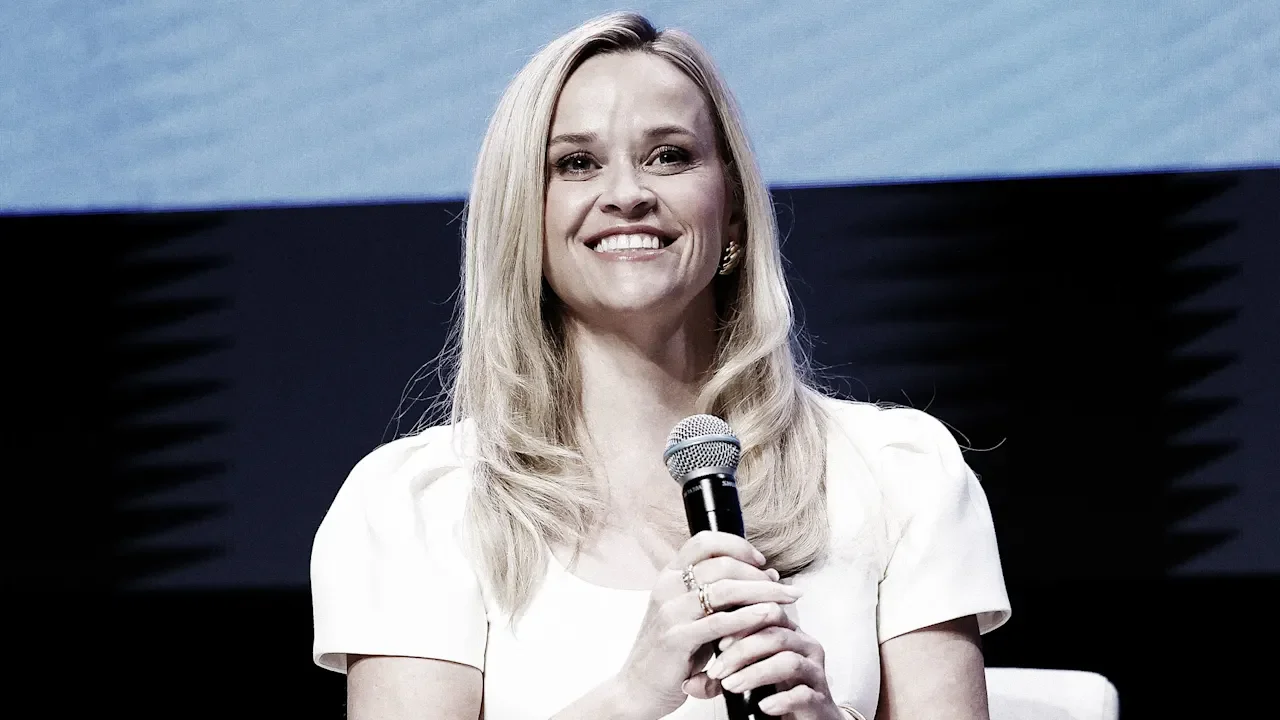
Celebrities are continuing to learn the hard way that publicly pontificating about their views on AI, like politics, might come with far more risk than reward. The latest incident involves beloved Academy Award winner and Walk the Line star Reese Witherspoon, who is facing ongoing backlash for an Instagram video she posted last week—and then again defended this week—encouraging women to learn more about AI. In a recent video posted from what appears to be her kitchen, Witherspoon told her followers that she’s worried not enough women are using AI. Her evidence: An informal poll she took at a recent meeting of her book club, where most of the members told her they weren’t using the tech. In a caption—admittedly, without sharing a source—Witherspoon pointed to statistics suggesting that women are far more likely to have their jobs automated away by artificial intelligence. Witherspoon’s original post is benign enough, though, at times, her verbiage and tone veer into sounding like sponsored content for the AI industry. “The thing I’ve learned about technology is if you don’t get a little bit of understanding from the very beginning, it just speeds past you,” Witherspoon explains in the video. “So you have to have little bits of learning just to keep up.” She concludes the video by asking if people want to learn more about AI with her. This is a big deal, given her audience. Witherspoon has 30 million followers on Instagram and manages one of the most popular and trend-setting book clubs in the country, Reese’s Book Club. The backlash was swift. Her post attracted thousands of comments, with many laying into the actor for ignoring criticisms of the AI industry, including its impact on the environment, the large power consumption required by data centers, and concerns about bias that can be encoded into LLMs. Some people accused Witherspoon of hyping up the tech industry and even posting an undisclosed ad. To defend herself, Witherspoon returned to the topic again on Monday. No, she wasn’t telling anyone to do what they didn’t want to, she conceded, but AI is already everywhere, including on Instagram. She acknowledged concerns about the tech, but stood her ground. “To be clear, no one is paying me to talk about this,” she said. “I’m planning on learning as much as possible so that I’m educated about this technological revolution.” Witherspoon’s biggest error was likely underestimating just how toxic and polarizing the conversation around artificial intelligence can be. Yes, some celebrities have leaned into the LLM era, no doubt with eyes on capitalizing on the technology and growing their fortunes. Ben Affleck even founded his own AI firm, InterPositive, which was recently purchased by Netflix. Still, the rise of AI has mostly agitated Hollywood, where creatives are rightfully anxious that AI-powered animation, avatars, and video editing stand to put many people out of work (and corrupt the creative process). Some even contend that the top AI labs might be ushering in a new era of fascism. The playwright Jeremy O’Harris recently approached Sam Altman at the Vanity Fair Oscars Party and suggested the OpenAI executive was akin to the Nazi propagandist Joseph Goebbels. It’s possible that Witherspoon, who is otherwise wealthy and extremely influential, was not the right messenger for this particular take. On the merits, though, she is absolutely correct. The gender gap in AI is absolutely real: The statistics bear out that men are using AI more than women, and women seem to be more skeptical of the technology. Researchers recently analyzed studies that spanned about 140,000 people and found that women are using AI tools at a noticeably lower rate. (This might be a double-edged sword, as women are more likely to be judged, a so-called “competence penalty”, for using generative AI, compared to their male counterparts). Still, a major risk is that AI will create a massive productivity, and then, economic gap between workers, and exacerbate inequality along the lines of gender. As workplaces look to demand AI competency from prospective applicants, people who don’t use the technology are likely putting themselves at a disadvantage. More broadly, even if you think AI is nefarious, as many of the critics opposed to Witherspoon seem to be, it is probably advantageous to understand how it works, rather than ignoring it entirely. Abstaining from the technology won’t be enough to confront the most urgent threats presented by AI, especially when it’s already being embedded into the platforms that shape our lives. After all, it’s best to know your enemy—right? View the full article

-
Google may now hold your review replies for approval before showing them in Google Maps or Google Search. Previously, those replies were immediately shown but that may have changed.View the full article
-
I know it has been a while since I covered the Google Search ranking volatility and algorithm twitches but I am now seeing signs of the volatility heating up. These signs are mostly coming from the tools; the community seems busier with other things.View the full article
-
Google is experimenting with the new tab view in Chrome. This view brings more Gemini features to the forefront, such as Deep Search and Create Images.View the full article
-
As a small business owner, comprehending how much you pay in taxes is essential for your financial planning. Your tax liability largely depends on your business structure, such as whether you’re a C corporation or a pass-through entity like a sole proprietorship. Federal tax rates can vary, and self-employment taxes add another layer of complexity. By exploring deductions and credits, you can potentially reduce your overall tax burden. But what specific factors should you consider to optimize your tax strategy? Key Takeaways Small business tax payments depend on entity structure, with C corporations taxed at a flat 21% rate. Pass-through entities face individual tax rates ranging from 10% to 37%, affecting overall tax liabilities. The Qualified Business Income deduction allows eligible small businesses to deduct up to 20% of their income. Payroll taxes, including FICA, add approximately 15.3% to the overall tax burden for employers and employees. Local and state taxes further influence the total tax obligations, varying significantly by location and business type. Understanding Small Business Taxes When you run a small business, comprehending taxes is crucial, as they can greatly influence your bottom line. Small business taxes vary considerably based on your entity structure. For instance, C corporations face a flat federal tax rate of 21%, whereas pass-through entities like sole proprietorships are taxed at individual rates ranging from 10% to 37%. You might also benefit from the Qualified Business Income deduction, which allows you to deduct up to 20% of your qualified business income if your income is below certain thresholds. Furthermore, you’ll incur payroll taxes, with the FICA tax rate totaling 15.3%, funding Social Security and Medicare. This means you, as an employer, and your employees each contribute 7.65%. Finally, don’t forget about state and local taxes, which can vary widely and further impact how much you, as a business owner, pay in taxes. Business Structure and Its Impact on Taxes Your choice of business structure can greatly affect your tax obligations. For example, C corporations face a flat federal tax rate of 21% and are subject to double taxation on dividends, whereas pass-through entities like sole proprietorships and LLCs report income on personal tax returns, resulting in individual tax rates ranging from 10% to 37%. Comprehending these differences is essential for managing your tax burden effectively and maximizing your potential savings. Tax Implications of Structures The legal structure you choose for your small business plays a crucial role in determining your tax obligations and overall financial liability. Comprehending these implications can help you make informed decisions. C corporations face a flat federal income tax rate of 21%. Sole proprietorships and LLCs are taxed at personal income rates ranging from 10% to 37%. Partnerships require a separate tax ID and file taxes on Form 1065. S corporations avoid double taxation, passing profits directly to shareholders. Employers must pay FICA taxes, totaling 15.3% of gross wages, which includes Social Security tax. To calculate FICA, consider your employees’ wages and apply the FICA tax percentage accordingly. Knowing how much is FICA and Social Security tax helps you budget effectively. C-Corp vs. Pass-Through Choosing between a C corporation and a pass-through entity can greatly impact your business’s tax obligations and overall financial health. C corporations face a flat federal income tax rate of 21%, but they likewise experience double taxation. Conversely, pass-through entities, like sole proprietorships and partnerships, avoid this by passing profits directly to owners, who are taxed at individual rates. Feature C Corporation Pass-Through Entity Federal Tax Rate 21% 10% – 37% Double Taxation Yes No QBI Deduction Not available Up to 20% Federal Tax Rates for Small Businesses In relation to federal tax rates, small business owners face a variety of structures that greatly impact their tax obligations. Comprehending these differences is essential for effective financial planning. Here’s a breakdown of what you need to know: C corporations are taxed at a flat rate of 21% on taxable income. Pass-through entities, like sole proprietorships and LLCs, are taxed based on individual income tax brackets (10% to 37%). C corporations also face double taxation on profits and dividends. Self-employed individuals pay a self-employment tax of 15.3% on net earnings, which includes Social Security and Medicare taxes. You’ll need to make estimated federal tax payments quarterly, with deadlines throughout the year. To manage your tax responsibilities effectively, it’s important to know how to calculate FICA tax and how to figure out FICA taxes for your business structure. Grasping these rates helps you stay compliant and plan your finances wisely. Revenue Levels and Their Influence on Tax Obligations Revenue levels play a significant role in shaping the tax obligations of small business owners, impacting how much you finally owe to the government. Your taxable income is calculated after deducting allowable business expenses, tax deductions, and credits from your total revenue. For 2025, individual income tax brackets for pass-through entities range from 10% to 37%, meaning higher revenue can push you into a higher tax bracket. If you operate as a C corporation, you’ll face a flat federal income tax rate of 21% on your taxable income, providing predictability in tax liability. Moreover, revenue levels influence your eligibility for the Qualified Business Income (QBI) deduction, allowing you to deduct up to 20% of qualified business income, subject to certain thresholds. If your revenue exceeds $60,000, you might benefit from electing S corporation status, which can reduce self-employment taxes on distributions compared to sole proprietorships. Location and Industry Effects on Tax Rates When you’re running a small business, your tax rates can vary widely based on where you’re located and the industry you’re in. States may impose different corporate income tax rates, ranging from 0% to over 11%, whereas pass-through entities face varying personal income tax rates that can go as high as 13.3%. Moreover, local taxes and industry-specific levies, like excise taxes on certain products, can greatly impact your overall tax obligations. Geographic Tax Variations Tax burdens for small business owners can vary widely depending on geographic location and the industry in which they operate. Comprehending these variations is essential for effective financial planning. Here are some key factors to take into account: State corporate tax rates range from 0% to 11.5%, greatly impacting profits. Individual income tax rates for pass-through entities can vary from 0% to 13.30%. Local sales tax adds to the burden, with California‘s base at 7.25% and Texas at 6.25%. Certain industries, like hospitality and retail, face higher sales taxes or excise taxes. States with no personal income tax, such as Florida and Texas, often offer lower overall tax liabilities. Being aware of these geographic factors can help you make informed decisions for your business. Industry-Specific Tax Impacts Comprehending the specific tax impacts related to your industry is essential for managing your small business effectively. Tax rates can vary greatly; for instance, service-based businesses often encounter different obligations compared to retail sectors because of their revenue and expense structures. In California, you might face corporate tax rates up to 8.84%, whereas Florida offers a lower rate of 5.5%. Furthermore, states with higher income tax rates, like New York, can increase your overall tax burden if you operate as a pass-through entity. Some industries, such as construction, have extra taxes, including sales tax on materials, raising overall liabilities. Local taxes, especially in cities like Seattle, can complicate your tax obligations further, adding layers to your calculations. Local vs. State Rates Comprehending how local and state tax rates interact can be crucial for your small business’s financial health. Both levels of taxation can greatly influence your total tax burden. Here are key factors to take into account: Local tax rates may add additional sales or business taxes on top of state rates. State corporate income tax rates fluctuate, impacting your obligations based on location. Some states impose individual income taxes on pass-through entities, complicating your tax situation. Sales tax rates vary widely; local taxes can raise these rates considerably. Industry-specific taxes, like excise taxes for alcohol or tobacco, can differ by state and locality. Understanding these elements helps you prepare for your tax responsibilities and optimize your financial strategy. Employee Presence and Payroll Taxes When you run a small business with employees, comprehending payroll taxes is vital for maintaining compliance and avoiding costly penalties. You need to pay federal income tax, Social Security, Medicare taxes (FICA), and federal unemployment tax (FUTA). The FICA tax totals 15.3% of eligible gross earnings, with you contributing 7.65% and withholding another 7.65% from your employees’ wages. For 2024, Social Security taxes apply only to the first $168,600 of earnings, which means higher earners pay a lower proportion of their income in taxes. Furthermore, your FUTA tax is 6% on the first $7,000 paid to each employee annually, but if you pay state unemployment taxes, you can receive a credit of up to 5.4%, reducing your effective FUTA rate to 0.6%. Accurate payroll tax management is imperative, as failing to remit these taxes can result in significant penalties from the IRS. Types of Small Business Taxes In terms of taxes, small business owners face various types depending on their business structure. If you operate as a C corporation, you’ll pay a flat federal income tax rate of 21%, whereas pass-through entities will see taxes ranging from 10% to 37% based on individual income tax rates. Comprehending these distinctions is essential for managing your tax obligations effectively and planning for your business’s financial future. Corporate Income Taxes Grasping corporate income taxes is essential for small business owners, as these taxes can greatly affect their financial health. If you’re operating as a C corporation, you’ll face a flat federal income tax rate of 21% on taxable income, thanks to the TCJA of 2017. Moreover, state corporate tax rates vary, impacting your overall liability. Here are some key points to keep in mind: Corporate income taxes can lead to double taxation—once at the corporate level and again on dividends. C corporations are distinct from pass-through entities. Individual income tax rates for owners range from 10% to 37%. Some states impose rates as high as 11.5%. Comprehending these taxes helps in effective financial planning. Pass-Through Entity Taxes Comprehending pass-through entity taxes is crucial for small business owners operating under structures like sole proprietorships, partnerships, and S corporations. These entities don’t pay federal income tax at the business level; instead, profits and losses are reported on your personal tax return, taxed at rates between 10% and 37%. Fortunately, the Qualified Business Income (QBI) deduction allows you to deduct up to 20% of your business income, reducing your taxable income considerably. Nonetheless, starting in 2025, you’ll face state income taxes on your business profits, which vary by state. Furthermore, you’re responsible for self-employment taxes totaling 15.3% on net earnings. Unlike C corporations, your income benefits from single taxation, avoiding double taxation on profits. Strategies to Manage Tax Liabilities Managing tax liabilities is a critical aspect of running a successful small business. To effectively minimize your tax burden, consider implementing these strategies: Take advantage of the Qualified Business Income (QBI) deduction, allowing eligible entities to deduct up to 20% of qualified business income. Maintain accurate records of business expenses, including advertising, salaries, and home office costs, to maximize deductions. Engage a tax professional who can identify available credits and tailor strategies for optimizing your business structure. Implement proactive tax planning throughout the year to manage cash flow and avoid unexpected liabilities. Utilize accounting software and automated mileage tracking to streamline record-keeping and guarantee compliance with IRS regulations. Tax Deductions and Credits Available for Small Businesses Tax deductions and credits play an essential role in helping small business owners lower their tax obligations. You can deduct ordinary and necessary expenses like salaries, rent, and utilities from your taxable income, effectively reducing your overall tax liability. Furthermore, the Qualified Business Income (QBI) deduction allows eligible pass-through entities to deduct up to 20% of their qualified business income, with certain income thresholds and limitations. You can likewise claim tax credits for specific activities; for instance, the Work Opportunity Tax Credit (WOTC) incentivizes hiring individuals from targeted groups, potentially lowering your tax bill considerably. If you use part of your home exclusively for business, you’re eligible for deductions on home office expenses, including utilities and internet. Finally, small businesses may benefit from energy efficiency tax credits and deductions for investments in renewable energy, such as solar panels, which can further reduce tax obligations. Paying Small Business Taxes: Key Dates and Methods Comprehending how to pay your small business taxes is just as important as knowing about deductions and credits. To stay compliant, you need to be aware of critical dates and methods for tax payments. Here are key points to remember: Pay estimated taxes quarterly, with deadlines on April 15, June 15, September 15, and January 15. C corporations must file income tax returns using Form 1120 and make estimated payments throughout the year. Pass-through entities, like sole proprietorships and partnerships, report income on individual tax returns, adhering to the same quarterly schedule. Payroll taxes, including FICA and federal unemployment taxes, are reported using Form 941, typically on a quarterly basis. If deadlines fall on weekends or holidays, payments are due the next business day to conform with IRS regulations. Staying organized with these dates and methods can help you avoid penalties and guarantee smooth operations for your business. Common Errors in Small Business Tax Filing When small business owners file their taxes, they often encounter pitfalls that can lead to costly mistakes. One common error is mixing personal and business expenses, which complicates accounting and can risk audits and denied deductions. Underreporting income is another frequent issue; even small amounts must be accurately reported to avoid penalties from the IRS. Moreover, failing to make timely estimated tax payments can result in late fees, as these are due quarterly on specific dates. Many likewise overlook the necessity of keeping detailed records and receipts for deductible expenses, greatly affecting tax liability. Errors in payroll tax calculations, such as misclassifying employees as independent contractors, can lead to substantial penalties and back taxes owed. Resources for Small Business Tax Planning Steering through the intricacies of tax obligations can be intimidating for small business owners, especially following the common errors that can arise during filing. Fortunately, several resources can help you navigate tax planning effectively: IRS Small Business and Self-Employed Tax Center: Offers guidance on tax obligations, deductions, and credits for various business structures. IRS Publication 535: Details deductible business expenses, enabling you to identify potential deductions that lower taxable income. Qualified Business Income (QBI) Deduction: Allows eligible pass-through entities to deduct up to 20% of their qualified business income; resources clarify eligibility and calculation. Tax Planning Software Tools: Streamline record-keeping and expense tracking, ensuring compliance and maximizing deductions. Consulting a Tax Professional: Provides customized advice on tax strategies, entity structure selection, and proactive planning based on individual circumstances. Utilizing these resources can greatly ease your tax planning process and improve your financial outcomes. Frequently Asked Questions How Much Do Small Businesses Usually Pay in Taxes? Small businesses usually face a range of tax obligations. Federal income tax rates for pass-through entities vary from 10% to 37%, whereas C corporations pay a flat 21%. Furthermore, many states impose corporate income taxes between 0% and 9.80%. Business owners with employees must likewise account for payroll taxes, totaling 15.3%, and self-employed individuals pay a similar self-employment tax. Utilizing deductions, like the Qualified Business Income deduction, can help reduce taxable income. How Much Money Does a Small Business Have to Make to Pay Taxes? You must pay taxes if your small business generates a net income of $400 or more from self-employment. This income triggers the self-employment tax obligation. Depending on your business structure, like a C corporation or a pass-through entity, your tax rates will vary. For pass-through entities, individual tax rates range from 10% to 37%. Accurate income and expense records are essential to guarantee compliance and avoid penalties once you meet these thresholds. How Much Should I Expect to Pay in Taxes as a Business Owner? As a business owner, you should expect to pay federal income taxes ranging from 10% to 37% if you’re a pass-through entity, whereas C corporations face a flat 21% rate. Furthermore, state income taxes can vary widely, impacting your overall tax liability. Don’t forget about self-employment tax, which is 15.3% on net earnings. You can lower your taxable income by deducting ordinary business expenses, like salaries and office costs. Do Small Business Owners Need to Pay Taxes? Yes, small business owners need to pay taxes. They’re required to pay federal income taxes based on their net income, with rates varying by business structure and individual brackets. Furthermore, state income taxes may apply, which differ by location. If you have employees, payroll taxes, including FICA and federal unemployment taxes, are likewise mandatory. Staying compliant with these obligations is essential to avoid penalties from federal, state, and local authorities. Conclusion In conclusion, comprehending your tax obligations as a small business owner is essential for effective financial management. Your business structure, revenue levels, and location all play significant roles in determining your tax liabilities. By utilizing available deductions and being aware of key tax dates, you can optimize your tax situation. Avoid common filing errors to guarantee compliance and maximize your deductions. Staying informed about tax planning resources will help you navigate the intricacies of small business taxes successfully. Image via Google Gemini and ArtSmart This article, "How Much Do Small Business Owners Pay in Taxes?" was first published on Small Business Trends View the full article
-
As visitors head into downtown Vancouver through the city’s False Creek Flats neighborhood, the first thing they’ll see is the Hive: a 10-story office building built out of wood and shaped like a giant honeycomb. Beneath its webbed exterior, the building is hiding a clever design system that keeps it safe from earthquakes by allowing it to wiggle, shake, and settle. The Hive, designed by the Toronto-based architecture studio Dialog, is the tallest seismic-force-resisting building made from mass timber in North America. By substituting mass timber for typical steel-and-concrete construction, the building is sequestering a total of 4,403 metric tons of CO2; equivalent to taking 1,300 cars off the road for a year. And, according to Martin Nielsen, a partner at Dialog, mass timber is naturally more resilient to seismic activity than steel and concrete. Despite these advantages, tall mass timber buildings like the Hive are rare. Whereas wood construction was the norm pre-20th century, the mass production of steel and concrete made those materials the dominant building resources over the last century. Recently, though, interest in mass timber construction has resurfaced in cities like New York, Milwaukee, and Vancouver, among others, as a way to reduce greenhouse gas emissions. As of now, there are around 2,700 mass timber buildings either constructed or in the works in the U.S.—more than double than back in 2022. In earthquake-prone regions like western Canada, this renewed interest means that architecture firms like Dialog are beginning to experiment with strategies that can make mass timber buildings both more common and more safe. With the Hive, their solution is a system of joints that take a key design cue from tectonic plates. “Concrete is the worst” The concept for the Hive started around a decade ago when an organic farming company looking for a new headquarters approached Nielsen. While that client ultimately couldn’t use the space (the building will now serve as offices for the Insurance Company of British Columbia), the initial mandate remained in place: a sustainable, wood-based building that would help pave the way for future mass timber developments in Canada. Using timber to build at scale certainly isn’t unheard of. Other examples do exist, like Milwaukee’s 25-story Ascent MKE Building, Norway’s 18-story Mjøstårnet tower, and the University of British Columbia’s 18-story Brock Commons Tallwood House, but they’re largely the exception to the rule. The issue, Nielsen says, is that building codes and policies have been structured around steel and concrete construction since the Industrial Revolution. The cost efficiency of concrete, as well as timber’s potential fire risk factors, are two key factors that have become baked into those policies over time. Even after a developer goes through the arduous task of gaining approvals for a mass timber building, they then have to contend with much higher insurance premiums. And, in the case of the Hive, which is located in a region with strict building requirements because of potential seismic activity, Dialog was facing the added stipulation of designing an ultra-earthquake-safe wooden structure. However, according to Nielsen, while steel and concrete have been the default building materials for decades, wood actually has a natural ability to resist seismic force. In fact, it’s been used in earthquake-prone regions for centuries, including in ancient Japan, where wood pagodas and pavilions were designed to move with seismic activity rather than resist it. “Concrete is the worst,” Nielsen says. “It’s really stiff, brittle, and it breaks.” Once it breaks, he adds, “it’s garbage.” In the case of a severe earthquake, rigid steel and concrete buildings may remain standing, but they’re often structurally compromised. But “wood has a bit of a bend,” Nielsen continues. “Clearly, in the case of a big earthquake, the glass might pop out, but the structure will remain sound.” How a special joint makes the Hive safer in earthquakes Most post-industrialization buildings rely on a concrete core (where the elevator shaft and stairs are located on nearly every skyscraper) as their main stabilizing support. The Hive has no core at all—instead, its seismic force-resisting properties are hidden inside its facade. During initial testing phases, Nielsen’s team decided to use a perimeter-braced structural system to avoid excess concrete use. Without the usual core keeping the building stable, its outer walls needed to be both sturdy and capable of absorbing the movement of an earthquake. To start, the designers mocked up a structure that used diagonal wood beams to evenly distribute force across all 10 stories of the building. During testing they found that this diagonal-based shell wasn’t enough to prevent potential breaks in the case of an earthquake. So the engineers returned to the drawing board and came back with something called a “tectonic joint.” The tectonic joint was invented in the wake of the deadly Christchurch, New Zealand, earthquake in 2011, when dozens of people were killed inside collapsing buildings. It’s a component that allows the joints of stabilizing beams to ever-so-slightly slide together in the case of an earthquake, letting the whole building flex to absorb the impact. “It always recenters to vertical, so the structure can be reused,” Nielsen says. “Typically, in a seismic event, you have to take the building down. It’s trying to dissipate those forces, and whether it’s concrete or steel, it is going to either yield or fail completely. So [tectonic joints] were an exciting development.” Dialog added these joints throughout their design and then headed to the University of Alberta, where they subjected a full-scale mockup of an entire story of the building to a seismic force simulation. Those tiny, imperceptible joint wiggles proved effective: The Hive passed its earthquake-readiness test, and was approved for construction. A wooden revolution When it came time to actually build the Hive, Dialog worked with a local business to source lumber from a sustainably managed forest. The amount of wood used to make the building, Nielsen says, takes just 42 minutes to naturally regenerate across British Columbia. In the meantime, the timber’s processing requires minimal greenhouse gas emissions and ensures that each beam’s CO2 remains sequestered—in other words, out of the atmosphere—for the building’s lifespan. In case of a fire emergency, the Hive is equipped with a sprinkler system and an on-site water cistern. Each wooden beam has nearly four inches of additional width so that if they were to burn, the beams would remain structurally sound for several hours. “Supply of lumber is not the issue,” Nielsen says. “We’ve talked to foresters, loggers, and forest ecologists, and we could build all our buildings out of wood.” Nielsen believes that buildings like the Hive are a first step toward securing more support for mass timber construction. In fact, after Dialog published an initial rendering of the project, the firm received $3.5 million CAD in funding (about $2.5 million USD) from National Resources Canada, a federal organization dedicated to driving wood innovation, as well as $500,000 CAD (about $366,000 USD) from the province of British Columbia. Already, the firm is looking ahead to taking its mass timber ambitions even higher. Right now, Nielsen says, he has a design ready to go for a 90-story mass timber building—he just needs a client to take it on. “We’re incredibly optimistic about the future,” Nielsen says. “The federal government of Canada has committed 13 billion to building more housing, and we think that every bit of that should be made out of wood.” View the full article

-
Alibaba ‘swiftly removed’ listings for UK Biobank dataView the full article
-
Cat Little backs PM’s claim that due process had been followed in appointing Labour grandee as ambassador to USView the full article
-
Factionalism effectively quashed the Corbynites but has undermined Keir Starmer’s leadership of party and countryView the full article
-
What Google's systems actually do with click data and what it means for SEO and rankings. The post The Facts About Google Click Signals, Rankings, And SEO appeared first on Search Engine Journal. View the full article
-
Google recently posted a new job listing for a GEO Partner Manager. The position calls for you to be responsible for the "transition Google's engagement model from Generative Engine Optimization (GEO) discovery to formal ecosystem advocacy."View the full article
-
Google has released version 24 of the Google Ads API, this is a major release with dozens of updates. This update includes changes to Demand Gen, travel feeds, conversion types, shopping, reporting, videos, and much more.View the full article
-
The point of mopping floors is to clean them, but it’s actually pretty messy, as you’re sloshing increasingly grimy water from your bucket to the floor. Are you actually cleaning, or just redistributing the filth? Joseph Joseph, a U.K. houseware design studio and manufacturer, has a new solution: a two-chamber mop bucket called the UltraClean that separates the fresh soapy water from the dirty water, and squeezes out the mophead as you go. This just might be the biggest advancement in mop bucket technology—yes, it’s a thing—since the mop wringer. The secret to the UltraClean system is its slot, which is designed to do two things at once: clean and rinse. Here’s how it works: Joseph Joseph’s UltraClean system includes a bucket, a mophead and handle, and three machine-washable microfiber mop pads. First, you fill the top reservoir with sudsy water. Then, each time you insert the mop into the bucket, a built-in scraping mechanism squeezes the dirty water into a bottom collection chamber while a mechanism above the scraper—which the company calls SprayClean—pumps fresh water onto the mophead. The SprayClean mechanism keeps the mophead clean and ensures it’s damp but not soaking wet. This means your floors dry more quickly. Joseph Joseph—which is known for sleek redesigns of everyday objects like the garlic press, kitchen scales, and microwave-safe cookware—spent four years designing the UltraClean system. While the product is practical, it also has what cofounder Antony Joseph calls a “delight factor.” Seeing disgusting, dirty water accumulate in the translucent bottom chamber is oddly satisfying. It’s a clever feature that shows you just how hard you’re working. (Cue the #CleanTok videos.) The mop was well overdue for redesign. In fact, the cleaning tool hasn’t changed all that much in over a century. In 1893, an American entrepreneur named Cassius A. White invented the mop wringer, a simple device that squeezes water out with a lever. The wringer helped and has since been integrated into commercial buckets, which are clunky and don’t separate the clean water from the dirty water. Self-wringing mops don’t solve the water issue either. Joseph Joseph’s UltraClean system gives the mop bucket a long-overdue redesign. It retails for $90, though it’s not yet available in the U.S. View the full article

-
Users of weather forum say Paris temperature data may have been manipulated for wagers on prediction market platformView the full article
-
There’s a question I ask every guest on my podcast, Inspired with Alexa von Tobel. It comes near the end of every conversation, after we’ve gone deep on business models, hard pivots, and the relentless grind of building something from nothing. The question is simple: What’s a mantra that runs through your head? I started asking it on a hunch. After years as a founder, dropping out of Harvard Business School to launch LearnVest during the height of the financial crisis, scaling it to acquisition, and then building Inspired Capital, I had come to believe that mindset wasn’t a soft variable. It was a hard one. The words we repeat to ourselves shape the decisions we make, the risks we take, and how quickly we get back up when things go sideways. What I didn’t expect was how consistent the pattern would be. Seven seasons and more than 300 conversations with some of the most ambitious founders and leaders in the world later, nearly every single person has one. A phrase. A word. A sentence they return to, especially when it’s hard. And the science tells us why that matters more than we think. The neuroscience of positive self-talk Researchers have studied positive self-talk for decades, and the findings are striking. According to psychologist Ethan Kross, people who engage in intentional self-talk, particularly using second or third person (“You can do this” rather than “I can do this”), demonstrate measurably better emotional regulation and higher persistence under stress. Referring to yourself by name or in the third person creates psychological distance, allowing you to process difficulty the way you would coach a close friend through it. This isn’t motivation-poster territory. It’s behavioral science with real implications for how leaders operate. What founders have figured out intuitively, researchers have been proving empirically: the mind responds to repetition. When you return to the same phrase under pressure, you’re essentially training a neural shortcut, a mental circuit that fires automatically when you need it most. What exceptional founders say to themselves Mine is get up, dress up, show up. Get up early to own the morning. Get dressed because how you present yourself signals something to your own brain before it signals anything to the world. And show up with 150% energy, with intention, with a positive attitude — every single day, regardless of what happened yesterday. It’s a three-beat rhythm I return to constantly. And when that’s not enough, I have a second one: onwards and upwards. Because sometimes the most powerful thing you can do is simply keep going. May Habib, founder and CEO of Writer, has a single word: forward. “On the tough days,” she told me, “my brain beats to that drum. Forward, forward, forward.” There’s something almost physical about the way she described it, a drumbeat rather than a thought. Repetition, especially under stress, converts conscious mantras into something closer to instinct. For founders navigating the relentless uncertainty of building a company, that kind of automatic anchor is invaluable. Mikey Shulman, founder of Suno, the AI music platform changing who gets to make music, shared a mantra he borrowed from a grad school colleague: go team. He first heard it after accidentally destroying a month’s worth of work. His colleague gave him a high five and said, simply, “go team.” What struck me was its intentional inclusivity. The mantra reframes both wins and losses as collective rather than individual. For anyone building a company, that shift matters enormously. Mistakes don’t belong to one person. Neither does progress. And then there’s Dr. Becky Kennedy, the child psychologist and founder of Good Inside, who shared a mantra she borrowed from her second-grade teacher: if something feels too hard, it just means the first step isn’t small enough. Stop staring at the mountain. Find the smallest possible step. Take it. It’s one of the most actionable pieces of advice I’ve encountered across seven seasons of this podcast, and it applies as much in the boardroom as it does in parenting. Why this matters for leaders I used to think strategy drove performance. Seven seasons and 300 conversations have largely convinced me otherwise, and I believe the internal architecture comes first. The words you repeat to yourself shape how you show up to every meeting, every hard conversation, every moment when the easier path is to slow down or stop. The research backs this up. Martin Seligman, the father of positive psychology and author of the landmark Harvard Business Review piece “Building Resilience,” found that people who maintain an optimistic explanatory style, treating setbacks as temporary and specific rather than permanent and sweeping, demonstrate measurably greater resilience and persistence over time. That’s not wishful thinking. It’s a trainable cognitive habit, and the founders I’ve spoken with have built exactly that, one repeated phrase at a time. The best founders don’t wait for the right conditions to feel confident or resilient. They manufacture those states daily, deliberately and repeatedly, through the simple act of returning to a phrase that anchors them. It’s not magic. It’s discipline that looks like magic from the outside. The question I’d leave you with is the same one I ask every guest: What’s yours? If you don’t have an answer, that might be the most important thing you work on this week. Not the roadmap. Not the deck. The words you say to yourself when no one else is listening, because those are the ones that shape everything. View the full article

-
Learn how to use Google Trends for SEO in 2026. Discover trends, compare keywords, and find opportunities to drive more organic traffic. View the full article
-
German aviation group Lufthansa is cutting back on flights amid fuel price surges related to conflicts in the Middle East. On Tuesday, the company announced plans to eliminate 20,000 short-haul flights through October, a decision expected to save around 40,000 metric tons of jet fuel. The adjustments to the flight schedule will impact the unprofitable routes across the Lufthansa Group network, which includes Lufthansa Airlines, Swiss International Air Lines, Austrian Airlines, Brussels Airlines, and ITA Airways. “Passengers will therefore continue to have access to the global route network, particularly long-haul connections,” the company said in a press statement. “However, due to the increase in jet fuel prices, this will be achieved significantly more efficiently than before.” The price of jet fuel has more than doubled recently due to slowed production and transportation issues, including disruptions in the Strait of Hormuz, which accounts for 41% of all European jet fuel imports. Already, 120 flights have been canceled as part of the cost-saving measure, including flights from Frankfurt to the Polish cities of Bydgoszcz and Rzeszów, and to Stavanger in Norway. These disruptions are set to remain in effect until May 31. The cuts aim to streamline operations and increase efficiency by consolidating 10 short-haul connections within the Lufthansa Group and rerouting passengers through larger hubs. The affected destinations include Heringsdorf and Stuttgart in Germany, Wrocław and Gdańsk in Poland, as well as cities in Ireland, Slovenia, Croatia, Romania, Norway, and Montenegro. Passengers trying to travel to these destinations will have to go through hubs such as Frankfurt, Munich, Zurich, Vienna, Brussels, and Rome. According to the company’s announcement, affected passengers will be contacted and notified. Additional adjustments are set to be announced in late April or early May, as the company continues revising route planning in response to capacity reductions, including short-haul summer flight offerings. Lufthansa says it expects a “stable fuel supply” for its scheduled flights this summer, and is taking measures such as fuel procurement and price hedging to reduce price fluctuations. The German airline group is not alone in taking cost-saving steps amid the ongoing conflict in the Middle East. On April 22, the Canadian airline Air Transat announced it is cutting flights, affecting routes to Europe and the Caribbean. KLM, Air India, Air New Zealand, and Delta Air Lines have announced flight cuts as well. And United Airlines has suggested forthcoming price hikes of up to 20% to offset the surging fuel costs. View the full article

-
Los Angeles just became the first major school district to put limits on screen time at school. The resolution, which was brought by Nick Melvoin, a concerned parent, passed 6-0 with one recusal. Now, screens in schools will no longer be a free-for-all. The district will have to create policies around screen time based on both grade level and subject. The resolution will also prohibit screens in first grade and below, bans screen time at recess for middle and elementary schoolers, and will restrict access to YouTube in class. Additionally, it will make clear to parents how they can go about opting out of using screens at school. Screen time is part of most children’s home lives, but in recent years, especially since the pandemic, it’s become part of their daily school day, too — even early on in their education. That means that devices like laptops and iPads are typical for elementary school aged kids. Digital teaching tools, like Google Classroom, Kahoot, and Clover, are also commonplace. However, many parents feel that their children spend enough time on screens while outside of school. They want to see a return to pencils and paper in school. That’s true for Nick Melvoin, a board member who introduced the resolution in LA. Melvoin says devices that children used to continue learning while schools were closed were a “lifeline” but that in 2026, it’s no longer necessary to have kids depending on them in school. “I believe that we have the opportunity to lead the nation, to establish comprehensive, developmentally grounded screen-time limits that puts students before screens,” Melvoin said at a meeting on Tuesday. “This is not about going backwards. This is about rethinking screen time in schools to make sure we are doing what actually helps students learn best,” he explained. The vote in LA came after pressure from local parents reached a boiling point. Parents were not only demanding meetings with school administrators and speaking out at public meetings, but they also created a group called Schools Beyond Screens. The group’s mission is for “safe and intentional technology” in schools. Currently, upon visiting the site, a message celebrating the reform appears. “Schools Beyond Screens Celebrates the Unanimous Passage of the ‘Using Technology with Intention’ Resolution!'”it reads. “On April 21, LAUSD school board members unanimously passed the ‘Using Technology With Intention’ resolution. It will pave the way for an overhaul of the district’s technology policies, in time for the 2026-2027 school year.” Anya Meksin, a mother and the deputy director of the group, told NBC News that the reform is “history” and that the group hopes it “will trickle down to the rest of the country very, very quickly.” Meskin adds, “We see this as a big cultural shift into how schools approach technology.” While similar actions have been taken in smaller districts, such as Bend, Oregon and Burke County, North Carolina, LA is by far the largest city to restrict screens in the classroom. View the full article

-
The most sustainable piece of clothing you own probably has nothing to do with recycled polyester or organic cotton. It’s the little black dress you’ve worn on repeat for 15 years and the pair of ripped Levi’s 501s you can’t imagine ever throwing away. The harder question—the one the fashion industry has never quite figured out—is how to design something like that on purpose. How do you make a garment someone loves now and will continue to wear for years? This is something Sarah Bonello thinks about constantly as she designs for her new label, The Park. After decades in fashion PR, where she developed a finely tuned sense of what the market was missing, Bonello believed there was room for a line of basics—T-shirts, simple dresses, pedal pushers—that make it easy to get dressed in the morning. She came to the conclusion that the garments we love are the ones that fit beautifully, thanks to the drape and feel of the fabric. “It was interesting to see the pieces I’ve had for 20 years that I never want to get rid of,” she says. “They’re evergreen pieces that make you feel beautiful.” Bonello set out to reverse engineer some of her favorite garments, creating a collection she believes will make women look and feel good at any age and size; 18 months ago, she launched The Park with a tightly edited collection of T-shirts, trousers, and dresses. The bet paid off faster than she expected: Retailers like Moda Operandi and Net-a-Porter started selling out of her pieces regularly, and Nordstrom has just picked up the brand. Now she’s expanding the line, making her best-selling silhouettes in new materials—velvet, a gossamer sheer—while keeping the edit deliberately tight. The Park tries to be sustainable from the ground up. Each piece is made using fabrics with a small environmental footprint, like fibers sourced from responsibly managed forests and nylon made from fashion waste. But Bonello doesn’t believe most consumers buy clothes because of their environmental credentials. What she believes—and what she’s building her entire business around—is that she can nudge customers toward more sustainable behaviors simply by making pieces they want to wear on repeat. The Anti-Trend Collection To make clothes that fit beautifully and will last for years of repeated wear, Bonello knew she needed exceptional fabrics. She scoured the market for high-quality materials from leading mills. Eventually, she came across the Spanish textile innovator Pyratex, which had created a fabric called Power 3, made from a blend of micro-Tencel and recycled elastane. These materials are sourced from sustainably managed forests and are certified by both OEKO-TEX (that tests for harmful toxins) and the Forest Stewardship Council. But what sold her wasn’t the certifications; it was how the fabrics feel. They offer a bit of compression, so you feel hugged by the garment. They’re soft and drape nicely. But they also have some of the features of technical activewear, like moisture-wicking, antibacterial, and temperature-regulating qualities. “This is too expensive of a material to use in yoga, but the clothes I am making are activewear, in a way, because we have active lives,” Bonello says. Bonello used the fabric to develop The Park’s first collection, which is narrow by design: tops, bodysuits, bralettes, straight-leg trousers, skirts, a handful of dresses—almost entirely in black, white, and neutrals. No prints. No seasonal collections. No reason to come back next month for something new, which is the whole point. Fit is where Bonello is most obsessive. Everything is pull-on; there are no fussy zippers or buttons. The designs work from size 0 to 16. The goal is a garment that fits on good days and bad ones, across years and decades. “One day I could fit into a pair of jeans, the next day I can’t,” she says. “I don’t like that feeling, so I really don’t want my [customer] feeling that way.” The fabric can go in the washing machine, packs flat, and doesn’t wrinkle. These aren’t glamorous properties, but they lead to something a wearer actually keeps. And the temperature-regulation and moisture-wicking qualities have produced some memorable testimonials. “I’ve had people say, ‘Listen, Sarah, I bought this dress with me and I wore it five days in a row and it didn’t smell,’” Bonello says. Because the fabrics are expensive and the business model is premised on quality over quantity, the prices reflect it. A simple tank starts at $135; a semi-sheer skirt runs $575. Most pieces land between $300 and $500. Many customers come to The Park because the pieces pair well with what they already own: the high-quality basics they’d been searching for to wear with their Phoebe Philo trousers or Chanel jacket. Luxury retailers understood the pitch immediately. The brand is also carried in the kind of curated boutiques where a salesperson knows the regulars by name: ByGeorge in Austin, Kick Pleat in Dallas, and Hampden Clothing in Charleston, South Carolina. What The Park is attempting has a lineage. Bonello names her references readily: Jil Sander, Phoebe Philo, even Eileen Fisher. These designers are known for their clean lines and enduring silhouettes. And importantly, their garments don’t require a specific body type, age, or cultural moment to work. It’s a tradition of fashion that treats getting dressed as a problem to be solved once, not an occasion for constant reinvention. The Fabric Obsessive Over the months as The Park has grown, Bonello has expanded her palette of materials. Each new addition filters through the same lens of how it drapes and feels on the body, coupled with sustainability. The newest line, Re-Wear, is built on a fabric made from recycled textile waste that is even softer than Pyratex Power 3—designed to feel like your favorite vintage T-shirt. Bonello has used it to create tanks and long-sleeve tees that sold out immediately and had to be restocked. A thicker, scuba-style fabric appears in turtlenecks and bralettes; it’s made from recycled polyester derived from plastic bottles and certified to the Global Recycled Standard. Several dresses come in a velvet made from recycled polyester that is both OEKO-TEX and GRS certified. And then there’s the showstopper: The sheerest pieces in the line use a material developed with Circ, a Virginia-based company that has pioneered a hydrothermal process to recover cotton cellulose from blended textile waste—one of the hardest material streams in the industry to recycle. The resulting fabric is so delicate that Bonello ships it to customers with white gloves. She’s already developing a sturdier version for future seasons. The Customer Doesn’t Care Here’s the uncomfortable truth Bonello has learned: Most of her customers (some 80%, the designer says) don’t particularly care about any of this. When she launched The Park, she led with the eco-credentials of her materials, but it didn’t move the needle. What they do care about, she found, is how well the clothes fit. So she stopped leading with sustainability. Now she leads with the clothes. The bet is that if a garment is good enough, the sustainable behavior follows on its own. It’s a counterintuitive business model, at least by the standards of an industry that has spent the past two decades accelerating in the opposite direction. The fast-fashion playbook, pioneered by Zara and perfected by Shein, is built on velocity. The goal of many brands is to get new styles to consumers as fast as possible, price them low enough to feel disposable, and count on the next trend to drive the next purchase. Even luxury brands have quietly embraced the logic, expanding their number of annual collections and leaning into “drops” (limited-edition collabs) and exclusivity to keep demand perpetually restless. The entire system is engineered to make customers feel like what they bought last season is already passé. Bonello is betting against that current. She’s creating a small edit of enduring pieces that spurs customers to buy only what they need. But to create a sustainable business, she’s counting on customers who are willing to pay more for the garments, return for additional silhouettes, and tell other people about them. “I’m trying to create pieces that will stand the test of time,” she says. “I want you to have this and own this in 10 years.” Whether The Park’s model can scale is an open question. Bonello is one designer with a small collection, swimming against an industry that generates billions of dollars from planned obsolescence. But the bet she’s making—that the most powerful sustainability argument isn’t an environmental one, it’s an aesthetic one—may actually work. You can’t guilt people into buying less, but perhaps you can make them something they love too much to replace. View the full article

-
As AI becomes more advanced in quality, leaders are increasingly invoking AI to justify unpopular decisions like layoffs. However, much of that story collapses under scrutiny, and workers know it. This gap between rhetoric and reality is eroding trust. This amplifies inequities and quietly sets organizations up for long-term cultural and performance damage. Author, speaker, and strategist Lily Zheng sees a clear pattern: executives are using AI to explain decisions that are in fact driven by past mistakes, investor pressure, or leadership preference. Companies that went on aggressive hiring sprees during the pandemic are now quietly “correcting” courses. They’re framing workforce reductions as bold AI-driven reinventions rather than acknowledging strategy missteps. Afterwards, they say that they’re “seeking productivity gains through AI. This sounds more sophisticated than “Oops, we hired too many people based on flawed assumptions.” Employees, however, live the truth that those narratives obscure. As Zheng notes, “they know firsthand that the bullish stance their corporate PR is putting out on AI and productivity is by no means reflected by reality.” When leaders insist that layoffs are due to AI efficiency, employees recognize that this can be anything from spin to outright cynicism. The emotional impact is real, and it results in a steep erosion in trust and morale that only becomes apparent in engagement scores, productivity data, and retention. The cultural cost of “AI made me do it.” Blaming AI for difficult choices hits workplace culture hard. When leaders offload responsibility onto “the algorithm,” they sidestep accountability for those who suffered job cuts, whose workloads intensify, and whose careers stall. Emerging research suggests that while only a minority of organizations have truly eliminated roles because AI is doing the work, far more are using AI as a rhetorical cover for broader cost-cutting or restructuring decisions. Just like the branding of partially-automated driving as “self-driving” led to drivers to completely take their attention off the road, the cynical branding of AI as “a replacement for people” is driving executives to completely abdicate their responsibility as leaders. This has disastrous results. The message to employees is clear: Leadership will tell whatever story is convenient to them, no matter what the data says. That perception disproportionately harms those who already depend on transparent processes and fair criteria to access opportunity. We’ve seen this film before Zheng draws a stinging parallel to the hybrid work backlash. Studies have found that well-designed hybrid models can deliver equivalent productivity with significantly lower attrition—often around a one-third reduction in resignations—especially for women, caregivers, and people with long commutes. Yet many leaders reverted to command-and-control models like imposing rigid return-to-office mandates despite the evidence. Some doubled down with digital surveillance tools that actually reduce productivity, as employees redirect energy into gaming the system and managing perceptions rather than doing meaningful work. Zheng’s point is that the same pattern is now playing out with AI. Instead of reimagining management practices, metrics, and culture to harness AI responsibly, leaders are using it to prop up familiar but ineffective habits—whether that’s centralized control, presenteeism, and blunt cost-cutting. In both cases, leaders prioritize what feels familiar over what data and research say is actually effective. From empowerment to “workslop.” We need to be more honest about what AI can and cannot do. Large language models might be powerful statistical inference tools that are ideal for complex, pattern-heavy tasks with abundant data. But they are not magical “do my job” buttons. When leaders forget this, their policies inadvertently incentivize workers to produce AI “workslop.” Fresh research shows that workslop destroys productivity: people spend time correcting unhelpful drafts, redoing incomplete analyses, and untangling confusing memos instead of advancing core work. To make matters even more déjà vu-inducing, some leaders are mandating a minimum number of hours of “AI usage” as if this were a performance metric. Zheng likens this to ordering construction workers to use a sledgehammer, even when the building renovation doesn’t require it. The tool becomes the goal, rather than the quality of the house. Zheng highlights a critical, often-missed prerequisite in creating a healthy culture around AI: strong management fundamentals. Leaders need clear norms around accountability—“you own the quality of your output, regardless of tools”—as well as transparent decision-making, and outcome-based performance metrics. Without these, AI simply magnifies existing dysfunctions. The key to building fair, worker-centered AI practices Given its well-documented propensity to propagate bias, it’s important to build fairness into AI strategy, too. The leaders who are getting this right aren’t handing out generic subscriptions and hoping for the best. They’re building and fine-tuning their own models on carefully audited, domain-specific data. Zheng recommends the following practices: Rigorously audit your internal data for bias. You need to make sure it’s clean of identifiable information and ensures compliance with regulations before training AI models. Treat AI outputs as drafts, not decisions, and make it explicit that humans remain fully accountable for outcomes. Involve organizational design experts, people practitioners, frontline employees, and legal in AI governance and tool selection, not just IT and finance. Avoid vanity metrics like “AI hours used” and measure value in terms of quality, equity, customer outcomes, and worker well-being. Build channels for employees to flag AI-related harms, workload inequities, or biased outputs—and act on that feedback. These practices not only mitigate risk but also create the norms and foundation to leverage AI safely and effectively. They signal that companies will hold technology to the same standard of accountability as any other business decision. A more honest and inclusive AI story There are some positive examples of organizations reinvesting AI-driven productivity gains into upskilling, innovation, and better jobs rather than headcount cuts. Zheng sees similar bright spots where leaders are talking about AI as a way to help “our strongest assets—our people—do more,” rather than as an excuse to declare half the workforce disposable. The real leadership test is not whether you are using AI, but how honestly you narrate its role and who benefits from it. And for future-minded leaders, that means resisting the temptation to let AI absorb blame. What they should do instead is stand squarely in the discomfort of complex, three-dimensional decisions that involve tools and people. View the full article