All Activity
- Past hour
-
 Yes, yes we all know customer behavior is changing and Reddit conversations showing up in AI search is a big part of that shift. What are you doing about it? If your Reddit marketing strategy hasn’t evolved since 2024 (or you don’t have one to start with), you’re not just behind. You might be actively harming your brand. We’re past the point of debating whether brands should be on Reddit. That part’s settled. This session is about how to navigate Reddit the right way. And, we’re going to show you exactly how to do it! I am super excited to […] The post Make 2026 The Year Your Business Thrives On Reddit [Webinar] appeared first on Search Engine Journal. View the full article
 -
Borrowers in the lowest-income areas have seen their 90 or more day delinquency rates soar since 2021, jumping from 0.5% to nearly 3%, the New York Fed said. View the full article
-
Paramount is again sweetening its hostile takeover bid for Warner Bros. Discovery, while again extending the deadline for its tender offer as it scrambles for more shareholder support. On Tuesday, the Skydance-owned company said it would pay Warner shareholders an added “ticking fee” if its deal doesn’t go through by the end of the year — amounting to 25 cents per share, or a total of $650 million, for every quarter after Dec. 31. Paramount also pledged to fund Warner’s proposed $2.8 billion breakup payout to Netflix under its studio and streaming merger agreement. The value of Paramount’s offer otherwise remains unchanged. The company is offering to pay $30 per share in cash to Warner’s stakeholders, who now have until March 2 to tender their shares. In a statement, Paramount CEO David Ellison said that the “additional benefits” announced Tuesday “clearly underscore our strong and unwavering commitment to delivering the full value WBD shareholders deserve for their investment.” Paramount wants to buy Warner’s entire company for $77.9 billion, with a total enterprise value of $108 billion including debt. Beyond studio and streaming operations, that includes Warner’s networks like CNN and Discovery. But it has a long way to go in terms of getting shareholder support — which, according to recent company disclosures, has appeared to decline over the last month. As of Monday, Paramount said that more than 42.3 million Warner shares had been “validly tendered and not withdrawn” from its bid, down from over 168.5 million Warner shares on Jan. 21. Warner has about 2.48 billion shares outstanding in series A common stock today. Paramount would need more than 50% to effectively gain control of the company. Netflix and Warner did not immediately respond to requests for comment Tuesday. The new March 2 deadline marks the third time Paramount has pushed back the expiration of its tender offer, which it may keep extending. Paramount has also promised a proxy fight. Last month, the company begun soliciting proxies to challenge Warner’s agreement with Netflix. Warner’s leadership has consistently backed the deal it struck with Netflix. In December, Netflix agreed to buy Warner’s studio and streaming business for $72 billion — now in an all-cash transaction that the companies have said will speed up the path to a shareholder vote by April. Including debt, the enterprise value of the deal is about $83 billion, or $27.75 per share. Netflix and Warner have maintained that their agreement is better Paramount’s bid. But Paramount argues that its offer is superior — and on Tuesday pointed to a “sliding scale” value of the Netflix merger, which could range from $21.23 to $27.75 per share, depending on debt spanning from Warner’s previously announced spinoff of its networks business. Unlike Paramount, Netflix doesn’t want to acquire Warner networks like CNN and Discovery. Under Netflix-Warner’ agreement, “Discovery Global” would become its own separate public company before their merger is closed. The prospect of a Warner sale to either company has raised tremendous antitrust concerns from lawmakers worldwide. The U.S. Department of Justice has initiated reviews of both Warner’s agreement with Netflix and Paramount’s hostile bid — with all three companies disclosing that they’ve been in contact with the DOJ over requests for more information. The companies have argued their proposed deals will be good news for consumers and the wider entertainment industry, claiming that merging will give streaming customers more content through bigger libraries. But unions and other trade groups have warned that further consolidation in the industry could result in job losses and less diversity in content — with particularly negative consequences for filmmaking. —Wyatte Grantham-Philips, AP business writer View the full article

-
On a construction site, plans are constantly tested by weather, labor availability, inspections and late deliveries. To stay in control of near-term work, teams rely on a lookahead schedule to focus attention on what must happen next, not what was planned months ago in the master construction schedule. What Is a Lookahead Schedule In Construction? A lookahead schedule in construction is a short-term planning view, or in other words a zoomed-in version of a fragment of the master construction schedule, that breaks upcoming work into detailed, near-future activities. It translates higher-level schedule logic into a schedule for specific tasks crews can easily understand, prepare for and execute. Unlike master schedules, lookahead schedules typically cover a two, three or six week window and focus on immediate construction task sequencing, constraints and readiness rather than long-term milestones or contractual completion dates. They sit between the overall construction schedule and daily work planning processes used across most active construction sites. ProjectManager is an award-winning construction scheduling software designed for making detailed master construction schedules and lookahead schedules thanks to its powerful project planning, scheduling and monitoring features. With ProjectManager’s Gantt chart you can visualize task dependencies, identify critical path activities, allocate resources, track costs and compare estimates vs. actual project performance. Get started today for free. /wp-content/uploads/2024/04/critical-path-light-mode-gantt-construction-CTA-1600x772.pngLearn more What Is the Purpose of a Lookahead Schedule In Construction? The purpose of a lookahead schedule in construction is to make near-term work clear, predictable and workable for field teams. It is used when upcoming tasks need clarification, coordination or confirmation before crews mobilize. Lookahead schedules are especially necessary when trades overlap, materials have lead times, access is limited or unresolved constraints could disrupt planned work in the coming weeks. They help project teams decide what must be ready before work can realistically proceed without last-minute rework or delays on site. These are the most common scenarios in which lookahead schedules are used in construction projects When upcoming work depends on inspections, permits or approvals that must clear before crews can mobilize. As trades begin to overlap and sequencing needs to be tightened to avoid crews working over or around each other. When material deliveries have long lead times and exact installation dates must be confirmed weeks in advance. After changes to scope, design or means and methods force short-term replanning without rewriting the entire master schedule. During periods of schedule instability, such as weather disruptions, labor shortages or recovery from prior delays. Benefits of Using a Lookahead Schedule In Construction By breaking a large construction schedule into near-term detail, a lookahead schedule makes upcoming work easier to understand for superintendents, foremen, trade leads, project engineers and subcontractor coordinators. Instead of interpreting abstract milestones, these roles see concrete tasks, readiness needs and timing, which improves daily coordination, short-term decision-making and communication across the site during planning meetings and weekly field huddles. Clarifies what work is actually ready to start by surfacing missing materials, approvals or access constraints before crews arrive, reducing false starts, idle time and last-minute rescheduling on active construction sites. Improves coordination between trades by showing short-term sequencing clearly, helping superintendents resolve handoff conflicts, adjust crew stacking and confirm who works where and when during upcoming construction phases, on site. Supports more reliable weekly commitments by aligning planned tasks with real constraints, so foremen promise only work that can be completed as scheduled without surprises, rework, delays or trust erosion. Creates an early warning signal for schedule risk by exposing upcoming bottlenecks weeks ahead, giving project teams time to intervene before delays impact milestones or contractual completion commitments on projects. Reduces reliance on reactive firefighting by shifting planning conversations earlier, allowing decisions to be made calmly instead of under day-of pressure from crews, managers, subcontractors and inspectors across the site. Improves communication between field and office teams by translating master schedule intent into language crews can act on immediately during daily planning, coordination meetings, briefings, walkthroughs, updates and reviews onsite. Helps maintain momentum during disruptions by recalibrating near-term priorities quickly, keeping crews productive even when original plans change due to weather, inspections, supply delays, scope changes or site conditions shifting. How to Make a Lookahead Schedule Now that we have a better understanding of the use of lookahead schedules in construction projects, let’s go through some key steps to make one. 1. Start From the Master Schedule Begin by anchoring the lookahead schedule to the approved construction schedule, which remains the authoritative plan for the project. The lookahead does not override the schedule baseline for the project, milestones or contractual dates. It simply narrows focus to the immediate stretch of work, translating the long term objectives of the project into near-term actions while respecting the task sequencing, dependencies and commitments already established at the project level. 2. Define the Lookahead Window Select a lookahead window that reflects how far ahead the team can realistically plan with confidence. Most construction projects use a two-, three- or six-week horizon, depending on trade density, procurement lead times and site complexity. Shorter windows suit fast-moving interiors, while longer ones help with coordination-heavy phases where approvals, inspections or material readiness require earlier visibility. 3. Pull Relevant Upcoming Activities From the master schedule, extract only the activities that fall within the selected lookahead window. Avoid carrying unnecessary long-term tasks into this view. If scheduled activities are too broad to manage effectively, break them into smaller, executable work packages that reflect how crews will actually perform the work in the field over the coming weeks. 4. Check Constraints and Readiness Review each lookahead activity to confirm it is truly ready to be executed. This means verifying that materials are delivered or ordered, labor and equipment are available, permits and inspections are secured, and predecessor work is complete. Any missing prerequisite should be flagged immediately so it can be resolved before crews are scheduled and productivity is impacted. 5. Adjust Task Logic and Sequencing Use the lookahead to refine how work will unfold in real site conditions. Update durations based on current productivity, resequence tasks where access or space is constrained, and align work with how crews actually move through the site. This step turns theoretical schedule logic into a practical plan that reflects weather, manpower and field realities. 6. Coordinate With Trades and Supervisors Review the lookahead schedule collaboratively with subcontractors, foremen and field supervisors. This conversation is where assumptions are tested, handoffs are clarified and conflicts are resolved. By confirming what each trade can realistically commit to, the lookahead becomes a shared plan rather than a top-down directive disconnected from on-site execution. 7. Assign Short-Term Responsibilities For every activity in the lookahead window, clearly identify who is responsible for executing and coordinating the work. Assigning ownership at this level strengthens accountability and helps supervisors manage daily priorities. When responsibilities are explicit, follow-ups are clearer and coordination issues are addressed faster as work progresses. 8. Update Weekly and Roll Forward A lookahead schedule must evolve as the project moves forward. Update it weekly by removing completed tasks, adding newly upcoming activities and reassessing constraints. This rolling process keeps the schedule relevant and ensures planning stays proactive, allowing teams to respond to changes without losing control of near-term execution. Free Construction Scheduling Templates Our library includes a wide range of free construction project management templates built for Excel, Word, Google Sheets and other formats. The following templates are especially useful for construction scheduling. Gantt Chart Template This Gantt chart template for Excel makes it easy to create a visual project schedule. You just enter your tasks along with their start dates, end dates and durations, and the chart is generated automatically, saving time and avoiding manual formatting. Construction Schedule Template This construction schedule template lets you experience ProjectManager’s online Gantt chart in a real construction scenario. It helps you build a detailed task list, define dependencies, identify the critical path and organize scheduling logic the same way teams do when managing live construction projects. Construction Scope of Work Template This scope of work template provides a clear way to document what work is included in the project. By defining tasks, deliverables and responsibilities upfront, it helps keep the schedule aligned with the agreed scope and reduces confusion as work progresses. ProjectManager Is Ideal for Construction Scheduling ProjectManager is an award-winning construction project management software equipped with powerful planning, scheduling and tracking features that allow to create detailed construction schedules, establish baselines, identify project risks and compare estimated project timelines and costs against actual project performance to quickly identify delays and cost overruns. Watch the video below to learn more! Related Construction Scheduling Content Our content library features over 100 construction blogs, templates, ebooks and other types of content to help construction project managers better understand the many moving parts that must be managed to deliver successful construction projects. Here are some of them. Construction Milestones: Milestone Schedule Example 20 Best Construction Scheduling Software for 2026 (Free & Paid) Schedule Risk Analysis In Construction (SRA) Construction Sequencing: Making a Construction Sequence Plan Schedule of Values in Construction (Example & Template Included) Construction Resource Scheduling: Making a Resource Schedule How to Make a Material Schedule for Construction The post Construction Lookahead Schedule: A Quick Guide appeared first on ProjectManager. View the full article
-
Dono becomes the latest platform focused on expediting property records searches to benefit from funding in 2026, as investors show support for AI development. View the full article

- Today
-
We may earn a commission from links on this page. A typical strength- or muscle-building workout happens in sets. You lift the weight a certain number of times (“reps”), then you put it down for a quick rest before going again. But how long should that rest be? The answer will depend on a few factors, including the purpose of the workout. And a lot of us aren't resting enough. Why rest times matterLet's talk about the point of rest times. If you can keep moving for an entire workout without ever stopping to rest, you're probably not doing very effective strength training. Cardio can be continuous; most forms of strength training require that you work so hard you must rest. So we do our strength exercises in "sets" of some number of "reps." You do 10 reps of shoulder press, and then put the weight down for a minute or so. By resting appropriately, you give your muscles time to recover so they can do another set. The longer the rest, the heavier the weight you can usually handle in the next set. But there are pros and cons to long and short rest times. The longer you rest between sets, the more recovered you'll feel. But the shorter your rests, the more work you'll be able to do in a given gym session. Choosing the most appropriate rest time for each exercise will get you the best gains in the gym. But the optimal rest time will depend on what kind of exercise you're doing and what your goals are. So let's go over some pros and cons of long and short rest times. When to use long rest timesLonger rests (say, three minutes or more) are best for strength workouts where the goal is to improve both your strength and your skill at lifting heavy weights. After all, you need practice at lifting heavy if you want to be able to lift heavy. After you put a heavy barbell down, you'll need several minutes for your body to be ready to do another big lift. Long rest times are best for: Compound exercises (those that use many muscles) like squats, deadlifts, snatches, and power cleans. Heavier weights. If you're working with barbells or doing fewer than 8 reps, you probably want a nice long rest. Ambitious strength goals. If you have a goal in mind—someday bench 225, for example—the kind of training that will get you there will require heavy weights and long rests. In the three to five minutes you might rest between sets of (say) barbell squats, the ATP in your muscles regenerates. You get some blood flow to bring oxygen and nutrients into your muscle cells, and flush away metabolic byproducts. Resting for several minutes gives you the best chance of coming back to the next set at full strength. The longer you rest—within reason—the more fully recovered you’ll be for the next set. If you only allow yourself one minute, you’ll still be fatigued when you pick up the weight again. But if you wait longer, you’ll be able to handle more weight. The downsides of long rest timesThe main disadvantage of long rest times is time management. Your workouts will be longer if you rest five minutes between exercises instead of one or two. You may also find yourself getting distracted between sets. You scroll social media for a bit, and somehow it's been eight minutes since you last touched a weight. Setting a timer can help with this. Some people get antsy during long rests, and will pass the time by doing pushups or jumping jacks. That kind of defeats the purpose of long rests. Save the supersets for your accessory work afterwards, not the main lift where you're trying to go heavy. How long is a "long" rest time? For an exercise where you're using large muscle groups (like a squat or deadlift), five minutes is typical once you're up to your heaviest working weights for the day. Warmup sets don't need as much time. For exercises where you're working on strength but it's a lighter lift or uses smaller muscles (like overhead press), two to three minutes is usually plenty. When to use short rest timesWhen it comes to muscle growth, also called hypertrophy, shorter rests can make more sense. To be clear, strength and muscle growth are related, but not the same thing. If you aren't interested in lifting the heaviest weight possible, just in making your muscles bigger or your body more "toned," you would want to pay attention to the best rest times for hypertrophy. These will be shorter than for pure strength. Use short rests for: Isolation exercises (those that only target one muscle group at a time). Lighter weights. "Accessory" exercises with small weights don't need as much rest time. Training for muscle size when strength is less important. If you don't care how much weight you're lifting, and you just want to move a weight and be done with your workout, short rests can help keep the workout moving while still giving your muscles something to do. Traditionally, trainers say that 90 seconds or less is a good rule of thumb. (The National Academy of Sports Medicine recommends 0 to 60 seconds; the personal training textbooks from the National Strength and Conditioning Association and the American Council on Exercise both recommend 30 to 90 seconds.) But research has shown that short rest periods may not actually be better for muscle growth than longer ones. A 2016 study found that three-minute rest periods actually yielded more muscle growth than one-minute rests. The authors think this is because the men in their three-minute group (yep, the study was only done on men) were able to use heavier weights than the men in the one-minute group. Since the number of sets was the same in both groups, this means the three-minute group lifted more weight. A more recent meta-analysis also comes down on the side of longer rests. According to the studies they included in the analysis, the authors found that 30 to 60 seconds is likely too short. Resting one to two minutes between sets is best for muscle growth, they say. But according to this, more than two minutes doesn't really help, and may slow down your workout enough that you get fewer sets in. The downsides of short rest timesThe shorter your rests, the lighter weights you'll work with. This is fine if you're trying to make do with light dumbbells, but it means you're not getting practice with heavier weights. Most of us want to be jacked and strong, so short rest times mean you're biasing yourself to the muscle size side of the equation. Very short rest times (less than a minute) may also interfere with your ability to make the biggest gains, as the studies above noted. You may be able to make up for this by doing more sets of the exercise. If you enjoy the go-go-go feeling of short rests, that may be totally fine with you. Add an extra set or two and you know you're using your time well. For the rest of us, though, slowing down and taking a full minute between sets will be better than rushing it. How long is a "short" rest time? One to two minutes is likely the sweet spot, according to recent studies. That's on the higher end of the recommended 30 to 90 seconds. It's fine to do some of your rests shorter and some longer, but if you'd like me to tell you what to punch in on your timer, go with 90 seconds. How to get the benefits of both long and short rest timesUltimately, you may be best off using a mix of long and short rest times, which is how a lot of strength training programs are designed. Use longer rest times for a few big compound lifts at the beginning of the workout (like squats or bench press) and shorter rest times for circuits, accessories, or isolation exercises afterward (like curls or glute bridges). Supersets are a great way to split the difference. If you work different muscle groups in two different exercises, you can do one exercise while the other muscles rest. This isn't your best option if you truly want all your energy and focus to go toward one lift (like if you're working up to a PR on your bench press) but it's a great way to do hypertrophy work. For example, try this: Do a set of pull-ups Rest 30 seconds Do a set of pushups Rest 30 seconds In this example, if it takes you 30 seconds to do the set of pushups, you've rested 90 total seconds in between your first set of pullups and your second set of pullups. How long to rest between sets of specific exercisesOkay, but what if you want to get stronger and grow muscle? What if you want to stop overthinking the specifics and do whatever rest period makes you look like a normal person at the gym who knows what they’re doing? Here’s a cheat sheet: For pushups and pull-ups: If you do a small to medium number of reps (less than 12), treat them as a strength exercise and wait three to five minutes between sets. If you’re one of those people banging out 20 or 50 at a time, you probably want to take rests of about a minute so that fatigue can make your next set a bit shorter and you can finish your workout in this lifetime. For barbell squats and deadlifts: These are compound lifts that use many muscles in your body. They’re pretty much always done (relatively) heavy, and it’s useful to build strength in these moves. Treat them as a strength exercise and wait three to five minutes. For bench press, overhead press, chest press, and shoulder press: These involve smaller muscles and less weight than squats and deadlifts, but they still qualify as compound, strength-focused exercises. Two to three minutes will be enough, most of the time, but take up to five on heavy sets if you need to. For rows and lat pulldowns: Same as the presses, for the same reasons. Two to three minutes may be enough, but up to five would still be reasonable. For isolation exercises: if you’re trying to feel the burn or the pump, short rests will really help you here. Take 30 seconds between sets. These are just guidelines, so feel free to experiment. If you want to work on your cardiovascular conditioning, take a little less rest between sets. If you’ve already done a big set of bench presses today, do the rest of your arm and chest accessories with shorter rest periods. All your questions about rest times, answeredLet's do a lightning round, since I know rest times are a huge subject of discussion among people who are getting the hang of the gym routine. But first, a plea for you to not overthink this: if you simply rest until you feel ready to go again, you'll probably do ok. Is three minutes' rest between sets too much?No. If you're trying to move a heavy weight, you probably want to rest a minimum of three minutes. If you're training for muscle size (and don't care as much about strength), you could shorten your rests a bit. Still, it's not bad to rest too long, just slightly inefficient. Can you rest an hour between sets? At that point I wouldn't call it a rest time, just a different workout. When you come back to the gym after that hour, you'll need to warm up all over again. I would say if it's been more than 10 or 15 minutes between sets, or if you feel like you're physically cooling down, it's worth doing some kind of exercise just to keep your body ready. This could be pushups while you're waiting for a bench to free up, for example. How long should I rest if I'm new to the gym? As a noob, you're probably not lifting very heavy (yet). That means you don't have a lot to rest from. Say you're doing squats: your body is still learning how to squat at all. You aren't taking 300 pounds for a ride and needing to rest several minutes to recover. For that reason, newer people may not need to rest as much. Two minutes between squat sets? Sure, that's fine if you feel ready. The pitfall here is that if you get used to taking short rests, you could end up working with weights that are too light for you. After your first few weeks at the gym, make sure to do some of your heavier lifts with longer rest times (at least three minutes) and see if you feel fresher. What happens if I don't rest between sets?If you can do multiple sets of an exercise without resting in between, you're not using an appropriate weight. There's supposed to be a difference between three sets of 10, and one set of 30. If your workout says to do 3x10, you're supposed to feel tired enough after that 10th rep that you need to rest at least a minute or two before going again. And yes, it can be awkward to be standing around in the squat rack, doing nothing or even scrolling on your phone while others are waiting. But remember: Everybody rests between sets! Or at least, they should. View the full article
-
The class action lawsuit, which picks up from a lingering 2022 case, says over 787,000 plaintiffs across 36 states were unfairly charged a combined $15 million. View the full article
-
Salesforce has unveiled a significant advancement in its AI capabilities, directly targeting small businesses seeking to optimize their processes. By integrating with Anthropic’s Model Context Protocol (MCP), Salesforce allows users to leverage the powerful AI assistant, Claude, within their daily workflows, particularly in tools like Slack and Agentforce 360. This integration aims to make AI functionality more accessible and practical for smaller enterprises, streamlining operations and enhancing productivity. The new bi-directional extensions enable businesses to harness detailed Salesforce context in their AI interactions, ensuring that the insights generated are not only intelligent but also relevant to their specific operational requirements. “By partnering with Anthropic, we are bringing Salesforce directly into our customers’ flow of work,” said Nick Johnston, SVP of Strategic Tech Partnerships at Salesforce. This integration allows small business owners to work within familiar environments like Slack, without needing to switch between multiple platforms, thus maintaining workflow continuity. Utilizing Claude in conjunction with Salesforce offers several key benefits tailored for small business needs. First, with the integration, users can pull crucial customer insights and conversation context directly from Slack into Claude. This means business owners can draft and refine communications, whether it’s proposals, customer outreach, or internal reports, using AI to enhance creativity and precision. The seamless transition from ideation to execution helps eliminate potential miscommunication or error that can arise from switching tools mid-task. Additionally, as the extension for Agentforce 360 rolls out, Claude will further empower users by allowing them to trigger Salesforce-native actions directly from their AI interactions. This functionality ensures that every piece of generated insight can be directly actionable within their existing Salesforce systems, an essential feature for small business owners who prioritize agility and efficiency. Despite the clear advantages, small businesses might face some challenges as they adopt these new tools. First, integrating AI into daily operations requires a degree of comfort with technology, which may not be the norm for all small business leaders. Owners may need to invest time and resources into training staff to utilize these tools effectively. Moreover, concerns surrounding data security and privacy are paramount, particularly for small businesses in regulated industries. Although the new integrations promise robust safeguards, such as keeping customer data within Salesforce-managed clouds and adhering to existing security protocols, business owners must remain diligent about understanding how their data is utilized and protected. Salesforce’s commitment to an open and extensible platform also implies that businesses can look forward to future enhancements as technology evolves. The integration of AI capabilities across platforms fosters interoperability, which is essential for small businesses that rely on multiple software solutions. It’s also worth noting that the advanced functionalities aren’t solely for tech-savvy companies. The intuitive design aims to accommodate users of varied technical proficiency levels, ensuring ease of use while maintaining robust output quality. In a landscape increasingly dependent on AI-driven insights, the partnership between Salesforce and Anthropic represents a scalable solution ideal for small businesses. Leaders like RBC Wealth Management have already leveraged these tools to automate key operational tasks while maintaining data integrity and security. For small business owners keen on elevating their operational capabilities with AI, this integration provides a unique opportunity to streamline processes, enhance productivity, and ultimately, drive better customer engagement. With the right approach, embracing these advancements could set them on a path toward significant operational excellence. To learn more about this innovative integration and how it can benefit your business, visit the original announcement at Salesforce. Image via Google Gemini This article, "Salesforce Integrates Slack and Claude for Streamlined AI Workflows" was first published on Small Business Trends View the full article
-
Salesforce has unveiled a significant advancement in its AI capabilities, directly targeting small businesses seeking to optimize their processes. By integrating with Anthropic’s Model Context Protocol (MCP), Salesforce allows users to leverage the powerful AI assistant, Claude, within their daily workflows, particularly in tools like Slack and Agentforce 360. This integration aims to make AI functionality more accessible and practical for smaller enterprises, streamlining operations and enhancing productivity. The new bi-directional extensions enable businesses to harness detailed Salesforce context in their AI interactions, ensuring that the insights generated are not only intelligent but also relevant to their specific operational requirements. “By partnering with Anthropic, we are bringing Salesforce directly into our customers’ flow of work,” said Nick Johnston, SVP of Strategic Tech Partnerships at Salesforce. This integration allows small business owners to work within familiar environments like Slack, without needing to switch between multiple platforms, thus maintaining workflow continuity. Utilizing Claude in conjunction with Salesforce offers several key benefits tailored for small business needs. First, with the integration, users can pull crucial customer insights and conversation context directly from Slack into Claude. This means business owners can draft and refine communications, whether it’s proposals, customer outreach, or internal reports, using AI to enhance creativity and precision. The seamless transition from ideation to execution helps eliminate potential miscommunication or error that can arise from switching tools mid-task. Additionally, as the extension for Agentforce 360 rolls out, Claude will further empower users by allowing them to trigger Salesforce-native actions directly from their AI interactions. This functionality ensures that every piece of generated insight can be directly actionable within their existing Salesforce systems, an essential feature for small business owners who prioritize agility and efficiency. Despite the clear advantages, small businesses might face some challenges as they adopt these new tools. First, integrating AI into daily operations requires a degree of comfort with technology, which may not be the norm for all small business leaders. Owners may need to invest time and resources into training staff to utilize these tools effectively. Moreover, concerns surrounding data security and privacy are paramount, particularly for small businesses in regulated industries. Although the new integrations promise robust safeguards, such as keeping customer data within Salesforce-managed clouds and adhering to existing security protocols, business owners must remain diligent about understanding how their data is utilized and protected. Salesforce’s commitment to an open and extensible platform also implies that businesses can look forward to future enhancements as technology evolves. The integration of AI capabilities across platforms fosters interoperability, which is essential for small businesses that rely on multiple software solutions. It’s also worth noting that the advanced functionalities aren’t solely for tech-savvy companies. The intuitive design aims to accommodate users of varied technical proficiency levels, ensuring ease of use while maintaining robust output quality. In a landscape increasingly dependent on AI-driven insights, the partnership between Salesforce and Anthropic represents a scalable solution ideal for small businesses. Leaders like RBC Wealth Management have already leveraged these tools to automate key operational tasks while maintaining data integrity and security. For small business owners keen on elevating their operational capabilities with AI, this integration provides a unique opportunity to streamline processes, enhance productivity, and ultimately, drive better customer engagement. With the right approach, embracing these advancements could set them on a path toward significant operational excellence. To learn more about this innovative integration and how it can benefit your business, visit the original announcement at Salesforce. Image via Google Gemini This article, "Salesforce Integrates Slack and Claude for Streamlined AI Workflows" was first published on Small Business Trends View the full article
-
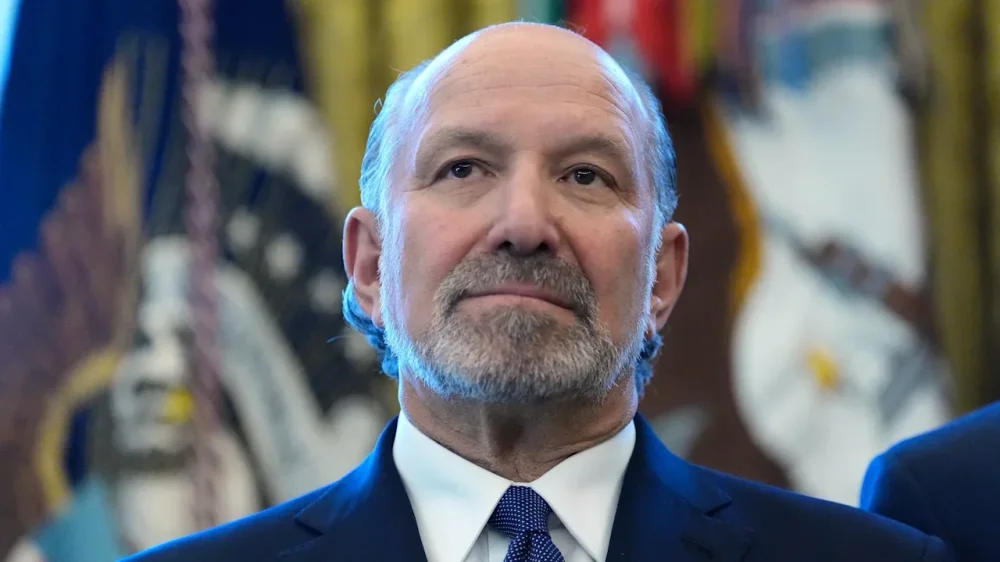
Under questioning from Democrats Tuesday, Commerce Secretary Howard Lutnick acknowledged that he had met with Jeffrey Epstein twice after his 2008 conviction for soliciting prostitution from a child, reversing Lutnick’s previous claim that he had cut ties with the late financier after 2005. Lutnick again downplayed his relationship with the disgraced financier who was once his neighbor in New York City as he was questioned by Democrats during a subcommittee hearing of the Senate Appropriations Committee. He described their contact as a handful of emails and a pair of meetings that were years apart. “I did not have any relationship with him. I barely had anything to do with him,” Lutnick told lawmakers. But Lutnick is facing growing scrutiny, including calls for his resignation, from lawmakers after the release of case files on Epstein contradicted Lutnick’s claims on a podcast last year that he had decided to “never be in the room” with Epstein again after a 2005 tour of Epstein’s home that disturbed Lutnick and his wife. The commerce secretary told senators Tuesday that he and his family actually had lunch with Epstein on his private island in 2012 and he had another hour-long engagement at Epstein’s home in 2011. Lutnick, a member of President Donald The President’s Cabinet, is the highest-profile U.S. official to face bipartisan calls for his resignation amid revelations of his ties to Epstein. His acknowledgement comes as lawmakers are grasping for what accountability looks like amid the revelations contained in what’s known as the Epstein files. In countries like the United Kingdom, the Epstein files have triggered resignations and the stripping of royal privileges, but so far, U.S. officials have not met the same level of retribution. Senators want to dig into Lutnick’s ties to Epstein Sen. Chris Van Hollen, the Democrat who questioned Lutnick, told him, “There’s not an indication that you yourself engaged in any wrongdoing with Jeffrey Epstein. It’s the fact that you believe that you misled the country and the Congress based on your earlier statements.” Van Hollen, D-Md., stopped short of calling for Lutnick’s resignation on Monday, but requested documentation from Lutnick on any of his ties to Epstein. “It’s absolutely essential that he provide Congress with those documents, given the misrepresentations he’s made, and then we’ll go from there,” he said. Lutnick during the Senate hearing said he would give that request some thought, adding, “I have nothing to hide.” However, several Senate Republicans were also questioning Lutnick’s relationship with Epstein. Sen. Roger Wicker, R-Miss., said the visit to Epstein’s private island “would raise questions.” And Sen. Thom Tillis, R-N.C., told reporters, “It’s something I’m concerned with.” Tillis stayed away from calling for Lutnick to leave his post, but added that “he would do himself a service by just laying exactly what and what did not happen over the course of what seems to be an interesting relationship that included business entanglements.” A pair of House members call for resignation Meanwhile, House members who initiated the legislative effort to force the release of the files are calling for Lutnick to resign. Republican Rep. Thomas Massie of Kentucky called for that over the weekend after emails were released that alluded to the meetings between Lutnick and Epstein. Rep. Ro Khanna, a California Democrat, joined Massie in pressuring Lutnick out of office on Monday. “Based on the evidence, he should be out of the Cabinet,” Khanna said. He added, “It’s not about any particular person. In this country, we have to make a decision. Are we going to allow the rich and powerful people who are friends and (had) no problem doing business and showing up with a pedophile who is raping underage girls, are we just going to allow them to skate?” —Stephen Groves, Associated Press View the full article
-
As mortgage rates sank to near 6% in January, consumers looked to do rate-and-term refinances, while originators offered more ARMs and cash-out loans. View the full article
-
A reader writes: I work for a large, quickly growing international business headquartered in the United States. I’m in HR and often collaborate with finance. My work is challenging, exciting, and I feel valued as an employee. But that’s actually part of the problem. Not to accidentally quote Liam Neeson, but I have a particular set of skills that makes me very difficult to replace. I have strong job security, I’m paid well enough to support my family, I have decent benefits, and I love my coworkers. But I have also been burnt out for over a year. Being neurodivergent and learning how autistic burnout differs from standard burnout has been a wild ride. My managers (yes, plural) are actually very supportive and caring. I was able to sit down with them four months ago and express that I need extra support. The projects I’m working on are too much for me to handle on my own, and because no one else can do the work I do, I’m the owner, point of contact, and bottleneck for a series of projects that are simply never-ending. There is a plan for me to take FMLA to recover, I’ve found and invested in more supports to limit my sensory stimulation in the office, and I’ve been able to instill some boundaries around my work time, but it’s just not enough. They’ve been trying to hire either a junior or a manager to join our team specifically to assist with my job duties, and I trust that they’re doing their best, but this is a difficult job to fill. And the result is I still feel overworked and unprotected from executives, and my mental and physical health are still declining. I have been working with my therapist about feeling guilty for considering quitting. I don’t intend to leave (a) before my current project concludes at the end of Q1 and b) until after my FMLA is concluded, but I also want to have a discussion with them about how they’re at risk of losing me. I’ve been burned out for so long that I’m struggling to even put into words what would need to change in order for me to stay! I know I can’t demand executive behaviors or company culture change, and they are actively trying to hire support. If I leave, so many of the company’s initiatives will come to a halt. I love the work that I do! There are projects and processes that I’ve built from the ground up that I have real pride in and result in really nice feedback from executives, but I haven’t had time to properly document how to replicate them. I don’t feel like I can confide in anyone because we all report to the head of HR. And while I have every reason and past experience to trust that my bosses care about me and wouldn’t retaliate, I can’t afford to do anything to put my job in jeopardy. And I don’t trust that it’s any better anywhere else! How do I have this conversation? Or do I just stay silent and commit to leaving? The way your managers should be looking at this is that they can choose between you doing less work now or you doing no work not too long from now. As painful as they might find the first option, won’t the second option be worse, given how much trouble they’re having even hiring someone just to help you? In other words, either they stomach pulling back on some of your projects now or they lose you altogether and then all those projects grind to a halt. That’s the main contradiction I see in your letter that I don’t think you’re focusing on clearly: if you can’t pull back on your workload now because you’re indispensable, that makes it all the more urgent that they find a way to let you pull back on it … because otherwise you won’t be doing any of it. Now, frankly, it’s okay if they lose you altogether! That’s not your problem to solve for them, and you shouldn’t feel pressured to sacrifice your health and well-being because you’ll be difficult to replace. That’s something they should have been planning for long before now — because you could leave for another job tomorrow, or fall down a well, or all sorts of things that make it terrible planning to have one person as a single point of failure for important work. The fact that they haven’t done that and instead have been content for you to feel it’s all on your shoulders to keep afloat —even when you explicitly told them it was too much — is not good. I understand that you like them and feel they’ve generally been supportive and caring, but that just means that you owe them good work while you’re there and reasonable notice when you leave; it does not mean you owe them your health or quality of life. That’s true in every job, and it is extra true in jobs where you’ve already given an unreasonable amount of yourself. (Ironically, though, giving an unreasonable amount of yourself tends to intensify people’s feelings of obligation rather than lessening them, because it makes you more personally invested in the work.) So if you would rather not try to convince them they need to take things off your plate right now, that is okay! You can just quietly plan to leave at a time that makes sense for you, and you don’t need to put more energy into convincing them to change things. But if you want to have that conversation, the framing to use is: “I’m at the point where I need things off my plate now and can’t keep waiting. I know that there’s no one else to take on some of this, but the choice is that we either remove some of it now — even if it means putting some projects on hold — or we end up in a situation where none of it gets done because the job won’t be sustainable for me to stay in.” Of course, that assumes that a lower workload would solve for this for you. If your burnout is really about executive behavior or company culture, then you’re right that those things are highly unlikely to change. If that’s the case, this conversation may not be worth it, and you should just go ahead and quietly plan your departure. It’s hard to tell how much is that versus workload because you’re not even allowing yourself to consider that a lower workload is possible. (But again, your employer can have some of it done or none of it done, so a good manager will figure out a way to scale things back for you.) The post should I tell my bosses their efforts to support me aren’t enough and they might lose me? appeared first on Ask a Manager. View the full article
-
Don’t feel bad splurging on that $7 latte the next time you’re in a mid-afternoon attention slump. A new study published in the Journal of the American Medical Association this week provides some strong evidence that drinking coffee and tea is linked to a lower risk of developing dementia. The longitudinal research followed a group of around 130,000 people for more than 40 years, collecting behavioral and health information over the course of their lifetimes. The results paint a clear picture: People with a habit of drinking two to three cups of coffee or one to two cups of tea on a daily basis demonstrated a lower risk of dementia compared to their less caffeinated peers. People who drank up to five cups of coffee had around 20 percent less risk of dementia, while those who drank one or more cups of tea showed 15 percent less of developing the neurodegenerative condition. Decaf coffee wasn’t linked to the same benefits, according to the new research. Caffeine is the key ingredient that appears to be providing some protection from cognitive decline for coffee and tea drinkers, possibly through its ability to reduce inflammation in the brain. The molecule we rely on to wake us up in the morning has also shown promise in reducing insulin sensitivity and lowering the risk of type 2 diabetes – a big risk factor for age-related cognitive decline. While caffeine appears to be the magic ingredient, other substances in coffee and tea have also been shown to positively impact health. “Beyond caffeine, coffee and tea contain bioactive compounds like polyphenols, chlorogenic acid, and catechins, which offer antioxidant and vascular benefits by reducing oxidative stress and improving cerebrovascular function,” the researchers wrote. “Furthermore, tea components such as epigallocatechin-3-gallate and L-theanine may provide additional benefits by enhancing relaxation and neuroprotection.” Coffee and tea show promise but questions remain With such a massive sample size and so many years of data, the new research on dementia and caffeine is about as robust as an Italian dark roast. Still, the study’s design – asking people about their behavior and tracking their diagnoses – doesn’t lend itself to causal explanations. While the evidence that caffeine provides some neuroprotective effects against one one of the most devastating age-related conditions is exciting, scientists still can’t definitively say what causes the decreased risk, only that coffee and tea intake is correlated with less risk. In the analysis, the research’s authors did control for participants’ genetic risk of developing dementia along with an array of other potential confounding factors, including education, socioeconomic status, smoking, exercise habits and medication use. In spite of its scale and depth, the NIH-funded study still has a few notable limitations beyond the observational nature of its design. The study exclusively relied on large, gender-divided data sets collected from people who work in health-related jobs, drawing on the Health Professionals Follow-up Study and the Nurses’ Health Study. It also did not collect granular data about the kind of tea the participants consumed, so it’s not clear if green and black tea are created equal or if only caffeinated tea showed promise for keeping people sharp as they age. While the link between coffee and reduced dementia risk is promising, more coffee also doesn’t necessarily mean less risk. Researchers found that the positive impact tapered off after two or three cups of coffee and one to two cups of tea, so don’t go ordering that quad shot or black eye hoping to squeeze even more benefit out of your caffeine intake. Caffeine raises your heart rate and can raise blood pressure too, so keeping your body’s full health picture in mind is important. View the full article

-
When it relates to boosting engagement, comprehending the different types of marketing posts can make a significant difference. By incorporating visually appealing content, interactive polls, and user-generated content, you create a more inviting atmosphere for your audience. Behind-the-scenes glimpses, educational infographics, and strong calls to action likewise play crucial roles in this strategy. Each type serves a specific purpose, contributing to a well-rounded marketing approach that captures attention and drives interaction. So, what’s the next step in enhancing your strategy? Key Takeaways Use visually appealing content, such as images and videos, to increase shares and engagement by up to 150%. Incorporate polls and surveys to gather feedback and enhance brand loyalty, boosting engagement rates by 30%. Leverage user-generated content (UGC) to foster community and increase likes and engagement by 4.5 times. Share behind-the-scenes glimpses to humanize your brand and spark conversations while enhancing authenticity. Implement engaging calls to action (CTAs) with clear language to significantly increase interaction and conversion rates. Visually Appealing Content How can you improve your social media posts to capture more attention? Start by focusing on visually appealing content, as it greatly boosts engagement. Posts featuring images or videos receive 150% more shares than text-only updates. Consider creating educational infographics that summarize complex topics; these are shareable and visually attractive, increasing audience interest. With 81% of consumers favoring short-form videos on platforms like Instagram and TikTok, incorporating engaging video content is crucial. Furthermore, aim to produce “savable” content with strong visuals and relevant keywords on Facebook and Instagram, enhancing discoverability. Utilizing tools like Canva for graphic design can help you create unique, eye-catching visuals that resonate with your audience, making your marketing posts more effective. Social media marketing services for small businesses can guide you further. Polls and Surveys Engaging your audience through polls and surveys can greatly improve your social media strategy. With 63% of consumers appreciating brands that seek their opinions, you’re promoting a sense of connection. Utilizing interactive features like Instagram Stories or Twitter polls can increase engagement rates by up to 30%. Polls not only encourage participation but likewise provide valuable insights into audience preferences, allowing you to tailor content effectively. When you ask engaging questions about products, participants are 50% more likely to share their thoughts. By regularly incorporating polls and surveys into your content, you amplify brand loyalty; 70% of respondents feel more connected to brands that value their feedback. This approach can considerably strengthen your relationship with your audience. User-Generated Content User-generated content (UGC) serves as a compelling tool for brands looking to improve their social media presence and cultivate community engagement. By leveraging UGC, you can boost brand trust and authenticity as you encourage follower interaction. Here are three key benefits of incorporating UGC into your marketing strategy: Increased Engagement: Posts featuring user-generated content receive 4.5 times more likes than traditional brand posts. Community Building: UGC promotes a sense of belonging, leading to a 28% boost in engagement as followers connect over shared experiences. Improved ROI: Brands using UGC often see a 20% increase in return on investment compared to those relying solely on traditional methods. Utilizing UGC effectively can greatly impact your brand’s online presence and consumer relationships. Behind-the-Scenes Glimpses Behind-the-scenes glimpses are an effective way to showcase team collaboration and daily operations, giving your audience a closer look at what makes your brand tick. By sharing insights into your team’s dynamics and the processes that drive your organization, you create a sense of transparency that encourages engagement. Highlighting these aspects not just humanizes your brand but likewise helps differentiate you from competitors by offering a unique perspective that resonates with your audience. Team Collaboration Insights When you share insights into your team’s collaboration, you not just humanize your brand but likewise create a sense of community among your audience. This transparency can greatly improve your brand’s loyalty and engagement. Here are three effective ways to showcase team collaboration: Visual Content: Share photos and videos of brainstorming sessions or team activities, as posts with images receive 150% more shares than those without. Highlight Projects: Spotlight collaboration on innovative projects, demonstrating your commitment to quality and creativity, which encourages audience interaction. Encourage Discussion: Post relatable insights from team members, sparking conversations and comments, as audiences engage more with authentic experiences. Utilizing these strategies can strengthen connections and nurture a loyal community around your brand. Daily Operations Highlights Daily operations play a crucial role in shaping your brand’s identity, as they provide a window into the everyday workings of your team and processes. Behind-the-scenes posts humanize your brand, nurturing authenticity and relatability. Visual content can greatly boost engagement; posts with images receive 150% more shares than those without. By sharing candid moments and team activities, you improve transparency, building trust and a sense of community. Highlighting interactions among team members or unique workplace aspects encourages audience connection. Regular behind-the-scenes content keeps followers engaged and invested in your brand’s experience, leading to a more loyal audience. Daily Operations Activities Impact on Engagement Team brainstorming sessions Cultivates collaboration Product testing moments Builds trust Office celebrations Improves relatability Client meetings Showcases professionalism Daily routines Creates transparency Seasonal and Trending Topics Incorporating seasonal and trending topics into your marketing strategy can greatly improve engagement with your audience. By aligning your content with current events or holidays, you can create posts that resonate more deeply. Here are three key benefits: Increased Interaction: 69% of users engage more with brands that celebrate seasonal events, making your posts more likely to be shared. Visibility Boost: 71% of social media users prefer brands that stay updated with trends, enhancing your reach considerably. Community Engagement: Seasonal content nurtures a sense of community, as audiences appreciate brands that reflect their current interests. Engaging Calls to Action How can you make your marketing more effective? Engaging calls to action (CTAs) are vital. Use clear, concise language, like “Sign up now” or “Learn more,” to boost conversion rates. Incorporate urgency with phrases such as “Limited time offer” or “Act now” to encourage immediate responses, driving higher engagement. Including CTAs in your social media posts can increase interaction rates by up to 285%, so it’s important to guide your audience toward specific actions. Personalizing CTAs based on audience interests or behaviors improves their relevance and effectiveness. Furthermore, utilize visually distinct buttons or links for CTAs; these draw attention and make it easier for users to take the desired actions, eventually enhancing your click-through rates and overall engagement. Testimonials and Success Stories Testimonials and success stories play a crucial role in building trust with potential customers. You’ll find that these authentic narratives can greatly influence buying decisions. Here’s how to effectively use them: Showcase Real Experiences: Highlight customer stories that illustrate the positive impact of your product or service. This can lead to 63% of consumers being more likely to purchase after reading testimonials. Incorporate Visuals: Posts with images receive 94% more views, making your testimonials more engaging and memorable. Foster Loyalty: Regularly sharing customer experiences can improve brand loyalty; 70% of consumers prefer brands that engage with personalized content. Frequently Asked Questions Which Type of Post Generates the Most Engagement? When considering which type of post generates the most engagement, user-generated content (UGC) often stands out. UGC promotes a sense of community and encourages followers to share their experiences. Furthermore, visual content, such as images and videos, typically attracts more interaction. Polls and interactive posts invite direct participation, whereas contests provide incentives for sharing. Educational content, like infographics or how-to videos, likewise improves engagement by establishing authority and encouraging shares. What Is the 5 5 5 Rule on Social Media? The 5 5 5 Rule on social media suggests that for every 15 posts, you should create 5 promotional, 5 engaging or entertaining, and 5 informative posts. This approach helps maintain a balanced content strategy, keeping your audience interested without overwhelming them with constant promotions. What Are the Different Types of Engagement Content? You can explore various types of engagement content to boost your audience interaction. Visual elements like images and videos often capture attention and improve engagement. User-generated content invites your followers to share their experiences, nurturing community. Polls and surveys encourage audience participation, prompting discussions. Behind-the-scenes content builds relatability, whereas educational posts offer valuable insights, establishing your authority. What Is the 50/30/20 Rule for Social Media? The 50/30/20 rule for social media is a content strategy that divides your posts into three categories. You’ll allocate 50% for engaging content that nurtures community interaction, 30% for promotional posts about your products or services, and 20% for personal or behind-the-scenes content that adds a human touch to your brand. This balance helps you avoid overwhelming your audience with promotions, enhancing trust and loyalty as you keep engagement high. Conclusion Incorporating these seven types of marketing posts can greatly improve your audience engagement. By utilizing visually appealing content, interactive polls, user-generated content, behind-the-scenes glimpses, seasonal topics, engaging calls to action, and testimonials, you create a diverse and interactive online presence. Each type serves a unique purpose, encouraging connections and cultivating community. By strategically implementing these elements, you can effectively increase shares, interactions, and overall brand visibility, in the end driving better results in your marketing efforts. Image via Google Gemini This article, "7 Essential Types of Marketing Posts for Engagement" was first published on Small Business Trends View the full article
-
When it relates to boosting engagement, comprehending the different types of marketing posts can make a significant difference. By incorporating visually appealing content, interactive polls, and user-generated content, you create a more inviting atmosphere for your audience. Behind-the-scenes glimpses, educational infographics, and strong calls to action likewise play crucial roles in this strategy. Each type serves a specific purpose, contributing to a well-rounded marketing approach that captures attention and drives interaction. So, what’s the next step in enhancing your strategy? Key Takeaways Use visually appealing content, such as images and videos, to increase shares and engagement by up to 150%. Incorporate polls and surveys to gather feedback and enhance brand loyalty, boosting engagement rates by 30%. Leverage user-generated content (UGC) to foster community and increase likes and engagement by 4.5 times. Share behind-the-scenes glimpses to humanize your brand and spark conversations while enhancing authenticity. Implement engaging calls to action (CTAs) with clear language to significantly increase interaction and conversion rates. Visually Appealing Content How can you improve your social media posts to capture more attention? Start by focusing on visually appealing content, as it greatly boosts engagement. Posts featuring images or videos receive 150% more shares than text-only updates. Consider creating educational infographics that summarize complex topics; these are shareable and visually attractive, increasing audience interest. With 81% of consumers favoring short-form videos on platforms like Instagram and TikTok, incorporating engaging video content is crucial. Furthermore, aim to produce “savable” content with strong visuals and relevant keywords on Facebook and Instagram, enhancing discoverability. Utilizing tools like Canva for graphic design can help you create unique, eye-catching visuals that resonate with your audience, making your marketing posts more effective. Social media marketing services for small businesses can guide you further. Polls and Surveys Engaging your audience through polls and surveys can greatly improve your social media strategy. With 63% of consumers appreciating brands that seek their opinions, you’re promoting a sense of connection. Utilizing interactive features like Instagram Stories or Twitter polls can increase engagement rates by up to 30%. Polls not only encourage participation but likewise provide valuable insights into audience preferences, allowing you to tailor content effectively. When you ask engaging questions about products, participants are 50% more likely to share their thoughts. By regularly incorporating polls and surveys into your content, you amplify brand loyalty; 70% of respondents feel more connected to brands that value their feedback. This approach can considerably strengthen your relationship with your audience. User-Generated Content User-generated content (UGC) serves as a compelling tool for brands looking to improve their social media presence and cultivate community engagement. By leveraging UGC, you can boost brand trust and authenticity as you encourage follower interaction. Here are three key benefits of incorporating UGC into your marketing strategy: Increased Engagement: Posts featuring user-generated content receive 4.5 times more likes than traditional brand posts. Community Building: UGC promotes a sense of belonging, leading to a 28% boost in engagement as followers connect over shared experiences. Improved ROI: Brands using UGC often see a 20% increase in return on investment compared to those relying solely on traditional methods. Utilizing UGC effectively can greatly impact your brand’s online presence and consumer relationships. Behind-the-Scenes Glimpses Behind-the-scenes glimpses are an effective way to showcase team collaboration and daily operations, giving your audience a closer look at what makes your brand tick. By sharing insights into your team’s dynamics and the processes that drive your organization, you create a sense of transparency that encourages engagement. Highlighting these aspects not just humanizes your brand but likewise helps differentiate you from competitors by offering a unique perspective that resonates with your audience. Team Collaboration Insights When you share insights into your team’s collaboration, you not just humanize your brand but likewise create a sense of community among your audience. This transparency can greatly improve your brand’s loyalty and engagement. Here are three effective ways to showcase team collaboration: Visual Content: Share photos and videos of brainstorming sessions or team activities, as posts with images receive 150% more shares than those without. Highlight Projects: Spotlight collaboration on innovative projects, demonstrating your commitment to quality and creativity, which encourages audience interaction. Encourage Discussion: Post relatable insights from team members, sparking conversations and comments, as audiences engage more with authentic experiences. Utilizing these strategies can strengthen connections and nurture a loyal community around your brand. Daily Operations Highlights Daily operations play a crucial role in shaping your brand’s identity, as they provide a window into the everyday workings of your team and processes. Behind-the-scenes posts humanize your brand, nurturing authenticity and relatability. Visual content can greatly boost engagement; posts with images receive 150% more shares than those without. By sharing candid moments and team activities, you improve transparency, building trust and a sense of community. Highlighting interactions among team members or unique workplace aspects encourages audience connection. Regular behind-the-scenes content keeps followers engaged and invested in your brand’s experience, leading to a more loyal audience. Daily Operations Activities Impact on Engagement Team brainstorming sessions Cultivates collaboration Product testing moments Builds trust Office celebrations Improves relatability Client meetings Showcases professionalism Daily routines Creates transparency Seasonal and Trending Topics Incorporating seasonal and trending topics into your marketing strategy can greatly improve engagement with your audience. By aligning your content with current events or holidays, you can create posts that resonate more deeply. Here are three key benefits: Increased Interaction: 69% of users engage more with brands that celebrate seasonal events, making your posts more likely to be shared. Visibility Boost: 71% of social media users prefer brands that stay updated with trends, enhancing your reach considerably. Community Engagement: Seasonal content nurtures a sense of community, as audiences appreciate brands that reflect their current interests. Engaging Calls to Action How can you make your marketing more effective? Engaging calls to action (CTAs) are vital. Use clear, concise language, like “Sign up now” or “Learn more,” to boost conversion rates. Incorporate urgency with phrases such as “Limited time offer” or “Act now” to encourage immediate responses, driving higher engagement. Including CTAs in your social media posts can increase interaction rates by up to 285%, so it’s important to guide your audience toward specific actions. Personalizing CTAs based on audience interests or behaviors improves their relevance and effectiveness. Furthermore, utilize visually distinct buttons or links for CTAs; these draw attention and make it easier for users to take the desired actions, eventually enhancing your click-through rates and overall engagement. Testimonials and Success Stories Testimonials and success stories play a crucial role in building trust with potential customers. You’ll find that these authentic narratives can greatly influence buying decisions. Here’s how to effectively use them: Showcase Real Experiences: Highlight customer stories that illustrate the positive impact of your product or service. This can lead to 63% of consumers being more likely to purchase after reading testimonials. Incorporate Visuals: Posts with images receive 94% more views, making your testimonials more engaging and memorable. Foster Loyalty: Regularly sharing customer experiences can improve brand loyalty; 70% of consumers prefer brands that engage with personalized content. Frequently Asked Questions Which Type of Post Generates the Most Engagement? When considering which type of post generates the most engagement, user-generated content (UGC) often stands out. UGC promotes a sense of community and encourages followers to share their experiences. Furthermore, visual content, such as images and videos, typically attracts more interaction. Polls and interactive posts invite direct participation, whereas contests provide incentives for sharing. Educational content, like infographics or how-to videos, likewise improves engagement by establishing authority and encouraging shares. What Is the 5 5 5 Rule on Social Media? The 5 5 5 Rule on social media suggests that for every 15 posts, you should create 5 promotional, 5 engaging or entertaining, and 5 informative posts. This approach helps maintain a balanced content strategy, keeping your audience interested without overwhelming them with constant promotions. What Are the Different Types of Engagement Content? You can explore various types of engagement content to boost your audience interaction. Visual elements like images and videos often capture attention and improve engagement. User-generated content invites your followers to share their experiences, nurturing community. Polls and surveys encourage audience participation, prompting discussions. Behind-the-scenes content builds relatability, whereas educational posts offer valuable insights, establishing your authority. What Is the 50/30/20 Rule for Social Media? The 50/30/20 rule for social media is a content strategy that divides your posts into three categories. You’ll allocate 50% for engaging content that nurtures community interaction, 30% for promotional posts about your products or services, and 20% for personal or behind-the-scenes content that adds a human touch to your brand. This balance helps you avoid overwhelming your audience with promotions, enhancing trust and loyalty as you keep engagement high. Conclusion Incorporating these seven types of marketing posts can greatly improve your audience engagement. By utilizing visually appealing content, interactive polls, user-generated content, behind-the-scenes glimpses, seasonal topics, engaging calls to action, and testimonials, you create a diverse and interactive online presence. Each type serves a unique purpose, encouraging connections and cultivating community. By strategically implementing these elements, you can effectively increase shares, interactions, and overall brand visibility, in the end driving better results in your marketing efforts. Image via Google Gemini This article, "7 Essential Types of Marketing Posts for Engagement" was first published on Small Business Trends View the full article
-
PM ‘not aware’ that Matthew Doyle had campaigned for councillor who admitted having indecent images of children View the full article
-
Oil and gas exports have sustained Russia’s finances throughout its war against Ukraine. But as the fourth anniversary of the full-scale invasion approaches, those cash flows have suddenly dwindled to lows not seen in years. It’s the result of new punitive measures from the U.S. and the European Union, U.S. President Donald The President’s tariff pressure against India, and a tightening crackdown on the fleet of sanctions-dodging tankers carrying Russian oil. The drop in revenue is pushing President Vladimir Putin to borrow from Russian banks and raise taxes, keeping state finances on an even keel for now. But those measures only increase strains in a war economy now plagued by slowing growth and stubborn inflation. In January, Russian state revenues from taxing the oil and gas industries fell to 393 billion rubles ($5.1 billion). That’s down from 587 billion ($7.6 billion) in December and from 1.12 trillion ($14.5 billion) in January 2025. That’s the lowest since the COVID-19 pandemic, says Janis Kluge, an expert on the Russian economy at German Institute for International and Security Affairs. A new approach to sanctions To pressure the Kremlin to halt fighting in Ukraine, the The President administration imposed sanctions on Russia’s two largest oil companies, Rosneft and Lukoil, from Nov. 21. That means anyone buying or shipping their oil runs the risk of being cut off from the U.S banking system — a serious concern for any multinational business. On top of that, on Jan. 21 the EU began banning fuel made from Russia crude — meaning it could no longer be refined somewhere else and shipped to Europe in the form of gasoline or diesel fuel. The head of the EU’s executive commission, Ursula von der Leyen, on Friday proposed a full ban on shipping services for Russian oil, saying sanctions offered leverage to push Russia to halt the fighting. “We must be clear-eyed: Russia will only come to the table with genuine intent if it is pressured to do so,” she said. The latest sanctions are a step beyond the oil price cap imposed by the Group of Seven democracies under the Biden administration. The $60 per barrel cap, enforced through insurers and shippers based in G-7 countries, was aimed at reducing Russia’s profits, not banning imports, out of concern over higher energy prices. The cap did reduce government oil revenues temporarily, especially after an EU ban on most Russian seaborne oil forced Russia to shift sales to China and India. But Russia built a “shadow fleet” of aging tankers operating beyond the reach of the cap, and revenues rose again. Pressure on India to stop Russian oil imports The President on Feb. 3 agreed to lower tariffs to 18% from 25%, saying Indian President Narendra Modi agreed to halt Russian crude imports, and on Friday removed an additional 25% tariff imposed over continued imports of Russian oil. Modi hasn’t commented. Foreign affairs spokesman Randhir Jaiswal said India’s strategy was “diversifying our energy sourcing in keeping with objective market conditions.” Kremlin spokesman Dmitry Peskov noted that Moscow was monitoring the statements and remains committed to our “advanced strategic partnership” with New Delhi. In any case, Russian oil shipments to India have declined in recent weeks, from 2 million barrels per day in October to 1.3 million per day in December, according to figures from the Kyiv School of Economics and the U.S. Energy Information Administration. Data firm Kpler says “India is unlikely to fully disengage in the near term” from cheap Russian energy. Ukraine’s allies increasingly have sanctioned individual shadow tankers to deter customers from taking their oil — raising the number to 640 among the U.S., U.K., and EU. U.S. forces have seized vessels linked to sanctioned Venezuelan oil, including one sailing under a Russian flag, while France briefly intercepted a suspected shadow fleet vessel. Ukrainian strikes have hit Russian refineries, pipelines, export terminals, and tankers. Russian oil is trading at a steep discount Buyers are now demanding bigger discounts on Russian oil to compensate for the risk of running afoul of U.S. sanctions and the hassle of finding payment workarounds that skirt banks reluctant to touch the transactions. The discount widened to about $25 per barrel in December, as Russia’s primary crude export, Urals blend, fell below $38 per barrel, compared with about $62.50 per barrel for international benchmark Brent crude. Since Russia’s taxes on oil production are based on the price of oil, that cuts into state revenues. “It’s a cascading or domino effect,” said Mark Esposito, a senior analyst focused on seaborne crude at S&P Global Energy. Including diesel and gasoline created “a really a dynamic sanctions package, a one-two punch that are impacting not only the crude flow, but the refined product flow off of those barrels. … A universal way of saying, if it’s coming from Russian crude, it’s out.” Reluctance to take delivery has meant an inordinate amount — about 125 million barrels — has built up in tankers at sea. That has driven up costs for scarce capacity, with rates for very large oil tankers reaching $125,000 per day “and that’s directly correlated with the ramifications of the sanctions,” said Esposito. Slowing growth strains Russia’s budget On top of that, economic growth has stalled as the boost from war-related spending reaches its limits and as labor shortages put a cap on potential business expansion. And lower growth means less tax revenue. Gross domestic product increased only 0.1% in the third quarter. Forecasts for this year range between 0.6% and 0.9%, down from over 4% in 2023 and 2024. “I think the Kremlin is worried about the overall balance of the budget, because it coincides with the economic downturn,” said Kluge. “And at the same time the costs of the war are not decreasing.” The Kremlin responds by raising taxes and borrowing The Kremlin has resorted to higher taxes and borrowing to fill the gap left by dwindling oil revenues and by slower economic growth. The Kremlin-controlled parliament, the Duma, raised value-added tax paid on consumer purchases at the cash register to 22% from 20% and increased levies on car imports, cigarettes, and alcohol. The government has increased its borrowing from compliant domestic banks. And a national wealth fund still has reserves to patch budget holes. So the Kremlin has money — for now. But raising taxes can slow growth even more. And borrowing risks worsening inflation, brought down to 5.6% through interest rates of 16% from the central bank, down from a peak of 21%. “Give it six months or a year, and it could also affect their thinking about the war,” said Kluge. “I don’t think they will seek a peace deal because of this, but they might want to lower the intensity of the fighting, focus on certain areas of the front and slow the war down. This would be the response if it’s getting too expensive.” —David McHugh, Associated Press View the full article

-
I'm one of those folks who has completely moved from X to Bluesky, and for the most part, it's been a pretty seamless experience. It's not hard to move your following list over; you can upload (almost) all of your old tweets if you want; and the scrolling and posting experience is almost identical to what you'll remember from the old days of Twitter. The only feature I've missed? Drafts. Finally, drafts have arrived. In a post to the official Bluesky account, the company announced that it's added drafts to the platform, and that they're rolling out now. To create a draft, just start writing a post, and instead of tapping the Post button, hit Cancel or Drafts instead and choose Save draft. What you've written will be saved as a draft that you can return to later. The feature works for pre-written threads, too (made using the + button on the post screen). To see your saved drafts, open a blank post and hit Drafts before typing anything else. You'll see a list of your stored drafts, and you can either tap on a draft to open it, or hit the three-dots button to the right of the drift and then Discard to delete it. Drafts were a big part of Twitter for me—not just because they helped save posts if my connection dropped in the middle of writing them, but because they also gave me some time to consider if I really wanted to post something before taking it live. It's a handy feature for a platform with such a small character limit, where it might be easy to toss a stray thought out into the ether without really knowing how it might land or if you've expressed yourself as well as you could have. I'm not alone, here: A common trend on Twitter was posting screenshots of draft libraries, to give your followers a peak at the half-formed ideas you didn't think were quite ready for prime time. It's a bit of culture I've missed in moving over to the new site, and I'm glad it's now possible once agin. As for where Bluesky could go next, responses to the drafts announcement include requests for more robust DMs or an edit button, although Bluesky staffers have expressed both logistical and ethical concerns with implementing these. In the meantime, there are third-party tools that try to add some of this functionality, but they do come with wonky formatting that an official solution could probably avoid. View the full article
-
Move by US president escalates tensions already heightened by Ottawa’s auto deal with ChinaView the full article
-
Google is now advertising its own AI features inside Google Ads — a rare move that puts promotion directly into advertisers’ workflow. What’s happening. Users are seeing promotional messages for AI Max for Search campaigns when they access campaign settings panels. The notifications appear during routine account audits and updates It functions essentially as an internal advertisement for Google’s own tooling Why we care. The in-platform placement shows Google’s push to accelerate AI adoption among advertisers, moving beyond optional rollouts to active promotion. This promotional tactic also suggests Google may increasingly nudge advertisers toward AI-powered tools that reduce manual control, which could impact campaign management strategies. Finally, seeing ads within a paid advertising platform itself is unusual and may signal a shift in how Google pushes product adoption going forward. The big picture. While Google regularly introduces AI-driven features, actively promoting them within existing workflows represents a more aggressive adoption strategy. What to watch. Whether this promotional approach expands to other Google Ads features — and how advertisers respond to marketing within their management interface. First seen. This notification was spotted by Lead Gen PPC Specialist Julie Bacchini, who shared the notification she saw on LinkedIn. View the full article
-
US commerce secretary grilled in Congress over his relationship with late sex offenderView the full article
-
Microsoft today launched AI Performance in Bing Webmaster Tools in beta. AI Performance lets you see where, and how often, your content is cited in AI-generated answers across Microsoft Copilot, Bing’s AI summaries, and select partner integrations, the company said. AI Performance in Bing Webmaster Tools shows which URLs are cited, which queries trigger those citations, and how citation activity changes over time. Search Engine Land first reported on Jan. 27 that Microsoft was testing the AI Performance report. What’s new. AI Performance is a new, dedicated dashboard inside Bing Webmaster Tools. It tracks citation visibility across supported AI surfaces. Instead of measuring clicks or rankings, it shows whether your content is used to ground AI-generated answers. Microsoft framed the launch as an early step toward Generative Engine Optimization (GEO) tooling, designed to help publishers understand how their content shows up in AI-driven discovery. What it looks like. Microsoft shared this image of AI Performance in Bing Webmaster Tools: What the dashboard shows. The AI Performance dashboard introduces metrics focused specifically on AI citations: Total citations: How many times a site is cited as a source in AI-generated answers during a selected period. Average cited pages: The daily average number of unique URLs from a site referenced across AI experiences. Grounding queries: Sample query phrases AI systems used to retrieve and cite publisher content. Page-level citation activity: Citation counts by URL, highlighting which pages are referenced most often. Visibility trends over time: A timeline view showing how citation activity rises or falls across AI experiences. These metrics only reflect citation frequency. They don’t indicate ranking, prominence, or how a page contributed to a specific AI answer. Why we care. It’s good to know where and how your content gets cited, but Bing Webmaster Tools still won’t reveal how those citations translate into clicks, traffic, or any real business outcome. Without click data, publishers still can’t tell if AI visibility delivers value. How to use it. Microsoft said publishers can use the data to: Confirm which pages are already cited in AI answers. Identify topics that consistently appear across AI-generated responses. Improve clarity, structure, and completeness on indexed pages that are cited less often. The guidance mirrors familiar best practices: clear headings, evidence-backed claims, current information, and consistent entity representation across formats. What’s next. Microsoft said it plans to “improve inclusion, attribution, and visibility across both search results and AI experiences,” and continue to “evolve these capabilities.” Microsoft’s announcement. Introducing AI Performance in Bing Webmaster Tools Public Preview View the full article
-
We’re still in the earliest days of artificial intelligence. It was just November 2022 when OpenAI released ChatGPT, and the world changed. However, enough time has passed for us to have a sufficient perspective to categorize AI and autonomous agents into three distinct eras. Introduction—2024: In the initial shockwave, there was more novelty and hype than practicality around the possibilities of AI. Businesses and leaders understandably struggled to understand what was barreling toward them. Evaluation—2025: There was a reality check for organizations as they began testing, experimenting with, and piloting AI projects in their search for use cases that created value. For various reasons, businesses often failed to achieve the results they expected or sometimes even saw their efforts completely stall. Production—2026: The coming year is when we begin to see a real payoff from business investments as innovative organizations take what they’ve learned and seriously embrace AI, embedding agents throughout their operations to realize value. It’s an absolute certainty that AI activation will become the story of business. We’re witnessing a profound shift from pilots to production agents embedded in real business processes, and it’s going to explode exponentially as AI adoption enters the mainstream enterprise and delivers measurable ROI. And the stakes will be incredibly high for businesses to get it right. TIME TO SEPARATE HYPE AND ACTIVATION Two things can be true at the same time. We can observe heightened speculation about AI alongside the on-the-ground emergence of agentic capabilities in real-world environments. The massive investments in power generation, data centers, and chip innovation are unlike anything we’ve ever witnessed. The market cap of hyperscalers is reaching vertigo-inducing heights. Jamie Dimon, the CEO of JPMorgan Chase, frequently references this as a “picks-and-shovels” moment in a modern gold rush because it’s the infrastructure that will enable the innovation that comes next. Much of the conversation today focuses on whether we’re in an AI bubble. That speculation will likely continue, but the real story is what comes next. We’re not spending enough time imagining the world that will emerge on the other side of this period of intense innovation, whatever form that transition takes. From a historical perspective, there have been many boom-and-bust cycles that, over the long run, proved beneficial. I’ve been in the software industry for nearly three decades, which means I know bubbles firsthand. I began my business career in the 1990s, at the dawn of the Internet era, and experienced the dot-com boom and the subsequent crash. The market disruption was profound and painful. Fast forward to today. Can anyone imagine if we couldn’t order a sandwich on our phones and have it delivered in 15 minutes or less? There was an incredible payoff, but that only became apparent over time. Many of the innovations and infrastructure built in that era laid the groundwork for the world we live in today. We need to focus on the long game because AI will improve our lives immeasurably. In moments of rapid technological change, the broader environment typically undergoes significant shifts as innovation accelerates. What’s unmistakable, however, is that the future belongs to companies that view AI not simply as a tool, but as a game-changing intelligence that’s omnipresent in everything they do as they deliver for their customers. It’s why I remain so optimistic about the impact AI will have on all of us. PREDICTIONS FOR 2026 This will be the most productive year in history, as concerns about AI replacing humans fade and the technology instead augments people, enabling them to perform their jobs more effectively and improving their lives. Trust in AI. The level of confidence businesses place in AI to help them run their organizations will increase as they adopt measures that emphasize greater governance and data accuracy. AI translates to ROI. This relates directly to trust. We’ve already begun to see it, but the growth in real business value (substance, not hype) will happen as we move beyond simplistic AI co-pilots to agentic solutions that become integral to making businesses and people more productive. As more agents enter production, it will inevitably lead to sprawl. A mindset shift toward agent governance will be crucial to delivering the greatest return. Race toward AGI. We will reach peak intensity in the development of artificial general intelligence. I expect we’ll see announcements and investments that advance ambitious research initiatives across the field. Flood of mergers and acquisitions. As the pressure to adopt AI intensifies, companies that haven’t kept pace with innovation will be forced to explore new ways to advance their technology roadmaps. We can expect to see more organizations pursuing partnerships and selective acquisitions to strengthen their AI position. It’s going to be a busy year. WHAT WILL DEFINE 2026 We’ve reached the long-heralded moment of divergence between the AI natives and the AI nots. There will be a gap. It will be wide. And it will become painfully clear which category businesses fall into this year. The pressure will grow on CEOs and the board of directors to make AI activation their top technology investment priority. That means stopping experimentation and expecting production results. Businesses can’t afford to fall so far behind that they can’t catch up. The question for you in 2026 is this: What kind of foundation are you building in your business so that AI becomes a competitive advantage? Steve Lucas is the chairman and CEO at Boomi. View the full article

-
We may earn a commission from links on this page. Deal pricing and availability subject to change after time of publication. LG has some of the best OLED TVs on the market, from entry-level models that suit a lower budget to ultra-premium, high-tech options. If you want OLED-quality performance from a reliable brand without breaking the bank, the LG B5 is an intuitive smart TV with the brand’s signature vivid color, contrast-rich visuals, and strong gaming features. Right now, this 77-inch LG B5 OLED TV is $1,500 off at Best Buy in a Presidents Day Deal, bringing its original $2,999.99 price tag down to $1,499.99. LG - 77" Class B5 Series OLED AI 4K UHD Smart webOS TV (2025) $1,499.99 at Amazon $2,999.99 Save $1,500.00 Get Deal Get Deal $1,499.99 at Amazon $2,999.99 Save $1,500.00 The B5 is LG’s most affordable 2025 OLED TV, and its biggest draw is excellent OLED picture quality, with true blacks, strong color accuracy, and detailed contrast (as well as built-in burn-in mitigation). It’s suitable for both streaming and gaming, with 4K resolution, a 120Hz refresh rate with low input lag and VRR, G-Sync, and FreeSync support, as well as HDMI 2.1 ports. It uses the easy-to-navigate webOS platform and includes a range of streaming apps, free channels, and AI features like AI Voice ID, which can recognize individual viewers and switch to their profile. While it has a lot in common with the C4, the lower price tag and the fact that it supports Wi-Fi 6E make this model more appealing for some buyers. And for a huge OLED TV, it’s aggressively priced, making the 77-inch LG B5 OLED TV a smart value buy for gamers and everyday viewers at $1,500 off. However, if you want better brightness and more advanced processing, you may want to level up to the C4 or the newer C5. Our Best Editor-Vetted Presidents' Day Deals Right Now Apple AirPods 4 Active Noise Cancelling Wireless Earbuds — $139.99 (List Price $179.00) Apple Watch Series 11 [GPS 46mm] Smartwatch with Jet Black Aluminum Case with Black Sport Band - M/L. Sleep Score, Fitness Tracker, Health Monitoring, Always-On Display, Water Resistant — $329.00 (List Price $429.00) Apple iPad 11" 128GB A16 WiFi Tablet (Blue, 2025) — $299.00 (List Price $349.00) Bose QuietComfort Noise Cancelling Wireless Headphones — $229.00 (List Price $349.00) Dell 16 DC16255 (AMD Ryzen 7 250, 512GB SSD, 16GB RAM, 2K Display) — $649.99 (List Price $869.99) HP Omen 35L (Intel Core Ultra 9 285K, RTX 5080, 2TB SSD, 64GB RAM) — (List Price $2,949.99 With Code "PRESDAYPC100") HP OmniBook X Flip Ngai 16-Inch (AMD Ryzen AI 7 350, Radeon 860M, 512GB SSD, 16GB RAM, 2K Display) — (List Price $649.99 With Code "PRESDAYPC50") Deals are selected by our commerce team View the full article
-
A reader writes: I’m managing a difficult employee, “Felix.” Felix has been at my company for five years now. He also happens to be the CEO’s nephew. His performance was never good, but it’s gotten steadily worse. His work frequently has mistakes, he is unreachable for large stretches of the day, and he pushes back on any feedback I give him. At one point, he yelled in my face when I pointed out a repeated problem with his work, saying that he “didn’t respect” my feedback. I’ve documented these issues extensively. I’ve talked to HR repeatedly about putting him on a PIP or even terminating him outright. They say that Felix is unhappy and actively job-searching and that they will work with him to set an end date. Things came to a head at the end of last year, during Felix’s performance review. I gave him poor marks on attitude, work quality, and communication, and he once again yelled at me and told me that my review was unfair and said that the whole team thought I was a jerk. With my HR rep on the call. Who again told me that he was probably going to leave soon on his own. What should I do now? Should I keep pushing to fire him? I’ve been trying to make it work, but I’m at the end of my rope. I answer this question — and two others — over at Inc. today, where I’m revisiting letters that have been buried in the archives here from years ago (and sometimes updating/expanding my answers to them). You can read it here. Other questions I’m answering there today include: How can I make sure my team doesn’t organize a gift for me? Hiring a friend’s employee The post I manage the CEO’s horrible nephew appeared first on Ask a Manager. View the full article