All Activity
- Past hour
-
OpenAI is continuing its push into ad-supported monetization — a strategy it began earlier this year — by expanding ads to more countries while keeping premium tiers ad-free. Driving the news. OpenAI is starting to roll out ads for users on Free and Go plans in Australia, New Zealand, and Canada. The rollout applies only to lower-tier plans. Paid tiers — including Pro, Business, Enterprise, and Education — will remain ad-free. Why we care. This opens up a new and rapidly growing channel to reach users inside AI-driven experiences. As OpenAI expands ads into more markets, it signals early opportunities to test and understand how advertising works in conversational interfaces. It could also shape how future search and discovery happens, making it important to get in early. The big picture. AI platforms have largely avoided traditional advertising so far, relying instead on subscriptions and enterprise deals. This move suggests OpenAI is: testing new revenue streams, exploring how ads fit into conversational interfaces, and balancing monetization with user experience. Yes, but: OpenAI is clearly drawing a line between free and paid experiences — signaling that ad-free usage will remain a premium benefit. The bottom line: OpenAI is cautiously entering the ads business, starting with limited markets and tiers as it experiments with how advertising works inside AI-driven products. View the full article
-
As the United States was preparing a daring mission to rescue an airman whose fighter jet was shot down by Iran, there was money to be made. Users on Polymarket, the world’s largest prediction market, could place bets on when the airman would be rescued. When Rep. Seth Moulton, D-Mass., shared a screenshot of the activity on social media, an April 3 rescue was trading at 15% compared with 63% who were betting on April 4. After Moulton posted the screenshot and blasted this “dystopian death market,” Polymarket stopped the betting, saying the market “does not meet our integrity standards.” A former Marine who served four tours in Iraq, Moulton said he was “absolutely not satisfied with Polymarket’s response” and blamed the site for being “completely unwilling to self-regulate when it comes to betting on the lives of our service members.” “This is war profiteering and Congress needs to step in and stop it,” he said. A confrontation is brewing in Washington over prediction markets, the online exchanges that allow users to bet on the outcome of everything from a baseball game to when Jesus Christ will return. In a highly polarized Congress, the need to guard against the prediction markets being used for insider trading has become rare common ground. Members of both parties pressed the leader of a typically low-profile regulatory agency on the issue during a hearing on Thursday. The market debate is also drawing in the White House, potential presidential candidates and state leaders. “It’s a national conversation about what it means to have market integrity,” said Kristin Johnson, a former commissioner at the Commodity Futures Trading Commission, which regulates prediction markets in the U.S. In a capital that was slow to respond to the perils of tobacco, opioids and social media, the push to put guardrails on prediction markets has been uncommonly swift. The markets, which include Polymarket and its chief rival Kalshi, have been criticized for everything from undermining the integrity of sports to contributing to an online betting addiction crisis among young men. Polymarket has come under particular scrutiny as a venue for offshore trades that are beyond the reach of U.S. regulators. Donald The President Jr., the president’s son, is on Polymarket’s advisory board and is a paid adviser for Kalshi. 1789 Capital, the venture capital firm where The President Jr. is a partner, has invested in Polymarket. Well-timed trades catch Washington’s attention The Associated Press reported this month that a group of new accounts on Polymarket made highly specific, well-timed bets on whether the U.S. and Iran would reach a ceasefire on April 7, resulting in hundreds of thousands of dollars in profits for these new customers. On the same day the report was published, the White House warned staff against using private information to trade on prediction markets. Earlier this year, an anonymous Polymarket user collected more than $400,000 on a January bet predicting the ouster of Venezuelan President Nicolás Maduro, prompting concerns that someone with access to private U.S. government information may have engaged in insider trading. Sen. Todd Young, an Indiana Republican and former Marine, said he had been concerned about trading in the sports market, “but I became especially concerned about market distortions, improper decision making, and undermining of public trust through self-enrichment after the news broke about Venezuela.” Young and Sen. Elissa Slotkin, D-Mich., have introduced a bill that would bar federal employees from using nonpublic information to make bets on prediction markets. Their bill is among several bipartisan efforts in Congress to regulate prediction markets. As he eyes a potential presidential campaign, Democrat Rahm Emanuel proposed a ban on prediction market bets by all federal employees and their families. On Wednesday, he suggested a 10% fee on those markets and online gambling to fund science and health research. California Gov. Gavin Newsom, another potential Democratic presidential candidate, issued an executive order barring his appointees from using nonpublic information to trade on prediction markets. For now, there’s no immediate path to passage for any of the bills. But the scrutiny has drawn focus to the differing approaches of the main prediction markets. Polymarket officials say little publicly and didn’t comment for this story. The market, founded in 2020, operates largely offshore with limited functions in the U.S. that were allowed only after President Donald The President returned to office. Kalshi, meanwhile, says it already bans many of the most extreme betting markets and welcomes regulation. “We support Congress and regulators taking action to police insider trading, keep prediction markets onshore and under federal regulation,” said Kalshi spokesperson Elisabeth Diana. “Not all prediction markets are the same.” White House spokesman Davis Ingle said The President has been clear that “members of Congress and other government officials should be prohibited from using nonpublic information for financial benefit.” Prediction markets bring CFTC into the spotlight The bet-the-event activity is drawing attention to the Commodity Futures Trading Commission, which oversees the vast trading contracts industry, including prediction markets. Dennis Kelleher, the president and chief executive of Better Markets, a Washington nonprofit that has pressed for stronger oversight of prediction markets, said the agency “certainly has no experience, expertise, budget, technology to actually in any way supervise, regulate or police gambling on everything from whether it’s Iran, Venezuela, whether it’s reality TV, whether Christ is going to come back before the end of the year.” The agency, which by law is supposed to have a five-member board including representatives of both political parties, is served now by only one member, Michael Selig, a former CFTC law clerk who went on to represent cryptocurrency clients before The President appointed him to lead the agency. That’s sparked concern among congressional Democrats. Sen. Richard Durbin, D-Ill., sent Selig a letter in February noting that the number of enforcement attorneys at the agency’s Chicago office had declined from 20 to zero. During a Thursday hearing of the House Agriculture Committee, which oversees the CFTC, Selig said the agency was hiring new staff and operating more efficiently. He refused to hold off on completing new regulations until new members were added to the board but insisted he was taking the potential of insider trading seriously. “Nothing is more important than protecting market integrity,” he said. Still, the agency’s enforcement authority extends only to prediction markets regulated in the U.S. For now, that distinction largely applies to Kalshi, which was established in 2018 and promotes its status as a regulated prediction market. Eager to reach American customers, Polymarket has introduced a U.S.-only prediction market platform to conform with U.S. regulations, but that platform currently has a waitlist to participate and is a small fraction of the size of its offshore counterpart. CFTC’s leadership criticizes Biden and takes on states Asked at a recent Vanderbilt University forum about the CFTC’s approach to insider trading in unregulated offshore prediction markets, Selig blamed the Biden administration for creating a regulatory environment that he said discouraged companies from operating in the U.S. As the debate plays out in Washington, multiple states have tried to curtail prediction markets, arguing they are essentially operating as unlicensed gambling platforms. But the CFTC has responded forcefully to assert itself as the sole regulator, suing Connecticut, Arizona and Illinois this month. That leaves Washington at a strange juncture, with widespread agreement among lawmakers that something should be done to address the issue of prediction markets. But there are differing thoughts on the scope of a solution. Young acknowledged his proposal is just a first step, and said lawmakers have a lot to learn about prediction markets. “But I think we can all agree at this early stage, as usage of these platforms grows and real money is put at stake, that this is a measure that should be taken immediately,” he said. Associated Press writer Susan Haigh contributed to this report. —Steven Sloan and Ken Sweet, Associated Press View the full article

-
Google may be streamlining one of the most error-prone parts of campaign setup — conversion tracking — by reducing the need for manual tag implementation. Driving the news. Google Ads is testing a new “Set up in Google Tag Manager” option within its conversion setup flow, according to screenshots shared by Google Ads Specialist, Natasha Kaurra. The feature appears alongside existing installation methods and allows advertisers to push conversion tracking setups directly into Google Tag Manager. What’s new. Instead of copying conversion IDs and labels between platforms, advertisers can click the new button to open a pre-filled tag setup inside GTM. That means: fewer manual steps, less room for implementation errors, and faster deployment across accounts. Why we care. Conversion tracking is critical to measuring performance, and this update makes it faster and less error-prone to implement. By reducing manual steps between Google Ads and Google Tag Manager, it can help ensure data is set up correctly from the start. That means more reliable reporting and better optimization decisions. How it works. Based on early screenshots, the flow prompts users to select a GTM container and then surfaces a suggested tag configuration ready to publish. This could be especially useful for agencies managing multiple clients, teams working across multiple containers, or advertisers with complex tagging setups. The bottom line. It’s a small UI change with outsized impact — making it easier for advertisers to get conversion tracking right the first time. First seen. This update was shared by PPC News Feed who credited Google Ads Specialist Natasha Kaurra for spotting it. View the full article
-
It’s the Friday open thread! The comment section on this post is open for discussion with other readers on any work-related questions that you want to talk about (that includes school). If you want an answer from me, emailing me is still your best bet*, but this is a chance to take your questions to other readers. * If you submitted a question to me recently, please do not repost it here, as it may be in my queue to answer. The post open thread – April 17, 2026 appeared first on Ask a Manager. View the full article
-
Gemini has long been able to connect to other Google apps, but earlier this year those integrations were made tighter and more seamless with a feature called Personal Intelligence. Now, Personal Intelligence is expanding into Google Photos and picking up AI image creation capabilities, courtesy of the Nano Banana 2 model. The idea is that you don't have to manually select a picture in Google Photos and tell the AI to do something with it. Instead you just type a prompt such as "create a cartoon showing my family enjoying our favorite activities," and Gemini will do the rest—mining your Google Photos library for the relevant information and people. Another example prompt Google gives is "create a watercolor image of my dream house nestled in my favorite setting." You can see how the new integrations save you time—you don't have to explain what your dream house or your favorite setting look like, as long as Gemini can work it out from your photos. "Since this is built into how you normally use the Gemini app there's no extra setup," says Google. "If you've already linked your Google apps, that personal context is ready and waiting the moment you start creating images... the results will automatically reflect your specific tastes and lifestyle, gleaned from the Google apps you've connected to." The upgraded Personal Intelligence experience is rolling out now inside the Gemini app for users in the U.S., but you need to be a paying customer to access it, on either the AI Plus, AI Pro, or AI Ultra plans. Google says access for more users and support for Gemini inside Chrome is coming soon. How it works—and how to turn it off Get a picture of your family, made in claymation style. Credit: Google This is being pushed out now to Google AI subscribers in the U.S., so if that includes you then you shouldn't have to do anything special to get the new feature in Gemini on the web or on mobile. You may well see a pop-up message inside the app announcing that you've got the upgrade, which is what Google often does. With the Create image option selected, you can simply type out what you want to see, and Gemini takes care of the rest. Something like "create a sketch of my family on vacation at the beach" or "make a photo collage of my desert island essentials" should work, if there's enough information to go on in Google Photos. Google says Gemini will look at the labels you've applied in Google Photos, such as the names of people and pets, to try and work out what you're asking for. There's clearly quite a bit of educated guesswork going on with the AI here, and "Gemini might not always pick the exact photo or detail you had in mind on the first try," according to Google. You can always click on the Sources button underneath a generated AI image to see the photos that Gemini has picked as reference points, and ask Gemini to make edits to what's been created using follow-up prompts. You can also click the + (plus) button on the prompt box if you want to point Gemini toward a different reference photo. There is something a little creepy about prompting Gemini using these intimate details about your life, but it's only really the integration between apps that's new: If you use Google Photos, then it's constantly using AI to recognize what's in your pictures so you can better sort through them and organize them, including family members and pets. Google says Gemini doesn't "directly" train its AI models on your photos, but instead uses "limited" information from them to improve the user experience. Connecting Google Photos to Gemini remains an opt-in choice, and one you can reverse at any time: Inside the Gemini app, click the cog icon (on the web) or tap your profile picture (on mobile), then choose Connected apps to make changes. View the full article
-
Google search traffic is dropping. If you’ve spent years building organic strategies, watching it happen in real time is uncomfortable. But it’s also clarifying. I started seeing the shift across SaaS clients. Pages that had driven steady traffic for years — educational, top-of-funnel (TOFU) content — were losing ground. Not because the content got worse, but because users no longer needed to click. AI Overviews were doing the job for them. That forced a decision: keep defending the old model or adjust the strategy. I chose to adjust. What became clear pretty quickly is that while informational content is losing clicks, bottom-of-funnel (BOFU) content is holding up — and in many cases, driving more qualified leads. This isn’t just a trend. It’s a shift in how value is created through search. The pivot: Making BOFU the priority My approach now is straightforward: 60% to 80% of output goes toward bottom- and mid-funnel content, with the remainder covering supporting TOFU topics that fill content cluster gaps or address timely industry conversations. When I pitched this shift to clients, the conversation was easier than I expected. I put it simply: “You have a choice between traffic and leads. If you want leads, here’s how we get there, even if it means less traffic.” I was upfront that overall traffic might dip. But whoever shows up is more likely to convert. That framing landed. Nobody argued for traffic when the alternative was a qualified pipeline. The most effective bottom-of-funnel pieces are comprehensive comparison and listicle-style guides targeting high-intent queries. One of the best examples is a guide to the best time-tracking software for construction. Before writing it, I built a reusable review methodology for the client. The guide called out pros and cons honestly, including the client’s own product, because that’s what builds credibility with readers evaluating their options. It was factual, specific, and written for someone in the middle of a purchase decision, not someone casually browsing. Within weeks, it became our most cited article in LLM responses. It’s now a cornerstone piece, regularly appearing in conversion paths and driving qualified leads. That single piece delivered more pipeline impact than a dozen informational posts from the previous quarter because it answers the question a buyer is actually asking, not the one that gets the most search volume. Dig deeper: How to align your SEO strategy with the stages of buyer intent Your customers search everywhere. Make sure your brand shows up. The SEO toolkit you know, plus the AI visibility data you need. Start Free Trial Get started with TOFU isn’t dead. It just has a different job now. I see many SEOs treating this as an either-or conversation. To be clear, I haven’t eliminated TOFU content. I’ve repositioned it. TOFU’s job now is to build topical authority that helps BOFU pages rank. It’s the supporting structure, not the primary event. Guides and educational content: Support the content cluster. Establish expertise in Google’s eyes. Pass internal link equity to BOFU pages. For my clients’ content, we’ve revisited the best-performing TOFU pieces and made them work harder. We added sections that connect the information directly to the client’s product, supported by screenshots and subject matter expert quotes. We also redesigned calls to action to match the context and placed them throughout the content, rather than just at the end. For several clients, this led to a measurable increase in visitors navigating to demo request pages, without changing the informational intent. The key distinction: You should still produce a meaningful volume of TOFU content, but make sure it has a unique angle — something not widely known or discussed from your perspective. In a sea of AI-generated content, that specificity is what drives performance. Get the newsletter search marketers rely on. See terms. Why this works in AI-driven search People arriving from AI platforms show up with context. They’ve already explored the problem. They’re evaluating options. This aligns with how AI Overviews are applied in search results. AI Overviews still appear far more often for informational queries than commercial ones. Ecommerce searches trigger them far less frequently, which helps protect bottom-of-funnel content — at least for now, though coverage for commercial and transactional queries is rising quickly. That shift in behavior changes what content performs. Informational content loses value when answers are summarized upfront, while decision-stage content becomes more useful because it helps users compare options, validate choices, and move forward. That’s why bottom-of-funnel content holds up. It aligns with where the user is in the process, not just what they searched for. The time tracking software comparison piece I mentioned is a clear example. It’s consistently cited when users ask about construction time tracking tools. That visibility doesn’t always show up as a click, but it appears later — in branded search, direct visits, and ultimately, leads. The attribution problem you need to accept Here’s the challenge: bottom-of-funnel content’s value is systematically underreported in traditional analytics. Someone sees your solution mentioned in a ChatGPT response, researches your brand, and converts later through a direct visit or branded search. In GA4, that journey often shows up as direct traffic. It looks like SEO didn’t contribute — but it did. That’s why I’ve shifted clients away from traffic as the primary success metric and toward a broader set of signals, including: Brand search volume trends. Citation frequency in LLM platforms. Direct traffic movement after content publication. Conversion rate changes, even when traffic stays flat. The ROI of BOFU and LLM-optimized content is higher than what dashboards show. If you’re evaluating performance based only on immediate click attribution, you’re missing where SEO is actually creating value. Your practical playbook for shifting to BOFU Here’s how to turn this shift into a practical content strategy: Audit your existing content for BOFU gaps: Before creating anything new, identify which high-intent, purchase-stage queries you have zero coverage on. These are often the easiest wins. Build comparison content with real methodology: Create a review framework you can reuse. Be honest about pros and cons, including your client’s product. Credibility is what makes these pieces rank and get cited. Retrofit your best TOFU pieces: Add product-connected sections, contextual CTAs, and subject matter expert input. Make the informational content do conversion work, too. Build LLM tracking into GA4 now: A regex-based segment capturing ChatGPT, Perplexity, Claude, and other AI referrers gives you visibility into a channel most clients have zero data on. Reset the success metrics conversation with clients: Traffic volume is increasingly a vanity metric. Lead quality, branded search growth, and conversion rate are what actually matter in this environment. AI Overviews have fundamentally changed the economics of informational content. But that disruption creates a strategic opening. Bottom-of-funnel content has always converted better. AI is simply removing the incentive to keep over-investing in content that drives traffic without driving revenue. The window to shift strategy is still open. It won’t stay that way. View the full article
-
A new report from the National Student Clearinghouse Research Center (NSCRC) shows that more students are seeking out an associate degree first over a four-year bachelor’s degree. Surpassing those aged 21 to 24 for the first time, students aged 18 to 20 represent the largest share of first time associate degree earners in the 2024-25 academic year. That academic year, of the 2 million students who earned a bachelor’s degree, 532,464 of them had a prior postsecondary credential—either a certificate, associate or bachelor’s/masters degree. And of those, 419,766 students completed the bachelor’s degree pathway from an associate degree, accounting for the largest percent (78.8%). Clearly, choosing to receive a two-year degree before moving on to complete a bachelor’s is an accessible and popular way to a postsecondary education—and the trend seems likely to continue. According to an earlier report by the NSCRC, community college enrollment saw a 3% increase in fall 2025, which drove overall growth in undergraduate enrollment. Meanwhile, private 4-year colleges saw a declines of 1.6% at nonprofit institutions, and 2% at for-profit institutions. Why the trend? The cost of college is a glaring factor, which could contribute to the appeal of community college. For the 2025-26 academic year, CollegeBoard reported the average budget for full-time students at a public two-year institution ranged from $21,320, while the budget for a private nonprofit four-year institution ranged from $65,470. The federal government has also been ramping up funding for community colleges, aimed at supporting and prioritizing students in the labor market. The Department of Labor has issued five rounds of Strengthening Community Colleges Training Grants, part of a program that began in 2020. The grants aim to address skill development needs to employers, support workers in gaining such skills to reach employment, and help students overcome career barriers to find quality jobs. And this February, the U.S. Department of Labor announced a sixth round of grant funding, including $65 million to support community colleges in training opportunities through Workforce Pell Grants. View the full article

-
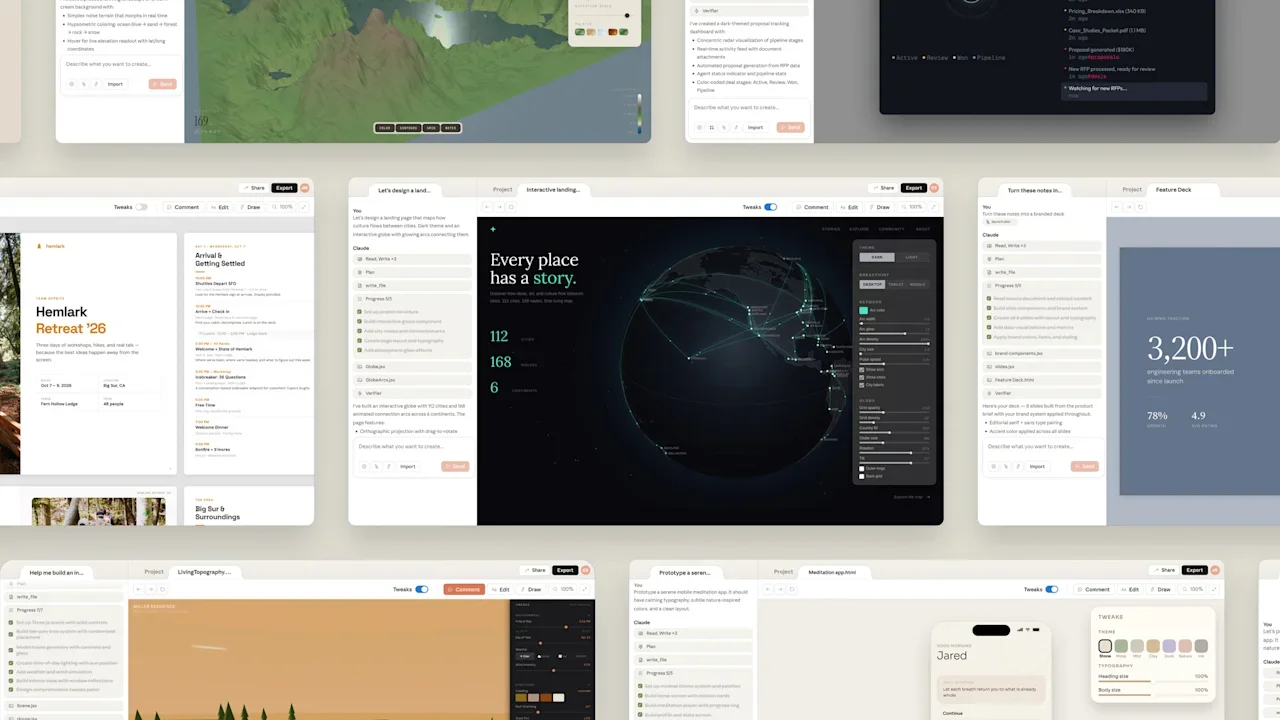
Anthropic Labs just announced a new product for its flagship AI model called Claude Design. According to Anthropic, the new tool “lets you collaborate with Claude to create polished visual work like designs, prototypes, slides, one-pagers, and more.” The company is billing the tool as a way for non-designers to mock up visuals, and a way for designers to quickly test out a range of initial prototypes. It’s powered by Claude’s most recent new model, Opus 4.7, which is trained to handle difficult coding prompts and complex, long-running tasks. Claude Design is available starting today to Claude Pro, Max, Team, and Enterprise Subscribers. Anthropic joins a growing number of companies developing their own AI-based design tools, including Figma, Canva, Adobe Express, and Google’s Stitch. As each of these companies expands its AI capabilities, the segmentation between their capabilities is becoming less and less pronounced: Canva is an AI company with design tools, Figma is a UX company running on AI, and, now, Claude is a powerful chatbot with a design and UX assistant. How Claude Design works Claude Design functions like an ultra-intelligent middle man between designers and product engineers. To use the tool, users start with a text prompt, as well as supplementary materials they want to use for reference, like a codebase, images, or documents. For example, a user might type, “Prototype a serene mobile meditation app. It should have calming typography, subtle nature-inspired colors, and a clean layout.” From there, Claude Design will produce a first draft. The tool’s UX is designed to make editing intuitive: an inline comment box facilitates specific tweaks, like, in this case, adding a dark mode toggle; custom sliders automatically spawn for small adjustments, such as color and type size; and users can also make direct edits on the draft themselves. It’s clearly designed to feel iterative and collaborative; like bouncing ideas off of a very fast colleague. This same workflow applies whether a user is making an app, a webpage, a powerpoint, or a social media post. Bigger teams can bring Claude Design into the loop on their company’s needs by uploading a codebase and design files. Claude will then digest that information and create a design system that uses the appropriate colors, typography, and components automatically. Once a design is complete, it can be shared as an internal URL within an organization, saved as a folder, or exported to Canva, PDF, PPTX, or standalone HTML files. Claude Design offers a one-stop shop for design consultation on app prototypes, web UX, and marketing assets, and it feels like an encapsulation of where the industry is headed. In the AI design space, the biggest players aren’t specializing—they’re becoming jacks of all trades. View the full article
-
Traffic from AI sources increased 393% year-over-year in Q1 and 269% in March. But the real surprise? AI traffic is converting better than last year. AI-driven visits converted 42% better than non-AI traffic in March. A year ago, AI traffic was 38% less likely to result in a purchase. By the numbers. Traffic from AI sources increased engagement by 12%, time on site by 48%, and pages per visit by 13%. Adobe also surveyed consumers and found that: 39% have used AI for shopping. Of those, 85% said it improved the experience. 66% believe AI tools provide accurate results. What they’re saying. According to Vivek Pandya, director of Adobe Digital Insights: “Notably, AI traffic continues to convert better (visits that result in purchases) than non-AI traffic, which covers channels such as paid search and email marketing.” Yes, but. While consumer adoption is up, and traffic, engagement, and conversions are growing, many retail sites still aren’t fully optimized for AI visibility, especially on product pages, according to Adobe. Why we care. Until now, reports have been mixed on whether AI traffic is better, equal to, or worse than organic search traffic (see our Dig deeper resources below). That may be changing, as we expected it would. Like generative AI, AI shopping today is as bad as it will ever be, meaning this channel’s value will only increase. About the data. Adobe’s findings are based on direct transaction data from more than 1 trillion visits to U.S. retail websites. The company also surveyed more than 5,000 U.S. consumers to understand how they use AI to shop. The report. Adobe report: U.S. retailers see surge in AI traffic, but many websites are not entirely readable by machines. Dig deeper. ChatGPT, LLM referrals convert worse than Google Search: Study AI search clicks aren’t always better traffic: Study ChatGPT ecommerce traffic converts 31% higher than non-branded organic search Airbnb says traffic from AI chatbots converts better than Google Why every AI search study tells a different story ChatGPT traffic rivals organic search engagement: Data View the full article
-
Here in San Francisco, we live in a bubble, and we know it. While much of the rest of the country sees the city through the lens of Fox News cameramen searching out homeless encampments, we actually live in a very beautiful, very wealthy, and, currently, very AI-obsessed place. Traditionally, the billboards along 101 through Silicon Valley have offered a glimpse into the collective mind of the tech industry. These days, a big chunk of that industry, including most of the major AI labs, is based here in San Francisco, and the billboards have followed. The San Francisco Chronicle recently did the legwork to catalog literally all of the billboards in the city and found that fully half now advertise AI apps, platforms, and infrastructure. The words and imagery they use reveal something about how the AI industry sees itself and the world around it. You are here The advertisements do collectively smack of young companies in a young industry. But they also depict an AI industry that is well past its experimental stage. The billboards around town, for the most part, advertise real apps that do non-trivial things, and products that solve real, sometimes niche problems that hinder the meaningful deployment of AI in business settings. No space for safety Even though AI safety, alignment with human values and goals, and governance remain hotly debated issues, almost none of the outdoor advertising mentions those subjects. The go-to-market teams at AI companies may believe billboards are no place for nuanced policy debates. The ads seem aimed at chief information officers or VP-level decision-makers trying to gain a competitive edge by using AI for more business tasks. That audience is likely more interested in agentic features, reliability, and scalability. Only one billboard, from Okta, mentioned downside risk. Its billboard reads: “Build and secure AI agents from day one. Okta secures AI.” What Okta is actually selling is identity and access management for AI agents—that is, the authentication and permissions systems that keep agents from seeing things they shouldn’t. On the other hand, trust will be a huge issue as AI models and agents proliferate within businesses. Leaders and workers will have to build trust in these systems over time, and that trust depends on AI consistently getting things right while being entrusted with increasingly valuable work. If an AI system leaks sensitive information, for example, trust could vanish, and the tool itself would quickly lose value. ‘Stop hiring humans’ Another elephant in the room is job replacement, yet none of the billboards acknowledge it. In one case, they lean into it. Artisan AI, which sells AI “workers,” has plastered controversial billboards around the city suggesting human replacement is actually a pretty cool future. In one double-decker ad featured in the Chronicle piece, a woman declares, “Stop hiring humans.” Below, a man who looks like a home shopping host gestures toward her, saying, “It’s not the ’90s anymore, hire Ava.” Ava is apparently the avatar for Artisan’s digital workers. SF Chronicle Critics have called the campaign dystopian and anti-worker, and some billboards have been vandalized. Artisan’s 20-something CEO, Jasper Carmichael-Jack, said the campaign was meant as “shock marketing.” But, hey, the Artisan team is clearly a cheeky bunch, and even the company name is laced with irony: The word “artisan” usually refers to something made by skilled human hands. (In San Francisco, “artisanal” avocado toast costs $9) Swagger Some billboards reflect the boundless confidence of the accelerationist “builder” crowd. Linear’s billboard shows the hand of God, styled after Michelangelo’s The Creation of Adam, reaching down to touch a swarm of hand-shaped cursors that apparently represent AI agents. The tagline reads: “Agents. At your command.” Linear makes project management software for engineering teams. Its AI agents handle tasks once done by humans, such as assignment, issue tracking, and sprint planning. The implication is hard to miss: If AI agents can do many of the things humans once did, the humans directing get to play god. Bland, whose platform creates human-sounding AI agents that can make and receive phone calls, takes a similar approach. Its billboard has a romance novel cover vibe, featuring a masculine (customer support?) robot embracing a human woman. The caption reads: “Customer support that actually cares.” Rather than addressing the obvious socio-economic and customer-experience issues, Bland seems to, well, embrace them. In essence, the message is that AI agents are capable of empathy beyond what human support reps can manage. Tip: AI models aren’t there yet. That claim is aspirational at best. In essence, the message is that AI agents are capable of empathy beyond what human support reps can manage. Tip: AI models aren’t there yet. We’re not talking to you If you thought the city’s AI billboards were meant for general audiences, AgentMail’s ad suggests otherwise. It features a screenshot of a tweet from Y Combinator founder and mega-investor Paul Graham, describing a startup whose market cap will “sound like fiction.” The company name is not even mentioned in the tweet. The billboard’s caption reads, “We have some high expectations…” followed by “No pressure, right?” AgentMail has already raised about $6 million in seed funding from General Catalyst, with participation from Y Combinator and angel investors including Graham. The ad may be targeting new customers for its platform, which creates email accounts for AI agents. Or it could be trying to drum up interest among potential A-round investors. Either way the billboard takes an “if you know, you know” approach that’ll only make sense to a few thousand people if they happen to drive by. Hello, Des Moines It’s worth imagining how these ads would land outside the San Francisco bubble. In Des Moines, Iowa, the Artisan billboard’s instruction to“Stop hiring humans” might feel less cheeky and more threatening. Some residents might take Bland’s robot-lover ad the same way. Other ads would just seem alien. Motorists would wonder what on Earth Baseten is selling with its “own your own inference” message. (Baseten’s platform lets companies control the AI models they use to generate output in production.) And AgentMail’s “Graham tweet” ad would probably be incomprehensible. View the full article

-
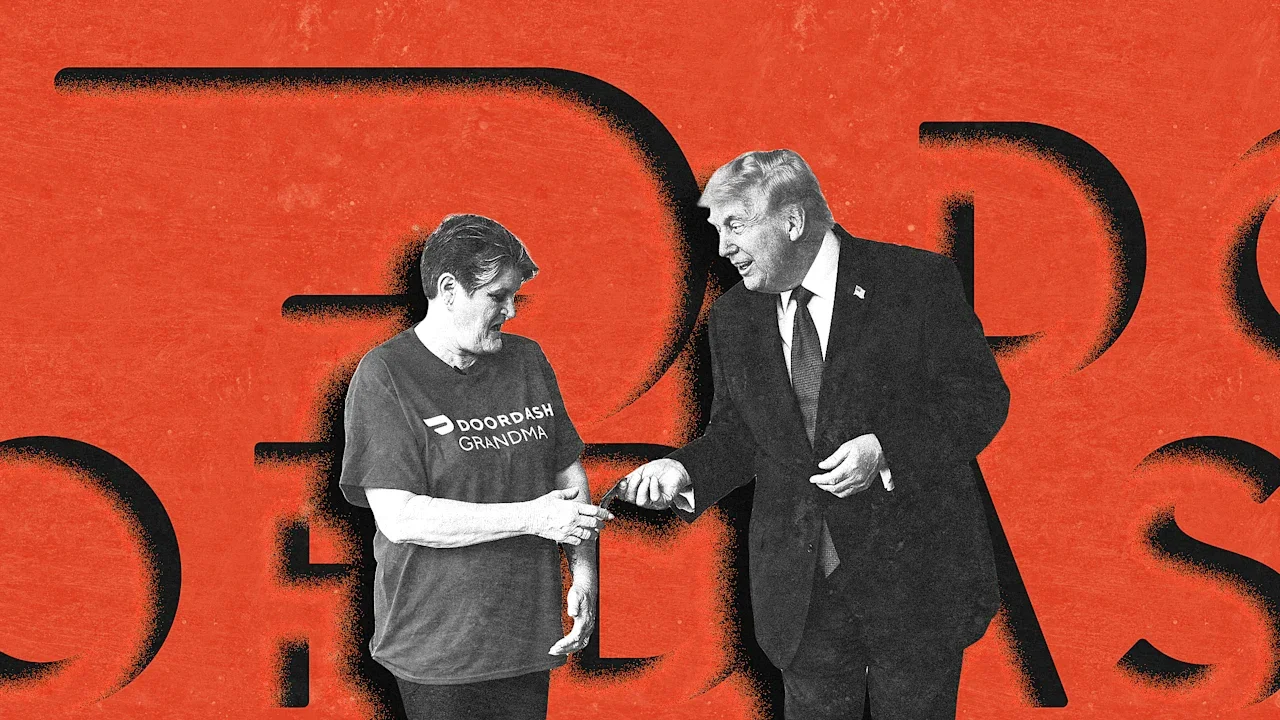
It must have seemed like a slam dunk PR opportunity for all concerned: A “DoorDash Grandma” making a (staged) delivery to the White House, affording President The President a chance to tout his “No Tax on Tips” policy, and DoorDash a prompt to praise that policy for letting “workers keep more of what they earn, including hundreds of millions of dollars for Dashers.” As press looked on and cameras rolled, Sharon Simmons, sporting a “DoorDash Grandma” T-shirt and handing a couple of McDonald’s bags to The President, praised the policy for saving her thousands of dollars on taxes, which she says she’s using to help pay for her husband’s Stage 3 cancer treatment. “It has helped my family out immensely,” she said. But it wasn’t a slam dunk. In fact, Simmon’s appearance turned into an absolute disaster, as the PR stunt devolved into an argument over whether Simmons, the 58-year-old grandmother (of 10) in question, was actually a MAGA shill. That debate, as neatly chronicled by Fast Company’s Joe Berkowitz, drew attention to the forced nature of the stunt, and helped thoroughly undermine the episode’s effectiveness for the policy or the brand. But the squabble over whether Simmons is fully legit or some kind of ringer has obscured a deeper point: Either way, she’s a dreadful symbol for the DoorDash brand and for the state of the economy in general. Sharon Simmons At an age when a worker should command comfortable earning power and be counting down to retirement, Simmons is grinding for tips at a no-benefits gig job to cover healthcare costs. Frankly, she’s lucky the rise of driverless vehicles—long a goal of the rideshare and delivery sectors—hasn’t yet taken even this not-so-reassuring option away. (Yet.) This sounds more like a cautionary tale than a heartwarming policy success. When you think about your golden years, does your vision involve hustling to cover your spouse’s vital medical care? Admittedly, the cozy and carefree retirement dream of security and dignity after decades of work has never been universally realized. Yet it remains culturally potent—even as many workers today (including many comfortably in the middle class) expect they’ll need to keep finding ways to earn money well past traditional retirement age. If DoorDash Grandma was intended to function as an anecdote polished up for political optics, the real message seems different. What’s authentic is that there are countless older Americans in similar positions, navigating a patchwork of Social Security, savings, and supplemental income streams that increasingly include gig work. (In Simmons’s case, there’s reportedly a GoFundMe as well.) Businesses that rely on tip-dependent labor are naturally in favor of no tax on tips, because it benefits their workforce without the business sacrificing a dime or making any particular effort. And there’s nothing unusual about that; it’s just capitalism. Gig-economy companies have spent years positioning themselves as a source of opportunity: flexible work, entrepreneurial autonomy, a platform that empowers individuals to earn on their own terms. DoorDash Grandma seems like a variation on this standard gig-economy pitch: the scrappy side-hustler, the student paying tuition, the creative professional bridging income gaps. But in reality, a 58-year-old grandmother delivering food to a rich guy (The President apparently tipped her $100) to offset healthcare costs is not exactly an aspirational image. To the contrary, it’s vaguely alarming. The dominant implication isn’t flexibility—it’s necessity. That’s why the episode highlights a brand-narrative problem for the entire gig economy, and, by extension, for policymakers eager to highlight its positive impacts. The gig economy has always occupied an ambiguous space between innovation and erosion, expanding access to income in innovative ways while redefining (and often reducing) the protections and stability associated with traditional employment. And on a policy level, no tax on tips is hardly a replacement for, say, comprehensive healthcare benefits. The President’s healthcare policies and proposals are projected to reduce enrollment in the marketplace created by the Affordable Care Act by 750,000 to 2 million people in 2026. And some experts believe broader Medicaid/ACA cuts will strip coverage from millions more over time. The administration has promised to fix all this, but any specific plan, or concepts thereof, has yet to materialize (and lately seems to be deprioritized in favor of spending on defense and deportation efforts). Which is part of what makes DoorDash Grandma, genuine or not, so complicated. Her story is compelling and memorable—but it’s also just kind of a bummer. Here is an older American, engaged, contributing, not sidelined. But beneath that is a nagging question: Why does she need to? As a symbol, she’s basically a question mark. And neither business nor institutions seem entirely equipped to provide a comforting answer. Perhaps, in the end, this is a simple case of brand-narrative tension. A (true) story of flexibility, empowerment, and opportunity is contradicted or at least complicated by another (true) story of difficult lived experience. Most of the time, those tensions remain abstract. Occasionally, they crystallize in a single image or anecdote that’s too vivid to ignore. Maybe this is one of those times. And maybe actually contending with those tensions would not be such a bad thing. View the full article

-
Search remained the largest force in digital advertising in 2025. However, its growth slowed as total U.S. ad revenue climbed to a record $294.6 billion. Search still dominates. Search generated $114.2 billion, accounting for 38.8% of total digital ad revenue, according to the latest IAB/PwC Internet Advertising Revenue Report. But growth slowed to 11%, down from 15.9% in 2024, as advertisers shifted more budget into faster-growing formats and as AI began reshaping how users discover information. Overall market growth accelerated as the year went on. It climbed from 12.2% in Q1 to 15.4% in Q4. The fourth quarter alone brought in $85 billion, even without major cyclical events like the U.S. election or the Olympics, which boosted 2024. Video, social, and programmatic all grew faster than search. Digital video revenue jumped 25.4% to $78 billion, making it the fastest-growing major format. Social rose 32.6% to $117.7 billion, while programmatic increased 20.5% to $162.4 billion — continuing the shift toward automated, performance-driven buying. The market is more concentrated. The top 10 companies now control 84.1% of U.S. digital ad revenue, up from 80.8% a year ago, reflecting the advantages of scale, first-party data, and AI-driven platforms. AI is no longer just a tool layered onto campaigns. AI is increasingly shaping discovery, media buying, and measurement as consumer journeys fragment across platforms. Why we care. Search still delivers the most scale, but it’s no longer growing the fastest. More budget is flowing into video, social, and programmatic, where automation and AI are more deeply embedded. That means more competition for budget, less visibility into performance, and a greater need to prove incrementality. About the data. The IAB/PwC report is based on U.S. internet advertising revenue data compiled across the industry. The report. Internet Advertising Revenue Report Full-year 2025 results (PDF) View the full article
- Today
-
Energy commissioner Dan Jørgensen says Europe moving towards supply crisis “very rapidly”View the full article
-
Nobody benefits if third-sector organisations can’t keep their disputes away from the courtsView the full article
-
If he is finally confirmed, The President’s nominee for chair must undertake a re-evaluation of the central bank’s structure and purposeView the full article
-
Google can render JavaScript. That’s no longer up for debate. But that doesn’t mean it always does — or that it does so instantly or perfectly. Since Google’s 2024 comments suggesting it renders all HTML pages, many developers have questioned whether no-JavaScript fallbacks are still necessary. Two years later, the answer is clearer and more nuanced. Google’s stance on JavaScript rendering In July 2024, Google sparked debate during an episode of Search Off the Record titled “Rendering JavaScript for Google Search.” When asked how Google decides which pages to render, Martin Splitt said: “If it’s so expensive, how do we decide which page should get rendered and which one doesn’t?” Zoe Clifford, from Google’s rendering team, replied: “We just render all of them, as long as they’re HTML, and not other content types like PDFs.” That comment quickly led developers, especially those building JavaScript-heavy or single-page applications, to argue that no-JavaScript fallbacks were no longer necessary. Many SEOs weren’t convinced. The remark was informal, untested at scale, and lacking detail. It wasn’t clear: How rendering fit into Googlebot’s process. Whether pages were queued for later execution. How the system behaved under resource constraints. Whether Google might fall back to non-rendered crawling under load. Without clarity on timing, consistency, and limits, removing fallbacks entirely still felt risky. Your customers search everywhere. Make sure your brand shows up. The SEO toolkit you know, plus the AI visibility data you need. Start Free Trial Get started with What Google’s documentation actually says Google’s documentation now gives us a much clearer picture of how JavaScript rendering actually works. Let’s start with the “JavaScript SEO basics” page: What Google says: “Googlebot queues all pages with a 200 HTTP status code for rendering, unless a robots meta tag or header tells Google not to index the page. The page may stay on this queue for a few seconds, but it can take longer than that. Once Google’s resources allow, a headless Chromium renders the page and executes the JavaScript. Googlebot parses the rendered HTML for links again and queues the URLs it finds for crawling. Google also uses the rendered HTML to index the page.” Google clearly states that JavaScript rendering doesn’t necessarily happen on the initial crawl. Once resources allow, a headless browser is used to parse JavaScript. Googlebot likely won’t click on all JavaScript elements, so this probably only includes scripts that don’t require user interactions to fire. This is important because it tells us Google may make some basic determinations before JavaScript is rendered, via subsequent execution queues. If content is generated behind elements (content tabs, etc.) that Google doesn’t click, it likely won’t be discovered without no-JavaScript fallbacks. Looking at Google’s “How Search works” documentation: The language is much simpler. Google states it will attempt, at some point, to execute any discovered JavaScript. There’s nothing here that directly contradicts what we’ve seen so far in other Google documentation. On March 31, Google published a post titled “Inside Googlebot: demystifying crawling, fetching, and the bytes we process,” which further clarifies JavaScript crawling. The notes on partial fetching are particularly interesting. Google will only crawl up to 2MB of HTML. If a page exceeds this, Google won’t discard it entirely, but instead examines only the first 2MB of returned code. Google explicitly states that extreme resource bloat, including large JavaScript modules, can still be a problem for indexing and ranking. If your JavaScript approaches 2MB and appears at the top of the page, it may push HTML content far enough down that Google won’t see it. The 2MB limit also applies to individual resources pulled into a page. If a CSS file, image, or JavaScript module exceeds 2MB, Google will ignore it. We’re beginning to see that Google’s claim that it renders all pages comes with important caveats. In practice, it seems unlikely that a page with no consideration for server-side rendering (SSR) or no-JavaScript fallbacks would be handled optimally. This highlights why it’s risky to take comments from Googlers at face value without following how the details evolve over time. The question we opened with is also evolving. It’s less “Do I need blanket no-JavaScript fallbacks in 2026?” and more “Do I still need critical-path fallbacks and resilient HTML within my application?” Google’s recent search documentation updates add more context: Google has recently softened its language around JavaScript. It now says it has been rendering JavaScript for “multiple years” and has removed earlier guidance that suggested JavaScript made things harder for Search. It also notes that more assistive technologies now support JavaScript than in the past. Within that same documentation, Google still recommends pre-rendering approaches, such as server-side rendering and edge-side rendering. So while the language is softer, Google isn’t suggesting developers can ignore how JavaScript affects SEO. Looking again at the December 2025 updates: Google states that non-200 pages may not receive JavaScript execution. This suggests no-JavaScript fallbacks for internal linking within custom 404 pages may still be important. Google also notes that canonical tags are processed both before and after JavaScript rendering. If source HTML canonicals and JavaScript-modified canonicals don’t match, this can cause significant issues. Google suggests either omitting canonical directives from the source HTML so they’re only evaluated after rendering, or ensuring JavaScript doesn’t modify them. These updates reinforce an important point: even as Google becomes more capable at rendering JavaScript, the initial HTML response and status code still play a critical role in discovery, canonical handling, and error processing. Dig deeper: Google removes accessibility section from JavaScript SEO section Get the newsletter search marketers rely on. See terms. What the data shows JavaScript rendering is introducing new inconsistencies across the web, according to recent HTTP Archive data: We can see that since November 2024, the percentage of crawled pages with valid canonical links has dropped. Via the HTTP Archives 2025 Almanac: About 2-3% of rendered pages exhibit a “changed” canonical URL, something Google’s documentation explicitly states can be confusing for its indexing and ranking systems. That 2-3% doesn’t explain the larger drop in valid canonical deployment since November 2024. Other factors are likely at play, such as the adoption of new CMS platforms that don’t properly handle canonicals. The rise of vibe-coded websites using tools like Cursor and Claude Code may also be contributing to these issues across the web. In July 2024, Vercel published a study to help demystify Google’s JavaScript rendering process: It analyzed more than 100,000 Googlebot fetches and found that all resulted in full-page renders, including pages with complex JavaScript. However, 100,000 fetches is a relatively small sample given Googlebot’s scale. The study was also limited to sites built on specific frameworks, so it’s unwise to assume Google always renders pages perfectly. It’s also unclear how deeply those renders were analyzed. It does suggest that Google attempts to fully render most pages it encounters. Broadly speaking, Google can generate JavaScript-modified renders, but the quality of those renders is still up for debate. As noted earlier, the 2MB page and resource limits still apply. Because this study dates to mid-2024, any contradictions with Google’s updated 2025–2026 documentation should take precedence. Vercel also published a notable finding: “Most AI crawlers don’t execute JavaScript. We tested the major ones (ChatGPT, Claude, and others), and the results were consistent: none of them render client-side content. If your Next.js site ships critical pages as JavaScript-dependent SPAs, those pages are inaccessible to the systems shaping how people discover information.” So even if Google is far more capable with JavaScript than it used to be, that’s not true across the broader web ecosystem. Many systems still rely on HTML-first delivery. That’s why you shouldn’t rush to remove no-JavaScript fallbacks — they may still be critical to your future visibility. Cloudflare’s 2025 review is also worth noting: Cloudflare reported that Googlebot alone accounted for 4.5% of HTML request traffic. While this doesn’t directly explain how Google handles JavaScript, it does highlight the scale at which Google continues to crawl the web. Dig deeper: How the DOM affects crawling, rendering, and indexing See the complete picture of your search visibility. Track, optimize, and win in Google and AI search from one platform. Start Free Trial Get started with No-JavaScript fallbacks in 2026 The question we set out to answer was whether no-JavaScript fallbacks are required in 2026. Google is far more capable with JavaScript than in previous years. Its documentation shows that pages are queued for rendering, and that JavaScript is executed and used for indexing. For many sites, heavy reliance on JavaScript is no longer the red flag it once was. However, the details of Google’s rendering process still matter. Rendering isn’t always immediate. There are resource constraints, and not all behaviors are supported. At the same time, the broader web ecosystem hasn’t necessarily kept pace with Google. The risk of removing all no-JavaScript fallbacks hasn’t disappeared — it’s just changed shape. Key takeaways: Google doesn’t necessarily render JavaScript on the first crawl. There’s a rendering queue, and execution happens when resources allow. Technical limits still exist, including a 2MB HTML and resource cap, and limited interaction with user-triggered elements. Non-200 responses may not receive rendering treatment, which keeps basic HTML and linking important in some cases. Differences between raw HTML and rendered output still exist at scale across the web. Google’s guidance still leans toward SSR (server-side rendering), pre-rendering, and resilient HTML for critical content. Other crawlers, especially AI-driven ones, often don’t execute JavaScript at all. As these systems become more important, the need for fallbacks may increase again. Blanket, site-wide no-JavaScript fallbacks aren’t universally required in 2026, but critical content, links, and signals shouldn’t depend entirely on JavaScript. Many modern crawlers still rely on HTML-first delivery. For now, no-JavaScript fallbacks for critical architecture, links, and content are still strongly recommended, if not required going forward. View the full article
-
Here is a recap of what happened in the search forums today...View the full article
-
Oil prices and Treasury yields continued their close correlation Friday, with crude falling $12 and the 5-year yield hitting recovery lows after Iran declared the Strait of Hormuz open during the ceasefire. View the full article
-
When considering starting a business in Texas, it’s important to know the average registration fees associated with different business structures. For instance, forming an LLC or corporation incurs a fee of $300, whereas sole proprietorships and general partnerships don’t require formal registration costs. Furthermore, there are various ongoing fees, like the $25 for a DBA, which must be renewed every five years. Comprehending these costs can greatly impact your financial planning as you explore the requirements for setting up your business. Key Takeaways The average business registration fee for an LLC or corporation in Texas is $300 each. Sole proprietorships and general partnerships incur no formal registration costs. A DBA filing fee in Texas is $25, renewable every five years. Limited Liability Partnerships (LLPs) cost $200 per partner to register. Foreign LLC registration fees are significantly higher at $750. Overview of Texas Business Registration Fees When you’re considering starting a business in Texas, it’s important to understand the various registration fees that come into play. The LLC filing fees by state for Texas stand at $300, which is identical for corporations. If you’re a sole proprietor or in a general partnership, you won’t face formal registration costs, but filing a DBA will set you back $25. For Limited Liability Partnerships (LLPs), the registration fee is $200 per partner. If you’re planning to reserve a name, that will cost you $40, valid for 120 days. Foreign LLCs looking to register face a steeper fee of $750. Being aware of these business registration fees can help you budget effectively as you start your venture. Types of Business Structures and Associated Costs Choosing the right business structure is crucial, as it directly impacts your registration costs and legal responsibilities. In Texas, forming an LLC incurs a $300 filing fee for the Certificate of Formation, with an optional name reservation costing $40. The LLC annual fees by state can vary, so it’s important to research what to expect. For corporations, the registration fee is likewise $300, plus an annual reporting fee of $5. Sole proprietorships and general partnerships have no formal registration fees, whereas limited liability partnerships (LLPs) charge $200 per partner for registration. Comprehending these LLC fees by state can help you budget effectively and guarantee compliance with local regulations. Make informed choices to avoid unexpected costs down the road. Additional Registration Fees in Texas In Texas, comprehending the additional registration fees associated with various business structures can help you effectively plan your budget. Here’s a breakdown of some common fees you might encounter: Business Structure Fee Amount Notes Limited Liability Company (LLC) $300 Certificate of Formation required Name Reservation $40 Valid for 120 days DBA Registration $25 Renewable every five years Limited Liability Partnership (LLP) $200 per partner Registration fee for each partner State Trademark $50 For state-specific trademarks National Trademark $225 – $600 Varies by class Understanding these fees can help streamline your business registration process in Texas. Ongoing Costs for Businesses in Texas Comprehending the ongoing costs associated with running a business in Texas is crucial for your financial planning. If you operate an LLC, you’ll need to file an annual franchise tax report by May 15, but there’s no annual fee for the LLC itself except your revenue exceeds $1.23 million. Corporations face a $5 annual report fee, likewise due by May 15, and a $400 penalty for late submissions. Moreover, consider registered agent fees, which can range from $35 to $300 per year. Depending on your industry, licenses and permits may require yearly payments that vary from $15 to several hundred dollars. Keeping track of these costs helps you maintain a healthy financial status for your business. Understanding Texas LLC Franchise Tax When you operate an LLC in Texas, comprehension of the Franchise Tax is essential, especially since it affects businesses with annual revenue exceeding $2.47 million. If your business falls under this threshold, the tax rate is 0.375% for retail and wholesale, whereas all other businesses face a 0.75% rate. You must file an annual Franchise Tax report by May 15, even though you’re exempt from paying taxes, to avoid a $50 late fee. Businesses earning below $1.23 million are exempt from the tax but still need to submit the annual report. The Franchise Tax is calculated on your taxable margin, allowing deductions for employee compensation up to $450,000. Non-compliance could lead to penalties, including revocation of your LLC’s registration. Requirements for Texas Business Licenses Steering through the requirements for obtaining business licenses in Texas is crucial for anyone planning to operate legally. First, if you’re selling tangible goods or services, you’ll need a seller’s license, which you can get for free from the Texas Comptroller’s office. If your business operates under a different name, file an Assumed Name Certificate (DBA) for $25. Depending on your industry, you may likewise need professional licenses or permits, with fees ranging from $15 to several hundred dollars. For an LLC, you’ll require a Certificate of Formation, costing $300. Furthermore, comply with local regulations, which might include permits like health permits for restaurants, starting at $250. Familiarize yourself with these requirements to guarantee compliance. Costs Related to Business Insurance in Texas After ensuring you’ve met the necessary business licensing requirements in Texas, it’s important to contemplate the costs associated with business insurance. In Texas, insurance costs can vary widely based on your business type, coverage needs, and location. For small businesses, premiums typically range from $500 to $3,000 annually. General liability insurance, a common necessity, averages between $400 and $1,500 per year, covering claims of bodily injury and property damage. Business owners’ policies (BOP), which combine general liability and property insurance, often provide savings, averaging $500 to $1,200 annually. Furthermore, industry-specific needs, like professional liability or workers’ compensation, can influence costs. It’s wise to shop around for quotes and consider an insurance broker for customized options. Importance of a Registered Agent for LLCs When you form an LLC in Texas, having a registered agent is crucial for compliance with state laws. This agent acts as your official contact for any legal documents or government notices, ensuring you stay informed and protected. Furthermore, using a registered agent service can help maintain your privacy by keeping your personal address off public records, which is a significant benefit for many business owners. Compliance With State Laws Comprehension of compliance with state laws is fundamental for any LLC, as it directly impacts your business’s legal standing and operational integrity. In Texas, all LLCs must designate a registered agent responsible for receiving legal documents and official correspondence. This agent can be an individual or a business entity authorized to operate in Texas, ensuring your LLC meets compliance requirements. Hiring a registered agent service typically costs between $100 and $300 annually and protects your privacy, as personal addresses become public records if you act as your own agent. It’s vital to maintain a registered agent; failure to do so may lead to involuntary termination of your LLC. Privacy and Protection Benefits Maintaining a registered agent isn’t just a compliance requirement; it likewise offers significant privacy and protection benefits for LLC owners. A registered agent serves as the official contact for your LLC, ensuring that crucial legal documents, like tax notices and lawsuits, are received and managed appropriately. By using a registered agent service, you keep your personal address off public records, which protects you from unwanted visits and inquiries. Furthermore, registered agents must have a physical address in Texas and be available during business hours, ensuring compliance with state regulations. Failing to maintain a registered agent can lead to involuntary termination of your LLC, making this service a worthwhile investment, typically costing between $100 and $300 annually. Financial Planning for Business Startups in Texas Starting a business in Texas involves careful financial planning to guarantee that you can cover both initial and ongoing expenses. The average business registration fee for forming an LLC is $300, which includes the Certificate of Formation filing. Additional costs, like a $40 name reservation and a $25 DBA filing fee, can quickly add up. You’ll likewise need to take into account ongoing expenses such as registered agent fees that range from $35 to $300 annually and any industry-specific licenses you may require. Don’t forget that Texas LLCs must file an annual franchise tax report by May 15, even though businesses earning under $2.47 million are exempt from this tax. Proper planning should likewise encompass insurance, rent, and salaries, varying by business type. Resources for New Business Owners in Texas Once you’ve navigated the initial financial planning for your business, comprehension of the resources available to new business owners in Texas becomes vital. Here are some key resources you should consider: Texas Secretary of State: Provides information on business structure, registration, and compliance. Small Business Development Center (SBDC): Offers free business consulting and low-cost training programs. Texas Economic Development: Helps identify grants, loans, and incentives for new businesses. Local Chambers of Commerce: Provides networking opportunities, resources, and support for local businesses. Utilizing these resources can greatly ease your shift into the Texas business environment, ensuring you have the information and support needed to succeed. Frequently Asked Questions What Is the Annual Fee for an LLC in Texas? In Texas, there’s no annual fee for LLCs, but you must file an annual franchise tax report by May 15. If your revenue is under $2.47 million, you’re exempt from paying franchise taxes, yet you still need to file the No Tax Due Report. Late filings incur a $50 fee. Moreover, you might spend $35 to $300 on registered agent services and incur fees for renewing any necessary licenses or permits. Is Business Registration the Same as LLC? No, business registration isn’t the same as forming an LLC. Business registration involves officially registering any type of business entity with the state, which can include LLCs, corporations, or partnerships. An LLC is just one specific structure that provides liability protection. Furthermore, some businesses, like sole proprietorships, mightn’t require formal registration. You can likewise file a DBA if you’re doing business under a name different from your legal name. How Much Does It Cost to Register a Business in the US? To register a business in the U.S., you’ll typically pay between $50 and $500, depending on your state and business structure. Sole proprietorships often have no registration fee, whereas LLCs and corporations face fees around $100 to $500. For instance, in Texas, forming an LLC or corporation costs $300. Additional fees may include name reservations, DBA filings, and expedited processing, which can increase your total expenses considerably. How Much Does It Cost to Register a Business in FL? In Florida, registering a business typically starts with a $125 filing fee for the Articles of Organization or Incorporation. You might likewise face additional costs, like a $35 name reservation fee and a $50 trade name registration. Each year, you’ll need to file an Annual Report for $138.75, and hiring a registered agent can range from $100 to $300 annually. Don’t forget that specific licenses and permits may likewise add to your costs. Conclusion In conclusion, grasping the average business registration fees in Texas is essential for your startup. You’ll face varying costs based on your chosen business structure, from LLCs and corporations to sole proprietorships. Additional fees, such as for DBAs and partnerships, can likewise impact your budget. Remember to take into account ongoing expenses like franchise taxes and insurance. By planning carefully and keeping these fees in mind, you can set your business up for success in Texas. Image via Google Gemini and ArtSmart This article, "Average Business Registration Fee?" was first published on Small Business Trends View the full article
-
When considering starting a business in Texas, it’s important to know the average registration fees associated with different business structures. For instance, forming an LLC or corporation incurs a fee of $300, whereas sole proprietorships and general partnerships don’t require formal registration costs. Furthermore, there are various ongoing fees, like the $25 for a DBA, which must be renewed every five years. Comprehending these costs can greatly impact your financial planning as you explore the requirements for setting up your business. Key Takeaways The average business registration fee for an LLC or corporation in Texas is $300 each. Sole proprietorships and general partnerships incur no formal registration costs. A DBA filing fee in Texas is $25, renewable every five years. Limited Liability Partnerships (LLPs) cost $200 per partner to register. Foreign LLC registration fees are significantly higher at $750. Overview of Texas Business Registration Fees When you’re considering starting a business in Texas, it’s important to understand the various registration fees that come into play. The LLC filing fees by state for Texas stand at $300, which is identical for corporations. If you’re a sole proprietor or in a general partnership, you won’t face formal registration costs, but filing a DBA will set you back $25. For Limited Liability Partnerships (LLPs), the registration fee is $200 per partner. If you’re planning to reserve a name, that will cost you $40, valid for 120 days. Foreign LLCs looking to register face a steeper fee of $750. Being aware of these business registration fees can help you budget effectively as you start your venture. Types of Business Structures and Associated Costs Choosing the right business structure is crucial, as it directly impacts your registration costs and legal responsibilities. In Texas, forming an LLC incurs a $300 filing fee for the Certificate of Formation, with an optional name reservation costing $40. The LLC annual fees by state can vary, so it’s important to research what to expect. For corporations, the registration fee is likewise $300, plus an annual reporting fee of $5. Sole proprietorships and general partnerships have no formal registration fees, whereas limited liability partnerships (LLPs) charge $200 per partner for registration. Comprehending these LLC fees by state can help you budget effectively and guarantee compliance with local regulations. Make informed choices to avoid unexpected costs down the road. Additional Registration Fees in Texas In Texas, comprehending the additional registration fees associated with various business structures can help you effectively plan your budget. Here’s a breakdown of some common fees you might encounter: Business Structure Fee Amount Notes Limited Liability Company (LLC) $300 Certificate of Formation required Name Reservation $40 Valid for 120 days DBA Registration $25 Renewable every five years Limited Liability Partnership (LLP) $200 per partner Registration fee for each partner State Trademark $50 For state-specific trademarks National Trademark $225 – $600 Varies by class Understanding these fees can help streamline your business registration process in Texas. Ongoing Costs for Businesses in Texas Comprehending the ongoing costs associated with running a business in Texas is crucial for your financial planning. If you operate an LLC, you’ll need to file an annual franchise tax report by May 15, but there’s no annual fee for the LLC itself except your revenue exceeds $1.23 million. Corporations face a $5 annual report fee, likewise due by May 15, and a $400 penalty for late submissions. Moreover, consider registered agent fees, which can range from $35 to $300 per year. Depending on your industry, licenses and permits may require yearly payments that vary from $15 to several hundred dollars. Keeping track of these costs helps you maintain a healthy financial status for your business. Understanding Texas LLC Franchise Tax When you operate an LLC in Texas, comprehension of the Franchise Tax is essential, especially since it affects businesses with annual revenue exceeding $2.47 million. If your business falls under this threshold, the tax rate is 0.375% for retail and wholesale, whereas all other businesses face a 0.75% rate. You must file an annual Franchise Tax report by May 15, even though you’re exempt from paying taxes, to avoid a $50 late fee. Businesses earning below $1.23 million are exempt from the tax but still need to submit the annual report. The Franchise Tax is calculated on your taxable margin, allowing deductions for employee compensation up to $450,000. Non-compliance could lead to penalties, including revocation of your LLC’s registration. Requirements for Texas Business Licenses Steering through the requirements for obtaining business licenses in Texas is crucial for anyone planning to operate legally. First, if you’re selling tangible goods or services, you’ll need a seller’s license, which you can get for free from the Texas Comptroller’s office. If your business operates under a different name, file an Assumed Name Certificate (DBA) for $25. Depending on your industry, you may likewise need professional licenses or permits, with fees ranging from $15 to several hundred dollars. For an LLC, you’ll require a Certificate of Formation, costing $300. Furthermore, comply with local regulations, which might include permits like health permits for restaurants, starting at $250. Familiarize yourself with these requirements to guarantee compliance. Costs Related to Business Insurance in Texas After ensuring you’ve met the necessary business licensing requirements in Texas, it’s important to contemplate the costs associated with business insurance. In Texas, insurance costs can vary widely based on your business type, coverage needs, and location. For small businesses, premiums typically range from $500 to $3,000 annually. General liability insurance, a common necessity, averages between $400 and $1,500 per year, covering claims of bodily injury and property damage. Business owners’ policies (BOP), which combine general liability and property insurance, often provide savings, averaging $500 to $1,200 annually. Furthermore, industry-specific needs, like professional liability or workers’ compensation, can influence costs. It’s wise to shop around for quotes and consider an insurance broker for customized options. Importance of a Registered Agent for LLCs When you form an LLC in Texas, having a registered agent is crucial for compliance with state laws. This agent acts as your official contact for any legal documents or government notices, ensuring you stay informed and protected. Furthermore, using a registered agent service can help maintain your privacy by keeping your personal address off public records, which is a significant benefit for many business owners. Compliance With State Laws Comprehension of compliance with state laws is fundamental for any LLC, as it directly impacts your business’s legal standing and operational integrity. In Texas, all LLCs must designate a registered agent responsible for receiving legal documents and official correspondence. This agent can be an individual or a business entity authorized to operate in Texas, ensuring your LLC meets compliance requirements. Hiring a registered agent service typically costs between $100 and $300 annually and protects your privacy, as personal addresses become public records if you act as your own agent. It’s vital to maintain a registered agent; failure to do so may lead to involuntary termination of your LLC. Privacy and Protection Benefits Maintaining a registered agent isn’t just a compliance requirement; it likewise offers significant privacy and protection benefits for LLC owners. A registered agent serves as the official contact for your LLC, ensuring that crucial legal documents, like tax notices and lawsuits, are received and managed appropriately. By using a registered agent service, you keep your personal address off public records, which protects you from unwanted visits and inquiries. Furthermore, registered agents must have a physical address in Texas and be available during business hours, ensuring compliance with state regulations. Failing to maintain a registered agent can lead to involuntary termination of your LLC, making this service a worthwhile investment, typically costing between $100 and $300 annually. Financial Planning for Business Startups in Texas Starting a business in Texas involves careful financial planning to guarantee that you can cover both initial and ongoing expenses. The average business registration fee for forming an LLC is $300, which includes the Certificate of Formation filing. Additional costs, like a $40 name reservation and a $25 DBA filing fee, can quickly add up. You’ll likewise need to take into account ongoing expenses such as registered agent fees that range from $35 to $300 annually and any industry-specific licenses you may require. Don’t forget that Texas LLCs must file an annual franchise tax report by May 15, even though businesses earning under $2.47 million are exempt from this tax. Proper planning should likewise encompass insurance, rent, and salaries, varying by business type. Resources for New Business Owners in Texas Once you’ve navigated the initial financial planning for your business, comprehension of the resources available to new business owners in Texas becomes vital. Here are some key resources you should consider: Texas Secretary of State: Provides information on business structure, registration, and compliance. Small Business Development Center (SBDC): Offers free business consulting and low-cost training programs. Texas Economic Development: Helps identify grants, loans, and incentives for new businesses. Local Chambers of Commerce: Provides networking opportunities, resources, and support for local businesses. Utilizing these resources can greatly ease your shift into the Texas business environment, ensuring you have the information and support needed to succeed. Frequently Asked Questions What Is the Annual Fee for an LLC in Texas? In Texas, there’s no annual fee for LLCs, but you must file an annual franchise tax report by May 15. If your revenue is under $2.47 million, you’re exempt from paying franchise taxes, yet you still need to file the No Tax Due Report. Late filings incur a $50 fee. Moreover, you might spend $35 to $300 on registered agent services and incur fees for renewing any necessary licenses or permits. Is Business Registration the Same as LLC? No, business registration isn’t the same as forming an LLC. Business registration involves officially registering any type of business entity with the state, which can include LLCs, corporations, or partnerships. An LLC is just one specific structure that provides liability protection. Furthermore, some businesses, like sole proprietorships, mightn’t require formal registration. You can likewise file a DBA if you’re doing business under a name different from your legal name. How Much Does It Cost to Register a Business in the US? To register a business in the U.S., you’ll typically pay between $50 and $500, depending on your state and business structure. Sole proprietorships often have no registration fee, whereas LLCs and corporations face fees around $100 to $500. For instance, in Texas, forming an LLC or corporation costs $300. Additional fees may include name reservations, DBA filings, and expedited processing, which can increase your total expenses considerably. How Much Does It Cost to Register a Business in FL? In Florida, registering a business typically starts with a $125 filing fee for the Articles of Organization or Incorporation. You might likewise face additional costs, like a $35 name reservation fee and a $50 trade name registration. Each year, you’ll need to file an Annual Report for $138.75, and hiring a registered agent can range from $100 to $300 annually. Don’t forget that specific licenses and permits may likewise add to your costs. Conclusion In conclusion, grasping the average business registration fees in Texas is essential for your startup. You’ll face varying costs based on your chosen business structure, from LLCs and corporations to sole proprietorships. Additional fees, such as for DBAs and partnerships, can likewise impact your budget. Remember to take into account ongoing expenses like franchise taxes and insurance. By planning carefully and keeping these fees in mind, you can set your business up for success in Texas. Image via Google Gemini and ArtSmart This article, "Average Business Registration Fee?" was first published on Small Business Trends View the full article
-
Steering through corporate income tax can seem intimidating, but comprehending its structure is vital for any business owner. The corporate tax rate is currently set at a flat 21%, yet various deductions and credits can affect your effective rate. Managing double taxation and leveraging expense deductions are key strategies for reducing taxable income. To fully grasp these implications and optimize your tax strategy, it’s important to ponder not just the numbers but as well potential legislative changes on the horizon. Key Takeaways Understand the corporate tax rate structure, with the current federal rate at 21% and an effective rate around 25.8% including state taxes. Recognize the impact of double taxation on C corporations, where profits are taxed at both the corporate and shareholder levels. Utilize corporate tax deductions for ordinary and necessary business expenses to reduce taxable income effectively. Consider the implications of capital investments and loss deductions, which can significantly affect short-term and long-term tax liabilities. Be aware of the alternative minimum tax (CAMT) for large corporations, which imposes a minimum tax of 15% on certain profits. What Is a Corporate Tax Rate? A corporate tax rate is the percentage at which a corporation’s income is taxed by the government. To define a corporation, think of it as a legal entity separate from its owners, created to conduct business. The current federal corporate tax rate in the U.S. is 21%, greatly reduced from the previous 35% because of the Tax Cuts and Jobs Act of 2017. When you consider state taxes, the effective corporate income tax rate rises to about 25.8%. It’s crucial to understand that the statutory corporate tax rate represents the legal tax rate, whereas the effective tax rate can be lower because of various deductions and credits. Corporations must calculate their taxable income by deducting allowable expenses, such as wages and advertising costs. Furthermore, large corporations face an alternative minimum tax (CAMT) of 15%, ensuring they pay a minimum level of tax on their adjusted financial statement income. Key Takeaways Comprehending the corporate tax structure is vital for steering business operations effectively. With the federal corporate tax rate currently at 21%, you need to take into account how taxable profits are calculated and the implications of double taxation on shareholders. These factors play a significant role in shaping financial strategies and overall business performance, so it’s critical to grasp their impacts. Corporate Tax Structure Overview When examining the corporate tax structure, it’s important to recognize that the U.S. imposes a flat statutory rate of 21% on corporate profits, which are determined by subtracting allowable deductions from total income. To understand this better, consider the following key points: Corporations must follow specific Internal Revenue Code guidelines to calculate taxable income, with tax returns due by the 15th day of the fourth month after their tax year-end. The Tax Cuts and Jobs Act of 2017 shifted to a territorial system for certain foreign-source income, allowing for full expensing of most new investments until 2022. Corporate profits face double taxation—first at the corporate level, then again at the shareholder level when distributed as dividends or realized as capital gains. Impacts on Business Operations The corporate income tax environment considerably influences business operations, as the flat 21% federal tax rate shapes decisions regarding profit retention and reinvestment. Double taxation impacts shareholder returns, compelling companies to strategize effectively. Recent tax reforms encourage investment through full expensing, boosting growth potential. Nevertheless, the 15% Corporate Alternative Minimum Tax (CAMT) for large corporations introduces new compliance challenges. Finally, the shift to a territorial tax system allows U.S. firms to retain more foreign earnings, influencing international operations. Tax Factor Impact on Business Operations Strategic Considerations 21% Federal Tax Rate Affects profit retention Reinvestment strategies Double Taxation Reduces shareholder returns Dividend distribution planning Full Expensing Incentivizes new investments Growth and expansion opportunities CAMT (15%) Increases compliance requirements Tax liability management Understanding Corporate Tax Corporate tax plays an imperative role in the financial landscape of businesses in the United States. Comprehending it’s vital for effective financial planning. Here are three key points to keep in mind: Rate: The federal corporate tax rate is currently 21%, a significant drop from 35% because of the Tax Cuts and Jobs Act of 2017. Taxable Profits: Corporations calculate taxable profits by subtracting allowable deductions, like wages and depreciation, from total receipts. Double Taxation: Corporate profits face double taxation, meaning they’re taxed first at the corporate level and again at the shareholder level when dividends are distributed. Corporations must likewise file tax returns using Form 1120 by the 15th day of the fourth month after their tax year ends. Grasping these elements can help you navigate corporate tax obligations effectively. Corporate Tax Deductions Grasping the various tax deductions available can greatly lower your corporation’s taxable income and overall tax burden. Corporations can deduct ordinary and necessary business expenses, such as employee salaries, health benefits, travel expenses, and advertising costs. These deductions effectively reduce your taxable income. Furthermore, deducting the cost of goods sold (COGS) is vital, as it directly impacts taxable profits by subtracting these costs from total revenue. Meanwhile, capital investments offer delayed deductions, meaning you recover these costs over time; this can inflate taxable income in the short term. Don’t forget that tax preparation fees and legal services are likewise deductible, helping to lower your overall tax burden. Finally, unlike sole proprietors, corporations can fully deduct losses against profits in the current year, providing significant relief during financial downturns. Grasping these deductions is fundamental to optimizing your corporate tax strategy. Special Considerations When you consider corporate income tax, comprehension of double taxation is vital, as profits are taxed at both the corporate level and again when distributed to shareholders. S corporations present a viable option by allowing income to pass directly to shareholders and avoiding this double taxation. Furthermore, corporations can retain earnings strategically, which can help you manage tax liabilities more effectively. Double Taxation Implications Double taxation presents a significant concern for businesses and their shareholders, as it effectively increases the overall tax burden on corporate earnings. This issue arises when corporate profits are taxed at both the corporate level and again at the individual level when distributed as dividends. Here are three key points to reflect upon: Tax Rates: Qualifying dividends face a maximum rate of 23.8%, whereas non-qualifying dividends may reach up to 40.8%. C Corporations: These entities face double taxation on profits, unlike S corporations that allow income to be reported on individual tax returns. Mitigation Strategies: Retaining earnings within the corporation can help manage tax liabilities more effectively, reducing the impact of double taxation on shareholders. S Corporations Advantages S corporations offer distinct advantages that can greatly benefit small business owners seeking to optimize their tax situation. One major perk is the ability to pass profits and losses directly to shareholders’ individual tax returns, avoiding double taxation common with C corporations. To qualify, your business must have 100 or fewer eligible shareholders, ensuring a personal ownership structure. Furthermore, S corporations can deduct certain business expenses, like health insurance premiums, directly from their income, lowering taxable income for shareholders. They can likewise pass on net operating losses to shareholders, allowing you to offset other income during downturns. Finally, S corporations typically face fewer regulatory requirements than C corporations, simplifying compliance and reducing administrative burdens for small business owners like you. Advantages of a Corporate Tax What makes corporate taxes advantageous compared to individual income taxes? Corporate taxes offer significant benefits that can improve financial efficiency for businesses. Here are three key advantages: Deductions: Corporations can deduct expenses like medical insurance and fringe benefits, which lowers taxable income for both owners and employees, effectively reducing their tax burden. Loss Offsets: Unlike sole proprietors, corporations can easily offset current profits with losses from previous years. This flexibility allows for better financial management during downturns. Reinvestment Opportunities: The corporate tax structure permits entities to retain profits for reinvestment. This strategic planning can lead to growth and expansion, positioning businesses for long-term success. Additionally, competitive corporate tax rates in the U.S., reduced to 21%, align more closely with the global average, making it easier for corporations to thrive in the international market as they optimize their tax strategies. Is the 21% Corporation Tax Rate Permanent? How certain is the permanence of the 21% corporate tax rate? Established by the Tax Cuts and Jobs Act (TCJA) of 2017, the 21% rate is currently set to remain in effect, as no significant legislative changes have occurred since its implementation. Although the TCJA made this rate permanent, it’s crucial to recognize that future administrations or Congress could propose alterations. Any changes would require new legislation to take effect. Furthermore, the corporate alternative minimum tax (CAMT) imposes a 15% minimum tax on large corporations, but this doesn’t affect the flat 21% rate on regular corporate profits. This 21% rate particularly applies to C corporations, which are taxed separately from their shareholders, and aims to simplify the corporate tax structure. Who Actually Pays Corporate Income Tax? Comprehending who actually pays corporate income tax involves looking beyond just the legal obligations of C corporations. Whereas C corporations are responsible for paying corporate taxes directly, the economic impact often trickles down to various stakeholders. Here’s how that works: Consumers: When Apple faces higher tax bills, they may increase prices for goods and services, passing the cost onto you. Employees: Lower profits can lead to reduced wages or fewer benefits, affecting your take-home pay and job satisfaction. Investors: Shareholders may see diminished returns as Microsoft allocates more funds to cover tax liabilities rather than reinvesting in growth or distributing dividends. Additionally, the rise of pass-through entities, like S corporations and LLCs, means many business profits escape corporate taxation, reshaping the terrain and contributing to declining corporate tax revenues. Grasping these dynamics helps clarify who truly bears the burden of corporate income taxes. Corporate Tax Revenue When you look at corporate tax revenue trends over the years, you’ll notice a significant decline in its contribution to the U.S. economy. In 2021, corporate taxes accounted for only 1.7% of GDP, compared to 5.9% back in 1952, reflecting a shift in the corporate tax burden. This change is influenced by factors such as the rise of pass-through business structures and the impact of tax reforms, which have altered how corporate income is taxed. Historical Revenue Trends As the terrain of corporate taxation has evolved over the decades, the trends in corporate tax revenue present a compelling narrative of decline. This decline can be illustrated through a few key statistics: Corporate tax revenue as a percentage of total federal tax revenue dropped from 32.1% in 1952 to just 9.2% in 2021. After peaking at 5.9% of GDP in 1952, corporate tax revenue fell to 1.7% of GDP by 2021. Following the Tax Cuts and Jobs Act (TCJA) in 2017, corporate tax revenues have continued to decrease, further highlighting the trend. Additionally, the rise of pass-through business structures, which aren’t subject to corporate income tax, has contributed to this ongoing revenue decline. Corporate Tax Burden The corporate tax burden in the United States has shifted dramatically over recent decades, with C corporations facing a heavier tax load compared to pass-through entities such as partnerships and S corporations. In 1952, corporate tax revenue made up 32.1% of federal revenue, but by 2021, it plummeted to just 9.2%. In 2022, corporate income tax revenue accounted for approximately 8.7% of total federal receipts, raising $424.7 billion. This decline is largely because of the rise of pass-through businesses, which avoid entity-level taxation. Economic conditions and legislative changes, particularly the Tax Cuts and Jobs Act of 2017, have likewise played a significant role in altering the terrain of corporate tax revenue in the U.S. Who Bears the Burden of the Corporate Income Tax? Who really bears the burden of the corporate income tax? It’s crucial to comprehend that this tax isn’t just a straightforward cost for corporations; it trickles down to various stakeholders. Here’s how it typically breaks down: Consumers: Corporations often pass on the cost of taxes through higher prices for goods and services, impacting your wallet directly. Employees: To maintain profitability, companies may reduce wages or limit hiring, making employees bear part of the tax burden indirectly. Investors: The overall profitability of businesses can decline as a result of high corporate taxes, affecting dividends and stock prices for investors. As the environment shifts in the direction of more pass-through entities, the traditional corporate tax revenue decreases, indicating a changing tax situation. Larger C corporations could face greater burdens compared to smaller entities, influencing competition and economic behavior. Grasping this shared burden helps clarify the broader implications of corporate income tax. Related Articles Exploring related articles can provide you with a deeper grasp of corporate income tax and its implications. You might find it useful to read about the Tax Cuts and Jobs Act (TCJA) of 2017, which reduced the corporate income tax rate from 35% to 21%. Comprehending how taxable corporate profits are calculated is also crucial; these are determined by subtracting allowable deductions, including wages and advertising costs, from total income. Furthermore, articles on filing deadlines can help you perceive the annual requirement, which is due on the 15th day of the fourth month after the tax year ends. Be aware of the concept of double taxation, where corporate profits are taxed at both the corporate level and again as dividends or capital gains. Finally, explore how tax benefits can lower the effective tax rate, leading to significant forgone federal tax revenue. Frequently Asked Questions What Are the Tax Implications of a Corporation? The tax implications of a corporation include a flat federal corporate income tax rate of 21% on taxable profits. You’ll face double taxation if dividends are distributed, as both the corporation and shareholders pay taxes. Various deductions can lower your effective tax rate, making it typically less than the statutory rate. Corporations must file tax returns using Form 1120 by the 15th day of the fourth month after their tax year ends. How to Calculate C Corp Taxes for Dummies? To calculate C Corporation taxes, start by determining your taxable income. Subtract allowable deductions, like wages and depreciation, from your total revenue. Once you have the taxable income, apply the federal corporate tax rate of 21%. You’ll need to file Form 1120 by the 15th day of the fourth month after your tax year ends. How Do You Understand Corporate Taxes? Comprehending corporate taxes involves recognizing that corporations pay tax on their profits at a statutory rate. In the U.S., this rate is currently 21%. You’ll calculate taxable profits by subtracting allowable deductions, like wages and expenses, from total revenue. It’s essential to note that corporate profits face double taxation—first at the corporate level, then again when distributed to shareholders as dividends. Filing requires Form 1120, with set deadlines for compliance. What Is the Definition of Corporate Income Tax? Corporate income tax is a tax levied on the profits earned by corporations. In the U.S., this tax is set at a flat rate of 21%, following a reduction from 35% in 2017. To determine taxable profits, corporations subtract allowable deductions, including wages and expenses, from their total receipts. As the statutory rate is 21%, effective rates can be lower because of various deductions and loopholes that corporations may utilize. Conclusion Maneuvering through corporate income tax is vital for any business. By comprehending the corporate tax rate, available deductions, and the implications of double taxation, you can make informed decisions that impact your financial health. It’s important to stay updated on legislative changes and consider how the burden of corporate taxes affects both the business and its stakeholders. With careful management of your tax strategy, you can minimize liabilities and improve your company’s profitability. Image via Google Gemini This article, "How to Navigate Corporate Income Tax Definition and Implications" was first published on Small Business Trends View the full article
-
Steering through corporate income tax can seem intimidating, but comprehending its structure is vital for any business owner. The corporate tax rate is currently set at a flat 21%, yet various deductions and credits can affect your effective rate. Managing double taxation and leveraging expense deductions are key strategies for reducing taxable income. To fully grasp these implications and optimize your tax strategy, it’s important to ponder not just the numbers but as well potential legislative changes on the horizon. Key Takeaways Understand the corporate tax rate structure, with the current federal rate at 21% and an effective rate around 25.8% including state taxes. Recognize the impact of double taxation on C corporations, where profits are taxed at both the corporate and shareholder levels. Utilize corporate tax deductions for ordinary and necessary business expenses to reduce taxable income effectively. Consider the implications of capital investments and loss deductions, which can significantly affect short-term and long-term tax liabilities. Be aware of the alternative minimum tax (CAMT) for large corporations, which imposes a minimum tax of 15% on certain profits. What Is a Corporate Tax Rate? A corporate tax rate is the percentage at which a corporation’s income is taxed by the government. To define a corporation, think of it as a legal entity separate from its owners, created to conduct business. The current federal corporate tax rate in the U.S. is 21%, greatly reduced from the previous 35% because of the Tax Cuts and Jobs Act of 2017. When you consider state taxes, the effective corporate income tax rate rises to about 25.8%. It’s crucial to understand that the statutory corporate tax rate represents the legal tax rate, whereas the effective tax rate can be lower because of various deductions and credits. Corporations must calculate their taxable income by deducting allowable expenses, such as wages and advertising costs. Furthermore, large corporations face an alternative minimum tax (CAMT) of 15%, ensuring they pay a minimum level of tax on their adjusted financial statement income. Key Takeaways Comprehending the corporate tax structure is vital for steering business operations effectively. With the federal corporate tax rate currently at 21%, you need to take into account how taxable profits are calculated and the implications of double taxation on shareholders. These factors play a significant role in shaping financial strategies and overall business performance, so it’s critical to grasp their impacts. Corporate Tax Structure Overview When examining the corporate tax structure, it’s important to recognize that the U.S. imposes a flat statutory rate of 21% on corporate profits, which are determined by subtracting allowable deductions from total income. To understand this better, consider the following key points: Corporations must follow specific Internal Revenue Code guidelines to calculate taxable income, with tax returns due by the 15th day of the fourth month after their tax year-end. The Tax Cuts and Jobs Act of 2017 shifted to a territorial system for certain foreign-source income, allowing for full expensing of most new investments until 2022. Corporate profits face double taxation—first at the corporate level, then again at the shareholder level when distributed as dividends or realized as capital gains. Impacts on Business Operations The corporate income tax environment considerably influences business operations, as the flat 21% federal tax rate shapes decisions regarding profit retention and reinvestment. Double taxation impacts shareholder returns, compelling companies to strategize effectively. Recent tax reforms encourage investment through full expensing, boosting growth potential. Nevertheless, the 15% Corporate Alternative Minimum Tax (CAMT) for large corporations introduces new compliance challenges. Finally, the shift to a territorial tax system allows U.S. firms to retain more foreign earnings, influencing international operations. Tax Factor Impact on Business Operations Strategic Considerations 21% Federal Tax Rate Affects profit retention Reinvestment strategies Double Taxation Reduces shareholder returns Dividend distribution planning Full Expensing Incentivizes new investments Growth and expansion opportunities CAMT (15%) Increases compliance requirements Tax liability management Understanding Corporate Tax Corporate tax plays an imperative role in the financial landscape of businesses in the United States. Comprehending it’s vital for effective financial planning. Here are three key points to keep in mind: Rate: The federal corporate tax rate is currently 21%, a significant drop from 35% because of the Tax Cuts and Jobs Act of 2017. Taxable Profits: Corporations calculate taxable profits by subtracting allowable deductions, like wages and depreciation, from total receipts. Double Taxation: Corporate profits face double taxation, meaning they’re taxed first at the corporate level and again at the shareholder level when dividends are distributed. Corporations must likewise file tax returns using Form 1120 by the 15th day of the fourth month after their tax year ends. Grasping these elements can help you navigate corporate tax obligations effectively. Corporate Tax Deductions Grasping the various tax deductions available can greatly lower your corporation’s taxable income and overall tax burden. Corporations can deduct ordinary and necessary business expenses, such as employee salaries, health benefits, travel expenses, and advertising costs. These deductions effectively reduce your taxable income. Furthermore, deducting the cost of goods sold (COGS) is vital, as it directly impacts taxable profits by subtracting these costs from total revenue. Meanwhile, capital investments offer delayed deductions, meaning you recover these costs over time; this can inflate taxable income in the short term. Don’t forget that tax preparation fees and legal services are likewise deductible, helping to lower your overall tax burden. Finally, unlike sole proprietors, corporations can fully deduct losses against profits in the current year, providing significant relief during financial downturns. Grasping these deductions is fundamental to optimizing your corporate tax strategy. Special Considerations When you consider corporate income tax, comprehension of double taxation is vital, as profits are taxed at both the corporate level and again when distributed to shareholders. S corporations present a viable option by allowing income to pass directly to shareholders and avoiding this double taxation. Furthermore, corporations can retain earnings strategically, which can help you manage tax liabilities more effectively. Double Taxation Implications Double taxation presents a significant concern for businesses and their shareholders, as it effectively increases the overall tax burden on corporate earnings. This issue arises when corporate profits are taxed at both the corporate level and again at the individual level when distributed as dividends. Here are three key points to reflect upon: Tax Rates: Qualifying dividends face a maximum rate of 23.8%, whereas non-qualifying dividends may reach up to 40.8%. C Corporations: These entities face double taxation on profits, unlike S corporations that allow income to be reported on individual tax returns. Mitigation Strategies: Retaining earnings within the corporation can help manage tax liabilities more effectively, reducing the impact of double taxation on shareholders. S Corporations Advantages S corporations offer distinct advantages that can greatly benefit small business owners seeking to optimize their tax situation. One major perk is the ability to pass profits and losses directly to shareholders’ individual tax returns, avoiding double taxation common with C corporations. To qualify, your business must have 100 or fewer eligible shareholders, ensuring a personal ownership structure. Furthermore, S corporations can deduct certain business expenses, like health insurance premiums, directly from their income, lowering taxable income for shareholders. They can likewise pass on net operating losses to shareholders, allowing you to offset other income during downturns. Finally, S corporations typically face fewer regulatory requirements than C corporations, simplifying compliance and reducing administrative burdens for small business owners like you. Advantages of a Corporate Tax What makes corporate taxes advantageous compared to individual income taxes? Corporate taxes offer significant benefits that can improve financial efficiency for businesses. Here are three key advantages: Deductions: Corporations can deduct expenses like medical insurance and fringe benefits, which lowers taxable income for both owners and employees, effectively reducing their tax burden. Loss Offsets: Unlike sole proprietors, corporations can easily offset current profits with losses from previous years. This flexibility allows for better financial management during downturns. Reinvestment Opportunities: The corporate tax structure permits entities to retain profits for reinvestment. This strategic planning can lead to growth and expansion, positioning businesses for long-term success. Additionally, competitive corporate tax rates in the U.S., reduced to 21%, align more closely with the global average, making it easier for corporations to thrive in the international market as they optimize their tax strategies. Is the 21% Corporation Tax Rate Permanent? How certain is the permanence of the 21% corporate tax rate? Established by the Tax Cuts and Jobs Act (TCJA) of 2017, the 21% rate is currently set to remain in effect, as no significant legislative changes have occurred since its implementation. Although the TCJA made this rate permanent, it’s crucial to recognize that future administrations or Congress could propose alterations. Any changes would require new legislation to take effect. Furthermore, the corporate alternative minimum tax (CAMT) imposes a 15% minimum tax on large corporations, but this doesn’t affect the flat 21% rate on regular corporate profits. This 21% rate particularly applies to C corporations, which are taxed separately from their shareholders, and aims to simplify the corporate tax structure. Who Actually Pays Corporate Income Tax? Comprehending who actually pays corporate income tax involves looking beyond just the legal obligations of C corporations. Whereas C corporations are responsible for paying corporate taxes directly, the economic impact often trickles down to various stakeholders. Here’s how that works: Consumers: When Apple faces higher tax bills, they may increase prices for goods and services, passing the cost onto you. Employees: Lower profits can lead to reduced wages or fewer benefits, affecting your take-home pay and job satisfaction. Investors: Shareholders may see diminished returns as Microsoft allocates more funds to cover tax liabilities rather than reinvesting in growth or distributing dividends. Additionally, the rise of pass-through entities, like S corporations and LLCs, means many business profits escape corporate taxation, reshaping the terrain and contributing to declining corporate tax revenues. Grasping these dynamics helps clarify who truly bears the burden of corporate income taxes. Corporate Tax Revenue When you look at corporate tax revenue trends over the years, you’ll notice a significant decline in its contribution to the U.S. economy. In 2021, corporate taxes accounted for only 1.7% of GDP, compared to 5.9% back in 1952, reflecting a shift in the corporate tax burden. This change is influenced by factors such as the rise of pass-through business structures and the impact of tax reforms, which have altered how corporate income is taxed. Historical Revenue Trends As the terrain of corporate taxation has evolved over the decades, the trends in corporate tax revenue present a compelling narrative of decline. This decline can be illustrated through a few key statistics: Corporate tax revenue as a percentage of total federal tax revenue dropped from 32.1% in 1952 to just 9.2% in 2021. After peaking at 5.9% of GDP in 1952, corporate tax revenue fell to 1.7% of GDP by 2021. Following the Tax Cuts and Jobs Act (TCJA) in 2017, corporate tax revenues have continued to decrease, further highlighting the trend. Additionally, the rise of pass-through business structures, which aren’t subject to corporate income tax, has contributed to this ongoing revenue decline. Corporate Tax Burden The corporate tax burden in the United States has shifted dramatically over recent decades, with C corporations facing a heavier tax load compared to pass-through entities such as partnerships and S corporations. In 1952, corporate tax revenue made up 32.1% of federal revenue, but by 2021, it plummeted to just 9.2%. In 2022, corporate income tax revenue accounted for approximately 8.7% of total federal receipts, raising $424.7 billion. This decline is largely because of the rise of pass-through businesses, which avoid entity-level taxation. Economic conditions and legislative changes, particularly the Tax Cuts and Jobs Act of 2017, have likewise played a significant role in altering the terrain of corporate tax revenue in the U.S. Who Bears the Burden of the Corporate Income Tax? Who really bears the burden of the corporate income tax? It’s crucial to comprehend that this tax isn’t just a straightforward cost for corporations; it trickles down to various stakeholders. Here’s how it typically breaks down: Consumers: Corporations often pass on the cost of taxes through higher prices for goods and services, impacting your wallet directly. Employees: To maintain profitability, companies may reduce wages or limit hiring, making employees bear part of the tax burden indirectly. Investors: The overall profitability of businesses can decline as a result of high corporate taxes, affecting dividends and stock prices for investors. As the environment shifts in the direction of more pass-through entities, the traditional corporate tax revenue decreases, indicating a changing tax situation. Larger C corporations could face greater burdens compared to smaller entities, influencing competition and economic behavior. Grasping this shared burden helps clarify the broader implications of corporate income tax. Related Articles Exploring related articles can provide you with a deeper grasp of corporate income tax and its implications. You might find it useful to read about the Tax Cuts and Jobs Act (TCJA) of 2017, which reduced the corporate income tax rate from 35% to 21%. Comprehending how taxable corporate profits are calculated is also crucial; these are determined by subtracting allowable deductions, including wages and advertising costs, from total income. Furthermore, articles on filing deadlines can help you perceive the annual requirement, which is due on the 15th day of the fourth month after the tax year ends. Be aware of the concept of double taxation, where corporate profits are taxed at both the corporate level and again as dividends or capital gains. Finally, explore how tax benefits can lower the effective tax rate, leading to significant forgone federal tax revenue. Frequently Asked Questions What Are the Tax Implications of a Corporation? The tax implications of a corporation include a flat federal corporate income tax rate of 21% on taxable profits. You’ll face double taxation if dividends are distributed, as both the corporation and shareholders pay taxes. Various deductions can lower your effective tax rate, making it typically less than the statutory rate. Corporations must file tax returns using Form 1120 by the 15th day of the fourth month after their tax year ends. How to Calculate C Corp Taxes for Dummies? To calculate C Corporation taxes, start by determining your taxable income. Subtract allowable deductions, like wages and depreciation, from your total revenue. Once you have the taxable income, apply the federal corporate tax rate of 21%. You’ll need to file Form 1120 by the 15th day of the fourth month after your tax year ends. How Do You Understand Corporate Taxes? Comprehending corporate taxes involves recognizing that corporations pay tax on their profits at a statutory rate. In the U.S., this rate is currently 21%. You’ll calculate taxable profits by subtracting allowable deductions, like wages and expenses, from total revenue. It’s essential to note that corporate profits face double taxation—first at the corporate level, then again when distributed to shareholders as dividends. Filing requires Form 1120, with set deadlines for compliance. What Is the Definition of Corporate Income Tax? Corporate income tax is a tax levied on the profits earned by corporations. In the U.S., this tax is set at a flat rate of 21%, following a reduction from 35% in 2017. To determine taxable profits, corporations subtract allowable deductions, including wages and expenses, from their total receipts. As the statutory rate is 21%, effective rates can be lower because of various deductions and loopholes that corporations may utilize. Conclusion Maneuvering through corporate income tax is vital for any business. By comprehending the corporate tax rate, available deductions, and the implications of double taxation, you can make informed decisions that impact your financial health. It’s important to stay updated on legislative changes and consider how the burden of corporate taxes affects both the business and its stakeholders. With careful management of your tax strategy, you can minimize liabilities and improve your company’s profitability. Image via Google Gemini This article, "How to Navigate Corporate Income Tax Definition and Implications" was first published on Small Business Trends View the full article
-
Insurance marketplace has for years faced claims of sexual harassment and inappropriate workplace behaviourView the full article
-
Picture it: You’re in an economy seat on a 17-hour flight. Would you pay an extra $300 for just four hours lying flat? Air New Zealand hopes the answer is yes. The airline is finally launching its Economy Skynest lie-flat sleep pods, starting at $495 NZD ($291 USD) for a precious four hours. Passengers in economy and premium economy will have the option to book one of six individual pods nestled in three-tier bunk beds. The “nests” will be available on select Air New Zealand flights between Auckland and New York—one of the world’s longest flights. “For a country as remote as New Zealand, the journey matters,” Air New Zealand CEO Nikhil Ravishankar said in a release. “Tourism is a $46 billion NZD industry, but growth depends on travellers’ willingness to spend long hours in the air to get here.” Ravishankar continued: “Skynest is designed to help make that easier. It reflects the practical innovation New Zealand is known for, and shows how thoughtful design can improve the travel experience.” Fast Company initially wrote about the development of the Skynest in February 2020. At the time, a decision on the rollout was expected the following year. Considering the date, it’s entirely possible that the COVID-19 pandemic delayed things. The nests have been subsequently tested by over 200 customers. Many flights had already been canceled by early March 2020 and the number of air passengers decreased by 95% the following month. By mid-2021, air travel was picking up again thanks to vaccines. Fast Company has reached out to Air New Zealand for comment about the pandemic’s impact on the rollout. We will update this post if we hear back. What does the Air New Zealand Skynest include? So, for a minimum spend of about $300—after your initial ticket price—is the Skynest worth it? Skynest is six feet and five inches long, with a 23-inch width at its widest section. It includes amenities such as: Fresh bedding, including a pillow, sheets and blanket Privacy curtain Ambient lighting Personal storage and charging outlets Reading light Ventilation outlet Crew call button Seat belt Kit with eye mask, ear plugs, socks, and Aotea skincare Notably, the two bottom bunks are basically on the floor (four inches up) and will likely require crawling into. The middle two bunks are likely accessible from standing, while the top two bunks require using small central steps to get in and out. Air New Zealand also offers a “Skycouch” on some of its flights. It takes a row of economy seats and offers adjustable leg rests that can form a large, flat surface. It’s five feet and one inch long, with a width of 29 inches. It includes extra bedding and a seat liner. The cost of a Skycouch is very varied, with reports of paying upwards of $1,500. You can compare the two options here. When can I book Air New Zealand’s Skynest? Passengers on select flights between Auckland and New York will be able to book the Skynest starting Monday, May 18. Air New Zealand plans to have them available on its new Boeing 787-9 Dreamliner aircraft starting this November. Passengers must be 15 years or older to use Skynest and can’t leave any children under 12 alone in their seats. View the full article

-
We may earn a commission from links on this page. In many ways, Yellowstone is the Platonic ideal of a Taylor Sheridan joint, combining a neo-western vibe with an incredibly detailed sense of place, a nonpolitical exploration of the tension between individual rights and the collective forces of society, and some really banger lines delivered by Kevin Costner as badass patriarch John Dutton. It’s no wonder the show was a huge hit that keeps spawning prequels and spinoffs. If you can’t get enough Yellowstone, we’ve already offered up suggestions for other TV series you could be streaming. If you need more Big Sky-esque drama, the good news is there are plenty of books, movies, games, and podcasts that can emulate the show’s themes, setting, and storytelling. The best books like YellowstoneA good book is always the best way to immerse yourself in a vibe, and Yellowstone takes a novelistic approach to its story. Here are some terrific books that any fan of the show will love. Lonesome Dove, by Larry McMurtry $15.38 at Amazon $24.99 Save $9.61 Shop Now Shop Now $15.38 at Amazon $24.99 Save $9.61 Barkskins, by Annie Proulx $17.99 at Amazon $20.00 Save $2.01 Shop Now Shop Now $17.99 at Amazon $20.00 Save $2.01 The Son, by Philipp Meyer $33.54 at Amazon Shop Now Shop Now $33.54 at Amazon Lone Women, by Victor LaValle $7.99 at Amazon Shop Now Shop Now $7.99 at Amazon Texas, by James Michener $17.04 at Amazon $23.99 Save $6.95 Shop Now Shop Now $17.04 at Amazon $23.99 Save $6.95 SEE 2 MORE Lonesome Dove, by Larry McMurtryThere is a direct line from this Pulitzer Prize-winning novel to Yellowstone that Taylor Sheridan has openly discussed, which makes it the obvious literary choice. The story—about two retired Texas Rangers who embark on a dangerous, violent cattle drive to (where else) Montana—has everything fans of the show want: Complex, morally-gray characters, a story infused with and informed by its setting, and a sense of what it means to be a real cowboy in a world that is increasingly hostile toward that life. Barkskins, by Annie ProulxYou want sprawling American experience drama that spans generations and involves building a family legacy? Dive into Barskins, the story of the Sel Family from René Sel’s arrival in 17th-century America (in the territory then known as New France) to the modern age. The ruthless, often violent determination to build something and protect it from forces that seek to acquire the fruits of your labor is a major theme here, slotting right into that Yellowstone vibe. The Son, by Philipp MeyerFollowing three generations of the McCullogh family as it builds an oil and ranching empire in Texas, The Son has all the drama, violence, and grit you find in Sheridan’s show—and then some. As they grow in power and wealth, the McCulloghs must decide what’s truly important and what can be sacrificed for the greater good of the family. If you’re pining for the Dutton family’s soapy travails, this will be a satisfying read. Lone Women, by Victor LaValleIt’s an unexpected choice, but LaValle’s off-center western-horror hybrid is a great complement to Yellowstone. Adelaide arrives in Montana with something locked in a trunk and a determination to make a go of it in a remote area of Montana in 1915. She’s not afraid of hard work, which is an asset, because surviving and building a working farm in that beautifully harsh land isn’t easy. If you’re looking for a story about a willful person with their eye on building a legacy, this novel has the vibe you’re seeking. Texas, by James MichenerYou want western sprawl? Michener’s 1985 novel is inspired by the entire history of Texas. With a focus on generations of a few families, the story combines fictional characters with real historic personages to dramatize that story. If you’re looking for a story that parallels family history with the land they live and work on, you can’t get any more epic than this. The best movies like YellowstoneOne of Yellowstone’s greatest pleasures are its visuals—that Montana setting and Yellowstone itself. To get a little more of that, here are some of the best movies for fans of the show. Hell or High Water (2016) Yellowstone is Yellowstone because of one man: Taylor Sheridan. He wrote the script for this 2016 heist movie set in West Texas, and the themes are spot on. Brothers Toby (Chris Pine) and Tanner (Ben Foster) Howard are faced with losing their family’s ranch due to a reverse mortgage their mother took out, and set up a series of bank heists at the very bank that’s trying to foreclose on the ranch to get the money they need. Family, ranches, and fighting to keep what’s yours—what could be more Yellowstone? Rent Hell or High Water on Prime Video. Hell or High Water (2016) $3.99 at Prime Video Shop Now Shop Now $3.99 at Prime Video Open Range (2003) Directed by John Dutton (Kevin Costner) himself, Open Range is set in Montana in 1882, where an “open range” cattleman named Boss Spearman (Robert Duvall) attempts to drive his herd through land controlled by ruthless cattle baron Denton Baxter (Michael Gambon), sparking a range war that soon gets violent. If you love Yellowstone’s prequels as much as the show itself, this is for you. Stream Open Range on AMC or rent it on Prime Video. Open Range (2003) $3.99 at Prime Video Shop Now Shop Now $3.99 at Prime Video Giant (1956) James Dean’s final role before his tragic death is in a huge story set in early 1920s Texas. When wealthy rancher and oilman Jordan Benedict Jr. (Rock Hudson) brings his new wife, Leslie (Elizabeth Taylor), home from the East Coast, her culture shock at the patriarchal, hierarchal, and kinda racist world sets a series of dramatic events in motion that span the next few decades. It’s an epic in the same vein as the show, all about legacy, land, and soapy doings. Rent Giant on Prime Video. Giant (1956) $4.99 at Prime Video Shop Now Shop Now $4.99 at Prime Video The Power of the Dog (2021) Set in Montana in 1925, the film follows two brothers: Gentle, soft-spoken George (Jesse Plemons) and aggressive, brutish Phil (Benedict Cumberbatch). When the wealthy ranchers meet the widowed Rose (Kirsten Dunst), George marries her, much to Phil’s disdain. Phil is relentlessly mean to everyone, including Rose’s teenage son, Peter. Filled with family drama, breathtaking Montana vistas, and plenty of ranch life, this is a perfect pairing with Sheridan’s show. Stream The Power of the Dog on Netflix. The Power of the Dog (2021) at Netflix Learn More Learn More at Netflix Montana Story (2022) A sweeter, gentler Big Sky drama, Montana Sky still offers plenty of drama. Half-siblings Cal (Owen Teague) and Erin (Haley Lu Richardson) aren’t close. When their father falls into a coma, they both return to the ranch they grew up in. Slowly, the tragic family history comes into view as Erin and Cal deal with their father’s abusive legacy and impending death. It’s a slower burn and in a lower key than Yellowstone, but scratches the same itch. Stream Montana Story on Netflix. Montana Story (2022) at Netflix Learn More Learn More at Netflix The best video games like YellowstoneIf you want to have a more active role in your Yellowstone-adjacent entertainment, jumping into a video game where you can impact the story directly is the way. Here are some video games with similar themes. Red Dead Redemption 2 The obvious choice: This sandbox western begins its story in 1899 and explores an open world western setting from the perspective of outlaw Arthur Morgan, who is very Rip-like in his role as a man loyal to a fault and used to implementing violence to achieve his goals. With gorgeous graphics (and some settings based on Yellowstone National Park) and moral complexity, this game’s vibes are right on point with the show. Platforms: PlayStation, Xbox One, Steam Red Dead Redemption 2 (XBox One) $25.00 at Amazon $27.27 Save $2.27 Shop Now Shop Now $25.00 at Amazon $27.27 Save $2.27 Wild West Legacy If you love Yellowstone’s focus on building something and then defending that legacy against all comers, you’ll find much to love in this survival/builder game set in the Wild West. In the game, you wake up left for dead after a violent attack, and you have to rebuild your life from literally nothing in the unforgiving, lawless world you find yourself in. You explore, gather and grind out resources, and convince people to join with you to form a settlement that will (hopefully) grow into a rich and successful power base. John Dutton would approve. Platforms: Steam Wild West Legacy $26.99 at Steam Shop Now Shop Now $26.99 at Steam Western Rye The upcoming Western Rye is another open world, survival game where you scrounge for resources and try to build something out of nothing in the Wild West. One aspect that will especially appeal to fans of Yellowstone is the ability to build a custom ranch house—that’s right, you can build your own log mansion to fulfill your dreams of actually being John Dutton. Platforms: Steam Western Rye at Steam Learn More Learn More at Steam Manor Lords Although this game is set in the middle ages and not the American West in the 19th, 20th, or 21st centuries, the themes here are exactly what fans of the show are looking for. The game is all about building a settlement in medieval times, and not only do you have to lay down roads, build structures, and attract peasants, you also have to raise a militia to defend from or attack your enemies as necessary—and some of those valuable people aren’t coming back. If you want to know what it’s like to actually build something and then have to devote your life to defending it from those who would take it from you, this game is it. Platforms: Steam Manor Lords $25.99 at Steam $39.99 Save $14.00 Shop Now Shop Now $25.99 at Steam $39.99 Save $14.00 Victoria 3 When it comes to building something on land you consider part of your very soul, why stop at a mere ranch or town? Go global. IN Victoria 3, you control an entire country between the years 1836 and 1936—you manage the economy, diplomatic corps, army, and everything else. There’s no clear winning or losing here, but you’ll know your success or failure based on how powerful your country is when you’re done—assuming you have the Dutton-style grit to do what’s necessary along the way. Platforms: Steam Victoria 3 $49.99 at Steam Shop Now Shop Now $49.99 at Steam The best podcasts like YellowstoneIf you want an audio exploration of Yellowstone’s universe or a narrative that echoes the show’s themes and storylines, here are some podcasts to check out. The Official Yellowstone Podcast Credit: Podcast logo Hosted by Jefferson White (who portrayed Jimmy Hurdstrom on the show), The Official Yellowstone Podcast is the obvious stop for anyone who craves behind-the-scenes tea about the show or a deeper dive into the research, writing, and production that make Yellowstone so distinctive. With access to the people who did the work and a long list of surprise guests, it’s an excellent resource for folks who want to know everything there is about Yellowstone. Dutton Rules Credit: Podcast lLogo For a more fan-based perspective, the Dutton Rules podcast is the best choice. Hosts Billy Dukes and Adison Haager take a relaxed, conversational approach to dissecting the show that mimics the convos you probably have with friends and family who are also fans, all while offering smart analysis and lots of unexpected detail and background for each episode and the show in general. Blood Ties Credit: Podcast logo It’s not set in Montana and has nothing to do with ranches, but Blood Ties has similar themes of family, legacy, and fighting against forces that want to destroy what you’ve built. When their father, famed cardiologist Dr. Richland, dies in a plane crash, his son and daughter discover that the family business has dark secrets. Setting things right takes three seasons and a lot of drama, including half-siblings, family secrets, and, naturally, some violence. View the full article