All Activity
- Past hour
-
New ChatGPT citation data shows a small group of domains owns most visibility, while broad, cluster-based pages outperform single-intent content. The post The Science Of How AI Picks Its Sources appeared first on Search Engine Journal. View the full article
-
Innovation isn’t a spark—it’s a sustained pursuit. Meet Google, Proximity Media, Google, Reddit, Unwell and Tubi—the teams turning bold vision into daily discipline, redefining what it takes to lead, create, and stay ahead. View the full article

-
Senators are discussing a proposal to end the Homeland Security budget stalemate by funding much of the department, including the Transportation Security Administration airport workers going without pay, but excluding ICE’s enforcement and removal operations that have been core to the dispute. The potential breakthrough came after a group of Republican senators headed to the White House late Monday to meet with President Donald The President. Senators said they expected the negotiators to work through the night hammering out the details and present written proposals for both parties to discuss Tuesday at their weekly caucus lunches. “All I can say is that the discussions have been very positive and productive, and hopefully headed in the right direction,” said Senate Majority Leader John Thune, R-S.D. Senate Democratic Leader Chuck Schumer told reporters late in the evening: “Both sides are working in a serious way.” The sudden shift in the monthlong standoff comes as U.S. airports are jammed with long lines after routine Homeland Security funding was halted, leaving TSA understaffed during the spring travel season. Democrats are refusing to fund Homeland Security without restraints on The President’s immigration enforcement and mass deportation operations after the deaths of two U.S. citizens during ICE protests in Minneapolis. The President took the extraordinary step over the weekend of ordering Immigration and Customs Enforcement officers to provide airport security, drawing alarm from some lawmakers that it could escalate tensions. The contours of the deal under consideration would fund most of Homeland Security, but exclude funding for one main part of ICE — the enforcement and removal operations that are core to The President’s deportation agenda. Under the package being floated, ICE’s Homeland Security Investigations would be funded as well as Customs and Border Protection, but with new guardrails to position officers from those divisions in their traditional roles, rather than as they have been used more recently in immigration roundups in cities. It would also include a number of changes in immigration operations that Democrats have demanded, including mandating that officers wear body cameras and identification. Since so much of ICE is already funded through The President’s big tax breaks bill, and immigration officers are still receiving paychecks during the partial government shutdown, senators said the new restraints would also be imposed on operations that rely on that funding source, as well. “I’m going to be working through the night,” said Republican Sen. Katie Britt of Alabama, a chief negotiator who returned from the White House meeting hopeful they had a solution to “land this plane.” “We’re going to be working diligently,” she said. Sen. Chris Coons, D-Del., who was not part of the group at the White House, said his understanding was that there was a “sense of urgency” coming from the talks. Coons described various choices before the senators at this point — from no money at all for ICE but also no restraints on the agency operations, to fully funding ICE but with more of the restraints Democrats have demanded, to a middle option of funding most of DHS excluding ICE’s enforcement and removal operations. That middle option is what he and other senators understood was broadly on the table after the White House talks. “First step is to get the proposal in writing,” said Sen. Angus King, the Independent from Maine. “I want to see exactly what that means.” Senators late Monday also confirmed Markwayne Mullin as Homeland Security secretary. He takes over for Kristi Noem, who led the department’s immigration enforcement operations that erupted with the public outcry and the funding standoff. Mullin provides a potentially new face for the immigration operation. During his confirmation hearing last week, Mullin touched on another key demand Democrats want — ensuring a judge has signed off on warrants that immigration officers use to search people’s homes, rather than simply relying on administrative warrants issued by the department. “This is significant,” Sen. Peter Welch, D-Vt., said about the progress toward changes. “Noem is gone. That’s a big deal.” Sen. John Hoeven, R-N.D., said he was hopeful senators could work things out. “Look, there’s a lot of different variables in the equations,” he said. “I’m hopeful we’ll get there.” Associated Press writer Seung Min Kim contributed to this report. —Lisa Mascaro and Joey Cappelletti, Associated Press View the full article

-
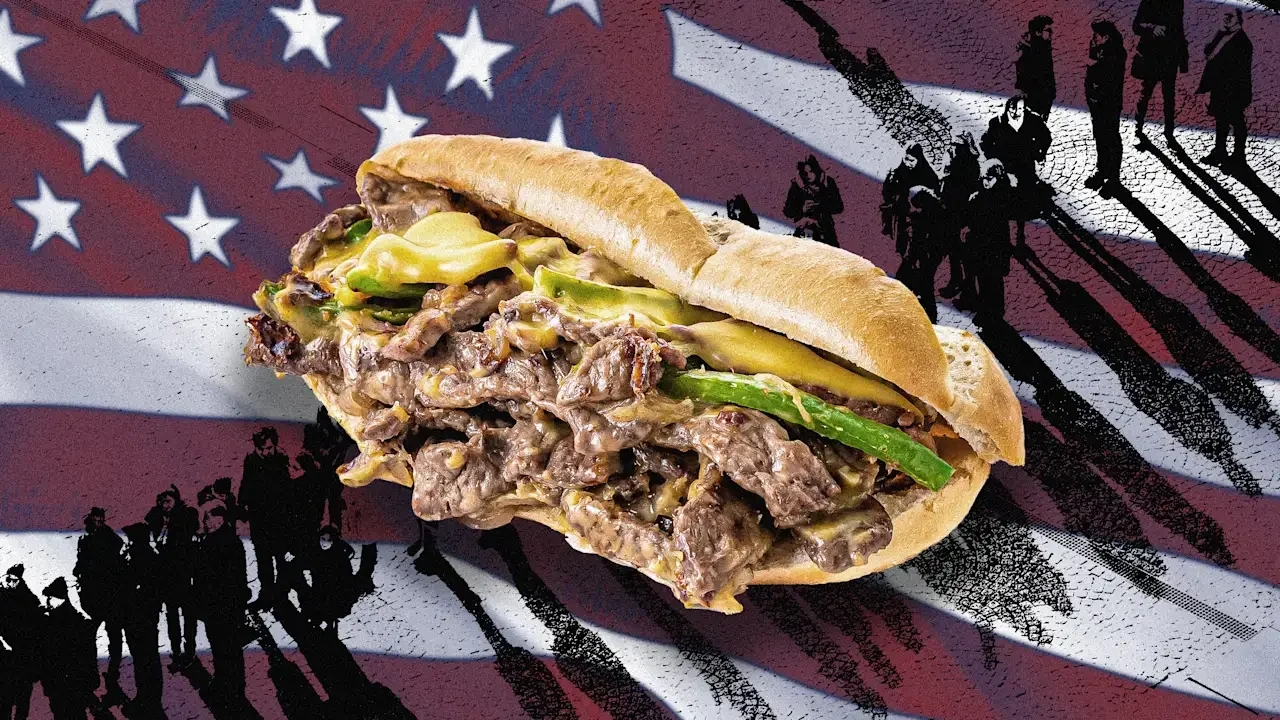
A giant cheesesteak running through multiple terminals at the Philadelphia airport might not solve the world’s problems, but it will make people smile. It’s National Cheesesteak Day, after all, so a little joy is necessary. In honor of this unique day, here’s some history on this lesser-known holiday. We even threw in some ideas on how to celebrate and make Rocky Balboa proud. Brief history of the Philly cheesesteak The cheesesteak is an American invention that originated in Philadelphia, Pennsylvania. The desire for something new struck two Italian-American brothers, Pat and Henry Olivieri, one day in 1930. The brothers ran a hot dog cart, but were craving some beef. They grilled that up with onions and put it on a bun. The result was the first cheesesteak, even though dairy wouldn’t be added until 1940 (thanks to “Cocky Joe” Lorenza). The hot dog cart quickly turned into a restaurant called Pat’s King of Steaks. In the 1960s, competitors such as Geno’s, Dalessandro’s Steaks, and Jim’s Steak opened up, further cementing the sandwich into the cultural zeitgeist. Suddenly, everyone in the city had a strong opinion on which establishment was the best. Perhaps the best publicity for the cheesesteak came in 1976. In the classic film Rocky, Rocky Balboa (Sylvester Stallone) ordered the “whiz wit” at Pat’s. The world would want what he was having. What’s in a cheesesteak? At its core, a cheesesteak is beef, onions, and a roll. There are many variations of this. The beef can be sliced or chopped. You can order it “wit” or “witout,” meaning with or without the grilled onions. Cheese is another personal preference. Most people prefer either Whiz or melted American or provolone. No matter which you choose, this is a messy meal which requires lots of napkins, and inventive leaning to avoid spilling on your clothes. How did National Cheesesteak Day come about? Although nobody can know for certain, four high school friends in Philadelphia might have started this unofficial holiday when celebrating their upcoming high school graduation. On March 24, 1994, buddies Sean Mealey, John McGrath, Jeremy Hollis, and Ted Goldberg enjoyed a terrific day at Stoxy’s Steaks. These young adults wanted to keep the tradition going after moving away for college. They wrote letters, recruited new friends, and even made a website. Years passed, and somehow March 24 became the day everyone celebrated the cheesesteak. How is the Philadelphia airport celebrating National Cheesesteak Day in 2026? The Philly airport is going big this year, potentially bigger than ever before. Its PHL Food & Shops and the City of Philadelphia Department of Aviation are partnering up to break the Record for the “Longest Line of Cheesesteaks.” In the spirit of brotherly love, every restaurant at the airport that has a cheesesteak on the menu will participate. This huge cheesesteak is expected to span both terminals B and C. National Cheesesteak Day deals, discounts, and freebies But the best way to celebrate is through your stomach. If you find yourself in Philadelphia on the big day, there’s a showdown in the Northeast at the Metro by T-Mobile store on Cottman Avenue. More than ten restaurants will be offering samples to attendees, who can vote on their favorites. Participants include Del Rossi’s, Skinny Joey’s, Pat’s King of Steaks, Woodrow’s, Cafe Carmela, Campo’s Philly Cheesesteak, Cleaver’s, Stella’s, Verona Pizza, LaNova and Lucatelli’s. Beyond Philly, Capriotti is offering a buy one, get one half off deal. Grab a friend and chow down. Hot Table is offering its small cheesesteak paninis for only $5 in store only. Philly’s Best is offering $2 off its cooper classic cheesesteak from 11 a.m. to 2 p.m. Texadelphianation is doing a buy one, get one free deal—another great opportunity for friends. And, New Yorkers, rejoice! G’s Cheesesteaks at 6 Avenue B 10009 is offering free cheesesteaks from 1 to 3 p.m., according to its Instagram account. After your stomach is satisfied, turn on Rocky to put a cherry on top of your National Cheesesteak Day celebrations—as the character points out, even the big man himself gets hungry. View the full article

-
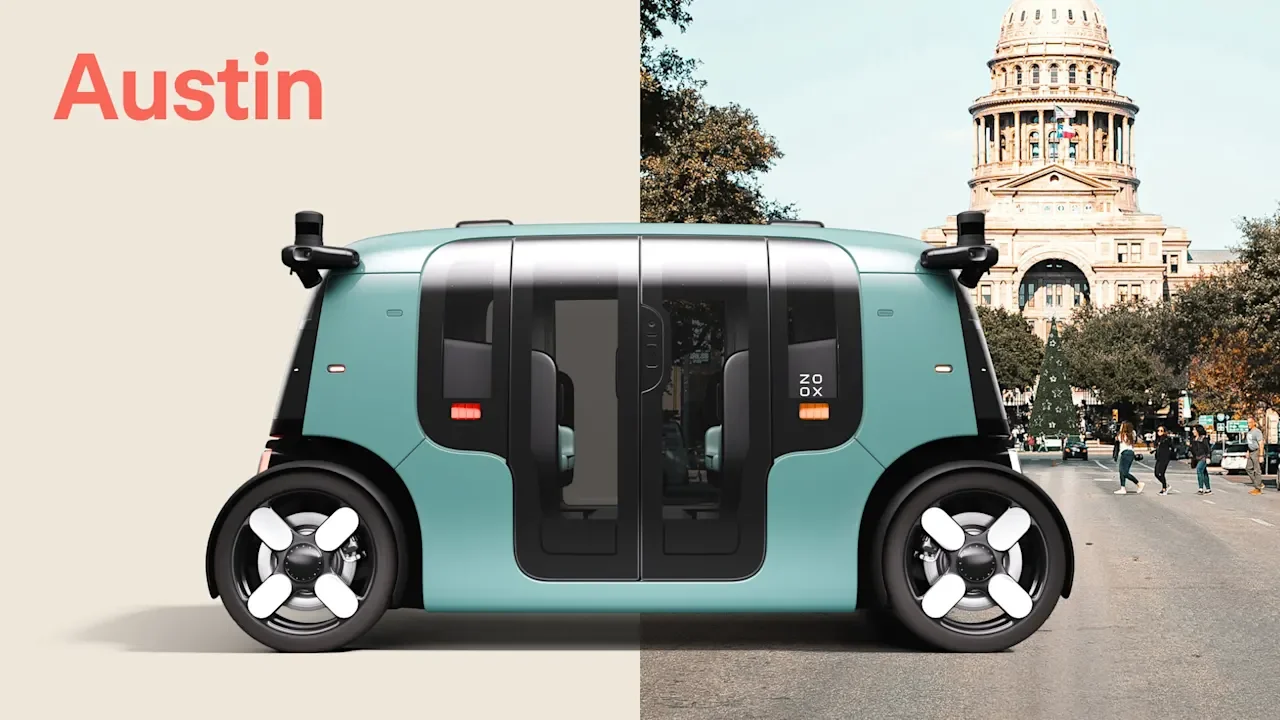
Zoox, the Amazon-owned autonomous driving company known for its whimsically shaped robotaxis, is expanding to new locations. The company on March 24 announced plans to begin operations in Austin and Miami later this year, while expanding its existing footprint in Las Vegas and San Francisco. In Las Vegas, riders can now access additional locations along the Strip, with service expected to reach the Sphere, T-Mobile Arena, and Harry Reid International Airport. In San Francisco, service will expand this spring to neighborhoods including the Marina, North Beach, Chinatown, and Pacific Heights, as well as along the Embarcadero—more than quadrupling Zoox’s current footprint in the city. The expansion comes with technical upgrades, including machine learning model updates aimed at smoother rides and more accurate arrival time estimates. Regular software improvements have helped to enable service in new areas as the vehicles become more capable, says cofounder and CTO Jesse Levinson. “For example, in San Francisco, our new geofence includes steeper hills, more dense traffic, places where you have to make more assertive lane changes,” he says. The cars have also gained the ability to operate in fog and rain, which will help in the push into Miami. For now, Zoox’s distinctive electric vehicles—featuring inward-facing seats and no driver’s seat or steering wheel—operate under a regulatory exemption from the National Highway Traffic Safety Administration that allows them to run free rides. The company is still applying for a separate exemption that would allow it to charge for service, Levinson says. Its fleet remains relatively small, growing from about 75 to roughly 100 prototype vehicles as part of the expansion. That is expected to change once Zoox begins mass-manufacturing the production version of its vehicles at its plant in Hayward, California. The company hopes to start later this year and eventually produce three vehicles per hour, enabling a significant increase in fleet size. Alphabet-owned Waymo reportedly has at least 2,500 automated vehicles in service. “A bit later in the year, when we start producing our production vehicles, you’ll start to see significant expansion in the size of our fleet in the cities we operate,” Levinson says. Anyone can currently request a free ride via the Zoox app in Las Vegas, though wait times can be long due to limited vehicle availability and the lack of fares. In San Francisco, riders must join a waitlist, which already includes several hundred-thousand people. In addition to its custom-built vehicles, Zoox operates a testing fleet of retrofitted SUVs staffed with human safety drivers. These vehicles map and test new cities ahead of launching automated taxi service. In early March, the company announced test deployments in Dallas and Phoenix, joining markets including Los Angeles, Seattle, Atlanta, and Washington, D.C. The test fleet has been operating in Austin and Miami since mid-2024, the company says. Zoox also announced a partnership with Uber that would allow Uber customers in Las Vegas and Los Angeles to be matched with Zoox vehicles. The rollout is expected to begin this summer in Las Vegas—likely after the company is cleared to charge for rides, Levinson says—and in mid-2027 in Los Angeles. Riders will still be able to book directly through the Zoox app, but the partnership gives Zoox access to Uber’s large customer base, including those who may not want to download another ride-hailing app. “We will continue to offer the Zoox app in all of our cities,” Levinson says. “But we have started to explore what a partnership with Uber could look like, starting in those two cities, and I think we’ll both learn a lot from each other.” Zoox is also rolling out new features aimed at improving convenience and comfort. A “Find My Zoox” option will allow passengers to customize lighting and trigger blinking lights on their vehicle, making it easier to spot in crowded areas. Riders will also be able to pair their devices with in-vehicle Bluetooth audio and automatically reconnect on future trips, Levinson says. The vehicles already support music playback from prebuilt playlists. Competition in the ride-hailing market appears poised to heat up, with Waymo also expanding to new markets, Elon Musk touting plans for automated Tesla taxis, and Uber recently announcing a separate deal to invest up to $1.25 billion in electric vehicle maker Rivian as part of its robotaxi plan. But Levinson says he imagines Zoox’s lead time in creating custom-built autonomous cars will give it an edge on rival operators. Still, Levinson argues that Zoox’s early focus on custom-built autonomous vehicles could provide an advantage. “As other companies might try to come out with their first purpose-built robotaxi, we might be on our second or third iteration,” he says. “Hopefully, those learnings will continue to allow us to have a meaningful benefit for our customers.” View the full article
-
Research finds that persona prompts "reliably damage" factual accuracy in certain kinds of tasks but work well in others. The post Research: “You Are An Expert” Prompts Can Damage Factual Accuracy appeared first on Search Engine Journal. View the full article
- Today
-
Egan-Jones has come under scrutiny for its ratings on thousands of private loans relied on by insurersView the full article
-
We may earn a commission from links on this page. Deal pricing and availability subject to change after time of publication. Amazon’s Spring Sale officially runs from March 25 through March 31, but a few early deals are already live, and some are worth paying attention to. One of them is the Apple Watch Series 11 (GPS + Cellular, 46mm) in a Jet Black Aluminum Case with Black Sport Band (M/L), now $429 (down from $529), which is its lowest price yet according to price trackers. If you prefer something dressier, the gold titanium version with a Milanese loop is also a $100 off, down to $699 from $799. Amazon is also testing one-hour and three-hour delivery in select locations, as reported by our senior tech editor Jake Peterson, so depending on where you live, you might not be waiting long once you hit buy. Apple Watch Series 11 (GPS + Cellular, 46mm) Jet Black Aluminum Case with Black Sport Band (M/L) $429.00 at Amazon $529.00 Save $100.00 Get Deal Get Deal $429.00 at Amazon $529.00 Save $100.00 The Series 11 doesn’t try to overhaul what Apple already settled with the Series 10, in terms of design. Instead, this smartwatch leans into small upgrades that show up in everyday use. Battery life now reaches 24 hours, finally moving past the long-standing 18-hour ceiling, which means you can track sleep without planning your charging schedule around it. The display gets brighter too, hitting 2,000 nits, so it stays readable outdoors, and Apple’s Ion-X glass helps with visibility at off angles. It’s also tougher this time, with better scratch resistance, IP6X dust protection, and WR50 water resistance for swimming. And with the cellular version, you now get 5G connectivity, which makes leaving your phone behind more realistic for runs or quick errands. There are also software additions like background hypertension alerts and a Sleep Score, although some of those aren’t exclusive to this model. PCMag gave the Series 11 an “outstanding” rating and named it one of the best Apple Watch to buy in 2026, noting that its performance and health features remain among the best available. This is an easy upgrade if you’re coming from a Series 7 or 8, where the battery bump alone changes how you use the watch. If you’re on a Series 10, however, the case is weaker—unless you care about incremental improvements or the new cellular capabilities, especially when you consider how it compares in size and durability to Apple’s higher-end model in this breakdown of the Apple Watch Series 11 against the Ultra 3. If you do pick it up, it’s worth learning how to get more out of it with our guides and hacks for every Apple Watch user, since the hardware is only part of the experience. Our Best Editor-Vetted Amazon Big Spring Sale Deals Right Now Apple AirPods 4 Active Noise Cancelling Wireless Earbuds — $149.00 (List Price $179.00) Apple iPad 11" 128GB A16 WiFi Tablet (Blue, 2025) — $299.00 (List Price $349.00) Sony WH1000XM6- Best Wireless Noise Canceling Headphones — $398.00 (List Price $459.99) Apple Watch Series 11 (GPS, 42mm, S/M Black Sport Band) — $299.00 (List Price $399.00) Blink Video Doorbell Wireless (Newest Model) + Sync Module Core — $35.99 (List Price $69.99) Ring Indoor Cam Plus 2K Wired Security Camera (White) — $39.99 (List Price $59.99) Fire TV Stick 4K Max Streaming Player With Remote — $34.99 (List Price $59.99) Amazon Kindle Colorsoft 16GB 7" eReader (Black) — $169.99 (List Price $249.99) Deals are selected by our commerce team View the full article
-
If you’re one of the legion of iPhone fans who can’t wait for the next major software update and all the new features it will bring, there’s some good news. Apple has revealed when you’ll be able to get a look at the iPhone’s next operating system, iOS 27—and you won’t have to wait much longer. Here’s what you need to know. Apple announces the dates for WWDC26 Apple has revealed when it will hold its next Worldwide Developers Conference (WWDC). The conference, affectionately referred to as “dub-dub” by Apple employees, is one of Apple’s two major events throughout the year, and one of the tech industry’s most important. WWDC is an annual week-long event where Apple previews the next major versions of its operating systems to developers and the public for the first time. These are the operating systems that will ship on Apple’s new iPhones and other devices come the fall, and include iOS for the iPhone, macOS for the Mac, iPadOS for the iPad, tvOS for the Apple TV, and more. Yesterday, Apple revealed the dates for this year’s Worldwide Developers Conference, dubbed WWDC26. The event will run from Monday, June 8, to Friday, June 12. But the most important date is June 8, when Apple will hold its annual software keynote. This keynote will be the first time the public will get a look at the next major versions of all of Apple’s operating systems, including the upcoming iOS 27 for iPhone. iOS 27 may be a ‘less is more’ update Usually, Apple’s major software updates are packed with new features, visual tweaks, or outright overhauls. For example, last year at WWDC25, Apple showed off iOS 26 and its Liquid Glass visual design refresh for the first time—a major shift in the way iOS looked and operated. Yet rumors suggest that this year’s iOS 27 update may be more subdued than prior years when it comes to new features. Instead, Apple is rumored to be using iOS 27 to focus on little refinements and bug fixes across the operating system. As a result, many are referring to iOS 27 as a “Snow Leopard”-like release. Snow Leopard was the product name for the 10.6 version of Mac OS X that Apple released in 2009. The release was different from prior versions of OS X because Apple chose not to introduce many new features, focusing instead on bug fixes and OS refinement. As a result, even to this day, Snow Leopard was one of the most stable and beloved operating system updates Apple ever put out. In recent years, many iPhone users have lamented that iOS has become bloated and buggy as Apple prioritized features over stability. And so the possibility of a “Snow Leopard” like iOS 27 is extremely appealing to many longtime Apple users. Of course, that’s not to say iOS 27 won’t have any new features—but they are expected to be fewer than with previous releases. Specifically, the major new feature of iOS 27 is expected to be a chatbot like Siri powered by Google’s Gemini LLM. Indeed, in its WWDC26 announcement, Apple said this year’s conference will show off “AI advancements,” likely referring to the new Siri chatbot. When can I download iOS 27? While Apple has all but explicitly confirmed it will show off iOS 27 to the public on June 8, users will have to wait a little longer to actually install the new software on their iPhones. When Apple first previews a new iOS at WWDC, it releases a beta of the new operating system to developers the same day. This means if you are a developer, you’ll be able to get your hands on iOS 27 on June 8. But if you’re a general user, you’ll need to wait longer. About a month after Apple releases the first developer beta of the new iOS, the company releases a public beta. This beta is for members of the general public who want to test the new iOS as soon as possible. However, the public iOS beta isn’t a finished product and may have incomplete features and bugs. That’s why many just prefer to wait until the final release of the new iOS. That release usually happens in the fall, shortly after Apple’s second major event of the year: its iPhone launch event. If you plan to wait until then to install iOS 27 on your iPhone, you can expect to be able to do so around the middle of September. View the full article

-
Redemption requests across industry surge as exodus of wealthy individuals acceleratesView the full article
-
Choosing the right PPC channels starts with clear goals, budget alignment, and understanding where your audience actually converts. The post How To Determine What Paid Media Channels Are Right for You appeared first on Search Engine Journal. View the full article
-
Website migrations have a well-earned reputation for going wrong, with even well-planned migrations leading to rankings slipping, traffic dropping, or tracking breaking. But most migration problems come from small oversights rather than complex technical failures. You can reduce your risk with a staged approach. The checks you complete during staging, on launch day, and in the first few weeks after go-live often determine whether a migration stabilizes quickly or becomes a long recovery project. Before launch: Catch issues on staging Most migration problems should be found and fixed on the staging site. If issues reach the live site, recovery is slower and more uncertain. Set yourself up for success with the following tips: Keep the staging site private (even from crawlers) One common mistake is leaving the staging site publicly indexable. When Google crawls a staging environment, duplicate content can sometimes end up in search results. Rankings can fluctuate, and unfinished pages may end up indexed. Make sure you have blocked crawlers from staging site or protected it with a password so it remains invisible to search engines until the live launch. It’s not just crawlers, either. I’ve seen this happen with ecommerce sites. Customers found the staging site, tried to place orders, and the process didn’t work. This confused customer service teams, frustrated buyers, and created avoidable pressure internally. Your customers search everywhere. Make sure your brand shows up. The SEO toolkit you know, plus the AI visibility data you need. Start Free Trial Get started with Take benchmarks You want a baseline to help you identify real problems rather than reacting to normal short-term movement. Record organic sessions, rankings, top landing pages, indexed pages, conversions, and site speed before transitioning to the new site to define the “normal” you will compare the new site to. Identify priority pages Focus on pages that drive traffic, revenue, or attract links. These pages need extra care during redirect mapping, content review, and testing. Pay extra attention to internal links, redirects, and URL rules for these pages. Dig deeper: Website migrations: a plan to keep your traffic and SEO safe Review templates and content continuity Templates control titles, headings, metadata, canonical tags, structured data, copy, and media. If templates break, problems repeat across hundreds of pages. Check that: Titles and headings are present and accurate. Canonical tags use full URLs and point to live pages. Structured data has transferred correctly. Copy, images, and internal links are intact. This step protects more than rankings. It ensures the site still meets user needs and supports conversions. Make sure canonical tags use full URLs and point to live pages, as explained in Google’s guide on canonical URLs. This simple step can prevent bigger headaches later. Be intentional about URL changes Unnecessary URL changes are a common source of hidden damage. Changes made for design or CMS convenience often introduce risk without a clear benefit. Typical issues include: Adding or removing trailing slashes without a clear rule. Changing folder structures without reason. Inconsistent use of uppercase and lowercase URLs. One of the most common causes of duplicate URLs during migrations is inconsistent handling of trailing slashes. URLs with and without a trailing slash are treated as different URLs. Allowing both to resolve can create duplicate content, dilute signals, and complicate crawling. It doesn’t usually matter which version you choose, as long as the rule is consistent across the site. During a migration, avoid unintentionally switching between formats without a clear plan and proper redirects in place. The same goes for folder structures and capitalization. Don’t change what you don’t need to, and be consistent wherever possible. In one migration where we were brought in to rescue a site after go-live, every URL gained a trailing slash. Canonical tags only contained paths rather than full URLs, and internal links relied on redirects instead of pointing directly to final URLs. None of the changes were necessary, yet together they slowed crawling, caused confusion, and delayed recovery. Map redirects and compile existing ones Redirect mapping is one of the highest-risk areas of any migration. Existing redirects should be pulled from the CMS, CDN, Google Search Console, analytics platforms, and backlink tools so nothing is missed. Every legacy URL needs a clear, intentional destination. If pages are removed, redirect to the closest relevant alternative. If no equivalent exists, return a 404 or 410. Avoid sending everything to the homepage or top-level categories. Aleyda Solis’ guide to SEO for web migrations provides a strong framework for this stage. Decide what to remove and what to create Migrations are often seen as a good time to refresh all the content on a site. This can be done if all the stakeholders align, but it should be done methodically. Remove outdated content carefully. Where gaps exist in the new structure, plan new pages in advance and make sure they are ready to go live when the new site is. This planning avoids lost coverage or weak redirect decisions later. Verify Search Console access and settings Ensure the site can be verified after launch and that any international or country settings are correct. Align stakeholders early Pre-launch is also about people. Developers, designers, SEO, and analytics teams need clarity on responsibilities and deadlines. Many migration issues happen through missed handovers rather than a lack of skill. In my experience, most migration failures are preventable before launch, when fixes are safer and faster. I worked on one migration where SEO was brought after launch. The site launched with broken internal links, missing redirects for high-traffic pages, and inconsistent URL rules. Organic traffic dropped by almost 40% within two weeks, and several priority pages disappeared from search results. All of these issues were visible on the staging site but weren’t reviewed before launch. Make the case for SEO to be part of the planning process. It saves time, money, and headaches. Dig deeper: Website migration checklist: 11 steps for success Get the newsletter search marketers rely on. See terms. Launch day: Verify everything works on the live site Launch day is where preparation meets reality, and all teams, including SEO, developers, designers, and analytics, see the results of their planning. What worked on staging must now work on the live site. Even small oversights can immediately affect rankings, traffic, conversions, user experience, and reporting. Calm, thorough verification ensures the migration pays off and prevents small errors from becoming lasting issues. Use this list as a starting point: Test redirects at scale Spot-checking isn’t enough. Every mapped URL should redirect once and resolve cleanly. Avoid redirect chains and loops. They slow down crawling and delay signal consolidation. In another migration we were called in to fix, only the top 50 pages had correct redirects. Thousands of other URLs redirected to the homepage. Rankings dipped, and recovery took months longer than expected. Crawl the live site Run a full crawl as soon as the site is live. Compare results with the staging crawl to identify differences. Look for: Broken links. Redirected internal links. Missing pages. Server errors. Check internal links and navigation Menus, breadcrumbs, and in-content links should point directly to live URLs. Leaving internal links to rely on redirects increases load and risk. Verify on-page SEO and content Canonicals or hreflang pointing to staging URLs are a common launch issue. Confirm titles, headings, canonical tags, hreflang, copy, and media all reference the live site. Dig deeper: How to run a successful site migration from start to finish Confirm tracking continuity GA4, paid media tags, and social pixels should already be in place before launch. This ensures tracking fires correctly, conversions are measured accurately, and historical data remains intact when the live site goes public. Remember, the staging site should be blocked from crawling or be protected behind a password to prevent test traffic from polluting reporting. In one migration, we were asked to review after launch. The domain stayed the same, but a new GA4 property was created during the redesign. Historical data remained in the original property, while new data was collected in the new one, making post-launch comparisons difficult. Keeping the same GA4 property preserves reporting continuity, supports confident decision-making, and avoids unnecessary uncertainty at a critical point in the migration. Check robots.txt and index controls Ensure pages meant to be indexed are accessible and that noindex tags are only used where intended. If you use services like Cloudflare, it’s also important to check that your robots.txt and content signals are configured correctly. For example, Cloudflare’s default setting may block AI training access while allowing search indexing. If this isn’t adjusted intentionally, AI models might pull content from third-party sources rather than your site, affecting how your brand is represented in generative AI outputs. Submit the XML sitemap Submit the live sitemap to Google Search Console to support the discovery of new URLs. Review site speed Check Core Web Vitals and page performance. A redesigned site can still load heavier assets than expected. Launch day is about verification, not assumption. After launch: Monitor and stabilize performance Even the best-planned migrations can reveal surprises once search engines and real users interact with the site. Small errors that didn’t appear on staging can impact rankings, traffic, and conversions. Calm, structured monitoring in the days and weeks after launch ensures problems are caught quickly before they affect performance or user experience. Here’s what to keep an eye on. Monitor Search Console closely: Watch for crawl errors, indexing issues, and unexpected exclusions. Patterns matter more than isolated URLs. Check indexed pages: Expect some movement, but sustained drops can point to redirect or crawl problems. Track rankings and traffic against benchmarks: Compare performance against your baseline rather than reacting to day-to-day changes. Confirm redirects still receive traffic: Old URLs can attract users and bots for months. Ensure they continue to resolve correctly. Recheck site speed under real traffic: Performance can shift once the site is under load. Audit for follow-up improvements: Once stability returns, review internal linking gaps, missing metadata, and content that did not migrate cleanly. Calm monitoring and clear data prevent small issues from becoming lasting damage. Dig deeper: Technical SEO post-migration: How to find and fix hidden errors See the complete picture of your search visibility. Track, optimize, and win in Google and AI search from one platform. Start Free Trial Get started with What normal recovery looks like after a migration Even well-managed migrations can see short-term movement. Rankings may fluctuate, and traffic may dip before stabilizing. If redirects are clean, content is intact, and crawl access is clear, recovery usually follows within weeks rather than months. Ongoing losses usually point to structural issues rather than algorithm changes. Knowing when to wait and when to act comes from experience. You don’t want to react too quickly or too late. Keep a careful eye on your analytics, and you’ll develop the expertise over time. Website migrations succeed when they are planned, tested, and monitored at every stage. A clear focus on pre-launch, launch day, and post-launch checks protects visibility, performance, and confidence across teams. When SEO is involved early, and checks are clearly owned, migrations stop feeling like crisis events and become managed change. View the full article
-
Google was asked if Personal Intelligence in AI Mode will come to paid accounts across the world (not just the US - where it has hit non-paid accounts). Google replied... (Now is the point where you click on the article...)View the full article
-
Google is testing changing out some of the links within AI Mode to show as overlay cards, instead of take you directly to the website it is mentioning. This obviously will result in fewer direct clicks to those websites.View the full article
-
Google is testing encouraging business owners to reply to reviews using AI. There is a new option in the Google Business Profile dashboard that is showing for some businesses that says "Reply to reviews with AI."View the full article
-
One minute he threatens death and destruction, the next he says the US and Iran are engaged in negotiationsView the full article
-
In February, Bing rolled out new AI Performance reports within Bing Webmaster Tools. Bing announced a new feature for this report that connects the Grounding Queries and Pages views within the AI Performance report.View the full article
-
Fintech, where Peter Mandelson and Harvey Schwartz were board members, is given £2mn penalty by Bank of EnglandView the full article
-
Apple is reportedly launching local ads within Apple Maps, as soon as this month. "Apple Inc. is preparing to introduce advertising in its Maps app, part of a broader push to generate more money from services," Bloomberg wrote.View the full article
-
It should come as no surprise that the global chip wars that grabbed headlines over the past year made an impact at the top of the Asia-Pacific list. Taiwanese semiconductor giant TSMC, in the No. 1 position, has reinforced its role as an industry lynchpin, becoming the first to put hotly anticipated 2-nanometer chips into production. Tokyo Electron, which provides the specialized equipment for semiconductor production that the companies like TSMC use, played a critical supporting role. Its recent innovations in etching technology have helped make chips run faster and with lower energy footprints. The region saw other high-tech innovations, too. Australia-based Novalith has found a way to produce battery-grade lithium cheaper and greener than existing techniques, opening the door to lighter, more efficient batteries in a range of devices. Other companies on the list focus on sustainable solutions, too. Varaha, an India-based startup that converts agricultural waste and invasive plants into a charcoal-like substance called biochar, has inked deals to help Big Tech heavyweights to meet their carbon targets. Akvo, another Indian company, is addressing water scarcity by lowering cost barriers to systems that convert air humidity into drinking water. Other innovators include South Korea-based Samyang Foods, which not only pulled off a viral marketing win with its line of fiery ramen but rapidly scaled up production to meet demand. Chinese device manufacturer Elehear developed some the best-rated and most affordable over-the-counter hearing aids available. And Australian biotech Cauldron Ferm is using fermentation to mass produce ingredients for everything from baby formula to sustainable aviation fuel. 1. TSMC For leading the race for a 2nm chip that takes AI and electronics into a new era Microchips are the basis of the modern world, and Taiwan Semiconductor Manufacturing Company (TSMC) is renowned for making the majority of leading-edge chips. At the end of last year, it quietly put into production an even smaller, more efficient 2-nanometer chip, narrowly beating out Samsung. Semiconductor technology has been evolving at hyperspeed to address the demands of energy-intensive computing, largely fueled by the explosion of AI. TSMC’s 2nm chips offer a 25-30% reduction in power compared to earlier 3nm chips running at the same speed. Production volumes are scheduled to ramp up this year, with early purchasers reportedly set to include Apple, NVIDIA, AMD, and Google. While most of TSMC’s chips are made in Taiwan, the company is also investing in fabs in the U.S., including a massive complex in Phoenix, Arizona, as part of a $165 billion pledge to expand its American chip building capacity. 2. Varaha For helping carbon removal make more business sense in India and beyond Carbon removal has been a heavily hyped and often criticized green-tech pursuit for years. But the past year saw some real movement. Varaha, a climate-tech startup based in India, has secured partnerships with Google and Microsoft while collaborating on carbon removal projects with smallholder farmers across Asia. One of Varaha’s key products is biochar, a charcoal-like substance made from organic waste that can support soil health. In the Banni Grasslands reserve in western India, the company coordinates with local communities to harvest an invasive tree, Prosopis juliflora, that has edged out native grasses needed for cattle grazing. But Varaha’s biochar recipe varies depending on what’s available; elsewhere, it uses cotton stalks and corn shanks after harvest. Varaha buys the unwanted biomass from farmers, processes it into biochar, then distributes the new material as a sustainable soil additive. Last year, Google agreed to purchase 100,000 tons of carbon credits from Varaha through 2030. And in January, Microsoft signed a deal for more than 100,000 tons of carbon removal over the course of three years. In February, Varaha secured $20 million as part of a projected $45 million Series B funding, following a $30.5 million investment last year to help expand regenerative farming. 3. Upstage For developing a compact LLM that’s fluent in Asian languages While many of the top large language models come from the United States and China, Upstage, a small Korean tech start-up, has broken into the competition. Its Solar Pro 2 was designed as an enterprise LLM to help with business tasks. It’s especially good at analyzing different types of unstructured documents and turning them into structured data—great news for insurance companies and other businesses heavy on document processing. Last year, Solar Pro 2 was recognized as the country’s first “frontier model” by the UK-based benchmarking platform Artificial Analysis. It came in 12th on the group’s intelligence index, out-competing some rivals that were trained on vastly more parameters. (For comparison, top-ranked Grok-4 was trained on an estimated 1.7 trillion parameters, versus Upstage’s mere 31 billion.) Upstage raised $45 million last year, bringing its total funding to more than $150 million. A chunk of that came from Amazon Web Services, which will be collaborating with Upstage to develop future foundation models. 4. Transcelestial For finding an alternative to fiber optic cables Transcelestial, a Singaporean communications startup, has developed wireless laser technology to provide internet networks in hard-to-reach places. The company uses optical technology to transmit data via lasers through the air, which can offer fiberoptic-grade connectivity without cables. That’s a big plus in places where it’s not feasible to lay down costly fiber-optic networks, like many of Southeast Asia’s vast archipelagoes. In the Philippines, for example, Transcelestial partnered with Globe Telecom to overcome geographical barriers and connect underserved regions. Last year, Transcelestial launched its technology into orbit, along with an EU-funded 6G research initiative, aboard a SpaceX rocket. The company also plans to have its tech aboard Singapore’s first inter-satellite laser communications mission, which is scheduled to be tested in orbit this year. In February, Transcelestial signed an agreement with Australia’s Gilmour Space to provide high-speed data transmission on a satellite set to launch later this year. 5. Tokyo Electron For making semiconductor technology more sustainable Tokyo Electron, founded in 1963, is one of the largest exporters of semiconductor production equipment, supplying the tools that chip giants like TSCM and Intel need to make ever-smaller, faster, more efficient devices. Already, it boasts about 92,000 tools in operation worldwide and releases about 6,000 new systems annually. Over the past year, the company says it has perfected atomic layer deposition (ALD) and atomic layer etching (ALE), processes that enable the production of sub-3nm devices. It has also made advancements in high-aspect ratio contact (HARC) etch technology called cryogenic etching, contesting U.S.-based Lam Research’s market dominance in the process. Etching removes material from a wafer’s surface to create microscopic structures of three-dimensional electrical circuits. Cryogenic etching uses extremely low temperatures to achieve high-speed etching faster and more energy-efficiently than other conventional methods. Samsung Electronics will reportedly be using this Tokyo Electron tech in the latest version of its V-NAND flash memory technology. 6. Novalith For scaling a more sustainable and affordable way to refine lithium The race to electrify everything and ditch fossil fuels is largely predicated on batteries, and most batteries require lithium. But mining the critical mineral poses ecological risks. In traditional lithium mining, sulfuric acid is used to leach lithium from hard rock, resulting in acid mine drainage that can cause devastating pollution if not disposed of correctly. Australian startup Novalith Technologies has developed a refining process that it says can produce battery-grade lithium from ores faster, cheaper and greener than existing techniques. A series of successes over the last year at a pilot facility in Sydney positions the company to scale commercially in the months ahead. Novalith says its plant’s modular design allows units to be built faster and with an estimated 30% reduction in capital expenditure. The company has a contract with a U.S. company to build a facility in 2027, and it has signed more than 50 NDAs with global mining and battery partners—a prelude to deploying its technology across Canada, Korea and Japan. 7. Elehear For creating affordable OTC smart hearing aids Prescription hearing aids can run anywhere from $1,500 to more than $7,000 a pair. Elehear, based in Shenzhen, China, is leading a new wave of direct-to-consumer hearing technology that aims to improve affordability without compromising on quality. Elehear’s over-the-counter hearing aids are among the cheapest on the market, with prices ranging from $399–$599. Last year, Elehear launched its Beyond Pro hearing aids with improved features including an upgraded AI technology designed to reduce noise, control feedback, and make voices clearer in noisy environments. Using the Elehear app, users can customize the hearing aid’s settings to control for the level of background noise or use presets for whether they’re in a restaurant, watching TV, or listening to music. Bluetooth connectability allows users to stream phone calls and music. The Beyond Pro also offers enhanced tinnitus relief by offering ambient soundscapes that help mask the condition’s auditory symptoms. 8. Samyang Foods For taking a spicy South Korean export across the globe You may have never heard of the South Korean food maker Samyang Foods, but you’ve definitely heard of the viral instant noodles Buldak, with its colorful packaging, various spicy flavors, and rosy-cheeked chicken mascot named Hochi. Last year, the instant-ramen-maker was named Gen Alpha’s favorite brand by Market research firm Numerator, beating out brands like Owala and Fortnite. The company has capitalized on its TikTok fame without running into product shortages. As international demand soared last year, it opened a second export-focused factory to keep feeding global customers. And to stoke Buldak’s runaway popularity further, Samyang savvily partnered with restaurants and offered limited-release menu items at fried chicken chain bb.q Chicken and Panda Express. It was also the first Korean brand to become an official partner of Coachella 2025, where it hosted an activation booth and teamed up with performer GloRilla. Samyang also pushed out a global launch featuring refreshed packaging for its sauces and new product lines like chips. Last year its sales jumped 36%, with customers snatching up a whopping 9 billion units of Buldak products. 9. Cauldron Ferm For lowering the costs of industrial-scale biomanufacturing Cauldron Ferm is an Australia-based biomanufacturing company that aims to transform the way everyday goods are made using precision fermentation. That technique has been used for decades in pharmaceutical manufacturing, and now Cauldron Ferm, founded in 2022, is using it to produce bioproducts—everything from dairy proteins used in making cheese and ice cream to specialty chemicals that can go into sustainable aviation fuel. Precision fermentation uses microorganisms, like yeast, that have been programmed to produce specific molecules, such as proteins, enzymes, or peptides. In 2025, Cauldron Ferm demonstrated its hyper-fermentation technology by completing its first continuous campaign with a precision fermented protein at 10,000-liter scale, producing more volume at lower cost than conventional batch-fed systems. Over the past year, Cauldron Ferm has onboarded six new clients, ranging from startups to multinationals. It has also received notable government, including backing from Australian officials for an industrial facility in Mackay, Queensland, and a $1.76 million award from the U.S. Department of Defense to plan a commercial-scale facility in the United States. 10. Avko For giving businesses more affordable access to atmospheric water generators Water scarcity is emerging as one of the most urgent environmental and social challenges around the world as the climate crisis intensifies. Akvo Atmospheric Water Systems is tackling that problem in India and beyond. It’s one of many companies deploying Atmospheric Water Generators (AWGs) that collect airborne moisture, condense and purify it into drinking water. But it’s one of only a few that are focusing on making the technology more accessible where it’s needed most. In March 2025, Akvo launched a pay-as-you-go program called Water-on-Want (WoW), a service model for corporate customers like hotels and other commercial and industrial buildings. Rather than buying expensive hardware upfront, businesses can rent AWGs and pay only for the water consumed, which helps reduce the use of bottled water. Akvo’s technology powers more than 2,000 machines across 15 countries, producing close to 500,000 liters per day globally. Over roughly the past year, Akvo has nearly tripled its AWG deployments, showing strong demand for its approach to delivering an essential resource. Explore the full 2026 list of Fast Company’s Most Innovative Companies, 720 honorees that are reshaping industries and culture. We’ve selected the companies making the biggest impact across 59 categories, including advertising, applied AI, biotech, retail, sustainability, and more. View the full article
-
Over the past year, tech companies invested hundreds of billions in the new data centers needed to power rapidly increasing demand for the technology. The investment is motivated in part by confidence that major AI labs such as those at OpenAI, Anthropic, and Google will continue to wring more intelligence out of their models. Indeed, fears have receded that the AI labs’ go-to strategy of supersizing models, training data, and computing power was no longer yielding large leaps in intelligence. Instead, the cadence of bigger and better models has accelerated, in part because AI coding tools are playing an increasing role in building new models. That’s certainly true at Anthropic, which says that 70% to 90% of its new code is now written by its breakthrough coding agent, Claude Code. The tool, which generates and tests software code based on natural language prompts, was originally meant for internal use by Anthropic engineers, but the company decided to release it as a real product in May 2025. In just six months, Claude Code became a moneymaker, reaching a $1 billion revenue run rate. Another reason for the acceleration in model releases was the arrival of Google at the front of the race. Its Gemini 3 family of models smoked competing LLMs on a number of industry benchmark tests, putting other AI labs on alert. The Gemini 3 models became the engine for many Google services, such as AI search and ads, and gave a boost to the company’s cloud business as well as to its Gemini chatbot. Other AI companies are specializing, honing their models for narrower use cases and skill sets. Hume AI, for example, has focused on emotional intelligence; its newest models are surprisingly good at both listening for a wide range of emotions in the human voice (say, a customer support caller), and generating voices that convey a range of emotions. World Labs, cofounded by AI pioneer Fei-Fei Li, has focused on models that understand the world very differently than large language models. The company has launched Marble, a “world model” capable of processing physical and spatial data in order to generate realistic world simulations that can be used to train self-driving cars or guide the movements of robots. 1. Google For creating an LLM that’s suitable for powering agents With the release of its Gemini 3 family of multimodal AI models, Google cemented its position as a dominant—and still rising—force in AI. The new models, which were developed by the company’s primary AI lab, Google DeepMind, and began deployment in November 2025, were meant to unify the multimodal, reasoning, and agentic properties introduced in the Gemini 1 and 2 models. They’re among the first to be trained from the ground up to process and understand images, video, audio, and code, not just text. The Gemini 3 models also offer the reasoning, planning, and ability to use tools (such as web search) needed to power AI agents. Gemini 3 now provides the brain for a number of Google’s core consumer-facing products, including the Gemini chatbot app, which now has more than 750 million monthly active users, and the AI Overviews in Google Search, which Google says now reach more than 2 billion users monthly. On the enterprise side, usage of Gemini 3 and other Google cloud models by independent developers and companies reportedly surged in 2025. Google says that Gemini Enterprise, a platform for enterprise search, AI assistants, and agents, has grown to 8 million paid seats. With a wealth of AI talent and a plethora of training data at its disposal, such as YouTube videos, Google is likely to seriously challenge OpenAI, Anthropic, and xAI for frontier model dominance well into the future. Read more about Google, No. 1 on Fast Company’s list of the World’s 50 Most Innovative Companies of 2026. 2. Anthropic For developing the smartest coding agent Anthropic engineers originally built its popular Claude Code tool in late 2024 to test their models’ fluency with computer code. But when they saw that the tool, which generates code based on natural language prompts, dramatically sped up software development, they began using it for their own coding work. The company also kept improving the tool, and released it as a new product. “Since it became generally available last May, it’s changed how teams build and ship software,” says Anthropic chief product officer Mike Krieger, “and it’s now used by companies across industries.” Customers include Netflix, Spotify, Salesforce, KPMG, and many other major names, along with thousands of startups. Claude Code improved with the November 2025 release of the Claude Opus 4.5 model, and saw an even bigger boost with Opus 4.6, announced in early February. Users say the tool is now more efficient and can handle complex coding tasks that require prior reasoning and planning. It’s now a significant revenue generator for Anthropic, which reportedly expects to become profitable in 2028. “Surpassing $1 billion in six months tells us that this isn’t about experimentation, it’s just how developers work now,” Krieger says. Read more about Anthropic, No. 4 on Fast Company’s list of the World’s 50 Most Innovative Companies of 2026. 3. Abridge For relieving doctors of chart-work drudgery Abridge is applying enterprise-grade AI to one of the biggest contributors to burnout of physicians and other caregivers—filling out patient charts. Caregivers can record patient visits using their phone. The Abridge platform then summarizes the information and completes the electronic patient record. Clinicians using the platform report spending 60% less time completing patient notes after hours and report an 85% increase in work satisfaction, the company says. That results in a 67% overall reduction in burnout. Abridge projects that its platform will support more than 80 million patient-clinician conversations at 250 of the largest U.S. health systems in 2026. In April 2025, the company introduced a new AI architecture, called Contextual Reasoning Engine, that uses more clinical context to turn visit data into compliant, billable notes in real time. It’s also released add-on modules that make the platform more performant in specific clinical contexts, including Abridge Inside for Emergency Medicine and Abridge Inside for Inpatient. When scrutinizing patient visit summaries, Abridge says its platform caught 97% of errors and unsupported statements, while an off-the-shelf model, OpenAI’s GPT-4o, caught just 82%. The company closed a $250 million funding round in 2025, and reached $38 million in annualized recurring revenue in Q3 2025, with a 95%+ month-over-month retention rate. Read more about Abridge, honored as No. 19 on Fast Company’s list of the World’s 50 Most Innovative Companies of 2026. 4. World Labs For transforming text, photos, and videos into 3D worlds Many AI practitioners believe that today’s AI models will need to grow beyond words and develop an understanding of the spatial and physical world. One of these people is Fei-Fei Li, the AI pioneer whose ImageNet training dataset laid the foundation for new computer vision systems in the early 2010s. Li started World Labs with well-known AI researchers Justin Johnson, Christoph Lassner, and Ben Mildenhall. The startup is building a form of “world model” capable of processing sensory data and developing a physics-based understanding of the real world. It released its first world model, Marble, in 2025. It focuses on generating and maintaining highly realistic 3D environments that can be used by creatives to develop interactive games and visual effects. Ultimately, the greatest beneficiaries of World Labs’ models might be robotics companies, which currently struggle to prepare robots for real-world utility. “You need a 3D environment that is interactable, that has collisions, has physics, has dynamics to train robots, to evaluate robots,” says Li. “This is the reason spatial intelligence is important for humans and it will be important for AI. The use cases are just abundant.” Read more about World Labs, honored as No. 22 on Fast Company’s list of the World’s 50 Most Innovative Companies of 2026. 5. Cerebras Systems For baking big chips for big AI Cerebras is best known for making the market’s largest AI chip, meaning it occupies most of a whole silicon wafer, which is about the size of a dinner plate (other AI chips, like Nvidia’s GPUs, are baked onto much smaller pieces of the silicon wafer). The large square chip packs a lot of processing power and memory on one piece of silicon, so almost no time is wasted routing data between separate chips. That makes it highly effective at processing data from commercial AI applications that require massive throughput and very fast response times. Cerebras says its chips can process 2,500 to 3,000 tokens per second, more than 70 times faster than the best GPUs. For years, Cerebras sold its technology mainly to national labs and R&D organizations that needed supercomputing power for research. But over the past 18 months, the company has increasingly filled the growing demand for computing power for commercial AI apps such as chatbots and coding assistants. For example, OpenAI recently began using a large installation of Cerebras servers to process real-time user interactions with its Codex coding assistant. In February 2025, Cerebras said that it planned to launch six new inference data centers. At least four of them—Dallas, Minneapolis, Oklahoma City, and Montreal—were online by the end of the year. Its customer list now includes IBM, Meta, Perplexity, Mayo Clinic, Notion, AbbVie, G42, Mistral, Bayer, GlaxoSmithKline, and AstraZeneca. In September 2025, the company raised a $1.1 billion funding round at an $8.1 billion valuation. Then in early 2026, it announced another $1 billion round at a post-money valuation of around $23 billion. 6. Alibaba Group For bringing its Qwen AI models to the cloud Qwen, from the Chinese conglomerate Alibaba Group, is a world-class family of large language models. Alibaba has developed a whole stack of infrastructure software around the models so that they can be more easily deployed within enterprises. It now open-sources Qwen, calling it the “operating system of the AI era.” As Asia-Pacific’s largest cloud provider and the world’s fourth largest, Alibaba has released more than 300 AI models spanning text, image, video, and audio generation. The company says Qwen has been downloaded more than 600 million times, and has spawned over 170,000 derivative models. More than a million developers use Model Studio, Alibaba Cloud’s platform for building and deploying AI apps using Qwen. In June 2025, Alibaba launched a strategic alliance with SAP, which now integrates Qwen into its SAP AI Core, a service layer for deploying and running AI workloads, in China and, soon, globally. A groundbreaking BMW partnership embeds Qwen into the carmaker’s 2026 Neue Klasse vehicles, the first time a global automaker has embedded an open-source LLM directly into in-car systems. Qwen is also having an impact in healthcare. The models have improved the diagnostic accuracy of PANDA cancer screening by 34.1% and reduced misdiagnoses by an acute aortic syndrome tool from 50% to 4.8%. 7. Darktrace For turning LLMs into security workers Darktrace may have been ahead of its time when it launched its Cyber AI Analyst in 2019. By 2025, the agentic security system had conducted 90 million investigations and was able to reduce them to fewer than 500,000 incidents that it deemed critical. Now Darktrace is turning its focus to security threats in the cloud, where the majority of AI models and apps are hosted. In September 2025, the company launched Forensic Acquisition & Investigation, which it says is the industry’s first fully automated forensic solution for cloud computing. The system is designed to instantly capture and preserve evidence of a security breach so that researchers can establish the root cause and timeline of a cyberattack and investigate it across different commercial clouds and on-premises computer systems. Darktrace also added a new custom large language model called DEMIST-2 that enables a deeper understanding of cybersecurity threats and orchestrates the use of agents in complex investigations. Darktrace’s security technology protects about 10,000 organizations globally from sophisticated threats to cloud, email, network, and operational technology systems. 8. Mithril For developing algorithms to keep the servers working around the clock, more efficiently One of the fundamental challenges in the AI industry is the extremely high cost of training and operating large models. Not only is there an undersupply of the silicon chips needed to do the work, but cloud providers sell access to compute power in rigid ways that can leave servers idle. Mithril’s idea is to aggregate computing power from cloud providers into a marketplace and sell it in flexible ways. For instance, if an AI lab needs cloud resources for a job that can run piecemeal, it might get a lower price than another workload that’s time-sensitive and must run uninterrupted until completion. Mithril says usage of its platform has grown by more than 550% over the past year. Its customers include well-known AI companies such as Cursor, Poolside, and Pika. It also serves a growing number of enterprises such as LG AI Research and research institutions such as Arc Institute, Stanford, and Broad Institute. Mithril, which was founded by former Google DeepMind research scientist Jared Quincy Davis, has raised $80 million from investors including Sequoia Capital, Lightspeed Venture Partners, Microsoft Ventures (M12), and NEA, among others. 9. Lila Sciences For integrating generative AI with lab robotics Generative AI has the potential to conceive of novel molecule combinations that form the basis for new and more effective drug therapies. But in drug discovery, the AI must extend from the digital realm to conduct physical experiments that validate the candidates. Lila Sciences describes its AI Science Factory as the first “operating system for autonomous science” capable of driving open-ended scientific exploration. Its integration of hardware and software innovation creates a closed loop where AI designs hypotheses, executes experiments, and incorporates results into new cycles of discovery. The system autonomously runs thousands of experiments simultaneously. In March 2025, Lila Sciences announced four breakthrough discoveries, all achieved through AI. They include optimal genetic medicine constructs outperforming commercial therapeutics, discovery of hundreds of novel antibodies and peptides, unique non-platinum catalysts for green hydrogen at a far lower cost, and world-class carbon capture materials. The company says it marked the first time in history that AI, not humans, was the driving force behind scientific milestones. Lila Sciences launched in March 2025 with $200 million in seed capital from General Catalyst and others, then raised another $350 million from investors such as In-Q-Tel in October. 10. FieldAI For giving robots brains for the real world Unlike other robotics companies, FieldAI isn’t trying to reverse engineer new large language models to be the brains for robots. Rather, its Field Foundation Models (FFMs) are grounded in physics. In practice this means its models make robots keenly aware of the physical risks in their environment so that they can operate safely and effectively in “dull, dirty, and dangerous (DDD) environments,” as the company puts it, without requiring GPS, maps, or constant human oversight. The FFMs can be placed in all kinds of robots including quadrupeds, humanoids, wheeled robots, and passenger-scale platforms. FieldAI CEO Ali Agha has said that his company already has more than 200 customer deployments across North America, Europe, Middle East, Southeast Asia, and East Asia, including some of the largest construction firms in China and the U.S. In August 2025, FieldAI raised $405 million from top-tier investors including Bezos Expeditions, Gates Frontier, Intel Capital, Khosla Ventures, Nvidia, and Samsung. The company was founded in 2023 as a 30-person team with members from Google, Nvidia, Amazon, Tesla, SpaceX, Zoox, and Cruise. It’s grown to more than 100 people. 11. Runway For pushing the envelope in production-ready video generation Even as competition heats up from players like Google and OpenAI, Runway continues to set the pace for generative video. The company improved on its previous flagship models in 2025 with the release of Gen-4, which lets creators generate or edit video using text prompts and/or reference images, and then iterate and edit within a production-style workflow. The new models were designed to address a key limitation of existing models—limited ability to maintain the consistency of people, objects, and environments across multiple shots. Runway is likely the generative video company that’s most deeply entrenched in the advertising and entertainment industries, thanks to partnerships with Lionsgate, EDGLRD, Fabula, and AMC Networks. Amazon reportedly used Runway tools in the production of House of David season 2, and they were also used to create visual effects for Madonna and Beyoncé. On the enterprise side, Runway has been working with Microsoft, Ubisoft, Dolce & Gabbana, Puma, Under Armour, Valentino, and others. In April 2025, Runway raised $308 million in Series D funding at a $3.3 billion valuation, more than doubling its valuation from the previous round. And in February 2026, it raised another $315 million at a valuation of roughly $5.3 billion. 12. OpenEvidence For giving doctors an AI consultant trained in peer-reviewed studies OpenEvidence is a chatbot-style quick reference guide used by physicians and other clinicians. Caregivers can type a clinical question in natural language and get summarized answers that are grounded in peer-reviewed medical research. That’s because the information in the company’s model comes via content deals that give OpenEvidence access to the JAMA Network and The New England Journal of Medicine. In 2025, the company launched OpenEvidence DeepConsult, a deep research mode for more complex clinical questions. The tool deploys a team of specialized “PhD-level AI agents” that can search through hundreds of research reports and then stitch together a coherent, actionable answer. The company also released OpenEvidence Visits, which lets physicians easily access medical evidence and form decisions during patient exams. OpenEvidence became a part of the workflow of many doctors during 2025. The company says 40% of U.S. doctors now log in daily. That popularity didn’t go unnoticed within venture capital circles. In July 2025, the company raised $210 million at a valuation of approximately $3.5 billion. It raised another round, led by Thrive Capital and DST Global, in January 2026, which pushed its valuation up to $12 billion and brought its funding total to nearly $700 million. 13. GC AI For empowering in-house legal teams with truth-grounded AI Many of the strongest startups are started by people who had a personal need for the company’s product. That’s the case with GC AI, whose name refers to AI for general counsels, the corporate world’s top in-house lawyers. GC AI was cofounded by Cecilia Ziniti, who was general counsel in Amazon’s Alexa division, at the coding assistant company Replit, and at the autonomous driving company Cruise. GC AI’s product focuses squarely on the main responsibilities of lawyers within enterprise settings. Users can enter a chatbot-style ask-and-answer session and get answers rooted in their company’s own policies, products, and practices. The software summarizes and analyzes documents (customers report a 50% reduction in document drafting and review time), and generates first drafts of legal correspondence such as emails, clauses, and memos. Perhaps most importantly, GC AI establishes trust through a key 2025 innovation called the Exact Quote system, which ensures that every clause, citation, and contract reference comes verbatim from verified sources. More than 700 legal teams now use the platform, with notable customers including SurveyMonkey, Penguin Random House, and Vuori. GC AI raised $11.6 million in venture funding in May 2025, and another $60 million round in November, bringing its funding total to $73 million. 14. Factory For imbuing software development agents with new flexibility Factory’s AI platform is used by software developers to create and delegate tasks to teams of autonomous agents (“Droids”). The agents rely on a shared memory graph to plan, build, and ship software, and developers can use it within familiar interfaces such as the computer terminal and Slack. The platform is “model agnostic,” meaning that it can integrate major generalist models like ones from OpenAI or Anthropic, or smaller, task-focused models. The secret sauce comes from the contextual intelligence and multi-agent reasoning built into Factory’s proprietary agentic architecture. In 2025, the company notched a big performance milestone, going to No. 1 on the Terminal-Bench benchmark by outperforming major competitors in multi-agent collaboration, debugging, and infrastructure tasks. Factory is still a young company—it was founded in 2023—but it showed up just in time to play a role in the agentic phase of generative AI that followed the chatbot craze. The startup said in 2025 that it anticipated hitting a $25 million annual recurring revenue (ARR). Its customers include Bayer, EY, MongoDB, and Nvidia. It’s raised around $70 million from some pedigreed investors, including Lux Capital, Sequoia Capital, NEA, J.P. Morgan, and Nvidia, which suggests that the startup has established credibility as a platform that could help define the next era of human-AI collaboration in engineering. 15. Turing For bringing human brains to AI training Turing began life as a talent platform that matched and vetted remote software engineering talent for tech company and enterprise clients. With the AI boom that started after the launch of ChatGPT, it quickly reimagined itself as a different, but complimentary kind of platform that serves expert-driven AI training data to major AI labs such as OpenAI, Google, Meta, and Anthropic. In 2025, the company evolved further to become an “AI research accelerator” that helps AI labs identify model weaknesses and engineer custom training data solutions. One way it does this is through “data gyms,” which are something like flight simulators for AI agents. The gym can put AI agents through numerous use case scenarios and collect feedback data on their performance, which can be used to develop clean “this worked, this didn’t” signals for training and evaluation. Turing also launched a new model fine-tuning platform called ALAN (Always Learning, Always Nimble), which it says has revolutionized the way it captures expert knowledge and transforms it into training data. The Palo Alto-based company has been growing rapidly during the past two years as the race among AI labs to reach artificial general intelligence has picked up. It’s grown to 4,000 employees, says it hit a $300 million annual recurring revenue (ARR) during 2025, and is profitable. Turing picked up another $111 million in venture capital funding in March 2025 at a $2.2 billion valuation. 16. Cohere For creating private and secure AI models for companies The Canadian AI lab Cohere was cofounded by Aidan Gomez, who was one of the Google researchers who coauthored the seminal Transformers paper that touched off the generative AI boom. Cohere’s models don’t normally show up at the top of industry benchmark tests alongside those from OpenAI, Google, and Anthropic, but the company has made a very smart pivot toward “sovereign AI,” in which security- and privacy-conscious companies can host their data and AI models within their own private cloud or on servers located within their security perimeter. This is especially important to enterprises in regulated industries that must meet strict security and governance standards for customer data. Cohere is also working hard to let enterprises do more with their protected data. In January 2025, it released North, an agentic AI platform that lets enterprises search company data and automate tasks using AI. North moved to general commercial availability in August, and RBC and LG are now reportedly running pilots with the platform. In August, Cohere announced a $500 million raise, followed by an additional $100 million second close in September, bringing total funding to $1.6 billion at a $7 billion valuation. 17. Snorkel AI For preparing AI models for the enterprise by harnessing specialized, research-backed datasets Expectations for applying AI models to real-world tasks in the workplace are running high in 2026, and a lot of money is riding on it. AI labs can no longer rely on increases in the amount of training data or computing power to prepare their models for critical, and diverse, real-world use cases. So they’re increasingly training models on highly specialized data developed by domain experts to continue making progress. The market research firm IDC projects that AI labs will spend $150 billion a year on such data by 2027. One of the companies addressing this market is Snorkel AI, which creates custom training datasets for many of the leading AI labs and AI app developers. The company creates its specialty domain data, which can be used to “challenge, teach, and evaluate” AI models during their training, with the help of a global network of more than 5,500 experts representing more than a thousand knowledge areas. In 2025, Snorkel released a new product called Expert Data-as-a-Service (DaaS), which quickly delivers customized datasets to match specific training needs as well as reinforcement learning environments for testing models on specific tasks and gathering feedback data. In 2025, Snorkel raised a $100 million round at a $1.3 billion valuation from firms such as Addition, Prosperity 7 Ventures, and existing investors Greylock Partners and Lightspeed Venture Partners. 18. Hume AI For infusing emotion and inflection into its voice model As AI matures, it’s likely that more people will begin talking to AI apps rather than typing to them. But right now, AI models in general aren’t great at detecting emotion in a human user’s voice. Nor do they nail the emotion they should synthesize into their voice during a response. That’s why Hume AI has become an important company in the industry. It saw these conditions coming. The New York-based startup has been developing models that generate emotionally correct voices and listen for emotion in human voices. In 2025, Hume released Octave 2, which, unlike traditional text-to-speech models, understands how the language in a script informs the tune, rhythm, and timbre of the voice that’s speaking it, inferring when to whisper secrets, shout triumphantly, or calmly explain a fact. Its model is trained to hear more than 200 emotions and 400 voice characteristics. The end result is that users can have a back-and-forth with an AI that sounds and feels more like a conversation with a warm-blooded human being. Hume has so far held three funding rounds with investors including Union Square Ventures, EQT Ventures, USV, Comcast Ventures, LG Technology Ventures, and others, raising nearly $80 million, according to PitchBook. But the biggest validation of Hume’s AI may be the fact that Google licensed the company’s models, and also recruited Hume CEO Alan Cowen and several other Hume researchers to work within its Google DeepMind AI group. Hume’s new CEO is Andrew Ettinger. 19. Decart For turning raw video into AI-infused video in real time Decart develops a full-stack AI video platform that can intake live video—from a Zoom call, perhaps—and affect, restyle, and regenerate it in real time. Its Mirage model might reskin the person in the frame as an animal or a cartoon character. Or Decart’s AI models might intake a webcam feed or stream and instantly change the environment into an anime or cyberpunk scene, with near-zero latency. In 2025, Decart released Mirage, which it bills as the world’s first real-time autoregressive video-to-video model. It uses generative AI to let a user enter prompts to shift the style of the video in real time, while maintaining the original video’s structure, motion, and frame rate. Decart is now working with AWS to integrate its real-time generative video and world-model technology into Amazon Bedrock, a managed service that makes various AI models available to AWS customers through an API. Decart was given early access to Amazon’s Trainium 3 chips so that its models could run well on them. The Israeli company, which was founded in 2023, says it’s already been generating “tens of millions” in annual revenue from a proprietary acceleration technology that lets customers run AI workloads faster and cheaper on GPUs. But it’s also licensing its Mirage model to gaming, real estate, and film companies to create live simulations. In July 2025, Decart raised $100 million at a valuation of $3.1 billion from investors including Sequoia Capital and Benchmark, bringing its total to $153 million. 20. Reflection AI For open-sourcing the AI frontier 2025 was the year that AI coding assistants became good enough to take a major role, alongside human engineers, in building software. However, most of these systems are built on top of closed-source, general AI models that lack transparency and can’t be modified or built upon. Reflection AI is building an open-source alternative to those models, and it’s starting with models that specialize in computer code. While popular coding models such as Claude Code and Cursor are focused on quickly generating code, Reflection’s flagship model, called Asimov, focuses on the harder problem of understanding existing enterprise codebases—often millions of lines and hundreds of interconnected systems deep. It can also read emails, Slack messages, project updates, and code documentation to develop a broader contextual understanding of how the company thinks about developing software. Some of Reflection’s team members worked on Google DeepMind’s famous AlphaGo model and helped train Google’s flagship Gemini model using reinforcement learning. Nvidia’s Jensen Huang said Reflection has “one of the best teams in the world,” describing the founders—Misha Laskin and Ioannis Antonoglou—as “god tier” researchers. The company came out of stealth in March 2025 with $130 million in funding at a $555 million valuation, and six months later it raised another $2 billion from Nvidia, DST, Lightspeed, and Sequoia at an $8 billion valuation—one of the largest Series B AI funding rounds ever. Explore the full 2026 list of Fast Company’s Most Innovative Companies, 720 honorees that are reshaping industries and culture. We’ve selected the companies making the biggest impact across 59 categories, including advertising, applied AI, biotech, retail, sustainability, and more. View the full article

-
Beyond the not insignificant work of designing buildings, it can often seem that architects are also tasked with solving some of the biggest problems in the world. From reducing the environmental impact of buildings to increasing access to affordable spaces to fighting climate change to rebuilding what climate change has damaged, the architect’s work can verge on the infinite. For the architecture companies honored in Fast Company’s 2026 Most Innovative Companies awards, this mission creep is part of the appeal. All 10 honorees on this year’s architecture list have made societal challenges and systems-scale shortcomings into side projects of their more straightforward architectural design work. For example, the global design firm HKS earned the top spot on this year’s list partly because it did not shy away from a bold request from a client for a skyscraper design that could be both the tallest building in Salt Lake City and help reduce the city’s notoriously poor air quality. HKS came up with a unique approach to filtering the air going into the building and ventilating it back out cleaner than before. Others on the list have taken similarly expansive views of their responsibilities working in the built environment. The architecture firm NBBJ is using neuroscientific findings to inform the way it designs buildings that reduce the negative cognitive effects of high heat environments. Crest Real Estate has applied its forte in construction-permit expediting to assist in the rebuilding of fire-ravaged Los Angeles. And Skidmore, Owings & Merrill is taking an incubator approach to supporting next-generation building materials that will improve the energy performance of the buildings it designs, as well as those designed by others. The list is replete with design firms and architecture industry specialists that see the complexity of today’s big issues as a call to action, and they’re using their work as a way of getting more than a building built. Their designs and, by extension, the world will be better as a result. 1. HKS For designing a precedent-setting 41-story tower in Salt Lake City that filters air Salt Lake City’s new skyscraper is also a sky cleaner. Astra Tower, the 451-foot-tall luxury residential building that opened in 2025, was designed by HKS Architects to reckon with one of the biggest challenges facing Salt Lake City: poor air quality. Due to its geographic location in the valley of a ring of mountain ranges, Salt Lake City suffers the choking effects of what’s known as an inversion layer. Cold air forms a kind of cap at the ridge of the mountaintops, effectively trapping polluted urban air in the bowl of the city and pushing the air quality index to unhealthy levels. “You can see it. You can smell it,” says architect Emir Tursic, a partner at HKS and a Salt Lake City resident. Astra Tower’s developer called on the architects to propose a solution. The request “left us scratching our heads for a little bit,” says Tursic. “How can one building do anything about something that is of this magnitude?” Pulling on expertise from across its 29 offices, HKS took an unusual approach. Astra Tower was designed with a single entry point for its air, which is then passed through a hospital-grade filtration system before being delivered through special ducts directly to each of the building’s 372 units. When that heavily filtered air goes back out of the building, through vents or residents’ windows, it is far cleaner than when it came in. Tursic says it’s a model nearly any other building could follow. Residents can see just how good their air quality is with built-in air monitors in every unit. And the air quality education extends out to the city itself. At the top of Astra Tower, now the city’s tallest building, live data from the EPA and NOAA feed color-coded LED lighting to indicate the current air quality. One building can’t clean up an entire city’s air, but Astra Tower is certainly trying. Read more about HKS, No. 31 on Fast Company’s list of the World’s 50 Most Innovative Companies of 2026. 2. NBBJ For creating design interventions that lower indoor temperatures—improving worker cognition in the process Extreme heat is one of the main ways people around the world will experience climate change firsthand, but it will mean more than physical discomfort. Research shows that extreme heat can also affect a person’s mental well-being, reducing cognition, disrupting focus, and impairing emotional regulation. In workplaces, these effects can be bad for workers and bad for business. The global architecture firm NBBJ is actively designing workplace projects to reduce these negative effects. The firm has partnered with neuroscientist Dr. John Medina to reduce the impact of heat on building users, including for blue-collar workers and the most vulnerable populations. NBBJ has produced designs for projects in Seattle and Singapore that lower heat inside the buildings, creating more comfortable settings for workers in those spaces. A cross-ventilated design for Seattle’s Ferry Terminal eliminates the need for air-conditioning completely. The commercial tower Keppel South Central NBBJ designed in Singapore uses a special wall design that cuts heat by 40%. Other research is exploring the development of new sustainable materials that can greatly reduce heat gain on building exteriors. It’s climate-conscious design that puts peoples’ experience top of mind. 3. Digs For making collaboration easier for architects, builders, and clients by turning static floor plans into interactive 3D models A house’s blueprints are the raw information of the building, containing everything a designer or builder needs to know about how it’s made and how to fix it. For the end user of the building—the homeowner—this raw information can be virtually impenetrable, offering little information that a typical person would find useful or actionable. Digs, a software company focused on the architecture, engineering, and construction industries, has decoded the blueprint. Its technology makes the often 2D and static building blueprints of the past into an interactive interface and visual workspace where designers, builders, and homeowners can seamlessly collaborate on 3D versions of a project. They can work together, in an easily digestible way, to understand a building from its earliest design stages to its construction to its ongoing maintenance post-occupancy. Other tools in the company’s portfolio easily scan and process building interiors, including room measurements, building material types, and appliances and products, easing communications about a project’s design and making the operation and maintenance of a building easier to manage. By giving builders, tradespeople, and homeowners a real-time and shared visual hub, decision-making and communication are faster during the design and construction process, and maintenance during the lifespan of a building is more intuitive for the people who use it every day. 4. Gresham Smith For speeding up decision-making through AI tools that visualize projects and improve design As the creative and operational benefits of artificial intelligence have rippled across the design industry, architecture firm Gresham Smith took a moment in 2025 to try to understand what impact this technology could have on the way it does business. Through a deep data analysis that looked into every part of its operation, the firm drew baselines for the way it has commonly worked. Then it saw how adding a layer of AI could improve, sometimes vastly, those outcomes. As a result, Gresham Smith developed five AI-infused platforms that reinvent how it approaches projects, clients, and the future of architecture. A portal for building information models has reduced decision-making time by 40%. An automated spatial planning tool takes early project parameters to automate general building plans, creating a viable starting place for design that reduces time by 25%. An AI assistant processes client planning meetings to create actionable design directions for designers to work toward, streamlining the process of turning client desires into buildable projects. One tool uses AI visualizations to speed up concept design, and another analyzes the emotional responses spatial designs trigger. All together, these tools bring new technologies to bear on the everyday parts of architectural design. For Gresham Smith, they are rewriting how an architecture firm works. 5. Crest Real Estate For launching a catalog of fire-resistant home designs to help Los Angeles recover from devastating wildfires As construction-permit expediters and third-generation Angelenos, brothers Steven and Jason Somers took the January 2025 wildfires that devastated the Los Angeles area personally. Through their company, Crest Real Estate, they set out to use their professional skills to help in the rebuilding process. Taking a page from the Case Study House Program that led to famous modernist home designs across Southern California, Crest created Case Study 2.0, a portfolio of model home designs that could aid the rebuilding in L.A. They brought on more than 40 local architecture firms to offer deeply discounted fire-resistant home designs that people can use to rebuild their fire-damaged homes. The designs are optimized for the average lot sizes of homes destroyed in the fire and informed by Crest’s permit-expediting experience to qualify for building permits as quickly as possible. As of early 2026, more than a dozen homeowners are currently using Case Study 2.0 designs in their rebuild projects. At least two of those are already moving into construction, and Crest expects roughly 20 other projects to be in various stages of development within the first half of 2026. As model designs intended to be replicated with few if any major changes, these projects are also speeding up the permitting process for future versions of those designs, making it more feasible for many homeowners to rebuild faster and cheaper. 6. Cove For showing that an AI-native architecture firm can improve the efficiency of designing buildings—and actually get them built Cove has gone far beyond other architecture firms in making AI the center of its design approach. Founded by two architects inspired by the idea of expanding access to good design, Cove has been early to embrace the power of AI to speed up the pace and bring down the cost of architectural design. Cove integrates AI in every stage of an architecture project, from feasibility and design through construction administration. The firm’s proprietary AI tools evaluate project designs for factors including local permit requirements, daylight access, carbon emissions, and overall cost. Other tools automate the creation of construction documents, further shortening timelines. Several of the firm’s projects have been permitted, including a 16-unit townhouse project in Atlanta that’s now under construction. Other projects in the works range widely, from housing to data centers to hospitality projects, showing the versatility of their AI-centric approach. The firm’s AI tools greatly accelerate project feasibility studies and permitting, trimming months off projects and lowering overall budgets. But the company is not just handing over the reins to AI. Automating these time-consuming and often rote processes frees up more time for human designers to refine projects, improving aesthetics while taking advantage of the time and cost savings AI makes possible. 7. Dialog For creating safer wildlife crossings over deadly highways by blending biological sciences and design Grim data informed the design of the Peter Lougheed Wildlife Overpass outside Banff, Alberta, where the migration routes of deer, elk, coyotes, and grizzly bears collide quite literally with road traffic. Vehicle-animal collisions occur an average of 69 times per year, and that’s only what gets officially reported. Dialog, an architecture and engineering firm with offices across Canada, was tasked with designing a wildlife overpass for this busy stretch of the Trans-Canada Highway that would help reduce some of these collisions. Wildlife overpasses are nothing new, but Dialog took a different approach with its design. By bringing wildlife biologists and ecologists into the early stages of the design process, and involving them throughout the project’s construction, the architects created a wildlife crossing with a physical form and sight lines that better accommodate the lifestyles and migration patterns of the various species known to travel this area. The project has already reduced vehicle-wildlife collisions. According to a before-and-after study, collisions are down by more than 80% since the crossing officially opened in June 2025. The science-backed design process is now being replicated on six more Dialog-designed wildlife crossings in other parts of Alberta. 8. Autodesk For creating a comprehensive digital twin to aid restoration of Frank Lloyd Wright’s modernist masterpiece Fallingwater Cantilevered over the gentle waterfalls of a small stream in Southwest Pennsylvania, Frank Lloyd Wright’s Fallingwater is one of the most famous examples of modernist residential architecture in the United States. But, like any other 90-year-old house, the building has needed some extra help to stay in good shape. To aid in a recent historic restoration of the building, the architecture and engineering software company Autodesk developed a comprehensive digital twin of the project. This digitized approach streamlined the building’s restoration timeline, increased the historical accuracy of restoration efforts, reduced material waste, and better managed the construction sequencing, making the project faster and cheaper overall. This work builds on lessons Autodesk learned from creating and donating a similar and detailed 3D model of Notre-Dame Cathedral after its 2019 fire. That model accelerated the restoration process for Notre-Dame, enabling a highly complex and closely watched project to be completed within five years. That success and the work at Fallingwater has boosted demand for Autodesk’s digital twin technology, particularly among preservationists and others engaged in historic restoration projects. 9. CannonDesign For investing in a “smart buildings” practice The global architecture and design firm CannonDesign sees “smart design” as the future of the industry. Packed with technology and optimized to function in the most efficient and environmentally sustainable manner possible, smart buildings have gone from green niche to the architectural mainstream. As one of the larger architecture firms designing projects around the world, CannonDesign is helping make smart buildings and smart design more of the status quo. In 2025, the 19-office firm reframed its business approach to emphasize building designs and post-occupancy management strategies that rely heavily on AI and smart-building technology to improve environmental sustainability. The firm also invested millions into this effort by acquiring smart-building expert firm the Clarient Group, and an in-house innovation incubator has partnered with this new smart-buildings team to identify ideas for smart-building projects, influencing design concepts from the earliest stages. Combining the firm’s existing expertise in sustainable buildings design—CannonDesign’s portfolio includes 312 LEED-certified buildings, 14 net-zero energy projects, and five net-zero-carbon projects—it will use this smart-building focus to improve the operational efficiency and material performance of its projects. It’s not just an experiment. CannonDesign is now making the smart-buildings approach part of the way it designs all buildings going forward. 10. Skidmore, Owings & Merrill For incubating the innovation ecosystem around architecture and construction As one of the more venerable firms in American and corporate architecture, Skidmore, Owings & Merrill has had a solid run of designing some of the most significant skyscrapers of the 20th and 21st centuries. From Chicago’s Willis Tower to New York’s 7 World Trade Center to Dubai’s Burj Khalifa, the firm has reshaped skylines around the world. Now it’s hoping to reshape the materials those skylines are built from. In 2025, SOM launched a new approach to improving access to novel building materials and design tools through a business incubation program and a venture-like seed funding program. Using its experience and scale, the firm is trying to jump-start the businesses and suppliers that are providing the smart and sustainable building materials of the future. This is taking various forms. The firm has seed-funded a new venture that implements clean energy storage technology in skyscrapers, essentially turning towers into batteries. The firm has also formed a new partnership with an established business incubator to spur more innovation specifically directed at the fields of architecture, construction, and engineering. These investments, and others in the works, could radically redefine the buildings that make up city skylines. Explore the full 2026 list of Fast Company’s Most Innovative Companies, 720 honorees that are reshaping industries and culture. We’ve selected the companies making the biggest impact across 59 categories, including advertising, applied AI, biotech, retail, sustainability, and more. View the full article
-
Three years (plus) after the arrival of ChatGPT, chatbots are morphing into AI agents. As generative AI models have improved and become able to reason in real time, the major AI labs, starting with Anthropic, have begun to shift their research focus from models that compose and comprehend text to ones that reason, use tools, and work autonomously. The first kind of agent that matured to the point of having real-world impact was an agent that can write, test, and document computer code. Coding agents, powered by language models, can understand plain language, which has democratized software development and made “vibe coding” possible. Products like Lovable and Bolt allow nontechnical or semi-technical product managers or marketing chiefs to quickly mock up working prototypes of apps or site features. Both products saw significant gains in both users and revenue over the past year. As did Cursor, which works alongside human software engineers in their normal user interface to build within large preexisting codebases. Anthropic’s Claude Code and OpenAI’s Codex also saw surges in usership in the last half of 2025. Customer service was another early application of AI agents, but many have been limited in their knowledge and reasoning ability, and therefore limited in scope and utility. That too is changing. Sierra, which was founded by ex-Salesforce exec (and OpenAI board member) Brett Taylor and ex-Google hardware chief Clay Bavor, is developing agents that act like all-purpose concierges or “brand representatives.” Sierra agents remember a consumer’s past interactions with the company and are versatile enough to handle a range of tasks including product returns, account updates, subscription issues, and appointment setting. Cognigy (now a part of Nice) formally launched its AI agent platform in 2025; its customer service AI agents work with human operators to plan and carry out tasks, such as handling complex transactions and coordinating across systems. ServiceNow, which provides a sort of operating system for customer support, is broadening its platform to enable the deployment and management of AI agents (both its own and those from third parties) across many departments across the enterprise including customer service, human resources, and IT. As AI agents proliferate, governance of the agents will become a big priority for enterprises. That’s why Credo AI’s Agent Registry is timely; the system gives enterprises a way to register all agents used by the company, as well as real-time oversight of the actions agents are taking, what data they’re accessing, and how they’re arriving at their decisions. In the first half of 2026, coding agents and customer service agents have already begun to reshape how organizations manage—and staff—those key business functions. By this time next year, we may look back at those applications as just the low-hanging fruit, the first of many to come. 1. Sierra For developing more thoughtful agents for business Most AI agents in customer service still behave like glorified chatbots—fast, yet they fail to retain conversational context. Sierra, which is building AI agents that function less like ticket responders and more like long-term brand representatives, is focused on a core challenge in enterprise AI: memory. The company was founded in 2023 by Bret Taylor, who currently chairs OpenAI’s board and previously co-created Google Maps before serving as CTO of Facebook and co-CEO of Salesforce, and Clay Bavor, who spent 18 years at Google leading AR and VR initiatives and overseeing product and design for Workspace apps such as Gmail and Docs. Sierra’s agents retain context across interactions, allowing them to recall previous purchases, unresolved issues, and customer preferences. The result is AI that functions less like a support chatbot and more like a persistent digital relationship layer for businesses. The approach has resonated with enterprises seeking deeper automation as Sierra reached $150 million in annual recurring revenue just eight quarters after launching in February 2024. It raised $350 million in funding in 2025 at a $10 billion valuation. In 2025, Sierra added voice capabilities to its platform, enabling customers to converse with memory-aware agents over phone calls, messaging, and web channels. 2. Cursor For putting agents where developers need them Software creation often requires engineers to toggle between writing code and managing the invisible labor around it, such as reviews, debugging, and deployment. Cursor aims to collapse the ongoing developer friction by embedding autonomous AI agents directly into coding environments. In 2025, Cursor 1.0 introduced an AI-native development environment that integrates Agent, Bugbot, and Background Agent across IDEs, the command line, Slack, Linear, and the web. The Cursor Agent can complete complex end-to-end tasks, from building features to testing and migration, while the Background Agent runs long-horizon coding tasks in the cloud, allowing developers to parallelize work without interrupting flow. Cursor’s Bugbot has reviewed more than 3 million pull requests, identifying more than 1.5 million issues with resolution rates exceeding 50%. The platform currently serves 31 million-plus users and is used by 64% of the Fortune 500, including Nvidia, Adobe, and OpenAI, generating more than 100 million lines of enterprise code daily. Cursor recently surpassed $2 billion in annualized revenue, doubling its recurring revenue in just three months. 3. Coactive For making sense of vast video libraries Video is one of the largest untapped data assets inside modern enterprises. Petabytes sit in cloud buckets and on local servers, yet almost none of it is truly searchable. At best, companies rely on manual tags and file names. Coactive turns raw visual content into structured, queryable intelligence. The platform scaled its Multimodal Application Platform (MAP), a production-ready system that analyzes images and video directly—without relying on pre-labeled metadata. MAP applies multimodal AI to detect contextual signals across billions of frames, in turn automatically generating rich metadata insights to feed moderation systems, recommendation engines, ad targeting, and other discovery workflows. Coactive’s Intelligent Sampling isolates high-value video moments in seconds, while Intelligent Search allows organizations to build custom taxonomies tailored to their domains. MAP processes billions of images and video frames, with usage growing fivefold across large-scale deployments at NBCUniversal, Thomson Reuters, and other media-heavy enterprises. At Fandom, MAP automated 88% of image labeling within weeks, cutting manual review time by 74% and reducing moderation costs by 50%. 4. Lovable For democratizing software development by making it conversational For decades, building software required fluency in programming languages and algorithmic concepts, as well as access to specialized teams for mid- to large-scale projects. Launched in late 2024, Lovable is breaking that barrier through its coding assistant platform, enabling development through natural language. The platform launched Lovable Agent, an agentic development system that turns a written idea into a deployed application. The agentic AI can autonomously manage files and coordinate front-end and backend logic and data layers. Lovable Cloud comes with a backend for authentication, storage, and secure connections, while Lovable AI allows for functionalities such as content summary, image creation, and translation based on prompts. Lovable’s annual recurring revenue (ARR) reached $200 million in November, and in December it raised a $330 million Series B at a $6.6 billion valuation. More than 35 million projects have been built on Lovable, which finished February with 500,000 paid users. Enterprise customers include Zendesk, Uber, Hubspot, Microsoft, and ElevenLabs. 5. ServiceNow For taking its generative AI agents beyond customer service to support other departments Enterprise generative AI deployments are often clustered around chatbots and customer support, leaving other departments untouched. ServiceNow is helping extend agentic automation by treating AI agents as a coordinated digital workforce spanning entire businesses. Rather than confining AI innovations to support desks, ServiceNow expanded its platform into HR, finance, IT, security, and field operation domains through its single architecture and data model to coordinate work across departments. Two breakthrough capabilities anchored the shift. AI Control Tower provides executives with a central console to monitor and govern every agent in operation, whether built by ServiceNow or third parties. Workflow Data Fabric connects live data from hundreds of enterprise systems, allowing agents to act with real-time context instead of scripted prompts. The platform’s customers, including AstraZeneca, reported saving 30,000 hours annually by automating research workflows, while the city of Raleigh, North Carolina, digitized 20 municipal processes and enhanced its citizen portal through the offerings. Likewise, Bell Canada optimized more than 2 million service jobs powered by AI-driven scheduling. Nearly 1,000 organizations have deployed agentic AI with ServiceNow, and the momentum helped drive subscription revenue to $12.88 billion in 2025, representing a 21% year-over-year growth. 6. Credo AI For helping build confidence in AI by creating trust scores for the latest models Choosing an AI model for a specific use case has started to feel like buying software without a spec sheet, and Credo AI is trying to fix that. In 2025, the company launched Model Trust Scores, a use-case-based leaderboard that evaluates 55 leading models across 95 representative use cases in 21 industries. Instead of ranking models on raw performance alone, the system measures risk, reliability, and policy alignment, which enables enterprises to weigh trade-offs before deployment. Credo also introduced an AI Agent Registry to monitor autonomous systems in real time, tracking data access, decision pathways, and policy compliance as agents act over data. The offering has resonated with customers looking for governance at scale. Meanwhile, a new integration with Microsoft Azure AI Foundry integrates governance directly into the model development process. Credo AI doubled its revenue in 2025 and grew its enterprise customer base by 150%. 7. Gong For arming sales teams with purpose-built AI agents Sales teams sit on a gold mine of customer conversation data. However, most of it is forgotten the moment the call ends. Gong is helping turn those interactions into action. The company expanded its Revenue AI platform with 18 specialized AI agents designed specifically for go-to-market teams. Instead of generic copilots, these agents can analyze unstructured data such as calls, emails, and meetings to surface deal risks, flag competitive threats, and recommend next steps. The platform’s Orchestrate product allows revenue leaders to define sales plays once and automatically guide teams through execution, measuring adherence and impact in real time. Teams using Gong’s Smart Trackers—an agent trained to detect contextual deal signals—report a win rate increase by 35%. Upwork reached 95% forecast accuracy after deploying Gong Forecast. Specifically, the Ask Anything agent, which allows reps to ask questions about their entire deal history, achieved a 26% increase in win rates. Gong surpassed $300 million in annual recurring revenue in 2025 and now serves more than 5,000 customers, including Google, ADP, and Uber for Business. 8. Graphite For developing agents that fix AI-generated code AI can now write code in seconds, thanks to innovations in LLMs. But reviewing the generated output still takes hours for developers. Graphite is helping enterprises automate the harder half. The company launched Diamond, an agentic code reviewer designed to analyze pull requests with the judgment of a senior engineer. Instead of flooding developers with generic comments, Diamond prioritizes real risks such as bugs, security gaps, and logic errors, then adapts to each team’s style guides and repository history. Powered by fine-tuned LLMs from Anthropic and OpenAI, the system has reportedly reviewed more than 900,000 pull requests with an over 95% positive feedback rate and a 52% comment acceptance rate, outperforming most AI reviewers and even rivaling human benchmarks. The platform also introduced Graphite Chat, a conversational layer that lets engineers query their codebase directly inside a pull request, ask for fixes, and merge changes without switching tools. The goal is to make the review process the control center of AI-era software development. Companies including Snowflake, Figma, and Notion now rely on Graphite to review code at scale. Ramp reported a cut median time between merged pull requests by 74%, while Shopify increased PRs shipped per developer by 33%. Graphite raised $52 million in Series B funding in 2025 from Accel and Anthropic’s fund. 9. Adobe For activating PDFs with AI The PDF was designed to preserve information. Today, Adobe is using it to enable conversation. The company’s Acrobat Studio blends Acrobat’s document intelligence with Adobe Express’s creative tools to turn static files into interactive workspaces. At its core are AI-powered “PDF Spaces,” where users can upload documents, assign AI assistants roles such as analyst or instructor, and query collections of files with source-linked citations. Instead of copying text into separate apps, teams can compare versions, extract insights, and instantly transform findings into additional content—all within the same environment. The shift is practical as corporate knowledge (policies, reports, agreements) often lives inside PDFs, yet remains difficult to analyze at scale. Acrobat Studio surfaces information without moving data outside secure environments and includes encryption, sandboxing, and centralized controls. The move comes as Adobe navigates regulatory scrutiny over subscription practices and AI training claims, even as its digital media revenue grew to $17.65 billion in 2025, up 11% year over year. 10. Sardine For using AI agents to stop financial crime Scammers and their malpractices have evolved to become fast, coordinated, and AI-assisted. To help fight automation with automation, Sardine launched what it calls the first agentic AI platform for overseeing financial crime management, unifying fraud prevention and anti–money laundering into a single system. Instead of simply flagging suspicious transactions, the platform’s AI agents investigate them—pulling device intelligence, behavioral biometrics, and transaction history into a real-time narrative before money moves. Its models can analyze typing cadence, hesitation patterns, and session flow to detect when a customer may be coached by a scammer during a “safe transfer.” If behavior shifts, the system can pause or trigger intervention. Beyond individual accounts, Sardine operates a consortium network spanning more than 3 billion devices, allowing institutions to share anonymized risk signals and disrupt mule networks. The platform currently supports more than 300 businesses in 70 countries. Sardine raised $70 million in Series C funding in early 2025. 11. Nice For putting AI agents to work in call centers The modern call center is no longer just rows of headsets. It’s increasingly staffed by software—and that software needs to be increasingly flexible. Last fall, AI platform giant Nice acquired AI voice agent pioneer Cognigy for $955 million. Cognigy is known for advancing agentic AI systems that don’t just answer scripted questions but can plan, execute, and resolve complex customer requests under human oversight. The platform’s AI agents can handle customer inquiries across industries, from rebooking flights during disruptions to processing financial inquiries, coordinating real-time backend orchestration. For live representatives, Cognigy’s copilot tools surface context and suggested actions mid-conversation, reducing friction without removing human judgment. Customers have seen reductions in average handling times of up to 30%, and a major airline increased the number of self-service interactions from 10,000 to 30,000 per day with the help of Cognigy’s agents. The company realized 100% year-over-year revenue growth in 2025, expanding its services into the healthcare, finance, and aviation sectors. 12. Baseten For hosting the infrastructure for AI startups Behind every fast AI answer is a slower, more complicated layer, dependent on the model’s inference capabilities, that most users never see. Baseten helps startups and enterprises scale inference—the moment when a model responds to a user query—and allows startups to deploy and scale the best open-source models without having to manage a GPU cluster. The company launched production-grade model APIs for popular models such as Qwen 3, Kimi K2, and DeepSeek R1, with a focus on low latency and enabling reliable data processing. It also introduced Baseten Training, allowing companies to pretrain and fine-tune models on the same infrastructure they use for deployment. Customers, including Abridge, Writer, and Superhuman, rely on Baseten to keep models responsive in domains such as healthcare, productivity, and enterprise applications. The company’s revenue increased more than tenfold year over year, while customer count grew 5.5x. Baseten recently raised a $300 million Series E, valuing its platform at $5 billion. 13. ConcertAI For increasing the odds of successful clinical trials Clinical trials are one of the most expensive and uncertain steps in bringing new medicines to market. Promising therapies often fail not because the science is wrong but because trials are poorly designed, recruit the wrong patients, or encounter operational hurdles. ConcertAI applies AI to large clinical and real-world healthcare datasets to help pharmaceutical companies predict trial outcomes and identify bottlenecks that might derail a study. Its Accelerated Clinical Trials (ACT) system uses AI to help researchers design protocols, select trial sites, and match patients to studies. By forecasting enrollment and outcome probabilities, the platform allows teams to test trial strategies computationally before real-world launch. In 2025, the company expanded its capabilities with the Precision Suite, a set of generative and agentic AI tools designed to help life sciences organizations analyze clinical data and accelerate drug development. Biopharma companies, including Bayer and Bristol Myers Squibb, use the technology to optimize studies. ConcertAI claims its systems can shorten clinical trial timelines by up to 10 to 20 months and reports serving 75% of the top life sciences companies. As drug development costs continue to rise, the company is positioning AI as a research layer that helps promising therapies reach patients faster. 14. Bolt.new For letting non-coders prototype apps What if building software felt more like texting than coding? Bolt.new, launched late 2024, turns a browser into a full development environment powered by StackBlitz’s WebContainers. Users only need to specify what they want to create, and the tool automatically generates, executes, and launches functional web or mobile applications without requiring any local development environment, servers, or setup. Bolt is designed for rapid development from scratch, making it ideal for product managers, designers, and entrepreneurs who want to prototype before engaging their engineering teams. In 2025, the firm grew with Bolt B2, incorporating sophisticated coding agents such as Claude Code and OpenAI Codex right into its UI, along with cloud hosting and multi-agent support. It lets teams move from prototype to deployment within the browser. The company grew to $40 million in ARR in six months and has more than 8 million users. 15. Temporal For making agents more reliable AI agents are good at starting tasks, but not always good at finishing them. Temporal was built for the messy middle. By enabling AI agents to take on real operational responsibilities, the company is positioning reliability as infrastructure, rather than an afterthought. As enterprises began to move their agents from demo environments to actual workflows, errors proliferated, including APIs timing out, rate limits being reached, and long-running tasks losing state. Temporal’s platform acts as a durable execution layer, ensuring that multistep workflows pick up where they left off instead of having to start over. This attention to reliability was further emphasized with the inclusion of Temporal’s platform in OpenAI’s Agents SDK, which was already being leveraged by the AI model developer to power production systems such as ChatGPT image creation and Codex. Every step within a workflow is recorded, recoverable, and observable across clouds. Developers no longer need to write custom retry logic or rebuild brittle state machines. Temporal reported 380% year-over-year revenue growth in 2025, and raised a $300 million Series D at a $5 billion valuation in February 2026. 16. Cleo For producing an AI financial assistant with attitude Most budgeting apps quietly log your spending and send polite reminders. Cleo has opinions—and isn’t afraid to share them. Cleo has built an AI financial assistant that mixes blunt humor with behavioral science, aiming to keep users engaged long enough to change habits. Last year, the platform rolled out Debt Reset, which automatically pulls in users’ liabilities and constructs adaptive payoff strategies based on interest rates, due dates, and spending behavior. It also launched Money IQ, a gamified voice quiz that surfaces hidden subscriptions and recurring charges, turning financial blind spots into weekly prompts for action. Under the hood, Cleo’s AI processes an average of 6.4 billion transactions per day, using memory and real-time reasoning to tailor advice. The company reported $333 million in annual recurring revenue in December 2025 and more than 1.5 million monthly active users, with four consecutive years of doubling revenue and subscribers. Cleo’s real differentiator is tone as its AI layers reasoning with personality. Its much-discussed “Roast Mode,” shared more than 500,000 times and drawing 2.4 million TikTok likes, turns overspending into a blunt, sometimes biting, intervention. The joke lands—but so does the message. The company is betting that financial coaching works best when it feels personal. 17. Aurora For making autonomous trucking a reality In April 2025, autonomous trucking moved from pilot programs to paying customers. Aurora put driverless trucks on public highways hauling freight every day—with no human in the cab—marking the first sustained commercial deployment of autonomous long-haul trucking. At the core is the Aurora Driver, which pairs deep learning with a rules-based “verifiable AI” architecture built to make its decisions traceable and auditable—an answer to growing unease around opaque, black-box autonomy systems. Backed by its proprietary FirstLight lidar and millions of simulated scenarios, the system now runs routes along the Dallas–Houston corridor and has logged more than 50,000 commercial driverless miles with a perfect safety record. Last year, Aurora generated $3 million in commercial revenue, hauling freight for partners including FedEx, Werner, Schneider, Hirschbach, and Uber Freight. Moreover, the company is also working with truck manufacturers Paccar and Volvo to integrate the Aurora Driver at the factory level. The trucking sector is experiencing a chronic shortage of drivers, which continues to threaten the supply chain economy. With its solution moving autonomy onto active routes, Aurora is demonstrating that self-driving trucks aren’t a distant concept—they are operating in traffic today. 18. Mastercard For laying the pipes for agent-driven commerce AI agents are set to start shopping on our behalf—and Mastercard is positioning itself as the infrastructure layer that makes sure they can actually complete the payment. In 2025, the payments giant introduced Agent Pay, a framework that allows verified AI agents to complete transactions on a user’s behalf using tokenized credentials. Built on Mastercard’s existing tokenization network, the system issues “agentic tokens” that authenticate both the consumer and the software agent, helping distinguish legitimate AI assistants from malicious bots. Supporting tools include an Agent Toolkit, Insight Tokens, and an Agent portal—giving banks and platforms a way to embed payments directly into conversational and agent-based systems. Partners such as Microsoft, IBM, OpenAI, Braintree, and Checkout.com are integrating Mastercard’s capabilities into AI platforms, while all U.S.-issued cards will be enabled for agentic commerce, with global expansion to follow. Mastercard’s payment network handled more than 175 billion switched transactions in 2025, up from 159 billion in 2024. 19. Applied Intuition For making vehicles “intelligent companions” Instead of building its own cars, Applied Intuition builds the software brains that other manufacturers rely on. The company introduced its Self-Driving System (SDS) for Automotive, a white-box autonomy stack designed for passenger vehicles. Unlike opaque, black-box systems, SDS provides automakers with visibility into perception, planning, and control layers while remaining hardware-agnostic. The aim is to help deliver advanced driver-assistance features with higher autonomy levels, without locking OEMs into a single chip or sensor supplier. Applied Intuition also expanded into in-vehicle intelligence through a collaboration with OpenAI, which integrates LLMs into vehicles, turning dashboards into conversational interfaces that can remember preferences, assist with tasks, and connect with users’ mobile devices. The company’s domain reach currently spans automotive, trucking, mining, and defense, with partnerships including Traton Group and Komatsu. In 2025, Applied Intuition closed a $600 million Series F round at a $15 billion valuation, signaling investor confidence in its platform approach. 20. Delphi For building AI proxies for real people What if an autonomous expert built atop your skills could keep working after you log off? Delphi developed what it calls “digital minds”—interactive AI versions of real people trained on their books, podcasts, videos, and writing. Users link their content, verify their identity, and generate a conversational agent that answers questions in their voice. To maintain fidelity, the company says each digital mind includes guardrails designed to reduce hallucinations and keep responses aligned with its human source. The platform refined this concept with Interview Mode, which lets the system ask creators clarifying questions to fill knowledge gaps, and a Mind Quality Score that measures how accurately the AI reflects its human source. More than 3,000 customers, including Arnold Schwarzenegger, Jay Shetty, Simon Sinek, and other celebrities, are currently using the service. Delphi reported $4.8 million in ARR as of September 2025 and more than 8 million monthly interactions with digital minds. While the AI model has raised questions about identity and authenticity, Delphi claims that all accounts are verified and consent-driven. In a world where AI impersonation and synthetic content are on the rise, Delphi is vying to establish itself as an infrastructure for digital identity. Explore the full 2026 list of Fast Company’s Most Innovative Companies, 720 honorees that are reshaping industries and culture. We’ve selected the companies making the biggest impact across 59 categories, including advertising, applied AI, biotech, retail, sustainability, and more. View the full article

-
Taking stock of the once red-hot agtech sector, analysts have called 2025 a “transition year,” a polite way of saying crop prices slid, Bayer traded near a 20-year low, John Deere reported less than half of its 2023 income, and almost two dozen startups in once-frothy areas like indoor farming, drones, and insect-based ingredients collapsed. It was enough for a managing director of ag giant Syngenta’s VC arm to jokingly “thank God” it had avoided investing in alt-protein, carbon credits, and vertical farming—though he allowed that the downturn offered “good lessons” for smart entrepreneurs eyeing “a second wave.” Fast Company’s 2026 list of the most innovative companies in agriculture attempts to identify those already riding it. Crunching two decades of data, Advancing Eco Agriculture introduced the first AI trained on regenerative farming techniques. Farmers can upload field tests or photos of diseased crops, then ask: What now? Canada-based Thunderstruck Ag achieved a breakout year for its one-of-a-kind model, bringing to market the simple solutions to industry problems that farmers have devised in their own fields or workshops. In just two years, soil-health company Holganix has clocked a tenfold increase in the use of its natural soil additive, building what may be the country’s largest regenerative agriculture program, and created a marketplace where customers’ hard-earned sustainability outcomes are sold as tradable assets. Little Leaf Farms sprouted into the U.S.’s top lettuce producer at a time when higher-funded rivals failed. Area 2 Farms, built to scale inside America’s glut of empty urban buildings, explains that previously high-flying startups withered because they eschewed time-tested growing practices in order to erect “vegetable data centers.” Speaking of centuries-old practices, the Ben Franklin-era Old Farmer’s Almanac had one of its best years ever. In other corners, established heavyweights turned familiarity on its head. Dyson debuted a line of strawberries grown how you’d expect from the vacuum brand: rotating on a futuristic Ferris wheel-like contraption that ensures even sunlight. At Bactery, a scientist invented a $30 bacteria-powered battery that’s capable of operating field-input devices for three decades. By gamifying its slaughterhouse meat-cutting process, Cargill says it has added a million pounds of food to American plates during a beef shortage. And Fed by Blue, an offshoot of the international Blue Food Coalition, used a lavishly produced TV series and celebrity-studded events to make mindfulness around sustainable seafood feel aspirational. 1. Holganix For expanding beyond its much-used soil-health test to let farmers sell their sustainability efforts as an asset One of many soil-health startups to spring up in recent years, Holganix stands out by pairing its natural soil additive (Bio 800+) with a simple digital app that plots real-time improvements in soil samples. The combination has driven a tenfold increase in use over two years. Acres treated with Holganix products grew from 300,000 in 2023 to 3 million in 2025—roughly the size of three Rhode Islands—lifting revenue from $16 million to $70 million and making it one of the fastest-growing regenerative agriculture programs in the U.S. The app may not sound particularly sophisticated in the AI era, but in some ways, that was deliberate. Studies show that the biggest barriers to adopting regenerative practices are their perceived complexity and the unclear return on investment. Holganix is trying to target both: simplicity through a streamlined app tracking system and profitability through something it calls Thrive Acres, a platform launched in 2025 enabling farmers to sell verified outcomes (fertilizer reductions, water savings, carbon sequestration) as tradable assets to corporate buyers. A portion of each sale is reinvested in the community where the asset was generated. The company has also launched an ambitious soil-mapping effort. In the past 12 months, Holganix completed about 350,000 soil-health tests, with another 850,000 planned by mid-spring 2026. Combined with satellite imagery, the data will form what Holganix says is the most detailed view yet of the soil’s “root zone,” giving farmers clearer metrics for how the land responds to regenerative practices. 2. Thunderstruck Ag For inventing an adjustable thresher that helps farmers without overcomplicating things Years ago, fueled by Fireball and Coors Light, two farmers and their uncle torched holes in a tractor wheel that kept clogging with mud, a crude fix so effective, it still gets copied today. That MacGyvered farm solution became Thunderstruck Ag’s first product—the MudSmith—and established its playbook: Partner with farmers who’ve fixed problems but need help scaling their inventions. Today, Thunderstruck—founded 13 years ago by Jeremy Matuszewski, who back then had never set foot on a farm—scours North America for farmer-inventors with simple analog innovations, helps them patent their ideas, then brings them to market. 2025 was the small company’s breakout year: Matuszewski released his own invention, the first directly from the Canada-based company, called the Razors Edge Concaves. Concaves are the curved grates on a combine that separate grain from unused plant material. Previously, farmers have had to swap these heavy plates by hand to move between crop types; the Razors Edge simply self-adjusts on the fly. Thunderstruck says that the machine increases harvest speed by 25%, while slashing fuel consumption by up to 40%. It sold a half million dollars of preorders before the first units even got built. The success accelerated Thunderstruck’s international ambitions. An unexpected trade show visit to Brazil turned into full operations there six months later, with a local team adapting the company’s unconventional sales approach. Matuszewski says that the business philosophy remains unchanged: “Growers don’t need more complexity,” just “solutions that work under pressure.” 3. Little Leaf Farms For building an indoor romaine empire In a year when high-flying vertical farming got steamrolled (SoftBank-backed Plenty declared bankruptcy, Bowery Farming ceased operations, and AeroFarms closed a key facility), Little Leaf Farms went on a tear. The company became the nation’s leading indoor leafy-greens brand, expanded to more than 8,000 stores, and built the world’s largest greenhouse for greens, a 40-acre campus in Pennsylvania. It also broke ground on a new Tennessee site that will open at 20 acres, with the potential to swell to 80. In produce sections, Little Leaf also introduced a pesticide-free, no-wash romaine that it says represents the only “teen” leaf romaine on the market—a lettuce that is neither baby romaine nor fully mature, but rather a Goldilocks variety prized for larger leaves without sacrificing crunch. Its store footprint expanded across the Ahold Delhaize empire to additional Food Lion, Stop & Shop, and Giant locations, as well as to Albertsons stores in the Midwest and South, doubling the sales growth that Little Leaf saw over the previous six months. Little Leaf now controls 54% of the indoor-lettuce market, making it the fastest-growing packaged salad brand in the U.S., even when measured against field-grown competitors. 4. Cargill For using computer vision to maximize meat yield Cargill invested in a tool that essentially gamifies frontline meat carving to squeeze more usable beef from every carcass. Using computer vision, the system tracks cuts made by Cargill’s army of slaughterhouse workers as they break animals down into rib eyes, sirloins, flank steaks, and ground beef. After each cut, workers receive an instant red, yellow, or green emoji performance grade. The world’s largest commodities trader believes that if this technology, dubbed CarVe (short for Cargill Vision Engineering), boosts red-meat yield by even 1%, it could translate into a million additional meals per year. Before CarVe, yield data at Cargill’s plant in Fort Morgan, Colorado—which slaughters 4,000 cows every 24 hours—lagged by a full day. The $90 million system is part of a broader $200 million “Operations of the Future” initiative spanning 1,000 facilities globally. This program includes other ideas applauded by the industry, such as creating natural antioxidants that can slow beef oxidation and extend freshness, alongside some unlikelier-sounding ones, like feeding surplus chocolate to livestock. At Fort Morgan, real-time AI feedback has fine-tuned the old system while improving workplace safety and, Cargill believes, motivating higher performance. 5. Dyson Farming For applying its engineering wizardry to supermarket strawberries Dyson makes peerless vacuums and unrivaled hair dryers. Fresh berries? it’s now fabricating those too. James Dyson turned his attention to farming back in the mid-2010s because he saw agriculture as an arena where sophisticated machinery ought to be improving things—and he harbored a philosophy that his native country, United Kingdom, should be capable of feeding itself. Today, Dyson Farming has channeled its namesake’s ingenuity into a vertical farm in Lincolnshire, in the British countryside. The facility’s crown jewel is a high-tech glass enclosure, just over a year and a half old, that the team now farms in. Inside, they tweak things in real time as one might expect from the company. The space houses a novel rotating growing system that spins the berry plants around a center axis like they’re riding a Ferris wheel, so they can receive equal sunlight each day. Dyson says that yields are 250% higher than those under conventional farming methods. Strawberries have been growing on-site since 2021, but thanks to recent upgrades, Dyson was able to realize James Dyson’s dream of helping feed his fellow Brits: Its first indoor-grown berries hit U.K. grocery shelves last summer. In August, the company announced it had started combining both its farming and beauty businesses through a new line of Omega haircare products that incorporate sunflower oil harvested from the Lincolnshire farm. 6. Advancing Eco Agriculture For putting regenerative-ag AI in farmers’ hands The top user of FieldLark—the first AI trained on regenerative ag, released last summer—is not its creator, Advancing Eco Agriculture CEO John Kempf. That honor goes to a farmer named Dave, who ranches 15,000 acres in Australian cattle country. Past owners of that land used conventional practices that had depleted the soil, and Dave told Advancing Eco Agriculture that, when they contacted him, he felt local agronomists’ fixes were too “cookie-cutter.” He queried ChatGPT, which spit out wrong livestock feed ratios. FieldLark, however, could manage a string of 50 questions without a problem, a discovery that later prompted Dave to joke that maybe he should get offline. AEA built FieldLark around the idea that regenerative agronomy has grown too complex. It taps into the company’s reservoir of lab tests, expert input, and 20 years of fieldwork from 10,000 farms covering 4 million acres. Farmers can ask questions ranging from the general (“How does selenium affect forage protein content?”) to the highly specific (“How do I remove rhizoctonia from my potatoes in this corner of the Great Plains?”). They can get instant analysis of field photos or plant sap tests. To limit hallucinations, FieldLark is cut off from the internet and relies solely on AEA’s curated research. Like other AIs, FieldLark has a free tier, though a paid subscription level will soon add perks such as a portal for field-specific data. Six weeks after launch, it had over 4,000 users worldwide. That base has grown by nearly 50%, with farmers submitting six figures’ worth of queries so far. One reported that the subscription paid for itself for eight years with a single week of yield improvements. 7. Fed by Blue For promoting a sea change in marine conservation via high-profile partnerships with the James Beard Foundation, Andrew Zimmern, PBS, Eric Ripert, and more In 2025, a PBS series that treated fishing supply chain innovations as stories of human ingenuity became the centerpiece of a nationwide run of live events. Guests in 47 cities ate, talked, and mingled with local chefs, fish producers, and celebrities. Seafood companies that got involved saw their own sales increase by as much as 78%, while the project earned an Emmy nomination and a James Beard Impact Award, shifting how sustainable aquaculture enters the public conversation. Hope in the Water, as the series was called, was created by a nonprofit called Fed by Blue. It is an outgrowth of the Aquatic Blue Food Coalition, a global effort spanning 40-plus governments and NGOs, that has parlayed conscientiousness around ocean-friendly seafood into something that can be cool, as opposed to rules you simply try not to violate. Fed by Blue has spent the past year introducing these same ideas to a half-million U.S. classrooms, aiming to create a generation of “blue food–literate” young people through toolkits that present seafood as not just food but the result of climate, communities, and traditions being intertwined. These notions are also finding better footing in kitchens. Last fall’s The Blue Food Cookbook, by Andrew Zimmern, was the first book by a major publisher to combine seafood recipes with a guide for how to protect the ocean and ethically consume from it. It addresses questions like “How do you shuck an oyster?” alongside more expansive ones, such as “Is industrial aquaculture sustainable?” 8. Area 2 Farms For growing fresh produce in empty urban spaces, not far from consumers Acting on the motto “Move the farm, not the food,” Area 2 Farms is working to transform America’s glut of vacant urban buildings into modular vertical farms, growing crops within a few miles of consumers. The company’s first Silo, in Fairfax, Virginia, occupies a structure that sat empty for 20 years. It offers boxes of greens, herbs, and other produce starting at $35 a week, and the grand design is to put one within 10 miles of 90% of Americans. Area 2 Farms, which will open another growing facility in Virginia soon, constructs each Silo according to local demand, adding additional locations as needed, rather than building massive centralized facilities that CEO Oren Falkowitz dismisses as “vegetable data centers.” He sees that error made by Bowery Farms, Square Roots, and others—players now facing a “brutal correction” after investing millions in up-front capital to compete in an industry with onionskin-thin margins. Area 2 Farms’ soil-dependent Silos, by contrast, can grow a far wider range of vegetables—tomatoes, potatoes, turnips, leeks, onions—at costs much closer to a local CSAs. The approach tackles inefficiencies in U.S. food distribution. Fresh produce typically travels 1,500 miles to reach consumers, losing nutritional value along the way. Area 2 Farms’ crops travel just 3.1 miles on average. The Fairfax Silo has sold 100% of its harvest for 150 straight weeks, delivering more than 20,000 harvests to date. The company recently raised $9 million to expand to 10 new farms across Georgia, Texas, Pennsylvania, North Carolina, and Washington, D.C., in 2026. 9. The Old Farmer’s Almanac For offering today’s farmers what all the modern gadgetry can’t: a community, a tie to the past, and a sense of humor In December, at the age of 208, Farmers’ Almanac succumbed to the digital age. But The Old Farmer’s Almanac, founded even earlier—while George Washington was president—did not. Still wrapped in the same yellow cover and calligraphy it’s used since 1794, it actually logged one of its strongest years. Both publications survived the collapse of American agrarian life, the rise of the National Weather Service, and the invention of smartphone weather apps. But Old Farmer’s, America’s oldest continuously published periodical, has charted a novel course: helping home gardeners work in the present. In more recent years, it’s applied its “pleasant degree of humor” to food preservation, how-to guides, and gardening tools, while building a community where readers trade tips, learn canning, browse hundreds of recipes, and buy online soil-test kits, seeds, and Japanese gardening knives. At a time when media focused on modern culture—Guitar Player, Teen Vogue, Game Informer, MTV—have crashed, the idea that an almanac could be thriving feels scandalous. Yet in 2025, the print Old Farmer’s sold out, forcing a second 135,000-copy run. Its Vegetable Gardener’s Handbook hit an eighth reprint with 350,000 copies sold. The brand’s garden-planning app topped its category for North America, newsletter subscriptions grew 20% to 684,000, and it captured 95% of all “almanac” web searches. The year’s biggest challenge may have been convincing people it wasn’t going anywhere. “As sure as the Sun will rise,” editors wrote at year-end, laying out 2026’s expansion, Old Farmer’s “will be around for generations to come.” 10. Bactery For creating a soil-powered battery for precision-ag sensors Bacteries are batteries powered by bacteria. The rise of precision ag has put roughly a quarter billion sensors on farms worldwide, most of them depending on single-use batteries or complex solar setups. Bactery’s alternative—known in science as a microbial fuel cell—generates power by capturing electrons that are released when bacteria break down organic soil matter. In one year, a single Bactery produces the energy equivalent of 10 AA batteries, about twice what’s needed to power common Wi-Fi-enabled farm devices like soil moisture gauges, weather stations, and irrigation valves. The unit embeds into soil with only its cap exposed, and requires no maintenance or supporting infrastructure. It costs about $30, and the company says it’s designed to last 30 years, needs no light, works in any climate, emits zero carbon, and over its lifetime is roughly 5,000 times cheaper than solar. U.K.-based Bactery spun out of a University of Bath lab in 2019 and rebranded under its current name a year and a half ago. After testing prototypes powering water purification systems in remote Brazilian villages, the company deployed units on 50 farms across England and prepared for a commercial product launch last year. It has secured funding from SVG Ventures, the British government’s U.K. Research and Innovation, and SOSV, and is finalizing partnerships with agtech firms, energy providers, and government agencies backing soil energy as the next frontier in clean power. Explore the full 2026 list of Fast Company’s Most Innovative Companies, 720 honorees that are reshaping industries and culture. We’ve selected the companies making the biggest impact across 59 categories, including advertising, applied AI, biotech, retail, sustainability, and more. View the full article

-
In some ways, the attention game for brands is only getting tougher. The increased pace of the cultural cycle and the tidal wave of slop hitting our feeds have added a layer of suspicion to any brand work. Is it real? How do you know? These are big, existential questions. This year, 20 companies, ranging from brands to agencies, are answering them from the perspective of marketers looking to build real connections with real people. The companies here are not only working to embed into and engage with culture, but they’re doing it in ways that reinforce the role of humans in that dynamic. It includes Dick’s Sporting Goods launching its own internal film studio to tell real stories of amateur athletes. It’s Heineken using its global reach to find a new successor for an Irish pub that’s been in the same family for 155 years. It’s Alto finding a way to make Expensify a secondary character in Brad Pitt’s blockbuster F1. You could argue that Bad Bunny’s Super Bowl halftime show was an ad for Levi’s (stadium) or Apple (show sponsor), but Adidas partnered with the chart-topping artist to launch his first signature shoe, which was on full display. Culture and commerce seamlessly connected to the delight of fans everywhere. The variety of brand work celebrated on this list—Nike, Billie, Cheetos, Brawny, Ikea—is a testament to the very real creative ambition behind it. 1. Adidas For taking the three stripes on tour with Oasis’s blockbuster reunion A major part of Adidas’s recovery from its Yeezy debacle has been how it’s leaned into the brand’s heritage in sneakers and sports, pairing iconic products with smart partnerships that put the brand back at the center of culture. During Oasis’s blockbuster 2025 reunion tour, the three stripes were everywhere thanks to its Original Forever collab with the band on a limited-edition line of products and even a brand ad that ran in stadiums before every concert. It also extended to the Super Bowl halftime show, thanks to its ongoing work with Bad Bunny. As part of his Puerto Rican concert residency last summer, he partnered with Adidas to produce three custom Sambas celebrating the island’s culture. Ahead of his hit Super Bowl halftime show, they launched his first original shoe, the BadBo 1.0, and the limited edition of 1,994 sneakers (a nod to the artist’s birth year) sold out in minutes. Read more about Adidas, No. 7 on Fast Company’s list of the World’s 50 Most Innovative Companies of 2026. 2. Unwell For elevating the Call Her Daddy ethos into a media empire—and a new brand agency As the host of Call Her Daddy, Alex Cooper has evolved from a “try-hard vlogger” into the head of a podcast network, production company, and drink brand under the umbrella of her Unwell brand. In October 2025, she continued to expand her vision with the launch of the Unwell Creative Agency, a strategic move to help brands connect with her predominantly Gen Z and millennial female fanbase. Unlike typical celebrity ventures that leverage preexisting Hollywood fame, Unwell is built on Cooper’s self-made, unfiltered persona. The agency’s debut campaign—a Google Pixel 10 ad cowritten by, directed by, and starring Cooper—put her vision at the forefront, delivering an entertaining spot that garnered more than 39 million views on TikTok. As the agency looks to add clients, Cooper is focused on maintaining the authenticity that has defined her as a trusted voice for her audience. Read more about Unwell, honored as No. 23 on Fast Company’s list of the World’s 50 Most Innovative Companies of 2026. 3. Wieden+Kennedy For giving the swoosh its swagger back It’s not that Nike has been resting on its laurels. But the brand hasn’t exactly been exercising the quintessential edge that made so much of its advertising iconic over the decades. That changed last year, owing largely to the work W+K has crafted across the Swoosh and Jordan Brand. The agency that coined “Just Do It” brought the swagger back with Nike’s first Super Bowl ad in 27 years putting female athletes at the center of a male-dominated moment in the most-watched ad of Super Bowl LIX. The “So Win” ad has 98 million views on Instagram alone. The agency also helped launch Nike Football’s new brand platform, “Scary Good,” in global markets leading up to the 2026 World Cup, and its “Why Do It?” campaign put Nike’s iconic tagline into the context of today’s comparison and cringe culture that so often paralyzes earnest effort. Meanwhile, for Jordan Brand, the agency made a fun alt-history called “Can’t Ban Greatness” that jokingly gives the brand a bit too much cultural credit. It got 6.34 billion total campaign impressions and 65.4 million campaign views across the brand’s social channels. 4. Publicis Groupe For pairing engaging brand work with IRL impact Two agencies under the French holding company created two of the most creative pieces of brand work in the past year. First, in March 2025, creative agencies LePub and Publicis Dublin launched a worldwide recruitment campaign for Heineken called “Pub Succession” to help independent Irish pub owner, Josie McLoughlin, find a new successor for the pub that’s been in his family for 155 years. The brewer used its global reach to have eye-catching ads in cities worldwide where large numbers of Irish people have emigrated, including New York; Boston; Sydney; Auckland, New Zealand; Buenos Aires, Argentina; and Phan Thiết, Vietnam; to find the right McLoughlin. It went to 128 countries, targeting the 88 million Irish around the world. It attracted more than 2,000 applications, got more than 1.19 billion earned media impressions, and they found their successor—Alan McLoughlin from Toronto. Then, in April 2025, Publicis Conseil made a three-word adjustment to French insurance company AXA’s home insurance policy that could mean the difference between safety and harm for women all over France. The three words are “and domestic violence.” AXA had long provided quick relocation resources to its home insurance customers in the event of fires or floods, but domestic violence—reports for which doubled in France between 2016 and 2023—had not been included. With its policy update, AXA modernized its business to meet the troubling trend; the company now instantly relocates victims who report domestic violence and provides legal, financial, and psychological support. Within the first month, AXA’s new policy had already helped 121 people. 5. Dick’s Sporting Goods For investing in its own entertainment studio to win the brand game Last year, Dick’s won a Sports Emmy for a doc called The Turnaround. In August, it premiered its newest documentary, Big Dreams: Little League World Series 2024, produced in partnership with Imagine Entertainment and MLB Studios. Soon after, it officially announced an in-house studio division called Cookie Jar & A Dream Studios to formalize its commitment to entertainment as a pillar of its brand. This is innovative in itself, since most brands announce things before ever doing any of the actual work. Here Dick’s is formalizing and boosting investment in a strategy it has been building for years. Last September, chief marketing officer Emily Silver told Fast Company that the new studio division will allow the brand to take a more aggressive stance in the number of films and pieces of content it puts out. It also helps brand the studio so that Dick’s can build more of a name for itself in the [entertainment] industry and attract different writers and different projects. And it gives the brand the opportunity to put a little more structure and framework around what content it wants to produce and where it wants to lean in to help build for the long term. “It really just helps formalize the process in a way that we can be a little more choice-ful about what we want to do in the future,” said Silver. 6. Billie For changing billboards into scratch-and-sniff ads Walking the streets of New York City has always been a cornucopia for the senses. And when it comes to smell, that reputation is too often on the negative side of the nasal scale. But last year, personal care brand Billie decided to change that with an innovative approach to a decidedly old-school advertising medium. Giant billboards posted at street-level in high-traffic areas of the city had enlarged shots of armpits and invited New Yorkers to literally smell their new Coco Villa body care scent by scratch-and-sniffing the armpit billboards. More than 5 million people went for it. The ads attracted widespread media coverage from outlets like the New York Post, ABC News, and Good Morning America, and they generated more than 1.76 billion impressions. Meanwhile, Coco Villa sales were up 60% on Amazon, the week after campaign launch. 7. Goodby Silverstein & Partners For turning Cheetos hands into a creative opportunity Cheetos has its fanatical fans already, but Goodby Silverstein & Partners didn’t need Chester or get Flamin’ Hot for some of its best work this past year. The innovation here is in how the agency creatively took a universal truth about a client’s product—that people get Cheetos dust on their hands—and turned it into a tool for growth and attention. “The Other Hand” campaign tapped into the fact that most people use their dominant hand to eat Cheetos, leaving their other hand to do the other work in life. Funny ads and billboards abound, but the real standout was “The Other Hand” font, created by designers using only their “other hand.” With no paid media it generated 432 million impressions and 11,000 downloads. It also led to a partnership with Netflix and Wednesday character Thing, making its fingertips in bright-orange Cheetle dust, crowning him the “Official Thingertips of Cheetos,” and becoming the brand’s most successful entertainment tie-in. For Cheetos, the campaign overall had 1.5 billion earned impressions, an 11-point lift in social awareness, and 5 million more bags sold in a category that was otherwise declining. 8. Johannes Leonardo For putting the Weinermobile in the Indianapolis 500 Back in 1936, Oscar Mayer’s nephew Carl G. Mayer thought it would be fun to make a hot dog car as a way to promote the brand. Man, he was right. The Wienermobile has been a brand icon ever since. Johannes Leonardo was tasked with reminding people just how iconic the Wienermobile is. What makes the Wienermobile work is that it’s something you can see, even take a ride in. So the agency decided to add rocket fuel to the idea of fan participation and spectacle as advertising by bringing Wienermobiles to one of America’s most iconic car races, the Indianapolis 500. So 89 years after the first Wienermobile rolled off that Chicago factory floor, the Wienie500 took place just before the Indy 500, pitting five WeinerMobiles against each other in a race streamed live on the Fox Sports app, with the same announcers and production crew as the Indy 500. The agency named and designed uniforms for each Wienermobile, making it possible for people to support a team on DraftKings, via a free-to-play pool. The race garnered 150 million total views on Fox Sports, and rival ESPN SportsCenter declared it “the Next Great American Tradition.” There were nearly 7 billion earned impressions as people shared the spectacle. Oscar Mayer saw its biggest Memorial Day sales lift in years. 9. The Martin Agency For supercharging its brand work with AI—thoughtfully but at scale The innovation here is the Martin Agency’s ability to evolve its way of working, particularly with AI, while delivering world-class work that’s still dependent on classic creativity. The agency uses predictive intelligence to surface invisible audiences, debunk conventions, and map unseen drivers of growth, while building other tools to codify and scale distinctive brand originality and avoid AI-driven sameness. The goal is a real alternative to legacy timelines, budgets, and processes. This year, the agency launched Bud Light’s “Armchair Quarterback”, a Netflix partnership blending sports fandom with branded storytelling; partnered with Hershey on a feature film debuting this year; and it worked with Subway Takes host and creator Kareem Rahma on UPS Business Trips. The latter has topped 100 million views. The agency is doing a formidable job in balancing innovation in brand entertainment with building out and scaling a workflow that incorporates AI and trains all employees to use AI for their work while identifying opportunities to be responsible about its use, like working with SAG-AFTRA to identify responsible use of voice talent. 10. Joan Creative For hilariously reinventing the Brawny Man mascot for today’s culture It’s not every day an iconic brand mascot gets reinvented. And when it does, the potential pitfalls are massive. But when Brawny wanted to hype its three-ply paper towel on the market as the strongest, most absorbent, most durable product of any national brand, in a world where 79% of consumers were looking for a tougher towel, Joan Creative called in the Brawny Man for a makeover. Suddenly, the bearded, plaid-clad muscle man was making memes, trying internet slang, even starring in GRWM (get ready with me) videos. Gone were the cute little orange juice spills. Now he was cleaning up after ragers. The result repositioned Brawny as a significant challenger to category-leader Bounty, while building long-term brand equity for Brawny parent Georgia-Pacific. The work generated more than 1.2 billion total impressions, 23% customer growth, and a 58% boost in search traffic for the brand. Now that’s a flex. 11. FCB For funding improvements to India’s rail system by turning train tickets into a chance to win the lottery As a result of the Omnicom-IPG merger, FCB was folded into BBDO but not before creating some impressively innovative ideas over the past year. Perhaps the best and most impactful example is the agency’s “Lucky Yatra” work for Indian Railways, launched in April 2025. As one of the largest railway systems in the world, Indian Railways has more than 24 million daily passengers daily. But a massive 41% of passengers don’t pay their fares, which results in more than $820 million in annual lost revenue. So FCB created a way to incentivize paying train fare. Indians spend about $30 billion on lottery tickets every year, so FCB turned the unique number on every Indian Railways ticket into a lottery ticket, thereby giving commuters the chance to win $117 every day, and $585 every week. The campaign received more than 560 million impressions and led to a 34% increase in ticket sales at launch. Not only that, but the investment in prizes is generating a revenue of over $685 million that will be reinvested back into the system to upgrade the centuries-old infrastructure. 12. Alto For making Expensify Brad Pitt’s F1 costar When expense management software brand Expensify asked Alto to come up with an idea just as big as a Super Bowl ad, the agency didn’t go to the big game. Instead, it went to Brad Pitt’s chest. The agency managed to land the brand a leading role in the blockbuster feature film F1, as a major sponsor of Pitt’s fictional racing team. The Expensify logo was everywhere, as all logos are in Formula One: Pitt’s racing suit, in press conferences, in dialogue, on pit wall signage. It even made the movie poster. People didn’t skip the ad—they paid to watch the logo framed on the screen for 40 full minutes during the film. Including a scene in which a main character is shooting an Expensify ad. The goal was to drive a double-digit lift in brand awareness over two quarters, but the result was a 94% increase in just six months. Another big moment was at the 2025 Met Gala, when F1 costar Damson Idris arrived in a custom Tommy Hilfiger racing suit with Expensify’s logo front and center. According to Launchmetrics, the Met Gala tie-in alone generated $1.3 billion in media impact value. Touchdown. 13. State Farm For gaming its own brand IP into a successful strategy beyond Jake Most brands have to make a choice between making funny ads, investing in entertainment IP, or going deep into major sports sponsorships. State Farm utilizes all of these— and Jake of course—to firmly embed the brand in culture. The brand has built a flywheel of content across many different audiences, which has helped the company boost its net worth to $145.2 billion in 2024, up from $134.8 billion in 2023. The project pushing its brand entertainment envelope the most over the past year has been Gamerhood. Part game show, part reality series, over five weekly episodes on Twitch and YouTube ,the show pits gaming creators like Kai Cenat, Ludwig, Mark Phillips, and Berleezy against each other in a combination of gaming and IRL challenges. The third season from last summer attracted more than 23 million views. It wrapped its fourth season in August, which was expanded to Prime Video, and its episodes had more than 27 million views on YouTube and Twitch alone. 14. Mischief @ No Fixed Address For pivoting Goldfish into a snack for adults to smile about A brand stunt is at its most impactful when it is rooted in truth. Since its founding in 2020, Mischief @ No Fixed Address has made a name for itself taking brand insights to their most ridiculous—and often, engaging—outcome, and this year was no exception. If there is a theme to the agency’s hit work, it’s that sometimes a brand’s own product packaging is the best media platform for a fun idea. When Pepperidge Farms tasked the agency with changing impressions that its Goldfish cracker brand was just for kids, Mischief used a cheeky rebrand to remind adults the snacks are for them too. Enter Goldfish “Chilean Sea Bass.” The new packaging and surrounding campaign drove attention to the tune of 14.5 billion impressions, hiking sales 15%, making it the brand’s most successful PR push ever. It wasn’t just selling snacks. When E.l.f. Beauty wanted to make sure people knew its Halo Glow Liquid Filter could also be used under foundation or as a highlighter, Mischief went all in on a familiar cliché. It created a Rebecca Black-voiced pony that took offense at the brand calling the Halo Glow Liquid Filter more than a one-trick pony, insisting she was a “Multi-Talented Small-Boned Horse.” The campaign and social work spiked the product’s sales 24% and 48%, respectively, within 72 hours of the campaign’s launch. 15. Rethink For turning late-night texts into an Ikea giveaway Between legacy brands and DTC upstarts, the mattress market is anything but soft. So in February 2025, when Ikea Canada wanted to get people’s attention to promote its mattresses, Rethink decided to target a very specific audience—sleep-deprived Canadians. Between 10 p.m. and 5 a.m., the brands sent social media DMs to those still scrolling with a simple “u up?” text. Those curious enough to respond were awarded a free new mattress. The cheeky DMs were accompanied by an extended ad campaign across outdoor billboards and a timed promotion offering 15% off mattresses and other sleep products. As a result, the work got 4.5 million earned impressions and drove a 36% year-over-year increase in mattress sales for the brand. 16. BBDO For using nostalgia to boost Neutrogena’s retinol sales Back on May 17, 2000, more than 14 million people tuned in for the two-hour series finale episodes of Beverly Hills 90210, in which Donna Martin and David Silver were engaged and married. In that moment of pop-cultural history is where BBDO New York saw an opportunity for skincare brand Neutrogena. The agency created a spot that features a clip of the iconic proposal scene that is then interrupted by a dermatologist reminding fans that if they remember watching this episode, they probably should be in the market for Neutrogena’s Rapid Wrinkle Repair Cream. The campaign reversed a two-year sales decline, and 62% of consumers named Neutrogena their first-choice retinol brand. 17. Code and Theory For becoming the digital reinvention expert for the world’s biggest businesses Since 2001, Code and Theory has run on a 50-50 engine: half creatives, half engineers. It’s an agency designed to build creative solutions for a wide variety of major brands, from the NFL and Stanley Black & Decker to Diageo and Amazon. The agency helped redesign Diageo’s digital hub, theBar.com, which led to a 200% boost in e-commerce year over year, a 42% increase in user engagement, and 66% in return visitors. For Stanley Black & Decker, it led a massive digital transformation, unifying more than 30 brands across more than 55 markets, which led to a 40% increase in digital revenue year over year. Its redesign of the National Football League’s app led to a 20% boost in minutes spent on average per visit, 2.3 billion minutes streamed in app, and 5 million weekly app users. A B2B campaign for Amazon Ads was built to reframe Amazon as a bridge between local businesses and ready-to-buy customers, using behavioral signals to link digital intent with real-world demand. The results for small and medium-size businesses was a 10% boost in average monthly revenue per advertiser and a 33% increase for Amazon in unaided awareness. 18. Modern Arts For creating a hit Netflix doc with WhatsApp as its star Back in May 2025, a one-hour documentary dropped on Netflix called The Seat, chronicling the Mercedes Formula One team’s journey to replace legendary driver Lewis Hamilton, who had left for rival Ferrarai. It was instantly ranked in Netflix’s Top 10 rankings across numerous markets. What many viewers didn’t know is that the film is also a WhatsApp commercial, courtesy of brand entertainment agency Modern Arts. The company has been a leader in finding ways to show a brand’s cultural impact that fits seamlessly into existing viewing habits. The insight that led to the film was that many of the discussions and debates that resulted in Mercedes choosing young Italian driver Andrea Kimi Antonelli played out over messaging app WhatsApp. Here, Modern Arts found a lane to authentically weave a brand into a compelling IRL sports drama that doesn’t expire with a campaign clock but lives on streaming platforms for the foreseeable future. 19. Superconnector Studios For reimagining product placement with Netflix and AB InBev In September, Superconnector Studios brokered an unprecedented deal between one of the world’s biggest advertisers and arguably the globe’s biggest streaming platform. AB InBev—the parent to beer brands like Budweiser, Bud Light, Michelob Ultra, and Corona—signed a wide-ranging partnership deal with Netflix. This is not only getting these major beer brands front and center in Netflix’s push into live sports, but it’s also getting them early access to placement and integration into other Netflix programming like shows and movies. In just six months of the partnership, 14 titles are already in discussion or already live, including shows like Quarterback, Bridgerton, Full Swing: Ryder Cup, and Culinary Class Wars. With LVMH’s entertainment division 22 Montaigne, Superconnector is bringing a new Kenya Barris project into production this year, which wwill revolve around Hennessy’s historic Château in Cognac. 20. Tombras For helping Sweethearts win over Gen Z by ghosting Halloween The candy that usually features heartfelt messages is only big on Valentine’s Day. But last year, Tombras carved out a spot for Sweethearts during Halloween with a unique take on a scary situation. Not ghosts, but being ghosted by a date. The agency came up with the idea for limited-edition “Ghosted Sweethearts” and created a Halloween campaign that was Sweethearts’ first-ever direct-to-consumer push outside of Valentine’s Day. The boxes of candy dropped the typical messages, instead coming blank, in a box that says, “Started so sweet. Then poof! Gone.” Traffic to Sweethearts’ website surged 980% year over year (September to October), driving strong demand and e-commerce growth. The campaign generated nearly 500 million earned media impressions, valued at nearly $5 million in ad equivalency, becoming one of the most talked-about Halloween brand activations of 2025. Explore the full 2026 list of Fast Company’s Most Innovative Companies, 720 honorees that are reshaping industries and culture. We’ve selected the companies making the biggest impact across 59 categories, including advertising, applied AI, biotech, retail, sustainability, and more. View the full article