All Activity
- Past hour
-
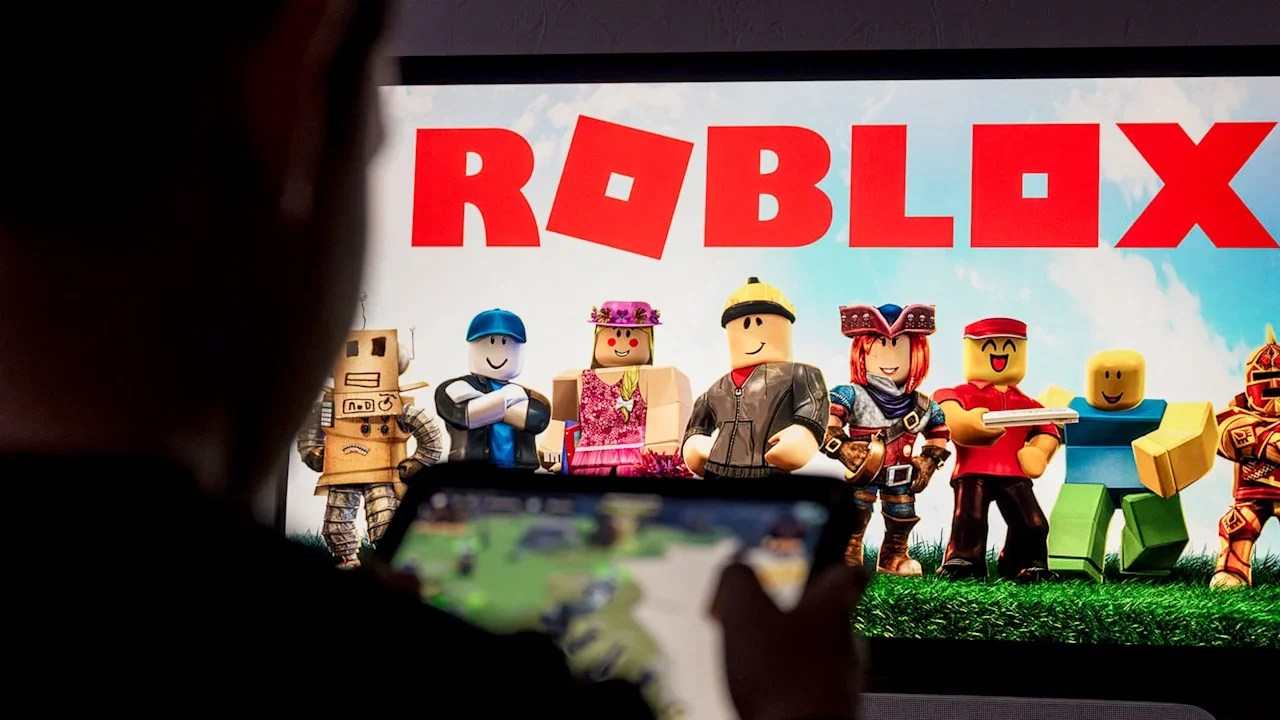
Roblox is updating its child protection features again, rolling out restricted Kids accounts for users ages 5 through 8 and Roblox Select accounts for users 9 through 15, both with parental controls and other age-based restrictions. Users will be required to go through an age verification process, generally based on live selfies or a government-issued ID—or be effectively restricted to content approved for the youngest users. Since January, age verification has also been required to use the platform’s chat features, with users under 18 generally restricted to chatting people relatively near to them in age. “We’ll be going through a transition period where we’ll let all of our existing users know about the changes so that they can go through the age-check process, but it is not required,” says Matt Kaufman, the gaming platform’s chief safety officer. “If users are happy with the same games which are in Roblox Kids and they don’t want to chat, then age check is not required.” It’s the latest update to Roblox’s kid safety features after the company has repeatedly come under fire, and been named in dozens of lawsuits including some brought by state attorneys general, for allegedly exposing kids to child predators and explicit content. Roblox, which serves 144 million daily active users and has at least 2 million users creating content including games, remains massively popular with kids and teens, with nearly half of U.S. residents under 16 reportedly using the platform. Kids accounts, for those under age 9, will also now have a distinctive color, designed so parents can see at a glance if their kids are, in fact, using the correct account type. Those accounts will also have chat features turned off, unless enabled by a parent, and will be restricted to games rated “minimal” or “mild” under Roblox’s content maturity rating system. (The company plans to deploy industry-standard ratings, like the Entertainment Software Rating Board ratings used in the United States, in the near future). Chats on Roblox are already heavily moderated, with no ability to send photos or video, but malicious users have reportedly found ways to invite kids to chat with them on less-moderated platforms. Users between 9 and 15 with Roblox Select accounts will be able to additionally access games rated “moderate,” and they’ll gradually gain access to chat functionality at certain age milestones, but they’ll still be subject to parental controls. And users with Kids or Select accounts will be restricted from games featuring “sensitive issues, social hangouts, or freeform drawing” by default, according to the company. Once users turn 16, they’ll be able to use more full-fledged accounts, though some games with adult content—like “strong violence”, references to alcohol and gambling, and “romantic themes”—are still restricted to users 18 and up. “Knowing how old users are has a lot of benefits for the entire Roblox community,” Kaufman says. “We can deliver a safer and more civil experience to our users, and when we group users of like ages together when they’re communicating with each other, we know that that creates a more civil experience.” Age checks can generally be done through the Roblox app in a few seconds, with captured video data deleted after a user’s age is confirmed, though the company may ask users to repeat age checks if their behavior on the platform doesn’t match their recorded age. The company says about half of its 144 million daily active users have already gone through the age verification process, and it believes the system has an “average error of about plus or minus 1.4 years” for users under 18, Kaufman says. Parents can correct kids’ recorded ages if needed. Roblox games will also need to be released to users 16 and up before they can be approved for Kids or Select account access, says Eliza Jacobs, Roblox’s VP of safety product policy. That will give the platform time to collect any user reports of inappropriate content and monitor data from its real-time moderation system before a game is made available to younger users. “These signals will provide a higher degree of certainty that the content is appropriate for younger kids and teens,” she says. Roblox will also require creators of games intended for players under 16 to have an active Roblox Plus subscription, have two-factor authentication enabled to reduce the chance of account hacking, and go through ID verification—or be connected to a verified parent account if under 16. Parents will also be able to see what games their kids are playing and block specific games, and they will be able to approve their kids to access specific games that aren’t in the Kids or Select catalogs. But in general, the company hopes that age-based default settings will help to protect kids without their parents needing to set specific controls. The new settings are expected to be in place by early June. View the full article

- Today
-
A recent announcement by Google signals the start of a massive change in how the internet and search work. The post Google’s Task-Based Agentic Search Is Disrupting SEO Today, Not Tomorrow appeared first on Search Engine Journal. View the full article
-
Research on language models reveals how brands win or lose in AI-generated recommendations based on association strength. The post How AI Chooses Which Brands To Recommend: From Relational Knowledge To Topical Presence appeared first on Search Engine Journal. View the full article
-
There is a persistent belief that food, fuel, and industrial uses compete for the same bushel. In practice, the opposite is increasingly true. Crops have always served multiple markets. What is changing is how intentionally we are designing agricultural and manufacturing systems to serve those markets together. In a previous article I wrote, I focused on how familiar crops like corn and soybeans are finding new life through new demand pathways and molecular innovation. What I see today goes a step further. The same acre is increasingly supporting food, industrial materials, energy applications, and emissions-reduction strategies simultaneously. That convergence is expanding how value is created in agriculture—without requiring more land. This shift is about how markets reinforce one another. When food, fuel, and industrial demand move together, they help keep the same facilities running steadily. Farmers gain more outlets for their crops. Manufacturing assets run more consistently, and supply chains are better positioned to manage volatility. HOW VALUE GETS STACKED At a molecular level, crops are remarkably versatile. Carbohydrates, oils, proteins, and fibers can move through different conversion pathways depending on market need. Advances in enzyme systems, catalytic processes, and fermentation now allow us to direct those pathways with greater precision and efficiency. In practice, a bushel of corn might become food ingredients, renewable fuel, industrial starches, fermentation feedstocks, and captured carbon—all within an integrated system. A soybean can move into meal for feed, oil for food, biodiesel for transportation, and then into glycerin and specialty chemicals used in personal care or cleaning products. Because these outputs share common upstream inputs, they reinforce one another. Materials once treated as byproducts are now starting points for new applications. When glycerin from biodiesel can be upgraded into higher value uses, or when fermentation byproducts can serve industrial markets, returns improve. That stacking effect strengthens the entire value chain. Companies are already doing this on a commercial scale. Demand in one sector can offset softness in another, keeping facilities operating efficiently and preserving the scale that helps keep costs in check. THE FOOD-FUEL-INDUSTRIAL BALANCE As these connections deepen, agriculture is becoming a critical component of industrial infrastructure. Developers originally built integrated ethanol facilities to produce fuel and little else. Today, in addition to fuel, they produce proteins for feed and concentrated carbon dioxide streams. When companies capture CO₂ and store or use it to reduce carbon intensity in regulated markets, the overall value of the system increases. Many facilities also recover methane from wastewater to produce renewable natural gas. Each additional outlet strengthens the economics of the whole system—and improves its long-term resilience. A similar shift is underway in materials. Manufacturers are incorporating soy-based inputs into asphalt formulations, improving flexibility and durability while partially displacing petroleum-derived binders. Manufacturers are also moving agricultural oils and fibers into drilling fluids and construction applications. These are practical, scalable uses that create steady domestic demand. When multiple markets draw from the same agricultural base, they support one another. Without more than one outlet for those crops, facilities may operate below capacity, costs could rise, and investment would slow. FROM CO-PRODUCTS TO CORE PRODUCTS Improved chemistry and process design are reshaping how we define value in agriculture. When producers convert soybean oil into biodiesel, glycerin emerges alongside it. With the right catalytic systems, manufacturers can transform glycerin into glycols and other intermediates used in cleaning products, home care, and industrial formulations. Carbohydrate streams can move through enzyme-enabled pathways to produce specialty acids and performance ingredients. Precision fermentation adds further flexibility. Existing fermentation assets, many originally built for food or feed, can produce bioindustrial molecules at commercial scale. That adaptability allows manufacturers to serve new markets without rebuilding supply chains from scratch. For farmers, this translates into more diversified demand tied to the same crop base. Value per acre can rise as new applications mature. For rural communities, expanding domestic industrial uses reduces dependence on any single export market and strengthens local manufacturing ecosystems. 3 TAKEAWAYS FOR INNOVATION LEADERS As these systems scale, the implications for how companies design and operate assets are becoming clearer. Three priorities stand out for innovation leaders. 1. Build systems for flexibility. Assets designed to serve multiple end markets will outperform those tied to a single demand stream, especially in volatile markets. Investment in adaptable conversion technologies creates options when markets shift. 2. Recognize agriculture as infrastructure. Crops are not just raw inputs. They are molecular building blocks for food, energy, materials, and carbon management, and they should be treated as such. Companies that understand those connections gain advantages in cost, carbon intensity, and supply continuity. 3. Protect scale to protect resilience. Diverse demand keeps infrastructure operating efficiently. That efficiency supports affordability and enables continued investment in lower-carbon fuels and materials at scale. Multi-use crops are expanding how value is created because the same agricultural base now serves more parts of the economy. Food, fuel, and industrial applications increasingly reinforce one another. The next phase of agricultural growth will depend less on the number of acres and more in value per acre—and in how effectively we design systems that unlock that value. Chris Cuddy is the president of Carbohydrate Solutions and president, North America at ADM. View the full article

-
As an SEO professional, you’re often asked to solve what appears to be a technical problem: organic traffic is declining. Standard procedure is a deep dive into technical performance, algorithm updates, technical debt, or content gaps. You review logs, crawl the site, and check Google Search Console. But what happens when the data reveals that the root cause isn’t found in the sitemap, the content, or the backlink profile — but is instead located in the boardroom, the warehouse, and the customer service department? Not long ago, I audited a portfolio of ecommerce properties in a highly regulated niche. These brands were pandemic-era superstars. They had performed exceptionally well prior to the pandemic and their subsequent acquisition, and they skyrocketed during the global shift to online shopping. However, by early 2022, they were in a freefall. The mandate from the new ownership was blunt: “Fix our SEO.” The diagnosis, however, showed SEO wasn’t the issue. It was the symptom of a deeper, systemic operational failure. SEO as an organization-wide requirement SEO isn’t a technical layer you add at the end of a sprint. It’s the connective tissue between your offline operations and your online reputation. When they’re misaligned, search engines are usually the first to notice. Decisions across your organization shape organic search performance, often by people who’ve never heard the term “canonical tag.” Consider the impact of these departments: Logistics and operations When a warehouse fails to ship products on time or inventory tracking breaks, it creates a wave of negative reviews. These PR problems are data points Google uses to evaluate trust. Legal and executive Decisions to remove “About Us” pages to streamline sites or hide contact info to reduce support overhead directly devalue the brand’s E-E-A-T. Merchandising and product Inventory strategies that orphan thousands of URLs overnight to manage pricing can break technical crawl equity and destroy years of ranking stability in a single deploy. Search engines are designed to mirror human reliability. If the business’s physical or operational reality is in decay, no amount of technical wizardry will prevent search engines from reflecting that reality to users. Dig deeper: Why most SEO failures are organizational, not technical See the complete picture of your search visibility. Track, optimize, and win in Google and AI search from one platform. Start Free Trial Get started with The diagnosis: A foundational E-E-A-T collapse in YMYL In regulated spaces — often referred to by Google as YMYL (Your Money or Your Life) — the bar for trust is significantly higher. In these niches, E-E-A-T is a filter. While our team saw the writing on the wall, the organization largely ignored the shift toward quality-centric ranking. They failed to meet the standards set by Google’s Search Quality Raters Guidelines. Our audit uncovered four efficiency measures that essentially dismantled the brands’ organic foundations. 1. The reputation deficit Tens of thousands of scathing customer reviews sat unresolved across Trustpilot, Reddit, and the BBB. These weren’t isolated incidents. They were a consistent pattern of complaints regarding non-delivery and poor product quality. When contact pages were removed to cut costs, Google’s algorithms responded to the lack of safety by devaluing the domain. 2. The 70% brand search collapse Post-acquisition, leadership ceased all social media, video content, and digital PR. They retreated into a shell of one-way communication: a single social or blog post per week. The result was a 70% drop in brand-related search volume. By silencing the brand’s voice, they essentially stopped the high-intent, “buy-ready” traffic that historically drove their highest profit margins. 3. Orphaned inventory: The loyalty program fallout To support a new loyalty program initiative, a top-down repricing strategy was implemented. To avoid showing “incorrect” prices during the transition, leadership hid more than 10,000 products overnight. This wasn’t communicated to the SEO team. Overnight, these pages became orphaned, causing an immediate crash in traffic that was initially blamed on SEO issues until we discovered the massive product removal in a technical audit. 4. Product homogenization In an effort to streamline, every brand in the portfolio was shifted to the exact same inventory, pricing, and product descriptions. This created an internal duplicate content nightmare. It stripped each brand of its unique value proposition and forced them to compete against one another for the same keywords, effectively cannibalizing their own market share. Dig deeper: Why governance maturity is a competitive advantage for SEO Why platform and control matter Technical infrastructure played a significant role in proving our diagnosis. Most of the portfolio sat on Shopify, where inherent platform limitations — specifically canonical issues and restricted server-side control — made it difficult to meet aggressive Core Web Vitals (CWV) targets or fix deep-seated architectural issues. However, the portfolio included one Magento site. Because we had the freedom on Magento to implement custom canonical logic and direct server-side performance optimizations, that site met every CWV benchmark. It implemented a sophisticated interlinking strategy that flowed authority from expert-led content to commercial pages. The result? The Magento site dramatically outperformed its eight Shopify counterparts. This was the smoking gun: it proved the strategy worked, but the business and platform constraints on the other sites were the actual bottlenecks. Get the newsletter search marketers rely on. See terms. The vanity metric trap: Shifting from volume to intent Whether you’re a SaaS organization or an ecommerce giant, we have to educate leadership that traffic is a vanity metric. A drop in organic traffic isn’t always a sign of financial loss. Some of the most effective SEO strategies involve intentionally reducing traffic to increase profitability by focusing on buy-ready intent. Strategic pruning Pruning thin or irrelevant content might drop your session count by 30%, but if your clicks to high-intent “money” pages increase, your bottom line wins. You’re removing “noise” and clearing the path for users further down the purchase funnel. Content consolidation Merging overlapping pages into a single, authoritative “power page” creates a better experience for ready-to-convert shoppers. You may have fewer rankings, but the ones you keep will convert, improving your overall conversion rate (CVR). The executive alignment framework: Speaking the language of the P&L To get buy-in, stop talking about rankings. To an executive, a ranking is a technical detail. Revenue is a reality. Start with the profit and loss (P&L) statement. Every SEO activity must be anchored against revenue, customer acquisition cost (CAC), and gross merchandise value (GMV). This moves the SEO department from a cost center to a revenue protector. SEO operational actionThe operational impactThe executive metric (KPI)Reputation triageHigh trust = Higher conversion rate.CAC and LTVRestore brand voiceReversing the 70% brand drop captures high-margin intent.Contribution marginProduct differentiationUnique data removes internal competition/cannibalization.Unique session growthPerformance (CWV)Faster sites lower friction and abandonment.Site-wide conversion rateIntent-based pruningFocuses authority on the 20% of pages that drive 80% of revenue.Profitability per visit The agency shopping trap: Buying validation, not results When organic traffic crashes and the diagnosis is uncomfortable, leadership often shifts into denial. In this case, your CMO went on a global shopping spree, commissioning audits from nine agencies across the UK, the U.S., and India. Nine separate agencies gave the same diagnosis: the problem was operational and required fundamental business changes. It wasn’t until the 10th agency was engaged — one that provided a simple, tactical content-only fix to tell the CMO what they wanted to hear — that leadership felt validated. They chose the answer that required the least internal change, even though it was the only one that ignored the data. This is a dangerous financial trap: spending corporate capital on a tactical cure while the patient refuses to stop the behavior causing the illness. Dig deeper: Your SEO maturity score doesn’t measure what you think it does Your customers search everywhere. Make sure your brand shows up. The SEO toolkit you know, plus the AI visibility data you need. Start Free Trial Get started with The professional roadmap: Recovery in phases It’s never enough to point out technical issues. You must provide a solution with a clear timeline and measurable business outcomes. Phase 1: Recovery (0-90 days) Reintegrate hidden inventory and triage the reputation crisis. Target: 15-20% increase in GMV. Phase 2: Stabilization (3-6 months) Re-establish the brand pulse through social/PR and transparency signals (E-E-A-T). Target: 10% decrease in blended CAC. Phase 3: Growth (6-12 months) Scale topical authority through content experts and aggressive interlinking to money pages. Target: Increased market share in high-intent search. You aren’t just a technical custodian. You’re a business strategist and the keeper of the bridge between your company’s actions and its public perception. Your duty is to tell the truth, even when it’s uncomfortable. By anchoring your findings to revenue, CAC, and GMV, you turn SEO from a technical luxury into a business-critical function. If you’re in this position, remember: you can provide the best roadmap in the world, but you can’t force your organization to save itself. You must connect the dots to the bottom line — then it’s up to leadership to decide if they’re willing to put out the fire. Before you audit keywords, audit the warehouse. If the house is on fire, no amount of paint on the front door will save the sale. Dig deeper: What 15 years in enterprise SEO taught me about people, power, and progress View the full article
-
Google announced that on August 20, 2026 it will experiment with an updated set of commonly used ad technology partners. If the experiments go well, Google will switch it "on or after June 5, 2026."View the full article
-
It looks like Google is testing a new report within Google Search Console named AI contribution. I have no clue what it looks like but I suspect it is a lot like the Bing Webmaster Tools AI performance reports.View the full article
-
Equities traders powered bank’s earnings, while fixed-income, currencies and commodities business fell well shortView the full article
-
Google was asked if it is possible to add a new status to the XML sitemap statuses for "still processing." John Mueller from Google responded on Blueshy saying, "I've chatted with the teams involved about this on & off, I've seen that it can be annoying." But he added he has nothing to announce.View the full article
-
Google's John Mueller reconfirmed that Google Search may simply ignore outbound links from sites that violate its search spam policies. This is not new, Google has been doing this manually and algorithmically for years now but he reiterated this on Bluesky.View the full article
-
Every year, Duane Brown’s PPC Salary Survey gives our industry one of the few honest looks at what practitioners are actually earning. The 2026 edition, with 445 responses across 50+ countries, is no different. This year, one pattern stands out above the rest: the middle of the salary curve is getting squeezed from both ends. PPC salaries aren’t falling, at least not uniformly. The gap between practitioners commanding top-end pay and those stuck at the baseline is wider than it’s ever been, and the trajectory of the two groups is now clearly diverging. AI is acting as an accelerant here, but the underlying shift runs deeper and has been building for years. What four years of salary data actually show The salary survey has tracked U.S. median pay by experience since 2018. When you line up four consecutive years of data, a clear pattern emerges: Experience202220232024202520263-5 years$80,000$80,016$80,000$75,000$87,5006-9 years$100,000$110,000$108,000$110,000$100,00010-15 years$125,000$150,000$136,000$133,500$135,00015+ years$150,000$134,000$144,000$140,000$150,000 Two things stand out. The 3-5 year band bounced back sharply in 2026 to $87,500, the highest it has been in five years, after dipping to $75,000 in 2025. This suggests that junior-to-mid practitioners who do find work are being paid reasonably well. The 6-9 year band has slipped back to $100,000 after holding at $108,000-$110,000 for three years. And the 10-15 year band, the cohort that should be commanding senior-level pay, has flatlined between $133,500 and $136,000 for three consecutive years. For practitioners with a decade of experience, pay has stagnated or declined after inflation adjustment. The discrepancy becomes even sharper when you look at the extremes. The survey’s U.S. data shows maximum salaries well above $300,000 for the 10-15 years cohort, and a freelance median for practitioners with 10-15 years of experience sitting at $202,895, compared to an agency median of $123,545 for the same range. That’s a $79,000 premium for going independent, but only if you’ve built something worth paying that premium for. Your customers search everywhere. Make sure your brand shows up. The SEO toolkit you know, plus the AI visibility data you need. Start Free Trial Get started with In-house vs. agency: Where the real divergence lives The 2026 survey data reveal another split worth careful examination: the growing gap between in-house and agency salaries at mid-career levels. ExperienceAgency (median)In-house (median)Difference3-5 years$80,000$89,000+$9,0006-9 years$90,000$170,000+$80,00010-15 years$123,545$140,000+$16,45515+ years$120,000$140,000+$20,000 The 6-9 year in-house figure is striking, and partly skewed by a small sample with significant outliers. But the signal is consistent across all experience ranges: in-house practitioners are out-earning their agency counterparts, sometimes substantially. For a practitioner with 10-15 years of experience, choosing in-house over agency represents a $16,000 annual premium on the median. That gap has been widening year on year. This matters for how you think about the salary discrepancy story. It’s not just about individual skill development, it’s also about which side of the table you sit on. Agency work, for all its variety, isn’t being rewarded at the rate in-house strategy roles are. As platforms automate more execution work, the strategic advisory value of agency practitioners becomes harder to justify at current billing rates, which may be suppressing salaries from the top down. The gender pay gap: Mixed signals The 2026 survey shows a more nuanced gender pay picture than in previous years, and it’s worth addressing directly rather than glossing over. At the 3-5 years level, female practitioners in the U.S. are actually earning a higher median than male counterparts ($87,500 vs. $85,000). At the 10-15 year band, the female median ($135,000) also slightly exceeds the male median ($130,000). But the gap opens dramatically at the senior end: practitioners with 15+ years of experience show a $150,000 male median against a $120,000 female median, a 25% gap. This pattern is consistent with broader compensation research: gender pay gaps in knowledge work tend to compress at mid-career and widen significantly at senior levels, where negotiation, visibility, and access to high-value client relationships play a larger role than raw technical competence. For a profession that’s becoming more strategic, and where those factors matter more, not less, this is something the industry needs to take seriously. Get the newsletter search marketers rely on. See terms. The U.K. and Europe picture: Stagnation at the top Outside the U.S., the salary trends are more concerning. In the U.K., the 5-year survey trend shows the 10-15 year band median bouncing between £48,800 and £60,000 with no clear upward trajectory, and in 2026 it sits at £50,000, down from £60,000 the year prior. For practitioners at the peak of their careers in the U.K., real-terms pay has effectively declined. In Europe, the pattern is more positive at senior levels, the 10-15 year band EU median has grown from €50,000 in 2024 to €65,625 in 2026, a meaningful step up. But the 3-5 year band has slipped back to €37,200, below where it was in 2022. Entry-level and early-career pay in Europe isn’t keeping pace with the increasing demands of the role. For German practitioners specifically, Berlin data from the 2026 survey shows a 10-15 year band median of approximately €76,000, meaningfully above the broader EU figure, and a sign that the Berlin market continues to reward senior experience more than the European average. This isn’t just about AI tools Here’s the argument I want to make, and it’s one the salary tables alone won’t tell you: the PPC salary divergence isn’t primarily about AI skills versus no AI skills. AI has dropped from No. 1 to No. 3 among PPC professionals’ priorities, the State of PPC 2026 report found. Not because adoption declined, but because it became table stakes. AI saves practitioners an average of 5.2 hours per week. Genuinely useful, but not a salary lever on its own. The discrepancy is about positioning. Payscale’s 2026 Compensation Best Practices Report found that 55% of companies offer no premium, bonus, raise, or equity for employees who have built out their AI skill set, despite 61% of those same organizations rewriting job descriptions to require those competencies. AI fluency is becoming an expectation, not a differentiator. The practitioners pulling away from the pack have repositioned from campaign operators to business outcome owners. They: Speak in revenue contribution and margin impact, not ROAS and CTR. Sit closer to the CFO than to the media buyer. Have made that expertise visible, through the way they communicate, the frameworks they bring to client conversations, and the questions they ask in board meetings. The salary data tells you what happened. The positioning question determines which part of the distribution you end up in. See the complete picture of your search visibility. Track, optimize, and win in Google and AI search from one platform. Start Free Trial Get started with The question to ask yourself The PPC salary curve isn’t collapsing. But it branches out. The 3-5 years cohort is actually doing reasonably well. Freelancers with 10+ years of experience and strong positioning are commanding $200,000+ in the U.S. Senior in-house strategists are clearing $140,000-$170,000. What’s stagnating is the middle: the agency practitioner with 6-15 years of experience who has become good at running campaigns but hasn’t repositioned what they bring to the table. That cohort is being squeezed from below by automation absorbing execution work, and from above by a narrowing set of senior roles that require something more than campaign competence. Stop asking “am I using AI?” and start asking a harder question: am I still the most important person in the room when the AI report lands? If the honest answer is no, or you’re not sure, that’s not a tooling problem. It’s a positioning problem. And the salary data suggests the time to address it is now, before the gap between the two sides of this curve becomes impossible to close. View the full article
-
Chipotle, like almost every other fast casual restaurant, has been battling an ongoing period of increased inflation and lower consumer spending. Last year, the company saw what its CEO Scott Boatwright described to investors as a “broad-based pullback in frequency” of customer visits, especially among low- to middle-income customers and younger consumers, due to concerns about the economy. But the burrito chain has a master plan to address that, and it’s currently moving into its next phase: making earning rewards feel more like a game. The company’s fourth quarter report showed a revenue increase of 5.4% to $11.9 billion. But those gains were partially offset by a 1.7% drop year-over-year in comparable restaurant sales, or the number of total sales at an existing store—a small decline, but a concerning one for investors after the company saw two blockbuster sales years in 2023 and 2024. Boatwright has laid out a multi-part plan to boost sales, including increasing Chipotle’s “menu innovation cadence” through limited time offerings, doubling down on protein, and relaunching the rewards program. The company has already hit on those first two goals with its Chicken Al Pastor launch and new protein menu. Now, it’s checking off the third item with its rewards program is getting a facelift to encourage more frequent ordering. It entices users with more opportunities to earn points and score free food—and makes ordering a burrito feel like part of a quest. The reworked platform introduces several new features, revives fan-favorite activations like Freepotle, and includes a tweaked app interface that makes earning rewards feel more like a game. It’s a major part of the chain’s plan to convince the American public to get back into their burrito-buying habits. How Chipotle Rewards notched 21 million active users Chipotle’s rewards program first launched in 2019, long after most other food chains had joined the rewards game. Since then, rewards have become one of the most lucrative parts of Chipotle’s business: Today, Chipotle Rewards hosts more than 21 million active members and drives roughly 30% of total sales, the majority of which are made through the app rather than on the web. By comparison, all digital transactions accounted for only 10% of the chain’s total sales back in 2018. Curt Garner, Chipotle’s chief strategy and technology officer (and the mastermind behind the brand’s app), says that when rewards launched, they functioned mainly as an “affinity program”—a simple way to recognize the brand’s most loyal fans. Over the past few years, though, as rewards have become more central to Chipotle’s business model, his team has invested in more experimentation to find out what kind of features and activations are really motivating users. They looked to other brands—including non-restaurant brands, like Peloton—to see where innovative rewards programs were headed. “They’ve got rewards tiers for walking or running a certain amount of miles in a month or having a certain amount of workouts in a week, and then they layer in cool, culturally relevant moments as well as specific, curated workouts,” Garner explains. “We saw what some other brands were doing in places that lead culture and thought, ‘Let’s experiment with things that are similar.’” In 2023, the brand tested out “Freepotle,” an activation that gave rewards members access to up to 10 free food drops. And in the summer of 2025, the brand launched a three-month promotion called the “Summer of Extras,” which let rewards members earn extra points and special in-app badges for accomplishing certain milestones, like visiting multiple Chipotles in different states. An online leaderboard tracked how different superfans compared. Garner says the leaderboard became this “very immersive, competitive game for people,” resulting in a flood of mail to his inbox from customers participating in the challenge. It demonstrated what people—especially younger consumers—are increasingly looking for in rewards programs: not just an earn-and-burn system, but a gamified experience that felt like a quest. “As younger consumers are coming into the platform, that’s where we’re seeing a lot of the engagement,” Garner says. “That’s how we maintain that playful voice in Chipotle, still reward people, and make it fun, immersive, and active.” Burrito quests and taco challenges Based on those insights, the brand’s new rewards platform turns up the dial on gamification. Whereas navigating to different elements of the rewards program used to be scattered in various places through Chipotle’s app, the whole platform is now located under one central tab. The first statistic that displays used to be a set number of points next to Chipotle’s logo. Now, it’s a progress bar that counts down to the user’s next reward (a tiny animation of sparkles appears when that quota is filled). “Extras,” which let users earn points and celebratory badges by completing specific challenges, were once only visible if users scrolled down the page. Now, they’ve been moved up above the fold so that users can immediately see which are active, and completed badges move to a colorful display at the bottom of the page. Rather than being available occasionally, extras will now be an always-on feature. Garner says his team has been working on perfecting an AI algorithm that uses customers’ order history and interests to personalize their extras, badges, and homescreen offers—similar to a video game that presents new options based on past choices, so your recent orders open up new paths to future rewards. “For instance, the double protein badge isn’t something that we would just present to somebody that’s never tried double protein before,” Garner says. “It’s a very effective way to say thank you to a guest that gets double protein all the time. It’s not just about building sales, it’s about building that affinity and engagement with the brand over time.” The changes are simple, but, together, they make Chipotle’s rewards page feel less like a corporate exchange, and more like a personal burrito stat dashboard. “We’re adding features and benefits across the board” Beyond its new game-esque UX, the rewards update comes with quite a few new features that are getting to the core of Chipotle’s latest sales stagnation: cash-strapped customers. For starters, more wallet-friendly, high-protein options (like the $3.50 single taco and the new protein cup) will feature more prominently on the app’s homescreen. “We understand that people are price point sensitive, so the app is an example of giving folks the understanding that you can get a taco with 15 grams of protein in it for $3.50,” Garner says. Given Chipotle’s streamlined in-store menu design, he explains, customers might not even be aware that these smaller items are available. The app makes it possible to spotlight them without changing physical menus. To further incentivize repeat visits, all new users will now get free chips and guac when they first join, and the number of points needed to redeem some items, like quesadillas and 50%-off entrees, will be lowered. Freepotle will return with monthly food drops, and points will expire after a full year rather than just six months. The whole relaunch is clearly designed to make Chipotle feel less like a luxury and more like a steal. For other restaurants in the fast-casual space, it’s a signal that reward program design is becoming a differentiator for customers who want to get the most out of their expendable income. “Oftentimes, brands use a relaunch to rebalance points and take some things away from guests,” Garner says. “We’re taking nothing away in this relaunch. We’re adding features and benefits across the board, but there’s no takeback anywhere in the program.” View the full article

-
Hello and welcome to Modern CEO! I’m Stephanie Mehta, CEO and chief content officer of Mansueto Ventures. Each week this newsletter explores inclusive approaches to leadership drawn from conversations with executives and entrepreneurs, and from the pages of Inc. and Fast Company. If you received this newsletter from a friend, you can sign up to get it yourself every Monday morning. CEOs, do you know what the public is saying about AI? New polling shared exclusively with Modern CEO by Just Capital, the nonprofit that tracks what the American public expects from business, finds that 66% expect AI will be a net positive for society within the next five years. That’s up eight points from Just Capital’s polling in the fall of 2025 but shows far more caution than the business class. Nine out of 10 (90%) corporate leaders and 94% of investors surveyed are bullish on AI’s societal impact. Attitudes about job losses amplify the public-corporate gap: About a third of Americans surveyed expect AI to usher in large-scale job losses across industries over the next two to three years, whereas only 13% of corporate leaders and 10% of investors see layoffs as the most likely outcome of AI on the workforce. Instead, 68% of investors and 55% of executives say AI will mean fewer entry-level positions and “higher skill requirements” for those who stay employed. Martin Whittaker, CEO of Just Capital, says the organization’s surveys can provide corporate leaders with another layer of data that can inform AI strategy and investment. “If you’re a CEO, you’re asking: ‘How do we pursue those opportunities, knowing that the pace of change is so rapid, and how are we managing some of the risks?’” he says. “That’s where this polling can come in as a starting point for an AI playbook.” Attitudes about AI What else is the public saying? The recent Just Capital poll shows large swaths of Americans want companies to provide advance notice and transparency about AI-driven workforce changes (66%), help employees transition after AI-driven layoffs (57%), and even contribute to a new fund to support or train workers displaced by AI (51%). The public, investors, and corporate leaders are aligned on AI safety risks, with misinformation and malicious use by bad actors topping the list of concerns. The public also ranks protecting personal data and privacy as priorities. Whittaker notes that companies have work to do on this front. A separate Just Capital analysis of 933 public American companies finds that 234 companies in 2025 said they won’t sell user data in any context, down 3.5% from 2024; 62 companies say they will not use data for advertising, down 3% from 2024. Whittaker says that companies that fail to listen to Main Street do so at their peril. When Just Capital started in 2014, Whittaker says he had leaders privately dismiss the idea of asking the public what they expect of companies. “They’d pull me aside and say, ‘They don’t know anything; they can’t agree on anything.’” But the polling, which consistently showed the public prioritizing wages and benefits over boardroom issues such as climate change, has proven prescient. His advice to CEOs? “I think our polling can [show] what your stakeholders care about,” he says. “If you’re looking for some kind of a pulse on ‘What should I prioritize?’ it’s investing in [your] workforce.” Your AI questions answered Next month, Modern CEO subscribers will have an opportunity to join me in conversation with Matt Fitzpatrick, CEO of Invisible Technologies, discussing the most urgent AI issues of the day. Register here and submit your burning questions to stephaniemehta@mansueto.com, and we’ll try to tackle as many as possible in the live session on May 18 at 1 p.m. ET/10 a.m. PT. Read more: AI and jobs Meta plans “sweeping layoffs” as AI woes mount AI is displacing workers without college degrees These four graphs show where AI is already impacting jobs This tool helps you understand if your job is AI-proof View the full article

-
A global energy crisis is only just beginning. Political turmoil will followView the full article
-
With layoffs still dominating headlines, many job seekers assume the biggest challenge in today’s market is competition. But new research suggests another obstacle may be quietly draining applicants’ time and emotional energy: job postings that may not actually be hiring. Recent analysis of more than 175,000 job listings across industries found that roughly one in seven postings remain active for more than 30 days, even when companies may no longer be accepting candidates. Some listings remain online for months, continuing to collect applications long after hiring decisions have effectively been made. These roles are often referred to as “ghost jobs.” For job seekers, the result is simple but exhausting: hours spent tailoring résumés, writing cover letters, and researching companies for opportunities that may never have existed in the first place. Most organizations don’t create ghost jobs out of cruelty. Often it’s the result of systems not being updated, internal plans changing, or a desire to build a pipeline of candidates for future roles. In many cases, the listing simply lingers because no one has been tasked with removing it. But intent and impact are not always the same thing. Was it even real? For many job seekers, the hardest part of a search isn’t rejection. Rejection at least provides closure. What’s more difficult is discovering that the opportunity itself was never truly available. I recently spoke with a mid-career professional who applied for a role she was exceptionally qualified for. After submitting her application, she spent days imagining the possibilities—what the work might look like, how it could reshape her career, what it would mean for her family. Eventually, someone inside the organization reached out privately. Not as part of the hiring process, but simply out of kindness. They wanted her to know the truth. The role, she was told quietly, was already spoken for. It had always been intended for an internal candidate. “For me it was devastating,” she said. “It’s not that I didn’t get the job. That happens. What hurt the most was the immediate evaporation of the hope I was clinging to—and that hope only existed because I had been misled.” Her reaction stayed with me. From the organization’s perspective, leaving a listing active may feel like a minor administrative oversight. For the person applying, however, the experience is far more personal. Each submission represents time, preparation, and a small emotional investment in the possibility of something better. Hope may not appear in hiring dashboards or HR metrics, but for the person pressing “submit,” it is very real. When that hope vanishes all at once, the impact often lingers longer than a simple rejection ever would. The human element There is another dimension to this moment that makes it particularly striking. As companies rush to integrate artificial intelligence into hiring processes and workplace decision-making, leaders frequently emphasize the importance of preserving the “human element” of work. Yet in some ways, that human element appears to be fading in the most basic parts of the employment process. Applications are filtered by algorithms. Résumés are scanned by automated systems. Communication is often reduced to templated responses—if it arrives at all. In that environment, a job posting can start to feel less like an opportunity and more like a digital slot machine. Candidates pull the lever by submitting an application, hoping something meaningful might come back. Too often, nothing does. An outdated or inactive listing may appear trivial to the organization that posted it. But to the person applying, it represents hours of preparation and the emotional lift of imagining a different future. And in an economy where workers are already worried about automation, layoffs, and the role AI may play in reshaping their careers, something else is becoming quietly clear: optimism can begin to feel like a risky investment. When roles turn out to be placeholders, pipelines, or internal hires disguised as open opportunities, applicants begin adjusting their expectations. The optimism that fuels a job search becomes harder to sustain. It’s not just about wasted time. No trust It’s about the gradual erosion of trust. That erosion matters more than many organizations realize. A company’s reputation is shaped long before someone becomes an employee. Every interaction with candidates—every listing, every response, every silence—sends a signal about how people will be treated once they arrive. Ghost jobs may seem like a minor oversight. But to the person staring at their laptop late at night, adjusting a résumé one more time and hoping this might be the application that finally leads somewhere, the message can feel much larger. Because despite all the technology transforming work, the exchange at the center of hiring remains profoundly human. A company offers opportunity. A candidate offers time, effort, and belief that their work might matter there. That exchange begins with something surprisingly fragile: hope. And hope, once broken enough times, doesn’t simply disappear. It becomes caution. It becomes skepticism. Eventually, it becomes disengagement. At a time when organizations are trying to rebuild trust with employees and attract the next generation of talent, that’s a dangerous shift. Companies can’t eliminate the uncertainty that comes with hiring. Rejection will always be part of the process. But clarity is still within their control. Closing listings when roles are filled. Being transparent when a position is intended for internal candidates. Treating applications as the human efforts they are rather than just entries in a system. None of those steps require new technology. They require something much simpler: remembering that on the other side of every application is a person who believed the opportunity was real. And in a job market already defined by uncertainty, protecting that belief may be one of the most empathetic—and responsible—choices an organization can make. View the full article

-
Acquisition is latest move by US investment banks to expand in EuropeView the full article
-
Women have never lacked talent or ambition. What we’ve lacked, and still lack, is a fair shot to lead. In the U.S., only 37% of leadership positions are held by women despite women comprising 47% of the workforce. And according to research from McKinsey & Company, for every 100 men promoted to manager, only about 93 women, and just 74 women of color, are promoted. The issue isn’t who is capable of leading—it’s how organizations decide who gets to lead. That gap begins at the very first promotion and compounds over time. When fewer women move into management roles, fewer are positioned for senior leadership later on. As careers progress, the pipeline narrows even further: women hold just 29 percent of C-suite roles, and women of color hold only 7 percent. The result is a leadership ladder where the first rung is uneven—and every step after that becomes harder to climb. One reason is hiding in plain sight: an outdated model of leadership. Advancement opportunities often go to employees who signal constant availability—those who are always on, always visible, and always responsive. That model assumes unlimited bandwidth and minimal caregiving responsibilities—conditions that disproportionately disadvantage women. The irony is hard to ignore. Many organizations say they want more women in leadership, yet the expectations that shape who gets promoted were designed decades ago—when leadership roles assumed someone else was managing everything outside of work. Today’s workforce looks very different, yet advancement still favors those who can signal constant availability. THE ALWAYS-ON LEADERSHIP TRAP Many leadership roles are still structured around the assumption that the best leaders are the ones who can be constantly available. That expectation may appear neutral, but it disadvantages women because caregiving responsibilities still fall disproportionately on us. According to the National Library of Medicine, two out of three family caregivers are women, making the impact anything but neutral. Until the expectation to be “always on” evolves, the path to the top will remain narrower for women. The consequences of the “always on” leadership model are already showing up in workforce data. In 2025 alone, nearly half a million women exited the U.S. labor force, according to new national research from Catalyst. Women didn’t leave because of a lack of ambition; they left because the expectations of work collided with the realities of life. Forty-two percent of women who left the workforce cited caregiving responsibilities, including childcare costs, as the primary factor in their decision, and women who left their jobs were significantly more likely to have worked in organizations without flexible schedules (37 percent compared to 22 percent of those who stayed). The findings underscore a structural reality: when jobs are designed around constant availability, talented professionals—especially women—are forced to make impossible trade-offs. But the “always on” expectation is only part of the story. Even when women stay in the workforce and continue progressing in their careers, another barrier often emerges long before the C-suite: sponsorship. Advancement in organizations rarely happens through performance alone. It happens when someone with influence advocates for your potential, recommends you for high-visibility assignments, and says your name in rooms you’re not in. Yet when organizations try to solve the leadership gap, they often focus on the wrong solution: mentorship. MENTORSHIP ISN’T THE SOLUTION. SPONSORSHIP IS. Women don’t have a mentorship problem—we have a sponsorship problem. For years, organizations have proudly pointed to mentorship programs as proof they’re supporting women’s leadership. Nearly 98 percent of Fortune 500 companies offer mentoring programs, and yet women remain underrepresented in senior leadership. There’s no question that effective mentors can help you grow. But growth and advancement are not the same thing. Mentors talk with you. Sponsors talk about you. That distinction matters because advancement often depends on sponsorship. Research shows that 73 percent of women with sponsors advance faster in their careers—yet fewer than half report ever having had one. Sponsors actively advocate for your promotion. They recommend you for stretch assignments, introduce you to decision-makers, and put your name forward for leadership roles when opportunities arise. Historically, women have received far more mentorship than sponsorship. Without sponsorship, many talented professionals remain visible within their teams but invisible in the rooms where promotion decisions are made. Until women have both mentors and sponsors, organizations will keep developing leaders they never actually promote. This is because the signals used to determine who advances often matter more than readiness itself. As long as organizations reward constant availability and visibility, being “always on” will remain the default measure of leadership readiness. Leadership shouldn’t be a test of endurance. It should be a reflection of impact. The organizations that recognize that difference won’t just promote more women—they will build workplaces where leadership is defined by effectiveness, not exhaustion. IT’S TIME TO REDESIGN LEADERSHIP The old model of leadership—defined by constant pressure and endless availability—is already showing signs of strain. Increasingly, professionals across generations are questioning whether those expectations are desirable or sustainable. The State of Stress and Joy at Work national research study from The Center for Joyful Work finds that stress is shaping the future leadership pipeline, with more than half of American workers reporting they have avoided managing others because of it. The future of leadership will not be defined by who can tolerate the most stress. It will be defined by who can build organizations where well-being and promotions can rise together—and where the path to the top reflects leadership ability, not outdated expectations about what it means to lead. The real question was never whether women are ready to lead. It’s whether the systems that decide who gets promoted are ready for us. View the full article

-
The recent rescue of a downed American F-15 fighter jet weapons systems officer—known as “Dude 44 Bravo”—from a desolate mountain crevice in southern Iran was a massive military achievement. The airman survived two days in the harsh terrain while Iranian troops scoured the area with a bounty on his head. He activated a physical Boeing-made Combat Survivor Evader Locator beacon that guided hundreds of U.S. troops to his location. It was a chaotic extraction where two rescue planes got stuck in a field, requiring even more aircraft and the ultimate destruction of the stranded jets, and was completed with no American casualties. However, anonymous government sources fed a an extra, high-tech narrative to the New York Post, one that reads like a fantasy plot device for a bad 90s spy movie. Which, seeing the reaction of experts, may in fact be the case. The Post’s sources claim the CIA deployed a never-before-used tool called Ghost Murmur to locate him. According to the paper, the secret technology relies on advanced artificial intelligence and long-range quantum magnetometry to isolate the electromagnetic signal of a human heartbeat from background noise, which allowed them to locate the one person hiding in the desert. Mumbo-jumbo translation: The U.S. claims to have a new Mission Impossible toy to detect human heartbeats across large distances. President Donald The President hinted the technology allowed the CIA to spot the airman from 40 miles away, while a source told the tabloid that “in the right conditions, if your heart is beating, we will find you.” Quantum technology experts are, shall we say, skeptical. Oakland University physicist Bradley Roth told Scientific American that an operational device capable of doing this “would be not just a small advance, but it’d be a revolutionary advance from the state of the art.” Writing for The Quantum Insider, Matt Swayne noted that while the fundamental science represents “real advances in quantum magnetometry,” utilizing it at such distances outdoors “would represent a significant leap beyond current demonstrated capabilities, suggesting the reports may overstate the maturity or range of the technology.” Chad Orzel, a physics professor at Union College, suspects the entire narrative is “somebody yanking a reporter’s chain” and serves as to “fool somebody into thinking that we actually have this secret technology.” The Skunk Works factor If the Post’s reporting holds any kernel of truth, it rests almost entirely on their claim that Ghost Murmur was developed by Lockheed Martin’s Skunk Works. Officially known as Advanced Development Programs (ADP), Skunk Works is Lockheed Martin’s secret tactical research and development arm, legendary for functioning as an innovation engine that routinely delivers what was previously thought impossible. Since its inception in 1943—when founder Clarence “Kelly” Johnson and his team delivered the prototype for America’s first jet fighter, the P-80 Shooting Star, in just 143 days—Skunk Works has specialized in highly classified projects, operating with minimal oversight and rapid timelines. Over the decades, this secretive division has repeatedly redefined aerospace technology, pioneering the U-2 spy plane, the Mach 3+ SR-71 Blackbird, and the F-117 Nighthawk stealth fighter. However, the current sheer scientific impossibility of Ghost Murmur challenges even Skunk Works’ storied reputation. Historically, the division’s breakthroughs have involved mastering aerodynamics, thermodynamics, and radar cross-sections—pushing the known limits of engineering rather than breaking the fundamental laws of physics. Today, the claim that they have developed a quantum magnetometer capable of detecting a human heartbeat from 40 miles away completely contradicts decades of peer-reviewed biomagnetism research, which dictates that magnetic signals diminish to nearly undetectable levels within mere meters. If Skunk Works truly built Ghost Murmur, it would represent a staggering, physics-defying leap in quantum noise reduction that is lightyears ahead of any currently disclosed science. Alternatively, the Skunk Works moniker might simply be serving as a convenient piece of strategic camouflage—a recognizable, credible buzzword used to launder a piece of disinformation or mask a completely different method of classified tracking. Quantum what? The foundational physics behind these devices reveals why experts and scientists consider the government’s narrative absurd. Every human heartbeat generates an incredibly faint magnetic pulse. A quantum magnetometer—a very sensitive machine—can detect those pulses. Early versions of these machines were massive and required extreme freezing temperatures. John Wikswo, a professor of biomedical engineering and physics at Vanderbilt University, points out that the very first detections required “two coils, each containing two million turns of wire” cooled to four degrees above absolute zero. Modern versions are much smaller, using synthetic diamonds. But they can only detect such faint signals in a laboratory under carefully controlled conditions, with no other electromagnetic noise, at extremely close distances. Wikswo knows this because he has measured cardiac magnetic fields since the mid-1970s. “At the surface of the chest, where you’re about four inches away from the source, the magnetic field is just barely detectable,” he says. Moving a mere 3.3 feet away causes the reading to drop to a thousandth of its initial value. In fact, a biological magnetic signature decays so rapidly that at a distance of just 0.62 miles, the reading plunges to roughly one trillionth of its original power. And that is without any other magnetic fields and living things present. A sensor like this will be instantly blinded by the Earth’s natural magnetism and “the heartbeats of the sheep and dogs and jackrabbits—whatever else is running around out there,” according to Orzel. The New York Post’s source mentioned these limitations, saying that “normally this signal is so weak that it can only be measured in a hospital setting with sensors pressed nearly against the chest.” Yet this same source insisted the Iranian desert provided “almost no competing human signatures” and offered “about as clean an environment as you could ask for.” That’s laughable. It doesn’t matter if the officer was in a desert. Deserts are full of life. The source also claims that Ghost Murmur uses AI to isolate the beat. Because, as we all know, mentioning AI is all you need these days to make pigs fly. Despite the overwhelming scientific consensus, the intelligence leaks paint a picture of absolute operational supremacy. Lockheed Martin declined to comment on the technology, but the New York Post claims Ghost Murmur has already been successfully tested on Black Hawk helicopters for potential integration into F-35 fighter jets. The paper’s source compared the operational feat to “hearing a voice in a stadium, except the stadium is a thousand square miles of desert.” AI or no AI, Swayne lists multiple recent studies that show this is just not possible. The last one—a 2026 pre-print—says that “the signal is so weak that researchers had to combine many repeated heartbeats and use advanced filtering to clearly identify it.” Another 2025 research paper evaluating a diamond quantum magnetometer, explicitly confirmed that ambient environmental noise remains a massive hurdle when operating outside controlled laboratory spaces. A 2024 experiment successfully recorded a rat’s pulse at room temperature, but only because the animal was placed practically touching the sensor inside a heavily shielded room. Outside of academia, companies are developing diamond-based sensors to navigate without GPS or map magnetic fields to measure the health of EV batteries, but nobody possesses the capability to scan for human vitals across vast, unshielded landscapes. View the full article

-
Newly minted doctors want to buy homes but because of student debt and job history, likely can't even meet the wider jumbo underwriting criteria without help. View the full article
-
Bills in Congress, capital rules, GSE reform and credit modernization hold a mix of benefits and risks for Independent Community Banker of America members, Senior Vice President Ron Haynie says. View the full article
-
When you think of an operating system, you probably think of interfaces to open, workflows to follow, screens to move through. Work has always lived inside those boundaries. At Anthropic, that logic is starting to break. The company is reorganizing itself around a simple, destabilizing premise: work no longer needs a fixed system to run through. Anthropic says employees now rely on Claude, its flagship AI model, along with its products Code and Cowork, for most of their day-to-day work. The model is starting to function as an “internal operating system.” What once required navigating multiple systems, stitching together data, and coordinating across teams now begins with a single prompt. From there, Claude interprets intent, pulls in context, and produces outputs that often bypass the underlying systems entirely. Mike Krieger, co-lead of Labs at Anthropic, says the company is focused on making individual employees materially better at the work they already do, and capable of doing things they could not reliably do on their own. “We build products where we see demand from customers, or when something our team is already using internally turns out to be valuable enough to ship,” Krieger tells Fast Company. “The operating system framing is the right instinct.” In a prompt-driven system, there is always a risk that people perform the same task in different ways, leading to uneven quality and making work harder to track or review. Krieger, the Instagram cofounder and former CTO who also served as Anthropic’s chief product officer, says the company has built a layer to keep things consistent. That layer comes in the form of “Skills,” packaged, version-controlled workflows that include the instructions, context, and steps that work, and can be reused across the company. “When someone in finance figures out an effective way to use Claude for contract review, that workflow becomes a ‘Skill’, and the next person who needs it gets the same quality on day one instead of building their own version from scratch. The work is consistent, auditable, and reproducible,” he says. Mike Krieger In practice, a product manager can query data directly through Claude-connected systems and generate evaluations in minutes, bypassing traditional analytics dashboards. A marketer with no coding background can assemble a custom Figma plugin to produce creative variations in seconds rather than half an hour. Even the company’s legal team is now building its own tools, a domain where you least expect AI to be involved. Mark Pike, associate general counsel at Anthropic, shared how he built a legal review plugin in a single afternoon. Faced with a surge of last-minute requests, he used Claude to create a system. A user pastes in a draft, the AI evaluates it against a legal framework Pike defined, flags issues by risk level, and posts a summary to the legal team in Slack. “I did so by simply using markdown files, prompts, and system instructions, all open on GitHub,” Pike says. “We fed Claude our policies, our playbooks, and the way we think through problems, and it stopped doing generic legal work and started operating at the level my peers and I expect.” He claims that the impact extends beyond individual tools. “I’d tell any legal team to have Claude look at your last few months of busywork and just ask it where the patterns are. We analyzed 742 Jira tickets in a single conversation.” Mark Pike Claude now handles monitoring, first drafts, and pattern-matching across hundreds of data points. Pike notes that the legal team still reviews everything, since systems can hallucinate and accountability ultimately remains with the lawyer. “We get to spend our time on the work that actually requires a lawyer,” he says, “like complex negotiations or judgment calls.” Industry experts say these claims are provocative, pointing to a shift larger than automation. Senthil Muthiah, senior partner at McKinsey & Company, says agentic AI is compressing the apprenticeship curve, and that is where the real risk begins to emerge. “There is a genuine danger that we create a generation of workers who can supervise AI before they fully understand the work themselves,” he says. The Impact of the ‘Claude Effect’ and Operating System Claim The model has been nothing short of a breakthrough for both Anthropic and the broader tech market, with capabilities on certain tasks so striking that some have begun referring to it as the “Claude Effect.” As of April 2026, Anthropic’s latest models, Claude 4.5 and 4.6 Opus, rank at or near the top across key benchmarks. On SWE-bench, which evaluates whether models can implement valid code fixes and handle real-world programming tasks, Claude scores around 78.7%, placing it above OpenAI’s GPT-5.4 (76.9%). Beyond coding, Claude also performs strongly on composite benchmarks like the Vals Index, which measures performance across domains such as finance and law. Here, its Sonnet 4.6 variant outperforms models such as Google’s Gemini 3.1 Pro in overall task execution. Even with its growing capabilities, can an AI model truly evolve into an operating system? Traditional operating systems manage resources, enforce boundaries, and guarantee, or attempt to guarantee, consistency. Jeffrey Chivers, CEO of the AI-powered litigation platform Syllo, believes what Anthropic is attempting with Claude does not fit neatly into those definitions. “Internal operating systems should provide a deterministic, stable foundation and organizational function for the professionals or AI agents who work within the shared operating system,” he says. “Claude can be used to develop and improve such operating systems, but to say that Claude itself can become an operating system is a forced effort.” He adds that figuring out how to split work across different models is still a practical question of balancing performance, reliability, speed, and cost, and “the right answer for many inferences across a vertical stack today is not Claude.” That tension came into focus with OpenClaw, an open-source agent framework that turned Claude and other leading models into a persistent execution layer, offering an early glimpse of what an “AI operating system” might look like. By connecting to platforms like Slack and Discord and bypassing standard API billing, developers ran always-on agents at scale, capable of monitoring systems, executing workflows, and maintaining context. But OpenClaw also became an unofficial distribution layer for Claude’s most advanced capabilities, prompting Anthropic to intervene. In April 2026, it blocked such platforms from using subscription-based access, forcing a shift to metered API usage, arguing that tools like OpenClaw were generating unsustainable demand and straining its infrastructure. Some experts say the impact, output, and speed AI systems now offer introduce a new layer of complexity. “Complex systems are fragile,” says Satyen Sangani, CEO of Alation. “There’s a lot of risk around knowledge loss and organizational resilience. Also, there will inevitably be people who don’t check the output and end up producing AI slop. I worry about the fragility being created.” AI Is Increasing Workloads, Not Just Efficiency Inside Anthropic, productivity is not shrinking effort, but expanding possibilities. Cat de Jong, head of applied AI at Anthropic, says there is a growing belief inside the company that Claude is not just capable, but rapidly becoming more so, and that not using it to its fullest would mean leaving real value on the table. “Over the last couple of years, we kept closing the gap between Claude knowing the answer and Claude actually doing the work. We gave it tools — search, code execution, the ability to call other software. We built MCP so it could plug into Gmail, Slack, Salesforce, whatever a company actually runs on. We taught it to use a computer the way a person does, and to create real files instead of describing what they should look like,” she tells Fast Company. “The more people use it, the more comfortable they get with what it can actually do, and the more they push on what to hand off next.” Cat de Jong Boris Cherny, head of Claude Code at Anthropic, recently claimed on a podcast that since introducing the tool, engineering productivity has increased by 200%, measured by pull requests per engineer. Those gains, however, are not evenly distributed. “We’ve observed that some gains don’t occur uniformly across an organization,” says de Jong. “Teams that have deeply integrated Claude into their workflows may move at a fundamentally different speed than teams that haven’t, and that mismatch can create its own friction.” The company claims its customers are following a similar path, scaling projects through Claude. Andrew McNamara, Shopify’s director of applied AI, says Claude Code has transformed how teams build internal tools, with both engineers and non-engineers creating sophisticated applications in minutes rather than days. Allianz, one of the world’s largest insurers and asset managers, started with its engineering teams and is now expanding Claude across the business. Likewise, cloud security firm Wiz used Claude Code to migrate a 50,000-line codebase in about 20 hours, a project its own engineers had estimated would take two to three months of specialized work. Anthropic’s internal data shows employees use Claude in about 60% of their work and report roughly 50% productivity gains. But full handoff is still rare. In many cases, employees also spend extra time understanding what the AI produces, particularly in areas they are less familiar with. Rather than reducing workload, Claude often expands it by making new tasks possible. About 27% of AI-assisted work would not have been attempted otherwise. While each task may take slightly less time, the overall amount of work increases. “True productivity comes from automated paths to production that enforce security, testing, and compliance, and collect evidence along the way. Without that, faster output just shifts the burden from doing the work to constantly checking it,” says Nick Durkin, field CTO at Harness. “Sure, probabilistic systems can take action and pull in data with reasonable confidence, but there are hard stops like evidence collection, separation of duties, and audit trails. Those aren’t optional.” Workflow Replacement, Reinvention, or Both? Anthropic’s internal transformation offers a glimpse of what AI-native work might look like. It is also ambiguous. The company’s central thesis is that workflows themselves can be replaced, and that the friction of coordination, tooling, and specialization can be reduced to a layer of prompts. That thesis challenges the foundation of enterprise software. “If organizations only use AI to accelerate workflows, they bypass the learning process entirely and create a leadership vacuum for the future,” says Chivers. “The critical signal to watch is whether leadership teams will be reinvesting the ‘saved time’ into accelerated mentorship and higher-order thinking, or simply using it to pad short-term margins.” If Anthropic’s bet is right, the operating system of the future might reduce to a conversation that governs how work happens. “Enterprises pick Claude for a pattern, not a feature. We ship at the frontier and optimize for the hard problems,” says de Jong. “The question they’re answering is, ‘which tool do I trust with which decision?’, and Claude tends to land where the cost of being wrong is high.” View the full article

-
Entrepreneurship has always required resilience—nearly half of new businesses don’t make it past five years. But today, the nature of running a business is shifting. It’s no longer just about how hard the work is—it’s about how constant it feels. I see this tension every day from the conversations I have with entrepreneurs from around the world. For many business owners, the mental load of running a business often overwhelms the joy of building it. For the modern small business owner, financial pressure is no longer a seasonal wave. It’s a steady, background hum of rising costs and economic volatility. New research into the “emotional tax” of running a small business reveals a staggering friction point. U.S. small business owners lose an average of 33 working days each year to stress. In product design, we obsess over user friction. This refers to the hurdles that prevent a user from reaching their goal in the product. Yet, the ultimate friction in the entrepreneurial ecosystem is the psychological weight and mental load it takes to keep their business afloat. When there’s constant uncertainty, the brain stops building and starts bracing. And if the “user interface” of running a business is cluttered with systemic anxiety and stress, the first thing that the business owner sacrifices is their capacity for growth and achieving their vision. To fuel innovation, we need to rethink the entrepreneurial tech stack. That means moving away from disconnected tools and toward an intelligent engine that protects an entrepreneur’s mental space. The path forward from reactive maintenance to proactive decision making involves designing intelligent systems that adhere to three strategic pillars. Pillar one: keeping entrepreneurs on the offensive When uncertainty becomes the status quo, the brain shifts into risk containment. We see this clearly in the data. Nearly three-quarters of small business owners say that financial stress directly hampers their performance. This isn’t just a mental health issue; it’s an economic one. When owners move from building to bracing, fundamental daily operations and growth initiatives stall. At Xero, we think a lot about building intelligent systems that can effectively analyze financial data and surface the right information at the right time to accelerate decision-making. Without this level of insight, a business operates defensively. As a result, this constrains the creativity that businesses need to survive a volatile market or take on a new growth opportunity. Innovation requires a surplus of mental energy. This abundance mentality is impossible to maintain when you’re weathering financial stress on your own. Pillar two: removing friction so entrepreneurs can reclaim control Our emotional tax research reveals that financial management is a major stressor for small businesses. On average, owners spend eight hours a week consumed by worry. When businesses automate high-friction, low-value tasks—whether that’s bank reconciliation, bill creation, and payments—they reclaim an average of six hours every week with Xero. They gain time that they can reinvest into operations or the human connections that sustain an owner. The goal of modern business tools shouldn’t be adding to the tech stack to alleviate the financial pressure businesses face. What it should be is a redesign of the entrepreneurial experience. It needs to provide solutions that offer the mental capacity for business owners to think strategically again. Knowing what to expect can help you make decisions with confidence. The average small business owner spends 22 hours every month managing their business finances—that’s nearly three full working days. Yet, when business owners can clearly see what’s coming in, what’s going out, and what’s due, decision-making becomes proactive rather than reactive. By building intuitive experiences into the platforms businesses trust (like Xero’s agentic AI platform JAX), owners move from chasing paperwork to engaging in a strategic dialogue with their own financial data. AI doesn’t just record what happened. It can predict what happens next, giving you the control and oversight to make the best decisions for your business. Pillar three: delivering visibility that supports collaboration with outside advisors Many people don’t see the emotional toll that business owners experience on a regular basis. Only 9% of stressed owners seek professional advice from an accountant or advisor. Reaching out for professional support remains one of the most underutilized ways to reduce the mental load. Digital tools that allow for real-time, secure financial access with an accountant ensure that every number is accurate. This can transform financial management from a private burden into a shared, informed strategy that shifts the conversation to “Where do we go next?” Running a successful business shouldn’t depend on how much pressure a business owner can endure. When we find ways to offload that pressure, we reduce the emotional tax burden and give a business owner back the mental space they need to grow—to think clearly, make better decisions, and imagine what’s possible. View the full article

-
When Palantir CEO Alex Karp called for a suite of new recruitment programs to spot raw young talent and prioritize aptitude over experience, the team moved quickly. Within a week, the idea became an actual fellowship. “We did a speed run from April to June,” says Jordan Hirsch, a senior counselor at the defense tech contractor. “We designed the curriculum, recruited faculty, reviewed applications, brought on the fellows, and arranged housing.” The inaugural four-month Meritocracy Fellowship drew over 500 applicants for 22 salaried spots. Fellows completed intensive training, used Palantir’s software, and worked alongside full-time employees, and undertook a four-week crash course in the foundations of Western civilization. “We cover what the West is, what makes it different and special, and why we’re devoted to it, through the eyes of Palantir,” Hirsch tells Fast Company. A significant share of participants have already been offered further internships. Palantir has long invested in early-career talent and converted internship candidates into permanent employees—many of whom go on to start their own companies (Fast Company counted 335 alumni founders to date). Yet even for Palantir, the latest push is aggressive: three new fellowships, plus the Valley Forge Grant, which pays high schoolers $10,000 to spend the summer using Palantir tools to solve a problem that “most inspires them.” Recent and soon-to-be graduates find the current job market to be nightmarish: Junior job postings are shrinking, the number of applications per posting is swelling, and roles that once trained young people up now demand years of experience. Hiring freezes, AI-driven efficiency pushes, and cost-cutting have made the bottom rung of the career ladder even more slippery. But Palantir is not the only company going big to net juniors. As some firms boast about AI gains and scale back on entry-level hiring, others across the US and Europe are courting the very best entry-level employees using a variety of tactics: outlandish ad campaigns, grassroots movements, and free skilling programs. In short: hiring this group has become a marketing flex—and a transformative development within a workforce that’s already being upended in real time. How did entry-level hiring get here? And how are companies padding their pipeline for not just the next five years—but the next 20? Hiring sprees and reneging on all-out AI Unfortunately, there’s a fair amount of data to substantiate the entry-level job doom loop. While hiring for mid- and senior-level roles rebounded last year after the mass layoffs of 2023, entry-level hiring continued to decline. Before the pandemic, new grads made up about 15% of hires at Big Tech companies; today, that figure has fallen to 7%. Across all sectors, unemployment among recent college graduates sits at 5.6%, which widens the gap with the overall adult unemployment rate of 4.2% to a record high. Early 2026 LinkedIn data shows that 65% of people say landing a job has become more challenging, citing competition as the main hurdle, followed by uncertainty about their fit for the role and skills gaps. Yet the majority of recruiters say it’s been harder to find staff over the last year, with 39% facing growing pressure to uncover ‘hidden gem’ candidates. It’s a paradoxical pickle: companies claim they can’t find workers, while graduates struggle to find a way in. But, against that backdrop, a raft of companies is heading in the opposite direction by expanding—not shrinking—their junior pipelines. After realising that having AI-native early career staff is a far better bet than replacing them with AI, IBM is tripling job openings for Gen Zers, including in teams such as software development and HR. Meanwhile, Dropbox unveiled plans to expand its summer internship and new grad programs by 25%. And Cognizant has been vocal about its plans to hire 25,000 college freshmen to ‘expand the bottom of the pyramid’ in the year to come. Their chief human resources officer said that everyone else cutting these roles aren’t actually saving money in the long run, since it creates a middle management vacuum down the line that requires poaching, which is expensive. LinkedIn is another company prioritizing entry-level hiring. “As well as growing our entry-level engineering internships by 40%, we’re rethinking how we develop them once they’re here,” Erin Scruggs, vice president and head of global talent acquisition at LinkedIn, tells Fast Company. “The generation entering the workforce right now is AI-natives with builder mindsets, and pulling back on investing in them is short-sighted.” Winning over that generation, however, requires far more than just posting a job ad and seeing what comes in—no matter how desperate for a job they might be. Creativity and bravura as prerequisites Christoph Klink, a partner at global early-stage VC firm Antler, pushes back on the idea that entry-level jobs are disappearing—but agrees the market is rough for both sides. As roles evolve at breakneck speed, the most sought-after applicants aren’t necessarily the most experienced, they’re the most adaptable. “Competition for the really good candidates who are strong generalists and willing to go all in, particularly with AI firms, is very hot,” he says. So to navigate the landscape, firms are getting creative. AI recruiting platform Metaview made its internal Slack public, a behind-the-scenes tactic to entice prospective applicants, and Eli Lilly worked with indie ad agency Wieden+Kennedy Portland for its Seeking campaign, which appeared at the NBA Draft and on billboards in Times Square and LA. The short film showcases the drugmaker’s values and functions as both a brand-building exercise and an actual recruitment campaign. (The ad’s final shot is a list of open jobs.) Following its $21 million Series A funding round, the Berlin-headquartered AI search analytics platform Peec AI made a tongue-in-cheek announcement video in the hope of reaching hires outside the trad tech circles. In the video sketch, they parody grandiose sizzle reels of rockets launching or the Berlin Wall falling, when the company behind it is “just another B2B SaaS platform.” “All the Y-Combinator launch videos are the exact same: cinematic and totally overblown,” explains co-founder Marius Meiners, who’s just moved to New York to establish Peec AI’s US arm. “But not everyone is saving lives—sometimes it’s just a software product to help people do their jobs better, and we wanted to pitch honestly.” The candor paid off, and job applications skyrocketed. At the same time, Peec AI launched an ad campaign in public spaces, posting striking monochrome posters and sidewalk stickers around the city. “We wanted to have this big moment where everything you could see was about us,” says Meiners. “We were threatened with a fine from the city if we didn’t remove the stickers, but we happily took that problem on.” They removed them soon after, but the short, sharp activation continues to have an impact. Across its growth, sales, customer success, and customer experience teams, junior applicants have been quite literally showing up at Peec AI’s door since the campaign. “They’ve brought boxes of donuts, distributed handmade pitch booklets, or even put a QR code on the office door that links to their CV,” says Meiners. The company has hired some of these out-of-the-box thinkers. But Meiners says the bigger win is that candidates arrive already understanding what Peec AI does and what it stands for. Trust still speaks the loudest Up against a “jobs apocalypse,” trust has dropped off a cliff. Among US job seekers surveyed by recruiting software firm Greenhouse, nearly half say their trust in the hiring process has declined over the past year. For Gen Z entry-level candidates, that jumps to 62%. Of those who’ve lost confidence, just under half point directly to AI, while over a third believe algorithms think AI has shifted bias over to algorithms. Layer in mass layoffs, ghost jobs, and a volatile economy, and it’s no surprise that candidates are increasingly wary of whom they put their faith in. So companies that have maintained intern and graduate programs through the warp and weft of the last five years have an edge. According to jobs platform Handshake, 60% of male students, 75% of female students, and 75% of other-gender students now rank employer reputation as their top priority when considering roles. Building such trust, however, is harder than it used to be. Brittany Mitlo, director of talent acquisition at Duolingo, says she’s seen a noticeable shift over her nine years working with trainees. “Whenever I speak to interns and new grads, there’s a broad unease about the job market and hiring,” she says. “Some of that confidence is starting to rebuild, but it’s taken a hit.” On average, Duolingo has increased its early talent hires by 20% year-over-year, and has seen applications climb accordingly. Last year, though, leaders realized they wanted more engineers and product managers in particular, which demanded a quicker ramp-up than they’d ever done before. “Because we’d been consistently hiring, we’d built up a lot of trust with school, organizations and our intern network, all of which we tapped into in a personalized way to fill those positions,” says Mitlo. For Gen Z, trust doesn’t come from titles, but instead comes from people who feel like them, finds the Edelman Trust Barometer. So peer-to-peer sharing is another ace up Duolingo’s sleeve: About half of their former interns, 40 in total, serve as on-campus ambassadors who host events and share opportunities with their networks. “We ask that they host one event associated with an organization of their choice,” explains Mitlo. “We give them guidance on what they can share and provide a slide deck, but ultimately, they’re sharing their own internship experience.” Mitlo notes that their firsthand stories go far further than anything a recruiter could. Seeding an ecosystem? Among the employers doubling down on new-gen pipelines, a common belief is emerging: universities aren’t keeping up with the realities of modern work—and they can’t afford to wait. Palantir has taken the most hardline stance and has been outspoken about higher education’s failure to prepare students for real-world careers. “Admissions are opaque, curricula are unmoored,” says Hirsch. “And somehow, the longer many students stay in the system, the less they know how to ask the right questions and pursue the truth.” Its Meritocracy Fellowship was launched with the slogan: “Skip the debt. Skip the indoctrination. Get the Palantir degree.” Cognizant is taking a similarly long-term approach by building a pipeline that starts years before graduation. The company runs three programs targeting freshmen, sophomores, and seniors, the latter culminating in an in-person internship. “It’s our way of making a whole group of entry-level talent more effective much faster because of all the tooling they have,” says chief people officer Kathryn Diaz. Rather than relying on universities, both companies are building their own ecosystems—training students in the skills they believe matter, whether or not those participants ultimately join them. “We believe in seeding a broader ecosystem of talent and watching people go off and do fantastic things,” says Margaret York, Palantir’s head of talent. “Fellows who don’t convert go on to lead innovation efforts at defense contractors, industrial manufacturers, and companies we work with every day—which, for us, is the better story.” Not everyone sees such efforts as purely altruistic. Marketing expert Marcus Collins, professor at the University of Michigan’s Ross School of Business and author of For the Culture, is skeptical. “I can’t help but think this is a way to bake a tool into people’s work early on to make it all they know,” he tells Fast Company. “If the job market is shutting itself off to this broad band of people, and a company is subversive enough to go, ‘Hey, come rock with us,’ they’ll get talent running their way—or at least get people consuming their products.” Collins compares the dynamic to the recent rollback of DEI initiatives. While many companies stepped back, those that redoubled their efforts became more distinctive—and attractive. “It not only hangs a banner on the door, but signals to the marketplace: spend your dollars with us,” he says. “There’s always a front stage and a backstage to corporate messaging.” Self-serving or not, in a labor market defined by contradictions, consistency is absolutely what matters the most to those climbing the ranks. As Diaz puts it: “People see the relentless pace of change—and employers that keep investing in people are going to be the winners.” View the full article

-
During his commencement address at Dartmouth College in 2024, Roger Federer cited a statistic that people rarely associated with his success. In the 1,526 singles matches he played in his career, while he won almost 80% of the time, he only won 54% of the points he played. He told the audience, “To succeed, you must become a master at overcoming hard moments. To me, that is the sign of a champion.” His speech attracted millions of views because it was unusual for a champion to reveal the wrinkles beneath such a successful career. But I suspect that was the point Roger was trying to make. No successful sporting star, politician, CEO, or community activist is immune to adversity or has had a journey without some level of adversity. They prevail because they built the habits that turn stuckness into strength. If you’re feeling a little bit stuck in today’s uncertain world, building the four following habits can take you a long way: 1. Embrace productive struggle Productive struggle is positive because it stretches you beyond your current capability while still feeling doable. Experiencing it forces you to overcome obstacles so you can build the skills and strategies that make you smarter, stronger, and faster. You’re not just getting through it. You’re getting something from it. Think of a struggle that you might be facing right now. Can you point to three small ways your situation has improved? If you can, keep going. The difficulty is making you better. If not, it’s time to adjust your approach. You don’t need to abandon the goal. You just need to find a better way to get there. The obstacle is trying to teach you how to get to where you want to go. 2. Transition with intention Every day we make a series of small transitions. From a team meeting into a difficult conversation. From the office to the front door at home. From work mode to parent mode. These transitions are where your effectiveness lives or dies. The leaders who navigate uncertainty well have learned to make these transitions deliberately, rather than by default. Before you next move from one context to the next, pause for two minutes and ask three important questions that can center your leadership and your life: What role am I playing? Leader? Parent? Partner? Each role you play requires something different from you. When you are clear about your role, you can show up with clarity instead of confusion. What reputation do I want? Your reputation enters the room before you do. This isn’t just what people think of you. It’s also about the energy and presence you bring to any space you enter. Choose yours wisely. What result am I trying to achieve? Not every interaction needs to produce a tangible outcome, but every interaction has a purpose. When you’re clear about the result, you can prioritize what matters and let go of what doesn’t. This is a small habit with a significant return. When you do it consistently, you’ll connect to what matters and make conscious decisions aligned to who you are and how you want to live. 3. Name your uncomfortable truths The most powerful move a leader can make in times of uncertainty is to look inward before the situation forces it on them. High performers develop a habit of radical self-honesty and build it as a practice, not a crisis response. A simple tool I use with clients is to ask them to complete this sentence as honestly as they can. “I’d like to _______, but if I am being honest, it’s an uncomfortable truth that _______.” That blank is where the real opportunity lives. It might reveal that you’re avoiding a conversation that would actually move things forward. Or that you’re waiting for permission you’ll never receive. Naming these internal obstacles is the first step to dismantling them. Uncertainty has a way of surfacing these truths eventually. If you surface them yourself first, you stay in control of the response. 4. Make better mistakes There are two kinds of mistakes. The ones you learn from and the ones you repeat. The first kind is a teacher. The second is a cage. Admired leaders build a simple weekly reflection practice that turns experience into wisdom rather than just mileage. Three questions are all you need: Reflect: What happened? (Facts only. No judgment.) Recognize: What worked? What choices or actions moved things forward? Recalibrate: What difference or adjustment would improve the next attempt? We often get stuck in situations that don’t serve us, not by a lack of effort, but a lack of awareness. Developing a practice of reflection prevents you from continuously facing (and being surprised by) the same setbacks. You can also stop any recurring behaviour that no longer serves you. Uncertainty will keep coming. The messy middle isn’t a phase you move through. It’s the terrain of a life well-lived. The question isn’t how to avoid it. The question, as Roger reinforced in his speech, has always been whether you have the habits to navigate it well. View the full article

-
Last week, millions of New York Times readers were subjected to an alarming column by Thomas Friedman. “Normally right now I would be writing about the geopolitical implications of the war with Iran,” Friedman begins, before soon continuing, “but I want to interrupt that thought to highlight a stunning advance in artificial intelligence — one that arrived sooner than expected and that will have equally profound geopolitical implications.” The “stunning advance” was the release of Anthropic’s new LLM, named Claude Mythos. In a lengthy press release, Anthropic announced that the model would be made available to a consortium of business partners, but not to the general public. To justify this decision, Anthropic cited their concerns about its effectiveness at finding security vulnerabilities in source code, noting: “AI models have reached a level of coding capability where they can surpass all but the most skilled humans at finding and exploiting software vulnerabilities.” They go on to explain that Mythos “has already found thousands of high-severity vulnerabilities, including some in every major operating system and web browser.” This announcement clearly rattled Friedman, who called Anthropic’s decision not to release the model a “terrifying warning sign,” writing: “Holy cow! Superintelligent A.I. is arriving faster than anticipated, at least in this area…If this A.I. tool were, indeed, to become widely available, it would mean the ability to hack any major infrastructure system — a hard and expensive effort that was once essentially the province only of private-sector experts and intelligence organizations — will be available to every criminal actor, terrorist organization and country, no matter how small.” Friedman was far from alone in this concern. Many major news outlets expressed similar unease about this scary new development, including one particularly anxiety-provoking headline that asked if Mythos was an “AI nightmare waiting to happen?” So, what’s really going on here? I thought it was worth taking a moment to look closer, not just to address the specific worries about Mythos, but also to help recalibrate, more generally, how those of us seeking depth in a distracted world should consume AI news. ~~~ When I talked to people who were spooked by Friedman’s column, they tended to be under the impression that this ability to find and exploit security vulnerabilities was a new phenomenon; a skill that emerged unexpectedly in Mythos, “terrifying” those who studied it. In reality, security researchers have been worried about using LLMs for this purpose since the beginning of consumer LLMs. Back in 2024, for example, IBM researchers published a splashy study about using GPT-4 to attack security vulnerabilities. They found that GPT-4 successfully exploited 87% of the vulnerabilities that it was presented, as compared to close to 0% for GPT 3.5. “Our findings raise questions around the widespread deployment of highly capable LLM agents,” they concluded. To be fair, in the case of GPT-4, researchers were assessing whether an LLM could write code to exploit a known vulnerability. Mythos, however, can also find these vulnerabilities from scratch. But this isn’t new either. Accompanying the release notes for Anthropic’s earlier Opus 4.6 LLM was the observation that Anthropic’s security team used the model to find “over 500 exploitable 0-day [vulnerabilities], some of which are decades old.” This is almost word-for-word what Anthropic said last week about Mythos, the main difference being that they replaced 500 with “thousands.” We are not, therefore, talking about a new capability, but rather one that has been around for multiple years. The relevant question then becomes, how much better is Mythos at finding vulnerabilities? It’s hard to tell for sure because Anthropic has kept their new model private. They did, however, release that Mythos scored 83.1% on a well-known cybersecurity benchmark. For comparison, Opus 4.6 scored 66.6% on this same test. In general, benchmark results should be taken with a grain of salt as they represent specific (often narrow) tests that researchers can tune their models to pass. But even if we accept that this particular measure is useful, a sixteen percentage point increase seems to represent solid incremental progress more than a nightmarish leap. When we turn our attention to actual results, the waters become even murkier. In a recent Substack post (which is worth reading), Gary Marcus rounds up responses from security researchers who took a closer look at the specific exploits that Anthropic reported that Mythos discovered. They were not impressed. Philo Groves, for example, noted that Mythos’s attention-grabbing attack on the Firefox browser required certain common security features to be disabled, and it built on results previously discovered by Opus. (“Shocker,” he concludes sardonically.) The CEO of the AI company HuggingFace then reported that they took all of the specific vulnerabilities that Anthropic highlighted and “ran them through small, cheap, open-weight models.” What did they find? “Those models recovered much of the same analysis.” Since Marcus published his essay, I’ve come across several more similar findings: The AI security expert Stanislav Fort ran an experiment to see if existing, cheap open-weight models could find the same vulnerability in FreeBSD (an open-source operating system) that Anthropic touted as evidence of Mythos’s scary abilities to uncover bugs that had been hiding for decades. The result: all eight existing models they tested discovered the same issue. Meanwhile, the renowned security researcher Bruce Schneier weighed in, similarly concluding: “You don’t need Mythos to find the vulnerabilities they found.” And of course, it doesn’t help that a week before Anthropic released this supposedly super-powered vulnerability detector, they accidentally leaked the Claude Code source, and security researchers immediately found serious vulnerabilities. (I guess Anthropic forgot to use Mythos to clean up their own software…) ~~~ What’s really happening? It’s fair to say that LLMs have created significant cybersecurity concerns that researchers have been scrambling to address in recent years. It’s also fair to say, however, that we don’t yet have evidence that Claude Mythos significantly changed this reality. If anything, some of the early independent testing by security researchers implies that Mythos might be better understood as a version of Opus 4.6 tuned to perform better on a handful of benchmarks. And yet, many still took Anthropic at their word and covered this model’s release as a catastrophic event. In a recent video, the AI commentator Mo Bitar compared Anthropic’s model rollouts to Apple iPhone launches, where every year they resell you the same product with minor improvements. “Except here,” he adds, “the product is existential dread.” And we keep falling for it. I think we’ve entered a stage where we need to almost entirely discount any claims made by the AI companies themselves until we can independently verify what’s actually going on. The post Is Claude Mythos “Terrifying” or Just Hype? appeared first on Cal Newport. View the full article