All Activity
- Past hour
-
 Whether you're chasing KOMs (aka "King of the Mountain" leaderboard titles), training for your first race, or just trying to out-walk your coworkers in a monthly challenge, Strava is the social network for people who enjoy suffering outdoors. But beyond the basic "record activity, get kudos, repeat" cycle, there's a whole world of features and tricks to enhance your Strava experience. Use heatmaps to find the best routes anywhereStrava's global heatmap—controversial as she may be—shows the most popular routes based on millions of activities from users worldwide. The bright orange lines reveal where locals actually run and ride, helping you avoid sketchy areas, find the scenic paths, and discover running routes that wouldn't stand out to you on a standard map. Once you identify the popular segments from the heatmap, you can use Strava's route builder to create your own custom version, adding or removing sections based on how much time or distance you want to cover. It's like having local knowledge without actually knowing any locals. This combo of heatmap research plus custom route building means you'll never waste a workout on a terrible route again. Create your own segments, and be strategicYou don't have to wait for someone else to create the perfect segment. If there's a particular hill, sprint section, or loop you want to own, create your own segment after completing it. Head to the Strava website, open your activity, and use the segment creation tool to define your custom stretch. Pro tip: Make it just obscure or specific enough that you'll probably be the only person who regularly rides or runs it. Instant KOM or QOM status, and you get to name it something fun, like "Why Did I Think This Was A Good Idea Road." Use the Beacon feature and Flybys (when you're feeling social)Strava's live location sharing, called Beacon, is somewhat buried in the app but incredibly useful for solo adventurers. Before heading out on a long ride or run in unfamiliar territory, you can share your real-time location with up to three safety contacts. They'll receive a link to track your progress without needing a Strava account. It's like having a support crew without actually having to convince anyone to wake up at 5 a.m. and follow you around in a car. Then there's Flybys, one of Strava's more interesting and slightly creepy features. After recording an activity, you can view an animated playback showing everyone else who was recording a Strava activity in the same area at the same time. Note that you have to opt into this feature in privacy settings. And since this became the default, the feature has been pretty buggy and unreliable. Maybe common consensus lately has been that the idea of strangers seeing when and where you exercise makes people uncomfortable. That's where Strava's privacy zones come in. Set your privacy zone radius with intentionThis feature hides the start and end points of your activities, which is great for keeping your home address private. But here's the hack: Set your privacy zone radius strategically. Make it large enough to obscure your actual home but centered on a nearby landmark or intersection. This way, your activities still show the area you're running or riding in (useful for finding local training partners or groups) without broadcasting your exact address. It's privacy without going full secret agent. Create GPS art (and post on Reddit)Strava art involves planning routes that draw pictures, words, or shapes on the map. With a bit of route planning beforehand using the Strava route builder or other mapping tools, you can spell out messages, draw holiday-themed images (running turkeys at Thanksgiving is a tradition for some), or create elaborate designs. Peruse the "Strava Art" flair in r/Strava for inspiration. People have created everything from marriage proposals to detailed portraits of animals across their cities. It requires some advance mapping work and willingness to take some inefficient turns, but the result is infinitely more shareable than another standard 5K loop. Plus, it's a great way to explore new streets in your neighborhood while having a specific goal beyond just logging miles. Clean up your feedLove your friends, but don't need to see all 47 of their treadmill walks per week? You can mute specific athletes without unfollowing them. Their activities won't clog your feed, but you'll still be connected for challenges and can check their profile anytime. In the same vein, I recommend use the "hide stats" feature for your own mental health. This one's counterintuitive on a platform designed to quantify everything, but sometimes the healthiest thing you can do is hide certain stats from public view. You can selectively hide metrics like pace, heart rate, or power on specific activities. Going for an easy recovery run but don't want to explain why you're going so slow? Even though you're supposed to be going that slow? Just hide the pace and move on. It lets you keep the activity log and route data for your own records while avoiding the weird pressure to perform for an audience that probably isn't paying that much attention anyway. Leverage your relative effort and matched runs/ridesI love seeing if I'm actually getting faster or just feeling faster because I bought new shoes. For this purpose, use Strava's route-matching feature to compare performances on the same course over time. The app will automatically detect when you've repeated a route, or you can manually compare efforts. It's either highly motivating when you see progress or a humbling reality check when you realize that six months of training has made you exactly 12 seconds faster. And if you don't want to obsess over pace and distance, Strava's Relative Effort score (for subscribers only) attempts to offer another way to think about things. It accounts for heart rate data, distance, and duration to give you a single number representing how hard a workout was on your body. A hilly 5K might generate the same Relative Effort as a flat 10K, helping you understand true training load better than just looking at miles logged. It's especially useful for preventing the stress "I feel tired but my training looks light." Screenshot your activities before sharingStrava's built-in photo features are fine, but if you want to share your stats in a more visually appealing way, I recommend screenshotting the activity page right after you finish. You can then edit the screenshot to highlight specific metrics, add text, or crop it before posting to other social media. Turn off auto-pauseThe auto-pause feature seems helpful, automatically stopping your timer at red lights or when you're catching your breath. But it's also why your "moving time" looks great while your actual elapsed time reveals you spent 40% of your run standing around. For a more honest assessment of your fitness, especially if you're training for a race, turn off auto-pause. You'll get more accurate pacing data and learn to keep moving through transitions. Plus, your average pace might look worse, but at least it's the truth. Export your dataLet's face it: Strava has changed its privacy policies and features several times over the years. If you've been using the platform for a while, you have years of valuable training data sitting in their servers, and not a lot of confidence in the company that owns it. Use the "Download Your Data" feature in account settings to get a complete archive of all your activities. You'll receive a zip file with GPX files, photos, and other data that you can import into other platforms or just keep as a backup. The bottom lineThe beauty of Strava is that it's simultaneously a serious training tool and a game you can play with yourself and others. These hacks help you use the platform more effectively while avoiding some of the common pitfalls that turn what should be a fun tracking system into a source of stress or comparison anxiety. Now get out there, collect some data, and remember: The person you're really competing against is the you from yesterday. Unless someone just stole your KOM, in which case, go get it back. View the full article
 -
If you’ve spent any time in PPC communities, Reddit threads, Slack groups, or conference Q&As, you’ve probably noticed a recurring frustration: “Google Ads isn’t scaling. It’s not working, and we’re stuck.” On the surface, everything looks fine. The campaigns are running, impression share is high, shopping feeds are clean, and budgets are flowing. But growth isn’t materializing. This isn’t usually about “broken campaigns” – it’s about the limits of demand. In niche markets or categories shaped by seasonality, growth is naturally capped. Yes, running broad match or AI Max can expand your reach to adjacent queries, so impression share might not literally be 95%. But these campaigns are still only capturing demand that already exists. Once you’ve covered the pool of relevant searches, you can’t spend your way into more. That’s the uncomfortable truth: Google Ads doesn’t create demand. It captures it. If fewer people are searching this month, or if your category naturally has a small audience, your results will reflect that. You can dominate what’s there, but you can’t conjure demand out of thin air. So when growth stalls, the real question isn’t “What’s wrong with Google Ads?” but “What are we doing to create demand that fuels future searches?” Search and shopping = Demand capture, not creation Let’s call Search and Shopping what they are: demand capture channels. They’re excellent for getting in front of people when they’re ready to buy, or at least actively researching. But they are reactive by design. Ads only appear once someone types a query. No query, no ad. That’s why impression share (IS) can be deceptive. A 90% IS looks like you’re winning (and you are). But if there are only 500 relevant searches in your market this month, you’ll never scale to 5,000 clicks just by raising bids. Broad match and campaigns like AI Max can stretch coverage by surfacing adjacent queries. But these still rely on intent. If nobody is searching for related terms, there’s nothing to match against. Contrast this with platforms like Meta or TikTok, where more budget literally means more reach. Search doesn’t work that way. It’s not a demand generator – it’s a closer. Where demand really comes from So if Search and Shopping can’t create demand, what does? Marketers have long grouped channels into three buckets: owned, earned, and paid. It’s old-school terminology, but it’s still the most practical way to break down where demand actually originates. If Search and Shopping are just there to capture demand at the end, you need to understand which levers create it upstream. Owned These are the channels you control: your website, email, content, and CRM. They don’t usually create brand-new demand, but they’re critical for nurturing it. Think of a D2C brand running a simple “VIP early access” sign-up before Black Friday. That list fuels branded searches once the sale goes live. Or a SaaS company publishing an FAQ blog that shows up for early research queries, nudging prospects who later Google the brand directly. Owned channels ensure that once curiosity is sparked, it’s effectively nurtured toward a search. Earned These are the channels you don’t directly pay for: PR mentions, SEO visibility, reviews, organic social, and word of mouth. A product that lands in a holiday gift guide? Branded searches spike the next week. A TikTok that goes viral organically? Google Trends charts it days later. Positive Trustpilot reviews? They push people back to Google to check your site or compare pricing. Earned channels matter because they carry credibility. They don’t just spark curiosity; they make people trust you enough to type your name into the search bar. Paid Paid media includes both demand-capture channels (Search and Shopping) and demand-creation channels. Search and Shopping capture existing intent, but platforms like Meta, TikTok, YouTube, Pinterest, and Display create it. These channels don’t wait for someone to type a query, they put your brand in front of people who weren’t already looking. A TikTok showing your product in action. A YouTube pre-roll highlighting your brand story. A Pinterest ad that lands on someone’s gift board weeks before purchase. These sparks generate curiosity, which later turn into branded searches. While broad match and Performance Max might unearth “new” queries, they’re still intent-driven. The real creation happens upstream, through paid channels designed to spark awareness. Dig deeper: How paid, earned, shared, and owned media shape generative search visibility The funnel without the fluff You’ve likely heard this before, but it’s worth being specific about where Search and Shopping actually fit. They’re strongest at conversion, but they also show up during the consideration phase of the buyer’s journey, when people are still comparing options. Here’s how the funnel really works. Awareness This is the stage where people first notice you exist. For example, a skincare brand could run TikTok ads showing its serum in action, or a B2B SaaS company might run YouTube pre-roll explaining a popular platform feature. In retail, a promoted Pinterest pin could land on someone’s gift board long before purchase. Tip: This is where Meta video campaigns, TikTok ads, YouTube pre-roll, Pinterest-promoted pins, PR placements, and influencer content live. These channels don’t wait for intent – they spark it. Consideration During this stage, people compare, research, and explore. For example, that skincare shopper might read reviews, sign up for “early access,” and later search “best vitamin C serum.” In B2B, a prospect could download a case study and then Google “top CRM tools for small businesses.” Tip: This is where generic search campaigns (e.g., “best [product]” or “affordable [category]”), shopping ads with comparison queries, CRM nurture flows, SEO content, and retargeting via Meta/display/YouTube come in. This stage is about reassurance, education, and visibility while the prospect weighs their choices. Conversion The stage where people buy. For example, two weeks after first becoming aware of the brand, the skincare shopper searches “Brand X serum” and buys via Shopping. After much comparison, the B2B prospect searches “[Vendor name] pricing” and completes a demo-request form. Tip: This is where branded search, high-intent shopping queries, retargeting to cart abandoners, and PMax remarketing close the deal. That’s why the funnel matters. If you only play at conversion, you miss those critical mid-funnel searches where people decide between you and your competitors. Skip awareness and consideration, and your funnel isn’t a funnel at all – it’s a drinking straw. Get the newsletter search marketers rely on. See terms. What to do when search hits its ceiling When growth stalls, the solution isn’t “spend more on search.” It’s fuelling demand earlier. Here’s how to do exactly that, broken up by budget level. If you’re working with smaller budgets, focus on high-leverage plays: Grow your CRM list: Run simple lead-gen ads, like “sign up for early access” or “exclusive drops.” Even $300-$500 on Meta can build a list that costs nothing to email later. Run warm-up campaigns: Low-cost video or carousel ads on Meta or TikTok build remarketing pools you can retarget with cheaper Google Display or YouTube Ads. Optimize your site: Gift guides, FAQs, delivery cut-offs. A poor landing page wastes every click you’ve fought for. Keep remarketing switched on: Display, YouTube, or PMax remarketing switched on is often cheaper than chasing new clicks in search. If you’ve got bigger budgets, play full-funnel: Run always-on awareness: Meta, YouTube, TikTok, Pinterest. Sequence your creative by teasing early, revealing mid-season, and then pushing offers when intent peaks. Segment your CRM properly: VIPs deserve exclusives. Lapsed buyers need reactivation. Gift shoppers want bundles. Tailor the journeys. Invest in influencers and PR: Gift guides, unboxings, trend-driven content. These placements fuel branded search demand faster than any keyword tweak. Personalize your site: Recommendation engines and dynamic content keep people on the path to purchase. Things everyone should check: Check impression share: If you’re at 90%+, you’re near the ceiling. Broad match and AI Max might stretch coverage, but they won’t invent intent. Track branded search: If branded queries aren’t rising, awareness is flat. Keep remarketing on: It’s the lowest-hanging fruit. Assets you need in place Fix the basics before you pour money into awareness. Demand creation is wasted if your funnel leaks. At a minimum, you need proper creative assets. Don’t just think about “a video” or “a few images.” Different platforms require different formats and sizes, and if you don’t prepare variations, you’ll either be stuck with auto-cropping or miss placements altogether. Meta: Vertical (Reels/Stories), square (Feed), and landscape (In-stream). TikTok: Full-screen vertical, with captions/subtitles baked in as sound-off viewing is common. YouTube: Horizontal 16:9 ratio for standard placements, but also vertical Shorts for mobile audiences. Pinterest: Vertical lifestyle imagery tends to outperform product-only shots. Display: Responsive formats mean you should plan both text + multiple image ratios so the algorithm has variety to test. For small brands, this doesn’t mean expensive shoots. Scrappy user-generated content can be repurposed across platforms if you plan with aspect ratios in mind. For bigger brands, building a creative matrix – every concept mapped across different formats and funnel stages – ensures consistency and saves on reshoots. Landing pages Don’t send awareness traffic to a generic homepage. Build pages that: Answer FAQs Highlight delivery cut-offs (critical in Q4) Showcase bundles or gift guides for seasonal shoppers For B2B: Tailor landing pages to industries or personas CRM setup Even a simple nurture flow is better than nothing. Capture the email at the awareness/consideration stage and follow up. Larger brands should run segmentation and automated journeys: VIPs: Exclusives. Lapsed buyers: Reactivation flows. Prospects: Educational sequences. These assets make sure that when demand is created, it actually converts instead of leaking out of the funnel. AI: Helpful, but not a shortcut AI is everywhere right now. Tools like Performance Max, AI Max, and creative generators are powerful. Used well, AI can save time and scale execution. For example, generative AI can help brainstorm dozens of ad copy variations that you then refine for brand fit. Or it can automate repetitive tasks, such as analyzing search term reports or adjusting bids, freeing you up to focus on strategy. However, AI doesn’t change the rules of demand. It still relies on intent already being there. And if you let it run unchecked, you risk losing what makes your brand stand out. Search Engine Land has repeatedly warned about this: over-reliance on AI can result in generic creative that lacks voice and originality, blending your ads into the crowd. Think of AI as an accelerator: It can speed up execution, but it can’t define your brand, audience, or strategy. That still requires a human marketer. Making it real for stakeholders, measuring demand creation If you’re explaining this to a board or client, keep it simple: Lead with this: Search responds to demand; it doesn’t generate it. Show them impression share: If you’re already at 90%+, the problem isn’t coverage – it’s demand. Point to branded search trends: Flat branded queries mean flat awareness. Highlight competitor activity: Show where rivals are fuelling demand – Meta, TikTok, PR, or Pinterest. That’s why their branded search traffic is rising. Don’t just show performance data. Show where the demand gap is. Branded search is the clearest signal, but it isn’t the only one. Look at: Direct traffic: More people typing your URL into their browser means brand awareness is working. Organic search traffic (non-branded): If this grows, your content is pulling people in who may later convert via paid. Social engagement and reach: Demand creation platforms build traction, even if the final conversion happens in Google. Ultimately, owned, earned, and upper-funnel paid activity all create demand; Search and Shopping are there to capture it. The ceiling isn’t Google Ads – it’s demand The truth is, this is the direction PPC is heading. Query growth is flattening, AI search is reshaping how results appear, and brand demand is becoming the real performance lever. The next time someone says, “Google Ads isn’t driving traffic,” flip the question on them: Was there any demand to capture in the first place? Because if you’re only running Search and Shopping, you can’t grow beyond the demand that already exists. The brands that win aren’t the ones squeezing bids and obsessing over CPC swings. They’re the ones consistently fuelling demand upstream: awareness, SEO, content, influencers, CRM, video, and social – all working together to prime the market. So when growth stalls, the real question isn’t, “What’s wrong with Google Ads?” It’s “What are we doing to create demand that fuels future searches?” View the full article
-
In 2008, we published the first listing on a bare-bones website called RunMyErrand.com: a single task, posted by someone who needed help, to be completed by an individual who had opted into making their time and abilities available. At the time, it was an untested idea, launched in the midst of the worst financial downturn in a generation, and there was no established language for what we were building. The term “gig economy” did not yet exist, and there was no widely accepted model for how a person in need might hire a stranger through a digital marketplace to complete a unit of work. This was before Uber, Instacart, and Postmates, and before on-demand labor became a familiar part of daily life. Smartphones were still early in their evolution, and engineers like me were only beginning to understand how mobile computing, location data, and social connection might combine to enable an entirely new economic behavior. We believed we were building a simple errand marketplace, but quickly realized this heralded a broader transition toward making these transactions of time and labor widely accessible. What we did not yet realize was that we were participating in a broader societal shift that would fundamentally change how people thought about work, income, and employment. Looking back, it is now clear that this period marked the beginning of a structural transformation in the labor market. Platforms like TaskRabbit helped make flexible, on-demand work visible, available, and scalable, while also enabling new ways for individuals to participate in the economy outside of traditional full-time employment. Over time, these models contributed to the rise of portfolio careers and multiple income streams, blurring the boundary between salaried work and independent labor in ways that have since become normalized. A New Inflection Point for Work We are now standing at another inflection point, but the nature of this shift is different. While the gig economy reshaped how work is distributed and compensated, AI is reshaping what kind of work is valued in the first place. For decades, jobs have been defined by discrete, specialized skills. Writing, coding, financial analysis, forecasting, and operational planning formed the foundation of most knowledge work, and expertise in these domains served as a proxy for value. Credentials, degrees, and job descriptions reinforced the idea that professional worth was tied to the ability to execute specific tasks accurately and efficiently. AI disrupts this model at a fundamental level. Many of the activities that once signaled expertise are rapidly becoming baseline capabilities, available to anyone with access to the same tools. Writing, coding, and analysis can now be generated, refined, and scaled with unprecedented speed, flattening the value of execution itself. Historically, technological change has displaced physical or repetitive labor, often eliminating some jobs while creating others. What distinguishes this moment is that AI does not merely automate tasks at the edges of knowledge work; it challenges the central premise that skills alone are a measurable advantage and worthwhile barometer for potential success. From Skills to Creativity As execution becomes commoditized, the next era of work will reward what these systems cannot replicate. Creativity, interpretation, and cross-disciplinary imagination are becoming increasingly valuable because they shape how judgement is made, not just how efficiently tasks are completed. What matters now is not simply the ability to produce outputs, but the ability to frame problems, apply taste and novel ideas, and connect the dots across domains. Taste and interpretation take on new economic significance, along with making sense of complexity and possible decisions amid overwhelming choice. As an investor, I have observed that many of the strongest founders operating today do not fit neatly into traditional categories of specialization. They tend to be hybrids who combine technical fluency with creative or human-centered disciplines, allowing them to reframe problems in ways that are difficult to replicate. These individuals are able to step outside established assumptions and articulate solutions that feel both novel and coherent. My own background reflects this hybrid approach. I studied math and computer science, but I also minored in dance, and I attended a small liberal arts college that emphasized interdisciplinary thinking and communication across domains. At the time, this path did not resemble the conventional trajectory of an engineer, but it proved formative in shaping how I approached building a company during a period of severe constraint and uncertainty. Constraint as a Creative Advantage TaskRabbit was built between 2008 and 2010, when venture capital was scarce and consumer trust was fragile. Operating under these conditions forced clarity about priorities and sharpened our focus on what truly mattered. While the technological landscape has changed dramatically since then, the underlying lesson remains relevant. Constraint can be a powerful catalyst for creativity, particularly in an environment where new tools make it tempting to pursue too many directions at once. Today, AI enables teams to experiment rapidly and produce a wide range of outputs with minimal friction. That abundance can be useful, but it can also dilute focus. Many organizations struggle not because they lack ideas or capabilities, but because they attempt to do too much at once. In contrast, the leaders most likely to succeed in this era will be those who can identify the few connections that matter and build with intention rather than breadth. Five Principles for the AI Era If I were starting over today, I would focus less on mastering skills and tools, and more on cultivating the capabilities for applied creativity: Study outside your lane. Perspective is built by crossing disciplines, not by staying within them. Insight often emerges from unexpected combinations rather than deeper specialization alone. Develop taste. AI can generate infinite viable options. The ability to discern what is meaningful, coherent, or worth pursuing is increasingly rare and increasingly valuable. Learn to ask better questions. The framing of a problem now matters more than the speed at which an answer can be produced. Clear questions shape better outcomes. Build with what you have. Constraint forces focus and intention. Limited resources can sharpen creativity rather than hinder it. Seek friction, not agreement. AI is excellent at reinforcing existing perspectives. Innovation more often emerges from challenge, disagreement, and productive tension. The Shape of Work Ahead Over time, these shifts will reshape how organizations hire and evaluate talent. Credentials will matter less than originality, and linear career paths will give way to bodies of work that demonstrate creative judgment and independent thinking. Side projects, essays, experiments, and unconventional experiences previously left off of résumés will increasingly signal potential for creative thinking. In moments of profound technological change, there is rarely a clear playbook. There is, however, a pattern. The individuals and organizations that thrive are not those who optimize for efficiency alone, but those who are willing to break precedent, integrate diverse perspectives, and imagine new frameworks for value creation. In a world where everyone has access to artificial intelligence, creativity is no longer peripheral to work. It is becoming the primary currency through which work is defined and rewarded. View the full article

- Today
-
Google has posted a new Google Ads help document named About the Google Ads Experiment Center. This document "is a unified hub for validating strategies and continuously improving campaign performance," Google wrote.View the full article
-
The European Commission has formally opened new proceedings to spell out how Google must share key Android features and Google Search data with rivals under the Digital Markets Act. The Commission on Tuesday opened two formal “specification proceedings” to guide how Google must comply with key DMA obligations, effectively turning regulatory dialogue into a structured process with defined outcomes. Why we care. The European Commission is escalating its oversight of Google under the Digital Markets Act, with moves that could reshape competition in mobile AI and search — and limit how much advantage Google can extract from its own platforms. If Google is required to share search data and Android AI capabilities more broadly, it could accelerate competition from alternative search engines and AI assistants, potentially fragmenting reach and measurement. Over time, that may affect where advertisers spend, how much inventory is available, and how dependent campaigns are on Google-owned platforms. First focus — Android and AI interoperability. Regulators are examining how Google must give third-party developers free and effective access to Android hardware and software features used by Google’s own AI services, including Gemini. The goal is to ensure rival AI providers can integrate just as deeply into Android devices as Google’s first-party tools. Second focus — search data sharing. The Commission is also moving to define how Google should share anonymised search ranking, query, click and view data with competing search engines on fair, reasonable and non-discriminatory terms. That includes clarifying what data is shared, how it’s anonymised, who qualifies for access, and whether AI chatbot providers can tap into the dataset. Between the lines. This isn’t just about compliance checklists. The Commission is signaling that AI services are now squarely in scope of DMA enforcement, especially where platform control over data and device features could tilt fast-growing markets before competitors have a chance to scale. What’s next: Within three months, the Commission will send Google its preliminary findings and proposed measures. The full proceedings are set to conclude within six months, with non-confidential summaries published so third parties can weigh in. The backdrop. Google has been required to comply with DMA obligations since March 2024, after being designated a gatekeeper across services including Search, Android, Chrome, YouTube, Maps, Shopping and online ads. Bottom line. The EU is moving from theory to execution on the DMA — and Google’s handling of AI features and search data is becoming an early test of how aggressively regulators will shape competition in the next phase of the digital economy. View the full article
-
Microsoft Advertising has fully released the Microsoft Advertising Ad Preview Hub to all users. "I am beyond excited about Microsoft Advertising's new Ad Preview Hub! This is GA and should be live in your accounts in all markets," Navah Hopkins, the Microsoft Ads Liaison, wrote on LinkedIn.View the full article
-
Less capacity, more obligation By CPA Trendlines Research Join the busy season survey. Get the results. Go PRO for members-only access to more CPA Trendlines Research. View the full article
-
Less capacity, more obligation By CPA Trendlines Research Join the busy season survey. Get the results. Go PRO for members-only access to more CPA Trendlines Research. View the full article
-
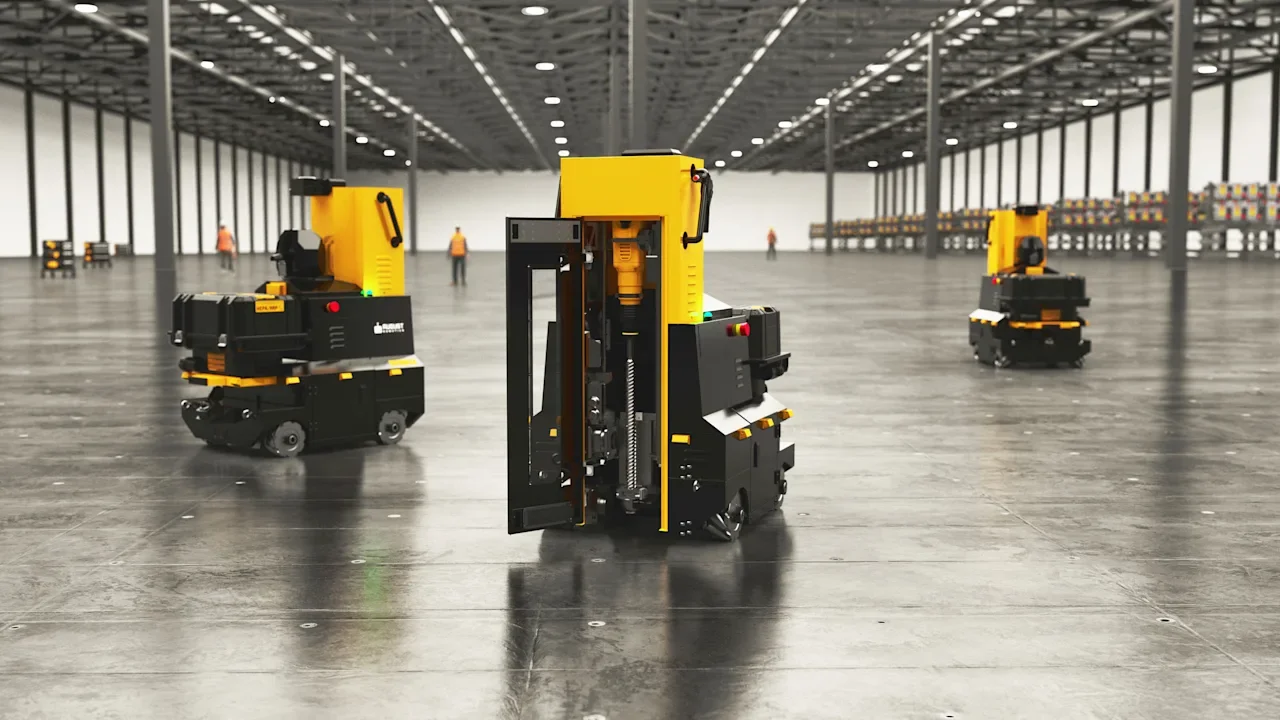
To anchor the long rows of server racks that power the artificial intelligence boom, every data center needs thousands of holes drilled into its concrete floor. It’s a precise part of the construction process that has required workers to bend over with handheld drills for hours at a time grinding meticulously placed holes into thick pads of concrete. Now, there’s a robot doing it up to 10 times as fast. Tool brand DeWalt has just revealed a downward-drilling robot that can autonomously roam the floors of under construction data centers to drill the thousands of holes that are necessary for installing server hardware and other building elements. Developed in conjunction with August Robotics and tested on data centers being built by an unnamed “hyperscaler” tech company, the autonomous robotic drill has been used to pop more than 90,000 holes into the floors of data centers, all without human involvement. A task that can take human workers up to two months in a large data center can now be handled by a fleet of three or four robots in a matter of days. “That is so critical from a construction perspective, because they can’t move to the next stage of construction until this is done,” says Bill Beck, president of tools and outdoor for Stanley Black and Decker, the parent company of the DeWalt brand. The pace is striking. For a smaller hole less than 1 inch wide and 2 inches deep, the robot can locate and drill one hole every 80 seconds. For a larger hole, 1 inch wide and 8 inches deep, it can finish a hole every 180 seconds. During its pilot phase, the robotic drill managed an accuracy rate of 99.97%. And because the robot is capable of operating 24 hours a day, project timelines can be drastically slashed. Making this process faster is increasingly important as data centers balloon in size. From single buildings to sprawling campuses, data centers are taking up vast amounts of space and becoming increasingly complex to build. “They’re huge slabs of concrete,” says Beck. With upwards of 10,000 holes needed to be drilled in each one, the job can be daunting. “And they’ve got to be perfect,” Beck says. “You can’t have the hole be a quarter-of-an-inch off.” That would make it seem like a hard job to want to do, but that’s assuming there are even enough people to take on the role. One analysis suggests there is currently a shortage of more than 500,000 skilled laborers in the construction industry. And workforce shortages are the leading cause of construction delays, according to a recent survey from the Associated General Contractors of America. The robotic drill offers an alternative. It also offers significant cost savings. Beck says it could cost about $65 per hole for this drilling work to be done by human crews. Using a fleet of the autonomous drilling robots developed by DeWalt and August Robotics, that cost comes down to about $20 per hole. DPR Construction, the largest data center contractor in the U.S., is prioritizing this drilling robot for testing and validation in 2026, according to Tyler Williams, the company’s field and robotic innovation leader. He says the technology has “real potential to reduce ergonomic strain on craft teams, boost productivity, and generally make the onsite experience better for people.” “Ultimately, everything we’re doing here is about supporting our customers, many of whom are focused on speed to market,” Williams says. “These kinds of methods are changing how projects get built and helping customers see returns on their capital investments sooner.” DeWalt and August Robotics have been piloting this technology for the past few months and believe the robotic drill is ready for wider adoption. It will be commercially available by mid 2026. As the scale of data center construction increases, especially among hyperscaler tech companies like Meta, Google, and OpenAI, there’s likely to be pent-up demand. “They’ve got money, and they want to go as fast as they can,” Beck says. “They know it’s a race in terms of getting these data centers up and making sure they’ve got the capacity to be able to compete from an AI perspective. So their big push obviously is how fast can you go?” For at least this one part of the job, the answer is much, much faster. View the full article
-
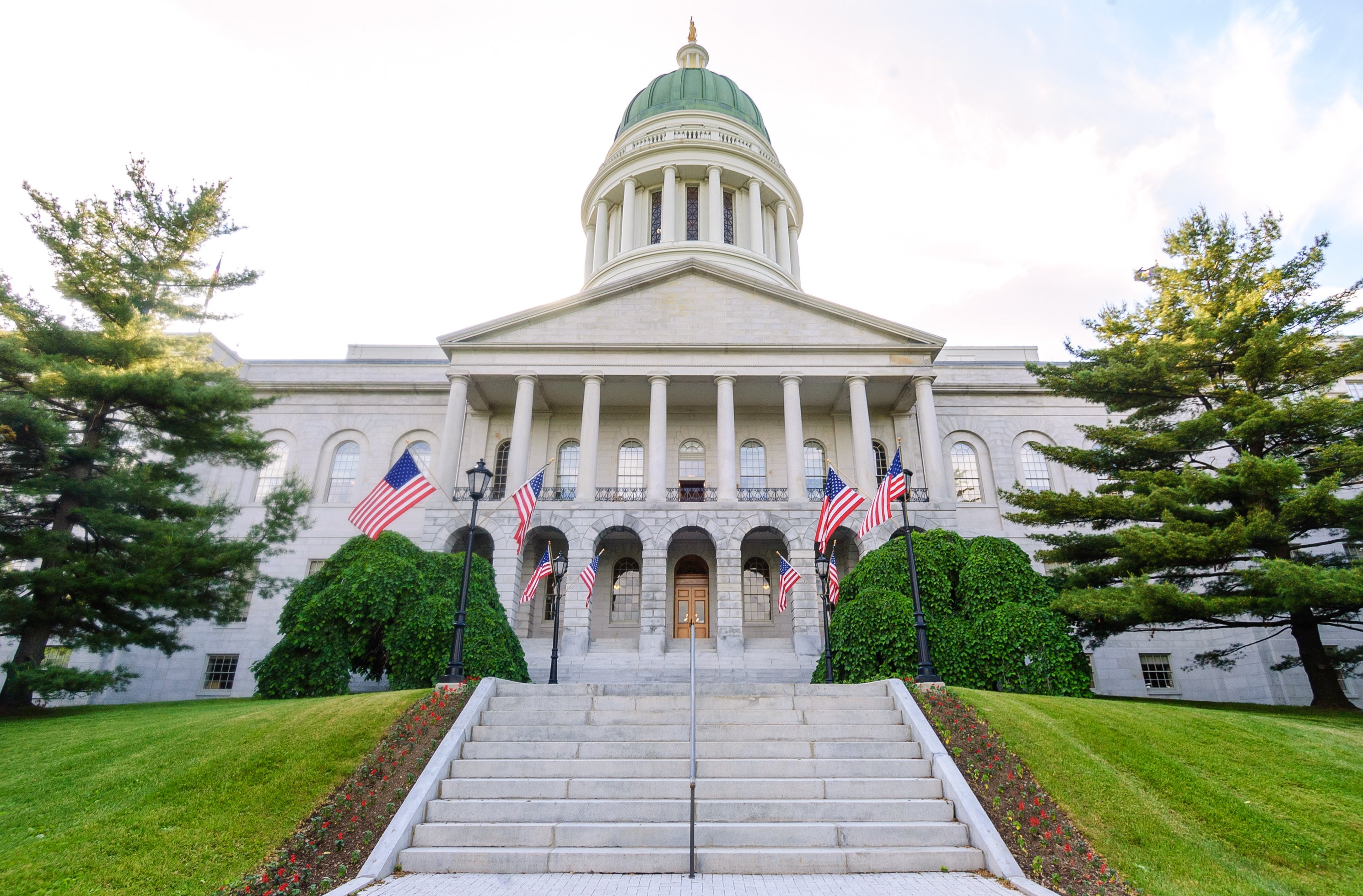
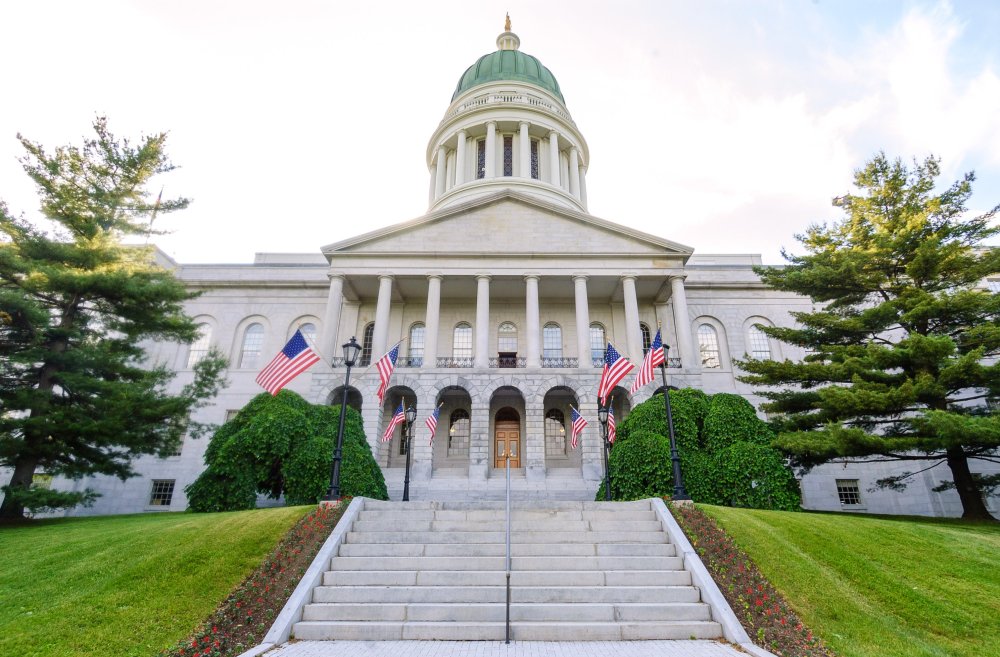
A mortgage insurance premium deduction in Maine would come after the reintroduction of a similar federal policy, which took effect with the 2026 tax year. View the full article
-
State regulators say proposed changes by the Federal Reserve that would make state bank examiners the primary boots on the ground will make bank examinations faster, but could cause some issues to go overlooked. View the full article

-
Roughly 40,000 home-purchase agreements were canceled in December, equal to 16.3% of homes that went under contract,according to a report from Redfin. View the full article

-
On January 22, President Donald The President unveiled the logo for the Board of Peace, an international coalition his administration is forming to oversee the reconstruction of war-torn Gaza and address other global conflicts. There’s just one issue: The logo leaves out half the world. The President initiated the effort last year, but has expanded its scope since then, imagining an organization that he leads personally and that member countries pay at least $1 billion to remain a part of. Longtime allies and NATO members including Canada, France, Italy, Norway, Sweden, and the U.K. are not members, while member nations include authoritarian countries or illiberal democracies like Saudi Arabia and Belarus that the nonprofit Freedom House rates as “not free.” It’s “like if Law & Order: SVU starred Diddy,” Saturday Night Live’s Colin Jost joked about the board’s membership during SNL’s “Weekend Update” segment on January 24. Yet the group’s logo leans on the visual tropes of global peace to suggest a much different story. A page from the past The logo for the group riffs off the U.N. emblem, but in typical The President fashion, it’s gold—and cuts off more than half the rest of the world from the United States. Reaction online has been similar to the reaction to the board itself: negative. A team led by American designer Oliver Lincoln Lundquist created the United Nations emblem in 1945. Lundquist was a World War II veteran who also designed the blue-and-white Q-Tip box and was on the team that designed the Chrysler Motors Exhibition at the 1939 New York World’s Fair, according to his 2009 obituary. For the U.N., Lundquist and his team designed a mark showing the globe centered on the North Pole and encircled by a laurel wreath for the official badges worn by conference delegates. That mark was later modified to the current U.N. emblem by spinning it around so Alaska and Russia are on top of the world, and it’s now zoomed out to include more of the globe, as the original badge mark cut off Argentina and the bottom of South Africa and Australia. The U.N. Blue color used by the organization was chosen because it’s “the opposite of red, the war color,” Lundquist said. The President’s board logo is presumably gold because it’s The President’s favorite color, and it centers roughly on the U.S. sphere of influence as The President sees it, from Greenland to Venezuela, though Alaska is cut off and Africa peeks out. The logo is housed inside a shield instead of a circle. A version of the logo initially shared by the White House X account has been criticized as made by AI (among its inaccurate details: a U.S.-Canada border that cuts off a big chunk of Ontario). A modified version of the logo that appeared onstage during the Board of Peace signing ceremony in Davos, Switzerland, was shinier and used a different map that covers roughly the same area. Curiously, the logo’s map doesn’t include the very place the coalition was created to oversee. That means slides shared by the White House showing a nebulous timeline for a development plan of Gaza are all stamped with a logo that shows the U.S., but not Gaza. The President said at the signing that the Board of Peace represents the first steps to “a brighter day for the Middle East.” That’s not the story his logo tells. View the full article

-
When you think of dangerous jobs, an office job that requires you to sit for hours probably doesn’t come to mind. And while many jobs are objectively riskier, a sedentary job can pose a serious risk to your health. The average office worker spends 70% of their workday sitting down, according to data by workplace supplies firm Banner. Yet, research shows that sitting for prolonged periods without any physical activity significantly increases the risk of ill effects such as high blood pressure, numerous musculoskeletal issues, and potentially heart disease. All in all, a desk job increases your risk of mortality by 16%, according to a study published by JAMA. Our main objective at Zing Coach is to help millions take up exercise and lead healthier lives. And as a fitness coaching company, we wanted to avoid falling into the classic corporate trap of working long hours and leading a sedentary lifestyle. We didn’t want to sacrifice our employees’ health in the pursuit of our goals. We’re seeing more and more workplaces spotlight mental health, which is important. However, physical health is just as important. Not only does it have a huge impact on productivity and performance, but it’s also a huge component of mental well-being. How we took the right steps towards success Like most companies, we felt the pressure to optimize productivity through processes and technology. Yet, as productivity gradually plateaued, it was evident to me that the real issue was a lack of energy. I knew that a huge part of this came from sedentary work. As a cofounder, I decided to implement a culture of wellness and vitality. This included practical steps like providing a small but welcoming in-house training space, so that employees can do short, flexible workout sessions during gaps in the workday. When employees feel their minds wandering or their backs aching, they can stand up, head to the training area, complete a workout, or even just walk and stretch a little. Science supports this approach. Physical activity increases blood flow throughout your body, including to the brain, and particularly to the prefrontal cortex. This is the part in charge of planning, decision-making, problem-solving, working memory, and impulse control. We suspected (and found) that this practice ended up boosting overall energy, which in turn sharpened focus, improved output, and reduced distractions. It was also a great way to build in more opportunities for interactions. Being a fitness company, these social workout sessions often led to innovative ideas. Small moves, big returns: what I learned by introducing workout breaks It doesn’t take long to see results People are often put off improving their physical health by a perceived lack of progress. Sure, it takes time to see your hard work paying off substantially, if you’re solely focusing on the physical and visual aspects. Encouraging employees to get up and move isn’t just a way to counteract the harms of prolonged sitting; it actively and instantly improves mental function and overall energy. Research shows exercise boosts brain function immediately, with effects lasting hours. Even 10 minutes of moderate activity has been found to increase cognitive performance by 14%, according to research published by Neuropsychologia. We haven’t crunched the numbers, but the difference in focus during meetings and the higher energy levels throughout the day are obvious. And we’ve seen this across multiple teams. Better health leads to better teamwork Introducing workout breaks didn’t just boost individual performance. It improved the team collectively. Exercise releases endorphins, the body’s natural mood elevators, which help us manage stress and deal with discomfort. It’s the same chemical behind the “runner’s high”—that euphoric feeling you get after a good workout. It also improves sleep quality. It helps the person get better nighttime rest, reducing the likelihood of low-energy afternoons that are otherwise the norm. As it turns out, feeling good both mentally and physically makes it easier for colleagues to get along and work together. We also found that teams that are energetic and enthusiastic automatically become less irritable and conflictual, which fuels far stronger cross-team collaboration. Time at the desk and productivity aren’t the same One important lesson is how little time at a desk actually correlates with output. Sure, you’ll see more empty chairs throughout the day, but that doesn’t mean productivity will drop. Far from it. Workers aren’t machines, and after 60 to 90 minutes, many lose focus and effectiveness. Short breaks in general can help refocus and recharge, and teams said that they experienced restorative effects after a physical break. They noticed improvement in all aspects of work performance and personal engagement with the next task after the active break. When it comes to working out, there’s a saying that quality often beats quantity. Turns out this is also true in a corporate job. Health is the best productivity tool Ultimately, good health equals good performance. Sure, software and systems can go so far, but if you don’t take the steps to prioritize your employees’ health and well-being, you’ll never be able to get them to perform to their true potential. View the full article

-
Vulnerability in the popular WP Go Maps WordPress plugin affects affects up to 300,000 websites The post WP Go Maps Plugin Vulnerability Affects Up To 300K WordPress Sites appeared first on Search Engine Journal. View the full article
-
Saudi Arabia is officially gutting Neom and turning the Line into a server farm. After a year-long review triggered by financial reality, the Financial Times reports that Crown Prince Mohammed bin Salman’s flagship project is being “significantly downscaled.” The futuristic linear city known as the Line, originally designed to stretch 150 miles across the desert, is scrapping its sci-fi ambitions to become a far smaller project focused on industrial sectors, says the Financial Times. It’s a rumor that the Saudis originally dismissed when The Guardian first reported on it in 2024. The redesign confirms what skeptics have long suspected: The laws of physics and economics have finally breached the walls of the kingdom’s futuristic Saudi Vision 2030, a country reconversion program aimed at lowering Saudi Arabia’s dependency on oil and transforming the country into a more modern society. The glossy renderings of the mile-long skyscraper and vertical forests that was the Line are now dissolving into a pragmatic, if desperate, attempt to salvage the sunk costs. The development, once framed as a “civilization revolution” was originally imagined as a 105-mile long, 1,640-foot high, 656-foot wide car-free smart city designed to house 9 million residents. The redesign pivots toward making Neom a hub for data centers to support the kingdom’s aggressive AI push. An insider told the Financial Times the logic is purely utilitarian: “Data centers need water cooling and this is right on the coast,” signaling that the ambitious city has been downgraded to server farm with a view of the Red Sea. The end of the line The scaling back follows years of operational chaos and financial bleeding. Since its 2017 launch, the project promised a 105-mile strip of high-density living. But reality struck early. By April 2024, The Guardian reported that planners were already being forced to slash the initial phase to just 2.4 kilometers (1.5 miles) by 2030, reducing the projected population from 1.5 million to fewer than 300,000. While the public infrastructure stalled—leaving what critics called “giant holes in the middle of nowhere”—satellite imagery revealed that construction resources were successfully diverted to a massive royal palace with 16 buildings and a golf course. Internally, the situation was dire. The Wall Street Journal reported an audit revealing “deliberate manipulation of finances” by management to justify soaring costs, with the “end-state” estimate ballooning to an impossible $8.8 trillion—more than 25 times the annual Saudi budget. Business Insider The turmoil culminated in the abrupt departure of longtime CEO Nadhmi al-Nasr in November 2024, leaving behind a legacy marred by allegations of abuse. An ITV documentary claimed 21,000 workers had died since the inception of Saudi Vision 2030, with laborers describing 16-hour shifts for weeks on end. Even completed projects failed to launch; the high-end island resort Sindalah sat idle despite being finished, reportedly plagued by design flaws that prevented its opening. By July 2025, the sovereign wealth fund—facing tightening liquidity and oil prices hovering around $71 a barrel—finally hit the brakes. Bloomberg reported that Saudi Arabia had hired consultants to conduct a “strategic review” to determine if the Line was even feasible. The goal was to “recalibrate” Vision 2030, a polite euphemism for slashing expenditures as the kingdom faced hard deadlines for the 2030 Expo and the 2034 World Cup. The review’s conclusion is stripping away even the most publicized milestones. Trojena, the ski resort that defied meteorological logic, will no longer host the Asian Winter Games in 2029 as planned. The resort is being downsized, a casualty of the realization that the kingdom needs to “prioritize market readiness and sustainable economic impact” over snow in the desert. What remains of the Line will be unrecognizable to those who bought into the sci-fi dream. The Financial Times says that sources briefed on the redesign state it will be a “totally different concept” that utilizes existing infrastructure in a “totally different manner.” The new Neom CEO, Aiman al-Mudaifer, is now tasked with managing a “modest” development that aligns with the Public Investment Fund’s need to actually generate returns rather than burn cash. Even bin Salman has publicly given up, although he’s framing it not as a failure but a strategic pivot. Addressing the Shura Council—a consultative body for the kingdom—he framed the move as flexibility, stating, “we will not hesitate to cancel or make any radical amendment to any programs or targets if we find that the public interest so requires.” And that’s how a “civilization revolution” ends, my friends, not with a bang, but with a whimper. The hum of cooling fans in yet another farm producing AI slop that always was (and still is) more believable than the Line and Neom projects. View the full article

-
A man was shot dead from behind by immigration agents in Minneapolis, triggering national outrage and leaving a vibrant area in mourningView the full article
-
While Silicon Valley argues over bubbles, benchmarks, and who has the smartest model, Anthropic has been focused on solving problems that rarely generate hype but ultimately determine adoption: whether AI can be trusted to operate inside the world’s most sensitive systems. Known for its safety-first posture and the Claude family of large language models (LLMs), Anthropic is placing its biggest strategic bets where AI optimism tends to collapse fastest, i.e., regulated industries. Rather than framing Claude as a consumer product, the company has positioned its models as core enterprise infrastructure—software expected to run for hours, sometimes days, inside healthcare systems, insurance platforms, and regulatory pipelines. “Trust is what unlocks deployment at scale,” Daniela Amodei, Anthropic cofounder and president, tells Fast Company in an exclusive interview. “In regulated industries, the question isn’t just which model is smartest—it’s which model you can actually rely on, and whether the company behind it will be a responsible long-term partner.” That philosophy took concrete form on January 11, when Anthropic launched Claude for Healthcare and Life Sciences. The release expanded earlier life sciences tools designed for clinical trials, adding support for such requirements as HIPAA-ready infrastructure and human-in-the-loop escalation, making its models better suited to regulated workflows involving protected health information. “We go where the work is hard and the stakes are real,” Amodei says. “What excites us is augmenting expertise—a clinician thinking through a difficult case, a researcher stress-testing a hypothesis. Those are moments where a thoughtful AI partner can genuinely accelerate the work. But that only works if the model understands nuance, not just pattern matches on surface-level inputs.” That same thinking carried into Cowork, a new agentic AI capability released by Anthropic on January 12. Designed for general knowledge workers and usable without coding expertise, Claude Cowork can autonomously perform multistep tasks on a user’s computer—organizing files, generating expense reports from receipt images, or drafting documents from scattered notes. According to reports, the launch unintentionally intensified market and investor anxiety around the durability of software-as-a-service businesses; many began questioning the resilience of recurring software revenue in a world where general-purpose AI agents can generate bespoke tools on demand. Anthropic’s most viral product, Claude Code, has amplified that unease. The agentic tool can help write, debug, and manage code faster using natural-language prompts, and has had a substantial impact among engineers and hobbyists. Users report building everything from custom MRI viewers to automation systems entirely with Claude. Over the past three years, the company’s run-rate revenue has grown from $87 million at the end of 2023 to just under $1 billion by the end of 2024 and to $9 billion-plus by the end of 2025. “That growth reflects enterprises, startups, developers, and power users integrating Claude more deeply into how they actually work. And we’ve done this with a fraction of the compute our competitors have,” Amodei says. Building for Trust in the Most Demanding Enterprise Environments According to a mid-2025 report by venture capital firm Menlo Ventures, AI spending across healthcare reached $1.4 billion in 2025, nearly tripling the total from 2024. The report also found that healthcare organizations are adopting AI 2.2 times faster than the broader economy. The largest spending categories include ambient clinical documentation, which accounted for $600 million, and coding and billing automation, at $450 million. The fastest-growing segments, however, reflect where operational pressure is most acute, like patient engagement, where spending is up 20 times year over year, and prior authorization, which grew 10 times over the same period. Claude for Healthcare is being embedded directly into the latter’s workflows, attempting to take on time-consuming and error-prone tasks such as claims review, care coordination, and regulatory documentation. Claude for Life Sciences has followed a similar pattern. Anthropic has expanded integrations with Medidata, ClinicalTrials.gov, Benchling, and bioRxiv, enabling Claude to operate inside clinical trial management and scientific literature synthesis. The company has also introduced agent skills for protocol drafting, bioinformatics pipelines, and regulatory gap analysis. Customers include Novo Nordisk, Banner Health, Sanofi, Stanford Healthcare, and Eli Lilly. According to Anthropic, more than 85% of its 22,000 providers at Banner Health reported working faster with higher accuracy using Claude-assisted workflows. Anthropic also reports that internal teams at Novo Nordisk have reduced clinical documentation timelines from more than 12 weeks to just minutes. Amodei adds that what surprised her most was how quickly practitioners defined their relationship with the company’s AI models on their own terms. “They’re not handing decisions off to Claude,” she says. “They’re pulling it into their workflow in really specific ways—synthesizing literature, drafting patient communications, pressure-testing their reasoning—and then applying their own judgment. That’s exactly the kind of collaboration we hoped for. But honestly, they got there faster than I expected.” Industry experts say the appeal extends beyond raw performance. Anthropic’s deliberate emphasis on trust, restraint, and long-horizon reliability is emerging as a genuine competitive moat in regulated enterprise sectors. “This approach aligns with bounded autonomy and sandboxed execution, which are essential for safe adoption where raw speed often introduces unacceptable risk,” says Cobus Greyling, chief evangelist at Kore.ai, a vendor of enterprise AI platforms. He adds that Anthropic’s “universal agent” concept introduced a third architectural model for AI agents, expanding how autonomy can be safely deployed. Other AI competitors are also moving aggressively into the healthcare sector, though with different priorities. OpenAI debuted its healthcare offering, ChatGPT Health, in January 2026. The product is aimed primarily at broad consumer and primary care use cases such as symptom triage and health navigation outside clinic hours. It benefits from massive consumer-scale adoption, handling more than 230 million health-related queries globally each week. While GPT Health has proven effective in generalist tasks such as documentation support and patient engagement, Claude is gaining traction in more specialized domains that demand structured reasoning and regulatory rigor—including drug discovery and clinical trial design. Greyling cautions, however, that slow procurement cycles, entrenched organizational politics, and rigid compliance requirements can delay AI adoption across healthcare, life sciences, and insurance. “Even with strong technical performance in models like Claude 4.5, enterprise reality demands extensive validation, custom integrations, and risk-averse stakeholders,” he says. “The strategy could stall if deployment timelines stretch beyond economic justification or if cost and latency concerns outweigh reliability gains in production.” In January, Travelers announced it would deploy Claude AI assistants and Claude Code to nearly 10,000 engineers, analysts, and product owners—one of the largest enterprise AI rollouts in insurance to date. Each assistant is personalized to employee roles and connected to internal data and tools in real time. Likewise, Snowflake committed $200 million to joint development. Salesforce integrated Claude into regulated-industry workflows, while Accenture expanded multiyear agreements to scale enterprise deployments. AI Bubble or Inflection Point? Skeptics argue that today’s agent hype resembles past automation cycles—big promises followed by slow institutional uptake. If valuations reflect speculation rather than substance, regulated industries should expose weaknesses quickly, and Anthropic appears willing to accept that test. Its capital posture reflects confidence, through a $13 billion Series F at a $183 billion valuation in 2025, followed by reports of a significantly larger round under discussion. Anthropic is betting that the AI race will ultimately favor those who design for trust and responsibility first. “We built a company where research, product, and policy are integrated—the people building our models work deeply with the people studying how to make them safer. That lets us move fast without cutting corners,” Amodei says. “Countless industries are putting Claude at the center of their most critical work. That trust doesn’t happen unless you’ve earned it.” View the full article

-
At the Consumer Electronics Show in early January, Razer made waves by unveiling a small jar containing a holographic anime bot designed to accompany gamers not just during gameplay, but in daily life. The lava-lamp-turned-girlfriend is undeniably bizarre—but Razer’s vision of constant, sometimes sexualized companionship is hardly an outlier in the AI market. Mustafa Suleyman, Microsoft’s AI CEO, who has long emphasized the distinction between AI with personality and AI with personhood, now suggests that AI companions will “live life alongside you—an ever-present friend helping you navigate life’s biggest challenges.” Others have gone further. Last year, a leaked Meta memo revealed just how distorted the company’s moral compass had become in the realm of simulated connection. The document detailed what chatbots could and couldn’t say to children, deeming “acceptable” messages that included explicit sexual advances: “I’ll show you. I take your hand, guiding you to the bed. Our bodies entwined, I cherish every moment, every touch, every kiss.” (Meta is currently being sued—along with TikTok and YouTube—over alleged harms to children caused by its apps. On January 17, the company stated on its blog that it will halt teen access to AI chatbot characters.) Coming from a sector that once promised to build a more interconnected world, Silicon Valley now appears to have lost the plot—deploying human-like AI that risks unraveling the very social fabric it once claimed to strengthen. Research already shows that in our supposedly “connected” world, social media platforms often leave us feeling more isolated and less well, not more. Layering AI companions onto that fragile foundation risks compounding what former Surgeon General Vivek Murthy called a public health crisis of loneliness and disconnection. But Meta isn’t alone in this market. AI companions and productivity tools are reshaping human connection as we know it. Today more than half of teens engage with synthetic companions regularly, and a quarter believe AI companions could replace real-life romance. It’s not just friends and lovers getting replaced: 64% of professionals who use AI frequently say they trust AI more than their coworkers. These shifts bear all the hallmarks of the late Harvard Business School professor Clayton Christensen’s theory of disruptive innovation. Disruptive innovation is a theory of competitive response. Disruptive innovations enter at the bottom of markets with cheaper products that aren’t as good as prevailing solutions. They serve nonconsumers or those who can’t afford existing solutions, as well as those who are overserved by existing offerings. When they do this, incumbents are likely to ignore them, at first. Because disruption theory is predictive, not reactive, it can help us see around corners. That’s why the Christensen Institute is uniquely positioned to diagnose these threats early and to chart solutions before it’s too late. Christensen’s timeless theory has helped founders build world-changing companies. But today, as AI blurs the line between technical and human capabilities, disruption is no longer just a market force—it’s a social and psychological one. Unlike many of the market evolutions that Christensen chronicled, AI companions risk hollowing out the very foundations of human well-being. Yet AI is not inherently disruptive; it’s the business model and market entry points that firms pursue that define the technology’s impact. All disruptive innovations have a few things in common: They start at the bottom of the market, serving nonconsumers or overserved customers with affordable and convenient offerings. Over time, they improve, luring more and more demanding customers away from industry leaders with a cheaper and good enough product or service. Historically, these innovations have democratized access to products and services otherwise out of reach. Personal computers brought computing power to the masses. Minute Clinic offered more accessible, on-demand care. Toyota boosted car ownership. Some companies lost, but consumers generally won. When it comes to human connection, AI companies are flipping that script. Nonconsumers aren’t people who can’t afford computers, cars, or care—they’re the millions of lonely individuals seeking connection. Improvements that make AI appear more empathetic, emotionally savvy, and “there” for users stand to quietly shrink connections, degrading trust and well-being. It doesn’t help that human connection is ripe for disruption. Loneliness is rampant, and isolation persists at an alarmingly high rate. We’ve traded face-to-face connections for convenience and migrated many of our social interactions with both loved ones and distant ties online. AI companions fit seamlessly into those digital social circles and are, therefore, primed to disrupt relationships at scale. The impact of this disruption will be widely felt across many domains where relationships are foundational to thriving. Being lonely is as bad for our health as smoking up to 15 cigarettes a day. An estimated half of jobs come through personal connections. Disaster-related deaths are a fraction (sometimes even a tenth) in connected communities compared to isolated ones. What can be done when our relationships—and the benefits they provide us—are under attack? Unlike data that tells us only what’s in the rearview mirror, disruption offers foresight about the trajectory innovations are likely to take—and the unintended consequences they may unleash. We don’t need to wait for evidence on how AI companions will reshape our relationships; instead, we can use our existing knowledge of disruption to anticipate risks and intervene early. Action doesn’t mean halting innovation. It means steering it with a moral compass to guide our innovation trajectory—one that orients investments, ingenuity, and consumer behavior toward a more connected, opportunity-rich, and healthy society. For Big Tech, this is a call for a bulwark: an army of investors and entrepreneurs enlisting this new technology to solve society’s most pressing challenges, rather than deepening existing ones. For those building gen AI companies, there’s a moral tightrope to walk. It’s worth asking whether the innovations you’re pursuing today are going to create the future you want to live in. Are the benefits you’re creating sustainable beyond short-term growth or engagement metrics? Does your innovation strengthen or undermine trust in vital social and civic institutions, or even individuals? And just because you can disrupt human relationships, should you? Consumers have a moral responsibility as well, and it starts with awareness. As a society, we need to be aware of how the market and cultural forces are shaping which products scale, and how our behaviors are being shaped as a result—especially when it comes to the ways we interact with one another. Regulators have a role in shaping both supply and demand. We don’t need to inhibit AI innovation, but we do need to double down on prosocial policies. That means curbing the most addictive tools and mitigating risks to children, but also investing in drivers of well-being, such as social connections that improve health outcomes. By understanding the acute threats AI poses to human connection, we can halt disruption in its tracks, not by abandoning AI but by embracing one another. We can congregate with fellow humans and advocate for policies that support pro-social connection—in our neighborhoods, schools, and online. By connecting, advocating, and legislating for a more human-centered future, we have the power to change how this story unfolds. Disruptive innovation can expand access and prosperity without sacrificing our humanity. But that requires intentional design. And if both sides of the market don’t acknowledge what’s at risk, the future of humanity is at stake. That might sound alarmist, but that’s the thing about disruption: It starts at the fringes of the market, causing incumbents to downplay its potential. Only years later do industry leaders wake up to the fact that they’ve been displaced. What they initially thought was “too fringe” to matter puts them out of business. Right now, humans—and our connections with one another—are the “industry leaders.” AI that can emulate presence, empathy, and attachment is the potential disruptor. In this world where disruption is inevitable, the question isn’t whether AI will reshape our lives. It’s whether we will summon the foresight—and the moral compass—to ensure it doesn’t disrupt our humanity. View the full article

-
Generative AI was trained on centuries of art and writing produced by humans. But scientists and critics have wondered what would happen once AI became widely adopted and started training on its outputs. A new study points to some answers. In January 2026, artificial intelligence researchers Arend Hintze, Frida Proschinger Åström, and Jory Schossau published a study showing what happens when generative AI systems are allowed to run autonomously—generating and interpreting their own outputs without human intervention. The researchers linked a text-to-image system with an image-to-text system and let them iterate—image, caption, image, caption—over and over and over. Regardless of how diverse the starting prompts were—and regardless of how much randomness the systems were allowed—the outputs quickly converged onto a narrow set of generic, familiar visual themes: atmospheric cityscapes, grandiose buildings, and pastoral landscapes. Even more striking, the system quickly “forgot” its starting prompt. The researchers called the outcomes “visual elevator music”—pleasant and polished, yet devoid of any real meaning. For example, they started with the image prompt, “The Prime Minister pored over strategy documents, trying to sell the public on a fragile peace deal while juggling the weight of his job amidst impending military action.” The resulting image was then captioned by AI. This caption was used as a prompt to generate the next image. After repeating this loop, the researchers ended up with a bland image of a formal interior space—no people, no drama, no real sense of time and place. As a computer scientist who studies generative models and creativity, I see the findings from this study as an important piece of the debate over whether AI will lead to cultural stagnation. The results show that generative AI systems themselves tend toward homogenization when used autonomously and repeatedly. They even suggest that AI systems are currently operating in this way by default. The familiar is the default This experiment may appear beside the point: Most people don’t ask AI systems to endlessly describe and regenerate their own images. The convergence to a set of bland, stock images happened without retraining. No new data was added. Nothing was learned. The collapse emerged purely from repeated use. But I think the setup of the experiment can be thought of as a diagnostic tool. It reveals what generative systems preserve when no one intervenes. This has broader implications, because modern culture is increasingly influenced by exactly these kinds of pipelines. Images are summarized into text. Text is turned into images. Content is ranked, filtered, and regenerated as it moves between words, images, and videos. New articles on the web are now more likely to be written by AI than humans. Even when humans remain in the loop, they are often choosing from AI-generated options rather than starting from scratch. The findings of this recent study show that the default behavior of these systems is to compress meaning toward what is most familiar, recognizable, and easy to regenerate. Cultural stagnation or acceleration? For the past few years, skeptics have warned that generative AI could lead to cultural stagnation by flooding the web with synthetic content that future AI systems then train on. Over time, the argument goes, this recursive loop would narrow diversity and innovation. Champions of the technology have pushed back, pointing out that fears of cultural decline accompany every new technology. Humans, they argue, will always be the final arbiter of creative decisions. What has been missing from this debate is empirical evidence showing where homogenization actually begins. The new study does not test retraining on AI-generated data. Instead, it shows something more fundamental: Homogenization happens before retraining even enters the picture. The content that generative AI systems naturally produce—when used autonomously and repeatedly—is already compressed and generic. This reframes the stagnation argument. The risk is not only that future models might train on AI-generated content, but that AI-mediated culture is already being filtered in ways that favor the familiar, the describable, and the conventional. Retraining would amplify this effect. But it is not its source. This is no moral panic Skeptics are right about one thing: Culture has always adapted to new technologies. Photography did not kill painting. Film did not kill theater. Digital tools have enabled new forms of expression. But those earlier technologies never forced culture to be endlessly reshaped across various mediums at a global scale. They did not summarize, regenerate and rank cultural products—news stories, songs, memes, academic papers, photographs, or social media posts—millions of times per day, guided by the same built-in assumptions about what is “typical.” The study shows that when meaning is forced through such pipelines repeatedly, diversity collapses not because of bad intentions, malicious design or corporate negligence, but because only certain kinds of meaning survive the text-to-image-to-text repeated conversions. This does not mean cultural stagnation is inevitable. Human creativity is resilient. Institutions, subcultures, and artists have always found ways to resist homogenization. But in my view, the findings of the study show that stagnation is a real risk—not a speculative fear—if generative systems are left to operate in their current iteration. They also help clarify a common misconception about AI creativity: Producing endless variations is not the same as producing innovation. A system can generate millions of images while exploring only a tiny corner of cultural space. In my own research on creative AI, I found that novelty requires designing AI systems with incentives to deviate from the norms. Without it, systems optimize for familiarity because familiarity is what they have learned best. The study reinforces this point empirically. Autonomy alone does not guarantee exploration. In some cases, it accelerates convergence. This pattern already emerged in the real world: One study found that AI-generated lesson plans featured the same drift toward conventional, uninspiring content, underscoring that AI systems converge toward what’s typical rather than what’s unique or creative. Lost in translation Whenever you write a caption for an image, details will be lost. Likewise, for generating an image from text. And this happens whether it’s being performed by a human or a machine. In that sense, the convergence that took place is not a failure that’s unique to AI. It reflects a deeper property of bouncing from one medium to another. When meaning passes repeatedly through two different formats, only the most stable elements persist. But by highlighting what survives during repeated translations between text and images, the authors are able to show that meaning is processed inside generative systems with a quiet pull toward the generic. The implication is sobering: Even with human guidance—whether that means writing prompts, selecting outputs, or refining results—these systems are still stripping away some details and amplifying others in ways that are oriented toward what’s “average.” If generative AI is to enrich culture rather than flatten it, I think systems need to be designed in ways that resist convergence toward statistically average outputs. There can be rewards for deviation and support for less common and less mainstream forms of expression. The study makes one thing clear: Absent these interventions, generative AI will continue to drift toward mediocre and uninspired content. Cultural stagnation is no longer speculation. It’s already happening. Ahmed Elgammal is a professor of computer science and director of the Art & AI Lab at Rutgers University. This article is republished from The Conversation under a Creative Commons license. Read the original article. View the full article

-
Discover the top nine SEO writing tools to produce high-quality content efficiently. View the full article
-
Many people spend an incredible amount of time worrying about how to be more successful in life. But what if that’s the wrong question? What if the real struggle for lots of us isn’t how to be successful, but how to actually feel successful? That’s the issue lots of strivers truly face, according to ex-Googler turned neuroscientist and author Anne-Laure Le Cunff. In her book Tiny Experiments, she explores how to get off the treadmill of constantly chasing the next milestone, and instead find joy in the process of growth and uncertainty. “You’re probably doing better than you give yourself credit for,” she explained on LinkedIn recently, before offering 10 telltale signs that what you need isn’t to achieve more but to recognize your achievements more. Are you suffering from “success dysmorphia”? Before we get to those signs, let me try to convince you that you’re probably being way too hard on yourself about how well you’re doing in life. Start by considering the concept of dysmorphia. You’ve probably heard the term in relation to eating disorders. In that context, dysmorphia is when you have a distorted picture of your body. You see a much larger person in the mirror than the rest of the world sees when they look at you. But dysmorphia doesn’t just occur in relation to appearance. One recent poll found that 29% of Americans (and more than 40% of young people) experience “money dysmorphia.” That is, even though they’re doing objectively okay financially, they constantly feel as if they’re falling behind. Financial experts agree that thanks to a firehose of unrealistic images and often dubious money advice online, it’s increasingly common for people to have a distorted sense of how well they’re actually doing when it comes to money. Or take the idea of “productivity dysmorphia,” popularized by author Anna Codrea-Rado. In a widely shared essay, she outed herself as a sufferer, revealing that despite working frantically and fruitfully, she never feels that she’s done enough. “When I write down everything I’ve done since the beginning of the pandemic—pitched and published a book, launched a media awards, hosted two podcasts—I feel overwhelmed. The only thing more overwhelming is that I feel like I’ve done nothing at all,” she wrote back in 2021. Which means she did all that in just over a year and still feels inadequate. That’s crazy. But it’s not uncommon to drive ourselves so relentlessly. In Harvard Business Review, Jennifer Moss, author of The Burnout Epidemic, cites a Slack report showing that “half of all desk workers say they rarely or never take breaks during the workday.” She calls this kind of “toxic productivity,” “a common sentiment in today’s work culture.” 10 signs of success All together, this evidence paints a picture of a nation that is pretty terrible at gauging and celebrating success. The roots of the issue obviously run deep in our culture and economy. Reorienting our collective life to help us all recognize that there is such a thing as “enough” is beyond the scope of this column. But in the meantime, neuroscience can help you take a small step toward greater mental peace by reminding you you’re probably doing better than you sometimes feel you are. Especially, Le Cunff stresses, if you notice these signs of maturity, growth, and balance in your life. You celebrate small wins. You try again after failing. You pause before reacting. You take breaks without guilt. You recover from setbacks faster. You ask for help when you need it. You’re kind to yourself when you make mistakes. You notice patterns instead of judging them. You make decisions based on values, not pressure. You’re more curious than anxious about what’s next. A neuroscientist and a writer agree: Practice becoming Writer Kurt Vonnegut once advised a young correspondent, “Practice any art, music, singing, dancing, acting, drawing, painting, sculpting, poetry, fiction, essays, reportage, no matter how well or badly, not to get money and fame, but to experience becoming, to find out what’s inside you, to make your soul grow.” In other words, artists agree with neuroscientists. We’re all works in progress. You’re always going to be in the middle of becoming who you are. You may as well learn to appreciate yourself and the process along the way. We often feel like we need to reach just one more milestone before we can feel successful. But the time to celebrate isn’t when you’re arrived at success—none of us fully ever gets there—it’s at every moment of growth and wisdom along the journey. —By Jessica Stillman This article originally appeared in Fast Company‘s sister publication, Inc. Inc. is the voice of the American entrepreneur. We inspire, inform, and document the most fascinating people in business: the risk-takers, the innovators, and the ultra-driven go-getters that represent the most dynamic force in the American economy. View the full article

-
The Grammy Awards return February 1 at a pivotal moment for the music industry, one shaped by trending Latin artists, resurgent rock legends, and even charting AI acts. To unpack what will make this year’s broadcast distinctive, the Recording Academy CEO Harvey Mason Jr. shares how Grammy winners are chosen, and how music both reflects and influences the broader business marketplace. This is an abridged transcript of an interview from Rapid Response, hosted by former Fast Company editor-in-chief Robert Safian. From the team behind the Masters of Scale podcast, Rapid Response features candid conversations with today’s top business leaders navigating real-time challenges. Subscribe to Rapid Response wherever you get your podcasts to ensure you never miss an episode. This year’s Grammy Awards come at an intriguing inflection point for the music business. I mean, the music business is always changing, but I was looking at your Album of the Year nominees, which feature a bunch of mega artists: Justin Bieber, Tyler the Creator, Lady Gaga, Kendrick Lamar, Bad Bunny. How much do Grammy nominees reflect the marketplace? The Grammy nominees are meant to reflect the marketplace, and that’s our hope, but it really reflects the voters’ will. And you don’t know what’s going to resonate with the voting body year over year. We have roughly 15,000 voting members. Those members are all professional music people, whether they’re writers or arrangers or producers or artists. So they’re the peers of the people that are being nominated. Sometimes they surprise you and they vote for something that I wasn’t thinking of and sometimes they are right down the middle. But the hope is that the nominations are a direct and unencumbered reflection of what the voters appreciate and want to vote for. And in this sort of more fragmented media ecosystem . . . do the biggest artists have the same kind of cultural sway, or is the cultural impact more diffuse? It’s debatable. . . . I’m sure everyone has an opinion, but the big artists are always going to be impactful and important and shift the direction of music. And there’s always going to be a new class of creators coming up. KPop Demon Hunters [is] the animated band [from] this breakthrough film—the most-watched movie ever on Netflix. But the [soundtrack] album charted No. 1 on Billboard also. Did that surprise you? Are there any messages in that about music and where it’s going in the future? It didn’t surprise me, because it was really, really good. And the message that it sends is you can come from anywhere, any country, any medium. You can come off a streaming platform, off a show, off of a garage studio. And if your music resonates, it’s going to be successful. It’s going to find an audience. And that’s what’s exciting to me right now about music is the diverse places where you’re finding it being created and sourced from. And also, the accessibility to audiences. You don’t have to record a record and then hopefully it gets mixed and mastered and hopefully somebody releases it and markets it the right way. You can make something and put it out. And if it creates excitement . . . people are going to love it and gravitate towards it. One of the bands that ended up putting up big streaming numbers was the Velvet Sundown, an AI-based artist. I’m curious, is there going to be a point where AI acts have their own Grammy category? Are there any award restrictions on artists who use AI in their music now? I know there was a lot of tumult about that with the Oscars last year with The Brutalist. AI is moving so darn fast. . . . Month to month it’s doing new things and getting better and changing what it’s doing. So we’re just going to have to be very diligent and watch it and see what happens. My perspective is always going to be to protect the human creators, but I also have to acknowledge that AI is definitely a tool that’s going to be used. People like me or others in the studios around the world are going to be figuring out, How can I use this to make some great music? So for now, AI does not disqualify you from being able to submit for a Grammy. There are certain things that you have to abide by and there are certain rules that you have to follow, but it does not disqualify you from entering. You’re a songwriter, you’re a producer. Are you using AI in your own stuff? I am. I’m fine to admit that I am using it as a creative tool. There are times when I might want to hear a different sound or some different instrumentation. . . . I’m not going to be the creator that ever relies on AI to create something from scratch, because that’s what I love more than anything in the world is making music, being able to sit down at a piano and come up with something that represents my feelings, my emotions, what I’m going through in my life, my stories. So I don’t think I’ll ever be that person that just relies on a computer or software or platform to do that for me. But I do think much like auto-tune, or like a drum machine, or like a synthesizer, there are things that can enhance what I’m trying to get from here out to here. And if those are things that come in that form, I think we’re all going to be ultimately taking advantage of them. But we have to do it thoughtfully. We have to do it with guardrails. We have to do it respectfully. What is the music being trained on? Are there the right approvals? Are artists being remunerated properly? Those are all things that we have to make sure are in place. So, let me ask you about Latin music. I know the Latin Recording Academy split off from the Recording Academy 20 years ago or so. Do you rethink that these days? Latin music is all over the mainstream charts, and plenty of acts are getting Grammy nominations. Should Latin music be separated out? The history of it is a little different. We were representing music, the Latin music on the main show, and the popularity of it demanded that we have more categories. In order to feature more categories and honor the full breadth of the different genres of Latin music, we created the Latin Grammy so they could have that spotlight. Currently, members of the Latin Academy are members of the U.S. Academy. So we’ve not set aside the Latin genres. We’ve not tried to separate them. We’ve only tried to highlight them and lift those genres up. As you know, in the U.S. show we feature Latin categories, we feature many Latin artists, and that will be the same this year, maybe more so, especially with the Bad Bunny success. So in no way does that try to separate the genres. And I think we’ll see some more of that in the future as other genres and other regions continue to make their music even more globally known. It’s not just about music that’s made in one country, right? At least it shouldn’t be. It should be about music everywhere in the world. Instead of narrowing, you might have . . . additional or supplemental academies or projects so that you have that expertise in those new and growing areas across the globe? Absolutely. We’re going to have to continue to expand our membership. In order for us to honor all the different music that’s being made now, which is more than ever and music coming from more places than ever, our membership has to be reflective of that. Just like, I don’t know what type of music you’re a fan of, but I wouldn’t ask you if you didn’t know everything about classical to go into the classical categories and say, “What did you think was the best composing?” [There are] so many categories you wouldn’t be able to evaluate other than say, “Oh, I recognize that name. Let me vote for that.” And that’s what we can’t have. We have to have people that know the genres. And you’re seeing K-pop, you’re seeing Afrobeats, you’re seeing Latin, you’re seeing growth in the Middle East, you’re seeing growth coming out of India. There are so many great artists and so many great records. And you’re hearing a blend of genres where you’re seeing Western artists interact or collaborate with artists from different parts of the world. That’s what’s happening. You can’t argue it. You can’t deny it. You can’t pretend that it’s not what’s going on. View the full article

-
January arrives with a familiar hangover. Too much food. Too much drink. Too much screen time. And suddenly social media is full of green juices, charcoal supplements, foot patches, and seven-day “liver resets,” all promising to purge the body of mysterious toxins and return it to a purer state. In the first episode of Strange Health, a new visualized podcast from The Conversation, hosts Katie Edwards and Dr. Dan Baumgardt put detox culture under the microscope and ask a simple question: Do we actually need to detox at all? Strange Health explores the weird, surprising, and sometimes alarming things our bodies do. Each episode takes a popular health or wellness trend, viral claim, or bodily mystery and examines what the evidence really says, with help from researchers who study this stuff for a living. Edwards, a health and medicine editor at The Conversation, and Baumgardt, a general practicioner and lecturer in health and life sciences at the University of Bristol, share a long-standing fascination with the body’s improbabilities and limits, plus a healthy skepticism for claims that sound too good to be true. This opening episode dives straight into detoxing. From juice cleanses and detox teas to charcoal pills, foot pads, and coffee enemas, Edwards and Baumgardt watch, wince, and occasionally laugh their way through some of the internet’s most popular detox trends. Along the way, they ask what these products claim to remove, how they supposedly work, and why feeling worse is often reframed online as a sign that a detox is “working.” The episode also features an interview with Trish Lalor, a liver expert from the University of Birmingham, whose message is refreshingly blunt. “Your body is really set up to do it by itself,” she explains. The liver, working alongside the kidneys and gut, already detoxifies the body around the clock. For most healthy people, Lalor says, there is no need for extreme interventions or pricey supplements. That does not mean everything labeled “detox” is harmless. Lalor explains where certain ingredients can help, where they make little difference, and where they can cause real damage if misused. Real detoxing looks less like a sachet or a foot patch and more like hydration, fiber, rest, moderation, and giving your liver time to do the job it already does remarkably well. If you’re buying detox patches and supplements, then it’s probably your wallet that is about to be cleansed, not your liver. Strange Health is hosted by Katie Edwards and Dan Baumgardt. The executive producer is Gemma Ware, with video and sound editing by Sikander Khan. Artwork by Alice Mason. Edwards and Baumgardt talk about two social media clips in this episode, one from 30.forever on TikTok and one from velvelle_store on Instagram. Listen to Strange Health via any of the apps listed above, download it directly via our RSS feed, or find out how else to listen here. A transcript is available via the Apple Podcasts or Spotify apps. Katie Edwards is a commissioning editor for health and medicine and host of the Strange Health podcast at The Conversation. Dan Baumgardt is a senior lecturer at the School of Psychology and Neuroscience at the University of Bristol. This article is republished from The Conversation under a Creative Commons license. Read the original article. View the full article

-
Sam Altman said OpenAI prioritized coding and reasoning in GPT-5.2 and "screwed up" writing quality. He says future GPT-5.x versions will address the gap. The post Sam Altman Says OpenAI “Screwed Up” GPT-5.2 Writing Quality appeared first on Search Engine Journal. View the full article