All Activity
- Past hour
-
 PayPal is replacing CEO Alex Chriss with Enrique Lores, saying that the pace of change and execution at the company has not met board expectations over the past two years. Lores has served as a PayPal board member for almost five years and has been board Chair since July 2024. He’s also spent more than six years as president and CEO of HP Inc. “The payments industry is changing faster than ever, driven by new technologies, evolving regulations, an increasingly competitive landscape, and the rapid acceleration of AI that is reshaping commerce daily,” Lores said in a statement on Tuesday. “PayPal sits at the center of this change, and I look forward to leading the team to accelerate the delivery of new innovations and to shape the future of digital payments and commerce.” PayPal’s board thanked Chriss for his contributions, including the role he played to monetize Venmo and grow the Buy Now Pay Later business. Lores will take over as PayPal CEO on March 1. David Dorman will serve as independent chair, effective immediately. PayPal’s Chief Financial and Operating Officer Jamie Miller will serve as interim CEO until Lores assumes the position. PayPal also reported its fourth-quarter results on Tuesday. The technology platform and digital payments company posted an adjusted profit of $1.23 per share on revenue of $8.68 billion. The performance missed the expectations of analysts polled by Zacks Investment Research, who were looking for a profit of $1.29 per share on revenue of $8.77 billion. The San Jose, California-based company also forecast lower profit for the first quarter. Shares slid 16% before the market open. —Michelle Chapman, AP business writer View the full article
-
Google updated its Googlebot documentation to clarify file size limits, separating default limits that apply to all crawlers from Googlebot-specific details. The post Google Updates Googlebot File Size Limit Docs appeared first on Search Engine Journal. View the full article
-
Amid nationwide outrage over the killings of Renée Good and Alex Pretti, two House Democrats are pressing Google and Meta to answer for recruitment campaign posts that Immigration and Customs Enforcement has recently run on their platforms. The lawmakers, Reps. Becca Balint of Vermont and Pramila Jayapal of Washington, have accused the companies of being “complicit” with the The President administration and enabling ICE’s efforts to promote slogans that—they say—have also been employed by white nationalist and neo-Nazi groups. The inquiries were sent on January 21, and as of Monday, the platforms still had not responded. “What is going on with ICE is a five-alarm fire for our democracy, and these corporations are in it up to their necks,” Balint tells Fast Company. “They can no longer claim they ‘didn’t know.’ They are not only profiting from cruelty but actively helping to perpetuate it at everyone else’s expense. We expect answers, and we expect them now.” Under the The President administration, ICE has sought to rapidly scale up recruitment. The agency aimed to spend $100 million on the effort, according to a document reported by The Washington Post last year, and it outlined a ‘wartime recruitment’ strategy that included targeting people who show interest in firearms, Ultimate Fighting Championship (UFC) events, and podcasts focused on patriotism. ICE has run about 65 different advertisements on Google since the beginning of the year, according to the platform’s ad library. These posts include a $50,000 signing bonus offer, opportunities to “Defend the Homeland,” and heavy use of Uncle Sam imagery. ICE—which Rolling Stone reports has spent at least a few hundred thousand dollars running ads on Meta platforms in recent months—has used its Facebook account to post provocative imagery alongside recruitment posts. These include posts featuring a picture of knights with swords alongside the text, ‘THE ENEMIES ARE AT THE GATES,” as well as another displaying a man riding a horse and the phrase, “WE’LL HAVE OUR HOME AGAIN.” Some of the posts are more explicit, including one showing a man carrying the Betsy Ross flag with the message, “SEND THEM BACK.” The politicians’ letter to the companies aims to draw a direct line between Big Tech’s ad systems and the normalization of rhetoric that civil rights groups say echoes white supremacist propaganda. “Just last week, DHS posted a recruitment ad on Instagram proclaiming ‘we’ll have our home again,’ which is a song popularized in neo-Nazi spaces and used in white nationalist calls for a race war. The same lyrics were found in the manifesto of Ryan Christopher Palmeter, the white supremacist who shot and killed three black people in Jacksonville in 2023,” wrote Balint and Jayapal in their January letter to Meta. “It appears Meta is complicit in furthering this content on behalf of the The President administration.” These Facebook posts have racked up tens of thousands of likes or shares. Though Google, which also owns YouTube, and Meta, which owns both Facebook and Instagram, are the platforms the lawmakers focused on, they’re not the only place where ICE has posted content. The agency has posted job ads or recruitment content on LinkedIn, which didn’t respond to a request for comment. It’s not immediately clear that these platforms are the primary way the agency is actually finding new recruits. Still, the letter highlights that platforms stand to be drawn into the nationwide discussion over ICE and its tactics. The companies confirmed receipt but haven’t responded yet, Balint’s office tells Fast Company. Meta declined Fast Company’s request for comment, and Google did not respond to multiple requests for comment. The silence isn’t necessarily surprising. Tech companies have a real interest in not upsetting the The President administration, and some platforms have, in the aftermath of the 2020 election, already done a major about-face about their decisions to boot or suppress the president’s account. Balint’s and Jayapal’s letter isn’t a new strategy for lawmakers either. Members of both parties have previously pushed platforms to censor or restrain posts that they find odious. In highly polarized times, critics argue that this approach essentially amounts to working the refs, and it seems unlikely Google and Meta would move to censor an official government agency. View the full article

-
Firefox has a reputation as the browser of choice for power users who prefer to customize everything – and it just gave users one very important new option. While most other tech companies shove AI “enhancements” down their users’ throats, Mozilla is introducing a way to disable Firefox’s AI features outright – a boon for anyone searching for a safe haven from the AI software onslaught. Starting on February 24 with the Firefox 148 update, users will be able to toggle AI off in a new AI controls area in the desktop browser’s settings menu. To disable AI, you won’t even need to dig around and disable features one by one: Mozilla describes the forthcoming option as a “single place to block current and future generative AI features” across Firefox. If you’d like to customize Firefox’s AI offerings, the browser will also allow you to check and enable individual features. In a blog post announcing the option, Mozilla recognizes that not everyone wants to use AI, but it will continue to work on AI features for Firefox users who do want them. The options on the way later this month will allow Firefox users to toggle AI on or off for translation tools, alt text descriptions in PDFs, tab groups, link preview summaries, and for a sidebar feature that incorporates chatbots like ChatGPT, Claude, and Gemini. Mozilla has been tinkering with AI product experiments in Firefox for a bit now. The company began rolling out access to AI chatbots a year ago with Firefox 135 and last September invited iOS users to “shake to summarize” a website with AI. Mozilla walks a tightrope on AI Mozilla announced its plan to splice AI features more deeply into Firefox late last year, a decision panned by some of its users. At the time, the company emphasized that any AI tools would be opt-in and designed to keep users in full control. “… We believe AI should be built like the internet — open, accessible, and driven by choice — so that users and the developers helping to build it can use it as they wish, help shape it and truly benefit from it,” Mozilla wrote in the announcement. The Firefox maker just appointed a new CEO as the company promotes its image as “the world’s most trusted software company.” Mozilla tapped Anthony Enzor-DeMeo, previously the general manager of Firefox, to step into the role. Enzor-DeMeo described the browser as the “next battleground” for AI in a statement paired with the news. “It’s where people live their online lives and where the next era’s questions of trust, data use, and transparency will be decided.” Firefox users are paying close attention. Mozilla’s connections to the open source community and its emphasis on user choice have built a deep well of brand loyalty over the years. Still, AI is a divisive technology, and one that Firefox users aren’t all sold on – a fact the browser maker is well aware of. “We believe choice is more important than ever as AI becomes a part of people’s browsing experiences,” Head of Firefox Ajit Varma wrote in Mozilla’s announcement on AI controls. “What matters to us is giving people control, no matter how they feel about AI.” View the full article

-
Ignaz Semmelweis was a physician working in a maternity ward in the 1840s. He noticed something disturbing: women giving birth in the ward staffed by doctors and medical students died from “childbed fever” at rates of 10-35%, while a nearby ward staffed by midwives had death rates under 4%. The key difference was that doctors were coming straight from performing autopsies to delivering babies, without washing their hands. They would dissect cadavers in the morning, then examine pregnant women in the afternoon with just a quick rinse. In 1847, Semmelweis instituted a policy requiring doctors to wash their hands with a chlorine solution between the autopsy room and the maternity ward. Death rates plummeted dramatically to around 1-2%. Great news, right? But instead of celebration, the medical community mocked Semmelweis for his claim that handwashing was worth the time and effort. He was driven out of the profession, and the “childbed fever” deaths went back up. It took more than 50 years after his discovery for handwashing to go mainstream in hospitals. The case for cameras Right now, in early 2026, state legislatures across the country are trying to outlaw a proven treatment for traffic injuries and fatalities. Speed enforcement cameras are proven to reduce vehicle speeds and reduce crashes. According to the US Department of Transportation’s Proven Safety Countermeasures initiative, fixed speed cameras can cut crashes on urban principal arterials by up to 54% for all crashes and 47% for injury crashes. For obvious reasons, school zones are the first place communities tend to install safety cameras. Speeding near schools creates unacceptable risks for kids crossing streets or waiting at bus stops. Montgomery County, Maryland’s, automated speed enforcement program found that cameras reduced the likelihood of a crash involving a fatality or incapacitating injury by 19%, decreased the chance of drivers exceeding the limit by more than 10 mph by up to 59%, and fostered long-term changes in driver behavior that substantially lowered overall deaths and injuries. In New York City school zones, fixed cameras have reduced speeding by up to 63% during active enforcement hours. Many other case studies demonstrate similar outcomes. The bottom line is automated speed enforcement saves lives. Pre-installation surveys at some Virginia schools revealed a whopping 95% of drivers were blazing through school zones at 10+ mph during arrival and dismissal. Nearly every driver was risking the lives of young kids, including parents. In Fairfax County, the safety cameras at Key Middle School issued 7,429 citations from August 2024 to May 2025. But after the cameras had been in place for a while, average speeds fell from 33.1 mph to 27.8 mph. People need consequences for dangerous driving. Automated cameras deliver fair, unbiased enforcement where officers can’t patrol constantly, holding reckless drivers accountable in high-risk areas like school zones while freeing up police for other duties. Bills to ban But while automated enforcement is saving lives, politicians in multiple states are advancing bills to ban, restrict, or phase out speed cameras. Virginia: SB 297 (introduced January 13, 2026) repeals the authority for law-enforcement agencies to use photo speed monitoring devices. It has been referred to the Senate Committee on Transportation and remains under consideration in the 2026 Regular Session. Arizona: SCR 1004 (advanced through the Senate Appropriations, Transportation, and Technology Committee in mid-January 2026) aims to place a statewide ban on photo radar enforcement (including speed cameras) on the November 2026 ballot for voter decision. Georgia: HB 225 repeals all laws authorizing automated traffic enforcement safety devices (speed cameras) in school zones, with an effective date of July 1, 2028, to phase out existing contracts. Reintroduced in the 2025-2026 Regular Session (published January 13, 2026), it previously passed the House 129-37 in 2025 but stalled in the Senate. Texas: Building on the state’s existing prohibitions on most fixed speed and red-light cameras (banned statewide in 2019), recent efforts like HB 2810 (introduced in the 2025 session but died) sought to expand bans to include portable devices enforcing speed limits. Similar measures could resurface in the 90th Legislature starting January 2027, driven by complaints about distractions from flashes and potential safety risks in local deployments. Minnesota: Rep. Greg Davids (R-Preston) announced in late 2025 that he would author a bill to ban automated speed cameras statewide, to be introduced in the 2026 legislative session. This follows Rochester’s City Council narrowly approving a request for a speed camera pilot program, highlighting opposition amid concerns over enforcement fairness and local authority. Robust evidence from federal and local sources supports speed cameras as effective for slowing drivers and preventing crashes—especially in child-heavy school zones. It’s a shame to see politicians working to dismantle them. Speed enforcement cameras save lives. The victims and survivors of traffic violence deserve better than the misguided bills that will directly lead to more life-altering crashes. View the full article

-
Lior Pozin had an epiphany about AI infrastructure in early 2025. As CEO of AutoDS, an AI-powered e-commerce automation platform, he had pushed his team to deploy AI features quickly, betting that speed would define success. AutoDS was bootstrapped and eventually reached 1.8 million users, generated more than $1 billion in user revenue, and exited successfully to Fiverr. From its earliest days, the company was fast moving, the kind of place where speed was strategic and rapid implementation felt like the natural way to operate. But as Pozin’s team moved from pilots to production, they learned that speed alone was not enough. AI only delivers results when the right data foundations and ownership structures are in place. “Without the right governance, data organization, and access, AI can’t scale,” Pozin tells Fast Company. “Once we built that foundation, everything changed. AI stopped being a feature and became part of how we operate.” That experience was not unique to AutoDS. In 2025, across several industries, companies quickly realized that deploying AI at scale required confronting uncomfortable truths about their infrastructure, their assumptions about what AI could do, and their willingness to solve unglamorous problems before chasing transformative ones. While the year began with big promises, it turned out to be less about breakthroughs and more about a reckoning with reality. The lessons that emerged reveal an industry growing up. Instead of building ever more powerful models or simply raising more capital, the industry is maturing by figuring out what actually works when the demos end and the real work begins. INFRASTRUCTURE FIRST, OR NOTHING ELSE MATTERS In early 2024, database company RavenDB explored building an AI assistant for its documentation in collaboration with Microsoft. The project ultimately fell apart. According to founder Oren Eini, the problem was not the AI model itself but everything surrounding it. Data had to move through multiple systems before reaching the model, and updates required manual intervention. The entire setup depended on fragile connections that could break at any moment. For a database company, the irony was hard to miss. The experience clarified something essential for the team: AI needed to be integrated far more deeply into the database itself to be reliable, predictable, and scalable. For Eini, it wasn’t a setback so much as a signal that the surrounding architecture mattered as much as the model itself. That realization informed RavenDB’s more recent work on AI agents in and capabilities built directly into the database layer, where models operate closer to the data they rely on and can behave more predictably in production environments. At AutoDS, that shift translated into a more deliberate approach. The team focused on building a shared data layer into its drop-shipping platform and clearer ownership around AI initiatives, which later enabled products like its AI-powered store builder to scale more reliably across the business. The shift required patience. Pozin’s team stopped chasing what looked impressive and started tracking what mattered: time saved, accuracy improved, and decisions accelerated. “Success now means AI actually improves how we work, not just that we’re using it,” Pozin notes. EFFICIENCY BEATS RAW POWER While much of the AI industry chased larger models and more compute in 2025, Oculeus, a software-for-telecom company with deep experience in AI, spent the year prioritizing efficiency. The team focused on designing and refining systems that deliver reliable performance without excessive computational overhead. That focus is central to how Oculeus applies AI in telecommunications, where its systems are used to detect fraud patterns and anomalous behavior in real time. In those environments, Arnd Baranowski, the company’s CEO, explains that “predictability matters more than novelty, because false positives and inconsistent outputs carry direct financial and operational risk.” “AI algorithms and technology, which go along with massive computation and energy consumption, are a misguided path,” Baranowski adds. His critique extends beyond hardware, questioning the industry’s embrace of nondeterministic systems that produce different outputs for the same input. “Training must result in 100% deterministic responses. Otherwise, something is wrong.” That stance runs counter to the excitement around large language models, which treat randomness as a feature. For Baranowski, the lesson of 2025 was simple: AI systems only earn trust when they behave consistently and can be relied on in real operating conditions. Eini also shares that view. At RavenDB, the goal wasn’t building the smartest AI. It was building predictable AI that could handle routine tasks without drama. “We don’t necessarily want ‘smart’ AI,” Eini says. “We want predictable AI.” As compute costs remain high and energy consumption becomes a public concern, 2026 will favor companies that figured out how to do more with less over those still chasing the biggest possible models. TRUST DEMANDS BOUNDARIES In 2024, Air Canada’s chatbot promised a customer a bereavement fare discount that didn’t exist. The airline was held liable. The case crystallized a problem that became unavoidable in 2025: AI agents can’t be trusted the way employees can. Eini frames it bluntly. A bank teller is bound by policies and consequences. An AI agent isn’t. “I like to think about them as employees who I know are susceptible to bribes,” he says. “It’s crucial to consciously set boundaries for their actions and actively implement protective measures.” Those boundaries took practical form. At AutoDS, Pozin created a dedicated team to verify AI outputs and ensure the system received accurate source data. At RavenDB, the team developed and implemented chain-of-approval processes and clear limits on what AI agents could access or promise. The lesson extends beyond technical safeguards. AI agents exist in a gray zone between tool and actor. They respond to instructions but lack judgment. They execute tasks, but can’t weigh the consequences. That reality requires new frameworks for accountability that don’t assume good training guarantees good behavior. Organizations thriving in 2026 will treat AI deployment as a trust problem first. That means transparency about capabilities and limits, clear expectations for users, and systems designed to fail safely when things go wrong. SMALL FIXES BEAT MOONSHOTS The year’s biggest AI narratives centered on autonomous vehicles, artificial general intelligence (AGI)—which AI scientist Yann LeCun thinks is an illusion—and models replacing entire professions. But companies making actual progress focused elsewhere: solving small, annoying problems at scale. “The biggest changes will come from fixing many small problems, not from one big, all-knowing AI,” Eini says. “Quantity has a quality of its own, and removing many small frictions leads to a much faster pace overall.” RavenDB empowered regular team members to build AI features in days rather than waiting for top engineers to approve and execute. AutoDS measured success by whether AI made employees faster and more efficient, not by how many AI projects were running. The results were individually modest but collectively transformative. A year earlier, companies chased AI for its own sake, deploying pilots that looked impressive in demos but never scaled. In 2025, the focus shifted to measurable impact. Eini compares it to how we today make water potable for drinking, a practice so ordinary now that no one thinks about it. “In the same sense that ATMs or self-checkout services haven’t fundamentally changed the entire world, but have made our lives measurably better, I think we’ll see a lot of that,” he tells me. “The sheer quantity of changes will have a transformative effect.” PREPARATION MATTERS MORE THAN REACTION Steve Brierley wasn’t building AI in 2025. As CEO of quantum computing company Riverlane, he was watching how unprepared industries were when ChatGPT arrived. “The AI boom exposed how unready many industries were when tools like ChatGPT suddenly entered the mainstream, forcing companies to scramble around regulation, scalability, data readiness, and consolidation, and a widening workforce and skills gap,” Brierley says. His takeaway: understand emerging technologies early enough to anticipate challenges rather than react to crises. Quantum computing will arrive sooner than many expect, and it won’t be a marginal improvement. “AI excels at analyzing and generating insights from data, while quantum computing will enable the creation of new kinds of data altogether,” Brierley says. “Together, they will unlock far greater exploration, discovery, and innovation than technology could achieve on its own.” Gilles Thonet, deputy secretary-general at the International Electrotechnical Commission, saw the same dynamic in regulation. As AI laws took effect in 2025, companies struggled to translate legal requirements into operational reality. “International standards are essential to fostering trust in this transformative technology,” Thonet says. WHAT COMES NEXT The lessons from 2025 point toward an AI future grounded in operational reality rather than hype. Companies leading that shift built infrastructure, set boundaries, and solved real problems instead of chasing headlines. But new challenges are emerging. Sheetal Mehta, global head of cybersecurity services at NTT Data, warns that AI capabilities driving productivity gains are being weaponized. “Agentic AI’s speed and ability to learn and make decisions autonomously can also be used by cybercriminals, exposing enterprises to new attack surfaces and unexpected security vulnerabilities,” Mehta says. That means 2026 will require better safeguards, not just better systems. Organizations will need to treat AI security, governance, and ethics as foundational, not optional. Pozin captures that shift rather poignantly. “The next phase of AI is AI that lives with us, learns us daily, and delivers exactly what we need, just in time. It won’t feel like a tool anymore. It’ll feel like a teammate that truly gets you,” he says. Eini puts it even more simply: “Moving beyond the initial awe to become a transparent tool that simply gets things done.” Not AGI. Not full automation. Just AI that works reliably, scales predictably, and solves problems without creating new ones. For an industry that spent years chasing moonshots, that might be the most ambitious goal of all. View the full article

- Today
-
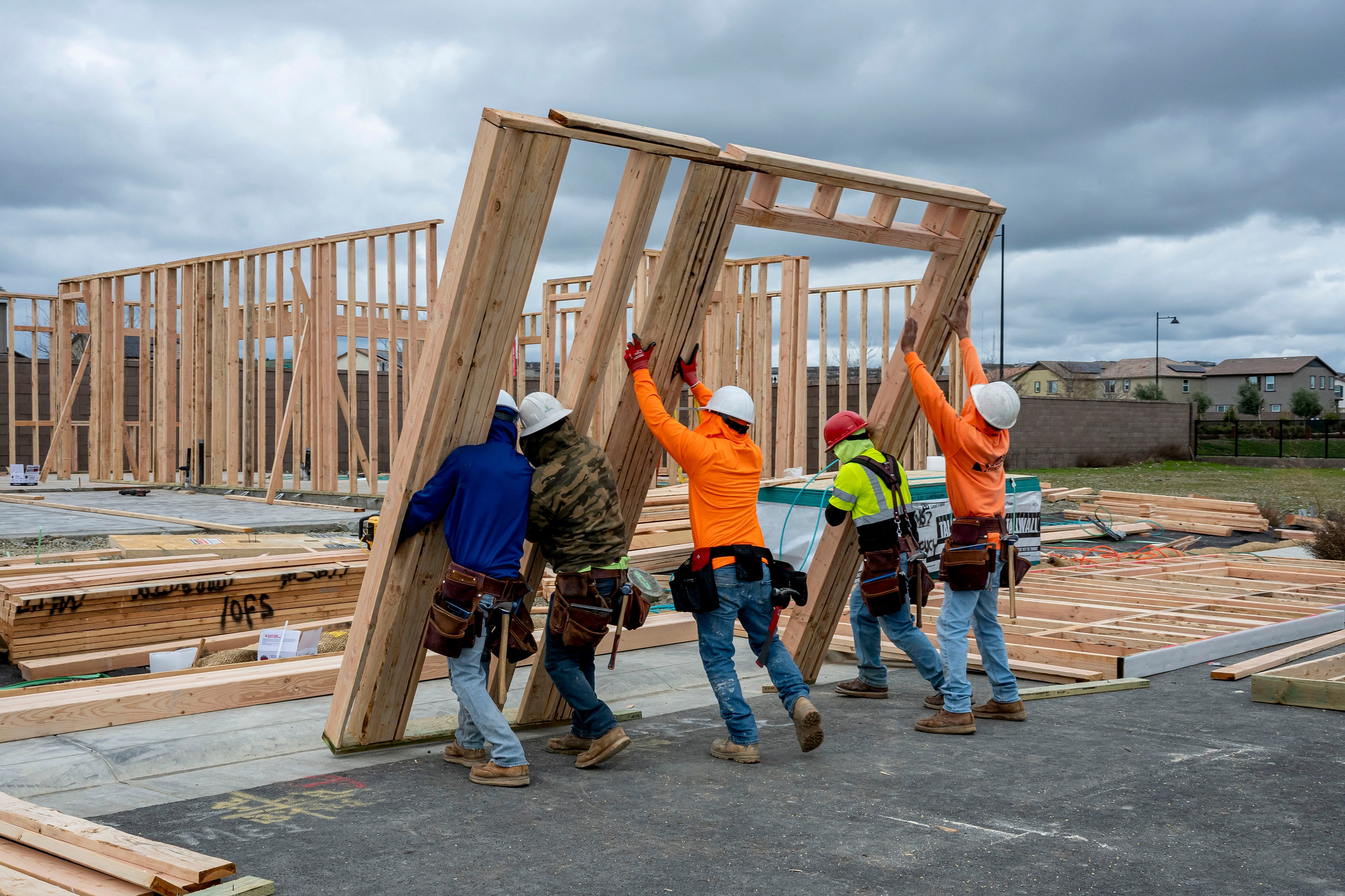
Construction schedule setbacks rarely occur in isolation on complex projects, as usually, there are many challenges that happen simultaneously. When a concurrent delay emerges, project teams face added uncertainty, blurred accountability and heightened pressure to keep work moving. Understanding how these overlapping delays affect construction performance helps managers respond early, protect timelines and reduce disputes before issues escalate further internally. What Is a Concurrent Delay? Within construction scheduling, a concurrent delay describes a situation where two or more independent delay events occur during the same time period, affecting the planned project schedule and potentially setting back the delivery of the project. Typically, at least one delay is attributable to the contractor while another arises from the owner, designer or external factors. Because the delays overlap and influence the critical path, determining responsibility, entitlement to time extensions and recovery of costs becomes complex and contract-dependent under formal construction scheduling and claims analysis practices worldwide. ProjectManager helps with concurrent delay analysis by providing a detailed, time-stamped record of project schedules, progress and changes, all of which are essential for identifying when multiple delays occur simultaneously. Use the Gantt chart to create a baseline and track the critical path so that if delays occur, managers can compare schedules to actual progress. This makes it easy to see which activities slipped, when they slipped and whether they overlapped with other delaying events. Get started with a free 30-day trial. /wp-content/uploads/2024/04/critical-path-light-mode-gantt-construction-CTA.pngLearn more What Is a Concurrent Delay Claim? A concurrent delay claim is a formal request submitted under a construction contract when two or more overlapping delay events affect project completion simultaneously. The claim seeks to determine entitlement to time extensions and, in some cases, cost relief by analyzing responsibility, causation and critical path impact in accordance with contractual and legal standards. 10 Common Causes of Concurrent Delays in Construction Concurrent delays rarely stem from a single issue. More often, overlapping problems emerge across design, approvals, resources and site conditions, creating compounded schedule impacts that are difficult to isolate and resolve independently. 1. Incomplete or Defective Construction Drawings Design gaps, errors or missing details can halt progress while clarification is sought, often overlapping with unrelated delays already affecting site operations, sequencing or procurement activities across the project schedule. For example, a concrete pour may be postponed due to missing reinforcement details while the project is already behind because of delayed steel deliveries, causing both issues to affect the same structural milestone. 2. Logistics and Supply Chain Issues Material shortages, transportation delays or supplier failures may occur while construction work is already behind, causing delivery disruptions to coincide with productivity or coordination delays on critical activities. A common scenario involves long-lead mechanical equipment arriving late while interior framing is delayed due to labor shortages, resulting in stacked delays that prevent downstream trades from mobilizing. 3. Unexpected Job Site Conditions Unforeseen ground conditions, hidden utilities or environmental constraints discovered during construction can overlap with existing schedule slippage, compounding delays and complicating responsibility assessments. An excavation phase may uncover undocumented utilities while the project is already delayed by design revisions, forcing work stoppages that overlap with earlier delays rather than occurring independently. /wp-content/uploads/2022/01/Construction-Schedule-Template.png Get your free Construction Schedule Template Use this free Construction Schedule Template to manage your projects better. Get the Template 4. Poor Subcontractor Performance Low productivity, manpower shortages or sequencing issues from subcontractors may arise during periods of owner, design or external delays, resulting in overlapping impacts to the project timeline. For instance, a drywall subcontractor falling behind due to staffing problems may coincide with delays caused by late design approvals, both affecting interior finishes on the same schedule window. 5. Late Permit Approvals Delays in receiving permits or regulatory approvals can stall specific activities while unrelated construction delays are already underway, increasing the likelihood of concurrent schedule impacts. This often occurs when occupancy or inspection approvals lag while construction is already delayed by punch-list rework, preventing project closeout activities from progressing as planned. 6. Labor Shortages Limited workforce availability, strikes or high turnover can reduce production rates at the same time other delays occur, making recovery efforts harder and extending overall project duration. A shortage of skilled electricians may slow rough-in work while the project is simultaneously affected by delayed material deliveries, causing both issues to impact the same critical path activities. /wp-content/uploads/2026/01/2026_construction_ebook_banner-ad.jpg 7. Lack of Coordination Between Trades Poor interface management between trades may cause rework or idle time, overlapping with parallel delays from design changes, access constraints or late material deliveries. Mechanical installations may clash with structural elements due to coordination failures, while the project is already delayed by late shop drawing approvals, compounding schedule disruption. 8. Equipment Breakdowns Failures of critical equipment can interrupt planned work while other delay events continue, creating compounded schedule effects that are difficult to separate in delay analysis. A crane outage during steel erection may occur while weather delays are already impacting site operations, resulting in overlapping impacts to structural progress. 9. Job Site Access Issues Restricted access, shared workspaces or safety limitations may slow progress during periods of unrelated delay, causing overlapping disruptions to planned sequencing and productivity. This is common on urban projects where limited laydown areas restrict deliveries while interior work is already delayed due to coordination or inspection-related issues. 10. Late Scope Changes or Change Orders Owner-initiated scope changes introduced mid-construction can pause work for pricing and approvals, overlapping with ongoing delays from procurement, weather or productivity issues, thereby extending timelines beyond original completion targets. For example, revised finishes may require rework during a period when the project is already delayed by supply shortages, creating concurrent impacts to interior completion milestones. What Is the Impact of a Concurrent Delay In a Construction Project? Delays that intersect in time can ripple across a project in subtle but far-reaching ways. Progress slows, decision-making becomes harder and planning assumptions lose reliability. As momentum weakens, teams often shift from execution to damage control, increasing friction among parties and placing strain on schedules, budgets and working relationships across the project lifecycle without clear resolution strategies in place early. Critical path activities delays: Concurrent delays may affect multiple critical path activities at the same time, which delays the overall completion of the project. Increased costs: Concurrent delays complicate cost control by increasing direct and indirect project costs, prolonging site overheads and limiting productivity, while simultaneously restricting a party’s ability to recover compensation under many construction contracts provisions. Unclear accountability: Disagreements over responsibility tend to intensify, as overlapping delays blur accountability, create evidentiary challenges and increase reliance on schedule analysis, expert opinions and formal dispute resolution mechanisms during complex projects. Resource allocation challenges: Resource planning becomes less predictable because labor, equipment and materials are committed for longer periods, affecting resource availability, disrupting sequencing decisions and reducing flexibility to accelerate or resequence work effectively under changing conditions. Strained stakeholder relationships: Trust between stakeholders can erode during a concurrent delay, as prolonged uncertainty strains collaboration, delays approvals and weakens confidence in schedules, forecasts and overall project governance structures, reporting and communication processes. What Is Concurrent Delay Analysis? Concurrent delay analysis is a scheduling and retrospective project tracking process used to identify overlapping delay events and evaluate how they collectively affect project completion. It examines timing, causation and critical path impact to determine responsibility, entitlement to time extensions and potential cost implications under the applicable contract framework. Who Is Responsible for Resolving Concurrent Delays? Because concurrent delays unfold simultaneously and disrupt normal sequencing, their causes and solutions are rarely obvious. The resulting schedule confusion means responsibility cannot rest with a single party. Resolving concurrent delays typically requires coordinated analysis, communication and decision-making across multiple project stakeholders. Project owner or client: Owners play a key role by reviewing delay claims, issuing timely decisions, approving changes and ensuring contractual procedures are followed so that overlapping delays do not stall progress unnecessarily. General contractor or main contractor: Contractors are responsible for managing site execution, maintaining schedules, documenting delays and implementing mitigation measures while coordinating with subcontractors during periods of overlapping delay. Design team or consultants: Architects and engineers contribute by clarifying design intent, resolving errors or omissions and responding to information requests that may be contributing to concurrent delays on the construction schedule. Subcontractors and suppliers: Trade partners are accountable for reporting productivity issues, delivery constraints and sequencing conflicts, helping the project team understand how their activities intersect with other ongoing delays. Scheduler or claims specialist: Scheduling and claims professionals analyze delay data, assess critical path impacts and provide objective insight that supports fair allocation of responsibility and informed resolution decisions. Concurrent Delay Example Consider a mid-rise mixed-use development combining ground-floor retail with several levels of office space in a dense urban area. The project relied on tight sequencing, limited site access and multiple specialist trades working in parallel. Midway through construction, structural progress was already slipping due to labor shortages. At the same time, revised design details and delayed material deliveries began affecting follow-on trades, creating overlapping delays that disrupted sequencing, blurred accountability and forced the project team to reassess completion forecasts under mounting schedule pressure. When conducting a concurrent delay analysis, the construction project management team realized that the causes for this concurrent delay were: Steel erection slowed by workforce shortages, while revised connection details were issued late by the structural engineer. Mechanical rough-in delayed as long-lead equipment arrived late during an already compressed interior construction phase. Concrete pours postponed due to weather impacts overlapping with unresolved design clarifications for reinforcement layouts. Interior finishes stalled as subcontractor productivity issues coincided with delayed inspection and approval processes. Final commissioning impacted when change orders were introduced while punch-list corrections were still ongoing. How to Manage a Concurrent Delay in a Construction Project Managing a concurrent delay requires structure, discipline and coordination. By breaking overlapping issues into clear steps, project teams can reduce confusion, protect schedules and move toward fair, defensible outcomes. 1. Identify All Delay Events and Their Causes Before any resolution is possible, every delay event affecting the project must be clearly identified and documented. This includes when each delay started, how long it lasted and which activities were impacted. Once the events are isolated, the next step is to determine their root causes, such as design issues, labor constraints, approvals or external factors. Separating individual delay drivers prevents assumptions, avoids misclassification and establishes a factual foundation for analysis, discussion and decision-making. Related: Top 7 Decision-Making Templates: Free Excel & Word Downloads 2. Prioritize Critical Path Activities Attention should then shift to delays that directly affect critical path activities, since these tasks have no float and directly influence project completion. Delays impacting non-critical activities may be disruptive, but do not automatically extend the overall schedule. By focusing first on critical path impacts, the project team can concentrate efforts where schedule risk is highest, allocate resources effectively and avoid expending time resolving issues that do not materially affect the completion date. /wp-content/uploads/2024/10/how-to-make-a-gantt-chart-identifying-the-critical-path-600x463.webpLearn more 3. Assign Responsibilities With delay events identified and critical impacts understood, responsibility and accountability must be assigned to the relevant parties. This involves assessing which delays are contractor-caused, owner-caused or the result of external circumstances. Clear responsibility assignment supports transparent communication, informed negotiations and consistent decision-making. It also helps prevent disputes from escalating by aligning expectations early and ensuring that corrective actions are directed to the appropriate stakeholders. 4. Review Contract Provisions Once responsibilities are provisionally understood, the contract must guide how concurrency is treated. Construction contracts often define whether concurrent delays allow time extensions, limit cost recovery or deny relief altogether. Reviewing relevant clauses helps the project team understand notice requirements, procedural obligations and entitlement thresholds. This step ensures decisions align with contractual rights rather than assumptions, reducing the risk of invalid claims, procedural noncompliance or disputes driven by misinterpretation of concurrency-related provisions. Related: 39 Construction Documents (Templates Included) 5. Perform a Construction Delay Analysis At this stage, an objective delay analysis should be performed using a recognized methodology such as time impact analysis, windows analysis or as-planned versus as-built comparison. The goal is to quantify how each delay event affected the schedule and critical path. Applying a structured method improves credibility, supports defensible conclusions and provides a shared factual basis for discussions, negotiations or formal claims related to concurrent delays. 6. Determine Entitlement to Relief Based on the analysis and contractual framework, the project team must determine whether the concurrent delay justifies schedule relief, financial compensation or neither. In many cases, concurrency may allow additional time without cost recovery. Clearly documenting this determination helps manage expectations, supports consistent decision-making and allows stakeholders to move forward with mitigation strategies rather than remaining stalled in unresolved entitlement disputes. Free Related Construction Project Management Templates We’ve created dozens of free construction project management templates for Word, Excel and Google Sheets. Here are some that can help during the construction cost planning process. Construction Schedule Template This free construction schedule template allows you to try ProjectManager’s Gantt chart, a powerful construction scheduling tool that is equipped with advanced features such as automatic critical path detection, resource allocation, cost tracking, four types of dependencies and much more. Construction Scope of Work Template This construction scope of work template clearly defines project tasks, deliverables, responsibilities, timelines, exclusions and acceptance criteria, helping teams align expectations, control scope, track progress and reduce disputes throughout the construction lifecycle. Construction Daily Report This construction daily report template captures on-site activities, labor, equipment, materials, weather, deliveries, delays and safety information each day, giving project teams accurate visibility into progress, productivity issues and site conditions for informed decision making. How ProjectManager Helps with Concurrent Delays ProjectManager gives construction teams the detailed record they need to keep projects on track. Beyond the Gantt chart and other scheduling tools, teams often utilize features like project version control for an auditable timeline that supports delay analysis and dispute resolution. Teams can trace delays back to specific causes such as design changes, resource shortages or weather events. /wp-content/uploads/2025/06/version-control-hero-1600x1159.png Related Construction Project Management Critical Path Method (CPM) in Construction: A Quick Guide Construction Work Breakdown Structure: A Guide to WBS for Construction Projects Why Use a Gantt Chart in Construction Project Management? 10 Types of Construction Projects with Examples How to Manage a Construction Project Step by Step The post Concurrent Delay in Construction: Causes and Solutions appeared first on ProjectManager. View the full article
-
In an era where crises can emerge without warning, small business owners are finding new ways to secure their communities and protect their livelihoods. Ring, the well-known smart home security company, has unveiled its latest feature, Fire Watch, aimed at improving safety during wildfire events. This innovative tool could not only enhance the safety of individual businesses but could also foster community engagement—a win-win for small business owners across fire-prone areas. Fire Watch integrates into the Ring app’s Neighbors section, providing real-time alerts and valuable insights regarding active fire events, a crucial resource for areas that have faced devastating wildfires in the past. The announcement comes in the wake of last year’s fierce fires in Los Angeles, emphasizing the need for timely information that can save lives and property. “Fire Watch empowers communities and first responders with real-time, ground-truth information during active fire events,” said a representative from Ring. “By collaborating with Watch Duty, our mission is to keep communities safer.” For small business owners, particularly those in vulnerable areas, this feature offers several significant benefits. First and foremost is the real-time fire alerts coming directly from Watch Duty, a nonprofit organization focused on providing critical emergency information. This can be vital for business operations, allowing owners to make swift decisions about evacuating or securing their premises. Additionally, Fire Watch promotes community collaboration by enabling Ring camera owners to voluntarily share snapshots with Watch Duty. This initiative builds a network of information that can keep locals informed and aid first responders, helping to manage wildfires effectively. For small businesses, this could mean stronger community ties as they participate in a collective effort to safeguard their neighborhoods. The feature promises three key components: real-time fire alerts, AI-powered smoke and fire detection, and community contributions. By relying on technology and community engagement, Fire Watch emerges as a potent tool for enhancing safety during critical moments, a unique proposition that could influence how small businesses operate in times of crisis. However, while the benefits are substantial, small business owners should consider potential challenges. The reliance on community contributions could result in inconsistent reporting if not enough residents participate. Moreover, owners may need to invest in Ring devices if they don’t already own them, which could impose an initial financial burden. For small businesses that thrive on community support and collaboration, the introduction of Fire Watch brings remarkable opportunities. As businesses increasingly seek ways to adapt and thrive amidst unpredictable circumstances, this feature represents not just a safety measure but also a chance to engage with local customers on a deeper level. The feature will roll out nationwide this spring, providing ample time for businesses to prepare and integrate this tool into their safety protocols. By harnessing technology and community collaboration, Fire Watch may redefine how small businesses respond to environmental threats. Ring continues to champion safety and community unity through its suite of products and services. For more information about Fire Watch and its capabilities, visit Ring’s official announcement at Amazon’s Press Release. For small business owners, the message is clear: being proactive in protecting not only your establishment but also your community can enhance both safety and customer loyalty. With tools like Fire Watch, the endeavor becomes a collective mission. Image via Google Gemini This article, "Ring Launches Fire Watch Feature to Enhance Community Fire Safety" was first published on Small Business Trends View the full article
-
Spanish lender is latest European giant to make a bid for American retail banking customersView the full article
-
We may earn a commission from links on this page. Deal pricing and availability subject to change after time of publication. The Apple Watch Series 11 is a step up from the 10 in all the ways that matter. It has a longer battery life and tiny tweaks that make a big difference, like a brighter screen, greater durability, and new software features. Right now, the Apple Watch Series 11 (GPS 42mm) is down 25% to $299 (originally $399), marking its lowest price ever on Amazon. Apple Watch Series 11 (GPS 42mm) $399.00 at Amazon Get Deal Get Deal $399.00 at Amazon In PCMag's real-world testing, the watch delivered nearly two days of battery life and features a brighter screen with 2,000 nits of peak brightness. It’s also more rugged than its predecessor, with a harder, scratch-proof screen, a waterproof build (paired with a water temperature sensor and depth gauge up to 6 meters), and a dust-proof IP6X rating. It features Apple’s newest and smartest software, watchOS 26, which includes features such as Sleep Score metrics and enhanced safety alerts like life-saving hypertension notifications. Unlike the Apple Watch SE 3, for just $50 more at the current discount, the Series 11 has a thinner design with a larger display, and sensors that detect blood oxygen levels and ECGs, as well as other heart health and temperature sensors. The 11 also packs in an altimeter, gyroscope, compass, and ambient light sensor. Users can dive into their workout data via the iOS Fitness app, while the iOS Health app houses biometrics and ECG results. This model includes GPS, enabling real-time tracking of distance and pace during outdoor workouts. It also supports 5G connectivity, ensuring a stronger connection wherever you are. If you’re an iPhone user looking to upgrade your smartwatch or invest in a feature-rich one that’s ultra-durable, longer-lasting, and has 5G connectivity, the Apple Watch Series 11 (GPS 42mm), powered by watchOS 26, offers solid bang for your buck at its lowest-ever price of $299. View the full article
-
A reader writes: My employee handbook has a policy where if you want to switch to full-time remote work, you have to give three months notice. My partner is starting grad school and we are planning on moving, so I asked my work to switch me to full-time remote in over three months. The handbook says they may not be able to accommodate this, so I was prepared for the potential “no.” However, after giving the “no,” they met with me and said that as I’m moving in three months and they would not accommodate a shift to remote, I would not be able to work at my company anymore. I continued to express my gratitude and interest in continuing remote if possible, but that I understood. They asked me about my moving date/details, which I did not have on hand just yet. I asked when they would need these details by, they said by the end of the week. (This was Tuesday.) The next day, I received an email asking me to confirm my resignation (which I never gave) and gave me an end date for my work a full month before my requested switch to remote/move. They also wanted to prorate my vacation days and sick time, including a vacation I had already scheduled and gotten approved months before this conversation. This obviously gave me pause, as they seemed to think they could just … take away a month of my employment because I requested remote work. I asked (again) for a few days to consider this, and they pushed me to write in writing that I resigned that day. Instead, I wrote that I will have to resign at the end of the three months if they were unable to accommodate me. Then, I contacted the lawyer in my family, who was helpful in giving me language to reiterate that I never formally resigned and that the conversation had always been about the full three months, not before. Therefore, the two-month end date they gave me would indicate that they were terminating my employment. I sent that and then I contacted a local employment lawyer and am waiting to hear back, which is where I’m at right now. But basically, it feels like I’m being punished for following the rules and would have been significantly better off waiting out the three months and giving my two weeks notice. Either way, I’m officially on the job hunt and really appreciate any thoughts you have. Should I have done anything differently? Well, your employer operated in bad faith. If you were clear that you were moving, it would have been fine for them to say, “Since you’re moving and we’re not able to offer you remote work, our understanding is that you’ll be resigning in three months. Is that correct?” And if you’d been wishy-washy about that and not committed to a plan, it would have been fine for them to say, “We need to be able to plan and start transitioning your projects and hiring a replacement, so we’re going to move forward on the understanding that your last day will be sometime in April.” If you had responded to that by saying you weren’t set on moving after all … well, then it gets trickier for everyone. Ideally they’d take you at your word about that and just move forward as if nothing had happened. But in reality, then they’d have to worry that you were saying to buy some time while still planning to move or while planning to push again for remote work once the time drew nearer. So that’s the answer to your question about whether you should have done anything differently: if we had a time machine, I’d say not to present the moving plans as a fait accompli, but rather as something you were just thinking about but weren’t committed to. However, when your employer’s handbook explicitly indicates they’re open to people switching to remote work and invites employees to give three months notice of their interest, they’re setting everyone up for problems if they respond to the requests they solicited by pushing people out early. It means that coworkers who hear what happened to you won’t take them at their word about this anymore; they’ll instead wonder if asking about working remotely will be converted into a resignation against their will, and that can’t possibly be what your employer intended when they drafted this policy. You might try pointing that out — saying that you took the policy in the handbook in good faith and you have not resigned. In a different situation you could add that you have no current plans to resign — but since you do, you can’t say that at the same time that you’re complaining about them not operating in good faith. Employment in the U.S. is at-will (unless you’re in Montana) so what they did isn’t illegal, just very crappy. (Although who knows what your employment lawyer might uncover. They can help ferret out any details like that three other people were treated differently in this regard, and the only difference is your race/sex/religion or other factors that could cast this in a different light.) The post I asked to work remotely, and my company is acting like I resigned appeared first on Ask a Manager. View the full article
-
Newrez is leaning into technology investments to shore up borrower recapture and future originations after fair-value losses in its mortgage-servicing rights pushed the lender to a fourth-quarter loss, underscoring how quickly market volatility can upend mortgage earnings. View the full article
-
Merger of SpaceX and xAI epitomises the way Big Tech has turned the corporate world on its headView the full article
-
If you’re looking to boost your social media presence, consider implementing five effective post ideas that can engage your audience. Sharing user-generated content encourages interaction and showcases real customer experiences. Hosting a fun giveaway can attract new followers and broaden your reach. Engaging your audience with polls helps you understand their preferences. Furthermore, revealing behind-the-scenes insights humanizes your brand, whereas highlighting customer testimonials builds trust. These strategies can improve your engagement greatly, but there’s more to explore on how to maximize their effectiveness. Key Takeaways Share user-generated content to enhance engagement and showcase real-life applications of your products or services. Host a fun giveaway with prizes that resonate with your audience to boost follower growth and broaden reach. Post engaging polls to encourage interaction and gain insights into audience preferences. Share behind-the-scenes insights to humanize your brand and connect with your audience on a personal level. Highlight customer testimonials to build credibility and trust, using visually appealing formats for greater impact. Share User-Generated Content When you share user-generated content (UGC), you not just improve engagement but also build a stronger connection with your audience. UGC can boost your fb engagement posts by up to 28%, showcasing authentic experiences that resonate with potential buyers. By encouraging customers to share their stories through contests or specific hashtags, you create a collection of relatable content that nurtures community. Highlighting this UGC in your marketing can lead to a 4.5% increase in conversions, as it demonstrates real-life applications of your products. Furthermore, reposting UGC allows you to engage directly with your audience, making them feel valued and recognized. This approach improves loyalty and belonging, proving that your brand appreciates its customers and their contributions. Host a Fun Giveaway Hosting a fun giveaway can be an effective strategy for increasing engagement and broadening your audience. Brands often see follower growth of up to 30% during these promotions. To maximize participation, choose prizes that resonate with your target audience, like product bundles or exclusive experiences. Utilize social media platforms’ built-in features, such as Instagram‘s ‘giveaway post’ stickers or Facebook‘s event pages, to streamline entry and tracking. Encourage user-generated content by asking participants to share photos or stories related to the giveaway, enhancing your brand’s visibility and authenticity. Furthermore, promote the giveaway across all your social channels and consider partnering with influencers to reach a broader audience. These tactics can lead to great Facebook posts that effectively engage your community. Post an Engaging Poll How do you engage your audience effectively on social media? Posting an engaging poll can greatly improve interaction, especially in Facebook posts. Polls can generate about 1.5 times more engagement than standard posts. Here are some tips to create effective polls: Use question stickers on Instagram Stories for easy responses. Keep your questions concise and relevant to your audience’s interests. Consider light-hearted or humorous questions to boost participation. Analyze poll results to gather insights about audience preferences. Share Behind-the-Scenes Insights Sharing behind-the-scenes insights not just humanizes your brand but also cultivates a deeper connection with your audience by revealing the people and processes that drive your business. Consider highlighting team members and their roles in your facebook post suggestions. This transparency showcases your company culture and appeals to potential customers and employees. You can share content about your product development process, daily operations, or event preparations, offering exclusive views that generate excitement. Using visuals like photos or videos improves your storytelling and effectively conveys your brand’s values. Highlight Customer Testimonials Even though customer testimonials are often overlooked, they play a vital role in building credibility and trust with potential buyers. By showcasing real experiences, you can greatly improve your brand’s reputation. Here are some effective ways to highlight customer testimonials in your good social media posts: Use visually appealing graphics or video interviews to increase engagement rates. Share a variety of testimonials across multiple platforms for broader reach. Encourage satisfied customers to share their stories using a specific hashtag for user-generated content. Incorporate testimonials into promotional posts to boost conversion rates. Frequently Asked Questions What Type of Posts Work Best on Social Media? To maximize engagement on social media, focus on high-quality visuals, like striking images or videos, as they capture attention effectively. Incorporate humor, storytelling, or relatable experiences to nurture deeper connections with your audience. Use interactive elements such as polls and Q&As to encourage participation. Sharing user-generated content builds authenticity and trust, whereas consistent branding through themed posts helps establish a recognizable presence that followers anticipate each week. What Is the 5 5 5 Rule on Social Media? The 5 5 5 rule on social media suggests structuring your posts into three categories: for every 15 posts, share 5 valuable pieces of content from others, engage your audience with 5 personal or relatable posts, and include 5 promotional posts about your brand. This balanced approach prevents overwhelming your audience with sales pitches, cultivates community engagement, and positions you as a trusted information source, ultimately enhancing interaction and loyalty. What Is the 50 30 20 Rule for Social Media? The 50/30/20 rule for social media is a strategic guideline for content posting. You should allocate 50% of your posts to engagement and community-building, promoting interaction among followers. Next, 30% should focus on sharing informative or educational content, positioning your brand as an industry authority. Finally, reserve 20% for promotional posts, highlighting special offers or product launches. This balanced approach helps maintain audience interest as well as avoiding overwhelming them with constant sales pitches. What Is the 4-1-1 Rule in Social Media? The 4-1-1 rule in social media suggests a balanced posting strategy. For every six posts, one should be promotional, four informative or engaging, and one personal or humanizing. This approach prevents overwhelming your audience with constant sales pitches, nurturing trust and engagement instead. Conclusion Incorporating these five social media post ideas can greatly improve your online presence and engagement with your audience. By sharing user-generated content, hosting giveaways, posting polls, revealing behind-the-scenes insights, and highlighting customer testimonials, you create opportunities for interaction and connection. These strategies not just attract new followers but likewise build trust and credibility with your existing audience. Start using these techniques today to strengthen your brand’s social media effectiveness and nurture a more engaged community. Image via Google Gemini This article, "5 Examples of Good Social Media Posts You Can Use Today" was first published on Small Business Trends View the full article
-
We may earn a commission from links on this page. Deal pricing and availability subject to change after time of publication. The new Google Pixel Watch 4 came out in the late summer of 2025, and it's already heavily discounted. You can now get the 41mm Google Pixel Watch 4 starting at $299.99, the lowest price the basic version has been, according to price-tracking tools. It now comes with a much faster charging time, satellite SOS and dual-band GPS (for the LTE version), and a new circular display design. WiFi Google Pixel Watch 4 (41mm) at Amazon Get Deal Get Deal at Amazon WiFi Google Pixel Watch 4 (45mm) $349.99 at Amazon $399.99 Save $50.00 Get Deal Get Deal $349.99 at Amazon $399.99 Save $50.00 LTE Google Pixel Watch 4 (41mm, LTE, Matte Black) $399.99 at Amazon $449.99 Save $50.00 Get Deal Get Deal $399.99 at Amazon $449.99 Save $50.00 LTE Google Pixel Watch 4 (45mm, LTE, Matte Black) $449.99 at Amazon $499.99 Save $50.00 Get Deal Get Deal $449.99 at Amazon $499.99 Save $50.00 SEE 1 MORE Senior Health Editor Beth Skwarecki got her hands on a Google Pixel Watch 4 to review and loved it. The new charging dock sits flat on a surface, and you pop the watch on it sideways, almost like a MagSafe charger. Speaking of charging, it only takes a little over 30 minutes to fully charge; a 15-minute charge takes it from 0% to 50%. It's one of the fastest charge times I've ever seen on any device. The new design has a bigger, expanded circular display running 320 pixels per inch. It also gets brighter with up to 3,000 nits of brightness. If you get this LTE version, you'll have some nice features that the wifi version doesn't. You can send satellite SOS messages to emergency services and your emergency contacts, even if you don't have cellular service. As long as you have a clear view of the sky, you should have satellite communication. This satellite SOS feature lets you alert 911 and receive emergency services. Most of the other features are pretty similar to the Pixel Watch 3. You get built-in Gemini for voice control, accurate sleep tracking and exercise data with Accelerometer, Heart Rate Monitor, GPS, Blood Oxygen Monitor, Temperature Sensor, Pedometer, Gyroscope, Barometer, ECG, and Light Sensor. The Pixel Watch 4 is one of the best-looking and longest-lasting Android smartwatches in the market right now, and at its lowest price, it's a worthwhile deal. Our Best Editor-Vetted Tech Deals Right Now Apple AirPods Pro 3 Noise Cancelling Heart Rate Wireless Earbuds — $229.99 (List Price $249.00) Apple Watch Series 11 [GPS 46mm] Smartwatch with Jet Black Aluminum Case with Black Sport Band - M/L. Sleep Score, Fitness Tracker, Health Monitoring, Always-On Display, Water Resistant — $329.00 (List Price $429.00) Amazon Fire TV Stick 4K Plus — (List Price $24.99 With Code "FTV4K25") Samsung Galaxy Tab A9+ 64GB Wi-Fi 11" Tablet (Silver) — $159.99 (List Price $219.99) Apple iPad 11" 128GB A16 WiFi Tablet (Blue, 2025) — $299.99 (List Price $349.00) Blink Mini 2 1080p Security Camera (White) — $23.99 (List Price $39.99) Ring Outdoor Cam Pro Plug-In With Outdoor Cam Plus Battery (White) — $189.99 (List Price $259.99) Deals are selected by our commerce team View the full article
-
The Gates Foundation will not change course in the face of massive foreign aid cuts, holding out hope that the U.S. specifically will return to funding the global health projects the foundation has long championed, its CEO said Tuesday. Instead, the foundation — one of the largest in the world — will concentrate at least 70% of its funding over the next 20 years on ending preventable maternal and child deaths and controlling key infectious diseases. A third goal focused on poverty will divide its work between U.S. education and agriculture in poorer countries. “We are saying not only will we not be taking on new priorities, we’re actively narrowing our priorities against three core North Star goals,” Mark Suzman said in an interview with The Associated Press as the foundation published an annual update on its plans Tuesday. In May, Bill Gates, who started the foundation with his ex-wife Melinda French Gates in 2000, announced it would close in 20 years, earlier than planned. In the letter Tuesday, Suzman gave more details about what work would end and what would continue. He also affirmed that the foundation would not rethink its plans given the cuts to foreign assistance by donor countries around the world. “While these conditions will have significant repercussions for global health and development for the next few years, priorities can shift. Debt can be restructured. Generosity can return,” Suzman wrote in the letter, referring also to the significant debt burden that many low- and middle-income countries carry, which eats into their public health budgets, for example. The foundation will renew its campaign for donor countries to fund global health, specifically, Suzman said, even as he acknowledged that overall funding levels were unlikely to return to pre-pandemic levels. “We definitely have not lost hope that the U.S. will stay engaged over the medium and longer term as a champion of global health,” Suzman said. The foundation will renew its advocacy with campaigns that argue for saving the lives of pregnant women and young children. “We think that is powerful and evocative,” Suzman said. The U.S. has historically been the largest funder of global health. It’s not yet clear how much funding Congress and the The President administration will ultimately allocate toward foreign assistance or global health this year, but the State Department has said foreign assistance going forward will look extremely different. This year, the U.S. refused to fund Gavi, which offers vaccinations to children around the world, but it did pledge to contribute to the Global Fund to Fight AIDS, Tuberculosis and Malaria, of which it has historically been the largest supporter. What Gates Foundation programs will end? The foundation will wind down its program that aimed to give more people in sub-Saharan Africa and South Asia access to digital financial services, with Suzman saying they think that goal will be met by 2030. The foundation also has planned the end of its program to help people move out of poverty in the U.S., which it launched in 2022 with a $460 million commitment. In 2023, Ryan Rippel, the head of the program, said they aimed to improve economic mobility for 50 million people in the U.S. who earn 200% of the poverty level or less, which was $29,160 in annual income for an individual at the time. The foundation said it hadn’t assessed the program’s impact against that goal specifically. The economic mobility work will continue in a modified form as a partnership announced in July to develop AI tools that benefit frontline workers. For the next five years, the foundation plans to hold its budget steady, spending $9 billion annually, regardless of market changes, Suzman said. They then anticipate increasing that amount as they seek to meet Gates’ commitment to spend the vast remainder of his fortune through the foundation by 2045. The foundation said in January that it would cap operating expenses at 14% of its annual budget and anticipated reducing its workforce by 2030. The proposed changes were developed before the U.S. government released files on Jeffrey Epstein that include mentions of Gates and unsubstantiated claims that a spokesperson called false. Betting on AI to make big gains in multiple areas The foundation is also betting on the potential of artificial intelligence tools in other areas, including U.S. education and agriculture, where it’s funded projects delivering information like weather conditions to small farmers. While U.S. education was an early focus for Gates and French Gates, Suzman said looking back, those efforts did not deliver the desired impact. However, they think AI applications could help a large number of students, teachers and schools. In January, the foundation announced a new $50 million partnership with OpenAI’s for-profit subsidiary to develop ways for primary health clinics in Rwanda and potentially other countries to use AI to amplify the reach of health workers and improve outcomes for patients. When the foundation works with corporations, it requires them to offer what they develop without any markup to poorer countries. “Wherever possible, we’re looking for things that are going be interoperable and open source to allow for these very new public goods,” Suzman said, meaning users aren’t locked into working with a specific company. John Halamka, a physician and president of the Mayo Clinic Platform, who has worked at the intersection of health care and technology for many years, said these types of projects need to empower the local municipality to develop and fine tune the AI model for their population. Halamka, who has previously worked with the Gates Foundation on projects but is not involved in this initiative, said interventions also need to meet patients at their level of comfort and trust with the technologies. “How do you ensure these kinds of tools will be used, trusted, adopted?” he asked. “And what are you doing to make the population comfortable with the use of these new technologies?” ___ Associated Press coverage of philanthropy and nonprofits receives support through the AP’s collaboration with The Conversation US, with funding from Lilly Endowment Inc. The AP is solely responsible for this content. For all of AP’s philanthropy coverage, visit https://apnews.com/hub/philanthropy. —Thalia Beaty, Associated Press View the full article

-
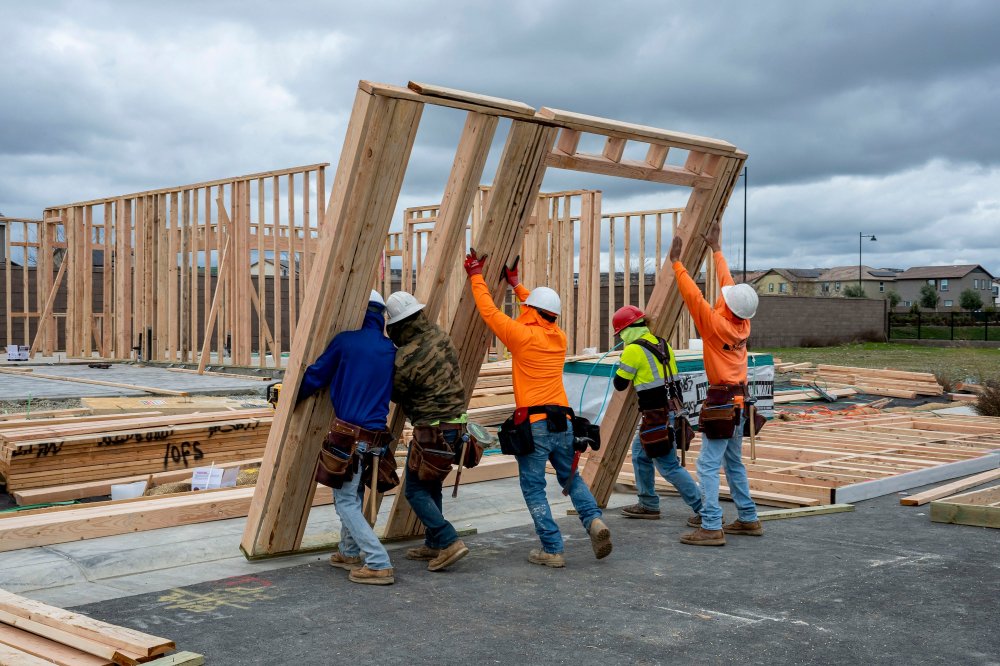
Lennar Corp. and Taylor Morrison Home Corp. are among the firms that have worked on the proposal, which calls for builders to sell entry-level homes into a pathway-to-ownership program funded by private investors, according to people familiar with the plan. View the full article
-
Andrew Mountbatten-Windsor shared official documents while serving as a UK trade envoy View the full article
-
The internet-famous monks that have captured the attention of the world on their cross-country “walk for peace” are in the final stretch of their 2,300-mile journey. The group of around 19 Buddhist monks and their rescue dog companion, Aloka, have been trekking from Fort Worth, Texas, to Washington, D.C., to promote world peace. They began their walk on October 26, 2025. The journey was expected to take 120 days. Despite the recent frigid temperatures and snow storms, they’re ahead of schedule. According to a recent post on the group’s Facebook page, they plan to arrive in Washington, D.C., one week from today, Tuesday, February 10, 2026. While the exact route and schedule could change, the current pace has them completing the journey in 108 days. On February 2, 2026—the 100th day of their walk—the monks arrived in Richmond, Virginia. Today, they’re making their way from Richmond to Ashland, Virginia. Their Facebook page notes that they are walking to “raise awareness of inner peace and mindfulness across America and the world.” The movement has drawn widespread positive attention. Massive crowds of supporters have gathered to welcome the monks as they make their way to each planned stop along their route. The final stretch: Less than 100 miles left to walk The monks shared their most current schedule on Facebook. Here’s what to expect: February 10, 2026: The monks will visit the Washington National Cathedral. February 11, 2026: The group will host a meditation retreat in the afternoon and evening. February 12, 2026: The monks will depart Washington, D.C., by bus for Fort Worth, Texas. The post read, “We look forward to welcoming everyone with open hearts as we complete this peaceful journey together. Your presence would be a blessing and a gift to us all.” More details will be made available as they are confirmed. If you want to stay up to date on the group’s whereabouts, check their Facebook page. They share updates about their daily route. You can also track their progress each day in this live interactive map. Over 5 million followers are feeling inspired by the movement The moment’s message of hope and peace has been well-received. Millions of people worldwide have been following the Walk for Peace movement through social media. Every social media post is flooded with positive comments from well-wishers. The monks have attracted a large social media presence that continues to grow. Since January 2, 2026, the Walk for Peace Facebook page has grown from 575,000 to 2.5 million followers. The Walk for Peace Instagram account, which had 618,000 followers, now has 1.8 million. The group’s rescue dog, Aloka, has also attracted a massive social media following. The Aloka The Peace Dog Facebook page is nearing one million followers. In mid-January, Aloka had to have surgery to heal a leg injury. He’s doing well, but since he’s still recovering, and has been traveling in an escort car that follows the walking route along with the monks. View the full article

-
Crispin Odey has brought legal challenge against FCA decision to ban and fine himView the full article
-
Jonathan Yasko pleaded guilty to diverting monies in real estate transactions to cover unrelated closings, and to pay for his own cars and personal travel. View the full article

-
Bullied and buffeted by President Donald The President’s tariffs for the past year, America’s longstanding allies are desperately seeking ways to shield themselves from the president’s impulsive wrath. U.S. trade partners are cutting deals among themselves — sometimes discarding old differences to do so — in a push to diversify their economies away from a newly protectionist United States. Some European governments and institutions are reducing their use of U.S. digital services such as Zoom and Teams. Central banks and global investors are dumping dollars and buying gold. Together, their actions could diminish U.S. influence and mean higher interest rates and prices for Americans already angry about the high cost of living. Last summer and fall, The President used the threat of punishing taxes on imports to strong-arm the European Union, Japan, South Korea, and other trading partners into accepting lopsided trade deals and promising to make massive investments in the United States. But a deal with The President, they’ve discovered, is no deal at all. The mercurial president repeatedly finds reasons to conjure new tariffs to impose on trading partners that thought they had already made enough concessions to satisfy him. Just months after reaching his agreement with the EU, The President threatened new tariffs on eight European countries for opposing his attempts to seize control of Greenland from Denmark—though he quickly backed down. And last month, he said he’d slap 100% tariffs on Canada for breaking with the United States by agreeing to reduce Canadian tariffs on Chinese electric vehicles. “Our trading partners are discovering that the largely one-sided deals they concluded with the U.S. provide little protection,’’ said former U.S. trade negotiator Wendy Cutler, senior vice president at the Asia Society Policy Institute. “As a result, trade diversification efforts by our partners are on turbo charge, looking to reduce dependence on the U.S.” The President supporters such as Paul Winfree, who was deputy director of the White House Domestic Policy Council during The President’s first term, are wary of the relative decline in U.S. Treasury note holdings by foreign central banks and view the national debt as a vulnerability rivals would like to exploit. Winfree, CEO of the Economic Policy Innovation Institute, a think tank, said that some of The President’s advisers do not feel America has fully benefited from the dollar’s status as the world’s dominant currency. “But the fact remains that every other country is jealous of our status, and many of our adversaries would love to challenge the U.S. dollar and Treasuries,” he said. White House spokesman Kush Desai insists America’s standing on the global stage has not been diminished. “President The President remains committed to the strength and power of the U.S. Dollar as the world’s reserve currency,” he said. India and the EU clinch a long-awaited deal The most eye-opening deal so far has been the pact announced last week between the 27-country EU and India, the world’s fastest growing major economy. Negotiators had been at it for nearly two decades before they closed the agreement. Likewise, an EU trade deal announced two weeks ago with the Mercosur nations of South America took a quarter century of negotiation. It will create a free-trade market of more than 700 million people. “Some of these deals have been in the works for quite some time,’’ said Maurice Obstfeld, a senior fellow at the Peterson Institute for International Economics and former chief economist at the International Monetary Fund. “The pressure from The President made them more eager to accelerate the process and reach agreement.’’ EU exporters were jubilant over the India deal. VDMA, a group of European machinery and plant engineering companies, welcomed lower Indian tariffs on machinery. “The free trade agreement between India and the EU brings much needed oxygen to a world increasingly dominated by trade conflicts,” VDMA’s executive director, Thilo Brodtmann, said in a statement. “With this agreement, Europe is sending a clear signal in favor of rules-based trade and against the law of the jungle.” ‘We have all the cards’ On Monday, The President went on social media to announce his own deal with India. The U.S., he posted, would reduce tariffs on Indian imports after India agreed to stop buying oil from Russia, which has used the sales to fund its four year war in Ukraine. The president said that India would reduce its tariffs on American products to zero and buy $500 billion worth of American products. Trade lawyer Ryan Majerus, a partner at the King & Spalding and a trade official in the Biden administration and during The President’s first term, said that businesses and legal analysts were awaiting official White House documents spelling out details of the deal. The President is banking on there being limits to other countries’ ability to pull away from the United States. America has the world’s biggest economy and consumer market. “We have all the cards,’’ The President told Fox Business this month. Countries like South Korea, dependent on America’s market and military protection, can’t afford to ignore The President’s threats. On Monday, for example, the president said he was increasing tariffs on South Korea goods because the country’s legislature has been slow to approve the trade framework announced last year. On Tuesday, the country’s Finance Ministry responded by saying its chief, Koo Yun-cheol, would push lawmakers to quickly approve a bill to invest $350 billion as promised in the agreement. “The U.S was trying to identify a counterpart that would find it difficult to refuse U.S. demands outright, given the depth of its economic and security ties,” said Cha Du Hyeogn, an analyst at South Korea’s Asan Institute for Policy Studies. Or consider Canada, which sends 75% of its exports to its southern neighbor. “Canada and U.S. will always be tightly linked through international trade,” said Obstfeld, a professor at the University of California, Berkeley. “We’re talking about adjustments more or less on the margin.’’ But the world’s growing rejection of The President’s policies is already having an impact, driving down the value of the dollar, long the currency of choice for global commerce, to its lowest level since 2022 last week versus several competing currencies. Syracuse University political scientist Daniel McDowell, author of the book “Bucking the Buck: U.S. Financial Sanctions and the International Backlash against the Dollar,” sees a vibe shift under The President: Foreign countries and investors want to reduce their exposure to the United States, which has moved from a source of security and stability to a driver of instability and unpredictability under The President. “The President has shown that he is willing to use foreign countries’ economic dependence on the U.S. as leverage against them in negotiations,” McDowell said. “As global perceptions of the US are changing, it is only natural that investors — public and private alike — are reconsidering their relationship with the dollar.” —Paul Wiseman, Josh Boak and Elaine Kurtenbach, Associated Press Associated Press videographer Yong Jun Chang and AP Business Writer Kelvin Chan contributed to this report. View the full article

-
Disney earnings are out, and by the looks of it, the entertainment giant is starting 2026 with some strong points in its first-quarter report, powered in part by two big hits at the box office. However, some disappointing news looking ahead to the second quarter may have spooked investors, causing shares of the stock to slide over 7% to $104.72 in afternoon trading on Monday. Shares of the Walt Disney Company (DIS) were up briefly on Tuesday morning after news that Disney named Josh D’Amaro as its new chief executive officer (starting March 18), but were back down by another half a percent to $103.99 in afternoon trading on Tuesday at the time of this writing. First, the good news: Disney’s first quarter earnings beat estimates with revenue coming in at $25.98 billion, above analyst expectations of $25.74 billion; and higher-than-expected earnings per share (EPS) of $1.63 adjusted, 6 cents above Wall Street estimates of $1.57. That’s due in large part to the entertainment giant’s experiences unit, which operates 12 theme parks across six global resorts, along with cruises and vacation clubs, which reported more than $10 billion in quarterly revenue for the first time. It also got a nice boost from Disney’s studios box office blockbuster releases “Zootopia 2” and “Avatar: Fire and Ash,” that each surpassed $1 billion at the global box office, according to Disney’s earnings report. The company also highlighted its streaming services, and said sports channel ESPN delivered strong quarterly ratings. (“ESPN capturing more than 30% of all sports viewership across networks, including ESPN on ABC.”) Now the bad news: Disney cautioned that looking ahead to its second quarter, it forecasts that its theme parks will likely see “modest operating income growth” due in part to the decline in visits from international tourists to the U.S., the Associate Press reported. In answer to a question on Monday’s earnings call, Disney CEO Bob Iger said “because international visitors tend to stay in Disney hotels less “the company was “able to read it from other indicators” and as a result “pivoted marketing and sales efforts… to a more domestic audience and we are able to keep attendance rates high.” That overall drop in foreign tourism to the U.S. could likely be the result of a few different factors, including President Donald The President’s crackdown on immigration; his administration’s aggressive stance toward foreign countries—including our close European allies and Canada—over the U.S. invasion of Venezuela and push to take over Greenland; and his high tariffs on global nations, often accompanied by anti-foreigner rhetoric. View the full article

-
Incident in Gulf oil chokepoint comes days before planned talks between US and IranView the full article
-
Microsoft Advertising today launched the Publisher Content Marketplace (PCM), a system that lets publishers license premium content to AI products and get paid based on how that content is used. How it works. PCM creates a direct value exchange. Publishers set licensing and usage terms, while AI builders discover and license content for specific grounding scenarios. The marketplace also includes usage-based reporting, giving publishers visibility into how their content performs and where it creates the most value. Designed to scale. PCM is designed to avoid one-off licensing deals between individual publishers and AI providers. Participation is voluntary, ownership remains with publishers, and editorial independence stays intact. The marketplace supports everyone from global publishers to smaller, specialized outlets. Why we care. As AI systems shift from answering questions to making decisions, content quality matters more than ever. As agents increasingly guide purchases, finance, and healthcare choices, ads and sponsored messages will sit alongside — or draw from — premium content rather than generic web signals. That raises the bar for credibility and points to a future where brand alignment with trusted publishers and AI ecosystems directly impacts performance. Early traction. Microsoft Advertising co-designed PCM with major U.S. publishers, including Business Insider, Condé Nast, Hearst, The Associated Press, USA TODAY, and Vox Media. Early pilots grounded Microsoft Copilot responses in licensed content, with Yahoo among the first demand partners now onboarding. What’s next. Microsoft plans to expand the pilot to more publishers and AI builders that share a core belief: as the AI web evolves, high-quality content should be respected, governed, and paid for. The big picture. In an agentic web, AI tools increasingly summarize, reason, and recommend through conversation. Whether the topic is medical safety, financial eligibility, or a major purchase, outcomes depend on access to trusted, authoritative sources — many of which sit behind paywalls or in proprietary archives. The tension. The traditional web bargain was simple: publishers shared content, and platforms sent traffic back. That model breaks down when AI delivers answers directly, cutting clicks while still depending on premium content to perform well. Bottom line. If AI is going to make better decisions, it needs better inputs — and PCM is Microsoft’s bet that a sustainable content economy can power the next phase of the agentic web. Microsoft’s announcement. Building Toward a Sustainable Content Economy for the Agentic Web View the full article