All Activity
- Past hour
-
Why the return of scaled, low-differentiation content is putting pressure on Google’s systems and raising the risk of a broader intervention. The post Are We Due Another Florida-Style Update? appeared first on Search Engine Journal. View the full article
-
LinkedIn Ads consistently delivers some of the highest-quality B2B leads in paid media. But it also has a reputation for being very expensive — for both cost-per-click (CPC) and cost-per-lead (CPL) metrics. Because of that reputation, I wanted to test a theory: that I could get low CPCs and low-cost qualified leads from LinkedIn Ads by creating a highly valuable, audience-specific piece of content. As an agency, we usually run LinkedIn Ads campaigns for our clients. We don’t really run many paid ads for ourselves. However, to have the most control over this test, I decided that Saltbox Solutions would be the guinea pig. (Disclosure: I’m the director of strategy at Saltbox Solutions, a B2B-focused PPC and SEO agency.) The results were impressive. We spent less than $1,000 and generated a significant volume of leads at a sub-$10 CPL. For advertisers on a shoestring budget, LinkedIn Ads may not be out of reach as previously thought. It just requires a solid strategy. Here’s what I did, why it worked, and how you can apply the same framework to your own campaigns — regardless of your advertising budget. The campaign setup The goal of this campaign was to get our target audience to download our 2026 B2B Demand Gen Playbook — a hefty, 23-page guide created specifically for B2B marketing decision-makers. The timing was key because many marketing leaders were already planning for 2026 in Q4 2025. For this LinkedIn Ads campaign, I used a document ad format + a lead generation objective. The document ad lets the audience flip through and preview the content before downloading, with four pages available to preview before requiring a download to access more. I also used a lead gen form for contact capture, since it’s fairly frictionless — the form lives within the LinkedIn platform and autofills most of the contact information from a user’s profile. There was just one campaign for this test, with three ad copy variations for the document ad. In terms of budget and bid strategy, the campaign used a $600 lifetime budget and a $15 manual bid. Your customers search everywhere. Make sure your brand shows up. The SEO toolkit you know, plus the AI visibility data you need. Start Free Trial Get started with Audience research before the asset existed This is what allowed for such low CPLs. Before writing a single word, I did deep audience research to figure out what they really cared about and what would be useful to them. I knew exactly who I wanted to talk to (and who would be a good fit for the agency): B2B marketing decision-makers at larger companies with a dedicated marketing team. They worked mostly in a demand generation capacity and needed help prioritizing the channels that would make sense for their 2026 goals. From there, the research focused on understanding what they would actually need in that planning process. It involved: Mining client meeting notes and calls for recurring questions, common pain points, and frequent requests that kept coming up during planning season. Using SparkToro to plug in my ideal customer profile (ICP) details and explore the questions, topics, and channels the audience was already engaging with. Scanning LinkedIn, where I’m active and where a majority of my network is in B2B marketing, for real-time insight into what people were worried about. Reviewing Reddit threads and B2B marketing communities I’m part of, which were super helpful for getting at the questions marketing leaders had. The main question throughout this process was, “If I were in my audience’s shoes, what resource would actually be helpful right now?” One big advantage I had: My audience is me. I’m a B2B marketer talking to other B2B marketers. Being plugged into the same communities and conversations made it much easier to put a personal spin on the content and write like a human. Dig deeper: 5 LinkedIn Ads mistakes that could be hurting your campaigns Creating the playbook Once I had a clear picture of what my audience needed, the focus shifted to going deep. The goal was to create a genuinely useful resource, not a thinly veiled sales pitch disguised as a playbook. That took time to get right. But that depth is likely what drove the 76% lead form completion rate. When people could preview the document in their feed and see that it was substantive, they trusted it was worth downloading. A few other notes on creating the playbook: Timeliness: It was created to address a very timely and important marketing activity – annual planning. Because of that, 2026 became the focal point of the cover, and the content was framed around the moment the audience was already in. Contextual CTAs: Calls to action to get a free audit were sprinkled into sections that dealt with PPC and SEO/GEO, which are the services we actually provide. The CTAs felt earned rather than forced because they were relevant to the surrounding content. Cover design: A lot of effort went into how the guide looked. Knowing it would be promoted as an ad, the goal was to make it pop in the LinkedIn feed and grab the audience’s attention. The targeting strategy For audience targeting, I used a few different layers: I also excluded a few attributes deliberately after viewing the audience insights: The resulting audience was about 54,000 people. It could’ve been smaller and still delivered great results. Job title targeting would also be worth testing. The leads were qualified as-is, but it would be interesting to see what the results would look like with more specific role targeting. Dig deeper: LinkedIn Ads retargeting: How to reach prospects at every funnel stage Get the newsletter search marketers rely on. See terms. Ad copy strategy: Don’t be boring Three ad variations were used to test different copy angles. All three used the same document ad format and lead gen form. The only variable was the copy. Here are the variations. Version 1: Version 2: Version 3: A few principles guided the ad copy process: Each variation led with a strong hook. The first sentence had to grab attention and make people want to keep reading. The copy ran longer than you typically see in ads to give a clearer sense of the guide’s tone and value before the click. Common fears and questions the audience already had were addressed, such as translating high-level strategy into execution and staying visible in AI search results. The tone leaned into a “we’ve got you” approach rather than being overhyped or promotional. B2B buyers are skeptical and respond to guidance and valuable information, not pressure. The copy also had some personality, with a slightly cheeky edge while staying professional. For example, it called out common situations, such as having a beautiful strategy deck but never executing the plan. Campaign and ad results Recapping the campaign’s overall performance from Jan. 5 to Jan. 31: One interesting note is that while the CPC bid was set at $15, the average CPC actually came in way under that at $5.41. The average CTR was also above LinkedIn’s typical benchmark of 0.50%, and the lead form completion rate was over 75%. LinkedIn lead gen campaigns have delivered strong results across many client engagements. But even by those standards, this performance was pretty good. And for the specific ads, V2 was the winner by far: The LinkedIn Ads algorithm zeroed in on that one and gave it pretty much all the airtime. It makes sense — that had the most eye-catching hook, “Steal our best demand gen ideas.” Dig deeper: LinkedIn Ads or Google Ads? A framework for smarter B2B decisions Pausing the campaign: What happened next The campaign was intentionally stopped at 60 leads. We’re a small, boutique agency, and the goal was to be thoughtful about nurturing the leads generated rather than flooding the funnel with volume that couldn’t be followed up on well. Of the 60 leads, roughly 56 were qualified — a remarkable outcome for a prospecting campaign. Our approach to working these leads has been organic LinkedIn engagement rather than a hard sell. No cold pitch sequences. Just showing up in their world as a familiar, credible presence. As the person who wrote the playbook, I’m also personally reaching out to downloaders to ask for feedback on what they found useful and what they were hoping to see that wasn’t there. That insight will directly shape the next version of the guide and any future content assets created. The campaign is still in the nurture phase. The primary goal of this test was to validate the model, not generate an immediate pipeline. On that measure, it exceeded expectations. What made this work and what could be done differently Looking back at the campaign as a whole, a few things stand out as the real drivers of performance: Audience research came first. The target audience was clearly defined before anything was created. The content, the targeting, and the copy all flowed from that. As a result, it was very specific. The content was timely. Releasing a 2026 planning guide early in the year, when everyone was back from the holidays, really worked in this campaign’s favor. Depth built trust before the form appeared. The preview paired with substantive ad copy had a positive impact on lead form completion rate. The copy sounded like a person, not a brand. What could be done differently next time: Despite the high conversion rates, adding a bit more friction to the form completion process may help. The fact that it was so easy to fill out the form means that the audience may not remember actually downloading it. Following up with the leads faster after downloading would be a priority. The same approach of asking for feedback would still apply, rather than a sales pitch. Running it longer and getting more leads would provide a larger data set to learn from. Testing more ad copy variations against the winner. How to do this yourself Whether you’re running lead gen for a client or testing it on your own business, here are some tips to make it work: Do your audience research before you create the asset: Reddit, SparkToro, community forums, and your own client conversations are all underutilized sources of real audience pain points, and you get pointers on the language they use. Build something genuinely useful: If it’s a thinly veiled promotion, you’re wasting your audience’s time. Match your content topic to a timely moment your audience is already in: What season, event, or planning cycle are they navigating right now? Give your ad copy some personality: Test a hook that stands out, or at least is something that sounds like it was written by a real person. Start small intentionally: Validate CPL and lead quality before scaling. A $500 test can tell you a lot. Let the winner run: Early creative testing gives you the signal you need to spend efficiently at scale. Align your content and your targeting precisely: If you wrote the guide for marketing decision-makers, make sure the campaign isn’t picking up sales roles. See the complete picture of your search visibility. Track, optimize, and win in Google and AI search from one platform. Start Free Trial Get started with From test to repeatable model We plan to relaunch this campaign once we’ve gathered enough feedback from the first wave of downloaders. The playbook itself is a living document. It will be updated as the industry shifts, particularly with the wave of ads in AI Overviews and responses. This was one content asset and one campaign. More are in the works, and this test gave a lot of confidence in the approach. The platform isn’t the problem. The strategy and offering might be what is driving up the cost. If you’re willing to put the work into research, producing a quality asset, and getting the messaging right, LinkedIn Ads can be one of the most efficient B2B lead generation channels available. View the full article
-
At a recent retreat I was attending, I found myself in one of those “hallway moments.” Walking out of a lecture, I was engaged in conversation with a fellow attendee. Soon it became clear we had differing opinions about the topic. As I felt myself getting tense, formulating my response in my mind, I caught a glimpse of myself in a wall of mirrors as we walked by a pilates studio on the property. I didn’t like what I saw—it was not my best self. I did not look calm, cool and collected; instead, I looked tense and ready to charge. The exact opposite vibe that was the goal of this retreat. That quick glimpse of myself helped me to check myself, adjust my face, slow down my thinking and turn to the person, more readily available to consider their perspective. That moment of self-awareness—when observation sparked reflection—captures something counterintuitive emerging in workplaces today. In an era when we fear AI is making us less human, a new generation of tools is doing something unexpected: they’re teaching us to be more emotionally intelligent. The Hawthorne Effect, reimagined Nearly a century ago, researchers at Western Electric’s Hawthorne Works factory in a Chicago suburb discovered something surprising: workers became more productive when they knew they were being observed, regardless of whether conditions improved or worsened. The conclusion? Simply knowing that someone was paying attention changed behavior. Rick Fiorito, co-founder of CivilTalk and its conversational intelligence tool Clarion AI, has witnessed this phenomenon play out in real-time. When his team introduced AI-powered observation into university classrooms—designed to assess emotional intelligence in peer-to-peer discussions—they braced for conflict. What happened instead stunned them. “When people asked us what we do when participants behave badly, our answer was: ‘They don’t,’” Fiorito told me. “When people know they’re in a situation where they’re being observed for civility, they behave more civilly.” This is the Hawthorne Effect for the AI age: not surveillance that breeds resentment, but awareness that cultivates better behavior. The technology isn’t forcing compliance; it’s creating the conditions for people to show up as their better selves. Beyond observation: The power of the reframe But observation alone isn’t transformation. What makes tools like Clarion AI distinctive is what happens after the conversation ends. The platform doesn’t just identify when emotional intelligence is present or absent—it offers something Fiorito calls “reframing.” Consider a heated discussion about a contentious topic. One participant erupts: “You have a right to your opinion, but you don’t have a right to your facts!” The conversation spirals. Emotions eclipse substance. Nothing productive emerges. The AI observer catches this moment and offers an alternative: “That is your opinion. What facts do you use to support it?” Same intention. Different outcome. The technology identifies the breakdown, explains why it derailed the exchange, and models a more emotionally intelligent path forward. This follows the classic leadership principle: praise in public, correct in private. The AI becomes a coach, not a critic. The business case for emotional infrastructure For skeptics who dismiss emotional intelligence as “soft skills,” the data tells a harder story. Sixty-one percent of executives believe emotional intelligence will be a must-have competency in the next five years as automation grows. Emotional intelligence accounts for 58% of job performance across industries—making it the strongest predictor of success among 34 essential workplace skills. And employees with empathetic leaders report 76% higher engagement and 61% greater creativity. As Fiorito frames it, the real value proposition isn’t technological efficiency, it’s human effectiveness. “Likability, credibility, and dependability,” he says. “Those three factors have nothing to do with technology. They are all related to emotional intelligence.” The paradox is clear: in an age when AI threatens to automate technical skills, the distinctly human capacities of empathy, self-regulation, social awareness, become the competitive advantage that technology cannot replicate. Einstein on your shoulder When people express fear about AI taking over, Fiorito offers a reframe of his own: “How can you not want Einstein on your shoulder?” Having worked at the leading edge of technological innovation for three decades—from the early days of cell phones to internet payments to AI-powered lending—Fiorito sees a consistent pattern. Technology itself holds no inherent value. “It’s in the application,” he emphasizes. “It’s what you do with it, and how you use it.” The most promising application isn’t using AI to replace human connection, it’s using AI to amplify it. Tools like Clarion don’t compete with counselors, mediators, or leaders. They give those professionals an observer who catches nuances they might miss, documents patterns they couldn’t track, and identifies points of agreement obscured by emotional noise. What this means for you The rise of AI-powered emotional intelligence tools offers three immediate opportunities: Embrace the observer effect intentionally. The Hawthorne research shows that attention itself changes behavior. Create contexts where your team knows their interactions matter—not through surveillance, but through genuine investment in how people communicate. Build reframing into your culture. Rather than punishing communication breakdowns, model the alternative. Ask: “How might you have said that differently?” This transforms conflict into learning. Use AI as a starting point, not an endpoint. The real skill isn’t prompting AI—it’s what you do after. Let technology surface insights, then step away from the screen. Tinker with those ideas. Engage with other humans about what you’ve discovered. The future doesn’t belong to those who fear AI or those who blindly worship it. It belongs to those who recognize that the most powerful technology is one that makes us more human—one conversation at a time. View the full article

- Today
-
WordStream by LocaliQ’s 2025 benchmarks show nearly 87% of industries saw year-over-year CPC increases. The cross-industry Google Ads average reached $5.26 per click. High-intent verticals are higher: legal services average $8.58, and the most competitive B2B categories approach or exceed $8 to $9 per click. These increases reflect structural shifts in how search results pages are designed, how auctions are optimized, and how inefficiencies compound across paid search accounts. Many remain invisible until a structured PPC audit uncovers them. Protecting the budget you already have — starting with your branded terms — is where recovery begins. Here are the five trends every advertiser needs to understand right now. What’s driving your CPC More advertisers are chasing the same finite inventory Search advertising is, at its core, an auction. When more advertisers compete for the same keywords, prices rise. Global PPC spend continues to surge (Quantumrun Research), while available click slots on results pages haven’t grown at the same rate. More money chasing the same inventory yields higher prices. The pandemic permanently accelerated this shift—brands that hadn’t invested seriously in paid search entered Google’s auction and didn’t leave. Google’s AI Overviews are squeezing in One of the most consequential structural changes in paid search over the past decade is the SERP itself. Google’s AI Overviews now occupy prominent space for informational and exploratory queries. As they expand through 2024 and 2025, they reduce the number of organic and paid listings visible above the fold. A late-2025 Seer Interactive analysis of 3,119 search terms across 42 organizations found paid CTR on queries with AI Overviews dropped 68%—from 19.7% to 6.34%. The mechanism is straightforward: as AI Overviews take more real estate (Skai), fewer paid placements appear above the fold. Impression share tightens. Automated bidding competes more aggressively for what remains, and prices rise. The nuance: users who click past an AI Overview tend to be further along in the buying journey. WordStream’s data shows roughly 65% of industries saw higher conversion rates despite rising CPCs. The implication is clear: shift budget toward high-intent transactional queries where AI Overviews are less likely, and away from informational queries where they dominate. Smart bidding is making the whole auction more expensive Modern Google Ads campaigns increasingly rely on automated bidding strategies, such as maximizing conversions or target CPA. Per Google’s Smart Bidding documentation, the system sets a precise bid for each auction based on predicted conversion likelihood — prioritizing performance over cost control. When nearly every competitor uses the same logic, it creates a self-reinforcing loop of rising bid pressure. This is a market-wide dynamic you can’t reverse — only adapt to. Unauthorized brand bidding is inflating your costs from the inside While you can’t control platform algorithms or the macroeconomy, one major driver of CPC inflation is within your control. When affiliates, partners, or competitors bid on your trademarked keywords, they enter an auction that should be nearly uncontested. Each additional bidder drives your branded CPC up, and you pay twice: once to create the demand, and again when a third party captures that same searcher at the bottom of the funnel. The effects compound. AI Overviews have already compressed available click inventory; unauthorized brand bidding then inflates the cost of the inventory you win. Detecting violations requires more than manual SERP checks. Unauthorized bidders often use cloaking—geotargeting away from your headquarters or dayparting outside business hours—to evade detection. With a self-service platform like Bluepear, you can run automated 24/7 monitoring across search engines, geographies, and devices—capturing ad copy and landing page evidence to dispute invalid affiliate commissions and enforce trademark guidelines at scale. Fewer bidders on your branded terms mean less auction pressure and lower CPCs on traffic you already own. It’s one of the few paid search levers that doesn’t require a broader strategy overhaul to move. What to do about it: three priorities for advertisers The data points to three clear priorities as you navigate this environment: Protect your branded baseline. Branded keywords reflect demand you already created. Systematically monitor who else is in that auction and remove unauthorized bidders with automated brand protection tools — one of the highest-leverage actions available right now. Anchor optimization to cost per acquisition. WordStream’s 2025 benchmarks show a higher CPC can deliver a higher-quality, further-down-funnel user and a lower CPA. The headline CPC number is increasingly a poor proxy for campaign health. Build first-party data infrastructure. You’re best insulated from continued CPC inflation when your bidding algorithms use high-quality, proprietary conversion signals — reducing reliance on the platform’s broad audience approximations. Average CPCs are at their highest levels in years, and that trend is unlikely to reverse. Advertisers who manage costs most effectively have adapted their strategies accordingly. Not sure how many unauthorized bidders are in your branded auction right now? Register with promo code BRANDAUDIT: Bluepear team will deliver a customized audit of your branded search landscape within 48 hours! For the latest insights on branded search and paid search protection, follow Bluepear on LinkedIn. View the full article
-
One of the most distinctive features of the U.S. military’s high-energy laser weapon of choice isn’t the system itself—it’s how operators control it. In a 60 Minutes segment on military laser weapons that aired on March 15, CBS News correspondent Lesley Stahl traveled to Albuquerque for an up-close look at defense contractor AV’s 20-kilowatt LOCUST Laser Weapons System, which has been watching over U.S. service members abroad (and triggering occasional airspace shutdowns near the U.S.-Mexico border at home) in recent years. With Iranian Shahed now pummeling the Middle East and the U.S. Defense Department racing to field inexpensive countermeasures to address the ever-expanding threat of low-cost weaponized drones, Stahl explores the advantages (and limits) of laser weapons and how they fit into the evolution of modern warfare. But my favorite part of the 60 Minutes segment is when Stahl takes a LOCUST for a spin and discovers that the futuristic laser weapon is operated with a tried-and-true Xbox controller, an interface AV bills as “a natural fit to today’s warfighter.” For years, U.S. service members have relied on Xbox controllers to operate everything from small unmanned systems like airborne drones, explosive ordnance disposal robots, and experimental ground vehicles to larger assets like the U.S. Army’s M1075 Palletized Loading System logistics vehicle, remote-controlled weapon stations, and even the photonics mast that has replaced the traditional periscope on the U.S. Navy’s new Virginia-class submarines. The logic of embracing the handset simple: If the vast majority of Americans grow up playing video games and even continue playing into adulthood, why not adopt a control system that capitalizes on U.S. troops’ preservice experience and reduce the training timelines for advanced weapons systems? “The gaming companies spent millions of dollars developing an optimal, intuitive, easy-to-learn user interface, and then they went and spent years training up the user base for the U.S. military on how to use that interface,” military technologist Peter Singer previously old me of the Pentagon’s Xbox fixation. “These designs aren’t happenstance, and the same pool they’re pulling from for their customer base, the military is pulling from . . . and the training is basically already done.” Xbox controllers and high-energy laser weapons in particular appear to be a match made in heaven, and not just with LOCUST. More than a decade ago, the beam director on the U.S. Army’s truck-mounted 10-kilowatt High Energy Laser Mobile Demonstrator (HEL MD) was operated using an Xbox handset. So is the 10-kilowatt High-Energy Laser Weapon System (HELWS) from Raytheon that both the U.S. and U.K. militaries have tested in recent years, according to a 2018 video published to the U.S. military’s Defense Visual Information Distribution Service (DVIDS). So too is Boeing’s 5-kilowatt Compact Laser Weapon System (CLaWS) that the U.S. Marine Corps began evaluating in 2019. And at the 2026 Singapore Airshow defense exposition in early February, American laser company IPG Photonics showed off its new Crossbow Mini—a 3-to-8-kilowatt laser weapon billed as a compact air defense option for U.S. and allied forces—alongside a similarly styled Xbox controller. Even laser weapons that don’t use Xbox’s proprietary controllers themselves still rely on their familiar ergonomics. As I previously reported, the U.S. military has its own ruggedized handset, the Freedom of Movement Control Unit (FMCU), that’s based on the tried-and-true dual-grip video game controller and used to operate several advanced weapons systems, including the Navy’s 30-kilowatt AN/SEQ-3 Laser Weapon System (also known as the XN-1 LaWS) that was previously installed aboard the Austin-class amphibious transport dock USS Ponce, the U.S. Air Force’s laser-equipped Recovery of Air Bases Denied by Ordnance (RADBO) truck, and the U.S. Marine Corps’s Humvee-mounted High Energy Laser-Expeditionary (HELEX) demonstrator. While Xbox-style controllers may make laser weapons easier and more intuitive to operate, they don’t solve a larger problem facing the U.S. military: With the rapid proliferation of autonomous weapons systems across the modern battlefield, combat now occurs at machine speed, with tactical decisions unfolding in mere seconds—and sometimes milliseconds. By the time a human operator can visually confirm a target, slew a controller’s joystick, fine-tune their aim, and fire off a laser beam, the engagement window may already have closed. The “human weapon system” can be just as much a bottleneck to swift and decisive action as the design of a human-machine interface. Video game controllers have lowered the training barrier, but it’s artificial intelligence that may prove decisive in squeezing every last iota of “lethality” out of laser weapons. With the right computer vision and machine learning software, an AI-powered weapon system can ostensibly identify and track targets faster and, with the appropriate control surfaces, more precisely than even the most skilled U.S. service member can muster manipulating a physical joystick—precision that’s essential for laser weapons that must maintain a stable beam on a single weak spot for several seconds to inflict catastrophic damage. Indeed, AV’s LOCUST system relies on its AI-enabled “Wisard” acquisition, tracking, and pointing software to lock on to fast-moving threats with uncanny precision to purportedly deliver maximum damage in minimal time. The result, company executives previously told me, is a 20-kilowatt laser weapon that can deliver effects equivalent to a 100-kilowatt system without piling on additional power. AI is slowly creeping into other military laser weapons. As of February 2025, the Navy was actively working to integrate AI into the Marine Corps HELEX demonstrator ahead of live-fire testing. The Pentagon has been testing the autonomous Archimedes Laser Sentinel developed by startup Aurelius Systems for the past year. And this logic extends beyond the U.S. military: Israeli defense firm Rafael plans on adding AI to its operational Iron Beam laser air defense system so operators can shoot down drones with enough precision to at least somewhat control the disabled target’s descent, according to company CEO and President Yoav Tourgeman. “For example, if it’s an airplane and you cut the right wing, [it will] flip over and come to the right. If you cut the left wing, you will fall to the left. You have a kind of a control where, how to intercept it, where you will be landing,” Tourgeman told Breaking Defense at the Association of the U.S. Army annual expo in October 2025. “You understand that there is room [for] the system to learn and improve itself. And now we have the capability of every target, to work on several interception methods that will give different results.” The argument for marrying AI and laser weapons is persuasive: when engaging small, fast-moving drones, especially in swarms, maintaining a laser’s dwell time is a punishing task, and algorithms ostensibly don’t get tired or distracted and let their aim slip in scenarios where even a instant off target can break an engagement. In that sense, the Xbox controller may ultimately become less a tool of direct control and more a supervisory interface, an intuitive way for a human operator to authorize or abort decisions already generated by software. The Xbox controller makes laser weapons easy to operate for generations of U.S. service members who grew up on video games. But as AI enables these systems to move at the speed of the threat, the big question is how long humans will remain in the loop at all. This article is republished with permission from Laser Wars, a newsletter about military laser weapons and other futuristic defense technology. View the full article

-
Why Google's recently finished Spam Update could be the beginning of something bigger that is yet to come. The post Google’s March Spam Update Felt Muted But May Signal Bigger Changes appeared first on Search Engine Journal. View the full article
-
Middle East war to push American price growth to ‘highest in G7’View the full article
-
Outlook underscores economy’s exposure to conflict through reliance on energy importsView the full article
-
The remains of the East Wing of the White House could one day be buried under a golf course designed by the president who ordered its demolition in the first place. As President Donald The President seeks to physically remake the U.S. capital city to an extent never before seen in the modern presidency, the rubble from the construction site of one of his most visible projects has been trucked to the site of one of the least: a public golf course that sits on a stretch of land in the middle of the Potomac River between Washington, D.C., and Virginia. The East Potomac Park Golf Links at Hains Point, currently open to the public, is one of three Washington, D.C., golf courses overseen by the National Park Service that The President hopes to remodel. But in the meantime, it’s become a dumping ground: Construction workers have been disposing of dirt and rubble from the demolished East Wing there since The President ordered its teardown last fall. The debris can then be used to fill in the golf course above the flood plain, as recommended by Interior Secretary Doug Burgum, per The Wall Street Journal. It also serves as a fitting metaphor for The President’s D.C. redesign ambitions. The President’s effort to replace the site of the East Wing with an oversize ballroom and to install an arch two and a half times taller than the Lincoln Monument outside Arlington National Cemetery are his largest proposed D.C. redesign projects, while the placement of his name on building facades and his likeness on currency and banners in D.C. are perhaps his most vain. The golf course, however, might be the closest to his heart. In his first year back in office, The President made 106 visits to one of his golf properties. And in The Art of the Comeback, his 1997 ghostwritten memoir published following a string of bankruptcies in the ’90s, he listed “Play Golf” as his top comeback tip because it helped him relax, concentrate, take his mind off his problems, and make money. “I only thought about putting the ball in the hole,” he wrote. “And, the irony is, I made lots of money on the golf course—making contacts and deals and coming up with ideas.” Golf course designer Tom Fazio, who has designed The President-owned courses in the past, is now reportedly overseeing the East Potomac redesign after having toured the course last November under an alias, according to Golf Digest. The magazine also reported that some in The President’s orbit see the Langston Golf Course, a municipal course near the future site of the new Washington Commanders football stadium, as a prime site for commercial and retail development. The reported plan is to rename East Potomac Park “Washington National,” giving the course the naming convention of The President properties like the The President National Golf Clubs located in Potomac Falls, Virginia, and in Rancho Palos Verdes, California, respectively. (It also sounds like the name of D.C.’s Major League Baseball team.) Work is expected to break ground in July on an 18-hole championship-level course that could host tournaments. For now, East Potomac remains open seven days a week, and players can hit the course (up to 18 holes) for less than $50 or practice on the driving range from 8 a.m. to 8 p.m. every day but Wednesday (when it opens at 11 a.m.). No word on how much a redesigned course would cost under The President, but a source told Golf Digest that locals could get a discount. If The President’s White House redesign aim is to turn the People’s House into Florida Man’s McMansion, his plans for a proposed golf course suggest a wider ambition to make D.C into a The President-branded compound—and to give public lands the look and feel of a The President property, too. View the full article

-
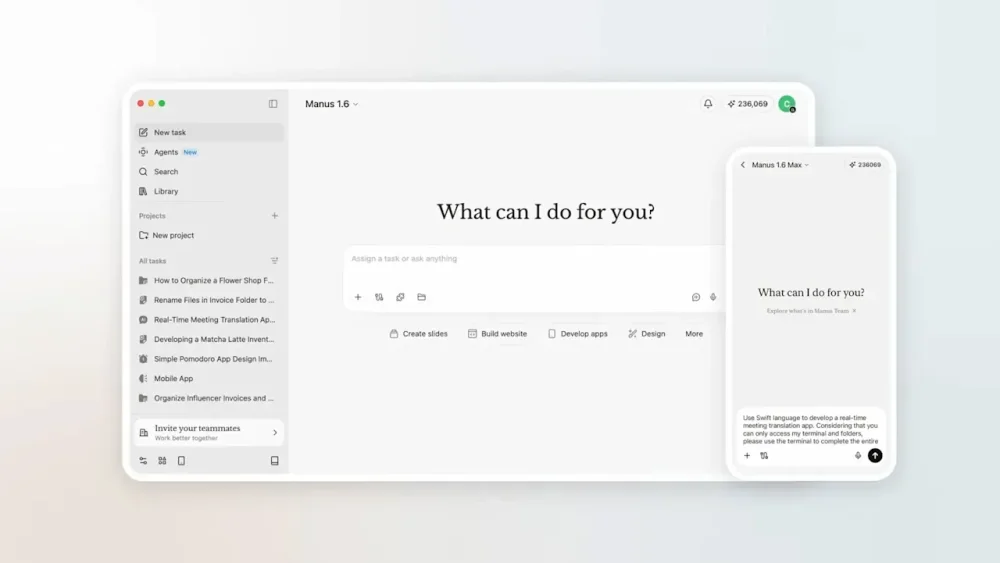
With help from AI, I finally tackled some computer chores that I’ve been putting off for months. My Downloads folder is cleaner than it’s been in ages. The photos that OneDrive blandly sorted by month are now arranged into folders by event. The obscure, unpurchasable jazz album I ripped from YouTube ages ago is now properly sliced into separate tracks, tagged with metadata, and sitting inside my media server at last. Instead of spending hours on those tedious tasks myself, I delegated them to Manus, an AI assistant whose desktop app is free to download for Mac and Windows. Manus launched in March of last year with an emphasis on being able to accomplish tasks autonomously, and last week it gained the ability to work with files on your computer. (Meta acquired the startup in December, reportedly for more than $2 billion.) Alongside Claude Cowork, Perplexity’s Personal Computer, and the virally popular OpenClaw (whose creator was acqui-hired by OpenAI last month), it’s one of several AI tools that promise to take control of your computer to get things done. When they work, these agents can be pretty satisfying and can save a lot of time. But just like my experience with OpenClaw, using Manus is a reminder of how expensive artificial intelligence can get when it’s aggressively metering your usage. Getting Manus to do much of anything could easily cost more than several typical software subscriptions combined. Cleaning and sorting files Like AI in general, Manus is largely what you make of it. The app presents you with a blank text box and a button for choosing which folders it’s allowed to access, and it’s on you to think about what AI might do with this capability. Cleaning my Downloads folder was a logical first step. Manus suggested some obvious files to delete—things like old installer files—and with some extra prompting, I had it sort everything else into folders based on file type, which helped me sort and delete the unnecessary stuff. Dealing with that YouTube album download was even more satisfying. With just a single prompt, Manus figured out how to reference the track timings on Discogs, wrote a Python script to split the 45-minute MP3 file without re-compressing it, and tagged the resulting files with titles and cover art. From there I moved onto something more ambitious: I pointed Manus at a year’s worth of photos in my OneDrive folder and asked it to sort them into new folders for things like trips and special occasions. Through a combination of metadata and computer vision, Manus correctly recognized my annual trip to cover the CES trade show, a variety of family vacations, and even my nephew’s bar mitzvah. It only took a couple follow-up commands to get the sorting just right. Working with documents In addition to pushing files around, I decided to have Manus work with my notes from Obsidian. Because Obsidian’s underlying notes are just Markdown files in a folder on my computer, Manus can easily extract data from them and make edits. I started by just having Manus summarize and add to my weekly agenda, but then I noticed Manus can also connect to external services like Gmail and Google Calendar. After setting up those connections, I had Manus look through my inbox and flag important emails as tasks to complete, while adding work-related calendar events to the agenda as well. And while I’m still not keen on having AI write for me, I decided to have Manus take a crack at a first draft for this story, using my drafts folder in Obsidian as a reference for my writing style. The results were mostly garbage, but I’ll begrudgingly admit that the first few paragraphs were decent and gave me some ideas on how to get started. Credit catches and security worries While I’m pretty satisfied with what Manus was able to do, I probably won’t continue to use it. That’s partly because I’m worried about the security implications, especially when connecting to apps like Gmail and Google Calendar. Prompt injection remains an unsolved problem in AI, and the risk is that an attacker could embed secret instructions in a calendar invite or email designed to steal personal data. I’m not comfortable letting Manus access this data without making it read-only, which doesn’t seem to be possible. As a piece of productivity software, Manus also just becomes wildly expensive the more you use it. While the app itself is free to download, you only get 300 free “credits” to use per day. Paid plans come in increments of roughly $20 per month, each giving you 4,000 extra monthly credits. After just a couple days of using Manus, I was already halfway through that monthly allotment, plus the 1,000 bonus credits Manus provided at sign-up. Adding items to my agenda—including data from Google Calendar and Gmail—cost about 300 credits. Organizing a single year’s worth of photos cost about 1,000 credits. Managing my Downloads folder—including the MP3 file I needed to split up—cost another 1,000 credits. I also asked Manus to work on a bespoke tool for deleting similar or duplicate photos. This ate up nearly 1,400 credits before I realized my allotment would be better spent trying other things. Once those 4,000 credits expire, the only options are to wait until the monthly limit resets, make do with the meager 300 daily credits Manus offers, or upgrade to a pricier subscription tier. It didn’t help that Manus kept pushing me toward its “Max” model for certain tasks, allowing it to burn through credits even faster. As with OpenClaw, I imagine there’s a category of AI enthusiast that thinks nothing of such expenditures. But I’m used to paying in the range of $5 to $10 per month for productivity software, and that’s for things I consider indispensable. I can’t justify paying $20 to $40 per month (or more) for something I’m still figuring out how to use. If I’m going to keep using AI to control my computer, I’ll likely do it through Claude and its Cowork feature, which requires a $20 per month Claude Pro subscription. While its usage meter is more opaque, at least it resets on a weekly basis instead of a monthly one. But as someone who tries to get by with the free versions of AI tools whenever possible, I’ll also probably just wait for more computer chores to pile up before spending any more money to get rid of them. View the full article
-
The most impressive move by three-time world surfing champ John Florence in his new video series isn’t riding a wave; it’s flying across open ocean on a catamaran while holding his puking 1-year-old son over a bucket. The new six-part series called Vela, directed by Florence and produced with outdoor gear and apparel company Yeti, embodies a broader shift in how the iconic surfer is approaching both his career and the goal behind his namesake brand, Florence. After winning his third World Surf League title in September 2024, Florence chose to leave the pro surfing tour to sail around the world with his wife, Lauryn, and son, Darwin. They lived off the grid, explored remote corners of the Pacific Ocean, and searched for new waves and adventure. Vela was shot over 18 months and also features his brothers (and fellow pro surfers) Nathan and Ivan in Florence’s high-performance sailing catamaran called Vela. All YouTube proceeds will support ocean-minded causes in the locations visited in each episode. The first episodes are already online, and the remaining ones will drop weekly through mid-April. Surfing has a long tradition of competitive surfers swapping contest heats for the travel and adventure of what’s known as free-surfing. Names like Rob Machado, Dane Reynolds, Mick Fanning, and Mikey February have made the swap from winning prize money to making a living off sponsors and video content at various points in their careers. Expanding the scope of his career beyond contest waves also embodies Florence’s broader outdoor aspirations for the Florence brand, which he founded in 2021. That goal is to get people outside, no matter what form. “If you have a really great piece of Patagonia or Yeti gear or whatever it is, you look at it, and it makes you want to go do that trip or [be] outside doing something,” Florence says. “I always thought that was so cool, and it is a big part of Florence. Helping to inspire you to get out and do things, whether it’s in the ocean or not.” Go with the flow The new series is a follow-up to a similar series produced with Yeti back in 2022, long before toddler sea sickness was a factor. Florence says his creative process has evolved since his first solo film project in 2015, View From a Blue Moon, directed by Blake Vincent Kueny (which became the best-selling surf movie of all time). “That was a big surf movie project we worked on for a couple of years, where I knew going in I was going to spend two or three years wanting to get the best waves and the best surf footage possible,” Florence says. “Now, when I know I want to do something, I don’t really know what it is at the start—let’s just go with the flow.” I spoke to Yeti’s head of marketing, Bill Neff, at SXSW (listen to the whole interview on Fast Company’s Brand New World podcast) about the value a series like Vela brings to the brand, and why it was important to be patient for the four years between the two editions. “In a world where people want to cut things down to six seconds for an impression, there is no real value to the end consumer—it’s just a swipe,” Neff said. “If you can actually get someone to sit down and watch an episodic 30-minute show, that is the true value of a relationship. We believe long-form content inspires people or gets them excited about what they love, and that has long-lasting effects on the brand.” Surf-based, outdoor overall Just as Florence has left the WSL tour to do more sailing and experience new adventures, his goals for the brand Florence have also begun to branch out beyond his surf-specific audience. “It just felt like these last two years have really opened up my mind more to what I want to do,” he says. “I’m inspired to go do these other things, and I really do think it allows more room for my brand to go outside of just surfing competition, too.” There’s a delicate balance in creating content that can feel both relatable and aspirational. Not everyone is a world champion surfer, nor can they just jump on a performance catamaran and take off. That’s the aspirational part. What makes this new series so relatable is how Florence is balancing that part with the realities of family life and fatherhood in its midst. “That’s the goal for us,” he says. “And the biggest part is just realizing that everyone’s adventure is slightly different.” View the full article

-
A new browser extension just debuted that’s designed to be used in tandem with an AI chatbot. Its goal is to make the experience worse. “Are you concerned that you or your loved ones might be experiencing a LLM-induced psychosis? Or participating in a massive de-skilling event? Or outsourcing cognitive and emotional functions to auto-complete?” designer Sam Lavigne asks in a YouTube video introducing his new product. “Then you should install ‘Slow LLM’ on your computer.” Lavigne is an assistant professor of synthetic media and algorithmic justice at Parsons School of Design, as well as an artist and web designer. Slow LLM is his latest creation, and its entire purpose is to make using AI chatbots as excruciating as possible. Whereas ChatGPT might answer a simple prompt such as “What day is it?” in a matter of milliseconds, Slow LLM intervenes to stretch that out to the nails-on-a-chalkboard pace of 30 seconds or more. Slow LLM is a small yet eye-catching act of digital protest against the proliferation of AI tools, and it joins a growing catalog of similar efforts like “Your AI slop bores me,” a human-powered chatbot, and “Slop Evader,” a Chrome extension built to turn back the clock to the days before AI-generated search summaries. Those behind these projects, which Lavigne describes as “tiny tools for digital sabotage,” know that they’re not exactly combating the wave of artificial intelligence and large language models. Instead, they’re asking users to reconsider how they’re using AI tools—and what they might be missing out on in the process. Designing a tiny tool of digital rebellion Lavigne is no stranger to creating tools of digital sabotage. His past projects have included “Slow Hot Computer,” a website that does exactly what the name suggests; “Zoom Escaper,” a tool to help you escape Zoom meetings by self-sabotaging your audio stream; and “The Good Life,” an email service that sends you 225,000 emails from the Enron email archive in chronological order. For Lavigne, these sites are all about turning the mission of most web developers on its head by creating more friction rather than removing it. In the case of Slow LLM, Lavigne explains: “Like many other people, I’ve been thinking a lot lately about the political, financial, ecological, and emotional effects of LLMs. I became interested in exploring ways to disrupt their usage, either as something that people might wish to do to themselves, or as a kindness to others.” He decided that, to achieve this goal, it would be best to take a softer approach—making LLMs worse, rather than blocking them altogether. In a matter of days, he pulled together Slow LLM. The browser extension, available for Chrome and Firefox, currently works to stunt both OpenAI’s ChatGPT and Anthropic’s Claude. It functions like a football player intercepting a ball mid-pass. Typically, when a user chats with an LLM in a web browser, it sends that prompt to a server using a built-in JavaScript function named “fetch.” Slow LLM replaces fetch with Lavigne’s own version that buffers all network requests, making them appear to run at a trickle. AI adoption feels effortless when it’s fast, easy, and convenient. Slow LLM invites reluctant users to reconsider their choices while watching ChatGPT painstakingly thread together a response that they could have just Googled. View the full article

-
Below, coauthors Blythe Harris and Mallory May share five key insights from their new book, Daily Creative: The 5-Minute Habit to Rewire Your Brain. Harris is an artist and entrepreneur, and for many years was the cofounder and chief creative officer of Stella & Dot. Today, she runs Daily Creative with her partner, May, where they focus on creativity as a daily wellness practice—not an artistic achievement. What’s the big idea? Creativity is a natural human capacity that grows stronger with use. When we treat creativity as a small daily practice rather than a high-stakes performance, it becomes a powerful tool for well-being, flexibility, and feeling more alive. Listen to the audio version of this Book Bite—read by Harris—in the Next Big Idea app, or buy the book. 1. Creativity isn’t a talent—it’s a practice. One of the most persistent myths about creativity is that you either have it or you don’t. But creativity works much more like a muscle than a trait. Just as your body needs movement to stay strong, creativity needs regular use to stay alive. Creativity is innate, but it requires nourishment and practice. When we don’t use it, it doesn’t disappear; it simply goes dormant. Many people who say, “I’m not creative,” didn’t lose creativity. They adopted a fixed mindset after an early experience of judgment or shame. Maybe a teacher frowned at your poem. Or maybe your horse looked like a hamburger in drawing class, and you decided to never try again. Over time, creativity stopped feeling safe, so you opted out. What we’ve seen is that when creativity is reintroduced as a practice—something small, playful, and low-pressure—people reconnect quickly. Confidence doesn’t come from being good at creativity. It comes from using it regularly, without fear. 2. Small creative acts create meaningful shifts. We often assume that meaningful change requires large amounts of time or effort. But the brain frequently responds more to consistency and novelty than to duration. Brief creative engagement—especially when it’s playful and nonjudgmental—can interrupt habitual thinking and invite new perspectives. The goal isn’t to do more or to do it perfectly. It’s simply to engage often enough to stay mentally flexible. We hear people say things like, “I didn’t make anything good, but I felt different afterward.” That feeling—slightly more open, more awake—is the shift that matters. Creativity doesn’t have to be impressive to be effective. 3. Creativity supports well-being. Creativity is often framed as self-expression, but it also plays a powerful role in mental and emotional health. Engaging in creative activity has been shown to increase brain plasticity, reduce stress and anxiety, and support cognitive flexibility and open-mindedness. Over time, creative engagement is also associated with improved memory and may even play a role in protecting against cognitive decline. What’s especially interesting is that many of the benefits of creativity mirror those of meditation—greater calm, presence, and emotional regulation—but creativity often feels more playful and accessible. You don’t have to quiet your mind. You just have to engage it differently. Many people feel calmer, clearer, or more grounded after creative engagement, even when nothing particularly successful comes out of it. Creativity allows us to process experience indirectly, without needing to explain, analyze, or fix everything. In that way, creativity becomes less about output and more about care. 4. Perfectionism blocks creativity. Perfectionism narrows attention and increases self-monitoring, both of which make creative thinking harder. One of the most effective ways to restore creativity is to lower the stakes. Simple constraints, repetition, or clear starting points shift the focus from outcome to process. Instead of asking, “Is this good?” the brain starts asking, “What happens if I try this?” We’ve seen this again and again: When people are given a simple rule—like drawing with their nondominant hand or working within a grid—the pressure drops immediately. They begin experimenting, laughing, and surprising themselves. Letting go of perfection isn’t a personality change. It’s a skill you can practice. 5. Creativity is about aliveness, not output. At its core, creativity isn’t about what you produce—it’s about how you engage with the world. People often describe feeling more alive after creative moments: more present, more connected, more themselves. That sense of aliveness doesn’t require talent or training. It comes from allowing curiosity and attention back into daily life. Creativity, in this sense, isn’t something you earn. It’s something you allow. Enjoy our full library of Book Bites—read by the authors!—in the Next Big Idea app. This article originally appeared in Next Big Idea Club magazine and is reprinted with permission. View the full article

-
Google recently added Google-Agent to its user-triggered fetchers documentation, hinting at the future. View the full article
-
The automotive industry is driving toward an electric future, and one Montreal-based company is determined to tow the recreational vehicle market along with it. Taiga Motors has spent the last decade building out production capacity to deliver fully electric snowmobiles and Jet Ski-like personal watercraft that they believe can go toe-to-toe with gas-powered alternatives. As with electric cars, the ride is designed to feel smoother, faster, and whisper-quiet, filling an unaddressed niche in the motor sports vehicle category. “If you’re on the water, all you hear is the wind and the waves. And if you’re on the snow, you hardly hear anything—just that track spinning through the snow at incredible speeds,” says Taiga Motors cofounder and CEO Sam Bruneau. The company itself, however, has had anything but a smooth journey. After riding the wave of the SPAC boom in 2021—when hundreds of companies went public by merging with publicly listed shell companies, bypassing the traditional IPO process—which put its value into the hundreds of millions of dollars, pandemic-related manufacturing delays pushed it to the cliff’s edge. Taiga has been only able to traverse the many economic and technical rough patches it’s faced, according to Bruneau, because the market is so eager for a smoother, quieter, and cleaner alternative to the noisy, polluting, gas-guzzling recreational vehicles on the snow and water today. Silent Engine, Invisible Barriers By designing their snowmobiles and watercraft from scratch, the company is able to introduce a few game-changing features that make the ride not only smoother, but also safer and more accessible. For example, they can be monitored by a mobile app that allows owners and fleet operators to manage battery life, set speed limits, and map out precise geographical boundaries. If riders venture beyond those invisible borders, the vehicle automatically slows to a crawl until it’s back in the designated zone. As a result, fleet operators and resort owners from the Caribbean Sea to the Italian Alps are reversing existing bans on recreational vehicles in areas that were previously too close to ecologically protected zones and heavily populated areas. “If you think of beachfronts and keeping safe distances from swimmers, or just at home, if you have a teenager that’s going out in the watercraft, [owners] can create speed-limiting zones and keep them away from dangerous areas,” Bruneau says. “If you’re a tour operator, you can do the same with your customers to prevent, for example, collisions between snowmobilers and skiers at mountain resorts.” Saving Money by Saving the Environment Taiga’s Nomad Sport edition snowmobile offers 90 horsepower, starting at about $19,000, while its Nomad Performance model offers 120 horsepower, starting at about $22,000. Both offer 62 miles of range and can be recharged using conventional home or public EV-charging stations. Gas-powered alternatives, by comparison, typically range from about $12,000 to $22,000, putting Taiga’s electric offering on par with other premium products in the category. “There’s also major cost savings in these vehicles on fuel and maintenance,” Bruneau says. “We work with over 100 ski resorts around the world, and they’ll break even compared to lower-cost gas models within two years—so they’re saving several thousands of dollars by switching to electric.” Given the long-term cost savings potential for vehicles that are in heavy use, the company has unsurprisingly found a bigger market among resorts and tour operators than individual customers. One of those tour operators, based in the Italian Alps, recently partnered with Uber to offer snowmobile rides between venues during the recent Olympic Games in Cortina, including an electric snowmobile option that features Taiga’s products. “It’s pretty cool, and something that we want to explore and maybe replicate in other areas, because part of our mission is to make snowmobiles more accessible,” Bruneau says. Small Vehicles, Large Footprint Though recreational products represent a small fraction of the overall vehicle market, the smaller scale has allowed the industry to avoid many of the regulations that limit vehicle emissions. As a result, some snowmobiles and recreational watercraft engines spew up to 40 times more pollutants than the average gas-powered car, according to some estimates, and those pollutants often go directly into waterways and groundwater deposits. “A big ski resort with a tour operation might have 200 snowmobiles operating all winter-round, which is [the same emissions as] 8,000 cars operating day in and day out,” Bruneau says. “To electrify 8,000 cars in one town is a pretty ambitious mandate. To electrify 200 snowmobiles that you’ll save money on and provide a better user and guest experience is a lot easier.” Taiga has also introduced three electric watercraft, which start at about $21,000. Its highest-end model, the limited-edition Orca Carbon, features 160 horsepower, with two hours of run time on a single charge. Its price starts at about $26,000. All of the company’s products also feature bidirectional charging, meaning that its high-capacity battery packs can sell unused energy back to the grid. “We’re going to soon have a standard outlet on the vehicle so you can plug in any appliance,” Bruneau says. “That’s a pretty big game changer, especially for the snowmobile, because you suddenly have this large mobile battery pack that you can drive into the mountains or a cottage—even [use for] backup power for your house—without needing a gas generator.” Stalling Out Bruneau and two McGill University classmates, Paul Achard and Gabriel Bernatchez, founded Taiga in 2015 and modeled it after Tesla—which didn’t just replace the combustion engine, but reinvented vehicle manufacturing from the ground up. “It’s a lot of extra front-end work,” Bruneau says. “But there’s a bigger payoff in the long term if you can vertically integrate, develop everything from a clean sheet to really offer the best performance at the best cost, and be built out efficiently at scale.” After designing and building a prototype electric snowmobile from their shared Montreal apartment and hauling it to ski resorts around North America in a rented pickup truck, the cofounders secured their first orders and set up production in Quebec. As it gained momentum, Taiga was approached by a special purpose acquisition company (SPAC) that offered to take the company public in 2021, which put its market capitalization at more than $350 million. “We hit some supply chain disruptions right after going public,” Bruneau says. “We were working with some big automotive suppliers for some of our key chips, and we just got a call one day saying: ‘Hey, Ford is taking these, because you can’t really compete with [their volume], and we had to adapt.’” In the ensuing years, consumer spending on both electric vehicles and recreational vehicles went downhill: Brands like Yamaha exited the snowmobile market entirely, and automakers like GM and Ford have since watered down their prior EV commitments. In early 2024, Taiga was forced to cut all but 70 of its staff—down from a peak of about 300—and file for creditor protection, leaving its early investors and deposit-paying customers in the lurch. In October of that year, the brand was pulled from the brink by British electric boat entrepreneur and investor Stewart Wilkinson. “In the startup and EV hardware space, a lot of it is just about timing, persistence, and the perseverance to weather any storm,” Bruneau says. “If you can build the best product that people really want, you’ll be able to shift the market eventually.” View the full article

-
Meetings look neutral on the calendar. Everyone’s calendar is stamped with the same blue 30-minute block. Everyone gets a seat at the table, and—supposedly—the same shot to contribute. But the moment you click “Join,” the pecking order kicks in. Meetings are where power is put on display, credit is scooped up, and the rules of who speaks and who doesn’t are enforced. If you want to understand how inequality festers inside an organization, start watching what happens in your meetings. At a time when women’s representation in the workplace has stagnated and their presence in senior leadership positions is slipping, we need to look closer at the everyday behaviors that keep the deck stacked. Meetings are one of the biggest offenders. They impose hidden taxes on women that chip away at influence, visibility, and career advancement. 1. The labor tax: Who gets stuck with the grunt work? Someone has to do the grunt work that keeps meetings running: book the room, chase down agenda items, take notes, and send the recap. It’s important work. It’s also often low-status, mostly invisible, and rarely rewarded. It probably won’t get you promoted or make you look strategic. Too often, women are the ones expected to pick it up. Research shows that in mixed-gender groups, women volunteered for these “non-promotable tasks” 48% more often than men. But in single-gender groups, the gap disappeared, and men and women volunteered at equal rates. It’s not that women are drawn to grunt work. It’s that the expectation kicks in when men are in the room. Every time a woman takes notes or sends the follow-up, she’s doing the work that keeps the meeting on track while someone else gets the airtime, the visibility, and the career upside. That’s the labor tax: invisible, unpaid, and piling up throughout a woman’s career. 2. The visibility tax: Who gets seen as a leader? Meetings have a nasty habit of confusing airtime with leadership. Researchers call it the Babble Hypothesis. One study found that for every additional 39 seconds of speaking, the speaker earned an extra “vote” as the group’s leader. Men got a bonus just for being male—roughly one additional vote. But the problem goes beyond hogging airtime. Women get interrupted, talked over, or ignored. Men interrupt 33% more often when speaking with a woman than with another man. Even female Supreme Court justices are three times more likely to be interrupted by their male colleagues. And when women do break through, their ideas can get repackaged and credited to someone else, a move so common it has its own name: bro-propriation. Women aren’t just fighting to get a word in. They’re fighting to keep what they said from being claimed by whoever says it louder, says it later, or simply has more status in the room. 3. The cognitive tax: Who leaves the meeting depleted? Women walk a tightrope in meetings: be confident, but not too confident. Assertive, but not abrasive. Warm, but still authoritative. For women, every meeting comes loaded with mental gymnastics. How direct can I be? Should I push back? Am I being ignored, or should I say it again? They’re not just doing the work of the meeting. They’re managing tone, reading power dynamics, and dodging penalties. That double duty drains the attention and energy that should go to the real work. Virtual meetings add to the cognitive tax. Women are more than twice as likely to experience Zoom fatigue. One of the biggest culprits is what researchers call “mirror anxiety,” or the strain of staring at your own face on screen. For many women, who are more likely to be judged on how they look than on what they say, they’re not showing up to one meeting. They’re showing up to two: one with their colleagues, and one with their own hypercritical reflection. Stop taxing women for bad meeting design The lazy “solution” is to shove the burden back on women. Speak up more. Push back when interrupted. Claim your ideas. But that doesn’t fix the meeting. It just makes women work harder inside a broken one. The better answer is to redesign the meeting itself. Start by cutting the number of meetings. Executives say that nearly half could be eliminated with no negative consequences. Every unnecessary meeting is another chance for women to get stuck taking notes, get interrupted, or burn through another hour of Zoom fatigue. Fewer meetings mean fewer opportunities for the taxes to pile up. For the meetings that survive, fix what they reward. Build more written and asynchronous communication into your communication system. Jeff Bezos banned PowerPoint from Amazon’s senior leadership meetings and replaced decks with six-page memos read silently before discussion. A big motivation was to curb sloppy thinking. He once said, “There is no way to write a six-page, narratively structured memo and not have clear thinking.” A strong writing culture also neutralizes the fastest talkers and the smoothest ones. Too many meetings reward speed, charisma, and volume. Better ones reward preparation, idea quality, and clarity. Then look hard at who is doing the invisible work. Stop asking for volunteers. Women are more likely than men to step forward and pick up the grunt work, especially in mixed-gender groups. Rotate the invisible work instead. And recognize and reward it. Work that your organization can’t function without shouldn’t come with a career penalty. Finally, consider who gets the airtime in your meetings. Most meetings have an informal pecking order that settles within the first few minutes: who sits at the head of the table, who speaks first, who gets eye contact from the leader, who gets asked for input. Invite women to speak first. Go around the room so contributions aren’t driven by confidence or status. Encourage the meeting leader to name the source of ideas in real time (“That builds on Sarah’s point from earlier”). When credit is claimed out loud and in the moment, it’s less likely to drift toward the highest-status person in the room. And try leveraging AI to monitor airtime, not as surveillance, but as a learning tool. When teams understand who’s gobbling up airtime and who isn’t, the patterns become harder to ignore and harder to excuse. Remember, your meetings aren’t neutral. Until leaders stop assuming their meetings are fair, women will keep paying the tax—and your organization will pay for it, too. View the full article

-
With the high career costs associated with motherhood, and in a challenging economy, more young women are choosing to put work ahead of love and family. According to a recent survey of 1,000 American working mothers by online resume builder Zety, 76% have been explicitly advised to delay having children until they’re more established in their careers, and 57% postponed motherhood for that reason. “I hate that advice, because we should be living in a world where no matter what you’re doing outside of work, you should be able to achieve your career goals,” says Zety career expert Jasmine Escalera. “Yes, it is sound advice, but it’s advice people feel they need to give because of the work culture we have here in the United States.” The study found that working moms face a slew of career challenges that prevent them from achieving their career potential while starting a family. For example, 84% said their pregnancy was seen as an inconvenience at work, and 81% were asked to return from maternity leave early. The vast majority, 87%, say that becoming a mother negatively impacted their careers. Furthermore, 59% say it altered their career path and 31% say it inspired them to find a job with more flexibility or reduced hours. Half also chose not to have more than one child due to the work challenges they confronted having their first, and another 37% delayed having more children for the same reason. “For women in particular, becoming pregnant, having children, starting a family significantly negatively impacts their careers,” Escalera says. “The data we saw was incredibly staggering in terms of how women are implicitly—and in many cases explicitly—being told that being a mom is going to negatively impact them in the workplace, and they have to choose one.” A Clear Choice for Most Young Women For as long as women have been in the workforce, they’ve been told they can’t “have it all,” and need to choose between career and family. Gen Z, however, may be the first to come to a broad consensus, with the majority picking economic independence over love, marriage and parenthood. In a recent survey of 2,000 women aged 20 to 28 by essay writing service EduBirdie, 59% ranked professional and financial success ahead of finding love and starting a family. Furthermore, 88% of respondents considered themselves ambitious, and 25% believed they had to choose between their professional ambitions and love life. Overall, 30% said they either didn’t want kids in the future or weren’t sure. “This generation does not pursue family as the main goal, but sees the financial aspect and their career as the first step towards settling down and starting a family,” says EduBirdie data lead Ksenia Hubska. “These young women have the choice, and they decide to focus on their careers first, and only if they feel financially secure do they think about starting families.” Hubska explains that in today’s world—and economy—financial independence is a key consideration for young women. “They don’t co-depend, they’re not looking for a husband that takes care of them and their kids,” she says. “It’s about me creating my own life with a partner who has their own life.” More Anxieties, and Options Young women are struggling to establish their careers in a challenging job market and are concerned that their love or family lives could exacerbate that challenge, with 48% citing financial stress as a major concern. However, many are also choosing to delay starting a family because they have options that didn’t exist for women of prior generations, with advancements in fertility treatment enabling them to hit snooze on the biological clock. According to the survey 11% have or plan to freeze their eggs, and another 20% are saving up to do so. “It’s genius, if you ask me,” says Hubska. “I never thought of it as an option at that age, but now girls are saving for it.” Hubska explains that many Gen Z women grew up watching their mothers struggle to balance their careers and caregiving responsibilities. As they enter adulthood, many are looking for an alternative that doesn’t rely on others. In fact, 71% of respondents admitted to judging those who rely on others for financial support, and a third said they would not ask a loved one for financial assistance during an emergency. “It’s a different approach to the same challenge, and a more creative one,” Hubska says. “It’s about financial independence, which they value a lot.” American women face more obstacles America may be the world’s biggest economy, but it’s trailing peer nations when it comes to extending those opportunities to female workers—especially those that want to start a family. In a global ranking of 16 advanced economies conducted by gender equality data provider Equileap—which analyzes gender-related policies at nearly 3,400 public companies with revenues over $2 billion—the United States placed second last, ahead of only Japan. The study evaluated companies across 21 gender equity indicators, including gender balance at various levels of leadership, the gender pay gap, freedom from abuse and sexual harassment, flexibility and parental leave policies. In 2023, the United States had 17 companies featured in the annual ranking’s top 100. Last year, the country had just 11 top 100 honorees. Now there are just 7 spots occupied by American brands. “There are two reasons; one is that the threshold to make the top 100 list has gone up,” says the report’s co-author and the corporate communication and insights manager for Equileap parent company Denominator, Clara Sánchez. “But also, because U.S. companies are decreasing their gender equality scores.” The top ranked country in 2026 was Spain, whose companies averaged a score of 60 out of 100, followed by France at 59, with Italy and Norway tying for third at 58. American businesses, meanwhile, achieved an average score of 45, down from 44 in 2025. “We talk about the leaking pipeline, and we see at different layers in the workplace,” Sánchez says. “In the U.S. 32% of workers are women, but just 25% are executives, and the research says that maternity leave makes a big impact.” The lack of women in executive leadership in the United States, the gender wage gap, the lack of paid maternity leave and the career penalties that come with starting a family has broader implications. According to a study conducted by Denominator, companies that provide at least 14 weeks of paid maternity leave generate 21% higher revenues, have 13% higher market capitalizations, and earn 9% greater net incomes. “In a country like the U.S., where there’s no statutory parental leave, and where job security is not guaranteed by the state,” says Sánchez, “I’m not surprised that women are thinking twice [about motherhood].” View the full article

-
Voice of the Customer (VoC) analysis is a method for gathering and interpreting customer feedback from various channels, like surveys and social media. It transforms this feedback into useful insights that can drive product and service improvements. Comprehending VoC is crucial, as it helps businesses align their offerings with customer expectations, enhancing satisfaction and loyalty. As you explore this topic, you’ll discover key strategies for implementing effective VoC programs and the impact they can have on business success. Key Takeaways Voice of the Customer (VoC) analysis captures and transforms customer feedback into actionable insights for product and service enhancements. It helps businesses identify customer pain points, aligning offerings with expectations to boost satisfaction and retention. VoC programs can lead to significant improvements in customer retention, with studies showing up to a 55% increase. Utilizing structured surveys and sentiment analysis tools allows for effective data collection and interpretation of customer sentiments. Proactively addressing customer feedback can reduce complaints by up to 30%, enhancing overall customer satisfaction and loyalty. Understanding Voice of the Customer Analysis Voice of the Customer (VoC) analysis is a crucial process that helps organizations grasp customer feedback from various interactions, such as surveys, interviews, and social media. This analysis encompasses diverse data sources, transforming unstructured input into actionable insights that improve products and services. By utilizing voice of customer analytics, businesses gain a thorough view of customer sentiments and experiences, allowing them to identify pain points effectively. Systematically collecting voice of customer feedback enables organizations to prioritize improvements that greatly impact the customer experience. The insights derived from VoC analysis play a critical role in boosting customer satisfaction, loyalty, and retention. Companies that implement effective VoC programs often witness a 55% boost in customer retention and experience faster revenue growth. The Importance of Customer Feedback Customer feedback is crucial for making informed business decisions and identifying areas for improvement. By actively seeking input from your clients, you can uncover valuable insights that drive advancements in your products and services. This process not merely boosts customer satisfaction but likewise helps you stay competitive in a swiftly changing market. Enhancing Business Decisions Effective business decisions hinge on comprehension of what customers truly want, which is where customer feedback comes into play. By utilizing VoC analytics and voice of customer metrics, you can capture valuable insights that reveal customer sentiments and expectations. This data helps align your product and service offerings with what your customers desire, leading to improved satisfaction. Companies that act on this feedback often experience a 55% boost in customer retention, as engaged customers feel valued. Additionally, integrating these insights improves customer satisfaction scores (CSAT) and drives higher sales and profitability. By addressing root causes of customer pain points, you can proactively mitigate issues that might lead to churn, eventually accelerating your revenue growth. Identifying Improvement Opportunities Although businesses often rely on their internal assessments to gauge performance, tapping into customer feedback is crucial for pinpointing improvement opportunities. Voice of the customer analysis (VoC) reveals pain points and areas where your products or services fall short, enabling you to prioritize upgrades effectively. Companies that actively seek and act on VOC feedback can see a retention boost of up to 55%, highlighting the significance of customer insights on loyalty. This analysis uncovers hidden friction points that traditional methods might miss, allowing for thorough improvements. By systematically tracking sentiment shifts over time, you can adapt your strategies to meet evolving customer needs, eventually driving satisfaction and revenue growth when you leverage VoC data effectively. How VoC Enhances Customer Experience Grasping customer feedback is essential for any business aiming to improve its customer experience. By implementing a robust voice of the customer program, you can effectively capture insights across various channels. This feedback helps you identify pain points and prioritize high-impact improvements, such as user interface upgrades that directly influence customer satisfaction and loyalty. Companies that actively use VoC metrics, like Net Promoter Score (NPS) and Customer Satisfaction Score (CSAT), can track improvements over time, nurturing long-term loyalty among customers. Strong VoC programs have been linked to significant increases in customer retention and faster revenue growth, highlighting the importance of acting on customer insights. Additionally, by comprehending what your customers value most, you can tailor your products and services, finally resulting in higher satisfaction scores and a better overall experience for your clientele. Key Methods for Collecting VoC Data To effectively collect Voice of the Customer (VoC) data, you can utilize a mix of structured surveys and unstructured insights. Effective survey techniques, like NPS and CSAT, help you gather quantitative feedback, whereas analyzing unstructured insights from social media and customer conversations can reveal deeper customer sentiments. Effective Survey Techniques Collecting Voice of the Customer (VoC) data effectively hinges on employing the right survey techniques that provide meaningful insights into customer experiences. Utilizing various voice of customer methods is vital; for instance, post-interaction surveys can gauge satisfaction immediately after customer service engagements. A balanced mix of closed-ended questions, like Net Promoter Score, and open-ended questions can yield both quantitative metrics and qualitative insights. Consider implementing mobile-friendly surveys, as over 50% of responses come from mobile devices. Keep surveys short, ideally 5-10 questions, to avoid respondent fatigue. Moreover, leveraging voice of the customer software and social media listening tools enables you to capture unsolicited feedback and real-time sentiments, offering a thorough view of customer experiences beyond formal surveys. Analyzing Unstructured Insights Though traditional surveys provide valuable data, analyzing unstructured insights is crucial for gaining a deeper comprehension of customer sentiments. By collecting qualitative feedback from sources like open-ended survey responses, social media comments, and call transcripts, you can capture the true emotions of your customers. Techniques such as sentiment analysis and text analytics help identify common themes and emotional tones within this unstructured data, revealing pain points and expectations more thoroughly. Voice of customer tools, including social listening platforms, enable real-time monitoring of opinions across various channels. Furthermore, customer interviews and focus groups gather rich qualitative insights that structured surveys might overlook. Integrating findings from both structured and unstructured VoC data allows you to improve your products and services effectively. Analyzing Customer Sentiment Comprehending customer sentiment is crucial for businesses aiming to improve their service and products. Analyzing customer sentiment involves evaluating feedback to gauge the emotional tone of interactions. This data can be classified as positive, negative, or neutral, providing insights into overall customer satisfaction. By employing sentiment analysis tools that utilize Natural Language Processing (NLP), companies can identify patterns in customer emotions over time. Here’s a quick overview of key aspects of sentiment analysis: Aspect Description Impact Definition Evaluates emotional tone of customer feedback Guides service improvements Tools Used Natural Language Processing (NLP) Detects sentiment patterns Key Metrics Net Promoter Score (NPS), Customer Satisfaction Score (CSAT) Correlates feelings with loyalty Benefits Increases customer satisfaction by addressing concerns Reduces churn by up to 15% Strategy Integration Aligns with voice of the customer strategy Improves overall customer experience Identifying Customer Needs and Pain Points To improve customer satisfaction and loyalty, identifying their needs and pain points is key. Utilizing voice of customer techniques like surveys, interviews, and social media feedback, you can systematically gather insights about customer experiences and expectations. This approach reveals common themes and recurring issues, enabling you to prioritize improvements based on what matters most to your customers. The benefits of voice of customer analysis are significant; a well-executed program can lead to a 55% increase in customer retention by addressing the main frustrations your customers face. By conducting effective customer needs assessments, you can pinpoint key product attributes that boost satisfaction and align your offerings with customer expectations. Additionally, incorporating sentiment analysis tools allows you to quantify customer emotions, providing a deeper comprehension of how these pain points impact loyalty and retention. The Role of VoC in Brand Loyalty Brand loyalty emerges from a deep comprehension of customer experiences and expectations, which is precisely where Voice of the Customer (VoC) analysis comes into play. A well-structured VoC program captures valuable feedback, allowing you to address concerns effectively, which can lead to a remarkable 55% increase in retention rates. When you actively engage in VoC initiatives, you demonstrate responsiveness to customer needs, thereby enhancing trust and increasing repeat business likelihood. Using voice of customer management software, you can systematically analyze insights that reveal pain points in the customer experience, reducing churn rates and nurturing a more loyal customer base over time. Organizations that act on these insights often see improved Net Promoter Scores (NPS), indicating customers are more likely to recommend your brand. By cultivating brand advocates through effective VoC strategies, you set the stage for accelerated revenue growth, as satisfied customers are enthusiastic to promote your brand within their networks. Measuring the Impact of VoC Programs When businesses implement Voice of the Customer (VoC) programs effectively, they can quantify the direct impact on customer loyalty and retention. By addressing customer feedback, organizations can achieve a 55% increase in retention rates. Engaged customers, who feel their voices are heard, are more likely to renew and even expand their business relationships, leading to faster revenue growth. Integrating VoC analysis with metrics like Net Promoter Score (NPS) and Customer Satisfaction Score (CSAT) allows you to measure improvements more accurately. Prioritizing high-impact areas, such as user interface advancements, can considerably reduce customer churn rates. Furthermore, leveraging voice of customer research helps proactively address pain points, resulting in up to a 30% reduction in complaints. In the end, these measures can boost your VoC sales, showcasing the tangible benefits of implementing well-structured VoC programs in your organization. Challenges in Implementing VoC Analysis Implementing Voice of the Customer (VoC) analysis presents several challenges, including data fragmentation issues and budget constraints. You might find that different departments within your organization collect and store customer feedback separately, making it hard to get a thorough view of customer sentiment. Furthermore, limited budgets can restrict your ability to gather extensive insights, in the end hindering your VoC efforts and their effectiveness. Data Fragmentation Issues Data fragmentation poses significant challenges for organizations working to implement effective Voice of the Customer (VoC) analysis, as it complicates the process of gathering and interpreting customer feedback. When feedback comes from multiple channels without a centralized system, it becomes difficult to form a thorough view of customer sentiment. This fragmentation can lead to inconsistencies and missed actionable insights in your voice of client management program. To tackle these issues, you need to implement centralized systems that aggregate feedback from various sources. Challenge Solution Disparate data sources Centralized feedback systems Lack of visibility Cross-departmental collaboration Inconsistent insights Unified data analysis Poor metric tracking Effective VoC tools Budget Constraints Challenges Budget constraints greatly impact organizations aiming to implement effective Voice of the Customer (VoC) analysis. Limited budgets can restrict the scope of VoC programs, making it tough to collect and analyze data across all customer touchpoints. You might find it challenging to allocate resources for advanced analytics tools, which are essential for interpreting customer feedback accurately. As a result, relying on outdated voice of the customer tools can lead to incomplete data, ultimately hindering your ability to derive actionable insights. Financial constraints often push companies to prioritize short-term gains over long-term VoC initiatives, which can undermine customer satisfaction and loyalty. To address these challenges, consider leveraging existing resources, such as low-cost survey tools, and focus on high-impact areas for improvement based on prioritized customer feedback. Best Practices for Effective VoC Programs A robust Voice of the Customer (VoC) program is essential for organizations looking to improve customer experience and drive business success. To implement effective VoC programs, you should utilize multiple feedback channels, such as surveys, social media, and customer interviews, to gather both quantitative and qualitative insights. Establish a structured voice of the customer framework that follows the Listen → Act → Analyze cycle, guaranteeing feedback is collected, acted upon, and analyzed for strategic improvements. Prioritize insights based on their impact on customer satisfaction and business goals, focusing on issues causing friction for many customers. Use data visualization tools to present VoC findings in an accessible format, helping teams identify trends and prioritize actions. Finally, secure cross-departmental collaboration by sharing VoC insights across teams, preventing data silos and promoting a company-wide commitment to addressing customer needs. These voice of the customer solutions will improve your organization’s overall effectiveness. Integrating Voc Insights Into Business Strategy Voice of the Customer (VoC) insights play a pivotal role in shaping business strategies that truly resonate with customers. By integrating these insights, you can align your products and services with customer needs, potentially increasing retention by 55% and driving revenue growth. VoC insights help you prioritize improvements that matter most, ensuring you tackle high-impact areas effectively and reduce churn risk. Regularly acting on feedback cultivates a culture of responsiveness, elevating trust and loyalty as customers witness their input leading to real changes. Companies utilizing a voice of client management platform often see improved customer satisfaction scores, with direct links between actionable insights and higher Net Promoter Scores (NPS). A structured VoC program promotes cross-departmental collaboration, ensuring feedback insights are shared across teams for a cohesive customer experience. Benefit Impact on Business VoC Integration Method Increased Customer Retention Up to 55% Regular feedback analysis Reduced Churn Risk Focus on high-impact areas Prioritization of improvements Enhanced Customer Satisfaction Higher NPS Cross-departmental sharing Future Trends in Voice of the Customer Analysis As organizations look to the future, the evolution of Voice of the Customer (VoC) analysis is set to transform how businesses engage with their customers. AI-driven tools will enable real-time feedback gathering, improving service delivery and customer experiences. By 2025, significant growth in automated feedback mechanisms will likely replace traditional surveys, giving companies a competitive edge. Innovative methods like social listening and sentiment analysis will help capture unfiltered customer opinions, leading to personalized interactions. Advanced data analytics capabilities, such as Natural Language Processing (NLP), will allow businesses to explore deeper into customer sentiment, providing a more nuanced comprehension of needs and preferences. As organizations implement a thorough voice of customer framework, they’ll establish voice of customer benchmarks that reflect evolving customer expectations. This emphasis on customer-centric approaches will drive market share growth, ensuring businesses adapt to changing behaviors effectively. Case Studies Demonstrating VoC Success Organizations that effectively implement Voice of the Customer (VoC) analysis can see substantial improvements in customer satisfaction and retention. Here are some case studies that illustrate VoC’s impact: A retail chain reduced checkout times with mobile options, boosting customer satisfaction scores by 25%. An Samsung manufacturer redesigned a product feature based on VoC insights, achieving a 15% reduction in customer churn rates. A telecom company improved response times for inquiries using VoC data, decreasing complaints by 30%. A hotel chain improved guest experiences through service enhancements driven by VoC feedback, leading to higher retention rates. An online retailer addressed shipping complaints highlighted in customer feedback, resulting in increased repeat purchases. These examples show how comprehending the voice of the customer defined through effective voice of client management software can lead to tangible business success. Frequently Asked Questions What Is Voice of Customer Analysis? Voice of Customer analysis is the process of gathering and interpreting customer feedback to gain insights into their experiences and expectations. You collect data from various sources, like surveys and social media, to understand customer opinions better. This analysis helps identify pain points and areas needing improvement, guiding business decisions effectively. Why Is the Voice of the Customer Important? The voice of the customer is essential as it provides direct insights into customer preferences and pain points. By actively listening to feedback, you can address issues before they escalate, improving customer satisfaction and loyalty. This proactive approach not only increases retention rates but also informs product and service improvements. Moreover, integrating these insights into your decision-making cultivates a culture of continuous improvement, ensuring your business remains competitive and aligned with customer expectations. Why Is Customer Analysis Important? Customer analysis is essential for improving satisfaction and loyalty. By comprehending customer needs and behaviors, you can make informed decisions that elevate products and services. It helps you identify pain points and key attributes that matter to buyers, ensuring your offerings align with market demands. Effective analysis additionally supports targeted customer experience improvements, leading to better retention and a competitive advantage. In the end, it drives growth by adapting to evolving customer expectations and preferences. What Is the Voice of the Customer Analyst? A Voice of the Customer Analyst collects and interprets customer feedback to improve products and services. You utilize surveys, interviews, and social media to gather valuable insights about customer experiences. Conclusion In summary, Voice of the Customer analysis is crucial for grasping customer needs and experiences. By systematically capturing feedback, you can identify pain points and improve offerings, leading to higher satisfaction and loyalty. Implementing effective VoC programs involves diverse data collection methods and thorough sentiment analysis. Integrating these insights into your business strategy not merely boosts customer experience but also drives revenue growth. As trends evolve, staying updated on VoC practices can guarantee your business remains competitive and responsive to customer expectations. Image via Google Gemini and ArtSmart This article, "What Is Voice of the Customer Analysis and Why It Matters?" was first published on Small Business Trends View the full article
-
Voice of the Customer (VoC) analysis is a method for gathering and interpreting customer feedback from various channels, like surveys and social media. It transforms this feedback into useful insights that can drive product and service improvements. Comprehending VoC is crucial, as it helps businesses align their offerings with customer expectations, enhancing satisfaction and loyalty. As you explore this topic, you’ll discover key strategies for implementing effective VoC programs and the impact they can have on business success. Key Takeaways Voice of the Customer (VoC) analysis captures and transforms customer feedback into actionable insights for product and service enhancements. It helps businesses identify customer pain points, aligning offerings with expectations to boost satisfaction and retention. VoC programs can lead to significant improvements in customer retention, with studies showing up to a 55% increase. Utilizing structured surveys and sentiment analysis tools allows for effective data collection and interpretation of customer sentiments. Proactively addressing customer feedback can reduce complaints by up to 30%, enhancing overall customer satisfaction and loyalty. Understanding Voice of the Customer Analysis Voice of the Customer (VoC) analysis is a crucial process that helps organizations grasp customer feedback from various interactions, such as surveys, interviews, and social media. This analysis encompasses diverse data sources, transforming unstructured input into actionable insights that improve products and services. By utilizing voice of customer analytics, businesses gain a thorough view of customer sentiments and experiences, allowing them to identify pain points effectively. Systematically collecting voice of customer feedback enables organizations to prioritize improvements that greatly impact the customer experience. The insights derived from VoC analysis play a critical role in boosting customer satisfaction, loyalty, and retention. Companies that implement effective VoC programs often witness a 55% boost in customer retention and experience faster revenue growth. The Importance of Customer Feedback Customer feedback is crucial for making informed business decisions and identifying areas for improvement. By actively seeking input from your clients, you can uncover valuable insights that drive advancements in your products and services. This process not merely boosts customer satisfaction but likewise helps you stay competitive in a swiftly changing market. Enhancing Business Decisions Effective business decisions hinge on comprehension of what customers truly want, which is where customer feedback comes into play. By utilizing VoC analytics and voice of customer metrics, you can capture valuable insights that reveal customer sentiments and expectations. This data helps align your product and service offerings with what your customers desire, leading to improved satisfaction. Companies that act on this feedback often experience a 55% boost in customer retention, as engaged customers feel valued. Additionally, integrating these insights improves customer satisfaction scores (CSAT) and drives higher sales and profitability. By addressing root causes of customer pain points, you can proactively mitigate issues that might lead to churn, eventually accelerating your revenue growth. Identifying Improvement Opportunities Although businesses often rely on their internal assessments to gauge performance, tapping into customer feedback is crucial for pinpointing improvement opportunities. Voice of the customer analysis (VoC) reveals pain points and areas where your products or services fall short, enabling you to prioritize upgrades effectively. Companies that actively seek and act on VOC feedback can see a retention boost of up to 55%, highlighting the significance of customer insights on loyalty. This analysis uncovers hidden friction points that traditional methods might miss, allowing for thorough improvements. By systematically tracking sentiment shifts over time, you can adapt your strategies to meet evolving customer needs, eventually driving satisfaction and revenue growth when you leverage VoC data effectively. How VoC Enhances Customer Experience Grasping customer feedback is essential for any business aiming to improve its customer experience. By implementing a robust voice of the customer program, you can effectively capture insights across various channels. This feedback helps you identify pain points and prioritize high-impact improvements, such as user interface upgrades that directly influence customer satisfaction and loyalty. Companies that actively use VoC metrics, like Net Promoter Score (NPS) and Customer Satisfaction Score (CSAT), can track improvements over time, nurturing long-term loyalty among customers. Strong VoC programs have been linked to significant increases in customer retention and faster revenue growth, highlighting the importance of acting on customer insights. Additionally, by comprehending what your customers value most, you can tailor your products and services, finally resulting in higher satisfaction scores and a better overall experience for your clientele. Key Methods for Collecting VoC Data To effectively collect Voice of the Customer (VoC) data, you can utilize a mix of structured surveys and unstructured insights. Effective survey techniques, like NPS and CSAT, help you gather quantitative feedback, whereas analyzing unstructured insights from social media and customer conversations can reveal deeper customer sentiments. Effective Survey Techniques Collecting Voice of the Customer (VoC) data effectively hinges on employing the right survey techniques that provide meaningful insights into customer experiences. Utilizing various voice of customer methods is vital; for instance, post-interaction surveys can gauge satisfaction immediately after customer service engagements. A balanced mix of closed-ended questions, like Net Promoter Score, and open-ended questions can yield both quantitative metrics and qualitative insights. Consider implementing mobile-friendly surveys, as over 50% of responses come from mobile devices. Keep surveys short, ideally 5-10 questions, to avoid respondent fatigue. Moreover, leveraging voice of the customer software and social media listening tools enables you to capture unsolicited feedback and real-time sentiments, offering a thorough view of customer experiences beyond formal surveys. Analyzing Unstructured Insights Though traditional surveys provide valuable data, analyzing unstructured insights is crucial for gaining a deeper comprehension of customer sentiments. By collecting qualitative feedback from sources like open-ended survey responses, social media comments, and call transcripts, you can capture the true emotions of your customers. Techniques such as sentiment analysis and text analytics help identify common themes and emotional tones within this unstructured data, revealing pain points and expectations more thoroughly. Voice of customer tools, including social listening platforms, enable real-time monitoring of opinions across various channels. Furthermore, customer interviews and focus groups gather rich qualitative insights that structured surveys might overlook. Integrating findings from both structured and unstructured VoC data allows you to improve your products and services effectively. Analyzing Customer Sentiment Comprehending customer sentiment is crucial for businesses aiming to improve their service and products. Analyzing customer sentiment involves evaluating feedback to gauge the emotional tone of interactions. This data can be classified as positive, negative, or neutral, providing insights into overall customer satisfaction. By employing sentiment analysis tools that utilize Natural Language Processing (NLP), companies can identify patterns in customer emotions over time. Here’s a quick overview of key aspects of sentiment analysis: Aspect Description Impact Definition Evaluates emotional tone of customer feedback Guides service improvements Tools Used Natural Language Processing (NLP) Detects sentiment patterns Key Metrics Net Promoter Score (NPS), Customer Satisfaction Score (CSAT) Correlates feelings with loyalty Benefits Increases customer satisfaction by addressing concerns Reduces churn by up to 15% Strategy Integration Aligns with voice of the customer strategy Improves overall customer experience Identifying Customer Needs and Pain Points To improve customer satisfaction and loyalty, identifying their needs and pain points is key. Utilizing voice of customer techniques like surveys, interviews, and social media feedback, you can systematically gather insights about customer experiences and expectations. This approach reveals common themes and recurring issues, enabling you to prioritize improvements based on what matters most to your customers. The benefits of voice of customer analysis are significant; a well-executed program can lead to a 55% increase in customer retention by addressing the main frustrations your customers face. By conducting effective customer needs assessments, you can pinpoint key product attributes that boost satisfaction and align your offerings with customer expectations. Additionally, incorporating sentiment analysis tools allows you to quantify customer emotions, providing a deeper comprehension of how these pain points impact loyalty and retention. The Role of VoC in Brand Loyalty Brand loyalty emerges from a deep comprehension of customer experiences and expectations, which is precisely where Voice of the Customer (VoC) analysis comes into play. A well-structured VoC program captures valuable feedback, allowing you to address concerns effectively, which can lead to a remarkable 55% increase in retention rates. When you actively engage in VoC initiatives, you demonstrate responsiveness to customer needs, thereby enhancing trust and increasing repeat business likelihood. Using voice of customer management software, you can systematically analyze insights that reveal pain points in the customer experience, reducing churn rates and nurturing a more loyal customer base over time. Organizations that act on these insights often see improved Net Promoter Scores (NPS), indicating customers are more likely to recommend your brand. By cultivating brand advocates through effective VoC strategies, you set the stage for accelerated revenue growth, as satisfied customers are enthusiastic to promote your brand within their networks. Measuring the Impact of VoC Programs When businesses implement Voice of the Customer (VoC) programs effectively, they can quantify the direct impact on customer loyalty and retention. By addressing customer feedback, organizations can achieve a 55% increase in retention rates. Engaged customers, who feel their voices are heard, are more likely to renew and even expand their business relationships, leading to faster revenue growth. Integrating VoC analysis with metrics like Net Promoter Score (NPS) and Customer Satisfaction Score (CSAT) allows you to measure improvements more accurately. Prioritizing high-impact areas, such as user interface advancements, can considerably reduce customer churn rates. Furthermore, leveraging voice of customer research helps proactively address pain points, resulting in up to a 30% reduction in complaints. In the end, these measures can boost your VoC sales, showcasing the tangible benefits of implementing well-structured VoC programs in your organization. Challenges in Implementing VoC Analysis Implementing Voice of the Customer (VoC) analysis presents several challenges, including data fragmentation issues and budget constraints. You might find that different departments within your organization collect and store customer feedback separately, making it hard to get a thorough view of customer sentiment. Furthermore, limited budgets can restrict your ability to gather extensive insights, in the end hindering your VoC efforts and their effectiveness. Data Fragmentation Issues Data fragmentation poses significant challenges for organizations working to implement effective Voice of the Customer (VoC) analysis, as it complicates the process of gathering and interpreting customer feedback. When feedback comes from multiple channels without a centralized system, it becomes difficult to form a thorough view of customer sentiment. This fragmentation can lead to inconsistencies and missed actionable insights in your voice of client management program. To tackle these issues, you need to implement centralized systems that aggregate feedback from various sources. Challenge Solution Disparate data sources Centralized feedback systems Lack of visibility Cross-departmental collaboration Inconsistent insights Unified data analysis Poor metric tracking Effective VoC tools Budget Constraints Challenges Budget constraints greatly impact organizations aiming to implement effective Voice of the Customer (VoC) analysis. Limited budgets can restrict the scope of VoC programs, making it tough to collect and analyze data across all customer touchpoints. You might find it challenging to allocate resources for advanced analytics tools, which are essential for interpreting customer feedback accurately. As a result, relying on outdated voice of the customer tools can lead to incomplete data, ultimately hindering your ability to derive actionable insights. Financial constraints often push companies to prioritize short-term gains over long-term VoC initiatives, which can undermine customer satisfaction and loyalty. To address these challenges, consider leveraging existing resources, such as low-cost survey tools, and focus on high-impact areas for improvement based on prioritized customer feedback. Best Practices for Effective VoC Programs A robust Voice of the Customer (VoC) program is essential for organizations looking to improve customer experience and drive business success. To implement effective VoC programs, you should utilize multiple feedback channels, such as surveys, social media, and customer interviews, to gather both quantitative and qualitative insights. Establish a structured voice of the customer framework that follows the Listen → Act → Analyze cycle, guaranteeing feedback is collected, acted upon, and analyzed for strategic improvements. Prioritize insights based on their impact on customer satisfaction and business goals, focusing on issues causing friction for many customers. Use data visualization tools to present VoC findings in an accessible format, helping teams identify trends and prioritize actions. Finally, secure cross-departmental collaboration by sharing VoC insights across teams, preventing data silos and promoting a company-wide commitment to addressing customer needs. These voice of the customer solutions will improve your organization’s overall effectiveness. Integrating Voc Insights Into Business Strategy Voice of the Customer (VoC) insights play a pivotal role in shaping business strategies that truly resonate with customers. By integrating these insights, you can align your products and services with customer needs, potentially increasing retention by 55% and driving revenue growth. VoC insights help you prioritize improvements that matter most, ensuring you tackle high-impact areas effectively and reduce churn risk. Regularly acting on feedback cultivates a culture of responsiveness, elevating trust and loyalty as customers witness their input leading to real changes. Companies utilizing a voice of client management platform often see improved customer satisfaction scores, with direct links between actionable insights and higher Net Promoter Scores (NPS). A structured VoC program promotes cross-departmental collaboration, ensuring feedback insights are shared across teams for a cohesive customer experience. Benefit Impact on Business VoC Integration Method Increased Customer Retention Up to 55% Regular feedback analysis Reduced Churn Risk Focus on high-impact areas Prioritization of improvements Enhanced Customer Satisfaction Higher NPS Cross-departmental sharing Future Trends in Voice of the Customer Analysis As organizations look to the future, the evolution of Voice of the Customer (VoC) analysis is set to transform how businesses engage with their customers. AI-driven tools will enable real-time feedback gathering, improving service delivery and customer experiences. By 2025, significant growth in automated feedback mechanisms will likely replace traditional surveys, giving companies a competitive edge. Innovative methods like social listening and sentiment analysis will help capture unfiltered customer opinions, leading to personalized interactions. Advanced data analytics capabilities, such as Natural Language Processing (NLP), will allow businesses to explore deeper into customer sentiment, providing a more nuanced comprehension of needs and preferences. As organizations implement a thorough voice of customer framework, they’ll establish voice of customer benchmarks that reflect evolving customer expectations. This emphasis on customer-centric approaches will drive market share growth, ensuring businesses adapt to changing behaviors effectively. Case Studies Demonstrating VoC Success Organizations that effectively implement Voice of the Customer (VoC) analysis can see substantial improvements in customer satisfaction and retention. Here are some case studies that illustrate VoC’s impact: A retail chain reduced checkout times with mobile options, boosting customer satisfaction scores by 25%. An Samsung manufacturer redesigned a product feature based on VoC insights, achieving a 15% reduction in customer churn rates. A telecom company improved response times for inquiries using VoC data, decreasing complaints by 30%. A hotel chain improved guest experiences through service enhancements driven by VoC feedback, leading to higher retention rates. An online retailer addressed shipping complaints highlighted in customer feedback, resulting in increased repeat purchases. These examples show how comprehending the voice of the customer defined through effective voice of client management software can lead to tangible business success. Frequently Asked Questions What Is Voice of Customer Analysis? Voice of Customer analysis is the process of gathering and interpreting customer feedback to gain insights into their experiences and expectations. You collect data from various sources, like surveys and social media, to understand customer opinions better. This analysis helps identify pain points and areas needing improvement, guiding business decisions effectively. Why Is the Voice of the Customer Important? The voice of the customer is essential as it provides direct insights into customer preferences and pain points. By actively listening to feedback, you can address issues before they escalate, improving customer satisfaction and loyalty. This proactive approach not only increases retention rates but also informs product and service improvements. Moreover, integrating these insights into your decision-making cultivates a culture of continuous improvement, ensuring your business remains competitive and aligned with customer expectations. Why Is Customer Analysis Important? Customer analysis is essential for improving satisfaction and loyalty. By comprehending customer needs and behaviors, you can make informed decisions that elevate products and services. It helps you identify pain points and key attributes that matter to buyers, ensuring your offerings align with market demands. Effective analysis additionally supports targeted customer experience improvements, leading to better retention and a competitive advantage. In the end, it drives growth by adapting to evolving customer expectations and preferences. What Is the Voice of the Customer Analyst? A Voice of the Customer Analyst collects and interprets customer feedback to improve products and services. You utilize surveys, interviews, and social media to gather valuable insights about customer experiences. Conclusion In summary, Voice of the Customer analysis is crucial for grasping customer needs and experiences. By systematically capturing feedback, you can identify pain points and improve offerings, leading to higher satisfaction and loyalty. Implementing effective VoC programs involves diverse data collection methods and thorough sentiment analysis. Integrating these insights into your business strategy not merely boosts customer experience but also drives revenue growth. As trends evolve, staying updated on VoC practices can guarantee your business remains competitive and responsive to customer expectations. Image via Google Gemini and ArtSmart This article, "What Is Voice of the Customer Analysis and Why It Matters?" was first published on Small Business Trends View the full article
-
Premium manufacturers keep delivering to lucrative customers despite sea freight disruption View the full article
-
Discussions took place before the FT reported that the site’s former CEO had raised concerns about valuationsView the full article
-
US president appears to make abrupt policy pivots based on swings in crude pricesView the full article
-
War in Iran threatens to hit growth and confidence, deepen governments’ unpopularity and hurt public financesView the full article
-
Have you considered simply doing less?View the full article
-
Conversations come at time when Donald The President has launched assault on US central bankView the full article