All Activity
- Past hour
-
 Data isn’t just a report card. It’s your performance marketing roadmap. Following that roadmap means moving beyond Google Analytics 4’s default tools. If you rely only on built-in GA4 reports, you’re stuck juggling interfaces and struggling to tell a clear story to stakeholders. This is where Looker Studio becomes invaluable. It allows you to transform raw GA4 and advertising data into interactive dashboards that deliver decision-grade insights and drive real campaign improvements. Here’s how GA4 and Looker Studio work together for PPC reporting. We’ll compare their roles, highlight recent updates, and walk through specific use cases, from budget pacing visualizations to waste-reduction audits. GA4 vs. Looker Studio: How they differ for PPC reporting GA 4 is your source of truth for website and app interactions. It tracks user behavior, clicks, page views, and conversions with a flexible, event-based model. It even integrates with Google Ads to pull key ad metrics into its Advertising workspace. However, GA4 is primarily designed for data collection and analysis, not polished, client-facing reporting. Looker Studio, on the other hand, serves as your one-stop shop for reporting. It connects to more than 800 data sources, allowing you to build interactive dashboards that bring everything together. Here’s how they compare functionally in 2026. Data sources GA4 focuses on on-site analytics. In late 2025, Google finally rolled out native integration for Meta and TikTok, allowing automatic import of cost, clicks, and impressions without third-party tools. However, the feature is still rigid. It requires strict UTM matching and lacks the ability to clean campaign names or import platform-specific conversion values, such as Facebook Leads vs. GA4 Conversions. Looker Studio excels here, allowing you to blend these data sources more flexibly or connect to platforms GA4 still doesn’t support natively, such as LinkedIn or Microsoft Ads. Metrics and calculations GA4’s reporting UI has improved significantly, now allowing up to 50 custom metrics per standard property, up from the previous limit of five. However, these are often static. Looker Studio allows calculated fields, meaning you can perform calculations on your data in real time, such as calculating profit by subtracting cost from revenue, without altering the source data. Data blending Looker Studio lets you blend multiple data sources, essentially joining tables, to create richer insights. While enterprise users on Looker Studio Pro can now use LookML models for robust data governance, the standard free version still offers flexible data blending capabilities to match ad spend with downstream conversions. Sharing and collaboration Sharing insights in GA4 often means granting property access or exporting static files. Looker Studio reports are live web links that update automatically. You can also schedule automatic email delivery of PDF reports for free. Enterprise features in Looker Studio Pro add options for delivery to Google Chat or Slack, but standard email scheduling is available to everyone. Dig deeper: How to use GA4 predictive metrics for smarter PPC targeting Your customers search everywhere. Make sure your brand shows up. The SEO toolkit you know, plus the AI visibility data you need. Start Free Trial Get started with Why you need Looker Studio Here’s where Looker Studio moves from helpful to essential for PPC teams. 1. Unified, cross-channel view of PPC performance You don’t rely on just one ad platform. A Looker Studio dashboard becomes your single source of truth, pulling in intent-based Google Ads data and blending it with awareness-based Meta and Instagram Ads for a holistic view. Instead of just comparing clicks, use Looker Studio to normalize your data. For instance, you might discover that X Ads drove 17.9% of users, while Microsoft Ads drove 16.1%, allowing you to allocate budget based on actual blended performance. 2. Visualizing creative performance In industries like real estate, the image sells the click. A spreadsheet saying “Ad_Group_B performed well” means nothing to a client. Use the IMAGE function in Looker Studio. If you use a connector that pulls the Ad Image URL, you can display the actual photo of that luxury condo or HVAC promotion directly in the report table alongside the CTR. This lets clients see exactly which creative is driving results, without translation. 3. Deeper insight into post-click behavior Reporting shouldn’t stop at the click. By bringing GA4 data into your Looker Studio report, you connect the ad to the subsequent action. You might discover that a Cheap Furnace Repair campaign has a high CTR but a 100% bounce rate. Looker Studio lets you visualize engaged sessions per click alongside ad spend, proving lead quality matters more than volume. 4. Custom metrics for business goals Every business has unique KPIs. A real estate company might track tour-to-close ratio, while an HVAC company focuses on seasonal efficiency. Looker Studio lets you build these formulas once and have them update automatically. You can even bridge data gaps to calculate return on ad spend (ROAS) by creating a formula that divides your CRM revenue by your Google Ads cost. 5. Storytelling and narrative Raw data needs context. Looker Studio allows you to add text boxes, dynamic date ranges, and annotations that turn numbers into narratives. Use annotations to explain spikes or drops. Highlight the so what behind the metrics. If cost per lead spiked in July, add a text note directly on the chart, “Seasonal demand surge + competitor aggression.” This preempts client questions and transforms a static report into a strategic tool. Dig deeper: How to leverage Google Analytics 4 and Google Ads for better audience targeting Get the newsletter search marketers rely on. See terms. Use cases: PPC dashboards that drive real insights These dashboards go beyond surface metrics and surface insights you can act on immediately. The budget pacing dashboard Anxious about overspending? Standard reports show what you’ve spent, but not how it relates to your monthly cap. Use bullet charts in Looker Studio. Set your target to the linear spend for the current day of the month. For example, if you’re 50% through the month, the target line is 50% of the budget. This visual instantly shows stakeholders whether you’re overpacing and need to pull back, or underpacing and need to push harder, ensuring the month ends on budget. The zero-click audit report High spend with zero conversions is the silent budget killer in service industries. Create a dedicated table filtered for waste. Set it to show only keywords where conversions = 0 and cost > $50, or whatever threshold makes sense for you, sorted by cost in descending order. This creates an immediate hit list of keywords to pause. Showing this to a client proves you’re actively managing their budget and cutting waste, or you can use it internally. Geographic performance maps For local services, location is everything. GA4 provides location reports, but Looker Studio visualizes them in ways that matter. Build a geo performance page that shades regions by cost per lead rather than traffic volume. You might find that while City A drives the most traffic, City B generates leads at half the cost. This allows you to adjust bid modifiers by ZIP code or city to maximize ROI. Dig deeper: 5 things your Google Looker Studio PPC Dashboard must have Getting the most out of GA4 and Looker Studio in 2026 To ensure success with this combination, keep these final tips in mind. Watch your API quotas One of today’s biggest technical challenges is GA4 API quotas. If your dashboard has too many widgets or gets viewed by too many people at once, charts may break or fail to load. If you have heavy reporting needs, consider extracting your GA4 data to Google BigQuery first, then connecting Looker Studio to BigQuery. This bypasses API limits and significantly speeds up your reports. Enable optional metrics Different clients have different needs. In your charts, enable the “optional metrics” feature. This adds a toggle that lets viewers swap metrics, for example, changing a chart from clicks to impressions, without editing the report each time. Validate and iterate When you first build a report, spot-check the numbers against the native GA4 interface. Make sure your attribution settings are correct. Once you’ve established trust in the data, treat the dashboard as a living product, and keep iterating on the design based on what your stakeholders actually use and need. See the complete picture of your search visibility. Track, optimize, and win in Google and AI search from one platform. Start Free Trial Get started with From reactive reporting to proactive PPC strategy Master Looker Studio to unlock GA4’s full potential for PPC reporting. GA4 gives you granular behavioral metrics; Looker Studio is where you combine, refine, and present them. Move beyond basic metrics and use advanced visualizations — budget pacing, bullet charts, and ad creative tables — to deliver the transparency that builds real trust. The result? You’ll shift from reactive reporting to proactive strategy, ensuring you’re always one step ahead in the data-driven landscape of 2026. Dig deeper: Why click-based attribution shouldn’t anchor executive dashboards View the full article
 -
As the Winter Olympic and Paralympic Games unfold, something is unmistakable: Women are driving the moment. They’re leading highlight reels. Headlining broadcasts. Powering the storylines fans are sharing and following in real time. From figure skating to freestyle skiing to hockey, women athletes aren’t a side stage to the Games—they are the main event. And the data backs up what we’re all seeing. In new international research from Parity and SurveyMonkey surveying nearly 12,000 adults across the U.S., Canada, the UK/Ireland, and Australia, women’s events are as popular as—or more popular than—men’s events in the majority of Winter Olympic sports. High-profile women athletes, including Lindsey Vonn, Eileen Gu, and Marie-Philip Poulin, account for 55% of named competitors fans say they’re most excited to follow. And 25% of adults who are excited about the Olympic Games plans to follow more women’s events this year than they have in the past. This raises a more nuanced question: If fans say women’s sports matter, why is the U.S. less emphatic about demanding equal treatment for women athletes? And why is the U.S. defining equality differently than the rest of the world? FANS AREN’T ASKING FOR PARITY, THEY EXPECT IT The most striking finding from the research isn’t just interest. It’s expectation. Across political affiliations and demographics, a majority of U.S. adults say it’s important that men and women athletes be treated equally at the Olympic and Paralympic Games. That includes everything from sponsorship investment and marketing dollars to media coverage, resources, and overall visibility. But here’s where the U.S. story gets complicated. When we compared attitudes internationally, Americans lagged behind their peers in the strength and depth of their conviction. In the UK and Ireland, nearly 80% of adults say equal treatment is important. In the U.S., that drops to 59%. And the real gap is among adults across countries who describe it as “very important” that men and women athletes are treated equally. That gap matters. At a time when women athletes are delivering some of the most compelling performances of the Games, that hesitation matters. In Canada, the UK/Ireland, and Australia, adults most often felt that equal funding support from their countries exemplified equality—a structural, institutional commitment that ensures women athletes have the same resources to train, compete, and win. In the U.S., however, the top measure wasn’t funding. It was the amount of media coverage. Globally, equality is viewed as an investment decision. In the U.S., it’s still often treated as a visibility problem. Across every country, equal rules or judging criteria and offering the same sports for men and women rounded out the top four ways to achieve equality at the Games. However it manifests, audiences want equality—and they expect brands to reflect that standard. Fifty-one percent of U.S. adults say Olympic and Paralympic sponsors should invest marketing dollars equally between men and women athletes. Yet 43% believe Olympic and Paralympic brands aren’t spending enough on women’s sports today. Consumers see the gap. And when expectations outpace action, trust erodes. THIS IS NO LONGER A “GROWTH BET,” BUT A GROWTH ENGINE For years, women’s sports were framed as something brands should support, after the audience showed up. That argument doesn’t hold anymore. The audience is already here. Women’s events are matching—and often exceeding—men’s in popularity. Women athletes are generating outsized engagement and cultural relevance. And younger fans, especially, expect brands to reflect their values. At Parity, we have the privilege of working with more than 1,400 professional women athletes, including hundreds of Olympians and Paralympians, and over 50 of our athletes are in action in Milan-Cortina. We consistently see that partnerships with women athletes drive stronger trust, deeper community connection, and more authentic storytelling. In a fragmented world where attention is scarce, trusted voices matter more than ever. Women athletes are some of the most credible and relatable storytellers in sports. Brands that recognize this are gaining share of heart, and share of market. THE GAMES ARE A GLOBAL STAGE—LEADERSHIP IS VISIBLE The Olympics and Paralympics aren’t just sporting events. They’re cultural mirrors and megaphones. They show the world what we value, and who we value. When coverage, sponsorship, and storytelling skew unequal, it sends a message. So does equal investment. Audiences outside the U.S. are expressing stronger expectations around gender equality. As the world’s largest sports and advertising market—and with the 2028 Summer Olympics coming to Los Angeles—the U.S. should be setting the standard, not trailing it. Especially when women athletes are already delivering some of the most electric moments of the Games. THE OPPORTUNITY Progress doesn’t require patience, it requires priority. Today, brands can choose to fund women athletes equally, tell their stories more prominently, and show up where fans already are. Because the audience has spoken. The momentum is real. The upside is obvious. And midway through these Games, one thing is undeniable: Women’s sports aren’t catching up. They’re leading. And it’s time for the rest of the ecosystem—especially here in the U.S.—to lead with them. Leela Srinivasan is CEO of Parity. View the full article

-
Google Ads is now displaying examples of how “Landing Page Images” can be used inside Performance Max (PMax) campaigns — offering clearer visibility into how website visuals may automatically become ad creatives. How it works. If advertisers opt in, Google can pull images directly from a brand’s landing pages and dynamically turn them into ads. Now when creating your campaigns, before setting it live, Google Ads will show you the automated creatives it plans on setting live. Why we care. For PMax campaigns your site is part of your asset library. Any banner, hero image, or product visual could surface across Search, Display, YouTube, or Discover placements — whether you designed it for ads or not. Google Ads is now showing clearer examples of how Landing Page Images may be used inside those PMax campaigns — giving much-needed visibility into what automated creatives could look like. Instead of guessing how Google might transform site visuals into ads, brands can better anticipate, audit, and control what’s eligible to serve. That visibility makes it easier to refine landing pages proactively and avoid unwanted surprises in live campaigns. Between the lines: Automation is expanding — but so is creative risk. Therefore this is a very useful update that keeps advertisers aware of what will be set live before the hit the go live button. Bottom line: In PMax, your website is no longer just a landing page. It’s part of the ad engine. First seen. This update was spotted by Digital Marketer Thomas Eccel who showed an example on LinkedIn. View the full article
-
Hello again, welcome to Fast Company’s Plugged In, and a quick note: A couple of weeks ago, I mentioned a game I was vibe-coding using Claude Code, and said I would share it once I finished it. Here it is, along with more thoughts on the uncanny experience of collaborating with AI on a programming project. Late Show host Stephen Colbert and his network, CBS, are still at odds over why his planned interview with James Talarico, a Democratic candidate for a Texas U.S. Senate seat, didn’t air last Monday. In Colbert’s account, CBS lawyers forbid the broadcast after Federal Communications Commission chair Brendan Carr said talk show interviews might trigger the FCC’s equal time rule, which requires broadcasters to give equivalent airtime to competing candidates if requested. For its part, CBS maintained that its lawyers didn’t quash the interview but rather informed Colbert of the equal-time issue. Either way, Colbert had a problem on his hands—but an easily solvable one. The Late Show simply put the interview on YouTube, which—like all streaming services—is not subject to the equal time rule. It’s since racked up more than eight million views, well over three times the typical live/DVR viewership of Colbert’s program in its classic form. For CBS, the incident was particularly touchy. Its parent company, Paramount Skydance, is currently trying to engineer a takeover of Warner Bros. Discovery, a deal that would require approval by the The President administration’s Department of Justice. Given that the FCC was already investigating ABC’s The View over a Talarico interview, Carr—the guy who managed to get Jimmy Kimmel knocked off the air for four nights last September—could have seized on a Late Show interview as a provocation. Bumping the segment to YouTube eliminated it as grist for his mill. (For the record, Carr claimed to be “entertained” by the whole affair.) Along with the The Presidenty intrigue, the Colbert-Talarico-Carr drama provides more evidence that YouTube has eaten TV—a topic I explored last October in an oral history titled, well, “How YouTube Ate TV.” Once Colbert concluded he couldn’t run the Talarico interview on his broadcast show, it’s tough to believe he spent much time figuring out where to put it. What about Paramount+, Paramount Skydance’s own streaming contender? Well, maybe, if Colbert had wanted to reach its 77.5 million subscribers. But releasing it on YouTube, which has two billion logged-in watchers a month, was the surest way to make the interview available to the largest possible audience. The fact that YouTube is now the U.S.’s largest video service, period, only makes the equal time rule—and its focus on media brought into homes by antennas—look more antiquated. It’s certainly possible to see noble intentions in the FCC mandate, which predates the agency’s 1934 establishment and happens to be almost exactly the same age as CBS. (Both will mark their respective centenaries next year.) Radio, the medium that inspired it, used public airwaves, was greatly constrained by available spectrum, and exerted tremendous power over political candidates’ ability to reach voters. So did TV, once it arrived in force in the late 1940s. But just a decade after that, the equal time rule was already regarded as counterproductive if not faintly ridiculous. A Chicago kook/perennial candidate named Lar Daly—who campaigned in an Uncle Sam suit—seized it to secure TV airtime in his 1959 campaign for mayor of Chicago. The following year, when he ran for president, he even forced his way onto The Tonight Show. His antics helped prompt Congress to carve out exemptions protecting many broadcasts from having to comply with the rule, including the 1960 Kennedy-Nixon debates. By the 1980s, so many types of programming were exempt—including newscasts and news interview shows such as Meet the Press—that when the equal time rule came into play, it was often in edge cases such as stations choosing not to run old Ronald Reagan movies during his presidential campaigns. (Sorry, Bedtime for Bonzo fans.) As recently as 2006, the FCC told a California gubernatorial candidate that incumbent governor Arnold Schwarzenegger’s appearance on The Tonight Show did not entitle him to equivalent time. (Carr’s recent stance that talk shows may be subject to the rule is at odds with that ruling.) Maybe there was an argument for the rule when streaming video did not yet exist, and even cable TV reached a minority of U.S. households. But according to the Pew Research Center, 78% of American households have broadband. Another study, from Nielsen, found that only 18% of homes had an antenna rigged up for over-the-air broadcasts, and that most of those also had access to streaming services such as Hulu and Netflix. That’s not accounting for people who watch internet video on a phone via a cellular connection. Bottom line: Very few people are watching broadcast TV solely because they don’t have other options. Indeed, it’s old-school TV that’s become a niche. Which helps explain why Paramount Skydance is so eager to scarf up Warner Bros. Discovery’s colossal back catalog but so disinterested in Colbert that it canceled his show. (The company maintains the cancellation was a prudent financial decision, not a token of goodwill to The President as his DoJ was preparing to sign off on Paramount’s merger with Skydance; regardless of the motivation, it’s a sign of traditional TV’s diminished relevance.) YouTube is hardly immune to government interference in its political content. On Wednesday, attorneys general from 16 states sent a letter to Alphabet Chief Legal Officer Kent Walker claiming it had censored videos from conservative political commentators such as Glenn Beck and Ben Shapiro. Still, as far as I know, nobody argues that anything resembling the equal time rule should apply on YouTube. Given that there are millions of YouTubers, it would hard to know where to start. But with millions of YouTubers of wildly different predilections posting videos to the platform, a powerful form of equal time is built in. Meanwhile, broadcast media’s control by a shrinking number of giant companies is a bigger problem than ever, and Carr doesn’t seem to care, at least as long as it might tilt in a The President-friendly direction. On Wednesday, he said he supports lifting an ownership cap on TV stations to allow the right-leaning media company Nexstar to acquire its rival Tegna. Carr will presumably continue to wield the equal time rule as a cudgel against The President critics, particularly if it leads media companies to obey in advance, as CBS seems to have done. I don’t discount the possibility of some future Democratic FCC chair abusing it in a similar fashion. But it’s nice to think that the mandate—which, in our lifetimes, always seemed both impotent and misguided—might continue to fade away along with the 20th-century forms of media that inspired it. You’ve been reading Plugged In, Fast Company’s weekly tech newsletter from me, global technology editor Harry McCracken. If a friend or colleague forwarded this edition to you—or if you’re reading it on fastcompany.com—you can check out previous issues and sign up to get it yourself every Friday morning. I love hearing from you: Ping me at hmccracken@fastcompany.com with your feedback and ideas for future newsletters. I’m also on Bluesky, Mastodon, and Threads, and you can follow Plugged In on Flipboard. More top tech stories from Fast Company AI’s biggest problem isn’t intelligence. It’s implementation Culture, workflows, and human habits may set the real pace of the AI economy. Read More → Viral sleuths are turning the Nancy Guthrie case into content True-crime enthusiasts are spreading theories, chasing clout, and complicating an active missing-person investigation. Read More → What it’s really like to use the ‘Tesla of induction stoves’ We tried testing Charlie, a sleek induction range that can outperform its gas counterparts. Read More → Palantir is caught in the middle of a brewing fight between Anthropic and the Pentagon The Defense Department is threatening to blacklist Anthropic over limits on military use, potentially putting one of its top contractors in a bind. Read More → New AI models are losing their edge almost immediately Competitors can now match state-of-the-art systems in weeks, raising fears about distillation and shrinking advantages. Read More → Meta patents AI that lets dead people post from the great beyond Meta’s latest patent outlines AI that could mimic dead users’ activity across Facebook and Instagram, but the company says there are no plans to use the technology. Read More → View the full article

- Today
-
Google may be testing a new ad unit named Sponsored Places. I think this is new, I mean, have any of you seen this before in the search results? Instead of it saying "Sponsored results" or a local pack with sponsored listings.View the full article
-
I stopped using press releases several years ago. I thought they had lost most of their impact. Then a conversation with a good friend and mentor changed my perspective. She explained that the days of expecting organic features from simply publishing a press release were long gone. But she was still getting strong results by directly pitching relevant journalists once the release went live, using its key points and a link as added leverage. I reluctantly tried her approach, and the results were phenomenal, earning my client multiple organic features. My first thought was, “If it worked this well with a small tweak, I can make it even more effective with a comprehensive strategy.” The strategy I’m about to share is the result of a year of experiments and refinements to maximize the impact of my press releases. Yes, it requires more research, planning, and execution. But the results are exponentially greater, and well worth the extra effort. Research phase You already know what your client wants the world to know — that’s your starting point. From there: Map out tangential topics, such as its economic impact, related technology, legislation, and key industry players. Find media coverage from the past three months on those topics in outlets where you want your client featured. Your list should include a link to each piece, its key points, and the journalist’s contact information. Also include links to any related social media posts they’ve published. Sort the list by relevance to your client’s message. Planning phase As you write your client’s press release, look for opportunities to cite articles from the list you compiled, including links to the pieces you reference. Make sure each citation is highly relevant and adds data, clarity, or context to your message. Aim for three to five citations. More won’t add value and will dilute your client’s message. At the same time, draft tailored pitches to the journalists whose articles you’re citing, aligned with their beat and prior coverage. Mention their previous work subtly — one short quote they’ll recognize is enough. Include links to a few current social media threads that show active public interest in the topic. Close with a link to your press release (once it’s live) and a clear call to action. The goal isn’t to win favor by citing them. It’s to show the connection between your client’s message and their previous coverage. Because they’ve already covered the topic, it’s an easy transition to approach it from a new angle — making a media feature far more likely. Execution phase Start by engaging with the journalists on your list through social media for a few days. Comment on their recent posts, especially those covering topics from your list. This builds name recognition and begins the relationship. Then publish your press release. As soon as it goes live, send the pitches you wrote earlier to the three to five journalists you cited. Include the live link to your press release. (I prefer linking to the most authoritative syndication rather than the wire service version.) After that, pitch other relevant journalists. As with the first group, tailor each pitch to the journalist. Reference relevant points from their previous articles that support your client’s message. The difference is that because you didn’t cite these journalists in your press release, the impact may be lower than with the first group. Track all organic features you secure. You may earn some simply from publishing the press release, though that’s less common now. You’re more likely to earn them through direct pitches, and each one creates new opportunities. Review each new feature for references to other articles, especially from the list you compiled earlier. Then pitch the journalist who wrote the original article, citing the new piece that references or reinforces their work. The psychology behind why this works This strategy leverages two powerful psychological principles: We all have an ego, so when a journalist sees their work cited, it validates their perspective. We look for ways to make life easier, and expanding on a topic they’ve already covered is far easier than starting from scratch. Follow this framework for your next press release, and you’ll earn more media coverage, keep your clients happier, and create more impact with less effort — while looking like a rockstar. View the full article
-
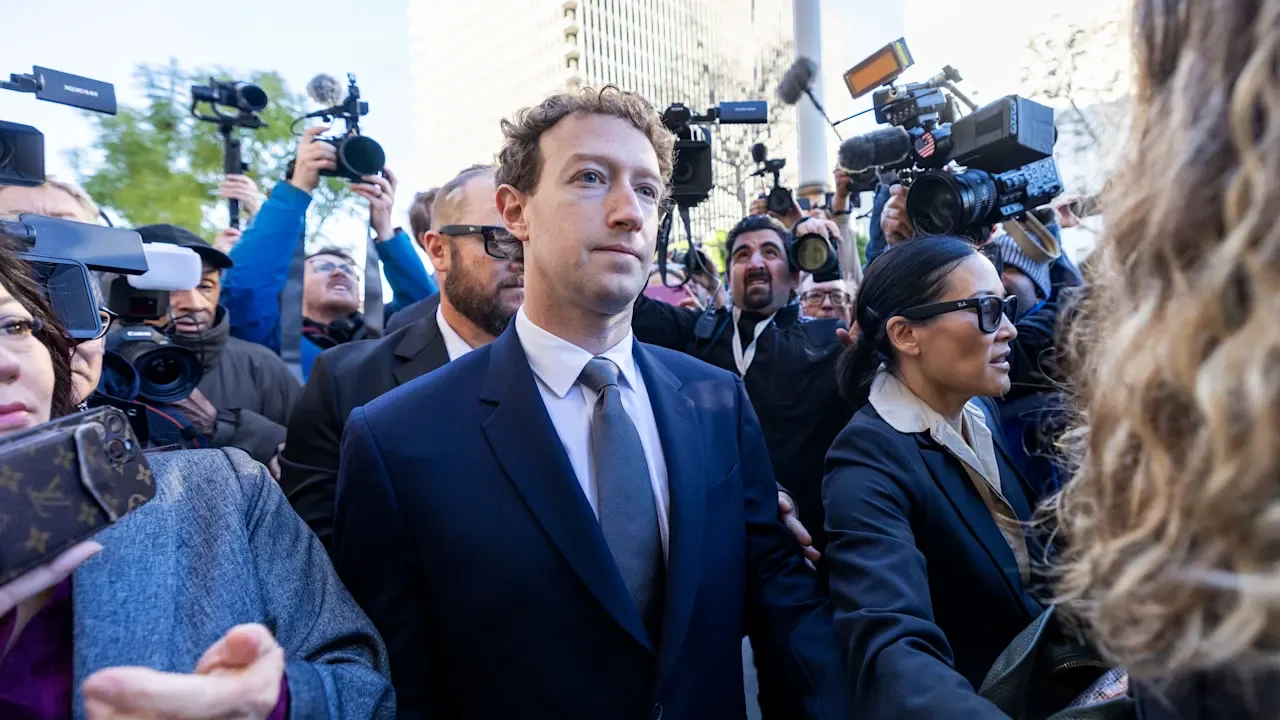
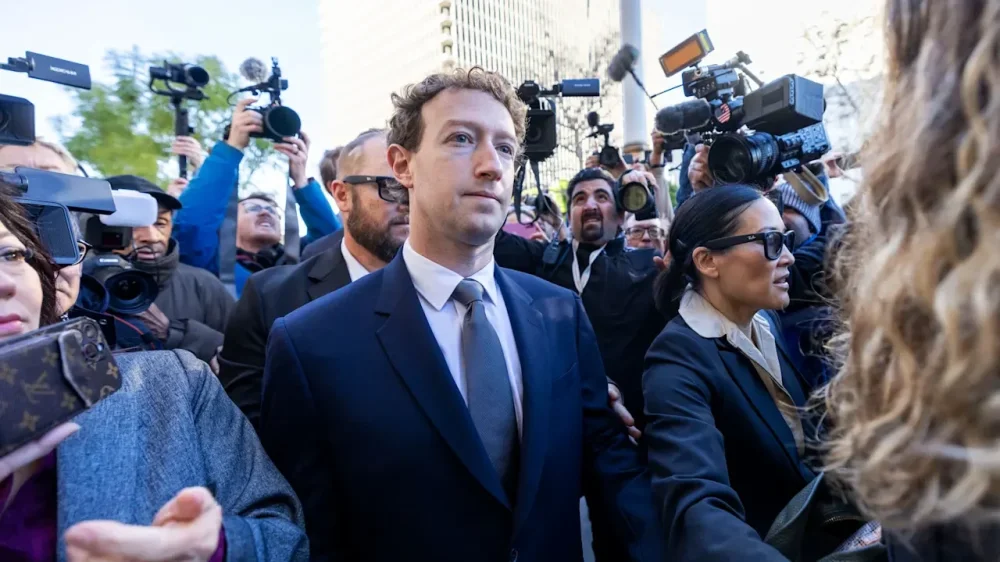
Meta founder and CEO Mark Zuckerberg took the stand Wednesday to defend his company’s practices in a landmark trial that could determine whether social media companies can be held liable for alleged harms to children. But if the defendants lose, the implications could extend far beyond social media. The case centers on Meta and Google, with plaintiffs alleging that services like Instagram and YouTube are intentionally designed to keep users, especially kids, engaged—a dynamic they say can lead to harmful mental health effects, including addiction. The trial is widely viewed as a test case for roughly 1,500 similar lawsuits waiting in the wings. Meta and Google deny the charges, with Zuckerberg testifying on Wednesday that “I care about the well-being of teens and kids who are using our services.” If Meta and Google lose this case, it could change how people interact with their platforms. But the consequences may not stop there: The outcome could also have implications for other tech giants, as well as companies far outside the technology sector. More insurance claims for social media addiction? Insurance companies, for example, could see a rise in claims for digital or social media addiction treatment. For now, social media addiction is not recognized as an official disorder in the Diagnostic and Statistical Manual of Mental Disorders, Fifth Edition, Text Revision (DSM-5-TR), the authoritative guide used to diagnose mental health issues. That makes specialized coverage rare, though insurers do pay for underlying mental health conditions caused or worsened by social media, such as anxiety, depression, or behavioral disorders. Still, the DSM-5-TR is published by the American Psychiatric Association, which has warned that “excessive, compulsive or out-of-control use of various types of technologies is an increasing area of concern.” Business experts say a legal victory by the plaintiffs could accelerate that shift, making digital addiction a more bigger factor for insurers and employers alike. “I think, depending on the outcome of this court case, that may give more credibility to the notion of digital addiction,” says David Schweidel, a marketing professor and the chair of Business Technology at Emory University’s Goizueta Business School. “In an extreme scenario, social media could get labeled as the next Big Tobacco.” Insurance companies declined to comment on the trial and its implications, but some have already taken steps to shield their liability when it comes to social media clients. In 2024, Hartford Casualty and several other insurers filed suit in Delaware seeking declaratory relief that they were not legally required to cover Meta’s legal defense or any resulting settlements or damages in a consolidated California case alleging that social media platforms contribute to harmful behaviors in children. (That case is still pending.) And insurance companies may not be the only businesses to feel the ripple effects. If the jury finds that programmed algorithms are not protected by Section 230, the federal law that shields social media companies from liability over content posted by their users, it could expose many tech companies outside the social media industry to new legal risks. Streamers could feel the effects, too Streaming services that rely on autoplay to encourage binge-watching, or mobile games that lure players back with dopamine-triggering lock-screen alerts, could also find themselves on shakier legal ground. (The European Union, meanwhile, has opened a formal investigation into online retailer Shein that includes scrutiny of its “addictive design,” specifically gamified programs that reward shoppers with points and other incentives.) Even smartphone makers could be forced to make changes, such as giving users more control over notifications. Other companies across the business spectrum could feel the effects if a growing number of people begin seeking treatment for digital addiction. “Employers could potentially affected by severity of addition as well,” says Schweidel. “As the idea of treatment for digital addiction or social media addiction becomes more socially acceptable, people will be taking more time off work to get that treatment.” View the full article
-
Can a headline-making squabble with a client actually be good for a brand? This week’s dispute between the Department of Defense and Anthropic, a high-profile player in the super-competitive field of artificial intelligence, may be just that. The dispute involves whether the Pentagon, which has an agreement to use Anthropic technology, can apply it in a wider range of scenarios: all “lawful use” cases. Anthropic has resisted signing off on some potential scenarios, and the Pentagon has essentially accused it of being overly cautious. As it happens, that assessment basically aligns with Anthropic’s efforts (most recently via Super Bowl ads aimed squarely at prominent rival OpenAI) to burnish a reputation as a thoughtful and considered AI innovator. At a moment when the pros-vs.-cons implications and potential consequences of AI are more hotly debated than ever, Anthropic’s public image tries to straddle the divide. Presumably Anthropic (best known to consumers for its AI chat tool Claude) would prefer to push that reputation without alienating a lucrative client. But the underlying feud concerns how the military can use Anthropic’s technology, with the company reportedly seeking limits on applications involving mass surveillance and autonomous weapons. A Pentagon spokesman told Fast Company that the military’s “relationship with Anthropic is being reviewed,” adding: “Our nation requires that our partners be willing to help our warfighters win in any fight.” The department has reportedly threatened to label Anthropic a “supply chain risk,” lumping it in with supposedly “woke” tech companies, causing potential problems not just for Anthropic but for partners like Palintir. So far Anthropic’s basic stance amounts to: This is a uniquely potent technology whose eventualities we don’t fully comprehend, so there are limits to uses we’ll currently permit. Put more bluntly: We are not reckless. Not moving so fast that you break important things—like user trust, or civilization—is a message that’s of a piece with the official image Anthropic has sought to cultivate. The company was founded by OpenAI refugees who argued back in 2021 that the company was prioritizing monetization over safety. Its recent Super Bowl ads are the highest-profile example of this branding so far: directly mocking OpenAI for experimenting with advertising on its consumer-facing product ChatGPT, and presenting the results as a slop-dystopian mess. The spots were, as Fast Company’s Jeff Beer explained, a rare example of straight-up “ire slung at a category competitor.” They could arguably be the first salvo in a branding battle akin to Apple vs. Microsoft, with Anthropic seizing the role of righteous challenger. (OpenAI’s initial response included belittling Anthropic’s business, which just lends to the latter’s underdog pose.) As a brand image to shoot for, being the responsible AI player is an understandable goal. The technology has been divisive for years at this point, and lately that’s reached a crescendo. Seen by many as a threat to privacy, a job-killer, an environmental menace, and a source of endless misinformation and slop, it’s simultaneously touted by Silicon Valley elites and their intellectual brethren as an unprecedented boon to humanity. The only point of agreement is that the changes will be big and fast and pretty much unstoppable. And no matter how much you already believe that, there is some guy on X arguing that you still don’t really get it. No wonder there seems to be room for an AI company with a cautious message. Of course this is branding we’re talking about, and ultimately Anthropic is under the same marketplace pressures as its rivals. And its actual behavior hasn’t always been pristine. Notably it agreed last year to pay a record $1.5 billion to settle a class-action lawsuit alleging its models trained on some 500,000 copyrighted books. Despite its Pentagon dispute, its technology is already intertwined with the American military, and was reportedly used in the recent U.S. capture of Venezuelan strongman Nicolás Maduro. And of course it may yet acquiesce to Pentagon demands. (According to Axios, Anthropic’s annual revenue is around $14 billion, and its Department of Defense deal is pegged at $200 million—not chump change, but not existential.) Still, the squabble is an occasion for Anthropic to demonstrate that its rhetoric and actions line up. At the very least, that could be good for its flagship chat tool Claude: Consumers tempted by AI hype but worried about its potential downsides may see Anthropic as the fledgling technology’s least-reckless major player. And given how divisive the AI category has become, that might count as a brand win. View the full article

-
Apparent network of companies using same server includes little-known group that has become country’s largest oil exporterView the full article
-
Even if you barely use AI, pretty soon you’ll be paying the price for it. Due to the demands of AI data centers, memory supplies are drying up for all kinds of devices, from phones and laptops to desktop PCs and game consoles. Three companies control nearly all the world’s DRAM production—Micron Technology, Samsung Electronics, and SK Hynix—and they’ve shifted production toward the type of RAM that those data centers run on. This comes at the expense of RAM for consumer electronics, resulting in a shortage that could last into 2028. It’s early days for the fallout, but what sounded like an abstract concern in 2025 is quickly becoming real, as electronics makers raise prices, delay new devices, and cancel products that aren’t essential to their businesses. To illustrate exactly how AI is sucking the life out of consumer electronics, here’s a running list of every device that’s being affected by the RAM crunch. I plan to update this list over time, so feel free to reach out via email or on Bluesky if you spot any more bad news. Price hikes Standalone RAM kits for desktop PCs were among the first products affected by the RAM crunch. For instance, a 32 GB RAM kit from Crucial that cost around $70 in July now sells for $324. Framework has repeatedly raised RAM prices for its repairable laptops, so a laptop with 8 GB of RAM now costs $90 more than it did in September. The Raspberry Pi 5 micro-computer with 16 GB of RAM now costs $205, up from $120 prior to December. Valve has discontinued the LCD model of its Steam Deck gaming handheld, effectively raising the starting price from $399 to $549 for the version with an OLED screen. Desktop PC maker CyberPower raised prices across all of its systems in December. Chinese phone maker Xiaomi raised tablet prices by $14 to $42 in December, and raised the price of its flagship 17 Ultra phone by about $76 over the previous model. PC makers such as Lenovo, Dell, HP, Acer, and Asus have all confirmed 15% to 20% price hikes in the months ahead, according to IDC. A Dell price list viewed by Business Insider showed price hikes for a range of laptops, including increases of $130 to $230 for Dell Pro and Pro Max laptops with 32 GB of RAM. It’s still a rumor for now, but sources tell Bloomberg that Nintendo is considering a price hike for its Switch 2 console. Delays Valve has indefinitely delayed its Steam Machine desktop/gaming system and its Steam Frame VR system, and has held off on announcing prices for either. Sources tell Bloomberg that Sony is considering a delay for its next PlayStation console until 2028 or even 2029. Sources tell The Information that Nvidia won’t release new graphics cards in 2026. This would be its first year in three decades without new GPUs for gaming. Disappearances Valve says its Steam Deck OLED gaming handheld will be “intermittently” out of stock due to memory and storage shortages. Intel reportedly scrapped its highly anticipated B770 graphics card, with memory shortages as a possible factor. In the burgeoning “ChiFi” audio gear scene, HiBy Digital suspended pre-sales of its latest digital audio player in December. Degradations In December, the market research firm TrendForce said to expect laptops and phones with less memory than earlier models as an alternative to price hikes. This could result in low-end phones with just 4 GB of RAM, and laptops once again returning to 8 GB of RAM as a baseline. What’s next? The list of affected companies is still missing some big names, partly because those companies are in better position to ride out the RAM shortage. Apple, for instance, negotiates long-term supply contracts well in advance for products like the iPhone, so it’s potentially bought itself more time than competitors. Lenovo, meanwhile, confirmed that it’s been stockpiling RAM to minimize disruptions this year. There’s also a chance that alternative suppliers could step in to blunt the impact. According to Jason England at Tom’s Guide, Acer is now looking into the smaller RAM providers that haven’t gone all-in on AI, and may see an opportunity to cater to consumer electronics in particular. But given that Samsung reportedly can’t even get extra RAM from itself for its forthcoming flagship phones, some adjustments seem inevitable even for the largest electronics makers. View the full article

-
The retail platform eBay is set to acquire fashion resale app Depop from Etsy in a $1.2 billion transaction. Ostensibly, the deal will help eBay to cultivate a new audience of Gen Z and Gen Alpha shoppers. But I think there’s a deeper reason that eBay might want to lock Depop down: it’s simply the best looking resale interface out there right now. The deal was announced on February 18 in a press release from Etsy. It’s expected to close some time in the second quarter of 2026, and, per an email sent to Depop’s customers, after the merger Depop will remain a stand-alone brand within eBay and retain its name, brand, and platform. For eBay, acquiring Depop makes a good measure of intuitive sense. Generally, resale is trending upward: Based on ThredUp’s 2025 Resale Report, the secondhand apparel market is expected to reach $367 billion by 2029, growing 2.7 times faster than the overall global apparel market. Millennials, Gen Z, and Gen Alpha shoppers are some of the strongest drivers of that trend, with 39% of younger generation shoppers having made a secondhand apparel purchase on a social commerce platform in the 12 months before the study was published. Depop is one of the top platforms for young people looking to buy and sell clothes. In 2025, the brand achieved approximately $1 billion in sales, including nearly 60% year-over-year growth in the U.S. As of December 31, it had seven million active customers, nearly 90% of which were younger than 34. That user base will be a major boon for eBay, who says that millennial and Gen Z consumers have been two of the biggest drivers of active buyer growth in the past three years. As a Gen Z vintage clothing enthusiast, I’ve shopped on pretty much every resale site you can think of, from Poshmark and ThredUp to eBay, Facebook Marketplace, Mercari, and Etsy. Among all of these options, Depop is far and away the best resale site to look at and the easiest one to use. That’s not to say that Depop doesn’t have any issues—a brief glance at the site’s subreddit will reveal plenty of user grievances, not least of which is the tendency of certain Depop sellers to price a Brandy Melville baby tee at a cost that could put your checking account in the red. But from a pure UX and design standpoint, Depop is far outperforming its competitors by taking its major design cues from popular social media apps. And for a digitally native generation that’s used to doing most of their shopping online, that makes a big difference. A social media-esque app experience Depop knows that its customers are young, tech savvy, and probably spending most of their phone time on social media sites like TikTok and Instagram—and it shows in the app’s design. When you open the Depop app, you’re immediately greeted with a “Suggested for you” page that’s functionally similarly to TikTok’s Explore feature. Here, the Depop algorithm presents you with an endlessly scrollable page of items curated based on your searches, likes, and saves—like how TikTok or Instagram might serve you videos according to your interests. In contrast, eBay’s app homepage looks more similar to a standard e-commerce webpage, directing users to its different goods categories and promoting whatever deals and sales are currently trending. In terms of its layout, Depop’s app is simple and aesthetically pleasing. Its interface is almost identical to Pinterest—where many customers are likely looking for outfit inspiration—with a subtle bar of categories at the bottom of the page and about four spotlighted items on view at a time. The minimalist information density encourages you to keep scrolling to find more items, rather than overwhelming you with a sea of information. Other apps, like Poshmark, eBay, and ThredUp, seem to opt instead for presenting users with a wealth of options to choose from when they first log on, which, counterintuitively, can make scrolling feel less appealing. While I tend to open my computer if I want to browse other retail sites, I almost always open Depop on my phone, and imagine it in a similar category to social media apps. Considering that the secondhand apparel market is becoming so popular among younger shoppers, other resale platforms might want to take note. Simple selling UI Over the past few months, I’ve developed the niche hobby of restoring and selling vintage wedding dresses online (typically for a profit of about $10 apiece, but I’m in it for the fun of the game). Having used both Depop and Etsy to sell my own products, I find Depop’s seller UX more intuitive and simple to follow. From an app standpoint, Etsy has two separate platforms: one app for selling, and one app for buying. On its website, sellers also have to navigate to a shop management platform to look at their listings. Depop, on the other hand, is consolidated into one app experience, where sellers can manage all of their listings and their purchases. Creating an actual Depop listing feels akin to making a post on Instagram. Sellers navigate to a “+” at the bottom of the app (like Instagram), add a series of photos and a caption (also like Instagram), and include a few key tags for their item. Depop also handles shipping through a system that lets users provide an estimate of their item’s weight and then creates an appropriate label. Shipping on Etsy is more seller-directed. While some more experienced sellers might prefer Etsy’s approach, Depop’s feels more beginner-friendly. A final refuge from AI listings One of my biggest personal gripes with the current state of resale shopping is the absolute deluge of AI-generated product images that seem to have flooded certain sites over the past few months. In my experience, eBay and Etsy are the biggest offenders of this trend. Searching for the term “fantasy dress,” on eBay and Etsy, for example, leads to at least one out of four top results with all the hallmarks of an AI image. The same search on Depop yields results that all seem to be real photographs. This example is just one small microcosm of the shopping experience on these sites: while AI photos are becoming increasingly common in resale, buying on Depop still largely feels like sifting through a stranger’s closet, which was the site’s original charm. It’s unclear exactly why AI photos seem less prominent on Depop; though it may be related to the company’s regulations against stock photos. In its guidelines, Depop instructs sellers to “Only use photos taken by yourself.” Depop didn’t immediately respond to Fast Company’s request for comment on its AI imagery policies. View the full article
-
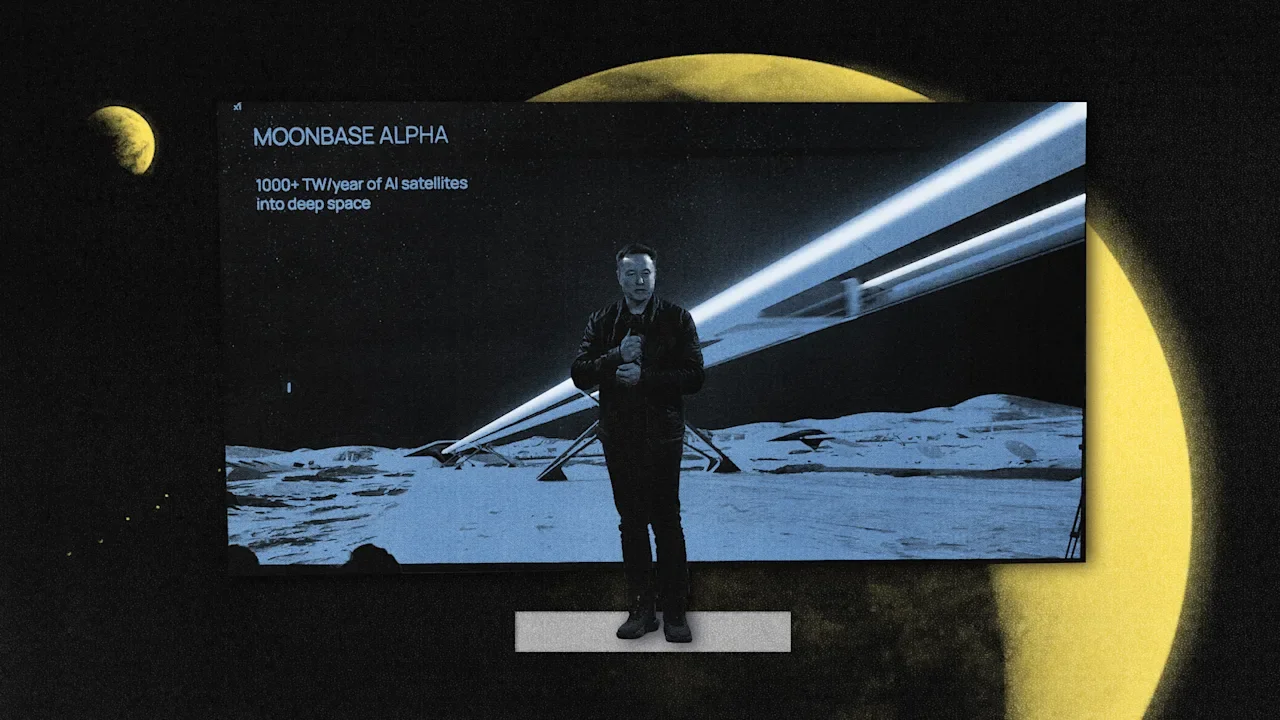
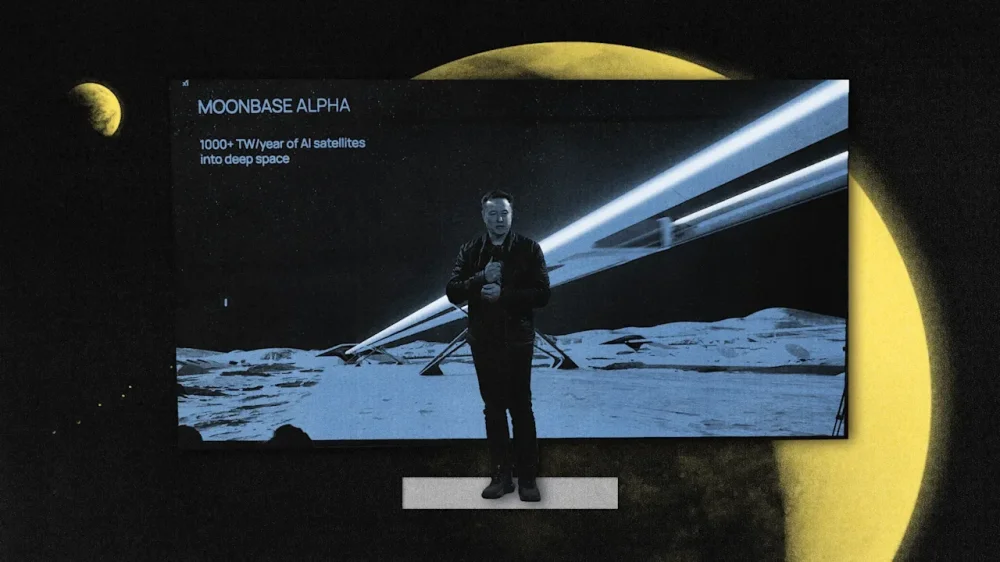
“I really want to see a mass driver on the moon that is shooting AI satellites into deep space,” Elon Musk said last week when he announced his plan to go to the moon. “It’s going to be incredibly exciting to see it happen.” He’s right. I want to see it too, although probably we will both be dead before his vision is realized. The lunar mass driver—essentially a cannon that uses magnetic power to accelerate an object—is a key component to launch the million satellites Musk wants to put in orbit around the Earth. But Musk wasn’t the first person to come up with the idea. Smarter people than him thought about this in the 1970s as the solution to a key problem for human exploration. Launching spacecraft from Earth is extremely expensive. Every pound lifted from Cape Canaveral to low Earth orbit costs thousands of dollars in fuel, hardware, and operational complexity. The farther you want to go in space, the more massive and complex the rocket has to be, increasing costs. Chemical rockets must carry their own oxidizer and propellant, which means most of the vehicle’s mass is just fuel to lift more fuel. This tyranny of the rocket equation has strangled space development for seven decades, only slightly eased by the economics of reusable rockets like the Falcon 9. A mass driver could break that stranglehold by using electricity instead of explosives, turning launches into a utility-scale operation rather than a high-wire act. On the Moon, where gravity is one-sixth of Earth’s and there’s no atmosphere to create drag, this technology could launch payloads at a fraction of the cost—a few dollars per pound in electricity. Compare that to the $1,200 per pound it currently costs to launch a payload on a reusable Falcon 9 rocket. An elegant design American physicist Gerard O’Neill and MIT physicist Henry Kolm built the first prototype of a mass driver in 1976 with a $2,000 budget. The Mass Drive 1 could fire objects at 131 feet per second while experiencing 33 times Earth’s gravity. Their next version achieved 10 times greater acceleration with a comparable funding increase. University of Texas researchers subsequently priced a serious version at $47 million for a device capable of launching a 22-pound payload at 13,400 miles per hour. A mass driver is basically a very long track stretching across the lunar surface, angled gently skyward at its far end. The track is lined from end to end with hundreds of electromagnetic coils, which are simply loops of wire that snap into powerful magnets the instant electricity runs through them. A payload sits inside a magnetizable carrier called a bucket. To move the bucket, the coils fire in a precise sequence, one after another, each energizing at exactly the right moment as the bucket reaches it, grabbing it forward, then cutting off the instant it passes. The result is a cascade of invisible magnetic hands, each passing the bucket to the next. The bucket never makes mechanical contact with any surface: It is held aloft and guided entirely by the interplay of magnetic fields, which is why these systems have a theoretical operational lifespan of up to millions of launches with negligible wear. Musk describes it as a large maglev train, the same levitation technology that holds high-speed trains above their rails in Japan or China. But the mass driver reaches much faster speeds than any train on Earth: about 1.5 miles per second, enough to escape the gravity pull of the Moon. To achieve that speed, the mass driver uses two distinct engineered stages. In the first, the coils sit at equal intervals and their electrical timing locks to the bucket’s exact position—each successive push arrives at precisely the right instant, so the force compounds as velocity builds. In the second stage, the interval between coils progressively widens, which paces the pushes further apart in distance and holds the rate of acceleration constant rather than letting it keep climbing so the increase in acceleration doesn’t destroy the bucket or its cargo. At the terminal end of the track, the bucket releases its payload—a xAI satellite according to Musk’s vision—into space at a minimum speed of 5,300 mph, enough escape the Moon’s gravity. The trajectory that the load follows depends on the position of the Moon at the moment of the launch, following the orientation of the mass driver relative to the space. Then the bucket gets caught by a braking system, recovered, and sent back to the beginning for the next launch. No combustion. No exhaust. No rocket equation. No problems. It’s a beautiful solution. It’s also doable, as O’Neill and Kolm demonstrated practically. According to independent researcher and author Keith Sadlocha, a working lunar mass driver would require a track between 1,620 and 5,350 feet long, operating at accelerations between 30 and 400 times Earth’s gravity in standard operation. At those forces, only rugged, non-human cargo survives the ride—which is exactly what Musk is planning. Musk has his sights set on manufacturing AI computing satellites on the lunar surface. The system can fire one payload every 10 to 11 seconds. Scaled to Musk’s stated target of one million satellites in orbit, that cadence, sustained continuously, is what makes the economics viable in a way no rocket ever could. But to accomplish this, you will need a lot of electricity. For Musk’s purposes, system requires 8.7 to 20 megawatts of continuous power, enough to run a small town. Delivering that on the lunar surface requires between 400,000 and 634,000 square feet of solar arrays—somewhere between seven and 11 NFL football fields’ worth of panels according to Sadlocha’s calculations and NASA’s estimates. That’s using solar panel’s with an efficiency of roughly 30%, the figure NASA uses for cells especially designed for space use. Since the Moon endures two weeks of total darkness every month, this means the mass driver either sits idle for half of every lunar cycle or relies on supplemental power to keep firing through the night. NASA and the U.S. Department of Energy are developing a solution: The Fission Surface Power (FSP) project, which builds on the earlier Kilopower research program to produce compact nuclear fission reactors targeting 10 to 40 kilowatts of continuous output each, capable of running for a decade without refueling. Each FSP reactor will produce enough electricity to power just a few homes. Bridging the full gap between those modest reactors and a mass driver that demands the output of a small power plant would require deploying them not one or two at a time, but in the hundreds. That is not a technology problem so much as a logistics one—every reactor has to be launched from Earth, landed softly on the Moon, and connected to the grid before the mass driver fires its first payload. The program, however, is still in development and a lunar deployment is not expected before the late 2020s at the earliest. And that’s extremely optimistic, given the constant delays of those nuclear projects and the Moon return plans. Unrealistic timeline Scaling from the $47 million 22-pound-launch prototype that University of Texas researchers projected to a working lunar installation capable of launching huge satellites is where you begin to feel just how vast the distance is between a compelling idea and a functioning machine. Sadlocha estimates that a full lunar mass driver system requires approximately 362 metric tons of hardware. That’s 24 heavy-lift rocket launches worth of components that must be manufactured on Earth, survive a 239,000-mile journey through the void, and be assembled by people wearing pressurized suits on a surface that—bathed by radiation—is extremely hostile to humans. That surface is coated in lunar dust too, ultra-fine abrasive shaped by billions of years of micrometeoroid impacts into particles with microscopic cutting edges that never dulled, because there has never been wind or rain or any erosive force on the Moon to round them off. It clings electrostatically to visors, suits, seals, and coil windings alike. The payload carriers themselves face thermal melting at extreme velocities, demanding materials that do not yet exist in proven lunar-rated form. You can argue that maybe Musk’s Optimus robots can avoid this, but his robots can barely function on Earth. Musk’s stated plan is to mine lunar silicon and oxygen and manufacture the server hardware on the surface—a bootstrapping strategy that, if it works, would reduce Earth-launch dependency over time toward what he called a “self-growing city” capable of rapid expansion from local resources. The Moon does contain silicon, oxygen, helium-3, and water ice at the poles. But the superconducting coils at the heart of the mass driver require precisely manufactured materials that the lunar industry will not be able to produce in decades. Every critical component rides to the Moon on Starship until that changes. We know that Starship is so behind schedule that it has pushed the first mission back to the Moon from 2027’s NASA projected time to 2028. Sadlocha rates the technology at readiness level 5 on NASA’s 1-to-9 scale — components validated in laboratories, not yet tested in space. Realistic deployment, his study concludes, will take between 5 and 15 years from the moment serious investment begins. That can take the project into the 2040s, easily. That’s why Lluc Palerm, satellite research director at Analysys Mason, said to PC Magazine that Musk’s lunar server plan carries a magnitude of challenge equivalent to a Mars mission. But like we already pointed out, Musk’s timeline is fantasy, or “aspirational” as he qualifies his predictions. The gap between his ambitious renderings and actual functioning hardware remains a dream measured in decades, not the 10 years he’s promising investors before his planned June 2026 initial public offering targeting a $1.5 trillion valuation. Musk is no JFK, and building factories and a mass driver on the Moon is orders of magnitude more complex than just putting boots on the Moon like the Apollo program did. It’s doable, yes. We’ll get the mass driver, eventually. Just not on Musk time. View the full article
-
Thames Valley force says it has finished its search of the former prince’s Sandringham home where arrest took placeView the full article
-
Stacie Haller, a consultant for executives, recently had a meeting with a former business owner in his early 80s. He’d sold his business, started playing golf, and discovered something about himself: he found golf extremely boring. And now, even though he doesn’t need to be, he’s back on the job market. “’I’m so vital’,” he’d told Haller, “’I’m still in the game’.” Haller is a senior herself. She says could have stuck with retirement after getting furloughed from her recruiting job during the pandemic. Instead, she started independently consulting for senior executives and for Resume Builder. Now? She’s working part-time and earning as much as she did before. “I’m happier now in my career than I’ve ever been,” she says. According to recent survey of more than 3,500 U.S. seniors by Resume Builder, around one in eight have returned to work as of December 2025, or are planning to do so. Another 16% have never retired, and 4% were actively applying for jobs. Another survey, by financial advice company The Motley Fool from October 2025, found that 54% of 2,000 Americans who get Social Security benefits “have returned to work or considered going back” because Social Security benefits are so low. But, as in the case of Haller’s former business owner, that’s not the only factor driving what some call “unretirement.” “The number-one answer is usually related to money, but it’s not the clear winner,” says Robert Brokamp, senior retirement adviser at The Motley Fool. “There are many people who do go back to work because they got bored. They got lonely. They needed something to do.” “When you are older, you actually have an opportunity to try something new—or not have as much stress with your job,” says Haller. While these reasons keeping seniors working may have applied in the past, they’re arguably driving more of a trend now because of how work has changed since the pandemic: Flexible, hybrid, and remote work opportunities make it much easier for seniors, who may have health or mobility issues, to remain in the workforce. Rising costs of living Brokamp says that there’s “no question” that people in their 60s through 80s are returning or continuing to work at increasing rates. With people living well into their 90s, they’ve got a lot more time to budget for, especially in today’s economy. In Resume Builder’s survey, 54% of respondents attributed continuing or returning to work after an initial retirement to the high cost of living. “I don’t know a person that doesn’t go to the supermarket and walk out and say, ‘Are you kidding me?’” Haller says. Such everyday costs also amplify concerns seniors have about Social Security and Medicare, which 26% and 19% in that survey, respectively, cited as their reasons for working. Though Social Security did undergo a recent 2.8% cost of living adjustment increase, 54% of recipients told The Motley Fool that wasn’t high enough. With inflation at 2.7%, that increase might seem like enough—but the problem, says Brokamp, is that inflation often plays out differently for working professionals than retirees. “The inflation rate for healthcare is over 3%,” he says—a major cost for seniors, who not only may visit doctors more regularly, but also tend to spend more on prescription medications than their younger counterparts. Other financial factors that drive seniors to return to work include not having saved enough for retirement, having to pay off debt (medical or otherwise), and needing to support their children, per Resume Builder. This picture, of course, looks different across different wealth brackets. Geoffrey Sanzenbacher, a research fellow at Boston College’s Center for Retirement Research, has found that people who’ve earned less income during their careers, and therefore don’t have as much “emergency savings,” can get “drawn back into the labor market” with a single “health shock” to them or a family member. Unlike other surveys, Sanzenbacher’s research points to a low unretirement rate of 1.9%, which he says comes from looking at narrower timelines (as in, seniors working at the time of the survey, not within that year). “Right now, you have a perfect storm of reasons why the unretirement rate might be low,” Sanzenbacher says. That includes a not-great job market (more people “unretire” in good job markets because they have more opportunities, he says) and a high stock market. So, retirees relying on 401Ks, for example, should be well in the black. This, to him, suggests that people unretiring now must be doing it because they really need the cash. Continued vitality, personal fulfillment If seniors are reentering the workforce by choice post-retirement, they’re likely doing it to have some fun—and are perhaps more likely to be doing more independent work, like starting their own businesses, which doesn’t rely on getting hired. Haller mentions seniors who’ve emerged from retirement to start their own Etsy shops, and Sanzenbacher brings up the idea of a retired worker who’s always wanted to be a tour guide finally fulfilling that dream. The desire to return to work to try something new, says Sanzenbacher, “is very common among higher income or more educated workers.” Typically, he adds, those post-career jobs relate to the former retiree’s original career. “They were a lawyer, and now they’re an arbitration judge who works one day a week on Zoom,” suggests Sanzenbacher, “or they were a teacher, and now they’re a tour guide.” Sometimes, these reentries are part of long-term plans. Other times, says Sanzenbacher, “it can be [from] the realization that retirement isn’t as fun as what people thought.” “The evidence on whether retirement is good for us is very mixed, and it really depends on what you’re retiring from and what you’re retiring to,” says Brokamp. “Many people have boring, stressful, arduous jobs, and retirement is very good for them. On the other hand, many people had decent jobs that they actually somewhat enjoyed, and when they retire, they feel adrift.” This rings true for a lot of the seniors Haller speaks with about unretirement. After “enjoying work,” at 54%, Resume Builder survey respondents described non-financial factors like “combatting boredom” and “to socialize” as significant reasons to keep working or go back to work after retirement. Mark Brodsky, 72, director of Field Associate Learning at Lowe’s, has barely even conceived of retirement, though people often ask him when he’s going to do it. “Usually, without missing a beat, I say, ‘The day I have no further value to provide and or my value is not needed or wanted.’” This could mean never retiring. “Did Picasso stop painting?” he asks. “I spent 50 years developing my craft . . . Why should I put that on the shelf?” Flexible work, more options Haller, for one, says she can work as much as she does because working remotely, or in hybrid positions, has become such a norm. “Our bodies age,” says Haller. “Honestly, I’m not getting on a commuter train for two hours a day anymore.” The flexibility that often comes with remote or part-time work fits with what most seniors returning to work from retirement are looking for, anyway. “I don’t know any 70- or 75-year-old who really wants that high-pressured, C-suite job if they’re going back to work,” Haller says, and they should make this clear to employers if they’re looking for the kind of work that requires getting hired (instead of working independently like Haller). Haller suggests seniors tell hiring managers that they’re looking for more relaxed positions than in their previous careers. Otherwise, hiring might assume seniors are looking for the same, high salaries they retired with, and not want to spend that much money on an employee who’s likely not going to remain in the workforce for very long. “We have to overcome that objection,” Haller says, by making it explicit to employers that salaries commensurate with past full-time jobs aren’t what “unretirees” are requesting. Make that known in cover letters or networking conversations, Haller suggests, and emphasize the pros you’ll bring to the office even if you’re not necessarily in it for as long as younger workers. Seniors coming out of retirement have probably “seen every situation in the workforce already,” Haller says, and can keep a cool head encountering problems while valuably mentoring younger colleagues. Brodsky calls this “scar tissue”: “Life provides you bumps and bruises, and scar tissue is actually an attribute . . . If I were hiring a senior executive for important work, I’d want to bring on somebody who had scar tissue.” Regardless of the reasons for returning to work, the overall message is clear. “We don’t go off into pasture when we turn 65 anymore,” Haller says. “We have choices now.” View the full article

-
From Silicon Valley to Wall Street, many executives think that bringing employees back to the office is the secret to restoring productivity. But they’re wrong. That’s not what’s happening in those newly populated offices. Instead, your employees are more likely to be joining video calls from company desks and wearing noise-canceling headphones while doing work they could have done at home. Only now they’re paying $20 to commute and eating sad desk salads to get through the day. The timing couldn’t be more ironic. A new wave of return-to-office (RTO) mandates arrive just as companies pour millions into AI initiatives designed to automate work, eliminate roles, and drive bottom-line efficiency. Leaders advocate for AI as the engine of the future, one that can streamline and modernize how work gets done. So, why are they forcing people back into offices designed for workflows that AI is actively making obsolete? Recent research shows what many employees have known all along: RTO mandates don’t improve productivity, innovation, or team connection. But they do weaken morale and accelerate attrition. If companies want better long-term performance, they might consider paying attention to the employee experience instead of treating it as a footnote to investor expectations. And they should also recognize that unpopular RTO policies reflect a deeper tension—one that AI is making increasingly clear. The Quiet Part Out Loud RTO mandates aren’t failing because the concept of in-person collaboration is flawed. They’re failing because the justifications are. Executives keep saying they want to “rebuild culture,” but the real motives often tell a different story: investor pressure, management’s discomfort with remote autonomy, or the convenient use of office mandates as a cover for workforce reduction. At a time when AI is openly positioned as a way to reduce labor costs, some companies appear to be using RTO as a secondary mechanism to achieve this, nudging employees to quit so severance costs stay low. It’s a cost-saving strategy dressed up as culture building. When employees become line items, distrust becomes the default operating model. Other companies are stuck in the past, clinging to the office as a symbol of managerial control. But if an employee underperforms remotely, geography isn’t the issue. Leadership is. At its core, the return-to-office push reflects a deeper tension: companies urgently investing in technologies that decentralize and automate work, while simultaneously doubling down on physical presence as proof of productivity. It’s a contradiction that exposes a lack of coherent strategy for the future of work. Two Transitions Collide: AI and the Office As AI reshapes job responsibilities and absorbs repetitive tasks, two seismic organizational transitions are happening at once: shrinking the demand for human labor and shrinking the relevance of the physical office. It’s not hard to see how these forces collide. Some leaders seem to be using office presence to manage this uncertainty, both to subtly reduce headcount and to maintain control during a period when technology threatens traditional hierarchies. But proximity isn’t a proxy for performance and visibility won’t stop AI from transforming work. If anything, it simply delays the hard strategic conversations leaders need to have. What Actually Works A more effective approach asks deeper questions about the work itself. Which activities genuinely benefit from real-time, in-person creativity? Which roles depend on deep focus? Where does mentorship thrive? And crucially, what does our data (not nostalgia) tell us? At my firm, Orgvue, we took the time to analyze our own workflows end-to-end before deciding on an office working policy. And we found that our product teams saw real value from whiteboarding sessions in a physical space, while our customer success teams performed better with the flexibility to work from wherever made sense for their client base. A one-size-fits-all approach would have failed both groups. To enhance these in-office interactions, we redesigned our workspaces to introduce collaboration hubs for teamwork, quiet areas for deep work, and a podcast studio—because modern work demands modern tools. People come into the office when it makes sense, not because a memo told them to. The Trust Test When companies issue blanket RTO mandates, they send a very clear signal: “We don’t trust you.” That’s a dangerous message at a time when competitors are winning talent with flexibility and autonomy. So, before you mandate a return to the office, it might be helpful to ask yourself the following questions: Can we prove with data that office presence improves productivity for specific teams? Have we designed an office people actually want to come to? Are we solving productivity challenges or satisfying executive preference? Skip these questions, and you may learn an expensive lesson: your best people have options, and they’re not afraid to use them. The Bottom Line U.S. businesses are at a crossroads. Those that demand five days in the office will be competing against those offering more flexible work arrangements. And when it comes to technology investment, the irony is clear. While companies invest heavily in AI to improve efficiency, agility, and independence, they’re simultaneously enforcing policies that undermine all three. In short, the organizations that succeed will be the ones that align their work models with their technology strategies. That means embracing autonomy and data-driven insight rather than badge swipes. Want higher productivity? Fix your management practices. Want better collaboration? Design better systems. Want more engaged employees? Trust them to do their jobs. Because if you need to see someone to believe they’re working, the problem isn’t remote work, and AI is about to make that painfully obvious. View the full article

-
Below, George Newman shares five key insights from his new book, How Great Ideas Happen: The Hidden Steps Behind Breakthrough Success. George is an associate professor at the Rotman School of Management at the University of Toronto, and he has spent his career trying to unravel the mysteries of what creativity is and where it comes from. His research has been featured in the New York Times, The Economist, BBC, Scientific American, Forbes, The Wall Street Journal, and The Washington Post. What’s the big idea? Most of us think great ideas are conjured from within—some mysterious well of genius possessed by a special few. But if you listen closely to history’s most celebrated creators, you’ll hear something completely different. They describe their greatest work not as something they conjured or invented, but as something they found. Not creation, but discovery. Listen to the audio version of this Book Bite—read by George himself—below, or in the Next Big Idea App. 1. The five percent novelty rule There’s a famous story about Post-It Notes. In 1968, a chemist named Spencer Silver was trying to create a super-strong adhesive that could be used to make airplanes. Instead, he wound up discovering pretty much the exact opposite: a glue that was barely strong enough to hold paper together—though it could be used again and again without losing its stickiness. For years, Silver brainstormed different products. His first big idea was a sticky bulletin board. That went nowhere. The next idea, which came from his colleague Art Fry, was a reusable bookmark. That also flopped. Finally, after almost a decade of brainstorming, Silver landed on Post-It Notes, and the rest is history. Silver’s story is often told as one of grit and perseverance. And, no doubt, stick-to-itiveness is an important part of creativity. But when you think about it, the sticky bulletin board, reusable bookmarks, and Post-Its were essentially three different versions of the same basic idea: paper + Silver’s adhesive. Yet, only one was a major hit. Often, when we think about what makes certain ideas great, there’s a tendency to focus on the differences—how much a breakthrough idea towers above the rest. But rather than focusing on what differentiates great ideas, I want you to instead think about the similarities—how close those breakthrough ideas are to many others just like them. Just like in the story of Post-Its, for every great idea we can point to in history, there were dozens, maybe even hundreds of ideas that were just like it—nearly identical versions of the same thing that failed to catch on because they lacked a small, but crucial element. For example, when John Lennon originally wrote the Beatles song “Please, Please Me,” it was a slow ballad. George Martin suggested the group try speeding it up. Would the Beatles not have been The Beatles without a small tempo change? It seems almost impossible to imagine, and yet, history is filled with examples that suggest exactly that. How many breakthrough ideas are sitting in someone’s drawer right now, just one small adjustment away from changing the world? Great ideas aren’t about inventing something radically new. They’re about finding the missing adjustment, tweak, or change that unlocks an idea and makes it your own. We often get this backward. In my own research on creativity, I have found that when people set out to do something “creative” they often focus too much on trying to be original and different from everyone else. In one study, we had home chefs create sandwiches for a food truck. We found that our chefs thought that the more original they made their recipe, the more attractive it would be to others. But when we presented those sandwiches to customers, we found the opposite: the more original the chefs tried to be, the less willing customers were to try their sandwiches. Those chefs had forgotten the most important ingredient of all: making their food taste good. “How many breakthrough ideas are sitting in someone’s drawer right now, just one small adjustment away from changing the world?” We also analyzed multiple seasons of the show Top Chef and found the same thing. When contestants explicitly said they were trying to be original and different from everyone else, they were more than twice as likely to have the worst-rated dish and get eliminated. So, stop trying to reinvent the wheel. Just make it spin a little differently. The recipe for a great idea is surprisingly simple: Make the main dish conventional, something familiar and known. Then add something special—a spice or twist—making it new, exciting, and your own. 2. Be a problem finder Okay, so you need to find that missing five percent. But how? One of my favorite studies on creativity comes from one of my favorite psychologists, Mihaly Csikszentmihalyi. He spent years investigating what distinguished truly creative individuals, and he found that the most creative people weren’t just good at solving problems. They were exceptional at finding them. In one study, Csikszentmihalyi and his colleague, Jacob Getzels, recruited a group of art students studying at the prestigious Art Institute of Chicago. One by one, each of the artists was led into a studio furnished with two tables. On one table was a collection of objects that artists might typically use to create a still life. On the other table were drawing supplies, including paper, pencils, and charcoal. The instructions were straightforward: Choose some objects from the first table, arrange them in any manner you like, then create a drawing. The artists were free to take as much time as they wanted, start over if they needed, and to stop only when they were satisfied with the outcome. Most of the artists quickly got to work. But some artists did something different. They spent time handling the objects, feeling their weight, studying them from different angles. Looking at the negative space that formed in between them. They were searching for something—a problem worth solving, or a question worth asking. Then Csikszentmihalyi waited—for 18 years. When he followed up with the artists nearly two decades later, the ones who talked about drive or ambition were not the ones who were successful. Nor was it the ones who opined generally on the importance of seeking “beauty,” or “order,” or “harmony.” It wasn’t the artists who seemed confident, nor was it the ones who had worked out a deep, philosophical approach to their artistic practice. Instead, it was the problem finders, the artists who approached the drawing task without any preconceived notions and allowed the shape and structure of their still life to emerge from the situation itself. “When we pay close attention to our surroundings, new opportunities and challenges begin to reveal themselves.” When it comes to finding the missing element that unlocks a breakthrough idea, it is essential to adopt the mindset of a problem finder. When we pay close attention to our surroundings, new opportunities and challenges begin to reveal themselves. Our task then is to learn to recognize these signals—to see that creativity isn’t about forcing solutions but about uncovering what an idea needs. Finding a great idea takes a lot of work, trial and error, and even a bit of luck. But there’s also a lot that you can do to increase your chances of finding something great. Notice where there are problems, tensions, or places of resonance. Author Margaret Atwood doesn’t just sit in a cabin waiting for inspiration. She digs through archives, historical records, and newspaper clippings to find the inspiration for her stories. Creativity isn’t magic. It’s about looking outward and remaining attentive to the world around you. 3. Push past the creative cliff Once you’ve found your problem, it’s time to dig. And here’s where most people sabotage themselves. Researchers Brian Lucas and Loran Nordgren asked people to brainstorm ideas for five minutes—things like how a charity could increase donations. Before starting, they asked participants to predict their productivity: How many ideas do you think you’ll come up with in the first minute? How many in the second minute? And so on. People expected the first two minutes to be productive, followed by a sharp drop-off. Raffle, bake sale, door-to-door solicitations—really, how many fundraising ideas could there be? But when people actually brainstormed, something fascinating happened. The first minute was strong. The second minute was even better. But then, instead of falling off a cliff, participants just kept generating more and more ideas. The third minute was more productive than the second. The fourth and fifth were even more productive. And what’s more, when other people rated the ideas, they scored the ideas from the latter half of the session as more promising than the early ideas. We call this the creative cliff illusion. People think they’ll run out of ideas, but the opposite is true. Just when you think you’ve exhausted every possibility, that’s probably when your process is really starting to heat up. Look at some of the most successful creators in history. Thomas Edison held more than a thousand patents, including duds like cement furniture and a creepy talking doll. James Dyson built over five thousand prototypes before finalizing his vacuum design. When Dua Lipa recorded Radical Optimism, she wrote 97 songs—only 11 made the final cut. When you think you’re done brainstorming, keep digging. Generate a hundred or 500 names for your business, not just ten. Schedule multiple brainstorming sessions over several days, not just one. When it comes to generating ideas, more is more. 4. Great ideas are worth waiting for If you’re generating hundreds of ideas, how do you know which ones are worth pursuing? There’s a wonderful anecdote about Albert Einstein that captures this perfectly. Years after developing his theory of relativity, Einstein was discussing his creative process with his friend and psychologist Max Wertheimer. Einstein explained that before his big breakthrough, he’d been bothered by something. Not confused, not stuck—bothered. There was a tension he couldn’t resolve, a gap between what he observed and what the current theories predicted. That discomfort, that sense of something not feeling right, was the spark that eventually led to one of the greatest scientific breakthroughs in history. “We become significantly better at evaluating our own ideas with a little time and space.” The research shows that we can be surprisingly bad at knowing when we’ve struck gold. One reason is that great ideas—especially when we first think of them—can feel abstract and even a bit uncomfortable. A second reason is that we can become overly attached to an idea simply because we were the one who thought of it. I’ve found that people actually have a great deal of difficulty evaluating the quality of their own ideas, in part because of the sudden rush of excitement we get when thinking of a new idea. One solution is simply to wait. We become significantly better at evaluating our own ideas with a little time and space. Another solution is to invite others in—other people can provide a much more accurate assessment of an idea’s promise precisely because they are less attached to it. Great ideas are worth waiting for. Studies of entrepreneurs have shown that the very first kernel of an idea can predict a product’s success just as much as the final product itself. Ideas contain structure; they suggest what comes next. As Andrew Stanton from Pixar once said, “You’re digging away, and you don’t know what dinosaur you’re uncovering. But once you start getting a glimpse of it, you know how better to dig.” So don’t rush past discomfort. Lean into it. Bring others in. The ideas that bother you, that feel awkward or strange—those might be exactly what you’re looking for. 5. Think about what you can take away Now comes the hard part: deciding what to keep and what to discard. In 1984, Paul Simon was in a funk. His marriage to Carrie Fisher had ended, and his previous albums were commercial disappointments. Then a friend gave him an unmarked cassette of street music from South Africa. Simon listened to it nonstop. By summer’s end, he knew he had to go to Johannesburg. Simon spent two weeks in South African recording studios, essentially jamming with local musicians, generating as much material as possible. Then he returned to the U.S. and spent an entire year editing. He selected engaging segments, pieced them together, overdubbed, and transformed those free-form sessions into songs. The editing was so extensive that Simon pioneered the use of digital audio workstations in studio recording. The result was Graceland, which many consider Paul Simon’s greatest work. But here’s what’s crucial: Simon wasn’t looking for what he could add. He was looking for what he could take away. This goes against our instincts. Psychologist Gabrielle Adams showed that when improving a piece of writing, rather than removing the redundancies, most people add more material. In another study with visual designs, people almost never removed elements—they just kept adding. “Often, the biggest breakthroughs are revealed when we can strip away everything that’s not needed.” It’s easy think about creativity like building a tower. You want to stack everything you’ve done, showcase all your effort. But your audience isn’t in the tower business. They’re in the raft-inspection business. They’re looking for holes, for weak spots that will sink the project. So, when you’re refining your idea, think about floating a raft. Remove anything that doesn’t directly serve your core purpose. Often, the biggest breakthroughs are revealed when we can strip away everything that’s not needed. Creativity isn’t a mysterious gift possessed by a chosen few. It’s a process of discovery that anyone can learn. Stop waiting for genius to strike. Start exploring, imitating, and problem-finding. Push past the cliff when you want to quit. Trust the discomfort of promising ideas. Great ideas are often hiding in plain sight—you just need to know where to look and what to strip away. The tools of discovery are available to all of us. You just have to be willing to dig. Enjoy our full library of Book Bites—read by the authors!—in the Next Big Idea app. This article originally appeared in Next Big Idea Club magazine and is reprinted with permission. View the full article

-
Improvement in public finances come alongside better than expected retail sales figuresView the full article
-
The human brain is engineered to ignore most of what it sees and hears, according to the neuroscientists I interviewed for the audio original Viral Voices. If that’s the case, how are you supposed to make a memorable impression? The empowering news is that if you understand how the brain works, what it discards, and what it pays attention to, you’ll be far more persuasive than you’ve ever imagined. Persuasive people have influence in their personal and professional lives. BRAIN RULES FOR THE WORKPLACE “The brain doesn’t pay attention to boring things,” says John Medina, a molecular biologist at the University of Washington and author of the bestseller Brain Rules. “If the brain is bored with something, it’ll move on to something else. It has a lot of stuff to do,” Medina told me. According to Medina, our brains lock onto stimuli that evoke an emotion. Medina says this stimuli acts like a mental Post-it note, telling your listener’s brain to pay attention to you and your ideas. Imagine being able to identify the exact emotional triggers that will hold your listener’s attention. Well, thanks to scientific experiments in the lab, we now know what grabbed people’s attention when they lived in caves. It turns out the secret to effective communication isn’t new. It’s an ancient formula that can be traced back some 2,300 years to a really smart guy named Aristotle, the father of persuasion. ARTISTOTLE’S FORMULA FOR PERSUASION Aristotle, the ancient Greek philosopher, said that a persuasive speech has three elements: ethos, logos, and pathos. Ethos is credibility. These are the things that often precede you before you walk into the room to give a presentation. They are your résumé builders, your credentials, and your experience. Logos is logic. These are the facts and figures you provide to support your argument. Pathos. These are the emotional hooks that make people care. Pathos is the tricky element, especially in today’s workplace. How do you connect emotionally with your audience through PowerPoint, Zoom, or an online video? Once again, the ancients revealed the secret that makes people stars on the TED stage and TikTok. STORYTELLING IS YOUR SUPERPOWER Storytelling is not something we do. Storytellers are who we are. Yuval Noah Harari is a historian, philosopher, and author of Sapiens, one of the bestselling nonfiction books in the world. When I interviewed Harari about communication skills, he shared a theory that completely changed the way I teach public speaking. It all starts—and ends—with story. According to Harari, Sapiens—our species—dominated the world because they could use language to tell stories. We are wired for stories because narratives were the key to convincing large groups of people to cooperate. Great stories follow structures. The three-act structure is the most popular. You’ll see it in nearly every Hollywood movie. Act 1. Set-up: We meet the hero and experience the world they live in. Act 2. Conflict: This is the middle hour of a film where the hero embarks on an adventure and encounters villains, hurdles, challenges, and near-death experiences. Act 3. Resolution: During the final 30 minutes of most films, the hero resolves the conflict, slays the dragon, and returns with the treasure. The three-act structure doesn’t just work for movies. It’s the foundation for great business presentations, too. Steve Jobs followed the formula to launch the iPhone in 2007. In the first few minutes, he talked about Apple’s experience in designing great products. He then introduced the problem, or what he called “the usual suspects.” Jobs explained how existing smartphones were complicated and hard to use. The better path would be to get rid of the fixed keyboard and replace it with a giant screen customers would navigate—not with a stylus—but with their fingers. The pattern is simple, and you can follow it for nearly any pitch or presentation: status quo, problem, solution. Describe the way the world works today for your customer. Explain the problem your customer might be facing in the current world. Reveal the solution to the customer’s problem. Many content creators who find success on social media follow the structure, whether they know it or not. Sahil Bloom, a former finance professional who now shares business advice to nearly 1 million Instagram followers, recommends following the three-act structure when pitching ideas. “It’s very simple, really. First, paint a very clear, vivid picture of what the world looks like today. Then describe why the current world is bad, dark, and stormy. Finally, paint a very clear, vivid picture of what the world would look like in the future that you envision. Beautiful, sunny, clear skies. If you can take an investor on that journey, you’ll get all the money you need to raise.” Did you spot the pattern? It’s no different from the three acts of a Hollywood movie. It’s just condensed from two hours into a 20-minute presentation or a 20-second Instagram reel. Persuasion, by definition, means combining words and ideas to move people to action. You can have the greatest idea in the world, but if you cannot convince other people to take action on that idea, you won’t be nearly as successful as you could be. Your ideas deserve to be heard. Sharpen your communication skills, avoid boring content, and keep your audience engaged, and you’ll transform both their world and your career. View the full article
-
It’s five answers to five questions. Here we go… 1. My boss did a racist impression of a coworker I’m on a small, mostly autonomous support team in a medium-sized company. We had company-wide training yesterday. My coworker Amy couldn’t attend in person because of a winter storm/flight situation. Amy is black, and the other three of us are white. My team, and many others, went to a hotel bar after the training. After several beers, my boss Fergus quoted Amy — in poor English, with a thick, fake African (think: Nigerian) accent. Amy has a bit of a (South African) accent and is self conscious about it, which Fergus knows, and has no issues with English. It went over like a lead balloon but he carried on until Beth, who was promoted out of our team before Fergus was hired a year ago, came over and changed the subject. She immediately told Amy about it, and Amy was (obviously!) bothered but isn’t comfortable confronting Fergus. I’m embarrassed I didn’t say more in the moment and horrified I’ve given Fergus the impression I’m a safe person to behave that way around. I told Amy it bothers me Fergus was comfortable acting that ugly in front of me, and unless she wanted me to leave it alone, I’d like to talk to him about it. She is happy with that, if I don’t mention Beth called her. But what do I say? I’ve had similar conversations with people I’ve managed elsewhere, but never a boss. He won’t take it well no matter what, but no possible outcome of that is a risk to me. (I have the skill set to move to Beth’s new team.) I know I should be civil but I’ve got half a mind to lead with, “Fergus, what on God’s green earth is wrong with you, and it had better be a brain tumor.” Help? “I should have spoken up in the moment but I was too taken aback at the time. Mimicking Amy’s accent was really awful.” If he says he was joking around, you can say, “It wasn’t funny.” But also, would you consider telling someone above Fergus what happened? Someone with some authority over Fergus needs to have a serious conversation with him (as well as, ideally, checking into how he operates beyond this one incident). 2. Can I use the same level of schedule flexibility that our CEO does? I joined a new company and I’m having trouble deciphering what is the norm in the company culture around time off and flexibility around working with your kids at home. It’s a relatively small company, and I think around half of the employees have kids. The CEO will regularly mention that his kids are off from school so he won’t be as productive, or he needs to leave early for a school event for the kids. What I can’t figure out is if he’s being vocal about this because he’s trying to lead by example. “See? I’m practicing what we preach about flexibility and work-life balance so you should feel comfortable doing it too!” Or if he’s the only person who’s actually afforded this kind of flexibility and he gets to do it because he’s the CEO and he hasn’t stopped to consider that it would feel demoralizing for someone else to hear about how he’s basically getting all this extra flex time off that we don’t get. Being a small company, we don’t have HR and the official documentation around time off is pretty slim. How do you know when to view a leader’s actions as leading by example vs. taking advantage of their special status? When you see what everyone else does, and how much support there is for them doing what the CEO is doing. It’s absolutely the case at many companies that C-suite leaders have different rules for flexing their time than everyone else does. Sometimes that makes sense, if a good portion of their off hours are spent dealing with business and networking. Other times it’s just a double standard. At other companies, the culture supports that level of flexibility for everyone. You won’t know which category your company is in until you’ve been there longer. Start paying attention to what your direct manager does and what others on your team or at your job level do, and you’ll get a better idea. But if you’re still unsure after a few months, you can also ask colleagues about it directly. Related: is it discrimination that all the moms in the company have to have childcare but the one dad doesn’t? 3. I’m asked to justify decisions I disagree with … to the people who made those decisions I am in a middle management position where sometimes I receive decisions that I strongly disagree with, with little to no explanation, and questions or concerns are shut down. While I don’t love that, I am willing to do my best to make them happen; it’s part of the job. The problem is when they then ask me to justify to them why we should do it. For example, I’ll present a proposal on, say, doing poodle cuts for our llamas, based on the requirement for doing poodle cuts for the llamas. The proposal contains time frames, budget, milestones, and all the other things a proposal would normally contain, but the section on why we are doing it will be a bit bare, because the only reason I’ve received is because the CEO said it’s essential for any modern llama grooming business, and when I said that doesn’t align with my customer research, they dismiss it. And then I get a ton of criticism on how it’s not really explaining the value or the business reason … but as best I can tell, the value is very limited and it’s not a good business decision. I’m absolutely willing to believe I’m wrong sometimes, but when my research disagrees and they won’t tell me what their motivation is, how am I supposed to come up with a compelling reason for it? I understand sometimes you just have to do it because an executive or board member said so, and I have made my peace with that. I’m also able to handle passing that along to team members doing the work when they raise concerns by saying things like “it’s important to the C-suite that we do this,” which is enough to get them on board. What I don’t understand is how I’m supposed to navigate this bind when they demand I justify their own decision back to them and it doesn’t seem like a good decision to me. It frankly seems like an unreasonable ask. You need to be speaking up earlier in the process and explicitly saying, “Can you tell me your perspective about the business case for this so that I can make sure that’s included in the proposal? It’s not clear to me right now, and I want to make sure I’m able to present a compelling case for it.” If you just hear back “it’s essential for any modern llama grooming business,” try pushing a little — as in, “Assuming I need something more detailed the proposal, can we take a minute to talk through what should be reflected there?” But if that doesn’t solve it (and it may not, if the person assigning you the work doesn’t have the answers themselves, which I bet is what’s happening), then name the pattern for your boss: “I keep running into a problem where I’m not clear on the business case for projects I need to write up and can’t get that info from anyone, and then my proposals get criticized for not including it. I want to make sure I’m writing proposals that contain all the info people want, so what’s the best way to navigate that?” If that doesn’t help, then I’d flag it for your boss every time before you turn in a proposal that suffers from this — meaning that you should explicitly say something like, “The section on the business case is not well fleshed out because I haven’t been able to figure out what the business case is, only that it’s something Jane asked for. How do you want me to handle that section?” (However, any chance that in your context it would be appropriate for the section explaining the business value to be more of a clear-eyed look at pros and cons? You might find that easier to put together.) 4. Should we adopt a puppy from my husband’s boss’s boss? My husband’s boss’s boss breeds dogs and has mentioned that a new litter will be born soon. We have been thinking about getting our first dog recently and I considered this a great opportunity to get a puppy from a trusted source. He’s concerned that buying a puppy from a higher-up, especially if it’s at a discounted price, could be considered unethical. I argued that buying the puppy wouldn’t be like doing her a favor to receive special treatment at work, thus not unethical. Could you set the record straight for us? You should defer to your husband (those are weird words to write without the next part of this sentence) because he’s the one who works there and the one who needs to feel comfortable with the relationship dynamics. That said, the biggest ethical issue would be that buying from breeders incentivizes them to breed more puppies while nearly a million dogs and cats are euthanized in shelters every year because there aren’t enough homes for them all, while millions more sit in cages for months or years while they wait for a family. So ideally the boss issue would be moot because you’d adopt from a shelter or rescue instead! And if you’re set on a particular breed, you could talk with a breed-specific rescue group. Thank you on behalf of lots of lonely shelter dogs 💙 5. Should I tell my replacement how little work this job has? For about 10 years, I have been supervising a laboratory for a state government agency. I believe the work we do is very important. My problem is, I have almost nothing to do. In a 40-hour work week, I have about 10 hours of work. I try to parcel out my work so I have something to do every morning and afternoon. I have taken on jobs that other supervisors didn’t do. I have asked my crew if they need me to do anything. In 10 years, I’ve done about as much research as I can. It is still, on busy weeks, maybe 15 hours worth of work. About a month into the job, I contacted my predecessor and asked her what she did all day. She said, “I read the news.” As she did, I have been careful not to let anyone know how little there is to do. The problem is, I am retiring this month. One of my crew is taking over. I have mentioned that the job is very boring but, haven’t said why. I’m considering telling him on my last day what the reality is, but I’m not sure that I should. I’d like your take on it. I don’t see why you shouldn’t; he’s going to figure it out pretty fast, and you can save him from wondering if he’s missing something. You don’t need to go into elaborate detail; it’s enough to just say something like, “The workload of this position is generally very light and I typically had to go out of my way to find things to fill my time.” The post my boss did a racist impression of a coworker, can I have the schedule flexibility as our CEO, and more appeared first on Ask a Manager. View the full article
-
US naval and aircraft build-up is reminiscent of the invasion of Iraq, experts sayView the full article
-
Inflows on track for all-time high in February as global fund managers seek alternatives to expensive US tech sharesView the full article
-
Tech giant blames ‘user error, not AI error’ for incident in December involving its Kiro toolView the full article
-
AI is already smarter and more knowledgeable than all financial advisersView the full article
-
The graduate earnings premium isn’t really measuring what most people thinkView the full article
-
Data shows that our global financial system is plagued with serious but often ignored imbalancesView the full article