All Activity
- Past hour
-
Wi-Fi 8 use case messaging needs to be right while new extensions to the standard to serve legacy clients and reduce power will be important. The post MediaTek @WWC: Challenging business environment requires new approach to successfully introducing Wi-Fi 8 appeared first on Wi-Fi NOW Global. View the full article
-
Customer experience is evolving swiftly, and comprehending the current trends is crucial for any business aiming to stay competitive. Hyper-personalization and proactive engagement are driving customer expectations higher than ever. Meanwhile, technologies like AI and augmented reality are reshaping interactions. Companies must likewise prioritize ethical data use and seamless omnichannel communication. As these trends gain traction, they could greatly impact your approach to customer loyalty and satisfaction. What does this mean for your strategy moving forward? Key Takeaways Hyper-personalization is essential, with 90% of customers expecting tailored experiences and ethical data usage building trust. Proactive customer engagement increases loyalty, as 81% of customers prefer brands that anticipate their needs. Seamless omnichannel integration is crucial, with 71% of customers favoring digital channels for initial contact and AI enhancing response times. Augmented Reality (AR) significantly boosts customer engagement, with 71% of consumers more likely to purchase after interacting with AR content. Data-driven insights and effective loyalty programs can increase customer retention and spending, with 86% of buyers willing to pay more for exceptional experiences. Hyper-Personalized Interactions How can brands effectively meet the rising expectations for personalized interactions? Hyper-personalization is a key strategy in current customer experience trends, focusing on customizing messages based on unique customer data. With 90% of customers expecting personalized experiences, brands must move beyond basic personalization to meet individual preferences. This approach not only improves customer satisfaction but additionally boosts loyalty; businesses that implement hyper-personalized strategies see a 1.5 times increase in customer loyalty. Moreover, 67% of consumers prefer self-service options that are customized to their needs, highlighting the importance of offering personalized solutions. To achieve this, brands should leverage behavioral data, which allows them to create targeted messaging and anticipate customer needs. By focusing on hyper-personalization, you can effectively engage customers and improve key metrics like Customer Satisfaction Scores (CSAT) and Net Promoter Scores (NPS), ultimately driving retention and long-term success. Proactive Customer Engagement What makes proactive customer engagement critical in today’s competitive environment? With 81% of customers preferring brands that anticipate their needs, proactive engagement is crucial for success. By addressing concerns before they escalate, you can greatly boost customer loyalty and retention, key aspects of current customer experience management trends. Companies leveraging behavioral data and social media insights can preemptively tackle issues, enhancing customer satisfaction scores (CSAT) and net promoter scores (NPS). This approach cultivates deeper connections, encouraging repeat business. Organizations focused on proactive engagement often see improved retention rates, as timely and relevant communication helps strengthen relationships. When you prioritize proactive strategies, you’re not just responding to customers; you’re building a framework for ongoing satisfaction. In a setting where customers expect more, staying ahead of their needs through proactive engagement can set you apart from the competition and create lasting loyalty. Omnichannel Integration In today’s competitive environment, seamless channel interactions are crucial for delivering a consistent customer experience. You need to guarantee that your data management is unified across all platforms, as this allows for actionable insights that improve the customer experience. Seamless Channel Interactions As customers increasingly expect seamless interactions across various channels, businesses face the challenge of creating an effective omnichannel integration strategy. With only 7% of contact centers achieving seamless changes, it’s vital to address this gap. Here are some key customer experience statistics to reflect on: Customer Expectation Statistic Digital Channels Contact 71% of customers Timely Social Media Replies 40% expect responses within an hour Experience Importance 73% view it as key for purchases Growth from Omnichannel 10% year-over-year Contact Center Success Rate 7% achieve seamless changes Unified Data Management To create an effective omnichannel integration strategy, businesses must prioritize unified data management, which guarantees that all teams have access to consistent customer information. This approach enables seamless shifts across channels and devices, ensuring that your customers receive a cohesive experience. With only 7% of contact centers achieving such shifts, the need for improved strategies is clear. By integrating various communication platforms, you can engage the 71% of customers who prefer digital channels for initial contact. Utilizing customer experience data analytics provides real-time insights into customer behavior, allowing you to anticipate needs and improve their experience. Strong omnichannel strategies can lead to a 10% year-over-year growth, showcasing the financial advantages of a unified approach. AI-Powered Customer Service AI-powered customer service is transforming how businesses interact with customers by enhancing response times and utilizing predictive analytics. This technology enables seamless omnichannel integration, allowing companies to address customer concerns proactively and efficiently across various platforms. As a result, you can expect quicker resolutions and a more personalized experience that meets the growing demands of today’s consumers. Enhanced Response Times How can brands effectively improve response times to better serve their customers? In the evolving terrain of customer service trends 2025, quick resolutions are critical. Customers are 2.4 times more likely to stay loyal if their issues are resolved swiftly, making improved response times fundamental. Moreover, 81% of customers expect proactive communication, which underscores the importance of timely responses. Meeting the industry benchmark of 70% for first contact resolution can greatly boost loyalty and spending. With 90% of buyers considering immediate responses imperative, AI-powered solutions are increasingly necessary. Implementing AI in customer service has shown to elevate overall satisfaction by 25%, demonstrating its effectiveness in improving both response times and service quality, eventually leading to a better customer experience. Predictive Analytics Utilization Improving response times in customer service naturally leads to a focus on predictive analytics, which uses historical data to anticipate customer needs and behaviors. By leveraging these insights, you can improve personalization, leading to enhanced satisfaction rates. Customer experience stats reveal that Predictive Analytics World companies using predictive analytics see a 40% increase in win rates as they tailor interactions based on anticipated preferences. Furthermore, 81% of customers desire proactive communication, achievable through predictive analytics that identify potential issues before they escalate. This integration streamlines customer support processes, greatly reducing response times and improving resolution rates. In the end, businesses that implement predictive analytics not only improve service quality but also boost customer loyalty and retention, providing timely and relevant support. Seamless Omnichannel Integration As consumers engage with brands through various channels, seamless omnichannel integration has become critical for delivering a consistent and cohesive customer experience. Recent cx trends show that 71% of customers interact with brands across multiple platforms, emphasizing the need for unified messaging. Nevertheless, only 7% of contact centers achieve seamless shifts, indicating significant room for improvement. With 40% of customers expecting replies within an hour on social media, prompt responses are fundamental. AI-powered customer service tools, like chatbots, play an important role in managing these interactions efficiently. Augmented Reality Experiences Augmented reality (AR) experiences are becoming increasingly important for brands aiming to improve customer engagement through interactive and immersive environments. By integrating AR, brands can showcase products in a compelling way, greatly enhancing the customer experience impact. Companies like Louis Vuitton exemplify this by using AR technology to tell stories and uplift the shopping experience. Studies show that 71% of consumers are more likely to purchase after interacting with AR content, underscoring its effectiveness in influencing buying decisions. This innovative approach not only meets the growing demand for personalized interactions but likewise encourages increased customer satisfaction and loyalty. As the AR market continues to expand at an annual rate of 22%, its role in customer experience strategies will solely become more crucial. Embracing AR can help brands stay competitive and relevant in an evolving environment where consumers expect state-of-the-art experiences. Voice Interaction Technology Voice interaction technology is becoming increasingly integral to customer experience as more consumers seek quicker and more efficient ways to engage with brands. Approximately 71% of consumers now prefer using voice commands, showcasing a significant shift toward hands-free communication. This technology allows brands to provide immediate responses, improving customer satisfaction and promoting personalized interactions. As companies adopt voice interaction technology, they report improved relationships, with 64% of businesses noting better connections through AI-driven voice assistants. Furthermore, integrating voice-activated systems reduces operational friction, leading to faster issue resolution and increased customer loyalty. In a marketplace where speed and convenience are paramount, leveraging voice interaction technology can streamline purchasing processes, meeting the demands of today’s consumers. As this trend continues to grow, brands that invest in this technology will likely see a positive impact on their customer engagement and retention strategies. Customer Loyalty and Reward Programs Customer loyalty and reward programs play a crucial role in improving retention rates, especially as consumers increasingly seek value in their purchasing experiences. Research shows that 86% of buyers are willing to pay more for exceptional experiences when incentivized through loyalty rewards. Brands that effectively implement these programs often experience a 10% increase in customer retention and spending each year, emphasizing the importance of structured incentive offerings in current customer loyalty trends. Significantly, 73% of consumers view a brand’s loyalty program as a key factor in their purchasing decisions. Personalization is critical; customized loyalty programs can lead to a 1.5 times increase in customer loyalty by catering to individual preferences. Additionally, proactive engagement through these programs improves customer satisfaction, turning loyal customers into brand advocates who may amplify marketing efforts through word-of-mouth referrals. To conclude, effective loyalty programs are indispensable for cultivating lasting customer relationships and driving business growth. Data-Driven Insights Effective loyalty programs are just one aspect of nurturing strong customer relationships; data-driven insights play an equally significant role in improving the overall customer experience (CX). Organizations that leverage data-driven insights see revenue growth 80% faster than competitors, proving how essential informed decision-making is. About 73% of consumers state that experience influences their purchasing decisions, emphasizing the importance of comprehending customer preferences through data. Utilizing customer feedback loops enables you to identify areas for improvement, boosting satisfaction and loyalty. An integrated data layer lets your teams access the same customer information in real-time, ensuring consistent, personalized interactions across various channels. In addition, with approximately 87% of customers avoiding companies lacking robust data security, maintaining data integrity is fundamental for building trust. Automation and Self-Service Solutions As businesses increasingly adopt automation to improve their service offerings, the demand for self-service solutions continues to rise among consumers. This shift reflects key customer experience industry trends, highlighting the effectiveness of automation in enhancing satisfaction. Here are some important insights: 64% of business owners see AI as a way to strengthen customer relationships. 67% of customers prefer self-service over speaking to a representative. Chatbots are now primary service channels, enabling quick resolutions. Organizations using AI can achieve at least a 25% boost in customer satisfaction. The conversational AI market is set to grow at an annual rate of 22%. Transparency in Personalization Tactics As you explore transparency in personalization tactics, it’s essential to understand the importance of ethical data usage. Clear communication strategies about how your data is collected and utilized can nurture trust, allowing customers to feel more comfortable with personalized experiences. Furthermore, implementing opt-in consent practices not only respects customer preferences but also improves your brand’s credibility in an environment increasingly concerned with data privacy. Ethical Data Usage With growing concerns about privacy, consumers are increasingly demanding transparency in how brands handle their personal data for personalization efforts. Ethical data usage is now crucial for building trust. Here are some key points to reflect on: 39% of consumers feel personalization’s benefits don’t justify privacy costs. Data misuse worries 53% of consumers, highlighting the need for ethical practices. 87% of customers avoid Microsoft lacking robust security measures. Clear, straightforward privacy policies improve customer trust. Consumers are more cautious about how brands utilize their data. Addressing these concerns with transparent practices is critical for retaining customer loyalty. Clear Communication Strategies Clear communication strategies are important in addressing consumer concerns about privacy during enhancing personalization efforts. With 39% of consumers feeling the benefits of personalization don’t justify privacy costs, it’s crucial to explain your data practices clearly. Transparency is significant; 53% of consumers worry about data misuse, driving the need for straightforward explanations rather than complex legal jargon. By effectively communicating how you collect and use data, you can build trust and loyalty. In line with current customer support trends, organizations that prioritize clear communication are more likely to retain customers and encourage positive perceptions. Opt-In Consent Practices How can businesses effectively navigate the delicate balance between personalization and consumer privacy? To cultivate trust, companies must prioritize transparent opt-in consent practices regarding cx data. You should focus on these key strategies: Clearly communicate how customer data will be used. Avoid complex legal jargon in privacy policies. Highlight the security measures in place to protect data. Provide straightforward options for opting in or out of data collection. Regularly update customers on changes to data practices. With 39% of consumers feeling personalization doesn’t justify privacy costs, transparency is vital. As 87% of customers shy away from organizations lacking robust security measures, adopting clear and honest communication can greatly improve customer engagement and loyalty. Frequently Asked Questions What Are the Top 10 Consumer Trends Right Now? The top consumer trends right now include a strong demand for personalization, with many expecting customized experiences. Sustainability is increasingly important, leading consumers to favor eco-friendly brands. Furthermore, there’s a shift in the direction of online shopping and digital convenience. Health and wellness continue to be priorities, and consumers are seeking transparency from companies. Social media influence remains significant, during which subscription services are gaining traction. Finally, consumers value speed and efficiency in their interactions with brands. What Are the Emerging Trends in CX? Emerging trends in customer experience include hyper-personalization, where you expect customized interactions based on your unique data. Omnichannel integration is essential, allowing seamless experiences across various platforms. Proactive engagement is likewise gaining traction, with Proactive reaching out to you before issues arise. Furthermore, AI-driven tools like chatbots improve service efficiency, as data privacy remains a concern, influencing how companies approach personalization and communication in their strategies. What Are the 5 E’s of Customer Experience? The five E’s of customer experience are Engagement, Expectations, Experience, Emotion, and Environment. Engagement involves creating meaningful interactions with customers, whereas Expectations focus on meeting their needs. Experience encompasses the overall customer path, impacting purchasing decisions considerably. Emotion relates to the feelings customers associate with your brand, influencing loyalty. Finally, Environment refers to the context in which interactions occur, shaping perceptions and behaviors. Together, these elements define how customers perceive and interact with your brand. What Is the CX Trend in 2025? By 2025, you’ll see a significant shift in the direction of hyper-personalized experiences, as 90% of consumers will prioritize customized interactions with brands. Expect seamless experiences across all channels, with 71% demanding integration between digital and physical touchpoints. Proactive engagement will likewise be essential, as 81% of customers want brands to address issues before they escalate. Companies will increasingly rely on AI technologies to improve customer relationships and satisfaction, boosting overall retention rates. Conclusion To conclude, staying updated on customer experience trends like hyper-personalization, proactive engagement, and omnichannel integration is crucial for businesses. By adopting these strategies, you can improve customer satisfaction, boost loyalty, and drive revenue growth. Leveraging technology, such as AI and augmented reality, alongside ethical data practices, nurtures trust and engagement. As consumer expectations evolve, companies that prioritize these trends will position themselves to succeed in a competitive market, ensuring they meet and exceed customer needs effectively. Image via Google Gemini This article, "10 Customer Experience Trends" was first published on Small Business Trends View the full article
- Today
-
Google’s Liz Reid told Bloomberg AI Overviews cut “bounce clicks,” not deeper visits, but Google still hasn’t shared data backing that claim. The post Google Pushes “Bounce Clicks” Explanation For AI Overview Traffic Loss appeared first on Search Engine Journal. View the full article
-
At stake: Growth, relevance and survival. Gear Up for Growth With Jean Caragher Go PRO for members-only access to more Jean Marie Caragher. View the full article
-
At stake: Growth, relevance and survival. Gear Up for Growth With Jean Caragher Go PRO for members-only access to more Jean Marie Caragher. View the full article
-
Google's latest Search updates push further into task completion. The reporting surfaces businesses rely on haven't kept pace. The post Google’s Updates Push Search Further Into Task Completion appeared first on Search Engine Journal. View the full article
-
Donald The President’s secretary of state and national security adviser has taken a back seat during the Iran war crisisView the full article
-
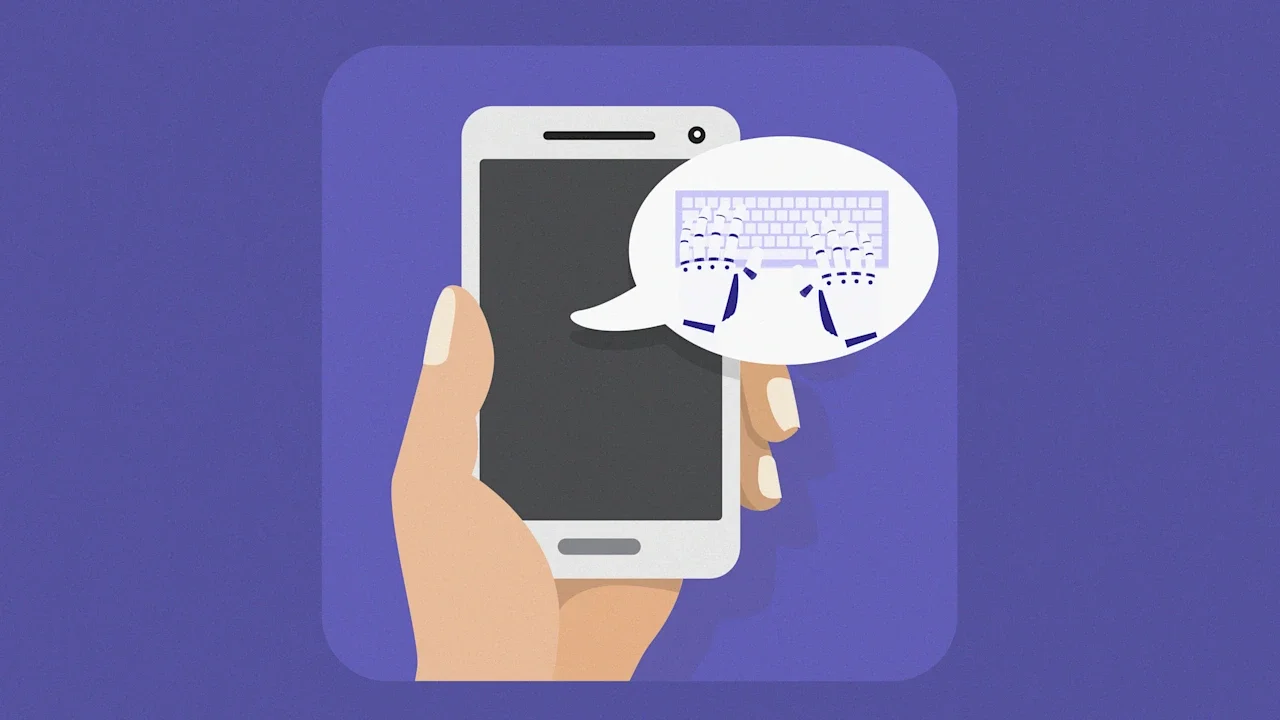
From signing my emails with “bet” instead of “best” or sometimes writing “felt” instead of “left”, living with dyslexia and choosing a career that requires me to write on the daily has turned typos into my biggest nightmare. After all, I’ve been taught that typos signal carelessness, unprofessionalism, or worse—lack of talent altogether. But as AI makes life seemingly more perfect, tiny errors are also signatures of our humanity—and that we put actual care into what we wrote instead of mindlessly relying on an LLM. Well, now there’s an AI tool to that will pen a perfectly imperfect email. Sinceerly (yeah, it’s spelled that way) is an extension that makes slop emails sound more human—mistakes and all. Ben Horwitz, an investment partner at venture capital firm Dorm Room Fund and student at Harvard Business School, created Sinceerly. Annoyed with so many emails obviously sounding like AI, Horwitz saw an opportunity to “hold up a mirror” to our complicated relationship with technology. Our typos, ourselves? It’s satire, of course. “If we are using AI to write, then in this moment, can we use AI to un-AI our own writing?” he tells Fast Company. “That’d be funny.” So for the last month, he used his time in between classes to code what he now calls the “anti-Grammarly.” (The misspelled name is both on brand and allowed Horwitz to purchase the domain for cheap; he is a student, after all.) Sinceerly, which Horwitz shared on X this week, is available as a browser extension, straying not too far away from Grammarly’s interface. You can pick from three levels of edits: subtle, human, or CEO. The latter nods to the final boss of typos. Brevity and misspellings have become somewhat of a status symbol in business. CEOs are simply too busy and too important to care about punctuation, after all. Here’s how it works: The tool rewords a long and jargony AI paragraph and condenses it per each level. For instance, a “subtly” edited five-line paragraph will condense the phrase into three lines. “Human” takes it further by adding more slang and abbreviations, and trimming even more words. CEO mode goes completely rogue: “think we should connect. potential here. quick call this week? lmk Sent from my iPhone” Cue the copy editor panic attack. But Sinceerly actually worked. Horwitz sent emails to five Fortune 500 CEOs, four of whom replied. The test, which he admits is not entirely rigorous, proved two things: one, Sincereely did indeed turn AI slop into emails that maybe CEOs would respond to; and two, CEOs actually do write like that. Each email he received was under ten words and two had typos; and one CEO called him Larry. While Horwitz created the tool as somewhat of a joke, many believe that bringing humanity back into the inbox might be a powerful business move. “An email marketer told me once that when they started putting typos in subject lines, open rates went up by like 40%, because people assumed a human wrote it,” New York Times tech columnist Kevin Roose replied to the announcement via X. There’s also a paradox within this anti-AI tool: Horowitz needed AI to build it. Using Claude and Chat GPT allowed him to deploy the tool in a month. There’s a lesson in this, he says: “Where AI comes in is not the idea, but, the idea to execution timeline feels crunched to me. That’s where I feel like it’s been most helpful.” Horwitz is not unaware of the contradiction. “I want to live in a world where people still can distinguish AI writing from human writing, which is why it’s so ironic that I built this thing,” he says. And still, whether people online treat the project as a tool—which Horwitz is charging $4.99 a month to use after a 3-email free trial—or just as a quick joke, its fast virality underscores a larger conversation. In a world fatigued and frustrated with AI, a human touch is valuable. As one user on X puts it: “Stop being ashamed of typos, embrace them, It’s one of the last things we have to ourselves.” View the full article

-
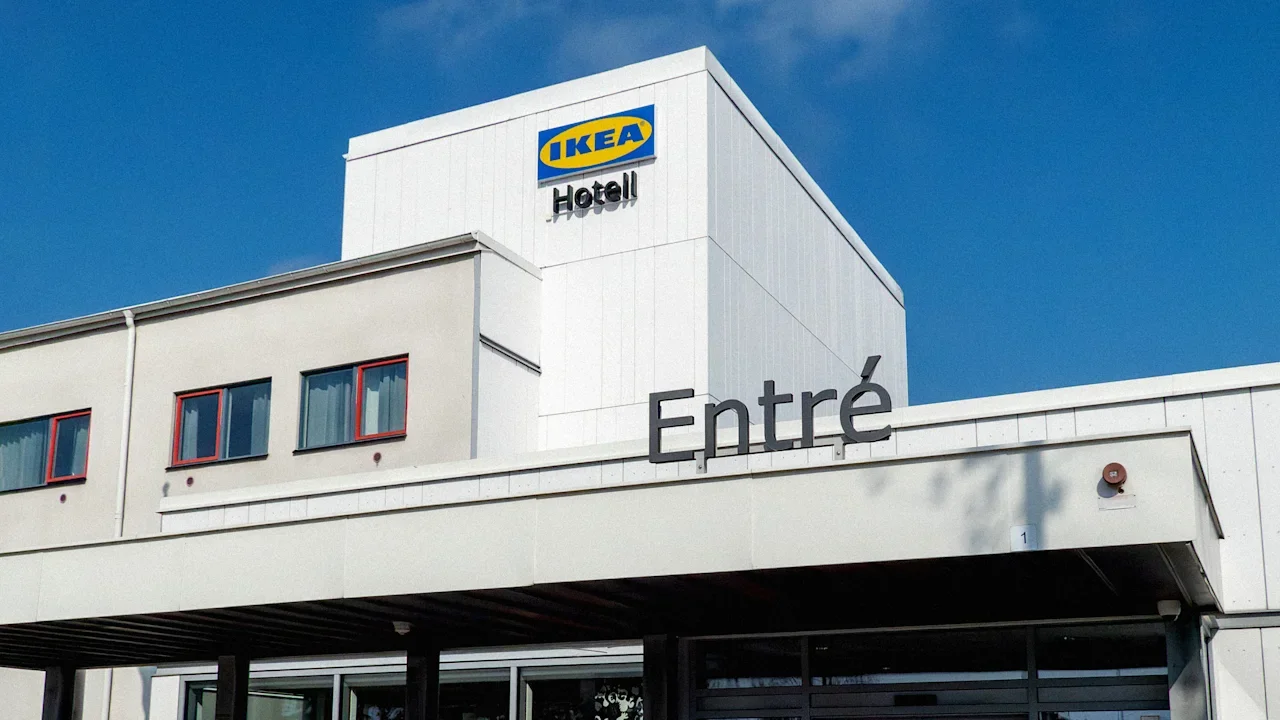
Ikea bed, Ikea sheets, Ikea towels, Ikea desk, Ikea chairs, Ikea curtains, Ikea light fixtures, Ikea trashcans, Ikea clothes hangers, Ikea side tables, Ikea throw pillow, Ikea clock. This is the rough inventory of a room in the world’s only Ikea hotel—the Ikea Hotell in its Swedish spelling—located in Älmhult, Sweden, the same small town where Ikea was founded in the 1940s and where its headquarters still sits. I stayed a night in this very Ikea hotel recently during a reporting trip to Älmhult for a story about (surprise, surprise) Ikea. As one would expect, the lobby, amenity spaces, and hotel rooms themselves are outfitted entirely with Ikea furnishings—Fröset chairs in the lobby, the Alex desk in the rooms, and the basic duvets on the beds. Stepping into my hotel room was like entering one of the meticulously furnished mock bedrooms on an Ikea store’s showroom floor, but with only a quarter the amount of stuff and the spatial efficiency one would expect from a company built around affordability. You can insert your own joke here about having to build the bed before you sleep in it. But you actually do have to use an Allen key wrench to open the hotel room door. (Kidding!) One night in Ikea’s hotel I was in Älmhult for an exclusive daylong visit at Ikea headquarters in early April. Ikea invited me as the first journalist to see its secretive prototype lab, the space where its conceptual designs get molded and refined into the roughly 2,000 new products introduced to Ikea stores every year. For my one-night stay in Älmhult, the Ikea Hotell offered full immersion into the brand before my tour. Ikea items and branding were everywhere in the lobby and amenity spaces, and the hotel room itself serves as a try-before-you-buy retail experience. It’s also the most convenient—and affordable—hotel near Ikea’s domineering headquarters in this provincial Swedish village of about 17,000, many of whom are employed by the global home furnishings behemoth. Älmhult sits an 80-minute train ride from Malmö, where a few thousand of its workers live. (The hourly direct trains leaving Älmhult station in the afternoons are standing-room only.) Throw a stone in Älmhult and you’ll hit some piece of the Ikea universe. Venture farther and you’re back out in the Swedish countryside. Designed out of necessity The hotel itself is deeply tied to Ikea’s history in the town. It’s located across a wide parking lot from a warehouse-sized building that was Ikea’s first purpose-built furniture showroom. Opened in 1958 with a modernist concrete design, it became national news and a magnet for customers. Initially created to simply display Ikea’s furniture, it was soon adapted into the first Ikea store, drawing budget-conscious shoppers from across Sweden. It stayed in operation for more than 50 years. The store reopened in 2015 as the Ikea Museum, with three floors of exhibition space packed with historic furnishings and paraphernalia, plus a cafeteria and a gift shop. Guests at the hotel are given a card upon check-in that grants free admission. The hotel exists because of the showroom turned museum. During its days as the first Ikea store, its allure drew customers from far and wide, including many who traveled so far they needed to stay overnight in Älmhult before driving back home with a carload of flat-packed furniture. Ikea founder Ingvar Kamprad saw an opportunity, and in 1962 commissioned an architect to design an American-influenced roadside motel, with 25 rooms and, in a rarity for this part of Sweden, a heated pool. Construction took longer than expected due to the area’s persistently muddy soil, but the motel began receiving guests in the summer of 1963 with rooms filled with Ikea’s own furnishings. It took another year for the hotly anticipated pool to open, and only then was there an official grand opening of Motell Ikea. Over the years, the motel hosted annual showcases for new furniture ranges, as well as guests traveling for shopping or business with the increasingly global company. Expansions and renovations have since been completed, and the rebranded Ikea Hotell now has 254 rooms. The pool, however, has been lost to time, filled in to become a courtyard for hotel guests. It was a bit too cold to head out there the night I arrived at the hotel, just off a two-hour, late-night train ride from Copenhagen. Inside, the spare check-in desk stands before an extended lobby/lounge/Ikea showroom packed with easy chairs, couches, dining tables, lamps, and a small play area for kids. The hotel has its share of well-known Ikea pieces, from puffy Jättebo couches to a children’s play kitchen to a keyhole-shaped clock first released in 1995. One was on the wall in my hotel room and the other, an oversized version, was on display in the lobby. Both, curiously, were set to the wrong time. ‘Democratic,’ not luxurious design In line with Ikea’s guiding principles of affordability and “democratic design,” this is not a luxury hotel. There are three room options available, with prices starting as low as $60 per night. The most economical is referred to as a cabin and is just 45 square feet. It has a twin bed, a TV mounted on the wall, a rack to hold a suitcase, and a shared bathroom outside. I stayed in the slightly bigger Double room, which goes for about $90 to $150 per night depending on the day. It’s outfitted with a double bed and a private bathroom, but few other amenities. A family-sized option is also available, consisting of two sets of bunk beds, also with a private bathroom. (There is also one wheelchair accessible room, with more space and extra furniture.) Some rooms open out onto the courtyard. My third-floor room, as I discovered in the morning light, looked out over a local church and its graveyard. As a place to sleep, the Ikea Hotell is sufficient. Free breakfast in the nearby restaurant, Grillen, was better than expected, given hotel’s spartan offerings. This being Sweden, there was pickled herring. This being Ikea, there were also meatless meatballs. One downside, especially for a traveler shaking off a 6-hour time zone change, is the lack of a coffee maker in the hotel room. But for the prepared and well-stocked guest, each floor in the hotel is outfitted with a shared kitchen space and “common living room.” The spaces are, of course, Ikea’d to the max, and wouldn’t look out of place in the showroom of a typical Ikea store. A predecessor to branded hospitality While the entire space could have easily ventured into captive audience commercialism, the Ikea Hotell is not actively selling Ikea furnishings. I was somewhat surprised to not see a single product label or pricetag in the hotel room, nor anywhere in the common areas. It’s like a soft-sell predecessor to the current trend of branded hospitality, where everything is for sale, and aggressively so. Ikea was there first, but the approach is hardly pushy. In fact, I was also maybe a bit underwhelmed by how the space was furnished. Aside from some of the common areas, most of the hotel seemed merely populated with Ikea stuff, not intentionally designed to show it off. That may be changing, though. Signs in the hotel noted that renovations are currently underway, with a big refresh expected to open in 2028. The renovation will bring the room count to nearly 300, add more conference space, and create a new lobby and restaurant. The project will also revive one of the hotel’s original features by adding a new indoor pool. Maybe not enough reason to venture all the way back to Älmhult, at least for me. But for anyone visiting the home of Ikea, it’s hard to imagine a more appropriate place to spend a night. View the full article

-
The missed promotion. The botched presentation. The project that went sideways despite our best efforts. We’ve all been there, stuck in what I call failure’s funk: that heavy mix of shame, fear, and paralysis that keeps us replaying mistakes long after they’ve passed. In both life and work, this funk doesn’t just feel awful, it blocks learning. We’re so busy avoiding, denying, or criticizing ourselves that we miss the insight failure offers. We often hear that failure is life’s best teacher, but learning from it isn’t automatic. It doesn’t happen just because we failed; it happens because we do the inner work, reflecting, reframing, and choosing to respond differently, and that’s rarely comfortable. The good news? There’s a way to honor the difficulty of failure while still freeing ourselves to learn from it. That’s where frameworks like FREE (Focus, Reflect, Explore, Engage) come in. When we don’t learn from failure, when we rush to move on, we risk sentencing ourselves to a life defined by the stories we create about what that failure means. Why Failure Feels Like Quicksand When we fail, or even anticipate failure, the brain’s amygdala triggers a threat response faster than the prefrontal cortex can intervene. This emotional hijack sets off our autopilot reactions: fight (double down without reflection), flight (make excuses or deflect), freeze (become paralyzed), or fawn (defer to others to avoid conflict). These aren’t character flaws; they’re survival mechanisms. But when we operate on autopilot, we can’t learn. We can’t extract insight from experiences we’re too busy escaping or rationalizing away. The FREE model offers a structured way to process failure by interrupting autopilot responses and creating space for genuine learning. Rooted in the Japanese principle of hansei (self‑reflection for self‑improvement), this framework helps professionals shift from being consumed by failure to becoming curious about it. Focus and Reflect clarify what happened and how we felt. Explore and Engage guide the self‑improvement phase, where we deliberately choose new actions grounded in awareness and learning. Focus: Illuminate the Failure The first step is counterintuitive: shine a light on what you’d rather hide. Acknowledge the failure and sit with the discomfort instead of rushing past it. In practice, hold a post‑mortem after a project falls short, not to assign blame, but to clarify what’s true versus what’s assumed. Separate facts from stories. “The client didn’t renew the contract” is a fact. “I’m terrible at client relationships” is a story. The Focus step invites you to write or talk about the failure. Even fifteen minutes of journaling about what happened, how you felt, and the role you played can begin to loosen failure’s grip. Reflect: Identify Your Reaction As we clarify what actually happened and the story, we’re telling ourselves about it, we also need to examine our automatic responses. Our reactions to failure appear both internally as feelings and externally as behaviors. For the internal side, practice affect labeling—turn feelings into words. Whether spoken or written, naming emotions helps ease their sting and brings perspective through reflection. Externally, our reactions often run on autopilot, triggered by emotional hijack. Did we blame others? Make excuses? Freeze in indecision? Defer to someone else’s judgment? Awareness of these patterns is the first step in changing them. Explore: Interrupt, Redirect . . . What if? Once we’ve clarified the failure and our reaction to it, we can begin exploring alternative responses. We get to choose our actions based on what we know to be true. With practice, we can interrupt the emotional hijack before it takes over, or at least as soon as we notice it happening. The simplest interruption is a pause. By disrupting autopilot, we regain the ability to choose our response instead of defaulting to reacting. In the Explore phase, we redefine what failure means: not as an ending, but as data or even a teacher. This is a strategic reframe that reactivates our prefrontal cortex and keeps us in learning mode. Engage: Experiment and Play The final step transforms insight into action. Treat your work life as a series of experiments where failure is expected data, not catastrophe. Break daunting projects into smaller tests with limited blast zones. Try a new presentation approach with one client before rolling it out company-wide. Rehearse a difficult conversation with a trusted colleague before taking it to your boss. The key is regular reflection, learning happens not in the experience itself, but in the deliberate examination of it afterward. Set aside time weekly to review what you learned from what worked and what didn’t. Share those lessons openly with your team; failure discussed becomes institutional knowledge, while failure buried just repeats itself. Moving Forward with Freedom Each time we focus on learning from failure instead of being consumed by it, we rewire our brains, building pathways that make thoughtful responses more natural than automatic reactions. The goal isn’t to erase the discomfort of failure; those emotions matter because they signal that something’s important to us. The real aim is to move through the setback faster, extract the insight more effectively, and release the limiting stories that old failures create. In a workplace where innovation demands risk, and risk inevitably brings failure, this ability to learn from setbacks is non‑negotiable. It’s what separates professionals who plateau from those who keep growing. Start small. Choose one recent, manageable failure, not the biggest or the most painful, and walk through the four steps. Notice what changes. Because failure will happen again. Clients won’t always say yes. The question is: will we be ready to learn faster next time? View the full article

-
Independent bookstores are beacons of hope, offering intangible commodities such as connection, empathy, and knowledge, in addition to physical books. The convenience and discounts of Amazon have long threatened their very existence. Since 2015, Independent Bookstore Day has worked to combat this threat on the last Saturday of April. This year’s festivities fall on April 25. Fast Company sat down with Andy Hunter, founder and CEO of Bookshop.org, to talk not only about the holiday and his organization’s work to offer an Amazon alternative. A cultural awakening around independent bookstores Since the pandemic and continued high cost of living, we as a society have undergone a social awakening and become more intentional about where we are spending our hard-earned money. This even translates to bookstores. The cultural awakening makes Hunter optimistic. “People are really galvanizing around bookstores as a force for good in our culture,” he says. “You see that in the fact that there are about 70% more bookstores now than there were six years ago in the United States. After 20 years of declining numbers, they’re coming roaring back.” Independent Bookstore Day started as a local California event in 2012 thought up by writer and editor Samantha Schoech. As it expanded, this literary event also became a critical financial lifeline. “Bookstores have fallow periods, and sometimes it’s tough for them to get through the year,” Hunter says. “Bookstores are not a high-margin business. They’re a high-love business.” What to expect on Independent Bookstore Day Independent Bookstore Day is a celebration of all things literary. There will be a festive community-based atmosphere floating around the bookshelves. Many stores will have custom merchandise for sale. Some will have special editions of books or host author events. There may even be sales or giveaways. Helpful booksellers will be on hand to help you pick the perfect read. In San Diego, local indie bookstores banded together and created a bookstore crawl. At each stop, participants can get a stamp on their event passport and earn prizes. Hunter will be celebrating by doing his own self-made crawl. He plans to stop at some of his favorite local bookstores in Brooklyn, including Word and Greenlight. Christine Onorati, founder of Word, is a close friend and actually inspired him to start Bookshop.org. How Bookshop.org helps save independent bookstores Hunter created Bookshop.org in January 2020 to help independent bookstores survive by utilizing e-commerce. “I was watching as half of the bookstores in the country went out of business as Amazon grew,” he says. “There were over 5,000 bookstores in the American Booksellers Association in 1995, which is one year after Amazon launched. By 2019, that had gone down to 1,889, so more than half of them disappeared.” He says he never could have predicted how the pandemic would accelerate his company’s growth. “If we had even waited a month, we wouldn’t have been able to make the difference that we did when everybody went to lockdown [because of COVID-19],” Hunter says. “All these stores that had been trying to get around e-commerce or never really launching or building their website, they had to sell online. That was the only way they could survive during the pandemic.” Bookshop.org is an online retail space to buy books while supporting your favorite independent bookstore. More than 80% of the profit goes back to independent bookstores. Consumers can choose to designate an individual store or help many through a shared earnings pool. While Hunter says he would love to beat Amazon, he remains realistic. He knows he’s going up against a huge corporation with vast resources. Instead, he’s focused on continuing to create an infrastructure that Amazon cannot replicate. “Our goal is to help independent local bookstores get their fair share of online sales, which would end up being maybe 10% of Amazon’s market share,” he says. “And right now we’re at about 2%, so we have a long way to go. But a lot of people didn’t even think we could ever get 1%.” Although Bookshop.org has been around for only six years, it has already helped create change. Since 2020, not only have more bookstores opened than closed, but the American Booksellers Association membership has grown from 1,900 to 3,200. Bookshop.org has given almost $47 million back to local bookstores. For Hunter, it’s not just about the money but changing the way society thinks. He’s delighted that many big organizations no longer use Amazon affiliate links, choosing to send people his way instead. “People have absorbed the message that they should support independent bookstores when they buy books,” he says. If you feel moved to do your part this Independent Bookstore Day, head to your local shop and enjoy the festivities. If you can’t make it in person, Bookshop.org is offering free shipping on the big day. View the full article

-
Want more housing market stories from Lance Lambert’s ResiClub in your inbox? Subscribe to the ResiClub newsletter. During the pandemic housing boom, homebuilders saw their number of unsold completed new builds dry up as overheated demand quickly absorbed almost everything for sale. That is exactly what was experienced by D.R. Horton, America’s largest homebuilder, which had just 600 unsold completed new builds for sale in fiscal Q2 2022—compared to 4,700 in its fiscal Q2 2020. However, as the pandemic housing boom ended and the market shifted, U.S. homebuilders saw their unsold new builds spike back up. At the end of its fiscal Q2 2025—the three months ending March 31—D.R. Horton had 8,400 unsold completed. Fast-forward to fiscal Q2 2026, and D.R. Horton has shrunk its unsold completed inventory to 5,500 as it’s worked to move unsold inventory and balance sales pace with current “market conditions.” This matters because unsold completed homes are a drag on margins: The longer a finished home sits, the higher the carrying costs, and the more the company may need to discount it to move it. “Unsold homes are down 25% from December and 35% from a year ago, with both unsold homes as a percentage of total inventory and completed unsold inventory at their lowest levels since fiscal 2023 for homes closed in the second quarter,” CEO Paul Romanowski said during D.R. Horton’s April 21 earnings call. “We expect starts in the third quarter to be lower than the second quarter, and we will continue to manage our inventory levels and start space based on market conditions.” How was D.R. Horton able to achieve this drawdown in unsold completed inventory? Given the increased softness last year across many pockets of core homebuilding markets in the Sunbelt—in particular in pockets of Florida and Texas—D.R. Horton slowed its spec starts heading into 2026. That has helped it reduce the number of unsold completed builds on its books. The company further compressed its gross margin in order to do bigger affordability adjustments and sales incentives—like mortgage rate buydowns—to help entice buyers and move the completed unsold new builds. “Our sales incentives increased during the second quarter, and we expect incentives to remain elevated for the rest of the year,” Romanowski said on the earnings call, noting that the incentives as a percent of revenue are roughly 10%. A sales incentive rate of 10% is fairly high. Many homebuilders run sales incentive rates closer to 4% to 6% during balanced supply-demand periods. “We currently expect our home sales gross margin to be 19.7% or slightly higher in the third quarter as we expect to realize additional construction cost savings on homes closed,” Jessica Hansen at D.R. Horton told analysts during the earnings call. The higher incentive rate helped D.R. Horton boost its net new orders by 11% year over year. Another factor behind D.R. Horton’s decline in unsold completed homes is that while some of its largest markets remain soft, the pace of that softening has eased over the past eight months. Inventory is no longer surging as quickly across many Sunbelt markets. Had the sharp softening seen in the second half of 2024 and first half of 2025 persisted into 2026, D.R. Horton would likely be carrying a larger stock of unsold completed homes today. “I think we’re seeing good demand in Texas, consistent as well. In Florida, the markets feel pretty good to us. Generally across the country, I would say that most of our markets are performing well in line with expectations,” COO Michael Murray said during the company’s earnings call. “Perhaps [there’s] a little bit of softness, and a few of our markets that have kind of a traditionally heavy exposure to the software industry, that buyers sentiment may be off a bit. Other than that, just kind of a good, good start to spring. Pretty encouraged.” Big picture: Unsold completed homes are a drag on homebuilder margins. The longer a finished home sits, the higher the carrying costs—and the more the company may need to discount it to move it. Right now, in softer pockets of the housing market—particularly in many pandemic boomtowns across Florida, Arizona, Colorado, and Texas—homebuilders are offering sizable incentives. But if they’re able to further reduce their number of unsold completed homes, they may become less willing to offer even juicier incentives to move product. View the full article

-
My earliest memory of travel insurance was the life insurance vending machines that used to populate airports up until the early 1980s. For those too young to remember this bizarre part of 20th century air travel, these kiosks offered very short-term life insurance policies that cost $2.50 (paid in quarters) for coverage of up to $62,500. Since these pre-travel policies were marketed to anxious flyers, it seemed clear the insurance companies were capitalizing on fear rather than offering a needed product. Over the intervening decades, I never revised my opinion of travel insurance. I’ve been lucky enough to never need travel insurance, but my family’s recent trip to Denmark finally pushed me to rethink my assumptions. Unfortunately, like any insurance product, it can be difficult to determine which are reasonable precautions and which ones are mostly designed to open your wallet and remove your cash. To better understand how travel insurance should fit into your vacation budget, we spoke to travel expert Lee Huffman of BaldThoughts.com. Know what travel insurance covers Travel insurance is a broad umbrella term that describes a number of different types of coverage. There are several aspects of traveling that you might need insurance to cover the cost of: Trip cancellation, interruption, or delay: This coverage refunds you the nonrefundable financial costs incurred when you have to cancel or reschedule a trip for a covered reason, including illness, job loss, or flight delay. With over 21% of year-to-date flight departures delayed and 1.47% of flights cancelled, trip cancellation, interruption, or delay is the most common hazard facing travelers. Medical care: While many U.S. medical insurers cover policyholders overseas, Medicare does not. And even if you do have a policy that works abroad, there are typically a number of coverage gaps. Travel medical insurance will ensure you have coverage for medical care if you fall ill on vacation. Emergency evacuation: If appropriate medical care isn’t available in your destination, this kind of insurance will cover the cost of getting you somewhere you can get the care you need. Emergency evacuation is not typically covered by any other common health insurance, although some credit cards include this coverage as part of their travel protection. Baggage loss or damage: While your homeowners insurance will typically cover your belongings wherever you travel, baggage insurance can help by paying your deductibles and covering any excluded items. Know your biggest risks If the list of travel insurance coverage options reads like Clark Griswold’s nightmare vacation scenario, how exactly does one determine what to insure against? The good news is that you don’t generally need to insure your entire trip. “The overall cost of your trip may be $10,000, but you can actually whittle down your costs,” Huffman says. “You can customize your travel insurance based on what your risks are.” In other words, not every travel payment is equally at risk. Travelers are often protected via their credit cards and merchant cancellation policies for the two largest travel expenses: airfare and lodging. “If you book with a credit card that has travel protections, then that will cover you, whether you pay with dollars, miles, or points,” Huffman says. “And the price difference between a refundable and non-refundable hotel room generally isn’t that much of a benefit these days. If you make a refundable hotel reservation, you can usually cancel up to a few days before.” It’s the big, non-refundable vacation expenses, such as resorts, cruises, or tours, that may require insurance. “If you’re going down to see the penguins in Antarctica on a non-refundable ticket,” Huffman says, “then it makes sense to invest in travel insurance that covers cancellation rather than relying on protections included with your credit card.” Know your coverage gaps Just because your largest travel expenses can be covered by your credit card and the hotel’s cancellation policy doesn’t mean they will be covered. In terms of air travel, credit card travel protections only kick in if your trip is affected by airline delays or cancellations. You can’t count on your credit card if you’re the reason for cancelling. “If you think you may need to cancel your trip for some reason–maybe you have a sick parent–that’s when you’d need travel insurance,” Huffman explains. Similarly, a hotel that advertises a “Flexible Cancellation” booking option doesn’t necessarily offer you a full refund if you need to cancel–and they may only allow you to cancel within a specific time frame. This is why it’s important to know exactly what kind of travel protections your credit card offers and why you should read the cancellation policy when you book your hotel. That way, if you do need to purchase travel insurance, “you can get better coverage–because you’re not insuring things that you don’t need to insure and you’re getting more robust coverage where there are gaps,” Huffman says. Travel smart Travel insurance coverage is designed to protect you from several common travel hazards, including trip cancellation, medical care, emergency evacuation, and baggage loss or damage. But many Americans may already have some coverage for these hazards through their credit cards, health insurance, homeowners or renters insurance, and through merchant cancellation policies. You probably want to consider travel insurance for big-ticket, nonrefundable trips, such as all-inclusive cruises, since those are the types of travel plans least likely to be covered by other means. You may also need travel insurance if you suspect you might need to cancel a trip because of illness or potential job instability, since your credit card will only cover flight cancellations or delays caused by the airline. But it’s important to look at your trip as individual purchases to see what you need to protect, rather than assume you must insure the entire cost. “Just like any other type of insurance, think about why you’re buying it,” Huffman says. “What are you worried about? Figure out your exposure and match the product to what you’re looking to cover.” But if you’re tempted to buy a policy from a vending machine, just keep walking. View the full article
-
If you’re looking to boost your business income, grasping and applying proven strategies is fundamental. Start by identifying your most profitable products or services, as this knowledge can guide your marketing efforts effectively. Next, consider how enhancing customer experience and exploring new revenue streams can contribute to growth. Each strategy complements the others, creating an all-encompassing approach to increasing your bottom line. Let’s explore these tactics in detail to maximize your potential. Key Takeaways Analyze sales data to identify and promote your most profitable products or services for increased revenue. Enhance customer experience through streamlined navigation and responsive customer service to boost retention rates. Implement strategic pricing adjustments and introduce premium options to maximize profit margins. Diversify income streams by exploring subscription models, consulting, or digital products for consistent revenue. Strengthen marketing efforts with targeted campaigns, SEO optimization, and social media engagement to reach a wider audience. Know Your Most Profitable Products or Services To effectively boost your business income, it’s vital to know your most profitable products or services. Start by analyzing your sales data to identify items that yield the highest profit margins. This insight helps you focus marketing efforts on bestsellers. Comprehending the difference between gross and net income is imperative; gross income definition refers to total revenue before expenses, whereas net income is what’s left after deducting costs. To calculate gross income, sum up total sales and subtract returns. Consider how gross earnings vs net impacts your financial strategy. By regularly reviewing your product mix, you can phase out underperformers and concentrate on high-margin items. Implement upselling during checkout to increase average transaction values, boosting annual net income meaning considerably. Finally, use customer feedback to improve features around profitable products, driving further sales growth. This strategic focus will maximize your business income effectively. Improve Your Customer Experience To boost your business income, improving your customer experience is crucial. Streamlining your website’s navigation helps customers find what they need quickly, increasing the chances they’ll return. Furthermore, ensuring you respond to customer inquiries within an hour can greatly improve satisfaction and encourage repeat business. Streamline Navigation Process Improving your website’s navigation process is vital for boosting customer experience and increasing your business income. A streamlined navigation can raise customer satisfaction by 38%, as users easily find what they need. Simplifying your website structure and reducing clicks can cut bounce rates by 50%, keeping potential customers engaged. Implementing a search function with auto-suggestions can improve user experience and raise conversion rates by up to 30%. Remember, mobile optimization is critical; 53% of mobile users abandon sites that take over three seconds to load. Regularly test and refine your navigation based on user feedback to guarantee continuous improvement. This can greatly impact your website’s conversion rate, helping you understand the difference between gross income versus net income effectively. Quick Response Times A streamlined navigation process lays the groundwork for effective customer interactions, but quick response times enhance the experience even further. Customers expect rapid replies, with 82% emphasizing the need for immediate responses to marketing or sales inquiries. By prioritizing quick response times, you can boost customer satisfaction by up to 30%, promoting loyalty and encouraging repeat purchases. Implementing live chat on your website can reduce response times to mere seconds, improving engagement compared to traditional methods. Companies that respond within an hour are seven times more likely to have meaningful conversations with potential buyers. Monitoring social media can likewise boost engagement by 20%, positively impacting your brand’s perception and, in the end, contributing to your annual gross income and net income means. Raise Your Prices Strategically Raising your prices strategically can greatly improve your business income, especially when done thoughtfully. Start by evaluating your current pricing against competitors to identify underpriced items. Implement small, incremental increases and monitor customer responses to avoid backlash. Introducing premium options can additionally attract customers willing to pay more for upgraded features. Here’s a simple table to help visualize the pricing strategy: Pricing Strategy Example Action Expected Outcome Evaluate Current Prices Compare with Competitors Identify underpriced items Incremental Increases Raise prices by 5% every quarter Gauge customer acceptance Introduce Premium Options Offer upgraded services or products Expand market reach Communicate Changes Explain reasons for price hikes Maintain customer trust Analyze Sales Data Review revenue impact post-adjustment Inform future strategies Understanding gross versus net income is essential; gross income meaning total earnings before deductions. Remember, the formula to calculate net income involves subtracting expenses from gross income. Expand Your Online Presence To expand your online presence, you need to focus on several key strategies. First, optimizing your website for SEO can greatly boost organic traffic, making it easier for potential customers to find you. Moreover, leveraging social media engagement and implementing targeted advertising campaigns can improve brand awareness and drive conversions, eventually leading to increased business income. Optimize Website for SEO Optimizing your website for SEO is essential if you want to expand your online presence and attract more customers. Start by implementing keyword research to identify high-traffic search terms related to your offerings, as most users never scroll past the first page. Next, optimize on-page elements like title tags and meta descriptions to improve relevance, potentially increasing traffic by up to 50%. Create quality content that answers user queries as you integrate targeted keywords. Furthermore, improve your website’s loading speed; even a one-second delay can reduce conversions by 7%. Finally, build backlinks from reputable sites to boost your domain authority, as high-quality backlinks can greatly enhance your search rankings, thereby impacting your gross income. Leverage Social Media Engagement Even though many businesses focus solely on traditional marketing, leveraging social media engagement can greatly improve your online presence and drive income. By actively engaging with customers on platforms like Facebook and Instagram, you can boost brand awareness, as 54% of users research products online before purchasing. Posting regularly can lead to a 30% increase in engagement rates, making your brand more visible. Social media advertising is effective too, yielding an average return on investment of $5.78 for every dollar spent. Moreover, brands that respond to customer inquiries see 20-40% higher customer satisfaction ratings. Don’t forget to incorporate user-generated content, which can increase engagement by up to 28%, as consumers trust their peers more than traditional ads. Implement Targeted Advertising Campaigns Engaging with customers on social media is just one piece of the puzzle regarding broadening your online presence; implementing targeted advertising campaigns can greatly improve your marketing efforts. These campaigns allow you to reach specific demographics based on age, location, interests, and online behavior, resulting in higher conversion rates and a more effective use of your marketing budget. Utilizing platforms like Google Ads and Facebook Ads can yield an average return on investment of $2 for every $1 spent. Incorporate retargeting strategies to remind potential customers about products they showed interest in, increasing conversion rates by up to 150%. Use A/B testing to optimize your ads, and leverage data analytics to track performance and make real-time adjustments for maximum impact. Add New Revenue Streams Adding new revenue streams can greatly boost your business’s financial stability and growth potential. By diversifying your offerings, you can attract a broader customer base. Consider exploring options like consulting or online classes, which have proven successful for businesses like bakeries. Implementing subscription models can create consistent income, as many Adobe companies have demonstrated. Here’s a quick overview of potential revenue streams: Revenue Stream Description Example Consulting/Online Classes Generate income by sharing your expertise Online baking classes Subscription Models Create steady revenue through monthly fees Software subscriptions Digital Products Sell e-books or courses for scalable income Online courses Licensing Your Products Allow others to sell your products for royalties Brand licensing Bundled Services improve value by offering combined services Bundled product offerings Implementing these strategies can greatly boost your income potential. Strengthen Your Marketing To effectively boost your business income, strengthening your marketing strategies is essential. Begin by investing in targeted email marketing campaigns, as studies show that you can earn an average ROI of $42 for every dollar spent. Utilize social media ads to reach specific demographics, with platforms like Facebook enhancing engagement by up to 20% through advanced targeting options. Form local partnerships to improve your community presence, potentially increasing your brand visibility and achieving a 30% boost in local customer acquisition. Implement Google Ads for broader visibility, where effective keyword targeting can lead to a 200% ROI. Finally, maintain consistent marketing efforts across multiple channels. Companies that engage in multichannel marketing experience a 10% increase in customer retention rates compared to those using single-channel strategies. Focus on Customer Retention While acquiring new customers is important, focusing on customer retention can greatly impact your business’s bottom line. Retaining existing customers is considerably more cost-effective, costing five to twenty-five times less than gaining new ones. Implementing a loyalty program can increase customer retention rates by up to 5%, leading to a profit increase of 25% to 95%, since repeat customers usually spend more. Actively engaging in feedback loops, like surveys and social media interactions, can boost customer satisfaction by 20%, directly correlating with higher retention rates. Moreover, personalized experiences, such as customized recommendations, can improve retention by 10% to 30%, nurturing a meaningful connection with your brand. Finally, prioritizing customer service excellence can improve retention rates by over 10%, as 70% of customers are willing to pay more for a better experience. Frequently Asked Questions What Are the 5 P’s of Profitability? The 5 P’s of profitability are Product, Price, Place, Promotion, and People. Product refers to how well your offerings meet customer needs. Price involves setting competitive rates to maximize profits as well as attracting buyers. Place emphasizes distribution channels, ensuring customers can access products easily. Promotion focuses on marketing strategies that create awareness and demand. Finally, People highlights the importance of having a skilled and motivated team to drive overall business success. What Business Can Make $10,000 a Month? You can generate $10,000 a month through several business models. A subscription box service needs 1,000 subscribers at $10 each. An online coaching business can achieve this by serving 20 clients with $500 packages. E-commerce stores focusing on niche products might sell 100 items at $100 each. Furthermore, a digital marketing agency can secure five clients at $2,000 each, whereas a landscaping business could complete 40 projects averaging $250 each. What Generates 90% of Business Revenues? About 90% of business revenues typically come from a small percentage of customers, often the most loyal ones. These key clients generate significant income, so it’s crucial to focus on nurturing relationships with them. Furthermore, high-margin products or services usually contribute the most to profits, making it important to analyze which offerings yield the best returns. Implementing effective upselling and cross-selling strategies can further improve revenue by increasing transaction values. What Percentage of Businesses Make $500,000 a Year? About 10% of all U.S. businesses report annual revenues of $500,000 or more. The Small Business Administration notes that only roughly 7% of small businesses reach this revenue threshold. Industries like construction, retail, and professional services have higher success rates in surpassing this mark. Furthermore, businesses with employees are more likely to achieve higher revenues, with around 20% of employer firms hitting the $500,000 benchmark annually. Age likewise plays a role in revenue success. Conclusion By implementing these seven strategies, you can effectively boost your business income. Identifying your most profitable offerings and enhancing customer experiences are key steps. Furthermore, adjusting pricing, broadening your online presence, and diversifying revenue streams will further strengthen your position. Don’t overlook the importance of focused marketing efforts and customer retention strategies. Each of these components works together to create a sustainable growth model, ensuring your business remains competitive and profitable in the long run. Image via Google Gemini and ArtSmart This article, "7 Proven Strategies to Boost Your Business Income" was first published on Small Business Trends View the full article
-
If you’re looking to boost your business income, grasping and applying proven strategies is fundamental. Start by identifying your most profitable products or services, as this knowledge can guide your marketing efforts effectively. Next, consider how enhancing customer experience and exploring new revenue streams can contribute to growth. Each strategy complements the others, creating an all-encompassing approach to increasing your bottom line. Let’s explore these tactics in detail to maximize your potential. Key Takeaways Analyze sales data to identify and promote your most profitable products or services for increased revenue. Enhance customer experience through streamlined navigation and responsive customer service to boost retention rates. Implement strategic pricing adjustments and introduce premium options to maximize profit margins. Diversify income streams by exploring subscription models, consulting, or digital products for consistent revenue. Strengthen marketing efforts with targeted campaigns, SEO optimization, and social media engagement to reach a wider audience. Know Your Most Profitable Products or Services To effectively boost your business income, it’s vital to know your most profitable products or services. Start by analyzing your sales data to identify items that yield the highest profit margins. This insight helps you focus marketing efforts on bestsellers. Comprehending the difference between gross and net income is imperative; gross income definition refers to total revenue before expenses, whereas net income is what’s left after deducting costs. To calculate gross income, sum up total sales and subtract returns. Consider how gross earnings vs net impacts your financial strategy. By regularly reviewing your product mix, you can phase out underperformers and concentrate on high-margin items. Implement upselling during checkout to increase average transaction values, boosting annual net income meaning considerably. Finally, use customer feedback to improve features around profitable products, driving further sales growth. This strategic focus will maximize your business income effectively. Improve Your Customer Experience To boost your business income, improving your customer experience is crucial. Streamlining your website’s navigation helps customers find what they need quickly, increasing the chances they’ll return. Furthermore, ensuring you respond to customer inquiries within an hour can greatly improve satisfaction and encourage repeat business. Streamline Navigation Process Improving your website’s navigation process is vital for boosting customer experience and increasing your business income. A streamlined navigation can raise customer satisfaction by 38%, as users easily find what they need. Simplifying your website structure and reducing clicks can cut bounce rates by 50%, keeping potential customers engaged. Implementing a search function with auto-suggestions can improve user experience and raise conversion rates by up to 30%. Remember, mobile optimization is critical; 53% of mobile users abandon sites that take over three seconds to load. Regularly test and refine your navigation based on user feedback to guarantee continuous improvement. This can greatly impact your website’s conversion rate, helping you understand the difference between gross income versus net income effectively. Quick Response Times A streamlined navigation process lays the groundwork for effective customer interactions, but quick response times enhance the experience even further. Customers expect rapid replies, with 82% emphasizing the need for immediate responses to marketing or sales inquiries. By prioritizing quick response times, you can boost customer satisfaction by up to 30%, promoting loyalty and encouraging repeat purchases. Implementing live chat on your website can reduce response times to mere seconds, improving engagement compared to traditional methods. Companies that respond within an hour are seven times more likely to have meaningful conversations with potential buyers. Monitoring social media can likewise boost engagement by 20%, positively impacting your brand’s perception and, in the end, contributing to your annual gross income and net income means. Raise Your Prices Strategically Raising your prices strategically can greatly improve your business income, especially when done thoughtfully. Start by evaluating your current pricing against competitors to identify underpriced items. Implement small, incremental increases and monitor customer responses to avoid backlash. Introducing premium options can additionally attract customers willing to pay more for upgraded features. Here’s a simple table to help visualize the pricing strategy: Pricing Strategy Example Action Expected Outcome Evaluate Current Prices Compare with Competitors Identify underpriced items Incremental Increases Raise prices by 5% every quarter Gauge customer acceptance Introduce Premium Options Offer upgraded services or products Expand market reach Communicate Changes Explain reasons for price hikes Maintain customer trust Analyze Sales Data Review revenue impact post-adjustment Inform future strategies Understanding gross versus net income is essential; gross income meaning total earnings before deductions. Remember, the formula to calculate net income involves subtracting expenses from gross income. Expand Your Online Presence To expand your online presence, you need to focus on several key strategies. First, optimizing your website for SEO can greatly boost organic traffic, making it easier for potential customers to find you. Moreover, leveraging social media engagement and implementing targeted advertising campaigns can improve brand awareness and drive conversions, eventually leading to increased business income. Optimize Website for SEO Optimizing your website for SEO is essential if you want to expand your online presence and attract more customers. Start by implementing keyword research to identify high-traffic search terms related to your offerings, as most users never scroll past the first page. Next, optimize on-page elements like title tags and meta descriptions to improve relevance, potentially increasing traffic by up to 50%. Create quality content that answers user queries as you integrate targeted keywords. Furthermore, improve your website’s loading speed; even a one-second delay can reduce conversions by 7%. Finally, build backlinks from reputable sites to boost your domain authority, as high-quality backlinks can greatly enhance your search rankings, thereby impacting your gross income. Leverage Social Media Engagement Even though many businesses focus solely on traditional marketing, leveraging social media engagement can greatly improve your online presence and drive income. By actively engaging with customers on platforms like Facebook and Instagram, you can boost brand awareness, as 54% of users research products online before purchasing. Posting regularly can lead to a 30% increase in engagement rates, making your brand more visible. Social media advertising is effective too, yielding an average return on investment of $5.78 for every dollar spent. Moreover, brands that respond to customer inquiries see 20-40% higher customer satisfaction ratings. Don’t forget to incorporate user-generated content, which can increase engagement by up to 28%, as consumers trust their peers more than traditional ads. Implement Targeted Advertising Campaigns Engaging with customers on social media is just one piece of the puzzle regarding broadening your online presence; implementing targeted advertising campaigns can greatly improve your marketing efforts. These campaigns allow you to reach specific demographics based on age, location, interests, and online behavior, resulting in higher conversion rates and a more effective use of your marketing budget. Utilizing platforms like Google Ads and Facebook Ads can yield an average return on investment of $2 for every $1 spent. Incorporate retargeting strategies to remind potential customers about products they showed interest in, increasing conversion rates by up to 150%. Use A/B testing to optimize your ads, and leverage data analytics to track performance and make real-time adjustments for maximum impact. Add New Revenue Streams Adding new revenue streams can greatly boost your business’s financial stability and growth potential. By diversifying your offerings, you can attract a broader customer base. Consider exploring options like consulting or online classes, which have proven successful for businesses like bakeries. Implementing subscription models can create consistent income, as many Adobe companies have demonstrated. Here’s a quick overview of potential revenue streams: Revenue Stream Description Example Consulting/Online Classes Generate income by sharing your expertise Online baking classes Subscription Models Create steady revenue through monthly fees Software subscriptions Digital Products Sell e-books or courses for scalable income Online courses Licensing Your Products Allow others to sell your products for royalties Brand licensing Bundled Services improve value by offering combined services Bundled product offerings Implementing these strategies can greatly boost your income potential. Strengthen Your Marketing To effectively boost your business income, strengthening your marketing strategies is essential. Begin by investing in targeted email marketing campaigns, as studies show that you can earn an average ROI of $42 for every dollar spent. Utilize social media ads to reach specific demographics, with platforms like Facebook enhancing engagement by up to 20% through advanced targeting options. Form local partnerships to improve your community presence, potentially increasing your brand visibility and achieving a 30% boost in local customer acquisition. Implement Google Ads for broader visibility, where effective keyword targeting can lead to a 200% ROI. Finally, maintain consistent marketing efforts across multiple channels. Companies that engage in multichannel marketing experience a 10% increase in customer retention rates compared to those using single-channel strategies. Focus on Customer Retention While acquiring new customers is important, focusing on customer retention can greatly impact your business’s bottom line. Retaining existing customers is considerably more cost-effective, costing five to twenty-five times less than gaining new ones. Implementing a loyalty program can increase customer retention rates by up to 5%, leading to a profit increase of 25% to 95%, since repeat customers usually spend more. Actively engaging in feedback loops, like surveys and social media interactions, can boost customer satisfaction by 20%, directly correlating with higher retention rates. Moreover, personalized experiences, such as customized recommendations, can improve retention by 10% to 30%, nurturing a meaningful connection with your brand. Finally, prioritizing customer service excellence can improve retention rates by over 10%, as 70% of customers are willing to pay more for a better experience. Frequently Asked Questions What Are the 5 P’s of Profitability? The 5 P’s of profitability are Product, Price, Place, Promotion, and People. Product refers to how well your offerings meet customer needs. Price involves setting competitive rates to maximize profits as well as attracting buyers. Place emphasizes distribution channels, ensuring customers can access products easily. Promotion focuses on marketing strategies that create awareness and demand. Finally, People highlights the importance of having a skilled and motivated team to drive overall business success. What Business Can Make $10,000 a Month? You can generate $10,000 a month through several business models. A subscription box service needs 1,000 subscribers at $10 each. An online coaching business can achieve this by serving 20 clients with $500 packages. E-commerce stores focusing on niche products might sell 100 items at $100 each. Furthermore, a digital marketing agency can secure five clients at $2,000 each, whereas a landscaping business could complete 40 projects averaging $250 each. What Generates 90% of Business Revenues? About 90% of business revenues typically come from a small percentage of customers, often the most loyal ones. These key clients generate significant income, so it’s crucial to focus on nurturing relationships with them. Furthermore, high-margin products or services usually contribute the most to profits, making it important to analyze which offerings yield the best returns. Implementing effective upselling and cross-selling strategies can further improve revenue by increasing transaction values. What Percentage of Businesses Make $500,000 a Year? About 10% of all U.S. businesses report annual revenues of $500,000 or more. The Small Business Administration notes that only roughly 7% of small businesses reach this revenue threshold. Industries like construction, retail, and professional services have higher success rates in surpassing this mark. Furthermore, businesses with employees are more likely to achieve higher revenues, with around 20% of employer firms hitting the $500,000 benchmark annually. Age likewise plays a role in revenue success. Conclusion By implementing these seven strategies, you can effectively boost your business income. Identifying your most profitable offerings and enhancing customer experiences are key steps. Furthermore, adjusting pricing, broadening your online presence, and diversifying revenue streams will further strengthen your position. Don’t overlook the importance of focused marketing efforts and customer retention strategies. Each of these components works together to create a sustainable growth model, ensuring your business remains competitive and profitable in the long run. Image via Google Gemini and ArtSmart This article, "7 Proven Strategies to Boost Your Business Income" was first published on Small Business Trends View the full article
-
There are more than 20 billion things to watch on YouTube, but sometimes that endless choice can feel constraining. It’s all too easy, for instance, to get trapped inside an algorithmic bubble that keeps stuffing you with more of the same thing. And that’s before you get sidetracked looking at comments, descriptions, and sidebar recommendations. Fortunately, a new tool makes watching YouTube feel more like watching old-school TV—with a grid-based channel guide to flip through and minimal distractions. This tip originally appeared in the free Cool Tools newsletter from The Intelligence. Get the next issue in your inbox and get ready to discover all sorts of awesome tech treasures! YouTube, cable-styleTo bring the classic channel-flipping experience to YouTube, check out a new tool called Channel Surfer. ➜ Channel Surfer is a free website that aggregates YouTube videos into dozens of round-the-clock streaming stations. ⌚ It takes all of two seconds to visit the channelsurfer.tv website and start watching something. And the site is free to use—with no subscriptions and no ads other than what YouTube itself shows. ✅ Once you’ve loaded the page (and clicked past the delightful static fade-in effect), just scroll through the grid guide and click on a channel number to start playing it. Channel Surfer currently offers 42 preset channels, covering topics like food, travel, world news, and music. Programming is arranged 24 hours in advance, and anyone who’s tuned in to a channel will be watching the same thing, just like on cable. (As an aside, this is a lot like the free streaming service Pluto TV in its early years, before it started licensing full TV episodes from studios. If you miss that version of Pluto, Channel Surfer scratches the same itch.) 💡Channel Surfer can also create additional stations from your own personal YouTube subscriptions, with a caveat: You’ll need to provide an email address, which the creator will use to email you about his other coding projects. If you’re okay with that, it’s easiest to get going on a desktop computer: Just hit the “Import Your Channels” button, enter your email, then drag the “Channel Surfer” button to your browser’s bookmarks bar. Click that button while viewing your subscriptions page on YouTube, and you’ll get a specially formatted JSON file to copy and paste back into the Channel Surfer site. Then, you’ll see a bunch of extra channels at the bottom of the guide. 🧠 Some other handy features to be aware of: Click the star icon on any channel to mark it a favorite. You can then enable a setting to show just your favorites in the guide. If you’re viewing the site from a computer, you can flip through channels with your keyboard’s up-down arrow keys. Press F to hide the guide and play a channel in full-screen mode. Press M to mute the audio at any time, or click the speaker icon at the bottom of the screen to adjust the volume. Press O or the settings icon for some additional options. You can show YouTube’s player controls (for instance, to enable captions), disable the retro scanline effect, enable a dark mode, or hide your imported channels. If you forget the keyboard shortcuts, hit the Shortcuts button or press ? on your keyboard. Too bad there’s no actual TV version of Channel Surfer, though the developer, Steven Irby, told TechCrunch that he’d love to build one. ☝️ One last thing: When you’re finished watching Channel Surfer, you could just close the browser tab like any other. But I suggest clicking the little power button at the bottom-right corner of the screen first—for maximum experience-ending satisfaction. Channel Surfer is available on the web, on any device, at channelsurfer.tv. It’s free to use, with no subscriptions. Channel Surfer’s privacy policy says it only collects analytics on how people use the site. It doesn’t collect personal data or use tracking cookies, and it only collects your email if you decide to use the channel import feature. Treat yourself to all sorts of life-enhancing excellence like this with the free Cool Tools newsletter—starting with an instant introduction to an incredible audio app that’ll tune up your days in delightful ways. View the full article
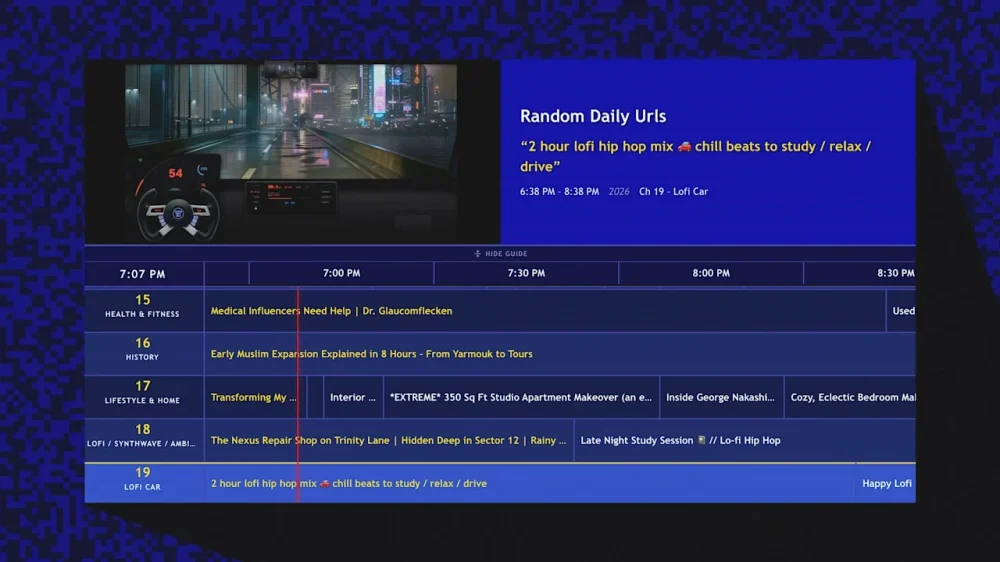
-
Two new experiments show that most people do not even consider that a personal message could be AI-generated, even when they themselves use artificial intelligence to write. To see how people judge someone based on their writing in the age of ChatGPT, my colleague Jiaqi Zhu and I recruited more than 1,300 U.S.-based participants, ages 18 to 84, and showed them AI-generated messages like an apology sent in an email. We split our volunteers into four groups: Some people saw the messages with no information about who or what wrote them, as in everyday life. Others were told the messages were definitely written by a human, definitely AI-generated, or that the source could be either. We found a clear “AI disclosure penalty.” When people knew a message was AI-generated, they rated the sender much more negatively (“lazy,” “insincere,” “lack of effort”) than when they believed that the same text was written by a person (“genuine,” “grateful,” “thoughtful”). But here’s the twist: The participants who were not told anything about authorship formed impressions that were just as positive as those from people who were told the messages were genuinely human. An AI-generated fictional apology sent via text was one of the messages participants evaluated in a recent study. Zhu & Molnar (2026) This complete lack of skepticism surprised us—and it raises new questions. Maybe participants were not familiar enough with AI to realize that today’s models can produce detailed and personal messages. (They can.) Or perhaps participants have never used AI themselves. (They likely have.) So we also tested whether participants’ own AI use changed how they judged senders. To our even bigger surprise, we found little to no effect. People who use generative AI quite frequently in their daily lives—at least every other day—did penalize AI use slightly less when AI authorship was disclosed, compared with people who never or rarely use AI. But participants were no more skeptical by default: When authorship was not disclosed, heavy AI users, light AI users, and nonusers all tended to assume the text was written by a person and formed essentially the same impressions. Why it matters Lack of skepticism and a lack of negative impressions matter because people make social judgments from text all the time. Recipients consider taking the time and effort to send written messages as an insight into the writer’s sincerity, authenticity, or competence, and those impressions shape people’s decisions in friendships, dating, and work. Yet our main findings reveal a striking disconnect: People usually don’t suspect AI use unless it is obvious. This unawareness creates a moral dilemma: People who use AI in secret can enjoy the benefits while facing almost no risk of detection. Meanwhile, paradoxically, people who are up front and admit to using AI suffer a reputational hit. Word clouds depict participants’ first impressions of senders who wrote messages themselves, left, and those who used AI, right. Andras Molnar Over time, a lack of skepticism and awareness could reshape what writing means in everyday life. Readers might learn to treat writing as a less reliable signal of someone’s character or effort, and instead rely on other forms of communication. For example, widespread AI use has already prompted employers to discount the value of cover letters from job applicants. Instead, they’re relying more on personal recommendations from an applicant’s current supervisor or connections made through in-person networking. What other research is being done Other researchers have documented a wide range of negative impressions about people who disclose their AI use. Studies show it makes job applicants seem less desirable and employees seem less competent. Readers of creative writing perceive AI users as less creative and inauthentic. People see personal apologies and corporate apologies that stem from AI as less effective. In general, disclosing AI use decreases trust and undermines legitimacy. Yet without disclosure, there is clear evidence that most people cannot reliably detect AI-generated text, even with the help of detection tools, especially when the text is a mix of human-written and AI-generated content. Even when people feel confident about their ability to spot AI text, their confidence may be nothing more than a self-affirming illusion. What’s next Even though our experiments did not reveal suspicion of AI use, that doesn’t mean people never suspect it in the real world. In some settings, people may already be hypervigilant about AI. Use in academia is an obvious example. In our next studies, we want to understand when and why people naturally start to suspect AI use, and what flips the switch between trust and doubt. Until then, if you want your personal message to be judged as heartfelt, the safest strategy may be to make a phone call, leave a voicemail, or, better yet, say it in person. The Research Brief is a short take on interesting academic work. Andras Molnar is an assistant professor of psychology at the University of Michigan. This article is republished from The Conversation under a Creative Commons license. Read the original article. View the full article
-
Below, Richard Davidson and Cortland Dahl share five key insights from their new book, Born to Flourish: How New Science and Ancient Wisdom Reveal a Simple Path to Thriving. Davidson is a professor of psychology and psychiatry at the University of Wisconsin-Madison, as well as the founder and director of its Center for Healthy Minds. He also founded a nonprofit, Humin, which translates science into tools that cultivate and measure well-being. Dahl serves as a contemplative scientist at the University of Wisconsin-Madison’s Center for Healthy Minds and as chief contemplative officer at the center’s affiliated nonprofit, Humin. What’s the big idea? Feeling happier, more connected, and more purposeful isn’t luck—it’s a set of skills you can practice and get better at. The wild part? Just a few minutes a day can start to change not only your quality of life, but that of the people around you too. Listen to the audio version of this Book Bite—read by Davidson—in the Next Big Idea app, or buy the book. 1. We are born to flourish. Flourishing is a learnable skill. Some people believe that their general well-being is fixed and there’s not much they can do to improve it, but research shows that this is not true. The qualities that underlie flourishing are rooted in brain networks that exhibit neuroplasticity. These networks can be shaped by experience and training. With very simple exercises, our minds can actually be nourished and changed. 2. Flourishing is comprised of four basic skills. The four basic, trainable skills of flourishing are awareness, connection, insight, and purpose. Awareness refers to our capacity to be mindful and voluntarily deploy our attention. It also relates to our capacity for self-awareness, meaning to be aware of our own bodies, minds, feelings, and thoughts. Another component of awareness is a process that psychologists and neuroscientists call meta-awareness, which is awareness of our own minds—knowing what our minds are doing. This may sound a little bit strange, but have you ever been reading a book, set it aside after a few pages and then realized that you have no idea what you just read? That is an example of not knowing what your mind is doing. But that moment of recognition is a moment of awakening, and that is meta-awareness. Connection includes qualities that are important for healthy social relationships, like appreciation, gratitude, kindness, and compassion. This is the antithesis of loneliness. These qualities are vital for human flourishing. Insight is the deep appreciation and understanding of how our thoughts, beliefs, and expectations shape our experience of the world. Each of us has thoughts, beliefs, and expectations of ourselves. This constitutes our narrative self—the self that we tell ourselves exists. Knowing that we filter our experience of the world through our own personal lens helps us keep in perspective that other people in the same situation may have a very different experience. Insight is vital to developing empathy. Purpose is not so much about finding something especially significant to do with our lives, but about finding meaning in even the most pedestrian activities of daily life. Can taking out the garbage connect with our sense of purpose? Of course it can be. It simply requires a little reframing. 3. Cultivating flourishing is easier than you think. Research shows that it only takes a few minutes of daily practice to nurture each of these four qualities of flourishing. We don’t have to sit and meditate for hours, days, months, or years. It’s something that can change rather quickly, although regularity of practice is important. I like to remind people that when humans first evolved, none of us were brushing our teeth. And yet, a very large segment of the world now brushes their teeth daily because we recognize its importance for physical hygiene. The data shows that if we dedicated as much time to nourishing our mind as we do brushing our teeth, then this world would really be a different place. According to our research, five minutes a day for 28 days can produce measurable change in well-being, levels of stress and anxiety, and it even can change aspects of our biology. It doesn’t take much to get these circuits in the mind going because we are innately predisposed to cultivate these qualities. Another important element to mention is that you can cultivate these qualities while engaged in other daily activities. It doesn’t require that we formally sit and meditate. You can do it as you’re commuting. You can do it as you’re washing the dishes. You can even do it while you’re brushing your teeth. The data shows that, at least in the early stages, the benefits are comparable when done paired with other activities as they are if done as stand-alone practices. 4. Flourishing is contagious. When you are around people who are flourishing, you also feel good. Flourishing changes the social landscape by benefiting all the people in its presence. One of our amazing research findings comes from public school teachers in the U.S. They were randomly assigned to cultivate their well-being using our Healthy Minds program. When teachers did this for 28 days, for approximately five minutes a day, their well-being improved. This part was expected. But we also had access to the academic performance of the students who were taught by these teachers. We found that, on standardized math tests, students taught by teachers assigned to flourishing training performed significantly better than students in classrooms taught by teachers in our control group. The students had no idea that there was research going on. This is an example of the downstream effects of having a teacher in the classroom who is fully present, really connected to their students, has insight into how their own thoughts and expectations may be shaping their experience of situations, and comes into the classroom with a strong sense of purpose. That teacher will be more effective at teaching than a teacher who has not nurtured these qualities. This is empirical evidence for the conjecture that flourishing is indeed contagious. 5. Conscious habits. We can use daily activities as reminders to do little practices that cultivate flourishing. For example, we eat every day. If we paused for a minute or two before eating in order to reflect on how many people it took for this food to end up on our plate, then we would cultivate a sense of appreciation for the network that made this meal happen. It would heighten our sense of interdependence. We are not isolated but rather exist in a connected and dependent web of humanity. Something like nurturing our sense of appreciation every time we eat is a little element we can add to a daily habit that, in turn, cultivates overall human flourishing. We need flourishing now, possibly more than ever. Enjoy our full library of Book Bites—read by the authors!—in the Next Big Idea app. This article originally appeared in Next Big Idea Club magazine and is reprinted with permission. View the full article

-
Loyalty has worn thin because of the PM’s lack of interest in making the difficult decisions his job requiresView the full article
-
It does more to shape a life than intellect and hard work View the full article
-
Whether or not new technologies can perform a task is only a tiny part of the pictureView the full article
-
Neither extreme optimism nor extreme pessimism makes much sense, and neither is easy nor safe to express View the full article
-
Executives prepare for shift to the left in UK government after narrow escape in last year’s BudgetView the full article
-
Forecast gains for Scotland and Wales nationalists come even as no grouping has immediate roadmap for breaking awayView the full article
-
The US stands to benefit as war in Iran reshapes oil and gas flows, but Europe and Asia are wary of becoming too reliant on American supplyView the full article