All Activity
- Past hour
-
SEO has moved past shortcuts and quick wins. What drives results now isn’t just content — it’s content that earns attention, builds trust, and converts. Storytelling plays a direct role in that. Used well, it can improve engagement signals, strengthen relevance, and turn traffic into action. Here are seven storytelling techniques to apply in your business blog. 7 storytelling techniques that drive engagement and conversions Use these to shape how your content flows, from the opening hook to the final call to action. 1. Hook the reader T.S. Eliot put it simply: “If you start with a bang, you won’t end with a whimper.” Many modern authors recommend starting a story in the middle of the action and letting readers catch up. But how does that apply when you’re writing a B2B or B2C blog? You can still hook your reader, just with different techniques: Challenge a commonly held belief: “The E-E-A-T model is flawed.” Start with a narrative: It doesn’t have to be a literal “Once upon a time.” Use a statistic: “Google has 89.9% of search engine market share worldwide.” Make a promise: “Would you like to write business blogs that drive organic traffic, and convert visitors to customers?” Empathize with a reader’s problems: “Do you struggle with writing business content your customers would actually want to read?” Use a quote that epitomizes what you want to say. Don’t be afraid to combine these techniques in your blog posts. If you struggle with what to come up with, a success story is always a great way to begin a B2B blog. Empathizing with a reader’s issues, then promising a solution, works for both B2B and B2C blogs. Your customers search everywhere. Make sure your brand shows up. The SEO toolkit you know, plus the AI visibility data you need. Start Free Trial Get started with 2. Make promises and deliver on them Stories are full of foreshadowing: hints that something’s going to happen, language that immerses the reader in the genre, and elements that build suspense. To get a reader excited about your blog, build suspense with the same techniques. Use phrases like “You will learn…” or “You will discover…,” tell them what you’re going to tell them, and use compelling language throughout. This is particularly important the first time you mention a keyword. Why? Because regardless of what you write for a meta description, Google often ignores it and uses text from the page instead — most commonly where a keyword is first mentioned. If this is part of a promise stating what your article, product, or business solution will deliver, this will improve your CTR. Dig deeper: 5 behavioral strategies to make your content more engaging 3. Talk to your reader directly Fiction writers spend a lot of time debating whether to write in first person (I/me) or third person (they/he/she). You have the option of the second person (you), but don’t always take full advantage of it. Using “you” rather than “our” can make your content feel more direct and personal. Consider which of these resonates with you most strongly: “We help our customers to…” “We will help you to…” While “you” is important, another largely overlooked word is “my,” at least when it comes to calls to action (CTAs). In a story, you imagine yourself as the hero. In a business blog, using “my” evokes the same feeling — this action is meant for you. It won’t work for every CTA, so experiment with it, monitor the results, and you may be surprised by the outcome. 4. Kill your darlings Authors are sometimes told to “kill your darlings,” meaning to remove extraneous characters or even whole chapters. Your blog must do the same. For each paragraph, ask yourself if it achieves one of the following: Advances the argument: Not just repeats it, but moves it forward or introduces new elements. Engages the reader: Keeps your reader wanting to know more by building empathy, using stories of success or failure, or clarifying your answer with engaging visuals. Persuades the reader: Blogs primarily target top-of-funnel, informative content. However, as you answer readers’ questions and educate them, you can move further down the funnel and include content aimed at converting. This is where you add your CTAs — whether forms to download an in-depth guide, recommended products that solve a problem, or other CTAs. If a paragraph doesn’t advance, engage, or persuade, ask yourself if you can delete it. Dig deeper: How to align your SEO strategy with the stages of buyer intent Get the newsletter search marketers rely on. See terms. 5. Show don’t tell If a potential customer relates to the problem you describe, you’re off to a good start. If they can imagine using your product or service, you’re halfway there. Not every blog needs to present a solution. But if your blog convinces readers they need your solution, it will increase conversions. Avoid being heavy-handed with commercial content. Show both the pain your readers face and the solution to move them along the buying journey. 6. Consider a three-act structure Author Jessica Brody puts it this way: “Act 2 is the opposite of Act 1. If Act 1 is the thesis — the status quo world — then Act 2 is the upside-down version of that. The polar opposite. The inverse. The antithesis.” To fully embrace storytelling in your blog, create a three-act story. Here’s one way you could achieve this: Act 1: Introduce a widely used approach and begin by defining what it is and its strengths. Sow seeds of doubt by stating it can go horribly wrong, has flaws, or won’t work for everyone. Give an indication of what to expect in Acts 2 and 3. Act 2: Who does this approach fail for? What assumptions does it make that are inherently flawed? Give examples of when it fails. Include tales of misfortune, when using the approach went wrong. The middle of a story is often dark, and this is where your business blog turns bleak. Act 3: What’s an alternative solution? Why does this fix the inherent flaws explored in Act 2? Give a real-life example where this solution succeeded, and give your story a happy ending. Dig deeper: How to apply ‘They Ask, You Answer’ to SEO and AI visibility 7. Edit your business blog Even professional authors say some version of “Your first draft will suck.” Don’t expect perfection when you start writing. You have the luxury of revising your work. Once you finish your first draft of your business blog, you know what you want to say, along with the structure and main points. Editing is where you decide how to say it. What will appeal most to your audience? What’s the best hook? What CTA fits this post? When you’ve finished editing, you’ll have a polished blog that tells a story, engages your reader, and generates conversions. See the complete picture of your search visibility. Track, optimize, and win in Google and AI search from one platform. Start Free Trial Get started with Content quality shows up in performance These techniques make your content more effective, and their impact shows up in performance. Evaluate content using measurable outcomes to reduce subjectivity and ensure it supports your business goals. As you experiment with storytelling in your business blog, measure: Organic traffic Keyword rankings Click-through rate (CTR) Time on page Conversions You can measure the first three in Google Search Console. You can measure the last two in Google Analytics. These metrics give you concrete data to compare content and assign financial value. With experimentation, you won’t just tell a better story — you’ll drive measurable traffic and conversions. View the full article
-
The latest PPC Pulse highlights Microsoft’s bidding updates, Google’s expanded creative tools, and Nano Banana Pro’s availability inside Google Ads. The post Google Ads Creative Tools Expand, Microsoft Simplifies Bidding – PPC Pulse appeared first on Search Engine Journal. View the full article
- Today
-
Price cap expected to rise 20% from July to SeptemberView the full article
-
The tech industry has spent the past few years focused on AI as a productivity engine, rewriting code, optimizing search, and automating customer service at scale. Now a more delicate transformation is underway., with agentic AI is moving into human resources. A new wave of startups and enterprise platforms claims algorithms can screen candidates, predict attrition, and recommend career paths faster than managers. The pitch is simple. AI promises less administrative work and more consistent decision-making. As these systems take on more responsibility, they are beginning to redefine what the “human” in human resources means. “Concerns are valid, because unlike other enterprise functions, HR directly affects people’s lives, careers, and identities, so the bar for trust and responsibility is much higher,” says Mahe Bayireddi, CEO of HR tech unicorn Phenom. Several companies are building tools for AI-led workforce redesign, embedding intelligent agents into hiring, employee support, and internal mobility. And wrestling with how to do it without losing the “human” in human resources. In this premium story, you’ll learn: How leaders at four major AI-powered HR platforms are enabling agents without forgetting the human in the loop Why the big opportunities in the tech are helping HR balance C-suite demands for speedy AI deployment The key risks still being hashed out with the move from automation to autonomy “What we’re seeing right now is what I would describe as a phase shift,” Bayireddi says. “There’s a lot of fear around job loss, but that framing is incomplete. HR roles are not simply disappearing. They are being deconstructed and rebuilt.” HR Is Moving From Process Automation to AI Execution Phenom’s new platform offers a window into how this change might actually play out. HR data is highly sensitive, raising concerns that biased or opaque algorithms could lead to discrimination claims or flawed hiring and termination decisions. Mohit Bhende, cofounder and CEO of the technical hiring platform Karat, says fragmented legacy systems make the challenge harder, since many organizations still rely on disconnected tools. “We’re somewhere in between, as the gap between the vision and the reality is wider than most vendors will admit,” Bhende tells Fast Company. “AI is not good at appreciating context, organizational history, or the kind of implied knowledge that makes someone genuinely valuable to a team.” Phenom’s new platform, WorkOps, reflects a broader evolution. The company has built an agentic architecture designed to orchestrate workflows, with a centralized engine governing agents in real time, enforcing policies, and escalating decisions when human oversight is required. In practice, HR begins to resemble an operating system. Mahe Bayireddi Mahe says a structural tension is emerging inside enterprises. CEOs and CIOs are pushing to accelerate AI adoption in pursuit of efficiency and competitive advantage. Chief people officers and HR leaders are urging caution, aware they are accountable for the human impact. “The reality is, people-driven systems often cannot move at the same speed as technology, so this tension is not only expected, it is inevitable,” he says. “In HR, especially in areas like talent acquisition and talent management, decisions were often based on experience, intuition, and limited data. With AI, those workflows are becoming more data-driven, and transparent, and can improve operational outcomes when implemented correctly.” Adoption remains uneven. Some studies suggest global AI use in HR ranges from 21% to 45% of organizations, while deep integration sits between 12% and 31%. Roughly 62% of HR AI failures stem from poor data quality and lack of context. Phenom says its approach targets that gap. The platform builds on enterprise-specific context and guardrails defined during deployment, drawing on models including Claude, OpenAI, and Gemini, alongside smaller fine-tuned systems. The goal is to better match AI to the complexity of enterprise and employee data. “Agentic AI cannot handle everything end-to-end. It lacks true contextual understanding and common sense, so relying on it completely would create inconsistencies and risks in enterprise operations,” says Phenom COO Hari Bayireddy. “We try to understand the industry first, collect data from multiple sources, and structure it properly, creating a semantic layer that the AI system can understand. Without that foundation, generative or agentic AI cannot deliver meaningful results.” The Rapidly Evolving Market for AI-Powered HR Platforms Phenom is part of a broader move toward AI-native HR, but its platform offers a concrete example of how vendors think this transition will work in practice. Startups such as Eightfold AI, Beamery, and Gloat are focusing on skills intelligence and internal mobility. Enterprise platforms including Workday, SAP SuccessFactors, and Oracle Cloud HCM are embedding generative and agentic AI directly into HR workflows. Salesforce recently launched Agentforce for HR Service, which integrates AI agents into a system that lets employees request time off or track HR cases through conversational interfaces. The platform draws on unified enterprise data, including policies and employee profiles, to deliver responses and execute actions in real time. “With business and HR leaders reporting that 41% of their time is spent on ‘zero-value’ tasks (referring to a Deloitte study), the industry is no longer just primed for change – it’s hitting a breaking point,” Kishan Chetan, GM of Agentforce Service at Salesforce, writes in an email to Fast Company. “In fact, we often say that the ‘portal-to-ticket’ era is dead. Agents can help resolve routine queries autonomously, freeing people leaders to focus on what only humans can do: high-value culture building and strategic talent development.” Chetan says the long-term vision centers on humans and agents working together. Not everyone is convinced the shift is heading in the right direction. An Inevitable Yet Unsettled Future Experts argue that the move from automation to autonomy introduces new risks, especially in a domain where decisions have direct human consequences. Regulation is one factor. New laws in the U.S. and Europe are beginning to govern how companies use AI in hiring, particularly around bias, transparency, and candidate rights. In 2025, both Workday and Amazon faced high-profile claims of AI-driven employment bias, intensifying scrutiny and political pressure for clearer rules. But regulation is only part of the challenge. “In HR, where decisions directly impact people, the biggest concerns are hidden bias and over-reliance on AI as decision-makers rather than signal generators,” says Dr. Helen Gu, founder and CEO of InsightFinder AI. Gu notes that AI still struggles with less tangible factors like context, collaboration, and culture. “There is a real risk of overfitting models to what can be measured while ignoring what actually matters,” she says. “When systems influence hiring or workforce planning, you need continuous visibility into how those models behave and where they may be drifting.” Others point to strategic risks. “Organizations may end up using AI to execute broken strategies more efficiently,” says Hemant Kapadia, CFO at Anaplan. “Deploying agentic AI in that environment is not progress. It is just automating chaos at a speed no human can control.” He says companies focused only on automation and cost reduction risk creating systems that are difficult to understand and govern. “The real opportunity is to use AI as a decision intelligence layer that drives growth.” Vendors building these systems push back on the idea that AI replaces human judgment. They say most AI outputs are probabilistic and still require interpretation, especially in high-stakes decisions. “Our systems are designed so that the final decision, whether it is hiring or internal promotion, remains with humans. That balance is critical,” says Mahe. Chetan adds that agentic AI “is an amplifier of human judgment, not a substitute,” noting that modern HR demands already exceed what teams can handle manually. Expecting leaders to respond to every query and oversee every outcome risks burnout in a function that is already stretched thin. If Phenom’s vision holds, enterprise leaders will face growing pressure to manage more complex workforces while adapting to rapid technological change. Integrating AI into HR will require reworking organizational systems and underlying data structures, alongside new roles focused on oversight. “Entirely new job categories are already emerging, where someone is constantly observing how agents behave, identifying where systems break, and deciding when to intervene, whether that means inserting a human into the loop or recalibrating the orchestration itself. As organizations deploy agents more broadly, I expect the nature of HR roles to evolve, helping enterprises make better decisions with clear and traceable accountability,” says Mahe. View the full article
-
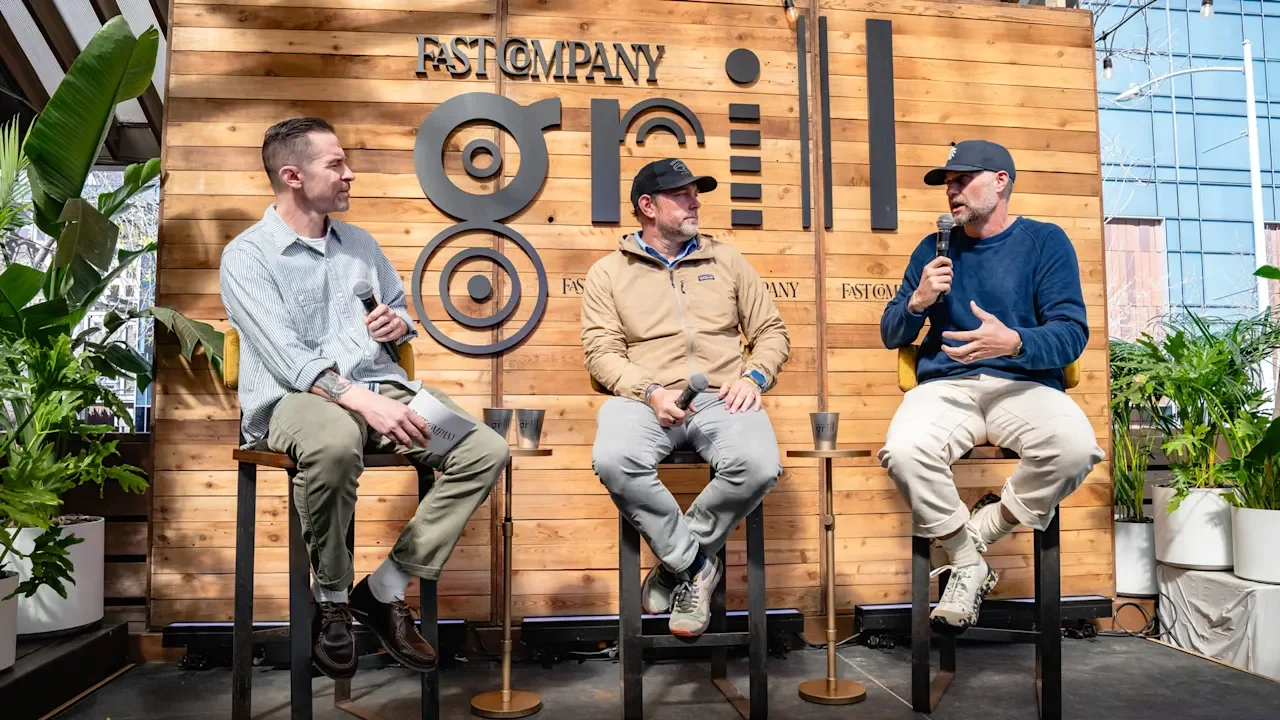
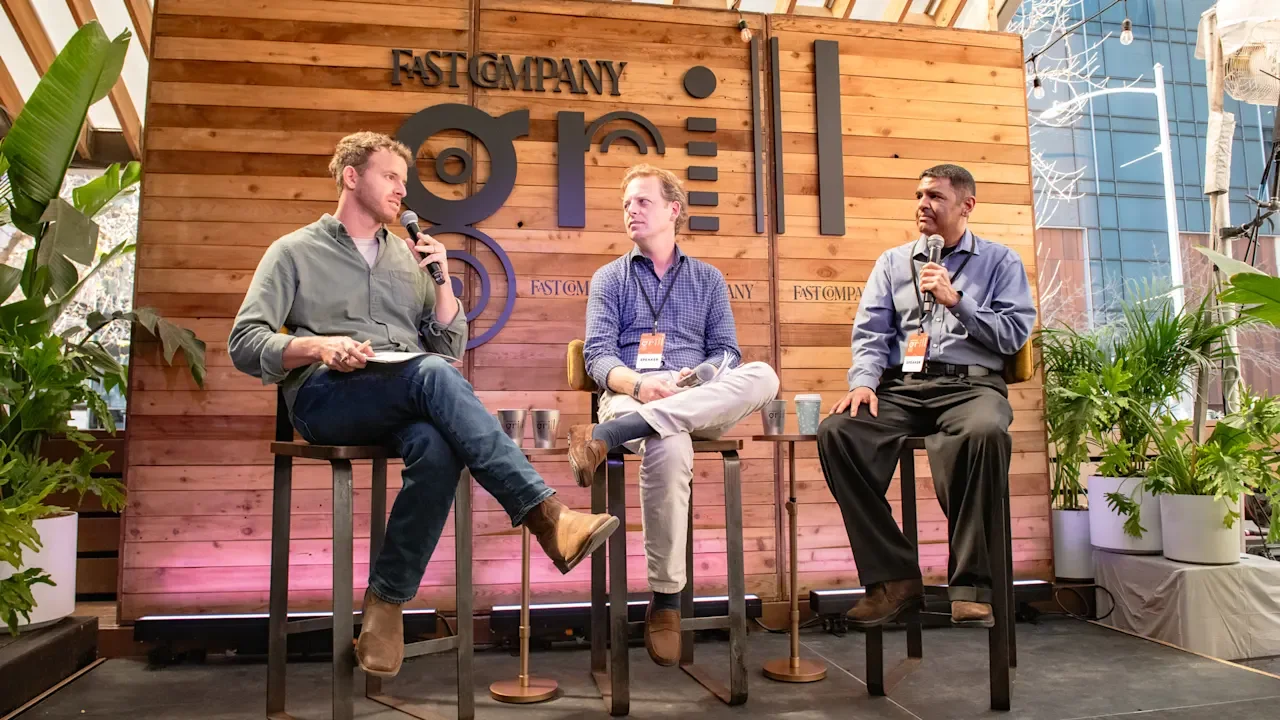
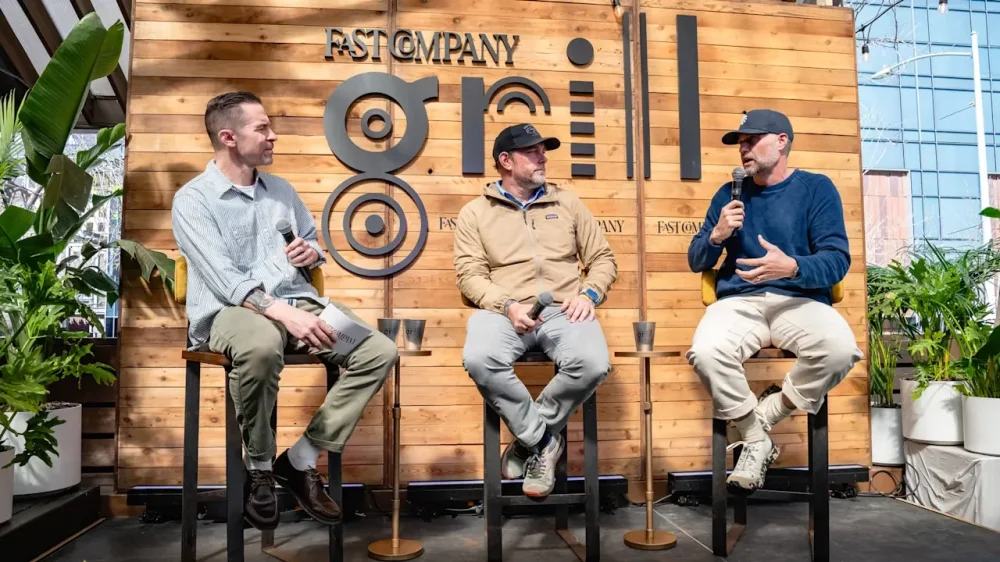
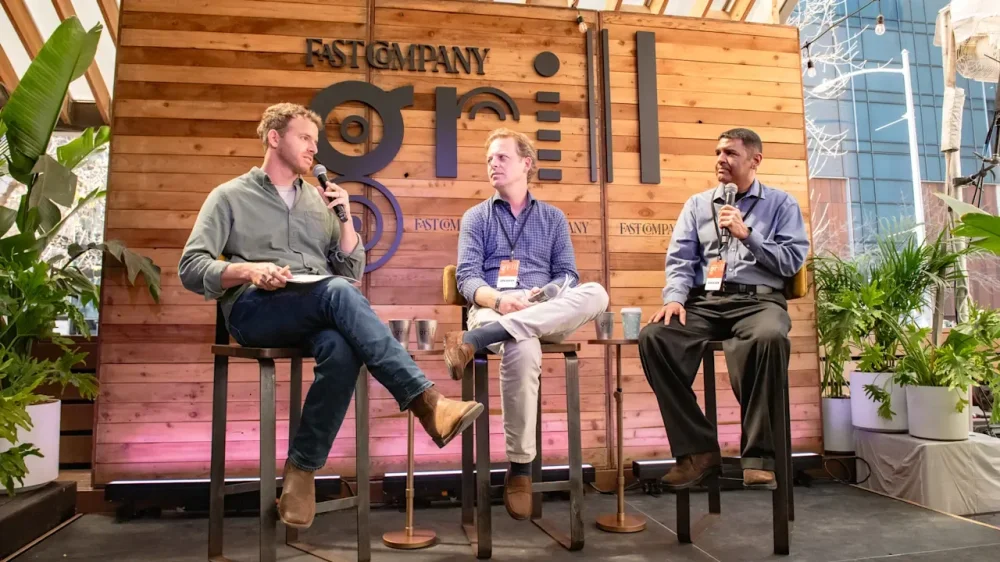
When Huckberry launched its newsletter 15 years ago, the retailer included a section that defied the advice of ecommerce experts by including links to stories and content that its employees thought might be of interest to its outdoors-minded community. “That is like rule No. 1: You do not link off of your site,” Ben O’Meara, Huckberry’s chief brand officer, said during a panel discussion at the Fast Company Grill at SXSW. The Austin-based company’s philosophy then, as it remains today, he said, is that there’s value in putting customers first and recognizing they’re not always in the mood to buy something. “We are providing a service to you outside of just the products that we are selling,” O’Meara said. “And that service is: We are providing entertainment, education, we are introducing you to like-minded people and examples of what our brand represents.” “MAKING DEPOSITS INTO THE COMMUNITY” Much like developing a friendship, this type of brand-building strategy takes time, and there’s an evolution that sees the relationship deepen over time, added Bill Neff, head of marketing at Yeti. He noted that the Austin-based company started out 20 years ago making coolers and other products for the fishing community, and has since branched out to foster partnerships with other communities, like surfing, that sometimes take many years to develop. “We treat our brand in a very human way, and we always think about our communities as friends,” Neff said. “We keep making deposits into the community and then we hope the community makes deposits in us.” Even if it takes time, going deep within communities can pay off. O’Meara said that Huckberry customers who engage with the brand’s content have a lifetime value that’s 3.5 times that of those who come to the site from an ad or affiliate link. “It’s longer term, it’s a slower build,” he said. “But at its foundation, this investment means a more profitable business.” View the full article
-
Are you sick of hearing about Gen Z yet? For more than a decade, they’ve been the premier target audience for brands and entertainment. They’ve dominated trend reporting, research, and the cultural zeitgeist. But, despite all of those studies, what have we actually learned? Is there really any connective tissue that unites everyone born between 1997 and 2010? The truth is, there is no Gen Z—not how we’ve come to define it. We’ve painted the generation as more socially conscious and purpose-driven, more addicted to technology, and credited (or blamed) them for new slang. We’ve complained that they don’t take life seriously and use humor as coping mechanisms, and that they don’t want to work or go to college. But these are the same stereotypes that have been articulated about young people for generations. The reality is more nuanced. And unfortunately, when it comes to how brands categorize and engage different generations, nuance is not generally welcome. That disconnect has led to some pretty tone-deaf brand moments. Take 2017’s infamous “Live for Now” Pepsi campaign—an early example of the pitfalls of broadly gesturing toward supposed Gen Z tropes and expecting it to land. On paper, Kendall Jenner heading into the streets to participate in a vague protest of some kind might seem like a great way to fulfill all of the Gen Z stereotypes. Instead, it missed the mark completely, turning Pepsi into a punchline. Driven by radical shifts in politics, culture, economics and more, members of Gen Z are less likely to share as many commonalities as you might think. In a way, there is no Gen Z. Or, at least, brands will need to act that way if they want to stop misrepresenting one of the industry’s most coveted demographics. Going solo Forget relying on some vague understanding of their overlapping interests. By all accounts, Gen Z is the first solocultural generation. Their practically unlimited access to information and culture from such a young age has created an incredibly individualistic view of the world, one where they all perceive the world around them differently. This then shapes how they engage with the world through algorithms and other choices, which feeds back to them an even more personalized perspective of the world. The result is a cycle where individual Gen Zers become less and less connected by shared realities. No previous generation has dealt with such a shift—from broad, connected understandings of the world around them to complete schisms in reality—and while every generation is dealing with the impact of soloculture, Gen Z has felt the brunt of its impact the most in their pivotal developmental years. This fracturing of collective identity has led to a lot of misunderstandings by those hoping to predict their behavior. For example, the broad assumption that Gen Z was the most socially conscious generation ever created early perceptions that it would be an extremely liberal voting block. This has been proven wrong multiple election cycles in a row, especially amongst young men. Instead, a variety of fragmentation points in Gen Z, from employment to education to specific beliefs in certain civil and human rights issues, prove that even though they are the same age, the consumption and behaviors of Gen Z are not consistent person-to-person. Similarly, when Gen Z was labeled as more sustainably minded, many brands looked for ways to message their eco-friendly bonafides to woo consumers. But at the same time, Gen Z helped enable the rise of fast-fashion behemoths like Shein. Their reality is complex: Gen Z wants to be able to shop in a considered way, but prices and other challenging parameters make it difficult for them to say no to cheaper options. Some brands do get things right, though. The annual Spotify Wrapped, and the ad campaigns surrounding it, feel highly specific while still broad enough for others to connect with and signal something about themselves. That specificity, enabled by data and presented in an incredibly shareable way, makes it a powerful signaling tool. But these types of approaches aren’t the norm. Getting past stereotypes Instead, initial perceptions around Gen Z that were born from kernels of truth over a decade ago have now hardened into perceived fact. To change that, brands and marketers need to be more curious and continually challenge our biases to refresh our understanding. Follow new research, not old assumptions: It can be tempting to fall back on tried and true data, but the world of Gen Z is always changing. So, their needs, wants, options and beliefs are always changing too, sometimes with huge swings that make relatively recent research obsolete. That’s why it’s important for brands to constantly reassess who they are for. Ask questions like: What action, belief, or need specific to our offering speaks to some part of today’s Gen Zers? How can we focus our research to help find more useful nuggets of truth? Be for someone, not everyone: If you have a particular POV that you believe will appeal to some of Gen Z, don’t fall for the trap of broadening it to meet more people where they are. When it comes to effectiveness, a seemingly larger and more inclusive audience is not always better. If an insight guiding your initiative or campaign is truly strong, it will be more helpful to be distinctly for some people than broadly for all people. Pick a passion point and stick to it: One way to appeal to a subset of Gen Z is to choose one clear area that they care about and focus your energies in that space. Ideally, that area is one that Gen Z has a unique or differentiated perspective on so that you can show them how you are a match for their needs. Obviously, it should also be an area that is a natural fit for your brand. Ask yourself: “Does my brand have a right to show up in this space?” Once that’s figured out, it’s important to be consistent once you’ve picked that space and show up for them, not once but often. So long as brands are committed to seeing Gen Z as a monolith, stereotype-driven failures will become more and more common, impacting reputation and growth. But those that do the hard work of breaking their stunted perceptions of who these individuals are and how they impact society today will find the loyal and grateful audience they’ve been searching for. That’s a lesson worth remembering for all generations, not just this one. View the full article

-
Fallingwater, the iconic Pennsylvania home architect Frank Lloyd Wright designed to sit over a running stream, just rebranded. But it doesn’t have a logo, and that’s intentional. “A logo’s purpose is to provide a cognitive shortcut to brand essence—but Fallingwater’s iconic elements, the cantilevered house and its landscape, are too rich to compress graphically, yet too essential to abstract,” says Amy Blackman, founder of L.A. design firm Fruition Co., that worked on the rebrand which went live last week, said in a statement. Unsplash The new brand also comes with updated fonts and an expanded color palette that was inspired by nature and the natural materials used to build the house. But Fallingwater was “un-logoable,” she says, because the house itself is one. “That iconic view of the house floating over the falls is the power of our visual identity,” Fallingwater director Justin Gunther said. “When you try and distill that image into a graphic depiction, it doesn’t do it justice.” Wright designed the home in 1935 for Edgar Kaufmann Sr., a Pittsburgh department store owner, and today it’s a museum and UNESCO World Heritage List site that draws about 140,000 visitors annually and runs a gorgeous, calming livestream on YouTube of its iconic falls all year long. Past Fallingwater logos used the distinctive shape of the building’s rectangular block facade over the falls to depict it literally. Some used more realistic representation of the home while others were abstract, like one made from brush stroke lines. Instead of trying to represent that famous POV of the house over its namesake falling water in a new way, the solution was a wordmark. The new Fallingwater logo spells out the home’s name in a customized version of Aldus Roman, a serif typeface designed for books. It was also used on the 1986 book cover for Fallingwater: A Frank Lloyd Wright Country House by Edgar Kaufmann Jr., about his family’s home. There’s also a shorthand “FW” favicon to make it more adaptable for small spaces like browser tabs. The wordmark was adapted from the book cover, according to Fallingwater, and some letters were subtly edited to make them look more flowing, like the Ls, which received curves on their tails, and the added tilt to the W. “When shown together with the house, it serves to reinforce the qualities of the design,” Gunther says. “And when alone, it serves to evoke that image in our minds.” Fallingwater is just the latest Wright-associated group or property to abandon a visual identity based on a building. The Frank Lloyd Wright Building Conservancy recently abandoned a representative logo that depicted a single building in Buffalo for a square logo that symbolized Wright and the importance of preserving his work. Fallingwater’s new wordmark stays out of the way and let the famous architecture speak for itself. View the full article

-
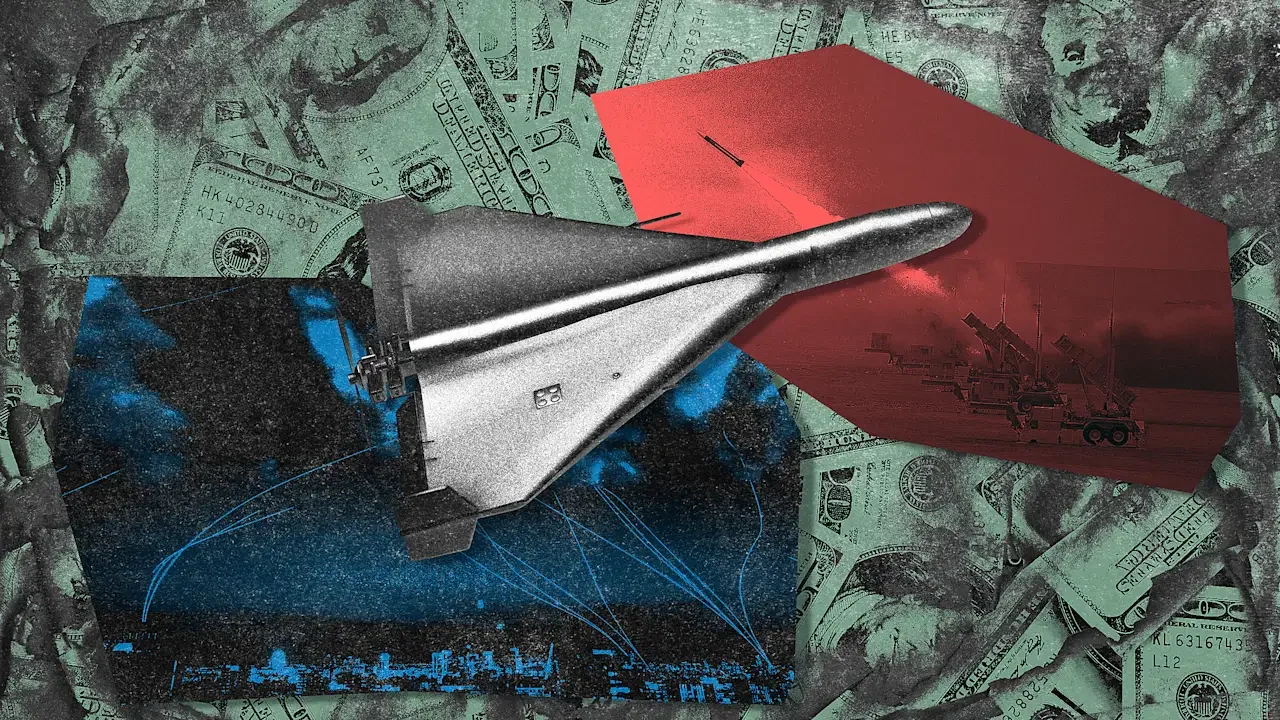
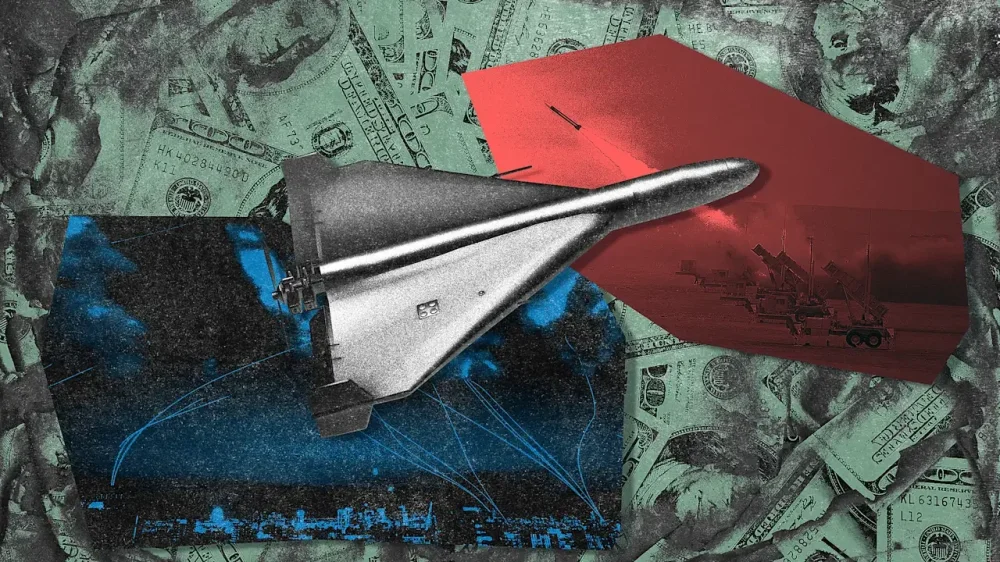
President Donald The President got the U.S. into a global economic and geopolitical mess with his Iran war. It was all predictable, except for one unintended consequence: Iran’s response in the region has demonstrated that the Pentagon’s traditional weaponry is not ready to fight the war of the future. Instead of the heavy systems used by the U.S. military since World War II—missiles and ships that are expensive to design, build, and operate—this war is powered by swarms of mass-produced and oft-autonomous drones that can do the job cheaper and faster. This is the U.S.’s first war of the future. It will mandate new strategy and technology. Fortunately for the U.S., there is somewhere to turn for that strategy and technology. In February 2022, when Russia launched its full-scale assault on Ukraine, the Ukrainians quickly found themselves in need of a playbook for modern warfare. That playbook has been honed over the past four years—and Ukraine is now willing to share it. Initially, the Russian offensive was foisted by courageous Ukrainian troops using traditional U.S. armament, including anti-tank Javelin missiles and high-mobility artillery rocket systems, or HIMARS, otherwise known as artillery for dummies. But soon Kyiv was compelled to find more effective ways to face its larger, better-funded enemy. Essentially, the Ukrainians had to build a whole new way of fighting from the ground up, scrambling to design and make a category of weaponry that has redefined the modern battlefield: brilliant, inexpensive drones. Now this is happening in reverse in the Middle East: The Pentagon’s brute-force approach has been countered by cheap, scrappy Iranian drones. The U.S. and its regional allies are defending themselves against $20,000 drones with Patriot missiles that cost $4 million per shot. A full Patriot system, by the way—including the launcher, radar, and control stations—costs roughly $1 billion. Meanwhile, Iran can launch its drones from a truck. This economic equation is ludicrous, but the bigger issue is that there are not enough expensive missiles to take down the cheap drones. So the U.S. (along with the United Arab Emirates, Saudi Arabia, and other gulf allies) is turning to Ukraine—where Russian drone attacks are still a nightly occurrence—for help. They want to use Ukraine’s drone interceptors and learn how to fight against Iran’s Shahed drones. It’s an ironic turn of events. Ukraine has been begging the U.S. to secure its skies for four years. Now it’s Washington begging for assistance from Kyiv. Doesn’t the U.S. already have drones? The U.S. has used drones for decades. The problem is that those drones were developed by the traditional military-industrial complex, whereas Ukraine changed warfare with off-the-shelf gadgetry. While large drones like the American Predator and the Reaper had existed since the early 2000s, Russia’s invasion forced Ukraine to build and deploy a very different type of drone. They needed a way to create lots of weapons that could fly and search for targets beyond enemy lines. They had to be modular so they could do different missions, from attack to reconnaissance. And they had to be very cheap. Rather than huge bombers and missiles, now everything depends on engineering genius, modularity, and AI. Kateryna Bondar—a fellow at the Wadhwani AI Center at CSIS and an expert in defense, technology, and Ukrainian drone warfare—tells me that the roots of this revolution lay in the dirt. “Ukraine has always been an agricultural country, and we use drones wildly in agriculture,” Bondar says over video chat. When Russia first invaded the Donbas region in 2014, Ukrainian farmers joined an underequipped army, bringing their commercial crop-monitoring drones with them. They quickly realized that instead of risking human life to look over a hill, they could just send a flying camera. Saving lives is key in any war, but Ukraine, a country of 30 million people, is vastly outnumbered by Russia’s 140 million-plus population. “The goal of the Ukrainian military is to remove a human from the battlefield just to reduce and minimize the loss of human lives,” Bondar says. The other motivation was to develop a strategy that could counter Ukraine’s economic disadvantage against Russia. It takes about $5,000 to $6,000 to fire a traditional 155-millimeter artillery shell. Using unmanned systems? “To basically kill one Russian [soldier], the cost is like $600,” Bondar notes. That cost references the price of a surveillance drone, the human operator’s time, and a kamikaze drone—a small, pilotless aircraft packed with explosives designed to deliberately crash directly into its target. Today, the Ukrainian military conducts 80% of its frontline strikes with drones. A decentralized, modular machine Ukrainian drones started out as off-the-shelf DJI Mavic camera drones dropping jerry-rigged grenades. According to a report in the Military Times, Aero Center, a Ukrainian manufacturer, started with a munition called Malyuk (which translates to “Baby”) that weighed just about 1 pound. The explosion of models has been nothing but phenomenal, growing from 70 in 2023 to more than 500 available today, from small, first-person-view quadcopters to large cruise-missile-like jet-powered units. Aero Center is now building medium-class drones that carry up to 22 pounds of explosives over roughly 15 miles. The same happened at sea, where Ukraine’s scrappy engineers packed civilian Jet Skis with explosives and remote navigation systems to hunt Russian ships with such great success that they forced the entire Black Sea fleet to retire into the Crimean port of Sevastopol. The key for their success is that most of these drones are modular and actually built-to-order on the battlefield, Bondar tells me. Ukrainians couldn’t just build massive defense factories to churn out drones, because Russian missiles would instantly vaporize them. Instead, they divided the manufacturing process into stages. They distributed separate, small facilities across the country so “if one place undergoes a strike from Russia and gets destroyed, you don’t destroy the whole ‘factory,’” Bondar says. Instead of buying a locked-down, $100,000 flying machine from a Western contractor, Ukrainian units acquire basic airframes and attach specialized loads for specific missions: GPS, chips for AI processing, cameras, fiber optics cable spools to avoid signal jamming, thermite loads (a chemical substance that burns through a tank’s armor), and explosive heads. It all depends on what they want the drone to do at any given time. For the first year of the war, Ukraine’s drones decimated Russian forces. But Russia adapted with help from its allies to develop a counter-fleet of drones. China provided components. Iran sent Shaheds—the cheap drones targeting American and allied assets in the Middle East right now—and engineers to teach Russians how to build and operate them. That prompted an arms race that has pushed the technology to evolve at a breakneck pace, with Ukraine developing cheaper and more effective interceptors to destroy the Iranian-designed drones. The bulk of Ukrainian interceptors are the Merops and Sting systems: small, semiautonomous flying robots designed to ram into enemy drones or explode right next to them in midair. They cost between $1,000 and $2,500 and are compact enough to fit inside a standard duffel bag. A Ukrainian-made Wild Hornets Sting drone costs $2,500, flies 195 mph, and has downed 3,900 enemy drones since May 2025. Another model, SkyFall’s P1-SUN, features a 3D-printed modular body, costs just $1,000, and reaches speeds of 280 mph using computer vision and thermal imaging to hunt its prey in the dark. Last month alone, Ukrainian interceptors destroyed more than 70% of incoming Shaheds over Kyiv. At the highest end of Ukraine’s drone fleet is the Octopus, built by Ukrspecsystems. It flies at night, cuts through electronic jamming at altitudes up to nearly 15,000 feet, and locks onto targets autonomously, ramming into them and exploding. It’s so effective that it’s now built under license by more than 15 Ukrainian manufacturers. And since November, it has been produced outside Ukraine, at a new factory in the United Kingdom. This deal marked the first time a Western government licensed a Ukrainian-designed interceptor for domestic production. Five NATO countries—Germany, France, Italy, Poland, and the U.K.—have since agreed to build on this precedent by jointly developing affordable interceptor drones of their own. The rest of the defense world has been watching this open laboratory in awe. China, in particular, is radically altering its military structure. According to Bondar, China is no longer focused on traditional tanks or aircraft carriers. “They develop ground systems which are able to carry thousands of drones, for example, or they develop ships which are able to carry thousands of drones,” she says. Now that exact same tactic is bleeding U.S. defenses in the Middle East dry. On February 28, 2026, the U.S. and Israel launched a massive assault on Iran. In just the first week of the resulting war, Tehran fired more than 500 ballistic missiles and nearly 2,000 drones at Israeli cities and at U.S. assets across 12 countries in the region. Desperate call for help The U.S. and its partners claim they are winning the sky, with officials saying that countries like Qatar and the UAE are intercepting between 93% and 97% of incoming projectiles. But despite these high interception rates, the sheer volume of the swarm means dozens of drones still slip through. According to a recent analysis by The New York Times, Iranian strikes have successfully damaged at least 17 U.S. military, diplomatic, and air defense sites across the Middle East. For the first time, an Iranian-backed militia has carried out an FPV drone attack in Iraq, an incredibly dangerous new development. Seen here, the FPV munition flies around Victory Base near Baghdad International Airport before slamming into a building. pic.twitter.com/yNugU8iQVL — OSINTtechnical (@Osinttechnical) March 14, 2026 High-value strategic targets hit include the U.S. Navy Fifth Fleet headquarters in Bahrain (causing an estimated $200 million in damage), Al Dhafra Air Base in the UAE, Ali Al Salem Air Base in Kuwait, U.S. Victory Base in Baghdad, and Al Udeid Air Base in Qatar. The swarms have even damaged the crown jewels of American air defense, striking components of the U.S. Terminal High Altitude Area Defense (THAAD) system and a $1.1 billion early-warning radar near Umm Dahal, Qatar. Imagine that: Cheap drones hitting the systems that are supposed to hunt them down. Even civilian global hubs aren’t safe. On March 16, an explosive-laden Shahed-type drone successfully struck a fuel-storage tank just outside Dubai International Airport, sparking a massive fire, injuring four people, and forcing the temporary shutdown of the world’s busiest international airport. But even if the U.S. could stop 100% of the incoming Shaheds, the financial equation would still be broken. If Iran forces the U.S. to spend $4 million on a PAC-3 Patriot missile to stop a drone that costs just $20,000 to $30,000, how is that a sustainable war plan? This imbalance has forced the U.S. military to swallow its pride and request help from Ukraine, even after The President stopped U.S. military and intelligence aid multiple times and personally denigrated Ukrainian President Volodymyr Zelenskyy. The Joint Interagency Task Force 401 (JIATF 401)—the Pentagon’s lead counter-drone unit—is currently scrambling to gather and deliver drone-killers to American troops participating in Operation Epic Fury. A U.S. official told Forbes that JIATF 401 is helping organize “a rapid surge” of Merops interceptor drones to the Middle East to support the U.S. “JIATF 401 is leading the War Department’s effort to rapidly transfer critical counter-drone technologies, including low-cost interceptors, from Ukraine to the U.S. Central Command area of operations,” the official said. Merops is a kinetic drone interceptor—a robotic flying bullet that uses brute force to smash into its target. It’s agile to deploy: A crew of just four people can assemble and launch it directly from the back of a standard pickup truck or light tactical vehicle. Once in the air, the drone relies on AI—a digital brain that processes sensor data to make real-time targeting decisions without a human pulling the joystick—to autonomously track and strike incoming adversary drones like the Shaheds, knocking them down or obliterating them in midair. A single Merops system costs about $14,500—several times the cost of some cheaper drone systems—but the math checks out. The Shahed drone it’s designed to thwart ranges from $15,000 to $30,000 depending on its payload. Merops has already proved highly effective against Russian versions of the Shahed, prompting NATO nations like Poland, Romania, and Denmark to adopt the system last year to protect their own airspace. Time to change, fast We are witnessing the rapid evolution of drone warfare. But a U.S. military that’s relying on $14,500 truck-launched robots exposes a glaring truth: The Pentagon’s legacy defense networks are fundamentally mismatched with modern combat. Historically, the U.S. has relied on a layered, multimillion-dollar defense strategy using Patriot missile batteries and THAAD systems to smash into ballistic missiles, the latter in the vacuum of space just before they reenter the Earth’s atmosphere. But these systems are financially ruinous against cheap drones. As Iain Boyd, an aerospace engineering professor at the University of Colorado Boulder, points out: “Because each interceptor costs several million dollars, it is a losing proposition to use such systems to destroy rockets that only cost $100,000.” Just three days into the war with Iran, the U.S. and Israel had burned through 800-plus Patriot interceptor missiles—more than Ukraine received over four years from all its allies combined. By the end of the first week, Washington had spent roughly $4 billion on missile defense interceptors. Even fallback systems like the Navy’s Phalanx—an automated machine gun that spits out 4,500 rounds per minute—are flawed. At $30 a round, the defense sounds cheap, but it can empty its entire magazine in a mere 20 to 30 seconds. Air defense needs to keep up with the pace of drone threats. The U.S. is experimenting with directed-energy weapons, like the Navy’s 60-kilowatt HELIOS laser, or high-power microwaves that shoot invisible waves of energy to short-circuit the electronic wiring of incoming missiles. Boyd notes that these technologies have an “infinite magazine,” meaning they can fire endlessly as long as they’re connected to an electrical power source. But those aren’t fully ready for mass deployment. Nobody knows when the Pentagon will catch up. The U.S. military-industrial complex is sluggish and still focused on sixth-generation fighters and stealth bombers like the B-21 Raider. Do these systems have a place in today’s military world? Probably—for now. But for how long? The Chinese are still working on large military systems, from nuclear aircraft carriers to their own sixth-generation fighters and stealth bombers, but they’re increasingly shifting focus toward deploying AI-powered drone swarms and flying aircraft carriers capable of launching hundreds of drones in midair. These projects take years of research to realize. But in Ukraine, military tech becomes obsolete every six weeks. Russia’s newest attack drone, the Geran-5, flies at 370 mph—fast enough to outrun current Ukrainian interceptors. “The Russians are trying. They are not as stupid as they look,” Roman Yeremenko, a director at Aero Center, says. “They are adapting to our means of destruction.” The arms race will keep racing. If the U.S. doesn’t rapidly evolve its multimillion-dollar defense paradigms to embrace cheap, agile, adaptable, AI-driven drones, it will be left behind in the ashes of its own expensive hardware. As Yeremenko puts it plainly: “This is a war of technology. And the one who is ahead will win this war.” View the full article
-
Ten-year gilt yields rise to 4.94% as borrowing numbers add to concerns over energy-driven inflation shockView the full article
-
International Energy Agency says consumer demand measures needed to tackle Iran war disruptionsView the full article
-
Twenty years ago, Jack Dorsey changed the world. He opened his phone and sent a message to a new platform he had created: “just setting up my twttr”. That post carries the ID 20. (A post he shared last week has the ID 2032161152470565367—a small detail that captures how dramatically the platform has scaled in the intervening decades.) just setting up my twttr — jack (@jack) March 21, 2006 Following that first message, Dorsey’s short-form social network quickly cemented its role in our digital lives. In 2009, as a plane landed on the Hudson River in New York, users followed events in real time as people posted from the scene. In 2011, Sohaib Athar, then living in Abbottabad, Pakistan, inadvertently revealed the mission to kill Osama bin Laden because of a noisy helicopter… on Twitter. It became the place where the press and policymakers converged to discuss the state of the world. It was also where celebrities could interact directly with fans—or share record-breaking selfies, as Ellen DeGeneres did in 2014. If only Bradley's arm was longer. Best photo ever. #oscars pic.twitter.com/C9U5NOtGap — The Ellen Show (@TheEllenShow) March 3, 2014 Little wonder that Elon Musk called the platform the “de facto public town square” as he courted the company before buying it for $44 billion in October 2022. Today, that public town square lies in ruins. The company’s value has yo-yoed, dropping below $10 billion in September 2024 before rebounding to roughly its original valuation by March 2025. User numbers have declined as people tire of puerile shitposting and sexual harassment through the Grok chatbot. The platform is now struggling under a morass of AI slop, its own staff admit. Musk has framed these changes as a necessary evolution in service of free speech. The result, however, has been the erosion of the utility that made Twitter essential for journalism and public discourse. What was once a kind of public utility—flawed, often chaotic, and frequently mismanaged—has become Musk’s private playground. Value now comes in two forms. Financially, the takeover looks like a bust. Following the merger of Musk’s companies, recent estimates peg the platform at around $33 billion. That’s up from its low point, but still roughly 25% below what Musk paid—and he bought it believing it was already underperforming. Yet X still serves a purpose for Musk, even as its civic function has largely collapsed under a torrent of porn and hostility. It remains a firehose of real-time human interaction—albeit among a shrinking user base—and a captive testing ground for Grok. It is also a megaphone for Musk himself. The point of X is no longer to function as a public square. It is to generate data and extend reach across the broader Musk ecosystem. The experience we all have on the platform, attacked by random reply guys, bombarded with gore and titillation, is an echo of his world. But it’s also a lab experiment to see how well his broader goals for his companies work. That helps explain why it feels so shitty for users. It’s no longer serving us; it’s serving Elon Musk. It’s designed to reinforce his worldview first, to improve his other businesses second, and if you happen to enjoy it along the way… well, that’s an added bonus. But Musk did the world a favor by renaming the platform when he did. While X will go down in the history books as an ugly, unpalatable place, Twitter’s legacy remains, and relatively untarnished. It changed how news broke and how politicians, celebrities and the public collided online. It briefly showed what a digital public square could look like, then demonstrated how fragile such a space becomes when one billionaire mistakes ownership for stewardship. Today, X is a testing ground for an AI lab and an echo chamber for its owner. And in that sense, it feels like it’s succeeding. View the full article
-
For more than 20 years, anyone visiting the White House in Washington, D.C., has first stepped inside a trailer. Technically a temporary building, this trailer on the southeastern edge of the White House grounds is where visitors are screened for security. When there’s a big event, which is often, security screening bleeds out of the trailer into temporary tents, much to the chagrin of the U.S. Secret Service. “This has not been the best situation for those visitors coming to visit the White House. They’re outside. We cannot deploy all the technology we’d like to at all the different times, and it’s very limiting as one security screening lane,” said Andy Stohs, senior adviser for technical operations with the Secret Service. His comments came during a formal presentation of the recently released conceptual design for an updated security screening facility on the White House grounds. The facility would support security screening for visitor tours and large-scale events, as well as the daily comings and goings of White House staff and contractors. Instead of temporary and pop-up facilities, the Secret Service is proposing a modern, tech-centric building, and it hopes construction can begin later this year. The big concern for the panel charged with reviewing the plan, though, is whether the building is “classical” enough. What does the proposed building look like? The proposal details a largely subterranean, 33,000-square-foot facility designed by global architecture and engineering firm AECOM. It was presented at the March 19 meeting of the U.S. Commission of Fine Arts, the independent federal agency that advises the president and Congress on matters of design and aesthetics affecting Washington, D.C., including new federal buildings. The subterranean security screening facility would sit adjacent to President Donald The President’s multimillion-dollar ballroom (under construction), with an entry point a block away at the edge of Sherman Park and the column-lined exit building directly across the street from the expanded White House building. Visitors would enter the facility and quickly move beneath the park for multiple ID checks and an airport-style security screening through equipment and Secret Service personnel. After, they would wind through a corridor, travel up an escalator, and emerge on the surface level within the secured space of the White House grounds. Renderings of the design presented during the Commission on Fine Arts meeting were met with predictable critiques, tempered with support for the overall project. Commission member Mary Anne Carter, the The President-appointed chair of the National Endowment for the Arts, focused on the entrance to the facility, which is carved into the edge of Sherman Park and lined with a curving retaining wall of concrete and limestone. “The entrance, although I love the curve, it doesn’t seem to match the overall appearance of everything else,” Carter said. “It seems odd. That is a lot of concrete. Are you proposing any artwork, any carvings, etchings, public art, anything to maybe make it look less brutal?” The commission’s vice-chair, James McCrery, focused on the few parts of the proposed building that can be seen at the ground level. One is a modest, 18-foot-tall rectangular building with a sloping roof supported by a perimeter of limestone-clad columns. The other is a below-grade ramp and entrance that visitors would use to go from the street level into the facility. “There’s this thing called the president’s executive order on architecture, and I think you really need to study that,” McCrery said. He was referring to The President’s July 2025 executive order “Making Federal Architecture Beautiful Again,” which calls for classical and traditional architecture to be the preferred styles for all federal buildings. In McCrery’s view, AECOM’s design does not qualify as sufficiently classical. Perhaps unsurprisingly, other commission members agreed. The commission’s seven-member body is presidentially appointed. In October 2025, The President made the uncommon move of firing the panel and replacing all members with appointees who have enthusiastically supported his architectural tendencies. McCrery is a longtime board member of the National Civic Art Society, the group that helped draft the executive order on architecture. He’s also the original architect of the ballroom project that led to the surprise demolition of the East Wing of the White House. “It’s difficult for me to say stuff like this but I’m obligated to say it. I think that AECOM would be much better served, and this project much better served, if you were to retain, in some way, in some manner, an architect who is very familiar with and committed to the classical language of architecture,” McCrery said during the hearing. “I like the project. I don’t like the design.” AECOM pledged to revisit the design, and the Commission on Fine Arts expects to review it again at its next meeting on April 16. Formal approval could come quickly, and many are hoping it does. The project was submitted for review by the Executive Office of the President in cooperation with the U.S. Secret Service and the National Park Service, which oversees Sherman Park. The stars may be aligning for the project to move ahead, partly due to the construction work already underway on the site of the demolished East Wing. “This isn’t a new idea. We have been looking at this for 20 years trying to find the right solution,” said Stohs. “This is just a good opportunity given that the entirety of the site is under construction.” Work could start as soon as August, and the project could be complete by July 2028. View the full article

-
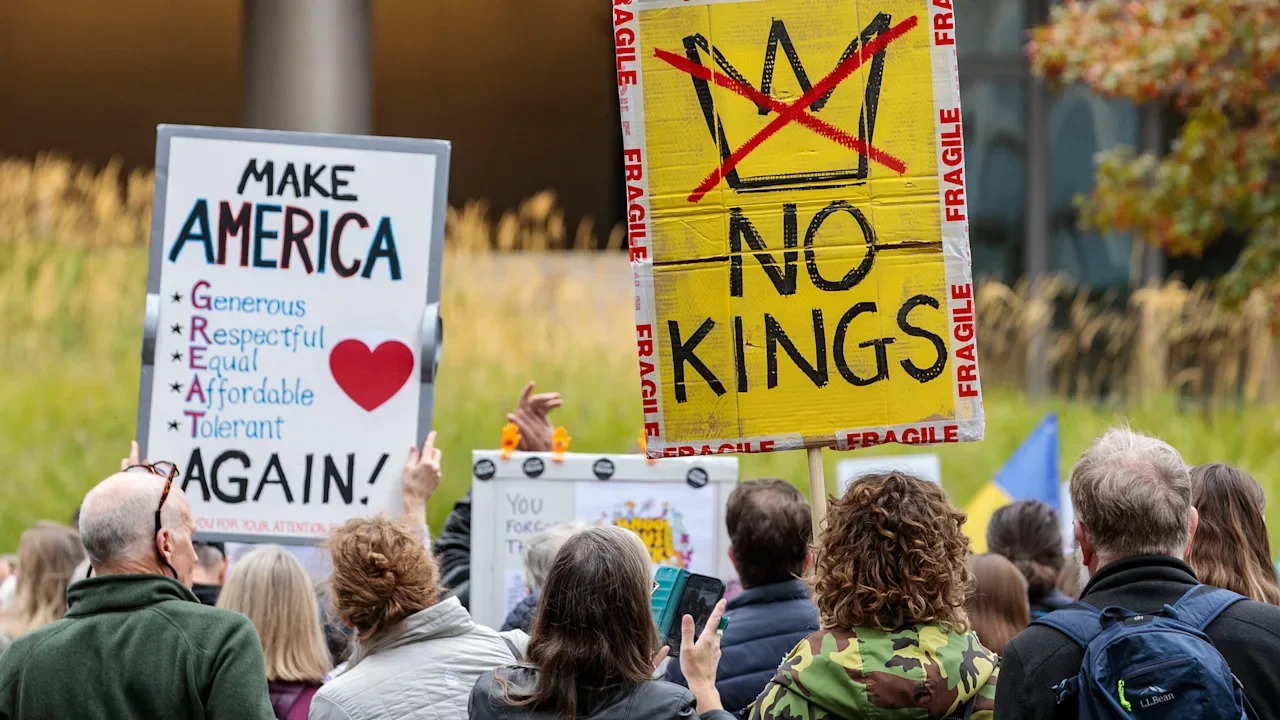
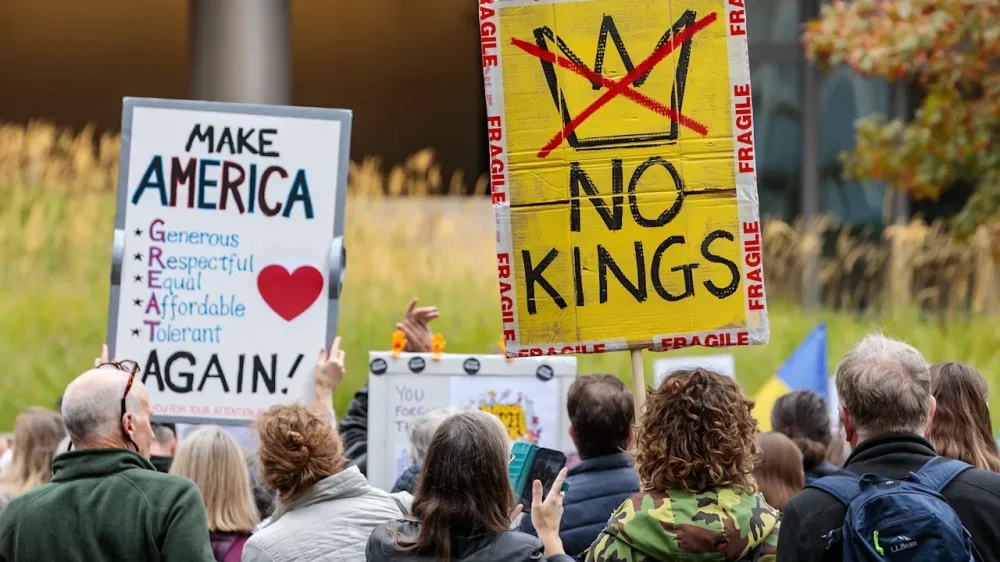
Next week’s “No Kings” nationwide protests, scheduled for Saturday, March 28, already have 3,000 community events planned in all 50 states and every U.S. congressional district, organizers say. That surpasses the last No Kings protest in October—which drew seven million people for the one-day event—by “several hundred locations.” And more events are being added daily. “This will be the largest protest in American history,” Ezra Levin, co-executive director of Indivisible, one of the key organizers, tells Fast Company. “We will be in every single congressional district from the bluest blue to the reddest red.” In June, five million people across American participated in over 2,100 events for the first No Kings protest, and last October, another seven million people took to the streets in more than 2,700 events. Protesters have said they’re concerned about the erosion of the U.S. democracy, and what they call troubling developments inside the country led by the The President administration. Those include mass furloughs of government workers amid yet another government shutdown; U.S. Immigration and Customs Enforcement (ICE) agents’ raids on immigrants and American citizens in Minnesota and around the country; the deployment of National Guard troops into U.S. cities and against Americans in the name of crime reduction; sweeping tariffs which have cost the American taxpayer millions of dollars (which have since been struck down by the Supreme Court); and the recent wars in Venezuela and Iran, which are causing gas prices to spike. The March 28 mobilization is the next step in a growing, expansive mass movement that includes a wide swath of people old and young, in both red and blue states, and rural and urban areas. “We are all united in this fight to save our democracy from this administration, and we will win,” Levin says. “From every corner of this country, we are all saying: NO KINGS.” Uniting in protest of the The President administration According to organizers, there are multiple issues uniting people and motivating them to come protest and speak out. “Many people will show up because they oppose the war with Iran,” Levin tells Fast Company. “If you oppose the war that The President launched without public support, if you oppose the tariffs and the agenda he is shoving down our throats, it’s a good idea to show up at ‘No Kings.'” “You will have different people . . . [but what we have in common] is we don’t accept a King in America and we assert our constitutional rights,” he adds. “So, it’s not surprising ‘No Kings’ is taking off in rural and red areas.” “Americans may disagree on policy, but we agree on two fundamental values: that we should be governed by ourselves, not kings, and that there is a basic goodness at our core,” organizer and American Federation of Teachers (AFT) president Randi Weingarten says. “America is at an inflection point . . . People are afraid, and they can’t afford basic necessities. It’s time the administration listened and helped them build a better life rather than stoking hate and fear.” The non-violent, pro-democracy demonstrations are organized by a coalition of partners, including: Indivisible, a progressive grassroots movement; ACLU; American Federation of Teachers; Common Defense; 50501; Human Rights Campaign; League of Conservation Voters; MoveOn; National Education Association; National Nurses United; Public Citizen; SEIU; and United We Dream. When is the next big protest? “I think 2026 is an important year for the future of democracy and I don’t think we get through it without seeing an increase in participation,” Levin tells Fast Company. A complete list of locations for the No Kings events can be found at nokings.org. Next on the agenda is a one-day general strike on May Day, scheduled for May 1, just a few weeks after the March protest. View the full article
-
Everything is bigger in Texas, they say—including an economic boom there in recent years. Austin, in particular, consistently ranks among the fastest-growing metro areas in the country, and is vying to become one of the top startup hubs. Meanwhile, the state has successfully lured hundreds of companies to relocate to Texas in recent years. In 2024, Texas surpassed New York as the top employer of workers in the financial services industry, and it will up the ante with the opening of the Texas Stock Exchange later this year. This is the latest sign that the state, the eighth-largest economy in the world, is becoming a global financial and business powerhouse. “Especially in the last decade, we’ve really seen a maturity of the many ecosystems that we have in Texas,” Michael Sury, an associate professor of finance and director of the Center for Analytics at the University of Texas at Austin, said at the Fast Company Grill at SXSW. A wave of transplants, initially drawn to Texas for various reasons, including its business-friendly environment, have helped build a “very vibrant mix of industries” in the state, he added. With a thriving startup culture, Austin has diversified in the past decade from a once “tech-heavy scene” to an economy that initially attracts talent, then gives people plenty of reasons to plant roots, said Mike Marcantonio, a partner at LiveOak Ventures, an Austin-based venture capital firm. “It’s been exciting to see that maturation, and now we’ve got the sort-of entire food chain if people want to stick around and as they start having kids,” Marcantonio added. What’s next Texas has successfully courted businesses that are escaping higher taxes, more regulations, and a higher cost of living in states like California and New York. That’s created a sense of momentum, with the state investing in infrastructure and services that support further growth, Marcantonio said, noting that he believes there’s an opportunity for Texas to become one of the top-three innovation hubs in the U.S. over the next decade. Additionally, Sury pointed out, the Texas Stock Exchange presents a new opportunity for the state to put its mark on financial markets. Marcantonio added: “The biggest effect it could have, or hopefully will have, is allowing more companies to access the public markets.” View the full article
-
High-speed winds and sideways rain swept through the courtyard of Parque Lage in Rio de Janeiro. Participants received instructions to stay put. This was both bad and good. It was bad because we were all stuck. At the same time, it was good, because at least we were stuck an hour before my keynote address. We were at a climate conference in Brazil for the week, where I was due to present a speech on design thinking and leadership. This was something I took more as a suggestion than a mandate. My first slide featured a Mary Oliver quote on it that said, “There is only one question: how to love this world.” The wind howled. One of the producers panicked. I had a well-designed deck to go along with my speech. But other than that, I felt good about going analog. The lights flickered on and off, and she turned to me to ask what we should do. Without hesitation, I said, “Let’s light candles.” The pressure to produce more Business beats to the drum of bigger, faster, forever more. We celebrate acceleration and treat slowness as failure. Leaders feel pressure to grow constantly, while professionals feel like they need to keep producing more to be seen as productive. Organizations are always trying to innovate to stay ahead. The cost is showing up everywhere. Whether that’s burnout, loneliness, or a sense that we’ve optimized ourselves away from something essential. In a world obsessed with more, the most radical act of leadership might be helping people remember. The moment in Brazil played directly into this. We stripped away and got back to basics. Participants were sitting on the floor as the room glowed under candlelight, asking each other questions and writing poetry. After the talk, I heard the following statements from multiple people: “Your talk helped me remember.” What it means to help people remember I’ve heard those words in the past after visioning sessions with CEOs, as a response to a brand video or campaign I’ve created, or setting a new corporate strategy. They didn’t say “You helped us evolve or level up.” They said, “You helped us remember.” That’s the role of the artist, whether it be a painter, poet, or musician. They help people remember something. It might be their humanity, their shared experience, or that they’re not alone and there’s something we can aspire towards. That logic also applies to businesses. Great businesses lead with humanity and help their teams align around core values. Leaders often have to tell stories that inspire an organization into the unknown, as well as slow down to listen to intuition rather than impulse. So how do you help people remember? For me, the following practices have been particularly helpful. 1. Think like a poet I pull concepts from poetry to teach leadership regularly. Keats’ negative capability refers to the ability to exist in uncertainty without having to reach for fact or reason. In business, it’s one of the most crucial skills today. Capturing certainty is like trying to hold wind in your hand. Leaders who thrive are those who can sit with discomfort and ambiguity without immediately reaching for a fix. They stay present, navigate anxiety with grace, and make grounded decisions. William Blake’s “The Marriage of Heaven and Hell” shows the power of dialectical leadership and holding opposing ideas at once. “Without contraries, there is no progression.” A good leader lives in the tension and helps find the synthesis. 2. Ask questions that invite thoughtful answers Nothing slows us down better than asking a question that invites thoughtful answers. These are questions that hold the balance between aspirational and achievable. What do we need now? What assumptions are we carrying? Where do we see possibilities? A good question invites pause, participation, and honesty. And the best ones have a way of becoming a north star. 3. Find ways to create together Those activities include sketching, writing, or building. Whatever gets people out of their heads and into their hands and hearts. The act of making is a form of remembering. It’s a right of being human. 4. Name what’s in the room I’m talking about the unspoken thing. What do we still need to grieve? What’s getting in the way of us doing our best work? When you name the thing, it often dissolves. That’s the job of the artist, too. 5. Remember your why Why are we doing this? What’s our joyful pursuit? What gets us out of bed in the morning? What would make us feel proud? We get so caught in the details of urgency that we forget the point of it all. When you remember your why, you don’t need motivation or inspiration to take action. The storm eventually settled, and the electricity came back on. We used the projector but kept the candles lit. That’s the balance I want for business. Not less ambition. Not slower growth for its own sake. But organizations that know how to return to themselves. Leaders who understand that before the next transformation, you have to help people remember why it matters in the first place. Technology will keep accelerating, sometimes at a rate that humans aren’t able to keep up with. Which means the human practices matter more. I’m not proposing nostalgia or an anti-progress agenda. I’m saying that as we advance, we need to anchor in our humanity. We need to lead in a way that helps others remember. View the full article
-
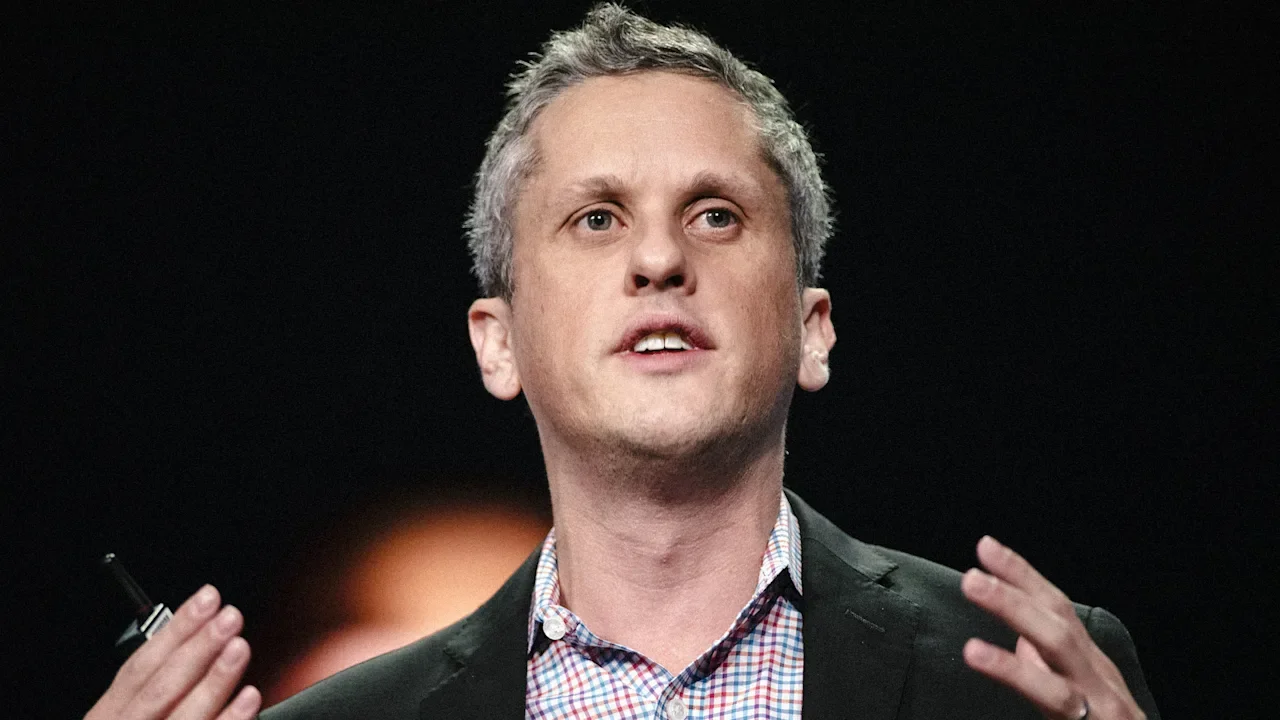
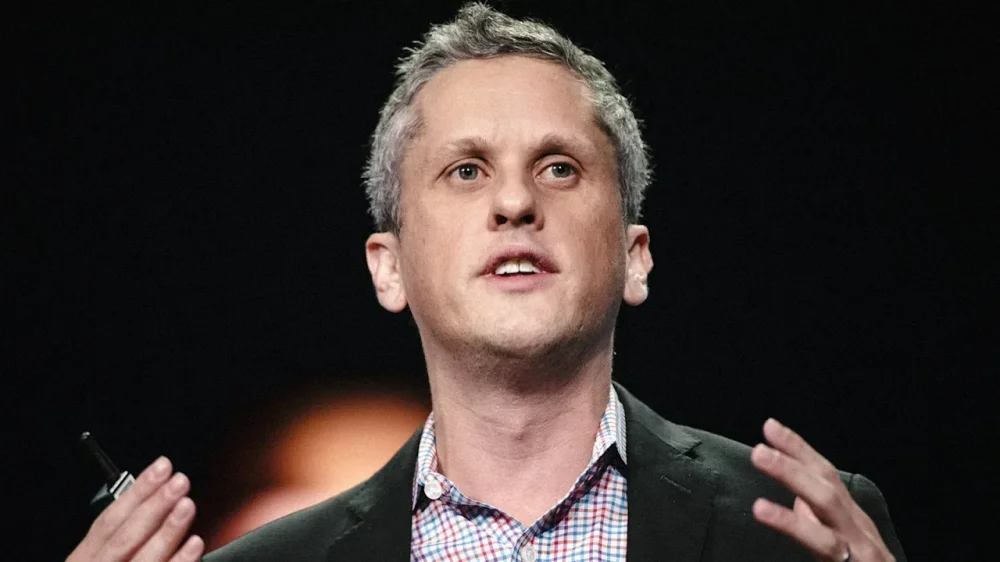
Box CEO and tech thought leader Aaron Levie says he recently met with 20 enterprise AI and IT leaders and came away with insights into what everyone, especially the stock market, wants to know: how—and how fast—large U.S. companies are adopting AI for core business functions. In a post on X, he outlined the main themes he heard. Had meetings and a dinner with 20+ enterprise AI and IT leaders today. Lots of interesting conversations around the state of AI in large enterprises, especially regulated businesses. Here are some of general trends: * Agents are clearly the big thing. Enterprises moving from… — Aaron Levie (@levie) March 19, 2026 Here’s a closer look at those key themes. Agents move from hype to production “Agents are clearly the big thing,” Levie wrote. “Enterprises [are] moving from talking about chatbots to agents, though we’re still very early. Coding is still the dominant agentic use-case being adopted thus far, with other categories . . . across knowledge work starting to emerge. Lots of agentic work moving from pilots and PoCs into production, and some enterprises had lots of active live use-cases.” Recent models from Anthropic and OpenAI, including Claude Opus 4.5 and 4.6 and GPT-5.2 and 5.3, have pushed AI coding agents beyond simple code generation toward something closer to operating like junior software engineers. As trust in these tools grows among developers, enterprise decision-makers appear increasingly eager to deploy them within software teams. From coding copilots to company-wide agents “Agentic use-cases span every part of a business, from back office operations to client facing experiences from sales to customer onboarding workflows,” Levie wrote on X. “General feeling is that agentic workflows will hit every part of an organization, often with [the] biggest focus on delivering better for customers, getting better insights and intelligence from data and documents, speeding up high ROI workflows with agents, and so on. Very limited discussion on pure cost cutting.” AI companies have long argued that the capabilities powering coding tools—planning, reasoning, and tool use—can extend across knowledge work. Based on Levie’s conversations, enterprise leaders are starting to act on that idea. What works in software engineering may translate to marketing, finance, and HR. That raises the specter of job displacement, but Levie suggests companies are prioritizing improved customer experience over head-count reduction. Governance becomes the bottleneck “Data and AI governance still remain core challenges,” Levie added. “Getting data and content into a spot that agents can securely and easily operate on remains a huge task for more organizations. Years of data management fragmentation that wasn’t a problem now is an issue for enterprises looking to adopt agents. And governing what agents can do with data in a workflow [is] still a major topic.” One of the big lessons from the OpenClaw agent craze is that the more autonomy agents have, the greater the chance they’ll get in trouble. Within the enterprise this could mean exposing sensitive data to the wrong people or exposing data to hackers. And when agents are asked to retrieve data from different data stores in different clouds, the risk increases. Who gets access, and how much Levie said identity and access control are quickly becoming central concerns as companies deploy more agents. “Can the agent have access to everything you have? In a world of dozens of agents working on [your] behalf,” he wrote, “potentially too much data exposure and scope for the agents. How do we manage agents with a partitioned level of access to your information?” You’ll increasingly see a new software layer (like Credo AI’s AI Agent Registry or ServiceNow’s AI Control Tower) that tracks all agents used in an organization—including homegrown and third-party agents—and manages their activities, connections, access levels, and security protections. The token economy hits the balance sheet Levie said companies are starting to grapple with how to allocate and control spending on AI usage across teams: “This is going to become a bigger part of OpEx over time, and probably won’t make sense to be considered an IT budget anymore. Likely needs to be factored into the rest of operating expenses.” AI apps and agents are powered by generative AI models, and access to those models is measured by the number of tokens sent back and forth between the app and the model. As AI agents proliferate across an organization, these tokens become the fuel for an organization’s intelligence engine. Now big companies are asking whether it still makes sense, from an accounting perspective, to pay for AI tokens in the same way they might pay for, say, cloud access or software licenses. No single platform will win “Interoperability is key,” Levie continued. “Every enterprise is deploying multiple AI systems right now, and it’s unlikely that there’s going to be a single platform to rule them all. Customers are getting savvier on how to handle agent interoperability, and this will be one of the biggest drivers of an AI stack going forward.” The grand vision of the AI industry is that enterprises will deploy agents across departments in an organization, and the agents will interact with each other and with third-party agents from partners and suppliers. All of these agent exchanges will rely on technical protocols (Anthropic’s MCP, for example) and trust assurances. The work of developing such standards is just beginning. The real challenge is change management “Lots more takeaways than just this, but needless to say the momentum is building but equally enterprises are acutely aware of the change management and work ahead,” Levie concluded. “Lots of opportunity right now.” Roughly a third of the U.S. stock market’s value is tied up in a relatively small group of companies, hyperscalers, AI firms, data center builders, and chipmakers, all betting that corporate America is ready to shift quickly from traditional software to AI-driven systems. The hype around that transition has been relentless. But the clearest signal comes from the executives who have to approve the spending and justify it to their boards. That is the group Levie spoke with. His most telling takeaway may be that enterprises are “acutely aware of the change management and work ahead.” In many core business functions, the technology itself is rapidly approaching high performance. The slower process will be organizational: humans working alongside agents, training them, correcting them, and gradually building trust. That transition is likely to take years. View the full article
-
Last fall, Chives took over Reddit. It started when a cook who belonged to the massive social site’s r/kitchenconfidential community pledged to practice his chive-cutting skills every day and post photos so that others could rate his technique. Thousands among the group’s 1.8 million weekly visitors weighed in, and soon he became known as “Chivelord.” All went well until day 31, when a commenter claimed that the latest image he’d posted was the same as the one from day 23, only flipped. A scandal—known, inevitably, as Chivegate—boiled over. Chivelord confessed to the subterfuge, explaining that car troubles had prevented him from cutting chives that day. He was widely forgiven and resumed posting photos. Eventually, his redemption was cemented by an ad that Kraft’s Philadelphia brand ran on Reddit. “Some heroes chop chives every day until Reddit says they’re perfect,” it read. “We whip ours into cream cheese.” The incident was fascinating, funny, and, above all, human—in other words, classic Reddit. Among those watching and marveling was the company’s CEO, Steve Huffman. No one could have predicted, he says, that “for whatever reason, everybody who uses Reddit was going to care about chives for the next two months. But I think those things are really delightful.” Serendipitous weirdness has been core to Reddit’s character since Huffman and Alexis Ohanian cofounded the site in 2005. But along the way, their brainchild also grew up into something far greater. Reddit has become the internet’s indispensable wellspring of advice, opinion, and camaraderie on every topic imaginable: which new EVs are most exciting, how to find a job overseas, where to recycle scrap metal, what to do if your boyfriend is jealous of your pet fish. Helping people help other people has made Reddit the fifth-most-visited site in the United States and the eighth worldwide as of January, according to market intelligence firm Similarweb. Lately, it’s also made for a burgeoning financial success story. Since the company’s March 2024 initial public offering, Reddit has beaten analyst expectations in every quarter, most recently by reporting Q4 2025 revenue of $726 million and net income of $252 million, up 70% and 254% year over year, respectively. For 2025 in total, revenue grew 69% to $2.2 billion; net income swung to $530 million from a $484 million loss. Those numbers are overwhelmingly attributable to Reddit’s growing skill in selling ads on its site, the source of 94% of its revenue. Reddit is already so well established, popular, and increasingly adept at convincing marketers of its audience’s worth that you might wonder how much it has left to prove. As Huffman sees it, quite a lot. “We’ve got a home for everybody on Reddit,” he says. “Does the average person, when they open the app for the first time, believe and experience that? I think there’s a gap there.” The platform is hardly running short on new visitors. Its 471.6 million weekly active users represent 24% year-over-year growth. But U.S. logged-in users—the committed fans especially prized by marketers—increased by only 5%, continuing six quarters of slowing growth. Reddit is heavily dependent on traffic from Google, with which it signed a data licensing agreement on the cusp of its IPO: The search behemoth prioritizes Reddit pages in results and sends Reddit 56% of all its visitors, according to Similarweb. Those who head directly to Reddit or the Reddit app account for just 35% of Reddit’s overall visits but the majority of time spent and ad revenue. Wall Street’s fear that Reddit might be maxing out its potential to add truly engaged users is reflected in its recent stock price, which slipped by 7.4% after it announced those stellar Q4 results, part of a year-to-date decline of 34% through late February. Along with revealing a $1 billion stock buyback, the company said during its earnings call that it would soon stop breaking out statistics for logged-in/logged-out users—making it a whole lot harder for investors to obsess over them. So yes, Reddit must demonstrate its ability to turn a considerably larger quantity of potentially transient Reddit newbies into happy Reddit stalwarts. “The question is whether [Reddit is] perceived as a niche portion of the social landscape, or whether they can do something that’s bigger,” says Andrew Boone, managing director and equity research analyst at Citizens. “We think that they can continue to grow in a healthy fashion.” Ultimately, “Reddit’s biggest challenge and biggest opportunity are the same: How do they get more people into the conversation?” says Y Combinator partner emeritus Michael Seibel, who replaced Ohanian on Reddit’s board in 2020. Making it easy for everyone to find their home on the platform, new users and advertisers included, has been the driving force behind Reddit’s recent initiatives. It has helped focus the company’s use of AI on its platform, which started ramping up in earnest in late 2024 and now “permeates everything we do,” says COO Jen Wong. Getting that balance right, between AI optimization and the human touch Reddit is known for, isn’t just about ensuring the company’s continued financial health. It also protects a stronghold of person-to-person connection at a time when machine-generated slop threatens to crowd humanity off the internet. Though Reddit is undeniably social, it’s never much resembled social networking in its conventional form. Rather than emphasizing friendships or followers, its organizing principle is its 100,000-plus topic-specific communities, known as subreddits. Managed with extraordinary autonomy by unpaid moderators, these groups are free to develop their own rules and cultures. This institutionalized decentralization is crucial to the site’s appeal. But it also frustrates any attempt to treat it like one giant repository of chatter that can be turned into an algorithm-powered virality machine. “There’s all of these subreddits that never percolate up to the top and aren’t on the front page, but they’re still robust, sustainable communities that hundreds of thousands or millions of people participate in,” says Elliot Panek, a University of Alabama associate professor and the author of Understanding Reddit. “That sets [Reddit] apart from some other platforms, where what’s trending is what a lot of people see.” It’s not that things don’t trend on Reddit. Twenty-one years ago, Huffman and Ohanian’s founding idea was to let users curate the internet by voting news items up and down. That goal eventually translated into a subreddit called r/popular, a list of the posts that had racked up the most clicks on their Upvote button. It became the default feed that new members saw upon landing on the site. Strength in Numbers: Reddit has a firm pull on advertisers, and it’s only been getting more powerful But mere clickiness has never been synonymous with relevance, let alone quality, and Huffman looks slightly distressed just talking about r/popular, which he says has long represented Reddit’s lowest common denominator. “At this point, I’m pretty sure it doesn’t appeal to anybody,” he argues. “In fact, I think it’s actively off-putting to almost everybody, and it’s certainly not representative of Reddit overall.” In December, Huffman announced—via a Reddit post, naturally—that the company was preparing to oust r/popular from its prime real estate. The goal is to usher new homepage visitors toward the subreddits they’re most likely to find rewarding. But how? Even newer arrivals who haven’t yet signed up for an account or subscribed to any subreddits provide clues to their interests each time they click on a link on Reddit. The company is applying AI to such signals to more quickly populate its homepages with a personalized feed. Moreover, about half of first-time visitors explicitly tell Reddit what they’re looking for by using its search feature. That led the company to come up with its own AI-powered feature, Reddit Answers, an all-new way to explore the site’s trove of conversations and discover subreddits. Prototyped by a small team, launched as a preview in late 2024, and now widely available but still officially in beta, the feature provides a few sample queries to convey the possibilities. (On one recent day, they included “best hip-hop tracks of all time,” “should I finance or lease a car,” “best bath towels,” and “favorite bourbon cocktails.”) Results are presented as bullet-point lists, mostly consisting of sound bites from Reddit posts. AI assistants are notorious for overconfidence, behaving as if questions have one true answer and sometimes offering up ones that aren’t true at all. By training Reddit Answers on the site’s own corpus of material, the company greatly minimizes hallucinations. But it also avoids boiling its answers down too much. As Huffman explains it, Reddit’s forte is fielding questions that lack definitive answers: “What should I watch tonight—what movie, what show? What game should I play next? What should I wear? Where should I go?” If anything, “the joy of Reddit is in the messiness of the answer, that there’s a whole bunch of different users who have different opinions,” says CTO Chris Slowe, who joined the company in 2005 as its first engineer. (Like Huffman, he left and worked on travel site Hipmunk for a few years, then boomeranged back.) Rather than supplanting conversation threads, the feature is designed to be a convenient new gateway to them. Reddit has been gradually raising the profile of Reddit Answers, which it is currently testing on its homepage in several variants, such as an “Ask” button. In its first year, the feature’s audience grew to 15 million visitors per week. That’s still dinky compared to the more than 80 million who use Reddit’s conventional search, let alone the 472 million who visit the site each week—most of whom aren’t searching it at all. Still, Reddit is betting on the feature. Over time, Huffman says, the distinction between Reddit Answers and its existing search options will likely blur. During Reddit’s Q4 earnings call, he also talked about giving this new AI-infused tool something no Reddit search feature has had to date—ads, which he called “an enormous market and opportunity.” Like Google and OpenAI, the company could run ads precisely targeted to the questions users ask of its AI answer engine. AI is also helping Reddit boost its international usage. (Currently, 57% of visitors are from outside the U.S., a low percentage for a site of its size.) More than 90% of the platform’s content is written in English, but the company supports 35 languages through machine learning and has translated a billion posts out of its total of 22 billion. Slowe wants to reach the point where two Reddit users who don’t share a language can converse seamlessly. He calls the prospect “fantastic and beautiful.” On the advertising side, too, the company is betting on AI as an accelerant. Last June, it unveiled Reddit Community Intelligence, a portfolio of marketing tools trained on Reddit posts. They include the ability to dynamically complement ads with related posts from Reddit users—positive ones, naturally—and campaigns that automate the selection and rotation of specific ads, which users are targeted, and how budgets are allocated. Marketers who might once have shied away from Reddit’s freewheeling atmosphere are summoning the courage to dive in, as witnessed by Philadelphia’s commandeering of the Chivelord saga. “Brands are starting to realize that they need to be on Reddit, not just as a paid customer, but to have an organic existence, talking to their customers, having a place to call their headquarters online,” says Huffman. Given the unvarnished nature of Reddit conversations, having a thick skin helps. “What I often tell [marketers] is, ‘Look, you can’t manipulate that opinion,’ ” says COO Wong, who joined the company in 2018, well before it had fleshed out its business model. “But you can always talk to it.” Regardless of how adroitly Reddit wields AI to benefit users and advertisers, the technology continues to affect its business in ways beyond its control. In the wake of ChatGPT’s November 2022 debut, it was obvious that Reddit was one of the internet’s richest veins of AI training data and that LLM purveyors were helping themselves to it without asking permission or offering compensation. The company quickly formulated the strategy it continues to follow: Pay us, or take a hike. In 2024, it struck licensing agreements with Google and OpenAI that, though strategically important, represent a small percentage of revenue. (They roll up under Reddit’s “other” revenue category, which also includes premium subscriptions and a virtual currency called Reddit Gold and amounted to just $140 million in 2025, 6% of the total.) As Citizens’ Boone notes, the company could use upcoming renewal negotiations for its Google and OpenAI contracts to wangle more favorable placement for its content or simply demand more money. Even before lining up these partnerships, Reddit had begun aggressively blocking unwanted visitors from helping themselves to its data by accessing its API fire hose or scraping its site. Last year, it took this battle to court by filing suits against Anthropic and Perplexity—both based less than a mile from its own headquarters in San Francisco’s South of Market neighborhood—as well as several little-known resellers of AI training fodder. In legal filings oozing with snark, Reddit accused these companies of using duplicitous methods to procure its content, thereby violating its intellectual property rights and invading its users’ privacy. Did it try to broker licensing agreements with them before suing? “Oh my gosh, yes,” says Huffman. “We got to a point where there’s no deal to be done, because you can’t do a deal with somebody you don’t trust.” According to Huffman, the company remains open to collaborating with additional AI companies, but it has gotten pickier. “Two years ago, our conversations were more, ‘Okay, you’ve got our data—let’s formalize these relationships,’ ” he says. “Now it’s, ‘Here’s what we need out of these relationships. We want to make the Reddit flywheel go faster. We want more people to discover their home on Reddit. Does the product you’re building fit into that?’ ” It’s tough to imagine any other platform emerging to fill the role Reddit has played in training AI on so many subjects of interest to human beings. (In an intriguing twist, Ohanian is one of the investors behind a new version of Digg, once Reddit’s most obvious rival, that recently launched but then pressed pause after being overwhelmed by AI and bots.) “I don’t think that people really know how to create places where people feel comfortable sharing their opinions and talking to one another,” says board member Seibel. “So if anything, I think the LLMs are going to become more and more reliant on Reddit.” One dire scenario involves assistants such as ChatGPT and Gemini becoming so good at their jobs that engaging directly with other people starts to feel superfluous. It’s not an entirely idle concern. In December, Stack Overflow, a 17-year-old Reddit-esque community for programmers and other technologists, saw a 78% year-over-year plunge in questions asked, seemingly stemming from AI’s increasing competence as a coding assistant. (Like Reddit, the site has a data deal with OpenAI.) The more immediate threat could be AI-generated slop invading the platform, degrading the authenticity that has served it so well and damaging its usefulness for training purposes. The company has two decades of experience fighting earlier forms of spam and is planning tougher anti-bot measures: In instances when a poster shows signs of being a bot, Huffman says, “ass in seat” verification using biometric tools such as Apple’s Face ID and Touch ID might confirm—anonymously—that they’re human. Ultimately, though, Reddit’s best defense could be its members and moderators—many of whom have already banned AI-generated content from their subreddits. “At least in the subreddits that I’ve seen, if people don’t like [AI content], they downvote it, and that kind of makes the point moot,” says Understanding Reddit author Panek. If there’s a tension between Reddit’s two personas today—AI player and hangout for millions of people who crave honest conversation—so be it. The duality is unavoidable, and the company seems to have found its footing in this new era. It knows what it is, which is more than you can say for many venerable businesses feeling their way through this transformational technological moment. “Maybe it’s a paradox,” Huffman muses. “Reddit is fuel for this AI, but the Reddit product and experience is for humans. It’s for people to talk to other people about things they care about. That’s where we are—but also where we need to go.” Explore the full 2026 list of Fast Company’s Most Innovative Companies, 720 honorees that are reshaping industries and culture. We’ve selected the companies making the biggest impact across 59 categories, including advertising, applied AI, biotech, retail, sustainability, and more. View the full article

-
Consumer goods giant considers offloading unit worth tens of billions of dollars as it pivots to beauty and personal care View the full article
-
Once upon a time, there were two guarantees when getting a new job: a 401(k) and a work wife/hubby or bestie. No one assigns you. There’s no official moment. One day, they are just there. The person who can help you translate your boss’s cryptic email, exchange eyerolls after annoying comments at the staff meeting, or share your emergency stash of M&M’s at 3 p.m. But then 2026 happened and many of us work with colleagues we’ve only seen from the shoulders up on Zoom. So, I must ask, are work besties even a thing anymore? Or are they an outdated artifact of the pre-video conference culture? Why You Need a Work BFF Science backs up the value of office besties. Research shows that employees with at least one close friend at work are happier, more engaged, and stay longer than employees who go it alone, according to the Gallup Employment Engagement Survey. That means, if you like who you work with, you’re more likely to show up fully present and keep showing up. A work bestie can: 1. Help you survive tough days. When sh*t hits the fan with a meeting, presentation, or project, you have someone to commiserate with and vent to. 2. Provide psychological safety. It feels safer to take risks when you have someone cheering you on. You are more likely to propose the out-of-the-box idea, say what you really think, and bounce back from feedback. 3. Give you a reason to go into the office. If you’re like me, working from home means yoga pants and a decent blouse for video calls. Knowing that you will see friends at the office is sometimes the only reason to put on real clothes and appear in public. And at time when there is an epidemic of loneliness around the world, workplace friendships can provide something many adults struggle to find elsewhere: everyday connection. Why Work Buddies Are Tougher to Find These Days 1. Office culture. Employees come into the office three days one week, fully remote the next. Some teams operate in multiple time zones. Others hire contractors who work seasonal gigs of six months or less. Those lazy mid-afternoon conversations over Starbucks have been swapped out for biweekly Zoom catchups. 2. You can’t run into someone in the kitchenette on Microsoft Teams. 3. We’ve become too cautious. The Great Layoffs took their toll. Companies eliminated entire departments via Zoom. After years of instability, people no longer think of the office like a family. These days it’s “just a job.” And suddenly, investing in another person at work feels like a waste of time. That said, workplace friendships that do exist have never been more complicated. The Drawbacks No One Puts on LinkedIn 1. Power imbalances. Your glowing review feels pointless when your boss loves your buddy’s work more. Someone you considered a friend rejects your idea in a meeting and suddenly you question of they respect you at all. If one of you gets a raise or promotion, that may change the power dynamic. 2. Blurred boundaries. When you are close to a coworker, professional disagreements or tough feedback can feel personal. 3. Layoff trauma. Losing a job is hard but losing your person and your job is just brutal. And when a bestie leaves, it can destabilize the other’s life at work. 4. And then there are office cliques. Every workplace has them. It’s the group that lunches together every day, are always huddled up in one of their officers. Cliques aren’t necessarily malicious, but they can shape opportunity and the flow of information. If you are on the outside, you feel it. What If You Can’t Find a Work Bestie? Perhaps you work remotely every day. You’re the only parent in your office. You’re the newest member of the team. You work in customer service. Or maybe you just really like keeping your professional and personal lives separate. Perhaps the real question isn’t whether we need them. It’s whether we need to redefine them. Instead of one best friend, build a team: One person who gives candid career advice. One person who shares memes mid-meeting. One person who challenges the way you think. One person who understands our life outside of work. This ecosystem can be just as powerful and much less fragile. So, Are they Still a Thing? Yes. But they look different. They might live in your DMs instead of the cubicle next to you. They might work in another state. They might be someone you’ve only met in person twice but text during every staff Zoom. All are valid. The deeper issue isn’t whether you have a work bestie. It’s whether you feel seen where you spend most of your waking hours. And in a culture that asks us to fluctuate between hustle and detachment, maybe the real luxury isn’t flexibility or perks. It’s having someone who understands exactly what that long meeting was really about. View the full article

-
Figure comes as Middle East war threatens to hit outlook for public financesView the full article
-
Happiness has been a bit thin on the ground these days. The headlines are grim, loneliness and disconnection are rising, and work pressures seem to multiply by the day as new technologies, global unrest, and social upheaval collide. In the midst of all that, searching for joy may feel a bit . . . selfish. Even absurd. But none of these forces seem likely to resolve themselves anytime soon. Work will remain demanding. The news cycle will keep churning. Which raises a practical question: if the world isn’t getting lighter anytime soon, how do we find a little more lightness inside it? That doesn’t mean ignoring the difficulties around us. But you will be better able to face hard realities if you allow yourself time to recharge. And besides, you only get the one life. So how do you build a happy one? Researchers have spent decades trying to understand what makes a life feel happy. Some emphasize pleasure—the ability to savor small moments like a morning coffee, a walk outside, or a good conversation. Others argue that deeper happiness comes from meaning: a sense that our lives and work serve a purpose. More recently, psychologists have suggested a third ingredient. In Life in Three Dimensions, Shigehiro Oishi argues that people also benefit from psychological richness—experiences that are novel, surprising, or perspective-shifting. Travel, learning something new, creative pursuits, or even small breaks from routine can make life feel more vivid and interesting. Most of us need some combination of all three. But in demanding careers, it’s easy to lose track of them. The moments that make life feel light or energizing get squeezed out by deadlines and responsibility. The larger purpose gets swallowed by daily emergencies. Over time, even deeply committed professionals can find themselves wondering why life suddenly feels so flat. I’ve been there myself. Earlier in my career, with young children and a high-pressure job, the sheer volume of responsibility drowned out almost all enjoyment. Even though I loved my family and work, life became a slog. Here’s what helped me find my way back—three small ways to bring pleasure, meaning, and a sense of richness back into everyday life. 1. Make space for the things you enjoy If it’s been a while since you spent time doing something just for fun, you may need to remind yourself what fun feels like for you. Rollercoasters? Hiking? Videogames? Baking? What did you enjoy doing as a kid? When did you last lose yourself in an activity? Even if you aren’t able to recreate the epic Minecraft marathons you loved as a teen, you can probably find a way to invite a bit of what you used to enjoy back into your life. Start small. As a kid, I loved writing. When I was at a point in my life where everything felt like work, I was able to find a little spark again by allowing myself some time every morning to write. It wasn’t much time (and I wasn’t Hemingway), but it was a great reminder of who I was and what I loved. 2. Celebrate wins Give yourself time to acknowledge the things you’re accomplishing. Take note of the hundredth brief you file, your client getting into college, or your team hitting its numbers. Similarly, mark birthdays, anniversaries, and holidays. Look for excuses to celebrate. It’s so easy just to move onto the next task, but that way lies burnout. Psychologists call this savoring—taking time to notice and appreciate good moments instead of rushing past them. It also helps remind you, as you rush through the urgencies of each day, that you are achieving something along the way. Take the credit you’re owed. Collect your flowers. Have the cupcake. You’re doing great. This is important enough to me that it’s the last thing I do each night. Before bed, I write down what I did well that day. It’s a way of giving myself credit, a little victory lap at the end of each day. 3. Plan for joy A third ingredient of a good life is novelty—experiences that make life feel vivid, surprising, or new. And the truth is, those experiences rarely happen by accident. They usually happen because someone planned them. So buy the concert tickets six months out. Organize the hike on the Appalachian Trail, or the silent meditation retreat, or visiting all the ballparks with your kid. Yes, it takes effort. And yes, plans sometimes fall apart. But it definitely won’t happen if you never plan it. And these are the memories that live on forever. So dream big. What is something you’ve always wished for? For me, it’s always been Paris. From my first trip as a wide-eyed 16-year-old sailing down the Seine to my honeymoon catching snowflakes at Notre Dame, Paris has always felt like magic to me. And so, with some trepidation, my wife and I carted our three elementary age children, along with my mother-in-law, off to the City of Lights. It was definitely a lot of work, with the flights and jet lag and finding an apartment. That was over a decade ago, but to this day, I recall the afternoon we stumbled upon a carnival in the park, and I climbed into a swing ride with my kids, the city flying by at our feet. The world may not be getting lighter anytime soon. Work will stay demanding. The headlines will keep coming. But joy doesn’t have to wait for circumstances to improve. Often, it’s simply the result of paying attention—making space for the things we enjoy, celebrating what’s going well, and planning experiences that remind us life is bigger than our to-do lists. You only get the one life. It’s worth making room for a little more joy along the way. View the full article

-
Comprehending your rights as an employee is crucial for ensuring a fair and safe work environment. There are seven fundamental laws that protect you, from the Fair Labor Standards Act, which governs minimum wage and overtime, to the Occupational Safety and Health Act, which enforces safety standards. Familiarizing yourself with these laws can empower you and help you navigate workplace issues effectively. But what are the specifics of each law, and how can they impact your daily work life? Key Takeaways Title VII of the Civil Rights Act protects against workplace discrimination based on race, color, religion, sex, or national origin. The Americans With Disabilities Act ensures equal employment opportunities for individuals with disabilities, requiring reasonable accommodations. The Fair Labor Standards Act establishes minimum wage and overtime pay protections for employees in both private and public sectors. The Family and Medical Leave Act provides eligible employees with up to 12 weeks of unpaid leave for health and family matters. OSHA mandates safe working conditions and provides employees the right to report unsafe practices without fear of retaliation. Fair Labor Standards Act (FLSA) The Fair Labor Standards Act (FLSA) is a crucial piece of legislation that establishes important protections for workers across the United States. Enacted in 1938, the FLSA sets the federal minimum wage at $7.25 per hour, even though many states opt for higher rates. This act requires that eligible employees receive overtime pay at a rate of one-and-a-half times their regular pay for any hours worked over 40 in a week. Furthermore, the FLSA includes provisions aimed at employee safety, prohibiting minors from working in hazardous occupations and regulating their permissible working hours. Coverage under the FLSA extends to both private and public sector employees and is enforced by the U.S. Department of Labor’s Wage and Hour Division. Over the years, the FLSA has been amended to improve protections, reflecting the evolving environment of federal employment laws and the needs of modern workplaces. Title VII of the Civil Rights Act Title VII of the Civil Rights Act is essential for protecting employees from discrimination in the workplace. It covers a range of prohibited employment practices, including unfair treatment based on race, sex, or religion, and applies to employers with 15 or more employees. Enforcement is handled by the Equal Employment Opportunity Commission (EEOC), which investigates complaints and guarantees that employees can seek remedies without fear of retaliation. Scope of Protection When you consider the protections offered under Title VII of the Civil Rights Act, it’s clear that this landmark legislation plays a crucial role in promoting workplace equality. Title VII prohibits employment discrimination based on race, color, religion, sex, or national origin, covering employers with 15 or more employees, including government entities. This broad scope guarantees that workers’ rights laws are upheld across various sectors. Employees enjoy protection from discrimination in hiring, firing, promotions, compensation, and job assignments. The Equal Employment Opportunity Commission (EEOC) enforces these provisions, allowing individuals to file complaints against discriminatory practices. Furthermore, Title VII safeguards against retaliation, reinforcing the importance of advocating for your rights under this significant labor law and the labour relations act. Prohibited Employment Practices Under Title VII of the Civil Rights Act, various employment practices are explicitly prohibited to guarantee fair treatment in the workplace. This law protects you against discrimination based on race, color, religion, sex, or national origin. Discrimination can occur in hiring, promotions, compensation, job assignments, and terminations. It likewise covers sexual harassment and discrimination related to gender identity and sexual orientation. Employers with 15 or more employees must comply with these regulations, which are part of the broader employment legislation list. If you feel discriminated against, you can file a complaint with the Equal Employment Opportunity Commission (EEOC). Prohibited Practices Description Discrimination Adverse actions based on protected characteristics Sexual Harassment Unwelcome sexual advances or requests Retaliation Punishing an employee for reporting discrimination These laws that protect employees are essential for ensuring fair labor relations. Enforcement and Remedies Enforcement of Title VII of the Civil Rights Act is essential for maintaining workplace equality, as it provides a mechanism for individuals to address and rectify instances of discrimination. The Equal Employment Opportunity Commission (EEOC) plays a key role in enforcing Title VII, enabling you to file complaints against employers suspected of discriminatory practices. If you experience discrimination, you can seek various remedies under Title VII, which may include reinstatement, back pay, and compensation for emotional distress. Furthermore, the EEOC can require changes to company policies to guarantee compliance. With over 90,000 discrimination charges filed in 2021, it’s clear that ongoing enforcement of Title VII is critical for protecting employees and promoting fair treatment in all aspects of employment. Family and Medical Leave Act (FMLA) The Family and Medical Leave Act (FMLA) provides vital protections for eligible employees who need time off for personal or family health matters. Under this law, you’re entitled to up to 12 weeks of unpaid leave without risking your job security. Here are key points about FMLA: You must have worked for a covered employer for at least 12 months. You need to log 1,250 hours in the previous year to qualify. FMLA applies to personal health issues, caring for a seriously ill family member, or for childbirth. Employers must maintain your health benefits during your leave. Approximately 60% of workers are eligible, yet many remain unaware of their rights under this law. Understanding the family and medical leave act (FMLA) is fundamental for maneuvering labor relations and knowing your rights under laws on jobs. Americans With Disabilities Act (ADA) During the process of maneuvering through the workplace, it’s crucial to comprehend your rights under the Americans with Disabilities Act (ADA), a law that prohibits discrimination against individuals with disabilities. Enacted in 1990, the ADA applies to employers with 15 or more employees, ensuring equal opportunities in hiring, promotions, and other employment-related activities. If you have a physical or mental impairment that substantially limits major life activities, you’re protected under this law. Under the ADA, employers must provide reasonable accommodations to qualified employees except if it causes undue hardship to their business operations. These accommodations can include modifications to work schedules, equipment, or job responsibilities. If you believe your rights under the ADA are violated, you can file a complaint with the Equal Employment Opportunity Commission (EEOC), which oversees enforcement and investigates such claims. Comprehending these protections can help you navigate your rights effectively in the workplace. Age Discrimination in Employment Act (ADEA) In relation to protecting older workers, the Age Discrimination in Employment Act (ADEA) plays a crucial role in ensuring fair treatment in the workplace. Enacted in 1967, the ADEA prohibits employment discrimination against individuals aged 40 and older. Here are some key aspects of the ADEA: It covers various employment practices, including hiring, firing, promotions, and compensation. Employees can file complaints with the Equal Employment Opportunity Commission (EEOC) or pursue legal action if they experience age discrimination. The ADEA promotes fair treatment and equal employment opportunity for older workers. Employers must justify any decisions based on age, ensuring they aren’t discriminatory. The Act addresses stereotypes and biases associated with age in the workplace. Equal Pay Act (EPA) The Equal Pay Act (EPA) sets clear wage equality standards, ensuring that men and women earn the same pay for performing equal work within the same establishment. To qualify for equal pay, jobs must require similar skills, effort, and responsibilities, and be conducted under comparable working conditions. If you believe you’re facing wage discrimination, the EPA allows you to file a complaint with the Equal Employment Opportunity Commission (EEOC), which is an essential legal enforcement mechanism to address these issues. Wage Equality Standards Even though many people assume that wage disparities are a thing of the past, the Equal Pay Act (EPA) of 1963 remains a vital piece of legislation designed to guarantee that men and women receive equal pay for equal work within the same establishment. The EPA addresses pay discrimination based on sex by ensuring: Equal pay for equal work in the same establishment Exceptions only for seniority, merit, or production-based systems Coverage for most employers under the Fair Labor Standards Act (FLSA) Employees can file complaints with the EEOC within two years Ongoing wage gaps, as women earned about 82 cents for every dollar men earned in 2020 Understanding these wage equality standards is significant in advocating for fair compensation. Legal Enforcement Mechanisms Comprehension of how the Equal Pay Act (EPA) is enforced is key to addressing wage disparities effectively. The EPA mandates equal pay for equal work, and if you believe you’ve faced wage discrimination, you can file a complaint with the Equal Employment Opportunity Commission (EEOC). Employers must prove any pay differences are as a result of factors like seniority, not gender. Here’s a brief overview of the enforcement process: Step Description 1. File a Complaint Submit your claim to the EEOC. 2. Investigation The EEOC investigates your complaint. 3. Resolution The EEOC may facilitate a settlement or take action. 4. Legal Action If unresolved, you can pursue further legal action. Understanding these labour laws for salary employees helps navigate work-related laws and labor board laws effectively. Occupational Safety and Health Act (OSHA) When you step into a workplace, you expect it to be safe and healthy, and that’s where the Occupational Safety and Health Act (OSHA) comes into play. Signed into law in 1970, OSHA aims to guarantee safe and healthful working conditions for employees. Here’s what you should know about this crucial work law: Employers must comply with specific safety guidelines. Training is required to minimize workplace injuries. OSHA covers approximately 130 million workers in over 7 million workplaces. Employers must report fatalities and severe injuries to OSHA without delay. OSHA can inspect workplaces and impose fines for violations. Frequently Asked Questions What Laws Protect Employees in the Workplace? Several laws protect you in the workplace. The Fair Labor Standards Act (FLSA) guarantees minimum wage and overtime pay. The Family and Medical Leave Act (FMLA) allows you to take unpaid, job-protected leave for family or medical reasons. The Americans with Disabilities Act (ADA) requires accommodations for disabilities. The Civil Rights Act prohibits discrimination based on race, sex, or religion. Finally, the Equal Pay Act mandates equal pay for equal work, promoting gender equity. What Are the 4 Most Important Rights of an Employee? As an employee, you have several crucial rights. First, you deserve a safe working environment, free from hazards. Second, you should receive fair wages, including overtime pay if applicable. Third, protection against discrimination based on race, gender, age, disability, or religion is important. Finally, if you need time off for medical or family reasons, you can take unpaid leave without risking your job under the Family and Medical Leave Act. What Are Two Major Laws That You Think Are Important in Protecting Workers? Two major laws that protect workers are the Fair Labor Standards Act (FLSA) and the Americans with Disabilities Act (ADA). The FLSA sets the minimum wage and requires overtime pay for hours worked over 40 in a week, ensuring fair compensation. Meanwhile, the ADA mandates reasonable accommodations for individuals with disabilities, nurturing an inclusive work environment. Together, these laws promote fairness and equality in the workplace, safeguarding employee rights and well-being. What Are Three Laws That Were Passed That Protected All Workers? Three key laws that protect all workers include the Fair Labor Standards Act (FLSA), which establishes minimum wage and overtime pay standards, ensuring fair compensation. The Civil Rights Act of 1964 prohibits employment discrimination based on race, color, religion, sex, or national origin, promoting equal opportunity. Finally, the Americans with Disabilities Act (ADA) requires reasonable accommodations for employees with disabilities, encouraging an inclusive workplace. These laws create a fair and equitable work environment for everyone. Conclusion In conclusion, comprehending these seven fundamental laws—FLSA, Title VII, FMLA, ADA, ADEA, EPA, and OSHA—empowers you to navigate your workplace rights effectively. Each law plays an important role in protecting against discrimination, ensuring fair pay, and promoting a safe work environment. By being informed, you can advocate for yourself and contribute to a culture of compliance and respect. Staying aware of these protections is essential for nurturing a fair and safe workplace for everyone. Image via Google Gemini and ArtSmart This article, "7 Essential Laws to Protect Employees You Should Know" was first published on Small Business Trends View the full article
-
Comprehending your rights as an employee is crucial for ensuring a fair and safe work environment. There are seven fundamental laws that protect you, from the Fair Labor Standards Act, which governs minimum wage and overtime, to the Occupational Safety and Health Act, which enforces safety standards. Familiarizing yourself with these laws can empower you and help you navigate workplace issues effectively. But what are the specifics of each law, and how can they impact your daily work life? Key Takeaways Title VII of the Civil Rights Act protects against workplace discrimination based on race, color, religion, sex, or national origin. The Americans With Disabilities Act ensures equal employment opportunities for individuals with disabilities, requiring reasonable accommodations. The Fair Labor Standards Act establishes minimum wage and overtime pay protections for employees in both private and public sectors. The Family and Medical Leave Act provides eligible employees with up to 12 weeks of unpaid leave for health and family matters. OSHA mandates safe working conditions and provides employees the right to report unsafe practices without fear of retaliation. Fair Labor Standards Act (FLSA) The Fair Labor Standards Act (FLSA) is a crucial piece of legislation that establishes important protections for workers across the United States. Enacted in 1938, the FLSA sets the federal minimum wage at $7.25 per hour, even though many states opt for higher rates. This act requires that eligible employees receive overtime pay at a rate of one-and-a-half times their regular pay for any hours worked over 40 in a week. Furthermore, the FLSA includes provisions aimed at employee safety, prohibiting minors from working in hazardous occupations and regulating their permissible working hours. Coverage under the FLSA extends to both private and public sector employees and is enforced by the U.S. Department of Labor’s Wage and Hour Division. Over the years, the FLSA has been amended to improve protections, reflecting the evolving environment of federal employment laws and the needs of modern workplaces. Title VII of the Civil Rights Act Title VII of the Civil Rights Act is essential for protecting employees from discrimination in the workplace. It covers a range of prohibited employment practices, including unfair treatment based on race, sex, or religion, and applies to employers with 15 or more employees. Enforcement is handled by the Equal Employment Opportunity Commission (EEOC), which investigates complaints and guarantees that employees can seek remedies without fear of retaliation. Scope of Protection When you consider the protections offered under Title VII of the Civil Rights Act, it’s clear that this landmark legislation plays a crucial role in promoting workplace equality. Title VII prohibits employment discrimination based on race, color, religion, sex, or national origin, covering employers with 15 or more employees, including government entities. This broad scope guarantees that workers’ rights laws are upheld across various sectors. Employees enjoy protection from discrimination in hiring, firing, promotions, compensation, and job assignments. The Equal Employment Opportunity Commission (EEOC) enforces these provisions, allowing individuals to file complaints against discriminatory practices. Furthermore, Title VII safeguards against retaliation, reinforcing the importance of advocating for your rights under this significant labor law and the labour relations act. Prohibited Employment Practices Under Title VII of the Civil Rights Act, various employment practices are explicitly prohibited to guarantee fair treatment in the workplace. This law protects you against discrimination based on race, color, religion, sex, or national origin. Discrimination can occur in hiring, promotions, compensation, job assignments, and terminations. It likewise covers sexual harassment and discrimination related to gender identity and sexual orientation. Employers with 15 or more employees must comply with these regulations, which are part of the broader employment legislation list. If you feel discriminated against, you can file a complaint with the Equal Employment Opportunity Commission (EEOC). Prohibited Practices Description Discrimination Adverse actions based on protected characteristics Sexual Harassment Unwelcome sexual advances or requests Retaliation Punishing an employee for reporting discrimination These laws that protect employees are essential for ensuring fair labor relations. Enforcement and Remedies Enforcement of Title VII of the Civil Rights Act is essential for maintaining workplace equality, as it provides a mechanism for individuals to address and rectify instances of discrimination. The Equal Employment Opportunity Commission (EEOC) plays a key role in enforcing Title VII, enabling you to file complaints against employers suspected of discriminatory practices. If you experience discrimination, you can seek various remedies under Title VII, which may include reinstatement, back pay, and compensation for emotional distress. Furthermore, the EEOC can require changes to company policies to guarantee compliance. With over 90,000 discrimination charges filed in 2021, it’s clear that ongoing enforcement of Title VII is critical for protecting employees and promoting fair treatment in all aspects of employment. Family and Medical Leave Act (FMLA) The Family and Medical Leave Act (FMLA) provides vital protections for eligible employees who need time off for personal or family health matters. Under this law, you’re entitled to up to 12 weeks of unpaid leave without risking your job security. Here are key points about FMLA: You must have worked for a covered employer for at least 12 months. You need to log 1,250 hours in the previous year to qualify. FMLA applies to personal health issues, caring for a seriously ill family member, or for childbirth. Employers must maintain your health benefits during your leave. Approximately 60% of workers are eligible, yet many remain unaware of their rights under this law. Understanding the family and medical leave act (FMLA) is fundamental for maneuvering labor relations and knowing your rights under laws on jobs. Americans With Disabilities Act (ADA) During the process of maneuvering through the workplace, it’s crucial to comprehend your rights under the Americans with Disabilities Act (ADA), a law that prohibits discrimination against individuals with disabilities. Enacted in 1990, the ADA applies to employers with 15 or more employees, ensuring equal opportunities in hiring, promotions, and other employment-related activities. If you have a physical or mental impairment that substantially limits major life activities, you’re protected under this law. Under the ADA, employers must provide reasonable accommodations to qualified employees except if it causes undue hardship to their business operations. These accommodations can include modifications to work schedules, equipment, or job responsibilities. If you believe your rights under the ADA are violated, you can file a complaint with the Equal Employment Opportunity Commission (EEOC), which oversees enforcement and investigates such claims. Comprehending these protections can help you navigate your rights effectively in the workplace. Age Discrimination in Employment Act (ADEA) In relation to protecting older workers, the Age Discrimination in Employment Act (ADEA) plays a crucial role in ensuring fair treatment in the workplace. Enacted in 1967, the ADEA prohibits employment discrimination against individuals aged 40 and older. Here are some key aspects of the ADEA: It covers various employment practices, including hiring, firing, promotions, and compensation. Employees can file complaints with the Equal Employment Opportunity Commission (EEOC) or pursue legal action if they experience age discrimination. The ADEA promotes fair treatment and equal employment opportunity for older workers. Employers must justify any decisions based on age, ensuring they aren’t discriminatory. The Act addresses stereotypes and biases associated with age in the workplace. Equal Pay Act (EPA) The Equal Pay Act (EPA) sets clear wage equality standards, ensuring that men and women earn the same pay for performing equal work within the same establishment. To qualify for equal pay, jobs must require similar skills, effort, and responsibilities, and be conducted under comparable working conditions. If you believe you’re facing wage discrimination, the EPA allows you to file a complaint with the Equal Employment Opportunity Commission (EEOC), which is an essential legal enforcement mechanism to address these issues. Wage Equality Standards Even though many people assume that wage disparities are a thing of the past, the Equal Pay Act (EPA) of 1963 remains a vital piece of legislation designed to guarantee that men and women receive equal pay for equal work within the same establishment. The EPA addresses pay discrimination based on sex by ensuring: Equal pay for equal work in the same establishment Exceptions only for seniority, merit, or production-based systems Coverage for most employers under the Fair Labor Standards Act (FLSA) Employees can file complaints with the EEOC within two years Ongoing wage gaps, as women earned about 82 cents for every dollar men earned in 2020 Understanding these wage equality standards is significant in advocating for fair compensation. Legal Enforcement Mechanisms Comprehension of how the Equal Pay Act (EPA) is enforced is key to addressing wage disparities effectively. The EPA mandates equal pay for equal work, and if you believe you’ve faced wage discrimination, you can file a complaint with the Equal Employment Opportunity Commission (EEOC). Employers must prove any pay differences are as a result of factors like seniority, not gender. Here’s a brief overview of the enforcement process: Step Description 1. File a Complaint Submit your claim to the EEOC. 2. Investigation The EEOC investigates your complaint. 3. Resolution The EEOC may facilitate a settlement or take action. 4. Legal Action If unresolved, you can pursue further legal action. Understanding these labour laws for salary employees helps navigate work-related laws and labor board laws effectively. Occupational Safety and Health Act (OSHA) When you step into a workplace, you expect it to be safe and healthy, and that’s where the Occupational Safety and Health Act (OSHA) comes into play. Signed into law in 1970, OSHA aims to guarantee safe and healthful working conditions for employees. Here’s what you should know about this crucial work law: Employers must comply with specific safety guidelines. Training is required to minimize workplace injuries. OSHA covers approximately 130 million workers in over 7 million workplaces. Employers must report fatalities and severe injuries to OSHA without delay. OSHA can inspect workplaces and impose fines for violations. Frequently Asked Questions What Laws Protect Employees in the Workplace? Several laws protect you in the workplace. The Fair Labor Standards Act (FLSA) guarantees minimum wage and overtime pay. The Family and Medical Leave Act (FMLA) allows you to take unpaid, job-protected leave for family or medical reasons. The Americans with Disabilities Act (ADA) requires accommodations for disabilities. The Civil Rights Act prohibits discrimination based on race, sex, or religion. Finally, the Equal Pay Act mandates equal pay for equal work, promoting gender equity. What Are the 4 Most Important Rights of an Employee? As an employee, you have several crucial rights. First, you deserve a safe working environment, free from hazards. Second, you should receive fair wages, including overtime pay if applicable. Third, protection against discrimination based on race, gender, age, disability, or religion is important. Finally, if you need time off for medical or family reasons, you can take unpaid leave without risking your job under the Family and Medical Leave Act. What Are Two Major Laws That You Think Are Important in Protecting Workers? Two major laws that protect workers are the Fair Labor Standards Act (FLSA) and the Americans with Disabilities Act (ADA). The FLSA sets the minimum wage and requires overtime pay for hours worked over 40 in a week, ensuring fair compensation. Meanwhile, the ADA mandates reasonable accommodations for individuals with disabilities, nurturing an inclusive work environment. Together, these laws promote fairness and equality in the workplace, safeguarding employee rights and well-being. What Are Three Laws That Were Passed That Protected All Workers? Three key laws that protect all workers include the Fair Labor Standards Act (FLSA), which establishes minimum wage and overtime pay standards, ensuring fair compensation. The Civil Rights Act of 1964 prohibits employment discrimination based on race, color, religion, sex, or national origin, promoting equal opportunity. Finally, the Americans with Disabilities Act (ADA) requires reasonable accommodations for employees with disabilities, encouraging an inclusive workplace. These laws create a fair and equitable work environment for everyone. Conclusion In conclusion, comprehending these seven fundamental laws—FLSA, Title VII, FMLA, ADA, ADEA, EPA, and OSHA—empowers you to navigate your workplace rights effectively. Each law plays an important role in protecting against discrimination, ensuring fair pay, and promoting a safe work environment. By being informed, you can advocate for yourself and contribute to a culture of compliance and respect. Staying aware of these protections is essential for nurturing a fair and safe workplace for everyone. Image via Google Gemini and ArtSmart This article, "7 Essential Laws to Protect Employees You Should Know" was first published on Small Business Trends View the full article
-
Investors are better able to value pure plays, while lacklustre units can dilute overall growth and margins at sprawling companiesView the full article
-
Desperation, thy name is Scott BessentView the full article