All Activity
- Past hour
-
 Dan Taylor explains how compounding search visibility turns repeated exposure into familiarity, preference, and long-term resilience. The post How Visibility Compounds In Brand-Led SEO appeared first on Search Engine Journal. View the full article
 -
Dearest gentle reader, Netflix humble requests your presence on your couch this today Thursday, January 29, 2026 to binge part one of the fourth season of its hit series Bridgerton. It is up to you whether or not to don your finest gowns, tiaras, and petticoats — or simply leave that to the actors gracing your screens. While Lady Whistledown’s identity is now common knowledge, society still has its eyes and judgement on you. So here are some facts you should know going into this next chapter so you are not the laughing stock of the season. Don’t say we didn’t try to help. What is the basic premise of Bridgerton? Netflix’s Bridgerton is based on a series of romance novels by Julia Quinn. There are eight novels in the main series, each focusing on a Bridgerton sibling and a classic romance trope such as enemies to lovers. Additionally, since the popularity of the series epilogues, novellas, and one prequel book has expanded the literary world of the franchise. The plot centers on the individual Bridgerton family member’s quest for love in Regency Era London. The young adults and children are guided by their loving mother Violet who does her best despite missing her late husband who was killed by a bee sting before his children were of marrying age. Who is the creative force behind Bridgerton? Shonda Rhimes It is wild to think that Bridgerton came about because in 2017 creator Shonda Rhimes was sick on vacation. While she wasn’t feeling well, she ran out of things to read and picked up Quinn’s first novel in the series, The Duke and I, which by chance was left in her room. After devouring it, she went out — fever and all — to the local bookstore to buy the rest of the books in the series. A seed for an idea was planted. That same year, Rhimes left ABC, her previous creative home, and signed a very lucrative four year overall deal with Netflix. Industry insiders estimated this deal was worth around$100 million dollars. With her newfound creative freedom outside the world of traditional network television, Rhimes teamed up with Netflix to tackle a genre that was looked down upon, romance. Why was Bridgerton such a surprise hit? Bridgerton was a gamble for both Rhimes and Netflix. Historically, traditional cable channels tended to stay in their land and do one genre well. For example HBO and Showtime focused on dark, gritty offerings that wouldn’t make it past the censors of network televisions. Netflix has offerings for all, including women. Rhimes unabashedly embraced the Regency era and the pursuit of love and marriage. She also put her own unique fingerprints on it by creating an ethnically diverse world. One way she accomplished this was through the character of Queen Charlotte who did not appear in the original book series but was a real historical figure. While historians will continue to debate her ethnicity, in the show she is a Black woman. Her character’s popularity inspired Quinn to pair up with Rhimes to write the prequel novel. This representation in a genre that doesn’t typically see diversity helped create even more fans. Golda RosheuvelAdjoa Andoh Bridgerton’s first season debuted on Christmas day 2020. Eighty-two million homes tuned in (including partial viewers) so clearly men got into the action as well. This massive number was even bigger than Netflix projected and made Bridgerton Netflix’s biggest series at the time. While the global pandemic certainly helped initially, the momentum for this series did not die down. Season 3’s numbers continued to impress. This installment achieved 45.1M views opening weekend alone. Season 4 is primed to build on this momentum. Who does Bridgerton season 4 focus on? Season 4 is a Bridgerton twist on the Cinderella story. This time it is Benedict Bridgerton’s turn to find love. (Actor Luke Thompson is up to the challenge.) Benedict is the second oldest son which means he has a little more freedom than his older brother Anthony. He has used this freedom to pursue the arts and explore his sexuality, briefly considering a throuple in season 3. While his personality is bohemian, Violet fears he is a bit lost and needs to settle down. It is believed his sister Eloise (played by Claudia Jessie) will also be heavily featured in the season both because of their close relationship and the need to set up her future season. Last season also saw his sister Francesca married to John Stirling, the Earl of Kilmartin. Readers know some plot points also need to happen here for her season to be able to unfold. What new actors are joining the cast in season 4? Since Bridgerton is about a family, the core cast stays mainly the same with the focus shifting to whomever’s love story is front and center for the season. Although sometimes this means fan favorites such as Simone Ashley (Kate Sharma) are not seen on screen. She is just one of the actors not listed on Netflix’s official Season 4 cast announcement. Others not present are Jessica Madsen (Cressida Cowper), Bessie Carter (Prudence Featherington), James Phoon (Harry Dankworth) or Harriet Cains (Philippa Featherington). Never fear the supporting cast does have additions to make up for these absences. Yerin Ha will don a mask for her turn as Benedict’s love interest Sophie Baek. The couple first meet at a masquerade ball that was teased in season 3. Michelle MaoKatie LeungIsabella Wei The role of Lady Araminta Gun, aka the wicked stepmother, will be tackled by Katie Leung. Audiences might remember her from her role as Cho Chang in the Harry Potter movies. Rounding out the supporting cast are the stepsisters Michelle Mao as Rosamund Li and Isabella Wei as Posy Li. Fans can also expect to see familiar faces such as Jonathan Bailey, Nicola Coughlan, and Luke Newton. What are the release dates for season 4? Netflix is following a similar release schedule to season 3. The first four episodes will drop on Thursday, January 29, 2026 at 3 a.m. ET. The concluding four episodes of the season will debut on February 26, 2026. View the full article

-
Explore what the latest web almanac reveals about bots and the unexpected trends shaping SEO with host Shelley Walsh and expert guest Chris Green. The post What The Latest Web Almanac Report Reveals About Bots, CMS Influence & llms.txt appeared first on Search Engine Journal. View the full article
-
Working as an office manager in my early 20s, I read Dale Carnegie’s “How to Win Friends and Influence People.” Many of its principles still hold true today, and they guided me through multiple career transitions. Success in most careers comes from our interactions with people – whether clients or coworkers. For years, those principles of human connection, combined with technical knowledge and expertise, helped digital marketers succeed. Agencies made sense of the machines for clients, and strong relationship-building allowed them to retain those clients over time. That model is now being challenged. As AI has become fully embedded in PPC platforms, the question has become unavoidable: what prevents clients from relying on an entirely AI-built approach? What agencies have that AI can’t duplicate is their relational side – the ability to connect with others and understand, strategically, what business owners are actually after. 1. Ask questions The key to discovering who people are and what makes them tick is to ask. Sounds simple, really, but so much of communication gets lost in translation or is left up to assumption. When I go into a sales call, I bring a list of questions. How much can we find out about this potential client in this half-hour window? Likewise, when I conduct a strategy call, I have a list of questions: some for me and some for them. What is this potential client looking to accomplish? What about their current strategy is or is not working? How can we improve upon this strategy? AI can’t do this yet. Our interactions with it are primarily one-sided (at least at the time of this writing). We may be able to have a conversation with it, but AI is never the initiator. We go to AI asking it what it can do for us using ideas we already have. AI is not interested in who we are as people or in sussing out our specific pain points. We can never discover a new pain point without asking, and we also can never find it out if we don’t listen, which brings me to the next point. Dig deeper: 6 tips to build PPC client relationships 2. Talk less, listen more How often do we find ourselves in conversations with others, only waiting for the silence so we can interject with our own thoughts? I’m guilty of this. I’ve also found that clients and client prospects really just want to be heard. So, let them explain themselves, then ask them more clarifying questions, and let them talk more. Continue to listen. It’s amazing what you can find out about a person if you go into a call with absolutely no agenda beyond learning about the other person. Let them continue to talk, do not interject, and see what you are able to find out. Try not to fill the silence unless it becomes uncomfortable and you, yourself, have agenda items to cover based on what you’ve learned. I find this type of approach is usually easier to do in sales calls. Typically, we go into these thinking we need to prove ourselves and our abilities, but if it is the first call, we ideally want to find out what they are seeking and spend as much time as possible getting them to discuss that goal. Using this approach with an existing client, I find it most beneficial to hear their nuances, strategy pushes, and ideas. These assist with collaboration and generate ideas more quickly than anything I can say on the call. This approach also builds agreement with the client, which is another important foundational building block of relationships. Dig deeper: 8 questions to ask your new PPC clients Get the newsletter search marketers rely on. See terms. 3. Find common ground If I can, I always like to find commonalities between myself and anyone new I meet. Building on these commonalities creates rapport and supports personal and professional relationships. And, regardless of whether the person you are communicating with is a friend or colleague, be personal and specific in your conversations. I’ve always enjoyed remembering things about people and following up on those things in our conversations together. People like to be remembered, and they enjoy it when someone values what they have to say. Memory is a facet that AI is just starting to develop. However, finding commonalities and shared experiences with another person will never (hopefully) be rendered obsolete by artificial intelligence. Dig deeper: When and how to fire PPC clients 4. Smile, be less serious (when it’s appropriate) In the ever-changing world of marketing, it’s easy to fall into an all-serious, never-ending analytical cycle of data observation and testing. However, we also have to remember not to take ourselves too seriously. After all, this career is still relatively new, and who knows what it will look like in the next five years. Consider why you got into this occupation in the first place. I think we all have an innate desire to help people and connect with them – at least I hope so. So, let’s connect with others by allowing ourselves to be less serious when we can be and throw in the awkward joke when applicable. We are humans, too, and it’s important for the people we work for to see this. It’s important in any relationship. Dig deeper: How to set and manage PPC expectations for teams and stakeholders What differentiates a partner from an algorithm In a world increasingly dominated by AI, the balance between technical expertise and human connection is shifting. While AI excels at data, analysis, and optimization – and can offer advice at all hours of the day – knowledge and specialization alone are no longer enough. What AI cannot replicate is empathy, shared experience, or genuine rapport. Over time, those principles of human connection, paired with technical knowledge, helped agencies translate machines for clients and build long-term relationships. By returning to the basics – asking thoughtful questions, practicing active listening, finding common ground, and connecting on a human level – agencies can secure their value. These relational skills are what differentiate a partner from an algorithm, ensuring that agency work remains not just important, but indispensable. View the full article
-
As Italy prepares for the 2026 Winter Olympics, a crucial part of the prep is the manufacturing of artificial snow; the Olympics organizing committee plans to make 2.4 million cubic meters of the stuff. The practice has become more and more common as climate change leads to warmer temperatures and less reliable snow packs. But as climate change worsens, artificial snow won’t even be enough to help certain countries host the Winter Games. By mid-century, the number of countries that could potentially host the Winter Olympic Games could be cut nearly in half, according to a recent study from the University of Waterloo. Currently, the International Olympic Committee (IOC) says there are 93 potential host locations that have the winter sports infrastructure needed to host the games. That includes arenas for events like hockey and ice skating and areas for snow sports outside of a big city. If countries continue with their current climate policies, though, that number drops to 52 locations that would remain “climate-reliable” for the Winter Olympics by 2050, according to the study, which was published in the journal Current Issues in Tourism. For the Paralympics, which occur in March after the Olympics in February, the situation is even more dire: By 2050, there are only 22 potential host locations. The Olympics need snowmaking Those remaining locations would still require artificial snowmaking, a process that needs cold and dry air. In some places, it’s becoming too warm to even make snow or to maintain that snowpack. “Those are the [locations] that drop off our list of climate-reliable,” says Daniel Scott, the study’s lead author and a professor in the Faculty of Environment at Waterloo. This happened during the 2010 Vancouver Winter Olympics: An El Nino brought record high temperatures along with rain to the area before the games, which meant officials couldn’t make snow. Instead, they had to bring in snow via trucks and helicopters from higher elevations. If the snow, real or artificial, melts and turns into slush, that becomes a safety issue for athletes—and generally hinders their athletic performance. Without snowmaking, the study found, the number of potential hosts for the Winter Olympics plummets to just four by the 2050s. Those are Niseko, Japan; Terskol, Russia; and Val d’Isère and Courchevel in France. Is snowmaking sustainable? “To not use snowmaking makes about as much sense as moving hockey and figure skating back outside, the way it was in the 1930s,” Scott says. The question, then, is how to make snowmaking as sustainable as possible, just like how officials work to make their refrigerated arenas as sustainable as possible. Snowmaking can require a lot of both energy and water—but just how environmentally harmful it is depends on the specific location. The power grid in France, for example, is nearly completely free of fossil fuels, so a higher electricity demand for snowmaking there wouldn’t directly lead to more emissions. In Utah, though, under 20% of electricity comes from renewable energy. That means making snow in Salt Lake City would come with a carbon footprint. Making the Winter Olympics earlier Along with looking at climate-reliable locations, the Waterloo study explored some adaptation strategies to make the Winter Games more resilient against rising temperatures. Combining the Olympics and Paralympics so both occur in February, when colder temperatures are more likely, would be too difficult because of the size and complexity. But the researchers found that if the games each shifted to be a few weeks earlier, the number of climate-reliable host locations for the Paralympics increases to 38. That would mean the Paralympics begin in the last week of February. Cortina d’Ampezzo, the Italian Alps town that will host certain events for the upcoming 2026 Olympics, has already seen the effects of climate change. February temperatures there are 6.4 degrees F warmer than in 1956, the first year Cortina hosted the Winter Games. The IOC plans locations years in advance, meaning it relies on this kind of modeling data to make hosting decisions. The committee is already planning who will host the 2038 games, and after that are the 2040 Olympics, already close to that mid-century mark that eliminates a bunch of possible locales. It’s only going to become increasingly important for the IOC to pay attention to climate science. The past three years have been the hottest on record, and 2024 was the first year to surpass 1.5 degrees of human-caused warming. “If that kind of acceleration were to continue, it would be more and more important for [the IOC] to take note of,” Scott says. View the full article

-
I ran a poll yesterday on X asking Would you block Google from using your content for AI Overviews and AI Mode. About 33% of the over 350 responses said they would block Google from using and showing their content in the AI search experiences. 42% said they would not block Google and 25% are not sure yet.View the full article
- Today
-
Google seems to be testing showing up to 10 sitelinks on some of the search result snippets. Normally, Google will show about 4 sitelinks, but here Google is showing 6 more.View the full article
-
Google is moving the Google Ads verification page to a new section within the Google Ads console. It is moving to the Admin, then Policy and Account section.View the full article
-
The more qualified you are today, the harder it is to get hired. This is not a guess. It’s a documented, scientific reality. A recent study published in the Journal of Personality and Social Psychology found that when job candidates were perceived as “high-capability,” highly experienced, highly credentialed, or simply more advanced than what a role required, they were less likely to be hired than lower-capability applicants, even when all other factors were equal. The researchers behind this study discovered something most hiring managers would never admit: candidates who appear “too good” for a job are viewed with suspicion. Not because of any specific flaw, but because of what they might do. They might leave too soon. They might expect too much compensation. They might act superior. They might disrupt the hierarchy. Or, they might just get bored and leave. So, employers hedge. They take the path of least resistance. They pass on the most capable candidates, not because they doubt their skills, but because they fear the candidates’ motives. Increasingly, the overqualified label is used to avoid confronting deeper forms of bias against age, against education, or against those who they think may not fit into a company’s hierarchy. These concerns are more emotional than rational, rooted in fear, insecurity, and a desire for safety, calm, and steadiness. If you’ve been in the job market for a while and you have a long résumé, seniority, and lots of education behind you, you’ve felt this firsthand. You’ve applied to roles that match your background perfectly and heard nothing. It’s not in your head. The system is flagging you as a problem. Fortunately, this bias can be overcome. Rewriting the story The same study showed that high-capability candidates can get hired if they know how to rewrite the story that employers are telling themselves. The researchers found that when highly capable applicants took three specific actions, the hiring bias against them disappeared. Not reduced, eliminated. These specific actions include: 1) High commitment to the company and role, 2) Organizational alignment (culture and values), and 3) Hunger for the job at hand, not just any job. Overall, the biggest fear hiring managers have about high-capability candidates is that they’re secretly holding out for something better. Of course, many are. They apply broadly. They keep doors open. They mention that they’re entertaining other opportunities during interviews. And that’s exactly what sinks them. Like their search for the right culture fit, employers these days aren’t just hiring for skills, they’re hiring commitment. If they believe you’ll accept another offer or back out after an offer is extended, they won’t take the risk. Period. The study mentioned previously found that even the most qualified candidates were viewed more positively and were more likely to be hired when they showed high levels of commitment to both the company and the position. Not generic interest. Not professional courtesy. Real, observable, targeted commitment. What to do So how do you show that? You do it three ways: preparation, positioning, and language. All three work together to shift the employer’s perception of you from flight risk to first choice. Hiring managers can tell when a candidate has done their homework, and for experienced professionals, preparation matters even more. You can’t rely on your résumé to do the convincing. You have to show them that you didn’t just apply because the job matched a few keywords; you applied because you chose their company for a specific reason. Many overqualified candidates unintentionally undermine their own commitment by saying things like, “I already have a lot of experience in this area.” Or plainly, “I’ve done this before.” Or self-centeredly, “This is a good fit for my background.” None of those statements signals loyalty. They signal neutrality at best. They say, “I can do this job,” not “I want this job.” Lead with what’s next To keep from accidentally positioning yourself as someone who’s just applying to collect a paycheck, you need to stop leading with what you’ve done and start leading with what you want to do next. That next thing? Make it clear that it’s this role. They’re not asking to evaluate your ambitions. They’re asking to evaluate your loyalty. What they want to hear is simple: “I see myself here. Doing what the company needs. Evolving with the team. Staying, contributing, and growing.” They want language that says, “This is not a temporary stop. This is where I plan to stay.” Long-term commitment is what builds trust. It’s what gets you hired in a system that assumes people like you—someone experienced, overqualified, and resourceful—will walk away the minute something shinier comes along. The current hiring systems are built to minimize perceived risk. And right now, highly capable and credentialed job candidates look risky. Not because of what they’ve done, but because of what employers assume they’ll do next. If this sounds like you and you want to change it, you have to make new assumptions easier to believe. This isn’t about playing small. It’s about showing commitment, not ambivalence. Collaboration, not superiority. Focus, not distraction. Removing the risk label requires you to own your experience and your intentions, at the same time. View the full article

-
We covered the topic of Google's AI Frankenstein recipes and how bad it is for recipe bloggers and publishers. But when you have Google's Personal Intelligence serve up these Frankenstein chunks of content, it makes it so much worse.View the full article
-
Google has released version 23 of the Google Ads API, this is a major release with dozens of updates. Updates include Performance Max reporting data with Ad Network type breakdown, more incentives, reporting and conversion controls - plus much more.View the full article
-
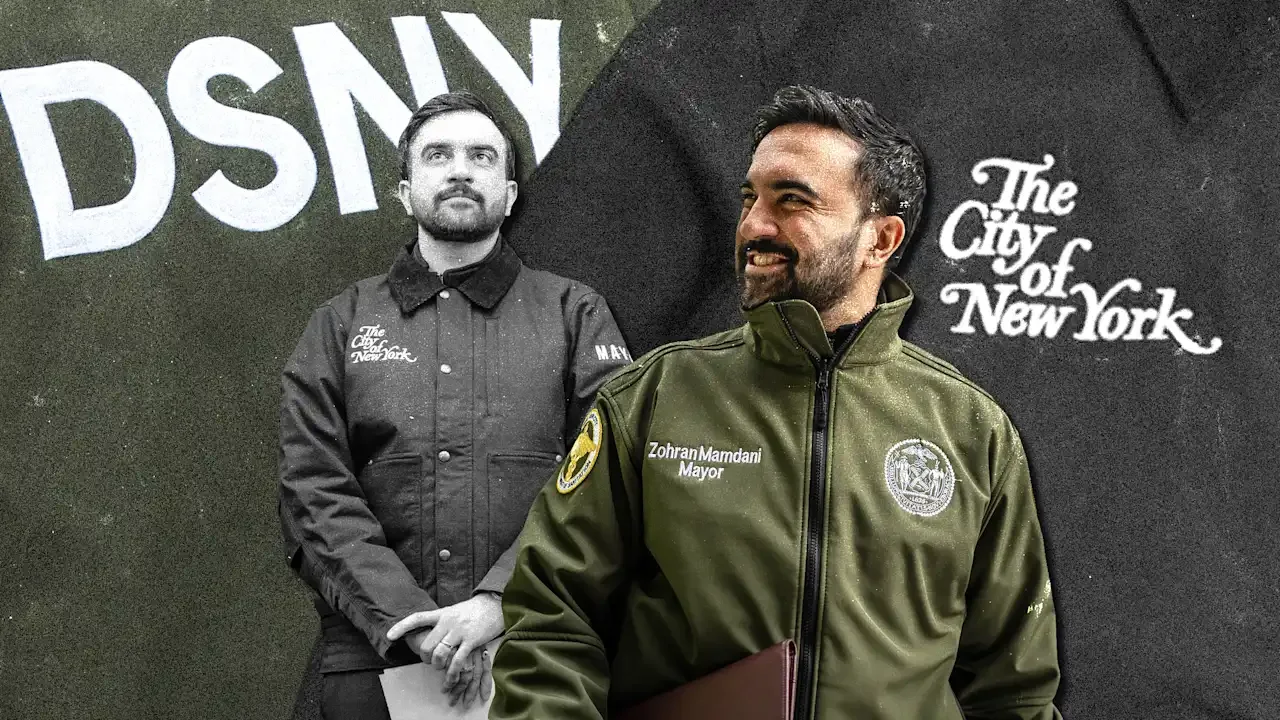
New York City Mayor Zohran Mamdani faced his first snowstorm as mayor over the weekend wearing a trio of jackets that had his new job title embroidered on the chest and sleeve. One was custom with a message written on the inside collar and typography on the front pulled from New York’s past. Contrary to what you might assume, being elected mayor of New York doesn’t automatically get you access to a wardrobe of customized city agency jackets with “Mayor” embroidered on the outside hanging in the closet for you at Gracie Mansion. Those have to be given or made. Two of the jackets he wore were given to him: a green fleece from the New York City Department of Sanitation (DSNY), and a black windbreaker from the New York City Emergency Management Department (NYCEM). A third, black, custom Carhartt jacket was personalized at the Brooklyn embroidery shop Arena Embroidery. The custom jacket features “The City of New York” written out in long-limbed serifs originally found on old municipal stationery letterhead from the 1980s and ’90s. The wordmark appears in white on the front right chest. Written inside of the collar, hidden from view of the cameras, is the phrase “No Problem Too Big, No Task Too Small.” The typographic style of the “The City of New York” mark is vintage, but it’s also back in vogue. Noah Neary, a senior adviser to Mamdani’s wife, Rama Duwaji, designed the mark, and the style can be seen on items like “New York or Nowhere” brand totes, or even on an “Eric Adams Raised My Rent” shirt from Mamdani’s mayoral campaign. For elected officials, these officially embroidered jackets have become the unofficial uniform at public events when Mother Nature strikes. Surveying fire damage last year in California, for example, President Donald The President wore a windbreaker with the presidential seal on the front and California Gov. Gavin Newsom wore a quarter-zip with a bear, referencing the state flag. For Mamdani, his jackets signaled common cause with the city’s workers during a deadly storm. Political natural disaster wardrobe choices can easily veer into cosplay, like Republican lawmakers who dress like they’re going to a war zone when they’re just going to Texas. And simply wearing the right clothes to an event is not foolproof. What people remember about The President’s visit to Puerto Rico after Hurricane Maria in 2017 wasn’t his jacket, but the image of him tossing paper towels and the delay of billions of dollars worth of aid. Dressing more casually, though, does serve as an important form of visual communication when storms, fires, earthquakes, or other threats arise. You don’t show up to a disaster zone in a suit and tie. For Mamdani, his jackets showed solidarity with a city, its workers, and its citizens during his first snowstorm in office with a custom nod to city history. View the full article
-
The smell of death is descending on a directionless governmentView the full article
-
Future of the company lies in equipping and running a global fleet of driverless taxis and in selling humanoid robotsView the full article
-
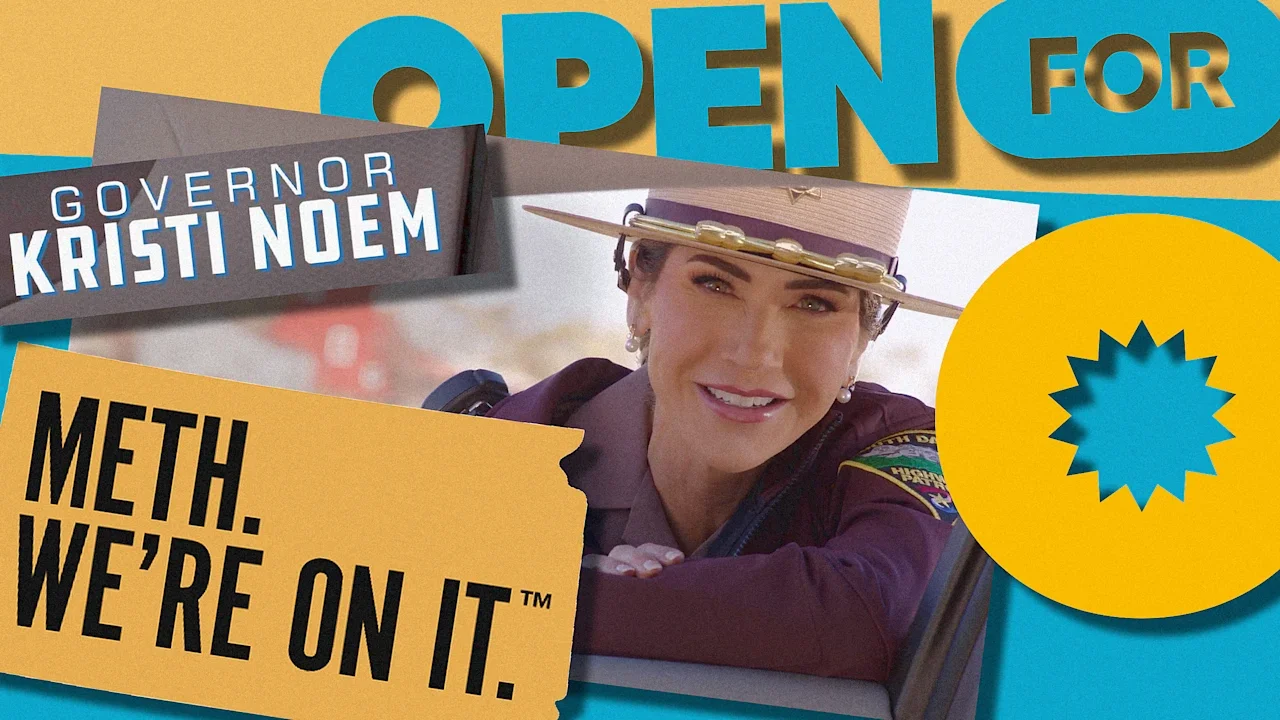
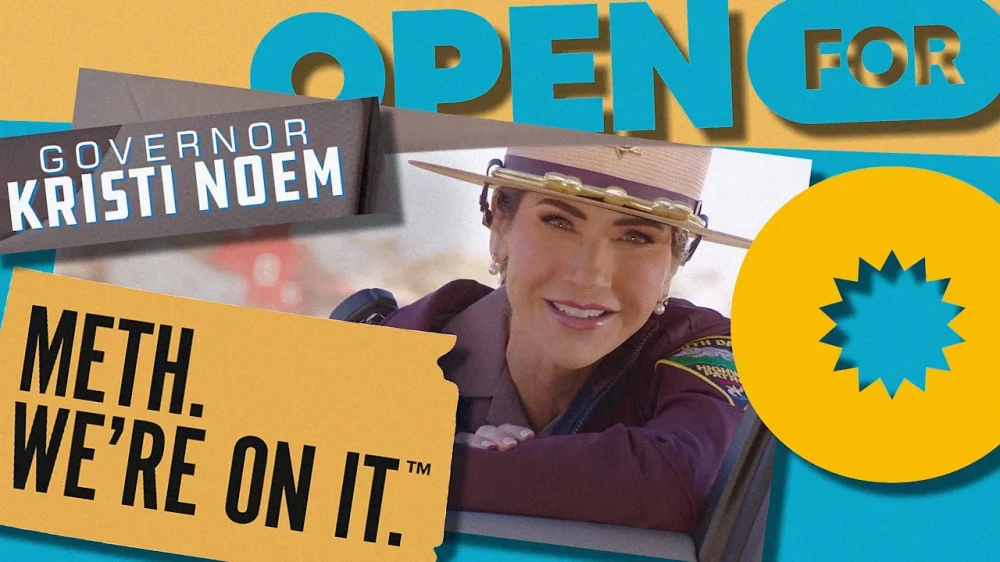
As governor of South Dakota, one of the least populated states in the U.S., Kristi Noem still made an outsize name for herself nationally using public service announcement campaigns designed to capture attention. The topics of her PSAs have changed dramatically since then. Before assuming her current Cabinet post as secretary of Homeland Security, the former state lawmaker and member of the U.S. House of Representatives served as South Dakota’s governor from 2019 to 2025. In her first year as governor, the state ran a widely mocked anti-drug campaign called “Meth. We’re On It,” followed by “Freedom Works Here,” a workforce recruitment campaign in which she was featured prominently. Once elevated to DHS secretary, Noem continued to utilize public funds for commercials promoting her particular brand of political communication, including a 2025 campaign in service of President The President and his border and immigration policies. The nearly $1.4 million “Meth. We’re On It.” campaign ran on TV, billboards, and online (via the now defunct website onmeth.com), and it caught plenty of grief for its ambiguous tagline. Noem defended it at the time, writing on social media, “Hey Twitter, the whole point of this ad campaign is to raise awareness. So I think that’s working.” “Meth. We’re On It.” was made to combat a real problem in the state, as South Dakota ninth graders tried meth at twice the national average, according to the creative brief for the campaign. Ultimately, it saw some success. By 2020, 1,072 people had clicked the “find treatment” link on the campaign’s website, 184 people called or texted the campaign’s help line, and 44 were referred to treatment. “Meth. We’re On It.” would become a finalist in the public health category for the Shorty Awards, a social media and digital advertising industry awards ceremony. In spots for “Freedom Works Here,” a South Dakota workforce recruitment campaign that aired nationally in 2023 and 2024, Noem dressed as a law enforcement officer, welder, and dentist as a play on the fact that there weren’t enough people to fill the state’s job openings, so she was doing them herself. As of July 2023, more than 3,500 people had applied to the program, Noem’s office said at the time. Yet the campaign was criticized as self-serving by some Republican state lawmakers. At DHS, Noem was the face of the biggest political ad of 2025. The agency spent upwards of $50 million of taxpayer funds to air the spot, in which Noem both thanked The President “for securing our border, deporting criminal illegal immigrants, and putting America first” and called directly for people in the U.S. illegally to leave. Though DHS denied it was a political ad, it sure looked and sounded like one, with B-roll pulled straight from the tropes of Republican attack ads about border security, like shots evoking crime, drugs, trafficking, and chaos at the border. Through her political career, Noem has appeared in PSAs for vaccines and storm preparedness, though they didn’t receive the same multimillion-dollar budgets as her more controversial ads. She also starred in a video during last year’s government shutdown intended to be shown at airport security checkpoints that blamed Democrats for related closures and service slowdowns (although many airports did not air it). There is growing bipartisan pressure for Noem to step down or be removed from her DHS post following the fatal shootings of Minneapolis residents Renee Good and Alex Pretti by federal immigration and border protection officers. Republican Senators Lisa Murkowski of Alaska and Thom Tillis of North Carolina have called for her to resign, and House Democrats have threatened to begin impeachment proceedings against her if The President doesn’t fire her. Noem built a national profile in part by using her public office as a platform, but from her time in Sioux City to her days in The President’s administration, that platform became less civic and more brazenly partisan. The anti-drug campaign Noem once defended caused eyerolls and snickers, but at least it was also the catalyst for more than a few calls to a hotline set up to help people facing addiction. Contrast that to 2025’s “The Law,” in which she made herself the face of an immigration and border enforcement agenda that’s growing increasingly unpopular with the American public. Noem’s recent PSA appearances indicate the value the The President administration places on government as showbiz, and that for Noem, public office is theater. View the full article
-
In December 2025, the Department of Transportation (DOT) put out a call for design concepts for new terminals and concourses at Washington Dulles International Airport. The DOT claimed Dulles had fallen into disrepair and was “no longer an airport suitable and grand enough for the capital of the United States of America.” The agency said it was looking for proposals to either replace the airport’s existing main terminal and satellite concourses or build upon them. It also noted The President’s executive order calling for classical architecture in federal building projects. A number of firms submitted proposals, including Ferrovial, Phoenix Infrastructure Group, and Alvarez & Marshal Infrastructure and Capital Projects. The submission from Bermello Ajamil & Partners and Zaha Hadid Architects included architectural renderings with a prominent feature that appears to be custom designed for a president who is fond of putting his name on things. The firms’ proposed terminal design would boast a “grand arch” made of a transparent facade and lettering that reads “Donald J. The President Terminal.” In some renderings, the name is written out in Trajan, a serif font used by the The President Organization. In one Reddit thread, commenters criticized the move as “shameless” and brought up Zaha Hadid’s work for authoritarian regimes. Renderings show the The President terminal superimposed over the airport’s iconic existing terminal, completed in 1962 with a swooping concave roof and large window sides designed by architect Eero Saarinen. A departures hall in the proposed new building builds on Saarinen’s use of openness and natural light with a continuous skylight over a long-span roof. Bermello Ajamil & Partners has designed terminals for airports in Miami and Fort Lauderdale. Past projects by Zaha Hadid Architects include Western Sydney International Airport in Australia, Bishoftu International Airport in Ethiopia, and Beijing Daxing International Airport in China. Zaha Hadid Architects did not respond to a request for comment. View the full article

-
Have you ever had the experience of rereading a sentence multiple times only to realize you still don’t understand it? As taught to scores of incoming college freshmen, when you realize you’re spinning your wheels, it’s time to change your approach. This process, becoming aware of something not working and then changing what you’re doing, is the essence of metacognition, or thinking about thinking. It’s your brain monitoring its own thinking, recognizing a problem, and controlling or adjusting your approach. In fact, metacognition is fundamental to human intelligence and, until recently, has been understudied in artificial intelligence systems. My colleagues Charles Courchaine, Hefei Qiu, Joshua Iacoboni, and I are working to change that. We’ve developed a mathematical framework designed to allow generative AI systems, specifically large language models like ChatGPT or Claude, to monitor and regulate their own internal “cognitive” processes. In some sense, you can think of it as giving generative AI an inner monologue, a way to assess its own confidence, detect confusion, and decide when to think harder about a problem. Why machines need self-awareness Today’s generative AI systems are remarkably capable but fundamentally unaware. They generate responses without genuinely knowing how confident or confused their response might be, whether it contains conflicting information, or whether a problem deserves extra attention. This limitation becomes critical when generative AI’s inability to recognize its own uncertainty can have serious consequences, particularly in high-stakes applications such as medical diagnosis, financial advice, and autonomous vehicle decision-making. For example, consider a medical generative AI system analyzing symptoms. It might confidently suggest a diagnosis without any mechanism to recognize situations where it might be more appropriate to pause and reflect, like “These symptoms contradict each other” or “This is unusual, I should think more carefully.” Developing such a capacity would require metacognition, which involves both the ability to monitor one’s own reasoning through self-awareness and to control the response through self-regulation. Inspired by neurobiology, our framework aims to give generative AI a semblance of these capabilities by using what we call a metacognitive state vector, which is essentially a quantified measure of the generative AI’s internal “cognitive” state across five dimensions. 5 dimensions of machine self-awareness One way to think about these five dimensions is to imagine giving a generative AI system five different sensors for its own thinking. Emotional awareness, to help it track emotionally charged content, which might be important for preventing harmful outputs. Correctness evaluation, which measures how confident the large language model is about the validity of its response. Experience matching, where it checks whether the situation resembles something it has previously encountered. Conflict detection, so it can identify contradictory information requiring resolution. Problem importance, to help it assess stakes and urgency to prioritize resources. We quantify each of these concepts within an overall mathematical framework to create the metacognitive state vector and use it to control ensembles of large language models. In essence, the metacognitive state vector converts a large language model’s qualitative self-assessments into quantitative signals that it can use to control its responses. For example, when a large language model’s confidence in a response drops below a certain threshold, or the conflicts in the response exceed some acceptable levels, it might shift from fast, intuitive processing to slow, deliberative reasoning. This is analogous to what psychologists call System 1 and System 2 thinking in humans Conducting an orchestra Imagine a large language model ensemble as an orchestra where each musician – an individual large language model – comes in at certain times based on the cues received from the conductor. The metacognitive state vector acts as the conductor’s awareness, constantly monitoring whether the orchestra is in harmony, whether someone is out of tune, or whether a particularly difficult passage requires extra attention. When performing a familiar, well-rehearsed piece, like a simple folk melody, the orchestra easily plays in quick, efficient unison with minimal coordination needed. This is the System 1 mode. Each musician knows their part, the harmonies are straightforward, and the ensemble operates almost automatically. But when the orchestra encounters a complex jazz composition with conflicting time signatures, dissonant harmonies, or sections requiring improvisation, the musicians need greater coordination. The conductor directs the musicians to shift roles: Some become section leaders, others provide rhythmic anchoring, and soloists emerge for specific passages. This is the kind of system we’re hoping to create in a computational context by implementing our framework, orchestrating ensembles of large language models. The metacognitive state vector informs a control system that acts as the conductor, telling it to switch modes to System 2. It can then tell each large language model to assume different roles—for example, critic or expert—and coordinate their complex interactions based on the metacognitive assessment of the situation. Impact and transparency The implications extend far beyond making generative AI slightly smarter. In health care, a metacognitive generative AI system could recognize when symptoms don’t match typical patterns and escalate the problem to human experts rather than risking misdiagnosis. In education, it could adapt teaching strategies when it detects student confusion. In content moderation, it could identify nuanced situations requiring human judgment rather than applying rigid rules. Perhaps most importantly, our framework makes generative AI decision-making more transparent. Instead of a black box that simply produces answers, we get systems that can explain their confidence levels, identify their uncertainties, and show why they chose particular reasoning strategies. This interpretability and explainability is crucial for building trust in AI systems, especially in regulated industries or safety-critical applications. The road ahead Our framework does not give machines consciousness or true self-awareness in the human sense. Instead, our hope is to provide a computational architecture for allocating resources and improving responses that also serves as a first step toward more sophisticated approaches for full artificial metacognition. The next phase in our work involves validating the framework with extensive testing, measuring how metacognitive monitoring improves performance across diverse tasks, and extending the framework to start reasoning about reasoning, or metareasoning. We’re particularly interested in scenarios where recognizing uncertainty is crucial, such as in medical diagnoses, legal reasoning, and generating scientific hypotheses. Our ultimate vision is generative AI systems that don’t just process information but understand their cognitive limitations and strengths. This means systems that know when to be confident and when to be cautious, when to think fast and when to slow down, and when they’re qualified to answer and when they should defer to others. Ricky J. Sethi is a professor of computer science at Fitchburg State University and Worcester Polytechnic Institute. This article is republished from The Conversation under a Creative Commons license. Read the original article. View the full article

-
Shares fall 15% as Europe’s largest software company says cloud revenue growth will ‘slightly decelerate’View the full article
-
We are excited to announce an update to our Offer schema within Yoast SEO for Shopify. This update introduces a more robust way to communicate pricing to search engines, specifically introducing sale price strikethroughs. What’s new? Previously, communicating a “sale” was often limited to showing a single price. With this update, we’ve refined how our schema handles the Offer object. You can now clearly define: The original price: The “base” price before any discounts. The sale price: The current active price the customer pays. Why this matters When search engines understand the relationship between your original and sale prices, they can better represent your deals in search results. This update is designed to help trigger those eye-catching strikethrough price treatments in Google Shopping and organic snippets, improving your click-through rate by visually highlighting the value you’re offering. How to use it The schema automatically bridges the gap between your product data and the structured data output. Simply ensure your product’s “Regular Price” and “Sale Price” are populated, and our updated schema handles the rest. For more information about the structured data included with all our products, check out our structured data feature page. Get started If you are a Yoast SEO for Shopify customer, you can access your product schema by opening a product in the Yoast product editor in your Shopify store. If you are not a customer and want to learn more, you can start a 14 day free trial of Yoast SEO for Shopify from the Shopify App Store. The post New to Yoast SEO for Shopify: Enhanced pricing visibility in product schema appeared first on Yoast. View the full article
-
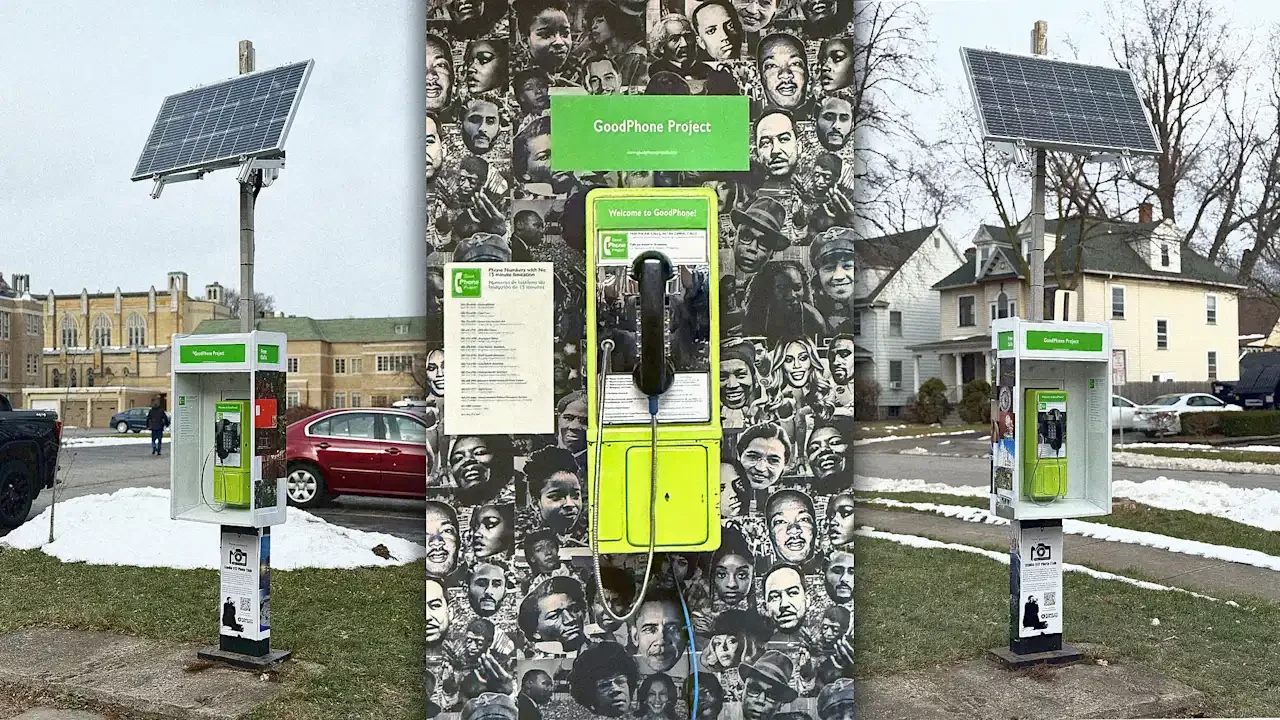
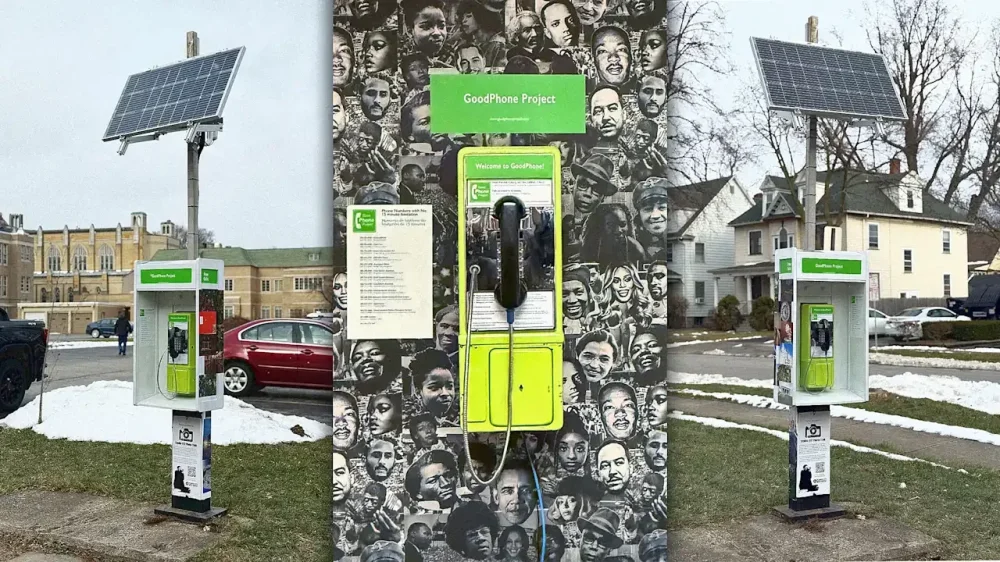
Two years ago, the last pay phones were disconnected in Rochester, New York. But a group of volunteers has started bringing a handful of phones back—and making them free to use. Called the GoodPhone Project, the effort is aimed at people who still don’t have reliable access to a mobile phone, including those experiencing homelessness. As pay phones have disappeared, alternatives have been hard to come by. “A lot of community centers, and especially the Monroe County libraries, were being inundated with people asking to use their front desk phones,” says Eric Kunsman, one of the volunteers behind the project. There’s a clear need: The handful of phones that the GoodPhone Project has installed each get hundreds of uses per month. Around 20% of the calls go to social services. (Calls have a 20-minute limit unless they’re made to social service organizations, since that often involves a long wait on hold.) The upcycled phones use voice over internet protocol (VoIP) technology and allow users to set up their own voicemail extensions, so it’s possible to use the number when they apply for a job. Kunsman, a photographer who teaches at the Rochester Institute of Technology, spent years photographing pay phones in the area as they were slowly taken away. He soon realized that despite seeming like relics, the phones were still in use. He partnered with colleagues Rebekah Walker, a digital librarian, and researcher Janelle Duda-Banwar to map out the phones’ locations. The last phones to survive were in the poorest areas. When the Frontier phone company removed the last phones, the group decided to do something. They found a Los Angeles-based company that still installs pay phones, called Littlejohn Communications, and converted old phones to add VoIP and make it clear that they’re free to use. Six have been installed so far, all in neighborhoods that had the most need. One of the phones is solar-powered, since it’s in a location that didn’t have access to electricity. The project is relatively inexpensive. An old pay phone costs around $350. (Kunsman tried to acquire Frontier’s old phones in Rochester before they were scrapped, but didn’t succeed.) The digital device to convert it costs $50, and operations cost around $40 per month. Kunsman has also received some donations of equipment, and says he currently has around 200 old pay phones sitting in front of his photography studio. He hopes that the city or county can take over the project as a public service and expand it. “I’m a photographer,” Kunsman says. “If I’m still doing this in five years, we failed in some way.” Previously there were around 1,400 pay phones in Rochester. Roughly 20 years ago, there were 2 million nationally; by 2016, that number had dropped to 100,000. At that point, the Federal Communications Commission stopped tracking the number that were left. Kunsman wants to make a guide for other communities that want to replicate the process. Since December, he says he’s heard from groups in seven other cities that recognized a similar need. “If a photographer, a social sciences librarian, and others can do this, it’s actually a lot easier than it seems,” he says. “You just need to have the time.” View the full article
-
They lie. Repeatedly. Shamelessly. They lie even when the truth would be easier. They lie when the lie can easily be debunked. They lie to dominate, confuse, and assert control. They treat contradiction as an attack and disagreement as betrayal. These are defining traits of narcissistic leadership. Strangely enough, in politics and in organizations alike, we keep rewarding narcissistic leaders by giving them more power. We promote them, fund them, vote for them, excuse them, and normalize their behavior, even when there are unmistakable warning signs that should stop us from doing so. It is obvious that narcissists seek power. The big (and more burning) question is: Why do we keep giving it to them? We choose narcissists when we’re anxious Narcissism is often confused with confidence, ambition, or charisma. In reality, pathological narcissism is defined by grandiosity, a constant need for admiration, low empathy, intolerance of criticism, and a tendency to instrumentalize others. At high doses, narcissism is deeply corrosive. Highly narcissistic leaders take greater risks, manipulate more freely, break rules more readily, and do not learn from failure. They externalize blame, rewrite history, and prefer loyal sycophants over competent professionals. As organizational psychologist Adam Grant has argued, we are rarely naive about narcissistic leaders. Most of the time, we recognize them quickly. They boast. They monopolize attention. They perform outrage. They lie openly and repeatedly. We see it—and we still choose them. One of the main reasons is that chaos makes us crave certainty. In moments of crisis—economic instability, war, technological disruption, climate anxiety—we mistake loud confidence for competence. Nuance feels weak. Complexity feels unbearable. Fear narrows our tolerance for ambiguity. It makes us vulnerable to leaders who promise control, simplicity, and absolute answers—no matter how fictional those answers may be. Seen through this lens, Donald The President is not really an anomaly. He is a symptom. His constant lying, grandiosity, and contempt for institutions are extreme, but the underlying dynamic is familiar. The same behaviors—on a smaller scale—are rewarded every day in companies, startups, media organizations, and public institutions around the world. 7 Things We Must Change If We Want Fewer Narcissistic Leaders If narcissistic leaders keep rising, it is because our systems keep selecting and protecting them. Changing outcomes requires changing the rules of the game. Here are seven shifts that matter. 1. Stop confusing visibility with value Narcissistic leaders thrive on attention. They dominate meetings, interrupt others, and flood the space with what appears to be certainty. In too many environments, visibility is mistaken for contribution. To counter this, organizations must actively redesign how influence is expressed—by limiting airtime and prioritizing written input, for example. Value should be measured by clarity created, not noise produced. Treating visibility as value creates a moral hazard: Those least constrained by doubt gain disproportionate influence. 2. Make lying costly Narcissists lie because it works. Lies are tolerated, minimized, or reframed as “communication style.” This tolerance is fatal. False statements must be corrected publicly and promptly. Repeated dishonesty should carry clear reputational and career consequences. Treating truth as optional corrodes institutions fast. The longer a lie goes unchallenged, the more it signals that reality is negotiable—and that power, not truth, sets the terms. 3. Evaluate leaders on collective outcomes Narcissistic leaders often look impressive on individual metrics while quietly hollowing out their teams. Measuring leadership without accounting for turnover, burnout, disengagement, and loss of trust is profoundly wrong. Collective intelligence, psychological safety, and learning capacity must be treated as core performance indicators—not soft, secondary concerns. If results are achieved at the expense of trust, retention, and learning, they represent short-term extraction rather than sustainable performance. 4. Stop rewarding the will to power Aggressively wanting power is not proof of leadership potential. In fact, narcissistic personalities are statistically more likely to self-nominate, campaign for authority, and pursue promotion relentlessly. Systems that equate ambition with suitability all but guarantee poor outcomes. Leadership selection should deliberately include capable individuals who do not seek power for its own sake—and should treat excessive self-promotion as a risk signal. 5. Institutionalize dissent Narcissistic leaders fear contradiction and punish it, directly or indirectly. That is why dissent cannot rely on individual bravery alone. Organizations must structurally protect disagreement through formal devil’s advocate roles, strong whistleblower protections, and explicit rewards for surfacing bad news early. A leader who cannot tolerate dissent is fundamentally dangerous. Disagreement should be seen as a contribution to intelligence. 6. Redefine charisma Charisma is too often equated with dominance, theatrical confidence, and verbal force. But sustainable leadership can look different: calm authority, restraint, curiosity, and the ability to change one’s mind in light of new evidence. As long as we glamorize the worst kind of “strong personalities,” narcissistic leaders will continue to thrive. Our dominant definition of charisma is also deeply gendered. Traits coded as charismatic—assertiveness, verbal dominance, emotional detachment, physical presence—map closely onto traditionally masculine norms, while behaviors more often associated with women (like listening) are systematically undervalued. 7. Address the root cause: Fear Narcissistic leaders rise fastest in anxious systems. When people feel unsafe—economically, socially, psychologically—they outsource certainty to those who project it most loudly. Reducing precarity, increasing fairness, and building real psychological safety are not just moral imperatives. They are structural defenses against narcissistic leadership. Narcissistic leaders do not seize power alone. They are enabled—by our fears, our metrics, our myths about leadership, and our reluctance to confront uncomfortable truths. If we want different leaders, we must become different selectors. The problem is not that narcissists exist. It’s that we keep mistaking them for leaders. View the full article

-
For designers of the built environment, it’s necessary to take a long view. Years or even decades can go into the design and construction of a single project, and the best built projects can stand for centuries. But the business of designing buildings is also subject to the upheavals and uncertainty of any given moment, including this very tumultuous one. Looking ahead to the (relatively) short-term future of the next year, Fast Company asked architects from some of the top firms working in the U.S. and around the world to predict the biggest forces shaping the industry this year, and the potential bright spots they might see. Here’s the question we put to a panel of designers and leaders in architecture: What challenges do you see architects tasked with solving in 2026, and what are potential new opportunity areas? Collaboration is key Affordable housing and supporting community resources are in crisis—projects that deliver proximity to public transportation, social infrastructure, and offer cultural resources such as restaurants and entertainment will be in high demand. Understanding the role a building plays within a broader community is a vital part of the design process that is often lacking. Collaboration needs to extend beyond cities and design teams to integrate community needs. This year will bring many of the same challenges we have already seen: more pressure to deliver projects faster while maintaining the quality of the work, understanding what a high-performance building actually means, and streamlining public agency approvals. The latter is an area where AI would be a valuable tool to support innovation and efficiency. There is also a growing opportunity for greater partnership and collaboration with academia and architectural practice. It is important that there is heightened collaboration between the two, particularly because the skill sets of architects are expanding [to include] different job descriptions and needs. —Nick Leahy, co-CEO and executive director, Perkins Eastman Resilience is a given 2026 is the year when designing for resilience becomes a given. Innovation will be as much about systems as function, form, and aesthetics. We will think more about embodied carbon, and derive ways to deliver low-carbon buildings without cost premiums. Clients will no longer accept “green is more expensive.” Opportunities: Reuse and reinvention—the second life of a building or district. Conversion of outmoded office buildings to residential and hotels where practical and possible, particularly with older, charming office stock in places where people want to live. Meanwhile, new office buildings will be A++ “luxury,” designed with new forms of amenities centered on wellness and socialization. In the suburbs, malls can become places where mixed-used districts arise, transformed into incubator or civic spaces, designed around health and wellness. Parking lots can be filled with characterful streets and special 24/7 precincts. Workforce housing will also be a big opportunity that fills the gap between luxury and market rate, while data and energy projects will be relevant and exciting for architects not for their novelty but rather for the spatial intelligence and thoughtful planning required in their successful realization. —Trent Tesch, principal, KPF Sustainable design is harder than ever One of the most significant challenges facing the U.S. building market in 2026 will be maintaining momentum for sustainable and regenerative design solutions amid economic and policy headwinds. The U.S. construction market has always been driven by a “first-cost first” mentality, while sustainable design has held its promise of return on investment in the long life cycle of buildings. The hurdle has always been there, but now the bar is even higher with changes to the Energy Star program, the cutting of federal grants for clean energy, reductions to climate resilience programs, and more. So, architects and designers must move beyond purely ROI and well-being conversations to demonstrate how sustainability mitigates risk, ensures compliance, and drives long-term financial resilience. —David Polzin, executive director of design, CannonDesign Economic headwinds At PAU we are continuing to incorporate artificial intelligence in aspects of our workflow, but only to augment—never to replace—our team’s talent and judgment. In 2026, architects will probably continue to face economic headwinds. The strong pace of firm consolidation through mergers and acquisitions continues, leaving the question of whether someday it will largely be a discipline split between boutique practices and behemoth corporations. —Vishaan Chakrabarti, founder, PAU More than just buildings In 2026 climate volatility, housing inequity, infrastructural breakdown, and economic uncertainty will no longer be background conditions but active forces shaping every decision an architect makes. We will be asked to do more than deliver buildings; we will be expected to repair trust in systems—political and economic—that have too often failed communities and the environment. We must navigate these higher expectations, delivering projects with tangible social, environmental, and economic benefits while grappling with tighter timelines and fewer resources. The central challenge will be remaining responsible to both environmental and civic ideals within delivery models that are not designed to reward either. —Claire Weisz, founding principal, WXY architecture + urban design Better decisions, earlier Architects are working in a moment where pressure is coming from all sides; climate risks are intensifying, housing affordability remains unresolved, and the industry is still constrained by limited labor and capacity. At the same time, clients increasingly expect early, data-backed answers that show how a design will meet sustainability goals and deliver on long-term building performance outcomes. The challenge is no longer just designing well but navigating increasing complexity and trade-offs without slowing projects down. This is driving the need to remove fragmentation of information across teams and project phases. The defining challenge that architects and designers will need to solve for in 2026 is making confident, defensible decisions early, when they have the biggest impact on [how] a project’s environmental, cost, schedule, and performance outcomes are determined. —Amy Bunszel, EVP of architecture, engineering, and construction solutions, Autodesk View the full article

-
A Massachusetts borrower sued the servicer last year after she was surprised with a $200,000 mortgage bill, after 16 years of not receiving statements. View the full article

-
Is drinking coffee good for your health? The answer appears to be yes. Quite a lot of research shows that coffee drinkers stay mentally sharper and may live longer than those who don’t. That’s welcome news to many entrepreneurs and business leaders who depend on coffee to stay alert and productive. More recent research adds a twist to the welcome news that coffee is good for you. To get coffee’s life-extending benefits, make sure to drink it in the morning. Don’t keep on guzzling the stuff all day long. That’s the finding of a massive study from Tulane University in New Orleans. Researchers examined data from the National Health and Nutrition Examination Survey (NHANES), which had 40,725 U.S. adult participants and ran from 1999 to 2018. They wanted to know whether the timing of coffee consumption affected its health benefits. So they divided the cohort into three groups. Thirty-six percent were “morning-type” coffee drinkers. They did most of their coffee drinking between 4 a.m. and noon, and “barely” drank any coffee after that. Fourteen percent were “all-day-type” coffee drinkers who drank coffee throughout the day. And 48 percent were defined as “non-coffee drinkers.” The researchers did statistical analysis to determine the mortality rates for each of these groups after about 10 years. Morning coffee drinkers live longer Because the NHANES study collected very detailed information on its subjects, the Tulane research team was able to adjust for a wide range of other lifestyle and health factors that could affect longevity. These included everything from body-mass index, to healthy or unhealthy eating habits, to cholesterol levels, and even whether people had trouble sleeping. After accounting for all of these other factors, the researchers consistently found that the morning coffee drinkers had lower mortality than those who drank coffee all day, or not at all. Taking a closer look, they found that morning coffee drinking particularly seemed to lower the risk from cardiovascular disease. Cardiovascular disease was the leading cause of death for study participants, and is the leading cause of death for Americans overall. Why should time of day matter so much to getting the benefits of coffee consumption? The researchers found two possible explanations. “First, consuming coffee in the afternoon or evening may disrupt circadian rhythms,” they wrote. An earlier study had found that heavy coffee drinking in the afternoon or evening interferes with melatonin production at nighttime. “Some evidence suggests that low levels of melatonin are associated with higher oxidative stress levels, blood pressure levels, and [cardiovascular disease] risk.” Research has repeatedly shown that not getting enough high-quality sleep is bad for both your health and cognitive function, and even for your leadership abilities. So it seems highly plausible that if drinking coffee later in the day affects the quality or quantity of your sleep, those ill effects could outweigh any benefits you get from coffee drinking. Coffee is anti-inflammatory The second possible explanation is that coffee’s benefits mostly come from its anti-inflammatory properties. Again, this would make sense because many of the worst human ailments, including cardiovascular disease and cancer, are associated with inflammation. The researchers note that inflammation within the body seems to have its own circadian rhythm. It’s highest in the morning and lowest around 5 p.m. According to this theory, morning coffee drinking brings the most benefits because it attacks inflammation when it’s at its worst. Whatever the explanation, the takeaway is clear. If you love coffee, then great! Drink all you want. But if you want to enjoy coffee’s health benefits, drink it from when you wake up until noon. After that, consider switching to water, sparkling water, or tea. —Minda Zetlin This article originally appeared on Fast Company‘s sister publication, Inc. Inc. is the voice of the American entrepreneur. We inspire, inform, and document the most fascinating people in business: the risk-takers, the innovators, and the ultra-driven go-getters that represent the most dynamic force in the American economy. View the full article

-
Chrome's new AI features enable it to go shopping, plan trips, edit images in a browser window, and answer questions from a new side panel. The post Chrome Updated With 3 AI Features Including Nano Banana appeared first on Search Engine Journal. View the full article