All Activity
- Past hour
-
 Closing deals effectively is essential for success in sales. To achieve this, you need to build strong relationships with prospects, personalize your communication, and actively listen to their needs. Utilizing diverse closing techniques can cater to individual preferences, as well as creating a sense of urgency can motivate action. Furthermore, maintaining consistent follow-up helps address lingering objections and improves engagement. These strategies are just the beginning; there are more nuances to explore for maximizing your success. Key Takeaways Build strong relationships with prospects through personalized communication and active listening to foster trust and understanding of their needs. Utilize diverse closing techniques tailored to each prospect, such as the Assumptive Close or Puppy Dog Close, to boost success rates. Create a sense of urgency with limited-time offers and highlight competitive advantages to encourage quick decision-making. Maintain consistent follow-up, ideally within 24 hours, to enhance engagement and address any lingering objections effectively. Share relevant success stories and testimonials to enhance credibility and trust, as 92% of consumers trust recommendations over ads. Build Strong Relationships With Prospects Building strong relationships with prospects is vital for closing deals effectively, as these connections promote trust and reliability. By leveraging inside sales CRM and sales CRM software, you can track interactions and schedule regular follow-ups, which are fundamental—80% of sales require at least five touchpoints. Personalizing communication demonstrates genuine interest, greatly improving customer satisfaction and boosting repeat business by 70%. Sharing relevant success stories and testimonials can further improve your credibility; 92% of consumers trust recommendations over ads. Utilizing a consultative approach encourages collaboration and problem-solving, as 74% of buyers prefer sales reps who listen to their needs. This is where CRM for sales management and sales solutions software come into play, streamlining processes and improving relationship-building efforts. Utilize Active Listening to Understand Needs Active listening is an essential skill for sales professionals aiming to understand their prospects’ needs effectively. By honing this skill, you can greatly improve your chances to close more deals. Here are three key benefits of active listening: Comprehend Needs: Fully grasp your prospect’s pain points and preferences, allowing you to offer customized solutions. Build Rapport: Demonstrating genuine interest helps cultivate trust, making prospects more likely to engage with you. Clarify Misunderstandings: Reflecting and summarizing what you’ve heard guarantees alignment and creates a collaborative environment. Incorporating active listening into your sales software management and utilizing a robust sales CRM as a sales tool will improve your effectiveness and boost customer satisfaction, eventually leading to enhanced conversion rates. Employ Diverse Closing Techniques To close more deals effectively, employing diverse closing techniques customized to your prospects can greatly improve your success rate. Different methods resonate with various leads, so it’s vital to tailor your approach. Techniques like the Assumptive Close build confidence, whereas the Puppy Dog Close encourages emotional investment. Incorporating social proof through testimonials can boost trust, especially in B2B contexts where consensus is significant. Furthermore, using the Sharp Angle Question technique helps clarify commitment levels by addressing specific concerns. This diverse strategy not only overcomes objections but also strengthens relationships, showcasing comprehension and attentiveness. Technique Purpose Best For Assumptive Close Build confidence Confident prospects Puppy Dog Close Create emotional investment Hands-on experience seekers Social Proof Boost trust B2B sales Sharp Angle Question Clarify commitment Addressing specific concerns Create a Sense of Urgency Effective closing techniques can pave the way for more successful deals, but adding a sense of urgency can greatly improve your efforts. Here are three strategies to create that urgency: Limited Time Offers: Promote exclusive deals that encourage quick decisions, enhancing the perceived value of your product or service. Communicate Risks: Be honest about the potential downsides of waiting, motivating prospects to prioritize their decisions. Highlight Competitive Advantages: Emphasize unique benefits that may change over time, instilling a fear of missing out (FOMO). Utilizing the best CRM systems or an all-in-one CRM can streamline your efforts in CRM telemarketing and managing leads effectively. A robust sales CRM platform is crucial for maximizing urgency as you maneuver through CRM for marketplaces. Maintain Consistent Follow-Up Maintaining consistent follow-up is crucial in the sales process, especially since nearly 80% of deals require five or more interactions before closing. Following up within 24 hours of initial contact can boost your response rates considerably, enhancing engagement by up to 50%. Utilize a sales CRM tool or all-in-one CRM software to schedule and track your follow-ups, ensuring no leads slip through the cracks. Personalizing your messages based on previous conversations helps strengthen relationships and shows genuine interest. Regular follow-ups likewise provide a chance to address any lingering objections, allowing you to clarify concerns and reinforce the value of your solution. Consider using team CRM or CRM telemarketing software to streamline this process effectively. Frequently Asked Questions How to Close More Deals in Sales? To close more deals in sales, focus on creating urgency through limited-time offers, which prompt quicker decisions. Personalize your approach by aligning your product’s benefits with the prospect’s needs. Use the assumptive close technique by discussing next steps confidently. Address any objections early by asking about hesitations. Finally, follow up regularly to keep prospects engaged, as consistent communication can greatly influence their decision-making process and prevent stalled negotiations. What Is the 1 10 Closing Technique? The 1 10 closing technique presents one compelling solution to your prospect, followed by ten focused questions. This approach helps clarify their needs and objections during keeping the conversation engaging. What Is the Best Closing Technique? The best closing technique often depends on your prospect’s specific needs and objections. Techniques like the Assumptive Close can encourage quicker decisions by suggesting next steps confidently. On the other hand, the Puppy Dog Close allows prospects to try the product risk-free, nurturing emotional attachment. You might likewise use scarcity tactics to create urgency, emphasizing limited availability. Combining these methods within a structured strategy can improve your effectiveness, allowing you to adapt to various buyer behaviors. What Is the ABC Method of Sales? The ABC Method of Sales stands for “Always Be Closing.” It encourages you to maintain a focus on closing deals throughout the sales process. By engaging prospects with closing techniques, you identify their needs and guide them toward decisions. This method emphasizes urgency through tactics like limited-time offers, which prompt quick action. You likewise assume the sale by discussing next steps confidently, leading to shorter sales cycles and higher win rates in competitive environments. Conclusion By implementing these strategies, you can improve your ability to close deals effectively. Building strong relationships, actively listening to prospects, and utilizing diverse closing techniques will set you apart. Creating urgency and maintaining consistent follow-up guarantees prospects stay engaged and informed. Furthermore, sharing relevant success stories builds credibility and trust, which are crucial in closing sales. Focus on these elements, and you’ll likely see an increase in your closing rates and overall sales success. Image via Google Gemini and ArtSmart This article, "5 Tips for Closing More Deals Effectively" was first published on Small Business Trends View the full article
 -
Forget about the big game on Sunday. Two heavyweights have been battling it out this week over a topic that’s become all-too-familiar over the years: advertising creep. It’s a tale as old as time, in some respects. Many a CEO have proudly declared that their company’s platform or services will remain ad-free, only to later succumb to the lure of all that advertising revenue and embrace it. And that’s creating a new divide among AI platforms—one that will play out to the world’s largest TV viewing audience during the Super Bowl. Among the nearly dozen AI-related ads on Sunday will be two 60-second spots each for OpenAI and Anthropic. While OpenAI will use its time to tout how its ChatGPT helps people build things with a real-world impact, Anthropic is taking a swipe at its much-larger competitor’s recent decision to incorporate ads into the platform—and its virtuous decision to keep its Claude AI assistant ad-free. This off-field action has already made for some entertaining viewing. Anthropic dropped four ads this past week set to Dr. Dre’s 2001 song “What’s the Difference,” which all conclude with the same warning: “Ads are coming to AI. But not Claude.” That elicited a lengthy post on X by Sam Altman, OpenAI’s CEO, that’s since become the topic of much ridicule. While Anthropic’s Black Mirror-esque ads are “extremely clever,” they’re also strategic, as the company seeks to position itself much like Apple has with its privacy-first messaging, says John Battelle, an entrepreneur and author. Claude’s marketshare may be a tiny fraction of ChatGPT’s, but Anthropic’s swipe at OpenAI’s reversal on advertising was well-played—and it makes an important point, according to Battelle. “I applaud what they did,” he tells Fast Company. “This needs to be talked about.” Pivot to revenue For Altman, the advertising U-turn took about 15 months. In October 2024, he said that he viewed advertising as a “last resort” as a business model for OpenAI, only to seemingly reverse course a few weeks ago. He’s hardly the first to do so—and for good reason. “There’s no question that the only business model that you can employ if you want to scale a business is advertising,” Battelle says. Advertising . . . finds a way Recent decades have seen a well-trod path for companies that transitioned to an advertising-supported business model from one that was originally based on subscriptions or, seemingly, free for users. Advertising has slowly—and sometimes not so slowly—crept into almost every major platform controlled by a large tech company, whether it’s social networks like Facebook or streaming services like Netflix, to name a few. But Google perhaps offers “the canonical example” of a company’s founders finding their advertising religion and walking back prior vows to remain ad-free, says Battelle, whose book “The Search: How Google and Its Rivals Rewrote the Rules of Business and Transformed Our Culture” was published 20 years ago by Penguin In a 1998 white paper laying out their vision for Google, cofounders Sergey Brin and Larry Page didn’t mince words about the potential “mixed incentives” of a commercial search engine with a business model predicated on advertising. “The goals of the advertising business model do not always correspond to providing quality search to users,” wrote the duo, then-PhD students at Stanford University. “We expect that advertising funded search engines will be inherently biased towards the advertisers and away from the needs of the consumers.” In 2000, Google began selling advertisements. To say it’s become a big business would be an understatement. Parent company Alphabet reported this past week that Google advertising accounted for more than 72% of its $113.8 billion revenue in the fourth quarter. A hill to die on For some founders, advertising has been a hill they’ve been willing to die on. Clashes about advertising on WhatsApp were reportedly among a variety of reasons why cofounder Jan Koum ultimately left parent company Facebook (now Meta Platforms) in 2018, four years after the messaging app was acquired. Koum had long expressed his disdain for advertising and how it worsened a product. He vowed to keep advertising out of an app where people communicate with friends and family, and his first-ever tweet was a quote from the movie Fight Club that pulls no punches: “Advertising has us chasing cars and clothes, working jobs we hate so we can buy shit we don’t need.” Last year, WhatsApp debuted ads in the app. The future of advertising on AI Like many before them, the founders of AI companies must now determine where their line in the sand is on advertising. And it’s no surprise that advertising has eventually found its way into AI platforms, as Battelle laid out in a recent blog post. As Google, Facebook, Uber, and other companies have taught us, advertising creep does gradually change the services we know and love, Battelle says. In some cases, like with Instagram, the product today barely resembles its pre-advertising self. “When you commit to advertising, you commit to the incentives of advertising,” he says. Even if advertising on AI platforms will inevitably evolve with time, Battelle says an imperative question now is what that future will look like—and particularly if social media is the reference point. “Man, things are not going to be pretty if the business model that drove social media also drives generative AI.” View the full article

- Today
-
When you think about business structures, you might wonder about the difference between a company and a corporation. A company is a broad term that can refer to any business entity involved in commercial activities. Conversely, a corporation is a specific legal entity that offers distinct advantages, such as limited liability protection for its shareholders. Comprehending these differences is essential, especially when considering legal requirements and management processes that vary greatly between the two. What other factors should you consider? Key Takeaways A corporation is a specific type of company that is a distinct legal entity, separate from its owners. All corporations are companies, but not all companies are corporations; “company” is a broader term. Corporations provide limited liability protection to shareholders, shielding personal assets from corporate debts. Corporations face double taxation, while many other companies, like LLCs, enjoy pass-through taxation. Corporations require formal compliance, including Articles of Incorporation and annual meetings, whereas many companies have fewer obligations. What Is a Corporation? A corporation is a distinct legal entity that operates independently from its owners, providing significant advantages, such as limited liability protection. In the context of company meaning in business, a corporation allows shareholders to invest without risking personal assets for corporate debts. When you think about corp vs co, keep in mind that although all corporations are companies, not all companies are corporations. A corporation must file articles of incorporation to be recognized legally and adhere to specific regulations. Corporations can issue shares, raising capital from investors, and are governed by a board elected by shareholders. Nevertheless, they face double taxation on profits, and you might wonder, is a limited company a corporation? Yes, it typically is, offering similar protections and structures. What Is a Company? A company is a broad term for any business entity created to engage in commercial activities, which can include various structures like sole proprietorships, partnerships, and limited liability companies (LLCs). Each type of company has different rules regarding ownership and liability, often impacting how personal finances are linked to business debts. Comprehending these distinctions helps clarify the responsibilities and tax implications you may face as a business owner. Types of Companies When exploring the various types of companies, it’s essential to understand that the term “company” encompasses a wide range of business structures designed for commercial activities. Companies can include: Sole proprietorships, owned by one individual Partnerships, where two or more share management and profits Limited Liability Companies (LLCs), offering some protection to owners Corporations, distinct legal entities from their owners Each type has its own characteristics. Unlike corporations, many companies don’t have a separate legal status, which can lead to unlimited liability for owners. Although corporations may face double taxation, many companies operate as pass-through entities, impacting how profits are taxed. Ownership and Liability Grasping ownership and liability in companies is fundamental for anyone looking to venture into business. A company is a broad term that encompasses various business structures, including partnerships and limited liability companies (LLCs). When you ask, “what does company mean?” it’s vital to recognize that ownership often lies with individuals or partners who face unlimited liability. This means your personal assets could be at risk if the business incurs debts or faces legal issues. Unlike a corporation (corp ltd), which offers limited liability to shareholders, many companies lack separate legal status, exposing owners to personal liability. This variation in ownership structures allows for flexible management, with owners typically involved in daily operations, unlike corporations that can raise capital through stock sales. Key Differences Between Corporations and Companies Comprehending the key differences between corporations and companies is vital for anyone looking to navigate the business environment effectively. Here are some fundamental distinctions: A corporation is a separate legal entity that offers limited liability, whereas a company covers various business structures, including partnerships. Corporations require formal documents like Articles of Incorporation and have strict compliance, whereas companies often have fewer legal formalities. Ownership in a corporation is through shares of stock, enabling public investment, whereas company ownership can vary and may involve direct control. Corporations face double taxation on profits, whereas many other companies, like LLCs, benefit from pass-through taxation, avoiding this issue. Understanding these differences helps you make informed decisions about your business structure. Legal Requirements for Corporations Establishing a corporation involves guiding through a set of legal requirements that guarantee its recognition as a separate entity from its owners. To start, you must file Articles of Incorporation with the state. This document establishes your corporation’s legal existence. Corporations are also required to hold annual meetings for shareholders and directors, ensuring compliance with governance standards. Maintaining detailed records, like meeting minutes and financial statements, is crucial to meet regulatory obligations. Furthermore, corporations must issue annual reports to shareholders to improve transparency. Compared to other business structures, corporations face stricter compliance rules, often necessitating regular filings and adherence to corporate governance laws. Legal Requirement Description Articles of Incorporation Document filed to establish legal existence Annual Meetings Required meetings for governance decisions Detailed Record Maintenance Keeping minutes and financial statements Annual Reports Disclosures of financial performance Legal Requirements for Companies When you’re considering the legal requirements for companies, it’s important to understand the formation and registration process, which varies by type. Unlike corporations, many companies face fewer compliance obligations, allowing for more straightforward operation. Nevertheless, keep in mind that unincorporated businesses may expose you to personal liability for business debts, making it essential to evaluate your structure carefully. Formation and Registration Process To navigate the formation and registration process for a company, it’s essential to understand the legal requirements that vary considerably between different types of entities. For instance, forming a corporation involves several steps that guarantee compliance with state laws, whereas other company types may have simpler processes. File Articles of Incorporation with the state, including name, purpose, and registered agent. Create and maintain corporate bylaws outlining governance and operational procedures. Conduct annual meetings for shareholders and board members to discuss corporate matters. Understand that forming a corporation creates a separate legal entity, offering limited liability protection. Compliance Obligations Overview Steering through the compliance obligations for different types of companies can be complex, especially since corporations face stricter legal requirements than other business structures. Here’s a quick overview: Requirement Corporations Articles of Incorporation Required Annual Meetings Mandatory Detailed Minutes Required Annual Reports to Shareholders Often Required Corporations must file Articles of Incorporation with the state, formalizing their status as separate entities. They’re furthermore required to hold annual meetings and maintain detailed minutes for board elections and key decisions. Moreover, many corporations need to issue annual reports to shareholders, ensuring transparency. Conversely, other company types, like sole proprietorships and partnerships, usually have fewer legal requirements and less rigorous documentation standards. Legal Liability Considerations Comprehending legal liability evaluations is crucial for anyone contemplating forming a company, as the type of business structure you choose greatly impacts your personal financial exposure. Corporations offer limited liability protection, safeguarding your personal assets from business debts. Conversely, other structures, like sole proprietorships, expose you to unlimited liability. Here are key points to reflect on: Corporations require formal registration, unlike simpler structures. They must comply with strict regulations, including annual meetings and detailed records. Ownership and management are separate in corporations, often leading to more complex governance. Although corporations incur higher administrative costs, LLCs or sole proprietorships typically offer lower compliance costs and greater flexibility. Understanding these differences will help you make informed decisions. Ownership Structures in Corporations In many ways, comprehension of ownership structures in corporations is crucial to grasping how these entities operate. Ownership in a corporation is divided among shareholders, who hold shares of stock that represent their stake in the company. These shareholders can be individuals or institutional investors, and their ownership is transferable through buying and selling stock. Corporations often have various classes of stock, each with different voting rights and dividend preferences, creating diverse ownership structures. Majority shareholders typically exert significant control over corporate decisions, whereas minority shareholders have limited influence except they act collectively. Forming a corporation requires issuing shares and maintaining accurate records of ownership, which is vital for regulatory compliance and safeguarding shareholder rights. Ownership Structures in Companies During comprehension of the various ownership structures in companies, it’s important to recognize the distinct forms these entities can take. Each structure has unique characteristics that affect control, liability, and taxation. Sole proprietorships grant complete control to a single owner, who bears all business debts personally. Partnerships involve shared ownership, with general partners managing the business and limited partners enjoying restricted liability. Limited liability companies (LLCs) blend features of corporations and partnerships, offering limited liability while allowing for flexible ownership and pass-through taxation. Corporations, owned by shareholders, protect personal assets but involve more complex regulations and structures. Understanding these differences helps you choose the right ownership structure for your business goals and risk tolerance. Tax Filing Procedures for Corporations Comprehending tax filing procedures for corporations is crucial, as these entities operate under specific regulations that differ markedly from other business structures. Corporations file taxes as separate legal entities, reporting income and expenses distinct from their owners. C corporations face double taxation, whereas S corporations allow income to pass through to shareholders’ returns. Here’s a quick overview of key tax procedures: Type of Corporation Tax Form Key Requirement C Corporation Form 1120 Annual tax return S Corporation Form 1120S Pass-through taxation Estimated Taxes Quarterly payments Based on projected income State Requirements Varies by state Comply with local laws Understanding these aspects helps guarantee compliance and effective tax management. Tax Filing Procedures for Companies When you operate a company, comprehension of the tax filing procedures is essential, as these can vary considerably depending on the business structure you choose. For example, sole proprietorships and partnerships report income on personal tax returns, allowing profits and losses to pass through without corporate tax. C corporations face double taxation, paying taxes on profits, and shareholders pay taxes on dividends. S corporations, on the other hand, allow income to pass through to shareholders, avoiding double taxation. Limited Liability Companies (LLCs) offer flexibility, allowing owners to choose their taxation method. Sole proprietorships and partnerships have simpler filing. C corporations have stricter compliance requirements. S corporations avoid double taxation. LLCs provide multiple tax options based on owner preference. Management Processes in Corporations Comprehending how corporations operate requires knowledge of their management processes, which are distinctly structured compared to other business types. Corporations hold formal management practices, including regular board meetings to evaluate strategic decisions and financial performance. Decision-making often involves a voting system where shareholders and board members must approve major actions, ensuring accountability to stakeholders. Furthermore, corporations must maintain detailed records of meetings and decisions, serving as legal documentation of governance. The management structure separates ownership from daily operations, with executives and managers overseeing routine activities under the board’s guidance. Compliance with regulatory requirements mandates annual reports and disclosures to shareholders, providing transparency and accountability in their management processes, which are essential for sustaining stakeholder trust and corporate integrity. Management Processes in Companies In many cases, companies operate with a management structure that allows owners to maintain significant control over their decision-making processes. This streamlined approach often leads to simpler operations, making it easier to implement changes quickly. Here are some key aspects to reflect on: Owners typically make decisions without needing formal meetings or approvals. Fewer internal stakeholders mean quicker consensus on actions. Flexibility in management processes allows for rapid adaptation to market changes. Owners are usually directly involved in daily operations, enhancing accountability. This contrasts sharply with corporations, where management is more structured and often involves multiple stakeholders, leading to a more complex decision-making environment. Comprehending these differences can help you choose the right structure for your business needs. Advantages and Disadvantages of Corporations and Companies Grasping the advantages and disadvantages of Corporation Service Company and companies is vital for anyone considering the best structure for their business. Corporations offer limited liability protection, allowing you to safeguard personal assets, whereas other companies may expose you to unlimited liability. They can raise capital easily through shares, but face double taxation on profits. Conversely, companies often benefit from pass-through taxation. The structured governance of corporations includes a board of directors, unlike the flexible management of LLCs. Additionally, corporations can exist perpetually, whereas other types may dissolve with ownership changes. Advantages Disadvantages Company Types Limited liability Double taxation Sole Proprietorships Easier capital raising Restricted capital LLCs Perpetual existence Formal governance Partnerships Frequently Asked Questions What Is the Difference Between a Company and a Corporation? A company is a broad term that refers to various business structures, such as sole proprietorships, partnerships, and limited liability companies (LLCs). Conversely, a corporation is a specific type of company recognized as a separate legal entity, offering limited liability to its owners. Corporations have stricter regulatory requirements, face double taxation on profits, and manage through a board of directors, whereas other types of companies often involve more direct ownership and management. How to Tell if a Company Is a Corporation? To determine if a company is a corporation, look for specific indicators. Check if it has “Inc.” or “Corp.” in its name, indicating legal incorporation. Corporations issue shares to shareholders, reflecting public ownership. They must hold annual meetings and file reports, unlike many other business types. Moreover, a board of directors typically oversees corporate governance. Finally, consider the tax implications; corporations face corporate taxes, often leading to double taxation on profits. What Is the Difference Between a Company and a Cooperation? A company refers to any business entity engaged in commercial activities for profit, whereas a cooperation typically means a collaborative effort among individuals or organizations working in the direction of common goals. Companies can vary widely in structure, from sole proprietorships to partnerships, while cooperation implies teamwork and shared objectives. Comprehending this distinction helps you grasp how businesses operate and the roles individuals play within them, influencing their success and overall effectiveness in achieving aims. What Qualifies a Company as a Corporation? A company qualifies as a corporation when it files Articles of Incorporation with the state, creating a separate legal entity. To be recognized as a corporation, it must issue shares of stock, allowing shareholders to own a portion. Furthermore, corporations must hold annual meetings and follow formal governance practices. They likewise provide limited liability protection to shareholders, safeguarding personal assets from corporate debts, and are subject to specific tax regulations, including potential double taxation. Conclusion In conclusion, grasping the distinction between a company and a corporation is vital for anyone involved in business. Although all corporations are companies, not all companies qualify as corporations. Corporations offer limited liability and must follow stricter legal protocols, whereas companies can take various forms with fewer requirements. Recognizing these differences can help you make informed decisions about business structures, ensuring you choose the right one for your needs and goals. Image via Google Gemini This article, "Differentiating Between Company and Corporation" was first published on Small Business Trends View the full article
-
Customer path mapping is a crucial tool for businesses aiming to improve their customer experiences. By examining the strategies of companies like Spotify, TurboTax, and Amazon, you can uncover how detailed path maps expose pain points and streamline processes. These examples highlight the importance of using data insights and empathy to adapt to customer needs. As we explore various approaches, you’ll discover practical insights that could transform your own strategy. Key Takeaways Spotify’s journey map enhances music-sharing experiences by identifying customer emotions and pain points through data and surveys. TurboTax focuses on the tax filing process, using customer feedback to streamline critical touchpoints for improved satisfaction during tax season. Amazon optimizes the e-commerce process by analyzing KPIs and addressing pain points to refine marketing strategies and boost conversions. Hotjar combines qualitative and quantitative data in its B2B mapping, showcasing empathy mapping techniques to highlight customer pain points effectively. Emirates Airline integrates online and offline interactions in its multi-channel map, using feedback to ensure a consistent and satisfying travel experience. Spotify Customer Journey Map When you think about how Spotify improves user experiences, the Customer Path Map stands out as a critical tool. This map focuses on the music-sharing experience, tracking user interactions from the moment the app opens to when they like shared songs. By utilizing data research and customer surveys, Spotify identifies pain points in this experience, leading to actionable improvements. For example, it uncovered customer emotions and frustrations related to sharing music, such as the fear of judgment regarding their taste. Addressing these barriers has greatly increased customer satisfaction and the frequency of song sharing. The dynamic nature of the customer experience map allows Spotify to continuously innovate and adapt its features based on evolving user needs and behaviors. These insights make Spotify’s approach a prime example of effective customer experience mapping examples, demonstrating how comprehending user interactions can improve overall satisfaction and engagement. TurboTax Customer Journey Map The TurboTax customer path map was created to improve the experience of users launching the Personal Pro product. It tracked the entire tax filing process, from the moment you enter the website to when you finalize your filing, pinpointing key pain points along the way. Launching Personal Pro Product To guarantee a successful launch of its Personal Pro product, TurboTax developed an extensive customer experience map that carefully tracked user interactions from the moment they entered the website to the final stages of tax filing. This customer experience path for retail allowed TurboTax to identify critical touchpoints and pain points, ensuring a more streamlined experience. Key elements of the mapping process included: Utilizing data research and customer surveys Gaining insights from tax professionals Highlighting customer frustrations for smoother interactions Refining service delivery and product features based on feedback Mapping Tax Filing Process Mapping the tax filing process with TurboTax involves a thorough comprehension of user interactions as they navigate through the challenges of preparing their taxes. The TurboTax Customer Experience Map serves as a significant customer experience map example, highlighting the user experience from the initial website entry to the completion of tax filing. Through data research, customer surveys, and insights from tax professionals, key pain points, such as difficulties in the filing process, were identified. By addressing these issues, TurboTax aimed to improve overall user satisfaction and streamline the experience. The enhancements resulting from this mapping eventually contribute to higher retention rates and increased user engagement during tax season, ensuring a smoother process for users faced with tax filing tasks. Amazon Customer Journey Map Comprehending Amazon’s customer experience map reveals how the company carefully optimizes every step in the e-commerce process. This intricate map highlights various stages, focusing on improving the conversion funnel from browsing to purchase and beyond. Key performance indicators (KPIs) like impressions, click-through rates (CTR), and conversion rates are analyzed to assess user engagement and satisfaction. To guarantee a smooth shopping experience, Amazon addresses common pain points, implementing solutions such as: Streamlined checkout processes Guest checkout options Continuous monitoring of user behavior Adaptation to changing customer preferences These customer experience map ejemplos illustrate Amazon’s data-driven approach, allowing the company to refine its strategies and maintain a competitive edge in the e-commerce market. Hotjar’s B2B Customer Journey Map Hotjar’s B2B Customer Journey Map showcases effective empathy mapping techniques that highlight customer pain points and moments of delight. By leveraging data-driven insights from tools like Google Analytics and Hotjar, you can gain a clearer comprehension of user behavior. Furthermore, the map’s flexible design allows for adaptation to evolving customer needs, ensuring that your strategies remain relevant and impactful. Empathy Mapping Techniques When you explore empathy mapping techniques, you’ll find that they play a crucial role in comprehending your customers’ experiences and emotions throughout their progression. Hotjar’s B2B Customer Progression Map effectively illustrates these elements, showcasing critical insights that can improve your customer experience progression map examples. Here are some key aspects of empathy mapping: Visualizes customer pain points and moments of happiness. Adapts to changing customer needs and insights over time. Utilizes real user feedback to capture emotional highs and lows. Involves cross-functional teams to improve collaboration and insights. Data-Driven Insights Understanding the customer pathway requires a solid foundation of data-driven insights, which can greatly augment your mapping process. Hotjar’s B2B Customer Experience Map exemplifies this by using data from Google Analytics and Hotjar tools, created in just 2-3 days. This map features customer experience visualisation with empathy maps detailing pain points and moments of delight. By incorporating both qualitative and quantitative data, it offers a thorough view of user experiences. Key Touchpoints Customer Emotions Insights Gained Awareness Curiosity Need for clarity Consideration Confusion Desire for help Purchase Excitement Validation needed Retention Satisfaction Importance of support Advocacy Loyalty Value recognition This process improves customer satisfaction and drives product enhancements effectively. Flexible Adaptation Strategies In today’s fast-paced market, businesses must remain agile to meet evolving customer needs effectively. Hotjar’s B2B customer experience map exemplifies this flexibility, created in just 2–3 days using Google Analytics and their own tools. This map integrates empathy maps that capture customer sentiments, revealing both positive experiences and areas for improvement. Key features of Hotjar’s approach include: Combination of quantitative analytics and qualitative feedback Continuous refinement based on real-time data Visualization of customer pain points and moments of happiness Adaptability to changing customer needs over time This dynamic customer experience map enables Hotjar to improve user engagement and satisfaction, showcasing a proactive strategy in addressing customer experiences. Rail Europe’s B2C Journey Map Rail Europe’s B2C travel path map provides a detailed look at customer interactions throughout the entire travel experience, rather than just focusing on the booking process. This customer travel experience example illustrates the non-linear paths customers take, emphasizing vital touchpoints like browsing routes, purchasing tickets, and providing post-trip feedback. By visualizing these interactions, Rail Europe identifies pain points, such as navigation difficulties on their website and a lack of information during the trip. Utilizing customer data and feedback, the travel path map is dynamic, adapting to changing needs and behaviors. This approach has led to actionable improvements, including integrating real-time travel updates and personalized recommendations. These enhancements greatly boost customer satisfaction and engagement, demonstrating the effectiveness of a thorough customer travel experience map. By focusing on the entire travel experience, Rail Europe sets a strong example for other businesses aiming to refine their customer strategies. Rewind’s SaaS Customer Journey Map To effectively address revenue shortfalls following its acquisition, Rewind developed a thorough SaaS Customer Experience Map that visualizes the entire B2B purchase process, even before potential customers visit the website. This customer experience map serves as one of the impactful customer experience map examples, demonstrating the importance of comprehending user behavior. Rewind’s mapping process involved extensive data collection and analysis, leading to key insights into customer needs and pain points. The experience map enabled: A clearer ideal customer profile (ICP) Improved marketing and sales strategies Better targeting of the right audience A two-fold increase in product installations Emirates Airline’s Multi-Channel Customer Journey Map Emirates Airline’s Multi-Channel Customer Experience Map is crafted to improve the travel experience from the initial reservation to check-in and onboarding, ensuring travelers enjoy a seamless trip. This customer experience map integrates various channels, such as online bookings, mobile apps, and in-person interactions, allowing for a cohesive experience. By leveraging customer feedback and analytics, Emirates identifies pain points and areas for improvement, which improves service delivery and passenger satisfaction. The mapping process highlights the importance of aligning customer interactions across all touchpoints, maintaining brand consistency, and nurturing customer loyalty. Furthermore, Emirates employs a virtual contact center platform to streamline operations, improve communication, and enrich the overall customer experience throughout the experience. This all-encompassing approach not just boosts the travel experience but positions Emirates as a leader in customer service within the aviation industry, setting a standard for competitors to follow. Frequently Asked Questions What Is a Customer Journey Map With an Example? A customer experience map is a visual tool that outlines all interactions a customer has with a brand. It highlights their actions, emotions, and motivations during the buying process. For example, consider a retail website. The experience map would track a user from landing on the site, browsing products, adding items to the cart, to completing the purchase. This helps businesses identify pain points and improve customer experiences effectively. What Are the 5 A’s of Customer Journey Map? The 5 A’s of customer path mapping are Awareness, Attraction, Affinity, Adoption, and Advocacy. In Awareness, potential customers discover your brand through advertisements or social media. Attraction involves engaging them with compelling content. Affinity is about building relationships through positive interactions, nurturing loyalty. Adoption signifies customers shifting from prospects to buyers, influenced by a smooth purchasing process. Finally, Advocacy occurs when satisfied customers promote your brand through word-of-mouth, helping to attract new customers. What Are the 5 Main Points of a Customer Journey? The five main points of a customer expedition include awareness, consideration, decision-making, retention, and advocacy. In the awareness stage, potential customers discover your brand. Throughout consideration, they evaluate options. The decision-making phase involves choosing your product or service. Retention focuses on keeping customers engaged post-purchase, whereas advocacy encourages satisfied customers to promote your brand. Each stage contains critical touchpoints and emotions, which help you understand and improve the overall customer experience. What Are the 7 Steps to Map the Customer Journey? To map the customer experience, start by defining your customer personas to understand their demographics and needs. Next, identify all customer touchpoints across different channels, from awareness to post-purchase. Gather qualitative and quantitative data through feedback and analytics. Create a visual representation of the experience, highlighting key stages and emotional highs and lows. Finally, continuously test and refine your map based on ongoing customer insights to keep it relevant and effective. Conclusion In summary, utilizing customer journey mapping can greatly improve your business strategy. By examining examples from Spotify, TurboTax, and others, you can identify key pain points and streamline processes. This approach not merely improves customer satisfaction but likewise nurtures loyalty. By incorporating data insights and empathy mapping techniques, you can adapt to changing customer needs. In the end, a well-crafted journey map can lead to a more cohesive and engaging experience, driving success for your brand. Image via Google Gemini This article, "7 Powerful Examples of Customer Journey Mapping to Inspire Your Strategy" was first published on Small Business Trends View the full article
-
Swiss private bank Edmond de Rothschild was in trouble. Ariane de Rothschild turned to Jeffrey EpsteinView the full article
-
Taking the leap from traditional employee to solopreneur involves a number of decisions and considerations that may come as a surprise if you’ve always been on someone else’s payroll. Being numero uno for every part of your solo enterprise can illuminate just how complicated it can be to keep any kind of business running. Unfortunately, becoming a solopreneur can complicate your personal financial choices as well. That’s because money habits that felt innocuous while you were on a biweekly pay schedule can create financial mayhem on an irregular income. Whether you’re considering becoming a solopreneur or have been rocking the solo business world for a while, make sure you don’t carry these common paycheck habits with you into your entrepreneurial venture. Ignoring your bank balance Prior to becoming a teacher, I worked a series of low-paying jobs, including several stints where I stitched together multiple part-time positions. During that period of what we might generously describe as my “early career,” it was my habit to check my bank balance daily. This was in the early 2000s, when the internet still required a kerosene-powered modem to access Google, so it took some effort on my part to indulge in this habit. But since I was making so little money, I needed to know on an almost daily basis what was happening in my account to make sure I hadn’t overlooked anything. When I started teaching and bringing in the medium bucks, it was a relief to only check my bank balance when I paid my bills rather than every single day. As a public school teacher, I knew exactly how much money I received in each paycheck, I knew exactly when it would clear my account, and I knew that if my mental accounting was off by a little bit, I didn’t have to wait long for the next paycheck. (Ironically, the only time I’ve ever overdrawn my account was during the regular-paycheck years of my life.) Befriend your banking tools Becoming a solopreneur is a little like going back to your early twentysomething career, at least financially. Keeping a weather eye on your finances is the only way to stay ahead of problems before they blow up. There’s no steady paycheck to smooth over any issues. The good news is that banking technology has come a long way since I had to keep my modem’s kerosene tank full just to log onto the internet. These days, virtually every bank and credit union under the sun has an app that will allow you to set up personalized alerts and text notifications, among other tools. This makes it very easy to set up regular bank balance check-ins, whether you create an alert to notify you when your balance dips below a certain dollar amount, or you have your bank text you the current balance every day at the same time. Waiting for tax season Paying taxes is no one’s idea of a good time—but at least when you’re working for a paycheck, the taxman knocks but once a year. Whether you use a CPA or do them yourself, taxes are fairly straightforward for those who are traditionally employed. Once you have your W-2 in your hot little hand, you can typically get started sometime in early spring, then patiently wait for your tax refund to arrive . . . and you’re done until next year. But solopreneurs don’t get the luxury of treating taxes like a sucky annual holiday. Because small-business owners don’t have taxes withheld from their income, they have to pay quarterly estimated taxes, filing each payment with Form 1040-ES. The approximate due dates for each payment are as follows, but they may be pushed back if the 15th falls on a weekend or holiday. First quarter (January 1-March 31) Due April 15 Second quarter (April 1-May 31) Due June 15 (June 16 in 2026) Third quarter (June 1-August 31) Due September 15 Fourth quarter (September 1-December 31) Due January 15 Solo business owners also typically have to deal with much more complicated tax reporting if they have multiple clients. That means they are fielding more tax forms—such as 1099-NEC and 1099-K forms—than traditional employees. Build tax infrastructure into your business Paying and organizing solo business taxes are overwhelming if you only think about them when there’s a due date. But they can be an easy part of your daily routine if you build tax infrastructure into your business plan. For quarterly estimated taxes, it starts with planning ahead for paying Uncle Sam. You can do that by creating a savings account where you transfer about 20% of each payment you receive. This will ensure that you always have the money you need to pay your estimated taxes each quarter, so you’re not scrambling to find the cash every three months. Over time, you can adjust how much you set aside for taxes as needed. As for organizing your taxes, this can also be a relatively simple and ongoing part of how you conduct your business. It’s important for solopreneurs to have an accurate account of their income, since it’s always possible a client will make a mistake on the 1099 they issue. An invoicing structure where you record income from specific clients at the same time you mark their invoices as paid can be a small tweak that will make tax organization much easier. This could be as simple as a Google sheet that you keep updated, as long as you are consistent. Taking no vacation days When you work a traditional job, it can be easy to forget to take time off. Whether you get a set number of vacation days per year, or your workplace offers unlimited PTO (which really means you get the hairy eyeball if you try to schedule any), it’s easy to reach the end of December before you’ve realized you never took a vacation. This is obviously a serious problem within the American workforce, which is suffering from burnout, lack of work boundaries, and a bad case of the Mondays. While none of that is good, many workplaces do at least offer regular time off in the form of weekends and federal holidays. Workers who habitually leave their vacation days unused can still count on several long weekends and other breaks throughout the year to give them a needed opportunity to rest. Block off time for rest Working for yourself means you don’t have to stick to a 9-to-5 schedule, but it also means you might be working at midnight, on weekends, and through Thanksgiving dinner. The habit of working without a vacation can be especially tempting when your success or failure depends on your hustle. But you’re solely responsible for your business now, which includes the well-being of your only employee. You can’t rely on the holiday calendar to provide you with time away from your work like you did as a paycheck employee. You have to set the boundaries—or deal with the consequences of burnout. Which could mean not being able to work at all. This is why you need to set the boundaries your previous schedule gave you automatically. You can do this by blocking off time weekly, monthly, and annually for rest. If you need to, imagine that your rest times are legally mandated so that you’re not tempted to work through your vacation time anyway. Building better habits Working for yourself, by yourself, doesn’t just require a change in how you structure your work day—you may also have to revamp your personal financial habits. Without the safety net of a steady paycheck, solopreneurs can’t afford to ignore their bank balances like they did as an employee. Your bank’s mobile app and online tools can help you keep track of your finances with automated alerts and notifications. While paycheck employees get to think of taxes as a single season of the year, solopreneurs have to deal with tax chores year-round. That includes paying quarterly taxes and keeping records organized. Setting aside around 20% of each payment can help solo entrepreneurs have the money they need to pay their estimated taxes every quarter, while recording their income as the invoices are paid can help make tax reporting easier come April. And though all Americans need to take more time off, those working traditional jobs can often count on weekends and federal holidays, even if they forget to use their PTO. Solopreneurs can get stuck in an endless working cycle unless they specifically block off regular time for rest—and guard it fiercely. View the full article

-
Want more housing market stories from Lance Lambert’s ResiClub in your inbox? Subscribe to the ResiClub newsletter. When assessing home price momentum, ResiClub believes it’s important to monitor active listings and months of supply. If active listings start to rapidly increase as homes remain on the market for longer periods, it may indicate pricing softness or weakness. Conversely, a rapid decline in active listings beyond seasonality could suggest a market that is heating up. Since the national pandemic housing boom fizzled out in 2022, the national power dynamic has slowly been shifting directionally from sellers to buyers. Of course, across the country, that shift has varied. Generally speaking, local housing markets where active inventory has jumped above pre-pandemic 2019 levels have experienced softer home price growth (or outright price declines) over the past 36 months. Conversely, local housing markets where active inventory remains far below pre-pandemic 2019 levels have, generally speaking, experienced, relatively speaking, more resilient home price growth over the past 42 months. Where is national active inventory headed? National active listings are on the rise on a year-over-year basis (+10% between January 31, 2025, and January 31, 2026). This indicates that homebuyers have gained some leverage in many parts of the country over the past year. Some seller’s markets have turned into balanced markets, and more balanced markets have turned into buyer’s markets. Nationally, we’re still below pre-pandemic 2019 inventory levels (-17.8% below January 2019), and some resale markets (in particular, chunks of the Midwest and Northeast) still remain, relatively speaking, tight-ish. While national active inventory is still up year over year, the pace of growth has slowed in recent months as softening has slowed. Here are the January inventory/active listings totals, according to Realtor.com: January 2017 -> 1,154,120 📉 January 2018 -> 1,043,951 📉 January 2019 -> 1,110,636 📈 January 2020 -> 951,675 📉 January 2021 -> 531,775 📉 (Pandemic housing boom overheating) January 2022 -> 376,970 📉 (Pandemic housing boom overheating) January 2023 -> 616,865 📈 January 2024 -> 665,569 📈 January 2025 -> 829,376 📈 January 2026 -> 912,696 📈 If we maintain the current year-over-year pace of inventory growth (+83,320 homes for sale), we’d have 996,016 active inventory come January 2027. (Note: That’s not a prediction—I’m just showing what the math looks like if that pace continued.) Below is the year-over-year active inventory percentage change by state. While active housing inventory is rising in most markets on a year-over-year basis, the pace of growth continues to decelerate across much of the country. LEFT: Year-over-year active inventory shift between January 2024 and January 2025 RIGHT: Year-over-year active inventory shift between January 2025 and January 2026 And while active housing inventory is rising in most markets on a year-over-year basis, some markets still remain tight-ish (although it’s loosening in those places, too). As ResiClub has been documenting, both active resale and new homes for sale remain the most limited across huge swaths of the Midwest and Northeast. That’s where home sellers in the spring are likely, relatively speaking, to have more power than their peers in many Southern markets. In contrast, active housing inventory for sale has neared or surpassed pre-pandemic 2019 levels in many parts of the Sun Belt and Mountain West, including metro-area housing markets such as Austin and Punta Gorda, Florida. Many of these areas saw major price surges during the pandemic housing boom, with home prices getting stretched when compared with local incomes. As pandemic-driven domestic migration slowed and mortgage rates rose, markets like Punta Gorda and Austin faced challenges, relying on local income levels to support frothy home prices. This softening trend was accelerated further by an abundance of new home supply in the Sun Belt. Builders are often willing to lower prices or offer affordability incentives (if they have the margins to do so) to maintain sales in a shifted market, which also has a cooling effect on the resale market: Some buyers, who would have previously considered existing homes, are now opting for new homes with more favorable deals—which then puts some additional upward pressure on resale inventory. At the end of January 2026, nine states were above pre-pandemic 2019 active inventory levels: Arizona, Colorado, Florida, Idaho, Nebraska, Tennessee, Texas, Utah, and Washington. (The District of Columbia—which we left out of this table below—is also back above pre-pandemic 2019 active inventory levels. Softness in D.C. proper predates the current admin’s job cuts.) Big picture: Over the past few years, we’ve observed a softening across many housing markets as strained affordability tempers the fervor of a market that was unsustainably hot during the pandemic housing boom. While home prices are falling some in pockets of the Sun Belt, a big chunk of Northeast and Midwest markets still eked out a little price appreciation in 2025. Year over year, nationally aggregated home prices were pretty close to flat. Below is another version of the table above—but this one includes every month since January 2017. If you’d like to further examine the monthly state inventory figures, use the interactive below. Over the coming months, let’s keep an eye on Florida, which has now entered its seasonal window when its active inventory typically begins to rise again. (To better understand softness and weakness across Florida over the past couple years, read this ResiClub PRO report.) View the full article

-
Days before the Super Bowl, Anthropic dropped a handful of Super Bowl ads taking aim at OpenAI’s impending advertising model for ChatGPT. The ads anthropomorphize OpenAI’s platform, imagining how the chatbot might answer everyday questions like “What do you think of my business idea?” and “Can I get a six-pack quickly?” The answers, delivered by actors in cheerfully sycophantic robot speak, start out sounding like stilted but helpful advice, before veering into promotional marketing speak for a hypothetical advertiser on ChatGPT. Immediately, the ads sparked a firestorm online. Some called them brilliant. Others called them mean-spirited. OpenAI CEO Sam Altman felt so strongly, he crafted an earnest post on X about why Anthropic’s ads were so misleading. But wrong move, bro. Anthropic, one of your AI rivals, just handed OpenAI—and the entire AI industry—a huge gift. Not to mention the ad business. An ad battle for the AI age Not since the days of Coke and Pepsi have we seen this kind of ire slung at a category competitor. And I just have to say: I’m here for it. We are at a pivotal time for AI development and adoption across business and culture, with issues ranging from mass layoffs to people using LLMs for dating advice. But AI is also in its brand infancy, with some platforms building massive name recognition but very little brand image. There is no better category than AI to start a full-on advertising battle in 2026, and there are no two better companies to wage it than Anthropic and OpenAI. Anthropic has long framed its Claude platform as a more refined LLM than its OpenAI counterpart. And its Super Bowl ads are delivering an implicit message about the competition: You can’t trust them. Created by award-winning ad agency Mother, the new Anthropic campaign, “A Time and a Place,” has four spots in total (two are big-game bound). “People want an AI they can trust—one that’s focused solely on working for them. We want Claude to be that choice,” Andrew Stirk, Anthropic’s head of marketing, said in a statement. When OpenAI’s Altman opined on X that it’s “on brand for Anthropic doublespeak to use a deceptive ad to critique theoretical deceptive ads that aren’t real,” perhaps he should turn that into a brief for his growing all-star internal marketing team (imagine a 1984-style ad for 2026). I mean, he even has Brandon McGraw, former head of consumer marketing at Anthropic, on the roster. Same story with his second attempt at a clapback: “More Texans use ChatGPT for free than total people use Claude in the U.S., so we have a differently-shaped problem than they do.” What about an AI Challenge ad set in El Paso or Brownsville where they go full “Get a Mac” and paint Claude as the snooty also-ran to ChatGPT’s bot of the people? This consumer-facing dichotomy is the perfect setup for an advertising battle. You’ve got two brands offering ostensibly the same thing (at least to the average person), just with different positioning. But—as Coke and Pepsi demonstrated—even though brands involved in street fights like this do get a few ego bruises, historically the creative arms race helps both emerge in a stronger position with their audiences. First, the good part of the Anthropic ads: they are funny, and I laughed. But I wonder why Anthropic would go for something so clearly dishonest. Our most important principle for ads says that we won’t do exactly this; we would obviously never run ads in the way Anthropic… — Sam Altman (@sama) February 4, 2026 Challenger game The decades-long scrap between Coca-Cola and Pepsi is well-documented, but its dynamics have been replicated in various ways over the years in other product categories like tech, fast food, and telecom. There’s a typical anatomy to ad wars that cuts across industries. At their most basic, these campaigns always begin with a challenger brand calling out a much bigger rival by name. For Pepsi, which began the cola wars with less than 20% market share, that meant the Pepsi Challenge—showing real people choosing Pepsi over Coke in blind taste tests. This year, it meant hijacking Coke’s familiar polar bear for the Super Bowl. Apple’s “Get a Mac” is widely considered one of the best long-running advertising campaigns of all time. Apple was the challenger (if you can believe that) depicting the dominant PC brands (Microsoft Windows) as dull, cumbersome, and just plain uncool. Of course, the challenger brand is in the eye of the beholder, and in 2011 it was Samsung mocking iPhone fanboys for lining up to get what it deemed an inferior product. Over in fast food, Burger King had an award-winning run of work in the late 2010s under then-CMO Fernando Machado, much of which directly involved McDonald’s. To promote the nonprofit Peace One Day, Burger King took out ads and built an entire website proposing to McDonald’s that the rivals make peace to create the ultimate burger—the McWhopper. The ad had $220 million in earned media value, and 8.9 billion impressions. In 2018, Burger King created print ads with photos of barbecue grills at former homes of ex-McDonald’s executives to highlight the flame-grilled taste of Whoppers. That same year, it launched “Whopper Detour,” a promo campaign that used geofencing to offer a 1-cent Whopper to users who ordered through the Burger King app while within 600 feet of a McDonald’s. It got 1.5 million Burger King app downloads in nine days. Even Taco Bell took a swing at the golden arches when it launched a breakfast menu in 2014. For its largest marketing campaign ever up to that point, Taco Bell recruited real guys named Ronald McDonald to testify to the tastiness of its Breakfast Crunchwrap. Whether people were emotionally invested because they loved one of these brands over the other, or they were just there for the LOLs, each of these sparked two things brands crave absolutely—attention and excitement. Strategic response A 2025 INSEAD study called “The Power of Strategic Rivalry” found that a well-managed rivalry can extend the story between competitors, keeping consumers tuned in longer and—importantly—benefiting both sides with ongoing engagement and relevance. People love a good brand fight. Coca-Cola maintained its lead throughout the cola wars, but Pepsi’s market share shot up from 20% to a peak of 30%-plus in the 1990s. And their ad war not only helped increase overall soda consumption from 12.4% of American beverage consumption in 1970 to 22.4% in 1985, but each brand more than doubled revenues over the 1980s. And thanks to the sheer intensity and ad frequency during the most heated years of their ad battle, the brands elbowed their way to the center of pop culture. Between 1975 and 1995, Coke’s annual ad spending went from about $25 million to $112 million, while Pepsi’s grew from $18 million to $82 million. The haymakers from challenger brands are to be expected. But rarely, if ever, do the bigger brands respond with the same level of bite. In fact, the most successful responses have been investing in better creative brand work done more often. McDonald’s didn’t use its global domination to swipe down at Burger King. Instead it invested in and celebrated its existing fans in fun and unique ways. Specifically, with the Famous Orders work that began with Travis Scott in 2020 and expanded to collaborators as varied as Mariah Carey, BTS, and Cactus Plant Flea Market, driving record app usage, hundreds of millions in sales, and making new fans of younger customers. OpenAI appears to be taking a similar tack in its advertising, at least so far. The brand is focusing on how its tools can inspire and enable people to build new things. Its three regional Super Bowl spots are about how three different American small businesses—a seed farm, a metal salvage yard, and a family-run tamale shop—are utilizing ChatGPT to grow and thrive. OpenAI CMO Kate Rouch admits the Anthropic spots are funny, but since ads haven’t landed in ChatGPT yet, it’s a complete fabrication of what that experience will be like. When I spoke to her this week, she took issue with the spots calling OpenAI’s use of advertising to support free access to the tools as a “violation,” and reiterated Altman’s point that ChatGPT has more free monthly users in Texas than Anthropic has globally. “And our perspective is that open, free access to this technology will enable individual people to build things that will benefit them and us all,” Rouch told me. “It really all comes down to self-empowerment and being able to do things that you either didn’t believe you could do before or you actually couldn’t do before. And that’s the whole game.” This is a more sound strategy, both overall and in light of Anthropic’s trolling, than last year’s animated Super Bowl ad that had many people guessing just what the hell it was trying to say. If this is the dawn of AI’s version of the cola wars—and I hope it is—it’s an impressive start for both brands. Anthropic’s challenger strategy here hits, not just for the cojones to step up to the Super Bowl against a much bigger rival. The key to any challenger swipe that actually works hinges on its creative execution, and these spots steer clear of the slop to serve up a bona fide chef’s kiss. For OpenAI, creatively telling real stories about real people using its tools to solve real problems and build real things looks less like an advertising street fight and more like a turn for the high road toward the brand image promised land. View the full article

-
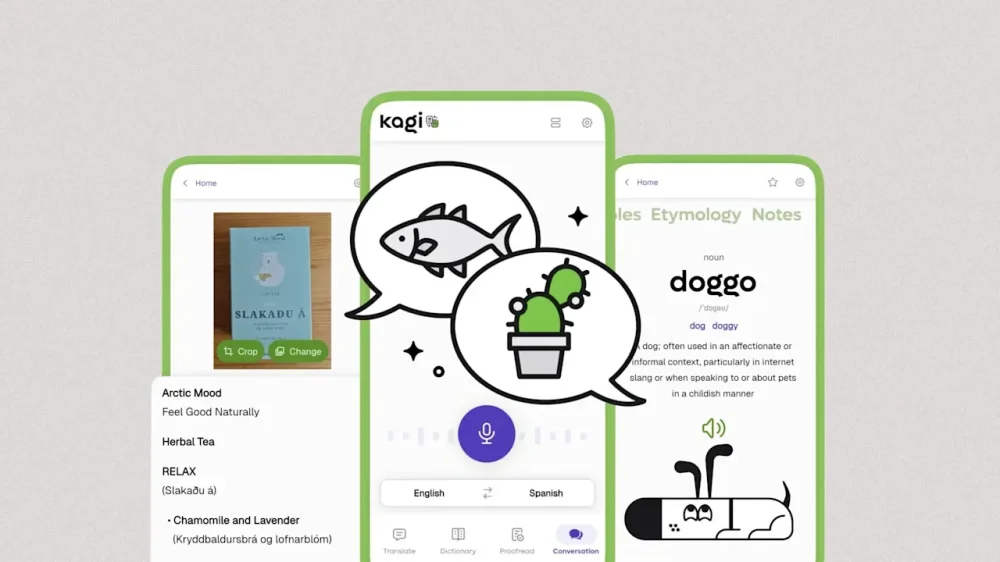
The notion of instant on-the-go translation is nothing new for most of us, thanks to the now-ubiquitous Google Translate service. But a scrappy Google competitor thinks it can do better. ➜ This month, a company called Kagi is officially launching its Kagi Translate app for both Android and iOS. 💡 The app mirrors most of the same features Google Translate offers, with a few interesting new touches and one key point of distinction: It is all about protecting your privacy—with no ads, no trackers, and no data being monetized or repurposed in any way. Oh—and it’s free, too. ⌚ You’ll need all of two minutes to take it out for a test-drive. Psst: If you love these types of tools as much as I do, check out my free Cool Tools newsletter from The Intelligence. You’ll be the first to find all sorts of simple tech treasures! Instant translations—plus privacy Once you’ve got the Kagi Translate app on your device, it’s really quite intuitive to use. At its core: You can type or paste any text into its main translation box to have the text translated from and to any language you like. You can tap the camera icon in that same box to take a photo of text in the real world—on a document, a menu, a whiteboard, you name it—and then have the language auto-detected and translated into your native tongue from there. A document icon in that same area lets you upload a file from your phone (or any connected cloud storage) for speedy on-the-fly translation. And a microphone icon lets you speak aloud—or have someone else speak aloud—for real-time translations of the words as they’re uttered. Beyond that, Kagi Translate offers some interesting extras—for instance: If you tap the three-line settings icon within the main translation box, you can change between a “natural” and “literal” translation style, a formal or informal voice (for languages where that’s relevant), and also any available gender preference (again, where relevant for a dialect). In that same area, you can also add your own custom context to help guide the translation—telling the app, in your own words, what type of conversation you’re having, and with whom, so it can adjust its approach accordingly. In the app’s bottom-of-screen Dictionary tab, you can simply get an on-demand, instantly translated definition of a word or phrase in another language. The app’s Proofread tab will review any text you type or paste into it and offer suggestions to make it work better in your chosen language. And with any translation the app provides you, you have the ability to play the text out loud or copy it onto your system clipboard—as well as request alternate translations for different ways to say the same basic thing. 🕶️ Again, though: It’s Kagi’s commitment to privacy that really sets this app apart. You don’t have to sign in or create an account to use it, and nothing you do or say within the app is ever shared or used for any type of ad targeting. If that sounds familiar, it should: I’ve written about Kagi and its similarly privacy-centric approach to regular ol’ search before, and that same mindset applies to pretty much everything else the company has offered—including, too, the excellent Android summarizing app I mentioned in these same quarters a few months ago. Kagi makes its money entirely from user subscriptions, which are required for its core search service but not for the assorted stand-alone apps like Translate and Summarize. Whether you’re using Kagi for any other purposes or not, though, this new tool is an interesting option to keep around and a welcome alternative to Google’s de facto default—and maybe, just maybe, it’s exactly the je ne sais quoi you’ve been waiting for. Kagi Translate is available for both Android and iOS. There’s also a web version for desktop computer access. The app is completely free to use, though a paid Kagi membership will allow you to access some additional options. The app doesn’t have any ads or trackers and doesn’t require any sort of sign-in—and even if you do opt to create an account, Kagi’s core promise is that it never shares any of your data with anyone, in any way, or uses it for any profitable purposes. Treat yourself to all sorts of experience-enhancing treasures like this with my free Cool Tools newsletter—starting with an instant introduction to an incredible audio app that’ll tune up your days in delightful ways. View the full article
-
At the 2026 Milan Cortina Winter Olympics, the iconic cauldron of the Games is putting on a daily show just like its athletes. This year, for the first time ever, there are two cauldrons lit simultaneously at different locations. Inspired by Leonardo da Vinci’s geometric drawings, both cauldrons expand and contract, respond to music, and emit their own light—and one will put on hourly performances for viewers throughout the Games. The tradition of the Olympic flame and cauldron dates back 100 years or more. Historically, the Games are opened with a relay ceremony wherein torch bearers bring the flame to the cauldron, which remains lit until the closing ceremony. And while the cauldron’s design remained relatively consistent for the first decades of the Olympics, in recent years it has become a major design moment. This year’s approach is an encapsulation of the cauldron’s transition from a static object to a show in itself. “In the last editions of the games, more and more of the main focus has been on who is going to light the cauldron, its design, and what it means,” says Marco Balich, the creative lead for the Winter Olympics opening ceremony who designed this year’s cauldrons. “To make a long story short, I think over the years you see the history of the cauldron goes from very simple ones to [beautiful statements].” A brief history of Olympic cauldron design While symbolic fire at the Olympics traces back to at least 1928, the first Olympic torch relay took place in Berlin in 1936. The cauldron that year was a small, bowl-like vessel standing on three legs on a podium. In subsequent Games, like 1948 London, 1952 Helsinki, and 1960 Rome, the cauldron format remained largely the same. Starting around 1968, designers began to take a bit more creative liberty with the cauldron. That year’s Mexico City Games featured a cauldron made by a woman—a first—shaped like a giant circular chalice. Since then, the cauldron has continuously evolved in shape and scope, from a 6.4-meter-high scroll-shaped one for the 1996 Atlanta Olympics to a multi-shard monument for the 2010 Vancouver Games and a petal-inspired chorus of flames for the London Games in 2012. According to Balich, who holds a record 16 event credits for Olympic ceremonies, recent years have seen the cauldron transform from a stationary symbol into a kind of high-stakes performance art. Balich coordinated the opening ceremony for the 2016 Rio de Janeiro Games that featured a kinetic “sun” sculpture by artist Anthony Howe; powered by the wind, its tentacles fluttered and reflected the light of the cauldron’s flame to spectacular effect. Mariene de Castro And in Paris 2024, designer Mathieu Lehanneur abandoned almost all of the cauldron’s recognizable design tradition in favor of a literal hot-air balloon, which took flight daily during the Games for a ticketed audience and remained in Paris’s Tuileries Garden for nightly performances after the Olympics concluded. Balich says that expansion of the cauldron’s role during the Games and beyond inspired this year’s design. “I was very inspired because it confirmed to me that the experience of this object is so relevant, that it was worth it to add this dynamic session that would enlarge the experience and be even more emotionally touching, especially for the younger generation,” he says. A new cauldron experience This year, Balich iterated on the idea of the cauldron as an experience by turning it into an hourly show complete with lights, music, and movement. His concept started with two cauldrons—one in Milan and one in Cortina—to represent harmony between man and nature. The designs are inspired by a series of geometrical drawings by Da Vinci (who lived in Milan for several years), which used mathematics to imagine various intricate three-dimensional shapes. Balich says he did a quick drawing of his original concept, then called on creative director Lida Castelli and set designer Paolo Fantin to develop the final products. The cauldrons themselves are constructed out of aeronautical aluminum, with a whopping 1,440 components making up their intricate structure. A total of 244 pivot points allows them to smoothly expand and contract from a minimum diameter of 3.1 meters to a maximum of 4.5 meters. LED lights along the surface of these components give the cauldrons an otherworldly glow, while the actual Olympic flame is enclosed inside a glass-and-metal container at their centers. The final product looks like something you might expect to see descending from the heavens—or a much less foreboding Eye of Sauron. One cauldron is suspended in Milan’s Arco della Pace (Arch of Peace), where it will put on a three-to-five-minute show every hour during the Games from 5 to 11 p.m., accompanied by music from Italian composer Roberto Cacciapaglia. The second sits on a podium in Cortina d’Ampezzo’s Piazza Angelo Dibona. And, just as they were lit simultaneously, they’ll be extinguished simultaneously when the Games close. “I hope that everybody will gather—families, friends, curious design lovers, design critics—to go there and be immersed in this music and this beautiful show around the arch,” Balich says. “My goal for that is to add an experience to watching the sacred fire from Olympia, which in a way is one of the most powerful symbols around the world of peace, fraternity, sports, and the values that the Games represent.” View the full article

-
We’ve all opened our mailboxes to discover an unsolicited credit card offer (or three) inside. Although there must be people out there who take advantage of these offers, most of us simply throw the unopened envelopes in the trash. Yet simply tossing these pieces of snail mail can leave you and your finances vulnerable. Here’s why, and how you can get those unsolicited offers to stop for good. Why am I getting unsolicited credit card offers? While not as incessant as all the spam emails and text messages we get every day, unsolicited credit card offers are definitely one of the annoyances of modern life. The offers are sent by credit card companies via the U.S. Postal Service and arrive in our physical mailboxes without request. Yet unlike many types of digital spam, these unsolicited credit card offers aren’t illegal to send. The offers are permissible under the decades old Fair Credit Reporting Act (FCRA), and other subsequent laws, which allow credit card companies to approach the major credit reporting agencies (Experian, Equifax, Innovis, and TransUnion) with a wishlist of the type of customers they are looking for (ones in a certain ZIP code or with a certain credit score, for example). The credit card companies then “pre-approve” these individuals and send the offer in an unsolicited letter. Provided that the recipient still meets the credit requirements when they reply, they are legally entitled to that offer. Pre-approved offers differ from “pre-qualified” offers in that, with pre-approved offers, the credit card company is essentially scouting you as a customer. With “pre-qualified” offers, you have to take the initiative to contact the credit card company, telling them that you are interested in applying for a card. But regardless of whether the letter waiting in your mailbox is for a pre-approved card or pre-qualified one, that piece of physical mail can leave you and your finances vulnerable. How do they leave you vulnerable? Credit card offers are tempting by nature: they seduce you into racking up debt at incredibly high interest rates. But unsolicited pre-approved and other credit card offers are risky for an entirely different reason, as well: They leave you vulnerable to identity theft. The letters already contain your name and address. Pre-approved offers reveal that you will likely have no problem securing a new line of credit. Many of these letters also include a unique code that lets you easily reply to the offer online without having to manually re-enter your identifying information. All of this information is mouthwatering to an identity thief as it means they have to take little action—besides snatching the offer letter you tossed into the trash—to accept a card issued in your name. And often during the acceptance process, they can reroute the card to their address or PO Box with minimal effort, and begin using it to rack up debt at your expense. How to stop pre-approved credit card offers from hurting your finances To protect yourself from having a stolen credit card offer open up a black hole in your financial life, you can do two things. First, under no circumstances should you simply toss an unsolicited credit card letter into the trash or recycling bin. Anyone can fish it from the garbage and use the information it contains to apply for a card in your name. Instead, you should securely destroy the letter’s contents by shredding it. Second, and better yet, stop unsolicited credit card offers from landing in your mailbox in the first place. You can do this by informing the credit bureaus that you do not want to receive any such offers. You can opt out of receiving offers for two timeframes: five years or forever. Once you inform the credit bureaus of this, they are legally required to comply with your request. To opt out, you’ll need to have your name, address, date of birth, and Social Security or tax identification number. Once you have this, you’ll go to OptOutPrescreen.com, which is run by the four major credit reporting agencies. To opt out of getting unsolicited credit card offers in the mail for five years: Go to OptOutPrescreen.com. Tap the “Click here to opt-in or opt-out” button. Select “Electronic Opt-Out for 5 years.” Click Continue and follow the opt-out instructions. If you are opting out for only five years, you can submit your entire request online. However, if you want to permanently opt out of receiving credit card offers, you must physically mail a form to the credit reporting agencies. To permanently opt out of unsolicited credit card offers: Go to OptOutPrescreen.com. Tap the “Click here to opt-in or opt-out” button. Select “Permanent Opt-Out by Mail.” Click Continue and follow the opt-out instructions. You’ll be asked to download a “Permanent Opt-Out Election Form” and then print, sign, and date it. You must then mail this form to the address provided on it. And not to worry. If you change your mind in the future and decide you want to be eligible to receive unsolicited credit card offers again, you can opt back into them at any time. But if you do, just keep an eye on your mailbox before an identity thief does. View the full article

-
Three-way peace talks are expected to take place in Miami within a weekView the full article
-
Inc.com columnist Alison Green answers questions about workplace and management issues—everything from how to deal with a micromanaging boss to how to talk to someone on your team about body odor. A reader asks: I manage a team of four. One of my staff members, Jeff, asked to go to a conference that was about a five-hour drive away. I approved the request as the conference would be good for his professional development. Three other staff members from our closely connected teams were also going. Jeff registered for the conference. A couple of weeks later, he asked me about booking a flight to it. I was surprised by this, as the conference was a reasonable driving distance. I explained that the department would rent a van and the attendees would drive there together. (Our department wants to minimize expenses when reasonable, so this is normal unless it doesn’t make sense logistically or financially.) He pushed back with a couple of reasons that he wanted to fly, such as it would save time and he didn’t feel comfortable driving. I said that flying wouldn’t save time since the airport is at least an hour away, you need a time buffer to go through security, etc., and the flight is two hours. I also knew the others going were comfortable being the drivers. He then said that he didn’t want to be in a car for long periods of time since he sometimes has digestive issues. I empathized but suggested he make up a reason he might need more rest stops than usual and give the others a heads-up at the start of the trip. Something like, “Sometimes I get woozy when I’m in the car for a while, so I need to take more rest stops than usual.” This was not acceptable to Jeff, and he ultimately decided not to attend the conference. It wasn’t a huge issue, but he was salty about it for a while and complained to a few other people. Is it reasonable to expect employees to drive to conferences? Are there situations other than distance and cost where we should make an exception to our norm? Green responds: I think a five-hour drive one-way is a really long drive, and I’m not surprised he expected to fly. Some businesses, especially those with more limited resources, do use a five-hour rule on business trips—where if the drive is less than five hours, people drive instead of fly. Personally, it strikes me as too long. Yes, flying can take nearly as long when you account for security, delays, etc., but you can work on planes and in airports; it’s much harder to work in a car. But this also varies by field and, in some cases, by professional level. I did five-hour drives without blinking as a 20-something working at a nonprofit. I would not do it now. But even if this is the norm in your field, I’d still make an exception for Jeff because of his digestive issues. Telling him to make up a story about why he’d need frequent stops wasn’t reasonable. Bathroom issues are private ones, and asking him to come up with a cover story while inconveniencing and possibly annoying his colleagues—and thus making that trip a lot longer than five hours—wasn’t fair to him. Plus, digestive issues can be urgent in a way that doesn’t always leave time to wait for a highway exit, pull off the interstate, find a place with a bathroom, park, etc. It’s very possible Jeff can only travel confidently if he stays within a few minutes of a bathroom. Personally, I’d be pretty unhappy if I told a manager I had a medical condition that made long car trips prohibitive and was told, essentially, “too bad.” I’m wondering if, at some level, you didn’t fully believe Jeff and thought he was exaggerating to avoid having to do the drive. As a manager, you really need to default to believing people about their own health unless you have a specific reason not to. Otherwise, you can end up doing things that are really, really problematic—like denying people accommodations they actually need, or making them feel they need to disclose details that they should be able to keep private, or making them feel discriminated against. That’s not to say you can’t ever ask for more info or propose a different accommodation (you can, and there are ways to do that legally), but in general, your default should be to believe and try to accommodate a good employee with a health issue. Want to submit a question of your own? Send it to alison@askamanager.org. —By Alison Green This article originally appeared on Fast Company’s sister site, Inc.com. Inc. is the voice of the American entrepreneur. We inspire, inform, and document the most fascinating people in business: the risk-takers, the innovators, and the ultra-driven go-getters that represent the most dynamic force in the American economy. View the full article

-
Vivid redesign and social media buzz lure Chinese buyers back after a prolonged slumpView the full article
-
Agreement follows détente between Donald The President and Indian Prime Minister Narendra ModiView the full article
-
In relation to managing your online reputation, knowing how to remove negative reviews is vital. You need to monitor platforms like Google and Yelp regularly for any feedback that could impact your business. Identifying which reviews are genuine or fake is the first step in the process. Once you’ve done that, gathering evidence to support your removal request is fundamental. Comprehending the subsequent steps can make a significant difference in your reputation management strategy. Key Takeaways Regularly monitor reviews on platforms like Google and Yelp to identify negative feedback promptly. Gather evidence, including screenshots and customer interactions, to support your case against harmful reviews. Flag inappropriate reviews through the Google Business Profile dashboard, selecting a reason that aligns with platform guidelines. Monitor the status of your removal requests and document any responses from the platform for follow-up. Respond to negative reviews professionally, acknowledging customer concerns and offering solutions to demonstrate commitment to service. Understanding the Importance of Review Removal When you consider the impact of negative reviews on your business, it’s clear that addressing them is crucial. Over 40% of shoppers rely on Google Maps or Google Search before forming opinions about your brand. This highlights the importance of comprehending how to delete reviews that harm your reputation. Proactively managing negative feedback helps maintain customer trust and demonstrates that you value their concerns. If you notice a harmful review, don’t hesitate to request review removal, especially if it violates platform policies. Ignoring negative reviews can skew your overall ratings, affecting local SEO and deterring potential customers from engaging with your business. Moreover, there may be legal implications related to failing to address these reviews properly. Being informed about the reasons for negative review removal can help you take timely action, ensuring that your business maintains a positive online presence and continues to attract customers. Identifying Negative Reviews Identifying negative reviews is essential for maintaining your business’s reputation, especially since a significant number of potential customers turn to online platforms for information. You should regularly monitor reviews on sites like Google, Yelp, and TripAdvisor. Look for patterns in language and timing to differentiate genuine feedback from potentially fake reviews. Genuine negative reviews typically offer specific details about customer experiences, whereas fake ones often lack authenticity and can come off as overly generic. Review Type Characteristics Action Required Genuine Negative Specific details, constructive criticism Address the issue, improve service Fake Review Generic, overly harsh Report for removal Neutral Feedback Mixed feelings, suggestions Consider for improvement Asking how many reports to get a Google review removed or how long it takes Google to remove a review can help streamline your efforts. If you’re wondering how do I remove a Google review I wrote, remember to follow the platform’s guidelines. Gathering Evidence for Removal Requests Gathering evidence for removal requests is pivotal for effectively challenging negative reviews that violate platform guidelines. Start by collecting screenshots of the negative review, ensuring you capture the reviewer’s name, the date, and the content. This provides clear evidence for your request. Next, document any specific violations of the platform’s guidelines, such as hate speech or false statements, as these can strengthen your case. Additionally, gather relevant customer interactions or communications that counter the claims made in the review, showing your perspective. If possible, obtain corroborating statements from other customers or staff members who can verify inaccuracies in the review. Finally, keep a record of your business’s responses to similar reviews or issues. This consistency demonstrates how you handle customer feedback and reinforces your credibility in the removal request process. With thorough evidence, you increase your chances of successfully removing the negative review. Logging Into Your Google Business Profile Accessing your Google Business Profile is a straightforward process that allows you to manage your business’s online presence effectively. To log in, navigate to the Google Business Profile website or app. Enter your business account credentials, including your email and password. Before attempting to log in, verify you’ve claimed your business listing; if you haven’t, follow the necessary steps to claim it first. Once you’re ready, click the “Sign In” option located at the top right corner of the page. If you experience issues logging in, don’t worry; simply use the “Forgot password?” feature to reset your password and regain access. After successfully logging in, you can manage your reviews, update your business information, and monitor customer interactions directly from your dashboard. This access is crucial for addressing negative reviews and improving your business reputation. Flagging the Review as Inappropriate Have you ever wondered how to effectively manage a negative review on your Google Business Profile? Flagging the review as inappropriate is an essential step. First, log into your Google Business Profile dashboard and find the specific review you want to report. Next, click on the three dots next to the review and select “Flag as inappropriate.” This initiates the reporting process. Here’s a quick overview of the steps: Step Action Details Log In Access your dashboard Confirm you’re logged into your account. Locate Review Find the negative review Scroll through your reviews. Flag Review Click three dots Select “Flag as inappropriate.” After that, choose an appropriate reason for reporting the review and click “Submit.” Remember, removal isn’t guaranteed, but timely and clear reports can improve your chances. Choosing the Correct Reason for Removal When you’re ready to report a negative review, it’s essential to choose a reason that clearly aligns with the platform’s guidelines. Carefully assess the context and intent behind the review, as this can strengthen your claim for removal. Comprehending the reporting procedures will help you navigate the process effectively and increase your chances of success. Identifying Violations Clearly Identifying violations clearly is vital for ensuring that negative reviews are removed appropriately. Focus on breaches of community guidelines, such as harassment, impersonation, or offensive language. You should also look for false or misleading claims that don’t accurately reflect customer experiences or services. If a review includes personal information about individuals without consent, it’s a privacy violation and eligible for removal. Furthermore, assess if the review comes from a conflict of interest, like those written by competitors or individuals with personal ties to your business. Comprehending the specific content policies of the review platform is fundamental for categorizing the reason for removal effectively and ensuring compliance with their guidelines. Assessing Context and Intent To effectively evaluate a negative review’s context and intent, begin by analyzing its content for any factual inaccuracies or misleading statements that could violate platform guidelines. Look for emotional language or exaggerations that suggest the review mightn’t reflect a genuine customer experience. Furthermore, evaluate if the review appears to stem from a personal vendetta or competitive sabotage, as this may indicate a conflict of interest, justifying removal. In addition, check for violations of specific platform policies, like hate speech or harassment. Document supporting evidence, such as timestamps, customer records, or communication history, to strengthen your removal request. Reporting Procedures Explained Comprehending the reporting procedures for negative review removal is essential to addressing unjust feedback effectively. When you report a review, verify it meets specific guidelines like spam, offensive language, or false claims, as this increases your chances of removal. Familiarize yourself with the platform’s content policies, since each site has distinct criteria for inappropriate content. Use precise language when selecting the reason for removal; terms like “harassment” or “misleading information” clarify the violation’s nature. It’s additionally vital to gather supporting evidence, such as screenshots or links, to strengthen your claim. Finally, monitor the status of your request closely, as platforms often provide updates or may need additional information to process your claim efficiently. Submitting Your Removal Request When you find a review on your Google Business Profile that you believe violates guidelines, you can take action to request its removal. First, access your Google Business Profile dashboard and locate the specific review you want to address. Click on the three dots next to the review, then select “Flag as inappropriate” to initiate the removal request process. Next, choose an appropriate reason for reporting the review. Confirm your reason aligns with Google’s Content Policy, as this will determine the request’s eligibility for removal. After submitting your request, you can monitor the status through your Google Business Profile account for updates regarding the evaluation process. If your removal request is denied, don’t hesitate to utilize the appeal option. This allows you to contest the decision, and it may lead to a reconsideration by Google, offering another chance for a successful removal. Monitoring the Status of Your Request Monitoring the status of your removal request is crucial, as it keeps you informed about the outcome and any potential next steps. After submitting your request, check your Google Business Profile or the review platform’s dashboard for updates. Many platforms, including Google and Yelp, send notifications or emails regarding your request, so make it a habit to check your email regularly. Responding to Negative Reviews Professionally Responding to negative reviews professionally is essential for maintaining a strong brand reputation and encouraging customer loyalty. When you encounter negative feedback, approach it with politeness and professionalism. A sincere apology can diffuse tension and show your commitment to customer satisfaction. Here’s a quick guide to help you formulate your response: Do’s Don’ts Apologize if at fault Blame the reviewer Provide context for your actions Share personal information Acknowledge the customer’s feelings Use aggressive language Offer solutions for future issues Ignore the review Engage publicly to show commitment Make it a personal attack What to Do If Your Request Is Denied If your request for review removal gets denied, start by evaluating the violation criteria to see if your case meets the platform’s guidelines. You can additionally explore alternative resolution options, such as submitting an appeal with supporting evidence that clearly explains how the review breaches community standards. Keeping a proactive approach by addressing customer feedback and encouraging positive reviews can further help mitigate the effects of the negative review. Assess Review Violation Criteria When your request to remove a review is denied, it’s essential to take a systematic approach to understand the reasons behind the decision. Start by accessing the Help Center within your Google Business Profile, where you can gather specific information about the denial. Carefully review the content of your request to guarantee it aligns with Google’s Content Policy and identify any potential violations you may have missed. You can appeal the decision by selecting the review and providing additional context or evidence to support your removal request. Keep an eye out for a confirmation email regarding your appeal status, as Google typically responds within a week. Document the review’s impact on your business and collect customer testimonials to strengthen future requests. Explore Alternative Resolution Options Although your request for review removal might’ve been denied, there are several alternative resolution options you can explore to address the situation effectively. First, visit the Help Center in your Google Business Profile to understand the guidelines that influenced the decision. You can likewise appeal the denial by selecting the option next to the review and providing further context or evidence to support your case; expect a response within a week. In the meantime, respond professionally to the review, showcasing your commitment to customer service. Regularly monitor your reviews and address negative feedback swiftly. Furthermore, encourage satisfied customers to leave positive reviews, which can help offset the impact of any remaining negative feedback on your profile. Proactive Strategies for Future Review Management To effectively manage future reviews, it’s essential to adopt proactive strategies that not merely improve customer satisfaction but furthermore mitigate the impact of negative feedback. Start by delivering exceptional customer service, as 70% of customers would leave positive reviews after a great experience. Implement a follow-up system to encourage satisfied customers to share their experiences, since 68% say they’d leave a review if asked. Regularly monitor online reviews to address concerns swiftly, preventing further negative feedback. Engaging with customers through social media and email campaigns can likewise nurture relationships and encourage positive sharing. Here’s a summary of these strategies: Strategy Benefit Tool/Method Exceptional Customer Service Increases positive reviews Staff training Follow-Up System Encourages satisfied customers to leave reviews Automated email campaigns Regular Review Monitoring Prevents negative reviews Review management tools Customer Engagement Nurtures relationships Social media, email campaigns Frequently Asked Questions Is There a Way to Remove Negative Reviews? Yes, you can remove negative reviews if they violate specific platform guidelines, like containing spam or offensive language. Start by identifying these violations and using the reporting tools provided by platforms such as Google or Yelp. You’ll need to explain how the review breaches their policies. Furthermore, consider addressing the reviewer’s concerns directly, as this might lead to a change or removal of the review. Regularly monitor feedback and encourage satisfied customers to share their experiences. How to Get a Google Review Removed Immediately? To get a Google review removed immediately, you need to flag it as inappropriate. Log into your Google Business Profile, find the review, and click the three dots next to it. Select “Flag as inappropriate” and choose the reason that fits, like fake or harmful content. Gather any evidence supporting your claim, as it improves your request’s strength. Keep an eye on the status of your request, as evaluations can take time. Is It Worth Paying to Remove Bad Reviews? Paying to remove bad reviews can be worthwhile, especially if they harm your business’s reputation. Negative reviews can deter potential customers, impacting your bottom line. Professional services understand platform policies and have experience maneuvering through them, increasing the likelihood of success. Although not every review can be removed, investing in these services can save you time and resources, allowing you to focus on your core operations as you improve your online presence. How Many Reports Does It Take to Remove a Review? Removing a review often requires multiple reports, as platforms like Google and Yelp prioritize the quality of claims over quantity. Although there’s no set number of reports needed, consistent reporting from different users can strengthen your case. Google doesn’t specify how many reports lead to action, focusing instead on policy violations. Yelp similarly emphasizes the validity of claims. In the end, aligning your report with the platform’s content guidelines is essential for effective removal. Conclusion In conclusion, effectively removing negative reviews involves a systematic approach that includes monitoring feedback, gathering evidence, and utilizing your Google Business Profile to flag inappropriate content. After submitting your removal request, stay vigilant by tracking its status and responding professionally to any lingering reviews. If your request is denied, reassess your evidence and consider alternative strategies for managing future reviews. By staying proactive, you can maintain a positive online reputation and improve customer trust. Image via Google Gemini and ArtSmart This article, "Step-by-Step Guide for Negative Review Removal" was first published on Small Business Trends View the full article
-
In relation to managing your online reputation, knowing how to remove negative reviews is vital. You need to monitor platforms like Google and Yelp regularly for any feedback that could impact your business. Identifying which reviews are genuine or fake is the first step in the process. Once you’ve done that, gathering evidence to support your removal request is fundamental. Comprehending the subsequent steps can make a significant difference in your reputation management strategy. Key Takeaways Regularly monitor reviews on platforms like Google and Yelp to identify negative feedback promptly. Gather evidence, including screenshots and customer interactions, to support your case against harmful reviews. Flag inappropriate reviews through the Google Business Profile dashboard, selecting a reason that aligns with platform guidelines. Monitor the status of your removal requests and document any responses from the platform for follow-up. Respond to negative reviews professionally, acknowledging customer concerns and offering solutions to demonstrate commitment to service. Understanding the Importance of Review Removal When you consider the impact of negative reviews on your business, it’s clear that addressing them is crucial. Over 40% of shoppers rely on Google Maps or Google Search before forming opinions about your brand. This highlights the importance of comprehending how to delete reviews that harm your reputation. Proactively managing negative feedback helps maintain customer trust and demonstrates that you value their concerns. If you notice a harmful review, don’t hesitate to request review removal, especially if it violates platform policies. Ignoring negative reviews can skew your overall ratings, affecting local SEO and deterring potential customers from engaging with your business. Moreover, there may be legal implications related to failing to address these reviews properly. Being informed about the reasons for negative review removal can help you take timely action, ensuring that your business maintains a positive online presence and continues to attract customers. Identifying Negative Reviews Identifying negative reviews is essential for maintaining your business’s reputation, especially since a significant number of potential customers turn to online platforms for information. You should regularly monitor reviews on sites like Google, Yelp, and TripAdvisor. Look for patterns in language and timing to differentiate genuine feedback from potentially fake reviews. Genuine negative reviews typically offer specific details about customer experiences, whereas fake ones often lack authenticity and can come off as overly generic. Review Type Characteristics Action Required Genuine Negative Specific details, constructive criticism Address the issue, improve service Fake Review Generic, overly harsh Report for removal Neutral Feedback Mixed feelings, suggestions Consider for improvement Asking how many reports to get a Google review removed or how long it takes Google to remove a review can help streamline your efforts. If you’re wondering how do I remove a Google review I wrote, remember to follow the platform’s guidelines. Gathering Evidence for Removal Requests Gathering evidence for removal requests is pivotal for effectively challenging negative reviews that violate platform guidelines. Start by collecting screenshots of the negative review, ensuring you capture the reviewer’s name, the date, and the content. This provides clear evidence for your request. Next, document any specific violations of the platform’s guidelines, such as hate speech or false statements, as these can strengthen your case. Additionally, gather relevant customer interactions or communications that counter the claims made in the review, showing your perspective. If possible, obtain corroborating statements from other customers or staff members who can verify inaccuracies in the review. Finally, keep a record of your business’s responses to similar reviews or issues. This consistency demonstrates how you handle customer feedback and reinforces your credibility in the removal request process. With thorough evidence, you increase your chances of successfully removing the negative review. Logging Into Your Google Business Profile Accessing your Google Business Profile is a straightforward process that allows you to manage your business’s online presence effectively. To log in, navigate to the Google Business Profile website or app. Enter your business account credentials, including your email and password. Before attempting to log in, verify you’ve claimed your business listing; if you haven’t, follow the necessary steps to claim it first. Once you’re ready, click the “Sign In” option located at the top right corner of the page. If you experience issues logging in, don’t worry; simply use the “Forgot password?” feature to reset your password and regain access. After successfully logging in, you can manage your reviews, update your business information, and monitor customer interactions directly from your dashboard. This access is crucial for addressing negative reviews and improving your business reputation. Flagging the Review as Inappropriate Have you ever wondered how to effectively manage a negative review on your Google Business Profile? Flagging the review as inappropriate is an essential step. First, log into your Google Business Profile dashboard and find the specific review you want to report. Next, click on the three dots next to the review and select “Flag as inappropriate.” This initiates the reporting process. Here’s a quick overview of the steps: Step Action Details Log In Access your dashboard Confirm you’re logged into your account. Locate Review Find the negative review Scroll through your reviews. Flag Review Click three dots Select “Flag as inappropriate.” After that, choose an appropriate reason for reporting the review and click “Submit.” Remember, removal isn’t guaranteed, but timely and clear reports can improve your chances. Choosing the Correct Reason for Removal When you’re ready to report a negative review, it’s essential to choose a reason that clearly aligns with the platform’s guidelines. Carefully assess the context and intent behind the review, as this can strengthen your claim for removal. Comprehending the reporting procedures will help you navigate the process effectively and increase your chances of success. Identifying Violations Clearly Identifying violations clearly is vital for ensuring that negative reviews are removed appropriately. Focus on breaches of community guidelines, such as harassment, impersonation, or offensive language. You should also look for false or misleading claims that don’t accurately reflect customer experiences or services. If a review includes personal information about individuals without consent, it’s a privacy violation and eligible for removal. Furthermore, assess if the review comes from a conflict of interest, like those written by competitors or individuals with personal ties to your business. Comprehending the specific content policies of the review platform is fundamental for categorizing the reason for removal effectively and ensuring compliance with their guidelines. Assessing Context and Intent To effectively evaluate a negative review’s context and intent, begin by analyzing its content for any factual inaccuracies or misleading statements that could violate platform guidelines. Look for emotional language or exaggerations that suggest the review mightn’t reflect a genuine customer experience. Furthermore, evaluate if the review appears to stem from a personal vendetta or competitive sabotage, as this may indicate a conflict of interest, justifying removal. In addition, check for violations of specific platform policies, like hate speech or harassment. Document supporting evidence, such as timestamps, customer records, or communication history, to strengthen your removal request. Reporting Procedures Explained Comprehending the reporting procedures for negative review removal is essential to addressing unjust feedback effectively. When you report a review, verify it meets specific guidelines like spam, offensive language, or false claims, as this increases your chances of removal. Familiarize yourself with the platform’s content policies, since each site has distinct criteria for inappropriate content. Use precise language when selecting the reason for removal; terms like “harassment” or “misleading information” clarify the violation’s nature. It’s additionally vital to gather supporting evidence, such as screenshots or links, to strengthen your claim. Finally, monitor the status of your request closely, as platforms often provide updates or may need additional information to process your claim efficiently. Submitting Your Removal Request When you find a review on your Google Business Profile that you believe violates guidelines, you can take action to request its removal. First, access your Google Business Profile dashboard and locate the specific review you want to address. Click on the three dots next to the review, then select “Flag as inappropriate” to initiate the removal request process. Next, choose an appropriate reason for reporting the review. Confirm your reason aligns with Google’s Content Policy, as this will determine the request’s eligibility for removal. After submitting your request, you can monitor the status through your Google Business Profile account for updates regarding the evaluation process. If your removal request is denied, don’t hesitate to utilize the appeal option. This allows you to contest the decision, and it may lead to a reconsideration by Google, offering another chance for a successful removal. Monitoring the Status of Your Request Monitoring the status of your removal request is crucial, as it keeps you informed about the outcome and any potential next steps. After submitting your request, check your Google Business Profile or the review platform’s dashboard for updates. Many platforms, including Google and Yelp, send notifications or emails regarding your request, so make it a habit to check your email regularly. Responding to Negative Reviews Professionally Responding to negative reviews professionally is essential for maintaining a strong brand reputation and encouraging customer loyalty. When you encounter negative feedback, approach it with politeness and professionalism. A sincere apology can diffuse tension and show your commitment to customer satisfaction. Here’s a quick guide to help you formulate your response: Do’s Don’ts Apologize if at fault Blame the reviewer Provide context for your actions Share personal information Acknowledge the customer’s feelings Use aggressive language Offer solutions for future issues Ignore the review Engage publicly to show commitment Make it a personal attack What to Do If Your Request Is Denied If your request for review removal gets denied, start by evaluating the violation criteria to see if your case meets the platform’s guidelines. You can additionally explore alternative resolution options, such as submitting an appeal with supporting evidence that clearly explains how the review breaches community standards. Keeping a proactive approach by addressing customer feedback and encouraging positive reviews can further help mitigate the effects of the negative review. Assess Review Violation Criteria When your request to remove a review is denied, it’s essential to take a systematic approach to understand the reasons behind the decision. Start by accessing the Help Center within your Google Business Profile, where you can gather specific information about the denial. Carefully review the content of your request to guarantee it aligns with Google’s Content Policy and identify any potential violations you may have missed. You can appeal the decision by selecting the review and providing additional context or evidence to support your removal request. Keep an eye out for a confirmation email regarding your appeal status, as Google typically responds within a week. Document the review’s impact on your business and collect customer testimonials to strengthen future requests. Explore Alternative Resolution Options Although your request for review removal might’ve been denied, there are several alternative resolution options you can explore to address the situation effectively. First, visit the Help Center in your Google Business Profile to understand the guidelines that influenced the decision. You can likewise appeal the denial by selecting the option next to the review and providing further context or evidence to support your case; expect a response within a week. In the meantime, respond professionally to the review, showcasing your commitment to customer service. Regularly monitor your reviews and address negative feedback swiftly. Furthermore, encourage satisfied customers to leave positive reviews, which can help offset the impact of any remaining negative feedback on your profile. Proactive Strategies for Future Review Management To effectively manage future reviews, it’s essential to adopt proactive strategies that not merely improve customer satisfaction but furthermore mitigate the impact of negative feedback. Start by delivering exceptional customer service, as 70% of customers would leave positive reviews after a great experience. Implement a follow-up system to encourage satisfied customers to share their experiences, since 68% say they’d leave a review if asked. Regularly monitor online reviews to address concerns swiftly, preventing further negative feedback. Engaging with customers through social media and email campaigns can likewise nurture relationships and encourage positive sharing. Here’s a summary of these strategies: Strategy Benefit Tool/Method Exceptional Customer Service Increases positive reviews Staff training Follow-Up System Encourages satisfied customers to leave reviews Automated email campaigns Regular Review Monitoring Prevents negative reviews Review management tools Customer Engagement Nurtures relationships Social media, email campaigns Frequently Asked Questions Is There a Way to Remove Negative Reviews? Yes, you can remove negative reviews if they violate specific platform guidelines, like containing spam or offensive language. Start by identifying these violations and using the reporting tools provided by platforms such as Google or Yelp. You’ll need to explain how the review breaches their policies. Furthermore, consider addressing the reviewer’s concerns directly, as this might lead to a change or removal of the review. Regularly monitor feedback and encourage satisfied customers to share their experiences. How to Get a Google Review Removed Immediately? To get a Google review removed immediately, you need to flag it as inappropriate. Log into your Google Business Profile, find the review, and click the three dots next to it. Select “Flag as inappropriate” and choose the reason that fits, like fake or harmful content. Gather any evidence supporting your claim, as it improves your request’s strength. Keep an eye on the status of your request, as evaluations can take time. Is It Worth Paying to Remove Bad Reviews? Paying to remove bad reviews can be worthwhile, especially if they harm your business’s reputation. Negative reviews can deter potential customers, impacting your bottom line. Professional services understand platform policies and have experience maneuvering through them, increasing the likelihood of success. Although not every review can be removed, investing in these services can save you time and resources, allowing you to focus on your core operations as you improve your online presence. How Many Reports Does It Take to Remove a Review? Removing a review often requires multiple reports, as platforms like Google and Yelp prioritize the quality of claims over quantity. Although there’s no set number of reports needed, consistent reporting from different users can strengthen your case. Google doesn’t specify how many reports lead to action, focusing instead on policy violations. Yelp similarly emphasizes the validity of claims. In the end, aligning your report with the platform’s content guidelines is essential for effective removal. Conclusion In conclusion, effectively removing negative reviews involves a systematic approach that includes monitoring feedback, gathering evidence, and utilizing your Google Business Profile to flag inappropriate content. After submitting your removal request, stay vigilant by tracking its status and responding professionally to any lingering reviews. If your request is denied, reassess your evidence and consider alternative strategies for managing future reviews. By staying proactive, you can maintain a positive online reputation and improve customer trust. Image via Google Gemini and ArtSmart This article, "Step-by-Step Guide for Negative Review Removal" was first published on Small Business Trends View the full article
-
Rising tide might no longer support all sector stocks, let alone speculative dross like crypto View the full article
-
What the public sees as a ruling class is divided against itselfView the full article
-
Behind Russia’s victory narrative in Ukraine is a system under strain. To fight back, the ‘middle powers’ must work harder on their own story View the full article
-
Former ambassador was also shareholder in lobbying group that counted US tech firm as a clientView the full article
-
On episode 340 of PPC Live The Podcast, I speak to Amanda Farley, CMO of Aimclear and a multi-award-winning marketing leader, brings a mix of honesty and expertise to the PPC Live conversation. A self-described T-shaped marketer, she combines deep PPC knowledge with broad experience across social, programmatic, PR, and integrated strategy. Her journey — from owning an gallery and tattoo studio to leading award-winning global campaigns — reflects a career built on curiosity, resilience, and continuous learning. Overcoming limiting beliefs and embracing creativity Amanda once ran an gallery and tattoo parlor while believing she wasn’t an artist herself. Surrounded by creatives, she eventually realized her only barrier was a limiting belief. After embracing painting, she created hundreds of artworks and discovered a powerful outlet for expression. This mindset shift mirrors marketing growth. Success isn’t just technical — it’s mental. By challenging internal doubts, marketers can unlock new skills and opportunities. When campaign infrastructure breaks: A high-stakes lesson Amanda recalls a global campaign where tracking infrastructure failed across every channel mid-flight. Pixels broke, data vanished, and campaigns were running blind. Multiple siloed teams and a third-party vendor slowed resolution while budgets continued to spend. Instead of assigning blame, Amanda focused on collaboration. Her team helped rebuild tracking and uncovered deeper data architecture issues. The crisis led to stronger onboarding processes, earlier validation checks, and clearer expectations around data hygiene. In modern PPC, clean infrastructure is essential for machine learning success. The hidden importance of PPC hygiene Many account audits reveal the same problem: neglected fundamentals. Basic settings errors and poorly maintained audience data often hurt performance before strategy even begins. Outdated lists and disconnected data systems weaken automation. In an machine-learning environment, strong data hygiene ensures campaigns have the quality signals they need to perform. Why integrated marketing is no longer optional Amanda’s background in psychology and SEO shaped her integrated approach. PPC touches landing pages, user experience, and sales processes. When conversions drop, the issue may lie outside the ad account. Understanding the full customer journey allows marketers to diagnose problems holistically. For Amanda, integration is a practical necessity, not a buzzword. AI, automation, and the human factor While AI dominates industry conversations, Amanda stresses balance. Some tools are promising, but not all are ready for full deployment. Testing is essential, but human oversight remains critical. Machines optimize patterns, but humans judge emotion, messaging, and brand fit. Marketers who study changing customer journeys can also find new opportunities to intercept audiences across channels. Building a culture that welcomes mistakes Amanda believes leaders act as emotional barometers. Calm investigation beats reactive blame when issues arise. Many PPC problems stem from external changes, not individual failure. By acknowledging stress and focusing on solutions, leaders create psychological safety. This environment encourages experimentation and turns mistakes into learning opportunities. Testing without fear in an changing landscape Marketing is entering another experimental era with no clear rulebook. Amanda encourages teams to dedicate budget to testing and lean on professional communities for insight. Not every experiment will succeed, but each provides data that informs smarter future decisions. The tasmanian devil who practices yoga Amanda describes her career as If the Tasmanian Devil Could Do Yoga — a blend of fast-paced chaos and intentional calm. It reflects modern marketing: demanding, unpredictable, and balanced by thoughtful leadership. View the full article
-
Creating an effective employee handbook is vital for your small business. It serves as a thorough guide that outlines company policies, employee rights, and responsibilities. A well-structured handbook can help prevent misconceptions and promote consistency in the workplace. As you consider the fundamental components to include, it’s important to reflect on your organization’s values and legal obligations. Grasping these elements can set the foundation for a compliant and positive workplace culture. What key policies should you prioritize? Key Takeaways Define your company’s mission and values to set a clear foundation for policies and employee expectations. Include essential policies like anti-harassment, at-will employment, and employee benefits for comprehensive coverage. Ensure the handbook is concise, ideally 20 to 50 pages, to maintain engagement and readability. Regularly update the handbook with legal counsel to comply with changing laws and reflect employee feedback. Differentiate between the employee handbook and policy manual to clarify their distinct purposes and content. What Is an Employee Handbook? An employee handbook serves as an important resource for both new and existing employees within an organization. This document outlines your company’s policies, procedures, and expectations, acting as a guide throughout your tenure. When hiring new employees, distributing the employee handbook is imperative during the onboarding process, ensuring they understand the company mission and code of conduct. It typically includes significant sections like anti-harassment policies, safety protocols, and details about benefits and compensation. The handbook clarifies your rights and responsibilities, promoting consistency in how policies are applied across the organization. To maintain compliance and relevance, it’s essential to keep the handbook updated with any changes in laws or company practices. Existing employees can refer to it whenever they’ve policy-related questions, making it an invaluable tool for nurturing a positive workplace culture in your small business. Importance of an Employee Handbook for Small Businesses Having a well-defined employee handbook can greatly impact small businesses, as it outlines vital company policies and expectations that help employees navigate their roles effectively. An employee handbook serves as an important resource, minimizing the risk of legal issues and misunderstandings when hiring an employee. By clearly defining behavioral expectations and company values, it nurtures a strong workplace culture, enhancing employee engagement and retention. You’ll find that a well-structured handbook improves operational efficiency, providing easy access to significant information regarding benefits, workplace safety guidelines, and company procedures. Regularly updating the handbook guarantees compliance with changing laws, protecting your business from potential legal repercussions. Involving employees in the creation process can yield valuable feedback, making sure it reflects the workforce’s diverse needs. In the end, an employee handbook answers questions like how to hire workers and addresses concerns about can a worker hire an employer, making it an indispensable tool for your small business. Key Components of an Effective Employee Handbook Creating an effective employee handbook involves including several key components that serve as the foundation for your company’s policies and culture. Start with a clear mission statement, values, and a brief history to encourage alignment among employees. Next, articulate vital policies, including anti-harassment, nondiscrimination, and employment-at-will statements to comply with legal requirements and protect everyone’s rights. A thorough benefits section is significant; detail paid time off, sick leave, family leave, and health insurance options to attract and retain talent. Including a confidentiality policy safeguards sensitive information, whereas an acknowledgment section guarantees employees confirm their grasp of the handbook. Lastly, schedule regular updates—ideally annually—to reflect changes in laws and company policies. This practice not merely keeps your handbook current but also incorporates employee feedback for clarity and relevance. A well-structured handbook builds trust and sets clear expectations for your workforce. Essential Policies to Include in Your Handbook When crafting an employee handbook, it’s essential to include fundamental policies that safeguard both the organization and its employees. Start by adding an at-will employment statement, clarifying that employment can be terminated by either party at any time, which helps reduce legal disputes. Next, implement anti-harassment and nondiscrimination policies aligned with federal and state laws to nurture a safe workplace. Outline employee benefits such as paid time off, family leave, and health insurance options to support employee well-being. Establish a dress code that respects various religious practices during maintaining professionalism. Finally, incorporate compliance guidelines for safety regulations, including OSHA standards and COVID-19 protocols, ensuring a safe environment for all. Policy Description At-Will Employment Employment can be ended by either party at any time. Anti-Harassment Policy Prevents harassment and discrimination in the workplace. Employee Benefits Details on PTO, family leave, and health insurance. Dress Code Policy Balances professionalism with respect for diversity. Legal Considerations When Drafting an Employee Handbook When drafting your employee handbook, it’s crucial to guarantee compliance with employment laws to protect your business from potential legal issues. You’ll need to include necessary policies, such as at-will employment statements and anti-harassment guidelines, to create a clear and safe workplace environment. Regularly updating the handbook with legal counsel will help you stay informed about changes in regulations and minimize the risk of misunderstandings. Compliance With Employment Laws Drafting an employee handbook that complies with employment laws is crucial for small businesses, as it helps safeguard both the employer and employees. Start by including an at-will employment statement to clarify the employment relationship and termination procedures. Make certain to incorporate anti-harassment and nondiscrimination policies that align with federal, state, and local laws, protecting employees and reducing legal risks. Detail employee benefits and rights, including PTO, family leave, and health insurance options, to comply with the Family and Medical Leave Act (FMLA). Adhere to Occupational Safety and Health Administration (OSHA) standards by including workplace safety guidelines. Finally, regularly review and update the handbook with legal counsel to guarantee ongoing compliance with evolving employment laws and regulations. Necessary Policy Inclusions Creating an employee handbook involves more than just listing company policies; it requires careful consideration of necessary legal inclusions that protect both the employer and employees. To guarantee your handbook is thorough, include the following: At-will Employment Statement: Clarify that employment can be terminated by either party at any time, preventing misunderstandings about job security. Anti-Harassment and Nondiscrimination Policies: Comply with federal laws enforced by the EEOC to protect employees and the organization. Employee Benefits Outline: Clearly detail policies on paid time off (PTO), family leave, and health insurance as mandated by labor laws. COVID-19 and Safety Guidelines: Align with OSHA standards to promote a safe working environment. Regularly review and update your handbook to reflect changes in laws and regulations. Best Practices for Creating Your Employee Handbook An effective employee handbook serves as an essential resource for both employers and employees, outlining fundamental policies and expectations. Start by organizing key sections, such as your company mission, policies, benefits, and procedures, to improve navigation. Engaging employees in the drafting process can provide diverse perspectives, guaranteeing clarity and reflecting your company culture authentically. Regularly review and update the handbook, ideally each year, to stay compliant with changing laws and incorporate employee feedback. Don’t forget to include an acknowledgment page for employees to sign, confirming their awareness of the handbook’s contents and policies, which protects your company legally. Finally, consult with legal counsel during creation and revision to verify compliance with local, state, and federal employment laws, reducing potential legal issues. Following these best practices will help create a thorough and effective handbook that benefits everyone in your organization. Length and Readability of the Employee Handbook How can you guarantee your employee handbook is both thorough and easy to read? Achieving the right balance between length and readability is key. Aim for 20 to 50 pages, ensuring you cover vital topics without overwhelming your employees. To improve readability, consider these strategies: Break it into sections: Use clear headings and subheadings to organize information logically. Utilize white space: Leave plenty of room around text to make it visually appealing and easier to navigate. Use simple language: Avoid legal jargon; choose reader-friendly terms so everyone understands the content. Engage employees in reviews: Solicit feedback to identify unclear areas or sections needing simplification. Regularly update your handbook to reflect current laws and policies, ensuring it remains a relevant resource for your team. Common Pitfalls to Avoid in Handbook Creation When creating your employee handbook, it’s essential to avoid common pitfalls that can undermine its effectiveness. Lengthy documents may overwhelm your staff, whereas inconsistent policy application can create confusion and frustration. Furthermore, failing to update your handbook regularly can expose your business to legal risks, so stay informed about changes in employment laws and company policies. Overly Lengthy Documents Creating an employee handbook that’s too lengthy can overwhelm your staff, leading to disengagement and confusion. To craft an effective handbook, keep it concise and organized. Aim for about 20-40 pages, balancing thoroughness with accessibility. Here are some tips to avoid lengthiness: Use clear headings and subheadings to break up sections. Incorporate white space to make the text more navigable. Write in reader-friendly language to improve comprehension. Regularly review and update the handbook to maintain relevance. Inconsistent Policy Application Inconsistent policy application can seriously undermine your workplace culture and lead to employee dissatisfaction, as it creates confusion around expectations and entitlements. To prevent this, guarantee that your handbook includes clear, realistic, and easily understandable policies. Regular training for managers and supervisors is vital for maintaining uniform interpretation and enforcement across your organization. Involving diverse employee perspectives during the handbook creation process can help identify potential inconsistencies and make policies more equitable. Furthermore, consistently reviewing and updating your handbook to reflect changes in laws and organizational practices is important. Ignoring Legal Updates Ignoring legal updates in your employee handbook can lead to significant pitfalls for your small business. Regularly updating your handbook is vital to avoid legal issues. Here are four key areas to focus on: Federal and State Laws: Stay compliant with changing minimum wage and employee classification laws to prevent costly fines. EEOC Guidelines: Incorporate the latest guidelines to reduce the risk of discrimination claims. Annual Reviews: Consult legal counsel yearly to confirm your policies reflect current practices and regulations. Employee Feedback: Solicit input on handbook clarity and relevance, as this can boost comprehension and compliance, eventually improving workplace culture. Keeping your handbook current protects your business from potential legal liabilities. Differentiating Between an Employee Handbook and a Policy Manual Grasping the distinction between an employee handbook and a policy manual is crucial for small businesses aiming to establish clear communication and expectations. An employee handbook offers a broad overview of your company’s culture, mission, and general policies. It’s designed for all employees, outlining their rights and responsibilities. Conversely, a policy manual explores detailed procedures and guidelines for specific tasks, often customized for managers and HR personnel to guarantee consistent policy enforcement. While the handbook should remain concise and accessible, focusing on key company-wide policies, the policy manual can be extensive, including procedural steps and forms for particular situations. The handbook acts as a welcome guide for new hires, whereas the policy manual may serve as a reference for specific actions or decisions. Keeping these documents separate helps maintain clarity and prevents confusion among employees regarding expectations and operational procedures. The Role of Legal Counsel in Handbook Development When you’re developing an employee handbook, engaging legal counsel is essential for ensuring compliance with employment laws. They can help you craft policies that mitigate risks, such as wrongful termination claims and non-compliance with EEOC regulations. Regular reviews with your legal advisor likewise keep your handbook up-to-date with evolving labor laws, protecting your business from potential legal issues. Compliance With Employment Laws To guarantee your employee handbook complies with employment laws, it’s essential to involve legal counsel throughout the development process. Engaging legal experts not just safeguards your business but likewise guarantees clarity and compliance. Here are four key reasons to take into account: Identify Necessary Disclaimers: Legal counsel helps clarify employment relationships, like employment-at-will statements. Update Policies Regularly: Regular consultations keep your handbook aligned with changes in labor laws and regulations. Include Critical Policies: Experts confirm your anti-harassment and nondiscrimination measures comply with EEOC guidelines. Guarantee Clear Language: A legal review makes the handbook’s language accessible, preventing misunderstandings that could lead to disputes. Risk Mitigation Strategies Involving legal counsel in the development of your employee handbook is vital for mitigating potential risks associated with employment laws. Engaging a labor attorney guarantees compliance with evolving regulations, reducing the chances of legal disputes. They can guide you on necessary disclaimers, like employment-at-will statements, to protect against wrongful termination claims. Regular consultations help identify outdated policies, guaranteeing alignment with current legal standards. Benefit of Legal Counsel Risk Mitigation Outcome Compliance Assurance Reduced Litigation Risk Peace of Mind Clear Policies Improved Employee Awareness Safer Workplace Expert Drafting Addressed Employee Rights Stronger Culture Strategies for Updating and Maintaining Your Handbook Updating and maintaining your employee handbook is crucial for ensuring it remains relevant and compliant with constantly changing laws and organizational practices. To effectively manage this process, consider implementing the following strategies: Establish a Regular Review Schedule: Aim for an annual review to keep up with new laws and evolving company practices. Seek Employee Feedback: Encourage diverse perspectives from your team during updates to improve clarity and relevance. Incorporate New Hire Input: Gather insights from new employees about their comprehension of the handbook. This can highlight areas that may need simplification. Monitor Employment Law Changes: Stay informed about legal updates to quickly adjust relevant sections, ensuring compliance and protecting your organization. Building a Compliant Workplace Culture Through Your Handbook An employee handbook serves as a foundational document that shapes the culture of a workplace as it ensures compliance with legal standards. By clearly outlining company policies and employee expectations, you reduce misunderstandings and conflicts, nurturing a compliant workplace culture. Including anti-harassment and nondiscrimination policies aligns with legal requirements and shows your commitment to a safe, respectful environment. Regularly updating the handbook to reflect changes in employment laws from the EEOC and OSHA keeps employees informed of their rights and your obligations. Engaging employees in the handbook’s development improves its relevance, leading to a stronger comprehension of policies and a more inclusive culture. Furthermore, providing a clear statement that the handbook isn’t an employment contract sets realistic expectations. This transparency minimizes potential legal disputes related to employment terms, supporting a positive and compliant workplace atmosphere. Frequently Asked Questions How Often Should I Update My Employee Handbook? You should update your employee handbook at least annually or whenever significant changes occur in your business, laws, or policies. Regular reviews guarantee that the information remains accurate and relevant. Furthermore, if you introduce new benefits, procedures, or organizational changes, it’s essential to revise the handbook without delay. This practice not just keeps your employees informed but likewise helps protect your business from potential legal issues arising from outdated information. Can I Include Employee Feedback in the Handbook? Yes, you can include employee feedback in the handbook. Gathering input from your team promotes a sense of ownership and improves workplace culture. When incorporating feedback, make sure it aligns with your company’s policies and values. You might create sections that reflect common employee concerns or suggestions for improvement. Regularly updating these sections can keep your handbook relevant and demonstrate that you value employees’ opinions, enhancing engagement and satisfaction within your organization. What Format Is Best for an Employee Handbook? The best format for an employee handbook is one that’s clear and accessible. Consider using a digital format, like a PDF, for easy distribution and updates. Include a table of contents for navigation, and break down sections with headings and bullet points for quick reference. Confirm it’s visually appealing but professional. Using a consistent font and layout helps employees locate information efficiently. Regularly review and update the handbook to keep it relevant and accurate. How Do I Distribute the Handbook to Employees? To distribute the handbook effectively, consider both digital and physical formats. You can share it via email, creating a PDF for easy access. On the other hand, use an employee portal for online access. For physical copies, print enough to provide each employee, ensuring they receive one during onboarding. Encourage employees to acknowledge receipt, either through a signature or an online form, confirming they’ve read and understood the handbook’s contents for accountability and clarity. Is an Employee Handbook Legally Binding? An employee handbook isn’t automatically legally binding, but it can become so under certain conditions. If you include language that indicates a contractual obligation, such as promises of job security or specific procedures, it might be enforceable. Nevertheless, disclaimers stating that the handbook isn’t a contract can help prevent legal claims. You should consult legal counsel to guarantee your handbook meets applicable laws and adequately protects your business interests. Conclusion In summary, an effective employee handbook is crucial for your small business, providing clarity on policies and promoting a positive workplace culture. By including key components and fundamental policies, you set clear expectations for employees. Regular updates guarantee compliance with legal standards and adapt to feedback. Collaborating with legal counsel can further improve your handbook’s effectiveness. In the end, a well-crafted handbook not just minimizes misunderstandings but additionally cultivates a compliant workplace culture that contributes to your business’s success. Image via Google Gemini This article, "Create an Effective Employee Handbook for Your Small Business" was first published on Small Business Trends View the full article
-
Creating an effective employee handbook is vital for your small business. It serves as a thorough guide that outlines company policies, employee rights, and responsibilities. A well-structured handbook can help prevent misconceptions and promote consistency in the workplace. As you consider the fundamental components to include, it’s important to reflect on your organization’s values and legal obligations. Grasping these elements can set the foundation for a compliant and positive workplace culture. What key policies should you prioritize? Key Takeaways Define your company’s mission and values to set a clear foundation for policies and employee expectations. Include essential policies like anti-harassment, at-will employment, and employee benefits for comprehensive coverage. Ensure the handbook is concise, ideally 20 to 50 pages, to maintain engagement and readability. Regularly update the handbook with legal counsel to comply with changing laws and reflect employee feedback. Differentiate between the employee handbook and policy manual to clarify their distinct purposes and content. What Is an Employee Handbook? An employee handbook serves as an important resource for both new and existing employees within an organization. This document outlines your company’s policies, procedures, and expectations, acting as a guide throughout your tenure. When hiring new employees, distributing the employee handbook is imperative during the onboarding process, ensuring they understand the company mission and code of conduct. It typically includes significant sections like anti-harassment policies, safety protocols, and details about benefits and compensation. The handbook clarifies your rights and responsibilities, promoting consistency in how policies are applied across the organization. To maintain compliance and relevance, it’s essential to keep the handbook updated with any changes in laws or company practices. Existing employees can refer to it whenever they’ve policy-related questions, making it an invaluable tool for nurturing a positive workplace culture in your small business. Importance of an Employee Handbook for Small Businesses Having a well-defined employee handbook can greatly impact small businesses, as it outlines vital company policies and expectations that help employees navigate their roles effectively. An employee handbook serves as an important resource, minimizing the risk of legal issues and misunderstandings when hiring an employee. By clearly defining behavioral expectations and company values, it nurtures a strong workplace culture, enhancing employee engagement and retention. You’ll find that a well-structured handbook improves operational efficiency, providing easy access to significant information regarding benefits, workplace safety guidelines, and company procedures. Regularly updating the handbook guarantees compliance with changing laws, protecting your business from potential legal repercussions. Involving employees in the creation process can yield valuable feedback, making sure it reflects the workforce’s diverse needs. In the end, an employee handbook answers questions like how to hire workers and addresses concerns about can a worker hire an employer, making it an indispensable tool for your small business. Key Components of an Effective Employee Handbook Creating an effective employee handbook involves including several key components that serve as the foundation for your company’s policies and culture. Start with a clear mission statement, values, and a brief history to encourage alignment among employees. Next, articulate vital policies, including anti-harassment, nondiscrimination, and employment-at-will statements to comply with legal requirements and protect everyone’s rights. A thorough benefits section is significant; detail paid time off, sick leave, family leave, and health insurance options to attract and retain talent. Including a confidentiality policy safeguards sensitive information, whereas an acknowledgment section guarantees employees confirm their grasp of the handbook. Lastly, schedule regular updates—ideally annually—to reflect changes in laws and company policies. This practice not merely keeps your handbook current but also incorporates employee feedback for clarity and relevance. A well-structured handbook builds trust and sets clear expectations for your workforce. Essential Policies to Include in Your Handbook When crafting an employee handbook, it’s essential to include fundamental policies that safeguard both the organization and its employees. Start by adding an at-will employment statement, clarifying that employment can be terminated by either party at any time, which helps reduce legal disputes. Next, implement anti-harassment and nondiscrimination policies aligned with federal and state laws to nurture a safe workplace. Outline employee benefits such as paid time off, family leave, and health insurance options to support employee well-being. Establish a dress code that respects various religious practices during maintaining professionalism. Finally, incorporate compliance guidelines for safety regulations, including OSHA standards and COVID-19 protocols, ensuring a safe environment for all. Policy Description At-Will Employment Employment can be ended by either party at any time. Anti-Harassment Policy Prevents harassment and discrimination in the workplace. Employee Benefits Details on PTO, family leave, and health insurance. Dress Code Policy Balances professionalism with respect for diversity. Legal Considerations When Drafting an Employee Handbook When drafting your employee handbook, it’s crucial to guarantee compliance with employment laws to protect your business from potential legal issues. You’ll need to include necessary policies, such as at-will employment statements and anti-harassment guidelines, to create a clear and safe workplace environment. Regularly updating the handbook with legal counsel will help you stay informed about changes in regulations and minimize the risk of misunderstandings. Compliance With Employment Laws Drafting an employee handbook that complies with employment laws is crucial for small businesses, as it helps safeguard both the employer and employees. Start by including an at-will employment statement to clarify the employment relationship and termination procedures. Make certain to incorporate anti-harassment and nondiscrimination policies that align with federal, state, and local laws, protecting employees and reducing legal risks. Detail employee benefits and rights, including PTO, family leave, and health insurance options, to comply with the Family and Medical Leave Act (FMLA). Adhere to Occupational Safety and Health Administration (OSHA) standards by including workplace safety guidelines. Finally, regularly review and update the handbook with legal counsel to guarantee ongoing compliance with evolving employment laws and regulations. Necessary Policy Inclusions Creating an employee handbook involves more than just listing company policies; it requires careful consideration of necessary legal inclusions that protect both the employer and employees. To guarantee your handbook is thorough, include the following: At-will Employment Statement: Clarify that employment can be terminated by either party at any time, preventing misunderstandings about job security. Anti-Harassment and Nondiscrimination Policies: Comply with federal laws enforced by the EEOC to protect employees and the organization. Employee Benefits Outline: Clearly detail policies on paid time off (PTO), family leave, and health insurance as mandated by labor laws. COVID-19 and Safety Guidelines: Align with OSHA standards to promote a safe working environment. Regularly review and update your handbook to reflect changes in laws and regulations. Best Practices for Creating Your Employee Handbook An effective employee handbook serves as an essential resource for both employers and employees, outlining fundamental policies and expectations. Start by organizing key sections, such as your company mission, policies, benefits, and procedures, to improve navigation. Engaging employees in the drafting process can provide diverse perspectives, guaranteeing clarity and reflecting your company culture authentically. Regularly review and update the handbook, ideally each year, to stay compliant with changing laws and incorporate employee feedback. Don’t forget to include an acknowledgment page for employees to sign, confirming their awareness of the handbook’s contents and policies, which protects your company legally. Finally, consult with legal counsel during creation and revision to verify compliance with local, state, and federal employment laws, reducing potential legal issues. Following these best practices will help create a thorough and effective handbook that benefits everyone in your organization. Length and Readability of the Employee Handbook How can you guarantee your employee handbook is both thorough and easy to read? Achieving the right balance between length and readability is key. Aim for 20 to 50 pages, ensuring you cover vital topics without overwhelming your employees. To improve readability, consider these strategies: Break it into sections: Use clear headings and subheadings to organize information logically. Utilize white space: Leave plenty of room around text to make it visually appealing and easier to navigate. Use simple language: Avoid legal jargon; choose reader-friendly terms so everyone understands the content. Engage employees in reviews: Solicit feedback to identify unclear areas or sections needing simplification. Regularly update your handbook to reflect current laws and policies, ensuring it remains a relevant resource for your team. Common Pitfalls to Avoid in Handbook Creation When creating your employee handbook, it’s essential to avoid common pitfalls that can undermine its effectiveness. Lengthy documents may overwhelm your staff, whereas inconsistent policy application can create confusion and frustration. Furthermore, failing to update your handbook regularly can expose your business to legal risks, so stay informed about changes in employment laws and company policies. Overly Lengthy Documents Creating an employee handbook that’s too lengthy can overwhelm your staff, leading to disengagement and confusion. To craft an effective handbook, keep it concise and organized. Aim for about 20-40 pages, balancing thoroughness with accessibility. Here are some tips to avoid lengthiness: Use clear headings and subheadings to break up sections. Incorporate white space to make the text more navigable. Write in reader-friendly language to improve comprehension. Regularly review and update the handbook to maintain relevance. Inconsistent Policy Application Inconsistent policy application can seriously undermine your workplace culture and lead to employee dissatisfaction, as it creates confusion around expectations and entitlements. To prevent this, guarantee that your handbook includes clear, realistic, and easily understandable policies. Regular training for managers and supervisors is vital for maintaining uniform interpretation and enforcement across your organization. Involving diverse employee perspectives during the handbook creation process can help identify potential inconsistencies and make policies more equitable. Furthermore, consistently reviewing and updating your handbook to reflect changes in laws and organizational practices is important. Ignoring Legal Updates Ignoring legal updates in your employee handbook can lead to significant pitfalls for your small business. Regularly updating your handbook is vital to avoid legal issues. Here are four key areas to focus on: Federal and State Laws: Stay compliant with changing minimum wage and employee classification laws to prevent costly fines. EEOC Guidelines: Incorporate the latest guidelines to reduce the risk of discrimination claims. Annual Reviews: Consult legal counsel yearly to confirm your policies reflect current practices and regulations. Employee Feedback: Solicit input on handbook clarity and relevance, as this can boost comprehension and compliance, eventually improving workplace culture. Keeping your handbook current protects your business from potential legal liabilities. Differentiating Between an Employee Handbook and a Policy Manual Grasping the distinction between an employee handbook and a policy manual is crucial for small businesses aiming to establish clear communication and expectations. An employee handbook offers a broad overview of your company’s culture, mission, and general policies. It’s designed for all employees, outlining their rights and responsibilities. Conversely, a policy manual explores detailed procedures and guidelines for specific tasks, often customized for managers and HR personnel to guarantee consistent policy enforcement. While the handbook should remain concise and accessible, focusing on key company-wide policies, the policy manual can be extensive, including procedural steps and forms for particular situations. The handbook acts as a welcome guide for new hires, whereas the policy manual may serve as a reference for specific actions or decisions. Keeping these documents separate helps maintain clarity and prevents confusion among employees regarding expectations and operational procedures. The Role of Legal Counsel in Handbook Development When you’re developing an employee handbook, engaging legal counsel is essential for ensuring compliance with employment laws. They can help you craft policies that mitigate risks, such as wrongful termination claims and non-compliance with EEOC regulations. Regular reviews with your legal advisor likewise keep your handbook up-to-date with evolving labor laws, protecting your business from potential legal issues. Compliance With Employment Laws To guarantee your employee handbook complies with employment laws, it’s essential to involve legal counsel throughout the development process. Engaging legal experts not just safeguards your business but likewise guarantees clarity and compliance. Here are four key reasons to take into account: Identify Necessary Disclaimers: Legal counsel helps clarify employment relationships, like employment-at-will statements. Update Policies Regularly: Regular consultations keep your handbook aligned with changes in labor laws and regulations. Include Critical Policies: Experts confirm your anti-harassment and nondiscrimination measures comply with EEOC guidelines. Guarantee Clear Language: A legal review makes the handbook’s language accessible, preventing misunderstandings that could lead to disputes. Risk Mitigation Strategies Involving legal counsel in the development of your employee handbook is vital for mitigating potential risks associated with employment laws. Engaging a labor attorney guarantees compliance with evolving regulations, reducing the chances of legal disputes. They can guide you on necessary disclaimers, like employment-at-will statements, to protect against wrongful termination claims. Regular consultations help identify outdated policies, guaranteeing alignment with current legal standards. Benefit of Legal Counsel Risk Mitigation Outcome Compliance Assurance Reduced Litigation Risk Peace of Mind Clear Policies Improved Employee Awareness Safer Workplace Expert Drafting Addressed Employee Rights Stronger Culture Strategies for Updating and Maintaining Your Handbook Updating and maintaining your employee handbook is crucial for ensuring it remains relevant and compliant with constantly changing laws and organizational practices. To effectively manage this process, consider implementing the following strategies: Establish a Regular Review Schedule: Aim for an annual review to keep up with new laws and evolving company practices. Seek Employee Feedback: Encourage diverse perspectives from your team during updates to improve clarity and relevance. Incorporate New Hire Input: Gather insights from new employees about their comprehension of the handbook. This can highlight areas that may need simplification. Monitor Employment Law Changes: Stay informed about legal updates to quickly adjust relevant sections, ensuring compliance and protecting your organization. Building a Compliant Workplace Culture Through Your Handbook An employee handbook serves as a foundational document that shapes the culture of a workplace as it ensures compliance with legal standards. By clearly outlining company policies and employee expectations, you reduce misunderstandings and conflicts, nurturing a compliant workplace culture. Including anti-harassment and nondiscrimination policies aligns with legal requirements and shows your commitment to a safe, respectful environment. Regularly updating the handbook to reflect changes in employment laws from the EEOC and OSHA keeps employees informed of their rights and your obligations. Engaging employees in the handbook’s development improves its relevance, leading to a stronger comprehension of policies and a more inclusive culture. Furthermore, providing a clear statement that the handbook isn’t an employment contract sets realistic expectations. This transparency minimizes potential legal disputes related to employment terms, supporting a positive and compliant workplace atmosphere. Frequently Asked Questions How Often Should I Update My Employee Handbook? You should update your employee handbook at least annually or whenever significant changes occur in your business, laws, or policies. Regular reviews guarantee that the information remains accurate and relevant. Furthermore, if you introduce new benefits, procedures, or organizational changes, it’s essential to revise the handbook without delay. This practice not just keeps your employees informed but likewise helps protect your business from potential legal issues arising from outdated information. Can I Include Employee Feedback in the Handbook? Yes, you can include employee feedback in the handbook. Gathering input from your team promotes a sense of ownership and improves workplace culture. When incorporating feedback, make sure it aligns with your company’s policies and values. You might create sections that reflect common employee concerns or suggestions for improvement. Regularly updating these sections can keep your handbook relevant and demonstrate that you value employees’ opinions, enhancing engagement and satisfaction within your organization. What Format Is Best for an Employee Handbook? The best format for an employee handbook is one that’s clear and accessible. Consider using a digital format, like a PDF, for easy distribution and updates. Include a table of contents for navigation, and break down sections with headings and bullet points for quick reference. Confirm it’s visually appealing but professional. Using a consistent font and layout helps employees locate information efficiently. Regularly review and update the handbook to keep it relevant and accurate. How Do I Distribute the Handbook to Employees? To distribute the handbook effectively, consider both digital and physical formats. You can share it via email, creating a PDF for easy access. On the other hand, use an employee portal for online access. For physical copies, print enough to provide each employee, ensuring they receive one during onboarding. Encourage employees to acknowledge receipt, either through a signature or an online form, confirming they’ve read and understood the handbook’s contents for accountability and clarity. Is an Employee Handbook Legally Binding? An employee handbook isn’t automatically legally binding, but it can become so under certain conditions. If you include language that indicates a contractual obligation, such as promises of job security or specific procedures, it might be enforceable. Nevertheless, disclaimers stating that the handbook isn’t a contract can help prevent legal claims. You should consult legal counsel to guarantee your handbook meets applicable laws and adequately protects your business interests. Conclusion In summary, an effective employee handbook is crucial for your small business, providing clarity on policies and promoting a positive workplace culture. By including key components and fundamental policies, you set clear expectations for employees. Regular updates guarantee compliance with legal standards and adapt to feedback. Collaborating with legal counsel can further improve your handbook’s effectiveness. In the end, a well-crafted handbook not just minimizes misunderstandings but additionally cultivates a compliant workplace culture that contributes to your business’s success. Image via Google Gemini This article, "Create an Effective Employee Handbook for Your Small Business" was first published on Small Business Trends View the full article
-
This comment section is open for any non-work-related discussion you’d like to have with other readers, by popular demand. Here are the rules for the weekend posts. Book recommendation of the week: Deadly Little Secrets: The Minister, His Mistress, and a Heartless Texas Murder, by Kathryn Casey. Not my usual fare, but I read a Texas Monthly article about the case and then read this in one sitting. A pastor murders his wife and nearly gets away with it — until her mom and aunts spend years pushing law enforcement to investigate him. (Amazon, Bookshop) * I earn a commission if you use those links. The post weekend open thread – February 7-8, 2026 appeared first on Ask a Manager. View the full article