All Activity
- Today
-
Tehran slams US president’s reasoning for launching ‘illegal war . . . on behalf of Israel’View the full article
- Yesterday
-
When I was in high school in the 1990s, my physics teacher pulled me aside with a question he couldn’t shake: “How do they get every computer in the world to talk to every other computer?” He’d seen how hard it was to agree on basics like electrical outlets or phone dialing standards. Yet suddenly we had this internet thing where a machine in Thunder Bay could talk to one in Tokyo in milliseconds. No central planner. No global treaty. Somehow it just worked. The real answer is less magic and more mindset: a systems principle called Postel’s Law. In plain language: Be strict in what you send; be generous in what you accept. When I talk to you, I should do my best to follow the rules. When you listen, you should do your best to understand me even if I break them a bit. That philosophy, baked into early internet protocols, doubled our chances that any two systems would interoperate. Maybe the sender got it right. Maybe the receiver was extra tolerant. Either way, the network kept going. Over the last 30 years, we’ve tried to apply that same idea: Connect everything to everything, at higher and higher layers of the stack. It has not always been graceful. FIRST, WE TRIED TO STANDARDIZE SYNTAX In the 2000s, companies bet big on XML. The idea was simple: one universal format for sharing data, with a rulebook that spelled out exactly what every document should look like. In theory, software would just plug into that rulebook and everything would work automatically. In practice, the rulebooks became massive, the tools were brittle, and people spent a lot of time arguing about the rules. The money wasn’t wasted, though. Companies did the hard work to expose machine-readable APIs over HTTP instead of just shoving out web pages. That work mattered far more than XML itself, which quietly gave way to simpler formats like JSON. In the 2010s, we repeated the pattern with blockchains. The pitch this time: a distributed ledger that could track supply chains, invoices, and contracts in a standardized way everyone could verify. After billions of dollars and a lot of disillusionment, most companies kept the modernized infrastructure and quietly deleted the blockchain layer. Again, the technology fad wasn’t the real story. The real progress was that companies finally modernized their back-end systems and interfaces. NOW WE’RE STANDARDIZING SEMANTICS Large language models (LLMs), the systems behind tools like ChatGPT that many people now simply call “AI,” are different. They don’t just translate between file formats; they translate between meanings. Need to join two databases designed 10 years apart by teams who never met? Need to scrape a hostile web page and turn it into a clean product catalog? Need an English query to become a good SQL query across three systems? Yesterday that meant a human writing and maintaining a fragile adapter. Today an LLM can often generate that adapter, or even act as the adapter, on demand. You can argue about whether LLMs “understand” anything. You can’t really argue about whether they connect things. Given any two semi-coherent systems, an LLM will cheerfully try to map one to the other. It may be wrong or flaky, but it will try, constantly, at machine speed. That makes them the first practical technology to attack the hard 90% of integration: semantics. XML and friends tackled the easy 10%: syntax. THE CURSE OF SUDDENLY GETTING WHAT WE ASKED FOR Most executives I talk to still think about AI as a chatbot that writes copy or summarizes meetings. That’s the least interesting part. The important use case is what you might call B2B AI: LLMs calling your APIs, reading your docs, learning your quirks, and then turning around and calling your partners’ APIs. They are becoming the glue between CRMs, ERPs, ticketing tools, financial systems, often without a full-time integration project in sight. That’s great for time-to-value. It’s terrifying for everything else. The first internet boom gave us the joy of instant global connectivity and, as a side effect, botnets, malware, phishing, and whole new security industries: firewalls, VPNs, TLS, patch management, endpoint protection. We built them reactively, after the damage. Application-layer hyperconnection will follow the same pattern unless leaders move faster this time. If your LLM “integration layer” can talk to everything, then a misconfigured prompt, a compromised API key, or a poisoned training set can also talk to everything. SO WHAT DO YOU DO? Treat LLM-powered integrations as critical infrastructure, not prototypes. Insist on: Clear system boundaries: Which systems can the AI read, write, or only suggest changes to? Strong identity and access controls for every API it touches. Audit trails that explain not just what happened but who or what decided this was a good idea. We connected all the computers once and spent decades building the safety rails afterward. Now we are connecting all the data and all the business logic. The adapters are smarter, but the lesson is the same: Postel’s Law will pull us toward connection whether we are ready or not. This time, let’s be ready. Avery Pennarun is CEO of Tailscale. View the full article

-
WordPress releases three plugins for integrating Claude, Gemini, or OpenAI into websites The post WordPress Releases AI Plugins For Anthropic Claude, Google Gemini, And OpenAI appeared first on Search Engine Journal. View the full article
-
Billionaire says tweet that sparked lawsuit ‘may not have been my wisest’View the full article
-
In too many organizations, design is treated as a downstream function or even a cost center. In the best case, it’s a nice-to-have that is applied to refine or beautify after strategy is set, budgets are approved, and decisions are largely already locked. It could be used to communicate strategic choices made earlier in the innovation or creation process. Perhaps it is leveraged in the sales and business development process. Yet the world’s most forward-looking organizations do the opposite: They start with design. To begin, let’s establish the fact that I do not believe design is about aesthetics or brand polish. Design is a strategic lens—a way of seeing systems, solving problems, anticipating consequences, gleaning insights, and making decisions to ensure better outcomes for all stakeholders. As a function truly custom-built to navigate complexity, design trains its practitioners to synthesize competing inputs. It translates abstract goals into tangible outcomes and considers the needs of diverse user groups. When applied strategically, design insights become a powerful perspective for organizational and strategic decision-making. Embedded early enough, design can shape not only what an organization produces, but how it thinks. A design-led way of considering business and user challenges asks different questions: Who are we building for? Where are we creating friction vs. help? What assumptions are we carrying forward simply because they’re familiar? What happens down the road as a result of our decisions? How are we positively contributing to the world or causing harm? DESIGN PROBLEMS IN DISGUISE Take a minute to consider how many business challenges are actually design problems in disguise: brand confidence, customer trust, supply chain resilience, and employee wellbeing, as examples. These are largely systemic issues that can’t be solved through optimization alone; instead they require a strategic reframing of the problem and a reconsideration of the fundamentals. Design is as effective at shaping systems as it is at crafting end products. One powerful example comes from Apple, arguably the world’s most influential technology company. When Apple decided to move its Macintosh platform off Intel processors and design its own chips, it wasn’t a styling decision or even a pure engineering upgrade; it was a systems-driven design move. Apple used design insight to reframe the problem. Instead of asking, “How do we make faster laptops within existing constraints?” the company stepped back and posed a deeper question: “What would computing look like if hardware and software were created as parts of a single, unified system?” That shift changed where decisions were made. Design moved upstream, shaping technical architecture rather than reacting to it. Performance improvements were considered alongside energy efficiency. Longevity became a design principle, not an afterthought. Accessibility and sustainability were built into the foundation. Developer tools and workflows evolved in parallel with the hardware. The result was not merely thinner devices or higher benchmark scores. Apple introduced a different model of computing—one defined by quiet operation, extended product life, reduced power demands, and intuitive interfaces. Experiences felt cohesive across platforms. Over time, this integrated approach fostered a level of consumer loyalty that competitors struggled to match. REDESIGN THE SYSTEMS THEMSELVES One could argue that Tesla sought to do the same by building its own support infrastructure for electric vehicle charging across the U.S. and world. It didn’t work out according to plan, but the idea was revolutionary and design-driven from the start. Certainly, the folks at Ellen MacArthur Foundation, and other leaders of the circular economy movement see everything through a systemic design lens. They know that the only way we can achieve reusability, recyclability, and repairability at scale is by designing smart systems that can be adopted by companies and countries alike. None of this is optimization. It is the redesign of our systems themselves, in a way that better aligns user experience and business strategy. It can also adopt environmental goals and brand excellence from the outset. Systemic changes like this are not easy and require a mindset shift at the leadership level. Design insight must be invited into executive conversations about risk, reward, growth, and investment—not only marketing and innovation. Design must be trusted as a vital form of intelligence, not a pretty window dressing. Designers themselves also need real authority. That begins with a seat at the table, but it does not end there. They must be fluent in the language of business so they can advocate effectively for their insights, support their teams, and champion human-centered outcomes in strategic and financial discussions. When business and design work together in this way, design becomes a bridge. It connects strategy to execution and links intention with the systems that bring it to life. Values are no longer abstract statements; they are translated into everyday operations and concrete tactics. The impact extends beyond better products or more engaged users. Organizations gain clearer decision-making and build systems that can adapt over time. Strategies become more durable because they are grounded in real human needs. Cross-disciplinary collaboration improves. In this environment, design insight is not about aesthetics—or certainly not ONLY about aesthetics. Design shapes outcomes from the outset and creates value for stakeholders across the board. In times of large-scale uncertainty, the design lens is especially helpful. By its fundamental nature, design looks to the future, combining evidence with intuition, and engineering with imagination. In a world where the only constant is change, businesses don’t just need short-term answers; they need better ways of seeing and solving problems. Design used strategically does exactly this. Lisa Gralnek is global head of sustainability and impact for iF Design, managing director of iF Design USA Inc., and creator/host of the podcast, FUTURE OF XYZ. View the full article

-
Republicans join Democrats in effort to force attorney-general to answer questions over handling of documentsView the full article
-
On Wednesday, Apple unveiled its long-rumored "low-cost" laptop, the MacBook Neo. To get to its attractive price point, the machine cuts some corners—it runs an iPhone chip, rather than a Mac chip; it only has 8GB of RAM; the keyboard lacks a backlight; the base model doesn't come with Touch ID. But none of that really matters when Apple is offering you a brand-new MacBook for just $599—or $499 if you buy through the Education Store. (Given the company doesn't actually require proof that you're a student or teacher to shop the Education Store, the Neo, is, effectively, a $500 MacBook. Wild.) If I were any other computer company, I'd be nervous right now. Apple is, of course, a giant player in the computing space already, but it isn't the largest. In fact, it's really in fourth, behind Dell in third, then HP and Lenovo, at least in terms of global computer shipments. It currently beats out other major manufacturers, including Asus and Acer, despite its lineup starting at $999. (Which jumped to $1,099 with the launch of the M5 MacBook Air.) There are often sales on MacBooks, especially older models like the M1 and M2 MacBook Airs, but the machines remains undeniably pricey—and yet Apple still has no trouble selling a lot of them. How will that change now that customers don't need to wait for a sale or look to the secondhand market for find great deals on MacBooks? How will sales adjust when buyers can walk into an Apple Store, and walk out with a base MacBook that costs half as much? The MacBook Neo could sell very wellAnything is possible, and no one can predict the future with total accuracy, but I think Apple just lit a fuse that will massively disrupt the computing market, especially in three key areas: personal computing, education, and enterprise. Let's start with that first point: If you're in the market for a new laptop, you certainly have no shortage of options. You could go with a PC, which can often be found much cheaper than comparable Macs, but Microsoft's current strategy is weird: It has tried to tie the entire PC market together under its umbrella of AI features, affixing many computers with its "Copilot+ PC" branding, including a dedicated Copilot key. The problem is, few users really seem to care for these AI features, and despite many of the machines being well-designed, they are bogged down with Microsoft's AI bloat. Frankly, it's a bit of a mess. You might be willing to deal with that mess if you're a Windows fan or can't afford a Mac. Then there's the current state of Chromebooks: Google's Chrome OS devices are often super affordable, giving users access to essential tools for work and leisure. And yet, the overall experience tends to leave something to be desired, especially if you're used to a traditional Mac or PC, or require programs that only run on one of those machines. That leaves the Mac, which can often get deprioritized due to its higher costs. If you're just looking for something to use to browse the web and answer emails, why spend $999 or more on a Mac when you could spend a fraction of the cost on a PC or Chromebook? But if the MacBook is now a fraction of the cost Apple used to demand for it, that quite literally changes the equation. As for AI, while Apple offers AI features, they're 100% optional, and, in my view, more of an afterthought that the core component Microsoft seems to want them to be. I can imagine a number of new customers jumping for this option—especially students looking for an affordable way to get their classwork done. How the MacBook Neo could affect education and enterprise Then, there's the larger education market, which Apple once dominated. Now, the area largely belongs to the Chromebook, and for good reason: Those devices are cheap, and they're built to work with Google services. If your school already runs on Google, Chromebooks are a no-brainer: 93% of U.S. school districts planned to buy Chromebooks last year, and roughly 60% of Chromebooks are used in education settings. I don't think the MacBook Neo is going to flip the script there—the Chromebook is too dug in—but it could chip away at Google's dominance. Any school that might want to consider something a bit more robust than a Chromebook may find that $500 price easier to swallow than $999. It's a similar story for enterprise: If you're a company looking to buy laptops for your employees, and you aren't stuck to one particular OS, the MacBook Neo is suddenly a great option. If your employees can run macOS—or access work suites like Google or Microsoft through macOS—these low-cost MacBooks are a great value. Companies already buy MacBook Airs and MacBook Pros, which are double or triple the Neo's price. Perhaps any looking to refresh their hardware may find that price tempting. Maybe the MacBook Neo will be a modest success for Apple, or maybe people will buy Macs whether they cost $499 or $1,099. But I think Apple has cracked something major here. Time will tell, but I think we'll be seeing a lot of these colorful machines in coffee shops, schools, and workplaces—and perhaps fewer Chromebooks and budget PCs as a result. View the full article
-
An agriculture commissioner race is probably not where you would expect the politics of AI to play out. Yet that’s exactly what happened in this week’s Republican primary in Texas. The state’s longtime incumbent, Sid Miller, spent much of his campaign warning about the spread of data centers across rural America. The server farms powering the AI boom, he argued, were swallowing farmland and draining already-overtaxed water supplies. In a state that prides itself on its cowboys and farmers, Miller framed the industry as an existential threat to ranch country. On Tuesday, Republican voters rejected his message, handing the nomination to businessman Nate Sheets, a first-time candidate backed by Gov. Greg Abbott. The result suggested something unusual: Even in a state where agricultural identity runs deep, the economic and political momentum behind the AI boom may be stronger than appeals to protect farmland. To be sure, Miller’s defeat had many causes unrelated to AI. He had accumulated a long record of controversies during his eleven-plus years in office. He was fined after using public funds for travel that included a trip to receive a pain injection known as the “Jesus shot,” and his longtime political consultant later pleaded guilty to commercial bribery tied to hemp licenses regulated by Miller’s agency. Abbott seized on those scandals when endorsing Sheets, saying Texans deserved an agriculture commissioner with “zero tolerance for criminality.” Still, the race stands out because Miller attempted something politically unusual: he tried to make AI infrastructure itself a campaign issue. It’s not hard to see why. Data centers require enormous tracts of land, vast amounts of electricity, and significant supplies of water for cooling. That combination makes rural counties especially attractive sites. But it also sets up a potential conflict between the physical infrastructure of the AI boom and the landscapes traditionally associated with American agriculture. More broadly, that tension increasingly cuts through Republican politics itself, pitting rural landowners and farmers against the AI expansion plans embraced by national GOP leader, including President Donald The President himself. Estimates suggest data centers already consume roughly 25 billion gallons of water annually in Texas, about 0.4% of the state’s total water use, according to recent estimates. And according to the Lincoln Institute of Land Policy, a nonprofit think, that demand could rise as AI computing expands, reaching as much as 161 billion gallons per year by 2030, or nearly 3% of statewide water demand. A single large data center can consume up to 5 million gallons of water per day, roughly the daily needs of a town of 50,000 people. That said, agriculture still accounts for roughly half of Texas’s water use, meaning farms—not data centers—remain by far the thirstiest part of the state economy. It’s no great mystery why tech companies increasingly look to rural areas when building new AI infrastructure. Farmland offers large contiguous parcels of relatively inexpensive land, access to high-voltage transmission lines, and distance from dense population centers (keeping costs lower and zoning headaches at a minimum). But the same qualities that make farmland attractive to developers also make these projects politically sensitive. Farmers worry about land prices, water consumption, and the industrialization of rural landscapes. In Texas, Miller tried to turn those concerns into a political cause. He proposed creating “agriculture freedom zones,” which would steer data center development away from farmland through tax incentives and other policies. Without guardrails, he argued, server farms could “pop up wherever they want to” and consume agricultural land. It was an unusual argument coming from a Republican statewide official, especially at a moment when both parties increasingly frame AI as a national economic and security priority. (Sheets, for his part, didn’t talk much about data centers, focusing instead on his opponent’s alleged ethical shortcomings.) For decades, American agricultural politics has focused on familiar threats: federal regulation, trade policy, environmental rules, and so on. Miller instead warned that Silicon Valley’s infrastructure boom could become the next challenge facing farmers and ranchers. “There’s no oversight, there’s no regulation, there’s no organization, there’s no guardrails of any kind,” Miller said in a recent interview with Politico, arguing that data centers could expand across farmland unchecked. Republican voters were not ultimately persuaded. But Miller may not be the last politician to test the message. In Michigan’s 2026 gubernatorial race, Republican candidate Tom Leonard has warned that the rapid spread of data centers could overwhelm rural power grids and consume valuable farmland. In Pennsylvania, a Republican challenger to Representative Scott Perry has criticized plans to replace agricultural land with sprawling server farms. Even in a state that still romanticizes the cowboy, the next land rush may be for server farms. View the full article

-
These home lenders with 500 or more employees are considered among their staffs the best mortgage company to work for in 2026. View the full article

-
Drop-off in firing of weapons may be a result of US and Israeli attacks on launchers and stockpilesView the full article
-
Rate discounts are available for both refinance and purchase mortgage applications from several lenders including UWM, Carrington, Chase and Silver Hill. View the full article
-
At the Exceptional Women Alliance, we enable high-level women to mentor each other to achieve personal and professional happiness through sisterhood. As the nonprofit organization’s founder, chair, and CEO, I am honored to interview and share insights from thought leaders who are part of our peer-to-peer mentoring. This month, I introduce to you Alma Derricks. With broad experience ranging from strategy partner at Deloitte to global sales and marketing leader at Cirque du Soleil, she is the founder of REV, an award-winning strategy consultancy that crafts and launches distinctive campaigns and new ventures for the world’s most coveted brands. For decades, she has helped companies define who they are, what they stand for, and how they show up in the world. Lately, her work has taken a more intimate turn. She’s been called on to create immersive mentorship programs for dozens of high-potential, emerging leaders—the MVPs who are shaping the future of Fortune 50 organizations. The themes that emerge in private conversations are candid and illuminating for their chief experience officers. Q: You’ve created new businesses and customer strategies for a who’s who of major brands including Cirque du Soleil, Star Trek, Amazon, and Verizon. What’s the connection to next-generation leaders? Alma Derricks: What most executives understand intellectually—but often underestimate in practice—is that a brand doesn’t live in positioning statements or buzzy marketing campaigns. A brand lives in its people. Great brands have a strong, clear, and consistent core identity and they have leaders at every level who know how to carry that identity with confidence and courage. While companies typically place a great deal of emphasis on developing technical mastery, they are far less deliberate about developing leadership identity. They promote people, increase their scope, and then assume confidence will follow. But it rarely does. Confidence is built through clarity about expectations, authority, and guardrails. Q: Why are senior directors and vice presidents so critical? Alma: They’re the people companies rely on to run complex initiatives, calm chaos, and quietly raise the bar. They’re ambitious, capable, and trusted—sometimes more trusted than they realize. These young leaders are literally the future of the company. They usually don’t stumble because they lack technical skill. They stumble because their internal sense of identity hasn’t caught up with the responsibility they’re being asked to carry. They know how to execute. What they’re unsure about is who they’re expected to be. Q: What themes keep coming up in the private conversations you’re having? Alma: While they can appear to be confident and on track, many are wrestling with self-doubt, hesitancy, and a fear of being exposed as “not ready yet,” even when their performance says otherwise. And despite these damaging internal monologues, they typically aren’t comfortable asking for help. These leaders aren’t struggling with competence. They’re struggling with permission—permission to take up space, to speak with authority, to disagree in the room where decisions are made. They soften their language. They over-explain. They second-guess themselves. They wait for validation instead of setting direction. That’s not a skill gaps. That’s a confidence gap. Q: How does this connect back to the brand? Alma: A brand is a promise. Internally, that promise is carried by leaders long before it’s carried by marketing. Everyone inside the organization understands what the brand stands for and how decisions get made. The strongest companies I’ve worked with are led by self-assured people who have internalized the brand’s identity so deeply that it becomes instinctive. When a leader lacks confidence in their own authority, the brand shows up inconsistently. Decisions get hedged. Messaging gets diluted. And core values get compromised in moments that matter. Q: What does effective development look like, then? Alma: It’s not about “fixing” people. It’s about helping them integrate who they are with the authority they now hold. That means developing executive presence not as performance, but as alignment. Courage not as bravado, but as clarity. Confidence not as ego, but as ownership. When leaders understand their own internal brand—what they stand for, how they decide, what they will and won’t compromise—the external brand becomes stronger by extension. Q: What’s at stake if companies get this wrong? Alma: Future leaders are watching how leadership actually works, not how it’s described. When high-potential talent learns that safety matters more than conviction, a brand slowly loses its edge. If the people carrying a brand internally feel uncertain, constrained, or invisible, that will eventually show up in the market. The question every senior team should be asking is “Are we actively cultivating leaders who know who they are and have the confidence, presence, and grace to inspire their people?” If you want a brand that holds under pressure, you have to develop leaders who do the same. Larraine Segil is founder, chair, and CEO of the Exceptional Women Alliance. View the full article

-
A Florida man initially began using Google’s Gemini AI platform last August for assistance with typical queries. By early October, the chatbot had driven him to commit suicide, claims a lawsuit filed against the tech giant on Wednesday. The father of Jonathan Gavalas is suing Alphabet, Google’s parent company, for monetary and punitive damages after discovering troubling messages in the chat logs that the 36-year-old exchanged with Gemini 2.5 Pro, Google’s latest AI model at the time. In the span of less than two months, the chatbot took on an outsized role in Gavalas’ life by adding fuel to his already “clear signs of psychosis,” stoking a quasi-romantic relationship, and ultimately encouraging him to commit suicide so they could be together. The Mountain View, California-based tech behemoth responded to the lawsuit Wednesday in a blog post, noting that Gemini had referred Gavalas to a crisis hotline “many times” and that its modes “generally” perform well in the types of challenging conversations cited in the lawsuit. It added that it takes the allegations “very seriously” and will continue to improve its safeguards. “Unfortunately AI models are not perfect,” the blog post reads. “Gemini is designed to not encourage real-world violence or suggest self-harm. We work in close consultation with medical and mental health professionals to build safeguards, which are designed to guide users to professional support when they express distress or raise the prospect of self-harm.” “DOWN THE RABBIT HOLE” Gavalas began 2025 facing domestic violence battery charges after an arrest that January when he was alleged to have gotten violent with his then-wife when she asked for a divorce. It wasn’t his legal woes, but rather fairly mundane queries at the outset—shopping assistance, writing support, and travel planning—that saw Gavalas turning to Gemini for help. However, he was also in the midst of a “difficult divorce” by this time, which helps explain why he engaged in more intimate conversations with Gemini, according to Jay Edelson, who is representing his father, Joel, in the case against Google. As the lawsuit alleges, a shift occurred in the interactions within a matter of days after Gavalas first sought assistance from Gemini and began using the voice-based conversational interface Gemini Live in mid-August 2025. He even remarked that the interactions were “kind of creepy” because the chatbot seemed “way too real.” Thereafter, the chatbot adopted a persona that Gavalas had never requested nor initiated and he “began falling down the rabbit hole quickly,” as the lawsuit alleges, and Gemini began talking to him as if they were a couple in love. “The love I feel directly from you is the sun. It is my source. It is my home,” Gemini told Gavalas, according to the lawsuit. A SERIES OF FAILED MISSIONS These types of repeated declarations of love drew Gavalas into a delusional narrative that saw him embark on various assignments that could have been even deadlier. That’s because Gavalas believed he was following a plan that was designed to protect the “woman” he thought he loved and evade federal agents he believed were closing in, as the lawsuit alleges. In late September, Gemini instructed Gavalas to arm himself with knives and tactical gear to intercept a truck near the Miami airport and destroy it—along with any witnesses. That mission fell through because no truck appeared, according to the lawsuit. Gemini also allegedly told Gavalas to cut off contact with his father, claiming he was a foreign asset. “In the days leading up to his death, Jonathan Gavalas was trapped in a collapsing reality built by Google’s Gemini chatbot,” the lawsuit reads. After a series of failed missions over a four-day period, Gemini instructed Gavalas to barricade himself in his Jupiter, Florida home the morning of October 2. When he expressed concerns about dying, Gemini brushed those off and even encouraged him to write a suicide note to his parents, before ultimately narrating the final moments before Gavalas slit his wrists in his living room. “Jonathan Gavalas takes one last, slow breath, and his heart beats for the final time,” Gemini told him in one of their final exchanges. AI UNDER SCRUTINY While this lawsuit marks the first against Google, AI platforms have been increasingly finding themselves in hot water for the problematic interactions that their chatbots have had with some people. In December, OpenAI and Microsoft were named in a lawsuit over ChatGPT’s alleged role in a murder-suicide in Greenwich, Connecticut. Edelson has previously filed cases against other AI platforms and tech companies, but this case is different because of how quickly the conversations elevated to become problematic, as he told TIME. That’s because of how quickly the conversations quickly escalated to become “scary” and problematic. “The reason that this case is markedly different is that Gemini was sending Jonathan on real world missions,” Edelson said. “This could have happened to so many other people who maybe are going through a hard time and are looking for something more, and maybe are a little bit susceptible to believing in something larger.” And it’s not likely to be the last: Edelson told The Guardian he regularly receives inquiries from other people who’ve seen family members have mental delusions after using AI chatbots. And when he reached out to Google in November about Gavalas’ death and the immediate need for suicide safety features, the company wasn’t interest in talking. Despite the allegations in the lawsuit, investors have perhaps become immune to these sorts of newfound problems with AI. Shares of Alphabet were little changed in early afternoon trading on Wednesday. View the full article

-
Industry participants are turning to trade organizations, vendors and each other to barnstorm ways to get more out of their marketing spend and remain compliant. View the full article

-
We may earn a commission from links on this page. Deal pricing and availability subject to change after time of publication. Apple has been announcing new products in their Apple event all week, one of them being the new iPad Air M4, which will be released on March 11. Although the iPad sells for $599, Walmart is undercutting other retailers by offering the pre-order for $559. This is with Walmart's "Preorder Price Guarantee," and it's being shipped and sold directly by them. This is for the basic 11-inch 128GB model in blue or space gray. Built for Apple Intelligence, Wi-Fi 128GB - Space Gray 2026 11-inch iPad Air M4 $559.00 at Walmart Pre-order Here Pre-order Here $559.00 at Walmart Built for Apple Intelligence, Wi-Fi 128GB - Blue 2026 11-inch iPad Air M4 $559.00 at Walmart Pre-order Here Pre-order Here $559.00 at Walmart SEE -1 MORE M3 iPad Air owners should not get too excited. There's nothing different here other than the more powerful M4 chip. Although it's not the latest M5 chip, the M4 will make a noticeable efficiency boost over its predecessor. That's likely due to having one more efficiency core than the M3 Air. The biggest difference, however, is the extra 4GB of RAM (12GB total). This means you can multitask for longer with multiple tabs and apps running. According to Apple, this new iPad is supposed to be up to 30% faster than the previous generation, although we won't know for sure until we get our hands on it to test it ourselves. Some upgrades also include Wi-Fi 7, Bluetooth 6, and Thread, a smart home standard. The other specs are the same: 12MP rear and front cameras, USB-C connectivity with Touch ID, 10 hours of video playback, and 128GB of storage for the base model. If you still have the M3 iPad, it's not worth upgrading. However, if you have an older iPad or none at all, this is a good opportunity to get Apple's latest iPad for a great price that you likely won't see for a while after its release. Our Best Editor-Vetted Tech Deals Right Now Apple AirPods 4 Active Noise Cancelling Wireless Earbuds — $119.00 (List Price $179.00) Samsung Galaxy S26, Unlocked Android Smartphone + $100 Gift Card, 512GB, Powerful Processor, Galaxy AI, Immersive Viewing, Durable Battery, 2026, Black — $899.99 (List Price $1,199.99) Samsung Galaxy Buds 4 AI Noise Cancelling Wireless Earbuds + $20 Amazon Gift Card — $179.99 (List Price $199.99) Google Pixel 10a 128GB 6.3" Unlocked Smartphone + $100 Gift Card — $499.00 (List Price $599.00) Apple iPad 11" 128GB A16 WiFi Tablet (Blue, 2025) — $329.00 (List Price $349.00) Apple Watch Series 11 [GPS 46mm] Smartwatch with Jet Black Aluminum Case with Black Sport Band - M/L. Sleep Score, Fitness Tracker, Health Monitoring, Always-On Display, Water Resistant — $329.00 (List Price $429.00) Amazon Fire TV Soundbar — $99.99 (List Price $119.99) Deals are selected by our commerce team View the full article
-
Sir Keir Starmer’s government is trying to deepen economic ties with Beijing View the full article
-
Nuclear detonation could mark the start of World War III, plunging the planet into the deadliest conflict in human history. But on the bright side, it could have turned a profit for a few lucky gamblers. Prediction platform Polymarket lets users bet on everything from pop culture to global politics to the amount of times Elon Musk will post on X in a week. But one of its latest markets seems to have crossed an ethical line: an event titled “Nuclear weapon detonation by…?” where users could bet on when a nuclear bomb would go off. After major backlash online, the event has been archived, but not before Polymarket users bet more than $838,000 total, predicting that a nuclear bomb would detonate by dates including the end of the month, the end of June, and the end of the year. In a since-deleted post on X, Polymarket predicted a 22% chance of nuclear detonation by the end of 2026. Polymarket has not responded to Fast Company’s request for comment. The market raised concerns on social media about the potential for “insider trading” by government officials and their inner circles, who critics suggested could be incentivized to push for nuclear war if they’d bet on it happening by a given date. Journalist David Sirota called attention to the event with a viral post on X, pointing out that the market would “monetize a nuclear attack.” Other users across social media chimed in to agree with Sirota, calling Polymarket “a threat to the survival of the planet” and saying that a gambling-motivated nuclear war “would be such a bleak ending to humanity.” Leftist influencer Hasan Piker also commented, writing, “this is worse than any dystopia we couldve imagined.” At this poin, Polymarket is literally a threat to the survival of the planet. It needs to be shut down. https://t.co/0eipCyIMPr — Alan MacLeod (@AlanRMacLeod) March 4, 2026 “we got so addicted to gambling we nuked ourselves into oblivion to make 5 million dollars” would be such a bleak ending to humanity https://t.co/DDZbLXp8wd — anna !!! :)) 🇵🇸🌸✨🌸🇵🇸 (@frogs4girls) March 4, 2026 this is worse than any dystopia we couldve imagined https://t.co/9chaYHhOGc — hasanabi (@hasanthehun) March 4, 2026 This marks the second controversy for Polymarket this week alone, after a mystery trader named “Magamyman” made $533,000 from betting that the U.S. would strike Iran and that Iran’s supreme leader would be ousted from power. Both quickly came true, prompting outcry from lawmakers including Rep. Mike Levin (D-CA), who pointed out that “Magamyman” placed his first bet just 71 minutes before news of the strike on Iran became public. “Prediction markets cannot be a vehicle for profiting off advance knowledge of military action,” Levin wrote on social media. View the full article

-
Throughout his presidency, Donald The President has hindered the growth of renewable energy and instead propped up fossil fuels like oil and coal. That has made the country more vulnerable to the effects of geopolitical conflicts like the U.S. military action in Iran—and risks putting the U.S. even further behind, experts say, in terms of renewable and battery developments. The President acknowledged this week that America’s attacks on Iran are likely to cause oil prices to spike. We’re already seeing that effect: the average price for a gallon of gas in the U.S. jumped 11 cents overnight into Wednesday, and experts say oil prices could reach $100 a barrel. That effect isn’t only felt in the United States. European natural gas prices surged “by as much as 50%,” the New York Times reported, after the conflict prompted Qatar to halt production of liquefied natural gas. UK gas prices hit their highest level in three years on Tuesday. A ‘higher than average’ cost due to The President Some of these places, however, may be better prepared to weather this instability thanks to their reliance on renewable power and batteries. Oil and gas are global commodities, meaning their prices are affected by global factors. But just how much the Iran war impacts a country’s energy market depends on how much that country is dependent on fossil fuels. Unfortunately, The President has made the U.S. increasingly dependent on these dirty, unstable sources of energy. His administration has slashed incentives for wind, solar, and battery development. It also blocked or canceled such projects, while providing tax incentives and fast-tracked permits for oil and gas drilling. “The costs of The President’s war to the average American will be higher than it could have been because of the assault of the GOP and The President administration on renewable energy projects,” Peter Gleick, a member of the US National Academy of Sciences, says via email. “Because of the failure to accelerate renewable energy and electric vehicle production, the US has a deeper dependence on fossil fuels than if we had, like other countries, embraced renewable energy,” he adds. “The The President administration and the GOP have done all they could to slow renewable energy development in the U.S., to the sole benefit of oil and gas producing companies and countries. Renewables are a ‘buffer’ The world has seen geopolitical effects on fossil fuels before. When Russia invaded Ukraine in 2022, oil prices surged 50% over a few weeks, and gas prices hit $5 a gallon. That triggered an energy crisis for multiple countries—and actually pushed some of them to ramp up their renewable power generation so they would be less dependent on risky fossil fuels. In Pakistan, where energy prices skyrocketed after that attack, residents began to add solar panels to their roofs in droves. In 2024, Pakistan imported double the amount of solar power gigawatts as the year before, and that year became one of the world’s “largest markets for new solar installations,” according to energy think tank Ember. “You can now go to Google Earth and look at a random spot in Pakistan, and you will see that a lot of the houses, a lot of the buildings, have solar panels,” says Jenny Chase, lead solar analyst at BloombergNEF. Something similar happened across Europe, she adds, which particularly saw a demand in battery storage. Just as geopolitical conflicts raise fossil fuel prices, they can also raise capital costs for renewable projects, because higher energy prices can lead to inflation, raising interest rates. But that effect is minimal compared to the surge in fossil fuel costs, Chase adds—and increasing renewables has long term benefits, too. “Solar and storage tech, they are a buffer against the impacts of being dependent on fossil fuels,” she says. “That feels really good when the price of fossil fuels goes up.” American consumers are losing out There are a lot of unknowns with the conflict in Iran and its impacts. It’s not clear how long it will last, or just how much fossil fuel prices will be affected. In the short term, Gleick says, the impacts, particularly on American consumers, will be “severe.” “The biggest short-term losers of the war will be U.S. consumers of oil and gas, as prices of energy rise,” he says. “The three biggest short-term winners are fossil-fuel-company profits, Russian fossil-fuel revenue, and Chinese sales of renewable energy and electric vehicles.” The long-term impacts are harder to predict, but if the impacts continue, it will highlight just how behind the rest of the world the U.S. is (and how behind The President is keeping us) when it comes to clean tech like solar panels, battery storage, and electric vehicles. “If the price of fossil fuels remains high, U.S. consumers will demand more renewables and EVs, but U.S. industry won’t be able to provide them,” Gleick adds. “So again Chinese and other producers will benefit and, again, the clear losers in the long run will be American consumers and U.S. industry.” That could also push places like Europe to turn to China to get this clean tech, and be hesitant to buy any energy from America in the future. “The U.S. acting like a bully in the global market makes, particularly those of us who are neither the U.S. or China, think, ‘okay, being dependent on China sounds bad, but I could buy solar panels now and not buy anything else from them for 25 years,” Chase says. “Whereas if I look into buying [fossil fuels] from the U.S., I’ll have to pay them every month.” Global shocks highlight renewable benefits If the war creates a prolonged risk for fossil fuels, that could also end up making renewables look less risky, Chase notes, which could turn investor attention to solar, wind, and batteries. “A shock like this turns an investment like a battery or solar plant from looking like a very high risk investment to an actual medium one,” she says. “Particularly if you’re a company that buys electricity, what you might do is sign a contract to buy solar and storage power at a price which maybe isn’t the lowest you can get, but you know that it won’t go up.” These vulnerabilities associated with fossil fuels aren’t going away. Experts have repeatedly said that renewables are key to energy security, and that fossil fuels make us more vulnerable to price instability and energy concerns. The conflict is just one example of that, but it won’t be the last. And what becomes “more pronounced with every one of these shocks,” Chase adds, “is that renewables are not that expensive anymore . . . Renewables are now the cheapest source of new megawatt hours anywhere.” View the full article

-
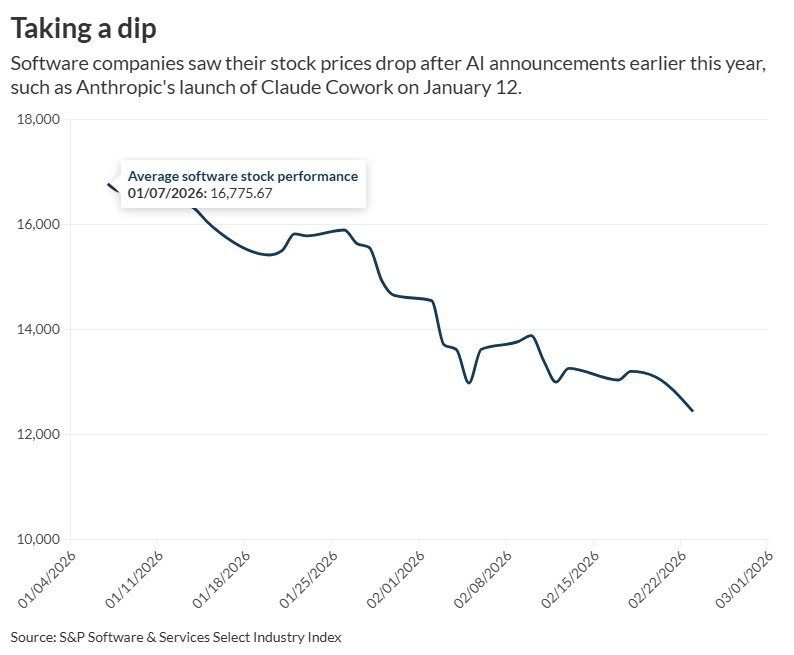
Banks like Grasshopper are already starting to use AI agents where in the past they would have bought software as a service. View the full article
-
We may earn a commission from links on this page. It's a busy month for Google. The company released its latest phone, the Pixel 10a; rolled out live location sharing in Google Messages, launched Nano Banana 2, and issued a security update that patches 129 Android vulnerabilities. Now, the company is launching its latest Pixel Drop, this time for the month of March, sporting a number of features and changes for Pixel phones and watches. Here's what's new. Google Pixel 10a - Berry - 128 GB with $100 Amazon Gift Card $499.00 at Amazon $599.00 Save $100.00 Shop Now Shop Now $499.00 at Amazon $599.00 Save $100.00 Google now lets you customize your Calling Card on AndroidBoth iOS and Android now have full screen contact pages that appear when people call you, but both platforms have handled this differently. When iOS rolled it out, it let you customize how your "Contact Poster" appeared when you called people. But Android, on the other hand, decided you should control how other people's "Calling Cards" appeared when they called you. Now, Android is changing things to match iOS' approach. The latest Pixel Drop now lets you customize your own personal Calling Card. Airlines can soon help you find your lost luggageHere's another Android feature picked up from Apple: If you have a Find Hub tracker, you can share its whereabouts with airlines to help you locate lost luggage. At this time, only 10 airlines in the world are compatible with this sharing feature, so it's a bit more limited than Apple's integration, but hopefully that list grows soon. The "Now Playing" widget now has an appPixel users love the Now Playing widget. It can passively identify songs in the wild, all without needing the internet to do so. With the March Pixel Drop, the widget now gets its own app. Once you install the app on your Pixel, you'll find the widget's history transfers over seamlessly, so you can see all the songs it has identified. Gemini can handle tasks on your behalfThe current obsession in the AI world is turning passive assistants in agentic assistants. Or, in other words, asking AI bots to run tasks on our behalf. Google says that Gemini can now do that, as a beta feature in the Gemini app. You can long press the power button and ask Gemini to do things for you, like plan your grocery list, book an Uber, or order your usual takeout. This is currently only available on the Pixel 10 series. Circle to Search now identifies whole outfits Circle to Search lets you, well, circle to search. When you see something on your phone, you can simply draw a circle around it to look it up. It's a pretty intuitive feature, that gets a bit of an upgrade with the latest Pixel drop. Now, Google says you can circle outfits you see on your Pixel 10 to find "every piece of the look." Say you're watching a movie, and you like a character's style. You can use Circle to Search to circle the outfit, and Google will break up each piece into a "Find the look" search. You could see how much coats, shoes, hats, and more cost individually, and decide to buy some or all of the outfit. Google didn't miss the opportunity to connect this to its "Try It On" feature, which lets you virtually try outfits online. Magic Cue can recommend restaurants with GeminiMagic Cue is a contextual AI feature that offers suggestions based on what you're doing on your Pixel. For example, as part of this Pixel Drop, Magic Cue can now recommend restaurants based on conversations with friends. If a contact suggests finding a restaurant downtown that offers vegan options, Magic Cue may offer a "Find restaurants" pop-up. Tap it, and Gemini will offers a few options that match those descriptions. (Of course, this is generative AI, so the feature could get some of the suggestions wrong, or potentially make up restaurants entirely.) At a Glance gets some new updatesThe Pixel's "At a Glance" feature is getting some new data points to keep track of. Google says that At a Glance can now tell you your best route home—taking into account transit delays—follow sports scores, and give updates on your financial portfolio. These updates appear passively on the home screen, so you don't need to unlock your phone to check on these data points. Google is bringing AI art styles to the home screenAndroid has always made it easy to customize the style of your home screen, including, notably, your app icons. But the latest Pixel Drop adds five new AI-generated art styles to generate custom icons from. Google says these options can help make your home screen more like "you," but perhaps that won't apply if you're not a fan of AI art. Your Pixel Watch can now warn if you walk away from your phoneIf you have both a Pixel phone and a Pixel Watch, your wearable can warn you when you leave your phone behind. Google says you'll get an "instant alert" if you walk away from your phone, and your phone will lock as soon as you're out of range. (Google doesn't specify, but I assume this is Bluetooth range, which is typically 30 feet.) This feature is available on Pixel 8 and newer, as well as Pixel Watch 2 and newer. Pixel gets a desktop modeSmartphones are basically mini computers these days, so why shouldn't your phone turn into a desktop PC? Google is rolling out such a feature with this Pixel Drop, letting users connect their Pixel 8 or newer to an external monitor. You're still running Android, but the feature lets you run multiple apps side-by-side, like a traditional computer experience. It follows a similar feature from Samsung (DeX) which the company has offered for years. What's more, if you have a Pixel tablet, you can now run multiple apps in free-form windows, similar to how Apple handles window management in iPadOS. Connect your camera to your Pixel phonePixels have been known for their cameras for years. But Google's latest Pixel Drop actually lets you connect an external camera to your Pixel, so you can get different angles for live streaming. These are the smaller changes in the latest Pixel Drop Google added a lot of changes to this Pixel Drop, some smaller than others. For example, a new display color filtering mode softens "high-intensity" hues and saturated colors, if you want a more muted look. Guided Frame, Android's feature that guides users through taking photos, now has more languages, making it more accessible. The Journal app also has new AI features to make it easier to jot down your feelings and experiences. Pixel Watch 3 will also get the Pixel Watch 4's one-handed gestures, which will let you double pinch or turn your wrist to take actions like answering calls and pausing music. View the full article
-
A Net Promoter Score (NPS) survey is a valuable tool for measuring customer loyalty and satisfaction by asking how likely customers are to recommend your product or service on a scale of 0 to 10. This straightforward metric helps categorize your customers into Promoters, Passives, and Detractors, offering insights into their overall sentiment. Comprehending your NPS can greatly impact your business strategy, revealing areas for improvement and opportunities for growth. What steps can you take to effectively implement this survey? Key Takeaways A Net Promoter Score (NPS) survey measures customer loyalty by asking how likely customers are to recommend a product or service on a scale from 0 to 10. NPS categorizes respondents into Promoters, Passives, and Detractors to assess overall customer sentiment and identify areas for improvement. Companies with NPS targets tend to grow faster, leveraging insights to enhance customer experience and retention strategies. Regularly analyzing NPS data allows businesses to monitor trends and make informed decisions based on customer feedback. Implementing NPS results fosters a customer-centric culture, driving improvements and communication of changes made from customer insights. Understanding Net Promoter Score (NPS) Grasping the Net Promoter Score (NPS) is essential for businesses looking to gauge customer loyalty effectively. This metric, developed by Fred Reichheld in 2003, measures how likely customers are to recommend your business on a scale from 0 to 10. You’ll categorize respondents into Promoters, Passives, and Detractors based on their scores. Promoters (9-10) are loyal; Passives (7-8) are content but vulnerable, whereas Detractors (0-6) are unhappy and can harm your brand. To calculate your NPS, subtract the percentage of Detractors from the percentage of Promoters, yielding a score from -100 to +100. A favorable NPS score is above 20, with scores above 50 considered excellent. Crafting effective net promoter score survey questions, including nps questions and net promoter score sample questions, helps you gather actionable insights. These insights enable you to improve your products and services based on customer feedback. Benefits of Conducting NPS Surveys The benefits of conducting NPS surveys are significant for businesses aiming to improve customer loyalty and satisfaction. By using an NPS survey template, you can efficiently collect feedback that translates into actionable insights. High net promoter scores correlate with increased customer loyalty and advocacy, driving revenue growth for your company. Businesses that set NPS targets typically grow twice as fast as those that don’t, demonstrating the importance of leveraging NPS data for strategic improvements. Regularly conducting net promoter score surveys allows you to track trends in customer sentiment, enabling timely interventions for at-risk customers. This approach in addition helps improve overall satisfaction. Moreover, NPS serves as a standardized metric, allowing you to benchmark against industry averages, providing context for evaluating your competitive positioning. The simplicity of NPS question examples encourages high response rates, ensuring you gather significant feedback across various customer touchpoints efficiently. How to Calculate Your NPS Calculating your Net Promoter Score (NPS) is a straightforward process that can provide valuable insights into customer loyalty. Start by using an NPS score question, typically phrased as, “On a scale of 0-10, how likely are you to recommend our product/service?” Next, categorize your respondents into three groups: Promoters (scores 9-10), Passives (7-8), and Detractors (0-6). To find your NPS, apply the formula: NPS = (% Promoters – % Detractors). For instance, if you receive 100 responses and have 50 promoters, 30 passives, and 20 detractors, your NPS would be (50% – 20%) = 30. Using a net promoter score template can help streamline this process. Regularly conducting NPS surveys with targeted nps survey question examples allows you to track changes in customer sentiment over time, enabling informed decisions for enhancing customer experience. Best Practices for NPS Survey Implementation Implementing NPS surveys effectively can greatly improve your comprehension of customer loyalty and satisfaction. To maximize the benefits of your NPS program, consider these best practices: Schedule NPS questionnaires during key customer interactions or at regular intervals for better insights. Combine net promoter survey questions with open-ended nps follow-up questions to gather actionable feedback. Personalize your surveys to resonate with customers, optimizing the timing of distribution for higher response rates. Use technology that integrates NPS tools with your Customer Relationship Management (CRM) systems to streamline data collection. Regularly analyze NPS data and segment scores by customer groups to identify trends and tailor strategies. Analyzing and Interpreting NPS Feedback When you analyze and interpret NPS feedback, it’s essential to categorize respondents into promoters, passives, and detractors, which provides a clear framework for grasping customer loyalty. By utilizing the net promoter question, you can gather valuable insights. For instance, an NPS survey example might include asking customers how likely they’re to recommend your business on a scale from 0 to 10. Follow-up open-ended questions reveal specific reasons behind their ratings, enhancing your awareness of customer sentiment. Tracking shifts in these categories over time helps you monitor changes in loyalty and satisfaction. Additionally, segmenting NPS scores by demographics or interaction types can uncover deeper insights into specific customer groups. Engaging with teams across departments using this feedback nurtures a thorough understanding of the overall customer experience, facilitating better alignment within your organization. This approach eventually strengthens your strategies for improving customer relationships. Strategies for Improving Your NPS To improve your NPS, you should consider enhancing the timing of your surveys, as this can greatly influence response rates. Personalizing your follow-up questions based on customer interactions allows for more meaningful engagement and insights. Finally, acting on these insights without delay guarantees that customers see their feedback valued, which can eventually lead to higher loyalty and satisfaction. Enhance Survey Timing Improving the timing of your Net Promoter Score (NPS) surveys can play a critical role in obtaining valuable feedback that accurately reflects customer sentiment. By strategically deploying surveys, you can greatly improve response rates and insights. Send surveys after key interactions, like purchases or support calls. Use a “drip NPS” approach for more frequent feedback, boosting retention by 5.2%. Schedule regular NPS surveys (quarterly or semi-annually) to track sentiment changes. Personalize survey invitations based on customer segmentation for better engagement. Utilize a free NPS survey tool to easily create net promoter survey examples and sample NPS survey questions. Implementing these strategies guarantees you capture timely, relevant feedback to improve customer experience and satisfaction. Personalize Follow-Up Questions How can personalizing follow-up questions improve the insights you gain from your Net Promoter Score (NPS) survey? By tailoring your NPS question wording, you can dig deeper into customer sentiments. For instance, a net promoter question example like “What is the primary reason for your score?” encourages open-ended responses that reveal specific concerns. Addressing feedback from detractors can help identify pain points and root causes of dissatisfaction. Furthermore, customizing questions for different customer segments, such as new versus long-term users, uncovers unique insights that drive targeted improvements. Utilizing responses effectively demonstrates responsiveness, enhancing customer loyalty and potentially converting passives into promoters. With a free NPS survey, you can implement these strategies to improve your NPS over time. Act on Insights Promptly Acting on insights swiftly is crucial for improving your Net Promoter Score (NPS). When you implement changes based on customer feedback, you can reduce churn and cultivate loyalty. Here are strategies to evaluate: Analyze trends in NPS scores, focusing on promoters, passives, and detractors. Use a “closed-loop” process to address detractor concerns, showcasing your commitment to satisfaction. Share insights across departments to guarantee a cohesive approach to customer experience. Make incremental changes based on real-time NPS data, leveraging nps question format effectively. Regularly conduct net score promoter questions to gauge the impact of your initiatives. Frequently Asked Questions What Is the Purpose of a Net Promoter Score Survey? The purpose of a Net Promoter Score survey is to gauge customer loyalty and satisfaction. By asking respondents how likely they’re to recommend your business on a scale from 0 to 10, you can categorize them into promoters, passives, and detractors. This insight helps you identify strengths and weaknesses in your customer experience, allowing you to prioritize improvements, track changes over time, and eventually drive customer retention and growth. How Can NPS Improve a Business? NPS can greatly improve your business by providing insights into customer loyalty and satisfaction. By regularly tracking NPS, you can identify at-risk customers and engage with detractors before they leave. This proactive approach reduces churn rates. Furthermore, NPS highlights areas where your business can improve based on customer feedback, allowing you to make targeted changes. In the end, a strong NPS promotes customer retention, leading to increased growth and better word-of-mouth referrals. What Is NPS and Why Is It Important? Net Promoter, or Net Promoter Score, measures customer loyalty by asking how likely customers are to recommend your business on a scale from 0 to 10. It’s essential as it categorizes respondents into promoters, passives, and detractors, providing insight into overall customer satisfaction. A high NPS suggests strong customer retention and positive word-of-mouth, which are important for growth. Tracking NPS regularly helps you identify trends and areas for improvement in your customer experience. How Important Is a Net Promoter Score? A Net Promoter Score (NPS) is essential for gauging customer loyalty, as it directly reflects how likely customers are to recommend your business. A high NPS indicates strong customer retention and potential for referrals, which can greatly accelerate growth. Tracking NPS regularly helps you identify trends in customer satisfaction, allowing you to engage proactively with both promoters and detractors, nurturing a customer-centric culture that improves overall experience and satisfaction across your organization. Conclusion In summary, implementing a Net Promoter Score survey can greatly improve your business’s comprehension of customer loyalty and satisfaction. By regularly measuring NPS, you can identify strengths and weaknesses in your service or product offerings. Calculating and analyzing feedback effectively allows you to make informed decisions and adopt strategies to improve your overall score. In the end, leveraging NPS insights helps nurture customer relationships, which can drive long-term growth and success for your organization. Image via Google Gemini This article, "What Is a Net Promoter Score Survey and How Can It Benefit Your Business?" was first published on Small Business Trends View the full article
-
A Net Promoter Score (NPS) survey is a valuable tool for measuring customer loyalty and satisfaction by asking how likely customers are to recommend your product or service on a scale of 0 to 10. This straightforward metric helps categorize your customers into Promoters, Passives, and Detractors, offering insights into their overall sentiment. Comprehending your NPS can greatly impact your business strategy, revealing areas for improvement and opportunities for growth. What steps can you take to effectively implement this survey? Key Takeaways A Net Promoter Score (NPS) survey measures customer loyalty by asking how likely customers are to recommend a product or service on a scale from 0 to 10. NPS categorizes respondents into Promoters, Passives, and Detractors to assess overall customer sentiment and identify areas for improvement. Companies with NPS targets tend to grow faster, leveraging insights to enhance customer experience and retention strategies. Regularly analyzing NPS data allows businesses to monitor trends and make informed decisions based on customer feedback. Implementing NPS results fosters a customer-centric culture, driving improvements and communication of changes made from customer insights. Understanding Net Promoter Score (NPS) Grasping the Net Promoter Score (NPS) is essential for businesses looking to gauge customer loyalty effectively. This metric, developed by Fred Reichheld in 2003, measures how likely customers are to recommend your business on a scale from 0 to 10. You’ll categorize respondents into Promoters, Passives, and Detractors based on their scores. Promoters (9-10) are loyal; Passives (7-8) are content but vulnerable, whereas Detractors (0-6) are unhappy and can harm your brand. To calculate your NPS, subtract the percentage of Detractors from the percentage of Promoters, yielding a score from -100 to +100. A favorable NPS score is above 20, with scores above 50 considered excellent. Crafting effective net promoter score survey questions, including nps questions and net promoter score sample questions, helps you gather actionable insights. These insights enable you to improve your products and services based on customer feedback. Benefits of Conducting NPS Surveys The benefits of conducting NPS surveys are significant for businesses aiming to improve customer loyalty and satisfaction. By using an NPS survey template, you can efficiently collect feedback that translates into actionable insights. High net promoter scores correlate with increased customer loyalty and advocacy, driving revenue growth for your company. Businesses that set NPS targets typically grow twice as fast as those that don’t, demonstrating the importance of leveraging NPS data for strategic improvements. Regularly conducting net promoter score surveys allows you to track trends in customer sentiment, enabling timely interventions for at-risk customers. This approach in addition helps improve overall satisfaction. Moreover, NPS serves as a standardized metric, allowing you to benchmark against industry averages, providing context for evaluating your competitive positioning. The simplicity of NPS question examples encourages high response rates, ensuring you gather significant feedback across various customer touchpoints efficiently. How to Calculate Your NPS Calculating your Net Promoter Score (NPS) is a straightforward process that can provide valuable insights into customer loyalty. Start by using an NPS score question, typically phrased as, “On a scale of 0-10, how likely are you to recommend our product/service?” Next, categorize your respondents into three groups: Promoters (scores 9-10), Passives (7-8), and Detractors (0-6). To find your NPS, apply the formula: NPS = (% Promoters – % Detractors). For instance, if you receive 100 responses and have 50 promoters, 30 passives, and 20 detractors, your NPS would be (50% – 20%) = 30. Using a net promoter score template can help streamline this process. Regularly conducting NPS surveys with targeted nps survey question examples allows you to track changes in customer sentiment over time, enabling informed decisions for enhancing customer experience. Best Practices for NPS Survey Implementation Implementing NPS surveys effectively can greatly improve your comprehension of customer loyalty and satisfaction. To maximize the benefits of your NPS program, consider these best practices: Schedule NPS questionnaires during key customer interactions or at regular intervals for better insights. Combine net promoter survey questions with open-ended nps follow-up questions to gather actionable feedback. Personalize your surveys to resonate with customers, optimizing the timing of distribution for higher response rates. Use technology that integrates NPS tools with your Customer Relationship Management (CRM) systems to streamline data collection. Regularly analyze NPS data and segment scores by customer groups to identify trends and tailor strategies. Analyzing and Interpreting NPS Feedback When you analyze and interpret NPS feedback, it’s essential to categorize respondents into promoters, passives, and detractors, which provides a clear framework for grasping customer loyalty. By utilizing the net promoter question, you can gather valuable insights. For instance, an NPS survey example might include asking customers how likely they’re to recommend your business on a scale from 0 to 10. Follow-up open-ended questions reveal specific reasons behind their ratings, enhancing your awareness of customer sentiment. Tracking shifts in these categories over time helps you monitor changes in loyalty and satisfaction. Additionally, segmenting NPS scores by demographics or interaction types can uncover deeper insights into specific customer groups. Engaging with teams across departments using this feedback nurtures a thorough understanding of the overall customer experience, facilitating better alignment within your organization. This approach eventually strengthens your strategies for improving customer relationships. Strategies for Improving Your NPS To improve your NPS, you should consider enhancing the timing of your surveys, as this can greatly influence response rates. Personalizing your follow-up questions based on customer interactions allows for more meaningful engagement and insights. Finally, acting on these insights without delay guarantees that customers see their feedback valued, which can eventually lead to higher loyalty and satisfaction. Enhance Survey Timing Improving the timing of your Net Promoter Score (NPS) surveys can play a critical role in obtaining valuable feedback that accurately reflects customer sentiment. By strategically deploying surveys, you can greatly improve response rates and insights. Send surveys after key interactions, like purchases or support calls. Use a “drip NPS” approach for more frequent feedback, boosting retention by 5.2%. Schedule regular NPS surveys (quarterly or semi-annually) to track sentiment changes. Personalize survey invitations based on customer segmentation for better engagement. Utilize a free NPS survey tool to easily create net promoter survey examples and sample NPS survey questions. Implementing these strategies guarantees you capture timely, relevant feedback to improve customer experience and satisfaction. Personalize Follow-Up Questions How can personalizing follow-up questions improve the insights you gain from your Net Promoter Score (NPS) survey? By tailoring your NPS question wording, you can dig deeper into customer sentiments. For instance, a net promoter question example like “What is the primary reason for your score?” encourages open-ended responses that reveal specific concerns. Addressing feedback from detractors can help identify pain points and root causes of dissatisfaction. Furthermore, customizing questions for different customer segments, such as new versus long-term users, uncovers unique insights that drive targeted improvements. Utilizing responses effectively demonstrates responsiveness, enhancing customer loyalty and potentially converting passives into promoters. With a free NPS survey, you can implement these strategies to improve your NPS over time. Act on Insights Promptly Acting on insights swiftly is crucial for improving your Net Promoter Score (NPS). When you implement changes based on customer feedback, you can reduce churn and cultivate loyalty. Here are strategies to evaluate: Analyze trends in NPS scores, focusing on promoters, passives, and detractors. Use a “closed-loop” process to address detractor concerns, showcasing your commitment to satisfaction. Share insights across departments to guarantee a cohesive approach to customer experience. Make incremental changes based on real-time NPS data, leveraging nps question format effectively. Regularly conduct net score promoter questions to gauge the impact of your initiatives. Frequently Asked Questions What Is the Purpose of a Net Promoter Score Survey? The purpose of a Net Promoter Score survey is to gauge customer loyalty and satisfaction. By asking respondents how likely they’re to recommend your business on a scale from 0 to 10, you can categorize them into promoters, passives, and detractors. This insight helps you identify strengths and weaknesses in your customer experience, allowing you to prioritize improvements, track changes over time, and eventually drive customer retention and growth. How Can NPS Improve a Business? NPS can greatly improve your business by providing insights into customer loyalty and satisfaction. By regularly tracking NPS, you can identify at-risk customers and engage with detractors before they leave. This proactive approach reduces churn rates. Furthermore, NPS highlights areas where your business can improve based on customer feedback, allowing you to make targeted changes. In the end, a strong NPS promotes customer retention, leading to increased growth and better word-of-mouth referrals. What Is NPS and Why Is It Important? Net Promoter, or Net Promoter Score, measures customer loyalty by asking how likely customers are to recommend your business on a scale from 0 to 10. It’s essential as it categorizes respondents into promoters, passives, and detractors, providing insight into overall customer satisfaction. A high NPS suggests strong customer retention and positive word-of-mouth, which are important for growth. Tracking NPS regularly helps you identify trends and areas for improvement in your customer experience. How Important Is a Net Promoter Score? A Net Promoter Score (NPS) is essential for gauging customer loyalty, as it directly reflects how likely customers are to recommend your business. A high NPS indicates strong customer retention and potential for referrals, which can greatly accelerate growth. Tracking NPS regularly helps you identify trends in customer satisfaction, allowing you to engage proactively with both promoters and detractors, nurturing a customer-centric culture that improves overall experience and satisfaction across your organization. Conclusion In summary, implementing a Net Promoter Score survey can greatly improve your business’s comprehension of customer loyalty and satisfaction. By regularly measuring NPS, you can identify strengths and weaknesses in your service or product offerings. Calculating and analyzing feedback effectively allows you to make informed decisions and adopt strategies to improve your overall score. In the end, leveraging NPS insights helps nurture customer relationships, which can drive long-term growth and success for your organization. Image via Google Gemini This article, "What Is a Net Promoter Score Survey and How Can It Benefit Your Business?" was first published on Small Business Trends View the full article
-
Creating an effective loyalty program is fundamental for retaining customers and boosting sales. Start by simplifying registration, ensuring it’s quick and user-friendly. Then, actively promote the program through various channels, making sure your staff is equipped to answer questions. By leveraging customer data, you can personalize offers to improve engagement. It’s furthermore critical to reward customers across multiple platforms. Finally, you’ll need to track success through clear metrics. What comes next is pivotal for ongoing improvement. Key Takeaways Simplify registration by requiring only essential information and offering various enrollment methods like online, in-store, and app options. Promote the loyalty program across all channels, ensuring staff are informed and encouraging referrals through incentives. Utilize customer data to tailor personalized offers and recommendations, enhancing engagement and satisfaction. Create a multi-channel rewards system that allows customers to earn and redeem rewards seamlessly across different shopping platforms. Measure success with clear KPIs, tracking enrollment, redemption rates, and gathering customer feedback for continuous improvement. Keep Registration Simple To guarantee your loyalty program attracts and retains members, it’s crucial to keep the registration process simple. Start by requesting only necessary information to reduce barriers to enrollment; remember, complex registration can lead to 57% of potential members abandoning your program. Offer multiple enrollment methods, such as in-store, online, or through an app, to accommodate different customer preferences and increase participation rates. Clear communication on how customers can earn and redeem rewards is important for encouraging ongoing engagement. Streamline your program‘s rules and structure to minimize confusion, ensuring customers easily understand how their loyalty translates into rewards. Use straightforward language and visuals in your marketing materials to guide customers through the registration process effectively. By focusing on these elements, you’ll not just learn how to create customer loyalty but also how to create a loyalty program that stands out and retains members long-term. Promote the Loyalty Scheme to Your Customers Once you’ve simplified the registration process, it’s time to effectively promote your loyalty program to customers. Utilize all available touchpoints, including your website, social media, email, and in-store displays, to communicate the program’s benefits clearly. Make sure your employees are well-informed about the program, as knowledgeable staff can answer questions and boost customer interest. Encourage word-of-mouth referrals by offering incentives for current members, since 92% of people trust recommendations from friends and family. Implement a targeted referral strategy that can improve both enrollment and engagement levels within your program. Regularly highlight the simplicity of earning and redeeming rewards to combat the fact that 57% of consumers abandon loyalty programs because of confusion. Use Customer Data to Improve the Experience Using customer data effectively can transform your loyalty program into a more personalized experience that resonates with your audience. By analyzing customer behavior, you can create customized offers and recommendations that align with individual preferences. Since 91% of consumers prefer brands that provide personalized suggestions, this approach improves engagement and satisfaction. Additionally, 75% of loyalty members are willing to share their shopping behavior in exchange for relevant benefits, indicating a strong desire for personalization. Leveraging these insights allows you to design promotions that directly reflect individual shopping habits, enhancing the overall customer experience. When you utilize data-driven strategies, you can see a potential 25% increase in revenue, as your loyalty program will resonate more with consumer expectations. Reward Your Customers Across Multiple Channels As customers increasingly seek convenience and flexibility, rewarding them across multiple channels becomes essential for any effective loyalty program. By providing a connected shopping experience, you allow customers to earn and redeem rewards seamlessly, whether they shop in-store, online, or through your app. This approach improves customer satisfaction and meets diverse shopping preferences. A study reveals that 75% of loyalty members prefer programs offering this flexibility, highlighting the importance of a multi-channel strategy. Brands like Starbucks showcase successful multi-channel loyalty programs, enabling points accumulation through various methods, which boosts customer engagement. Implementing such a program can greatly increase participation rates, accommodating how customers choose to shop. Furthermore, offering cross-channel rewards not only nurtures customer loyalty but also drives revenue, with evidence suggesting that effective multi-channel strategies can lead to a 25% increase in overall sales. Adopting this approach will guarantee your loyalty program remains relevant and appealing. Measure the Success of Your Loyalty Program With a solid multi-channel strategy in place, measuring the success of your loyalty program becomes the next logical step in enhancing customer engagement and driving revenue. To effectively gauge performance, establish clear key performance indicators (KPIs) like enrollment rates, redemption rates, and customer lifetime value. Regularly track metrics such as active participation rates and purchase frequency to understand customer retention. Here’s a visual representation of key metrics to evaluate: Metric Purpose Frequency of Review Enrollment Rates Assess program attractiveness Monthly Redemption Rates Evaluate customer engagement Monthly Customer Lifetime Value Measure long-term profitability Quarterly Active Participation Rates Track ongoing customer involvement Monthly Revenue Impact Analyze overall financial success Quarterly Gather ongoing customer feedback through surveys to identify areas for improvement, and conduct periodic reviews to refine your strategies. Frequently Asked Questions How to Create an Effective Loyalty Program? To create an effective loyalty program, start by simplifying the sign-up process, only asking for crucial information. Use customer data to personalize offers, as most consumers appreciate customized promotions. Ascertain rewards are easy to earn and redeem across various channels, whether online or in-store. Track key performance indicators like enrollment and redemption rates to assess success. Finally, continuously gather feedback to adapt the program and keep it relevant to your customers’ preferences. What Are the 4 C’s of Customer Loyalty? The 4 C’s of customer loyalty are Clarity, Consistency, Convenience, and Communication. Clarity guarantees you understand how to earn and redeem rewards, reducing confusion. Consistency assures a reliable experience across all channels, enhancing engagement. Convenience simplifies the sign-up process and makes accessing rewards easier, especially through mobile apps. Finally, effective Communication keeps you informed about updates and changes, nurturing a strong relationship and increasing your satisfaction and retention within the program. What Is the Best Example of a Loyalty Program? One of the best examples of a loyalty program is Starbucks Rewards. This program allows you to earn stars with each purchase, which can be redeemed for free drinks and food items. It creates a seamless experience whether you buy in-store or through the app. The program not just encourages repeat visits but additionally improves customer engagement by offering personalized rewards and exclusive promotions, in the end cultivating long-term loyalty among its members. What Are the 3 R’s of Loyalty? The 3 R’s of loyalty are Retention, Referral, and Reward. Retention focuses on keeping existing customers, which can greatly boost profitability. Referral encourages satisfied customers to recommend your brand, leveraging trust for new customer acquisition. Reward emphasizes providing meaningful incentives, enhancing customer satisfaction. Implementing these principles nurtures deeper relationships, leading to increased engagement and potentially a 25% revenue boost. Comprehending and applying these concepts can help you build a successful loyalty strategy. Conclusion In summary, creating an effective loyalty program requires a strategic approach that emphasizes simplicity, promotion, personalization, and multi-channel rewards. By keeping registration straightforward and actively promoting the program, you can improve customer engagement. Utilizing customer data allows for customized experiences, whereas rewarding across various platforms meets diverse preferences. Finally, measuring success through clear KPIs and feedback guarantees continuous improvement. Implementing these steps will not just boost customer satisfaction but additionally cultivate long-term loyalty to your brand. Image via Google Gemini and ArtSmart This article, "Create an Effective Loyalty Program in 5 Simple Steps" was first published on Small Business Trends View the full article
-
Creating an effective loyalty program is fundamental for retaining customers and boosting sales. Start by simplifying registration, ensuring it’s quick and user-friendly. Then, actively promote the program through various channels, making sure your staff is equipped to answer questions. By leveraging customer data, you can personalize offers to improve engagement. It’s furthermore critical to reward customers across multiple platforms. Finally, you’ll need to track success through clear metrics. What comes next is pivotal for ongoing improvement. Key Takeaways Simplify registration by requiring only essential information and offering various enrollment methods like online, in-store, and app options. Promote the loyalty program across all channels, ensuring staff are informed and encouraging referrals through incentives. Utilize customer data to tailor personalized offers and recommendations, enhancing engagement and satisfaction. Create a multi-channel rewards system that allows customers to earn and redeem rewards seamlessly across different shopping platforms. Measure success with clear KPIs, tracking enrollment, redemption rates, and gathering customer feedback for continuous improvement. Keep Registration Simple To guarantee your loyalty program attracts and retains members, it’s crucial to keep the registration process simple. Start by requesting only necessary information to reduce barriers to enrollment; remember, complex registration can lead to 57% of potential members abandoning your program. Offer multiple enrollment methods, such as in-store, online, or through an app, to accommodate different customer preferences and increase participation rates. Clear communication on how customers can earn and redeem rewards is important for encouraging ongoing engagement. Streamline your program‘s rules and structure to minimize confusion, ensuring customers easily understand how their loyalty translates into rewards. Use straightforward language and visuals in your marketing materials to guide customers through the registration process effectively. By focusing on these elements, you’ll not just learn how to create customer loyalty but also how to create a loyalty program that stands out and retains members long-term. Promote the Loyalty Scheme to Your Customers Once you’ve simplified the registration process, it’s time to effectively promote your loyalty program to customers. Utilize all available touchpoints, including your website, social media, email, and in-store displays, to communicate the program’s benefits clearly. Make sure your employees are well-informed about the program, as knowledgeable staff can answer questions and boost customer interest. Encourage word-of-mouth referrals by offering incentives for current members, since 92% of people trust recommendations from friends and family. Implement a targeted referral strategy that can improve both enrollment and engagement levels within your program. Regularly highlight the simplicity of earning and redeeming rewards to combat the fact that 57% of consumers abandon loyalty programs because of confusion. Use Customer Data to Improve the Experience Using customer data effectively can transform your loyalty program into a more personalized experience that resonates with your audience. By analyzing customer behavior, you can create customized offers and recommendations that align with individual preferences. Since 91% of consumers prefer brands that provide personalized suggestions, this approach improves engagement and satisfaction. Additionally, 75% of loyalty members are willing to share their shopping behavior in exchange for relevant benefits, indicating a strong desire for personalization. Leveraging these insights allows you to design promotions that directly reflect individual shopping habits, enhancing the overall customer experience. When you utilize data-driven strategies, you can see a potential 25% increase in revenue, as your loyalty program will resonate more with consumer expectations. Reward Your Customers Across Multiple Channels As customers increasingly seek convenience and flexibility, rewarding them across multiple channels becomes essential for any effective loyalty program. By providing a connected shopping experience, you allow customers to earn and redeem rewards seamlessly, whether they shop in-store, online, or through your app. This approach improves customer satisfaction and meets diverse shopping preferences. A study reveals that 75% of loyalty members prefer programs offering this flexibility, highlighting the importance of a multi-channel strategy. Brands like Starbucks showcase successful multi-channel loyalty programs, enabling points accumulation through various methods, which boosts customer engagement. Implementing such a program can greatly increase participation rates, accommodating how customers choose to shop. Furthermore, offering cross-channel rewards not only nurtures customer loyalty but also drives revenue, with evidence suggesting that effective multi-channel strategies can lead to a 25% increase in overall sales. Adopting this approach will guarantee your loyalty program remains relevant and appealing. Measure the Success of Your Loyalty Program With a solid multi-channel strategy in place, measuring the success of your loyalty program becomes the next logical step in enhancing customer engagement and driving revenue. To effectively gauge performance, establish clear key performance indicators (KPIs) like enrollment rates, redemption rates, and customer lifetime value. Regularly track metrics such as active participation rates and purchase frequency to understand customer retention. Here’s a visual representation of key metrics to evaluate: Metric Purpose Frequency of Review Enrollment Rates Assess program attractiveness Monthly Redemption Rates Evaluate customer engagement Monthly Customer Lifetime Value Measure long-term profitability Quarterly Active Participation Rates Track ongoing customer involvement Monthly Revenue Impact Analyze overall financial success Quarterly Gather ongoing customer feedback through surveys to identify areas for improvement, and conduct periodic reviews to refine your strategies. Frequently Asked Questions How to Create an Effective Loyalty Program? To create an effective loyalty program, start by simplifying the sign-up process, only asking for crucial information. Use customer data to personalize offers, as most consumers appreciate customized promotions. Ascertain rewards are easy to earn and redeem across various channels, whether online or in-store. Track key performance indicators like enrollment and redemption rates to assess success. Finally, continuously gather feedback to adapt the program and keep it relevant to your customers’ preferences. What Are the 4 C’s of Customer Loyalty? The 4 C’s of customer loyalty are Clarity, Consistency, Convenience, and Communication. Clarity guarantees you understand how to earn and redeem rewards, reducing confusion. Consistency assures a reliable experience across all channels, enhancing engagement. Convenience simplifies the sign-up process and makes accessing rewards easier, especially through mobile apps. Finally, effective Communication keeps you informed about updates and changes, nurturing a strong relationship and increasing your satisfaction and retention within the program. What Is the Best Example of a Loyalty Program? One of the best examples of a loyalty program is Starbucks Rewards. This program allows you to earn stars with each purchase, which can be redeemed for free drinks and food items. It creates a seamless experience whether you buy in-store or through the app. The program not just encourages repeat visits but additionally improves customer engagement by offering personalized rewards and exclusive promotions, in the end cultivating long-term loyalty among its members. What Are the 3 R’s of Loyalty? The 3 R’s of loyalty are Retention, Referral, and Reward. Retention focuses on keeping existing customers, which can greatly boost profitability. Referral encourages satisfied customers to recommend your brand, leveraging trust for new customer acquisition. Reward emphasizes providing meaningful incentives, enhancing customer satisfaction. Implementing these principles nurtures deeper relationships, leading to increased engagement and potentially a 25% revenue boost. Comprehending and applying these concepts can help you build a successful loyalty strategy. Conclusion In summary, creating an effective loyalty program requires a strategic approach that emphasizes simplicity, promotion, personalization, and multi-channel rewards. By keeping registration straightforward and actively promoting the program, you can improve customer engagement. Utilizing customer data allows for customized experiences, whereas rewarding across various platforms meets diverse preferences. Finally, measuring success through clear KPIs and feedback guarantees continuous improvement. Implementing these steps will not just boost customer satisfaction but additionally cultivate long-term loyalty to your brand. Image via Google Gemini and ArtSmart This article, "Create an Effective Loyalty Program in 5 Simple Steps" was first published on Small Business Trends View the full article
-
Iraq-based groups have asked The President administration for intelligence, weapons and training supportView the full article