All Activity
- Past hour
-
Up to a hundred thousands websites affected by WordPress calendar plugin vulnerability. The post WordPress Calendar Plugin Vulnerability Affects Up To 100k Sites appeared first on Search Engine Journal. View the full article
-
New AI browsers from OpenAI and Perplexity aren't about to replace Chrome any time soon. But that doesn’t mean we shouldn’t take notice. The post Why Atlas & Comet Are Unlikely To Win The AI Browser War appeared first on Search Engine Journal. View the full article
-
In 2023, as Texas lawmakers debated Senate Bill 13—a controversial bill aimed at restricting certain books in public school libraries and expanding parental oversight—Steve Wandler was among the dozen-plus parents, educators, and advocates who testified before the legislature. Wandler wasn’t just another concerned citizen. He was a Canadian entrepreneur who had relocated to Texas the year before to found Bookmarked, a fledgling startup that promises to help school districts manage their library collections and give parents greater visibility into what their children are reading. The legislation addressed the very issue Wandler believed his company could help solve. The bill, authored by Republican state Senator Angela Paxton, would require districts to pull books featuring content deemed by local school boards to be “profane,” “indecent,” or “sexually explicit,” and expanded parents’ rights to monitor their children’s borrowing histories and restrict what their children could check out. It was part of a broader political push that also included HB 900, which required book vendors to rate school library materials for sexual content (though a federal appeals court later blocked enforcement of the rating mandate as unconstitutionally broad). Wandler spoke in support of SB 13, telling lawmakers it “empowers parental access” and “mandates accountability with the school districts.” His investment in the bill’s passage wasn’t merely rhetorical: Public records show Bookmarked spent at least $80,000 lobbying in favor of the measure, and later hired the powerful Texas lobbying firm Moak Casey to help promote its cause. Still, critics saw SB 13 differently, with free-speech advocates warning the new system amounts to codified censorship. Tasslyn Magnusson, a senior advisor with the Freedom to Read Program at PEN America, says that tools aggregating and circulating lists of challenged titles can reshape library collections in subtle but consequential ways. “When you start flagging books as somehow bad or under issue in other districts and other states, you’re undermining your local community control of what a school should have available for its students,” she tells Fast Company. Texas lawmakers ultimately moved forward anyway. Within months of SB 13’s June 2025 passage, Bookmarked, then without any district clients, began marketing its software as a tool designed to help districts navigate the law’s new requirements, according to brochure materials provided to Fast Company. The platform promised to highlight potentially problematic titles for school boards, streamline review processes, and give parents direct access to their children’s reading histories by integrating with library systems (that checkout data is stored on Amazon Web Services). In an interview with Fast Company, Wandler describes the product as decision support rather than a censorship engine: “We’re just showing you what we find on the internet. We’re not telling you what to do.” In doing so, the Dallas-based upstart quickly became a key player in a new and deeply contested corner of the edtech market, providing its software to more than 150 districts across Texas, according to Wandler—though that footprint is more complicated than it may appear, spanning a mix of paid contracts and free pilot programs. (Wandler says a soon-to-be-released updated version of Bookmarked would standardize pricing at $3 per student.) Bookmarked was initially backed by angel investors and remains angel funded, according to Wandler, who says the company is now seeking additional capital after gaining traction in Texas. He describes the company’s tech as a practical solution, one that helps districts maneuver an increasingly complex legal environment while connecting families more directly to their children’s reading. He acknowledges the fears over a system that might accelerate book removals, but insists his company has been a neutral player. “We try to be Switzerland,” he says. “And it’s hard to be Switzerland.” ‘The process is almost unattainable’ In marketing materials issued in June 2025 and shared with Fast Company, Bookmarked presents itself as a shield against risk. OnShelf, its AI-powered platform that tracks school library catalogs and calls out books that could draw complaints under the new laws, would help districts “navigate SB 13 with confidence and clarity,” Bookmarked promised. In practice, OnShelf works by ingesting a school district’s library catalog and comparing it against a growing database of titles that have been challenged or restricted elsewhere. According to internal company documents viewed by Fast Company, its AI engine “scans and collects” online data daily—including news reports, advocacy lists, and district records—to track books that have been banned or challenged across the U.S. and generate a list of “potential flags.” OnShelf also, per internal documents, supplies librarians with weekly automated emails “summarizing the ‘health’ of their collection based on any new nationwide challenge trends.” The company’s early development was closely tied to a Texas public-school superintendent. Jason Cochran, now head of Krum Independent School District (ISD) in North Texas, says he approached Wandler with the original idea and helped shape an early version of the product. Cochran today retains a small ownership stake (less than 1%, he says) and serves informally as an advisor. His district uses the software free of charge, an arrangement he says he requested in part to avoid conflicts tied to his ownership stake. (Some have questioned whether Cochran’s dual role as a district leader and a financial stakeholder in a vendor serving schools presents a conflict of interest.) Cochran says the tool has helped his district spot challenged books and ensure “there wasn’t anything on the radar that was going to cause conflict.” Bookmarked arrived at a moment of profound uncertainty. Across the United States, efforts to challenge and remove books from schools had surged dramatically. In 2024, the American Library Association recorded 821 censorship attempts targeting 2,452 unique titles, reflecting a shift toward organized bulk challenges wherein efforts to remove large numbers of books rely in part on prepared lists from conservative advocates. (By comparison, the annual average from 2001 to 2020 was just 273 titles.) Among the books banned by districts in Texas so far: Safe Sex 101: An Overview for Teens, Between the World and Me, Gender Queer, and The Perks of Being a Wallflower. As the San Antonio Express-News reports, Bookmarked has already had sweeping real-world effects in Texas districts. About an hour south of Austin, in New Braunfels ISD, administrators used the software to identify more than 450 library books that might violate SB 13—prompting the district to close its library for two weeks while officials reviewed titles ranging from One Flew Over the Cuckoo’s Nest to The Handmaid’s Tale. Similarly, in the West Texas city of Abilene, the platform sounded the alarm on more than 300 books for review during an early pilot program, according to reporting by the literary news website Book Riot. In Abilene, the relationship reportedly soured quickly. Lyndsey Williamson, Abilene’s executive director of secondary education, wrote in a September email that the company “made promises they couldn’t keep,” per the Express-News. (Abilene ISD did not respond to Fast Company’s request for comment.) Separately, one parent who lives in a district that uses the software tells Fast Company they had a hard time actually removing their child from the system entirely, claiming that doing so required multiple emails and signed release forms. ‘There was no way to keep up with that information’ Of course, not every district has had that experience. In Canyon ISD, a roughly 11,500-student system in the Texas Panhandle, administrators describe the software as a useful compliance tool. To Lisa Hill, the district’s director of instruction, the appeal was straightforward: As book challenges accelerated nationally, districts lacked a centralized way to track them. “There was no way to keep up with that information on a broad scale,” she says. Hill says the platform supplements rather than replaces librarians’ expertise and aligns with the state’s emphasis on parental oversight. “All librarians have a master’s degree in library science,” she says, but no one can realistically read every title that enters a collection. The system, in her view, adds visibility for overtaxed district employees. But that additional visibility, skeptics argue, can quickly turn into pressure. Perhaps most concerning is the dragnet effect: the risk that the software floods districts with questionable warnings, forcing educators to sort through lists that may be incomplete or misleading. That dynamic, says Anne Russey, a Texas parent and cofounder of the advocacy group Texas Freedom to Read Project, can cause librarians to act quickly rather than carefully—especially when administrations are already overwhelmed (and perhaps extra cautious on account of the recently passed SB 412, which essentially nixed longstanding legal protections for educators for providing materials deemed harmful to minors). “Maintaining a library is a normal part of library science that these certified professional librarians have all learned how to do,” she says. Leila Green Little, a Texas parent and lead plaintiff in a recent federal lawsuit over library censorship, is more blunt in her assessment: “Bookmarked is a solution to a problem that does not exist,” she says. Wandler, for his part, doesn’t entirely dispute the criticism. He acknowledges that the data his platform draws from is imperfect at best. Books get marked as banned or challenged even when districts ultimately keep them on shelves, producing alerts that don’t always tell the full story. But the platform, he insists, is only surfacing information. “We just show you [that] To Kill a Mockingbird has 20 flags on it. Do with it what you please,” he says. The 1960 novel has been challenged in districts across the U.S. over its use of racial slurs and depictions of racism, a deeply ironic twist given that the book is widely regarded as a critique of racism itself. Wandler is also candid about the stumbles along the way: “We’ve made a ton of mistakes,” he says, ”as startups do.” That’s why, he adds, Bookmarked is currently rebuilding the product from the ground up. The new version, now being piloted and slated for a broader April rollout, shifts focus from simply surfacing “book intelligence” to better helping districts navigate the byzantine approval workflow SB 13 requires (think elements like teacher book submissions and committee review). “Nobody built a product to be able to manage the process that this law has created,” Wandler says. “The process is almost unattainable, like it’s impossible for them to be able to do the work that the law does.” View the full article

-
Page Builder by SiteOrigin WordPress vulnerability rated 8.8/10 affects up to 500,000 websites. The post Page Builder by SiteOrigin WordPress Vulnerability Affects Up To 500k Sites appeared first on Search Engine Journal. View the full article
-
What do conversion rate optimization (CRO) and findability look like for an AI agent versus a human, and how different do your strategies really need to be? More and more marketers are embracing the agentic web, and discovery increasingly happens through AI-powered experiences. That raises a fair question: what does CRO and findability look like for an AI agent compared with a human? Several considerations matter, but the core takeaway is clear: serving people supports AI findability. AI systems are designed to surface useful, grounded information for people. Technical mechanics still matter, but you don’t need entirely different strategies to be findable or to improve CRO for AI versus humans. What CRO looks like beyond the website If a consumer does business directly through an agent or an AI assistant, your business needs to make the right information available in a way that can be understood and used. Your products or services need to be represented through clean, well-structured data, with information formatted in ways that downstream systems can process reliably. As more people explore doing business with AI assistants, part of the work involves making sure your products and services can connect cleanly. Standards, such as Model Context Protocol (MCP), can help by enabling agents to interact with shared sources of information. In many cases, a human may still decide to engage directly on a brand’s site. In that context, content and formatting choices matter. Whether you focus on paid media or organic, ensuring your humans can take desired actions — and will want to — is important. Dig deeper: Are we ready for the agentic web? Your customers search everywhere. Make sure your brand shows up. The SEO toolkit you know, plus the AI visibility data you need. Start Free Trial Get started with Optimization 1: How much text is on the page? Old‑school SEO encouraged the idea that more keywords and larger walls of text would perform better. That approach no longer holds. Wayfair does a great job using accessible fonts, a call to action when the user shifts to a transactional mindset, and easy-to-understand language. Both humans and AI systems tend to work better with clearly structured, modular content. Large blocks of uninterrupted text can be harder for people to scan and understand. Clear sections, spacing, layout, and visual hierarchy help users quickly understand what they can do and how to accomplish the goal that brought them to the page. There’s no fixed minimum or maximum amount of text that works best. You should use the amount of content needed to clearly explain what you offer, why it’s useful, and what sets it apart. A technical topic will need more text, broken into smaller paragraphs. There are great calls to action as well. A technical topic will need more text, broken into smaller paragraphs. There are great calls to action as well. Visual components can be helpful when paired with useful alt text. Lead gen forms should be easy for humans to complete and regularly audited for spam or friction. Content that’s hard for people to use is also harder for automated systems to interpret as helpful or relevant. Dig deeper: Lead gen PPC: How to optimize for conversions and drive results Optimization 2: How are you communicating with your humans? One of the best ways to communicate clearly to systems is to communicate clearly to people. Lean into what makes you an expert, but avoid unnecessary jargon or overly complex language. Descriptions should stay specific, accurate, and on-brand. A simple gut check: if a 10-year-old couldn’t broadly understand what you do, why it matters, and how to engage with you, you’re probably making things harder than necessary. Even though AI systems are sophisticated, clarity still matters because the goal is ultimately to support a human outcome. If you’re unsure, try putting your positioning copy into an AI assistant and asking it to critique its clarity. Ask for simplification and clearer explanations, not for new claims or embellishment. Visual components matter here as well. Comparison tables can help when they genuinely support understanding, but they can hurt when they’re used as a gimmick rather than a guide. Accessibility principles matter, too. Color contrast, readable font sizes, and restrained font choices reduce the risk that someone can’t process your site. IAMS has a thoughtful quiz to find the right dog breed and offers additional close matches. High-contrast color, easy-to-understand buttons, and high-quality photos help. Images should be easy to understand and clearly connected to the surrounding text. Alt text helps people using assistive technologies and reinforces the relationship between visuals and written content. Get the newsletter search marketers rely on. See terms. Optimization 3: The call to action A user comes to your site to do something. They might want to buy, request a quote, or speak with your team. That action should be clear. When the intended action is unclear, it becomes harder for both people and automated systems to understand what your site enables. Tarte Cosmetics does a great job of leaning into CRO principles, including inclusivity, accessibility, and social proof. Shopping experiences tend to surface in conversations with shopping intent because assistants are trying to complete the task they were given. If it’s unclear how to add an item to a cart or complete a purchase, you make it harder for a human to do business with you. You also make it harder for systems to understand that you’re a transactional site rather than a catalog of items without a clear path forward. Lead generation requires similar clarity. If the goal is to talk to your team, include a phone number that can be clicked to call. You might also include a form that submits directly into your lead system or a flow that opens an email client. Forcing users through multiple form pages often frustrates people and adds unnecessary complexity to the experience. Dig deeper: 6 SEO tests to help improve traffic, engagement, and conversions Optimization 4: The technical fixes I cover technical considerations last for a reason. The most important work you can do is support the humans you serve. Technical improvements help, but they rarely succeed on their own. Tips from the Microsoft AI guidebook. (Disclosure: I’m the Ads Liaison at Microsoft Advertising.) Excessive imagery, low contrast between text and background, or unstable layouts can create challenges. Make sure your site renders consistently and meaningfully. Large layout shifts after load, measured in cumulative layout shift (CLS), can frustrate users. Pages overloaded with ads or pop-ups can distract from the reason someone arrived in the first place and may introduce trust concerns. Security matters as well. Malware warnings, broken rendering, or incomplete page loads can raise red flags for both users and automated systems. Tools like IndexNow can help notify search systems of content changes more quickly. Microsoft Clarity is a free tool that shows how users behave on your site, surfacing friction you might otherwise miss. This includes Brand Agents that help your humans have more meaningful chatbot experiences. One useful check is to review how your site appears when used as input for ad platforms or auto-generated creative tools, such as Performance Max campaigns or audience ads. These can provide a helpful lens into how platforms interpret your content. When the resulting positioning and creative align with what you intend, you’re usually doing a good job serving both crawlers and people. When they don’t, it’s often a signal to revisit clarity, structure, or user flow. Dig deeper: CRO for PPC: Key areas to optimize beyond landing pages See the complete picture of your search visibility. Track, optimize, and win in Google and AI search from one platform. Start Free Trial Get started with What does CRO for AI and for humans look like? Humans and AI systems need many of the same things when it comes to CRO: Information should be clear and accurate. It should be easy to do the thing the user came to do. The site should avoid deceptive or manipulative patterns. The experience should build trust rather than undermine it. Remember these CRO fundamentals that carry over: Humans and AI benefit from the same clarity-first approach to CRO. Information should be specific, grounded, and easy to understand. Actions should be obvious and easy to complete. Technical choices should support, not undermine, the experience. When those fundamentals are in place, you’re supporting both human outcomes and AI-driven discovery. View the full article
-
Gold-medal moments for American athletes abounded at the 2026 Winter Olympics. Among a slew of highlights, Alysa Liu brought the U.S. Olympic gold in singles figure skating for the first time since 2002, Breezy Johnson and Mikaela Shiffrin topped the podium in Alpine skiing. The Paralympics, which start March 6, will likely see more medals for women athletes, and many of them will be celebrating in Las Vegas this summer. But data from ticket exchange and resale site StubHub shows that the U.S. women’s hockey team’s triumph over Canada for gold in Milan will have a lasting effect on attendance at Professional Women’s Hockey League games. The company’s internal data shows a 38% year-over-year increase in demand for tickets to Professional Women’s Hockey League games for the first eight weeks of 2026, buoyed by an overnight spike following the U.S. women’s team winning gold. Demand for PWHL tickets is up nearly 60% compared to pre-Olympic levels. Strong demand for women’s sports is why StubHub is launching HerSportsHub, a centralized site for buying tickets to women’s sporting events via the platform. “When people get inspired by a big moment — whether it’s the Olympics or a breakout season — they don’t just watch,” Jill Gonzalez, StubHub’s head of consumer, product and technology communications, told Fast Company in a statement. “They want to be there and StubHub’s role is to make it as easy as possible to get in.” It’s not just hockey. Fans will have easy access to resale tickets for the Women’s National Basketball Association (WNBA), National Women’s Soccer League (NWSL), National Collegiate Athletics Association (NCAA) Women’s Basketball, and more. The launch leaves plenty of time for hockey fans to get to a PWHL game before the season ends in April, and comes just in time for March Madness (women’s games start March 18), the NWSL season starting on March 13, and the WNBA season tip-off on May 8. All those sports gained new fans after the 2024 Paris Olympics. In 2024, StubHub says, demand for WNBA tickets surged 360% over 2023, and 150% for the NWSL over 2023. “Women’s sports are a fixture, and more fans are showing up every day,” Gonzalez told Fast Company. “HerSportsHub is a dedicated space to find the games they care about most and turn that excitement into a live experience.” View the full article

-
Inside a new HP laptop, the copper in its heat sink comes straight from old HP devices—making the company the first to reuse its own recycled metal in a closed loop. In partnership with HP, the Australia-based startup Mint Innovation took in circuit boards from thousands of old HP computers and servers, and then recycled them to supply pure refined copper back to the company. The process is designed to be more sustainable than traditional smelting. Instead of melting down metals in a furnace—an energy-intensive, polluting process—the startup uses a mix of chemicals and biology to recover valuable materials. “What HP is effectively doing is mining e-waste of their own appliances,” says Mint president Matt Bedingfield. “They’re taking responsibility for their full supply chain to turn it into the next generation of devices.” Old circuit boards are shredded and run through a series of tanks containing custom biological materials that pull out metals like gold and copper. The “biosorption” process works like a magnet, using electrons to attract specific elements. When gold is dissolved, for example, and electrons are stripped from its surface, it’s drawn to biological matter with extra electrons. Gold “is the economic enabler” for the process, Bedingfield says: “If you don’t recover the gold, you don’t make any profit. So after the gold, then we go and we recover the copper, then the silver, the tin, and the palladium.” Copper is particularly important at the moment. “In the U.S. right now, we’re about a million tons short on copper,” he says. “Copper is required for every single bit of the energy transition. It’s required for the data centers that we’re building. So that gap is only going to grow. The HPs and Apples and other OEMs in other industries, they’re all looking for copper to begin with. And then they’re looking for sustainable copper.” For HP, it’s part of a bigger push to help build new circular supply chains for the electronics industry. The quality of the recycled material is identical to new copper, the company says. Mint recycles in batches, so it’s possible to directly trace that a recycled material came specifically from a particular manufacturer’s products; in a furnace, that’s impossible to track. The company has orders from HP to continue recycling additional batches of products, Bedingfield says. In its first project, HP used the recycled copper in heat sinks because it knew it had enough supply to outfit the HP EliteBook X G2 Series and HP EliteBoard G1a Next Gen AI PC. Future work could involve additional materials like gold. Scaling it won’t be simple: HP ships about 57 million laptops a year—second only to Lenovo, per Gartner—and brand-specific e-waste isn’t predictable. But the company is exploring how it can grow. Mint currently works in an industrial-scale prototype facility in Australia, but is currently starting to build up a sample line in Texas. It’s aiming to secure long-term investment to build out a full new plant in Texas that could open next year. The recycling facilities have a small footprint. “They’re designed in a way where we can go to the scrap,” says Bedingfield. “We’re able to go into cities and drop plants, so you’re not moving the material all around the world as is done today.” View the full article

-
Google AI Mode doesn't always pass referrer data from the links on the sidebar. This is supposedly being looked at by the Google Search team and hopefully will be fixed soon, if not, already.View the full article
-
Google seems to be rolling out colorful sections in the knowledge panels. Sometimes you will see gray, sometimes blue, sometimes orange and sometimes green and maybe more. We saw this on mobile over a decade ago, so this does seem new, especially on desktop.View the full article
- Today
-
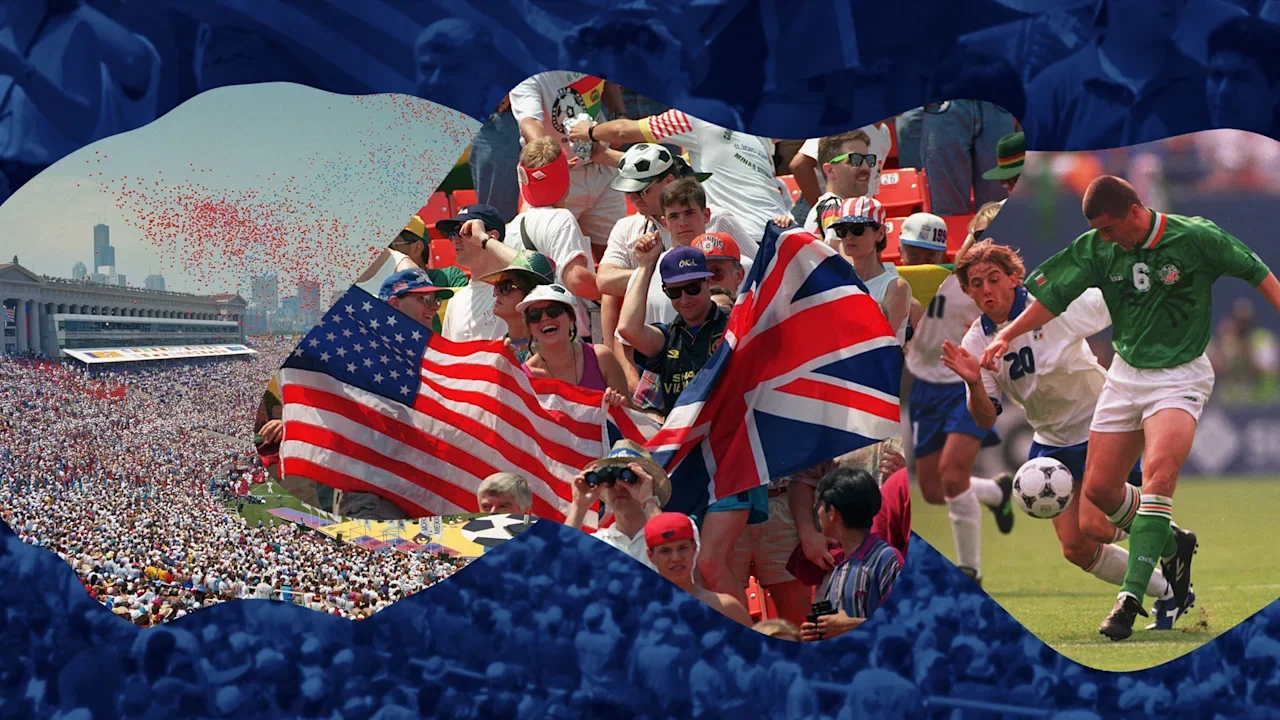
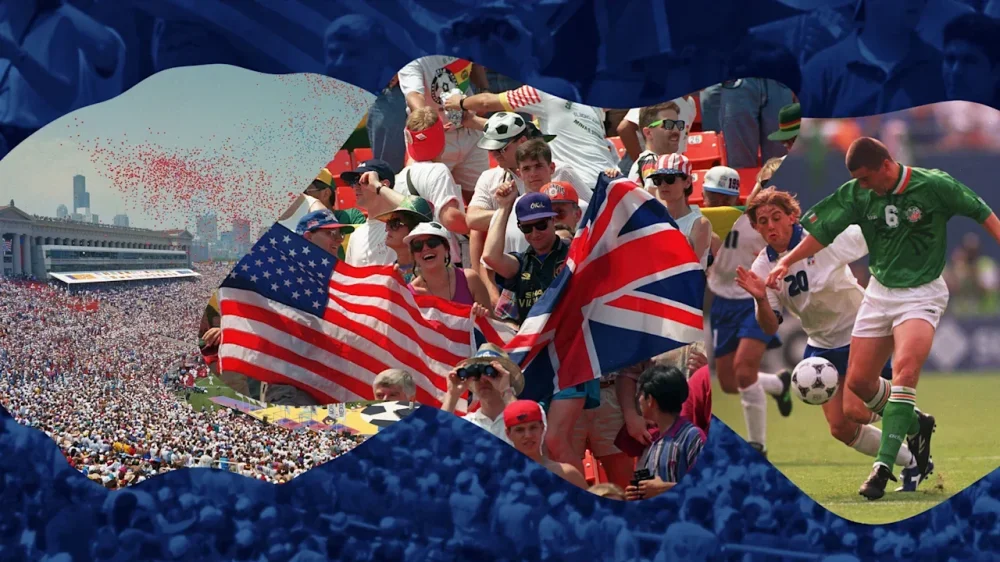
Roger Bennett is the witty and charismatic co-host of the popular “Men in Blazers” soccer media network. Born in Liverpool, England, he moved to the United States and has since helped popularize the sport in this country through podcasts, television shows, and books, including his best-selling memoir Reborn in the USA. His new book, WE ARE THE WORLD (CUP), is a personal history of what he calls “the world’s greatest sporting event.” In the following excerpt, he chronicles his experience of the 1994 World Cup, the last event held in the U.S prior to this summer’s tournament. 1994 was also the year Bennett moved to the U.S. The 1994 World Cup brought football to the United States of America. And also me. Straight after university, I moved to Chicago, finally completing a three-generational odyssey. According to our family myth, my “great-grandfather the butcher” had originally intended to move to Chicago, the great “Hog Capital of the World,” when he boarded a boat in Odessa and headed for the promised land at the turn of the twentieth century. When that boat docked to refuel in Liverpool, he, and several hundred of the other, clearly lower IQ travelers, saw the three tall buildings on the Merseyside skyline, believed they were in New York City and disembarked. Eighty years and two generations later, I completed my family’s journey. When the plane landed at O’Hare Airport, I felt the urge to mark the weight of the moment and dropped to my knees dramatically on the tarmac, a move I had seen Pope John Paul II execute many times upon arrival in a foreign land. I was momentarily overcome by a surge of adrenaline but, unsure what to do next, quickly became self-conscious as the other passengers pushed their way impatiently around me with their carry-ons. I peeled myself up and tried to play it cool as I joined them on the shuttle bus, attempting to ignore the fact I now had acquired a sticky oil stain on the left knee of my jeans that I could never quite remove. It is one thing to land at an airport as a tourist ready to tear up the city for a time-bound period. It is an entirely different feeling to arrive in a place with no return ticket, and the hope and fear that accompanies any leap into the unknown. I was a twenty-two-year-old quasi-man landing with big dreams in the American Midwest. An area I was largely unfamiliar with and in which I lacked any kind of support network of family or friends. The only things I had brought with me were a law degree I had miraculously managed to secure, a vague grasp on rudimentary life skills, an enormous ’fro, and little in the way of financial resources. My father had been unimpressed by the woeful lack of direction I had demonstrated after graduation and became irritated at my vague talk of signing up to be an air steward or doing a postgraduate degree in peace studies. Late one night after I had come back inebriated from the local pub in Liverpool, he informed me that he was cutting me off. “A man can think and think in life, Roger,” he said with equal measures of exasperation and contempt, “but sometimes he simply has to learn to do.” That decision forced my hand and spurred me into “doing.” Picking up my life and heading to Chicago, then overstaying my tourist visa was the sum total of my plan. Under the table and off the books Upon arrival, I looked at a map of the city, saw there was a neighborhood in the far northside named Rogers Park, and, based solely on its name echoing my own, elected to set up shop there. My immediate challenge was to make some money. Lacking a work visa, I hustled like Tony Montana in the early scenes of Scarface, throwing myself into any opportunity that would pay me illegally under the table and off the books. For the first year, I made just enough to live, as a truly clueless yet enthusiastic baker on the early morning shift in a local French pâtisserie and a well-meaning but utterly bewildered waiter at a soul food restaurant at night. In between, I picked up shifts restocking books in a local library, which really meant me sleeping in the stacks. I cobbled together just enough to rent my small, totally empty apartment. If I scrounged food from the restaurant, I could occasionally put my surplus tip money toward treating myself to a $4 bottle of Kentucky Gentleman bourbon whiskey. The soul food restaurant—Orly’s in Hyde Park on the South Side of the city—provided an eye-opening initial glimpse of America. The cooks were all elderly African American South Siders, the busboys young Latinos from the West Side, the barman and manager were a pair of white suburban bros who ruled the place and largely spent their nights crassly hitting on the other servers who, besides me, were all attractive young female students at the University of Chicago. I bonded most of all with the kindly Mexican busboys, who loved to talk football while poking fun at my long, curly hair and round spectacles, alternating between two nicknames they quickly coined for me: “lady” and “Juan Lennon.” Two of the dishwashers were a pair of brothers from Mexico, and they took time to show me how to game the system and set up the basics any illegal alien needs to survive: a black market Social Security number, healthcare, and a bank account; teaching me how to furnish an empty apartment for free by scavenging for couches, desks, and kitchen tables dumped in alleyways across the city on the last day of any month, aka moving day. Arby’s, Michael Jordan, and Lake Shore Drive The extent to which I missed my family back in Liverpool surprised me. This was before AOL became omnipresent and when long-distance phone calls were still prohibitively expensive, so we corresponded like Victorians, by letter. I would stay late at night, alone, in the library’s office, typing out long letters to my parents with just my pointer fingers, determined to convey the minutiae of my work and the details of America that exhilarated me. The celestial taste of Arby’s; the intensity of the bruising NBA playoff series between the Michael Jordan–less Chicago Bulls and the boastful New York Knicks of Patrick Ewing, which felt like a high-stakes collision in which the future of good and evil were at stake; the thrill of driving down Lake Shore Drive in a cab at night, and speeding past illuminated skyscraper after skyscraper, an experience which made me feel like I was living on the set of a sci-fi movie. The mundanity of the letters they mailed back to me in return, 90 percent of which revolved around complaints about the perpetually damp, rainy weather, reinforced my confidence that the journey I was on was the right one. The only thing I truly and achingly missed was football. Soccer. As thrilling as it was for me to be able to immerse myself in the new American sporting traditions of Bears, Blackhawks, White Sox, and Notre Dame gamedays, English football was my foundational text. It was how I understood and made sense of the world. My ballast in life’s stormy sea. I was well aware that the sport had outsider status in the United States. Yet, I was still shocked by just how hard it was to follow in my new home. This game that thrilled the rest of the world, had stopped wars, and spurred revolutions barely made a dent on the American sporting subconscious. In a national survey of favorite spectator sports released shortly after my arrival, it ranked 67th. Tractor-pulling was 66th. ‘Holding a major skiing competition in an African country’ To be clear, Americans were not just apathetic toward the game I loved. They seemed to take a perverse delight in actively and openly despising it in the 1990s. Most nations would have announced a national holiday if FIFA awarded them the hosting rights to the tournament. Yet, when the United States was given the honors, their decision was received with a general tenor of bewilderment. On the floor of Congress, Representative Jack Kemp, a former professional quarterback, felt the need to defend his nation’s honor by saying, “I think it is important for all those young men out there who someday hope to play real football, where you throw it and kick it and run with it and put it in your hands, that a distinction should be made that football is democratic capitalism whereas soccer is a European socialist sport.” One journalist compared the honor of hosting the biggest sports event in the world to “holding a major skiing competition in an African country.” A sense of contempt reinforced by rumors that began to abound that FIFA were attempting to “Americanize” the sport by splitting the game into four quarters rather than two halves to increase the amount of advertising they could jam into the broadcast. I was baffled by the lack of noise around the whole affair. The World Cup was something I had always counted down to, with a sense of joyous anticipation, but that sense began to be replaced by a gnawing feeling of unease that the Americans were going to blow this—to transform the most celebrated event in the world into the equivalent of a Weird Al cover song. The tournament draw, which took place in December 1993, live from Caesars Palace on the Las Vegas Strip, dialed my sense of disquiet up to eleven. The football world had never seen the likes of a veritable night of a thousand stars including Barry Manilow, Julio Iglesias, and Faye Dunaway. Few seemed to know what they were doing there. ESPN’s host, that veritable broadcasting legend Bob Ley, declared the spectacle to be akin to “Salvador Dalí producing a state lottery.” Fittingly for such a surreal occasion, it was Robin Williams who stole the spotlight. First, the comedian described the draw bracket as “the world’s biggest Keno game,” then proceeded to refer repeatedly to FIFA’s General Secretary, Sepp Blatter, as “Sepp Bladder” even after the Swiss administrator testily corrected him, insisting, “This is not a comedy!” Beneath the pizzazz, the significance for the future of the sport could not have been higher. US midfield star Tab Ramos was one of the pitifully few American players who had managed to find a pathway to play club football in Europe, and he worried aloud, “I think this will be the last chance, the last go-round for soccer to make it big here.” If those were the stakes, it did not seem to be going very well. New York Times columnist George Vecsey noted: “The United States was chosen, by the way, because of all the money to be made here, not because of our soccer prowess. Our country has been rented as a giant stadium and hotel and television studio for the next thirty-one days.” Panic truly kicked in when a national poll undertaken three weeks before the tournament’s kickoff discovered that 71 percent of Americans were still not aware it was about to be played in their country. The prospect of empty stadiums felt very real. In the weeks running up to the kickoff, a late flurry of marketing materials featuring images of Reggie Jackson and Michael Jordan pretending to juggle the football were unfurled in a last-ditch effort to create excitement. That did not exactly inspire confidence, as if athletes from other sports were needed to give heartland Americans permission to watch the foreigners’ game. An unshakable terror that no one would show up The moment of truth came June 17, 1994, when the opening match was held, by chance, at Soldier Field in my adopted hometown of Chicago. The night before the tournament began, my mood ricocheted between the dizzying sense of childish anticipation I always experienced on World Cup eve, and an unshakable terror that America was throwing a party for the sport I loved, and that no one would turn up. In my destitute state, there was no chance I could afford a ticket for the opener, which featured reigning World Cup champions Germany against Bolivia, yet I felt a need—more than that, a responsibility—to travel down to the stadium to pay witness to the scene. Partially to respect the moment and come as close to this tournament in the flesh as I had ever been. But mostly to help fill in as an extra, and create the sense of a crowd, hoping to build the fiction of America caring in the worst-case scenario, as so many doomsayers were saying, that the venue was deserted. I need not have worried. With a searing sense of relief, I found Soldier Field to be as overwhelmed as if the Bears were playing the Packers. Yes, it felt like half of Baden-Württemberg had traveled to cheer on Germany, and every Bolivian in the vicinity of Chicago had massed by Lake Michigan. But there were also thousands of families, congregating around the ticket gates, with the kind of crackling sense of anticipation emitted when entering the circus. In truth, this was unlike any football crowd I had experienced before. There was little noise. No audible chanting. Few team colors. Yet I soaked in the scene with relief and wonder. America had turned up. The fact that many of those in attendance seemed to know little about what was about to happen felt like nitpicking. This emotion was reinforced by a big-screen television near the gate broadcasting a short video in which iconic baseball manager Tommy Lasorda of the Los Angeles Dodgers declared his unshakable belief that even if the country had no idea what the World Cup was, America would win it. Ticketless, I raced home on the L to catch the razzamatazz-filled opening ceremony on my television, which, like the rest of my furniture, had been rescued from the alleyway behind my apartment. I had jerry-rigged an antenna out of a clothes hanger, so the picture was scratchy, but visible enough to witness the spectacle that managed to blend a message of American good intentions, celebrity pageantry, and gesturing at heartfelt passion for soccer. A nearly sold-out crowd, including President Clinton, was privy to a ceremony that began with emcee hometown hero Oprah Winfrey screaming, “Let’s celebrate!” before tripping off the stage and seemingly maiming herself just seconds after welcoming a worldwide television audience of a billion. That slapstick opening set a tone the rest of the celebrity guests then strove to one-up. Singer Jon Secada suffered a dislocated shoulder when a trapdoor from which he was meant to emerge onto the stage misbehaved, forcing him to sing with just his head and shoulders protruding from a hole in the floor. Richard Marx, a Chicago native with a spectacular mullett, sang the national anthem. Diana Ross added to the surreal display by prancing around and lip-syncing, “I’m Coming Out,” a performance capped by her slicing a penalty quite wide of a goal from less than five yards out. Nonetheless, the crossbar still split into two, as if she had shot with accuracy and potency. A clumsy piece of footballing choreography gone wrong amidst glamor and glitz, which felt like a cruel metaphor for all that was to come. The psychedelic out-of-place, out-of-body celebrity moment was echoed, and eclipsed, later that night, by the breaking news of O.J. Simpson’s infamous white Bronco chase. An earth-shattering celebrity cultural moment, which even preempted the NBA final and easily overshadowed the day’s football, the personal highlight of which came just a minute into the opener when the ball flew into the stands, and the game was held up while the fan who caught it was ordered to throw it back, after being told this was not Wrigley Field and you were not allowed to keep that ball as a memento. A Peroni- and Guinness-fueled epic gang rumble It took twenty-four hours before the fuse was truly lit on the World Cup, driving it straight to the front of America’s sporting cortex. A game billed as “the Showdown in the Swamp” pitched Italy against Ireland in the crackling heat of Giants Stadium in New Jersey. A confluence of time and context. Thirty-two million Americans claim Irish descent, roughly half have Italian roots, and the greater New York area had largely been built by their ancestors and thus overflows with both hyphenated identities. This game felt like the type of Peroni- and Guinness-fueled epic gang rumble Scorsese would have directed in one of his early movies. A fight for pride born of echoed pasts taking place in the swamplands near the Hudson. The Italian team had long been a traditional footballing superpower. Handsome, slick-haired footballers like the iconic Roberto Baggio and Paolo Maldini played for the biggest clubs in the world. Ireland was a mob of scrappy, bar-brawling upstarts in comparison. A Dirty Dozen–esque mob—many of whom were English-born but had chosen to represent Ireland because of their own familial lineage. They were managed by a charismatic, beer-drinking, straight-talking former English World Cup winner, Jack Charlton, who was so beloved, he achieved honorary Irishman status and was christened “St. Jack.” The English National Team had yet again failed to qualify, so a lot of English fans spent the early days of the tournament desperately trying to discover secret Irish roots of their own. I watched this game in a packed bar in Rogers Park, stuffed with Irish Americans and a ton of non-Irish Americans who just felt a vicarious kinship courtesy of their Notre Dame fandom. As I entered, a large old man dressed as a leprechaun kissed me on the top of my head while screaming to no one in particular, “Our boys are on the craic with it!” As Jameson-inflected as these words smelled, they turned out to be prophetic. My leprechaun friend may have passed out before kickoff, but had he been conscious, he would have loved what he saw. The fearless Irish snatched the lead with a euphoric strike from midfielder Ray Houghton, a Glasgow-born son of an Irishman, who audaciously clipped the ball past the despairing fingers of the Italian goalkeeper. The collective defensive intensity Charlton had instilled did the rest, as a green-and-white-cloaked Giants Stadium rocked to the sound of bagpipes and the thump of bodhráns as a chant of “You’ll never beat the Irish!” resounded. The final scoreline, chaotic energy of the occasion, and medical miracle that 75,000 Irish fans somehow survived nasty cases of sunburn drove the event into the hearts of the American viewing public. This tournament had kicked off for real. Maradona the villain This being a World Cup, Diego Maradona of course grabbed center stage. The golden street urchin had been the hero of the 1986 win. He played the role of villain in this one. Having worn out his welcome in Italian football, “El Pibe de Oro” fled Europe with his career imploding and personal life in meltdown. A fifteen-month ban earned in 1991 for testing positive for cocaine was the least of his problems. Maradona had been charged with smuggling $840,000 worth of blow into Rome’s Fiumicino Airport in 1990, and his reputation was further pockmarked by rumors of paternity suits, tax charges, and intimate connections to Naples’s Camorra crime family. A beleaguered, overweight Maradona returned home to Buenos Aires in search of sanctuary. As he arrived, the notion the player was physically or mentally ready to lead the national team to the 1994 World Cup appeared as believable as a storyline from a Philip K. Dick fantasy. Yet, the star resurfaced sensationally on the eve of the tournament, having somehow shed twenty-six pounds in a month. His message was one of redemption. “I am tired of all those who said I was fat and no longer the great Maradona,” he proclaimed. “They will see the real Diego at the World Cup.” The icon did not know how true those words would prove to be. Aged thirty-three, the little warhorse prepared to drag his tattered body into battle one more time. His fourth World Cup would begin against Greece at Foxboro Stadium in Foxborough, Massachusetts. A light aircraft buzzed above the field pulling a banner that proclaimed “Maradona–Prima Dona” ahead of the game, and the star lived up to his billing. In the 60th minute of the 4–0 victory, Diego received the ball in the box, jinked to his left, and rifled the ball into the top corner, then celebrated the achievement in hopped-up style, charging a sideline television camera and flashing his maniacal mug toward it. Tight-lipped after the game, Maradona would only declare, “I’m letting my actions speak for themselves.” Four days later, the player was selected for random drug testing after a 2–1 win against Nigeria. FIFA quickly announced the Argentine had tested positive for five variants of ephedrine. The Guardian would later note the way Maradona had celebrated his goal against Greece was as conclusive as any drug test: “Broadcast around the world, his contorted features made him look like a lunatic, flying on a cocktail of adrenalin and every recreational drug known to man.” Faced with the disgrace of being expelled from the tournament, Maradona first sought pity from Argentinian television. “They killed me,” he said. “They have retired me from soccer. I don’t think I want another revenge, my soul is broken.” He then proceeded to appeal to his nation’s easily fired-up paranoia, adamantly declaring, “They didn’t beat us on the pitch. We were beaten off the pitch and that is what hurts my soul.” As his team moved on to meet Bulgaria in the Cotton Bowl, Maradona loyalists in the Argentine media seized on Dallas’s reputation as the cradle of conspiracy theories. “In this city, where thirty years before Kennedy was assassinated, the theories surrounding footballer Maradona will now be explained. Was he ‘randomly’ selected for a drug test?” they asked. Not embarrassing themselves FIFA dispatched Sepp Blatter to smother any doubts. “The king is dead, we play on,” he declared. A shattered Argentinian squad mustered the requisite sound bites about “winning it for Diego.” But leaderless and disoriented, they proceeded to wilt against Bulgaria and were finally sent home by Gheorghe Hagi, Ilie Dumitrescu, and the elegant Romanians in the Round of 16. Even Maradona’s fall from grace could not dampen the American energy now building up around the tournament. The stadiums were packed, never more than when the US team first strolled onto the field in Detroit’s Pontiac Silverdome. I knew so little about the team. Few Americans did to be honest. Hosting duties meant their qualification had been automatic, a mixed blessing as a woefully inexperienced squad faced four long years in which it had been deprived of the one thing that could battle-harden the players: competitive matches that mattered. This challenge was reinforced by the reality that only a handful of American soccer players had found professional opportunities in Europe. American soccer players had as much credibility in the eyes of European scouts as aspirational English quarterbacks would have received in the NFL. A couple of players including the cocky gunslinger John Harkes and physically gifted striker Eric Wynalda had gained the attention of minor clubs in England, Spain, and Germany. The rest were left struggling to make a living playing indoors or on a local team, which provided the salary equivalent of an internship. The personal stakes could not have been higher for these men. The focus was on not embarrassing themselves. They were not just playing for their nation; they were fighting for the very future of their sport. Desperate to avoid the humiliation of becoming the first home team in history unable to emerge from the World Cup’s opening round, the United States Soccer Federation had undertaken a bold experiment, establishing a residential training center for its team to live together, essentially living off a tiny stipend and their enormous shared dreams, for eighteen months in Mission Viejo, California. Crap the bed, and the profile of soccer in the United States would never recover. The mission was simple. They had to get out of the group stages. Their draw had been tough. In the opening round, they would face a robust Switzerland, dark horse Romania, and sandwiched in between, the truly fearsome Colombians, who had just whipped Argentina 5–0 in qualifying and whom Pelé himself had picked to win the entire tournament. First up were the Swiss, who had drawn and beaten Italy in qualifying. I watched from the futon on the floor of my boxy Rogers Park apartment, nervously adjusting the wire hanger to try and coax a clearer signal. The blurry images on my television made it look like the US team were swaggering onto the field wearing a faux stonewashed denim jersey. Then the commentator mentioned that the US team were indeed wearing faux stonewashed denim jerseys and that was the very second I fell in love with this team of goatee- and mullet-sporting risk-takers, dreamers, and pioneers. Sweatbox conditions Tellingly, kickoff was slated for 11:30 a.m. so that broadcasters ABC did not have to cut into their coverage of the US Open, an event they deemed to be far more important. At that time, Midwest temperatures topped 106 degrees, and so this, the World Cup’s first-ever indoor game, was played in sweatbox conditions. I felt enormous empathy for the players as I could not afford air-conditioning in my Chicago apartment and was sweating up a storm myself as I watched in just my underpants and T-shirt. The Swiss looked like they were poised to melt. In contrast, the American players looked utterly amped. So few of them had ever played before a truly large crowd—never mind one that was 100 percent pro-American. As the cameraman panned their eyes during the national anthem, they looked like a group of men who knew this was their time to show the world that American football was about something more than a bold choice in football jersey design. That carried through once the opening whistle blew. The Americans were not the most sophisticated in tactic or touch. But what they clearly lacked as footballers, they compensated for with collective fitness, ferocity of tackle, and an unshakable team spirit embodied by the sheer number of high fives they doled out to each other in-game. Rock ’n’ roll hustle, idiosyncratic style, and can-do spirit wrapped in frosted denim A beanpole ginger center back, Alexi Lalas, caught my eye. A gangly mix of lanky leg and flowing red hair. He looked less like a footballer and more like a guy who worked behind the counter at a record store in some suburban Detroit mall, turning kids on to Van Halen’s latest album one sale at a time. But on the field, in the global spotlight that day, Lalas appeared as if he embodied America itself. All rock ’n’ roll hustle, idiosyncratic style, and can-do spirit wrapped in frosted denim. As if David Lee Roth had taken the World Cup stage. Both shirt and athlete unlike anything I had seen play football before. When Switzerland opened the scoring off a free kick, it fleetingly felt like the sum of the American players’ fears was about to become real. But just five minutes later, the US won a free kick of their own, 28 yards out. Up stepped Eric Wynalda, the maverick, hotheaded striker who looked like an extra ripped from a beach scene in Baywatch. Wynalda composed himself, then swung his foot to strike as casually as if he were on the Californian fields in which he had mastered the game as a kid in Orange County. That ball seemed to be in the air forever, silencing the stadium as it flew, spinning away from the goal-keeper’s panicked dive straight into the corner, greeted with a crescendo of noise like that experienced by a diver breaking the waterline and resurfacing. Wynalda was as shocked as anyone watching at home. The goal was a relief. It not only enabled the US to hold on for a draw and a point, but it also validated the sense that their quest to qualify was in the realms of the possible. The fearsome Colombians awaited four days later in the Rose Bowl, Pasadena, California. Again, I watched alone in my apartment, cowering as the South Americans in their ecstatic yellow attempted to blow their opponents away from the opening kickoff, attacking with hunger and intensity. It felt like a borderline miracle when the game was still scoreless five minutes in. The Colombians hit the post, and American defender Fernando Clavijo scooped the ball off the line in a way which defied science. But football—especially World Cup football, with its international squads who are essentially as practiced as All-Star teams—is a game of moments. And in the 35th minute, the United States forayed upfield. John Harkes, the cocksure son of Kearny, New Jersey, who had played in England for four years and had instantly adopted a fake Cockney accent, whipped in a cross. Colombian defender Andrés Escobar, a fine man widely known as “The Gentleman of Football,” made the unfortunate decision to stretch out a leg and block it, but he only succeeded in redirecting the ball past his own flat-footed goalkeeper into his own net. Escobar’s own goal is what is remembered from the game. Ten days later, he would return home and was shot to death while leaving a Medellín nightclub in the early morning hours. The assassin fired half a dozen times, yelling “Goal!” after every shot. But in the moment, when that ball bobbled off his foot into the back of the net, the American players felt only ecstasy. Even though I was watching alone in my apartment, I was moved to shake up a bottle of Budweiser and spray it around the room, creating a beer puddle that sat in the middle of the floor long after the tournament was a memory. I was to housekeeping what Diego Maradona was to legal weight loss. ‘Miracle on Grass’ Emboldened, the United States conjured a second goal right after halftime, a stunning moment of real counterattacking football, finished off by the speed freak Earnie Stewart, a Dutch-born dual-national with an American serviceman father. The celebrations were an astonishing moment for the team. You could tell by their rapturous reactions; this was a group of men proving themselves to themselves with the world watching. Now they knew, as American footballers, they could face a big team in a big game and win. To me it all felt transcendent. An epiphany akin to witnessing a baby being born, only with 90,000 people in the delivery room. At the final whistle, the Americans soaked in their moment, walking around the Rose Bowl—the historic American sporting shrine—shirts off, American flags draped round their shoulders, with the delirious crowd bellowing, “USA! USA! USA!” After all their work and sacrifice, these men had just shown that American footballers could belong in the game with the rest of the world. The next day, headline writers gave the performance the ultimate sports accolade, hailing the victory as a “Miracle on Grass!” Miracle or not, the third game did not go as planned. A 1–0 loss to the canny Romanians. The United States finished third in their group with four points, scraping into the knock-out stages by virtue of being one of four third-placed teams who advanced into the sixteen-team second round. Next, they would face Brazil, the fiercest of opponents and number 1 team in the world. The match was to be played in Stanford, California, on July Fourth to boot. Could they do it? I watched the players’ interviews, and it was clear by listening that having qualified from the group and achieved their goal—avoiding humiliation—all the pressure was off. Anything felt possible. Once again, I watched the game alone in my apartment. I did not have a lot of money and, in reality, I did not have a lot of friends. In truth, I felt immensely lonely, but I loved this team of try-hards. I connected with them. When I watched them, they seemed to embody a sense of hope that I needed in my own life at the time. If a group of footballing duffers in stone-wash shirts could take on the powerful Brazilians in the World Cup and win, I too might find my way to glory. Or at least a television without a coat hanger for an antenna. A moral victory However, there was no way to mask the gulf in class between these two teams. It was evident the moment they walked side by side onto the pitch. Brazil’s deadly striking duo Romário and Bebeto, feared around the world, took the field alongside Cobi Jones, a twenty-four-year-old legal student from California. This Brazil team were different from past iterations. The battering they had received from the European teams over the past decade had forced them to add defensive steel to their offensive flamboyance. Their jerseys were still the traditional golden yellow, but this was a pragmatic, functional, almost soulless squad who advanced on the strength of their physicality, which peaked on the stroke of halftime. American midfielder Tab Ramos attempted to nutmeg his opponent, Leonardo, who retorted by headhunting, with cruel, blunt application of his elbow to Ramos’s skull. A shocking moment of violence that earned the Brazilian a red card and left the American in agony on the ground, knocking him out of the game with a fractured skull. Theoretically, the Americans now had a one-man advantage, but you could not tell from the way they responded. Their players’ focus was utterly broken by that moment of savagery, which had knocked out their creative heartbeat. The Brazilians became relentless. In the bright sunlight that would melt lesser men, they glimmered like a shoal of fighting fish sensing the weakness of their prey. The Brazilian goal, when it came in the 74th minute, was almost a relief. A precise Bebeto shot driven low, callously and cruelly through the desperate legs of Alexi Lalas and past a despairing goalkeeper into the corner of the net. Despite the loss, the US mood at the final whistle was far from despondent. Even in defeat, this young, raw team of American nobodies had earned a moral victory. They had not soiled themselves with the nation watching. Television ratings were high. The US boys had proven they could go toe-to-toe with the world’s best by harnessing a collective spirit, exiting with millions of T-shirts and celebratory tchotchkes sold, and the feeling of a match lit and something powerful loosened deep in the nation’s consciousness. Sitting in my shit Chicago apartment, I thought of all the American icons that had drawn me to the United States in the first place, patriots who glowed with bold self-confidence. Ferris Bueller, the Super Bowl–winning Chicago Bears, the Beastie Boys. This American football team now fit in that pantheon. They were the rare US sporting entity who were scrappy underdogs. A gaggle who acted as if they willed themselves to believe something, it was no fantasy. Brazil’s spiritless football became a symbol of the entire tournament. Below the celebrity glitz and American naivete, the play was mediocre, and the games pockmarked by overzealous refereeing that broke up play. Fittingly, the final was one of the most soul-crushing the tournament has ever witnessed. I had not wanted to watch alone and went out solo to take it in, draining a generous stranger’s pitchers of beer, at a packed Hyde Park bar, Jimmy’s Woodlawn Tap. The energy, which was at Mardi Gras levels at kickoff, soon burned off as the Brazilians’ cocked fist was negated by Italy’s smothering play. As the two teams conspired to provide every soccer cynic’s worst nightmare—the first goalless final, 120 minutes of dreary soccer followed by penalties—the bar became quieter and emptier. I could almost imagine the teeth-gnashing of every investor who had just stepped up to own a team in the soon-to-be-launched American club league: Major League Soccer. ‘Divine ponytail’ One of the reasons I love football is that even in the dullest of spectacles, a moment of human revelation can occur on an almost biblical scale. Italy had been carried to the final by the wizardry of one man: Roberto Baggio, an almost mystical figure, known for his signature “Divine ponytail” (Il Divin Codino), his conversion to Buddhism, and the way he seemed to float just above play, beyond the grasp of the mere mortals with whom he was sharing the field. Baggio’s five goals in the tournament had propelled his team to the final. In the fifth and final round of penalties, with Brazil leading 3–2 and Italy needing to score to keep hope alive, it was Baggio who stepped to the spot. It had been his tournament. Now, the hopes of all Italy rested on his shoulders. With just the goalkeeper to beat from a mere 12 yards, he proceeded to sky the ball 3 feet over the crossbar. At the pub I was in, it felt like we had just witnessed a human tragedy. Screams accompanied the replays of the ball soaring into the Pasadena sky, as Baggio, that quasi-holy man, doubled over in astonished agony, hands on knees in private mourning. A hallowed figure who so often appeared to rise above the limits of what was humanly possible, frozen in a moment of mortality. It was fitting that two diabolical penalties bookended the tournament. Diana Ross’s showbiz miss opened it, and Baggio’s elegiac catastrophe brought it to an emotional close and handed Brazil a fourth World Cup win, at last. Their first in twenty-four long years. Many Americans had their lives changed by the tournament. European teams deigned to welcome a handful into their teams, most noticeably Alexi Lalas, who played fleetingly in Italy, a cameo in which his greatest achievement may have happened off the field when he was invited to strum his guitar as a support act on a leg of a Hootie & the Blowfish tour. Most of the players were reduced to jester-like side-hustles with Tony Meola accepting a chance to try out as a kicker for the New York Jets, which reeked of a PR stunt, as did his being attacked by “soccer-playing pitbulls” on Jay Leno. In the end, the legacy of this World Cup was mixed. Records had been broken in terms of attendance, but those who expected American fans’ sporting appetites to be transformed instantly and forever by the tournament would be disappointed. The spike in interest in football soon burned off as if the World Cup had been a giant circus, which momentarily thrilled before leaving town. A year later, when my beloved club team Everton reached the semifinal of a major tournament, I was unable to find a single cable channel that could summon a broadcast, despite a frantic search of Chicagoland sports bars. Utterly defeated, I ended up calling my father in Liverpool and persuaded him to hold his telephone against the radio so I could hear the local broadcast and follow the action. A long-distance connection that was worth every cent, even though the bill was so eye-bulgingly expensive, it took me seven months to pay off in installments. Each time I chipped away at my football-induced telecom debt, I felt a numbing angst as if the World Cup in America had never happened. ‘The long cut’ Deprived of my football fix, my American life continued to progress, relying on hustle, grind, and the kindness of strangers. Professionally, I astonished myself by finding utility in the law degree I had somehow earned. I gained work as a welfare rights advocate. This was the height of the Clinton Welfare debate in which the safety net had been shredded. Working with a nonprofit who agreed to apply for a visa for me, I trained homeless men to talk to the media, telling the story of their descent into the streets and highlighting the vast number of hidden challenges that existed between them and job security. The homeless guys I worked with were sweet and earnest. They lived on the streets south of the city in the area around Robert Taylor Homes. A vast, bleak public housing project that consisted of dozens of identical, hulking buildings spread out in a line for two miles. Having grown up in Liverpool, I thought I was used to grim neighborhoods awash with hopelessness. The Robert Taylor Homes were another level altogether. This was a heart-wrenching island of abject poverty. The work was fulfilling and soul-destroying in equal measure. Lacking football in my life, I threw myself into the Chicago music scene for solace. Uncle Tupelo’s album Anodyne had just been released. I saved up enough to watch the band play gigs at the legendary Lounge Ax. Their track “The Long Cut” was my anthem, and I listened to its message of struggle and eventual promise on repeat on my Discman: Come on let’s take the long cut I think that’s what we need If you wanna take the long cut We’ll get there eventually. The lead singer, Jeff Tweedy, was singing about his fraught relationships with his bandmates, but the lyrics always held a double meaning for me, reflecting the journey I hoped soccer had just begun in my chosen home. Excerpted from the book WE ARE THE WORLD (CUP) by Roger Bennett. Copyright © 2026 by In Loving Memory of the Recent Past 2 Inc. From Dey Street Books, an imprint of HarperCollins Publishers. Reprinted by permission. View the full article
-
Google updated its image SEO best practices and Google Discover documentation to clarify how Google picks a preferred image thumbnail for Google Search and Google Discover. Google wrote it "uses both schema.org markup and the og:image meta tag as sources when determining image thumbnails in Google Search and Discover."View the full article
-
Google has updated or is updating a number of Google Ads and Google Merchant Center policies. This goes across alcohol, prescription drugs, gambling and games and government documents and services policies.View the full article
-
Critical vulnerability in WordPress User Registration & Membership plugin enables unauthenticated attackers to obtain administrator role. The post WordPress User Registration & Membership Plugin Vulnerability appeared first on Search Engine Journal. View the full article
-
Google has published a new help document titled About the Universal Commerce Protocol (UCP) and UCP-powered checkout feature on Google. This was published in the Google Merchant Center help documentation section.View the full article
-
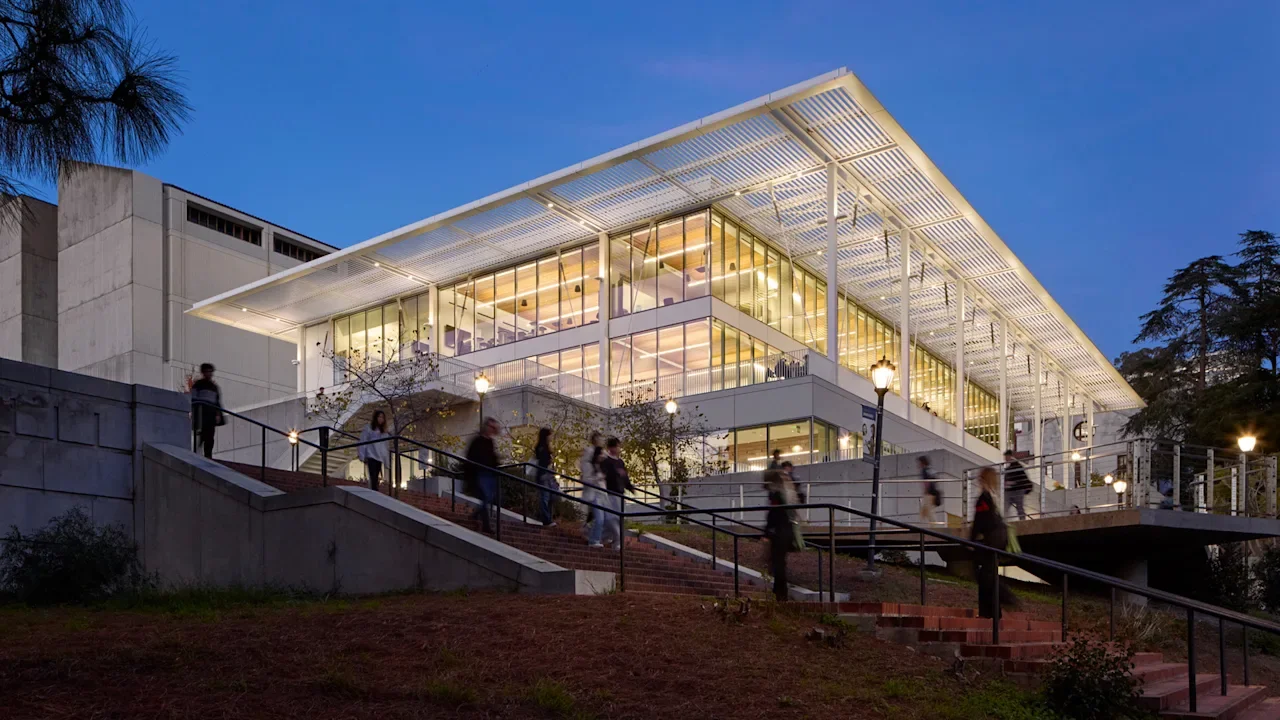
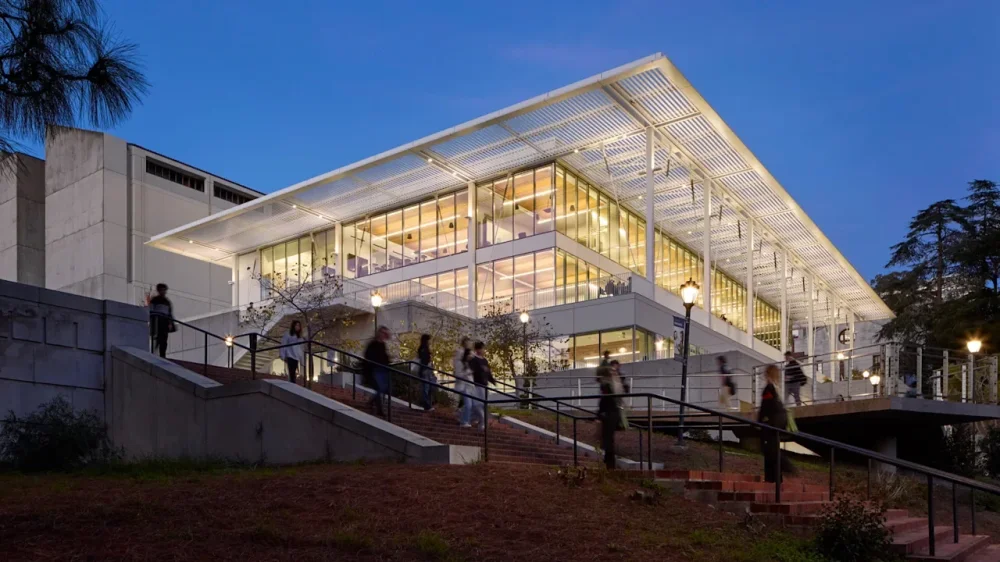
Zig-zagging around the glass-and-steel perimeter of the UC Berkeley Grimes Engineering Center, 36 thin metal rods could be what it takes to prevent the building’s total destruction. The rods are the central element of a novel seismic-responsive structural system that is designed to help the building snap back to its original shape in the event of a major earthquake. Their trick is an embedded cluster of taut cables made from a highly flexible compound called a shape-memory alloy that’s capable of bending under tension—like the lateral shaking in a California earthquake—and then straightening out. Developed by the architecture firm Skidmore, Owings and Merrill (SOM), which also designed the building, the shape-memory alloy tension rod system is making it possible for architects and engineers to create truly earthquake-resilient buildings. David Shook, a senior associate principal based in SOM’s San Francisco office, helped develop the shape-memory alloy system for the building. He says testing showed it to be able to bend more than 25 times as much as typical structural steel, which he compares to a coat hanger. “When you bend it, it stays,” Shook says, while the shape-memory alloy tension rod system “can behave more like a rubber band.” A building that can snap back into place after an earthquake is important not only for life safety but also for the ongoing use of a building in a post-disaster scenario, says structural engineer Mark Sarkisian, a partner at SOM who’s also based in San Francisco. The current building code “allows for your building to be damaged structurally in a way that still protects life and stays stable during an earthquake. But after the earthquake, there are big questions around whether that building can go back into service or not,” Sarkisian says. “What SOM has really pushed hard on for many years is can we come up with seismic systems that are essentially elastic?” What is a shape memory alloy? Shape-memory alloys make that possible. Commonly used by NASA and the aerospace industry and also to make heart stents, shape-memory alloys are new to architecture. This system is being used for what SOM says is the first time at the Grimes Engineering Center, a student center and educational space in the middle of several engineering-focused buildings on UC Berkeley’s campus. “The medical industry has been using a lot of super elastic shape-memory alloys. So as the production of that material has gone up, the price has been going down and we kind of hit a point here where it made sense to start using it in a building,” Shook says. This particular building was an ideal opportunity. It’s located about a quarter of a mile from the Hayward Fault, considered one of the most dangerous fault lines in the seismically active San Francisco Bay Area. It’s also a part of UC Berkeley’s vaunted engineering school, known for its work on earthquake-resilient buildings and structural engineering. “This is a place where they test, understand, and deploy new technologies in seismic zones year after year after year,” Sarkisian says. “It’s remarkable what the professors here have done. And it’s really fun to be able to work with them to bring this forward in a very visual way.” Like an engineering student doing an assignment in one of its classrooms, the building not only offers a solution to the problem, it shows its work. The shape-memory alloy tension rod system, made from a nickel-titanium alloy, is intentionally left out in the open on the perimeter of the building, demonstrating its functionality as part of the building’s minimal glass-and-steel architectural expression. A teaching tool Technically this is also an adaptive reuse project, with a new three-story, 36,000-square-foot pavilion added atop the base of the former Bechtel Engineering Center, built in 1980. The original building was a mostly subterranean Brutalist structure made of reinforced concrete, with a library and an auditorium sitting below a landscaped roof deck. The new design replaced the landscaping with the pavilion, trading the weight of the soil and planting for the mass of the new pavilion. Because it utilizes so much of the original building’s foundation and structure, the project’s embodied carbon was measured to be 42% lower than industry baselines. In many ways, the building is meant to be a teaching tool as well as an example for other projects to follow. The real test of its worth will come with the next major earthquake to hit the region. Shook says SOM ran extensive physical tests and computer simulations that show the shape-memory alloy tension rod system performing as planned, even during the biggest possible earthquake expected to strike. Unlike buildings that might have a cracked wall or an off-kilter lean after a big earthquake, the Grimes Engineering Center likely won’t offer any hint that it’s even experienced a tremor. “The building’s going to come back to plumb,” Shook says. View the full article
-
Anyone who claims to know where this conflict will go is bluffingView the full article
-
Google is rolling out VRC Non-Skip ads, expanding how brands reach connected TV audiences on YouTube. What’s happening. VRC (Video Reach Campaign) Non-Skips are now live globally in Google Ads and Display & Video 360. The format is built specifically for the living room experience, ensuring ads run as non-skippable placements optimized for connected TV (CTV) screens. Why we care. YouTube has become the No. 1 streaming platform in the U.S. for three consecutive years, making the TV screen a critical battleground for brand budgets. With guaranteed, non-skippable delivery, advertisers can ensure their full message reaches viewers in premium, lean-back environments. AI in the mix. Google AI dynamically optimizes across 6-second bumper ads, 15-second standard spots and 30-second CTV-only non-skippable formats. Instead of manually splitting budgets by format, brands can rely on AI to allocate impressions for maximum reach and efficiency. The bottom line. Advertisers now have a simpler way to secure guaranteed, full-message delivery on the biggest screen in the house — using AI to maximize reach and efficiency across non-skippable formats without manually managing the mix. View the full article
-
Kyiv says evidence shows Druzhba pipeline is too damaged to restart supplies after attack by Moscow in JanuaryView the full article
-
Jane, chief commercial officer at a global professional services firm, watched issues that once stayed contained begin to climb the chain of command. As the issues grew, senior leaders were increasingly pulled into operational mishaps. Facing margin pressure and accelerating AI-driven change, the CEO redirected the leadership development budget and narrowed his focus. The move made sense. But as roles expanded and support narrowed, more decisions required senior intervention. What seemed manageable in isolation accumulated across teams. As AI automates routine work, organizations require a new set of leadership skills that technology can’t replace. Yet many organizations treat AI as another IT rollout rather than a fundamental shift in how leaders must operate. A recent report from management software TalentLMS shows organizations under pressure are reducing structured development—even as role scope, decision load, and AI exposure increase. For companies, postponing investment in leaders and managers today will hinder execution tomorrow. Through our work advising and coaching senior leaders (Jenny as an executive advisor and leadership development expert, and Kathryn as an executive and team coach), we’ve seen this dynamic repeat. Organizations that sustain performance don’t wait for conditions to improve. They continue to build leadership capability while pressure remains high. 1. Reframe leadership capability as business risk, not engagement When companies pull back on leadership development, they rarely question whether it matters. They question whether it mitigates the risks they manage daily, like revenue and investor confidence. But leaders responsible for building capability describe results in terms of engagement, satisfaction, and participation. Their conversations misalign. To regain traction, leadership development must be reframed as risk. Leadership capability determines how quickly decisions are made, how reliably priorities cascade, and how smoothly work transfers across teams. When that capability thins, execution becomes less predictable—even if top-line metrics remain intact. AI raises the stakes. As workflows automate, the remaining work requires sharper judgment about what to delegate to machines and where human coordination is essential. When leaders lack that clarity, they don’t just move slower. They raise the cost of every critical decision. At Jane’s firm, the early warning signs appeared in the metrics. Decision turnaround times lengthened during disruptions. Onboarding processes extended for expanded roles. Escalations required more senior intervention than before. Jane reframed the conversation in commercial terms. She pushed to see timelines in revenue-critical roles and tied it to performance, for one, and linked decision turnaround directly to the risk of renewal. Leadership development was no longer positioned as a talent initiative. It became a safeguard for protecting delivery, revenue, and client retention. McKinsey research finds that organizations that consistently invest in human capital outperform their peers on revenue growth and earnings stability. The real issue is not belief in leadership development. The issue is whether the business still works a year from now without it. 2. Build proof systems, not programs Companies don’t fund intentions. They fund evidence. They want proof that leadership development changes behavior and that behavior improves performance. The most effective organizations build proof systems: targeted, time-bound experiments that test whether development shifts behavior where it matters most. Instead of launching broad programs, they focus on a few behaviors—who owns decisions, effective escalation, cross-functional coordination—and measure whether they change in the flow of real work, tying them directly to business outcomes. Jane didn’t ask for a relaunch. She focused on one pressure point: decisions escalating upward under stress. She paired coaching with client work and tracked two operational indicators—where decisions were made, and how quickly client teams aligned. Each week, she shared the data. Within months, decisions requiring senior intervention fell by roughly a third, and alignment during client escalations improved. Delivery became more predictable. The investment was no longer theoretical. It was visible in the work. Proof systems shift the conversation from belief to results. Instead of defending participation rates, leaders show how development changes outcomes. In skeptical environments, that shift sustains executive support. 3. Embed capability in the operating model, not in initiatives The most successful organizations integrate leadership investment into how a business actually runs, so it becomes structural rather than optional. When leadership development is treated as a set of programs, it competes for attention and budget with every other discretionary investment. When it’s embedded in the operating model, it becomes part of how performance is managed. CEOs don’t resist funding leadership capability because they doubt its importance. They resist it because they can’t clearly see how it operates as part of day-to-day performance. As AI reshapes work, leadership capability becomes a constraint on execution. Technical skills alone are no longer enough; judgment, coordination, and adaptability now drive performance. Organizations that navigate transformation well don’t just invest in tools—they pair strategic resets with targeted skill-building and executive coaching tied directly to performance. For Jane, this meant integrating leadership behaviors directly into operating reviews—not as a separate development discussion, but alongside delivery, revenue, and client metrics. Leadership readiness and decision-making were reviewed alongside financial performance. When these behaviors sit inside operating reviews, they stop competing for attention. Leadership capability shows up in how decisions are made, how work is handed off across functions, how quickly leaders adapt to new demands, and how consistently priorities are translated into action. When capability renewal is woven into operating rhythms—pipeline reviews, quarterly planning, team transitions—it stops being optional. It becomes part of how the organization sustains performance under pressure. The question isn’t whether leadership development has value. It’s whether that value is visible in the company’s performance. When leadership capability is treated as strategic infrastructure rather than a discretionary expense, it stops being debated and starts being defended. View the full article
-
Sales has historically been a true proving ground for new technological breakthroughs. CRM systems, predictive analytics, tools that promise better targeting, faster follow-up, and higher close rates have to be proven, or shown to be false in the realm of sales. The next technology to be proven is agentic AI. Agentic AI will create the most profound transformation sales will undergo in this century. Agentic AI systems can act independently, pursue goals, adapt to context, and collaborate with humans through the duration of a sales cycle, no matter how short or elongated. AI alone already saves sales team members over two hours a day in admin tasks, and agentics will make this even more impactful. Your commitment to and ability to leverage agentic AI will define success over the next decade. Agentic AI changes sales as we know it Agentic AI will move sales from a series of human-led tasks to an automated sales cycle. Currently almost all sales teams spend massive amounts of time researching accounts, classifying leads, scheduling call out days, sending cold emails, logging activity in their CRM, and forecasting potential revenues. Agentic AI can be leveraged to automate most of this with minimal human input. In this new reality, sales team members will be the manager of an AI agent. They can prompt their personal AI assistant to identify businesses within a particular vertical, or even geographical area that shows signs of being in-market for what the team is selling. Once those businesses are identified and vetted, the salesperson can then tell the AI agent to begin outreach via emails, or targeted marketing to warm the lead up before the person reaches out or steps in to introduce themselves. This changes how sales strategies are designed. Campaigns will become dynamic and messaging will evolve in real time based on buyer behavior. Territory planning, pipeline management, and forecasting will be continuously optimized rather than reviewed in weekly meetings. The result is a sales organization that is continually ahead and not forced into being reactive. AI agents become more effective than human agents, in some ways AI agents are already faster than humans, more consistent, and can work without rest and scale endlessly. They do not forget to follow up, and never get tired of reaching out or feel discouraged at rejection or lack of response from what they thought was a “great lead.” In terms of the workload and daily tasks of a salesperson, 57% can already be automated, but the job of a salesperson cannot be automated away. At the end of the sales cycle, there will always be two or more people that need to agree to terms for a deal to be signed. To this day, we all want to work with and make deals with people that we know, that we like, and that we trust. Enterprise sales with complex negotiations rely heavily on trust, judgment, and the nuance that exists with interpersonal and multi-person business relationships. AI agents handle volume and optimization, but humans will still be the answer when a deal requires empathy, creativity, and strategic thinking. Potential limits and barriers The biggest barrier to successful use of agentics is not the technology itself, but organizational readiness. Most sales teams are still structured in a way that humans control every step of the sales process. For agentic AI to give you the return it is capable of, you’ll need to restructure your teams and their processes to give more responsibility and trust to automation. As with any new technology, the fuel that runs its engine is data. And, if you put bad gasoline in your engine, it will sputter and leave you stranded on the side of the road on the way to a lucrative deal. Fragmented CRM data, inconsistent customer records, and poor integration across systems will sabotage your use of agentics. You must also spend time with all stakeholders internally to create clear, and fluid rules around autonomy, escalation, and accountability. If not you risk loss of control, unwanted results, and damage to the reputation of your organization. You must also address fears from your people that they are being slowly replaced. Leaders have to be explicit that agentic AI is here to augment and amplify the team’s ability and increase their close rates. Clearly lay out for them what AI will do and what control the salesperson will have. Host one-on-ones and even group open houses to address all fears and worries with transparent and open dialogue. The next three years of agentic AI The most significant development in agentics will be contextual and emotional intelligence. AI agents will become better at interpreting tone, intent, and sentiment, whether written or spoken. These agents will then be able to adjust messaging style and cadence in a manner that will closer mirror what a human would do. There will also be advances in multi-AI agent collaboration. Instead of a single AI handling a task, networks of specialized agents will work together. One agent could focus on account research, another on messaging, another on pricing strategy, and another on forecasting. They then are a team working as one to help your sales team members close more business more quickly. Preparation starts with mindset Sales leaders must stop asking how agentic AI can assist existing processes and start asking how processes should change to best maximize agentic AI and its potential. This means redesigning roles, metrics, and workflows from the ground up. Then, you have to commit to investment in data and infrastructure. Clean and accurate data is non-negotiable. Prioritize integration of agentics across your CRM, marketing automation, customer success, and product usage data to give AI agents a complete view of the business, its existing customer base, and its sales geography. Also, you have to train the entire team, including yourself. This isn’t technology you set and forget, it is ever evolving and dynamic. If you want the best return on investment, learn the technology and ensure that all your leaders and frontline team know the technology in and out. Make sure everyone sees what great results are and what poor results will look like. Agentic AI is not a technology of the future, it’s already reshaping how the most advanced sales organizations operate. The question is no longer whether this shift will happen, but who will adapt fast enough to it and leverage its abilities to maximize return and revenue. View the full article

-
As the US‑Israel‑Iran war disrupts shipping through the Strait of Hormuz and boosts oil prices, investors and trade flows are responding, creating mixed pressures on mortgage rates, housing costs and building materials. View the full article

-
While two employees say they were never repaid for a $200,000 loan to the struggling lender, the CEO says the pair broke their promise to cover business losses. View the full article

-
New limits on trigger leads push originators toward first-party data, past customers and referral networks as they rethink how to reach borrowers. View the full article

-
These home lenders with under 100 employees are considered among their staffs the best mortgage company to work for in 2026. View the full article
-
Since 2018, the city of Tulsa, Oklahoma has dished out $10,000 to more than 4,000 remote workers for moving there—and according to a new study, generated more than four-times that sum in economic impact. Cities and towns have long offered tax incentives and other perks to employers that bring jobs. In recent years, however, the Tulsa Remote program—which is primarily funded by community-based nonprofit the George Kaiser Family Foundation (GKFF)—has proven that there can be equal or greater value in recruiting mobile workers one at a time. Though $10,000 might sound like a hefty sum, new research suggests each dollar given returns $4.31 to the local economy, including $2.09 in direct taxes and $1.80 in local job creation. “It’s about getting out of the old-fashioned way of thinking about economic development,” says Justin Harlan, managing director of Tulsa Remote. “It’s a little bit harder, but the return is there; it just takes a little bit different thinking, especially in today’s world where flexible workers have so much choice in terms of geography.” Most participants admit they wouldn’t have applied if not for the cash incentive. But for Harlan and Tulsa Remote, the focus is on helping new residents put down roots during their mandatory one-year stay. To that end, Tulsa Remote connects them with fellow program members and alumni, local nonprofits and business leaders, and a dedicated staff member to assist their transition. Since launch, 96% of participants completed their first year, and 70% have remained long-term. One even ran for mayor. Over the years, and especially in the wake of the pandemic, many communities have tried to emulate Tulsa’s model, but few have seen the same success. Pulling Back on Cash Rewards Savannah, Georgia, for example, once offered remote workers $2,000 to relocate. “We saw success with the incentive for 2020 and 2021,” explains Angela Hendrix, the chief marketing and public affairs officer for the Savannah Economic Development Authority. “But after that people were not moving quite as much for remote jobs.” A 2018 program that paid remote workers $7,500 to move to Vermont lost funding in 2023, after resources were allocated to more pressing needs like COVID and flooding, says Nick Grimley, the deputy commissioner of that state’s Department of Economic Development. Similar programs in the Shoals region of Alabama, in Rochester, New York and in Topeka, Kansas—which once offered remote workers between $5,000 and $15,000 for making the move—have since ended their programs. Some cite declining remote work opportunities in the wake of return-to-office (RTO) mandates, some expressed concerns over housing availability, while others say the programs were only funded temporarily. “In August of 2020, we added a remote worker option, where we offered anywhere from $2,500 to $10,000 for a remote worker to relocate, based on their income and whether or not they were renting or purchasing a home,” explains Trina Goss, the vice president of business and talent initiatives for Go Topeka. Goss explains that the remote worker incentive program was launched in tandem with a program that reimbursed employers for half of their employees’ relocation costs after one year. That program remains, and Topeka has since added similar cash incentives for military personnel and former Topeka residents. Those programs, according to Goss, offer an incredible 34 times return on investment over the course of five years, assuming the recipient remains. That is ultimately where the program struggled with remote workers: not in the attraction, but retention. “There are a lot of communities that offer incentives for remote workers, it’s become a very popular thing, and I think there are individuals who chase incentives,” Goss says. “They may come to Topeka for a year because we’re offering them $5,000, then they go to Tulsa because they’re offering this much money. Especially if they don’t have kids, they can easily go all over.” Goss says that Topeka’s new incentive programs require a home purchase to help guard against those incentive chasers. At the same time, she admits that there are things the city could have done to make it harder for remote workers to leave after they collect the cash. “We have learned through surveys that new residents sometimes struggle with getting engaged in the community, meeting people, ‘finding their tribe’ so to speak,” she says. “We fell short on that for a while, honestly, but we’re planning to launch some better engagement opportunities this year.” Remote Workers Wanted In the wake of the pandemic, many small and mid-sized cities temporarily converted business relocation incentive programs to attract remote individual workers with cash, only to switch back. More recently, however, smaller and more rural communities have seen success using the same playbook. “What you’ll see on our site is a lot of places that have been considered ‘flyover country,’ or that historically have exported talent out,” says Evan Hock, the chief operating officer of MakeMyMove, an online platform that connects remote workers looking for a new place to call home with cities and towns offering incentives. “They’re not able to participate in a traditional economic development play, which is recruiting a business to relocate, so they’re starting to view this as a viable tool to bring economic impact to their communities.” Hock co-founded MakeMyMove alongside fellow former Angie’s List executives Bill Oesterle and Mike Rutz in late 2020. The platform initially launched with 20 communities in their home state of Indiana and now includes 180 that are recruiting remote workers to communities in Kansas, Kentucky, Michigan, Wisconsin, Georgia and Oklahoma. By Hock’s estimate, about three quarters offer cash incentives, which typically range from $2,500 to $15,000. New Opportunities, and Competition According to a study conducted by Indiana University on behalf of MakeMyMove, for every $100,000 of annual income that relocated workers bring, the community sees an annual economic impact of $83,000 in the form of tax revenues, local spending and job creation. “What we’re seeing is communities starting to compete on non-monetary amenities and incentives to get people connected to that place,” Hock says. “For instance, Bloomington and Muncie, Indiana both let you serve on the board of a local nonprofit as a way to give back but also help them build new friend groups and professional networks.” Offering incentives that go beyond cash, according to Hock, will become more important as competition for mobile talent grows not just locally and nationally, but globally. “I think we’re going to see across the U.S. adoption of this sort of retail economic development recruitment programs, but we also see it as a global phenomenon,” he says. “The same issues that Indiana’s dealing with Italy is dealing with—and we’re seeing a lot of these programs spring up internationally trying to attract smart people.” View the full article