All Activity
- Past hour
-
LinkedIn is one of the most powerful platforms for recruiting top-tier talent. It’s also one of the easiest places to waste budget if campaigns aren’t structured correctly. Many recruitment campaigns fail because they prioritize visibility over intent. More impressions don’t equal better hires. Broad targeting and generic messaging often lead to an influx of unqualified applicants, driving up cost-per-hire and slowing down hiring timelines. The most effective LinkedIn recruitment strategies focus on one thing: attracting and converting high-intent candidates while filtering out poor-fit applicants before they ever click. Let’s break down exactly how to do that. Shift your strategy: Optimize for intent vs. reach The biggest mistake advertisers make on LinkedIn is targeting based solely on job titles, industries, and years of experience. While this may generate volume, it rarely produces efficiency. Instead, high-performing campaigns are built around intent-based targeting — reaching candidates who are qualified and more likely to consider a new opportunity. This requires a layered approach: Core fit: Job titles, skills, and certifications. Behavioral signals: Open-to-work status, group memberships, and engagement with industry content. Career friction indicators: Burnout-prone roles, companies experiencing layoffs, and limited growth environments. By combining these layers, you move beyond “who they are” and begin targeting why they might be ready to make a change — which is where real performance gains happen. Your customers search everywhere. Make sure your brand shows up. The SEO toolkit you know, plus the AI visibility data you need. Start Free Trial Get started with Use ad creative to pre-qualify candidates Your ad creative isn’t just there to attract attention. It should actively filter your audience. One of the most effective ways to control cost-per-hire is to discourage unqualified candidates from clicking in the first place. Strong recruitment ads follow a structured approach: Call out a specific pain point or identity: “Burned out from long shifts in healthcare?” Clearly define who the role is for: “This role is designed for licensed RNs with 3+ years of experience.” Highlight meaningful value: Think flexibility, compensation, career growth, or mission. Set expectations upfront: “Not an entry-level position” or “Requires managing enterprise accounts.” This combination of attraction and exclusion ensures that the candidates who do click on your ads are far more likely to convert. Dig deeper: LinkedIn Ads on a budget: How one playbook drove sub-$10 CPL Structure campaigns by candidate intent level Rather than running a single campaign, high-performing LinkedIn strategies segment audiences based on intent. High-intent (bottom funnel) These are active job seekers who offer the highest conversion opportunity. Following this structure: Target: Open-to-work users, recent job seekers, retargeting audiences. Messaging: Direct response (“Apply now”). Outcome: Highest conversion rates and lowest cost-per-hire. Warm passive talent (mid funnel) These candidates aren’t actively applying but are open to change. Target: Skills, competitor companies, niche groups. Messaging: Career upgrades, better lifestyle, growth opportunities. Outcome: Scalable pipeline of qualified candidates. Cold passive talent (top funnel) These are long-term potential candidates to start building your pipeline, with the intent to move them to the middle of the funnel and eventually the bottom of the funnel. Target: Broader audiences and lookalikes. Messaging: Employer brand, culture, “day in the life.” Outcome: Reduces future acquisition costs over time. Control costs through smarter bidding and optimization LinkedIn’s ad platform can quickly become expensive without proper controls. Start with manual CPC bidding to maintain control, then test automated delivery once performance data is established. More importantly, optimize for the right metrics. Focus on qualified applications instead of clicks. Track downstream actions, such as interview and hire rates. Be prepared to make fast decisions. Ads with high click-through rates but low application rates often indicate poor alignment. Ads that generate many applications, but few interviews signal weak pre-qualification. Efficiency comes from eliminating wasted spend earlier, rather than later. It conserves ad spend and minimizes overlapping audiences and hitting the wrong targets. Dig deeper: LinkedIn Ads retargeting: How to reach prospects at every funnel stage Get the newsletter search marketers rely on. See terms. Improve conversion rates with a two-step application process A common but costly mistake is sending candidates directly to long, complex application forms. Instead, use a two-step funnel: Pre-qualification landing page. Role overview and expectations. Compensation transparency. Clear “who this is (and isn’t) for.” Application. Short form or LinkedIn Easy Apply. This approach sets expectations, filters candidates, and significantly improves application quality — often reducing cost-per-hire by 30-50%. Use retargeting to capture missed opportunities Not every qualified candidate applies on the first interaction. Retargeting allows you to re-engage high-intent users who have already shown interest. Build audiences from: Career page visitors. Job post viewers. Video viewers (50%+ engagement). Then serve follow-up messaging such as: “Still considering a move?” “Last chance to apply” Employee testimonials or success stories. Retargeting campaigns are often the most cost-efficient part of your entire strategy. Advanced strategies to increase ROI Once the fundamentals are in place, there are several advanced tactics that can further improve performance: Competitor targeting: Target employees at competing companies and position your opportunity as a clear upgrade — whether through compensation, flexibility, or culture. Skill-based campaign segmentation: Instead of grouping all candidates together, build campaigns around specific skills or certifications. This reduces competition in the ad auction and often lowers cost-per-click. Selective use of Message Ads: Message ads can be effective for senior or hard-to-fill roles — but only when targeting is highly refined. Otherwise, they can quickly become cost-prohibitive. Here’s an example of a successful LinkedIn InMail message that recently drove over 70% high-intent applications for an HVAC sales client: Message body: Hi [First Name], This might be a stretch — but your background in HVAC sales caught my attention. We’re hiring experienced sales reps who are tired of unpredictable commissions and weekend-heavy schedules. This role is built for reps who: Have 3+ years in HVAC or home services sales Are comfortable running in-home consultations Want a more stable, high-earning structure What’s different: No weekend appointments Pre-qualified, inbound leads (no cold knocking) Six-figure earning potential with consistency That said, this isn’t a fit for entry-level reps or those new to sales. If you’d be open to a quick 10-minute conversation to see if it’s worth exploring, I’m happy to share more. If not, no worries at all — appreciate you taking a look. — [Name] Stating upfront the need for “experienced sales reps” immediately establishes relevance and increases response rates while reducing irrelevant replies. Focusing on what matters to potential candidates, such as no weekend appointments and compensation structure, speaks to the audience’s needs versus the company’s. Closing the conversation with the reminder that this isn’t an entry-level position weeds out wasted conversations and reduces cost-per-hire. Dig deeper: LinkedIn Message Ads: Everything you need to know See the complete picture of your search visibility. Track, optimize, and win in Google and AI search from one platform. Start Free Trial Get started with Intent beats reach in LinkedIn recruitment The most effective LinkedIn recruitment campaigns rely on better strategy. When you focus on intent-based targeting, pre-qualification within ad creative, funnel segmentation, and conversion optimization, you create a system that attracts the right candidates while minimizing wasted spend. Ultimately, reducing cost-per-hire is about reaching the right people, at the right time, with the right message. View the full article
-
NASA is going back to the moon, and you can watch the launch live. On April 1, the agency will stream the launch of its historic Artemis II mission. Four astronauts—commander Reid Wiseman, pilot Victor Glover, and mission specialists Christina Koch and Jeremy Hansen—will be aboard the spacecraft for NASA’s first crewed moon mission since Apollo 17 in 1972. NASA’s livestream will start at 12:50 p.m. ET on its YouTube channel and NASA+. The launch window opens at 6:24 p.m. ET and lasts for two hours. (There are launch opportunities every day from April 1 to April 6. At the time of this writing, conditions look good for launch on April 1.) “Certainly all indications are right now we are in excellent, excellent shape,” launch director Charlie Blackwell-Thompson said at a press conference on March 30. According to the U.S. Space Force’s 45th Weather Squadron, which provides official forecasts for the launch, the weather will be 80% favorable. Reid WisemanVictor GloverChristina KochJeremy Hansen After Artemis II launches, the plan is to test out systems in Earth orbit for 24 hours before firing Orion’s main service engine; this engine burn will slingshot the crew around the moon. They’ll have a three-hour lunar flyby, during which they could be the first humans to observe the far side of the lunar surface with their own eyes. According to lead flight director Emily Nelson, if the Artemis II launch is successful, the crew will travel 252,799 miles away from Earth, which will be the farthest humans have ever traveled. (The current record, 248,655 miles, is held by the Apollo 13 astronauts.) The spacecraft will splash down in the Pacific Ocean about 10 days after launch. Among the other firsts of the Artemis II mission: Glover will be the first Black person to travel to the moon; Koch will be the first woman to do so; and Hansen, from Canada, will be the first non-U. S. citizen to accomplish the feat. Artemis II is the second flight of a program aimed at building a sustainable presence on the moon. It’s the first crewed mission (Artemis I, an uncrewed test flight, splashed down in December 2022). Artemis II is designed to check out the Orion capsule’s life support systems, the spacesuits, radiation shielding, and more. The next mission of the program, Artemis III, will test out the moon landing systems in Earth orbit, before a moon landing in 2028 with Artemis IV. View the full article

-
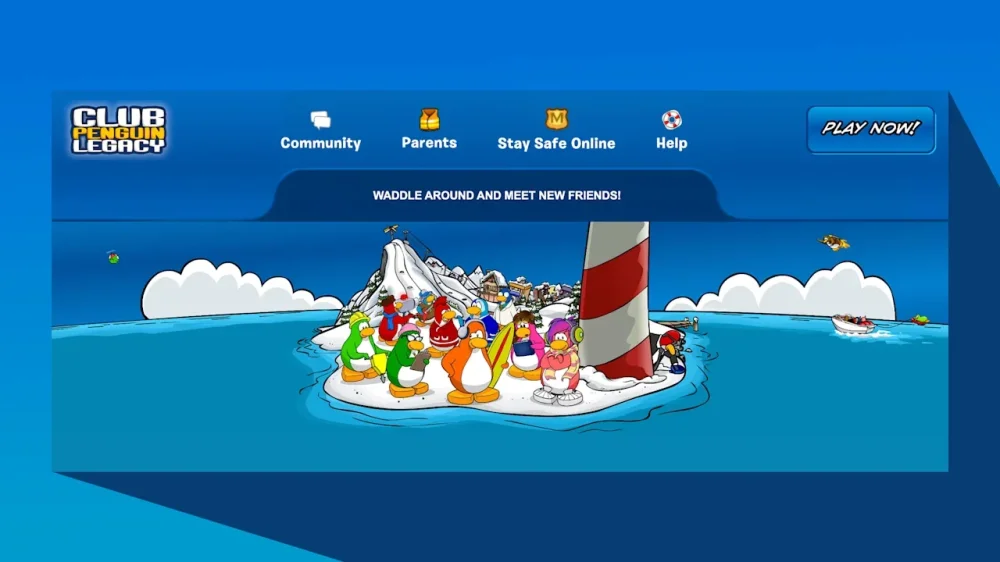
For many tweens of the 2000s, Club Penguin was the place to be. Players created penguin avatars, dressed them up, and roamed a virtual world of igloos, ski lodges, and mini-games. There were puffles, Tamagotchi-like pets to care for, and bustling servers where you could chat with friends, surf through a mine, or lob a virtual snowball at a stranger. At its peak, the game drew hundreds of millions of users and offered an early taste of social media for a generation of kids. Disaster struck in 2017, when Disney, which owned the platform, shut it down, citing declining popularity and falling revenue. The company pointed users to a new game, Club Penguin Island, but that, too, was discontinued soon after. Since then, several attempts have been made to revive the Antarctic metaverse. Club Penguin Online was eventually overrun with racist and antisemitic content, while the unsanctioned Club Penguin Rewritten surged during the pandemic before being taken offline, leading to arrests in London. Still, Club Penguin hasn’t disappeared. A volunteer team of coders and moderators now runs Club Penguin Legacy, which has been online for more than four years. Fast Company spoke with two members of that team, who say they’re focused on preserving both the nostalgia and the safety-first moderation that defined the original. Today, their labor of love supports roughly a million users. “We want to honor what made the game so meaningful when we were growing up playing it. So, you know, trying to honor how the game felt, how people interacted, and the community that it created,” Karalyn, a director and developer for Club Penguin Legacy, tells Fast Company. “We’ve always been adding new events, parties, and other content.” This interview has been edited for length and clarity. How did you get into this? Karalyn: I joined the team back in January of 2023; I was the director for the game in 2024 and 2025. I have a degree in electrical engineering, but do software engineering as my main goal. Mey: I joined the team in January 2024 as a developer, and ended up in more of a lead developer role later that year. I am self-taught with programming and most of the skills that I use on this team, but I’m really proud to be part of it and happy to be here. Is this your full-time job? Mey: For both of us, it’s definitely close to a full-time job. It’s not our main job, so it is more of a labor of love, but it’s something that we definitely put a lot of time and effort into. We have about 15 people. It’s a slew of moderators, designers, software engineers, community support representatives. How do you go about bringing an old game like this back to life? Karalyn: For the technical aspect, it’s not just creating the same gameplay and creating that same game engine. You have to think about actually having it ready for production and having it ready to serve a whole bunch of users. If somebody wanted to re-create it . . . you have to have the core mechanics for the game. There’s a lot of talented engineers out there that I’m sure can kind of reverse engineer how to do something like that. Because Club Penguin emphasized safety so much, that was something that was one of our top priorities. So having a whole team of moderators to ensure safety in the game was something that you had to think about as well. It’s not just the actual code that has to be engineered, but like the whole production of what they were doing. A lot of us grew up playing Club Penguin. We were fresh home after school to log in and explore this exciting, magical world. It wasn’t just a game. It was more like a community. And so I think when the original shut down and that space disappeared . . . there are not that many spaces that are balancing simplicity and safety and social connection. Mey: It really depends on the scale of the game. Our game is a world with over a million users, with over a thousand people at times playing together. But some games out there are, like single-player, very simple, and there are a lot of tools, even for hobbyists, to kind of tackle that level of game. How does this stay afloat? Do you take donations? Karalyn: We don’t actually take any money from our community. It’s entirely self-funded. We’ll never ask people to pay. There are no advertisements, no memberships, nothing like that. It’s completely free to play. We try to keep it pretty lean. We have a small team, and we’ve had to make infrastructure improvements in order to continue to stay lean and reduce operating costs so that we can still serve the thousands of players that we’re seeing daily. How many users are people who played the original versus those who are coming to this for the first time? Karalyn: We definitely see a mix of players. I think it highlights what Club Penguin Legacy is doing right. Because on one side, you have people who grew up with the original game, and they know the nostalgia, the familiarity, the comfort, and they are familiar with that lore that we have. And then we also have a good mix of people who never experienced the game before, but they’re here because the game offers them a sense of connection, escapism. How much time are people spending on Club Penguin Legacy? How long does a typical session last? Karalyn: Some people want to log in. They want to do their daily tasks. They got to feed their puffles. They want to check out the catalog and see if there’s anything new. But for a lot of people, they will stay on for an hour or two, chatting with friends, catching up, and just kind of remembering that sense of community. Mey: It’s kind of nice to go into our game and see the same faces day after day, like you can join pretty much any time of the day and see some people sitting around town talking. There’s a lot of our core community that really just kind of has it as a social tool in the background for them. Do you know how many puffles are still alive on Club Penguin Legacy? People are going to read this who played the original and wonder what happened to their puffles. Mey: There are currently 213,749. Meta seems to be giving up on the metaverse. OpenAI is shutting down Sora. It’s interesting that a lot of platforms die, but Club Penguin is surviving. Mey: Our game is a metaverse of sorts, for sure. For a lot of other kinds of platforms, there’s one thing we have over them, which is that they didn’t have their start in 2005, 2008. They don’t have that strong background that we get to fall back on. A lot of them are having to keep up with new trends and new changes in what’s popular and what makes sense, like AI. A lot of people, like a lot of our older players, obviously, are willing to stick with it for what we already have. And I think a lot of our newer players come in and recognize that they don’t have to worry about us suddenly changing and then losing something that they found. View the full article
-
Jackie, the world-famous Big Bear bald eagle, has been melting hearts and educating the public about her species since 2015, thanks to a web camera run by the California nonprofit Friends of Big Bear Valley (FOBBV). A little more than 10 years later, her admirers have the chance to give back. FOBBV and the San Bernardino Mountains Land Trust (SBMLT) have teamed up to raise money to purchase the property with the goal of preserving the open space. These 62 acres, located on the north shore of Big Bear Lake, are vital not only for Jackie but also for her mate Shadow and their offspring. Developer RCK Properties wants to put 50 custom homes and 55 boat slips instead, in a project dubbed Moon Camp. In order to prevent this, $10 million must be raised in six months, with a July 31 deadline. Adding another layer of complexity, Sandy Steers, the former executive director of FOBBV, a director of the land trust, and a driving force behind the purchase deal, passed away shortly after finalizing the agreement. Fast Company sat down with Jenny Voisard, media and website manager at FOBBV, and Peter Jorris, president of the land trust. The pair discussed how this purchase would benefit the environment, the current state of their fundraising efforts, and the history of Bald Eagles in Big Bear. The fight to preserve Moon Camp The land trust was formed in 1995 when residents banded together to stop another development. FOBBV was formed under similar circumstances in 2001, to fight against the development of the Moon Camp property. Steers was at the forefront of this movement, becoming the organization’s executive director. The almost 25-year-old battle has been complex, with many highs and lows, ranging from lawsuits to denied green-light approvals. Although the land trust and FOBBV are different organizations, the two often have similar goals. SBMLT has been wanting to preserve the Moon Camp property even before FOBBV existed. In 1997, the organization sat down with the Forest Service. It asked, as recalled by Jorris, “If money was no obstacle, if the Forest Service had unlimited resources and every landowner was a willing seller of their property, what would the Forest Service want to add to its ownership in the overall forest?” “That became our master plan,” he added. “And so Moon Camp became one of those very early on.” Since FOBBV is a nonprofit and SBMLT is a land trust, it makes sense that the two would partner to save the Moon Camp property. “A land trust is an organization that finds ways to purchase land for various reasons to keep it in open space, as opposed to seeing it go into some form of development,” Jorris explained. “In our particular case, we operate within a national forest, and it just so happens that the San Bernardino National Forest was created way back in 1891. Much of the land within its boundaries was already in private ownership.” The Moon Camp property sits just one mile away from Jackie and Shadow’s nest. The shoreline property is an important fishing and perching ground for the eagles. If the development happened, the eagles’ routine would be disrupted. “The disturbance will probably cause them to leave the area,” Voisard mused. Beyond the eagles, there are other potential negative environmental impacts. The Ash Gray Indian Paintbrush, a rare plant present on the property, is only found in the San Bernardino Mountains. Flying squirrels also make their homes in the area. Further, the development would increase traffic on a one-lane highway, which could be problematic in the case of wildfires evacuations. The $10 million price tag may seem steep, but it’s the current market value of the property. Neither SBMLT nor FOBBV want to cause RCK Properties financial harm. “We’re not obstructionists. So we want it to be fair for them,” Voisard explained. Stephen Foulkes, vice president of RCK Properties, declined to speak on the record with Fast Company, but did confirm the purchase agreement. Both the land trust and FOBBV want to preserve the forest, and the flora and fauna that call it home. It’s also important to honor the work that Steers poured into this project, even in her final days. It is hard to overstate how important this is for the organizations. “It means everything,” Voisard says. “This was everything that she fought for. Sandy Steers put Big Bear Valley on her shoulders, all of the nature and wildlife, and wanted to protect it. And so we’re going to make sure it is.” A fundraising update and future fundraising plans During the first phase of fundraising, an official website was created to eliminate confusion. The revenue generated came from small donations. The eagle web cameras are so popular that they have attracted 2.5 million followers across FOBBV’s social media platforms, and was even featured on popular national programs like NBC’s Today show. So it is not surprising that over $900,000 was raised in the first two weeks. As of publication, that number has increased to just under $1.6 million, which is roughly 16% of the funding goal. The second phase of fundraising hopes to attract larger corporate or even celebrity donors. Both organizations have several leads but welcome more. A brief history of the Big Bear eagles and Sandy Steers Steers, a biologist and former NASA employee, moved to the valley around 2000. She quickly became involved in protecting the natural wonders around her, including working with the Forest Service to monitor bald eagles. Prior to 2009, bald eagles used Big Bear Valley as their winter escape. Around that time an eagle couple, Ricky and Lucy, decided to make the valley their full-time home. Jackie was hatched in the 2011-2012 season while Steers watched from afar with her binoculars. “Sandy loved Jackie so much and was so connected to Jackie. She would stand out in the freezing cold and weather and just stare at her for hours with a spotting scope,” Voisard says. “When I think of Jackie, I think of Sandy.” The genesis of the idea for the web cams came because Steers wanted to see inside the eagle’s nest and was determined to make this happen. “She organized and worked really hard to not only raise the funds for it, but to understand how to build a system and design a system that would be safe for wildlife and humans,” Voisard stated. “It’s in the middle of the mountains, 145 feet up a tree, and so it’s very extensive and expensive and required a lot of permitting.” All her hard work paid off. The first camera was live in 2015 with a second in 2021. Viewers were able to see Jackie fall in love with Mr. B, her first mate. They were also able to witness Shadow wooing her away from him, which is not normal eagle behavior. Eagles typically mate for life, but Shadow had some smooth moves. Jackie and Shadow have successfully raised several chicks and are still going strong. This season, Jackie and Shadow laid two eggs, which were sadly eaten by ravens. Thankfully two more came about a month later. Now the world gets to wait and see the fate of these potential chicks. Their fans can get an inside look into the nest and help save their habitat to ensure the safety of future generations as well. View the full article

- Today
-
Central bank warns conflict likely to increase tensions in private credit markets and hit economic growthView the full article
-
To help small aerial robots navigate in the dark and other low-visibility environments, my colleagues and I developed an ultrasound-based perception system inspired by bat echolocation. Current robots rely heavily on cameras or light detection and ranging, known as lidar, or both. But these sensors fail in visually challenging conditions, such as smoke, fog, dust, snow, or complete darkness. I’m a scientific engineer who develops bio-inspired microrobots. To solve this challenge, my research team looked at nature’s experts at navigating in poor visibility: bats. They thrive in dark, damp, and dusty caves and can detect obstacles as thin as a human hair using echolocation while weighing as little as two paper clips. They emit sound waves and listen to weak echoes reflected from objects. However, enabling this sensing on aerial robots is extremely challenging because propellers generate a lot of noise. It is a bit like trying to listen to your friend while a jet engine is taking off next to you. To overcome this issue, we present two key ideas. First, a physical acoustic shield inspired by bat’s ear cartilage reduces propeller noise around the acoustic sensors, which act like the robot’s ears. Second, a neural network called Saranga recovers weak echo signals from very noisy measurements by learning patterns over time, inspired by how bats process sound. Together, these enable the robot to estimate obstacle locations in 3D and navigate safely using milliwatt-level sensing power. Why it matters These types of drones are very useful for search and rescue, especially in confined, dynamic, and dangerous environments, because they’re small and inexpensive. Search-and-rescue operations often happen in environments where visibility is very poor, such as forest fires, collapsed buildings, caves, or dusty outdoor conditions. In these scenarios, traditional sensors like cameras and lidar often become unreliable. Bats don’t rely only on vision; instead they use echolocation to perceive the world. Ultrasound sensing doesn’t depend on lighting conditions and works in smoke, dust, and darkness. Our work shows that it’s possible to bring this capability to aerial robots despite strong onboard propeller noise. Sonar boosted by noise shielding and machine learning promises to enable a new class of small, low-cost robots that can operate in environments where current systems fail. This research can enable highly functional, autonomous, tiny aerial robots for critical humanitarian applications, such as search and rescue, combating poaching, and cave exploration. AI-enabled sonar navigation could lead to safer, faster, and more cost-effective robots for time-sensitive operations where human or larger helicopter access is limited. This is a step toward being able to deploy swarms of aerial robots, much like groups of bats, to explore hazardous environments and search for survivors. Breakthroughs in mathematical modeling, neural network design, and sensor characterization will enable other low-power applications for these drones, such as environmental monitoring. Our work can reduce power by 1,000 times, weight by 10 times, and cost by 100 times compared to current solutions. What other research is being done Most aerial navigation systems rely on cameras, depth sensors, or lidar, which degrade in low visibility. Radar works in these conditions but is power-intensive for small drones. Prior work has explored ultrasound sensing mainly on ground robots, but applying it to aerial robots has been difficult due to propeller noise and weak signals. What’s next We are working on improving flying speed, sensing range, and system size. We are also exploring new bio-inspired designs and combining ultrasound with other types of sensing. Ultimately, our goal is to build reliable, low-power aerial robots that can operate reliably in dynamic environments and enable real-world deployment in search and rescue. The Research Brief is a short take on interesting academic work. Nitin Sanket is an assistant professor of robotics engineering at Worcester Polytechnic Institute. This article is republished from The Conversation under a Creative Commons license. Read the original article. View the full article

-
Meta is making font design as easy as writing a prompt with its newest AI tool. On March 27, the company rolled out new features within its stand-alone Edits app for editing photos and short-form video, including “AI Style” for fonts, which lets users customize text themselves. It’s like a modern-day version of the classic WordArt style in Microsoft Word, but with AI text prompts. The feature is a bit tucked away within the “Styles” tab, but users can find it when editing text by tapping the “Restyle” icon between the icons to write and choose a font. A list of suggested prompts shows what’s possible. The loading screen shows an animated plus-sign pattern. Suggestions that auto-populate the prompt box with terms like “flaming fire,” “3d rainbow,” and “overgrown cushion moss” show up visually as promised, while other, more detailed auto-prompts are also true to form. Tapping a “pop art” suggestion fills the prompt box with more detailed instructions that read, “pop art style font like something from a comic book, with posterized shading, bold colors, thick outlines, and big shapes break out of the letters and a burst in the background.” Sure enough, the text ends up looking like something out of a comic book. Tapping “forest” produces a text style based on the prompt “twigs, leaves, and lots of white, purple, and yellow wildflowers blooming out of the letters.” When writing your own prompt, the output is better than you might expect, but it’s not foolproof. Sometimes the generator has a hard time understanding simple instructions and takes a few tries. The preset options work best. Meta has added significantly to its fonts and text style options over the years as creators turned to third-party design software and apps to customize their content. In 2020, it expanded its number of available fonts in Instagram Stories from five to nine. Currently there are 14 fonts on Instagram alone, while the Edits app has more than 200. Even if it’s not perfect, AI Style for fonts increases the amount of text customization available to creators, and it also shows how far AI has come. As it’s gotten better at rendering realistic-looking hands, AI has also improved at creating legible typography. View the full article

-
Recently, one of us was guest-teaching a humanities class on artificial intelligence. He asked students a simple question. Had they noticed themselves becoming more “attached” to their favorite chatbot? “For example,” he asked, “do you find yourself saying ‘please’ and ‘thank you’ to the chatbot more than you used to?” Nearly every head nodded. “Why?” he asked. One student raised her hand. “So if AI does take over,” she said, “it’ll remember that I was nice to it.” The class laughed—but not entirely. The fear and hype around AI When we see public conversations about AI, they tend to swing wildly between hype and catastrophe. On one end, we see promises of unprecedented productivity and creativity. On the other hand, there is no shortage of warnings about mass unemployment, loss of human agency, and even the extinction of our species. In a national survey we conducted in December of more than 1,600 Americans, roughly four in 10 reported being very concerned about AI’s existential threat to humanity. The level of concern is comparable to how many feel about climate change. Notably, this anxiety cut across age, income, race, gender, and political affiliation. These fears deserve serious attention. Governments and technology companies should continue rigorous testing, oversight, and safeguards. They need to make sure that there is responsible development of large language models. But focusing exclusively on worst-case scenarios risks obscuring a quieter—and possibly more consequential—question. Is AI helping people become more purposeful? AI and purpose To explore that question, we introduced a new measure in a survey of U.S. adults: The “AI for Meaningful Purpose Scale,” or AMPS. The scale asks whether people feel that AI helps them pursue goals that matter to them, develop skills they find meaningful, and stay connected to their values and sense of direction. For example, is AI helping teachers spend more time with students rather than on paperwork? Is it helping caregivers navigate complex health systems? Is it giving older adults new opportunities to create, learn, and connect? And is it helping younger adults—who are now the most anxious generation in modern history—create a sense of direction that feels both authentic and achievable? The generational divide was striking. Younger adults—Gen Z and Millennials—were roughly twice as likely as Gen Xers and Baby Boomers to say that AI supports these deeper aims. Men were twice as likely to report a high AMPS score as women. This is a gap that likely reflects differences in access, encouragement, and early design choices rather than inherent differences in interest or capability. These disparities are not destiny—but they are early signals. If AI becomes a force multiplier for purposeful living, it won’t do so automatically or equitably. How AI can impact wellbeing What surprised us most, however, was how strongly AMPS scores tracked with broader indicators of well-being. People who scored high on AMPS were more than twice as likely to report a strong sense of personal agency, social connection, and hope about the future. In other words, they were more likely to be flourishing. This doesn’t mean AI is magically making people happy. But it does suggest that when people use AI in ways aligned with what matters most to them, they feel more capable and more directed. One of the most intriguing findings emerged when we looked at how people hold competing views of AI. Older generations who were highly concerned about AI’s existential threat were less than half as likely to use it in the service of what mattered most to them. Among younger adults, however, concern about AI didn’t predict disengagement. Gen Z and Millennials were just as worried about AI’s risks as their elders. However, they were still actively using it to learn, grow, and pursue purpose. This shows us that younger generations appear more willing to hold two seemingly contradictory truths at once: That AI may pose serious dangers, and that it can still be a powerful tool for living well. This capacity to live inside tension—neither naïvely optimistic nor paralyzed by fear—may turn out to be one of the most important skills of the AI era. What the future of AI will look like The future of AI won’t be determined solely by what machines become. How humans choose to use them, and toward what ends, will impact and shape how they develop. If we treat AI only as a threat to manage or a tool for efficiency, we miss an opportunity. However, if we use it thoughtfully, AI can amplify not just productivity, but purpose. It can give people a sense of agency, and also bring hope and connection in a time when all three are in short supply. The real question, then, is not whether AI will change our lives. It already has. The question is whether we will design—and teach people to use—AI in ways that strengthen our sense of meaning and purpose rather than erode it. View the full article

-
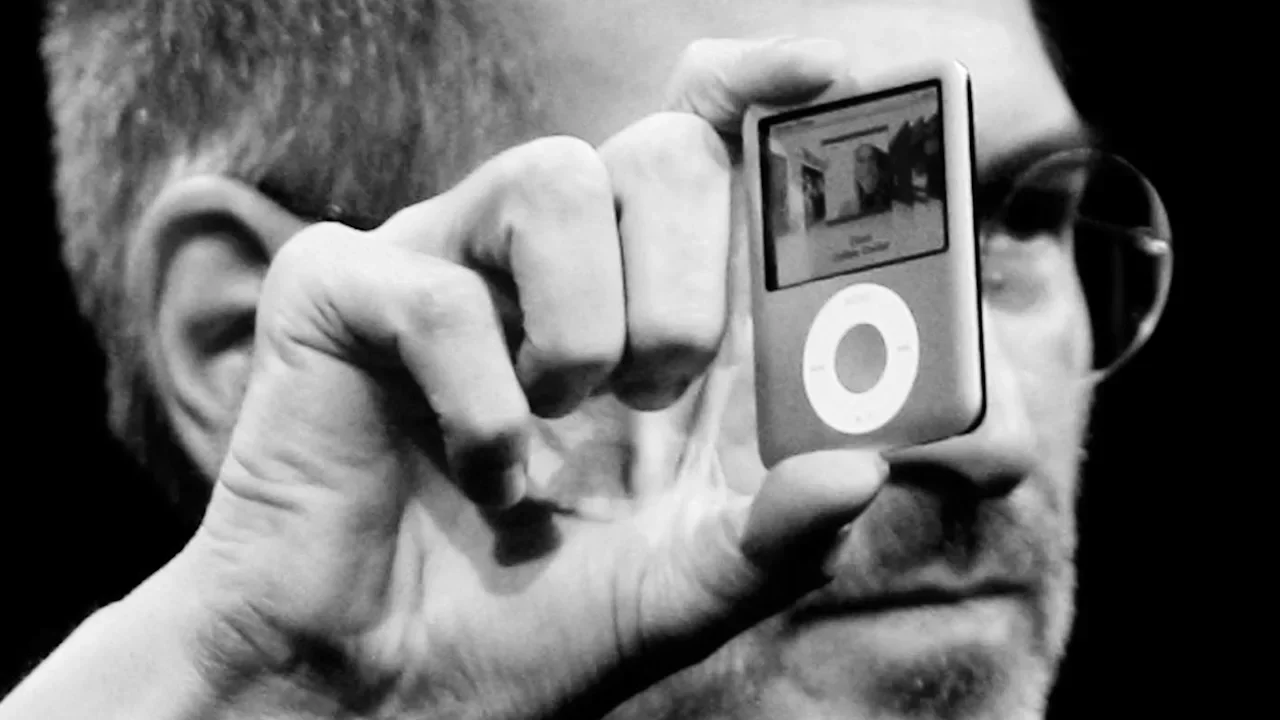
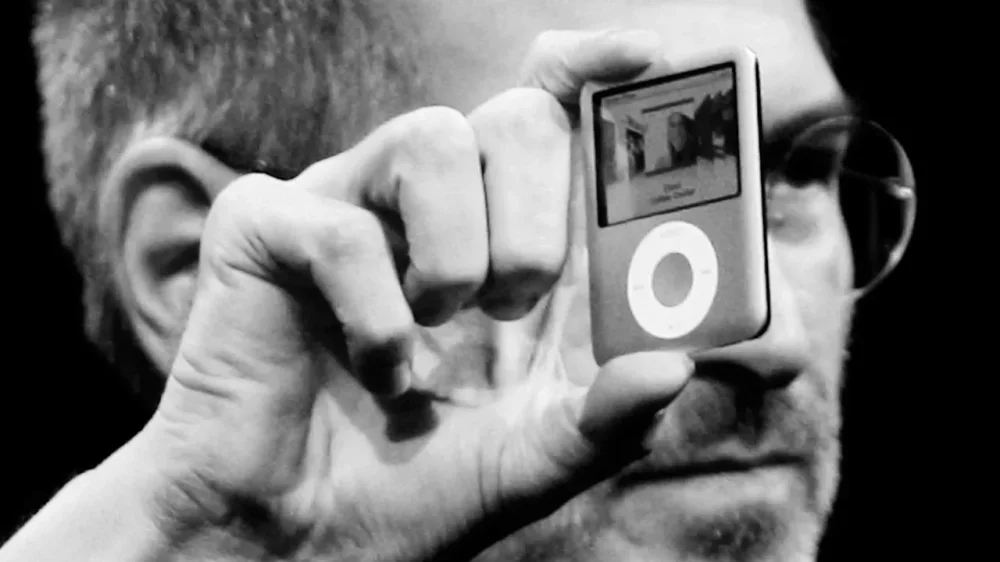
Apple was founded 50 years ago today, on April 1, 1976, by two scruffy twentysomethings named Steve—Steve Jobs and Steve “Woz” Wozniak—but not in a garage, as legend has it. On that date, Ron Wayne, a 41-year-old senior designer whom Jobs met at Atari, took a two-page partnership agreement down to the Santa Clara County registrar’s office, and Apple was born. That agreement gave each of the Steves 45% of the company, and Wayne the final 10%, according to the new book, Apple: The First 50 Years, by reporter David Pogue, who has covered the company for 41 years. “That year, they were thrilled to sell 150 of those Apple I boards,” Pogue writes. Five decades later, in 2026, “its annual revenue approached $400 billion a year—more than Meta, Netflix, and Intel combined.” So, how did we get here? Fast Company spoke with Pogue, who says Jobs is a big part of the answer—but not for the reason you might think. While the general consensus is that from 1985 to 1996, “Apple didn’t do anything during those dark years,” Pogue argues that those 11 years when Jobs was gone were crucial to creating the products that define Apple’s success today. During this time, they came out with the PowerBook, and they released QuickTime, which is essentially the basis of video streaming today, Pogue says. The author dispels more myths in his massive 548-page book, too. For example, this wasn’t the Steves’ first rodeo—in fact, Apple was Woz’s and Jobs’ fourth business venture. Also, the tablet came before the phone; John Sculley did not fire Jobs; and Jobs didn’t write the famous “Think Different” ad, nor did he name the Macintosh. Apple and AI “As we speak, there is a general perception that Apple missed the AI wave,” Pogue tells Fast Company. In June 2024, Apple promised a new version of Siri, as part of Apple Intelligence, “but coming up on two years later, Apple still hasn’t delivered.” On Monday, Bloomberg reported Apple is shifting its AI focus to hardware and services. The news follows a previous report that the company plans to open Siri to outside artificial intelligence assistants; it is expected to use the Extensions feature in iOS 27 as a key part of its strategy. What could that look like in the future? According to Pogue, it could be a new version of Siri that has access to all your texts, emails, and more—and can figure out from that, “what time do I need to pick up my mom?” in the blink of an eye, and then let you know, “you need to leave at 1:30 p.m.” Perhaps Apple’s AI story will end up being: “We aren’t always first, but we are usually the best,” as Tim Cook told Pogue. What’s in store for Apple in the next 50 years? If we look at what is next for Apple, Pogue says the emphasis is on hands-free devices: smart glasses, smart AirPods, or possibly pendants that would have a camera. View the full article
-
You earn qualifications, polish your résumé, climb the ladder, grow your salary, and build your reputation. You’ve done everything you’re supposed to, so you (understandably) expect to feel on top of the world. Yet you remain unsatisfied despite accomplishing everything that you thought you wanted. That sense of “What’s next?” is surprisingly common. According to a recent study by Headway app, 77% of people consider themselves successful, yet 81% also admitted feeling behind in some area of their lives. The cause of your internal discontent A lack of effort or having more to achieve isn’t the cause of your dissatisfaction. It stems from not doing what you really want to do. We often give professional progress high priority, but success holds different meanings for each of us. Some people see it as growing their investment portfolio, while others view it as making memories. The Headway survey found that 33% still felt financially behind, despite their achievements. Likewise, 11% say they lack life experiences, 10% wish they had stronger relationships, and 10% are unhappy with their health. When you achieve something significant, that little “but” at the back of your mind can point you toward what you really want to work on. Why you need to avoid the comparison trap People often lose sight of their wants and start measuring themselves against others, especially when social media offers a constant reminder of how everyone is getting ahead. Most of us subconsciously know that it’s all staged, but our brains don’t automatically make that distinction. Instead, status anxiety—the innate desire to fit in and the fear of being perceived as unsuccessful—pushes us to chase the version of success that we see others striving toward. In my book, Beyond Belief, I explain how our deep-rooted assumptions often shape our behaviors. However, these beliefs aren’t always in our best interests. We believe success is achieving what everyone else is achieving, so we do what they’re doing. It’s performative, and despite providing external success, it doesn’t feel that way internally. How to be successful and satisfied If you’re accomplished on paper but dissatisfied in practice, the issue usually lies in how you define success. You need to align your ambitions and actions and consider whether your beliefs allow you to recognize the progress you’ve already made. The following steps should provide a good starting point: Question what success means to you Many of us assume that we should want certain goals and that success looks a particular way. However, that isn’t true, and it won’t make you happy. When achievements leave you feeling unfulfilled, you should question whether you’re pursuing success on your terms or someone else’s. Is a high salary worth more to you than a career you love? Would you rather gain professional experience or life experience? Is starting your own business a more exciting prospect than landing a job within the Fortune 500? There’s no right answer. Success is subjective, and figuring out what you truly want can help you to pursue something that genuinely makes you feel something. Stop focusing on a single aspect of life We have a habit of treating one aspect of life as the only metric that matters. But they all contribute to our satisfaction. When you focus too intensely on one aspect, you inevitably neglect others. Sure, you might achieve everything you strive for, but you’ll still feel that something is missing (because something is). Reaching the boardroom won’t compensate for chronic health struggles, and money can’t buy you more time with your loved ones. You may reach your goal faster with intense focus, but what’s the cost? It’s incredibly telling when 42% of people question whether they’ve lost more than they’ve gained pursuing their ambitions. Reframe how you think about progress Our thoughts shape our behavior, and having a positive mindset can make all the difference. If your attention is firmly on what you haven’t achieved yet, satisfaction will always feel out of reach. There will always be something more, and that leads to negative thoughts, like “I should be further along, and I need to work harder.” It’s a far better use of your energy to focus on what you have achieved: “I’ve accomplished so much, and I can overcome any challenge.” After all, which way of thinking is more likely to energize you and make all your effort feel worthwhile? Stop putting a time limit on success We tend to measure our achievements against those of others our own age. In fact, 81% say they feel behind their peers in at least one aspect of life. And when reality doesn’t keep up with your arbitrary timeline, even progress can start to feel like failure. Success doesn’t follow a fixed schedule, and being a year or two older doesn’t take anything away from your accomplishments. If you’re learning, growing, and progressing, you’re succeeding. Age doesn’t change that. View the full article

-
Telling the truth is good for business. A 2024 research paper shows that an honest culture can boost financial performance by over 20%. And in a 2004 article by MIT Sloan Management Review, 76% of staff say the honesty of a business affects their decisions on where to work. We know it matters to organizations. After all, words like “honesty,” “integrity,” and “truthfulness” appear in more than 65% of all corporate value statements. Unfortunately, just 19% of staff trust that their leaders are telling the truth, according to a 2024 report. Trust is at historic lows, in part because, despite us all saying truth and honesty matter, it’s never been easier to lie and get away with it. The data show that most of us lie daily. One experiment even found 60% of people lie once every 10 minutes. From AI deep fakes and hallucinations to social media bubbles and rampant political misinformation, we’re living in a world where lies abound, and truth seems rarer every day. Telling the truth is a behavior, not a value. You’re either doing it, or you’re not. So how do leaders make truth-telling cultures happen in their business? Here are five practical strategies I’ve seen work with teams and clients globally. 1. Lead by example There’s no point waiting around for others to go first. If you want a workplace where truth happens, start by doing it yourself. I see workplaces where everyone agrees that they need to have hard, honest conversations, but then sit in awkward silence when it comes time to do it. We don’t have the right to expect from others behaviors that we ourselves are not engaging in. And not lying isn’t enough, you need to spell out the truth. Ask yourself: what is the most important conversation in my team that isn’t happening? Then find an opportunity to start that conversation. 2. Remove disincentives Never expect someone to tell the truth when their job depends on them not telling the truth. For example, if the leader fires someone for telling them news that is factually true (but unfavorable to the leader or organization), this creates a disincentive for the next person in that job to tell the truth. Every interaction teaches people how to behave. If we put disincentives in place for telling the truth, don’t be surprised when people act in line with them. 3. Make it safe Speaking up to tell the truth can be scary. This is true even when lives depend on it. Junior pilots often don’t speak up in cockpits when things go wrong because they’re too scared. They’d literally rather crash into a mountain than speak up honestly to a more senior person. Often, what makes truth-telling scary is fear about people’s reactions. I was with a client once where a staff member said they couldn’t have honest conversations because “last time they spoke up and told the truth, someone called them a b*tch.” If you want a culture of truth-telling, it’s up to you to work and take the fear away. 4. Remember the good news Remember, telling the truth doesn’t only have to be about serious, hard conversations. In many workplaces, good, “happy” truths go unsaid just as much as negative ones. That might mean a piece of genuine positive feedback about a job done well, sharing that you’re proud of an accomplishment, or even telling a colleague how happy you are to be on their team. Not many people say these truths out loud, but they offer fertile ground to build a habit of speaking honestly. If you’ve established a culture where people articulate friendly facts openly, they’ll be more open to it when the news is harder to hear. 5. Start small The Japanese art of Kaizen (continuous improvement) suggests that if change is hard, you’re doing too much. If you want to build a truth-telling culture, don’t start with the difficult high-stakes conversations. Start with a smaller, safer territory. Maybe that’s a conversation about a minor piece of feedback, rather than a massive performance issue. Maybe it’s a small, but not catastrophic mistake with a client. Or a minor missed target, rather than an end-of-days scenario. Like every skill, telling the truth is easier the more practice you get. Practice when the stakes are low, and it’s easier when things get tough. The benefits of telling the truth don’t accrue when we make it a “value” and put it on a poster on the wall. The benefits accrue when it lives and breathes as a behavior. That is what we mean by making truth happen. View the full article

-
Modern leadership is defined by paradox. Leaders are expected to set clear direction while remaining open to challenge. To move quickly with decisive action while also taking people with them. To hold authority while fostering shared ownership and to deliver results without eroding trust. These demands are not occasional tensions; they sit at the heart of the role. Under this sustained pressure, many leaders have a tendency to reach for dominance. Dominance can feel efficient. It centralizes control, projects certainty and offers a reassuring sense of direction when the ground feels unstable. In moments of volatility, it can look like strength. Yet dominance carries hidden costs. When you position yourself as the one with all the answers, you inevitably carry all the responsibility as well. Decisions begin to bottleneck around you. You inadvertently train your team to bring problems to you for a solution, rather than feeling empowered to work them through for themselves. Over time, the burden becomes heavy because the very authority that once felt empowering becomes isolating as everyone looks to you for direction. There is a subtler cost too. When performance is driven primarily by the desire to please the leader, motivation shifts in quiet but significant ways. People focus on delivering what they believe will satisfy that leader, rather than uncovering what might truly serve the organisation. Creativity narrows. Ownership diminishes. Energy is invested in managing upwards rather than stepping forward with initiative. Compliance increases but inspiration gradually fades. The leaders who genuinely inspire operate differently. They exert strong influence without exerting dominance, and in doing so, they expand rather than restrict the capacity of those around them. They lead with Graceful Power. The cost of always being right Several years ago, I worked with a highly successful senior executive whose decisiveness and commercial acuity had propelled him into positions of increasing responsibility. On paper, his team performed well. Targets were met. Results were strong. Yet employee turnover was creeping upwards and morale was low. His team described him as intelligent, sharp and impressive—but also intimidating. They waited for direction rather than taking initiative. They filtered information before sharing it. They focused on gaining his approval instead of proposing bold alternatives that might challenge his view. Meanwhile, he was exhausted. He struggled to switch off. If something went wrong, he felt it was ultimately his responsibility to fix it. In trying to demonstrate strength and control, he had made himself indispensable—and increasingly alone. Through coaching, he did not diminish his authority; he expanded it. He became clearer about where his contribution added real value and how he could engage his team in working collectively towards shared organisational goals—and he showed up in ways that consistently reinforced those priorities. He stopped answering every question first and instead began asking, “What do you think?” He acknowledged when he didn’t yet have a solution and invited others into the problem. The results did not deteriorate. They improved. His team became more candid and more willing to take ownership. Innovation increased. Most strikingly, people described feeling energised rather than managed. He had not become less powerful. He had become more inspiring. Redefining power for modern leadership Graceful Power is not a softer version of leadership. It is a more elevated and expansive one. It is the ability to exert strong influence without relying on force—to replace control with composure, aggression with conviction and hierarchy with shared purpose. At its heart are three interwoven qualities: congruence, courage and compassion. Together, they enable leaders to embrace and balance the tension between competing demands, rather than narrowing into one side of the paradox and quietly avoiding the discomfort of holding both. Graceful Power does not eliminate tension. It strengthens your capacity to remain steady within it—creating the clarity and confidence that inspire others to act. 1. Congruence: authority grounded in alignment Congruence forms the foundation of Graceful Power. Congruent leaders are clear about their values and intentional about their impact. Their words and actions align, creating a sense of coherence that others can rely on. This coherence builds trust—not because the leader is flawless, but because they are consistent. When people understand what you stand for and see that reflected in how you behave, they feel steadier around you. They are more willing to speak up, to challenge ideas constructively and to take intelligent risks. Dominant leadership often compensates for inner uncertainty. Congruence removes the need for that compensation. Authority becomes quieter, less reactive and more grounded. When leaders are aligned, they no longer feel compelled to control every outcome in order to feel secure. Responsibility can be shared without a loss of status. Trust begins to replace compliance, creating the conditions in which inspiration can grow. 2. Courage: mastering fear rather than masking it Dominance frequently disguises fear—fear of being wrong, of losing status or of appearing weak. Under pressure, our nervous system interprets uncertainty as threat and defaults to fight, flight or freeze. Some leaders respond by tightening control, becoming overly assertive or shutting down dissent. These reactions can look decisive, yet they are often driven by anxiety rather than clarity. Leaders with Graceful Power recognise this response in themselves and learn to regulate it, so that fear informs their judgement without dictating their behaviour. From that place of awareness, courage looks different. It is the willingness to act in alignment with your principles despite discomfort—and to do what stretches you, not just what feels natural or safe. Courageous leaders initiate difficult conversations with calm authority. They admit uncertainty without drama. They resist the temptation to over-direct when patience is required, and they speak plainly when avoidance would feel easier. When a leader models this kind of courage, it does more than steady the room. It signals that growth is expected and supported. It invites others to take intelligent risks, to speak candidly and to stretch themselves in turn. This shared expansion is where inspiration begins. 3. Compassion: performance through human connection Compassion is often mistaken for leniency. In reality, when practised with clarity and conviction, it strengthens performance. Compassionate leaders listen not simply to respond, but with a genuine desire to understand what others are experiencing and what matters most to them. They communicate with equal clarity, so that people understand not only what is expected, but why it matters. Instead of driving performance through pressure, compassionate leadership drives performance through belief. It separates the person from the problem, expressing confidence in someone’s potential while holding them accountable for improvement. When people feel respected, understood and valued, their motivation shifts. They are no longer striving primarily to avoid disappointing the leader; they are striving to contribute meaningfully to something shared. That shift—from compliance to ownership—is where inspiration is set alight. From dominance to shared ownership Graceful Power integrates congruence, courage and compassion in real time. Congruence anchors the leader in what matters most. Courage enables them to step into what stretches them. Compassion ensures that their strength strengthens others. Instead of bearing the burden of having all the answers, the leader creates the conditions in which answers can emerge collectively. Instead of concentrating responsibility around themselves, they expand ownership across the team. In that expansion, trust replaces compliance. Ownership grows. People feel respected, valued and clear about how their contribution connects to a shared purpose. The paradox of modern leadership is not resolved by choosing between strength and human connection. It is resolved by expanding your leadership so that both can coexist—confidently, consistently and deliberately. In a world that grows more complex and interconnected by the day, dominance may still command attention, but it rarely inspires commitment. The future belongs to leaders who can hold complexity with composure, act with conviction and remain deeply grounded in their humanity—and in doing so, set others alight. That is Graceful Power. View the full article

-
Google's John Mueller answered a question about the nature of core updates: Are they rolled out in steps or all at once then refined? The post Google Answers Why Core Updates Can Roll Out In Stages appeared first on Search Engine Journal. View the full article
-
You’re a solopreneur, so you’re in charge of everything. You set your own hours, choose your clients, and decide how your business runs. Nobody needs to approve your decisions. The worst part of solopreneurship is also that you’re in charge. Every decision, every approval, every process runs through one person: you. And when you stall, so does everything else. The same control that makes solo work so appealing can also become the thing that holds your business back. If your business can’t function without your hands on every single detail, you’ll hold yourself back. At some point, you have to figure out how some aspects of your business can run without you. Where solopreneurs get stuck Bottlenecks don’t usually feel like bottlenecks. They feel like “just how things are.” You’re a solopreneur, so you’re supposed to do everything yourself . . . right? You’ve hit a bottleneck when you have no more time to give to your business. And as a result, you can’t grow or dedicate your energy to high-value work. A few scenarios are common in solo businesses. You have overly manual processes. You’re copying data between apps, setting up new projects from scratch, or holding your to-do list in your head. Mundane, menial tasks eat up hours of your time. You hold on to tasks you’ve outgrown. Solopreneurs often keep doing work they could hand off—bookkeeping, scheduling social posts, organizing documents—because they believe no one else will do it well enough. These tasks are necessary, but that doesn’t mean they’re the best use of your time. You are the decision bottleneck. When you’re the only person who can approve, review, or sign off on something, work stalls whenever you’re busy or indecisive. This gets especially expensive if you work with contractors, a social media manager, or a virtual assistant. If they can’t move forward without your input, their waiting time becomes a cost to your business. How to clear the way Once you’ve identified where things have slowed down, you can start to make changes. Here are some fixes to try. Automate the repetitive stuff. If a task follows the same steps every time, you might be able to automate it. I use automation tools to automate roughly 1,500 tasks per month in my business. Even at a conservative estimate of 10 seconds per task, that’s four to five hours of my time saved. When you automate tasks in the apps you use, you don’t get “stuck” when you have a heavy workload. Delegate with clear guardrails. If you bring on a project manager, assistant, or contractor, you need to take one of two approaches so you don’t become the bottleneck. You either need to give them really repetitive work that doesn’t require decision-making, or you need to empower the person to make decisions—and then get out of their way. Either way, you set up the work so the other person can move forward without waiting on you. Build in decision deadlines for yourself. Solopreneurs don’t have managers pushing them to decide. If you tend to sit on decisions (whether to acquire a new tool, make a pricing change, or take on a client), give yourself a deadline. Indecision can cost you opportunities, so force yourself to move forward one way or the other. Your solutions have to be practical For one week, pay attention to the tasks that require you specifically. If someone or something else (a tool or an automation) could handle it, that task is a candidate for removal from your plate. Sometimes removing bottlenecks comes with a hard cost. You have to pay for a tool or pay for someone to help you. The solution has to fit within your budget. But there’s another approach that’s free. Let stuff go. You can’t do everything. When you audit your week, figure out whether anything can be safely removed altogether. Not automated or passed off to another person. Just completely dropped. Sometimes the most effective fix for bottlenecks is realizing that a task wasn’t necessary in the first place. View the full article

-
What do you do if you want to eat fish, but you hate the idea of harming wild animals? Or if you’d like a nice lox and bagel, but you’re concerned about mercury and microplastics—or the broader climate risks of industrial fishing. What are your options? One San Francisco startup has an answer: Grab cells from a salmon, grow them in giant tanks in a lab-like setting filled with a warm bath of nutrients that mimic the inside of a real fish, and then coax them onto veggie-based scaffolds to form a piece of premium fish that’s never touched an ocean. That’s the vision driving Wildtype, a lab-grown fish company based in San Francisco’s trendy Dogpatch neighborhood. I stopped by, met Wildtype’s cofounder Dr. Aryé Elfenbein, and tried some of the company’s lab-grown salmon firsthand. The Fishery From the outside, Wildtype’s headquarters look like a nondescript industrial building. The only identifying mark is a stylized, W-shaped sign. Inside, though, it more closely resembles a high-end sushi restaurant. Elfenbein—a curly-haired, enthusiastic, practicing cardiologist with a deep passion for fish—greeted me warmly at the door and took me inside. I was immediately drawn to a multistory glass window at the center of the cavernous room. Behind it were gleaming stainless-steel tanks, resembling the kind of kit you might find at a microbrewery. That’s fitting, as Wildtype’s space used to host a beer-brewing operation. And the connection runs deeper. Elfenbein told me he dislikes the term “lab-grown fish” and prefers the term “cultivated.” I get it. The moniker “lab grown” evokes Frankenstein-esque visions of sparking lighting generators and people in biohazard suits wielding test tubes. Dr. Arye Elfenbein Elfenbein’s objection to the “lab grown” terms runs deeper, though. As a scientist, he’s been in plenty of labs. And he was quick to point out that Wildtype’s operation doesn’t require the kind of clean-room, negative-pressure, super-advanced environment you’d find in a true bioscience lab. It’s more akin, again, to a microbrewery, Elfenbein explained. Except instead of brewing beer, Wildtype is brewing fish. After visiting the tanks, Elfenbein led me over to a bespoke wooden sushi bar, beautifully decorated with cookbooks and ephemera from the sea. He then set about preparing me some fish to try out. A Single Fish Elfenbein explained that when the company first started making its cultivated fish, a pound of product might cost hundreds of thousands of dollars to produce. Although it doesn’t require a lab, the process is scientifically complex. It begins with cells taken from a real salmon—in fact, one specific baby salmon whose cells were extracted years ago. Elfenbein told me that they initially thought they’d need to harvest cells from lots of individual fish in order to get their process right. After some work in the early days, Elfenbein told me that Wildtype has “not needed to return to the animals.” For over seven years, the single sample from a single fish has been enough. The company had purchased lots of salmon, anticipating the need to harvest multiple cell lines. When that turned out to be unnecessary, they kept the extra fish as pets. Elfenbein told me that he knows, as a scientist, he isn’t supposed to get attached to his subjects. But in spending time with Wildtype’s fish, he started to recognize that different individuals had different preferences and ways of behaving. It hammered in the idea that even a salmon is a unique, individual animal, and that killing one for food means ending a life. After harvesting cells, Wildtype grows them in a special nutrient solution. The specific type of harvested cells can become fat cells, muscle tissue, connective tissue, and more. By altering the nutrient solution, the company can coax the cells to adopt each of these unique identities. With a variety of cell types ready to go, Wildtype uses a plant-based scaffolding to coax the cells to assemble themselves into a piece of actual fish. Interestingly, Elfenbein told me the cells seem pre-programmed to do this—give them the right scaffold, and they’ll handle much of the assembly process on their own. With more time to grow, the fish gets tastier. Elfenbein likened the process to aging a fine wine. The Path to Walmart The details of the various solutions and scaffolds used are the product of years of work at Wildtype. The end result is a piece of actual fish, made from real salmon cells, with the marbled fat, connective tissue, and flavor of conventional salmon. Elfenbein told me that in blind taste tests, people can’t tell the difference between their cultivated fish and the fish from the ocean. That makes Wildtype’s product markedly different from meat alternatives, which currently dominate the market for non-meat meat. Brands like Beyond Meat and Impossible use plant cells and fats, processing them to resemble meat. Wildtype’s cultivated fish, in contrast, is made from real fish cells. That makes it far closer to the real thing than a plant-based substitute. That proximity has already stirred up trouble in certain circles. As Elfenbein pulled out a fancy Japanese knife (he’s spent significant time in Japan) and started preparing the fish I was about to taste, he told me, “What I’m about to do right now could land me in jail in multiple states.” Indeed, several states have already preemptively banned cultivated or lab-grown meat or fish. This bewilders Elfenbein. His product is American-made, he told me, in contrast to most commercial fish, which is farmed abroad. And he’s not a rabid animal rights protestor—just a scientist who thinks he can do something in a better, more efficient, less harmful way. That should endear Wildtype to protectionist-minded types. But apparently, the specter of artificial meat is too much for some people to stomach. Elfenbein told me that, interestingly, his biggest supporters in multiple states are hardcore libertarians. “I’d never be caught dead eating this weird San Francisco stuff,” they apparently tell him. “But if a man wants to eat something, he should be allowed to eat it!” Thankfully, in San Francisco and multiple other states, Wildtype’s product (which has received clearance from the Food and Drug Administration) is perfectly legal. It’s currently offered at several high-end fish restaurants and sushi bars in California and other Western states. In the early days, Elfenbein said, Wildtype focused on producing sashimi-grade raw salmon for these kinds of sushi bars. Now, though, they’ve pivoted to something different—smoked salmon. Why? Elfenbein told me that there’s something uniquely special about lox on a good bagel. And beyond that, Wildtype doesn’t want to only serve high-end spots. The company’s dream, Elfenbein told me, is to have their product sold at Walmart. That would make cultivated fish a mainstream product, and expand the company’s impact dramatically. Just as organic food made the jump from niche, hippie product to mass-market commodity, Elfenbein hopes cultivated fish will do the same—with the attendant benefits to animals and the environment. The Moment of Truth As we spoke, Elfenbein opened a package of entirely ordinary-looking smoked salmon, cut several slices, put it on top of crackers with some pickled onions and cream cheese, apologized for not having good-enough bagels to serve me, and then put down a lovely plate of dainty little morsels on the bar in front of me. I bit into one. It tasted like fish. My first impression was that it had a bit less of the connective tissue than conventional smoked salmon, giving it a bit less pull than the traditional stuff. As I ate more, though, I had a harder and harder time telling it apart from the smoked fish I eat every weekend. Wildtype smokes it in-house using a special wood blend, and the thin format of smoked salmon likely makes it easier to grow than a big hunk of sashimi. It was tasty. But most of all—save for my knowledge of how it was produced—it was unremarkable. It just tasted like a nice slice of lox. Nothing more and nothing less. That surprised me. I was expecting something goopy or incomplete—like when a vegan friend serves you a dish made with tofu and insists, incorrectly, that “this tastes just like the real thing!” I expected to have to squint a bit—visually and culinarily—to believe I was really eating salmon. Wildtype’s fish wasn’t like that at all. It just tasted like fish. Again, that’s exactly Wildtype’s goal. It’s ironic that it takes years of work from highly trained scientists and an industrial building full of equipment to duplicate a process that nature does entirely unassisted every day. But it’s a common story in San Francisco. Decades of research and training result in machines and processes that mimic biology—but with benefits. Indeed, I rode to Wildtype’s headquarters in an AI-powered Waymo that had been meticulously trained by armies of researchers to do something that humans do with their brains every day, only better. Beyond the taste of Wildtype’s cultivated fish, there is a laundry list of benefits to fish that don’t come from the ocean. It has far less environmental impact than wild-harvested or farmed fish, Elfenbein told me. I could literally look behind me while I ate and see exactly where my fish came from—and no diesel-exhaust-spewing trawler had to set out to sea to get it to me. Wildtype’s fish is also free from parasites, microplastics, mercury, and many of the other contaminants lurking in much of America’s commercial salmon. And of course, there’s the core benefit of not killing animals. Elfenbein told me that Wildtype exists in a strange gray area when it comes to animal rights. The product is not technically vegan, because it’s derived from animal cells. Yet many vegans choose to eat it, and many animal rights activists and organizations are quietly cheering on Wildtype’s work. Elfenbein told me that when lifelong vegans come to try Wildtype’s cultivated fish, he has to warn them: “If you’re eating fish for the first time ever, you’re probably not going to like it!” Salmon of any variety is an acquired taste. But more and more vegans are willing to acquire it via Wildtype’s products, Elfenbein said. Even a local middle school has stopped by to sample it. That got me curious as to the choice of product: Why grow fish in the first place? Elfenbein told me that, as a cardiologist who still practices in the ICU, he felt the world didn’t need more meat loaded with saturated fat or cholesterol. Fish is healthy, but most Americans don’t eat enough of it. It’s also pricier than ground beef or chicken, which makes the economics of running a cultivated fish company work better. Elfenbein shared that the cost of producing Wildtype’s cultivated fish has dropped dramatically. If the company’s processes were scaled up and run by appropriate staff members in an appropriate facility for mass production—not by highly trained, highly paid scientists in the heart of the West Coast’s most expensive city—the cost of their fish could match or even beat the conventionally harvested sort. That’s the goal at Wildtype: Deliver a product that competes on price and quality, but that is otherwise mass market enough that you might eat it without even realizing you’ve done so. There are still many hurdles to cross before Wildtype gets there. But in meeting Elfenbein and trying the product, I can see an everyday consumer topping their bagel with fish grown in a massive (non-lab) lab, adding a bit of nice cream cheese, and wolfing it down without batting an eye—or wondering if an animal was killed. View the full article

-
Captain steps back after his link to Chinese spy case triggers Royal Navy probeView the full article
-
There’s a pattern hiding in the biographies of the most brilliant minds: repeatable habits anyone can practice. It has nothing to do with being a genius. You don’t need talent or intelligence, though that helps. Benjamin Franklin taught himself to write by dismantling essays he admired, rewriting them from memory. And comparing his version to the original. Charles Darwin spent years obsessively collecting barnacles (spineless animals that look like small circular white rocks) before publishing anything about evolution. Richard Feynman rebuilt physics from first principles in notebooks he kept purely for himself. None of these men was following a specific rule. Nobody assigned them a reading list. They were doing something harder and rarer: They were directing their own learning. And in doing so, they accidentally revealed a set of habits almost every serious polymath shares. I’ve been trying to apply the wisdom of these thinkers, and I’m enjoying the process so far. It’s fascinating how many topics you can connect if you follow your curiosities. You don’t have to be a genius to adopt these habits. But you do have to be willing to learn differently. 1. They follow an obsession Most of us learn the way we were taught to learn in school. You sit down, read what you must, and move on with your life. Learning becomes a transaction. You put time in, you get information out . . . and probably do nothing with it. It feels productive, but it rarely changes your life. Polymaths take a different approach. They let themselves be consumed. Leonardo da Vinci studied human anatomy because he needed to understand how the body worked. His notebooks, thousands of pages of drawings, questions, and observations were the output of an obsession he couldn’t switch off. Obsession has a bad reputation. We associate it with imbalance, with losing yourself. But obsession, directed well, is just laser-focused curiosity. It won’t stay within conventional rules. It keeps asking why long after the reasonable person has moved on. The learning that sticks, compounds, and makes you genuinely good at something almost always begins with curiosity. Feynman described this with almost unsettling clarity. He called it keeping a “dozen favorite problems” running in the back of your mind at all times. When something new came across his desk — a paper, an idea, a random conversation — he’d immediately test it against his problems: “Does this help me crack any of these?” If yes, he’d go deeper. If not, he’d move on. It’s a deceptively simple system. You’re not waiting to be told what to learn or think. You’re maintaining a list of open questions and applying them to life’s problems. The practical implication is uncomfortable for most people. Polymaths are ruthless about feeding the flame when it appears. And are patient about waiting for the surprises and results. 2. Polymaths teach before they’re ready Every serious learner experiences this. You’ve absorbed enough to feel competent. You understand the concepts. But then, someone asks you to explain it. And you realize you understand far less than you thought. It’s a humbling experience. Some polymaths build teaching into their learning process as a diagnostic tool. If you can’t explain it simply, you don’t understand it. Feynman turned this into a method now called the “Feynman technique,” an epistemic commitment to break complex ideas into simple terms. The idea is straightforward: Take a concept you’re learning, explain it on paper as if you’re teaching it to a 12-year-old, and notice every time you reach for a technical term. Now the jargon is covering a gap. Go back to the source material and fill it. Feynman was forcing his brain to rebuild the concept from scratch rather than just recognize it. Recognition and reconstruction are completely different cognitive tasks. You can recognize a good argument without being able to make one. Teaching forces reconstruction. Franklin did something similar with writing. He would read an excellent essay, put it away, and then try to recreate it from memory in his own words, with his own structure. Then he’d compare. Where did I fall short? Where did I complicate the original idea? He was teaching himself to think like a good writer by exposing the gaps between what he thought he understood and what he could produce. The habit from all of this is: Never let understanding sit in your head. Put it somewhere external. Write it out. Explain it to a friend. Record yourself. The discomfort of realizing you’ve only half-understood something is worth 10 hours of passive rereading. Most of us avoid exposing our gaps. It’s uncomfortable. We’d rather feel competent than confirm that we’re not. Polymaths have a different relationship with not knowing. They are comfortable, even excited, by the discovery of a gap. It means something interesting is ahead. Darwin called this being “a happy fool,” someone untroubled by how much they didn’t yet know. Because not knowing was the precondition of learning. You have to get comfortable being wrong before you’ve finished thinking. It’s a trainable habit. 3. They connect across fields, deliberately Specialization is the dominant model of modern knowledge work. Build expertise. Become the person who knows more about this particular thing than almost anyone else. Of course, there’s real value in this. We all need specialists in different domains. But polymaths have a different intuition. They believe the most interesting knowledge crosses borders. Charlie Munger, who was not a scientist or a philosopher but one of the most rigorous thinkers in American business, built his entire intellectual life around this idea. Munger called it a “latticework of mental models,” a deliberately constructed tool kit drawn from physics, psychology, biology, economics, history, and literature. His argument was that if you only have the models from your own field, you’ll force every problem through those models, whether they fit or not. But if you have models from many fields, you can recognize patterns that people trapped inside one discipline will simply miss. Munger saw this play out constantly in investing. Psychologists know about cognitive biases. The investor who understands this is one step ahead. This cross-pollination is deliberate among polymaths. Da Vinci read voraciously across mathematics, botany, geology, and music theory, explicitly believing that each field makes the other better. Gottfried Leibniz, who co-invented calculus, was simultaneously one of the most significant philosophers of his time. He studied theology, philosophy, law, and linguistics. His knowledge in one area gave him tools the specialists of another had not developed yet. For you, this means reading deliberately outside your field. What mental models can you take across domains? What does a scientist know about human motivation that a psychologist might miss? The habit is to treat every new domain as a potential source of tools you don’t have yet. Use the ideas as frameworks—ways of thinking that you can carry back into your main area of work and apply where no one expects them. This is uncomfortable in a different way from the previous habits. Teaching yourself exposes gaps. But cross-field reading exposes that the model you’ve been using might be incomplete, or wrong, or only true in limited circumstances. This realization tends to complicate things for specialists. Polymaths love complications. They enjoy the process of arriving at a settled understanding. Together, these three habits create a relationship with knowledge in a completely different way. Most of us approach learning as consumers. We take in what we’re given, in the order we’re given it, for the purposes we’ve been assigned. Polymaths approach learning as makers. They build a model of the world, a set of tools, an understanding they could actually use. The learning has direction. It has a purpose they define from the beginning. Self-directed learning is about being the author of your own intellectual life—deciding what questions matter, building the habits that take your understanding to a whole new level, and refusing to stay within the walls of a single room when the whole house is open. You already have the capacity. The question is whether you’ll take responsibility for the direction. View the full article

-
AI content optimization is the practice of using AI tools to improve content and enhance its performance. View the full article
-
The disruptions from the U.S. and Israeli attacks on Iran spread quickly to commercial aircraft, shipping lanes, and the world’s energy supply. Those repercussions have already hit fuel costs, including for motorists, truckers, and fishermen, and are set to spread even more widely to packaging, household goods, appliances, medicines, and electronics. I study global supply chains and how they interconnect and depend on each other around the world. There are several ways in which U.S. consumers will begin to feel the pinch of the war. Some of those effects have to do with domestic commerce, and some are a result of the interwoven nature of global trade, where raw materials from one place are shipped somewhere that they are manufactured into specific items that are then transported to consumers. Rising costs in the U.S. Here are the main categories in which costs will begin to rise. Fuel shortages and freight surcharges: From March 2-16, 2026, the average nationwide price of U.S. regular gasoline rose from $3.01 to $3.96 per gallon, while diesel fuel rose from $3.89 to $5.37. Diesel prices matter to consumer costs because diesel engines power trucks, farm machines, construction equipment, fishing vessels, and many of the vehicles that carry domestic freight. When items become more expensive to harvest, build, and ship, diesel costs spread quickly into grocery, household, and building material prices. Chemicals, fertilizer, and packaging: QatarEnergy has said Iranian attacks on the world’s largest liquefied natural gas export plant at Ras Laffan and another plant in Mesaieed, both in Qatar, forced the company to stop producing LNG and associated products on March 2. Two days later, the company declared that it could not fulfill its contracts due to extreme external pressures that would require many years to recover from. The affected products included urea, polymers, and methanol, used to make fertilizer, plastics, detergents, packaging, and other consumer goods. Reduced production and closed transit routes are also affecting supplies of aluminum and helium produced in the Gulf countries. Factory slowdowns abroad: When shipping slows and energy costs rise, factories abroad face higher operating costs. As a result, they ration production, diverting energy supplies to producing a narrow range of high-value products that can absorb these costs. Diversions of shipment traffic and fewer transportation routes lead to delivery delays. Economic research shows that shipping-cost increases also raise import prices, producer costs, and consumer inflation. Air cargo and delivery delays: Early in the conflict, several countries, including Qatar, Bahrain, Kuwait, and the United Arab Emirates, closed their airspace to all traffic. Later advisories warned of risks to planes over neighboring countries as well, except for limited corridors. Those closures affected 20% of global air cargo capacity, raising the risk of delays for higher-value cargo such as medicines, aircraft components, and electronics. Global disruptions About 80% of the oil and 90% of the LNG moving through the Strait of Hormuz, between the Persian Gulf and the Gulf of Oman, is destined for Asian markets. With strait shipments stopped, consumer electronics and manufacturing hubs in China, Japan, Taiwan, and South Korea are drawing on their energy reserves and inventories. But those supplies will run out in a few months. Reduced manufacturing capacity can be expected to cause shortages and higher costs for textiles, chemicals, consumer goods, electronics, appliances, auto parts, and fertilizer-intensive industries. Europe is less directly dependent than Asia on Hormuz shipments, but it is still vulnerable to high LNG prices, increased shipping costs, and diesel fuel shortages. Europe has also already faced shortages of heating oil and other fuels as a result of Russia’s war on Ukraine. The strait carried about 7% of Europe’s LNG inflows in 2025, and higher costs for energy, ship fuel, freight, and insurance can ripple through global trade. For the U.S., that matters because Europe supplies industrial equipment, precision components, medical technology, and specialty chemicals sold to businesses and directly to consumers. African economies are especially exposed to fuel and fertilizer shocks. Large volumes of fertilizer pass through Hormuz, and higher energy and fertilizer prices threaten crop yields and food systems across most of Africa. As a result, U.S. prices can rise for coffee and chocolate—much of which originates in Africa—as well as critical minerals for electric vehicles, energy storage, and high-tech equipment. Coming home to Americans This war is not a distant geopolitical shock for U.S. households. It reaches everyday life through fuel, freight, fertilizer, petrochemicals, and global supply chains via factories that produce consumer goods. Some mitigation is possible: 32 nations will be releasing more than 400 million barrels of oil to the global market over the next few months. There are pipelines and alternative ports in Saudi Arabia and the United Arab Emirates that, if they remain undamaged and uninterrupted, can handle potentially 40% of the 20 billion barrels per day that were passing through the Strait of Hormuz. Combined with a temporary easing of sanctions on Russian oil, limited shipments to India and China through the Strait of Hormuz, and the March 23 announcement of a five-day pause on U.S. and Israeli strikes on Iran, it is possible to head off the worst-case scenario. But these measures cannot fully replace the strait’s normal oil and LNG shipment volume. And if oil production, refining, and shipment locations continue to be targeted, recovery can be expected to stretch into many months. The likely result is broader inflation, prolonged shortages, and longer waits for goods of all sorts, including food and packaging as well as electronics and appliances. Vidya Mani is an associate professor of business administration at the University of Virginia and Cornell University. This article is republished from The Conversation under a Creative Commons license. Read the original article. View the full article
-
Meg O’Neill’s first message to staff pledges improved performance in difficult geopolitical environmentView the full article
-
When professionals hit their cognitive limit, most people assume the problem is lack of time or energy. But in reality, overwhelmed people are taking more action than ever. When overwhelm hits, they start doing even more: more lists, more reorganizing, more inbox management, more clicking between tabs. They are busy, visibly productive, heads down for hours, yet at the end of the day the most important work still hasn’t moved. The productivity mistake almost everyone makes when they’re overwhelmed comes down to taking the wrong action while feeling certain the whole time that they’re taking the right one. A 2025 managerial study found that digital fatigue and cognitive overload are strongly linked to reduced performance, especially when work demands exceed capacity. Research in cognitive psychology adds to that picture. When the brain is overloaded, it doesn’t reach for its best tools. It reaches for its most familiar ones, the ones that have historically felt like productivity even when they produce very little of it. At the same time, employers are increasingly seeing cognitive load management as a core managerial responsibility rather than an individual burden. Understanding the difference between organizing and progressing is one of the most important skills a professional can develop, and most people never make that distinction clearly enough to change their behavior because of it. The action that feels productive but isn’t When we’re overwhelmed, the brain reaches for something familiar, something that has, in the past, been associated with success. For most professionals, making lists and getting organized has always come right before getting things done, so under pressure that’s what we reach for. We make the list. We sort the inbox. We color-code the calendar, and it feels like progress because it always used to come right before progress. (Turns out, those two things are definitely not the same.) Stephanie Davis, a business consultant who helps companies identify what’s actually driving growth, calls this pattern “pigeon syndrome,” rooted in B.F. Skinner’s famous experiments: pigeons in cages where food dropped randomly, with no connection to their behavior, would repeat whatever they happened to be doing when the food appeared, obsessively, because the association felt real even though it wasn’t. “I see this in companies all the time,” Davis says. “We are plagued by the illusion of control.” The to-do list is the perfect professional example. Making the list feels like doing the work, which is a very convincing feeling that produces no actual output. “The to-do list was a ramp, not the destination,” Davis says. Organization is preparation for the work, and conflating the two is where the day disappears. Why the brain defaults to the ramp This pattern has more to do with neuroscience than it does with willpower (which means you’re not totally to blame if you’re feeling singled out). When cognitive load exceeds capacity, the prefrontal cortex, the part of the brain responsible for judgment and strategic thinking, is taken over by our fast-thinking, emotionally-driven lizard brain designed for survival. Rather than asking “what is the highest-value action I can take right now?”, it asks “what have I done before that felt like it worked?” and then answers that question with great confidence, whether or not the answer applies to the current situation. The brain under stress also has a deep aversion to inaction. Research on decision-making shows that people will consistently choose a familiar action over a better one because doing nothing feels irresponsible, even when staying still would produce better results. Soccer goalies facing a penalty kick almost always dive left or right, despite data showing they’d stop more goals by staying in the center, because standing still feels passive in a way that moving never does. Most overwhelmed professionals are in exactly that mode: working extremely hard, diving in all directions, and rarely stopping to ask whether any of it is landing. Organization is a tool, not the work At Lifehack Method, we work with professionals around a framework we call the Massive Action Triangle. It’s three tools, used together, that create the conditions for action that moves you forward. The tools are your calendar, your to-do list, and your Life Map, a running list of leveraged priorities that bridges where you are to where you need to be. The critical word there is “conditions.” These tools exist to create radical clarity about what to do next, and then get out of the way so you can go do the thing. Organization should happen fast, as a launchpad, and the moment you’re spending more time organizing than absolutely necessary, you’ve crossed a line into ineffective motion without progress. The sequence matters enormously here. Michelle Hart, Senior Director at Salesforce and an executive coach, uses the analogy of a glass jar to make the point. “If you have a jar, you put the big rocks in first and the sand fills in around them — but if you fill it with sand first, you can’t get the big rocks in,” she says. The rocks represent your top priorities, and the sand represents everything else. This goes against natural instinct when we’re under pressure, because scooping sand is considerably easier than lifting rocks. But high performers resist that urge, and instead put their big rocks first. Not after the inbox is clean, not after the project tracker is updated, not after one more quick thing that somehow takes forty minutes. It’s a true skill to let the small fires burn, but it’s the skill that sets knowledge workers apart in the age of the infinite workday. When organizations manufacture the problem Cognitive overload isn’t only an individual challenge. Organizations generate more of it by accident, usually while congratulating themselves on how hard everyone is working. Wendy Woolfork, an executive advisor focused on leadership development and workplace culture, is frequently brought into organizations where people are exhausted, performing below their potential, and defaulting to busywork, not because they’re unmotivated but because the organization has made doing meaningful work tricky. Unclear expectations, meeting overload, last-minute escalations, poor change communication aren’t inconveniences. They are direct withdrawals from the cognitive capacity your people need to do real work, and the cumulative cost is staggering. A 2007 study published in the Journal of Occupational and Environmental Medicine found that worker fatigue costs employers $136.4 billion annually in health-related lost productivity, a figure the National Safety Council continues to cite today. To counteract this lost productivity, Woolfork stresses that leadership needs to be “in the business of shrinking friction.” Every unnecessary meeting, every unclear directive, every sand-filling task the organization drops into someone’s day creates distance between your team and the work that actually matters. Even technology like AI should be evaluated to make sure it’s producing outsized value for team members, since generating inputs without more bandwidth to process them accelerates overload rather than relieving it. What to do instead Getting out of this pattern requires a deliberate recalibration of what you’re actually doing and why. Before touching anything else, identify your rocks. These top priorities are not what’s loudest in your inbox, but the one or two things that actually move the needle. Write those down and do them first, purposefully pushing off other work that pulls on your attention. Treat your productivity tools as a launchpad, orient yourself quickly, and then do the work. When getting organized consistently takes more than 30 minutes before you start, preparation may have become avoidance. If overwhelm is severe, stepping away from your screen is more effective than it sounds. When the thinking brain is struggling, the solution is rarely to think harder in the same environment. A change of physical space, a walk, even switching from coffee to water, gives your nervous system a chance to settle and your prefrontal cortex a chance to come back online. It feels unproductive but it’s actually the opposite. For managers, protecting bandwidth before it’s gone is the job. Give teams genuine recovery time after high-demand sprints. Audit your meeting cadence with fresh eyes. Ask honestly whether the friction in your organization is making it easier or harder for people to reach the work that actually matters, and then do something about the answer. The question worth asking At the end of a full, busy, exhausting day, one question is worth sitting with: was I working on the right things, or did I let the busy work take over? Both involve action, and both feel productive, but only one of them represents progress. Organization is a good tool, to be sure, but it’s not the work itself. The goal was never a perfectly color-coded list. The goal was always progress, and the fastest path there starts with being ruthlessly clear about which actions actually lead to it and which ones just feel like they do. View the full article

-
The productivity numbers don’t lie. Or do they? Most companies have now rolled out AI tools enterprise-wide. Licenses have been purchased. Trainings have been scheduled. Slack channels have been flooded with prompts. And yet, when leadership asks about the ROI, the room goes quiet. This is not a new story. In 1987, economist Robert Solow looked at the data after years of massive corporate investment in personal computers and found something baffling: zero statistically significant improvement in productivity. Companies had bought the technology. They just had not changed how they worked. This became known as the productivity paradox, and it is playing out again right now with AI. Here is the uncomfortable truth: most organizations are not suffering from a technology problem. They are suffering from a thinking problem. They got the tool. They skipped the strategy. I’m an AI transformation strategist, keynote speaker, and author of How to Do More with Less Using AI. I saw how AI changed my own team at Alibaba in 2018 and now I’m seeing the same mistakes happen in the wider industry. Here are three signs your company is using AI wrong right now, and what to do instead. 1. You are measuring adoption, not outcomes I was keynoting at a large Fortune 500 company the other day, and I heard that the big exec at the company was using adoption numbers by the number of people that logged into the tool. Yikes! I couldn’t believe that we were still looking at that as a verifiable number when it comes to AI adoption. If your AI success metrics look like “percentage of employees who have logged in” or “number of prompts submitted per week,” you are measuring the wrong thing entirely. Activity is not progress. A team that runs two hundred AI prompts a day but still produces the same output as before has not adopted AI. It has dressed up the same process in a new costume. The organizations that are actually moving the needle are asking different questions: Has our decision-making speed improved? Have we eliminated work that used to create bottlenecks? Are we producing things that would have been impossible six months ago? If you cannot answer yes to at least one of those, your AI adoption is theater. The fix is straightforward, even if the work is not. Pick one workflow. Map what it looks like before AI. Map what it should look like after. Then close the gap. Do not measure how many people are using the tool. Measure whether the workflow is actually faster, better, or cheaper than it was before. 2. You are automating tasks without redesigning the role History has a useful warning here. When the electric motor was invented in the 1880s, factory owners made a predictable mistake: they ripped out the giant steam engine and replaced it with one giant electric motor. They kept the same drive shafts, the same belt systems, the same cramped multi-story layouts. The factory was not faster. It was just quieter. It was not until a new generation of managers realized they could put a small motor on each individual machine, and then completely redesign the factory floor around the actual workflow, that productivity finally exploded. That redesign took over thirty years. The technology alone was never enough. Most companies are making the exact same mistake with AI right now. A manager whose job was synthesizing weekly status updates and building PowerPoint decks now has AI that can do both in minutes. But no one told that manager what their new job is. So they spend the same time double-checking the AI’s work, tweaking a bullet point here and there, and calling it a productivity win. Real AI adoption requires role redesign. Not just task removal. When you introduce AI into a workflow, the first question should not be “what can AI do?” It should be “what should this person focus on now that AI handles the rest?” The answer to that question is where the actual value lives. For most knowledge workers, the answer involves more judgment, more creative problem-solving, and more direct ownership of outcomes. Those are not things AI can do for you. They are the things that become more valuable the more AI handles everything else. 3. You are outsourcing thinking before thinking This is the quietest and most dangerous sign of all. It happens when people stop forming their own view before going to AI. Instead of thinking through a problem, developing a hypothesis, and then using AI to pressure-test or expand on it, they open the chatbot first and adopt whatever comes back. This is not laziness. It is a natural response to time pressure. But the long-term cost is steep. Judgment atrophies. People lose the ability to form independent views quickly. And when the AI is wrong, no one catches it because no one was thinking hard enough to notice. I have watched this happen at large enterprises that were among the earliest adopters of generative AI. The first-year productivity gains were real. The second-year results were puzzling: output was up, but quality had flattened. When we dug in, the pattern was consistent. People had stopped arguing with each other, stopped stress-testing ideas, stopped pushing back. Because why bother when the AI already had an answer? The best AI practitioners share a common habit: they think before they prompt. They arrive at the AI with a point of view, use it to challenge and refine that view, and leave with something better than what either they or the AI could have produced alone. That is the collaboration model that works. Not AI as oracle. AI as sparring partner. The bottom line Solow’s paradox resolved eventually. Productivity did explode, but only after organizations stopped using computers to type old memos faster and started genuinely reinventing how they worked. The same resolution is available to companies today with AI. But it requires changing how you work, not just what tools you use. Asking uncomfortable questions about which roles still make sense. Redesigning workflows instead of layering AI on top of old ones. And keeping the human thinking sharp, even when the AI could do it for you. That is the only AI strategy that actually works. Everything else is just a more expensive version of the same old factory floor. View the full article

-
It’s five answers to five questions. Here we go… 1. My coworker was upset that she wasn’t told to go home early after getting bad news I have a coworker who recently found out she’d likely have to put her dog to sleep. She was crying at work, understandably so, and it was quite upsetting to see. I went through something similar about three years ago and losing a pet is devastating. For the rest of the day after finding out, she was berating management for not offering her the opportunity to go home early. The thing is, it’s common knowledge at my job that if you need, or even just want, to go home early, management always says yes. All she had to do was ask but, but she thought they should have offered without her asking. She’s an adult (34 years old) and I think she should just ask for what she needs. She’s not a new employee, has asked to leave early several times before, and she has never been told no. That leads me to believe it was not a case of her thinking she’d be denied leaving early if she asked. Do you think management was wrong for not offering to send her home early? Not particularly. I mean, yes, if her manager knew what was going on or how upset she was, it would have been kind to say, “Would you rather go home early for the day?” But it’s not a huge deal that they didn’t offer it proactively. If she wanted to leave, she needed to say that herself. Is she often irrational? If not, I’d write this off to her just being in an upsetting moment; grief sometimes grabs on to unrelated things. 2. My coworker asked if I have a “side piece” Is it okay to ask a coworker if they have a “side piece”? Background: I’ve only been working at this company for a short time. I keep my personal life almost totally separate from work. The coworker who asked me this, Lesley, doesn’t know me well at all. We’ve worked together a few days total. I was told secondhand that Lesley has a romantic interest in me, and I let the wingman know the feelings weren’t mutual. We were working together one day when Lesley asked if I had a side piece. I was already annoyed and walked away without replying. Should I have said something? I’m just curious if this is okay, but I don’t want to ask HR and make it a big deal. On one hand, it seems too personal of a question for work, and a quick google makes it seem like “side piece” is kind of offensive and refers to cheating. On the other hand, maybe it’s not really more offensive than asking about a boyfriend or girlfriend (I’m not trying to be judgmental). No, that’s a rude and inappropriate question to ask someone in most circumstances — and particularly at work and particularly someone who you barely know. What the hell, Lesley?! 3. Should I let my boss know this mistake was my coworker’s, not mine? I work on a team of two. Technically three, but our manager leads another team as well and leaves most of the day-to-day work to me and my colleague. I am the newest member of the team and joined less than a year ago. My colleague has been on the team for close to five years and has a more established relationship with our manager. We are responsible for launching compliance courses to the company and we take turns creating and assigning the courses. The last course launched by my colleague was missing some of the people who should have been assigned to it. The stakeholder reached out to us when she noticed people missing on the course completion report. I happened to be the one to see the email first and did the research to find out what happened. After identifying and fixing the error, I replied-all to the email, which included my manager. My manager then responded directly to me asking what happened. I confirmed it was a mistake on our end, as opposed to a system glitch. I included a screenshot to show the error, but it also displayed the name of the person who created the course (not me). My manager thanked me for doing the research but also mentioned, very seriously, that we can’t allow these mistakes to happen in the future. I agreed. My colleague was not given the same reminder, as far as I’m aware. Coincidentally, she left the office later that same day to go on a week-long vacation. She did not see the email about the error before she left, so I can’t just wait for her to take ownership of the mistake. My manager does not seem to be aware that the error did not originate with me, although it should have been clear from the screenshot. I am a firm believer in letting my work speak for itself and not bringing anyone else down to elevate my own reputation. However, I’m afraid this could affect my performance review if I don’t set the record straight. Should I speak up or will doing so make me look like a tattletale? How big of a deal is the mistake? If it’s a big deal, then you can say something like, “I’m taking seriously what you said about what happened with the course assignment, and I’ll make sure Jane knows this happened when she’s back.” Otherwise, though, if it’s not a huge issue and is more the kind of thing that your boss is unlikely to be thinking about a week from now, just let it go (although you also could have said, “I’ll make sure Jane knows this happened when she’s back” in the moment; there’s just less need to go back and say it now). 4. Pregnancy when you’re remote and no one sees you I work for a matrixed multinational company that has a strong WFH culture and very limited travel budgets. In my core role, I manage a global team and work with other global teams who I almost never meet in person. I am also affiliated with a local office where I am active in a secondary role and see colleagues in person whenever I choose to go into the office. I work much more closely with the colleagues in my primary role than with the colleagues in my secondary role. I give birth in a couple months. I shared the news with my manager and direct reports at the three-month mark, but did not bring it up in most other work meetings unless someone directly asked me, “What’s new with you?” At this point, colleagues at the local office have put two plus two together because I have morphed into an anthropomorphic beachball, but virtual colleagues often remain unaware. How you would approach pregnancy awareness in offices when so many people work from home and have cross-functional projects that are intense but kept on relatively short timelines, with limited-to-no interaction on a personal level? My primary motivation in having others know is to check/set their expectations on my current and future project capacity and energy levels. I have now added an email signature that shares my parental leave dates (waited until one month out from the start date) but I am curious if there are any other suggestions. Just with a matter-of-fact email about your leave, sent to anyone who might be impacted from it. For example: “I want to let you know that I expect to be out from X to X on maternity leave. You can contact ___ in my absence.” That’s it! 5. How should my resume handle a year where I had nothing to do at work? For about a year, I was on an “experimental” team that sounded right up my alley when I transferred into it … but then we had no direction and almost no work to do, and spent most of the time “training” on skills that we never used (which have been useless to me in my current role). In the whole time I was on that team, we had, generously, maybe 2-4 weeks’ worth of work. And now I’m updating my resume for the first time in years, and I’m unsure what to do. Part of me wants to pretend I was still in my previous role that year, or in my current one, but I worry that adding in that extra year to either without anything to show for it would look bad, too. (I’m not worried about titles; mine was never changed from one role to the other.) So is that what I should do? Or should I leave it in my resume and just address it as it comes up in interviews? If your title didn’t change, that is a complete non-issue! You don’t need to specify that you were on a different team for that year; since your title remained the same, you can just not mention it. It’s just your title and the dates you held that title, followed by bulleted accomplishments from your time with that title. They don’t need to know that none of those accomplishments happened during a particular 12 months in that overall period. The post coworker was upset that she wasn’t told to go home early, colleague asked if I have a “side piece,” and more appeared first on Ask a Manager. View the full article
-
The President’s tariffs have not led to the kind of retaliatory action many expectedView the full article
-
Most populous US state is confronting tight supplies of petrol and jet fuel from Asia View the full article