ResidentialBusiness
Administrators
-
Joined
-
Last visited
Everything posted by ResidentialBusiness
-
 Hello and welcome to Modern CEO! I’m Stephanie Mehta, CEO and chief content officer of Mansueto Ventures. Each week this newsletter explores inclusive approaches to leadership drawn from conversations with executives and entrepreneurs, and from the pages of Inc. and Fast Company. If you received this newsletter from a friend, you can sign up to get it yourself every Monday morning. Leaders, are you listening to your frontline employees? Two billion people worldwide—that’s 80% of the global workforce—manufacture products, provide services, or work directly with customers. They’re often the first to see or hear about problems, and listening to their insights can help avoid headaches. Steven Kramer, CEO of workforce management software company WorkJam, shared an example of a retail client whose salespeople noticed a batch of sweaters that had uneven sleeves. They shared information about the defect with management, and the company was able to pull the item from the stores. “They might have sold thousands and thousands of the items, which would have led to bad publicity for the organization and a big return event for the stores,” Kramer says. “Empowered and well-supported frontlines will lead to better business results.” Unfortunately, companies are losing ground when it comes to engaging their frontline workers. Consultancy Mercer’s annual Inside Employees’ Minds study finds that two-thirds (66%) of frontline workers in 2024 said they were “motivated to go above and beyond what is normally expected of me to make my company successful,” down five points from 2023. In contrast, more than three-fourths (76%) of salaried workers said they were motivated to go above and beyond. Clocked in, but tuned out Employees offer many reasons for their dissatisfaction, including financial strain and barriers to career advancement. Many bear the brunt of customer anger and incivility, which has risen steadily and sharply in the last decade. And some feel their feedback isn’t valued. How can CEOs and other executives glean insights from on-the-ground employees? WorkJam’s Kramer, not surprisingly, advocates using technology platforms to engage in a two-way dialogue with workers. WorkJam’s clients can offer their employees a mobile app that enables pulse surveys and messaging among workers and managers, allowing frontline employees to flag issues in real time. Management, in turn, can provide updates and information that might normally not reach workers in the field. “Employees want to have this digital connectivity,” Kramer says. “They want to feel connected to their leadership and understand the values and the objectives of the company.” (When it comes to artificial intelligence technologies, employees in the field are more skeptical, according to a June 2024 study by BGC, with about 22% expressing anxiety over generative AI, compared with 18% of managers and 15% of leaders.) Start the conversation Of course, the best way to solicit information from frontline workers is to actually talk to them. When leadership expert Bill George was CEO of medical device maker Medtronic, he says he tried to spend 30% of his time with frontline employees. (The remaining 70% of the time was spent with customers, executives, and external employees.) In contrast, the leaders who participated in Michael Porter and Nitin Nohria’s oft-cited 2018 study on CEO time management spent just 6% of their time with rank-and-file employees. “If they spend 30% of their time with frontline workers, they’ll better understand the needs of both customers and employees and will be better able to lead their companies,” George wrote in a 2022 article for Harvard Business Review. Scott Salmirs, president and CEO of ABM Industries, which provides infrastructure, maintenance, and facilities services to clients ranging from airports to elementary schools, says he encourages his executives to “do time in the field.” Adds Salmirs, whose company employs more than 100,000 team members and frontline workers: “You have to be out there building relationships, being present and engaged. It’s all about connecting with, inspiring, and learning from the field.” Are you fostering a culture of communication? ABM also runs a “Shark Tank”-style event where frontline employees can pitch ideas to leadership. “We tell our frontline team, if you come up with innovations, you’ll be recognized and rewarded,” Salmirs says. “When you’re in the field, you know what the clients want more than somebody sitting in corporate.” Such pitch contests have become a hallmark of companies on the Fast Company Best Companies for Innovators list, an annual program that recognizes businesses that empower employees at all levels to improve processes, create new products, or invent new ways of doing business. If your company has an interesting way of enlisting your frontline workers to help you innovate, share your story with me at stephaniemehta@mansueto.com, and consider applying to be a Best Workplace for Innovators. The final deadline is March 28. Read more: Leading from the front The 100 Best Workplaces for Innovators 4 ways AI and tech tools can help frontline workers’ progress How to get your frontline to make your business their business Feedback from the frontline is every CEO’s superpower View the full article
-
What I carry in my bag has changed a lot over the years. Most of that change has to do with the fact that I now carry a lot of gear related to blogging, but it also reflects that I’ve learned a lot about packing since I first hit the road in 2006. I’ve learned different packing techniques through the years. I’ve traveled with big duffel bags, 60L packs, 30L packs, carry-ons, and everything in between. I’ve done it all and in all seasons. And, today, I want to share that knowledge with you so you can be a better packer because a lot of people always want to know what they should pack for their trip. The answer? As little as possible. Packing light is a cliché, yet one that has a lot of truth to it. The more I travel, the more I realize I don’t need a lot of stuff. Everything I need now fits into one backpack (for more recommendations from my years of testing backpacks, click here for my top travel backpacks. I like to write down everything I think I’ll need before I go — and then cut it in half. I always ask myself, “Will I use this enough to justify the weight?” Most of the time the answer is no. I take only the essentials, and if I really need something I didn’t bring, I buy it on the road. It’s not that hard to find medicine, clothes, or an umbrella overseas. I also try to stick to the same climate during my trips to avoid having to carry lots of different kinds of clothes. I don’t want to be lugging sweaters around Thailand! However, plans can change, and if that happens, I’ll buy a light jacket or a sweater. I’ll keep it until it is a burden and then give it away. Also, you can do laundry overseas so I like to carry enough clothes for 7-10 days, do laundry, then repeat. There’s no need to bring a lot of stuff when you can just wash what you have. As for the long answer to what you should pack? Well, below is my suggested packing list — but you should tailor this to your needs. (Note: This focuses on travel to a non-winter climate. If you’re heading somewhere cold, you’ll need to adjust accordingly.) 1. Gear Laptop Smartphone Universal power adapter/converter External battery/portable charger Kindle (if you’re an avid reader and don’t want to lug around books) Camera (if you want more than just smartphone photos) For more gear recommendations, check out this post on the best travel gear. 2. Clothes 5 t-shirts 1 long-sleeved shirt 1 pair of jeans (heavy and not easily dried, but I wear them a lot — a good alternative is khaki) 1 pair of shorts 7 pairs of underwear 1 bathing suit 1 pair of flip-flops 1 pair of sneakers 8 pairs of socks (I always lose my socks so I take extra! I have no idea where they go?) 1 pair of dress shoes (This is destination dependent. I do this more in Australia and Europe and less so everywhere else.) 1 dress shirt (for going to a respectable place in the evening) Note: I’m a big fan of Unbound Merino for clothes. You can see a review here. 3. Toiletries 1 toothbrush 1 tube of toothpaste 1 package of dental floss Deodorant 1 razor 1 small bottle of shampoo 1 small bottle of shower gel 1 towel (always pack a towel!) 4. Small Medical Kit Band-Aids Hydrocortisone cream Antibacterial cream Eye drops Tylenol Hand sanitizer For more on first aid kits, check out this detailed post on how to make one for any destination. 5. Miscellaneous A key or combination lock (everyone should have one!) Headlamp (trust me, it comes in handy) Ziplock bags LifeStraw (water filter) Packing cubes Special tip: Buy a small backpack so you won’t be tempted to overpack. We subconsciously like to fill empty space, so if you have a big bag, you’re more likely to overpack just so you don’t waste space. By getting a smaller backpack, you’ll be forced to take only the essentials — a mind trick that works very well! *** I’ve found that this list leaves me wanting for nothing. I’m sure many of you will read this and say, “But what about X?” or “You really don’t need Y.” Well, that works for you, and this list works for me. Tailor your list to suit your travels. I write this post not because I think there is one perfect way to pack but to answer the recurring question about what I pack and why. This is my list and suits my “chase the summer, live in hostels” lifestyle. But the real point I want to emphasize is that you really don’t need a lot when you travel. You never need as much as you think. Next Steps Are you female traveler? Click here for a packing list for female travelers! Looking for a backpack? Click here to figure out how to pick the best backpack! Want more gear information? Click here for more tips on what travel gear to bring! How to Travel the World on $75 a DayMy New York Times best-selling book to travel will teach you how to master the art of travel so that you’ll get off save money, always find deals, and have a deeper travel experience. It’s your A to Z planning guide that the BBC called the “bible for budget travelers.” Click here to learn more and start reading it today! Book Your Trip: Logistical Tips and Tricks Book Your Flight Find a cheap flight by using Skyscanner. It’s my favorite search engine because it searches websites and airlines around the globe so you always know no stone is being left unturned. Book Your Accommodation You can book your hostel with Hostelworld. If you want to stay somewhere other than a hostel, use Booking.com as it consistently returns the cheapest rates for guesthouses and hotels. Don’t Forget Travel Insurance Travel insurance will protect you against illness, injury, theft, and cancellations. It’s comprehensive protection in case anything goes wrong. I never go on a trip without it as I’ve had to use it many times in the past. My favorite companies that offer the best service and value are: SafetyWing (best for budget travelers) World Nomads (best for mid-range travelers) InsureMyTrip (for those 70 and over) Medjet (for additional evacuation coverage) Want to Travel for Free? Travel credit cards allow you to earn points that can be redeemed for free flights and accommodation — all without any extra spending. Check out my guide to picking the right card and my current favorites to get started and see the latest best deals. Need a Rental Car? Discover Cars is a budget-friendly international car rental website. No matter where you’re headed, they’ll be able to find the best — and cheapest — rental for your trip! Need Help Finding Activities for Your Trip? Get Your Guide is a huge online marketplace where you can find cool walking tours, fun excursions, skip-the-line tickets, private guides, and more. Ready to Book Your Trip? Check out my resource page for the best companies to use when you travel. I list all the ones I use when I travel. They are the best in class and you can’t go wrong using them on your trip. The post What I Pack for My Travels: Your Guide to Packing appeared first on Nomadic Matt's Travel Site. View the full article
-
A statement that definitely won’t surprise you: TikTok’s algorithm seems to prioritize videos that keep users on the platform for longer. But here’s a follow-up that might: That means videos longer than a minute tend to get more views and watch time than their shorter counterparts. When we set out to uncover what TikTok video length performed the best, I certainly didn’t expect it to be longer videos. Because when you think TikTok success, what’s the first thing that comes to mind? Fast-paced, snappy, short and sweet videos, right? Turns out the TikTok algorithm might be flipping the script a little. According to our analysis of more than 1 million TikToks (1.1 million, to be precise), shorter videos dominate the platform, but they’re generally not the ones with the highest median views and watch time. Here are some high-level stats to whet your appetite: About 86% of videos posted on TikTok are under a minute. And yet videos longer than 60 seconds tend to get at least 43.2% more reach and 63.8% more watch time than shorter videos. Of course, there’s some nuance to consider here. “Engagement on TikTok varies wildly and is dependent on the algorithm for virality,” our data scientist Julian Winterheimer says. “So while it's true that longer videos get more reach on average, many short videos still go viral and get loads of engagement.” In other words, video length is unlikely to be a make-or-break factor when it comes to video performance. The quality of your content and the strength of your hook are far more important. Still, if you’re a creator or marketer who has TikToked (sorry, I had to) ticked all the other essential boxes, it could be worth experimenting with video length to give your content a little boost. Let’s unpack all the data: Breaking down the spread of video lengthsBefore we dig into the performance data, it’s helpful to understand the distribution of video lengths on the platform. Here’s a breakdown: 33.7% of videos were 10 - 30 seconds long27.3% of videos were 30 - 60 seconds long22.2% of videos were 5 - 10 seconds long12.3% of videos were 60 seconds - 10 minutes2.8% of videos were under 5 seconds longIt's fascinating to see this distribution, especially considering TikTok's evolution. Remember when videos were capped at just 15 seconds? The platform has gradually increased limits — first to 60 seconds, then 3 minutes, and now up to 10 minutes. Despite these changes, most creators are still sticking to shorter formats. I get it: shorter videos are usually just much easier to create — they mean less scripting, storyboarding, filming, and (my own personal nemesis) video editing. But have you ever found yourself whittling away at a longer video in an attempt to get to the 30-second mark? I’ve entered this weird TikTok editing purgatory many times: deleting content I think is good just to fit into what I assumed to be the Goldilocks zone of ideal video length. After this analysis, I’m kicking myself a little bit for that. These numbers explain why: The longer the video, the higher the reach tends to beAs you’ll see from the graph below, TikTok videos’ reach (the number of unique views) tends to climb with length. The most significant jump is when you cross the 60-second mark. Our analysis found that videos longer than one minute tend to get: 43.2% more reach than videos in the 30 - 60 second range70.3% more reach than videos in the 10 - 30 second range.95.7% more reach than videos in the 5 - 10 second range.So, what's happening here? Several factors could be at play. For one, TikTok's algorithm could reward longer videos by surfacing them to more users. This makes sense from TikTok's perspective — they want to keep users on the platform as long as possible, and longer videos help accomplish that goal. There's also less competition in the 60+ second category (remember, only 12.3% of videos fall into this range), giving these videos a better chance to stand out in a less crowded field. All that said, let’s not discount the performance of videos between 30 and 60 seconds long. They also see a pretty big jump in reach, compared to shorter clips. Videos between 30 and 60 seconds get: 18.9% more reach than videos in the 10 - 30-second range36.7% more reach than videos in the 5 - 10-second rangeSo, if the idea of creating a one-minute+ video thesis sounds like it might be overwhelming, you might get a bit more bang for your buck by nudging your videos beyond the 30-second mark. The longer the video, the higher the watch timeWhen it comes to watch time — often touted as the most important signal in the TikTok algorithm— videos longer than a minute come out tops, too. TikTok videos that are longer than one minute get: 63.8% more watch time than videos in the 30-60 second range175.6% more watch time than videos in the 10-30 second range264.5% more watch time than videos in the 5-10 second rangeThese numbers suggest that viewers are willing to stay engaged much longer than many creators assume — as long as the content is compelling, of course. This challenges the common belief that TikTok users have goldfish-level attention spans. When given content worth watching, they'll invest the time. Key takewaysSo what does this analysis mean for you? Let’s dig into the data a little. 1. Very short videos are common, but engagement is limited⚡️ Fast facts: 22.2% of videos are between 5-10 seconds, yet their median watch time is only 3.1 seconds, and their median reach is 194. This suggests that even ultra-short videos often fail to hold attention for their full duration. Short videos probably seem like the safe bet, but they might mean fighting an uphill battle to capture and hold attention. With just a few seconds to make an impression, there's almost no room for error. All that said, this doesn’t mean every short video on the platform will fail — far from it. As Julian touched on above, there are far more factors at play here. More on this below. 2. Videos between 30-60 seconds balance reach and engagement⚡️ Fast facts: More than a third (33.7%) of videos are between 30 and 60 seconds These videos achieve 6.9 seconds of median watch time and 302 median reach — a significant jump from shorter videos. The 30-to 60-second sweet spot represents something of a middle ground that many creators find comfortable. You have enough time to develop a thought or demonstrate a concept without requiring the more extensive planning, filming, and editing that longer videos might need. This length also aligns well with many viewers' expectations for TikTok content — it's long enough to deliver value but short enough to consume during a quick break. If you're just starting out or testing a new content direction, this range could be a great entry point. 3. Longer videos have the highest watch time and reach⚡️ Fast facts: Only 12% of videos analyzed were between one and 10 minutes long, and yet median watch time (11.3 seconds) and reach (432.5) are both the highest across all categories. If you can sustain attention, longer videos seem to benefit from TikTok's algorithm. The data makes a compelling case for longer videos, but they do require more effort. You'll need to maintain viewer interest across a longer timeline, which means stronger storytelling, more value delivery, or a format that naturally sustains engagement (like storytimes, tutorials, or multi-step processes). It might be helpful to think of longer videos as an investment. They take more time to create but potentially offer greater returns in terms of algorithm favor, reach, and audience building. There’s more to TikTok success than video lengthIf your videos aren’t already hitting the mark, extending them to 10 minutes long is probably not going to do much to boost your content performance (anecdotally, I’d argue the opposite). As our data scientist Julian points out, video length is just one factor in a complex algorithm, and it's unlikely to be the make-or-break element for most creators. Before focusing on video length, make sure you've nailed the essentials: A strong hook within the first 2 secondsYour opening moment determines whether viewers stay or scroll, so invest extra time crafting something unexpected or emotionally compelling. Consider starting with a bold statement, a surprising visual, or a question that triggers curiosity rather than a lengthy introduction. Captions and on-screen text for accessibility and SEONot only do these elements make your content accessible to deaf and hard-of-hearing viewers, they also capture attention when users scroll with sound off. Clever text placement can emphasize key points and guide viewers through your narrative, especially during longer segments where attention might naturally wane. Also, captions help TikTok categorize and define your content (search engine optimization), which in turn, helps it recommend your videos to the best possible target audience. Fast-paced edits to hold attentionQuick cuts between shots can create a sense of momentum that keeps viewers watching, even in longer-form content. A clear call to action (comment, share, follow, etc.)Don't be afraid to include a CTA at the end of your videos. But be specific about exactly what action you want viewers to take, and consider tying it to a benefit or creating a sense of community. Phrases like "Drop your experience in the comments so I can help troubleshoot" or "Share this with the friend who needs to hear this today" perform better than generic "like and follow" requests. Consistent posting to build audience trustThe TikTok algorithm rewards regular content creation, but consistency also trains your audience to expect and look forward to your uploads. Bonus: the more videos you create, the better you’ll get at creating them. Try to stick to a schedule that works for you, whether that’s one video a day, or one a week, to avoid burnout. These fundamentals are a must, regardless of whether your video is 15 seconds or five minutes long. The quality of your content and how well it resonates with your target audience will always outweigh technical factors like video length, or even the best time to post on TikTok. That said, once you've got these elements down, experimenting with longer videos could give you an extra edge in TikTok's algorithm. The data suggests there's an opportunity here that many creators are missing. So, ready to hit record (for a bit longer than usual)? Your TikTok metrics might thank you for it. View the full article
-
Join us and dive into data-backed strategies from GatherUp's analysis of tens of thousands of businesses to uncover the real impact of online reputation management. The post Unlock Local SEO: Online Review Trends Broken Down by Industry [Webinar] appeared first on Search Engine Journal. View the full article
-
Executives and managers are traditionally reluctant to express any tender inner feelings from their teams and peers. Yet leaders who are willing to tap into the power of vulnerability are seeing benefits to their ability to connect, motivate, and lead teams. The experience of vulnerability might feel weak to some, but researchers like Brené Brown have reframed the expression of vulnerability as an act of courage, a superpower that can boost psychological safety and foster a culture of innovation and creative risk-taking. Leaders and managers who share experiences of uncertainty can also create personal connections that can help motivate and inspire others. However, expressing tender, sensitive, or risky thoughts and feelings can be tricky—how do you share uncertainty or challenge without undermining the trust and confidence of others? Encouraging vulnerability In my work as a facilitator of the Stanford Graduate School of Business’s popular organizational behavior elective, “Interpersonal Dynamics” (nicknamed “touchy feely”) we encourage MBA students to experiment with sharing vulnerability in small groups of peers. Many of these high-achievers come from families and cultures that push away difficult emotions and conceal vulnerability. The curriculum emphasizes emotional self-awareness and intentional self-disclosure as a means to build trusting relationships, grow influence, and resolve conflict. Our small groups provide a learning laboratory in which, despite discomfort, many students take the risk to share (some for the first time ever) their challenges, uncertainties and dreams. Through sharing and listening to others, they build trust and grow their capacity to empathize, connect, and resolve conflict, ending the class with new lifelong friends. But as powerful as this experience is for students, they often wonder how to apply these classroom lessons to the “real world.” They’re not wrong to be cautious. Thoughtful expressions of vulnerability can foster authenticity, trust, and innovation. But careless, unregulated, or excessive vulnerability can be costly. Intense vulnerability can create a burden on the team by increasing their anxiety or requiring care-taking, and some might interpret it as weakness or incompetence. The most effective leaders are self-aware, know their triggers, and balance competence and presence with authentic vulnerability. They calibrate and make conscious choices about when, how, and with whom they share vulnerability. If you’re seeking ways to bring more of your authentic self to work, below are some helpful key guidelines to follow: Be intentional Leading with vulnerability isn’t about unguarded or careless eruptions of emotion. As with any communication, pause and check that your intent is constructive and generous. You should act in support of your team, rather than reactive and self-serving. Put the needs of the team above your own and always consider your potential impact on your audience. This might mean disclosing a personal challenge to foster a culture of openness, voicing uncertainty about your opinion in order to invite contribution or model risk-taking, or sharing your hopes and dreams to help inspire others. Avoid venting. As much as it can provide momentary relief, it might be costly to relationships and morale, or burden a colleague. If feel grips of intense emotion, anger, fear, or sadness coming along, take a break, self-regulate, and make a conscious choice about what to communicate. Maintain boundaries Be mindful of oversharing. Drawing appropriate boundaries around what you share protects your team from having to take care of or manage you. Self-regulation and healthy boundaries aren’t just about protecting others; they also serve to protect you. Women, particularly women of color, and other under-represented groups are subject to greater scrutiny, bias, and criticism when they express vulnerability, uncertainty or anger and may not feel safe or supported when they share. The right level of sharing will depend from person to person. One piece of guidance is to “share scars, not wounds,” meaning that it’s generally safer to share something that you’ve processed or healed rather than something you’re still working through. Reserve those conversations for your friends, family, or a therapist. Modulate It’s also important to modulate the intensity of your communication. Simon Sinek cautions that leaders, especially CEOs, often need to tone down their releases of emotion because “a whisper becomes a shout.” People might interpret your concern as panic, hear your irritation as fury, or conclude that your musings are a mandate. Pause before sharing and choose your words carefully. Your words will reverberate, so dial it down to avoiding undermining credibility and competence. For example, to acknowledge your own uncertainty and rally the team to collaborate in the face of a challenge, you might say, “I don’t have all the answers but I am confident that we can work together to identify a path forward.” Try positive vulnerability Oftentimes, students enter our class thinking that they must share their most painful stories—experiences of hardship, loss, and grief—but vulnerability isn’t just about pain or uncertainty. Telling a colleague, “Meetings always run better when you are there,” or “Your presentation changed my perspective,” might feel awkward, but these sentiments create an opening for connection with little downside. Clients and students sometimes worry that appreciation or words of affirmation can sound “cheesy” or inauthentic. But true positive sentiment—care, gratitude, or acknowledging someone’s influence on you—can create connection without negative baggage. Another positive approach is to share learning or “crucible moments”—when you faced a challenge, however imperfectly, and came out changed by the experience—which demonstrates vulnerability, humility, and growth. Authentic, calibrated expressions of vulnerable thoughts, feelings, and experiences can improve your effectiveness as a leader. After all, we’re all human, and tapping into our shared humanity can be a powerful tool to create connection and foster innovation. View the full article

-
Nearly 33% of women say they feel anxious about their careers in 2025, and another 17% feel overwhelmed. Close to 60% of women say current events are increasing stress levels and disrupting focus at work. These findings come from recent data from careers platform InHerSight. They overlay already concerning data about surging anxiety across the U.S. In 2024, 43% of adults reported feeling more anxious than they did the previous year, compared to 37% in 2023 and 32% in 2022, according to a poll by the American Psychiatric Association. Anxiety about career progression and stress from current events are distinct challenges. However, they share a common thread. Both affect women’s ability to make clear decisions and move forward with confidence in 2025. We all have, ingrained within us, the drive to achieve and build. It has its roots in evolution, our ancestors needed to accomplish tasks and secure stability to survive. But as work expectations continue to evolve and life seems increasingly fraught, those instincts can take a backseat to another feeling—anxiety. The result is that as the world spins madly on, you grow more and more uncertain of how to make meaningful plans for the future. Why anxiety blocks career planning There are several ways anxiety impacts your future planning. Brittany Bate, a licensed psychologist and owner of Be BOLD Psychology and Consulting, says that one common pattern is overthinking. This is when the relentless inner voice questions every decision, amplifying every doubt, and making progress feel impossible. “Anxiety clouds our ability to prioritize, making it harder to discern urgent tasks from important ones. This confusion can breed procrastination or spur impulsive actions that ultimately hinder progress.” says Bates. This rumination erodes confidence in clear decision-making. Catastrophizing, another byproduct of anxiety, triggers a fixation on, and expectation of, the worst-case outcome. Chronic exposure to stressful news can reinforce career anxiety, creating a loop where external instability fuels personal doubts. Instead of thinking strategically about the future, many find themselves stuck in survival mode with little mental bandwidth for career planning. Escape overthinking with these mental hacks Reframing your negative thought-patterns can help you regain control and shift your short-term perspective toward more constructive, solution-oriented thinking. Bate says, “listing out the best-case scenario, worst-case scenario, and most likely scenario can be helpful.” “Ask yourself, ‘Looking at all of the information I have right now, what is the percentage that I believe this outcome will happen? What else could be true?’ For example, instead of thinking, ‘I’m going to fail at this job interview,’ reframe it as, ‘I may or may not get this job, but I will gain interview experience that helps me land the right job in the future.’” Bate recommends her clients manage anxiety and feeling stuck by identifying a negative thought through the “Rule of Fives”: Will this matter in five minutes? Will this matter in five days? Will this matter in five months? Will this matter in five years? “This framework helps put concerns into perspective,” she says. “If your worry is something that indeed will matter in five years, it’s worth your time and energy. But if this is something that is unlikely to matter in five minutes or five days or even in five months, it may not be worth dwelling on.” It’s equally important to recognize that some stressors, like current events, are long-term and entirely out of your control. Prolonged stress can blur the line between external challenges and your personal goals, making it harder to navigate your path forward. One way to handle this is to create a clear distinction between what’s outside of your control and what you can actually influence. Creating consistent daily habits is one of the most manageable ways to exercise your influence and build resilience against future-related anxiety. “Developing a morning and evening routine can help you feel more confident. Predictable routines reduce stress and provide stability,” Bate says. So how do you go about setting manageable goals when everything feels overwhelming? When anxiety and indecision cloud your mind, setting overarching goals can be intimidating. First, start with narrowing your focus. The following steps can also help: 1. Take baby steps “The key to planning for the future is to break it down into small achievable steps,” says Bate. “You can do this in two ways. One way is to consider ‘the next right step’ approach. Instead of focusing on the big picture, ask yourself, What is the next small step I can take? This keeps you from becoming overwhelmed by the enormity of a long-term goal.” Say you want to switch careers. Instead of stressing about finding the perfect job or rewriting your entire resume, start by researching companies you’re interested in or updating your LinkedIn profile. Break the process down into manageable actions and maintain momentum without giving in to overwhelm. 2. Be SMART The second way to effectively plan for the future, Bate says, is to set SMART goals. SMART goals are: Specific—Define what you want to achieve Measurable—Set criteria for measuring progress Achievable—Ensure the goal is realistic Relevant—Align it with your values and priorities Time-bound—Set a deadline to maintain motivation Similar to New Year’s resolutions, you can’t overhaul your life overnight by setting vague or overly ambitious goals. SMART goals are more impactful because they’re both realistic and measurable. For example, instead of saying, “I want to be more productive this month,” say, “I will block out 90-minute focus sessions for deep work each morning, free from distractions, for the next four weeks.” 3. Map out your future with AI You can also enlist the help of AI chatbots, which can assist in organizing your thoughts, offering tailored advice, and refining your goals and action steps. The following prompts can help: What specific skills should I focus on to advance in my career over the next five years? What are the most effective ways to network in my field and make meaningful connections? What are the best steps I can take to start saving for retirement, considering my current income? What online courses or certifications would be most beneficial for my career growth? Can you help create an actionable timeline for achieving my goals, such as getting a promotion within two years or buying a house in five years? The future is still yours Overcoming overthinking requires resilience and self-awareness. Practice self-compassion when you can by slowing down and reminding yourself of your values. Accept that perfection is unattainable and mistakes are part of growth—this shift can ease overthinking. And remember: Anxiety signals you want something to change for the better. It means you care. View the full article

-
The biggest concern for most people when it comes to AI and work is: Are robots going to take our jobs? Honestly, we’re right to be concerned. According to McKinsey & Company, 45 million jobs, or a quarter of the workforce, could be lost to automation by 2030. Of course, the promise is that AI will create jobs, too, and we’ve already started to see emerging roles like prompt engineers and AI ethicists crop up. But many of us also have concerns about how AI is being incorporated into our fields. Should a bot host a podcast, write an article, or replace an actor? Can AI be a therapist, a tutor, or build a car? According to a Workday global survey, three out of four employees say their organization is not collaborating on AI regulation and the same share says their company has yet to provide guidelines on responsible AI use. On the final episode in The New Way We Work’s mini-series on how AI is changing our jobs, I spoke to Lorena Gonzalez. She’s the president of the California Federation of Labor Unions, a former assemblywoman, and has written AI transparency legislation, including a law designed to prevent algorithms from denying workers break time. While there are many industry-specific concerns about AI in workplaces, she says that some of the most effective and impactful AI regulations address common issues that touch on many different types of workplaces. Robot bosses and algorithmic management Gonzalez’s first bill on algorithmic management applied specifically to warehouses. “We wanted to give workers the power to question the algorithm that was speeding up their quota,” she said. Gonzalez explained that there was no human interaction and it was leading to an increase in warehouse injuries. “What we started with in the warehouse bill, we’re really seeing expand throughout different types of work. When you’re dealing with an algorithm, even the basic experience of having to leave your desk or leave your station . . . to use the restroom, becomes problematic,” she says. “Taking away the human element obviously has a structural problem for workers, but it has a humanity problem, as well.” Privacy Gonzalez is also working on bills regarding worker privacy. She says some companies are going beyond the basics of watching or listening to employees, like using AI tools for things like heat mapping. Gonzalez also says she’s seen companies require employees to wear devices that track who they are talking with (in previously protected places like break rooms or bathrooms), and monitoring how fast workers drive when not on the clock. Data collection and storage A third area of focus for Gonzalez is data that’s being taken from workers without their knowledge, including through facial recognition tools. As an employee, you have a “right to understand what is being taken by a computer or by AI as you’re doing the work, sometimes to replace you, sometimes to evaluate you,” she says. These are issues that came up in the SAG-AFTRA strike last year, but she says these issues come up in different forms in different industries. “We’ve heard it from Longshoremen who say the computer works side-by-side to try to mimic the responses that the worker is giving,” she says. “The workers should have the right to know that they’re being monitored, that their data is being taken, and there should be some liability involved.” Beyond these broader cases of AI regulation, Gonzalez says that business leaders should talk to their employees about how new technology will impact their jobs, before it’s implemented, not after. “Those at the very top get sold on new technology as being cool and being innovative and being able to do things faster and quicker and not really going through the entirety of what these jobs are and not really imagining what on a day-to-day basis that [a] worker has to deal with,” she says. Listen to the full episode for more on how workers are fighting for AI regulation in industries like healthcare and retail and the crucial missing step in AI development Gonzalez sees coming out of Silicon Valley. You can listen and subscribe to The New Way We Work on Apple Podcasts, Google Podcasts, Stitcher, Spotify, RadioPublic, or wherever you get your podcasts. View the full article
-
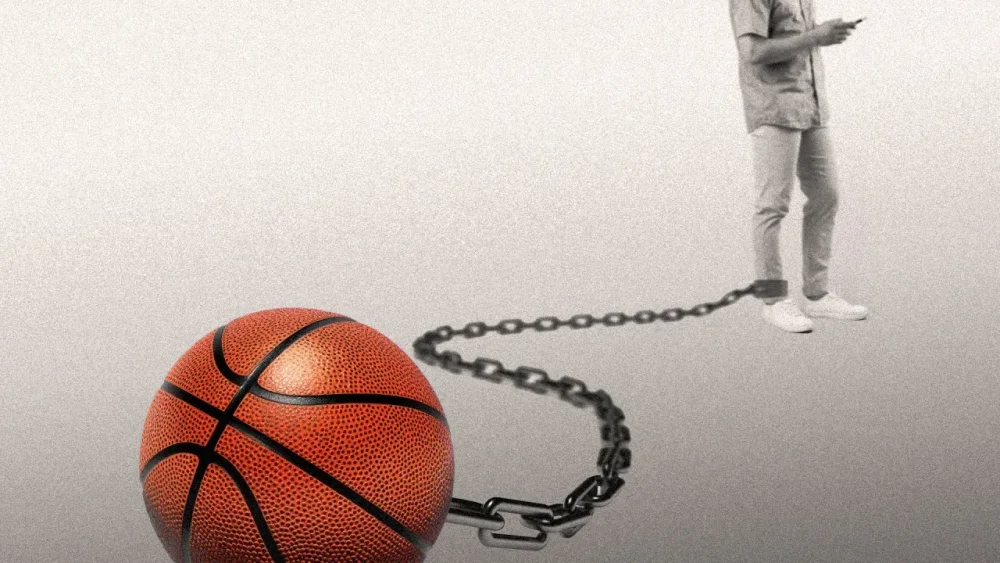
Super Bowl Sunday always mints a lot more winners and losers than just those who play in the game. It’s the biggest day in sports betting annually, with the American Gaming Association estimating a record $1.39 billion in the big game last month. For casual sports bettors, a Super Bowl wager might be enough gambling to last the entire year. For many others, though, it was just a warm-up for the 67 games of March Madness, the NCAA Division I Men’s Basketball Tournament, which kicks off this week. Sports betting has been a huge growth industry in the U.S. since it was legalized nearly seven years ago. With the help of online gambling companies such as DraftKings, legal sports betting brought in $13.7 billion in 2024 alone, up from $248 million—with an “m”—in 2017, when the industry was last restricted just to the state of Nevada. According to a new study, however, this enormous growth has come at the expense of financial stability, mental health, and a happy family life for millions of Americans—especially members of Gen Z. Intuit Credit Karma commissioned the study from data firm Qualtrics ahead of March Madness, to shed light on some of the collateral damage wrought by the booming sports betting industry. “Plenty of people bet on sports very manageably and responsibly,” says Courtney Alev, consumer financial advocate at Intuit Credit Karma. “But like any vice, it can be a slippery slope.” The study’s findings show just how harmful sports betting has become since the 2018 SCOTUS decision in Murphy v NCAA made it legal in 38 states and Washington, D.C. Nearly a quarter (23%) of 1,000 respondents who engage in sports betting, or have a partner who does, admitted to being sports betting addicts. Almost the same number (22%) said that betting had caused financial distress for themselves and their families. And nearly half (48%) of all respondents claimed to have experienced mental health issues including depression as a result of their betting activity. [Images: Geenee/Adobe Stock, 3dsculptor/Adobe Stock] A separate, similar study published last month by the Journal of the American Medical Association (JAMA) further attests to the addictive nature of sports betting. That study analyzed aggregate Google search trends over the past eight years for queries that mentioned such words as gambling, addiction, and anonymous, and found that searches for help with gambling addiction cumulatively increased by 23% across the country in that time. One demographic that seems particularly susceptible to sports betting addiction, according to the Intuit Credit Karma study, is Gen Z—37% of whom reported being addicted. That’s 14% more than the number of respondents across all age demographics claiming to be addicts. “We’re seeing that sports betting is really impacting Gen Z at higher rates, which likely has a lot to do with just how digitally native that generation is,” Alev says. “Growing up in an era where everything is online, sports betting has just become another piece of that.” Indeed, part of the reason so many users of all ages have gotten in over their heads seems rooted in online bets taking all the friction out of gambling. The rise of online sportsbooks such as FanDuel and ESPN Bet has essentially given most Americans a casino in their pocket at all times. It’s no wonder they’re reportedly responsible for 95% of all sports betting in the U.S. These companies are known to spend up to a billion dollars annually on marketing, which anyone who’s watched an NFL game in recent years can attest. Part of their strategy for enticing new customers—and maintaining existing ones—is through eye-popping promotions that can be difficult to resist. FanDuel and DraftKings, for instance, both offer newcomers $150 in bonus bets on their first $5 bet, and sometimes offer deposit bonuses, matching a percentage of new money players add to their sportsbook accounts. Bonuses like these give the betting-curious uninitiated a positive early experience, hooking them in for the long haul. As the Intuit Credit Karma study reveals, about a quarter of bettors (24%) pointed to these bonuses and incentives as primary motivators for their sports betting activity. In addition to gathering data on the financial distress that follows many Americans’ sports betting, the study also reveals its impact on their partners and children’s lives. “We wanted to focus on the family aspect of it too because if you’re addicted to something like sports betting, you might have blinders on in terms of whether you actually have a problem,” Alev says. “A lot of spouses and children deal with those negative implications, maybe even more so than the bettor themselves.” To that end, roughly a quarter (23%) of partners of those surveyed claimed they’ve had to pull from their children’s college funds to either keep the hobby going or pay off debt related to it, while 16% reported abuse and another 16% reported family estrangement. Not many guardrails exist to keep sports bettors from hitting bottom. Although the American Gaming Association launched the Have a Game Plan campaign in 2019 to encourage responsible betting, actual protections have been scant. In order to defend themselves and their families, Alev offers a common-sense solution for casual sports bettors: building in friction. “Don’t save your credit card numbers, hide your card somewhere where you have to go find it—make it not just as simple as a click to be able to bet,” she says. “The important thing is forcing yourself to pause and reflect on where you are and the behavior.” Beyond individual solutions, the JAMA study proposes some sweeping steps the U.S. government could take, including increased funding for gambling addiction services, enhanced advertising regulations, and stronger safeguards, such as betting limits and age limits, enforced breaks, and restrictions on credit card use for gambling. The most effective solution, however, seems both obvious and elusive. As the Intuit Credit Karma study points out, 28% of sports bettors wish sports betting was illegal again. View the full article
-
Avoid traffic loss during enterprise site migration by implementing an organized approach and involving key stakeholders in the process. The post A Guide To Enterprise-Level Migrations (100k + URLs) appeared first on Search Engine Journal. View the full article
-
Odey has said he will challenge the decision through the courtsView the full article
-
Work and pensions secretary Liz Kendall prepares to slash spending on health-related benefitsView the full article
-
Downgrade comes ahead of Spring Statement, when official forecasts are expected to show much weaker GDP outlookView the full article
-
Forecasts downgraded for a dozen G20 economies and alarm sounded on ‘ratcheting up’ of trade barriersView the full article
-
In the past five years, more satellites have been launched into Earth’s atmosphere than the preceding 60 years combined. And now, scientists believe that climate change is set to increase the number of old satellites that will turn into floating obstacles. That’s according to a study published last week in the Nature Sustainability journal by a team of aerospace engineers at MIT. The researchers examined how greenhouse gases are impacting Earth’s upper atmosphere and, in turn, the objects orbiting within it. They found that, as emissions increase, they’re actually altering the natural process that allows satellites to fall out of orbit and disintegrate, resulting in a kind of space junk pile-up. If this trend continues, it could have ripple effects for everything from weather tracking and broadband internet access to national defense. Captured by astronaut Don Pettit aboard the International Space Station, this long-exposure photograph showcases Earth’s city lights, the upper atmosphere’s airglow, and streaked stars. The bright flashes at the center are reflections of sunlight from SpaceX’s Starlink satellites in low-Earth orbit. [Photo: NASA] How the atmosphere naturally removes space junk Most satellites are located within low Earth orbit, or around 400 to 1,000 kilometers above the planet’s surface. Under normal conditions, after these satellites reach the end of their lifespans (when their engines can no longer maintain enough velocity for orbit), natural atmospheric drag pulls them down to lower altitudes, where air molecules cause them to disintegrate before ever reaching the Earth’s surface. It’s essentially the atmosphere’s natural space junk cleaning protocol—but climate change might be slowing it down. William Parker is a graduate student at MIT’s AeroAstro program, and he served as the lead author on the new study. Parker explains that greenhouse gases have a warming effect within the troposphere (the atmospheric layer closest to Earth), but in further layers, they actually have the opposite effect. Because greenhouse gases keep heat trapped close to the Earth, more distant layers—like the thermosphere, where the majority of satellites orbit—are actually cooling down over time. “That cooling leads to contraction,” Parker says. “The whole atmosphere is sort of shrinking.” As the atmosphere shrinks, he adds, so, too, does the natural drag force that’s supposed to pull satellites downward. “That means that there’s less atmospheric density for the satellites to experience, which means that we don’t have this cleaning force in low Earth orbit that we’ve always had to rely on.” Preventing a satellite debris pile-up As the atmosphere’s natural cleaning force diminishes, satellite operators may soon encounter a significant build-up of debris in low Earth orbit. Experts theorize that, beyond a certain critical mass, such a build-up could lead to something called “The Kessler Effect”: a series of space collisions that snowball as debris increases. Just this past year, Parker notes, Space X’s satellite service Starlink—which operates around 60% of all active satellites—had to perform 100,000 collision avoidance maneuvers to prevent space collisions. “If we don’t take action to be more responsible for operating our satellites, the impact is that there are going to be entire regions of low Earth orbit that could become uninhabitable for a satellite,” Parker says. If nothing is done to mitigate greenhouse gas emissions, the MIT team’s simulations show that the maximum satellite capacity in low Earth orbit could decrease by 50% to 66% by 2100. In a more likely scenario where some effective climate action is taken, Parker says the capacity is still predicted to drop by 24% to 33% in that same time frame. Currently, satellites play a central role in global weather tracking, access to internet service, online banking, national defense protocols, and more. If satellite operators have to spend more and more energy avoiding obstacles, providing those essential services will become increasingly difficult—and expensive. “It’s going to mean that all of the products that we get from space are going to be degraded, because satellites now have a secondary objective,” Parker says. “The primary objective has always been to collect data or to provide some service, like connection to the internet. Now, the secondary objective is just to make sure that you don’t get destroyed in a collision with a debris object. It’s something that operators have only had to start worrying about in the last five to 10 years.” The long-term solution is taking more action to eliminate greenhouse gas pollution. In the meantime, Parker says, satellite operators should try to operate at lower altitudes to ensure that there’s enough drag to remove debris from the atmosphere, as well as taking proactive steps to return spacecraft from orbit before they can even become debris. He also believes that a real set of international space traffic management rules could help prevent overcrowding. “There used to be this mantra in the space industry that space is big, and that’s an excuse to not treat it with the respect that it should be treated with,” Parker says. “That’s outdated, and we need to do a better job at managing this resource that we have and sharing it in an equitable way.” View the full article

-
At the moment, confidence in leadership is at an all time low, according to the 2024 Leadership Confidence Index. It’s natural to assume the cause is born of an individual failure—the leader lacks competence, their boss didn’t prepare or train them well, they don’t care about how others experience them. And many of these reasons certainly hold true. But in my experience working with senior executives as an executive coach and organization design consultant, bad leadership is often manufactured by an organization designed, albeit unintentionally, to produce bad leaders. In the intricate dance of organizations, design and leadership are the two central partners. The design of an organization directly shapes the effectiveness, decision-making, and moral authority of its leaders. When the choreography of design falters, leadership stumbles. Organizations are not mere collections of departments, roles, technologies and processes. They are ecosystems where clarity, alignment, and purpose must harmonize to drive value. When these elements are absent, leaders are often set up to fail, sometimes even before they realize it. Bad organization design is not just a structural flaw; it is a leadership hazard. Here’s why. The Trap of Misaligned Structures When an organization’s structure does not align with its strategy, leaders are forced to work against the grain. Imagine a company whose strategic focus is innovation but whose design over-prioritizes cost control. Leaders in such environments are left juggling contradictory priorities, often at the expense of the very innovation they are supposed to champion. For example, a global tech company I worked with set out to become a leader in AI innovation but maintained a rigid, hierarchical structure optimized for minimizing operational expenses. Mid-level leaders found themselves without the budgetary flexibility or cross-departmental collaboration needed to pursue innovative initiatives. As a result, the company fell behind competitors who had better-aligned structures. Misalignment also breeds fragmentation. When leaders work at cross-purposes with other leaders, it signals to those they lead to put their own agendas first. Such self-involvement frays the organization, disabling it from working coherently. Leaders in silos may excel at optimizing their narrow domains but fail to see the bigger picture. This creates turf wars, miscommunication, and a lack of cohesion, leaving leaders to expend precious energy managing conflict instead of driving impact. A 2021 study published in the Journal of Economics Finance and Management Studies showed a direct correlation between misaligned organization design and poor decision making. Ambiguity as the Enemy of Accountability Ambiguity in roles, decision-making authority, or performance expectations is another byproduct of poor design. Leaders operating in such environments face an uphill battle in creating accountability. Without clear boundaries or metrics, decision-making slows, trust erodes, and blame becomes a substitute for ownership. Consider a retail chain that failed to clearly define the responsibilities of its regional managers versus its store managers. When sales declined in multiple locations, no one was certain who was responsible for addressing the issue. This lack of clarity not only delayed corrective actions but also created friction and mistrust among the leadership team. Leaders thrive when their roles are defined with precision and their scope of influence is clear. In contrast, bad design fosters shadow systems—unofficial ways of getting things done that undermine formal processes. Leaders operating in these shadows may gain temporary wins but at the cost of sustainable performance and credibility. Culture as a Reflection of Design Organizational culture is not an abstraction; it is the byproduct of what an organization rewards, tolerates, and ignores. Bad design amplifies toxic behaviors, making it harder for leaders to model the values they preach. For instance, if the incentive system rewards short-term gains at the expense of collaboration, leaders will struggle to inspire teamwork. A financial services firm, for example, implemented a bonus system heavily weighted toward individual performance metrics. While some employees thrived, cross-department collaboration plummeted. Leaders trying to foster teamwork found themselves at odds with a system that rewarded competition over cooperation. Culture is experienced at the organization’s seams—the places where different parts of the organization connect. When these seams are poorly stitched, leaders are left grappling with inconsistent norms, conflicting metrics, and territorial self-interest, making it nearly impossible to lead cohesively. Research suggests that aligning business strategy with organizational culture can significantly impact performance. According to a 2019 Workplace Accountability study with over 40,000 participants, 93% of those surveyed were unable to align their work or take accountability for desired results. Fully one-third felt that their priorities change frequently, creating confusion. Further, 84% of those surveyed cited the way leaders behave as the single most important factor influencing accountability in their organizations. And yet just 15% of leaders have successfully clearly defined and broadly communicated their key results. The Weight of Overcompensation When leaders inherit the consequences of bad design, they often try to compensate with sheer willpower, which can manifest as micromanagement. While this may yield short-term results, it is unsustainable and typically accelerates burnout—not just for the leaders but for their teams as well. Overcompensation also distracts leaders from their primary role: to shape vision, align resources, and empower others. For instance, in a manufacturing company struggling with outdated processes, a plant manager took on the role of personally reviewing every operational detail to ensure quality. While this approach temporarily improved output, it left the manager exhausted and demoralized the team, who felt micromanaged and disempowered. Designing for Leadership Success If bad design leads to bad leadership, the reverse is also true: good design enables great leadership. An organization that prioritizes clarity, alignment, and purpose creates an environment where leaders can thrive. Here’s how: Align Structure with Strategy: Start by clearly defining the organization’s strategic objectives. Map out how each division, team, and role contributes to achieving these goals. Distribute decision rights clearly across an organization, and clarify who gets to make which decisions, with what authority and resources. Engage leaders in cross-functional strategy discussions to ensure their buy-in on how their teams contribute. Clarify Roles and Metrics: Define every role’s responsibilities in granular detail, making sure it has clear performance metrics that align with broader team and organizational objectives. Encourage leaders to co-create these performance metrics with their teams so accountability feels collaborative rather than imposed. Periodically revisit role descriptions to address overlaps or gaps, especially as the organization evolves. Research indicates that ambiguity in accountability is a leading cause of delays in organizational efficiency. Integrate Culture with Design: Ensure that processes and systems reflect the organization’s core values. For instance, if collaboration is a priority, design team processes that reward joint problem-solving. Build performance reviews and reward systems that recognize behaviors aligned with cultural goals. Leaders should receive training on how to model these values in their daily interactions. Create feedback loops through surveys or focus groups to monitor cultural health and course-correct as needed. A well-integrated culture enhances employee engagement, driving measurable improvements in productivity. Cultivate Leadership: Provide leaders with development programs that address the unique challenges of their roles. Invest in coaching and mentoring initiatives to help leaders build emotional intelligence, resilience, and strategic thinking. Implement peer-learning groups where leaders can share insights and learn from each other’s experiences. Equip them with advanced tools for data-driven decision-making, and regularly assess their development progress through structured feedback mechanisms. A Symbiotic Relationship Leadership does not exist in a vacuum. It thrives or falters in direct proportion to the environment that is shaping it. Bad organizational design is not just a technical or financial issue; it is a moral and strategic one. Leaders who find themselves trapped in poorly designed systems must not merely cope but advocate for systemic change. After all, an organization’s design is its ultimate act of self-expression. It is the pure embodiment of the organization’s mission and strategy—and it shapes the kind of leaders it will produce. When design and leadership are in harmony, the result is not only organizational success but leaders and employees who flourish. View the full article

-
Companies are starting to leverage tools such as artificial intelligence and machine learning as part of the property valuation and review process. View the full article

-
In order to have a clear picture of budget usage, resource utilization, and team member workloads, you need to track resources throughout your project's life cycle. Here's how to do it effectively, which tools to use, and expert best practices. The post Guide to Resource Tracking: Tools & How To Do It appeared first on The Digital Project Manager. View the full article
-
Learn how to ask for Google reviews using email, social media, text messages, and in-person interactions. View the full article
-
Everyone knows pain. It’s the most common ailment people experience, from a headache to a stubbed toe to a sore back. Treating pain can be as straightforward as popping a pill. But for people experiencing chronic pain—like the lingering aftereffects of chemotherapy or the slow rehabilitation after a major car accident—medication is rarely enough to fully erase the pain. When the patient experiencing chronic pain is a child, the stakes can feel even higher. To help children experiencing chronic pain, a new kind of clinical space has been created that goes way beyond handing out medication. The Stad Center for Pediatric Pain, Palliative and Integrative Medicine is a holistic clinic that combines Western medicine, rehabilitation, psychological care, and less conventional forms of pain management, including hypnotherapy, acupuncture, and meditation. In its newest location, designed by the architecture firm NBBJ and opening next month in San Francisco, the architecture of the clinic plays a significant role in this multifaceted approach to treating pain. [Photo: NBBJ/courtesy UCSF] “It was specifically designed in a way to start the healing before children even see the first doctor,” says Dr. Stefan Friedrichsdorf, medical director of the Stad Center. The clinic features nature-inspired decor, alcoves, and furnishings. Two themes, underwater and redwood forest, appear throughout the clinic and are given playful, almost interactive elements to encourage engagement among younger patients. One wall in the lobby features a projected digital waterfall over a forest scene, and its flowing water responds to the movement and touch of children who come near it. Natural-looking materials, abundant daylight, and spacious common areas are intended to exude calm. “We’re one of the very few places that really show that our goal is to help children and adolescents and young adults to get back to normal life and get rid of the pain,” Friedrichsdorf says. [Photo: NBBJ/courtesy UCSF] Rethinking the waiting room Part of the University of California San Francisco Benioff Children’s Hospitals system, the Stad Center is a five-year-old clinic that builds off Friedrichsdorf’s previous working building a similar pain center in Minneapolis. When the opportunity arose to build a brand new space at UCSF, Friedrichsdorf flew the NBBJ design team out to Minneapolis to see how this holistic approach to treating pain works. In addition to its inclusion of non-Western medical and healing modalities, Friedrichsdorf’s multidisciplinary approach avoids some of the spatial separations that can slow the delivery of care. [Photo: NBBJ/courtesy UCSF] The biggest difference between this new clinic and most health care spaces is that it does not have a formal waiting room. To reduce the anxiety that young patients can experience in hospital settings, the clinic was designed to make a smooth transition from the outside to a consultation area, exam room, or therapy space. The lobby is one point of a circular pathway that leads to sitting areas, treatment rooms, and rehabilitation spaces. There are almost no right angles, and the designers used natural curves to inform its layout. [Photo: NBBJ/courtesy UCSF] Another major focus of the design was creating a space where the center’s team of multidisciplinary practitioners can meet with new patients, all together, to understand the pain conditions and plan out a course of treatment. “That intake can take a long time, because we really want to spend the time to understand what brought the child to the clinic and then really think about what we would recommend for them,” says Dr. Karen Sun, a hospitalist at the Stad Center. Friedrichsdorf explains that chronic pain can often be hard to detect, which leads many doctors to either ignore it or over-medicate it. “Kids have often heard ‘well, we don’t see anything on the imagery, therefore the pain is not real, therefore you’re crazy or you’re making this up,’” he says. “I always tell my kids your pain is real, you’re not crazy, you’re not making this up. I see this all the time. Now, what do we need to do to make sure that this pain goes away?” [Photo: NBBJ/courtesy UCSF] A new approach to chronic pain The intake meeting with the clinic’s various practitioners helps the team understand the pain and identify the best interventions, be they medical, rehabilitative, or less conventional forms of healing. “It feels very cohesive. It feels very much like things flow. And they leave with a really strong sense of what’s going to happen,” Sun says. “There’s none of this, ‘Oh, we’re going to refer you to physical therapy and then you have to wait for three months.‘” [Photo: NBBJ/courtesy UCSF] That physical therapist is typically in the room for that intake meeting, and the physical therapy gym is right down the hall. Same with the acupuncture and acupressure studios, meditation spaces, and more conventional medical exam and treatment rooms. One feature patients have responded to well in early testing is the multisensory room, which features dimmable lights, speakers built into chairs, a hanging swing, a climbing wall, and other interactive elements meant to help calm children with particular sensitivities. “This is something quite fabulous and originally meant for children who have impairment of the brain or other senses,” Friedrichsdorf says. “However, we found that otherwise healthy kids and teenagers really, really enjoy this room.” Pulling all these treatment types into one center means that patients can easily access whatever will help address their specific type of pain. “We have found if we combine the best Western medicine and medications, interventions, surgery, rehabilitation, and psychology with those integrative modalities, that kids heal much faster and get back to life earlier,” Friedrichsdorf says. View the full article

-
In 1865, a new department store opened in Paris called Printemps (which is French for “spring”). The architecture is a stunning Art Deco masterpiece, replete with mosaics, dramatic turrets, and enormous windows with dramatic displays of recent products. Today, it sits among other iconic Parisian landmarks, like the Galleries Lafayette store and the Opera. But back then, there was nothing nearby except a railway line that only carried cargo. “When we opened our store on Boulevard Haussmann, it was a completely new area,” says Jean-Marc Bellaiche, CEO of Printemps Groupe, the store’s parent company. “It was a bet that this neighborhood would become hot and vibrant. It was a very successful bet.” [Photo: Gieves Anderson/Printemps New York] This week, Printemps is making a bet on another neighborhood in another continent: New York’s Financial District. Over the past few years, the area has gone through a massive revitalization, as apartments, restaurants, and shops have moved in. Printemps is moving into the ground floor of a 50-story residential building at One Wall Street. “Fifteen years ago, it would have been risky to move here, but it’s transforming in a big way,” he says. Bellaiche says Printemps spent a lot of time thinking about the new dynamics in the Financial District. He points out that the area was once dominated by bankers, but there are many other businesses in the area now, including media, fashion, and technology. “The Spotify headquarters are nearby,” he says. He also finds it appealing that there are many new apartment complexes in the area, and families are moving in. “It makes the area feel much more like a real neighborhood, one that we are now a part of,” he says. [Photo: Gieves Anderson/Printemps New York] Printemps’s flagship store in Paris is a gargantuan 450,000 square foot operation that is spread out across three buildings, and features more than 1,500 brands. Bellaiche, who joined the company in 2020, has been instrumental in helping to think about Printemps’s future. Part of this has involved expanding beyond France to other markets. Printemps opened a Doha, Qatar, in 2022, and this New York store continues this investment in foreign markets. The New York store is about a tenth the size, and the company wanted to design a store that was somewhat cozier. It has a far smaller, more curated assortment of brands and products that are generally high-end, but that span a range of price points. While you can buy Louboutins in the shoe section, Nike Women is also doing a pop-up, offering affordably priced sneakers. “We thought, what if Printemps had a pied-a-terre in New York,” says Laura Lendrum, CEO of Printemps America. “So we kind of took that idea literally, and designed the store around the concept of an apartment.” [Photo: Gieves Anderson/Printemps New York] The company brought on Laura Gonzalez, a French interior designer, to help design the space. She worked with the Printemps team to create various “rooms,” much like you would have in a home, where you would want to spend time. The “Red Room,” which is a historic space in the One Wall Street building, has been transformed into a walk-in closet for shoes. Beauty products are displayed in a cozy bathroom inspired space with green tiled walls. There’s a cafe and a restaurant inspired by a breakfast nook and a dining room. There are plenty of plush sofas for you to sit on. [Photo: Gieves Anderson/Printemps New York] Designed for discovery Lendrum—a retail veteran who previously worked for Ralph Lauren, Gucci, and Saint Laurent—says the idea of creating a homey feel was very deliberate. For years, brick and mortar was in decline, even in the realm of high-end department stores. (Barney’s shuttered in 2020, after 97 years in business.) In the post-pandemic world, consumers’ appetites for retail has returned, but Lendrum says they don’t want to feel like the shopping experience is purely transactional. One way they signal this is by letting the customer choose how they want to spend their time in the store, rather than directing them towards particular sections to make purchases. “In the IKEA model, the store directs you to go from point A to point B to maximize how much you will buy,” says Lendrum. “But here, our designer has made sure there is not a single path through the store. It is all about the poetry of shapes and curves; there are no straight lines. Everything is designed to encourage discovery and wandering.” [Photo: Gieves Anderson/Printemps New York] Lendrum says that the team focused on creating lots of flexible areas which can be transformed from season to season, to keep things interesting for guests. This proved to be a challenge. “In retail, architects don’t like creating flexibility spaces because the lighting and fixtures need to be adapted to the merchandise,” Lendrum says. “But Laura [Gonzalez] was willing to make it work. This means we can convert areas into brand pop-ups, cooking classes, book readings—whatever is interesting for the community.” [Photo: Gieves Anderson/Printemps New York] Bellaiche says that the restaurants were another way of making the space less transactional, and more focused on hospitality. Printemps’s Paris flagship has more than 15 dining options, including La Perruche, a rooftop restaurant that has 1,000 seats, 400 of which offer a view of the Eiffel Tower and the Opera. Bellaiche wanted the New York store to be equally known for its dining. Printemps managed to bring on Gregory Gourdet, a James Beard award winning chef who opened the Haitian restaurant Kann in Portland, to develop a range of dining options, which will include fine dining and a café. As the Financial District keeps booming, and more families move into nearby apartments, Bellaiche hopes people will think of Printemps less as a place to shop for clothes or makeup and more as a regular destination as they go about life. “We hope people will come in for their daily coffee and croissant,” he says. “We love seeing people come into the store every day. It allows us to develop an intimacy with them.” View the full article

-
2024's top SEO podcasts offer deep dives into search marketing, analytics, and industry trends. The post Top SEO Podcasts For 2025 appeared first on Search Engine Journal. View the full article
-
Yellow Tail, the budget-friendly Australian wine brand known to college students everywhere, has barely touched its branding since its debut in 2001. Now, though, the company is tweaking its look—including its iconic kangaroo logo—in an attempt stand out on shelves as younger generations turn away from the wine aisle and toward trendy canned cocktails. The new branding, which includes a more vibrant “Roo” mascot and crisper product labels, will hit shelves in the U.S. this coming June. The understated update seems like a bid to remind consumers of what once made Yellow Tail’s accessible, easy-to-parse branding so innovative—but it’s less likely to make a splash in a now-over-saturated market. [Photo: Courtesy of yellow tail] Wine in decline The wine industry is currently in a state of decline, both in the U.S. and globally. According to the IWSR, a global alcohol industry analytics firm, 2023 was the first year in nearly three decades that overall spirits sales declined rather than increase. Globally, the volume of wine sold that year was down 4%, a trend the IWSR predicts will continue until at least 2028. And in the U.S. in 2024, wine sales to retailers declined by 8%, based on data from Wine & Spirits Wholesalers of America (WSWA). The decreasing interest in wine in the U.S. is attributable to a number of factors, including a rising cultural interest in moderating alcohol consumption, a growing number of alcohol-free options on the market, and a younger consumer base that’s steering away from wine. Ever since the pandemic helped popularize to-go cocktails, ready-to-drink canned cocktails have become the trendy drink of choice for Gen Zers and Millennials over a $5 bottle of vino. Yellow Tail’s parent brand, Casella Wines, is Australia’s top wine brand by global sales, but it has faced headwinds in the last couple of years. From 2021 to 2022, the brand’s total sales dropped from $500.53 million to $461.16 million, while net profit slumped 56% to $25.38 million. This past year, the brand recovered somewhat with a revenue of $476.42 million and a net profit of $26.53 million. Yellow Tail’s offerings, which retail for around $10 or less, fit snugly within one of the sectors that has seen the most decline: cheap wines. Per a 2024 IWSR report, both standard and below-average priced wines are considered to be in a state of long-term decline. Meanwhile, more premium-priced wines (between $15 and $49.99) are expected to gain in sales volume by 2027. Still, Yellow Tail’s team sees its accessibility as a marketing asset. “Yellow Tail has always been about making wine approachable, easy to choose, and easy to enjoy, which gives it broad appeal across different types of consumers,” says Libby Nutt, Yellow Tail’s general manager of marketing and export sales. “While overall alcohol consumption is declining globally (including wine), we see Yellow Tail as well-positioned to meet the needs of today’s drinkers.” A kangaroo for the modern drinker When Yellow Tail debuted in 2001, its playful, non-intimidating branding stood out in a sector full of more serious-looking wine. In fact, it’s frequently referenced in marketing courses as an example of the “Blue Ocean strategy,” a term for finding a unique gap in an existing market. The brand’s approach to wine for the everyman also included simple, easy-to-decipher labels highlighting only the need-to-know information, like the grape variety and brand name itself. But as the market has become more saturated (see brands like Cupcake Vineyards, for example), it’s become more difficult to make an impact on shelves. “Yellow Tail’s pack design is iconic, remaining largely unchanged since its launch,” Nutt says. “However, after more than 20 years, it was time for a strategic update, one that enhanced the design without losing its distinctiveness. The wine market is increasingly competitive, making shelf standout and strong branding more important than ever. This refresh builds on our existing brand assets, making them even more recognizable.” [Photo: Courtesy of yellow tail] The changes are subtle, but not unnoticeable. The “Yellow Tail” brand name has been moved above the logo, making it easier for consumers to immediately recognize each bottle’s variety. The color contrast on the labels has also been pumped up to draw the eye. In keeping with Yellow Tail’s tradition of accessibility, short flavor descriptions have been added to each blend. And, perhaps most notably, the Roo mascot has been given a bit of a facelift. His back has been rounded, his outlines more defined, and his shapes simplified—giving him a look more akin to an animated cartoon character than his former roughly sketched self. “In this refresh, we’ve made [Roo] bolder and more dynamic, better reflecting the brand’s free-spirited, easy-going nature,” Nutt says. Given that the new branding has yet to launch in the U.S., it’s unclear how consumers will respond to the look. And, based on the relative restraint of the rebrand, it seems more like Yellow Tail is using this move to get back on consumer’s radars rather than to actually reposition itself to a new audience. Still, for the wine industry at large, it’s going to take a lot more than a slightly new look to convince customers to ditch their spiked seltzer or non-alcoholic beer in favor of a classic bottle of red. View the full article

-
Some directors are known for their typographic flair—from the ultrawide tracking of Christopher Nolan’s film titles to Quentin Tarantino’s genre vernacular font and lettering selections. But last week, as we reported on Sean Baker’s extensive use of Aguafina Script across his past four movies, we wondered: How many other directors have firmly embraced a single, singular typeface—and what does that typeface say about their films? The first part is easier to answer. “It is rare,” says title designer and Art of the Title editor-in-chief Lola Landekic. “It’s a very interesting choice. As a creator, you have to sort of commit to a specific aesthetic. And I think you also have to know yourself very well and know that there’s a throughline in all your work.” That’s clearly the case when it comes to Baker and the directors below. Sean Baker—Aguafina Script Perhaps the most audacious thing about Baker’s use of Aguafina in the Best-Picture-winning Anora and his other films is the sheer amount of personality it contains. It is anything but a benign catchall face—but it is also a tonal fit that enhances the characters and themes at the heart of his most recent movies. Landekic likens titles and title sequences to seasonings that can make or break a dish. While Baker’s work often deals with poverty and marginalized characters, the energetic Aguafina elevates everything all at once, providing a contrast to the common visual iconography around such subjects. It has perhaps been a key to his films since Tangerine—and one that has carried over into marketing materials and more (a rare luxury when, for example, posters for the Men in Black films feature a bulky sans serif rather than Pablo Ferro’s far more interesting signature lettering that appears in the actual movies). “It can be a difficult thing to achieve as a filmmaker, that kind of consistency of aesthetic,” Landekic says. “I admire anyone that can get that through the door because it’s hard these days where everything is created so piecemeal—often the distributor controls the promotional materials, and the filmmaker has very little say into how that gets to look.” Moreover, as you peruse this list, you’ll notice that it is a veritable boys’ club—and there are reasons for that. “Women don’t get to make as many films, don’t get to make as many follow-up films, and don’t often get to have the level of control over their films that a lot of male filmmakers have,” Landekic notes. “So it’s a multipronged issue why we don’t have a lot of female examples in this particular category.” Wes Anderson—Futura A lot has been written about Wes Anderson’s thoughtful and intentional approach to type and lettering—but the face that made him famous was Futura, which branded the first half of his filmography (so much so that many considered it an aesthetic betrayal when he sidelined it for Jessica Hische’s title lettering in Moonrise Kingdom.) In Anderson’s masterpiece The Royal Tenenbaums, Futura was essentially a character in its own right, appearing not just in titles, but on buses, books and myriad places beyond. “It harkens back to the French New Wave and sort of how Godard used titles,” Landekic says. “The thing about Futura is that it’s very unadorned. It feels almost like you could overlook it. But the way that Wes Anderson uses it gives it a very clean stamp. . . . What it really does is it makes everything feel very arranged and curated. And for a filmmaker like Wes Anderson, that is a lot of the point.” One further Futura aside: It’s a common misnomer that Stanley Kubrick used it widely in his filmography. In reality, he only truly deployed it in Eyes Wide Shut, and it cropped up in promotional materials for other projects—though he did reportedly call it his favorite typeface. Woody Allen—Windsor Perhaps no typographic directorial bond runs as deep as Woody Allen and Windsor, which has kicked off every single one of Allen’s films since Annie Hall in 1977. As Jarrett Fuller, host of the podcast Scratching the Surface, has detailed, “Legend has it that . . . Allen would often eat breakfast at the same New Jersey diner as noted graphic and type designer Ed Benguiat. Allen, knowing Benguiat as a “printer,” asked him one morning—probably sometime between 1975 and ’77—for a good typeface to use in the credits of his upcoming film. Benguiat offered up Windsor.” It would go on to become synonymous with the director and all things related to him. And regardless of whether a given film of his was a hit or a flop, quality or not, Windsor was there—and, well, it just works. “It’s long, it’s kind of lanky. It has serifs. That ‘f’ that you see in the Windsor font . . . looks like Charlie Chaplin standing with his two feet poking out,” Landekic says. “And so it has that kind of feeling to me where it has a sense of humor about it in the way that [Allen is] using it because a lot of his comedies and his dramatic work deal with a sort of a humdrum misunderstanding elevated to a sense of dramatic chaos in some sense—and Windsor kind of flies in the face of that, where it wants to be regal, but it’s very rounded. So it has two personalities embodied within it.” John Carpenter—Albertus In addition to his directorial chops, Carpenter is known for creating some iconic soundtracks for his films. So it tracks that he would be meticulous about other elements within his fictive worlds. One such detail: The typeface Albertus, which he first used in the titles for Escape From New York in 1981, and further deployed in seven other films, including The Thing, Christine, Prince of Darkness, and They Live. “One of the larger tenets of horror is a fear of aging,” Landekic explains. “Many monsters are considered monstrous because they are, for example, wrinkly or deformed in a way which can be likened to how age afflicts all of us. And so Albertus . . . has that feeling of time and legacy and something worn. You can easily imagine Albertus being chiseled into a rock face because of its shape. So it lends itself very well to that kind of atmosphere.” Ultimately, as a title designer, does Landekic wish every director would take as strong an approach as those referenced in this article? Landekic says she loves the fact that David Fincher’s movies have such radically different title sequences, and she thinks trying to fit everything into a tightly branded box could push films more toward being devalued as mere content. She adds that it could narrow a filmmaker’s focus too early if they made such a decision at the outset of their career. If Sean Baker wanted to make a sci-fi film, would it work with Aguafina? Would he feel pressure to make it work? “At the end of the day, I would like the film to feel cohesive,” says Landekic. “And however that happens, however that needs to look, is the ideal. Ultimately, a title sequence and a title font is in service to a larger picture.” View the full article

-
Asset manager blames ‘different macro backdrop’ for change of tack on climate divestmentsView the full article
-
At a remote elementary school in the Mekong Delta in Vietnam, until recently, access to safe drinking water was a daily challenge. The school tried to use groundwater, but there wasn’t enough supply; the water was also contaminated with salt and metal. In the dry season, from December to April, droughts made the challenge worse. But last month, the school installed a new system that harvests rainwater, filters it, and then automatically supplies it to drinking fountains, the kitchen, and bathrooms. It’s one of more than 270 schools, from rural Nepal to urban Taiwan, to work with a fast-growing nonprofit called Gravity Water to install the nonprofit’s tech over the last 12 months. “What we’re really trying to do is modernize rainwater harvesting—to take this ancient technology to solve a modern-day problem,” says founder Danny Wright. Later this year, the organization plans to also begin adding the technology to buildings in a city in Massachusetts. [Photo: Gravity Water] Wright first started thinking about the potential for rainwater harvesting on a trip to Central America in college. He realized that access to clean drinking water was a challenge even in areas with abundant rain. One night, in a tent in the rainforest, he sketched a concept for a simple system that could filter rainwater in a rooftop tank and flow through a filter using gravity, without the need for electricity. [Photo: Gravity Water] Later, after finishing grad school in 2015, he was still considering the idea when he took a job at a school in Nepal. Like other communities in the country, the area struggled with water contamination because of the lack of modern sewage infrastructure. Children often got sick from drinking the water. Wright proposed building the rainwater system, and created the first simple prototype. “We were pretty much building gigantic Brita filters,” he says. When it worked, the project grew into a nonprofit. Over time, the system became more advanced. While the organization still builds the basic models in areas that don’t have electricity, most projects are now more complex, using sensors to run automatically and switch between a utility water source—such as a pipe running to a village well—and stored rainwater. The installation process, which takes around 24 hours, involves adding downspouts to the roof, downspouts that direct rain into tanks, and a fridge-sized “rain box” next to the building that connects the tanks to the school’s existing plumbing. In some cases, schools now get most of their water from rain. “We’re working in places like Indonesia now, and Taiwan, where we have projects that get such consistent rainfall that we’re seeing our rainwater systems being utilized 80% of the year,” Wright says. Urban Taipei obviously has different water infrastructure than rural Nepal or Vietnam. But in Taipei, in heavy storms, the local water supply often quickly becomes polluted. Other large cities, like Jakarta, are dealing with saltwater intrusion in their water supplies, both because so much groundwater has already been extracted and because sea levels are rising. In urban areas, too, rainwater often can’t filter back into the ground because most of the ground is covered in buildings or pavement. Gravity Water’s system can make use of that water, while also helping reduce flooding. [Photo: Gravity Water] In some cases, rather than storing rainwater long-term, the systems are designed simply to make use of rain on rainy days. “Rainwater doesn’t have to be a year-round solution,” says Wright. “But we could have a profound impact on resilience for water in these regions if we just use rain on the days there’s rain. We don’t even need to have storage.” The work, to date, has been primarily funded through donations; Apple gave the organization a grant to build the systems at 131 schools in northern Vietnam, for example. The organization also covers the cost of replacing the filters for schools who can’t afford it (maintenance costs roughly 25 cents a student per year at a typical school). But the nonprofit is also now working with UNICEF to build rainwater harvesting systems for community use. It’s also working on new models that don’t rely on philanthropy, in order to reach more people. It recently spun off a startup called Cloudwell that uses the same technology. “Households are our end goal, but it’s really hard to sell a product to households in communities that on average make less than $10 a day, let alone maybe $4 or $2 a day,” Wright says. Now, the organization is starting to talk with some utilities about providing them with the technology and infrastructure to collect rainwater; households would get the tech for free, and then get a rebate on their rainwater use. A current study, with Santa Clara University, is evaluating the economics using rainwater in this way, as well as looking at where the local climate and other factors make it most viable. There’s global interest. “I was just in Nairobi last week and every single community was so eager to start implementing the solution,” says Wright. The tech can also be helpful in places like the U.S., he says. Upcoming pilot projects this summer in Massachusetts (the nonprofit hasn’t yet announced the city) will add the tech to city and university buildings to help both with water resilience—the state is currently in drought—and to help reduce serious flooding in heavy rain. View the full article