ResidentialBusiness
Administrators
-
Joined
-
Last visited
Everything posted by ResidentialBusiness
-
Rebranded from Auvenir, the independent platform doubles down on AI, quality management, and underserved firms. By CPA Trendlines Go PRO for members-only access to more CPA Trendlines Research. View the full article
-
Rebranded from Auvenir, the independent platform doubles down on AI, quality management, and underserved firms. By CPA Trendlines Go PRO for members-only access to more CPA Trendlines Research. View the full article
-
Innovation isn’t a spark—it’s a sustained pursuit. Meet Google, Proximity Media, Google, Reddit, Unwell and Tubi—the teams turning bold vision into daily discipline, redefining what it takes to lead, create, and stay ahead. View the full article

-
Senators are discussing a proposal to end the Homeland Security budget stalemate by funding much of the department, including the Transportation Security Administration airport workers going without pay, but excluding ICE’s enforcement and removal operations that have been core to the dispute. The potential breakthrough came after a group of Republican senators headed to the White House late Monday to meet with President Donald The President. Senators said they expected the negotiators to work through the night hammering out the details and present written proposals for both parties to discuss Tuesday at their weekly caucus lunches. “All I can say is that the discussions have been very positive and productive, and hopefully headed in the right direction,” said Senate Majority Leader John Thune, R-S.D. Senate Democratic Leader Chuck Schumer told reporters late in the evening: “Both sides are working in a serious way.” The sudden shift in the monthlong standoff comes as U.S. airports are jammed with long lines after routine Homeland Security funding was halted, leaving TSA understaffed during the spring travel season. Democrats are refusing to fund Homeland Security without restraints on The President’s immigration enforcement and mass deportation operations after the deaths of two U.S. citizens during ICE protests in Minneapolis. The President took the extraordinary step over the weekend of ordering Immigration and Customs Enforcement officers to provide airport security, drawing alarm from some lawmakers that it could escalate tensions. The contours of the deal under consideration would fund most of Homeland Security, but exclude funding for one main part of ICE — the enforcement and removal operations that are core to The President’s deportation agenda. Under the package being floated, ICE’s Homeland Security Investigations would be funded as well as Customs and Border Protection, but with new guardrails to position officers from those divisions in their traditional roles, rather than as they have been used more recently in immigration roundups in cities. It would also include a number of changes in immigration operations that Democrats have demanded, including mandating that officers wear body cameras and identification. Since so much of ICE is already funded through The President’s big tax breaks bill, and immigration officers are still receiving paychecks during the partial government shutdown, senators said the new restraints would also be imposed on operations that rely on that funding source, as well. “I’m going to be working through the night,” said Republican Sen. Katie Britt of Alabama, a chief negotiator who returned from the White House meeting hopeful they had a solution to “land this plane.” “We’re going to be working diligently,” she said. Sen. Chris Coons, D-Del., who was not part of the group at the White House, said his understanding was that there was a “sense of urgency” coming from the talks. Coons described various choices before the senators at this point — from no money at all for ICE but also no restraints on the agency operations, to fully funding ICE but with more of the restraints Democrats have demanded, to a middle option of funding most of DHS excluding ICE’s enforcement and removal operations. That middle option is what he and other senators understood was broadly on the table after the White House talks. “First step is to get the proposal in writing,” said Sen. Angus King, the Independent from Maine. “I want to see exactly what that means.” Senators late Monday also confirmed Markwayne Mullin as Homeland Security secretary. He takes over for Kristi Noem, who led the department’s immigration enforcement operations that erupted with the public outcry and the funding standoff. Mullin provides a potentially new face for the immigration operation. During his confirmation hearing last week, Mullin touched on another key demand Democrats want — ensuring a judge has signed off on warrants that immigration officers use to search people’s homes, rather than simply relying on administrative warrants issued by the department. “This is significant,” Sen. Peter Welch, D-Vt., said about the progress toward changes. “Noem is gone. That’s a big deal.” Sen. John Hoeven, R-N.D., said he was hopeful senators could work things out. “Look, there’s a lot of different variables in the equations,” he said. “I’m hopeful we’ll get there.” Associated Press writer Seung Min Kim contributed to this report. —Lisa Mascaro and Joey Cappelletti, Associated Press View the full article

-
We may earn a commission from links on this page. Deal pricing and availability subject to change after time of publication. One of the more practical early deals in Amazon’s Spring Sale is the Amazon Fire TV Stick HD, now $16.99 (originally $34.99). That works out to about 51% off and marks its lowest price so far, according to price trackers. PCMag gave it an “outstanding” rating and called it the best 1080p media hub, which fits with how it performs—it doesn’t offer high-end specs but focuses on making an older TV feel current again without asking you to spend much. Amazon Fire TV Stick HD Media streaming hub $16.99 at Amazon $34.99 Save $18.00 Get Deal Get Deal $16.99 at Amazon $34.99 Save $18.00 This is the kind of device you buy when your TV still works fine but the built-in apps feel slow or outdated. You plug the stick into the HDMI port, connect it to power, and you are up and running in a few minutes. The remote keeps things simple. The remote keeps things simple. It has quick buttons for apps like Netflix and Prime Video, and it can control your TV’s volume and power, which means you are not reaching for a second remote every time. Alexa is built in, letting you press a button to search for a movie, open an app, or control compatible smart home devices. It feels easy to live with, especially if you just want something that works without much setup. In everyday use, it does what most people need from a media streamer. You can stream from all the major apps, and 1080p playback with HDR10 looks good on a Full HD screen. If you have a compatible soundbar or TV, it can pass through Dolby Atmos audio as well. The trade-off is performance. The interface can lag a bit when switching between menus, and it may take a moment to load larger libraries. It also sticks with Wi-Fi 5 and skips features like AirPlay or Google Cast, so it is not the most flexible option if you rely on those. If you are upgrading a main TV or want something faster, the 4K models make more sense. But for a bedroom TV, a guest room, or anything still running at 1080p, this gets the job done at a price that is hard to argue with. Our Best Editor-Vetted Amazon Big Spring Sale Deals Right Now Apple AirPods 4 Active Noise Cancelling Wireless Earbuds — $149.00 (List Price $179.00) Apple iPad 11" 128GB A16 WiFi Tablet (Blue, 2025) — $299.00 (List Price $349.00) Sony WH1000XM6- Best Wireless Noise Canceling Headphones — $398.00 (List Price $459.99) Apple Watch Series 11 (GPS, 42mm, S/M Black Sport Band) — $299.00 (List Price $399.00) Blink Video Doorbell Wireless (Newest Model) + Sync Module Core — $35.99 (List Price $69.99) Ring Indoor Cam Plus 2K Wired Security Camera (White) — $39.99 (List Price $59.99) Fire TV Stick 4K Max Streaming Player With Remote — $34.99 (List Price $59.99) Amazon Kindle Colorsoft 16GB 7" eReader (Black) — $169.99 (List Price $249.99) Deals are selected by our commerce team View the full article
-
In an increasingly automated environment, paid search performance is constrained by a simple reality: Algorithms can only optimize toward the signals they’re given. Improving those signals remains the most reliable way to improve results. That sounds straightforward, but in practice, many people are still optimizing around signals that don’t reflect real business outcomes. Let’s dive into how algorithms function, how you can influence them, and where some people fail. How bidding algorithms actually work Modern bidding systems are often described as “black boxes,” suggesting they operate mysteriously. But that description isn’t helpful. At a high level, bidding algorithms are large-scale pattern recognition systems. Early automated bidding used simple statistical methods, including rules-based logic and regression models. Over time, these evolved into more advanced machine learning approaches using decision trees and ensemble models. Eventually, these became large-scale learning systems capable of processing thousands of contextual and historical inputs. The technology has developed significantly, but the goal has stayed remarkably consistent. Today’s systems evaluate signals such as query intent, device, location, time, historical performance, and user behavior, updating predictions continuously and adjusting bids in near-real time. Despite this complexity, the underlying mechanisms haven’t changed: Bidding algorithms identify patterns tied to a desired outcome, estimate that outcome’s probability and expected value for each auction, and adjust bids accordingly. They don’t understand business context or strategy — they infer success from feedback. This distinction matters. When the feedback loop is weak, noisy, or misaligned with real business value, even advanced algorithms will efficiently optimize toward the wrong objective. Better technology doesn’t compensate for poor inputs. Dig deeper: Bidding and bid adjustments in paid search campaigns Your customers search everywhere. Make sure your brand shows up. The SEO toolkit you know, plus the AI visibility data you need. Start Free Trial Get started with The signals advertisers can influence Paid search algorithms observe a vast range of signals, many of which are inferred by the platform and not directly controllable by you. These include user intent signals, behavioral patterns, and competitive dynamics. While many signals sit outside of our control, there’s still a meaningful set of levers you control that shape how algorithms learn. These include: Account and campaign structure. Bidding strategy selection. Budget allocation. Targeting and exclusions. Ad creative and asset quality. Landing page experience. The consistency and stability of changes made over time. These inputs shape how the algorithm explores and learns. They help define the environment in which optimization occurs. But they don’t, by themselves, define what success looks like. That role is played by conversion data. Dig deeper: Conversion rate: how to calculate, optimize, and avoid common mistakes Conversion data: The most important signal When performance plateaus, the first instinct is to blame structure, budgets, or creative. In reality, the biggest lever you have available usually sits elsewhere: conversion data. In most accounts, conversion data is the most influential signal you control. It defines the outcome the algorithm is trained to pursue and directly informs prediction models, bid calculations, and learning feedback loops. When conversion setups are misaligned, overly broad, duplicated, or noisy, platforms still optimize efficiently, just not toward outcomes the business actually values. This is why, at times, you can show improving platform metrics while your commercial performance stagnates or deteriorates. A common mistake is focusing on increasing conversion volume rather than improving conversion quality. Volume accelerates learning, but if the signal is weak, faster learning just means faster optimization toward a suboptimal goal. In practice, refining what counts as a conversion often delivers greater performance gains than structural or tactical changes elsewhere in the account. Dig deeper: Why a lower CTR can be better for your PPC campaigns Aligning conversion signals with real business KPIs Before any optimization begins, define what success genuinely means for your business. Paid search platforms don’t have intrinsic knowledge of your revenue quality, profitability, or downstream value. They only see what is explicitly passed back to them. Misalignment typically appears in predictable forms: Revenue is used as the primary signal when margins vary significantly. Lead submissions are optimized without regard to lead quality or sales outcomes. Short-term efficiency metrics are prioritized over long-term value. In each case, the algorithm is doing exactly what it has been instructed to do. The issue isn’t optimization accuracy, but goal definition. If an increase in a given conversion wouldn’t be seen as a win by the business, it shouldn’t be the primary signal used for optimization. Dig deeper: 3 PPC KPIs to track and measure success Get the newsletter search marketers rely on. See terms. Strengthening conversion signals with richer, more resilient data Conversion quality is determined by how confidently the platform can identify and interpret a tracked event. Browser-based tracking alone is increasingly incomplete due to privacy controls, attribution gaps, and fragmented user journeys. As a result, ad platforms rely on a combination of browser-side and server-side data to improve matching and attribution. This means that, for you, this isn’t just a measurement problem, as it directly affects how confidently platforms can learn from conversions. Stronger conversion signals are typically characterized by multiple reinforcing parameters, including: First-party identifiers, such as hashed personal data passed via enhanced conversion frameworks. Click identifiers that connect conversions back to ad interactions. Transaction or event IDs that prevent duplication. Accurate conversion values. Session- and network-level attributes that improve attribution confidence. When a conversion can be recognized through multiple mechanisms, platforms can match it more reliably and use it in learning models with greater confidence. This improves reporting accuracy and bidding performance by reducing feedback loop uncertainty. Dig deeper: How to track and measure PPC campaigns Choosing conversion goals Selecting the right conversion goal isn’t a binary decision. It involves balancing several competing factors: Volume: Higher volumes support faster learning. Value accuracy: Closer alignment with business outcomes improves decision quality. Stability: Highly variable values can introduce noise. Latency: Delayed feedback slows learning and increases uncertainty. Higher-volume, faster conversions often sit further away from true commercial outcomes, while lower-volume, high-quality conversions may better reflect business value but risk data sparsity. The most effective setups acknowledge these trade-offs rather than attempting to eliminate them entirely. In many cases, the optimal solution involves using proxy or layered conversion goals that strike a balance between learning speed and value accuracy. Dig deeper: How to use proxy metrics to speed up optimization in complex B2B journeys Practical examples of selecting and strengthening conversion goals Ecommerce optimization based on gross margin, not revenue For ecommerce, optimizing toward order value assumes all revenue is equal. In reality, product margins often vary widely. When revenue alone is used as the optimization signal, algorithms may prioritize high-value — but low-margin — products. A more effective approach is to optimize for gross margin by passing margin-adjusted conversion values via server-side tracking or offline conversion imports. This allows bidding systems to prioritize your business’s profitability rather than top-line revenue, without exposing sensitive cost data client-side. Lead generation with long conversion latency In lead gen models where final outcomes occur weeks or months after the initial click, form submissions alone can provide you with weak signals. They are fast and high-volume, but poorly correlated with revenue. Introducing lead scoring improves signal quality. Leads can be assigned proxy values based on known attributes and early indicators of quality, such as company size, role seniority, or engagement depth. These values can then be passed back to the platform via CRM integrations or server-side tracking, enabling value-based optimization even when final outcomes are delayed. Optimizing toward predicted lifetime value If you’re focused on lifetime value (LTV), there are two viable approaches: Where LTV can be reliably predicted within a short window after conversion, predicted values can be imported and used directly for optimization. If early prediction isn’t feasible for you, lead scoring or early behavioral proxies can be used instead. In both cases, your objective is the same: provide the algorithm with timely, value-weighted signals that correlate strongly with long-term revenue, rather than waiting for delayed outcomes that are too sparse to support learning. See the complete picture of your search visibility. Track, optimize, and win in Google and AI search from one platform. Start Free Trial Get started with Key takeaways for performance marketers Modern bidding systems are powerful pattern recognition engines, but their effectiveness is constrained by the signals they receive. The biggest performance gains rarely come from constant restructuring or tactical tests. They come from improving the clarity, quality, and commercial relevance of your conversion data. Conversion signals are the most influential inputs you control, and misaligned or low-quality setups will limit performance regardless of how advanced the algorithm becomes. Regularly audit your conversion definitions and ask a simple question: “Would you genuinely celebrate an increase in this outcome?” If the answer isn’t clear, the signal likely needs refinement. Improving conversion goals, strengthening signal quality, and balancing volume, accuracy, and latency aren’t optional. They’re among the highest-impact ways to improve paid search performance. View the full article
-
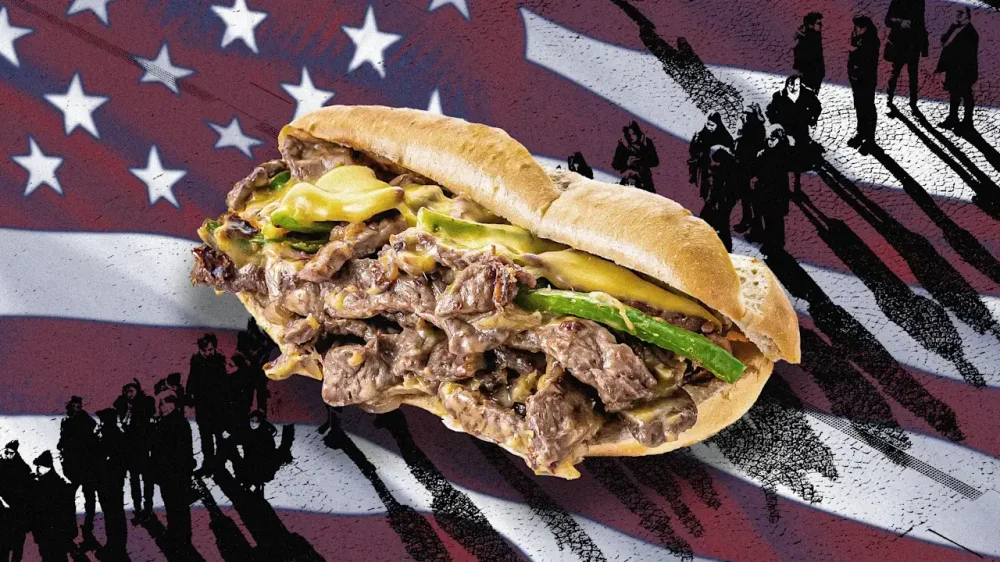
A giant cheesesteak running through multiple terminals at the Philadelphia airport might not solve the world’s problems, but it will make people smile. It’s National Cheesesteak Day, after all, so a little joy is necessary. In honor of this unique day, here’s some history on this lesser-known holiday. We even threw in some ideas on how to celebrate and make Rocky Balboa proud. Brief history of the Philly cheesesteak The cheesesteak is an American invention that originated in Philadelphia, Pennsylvania. The desire for something new struck two Italian-American brothers, Pat and Henry Olivieri, one day in 1930. The brothers ran a hot dog cart, but were craving some beef. They grilled that up with onions and put it on a bun. The result was the first cheesesteak, even though dairy wouldn’t be added until 1940 (thanks to “Cocky Joe” Lorenza). The hot dog cart quickly turned into a restaurant called Pat’s King of Steaks. In the 1960s, competitors such as Geno’s, Dalessandro’s Steaks, and Jim’s Steak opened up, further cementing the sandwich into the cultural zeitgeist. Suddenly, everyone in the city had a strong opinion on which establishment was the best. Perhaps the best publicity for the cheesesteak came in 1976. In the classic film Rocky, Rocky Balboa (Sylvester Stallone) ordered the “whiz wit” at Pat’s. The world would want what he was having. What’s in a cheesesteak? At its core, a cheesesteak is beef, onions, and a roll. There are many variations of this. The beef can be sliced or chopped. You can order it “wit” or “witout,” meaning with or without the grilled onions. Cheese is another personal preference. Most people prefer either Whiz or melted American or provolone. No matter which you choose, this is a messy meal which requires lots of napkins, and inventive leaning to avoid spilling on your clothes. How did National Cheesesteak Day come about? Although nobody can know for certain, four high school friends in Philadelphia might have started this unofficial holiday when celebrating their upcoming high school graduation. On March 24, 1994, buddies Sean Mealey, John McGrath, Jeremy Hollis, and Ted Goldberg enjoyed a terrific day at Stoxy’s Steaks. These young adults wanted to keep the tradition going after moving away for college. They wrote letters, recruited new friends, and even made a website. Years passed, and somehow March 24 became the day everyone celebrated the cheesesteak. How is the Philadelphia airport celebrating National Cheesesteak Day in 2026? The Philly airport is going big this year, potentially bigger than ever before. Its PHL Food & Shops and the City of Philadelphia Department of Aviation are partnering up to break the Record for the “Longest Line of Cheesesteaks.” In the spirit of brotherly love, every restaurant at the airport that has a cheesesteak on the menu will participate. This huge cheesesteak is expected to span both terminals B and C. National Cheesesteak Day deals, discounts, and freebies But the best way to celebrate is through your stomach. If you find yourself in Philadelphia on the big day, there’s a showdown in the Northeast at the Metro by T-Mobile store on Cottman Avenue. More than ten restaurants will be offering samples to attendees, who can vote on their favorites. Participants include Del Rossi’s, Skinny Joey’s, Pat’s King of Steaks, Woodrow’s, Cafe Carmela, Campo’s Philly Cheesesteak, Cleaver’s, Stella’s, Verona Pizza, LaNova and Lucatelli’s. Beyond Philly, Capriotti is offering a buy one, get one half off deal. Grab a friend and chow down. Hot Table is offering its small cheesesteak paninis for only $5 in store only. Philly’s Best is offering $2 off its cooper classic cheesesteak from 11 a.m. to 2 p.m. Texadelphianation is doing a buy one, get one free deal—another great opportunity for friends. And, New Yorkers, rejoice! G’s Cheesesteaks at 6 Avenue B 10009 is offering free cheesesteaks from 1 to 3 p.m., according to its Instagram account. After your stomach is satisfied, turn on Rocky to put a cherry on top of your National Cheesesteak Day celebrations—as the character points out, even the big man himself gets hungry. View the full article
-
Zoox, the Amazon-owned autonomous driving company known for its whimsically shaped robotaxis, is expanding to new locations. The company on March 24 announced plans to begin operations in Austin and Miami later this year, while expanding its existing footprint in Las Vegas and San Francisco. In Las Vegas, riders can now access additional locations along the Strip, with service expected to reach the Sphere, T-Mobile Arena, and Harry Reid International Airport. In San Francisco, service will expand this spring to neighborhoods including the Marina, North Beach, Chinatown, and Pacific Heights, as well as along the Embarcadero—more than quadrupling Zoox’s current footprint in the city. The expansion comes with technical upgrades, including machine learning model updates aimed at smoother rides and more accurate arrival time estimates. Regular software improvements have helped to enable service in new areas as the vehicles become more capable, says cofounder and CTO Jesse Levinson. “For example, in San Francisco, our new geofence includes steeper hills, more dense traffic, places where you have to make more assertive lane changes,” he says. The cars have also gained the ability to operate in fog and rain, which will help in the push into Miami. For now, Zoox’s distinctive electric vehicles—featuring inward-facing seats and no driver’s seat or steering wheel—operate under a regulatory exemption from the National Highway Traffic Safety Administration that allows them to run free rides. The company is still applying for a separate exemption that would allow it to charge for service, Levinson says. Its fleet remains relatively small, growing from about 75 to roughly 100 prototype vehicles as part of the expansion. That is expected to change once Zoox begins mass-manufacturing the production version of its vehicles at its plant in Hayward, California. The company hopes to start later this year and eventually produce three vehicles per hour, enabling a significant increase in fleet size. Alphabet-owned Waymo reportedly has at least 2,500 automated vehicles in service. “A bit later in the year, when we start producing our production vehicles, you’ll start to see significant expansion in the size of our fleet in the cities we operate,” Levinson says. Anyone can currently request a free ride via the Zoox app in Las Vegas, though wait times can be long due to limited vehicle availability and the lack of fares. In San Francisco, riders must join a waitlist, which already includes several hundred-thousand people. In addition to its custom-built vehicles, Zoox operates a testing fleet of retrofitted SUVs staffed with human safety drivers. These vehicles map and test new cities ahead of launching automated taxi service. In early March, the company announced test deployments in Dallas and Phoenix, joining markets including Los Angeles, Seattle, Atlanta, and Washington, D.C. The test fleet has been operating in Austin and Miami since mid-2024, the company says. Zoox also announced a partnership with Uber that would allow Uber customers in Las Vegas and Los Angeles to be matched with Zoox vehicles. The rollout is expected to begin this summer in Las Vegas—likely after the company is cleared to charge for rides, Levinson says—and in mid-2027 in Los Angeles. Riders will still be able to book directly through the Zoox app, but the partnership gives Zoox access to Uber’s large customer base, including those who may not want to download another ride-hailing app. “We will continue to offer the Zoox app in all of our cities,” Levinson says. “But we have started to explore what a partnership with Uber could look like, starting in those two cities, and I think we’ll both learn a lot from each other.” Zoox is also rolling out new features aimed at improving convenience and comfort. A “Find My Zoox” option will allow passengers to customize lighting and trigger blinking lights on their vehicle, making it easier to spot in crowded areas. Riders will also be able to pair their devices with in-vehicle Bluetooth audio and automatically reconnect on future trips, Levinson says. The vehicles already support music playback from prebuilt playlists. Competition in the ride-hailing market appears poised to heat up, with Waymo also expanding to new markets, Elon Musk touting plans for automated Tesla taxis, and Uber recently announcing a separate deal to invest up to $1.25 billion in electric vehicle maker Rivian as part of its robotaxi plan. But Levinson says he imagines Zoox’s lead time in creating custom-built autonomous cars will give it an edge on rival operators. Still, Levinson argues that Zoox’s early focus on custom-built autonomous vehicles could provide an advantage. “As other companies might try to come out with their first purpose-built robotaxi, we might be on our second or third iteration,” he says. “Hopefully, those learnings will continue to allow us to have a meaningful benefit for our customers.” View the full article

-
Multi-manager firm weighs destinations after requests from staff to relocateView the full article
-
Research finds that persona prompts "reliably damage" factual accuracy in certain kinds of tasks but work well in others. The post Research: “You Are An Expert” Prompts Can Damage Factual Accuracy appeared first on Search Engine Journal. View the full article
-
Egan-Jones has come under scrutiny for its ratings on thousands of private loans relied on by insurersView the full article
-
We may earn a commission from links on this page. Deal pricing and availability subject to change after time of publication. Amazon’s Spring Sale officially runs from March 25 through March 31, but a few early deals are already live, and some are worth paying attention to. One of them is the Apple Watch Series 11 (GPS + Cellular, 46mm) in a Jet Black Aluminum Case with Black Sport Band (M/L), now $429 (down from $529), which is its lowest price yet according to price trackers. If you prefer something dressier, the gold titanium version with a Milanese loop is also a $100 off, down to $699 from $799. Amazon is also testing one-hour and three-hour delivery in select locations, as reported by our senior tech editor Jake Peterson, so depending on where you live, you might not be waiting long once you hit buy. Apple Watch Series 11 (GPS + Cellular, 46mm) Jet Black Aluminum Case with Black Sport Band (M/L) $429.00 at Amazon $529.00 Save $100.00 Get Deal Get Deal $429.00 at Amazon $529.00 Save $100.00 The Series 11 doesn’t try to overhaul what Apple already settled with the Series 10, in terms of design. Instead, this smartwatch leans into small upgrades that show up in everyday use. Battery life now reaches 24 hours, finally moving past the long-standing 18-hour ceiling, which means you can track sleep without planning your charging schedule around it. The display gets brighter too, hitting 2,000 nits, so it stays readable outdoors, and Apple’s Ion-X glass helps with visibility at off angles. It’s also tougher this time, with better scratch resistance, IP6X dust protection, and WR50 water resistance for swimming. And with the cellular version, you now get 5G connectivity, which makes leaving your phone behind more realistic for runs or quick errands. There are also software additions like background hypertension alerts and a Sleep Score, although some of those aren’t exclusive to this model. PCMag gave the Series 11 an “outstanding” rating and named it one of the best Apple Watch to buy in 2026, noting that its performance and health features remain among the best available. This is an easy upgrade if you’re coming from a Series 7 or 8, where the battery bump alone changes how you use the watch. If you’re on a Series 10, however, the case is weaker—unless you care about incremental improvements or the new cellular capabilities, especially when you consider how it compares in size and durability to Apple’s higher-end model in this breakdown of the Apple Watch Series 11 against the Ultra 3. If you do pick it up, it’s worth learning how to get more out of it with our guides and hacks for every Apple Watch user, since the hardware is only part of the experience. Our Best Editor-Vetted Amazon Big Spring Sale Deals Right Now Apple AirPods 4 Active Noise Cancelling Wireless Earbuds — $149.00 (List Price $179.00) Apple iPad 11" 128GB A16 WiFi Tablet (Blue, 2025) — $299.00 (List Price $349.00) Sony WH1000XM6- Best Wireless Noise Canceling Headphones — $398.00 (List Price $459.99) Apple Watch Series 11 (GPS, 42mm, S/M Black Sport Band) — $299.00 (List Price $399.00) Blink Video Doorbell Wireless (Newest Model) + Sync Module Core — $35.99 (List Price $69.99) Ring Indoor Cam Plus 2K Wired Security Camera (White) — $39.99 (List Price $59.99) Fire TV Stick 4K Max Streaming Player With Remote — $34.99 (List Price $59.99) Amazon Kindle Colorsoft 16GB 7" eReader (Black) — $169.99 (List Price $249.99) Deals are selected by our commerce team View the full article
-
TruLookup for Real Estate reduces the need for realtors to access multiple databases or download numerous apps when researching a potential client or property. View the full article
-
If you’re one of the legion of iPhone fans who can’t wait for the next major software update and all the new features it will bring, there’s some good news. Apple has revealed when you’ll be able to get a look at the iPhone’s next operating system, iOS 27—and you won’t have to wait much longer. Here’s what you need to know. Apple announces the dates for WWDC26 Apple has revealed when it will hold its next Worldwide Developers Conference (WWDC). The conference, affectionately referred to as “dub-dub” by Apple employees, is one of Apple’s two major events throughout the year, and one of the tech industry’s most important. WWDC is an annual week-long event where Apple previews the next major versions of its operating systems to developers and the public for the first time. These are the operating systems that will ship on Apple’s new iPhones and other devices come the fall, and include iOS for the iPhone, macOS for the Mac, iPadOS for the iPad, tvOS for the Apple TV, and more. Yesterday, Apple revealed the dates for this year’s Worldwide Developers Conference, dubbed WWDC26. The event will run from Monday, June 8, to Friday, June 12. But the most important date is June 8, when Apple will hold its annual software keynote. This keynote will be the first time the public will get a look at the next major versions of all of Apple’s operating systems, including the upcoming iOS 27 for iPhone. iOS 27 may be a ‘less is more’ update Usually, Apple’s major software updates are packed with new features, visual tweaks, or outright overhauls. For example, last year at WWDC25, Apple showed off iOS 26 and its Liquid Glass visual design refresh for the first time—a major shift in the way iOS looked and operated. Yet rumors suggest that this year’s iOS 27 update may be more subdued than prior years when it comes to new features. Instead, Apple is rumored to be using iOS 27 to focus on little refinements and bug fixes across the operating system. As a result, many are referring to iOS 27 as a “Snow Leopard”-like release. Snow Leopard was the product name for the 10.6 version of Mac OS X that Apple released in 2009. The release was different from prior versions of OS X because Apple chose not to introduce many new features, focusing instead on bug fixes and OS refinement. As a result, even to this day, Snow Leopard was one of the most stable and beloved operating system updates Apple ever put out. In recent years, many iPhone users have lamented that iOS has become bloated and buggy as Apple prioritized features over stability. And so the possibility of a “Snow Leopard” like iOS 27 is extremely appealing to many longtime Apple users. Of course, that’s not to say iOS 27 won’t have any new features—but they are expected to be fewer than with previous releases. Specifically, the major new feature of iOS 27 is expected to be a chatbot like Siri powered by Google’s Gemini LLM. Indeed, in its WWDC26 announcement, Apple said this year’s conference will show off “AI advancements,” likely referring to the new Siri chatbot. When can I download iOS 27? While Apple has all but explicitly confirmed it will show off iOS 27 to the public on June 8, users will have to wait a little longer to actually install the new software on their iPhones. When Apple first previews a new iOS at WWDC, it releases a beta of the new operating system to developers the same day. This means if you are a developer, you’ll be able to get your hands on iOS 27 on June 8. But if you’re a general user, you’ll need to wait longer. About a month after Apple releases the first developer beta of the new iOS, the company releases a public beta. This beta is for members of the general public who want to test the new iOS as soon as possible. However, the public iOS beta isn’t a finished product and may have incomplete features and bugs. That’s why many just prefer to wait until the final release of the new iOS. That release usually happens in the fall, shortly after Apple’s second major event of the year: its iPhone launch event. If you plan to wait until then to install iOS 27 on your iPhone, you can expect to be able to do so around the middle of September. View the full article

-
Redemption requests across industry surge as exodus of wealthy individuals acceleratesView the full article
-
Choosing the right PPC channels starts with clear goals, budget alignment, and understanding where your audience actually converts. The post How To Determine What Paid Media Channels Are Right for You appeared first on Search Engine Journal. View the full article
-
Website migrations have a well-earned reputation for going wrong, with even well-planned migrations leading to rankings slipping, traffic dropping, or tracking breaking. But most migration problems come from small oversights rather than complex technical failures. You can reduce your risk with a staged approach. The checks you complete during staging, on launch day, and in the first few weeks after go-live often determine whether a migration stabilizes quickly or becomes a long recovery project. Before launch: Catch issues on staging Most migration problems should be found and fixed on the staging site. If issues reach the live site, recovery is slower and more uncertain. Set yourself up for success with the following tips: Keep the staging site private (even from crawlers) One common mistake is leaving the staging site publicly indexable. When Google crawls a staging environment, duplicate content can sometimes end up in search results. Rankings can fluctuate, and unfinished pages may end up indexed. Make sure you have blocked crawlers from staging site or protected it with a password so it remains invisible to search engines until the live launch. It’s not just crawlers, either. I’ve seen this happen with ecommerce sites. Customers found the staging site, tried to place orders, and the process didn’t work. This confused customer service teams, frustrated buyers, and created avoidable pressure internally. Your customers search everywhere. Make sure your brand shows up. The SEO toolkit you know, plus the AI visibility data you need. Start Free Trial Get started with Take benchmarks You want a baseline to help you identify real problems rather than reacting to normal short-term movement. Record organic sessions, rankings, top landing pages, indexed pages, conversions, and site speed before transitioning to the new site to define the “normal” you will compare the new site to. Identify priority pages Focus on pages that drive traffic, revenue, or attract links. These pages need extra care during redirect mapping, content review, and testing. Pay extra attention to internal links, redirects, and URL rules for these pages. Dig deeper: Website migrations: a plan to keep your traffic and SEO safe Review templates and content continuity Templates control titles, headings, metadata, canonical tags, structured data, copy, and media. If templates break, problems repeat across hundreds of pages. Check that: Titles and headings are present and accurate. Canonical tags use full URLs and point to live pages. Structured data has transferred correctly. Copy, images, and internal links are intact. This step protects more than rankings. It ensures the site still meets user needs and supports conversions. Make sure canonical tags use full URLs and point to live pages, as explained in Google’s guide on canonical URLs. This simple step can prevent bigger headaches later. Be intentional about URL changes Unnecessary URL changes are a common source of hidden damage. Changes made for design or CMS convenience often introduce risk without a clear benefit. Typical issues include: Adding or removing trailing slashes without a clear rule. Changing folder structures without reason. Inconsistent use of uppercase and lowercase URLs. One of the most common causes of duplicate URLs during migrations is inconsistent handling of trailing slashes. URLs with and without a trailing slash are treated as different URLs. Allowing both to resolve can create duplicate content, dilute signals, and complicate crawling. It doesn’t usually matter which version you choose, as long as the rule is consistent across the site. During a migration, avoid unintentionally switching between formats without a clear plan and proper redirects in place. The same goes for folder structures and capitalization. Don’t change what you don’t need to, and be consistent wherever possible. In one migration where we were brought in to rescue a site after go-live, every URL gained a trailing slash. Canonical tags only contained paths rather than full URLs, and internal links relied on redirects instead of pointing directly to final URLs. None of the changes were necessary, yet together they slowed crawling, caused confusion, and delayed recovery. Map redirects and compile existing ones Redirect mapping is one of the highest-risk areas of any migration. Existing redirects should be pulled from the CMS, CDN, Google Search Console, analytics platforms, and backlink tools so nothing is missed. Every legacy URL needs a clear, intentional destination. If pages are removed, redirect to the closest relevant alternative. If no equivalent exists, return a 404 or 410. Avoid sending everything to the homepage or top-level categories. Aleyda Solis’ guide to SEO for web migrations provides a strong framework for this stage. Decide what to remove and what to create Migrations are often seen as a good time to refresh all the content on a site. This can be done if all the stakeholders align, but it should be done methodically. Remove outdated content carefully. Where gaps exist in the new structure, plan new pages in advance and make sure they are ready to go live when the new site is. This planning avoids lost coverage or weak redirect decisions later. Verify Search Console access and settings Ensure the site can be verified after launch and that any international or country settings are correct. Align stakeholders early Pre-launch is also about people. Developers, designers, SEO, and analytics teams need clarity on responsibilities and deadlines. Many migration issues happen through missed handovers rather than a lack of skill. In my experience, most migration failures are preventable before launch, when fixes are safer and faster. I worked on one migration where SEO was brought after launch. The site launched with broken internal links, missing redirects for high-traffic pages, and inconsistent URL rules. Organic traffic dropped by almost 40% within two weeks, and several priority pages disappeared from search results. All of these issues were visible on the staging site but weren’t reviewed before launch. Make the case for SEO to be part of the planning process. It saves time, money, and headaches. Dig deeper: Website migration checklist: 11 steps for success Get the newsletter search marketers rely on. See terms. Launch day: Verify everything works on the live site Launch day is where preparation meets reality, and all teams, including SEO, developers, designers, and analytics, see the results of their planning. What worked on staging must now work on the live site. Even small oversights can immediately affect rankings, traffic, conversions, user experience, and reporting. Calm, thorough verification ensures the migration pays off and prevents small errors from becoming lasting issues. Use this list as a starting point: Test redirects at scale Spot-checking isn’t enough. Every mapped URL should redirect once and resolve cleanly. Avoid redirect chains and loops. They slow down crawling and delay signal consolidation. In another migration we were called in to fix, only the top 50 pages had correct redirects. Thousands of other URLs redirected to the homepage. Rankings dipped, and recovery took months longer than expected. Crawl the live site Run a full crawl as soon as the site is live. Compare results with the staging crawl to identify differences. Look for: Broken links. Redirected internal links. Missing pages. Server errors. Check internal links and navigation Menus, breadcrumbs, and in-content links should point directly to live URLs. Leaving internal links to rely on redirects increases load and risk. Verify on-page SEO and content Canonicals or hreflang pointing to staging URLs are a common launch issue. Confirm titles, headings, canonical tags, hreflang, copy, and media all reference the live site. Dig deeper: How to run a successful site migration from start to finish Confirm tracking continuity GA4, paid media tags, and social pixels should already be in place before launch. This ensures tracking fires correctly, conversions are measured accurately, and historical data remains intact when the live site goes public. Remember, the staging site should be blocked from crawling or be protected behind a password to prevent test traffic from polluting reporting. In one migration, we were asked to review after launch. The domain stayed the same, but a new GA4 property was created during the redesign. Historical data remained in the original property, while new data was collected in the new one, making post-launch comparisons difficult. Keeping the same GA4 property preserves reporting continuity, supports confident decision-making, and avoids unnecessary uncertainty at a critical point in the migration. Check robots.txt and index controls Ensure pages meant to be indexed are accessible and that noindex tags are only used where intended. If you use services like Cloudflare, it’s also important to check that your robots.txt and content signals are configured correctly. For example, Cloudflare’s default setting may block AI training access while allowing search indexing. If this isn’t adjusted intentionally, AI models might pull content from third-party sources rather than your site, affecting how your brand is represented in generative AI outputs. Submit the XML sitemap Submit the live sitemap to Google Search Console to support the discovery of new URLs. Review site speed Check Core Web Vitals and page performance. A redesigned site can still load heavier assets than expected. Launch day is about verification, not assumption. After launch: Monitor and stabilize performance Even the best-planned migrations can reveal surprises once search engines and real users interact with the site. Small errors that didn’t appear on staging can impact rankings, traffic, and conversions. Calm, structured monitoring in the days and weeks after launch ensures problems are caught quickly before they affect performance or user experience. Here’s what to keep an eye on. Monitor Search Console closely: Watch for crawl errors, indexing issues, and unexpected exclusions. Patterns matter more than isolated URLs. Check indexed pages: Expect some movement, but sustained drops can point to redirect or crawl problems. Track rankings and traffic against benchmarks: Compare performance against your baseline rather than reacting to day-to-day changes. Confirm redirects still receive traffic: Old URLs can attract users and bots for months. Ensure they continue to resolve correctly. Recheck site speed under real traffic: Performance can shift once the site is under load. Audit for follow-up improvements: Once stability returns, review internal linking gaps, missing metadata, and content that did not migrate cleanly. Calm monitoring and clear data prevent small issues from becoming lasting damage. Dig deeper: Technical SEO post-migration: How to find and fix hidden errors See the complete picture of your search visibility. Track, optimize, and win in Google and AI search from one platform. Start Free Trial Get started with What normal recovery looks like after a migration Even well-managed migrations can see short-term movement. Rankings may fluctuate, and traffic may dip before stabilizing. If redirects are clean, content is intact, and crawl access is clear, recovery usually follows within weeks rather than months. Ongoing losses usually point to structural issues rather than algorithm changes. Knowing when to wait and when to act comes from experience. You don’t want to react too quickly or too late. Keep a careful eye on your analytics, and you’ll develop the expertise over time. Website migrations succeed when they are planned, tested, and monitored at every stage. A clear focus on pre-launch, launch day, and post-launch checks protects visibility, performance, and confidence across teams. When SEO is involved early, and checks are clearly owned, migrations stop feeling like crisis events and become managed change. View the full article
-
Google was asked if Personal Intelligence in AI Mode will come to paid accounts across the world (not just the US - where it has hit non-paid accounts). Google replied... (Now is the point where you click on the article...)View the full article
-
Google is testing changing out some of the links within AI Mode to show as overlay cards, instead of take you directly to the website it is mentioning. This obviously will result in fewer direct clicks to those websites.View the full article
-
Google is testing encouraging business owners to reply to reviews using AI. There is a new option in the Google Business Profile dashboard that is showing for some businesses that says "Reply to reviews with AI."View the full article
-
One minute he threatens death and destruction, the next he says the US and Iran are engaged in negotiationsView the full article
-
In February, Bing rolled out new AI Performance reports within Bing Webmaster Tools. Bing announced a new feature for this report that connects the Grounding Queries and Pages views within the AI Performance report.View the full article
-
Fintech, where Peter Mandelson and Harvey Schwartz were board members, is given £2mn penalty by Bank of EnglandView the full article
-
Apple is reportedly launching local ads within Apple Maps, as soon as this month. "Apple Inc. is preparing to introduce advertising in its Maps app, part of a broader push to generate more money from services," Bloomberg wrote.View the full article
-
Automotive companies paving the way for self-driving cars are changing the rules of the road. Robotaxis went mainstream in 2025, delivering millions of rides around the world. Once fledgling startups, these providers have grown into fully mature businesses, and the competition is intensifying, especially between the robotaxi units of two global search engine juggernauts: Alphabet’s Waymo and Baidu’s Apollo Go. This year’s honorees took concrete action toward making the self-driving dream a reality across the world. They differ in approach—from how to build and operate the cars to how they should see and react to the world around them—but share the same goal. Best of all: Most passengers describe their rides as uneventful. Robin Li, CEO of Baidu, says that self-driving cars have reached an inflection point. Its Apollo Go ride-hailing service now operates more than 1,000 driverless vehicles across 22 cities, expanding further afield in Asia and entering the Middle East. Waymo crossed the 20 million-ride mark in December 2025, as it continues to roll out commercial operations in major U.S. cities and even test its vehicles in London and Tokyo. China’s WeRide, No. 9 on our list, now operates its fleet of purpose-built robotaxis in Asia, Europe, and the Middle East. But this year’s crop of the world’s most innovative automotive companies highlights more than robotaxis. The companies we’ve chosen are streamlining the entire supply chain—from battery technology to manufacturing to the showroom floor—and developing the technology that will make 2026 easier. Legacy automakers continue to break ground too. Cadillac is doubling down on luxury with the launch of its $340,000, hand-built Celestiq electric sedan, while pushing into Formula One-level performance with its highly anticipated arrival to the high-end motorsport’s 2026 grid. Meanwhile, Hyundai is shoveling billions of dollars into its Metaplant in Bryan County, Georgia, where the South Korean carmaker is working to define the next era in mobility. 1. Waymo For scaling AVs across the United States Waymo’s growth in the U.S. and abroad accelerated in 2025, providing 1 million monthly rides and hitting the 20 million-ride milestone in December. During the year, Alphabet’s autonomous vehicle unit doubled its presence to 10 cities, expanding its operations to Miami, Dallas, Houston, San Antonio, and Orlando—in addition to the 250,000 weekly paid rides it provides customers in Los Angeles, San Francisco, Phoenix, and Austin. In October 2025, the company also announced plans for its first international launch, in London, with fully autonomous rides to begin later this year. Meanwhile, Waymo is laying the foundation for ride-hailing operations in more than 20 additional cities in 2026, from Baltimore to Boston to Buffalo as well as Tokyo. In August 2025, Waymo received a permit to begin testing its autonomous vehicles in New York City, an environment that will teach its system to learn to drive in snow and on congested highways. This year, Waymo also received authorization to begin testing rides in Las Vegas and launched rides for Waymo employees at San Jose and San Francisco airports. In November, Waymo launched fully autonomous rides for its employees at Miami International Airport, with plans to expand to more airports soon. 2. Baidu For scaling its driverless robotaxi technology, Apollo Go, across China and beyond Baidu is leading the charge toward large-scale deployment in the global robotaxi industry, transitioning to fully driverless operations in China in early 2025. Its Apollo Go ride-hailing service, which now operates more than 1,000 driverless vehicles across 22 cities, expanded its global footprint in 2025 across Asia, where rides in its dedicated, sub-$30,000 RT6 robotaxi are part of daily life for thousands of passengers in Wuhan—and into the Middle East, rolling out in Hong Kong, Abu Dhabi, and Dubai. In 2025, Baidu announced partnerships this year with both Uber and Lyft, with plans to roll out thousands more vehicles worldwide. The company’s strength lies in providing the artificial intelligence and software, not in mass production. The partnership-driven model allows for an asset-light approach that helps Apollo Go scale its fleet and global footprint faster. Apollo Go is the world’s largest ride-share service by all metrics—rides provided, cities served, and fleet operated—which provides significant competitive advantages in terms of collecting data, refining its technology, operational efficiency, and market positioning. Baidu said that Apollo Go safely logged over 240 million autonomous kilometers and provided more than 17 million rides to the public as of December 2025. 3. Hyundai For investing in EV manufacturing in the U.S. South Korean automaker Hyundai made headlines when it pledged to open a $12.6 billion Metaplant America in Georgia, the largest economic development project in the Peach State’s history. After years of working to break ground, Hyundai Motor Group opened the Metaplant in March in Bryan County, about 25 miles from Savannah. Of course, the campus includes a $7.6 billion EV manufacturing hub for Hyundai, Kia, and Genesis, electric and hybrid vehicles, but it’s home to all kinds of next-level innovation, from batteries to robotics. A $4.3 billion joint venture between Hyundai and LG Energy Solution is on track to produce lithium-ion cells for Hyundai, Kia, and Genesis models in 2026. The South Korean automaker plans to deploy Atlas humanoid robots, developed by its Boston Dynamics unit, there starting in 2028, marking a step toward automating higher-risk and repetitive manufacturing tasks. This facility, which started production in late 2024, aims to build 500,000 vehicles annually and begin building hybrids in 2026. The move signals support for Hyundai’s American customers (despite recent controversy over the detention of hundreds of South Korean workers at a Georgia construction site in September), while finding a loophole around U.S. tariffs on imported Korean cars by building them stateside. 4. Cadillac For doubling down on luxury while pushing into F1-level performance At 124 years old, Cadillac is the oldest company on this list, disproving the aphorism about old dogs. In 2025, Cadillac seized the world stage with the reveal of a $340,000 bespoke electric vehicle, a throwback to the 1957 Eldorado Brougham, an emblem of American luxury and the last hand-built Cadillac. The Detroit brand hopes the Celestiq will capitalize on the brand’s legacy while catapulting the automaker into the future, even as the September 2025 elimination of a $7,500 federal tax credit for EV buyers calls the electrified future into question. The Celestiq puts up impressive figures—655 horsepower, an electric range of 303 miles, and a 0-to-60 sub four-seconds —but that’s nowhere near the performance chops expected in Cadillac’s next act: rebuilding American F1 participation from the ground up to join the FIA Formula One World Championship grid alongside Oracle Red Bull Racing, Mercedes-AMG Petronas F1, Scuderia Ferrari HP, and others. Cadillac will join for the season opener in Melbourne, Australia, in March as the sport’s 11th team, partnering with parent company General Motors and TWG Motorsports for a new era of American presence on the F1 grid. The team received final approval in March 2025 and will debut under the new technical regulations for the 2026 season with drivers Sergio Perez and Valtteri Bottas. 5. Czinger Vehicles For disrupting traditional automotive manufacturing through its software-driven approach Southern California startup Divergent is quietly revolutionizing manufacturing from the ground up. Founded by Kevin Czinger in 2014 as the world’s first end-to-end digital manufacturing platform, the company has perfected a proprietary process that combines AI and 3D printing to create lightweight, optimized parts for various industries, from automotive to defense to medical. The process eliminates expensive tooling and emphasizes rapid design, additive manufacturing, and automated assembly. Divergent’s pièce de résistance comes from its subsidiary, Czinger Vehicles, cofounded with son Lukas Czinger. The company’s first production vehicle, the 3D printed Czinger 21C hypercar, is a $2 million showpiece. Its twin-turbocharged V8 engine and three motors deliver 1,250 horsepower and rocket the car from 0 to 60 mph in 1.9 seconds. In July 2025, the 21C set five track records in five days, including lap records at Laguna Seca and the legendary hill climb at the Goodwood Festival of Speed, becoming the fastest-ever street-legal hypercar. Divergent signed major contracts throughout 2025 and closed a Series E round in September at a $2.3 billion valuation, but the Czingers are only getting started, with hundreds of patents in their name. 6. Moment Energy For tackling clean battery recycling at scale Moment Energy is giving used EV batteries a “second life,” gearing up to launch large-scale manufacturing of stationary energy storage units. Founded in 2019 by four recent Simon Fraser University engineering graduates, the British Columbia-based energy company seeks to accelerate the repurposing of lithium-ion batteries into safe, high-performance, and compliant energy storage systems for commercial, industrial, and utility applications. The goal is to enable all of the world’s retired EV batteries to be repurposed by 2030. Working with customers such as Mercedes-Benz and Nissan, Moment Energy has 10 battery energy storage projects underway across North America, including at Vancouver International Airport and an off-grid installation at God’s Pocket Resort in British Columbia In July 2025, the company’s second-life battery energy storage system manufacturing hub in Vancouver reached full-scale production. Plans call for expanding its footprint to the U.S. by building the world’s first second-life gigafactory in Taylor, Texas, dedicated to repurposing retired EV batteries. In November 2025, Moment Energy announced a partnership with Copec Wind Ventures to repurpose batteries from Chile’s electric bus fleet—the second-largest globally—to deploy gigawatt-hours of second-life battery energy storage projects across Latin America and Europe as part of purportedly one of the largest EV fleet repurposing initiatives outside China. 7. LiCAP Technologies For transforming how EV batteries are made Sacramento, California-based LiCAP Technologies is pulling ahead in the race to optimize electrode manufacturing technologies for energy storage devices like EV batteries. Its Activated Dry Electrode process is designed to lower costs, reduce energy consumption, and decrease environmental impact compared to traditional wet slurry methods for producing electrodes. The method replaces the traditional solvent-based approach with a dry, roll-to-roll electrode system that eliminates drying ovens, solvents, and the massive energy load they demand. The result is a cleaner, faster, and more cost-effective manufacturing method: one that slashes carbon emissions and simplifies gigafactory design while improving performance and scalability across lithium-ion, solid-state, and sodium-ion batteries. In July, the company took a major step toward commercializing its Activated Dry Electrode process with funding from the California Energy Commission and in partnership with Dürr Systems. The support paves the way for large-scale manufacturing, a stage that often poses a bottleneck in battery technology commercialization. In August, LiCAP announced a strategic partnership with Nissan to develop and scale dry electrode technology for all-solid-state batteries. This marks a milestone in its mission to support the next generation of high-performance, cost-effective EVs. The batteries for Nissan are in development and slated to launch in vehicles in 2028. 8. Helm.ai For pioneering scalable next-generation AI software for autonomous driving California-based Helm.ai is developing next-generation AI software for autonomous driving without the costly equipment rivals use. In April 2025, the company introduced Helm.ai Driver, an AI system that can predict a car’s path in real time for both highway and city driving. Unlike traditional approaches that depend on expensive sensors or detailed pre-mapped roads, Helm.ai’s method uses only standard cameras, making it scalable as well as vehicle- and geography-agnostic. Helm.ai Vision, a modular, production-ready system that helps cars understand their surroundings in real time, followed in June 2025. Instead of using lidar or prebuilt HD maps like rival software makers, Helm.ai Vision integrates images from multiple cameras to create a bird’s-eye view map. The camera-reliant approach reduces costs significantly. Helm.ai Vision integrates with Helm.ai Driver to create a full-stack software system, from perception to path planning, used by customers such as Nvidia and Qualcomm. The hardware-lite approach could change the game for autonomous driving, producing safe, affordable AI-powered driving capabilities for millions of consumers worldwide. In August 2025, the company announced a multiyear joint development agreement with Honda. The vehicles will use Helm.ai’s full suite of AI technologies—Helm.ai Vision, Helm.ai Driver, and generative simulation, with production targeted for 2027. 9. WeRide For achieving true global scale with its ride-hailing app WeRide, one of China’s largest robotaxi companies, became in 2025 the world’s first to receive autonomous driving permits in eight markets: China, France, Belgium, Saudi Arabia, Singapore, Switzerland, the UAE, and the United States, demonstrating global scalability for its WeRide Go ride-hailing app and purpose-built robo-vehicles. In February, it grew its vehicle lineup to four with the launch of Robovan W5, an autonomous delivery vehicle with Level 4 autonomous driving technology. In August, WeRide launched WePilot AiDrive, a one-stage end-to-end Advanced Driver Assistance System developed with Bosch. Unlike the traditional two-stage process of sensing and then decision-making, WePilot AiDrive integrates both functions, enabling vehicles to “see and act” at the same time. In March 2025, WeRide launched France’s first fully driverless L4 robobus with Renault Group. In September, WeRide launched China’s first 24-hour autonomous ride-hailing network in Guangzhou, as well as a robotaxi pilot in Riyadh, Saudi Arabia, through Uber’s platform. The company also secured a robotaxi trial permit in Dubai, with fully driverless commercial operations targeted for 2026. WeRide and Uber now operate the Middle East’s largest robotaxi network using WeRide’s purpose-built, five-passenger GXR autonomous vehicle. Plans call for rapid scaling, with each GXR delivering dozens of trips during a 12-hour shift. 10. Numa For streamlining the sales experience for customers and dealers No one loves dealing with car dealerships, but Numa makes it a little less painful. The AI platform for automotive dealerships consolidates customer communications, including voice, text, and web chat, into a single, manageable inbox. Dealers like it too: Numa’s advanced AI agents automate key service tasks—from scheduling appointments to providing repair status updates—for quicker responses, streamlined operations, and stronger revenue. Numa followed the 2024 debut of its first AI Agent Platform with the October launch of its Expanded AI Agent Suite. These specialized agents divide and conquer. Some flag customers who might be ready for a trade-in or new purchase. Others convert technician repair notes into clear explanations. The “Write it for Me” Agent suggests ready-to-send text or email replies—even with humor when appropriate. The company says its AI team can help service departments overwhelmed by phone calls and voicemails recoup up to $1.17 million in lost annual revenue. It also introduced the first pay-for-performance AI model in automotive—dealerships only pay when the AI successfully books an appointment. In the past year, Numa tripled its integrations to work seamlessly with more than 90% of dealership systems, including on Stellantis’s MarketCenter portal. Explore the full 2026 list of Fast Company’s Most Innovative Companies, 720 honorees that are reshaping industries and culture. We’ve selected the companies making the biggest impact across 59 categories, including advertising, applied AI, biotech, retail, sustainability, and more. View the full article