ResidentialBusiness
Administrators
-
Joined
-
Last visited
Everything posted by ResidentialBusiness
-
 For many people, the winter holiday period is their favorite time of the year. It’s weeks full of family, friends, gifts, and cozy indoor get-togethers. But those social gatherings are among the main reasons why the flu spreads so readily at this time of year. And this year, a so-called “superflu” variant known as subclade K is set to make things even worse. Here’s what you need to know. When is flu season? Flu season is officially in full swing. It’s the time of year when flu viruses are most rampant, and infections tend to spike before finally decreasing and leveling off. Most people know that flu season usually occurs in the winter months, but the period actually lasts for longer. According to the Cleveland Clinic, in the northern hemisphere, the flu season starts in October. However, its worst period encompasses December to February, which is when the highest number of cases occur. Cases usually begin to decline after February, and flu season is typically considered over by May. But besides its conventional start date, there’s another way to measure when flu season is underway. As CNN reports, health professionals often use the “epidemic threshold” to measure when flu season is underway. When that threshold, which measures the percentage of visits to a healthcare provider for respiratory illness, rises above 3.1%, flu season is here. And according to the Centers for Disease Control and Prevention (CDC), the United States passed that threshold last week when it hit 3.2%. And that number is likely to rise in the coming weeks, thanks to a new flu variant circulating the globe called subclade K. What is the subclade K influenza variant? The common seasonal flu going around this year is part of the H3N2 family, a strain that has been circulating for decades, notes Gavi, the Vaccine Alliance. However, a new H3N2 variant has arisen with enough mutations to make it materially different, from a genetic perspective, from the reference strains scientists chose earlier this year to make this year’s flu vaccine. This variant is called “subclade K.” Because it has enough genetic differences, the subclade K variant is more resistant to this year’s flu vaccine than other strains. However, that doesn’t mean this year’s flu vaccine can’t help protect you against subclade K or other flu strains. As CNN reports, despite this year’s flu vaccine failing to neutralize subclade K viruses as well as other flu strains, the flu vaccine still cuts hospital visits for H3N2 strains in children by 75%. For adults, the vaccine appears to be less effective, but data shows that it can still cut hospital visits by 30% to 40%. Where in America is the flu most widespread? According to CDC data for the week ending December 6, the flu virus, including subclade K, is present in most of the United States. The CDC’s Influenza Division’s Weekly Influenza Surveillance report shows that the states with the highest level of flu activity include: New York Colorado Louisana New Jersy Conneticut Idaho What are the symptoms of the flu? Common symptoms of the flu include the following, according to the CDC: fever or feeling feverish/chills cough sore throat runny or stuffy nose muscle or body aches headaches fatigue (tiredness) some people may have vomiting and diarrhea, though this is more common in children than adults. How can I protect myself against the flu over the holidays? In winter, people tend to spend more time indoors with windows closed, which allows flu viruses to spread more easily between people. Holiday gatherings can accelerate this spread as many spend more time socializing during the period than they usually do. But just because it’s flu season doesn’t mean you can’t enjoy the holidays. The CDC offers several bits of advice on how to reduce your risk of seasonal flu, including: Getting vaccinated Avoiding contact with people who are sick Cleaning your hands regularly Avoiding touching your mouth, nose, and eyes And if you think you are sick, you can help protect others by staying home and covering your nose and mouth when you sneeze. View the full article
-
President Donald The President filed a lawsuit Monday seeking $10 billion in damages from the BBC, accusing the British broadcaster of defamation as well as deceptive and unfair trade practices. The 33-page lawsuit accuses the BBC of broadcasting a “false, defamatory, deceptive, disparaging, inflammatory, and malicious depiction of President The President,” calling it “a brazen attempt to interfere in and influence” the 2024 U.S. presidential election. It accused the BBC of “splicing together two entirely separate parts of President The President’s speech on January 6, 2021” in order to “intentionally misrepresent the meaning of what President The President said.” The lawsuit, filed in a Florida court, seeks $5 billion in damages for defamation and $5 billion for unfair trade practices. The BBC did not immediately respond to a request for comment from The Associated Press. The broadcaster apologized last month to The President over the edit of the Jan. 6 speech. But the publicly funded BBC rejected claims it had defamed him, after The President threatened legal action. BBC chairman Samir Shah had called it an “error of judgment,” which triggered the resignations of the BBC’s top executive and its head of news. The speech took place before some of The President’s supporters stormed the U.S. Capitol as Congress was poised to certify President-elect Joe Biden’s victory in the 2020 election that The President falsely alleged was stolen from him. The BBC had broadcast the hourlong documentary — titled “The President: A Second Chance?” — days before the 2024 U.S. presidential election. It spliced together three quotes from two sections of the 2021 speech, delivered almost an hour apart, into what appeared to be one quote in which The President urged supporters to march with him and “fight like hell.” Among the parts cut out was a section where The President said he wanted supporters to demonstrate peacefully. The President said earlier Monday that he was suing the BBC “for putting words in my mouth.” “They actually put terrible words in my mouth having to do with Jan. 6 that I didn’t say, and they’re beautiful words, that I said, right?” the president said unprompted during an appearance in the Oval Office. “They’re beautiful words, talking about patriotism and all of the good things that I said. They didn’t say that, but they put terrible words.” The president’s lawsuit was filed in Florida. Deadlines to bring the case in British courts expired more than a year ago. Legal experts have brought up potential challenges to a case in the U.S. given that the documentary was not shown in the country. The lawsuit alleges that people in the U.S. can watch the BBC’s original content, including the “Panorama” series, which included the documentary, by using the subscription streaming platform BritBox or a virtual private network service. The 103-year-old BBC is a national institution funded through an annual license fee of 174.50 pounds ($230) paid by every household that watches live TV or BBC content. Bound by the terms of its charter to be impartial, it typically faces especially intense scrutiny and criticism from both conservatives and liberals. —Associated Press View the full article

-
FCA boss criticises OBR’s decision to take down premature analysis of Rachel Reeves’ financial statementView the full article
-
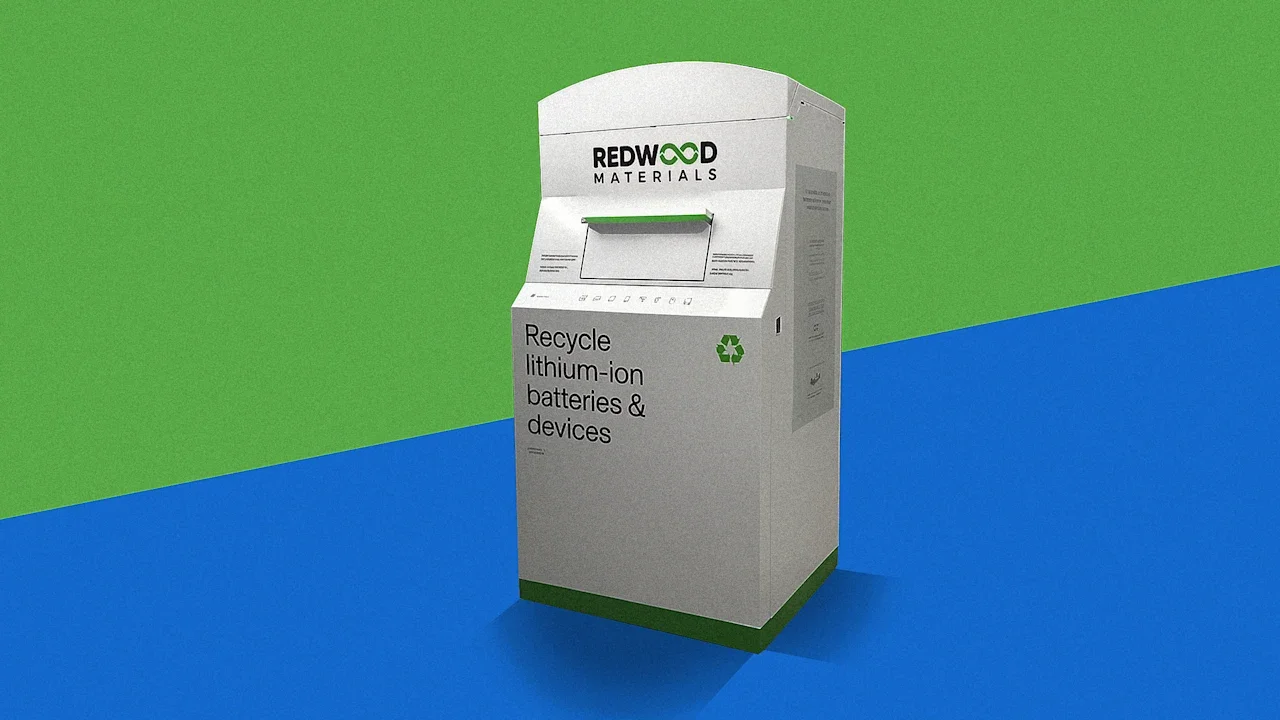
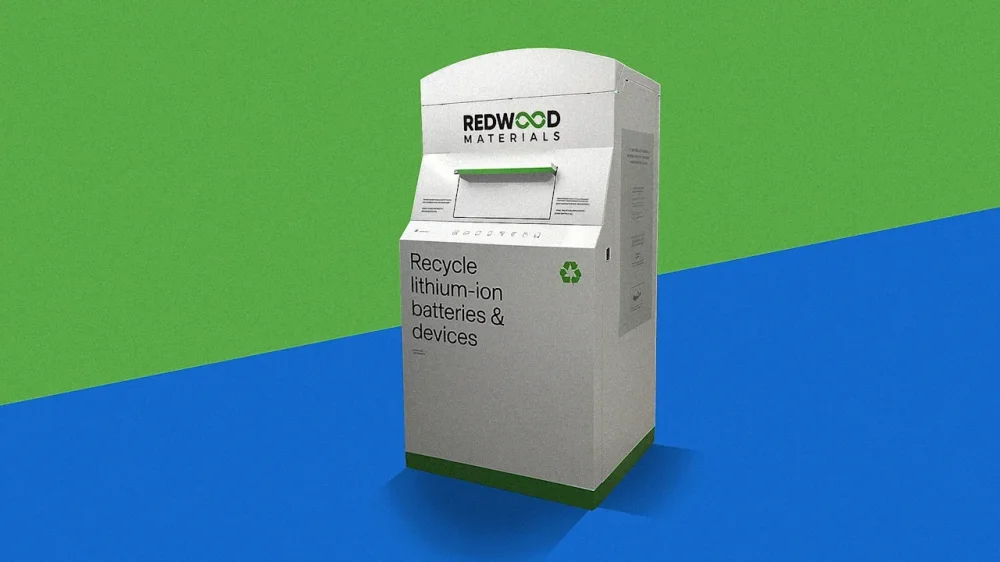
If you want to recycle an old electric toothbrush or pair of headphones with a lithium battery embedded inside, it can be hard to find a place to do it—and many existing battery collection boxes are fire risks. That’s why Redwood Materials, the battery recycling and energy storage company founded by ex-Tesla engineer JB Straubel, just redesigned the collection bin. The new bins, rolling out first in San Francisco stores in partnership with the city’s environmental department, can accept any type of rechargeable device, from phones to electric razors, earbuds, and loose lithium batteries. When someone drops a battery or device into a slot, the bin automatically lowers it into a sealed 50-gallon drum and coats it in fire suppressant. The bin also uses sensors to monitor itself to prevent fires. “Consumer recycling has been incredibly challenging,” says Alexis Georgeson, Redwood’s vice president of external affairs and consumer recycling programs. “I think some of the issues and lack of technology to enable frictionless, free, visible collection points for consumers have contributed to the abysmal collection rates that we’re at right now.” Only around 16% of electronics are recycled in the U.S. right now. “Most batteries end up in junk drawers or landfills, because fundamentally consumers just don’t understand how to get them recycled,” Georgeson says. Redwood launched to handle battery recycling for buisnesses in 2017, but people who heard about the startup almost immediately began dropping off their own batteries at the company’s front door or shipping them in. The company started working with nonprofits and communities trying to make recycling easier, and previously placed standard collection bins at some locations. But those bins didn’t solve the challenge of fire risk, so they had to be monitored by staff. The new bins manage fire risk without human intervention, so they can scale up much more easily. They’re also secure, so someone could feel safe dropping in an old phone or laptop, unlike in the open cardboard boxes that exist in some other stores. When the drums are full, Redwood adds them to pallets that are shipped back to its Nevada facility for recycling. (The fire suppressant is also reused.) EV batteries still make up a bigger volume of the company’s recycling; a single Tesla Model 3 battery is equivalent to several thousand iPhone batteries. But as the number of battery-filled devices keeps proliferating, and consumers quickly get rid of them, the potential scale is large. Redwood plans to install the bins in other parts of the Bay Area, then Nevada, and then deploy them nationally. Even before the official launch in San Francisco—and without any promotion or signage— the bins are already popular. “We actually rolled the bins out very quietly a couple of weeks ago, and we’ve already filled several of them up,” Georgeson says. View the full article
-
We are navigating the “search everywhere” revolution – a disruptive shift driven by generative AI and large language models (LLMs) that is reshaping the relationship between brands, consumers, and search engines. For the last two decades, the digital economy ran on a simple exchange: content for clicks. With the rise of zero-click experiences, AI Overviews, and assistant-led research, that exchange is breaking down. AI now synthesizes answers directly on the SERP, often satisfying intent without a visit to a website. Platforms such as Gemini and ChatGPT are fundamentally changing how information is discovered. For enterprises, visibility increasingly depends on whether content is recognized as authoritative by both search engines and AI systems. That shift introduces a new goal – to become the source that AI cites. A content knowledge graph is essential to achieving that goal. By leveraging structured data and entity SEO, brands can build a semantic data layer that enables AI to accurately interpret their entities and relationships, ensuring continued discoverability in this evolving economy. This article explores: The difference between traditional search and AI search, including the concept of comprehension budget. Why schema and entity optimization are foundational to discovery in AI search. The content knowledge graph and the importance of organizational entity lineage. The enterprise entity optimization playbook and deployment checklist. The role of schema in the agentic web. How connected journeys improve customer discovery and total cost of ownership. The fundamental difference between traditional and AI search To become a source that AI cites, it’s essential to understand how traditional search differs from AI-driven search. Traditional search functioned much like software as a service. It was deterministic, following fixed, rule-based logic and producing the same output for the same input every time. AI search is probabilistic. It generates responses based on patterns and likelihoods, which means results can vary from one query to the next. Even with multimodal content, AI converts text, images, and audio into numerical representations that capture meaning and relationships rather than exact matches. For AI to cite your content, you need a strong data layer combined with context engineering – structuring and optimizing information so AI can interpret it as reliable and trustworthy for a given query. As AI systems rely increasingly on large-scale inference rather than keyword-driven indexing, a new reality has emerged: the cost of comprehension. Each time an AI model interprets text, resolves ambiguity, or infers relationships between entities, it consumes GPU cycles, increasing already significant computing costs. A comprehension budget is the finite allocation of compute that determines whether content is worth the effort for an AI system to understand. 4 foundational elements for AI discovery For content to be cited by AI, it must first be discovered and understood. While many discovery requirements overlap with traditional search, key differences emerge in how AI systems process and evaluate content. 1. Technical foundation Your site’s infrastructure must allow AI engines to crawl and access content efficiently. With limited compute and a finite comprehension budget, platform architecture matters. Enterprises should support progressive crawling of fresh content through IndexNow integration to optimize that budget. Ideally, this capability is native to the platform and CMS. 2. Helpful content Before creating content, you need an entity strategy that accurately and comprehensively represents your brand. Content should meet audience needs and answer their questions. Structuring content around customer intent, presenting it in clear “chunks,” and keeping it fresh are all important considerations. Dig deeper: Chunk, cite, clarify, build: A content framework for AI search 3. Entity optimization Schema markup, clean information architecture, consistent headings, and clear entity relationships help AI engines understand both individual pages and how multiple pieces of content relate to one another. Rather than forcing models to infer what a page is about, who it applies to, or how information connects, businesses make those relationships explicit. 4. Authority AI engines, like traditional search engines, prioritize authoritative content from trusted sources. Establishing topical authority is essential. For location-based businesses, local relevance and authority are also critical to becoming a trusted source. The myth: Schema doesn’t work Many enterprises claim to use schema but see no measurable lift, leading to the belief that schema doesn’t work. The reality is that most failures stem from basic implementations or schema deployed with errors. Tags such as Organization or Breadcrumb are foundational, but they provide limited insight into a business. Used in isolation, they create disconnected data points rather than a cohesive story AI can interpret. The content knowledge graph: Telling AI your story The more AI knows about your business, the better it can cite it. A content knowledge graph is a structured map of entities and their relationships, providing reliable information about your business to AI systems. Deep nested schema plays a central role in building this graph. A deep nested schema architecture expresses the full entity lineage of a business in a machine-readable form. In resource description framework (RDF) terms, AI systems need to understand that: An organization creates a brand. The brand manufactures a product. The product belongs to a category. Each category serves a specific purpose or use case. By fully nesting entities – Organization → Brand → Product → Offer → PriceSpecification → Review → Person – you publish a closed-loop content knowledge graph that models your business with precision. Dig deeper: 8 steps to a successful entity-first strategy for SEO and content Get the newsletter search marketers rely on. See terms. The enterprise entity optimization playbook In “How to deploy advanced schema at scale,” I outlined the full process for effective schema deployment – from developing an entity strategy through deployment, maintenance, and measurement. Automating for operational excellence At the enterprise level, facts change constantly, including product specifications, availability, categories, reviews, offers, and prices. If structured data, entity lineage, and topic clusters do not update dynamically to reflect these changes, AI systems begin to detect inconsistencies. In an AI-driven ecosystem where accuracy, coherence, and consistency determine inclusion, even small discrepancies can erode trust. Manual schema management is not sustainable. The only scalable approach is automation – using a schema management solution aligned with your entity strategy and integrated into your discovery and marketing flywheel. Measuring success: KPIs for the generative AI era As keyword rankings lose relevance and traffic declines, you need new KPIs to evaluate performance in AI search. Brand visibility: Is your brand appearing in AI search results? Brand sentiment: When your brand is cited, is the sentiment positive, negative, or neutral? LLM visibility: Beyond branded queries, how does your performance on non-branded terms compare with competitors? Conversions: At the bottom of the funnel, are conversion metrics being tracked and optimized? Dig deeper: 7 focus areas as AI transforms search and the customer journey in 2026 From reading to acting: Preparing for the agentic web The web is shifting from a “read” model to an “act” model. AI agents will increasingly execute tasks on behalf of users, such as booking appointments, reserving tables, or comparing specifications. To be discovered by these agents, brands must make their capabilities machine-callable. Key steps to prepare include: Create a schema layer: Define entity lineage and executable capabilities in a machine-readable format so agents can act on your behalf. Use action vocabularies: Leverage Schema.org action vocabularies to provide semantic meaning and define agent capabilities, including: ReserveAction. BookAction. CommunicateAction. PotentialAction. Establish guardrails: Declare engagement rules, required inputs, authentication, and success or failure semantics in a structured format that machines can interpret. Brands that are callable are the ones that will be found. Acting early provides a compounding advantage by shaping the standards agents learn first. The enterprise entity deployment checklist Use this checklist to evaluate whether your entity strategy is operational, scalable, and aligned with AI discovery requirements. Entity audit: Have you defined your core entities and validated the facts? Deep nesting: Does your JSON-LD reflect your business ontology, or is it flat? Authority linking: Are you using sameAs to connect entities to Wikidata and the Knowledge Graph? Actionable schema: Have you implemented PotentialAction for the agentic web? Automation: Do you have a system in place to prevent schema drift? Single source of truth (SSOT): Is schema synchronized across your CMS, GBP, and internal systems? Technical SEO: Are the technical foundations in place to support an effective entity strategy? IndexNow: Are you enabling progressive and rapid indexing of fresh content? Connected customer journeys and total cost of ownership Your martech stack must align with the evolving customer discovery journey. This requires a shift from treating schema as a point solution for visibility to managing a holistic presence with total cost of ownership in mind. Data is the foundation of any composable architecture. A centralized data repository connects technologies, enables seamless flow, breaks down departmental silos, and optimizes cost of ownership. This reduces redundancy and improves the consistency and accuracy AI systems expect. When schema is treated as a point solution, content changes can break not only schema deployment but the entire entity lineage. Fixing individual tags does not restore performance. Instead, multiple teams – SEO, content, IT, and analytics – are pulled into investigations, increasing cost and inefficiency. The solution is to integrate schema markup directly into brand and entity strategy. When structured content changes, it should be: Revalidated against the organization’s entity lineage. Dynamically redeployed. Pushed for progressive indexing through IndexNow. This enables faster recovery and lower compute overhead. Integrating schema into your entity lineage and discovery flywheel helps optimize total cost of ownership while maximizing efficiency. A strategic blueprint for AI readiness Several core requirements define AI readiness. Data: Centralized, unified, consistent, and reliable data aligned to customer intent is the foundation of any AI strategy. Connected journeys and composable architecture: When data is unified and structured with schema, customer journeys can be connected across channels. A composable martech stack enables consistent, personalized experiences at every touchpoint. Structured content: Define organizational entity lineage and create a semantic layer that makes content machine- and agent-ready. Distribution: Break down silos and move from channel-specific tactics to an omnichannel strategy, supported by a centralized data source and progressive crawling of fresh content. Together, these efforts make your omnichannel strategy more durable while reducing total cost of ownership across the technology stack. Thanks to Bill Hunt and Tushar Prabhu for their contributions to this article. View the full article
-
It’s “where are you now?” month at Ask a Manager, and all December I’m running updates from people who had their letters here answered in the past. There will be more posts than usual this week, so keep checking back throughout the day. Remember the letter-writer whose employee was demoralized after a promotion was dangled in front her and then yanked away (#3 at the link)? Here’s the update. I met with Maple, the head of our office, and was able to uncover the truth about why they decided not to promote Joy (though it took some deeper questioning to get to it). It was your third possibility: Maple had concerns with Joy during the decision-making process. Maple felt that Joy wasn’t decisive enough and did not have enough passion for the transition. Here is some context: Joy was given two weeks to make a decision due to vacation schedules so she took advantage of the time to talk to a lot of people and ask a lot of questions. She had several meetings with Apple, the manager of sales team A. On the day before the decision date, she told Apple that she was leaning toward staying with my team. Unknown to Joy, Apple passed on that sentiment to Maple. On decision day, Joy ended up switching and saying that she wanted to transition to the role. This flip-flop was a frustration for Maple and caused her to feel that Joy was indecisive. She said she would need someone who can make hard decisions with limited information in that role. Another factor was that Joy had asked if could remain on an ongoing project that she enjoyed (an analytical responsibility within a multidisciplinary team). This led Maple to believe that Joy wasn’t “all in” on the sales role and was still clinging to her current team. There is some personal bias here: earlier in her career, Maple made a big transition with limited hesitation (made the decision without discussing it with anyone, including her husband). She seemed to have expected Joy to want a change with the same passion. While I disagree with Maple on these views, she is ultimately allowed to decide who she wants for the role. The problem was in the messaging. Instead of bringing up their concerns about Joy, they changed the requirement to needing experience in Team B or Team C first. Maple does generally believe that starting in those teams gives a stronger sales foundation, but my impression was that they wouldn’t have made that a requirement if Joy had done this differently. In Maple’s mind, if Joy really wanted to get into sales, she would be willing to do these other experiences first. As you can tell in my original letter, this was not conveyed well at all. The biggest issue was the impact on Joy. As I mentioned in my original letter, I knew I would be able to get the full story, but I was really worried about salvaging the aftermath. Joy could tell that there was some other underlying reason than what they gave her. But she felt it was due to her own deficiency. She was concerned that senior leaders had a limiting view on her and it would affect her future career advancement. Fortunately, I shared what I learned with her and I think I did a good job framing the various perspectives and context. While it was still frustrating for her, it at least made more sense for her and she appreciated the efforts in investigating this situation. I also had conveyed Joy’s fear in my meeting with Maple. To her credit, Maple was horrified at what Joy was perceiving. She and Apple later met with Joy to apologize for how this all turned out. They reassured her that this wouldn’t prevent her from making a similar transition in the future. Joy also got a separate note from my grandboss (global C-level position) to emphasize how much they valued her and that there was no poor perception from his end. These went a long way to helping Joy feel better but she did need some time to have this all settle in. Joy decided to stay with my team and not join the sales side (team B or C). While she already had hesitations about those teams, a factor for her decision was the support that we provided that she doesn’t think she’ll get there. The silver lining is that Joy has been more reflective about her career, more in those few weeks than in the last few years! After this had all settled, Joy and I had an informal review meeting to discuss her future. I was already working with her to put her on a path to managing people. Armed with what we learned about Maple’s values, we focused on decision-making skills. Joy is already strong in this area when it comes to technical and transactional work, but I emphasized taking it to a much broader and generalized level. We made an accelerated development plan that included putting her in new decision-making scenarios. We will try to force these situations rather than wait for them to come up naturally. Joy is very motivated here and is eager to prove that Maple made the wrong decision. Very recently, I learned that the company has significant growth plans for the next year. That would include bringing in an external team and integrating it with ours. My hope is to use this opportunity to reorganize my team and put Joy in a managerial role earlier than expected (previously, opportunities were limited since my team is fully staffed and we don’t do a lot of new hiring). I want to thank you for your advice and for the comments from your readers! I knew that the guidance was going to be helpful. What I was surprised by was how much it impacted me to receive encouragement and affirmation from you and your readers! It is one thing to read how this blog helps others, but it is quite another to experience it firsthand. It added a lot of momentum to how I approached things in the last few months. Thank you all! The post update: my employee is demoralized after a promotion was dangled in front her and then yanked away appeared first on Ask a Manager. View the full article
-
Accountancy reports global revenues of $39.8bn, still far lower than those at competitors Deloitte, PwC and EYView the full article
-
The The President administration said in a court filing Monday that the president’s White House ballroom construction project must continue for unexplained national security reasons and because a preservationists’ organization that wants it stopped has no standing to sue. The filing was in response to a lawsuit filed last Friday by the National Trust for Historic Preservation asking a federal judge to halt President Donald The President’s project until it goes through multiple independent reviews and a public comment period and wins approval from Congress. The administration’s 36-page filing included a declaration from Matthew C. Quinn, deputy director of the U.S. Secret Service, the agency responsible for the security of the president and other high-ranking officials, that said more work on the site of the former White House East Wing is still needed to meet the agency’s “safety and security requirements.” The filing did not explain the specific national security concerns; the administration has offered to share classified details with the judge in a private, in-person setting without the plaintiffs present. The East Wing had sat atop a emergency operations bunker for the president. Quinn said even a temporary halt to construction would “consequently hamper” the agency’s ability to fulfill its statutory obligations and its protective mission. A hearing in the case was scheduled for Tuesday in federal court in Washington. The government’s response offered the most comprehensive look yet at the ballroom construction project, including a window into how it was so swiftly approved by the The President administration bureaucracy and its expanding scope. The filings assert that final plans for the ballroom have yet to be finalized despite the continuing demolition and other work to prepare the site for eventual construction. Below-ground work on the site continues, wrote John Stanwich, the National Park Service’s liaison to the White House, and work on the foundations is set to begin in January. Above-ground construction “is not anticipated to begin until April 2026, at the earliest,” he wrote. The National Trust for Historic Preservation did not respond to email messages seeking comment. The privately funded group last week asked the U.S. District Court to block The President’s project. “No president is legally allowed to tear down portions of the White House without any review whatsoever — not President The President, not President Biden, and not anyone else,” the lawsuit states. “And no president is legally allowed to construct a ballroom on public property without giving the public the opportunity to weigh in.” The President had the East Wing torn down in October as part of his plan to build an estimated $300 million, 90,000-square-foot (27,432-square-meter) ballroom able to accommodate about 1,000 people before his term ends in January 2029. He says presidents before him long have wanted an event space larger than the rooms currently at the White House, and says the ballroom would end the practice of entertaining visiting foreign dignitaries in large, temporary pavilions on the south grounds. The Trust asserts that the plans should have been submitted to the National Capital Planning Commission, the Commission of Fine Arts and Congress before any action was taken. The lawsuit notes that the Trust wrote to those entities and the National Park Service on Oct. 21, after East Wing demolition began, urging a stop to the project and asking the administration to comply with federal law, but received no response. The lawsuit cites several federal statutes and rules detailing the role the planning and fine arts commission and lawmakers play in U.S. government construction projects. The administration argued in its response that the president has the authority to modify the White House and included the extensive history of changes and additions to the Executive Mansion since it was built more than 200 years ago. It also asserted that the president is not subject to the statutes cited by the plaintiffs. Department of Justice attorneys said in the filing that the plaintiff’s claims about the East Wing demolition are “moot” because the tear-down cannot be undone. The administration also argues that claims about future construction are “unripe” because the plans are not final. The administration also contends that the Trust cannot establish “irreparable harm” because above-ground construction is not expected until spring. It argues that the reviews sought in the lawsuit, consultation with the National Capital Planning Commission and the Commission of Fine Arts, “will soon be underway without this Court’s involvement.” The President’s ballroom project has prompted criticism in the historic preservation and architectural communities, and among his political adversaries, but the lawsuit is the most tangible effort thus far to alter or stop his plans for an addition that itself would be nearly twice the size of the White House before the East Wing was torn down. In 2000, the National Park Service’s Comprehensive Design Plan for the White House first identified the need for a larger event space to address an increase in visitors and to provide a venue suitable for major events, according to the administration’s filing. —Darlene Superville, Associated Press View the full article

-
Vega Farms, a California-based food producer, has voluntarily recalled Vega Farms-branded in-shell eggs due to a Salmonella outbreak that has sickened more than 60 people and led to more than a dozen hospitalizations. Here’s what you need to know about the outbreak, impacted products and retailers, and what to do if you have the recalled eggs in your possession: How many people got sick? In a notice posted on Friday, December 12, the California Department of Public Health (CDPH) warns businesses and consumers to avoid eating, serving, or selling recalled in-shell Vega Farms eggs. According to the agency, 63 California residents have reported illnesses linked to the Salmonella outbreak, and 13 people have been hospitalized. Fortunately, no deaths have been reported. During an inspection, the California Department of Food and Agriculture (CDFA) and CDPH collected egg and environmental samples from Vega Farms. Multiple samples tested positive for Salmonella. At least one sample matched the strain found in sick individuals. Which products are impacted by the recall? Here are more details about the recalled product: Brand: Vega Farms Product description: Brown eggs Julian Date (3-digit number from 001 to 365 corresponding to the day of the year): 328 and prior Sell-by dates: 12-22-25 and prior Retail package sizes: 1-dozen cartons; 30-egg flats Food service packaging: 15-dozen cases (contains 6 flats of 30 eggs each) The CDPH has images of the product labels on its website. Where were the recalled eggs sold? According to the CDPH, the recalled Vega Farms eggs were distributed to restaurants, grocery stores, co-ops, and at farmers’ markets in the Sacramento and Davis areas of Northern California. State health officials have published a retail distribution list with a handful of impacted retailers. Cafe Bernado, 234 D St., Davis, CA 95616 Cafe Bernado, 2730 Capitol Ave., Sacramento, CA 95816 Cafe Bernado, 515 Pavilions Ln., Sacramento, CA 95825 Davis Foods Co-op, 620 G St, Davis, CA 95616 Paragary’s, 1403 28th St., Sacramento, CA 95816 Ristorante Piatti, 571 Pavilions Ln.k Sacramento, CA 95825 Sacramento Foods Co-op, 2820 R St., Sacramento, CA 95816 Sage Market, 201 Sage St., Davis, CA 95616 Segundo Market, One Shields Ave., Davis, CA 95616 Taylor’s Market, 2900 Freeport Blvd., Sacramento, CA 95818 Tercero DC, 237 Tercero Hall Circle, Davis, CA 95616 UC Davis Cuarto Market, 550 Oxford Circle #1ST, Davis, CA 95616 Don’t consume the recalled product Recalled products should be thrown away or returned to the place of purchase for a refund. Businesses shouldn’t sell recalled products. What’s more, any items or surfaces that have come in contact with the recalled product should be washed and sanitized. If you’ve become sick after eating recalled eggs, contact a healthcare provider. If you see the recalled product for sale, call the CDPH Complaint Hotline at 800-495-3232 or submit an online report through CDPH’s Food and Drug Branch. If you have any questions about the recall, you can call Ramsi Vega at (530) 400-9505 from 9 a.m. to 4 p.m. What is Salmonella infection? Salmonella infection is a bacterial disease. Humans usually become infected through contaminated water or food, according to the Mayo Clinic. According to the Centers for Disease Control and Prevention (CDC), Salmonella infection symptoms typically begin six hours to six days after infection. The most common symptoms are diarrhea, fever, and stomach cramps. Illness typically lasts four to seven days. Most people recover without medical treatment. However, some people are more likely to get very sick and may require medical treatment. This includes children under 5, adults 65 and older, and people with weakened immune systems. Why does this sound familiar? Salmonella-related egg recalls have been in the headlines a lot this year. Although this latest recall is limited to California, others have impacted nationally distributed products. In October, the Food and Drug Administration (FDA) said that more than six million eggs from an Arkansas-based food producer were recalled due to Salmonella concerns. And over the summer, nearly 100 people across 14 states were sickened by Salmonella linked to eggs. View the full article

-
If you’re considering franchise sales opportunities, you’ll want to explore five promising sectors. Innovative service-based franchises, health and wellness franchises, tech-enabled concepts, sustainable and eco-friendly options, and boutique retail brands are all worth your attention. Each of these areas meets specific consumer demands and offers unique advantages. Comprehending these sectors can help you make informed decisions about your future in franchising. What factors should you consider when evaluating these options? Key Takeaways Innovative service-based franchises in mobile repair are thriving, capitalizing on the growing demand for on-demand home services. Health and wellness franchises, particularly boutique fitness and nutrition clinics, leverage the increasing focus on personal health and sustainability. Tech-enabled franchise concepts, utilizing automation and AI, enhance operational efficiency and cater to the flexible needs of modern consumers. Sustainable and eco-friendly franchises attract consumers by prioritizing sustainability with eco-conscious products and services. Boutique retail and lifestyle brands offer unique, personalized shopping experiences, appealing to local communities and reducing overhead costs. Innovative Service-Based Franchises As the demand for convenience and efficiency grows, innovative service-based franchises are emerging as a viable business opportunity for aspiring entrepreneurs. These franchises focus on mobile repair and maintenance services, catering to consumers’ needs. The global home services market is projected to reach $1.03 trillion from 2025 to 2029, creating a strong opportunity for growth. On-demand cleaning and sanitation solutions are gaining traction because of increased awareness of hygiene. Furthermore, specialized services like lawn care, HVAC, and pet grooming are recession-resilient, requiring minimal inventory and investment. Franchise development companies are crucial in guiding entrepreneurs through the process, ensuring they tap into technology integration that improves operational efficiency and customer engagement. This positions innovative franchises for future success. Health & Wellness Franchises The health and wellness franchise sector is swiftly evolving, presenting lucrative opportunities for entrepreneurs. With the global wellness economy reaching $6.3 trillion in 2023 and projected to hit $9.0 trillion by 2028, it’s clear that there’s strong growth potential in this field. Boutique fitness studios are increasingly popular, especially among younger, health-conscious consumers seeking customized exercise experiences. Furthermore, meditation and mindfulness centers are emerging to meet the rising demand for mental health services. Customized nutrition and recovery clinics reflect a trend in the direction of personalized health solutions. Finally, health and wellness franchises often prioritize sustainability, aligning with 78% of consumers who value eco-friendly practices. These factors make health and wellness franchises compelling franchise sales opportunities for aspiring entrepreneurs. Tech-Enabled Franchise Concepts Franchise opportunities that incorporate technology are reshaping the business environment, allowing entrepreneurs to leverage innovative solutions for improved efficiency. Tech-enabled franchises utilize automation and AI, streamlining operations as they cut labor costs. Virtual learning franchises are booming, catering to consumers’ needs for flexible education. AI-powered marketing services improve advertising efforts, engaging customers more effectively through data-driven strategies. Innovative options like smart vending and retail kiosks enable remote management, adapting to changing consumer behaviors. By integrating technology, franchisees can achieve scalability and meet the expectations of tech-savvy customers. A franchise development service can guide you in exploring these modern concepts. Franchise Type Key Feature Virtual Learning Flexible online education AI-Powered Marketing Data-driven customer engagement Smart Vending Remote management capabilities Sustainable & Eco-Friendly Franchises With consumers increasingly prioritizing sustainability in their spending, eco-friendly franchises are becoming a prominent choice for entrepreneurs looking to align their business practices with modern values. The demand for these franchises is growing, with 78% of consumers making sustainability a key factor in their purchases. Here are three areas to reflect upon: Refill and Reuse Shops: These franchises focus on reducing single-use packaging, appealing to environmentally conscious customers. Plant-Based Food Concepts: They attract health-focused individuals and those looking for greener dietary choices. Green Construction Services: This sector is critical for those wanting sustainable living and building options. Engaging in franchise sales careers within these areas can position you at the forefront of this flourishing market. Boutique Retail & Lifestyle Brands As consumers increasingly seek unique and personalized shopping experiences, boutique retail and lifestyle brands have emerged as a compelling option for aspiring entrepreneurs. These brands focus on artisanal goods and handmade products, attracting customers looking for distinctive offerings. The rise of customized gifting and subscription box services complements this trend, allowing consumers to receive customized products that reflect their tastes. Micro-boutiques thrive in urban areas, nurturing strong community connections and loyalty. Franchise development in this sector often entails lower overhead costs and minimal inventory, making it appealing for new franchisees. In addition, boutique brands resonate with shoppers who value storytelling and brand personality, enhancing customer relationships and improving the overall shopping experience. This combination of factors makes boutique retail an attractive opportunity. Frequently Asked Questions What Are the Most Profitable Franchises to Buy? When considering the most profitable franchises to buy, you should focus on sectors showing strong growth. Health and wellness franchises are thriving, with the global market expected to reach $9 trillion by 2028. Home services, like plumbing and HVAC, are consistently in demand, whereas food and beverage franchises offer high returns. Tech-enabled franchises utilizing automation furthermore promise significant profit margins, and sustainable franchises cater to eco-conscious consumers, enhancing their appeal. What Are the 4 P’s of Franchising? The 4 P’s of franchising are Product, Price, Place, and Promotion. Product involves the goods or services your franchise offers, focusing on quality and brand recognition. Price refers to your pricing strategy, balancing competitiveness and profitability. Place emphasizes strategic location selection to maximize customer access and sales. Finally, Promotion includes marketing tactics to improve brand visibility, using both national and local advertising to attract and retain customers effectively. How to Evaluate a Franchise Opportunity? To evaluate a franchise opportunity, start by reviewing the Franchise Disclosure Document (FDD) for financial performance and support details. Assess sales performance and growth metrics, as strong sales suggest better profitability. Consider the franchise’s age and brand recognition, which often indicate stability. Analyze the initial costs and ongoing fees to understand your financial commitment. Finally, research the training and support offered by the franchisor, as this greatly impacts your success. What Are the Four Big Factors to Consider When Selecting a Franchise? When selecting a franchise, consider four key factors. First, evaluate owner satisfaction, as it indicates the level of support and training provided. Next, assess the financial performance, focusing on revenue growth and profit margins. Third, look at the brand’s market presence to understand its reputation and customer trust. Finally, examine the support systems available for franchisees, ensuring they receive adequate training and resources to succeed in their operations. Conclusion As you consider franchise sales opportunities, these five sectors offer distinct advantages. Innovative service-based franchises meet crucial consumer needs, whereas health and wellness franchises tap into a growing market. Tech-enabled concepts provide operational efficiency through automation, and sustainable franchises appeal to eco-conscious customers. Finally, boutique retail brands deliver unique shopping experiences. By evaluating these options, you can identify a franchise that aligns with your interests and market demands, positioning yourself for potential success. Image via Google Gemini This article, "Top 5 Franchise Sales Opportunities to Consider" was first published on Small Business Trends View the full article
-
If you’re considering franchise sales opportunities, you’ll want to explore five promising sectors. Innovative service-based franchises, health and wellness franchises, tech-enabled concepts, sustainable and eco-friendly options, and boutique retail brands are all worth your attention. Each of these areas meets specific consumer demands and offers unique advantages. Comprehending these sectors can help you make informed decisions about your future in franchising. What factors should you consider when evaluating these options? Key Takeaways Innovative service-based franchises in mobile repair are thriving, capitalizing on the growing demand for on-demand home services. Health and wellness franchises, particularly boutique fitness and nutrition clinics, leverage the increasing focus on personal health and sustainability. Tech-enabled franchise concepts, utilizing automation and AI, enhance operational efficiency and cater to the flexible needs of modern consumers. Sustainable and eco-friendly franchises attract consumers by prioritizing sustainability with eco-conscious products and services. Boutique retail and lifestyle brands offer unique, personalized shopping experiences, appealing to local communities and reducing overhead costs. Innovative Service-Based Franchises As the demand for convenience and efficiency grows, innovative service-based franchises are emerging as a viable business opportunity for aspiring entrepreneurs. These franchises focus on mobile repair and maintenance services, catering to consumers’ needs. The global home services market is projected to reach $1.03 trillion from 2025 to 2029, creating a strong opportunity for growth. On-demand cleaning and sanitation solutions are gaining traction because of increased awareness of hygiene. Furthermore, specialized services like lawn care, HVAC, and pet grooming are recession-resilient, requiring minimal inventory and investment. Franchise development companies are crucial in guiding entrepreneurs through the process, ensuring they tap into technology integration that improves operational efficiency and customer engagement. This positions innovative franchises for future success. Health & Wellness Franchises The health and wellness franchise sector is swiftly evolving, presenting lucrative opportunities for entrepreneurs. With the global wellness economy reaching $6.3 trillion in 2023 and projected to hit $9.0 trillion by 2028, it’s clear that there’s strong growth potential in this field. Boutique fitness studios are increasingly popular, especially among younger, health-conscious consumers seeking customized exercise experiences. Furthermore, meditation and mindfulness centers are emerging to meet the rising demand for mental health services. Customized nutrition and recovery clinics reflect a trend in the direction of personalized health solutions. Finally, health and wellness franchises often prioritize sustainability, aligning with 78% of consumers who value eco-friendly practices. These factors make health and wellness franchises compelling franchise sales opportunities for aspiring entrepreneurs. Tech-Enabled Franchise Concepts Franchise opportunities that incorporate technology are reshaping the business environment, allowing entrepreneurs to leverage innovative solutions for improved efficiency. Tech-enabled franchises utilize automation and AI, streamlining operations as they cut labor costs. Virtual learning franchises are booming, catering to consumers’ needs for flexible education. AI-powered marketing services improve advertising efforts, engaging customers more effectively through data-driven strategies. Innovative options like smart vending and retail kiosks enable remote management, adapting to changing consumer behaviors. By integrating technology, franchisees can achieve scalability and meet the expectations of tech-savvy customers. A franchise development service can guide you in exploring these modern concepts. Franchise Type Key Feature Virtual Learning Flexible online education AI-Powered Marketing Data-driven customer engagement Smart Vending Remote management capabilities Sustainable & Eco-Friendly Franchises With consumers increasingly prioritizing sustainability in their spending, eco-friendly franchises are becoming a prominent choice for entrepreneurs looking to align their business practices with modern values. The demand for these franchises is growing, with 78% of consumers making sustainability a key factor in their purchases. Here are three areas to reflect upon: Refill and Reuse Shops: These franchises focus on reducing single-use packaging, appealing to environmentally conscious customers. Plant-Based Food Concepts: They attract health-focused individuals and those looking for greener dietary choices. Green Construction Services: This sector is critical for those wanting sustainable living and building options. Engaging in franchise sales careers within these areas can position you at the forefront of this flourishing market. Boutique Retail & Lifestyle Brands As consumers increasingly seek unique and personalized shopping experiences, boutique retail and lifestyle brands have emerged as a compelling option for aspiring entrepreneurs. These brands focus on artisanal goods and handmade products, attracting customers looking for distinctive offerings. The rise of customized gifting and subscription box services complements this trend, allowing consumers to receive customized products that reflect their tastes. Micro-boutiques thrive in urban areas, nurturing strong community connections and loyalty. Franchise development in this sector often entails lower overhead costs and minimal inventory, making it appealing for new franchisees. In addition, boutique brands resonate with shoppers who value storytelling and brand personality, enhancing customer relationships and improving the overall shopping experience. This combination of factors makes boutique retail an attractive opportunity. Frequently Asked Questions What Are the Most Profitable Franchises to Buy? When considering the most profitable franchises to buy, you should focus on sectors showing strong growth. Health and wellness franchises are thriving, with the global market expected to reach $9 trillion by 2028. Home services, like plumbing and HVAC, are consistently in demand, whereas food and beverage franchises offer high returns. Tech-enabled franchises utilizing automation furthermore promise significant profit margins, and sustainable franchises cater to eco-conscious consumers, enhancing their appeal. What Are the 4 P’s of Franchising? The 4 P’s of franchising are Product, Price, Place, and Promotion. Product involves the goods or services your franchise offers, focusing on quality and brand recognition. Price refers to your pricing strategy, balancing competitiveness and profitability. Place emphasizes strategic location selection to maximize customer access and sales. Finally, Promotion includes marketing tactics to improve brand visibility, using both national and local advertising to attract and retain customers effectively. How to Evaluate a Franchise Opportunity? To evaluate a franchise opportunity, start by reviewing the Franchise Disclosure Document (FDD) for financial performance and support details. Assess sales performance and growth metrics, as strong sales suggest better profitability. Consider the franchise’s age and brand recognition, which often indicate stability. Analyze the initial costs and ongoing fees to understand your financial commitment. Finally, research the training and support offered by the franchisor, as this greatly impacts your success. What Are the Four Big Factors to Consider When Selecting a Franchise? When selecting a franchise, consider four key factors. First, evaluate owner satisfaction, as it indicates the level of support and training provided. Next, assess the financial performance, focusing on revenue growth and profit margins. Third, look at the brand’s market presence to understand its reputation and customer trust. Finally, examine the support systems available for franchisees, ensuring they receive adequate training and resources to succeed in their operations. Conclusion As you consider franchise sales opportunities, these five sectors offer distinct advantages. Innovative service-based franchises meet crucial consumer needs, whereas health and wellness franchises tap into a growing market. Tech-enabled concepts provide operational efficiency through automation, and sustainable franchises appeal to eco-conscious customers. Finally, boutique retail brands deliver unique shopping experiences. By evaluating these options, you can identify a franchise that aligns with your interests and market demands, positioning yourself for potential success. Image via Google Gemini This article, "Top 5 Franchise Sales Opportunities to Consider" was first published on Small Business Trends View the full article
-
We may earn a commission from links on this page. Though the Hallmark Channel may suggest otherwise, there’s nothing incongruous about pairing Christmas with scary stories. For centuries in Britain, families would gather around a fire and ward off the winter cold by sharing chilling tales of the supernatural—a tradition that was forgotten, only to be revived by Charles Dickens and M.R. James during the Victorian era. Similar non-Christian traditions go back even further; for ages and across cultures and faith traditions, dark midwinter nights seem to have provided a particularly good excuse to creep out our loved ones. So grab a warm drink, lock the doors, and fire up the Roku with this list of the best Christmas-themed horror movies. And speaking of fire, please check the chimney before you stoke a blaze. It’s a reasonable safety measure, especially if you’re not sure where dad’s gotten himself off to... Silent Night, Deadly Night (1984) There’s nothing particularly groundbreaking about Silent Night, Deadly Night, a film about a kid who watches his parents get murdered by a man in a Santa suit and then grows up to become a Santa-themed killer himself, as one does. Though not by any means the first Christmas-related horror movie, the Reagan era was not the time for this one. Or maybe it was the perfect time? Anyway, it was boycotted and censored, which of course only generated publicity that worked to its advantage. On its own, it’s a perfectly competent slasher movie, maybe even a cut above the average, with a tiny hint of a message about consumerism. As an enjoyable cultural artifact, though, it’s more than worth watching. You can probably skip the sequels, though the second is enjoyably, howlingly bad (and incorporates a full 40 minutes of footage from its predecessor), while the fifth stars Mickey Rooney (!). And, of course, there's the current remake to carry on the tradition of freaking out the seasonal squares. Stream Silent Night, Deadly Night on Shudder or rent it from Prime Video. Silent Night, Deadly Night (1984) at Shudder Learn More Learn More at Shudder Rare Exports (2010) Clearly, I’m not the first to recommend Rare Exports: A Christmas Tale, the Finnish film having become a nouveau holiday classic shortly after its release a decade ago—though It’s a Wonderful Life this ain’t. (But give it time.) In the film, the research team of a greedy government drills into land best left undisturbed: an ancient burial mound that, legends suggest, is the resting place of Joulupukki, a forerunner to our modern Santa Claus. Old Joulupukki is not dissimilar from Krampus, in that he’s much more interested in punishing the wicked than in rewarding the good. It’s a spectacular, darkly comic, cynical winter’s tale (rather the perfect one for our times) and builds to a wild climax. Stream Rare Exports on Tubi or rent it from Prime Video. Rare Exports: A Christmas Tale (2010) at Tubi Learn More Learn More at Tubi Black Christmas (1974) One of the O.G. slasher films, this Bob Clark-directed groundbreaker is also one of the best, with a simple, well-executed premise and a killer cast (Margot Kidder, Olivia Hussey, Andrea Martin, John Saxon, Keir Dullea). The director has legit holiday cred: After this story of a killer stalking a sorority house during winter break, he’d go on to helm holiday cable staple A Christmas Story nearly a decade later. There’s not much here that we haven’t seen, but only because so many later movies cribbed from its style, with less chilling results. Neither of the two remakes (from 2006 and 2019) is bad but neither reaches the horrific heights of the original. Stream Black Christmas on Peacock, Prime Video, and Tubi. Black Christmas (1974) at Peacock Learn More Learn More at Peacock It's a Wonderful Knife (2023) I love a good high-concept movie—it's a big part of the appeal of the seasonal classic It's a Wonderful Life. As you can probably guess, given the title, this one works off a similar central conceit: After a particularly tough year, Winnie (Jane Widdop) stands alone on a bridge and wishes she'd never been born. When her wish is granted, her town turns into hell—not because of a lifetime of good deeds, but because she'd unmasked a serial killer known as the Angel (Justin Long) the previous year, and, without her, that killer has been murdering unchecked. And is also the mayor. Bloody holiday fun. Stream It's a Wonderful Knife on Hulu or rent it from Prime Video. It's a Wonderful Knife (2023) at Prime Video Learn More Learn More at Prime Video Christmas Bloody Christmas (2022) Christmas carnage, as a genre, is at least as venerable as the holiday rom-com (Black Christmas predates every single one of those cozy Hallmark-style movies), and there's nothing wrong with adding some blood and guts to your holiday display. Here, Riley Dandy plays Tori Tooms, a record store owner closing up for Christmas Eve, and heading out for drinks with her flirtatious employee and a couple of pals. Those friends happen to run a toy store that has in stock a Santa robot—one that's been recalled because of its original military programming. You probably won't be surprised to learn that this particular robot is about to malfunction, and cut a bloody swath through the holiday season. Not quite as scary as more modern AI, but still, best not mess with robot Santa. Stream Christmas Bloody Christmas on Netflix or rent it from Prime Video and Apple TV. Christmas Bloody Christmas (2022) at Netflix Learn More Learn More at Netflix All Through the House (2015) An appealingly low-rent slasher offers up some grisly, gory holiday kills—often to festively horny (or hornily festive?) 20-somethings. Fifteen years after the disappearance of a young girl sent a Santa-obsessed neighborhood into lockdown, Rachel Kimmell returns home just as the missing girl's mother decides she's ready to celebrate Christmas once again. But, as these things go, there's a killer in a Santa costume stalking the neighborhood's conventionally attractive young people, killing the women and castrating the men. Rachel finds herself fighting for her life while uncovering a mystery that ties her back to that missing girl. There's a bit of a Hallmark Christmas movie-vibe here—if those movies had blood and boobs. Stream All Through the House on Prime Video and Tubi. All Through the House (2015) at Prime Video Learn More Learn More at Prime Video Adult Swim Yule Log (2022) Do you remember the bizarre viral video phenomenon Too Many Cooks from about 10 years back? Have you ever wondered if the creative team behind it could stretch that short film's utter mania out to feature-length? Well, wonder no more: A few years back, director Casper Kelly and Max quietly dropped Adult Swim Yule Log, a bizarro comedy horror flick that starts out as one of those festive looping videos you put on your TV when you don't have a fireplace, and soon morphs into a wild story about racism, generational trauma, ritual sacrifice, a cursed Airbnb, and a floating demonic log. If you haven't had enough after 91 minutes, a sequel, Yule Log 2: Branchin' Out, is ready for you. Stream Adult Swim Yule Log on HBO Max. Adult Swim Yule Log (2022) at HBO Max Learn More Learn More at HBO Max Await Further Instructions (2018) After the first evening home for the holidays with his girlfriend Annji (Neerja Naik), Nick (Sam Gittens) decides that the two of them should make a break for it. Dad's being distant, Mom's being oblivious, while Grandpa and his sister are tag-teaming the subtle (and less subtle) racist comments. Sneaking out seems like the most reasonable thing to do, except that they can't: There's something surrounding the house trapping them inside, while screens just read—that's right—"Await Further Instructions." As the night goes on, the instructions come (do they ever!), with the family dividing over dispositions and belief systems. Glued to our screens as we are, how do we evaluate the information that comes out of the glowing boxes? The Black Mirror-esque scenario gives way to an unhinged last act. Stream Await Further Instructions on Prime Video and Tubi. Await Further Instructions at Prime Video Learn More Learn More at Prime Video Silent Night (2021) When Nell and Simon (Keira Knightly and Matthew Goode) set up to host their annual Christmas party (to strains of Michael Bublé, no less) during the movie's opening, we're given very few clues as to what's coming. It's a particularly special Christmas, apparently, as everyone is dressed in their finest and the kids are being given plenty of extra leeway. Soon we discover it's because they're all gonna die: An environmental catastrophe is slowly overwhelming the world, and with a wave of deadly gas making its way around the globe, the couple's extended family and friends have gathered for one last party before they take the government-issued pills that will end their lives painlessly. It all goes to shit, quite naturally, resulting in a bleak social satire that's also occasionally quite funny (if you don't mind your Christmas movies with a side of assisted suicide). Stream Silent Night on Tubi or rent it from Prime Video. Silent Night (2021) at Tubi Learn More Learn More at Tubi Christmas Evil (1980) John Waters called Christmas Evil “the greatest Christmas movie ever made,” and, as recommendations go, you could do a lot worse (he even did a commentary track that you can still find on the DVD and Blu-ray release). Considering the source, that recommendation also gives you a sense of what you’re in for. In the prologue, a boy sees Mommy kissing Santa Claus (and then some), and the experience engenders a lifelong obsession with Santa—and with keeping track of who’s been naughty, and who’s been nice. There’s a bit of social commentary at play amid truly over-the-top death sequences that lead to a genuinely batshit ending. Stream Christmas Evil on Prime Video and Tubi. Christmas Evil (1980) at Prime Video Learn More Learn More at Prime Video Gremlins (1984) In the mid ‘80s, you could buy dolls, action figures, and storybooks with Gremlins on them, which, given how violent and nightmare-inducing the film is, is both impressively twisted and a deep indictment of a consumer culture in which we’ll sell anything to anyone. Hey kids, gather ‘round the TV for a movie in which murderous creatures get chopped in blenders and blown up in microwaves and one main character vividly describes finding her missing dad stuck in the chimney on Christmas day. Regardless, there’s plenty of, uh, holiday cheer to be found, including a truly rousing band of carolers. Delightful! Stream Gremlins on HBO Max and Hulu or rent it from Prime Video. Gremlins (1984) at HBO Max Learn More Learn More at HBO Max A Christmas Horror Story (2015) Your ghoulish guide to the three tortured tales in this Canadian horror anthology is: William Shatner? Sure, why not. The novelty here, aside from the framing device of Shatner as a radio DJ getting reports of local disturbances, is that the four stories here overlap, each building to twists endings at the climax of the film. We get ghosts, changelings, Krampus, and, most memorably, Santa himself facing a horde of zombie elves. The narrative threads are uneven, but that's to be expected, and, in the whole, there's plenty of bloody seasonal fun to be had here from several talented filmmakers. Stream A Christmas Horror Story on Shudder or rent it from Prime Video and Apple TV. A Christmas Horror Story at Shudder Learn More Learn More at Shudder The Lodge (2019) The story of a stepmom gradually losing her grip on reality, The Lodge is a particularly heavy bit of Christmas horror. Some of us enjoy frothy holiday entertainment, while others like to lean into the dark, oppressive atmosphere of the bleak midwinter. Given my own vacillation there, I acknowledge all choices as valid! Riley Keough gives a great performance here as a woman newly married to a father of two children. Their mom died tragically, and the step-kids are in no mood to accept a new family member. Discovering some disturbing truths about her past, they’re perfectly happy to manipulate her emotions after the trio becomes stranded without Dad in a remote cabin full of over-the-top religious iconography. No merry Christmases here, no sirree. Stream The Lodge on Tubi or rent it from Prime Video. The Lodge (2019) at Tubi Learn More Learn More at Tubi Anna and the Apocalypse (2017) On a lighter note—zombies! In this mash-up of High School Musical and Shaun of the Dead you never knew you needed, the titular Anna just wants to get through the Christmas show at her high school in Little Haven, Scotland. She’s so preoccupied with her own problems that she fails to notice the undead infection spreading around her. It’s a weird blend of styles, no question, but one packed with gory fun and some surprising, seasonally appropriate heart. Stream Anna and the Apocalypse on Prime Video and Tubi. Anna and the Apocalypse (2017) at Prime Video Learn More Learn More at Prime Video The Advent Calendar (2021) A woman receives a beautiful but creepy Christmas gift: a cool Advent calendar her friend picked up at a Munich market. That’s nice and all, except that it comes with several explicit instructions that all end with a variation of “...or you’ll die.” It’s a unique and nightmarish movie, full of wild ideas and phantasmagoric imagery. If it doesn’t all hold together perfectly, it’s still an impressive ride, and that centerpiece calendar is as neat as cursed film props get. Just a note: Though the film gets points for having a disabled protagonist (which is not to say hero), it stars a non-disabled actor, and the character’s central motivation is to walk (and dance) unaided—which is fairly retrograde in terms of representation. Stream The Advent Calendar on Shudder or rent it from Prime Video. The Advent Calendar (2021) at Shudder Learn More Learn More at Shudder Alien Raiders (2008) Ignore the genuinely horrible title, which makes the movie sound like something you’d find on the bottom row at your local Redbox. On Christmas Eve, a group of masked assailants storm a grocery store. They take hostages, but it’s clear there’s something more going on (hint: It involves alien raiders). It’s all pretty enjoyable, with better acting and effects than you’d expect, fully deserving of its cult status. Though significantly lower budget, this could serve as your next Christmas-themed, Die Hard-esque action fix. Rent Alien Raiders on Prime Video and Apple TV. Alien Raiders (2008) at Prime Video Learn More Learn More at Prime Video Better Watch Out (2016) I'm not sure that it breaks a whole lot of new ground, but Better Watch Out boasts a deranged premise and a couple of excellent lead performances from Olivia DeJonge as teenage babysitter Ashley and Levi Miller as her 12-year-old charge. Without giving too much away, I can tell you that Luke has a massive crush on Ashley and is determined to protect her from a violent home invasion, though a series of plot twists reveal something more sinister is afoot. Stream Better Watch Out on Peacock, Tubi, and Prime Video. Better Watch Out (2016) at Peacock Learn More Learn More at Peacock Dial Code Santa Claus (1989) Also known as Deadly Games. And Game Over. And, originally, 3615 code Père Noël. The French film represents an impressive blend of genuine horror with sweet holiday themes. It’s the story of a whiz kid who tries to use technology to connect with Santa, but instead makes contact with a murderer intent on getting access to the kid’s (rather posh) home. You’re absolutely invited to think of this as a horror-styled Home Alone, a comparison that this film’s director (René Manzor) made when he threatened a plagiarism lawsuit against Chris Columbus and co. back in the day. Stream Dial Code Santa Claus on Philo. Dial Code Santa Claus (1989) at Philo Learn More Learn More at Philo The Legend of Hell House (1973) The holiday imagery is a bit more subdued here than in some of the other films listed, if only because the paranormal researchers gathered at the home of a prolific murderer in the week before Christmas are rather busy being chased by violent apparitions. A solidly festive haunted house classic. Rent The Legend of Hell House from Prime Video. The Legend of Hell House (1973) at Prime Video Learn More Learn More at Prime Video I Trapped the Devil (2019) With similarities to Charles Beaumont’s short story “The Howling Man” (adapted as a Twilight Zone episode), I Trapped the Devil tells the story of a Matt and Karen, a couple who set off for a visit with Matt’s troubled brother, Steve, over the holidays. Increasingly alarmed by his troubling behavior, they soon discover there’s a padlock on the basement door and, behind it, a man who Steve claims is the literal devil. Which sounds entirely fine and reasonable. If the story can’t quite sustain its runtime, it’s still a suspenseful and stylish Christmas mystery. Stream I Trapped the Devil on Tubi or rent it from Prime Video. I Trapped the Devil (2019) at Tubi Learn More Learn More at Tubi Pooka! (2018) There’s a hot new toy out just in time for Christmas: Pooka, the deeply weird, incredibly temperamental doll that mostly does what it wants. The kids love it! An unemployed actor (Nyasha Hatendi) isn’t thrilled when he’s offered the job of hawking the dolls inside a giant Pooka suit, but the money’s good. Naturally, that’s when things start to go from weird to downright surreal. Director Nacho Vigalondo (Colossal, Timecrimes) has a ton of fun veering off in unexpected directions with the concept, which ultimately morphs into a twisted, upside down riff on A Christmas Carol. Stream Pooka! on Hulu. Pooka! (2018) at Hulu Learn More Learn More at Hulu Blood Beat (1983) I have no idea what Blood Beat is about; I’m not sure that anyone does. There’s a young couple home for a family gathering when a samurai ghost (or something) starts murdering people, all set against a sweet-ass synth score. And some people are psychic? The movie’s cult status doesn’t stem from the hidden depths of its plotting, but from its often impressive visuals and hypnotic tone. To that end, I might suggest it as a reasonable pairing with some peppermint edibles, but only if you’re not too easily freaked out. Or afraid of samurai, I guess. Stream Blood Beat on Tubi. Blood Beat (1983) at Tubi Learn More Learn More at Tubi Krampus (2015) Among the best of a decade’s worth of films reviving ancient, scary European traditions involving far less jolly versions of Santa, Krampus is a Gremlins-esque horror comedy with imaginative creature effects from the folx over at Weta Workshop. It might not be the darkest, nor the goriest, of holiday-themed horror sendups, but it is an awful lot of fun, with effects that evoke a twisted winter wonderland as we follow a family being hunted by the title demon. Stream Krampus on Peacock or rent it from Prime Video. Krampus (2015) at Peacock Learn More Learn More at Peacock Santa's Slay (2005) Have you ever thought about how terrible Santa's job actually is? He has to deliver toys to billions of kids, and he has one night to do it. The ill-advised 1985 would-be blockbuster Santa Claus: The Movie reveals that this is only possible because for Santa, the night stretches on endlessly until the job is done, which is pretty horrific if you stop to think through the ramifications. Clever 2005 cheapie Santa's Slay makes the undesirableness of the position explicit, revealing that Santa (wrestler Bill Goldberg) was actually an unfavored son of Satan who was burdened with the annual task after losing a bet—but only for 1,000 years, and his time is up. Stream Santa's Slay on Tubi or rent it from Prime Video. Santa's Slay (2005) at Tubi Learn More Learn More at Tubi Violent Night (2022) This one is probably more action-comedy than outright horror, but if it's Christmas bloodletting you're looking for, it's still a safe bet. Stranger Things' David Harbour plays good ol' Saint Nick, who elects to defend the lives of a wealthy family from murderous intruders (all with holiday-themed aliases like "Mr. Scrooge") on Christmas Eve. The climax is a Home Alone-esque booby trap sequence that takes a far bloodier and more realistic take on the mayhem little Kevin McCallister unleashes in that weirdly brutal holiday classic, and Harbour has good fun with the obvious (but still amusing) Santa-as-depressed-sad-sack shtick. Stream Violent Night on Peacock or rent it from Prime Video. Violent Night (2022) at Peacock Learn More Learn More at Peacock View the full article
-
Unexpected delays can disrupt output, drain resources and complicate decision-making, which is why teams rely on a downtime report to bring clarity to operational slowdowns. This guide walks you through how the document works, how to create one effectively and what details matter most. You’ll also find an example and a free template to streamline your tracking process. /wp-content/uploads/2025/12/Downtime-report-template-image.png Get your free Downtime Report Template Use this free Downtime Report Template for Excel to manage your projects better. Download Excel File What Is a Downtime Report? A downtime report is a structured record that captures when operations stop, why the interruption occurred and how long the disruption lasted. Companies across manufacturing, construction and IT rely on this document to understand performance gaps, uncover recurring issues and guide corrective actions. By organizing causes, timestamps and impacts in one place, the report supports faster troubleshooting and builds a clearer picture of operational reliability. It also helps teams monitor trends over time, making it easier to prioritize fixes, allocate resources and reduce future downtime. For real-time visibility into when, why and how long work or equipment is unavailable, use ProjectManager. Our award-winning software allows you to log downtime as tasks or issues, track start and end dates on the Gantt chart, assign causes and analyze impact using dashboards and reports. Automated reporting, timelines and workload views make it easier to identify patterns, quantify lost time and share data-backed reports with stakeholders. Get started with ProjectManager today for free. /wp-content/uploads/2024/03/CTA-light-mode-risk-view.pngLearn more Top Use Cases for a Downtime Report Organizations depend on downtime reports to pinpoint failures, evaluate the severity of interruptions and strengthen overall operational resilience. The report’s structured insights help teams move from reactive problem-solving toward continuous improvement. Manufacturing Production teams use downtime reports to trace equipment failures, bottlenecks and performance inconsistencies on the factory floor. By identifying which machines stop most often and under what conditions, managers can plan maintenance more effectively, reduce scrap and avoid unexpected production pauses. The report also reveals broader efficiency patterns—such as operator delays or material shortages—helping manufacturers refine workflows and optimize throughput. Over time, this information becomes essential for setting realistic production targets and improving overall equipment effectiveness. Construction In construction, downtime reports help project managers assess delays that arise from equipment breakdowns, labor shortages, safety incidents or site access issues. Documenting these interruptions clarifies how each delay affects the schedule and budget, making it easier to adjust work plans or request additional resources. The report also offers valuable context for subcontractor coordination, equipment allocation and risk mitigation. When reviewed regularly, downtime data reveals trends that can improve planning accuracy and boost productivity across future phases of the build. IT Management IT teams rely on downtime reports to analyze service outages, software failures and network disruptions. The report captures root causes, duration and affected systems, giving teams a precise view of operational vulnerabilities. With these insights, IT managers can strengthen incident response workflows, reinforce infrastructure reliability and justify upgrades to critical systems. Over time, downtime patterns highlight where monitoring, automation or configuration changes may prevent future outages. This makes the document a core tool for maintaining service availability and meeting performance commitments. Why Is It Important to Use a Downtime Report? Relying on a downtime report gives organizations in manufacturing, construction and IT a clearer understanding of where operational losses originate. Instead of guessing why work stops, teams gain verified data that highlights patterns, exposes risks and guides corrective action. This structured visibility enhances planning, optimizes resource utilization and supports long-term reliability across equipment, workflows and digital systems. Here are the main benefits of using a downtime report to manage manufacturing, construction, or IT operations. Identifies recurring causes of delays or system failures Improves scheduling accuracy and reduces unplanned interruptions Strengthens preventative maintenance and asset management Supports budget forecasting by revealing cost-driving downtime trends Enhances cross-team communication around performance issues Provides documentation for audits, compliance and client reporting Helps prioritize repairs and allocate resources more effectively Enables continuous improvement through long-term performance analytics Related: 12 Free Action Plan Templates for Excel and Word What Should Be Included in a Downtime Report? A well-structured downtime report captures the details needed to understand what stopped operations, how long the interruption lasted and what actions were taken. Whether used in manufacturing, construction or IT, these elements help teams diagnose issues accurately and prevent similar disruptions from happening again. Start time of downtime: Records exactly when the interruption began to help pinpoint triggers and correlate events across teams or systems. End time and duration: Shows how long operations were halted, giving managers the data required to calculate productivity loss or service impact. Department/machine/workstation ID: Identifies where the disruption occurred so teams can track problematic equipment or locations over time. Type of downtime: Distinguishes between planned and unplanned stops, helping organizations evaluate maintenance strategies and operational readiness. Cause of downtime: Describes the specific issue, such as mechanical failure, setup delays, material shortages or human error, to support accurate root-cause analysis. Personnel involved: Notes who responded or was impacted, creating accountability and clarifying communication channels during incidents. Impact on production: Quantifies the operational effect, such as units lost, pipeline delays or missed deadlines, to support cost and schedule assessments. Corrective actions taken: Documents how the issue was resolved, offering a clear reference for future troubleshooting or training. Preventive measures recommended: Suggests improvements or safeguards that could reduce recurrence and strengthen operational reliability. Downtime Report Template We’ve created a free downtime report template that helps teams document operational interruptions with clarity and consistency. It captures when an outage occurred, what caused it, who responded and how production was impacted. /wp-content/uploads/2025/12/Downtime-report-template-image.png By standardizing this information, the template strengthens root-cause analysis, improves accountability and supports smarter maintenance planning across any industry or workflow. Downtime Report Examples The best way to learn how organizations across industries use a downtime report is to analyze a downtime report example. Here are some real-life scenarios in which a downtime report would be useful. Manufacturing Downtime Report Example A machining facility experienced multiple interruptions across its CNC, packaging and molding operations during a single shift. Overheating components, equipment jams and scheduled tooling changeovers created measurable production delays. Operators and technicians worked together to diagnose issues, restore functionality and record each event to refine maintenance routines and improve overall equipment reliability. Start time of downtime End time & duration Department / machine / workstation ID Type of downtime Cause of downtime Personnel involved Impact on production Corrective actions taken Preventive measures recommended 2025-11-25 08:12 2025-11-25 08:47 (35 min) Assembly Line A – CNC-04 Unplanned Spindle motor overheating Operator: J. Martinez Technician: L. Chen 42 units not processed; shift backlog increased by 11% Cooled spindle, replaced clogged air filter, recalibrated temperature sensor Schedule weekly filter checks; install temperature alarm threshold alerts 2025-11-25 11:03 2025-11-25 11:29 (26 min) Packaging Line – PKG-02 Unplanned Label printer jam due to worn feed roller Operator: S. Alvarez Maintenance: R. Okafor 120 packages delayed; shipping window pushed by 1 hour Cleared jam, replaced roller, tested alignment Add monthly roller inspection; stock extra feed rollers on-site 2025-11-25 14:18 2025-11-25 14:41 (23 min) Injection Molding – IM-07 Planned Tooling changeover for new production batch Supervisor: A. Romero Team: Mold Change Crew Normal production pause; no units lost Completed changeover and calibration checks Standardize setup checklist to reduce changeover time Construction Downtime Report Example A busy construction site faced equipment outages involving an excavator, concrete mixer and tower crane. Unexpected mechanical failures slowed trenching and concrete delivery, while planned crane inspections briefly paused lifting operations. Field crews and mechanics documented every incident to track asset reliability, minimize schedule setbacks and strengthen preventive maintenance for future phases. Start time of downtime End time & duration Department / machine / workstation ID Type of downtime Cause of downtime Personnel involved Impact on production Corrective actions taken Preventive measures recommended 2025-11-25 07:26 2025-11-25 08:14 (48 min) Site Prep – Excavator EX-210 Unplanned Hydraulic line leak discovered during morning warm-up Operator: C. Nguyen Mechanic: E. Herrera Trenching delayed; foundation crew start time pushed back 45 min Replaced damaged hose, flushed contaminated hydraulic fluid, tested pressure Increase frequency of hydraulic inspections; add hose guard sleeves 2025-11-25 10:51 2025-11-25 11:32 (41 min) Concrete – Mixer TRK-55 Unplanned Engine stall caused by clogged air intake after strong winds Driver: A. Rodriguez Maintenance: L. Kim One concrete load missed pour window; required re-mix costing extra materials Cleaned intake system, replaced air filter, topped off DEF fluid Install dust screens; relocate mixer staging area during high-wind days 2025-11-25 13:40 2025-11-25 14:05 (25 min) Structural – Tower Crane CR-08 Planned Daily mandatory safety inspection and lubrication Crane Operator: P. Bello Safety Officer: K. Thompson Normal pause; steel lift sequence resumed without delay Completed inspection checklist, applied lubricant to rotation bearings Automate inspection logs; schedule quarterly load testing IT Downtime Report Example An enterprise IT team responded to several outages affecting virtual machines, office network hardware and a customer-facing portal. Kernel crashes, overheating components and scheduled database optimization caused short service interruptions. Sysadmins and engineers resolved each incident quickly while capturing root causes, user impact and restoration steps to enhance system stability and operational readiness. Start time of downtime End time & duration Department / machine / workstation ID Type of downtime Cause of downtime Personnel involved Impact on production Corrective actions taken Preventive measures recommended 2025-11-25 02:16 2025-11-25 03:02 (46 min) Data Center – VM Cluster Node 3 Unplanned Hypervisor kernel crash triggered by a misconfigured driver update SysAdmin: J. Patel On-Call Engineer: M. Fischer Seven internal apps unavailable; ~320 users experienced service interruptions Rolled back update, rebooted node, redistributed VM workloads to remaining nodes Implement driver update staging; enable crash alert automation via webhook 2025-11-25 09:45 2025-11-25 10:11 (26 min) Corporate Network – Switch SW-19 Unplanned Power supply failure caused by overheating due to obstructed ventilation Network Admin: L. Chung Facilities: R. Morgan Wired connections lost across 2nd floor; 58 employees impacted Replaced PSU, cleared rack obstruction, restored network interfaces Add thermal monitoring; enforce cable management to maintain airflow 2025-11-25 18:00 2025-11-25 18:30 (30 min) SaaS Platform – Customer Portal Planned Scheduled database maintenance window for index optimization DevOps Lead: C. Rivera DBA: A. Vlad Portal temporarily unavailable; advance notice sent to all clients Completed index rebuild, updated backup snapshots, ran integrity checks Automate index fragmentation alerts; schedule maintenance during low-traffic periods Free Related Templates We have created over 100 free Excel, Word and Google Sheets templates so that teams across industries can manage their projects. Here are some that can be used along with a downtime report in manufacturing, construction or IT. Daily Production Report Track the units produced in a day, the material usage, labor information, machine and equipment performance, among other important details with this free daily production report template for Excel. Construction Daily Report Template This free construction daily report template allows users to monitor the weather conditions, work performed, crew, equipment used and other important events that occurred during a day at a construction site. IT Disaster Recovery Plan Template Our IT disaster recovery plan template allows organizations to document the mitigation actions that need to be taken after a major IT disaster event occurs. How ProjectManager Helps Companies Across Industries Templates can be helpful to keep track of downtime across industries, but project management software is superior. ProjectManager offers various project views to keep track of downtime and mitigate any issues before they derail the project. Professionals across industries rely on our software to log data related to periods of lost productivity or system outages. Task & Schedule Tracking The Gantt chart is the ideal tool to see how any downtime impacts tasks or project outcomes. In a few clicks, project managers can make adjustments to tasks and schedules to create a clear record of how work stopped, how long it lasted and which activities were impacted. Plus, there’s built-in time tracking to quantify downtime by showing gaps in logged work or time spent idle due to system, equipment or resource failures. /wp-content/uploads/2024/09/Gantt-chart-in-project-management-construction-project.png Automated Dashboards and Reports As data across the software remains consistent, custom dashboards and reports consolidate schedule delays, cost impacts and resource disruptions into one view, making downtime reporting clear and data-driven. Then, in a few clicks, generate tailored reports to share with stakeholders to keep them in the loop. /wp-content/uploads/2025/10/AI-Insights-Light-Mode-Dashboard-GPT5.png Related Content 12 Essential Project Reports Making an Issue Report for a Project Performance Reporting for Projects: A Quick Guide 6 Project Report Examples (Free Download) The Manufacturing Process: Types & Steps ProjectManager is online project and portfolio management software that connects teams, whether they’re in the office or out in the field. They can share files, comment at the task level and stay up to date with email and in-app notifications. Get started with ProjetManager today for free. The post Downtime Report: How-to Guide, Example & Free Template appeared first on ProjectManager. View the full article
-
In a stark reminder of the vigilance surrounding COVID-19 relief efforts, a South Carolina businessman has faced federal charges for allegedly misappropriating over $1.2 million intended for pandemic relief. This case underscores the crucial importance of responsible fund management during challenging times, as small business owners continue to navigate the complexities of financial assistance programs. David Breen, 54, of Mount Pleasant, is charged with theft of government property for allegedly diverting funds from the U.S. Small Business Administration’s (SBA) Economic Injury and Disaster Loan (EIDL) program for personal use. Court documents reveal that Breen sought support for “Fun Zone,” the entity behind his bowling alley in Milford, Massachusetts. Instead of utilizing the funds for its intended purpose—working capital for the business—Breen is alleged to have spent a considerable portion on a new home and luxury vehicles. The EIDL program was designed to assist businesses that suffered economic injury due to the pandemic by providing much-needed financial support. According to the complaint, Breen applied for assistance in March 2022, agreeing to use these funds properly. However, after receiving around $1.5 million, he reportedly siphoned off more than $1.2 million for personal expenditures, including a $111,000 truck and a down payment for a $98,289 Mercedes, leaving many small business owners questioning the integrity of relief efforts. One key takeaway for small business owners is the critical need for clarity and adherence to funding guidelines. The EIDL program has been instrumental for many enterprises seeking to stay afloat during uncertain times. However, misuse not only jeopardizes individual businesses but can also tarnish the reputation of the entire sector. The penalties for such actions could include up to 10 years in prison, significant fines, and lasting repercussions for business credibility. Law enforcement agencies, including the Department of Justice, have ramped up efforts to combat fraud associated with COVID relief programs. Attorney General Leah B. Foley highlighted this initiative, noting that the COVID-19 Fraud Enforcement Task Force aims to bolster investigations and prosecutions of fraudulent activity related to pandemic aid. For small business owners, this may bring both relief and concern. While increased scrutiny can protect legitimate applicants from fraud, it also places additional pressure on businesses to ensure compliance and transparency in their applications. Moreover, this case illustrates the importance of ethical financial practices. Adhering to the guidelines of federal assistance programs not only helps maintain personal integrity but also upholds the overall health of the small business community. The potential backlash from fraudulent activities can have long-lasting effects. For example, any negative publicity could deter future customers and tarnish relationships with banks and financial institutions. For those involved in seeking financial assistance, remaining informed about the guidelines and best practices is paramount. Misappropriation of funds can have dire legal and financial consequences, not to mention the ethical implications. Small business owners are encouraged to familiarize themselves with various aid programs and seek professional guidance when necessary. This ensures that funds are utilized in alignment with the intended purposes, fostering a stronger, more resilient business environment. The U.S. Small Business Administration, in collaboration with multiple law enforcement agencies, offers valuable resources for business owners. They aim to strengthen compliance and prevent fraud, ensuring that legitimate small businesses can thrive and recover from the impacts of the pandemic. As Breen’s case unfolds, the broader lesson here emphasizes the significance of ethical management of federal funds and the potential repercussions of neglecting this responsibility. Small business owners must prioritize both compliance and ethical practices to secure their livelihoods and sustain trust in the community. For more detailed information on this case and related efforts, visit the original release from the SBA here. Image via Google Gemini This article, "South Carolina Businessman Charged with $1.2M COVID Relief Fraud" was first published on Small Business Trends View the full article
-
In a stark reminder of the vigilance surrounding COVID-19 relief efforts, a South Carolina businessman has faced federal charges for allegedly misappropriating over $1.2 million intended for pandemic relief. This case underscores the crucial importance of responsible fund management during challenging times, as small business owners continue to navigate the complexities of financial assistance programs. David Breen, 54, of Mount Pleasant, is charged with theft of government property for allegedly diverting funds from the U.S. Small Business Administration’s (SBA) Economic Injury and Disaster Loan (EIDL) program for personal use. Court documents reveal that Breen sought support for “Fun Zone,” the entity behind his bowling alley in Milford, Massachusetts. Instead of utilizing the funds for its intended purpose—working capital for the business—Breen is alleged to have spent a considerable portion on a new home and luxury vehicles. The EIDL program was designed to assist businesses that suffered economic injury due to the pandemic by providing much-needed financial support. According to the complaint, Breen applied for assistance in March 2022, agreeing to use these funds properly. However, after receiving around $1.5 million, he reportedly siphoned off more than $1.2 million for personal expenditures, including a $111,000 truck and a down payment for a $98,289 Mercedes, leaving many small business owners questioning the integrity of relief efforts. One key takeaway for small business owners is the critical need for clarity and adherence to funding guidelines. The EIDL program has been instrumental for many enterprises seeking to stay afloat during uncertain times. However, misuse not only jeopardizes individual businesses but can also tarnish the reputation of the entire sector. The penalties for such actions could include up to 10 years in prison, significant fines, and lasting repercussions for business credibility. Law enforcement agencies, including the Department of Justice, have ramped up efforts to combat fraud associated with COVID relief programs. Attorney General Leah B. Foley highlighted this initiative, noting that the COVID-19 Fraud Enforcement Task Force aims to bolster investigations and prosecutions of fraudulent activity related to pandemic aid. For small business owners, this may bring both relief and concern. While increased scrutiny can protect legitimate applicants from fraud, it also places additional pressure on businesses to ensure compliance and transparency in their applications. Moreover, this case illustrates the importance of ethical financial practices. Adhering to the guidelines of federal assistance programs not only helps maintain personal integrity but also upholds the overall health of the small business community. The potential backlash from fraudulent activities can have long-lasting effects. For example, any negative publicity could deter future customers and tarnish relationships with banks and financial institutions. For those involved in seeking financial assistance, remaining informed about the guidelines and best practices is paramount. Misappropriation of funds can have dire legal and financial consequences, not to mention the ethical implications. Small business owners are encouraged to familiarize themselves with various aid programs and seek professional guidance when necessary. This ensures that funds are utilized in alignment with the intended purposes, fostering a stronger, more resilient business environment. The U.S. Small Business Administration, in collaboration with multiple law enforcement agencies, offers valuable resources for business owners. They aim to strengthen compliance and prevent fraud, ensuring that legitimate small businesses can thrive and recover from the impacts of the pandemic. As Breen’s case unfolds, the broader lesson here emphasizes the significance of ethical management of federal funds and the potential repercussions of neglecting this responsibility. Small business owners must prioritize both compliance and ethical practices to secure their livelihoods and sustain trust in the community. For more detailed information on this case and related efforts, visit the original release from the SBA here. Image via Google Gemini This article, "South Carolina Businessman Charged with $1.2M COVID Relief Fraud" was first published on Small Business Trends View the full article
-
On a recent December day, Mark Latino and a handful of his workers spun sheets of vinyl into tinsel for Christmas tree branches. They worked on a custom-made machine that’s nearly a century old, churning out strands of bright silver tinsel along its 35-foot (10-meter) length. Latino is the CEO of Lee Display, a Fairfield, California-based company that his great-grandfather founded in 1902. Back then, it specialized in handmade velvet and silk flowers for hats. Now, it’s one of the only companies in the United States that still makes artificial Christmas trees, producing around 10,000 each year. Tariffs and trees Tariffs shone a twinkling light this year on fake Christmas trees — and the extent to which America depends on other countries for its plastic fir trees. Prices for fake trees rose 10% to 15% this year due to the new import taxes, according to the American Christmas Tree Association, a trade group. Tree sellers cut their orders and paid higher tariffs for the stock they brought in. Despite those issues, tree companies say they aren’t likely to shift large-scale production back to the U.S. after decades in Asia. Fake trees are labor-intensive and require holiday lights and other components the U.S. doesn’t make, said Chris Butler, CEO of the National Tree Co., which sells more than 1 million artificial trees each year. Americans are also very price-sensitive when it comes to holiday décor, Butler said. “Putting a ‘Made in the U.S.A.’ sticker on the box won’t do any good if it’s twice as expensive,” Butler said. “If it’s 20% more expensive, it won’t sell.” Americans prefer fake trees About 80% of the U.S. residents who put up a Christmas tree this year planned to use a fake one, according to the American Christmas Tree Association. That percentage has been unchanged for at least 15 years. Mac Harman, the founder and CEO of Balsam Brands, which sells hundreds of thousands of Balsam Hill trees each year, said Americans like to set up their trees on Thanksgiving and leave them up for weeks, which dries out fresh-cut trees. Others prefer fake trees because they’re allergic to the mold spores on real trees, he said. Americans also like convenience; 80% of the fake trees sold each year have the lights already strung on them, Butler said. That preference is one reason artificial tree production shifted away from the U.S., first to Thailand in the early 1990s and to China about a decade later. Winding lights around the branches is time-consuming and tedious, Harman said. “Where are we going to get 15,000 people in America who want to string lights on Christmas trees?” Harman said. Labor-intensive work It takes an hour or two to make an artificial Christmas tree, from molding and cutting the needles to tying branches together and attaching the lights, Butler said. Workers in China, where 90% of fake trees are made, are paid $1.50 to $2 per hour, he said. Harman said the workers who wrap the lights on Balsam Hill’s trees are so efficient “it’s like watching an Olympian.” One of Balsam Brands’ Chinese partners employs 15,000 to 20,000 people; another in Indonesia has up to 10,000, he said. Many are seasonal workers, since orders for Christmas décor slow down between October and February. Balsam Brands, which is based in Redwood City, California, studied whether it could make faux trees in Ohio during the first The President administration, when President Donald The President threatened — but eventually delayed — tariffs on imported Christmas décor, Harman said. The company hired consultants and considered automating some work. But it concluded a tree that currently sells for $800 would cost $3,000 if it was made in the U.S. Harman said Balsam couldn’t even find a U.S. company to make the pair of gloves it includes in each box for fluffing out branches. American-made trees Lee Display employs three or four people for most of the year, adding more during the holiday rush to help with installations and displays. About half its business is making custom displays for companies such as Macy’s, while the other half is selling directly to consumers. Latino said he likes that he can produce an order quickly instead of waiting for it to ship from overseas. “You have more control over it. I like to think that everything here is either my fault or my mistake or my careful planning and skill,” he said. The tariffs still affected Lee Display. Latino’s son James, who leads business development and marketing, said the company didn’t import lights or decorations from China this year and relied on items it already had in stock. It’s getting low on lights, so next year it will have to pay more to import them, he said. Responding to tariffs Some artificial tree companies are branching out so they’re less reliant on China. National Tree Co., which is based in Cranford, New Jersey, moved some manufacturing to Cambodia in 2024, and could source all its trees from outside China by next year if it wanted to, Butler said. But diversifying their suppliers didn’t make those companies immune from the impact of tariffs either. In April, the The President administration threatened a 49% tariff against products from Cambodia. That rate was eventually reduced to 19%. Tariffs on artificial trees from China also bounced around but now average 20%, according to the American Christmas Tree Association. Butler said his company imported fewer trees this year and also raised prices by 10%. He said he used a lot of the money to offer customer discounts since demand was weak because of consumer worries about the economy. “It’s a discretionary item. People say, ‘I can wait one more year,'” Butler said. Balsam Brands cut its workforce by 10%, canceled travel, froze raises and even stopped serving lunch in the office once a week to absorb the impact of tariffs, Harman said. It also raised tree prices by 10%. Harman said his sales are down 5% to 10% this year in the U.S. but up 10% or more in Germany, Australia, Canada and France. That tells him tariffs have decreased U.S. demand. “If a merry Christmas is measured in how many decorations people put up, by that measure it’s going to be a slightly less merry Christmas,” he said. AP Video Journalist Terry Chea contributed from Fairfield, California. —Dee-Ann Durbin, AP Business Writer View the full article

-
What’s up, type nerds? Fast Company’s latest print issue features some of the brightest minds in AI, and creative director Mike Schnaidt wanted to choose a typeface that looked futuristic. So go pick up a copy now. View the full article

-
Firms built on heroics instead of systems eventually crack. The Disruptors With Liz Farr Go PRO for members-only access to more Liz Farr. View the full article
-
Firms built on heroics instead of systems eventually crack. The Disruptors With Liz Farr Go PRO for members-only access to more Liz Farr. View the full article
-
Here is a recap of what happened in the search forums today, through the eyes of the Search Engine Roundtable and other search forums on the web...View the full article
-
Google’s pitch for AI-powered bidding is seductive. Feed the algorithm your conversion data, set a target, and let it optimize your campaigns while you focus on strategy. Machine learning will handle the rest. What Google doesn’t emphasize is that its algorithms optimize for Google’s goals, not necessarily yours. In 2026, as Smart Bidding becomes more opaque and Performance Max absorbs more campaign types, knowing when to guide the algorithm – and when to override it – has become a defining skill that separates average PPC managers from exceptional ones. AI bidding can deliver spectacular results, but it can also quietly destroy profitable campaigns by chasing volume at the expense of efficiency. The difference is not the technology. It is knowing when the algorithm needs direction, tighter constraints, or a full override. This article explains: How AI bidding actually works. The warning signs that it is failing. The strategic intervention points where human judgment still outperforms machine learning. How AI bidding actually works – and what Google doesn’t tell you Smart Bidding comes in several strategies, including: Target CPA. Target ROAS. Maximize Conversions. Maximize Conversion Value. Each uses machine learning to predict the likelihood of a conversion and adjust bids in real time based on contextual signals. The algorithm analyzes hundreds of signals at auction time, such as: Device type. Location. Time of day. Browser. Operating system. Audience membership. Remarketing lists. Past site interactions. Search query. It compares these signals with historical conversion data to calculate an optimal bid for each auction. During the “learning period,” typically seven to 14 days, the algorithm explores the bid landscape, testing bid levels to understand the conversion probability curve. Google recommends patience during this phase, and in general, that advice holds. The algorithm needs data. The first problem is that learning periods are not always temporary. Some campaigns get stuck in perpetual learning and never achieve stable performance. Dig deeper: When to trust Google Ads AI and when you shouldn’t Google’s optimization goals vs. your business goals The algorithm optimizes for metrics that drive Google’s revenue, not necessarily your profitability. When a Target ROAS of 400% is set, the algorithm interprets that as “maximize total conversion value while maintaining a 400% average ROAS.” Notice the word “maximize.” The system is designed to spend the full budget and, ideally, encourage increases over time. More spend means more revenue for Google. Business goals are often different. You may want a 400% ROAS with a specific volume threshold. You may need to maintain margin requirements that vary by product line. Or you may prefer a 500% ROAS at lower volume because fulfillment capacity is constrained. The algorithm does not understand this context. It sees a ROAS target and optimizes accordingly, often pushing volume at the expense of efficiency once the target is reached. This pattern is common. An algorithm increases spend by 40% to deliver 15% more conversions at the target ROAS. Technically, it succeeds. In practice, cash flow cannot support the higher ad spend, even at the same efficiency. The algorithm does not account for working capital constraints. Key signals the algorithm can’t understand AI bidding works well, but it has limits. Without intervention, several factors can’t be fully accounted for. Seasonal patterns not yet reflected in historical data Launch a campaign in October, and the algorithm has no visibility into a December peak season. It optimizes based on October performance until December data proves otherwise, often missing early seasonal demand. Product margin differences A $100 sale of Product A with a 60% margin and a $100 sale of Product B with a 15% margin look identical to the algorithm. Both register as $100 conversions. The business impact, however, is very different. This is where profit tracking, profit bidding, and margin-based segmentation matter. Customer lifetime value variations Unless lifetime value modeling is explicitly built into conversion values, the algorithm treats a first-time customer the same as a repeat buyer. In most accounts, that modeling does not exist. Market and competitive changes When a competitor launches an aggressive promotion or a new entrant appears, the algorithm continues bidding based on historical conditions until performance degrades enough to force adjustment. Market share is often lost during that lag. Inventory and supply chain constraints If a best-selling product is out of stock for two weeks, the algorithm may continue bidding aggressively on related searches because of past performance. The result is paid traffic that cannot convert. This is not a criticism of the technology. It’s a reminder that the algorithm optimizes only within the data and parameters provided. When those inputs fail to reflect business reality, optimization may be mathematically correct but strategically wrong. Warning signs your AI bidding strategy is failing The perpetual learning phase Learning periods are normal. Extended learning periods are red flags. If your campaign shows a “Learning” status for more than two weeks, something is broken. Common causes include: Insufficient conversion volume – the algorithm typically needs at least 30 to 50 conversions per month. Frequent changes that reset the learning period. Unstable performance with wide day-to-day fluctuations. When to intervene If learning extends beyond three weeks, either: Increase the budget to accelerate data collection. Loosen the target to allow more conversions. Or switch to a less aggressive bid strategy like Enhanced CPC. Sometimes the algorithm is simply telling you it does not have enough data to succeed. Budget pacing issues Healthy AI bidding campaigns show relatively smooth budget pacing. Daily spend fluctuates, but it stays within reasonable bounds. Problematic patterns include: Front-loaded spending – 80% of the daily budget gone by 10 a.m. Consistent underspending, such as averaging 60% of budget per day. Volatile day-to-day swings, like spending $800 one day, $200 the next, then $650 after that. Budget pacing is a proxy for algorithm confidence. Smooth pacing suggests the system understands your conversion landscape. Erratic pacing usually means it is guessing. The efficiency cliff This is the most dangerous pattern. Performance starts strong, then gradually or suddenly deteriorates. This shows up often in Target ROAS campaigns. Month 1: 450% ROAS, excellent. Month 2: 420%, still good. Month 3: 380%, concerning. Month 4: 310%, alarm bells. What happened? The algorithm exhausted the most efficient audience segments and search terms. To keep growing volume – because it is designed to maximize – it expanded into less qualified traffic. Broad match reached further. Audiences widened. Bid efficiency declined. Traffic quality deterioration Sometimes the numbers look fine, but qualitative signals tell a different story. Engagement declines – bounce rate rises, time on site falls, pages per session drop. Geographic shifts appear as the algorithm drives traffic from lower-value regions. Device mix changes, often skewing toward mobile because CPCs are cheaper, even when desktop converts better. Time-of-day misalignment can also emerge, with traffic arriving when sales teams are unavailable. These quality signals do not directly influence optimization because they are not part of the conversion data. To address them, the algorithm needs constraints: bid adjustments, audience exclusions, or ad scheduling. The search terms report reveals the truth The search terms report is the truth serum for AI bidding performance. Export it regularly and look for: Low-intent queries receiving aggressive bids. Informational searches mixed with transactional ones. Irrelevant expansions where the algorithm chased conversions into entirely different intent. A high-end furniture retailer should not spend $8 per click on “free furniture donation pickup.” A B2B software company targeting “project management software” should not appear for “project manager jobs.” These situations occur when the algorithm operates without constraints. Keyword matching is also looser than it was in the past, which means even small gaps can allow the system to bid on queries you never intended to target. Dig deeper: How to tell if Google Ads automation helps or hurts your campaigns Get the newsletter search marketers rely on. See terms. Strategic intervention points: When and how to take control Segmentation for better control One-size-fits-all AI bidding breaks down when a business has diverse economics. The solution is segmentation, so each algorithm optimizes toward a clear, coherent goal. Separate high-margin products – 40%+ margin – into one campaign with more aggressive ROAS targets, and low-margin products – 10% to 15% margin – into another with more conservative targets. If the Northeast region delivers 450% ROAS while the Southeast delivers 250%, separate them. Brand campaigns operate under fundamentally different economics than nonbrand campaigns, so optimizing both with the same algorithm and target rarely makes sense. Segmentation gives each algorithm a clear mission. Better focus leads to better results. Bid strategy layering Pure automation is not always the answer. In many cases, hybrid approaches deliver better results. Run Target ROAS at 400% under normal conditions, then manually lower it to 300% during peak season to capture more volume when demand is high. Use Maximize Conversion Value with a bid cap if unit economics cannot support bids above $12. Group related campaigns under a portfolio Target ROAS strategy so the algorithm can optimize across them. For campaigns with limited conversion data or volatile performance, Enhanced CPC offers algorithmic assistance without full black box automation. The hybrid approach The most effective setups combine AI bidding with manual control campaigns. Allocate 70% of the budget to AI bidding campaigns, such as Target ROAS or Maximize Conversion Value, and 30% to Enhanced CPC or manual CPC campaigns. Manual campaigns act as a baseline. If AI underperforms manual by more than 20% after 90 days, the algorithm is not working for the business. Use tightly controlled manual campaigns to capture the most valuable traffic – brand terms and high-intent keywords – while AI campaigns handle broader prospecting and discovery. This approach protects the core business while still exploring growth opportunities. COGS and cart data reporting (plus profit optimization beta) Google now allows advertisers to report cost of goods sold, or COGS, and detailed cart data alongside conversions. This is not about bidding yet, but seeing true profitability inside Google Ads reporting. Most accounts optimize for revenue, or ROAS, not profit. A $100 sale with $80 in COGS is very different from a $100 sale with $20 in COGS, but standard reporting treats them the same. With COGS reporting in place, actual profit becomes visible, dramatically improving the quality of performance analysis. To set it up, conversions must include cart-level parameters added to existing tracking. These typically include item ID, item name, quantity, price, and, critically, the cost_of_goods_sold parameter for each product. Google is testing a bid strategy that optimizes for profit instead of revenue. Access is limited, but advertisers with clean COGS data flowing into Google Ads can request entry. In this model, bids are optimized around actual profit margins rather than raw conversion value. This is especially powerful for retailers with wide margin variation across products. For advertisers without access to the beta, a custom margin-tracking pixel can be implemented manually. It is more technical to set up, but it achieves the same outcome. Dig deeper: Margin-based tracking: 3 advanced strategies for Google Shopping profitability When AI bidding actually works AI bidding works best when the fundamentals are in place: Sufficient conversion volume. A stable business model with consistent margins and predictable seasonality. Clean conversion tracking. Enough historical data to support learning. In these conditions, AI bidding often outperforms manual management by processing more signals and making more granular optimizations than humans can execute at scale. This tends to be true in: Mature ecommerce accounts. Lead generation programs with consistent lead values. SaaS models with predictable trial-to-paid conversion paths. When those conditions hold, the role shifts. Bid management gives way to strategic oversight – monitoring trends, identifying expansion opportunities, and testing new structures. The algorithm then handles tactical optimization. Preparing for AI-first advertising Google is steadily reducing advertiser control under the banner of automation. Performance Max has absorbed Smart Shopping and Local campaigns. Asset groups replace ad groups. Broad match becomes mandatory in more contexts. Negative keywords increasingly function as suggestions the system may or may not honor. For advertisers with complex business models or specific strategic goals, this loss of granularity creates tension. You are often asked to trust the algorithm even when business context suggests a different decision. That shift changes the role. You are no longer a bid manager. You are an AI strategy director who: Defines objectives. Provides business context. Sets constraints. Monitors outcomes. Intervenes when the system drifts away from strategic intent. No matter how advanced AI bidding becomes, certain decisions still require human judgment. Strategic positioning – which markets to enter and which product lines to emphasize – cannot be automated. Neither can creative testing, competitive intelligence, or operational realities like inventory constraints, margin requirements, and broader business priorities. This is not a story of humans versus AI. It is humans directing AI. Dig deeper: 4 times PPC automation still needs a human touch Master the algorithm, don’t serve it AI-powered bidding is the most powerful optimization tool paid media has ever had. When conditions are right – sufficient data, a stable business model, and clean tracking – it delivers results manual management cannot match. But it is not magic. The algorithm optimizes for mathematical targets within the data you provide. If business context is missing from that data, optimization can be technically correct and strategically wrong. If markets change faster than the system adapts, performance erodes. If your goals diverge from Google’s revenue incentives, the algorithm will pull in directions that do not serve the business. The job in 2026 is not to blindly trust automation or stubbornly resist it. It is to master the algorithm – knowing when to let it run, when to guide it with constraints, and when to override it entirely. The strongest PPC leaders are AI directors. They do not manage bids. They manage the system that manages bids. View the full article
-
Season's greetings and all that. In honor of this most special time of the year, I'm taking a look at commonly held Christmas myths and misconceptions. I busted a ton of Jesus myths a couple weeks ago, then got secular and finally revealed the truth about Santa Claus, so this week I'm doing a round-up of seasonal misinformation, both religious and secular. Religious Christmas mythsJesus was born in a stableThe Gospels aren't specific about where where Jesus was born, other than "Bethlehem." Here's how Luke 2:4–7 is traditionally translated: "And she brought forth her firstborn Son, and wrapped Him in swaddling cloths, and laid Him in a manger, because there was no room for them in the inn." But that isn't entirely accurate, because it turns out Greek word καταλυμα (kataluma) doesn't mean "inn." It means something closer to "spare room," and since the holy family was in Bethlehem because it was where Joseph was from, it seems more likely that they were crashing at a friend or relative's place, all the bedrooms upstairs were taken, so they were sleeping downstairs, where people kept the animals—hence, the manger. The stable idea likely stuck because it’s visually simple and works well for nativity scenes, and it's in keeping with the point of the story: Jesus was born in humble circumstance. Three wise men attended Jesus' birthThe Gospel of Matthew says King Herod told an unspecified number of "wise men" (or Magi) to go to Bethlehem, because a star appeared heralding the birth of the Messiah. So they went off to find him to bring him gifts. We don't know how many of said wise men went to Bethlehem or how long it took them to get there, but Matthew 2:11 says they visited a house. The Bible does say they brought gold, frankincense and myrrh, so at least that part is right. Calling it "Xmas" is attempting to cross the "Christ" out of "Christmas"This is a weird one, but a lot of Christians think the use of "Xmas" is part of the ongoing secular War on Christmas, but it isn't. In the Greek New Testament, the word for Christ is "ΧΡΙΣΤΟΣ." Using XP or X to indicate Christ dates back to early Christians writing in Greek, and it was used in English writing, too. Something like Xmas (Xp̄es mæsse) was written as early as 1100 a.d. to indicate "Christ's Mass" or Christmas. That was centuries before secular Christmas even existed. Secular Christmas myths"Jingle Bells" is a Christmas song"Jingle Bells" is not a Christmas song—technically. Even though it's probably the song most widely associated with the holiday, there's no mention of Christmas in the lyrics. It's just a song about how much fun it is to go a'riding in a one-horse, open sleigh. (Another common misconception about "Jingle Bells" is that it was written for Thanksgiving. That's not true either.) Like a lot of history, "Jingle Bells" is more troubling than you might think. It was written by James Pierpont and first performed at a minstrel show in 1857. Sleigh riding is a great subject for songs, so there was a whole subgenre of minstrel songs about it, some more racist than others, and "Jingle Bells" is the one that survived. Other Christmas songs that don't mention the holiday include "Let It Snow," "Winter Wonderland," "Baby, It's Cold Outside," "The Most Wonderful Time of the Year," "Home for the Holidays," and "Frosty the Snowman." Technically, none of these are Christmas songs if you use the most strict definition of "Christmas song," but on the other hand, they're songs everyone sings around Christmas, and they're generally about winter fun and holidays and whatnot, so there's a strong argument that they actually are Christmas songs. It's the kind of thing you can decide for yourself. Boxing Day is for boxing up gifts you're going to returnDecember 26 is called "Boxing Day," and a lot of people think it got the name because that's the day we box up presents we don't want and return them to the store. But the holiday originated in England and it was a day that rich people would give their servants the day off and a box of presents, and/or just give some presents or donations to local unfortunates. Mrs. Claus' first nameWe know Mr. Claus' first name is "Santa," but what about his wife? It turns out she doesn't have a first name. Santa's source material, St. Nicolas, was a Catholic bishop, so he didn't have a wife. The collective unconscious filled in the details of Santa Claus as a mythical figure (The North Pole home, the worker elves, etc.) but no one ever gave Mrs. Claus a name that stuck. Here are a few attempts, though: in 1985 film Santa Claus: The Movie Mrs. Claus is named "Anya." She's called "Margaret" in the 2011 movie Arthur Christmas. She's named "Carol" in the Santa Clause movies (but in that mythology, she will be replaced when she dies). These are all one-offs, but there's one Mrs. Claus name that has a few data points backing it up: Jessica. Reportedly, the creators of the 1970's stop-motion film Santa Claus is Comin' to Town called Mrs. Claus' character "Jessica," although she's not referred to as that in the movie. Ryan Reynolds called Mrs. Claus "Jessica" on Instagram. Most importantly, this random little girl in 1974 said Mrs. Claus' name is Jessica, so I'm going with that one. View the full article
-
Tribunal decision is blow to French football club after it was sued by former star player over alleged unpaid wages and bonuses View the full article
-
Chromecasts were one of the most useful little gadgets that Google ever made, so of course it decided to ditch the product line. The Google Cast functionality lives on in the Google TV Streamer and Google TV devices and televisions, but sadly we won't see another Chromecast go on sale. If you've got an older Chromecast hanging around, it'll still work fine for now. However, you might soon be moving on to a newer streaming device—or perhaps you already have—and that's left you wondering what to do with your older hardware. In fact, these small dongles are more versatile than you might have realized. While streaming content from the likes of Netflix and Apple TV is going to be the primary use for these devices for most people, you can do plenty more with them—thanks to the casting support that Google and other developers have built into their apps. Keep an eye on your propertyIf you've got a Chromecast-compatible security camera (including Google's Nest Cams), you can see a live feed on your Chromecast, making it easy to set up a mini security monitoring center if you have a smaller monitor or television somewhere to spare. Getting the feed up on screen is as easy as saying "hey Google, show my..." followed by the camera name (as listed in the Google Home app). On the Chromecast with Google TV, you can also open the Google Home widget that appears on the main Settings pane. Set up a second screen wirelessly You can cast anything from a Chrome tab. Credit: Lifehacker Something else you can throw to a Chromecast in seconds: any tab you happen to have open in Google Chrome on your laptop or desktop. Just click the three dots in the top right corner of the tab, then choose Cast, Save and Share > Cast. This means you can use the monitor or TV that your Chromecast is hooked up to as a second screen, with no cables required—just a wifi network. Stream music, podcasts, and audiobooksWhen it comes to slinging content to your TV screen, you're going to think about movies and shows first and foremost, but the Google Cast standard works with audio apps as well—including the likes of Spotify, Pocket Casts, and Audible. This is especially worth looking into if you've got a soundbar or a high-end speaker system connected to your television, because it means you can enjoy your audio streams at a much higher volume and a much higher level of quality, compared to your phone. Play some simple gamesThis one needs a Chromecast with local storage installed, so I'm primarily talking about the Chromecast with Google TV. That device supports local apps, which means it also lets you set up games to play with the remote or a connected Bluetooth controller. See what you can find by browsing the Google Play Store, but Super Macro 64 showcases 25 different titles you can play easily, while the folks at XDA Developers have put together a full guide to creating a retro game emulator with the help of RetroArch. Display photos and wallpapers Your Chromecast can display photos and even artwork. Credit: Lifehacker Chromecasts work great as a way to add some ambience to a room when you're not actually watching something on a TV or monitor. You can show your own personal pictures, or a selection of nature shots, or pretty much anything you want. Either cast via Google Photos (open an album, tap the three dots in the top right corner, then Cast), or set up a screensaver through the Google Home app. Select your Chromecast, tap the gear icon (top right), then choose Ambient mode. Keep in touchTrying to hold video calls—whether with family over the holidays or colleagues during a meeting—isn't always easy on a phone screen or even a laptop screen, so why not take advantage of a larger monitor or TV with a Chromecast plugged into it? For this to work you need to be using Google Meet in a web browser on a computer. You can either choose the "cast this meeting" option before it starts, or click the three dots during the meeting (Google has full instructions online). View the full article
-
The Powerball jackpot has grown to an estimated $1.25 billion for Wednesday night’s drawing after lottery officials said no ticket matched all six numbers drawn Monday night. The U.S. has seen more than a dozen lottery jackpot prizes exceed $1 billion since 2016. Here is a look at the largest U.S. jackpots won and the places where the winning tickets were sold: $2.04 billion, Powerball, Nov. 7, 2022. The winning ticket was sold at a Los Angeles-area gas station. $1.787 billion, Powerball, Sept. 6, 2025. The winning tickets were sold in Missouri and Texas. $1.765 billion, Powerball, Oct. 11, 2023. The winning ticket was sold at a liquor store in a tiny California mountain town. $1.602 billion, Mega Millions, Aug. 8, 2023. The winning ticket was sold at a supermarket in Neptune Beach, Florida. $1.586 billion, Powerball, Jan. 13, 2016. The winning tickets were sold at a Los Angeles-area convenience store, a Florida supermarket and a Tennessee grocery store. $1.537 billion, Mega Millions, Oct. 23, 2018. The winning ticket was sold at a South Carolina convenience store. $1.348 billion, Mega Millions, Jan. 13, 2023. The winning ticket was sold at a Maine gas station. $1.337 billion, Mega Millions, July 29, 2022. The winning ticket was sold at a Chicago-area gas station. $1.326 billion, Powerball, April 7, 2024. The winning ticket was sold at an Oregon convenience store. $1.269 billion, Mega Millions, Dec. 27, 2024. The winning ticket was sold at a gas station in Northern California. —Associated Press View the full article