ResidentialBusiness
Administrators
-
Joined
-
Last visited
Everything posted by ResidentialBusiness
-
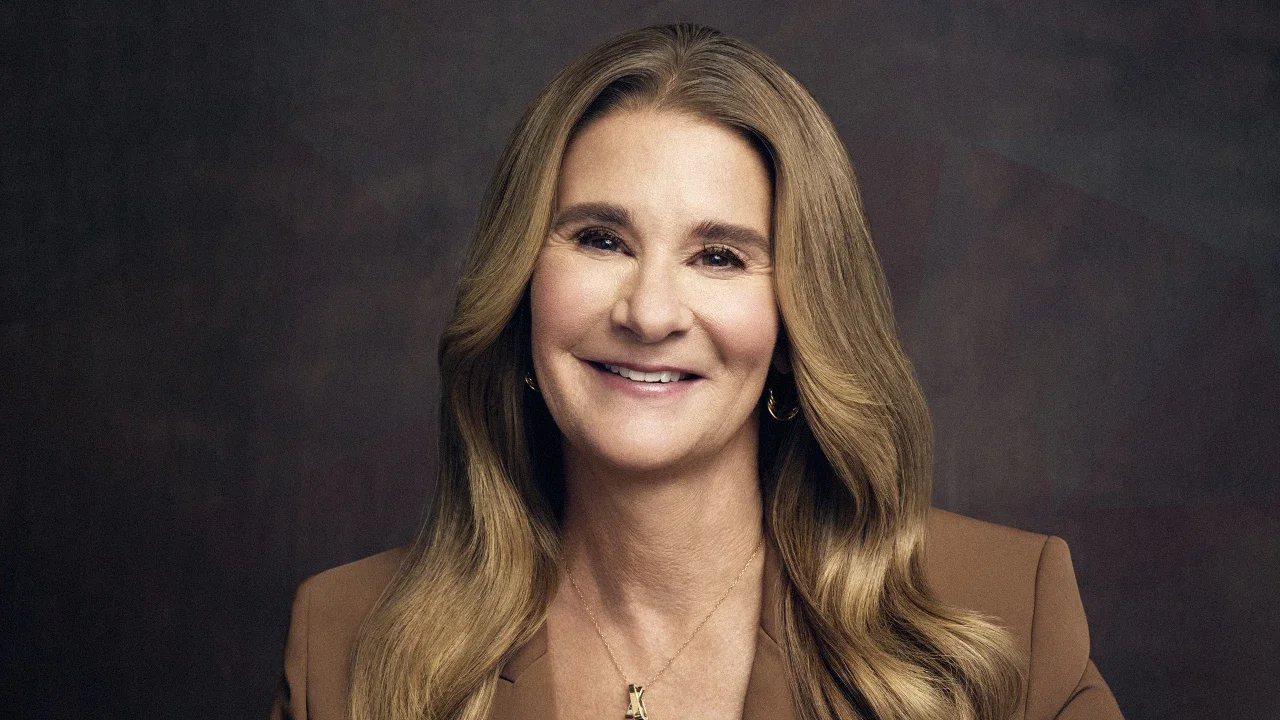
 In Melinda French Gates’s new book, The Next Day, she illuminates the importance of knowing “the story that you are writing for yourself.” After turning 60, leaving The Gates Foundation, and beginning a new chapter in her philanthropy, I was curious about the story that she is authoring. What are French Gates’s new dreams? “My new dreams are to lift women up generationally,” she says. “So, the world is different when my granddaughters enter the workforce. There are barriers that we need to break down, things about women’s health that we should be exploring, and opportunities that are more limited for women. I would love for many of those things to be easier for my granddaughters than they were for me or even my daughters.” A central premise of her book is that: During transitions, “the real work starts the next day.” It’s one that French Gates has fully embodied since departing The Gates Foundation in 2024, which she cofounded and cochaired for over two decades. When she announced her departure in May, she committed an additional $1 billion to advance women’s power and influence (totaling her commitment to $2 billion through her organization Pivotal). In October, they launched a $250 million global open call to fund organizations improving women’s health. Two months later, came a $150 million commitment to remove barriers for women in the workplace. French Gates is just getting started. The Next Day is an intimate portrayal of the transitions that she has faced personally and professionally and a road map to navigate your own. Here, she discusses knowing which dreams to let go of, pausing in the liminal space, and releasing perfectionism. This interview has been edited for length and clarity. In your Stanford commencement speech, you said: “Resist the idea that anything you’ve done here has already locked you into any one path—or any one kind of life or career . . . And be willing to let what you learn shift your thinking about what you’re on this earth to do.” What have you learned about the evolution of one’s purpose? I’ve learned so much. I came out of college thinking I am going to be in tech. I was in tech for nine years. I loved my career. I had no idea that I would go into global health, global development, learning about the U.S. education system, and issues for women. What I’ve learned through that process is that you need to keep an ear open and listen to others along the way. What do they have to teach you? What are they bringing to you? Is there a theme to it? At the same time, you need to listen to your inner voice: What is it calling you to do, even if what it’s calling you to do is hard? I remember when I helped lead a family planning summit in London on behalf of women. I had dinner with a group of women afterwards, most of whom I didn’t know, and they said: There’s so much more to do. It wasn’t at all what I wanted to hear at the time. But, I still listened to what they were telling me. Then, to my own inner voice about: Well, how could I do it? How quickly or slowly should I go? During transitions, you encourage pausing in the liminal space to see what it has to reveal to you. How do you “treat the unfamiliar as a teacher, instead of an enemy”? Being willing to sit there when it’s uncertain or you’re anxious, those are the times that you’re growing. You have to remind yourself: I’m going to learn something here. Our instinct is to rush to the next thing. I’ve seen so many people make that mistake when they’re leaving a career to start something new. They’ll rush to the next thing and pick the wrong thing. Then, they’ll have to change course two years later; Versus stay with it and figure out what you want to do, even when it’s uncomfortable. You write: “Sometimes the best thing you can do for yourself and the people around you is to have the wisdom to know which dreams to let go of, in order to make room for something new.” What helps you navigate the difficulty of letting go? Naming it out loud: This is hard for me. I think I should let this go. Sometimes, the first thing I do when something bubbles up and I’m like, Hmm, I’m not sure, is write it down. Then, I can’t run away from it. I’ll maybe run away from it for a week or two. Then, you’ll come back and remember. Once I’ve written it down, that seed is there. Then, I let it grow and see where it goes. Do you go back and read what you wrote? Definitely and, in the book, I talk about my Monday walking group. We’ve been walking together for so long now. They’ll say: “Remember when you said this?” We plant pieces of ourselves in those we trust. It’s up to them and us (for people who plant those things in us) to remind ourselves of those things. Returning to the idea of letting go, has there been a time, like leaving The Gates Foundation, when your identity was tied up in what you were leaving? How did you reconcile who you were without it? I’ve wrestled with it many times, leaving the Foundation for sure. But, the biggest time was: I absolutely knew that I was going to leave my career at Microsoft to raise my children; That was my decision. I knew I would go back to work, but it wasn’t until I actually left my job [that I felt it]. I had to leave three weeks early and was on bed rest unexpectedly. Then, I have this baby and I’m totally in love with her. But, all of a sudden it was like: Whoa, who am I without work? I’m a mother, which I always wanted to be and I love this. But, I’m not working. Am I a productive member of society? I used to view work as productive and being home as not productive, which is silly now when I think about it. But, in those times, at least for me, they would become almost a crisis. It was something that I needed to spend time with, work through, and recognize: This is a big shift. You’ll get through it. In writing about perfectionism, you express that you always wanted to do things the “right way,” which was almost always the hard way. How did you rewire that belief and how do you operate differently as a result? It took me a long time to realize: There is no perfect. But, what I do know is: If you’re true to yourself, it doesn’t have to be perfect. I had a speech on a big stage in Geneva. I tripped when I was walking out to the podium. I didn’t fall down all the way. But, I tripped pretty substantially, to the point where I heard people gasp. You look around and realize: There’s a hall of 1,500 people here. But, I’m human. I think my words will still be received. The more I could be vulnerable with and love myself, and the more I could then be vulnerable with other people, it allowed for more space for them and for me—and the perfectionism drops. The last line of that chapter is to “allow yourself to feel the ease of letting go.” What is one step you’d encourage taking to do so? When I’m trying to let go of something, I’ll remember the mistakes I’ve made and try to laugh about them. If I can laugh about some of the mistakes I’ve made over time, then I can let go of the thing that I am trying to hold onto so dearly. I also remember that if you let go of something, it makes space for something else. Sometimes, it’s moving people out of your life. You’re not serving them well or they’re not serving you well. Saying—Well, maybe I don’t see them quite as much—makes space for a new friend or to have time for yourself. You write about a shift in perspective where you no longer prepared for or entered meetings wondering whether you belonged there. How can you overcome imposter syndrome when you’re the youngest person in the room? Reminding yourself: You deserve to be there. You don’t always know how you got there. But, don’t question that. You deserve to be there and you must have something to contribute; Maybe you have a different perspective because you’re younger, your lived experience, or where you grew up. Remind yourself that there are other people at the table who are also feeling that. You feel it inside and think that no one else does. It turns out that most of them, who are honest, feel that way themselves. What was it like when you stopped feeling that way? It’s a relief. It creates more space in your mind to focus on other things or in your life to let go and go: This is who I am. I’ve also learned that I can ask people for help. If you don’t expect yourself to be perfect, you can ask people for what you need or be willing to ask what looks like a dumb question; Sometimes, the question that you’re afraid to ask ends up opening a whole new conversation. I’ve had that happen to me so many times. It’s like: Wow, that worked. So, I’ll try to remember: The previous time you did that, it was an opening. Transitions are an opportunity to evolve yourself. How are you thinking about that as you enter this next chapter? I hope that I’m evolving all the time. I try to think about: At the end of 10 years, what will I be most proud of and glad that I did? If I can take that 10-year horizon, then it’s easier for me to parse how I spend my time. One of the things I’m often saying to myself now is: “You are in a new phase of your career. Make sure you’re bringing in new people and hearing from new voices.” It’s not always easy to meet new people or listen to people who have a different point of view. But, I remember when my mom got to this phase of life, she said to me (and she’s still this way): “I want to learn from young people’s perspectives. Otherwise, if I only have friends who are my age, then I don’t know what’s coming up in society.” So, I’ve been challenging myself in that regard, too: How do I make sure that I am in a setting with younger people? What questions come up? I try to ask a question and let them generate the conversation or topics. During destabilizing times, your voice is a source of stability. What helps you cultivate your sense of inner resource and embody that steadiness? My spiritual group and my quiet time in the morning. Those things help ground me, so that when I am ready to go out and do the work that I try to do in the world or use my voice, I’m hopefully in a centered place. But, you have to be very purposeful about it, because the world can tug on you. Then, you don’t show up at the spiritual group meeting or spend time in quiet in the morning. I encourage people to figure out what’s stilling for them, put away their phone, and get that quiet time. View the full article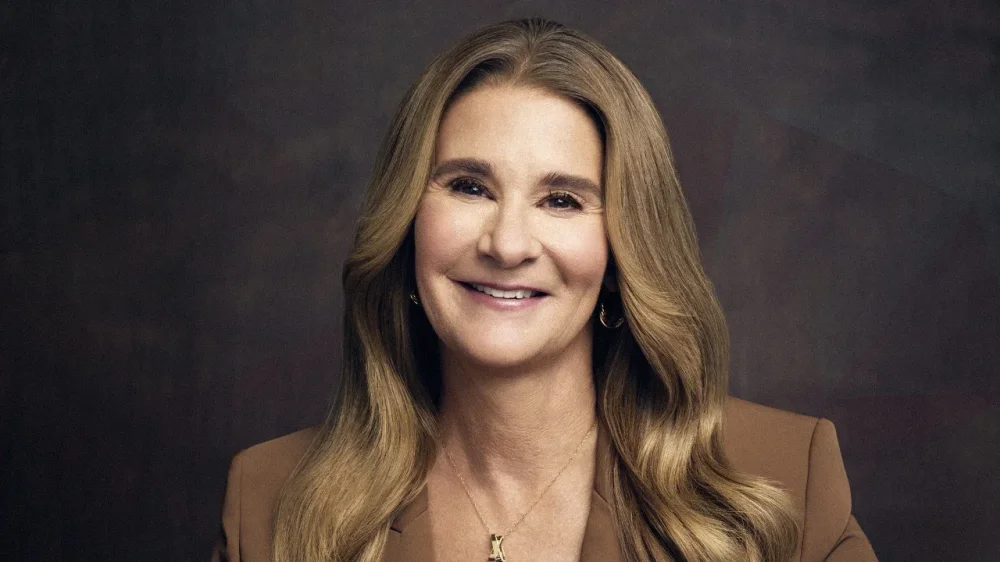
-
If you’ve followed Buffer for a while, then you know we have a few uncommon approaches to teammate benefits and compensation. The example I’ll dig into today is our “Dependent Grant,” which we launched in 2016. Our Dependent Grant is separate benefit, outside of salary, that we grant teammates who are taking care of and supporting family members. It’s an extra $3,000 USD per year per child, up to four dependents total. This has been one of our most unusual (and at times controversial) benefits. Until recently, this was granted for extended family members, like siblings, parents, and grandparents. After eight years, we’ve updated this benefit. As always, we’re here to share the full story. Our new Dependent Stipend in 2025Starting this year, we’ve decided to apply our stipend to dependent children, and no longer include partners or extended family members. It’s still a priority to support our teammates with young kiddos, especially during those rare weeks of work-related travel, such as Retreat week. The dependent stipend will continue to be a pillar in our network of benefits designed to help our team thrive in our remote work experience. For example, teammates often apply this stipend to childcare such as daycare or a nanny, which allows them to work during the day. To quote from a teammate in the original discussion: “supporting dependent children has a unique and direct impact on how Buffer teammates can engage with their work.” The goal was to strike this exact balance: generosity and support for teammates as it relates to work and our business. Beyond that, we feel it’s a family choice how a teammate’s family approaches work, childcare, and extended familial support. If we had unlimited profits, we’d love to support every teammate in a variety of different financial situations, and in fact this was the original dream of this stipend back almost 10 years ago! However, as a small business, we have to continually find the right balance of generosity and pragmatism when we examine our budget, our priorities, and our choices. This is how we will now define a Dependent: Under 18 years of ageResiding in the Buffer teammate’s home at least some of the timeThe Buffer teammate is one of their primary caregiversAll other situations on a case-by-case basisThis adjustment ensures that the stipend is focused on supporting childcare-related needs, bolstering our commitment to helping teammates thrive in a remote work environment. Whether it’s offsetting childcare costs during work hours or easing the burden during work travel (like retreat weeks), this stipend is now focused on offering practical support to teammates with young families. Under the new structure, we have 59 dependents across 31 teammates who are receiving support, with a projected budget of $117,000 for the year — a number that will likely grow as we welcome new Buffer babies or hire teammates with dependents throughout 2025. When we reevaluated the benefit in 2024, Buffer was supporting 99 dependents, including: 59 children22 spouses/partners15 parents2 siblings1 grandparentAt $3,000 per dependent, this amounted to a total of $297,000 per year. To be clear, while we know this topic has financial implications, our deep dive into the dependent stipend was driven more by the commitment to transparency and fairness. For example, transparency is lacking on this topic; this stipend is not included in our public salaries, and the concept of a dependent was being applied differently across the team. Why we changed our Dependent Stipend Late in 2024, we held a “Leadership Collaboration Week“, focused on taking a step back from the day-to-day business and asking bigger questions on our strategy, culture, or execution. I brought up our Dependent Stipend, and many teammates chimed in to unpack the cultural and financial implications of offering this benefit. (As with all topics that relate to money, not everyone has the same perspective, but I loved that we were able to have a really open discussion about the topic.) Here’s a summary of some elements of the stipend that work well for the Buffer team: We love the idea of supporting working parents. In general, modern capitalism forces parents to make tough tradeoffs between work and family, and we want to help make those tradeoffs a little bit easier. (This is one motivation behind our four-day workweek as well.)Because we’re fully remote, we periodically ask teammates to travel to a central location for coworking and bonding. When parents travel for work, it requires a lot of preparation and support, some of which incurs additional costs, especially related to childcare. We try to be generous with teammates, and we loved getting to support teammates who were helping out a family member going through a tough time and not able to work. We are a US-based company, but we have teammates all over the world. This level of generosity supported a variety of global cultures, some of which have more family-sharing than others. On the other hand, here are the elements that felt a bit off about the stipend: We are meticulous about fairness and transparency when it comes to our salary formula. This fund is separate from salary, and because we took a “no-questions-asked” approach, we ended up with some big disparities in how this was applied across the team, which felt out of line with our approach to overall compensation and benefits. It felt a bit off to give extra money to teammates whose spouses and partners chose not to work in contrast to those partners who did. I often found myself twisted into logic puzzles on this one. For example, a family with an at-home parent often did not pay for external childcare, but these were the teammates whose spouses were eligible for the grant. (Of course, the grant is much less than childcare costs in a year in most places, but still.) We reflected on these elements and how we felt about them in light of Buffer’s Values and our compensation philosophy (which is to strive to be transparent, fair, generous, and simple), and ended up with a new version of this grant for the future. Over to you! When this benefit was first introduced in 2018, each Buffer teammate claimed an average of 1.04 dependents. By 2020, that number had increased to 1.2 dependents per teammate. In 2024, it had risen further to 1.35 dependents per teammate — a reflection of how our team’s lives and responsibilities have evolved over time. One of Buffer’s core Operating Principles is to prioritize long-term thinking — building a company that thrives for decades, embracing patient growth, and planning ahead for our industry and the world. This principle extends to our team as well: 54% of our current teammates have been with Buffer for five years or longer. As they’ve grown with us, so have the caregiving responsibilities for many who have welcomed children while at Buffer. Our dependent stipend has been a reflection of this commitment, evolving alongside our team to provide meaningful support at different stages of life. As always, we’d love to hear your thoughts. Please share in the comments below, or reach out on our social pages! View the full article
-
Artificial intelligence groups are releasing models for computer programming that are reshaping coding jobsView the full article
-
Branded is a weekly column devoted to the intersection of marketing, business, design, and culture. Elon Musk’s biggest headache is no secret: It’s Elon Musk. Long a controversial figure, Musk lately seems to have made polarization his central project, from his close alignment with Donald The President and government wrecking-ball efforts to his wild posts on X and personal life. He’s increasingly unpopular. And it’s all done undeniable damage to his flagship consumer-facing enterprise, Tesla. With sales suffering and its cars and dealerships becoming protest targets, it’s now an open question as to whether the pioneering EV maker’s once-enviable brand can be restored. The extent of the damage will be quantified when Tesla reports its first-quarter results next week, but the outlines are clear enough. Sales of Tesla’s flagship vehicles have flagged in Europe and China, and the brand is facing stiffer competition from U.S. rivals; it has already disclosed a 13% plunge in global vehicle deliveries for the quarter. In EV-friendly California, Tesla registrations are down 15%—even as EVs overall rose 7.3%. Tesla trade-ins have soared to a reported 250%, with car-shopper interest in buying a new Tesla at its lowest point in years. The much-hyped Cybertruck has missed sales targets, been subject to a string of recalls, and become a magnet for anti-Musk vandalism. (You know it’s bad when your brand gets attacked at Mardi Gras.) Tesla showrooms have become sites of nationwide “Tesla Takedown” protests that yoke the brand to Musk’s political activities. Its share price has plunged from a high of nearly $490 in December to less than $250 this week. Wedbush Securities analyst Dan Ives recently summarized the upshot as a “brand crisis”: “The more Musk is attached to the The President administration and DOGE, the brand damage goes from containable to permanent,” Ives recently told the Los Angeles Times. “Tesla has become a political symbol around the world and that’s not a good thing.” In a March Yahoo News/YouGov poll, 67% of respondents ruled out owning or leasing a Tesla, with 37% specifically citing Musk as a reason. It’s difficult to find a pure parallel to a past mass-market brand crisis that boils down to widespread contempt for a CEO. But given how singularly the Musk personal brand is intertwined with Tesla’s, the most obvious solution would be to get some daylight between the two. Allen Adamson, cofounder of marketing consultancy Metaforce, recently told NPR that it “would probably be the best thing for the brand” if Musk cashed out of Tesla and walked away. “That’s the only easy fix, which is [Musk saying], ‘I’m selling it; I’m going to focus on other things I’m interested in.’ And the new ownership team is going to keep their eye on the ball.” That’s highly unlikely. David J. Reibstein, a marketing professor at the Wharton School, suggested a similarly extreme strategy to Business Insider: Tesla could change its name and logo and essentially rebuild the brand to appeal to its original customer base, heavily made up of progressives concerned about climate change. As precedent, he pointed to ValuJet Airlines. After one of its planes crashed in Florida in 1996, killing 110 people, it acquired AirTran Airways and dropped the ValuJet name and brand. This also sounds implausible. But it’s worth noting that Musk-founded SpaceX has been notching accomplishments and avoiding pop culture punching-bag status. It is widely seen as the Musk property with the strongest non-Musk manager: president and chief operating officer Gwynne Shotwell, who oversees daily operations. It does seem plausible that if Musk could find a similar figure for Tesla it would at least begin to put some distance between his caustic political views and Tesla’s original innovative and progressive brand. This might also begin to address investor concerns, which include not only the tarnished Tesla brand, but the sense that Musk simply isn’t paying enough attention to it: If the self-proclaimed “nano-manager” has other priorities, it would be reassuring to have someone more focused in the driver’s seat. Or, of course, Musk could simply knock off the political theatrics (he will supposedly leave DOGE in the next month or so) and put in the work to rebuild a connection between Tesla’s brand and the sizable chunk of his potential customer base that he’s alienated. This would take time, and there’s no guarantee it would work. Among other things, it would require really recognizing that the brand is at risk (which he might)—and being transparent about efforts to set it back on course. That’s an almost universal step in the playbook for bouncing back from a brand crisis, as varied as Volkswagen’s 2015 “dieselgate” scandal, which involved manipulating emissions-test results, to H&M releasing a racially offensive ad in 2018. Admit the problem(s), demonstrate how you’re solving them, focus on core values, and recognize that the process will take time. Of course those aren’t pure analogues, as the Musk/Tesla brand challenges are so distinct. Moreover, Musk has historically been skeptical of traditional brand communication, from advertising to press relations, relying on buzz and word of mouth from a zealous customer base. And that strategy has mostly served him well. (Even in their depleted state, Tesla shares are still priced for extreme growth, trading at more than 100 times forward earnings; a chunk of investor fans are no doubt bullish on the company’s robotics and self-driving technology, which are less dependent on consumer brand reputation.) In other words, any strategy that involves acknowledging the crisis, and Musk’s culpability for it, still seems like a long shot for now. To date, Musk has done only what the current political zeitgeist seems to default to lately when faced with undeniable problems: Deny them. View the full article

-
Plan alarms farmers and other exporters while Beijing warns of higher shipping costs and supply chain disruptionView the full article
-
When outdoor accessories brand Yeti completed its first major acquisition last year, there were skeptics. After its January 2024 purchase of Bozeman, Montana-based cult bag brand Mystery Ranch, many of that brand’s acolytes feared it would disappear, swallowed by its larger new owner. And second, isn’t this a coffee cup and cooler brand? Not exactly. It’s been almost a decade since Yeti first dropped its first Panga duffel in 2017, and since then it’s branched out to include backpacks, luggage, and more. But the company sees the new Ranchero backpack—the first Yeti product to integrate Mystery Ranch design—that launched in March as a turning point for it to truly become a bags brand instead of just a cooler brand that makes bags. CEO Matt Reintjes says that if you look back at the last decade of Yeti images and films, chances are they include a lot of non-Yeti bags. Because of the brand’s presence across the outdoors, whether hunting, fishing, surfing or skiing, or in camping and BBQ, bags were just a natural presence. So it’s perfectly natural for the company to be expanding its portfolio of bags. “This isn’t just about grabbing something, slapping our brand on it, draining the opportunity, and moving on,” says Reintjes. “We think there’s an incredible opportunity to take what Mystery Ranch has created in its brand, and what Yeti has created, with our brand and our capabilities, and have the best of both worlds.” Yeti has long believed in a low-and-slow approach to expansion, that takes the company into areas that make sense and, more importantly, it has permission to be. It took the same approach to bags, gradually rolling them out over the past eight years. Now, with the Ranchero, the brand is ready to add some swagger. No more dabbling The original Yeti bags were a natural extension of their founding product, the indestructible cooler for outdoor adventure. The Panga duffel and backpack were fully submersible, waterproof packs. Yeti’s head of marketing Bill Neff says that even though the brand has a pretty big portfolio of bags, it’s always been seen as dabbling in the category. “For the people that know we make these bags, they’ve been really successful for us,” says Neff. “We just have never taken it overly seriously. Now, with the Ranchero, we’re going to talk about bags like we do coolers and drinkware. This is the flag we’re planting in the ground.” It’s a flag in the ground, but the brand is still doing it the Yeti way. Don’t expect a Super Bowl ad. Instead, it’s about showing up in places that add credibility along with exposure. In 2023, the brand signed a licensing deal with F1’s Oracle Red Bull Racing, and now outfit the entire team’s luggage and bags. Neff says they’re also taking bags to ambassador deals. “We have ambassadors that personify who we are as a brand, but they’d be using North Face or Patagonia bags on-camera from other deals,” says Neff. “But a lot of them would use Pangas off camera. So we’re at a point now where our contracts include the bags category.” Mystery Ranch Lives Often when a smaller brand is acquired by a larger one, its value is in the expertise and IP, but the brand name is eventually phased out. Even at Yeti, this has happened with its 2024 acquisition of cast-iron pan brand Butter Pat. Reintjes says that this is not the company’s goal or intention with Mystery Ranch. While the new Ranchero backpack is the first Yeti product to utilize Mystery Ranch design IP, the Mystery Ranch brand is still alive and well. Reintjes says that one of the things that attracted him to Mystery Ranch was its origin story. Founded by Dana Gleason and Renée Sippel-Baker in 2000, it quickly became known for its focus on pushing the edges of design and development for gear in extreme environments. The brand will still live on in creating specialty gear for military and firefighting. “Mystery Ranch has really established itself in that world, and that’s that place we’re excited about where it can grow,” says Reintjes. “And on the broader, outdoor, everyday adventure travel side, the Yeti brand really fits in. So we think they’re really complimentary.” Deposits and withdrawals Yeti has managed to maintain an incredibly strong brand connection to its roots, despite becoming a public company in 2018. But quarterly demands haven’t altered the brand’s commitment to growing at a natural pace and in areas it has already an established presence. “We feel very fortunate that we have built a brand umbrella that’s much wider than the product portfolio that we have today,” says Reintjes. “So the privilege and permission to expand the product portfolio underneath the Yeti brand, that we work hard to earn from our consumers, puts us in a position where we have a lot of ideas on where we can go.” An example of this approach is surfing. Yeti didn’t just jump in and sponsor the World Surf League or pro surfers like John John Florence. Its connection began as surfers were using its products while fishing and cooking outdoors. It became a natural place to expand. The acquisition of Butter Pat, and subsequent launch of Yeti cast-iron pan, came from its BBQ and cooking ambassadors. “From an acquisition perspective, we tend to think about it as, Are we making deposits on the brand or are we pulling out from it?” says Reintjes. “Sometimes you’re drawing on the brand to help establish it somewhere, but we’re almost always looking to add to it. I think what happens when you start cashing out a brand, it just gets more and more generic. It gets less and less loved. So we’re always asking, are we making it more rich, are we making it more deep and more connected?” View the full article

-
I’m a journalist, and the first 30 minutes of my day used to be spent mainlining newsfeeds. Now, more often than not, it’s dedicated to LinkedIn. Such is the natural course of technology; I seek an engaged audience for pieces built on considered thought. And I discovered the pseudo social network that I’d once found cringe is actually full of smart people—who crop up if I’m willing to spend a bit of extra time sharing my writing with them. We are now in the era of the AI-born LinkedIn expert. Their mastery is dropping a story into ChatGPT and asking for a perky LinkedIn post summarizing it. (LinkedIn even has its own AI writing assistant that encourages people to “Rewrite with AI” to serve up this slop.) They snatch the thoughts and research of others, reconstitute it, and present it as their own. Even when they source a link, the new work is still oddly pre-chewed. A steak transformed into mechanically processed meat. But honestly, it’s not the plagiarism lite that gets to me most. And LinkedIn is hardly the only spot you’ll find people publishing AI-drafted copy. Beyond the Great Truncation at the heart of Zoom meeting summaries, I can tell the pitch emails I receive are increasingly written with the help of AI, while companies like Microsoft promote Copilot to help write corporate memos (and LinkedIn posts!). It seems every designer I know is using AI to write about their projects, and Canva just unveiled tools to batch write ads for you in about every language on earth. This is all *fine* [the room around me beginning to smoke but not in full flames yet]. Not every pitch deck needs to be a Shakespearean sonnet. Even language specialists will tell you that a lot of writing is formulaic, which is a reason why predictive autocomplete technologies have been so accurate for so long. I used to fear that AI would trap each of us into our own universe. Now I’m imagining a future that’s far more mundane. It’s one where I use AI to write you a thing. Then you have your AI summarize it. Then you have your AI write back. And then my AI summarizes it. Why wasn’t it all just summarized in the first place? Does anyone need to have a full thought ever again? Don’t take me as some Luddite denying the current impact or supreme possibilities lurking inside generative AI. We consolidated all our knowledge into the internet, which we used to train humanity’s synthesizer. Life is gonna be messy for a while. But I’m not just a curmudgeonly old writer who is threatened by a machine that can pump out copy even faster than I can. (And ask my editors; I’m lightning.) What is so insulting to me about those AI-written messages is that they take less time and consideration to produce than they do to consume. You are, by the nature of sharing these automated words, signaling to me that you care less about my time and attention than you do your own. Of course you’re free to believe that as much as you like—in your own head. Just don’t drop it into my inbox or feed. Because that’s rude. In a way, an AI-generated image or advertisement is less offensive to me, because we look at most digital ads for a second or less (with a mere 4% commanding our attention for a full two). To everyone in marketing and graphic design, please do not cancel your weekend plans to get 10 additional microseconds of my engagement! Who cares? (Apologies, I really do enjoy a great ad.) Reading simply takes longer than visual processing. It inherently asks more of an audience. Presenting a friend or colleague with a note an AI wrote is like inviting them over for dinner and microwaving a Stouffer’s. An AI post on LinkedIn is bringing that same microwaved dinner to a potluck. You should be embarrassed in either case! Not by your lack of skill or practice in putting together words, but your lack of respect for not even trying. Now, in full fairness, I will acknowledge that this faux pas is not all your fault. The omnipresent do-anything button of AI is certainly tempting. And companies including OpenAI, Google, and Microsoft are encouraging such behavior while hoping to prove out their investment in AI tools. They will addict us to automation even when it’s uncouth because there’s no business plan in the world built on moderation. The truth, however, is if something isn’t worth you writing it, there’s about no way in hell it’s worth me reading it. View the full article

-
If you’ve ever been to a Nashville honky-tonk, you’ve witnessed the chorus of cowboy boots, the thrumming acoustic guitars, the roadhouse neon, the Stetsons, the buoyant bourbon-and-barbecue-fueled energy. You probably wouldn’t describe this scene as simply “a bar.” And yet, if you’re blind or have low vision and happen to use a screen reader to read the alt text of a photo of a honky-tonk, that’s likely the description you would get: “This is an image of a bar.” “The current [state of alt text] is pretty abysmal, just to be quite candid. It’s almost a bit ‘out of sight, out of mind,’ literally and figuratively,” says Josh Loebner, creative marketing agency VML’s global head of inclusive design, who also happens to be blind. “Images create another layer of depth to what narrative is on a website, regardless of what it is—but particularly for travel and tourism.” This led VML and the Tennessee Department of Tourist Development to launch Sound Sites—an initiative to replace the alt text on the state’s official tourism website with lyrical verse from one of Tennessee’s best natural resources: songwriters. Now, no longer is a photo of King’s Palace Cafe in Memphis “an image of a person playing guitar in a bar.” Rather, as songwriters David Tolliver and Billy Montana put it: There’s blues singing off the strings of Lucille, Ringing down the black top and sidewalks of Beale, The soul of BB King is present and real, The songs seem to find you and know how you feel. Kix Brooks Tuning up Often, Loebner says, accessible design is regarded as a matter of “checking the box.” It’s treated as an afterthought that doesn’t involve any semblance of creativity. But alt text is competing with vivid sensorial power. When someone sees a photo, “in an instant, they not only distill the information, but in travel and tourism, it starts to put them in that place . . . them stepping into those mountains, walking a trail where they can have a beautiful scenic vista, or sitting in front of a stage hearing an artist play their favorite song,” he says. It takes creativity to bring an image to life in the truncated space of descriptive text, which best practices place at around 125 characters. If there’s a group of people who excel at working in those tight borders, it’s songwriters. Loebner acknowledges that VML could have hired copywriters, but the state’s heritage of songwriters was too perfect an opportunity to pass up. “Our tagline for the state is “Sounds Perfect.” And if you think about it, if an image doesn’t have an alt text associated with it, it really doesn’t sound perfect to people who are blind or partially sighted,” Loebner says. “A songwriter, at their core, is about putting words together in very evocative, sublime ways that really nobody else can do.” Loebner says when VML brought the idea to Tennessee officials roughly six weeks ago, they loved it. So far they’ve worked with a dozen songwriters, including Kix Brooks of the musical duo Brooks & Dunn; the aforementioned David Tolliver (who has written for the likes of Tim McGraw, Wynonna Judd, and others) and Billy Montana (Garth Brooks, Sara Evans); and Hilary Williams (granddaughter of country music legend Hank Williams Sr.). VML paired them with people from the blind communities to collaborate, converse, and help get a sense of the challenges and barriers of generating image descriptions for alt text. “Pun intended, it opened up the songwriters’ eyes to seeing how their verse could be used in quite a unique way that hadn’t been considered before,” Loebner says. Noodling around on their instruments, the songwriters have added lyrical alt text to several hundred images, with the hope of reaching a thousand as a benchmark. And while this all makes for a great PR/marketing story for VML and the state, it’s one that reaches far beyond the initial buzz. Loebner says the goal is to expand the scope of the project, continuing to recruit songwriters to create alt text for a variety of uses, from social campaigns to video ads and more. Jana Jackson AN ACCESSIBLE SOLUTION The project has been dubbed a first of its kind for the tourism industry. And that tracks: Loebner says accessible design is often regarded as an insurmountable mountain, where everything must be done in one fell swoop across the board. But he believes that any element of progress is progress. He adds that it’s also thought to be time-consuming and expensive, but as this project shows, it can be done quickly. “I can guarantee it will not break any bank of any travel or tourism department,” he says. Of course, weak image descriptions are an issue in most industries, and song lyrics obviously aren’t a universal panacea. Image descriptions at large just need to be more evocative about telling stories in a succinct way for the benefit of all—and Sound Sites serves as a powerful reminder that innovative solutions are needed for a potent problem. Loebner says 93% of all websites have at least one page that doesn’t include any descriptive text, and many others lack quality image descriptions, if they have them at all. Which can be utterly detrimental to not just planning a vacation—but major life decisions at large. “Think about a young person who is considering college, and they’re blind and they want to know what college to go to. If that college doesn’t have accessible websites or immersive alt text, then that college may be passed over. Or think about different careers,” he says. “We all want to dream. And when there’s inaccessibility as a barrier, that could diminish dreams. We want to be able to open the aperture, to hopefully allow everybody, whether they’re blind or not, to be able to dream bigger.” View the full article

-
Six hours after OpenAI’s launch of GPT-4.1, Sam Altman was already apologizing. This time, it wasn’t about hallucinations or bias or Scarlett Johansson. No, it was about the model name. GPT-4.1 seemed nonsensical to many, difficult to parse from their already launched models like GPT-4o and GPT-4.5. “How about we fix our model naming by this summer and everyone gets a few more months to make fun of us (which we very much deserve) until then?” Altman wrote. Streamers take the brunt of the internet’s name-mocking: Are you a Hulu, Tubi, or Fubo subscriber? But AI companies are just as bad, if not worse. Their model names are often incoherent and unmemorable. From Sonnet to Llama, AI companies have a branding problem of their own creation. The history of bad AI model names OpenAI chose a numeric naming system for their models. This streamlined their products, moving from GPT-1 to GPT-2, GPT-3, and eventually GPT-4. Now, instead of continuing their linear progression, OpenAI is launching models within the GPT-4 umbrella. First, there was GPT-4o (as in “omni”), then GPT-4.5. Now, they’ve reversed back to GPT-4.1. Users are left not knowing which models do what, or which is the most recent. Anthropic was founded by OpenAI alums—and they have the same problem with model naming. They’ve now moved to decimals, tracking from Claude 1 to 2 to 3, before pivoting to 3.5 and 3.7. Worse, their individual models are named after literary works: Opus, Sonnet, and Haiku. Naming your models after a creative class you threaten to displace is an act of cruelty. Google named its model Gemini because of the “dual-natured personality” of the zodiac sign. The choice is sweetly symbolic—until you realize Google is calling its chatbot two-faced. Iterations of Gemini also come in decimals, but at least they’re consistent in moving in halves, from 1.0 to 1.5 to 2.0 to 2.5. But they also have addendums like Flash, Flash-Lite, Pro, Ultra, and Nano—terms that are minimally descriptive. But Meta is the worst among them. They chose to name their family Llama—or originally LLaMA, short for Large Language Model Meta AI, though the capitalization has been mostly given up on. It’s an overly smiley, somewhat cloying choice. No, Meta’s family of LLMs is not a petting zoo. Moreover, their individual models are named things like Scout and Maverick, because Meta seems to think their AI needs to sound like Top Gun movies. What should an AI company look like? A model name should have some basic tenets. It should show the company’s progress, and allude to the model’s use cases. (For how confusing GPT-4o was, the “omni” did demonstrate its value, which was that it was multimodal.) But the model names are also a prime opportunity for branding. The AI companies knew as much when they were first launching. The initial race was between DeepMind and OpenAI, both of whom’s names reflected their positions. DeepMind was “deep,” placing their tech at a high value as they raced towards AGI. OpenAI was “open,” centering transparency for the then-nonprofit. When Anthropic came around, promising to produce more ethical AI, they centered the human in their name. Model names can do the same. They don’t need to be zodiac signs and poems, farm animals and number splatters. These models can present their companies’ futures; they just need to pivot. View the full article

-
Twenty-one years on, Airties keeps racking up Tier-1 operator wins. Find out why in this interview. The post Interview with Airties CEO: “Great home Wi-Fi starts by accurately measuring the home connectivity experience” appeared first on Wi-Fi NOW Global. View the full article
-
US secretary of state says Washington will focus on ‘other priorities’ if war cannot be ended soonView the full article
-
Beth Kaplan is a belonging researcher and advocate. She has spent her career studying how people construct their sense of belonging. With more than two decades of experience as an executive and having conducted research into workplace trauma, she is a sought-after consultant for Fortune 500 companies, nonprofits, government, and educational institutions that seek to improve their retention and culture. What’s the big idea? Braving the workplace means showing up as yourself—every single day—in a world that constantly tells you to be someone different. Too many of us feel unseen, undervalued, and unhappy at work. It’s time to stop shrinking and molding to keep your seat at the table. Managers need to create environments where employees thrive because they feel that they are enough, exactly as they are. Below, Kaplan shares five key insights from her new book, Braving the Workplace: Belonging at the Breaking Point. Listen to the audio version—read by Kaplan herself—in the Next Big Idea App. 1. The opposite of belonging is fitting in. Belonging is the innate desire to be part of something larger than ourselves without sacrificing who we are. It’s not just about being included; it’s about knowing you can show up as yourself without fear of rejection or exclusion. Belonging is something individuals determine for themselves. It can’t be imposed from the outside. It must be felt, experienced, and owned internally. Only you can decide if you belong. For years, we’ve been conditioned to believe that fitting in is the same as belonging. But fitting in is the opposite of belonging because if all you’re doing is adapting, molding, and minimizing yourself to be accepted, you are sacrificing your core self. True belonging requires no self-sacrifice. It doesn’t demand that you compromise who you are to stay employed, be liked, or get ahead. Instead, it means showing up as yourself, fully and authentically, and knowing that you are valued—not in spite of who you are, but because of it. The problem? Most workplaces reward fitting in more than they foster belonging. They encourage employees to blend in, conform, and “play the game” rather than create environments where people feel safe enough to be real. But if you must change yourself to belong, you don’t belong. When organizations use harmful phrases like, “We’re a family,” even when well-intended, they create unrealistic expectations for emotional loyalty and sacrifice. Families are built on unconditional love, but workplaces operate on performance, roles, and shifting priorities. Fitting into a family is natural—you’re born or welcomed into it. But fitting in at work? That often means conforming, suppressing parts of yourself, or overextending just to feel secure. Work is not family—it’s a professional environment where people collaborate to achieve shared goals. Blurring these lines erodes boundaries, makes it harder for employees to advocate for themselves, and pressures them to prove their worth through overwork and self-sacrifice. Real belonging isn’t earned through self-sacrifice; it’s built through trust, respect, and the freedom to show up fully. When workplaces prioritize fitting in over true belonging, they create environments where people feel like they have to perform instead of participate and conform instead of contribute. Real belonging doesn’t ask you to shrink. 2. The most common workplace trauma is belonging uncertainty. Let’s talk about something happening in every office, Slack channel, and Zoom call: belonging uncertainty. Belonging uncertainty is that nagging voice in your head asking, Do I really belong here? Do they see me? Do they even want me here? It’s when your ideas get dismissed in meetings, when you’re passed over for projects without explanation, when your workplace says they care about diversity, but no one in leadership looks like you. This low-grade, everyday questioning of your worth is workplace trauma. And it has real consequences. Employees who feel uncertain about their belonging don’t just wonder about it—they feel it in their bodies. It leads to self-silencing, disengagement, burnout, anxiety, depression, and even an increased risk of heart disease. When we experience belonging uncertainty, our bodies react as if we are under threat. Cortisol levels spike, heart rates increase, and our nervous system shifts into fight, flight, or freeze mode. This isn’t just an emotional response—it’s a physiological one. Our brains perceive exclusion the same way they perceive physical pain, activating the same neural pathways. Over time, this stress response can lead to long-term health consequences. When belonging feels fragile, our bodies stay on high alert, making it harder to focus, collaborate, and bring our best selves to work. Belonging is a biological need. People don’t innovate in rooms where they feel invisible and uncertain. They don’t take risks when failure feels like proof they don’t belong. They shrink. They check out. And eventually, they walk away. If companies want to retain their best people, they need to stop assuming everyone feels like they belong and start earning that trust every day, clearing up and mitigating the risks of belonging uncertainty before it has a chance to take over. 3. More than anything, employees want managers to care. Employees don’t leave companies. They leave managers who don’t care. In fact, a manager is the number one influence on an employee’s sense of belonging. Research shows that a person’s manager has more impact on their mental health than their therapist, doctor, or even their spouse. When a manager creates psychological safety, recognizes contributions, and treats employees with dignity, people feel seen and valued. But when a manager ignores them, criticizes without support, or withholds opportunities, it erodes belonging at the deepest level. Care is kindness, but it’s also candor. Care is support, but it’s also accountability. Care is saying an employee’s name in a room full of decision-makers when they’re not there to advocate for themselves. Care isn’t just about being nice. Great leaders know that care isn’t just about checking in—it’s about showing up in ways that actually make a difference. 4. How can leaders create environments of care in the workplace? Expand the notion of Care as Kindness: Create a safe space where people feel seen, valued, and respected. It’s taking the time to ask, “How are you really doing?” and actually listening to the answer. Check in beyond the deadlines and deliverables. Another way to expand care is to look at Care as Candor—telling people the truth—because you want them to succeed. Dodging tough conversations isn’t kindness; it’s avoidance. If you’re not coaching your people with honest, constructive feedback, you’re not leading them. Giving honest feedback helps people grow. Finally, managers can execute Care as Advocacy. This is where the rubber meets the road. Care is mentorship, sponsorship, and ensuring your people get the visibility they deserve. If your employees are only being noticed when they fight for themselves, you’re not leading—you’re making them do all the work. If you’re a leader, ask yourself: When was the last time you made someone on your team feel seen? Supported? Invested in? If you don’t know the answer, it’s time to rethink how you lead. 5. Belonging is personal. When companies try to force belonging, it makes employees feel like they’re the problem if they are not feeling it. Instead of creating real connection, it pressures employees to fake it. Belonging is deeply personal. It’s not a policy, slogan, or mandatory team bonding exercise. It’s something that happens when employees feel cared for, seen, heard, and valued. It’s built through trust, psychological safety, and real relationships—not performative culture-building. A company says, “You belong here!” It’s in onboarding speeches, town halls, and posters on the walls. The message is clear: belonging is non-negotiable here. But belonging can’t be imposed. It’s not something a company can announce into existence or demand employees accept. It’s something we feel—not something we’re told. If companies want to stop imposing belonging and start earning it, they need to: Create psychological safety. Make it okay to say, “I’m not feeling a sense of belonging right now.” Ditch the blanket statements. Instead of saying, “You all belong here,” ask, “What does belonging look like for you?” Train managers to be belonging leaders. They have the greatest impact—they must learn to recognize when employees feel unseen or disengaged. Understand the belonging spectrum. Not everyone seeks deep personal meaning at work. Allow for different levels of connection without penalizing employees who need less. It’s time to build workplaces where belonging isn’t conditional or imposed—it’s real, earned, and deeply felt. When employees are forced to perform belonging rather than experience it, they smile, nod, and show up to team events, but inside, they’re thinking, I don’t belong, but I can’t say that out loud. This creates workplace Duck Syndrome: On the surface, employees appear calm, engaged, and aligned, but underneath, they’re frantically paddling just to keep up the illusion. Faking belonging is exhausting. It leads to burnout, disengagement, and resentment. When belonging is real, people thrive. When it’s imposed, people check out. It’s time we do better. This article originally appeared in Next Big Idea Club magazine and is reprinted with permission. View the full article

-
Need a train station shelter in a hurry? You can now print that. In Arida, Japan, a Japanese architectural firm and 3D-printed house manufacturer partnered with JR-West, a railway network, to build what they claim is the world’s first 3D-printed train station. Assembled in less than six hours between the station’s last train of the night and first train of the following morning, it’s a promising first look at how infrastructure improvements might be done faster and cheaper. The station is the work of the 3D-printed house manufacturer Serendix and the architecture studio Neuob. It’s made from four 3D-printed mortar pieces that were printed offsite and filled with concrete for reinforcement before being assembled. The final building footprint is just more than 100 square feet, and replaces an older wooden shelter at Japan’s Hatsushima Station outside Osaka. While the facade is in place on site, the overall structure is still a work in progress as ticket machines and transportation card readers still have to be installed ahead of its official July opening. The shelter’s pieces were purposefully printed so that the indention between each printed layer would be vertical rather than horizontal when assembled. This reduces “the visibility of rain streaks and improves the building’s maintenance properties,” the company told Dezeen. The construction style also allows manufacturers to embed custom embellishments into a wall as it is produced; in this case a mandarin orange shape representative of local produce in the region. This isn’t Serendix’s first 3D structure within tight time constraints: The company also built a 3D-printed house called “Sphere” in 2022 in just under 24 hours. With this 3D-printed train station, the company proves how fast workers can install a prefabricated building. It also builds proof of concept for a new paradigm about construction that’s faster and cheaper in a time of rising costs. With construction needs for buildings like new homes or repairs on aging infrastructure on the rise, 3D-printed buildings could provide builders with cheaper and faster building methods and materials to meet demand. View the full article

-
Today’s corporate job market presents serious challenges for recent college grads. In part, that’s because the job market is difficult for everyone. But it’s also because entry-level job seekers don’t have as much experience and must work harder to show why their skill set and background makes them a good fit for a role. I recently reached out to Katie Smith, who offers career guidance for young professionals on her site Get a Corporate Job. She encourages students to take the following steps to land their first full-time position—and others to come. 1. UNDERSTAND THE JOBS LISTED First, begin with a deep dive into the jobs that interest you. You may have a major in English or Psychology, but of course “these subject areas do not correlate with job descriptions like ‘customer success manager’ or ‘product manager,’” says Smith. The key, Smith says, “is to understand what the job is before applying for it.” To do this, you’ll need to talk to people who can tell you about the role—ideally people in your network who may be in that industry or may have held that specific job title. After all, you can’t sell yourself into a role you don’t understand. Unless you fully understand what that position requires, you won’t be able to customize your résumé or prepare for an interview. Once you know the nature of the job, you can think about how it links with your education and experience. 2. FOCUS ON A FEW APPS Second, be selective. Though it’s tempting to send out your résumé far and wide, Smith suggests that you apply for no more than three jobs at any one time. “Recent grads often think they should apply for everything in sight,” she says. “So, they send the same résumé to everyone and then wonder why they are not getting the job.” Her advice is to take a more focused approach. By limiting the number of jobs you apply for, you can spend more time on each application, and make clear why you have what it takes to succeed in the role. 3. CUSTOMIZE EACH RÉSUMÉ It’s important to customize every résumé you send out, says Smith. So, if you have chosen to respond to three postings with three different job titles, craft three separate résumés. “A ‘digital marketing specialist’ and a ‘brand marketing specialist’ might sound similar, but they are not the same job,” says Smith. Each résumé should show how well-suited you are for the role you are applying for. (For more on crafting job-specific résumés, check out my latest book, The Job Seeker’s Script, which has a chapter on constructing “A Winning Résumé.”) 4. STRUCTURE YOUR RÉSUMÉ EFFECTIVELY Before sending off your customized résumé, give some thought to its format. Put your contact information at the very top. Then comes the Summary Statement describing your fit for the job. It might read: “With my two summer internships and a broad array of courses in data management, I have the experience and education that will enable me to succeed in this new role.” The important thing is to align this statement with the job you are applying for. Instead of creating a Work History section, have an “Experience” section. Smith says to include both paying and nonpaying work that is relevant for the job. If you’ve set up a database for a local basketball league, that’s relevant for a job in data management. Serving as a lifeguard for two summers is probably beside the point, however. Put your most recent work first. Then comes the “Education” section where you include your degrees and certifications and relevant academic accomplishments. Highlight courses important to the job you are applying for. Your résumé should be one page. 5. DON’T BE AFRAID TO GET CREATIVE As a recent grad you’ll want to position yourself in a way that makes you stand out. “When submitting your application or showing up for the interview, do a little more than others do,” says Smith. This could take the form of a PowerPoint presentation or a video that demonstrates your special qualities. For example, if you are applying for a sales job, the video could illustrate how you would pitch a product to a client. Or it might introduce you to the hiring staff. “I even created a website for every job I applied for,” says Smith. “I titled these websites with the name of the company: company@hireskatie.com. These websites showed that I would go the extra distance for them. I got job offers as a result.” As a graduating student, you may not have the track record of someone who has been building a career for decades. But these strategies will help you land that first entry-level job and put you on the road to career success. View the full article

-
Standstill shows how Sino-American trade war has spilled into energy sectorView the full article
-
One of the more unique takes on the POV trend on TikTok: “POV: You bought a 100-year-old skyscraper . . . ” For those unlikely to ever own a skyscraper themselves, TikTok’s Skyscraper Guy offers a behind-the-scenes look at what that experience entails—think hidden rooms not listed on blueprints, a bottomless pit in the basement, a Prohibition-era speakeasy, and a mysterious safe with no known combination. The video, posted last week, has already racked up more than 2.4 million views. “Step 1. How does one acquire a skyscraper,” one commenter asked. “My idea of an impulse buy is a cupcake,” another added. Sleuths in the comments quickly identified the skyscraper as the Pittsfield Building in downtown Chicago. Located at 55 E. Washington Street, the 38-story tower, designed by Graham, Anderson, Probst & White, was the city’s tallest building when it was completed in 1927; it was designated a Chicago Landmark in 2002. The Skyscraper Guy, also known as real estate investor Tom Liravongsa, purchased 30 of the building’s 40 floors and has announced plans to convert most of the space into residential units, Crain’s reported. Liravongsa is founder and CEO of L’Cre Global, a Grand Rapids, Michigan, boutique specializing in real estate and other alternative investments. Fast Company has reached out to Liravongsa for comment. On TikTok, as renovations begin, Liravongsa’s spotlighting the building’s original features, including a hand-carved copper ceiling, 100-year-old tobacco shop, and a bronze elevator dial, for his 50,000-strong following. “Owning a skyscraper is a full-time job,” he says in another video, “but somebody’s gotta do it.” Since posting his first video in late 2023, Liravongsa has taken his audience of millions along as he demolishes entire floors (costing upwards of $200,000), discovers tunnel entrances 150 feet underground, and walks down 100-year-old fire escapes that are a spine-tingling 250 feet above ground. He is also happy to share tips for others in the market looking for their very own skyscraper. “I watched this whole thing like I’m going to go buy a skyscraper tomorrow,” one commenter wrote. View the full article

-
This post was written by Alison Green and published on Ask a Manager. It’s four answers to four questions. Here we go… 1. Excusing myself from a fancy work lunch due to allergies I have severe food allergies to multiple common food items. They are complex (substitutes for one food often contain another, some allergies are tied to flavoring or preservative agents not immediately obvious, etc.), often challenging, truly allergic (not an intolerance), and fairly new (adult onset a few years ago). For that reason, I very rarely eat out. My food intake is consistent and incredibly limited. I had to work with a dietician for several months to figure out how to even get enough sustenance in me each day. This reality sometimes makes it difficult to be involved in work events, many of which are food-related. But I’ve come to peace with that and typically just show my face and sip on a water or soft drink. After a recent success, however, one of the higher-ups is bringing my team and another to a fancy local restaurant for a celebratory lunch. Everyone is very excited, but I checked the menu, and it’s going to be near-impossible for me to eat at this establishment. To be fair, it’s near-impossible for me to eat at most establishments, and even if I just pick at a plain salad, I tend to be a nervous mess the whole time. Is there a graceful way to decline this group outing/similar outings without reflecting poorly on me or being left out of things in the future? I’d rather they not try to accommodate me; I don’t want to disappoint everyone else who is eager to attend. An alternative restaurant would also not necessarily help my dilemma; I don’t eat out often enough to even recommend one. To that end, I don’t know what else I could do but bow out; attending and not partaking feels somewhat awkward. Can you call the restaurant, explain the situation, and ask if they’d okay you bringing your own food? Although restaurants often don’t allow that, they’ll sometimes make an exception in cases like this. Alternately, if there’s something simple that’s not on the menu which you’d feel safe eating if they prepared it in an agreed-upon way (like plain poached salmon with a clear agreement not to add anything to it, or something else similarly straightforward), you could ask about that. Some people with very restrictive diets are comfortable doing that and some aren’t willing to trust it was prepared the way they requested; if you aren’t, ignore that suggestion. Otherwise, it’s fine to explain your situation and say you’ll need to opt out. Say something like: “I really appreciate the offer to take us to Belvédère à Tacos. I have medical restrictions that mean I can’t eat in restaurants so I need to bow out, but I wanted to explain why and thank you for the recognition.” If they ask if there’s somewhere else that would work for you, you can reply, “I really don’t eat out because of it, but thank you for wanting to try!” If you’re not comfortable sounding quite so rigid about it since it sounds like you do occasionally eat in restaurants (and you presumably don’t want to say this and then be spotted by a coworker in a restaurant the next day), you could replace “I can’t eat in restaurants” with “I can’t eat in the majority of restaurants” and, if pressed for an alternative, “I’m in restaurants so rarely because of this that I wouldn’t be able to recommend one, but thank you for offering.” 2. VP sent around a photo of a coworker doing a Nazi salute I have been at my current company for eight years and it’s not perfect, but I do mostly enjoy my work. Last week the senior VP and COO of the company accidentally sent out a photo to 20 employees of our coworker doing a Nazi salute in a branded booth in front of two massive company logos, during an active trade show. There were multiple members of the executive management team, including the director of HR, on the chain, but not one person said anything about the Nazi pic, except for me. I texted that it was incredibly offensive and I don’t want to see that at work. I also spoke with HR. The senior VP sent more trade show pics and pretended like he didn’t just spread hate speech. It was very surreal. There was zero doubt about what he was doing in the photo, and it quickly made the rounds of our small office. Everyone who saw it was equally horrified and several are thinking of resigning because of it. This week I was told that the Nazi was reprimanded but will continue to work for the company. I told HR that I would at least like an apology and it should also be extended to everyone on that text chain. I was made to feel like I totally overreacted. Unrelated to this recent incident, I’ve been interviewing for about a month for a new job that would offer more chance to move up in the company and is also much closer to home. I was truly on the fence about leaving, but the Nazi salute pushed me into the GTFO NOW camp. I anticipate receiving the job offer tomorrow. When I write my resignation letter, can I explicitly state that I am leaving to grow my career in part but my main push to leave now is the Nazi salute and the way it was handled? Please do explain that’s why you’re leaving! It’s astonishing that your company didn’t even think this should be addressed with the people the photo was sent to.. I generally wouldn’t put something like this in your resignation letter — resignation letters are for bureaucratic details like confirming you’re resigning and what your last day will be; they’re not the place to get into grievances — although in this case there’s a hell of an argument for including it. Either way, you can absolutely say it face-to-face when you tell your boss you’re leaving, and if you have an exit interview you should mention there as well. You should also feel free to make sure everyone you work with knows what happened, if they don’t already know. 3. I feel guilty about telling my boss one of my employee was about to resign I am in charge of a large number of employees. One of them told me he got a new job and would be giving his official notice this coming Monday (he is currently out of town). It weighed heavy on my heart to mention something to my boss. I hemmed and hawed about saying something because we are getting into a very busy season and realistically need to hire now if we are losing someone. He also told two or three of our other coworkers and is clearly excited. I am very excited for him! So I mentioned to my boss that there was a 99% certainty that someone would be leaving and giving notice on Monday. He pressed hard and told me I needed to tell him who exactly so that he can make arrangements or at least get thinking about it. This is where I put myself in a pickle: I told him I didn’t want to betray anyone but as a leader at our store I did feel inclined to say something, knowing just how busy we are and how much of a detriment it will be when he leaves right now. My boss seemed grateful that I said something. I even spoke to HR about it first, where she told me it would be best to at least mention something to my boss so we can start arrangements. But I feel intense guilt that I said anything about it. I do not want to jeopardize his relationship with work and I am not happy that my boss pressed me because I tried desperately to be anonymous. I am his supervisor and in leadership here, and he did not tell me to keep it a secret. But I don’t want to betray him or put him in a bad spot. I think overall I could have waited until Monday. But I also feel like as a business person it was okay that I mentioned something. Is what I did wrong? He didn’t ask you to keep it a secret! He presumably told you because it felt like work-relevant info and he didn’t ask you not to share it, so you are beating yourself up entirely too much. You’re fine. If he had asked you to keep it a secret, you’d have been in a harder spot. That’s not always a request a manager can comfortably agree to; when you’re in possession of information that you know will affect business operations, in some cases you have an obligation not to keep that to yourself. That said, a difference of a few days will rarely make enough difference to matter, and in that case you should err on the side of respecting a request for confidentiality if you can. If it were the rare situation where a few days would matter — like if your boss was about to turn down an applicant who would be perfect as a replacement or make staffing decisions that would be affected by this — you’d have much more of an obligation to mention it. The one thing you did weirdly here was presenting it to your boss as “someone is leaving but I can’t tell you who.” Either tell him or don’t tell him, but that kind of coyness will just cause alarm without having anything actionable attached to it, and it’s not surprising that your boss pressed you to say more once you raised it. 4. Missing work for a tennis tournament My 17-year-old got a job at a local tennis club. He, like every single other weekend employee, is on his high school varsity tennis team. All these kids have weekend tennis tournaments to travel to during their rather short tennis season (four different weekends!). The employees are asked to find a sub to cover their shifts, but they are literally ALL going to these tournaments. My son’s boss seems unreasonably angry at all of them, when he could have seen this coming a mile away. What is the best way for my son to communicate with his boss about this? “When I was hired, my understanding was that I’d be able to find subs for the small number of shifts I couldn’t work; it wasn’t clear when I signed on that no one would be available to sub because we all have to attend the same tournaments. I need to keep my commitments to my team, so I cannot be here on (dates). I understand if that means I can’t stay on.” It’s possible his boss will consider this a deal-breaker so he should be prepared for that … but you’re not wrong that the boss should have anticipated it! View the full article
-
Taxing the rich is a tantalising prospect for the cash-strapped UK government — but imposing a levy that is both fair and effective is fraught with difficultyView the full article
-
Nvidia has become a symbol of the looming business nightmare unleashed by Donald The President View the full article
-
Tariffs and threat of new duties on chips and computing infrastructure could frustrate American ambitions to lead artificial intelligence raceView the full article
-
Enforcement resources directed at gangs at the top rather than consumers who flout law View the full article
-
In his vision of post-liberal global disorder, the weak should always surrender to the strong View the full article
-
Lawyers advise wealthy clients that HMRC could use membership as evidence of strong ties to BritainView the full article
-
Buyers and sellers at Canton trade fair scramble to find ways to evade levies as goods pile up in warehousesView the full article
-
MP Materials has been sending concentrates to Chinese partner as it races to expand in US View the full article