Newsletter
Want to keep up to date with all our latest news and information?


ResidentialBusiness
Administrators
-
Joined
-
Last visited
Everything posted by ResidentialBusiness
-
We may earn a commission from links on this page. Kitchen appliances seem to gain more and more functionality each year, and with that, the lines can blur. Two appliances that might seem similar and equally capable (some look nearly identical) are the juicer and blender, but they’re actually quite different. Before you start shopping, consider the differences between these machines. It’s pretty likely that one will serve you better than the other. How does a juicer work?A juicer, as its name implies, is specifically and exclusively for producing juice from whatever you cram inside. Typically, that means fruits and vegetables. Some juicers are simple handheld machines without the need of a motor, but I’m referring to the electric variety. Most models have a similar setup: a tank on top where you load the food, a base that is equally as large as (if not larger than) the top where the controls and engine are located, a spout for the juice to come out, and a container or spout where the fruit and vegetable fiber collects. Beyond that, there are two types of juicer you should know about: the masticating juicer and the centrifugal juicer. Masticating juicers“Masticate” is a posh way to say “chew.” (It makes me think of Michael Caine analyzing Sandra Bullock eating a steak in Miss Congeniality.) Chewing is exactly what a masticating juicer does. Produce is loaded into the tank, and a mechanism, usually an auger (a spiral ramp for smashing) slowly grinds the plants into a fibrous pulp against a sieve. The juice and some small bits of fiber are pressed through the screen, and the rest of the plant gets left behind for you to discard later. Masticating juicers can also be called “slow juicers” or "cold press juicers" because they take longer to do their work than the centrifugal juicers do. The slow speed ensures your juice never heats up against the mechanism. (Heat can damage vitamin and mineral potency in your juice.) The high-powered pressing produces a juice with some fibrous bits in it and is more likely to result in a thicker, foamier drink that doesn’t separate. For these reason, cold juicing is often preferable and touted for holding onto more nutrients. Additionally, masticating juicers are quiet due to their slow and steady mechanism. Before you head off to the store or click “check out,” note that all of these benefits come with a heavy price tag. Masticating juicers are expensive. I’ve never seen one retailing for under $100, and they’re often several hundred bucks. Ninja JC151 Cold Press Juicer $149.99 at Amazon /images/amazon-prime.svg Shop Now Shop Now $149.99 at Amazon /images/amazon-prime.svg Centrifugal juicersA centrifugal juicer produces juice by slicing at high speeds. I can see this variety being the easiest to confuse with a blender. Instead of grinding and pressing, the produce is chopped into tiny bits against a spinning dial. The circular motion shoots the particles and juice against a conical-shaped screen. The free-flying juice goes out the spout and the fiber is retained in a separate container. The high speed cutting of this type of juicer produces heat, and for juice fanatics this can be a deal-breaker. Active enzymes in fresh juice can begin to break down when heated. However, enzymes don’t begin to break down under 104°F. Though it's within the realm of possibility, I would be surprised if the juice could stay at that temperature for long enough to largely reduce the benefits. If you’re worried about it, maybe use fridge-cold produce to keep the temperature lower. Hamilton Beach Juicer $65.27 at Amazon /images/amazon-prime.svg Shop Now Shop Now $65.27 at Amazon /images/amazon-prime.svg Centrifugal juicers are louder than masticating juicers, and the type of juice is prone to separation overnight, but their affordable price range might be worth it. (Also, shaking separated juice to redistribute the solids isn’t hard to do.) You can find centrifugal juicers ranging from $49 and up. How does a blender differ from a juicer? Credit: Allie Chanthorn Reinmann Blenders might look similar to juicers—a loading tank on top and a large base with buttons—but they’re not the same. While juicers juice, you guessed it, blenders blend. The purpose of a blender is to combine all of the ingredients that go in to create a homogeneous consistency. That might be creating a thick paste like peanut butter, emulsifying mayonnaise, blending a chunky pico de gallo, meal prepping baby food, or whipping up a fruit smoothie. Blenders are versatileNot only do blenders chop up produce, but they’ll work with almost anything as long as the blades can catch it. Simply load the food into the container, and press the button for your desired blending speed. There is a small, central, rotating blade at the bottom of the tall container that will finely chop the food items you tossed inside. The powerful motor allows for a range of blade speeds, usually from low to high. Depending on how powerful the motor is, you can put whole fruits in some blenders and it’ll take them down to smooth liquids. A bowl of potato soup I made using my blender. Credit: Allie Chanthorn Reinmann However, that’s where the similarities end with blenders and juicers. There is no screen to separate the juice from the fiber. Everything that goes into the tank comes out as one homogeneous consistency. Blenders aren't cheap either. You can find cheap ones, but I've always found there's a huge quality jump between ones under $65 and those starting around $99. This usually reflects the motor's power, but presets, and other bells and whistles can come into play with more expensive models. If you're blending soft foods, you can get away with a less powerful, cheaper machine. If you're frequently taking fibrous things down to a smooth paste or liquid then you'll need more power, and that comes with a higher price tag. I've been most impressed with the Vitamix Ascent X5. This machine has totally knocked my socks off. I've made silky peanut butter and smoothies where you can't find a shred of spinach intact—but it retails for $750. Read here for the full review. Vitamix E310 Explorian Blender $299.95 at Amazon /images/amazon-prime.svg $379.95 Save $80.00 Get Deal Get Deal $299.95 at Amazon /images/amazon-prime.svg $379.95 Save $80.00 For a more reasonable price, I suggest the E310 model which is still expensive, but nearly half the price of the Ascent X5 and offers almost the same blending power. Another reputable blender in an even cheaper price bracket is the Breville Fresh and Furious blender which retails for $199.95. Which one is best for you?Now that I’ve pulled back the curtain on how juicers and blenders serve different purposes, choosing the right machine should be easy. Juicers are specialists and they’re good at their job. If you’re in need of juices on a regular basis, then you need a juicer. Whether it’s a masticating or centrifugal juicer, it’s up to your preference and how much you’re willing to spend. Consider the noise of the machine, your budget, and if you like a thin or slightly thicker juice consistency. I consider blenders to be more of a kitchen tool than specialty equipment. If you enjoy fruit smoothies, hot blended soups, or you make blender-crêpes every Saturday, then you’ll love a high-powered blender. Regardless of which one fits your lifestyle best, after a week with your new appliance, you won't know how you lived without it. View the full article
-
National parks posting thirst traps on TikTok was not on anyone’s 2025 bingo card. Recently, a Yellowstone National Park fan account has gone viral for pairing clips of adult entertainers and shirtless celebrities with sweeping shots of the park’s natural beauty. In one viral video with 6.8 million views, social media star Thoren Bradley peels off his shirt just before the footage cuts to a serene alpine lake. In the comments, Bradley enthusiastically consents to being used for views to raise awareness for national parks. Another video, which has 6.1 million views, features actor Jason Momoa holding up an ice cream bar and asking, “Bite her or lick her?” The scene cuts to Yellowstone’s Painted Pots. One hashtag ensures it lands with the intended demographic: #momsover30. “Big fan of this campaign,” one user commented. “ParkTok has officially gone harder than BookTok,” wrote another. Johnathon Caine, an adult entertainer on OnlyFans, says he’s gained a wave of new subscribers since the Yellowstone account began using his content. In one video, Caine recalls being off-grid in the mountains when his phone suddenly blew up with national park mentions. “I’m happy that my TikToks can direct attention to the parks in a time of need after the NPS funding got cut. That’s wonderful,” Caine said in the post, adding, “whoever is running the Yellowstone National Park TikTok page . . . how you doing?” Contrary to popular belief, @visit.yellowstone is not the national park’s official social media account. As for who’s behind it? The only hint in the bio is that the creator is happily married and just “obsessed” with Yellowstone. The account has since inspired a number of copycat pages, including one for Yosemite National Park, Olympic National Park, Mount Rainier National Park, and the Appalachian Trail. “Do you like your national parks big or on the smaller side?” a Yosemite fan account posted suggestively. “Is it possible for a national park to be too big?” This playful, provocative strategy comes as President Donald The President’s proposed budget slashes more than $1 billion from the National Park Service. Earlier this spring, the department also shuttered the National Park Service Academy, a program that connected young adults from diverse backgrounds with summer jobs in the parks. While the identities and intentions behind the viral TikTok accounts remain unclear, their approach is unmistakably drawing attention to U.S. national parks. As one commenter put it: “Someone’s boss said fine if we don’t get government support make us TikTok famous and we will support our damn selves.” Official national parks social media managers, take note. View the full article

-
The stock price of UnitedHealth Group (NYSE: UNH) is sinking yet again this morning after reports that the private healthcare company is now under criminal investigation by the Department of Justice (DOJ) over possible Medicare fraud. The company says it has not been notified by the DOJ about the alleged investigation, which was reported by the Wall Street Journal. As of the time of this writing, UNH shares are currently down over 6% to $289.20 per share in premarket trading. UNH shares have not seen that low since 2020. Before today’s premarket fall, UNH shares had already been hammered since 2025 began. The stock closed at $308 yesterday, marking a more than 39% decline since the year began. Over the past six months, UNH stock had fallen 48% as of yesterday’s close. However, a majority of the stock’s fall has happened in the past five days. As of yesterday’s close, the stock was down more than 21% over the period—and today’s further fall is only adding to its losses. Here are three reasons why UNH shares have fallen this week, including the latest news about the reported DOJ criminal investigation. CEO Andrew Witty abruptly steps down On Tuesday, UnitedHealth Group investors were hit with a double whammy of bad news, which sent the stock tumbling as much as 18% that day. The first bit of that bad news was the announcement that UnitedHealth Group CEO Andrew Witty was abruptly stepping down from his role as chief executive. Witty had been in the role since 2021 and was a leader whom investors adored. During his tenure, shares in UnitedHealth Group had soared more than 60%. However, after the killing of UnitedHealthcare CEO Brian Thompson in December 2024—and the glee with which many Americans reacted to it—Witty wrote a much-maligned op-ed in the New York Times. Witty was criticized as being out of touch with the negative experiences of customers who have been denied coverage for critical and sometimes lifesaving health procedures. Announcing Witty’s immediate departure on Monday, UnitedHealth Group did not give any detailed explanation of the unexpected move. The company merely said that Witty was stepping down for personal reasons. When a CEO abruptly leaves a company, it can make investors nervous. And nervous investors often sell, which is what happened on Tuesday after the announcement of Witty’s departure. However, Witty’s departure isn’t the only thing that sent UNH shares falling 18% that day. UnitedHealth Group suspends 2025 outlook Also announced on Tuesday was that UnitedHealth Group had decided to suspend its 2025 outlook. When a company suspends its fiscal outlook, it’s a sign to investors that it does not have a lot of confidence in its financial projections for the next year. This uncertainty makes investors nervous and is another reason why the stock plummeted 18% on Tuesday. The reason UnitedHealth Group gave for suspending its 2025 outlook was due to the fact that medical costs for the company’s new Medicare Advantage customer base were higher than expected. Announcing the suspension of its 2025 outlook, UnitedHealth Group’s new CEO, Stephen Hemsley, said he was “deeply disappointed in and apologize for the performance setbacks we have encountered from both external and internal challenges.” The suspension of the 2025 outlook followed a cut that UnitedHealth Group made to its 2025 outlook last month. That cut came after the company missed its quarterly earnings expectations for the first time in more than 10 years. Rumored DOJ criminal investigation Investors were surely hoping yesterday that the worst news for UnitedHealth Group this week was behind it. After the 18% drop in UNH shares on Tuesday, UnitedHealth Group’s stock price closed down just over 1% yesterday—a sign the bleeding had mostly stopped. But now UNH shares are down more than 6% this morning in premarket trading after the Wall Street Journal reported that UnitedHealth Group is now under a criminal investigation by the Department of Justice over possible Medicare fraud. The Journal was light on details in what the alleged criminal allegations covered, saying “the exact nature of the potential criminal allegations against UnitedHealth is unclear,” but it added that it was focused “on the company’s Medicare Advantage business practices.” The Journal’s reporting of a criminal investigation follows a February report from the paper in which it said that UnitedHealth Group was facing an investigation from the DOJ over its Medicare billing practices. Insurers get paid lump sums from the government via the Medicare Advantage system, and if patients have certain conditions, those lump-sum payments could be higher. In its February report, the Journal reported that “Doctors said UnitedHealth . . . trained them to document revenue-generating diagnoses, including some they felt were obscure or irrelevant.” It added, “The company also used software to suggest conditions and paid bonuses for considering the suggestions, among other tactics, according to the doctors.” At the time, UnitedHealth Group called the Journal’s report “misinformation.” Reached for comment about the Journal‘s latest report, UnitedHealth Group referred Fast Company to a statement published on its website: “We have not been notified by the Department of Justice of the supposed criminal investigation reported, without official attribution, in the Wall Street Journal today. The WSJ’s reporting is deeply irresponsible, as even it admits that the ‘exact nature of the potential criminal allegations is unclear.’ We stand by the integrity of our Medicare Advantage program.” Fast Company has also reached out to the DOJ for comment. We will update this post if we hear back. View the full article

-
The U.S. Supreme Court is poised on Thursday to consider Donald The President’s attempt to broadly enforce his executive order to limit birthright citizenship, a move that would affect thousands of babies born each year as the Republican president seeks a major shift in how the U.S. Constitution has long been understood. The justices are scheduled to hear arguments on the administration’s emergency request to scale back injunctions issued by federal judges in Maryland, Washington and Massachusetts blocking The President’s directive nationwide. The judges found The President’s order likely violates citizenship language in the U.S. Constitution’s 14th Amendment. The case is unusual in that the administration has used it to argue that federal judges lack the authority to issue nationwide, or “universal,” injunctions, and have asked the justices to rule that way and enforce The President’s directive even without weighing its legal merits. The President’s order was challenged by Democratic attorneys general from 22 states as well as individual pregnant immigrants and immigrant rights advocates. His administration is seeking to narrow the injunctions to apply only to the individual plaintiffs and the 22 states, if the justices find the states have the required legal standing to sue. That could allow the policy to take effect in the 28 states that did not sue, aside from any plaintiffs living in those states. The President signed his order, a key part of his hardline approach toward immigration, on January 20, his first day back in office. It directed federal agencies to refuse to recognize the citizenship of U.S.-born children who do not have at least one parent who is an American citizen or lawful permanent resident. The court has a 6-3 conservative majority, including three justices appointed by The President during his first term as president. The plaintiffs argued that The President’s directive violated the 14th Amendment, which long has been understood to confer citizenship on almost anyone born on U.S. soil. The 14th Amendment’s citizenship clause states that all “persons born or naturalized in the United States, and subject to the jurisdiction thereof, are citizens of the United States and of the state wherein they reside.” The administration contends that the citizenship clause does not extend to immigrants in the country illegally or immigrants whose presence is lawful but temporary, such as university students or those on work visas. The Justice Department has argued that these people are not subject to the “political jurisdiction” of the United States because their primary allegiance is to foreign countries. Automatic birthright citizenship encourages illegal immigration and “birth tourism” by expectant mothers traveling the United States to give birth and secure citizenship for their children, the Justice Department said. Universal injunctions have become increasingly contentious and have been opposed in recent years by both Republican and Democratic administrations. Judges often have impeded The President’s aggressive use of executive orders and other initiatives this year, sometimes employing universal injunctions. The plaintiffs and other critics have said The President’s directive is the quintessential example of a case in which judges should retain the power to issue universal relief, even if that power is curtailed by the Supreme Court. The 14th Amendment overrode an infamous 1857 Supreme Court decision called Dred Scott v. Sandford that had denied citizenship to Black people and helped fuel the Civil War. An 1898 U.S. Supreme Court ruling in a case called United States v. Wong Kim Ark long has been interpreted as guaranteeing that children born in the United States to non-citizen parents are entitled to American citizenship. The President’s Justice Department has argued that the court’s ruling in that case was narrower, applying to children whose parents had a “permanent domicile and residence in the United States.” —Andrew Chung, John Kruzel, Reuters View the full article

-
Key Takeaways Understanding the Lead Generation Funnel: Recognize the stages of the lead generation funnel—Awareness, Interest, Consideration, Intent, Evaluation, and Action—to effectively guide potential customers through their buying journey. Role of Social Media: Social media enhances brand visibility and fosters engagement with potential leads, serving as a critical tool in attracting and nurturing customers at each stage of the funnel. Strategic Content Sharing: Utilize diverse content types, such as videos and blogs, along with relevant hashtags, to boost engagement and reach on platforms like Instagram, Facebook, and LinkedIn. Paid Advertising Benefits: Implement targeted social media ads to enhance audience reach and engagement, with A/B testing and clear calls to action to optimize ad performance. Measuring Success: Monitor key performance indicators (KPIs) such as engagement rate, conversion rate, and social media ROI to evaluate and refine your social media strategies effectively. Utilizing Analytics Tools: Leverage tools like Google Analytics and Hootsuite to track engagement metrics and refine your social media efforts for improved lead generation outcomes. In today’s digital landscape, social media isn’t just a platform for sharing updates; it’s a powerful tool in your lead generation funnel. With billions of users scrolling through their feeds daily, it offers a unique opportunity to connect with potential customers at various stages of their buying journey. Understanding how to leverage these platforms can significantly enhance your marketing strategy. Imagine transforming casual interactions into meaningful relationships. By strategically using social media, you can attract, engage, and nurture leads, guiding them seamlessly from awareness to conversion. This article will delve into the vital role social media plays in each stage of the lead generation funnel, helping you harness its full potential for your business. Understanding Lead Generation Funnel The lead generation funnel consists of several stages that guide potential customers from initial awareness to final conversion. Comprehending this funnel is crucial for small businesses, as it helps in utilizing social media effectively to attract and nurture leads. Stages of the Lead Generation Funnel Awareness: At this stage, potential customers discover your brand through social media platforms like Facebook, Instagram, LinkedIn, and Twitter. Engaging content, such as videos and storytelling posts, captures attention and introduces users to your products or services. Using targeted ads and relevant hashtags improves visibility. Interest: Once awareness is established, users seek more information. Here, you can maximize engagement through informative posts, blogs, and social media ads. Content creation strategies, like user-generated content, showcase real-life applications of your offerings, sparking interest. Consideration: Leads evaluate their options during this stage. Community management through interactive social media campaigns, such as Facebook groups or Instagram stories, engages them further. Highlight customer feedback and reviews to build trust and reinforce your brand’s credibility. Intent: Leads exhibit clear intent to purchase. Personalized outreach through social media messaging or retargeting ads on platforms like TikTok and Instagram engages leads meaningfully. Audience targeting and optimized social media posts play a critical role here. Evaluation: Potential customers compare your offerings with competitors. Providing valuable resources, such as how-to guides or webinars, can sway their decision. Maintain brand consistency across social media channels to create a cohesive experience that reinforces your value proposition. Action: This final stage culminates in a purchase. Implementing social media analytics tools allows you to track conversions and refine your strategy. Effective calls to action in your posts and ads can drive users to your website or landing page, facilitating the purchase process. Importance of Each Stage Each stage of the lead generation funnel is vital for nurturing leads and converting them into customers. The awareness stage introduces your brand and establishes a connection, while the interest stage builds curiosity. Consideration helps differentiate your offerings, and intent solidifies the potential customer’s desire to buy. Evaluation ensures your brand stands out, leading to the crucial action stage where sales occur. Optimizing your social media strategy at each point in the funnel enhances your overall lead generation efforts. By understanding these stages and tailoring your approach, you can effectively turn social media followers into loyal customers, boosting your small business’s online presence and revenue. The Role of Social Media in Lead Generation Funnel Social media plays a vital role in guiding potential customers through the lead generation funnel, from awareness to conversion. For small businesses, leveraging social media platforms enhances your visibility and fosters meaningful engagement with your audience. Building Brand Awareness Social media is essential for building brand awareness. You can introduce your small business to potential customers using various strategies: Post engaging content tailored to your audience on platforms like Instagram, Facebook, and Twitter. Utilize hashtags relevant to your niche to expand your organic reach. Create visuals, such as videos and infographics, that highlight your offerings and address customer pain points. Implement social media ads to target broader demographics and boost your brand’s visibility through paid promotions. Engaging with Potential Leads Engagement is crucial in transforming casual interactions into lasting relationships. Your social media strategy should incorporate: Community management to respond to inquiries on platforms like Facebook groups and Twitter, fostering customer interaction. User-generated content where your audience shares experiences and reviews, enhancing authenticity. Consistent storytelling through social media posts, reinforcing your brand voice and values. Analytics tools to monitor engagement rates and guide content creation, allowing you to refine your approach based on audience feedback. These tactics not only improve your online presence but also guide potential leads through the various stages of the lead generation funnel, ultimately leading to increased conversions and brand loyalty. Strategies for Leveraging Social Media Social media presents small businesses with unique opportunities for lead generation. By implementing effective strategies, you can enhance brand awareness and engage potential customers at different stages of the lead generation funnel. Content Sharing Techniques Content sharing plays a crucial role in attracting and retaining your audience. Create diverse content types, such as blog posts, videos, and Instagram stories, to reach different segments of your audience. Use platforms like Facebook, LinkedIn, and TikTok to share visual content that captures attention and encourages interactions. Incorporate relevant hashtags to improve organic reach and visibility, allowing you to connect with a broader audience. Schedule your social media posts with a content calendar to maintain brand consistency and ensure timely engagement. Monitor social media analytics to measure content performance, adjusting your strategy based on audience feedback and engagement rates. Utilizing Paid Advertising Paid social advertising provides a powerful boost for small business social media strategies. Platforms like Facebook, Instagram, and LinkedIn offer targeted advertising options that allow you to reach specific demographics, enhancing audience targeting. Develop visually appealing social media ads that resonate with your brand voice and include clear calls to action. Use A/B testing to optimize ad performance and allocate budget effectively. Analyze the ROI of your paid ads using social media monitoring tools to refine your approach continuously. Engaging in influencer marketing can also amplify your reach, as influencers can introduce your brand to their followers, driving traffic and potential leads. Measuring Success in the Lead Generation Funnel Measuring success in your lead generation funnel provides insights into the effectiveness of your social media efforts. Focusing on specific metrics helps you understand audience engagement and tailor your social media strategy accordingly. Key Performance Indicators Utilizing key performance indicators (KPIs) tracks your social media marketing success. Consider these essential KPIs: Engagement Rate: Measures interactions such as likes, shares, and comments compared to your total follower count. Conversion Rate: Evaluates the percentage of social media traffic that completes a desired action, like signing up for a newsletter or making a purchase. Click-through Rate (CTR): Determines the percentage of users who click on your social media posts leading to your website. Follower Growth Rate: Assesses how quickly your social media followers increase over time, reflecting brand awareness and reach. Social Media ROI: Calculates the return on investment for your social media campaigns, helping you gauge financial effectiveness. Regularly monitoring these KPIs enhances your ability to adjust tactics and maximizes your social media growth. Tools for Tracking Engagement Employing the right tools streamlines tracking engagement on your social media channels. Consider using these effective social media tools: Google Analytics: Offers comprehensive data on website traffic from social media platforms, including user demographics and behavior. Hootsuite: Provides social media scheduling and analytics, allowing you to create a content calendar and monitor posts’ performance across multiple platforms. Sprout Social: Delivers in-depth analytics on engagement rates, follower growth, and social media campaigns. Buffer: Facilitates social media scheduling and provides insights into post performance, helping optimize your content sharing. Facebook Insights & Twitter Analytics: These built-in tools analyze engagement metrics, such as reach and audience interaction, for your posts. Using these tools helps you refine strategies, enhance customer interaction, and improve your social media presence for greater conversion success. Conclusion Harnessing the power of social media in your lead generation funnel can significantly enhance your business’s potential. By strategically engaging with your audience at each stage of their journey you can foster connections that lead to conversions. Utilizing the right platforms and content types allows you to capture attention and build trust. Don’t underestimate the impact of analytics in refining your approach and measuring success. With the right strategies in place you can transform casual followers into loyal customers while boosting your brand’s online presence and revenue. Embrace social media as a vital component of your lead generation efforts and watch your business thrive. Frequently Asked Questions What is the role of social media in lead generation? Social media serves as a powerful tool for lead generation, allowing businesses to connect with potential customers at various stages of their buying journey. It can transform casual interactions into meaningful relationships, guiding leads from awareness to conversion. How does the lead generation funnel work? The lead generation funnel consists of six stages: Awareness, Interest, Consideration, Intent, Evaluation, and Action. Each stage is crucial for nurturing leads and converting them into customers, allowing businesses to engage prospects strategically. What strategies can enhance brand awareness? To enhance brand awareness, businesses should post engaging content, utilize relevant hashtags, create eye-catching visuals, and implement social media ads. Consistent storytelling and user-generated content also play vital roles in capturing audience attention. How can businesses measure social media success? Businesses can measure social media success by tracking key performance indicators (KPIs) like engagement rate, conversion rate, click-through rate, and follower growth rate. Tools like Google Analytics and Hootsuite help streamline tracking efforts for better insights. Why is engagement important in social media marketing? Engagement builds trust and fosters relationships with potential customers. Active communication through community management and feedback encourages loyalty, making it easier to guide leads through the conversion funnel effectively. What platforms are best for visual content sharing? Platforms like Facebook, LinkedIn, and TikTok are ideal for sharing visual content. These platforms support various formats, such as blog posts, videos, and Instagram stories, making it easier to engage with audiences effectively. How does paid advertising fit into lead generation? Paid advertising enhances audience targeting and expands reach, allowing businesses to promote specific products or services effectively. It also facilitates A/B testing to optimize ad performance, ensuring better returns on investment. What are some key tools for tracking social media metrics? Key tools for tracking social media metrics include Google Analytics, Hootsuite, Sprout Social, and Buffer. These tools provide valuable insights into engagement and help refine social media strategies for better results. Image Via Envato This article, "Unlocking the Role of Social Media in Your Lead Generation Funnel for Business Success" was first published on Small Business Trends View the full article
-
Key Takeaways Understanding the Lead Generation Funnel: Recognize the stages of the lead generation funnel—Awareness, Interest, Consideration, Intent, Evaluation, and Action—to effectively guide potential customers through their buying journey. Role of Social Media: Social media enhances brand visibility and fosters engagement with potential leads, serving as a critical tool in attracting and nurturing customers at each stage of the funnel. Strategic Content Sharing: Utilize diverse content types, such as videos and blogs, along with relevant hashtags, to boost engagement and reach on platforms like Instagram, Facebook, and LinkedIn. Paid Advertising Benefits: Implement targeted social media ads to enhance audience reach and engagement, with A/B testing and clear calls to action to optimize ad performance. Measuring Success: Monitor key performance indicators (KPIs) such as engagement rate, conversion rate, and social media ROI to evaluate and refine your social media strategies effectively. Utilizing Analytics Tools: Leverage tools like Google Analytics and Hootsuite to track engagement metrics and refine your social media efforts for improved lead generation outcomes. In today’s digital landscape, social media isn’t just a platform for sharing updates; it’s a powerful tool in your lead generation funnel. With billions of users scrolling through their feeds daily, it offers a unique opportunity to connect with potential customers at various stages of their buying journey. Understanding how to leverage these platforms can significantly enhance your marketing strategy. Imagine transforming casual interactions into meaningful relationships. By strategically using social media, you can attract, engage, and nurture leads, guiding them seamlessly from awareness to conversion. This article will delve into the vital role social media plays in each stage of the lead generation funnel, helping you harness its full potential for your business. Understanding Lead Generation Funnel The lead generation funnel consists of several stages that guide potential customers from initial awareness to final conversion. Comprehending this funnel is crucial for small businesses, as it helps in utilizing social media effectively to attract and nurture leads. Stages of the Lead Generation Funnel Awareness: At this stage, potential customers discover your brand through social media platforms like Facebook, Instagram, LinkedIn, and Twitter. Engaging content, such as videos and storytelling posts, captures attention and introduces users to your products or services. Using targeted ads and relevant hashtags improves visibility. Interest: Once awareness is established, users seek more information. Here, you can maximize engagement through informative posts, blogs, and social media ads. Content creation strategies, like user-generated content, showcase real-life applications of your offerings, sparking interest. Consideration: Leads evaluate their options during this stage. Community management through interactive social media campaigns, such as Facebook groups or Instagram stories, engages them further. Highlight customer feedback and reviews to build trust and reinforce your brand’s credibility. Intent: Leads exhibit clear intent to purchase. Personalized outreach through social media messaging or retargeting ads on platforms like TikTok and Instagram engages leads meaningfully. Audience targeting and optimized social media posts play a critical role here. Evaluation: Potential customers compare your offerings with competitors. Providing valuable resources, such as how-to guides or webinars, can sway their decision. Maintain brand consistency across social media channels to create a cohesive experience that reinforces your value proposition. Action: This final stage culminates in a purchase. Implementing social media analytics tools allows you to track conversions and refine your strategy. Effective calls to action in your posts and ads can drive users to your website or landing page, facilitating the purchase process. Importance of Each Stage Each stage of the lead generation funnel is vital for nurturing leads and converting them into customers. The awareness stage introduces your brand and establishes a connection, while the interest stage builds curiosity. Consideration helps differentiate your offerings, and intent solidifies the potential customer’s desire to buy. Evaluation ensures your brand stands out, leading to the crucial action stage where sales occur. Optimizing your social media strategy at each point in the funnel enhances your overall lead generation efforts. By understanding these stages and tailoring your approach, you can effectively turn social media followers into loyal customers, boosting your small business’s online presence and revenue. The Role of Social Media in Lead Generation Funnel Social media plays a vital role in guiding potential customers through the lead generation funnel, from awareness to conversion. For small businesses, leveraging social media platforms enhances your visibility and fosters meaningful engagement with your audience. Building Brand Awareness Social media is essential for building brand awareness. You can introduce your small business to potential customers using various strategies: Post engaging content tailored to your audience on platforms like Instagram, Facebook, and Twitter. Utilize hashtags relevant to your niche to expand your organic reach. Create visuals, such as videos and infographics, that highlight your offerings and address customer pain points. Implement social media ads to target broader demographics and boost your brand’s visibility through paid promotions. Engaging with Potential Leads Engagement is crucial in transforming casual interactions into lasting relationships. Your social media strategy should incorporate: Community management to respond to inquiries on platforms like Facebook groups and Twitter, fostering customer interaction. User-generated content where your audience shares experiences and reviews, enhancing authenticity. Consistent storytelling through social media posts, reinforcing your brand voice and values. Analytics tools to monitor engagement rates and guide content creation, allowing you to refine your approach based on audience feedback. These tactics not only improve your online presence but also guide potential leads through the various stages of the lead generation funnel, ultimately leading to increased conversions and brand loyalty. Strategies for Leveraging Social Media Social media presents small businesses with unique opportunities for lead generation. By implementing effective strategies, you can enhance brand awareness and engage potential customers at different stages of the lead generation funnel. Content Sharing Techniques Content sharing plays a crucial role in attracting and retaining your audience. Create diverse content types, such as blog posts, videos, and Instagram stories, to reach different segments of your audience. Use platforms like Facebook, LinkedIn, and TikTok to share visual content that captures attention and encourages interactions. Incorporate relevant hashtags to improve organic reach and visibility, allowing you to connect with a broader audience. Schedule your social media posts with a content calendar to maintain brand consistency and ensure timely engagement. Monitor social media analytics to measure content performance, adjusting your strategy based on audience feedback and engagement rates. Utilizing Paid Advertising Paid social advertising provides a powerful boost for small business social media strategies. Platforms like Facebook, Instagram, and LinkedIn offer targeted advertising options that allow you to reach specific demographics, enhancing audience targeting. Develop visually appealing social media ads that resonate with your brand voice and include clear calls to action. Use A/B testing to optimize ad performance and allocate budget effectively. Analyze the ROI of your paid ads using social media monitoring tools to refine your approach continuously. Engaging in influencer marketing can also amplify your reach, as influencers can introduce your brand to their followers, driving traffic and potential leads. Measuring Success in the Lead Generation Funnel Measuring success in your lead generation funnel provides insights into the effectiveness of your social media efforts. Focusing on specific metrics helps you understand audience engagement and tailor your social media strategy accordingly. Key Performance Indicators Utilizing key performance indicators (KPIs) tracks your social media marketing success. Consider these essential KPIs: Engagement Rate: Measures interactions such as likes, shares, and comments compared to your total follower count. Conversion Rate: Evaluates the percentage of social media traffic that completes a desired action, like signing up for a newsletter or making a purchase. Click-through Rate (CTR): Determines the percentage of users who click on your social media posts leading to your website. Follower Growth Rate: Assesses how quickly your social media followers increase over time, reflecting brand awareness and reach. Social Media ROI: Calculates the return on investment for your social media campaigns, helping you gauge financial effectiveness. Regularly monitoring these KPIs enhances your ability to adjust tactics and maximizes your social media growth. Tools for Tracking Engagement Employing the right tools streamlines tracking engagement on your social media channels. Consider using these effective social media tools: Google Analytics: Offers comprehensive data on website traffic from social media platforms, including user demographics and behavior. Hootsuite: Provides social media scheduling and analytics, allowing you to create a content calendar and monitor posts’ performance across multiple platforms. Sprout Social: Delivers in-depth analytics on engagement rates, follower growth, and social media campaigns. Buffer: Facilitates social media scheduling and provides insights into post performance, helping optimize your content sharing. Facebook Insights & Twitter Analytics: These built-in tools analyze engagement metrics, such as reach and audience interaction, for your posts. Using these tools helps you refine strategies, enhance customer interaction, and improve your social media presence for greater conversion success. Conclusion Harnessing the power of social media in your lead generation funnel can significantly enhance your business’s potential. By strategically engaging with your audience at each stage of their journey you can foster connections that lead to conversions. Utilizing the right platforms and content types allows you to capture attention and build trust. Don’t underestimate the impact of analytics in refining your approach and measuring success. With the right strategies in place you can transform casual followers into loyal customers while boosting your brand’s online presence and revenue. Embrace social media as a vital component of your lead generation efforts and watch your business thrive. Frequently Asked Questions What is the role of social media in lead generation? Social media serves as a powerful tool for lead generation, allowing businesses to connect with potential customers at various stages of their buying journey. It can transform casual interactions into meaningful relationships, guiding leads from awareness to conversion. How does the lead generation funnel work? The lead generation funnel consists of six stages: Awareness, Interest, Consideration, Intent, Evaluation, and Action. Each stage is crucial for nurturing leads and converting them into customers, allowing businesses to engage prospects strategically. What strategies can enhance brand awareness? To enhance brand awareness, businesses should post engaging content, utilize relevant hashtags, create eye-catching visuals, and implement social media ads. Consistent storytelling and user-generated content also play vital roles in capturing audience attention. How can businesses measure social media success? Businesses can measure social media success by tracking key performance indicators (KPIs) like engagement rate, conversion rate, click-through rate, and follower growth rate. Tools like Google Analytics and Hootsuite help streamline tracking efforts for better insights. Why is engagement important in social media marketing? Engagement builds trust and fosters relationships with potential customers. Active communication through community management and feedback encourages loyalty, making it easier to guide leads through the conversion funnel effectively. What platforms are best for visual content sharing? Platforms like Facebook, LinkedIn, and TikTok are ideal for sharing visual content. These platforms support various formats, such as blog posts, videos, and Instagram stories, making it easier to engage with audiences effectively. How does paid advertising fit into lead generation? Paid advertising enhances audience targeting and expands reach, allowing businesses to promote specific products or services effectively. It also facilitates A/B testing to optimize ad performance, ensuring better returns on investment. What are some key tools for tracking social media metrics? Key tools for tracking social media metrics include Google Analytics, Hootsuite, Sprout Social, and Buffer. These tools provide valuable insights into engagement and help refine social media strategies for better results. Image Via Envato This article, "Unlocking the Role of Social Media in Your Lead Generation Funnel for Business Success" was first published on Small Business Trends View the full article
-
We may earn a commission from links on this page. As a marathon runner, I've always taken a minimalist (read: cheap) approach to my gear. But when it comes to properly investing in—and maybe even splurging on—running gear, nothing is more important than your shoes. According to Jessica Lyons-Quirk, director of footwear merchandising at Road Runner Sports, wearing proper footwear is crucial for staying injury-free: "The biggest thing about injuries and foot health is that you need to be in the right shoe for your foot—every foot is different." So as you're racking up miles and incorporating different types of runs into your training, is one pair of sneakers really getting the job done? After all, different running activities place unique demands on your feet and body. Long, slow runs stress your feet differently than explosive track workouts or technical trail runs. But do you really need different shoes for different types of runs? From cushioned trainers to minimalist racers, here's how many shoes you actually need. Different shoes for different runsAlternating or "rotating" shoes gives each pair time to decompress and dry out between runs. Plus, since different shoes stress your muscles and joints in slightly different ways, it helps reduce repetitive strain. And anecdotally, I appreciate the mental shift that comes with a shoe rotation. Changing shoes gives me a sort of psychological transition between easy runs and hard efforts. For distance running, I need a shoe that focuses on cushioning and support. Long-run shoes typically feature: More substantial midsole cushioning to absorb impact over many miles Higher stack heights (the distance between your foot and the ground) More durable materials to withstand extended wear Balanced stability features to maintain proper form as fatigue sets in These design elements help protect your joints from the repetitive impact of logging serious mileage. Lyons-Quirk's go-to recommendation for max cushion is the the ASICS GEL-Nimbus 27: "The softness of both the upper and midsole make this shoe pure magic to run in." If you're looking for a deal, since that Asics Gel Nimbus 27 was released this year at $165, you can bet that the Asics Gel Nimbus 26 just got way more affordable. ASICS Women's Gel-Nimbus 27 $159.00 at Amazon /images/amazon-prime.svg Shop Now Shop Now $159.00 at Amazon /images/amazon-prime.svg ASICS Men's Gel-Nimbus 27 $164.95 at Amazon /images/amazon-prime.svg Shop Now Shop Now $164.95 at Amazon /images/amazon-prime.svg When doing intervals, tempo runs, or racing, different qualities become important: Lighter weight to reduce energy expenditure Responsive, often firmer cushioning that returns energy more efficiently Lower stack heights for better ground feel and stability Racing-specific features, like carbon plates These shoes sacrifice some cushioning and durability, but they're lightweight so you can feel like you're flying as fast as you can. Currently, I'm rocking the Brooks Ghost 16—they're the most worn pair you can see in the photo above. Brooks Women’s Ghost 16 $109.95 at Amazon /images/amazon-prime.svg $139.95 Save $30.00 Shop Now Shop Now $109.95 at Amazon /images/amazon-prime.svg $139.95 Save $30.00 Brooks Men’s Ghost 16 $109.95 at Amazon /images/amazon-prime.svg $139.95 Save $30.00 Shop Now Shop Now $109.95 at Amazon /images/amazon-prime.svg $139.95 Save $30.00 Is a shoe rotation really necessary?Despite these benefits, not everyone needs multiple specialized pairs. UESCA certified running coach James Rodgers says if you're just getting started, you don't have to invest in multiple pairs. Instead, "having one properly fitted pair to suit you and the majority of your runs would be fine." A proper fitting at a specialty running store is worth the time investment, even if you eventually purchase elsewhere. Similarly, ultramarathoner Merili Freear says you simply don't need dozens of shoes. Even with her ultra-mileage, she typically rotates just three pairs: One pair of trail shoes and two pairs of road shoes. Like a lot of runners, she saves the newer road pair for races and uses the older ones for daily training. "Ultimately, rotating your shoes isn’t about collecting gear—it’s about function, comfort, and protecting your body from overuse." However, if you want to get into trail runs and off-road running, a specialized pair could make sense. According to Rodgers, "having slightly different shoes helps because certain shoes for some running gaits may put increased stress on certain muscles, such as your calves and achilles." Even if you're not rotating shoes simultaneously, remember even the best running shoes have a limited lifespan. Most experts recommend replacing shoes every 300-500 miles; some signs that it's time for new shoes include compressed cushioning, worn outsoles, and new aches and pains. Finding your perfect shoe balanceFor most recreational runners, a two-shoe rotation strikes a good balance: A well-cushioned, durable daily trainer for most runs. A lighter, more responsive shoe for workouts and races. Of course, there are plenty of other factors to consider. Quality running shoes aren't cheap, and if you mostly do similar runs, the benefits diminish. Generally speaking, higher-mileage runners benefit more from rotation. More serious runners might expand to three or more pairs, adding trail shoes or super-cushioned recovery shoes to the mix. The bottom lineMany runners successfully train in a single pair of well-chosen, all-purpose running shoes. While specialized shoes can enhance specific types of running, rotating shoes isn't necessary for the average runner. Here are some of my money-saving strategies that work across all runner types. Whatever approach you take, remember that the best shoes are the ones that keep you running comfortably. You're going to constantly be injury-prone if you aren't in the right shoe, and you're never going to hit your training goals if you're constantly resting off an injury. For more, check out my round-up of the best running shoes on the market right now, according to the experts. View the full article
-
While estimates of the percentage of neurodivergent people globally typically range from 15–20%, new survey results from neurodiversity advocacy and support nonprofit Understood suggest that the true percentage of neurodivergent adults may be higher. For one, more people are being diagnosed with ADHD and autism and other conditions that fall under the umbrella of neurodivergence. But more people may also be self-identifying as neurodivergent—especially in younger generations. Deloitte’s 2023 Gen Z and Millennial Survey showed that 53% of Gen Z self-identify as neurodivergent. “The people who identify or have symptoms of [neurodivergence], will far exceed the most conservative estimate of those who have been actually diagnosed,” says Nathan Friedman, copresident and chief marketing officer of Understood. He suggests that barriers such as high psychiatry costs and the misdiagnosis of neurodivergent women might prevent individuals from pursuing (or acquiring) a formal diagnosis. In April, Understood conducted a weighted survey of over 2000 U.S. adults, 659 of whom identify as neurodivergent. Thirty-one percent of respondents had at least wondered if they were neurodivergent although only 11% had received an official diagnosis. Stigma around requesting accommodations In a recent ResumeGenius poll of 1000 hiring managers, 86% claim that disclosing neurodivergence in an application would have either a positive or neutral effect on their hiring decision. But Understood’s research suggests that neurodivergent workers have real concerns. In the survey, 64% of employed U.S. adults agree that people speak about their neurodivergence at work more openly now, but 70% agree there’s a stigma around asking for workplace accommodations. That’s a 10% increase from their results last year. Among those workers who have requested accommodations, only 56% received ones that actually improved their work experience. One in four got accommodations that weren’t helpful, one in five were outright denied, and nearly one in five later regretted asking. “Asking for accommodations doesn’t necessarily mean you’re unable to perform or you’re unable to achieve the results of what’s expected,” says Friedman. The accommodations that workers typically ask for are simple to implement, he says. “Accommodations could be anything from a flexible work environment to changing desks . . . [These] are pretty simple things that can help somebody improve how they work, the output of their work, and their feeling about how they work.” Despite this, 15% of respondents said they had lost a job, were demoted, or lost a job opportunity after asking for accommodations. Part of this increase in perceived stigma may be connected with the The President administration’s attacks on DEI in the workplace. In fact, the survey results show that 64% of U.S. adults believe DEI program rollbacks will make it more difficult for people to access workplace accommodations. “Difference right now is not seen as a good thing—regardless of where you’re at,” says Friedman. What can be done Reducing stigma and improving the efficacy of workplace accommodations starts with proper education about neurodivergence in the workplace. “We hear so many stories about individuals who don’t have the right accommodations and are let go because they don’t have what’s needed to do their job,” says Friedman. “So providing the education, providing the pathway to get an accommodation, and delivering the accommodations are all required.” This is especially crucial as Gen Z now outnumbers boomers in the workplace. “Over 50% of Gen Z believes they are neurodivergent,” says Friedman. “If you’re a company of 10,000 people, that’s upwards of 5,000 people that you could get a better work product from. . . . So [offering accommodations] is a win for everyone.” View the full article

-
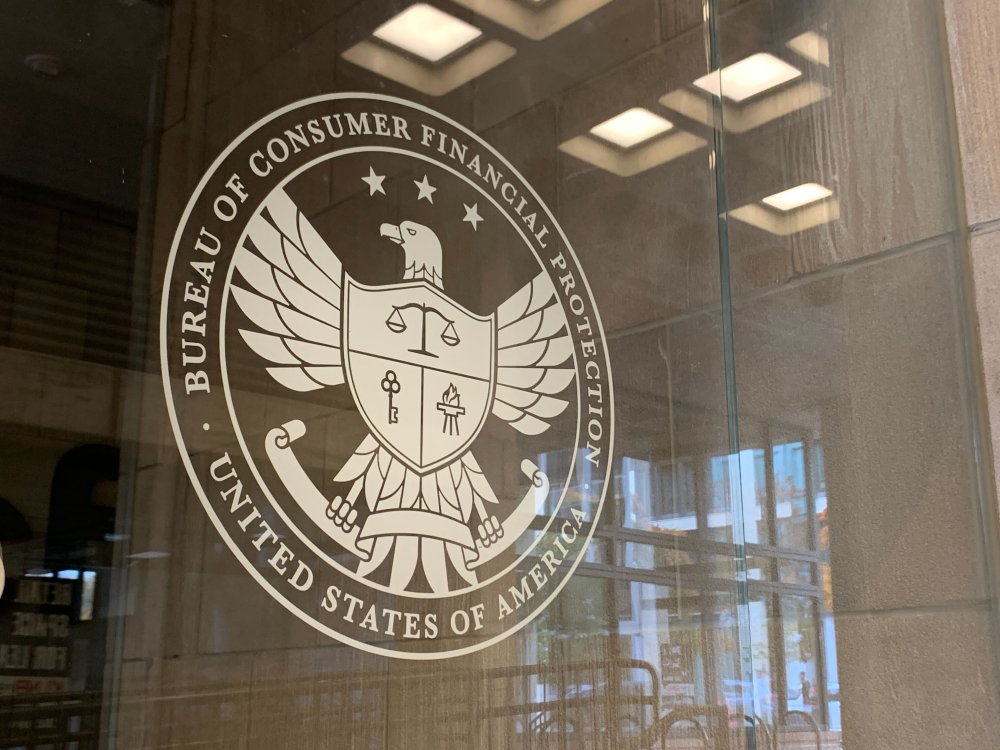
The new The President administration has brought deregulation and staff cuts to the Consumer Financial Protection Bureau, leaving many wondering what's next. View the full article
-
World’s biggest retailer reports rise in first-quarter sales in the face of The President’s trade warView the full article
-
Broken promises played midwife to Brexit and are capable of powering Reform — or a Conservative facsimile — into officeView the full article
-
The states with the highest percentage of non-current mortgage loans had an average year-over-year change of 0.7%, as of March 31. View the full article

-
Legal and compliance overtook verification issues as the top cause for application defects during the fourth quarter, according to Aces Quality Management. View the full article

-
You’ve made it past the recruiter and the first round of interviews. Now you’re meeting with the hiring manager. They’ll likely ask you a series of behavioral questions to evaluate whether you’re a good cultural fit for the team. They’ll also assess whether they believe you are up to the managerial and leadership challenges facing the role. Preparing for behavioral interviews can be nerve-wracking. The stakes are high, and it’s easy to feel overwhelmed by all the possible scenarios they could throw at you. I’ve spent over a dozen plus years of preparing folks for interviews and talking to people on the hiring side. As a result, I’ve developed an approach to behavioral questions that will help you shine in the behavioral interview. It’s all about ensuring that you start strong. The STAR framework and why it doesn’t quite work Many people use the STAR framework to structure interview responses. This method helps candidates describe their experiences to illustrate desired competencies. Start with “S” the Situation they faced, “T” their Task, “A” what Action they took, and “R” the Result they achieved. Now, this framework does help you organize your thoughts and distill a story to illustrate your experience and competencies. Unfortunately, this approach fails rhetorically because it lacks a strong start. When you lead with situations or context before getting to the task, the interviewer has to wait too long for the payoff. You risk losing the interviewer before you get to the action and results. An interview is like any presentation, you have somewhere around 30 seconds to hook your audience. Starting strong means a clear, concise statement of value that captures what kind of leader or manager you are. It also provides the interviewer a blueprint of what to listen for in your response. How behavioral interviews work Behavioral interviews are based on the premise that past experience is a predictor of future performance. The questions are generally less about getting the “right” answer. It’s more about helping the interviewer understand your approach, how you think, how you relate to others, and your values. As one hiring manager told me, “When a candidate explains how he or she thinks about solving a problem, I get a lot more insight into what it would be like to have them on my team than I do from them reciting the solution.” In my view, the STAR formula focuses too much on the story and not enough on the meaning. To borrow language from Simon Sinek’s Golden Circle model for organizations, interview candidates who strictly adhere to the STAR approach focus too much on the “what” and not enough on the “how” or the “why.” When you start your answer by naming the principles or values that guided your action, you get to the heart of the matter quickly. You also cue the interviewer on what to listen for as the story unfolds. How to prepare for behavioral interviews The STAR method is a good start to help you distill the narratives that illustrate your experience and competence. But to ensure that you have a strong start for each STAR story. Reflect on the foundational values that guided your actions. That might be empathy, accountability, collaboration, customer focus, data-driven decision-making, fairness, relationships, trust, or transparency. Articulating these principles will help establish what kind of leader, manager, or contributor you are. Examples of strong answers Once you’ve identified a set of 5–8 principles or values, you can use them to frame almost any answer. For example: Behavioral question #1 “Tell me about a time when you had to influence without authority.” “Influencing without authority was a key part of my role at ABC Company. There were three things I always tried to keep in mind: empathy for my cross-functional stakeholders, transparent communication, and relentless customer focus. On xyz project, as the product manager (situation) I needed to influence my engineering counterpart to commit to an aggressive timeline (task). I knew that her team was under a lot of pressure. I had a series of 1:1 conversations with her about the requirements. I made sure to listen with empathy so that I understood all her constraints (action). I also shared the potential customer impact of the feature. It turned out that her team had been expressing frustration about not feeling valued. So it was key that she could motivate her team to work on a more visible feature (action). We found some compromises and were able to land on a timeline that would be a stretch for her team but that she was excited about (result).” Here are some other examples of strong starts: Behavioral question #2 “What was a time when you failed?” “First, let me start by saying that in order for a goal to be meaningful, it needs to be beyond what you’ve done before, and so there is always a risk of falling short. The key is to communicate to stakeholders as soon as I know we are going to miss, take ownership of the failure, and use it as an opportunity for learning. An example of this is when I led a team in product marketing at xyz . . .” Behavioral question #3 “How have you managed conflict within your organization?” “Well, conflict is inevitable, and in my view, if it is handled with empathy for both participants while maintaining accountability for results, it can be an opportunity to learn more about each other and build trust and improve collaboration. The conflict I want to talk about was between someone who reported to me and someone on another team and was related to overlapping roles and responsibilities . . .” The importance of principles Once you have a strong list of principles, you can plug them into almost any behavioral question and nail the response. And if your interview is on video, you can write each of your values on a post and attach them to your monitor. This will act as a reminder to cue you during the interview. Then you can kick off any response with an articulation of your values and priorities. This will ensure that your interviewer gets a true sense not just of what you’ve done, but of how you approach problem-solving and what you stand for. View the full article

-
President says he has ‘a little problem’ with tech group’s CEO Tim Cook over effort to avoid tariffs on ChinaView the full article
-
Britain would pay countries to take deported migrants, PM confirms during Albania tripView the full article
-
The government should not waste money by rushing to hit a 2030 deadline for net zero powerView the full article
-
In order to power Meta’s massive AI data center being built in northeastern Louisiana, the local utility company has proposed building three new natural gas power plants. It’s a move that “flies in the face of Meta’s climate commitments,” Senator Sheldon Whitehouse, ranking member of the Senate Committee on Environment and Public Works, wrote in a letter sent to Meta on Wednesday and shared exclusively with Fast Company. The Senate committee is launching an inquiry into Facebook and Instagram’s parent company over this fossil fuel expansion, seeking information about how the move squares with Meta’s claims that it is currently net zero across its global operations, and its aim to reach net zero emissions across its value chain by 2030. “Meta’s decision to power its data centers with fossil fuels while claiming net zero status is deeply troubling. This isn’t leadership—it’s greenwashing. Families are already paying the price for climate inaction through higher insurance costs,” Whitehouse said in a statement to Fast Company. “Meta’s backslide from its own climate pledges risks triggering broader economic harm at a time when we urgently need corporate responsibility.” Meta’s mega AI data center Meta’s forthcoming data center will be the company’s largest, a $10 billion, four million square foot facility in Richland Parish, Louisiana. Meta expects construction to be complete in 2030, and has said it will “play a vital role in accelerating our AI progress.” Meta is working on the project with the local utility provider, New Orleans-based Entergy—which has requested expedited state approval to build three combustion-turbine gas plants in order to generate 2,300 megawatts of electricity. In a statement to Fast Company, Entergy said natural gas “is the lowest reasonable cost option available that can support the 24/7 electrical demands of a large data center like Meta,” and that neither solar or wind would provide enough reliable, around-the-clock energy. The site is also near Haynesville Shale, “one of the most abundant natural gas shale plays in the United States.” The Louisiana Public Service Commission is still reviewing Entergy’s proposal for the new gas plants. Meta’s data center climate promises As part of Meta’s climate commitments, the company has invested in both carbon removal and clean energy projects. It says it will continue this work amid the Louisiana data center project and its need for three new natural gas plants. Entergy’s new natural gas generators are expected to come online between 2028 and 2029. Entergy says future upgrades to those generators could incorporate carbon capture. Meta says it’s exploring carbon capture technology at an Entergy power plant in Lake Charles, Louisiana, and that it’s working with Entergy to bring at least 1,500 megawatts of new renewables to the grid. In 2024, Meta announced a solar farm project in Louisiana with electricity company RWE that will provide 374 megawatts of power. The company says that since 2020, it has offset its global electricity use by buying renewable energy portfolios to “match” its own electricity consumption, and that it will do the same with the new Louisiana data center. The EPW Committee’s concerns The Environment and Public Works (EPW) committee’s inquiry says these moves are vague and “offer little reassurance” about the data center’s climate impact. “Meta has not shown that the planned generation from its solar plant will match its data center electricity load and displace equivalent fossil fuel generation. Neither Entergy nor Meta have disclosed details about the carbon capture project or the amount of Meta’s financial contribution, raising doubt as to whether Meta is meaningfully offsetting its emissions,” Whitehouse’s letter reads. “And Meta’s construction of new gas plants risks locking in future fossil fuel assets; a responsible corporate actor would show how these plants will be soon phased out or equipped with carbon capture.” These gaps, he adds, “raise concerns that Meta’s commitment to achieving net zero emissions is not genuine.” Through its inquiry, the EPW is requesting various documents from Meta, including analyses and calculations about the data center’s expected energy consumption and greenhouse gas emissions; Meta’s intended carbon capture funding (and whether it’s contributing to a new carbon capture project or an existing one); details on how much carbon the company will remove from the atmosphere; and if Meta will install carbon capture at these new gas-fired plants. It’s also seeking data to support Entergy’s assertion that natural gas is the only power option, and justifications for why renewables with battery storage weren’t a feasible alternative. The inquiry also asks for analysis to show whether all of Meta’s actions—the new gas plants, solar capacity, and carbon capture—align with the company’s net zero goals. Whitehouse has requested responses by May 28, and though Meta is not legally required to reply, the inquiry puts added public pressure on the data center project—which has already received scrutiny from environmental and consumer protection advocates. The broad impact of AI data centers Though coal is considered the dirtiest fossil fuel, natural gas comes with its own environmental harms. Burning natural gas emits carbon dioxide, and, when it leaks out of pipes before it’s burned, it emits methane, an especially potent greenhouse gas. In 2022, burning natural gas for energy accounted for 35% of the country’s total energy-related CO2 emissions, according to the U.S. Energy Information Administration. Scientists and environmental experts have urged the U.S. to reduce its reliance on natural gas, even as demand for it has grown in recent years. The increasing use of AI, which will require new energy sources, is only adding to that demand. The surge in AI also poses a risk to the energy grid, and could raise Americans’ energy bills. Entergy’s planned fossil fuel expansion for Meta’s Louisiana data center could put local utility customers at risk of absorbing “hundreds of millions, if not billions of dollars, of additional costs,” one energy consultant told Business Insider. AI requires massive amounts of energy to operate, and if those energy demands outstrip what the grid can provide, residents will likely see both higher energy costs and more risks of outages. Utility customers across the country have already seen these impacts, as well as increased demands on the grid. In Oregon, residential rates have increased 50% in the past five years in part because the state is the fifth largest market for data centers in the nation. Some say the lack of renewable energy exacerbates this issue. Entergy Louisiana has “almost no renewable power in its system,” per a recent Floodlight article; at the same time, financial consulting firms have projected a 90% increase on electricity prices for Entergy customers between 2018 and 2030. The The President administration has also hampered renewable energy by slashing funding and shutting down projects under development, even though experts say wind and solar are the cheapest and fastest sources of new energy to deploy. (Meta donated $1 million to The President’s inauguration—part of a wave of Big Tech companies appealing to the administration—and Meta CEO Mark Zuckerberg hosted an inauguration party for the president.) Senator Whitehouse recently introduced legislation, called the Clean Cloud Act, that would set emissions performance standards for data centers, and also use their revenue to help consumers save on utility bills. View the full article

-
Back in the 1930s, Robert W. Woodruff, president of the Coca-Cola Co., would carry a red swatch in his wallet. Of course, it wasn’t just any red. It was Coca-Cola red. And so anywhere he went and encountered his brand—painted on a wall, wrapping a refrigerator—he would pull out the little swatch to check that it matched. Woodruff understood the importance of Coca-Cola’s brand equity as it expanded globally—a challenge that has only grown since, now that Coca-Cola sells 2.2 billion servings a day across 200 countries, 150 languages, and 30 million points of sale. But where Woodruff used a swatch, Coca-Cola’s design team has spent the past four years dreaming up a modern operational upgrade to its 400 pages of brand guidelines. Teaming with Adobe, it developed Project Fizzion. Trained specifically on Coca-Cola’s design logic, it’s a brand-managing AI that lives inside Adobe platforms like Photoshop and Illustrator, generates designs, and, most of all, helps keep designers across the globe brand-compliant as they dream up the next big campaign. In a design world that’s equally dependent upon and terrified of generative AI tools, Coca-Cola is clear that Fizzion is not about cost cutting via AI. As it’s integrating Fizzion globally, it’s doing so with no reduction in spending on brand campaigns. Instead, the company believes it’s charting a path forward that’s sustainable for creatives to drive better work and eliminate headaches under deadline. “Fizzion was never a design automation tool,” says Rapha Abreu, global VP of design at Coca-Cola. “It’s a creative copilot that is powered by AI but guided by designers.” Dreaming up a new AIWhen Abreu joined Coca-Cola in 2021, his design team—who spent countless hours in meetings explaining to external agencies that their seemingly great ideas broke brand guidelines—became almost philosophical in imagining another way forward. Given that any Coca-Cola campaign can include up to 5,000 separate assets, it had become nearly impossible to manage. “We had this kind of crazy idea,” Abreu recalls. “What if the Coca-Cola logo could learn what to do and what not to do?” They imagined software built so a designer literally couldn’t place the logo in the wrong context. And if that could work for the logo, maybe the same thing could be true for colors, typography, and imagery associated with Coca-Cola campaigns. It was an enticing thought that was ahead of its time, but only a little. Within two years, ChatGPT and other GenAI tools would drop upon the world to automate all sorts of tasks that never before seemed possible. Companies including Adobe and Canva quickly whipped up GenAI tools that could suck in brand guidelines via PDF, then apply them to design templates. Sometimes they worked. And sometimes they didn’t. These sorts of guidelines can have trouble scaling to new, complex projects, and of course they do. Guidelines are just words trying to articulate visual relationships that are sometimes as instinctual as they are codified. Coca-Cola’s idea, led largely by its global head of AI design, Dom Heinrich, was to start with the images themselves, and to train a machine on Coca-Cola’s visual sensibility rather than a written rule set. Given that Coca-Cola and its partners were already working inside Adobe products, partnering with the company on building out such an AI system made a lot of sense. “It happens inside the tools that creatives already use,” says Abreu. “For us, that was the most important thing.” Together, the Adobe and Coca-Cola teams developed a different approach to training AI and deploying it at scale, which they call Project Fizzion (what seems like a most certain nod to Coca-Cola’s carbonated roots). How does Fizzion learn?Many AIs are already trained on images, but Fizzion takes a slightly different approach. It’s trained more on visual design systems, stuffed full of actual Coca-Cola assets. This means Fizzion isn’t analyzing a century of soda campaigns in order to hallucinate a polar bear dressed as Santa Claus sharing a Coke. It’s specifically not generating imagery like Adobe’s own Firefly or DALL-E, but it will create a new variation on an existing design, mixing and matching Coca-Cola assets to do so. Fizzion lives like Microsoft Copilot right inside Adobe software, considering the interdependencies of things on the screen. “When you’re designing a visual identity system, the model should be able to learn, not just from the images but from the relationships between all the components, how the text maps to the images’ other elements that need to be part of it,” says Ash King, senior director of Firefly enterprise solutions at Adobe. “That allows [the designer] to test various aspect ratios, free-form.” Fizzion can see the canvas a designer is working on in real time, complete with the positioning of logos, imagery, and typefaces. The AI learns from Coca-Cola’s own designers only when a project is finalized. Once a designer has a product they like—and knows works with brand standards—they save it as what they call a Style ID that adds to the AI’s knowledge. That’s basically the visual logic of one Cola-Cola campaign. At this time Fizzion also collects all necessary brand assets for that campaign so that it can incorporate them perfectly whenever necessary. (In other words, Fizzion is pulling the Coca-Cola logo fresh every time, rather than dreaming up what it’s supposed to look like from old references.) This is how Fizzion is trained to learn new styles. (It also incorporates background from Coca-Cola’s 400-page brand guidelines, via Adobe Firefly.) From there, Fizzion sits atop a global production pipeline that allows partners to tweak the visual formula without breaking it. How teams across Coca-Cola use FizzionBuilding a marketing campaign in Fizzion can start with a prompt to generate—something like “Coca-Cola polar bears on the ocean”—or with a blank canvas as Fizzion watches along. At the very top of the stack, the Coca-Cola design team has full access to build or alter anything across the brand that it wants. Partner agencies that Coke hires to make ads have more limitations. They can generate a new aspect ratio for a campaign on demand, and the AI will piece it all together. But if they want to stretch the logo—real bad—Fizzion won’t let them. However, they can send that change as a request to Coca-Cola proper through the platform to get approval (saving a meeting). As design teams go down the chain from America to local markets, more and more of the design process becomes about localization. These teams have the least amount of access to tweak a campaign—certain assets and layers may be locked—though they can still make requests up the chain. This might sound controlling (and of course to an extent Coca-Cola is very much controlling its brand). But the design team argues that having these brand guidelines integrated into design tools is ultimately more freeing for design partners. “One thing that we speak a lot internally about this global system is that we need to help designers and creatives downstream do the right thing, right. So it cannot be a burden for them to try to be compliant with the brand,” Abreu says. “We need to make this as easy as possible.” However, with kerning off the table, Coca-Cola argues that it leaves time for creatives to focus on everything else about a campaign: “storytelling, having ideas, making sure cultural nuance is applied, and [focusing on] emotional resonance,” Abreu says. Indeed, despite all of the checks and balances in the system, Coca-Cola’s designers are hoping that their creative partners continue to push back. In fact, they are depending on it, as that’s the only way they believe a brand can grow and evolve. “If everybody builds on the same LLM, it just follows the same kind of way of interacting with an AI. We will just get a lot of the same,” says Heinrich. “We believe that designers need to be more in charge. . . . [They need to] be more creative in order to push the AI to the next level. The better you are at your job and the better you push, the better the outputs are and the more uniqueness comes from them.” For now, Coca-Cola is all-in with Fizzion. Since March of this year, every partner agency that’s building a campaign is required to create it with a Fizzion Style ID. And the Coca-Cola team believes Fizzion is so efficient at handling design standards that its 400-page PDF guidelines will fall out of use. As for Adobe, it’s built a powerful design tool that, no doubt, many companies using its platform would benefit from. However, it’s also been designed to meet the gargantuan needs of Coca-Cola, meaning it’s probably too big and multitiered for many teams to adopt efficiently. “Few companies are thinking on the scale as Coke is right now. So we need to take a future-forward look at this and figure out how it’s best applied,” says King. “We like to start with the use cases. We like to have something very concrete that a customer wants to do and then build backwards into what we’re [shipping].” View the full article
-
For years, global stars have traveled to West Africa as ambassadors of humanitarian and anti-corruption efforts: Rihanna in Senegal urging world leaders to donate aid, Bono in Ghana championing transparency as “the best vaccine against corruption.” All the while, Vincent Bolloré, the billionaire power broker who wields significant influence over the parent company behind their music labels, was busy building an industrial empire in those same countries. That empire is now at the center of corruption trials, sexual abuse allegations, and a sweeping criminal complaint filed by West African nonprofits. “Vincent Bolloré stole money from our communities and used it to build an empire,” Jean-Jacques Lumumba, the head of the anti-corruption watchdog group Restitution for Africa, alleges in a statement to Fast Company. For some UMG musicians, the accusations against Bolloré present a jarring contradiction: Artists are using their platforms to fight injustice, while a powerful figure profiting from their music built his fortune through actions that critics say undermined democracy. The Bolloré family’s industrial empire traces back over two centuries to its origins in cigarette and Bible paper manufacturing. Over time, its global success allowed the family to pivot into West African industries like rubber, palm oil, and port operations. More recently, the family gained what French courts described in April as “effective control” of the media conglomerate Vivendi. Until 2021, Vivendi owned all of Universal Music Group (UMG), the world’s leading music company, and Bolloré’s fortunes were widely seen as tied to it. In 2021, Vivendi spun off UMG as a publicly traded company, unlocking $53 billion of value on its first day of trading, while allowing the Bolloré family to retain their position as UMG’s largest shareholders. Worldwide, UMG manages five million titles across some of the industry’s most iconic labels: Interscope, Capitol, Def Jam, Island, Republic, Virgin. Technically the Bollorés control just 28% of UMG—10% directly and another 18% through Vivendi. But that gives the Bollorés outsized sway. (Kanye West once claimed he was going to bypass label execs with contract complaints and take his grievances straight to the top: “Don’t need the Arnaud meeting anymore,” he tweeted in 2020, referring to Vivendi’s CEO Arnaud de Puyfontaine. “I will be meeting with Vincent Bolloré.”) This complex web of corporate control casts a long shadow, even as UMG artists champion causes in regions where Bolloré’s other ventures have come under fire. In 2022, Usher and SZA, whose songs include UMG distribution deals, went to Ghana to headline the Global Citizen Festival benefiting West Africa. That same year, fellow UMG client The Weeknd also launched a UN humanitarian fund benefiting the same region. But those actions coincided with a wave of divestment from Bolloré’s businesses on the part of European investment funds: Switzerland’s largest pension funds put his companies on their exclusion list, and Norway’s $1.7 trillion sovereign wealth fund—the world’s largest—pulled out entirely, citing human rights reports alleging abuses in Liberia, Cameroon, and Sierra Leone, including land grabs and rape. That financial pressure mirrored growing legal scrutiny. Over the past decade, Bolloré has faced a series of corruption investigations in France tied to his business dealings in West Africa—ranging from election meddling to bribery and port monopolies. He was indicted in 2018, and French prosecutors continue to pursue charges related to those allegations. Critics of Bolloré contend that artists who remain silent risk inadvertently reinforcing the same exploitative systems many of them seek to challenge. “Dirty money off the backs of African communities” Last month, the French National Financial Prosecutor’s Office said it was still working on Bolloré’s corruption trial related to the Togo bribery claims. This came days after Bloomberg News ran a 4,000-word investigation into the sexual coercion of women working on Bolloré’s Liberian rubber plantations. Workers recently set fire to the office and manager’s home to protest the squalid conditions. Now, a coalition of 11 West African nonprofits known as Restitution for Africa (RAF) has filed a brand-new complaint with French authorities accusing Bolloré of using “corruption, favoritism, and influence peddling” to win port contracts in three additional countries: Ghana, Cameroon, Côte d’Ivoire. The complaint, also filed with the French National Financial Prosecutor’s Office and reviewed by Fast Company, accuses the Bolloré Group of a criminal graft where it conspired with corrupt politicians to build a massive port, rail, and logistics monopoly across West Africa—then cashed out, selling that subsidiary (Bolloré Africa Logistics) for $6.2 billion, more than Sierra Leone’s annual GDP. The complaint argues the money earned should be given to citizens of those African nations. The coalition is calling the complaint “unprecedented in its pan-African character.” RAF followed that by launching a public petition on Thursday called “Global Billionaire Accountability Project.” Over the past month, it has worked to solicit support from 50 major artists under contract with UMG labels—they include Taylor Swift, Rihanna, Sam Smith, The Weeknd, Usher, SZA, U2, Sting, Alicia Keys, and Billie Eilish. The group sent a letter asking them to demand that Bolloré divest from UMG, arguing that UMG artists are financially tethered to “a corporate entity accused of profiting from illicit and exploitative activities.” The letter concludes: “We want to ensure you’re aware that these ill-gotten gains have been funding Bolloré’s ownership of UMG—dirty money off the backs of African communities.” UMG declined to comment. A representative for Vincent Bolloré and the Bolloré Group did not respond to multiple inquiries by Fast Company. Restitution for Africa says so far none of the artists have responded to their letter. Fast Company also sent requests for comment to the publicists of more than a dozen UMG artists who prioritize social impact work. This includes all the artists mentioned above, other industry heavyweights like Lady Gaga and Kendrick Lamar, as well as Angélique Kidjo, the French-Beninese five-time Grammy winner who has served as a UNICEF Goodwill Ambassador in Africa since the mid-2000s. Their representatives did not respond. Bono’s ONE Campaign—publisher of 2014’s widely read “Trillion Dollar Scandal” report warning that “shady business practices” in places like West Africa were siphoning up to “a trillion dollars every year from developing countries”—also didn’t respond to an inquiry. While many artists publicly support causes that would seem to pit them against Bolloré’s business pursuits, stars might fear speaking out could carry contractual and professional risks. In recent years, boldface entertainment names have publicly accused UMG of prioritizing profits over artist interests. Musicians from Drake and Iggy Azalea to Limp Bizkit have spoken out—even sued—over unpaid royalties, licensing conflicts, and disputes over control of their work. And to be sure, pressuring UMG is not without risk, particularly for smaller artists who depend on the corporation’s support to stay afloat. Restitution for Africa is led by the anti-corruption watchdog group Transparency International and Jean-Jacques Lumumba, a former a former banker who in the mid-2010s exposed billions of dollars worth of embezzlements by Congolese President Joseph Kabila’s government and now lives in exile in Europe. At Restitution for Africa, he’s turned to different corruption occurring in his part of the world. “This is not a man who global musicians at Universal Music Group should be OK with taking money from,” Lumumba tells Fast Company. The French government has long grappled with its role in allowing political leaders in postcolonial Africa to steal from their own people, then park that stolen wealth back in France, or elsewhere. In 2021, President Emmanuel Macron’s government enacted a new law strengthening the legal pathway to return such corrupt assets, once seized, to their countries of origin. This followed years of high-profile cases involving hundreds of millions of euros laundered by leaders of countries like Equatorial Guinea and Congo to fund lavish Parisian real estate, high-end art, and expensive cars, the types of corruption Bono protested while in Africa and his ONE Campaign called out in its “Trillion Dollar Scandal.” Past cases primarily targeted corrupt heads of state and their families. But more recently, nonprofits have sought restitution for “ill-gotten” corporate gains. The most prominent example involves French energy giant TotalEnergies’ operations in Congo. In 2019, two anti-corruption nonprofits filed a criminal complaint against Total alleging that it won oil exploration rights through bribery. The case is still being argued five years later, demonstrating the complexities of expanding the target to include companies. But if a whistleblower hadn’t revealed a web of suspicious financial transactions tying Total and Congolese political elites to various bank accounts, it wouldn’t have had legs. That person was RAF’s Lumumba. In 2021, under mounting pressure, Bolloré Group parent company Bolloré SE paid €12 million to settle the Togo bribery charges brought against the corporation. Two years later, the Bollorés sold Bolloré Africa Logistics and started investing more heavily in the media industry, similar to a certain “free speech absolutist” tech billionaire in America. The African sale, combined with UMG artists’ profits, has helped breathe life into a rightwing French media juggernaut. Chanez Mensous, head of litigation and advocacy at the French corporate ethics watchdog Sherpa, calls this “quite symptomatic” of the Bolloré business approach. (Sherpa has joined previous criminal corruption cases against Bolloré, and will be a party to his individual trial next year, distinct from the 2021 corporate settlement, involving the Togo port bribery allegations.) “They prey on countries with weak governance standards,” Mensous says. “They have the financial strength to consider sanctions and fines a reasonable economic risk they can absorb. Their relative impunity is made possible by the control they have over the media. They use SLAPPs [strategic lawsuits against public participation] to silence civil societies and journalists covering these cases.” The family currently controls the telecom giant Canal+, Europe 1, various magazines, and France’s only Sunday newspaper—along with CNews, a free Canal+ channel that Harvard’s Nieman Reports recently criticized for “its role in mainstreaming far-right ideas.” That shift began accelerating after 2017, the year Bolloré took over the channel. Since then, CNews has added figures like Éric Zemmour, the far-right TV pundit turned politician repeatedly convicted of racial and religious hate speech. In the past few years, the network has been a place to find anti-vax histrionics, calls for Muslims to renounce their faith, interest in the Great Replacement Theory, suggestions that immigrants caused Paris’s pre-Olympics bedbug infestation, and full-blown panic over le wokisme—this as many UMG artists worldwide were busy promoting COVID vaccination efforts, calling out police brutality, and condemning white supremacy. Last summer, CNews rose (briefly) to the rank of France’s #1 news channel. Bolloré is also credited with empowering the far-right French leader Marine Le Pen—echoing her brand of nationalism, as well as her warm feelings toward Russia. Weeks ago when Donald The President berated Volodymyr Zelenskyy in the Oval Office, Bolloré’s outlets took cues, turning friendly fire on Ukraine’s European allies. “The far-right broadcasters and newspapers owned by Vincent Bolloré are backing Vladimir Putin,” Le Monde told readers. “The French Rupert Murdoch” Meanwhile, Bolloré’s outlets have undergone an ideological purge serious enough to inspire Reporters Without Borders to produce a documentary chronicling their “repeated attacks on press freedom and the independence of editorial offices,” then denouncing them as “an unprecedented threat to democracy.” During France’s latest elections in 2022, hundreds of journalists and activists formed Operation Stop Bolloré, a coalition that accused Bolloré media of “breaking with all journalistic ethics,” arguing “it is no longer a matter of informing citizens, but of transforming minds.” On top of that, Bolloré lawyers have done their best to silence critical reporters and nonprofits that dig into the company’s business operations, like in 2016 when three newspapers (Mediapart, L’Obs, and Le Point) and two nonprofits (Sherpa and ReAct) reported that a Bolloré company bulldozed West African villagers’ land. In 15 years, the company has hit journalists and activists with at least 20 gag lawsuits. The Bolloré media arm is eyeing expansions back in Africa, too: If a deal awaiting approval closes, the Bollorés will own South African-based satellite TV provider MultiChoice, via the continent’s largest-ever media acquisition, giving them a subscriber base in sub-Saharan Africa of more than 20 million viewers. Of course, Bolloré’s right-wing crusade puts UMG artists in a bigger bind—whether they champion African causes or not, do they want their music profits to flow, in part, to a so-called “French Rupert Murdoch” who is bankrolling a political agenda many of them have publicly denounced? UMG’s ownership structure already presents an ethical dilemma for its most socially conscious performers: Beyond the Bollorés’ 28% control, the next largest shareholder, with 20%, is Tencent—the Chinese tech giant the U.S. government labels a Communist military asset. Noted The President booster Bill Ackman controls the third most, with 10%. Taylor Swift isn’t active in Africa, but she has repeatedly condemned racism and the oppression of women, and has lamented the “naiveté that we used to have about [bigotry].” The Imagine Dragons band members, signed to Interscope, are vocal official ambassadors of the Ukrainian state charity United24. Kendrick Lamar’s music criticizes racial injustice and systemic oppression, while Lady Gaga has used her platform to condemn far-right rhetoric as an attack on democracy and human rights. And that’s just four of UMG’s better-known artists. While Bolloré Group got blacklisted by Swiss funds in 2023 over human rights abuses, it’s harder to find examples of controversial investors caving to public pressure and divesting from publicly traded companies. That highlights the challenge of holding powerful billionaires accountable who can shield themselves from accountability. It also explains RAF’s long-shot strategy of seeking to leverage the platforms of celebrities whose careers aren’t directly impacted by a French shipping mogul, and who have largely ignored outside requests to speak out against him. However, since RAF’s letters went out, one artist has taken note of Bolloré’s business practices: Drake. The rapper is currently suing UMG over Kendrick Lamar’s Grammy-winning diss track “Not Like Us”—a blistering takedown featuring the line “Drake, I hear you like ’em young,” with cover art showing a sex-offender map plastered with pins around Drake’s Toronto home. Just days after receiving the petition, Drake’s lawyers referenced Bolloré’s growing scandals in a legal filing, arguing that “recent headlines involving UMG’s largest stakeholder” call for greater transparency from the label. View the full article

-
At its annual Google I/O developer conference in Mountain View next week, Google will try to rally developers around one of its next big bets: Android XR. Later this year, Samsung is set to release the first VR headset powered by the spatial computing operating system, and Google is aiming to attract as many developers as possible to build apps for the device. That’s no small task for a company whose history with AR and VR has been marked by inconsistency. Google was among the first to experiment with AR glasses, gave millions their first taste of VR through low-cost mobile viewers, and even launched a stand-alone immersive VR headset before Meta—only to abandon each project in rapid succession, leaving partners frustrated. “Google has burnt a lot of bridges in the XR community,” cautions an industry insider who spoke on condition of anonymity out of fear of reprisal. Still, there’s a sense of cautious optimism among AR and VR developers that this time might be different. One reason: the competitive landscape has changed. With Apple and Meta investing tens of billions into immersive technology, the pressure is on. Android XR also aligns with Google’s current strengths, particularly in AI and in its push to expand Android’s reach. A Google spokesperson declined to comment for this story. Daydreams and Glassholes Google’s first foray into AR/VR remains one of the industry’s most infamous missteps. Unveiled in 2012, Google Glass paired a camera with a tiny display and was touted as a peek into a post-smartphone world. Instead, it became a cautionary tale. Critics were unnerved by the device’s always-on camera, dubbing users “glassholes.” A $1,500 price tag and limited usefulness sealed its fate, and Google soon dropped its consumer ambitions for Glass. Despite that bruising experience, the company didn’t fully retreat from the space. In 2014, Google introduced Cardboard, a DIY viewer that turned smartphones into rudimentary VR devices. That effort later evolved into Daydream, a more comfortable headset with a controller, supporting immersive videos and simple games. Cardboard and Daydream did reach millions of users, but their reliance on smartphones made them impractical for sustained use. “We were looking for that spark of adoption,” says a former Google employee who worked on Daydream. (Former employees were also granted anonymity by Fast Company out of fear of reprisal.) That spark never came. “It never became a toothbrush use case,” the employee adds, referencing the goal of making the device something people use daily, like brushing their teeth. Over time, Google did achieve that with many of its products: Billions now use Gmail, Chrome, and Maps every day. But that success may have distorted expectations for VR. “You tend to forget how hard it is to get billions of users,” says a second former Google employee involved in VR. Expecting too much too soon may have doomed these projects. “It’s a self-fulfilling prophecy,” the first former employee says. A Long List of Cancelled Projects Google eventually moved beyond smartphone-based VR with a stand-alone headset built in partnership with Lenovo in 2018. Running Daydream, the device had potential to compete with Meta’s Quest, but Google scrapped it a year later. “When it didn’t become a huge success overnight, they pivoted,” says the industry insider. Daydream joined a growing list of abandoned Google AR/VR efforts: the immersive storytelling series Spotlight Stories, the cloud-based video platform Jump and its professional camera line, the 3D modeling tool Blocks, the asset platform Poly, and several consumer VR cameras created with hardware partners. Some of these projects were open-sourced upon cancellation. The popular VR painting app Tilt Brush, for example, lives on as a community-driven project on Meta’s Quest. Others survived the internal shakeups: Owlchemy Labs, acquired by Google in 2017, still thrives. Its whimsical title Job Simulator remains one of the best-selling games on Quest. Many of Google’s early AR/VR projects had real potential—if only the company had stayed the course. “Google had all these weird, cool, fun projects and acquisitions that they made very early, but they just didn’t follow through with them,” says the industry insider. A Lack of Conviction Beyond high expectations, insiders point to a deeper issue: Google’s hesitation to publicly commit to AR and VR. “Google was not willing to put a shoe on the ground the same way Meta has,” says the first former employee. “The difference was that Mark [Zuckerberg] was out there, publicly saying: I’m staking my future on this,” agrees the second. “I never felt that we had that type of conviction from [Google CEO] Sundar [Pichai].” Zuckerberg’s enthusiasm for VR and the metaverse has been widely mocked, but Meta’s persistence has paid off. The company has sold tens of millions of Quest headsets, and its Ray-Ban smart glasses have found surprising success. Apple’s Vision Pro and its reported investments in smart glasses further validate the space. Now Google is returning with big ambitions of its own. Having turned Android into the world’s most widely used mobile OS, the company wants to replicate that success with Android XR. Unlike Apple and Meta, Google plans to build this future through partnerships—starting with Samsung—rather than relying on in-house hardware. There’s precedent for this kind of turnaround. After an underwhelming start, Google’s Android TV platform eventually matured into one of the top smart TV ecosystems, with over 270 million monthly active users on Google TV-powered devices. Google’s Assets: Android and AI To replicate that success in XR, Google will once again leverage its mobile ecosystem. “Google will look to work with developers to port existing Android apps to Android XR, much like the way Apple brought iPadOS apps to the Vision Pro,” says CCS Insight analyst Gebbie. “This could give Google an advantage over Meta.” Google’s massive AI investments could also prove pivotal. The company has already demonstrated how AI can enhance AR glasses, and Gebbie believes AI will be key in simplifying interaction within spatial computing systems. With the tech in place, Google’s future in XR hinges on one factor: commitment. “This time around, Google must fully commit to Android XR if it is to seriously try and build an ecosystem,” says Gebbie. “If Google makes another false start, then its partners may look elsewhere.” “As long as Google has conviction, I would never bet against them,” agrees the second former employee. View the full article

-
Loneliness isn’t just a well-being risk, it is an acute business risk. The effects of loneliness don’t just permeate an individual’s personal life, it can negatively impact their professional life. When employees don’t feel a sense of camaraderie or belonging at work, their performance suffers. According to research from Gartner, employees who are satisfied with camaraderie in their organization show a high enterprise contribution of 23%. But employees who are dissatisfied with the camaraderie in their organization show a high enterprise contribution of only 13%. Organizations have taken early steps to mitigate loneliness by targeting interactions within the workplace and beyond, like mandating employees to return to the office to boost collaboration and connection. But proximity alone isn’t a cure for employee loneliness. It ignores the root causes of the issue. Moving forward, CHROs need to address loneliness in the workforce through two primary strategies: improving in-role connectedness to boost productivity and supporting out-of-work connectedness to meet employee well-being needs. Improving in-role connectedness to boost employee productivity Employees should have autonomy when it comes to building personal connections, as well as guidance from HR on how to make the most of their interactions. That requires CHROs to foster guided interactions that engender interpersonal cohesiveness and naturalize sharing behavior, which establishes a new, more human-centered set of collaboration norms. There are three simple actions CHROs can take to achieve this: 1. Empower employees to personalize connection-building CHROs should give employees ownership of building their connections with one another. Not only does this promote personalization of how they strengthen these relationships, it also encourages them to make connections according to their own needs or preferences. CHROs can help employees fortify these peer connections over time in partnership with communication leaders. In turn, they can grow employees’ connection with the organization’s culture and community through socialization. 2. Encourage employees to be intentional about their collaboration needs Gartner analysis found that satisfaction with collaboration significantly impacts employee performance. Now, not all collaboration supports connectedness or productivity. Intentionality helps employees think carefully and understand which mode of collaboration best suits both the nature of their work and their individual preferences. Through guided collaboration and actively reshaping the needs and norms of how individuals interact, CHROs can equip teams to have intentionality and reciprocity when collaborating. Gartner found that organizations that practice guided collaboration achieve profit goals 10% more often than those that don’t. 3. Support affinity groups that connect employees and encourage breaks CHROs should foster connections between employees beyond work-related tasks. Affinity groups, akin to employee resource groups, connect employees based on common interests that align with the company’s business model and values. Imagine a surfboard company offering time off for employees to surf together. These benefits can boost engagement and lead to a more motivated workforce. Support connection outside of work to boost well-being Employees who feel their employer supports their lives outside the office are more motivated to perform in the workplace. There are several ways CHROs can support employee connection outside of work: 1. Offer employees “volunteer time off” (VTO) VTO policies grant employees paid leave for volunteering activities. Some corporations allow staff to take a set number of hours each week, while others grant up to a week of leave. VTO initiatives can enhance employee engagement, build connections with local communities, and showcase corporate social responsibility. 2. Provide interpersonal, out-of-work connection perks Some progressive organizations offer enhanced support to help employees find and make meaningful personal connections outside of work. This includes things like offering stipends for bike passes to encourage well-being in connected social settings. These out-of-office perks also provide talent attraction and retention benefits. 3. Make it easier to take a break with global recharge days With many employees either not taking vacation days or working while on vacation, some organizations encourage employees to use their vacation days jointly to disconnect from work. If most, if not all, employees take vacation together, they can all fully disconnect from work and recharge. Many factors have contributed to the epidemic of loneliness in the workplace, and these feelings of isolation have real business implications for organizations that don’t address them. With CEOs hyper-focused on growth in 2025, and seeing employee productivity as key to achieving it, HR has an important role to play in removing any productivity barriers, including hidden ones like loneliness. By treating loneliness, and outside of the workplace, organizations reap the benefits of a healthier, more productive, and engaged workforce. View the full article

-
Brawny just went big on bulk. The Georgia-Pacific paper towel brand introduced a new logo set in a thicker font and breathed new life into its lumberjack mascot, the Brawny Man—all as part of a shift to stand out on store shelves and launch a new product, three-ply paper towels. “We weren’t just evolving a visual identity,” Amanda Earley, Georgia-Pacific’s brand director for Brawny, tells Fast Company. “We were launching a new product, shifting our full lineup, and repositioning the brand in culture, all while protecting what made Brawny special in the first place.” Bringing all this to market at the same time was a challenge, Earley says, but necessary to achieve the company’s overall goals: to grow household penetration, drive category growth, and convert the brand’s entire portfolio from two-ply to three. A bolder Brawny logo The logo is one part of that. “We modernized the logo to make it bolder, more confident, and unmistakably Brawny,” Earley says. The typographic beef up was also a strategic decision to “signal product superiority at shelf, reinforce brand strength, and help us stand apart in a space that often feels like a sea of sameness,” she says. Companies like Amazon, OpenAI, and Walmart have all recently made their logos bigger and bolder, but for Brawny, doing so was an imperative because of its brand promise. A paper towel brand that calls itself the strongest can’t be set in a skinny font, especially after announcing plans to increase the ply of its products by 50%. So the company made a few changes to indicate its new weight class. Its logo uses flat, bold, black-and-white letterforms, removing the red shadowing of the previous version. It’s also now set on a firm horizontal instead of a slant. The logo type is sans serif, except for the letters B and A, which have serifs that extend like eaves on a rest stop or ranger station icon. A bulked-up Brawny Man Introduced in the 1970s, the Brawny Man has undergone multiple makeovers over the years and worn his facial hair in various ways—the brand even had Brawny women as part of a 2016 campaign. In this newest iteration, the Brawny Man appears on packaging in the form of an illustration of a handsome, hunky outdoorsy type suitable for casting on The Bachelorette wearing his signature red-and-black plaid shirt. He appears oversize in new commercials, like Brawny’s own Paul Bunyan—and he’s eager to help clean up messes, whether they happen to be in the aftermath of a 40th birthday party or at a treehouse sleepover full of superstitious tween girls. Too often brand mascots “live frozen in time,” says Jaime Robinson, cofounder and chief creative officer at Joan Creative, which helped develop packaging and worked on the Brawny Man’s refresh. “When you have such legendary brand IP like the Brawny Man, you want to approach it thoughtfully but bravely,” Robinson says. It was all about striking the right balance between familiarity and modernity, according to Holly Karlsson, creative director at Bulletproof, the agency that worked on Brawny’s visual identity and packaging design. And by “retaining his rugged dependability while evolving his personality to feel more authentic, warm, and human,” she says, Bulletproof hoped to do just that. The new Brawny Man is a gentle giant with a bold logo to match. View the full article

-
SpaceX owns 98% of global rocket launches, a monopoly with virtually no competition. Only China is competing with Elon Musk at this point in number of launches and, while the country is getting closer to mass-producing reusable rockets, it appears far from making that happen. The world needs to scramble. We can’t let a single company dominate the future of humanity—and much less one that is owned by Musk. “If you copy SpaceX, it’ll take you 10 years to get where they are today,” Lin Kayser, cofounder of Dubai-based engineering AI firm Leap 71, tells me in a video interview. “But in 10 years, SpaceX won’t be where they are today. The game will be over.” Startups and nations need to catch up to Musk, but that means solving a brutal equation: designing engines with comparable thrust (measured in kilonewtons, or kN) and efficiency, but without the decade-long development cycles. And to beat SpaceX, you also need to be able to mass-produce the rockets. This is now more important than ever because the stakes are even higher than just five years ago. Satellite constellations like Starlink, which may soon enable direct-to-phone internet, threaten to sideline telecom operators and centralize control of earth’s critical communication infrastructure on top of controlling the space economy. “Every region needs sovereign launch capability,” Kayser contends. “Otherwise, you’ll pay 10 times what SpaceX pays to access space—if they let you.” His company may have a solution to fix that conundrum. Leap 71 developed artificial intelligence called Noyron that, so far, has successfully designed two rocket engines. Kayser believes that his company, legacy rocket makers, and startups will be able to leverage this synthetic rocket engineer to create a cheaper match to the SpaceX Raptor—and beat Musk at his own game. The 10-foot-high Raptor—which powers the Starship—is arguably the most advanced Western rocket engine in production. Its latest iteration produces 280 tonnes of thrust at sea level, surpassing competing engines like Blue Origin’s BE-4. It uses methalox, an efficient fuel that can be manufactured in places like Mars, which makes it key for deep-space exploration. But the Raptor’s importance lies in the fact that it is the first operational full-flow staged combustion (FFSC) engine in history. This means that it optimizes efficiency and thrust while minimizing thermal stress, so you can reuse it many times, the key for cheap, sustainable space exploration. Only two other FFSC engines have been tested, but they’ve never flown. Leap 71 now wants to achieve the same spaces but better, with fewer 3D-printed pieces, which will make it less expensive than Musk’s engine. Computational blueprint Leap 71 describes its Noyron computational model as an “engineer brain in a box.” Unlike generative AI tools that require human oversight because they are just guessing what could work, Noyron encodes physics, material science, and manufacturing rules to autonomously design rocket engines. It generates not just shapes but also functional hardware ready for 3D printing. “Traditional parametric CAD is geometry-driven. Ours is physics-driven,” Kayser explains. “Calling it parametric CAD would be like saying ChatGPT is autocomplete.” The system’s first breakthrough came in 2024 with a 5 kN rocket engine. The compact, high-efficiency rocket was fully designed by AI and 3D printed in one go as a single-piece copper engine with intricate internal cooling channels. During trials in an old World War II bunker in the U.K., the engine fired flawlessly, validating Noyron’s ability to predict thermal stresses and fluid dynamics. Then, in January 2025, Leap 71 really pushed the envelope by designing one of the most challenging and elusive rocket engines in the aerospace industry: a cryogenic aerospike thruster, an engine capable of working at every altitude to eliminate the need for multiple rocket stages, minimizing elements and costs in the process. Now the company wants to scale up this approach to engines 400 times larger. The new road map includes two reference designs: the 200 kN XRA-2E5 aerospike and the 2,000 kN XRB-2E6 bell-nozzle engine, equivalent to SpaceX’s Raptor. The first, he says, is slated for testing within 18 months of April 2025 (placing it around late 2026). The second is targeted for readiness by 2029. For rocket engine development—with design and testing cycles measured in decades—this is incredibly ambitious. But the timeline is achievable because of how Noyron works, Kayser says. Instead of manually iterating prototypes, Noyron treats all engines as variations of a unified “DNA.” And instead of having to be programmed, its edge lies in its ability to absorb decades of engineering knowledge—even from obscure sources. For its new model, Leap 71 has not only incorporated learnings from its past tests (like data on cooling efficiency and material strain), but also vast amounts of new information, including digitized Soviet-era rocket manuals. “We plug these into Noyron to refine our thermal models,” Kayser says. The AI also learns from every test, creating a feedback loop that collapses design cycles and speeds up the development process. Noyron is not generative AI, but a computational model capable of producing deterministic results that are consistent every time. They are accurate according to the actual physical world and data. It understands. It doesn’t just guess. Input the same specs, and it generates identical designs (try that with ChatGPT, Gemini, Midjourney, or Sora). This is critical for aerospace reliability. “Human engineers can see the rationale behind every decision,” Kayser says. “It’s not a black box.” The challenges While Noyron can design a rocket engine in minutes, proving it works in the physical world is the real test. The company’s ambitions collide with a stark reality: Even the most advanced AI cannot shortcut the laws of physics and bureaucracy. Securing test facilities for large engines is another hurdle. While smaller subsystems (like the 28 kN turbopump it wants to test this year) fit on existing stands, the 2,000 kN engine’s sheer size demands specialized infrastructure. “The critical path here is test-stand availability,” says Kayser. Current options are scarce and scattered around the world. Shipping engines abroad triggers export controls and delays—a problem compounded by geopolitical tensions. Moving a small engine from Germany to the U.K. already takes “two to three weeks,” Kayser tells me. That’s why Leap 71 is in talks with governments in Dubai, Singapore, and New Zealand to co-locate manufacturing and testing. Oman’s planned spaceport and New Zealand’s remote Tāwhaki facility, with its vast sound-dampening landscapes, are leading candidates. “You can’t just put a loud rocket engine next to a city,” Kayser says. The other challenge—the actual production of the engine—has only just become possible, with China’s new 3D-printing behemoths capable of producing parts that are 6.56-by-6.56-by-3.60 feet. In fact, this is what led Kayser and his partner, Leap 71 cofounder Josefine Lissner, to believe that making a Raptor-class engine was even possible. Called the EP-M2050 (and manufactured by Eplus3D), this colossal 3D printer uses 36 lasers to turn metallic powders into all the parts needed for next-gen rocket engines, including the nozzles, which will be much taller than your average human. The printers are so new that quality assurance is still a question mark. Surface roughness, inherent to layered metal printing, disrupts fluid dynamics in cooling channels. Rough walls increase friction, altering fuel flow and thermal stability. Post-printing, parts undergo rigorous cleaning to remove residual metal powder, a task that until now has been handled by German firm Solukon because “any impurities could cause an explosion,” Kayser says. Material uniformity is another gamble. While printers handle alloys like copper-chromium-zirconium, ensuring consistent strength in massive components—especially under the violent vibrations and thermal swings of a firing engine—remains unproven at this scale. The turbopump, which forces fuel into the combustion chamber at extreme pressures, epitomizes this challenge. Leap 71’s 28 kN test rig validates principles for larger designs, but scaling amplifies risks. Turbines spin at supersonic speeds, generating centrifugal forces that warp metal. Rapid temperature shifts—like the -297°F cryogenic oxygen flow meeting 5,430°F exhaust—threaten cracks. “Sealing, material fatigue, and transient conditions during start-up and shutdown are critical,” Kayser explains. “These are not just design problems—they demand practical testing.” That’s why the most unnerving hurdle of rocket development with this method is “blind testing.” Leap 71’s aerospike engine, printed as a single copper block with internal cooling channels, could not be inspected internally before firing. “We had to test blind,” Kayser says. During trials, imperfect oxygen flow led to higher-than-expected temperatures. Although it all worked, it forced an early shutdown. “Instead of risking additional runs, we cut the engine in half to analyze it,” Kayser adds. Each failure feeds back into Noyron’s models, but iteration consumes time and capital. For now, Leap 71’s strategy hinges on incremental validation—testing subsystems like injectors and turbopumps individually—while lobbying governments to fund dedicated test facilities. The road ahead While these are big challenges, they are not insurmountable. The space industry knows it and, according to Kayser, wants a piece of the action. Everyone is looking for a way to leapfrog several years and catch up to—or surpass—Musk. Right now, Leap 71 collaborates with about 15 rocket startups. Kayser can’t disclose their names under confidentiality agreements except for the Exploration Co., which is developing a European Moon lander. These partners lack SpaceX’s vertical integration but want tailored engines without decade-long R&D. “The engine is the most expensive and complicated part,” Kayser emphasizes. “Everyone else just buys them. But there’s no supply.” L3Harris—which now owns the legendary rocket engine maker Aerojet Rocketdyne, makers of the Apollo engines—wants to sell them, but it doesn’t have anything comparable to the Raptor. Blue Origin makes and sells engines for the United Launch Alliance (ULA), but nobody else. The Russian NPO Energomash once dominated the global rocket engine market, supplying the RD-180 that powered ULA’s Atlas V rocket for decades. But RD-180s are now considered relics—and are under sanctions because of the Ukraine war, anyway. “[Current design processes] are actually a problem for many of the micro launcher companies right now,” Kayser says. “So they have relatively small engines. And if they now want to play in the higher leagues, they basically have to embark on a completely new project, create a completely new rocket.” The main differentiation between sizes is the engine, because the rest of the rocket is scalable. It’s harder to scale up the engine because it has completely different specifications and requirements. By using Noyron, Kayser says customers will be able to fine-tune to their own needs and input thrust, fuel type, and size to receive bespoke engine designs for every need. A startup might tweak an aerospike for methane fuel, while another firm could optimize for cost. Some engines will be small and some could be Raptor-class. We will know if it all works in just a couple of years, so we won’t have to wait long: Kayser tells me that he and Lissner expect the first hot firing of the 200 kN XRA-2E5 aerospike engine in October 2026. Full-scale testing of the large 2,000 kN Raptor-class engine is tentatively planned to begin in 2028, with qualification for flight readiness stretching into 2029. If Leap 71 can pull it off, it will be phenomenal for humanity. A new process for rocket development will challenge Elon Musk at his own game and democratize the means to reach orbit for every country on the planet. Plus, if it happens, the dream of having Tony Stark’s J.A.R.V.I.S.-like AI to aid humans to build the future will be real. Kayser certainly believes in it: “We’re building a world where anyone can engineer complex machines.” View the full article

-
Foreign minister signals Berlin will commit to 3.5% in ‘hard’ military spending and 1.5% for infrastructure by 2032View the full article