Newsletter
Want to keep up to date with all our latest news and information?


ResidentialBusiness
Administrators
-
Joined
-
Last visited
Everything posted by ResidentialBusiness
-
Fund managers were positioning for a US economic downturn before America and China forged a trade pactView the full article
-
Want more housing market stories from Lance Lambert’s ResiClub in your inbox? Subscribe to the ResiClub newsletter. As I’ve been closely tracking in ResiClub’s monthly metro- and county-level housing inventory analysis, over the past year the supply-demand equilibrium—measured by shifts and levels in active housing inventory and months of supply—has shifted directionally in favor of homebuyers. That doesn’t mean buyers have all the leverage, or that the picture is the same in every market. Directionally, however, homebuyers in most markets have gained leverage compared to the 2024 spring housing market. This shift is also showing up in the pricing data—specifically the rate of change. Indeed, 49 of the nation’s 50 largest metro-area housing markets have a weaker year-over-year home price shift this spring than a year ago. This widespread softening doesn’t mean home prices are falling in every market—they aren’t. Rather, in this context it means home price growth has decelerated across almost every market over the past 12 months, and more markets are seeing price declines compared to a year ago. In March 2024, 47 of the nation’s 50 largest housing markets were experiencing rising year-over-year home prices, and just three of them saw falling year-over-year home prices. In March 2025, 34 of the 50 largest housing markets saw rising year-over-year home prices and 16 were falling. ResiClub expects to see the number of major housing markets with falling year-over-year home prices rise further in the coming months. (Full-month April data publishes later this week.) As ResiClub has closely documented, the recent softening and weakening have been more pronounced in the Sun Belt, particularly in Gulf housing markets. The greatest weakness is evident in parts of Texas (especially Austin and San Antonio) and Florida (notably its condo market and Southwest Florida). Click here to view an interactive version of the chart below. Zooming out, the chart above shows what the ongoing price softening looks like in a recent historical context. The yellow line represents the national aggregate, which has decelerated in the Zillow Home Value Index. U.S. home prices went from rising 4.6% from March 2023 to March 2024 to rising just 1.2% from March 2024 to March 2025. The deceleration in home price growth is welcomed by many homebuyers who saw prices overheat during the pandemic. In more markets than last year, homebuyers will see their incomes rise faster than local home prices. View the full article

-
Welcome to Pressing Questions, Fast Company’s workplace advice column. Every week, deputy editor Kathleen Davis, host of The New Way We Work podcast, will answer the biggest and most pressing workplace questions. Q: How do I make a good first impression? A: Since this is a work-life advice column I’ll focus mostly on how you can make a good impression at work, but many of these tips work for other situations in life. Be interested: Ask questions It’s a simple truism of most conversations and human interactions: People like to feel like they’re interesting and important. If you know whom you’ll be meeting, you can go one step further and do a little research in advance. Job candidates who ask questions about the interviewer’s own time at the company show that they are interested in both the company and the person they hope to work with. The same goes for meeting potential clients, networking connections, etc. Regardless of if you have the chance to prep or not, you can listen to little conversational doors and jumping-off points to be curious and dig further. Most people casually give little details as they talk. Be a good listener and you can ask a follow-up question that shows you’re engaged. In a world where most people are distracted, overwhelmed, or self-absorbed, paying attention goes a long way. Be interesting: Say something memorable While you should be a good listener and ask questions, you won’t make a good impression if you don’t say anything of interest. Sharing an interesting “did you know” fact related to what you are talking about goes a long way. It’s a little harder to plan for this, and you certainly don’t want to throw in a random non sequitur. But if you’re generally well-read and well-informed, hopefully a natural opportunity to mention something relevant will present itself. Be helpful People like others who help them. Fast Company contributor and psychologist Art Markman says “starting your time with a new team by helping others reinforces a favorable first impression and also generates a sense of support from people you can rely on when you need help in the future.” He calls this a “service mindset” and says it’s particularly valuable for people taking on management roles. “A leader who finds ways to help their team achieve their goals can develop loyalty from the people who report to them, which pays significant dividends down the line,” he explains. If you’re not a manager, you can make a good impression at a new job by being proactive and developing your own plan for your first 90 days. It will help you to have goals laid out so you don’t feel as lost and will make a great impression on your new boss and colleagues. Being helpful works in other areas to make a good first impression, too. If someone you are talking to mentions a problem they are having, following up with a recommendation will make a lasting impression. Want more advice on how to make a good impression? Here you go: Four easy ways to make a memorable first impression How to make a good first impression when starting a new job 3 ways to create a good first impression at your new job 2 surprising science-backed ways to make a great first impression (even virtually) View the full article

-
In recent months, the drama around Elon Musk’s Department of Government Efficiency (DOGE), President The President’s efforts to defund federal agencies, and the court cases challenging these moves have consumed the news. It’s understandable that an announcement last month about a small office lease on the Upper West Side of Manhattan being canceled didn’t get much attention. But that 43,000-square-foot space near Columbia University is home to the Goddard Institute for Space Studies, or GISS, a NASA research outfit, think tank, and pioneer in climate change research that will see its lease terminated by the end of the month, per a NASA spokesperson. Currently, the institute has no permanent home to move into. It’s likely you’ve seen the building, even if you’re not aware of the monumental achievements that have taken place there. The exterior shot of the diner in Seinfeld features that exact building; for decades, scientists working inside have dealt with an occasional fan taking selfies outside. You’re also probably more aware of the ideas hatched inside than you think. During the ’60s, when the institute was founded, the terms black hole and quasar were coined inside its walls. In the late ’80s, NASA scientist James Hansen became famous for his warnings about the dangers posed by climate change. He was then the head of GISS, and the climate modeling that he and his colleagues did there proved the case. “This is the place we came finally to understand the threat to the Earth that global warming represented—the biggest threat in the history of our species,” climate advocate and author Bill McKibben told Fast Company. “Nothing less than that. Their datasets were what allowed Hansen to go before Congress and speak with authority. He had the numbers and no one else did.” The end of GISS as we know it represents many things, including the damage the The President administration’s cost-cutting is doing to American scientific preeminence. Current head Gavin Schmidt said without funds for a new lease, he’s racing to find a new home. (Though staffers haven’t been told where they’re moving to, as of yet, none have been terminated; a NASA spokesperson said, “Over the next several months, employees will be placed on temporary remote work agreements while NASA seeks and evaluates options for a new space for the GISS team.”) The move comes as the federal government has decried climate science, cut jobs at NASA, and proposed curtailing its mission. But even the existence of GISS showcases the power of a small group of curious, driven people who, if given resources and freedom, can accomplish incredible things. “There is something that is quite distinct to working for NASA,” said Schmidt. “Because, literally the whole universe is your subject.” Digital Commonwealth A Small Office With Expansive Freedoms Located across a few floors in a former apartment building, GISS has never been a well-outfitted office. “Until recently, it was a shithole,” said Schmidt, who noted that even though a long-overdue renovation was just finished, the air-conditioning system is still pretty much nonfunctional. But the office decor was never the attraction. It was the people you could bump into. Named after rocketry pioneer Robert Goddard, the institute was established in 1961, and initially called the Institute for Space Studies. It was led by Robert Jastrow, a celebrated researcher and public figure who would help millions of Americans learn about space via prolific writings and TV appearances. Locating in New York City helped attract the leading lights of academia from surrounding universities. Jastrow said the institute’s goal was to “arouse the interest and enlist the participation of this rich scientific community.” It became a hotbed for debate and ideas, hosting seminars and talks that are credited with birthing the concepts behind black holes, quasars, and plate tectonics. A sidewalk bookseller who specialized in sci-fi books positioned himself nearby to pick up business from the high concentration of astrophysicists. Jastrow could be a competitive and energetic boss—he would push researchers to pull all-nighters and even get them to run laps with him around Central Park—but academic freedom remained paramount. “GISS, from the very beginning, was set up as a place with a light federal presence,” said Schmidt, who took the reins at the institute in 2014. “There would be civil servants, but most of the people there would be postdocs early in their career. The idea was to have this kind of fervent, enthusiastic, free from programmatic responsibilities [space]. It wasn’t an operational center. We had a lot of workshops.” In the ’70s, Hansen and others helped work on projects that sent probes to other planets, including Venus and Jupiter. By the early ’80s, NASA changed its focus to what was called mission Earth; the agency realized it knew more about the polar ice caps on Mars than it did the polar ice caps on Earth, and sought to rectify that. In analyzing Earth’s climate, the previous GISS work on other-planetary atmospheres came in handy. Those frameworks could be applied to Earth’s climate, and its change over time. In addition to that deep bench of multifaceted scientific talent, GISS also had the gear. At the time, it had one of the most powerful computers in operation. While it still used punch cards and spinning disks, it enabled researchers to create the most sophisticated models of climate change that had been done thus far. McKibben remembers spending time by this machine, as Hansen explained what was being computed. “I would have been there in the late ’80s, right before or after Hansen’s testimony [before Congress],” he said. “I went a bunch of times, and he showed me around the mainframes and interpreted for me what they were spitting out. It was classic big science of that era—spinning disks and all.” Why Its Climate Models Remain So Valuable Having that technology, steady support, and a revolving cast of experts made it a perfect place to perfect climate modeling. According to Schmidt, as the task of analyzing the climate became more and more complicated, there basically ceased to be university-based climate modeling to predict future temperature shifts a few decades ago. Everything globally is done at labs like GISS, and it offers a substantial benefit to research around the world. The institute’s famous temperature series, which it has maintained since the 1980s and provides monthly surface temperature data back to 1880, is provided free. It’s not even a line-item in the GISS budget; Schmidt says it comes out of general operating expenses. And GISS continues to be one of, if not the most, influential organizations in the field, Schmidt argues, because it’s cutting edge without being rigid. It’s a small, nimble group of roughly 130 researchers without a strict hierarchy, so new ideas and research can quickly be vetted, tested, and applied to the model to improve its accuracy. GISS continues to refine and improve its model. Earlier this year, NASA launched a long-delayed satellite project called PACE that will explore phytoplankton growth on the ocean surface, algal blooms and aerosols, and other factors impacting temperature shifts. The institute also remains at the forefront of using machine learning to create models that chart the possible course of climate change. What happens to this work when GISS leaves the only home it’s ever known remains to be seen. “Obviously, it is not our idea,” Schmidt said, adding that he doesn’t think it’ll save money or lead to increased efficiency. The lease termination notice does say the work will continue in a new home. “Is this going to impact our mission? Yes, of course,” he said. Schmidt has made some progress in his search for a new location, but he’s far from finished. He’s essentially begging for desks in the neighborhood, looking to find a home at Columbia University, New York University, or the Natural History Museum. He doesn’t have any budget, so he can’t pay rent and he fears there’s a limit to how generous people will be. “If you want to bring in people who are going to have interesting ideas and who are going to pursue those ideas, they have to have freedom to do so,” he said. “They can’t be so drowned with proposal writing or doing operational stuff or having to do some bullshit thing for somebody else. If you want to keep the smart people and creative people, you have to give them autonomy.” View the full article

-
Disability is often framed as something to accommodate instead of celebrate. But Visible Voices, a new digital platform launching today on Global Accessibility Awareness Day 2025, is challenging that mindset. The platform is part magazine, part gallery, and part curated e-shop. As a whole, it’s repositioning disability as a source of culture, creativity, and style, fueled by the belief that accessibility and aesthetics should not be at odds. Cofounded by journalist Bérénice Magistretti and creative entrepreneur Reuben Selby, both of whom live with invisible disabilities, Visible Voices is the platform they wish existed when they were first navigating those identities, with a Vogue-meets-MoMA editorial approach that leaves traditional disability resources in the past. The result is a cultural rebrand and design manifesto, as visually compelling as it is radically inclusive. “Why is disability still something we tiptoe around?” Selby asks. “Why are we reluctant to claim it with pride? We realized there was a space missing. A space where people could feel proud of who they are, not despite their disabilities, but because of everything it taught them. A space that didn’t feel clinical or heavy, but vibrant, creative, and human.” Bérénice MagistrettiReuben Selby Built over the course of a year, the Visible Voices platform is as considered in form as it is in content. The site, which they designed in collaboration with design firm Droga5, integrates accessibility from the ground up, without sacrificing visual impact. Embedded accessibility features on the website include a toggle button to shift between light and dark mode and clickable Text-to-Speech audio versions of each article. Rather than default to conventional accessibility plug-ins or overlays, every design choice was made with both beauty and usability in mind. Foundry studio Modern Type also developed a bespoke, hyper-legible typeface to improve readability across the site. And sound designers at Lucky & Bamba created a sonic logo by translating the braille version of the brand’s name into a musical scale. The result is a sensory-rich digital experience that invites users to engage with content on multiple levels. “We’re all used to visual logos,” Magistretti says. “But what if you can’t see a logo? You should be able to hear it, feel it. That’s what we’ve created, and we hope it inspires other brands to think differently.” At the heart of Visible Voices are the three editorial pillars designed to reframe disability through a cultural lens: a magazine, digital gallery, and curated e-shop. The magazine features stories at the intersection of disability and aesthetics, including hairstylist Anna Cofone’s mission to make fashion more accessible, textile artist Caterina Frongia’s use of braille in her tapestries, and activist Nadya Okamoto’s reflections on living with Borderline Personality Disorder. Desert The “creative voices” gallery highlights artists who are either disabled themselves or are reshaping how disability is represented in contemporary art. Among them are Florence Burns, a Manchester-based illustrator whose clients include Nike and Channel 4; award-winning photographer Anna Neubauer; and American painter, writer, and disability rights advocate Riva Lehrer. The Ballad of Human Mutations Meanwhile, the e-shop takes a bold stance that says disabled consumers deserve products that are not only functional but beautiful. “We didn’t want to take the health-related route of selling medtech devices because we want to go beyond this patient-focused narrative and offer disabled people a beautiful, creative, and aspirational hub,” Magistretti explains. Megan While many charities, foundations, and grassroots organizations continue to do vital work supporting disabled communities and advocating for systemic change, Magistretti and Selby intentionally structured Visible Voices as a for-profit business. “Commerce plays a huge role in pushing culture forward. People buy what brands tell them to buy, so diverse representation is crucial,” Magistretti explains. “If you only see nondisabled people in campaigns and runway shows, the assumption will be that the market for disabled people is niche, because it’s invisible. By increasing representation across fashion and beauty, that visibility generates awareness, and awareness creates demand.” At launch, the store features six brands across three categories, including clothing, accessories, and beauty. Each brand offers a tightly curated selection of 5 to 10 items. Standouts include Neo-Walk’s vibrant, sculptural canes; Auzi’s luxury hearing-aid jewelry; beauty brand Human Beauty’s inclusive makeup; and Liberare’s adaptive intimates. A “visible voices” merch line is also in the works, and the team plans to continue growing the store through exclusive collaborations and new brand partnerships that align with their mission. The bottom line, Magistretti says, is that disabled people aren’t just patients who need to buy functional medical items. “They are consumers who want to buy what they desire, what makes them look good and feel great. The disabled demographic is a huge untapped market with massive spending power. We want to offer them what they want to buy, and show that disability is the next frontier in fashion and beauty.” View the full article

-
As automakers look to get more people in electric vehicles, they continue to make advancements in EV batteries—developments that add range, speed up charging times, or lower costs, all of which entice customer adoption. Now, General Motors says it has developed a new kind of EV battery that provides a higher range at a more affordable price, and that it aims to become the first carmaker to deploy the technology. Called lithium manganese-rich (LMR) prismatic battery cells, these batteries use a higher amount of less-expensive minerals, like magnesium, rather than more of the most expensive minerals like cobalt and nickel. Most EVs in the U.S. use lithium-ion batteries, which contain cobalt and nickel, minerals that have seen price increases as EV battery demand soars. GM and LG Energy Solution plan to start commercial production of these batteries in the U.S. by 2028. In addition to cutting costs, LMR batteries also offer more power. Engineers at GM and LG Energy Solution say their LMR prismatic battery cell has a 33% higher energy density than lithium iron phosphate based cells. This means GM could offer an electric truck with more than 400 miles of range at a more affordable price. In 2024, GM said lithium iron phosphate batteries could cut $6,000 from the cost of battery packs in its electric trucks and full-size SUVs. With this new LMR battery technology, the company expects to achieve even more savings. It’s not exactly clear yet what that will translate to for a vehicle’s sticker price. (GM’s Chevrolet Silverado electric truck, with a max range of 492 miles, currently starts around $73,000 but can go above $87,000.) GM’s work to develop LMR prismatic battery cells began in 2015, but researchers were studying LMR technology long before that. Though they promised high range for a lower price, historically LMR batteries have been marred by shorter life spans. GM says it has solved this issue, and that its new LMR battery cells match the life span of current high-nickel batteries. The LMR batteries contain “virtually no cobalt,” per GM, but do still contain nickel, just at a lower percentage than typical battery cells. GM prototyped these LMR batteries at its Wallace Battery Cell Innovation Center in Warren, Michigan. The batteries are called LMR “prismatic” cells because they’re rectangular, whereas most EV lithium-ion batteries are cylindrical or, increasingly, pouch-shaped. (GM has been using pouch cells for years in the U.S., while using cylindric cells in China.) With a rectangular design, GM says the cells can be more efficiently packaged into trucks and SUVs. These battery cells also use fewer components; with LMR batteries, GM says it can reduce the number of parts in its battery packs by 50%, which can cut weight from notoriously heavy EVs. GM expects to save hundreds of pounds in battery mass with LMR batteries. GM’s announcement comes weeks after Ford announced its own LMR battery breakthrough. Charles Poon, Ford’s director of electrified propulsion engineering, announced at the end of April that the automaker is currently producing LMR cells at its pilot production line, and is working to scale LMR battery cell development and include these batteries in future vehicles “within this decade.” View the full article

-
Donald The President said on the campaign trail ahead of his election that he intended to be the “crypto president.” But his vision and reality have collided in a way that could ultimately do more harm than good to crypto’s broader adoption in the years ahead. Last week, the U.S. Senate dealt the cryptocurrency industry a significant setback, voting to block further advancement of the GENIUS Act, a bill aimed at establishing regulatory guardrails for dollar-pegged stablecoins by classifying them as securities under the jurisdiction of the Securities and Exchange Commission. The surprise collapse of the act—which had passed through the Senate Banking Committee with Democratic support—stems from several factors, says Timothy Massad, a former chair of the Commodity Futures Trading Commission. One major issue, according to Massad, is the bill’s quality. “It didn’t address some key concerns,” he tells Fast Company. Bipartisan negotiations to refine the bill’s language were ongoing, he adds, but a larger obstacle loomed: the president of the United States. The President is a vocal supporter of crypto, so much so that some view him as too deeply involved in the industry and too likely to benefit financially from any policy decisions he makes to be a neutral actor in shaping crypto adoption. First, World Liberty Financial—a crypto firm run by The President’s sons—announced that its new USD1 stablecoin would serve as the conduit for a $2 billion investment from Abu Dhabi’s MGX fund into Binance, the world’s largest exchange. At the same time, the president’s $The President meme coin, launched in January and already responsible for $320 million in trading fees, stands to gain from favorable crypto regulation. In March, The President also named five tokens that the U.S. would begin stockpiling as part of a new crypto strategic reserve. Critics argue that these ventures blur the line between policymaker and market participant. “The President has been so brazenly self-dealing and corrupt that it has given some Democrats pause,” says Corey Frayer, a former Senate Banking Committee aide. Massad agrees. “Both the activities of the president that many people feel are corrupt and entirely inappropriate, coupled with the weaknesses in the bill, led Democrats to say, ‘We can’t support this,’” he says. White House press secretary Karoline Leavitt has stated that “the president is abiding by all conflict of interest laws.” But the perception of personal benefit has already derailed what many saw as crypto’s best chance at mainstream legitimacy. “It’s a source of incredible conflict and potential bribery,” Massad says. The President’s involvement—and the potential for him to profit from crypto-related policy decisions—has forced lawmakers to scrutinize their choices more carefully, including whether to legitimize stablecoins. “Stablecoins don’t do anything that we don’t already do more efficiently in the financial system,” Frayer says. That doesn’t necessarily mean the bill is dead, or that The President will get a pass for what critics see as self-serving actions. “There’s been this basic agreement that it is bad when politicians use their position to benefit themselves,” Frayer says, referencing support for legislation to ban lawmakers from trading stocks based on insider knowledge. “This is the exact same type of issue,” he continues. “It crosses party lines. At least up until now, there has been a bright line at corruption.” But the key phrase, as The President knows all too well, is “up until now.” View the full article

-
The Consumer Financial Protection Bureau has dismissed or withdrawn from more than 20 lawsuits as the The President administration reverses the work done during the Biden era. View the full article
-
Natural disasters—from tornadoes across the South and Midwest, to the fires in Los Angeles to Hurricane Helene’s devastation in North Carolina—have upended communities, with small businesses among the hardest hit. As extreme weather events become more frequent, these businesses have emerged as vital anchors of community recovery. While urban enterprises navigate complex rebuilding amid dense infrastructure, rural businesses face distinct challenges in disaster response. Yet across geographies, small businesses play a critical role in stabilizing and revitalizing their communities after catastrophe. Rural small businesses, in particular, serve a dual role: They’re not just economic drivers but also informal safety nets, stepping in to rebuild communities long before larger relief efforts arrive and continuing their work well after national attention fades. The resilience of these businesses—and the communities they support—is being tested like never before. Systemic barriers, most notably access to capital, exacerbate their struggles, threatening their survival and the economic stability of their regions. The first responders of local economies When Hurricane Helene swept across the Southeast, it left behind destroyed homes and displaced families, in many cases causing severe damage to already distressed and underfunded communities. Small businesses were among the first to join the front lines, providing critical supplies and services. Across impacted zones, local service providers pivoted quickly, transforming their operations into vital relief centers. Neighborhood establishments became distribution hubs while entrepreneurs converted storefronts into community aid stations. This grassroots network of support reached residents in critical early days, delivering essential resources before larger relief efforts could fully mobilize. While these actions highlight the essential role of small businesses in post-disaster recovery, they also reveal a stark reality: These businesses cannot, and should not, shoulder the burden of recovery alone. As they pour resources into helping their communities, they face significant hurdles in rebuilding their own operations—a challenge compounded by systemic imbalances in capital access. Rural businesses face a persistent capital deficit, leaving them uniquely vulnerable to the compounding effects of natural disasters. In Appalachia, where 99% of businesses are classified as small, the unmet capital needs amount to an estimated $70 billion annually—a gap the Appalachian Regional Commission defines as aggregate capital demand significantly outweighing aggregate capital supply. While rural small businesses rely heavily on local financial institutions—61% obtain financing from small banks compared to 39% of urban enterprises—these lenders often lack sufficient capital to meet emergency needs. Meanwhile, larger financial institutions hesitate to extend loans to rural businesses due to perceived risks, unfamiliarity with their business models, and concerns about profitability in less densely populated markets. This structural financing gap creates a dangerous cycle: Chronic underinvestment limits both disaster recovery capabilities and long-term resilience building. As a result, the very businesses that anchor rural communities—providing essential services, employment, and community gathering spaces—remain the most financially vulnerable when disasters strike. A call for collaboration Philanthropy has made strides in addressing these challenges, but lasting solutions require collaboration across sectors. Natural disasters expose deep gaps in how we support small businesses in America’s heartland. Public, private, and philanthropic partners like those below are working together to create financing models that attract new capital for growth and resilience. Public-sector innovation Community development financial institutions (CDFIs) play a critical role in bridging the capital gap by offering tailored financing solutions focused on quality job creation, housing affordability, and economic mobility. For example, the government’s Community Development Financial Institutions Fund created a Rapid Response Program that deployed $1.25 billion to crisis-impacted communities post-Helene. This model of emergency support, combined with streamlined disaster recovery systems, shows how federal resources can effectively reach businesses when they need it most. However, shifting federal priorities and budget considerations could significantly impact these programs in coming years. With potential changes in funding allocations and regulatory frameworks on the horizon, rural communities may need to develop more diversified support systems that blend public resources with private and philanthropic capital. Strengthening these alternative funding mechanisms will be critical to ensure consistent disaster response capabilities regardless of policy fluctuations. Private-sector leadership Wells Fargo’s Open for Business Fund exemplifies how private enterprise can drive recovery. Launched in 2020 initially as a pandemic response, this $420 million initiative didn’t just provide capital—it created a sustainable network of support through CDFIs and nonprofit organizations, helping thousands of business owners recover, rebuild, and grow. This strategic approach has helped small businesses maintain approximately 255,000 jobs nationwide while building longer-term resilience. The fund’s focus on both immediate financial needs and capacity building offers valuable lessons for disaster recovery efforts in vulnerable regions like Appalachia, where similar public-private partnerships could help bridge persistent capital gaps while strengthening business continuity planning. Philanthropic impact Collaborative funding models are proving effective in addressing capital gaps in underserved regions. By bringing together numerous stakeholders, these partnerships help build sustainable support systems that can better withstand economic and environmental challenges. One example is the Emerging Appalachian Investors Fund, a $5 million initiative that empowers students at Marshall University, West Virginia University, and Ohio University to help manage real investments in local businesses and community development projects. This hands-on model not only enhances financial infrastructure but also fosters long-term resilience in communities that are particularly vulnerable during times of crisis. By combining immediate support with strategic investment, such approaches ensure that local enterprises have the resources they need to recover—and grow. While some collaborative models focus on long-term investment and resilience, others are designed for rapid response in times of crisis. In response to the Los Angeles fires, philanthropic groups stepped up with unique approaches that could be replicated in rural communities. The LA Arts Community Fire Relief Fund, led by the J. Getty Trust and administered by the Center for Cultural Innovation, provides emergency support for artists and art workers in all disciplines affected by the fires. A pooled fund of $12 million, launched on January 15, 2025, was made possible through contributions from dozens of foundations and individuals. Complementing these efforts, the Los Angeles Fire Department Foundation Emergency Wildfire Fund equips local firefighters with tools and safety equipment to safeguard both lives and businesses. The stakes extend beyond individual businesses to the heart of community survival. When small businesses have access to capital, they create jobs, strengthen local economies, and build community resilience. The Appalachian region’s entrepreneurial spirit—reflected in more than 305,000 new business applications in 2021—highlights the potential waiting to be unlocked. By implementing comprehensive financing solutions that bridge these capital gaps today, we can ensure rural businesses not only survive disasters but emerge stronger, ready to serve their communities for generations to come. View the full article

-
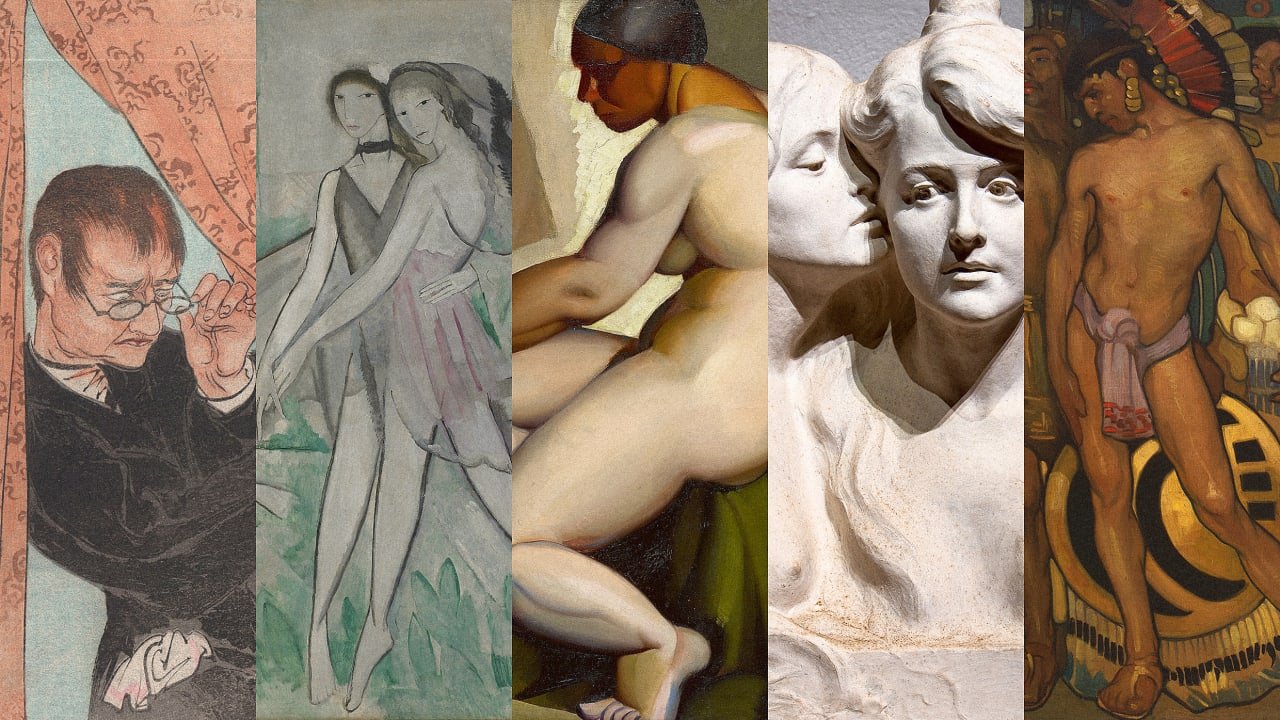
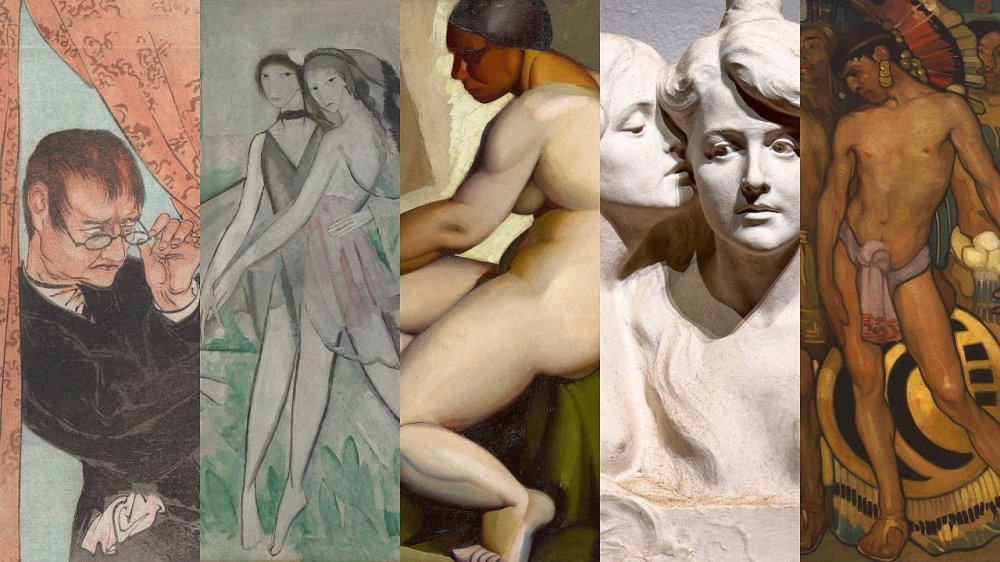
A new art exhibition in Chicago uses more than 300 works of art to trace the historical origins of the word “homosexual,” mapping how it’s shaped our modern perception of queer identity. According to its lead curator, museums around the world have refused to show the exhibition due to the current political climate—even when it’s offered to them for free. The exhibition, titled The First Homosexuals: The Birth of a New Identity, 1869-1939, is currently on view at the Wrightwood 659 museum in Chicago through July 26. It’s the first time that the exhibition—a passion project of over eight years for lead curator Jonathan D. Katz—has been shown in its entirety. The First Homosexuals: The Birth of a New Identity Through sculptures, paintings, prints, and other media from the late 19th and early 20th centuries, it explores early, oft-overlooked expressions of queer culture. Further, it examines how the coining of the term “homosexual” created a binary understanding of sexuality that we’re still grappling with today. The First Homosexuals sold more advance tickets than any other show since the Wrightwood 659 opened in 2018. But Katz says that after pitching the exhibition to many other museums, he’s been faced with one rejection after another. Le bal élégant or La danse à la campagne (The Elegant Ball, or The Country Dance) A career in queer studies Katz, who is a professor of queer art history at the University of Pennsylvania, began his career in queer studies during the Reagan administration. “When I started, my field was just being born,” Katz wrote in a biography for Northwestern University, where he received his PhD. “Reagan was in office, AIDS was being instrumentalized by the Right to justify the most odious forms of discrimination, and I had been kicked out of the University of Chicago (among other universities) for pursuing the relationship between art and sexuality.” In the decades since, Katz has gone on to teach queer studies at several different universities, including Yale, and co-curated a queer exhibition called Hide/Seek Difference and Desire in American Portraiture at Smithsonian’s National Portrait Gallery. Katz’s new exhibition is inspired by a question that’s followed him throughout his years of research. “The minute you go outside of Europe and its colonies, questions of sexual difference assume a completely different meaning—which is to say that, very often, there’s absolutely no issue associated with same-sex sexuality, and it’s often understood as part of a continuum of sexualities,” Katz says. “I was interested, therefore, in trying to decenter the assumptions that we have about sexuality by reference to other cultural norms. That’s what motivated this exhibition, as well as a careful investigation of what, literally, the earliest representations look like.” The first use of the word “homosexual” Katz’s curiosity led him back to what’s believed to be the first-ever use of the word “homosexual,” found in a letter exchange between two queer activists, Karl Heinrich Ulrichs and Karl-Maria Kertbeny, in 1868. In the letters, Kertbeny takes issue with Ulrichs’ relegation of queer individuals to its own class of people (or a “third sex.”). Instead, Kertbeny argued, everyone has the capacity for both “homosexual” and “heterosexual” desire. “What’s striking is that we use Kertbeny’s language [today], but we have unfortunately held fast to Ulrichs’ deeply minoritizing identity category,” Katz says. Interior with Hendrik Andersen and John Briggs Potter in Florence, Both before and after Kertbeny and Ulrichs’ debate, queer sexuality existed on a spectrum—and it was captured by countless artists. The First Homosexuals includes works by 125 of them, from well-known artists like Jean Cocteau and the Lumière Brothers to lesser-known creatives like Jacques-Émile Blanche. They were pulled from an extensive list of sources, including both private collectors and institutions like MOMA. Works include an 1820s depiction of men dressed as women on the streets of Lima, Peru; a series of scrolls from Japan in 1850 exploring the sexual education of a young man, who’s shown sleeping with both men and women in a variety of positions; and an 1891 photograph showing four women in a romantic embrace. The exhibition is divided into eight sections, each dedicated to peeling back a layer of a story that’s largely gone untold in the mainstream. The Darned Club The final portion of the exhibition is an archway wallpapered with photos of Nazis burning books at the Institute for Sexual Research, the world’s first queer rights organization. It’s a dark closing note that reminds viewers of the many archives of queer history that have been purposefully and violently hidden. “The idea that everything that flowers over the course of the exhibition can so quickly be destroyed, is, of course, a metaphor for where we are now,” Katz says. Since the exhibition opened on May 2, audience reactions have been striking. “It’s been profound,” Katz says. “Lots of emotion, tears, real delight, and a sense of a robbed history that’s being restored.” La danza A “terrible sign” for museums For now, though, that history might only be available to a select few. When Katz first began outreach for collecting the art to be included in The First Homosexuals six years ago, he says 80 to 90% of his requests to museums and collectors were rejected—the highest rate of rejection he’s ever encountered. “There were a number of pieces that didn’t come because when you mount an exhibition about the first homosexuals, you know right going in that there are going to be places that just will not want to play with you,” Katz says. “And that was indeed the case.” La Confidence (The Secret) Since then, rejections have continued to plague the exhibition. Katz has been pitching the finished show to museums around the world for nearly four years, in some cases even offering the exhibition for free despite its multi-million dollar valuation, he told the Chicago Sun-Times. So far, he’s received near-universal rejections, with the exception of the Kunstmuseum Basel in Switzerland, which is currently in talks with Katz to display part of the exhibition at Art Basel 2026. Time and time again, Katz has received the same standard rejection notices from over 100 museums, including the Tate Britain. (The Tate did not respond to a request for comment by publication) Nuestros dioses antiguos “I wish I knew more—I just get the rejection letters,” Katz says. “What I hear is, generally, ‘It doesn’t fit our programming,’ or ‘We’re fully scheduled,’ or some typical excuse.” But one director of a major museum, whose name Katz declined to share, did choose to elaborate further. “They said to me, ‘It’s exactly the kind of exhibition I want to show, and therefore it’s the exhibition I can’t show.” In several cases, Katz adds, the initial reception of the proposal was very promising, but it was ultimately turned down, leading him to wonder whether the museums’ boards were issuing the final “no.” In part, Katz attributes this reaction to a “hangover” from photographer Robert Mapplethorpe’s 1988 exhibition The Perfect Moment, which was cancelled by the Corcoran Gallery of Art in Washington D.C. after conservative leaders heavily criticized the exhibition for containing homoerotic content. In the midst of the Reagan presidency, federal funding for the arts had become a hot-button issue, especially as it pertained to work that right-wing pundits labeled indecent. It’s a period in history that feels like an uneasy echo of the arts scene today, as the The President administration has moved to dismantle funding for local museums and libraries, canceled National Endowment for the Humanities grants, and blocked federal arts funding from going to artists who promote so-called “gender ideology,” a vague term that the government appears to be using as a dog whistle for any kind of gender expression outside of the binary. While Katz sent out most of his art loan requests and exhibition pitches before The President’s election, he says this pattern of rejection is a familiar narrative that’s plagued the museum world for years. “It may not be The President’s horrific politics, but it is still horrific politics,” Katz says. “It’s the age old prejudicial politics that animates the museum world.” More generally, as a queer studies expert who faced repeated instances of institutional homophobia during the Reagan years, Katz feels that the current political attitude toward the queer community is “worse than a regression.” Nu assis de profil “Homophobia was actually bizarrely less naked under Reagan than it is under The President,” Katz says. “They still hated us, but they talked about the idea of an inclusive culture. There’s no discourse of an inclusive culture now. There are clearly drawn borders and boundary lines in every sense of the word, and a profound sense of us against them.” For museums that are brave enough to speak out, Katz believes there could be an opportunity to build trust with new audiences by choosing to platform queer stories instead of silencing them. “I think that museums actually have a remarkable opportunity to build their audience and relevance if they seize it,” Katz says. “There is a large population that is not a veteran museum-going population that can become a veteran museum-going population by speaking to the social and political issues that haunt this country. That many museums try to avoid that desperately is a terrible sign. What museums need to do is frankly engage with it.” View the full article
-
Chinese alternatives have become less competitive due to domestic subsidy rules and higher tariffsView the full article
-
It’s been less than a year since the world’s largest dam removal project was completed along 420 miles of the Klamath River, near the border of Oregon and California. But if you look at the river now, you might not know that four dams had ever been in place. Instead of concrete walls and artificial reservoirs, the river is now free-flowing—and parts of the former infrastructure have been replaced by wildflowers that are in bloom. Los Angeles Times “It’s been an incredible transition,” says Ann Willis, California regional director at American Rivers, a nonprofit that supported Native American tribes in a decades-long fight to take out the dams. “It’s really strange and wonderful to stand on the bridge that goes across the Klamath River and look upstream where Iron Gate Dam used to be. I used to imagine a river above it, and now I see the river.” San Francisco Chronicle The dams were built between 1918 and 1962 to provide hydropower, and immediately blocked salmon from migrating. Over time, the ecosystem started to collapse. By 1997, coho salmon in the river were listed as endangered. (The river was once the third-largest salmon fishery in the continental U.S.) In 2002, when the federal government diverted water to farms instead of letting it flow downstream in the river, tens of thousands of salmon died. Local tribes like the Yurok—who have lived by the river for at least 10,000 years, and who consider salmon a central and sacred part of their culture—started the long fight to take out the dams. Beyond the direct impact on fish, the dams impacted the larger environment as the flow of nutrients down the river stopped. Willis compares dams to a blockage in human arteries that eventually lead to a heart attack. “When you put a dam in a river, there’s an entire living network of things that depends on the flow of the river—the patterns and relationship of the river and its flow with the land around it,” she says. “When you block it, you start this long process of decline. That’s the bad news. The good news is one of the fastest ways to resuscitate a river and its surrounding ecosystem is to simply remove the dam.” The advocacy was a challenge. But the tribes and environmental groups behind the campaign were helped by the fact that it was ultimately more expensive for the power company to keep the aging dams in place than to get rid of them. The power that the dams provided was also relatively easy to replace, since it made up only 2% of the utility’s power generation. (The utility’s overall plan to meet power needs includes more investment in renewable energy, more energy efficiency, and a small amount of natural gas.) In 2016, after years of negotiation, the power company transferred the dams to a nonprofit in charge of their removal. In 2022, the federal government greenlit the plan, which had a cost of around $450 million, funded both by California state bond money and by utility customers. The dams were taken out in phases, with the smallest removed in 2023 and the rest last year, all carefully timed to avoid disrupting fish that might try to swim through the area. First, the reservoirs were drained. Then demolition crews blew up larger concrete structures. Dump trucks cleared away rocks, dirt, and sand, returning some of the material to the hillsides it was carved out of decades ago. Plans for restoring plant life started earlier. A crew of primarily Yurok tribe members began collecting seeds from native flowers and trees in 2019. Most of the seeds went to nurseries, where they were grown in fields to produce more flowers and even more seeds. “There were over 2,000 acres that needed revegetation,” says Joshua Chenoweth, an ecologist who worked with the Yurok tribe on the project. “Because it’s so large, you can’t collect enough seed to just throw it back on the landscape.” The crew eventually spread billions of seeds using a variety of methods, from hand-planting to using a helicopter in areas where it was too dangerous to walk. Right now, the hills are covered in California poppies and a mix of other plants. “The hand-seeding exceeded my wildest expectations,” Chenoweth says. The fish also came back faster than scientists expected. “The dam removal was officially complete on September 30,” says Willis. “The first salmon was detected swimming upstream into that ancestral habitat in three days, which was just shocking. Then, within a month, 6,000 salmon were detected swimming upstream. I don’t think anyone expected this quick of a response at this really large scale.” View the full article

-
Consumer intelligence company Morning Consult has publicly launched a new AI platform that can almost instantly provide detailed insights into its survey data in response to questions posed in plain language. Morning Consult conducts roughly 30,000 interviews daily across dozens of countries, enabling clients to access in-depth information about consumer sentiment toward brands, public figures, political trends, spending behaviors, and other factors critical to their businesses. Historically, extracting and analyzing that data required time and expertise in data analytics and visualization—a challenge for business leaders needing quick answers. “The feedback I kept hearing from C-suite executives was: I don’t want to wait to send this email off and find out the answer after I had to make the decision,” says Morning Consult CEO Michael Ramlet. “I need the data right now, and I need to be able to ask it questions.” With the new platform MorningConsult.AI, business leaders and other users can ask questions such as how a brand is performing in a specific country or how its key metrics compare with competitors over the past year. The AI typically generates answers within seconds, complete with data visualizations. Users can drill down further, filtering results by age, race, or other demographics. Those monitoring fast-changing factors, such as U.S. tariff policies, can revisit the platform over time to track shifts using Morning Consult’s continually expanding data set. Because the AI internally queries Morning Consult’s proprietary data, the results shown in graph form are transparent and traceable, avoiding the hallucination issues found in general-purpose AI. “This can’t hallucinate,” Ramlet says. “If there’s not data on that topic, it’s not going to bring you back any data that isn’t relevant to the specific business question.” The platform is fast enough for real-time use during meetings or calls, whether viewed on a large screen or quickly accessed on a smartphone. Michael Stutts, chief brand officer at Dollar Shave Club, says he recently used the AI to generate state-level breakdowns of brand awareness, net positivity, and other metrics, with heat maps produced almost instantly. “Within seconds I had what would have taken untold amounts of time and resources to do,” he says. On a call with a retail partner, Stutts was able to immediately answer a question using the AI, eliminating the need to follow up later after internal consultation. According to Ramlet, the platform continues to improve as AI models grow more powerful. Since its initial release to Morning Consult clients in November 2024, the system has gained the ability to analyze and summarize data in text, thanks to advances in commercial AI. “All of a sudden, in the last four months, we’ve seen just an entirely different level of capability to do that type of comparative analytical analysis,” Ramlet says. Currently in public beta testing, the platform is available to anyone. Ramlet envisions a free version will always exist, making Morning Consult’s insights accessible to students, small businesses, and others without extensive data capabilities. At the same time, the company is developing more advanced AI agents to generate tailored outputs, such as marketing reports or executive briefings. Just as crucial as the AI, Ramlet says, is Morning Consult’s proprietary data, which competitors can’t easily replicate. “You can’t go back in time and collect that data,” he says. “And I think that’s the part of this that’s going to be really compelling—AI is going to make it easier to use proprietary data sets than in the past.” View the full article

-
After weeks of searching and applying, you’ve made it to the interview stage, a victory in and of itself. But what happens if you land multiple interviews with different companies at the same time? While it’s certainly a good problem to have, it’s still one that needs to be handled with care—especially if one of the companies asks whether you’re interviewing elsewhere. But does interviewing with multiple companies make you seem like a more desirable candidate—or someone less committed? What if you get a job offer from one company, but are midway through the hiring process at another? These questions are common, and how you handle them can impact not only your chances with each company, but also your reputation in the hiring process. We asked Christian Lovell, founder of Careers by Chris, to weigh in. The benefits of interviewing at multiple places “In general, it’s fine, and honestly encouraged to let companies know that you are in interviews with other companies,” Lovell says. For one, letting them know you’re interviewing elsewhere can encourage them to make their decision more quickly. Here’s the thing: Whether you’re receiving an offer or not, “you want them to make a decision either way—you don’t want to be in limbo,” Lovell says. “If they want to hire you, it will push them in that direction. And if you’re not their top candidate, it’s honestly a good thing for them to say, ‘Hey, you know, we’re moving [forward] with another candidate.’ ” How to disclose that you’re interviewing elsewhere When sharing that you’re interviewing with more than one company, you don’t have to explain too much, such as which company you’re interviewing with or all the details about the other job, Lovell explains. During your interview, you can say something simple like, “I’m in the final stages of interviews with another company, and I wanted you to know.” This might also come up naturally when the company shares the timeline of their hiring process, or when you ask, “When can I expect to hear back on next steps?” Following up When you’re waiting to hear back about a job, especially from more than one company, it’s natural to feel eager to follow up. But according to Lovell, the key is doing it the right way, and that comes down to timing and professionalism. “I’ve seen it happen, and it’s even happened to me,” Lovell says. “Someone emails every other day, sometimes every few hours, asking, ‘Do you have a decision? I’m super interested.’ ” It’s okay to say that you’re interested and that you’re interviewing with other companies. But you don’t want to follow up with them so much that you seem desperate. After giving it a week or two, Lovell suggests saying something like: “Just to be transparent, I’m currently interviewing with other companies and expect to receive a decision within the next week or two. Are there any updates on your end?” Sending a message like that once is completely fine. It’s professional and respectful, and it doesn’t make the employer feel rushed. You can also take the opportunity to reiterate your interest by saying, “You’re my top choice because of X, Y, and Z.” This helps remind them why you’re a strong fit while reinforcing your enthusiasm. If you receive an offer If you receive an offer from one of the companies that you’re interviewing with, the first thing to do is celebrate, Lovell says. “That is a huge accomplishment.” Then the next step would be to request their offer in writing. That way you have something to review, and it also gives you time to check in with the other company or companies you’re interviewing with. “It is honestly not expected of you to accept an offer on the spot,” Lovell says. This might look like, “Hey, can I have the offer in writing?” Or “Can I have a couple of days to review this to make sure that it aligns with what I’m expecting?” Once you’ve done that, it’s a good idea to check in with any other companies you’re waiting to hear back from, especially if one of those other companies is your top choice. You might follow up with a final message that reads: “I’m still excited about this opportunity. I did receive another offer, and I wanted to check in and see if there are any updates on your end?” This will give them the chance to respond with an offer or let you go as a candidate. Either way, getting an offer, or even getting asked to do two interviews at once, is something to celebrate. View the full article

-
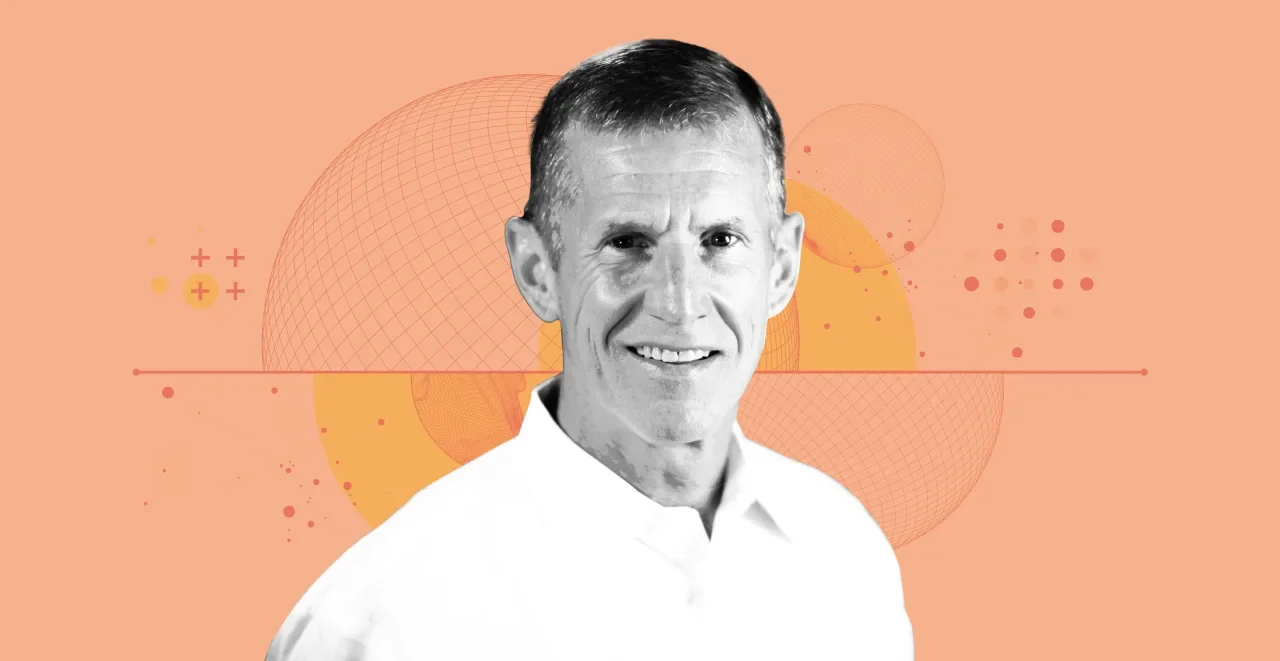
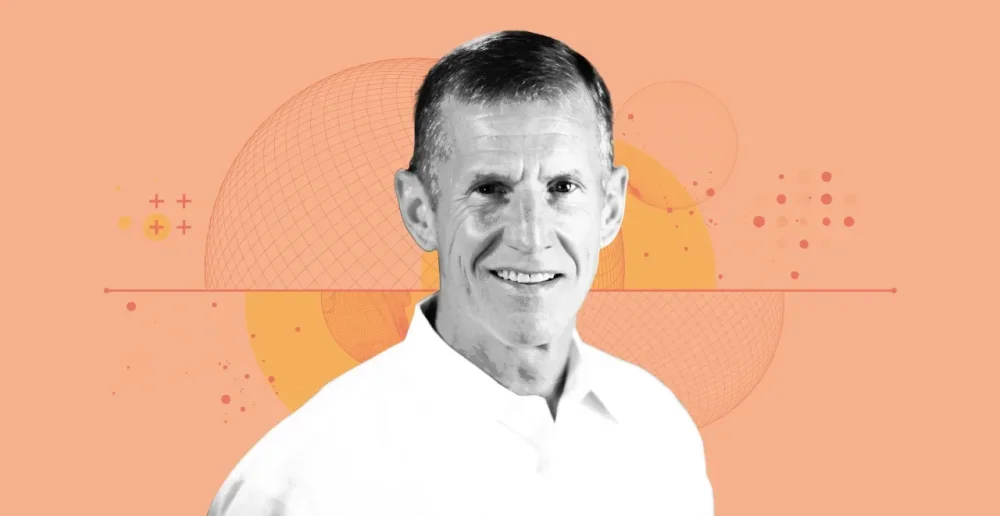
Amid polarization, AI disruption, and eroding trust in institutions, retired four-star General Stanley McChrystal argues that what leaders need now more than ever is character. Head of the business consulting firm McChrystal Group, he has written a new book on character, drawing from his decades of experience. From AI ethics and modern warfare to hot-button issues like Signalgate and transgender service in the military, McChrystal explains why character is the foundation of lasting leadership. This is an abridged transcript of an interview from Rapid Response, hosted by the former editor-in-chief of Fast Company Bob Safian. From the team behind the Masters of Scale podcast, Rapid Response features candid conversations with today’s top business leaders navigating real-time challenges. Subscribe to Rapid Response wherever you get your podcasts to ensure you never miss an episode. I wanted to ask you about the changes that are afoot in the military and the Department of Defense. Some folks champion the idea of change. Some folks make dire predictions. For you, who have worked with military and military leaders for a long time, what’s your perspective about what’s being attempted? I would say first, if I go to 30,000 feet and look at it from a big distance, change is needed, change is appropriate. And I think it’s going to mean significant change, adoption of new technologies, changing of force structures, all of those kinds of things. All of that is correct. Even firing generals, if it’s necessary, is a good thing—if you are firing generals because they don’t have the skills or they don’t have the right personalities. So all of those things, I completely sign up for, and I wouldn’t recognize a lot of sacred cows that would be exempt from hard scrutiny. Now, having said that, I am not aligned with where the current secretary of defense, how he defines some of the current issues and the direction. He talks about the warrior ethos. But the reality is, what we are trying to do is get the best military we can, and that’s not necessarily the strict warrior ethos, because soldiers are a little different. Soldiers are disciplined. They follow the rule of law. When you think about warrior, it’s got a little bit of a looser definition or interpretation usually. So that I think is probably a mistake if you start to say, “You can’t have transgender soldiers.” My response would be: One, there aren’t many. And two, if a transgender soldier is really good, we need them. We don’t have that many extra people that are really good that we can afford [to lose]. So I have a much different definition of what a really effective service member might be. I think I do. And then I also think that if you are judging military leaders on a political ideology, you’re playing with fire. And here’s why. We’ve had this extraordinary couple of centuries of the U.S. military being pretty apolitical, not always perfectly, but generally very apolitical. And although there’s friction between civilian leadership and uniforms, it’s one of the healthiest relationships that you’ve seen on the globe for 200 years. Once you start to hire and fire senior leaders based upon their political alignment with any particular ideology, you are going to affect younger military leaders. They are going to shape their behavior. They’re smart people. They’ll look up, and they’ll say, “This is what it takes to succeed in this business,” and they will start to represent that behavior. And a decade from now, or two decades from now, we’ll have a very different kind of military, and we won’t like it. It will not be the apolitical, very professional force that I knew and that I think is largely the case today. So I think it’s understanding the danger of that dynamic that is really critical. The issues around security—this Signalgate scandal using publicly available tools to communicate—is that really a big deal or is that sensationalized? One, I do think it’s a big deal. I think using Signal, even though it’s encrypted, it’s not secure. And so you are transmitting future plans on an unsecured device, which is extraordinarily dangerous for the men and women who are going to go execute that operation. So I do think that was a big deal. It was almost a reflection of amateurism. Now, the other side of it bothers me far more. We had the mistake. It comes out. Everybody knows it’s a mistake. They know that the information is extraordinarily sensitive, and they get up in front of cameras, and they say the information was not classified. Now they know that that’s not true. They know that’s a lie. It is classified, and yet they look at the camera, and they say something that maybe most Americans can’t parse the difference. But anybody who’s involved knows that people whose salaries you and I are paying in positions of great responsibility consciously and intentionally don’t tell the truth to you and I. That’s a big problem, and that’s the far greater issue here. We can minimize the event that occurred as a mistake, but we can’t minimize the lack of integrity. I’m curious how you look at AI’s potential impact on the military, and how do we know if we’re ahead or behind, especially in that competition with China? Yeah, we’ve never had anything quite like this. The closest analogy in my mind would be nuclear power, atomic weapons, and we got them first during World War II; we won the race to produce nuclear weapons and then used them first. And when other countries followed us and developed their own nuclear weapons, we got this sort of balance. The problem with artificial intelligence, and I’ve had the opportunity to do some work and a big war game on it, is that if somebody achieves artificial general intelligence before their competitors, theoretically they could then sprint ahead in a way that their competitors almost couldn’t catch up. And you could have a dominant superiority, and we’re not even a hundred percent sure what AI will do on the battlefield. We know it will make a lot of things simpler, faster, easier—logistics, planning, all those things—which will make an army more efficient. But as AI starts to do target discernment, autonomous engagement with weapons systems and robotics, we have an incomplete picture. Ukraine’s like a glimpse of the future. We have an incomplete picture of how dominant that will be. So I don’t think there’s any time except the pursuit of nuclear weapons where this idea of losing the race could mean losing the war. And when you think of AI, you have to blur the lines we had for many years of military power and separate from diplomatic or commercial power. Those things are now so interwoven, because the ability to leverage AI in production and things like that could give a country a decisive advantage that immediately shows itself in the military sphere. So I think first, two things have to happen. We need to be pursuing those kinds of regulations and understanding around the world that give us some opportunity to put rules and norms in place for AI. But we’re not close to it. But parallel to that, we need to be at breakneck pace trying to develop AI. And those seem in tension, in contradiction, that here we are trying to develop new nuclear weapons and at the same time, we’re trying to set up rules to limit their use. But if we lose, if we don’t get parity with AI, then we’re going to be in a position that’s extraordinarily dangerous. And that’s, again, not going to be the military; it’s going to be this broader national effort. And the topic of character that you’re so focused and compelled about. Today that applies to AI, too, and how we talk about it, whether it’s commercial uses or military. Well, I would argue character becomes more important, because the power of the individual is dramatically more than it was even 200 years ago. When we think of the old saying about Samuel Colt, who created the six gun, we say: “God made man; Sam Colt made them equal”—and he leveled the playing field for people who weren’t as big and strong, as they could have an effective weapon. AI is going to do that and give extraordinary power not just to nation states, but to individuals. And so those people who have that extraordinary power, and almost all of us will have some form of it, have the ability to do great good or great evil. And so character, I think, is going to become more essential than ever. View the full article
-
Lately, I’ve felt weighed down by the constant churn of chaos and uncertainty—like I’m carrying a low-grade tension in my body that never fully lets up. The news is dizzying. The pace of change is relentless. Some days it feels like we’re lurching from one crisis to the next with no time to process, no moment to exhale. I find myself waking up already bracing for what the day might bring. It’s like the ground is constantly shifting, and we’re all being asked to find our footing in real time. And then there are the quieter, internal questions I carry with me—the ones that tug at me in the middle of the night or when I’m trying to make sense of the day: Am I doing enough? Am I doing the right things? What happens next—in my work, my community, this fragile world we’re raising our kids in? How do I protect what I love in a world that feels so unpredictable? The truth is, uncertainty makes me anxious. I like a plan. A path. A sense of direction. I’ve always found comfort in being the one who “has it together,” who can anticipate needs, offer advice, solve the problem. I used to believe that being prepared—being in control—was the answer. That if I could just think far enough ahead, work hard enough, care enough, I could stay one step ahead of the chaos. But that illusion has cracked open. The world is too complex for neat plans. 1% more curious The one (only?) good thing about being addicted to reading the headlines is that I get more exposure to other articles as well. A few weeks ago, I read a beautiful essay by Suleika Jaouad about her cancer diagnosis (gift link here). In it, she explores the evolution of her relationship with fear—beginning with an overwhelming unease around mice and culminating in a deeper confrontation with mortality and uncertainty following her leukemia diagnosis and relapse. But what really struck me was the final line: “That’s what I found on the other side of fear: the knowledge that I can handle it, whatever ‘it’ is—as long as I’m one percent more curious than afraid.” Asking better questions Yes! Yes. Curiosity. Of course. One of the first things I learned in coach training is that coaching isn’t about having the answers. It’s about asking better questions. It’s about holding space for exploration instead of rushing to resolution. It’s about trusting that people have wisdom inside them—not because you give it to them, but because you help them uncover it. Needless to say, what we can seamlessly apply in other parts of our lives can be hard to internalize ourselves. We might be masters at holding space for others’ questions, but when it comes to our own, we often default to urgency, control, and the desperate hunt for answers. But what I continue to learn and relearn is that certainty is often a false promise. It quiets anxiety in the short term, but it doesn’t foster growth. Curiosity does. When I stop demanding answers from the world, I create a little more space to breathe, to move, to imagine. That shift doesn’t come easily. It’s much more natural to grip tightly than to open up. But embracing curiosity is a practice, not a personality trait or a fixed mindset. And when I can extend to myself the same spacious, open-ended wondering I offer others, something inside softens. I don’t need to have it all figured out. I just need to be willing to stay in the unknown a little longer. Putting it into practice Here are a few tangible strategies that help me when I feel myself bracing against the unknown: Ask better questions When I catch myself spiraling into fear, I try to interrupt the loop with questions that open space instead of closing it. Instead of, “What if this all goes wrong?,” I ask, “What might I learn from this?” or “What’s one small thing I can act on today?” These questions don’t have neat answers, but they remind me that I have agency, even in uncertainty. Name what’s true now Fear tends to time-travel, pulling us into imagined futures. Curiosity helps bring us back to the present. I try to ask myself, “What do I know for sure right now? What’s actually happening, and what am I projecting?” Be curious about your fear itself Sometimes I sit with my fear and ask it questions: What are you trying to protect? What’s underneath this for you? Usually, I find something tender—a deeply held value, a longing, a hope. And suddenly, the fear feels less like a threat and more like a signal. ‘Present in the mess’ None of this removes the chaos or quiets the headlines. It doesn’t give me a five-year plan or a tidy sense of control. But it does give me a way to stay present in the mess. A way to keep moving, even when the path ahead isn’t clear. Curiosity doesn’t promise certainty—but it offers something better: connection. To ourselves. To what matters. To each other. So, these days, when the ground feels unsteady and I start to brace against the unknown, I try—imperfectly, but intentionally—to choose curiosity over control. To soften instead of grip. To ask, instead of answer. It’s not always comfortable, but it helps me stay rooted in what’s real and responsive to what’s next. And for now, that feels like a good place to begin. View the full article

-
Dr. Drew Ramsey is a board-certified psychiatrist and psychotherapist. He is a leading voice in nutritional psychiatry and integrative mental health. He is a fellow of the American Psychiatric Association and the founder of the Brain Food Clinic and Spruce Mental Health. For 20 years, he was an assistant clinical professor of psychiatry at Columbia University. His book Eat to Beat Depression and Anxiety was an international bestseller, and his work has been featured by The New York Times, The Wall Street Journal, the Today show, NPR, and other outlets. What’s the big idea? The time to start working on positive mental health outcomes should not be when a mental health crisis begins. In a country that has an epidemic of loneliness and rising depression, anxiety, and suicide rates, our society can’t afford to put off healthy brain habits until they are part of a treatment plan. Modern ways of life don’t naturally promote a happy, healthy mind, so it’s important to take initiative and proactively nurture your own brain health every day. Below, Ramsey shares five key insights from his new book, Healing the Modern Brain: Nine Tenets to Build Mental Fitness and Revitalize Your Mind. Listen to the audio version—read by Ramsey himself—in the Next Big Idea app. 1. Seeing mental health as mental fitness Mental fitness is the habits, knowledge, and patterns that support overall mental health and sound well-being. Shifting from a mental health stance to one of mental fitness is key to healing the modern brain. Our mental health epidemic is rife with concerning statistics. The rate of teenage depression has increased from 8% to 20%. There is a rise in suicide and overdose. Sixty-one million Americans are diagnosed with depression and anxiety alone. Getting into a stance of mental fitness asks us to think about mental health differently. Instead of waiting and hoping to never see someone like me—waiting until you have a mental health crisis to address—mental fitness asks us to be proactive. The human brain requires some basics regarding care and feeding, and the modern world is taking a toll on those things. Being active is great for mental health, but 80% of jobs are now sedentary. Quality sleep is absolutely essential for mental health. Shifting into a mental fitness stance asks us to be preventive about the tenets of a healthy brain. Mental fitness is different from many other programs and ideas because these tenets are very simple. If you look at heavily evidence-backed, agreed-upon healthy practices, you’ll find things like spending more time in nature. Grounding is one of the tenets, and, in a stance of mental fitness, you try your best to get more nature in your life, from week to week. Many great studies show that getting into nature, for even a little bit, improves and activates the immune system in wonderful ways. Research confirms that nature shifts our brains and calms us down. Change your stance into one of mental fitness by striving to build brain-healthy habits before problems arise. 2. Upgrades to brain science The latest science in mental and brain health is really hopeful. One major new concept is neuroplasticity, the idea that the brain grows and repairs itself into adult life. I finished medical school in the year 2000. We didn’t know about neuroplasticity, but now it is coming to light that there is a molecule that your genes code for called BDNF (brain-derived neurotrophic factor), and certain activities and foods help you make more BDNF. It’s like a brain growth agent. When our brain weakens or declines, it’s not necessarily permanent. We can turn on and off genes that promote brain growth and repair. We may not have complete control, but we can do much in our everyday choices to improve brain health. “Inflammation is now understood to be at the heart of some depression and anxiety cases.” Another part of upgrading brain science is thinking about inflammation in relation to the brain. Inflammation is a buzzword in science. It is part of our body’s natural and important protection and alarm systems. It is how we defend ourselves from viruses, bacteria, and all sorts of invaders. Inflammation is now understood to be at the heart of some depression and anxiety cases. It’s important to start thinking about modern mental health in modern ways. The last major upgrade to brain science is about the microbiome. Many people never thought that the organisms living in your colon relate to mental health. As it turns out, the gut is the biggest part of our immune system. Eating more plants and fermented foods shifts your microbiome into a healthier state that regulates inflammation. Never before in my career has there been so much great science to support recommending fermented foods to my patients. 3. The first tenet of mental fitness is self-awareness. I start the nine tenets with self-awareness. In the book, I tell the story of a woman who started drinking a little more during the pandemic. I worked with her and came to appreciate her self-awareness. She started counting drinks, checking in with me about alcohol, and thinking more about the risks of alcohol in her life. That put her on the path to getting control of her drinking. Self-awareness allows you to better understand how your activities shape the self. It doesn’t have to be therapy. I’m a big fan of journaling. By writing down thoughts and feelings, putting labels on what we’re experiencing, research has shown an associated increase in frontal lobe activity. These parts of our brain are involved in executive functioning, decision-making, and getting stuff done. There is brain health value in taking more time and a little more effort to focus on the self. Getting to know and care for yourself in new and different ways is at the heart of healing the modern brain. 4. Feeding mental health Mental fitness as a concept really hit home for me through my work in nutritional psychiatry. When I was a young doctor training as a psychiatrist at Columbia, it was striking to me as a farm boy that we didn’t talk at all about nutrition. We weren’t trained or encouraged to ask patients what they were eating, but it seemed like a big opportunity. If you have depression and eat a vegetarian diet versus a keto diet versus a junk food diet, all of those dietary patterns impact treatment and provide different opportunities. The SMILES Trial of 2017 showed that when individuals who were in mental health treatments for depression were counseled on a Mediterranean diet, they saved a lot of money and their depression got a lot better. A third of them went into complete remission from their clinical depression. This study is an example of an augmentation strategy with foods, meaning a Mediterranean diet is added on top of treatment. “There is brain health value in taking more time and a little more effort to focus on the self.” Feeding mental health well is a daily opportunity for everyone, not only patients. It can feel overwhelming. There is a lot of fearmongering and misinformation about nutrition; my work helps you cut through the noise to simple things like lentils, pesto, wild salmon, anchovies, and white beans. Those are some of the most nutrient-dense foods on the planet, meaning they have more nutrients per calorie than other foods, and they also have specific nutrients that we know the brain needs—an easy place to get started. 5. Boosting mental fitness In my time with patients during classic 45-minute sessions, I see how important connections are. The recent surgeon general, Vivek Murthy, noted that we have an epidemic of loneliness and isolation in America. We increasingly see people losing friends, and spending less time socializing and less time going out. Young folks, especially, are growing more isolated. This awareness needs to be turned into action. In my chapter about connection, I share the story of a middle-aged man I worked with who was post-divorce. He was very connected to his kids, so it was hard for him when they left for college. He enjoyed fantasy football, but was struggling to connect with the real-life elements surrounding the sport. Helping him to engage with other fans and attend games in person was a significant part of his healing. A web of connections is not just friends and loved ones. It is important to map out all our different types of connections. It’s not just the ride-or-die folks in your life: connections to institutions, mentors, mentees, or to meaningful places matter too. This process (great journal entry) can help a person feel connected to themselves and see pathways that can expand their life. You could end up going to the farmers market regularly to connect more with the people who grow your food, or attend a town hall meeting to feel part of your community. The best time to start caring for your brain is before something goes wrong. This article originally appeared in Next Big Idea Club magazine and is reprinted with permission. View the full article
-
French company’s high-speed trains could increase capacity and lower fares between London and continental Europe View the full article
-
Commerce department guidance aims to toughen export controls on tech used by China to make AI processorsView the full article
-
Lack of compromise by Vladimir Putin has led the US to view him as an obstacle to a ceasefire between Moscow and KyivView the full article
-
The world is moving in the opposite direction to Berkshire HathawayView the full article
-
UK retailer to file big claim as it admits for first time that some customer data was stolen in recent hackView the full article
-
Billionaire’s record 2018 package stuck in seven-year legal battleView the full article
-
The problem of human-induced subsidence is global, urgent and spreadingView the full article
-
Six months after the so-called Department of Government Efficiency was unveiled, it has yet to find a fraction of the hoped for savingsView the full article