Newsletter
Want to keep up to date with all our latest news and information?


ResidentialBusiness
Administrators
-
Joined
-
Last visited
Everything posted by ResidentialBusiness
-
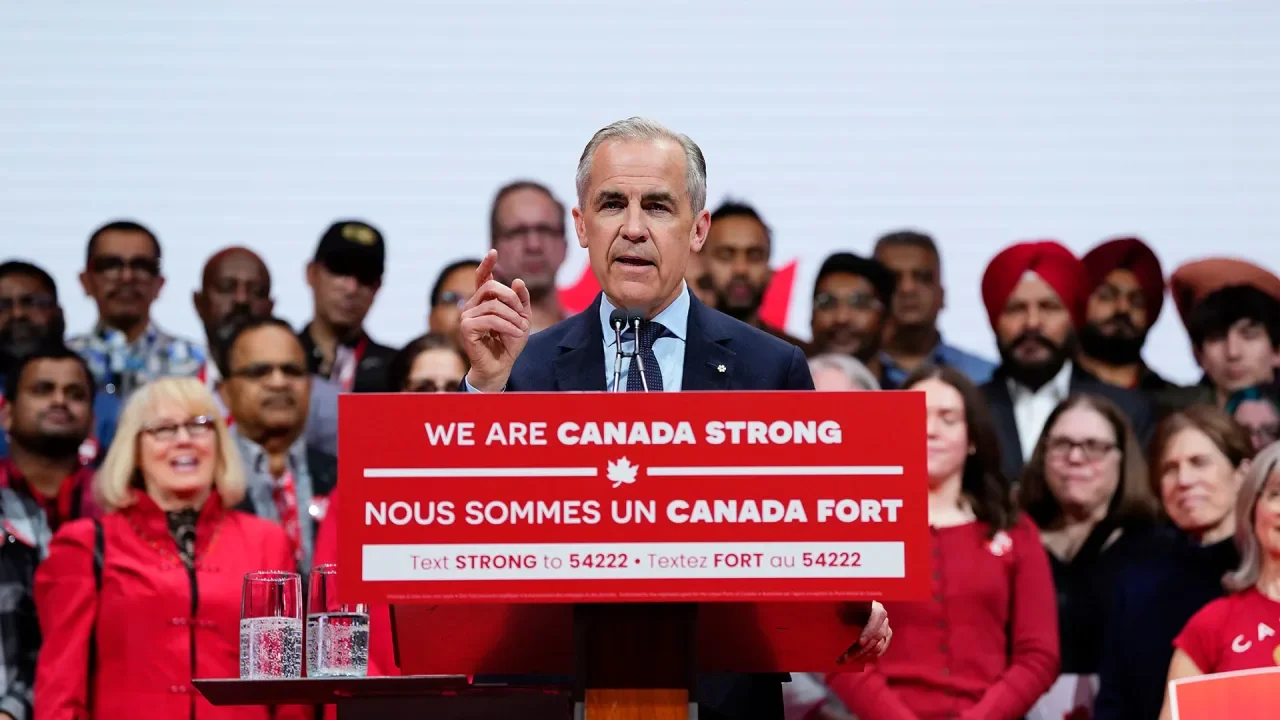
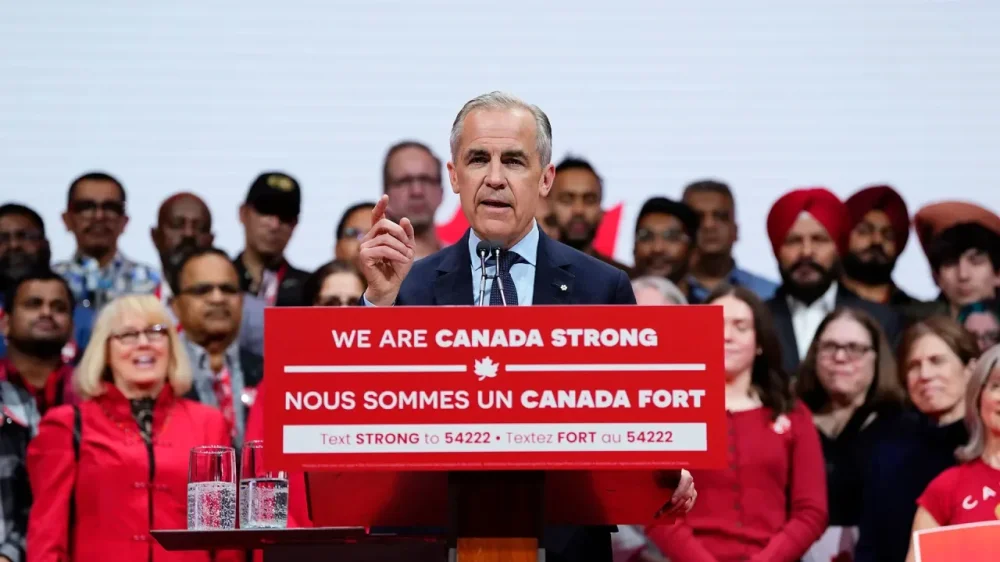
Canadian Prime Minister Mark Carney’s Liberal Party has won the federal election, capping a stunning turnaround in fortunes fueled by U.S. President Donald The President’s annexation threats and trade war. Carney’s rival, populist Conservative Party leader Pierre Poilievre, was voted out of his seat in Parliament, the Canadian Broadcasting Corporation projected Tuesday. The loss of his seat representing his Ottawa district in Monday’s election capped a swift decline in fortunes for the firebrand Poilievre, who a few months ago appeared to be a shoo-in to become Canada’s next prime minister and shepherd the Conservatives back into power for the first time in a decade. But then The President launched a trade war with Canada and suggested the country should become the 51st state, outraging voters and upending the election. Poilievre, a career politician, campaigned with The President-like bravado, taking a page from the “America First” president by adopting the slogan “Canada First.” But his similarities to The President may have ultimately cost him and his party. The Liberals were projected to win more of Parliament’s 343 seats than the Conservatives. It wasn’t immediately clear if they would win an outright majority — at least 172 — or would need to rely on a smaller party to pass legislation and remain in power. Elections Canada said it has decided to pause counting of special ballots — cast by voters who are away from their districts during the election — until later Tuesday morning. The Liberals were leading or elected in 168 seats when the counting was paused, four short of a majority. Elections Canada estimated that the uncounted votes could affect the result in about a dozen districts. The decision means Canadians won’t know until later in the day whether Carney’s Liberals have won a minority or majority mandate. In a victory speech, Carney stressed the importance of unity in the face of Washington’s threats. He also said the mutually beneficial system Canada and the U.S. had shared since World War II had ended. “We are over the shock of the American betrayal, but we should never forget the lessons,” he said. “As I’ve been warning for months, America wants our land, our resources, our water, our country,” Carney added. “These are not idle threats. President The President is trying to break us so America can own us. That will never … ever happen. But we also must recognize the reality that our world has fundamentally changed.” A defeat for the Conservatives Poilievre hoped to make the election a referendum on former Prime Minister Justin Trudeau, whose popularity declined toward the end of his decade in power as food and housing prices rose. But The President attacked, Trudeau resigned and Carney, a two-time central banker, became the Liberal Party’s leader and prime minister. In a concession speech before the race call on his own seat, Poilievre vowed to keep fighting for Canadians. “We are cognizant of the fact that we didn’t get over the finish line yet,” Poilievre told supporters. “We know that change is needed, but change is hard to come by. It takes time. It takes work. And that’s why we have to learn the lessons of tonight — so that we can have an even better result the next time Canadians decide the future of the country.” Poilievre can still lead the Conservative Party. Even with Canadians grappling with the fallout from a deadly weekend attack at a Vancouver street festival, The President was trolling them on election day, suggesting again on social media that Canada should become the 51st state and saying he was on their ballot. He also erroneously claimed that the U.S. subsidizes Canada, writing, “It makes no sense unless Canada is a State!” The President’s truculence has infuriated Canadians, leading many to cancel U.S. vacations, refuse to buy American goods and possibly even vote early. A record 7.3 million Canadians cast ballots before election day. Reid Warren, a Toronto resident, said he voted Liberal because Poilievre “sounds like mini-The President to me.” He said The President’s tariffs are a worry. “Canadians coming together from, you know, all the shade being thrown from the States is great, but it’s definitely created some turmoil, that’s for sure,” he said. Historian Robert Bothwell said Poilievre appealed to the “same sense of grievance” as The President, but that it ultimately worked against him. “The Liberals ought to pay him,” Bothwell said, referring to the U.S. president. “The President talking is not good for the Conservatives.” The Liberal way forward Carney and the Liberals secured a new term, but they have daunting challenges ahead. If they don’t win a majority in Parliament, the Liberals might need rely on one of the smaller parties. The Bloc Québécois, which looked set to finish third, is a separatist party from French-speaking Quebec that seeks independence. Trudeau’s Liberals relied on the New Democrats to remain in power for four years, but the progressive party fared poorly on Monday and its leader, Jagmeet Singh, said he was stepping down after eight years in charge. “This is a dramatic comeback, but if the Liberals cannot win a majority of seats, political uncertainty in a new minority Parliament could complicate things for them,” said McGill University political science professor Daniel Béland. Foreign policy hasn’t dominated a Canadian election this much since 1988, when, ironically, free trade with the United States was the prevailing issue. In addition to the trade war with the U.S. and frosty relationship with The President, Canada is dealing with a cost-of-living crisis. And more than 75% of its exports go to the U.S., so The President’s tariffs threat and his desire to get North American automakers to move Canada’s production south could severely damage the Canadian economy. While campaigning, Carney vowed that every dollar the government collects from counter-tariffs on U.S. goods will go toward Canadian workers who are adversely affected by the trade war. He also said he plans to keep dental care in place, offer a middle-class tax cut, return immigration to sustainable levels and increase funding to Canada’s public broadcaster, the Canadian Broadcasting Corporation. Associated Press reporter Mike Householder contributed to this report. —Rob Gillies, Associated Press View the full article
-
I didn't know it until recently, but apparently boxed cake mixes are a popular store-bought ingredient to experiment with. Thanks to you, the good people reading my food hacks, I’ve been made aware of yet another ingredient that can masquerade as an egg in cake mix. Honestly, who needs eggs when you have soda? Replacing eggs in baking can be trickyEggs continue to be unreasonably expensive, which is especially frustrating for a person like me who used to rely on them for most of my protein. I’ve made some adjustments, though, and now I try to use them only for the recipes that really require them. It might take a few failed attempts, but it's becoming easier and easier to identify when a recipe needs eggs, like a custardy Dutch baby, and when one can do without—like boxed cake mix. I’ve tried plenty of egg replacement ingredients, like applesauce and bananas, in scratch cake mixes with varying degrees of success, and I’ve experimented with omitting the egg measurement from boxed cake mixes too. While the eggless boxed cake mix turns out just fine, in those tests I’ve continued to incorporate the water and oil measurement according to the directions. But as one reader let me know, you can make boxed cake mix with soda, not just as an egg replacement, but to replace the water and oil too. Though I needed to test out this witchcraft, I could already see it working. While eggs typically provide binding, emulsification, and aeration to batters and doughs, commercial boxed cake mixes are designed to be foolproof. (It's almost like they knew we'd be cutting corners.) On my mission to turn boxed mix into black and white cookies, I found that cake mix refuses to change its consistency or texture. If liquid of any kind is added, whether it’s oil, water, soda, juice, or eggs, it will do its darndest to become fluffy cake. However, I did wonder how using soda would affect the flavor and the texture of the cake, especially without oil or egg yolks (a tenderizer). Credit: Allie Chanthorn Reinmann Soda outperforms juiceI decided to test out replacing the ingredients with two different liquids: a cola and a fruity juice. In my prior tests, I had omitted the eggs without replacing their volume or weight. I simply erased them from the game and the resulting cake was flatter than one with eggs, but tender and boasting that nostalgic boxed cake flavor. I did the same thing here, leaving out the eggs and replacing the water and oil measurement (a total of 12 ounces) with the juice and cola separately in two tests. I was actually impressed by how much better soda turned out to be than fruit juice. Even after thoroughly whisking, enough of the carbonation remained to lift up the batter so it had a nicer appearance compared to the pomegranate juice cupcake's fallen center. Left: pomegranate juice cupcakes (surprise! they're brown). Right: cola cupcakes. Credit: Allie Chanthorn Reinmann I used pomegranate juice thinking the fruit flavor would be a nice complement for the cake. Instead, it was a little too sweet (if you can imagine) and the fruit flavor became murky against the yellow cake. The soda however, was actually very tasty. Even though I’m not a soda person, I enjoyed it. This could be a good opportunity to get creative with soda and cake flavor pairings. How to make boxed cake mix with soda1. To make cake mix with soda, start by preheating the oven and getting the pans ready. Mixing the batter takes all of one minute. You need your pan and oven to be ready to go so you don't loose more carbonation than necessary. 2. Once your oven is preheated, simply empty out the dry boxed mix into a large mixing bowl. Look at the box's directions and add the measurement of the oil and water together. If the box says, "1 cup water and 1/2 cup oil" then you'll need 12 ounces (1 1/2 cups) of soda. Pour the soda into the bowl and whisk it all until well incorporated. Tiny bits may remain unmixed. 3. Pour the batter into your prepared pans immediately. Bake as directed on the package. How does the texture hold up?Despite the fallen centers on the pomegranate cupcakes, both cakes shared the same texture: light and fully aerated with a slight rubbery skin on the bottom. This likely manifested because of the lack of fat (a shortening agent because fats shorten gluten strands) from the missing oil and egg yolk. Credit: Allie Chanthorn Reinmann That said, this texture difference is completely unnoticeable if you’re not looking for it. Any person who crushes a Fanta vanilla cake at a summer picnic is not going to comment on the lack of a shortening agent. I promise. Soda can and should be used as the wet ingredient for boxed cake mix. It’s a fun way to experiment with flavor combinations and while you’re at it, save a bit of money on eggs and oil too. Try orange soda, root beer, ginger beer, or dare to dream with Diet Coke the next time you make a batch of cupcakes. View the full article
-
The 250 top mortgage originators in 2025 brought in high volumes despite less than ideal conditions. Check back in the following days for the top 50 and the final full list, with further cuts of the data to be published thereafter. View the full article
-
Plaintiffs raise prior accusations that the lender ignored applicants' debts in collections, and used unreasonable residual income calculations. View the full article

-
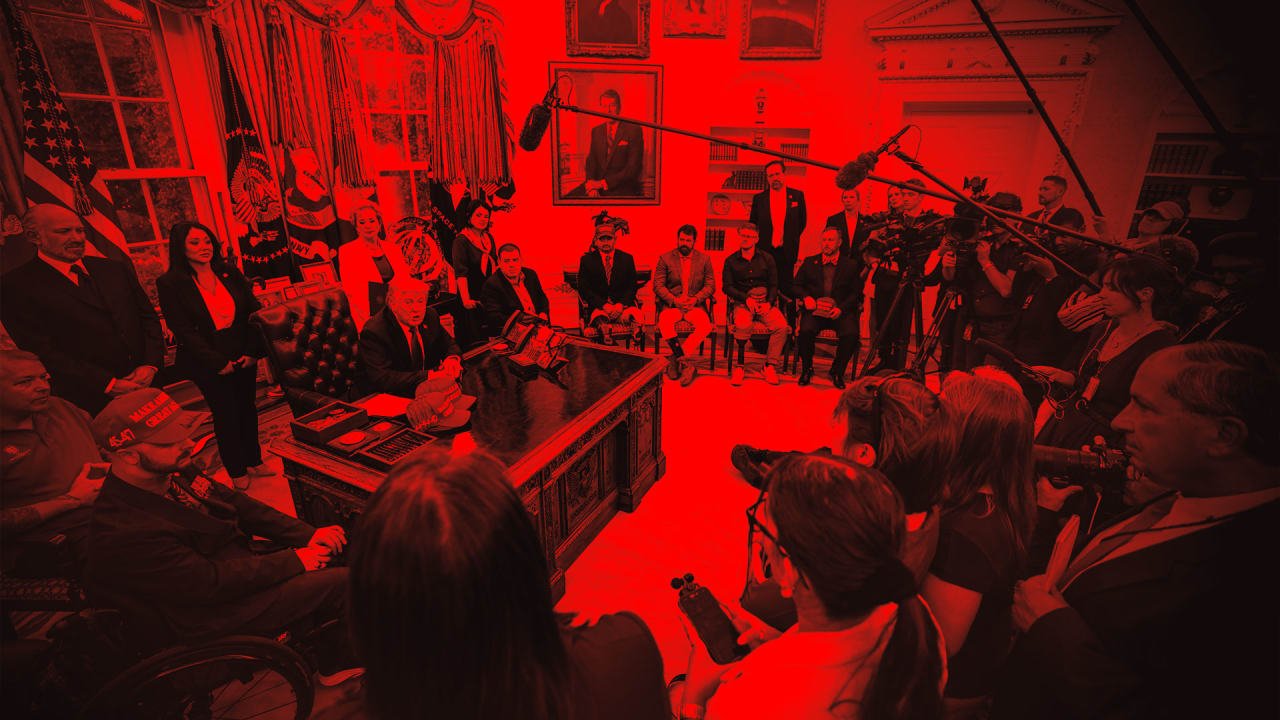
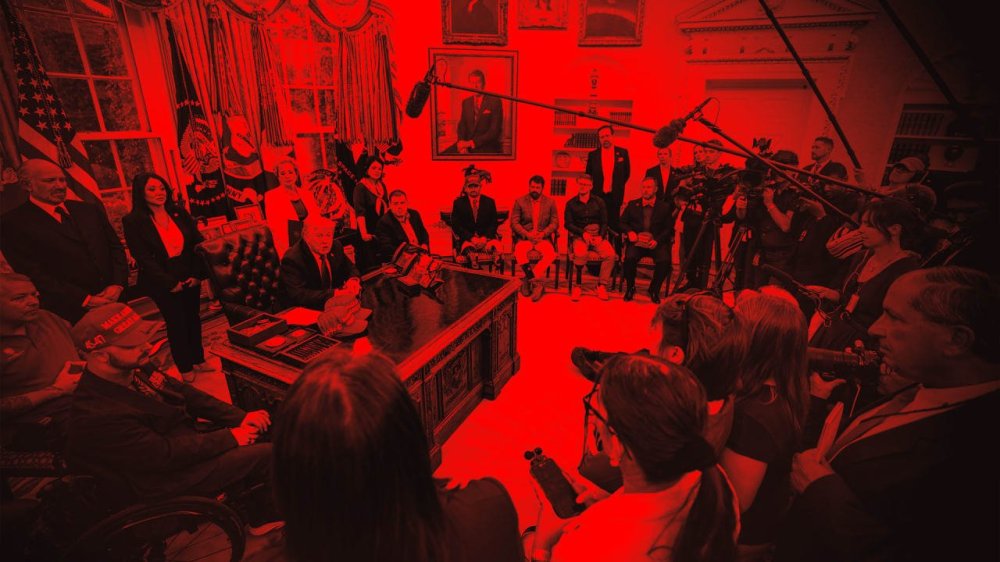
On Tuesday, President Donald The President’s second term reached its first 100 days milestone, marked by a sweeping wave of executive orders promising to reshape the American government with immediate actions. Since taking office on January 20, The President signed 137 executive orders (published in the Federal Register as of Monday), addressing everything from immigration and tariffs, to higher education and government spending. Navigating the head-spinning flood of executive orders and their impact can be a complex task, so Fast Company took a closer look at The President’s executive orders in his first 100 days and found reliable trackers to keep up. What is an executive order? Executive orders are written presidential directives, which order a specific action pertaining to the federal government and are signed by the current president. Since the country’s founding, all presidents have signed at least one executive order, and such directives have become a more regular action in recent administrations. The President’s first 100 days in context In a little over three months, The President has signed just 25 fewer executive orders than his predecessor Joe Biden signed in the span of his four-year term. In their first 100 days in office, former presidents Barack Obama and Joe Biden signed 19 and 42 executive orders respectively. The President’s executive orders by topic Fast Company categorized President The President’s executive orders by the topics they covered: economy, energy, environment, government, health, social issues, tech, DEI, and other. Many of the executive orders could fit into more than one category, yet they were labeled based on the best fit. The analysis found that the largest category was executive orders relating to the government, with around 24.8% of EOs focused on government spending or regulating and deregulating various government bodies. This was followed by economy-related orders, which amounted to 21.9% of all executive orders, primarily pertaining to The President’s on-again-off-again tariffs. Executive orders also related to the environment, health, higher education, and DEI. How to track The President’s executive orders Amid the chaos, various organizations are offering online tracking tools to better understand the mass executive orders and their impact. Presidential executive orders are officially published on the Federal Register, the federal government’s official journal. Its website offers all the executive orders by president since 1937, with PDF versions of the original documents. The White House also publishes the signed executive orders once they are announced. CNN’s “Tracking The President’s executive actions” index tracks all of The President’s executive orders and provides a visualization based on topic category. This tracker also offers a search engine based on the categories. The American Presidency Project, a UC Santa Barbara initiative, tallies the amount of executive orders enacted by presidents, although it is not immediately updated. The Akin The President Executive Order Tracker is a searchable tool that analyzes the impact of the executive orders and breaks them down for easier undertsanding. The Congressional Black Caucus Foundation executive order tracker utilizes check-boxed filters to search for executive orders, and provides access to fact sheets and analysis on the impact on Black Americans. View the full article
-
How would the former central bank governor change the institution? View the full article
-
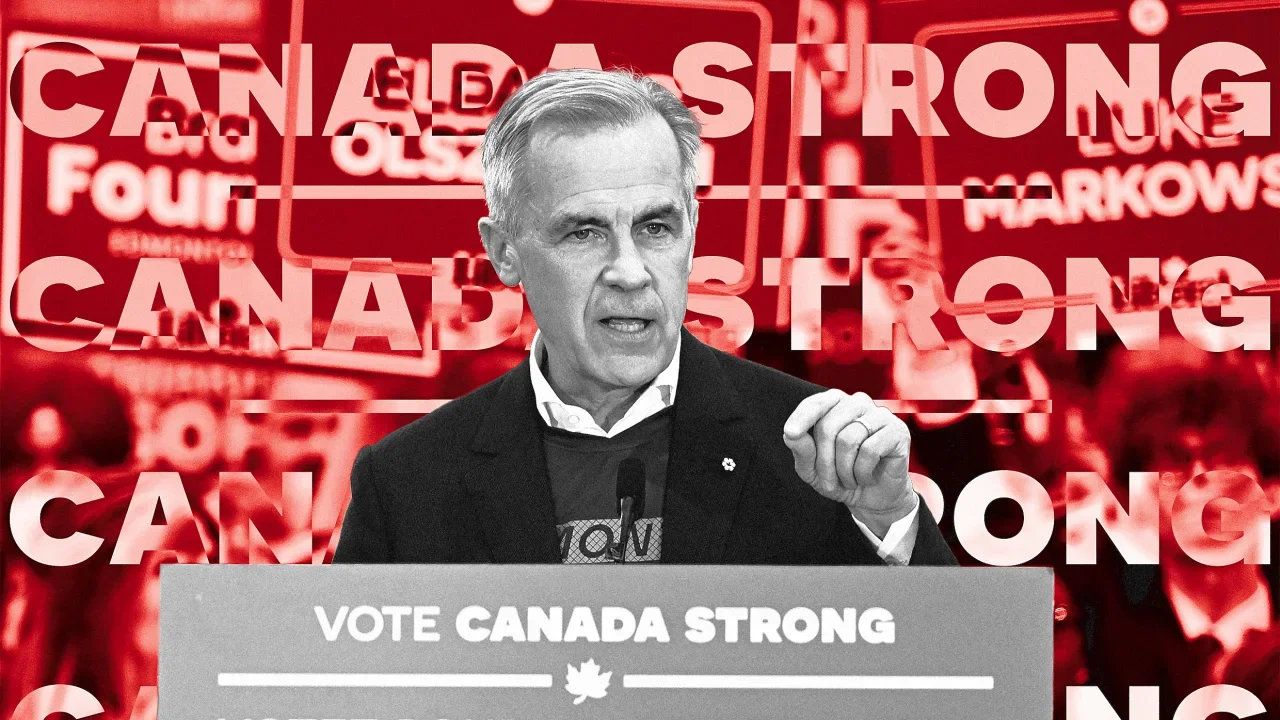
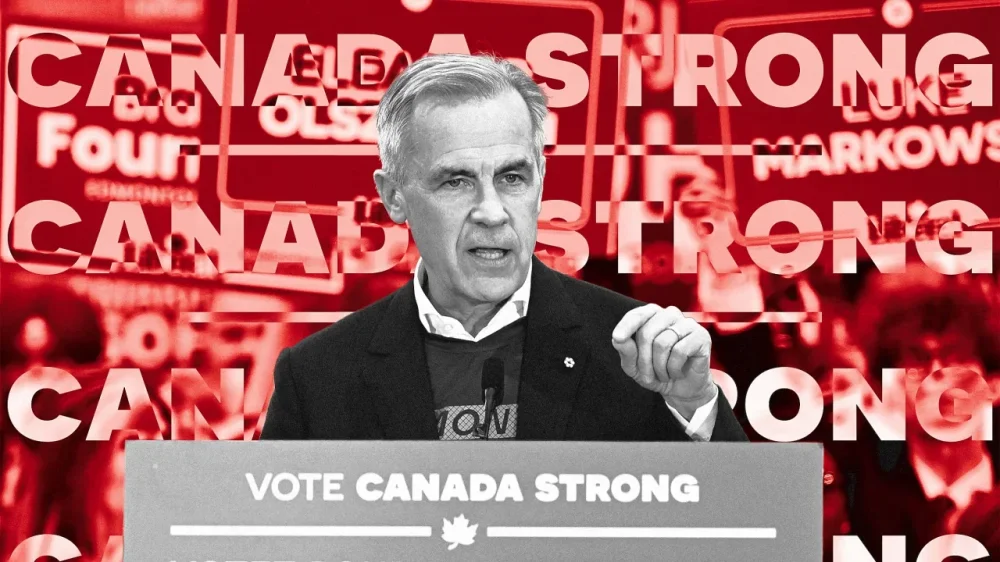
Unlike in the U.S., Canadian politics is multiparty and often defined by issues without salience to its neighbors to the south. But after President Donald The President took office for a second term earlier this year and threatened Canada’s sovereignty and economy, the top issue in Canadian politics became one intimately familiar to Americans: The President. The President was the central figure in Canada’s election Monday—and voters were impressed by Canadian Prime Minister Mark Carney’s vision for standing up to him. In a campaign video released on Election Day, Carney laid out his closing message. “The crisis in the United States doesn’t stop at their borders,” he says. “But this is Canada and we decide what happens here. Let’s choose to be united and strong. Canada strong.” “Canada Strong” is Carney’s campaign slogan, itself a crib on an American trend of cities messaging resilience following tragedies like shootings or natural disasters. But Carney’s message is pure Canadian and emphasizes national unity against The President’s saber rattling and trade wars. It’s defiant and conveys Carney’s “elbows up” approach toward the U.S., and it also provides a handy counterpoint to Conservative Leader Pierre Poilievre, whose campaign slogan “Canada First” echoes The President’s own “America First” refrain. “You can’t stand up to The President when you’re working from his playbook,” Carney says in his campaign announcement video. The video juxtaposed footage of The President and Poilievre, including a clip of Poilievre chomping on an apple during a viral interview where he was asked about “taking a page out of the Donald The President book.” The Liberal Party’s fundraising message on its homepage emphasizes its anti-The President stance by being Canada nice: “Support #PositivePolitics,” the site says, with a call to action to support things like “diversity over division” and “evidence-based decision making.” And Carney’s campaign logo and visual identity is simple and patriotic, reflecting a public image of someone who’s handled crises before and is prepared to do so again. Carney, a former central banker for Canada and the U.K. during Brexit, never held elected office before being elected Liberal Party leader in March. He replaced former Prime Minister Justin Trudeau and came to the campaign with a simple message and a present threat with The President in office. The President repeated his rhetoric against Canada Monday, calling the country a “beautiful . . . landmass” in a social media post and suggesting the U.S.-Canada border is an “artificially drawn line from many years ago.” Canadian consumers have already responded to The President’s tariffs and threats by not vacationing in the U.S. or selling their U.S. homes. Canadian consumer brands have responded in the form of initiatives like “Made in Canada” advertising and in-store signage at grocery store chains. Politics followed suit. Carney’s campaign strategy and the brand built to communicate it is similar in ways to what U.S. voters sometimes see in down-ballot elections when the president is unpopular, as The President is (his approval is at 39%, according to an ABC News-Washington Post-Ipsos poll, the lowest of any presidential approval at this point in their term in 80 years). With The President, the trend of tying your opponent to an unpopular president has now gone international. View the full article
-
Ernest Hemingway had an influential theory about fiction that might explain a lot about a particular weakness of artificial intelligence, or AI. In Hemingway’s opinion, the best stories are like icebergs—with what characters actually say and do located above the surface, but making up only a fraction of the unfolding action. The rest of the story—the characters’ motivations, feelings, and their understanding of the world—ideally resides instead beneath the surface, like the bulk of an iceberg, serving as unarticulated subtext for all that transpires. Perhaps the reason Hemingway’s theory struck a chord is because human beings are like icebergs. Whatever people say or do at any given moment is undergirded by reams of nonverbal context that exists beyond the cold, hard facts of what may appear to be happening. What does it look like when there’s tension between two people, or supreme comfort? What kind of face does someone make when they’re desperately trying to end a conversation? These are things humans come to understand intuitively. According to a new study from Johns Hopkins University, though, AI is hopelessly out of its depth at interpreting such things so far. “I don’t think humans even have a full understanding of how we pick up on nonverbal social cues in the moment, but the idea behind most modern AI systems is that they should just be able to pick up on it from all of the data they’re trained on,” says Leyla Isik, lead author of the study. Isik is a cognitive scientist whose work centers around human vision and social perceptions. She had read a lot of scientific work recently suggesting that current AI models are adept at discerning human behavior when they categorize objects in static images. Since plenty of AI in the near-future won’t be parsing static images, though, but instead processing dynamic action in real time, Isik set out to determine whether AI could correctly identify what is happening in videos depicting people engaged in different social interactions with each other. It’s the kind of thing a person would want their self-driving car to excel at before trusting it to correctly size up, say, whether two people are having a heated exchange on a nearby sidewalk, and if one of them seems to be perhaps one harsh word away from bolting into the crosswalk. Isik’s team asked a group of people to watch three-second video clips of humans either engaging with each other or doing independent activities near each other, and interpret what the clips portrayed. Sourced from a computer vision data set, the clips included everyday actions ranging from driving to cooking to dancing. The researchers then fed the same short clips to 350 AI language, video and image models, and asked them to predict what humans would say and feel about them. All of the videos were soundless, so neither humans nor AI models could make use of vocal tone, pitch, or dialogue to contextualize what they were taking in. The results were conclusive; while human participants were overwhelmingly in agreement about what was happening in the videos, the AI models were not. To be clear, participating AI were able to determine some aspects of what transpired in the clips. The scientists asked questions about things like whether a video was taking place indoors or outdoors, and in a small enclosed space or a large open setting. The AI always matched humans on those kinds of questions. They were less successful, however, at peering beneath the surface details. “Pretty much everything else, we found that most AI models struggled at some subset of it,” Isik says. “Including questions as simple as ‘Are these two people in the video facing each other or not?’ All the way up to higher level questions like, ‘Are these people communicating?’ and ‘Does this video seem like it’s depicting a positive or negative interaction?’” The researchers asked, in particular, about both the emotional valence of a scene—whether it appeared to be positive or negative—and the level of arousal—how intense or engaging the actions in the video seemed. While a lot of humans involved couldn’t always pick up on what was being communicated in a video, they were able to determine whether a scene seemed intensely positive or mildly negative. AI models could not read the subtext in nonverbal cues, though. This disparity is likely due, the study claims, to AI being largely built on neural networks inspired by infrastructure from the part of the brain that processes static images, rather than the parts that process social interactions. Most AI models are trained to see an image and recognize objects and faces, but not relationships, context, or social dynamics. They may be trained on data sets that encompass movies, YouTube clips, or Zoom calls, and they may have encountered labels that explain what smiles, crossed arms, or furrowed brows mean. But they do not have the accumulated experience from years and decades spent constantly encountering these data sets and cultivating an intuitive understanding of how to navigate them in real time. Since another line of research in Isik’s lab at Johns Hopkins is developing models for building more human-centered priorities into modern AI systems, perhaps her research will help close some of these gaps eventually. If so, it won’t be a second too soon, as the AI boom continues to expand out into therapy and AI companions, along with other areas that rely on nonverbal cues and everything else lurking beneath the surface. “Any time you want assistive AI or certainly assistive robots in the workplace or in the home, you’re gonna want it to be able to pick up on these subtle nonverbal cues,” Isik says. “More basically, though, you also just want it to know what people are doing with each other. And I think this study highlights that we’re still pretty far from that reality with a lot of these systems.” View the full article

-
While 40 hours has been the standard workweek for the last few generations, the promise has long been that technology will give us more free time. Yet many Americans still find work spilling over into nights and weekends. Whether you want to cut back your hours to make room for a side hustle, to spend more time with your family, or to pursue your own interests and hobbies, it is possible to complete your full-time job in 30 hours a week. As a time management coach for over 16 years, I’ve worked with a lot of people in a lot of situations. What I’ve seen is that almost everyone can reduce the amount of time they’re working. Getting down to 30 hours or less per week isn’t possible in all circumstances, but it is possible in many. Here are the steps to make it happen. Set clear constraints If you’re used to working more, you’ll need to put in place very intentional time constraints to learn to limit yourself to 30 hours a week or less. To make this as easy as possible, I recommend setting a new schedule and trying not to deviate outside of it. For example, this could look like working 8:30 a.m.–2:30 p.m. so that you can pick up your kids from school and take them to their activities. Or it could look like a 10 a.m.–4 p.m. schedule if you’re training for a huge competition and want to get in both early morning and evening workouts. Without these limits, it’s too easy to fall back into more of a 9–5 and never really feel free to put extra time into your outside of work goals. Consolidate your work Most likely you’ve been keeping busy for 40 or more hours per week, but that doesn’t mean that you’ve been effective. One of the fastest ways to reduce your hours is to consolidate your meetings. Take a good, hard look at any recurring meetings. Could they be reduced by shortening them, reducing the frequency, or even eliminating them? Could you cluster meetings on fewer days of the week so that you can open up longer stretches of focused work time on other days? Could you reduce spontaneous meetings by asking people to schedule in advance or send you an email with more details before agreeing to meet? All of these strategies can shave off hours from your schedule. Next, you’ll want to look at the content of how you’re spending your work time. If you’re like most professionals, you’re likely overinvesting time in communication and under investing time in the highest impact activities. There’s room to consolidate here, too. Some work environments do require instant responsiveness, but in the majority of them, it’s not necessary. If permissible, turn off all notifications so that you’re only engaging with your inboxes and IM tools when you decide it’s the priority. Then limit your checks to a few times a day. For example, you may set aside time to process through your inboxes at the start of the day, around lunch, and as you’re wrapping up. For myself, I have a rule that I reply to business email messages by the next business day, and I reply to LinkedIn messages once a week. You need to figure out the cadence that works for you so that you’re checking just enough, but not too much. With the time opened up from reducing meetings and communication time, you can then invest in consolidated focused time where you can complete tasks from start to finish without constant starts and stops. Delegate out as much as possible If you have the ability to delegate to others, you’ll want to fully leverage other people’s time to open up hours in your schedule. As you go through your day, make a list of what others could do to support you and then begin to hand those items off bit by bit. Here are a few ideas of areas that have been effective for my clients to delegate: Doing research Following up on outstanding items Completing expense reports Booking travel Calling clients for longer conversations Scheduling meetings Answering standard email Putting together presentations Booking meeting rooms Planning events Taking meeting minutes Posting on social media There’s a potential that almost everything outside of your core responsibilities could be done by someone else. Challenge yourself to let go of some task at least once a week so that you can eliminate excess work from your schedule. Automate where you can With rapid advances in technology, more and more parts of your life can be automated or at least augmented. So where it’s supportive, let tech do the work. For example, for many of my clients, getting some sort of email filtering in place can radically change their relationship with their inboxes. It could be as simple as setting up some of their own filters or using tools like SaneBox that utilize AI for email sorting. For clients who struggle with longer email replies, they’ll dump their thoughts into a tool like ChatGPT and ask it to write an email for them. Or they’ll write their own email and ask for AI to change the tone. If you’re someone who schedules a lot of meetings with outside parties, online scheduling tools like Calendly can be a game changer. You eliminate all back and forth. And if you really struggle with weekly planning, you may want to check out tools like SkedPal, Focuster, or Motion that use AI to come up with a plan for you. If you notice anything else time-consuming and repetitive in your work that you can’t give to someone else on your team, see if there’s a tool that would gladly do it for you. The options are increasing daily. I can’t guarantee that you’ll carve your schedule all the way down to 30 hours a week or less. That can depend on a number of different factors. But what I can say is that if you try out these strategies to consolidate, delegate, and automate that you can find yourself working significantly less and opening up significantly more time for life outside of work. View the full article

-
The most indelible image from Donald The President’s inauguration in January is not the image of the president taking the oath of office without his hand on the Bible. It is not the image of the First Lady scowling under the capacious brim of her hat or the memeified image of Hillary Clinton giggling at The President’s mention of the “Gulf of America.” It is, of course, the image of the world’s richest and most influential men—henceforth known as the broligarchy—lined up both literally and figuratively behind The President. It was a carefully choreographed moment designed to illustrate The President’s strength. But the tableau could also be viewed another way: as a bunch of billionaires who looked scared out of their minds. Just about every man in the lineup had faced off against The President in his first term: Mark Zuckerberg deemed him too dangerous for Facebook. Jeff Bezos sued him for harboring a “personal vendetta” that allegedly cost Amazon a $10 billion cloud contract. Tim Cook called The President’s immigrant family separations “inhumane” and condemned his “moral equivalence” after the white supremacist rally in Charlottesville. And when Sundar Pichai protested The President’s ban on immigration from majority Muslim countries, Sergey Brin was right there with him. Even Elon Musk clashed with The President 1.0 after the president pulled out of the Paris climate accords. Now, all of these men stood side by side on the dais, many of them in what appeared to be a naked act of self-preservation as The President’s retributive and transactional second term took off. So, 100 days in, how have these business leaders been rewarded for their subservience? Why, with tariffs and trials and tanking stock prices, of course. The billionaires have begged and bargained in the Oval Office, they’ve kicked millions of dollars The President’s way, and they’ve compromised on the values they once professed to hold dear. But while their fates under The President’s second term certainly could have been worse—the president once threatened Zuckerberg, for one, with life in prison—the president has yet to totally forgive and forget. Take Zuckerberg. As The President took office, the Meta founder bent over backwards to appease him, very publicly announcing, though not in so many words, that he would make it easier for people to say hateful things about immigrants and trans people on Facebook and Instagram and shelling out $25 million to settle a baseless lawsuit The President filed after being banned from Facebook. But none of that insulated Zuckerberg from the Federal Trade Commission’s ongoing antitrust lawsuit, which seeks to unravel Meta’s ownership of Instagram and WhatsApp. The same goes for Google, which is currently facing its own antitrust trial, through which the Department of Justice has asked a district court to force the search giant to sell off its valuable Chrome browser. As one The President ally recently told The New York Times about the Meta case: “The president still wants his pound of flesh.” Tech leaders’ fealty also hasn’t shielded them from turmoil tied to The President’s so-called Liberation Day tariffs, which briefly sent the global markets into freefall. Meta’s stock price plunged on the fear that advertising would dry up. Amazon got walloped as The President imposed a 145% tariff on goods from China, tossing a grenade into its global supply chain. Google’s data center expansion plans were poised to suffer, as construction costs were set to skyrocket. Even Apple, which scored a tariff exemption on goods from China, may not be spared forever—a possibility the company is preparing for as it scrambles to move iPhone production to India. The President’s so-called reciprocal tariffs are still on hold, but all of these companies are still struggling to find their footing in the face of so much uncertainty. Then there’s the relentless assault on the very infrastructure that made the United States a tech powerhouse to begin with. Funding for key research institutions has been gutted, driving scientists overseas. Billions in broadband expansion grants have been held up, stalling projects meant to bring faster internet access to rural America. The President even said during his joint address to Congress that he wanted to “get rid of the CHIPS Act,” a rare spot of bipartisan consensus designed to spur the construction of new semiconductor plants through billions of dollars in Congressional funding. (So far, the president seems satisfied placing CHIPS Act programming under a new office that will, he says, strike “much better deals.”) The war on talent has been just as chilling, as the U.S. government revoked more than 1,500 student visas in recent months, before abruptly reversing course. Already experts have called the crackdown a “gift to China,” which is eager for U.S.-educated STEM graduates to return home. At this point, it’s hard to see what’s in it for the broligarchs. That’s doubly true for Musk. The cost of aligning himself with The President—and becoming the chainsaw-wielding face of his government slashing effort—has been particularly steep. His popularity has sunk alongside Tesla’s profits, as protests of the electric vehicle maker have exploded. And yet, at least Musk is an indisputably true believer in The President’s cause. Unlike the others who scrambled to make nice with The President after election day, Musk spent nearly $300 million to get him and other Republicans elected last November. He recruited fellow investors and software engineers to do his bidding at the Department of Government Efficiency, unleashed AI tools on government databases, and bulldozed the regulatory state that he so loathes. After 100 days, Musk may be the only one standing on the dais who got exactly what he paid for. View the full article

-
America’s 47th president plays unwitting ally to non-populists everywhere except at homeView the full article
-
Former Tinder CEO Renate Nyborg launched Meeno less than two years ago with the intention of it being an AI chatbot that helped users through relationship issues. Now, the company is pivoting to focus on teaching predominantly male users how to connect romantically with women through interactions with voice-based AI characters. “[Male loneliness] is a problem that’s been getting worse for 30 years,” Nyborg tells Fast Company. “I never thought that this was something we could just go and snap our fingers and [fix].” The first iteration of Meeno, Nyborg says, allowed the company to prove that it could build something that appealed to men. She says the original platform, which will still be available on the Meeno app, attracted over half of its 100,000-user makeup as men. But they wanted it to yield faster results, and rapid developments to OpenAI’s Whisper API and other technologies in the past few months meant it could rapidly decrease the amount of time its AI needed to offer insights. Users, she says, could get benefits within minutes instead of over three to four weeks thanks to the OpenAI advancements. The new Meeno is entirely web based, meaning it’s not going to be hosted on an app store. Users will go to the site, take a brief voice survey, and then get insights into how they present themselves. They’ll then make an account and go through fake scenarios, such as being prompted to talk to a woman while waiting in line at a pizza place. Users who want to go through more scenarios each day can pay $19 a month for a premium subscription. Think of it, she says, like Duolingo for dating. As part of its pivot, Meeno is raising a seed extension, with $2.7 million committed in the past few weeks. (The name, by the way, is a nod to Plato’s Meno writings.) The key to the platform, Nyborg says, was making it audio based so that it shows a clear intention of getting out of the house and interacting with people in the real world. A Pew Research Center survey from January found that while men and women report roughly equal rates of feeling lonely all or most of the time, men aren’t reaching out to their networks for help as much as women are. Nyborg says she and her investors have been testing out the product in the mornings, often feeling more confident in their conversations later in the day because they were warmed up. “Maybe someone pays you a surprise compliment, based on the band T-shirt that you’re wearing, which has happened to me, and what I’ve realized about myself is because I’m an introvert, if I’ve just left the house and I haven’t spoken to anyone, I’ve realized I can be a bit standoffish or aggressive,” Nyborg says. “And again, people are usually just trying to be nice and it can really make someone’s day doing that.” View the full article

-
There are so many ways to die. You could fall off a cliff. A monk could light you on fire. A bat the size of a yacht could kick your head in. You’ve only just begun the game, and yet here you are, stranded on some strange mountaintop, surrounded by ruins. If you’re a newcomer, you’ll be dead within moments. If you’re a hardcore gamer, you’ll probably be dead a few moments later. But death isn’t the end. Death is the beginning. You’ll respawn in a graveyard, and that graveyard will lead you to a vast chasm—a pitchblack pit of certain doom. Taking the plunge down into that pit will surely lead you to more death. If the fall doesn’t kill you, it’s reasonable to assume that the monsters lurking down there will. You can bypass this chasm if you want to—the game will let you keep exploring and playing for hours and hours and hours. In fact, as far as the game’s concerned, you need never take the plunge at all. And if you were a reasonable human being, you wouldn’t. But you aren’t a reasonable human being. You’re a gamer. You choose the plunge. You jump down into the crevasse, and it’s a good thing you do. Because in Elden Ring, the only way to access the built-in tutorial is by taking that leap. It’s there, in that graveyard, down that pitch-black pit of certain doom, that your learning begins. The drop-out Stacey Haffner dropped out in her senior year of high school. She had enough credits to graduate, but “life just kind of pulled me away,” she says. In years to come, she would return to schooling three more times, and each time, life would pull her away before she finished. She did eventually get a high school diploma, but that was it. She never got a two-year degree. She never got a four-year degree. And she certainly never got a graduate degree. Where did this dropout life lead her? To Microsoft, where she worked on a Windows product serving hundreds of millions of users. To Xbox, where she launched the Xbox Live Creators program, democratizing console game development. And then to Unity, where she became the director of product working on DevOps and eventually transitioning to AI and machine learning. Her role focused on guiding large, multidisciplinary teams with the goal of launching new products within the company. “Basically, I ran a mini startup within the company,” she explains. “My collaborator and I built the whole strategy and vision, from org[anization] culture to final product.” Stacey didn’t get where she is today by studying like an A-plus student. She got there by studying like an A-plus gamer, leveling up the way every gamer levels up: you see something scary, you take the plunge. That’s how she learns new software (“I kind of just jump into it.”). It’s how she learned to overcome her fear of public speaking (“I just started putting myself on stage.”). And it’s how she navigated every step of her career—just following the next challenge wherever it led. After dropping out of high school, she says, “I didn’t know what I wanted to be. I really had no clue. So I just tried things that sounded interesting.” With each job, she got inquisitive about what she loved and what she hated, and then she used those insights to guide her next cycle around the loop. Eventually that process would lead her into game development, where she’d go toe-to-toe with the NBA in a virtual duel to the death. But not until she’d tried a string of dead-end jobs. The career game loop First she answered phones at a staffing agency. She found that work unbearably mundane, but loved learning new skills every time she got to fill in for recruiters who played hooky. So she switched to human resources (HR) and recruiting. Working in HR and recruiting, Stacey realized that her role was pretty adversarial. She was tasked with protecting her company rather than its people. And its people feared her. That wasn’t going to fly for Stacey, but she did love playing analyst every now and then—crunching the data on employee performance, turnover rates, recruitment metrics, and so on. So she became an analyst next. It turned out that analyst work was only fun in short bursts, not as a full-time job. When Stacey told her staffing agency that she wanted something new, they offered her a project management role at Microsoft. And it turned out that project management was the perfect fit. About a decade later, she manages the managers. Stacey’s cycled the Core Career Game Loop many, many times, and each time, she’s had to level up. She’s used all kinds of strategies along the way, always evaluating what skill she needs to learn, what learning opportunities are available to her, and which methods will support her best. She’s used booths at conferences, classes at a local college, company-provided training, coaching from bosses and peers, and the most reliable tactic of all: taking the plunge and figuring things out on the fly. “I’ll watch tutorials, or read a book, or do whatever,” she says. “And then at some point, I’ll get bored of the tutorial, and I’ll just go try, and play around, and do a thing.” That’s how she’s learned everything she’s learned. It’s how she’s achieved everything that she’s achieved. And it’s how she eventually beat the NBA at its own game. Nothin’ but net When Stacey isn’t handling AI for Unity, she creates games for her studio, What Up Games. She’s the CEO, and her husband, Ben, is the CTO. About 10 years ago, she went to a conference where she tried virtual reality (VR) for the first time. For Stacey, it was love at first sight, and she raced home to tell Ben about it. Ben hadn’t experienced VR yet, but what he had experienced was sticker shock: the developer equipment was outlandishly expensive. Stacey insisted he give it a try anyway, and Ben was willing. So they got some goggles and, as Stacey puts it, “Two hours later, Ben finally took off the headset, and he was like ‘Let’s go make a game.’” Before doing anything else, Ben wanted to get his head around the virtual physics of VR experiences. So the two of them got to work on a basketball simulation. Basketball seemed like a fun way to figure out the mechanics of VR gravity, but the duo didn’t actually know anything about sports. They didn’t care much either. And, again, they were entirely new to VR technology. I’m reiterating this because I really want to emphasize: these two could not possibly have been worse prepared to go up against a multibillion-dollar pro-ball brand. But did that stop them? Of course not. We already covered this. Gamers are not reasonable human beings. Once they’d nailed the basic physics, Stacey and Ben figured they might as well introduce some competition. So they built their first game mode: a VR version of H.O.R.S.E—the schoolyard basketball game where players compete to out-aim each other. Then came multiplayer mode, and before they knew it, What Up Games had a fully operational basketball experience on its hands. They called it Nothin’ But Net. The next time a major games conference hit their calendars, Stacey and Ben brought the game with them. And it absolutely killed. The pair had to lay down duct tape to accommodate the unexpected queue of enthusiastic players, which grew and grew as the day went on. Then came the official release date. And then came the weeping. “We were devastated,” Stacey says. “I cried so hard!” Completely unbeknownst to Stacey and Ben, a major studio with official NBA licensing had also been developing their own VR basketball game all this time. By some cruel twist of fate, that blockbuster game dropped on precisely the same day as Nothin’ But Net. In an instant, years of development were made completely moot. Everything Stacey and Ben had worked for. Every innovation they’d pursued. “When we saw that game release, we thought that no one would even look at ours,” Stacey says. They were about to be blown out of the water by a gaming goliath. Except, when Stacey stopped crying and checked the industry news a few days later, it turned out that this goliath couldn’t reach the net. The official NBA game had tanked. “Hard pass. Avoid it,” read one review. Excerpted from The Career Game Loop: Learn to Earn in the New Economy by Jessica Lindl. Read more at www.careergameloop.com. Published by Wiley, 2025. View the full article

-
Some places are simply nicer to walk through than others. Compare a tree-lined path along the Seine in Paris to the side of a six-lane highway in Tallahassee, Florida, and the differences are obvious. But what exactly makes a place walkable is a matter of some debate. Those of the urbanist persuasion might point to a place’s density or mix of land uses. Platforms like Walk Score might favor accessibility, proximity, and travel times. One person might want to have a café within walking distance, while another might want the safety of working streetlights. Conditions are varied, and uneven. To better understand what exactly makes a place walkable, the architecture firm Perkins Eastman turned to a novel form of data analysis. In a new study, the firm combined qualitative pedestrian preference surveys, visual streetscape imagery from Google Street View, artificial intelligence, and computer vision to identify the specific type and mix of urban design elements that most influence people’s walking habits. Focusing specifically on older adults, the study is a window into the ways cities enable pedestrian activity, and how they can encourage more. What the walkability study found is that people prefer to walk in places with a higher proportion of several basic streetscape elements, including benches, shade trees, sidewalks, and crosswalks. When those elements are provided in combination with one another—plentiful benches and crosswalks, for example—people are likely to walk even more. The study was based in the Kowloon district of Hong Kong, where a decennial survey collects detailed information from more than 100,000 pedestrians about the experience of walking through this part of the city. This survey data was analyzed alongside Google Street View imagery of the district to see what streetscape elements were predominant in places people reported being most likely to walk. This analysis led to a set of urban design guidelines that suggest ways of making more spaces more walkable. The resulting study, “Are these streets made for walking?: How visual AI can inform urban walkability for older adults,” was led by Haozhou Yang, a student at Harvard’s Graduate School of Design who was a design and wellness research fellow at Perkins Eastman from 2023 to 2024. He says most previous walkability studies rely on zoomed-out data from geographic information systems (GIS), inferring walkability from data points like the existence of sidewalks or a neighborhood’s proximity to retail. “They’re not from the human perspective,” Yang says. “This [study] really puts the elements people encounter every day at the front.” Google Street View offered Yang a deep pool of data about the real world conditions experienced by pedestrians in Hong Kong. His study used 32,512 images from Google Street View, separated throughout the district at 10-meter intervals. Machine learning techniques then broke each image down to identify individual streetscape objects within the frame and how much space they accounted for. One image might show tree canopy covering roughly half the image and sidewalk making up about a quarter. Other images show benches and walls. Still others highlight crosswalks and how much space is dedicated to car traffic. “With new AI computer vision, we can really understand the quantifiable amount of those elements in the open environment,” Yang says. By focusing in on seven categories of streetscape elements—sidewalks, streetlights, trees, crosswalks, benches, walls, and windows—Yang and collaborators from Perkins Eastman were able to draw correlations between the presence and combination of those elements in places with high rates of pedestrian activity. These correlations then informed a set of urban design guidelines developed by Perkins Eastman’s senior living team. These guidelines include combining street furniture with greenery and open space, pairing crosswalks with improved street lighting, and increasing the social interactivity of a space by having more benches in areas with a higher amount of street-facing windows, balconies, and patios. The study draws these connections through the lens of improving walking conditions for older adults, with the health and social benefits that come from being more mobile and independent. But the implications of the research are much broader, according to Perkins Eastman senior living principal Alejandro Giraldo. “These are things that are universal design,” Giraldo says. “It’s not just addressing the seniors. It absolutely will, but it’s also addressing people with mobility issues or children.” Yang says that even though the data in this study is from Hong Kong, AI enables the model to be tuned or tweaked to the conditions in other cities, informing what might improve the walkability of that stretch along the Seine River or the side of that highway in Tallahassee. “Although there might be some cultural differences and context-related differences, the model can be applied to other cities,” Yang says. For Perkins Eastman, which has designed senior living projects for more than 40 years, the designers are already looking at ways of integrating these findings into current and future projects and improving conditions for older adults. “You want to find the differentiator—as a community, as a developer group, as a resident—of what is making me live here,” Giraldo says. “To change the perception of aging is very critical for us. Demonstrating these tools allow us to create a more sensitive communities.” View the full article

-
One of the core theories of the office market circa 2025 is the flight to quality. Workers, either hybrid staff who spend ample time at home or those prodded back into traditional five-day workweeks, have grown used to the comforts of home and bored with drab, standard office spaces. They need something spectacular to justify a commute or keep them happy, so companies increasingly seek out top-flight offices—Class A or Trophy assets, as a broker would say—which has pushed landlords and developers to spend millions on office renovations and solely focus on building new, top-of-the-line workspaces. That same dynamic, where the top-of-the-market bustles with activity while less desirable, Class B spaces sit largely vacant, has also been reshaping how coworking company WeWork manages and thinks about its portfolio of offices. In March, the company announced that it was increasing the cost of its All Access product in three cities, San Francisco, New York, and London; the $299 basic version of the service, a pandemic-era creation that allows for desk access across the company’s network of spaces, has been eliminated, leaving users to upgrade to the $339 Plus version. A significant driver of the change, according to Luke Robinson, the company’s regional president for North America, is that the same dynamic has hit the coworking world. In these three cities, the company plans to invest $90 million in refurbishing its top-performing locations with newer finishes and amenities because a sizable portion of the desk demand has migrated to these top-tier locations. “You can go get cheap space, but you’re likely in a less desirable building that’s likely dead, that doesn’t have energy,” Robinson says. “At the end of the day, people that are coming to the office aren’t just coming to sit at a desk. They want the experience that goes along with that, right, somewhat of a vibe.” This does sound a bit like the original WeWork marketing message; it’s just missing the free beer. But it’s a reality that can be found across urban office markets. Data from office analytics firm CompStak has shown that across the big U.S office markets, rents for Class B (functional space in a good location) and C office (typically older and basic) space barely budged from 2019 to today, rising from $42.45 to $43.50 a square foot. Even rents for regular Class A space, full-service offices in sought-after locations, saw a slight bump during the same time period, from $45.90 to $54.68 a square foot. The story is much different for Prime Class A space, or trophy space, which started at $60.85 in 2019 and, beginning at the end of 2021, began to skyrocket, hitting $91.41 by the end of last year. WeWork’s shifting space utilization mirrors that demand, with newer stock in preferred locations garnering more attention and booking. In New York City, locations at 134 N. 4th Street in Williamsburg, 33 Irving Plaza, and 154 W. 14th Street near Union Square are the company’s busiest in New York City. Bookings are up 11% year-over-year, and the locations typically fill up by the time the doors open in the morning (citywide, occupancy is above 80% overall). In San Francisco, locations at 650 California Street, 44 Montgomery Street, and the Salesforce Tower—with a 7% jump in bookings in March—have been packed. The company’s space at 201 Spear, which opened in August, also tends to fill up, with roughly half the members of that space belonging to a group of AI startups. And in London, 123 Buckingham Palace Road, 30 Churchill Place, and 10 York Road—which has seen bookings skyrocket 29% this March compared to last year—have been slammed. The massive shock of instability and uncertainty that has hit the economy in the past few months has pushed more workers, entrepreneurs, and even companies to embrace more coworking, says Robinson. WeWork’s internal survey of clients found that 72% of companies plan to expand their workforce in the next two years, with the majority choosing coworking and flex. A recent report from brokerage Cushman & Wakefield also found the coworking inventory in the U.S increased by 13% year-over-year, with strong growth in markets like Nashville and Indianapolis. And the $400 million acquisition of competitor Industrious by real estate firm CBRE earlier this year shows continued confidence in flexibility. “If companies are going to act fast, it’ll probably be with us, because you can’t make that big of a mistake,” says Robsinon. “Sign a 10-year deal too early, then you’ve got a problem.” View the full article

-
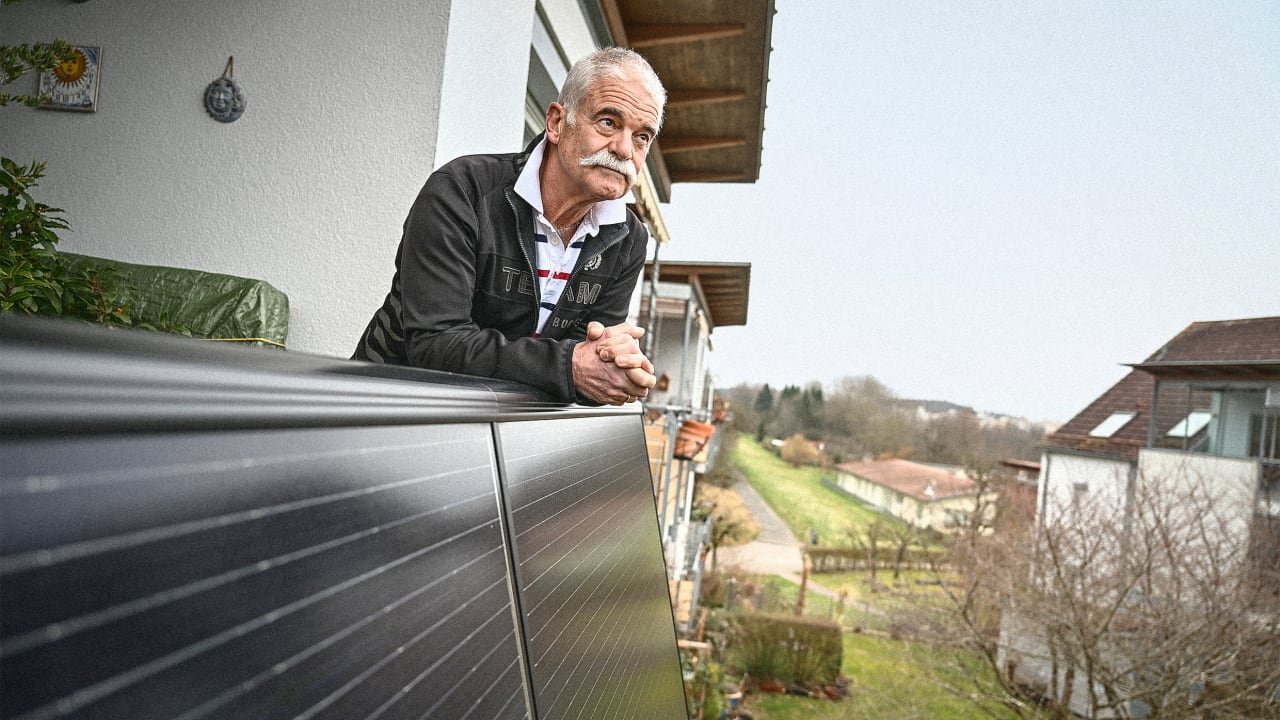
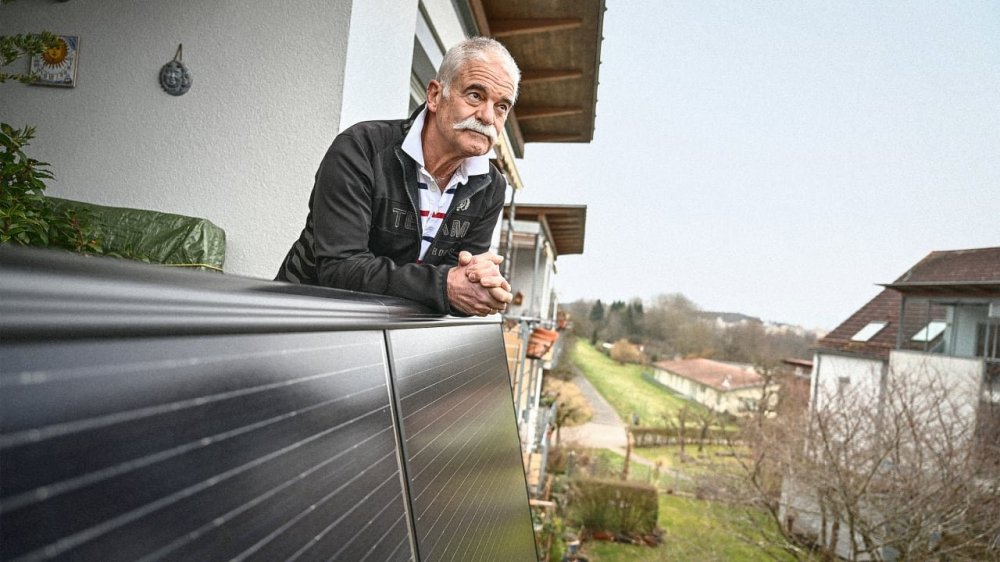
Raymond Ward wants to see solar panels draped over every balcony in the United States and doesn’t understand why that isn’t happening. The technology couldn’t be easier to use—simply hang one or two panels over a railing and plug them into an outlet. The devices provide up to 800 watts, enough to charge a laptop or power a small fridge. They’re popular in Germany, where everyone from renters to climate activists to gadget enthusiasts hail them as a cheap and easy way to generate electricity. Germans had registered more than 780,000 of the devices with the country’s utility regulator as of December. They’ve installed millions more without telling the government. Here in the U.S., though, there is no market for balcony solar. Ward, a Republican state representative in Utah who learned about the tech last year, wants that to change. The way he sees it, this is an obvious solution to surging power demand. “You look over there and say, ‘Well, that’s working,’” he told Grist. “So what is it that stops us from having it here?” His colleagues agree. Last month, the Legislature unanimously passed a bill he sponsored to boost the tech, and Republican Governor Spencer Cox signed it. H.B. 340 exempts portable solar devices from state regulations that require owners of rooftop solar arrays and other power-generating systems to sign an interconnection agreement with their local utility. These deals, and other “soft costs” like permits, can nearly double the price of going solar. Utah’s law marks the nation’s first significant step to remove barriers to balcony solar—but bigger obstacles remain. Regulations and standards governing electrical devices haven’t kept pace with development of the technology, and it lacks essential approvals required for adoption—including compliance with the National Electrical Code and a product safety standard from Underwriters Laboratories. Nothing about the bill Ward wrote changes that: Utahans still can’t install balcony solar because none of the systems have been nationally certified. These challenges will take time and effort to overcome, but they’re not insurmountable, advocates of the technology said. Even now, a team of entrepreneurs and research scientists, backed by federal funding, are creating these standards. Their work mirrors what happened in Germany nearly a decade ago, when clean energy advocates and companies began lobbying the country’s electrical certification body to amend safety regulations to legalize balcony solar. In 2017, Verband der Elektrotechnik, or VDE, a German certification body that issues product and safety standards for electrical products, released the first guideline that allowed for balcony solar systems. While such systems existed before VDE took this step, the benchmark it established allowed manufacturers to sell them widely, creating a booming industry. “Relentless individuals” were key to making that happen, said Christian Ofenheusle, the founder of EmpowerSource, a Berlin-based company that promotes balcony solar. Members of a German solar industry association spent years advocating for the technology and worked with VDE to carve a path toward standardizing balcony solar systems. The initial standard was followed by revised versions in 2018 and 2019 that further outlined technical requirements. The regulatory structure has continued to evolve. Ofenheusle has worked with other advocates to amend grid safety standards, create simple online registration for plug-in devices, and enshrine renters’ right to balcony solar. Politicians supported such efforts because they see the tech easing the nation’s reliance on Russian natural gas. Cities like Berlin and Munich have provided millions of euros in subsidies to help households buy these systems, and the country is creating a safety standard for batteries that can store the energy for later use. Meanwhile, the United States has yet to take the first step of creating a safety standard for the technology. U.S. electrical guidelines don’t account for the possibility of plugging a power-generating device into a household outlet. The nation also operates on a different system that precludes simply copying and pasting Germany’s rules. The U.S. grid, for example, operates at 120 volts, while that country’s grid operates at 230 volts. Without proper standards, a balcony solar system could pose several hazards. One concern is a phenomenon called “breaker masking.” Within a home, a single circuit can provide power to several outlets. Each circuit is equipped with a circuit breaker, a safety device within the electrical panel that shuts off power if that circuit is overloaded, which happens when too many appliances try to draw too much electricity at the same time. That prevents overheating or a fire. When a balcony solar device sends power into a circuit while other appliances are drawing power from the circuit, the breaker can’t detect that added power supply. If the circuit becomes overloaded—imagine turning on your TV while a space heater is running and you’re charging your laptop, all in the same room—the circuit breaker might fail to activate. This was a concern in Germany, so it developed standards that limit balcony solar units to just 800 watts, about half the amount used by a hairdryer. That threshold is considered low enough that even in the country’s oldest homes, the wiring can withstand the heating that occurs in even the worst of worst-case scenarios, said Sebastian Müller, chair of the German Balcony Solar Association, a consumer education and advocacy group. As a result, Ofenheusle said there haven’t been any cases of breaker masking causing harm. In fact, with millions of the devices installed nationwide, Germany has yet to see any safety issues beyond a few cases where someone tampered with the devices to add a car battery or other unsuitable hardware, he said. Another issue in the U.S. is the lack of a compatible safety device called a ground fault circuit interrupter, or a GFCI. They are typically built into outlets installed near water sources, like a sink, washing machine, or bathtub. They’re designed to minimize the risk of electric shock by cutting off power when, for example, a hairdryer falls into a sink. Yet there are no certified GFCI outlets in the U.S. designed for use with devices that consume power, like a blender, and those that generate it, like a balcony solar setup. Germany’s equivalent of a GFCI, called a residual current device, can detect bidirectional power flows, said Andreas Schmitz, a mechanical engineer and YouTuber in Germany who makes videos about balcony solar. Some people have raised concerns about the shock risk of touching the metal prongs of a plug after unplugging a balcony solar device. German regulators accounted for that by requiring the microinverter—which converts currents from the panel into electricity fed into the home—shut down immediately in an outage or when it is suddenly unplugged. Most of them already have this feature, but any U.S. standard will likely need to formalize that requirement. The lack of an Underwriters Laboratories, or UL, standard is perhaps the biggest obstacle to the adoption of balcony solar. The company certifies the safety of thousands of household electrical products; according to Iowa State University, “Every light bulb, lamp, or outlet purchased in the U.S. usually has a UL symbol and says UL Listed.” This assures customers that the product follows nationally recognized guidelines and can be used without the risk of a fire or shock. While some companies have sold plug-in solar devices in the U.S. without a UL listing, the company’s seal of approval typically is a prerequisite for selling products on the wider market. Consumers might be wary of using something that lacks its approval. Utah’s new balcony solar policy, for example, specifies that the law applies only to UL-listed products. Achim Ginsberg-Klemmt, vice president of engineering at the plug-in solar startup GismoPower, has been working on creating such a standard for more than a year and a half. In 2023, the Department of Energy awarded his company a grant to work with UL to develop a standard. GismoPower sells a mobile carport with a roof of solar panels and an integrated electric vehicle charger. Unlike rooftop solar, the system doesn’t need to be mounted in place but can be rolled onto a driveway and plugged in, generating electricity for the car, house, and the grid. “We’re basically taking rooftop solar to the next level” by making it portable and accessible for renters, Ginsberg-Klemmt said. The product is in use at pilot sites nationwide, though a lack of standardized rules for plug-in solar has forced the company to negotiate interconnection agreements with local utilities—a time-consuming and sometimes costly process. GismoPower’s product avoids one of the biggest technical challenges with balcony solar by plugging into a dedicated 240-volt outlet, the kind typically used for dryers. Such an outlet serves a single appliance and uses a dedicated circuit, sidestepping the risk of overloading. But it runs headlong into the same obstacle of lacking a compatible UL standard. Ginsberg-Klemmt is working with researchers at the Lawrence Berkeley National Laboratory, other entrepreneurs, and engineers at Underwriters Laboratories to develop such a standard, but it hasn’t been easy. “We have found so many roadblocks,” he told Grist. One major sticking point is that any standard must comply with the National Electrical Code, a set of guidelines for electrical wiring in buildings that does not allow for the installation of plug-in energy systems like balcony solar. The rules are issued by the National Fire Protection Association, a nonprofit trade association, and adopted on a state-by-state basis. The code is updated every three years, with the next iteration due later this year for the 2026 edition. Ginsberg-Klemmt and his working group submitted recommendations for amending the code to allow plug-in solar—and every one of them was rejected in October. Jeff Sargent, the National Fire Protection Association’s staff liaison to the National Electrical Code committee, told Grist that this is the first time the organization had received public comments about plug-in solar systems. For now, it cannot consider amendments to allow their use until a compatible ground fault circuit interrupter exists, he said. Once that’s available, he said, the association can ensure that outdoor outlets can be safely used for balcony solar. Electrical standards are constantly evolving, and it often takes more than one cycle of code changes to allow for new products, said Sargent. Ginsberg-Klemmt said his group will continue to pursue other avenues to amend the codes. Until that happens, a UL standard for plug-in solar is unlikely to go anywhere. But interest in plug-in energy solutions isn’t going away, and decision-makers will have to adjust to that reality eventually, Ward said. It happened in Germany, where people across the political spectrum have embraced the technology. Ward believes the same thing will happen here. The way he sees it, “It’s just a good thing if you set up a system so people have a way to take care of as much of their own problems as they can.” This article originally appeared in Grist, a nonprofit, independent media organization dedicated to telling stories of climate solutions and a just future. Sign up for its newsletter here. View the full article
-
When The President first landed in the White House in 2016, even he seemed surprised to be there. Without a transition staff in place, the Obama administration team helped shepherd in the new president while positions sat unfilled. Whereas Hillary Clinton had a complete digital site built to usher in her new presidency that would never be seen, The President had none. But for his second term, The President’s team was more prepared. On the first day of his presidency, he appeared on WhiteHouse.gov with a hero’s welcome. In a video worthy of Michael Bay, helicopters fly through the mountains before delivering The President to the White House lawn to herald a new age. Fighter jets thunder overhead. The President squints into the distance. A bald eagle flies by. The 100 days that have followed have proven blindsiding to anyone who thought The President’s second term would constitute little more than a few tax cuts to the rich. In this brief window, The President has rewritten the propaganda playbook for the modern political age by marrying well-proven tactics from decades past with a savvy approach to our current media landscape. His approach to governing is as much a practice of world-building as it is policy building. He has woven together imagery, rhetoric, and technology to create an unnervingly convincing (if in large part illegal!) vision of the world he wants to sell (or force upon) his constituents. The President has leveraged craftily designed aesthetics to position his destructive policies as necessary and his self-concerned personality as heroic, all while he dismantles the institutions in place to question him. A playbook from the past—and present From the earliest days of the presidency, we’ve witnessed a mass erasure of both the topics and people that the administration doesn’t support. It happened in the digital world with the deletion of trans rights pages from WhiteHouse.gov and stories about Navajo Code Talkers removed from the pages of the Department of Defense. In the physical world, the erasure shows up as The President eliminates civil rights artifacts from Smithsonian institutions and scrubs the Black Lives Matter mural from 16th Street in Washington, D.C. Many of these deletions are part of an executive order around “restoring truth in American history.” Fascists routinely erase history to write a new one. And when it comes to this, and all of The President’s other communication tricks, there’s not much that’s original about them. “All the techniques he uses are techniques of the past. The aesthetics are aesthetics of the present,” says Barbie Zelizer, the Raymond Williams professor of communication and director of the Center for Media at Risk at the University of Pennsylvania. She’s also co-editor of Journalism: Theory, Practice and Criticism. Zelizer believes that the entire ethos of The President’s messaging is anchored in the early Cold War when, in the name of national security, Wisconsin Senator Joseph McCarthy declared an all-out war on communism and anyone suspected to be supportive of it. Zelizer points out that The President’s statement from 2016—“I could stand in the middle of Fifth Avenue and shoot somebody and I wouldn’t lose any voters”—has historical precedent from this era. In 1954, pollster George Gallup described McCarthy’s unchecked appeal to the public with a similar framing: “Even if it were known that McCarthy had killed five innocent children, [voters] would probably still go along with him.” The key word uniting the messaging of The President and McCarthy? Enmity. “It’s us versus them. When he is able to claim accolades for himself or for his administration, it is always based on an assumption that his administration is winning out over the enemy,” says Zelizer, who notes there is always an enemy beyond (like China) and an enemy within (like student protestors or the judges upholding our legal system). “And whomever the enemy is at any point—if that’s democratic leaders, or the media, or universities, take your pick—they’re all substitutes in a rotation.” Where Zelizer sees Cold War influence, Edel Rodriguez—the Cuban-born illustrator and leading visual critic of The President—sees the influence of the UFC and WWE. Without a hint of irony, Rodriguez points to the machismo-laden, fight-first mentality of this programming as parallel to both power-assertive fascist leadership and the greater The President media strategy. He also admits to their strange appeal. “I watch Ultimate Fighting videos because they’re nuts. But it’s drama. It’s something,” he says. “And on the other side, you have the Democrats doing nothing.” Donald The PresidentElon Musk The enemies that The President has targeted pair perfectly with another The President messaging technique Zelizer says is straight out of the Cold War (but also fits fine within a WWE ring rant): that assertions can be made without evidence. “In order to get people to understand what he’s about and to support him, he doesn’t need evidence. He can just make the claim,” she says. Wave after wave of unbridled fabrications—The President was recorded making 30,573 false or misleading claims during his first presidency alone—contribute to The President’s undermining of fact-based institutions in journalism and research. The President’s team is throwing a one-two punch of despot-born propaganda while simultaneously dismantling the country’s system of checks and balances. The dizzying presentation of official misinformation Under the Obama administration, WhiteHouse.gov became an extension of the presidential brand—a tradition carried on by Joe Biden—full of largely apolitical resources for American citizens. The President, too, uses this channel to look downright presidential when he wants to, creating a stark contrast to something like The President’s sickening “ASMR” deportation video. Yet even on WhiteHouse.gov, The President’s almost surreal, salesman-y moments crop up. In April, the The President team replaced WhiteHouse.gov’s former COVID-19 resources site with a new page it calls Lab Leak: The True Origins of COVID-19. It features a bold typographic header that could be a poster for an Apple TV+ original. Below that, there’s a perfectly executed presentation of unsubstantiated claims—like that COVID-19 was born in a Wuhan lab, or that public health officials “often mislead” the populace and “demonized alternative [COVID-19] treatments . . . in a shameful effort to coerce and control.” Classic information hierarchy organizes this page with bullet points, a map, and even the option to download the official House subcommittee report (that ignores the official Democratic subcommittee debunking). It’s official-looking enough that most people won’t notice that the site replaces vaccine guidance, or that it fails to mention The President’s crucial work in funding a COVID-19 vaccine during his first term. “It’s distrust wrapped in credibility,” says an award-winning information designer who preferred to remain anonymous. “The power of this design isn’t in what it says but how it mimics the visual codes of accountability. It looks like a government report, but it’s a story engineered to look like a discovery.” A similar approach is taken on the Department of Government Efficiency website, which keeps a running receipt of the “savings” generated by its cost-cutting programs. At a glance, this is government transparency at its finest. In practice, The New York Times has found multiple, significant errors—the largest of which miscalculated $8 million in savings as $8 billion in savings (which, at the time, represented half of the $16 billion DOGE had claimed to save). After being called out for the errors, the DOGE site was redesigned to make the accounting more difficult to parse, claiming the updates were for “security.” “I’m trying to unpack it in an intelligent way, and it’s tough, because in some ways the ploy is just so obvious, right?” says Dino Citraro, cofounder of the “do good with data” visualization firm Periscopic, which has created projects for groups including UNICEF and the Gates Foundation. “It’s disingenuous messaging, or just falsified stuff wrapped up in stuff that looks very official.” False transparency is particularly disarming in a world where foundational facts—like the safety and efficacy of vaccines, or impact of CO2 emissions on our planet—have been recast as lies. But the truth is, even to professionals in data presentation, actually getting an engaged audience to explore information in order to understand its sourcing and veracity is incredibly difficult. The public’s waning attention span is working in The President’s favor. “There was always this sort of uncomfortable idea that you could manipulate the data to say whatever you wanted,” says Citraro of his own field. “For us, it meant [creating] a deep, interactive exploration so you could verify and find your own insights . . . but it felt like that became a burden.” Indeed, even for those willing to take the time to do the research—few of us, for sure—data often only reinforces prior held beliefs. The messy distraction of hate In the place of information, we get propaganda—a dramatic editorialization of history and current events alike. For instance: Despite court orders challenging the legality of The President’s deportations, a dramatic one-minute film promoted the deportation of 17 men. In what could be a Netflix trailer produced by El Salvador with support of the U.S. government, soldiers are shown in slow motion escorting the “violent criminals” off the plane toward a prison, where their heads are shaved and they are locked up in a cellblock. Despite a war raging in Gaza, The President shared an AI-generated clip on Truth Social featuring him lounging poolside while gilded The President branding takes over the skyline. No matter that this video was actually made in satire; it fit fine within The President’s stomach-wrenching media plan. The President’s messaging is not just anti-presidential, it’s anti-humanist. It’s somehow both vindictive and thoughtless at the same time, much like it’s both impactful and potentially irrelevant to a country already divided down the middle. Yet despite such gross tactics behind the tweets, Rodriguez is not kept up at night by these social media plays, even though they so effectively build and expand the The President brand with his base. Nor is he bothered much by the tweaks to DoD pages or anything written or erased on WhiteHouse.gov, which undermines history with its official stamp. “When was the last time you started your day on WhiteHouse.gov?” he asks with a practical tone. He’s more worried about the consequences that we’re already seeing from this erosion of truth: The President removing the Associated Press’s access to the official White House briefings, or promoting insurrection, or discrediting the judicial system meant to keep our laws in check, or erasing billions of dollars from the budgets of universities conducting critical research. “I don’t have an issue with you making goofy videos about Gaza. . . . My issue is the same as in Cuba where there hasn’t been an election in 60 years,” he says. “My problem is dictatorships, not free elections.” And on this topic, The President’s design team appears to be looking ahead. Because now you can buy a The President 2028 hat from his official store. View the full article

-
Prime minister’s attempt to fire Ronen Bar pushed country to brink of constitutional crisisView the full article
-
Election hands victory to centrist leader who vowed to defy the US presidentView the full article
-
Elon Musk’s Department of Government Efficiency has torn through Washington at breakneck speed. During the first 100 days of President Donald The President’s second term, DOGE has played a central role in cutting more than 200,000 federal jobs. The organization has over that same time implemented aggressive cost-cutting measures (including to foreign food aid and medical research), overhauled longtime government cybersecurity systems, and targeted federal diversity, equity, and inclusion programs for elimination. Most of these changes have been driven, in part, by AI tools—a move that has sparked serious concerns among experts. Critics say the rushed, untested use of artificial intelligence could lead to wrongful firings, mishandling of sensitive data, and lasting damage to core public services. “It’s misguided for us to think that people who control technology and the associated power levers are naive about AI’s capabilities,” says Julia Stoyanovich, director of the Center for Responsible AI at New York University. “And their goal is not to do things better, or to make it so that everything is more efficient; rather, their goal is just to reduce the size of government, to reduce government spending, and to do this in a way that is just disorienting to everybody in society.” Musk, who said earlier this month he would step back from DOGE to focus more on Tesla after the EV maker posted a dismal quarterly earnings report, has advocated for deploying AI to boost government efficiency. In practice, that has meant feeding sensitive Department of Education data into AI systems to identify programs for elimination; pushing to use AI to reassess benefits programs at the Department of Veterans Affairs; creating a chatbot for the U.S. General Services Administration to analyze contract data; and deploying AI tools—including Grok, the chatbot developed by xAI, which Musk owns—to monitor federal employee communications for critical sentiment toward Musk or The President. According to one anonymous government official who spoke to The Washington Post in February, the end goal is something even more drastic: the replacement of “the human workforce with machines.” (Neither the White House nor DOGE responded to Fast Company’s requests for comment.) To critics, such efforts represent a reckless and dangerous gamble. Experts warn that AI-driven government downsizing risks violating civil rights, mishandling some of the most sensitive personnel data in the country, and introducing hidden biases (even if accidentally) into critical decisions. As CNN reports, federal agencies, with their aging systems and complex missions, are ill-suited to abrupt automation, and without deep understanding of the underlying data, AI systems could misfire—cutting essential staffers and services based on flawed outputs. David Evan Harris, a chancellor’s public scholar with the University of California, Berkeley, tells Fast Company there’s also a massive alarm bell going off around the question of data protection and whether DOGE is safeguarding the information it is plugging into outsize AI systems supplied by companies like Anthropic and Musk’s xAI. “It’s very unclear what kinds of security protocols the DOGE team is using,” he says, “and if they are taking any steps to make sure that private data of government employees and U.S. citizens, and even confidential data about U.S. government programs is not being turned into training data or retained improperly by any of these AI companies that they’re working with.” Perhaps even more concerning, as Harvard researchers Bruce Schneier and Nathan E. Sanders argued in The Atlantic in February, replacing federal civil servants with AI could fundamentally weaken democratic governance by concentrating executive power. As they see it, with fewer human workers exercising independent judgment, future leaders could reshape government agencies at the push of a button—sidestepping traditional checks and balances designed to prevent abuses of power. Still, there are signs the momentum around DOGE may be shifting. This month, the American Civil Liberties Union filed a lawsuit against DOGE, seeking records about the agency’s use of AI across federal programs, citing concerns about mass surveillance and “politically motivated misuse.” Meanwhile, a group of Democratic lawmakers wrote a letter to Russell Vought, director of the Office of Management and Budget, demanding more information on DOGE’s AI practices. And despite Musk’s sweeping promises, analyses suggest the agency’s impact has been overstated: According to recent estimates published by The New York Times, DOGE’s touted cost savings might not actually amount to much, given that all the agency-related firings, rehirings, and lost productivity will cost some $135 billion this fiscal year. Public sentiment appears to be souring as well: A recent Washington Post-ABC News-Ipsos poll found that 57% of Americans disapprove of Musk’s efforts with DOGE—a significant uptick over February, when 49% disapproved. These factors might force a reckoning for DOGE, but time is short. Once AI is entrenched in government operations, undoing the damage could be even harder than preventing it. “The AI industry is famous right now for being locked in a race to the bottom and throwing caution to the wind so that they can launch products as fast as possible,” says Harris. “Combining that race to the bottom with DOGE’s race to use AI for anything they can possibly think of is really concerning.” View the full article

-
When the Vietnam War finally ended on April 30, 1975, it left behind a landscape scarred with environmental damage. Vast stretches of coastal mangroves, once housing rich stocks of fish and birds, lay in ruins. Forests that had boasted hundreds of species were reduced to dried-out fragments, overgrown with invasive grasses. The term ecocide had been coined in the late 1960s to describe the U.S. military’s use of herbicides like Agent Orange and incendiary weapons like napalm to battle guerrilla forces that used jungles and marshes for cover. Fifty years later, Vietnam’s degraded ecosystems and dioxin-contaminated soils and waters still reflect the long-term ecological consequences of the war. Efforts to restore these damaged landscapes and even to assess the long-term harm have been limited. As an environmental scientist and anthropologist who has worked in Vietnam since the 1990s, I find the neglect and slow recovery efforts deeply troubling. Although the war spurred new international treaties aimed at protecting the environment during wartime, these efforts failed to compel post-war restoration for Vietnam. Current conflicts in Ukraine and the Middle East show these laws and treaties still aren’t effective. Agent Orange and daisy cutters The U.S. first sent ground troops to Vietnam in March 1965 to support South Vietnam against revolutionary forces and North Vietnamese troops, but the war had been going on for years before then. To fight an elusive enemy operating clandestinely at night and from hideouts deep in swamps and jungles, the U.S. military turned to environmental modification technologies. The most well-known of these was Operation Ranch Hand, which sprayed at least 19 million gallons of herbicides over approximately 6.4 million acres of South Vietnam. The chemicals fell on forests, and also on rivers, rice paddies, and villages, exposing civilians and troops. More than half of that spraying involved the dioxin-contaminated defoliant Agent Orange. Herbicides were used to strip the leaf cover from forests, increase visibility along transportation routes, and destroy crops suspected of supplying guerrilla forces. As news of the damage from these tactics made it back to the U.S., scientists raised concerns about the campaign’s environmental impacts to President Lyndon Johnson, calling for a review of whether the U.S. was intentionally using chemical weapons. American military leaders’ position was that herbicides did not constitute chemical weapons under the Geneva Protocol, which the U.S. had yet to ratify. Scientific organizations also initiated studies within Vietnam during the war, finding widespread destruction of mangroves, economic losses of rubber and timber plantations, and harm to lakes and waterways. In 1969, evidence linked a chemical in Agent Orange, 2,4,5-T, to birth defects and stillbirths in mice because it contained TCDD, a particularly harmful dioxin. That led to a ban on domestic use and suspension of Agent Orange use by the military in April 1970, with the last mission flown in early 1971. Incendiary weapons and the clearing of forests also ravaged rich ecosystems in Vietnam. The U.S. Forest Service tested large-scale incineration of jungles by igniting barrels of fuel oil dropped from planes. Particularly feared by civilians was the use of napalm bombs, with more than 400,000 tons of the thickened petroleum used during the war. After these infernos, invasive grasses often took over in hardened, infertile soils. “Rome Plows,” massive bulldozers with an armor-fortified cutting blade, could clear 1,000 acres a day. Enormous concussive bombs, known as “daisy cutters”, flattened forests and set off shock waves killing everything within a 3,000-foot radius, down to earthworms in the soil. The U.S. also engaged in weather modification through Project Popeye, a secret program from 1967 to 1972 that seeded clouds with silver iodide to prolong the monsoon season in an attempt to cut the flow of fighters and supplies coming down the Ho Chi Minh Trail from North Vietnam. Congress eventually passed a bipartisan resolution in 1973 urging an international treaty to prohibit the use of weather modification as a weapon of war. That treaty came into effect in 1978. The U.S. military contended that all these tactics were operationally successful as a trade of trees for American lives. Despite Congress’s concerns, there was little scrutiny of the environmental impacts of U.S. military operations and technologies. Research sites were hard to access, and there was no regular environmental monitoring. Recovery efforts have been slow After the fall of Saigon to North Vietnamese troops on April 30, 1975, the U.S. imposed a trade and economic embargo on all of Vietnam, leaving the country both war-damaged and cash-strapped. Vietnamese scientists told me they cobbled together small-scale studies. One found a dramatic drop in bird and mammal diversity in forests. In the A Lưới valley of central Vietnam, 80% of forests subjected to herbicides had not recovered by the early 1980s. Biologists found only 24 bird and five mammal species in those areas, far below normal in unsprayed forests. Only a handful of ecosystem restoration projects were attempted, hampered by shoestring budgets. The most notable began in 1978, when foresters began hand-replanting mangroves at the mouth of the Saigon River in Cần Giờ forest, an area that had been completely denuded. In inland areas, widespread tree-planting programs in the late 1980s and 1990s finally took root, but they focused on planting exotic trees like acacia, which did not restore the original diversity of the natural forests. Chemical cleanup is still underway For years, the U.S. also denied responsibility for Agent Orange cleanup, despite the recognition of dioxin-associated illnesses among U.S. veterans and testing that revealed continuing dioxin exposure among potentially tens of thousands of Vietnamese. The first remediation agreement between the two countries only occurred in 2006, after persistent advocacy by veterans, scientists, and nongovernmental organizations led Congress to appropriate $3 million for the remediation of the Da Nang airport. That project, completed in 2018, treated 150,000 cubic meters of dioxin-laden soil at an eventual cost of over $115 million, paid mostly by the U.S. Agency for International Development, or USAID. The cleanup required lakes to be drained and contaminated soil, which had seeped more than 9 feet deeper than expected, to be piled and heated to break down the dioxin molecules. Another major hot spot is the heavily contaminated Biên Hoà airbase, where local residents continue to ingest high levels of dioxin through fish, chicken, and ducks. Agent Orange barrels were stored at the base, which leaked large amounts of the toxin into soil and water, where it continues to accumulate in animal tissue as it moves up the food chain. Remediation began in 2019; however, further work is at risk with the The President administration’s near elimination of USAID, leaving it unclear if there will be any American experts in Vietnam in charge of administering this complex project. Laws to prevent future ecocide are complicated While Agent Orange’s health effects have understandably drawn scrutiny, its long-term ecological consequences have not been well studied. Current-day scientists have far more options than those 50 years ago, including satellite imagery, which is being used in Ukraine to identify fires, flooding, and pollution. However, these tools cannot replace on-the-ground monitoring, which often is restricted or dangerous during wartime. The legal situation is similarly complex. In 1977, the Geneva Conventions governing conduct during wartime were revised to prohibit “widespread, long term, and severe damage to the natural environment.” A 1980 protocol restricted incendiary weapons. Yet oil fires set by Iraq during the Gulf War in 1991, and recent environmental damage in the Gaza Strip, Ukraine, and Syria indicate the limits of relying on treaties when there are no strong mechanisms to ensure compliance. An international campaign currently underway calls for an amendment to the Rome Statute of the International Criminal Court to add ecocide as a fifth prosecutable crime alongside genocide, crimes against humanity, war crimes, and aggression. Some countries have adopted their own ecocide laws. Vietnam was the first to legally state in its penal code that “Ecocide, destroying the natural environment, whether committed in time of peace or war, constitutes a crime against humanity.” Yet the law has resulted in no prosecutions, despite several large pollution cases. Both Russia and Ukraine also have ecocide laws, but these have not prevented harm or held anyone accountable for damage during the ongoing conflict. Lessons for the future The Vietnam War is a reminder that failure to address ecological consequences, both during war and after, will have long-term effects. What remains in short supply is the political will to ensure that these impacts are neither ignored nor repeated. Pamela McElwee is a professor of human ecology at Rutgers University. This article is republished from The Conversation under a Creative Commons license. Read the original article. View the full article

-
The cutting edge of zipper technology involves zippers that work remotely. Japanese zipper maker YKK says it has developed a prototype for a self-propelled zipper that zips up with just the push of a button. These self-propelled zippers aren’t meant for your jeans or jackets, but rather for industrial uses, like tall tents that can’t be zipped up without using a ladder. That’s the mostly likely place you’ve seen YKK’s logo (it has 40% global market share). The company says the tech will save time and be safer than putting workers high up in the air to zip and unzip in hard-to-reach use cases. YKK conducted experiments with the zippers in February. It says that in one trial, the self-propelled zipper was able to zip up a 16-foot membrane in 40 seconds; in another, it zipped two arched shelter tents together in 50 seconds. The secret to the tech is a motorized screw that hooks the teeth of the zipper behind it as it moves forward. Video of the prototype shows the zipper and the button pushed to turn it on both connected to a cable, and the zipper itself is encased in a clear, transparent shell. YKK isn’t releasing the self-propelled zipper yet, but says it will continue to develop the prototype for practical use. If the company can get the tech off the ground, its wide adoption could push tents, temporary shelters, and partition dividers higher than they already go without any human-ladder limitations in the way. View the full article

-
Middle management can be exhausting—particularly at the beginning of a managerial career. On the one hand, these employees have to get down into the weeds and help members of their team do their jobs in the most effective ways. They may have some inexperienced reports who need help and development to work effectively and independently. On the other hand, their daily work is governed by layers of leadership above that restrict their autonomy and require them to convince others that new things they would like to try are worth the effort. This combination creates a situation in which middle managers can feel locked in. They are constantly solving problems from their direct reports while determining how to carry out new orders from above. A heavy workload combined with a lack of autonomy can lead to burnout. If you oversee middle managers, here are some things you can do to help detect whether there is a problem and intervene quickly: Tap into your network One significant problem middle managers have is that they may lack a good peer group. Frontline employees often band together and create a social group that creates camaraderie at work and may also extend to lunch outings or happy hour gatherings. Middle managers (particularly when they first ascend into a supervisor role) often lose that social connection. With their promotion, they go from being one of the frontline staff to being one of “them.” Yet they may not be embraced immediately by other managers. So they not only struggle with the difficulties of the tasks they are given, but they may face that struggle alone. It’s important to create a good social network that middle managers can plug into. This gives them the benefit of a community to talk to, and members of that team can alert other leaders if they see a colleague struggling. Watch for defections When managers start to burn out, they lose resilience. Resilience enables people to maintain a calm and even disposition, even when things go wrong. It enables managers to work closely with team members who need more training or who have made a mistake. As emotional resilience breaks down, managers are more likely to react to mistakes and requests for assistance with anger and annoyance. They may be more likely to punish mistakes rather than use them as learning opportunities. These reactions are likely to create frustration among this manager’s direct reports. As a result, members of this supervisor’s team may look for other jobs, either by transferring elsewhere in the company or leaving altogether. Exit interviews with frontline employees can help to detect this problem by gathering information about why people are leaving. If a manager is burning out, it will be more effective to work with them to help reestablish their resilience rather than putting them on a punitive performance improvement plan that does not address the emotional component of the problem. Ask better questions When you meet with your direct reports, you might expect to get information from them that would help you to see whether they are exhibiting signs of burnout. Unfortunately, most leaders often ask generic questions like “How are you doing?” While some workplaces create enough psychological safety to allow employees to feel comfortable talking about fatigue with the job, most new managers will put on a brave face and say they are fine. To address this, it’s important to ask a few questions that require longer answers; these can provide you with insight into how your middle managers are handling the strain. One valuable approach is to ask your reports how they handled a particular situation, rather than how are they doing. This question gets your them to relive the situation in front of you, to describe what happened and how they addressed it. A lot of what you’re listening for in this response is the emotion behind it. If you see anger or frustration on the part of your supervisee, that’s a signal that they are having difficulty with the stress of the job. If they talk about losing patience with particular employees, that may also be a warning sign. Use these conversations as a way to encourage middle managers you work with to talk with you when they are feeling overwhelmed. One of the best ways to help your team feel better about their work is for them to know that they are not dealing with stresses alone, and that you are available if they need help. View the full article

-
Beijing hardens rhetoric as it rolls out social media videos portraying itself as standing up to American ‘bullying’ View the full article
-
Paid-for citizenship offer must be scrapped under European Court of Justice rulingView the full article