Newsletter
Want to keep up to date with all our latest news and information?


ResidentialBusiness
Administrators
-
Joined
-
Last visited
Everything posted by ResidentialBusiness
-
There’s a special place in you-know-where for spam callers. They’re annoying. They waste time. They’re also dangerous. And while it’s challenging to eliminate spam calls entirely, the good news is that with a little time and effort, you can significantly reduce the number of spam calls you receive. Here’s what to do. Add yourself to the FTC’s Do Not Call list One of the easiest and longest-lasting ways to reduce spam calls is to add your phone number to the National Do Not Call Registry, which is a free service managed by the Federal Trade Commission (FTC). Once you’ve added your number, telemarketers have a month to remove you from their lists so you don’t get any more calls. These days, however, whether they will abide by these rules is another story, so read on for some more effective alternatives. Use call-blocking features and/or apps While the Do Not Call list relies on the . . . ahem . . . good nature of above-board telemarketers to take you off their lists, it’s largely ineffective against the real culprits: scammers and illegal telemarketers. Luckily, modern smartphones are packed with features designed to help combat spam. Most have built-in features that allow you to block individual numbers. While this won’t stop spoofed numbers, it can help you get rid of repeat offenders. Here’s how to block numbers on iPhone, and here’s how to do it on Android if you use Google’s Phone app. You can also send unknown callers to voicemail. This is a handy feature that lets legitimate callers leave a message while ideally discouraging nefarious callers from doing the same. The two links in the previous paragraph contains information about how to enable the feature. And if all else fails, consider third-party call-blocking apps. Popular options include Hiya, Robokiller, Truecaller, and Nomorobo. These apps use crowdsourced data, known-offender databases, and AI to identify and automatically block or flag potential spam calls. While they’re not perfect, they can significantly reduce the number of unwanted calls you receive. Protect your personal info in the first place Spammers thrive on data, so the less information you share, the less likely you are to be targeted. Make sure to be cautious online. Think twice before entering your phone number on websites, especially those that seem suspicious or offer freebies in exchange for your information. If the caution ship has already sailed, look into opting out of data brokerages. Data brokers collect and sell your personal information, including your phone number, to just about anyone willing to pay for it. While it takes some effort, you can opt out of these services to reduce your online footprint. A quick Google search for “opt out data brokers” will provide a list of resources to help you get started. And finally, just don’t engage. Never answer calls from unknown numbers, and never provide any personal information to callers you don’t recognize. Even answering the phone signals to spammers that you’ve got a live, active number. Just let the call go to voicemail and screen it later. View the full article

-
Noticed all the blondes going back to their natural hair color lately? As much as many try to claim it’s because of a “hair health journey,” other factors seem to be at play here. “How’s the economy?” one TikTok user asks in a viral video. “Well, hasn’t been good for a while seems like my indicators tell me,” the former blonde says, measuring the inches of her incoming roots with her fingers. “THIS IS SO ACCURATE,” one commenter responded. I’m no expert, but root length has always been a pretty solid way to tell how people are doing financially. “Remember when balayage became really popular in 2009?” asked one person in the comments. During the 2007-to-2009 recession, blonde celebrities were embracing their darker roots, a trend that mirrored the economic downturn. Now, in 2025, we’re seeing the same thing happening all over again. One in six Americans admit to spending more on beauty and wellness than they can afford and, if you’ve ever colored your hair, you know how expensive the upkeep is. So, when purse strings tighten, expensive salon visits are the first to go. With some hairstylists interviewed in a recent Washington Post piece charging at least $100 an hour for cuts, color, bleaching and balayage, being blonde is a luxury not everyone can afford. Suddenly, grown-out roots have become the hottest trend—and a leading economic indicator. “When someone says they like my natural hair color better and I agree, when in reality I can no longer afford to upkeep the blonde, and this is my brunette recession era,” one TikTok post with 2.3 million views reads. “Recession brunette is back,” another TikTok user declared. The Wall Street Journal reported that “lived-in color,” referring to partial highlights or balayage, was last year’s trend among hairstylists. Not unlike the “lipstick effect”—the phenomenon, during an economic downturn, of consumers continuing to spend on small luxury items, such as lipstick—”lived-in color” and the “recession brunette” may be the latest stylish indicators of an economy in crisis. Bottom line: If blondes really do have more fun, these days it’s fair to presume they also have more money. View the full article

-
Note: This is a guest post by Joshua Fields Millburn of The Minimalists. My friend Derek wanted to be a good minimalist. So after his son, Sammy, was born, he refused to buy toys for the boy, assuming he would be just as happy playing with the rocks and sticks strewn throughout their backyard. A few years later, however, my friend started questioning his own minimalism when he saw his son erupt with joy each time he played with his friend’s toys. Sammy smiled while he constructed deformed dinosaurs with multicolored LEGO bricks. He laughed as two Ninja Turtles performed backflips and ate plastic pizza slices. And he literally jumped with joy the first time he slammed a NERF ball into its door-frame hoop. Derek realized he had been denying Sammy in the name of minimalism—dampening his boy’s playtime with his own preference for simple living. So he did what many loving fathers might do: he logged onto Craigslist and found a big box of used toys. When Sammy opened the box, his facial features expanded with delight. He extracted his new toys one at a time—a Walkie Talkie, an Etch A Sketch, a miniature Wright Flyer model airplane—welcoming each with gratitude. Yet at the sight of Sammy’s glee, Derek was overtaken not by triumph, but by the consumerist mindset: If one box made him this happy, then ten boxes will surely make him ten times happier. As Derek returned to Craigslist, an insight from his past interrupted his next transaction: This was exactly how I behaved before becoming a minimalist. Instead of enjoying the things in front of me—instead of being satisfied with my treasure—I always searched for more. He looked over at his son and noticed that Sammy was fully present, free from the yearning that is chaperoned by consumerism. The shopper’s delirium that had always removed Derek from the joy of the moment was absent from the boy. Sammy was simply happy with the toys that were in front of him. It occurred to Derek that the new toys didn’t make his son happy—they intensified the joy that had been there, in his heart, all along. The toys acted as an amplifier of joy, not the source of it. Derek looked back at his computer and had an aha moment: Ten times the toys didn’t equate to ten times the joy. In fact, more toys might distort Sammy’s innate happiness because, much like a stereo amplifier, every sound turns into noise when the volume is cranked all the way up. In economics, this overamplification is known as the law of diminishing marginal utility, which states that an item’s total utility increases more slowly as consumption increases, until, eventually, a point is reached at which consumption yields negative utility. Accordingly, zero toys was a type of deprivation. That’s why the first box generated considerable utility. And yet a warehouse worth of toys would be another kind of deprivation—an overabundance that would strip away the peacefulness of playing in the present. Instead of making another purchase, Derek shut his laptop and admired his son’s exuberance. Depriving Sammy was not a minimalist move; it was a legalist edict that had accidentally silenced his joy. But when Derek let go of his stringent regulations, the suppressor was removed and joyfulness echoed throughout their home. *** Joshua Fields Millburn is a New York Times–bestselling author, Emmy-nominated Netflix filmmaker, podcaster, and the founder of the simple-living collective The Minimalists. . The post The Amplification of Joy and the Diminishing Marginal Utility of Things appeared first on Becoming Minimalist. View the full article
-
Featuring Ben Lamm, Founder and CEO, Colossal Biosciences and Joe Manganiello, Actor, Producer. Moderated by Kc Ifeanyi, Executive Director of Editorial Programming, Fast Company Since Colossal Biosciences launched in 2021, it’s skyrocketed to a $10.2 billion valuation to fund its mission of de-extinction. For Colossal, it’s more than the buzzy headlines that its resurrecting the woolly mammoth or the dodo—the company’s aim is to combat biodiversity loss and regenerate ecosystems and climates that have degraded over time. Hear from Colossal CEO Ben Lamm on how he’s making science fiction a reality—and how it could benefit us all. View the full article

-
Continent’s deep reliance on American-made weapons underscored by Sipri data View the full article
-
The former central banker has strong economic credentials but is untested politicallyView the full article
-
Investor excitement over fast-developing technology has seen a flurry of massive funding rounds this yearView the full article
-
Constant Contact has released its latest Small Business Now report, revealing that new small and medium-sized businesses (SMBs) are leveraging social media and technology to drive growth and navigate economic challenges. The study surveyed 1,600 SMBs across the United States, United Kingdom, Australia, and Canada that have been in operation for five years or less. The report finds that social media is the dominant marketing tool for early-stage entrepreneurs. According to the study, 63% of new SMBs rely on social media as their primary marketing channel, and 73% of respondents said that both paid and unpaid social media posts are their biggest revenue drivers. Despite this focus, many small businesses are looking to diversify their marketing strategies. 33% of new SMBs consider email marketing an underutilized tool, and only 15% leverage SMS marketing despite its strong engagement potential. New SMBs are also turning to artificial intelligence (AI) to streamline operations and enhance their marketing efforts. The report found that 72% of SMBs plan to use AI for marketing in 2025, with AI being used for tasks such as content creation (37%), customer data analysis (32%), and personalized messaging (31%). Additionally, 41% of highly confident SMB owners are already using AI to analyze customer data. “It’s difficult to be a small business right now, but what’s clear from our study is that the spirit, passion, and resilience of the SMB is still quite strong,” said Frank Vella, CEO at Constant Contact. “The newest entrepreneurs are digitally savvy, and they understand that adaptability isn’t just a survival tactic, it’s a growth strategy.” While optimism is high, small business owners acknowledge ongoing challenges. Nearly half (45%) of new SMB owners feel very confident in their business growth for 2025, while 55% express concerns due to factors like customer acquisition, rising costs, and shifting consumer habits. Additionally, 35% believe economic factors will significantly impact their success in the coming year. Despite these challenges, 95% of entrepreneurs said they would choose small business ownership again, with 71% expressing excitement and 57% feeling proud to be part of the SMB community. Constant Contact’s findings highlight the adaptability of new entrepreneurs as they integrate social media and AI-driven technology into their growth strategies. As SMBs seek to expand their marketing efforts beyond social media, AI and automation are set to play a critical role in helping businesses remain competitive in an evolving economic landscape. “By harnessing social media to enhance customer relationships and embracing advanced technologies like AI to maintain stability and work smarter, they’re turning challenges into opportunities and redefining what it means to thrive in any economic landscape,” Vella added. This article, "Constant Contact Report Highlights Social-First, Tech-Driven Small Businesses" was first published on Small Business Trends View the full article
-
Ruling against frontrunner comes despite US call for country to respect voters’ wishesView the full article
-
It’s hard to imagine any industry not having to contend with the deepening sociopolitical division in America—brand marketing included. McCann Worldgroup’s intelligence unit Truth Central creates studies on what their clients are grappling with including data privacy, wellness, and Gen Z. And the past few years have paved a clear path toward their latest study: The Truth About America, which the team exclusively unveiled this weekend at the Fast Company Grill at SXSW. “We saw that not just our clients in America but our clients everywhere were asking more and more questions about America. What is going on in this moment? How do we navigate this market?” says Laura Simpson, chief intelligence officer of McCann Worldgroup and president of McCann Truth Central. “I think other markets always look to America for a lead on some of those issues. So when it feels like things are changing, I think everywhere clients want to understand why it’s changing and how it’s changing and how they should be responding.” [Image: McCann] And what’s evolving is the idea of the American Dream. Concerns of inflation, the war of DEI, automation, and more have made 72% of Americans believe there’s never been a more complicated time to be an American, according to the study. And that sentiment has contributed to what the study calls the “Dream Gap,” the growing divide between what Americans want out of life versus the actual accessibility to those aspirations. While 52% of Americans believe the American Dream still exists today, 70% say it’s harder to get ahead no matter how hard they work. Deeper still, 77% of Americans believe the country still provides good opportunities, but they’re becoming more concentrated among fewer people. [Image: McCann] Despite the division, McCann’s study asserts there are forces that are holding the country together, namely creativity, which 88% of respondents said has the power to unite people. “We know creativity is a strong force capable of bridging divides and helping to shape the future of our country,” says Elly Dembo, global head of data and intelligence at McCann. “And we believe that brands have the power to reignite a culture of creativity in America again.” “Brands have, to some extent, always existed to show people what could be: Here is a vision, a world, a dream, something that you could aspire to,” Simpson adds. “That tension between dreaming and reality and frustrations has been really pronounced in America over the last few years. And we want to be in a position to help guide our clients: How much should you be dialing up dream and aspiration versus being more of a mirror to the reality of what people are experiencing in their daily lives?” You can find the full results of The Truth About American study here. View the full article
-
US administration concedes some prices might rise as fears grow of trade chaos causing disruptionView the full article
-
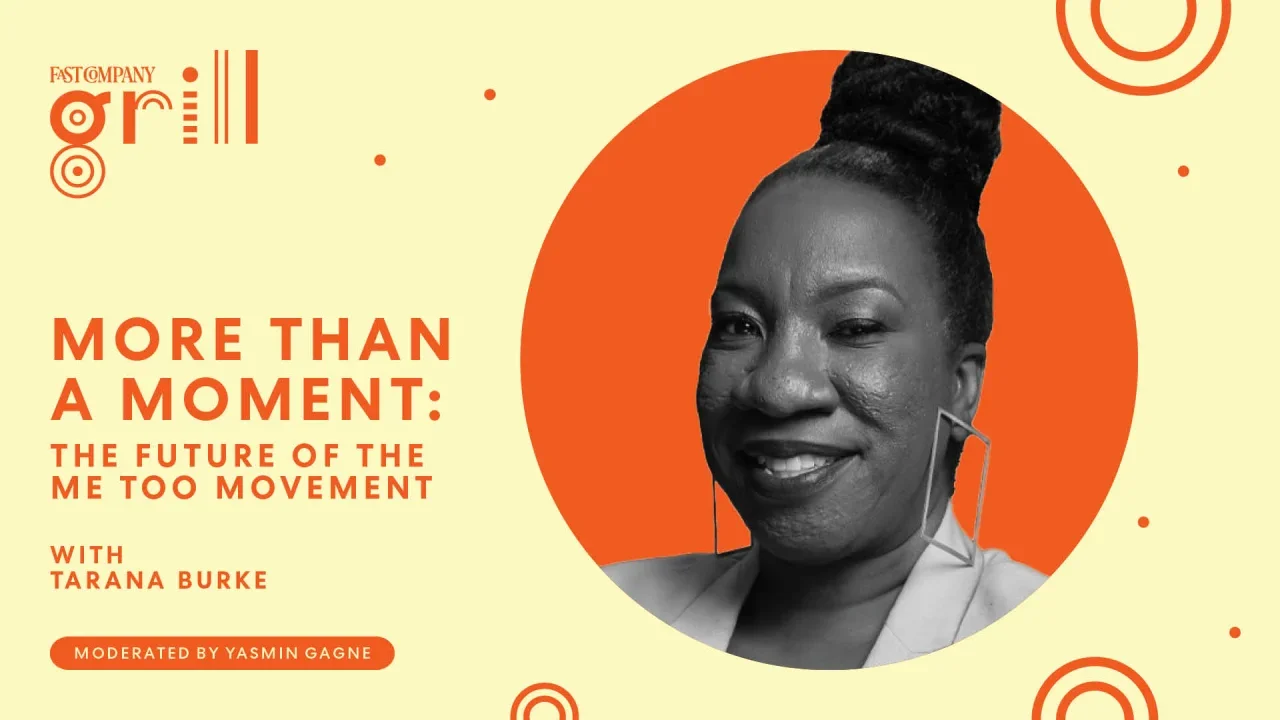
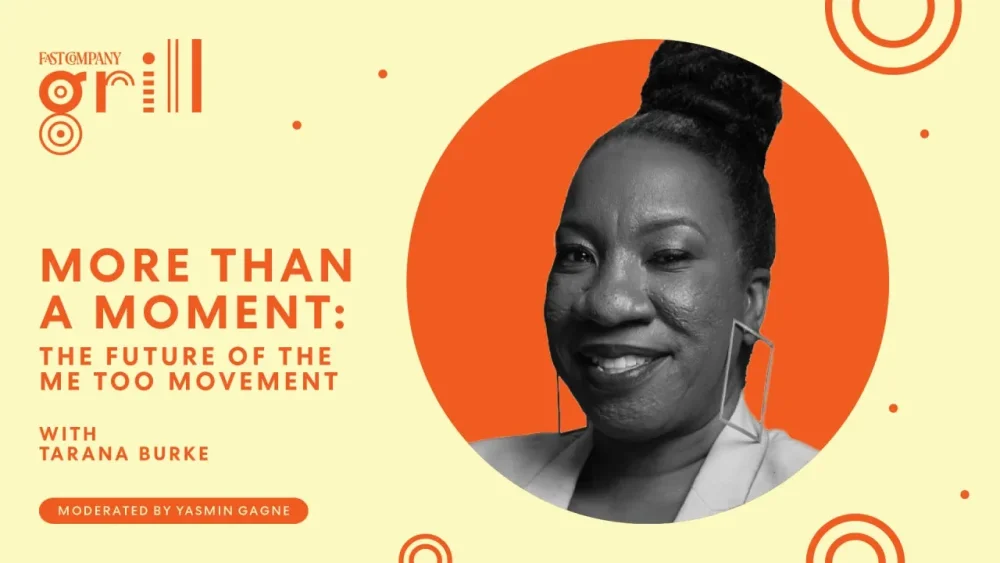
Featuring Tarana Burke, Author, Activist, Founder of the “Me Too” Movement. Moderated by Yasmin Gagne, Staff Editor. Just eight years ago, the Me Too movement inspired a viral hashtag, sparked a global conversation, and championed the voices of survivors. But it didn’t take long for opposing forces to mobilize. In the past few years, we’ve seen the overturning of Roe v. Wade, the platforming of influencers who proudly self-identify as incels, and sitting politicians perpetuating sexual abuse. Join Tarana Burke, founder of the Me Too movement and chief visionary officer of Me Too International, for a one-on-one conversation exploring what it means to plan for the movement’s future while existing in a climate that’s hostile to its mission. View the full article
-
Apple has announced the launch of the latest MacBook Air, featuring the powerful M4 chip, up to 18 hours of battery life, and a new 12MP Center Stage camera. The new MacBook Air models now start at $999, $100 less than the previous version, with an education pricing option of $899. Available in 13-inch and 15-inch sizes, the laptops can be pre-ordered today and will be available in stores starting March 12. The new MacBook Air models are powered by Apple’s latest M4 chip, which features a 10-core CPU and an up to 10-core GPU. According to Apple, the M4 model is “up to 2x faster than the M1 model” and offers “up to 23x faster performance” when compared to Intel-based MacBook Air models. The chip’s Neural Engine, which enhances AI-based tasks, is “up to 3x faster than on MacBook Air with M1.” Apple states that the M4 chip improves efficiency in everyday tasks such as web browsing, spreadsheet calculations, and video editing. Battery life remains a key feature, with Apple claiming “up to 18 hours” of use on a single charge. Apple has introduced an all-new sky blue color option, which joins the existing lineup of midnight, starlight, and silver. The new MacBook Air continues to feature its signature thin and light design, making it portable and suitable for work, study, and entertainment. The updated MacBook Air includes a 12MP Center Stage camera that automatically adjusts to keep users in the frame during video calls. It also now supports “up to two external 6K displays” when the laptop lid is closed, expanding its use for professionals and students who need a multi-screen setup. The new MacBook Air is designed to take advantage of Apple Intelligence, enabling features such as Image Playground for creative visuals, Genmoji for personalized emoji creation, and advanced writing tools. The integration of ChatGPT into Siri and Writing Tools allows users to access AI-powered assistance with built-in privacy protections. The macOS Sequoia operating system enhances the user experience with features such as iPhone Mirroring, improved Safari browsing, and better gaming support. Apple highlights its environmental commitment with the MacBook Air, which features “over 55 percent recycled content,” including a 100 percent recycled aluminum enclosure. The company continues its transition to renewable electricity for manufacturing as part of its Apple 2030 initiative. Customers can pre-order the new MacBook Air models now, with availability beginning on March 12. The 13-inch model starts at $999, while the 15-inch model starts at $1,199, with education pricing available for both. Additional details and configurations are available on Apple’s website. Image: Apple This article, "Apple Unveils New MacBook Air with M4 Chip and Lower Starting Price" was first published on Small Business Trends View the full article
-
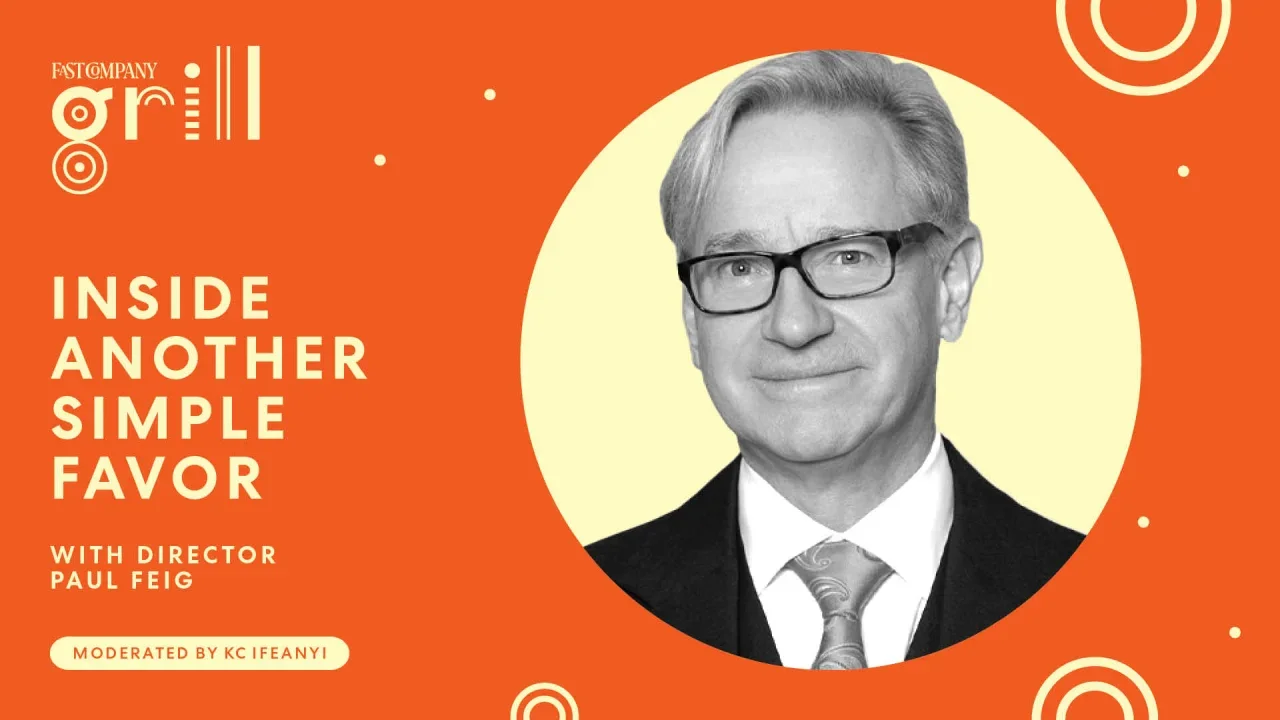
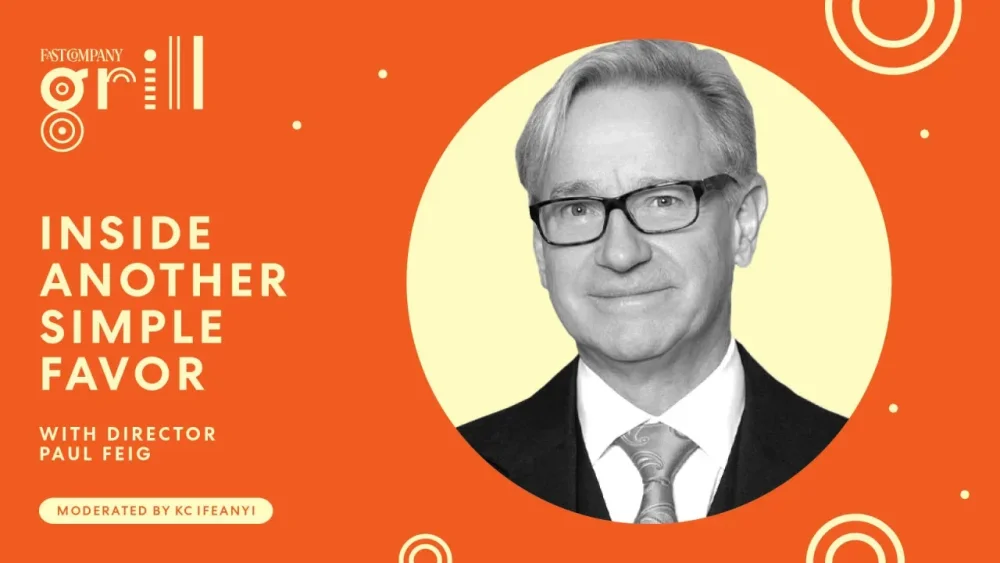
Featuring Paul Feig, Founder, FeigCo; and Director and Producer, Another Simple Favor. Moderated by Kc Ifeanyi, Executive Director of Editorial Programming, Fast Company. Producer and director Paul Feig is looking to strike gold twice with the follow-up to his 2018 hit film A Simple Favor starring Blake Lively, Anna Kendrick, and Henry Golding. Beyond the plot twists and intrigue, Feig’s sequel further exemplifies his commitment to telling women-led stories including Jackpot!, Ghostbusters, Spy, The Heat, and Bridesmaids. Join Feig for a one-on-one conversation on his unique approach to comedic storytelling with complex female lead characters at the center. View the full article
-
Featuring Tom Basden, Executive Producer, Writer, and Actor; James Griffiths, Director, Executive Producer, Tim Key, Writer, Executive Producer, Actor and Carey Mulligan, Executive Producer, Actress. Moderated by Brendan Vaughan, Editor-in-Chief, Fast Company View the full article

-
Domestic political opposition to $1.5bn deal for secure communications has mounted amid transatlantic diplomatic tensions View the full article
-
Democrats should spend less time on gimmicks and more on communicating what they actually stand for View the full article
-
Highest-paid mandarins at top of organisation will face stricter performance monitoringView the full article
-
Moscow’s troops gain territory around the Russian town of Sudzha ahead of crucial talks between Kyiv and Washington this weekView the full article
-
Reforms rather than quick fixes will save more money in the long term View the full article
-
President Ahmed al-Sharaa calls for calm after attempted pro-Assad uprising escalated into sectarian violenceView the full article
-
Want more housing market stories from Lance Lambert’s ResiClub in your inbox? Subscribe to the ResiClub newsletter. In the past few years, the housing market has experienced a “lock-in effect,” in which many homeowners with lower monthly payments and mortgage rates (some even below 3%) are unwilling to sell and purchase another home with a significantly higher monthly payment and mortgage rate. Last year, researchers from the Federal Housing Finance Agency estimated that the lock-in effect had resulted in more than a million “lost” home sales. But what mortgage rate would it take for homeowners to consider moving? ResiClub aimed to find out with the ResiClub Housing Sentiment Survey. In total, 650 U.S. adults participated in the survey between February 21 and March 4, 2025. We asked U.S. homeowners—excluding those who said they “plan to never sell” or “would pay all cash” for their next home—what the highest mortgage rate is that they would accept on their next home purchase. Only 16% of homeowners said they’d accept a mortgage rate up to 7% on their next purchase. Just over half of homeowners (54%) said they’d accept a mortgage rate up to 5.5% on their next purchase. Our biggest regret with this survey question is that we didn’t start conducting it quarterly or semiannually back in 2022. Our hypothesis is that, over time, as mortgage rates have remained higher for longer than consumers expected, the mortgage rate that potential homeowners—who are selling to buy—are willing to accept has been rising. Some homeowners are realizing that sub-4% mortgage rates aren’t coming back anytime soon. And as they experience more lifestyle changes (like having more kids) and see increases in their incomes, their personal “switching costs” are shifting. Some are beginning to recognize that they’ll need to make a move at some point. That said, homeowners aren’t going to sell and buy something new if they can’t qualify for or afford their next mortgage at current rates. And many homeowners who have the itch to move have come to realize they fall into that camp. That raises the question: Where do U.S. consumers think the average 30-year fixed-mortgage rate will be at the end of 2025? The majority believe it will stay at 6% or above: 4% of U.S. adults said 7.5% 9% of U.S. adults said 7.0% to 7.5% 34% of U.S. adults said 6.5% to 7.0% 39% of U.S. adults said 6.0% to 6.5% 10% of U.S. adults said 5.5% to 6.0% 3% of U.S. adults said 5.0% to 5.5% 2% of U.S. adults said under 5.0% View the full article

-
Feeling burned out? It could be costing your company millions of dollars each year in lost productivity and employee turnover. A new study in the American Journal of Preventive Medicine estimates that employee burnout in the U.S. costs somewhere between $4,000 and $21,000 per worker per year. Do the numbers, and that adds up to about $5 million per year for a company with 1,000 employees. (Another way to look at it: Employee disengagement, or burnout, can cost 0.2 to 2.9 times the average cost of health insurance, and 3.3 to 17.1 times the cost of training per employee.) The research is based on a computational simulation model developed by the Public Health Informatics, Computational, and Operations Research team based at the CUNY Graduate School of Public Health and Health Policy, working with researchers from Baruch College, Johns Hopkins University, and the University of San Diego Knauss School of Business. The model works by simulating how an employee fares at different stages over time—from active engagement to disengagement and burnout—based on stressors the employee encounters both in the workplace (workload, community, control, rewards, fairness, and value) and outside work (family, cultural and psychological environment, finances, and health). It even looks at how a freelance or hourly employee would do versus a salaried one. The team then ran the model to estimate the resulting cost of employee productivity losses to employers. It found a nonmanagerial hourly worker going through burnout would cost an employer on average $3,999. That average cost rose to $4,257 for a nonmanagerial salaried worker, $10,824 for a manager, and $20,683 for an executive. According to the Mayo Clinic, job burnout is defined as a type of stress linked to work. It includes being worn out physically or emotionally, and may involve “feeling useless, powerless, and empty.” While burnout isn’t a medical diagnosis, it can raise the risk of depression and has been tied to anxiety. A lot has been written about the health consequences of employee burnout, but less has been written about the financial effects. “Our model quantifies how much employee burnout is hitting the bottom line of companies and organizations,” Bruce Y. Lee, CUNY SPH professor and senior author of the study, said in a statement. “Therefore, it can give companies and organizations a better idea of how focusing more on employee well-being could help decrease costs and increase profits.” View the full article