Newsletter
Want to keep up to date with all our latest news and information?


ResidentialBusiness
Administrators
-
Joined
-
Last visited
Everything posted by ResidentialBusiness
-
‘Virtual meeting’ to be held on Saturday with leaders from mainly European and Commonwealth countriesView the full article
-
Affordable technology has eased the friction of digital workplace transformation, opening the process up to businesses of all sizes and budgets. Yet, surprisingly, the majority of businesses are still lagging behind, and the trend applies extra to small businesses. A recent survey by Zoho, “Trends in Digital Workplace Transformation,” noted discrepancies in organizational maturity between international companies and those based in the United States, with US-based ones lagging behind slightly, 61% domestic versus 62.3% average internationally. The margin deepens significantly for small and medium-sized businesses, ranked at 58% maturity. The survey outlines a few reasons why this may be the case. At a base level, it found many US small businesses remain vulnerable due to weak security measures and lack of awareness about the severity of issues and what can be done. While larger enterprises and tech firms have made progress in adopting new security protocols, small businesses often can’t afford that luxury, either with time or money, and thus incur higher risks. The survey highlights two key areas where small businesses are particularly demonstrating a deficit, and what can be done about this: adopt more integrated and scalable digital solutions while simultaneously placing renewed emphasis on security for all of its employees. This can be done without overwhelming limited resources, as well. Centralize information To start the digital workplace transformation survey highlights some organizational areas where small businesses are excelling beyond their larger counterparts. Consider how a company handles service and support tickets, a vital part of any growing organization. The small businesses surveyed in the digital workplace transformation survey were more likely to have adopted a structured and automated request management system than their larger counterparts, who are more likely to employ a more catch-as-catch-can informal and manual request channel. Additionally, the study found that small businesses do a better job of establishing a cadence for internal updates, with more than half (53%) running routine team meetings. However, small businesses start trailing the pack when looking at the survey’s workplace trends entirely enabled by technology. Small businesses rarely employ dedicated, organization-wide communication channels or self-service capabilities for employees to collaborate with others. Much of this is understandable: Technology carries a financial cost that many smaller organizations simply can’t pay. For SMBs to continue growing, it’s paramount that information become centralized and accessible by anyone within an organization to support asynchronous work. Thankfully, better CRM tools are becoming available, for less money, every day, and the pricing structures have evolved to match their democratization. One in particular, “land and expand,” has become quite popular among SMBs because it scales along with the business, allowing for new pieces of software to be added to a package, or an increase in user base, whenever the company would like—without locking them into unnecessary contracts or incurring extra fees. SMBs should look out for vendors offering these sorts of pricing structures and opt to use the associated CRMs, which will give employees time to adjust workflows before going all-in on a new way of working. Emphasize security Over the last few years, security tools have become far more sophisticated and affordable; many of them come standard with software packages focused on small businesses. Yet, according to the survey, many businesses still haven’t worked these safeguards into their workflows. Only half of US businesses make use of multi-factor authentication (MFA), biometrics, or one-time passwords (OTPs) to access systems—far more secure methods than the old-fashioned, one-password method. Both in-person and remote work suffer from security concerns, as well. Less than 25% of remote workers surveyed said they undergo secure access policies, such as VPN encryption or authentication, while working from home. At the office, only 30% of organizations surveyed have implemented physical security controls, like distributing ID badges or designating secure areas. Across the board, less than one fourth of employees have received any cyber threat training whatsoever. Small businesses can buck this trend by prioritizing education for their employees. It begins by demonstrating what questionable activity looks like—phishing emails, scam phone calls, and shady access attempts—followed by actions employees can take right away to mitigate risk. This last point is of particular importance given that a mere 15% of employees surveyed claim to have ever reported a security threat through official channels. Part of this process should include establishing organization-wide communication channels to disseminate information, verify the identity of a sender, or hear directly from HR. The survey found that few small businesses have this piece in place; without easy means of communication, it can be difficult for employees to align on best practices, even when the company itself is small. A small step companies can take is to append a “security updates” segment to mandatory team meetings, even if there isn’t much to discuss. This establishes a routine and makes space for employees to ask questions. Continued change Perhaps most importantly, the digital workplace transformation survey identified a troubling trend: small businesses rarely implement new tools when the technology becomes available, setting them far behind their larger counterparts. This isn’t to suggest all small businesses undergo a complete overhaul of their processes—far from it. Rather, the survey suggests that SMBs begin looking at small areas where technology can enhance either workplace communication or security, and begin laying the groundwork for lasting digital transformation. These small pieces begin to add up quickly. Most importantly, small businesses need to recognize that these are important steps for companies to take at some point; the earlier SMBs can start on their maturation journey, the better. This article, "New Survey Reveals Small Businesses Lag Behind Larger Counterparts in Security and Unification" was first published on Small Business Trends View the full article
-
Affordable technology has eased the friction of digital workplace transformation, opening the process up to businesses of all sizes and budgets. Yet, surprisingly, the majority of businesses are still lagging behind, and the trend applies extra to small businesses. A recent survey by Zoho, “Trends in Digital Workplace Transformation,” noted discrepancies in organizational maturity between international companies and those based in the United States, with US-based ones lagging behind slightly, 61% domestic versus 62.3% average internationally. The margin deepens significantly for small and medium-sized businesses, ranked at 58% maturity. The survey outlines a few reasons why this may be the case. At a base level, it found many US small businesses remain vulnerable due to weak security measures and lack of awareness about the severity of issues and what can be done. While larger enterprises and tech firms have made progress in adopting new security protocols, small businesses often can’t afford that luxury, either with time or money, and thus incur higher risks. The survey highlights two key areas where small businesses are particularly demonstrating a deficit, and what can be done about this: adopt more integrated and scalable digital solutions while simultaneously placing renewed emphasis on security for all of its employees. This can be done without overwhelming limited resources, as well. Centralize information To start the digital workplace transformation survey highlights some organizational areas where small businesses are excelling beyond their larger counterparts. Consider how a company handles service and support tickets, a vital part of any growing organization. The small businesses surveyed in the digital workplace transformation survey were more likely to have adopted a structured and automated request management system than their larger counterparts, who are more likely to employ a more catch-as-catch-can informal and manual request channel. Additionally, the study found that small businesses do a better job of establishing a cadence for internal updates, with more than half (53%) running routine team meetings. However, small businesses start trailing the pack when looking at the survey’s workplace trends entirely enabled by technology. Small businesses rarely employ dedicated, organization-wide communication channels or self-service capabilities for employees to collaborate with others. Much of this is understandable: Technology carries a financial cost that many smaller organizations simply can’t pay. For SMBs to continue growing, it’s paramount that information become centralized and accessible by anyone within an organization to support asynchronous work. Thankfully, better CRM tools are becoming available, for less money, every day, and the pricing structures have evolved to match their democratization. One in particular, “land and expand,” has become quite popular among SMBs because it scales along with the business, allowing for new pieces of software to be added to a package, or an increase in user base, whenever the company would like—without locking them into unnecessary contracts or incurring extra fees. SMBs should look out for vendors offering these sorts of pricing structures and opt to use the associated CRMs, which will give employees time to adjust workflows before going all-in on a new way of working. Emphasize security Over the last few years, security tools have become far more sophisticated and affordable; many of them come standard with software packages focused on small businesses. Yet, according to the survey, many businesses still haven’t worked these safeguards into their workflows. Only half of US businesses make use of multi-factor authentication (MFA), biometrics, or one-time passwords (OTPs) to access systems—far more secure methods than the old-fashioned, one-password method. Both in-person and remote work suffer from security concerns, as well. Less than 25% of remote workers surveyed said they undergo secure access policies, such as VPN encryption or authentication, while working from home. At the office, only 30% of organizations surveyed have implemented physical security controls, like distributing ID badges or designating secure areas. Across the board, less than one fourth of employees have received any cyber threat training whatsoever. Small businesses can buck this trend by prioritizing education for their employees. It begins by demonstrating what questionable activity looks like—phishing emails, scam phone calls, and shady access attempts—followed by actions employees can take right away to mitigate risk. This last point is of particular importance given that a mere 15% of employees surveyed claim to have ever reported a security threat through official channels. Part of this process should include establishing organization-wide communication channels to disseminate information, verify the identity of a sender, or hear directly from HR. The survey found that few small businesses have this piece in place; without easy means of communication, it can be difficult for employees to align on best practices, even when the company itself is small. A small step companies can take is to append a “security updates” segment to mandatory team meetings, even if there isn’t much to discuss. This establishes a routine and makes space for employees to ask questions. Continued change Perhaps most importantly, the digital workplace transformation survey identified a troubling trend: small businesses rarely implement new tools when the technology becomes available, setting them far behind their larger counterparts. This isn’t to suggest all small businesses undergo a complete overhaul of their processes—far from it. Rather, the survey suggests that SMBs begin looking at small areas where technology can enhance either workplace communication or security, and begin laying the groundwork for lasting digital transformation. These small pieces begin to add up quickly. Most importantly, small businesses need to recognize that these are important steps for companies to take at some point; the earlier SMBs can start on their maturation journey, the better. This article, "New Survey Reveals Small Businesses Lag Behind Larger Counterparts in Security and Unification" was first published on Small Business Trends View the full article
-
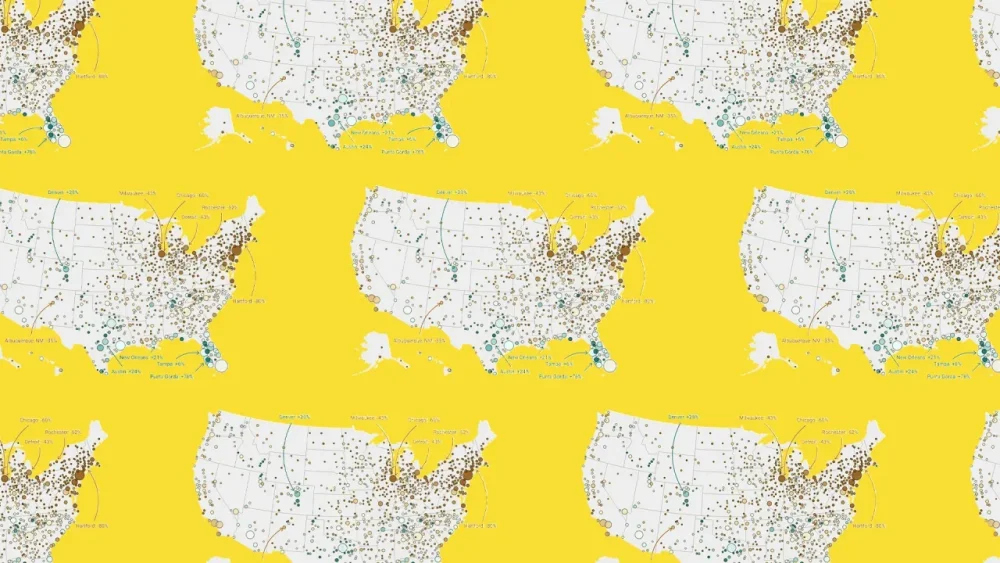
Want more housing market stories from Lance Lambert’s ResiClub in your inbox? Subscribe to the ResiClub newsletter. National active housing inventory for sale at the end of February 2025 was up 27.6% compared to February 2024. That’s just 23.1% below pre-pandemic levels in February 2019. However, while the national housing market has softened and inventory has surpassed 2019 pre-pandemic levels in some pockets of the Sun Belt, many housing markets remain far tighter than the national average. Pulling from ResiClub’s inventory tracker, we identified the tightest major housing markets heading into the spring 2025 season, where active inventory is still the furthest below pre-pandemic 2019 levels. These markets are where home sellers have maintained more power compared to most sellers nationwide. Among the nation’s 200 largest metro area housing markets, 50 markets (see table below) at the end of February 2025 still had at least 46% less active inventory than in February 2019. Many of those tight markets are in the Northeast, in particular, in states like New Jersey and Connecticut. Unlike the Sun Belt, many markets in the Northeast and Midwest were less reliant on pandemic-era migration and have fewer new home construction projects in progress. With lower exposure to the negative demand shock caused by the slowdown in pandemic-era migration—and fewer homebuilders in these regions offering affordability adjustments once rates spiked—active inventory in many Northeast and Midwest housing markets has remained relatively tight, maintaining a seller’s advantage heading into spring 2025. View the full article
-
At the end of last month, The Google Pixel 4a got a software update that rendered the device nearly unusable for some people, for seemingly unknown reasons. The update included "battery management features" that left some people with phones that couldn't hold a charge for more than 30 minutes. Google explained the problems in a support document and offered a few solutions, but again, it didn't explain the root cause of the issue. But now, there appears to be one possible explanation for the problem—overheating batteries—as mentioned in a Pixel 4a recall issued in Australia, spotted first by Android Authority. The Australian Competition and Consumer Commission (ACCC) issued the recall notice on March 7, saying in a supporting document that some Pixel 4a units are currently at risk of fire due to overheating batteries. The notice clarifies that this doesn't affect all Pixel 4a units and it goes on to say that if your device is unaffected by this issue, the January software update will have no impact on its battery or performance, implying that Google pushed out the update to reduce the risk of fire on impacted phone. When Google issued the software update, its support document also mentioned that the software update will only update the battery management in certain devices. The company had additionally cited a potential degradation in lithium-ion batteries as a reason for the update. If the ACCC's notice is accurate and overheating batteries are indeed the reason behind the January software update for the Pixel 4a, it could offer a potential explanation of why the update was rushed out so quickly. Usually, Pixel phones receive big software updates as a part of Pixel Drops that are released every few months. Outside of that, Google usually only issues stability and security updates that don't usually get their own blog posts. In this case, the company rolled out a big update with a detailed support document, possibly because the issue was so potentially serious. I've reached out to Google for a comment and will update the story once the company responds. Credit: ACCC But long story short, when faced with a potential fire risk, it looks like Google is choosing to limit the capacity of the battery in affected devices rather than court disaster. Check if your Pixel 4a is impactedIn case you haven't done so already, you can check if your Pixel 4a is impacted by going to this Google Support page and following the on-screen steps. If it is, Google offers three options—a free battery replacement, a credit of $100 towards another Pixel phone, or a one-time cash settlement of $50. View the full article
-
Resignation will trigger first by-election of Keir Starmer’s governmentView the full article
-
The world is in chaos, and many of us wish this wasn’t reality but a video game. Coperni, the French fashion label, captured this sentiment in its recent Paris Fashion Week show. The brand’s designers—Sébastien Meyer and Arnaud Vaillant—wanted to re-create old-school gamer culture, with the theme of “LAN Party,” which was an event in the ’90s where people would gather together to compete in video games. Coperni brought together 200 people to play games like Fortnite and Rocket League for 24 hours. The show captured the aesthetic of the ’90s, along with that era’s fascination with futuristic digital realities, like those depicted in films like Hackers and The Matrix. Well, the future is here. At Paris Fashion Week, Coperni showed off a new collab with Meta and Ray-Ban in the form of translucent black wayfarer sunglasses that can double as a computer. The $549 sunglasses have a built-in camera and open-ear audio, so they can see and hear everything you do. As you use your voice to interact with the AI, it will provide customized insights and recommendations. You can also use the glasses to do things like live translation and play content on Spotify. [Image: Coperni] Meta launched its very first fashion collaboration by bringing Coperni and Ray-Ban branded glasses to the Coperni show. Some models wore the frames and recorded the entire show from their perspective, demonstrating their hands-free recording capabilities. They fit seamlessly into the Y2K looks, featuring lots of sleek black outfits and denim matched with grungy plaid. [Photo: Luca Tombolini/courtesy Coperni] Coperni is known for its exploration of technology. One of its most talked-about moments came in 2022, when Bella Hadid stood on the runway in her underwear before three people came out to spray-paint her outfit on in front of the audience. Its best known accessory is the “swipe” bag, which has a distinct oval shape. It recently released a version of the bag that featured NASA’s nano-material called Aerogel which is made of 99% air and 1% glass, making it the lightest bag ever made. Coperni created 3,600 pairs of these Ray-Ban Meta x Coperni glasses, which launched at 4 a.m. EST—but they’re already selling fast on the Coperni, Meta, and Ray-Ban websites. View the full article

-
We may earn a commission from links on this page. The Apple Watch has a built-in sleep tracker, but it can be hard to find. Here’s how to access it, how to set it up so that it properly records how much sleep you’re getting, and how to understand the results. Does my Apple Watch support sleep tracking? Sleep tracking was introduced with WatchOS version 7 (released in 2020). That version of WatchOS works on watches from Series 3 and newer, paired with an iPhone 6S or newer, with iOS 14 and newer. In other words: The oldest devices that will work are a 2015 phone, a 2017 watch, and 2020 releases of the software that run on them. As long as your Apple Watch isn’t truly ancient, it should support this. (If you're looking to buy a new Apple Watch, though, we recommend the Series 10 as the best Apple Watch for most people.) Apple Watch Series 10 $299.00 at Amazon /images/amazon-prime.svg $399.00 Save $100.00 Shop Now Shop Now $299.00 at Amazon /images/amazon-prime.svg $399.00 Save $100.00 Where to find the Apple Watch Sleep appYou’ll need to navigate to four different places to access all of the sleep-related features of your Watch and iPhone. (Three of them are on the phone.) On the Apple Watch Credit: Beth Skwarecki/Apple On your Watch, look for a bed icon with a greenish-blue background. (Pro tip: You can change this screen to use the names of apps, alphabetized, rather than having to play hide and seek with little icons.) When you open the Sleep app, scroll down to check (or set) your sleep schedule. That's all you need to do with this app for setup; the Apple Watch will track your sleep automatically even if you never open this app again. In the Health app Credit: Beth Skwarecki/Apple On your iPhone, the sleep functions are part of the Health app. (There is no dedicated Sleep app.) Open the Health app, tap Browse, then tap Sleep. From here, you can view data on recent nights of sleep, and set your sleep schedule for the future. At the bottom of this screen, you can edit your next sleep schedule or your full sleep schedule (the one that repeats daily and weekly). This tells your phone when you’re planning on sleeping. Tap Full Schedule & Options to set that schedule, and scroll down to the bottom for the next step. In the Watch app Credit: Beth Skwarecki/Apple To make sure your watch will track your sleep, you need to configure your Watch-specific sleep settings in the Watch app. The easiest way to access this from the Health app (tap Full Schedule & Options from the Sleep screen), and at the bottom of that screen, there’s a link to Manage Sleep in the Apple Watch App. Tap that, and you’ll go straight to those Watch settings. Turn on “Track Sleep with Apple Watch” to enable tracking, and turn on “Charging Reminders” so the Watch can notify you to charge it before bedtime if your battery is low in the evening. In the Settings appWe’re not quite done. In the Settings app, you can set up your Sleep Focus. This is optional for tracking, but it gives you access to specialized home screens and notification settings that will turn on at bedtime. There is a link from here back to the settings app. (Hey, this may be confusing, but at least it’s easy to navigate from each app to the others.) How to set up your Apple Watch to record your sleepYou can fully explore all the sleep-related features through the apps I mentioned above, but here is the short version. Do these things and you’ll have your Watch recording your sleep tonight: Set up a Sleep schedule (Health app > Sleep > Full Schedule & Options). Tap Manage Sleep With Apple Watch at the bottom of that screen. (This sends you to the Watch app.) Turn on Track Sleep with Apple Watch. Wear your Apple Watch to bed. It should be unlocked, and if you have a passcode, you’ll want wrist detection turned on. The Apple Watch will use the sleep schedule (or Sleep Focus, which you can turn on manually) to know when you might be sleeping. During this time, it uses your movements and your phone use, to detect whether you’re sleeping, and to estimate when you are in each stage of sleep. How to read your results from the Apple Watch sleep appTo see your sleep on your watch, scroll down from the main watch face (using the digital crown, or swipe up with your finger) and you'll see a card in your Smart Stack with the previous night's sleep. Tap this to open the Sleep app, which will show you your sleep stages, time asleep, last 14 days' sleep, and your sleep schedule settings. Credit: Beth Skwarecki You can also see this information anytime you visit the Sleep app on your watch, or the Sleep section of the Health app on your phone. (If you wake up before your sleep schedule ends, you may need to wait until your scheduled sleep time is finished before the data becomes available.) Your sleep data, on either the watch or phone, will show your sleep stages represented with deep sleep at the bottom in purple, “core” (that is, light) sleep in the middle in blue, REM higher up in lighter blue, and awake in orange at the top. (That said, no wearable is going to be completely accurate when it comes to sleep stages, so don’t read too much into these.) The app will also show you your heart rate during the night, your sleep trend (mine says “You slept an average of 7 hr 22 min over the last 7 days”), and monthly and yearly highlights showing whether you’re getting more or less sleep than in the past. View the full article
-
From geospatial imagery to weapon maintenance, the impact is far-reachingView the full article
-
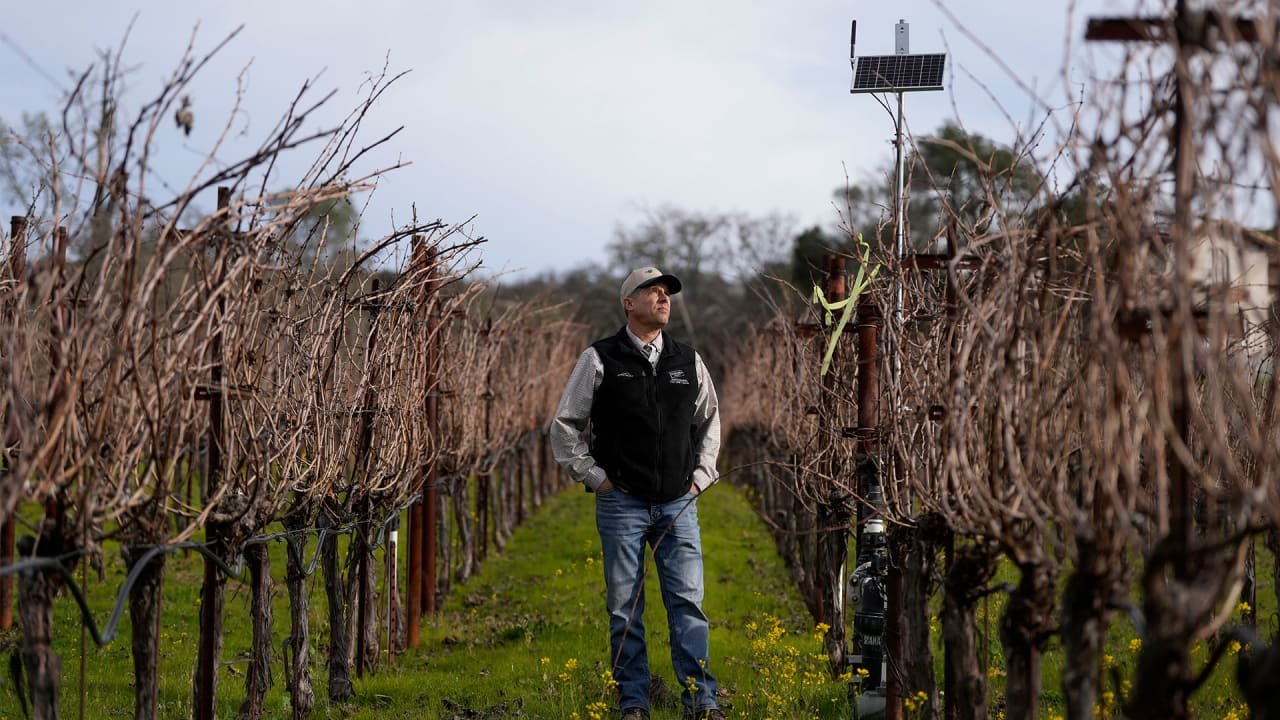
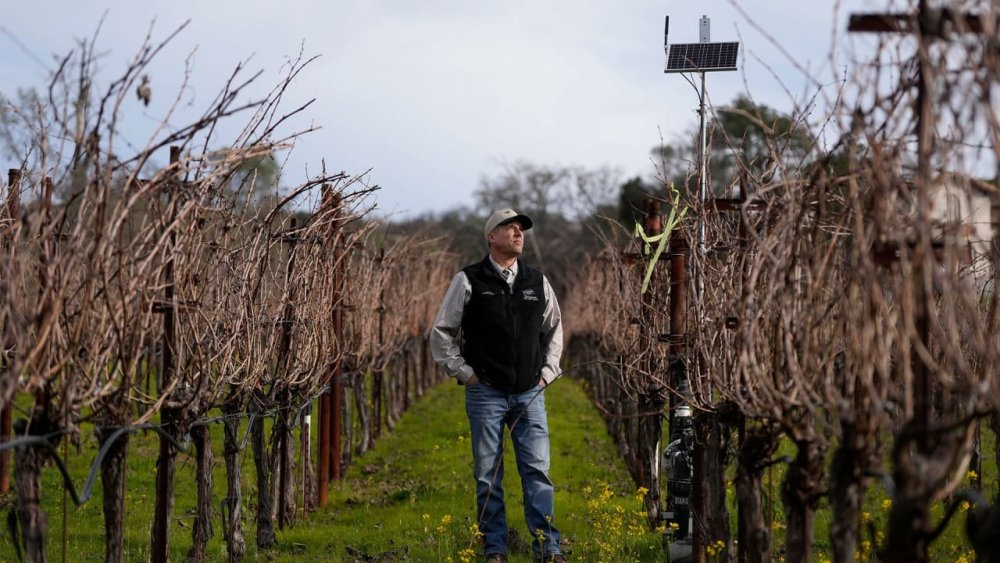
When artificial intelligence-backed tractors became available to vineyards, Tom Gamble wanted to be an early adopter. He knew there would be a learning curve, but Gamble decided the technology was worth figuring out. The third-generation farmer bought one autonomous tractor. He plans on deploying its self-driving feature this spring and is currently using the tractor’s AI sensor to map his Napa Valley vineyard. As it learns each row, the tractor will know where to go once it is used autonomously. The AI within the machine will then process the data it collects and help Gamble make better-informed decisions about his crops — what he calls “precision farming.” “It’s not going to completely replace the human element of putting your boot into the vineyard, and that’s one of my favorite things to do,” he said. “But it’s going to be able to allow you to work more smartly, more intelligently and in the end, make better decisions under less fatigue.” Gamble said he anticipates using the tech as much as possible because of “economic, air quality and regulatory imperatives.” Autonomous tractors, he said, could help lower his fuel use and cut back on pollution. As AI continues to grow, experts say that the wine industry is proof that businesses can integrate the technology efficiently to supplement labor without displacing a workforce. New agricultural tech like AI can help farmers to cut back on waste, and to run more efficient and sustainable vineyards by monitoring water use and helping determine when and where to use products like fertilizers or pest control. AI-backed tractors and irrigation systems, farmer say, can minimize water use by analyzing soil or vines, while also helping farmers to manage acres of vineyards by providing more accurate data on the health of a crop or what a season’s yield will be. Other facets of the wine industry have also started adopting the tech, from using generative AI to create custom wine labels to turning to ChatGPT to develop, label and price an entire bottle. “I don’t see anybody losing their job, because I think that a tractor operator’s skills are going to increase and as a result, and maybe they’re overseeing a small fleet of these machines that are out there, and they’ll be compensated as a result of their increased skill level,” he said. Farmers, Gamble said, are always evolving. There were fears when the tractor replaced horses and mules pulling plows, but that technology “proved itself” just like AI farming tech will, he said, adding that adopting any new tech always takes time. Companies like John Deere have started using the AI that wine farmers are beginning to adopt. The agricultural giant uses “Smart Apply” technology on tractors, for example, helping growers apply material for crop retention by using sensors and algorithms to sense foliage on grape canopies, said Sean Sundberg, business integration manager at John Deere. The tractors that use that tech then only spray “where there are grapes or leaves or whatnot so that it doesn’t spray material unnecessarily,” he said. Last year, the company announced a project with Sonoma County Winegrowers to use tech to help wine grape growers maximize their yield. Tyler Klick, partner at Redwood Empire Vineyard Management, said his company has started automating irrigation valves at the vineyards it helps manage. The valves send an alert in the event of a leak and will automatically shut off if they notice an “excessive” water flow rate. “That valve is actually starting to learn typical water use,” Klick said. “It’ll learn how much water is used before the production starts to fall off.” Klick said each valve costs roughly $600, plus $150 per acre each year to subscribe to the service. “Our job, viticulture, is to adjust our operations to the climatic conditions we’re dealt,” Klick said. “I can see AI helping us with finite conditions.” Angelo A. Camillo, a professor of wine business at Sonoma State University, said that despite excitement over AI in the wine industry, some smaller vineyards are more skeptical about their ability to use the technology. Small, family-owned operations, which Camillo said account for about 80% of the wine business in America, are slowly disappearing — many don’t have the money to invest in AI, he said. A robotic arm that helps put together pallets of wine, for example, can cost as much as $150,000, he said. “For small wineries, there’s a question mark, which is the investment. Then there’s the education. Who’s going to work with all of these AI applications? Where is the training?” he said. There are also potential challenges with scalability, Camillo added. Drones, for example, could be useful for smaller vineyards that could use AI to target specific crops that have a bug problem, he said — it would be much harder to operate 100 drones in a 1,000 acre vineyard while also employing the IT workers who understand the tech. “I don’t think a person can manage 40 drones as a swarm of drones,” he said. “So there’s a constraint for the operators to adopt certain things.” However, AI is particularly good at tracking a crop’s health – including how the plant itself is doing and whether it’s growing enough leaves – while also monitoring grapes to aid in yield projections, said Mason Earles, an assistant professor who leads the Plant AI and Biophysics Lab at UC Davis. Diseases or viruses can sneak up and destroy entire vineyards, Earles said, calling it an “elephant in the room” across the wine industry. The process of replanting a vineyard and getting it to produce well takes at least five years, he said. AI can help growers determine which virus is affecting their plants, he said, and whether they should rip out some crops immediately to avoid losing their entire vineyard. Earles, who is also cofounder of the AI-powered farm management platform Scout, said his company uses AI to process thousands of images in hours and extract data quickly — something that would be difficult by hand in large vineyards that span hundreds of acres. Scout’s AI platform then counts and measures the number of grape clusters as early as when a plant is beginning to flower in order to forecast what a yield will be. The sooner vintners know how much yield to expect, the better they can “dial in” their wine making process, he added. “Predicting what yields you’re going to have at the end of the season, no one is that good at it right now,” he said. “But it’s really important because it determines how much labor contract you’re going to need and the supplies you’ll need for making wine.” Earles doesn’t think the budding use of AI in vineyards is “freaking farmers out.” Rather, he anticipates that AI will be used more frequently to help with difficult field labor and to discern problems in vineyards that farmers need help with. “They’ve seen people trying to sell them tech for decades. It’s hard to farm; it’s unpredictable compared to most other jobs,” he said. “The walking and counting, I think people would have said a long time ago, ‘I would happily let a machine take over.'” —Sarah Parvini, AP technology writer View the full article
-
A mysterious bug is affecting numerous older Chromecast devices, as per a lengthy thread on Reddit—specifically, the second-generation Chromecast and the Chromecast Audio, which both launched in September 2015. If you've been affected, hold off on trying a factory reset of your device. The bug has started appearing over the last 24 hours, rendering affected devices pretty much unusable. One of the error messages reported reads as follows: "Untrusted device: [name] couldn’t be verified. This could be caused by outdated device firmware." Further investigation from users suggests that this is a server-side problem—so the issue is at Google's end. It looks as though there have been complications with expired security certifications, so the Chromecast dongles that have been hit are being incorrectly identified as unsafe to connect to. That means there's nothing Chromecast owners can do for the time being, other than to sit tight and wait it out, without any streaming audio or video to entertain them in the meantime. Various troubleshooting steps have been taken, including reconnecting to wifi and running a factory reset, but no easy workaround has been found. In fact, as per the latest information from Google, factory resetting your device is something you shouldn't do—even if it's the obvious first fix to try with a problem like this. We're still not sure exactly what's happened, but an official Google account has now responded on the original Reddit thread. What Google saysAs per the latest information from Google: "We're aware of an emerging issue impacting Chromecast 2nd-gen and Chromecast Audio devices and are working on a fix. Do not factory reset your device – we will keep you all updated when the fix rolls out. If you have already factory reset your device, we will provide instructions to set your device back up as soon as possible. Thank you for your patience." It's a bit light on details, but at least the acknowledgement is there. It sounds as though the restoration process is going to be more complicated for those users who have already (and understandably) tried a factory reset, but apparently Google is going to be able to get all of these devices back online eventually. There is a rather complicated workaround you can try that's detailed on Reddit, but unless it's especially urgent for you to get back up and running, I'd recommend sitting tight for now and waiting for Google to issue a fix. While no timeline has been specified for when the issue might be resolved, at least we know this is being worked on. Given that the bug hasn't hit more recent Chromecasts, including the Chromecast Ultra, there was some concern that Google might have quietly killed off its older devices, now they're approaching their 10th birthdays—but that no longer seems to be the case. The Chromecast device line as a whole has now been discontinued, so we won't get any more streaming dongles in the future, but Google hasn't said anything yet about pulling support for existing hardware. Chromecast functionality continues to be available in televisions running Google TV, as well as the Google TV Streamer. View the full article
-
We may earn a commission from links on this page. Deal pricing and availability subject to change after time of publication. Midrange TVs have been getting so good over the last few years that it's getting hard to justify spending two to three times the price for an OLED TV. That has been TCL's goal, since their business model is essentially to kill off OLED TVs by mastering the QLED tech at a relatively low price. TCL's QM7 is the best and latest example of that, which I got to review and put to the test. The 55-inch model is just $479.99 (it was $799.99 during its release), an amazing value for its current price. The 65- and 75-inch are also much cheaper than their launch pricees, according to price-tracking tools. Size: 55-inches, TV OS: Google TV, HDR: Dolby Vision IQ and Dolby Atmos, Refresh Rate: 120Hz. TCL 55-Inch QM7 QLED 4K Smart QD-Mini LED TV $479.99 at Amazon /images/amazon-prime.svg Get Deal Get Deal $479.99 at Amazon /images/amazon-prime.svg Size: 65-inches, TV OS: Google TV, HDR: Dolby Vision IQ and Dolby Atmos, Refresh Rate: 120Hz. TCL 65-Inch QM7 QLED 4K Smart QD-Mini LED TV $686.64 at Amazon /images/amazon-prime.svg Get Deal Get Deal $686.64 at Amazon /images/amazon-prime.svg Size: 75-inches, TV OS: Google TV, HDR: Dolby Vision IQ and Dolby Atmos, Refresh Rate: 120Hz. TCL 75-Inch QM7 QLED 4K Smart QD-Mini LED TV $897.99 at Amazon /images/amazon-prime.svg Get Deal Get Deal $897.99 at Amazon /images/amazon-prime.svg SEE 0 MORE When it comes to midrange TVs right now, QLED technology is the best before crossing over to the much more expensive OLED side. QLED might never reach the picture quality that OLEDs can get to, but for most people, it can get pretty close and be much cheaper. Right now, the Hisense U7N and TCL's QM7 are the best QLED TVs you can buy right now, and you can't really go wrong with either. The keyword most QLED shoppers are looking for is "dimming zones"—the more you have, the better deep blacks will look next to bright highlights. The QM7 has up to 1,240 local dimming zones, which is much more than Hisense U7N's 384 local dimming zones. It can also get very bright, with up to 2,400 nits at peak brightness. Of course, you get 4K resolution and HDR support (HDR ULTRA with Dolby Vision IQ, HDR10+, HDR10, and HLG). As a gamer, I enjoyed the 120Hz refresh rate and 6 millisecond input lag with Auto Low Latency Mode (ALLM) and AMD FreeSync Premium Pro, making my Halo matches go smoothly. The Google TV OS is icing on the cake, since I love casting to the TV seamlessly from my phone. The QM7 has been my favorite non-OLED TV I've ever tried, and for its current price, it's the best non-OLED TV you can get. View the full article
-
Cultural relevance has never been more important or desired by brands and marketers than it is right now. As fragmented as our media landscape has become, a brand with cultural relevance is better at attracting our attention and, importantly, keeping it. Why? Because we care. We talk to our friends and family about it. We engage in online and IRL communities about it. So if a brand can genuinely embed itself in that experience, or make that experience better, more interesting, helpful, or entertaining, then it’s really earning our attention. A new report from global ad agency network TBWA takes a deep dive into 39 cultural shifts happening around the world, and categorizes them for marketers to learn more and potentially tap into. The goal of the report is to arm brands with the necessary information to make better decisions when it comes to how they show up in culture. The agency calls these shifts “edges,” which it defines as “global shifts with the scale and longevity to help brands turn cultural blur into business opportunities.” The shifts in this year’s report range from generative AI to sustainability, and personal development to survivalism. TBWA’s global chief strategy officer Jen Costello says one thing that stuck out from this year’s research was the idea of culture rot, in which content and culture are confused for one another. The former is just regurgitating what’s already out there, while the latter has more influence and impact. For Costello, too many brands are focusing on content over actual culture. “Brands and creators are churning out this endless stream of stuff, much of which isn’t actually landing, making a difference, or shifting how people are actually living in the real world,” says Costello. New shifts Most brands are chasing cultural relevance by mimicking the latest buzzword or online micro-trend. TBWA’s report argues that this endless stream of what it calls “copy-and-paste content” is contributing to the culture rot. The challenge is for brands to stop trying to please the algorithm and start using cultural insights to actively contribute to the human experience. “There’s nothing inherently wrong about toying around in the language of the internet,” says Costello. “It’s quick, it’s fun, and it typically doesn’t make a huge dent one way or another. The bigger deal is the longer term view. We think culture is the biggest opportunity for brands, but it can also be the biggest threat if you don’t harness it correctly.” Three new shifts found in this year’s report are what the agency calls “Eco-Realism,” “Maturity Paradox,” and “Transparency Receipts.” Advertising buzzwords? Maybe, but they’re also rooted in real human behavior. “Eco-Realism” is about how environmental action plans are taking a turn for the practical. It comes as a growing number of corporations scale back their previous sustainability targets, and common practices like carbon offsetting and tree planting are exposed as not-so-effective distractions. The report predicts that vague ambitions will be better replaced by more affordable, scalable, and readily available solutions. “Maturity Paradox” is about the decoupling of age and maturity. The report anticipates that behaviors and expectations tied to certain age groups will no longer be relevant and impact how brands target and design for different generations. Psychographics over demographics. “Transparency Receipts,” meanwhile, are about how supply chain transparency is gaining traction as more shoppers are demanding a peek behind the curtain. This is being met by better traceability with technologies like blockchain and RFID tags, and upcoming laws like the Europe’s Digital Product Passport Regulations. The report advises brands to proactively provide clear proof of a product’s social and environmental impact. It was surprising to hear about these new shifts, particularly on the environment and supply chain transparency, as companies have significantly turned the volume dial way down in talking about these issues. Costello says that it’s not that these issues have become less important to consumers, but that our BS detectors were being set off much too frequently. “I’d say eco-realism and transparency receipts are almost direct reactions to the bullshit,” she says. “People are no longer impressed with the flashy buzzwords or one-off sustainability stunts that are made for Instagram. Their trust has been diminished. Now people want to be taken behind the scenes more. They want to be given the facts. There’s a pragmatism or a practicality coming into place now.” Shift impact Reports are only helpful if the information is actually useful and utilized in practice. Costello points to work like Levi’s and McDonald’s as examples of how her agency has used culture in client work for maximum impact. Last year, the agency worked with Levi’s to remake a classic ad, this time starring Beyoncé. Bey starred in an updated version of the 1985 ad “Laundrette,” tying it into her award-winning album Cowboy Carter, which included a track called “Levii’s Jeans.” In Japan, Gen Z makes up 60% of McDonald’s workforce. But applications were steadily decreasing. The agency found Gen Z disliked being forced to smile as McDonald’s employees. So they created a campaign that included an original song with the artist ano, who is known for not smiling, and revitalized the brand’s recruitment. It increased job applicants by 115%. “I want to see more brands become rabbit holes of inspiration, fun, and experience for people, rather than just seeking it out,” says Costello. “I want to see them choosing paths and sticking with it. I want to see them building around fandom for obsessive fans.” View the full article

-
Participants with type 2 diabetes had an average weight loss of 15.7 per cent after 68 weeks on CagriSema View the full article
-
Nigel Higgins tells court that information which has come to light ‘paints a different picture’ of nature of tiesView the full article
-
While many X-pats have flocked to alternatives like Bluesky and Threads, there are still plenty of users checking Elon Musk's infamous platform. If you're one of them, you might have noticed something odd today: X is down. Depending on when you see this article, X may be back up and running. But multiple times Monday morning, the platform was unreachable. According to Downdetector, most of the complaints funneled in at three peaks: The first came around 5:41 a.m., the second at 10:11 a.m., and the third around 11:11 a.m., which is when I initially noticed the issues. There are a large number of reports associated with event, as well. Scanning through the Downdetector graph, it appears as though users have issued over 150,000 reports at the time of this article. When I tried to access twitter.com (muscle memory and pettiness refuse to let me type x.com into my browser's address bar) the site tried loading for quite a while, before returning the following error screen: Credit: Lifehacker There's no telling why the site has been having so many technical issues this morning—other than the fact it's run by a fraction of the staff it used to have—but it's not the first time the site has gone down under Musk's watch. Last May, the site had similar issues staying afloat, which the X team resolved in due time. The same will likely occur today, though in the meantime, enjoy your much-deserved break from X. View the full article
-
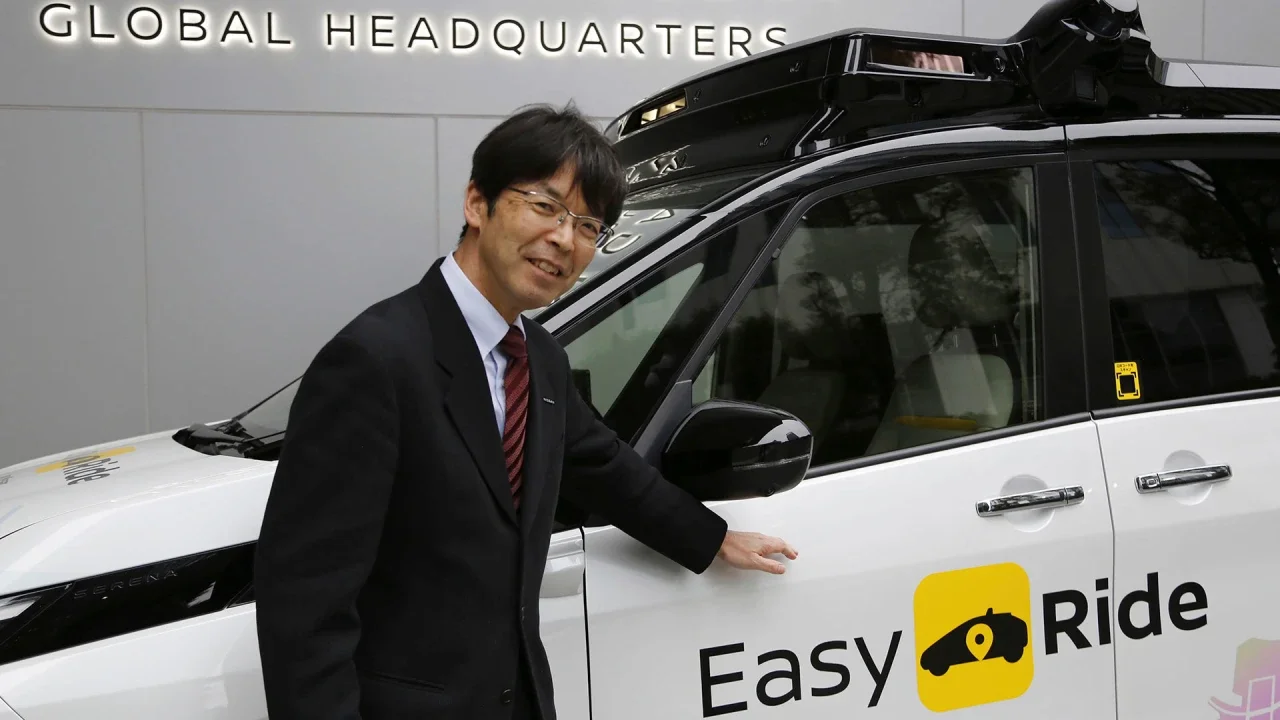
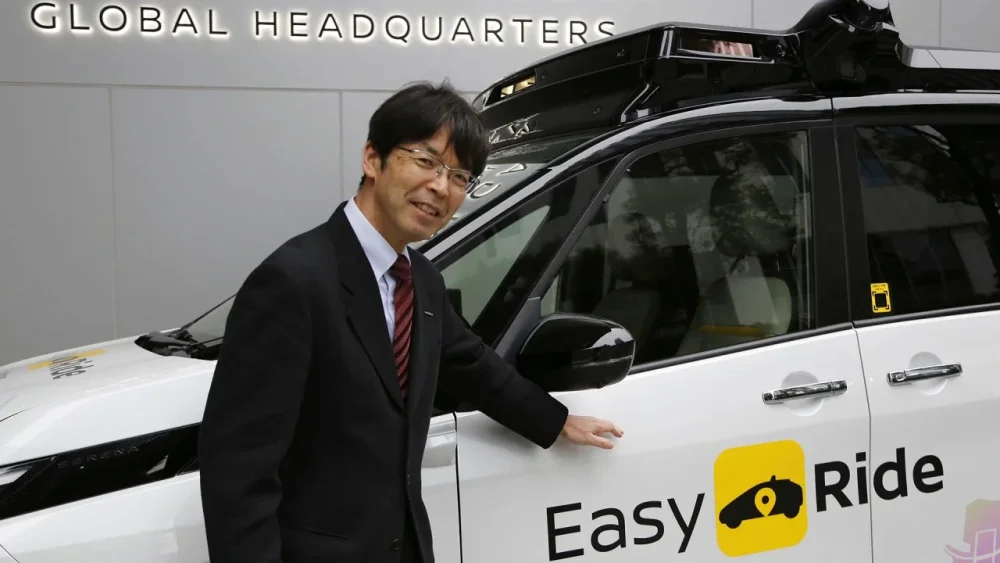
The van makes its way slowly but surely through the city streets, braking gently when a car swerves into its lane. But its steering wheel is turning on its own, and there’s no one in the driver’s seat. The driverless technology from Nissan Motor Corp., which uses 14 cameras, nine radars, and six LiDar sensors installed in and around the vehicle, highlights Japan’s eagerness to catch up with players like Google’s Waymo that have taken the lead in the U.S. Japan, home to the world’s top automakers, has not kept pace with the global shift to autonomous driving, so far led by China and the U.S. But momentum is building. Waymo is going to land in Japan this year. Details haven’t been disclosed, but it has a partnership with major cab company Nihon Kotsu, which will oversee and manage their all-electric Jaguar I-PACE sport-utility vehicles, first in the Tokyo area, still with a human cab driver riding along. During Nissan’s demonstration, the streets were bustling with other cars and pedestrians. The vehicle stayed within the maximum speed limit in the area of 40 kph (25 mph), its destination set with a smartphone app. Takeshi Kimura, the Mobility and AI Laboratory engineer at Nissan, insists an automaker is more adept at integrating self-driving technology with the overall workings of a car — simply because it knows cars better. “How the sensors must be adapted to the car’s movements, or to monitor sensors and computers to ensure reliability and safety requires an understanding of the auto system overall,” he said during a recent demonstration that took reporters on a brief ride. Nissan’s technology, being tested on its Serena minivan, is still technically at the industry’s Level Two because a person sits before a remote-control panel in a separate location outside the vehicle, in this case, at the automaker’s headquarters, and is ready to step in if the technology fails. Nissan also has a human sitting in the front passenger seat during the test rides, who can take over the driving, if needed. Unless there is a problem, the people in the remote control room and the passenger seat are doing nothing. Nissan plans to have 20 such vehicles moving in the Yokohama area in the next couple of years, with the plan to reach Level Four, which means no human involvement even as backup, by 2029 or 2030. Autonomous vehicles can serve a real need given the nation’s shrinking population, including a shortage of drivers. Other companies are working on the technology in Japan, including startups like Tier IV, which is pushing an open source collaboration on autonomous driving technology. So far, Japan has approved the use of so-called Level Four autonomous vehicles in a rural area in Fukui Prefecture, but those look more like golf carts. A Level Four bus is scuttling around a limited area near Tokyo’s Haneda airport. But its maximum speed is 12 kmph (7.5 mph). Nissan’s autonomous vehicle is a real car, capable of all its mechanical workings and speed levels. Toyota Motor Corp. recently showed its very own “city” or living area for its workers and partnering startups, near Mount Fuji, being built especially to test various technology, including autonomous driving. Progress has been cautious. University of Tokyo Professor Takeo Igarashi, who specializes in computer and information technology, believes challenges remain because it’s human nature to be more alarmed by accidents with driverless vehicles than regular crashes. “In human driving, the driver takes responsibility. It’s so clear. But nobody is driving so you don’t know who will take responsibility,” Igarashi told The Associated Press. “In Japan, the expectation for commercial services is very high. The customer expects perfect quality for any service — restaurants or drivers or anything. This kind of auto-driving is a service form a company, and everybody expects high quality and perfection. Even a small mistake is not acceptable.” Nissan says its technology is safe. After all, a human can’t be looking at the front, the back and all around at the same time. But the driverless car can, with all its sensors. When a system failure happened during the recent demonstration, the car just came to a stop and all was well. Phil Koopman, professor of electrical and computer engineering at Carnegie Mellon University, believes the autonomous vehicle industry is just getting started. The main problem is what’s known as “edge cases,” those rare but dangerous situations that the machine has not yet been taught to respond to. Using autonomous fleets of a significant size for some time is needed for such edge cases to be learned, he said. “We will see each city require special engineering efforts and the creation of a special remote support center. This will be a city-by-city deployment for many years,” said Koopman. “There is no magic switch.” Yuri Kageyama is on Threads: https://www.threads.net/@yurikageyama —Yuri Kageyama, AP Business Writer View the full article
-
We may earn a commission from links on this page. Deal pricing and availability subject to change after time of publication. Ever since Apple released the latest Apple Watch Series 10 earlier in September, it has been steadily dropping in price; it's currently sitting at $299 (originally $399) after a $100 drop, the lowest price yet, according to price-tracking tools. This price is for the 42mm case, 130 to 180mm size bands, in black, denim, and rose-gold case colors. The bigger 46mm case is down to $329 (originally $429), also the lowest price yet after a $100 discount. Memory Storage Capacity: 64 GB, Connectivity Technology: GPS, Screen Size: 42 Millimeters Apple Watch Series 10 [GPS 42mm case] $299.00 at Amazon /images/amazon-prime.svg $399.00 Save $100.00 Get Deal Get Deal $299.00 at Amazon /images/amazon-prime.svg $399.00 Save $100.00 Memory Storage Capacity: 64 GB, Connectivity Technology: GPS, Screen Size: 46 Millimeters Apple Watch Series 10 [GPS 46mm case] $329.00 at Amazon /images/amazon-prime.svg $429.00 Save $100.00 Get Deal Get Deal $329.00 at Amazon /images/amazon-prime.svg $429.00 Save $100.00 SEE -1 MORE The Apple Watch Series 10 is the best Apple Watch for most people and a great replacement if you're still wearing the more budget SE, according to Lifehacker associate tech editor Michelle Ehrhardt's review. There are also some key upgrades from the Apple Watch 9, although they're less noticeable than previous Apple watch upgrades. If you're curious to know how it compares to other flagship smartwatches, you can check out our head-to-head comparison post here. Some of the first things you'll notice on the Series 10 are a thinner case and a bigger OLED screen (either 1.6 inches or 1.8 inches, depending on which size you get). Unlike the Series 9, which could only take calls on the speaker, the Series 10 has audio playback, meaning you can listen to podcasts or Spotify on its speakers. The sleep features were also improved, with a notification that gets triggered by sleep apnea symptoms. There are also new depth and water temperature sensors that automatically turn on when you go underwater, a feature that used to be unique to the more premium Apple Watch Ultra series. The battery will last you anywhere between 18 and 36 hours, depending on your use. You still get the same fitness features, heart rate monitor, and sleep tracker from previous models—but still no blood oxygen sensor. View the full article
-
By now everyone knows that scrolling social media isn’t exactly good for you. But did you know it might be making you sweat? Researchers from the psychology department at Durham University tracked the physiological responses of scrolling on social media and found a rather strange side effect. The researchers asked 54 young adults to browse Instagram for 15 minutes while monitoring their heart rate and their skin conductance (which would tell how much sweat they produced). Compared to reading a news article on a phone, they found scrolling Instagram made people’s heart rates slow down and, simultaneously, made them sweat more. From the control group, who just read the news article, they could tell it was not being on the phone or reading that was causing this response. It was something about social media. Researchers found that the physiological responses were present in all participants, regardless of how they scored on a questionnaire that assessed the symptoms of social media addiction. When participants were purposefully interrupted from their scrolling, rather than snapping out of the excitement and returning to a calmer state, participants continued to sweat and their heart rates increased. When they were asked to completely disconnect, participants reported being stressed and anxious. They even reported having cravings for social media at that moment. Such bodily and psychological stress responses are similar to those addicts experience when going through substance withdrawal. Most Americans don’t need another reason to want to cut down on screen time. Over half (53%) of Americans say they want to cut down on phone usage in 2025 (33% more than in 2023), with people spending an average of 5 hours and 16 minutes per day on their phones—a 14% increase from the 4 hours and 37 minutes people reported in 2024. While researchers didn’t attempt to answer the question of whether we’ve developed a physical addiction to social media, the study does suggest that social media indeed has addictive elements. My screen time could’ve told you that. View the full article

-
Rocket expects the combined company to achieve more than $200 million in run-rate synergies by 2027, it said in a statement. View the full article

-
Gold-adjusted GDP forecasts. Really!View the full article
-
Detroit-based fintech platform Rocket Companies (NYSE: RKT) has reached an agreement to acquire the Seattle mortgage services company Redfin (NASDAQ: RDFN) in an all-stock transaction valued at $1.75 billion, the companies announced on Monday. Each Redfin share will be exchanged for 0.7926 shares of Rocket’s Class A common stock, with the deal expected to close in mid-2025, pending shareholder and regulatory approvals. Following the announcement, Redfin’s stock soared nearly 70%, reaching $9.91 in premarket trading. This surge came after Rocket Companies agreed to acquire Redfin for $12.50 per share, representing a premium of 63% over Redfin’s recent average price. On the other hand, Rocket’s stock dropped around 13%. Forming a real estate-lending powerhouse The acquisition brings together two major players in real estate and mortgage lending. Redfin, founded in 2004, operates one of the nation’s most visited real estate platforms, with nearly 50 million monthly users and a network of over 2,200 agents. Rocket Companies, known for its mortgage and financial services, views the deal as a step toward streamlining the home-buying process. “Rocket and Redfin share a unified vision of a better way to buy and sell homes,” said Rocket CEO Varun Krishna. “Together, we will enhance the experience by connecting traditionally separate steps of the search and financing process with leading technology.” The acquisition is expected to drive Rocket’s mortgage growth, giving Redfin users direct access to Rocket’s financing products. Rocket anticipates over $200 million in synergies by 2027, including cost savings and new revenue opportunities. View the full article

-
Party officials reject €500bn infrastructure fund plan and change to debt borrowing rules to fund defence spendingView the full article
-
Even though Tarana Burke is still correcting some past misconceptions about the #MeToo movement that went mainstream about eight years ago—it’s not dead, for example, and it wasn’t a witch hunt—she’s focused on the future. Specifically, the movement’s founder said organizing has already begun for the 2026 U.S. midterm elections. “I’m really looking forward to what we can do to build on the campaign we started in 2024,” Burke, chief vision officer of Me too. International, said Saturday during a discussion at the Fast Company Grill at SXSW. “I’m really excited about the idea of building a constituency; imagine us voting along the lines of our survivorship.” One goal for the movement’s future, Burke said, is to help people see how sexual and gender-based violence is interwoven with so many other issues, including gun violence, homelessness, prison reform, food deserts, and maternal mortality. “Part of our work is helping people to understand that there’s not an issue that you care about that does not touch on sexual and gender-based violence,” she told the audience. “We need to stop trying to silo these issues; there’s so much work that we can do together.” Working in tandem on social issues may elicit more attention from politicians or leaders who don’t address issues of sexual and gender-based violence, according to Burke. “We need to keep holding people’s feet to the fire.” Solving a solvable issue That said, activists face new challenges. Funding for support work to end sexual and gender-based violence is at an all-time low, Burke said, while local rape crisis centers are at-risk of losing all of their federal funding. Writing a check, of course, is one solution, but the fight to end sexual and gender-based violence will require interventions on various fronts—similar to approaches taken to make America smoke-free. “This is a solvable issue if we want to solve it,” Burke said. There are still problems to be fixed, however, like the framing that a man’s life is being ruined if he’s accused of sexual violence and a frequent premise that the person making the accusation isn’t telling the truth. That’s why it’s important for people to be given the respect and dignity of an investigation, Burke said. “That helps everybody involved,” she added. “If you are the person being accused or you’re the person who has the accusation, everybody involved should be treated with respect and humanity.” A focus on accountability Another misconception is that people who inflict harm on others must be banished, and there’s no pathway back for them. Burke wants to see accountability from the people who have caused harm, rather than for them to disappear for a while and reemerge again as though nothing happened. “What we’re saying is, if you want to be amongst civil society, we need to understand that you won’t cause harm again, that you understand that you caused harm in the first place,” Burke told the audience. “And the biggest problem with a lot of these men who have these accusations and have these things that have actually been proven is that we don’t see any of that.” Without accountability, it’s tempting for voters to excuse past accusations by justifying some of the good work a politician did in the past. And there’s a pertinent example right now that Burke, a New Yorker, weighed in on. New York City currently has a “terrible” mayor in Eric Adams, at least in Burke’s opinion, but she feels “a little angry” that he could be replaced by another “terrible” politician. That’s because Andrew Cuomo, the former governor of New York who stepped down amid numerous sexual harassment accusations, recently announced he’s running for mayor. “I just want us to do better and dream better and think bigger,” Burke said of this political situation. “If we actually want these things to stop, if we want to make an impact on the issue of sexual and gender-based violence, we have to figure out where the line is and hold the line.” A movement of ‘everyday’ people Of course setbacks are inevitable, as Burke acknowledged, though when the pendulum swings back the other way, she said there are tangible signs of the movement’s progress since #MeToo went viral in 2017 that won’t simply disappear. She points to law and policy changes in that time, along with the way people think and talk about sexual violence. “There has been a cultural shift,” said Burke, who coined the “Me Too” phrase nearly two decades ago while working with sexual assault survivors. “This is a movement that has empowered so many survivors, that has helped so many find community, that has been such a catalyst for healing and action, which is what our organization is about.” Still, she said there is more work to be done. And looking to the future, Burke is calling on the public’s help. “Movements are not just about the people with the microphone, the person with the bullhorn in the front,” Burke said. “Movements are built from everyday people.” View the full article

-
Hedge fund turned family office eclipses rivals with currency and bond wagers on a slowing US economyView the full article