Newsletter
Want to keep up to date with all our latest news and information?


ResidentialBusiness
Administrators
-
Joined
-
Last visited
Everything posted by ResidentialBusiness
-
This week, Apple updated half of its iPad lineup. After updating the iPad Pro and iPad mini in 2024, the company has just unveiled a third-generation iPad Air and an eleventh-generation iPad. Many fans of Apple’s tablets have been eagerly awaiting these updates, especially since before this week, the company’s entry-level iPad had not had a refresh since October of 2022. But if you’ve been waiting until this week’s reveals, hoping for a clear picture of Apple’s iPad offerings in order to select the one best for your needs, well, I’ve got bad news: the iPad lineup remains as confusing as ever. Here’s why. Not all models support Apple Intelligence Apple makes four different types of iPads: the iPad Pro, the iPad Air, the iPad, and the iPad mini. Yet despite each model getting an update within the last year—one of them still lacks the hardware to run Apple’s much-hyped Apple Intelligence AI platform, which debuted in October 2024. That would be the new iPad—yes, the eleventh-generation tablet that Apple announced just this week. In 2025. In a baffling move, Apple decided to equip the new iPad with just 6GB of memory and the A16 chip—the CPU Apple first introduced all the way back in 2022 in the iPhone 14 Pro series and later included in the iPhone 15 series. None of these devices can run Apple Intelligence because the AI platform requires at least 8GB of memory. It’s shocking that Apple decided to limit its new 2025 iPad to just 6GB of memory and the A16 instead of giving it the more advanced A17 Pro chip and 8GB of memory that can run Apple Intelligence and that the smaller iPad mini, introduced in 2024, has packed inside. Why would Apple do this? I’ve reached out to the company for comment and have yet to hear back, but the most likely reason is that Apple wants to push customers into its higher-priced iPad models, like the iPad mini ($499) and iPad Air ($549), instead of having them buy the entry-level iPad ($349). Consumers are starting to go crazy for AI, and, in my opinion, Apple knows that by excluding Apple Intelligence from the entry-level iPad, many of them will instead opt to shell out another $150 to $200 more on an iPad that supports it. You can’t fault a company for wanting to make more money. But the lack of Apple Intelligence support on the new iPad is going to confuse a lot of people. Some may buy it thinking it comes with Apple Intelligence since, you know, every other iPad does. This device is kind of already obsolete—at least if you ever want to use Apple Intelligence. The thinnest and lightest model..is not the one you would think The lack of Apple Intelligence on Apple’s newest iPad isn’t the only thing likely to confuse consumers. Many people are drawn to tablets because they are thin and light and thus easier to lug around than a laptop. Historically, Apple’s thinnest and lightest devices have all fallen under a unique moniker: “Air.” There’s the MacBook Air—the thinnest laptop Apple sells. There’s the (very likely) upcoming iPhone Air, which will be the thinnest iPhone ever, and of course, there is the iPad Air, which is the thinnest…wait, no. You would think the iPad Air would be the thinnest iPad Apple makes, but that’s not true. If you want the thinnest iPad, you actually need to buy the iPad Pro (which is 5.1 mm or 5.3 mm thin, depending on screen size) and not the iPad Air (which is 6.1 mm thin). But what if you want the lightest iPad? Surely, that’s the iPad Air, right? No. That’s the 11-inch iPad Pro, which weighs in at 0.98 pounds. The 11-inch iPad Air is 1.01 pounds (and if you think it’s fair to compare apples to oranges, the iPad mini with its 8.3-inch screen comes in at just 0.65 pounds, beating the iPad Air by a long shot). Do you see how confusing this could be to the average consumer? And don’t even get me started on Apple Pencil compatibility (the Apple Pencil Pro works with the smaller iPad mini from 2024, but not the larger, newer iPad Apple introduced this week). Which iPad should you get? I’ve long hoped that Apple would fix its confusing iPad lineup. They didn’t do it last year, or the year before, and with the new iPads this week, it looks like they aren’t going to do it in 2025 either. So, if you are in the market for a new iPad, maybe this little cheat sheet will help you out: If you want the thinnest iPad, get an iPad Pro (not the iPad Air). If you want the lightest iPad, get the iPad mini. If you want to be able to use the Apple Pencil Pro, get the iPad Pro, iPad Air, or iPad mini. If you want Apple Intelligence, get the iPad Pro, iPad Air, or iPad mini—and avoid the new iPad. And if you want a lack of confusion…I guess maybe wait to see if the 2026 iPad family finally brings much-needed simplicity to Apple’s tablet lineup? The new 2025 iPad and iPad Air are now available to pre-order and will be released on March 12. View the full article

-
Microplastics—the tiny particles of plastic shed when litter breaks down—are everywhere, from the deep sea to Mount Everest, and many researchers worry that they could harm human health. I am a machine learning researcher. With a team of scientists, I have developed a tool to make identification of microplastics using their unique chemical fingerprint more reliable. We hope that this work will help us learn about the types of microplastics floating through the air in our study area, Michigan. Microplastics—a global problem The term plastic refers to a wide variety of artificially created polymers. Polyethylene, or PET, is used for making bottles; polypropylene, or PP, is used in food containers; and polyvinyl chloride, or PVC, is used in pipes and tubes. Microplastics are small plastic particles that range in size from 1 micrometer to 5 millimeters. The width of a human hair, for comparison, ranges from 20 to 200 micrometers. Most scientific studies focus on microplastics in water. However, microplastics are also found in the air. Scientists know much less about microplastics in the atmosphere. When scientists collect samples from the environment to study microplastics, they usually want to know more about the chemical identities of the microplastic particles found in the samples. Fingerprinting microplastics Just as fingerprinting uniquely identifies a person, scientists use spectroscopy to determine the chemical identity of microplastics. In spectroscopy, a substance either absorbs or scatters light, depending on how its molecules vibrate. The absorbed or scattered light creates a unique pattern called the spectrum, which is effectively the substance’s fingerprint. Just like a forensic analyst can match an unknown fingerprint against a fingerprint database to identify the person, researchers can match the spectrum of an unknown microplastic particle against a database of known spectra. However, forensic analysts can get false matches in fingerprint matching. Similarly, spectral matching against a database isn’t foolproof. Many plastic polymers have similar structures, so two different polymers can have similar spectra. This overlap can lead to ambiguity in the identification process. So, an identification method for polymers should provide a measure of uncertainty in its output. That way, the user can know how much to trust the polymer fingerprint match. Unfortunately, current methods don’t usually provide an uncertainty measure. Data from microplastic analyses can inform health recommendations and policy decisions, so it’s important for the people making those calls to know how reliable the analysis is. Conformal prediction Machine learning is one tool researchers have started using for microplastic identification. First, researchers collect a large dataset of spectra whose identities are known. Then, they use this dataset to train a machine learning algorithm that learns to predict a substance’s chemical identity from its spectrum. Sophisticated algorithms whose inner workings can be opaque make these predictions, so the lack of an uncertainty measure becomes an even greater problem when machine learning is involved. Our recent work addresses this issue by creating a tool with an uncertainty quantification for microplastic identification. We use a machine learning technique called conformal prediction. Conformal prediction is like a wrapper around an existing, already trained machine learning algorithm that adds an uncertainty quantification. It does not require the user of the machine learning algorithm to have any detailed knowledge of the algorithm or its training data. The user just needs to be able to run the prediction algorithm on a new set of spectra. To set up conformal prediction, researchers collect a calibration set containing spectra and their true identities. The calibration set is often much smaller than the training data required for training machine learning algorithms. Usually just a few hundred spectra are enough for calibration. Then, conformal prediction analyzes the discrepancies between the predictions and correct answers in the calibration set. Using this analysis, it adds other plausible identities to the algorithm’s single output on a particular particle’s spectrum. Instead of outputting one, possibly incorrect, prediction like “this particle is polyethylene,” it now outputs a set of predictions—for example, “this particle could be polyethylene or polypropylene.” The prediction sets contain the true identity with a level of confidence that users can set themselves—say, 90%. Users can then rerun the conformal prediction with a higher confidence—say, 95%. But the higher the confidence level, the more polymer predictions given by the model in the output. It might seem that a method that outputs a set rather than a single identity isn’t as useful. But the size of the set serves as a way to assess uncertainty—a small set indicates less uncertainty. On the other hand, if the algorithm predicts that the sample could be many different polymers, there’s substantial uncertainty. In this case, you could bring in a human expert to examine the polymer closely. Testing the tool To run our conformal prediction, my team used libraries of microplastic spectra from the Rochman Lab at the University of Toronto as the calibration set. Once calibrated, we collected samples from a parking lot in Brighton, Michigan, obtained their spectra, and ran them through the algorithm. We also asked an expert to manually label the spectra with the correct polymer identities. We found that conformal prediction did produce sets that included the label the human expert gave it. Microplastics are an emerging concern worldwide. Some places such as California have begun to gather evidence for future legislation to help curb microplastic pollution. Evidence-based science can help researchers and policymakers fully understand the extent of microplastic pollution and the threats it poses to human welfare. Building and openly sharing machine learning-based tools is one way to help make that happen. Ambuj Tewari is a professor of statistics at the University of Michigan. This article is republished from The Conversation under a Creative Commons license. Read the original article. View the full article
-
Pretty much everyone will sometimes struggle with anger at work. People fear the wrath of abusive supervisors, suppress anger to maintain a facade of professionalism, or vent anger toward coworkers who are, fairly or not, targets. Reactions to anger in the workplace can be strong, but they’re not always effective. As scholars who also fall prey to the pitfalls of anger ourselves, we are fascinated by anger. We have studied the causes, underlying processes, and consequences of anger from the perspectives of management, psychology, marketing, and negotiations. We recently reviewed more than 400 research articles across psychology, business, and related fields on topics ranging from brain activity to negotiation to race relations. Yet despite the ubiquity of anger in the workplace and the decades of anger research that exists across a number of fields, we found no straightforward way to understand the complexity of the life cycle of anger and how to manage it most effectively. As we dived more deeply into the research literature, though, we realized that simply reframing how we think about anger could provide a novel, flexible framework for how to deal with this emotion in daily life. Our suggestion: Think of anger as a flow of emotion, like water through a garden hose. By thinking of the flow of anger, you can unpack its key dimensions: its path and strength. Understanding whether the hose is pointed effectively and whether the strength of the stream is appropriate are critical for knowing when, how, and why to focus or redirect the anger and amplify or weaken its intensity. The direction of anger Imagine a coworker charges into your office, yelling, breathing heavily, face reddened, veins bulging. Even if you are simply an unsuspecting colleague who happened to have your door open, your attention is undoubtedly now fixed on your coworker. Are you the target of their anger for something you did, or merely an observer of their anger at someone else? If you are an undeserving target, do you try to reframe the issue so that the angry person will realize the anger is better directed elsewhere? If you are the observer, you also have a choice about whether to ignore your coworker’s anger or help them redirect it to a more effective outlet. You might simply listen empathetically while they let off steam, perhaps pointing out the relative risks and benefits of their taking their complaints to the supervisor. You are deciding, in effect, what suggestions to make about the direction of this person’s anger. The key to effectively managing the direction of anger is to manage the attention of those in the room. Reshaping how angry people attribute blame, for example, can help people take another person’s perspective or understand the situation in a new way, directing the flow more productively. The intensity of anger When an angry coworker approaches you as the target, do you ignore the signal or offer to work with the person so a similar situation doesn’t happen in the future? Both are ways to tamp down the intensity of the emotion coming at you. When you are angry, do you try to distract yourself from the anger, let it simmer, or embrace it? You are essentially deciding how you want to manage the intensity of your own angry feelings. It is important to recognize that managing the intensity of anger can go in both directions. Sometimes high-intensity anger should be turned down and sometimes subtle anger should be amplified. For example, consider an instance in which you feel anger at what you perceive to be an unfair change to a company policy. In this case, simply going for a walk outside to avoid expressing your frustration may result in the leadership not realizing that you and others on the team feel this way, leaving little opportunity to discuss and update the policy to more reasonable standards. Learning to self-regulate your thoughts and behaviors can help you manage the intensity of any anger you find yourself feeling. Rather than impulsively reacting, you can practice handling your emotions so you control whether you crank up your expressed anger or dial it down. Part of this process is thinking carefully about the cost-benefit trade-offs of expressing your anger. In these ways, you more effectively manage the strength of the flow without unnecessarily just turning it off. Controlling anger Knowing when, how, and why to shape the direction and intensity of anger is no small feat. Some of this decision is rightly based on the situation. For example, is it safe to step in? Do you feel personally skilled at intervening? But it is within everyone’s power to learn how to manage their own and others’ anger more effectively. To do so, you need to understand your role and whether the flow is a onetime situation or a persistent problem. Understanding whether you’re holding the hose, standing in its path, or observing from a distance is the first step to effectively managing the direction and intensity of the flow. Second is deciding whether and how to intervene: Can you reframe the initial trigger so that the faucet is never turned on, or turned on more or less powerfully? If anger is already too strong and you cannot or do not want to avoid it, can you help the angry person regulate the direction and intensity of their anger to overcome the issue in some way? You can get better at controlling the flow of anger in ways that can improve rather than harm relationships and outcomes. Research supports working on your emotional intelligence and building belief in your own capability to handle anger. Manage factors that tend to wrest control of the hose away from you, including becoming defensive, feeling shame, or even suffering from a lack of sleep. Taking these steps and practicing controlling the hose’s path and intensity can help address problems in the short term and prevent anger from becoming a destructive pattern in the long term. Laura Rees is an associate professor of organizational behavior at Oregon State University. Ray Friedman is a professor of management and professor of Asian studies at Vanderbilt University. This article is republished from The Conversation under a Creative Commons license. Read the original article. View the full article

-
Julian Baggini is a philosopher with a long and deep interest in food and where it comes from. His books include internationally bestselling How the World Thinks; How to Think Like a Philosopher; The Virtues of the Table; and The Pig That Wants to be Eaten. He is the Academic Director of the Royal Institute of Philosophy and a member of the Food Ethics Council. He is a regular columnist for The Guardian, Prospect magazine, Financial Times, and The Wall Street Journal. What’s the big idea? Food is such a big topic that few really grasp the whole of it. Using his philosophical skillset, Julian sketches a picture of how all the elements of food consumption and production fit together. Extracted from the complexity of food’s impact on health, economy, wellbeing, nature, civil strife, and so on, there are common principles that characterize food systems that work for us and for the planet. Below, Julian shares five key insights from his new book, How the World Eats: A Global Food Philosophy. Listen to the audio version—read by Julian himself—in the Next Big Idea App. 1. Debate about food and farming is too polarized Polarized debate about food and farming stands in the way of everyone coming together for the common good. Beneath the dichotomous rhetoric, the world is not nearly as divided as it seems. Take the apparent chasm between organic and non-organic agriculture. In one way, it is a sharp divide because you either tick the boxes and get certified organic or you don’t. But in practice, the difference between the two camps is blurry. Some farms are in effect organic but can’t say they are because they don’t pay for certification. Nor can we separate them out based on which use fertilizers and pesticides and which don’t. Organic farms use both, only they can’t be synthetic—in their definition of the term. But so-called “natural” inputs are not necessarily safer. Copper is allowed under the terms of certification as an organic fungicide (commonly used for tomato production), but copper is known to be toxic to humans. Some non-organic farms use chemical inputs with such care and in such limited amounts that they pose no threat to human health or wildlife. Or take the distinction between farmed and wild-caught fish. Whether one is better than the other all depends. There are some terrible practices on the open seas, including the use of huge trawlers to scrape the seabed, basically bulldozing habitats. There are also awful fish farms that pollute surrounding waters and nurture sick fish. But there are also good practices on both sides. Like most either/or questions about food, “farmed or wild?” is just the wrong question. Simplistic, polarized thinking has real consequences. Take the idea that plastic is bad and biodegradable packaging is good. An extra layer of plastic wrap in the packaging of Danish cold meats increases their shelf life and reduces waste, and for almost all food, the environmental impact of waste is higher than that of the packaging that prevents it. Or take the owner of a vegetable box delivery scheme who knows that the greenest option is to use reusable and recyclable hard plastic boxes but must use cardboard because his customer base is so convinced that plastic is always the enemy. 2. Plurality is key to how we feed ourselves There is no one right way to farm, make food, or eat. It depends on context, culture, and circumstance. Grazing cattle is sustainable and efficient on the Argentinian Pampas, but not so easily done at scale on the polders of the Netherlands. The Mediterranean diet may be very healthy, but the Japanese one is at least as good. There is a place for small artisan producers, but the big manufacturers of, say, pasta do a good job supplying reliable, tasty, nutritious food at a good price. What works on a wheat farm in one place may not work in another in the next valley, let alone in another country. Advocates of land sharing argue that farmland must be made more hospitable to wildlife so that we can share our productive land with nature. Land sparers argue that the best way to protect the environment is to make agriculture as efficient as possible so that it uses less land, leaving other habitats pristine. Both perspectives are right, and both are wrong. In some places, land sharing works best, while in others, land sparing is more appropriate. The right option in one place can be wrong elsewhere. Too often, people advocate for one-size-fits-all solutions: that the world needs to go organic, or that everyone should be using more synthetic inputs; that we should all go vegan; that we should bring down the big food and agri-businesses; that everything we eat should be prepared from fresh. We homo sapiens have been able to feed ourselves for millennia because we have been resourceful, adapting ourselves to variable and changing conditions. Plurality has been one of our greatest strengths, and we should continue to encourage and celebrate it. 3. The ground rules of nutrition are simple because it is so complicated It is hubris to think we can micro-manage our diets to make significant differences to our health and longevity. The focus should be on the big, obvious elements of a good diet. It is still difficult to beat Michael Pollan’s famous seven-word maxim: eat food, not too much, mostly plants. By “foods,” he, of course, means real, whole foods and not highly processed “edible food-like substances,” to use his memorable phrase. We keep getting seduced by hucksters and misguided diet guides who promise the ultimate health hacks. Right now, the big noise is about the gut microbiome, with many making millions by selling prebiotics and probiotics, gut shots, and the like. But the Hadza hunter-gatherers of Tanzania have a really healthy gut microbiome, and they don’t eat anything like kimchi or kefir, let alone manufactured so-called “gut-boosters.” They only eat what they have gathered that day. Their guts are healthy because they eat a wide range of fibrous plants. The idea that we should focus on big factors gives us the license to relax a little. What matters is your dietary pattern, not any individual food you eat. If your diet is based on healthy foods, it doesn’t matter if you have the odd twinkie or a triple-cheese pizza. There is a lot of justifiable concern about ultra-processed foods, but they are not poisonous in small doses. Purity in eating is seductive but unnecessary. Many of us have individual needs that demand more specific dietary advice. We have intolerances, allergies, or health conditions that can be triggered by certain foods. But unless you have a specific medical reason to avoid some foods and have more of others, you should stop worrying and eat a good variety of proper foods. 4. Around the world, there are huge injustices in the food system Cocoa farmers who earn less every day than it costs someone to buy a single bar of chocolate made from their beans; migrant workers exploited as farm laborers, sometimes not being paid at all; modern slavery, not just in economically developing nations but under the noses of consumers in industrialized countries too; livestock kept in atrocious conditions, just so that we can enjoy cheap chicken, burgers, and sausages. We all know this, even if we choose to look away. These are not bugs in the food system; they are features of it. Our entire supply chain has been designed or evolved to make food as cheap for consumers as possible. However, it can only do this if humans and animals in the supply chain are exploited. This needs to change, even if it isn’t easy. We have become so reliant on inexpensive food that when prices increased a few years ago, many people found they could no longer afford to eat. This is true even though, by historical standards, households were still spending a smaller portion of their income on food than at nearly any other time in history. Some say food cannot become more expensive because the poor can barely afford it now. But the solution to poverty is not to make food so cheap that even the poor can afford it. The solution is to ensure that even the poorest have enough money to feed themselves properly. Nor should it be verboten to consider food subsidies. After all, many countries, including the USA, already spend billions subsidizing agriculture and other industries. 5. There are seven principles for a humane, sustainable, nutritious food system If you were to skip to the end of my book and read these seven principles, you might think they sound obvious. That is what makes them so powerful. Everyone agrees with them, but hardly anyone is acting in accordance with them. Not only do we almost all agree about what a better food system should look like, but we also know most of what it will take to make it a reality. There are numerous levers we could pull. We could have much higher standards of animal welfare. The power of large businesses to shape the food world in their own interests rather than in those of humankind could be curbed. The costs placed on society and future generations of the food system could be properly measured and either paid for or not allowed to occur in the first place. Every country could have a proper land use framework to achieve the right balance between agricultural productivity, conservation, and regeneration. Our diets can shift away from highly processed foods toward ones based on whole foods. Farmers and farm laborers could receive a much fairer share of the price paid by consumers. Every citizen has the potential not only to have a voice in how the food world is shaped, but real power in using that voice. Too many calls for change are utopian, requiring a wholesale shift of values that is not going to happen. Fortunately, we do not need to tear the whole system down and start again. Positive change depends on people recognizing that the values we already hold are discordant with our food system. Values and practices can be brought into harmony by a series of adjustments, some radical, but all ad hoc and doable. The will for change and the possibility for change can converge, join forces, and transform how the world eats for the better. This article originally appeared in Next Big Idea Club magazine and is reprinted with permission. View the full article

-
It is hard for a journalist to accept, but almost all events are ephemeralView the full article
-
Chancellor-to-be Friedrich Merz wants to expand investment in defence and infrastructure. The race to re-arm could be a much-needed boost for manufacturingView the full article
-
Berlin says new €150bn funding for defence industry should be open to non-EU partners, but Paris disagreesView the full article
-
Governments chase illusory short-term cuts when what’s needed are routes back into lasting employmentView the full article
-
Beijing accuses Ottawa of ‘discriminatory’ levies on electric vehiclesView the full article
-
Pipedrive has released a new report, The Evolving Role of AI in Sales Workload Management, underscoring how artificial intelligence is reshaping sales roles and optimizing workload distribution. The report finds that AI is no longer just an automation tool but a crucial assistant that enhances sales efficiency and enables professionals to focus on high-value activities. According to the report, AI is increasingly being used to streamline administrative tasks such as data entry, lead enrichment, and CRM record maintenance. “AI is becoming the hardest-working assistant in sales, taking care of the repetitive administrative tasks that have long demanded valuable time from sales professionals—time that could be better spent building relationships, understanding customer needs, and closing deals,” said Sean Evers, VP of Sales & Partner at Pipedrive. Evers emphasized that AI acts as a “force multiplier, not a replacement for human judgment.” By automating key functions such as structuring data from sales calls and improving lead management, AI removes inefficiencies without disrupting sales professionals’ workflows. Key Findings from the Report AI adoption is accelerating. The report reveals that 80% of sales professionals are either using AI or planning to adopt it soon, a dramatic rise from early 2024, when only 35% had integrated AI-powered tools. Shifting focus from volume to quality. AI users are spending more time on strategic sales activities, emphasizing effectiveness over outreach volume. Sales managers lead in AI adoption. AI usage is higher among sales managers (41%) than among salespeople (31%), highlighting a need for broader accessibility and training for frontline sales staff. Optimized workload delegation. 60% of sales professionals prefer to delegate data entry and administrative work to AI, freeing up time for customer engagement and revenue-generating activities. Pipedrive’s report reflects the company’s commitment to equipping businesses with AI-driven insights and tools that enhance efficiency and profitability. As part of its AI-first CRM vision, Pipedrive continues to develop solutions that adapt to the evolving dynamics of sales teams, ensuring they remain competitive in an increasingly data-driven industry. Image: Envato This article, "Pipedrive Report Highlights AI’s Role in Transforming Sales Efficiency" was first published on Small Business Trends View the full article
-
The postponement would pertain to Federal Housing Administration-insured single- and multifamily loans and other final determination dates that have not passed. View the full article

-
Damascus claims it has brought uprising under control but is now struggling to contain revenge attacks on AlawitesView the full article
-
We may earn a commission from links on this page. When you watch a piece of media produced in a language you don't speak, you have a couple of options. You can, of course, turn on subtitles and follow along by reading. But in some cases, you can switch the audio track to whichever language you speak. This is called the "dub," and it usually requires voice artists to record the lines in this new language—in a way that matches the original tone of the show or movie. This requires time and money, something studios aren't always willing to part with. As such, not everything has a dub. But what if it could? On Wednesday, Amazon announced "AI-aided dubbing" for Prime Video. On select titles, viewers can choose to play an AI-generated dub of the script in either English or Latin American Spanish. Amazon says there are 12 titles that support this feature at this time, but only named three: El Cid: La Leyenda; Mi Mamá Lora; and Long Lost. The company also says "localization professionals" work with AI to "ensure quality control." It's not clear what that means, other than there are humans checking these AI dubs to make sure they aren't mistranslating or making other mistakes due to hallucinations. I have Prime Video, so I was interested to check out these dubs for myself to see how Amazon's AI compared to, you know, human beings. In my search, I couldn't find Mi Mamá Lora, but I could find the other two titles. In order to use the feature, you need to go into the language selector on the compatible title and choose the "AI beta." Then, you can experience what I experienced. El Cid: La Leyenda There are a few titles on Prime Video going by the name of El Cid, but the only one that supports AI dubbing is this specific option: a 63 minute-long documentary about Rodrigo Díaz de Vivar, otherwise known as El Cid. I wasn't watching El Cid: La Layenda to learn more about this ruler from medieval Spain—I wanted to hear how well an AI bot would handle the English dubbing of a movie produced in Spanish. The results are interesting, to say the least. Most of the speaking in the documentary happens via voiceover, which is extremely hit or miss. ("Hit" may be too generous.) When you know the voice is AI-generated, you pick out the bland or odd inflections. It's classic AI-generated speech: items in a list are spoken in inconsistent tones; some words are slurred or artificially slowed down, as if the bot has had a drink or two. But in all honesty, I was expecting worse. This isn't like watching a documentary narrated by the TikTok AI voice. It isn't great (it's not even good), but it does offer a bit more emotion than I expected. The issues extend to the AI dubs of the documentary's interviewees. In many cases, the voice is quite awkward, stilted, and full of the inconsistencies mentioned above. At times, the voice is completely devoid of any emotion, and does sound more like a voiceover tool from years past, rather than the "high quality" AI voices we've come to expect. To Amazon's credit, it does sound like the AI uses a different voice for each person it is dubbing. That makes it a bit easier to distinguish between the different speakers, and spares you from having to listen to the same mediocre AI voice for the entire movie. Long LostLong Lost is a little more difficult to judge: The movie, originally produced in English, has an AI dub in Spanish. Since I don't speak Spanish, it's not as easy to pick out the robotic quirks your ear picks up on when you know the language. Still, Long Lost offered a different experience than El Cid, since this is a movie: You get to hear how the AI handles dubbing over actors. Like the AI voiceover in the documentary, these AI actors aren't as bad as I expected. I was anticipating AI voices delivering their lines totally flat, but there is some emotion here at times. No robot is winning an Oscar here, mind you: In fact, the voices can be quite awkward and lacking, reading the script too loudly, abruptly, or plainly. But, for some lines, I'm not sure I would assume these were AI voices if I didn't already know ahead of time. Even in more intense scenes, the AI does "try." When the character screams, the AI raises its voice. It's far from perfect, but it's an interesting experiment to see what the AI can do: In one scene, two characters compete in a game of "Chubby Bunny," in which each has to continue adding marshmallows to their mouths while still being able to say "chubby bunny." At times, the AI actually sounds muffled, and while it isn't "realistic," it's a nice touch. (Perhaps this is where the human intervention comes into play.) At other times, however, the AI sounds totally normal, while the actors' mouths are clearly full of marshmallow. Another interesting quirk: One of the characters starts speaking in French, so the AI track cuts out and the original audio comes in. It's jarring, because you can hear the difference immediately—not just the different languages, of course, but the difference in how the movie's actual audio sounds when compared to the sterile AI output. I'd like to try this feature again on a movie produced in Spanish with an AI English dub. I imagine it would be easier for me to pick out the issues, and to know whether more (or all) of the voices would sound totally fake. Is the future of dubbing AI?Look, there is no way I would genuinely enjoy watching an entire movie or series with an AI dub. Personally, I'm not a huge fan of human-generated dubs, so I have zero interest in one that, at times, sounds like a robot gunning for the EGOT. But I have to admit, the tech isn't terrible. At some points, the voices sound realistic enough for me to get the gist, especially when the voiceover would also be monotone and informative—such as during a documentary. And it's interesting that these AI dubs can incorporate elements from the show or movie, like muffled speech during a game of Chubby Bunny. I don't want to see any voice actors put out of work here. They deserve to get paid for their labor and audiences deserve a high-quality dub on the shows and movies they pay to watch. However, I do think AI dubbing could offer a compromise for the times when no dub is on its way at all: If a studio isn't going to pay for a dub anyway, it would be helpful to have a dub at all—even if it's on the robotic side. That would certainly help visually impaired viewers, who might not be able to take advantage of subtitles. Of course, it's naive to think studios will only use this tech for those specific uses, rather than eliminate an entire human profession to save some cash. To that end, I'd be happy if the whole AI dubbing practice ends here and now: It's interesting, but it's not good, so please don't replace real voice actors. View the full article
-
While they will never have the name recognition of the Amazon Kindle, e-ink devices from Chinese tech company Onyx International—sold under the slightly silly "Boox" brand name—are gaining a cult following in the U.S. I've reviewed three of its e-readers and digital notebooks over the past year, and I'm a huge fan. And if you're reading this article, you probably are too (or soon will be). I love Boox devices not only because they're well built and full-featured (though if you want more of my thoughts there, check out my assessments of the Boox Palma, Note Max, and Note Air 4C). I also can't get enough of their customizability. Nothing makes me crazier than trying to do something simple with a device, only to be stymied due to locked down software that doesn't want to let me. From side-loading books onto a Kindle to doing—well, basically anything unsanctioned on an iPad, big companies seem determined to only let me do with my devices what they want me to do. Boox devices are different: They run on an open version of Android that lets you do pretty much whatever you want. You can download any app in the Google Play Store, so you aren't tied to one e-reading platform. If you want to sideload apps, feel free: Plug the device into your laptop and it will mount right to the desktop. If you're truly ambitious, you can even install your own launcher to completely change things up. While all this freedom is nice, it also means Boox devices have a bit more of a learning curve than, say, a plug-and-read Kindle. So if you are the new owner of one of these fantastic devices—whether an e-reader or a full-fledged digital notebook—here are five settings you should change right away to get the most out of it. Set a one-touch refreshLike any e-ink tablet, Boox devices suffer from occasional "ghosting," or visible afterimages once you've turned a page. While the device will automatically refresh itself after a certain number of taps (touching the screen, basically), I like to set up a one-touch refresh that I can trigger whenever I want to. Depending on your device, there are a few ways to do this: a button or a gesture. Setting a manual refresh on a Boox device with buttons Credit: Screenshot by Joel Cunningham If you've got a Boox Palma or another device with page turn/volume buttons, you can map one of them to a screen refresh. For the Palma, it makes the most sense to use the Smart Button for this—that's the button on the left hand side of the device, which can do different things based on whether you press it once, twice, or hold it down. On my own device, I've mapped a manual refresh to a single Smart Button press, as it's the thing I find myself doing most often. However, you can also map a refresh to the volume buttons if you like (though I prefer to use those for page turns). To remap your Smart Button, open the settings app and tap Smart Button. Tap your preferred option (Short-press Function, Double-click Function, or Long-press Function) and select Full-refresh. Setting a manual refresh with a gesture Credit: Screenshot by Joel Cunningham Not all Boox devices have buttons, so if yours doesn't, you'll need to map a manual refresh to a gesture. (Though you can also do this on the Palma, if you like.) To get started, open Settings and scroll down to System Navigation. Under Bottom Navigation, tap More Settings. Choose the area of the screen you'd like to map the refresh to by swiping between the left, center, or right side options. Tap Custom and then choose Full-refresh from your list of options. Choose your cloud storage optionBoox devices tend to have generous onboard storage, but you'll get more out of them by linking your preferred cloud storage service on the system level. This will let you move files on and off the device without the need to plug it in to your computer. To start, open Settings, then Accounts. Tap Move to Cloud Storage in Library, then select your preferred option from the list. You have a bunch of choices, including Dropbox and Google Drive. Tap the one you want, then log in. Change your lock screen image and screensaver Credit: Joel Cunningham Boox devices have some handsome preset lock screen images, but if you want to make the device your own, you can set your own screensaver and wallpaper. This one is pretty straightforward: Choose Desktop & Screensaver in the Settings app—but if you want a custom image, you'll first have to get it saved to the right spot. The easiest way to do this is to find an image you like while browsing the internet using your Boox device. Long press on it and choose Download, which will save it to your downloads folder (naturally). Next, open up the Gallery app, tap your Download folder, and then tap the image you want. In the lower right, tap More and then Set as. You can choose to set it as the Screensaver, the Wallpaper, or the Power-Off image. Alternately, you can plug the device into a computer and manually add the images to your Pictures folder. And here's another helpful hint: If you want to create your own wallpaper image in Photoshop or Canva, the dimensions are 824x1648 for the Boox Palma. For the Note Max or Note Air 4C, 1404 x 1872 should serve you well. View the full article
-
YouTube is taking steps to crack down on gambling content. On Tuesday, the platform announced a new policy that bans creators from directing viewers to “unapproved” gambling websites through links, images, text, logos, or verbal mentions. According to YouTube, “unapproved” is defined as any site that doesn’t meet local legal requirements or hasn’t undergone review by YouTube or parent company Google. The new rules, which go into effect on March 19th, also include a new age restriction. Online gambling content will no longer be viewable by users who are signed out or signed in under the age of 18. YouTube has made two exceptions to the rule: content focused on online sports betting and in-person gambling. YouTube also made it clear that it may take down videos that “promise guaranteed returns,” regardless of whether the gambling site itself is approved. “We know this update may impact creators who focus on online gambling content like casino games and applications, but we believe these changes are a necessary step in protecting our community, especially younger viewers,” YouTube says in the announcement. This is just one in a number of recent actions YouTube is taking to protect younger viewers on its platform. Just last month, Google announced that it would start testing a machine learning model to estimate user ages more accurately, allowing platforms like YouTube to better tailor content to appropriate audiences. This also isn’t YouTube’s first pushback against gambling-related content. The company previously banned gambling ads for its masthead ad slot in 2021. However, this hasn’t slowed down the flood of gambling content from creators looking to cash in on sponsorships and affiliate programs. On YouTube, videos promising to teach viewers how to cash in on election betting and sports betting rack up hundreds of thousands of views. While platforms like Twitch and X already impose some restrictions on online gambling promotion, enforcement is far from airtight. On X, for instance, viral images often surface with watermarks from gambling company Stake, in an attempt to sidestep the platform’s rules and sneak gambling promotions into the feed. In 2022, Stake’s founders launched Kick, a direct competitor to Twitch, specifically designed to allow livestreamed gambling content and direct promotions for online casinos. In the wild wild west of online gambling, at least YouTube is making attempts to step up and protect young, impressionable viewers. View the full article

-
We may earn a commission from links on this page. While there is something special about a physical book, e-books are a great alternative for reading on the go (and building a library that doesn't take up any space). If you want to read on your phone, tablet, or e-reader, there are a number of options for finding millions of titles to borrow or buy. Your e-reader choice doesn't necessarily limit where you can get e-books, as some of the best e-readers (Kindle and non-Kindle) support a wide range of document formats, which you can convert back and forth using a service like Calibre and Adobe Acrobat, with some limitations. (If you're in need of an e-reader, we've broken down the pros and cons of some of the most popular options on the market, though you can also access content via various apps for your iOS or Android device.) On the flip side, where you buy e-books may limit where can you read them. For example, Amazon has eliminated the option to download your Kindle e-books to a computer to convert them from the company's proprietary .AZW3 format. That means you can read content only on your Kindle or through the Kindle mobile or web app. In addition to compatibility with your reading device, you should also consider factors like book selection and catalog size, whether you want to pay per book or have a subscription, and whether you want to borrow books or own them long-term. Here are some of the best e-book services to consider. Kindle BooksWhile you might be trying to get away from Amazon's services, especially if you're not already a Kindle user, Kindle Books is still one of the top e-book shops out there, with more than 6 million titles to choose from. You can buy individual books a la carte or subscribe to Kindle Unlimited, which allows you to borrow up to 20 eligible e-book or audiobook titles at a time (plus magazine subscriptions) with no due date, for $12 per month after a 30-day trial. Your books and reading progress sync across devices, so you don't lose your place. The downside, as outlined above, is that you can only read books on a Kindle device or in the Kindle app, so you won't be able to transfer content to another e-reader. And while Kindle Unlimited has a huge selection, including popular titles, you may not find everything you want to read is eligible, so you'll have to purchase some books separately. OverDriveOverDrive is the library service that loans titles to anyone with a library card at a participating library system. More than 90% of libraries in North American support OverDrive, and you can check out and read e-books through the Libby app on iOS, Android, and Amazon devices as well as via web. OverDrive is free to use as long as you have a library card, and the Libby app is easy to navigate for browsing, requesting, reading, and returning e-books with features like device syncing and offline access. However, the selection is dependent on your local library's catalog, and you may have to wait for popular titles. Plus, like physical books from the library, you have a limited checkout period before your e-book is returned to circulation—and if other users have requested the title, you may not be able to renew it. If you want to expand your options for library borrowing, you can also use Hoopla, which is similar to OverDrive and allows you to check out e-books to read on your mobile device. Rakuten KoboKobo is a great alternative to Kindle for both e-readers and e-books. The catalog has more than 5 million titles to choose from, which you can read on any Kobo device or with the Kobo app on iOS, Android, or desktop. You can also download Kobo books in EPUB or PDF format to export to other reading devices, and Kobo integrates with OverDrive/Libby for library borrowing. Kobo offers a la carte purchases as well as a subscription borrowing service called Kobo Plus, which costs $8 per month for e-books only or $10 a month for both e-books and audiobooks after a 30-day trial. Kobo Plus doesn't come with access to the full Kobo catalog, though there are 1.5 million e-books and 150,000 audiobooks available to choose from. Google Play BooksGoogle has a catalog of more than 4 million books available to buy or rent through Google Play. You can read books on almost any device (except Kindle) using either the Google Play app or by downloading as an EPUB or PDF file and transferring to an e-reader. The Google interface offers helpful recommendations, and the app syncs across devices with the option to read offline. Google doesn't have its own e-reader, but that makes reading more flexible than content purchased for Kindle. Bookshop.orgIf you want to support your local bookseller with your e-book buys, Bookshop.org is a great alternative to Kindle and Kobo. A portion of all purchases (whether e-book or hard copy) goes to an indie bookstore of your choosing, and you can read e-books through the Bookshop.org app on your iOS or Android device or in a web browser. The selection from Bookshop.org isn't as large as some other catalogs, and you'll pay full price for most titles, as there's also no subscription option for borrowing. Again, though, you are supporting local businesses with each purchase. Everand Everand is the audiobook and e-book arm of Scribd, and a monthly subscription includes access to both content types and a catalog of more than 1.5 million titles. The $12-per-month standard plan unlocks one title per month, or you can pay $17 per month for three unlocks (after a 30-day trial). Both plans include access to community-uploaded documents on Scribd. Everand e-books can be read through the service's iOS or Android app or on Everand.com. eBooks.comeBooks.com is a platform-agnostic shop with more than 2.6 million titles to choose from, making it a good option if you're not locked into a single device. You can download your books in one of several formats depending on your reading device (note that eBooks.com is not compatible with Kindle except for Kindle Fire). You do have to purchase e-books outright—there's no subscription option. Project GutenbergIf you're looking for literary classics, Project Gutenberg is one place to find them for free. First launched in 1971, the (now) online library has digitized over 75,000 books in dozens of languages, with a focus on content with expired U.S. copyrights. File formats are compatible with most e-readers and mobile devices, so you can download and transfer books anywhere you want to read them. You won't find popular titles or current bestsellers here, but it is a great option for books from your English class reading list. Other e-book servicesOf course, there are plenty of other places to get e-books. Those in the Apple ecosystem can purchase individual titles from Apple Books, which you can read on any device with the Apple Books app and share with up to five family members. Barnes & Noble is good choice for Nook users, with more than 4 million titles that can also be accessed in iOS or Android. Or look at platforms that offer discounted or free e-books. View the full article
-
ZeroBounce has released its Email Statistics Report for 2025, providing insights into email user behavior to help marketers optimize engagement. The report, based on a survey of 985 participants across four continents, details how individuals interact with their inboxes and what influences their email preferences. According to the ZeroBounce survey results, 93% of respondents check their email daily, with 42% doing so three to five times per day. While 35% of users spend less than an hour managing their inbox, another 35% dedicate between two and five hours each day to email. The survey highlights that email remains a crucial tool for both personal and professional communication. Among respondents, 79% stated they check their email for critical work-related messages, while 41% said they primarily look for discounts and promotions from brands. The study indicates that relevance is the primary driver of email engagement, with 46% of respondents opening emails consistently from brands that send relevant messages. Additionally, 67% of users prefer shorter emails, while 28% are indifferent to length as long as the content is tailored to their needs. The report also underscores the importance of permission-based marketing. According to the findings, 80% of people mark an email as spam if it “looks like spam,” while 55% report messages if the sender did not request permission to contact them. Additionally, 47% file a spam complaint when an email lacks an unsubscribe option. Frequent email campaigns can lead to subscriber fatigue, with 43% of respondents stating they unsubscribe from lists when brands email too often. The survey also reveals that while 76% of users check their spam folders, 25% only do so a few times per year, and 14% never review it at all. Despite the rise of alternative communication channels, email remains dominant for workplace interactions. Sixty percent of respondents identified email as their preferred work communication tool, surpassing messaging apps and other digital platforms. The report highlights the growing reliance on mobile devices for email access, with 64% of participants checking their inbox primarily on smartphones. Meanwhile, 25% of users never check their email’s Promotions tab, reinforcing the challenge for marketers to reach consumers outside of their primary inbox. ZeroBounce emphasizes that understanding these user behaviors can help marketers craft more effective email campaigns. The company provides email validation and deliverability solutions to improve inbox placement and minimize spam complaints. Image: ZeroBounce This article, "ZeroBounce Releases 2025 Email Statistics Report" was first published on Small Business Trends View the full article
-
More than two-thirds of the counties most at risk of a housing downturn were concentrated in five states, according to a new report from Attom. View the full article

-
Love ’em or hate ’em, the cicadas are coming. 2025 will bring back Brood XIV, the largest of all 17-year periodical cicada broods. Cicada enthusiasts surely don’t mind the noisy creatures. But if you’re someone who finds the constant nighttime buzz bothersome and live in one of the following 13 states, maybe consider investing in a good pair of noise-canceling earbuds. Brood XIV are expected this spring in Georgia, Kentucky, Maryland, Massachusetts, New Jersey, New York, North Carolina, Ohio, Pennsylvania, South Carolina, Tennessee, Virginia, and West Virginia. Gene Kritsky, founder of Cicada Safari, a group that crowdsources and reviews data on cicadas, told USAToday that some areas will get more of the critters than others, and that based on historical data and the weather, Georgia, Tennessee, and the Carolinas can expect to hear the visitors first, starting as early as the end of April. “It takes about two full weeks for the great bulk of the cicadas to come out,” Kritsky said. “Once they start coming out at a specific location, that starts the clock. You’ll have cicadas at that location for the next six weeks.” And though Kritsky predicts that this year’s gang will be heavy in some areas, 2024 was a much busier (and buzzier) year for cicadas. That’s because 13-year cicadas, Brood XIX, and 17-year cicadas, Brood XIII, both emerged last year, according to the University of Connecticut’s research team. That was the first time the two broods synced up since 1803, and it won’t happen again until 2037. If you’re thinking that you’ve seen cicadas way more than once every 17 years, you’re not wrong. There are seven species of cicadas that emerge on different schedules. Four have 13-year cycles and three have 17-year cycles. Plus, most cicada species are annual, which means you can see—and hear—some species every year. View the full article

-
I've recently rented a car in two different states. Both times I was asked if I wanted to pay an extra fee per day to avoid worrying about paying tolls—a crucial issue in some states, like Florida, that no longer accept cash on the road and sometimes won't even allow you to pay online. Both times I declined, and set my Google Maps to "avoid tolls." I was reasonably confident Google would keep me safe from an unpaid toll ticket, but my heart still skipped a beat when, a few weeks ago, I got a text message letting me know I had unpaid I-Pass tolls from Illinois. But then I took a closer look at the text. Missed toll texts are the latest scamIt turns out that texts purporting to be from a tolling administration telling you you have unpaid tolls and you have to pay up, or else face fines or even lose your driver's license, are the latest in an unending stream of text-based phishing scams trying to get you to give up your personal info (and your money). Transportation authorities in multiple states have issued warnings about these texts, which seem fairly legit at a glance. Typically they will purport to come from one of the major tolling programs—the E-ZPass in the northeast, FasTrak in California, I-Pass in Illinois. The text will inform you that you have an unpaid toll, provide a looming due date, and outline dire consequences for failing to pay up. Also included will be a handy, official-looking URL where you can make your payment. Accessing that link will take you to a site that invites you to enter your credit card or banking information to settle your fine. And I'm sure you can imagine what happens from there, because you've just given your credit card number to a scammer. How to spot a scam missed toll textAs scams go, this one isn't very sophisticated. The scammers aren't doing anything special to target you—they just have your phone number somehow and are including you in a mass spamming attempt in the hopes you'll be too distracted to notice the obvious signs the message isn't legit. So here are a few things to watch out for: Do you even use this particular tolling service? In the last week, I've received half a dozen of these texts. Some of them are for services I've used and could conceivably owe money (like I-Pass, which operates in Illinois, one of the states I recently visited). Others, not so much: I didn't even know California used something called "FasTrak" until I googled it. So take a beat to think: Is there a legitimate reason this tolling agency is asking me for money? I might have a missed E-ZPass toll, but I definitely don't have a missed FasTrak toll. Check the sender. One of the most obvious tells is the source of the text. Official automated texts will usually come from a 5-digit number. The texts I get telling me my E-ZPass has topped up, for example, come from "39769." Scam texts will more likely come from a full phone number, likely an international one, with an unfamiliar country code at the start (I recently got one from a number that began with "+44," indicating a number based in the U.K.). Another tell: If the sender is an email—especially if it's from a free email service like Gmail or Outlook (I've even gotten a few from Hotmail, which hasn't existed for years). Non-hyperlinked URLs. When a message comes from a legitimate sender, any URLs included will likely be clickable. Scam texts will almost always have non-clickable URLs, with weird instructions either telling you to copy and paste the address into your browser, or to respond to the text with a Y, and then close and reopen it. This is an attempt to get around an iPhone security feature. Conveniently (for the scammer), once you've responded to a text and then reopened it, the link they sent you before will become clickable, taking you right to the site that will steal your payment info. Look for other signs of an online scam. Chances are good the payment sites these URLs lead you to will also carry telltale signs of a phishing scam, like poor grammar, misspellings, or weird formatting. Luckily, all the ones I've been directed to visit via my most recent scam texts don't actually work, suggesting that the sites are being taken down as fast as the scammers can put them up. But I keep getting more of them, so they probably aren't going to stop trying. View the full article
-
We may earn a commission from links on this page. International Women's Day, in one form or another, has existed since around 1909—placing the holiday's inception roughly in line with the early days of film. It seems fitting, then, to take a look at movies that examine and celebrate the accomplishments (and trials) of real women in history. This isn't an exhaustive list of movies about women who've changed the world (or at least changed their worlds), and there are plenty of very important women whose lives have never been touched by filmmakers (and others, sadly, with movies that aren't streaming—I'm looking at you Hypatia of Alexandria and Agora). But, like International Women's Day itself: It's a start. Colette (2018) Rural village girl Sidonie-Gabrielle Colette (played by Keira Knightley) begins an affair with Henry Gauthier-Villars, the author known only, absurdly, as "Willy." He supplements his income by hiring ghostwriters to produce works to be released under his more bankable name and, when he realizes that Colette isn't without storytelling talent of her own, he comes to see her as a source of free material for the Willy brand. As her works become increasingly successful, Colette finds herself unwilling to be locked in a closet toiling for her husband, instead coming to assert her own artistic (and sexual) agency as one of the most important French writers of the last couple of centuries. Her ultimate independence and popularity among women readers helped to change the ways in which books are marketed while also broadening the range of topics (including a lot more sex, and not all of it straight) about which women could be seen to discuss in print. You can stream Colette on Prime Video. Colette (2018) Learn More Learn More Hidden Figures (2016) There's nothing easy about orbital mechanics (I'm told—I count on my fingers), and Hidden Figures tells a story of math involving three women: Katherine Goble Johnson (Taraji P. Henson), Dorothy Vaughan (Octavia Spencer), and Mary Jackson (Janelle Monáe). Long neglected by history books, Hidden Figures dramatizes the stories of the Black women who performed complex calculations in an era before computers, and then became expert programmers once machines were introduced. Their calculations put John Glenn into space. You can rent Hidden Figures from Prime Video. Hidden Figures (2016) at Prime Video Learn More Learn More at Prime Video Norma Rae (1979) Sally Field (who won an Oscar) plays the title’s Norma Rae Webster, based pretty squarely on real-life union organizer Crystal Lee Sutton. A factory worker in North Carolina is fired for running off a union sign on the company printer, leading to the climactic, indelible moment when she brings the factory to a complete standstill. One of the most memorable moments in American movie history—when Norma Rae stops the factory with her hand-scribbled "union" sign—is straight from history, and it made Sutton a labor icon. You can stream Norma Rae on Watch TCM. Norma Rae (1979) at Watch TCM Learn More Learn More at Watch TCM Live Nude Girls Unite! (2000) Sex work is work, and workers in the industry face challenges both universal and unique in fighting for wages or improved conditions. In the late 1990s, the staff at the Lusty Lady, a San Francisco peep show, were faced with arbitrary wage policies, racism, and lacked even the most basic job perks while dealing with problem customers without management support. When the staff threatened a strike, management wouldn’t even concede that what the women did was a real job; as though they were doing it for fun. So they got organized, resulting in a truly groundbreaking moment in labor history, even if sex workers still struggle for recognition. Filmmaker Julia Query actually worked at the club and brings a sharp insider’s perspective to this documentary. You can stream Live Nude Girls Unite! on Kanopy or rent it from Prime Video. Live Nude Girls Unite! (2000) at Prime Video Learn More Learn More at Prime Video On the Basis of Sex (2018) Felicity Jones stars as a young Ruth Bader Ginsburg, who, later in life, became the Supreme Court Justice most likely to appear on a T-shirt. The consequences of the end of Ginsburg's career are very much present, but the movie takes us back to the very beginning, with the Harvard law-school student caring for her ailing husband and young daughter while studying. Despite graduating at the top of her class, she's unable to find work until she's introduced to case involving a man who was denied a tax deduction for nursing care of his aging mother because the law was limited to either a woman or a husband. Ginsburg came to believe that a precedent in a case involving a man facing sex discrimination could be used in later cases involving women; while it didn't have quite that impact as precedent, it did lead to changes in law and Ginsburg's success paved the way for other women in American law. You can stream On the Basis of Sex on Netflix or rent it from Prime Video. On the Basis of Sex (2018) Learn More Learn More Harriet (2019) A woman aided by the Underground Railroad system, Harriet Tubman (played here by Cynthia Erivo) quickly became one of its most effective conductors, and is now remembered as the most important single name in the entire operation, an unquestioned leader who approached the quest for freedom with a religious (literally) zeal. Later, she lead soldiers in battle during the Civil War before becoming a leader in the suffragist movement. A $20 bill with her face on it seems like the least we can do, but in the meantime, Kasi Lemmons' thrilling and heartfelt, if occasionally formulaic, biopic will have to do. You can stream Harriet on Hulu or rent it from Prime Video. Harriet (2019) at Hulu Get Deal Get Deal at Hulu The Passion of Joan of Arc (1928) Carl Theodor Dreyer's essential historical drama makes as clear a case as any film does for the distinct power of silent cinema, with Renée Jeanne Falconetti offering one of the medium's most profound performances. Interrogated by the French clerical court relentlessly about her belief in her own mission from God, Joan remains steadfast even as it seems that the very architecture around her is closing in to damn her. In the end, whether she's right or wrong, it feels as though Joan's defiant face is the only authentic thing in her increasingly confined world, and her status as a martyr to women in western religion is made secure. You can stream The Passion of Joan of Arc on Max, Tubi, and The Criterion Channel or rent it from Prime Video. The Passion of Joan of Arc (1928) at Max Learn More Learn More at Max Suffragette (2015) Blending real-life figures like Emmaline Pankhurst (Meryl Streep) and Emily Davison (Natalie Press) with leads more loosely based on actual suffragettes, the film explores the voting rights movement in Britain of the early 20th century through the eyes of 24-year-old laundry worker Maud Watts (Carey Mulligan). Though only reluctantly caught up in the struggle, Maud gradually becomes radicalized when she witnesses the cost that other women are paying for their activism. Helena Bonham Carter, Brendan Gleeson, and Ben Whishaw make up some of the rest of the impressive cast. You can stream Suffragette on Peacock or rent it from Prime Video. Suffragette (2015) at Peacock Learn More Learn More at Peacock Madame Curie (1943) Though there are elements of melodrama here, at least on the surface, this classic Hollywood biopic from director Mervyn LeRoy has a deep appreciation for the hard mental and physical labor involved in scientific breakthroughs. Greer Garson stars as Marie Curie, working alongside her husband, Pierre (Walter Pidgeon) as she begins a study of pitchblende rock that leads her to the discovery of uranium, and that begins a long and intensive process of refining the substance such that its properties can be fully studied. You can rent Madame Curie from Prime Video. Madame Curie (1943) at Prime Video Learn More Learn More at Prime Video Little Women (2019) While decidedly not a biography, this specific adaptation of Louisa May Alcott's 1868 novel does a better job than many biopics at capturing something of the spirit of the author. Played here by Saoirse Ronan, Jo March has always been a bit of a stand-in for the similarly unconventional Alcott, a parallel that director Greta Gerwig takes a step further in the movie's climax. She deliberately blends the novel's reality with Alcott's life story, reminding the viewer that Little Women, while groundbreaking, wasn't entirely the book that Alcott set out to write. There's a great biopic about Alcott yet to be made, but, in the meantime, this 2019 adaptation of her most influential work pays tribute to the writer in smart ways. You can rent Little Women from Prime Video. Little Women (2019) at Prime Video Learn More Learn More at Prime Video Barbie (2023) Sticking with Greta Gerwig for a moment, and on the subject of movies that come at their subjects sideways, Barbie pays tremendous tribute to the doll's creator Ruth Handler (played here Rhea Perlman), even as the inventor and magnate only gets limited screen time. Set in matriarchal Barbieland, the film finds Margot Robbie's Barbie doll escaping into the real world to discover both her own worth as an icon and the limitations placed on her that she's never understood. After a couple of cameos, Ruth shows up in the final act to put a button on her creation's journey, both in the movie and in the real world. A full-length biopic about the creation of Mattel (and Handler's IRS issues) could doubtless be fascinating, but couldn't possibly do a better job of relaying her cultural impact. You can stream Barbie on Netflix and Max or rent it from Prime Video. Barbie (2023) at Max Learn More Learn More at Max The Death and Life of Martha P. Johnson (2017) Using a belated investigation into Johnson' mysterious death as a framing device, the film follows activist Victoria Cruz's exploration of the lives of Johnson, Sylvia Rivera, and other key figures in the early days of the gay liberation and trans rights movements. While death is the starting point, the movie focuses on the messy and strident vibrancy of Johnson's life and work, and speaks to the challenges and sacrifices for the progress that's been made (and sometimes un-made) in LGBTQIA+ equality. You can stream The Death and Life of Marsha P. Johnson on Netflix. The Death and Life of Martha P. Johnson (2017) at Netflix Learn More Learn More at Netflix Queen of Katwe (2016) A kid from one of Kampala, Uganda's biggest slums, forced to drop out of school at age nine, Phiona Mutesi (Madina Nalwanga) had the good fortune to meet chess coach Robert Katende (David Oyelowo) at a young age. This smart, feel-good movie charts her real-life progress to the top of the chess rankings first in Uganda, before she competes globally. It might be a bit early to suggest that Mutesi has changed history (her first Candidate title came in 2012), but she's certainly providing inspiration for Ugandan women across a number of fields. You can stream Queen of Katwe on Disney+ or rent it from Prime Video. Queen of Katwe (2016) at Disney+ Learn More Learn More at Disney+ Frida (2002) Stepping from the shadow of her, at one time, more famous husband Diego Rivera (Alfred Molina), Frida Kahlo became one of Mexico's most important artists, blending intimate themes with revolutionary ideas and blurring gender lines—as she did in her own life—and chronicling her own disabilities in ways unheard of at the time. She and her art gave voice to a budding Mexican nationalist movement, and her life serves as a reminder that art can move nations at least as powerfully as traditional politics. Salma Hayek stars in this ultra-stylish adaptation from director Julie Taymor, one that earned multiple Academy Award nominations. You can stream Frida on Paramount+ or rent it from Prime Video. Frida (2002) at Paramount+ Learn More Learn More at Paramount+ Elizabeth (1998) Cate Blanchett plays Queen Elizabeth I, a woman of whom you might have heard, a wildly unlikely heir to the throne of England who became the modern British monarchy, securing her country militarily in a fraught time while solidifying a religious framework that's with us to this day. In many ways, it’s a film about choices: We meet Elizabeth first as a young woman with no expectation of rule, but see that, as she gains power, her options contract rather than expand. Given the enormous pressure to select a husband, and the limitations placed on her choice, she ultimately opts for public celibacy as the “Virgin Queen,” reflecting, in a way, the impossible divide modern women must often navigate between career and family. Women in history are often seen working behind the scenes to change the world but, in Elizabeth, we have someone who very much took center stage. You can stream Elizabeth on Starz or rent it from Prime Video. Elizabeth (1998) at Prime Video Learn More Learn More at Prime Video The Lady (2011) Aung San Suu Kyi's legacy has been complicated by failures of leadership (to say the least) during her later role as State Counsellor of Myanmar, but there's no question that her impact on the history of that country and its halting moves away from military rule has been immense. The daughter of an independence leader, the movie sees her living a comfortable life in England before being drawn into the politics of her homeland, becoming a leader and figurehead for independence and democracy. Michelle Yeoh gives a thoroughly impressive performance as the complex Nobel laureate. You can stream The Lady on Tubi or rent it from Prime Video. The Lady (2011) at Prime Video Learn More Learn More at Prime Video Battle of the Sexes (2017) Emma Stone and Steve Carell star here as Billie Jean King and Bobby Riggs in the lead-up to the titular "Battle of the Sexes" in 1973. King is a top women's tennis player, frustrated that the payouts for matches are dramatically lower than anything men would be expected to play for. Riggs, meanwhile, is struggling in his marriage and finances because of a gambling addiction. He hits upon the idea of a flashy, money-making exhibition match with a very reluctant King, reasoning that, even well past his prime, he's perfectly capable of beating even the best woman player. She's eventually convinced to join in and the rest is sports (and queer) history. You can rent Battle of the Sexes from Prime Video. Battle of the Sexes (2017) at Prime Video Learn More Learn More at Prime Video View the full article
-
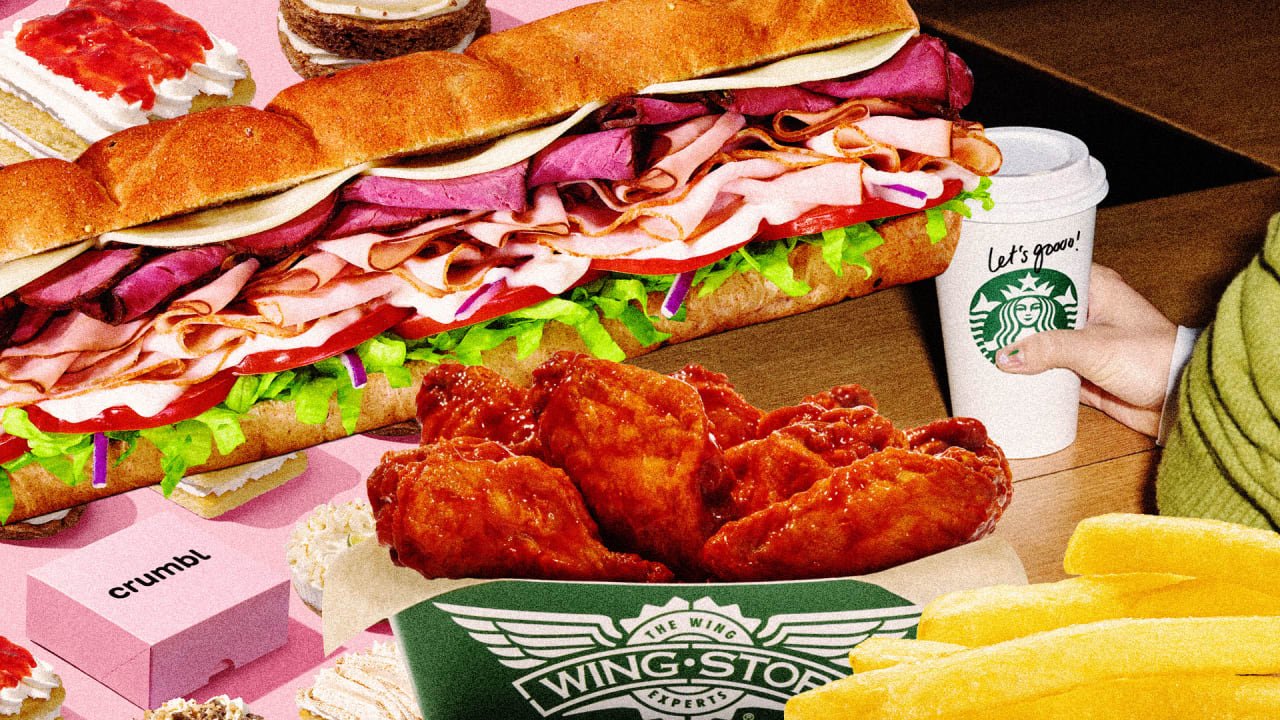
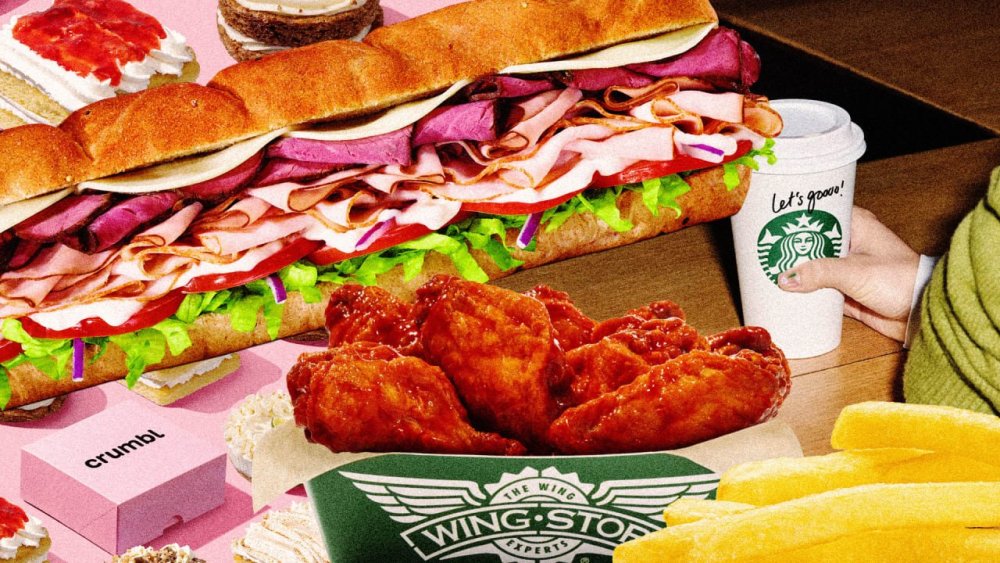
McDonald’s, Wingstop, and Starbucks are among Gen Z’s most popular and appealing restaurant brands, according to Dcdx’s new Magnetic 100: Restaurants report, measured by organic, user-generated content. The report looks at what young consumers spent their hard-earned money on in the first quarter of 2025, noting which brands attracted the most organic conversations, either by generating online buzz or through word-of-mouth, including during big cultural moments such as the Super Bowl and holidays like Valentine’s Day. Some surprising names to crack Dcdx’s top-10 roster this year were Crumbl Cookies (#6) and Raising Cane’s (#7), a fast-casual chain specializing in chicken fingers. Here’s the top 10 rankings from the new Magnetic 100: Restaurants: McDonald’s Wingstop Starbucks Chipotle Taco Bell Crumbl Cookies Raising Cane’s KFC Chick-fil-A Subway It’s worth noting that some of the top brands have had success with special-item offerings for a limited time, such as McDonald’s, which has collaborated with popular celebrities in creating some special-edition meals; and Crumbl, which features a rotating menu of cookie flavors. Gen Z’s spending power grows A lot has been written about Gen Z’s spending habits, mostly because the 12-to-27-year-old demographic’s spending power is expected to grow to $12 trillion by 2030, according to Nielsen. That would make it the wealthiest generation to date, giving it significant influence over the products retailers and manufacturers choose to sell, both now and in the future. It’s also the largest generation in history, making up more than 25% of the global population. The report makes clear that brands aren’t just competing for dollars, but also for a share in an ongoing and crowded online conversation. For example, the report’s top 100 brands racked up 7.78 billion total engagements, with McDonald’s, the leading brand, generating 1 billion engagements alone. Of the 139 total restaurant brands analyzed in the report, the top 6 brands drove more than 50% of the conversation in the restaurant category, representing nearly 4 billion engagements. View the full article
-
Former Barclays CEO is fighting FCA ban over allegedly playing down ties to the dead paedophileView the full article