Newsletter
Want to keep up to date with all our latest news and information?


ResidentialBusiness
Administrators
-
Joined
-
Last visited
Everything posted by ResidentialBusiness
-
Do artists and scientists see the same thing in the shape of trees? As a scientist who studies branching patterns in living things, I’m starting to think so. Piet Mondrian was an early 20th-century abstract artist and art theorist obsessed with simplicity and essence of form. Even people who have never heard of Mondrian will likely recognize his iconic irregular grids of rectangles. Tableau I by Piet Mondrian, 1921. [Image: Kunstmuseum Den Haag] When I saw Mondrian’s 1911 “Gray Tree,” I immediately recognized something about trees that I had struggled to describe. By removing all but the most essential elements in an abstract painting, Mondrian demonstrated something I was attempting to explain using physics and fractal geometry. My field of research is mathematical biology. My colleagues and I try to explain how treelike structures such as veins and arteries, lungs and leaves fine-tune their physical form to efficiently deliver blood, air, water and nutrients. Grey Tree by Piet Mondrian, 1911. [Image: Kunstmuseum Den Haag] Fundamental research in the biology of branching helps cure cardiovascular diseases and cancer, design materials that can heal themselves and predict how trees will respond to a changing climate. Branching also shows up in ant foraging patterns, slime molds and cities. The treeless tree From 1890 to 1912, Mondrian painted dozens of trees. He started with full-color, realistic trees in context: trees in a farmyard or a dappled lane. Gradually he removed leaves, depth, color and eventually even branching from his tree paintings. “Gray Tree” uses only curved lines of various thickness superimposed on top of one another at seemingly random angles. Yet the image is unmistakably a tree. Polder Landscape with Silhouetted Young Tree by Piet Mondrian, 1900-1901. [Image: Wikimedia Commons] How did Mondrian convey the sense of a tree with so little? The science of trees may offer some clues. The science of branching One goal of mathematical biology is to synthesize what scientists know about the vast diversity of living systems – where there seems to be an exception to every rule – into clear, general principles, ideally with few exceptions. One such general principle is that evolution fine-tunes treelike structures in living things to make metabolism and respiration as efficient as possible. The body carefully controls the thickness of vessels as they branch, because deviation from the most efficient diameter wastes energy and causes disease, such as atherosclerosis. In many cases, such as human blood vessels, the body exerts much tighter control over diameter than length. So while veins and arteries might take circuitous routes to accommodate the vagaries of organs and anatomy, their diameter usually stays within 10% of the optimum. The same principle appears in tree branches as well. The precise calibration of branch diameter leads to a hallmark of fractal shapes called scale invariance. A scale invariance is a property that holds true regardless of the size of an object or part of an object you’re looking at. Scale invariance occurs in trees because trunks, limbs and twigs all branch in similar ways and for similar reasons. Trees with different values of the scaling parameter α. [Image: Gao and Newberry/PNAS Nexus] The scale invariance in branch diameter dictates how much smaller a limb should be as it branches and how much investment a tree makes in a few thick branches versus many thin ones. Trees have evolved scale invariance to transport water, reach light and resist gravity and wind load as efficiently as possible given physical limits. This science of trees inspired my colleague and me to measure the scaling of tree branch diameter in art. The art of trees Among my favorite images is a carving of a tree from a late-medieval mosque in India. Its exaltation of trees reminds me of Tolkien’s Tree of Gondor and the human capacity to appreciate the simple beauty of living things. Siddi Saiyyed Mosque in Ahmedabad, Gujarat, India, carved ca. 1572. [Photo: Snehrashmi/Wiki Commons] But I also find mathematical inspiration in the Islamic Golden Age, a time when art, architecture, math and physics thrived. Medieval Islamic architects even decorated buildings with infinitely nonrepeating tiling patterns that were not understood by Western mathematics until the 20th century. The stylized tree carvings of the Sidi Saiyyed mosque also follow the precise system of proportions dictated by the scale invariance of real trees. This level of precision of branch diameter takes an attentive eye and a careful plan – much better than I could freehand. Cherry Blossoms by Matsumura Goshun (1752–1811). [Image: Metropolitan Museum of Art] Indeed, wherever our team looked at trees in great artwork, such as Klimt’s “Tree of Life” or Matsumura Goshun’s “Cherry Blossoms,” we also found precise scale invariance in the diameter of branches. “Grey Tree” also realistically captures the natural variation in branch diameters, even when the painting gives the viewer little else to go on. Without realistic scaling, would this painting even be a tree? As if to prove the point, Mondrian made a subsequent painting the following year, also with a gray background, curved lines and the same overall composition and dimensions. Even the position of some of the lines are the same. But, in “Blooming Apple Tree” (1912), all the lines are the same thickness. The scaling is gone, and with it, the tree. Before reading the title, most viewers would not guess that this is a painting of a tree. Yet Mondrian’s sketches reveal that “Blooming Apple Tree” and “Gray Tree” are the very same tree. Blooming Apple Tree by Piet Mondrian, 1912. [Image: Kunstmuseum Den Haag] The two paintings contain few elements that might signal a tree – a concentration of lines near the center, lines that could be branches or a central trunk and lines that could indicate the ground or a horizon. Yet only “Gray Tree” has scale-invariant branch diameters. When Mondrian removes the scale invariance in “Blooming Apple Tree,” viewers just as easily see fish, scales, dancers, water or simply nonrepresentational shapes, whereas the tree in “Gray Tree” is unmistakable. Photo synthesis Mondrian’s tree paintings and scientific theory highlight the importance of the thickness of tree branches. Consilience is when different lines of evidence and reasoning reach the same conclusions. Art and math both explore abstract descriptions of the world, and so seeing great art and science pick out the same essential features of trees is satisfying beyond what art or science could accomplish alone. Just as great literature such as “The Overstory” and “The Botany of Desire” show us how trees influence our lives in ways we often don’t notice, the art and science of trees show how humans are finely attuned to what’s important to trees. I think this resonance is one reason people find fractals and natural landscapes so pleasing and reassuring. All these lines of thinking give us new ways to appreciate trees. Mitchell Newberry is a research assistant professor of biology at the University of New Mexico. This article is republished from The Conversation under a Creative Commons license. Read the original article. View the full article

-
The German antitrust authority has charged Apple with abusing its market power through its app tracking tool and giving itself preferential treatment in a move that could result in daily fines for the iPhone maker if it fails to change its business practices. The move follows a three-year investigation by the Federal Cartel Office into Apple’s App Tracking Transparency feature, which allows users to block advertisers from tracking them across different applications. The U.S. tech giant has said the feature allows users to control their privacy but has drawn criticism from Meta Platforms, app developers and startups whose business models rely on advertising tracking. “The ATTF (app tracking tool) makes it far more difficult for competing app publishers to access the user data relevant for advertising,” Andreas Mundt, cartel office president, said in a statement. Apple defended the feature in an emailed statement to Reuters, adding that it “holds itself to a higher standard than it requires of any third-party developer.” “We … will continue to constructively engage with the Federal Cartel Office to ensure users continue to have transparency and control over their data,” it added. Apple will be required to address the concerns set out in the German charge sheet or risk further proceedings and daily fines if it fails to do so by the time of a final ruling which could come this year but is more likely to land next year. The case was triggered by complaints from associations representing publishers, broadcasters, advertisers, their agencies and ad tech firms. “Today’s charges are groundbreaking. Apple’s measures had created an artificial opacity in its ecosystem that led to less choice, higher costs for apps, and less protection against ad fraud, all while boosting Apple’s revenues from services,” said Thomas Höppner, partner at law firm Hausfeld, which represents the complainants. “For the first time it has been clarified that Apple may not rely on pretextual privacy arguments to massively restrict competition in its favor,” he said. Companies found guilty of breaching Germany’s antitrust rules risk fines as much as 10% of their annual turnover. —Rachel More and Foo Yun Chee, Reuters View the full article

-
Like many people, I had a retail job in college. What it failed to deliver in financial rewards, it made up for by teaching me life skills. I learned how to stay calm when someone was being loud and wrong, how to negotiate, and how to manage my time. Other learned skills weren't as obvious. For instance, I didn't realize, whenever I worked a closing shift, that I was learning to manage my own home. At least, that's what CleanTok influencers would have me believe with this latest cleaning trend. It's called "closing shift cleaning" and you may have seen it on TikTok or Reels. What is "closing shift cleaning"? Closing shift cleaning is what it sounds like, as long as you know what a closing shift is all about: You tidy up at night and get everything ready for the openers. In this case, you're not only the closer, but the opener. If you ever had to work a "clopen" shift, you might recall that you put more effort into closing to make opening up easier for yourself in the morning. This is like that, but for your home. If you've ever closed up a cafe, you know you need to make sure the food is prepped for the next morning. If you've ever closed up a mall store, you know you need to make sure the displays are in order. You need to count the cash in the till, throw out the trash, and turn off all the machines. The idea is to get all that done so the opener can focus on the actual opening tasks, like getting the muffins in the oven or coordinating a drop-off with the restock agent. When you do a "closing shift" at home, you're thinking about what you'll need the next morning and getting it ready. If you know you'll need coffee, make sure the machine is clean and you have a fresh mug available. If you have to go to the office, make sure your clothes are steamed and laid out. Take out the trash, put away any clutter that accumulated during the day, and generally get your home ready to "open" in the morning. Why does closing shift cleaning work?Thinking of your home as a business isn't a new concept in the decluttering space. In the past, I've recommended a technique that involves storing extra products in a "backstock" area, like you would in a store. Treating your home as a business allows you to be more methodical and objective, and removes a much of the hesitation or decision paralysis. As is true in any business, you want to start your day off with no bumps or missteps; you want everything to go according to plan. Preparing the night before by tidying up your kitchen, assembling everything you'll need in the morning, and "closing down" the house gives you a head start on the day. Not only does it make the next day better before it even begins, but it gives you a sense of accomplishment as you head to bed. To make this work, spend a few days taking note of what holds you up in the morning, whether it's digging your rain boots out from the back of the hall closet or tripping over the folded clothes you haven't yet put away. What, if eliminated or dealt with, would make your morning better? Take note, too, of what weighs on you when you go to sleep, like dishes left in the sink or trash you didn't take out. Then, commit to addressing these concerns at night, building a personal checklist of "closing" responsibilities. View the full article
-
Small businesses need to look at Facebook WiFi. You’ll get more activity on your Facebook business page. It’s good for social engagement and digital marketing. All you need to get started is a router and your smartphone. What is Facebook WiFi? It transforms your business into a WiFi hotspot when you are offering free WiFi to customers. Potential customers can check-in, and businesses can share announcements and promotions. Small businesses also receive analytics regarding gender and age demographics. Additionally, it’s software that provides people with free internet access. How to Setup Facebook WiFi Setting up Facebook WiFi is easy. Following are the steps to set up this kind of guest portal. What you’ll need. A Facebook account and a page. You’ll need to be the admin. Check the settings under Page Info. You need to have an address or location. You’ll need a router for Facebook WiFi supporting both Instagram and Facebook. Scroll down to check access. Here’s how to connect access points. Set up your routers. Video guides are available by following this link. Next, go to Page Settings to connect your WiFi and business page. Adjust your user settings. You can click on the skip check-in link, which prevents users from checking into your business before they gain access to WiFi. Alternatively, you can use a different authentication method by entering the WiFi code to obtain access. Try testing your Facebook WiFi out. A login screen should pop up when you connect your device. About Cookies Facebook tracks users, and you can remove cookies from your Facebook page. Go here to review your cookie controls. These are used to verify your account, and cookies also personalize content. Look for the browser we use for the cookies alert. They provide an experience you can review. They also provide relevant ads and provide marketing to people who have visited your website. Facebook uses cookies to help personalize and improve content. Reasons Why You Should Use Facebook WiFi for Your Business Facebook Page There are many benefits of offering WiFi and big advantages to providing Facebook WiFi. It connects with your guest network. Here are other reasons this WiFi makes a difference. Provide Free WiFi and Internet Access for Your Customers Facebook WiFi provides a free opportunity to showcase your brand to customers. It offers convenience to users and helps boost foot traffic to your business. Get More Engagement and Check-Ins on Your Facebook Business Page Customers check in when they tag your business. You get access to more followers through their network and friends. These check-ins get your goods in front of potential customers. Check-ins are also shown on customers’ news feeds. They can be seen on your Facebook Page and by the customer’s friends, providing an amplified form of free marketing. Get Discovered by More Customers Using the Find WiFi Feature Find WiFi is available for Android and iOS. Look for the option under the More tab or the hamburger icon. Small businesses get exposure for their ads and products. Find WiFi shows nearby free WiFi hotspots with addresses. This is an excellent method for a company to attract visitors to their Facebook page or to their physical location. Descriptions of your services can generate relevant ads, while the content and services contribute to increased sales. It’s Safer and More Convenient. There’s No Need To Share Passwords. Businesses want a safer experience with the connection and ISP they use. This tool adds security. Visitors don’t need to ask for a WiFi password. They only need to log in to Facebook where they can then check in with your business. Here’s another helpful tip. To connect to the WiFi, you’ll need to accept cookies. You may see a notification stating, “Accept cookies from Facebook on this browser.” Cookies are used to store data securely. Get More Instagram Engagement Get more business traffic by connecting your business Instagram profile. This allows access to your Facebook WiFi. Visitors can opt in, follow your business, and get updates. This can help personalize and improve the way clients can connect. Boost Local Visibility Facebook WiFi can increase your business’s visibility in local searches and on local Facebook pages. When customers check in to use the WiFi, their network sees their location, potentially attracting more local visitors. Enhanced Customer Retention Offering free WiFi through Facebook WiFi can increase customer dwell time in your business, leading to higher retention rates. Longer visits often translate to increased sales and repeat business. Competitive Advantage Providing Facebook WiFi can give your business a competitive edge over others that do not offer free WiFi. It’s a value-added service that can differentiate your business in a crowded market. Improved Social Media Presence Using Facebook WiFi can enhance your business’s social media presence. As more customers check in and engage with your Facebook page, your online visibility and brand recognition improve. Easy-to-Manage Network Facebook WiFi simplifies network management. It allows you to control access and monitor usage without needing complex IT infrastructure, making it ideal for small businesses with limited resources. Simplified Marketing Efforts Facebook WiFi can streamline your marketing efforts. By integrating with Facebook’s platform, you can easily promote events, special offers, and announcements directly to customers who check in at your location. Data-Driven Marketing Decisions The analytics provided by Facebook WiFi can inform your marketing strategies. By understanding customer demographics and behaviors, you can tailor your marketing efforts to target the right audience effectively. Increased Social Proof Customer check-ins on Facebook act as social proof, endorsing your business to their friends and network. This word-of-mouth marketing can be more effective and credible than traditional advertising methods. Strengthened Customer Relationships Facebook WiFi allows you to engage with customers on a personal level. By offering a valued service like free WiFi, you can build stronger relationships and foster a sense of community around your brand. Greater Control Over Internet Usage With Facebook WiFi, you have more control over how customers use your network. You can set time limits or restrict access to certain sites, ensuring that your WiFi is used appropriately and efficiently Benefits of Using Facebook WiFi Analytics for Small Businesses Small businesses can significantly enhance their customer engagement and digital marketing strategies by leveraging Facebook WiFi. By transforming their locations into WiFi hotspots and harnessing the power of social media, these businesses can boost social interaction and expand brand visibility. Here are several reasons why small businesses should think about utilizing Facebook WiFi analytics: Gain Valuable Insights with Analytics: Facebook WiFi provides businesses with detailed analytics, including information about the gender and age of the people who check in to use the WiFi. This data can be incredibly useful for understanding your customer demographics and tailoring your marketing strategies accordingly. Enhance Personalized Marketing: With the data obtained from Facebook WiFi check-ins, small businesses can create more personalized marketing campaigns. By understanding the preferences and demographics of their customers, businesses can deliver targeted advertisements and offers that are more likely to resonate with their audience. Measure Foot Traffic and Customer Behavior: Facebook WiFi allows businesses to track foot traffic and customer behavior patterns. By analyzing when and how often customers visit, how long they stay, and what they engage with during their visit, businesses can make informed decisions to optimize their operations and marketing strategies. Refine Business Strategies: The analytics from Facebook WiFi offer valuable insights that allow small businesses to enhance their strategies. For example, if they observe that specific age groups visit more often, they can adjust their offerings to meet the needs of that particular demographic. This approach, grounded in data, can result in improved customer satisfaction and loyalty. Improve Customer Experience: By offering free WiFi through Facebook WiFi, small businesses enhance the overall customer experience. Customers are more likely to spend time in your establishment when they can access the internet, leading to increased sales and potentially repeat visits. BenefitDescription Valuable Insights with AnalyticsFacebook WiFi provides detailed analytics, including gender and age data of WiFi users. Helps understand customer demographics for tailored marketing strategies. Enhance Personalized MarketingUtilize data from check-ins to create targeted ads and offers, resonating with customer preferences. Measure Foot Traffic and Customer BehaviorTrack visit frequency, duration, and engagement patterns to optimize operations and marketing tactics. Refine Business StrategiesAnalyze data to adjust strategies based on customer trends. Tailor offerings to specific demographics for increased satisfaction and loyalty. Improve Customer ExperienceOffering free WiFi enhances customer experience, leading to increased time spent in the establishment, potentially boosting sales and return visits. Incorporating Facebook WiFi analytics into your small business strategy can open up new avenues for growth, engagement, and customer satisfaction. By leveraging the power of data, businesses can make smarter decisions and build stronger relationships with their customers. Which devices support Facebook WiFi? A user needs to choose compatible routers. Here’s a list users can refer to. And you’ll need a mobile phone. Is Express WiFi by Facebook free? No. This isn’t free. But it allows users to connect in different WiFi zones. It is designed to help Internet service providers and mobile network operators grow their WiFi businesses. You can get the app on Google Play. Sign up through a hot spot where you live. You can buy daily, weekly, or monthly data packs. Get more information here. You’ll need to agree to the cookie policy. Facebook uses cookies to help personalize the advertisements you see. They use these to personalize and improve content as well. It’s important to remember that while cookies improve content and services, they can also track individual browsing histories. Always consider cookie uses and control options. Is Express WiFi by Facebook safe? Express WiFi, a Facebook-provided connectivity solution, focuses on ensuring user data safety and privacy. By utilizing cookies, the platform enhances personalization and security, tailoring services to individual preferences and detecting potential security threats. It also monitors and analyzes users’ online interactions in real-time to detect malware and phishing attempts. Express WiFi acknowledges privacy concerns and uses anonymized data for security analysis. Users can manage their cookie settings, fostering trust and collaboration. Which countries have Facebook WiFi available? Facebook WiFi has made a significant impact in North America. Cities throughout the United States and Canada have embraced this technology as an avenue to enhance customer engagement and connectivity. From bustling metropolitan areas to suburban communities, businesses across the continent have recognized the value of offering free WiFi to their customers. Conclusion In today’s digital age, small businesses need to explore innovative ways to engage customers and enhance their digital marketing strategies. Facebook WiFi offers an excellent solution that not only provides free WiFi access to customers but also opens up a realm of benefits for businesses seeking to boost their online presence. By leveraging the power of social media, businesses can achieve higher engagement levels and increased brand exposure. The integration of Facebook WiFi analytics further amplifies these advantages, allowing businesses to gain valuable insights into their customer demographics, behavior, and preferences. Through Facebook WiFi, small businesses can offer a seamless and convenient customer experience, leading to longer stays, increased sales, and potential repeat visits. The platform’s features, including check-ins, free internet access, and customized marketing opportunities, establish a strong ecosystem that enables businesses to engage with their audience in meaningful ways. Additionally, the Find WiFi feature expands reach by showcasing nearby hotspots, attracting potential customers to businesses’ brick-and-mortar locations. The simplicity of setting up Facebook WiFi, coupled with its security enhancements and compatibility with popular devices, makes it an accessible and valuable tool for small businesses. By integrating their Instagram profiles and utilizing the analytics insights, businesses can tailor their strategies to better serve their audience and refine their operations. Incorporating Facebook WiFi analytics into your small business strategy can lead to growth, improved customer satisfaction, and stronger customer relationships. By embracing this technology and leveraging the power of data-driven decisions, businesses can thrive in the competitive landscape of today’s market. Image: Depositphotos This article, "Using Facebook WiFi to Increase Social Engagement with Customers" was first published on Small Business Trends View the full article
-
A series of moves aimed at deleveraging its balance sheet led to the loss, but the bottom line improved markedly over 2023. View the full article

-
Japanese automaker Honda reported a 7% decline in profit for the nine months that ended in December on Thursday as it terminated talks on integrating its business with Nissan. Tokyo-based Honda Motor Co. said its motorcycles business was strong, but its auto sales suffered in China and Japan, while demand stayed solid in the U.S. Honda’s April-December 2024 profit totaled 805 billion yen ($5 billion), down from 869.6 billion yen the same period in 2023. Nine-month sales gained nearly 9% to 16.3 trillion yen ($106 billion). Honda and Japanese rival Nissan Motor Corp., along with the smaller Mitsubishi Motors Corp., said in December that they were in talks to set up a joint holding company. The automakers said Thursday they were ending the talks, although existing collaborations in electric vehicles and smart cars will continue. —Yuri Kageyama, AP Business Writer View the full article

-
There is a moment every week dedicated to placing my face in front of my phone screen: my children's karate practice. While they are learning their kicks and punches, I mindlessly scroll through clickbait, videos, games, and social feeds to pass the time. While it gives me something to do, I don't feel good about it. Then I heard about WikiTok, which, as its name alludes to, is a web interface that combines TikTok and Wikipedia. Unlike traditional video-sharing platforms, WikiTok offers users a refreshing respite from the relentless algorithms that dominate our digital landscape. The web app delivers an article at random, with an engaging image filling the display. If something interests you, you can tap "Read More," and then the full Wikipedia article will pop up in another window. If it doesn't catch your fancy, you scroll up, and another article will randomly appear. Credit: Lifehacker I wanted to test WikiTok, so when my karate kids started doing their thing, I headed to the site and started scrolling, where I encountered a genuinely random feed filled with articles about philanthropist Dorothy Lichtenstein, the second wife of pop artist Roy Lichtenstein, and a rundown of the San Diego Padres' 2019 season. I couldn't stop scrolling, not because WikiTok gave me what I wanted, but because its content was intriguing. Over the next hour, I read about the Samsung Continuum Android phone, learned that Patrick Mahomes and Travis Kelce will also get Super Bowl rings, and viewed an architectural marvel in Denmark resembling the fjords that dot the country's landscape. The lack of rhyme and reason to WikiTok feeds is intentional, and developer Issac Gemal told Ars Technica that he has no plans to change that anytime soon: "I had to put my foot down and say something along the lines that we're already ruled by ruthless, opaque algorithms in our everyday life; why can't we just have one little corner in the world without them?" Adjusting to life without algorithmsOf course, not having content tailored to your interests takes some getting used to. I was concerned that with each click of "Read More," WikiTok was learning something about me. At one point during my scrolling session, I was convinced that there was a reason why I encountered more than one article on baseball teams and small towns in Arizona, the state I call home. When I returned for another scrolling session the next day, I realized my fears were unfounded. I was fed articles about Las Vegas office complexes, villages in India, and sports motorcycles. Not once did I encounter an article about what I go on the internet for most: news about movies and music. Gemal's creation appears to be exclusively web-based, but several apps that poorly mimic the feeling of being on WikiTok are already available. One even asks for your email address before letting you scroll, which seems suspect. Stick to the web browser version and enjoy your well-deserved break from algorithms. View the full article
-
It is a fallacy to believe there is a trade-off between regulation and innovation View the full article
-
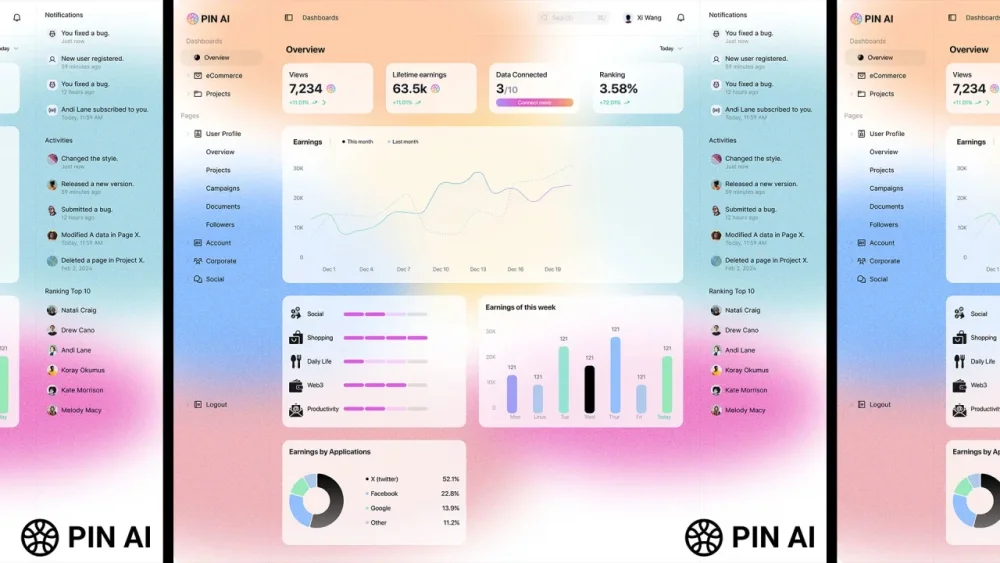
There’s a focus on protecting our personal data now, perhaps more so than ever before, be it from foreign powers, Big Tech, or Elon Musk’s DOGE. Consumers are wary about where their data is going, what it’s being used for, and how, or if, they can put up safeguards, especially while using tech tools like search engines or AI assistants. With several AI tools and assistants hitting the market over the past couple of years—Microsoft’s Copilot and Meta’s Llama, among many others—much of our data, queries, and summaries are being fed to large tech companies, used to train their artificial intelligence models. While some users may not mind, it could turn others off, which is why one company is trying a different approach. PIN AI, a Bay Area-based AI startup, is rolling out what it calls the “personal AI network” with the launch of a mobile application this week, complete with a native large language model (LLM) that is designed to become a “personalized intelligence network,” or “PIN.” In a nutshell, PIN AI’s app and LLM “live” on a user’s smartphone, accessing the personal data via other apps and platforms that only the user authorizes, and then provide specific and tailored insights or answers based on that information. It’s similar, in some ways, to Apple Intelligence. That’s important, say PIN AI’s founders, because AI tools are the next great online frontier, even if they’re not ubiquitous quite yet. “These AI products are becoming the universal interface to access online services,” says Davide Crapis, one of the company’s cofounders, along with Bill Sun and Ben Wu. “It’s becoming the new way that we access the internet.” Getting personal Personalization is going to be incredibly important going forward—not only to protect users’ data and information but also to provide relevant information. For example, suppose a user allows PIN AI to connect to their Gmail account, social media accounts, banking information and payment apps, text messages, and internet browsing data. Tapping into all of that information, PIN AI will be able to deliver personalized, in-depth answers or responses, unlike any or most other AI tools on the market. [Image: PIN AI] In other words, while other AI models utilize all of the data they’ve scraped and ingested to train themselves to generate responses for users, PIN AI only uses the personal data and information a user has given it access to. Crapis, Sun, and Wu, collectively, have been working on AI technology for many years, and say that it may sound complicated but that users will quickly realize it’s a fairly simple product. “There’s an LLM packed with the app,” says Sun, “so you get a personalized AI.” As an example of how “personal” the AI tool can get, Sun tells Fast Company that a hypothetical user could simply bark a voice command at the app such as, “order my mom a birthday present.” From there, PIN AI would sift through past communications and other information, discerning what the user’s mom might want, where to get it, and at the best price. It can also place the order and have it delivered—with no additional effort from the user, other than the initial voice command. It’s all about sovereignty Another example: If a user were to ask PIN AI a more complicated question, such as, “can I afford to buy a new car,” the tool could likewise analyze the user’s bank accounts, figure out what types of vehicles the user may want or need (incorporating family needs, etc.), their favorite color or other potential specifications, financing needs, and deliver up an answer of either yes or no, along with a list of potential buying options from nearby dealerships. While it’s all pretty powerful, users may rightfully be wary about giving an app and AI tool so much access to their information. That’s another thing the PIN AI team says they’re focusing on: encryption and security. The tool is built on blockchain protocols and users’ data and information are encrypted, so if a user loses their phone with PIN AI installed, a bad actor still shouldn’t be able to access it. Resonating with early users After rolling out a trial app, Sun says that it has attracted around 2 million users, almost exclusively through word of mouth, as well as an active community on platforms like Discord. In terms of monetization, the company plans to drive revenue by charging the various agents from different apps and platforms that will interact on the model a per-use fee—so users themselves don’t pay anything. The monetization takes place within an agentic AI marketplace, and those agents will fork over a slice of applicable commission fees. And it’s also gotten the attention of investors. The company is backed by a16z Crypto (CSX), Hack VC, and Sequoia Capital U.S. Scout. So far, PIN AI has raised more than $10 million, according to data from PitchBook. With the app launch, the team hopes to attract more users, refine the product, and see how PIN AI ultimately slots in on the market among other AI tools. “It’s about the sovereignty of the user and their data,” says Crapis. “With PIN AI, you have full control.” View the full article
-
A Texas county on Wednesday approved holding an election sought by SpaceX that would let residents living around billionaire Elon Musk’s company decide whether to formally create a new city called Starbase. The election was set for May 3 and votes can only be cast by residents living near the launch site that is currently part of an unincorporated area of Cameron County, located along the U.S.-Mexico border. In December, more than 70 area residents signed a petition requesting an election to make Starbase its own municipality. Most of the residents are company employees and the community includes more than 100 children, according to copies of the petition obtained by The Associated Press. Cameron County Judge Eddie Treviño said the county reviewed the petition and found it met the state’s requirements for the incorporation process to move forward. “If the election passes, this will be the newest town in Cameron County since Los Indios in 1995,” Treviño said in a statement. “We look forward to seeing the outcome of this election.” SpaceX responded to a request for comment by referring to the company’s earlier statement in December. Kathryn Lueders, Starbase’s general manager, previously said that the incorporation would streamline certain processes to build amenities in the area. Some local environmental advocates have expressed worry about what the effects would mean for development. SpaceX’s launch site broke ground in Texas in 2014. Only 10 of the roughly 250 lots of land within the proposed new city limits do not belong to the company. More than 3,400 full-time SpaceX employees and contractors work at the Starbase site, according to a local impact study issued by the county last year. Musk has long been planting business roots in Texas and has spread them far and wide across the Lone Star State. The billionaire moved to Texas in 2020 and relocated to or expanded a number of his companies in the state, citing the state’s business-friendly climate. Tesla’s massive 10-million-square-foot (930,000-square-meter) Gigafactory, where the company makes its Cybertrucks, opened near Austin in 2022 and will also serve as the company headquarters. —Valerie Gonzalez, Associated Press View the full article

-
For years, I thought saying yes was the key to success. Yes, to my parents’ dream of me becoming a doctor. Yes, to the long hours in medical school. Yes, to a career that others admired, even as I felt a growing sense of unease. I loved medicine’s ability to make a difference in people’s lives, but deep down, I had questions: Did I truly want to be a doctor, or was I fulfilling the role others expected of me? Every yes felt like another step away from myself. One pivotal moment came while I was working in a hospital in the Cook Islands. I treated patients with heart failure so advanced that basic mobility was a struggle. What struck me most wasn’t the lack of resources; it was the sense of familiarity. Even in the U.K.’s world-class healthcare system, I had seen patients left behind—ignored, dismissed, or underserved. These moments clarified what I valued most: fairness, justice, and confronting systemic inequality. When I returned to work as a junior doctor in Edinburgh, it became clear that the questions driving me weren’t about treating symptoms—they were about the systems perpetuating inequity. I eventually said no to medicine, not because I didn’t care, but because I cared deeply. Saying no isn’t rejection—it’s redirection. It’s about aligning your time and energy with your values and goals. But in practice, saying no can be daunting—especially in professional environments where compliance often feels safer than resistance. I have learned, however, that the ability to say no is a skill. Turn down projects that stretch you too thin Leaders and professionals often overcommit, risking burnout and lower-quality work. A former student of mine, a project manager, learned this the hard way. After saying yes to an unrealistic timeline, the team missed deadlines, and relationships suffered. The next time a client proposed an impossible deadline, she said, “To meet your goals, we’d need more time to maintain quality. Can we extend the timeline or adjust deliverables?” The result? The client agreed, and the team delivered excellent work, strengthening trust. Set boundaries without alienating others A marketing executive I know faced constant interruptions from colleagues seeking her input. Instead of shutting them down, she framed her no around her priorities: “I want to give you my full attention, but I’m focused on completing this project right now. Can we schedule a time to discuss this later?” By acknowledging their needs while protecting her time, she maintained strong relationships without compromising her priorities. Say ‘no’ to preserve long-term vision Patagonia’s decision to say no to the fast-fashion model is a famous example. By focusing on sustainability and durability, the company aligned its business practices with its values. This defiant stance reshaped the outdoor apparel industry and built a loyal customer base. One reason saying no feels so difficult is the fear of resistance or misunderstanding. People may question your decision or even push back. That’s why preparation matters. Before entering these conversations, get clear on your reasons and rehearse how you’ll articulate them. If you’re declining a promotion, for example, you could say, “I’m incredibly grateful for this opportunity, but I’ve reflected on my priorities and realized this role doesn’t align with the path I see for myself. I’d love to contribute in ways that better match my strengths and long-term goals.” Clarity and confidence can help diffuse resistance and ensure your no is respected. Saying no isn’t about being contrarian or uncooperative. It’s about alignment—with yourself, your values, and the future you want to create. Even at the highest levels of leadership, the importance of focus and clarity is critical. In a recent strategy meeting, Google CEO Sundar Pichai emphasized the company’s biggest priority for 2025: simplifying work and scaling key initiatives like their AI-powered Gemini app. He urged employees to “internalize the urgency of this moment” and to prioritize focus by saying no to distractions. This kind of intentional decision-making isn’t just about efficiency—it’s about achieving excellence by staying aligned with core goals. When saying no: Reframe no as alignment, not rejection. A well-chosen no isn’t about shutting down an opportunity—it’s about making space for the right ones. Be transparent and tie your no to shared goals or values. When people understand your reasoning, they are more likely to respect your decision. Remember that no isn’t the end—it’s the beginning of a better path. The discomfort of saying no is temporary, but its impact can last for years. Looking back, I see that saying no to medicine wasn’t about closing a door—it was about opening the right one. That decision made room for a career aligned with my values, one where I could research, teach, and advocate for systemic change. No isn’t the end. It’s the beginning of a path to greater alignment, purpose, and impact. Whether it’s a career decision, a project at work, or a personal boundary, learning to say no with clarity and intention is one of the most productive skills you can develop. And each time you do, you’re not just making a decision—you’re affirming who you are and what you stand for. View the full article

-
In 2023, creator and social agency Whalar Group announced an ambitious plan to create physical campuses for content creators to learn, make, and collaborate with their peers. Now the company is opening the doors to its first campus in Venice, Calif. this month with an additional location in Brooklyn launching this spring and a London location slated for 2026. Part production studio, part co-working space, part university, The Lighthouse is membership-based community designed to help creators and their teams level-up both their content and the businesses they’re building around it. “If you look at [20th century German art school] Bauhaus, Andy Warhol’s Factory, Silicon Valley, all those moments where you had a gathering space for smart, curious, multi-hyphenate[s] created a generational shift for creative industries,” says Jon Goss, president of The Lighthouse. “That’s our goal: to be a place where people can find connection, find opportunities to collaborate, learn from experts and thought leaders, and learn from each other. And I think that enables the creator economy to go into its next chapter.” The Lighthouse’s founding cohort in Venice includes 150 creators and creative professionals who will use the facilities for filming, editing, podcasting, screening, performing, and more on top of having access to educational classes and sessions covering topics including business management, how to staff a team, production workshops, wellbeing and personal growth, and more. Memberships will typically run for up to four years and those who have contributed to The Lighthouse by way of education, community building, and programming will have the option to remain members who can mentor the next generation of creators and creatives. [Photo: Yoshihiro Makino] For as long as the creator economy has been around (since 1997, by some suggestions) and for all the money pouring into it (estimates place its total addressable market reaching half-a-trillion by 2027), it’s still somewhat of the Wild West. Various platforms and agencies have sprouted up in droves to help creators monetize their content, sell products, and score brand deals. But what’s often missing is a cohesive path toward professionalizing a creator business, particularly for the middle class of the creator economy. According to Influencer Marketing Hub, more than 50 million people worldwide consider themselves to be creators—but only 2 million would say they’re “professionals,” i.e. earning enough for it to be their full-time career. Granted, some creators will always keep what they do as a side hustle. But for those looking for a more solid foundation to scale up their businesses—or even establish one in the first place—Goss sees The Lighthouse as a viable resource. “The creator economy is being taken more seriously every year,” Goss says. “It just feels like centers of gravities going towards creators and the creator economy. I think more and more brands and media platforms and entertainment organizations are recognizing that every single day. It’s just inevitable.” [Photo: Yoshihiro Makino] “So our mission is to be an ecosystem for all those constituents,” he adds, “having those people all in the room together, actually having those conversations in real-time versus them happening in their echo chambers.” Part of bringing the gap among those constituents are The Lighthouse’s founding brand partners Shopify, iHeartMedia, and Samsung providing programming and activations throughout the campus. Shopify will have a pop-up for creator brands to showcase their products. iHeartMedia will host a monthly live podcast onsite featuring emerging talent. And Samsung is outfitting the space with TVs and products. Whalar Group also struck a broader partnership with Tribeca Festival to have a vertical within Tribeca dedicated to the intersection of Hollywood and creators. That vertical will also translate into a year-round talk series at the Lighthouse Venice and Brooklyn. The Lighthouse’s cohorts are selected by a council of their peers. And Goss says they took a similar approach of careful curation with which brands and organizations they chose to partner with. “They’re directly relevant to creators, to the creator economy, to the ability for creators to up-level and have a connection to them,” Goss says. “Brands are still a massive part of creators both in terms of the content they can create and the ability to generate revenue.” To be sure, The Lighthouse isn’t necessarily a novel concept. In 2012, YouTube launched Spaces which eventually shifted to a virtual and pop-up event model after the the company shuttered its physical locations post-pandemic. Popular content creator Casey Neistat launched his own attempt with Studio 368 in 2018 but a post on its Instagram last year stated it was “time to pack it all up.” [Photo: Yoshihiro Makino] Goss says they’ve studied predecessors to The Lighthouse and he sees the difference being that what they’ve built is a design-driven space for creators to do more than produce content. “We’ve taken elements of hospitality and membership clubs and shared workspaces where cultural programming happens on a regular basis to keep driving community and conversations,” Goss says. He also sees The Lighthouse succeeding by remaining as dynamic as the creator economy itself. “This has to be a place of constant evolution,” Goss says. “When we talk about what will this place become, what will it mean for creators, not knowing the endless possibilities that can come is the exciting bit. We’ve doubled down on providing this environment for all sorts of possibilities to happen.” View the full article

-
Sprint interval training, or SIT, is super trendy right now. It’s a great way to improve your running speed and to get in a hard interval workout, and I’ll explain exactly how. But I also need to clear up this silly question about whether it’s “better than” HIIT (or high-intensity interval training). SIT is, in fact, a type of HIIT. What is SIT? Sprint interval training refers to exercise routines where you run as hard as you possibly can (or nearly as hard) for a short time, typically 30 seconds. A SIT workout usually looks something like this: Warm up with walking and/or easy jogging for 10 to 15 minutes. Run 30 seconds as hard as you can. Recover (walk or rest) for three to five minutes. Repeat the above steps anywhere from four to 10 times. Cool down with more walking or easy jogging—for, say, five to 10 minutes. The benefits of SIT include improved running economy (basically, your body gets more efficient at the running motion) and improved time in running races. SIT has not been found to increase your VO2max any better than steady-state training, or any better than HIIT. For example, this study found no significant difference in VO2max between SIT training and a control group that did steady state training (both improved), but it did find that the SIT group was better at sprinting. Not surprising, when you think about it. Here is some data from a recent SIT workout I did. I wanted to get in five miles for the day, so I warmed up for 15 minutes and cooled down for about the same, and in between I did 10 intervals of 30 seconds each, with three minutes’ recovery. (I thought about doing four minutes, but I only had about an hour to get that workout in, so I opted to be a bit more efficient.) The sprints were hard, but the recovery gave me plenty of time to feel ready to go again. Credit: Beth Skwarecki What is HIIT? As I’ve written (or, to be honest, ranted) before, HIIT started as a catch-all term for hard interval workouts, and has mutated into a marketing buzzword that signifies the general idea of hard work in a short timeframe. HIIT stands for high intensity interval training, and it includes all kinds of different interval schemes. Here are some of the “classic” HIIT workouts from the scientific literature: Wingate sprints: 30 seconds all-out, followed by 4ish minutes of rest, repeated several times. (These were originally done on a research-grade exercise bike.) Tabatas: Four minutes of 20-second all out sprints, with just 10 seconds between each one. These, too, were originally done on a bike, and you do the whole block once, not multiple times. 60/60: One minute hard, one minute easy, then repeat Scientific articles that review the results of HIIT tend to have trouble coming up with a definition, since the term has been used so many different ways. This study has a table with examples, including the ones above, plus basketball players’ shuttle runs and swimmers’ 50-meter intervals. This one defined HIIT as anything where the work intervals were four minutes’ duration or less. Did you notice something? Those Wingate intervals? Yep, that’s the same type of workout people are now calling SIT. SIT is a type of HIIT. Is SIT or HIIT better for fat loss? Neither is better. SIT is a type of HIIT, anyway. If you want to change your body composition, the exact type of exercise doesn’t matter much, as long as you are doing some kind of strength training to preserve or build muscle. The difference between your calorie intake and your calorie burn is what determines how much fat you lose. It doesn’t really matter how you burn your calories. The term “SIT” is being misused on social mediaSIT should be a little easier to understand than HIIT, since it’s one specific family of workouts. But as I browsed TikTok and other social media, I found people using SIT to refer to non-SIT protocols like 20 seconds work, 10 seconds rest, for five rounds. That’s not SIT at all. I also found a “SIT” workout that involved 20 seconds of kettlebell swings, 20 seconds of thrusters, and 30 seconds of burpees. That’s not even sprinting! Take all these social media workouts with a grain of salt, especially when they make big promises about weight loss or muscle gain. SIT isn’t some magic secret to getting a fitness influencer body; it’s just a nice, intense workout that benefits your running. View the full article
-
Dutch Bros Inc. shares surged more than 27% in premarket trading Thursday after the coffee chain posted better-than-expected fourth-quarter results and announced plans to expand mobile ordering and food offerings. Revenue rose 34.9% to $342.8 million, surpassing Wall Street estimates. Same-store sales grew 6.9%, and adjusted earnings per share reached 7 cents, both exceeding expectations. The company forecasts 2024 sales between $1.555 billion and $1.575 billion, exceeding analyst projections. “Our efforts to develop our foundational transaction drivers—innovation, paid media, and our Dutch Rewards loyalty program—are working,” CEO Christine Barone said in a statement. “We believe these efforts are contributing to current momentum and that there is considerable runway for further growth.” Dutch Bros stock (NYSE: BROS) has risen more than 143% in the last 12 months. Expansion plans and growth strategy The fast-growing Starbucks rival has made significant strides in its expansion. Dutch Bros recently opened its 1,000th store and added 151 locations in 2024 alone, which is on the lower end of projections it had made early last year. With plans to now open at least 160 more shops this year, the company continues its aggressive growth strategy while increasing its advertising efforts and expanding its rewards program. Barone also highlighted future plans for mobile ordering and food offerings. “We see a clear path forward, with multi-year transaction-driving initiatives that layer on top of this foundation, with opportunity to unlock throughput and ramp mobile order in 2025,” she said. “In 2026 and beyond, we are excited about opportunities with expanding our food offerings.” Preserving culture amid growth As Dutch Bros continues to expand, the company said it remains committed to preserving its culture of friendly service, courtesy of the “broistas” (Dutch Bros’s term for baristas) who have been key to its success. “As we expand [broistas’] roles, we must consider how to do so in ways that continue to foster a fun and energetic work experience that assures we continue to attract and retain the very best people,” Barone explained. View the full article

-
Foreclosure filings increased 7% in January from December, which could be a housing market starting to experience trouble, or a post-holiday return to normal. View the full article

-
We may earn a commission from links on this page. Deal pricing and availability subject to change after time of publication. Security cameras with floodlights can be hit or miss—sometimes the lights aren’t bright enough; sometimes the camera quality is lacking; and other times, the motion detection is too sensitive. But the Ring Floodlight Cam Wired Pro (Certified Refurbished), now going for $119.99 on Woot (for seven days or until it sells out), seems to check all the right boxes—assuming you’re cool with a refurbished unit. Ring Floodlight Cam Wired Pro (Certified Refurbished) $119.99 at Woot $249.99 Save $130.00 Get Deal Get Deal $119.99 at Woot $249.99 Save $130.00 It comes with a one-year limited warranty, the same as a new model, which is reassuring. And if you’re a Prime member, you get free standard shipping (otherwise, it’s $6), though it does not ship to Alaska, Hawaii, P.O. boxes, or APO addresses. Available in black or white, this floodlight camera packs some serious lighting power, with two adjustable LED lamps throwing out 2,000 lumens each (enough to illuminate a backyard or driveway). Additionally, its 2K HDR camera offers a 140-degree horizontal and 80-degree vertical field of view, meaning it can cover a wide area. You'll also find a 110dB siren, a built-in speaker and microphone for two-way talk, and six infrared LEDs for black-and-white night vision. The camera switches to color night vision (when the floodlights are on), which is nice, but don’t expect the colors to be as vibrant as its daytime footage, notes this PCMag review. It’s got 3D motion detection, which means you can set motion zones (up to 30 feet) and only get alerts when movement crosses a set threshold. It also powers Bird’s Eye View, a feature that tracks visitor movement with an aerial map view. Pretty cool—if you’re willing to pay for a Ring Home subscription (without a plan, you’re limited to live viewing). The Basic Plan ($4.99/month) gives you 180 days of storage, person/package alerts, and video previews. The Premium Plan ($19.99/month) adds 24/7 recording, smart video search, and one-tap emergency response. If you want virtual security guards or professional monitoring, that’ll cost you extra. Setting up the Ring Floodlight Cam Wired Pro isn’t too complicated, but it does require working with high-voltage wiring (100-240V). If you’re comfortable with that, the Ring app makes installation straightforward. The app also gives you control over motion settings, alerts, light brightness, color night vision, siren, and more. It runs on dual-band wifi (2.4GHz and 5.0GHz) and integrates well with Alexa and IFTTT, but no HomeKit or Google Assistant support. If you're considering alternatives, you might want to check out the $129.99 Arlo Pro 4 Spotlight Camera. View the full article
-
US president’s son backs Enhanced Games for athletes using performance drugsView the full article
-
The fusion of art and science in interior design has never been more relevant than it is today. As people grow increasingly aware of the impact that well-designed spaces can have on their lives, demand for professional interior designers has surged. This has opened up many opportunities for those skilled in creating functional yet visually appealing environments. Read on for a guide about how to start an interior design business. Why Launch an Interior Design Business? Starting an interior design business can be a dream come true for those who find joy in transforming ordinary spaces into extraordinary experiences. Such a venture not only allows for the expression of creative freedom but also offers a chance to improve the quality of life for clients. Recognition of the value of professional interior design in modern homes and offices is increasing, making this field a lucrative option for passionate designers. Foundations of Interior Designing More than just an eye for beauty is required for success in interior design; a blend of creativity and technical acumen is also essential. Mastery of design principles, a deep understanding of color theory, and technical expertise in space planning all contribute to a designer’s skill set. A unique combination of these skills enables designers to create aesthetically pleasing and functionally sound spaces. Necessary Education and Certifications Formal education serves as a cornerstone for a successful career in interior design. Degrees in interior design or related fields provide foundational knowledge and technical skills. Certifications from recognized institutions can further bolster credibility. Continued education through workshops and seminars is essential for keeping up with the latest design trends and technologies. Interior Designer Portfolio A robust portfolio serves as a visual resume, showcasing a designer’s skills, style, and versatility. It plays a pivotal role in attracting clients and establishing credibility in the market. High-quality photographs of completed projects, client testimonials, and detailed descriptions of design concepts can make a portfolio stand out. A well-curated portfolio can be the key to building a successful interior design business. Key Steps in Starting an Interior Design Business Embarking on the path to start an interior design business involves more than just a keen eye for style. Several key steps can guide aspiring entrepreneurs through how to start a business and the complexities of the industry, from understanding market trends to legal requirements and effective marketing strategies. Steps to Start an Interior Design BusinessWhat is it?Why is it important?Tips for Success Understand the Interior Design MarketRecognize trends and understand different client needs, including residential, corporate, and specialized areas like healthcare facilities.Customization of services and positioning as a versatile player in the market depend on this understanding.Conduct market research, client interviews, and stay updated with industry publications. Consider Business Structure and Legal RequirementsChoose between business structures like sole proprietorships, partnerships, and corporations. Understand contracts and legal issues specific to interior design.Affects tax obligations, personal liability, and the ability to raise capital.Consult with legal professionals specialized in the design industry. Craft a Business PlanCreate a comprehensive plan including an executive summary, market analysis, marketing and sales strategies, services offered, financial projections, and operational plans.Provides a roadmap for growth, helps in securing funding, and sets strategic goals.Make sure to include all essential elements and keep it updated as your business evolves. Build Your BrandDevelop a strong brand identity, including a memorable logo and unique selling propositions.Sets you apart in a competitive market and attracts a loyal client base.Maintain consistent branding across all platforms and use customer testimonials effectively. Price Your ServicesUnderstand market rates and offer a variety of pricing options, such as flat fees or hourly rates.Helps in setting competitive yet profitable prices and caters to a broader range of clients.Be transparent in pricing and conduct periodic reviews to ensure your rates remain competitive. Market Your FirmUtilize multiple marketing channels, including social media, partnerships with real estate businesses, and client referral programs.Increases visibility and establishes your brand as a thought leader in the industry.Regularly update social media with high-quality images and offer incentives for client referrals. Form Collaborations and PartnershipsCollaborate with architects, real estate developers, home and office furnishing businesses, art galleries, and photographers.Offers increased exposure, shared resources, and diversified service offerings.Choose partners that complement your services and can offer mutual benefits. Stay Updated with Design TrendsEngage in continuous learning through design expos, workshops, and industry publications.Keeps you relevant in a rapidly evolving industry and prevents outdated designs.Subscribe to leading interior design journals and network with other professionals. Expand into Niche AreasSpecialize in areas like sustainable design, ergonomic office spaces, or thematic residential interiors.Sets you apart from competitors and allows you to command higher fees.Research growing niches and consider offering services that align with emerging trends. Understand the Interior Design Market Recognizing trends and understanding different client needs are crucial for success in the interior design industry. The scope of projects can vary widely, encompassing residential homes, corporate offices, commercial spaces, and even specialized areas like healthcare facilities or educational institutions. Each of these sectors has unique design requirements and challenges. A deep understanding of these varied needs allows for the customization of services and positions the business as a versatile and adaptable player in the market. Market research, client interviews, and staying abreast of industry publications can further refine this understanding. Consider Business Structure and Legal Requirements Choosing the right business structure is a decision that can have long-term implications, affecting everything from tax obligations to personal liability and the ability to raise capital. Common business structures include sole proprietorships, partnerships, and corporations, each with its own set of advantages and disadvantages. Beyond structure, understanding contracts is vital, as is being aware of potential legal issues specific to interior design, such as intellectual property rights for custom designs or liability issues related to construction and renovation. Consulting with legal professionals specialized in the design industry can provide valuable insights and safeguard the business against potential pitfalls. Craft a Business Plan for Your Interior Design Venture A well-organized business plan acts as the foundation for your interior design business, leading you through different phases of development. It is essential for obtaining funding, establishing strategic objectives, and outlining a path to success. Investors and stakeholders often require a comprehensive business plan before committing any resources to your venture. No business plan is complete without the following elements: Executive Summary: This section provides a succinct overview of your business, encapsulating its mission, vision, and core objectives. It’s the first thing investors will read, so it needs to be compelling and informative. Market Analysis: Grasping the characteristics of your target market is essential. Conducting a market analysis provides valuable information about customer demographics, purchasing behaviors, and competitive positioning. This knowledge enables you to customize your services to better align with the unique needs of your target audience. Marketing and Sales Strategies: In this section, you will detail your methods for attracting new clients as well as keeping your current ones. Having effective marketing and sales strategies can determine whether your business flourishes or faces challenges. Services Offered: This section lists the types of interior design services you plan to offer, from consultation to full-scale renovation. Clearly defining your services helps in setting client expectations and pricing your offerings. Financial Projections: Financial planning is essential for any business. It provides an estimate of expected income, expenses, and profitability over a specific period. It helps in budgeting and setting financial milestones. Operational Plans: Operational efficiency is key to long-term success. These plans describe the day-to-day running of the business, including staffing, logistics, and supply chain management. It helps in identifying potential bottlenecks and in streamlining operations for better productivity. Build Your Brand in the Interior Design Industry A strong brand identity is more than just a memorable logo; it’s a comprehensive representation of your business values, style, and expertise. A well-thought-out branding strategy can set an interior designer apart in a crowded market. Unique selling propositions, such as specialization in sustainable design or a focus on ergonomic spaces, can further differentiate your business. Consistent branding across all platforms, including your website, social media, and even your business cards, contributes to a cohesive and professional image. Our website startup guide has even more tips for creating a consistent online presence. Customer testimonials, along with before-and-after project photos, can serve as effective tools for strengthening your brand and attracting a dedicated client base. Price Your Interior Design Services Determining how to price your services is a multifaceted task that requires careful consideration. Understanding market rates is essential, but so is recognizing the value of your unique skills and experience. Offering a variety of pricing options, such as flat fees for specific services or hourly rates for more open-ended projects, can cater to a broader range of clients. Package deals for multiple services or rooms can attract larger projects and offer better value to your clients. Transparency in pricing, with detailed quotes that break down costs, can build trust and help avoid misunderstandings later. Periodic reviews of your pricing strategy, especially after gaining more experience or expanding your portfolio, can ensure that your rates remain competitive and reflective of your expertise. Market Your Own Interior Design Firm Effective marketing strategies are indispensable for showcasing your designs and attracting a diverse client base. So, exactly what is marketing for a successful interior designer? A well-executed marketing plan can not only increase visibility but also establish your brand as a thought leader in the interior design industry. Utilizing multiple marketing channels, including the following, can maximize reach and impact. Social Media Showcases: Instagram and Pinterest are ideal visual platforms for showcasing your design work. By consistently posting high-quality images, you can engage your audience and draw in potential clients. Partnerships with Real Estate Businesses: Collaborating with real estate firms can provide a steady stream of projects, such as home staging for sales or design consultations for new homeowners. These partnerships can be mutually beneficial, adding value to both businesses. Home Decor Brand Collaborations: Partnering with home decor brands allows you to showcase your designs in a retail setting. This not only provides exposure but also offers clients a tangible experience of your design aesthetic. Local Workshops: Conducting workshops on interior design topics can establish you as an expert in the field. These events can also serve as networking opportunities and a way to directly engage with potential clients. Utilize Online Platforms: Some people search online marketplaces for help with small interior design projects. For example, you can check out new Fiverr design categories and see if your services may be fit to advertise on their network. Client Referral Programs: Providing incentives like discounts on future services can motivate satisfied clients to recommend your business to others. Word-of-mouth is still one of the most powerful marketing strategies, particularly in service-oriented fields. Form Collaborations and Partnerships Forming collaborations and partnerships can offer a myriad of benefits, including increased exposure, shared resources, and diversified service offerings. Strategic partnerships can also provide a competitive edge, allowing you to offer comprehensive solutions that single-service providers cannot. Consider the following partnerships as you build a successful interior design company: Architects: Collaborating with architects can result in comprehensive design solutions that cover both structural and aesthetic aspects. Such partnerships can be particularly beneficial for large-scale projects that require detailed planning and execution. Real Estate Developers: Partnering with real estate developers allows you to offer design services for new constructions right from the planning stage. This can result in cohesive and well-executed designs that add value to the property. Home and Office Furnishing Businesses: Working together with businesses that offer home and office furnishings can provide your clients with a wider range of product options. These partnerships can also result in package deals that offer both design and furnishing solutions. Art Galleries: Collaborating with art galleries can provide you with unique pieces to incorporate into your designs. This adds an exclusive touch to your projects and can be a strong selling point for potential clients. Photographers: Partnering with photographers allows you to capture high-quality images of your completed projects. These images can be invaluable for your portfolio and marketing materials, showcasing your work in the best possible light. Stay Updated with Design Trends Staying abreast of the latest design trends is not just a matter of aesthetic relevance; it’s a business imperative. In an industry that evolves rapidly, falling behind on trends can result in outdated designs and lost business opportunities. Continuous learning can take various forms, from attending design expos and workshops to subscribing to leading interior design journals. Online courses and webinars are also valuable resources for learning about new materials, technologies, and design methodologies. Networking with other professionals in the field can provide insider insights into emerging trends and consumer preferences. Expand into Niche Design Areas Diversification into niche design areas can be a strategic move for business growth. Specializing in a particular niche sets you apart from generalist competitors and allows you to command higher fees for your specialized expertise. Sustainable design, for example, is increasingly in demand as more clients seek eco-friendly living spaces. Ergonomic office spaces are another growing niche, especially as remote work becomes more prevalent and people seek to optimize their home offices for productivity and comfort. Thematic residential interiors, such as minimalist or vintage designs, can attract a specific clientele looking for more than just functional spaces. Offering services in these specialized areas can open up new revenue streams and elevate your brand as a thought leader in the industry. Essential Interior Design Software The importance of software tools in interior design cannot be overstated. These digital solutions extend a designer’s creativity, enabling more efficient creation, modification, and presentation of designs. Beyond efficiency, the following tools also elevate the level of professionalism, allowing designers to collaborate seamlessly with clients, contractors, and other stakeholders: AutoCAD: AutoCAD software is a mainstay in the design industry, renowned for its capabilities in creating both 2D and 3D designs. Its precision and comprehensive set of features make it a go-to tool for detailed planning and drafting. SketchUp: Known for its intuitive interface, SketchUp excels in 3D modeling. The software offers a plethora of features that empower designers to visualize spaces in diverse styles and layouts. Adobe Creative Suite: The Adobe suite of tools, including Photoshop and Illustrator, is invaluable for image editing and graphic design. Designers often use these programs for creating mood boards, editing photos of layouts, and other graphic-intensive tasks. Autodesk Revit: Specializing in Building Information Modeling, Revit is ideal for large-scale projects that require detailed architectural planning. It allows for real-time collaboration, making working with architects and contractors easier. 3ds Max: Primarily used for 3D modeling and rendering, 3DS Max software is perfect for creating high-quality visualizations. Its advanced rendering capabilities allow designers to create lifelike simulations of interior spaces, adding a layer of sophistication to client presentations. Initial Costs to Start a New Interior Design Business Embarking on a new interior design business requires a thorough understanding of the initial financial outlay. Costs can range from licensing fees and software subscriptions to initial marketing campaigns and small business insurance. A well-planned budget, including the following elements, can serve as a financial roadmap, helping to navigate the early stages of business development: Licensing Fees: Obtaining the necessary licenses and permits is a legal requirement with associated costs. These fees can vary depending on the jurisdiction and the services’ scope. Software Subscriptions: Investment in professional design software is essential for creating and presenting designs. The costs can range from one-time purchases to recurring monthly or annual subscriptions. Initial Marketing: Marketing your new business through digital channels or traditional methods requires a budget. This investment is crucial for brand visibility and client acquisition. Office Space and Utilities: Regardless of whether you choose a home office or a commercial location, you will incur costs for utilities, furniture, and potentially rent. These ongoing expenses must be included in your budget considerations. Equipment and Supplies: The cost of equipment and supplies can add up, from high-quality printers to drafting tables and sample materials. These are essential tools of the trade and represent a one-time investment. Is Starting an Interior Design Business Profitable? The profitability of an interior design business hinges on various factors, from demand and pricing to operational efficiency. A strong portfolio and reputation can also significantly impact profitability, leading to repeat customers and long-term contracts. Be sure to include the following aspects to boost your profitability: Demand for Design Services: The level of demand in your area directly affects your earning potential. High demand often allows for more competitive pricing. Pricing Strategies: Effective pricing strategies can make or break profitability. Understanding market rates and offering value-added services can enhance revenue streams. Operational Efficiencies: Streamlining operations, from client management to project execution, can reduce overheads and increase profitability. Efficient use of time and resources is key to a successful business. Solid Portfolio and Reputation: A strong portfolio can attract higher-paying clients, while a good reputation can lead to repeat business. Both are crucial for long-term profitability. Challenges Faced in Interior Design Businesses Running an interior design business is not without its challenges. From managing client expectations and making endless revisions to staying updated with industry trends, the hurdles are numerous. Understanding the following challenges can prepare you for the realities of business ownership: Client Management: Managing client expectations and maintaining open communication can be challenging. Dissatisfied clients can affect your reputation and, consequently, your bottom line. Revisions and Changes: Frequent revisions and last-minute changes can disrupt timelines and increase costs. Effective contract management can mitigate some of these challenges. Industry Trends: Staying informed about rapidly evolving design trends demands ongoing education and flexibility. Failing to keep up can lead to outdated designs and missed business opportunities. Competition: The interior design industry is highly competitive. Differentiating your services and building a unique brand identity is essential for standing out in a crowded market. https://youtube.com/watch?v=Vb1FwACt-yk%3Fsi%3DCiDk7Ug3b-vwXK-j FAQs: How to Start an Interior Design Business Is an interior decorating business the same as an interior design firm? No, an interior decorating business and an interior design firm are not the same. Interior decorating focuses on aesthetics, such as color schemes, furniture, and accessories. Interior design, on the other hand, encompasses a broader range of services, including spatial planning, architectural elements, and functionality. Designers often work closely with architects and contractors, whereas decorators generally do not. Are qualifications needed to be an interior design professional? Yes, qualifications are generally required to become an interior design professional. The typical interior designer job description requires at least a bachelor’s degree in interior design or a related field. Additionally, many states in the U.S. require interior designers to be licensed or certified, which often involves passing an exam. Continued education and professional development are also important for career advancement. How much do interior designers make? The earning potential for interior designers can vary widely based on factors such as location, experience, and specialization. According to the U.S. Bureau of Labor Statistics, the median annual wage for interior designers is approximately $61,590. However, designers in high-demand areas or those with specialized skills can command significantly higher fees. If you are looking to learn how to start an interior design business, understanding these factors can be crucial for your success. Is is possible to start your own interior design business from home? Yes, it is possible to start an interior design business from home, especially in the initial stages. Your business startup checklist might include setting up a home office, investing in essential software, and marketing your services online. As the business grows, you may choose to expand into a commercial space. Starting from home can be a cost-effective way to launch your interior design career. Image: Envato Elements This article, "How to Start an Interior Design Business" was first published on Small Business Trends View the full article
-
Russian leader wants a new security architecture to give his country a sphere of influence in Europe View the full article
-
It’s not been a good start to 2025 when it comes to major retailers shuttering locations. Since the end of last year, numerous companies have announced their intention to close swaths of their brick-and-mortar stores, including Party City, Big Lots, Walgreens, 7-Eleven, and Macy’s. Just this week, another retailer—Joann fabrics—announced it would be closing hundreds of locations, as well. And now, department store icon JCPenney has also announced it’s closing some locations. Here’s what to know: JCPenney has had a roller-coaster few years The iconic department store chain has faced several struggles in recent years, most notably from the fall of foot traffic as the shopping habits of American consumers continued to migrate from malls to online. In May 2020, JCPenney filed for bankruptcy, and in June of that year, the company announced it would close 200 of its 850 stores. JCPenney ended the year by being bought by its two biggest landlords, Simon Property Group and Brookfield Asset Management. Cut to January of this year: JCPenney announced it would be combining with retail group SPARC, which owns Aéropostale, Brooks Brothers, Eddie Bauer, Forever 21, Lucky Brand, and Nautica, to form Catalyst Brands. Combined, the new Catalyst Brands has more than 1,800 store locations across its portfolio of clothing retailers. And as of yesterday, JCPenney announced it would be closing some of its locations. The common assumption as to the reason behind the closings may be that they are related to the recent Catalyst Brands merger, but in a statement to the media (via Today), JCPenney said the closures were unrelated. “The decision to close a store is never an easy one, but isolated closures do happen from time to time due to expiring lease agreements, market changes or other factors,” the statement read. “These closures are unrelated to the recent Catalyst Brands merger.” JCPenney said it does not “have plans to significantly reduce our store count” but that the closures announced would happen “by mid-year.” JCPenney closing stores 2025 full list In total, eight JCPenney locations are included in the announced closures, according to a now-removed list that was published on the website of SB360 Capital Partners. SB360 helps companies manage liquidations, as well as other services. We’ve reached out to SB360 to ask why the list no longer appears on its website. JCPenney’s store locator currently says the chain has 656 stores in the United States. Here are the JCPenney locations scheduled to close (via Fox Business): California The Shops at Tanforan — 1122 El Camino Real, San Bruno, California 94066 Colorado The Shops at Northfield — 8568 E 49th Avenue, Denver, Colorado 80238 Idaho Pine Ridge Mall — 4201 Yellowstone Avenue Pocatello, Idaho 83202 Kansas West Ridge Mall — 1821 SW Wanamaker RoadTopeka, Kansas 66604 Maryland Annapolis Mall — 1695 Annapolis Mall Road, Annapolis, Maryland 21401 North Carolina Asheville Mall — 3 S Tunnel Road Asheville, North Carolina 28805 New Hampshire Mall at Fox Run — 50 Fox Run Road Newington, New Hampshire 03801 West Virginia Charleston Town Center — 401 Lee Street E Charleston, West Virginia 25301 Up to 15,000 stores could close in 2025 But it’s not just JCPenney and the other retailers listed above that may see stores close in 2025. According to a January report from Coresight Research, a total of 15,000 stores could close across America this year. That’s a 50% increase from the 10,000 stores that shuttered last year. What’s driving the closures? The reasons will likely be a little different for every retailer, depending on their unique circumstances, but Coresight said two big trends were contributing factors. Those included inflationary pressures, which have led consumers to cut back on spending, and increased online competition from new competitors, including Shein and Temu. View the full article

-
When you need to access data like contacts, calendar events, and photos across all your devices, iCloud is your best friend. And yet, it’s often our best friends who frustrate us the most, right? I know the frustration of an iCloud backup taking so long that I end up canceling it. Or worse, I try logging out and back in, only to discover I lost some files in the process. In perfect conditions, the iCloud sync process should only take a few seconds. If it feels like it’s taking forever, though—or you’re simply as impatient as I am—here are a few simple steps to get things running efficiently. Why iCloud sync might be slowIf you have iCloud backups turned on automatically, your device should back up when your phone is connected to power, locked, and connected to wifi. The top reasons for a stalled or slow syncing are low power or a shoddy network connection. For optimal backup speed, make sure that all your devices are connected to solid wifi or cellular connection. Whatever your battery percentage, it doesn’t hurt to plug your device into power, especially if you’re trying to sync a lot of data. For photos specifically, images won’t sync automatically if your iPhone is in Low Power Mode. According to Apple’s support page, the time it takes for your photos and videos to upload to iCloud depends on the size of your collection and your internet speed. If you have a large collection of photos and videos, your upload might take more time than usual. Connect to the same wifiIn addition to needing a strong network connection, make sure the devices you want to sync are connected to the same network. This way, iCloud can transfer data directly between the devices instead of taking a “detour” through the iCloud servers. Similarly, try connecting to a power source. You don't want background syncing and data transfer disrupted by power-saving modes. Free up storage spaceFirst, make sure your account has enough available space in iCloud. Tap Settings > [your name] > iCloud > Manage Storage, which will list how much iCloud storage you’re using and which apps are eating up the most storage. Consider deleting seldom-used apps that are taking up space, or you can upgrade your iCloud storage plan to hold more data. Using the "Optimize iPhone Storage" setting can help limit the space iCloud data takes up on your iPhone or iPad, while keeping it stored in iCloud for on-demand download. This reduces local device storage demands. Get closer to iCloud ServersYour physical distance from Apple's iCloud servers impacts sync times. The closer you are to Apple's iCloud servers, the faster the transfer of data. Location of these servers is outside of your control, but it can explain slower syncing if you live in more remote areas. Update your devicesMake sure you’re running the latest version of macOS on your Mac, iOS on your iPad or iPhone, or Windows on a PC. You can also double-check that iCloud services are working correctly by visiting Apple’s System Status page to make sure there aren’t any software issues out of your control for the time being. Check that sync is turned onWhether your iCloud backs up automatically or manually, make sure that all the devices you want to sync are (1) configured to the same time and date and (2) have iCloud Drive/Documents & Data enabled. Here’s how to turn on iCloud backups automatically: iOS: Settings > Apple ID > iCloud > iCloud Drive. Toggle iCloud back to “On.” Mac: System Preferences > iCloud > ensure all the iCloud services you want to sync are checked. To manually back up your phone via iCloud, go to Settings > [your name] > iCloud > iCloud Backup > Back Up Now. This is also how you can check the last time your device was successfully backed up. For contacts and calendars: force manual syncIf you made a change to your contacts or calendars on one device that isn’t showing up on another, this is a manual trick that will trigger it to appear on the new device. Select the app on your iOS device. For Calendars, tap the Calendars button at the bottom of the page; For Contacts, select Groups. On the next page, drag the screen down until the spinning activity icon appears at the top. The activity icon should spin briefly, and you should find iCloud has synced your calendars for you. Log out of iCloud and log in againThe classic “turn it off and on again” hack: If your network, power, and system updates are all in check, then you should try logging out of your iCloud account on your iOS device or Mac, then log back in. A word of warning: Before logging out, make sure everything is backed up. A faster iCloud sync won't be worth much if you accidentally lose unsaved files while logging out. Try this shared folder hackOne tip posted in this Apple forum suggests creating a shared iCloud folder for yourself. Say it takes forever to wait on a single photo to get backed up as one of many while Photos syncs between devices. This hack suggests you take a shortcut by uploading that pic to iCloud Drive. This works best when you’re trying to isolate specific uploads out of a much larger backup. Here’s how to create a shared iCloud folder. Try it out and report back, and may all your devices be in sync from here on out. View the full article
-
If you are handling cash in your business, a money counter machine can introduce a new level of efficiency in your operation. From saving time to accurate counts and counterfeit detection, the technology in today’s bill-counting machines is fantastic. By expediting and simplifying the counting of your bills with machines, you can have your employees spend more time on other tasks. But you must first find the best bill-counting machine your budget will allow. And with so many different options available today, it can take a lot of time to find the right one for your business. Here are some of the better money counter machines across different price points to help you make a more informed decision. Benefits of Using Money Counters: The Easiest Way to Count Cash Not sure if you really need a money counter? Check out some of the benefits you may not have considered about money counters: Save Time – Using a money counter machine is clearly quicker than having a person count money manually. This allows employees to dedicate more time to other important tasks instead of spending excessive time on counting. Keep Hands Clean – Money can be dirty and carry germs, so minimizing contact with it is beneficial! A money counter machine allows for counting money in a nearly hands-free manner. Get an Accurate Count – Human error is inevitable, but money counters can all but eliminate errors. User-Friendly – Most money counter machines are designed for simplicity, eliminating the need for extensive training or lengthy instruction manuals. Detect Counterfeit Bills Some money counters have the ability to detect counterfeit bills. They use infrared sensors, ultraviolet sensors, or magnetic technology to identify counterfeit bills in different denominations and nationalities. Not all money counters have counterfeit detection, but having one that does can be a huge advantage. A money counter can identify a counterfeit bill much more quickly and reliably than a person can. READ MORE: 20 Cash Handling Best Practices Your Business Should Follow The Best Money Counter Machine Options There is no shortage of money counters on the market, but how do you determine the best one for your needs? We sorted through the money-counting machines for sale on Amazon and comprised a list of the best ones. These bill counter machines have features like counterfeit detection, easy-to-read displays, programmable currency options, and more. When curating our list of recommended money-counting machines, we’ve used the following criteria, each rated on a scale of 1 to 5, with 5 being the most important: Accuracy (5/5): The primary function of a money-counting machine is to count currency accurately. A high accuracy rate is non-negotiable. Speed (4/5): Efficiency matters in business. A faster machine can handle a larger volume of cash, saving valuable time. Counterfeit Detection (5/5): With the prevalence of counterfeit currency, having a machine that can detect fakes is crucial. Ease of Use (4/5): The machine should be user-friendly, with clear instructions and a straightforward interface. Size and Portability (3/5): The size and portability of the money counter machine can be crucial, particularly for businesses that require frequent relocation of the machine. Durability and Reliability (4/5): The machine should be built to last and reliably perform over time, ensuring a good return on investment. Compatibility with Different Currencies (4/5): For businesses dealing with multiple currencies, compatibility is key. Cost (3/5): While cost is always a consideration, it shouldn’t compromise essential features like accuracy and counterfeit detection. Maintenance and Support (4/5): Having reliable customer support and straightforward maintenance can help avoid problems in the future. Additional Features (2/5): While features such as batch counting or adding functions may offer some advantages, they are not as essential as the other considerations. CARNATION Mixed Denomination Bill Counter Machine The Carnation CR1500 can count mixed bills and sort them out by denomination and/or orientation. It carries out these functions with a multi-level Counterfeit Bank Note Detection system counting in speeds of 800/900/1100 notes per minute. Additional features include built-in magnetic, infrared, UV, and image processing technology detection as well as serial number recognition. Carnation provides free two-year technician service on its money counters, including machine parts along with software upgrades through an SD card or USB port. CARNATION Bill Money Value Counter and Sorter CR1500 Bank Grade Currency Sorting Buy on Amazon Ribao Two-Pocket Mixed Denomination Money Counter This bank-grade model by Ribao features counterfeit detection sensors and a reject pocket for suspicious bills. Because it has two pockets, it is said to have a faster counting speed than regular 1-pocket models. It also includes a completely removable back cover, facilitating easy cleaning and the removal of any jams. Additionally, the low-noise design and dust cover are excellent features. Ribao Two-Pocket Bank Grade Multi Currency Bill Counter & Sorter Buy on Amazon DETECK Spark Bank Grade Money Counter The DETECK money counter machine features an adjustable counting speed ranging from 800 to 1200 notes per minute, equipped with a high-capacity hopper that holds 500 notes and a stacker that accommodates 300 notes. It includes a multi-currency function that can count currencies such as USD, CAD, MXN, EUR, and GBP. After every count, it is capable of saving serial numbers, allowing you to store and print them. Counterfeit detection technology uses various methods to detect counterfeit bills. It also records suspicious banknote serial numbers for USD, EUR, and GBP. DETECK Spark Money Counter Multi-Currency Counterfeit Detection Buy on Amazon Cassida Business Grade Money Counter Cassida is one of the most recognized brands in bill counters. This model can count up to 1,400 bills per minute while detecting counterfeit bills with UV/IR technology. The Cassida ValuCount feature not only counts the total number of bills but also calculates the total dollar value. And you can see the results on the 2.8″ touch control panel which allows for easy navigating and a full counting report. Cassida provides a 1-year warranty and free lifetime technical support from its offices. Included are a cleaning brush, microfiber cloth, and power cable. Cassida USA Business Grade Money Counter with UV/IR Counterfeit Detection Buy on Amazon Cashtek Mixed Denominations Money Counter This compact and low-noise money counter machine supports counting values in multiple currencies. It offers various counting modes, including sort, mix, add, and batch modes, tailored for different tasks. Additionally, it has selectable speed modes for counting. This money counter can accurately count bills correctly, even if they are worn or ripped. It also has various counterfeit detection measures to ensure every bill is real. Cashtek N30 Money Bill Counter Buy on Amazon Ten-Tatent Money Counter This money counter features rapid counting speed and high-tech counterfeit detection. It can count the quantity and calculate the amount of mixed denomination bills in a one-time count and easily divides a large number of mixed bills into bundles of $1, $2, $5, $20, $50, and $100. Ten-Tatent’s money-counting machine also features a user-friendly intuitive control panel, 2-year quality assurance, lifetime software upgrades, and maintenance support. Ten Tatent SH-108C Bank Grade 2-Pocket Money Counters Buy on Amazon Kolibri Money Counter The Kolibri money counter efficiently counts and separates substantial quantities of mixed bills into bundles of $1, $2, $5, $20, $50, and $100. It operates at a speed of 1,200 bills per minute while also identifying and sorting suspicious bills into a reject pocket. The multiple modes and functions include sort, face, orientation, count, add, and batch. It provides mixed value counting and sorting for five currencies: USD, CAD, MXN, EUR, and GBP. Kolibri Signature 2-Pocket Money Counter Machine Buy on Amazon MUNBYN Money Counter The MUNBYN bill counter counts and reports the total value of mixed currency bills. Its rubber rollers ensure smooth counting for both old and new bills, and it can count mixed USD, EUR, CAD, and MXN currencies. All your information is conveniently shown on the large LED display control panel. This bill counter uses 11 different counterfeit detection sensors to weed out counterfeit bills and has a counting speed of up to 1500 bills per minute. MUNBYN Money Counter Multi-Currency, Counterfeit Detection Buy on Amazon Royal Sovereign High-Speed Money Counting Machine Royal Sovereign includes a 3-phase counterfeit bill detector in this unit. This includes an infrared sensor for half note, chain note, and dimensional validation, along with ultraviolet security threat detection and magnetic ink verification. It can go up to 1,400 bills per minute with value-counting results. This type of counting can provide a grand total, bills by denomination, and total value by denomination. This bill counter is 10.16 x 12.24 x 7.01 inches, weighs 14.32 pounds, and comes with a 1-year limited manufacturer’s warranty. Royal Sovereign High Speed Money Counter with Counterfeit Bill Detector & Value Counting Buy on Amazon WETOLS Money Counter This Wetols bill counter is an excellent and budget-friendly option for small businesses. It offers five counterfeit detection features, utilizing Ultraviolet (UV), Infrared (IR), Magnetic (MG), Metal Thread (MT), and Dimensional (DD) technologies. It can count 900 bills per minute and display the results on three different screens. This includes dual LED on the front and side and an external display you can show to your clients. The different modes allow you to Count, Add, Batch, Restart, and Auto mode. This bill counter is 15 x 12.5 x 10.5 inches and weighs 10.38 pounds. WETOLS Money Counter with Counterfeit Bill Detection 1,000 Bills per Minute Buy on Amazon Use Cases For Small Businesses Money counting machines offer diverse benefits across various small business scenarios. These tools are not just about counting currency; they streamline financial operations, reduce errors, and save precious time. Here’s a glimpse into different use cases for small businesses: Retail Stores: Speeds up end-of-day cash tallying Reduces discrepancies in cash handling Restaurants and Cafés: Quickly processes daily cash earnings Assists in managing cash flow during peak hours Event Planning and Catering Services: Efficiently handles large cash transactions at events Useful in reconciling cash payments from clients Salons and Spas: Aids in tracking cash transactions for services rendered Helps in maintaining accurate financial records Automotive Repair Shops: Facilitates the counting of cash payments for services Ensures accuracy in cash-based transactions Grocery and Convenience Stores: Manages high-volume cash transactions Reduces the risk of human error in cash handling Vending Machine Operators: Simplifies the process of counting coins and bills Enhances efficiency in revenue calculation Non-Profit Organizations: Streamlines donation counting processes Ensures accurate record-keeping for cash donations These use cases illustrate how versatile and beneficial money-counting machines can be for various small business operations. Their ability to ensure accuracy and efficiency makes them an invaluable asset in many scenarios. READ MORE: 12 Accounting Mistakes New Business Owners Often Make Image: Amazon This article, "In Need of a Money Counter Machine? Check These Out" was first published on Small Business Trends View the full article