Newsletter
Want to keep up to date with all our latest news and information?


ResidentialBusiness
Administrators
-
Joined
-
Last visited
Everything posted by ResidentialBusiness
-
Top fund official says UK chancellor looks ‘very aligned’ with recommendation of targeted help in wake of Iran shockView the full article
-
We may earn a commission from links on this page. Deal pricing and availability subject to change after time of publication. Robot vacuums have moved from basic helpers to something closer to hands-off cleaning, but the price usually climbs with that convenience. The Roborock Qrevo QV 35A brings a lot of those higher-end features down to $399.99 (originally $649.99), its lowest tracked price so far, according to price trackers. Roborock Qrevo QV 35A $399.99 at Amazon $649.99 Save $250.00 Get Deal Get Deal $399.99 at Amazon $649.99 Save $250.00 The QV 35A is a vacuum-and-mop combo with a dock that handles most of the routine work for you. That includes emptying the dustbin, washing the mop pads, refilling water, and drying the pads after a run—you’ll still need to empty the dirty water tank and swap the dust bag every so often, but the day-to-day effort is low. That said, the dock uses cold water to wash pads and room-temperature air to dry them, which takes several hours and requires occasional cleaning to avoid buildup. The device cleans well for something in this range. The 8,000Pa suction picks up crumbs, dust, and pet hair from hard floors in one pass, and on low carpets, it handles surface debris without much trouble (though deeper cleaning usually needs a second run). Its rubber main brush and curved side brush help keep hair from wrapping around, reducing hair tangles (which is good news if you deal with shedding pets). On the mopping side, the dual pads spin at 200 RPM and press down enough to lift dried spills like coffee or sticky spots instead of pushing them around—and when it moves onto carpet, the pads lift by about 10mm, so it does not drag moisture onto rugs during a cleaning cycle. Navigation is handled by a LiDAR system that maps your home and cleans in a predictable pattern, usually starting along the edges and then moving in straight lines. You can split rooms, set no-go zones, and build routines in the app without much effort, and it supports multi-floor maps if you have more than one level. On the downside, there's no camera here, which keeps things simple and avoids image-based tracking, but it also means the robot is less precise with smaller or low-profile objects—it avoids larger items like shoes or toys without much trouble, but thin cables can still trip it up, so you will need to tidy those before a run. Our Best Editor-Vetted Tech Deals Right Now Apple AirPods Pro 3 Noise Cancelling Heart Rate Wireless Earbuds — $199.99 (List Price $249.00) Apple iPad 11" 128GB A16 WiFi Tablet (Blue, 2025) — $299.00 (List Price $349.00) Apple Watch Series 11 (GPS, 42mm, S/M Black Sport Band) — $299.00 (List Price $399.00) Fire TV Stick 4K Plus Streaming Player With Remote (2025 Model) — $29.99 (List Price $49.99) Amazon Fire TV Soundbar — $99.99 (List Price $119.99) Blink Video Doorbell Wireless (Newest Model) + Sync Module Core — $35.99 (List Price $69.99) Ring Indoor Cam (2nd Gen, 2-pack, White) — $59.98 (List Price $79.99) Deals are selected by our commerce team View the full article
-
Yesterday was World Quantum Day, a day dedicated to raising awareness of the physics that powers the quantum computers of tomorrow. But awareness of quantum technology wasn’t the only thing that was rising. So, too, were the stock prices of America’s four major quantum computing companies: D-Wave, IonQ, Rigetti, and Quantum Computing Inc. And today, the stock prices of those four companies are even higher. Here’s why. Quantum computing stocks soar If you’re an investor in any of the so-called Quantum Four quantum computing companies, yesterday was a good day. All four major American quantum computing companies saw double-digit gains yesterday, including: D-Wave Quantum Inc. (NYSE: QBTS): up 15.8% to $16.97 IonQ, Inc. (NYSE: IONQ): up 20.1% to $35.76 Quantum Computing Inc. (Nasdaq: QUBT): up 11.5% to $8.11 Rigetti Computing, Inc. (Nasdaq: RGTI): up 11.5% to $16.87 Those are significant one-day gains. But they haven’t stopped there. As of the time of this writing, in premarket trading today, all four quantum stocks are on the rise yet again. Currently, D-Wave is up another 8%, IonQ is up another 4.6%, Quantum Computing Inc. is up another 3.7%, and Rigetti is up another 5%. But the question is: Why? IonQ and D-Wave lift quantum computing stocks While it may be tempting to believe that interest in World Quantum Day had something to do with the surge in quantum computing stock prices, that likely wasn’t the main driver (though some retail investors may have gotten curious about quantum computing due to World Quantum Day and decided to buy in). Out of the Quantum Four, the two biggest gainers yesterday were IonQ, up over 20%, and D-Wave, up almost 16%. And both of these companies made significant announcements, spurring their stock prices higher. What did IonQ announce? Yesterday, IonQ announced it had made a “foundational technical milestone” for the industry. The company says that it photonically interconnected “two independent trapped-ion quantum systems”—in other words, it linked two remote quantum computers together. Right now, quantum computers, while powerful, operate independently. But if quantum technology is to usurp classical computers, quantum ones will ultimately need to be networkable, allowing them to interface with one another and share data across an interconnected grid. Additionally, IonQ also announced that it secured a contract with the Defense Advanced Research Projects Agency (DARPA) based on its networking advancements, so it’s no wonder that it got investors excited. What did D-Wave announce? As for D-Wave, the company’s CEO spent World Quantum Day espousing the benefits of quantum computing, especially how it compares to the current AI wave taking over the tech industry, which Nvidia has mainly benefited from. As reported by Yahoo Finance, while speaking at the Semafor World Economy Summit in Washington, D.C., this week, D-Wave CEO Alan Baratz said, “If I was Nvidia, I’d be shaking in my boots,” regarding the capabilities of quantum computing. The reason Baratz says Nvidia should be shaking is that its GPUs, which power AI processes, require a lot of power to run on compared to quantum computers. And Nvidia’s GPUs are only capable of running classical computations, not quantum ones. Baratz pointed out that D-Wave’s “quantum computer takes about ten kilowatts of power to run,” which is about the same amount that five or ten AI GPUs currently require. But a quantum computer can also process tasks in minutes that it would take classical computers millions of years to do. In other words, if quantum computers will be able to carry out tasks in minutes using a minute fraction of the time it takes classical GPUs to do so, that will enable companies to drastically cut their energy consumption bills—which will serve as a massive incentive to switch from running their compute tasks on classical GPUs to quantum computers. The news around IonQ and D-Wave seems to have had a predictable effect on Quantum Four stocks. Often, good news from one company will cause investors to buy into all four, seeing the news as a signal that quantum technology is advancing, and so any company operating in the space is worth looking at again. Quantum computing stocks have had a rough 2026 Despite all four quantum stocks seeing massive gains yesterday, the Quantum Four have had a rough 2026. As of yesterday’s close, all four companies were still in the red for the year, with D-Wave down 35% year-to-date, IonQ down 20%, Rigetti down 23%, and Quantum Computing Inc. down almost 21%. As Fast Company previously reported, while 2025 was a great year for the stock prices of the Quantum Four, 2026 saw investors sour on the four companies. Part of this was due to fears that while quantum computing is a promising technology, real-world widespread use is still likely a decade or more away—which means significant profits are still years off. But the Quantum Four also saw their stock prices plummet due to factors outside their control—as did the stock prices of most other tech companies. These factors included fears that an AI bubble could drag the tech sector down, that inflationary pressures could further hurt consumer confidence, and that geopolitical events such as the war in Ukraine and the ongoing conflict in Gaza could further send the world into turmoil (and this was before America’s war on Iran even happened). So while investors may be cheering quantum stocks again today, recent history shows that investor sentiment can quickly sour, and not even a quantum computer could confidently predict how quantum stocks will be performing when World Quantum Day rolls around next year. View the full article

-
We may earn a commission from links on this page. Deal pricing and availability subject to change after time of publication. The Samsung Galaxy Z Fold 7 has been expensive since its launch in July 2025, but this current price drop makes it a more reasonable buy. Right now, the 512GB unlocked model in Blue Shadow and Silver Shadow is down to $1,719.99 (originally $2,119.99) on Amazon—a $400 discount, and the lowest price it’s ever been, according to price trackers. You could also go with the Jet Black model, which is another $30 off at $1,689.99. At these prices, the 512GB model is just $120 more than the 256GB variant, effectively doubling your storage for a relatively small bump. If you tend to hold onto your phone for a few years or store a lot of photos, videos, or apps, that extra space is easier to justify. Samsung Galaxy Z Fold 7 Unlocked Android smartphone (512GB, Blue Shadow) $1,719.99 at Amazon $2,119.99 Save $400.00 Get Deal Get Deal $1,719.99 at Amazon $2,119.99 Save $400.00 What you’re paying for, beyond storage, is a device that feels distinct in a crowded smartphone market. Open it up, and the Z Fold 7 turns into a tablet-like screen that’s better suited for split-screen multitasking, reading, or watching videos without the letterboxing you’d see on a typical phone. Folded shut, it works like a large, conventional handset for quick tasks like replying to messages or navigating maps. Samsung has also refined the hinge this year, making it slimmer and more stable, which helps the phone feel less bulky and better balanced in everyday use. Camera performance holds up across lighting conditions, and video calls look crisp enough for work or casual use. If the book-style foldable doesn’t appeal to you, the Galaxy Z Flip 7 is also discounted right now. The 512GB version is selling for $1,019—less than the original $1,099.99 launch price of the 256GB model—while the 256GB option is down to $899.99. The same logic applies here: When the higher storage tier is priced so close to the base model, it’s often the better long-term choice. Our Best Editor-Vetted Tech Deals Right Now Apple AirPods Pro 3 Noise Cancelling Heart Rate Wireless Earbuds — $199.99 (List Price $249.00) Apple iPad 11" 128GB A16 WiFi Tablet (Blue, 2025) — $299.00 (List Price $349.00) Apple Watch Series 11 (GPS, 42mm, S/M Black Sport Band) — $299.00 (List Price $399.00) Fire TV Stick 4K Plus Streaming Player With Remote (2025 Model) — $29.99 (List Price $49.99) Amazon Fire TV Soundbar — $99.99 (List Price $119.99) Blink Video Doorbell Wireless (Newest Model) + Sync Module Core — $35.99 (List Price $69.99) Ring Indoor Cam (2nd Gen, 2-pack, White) — $59.98 (List Price $79.99) Deals are selected by our commerce team View the full article
-
Results from two remaining big investment banks cap earnings season marked by gains from Wall Street tradersView the full article
-
Macy’s Inc is moving forward with additional store closures in 2026. According the retailer’s website, 14 stores are closing soon nationwide, with shoppers losing their local Macy’s in 12 states. The development is hardly surprising. In February 2024, Macy’s announced it would shutter 150 “underproductive locations” by the end of 2026, although it has since extended that timeline. The company announced the closures as part of “A Bold New Chapter” that will do three things: strengthen the Macy’s name plate, accelerate luxury growth, and simplify and modernize end-to-end operations. Macy’s also owns Bloomingdale’s, a higher-end department store than its namesake. At the time, Bloomingdale’s was outperforming Macy’s. “We are making the necessary moves to reinvigorate relationships with our customers through improved shopping experiences, relevant assortments and compelling value.” Macy’s CEO Tony Spring said at the time. In January 2025, Macy’s announced 66 stores set to close that year. Now, more locations are joining them. Which Macy’s stores are closing? Fourteen Macy’s stores nationwide are “closing soon” or have recently closed. The closures include two locations in both California and New Jersey, with the rest scattered across states like Georgia, Minnesota, and Texas. Four stores are already reported closed in California, Michigan, New Hampshire, and New Jersey. The timeline for additional closures was not immediately clear. Fast Company has reached out to Macy’s for comment and will update this post if we hear back. The stores closing are as follows: California Grossmont Center: 5500 Grossmont Center Drive, La Mesa, CA 91942 (already closed) West Valley Mall: 3200 Naglee Rd, Tracy, CA 95304 Georgia Northlake Mall: 4880 Briarcliff Rd NE, Atlanta, GA 30345 Maryland Marley Station: 7900 Ritchie Highway, Glen Burnie, MD 21061 Michigan Rivertown Crossings: 3850 Rivertown Parkway SW, Grandville, MI 49418 (already closed) Minnesota Crossroads Center: 4101 West Division Street, St Cloud, MN 56301 New Hampshire Fox Run: 50 Fox Run Road, Newington, NH 03801 (already closed) New Jersey Livingston Mall: 112 Eisenhower Parkway, Livingston, NJ 07039 Interstate Shopping Center: 225 Interstate Shopping Center, Ramsey, NJ 07446 (already closed) New York Boulevard Mall: 1255 Niagara Falls Boulevard, Amherst, NY 14226 North Carolina Triangle Town Center: 3801 Sumner Boulevard, Raleigh, NC 27616 Pennsylvania Galleria at Pittsburgh Mills: 100 Pittsburgh Mills Cir, Tarentum, PA 15084 Texas La Palmera Mall: 5488 S Padre Island Dr Ste 5000. Corpus Christi, TX 78411 Washington Parkway Super Center: 17855 Southcenter Pkwy, Tukwila, WA 98188 View the full article
-
We may earn a commission from links on this page. For some reason, I have painted a lot of stairs in my time. Exterior, interior—I’ve painted more stairs than I ever imagined I would. But sometimes, painting stairs is the easiest way to transform them. When my wife and I moved into our house, the stairs were covered in this truly awful green carpet. We tore that up almost immediately, and I figured I’d just paint the stairs as a short-term solution. But we wound up actually liking the paint, and just left it there. It’s getting a little worn, though, so it’s time to refresh the paint job, and we thought it was a good idea to change things up by painting the risers a lighter color, for contrast (we’re fancy like that). This gave me the chance to use one of my favorite little painting hacks: A wall edging pad on stair risers. I forget who showed this to me, but it makes the whole process a lot faster. In the past, painting something like stairs with all those angles and corners would mean a metric ton of painter’s tape and a stiff wrist from using a cut brush. (I’m pretty good with a cut brush these days and skip a lot of taping, but stairs still present a challenge.) But using a wall edging pad means I can skip all the tape and save my wrist a lot of strain. Everything you need to paint stairs Shur-Line 2006649 7-Inch Premium Pad Painter $20.59 at Amazon Shop Now Shop Now $20.59 at Amazon Shur-Line 2006645 7-Inch Premium Pad Painter Refill $13.49 at Amazon Shop Now Shop Now $13.49 at Amazon DAP Alex Ultra Advanced Latex Sealant, White, 10.1 Oz (7079818200) $7.98 at Amazon $9.46 Save $1.48 Shop Now Shop Now $7.98 at Amazon $9.46 Save $1.48 FrogTape Advanced Painters Tape, 2 Inch Wide (1.88-Inch x 45-Yard) Multi-Surface Tape with PAINTBLOCK, Conforms Around Curves & Contours, Tear-Free Removability, 1 Roll, Green $10.98 at Amazon Shop Now Shop Now $10.98 at Amazon Purdy Clearcut Glide Paint Brush, 2-1/2 in. 144152125 $14.98 at Amazon $16.25 Save $1.27 Shop Now Shop Now $14.98 at Amazon $16.25 Save $1.27 RUST-OLEUM 1 qt Zinsser 271009 White Zinsser, B-I-N Advanced Synthetic Shellac Primer Pack of 1 $24.80 at Amazon Shop Now Shop Now $24.80 at Amazon Bates- 9 Inch Paint Tray, 3 Pack, Black Plastic Paint Roller Tray 9 Inch, Deep Capacity, Textured Ridge $15.99 at Amazon Shop Now Shop Now $15.99 at Amazon SEE 4 MORE You can see here what the stairs looked like before I began—obviously, they needed a little attention. Before. Credit: Jeff Somers I gathered my supplies: I bought this pad painter from Shur-Line. The 7-inch size is about right for stair risers, and it features a swivel pad holder that locks into the angle you need. I picked up a refill pad, too, just in case. A tube of painter’s caulk so I could fill in any gaps that have opened up over the years. Some painter’s tape, just to be safe—even the best painting trick sometimes runs into trouble. Some cut brushes for the same reason—these are old stairs that haven’t seen a 90° angle in years, so I anticipated some spots where a brush might be necessary. Primer and a paint tray—the actual paint color will match the walls. Equipped with everything, I got to work. How to paint your stair risers with an edging padI didn’t bother taping off the treads—I just filled the pan with primer and grabbed the pad. The black button in the middle locks the pad at whatever angle you need; it’s easy to press it with your thumb to adjust on the fly. You can slide the pad out (and a new one in) by pressing the lock tab in the middle. Then you dip the pad into the paint/primer and press it out a bit to get rid of excess paint: Loading up the paint pad. Credit: Jeff Somers When the pad isn’t dripping, and you’ve got it loaded with a manageable amount of paint that you can control, just place it against the stair riser and move it horizontally: Painting the riser with the paint pad. Credit: Jeff Somers Since the pad is rectangular, it produces a straight, sharp line without taping or cutting, and it doesn’t have as many lines as a brush. And since it’s flat and designed to be used as an edger (and painting stair risers is essentially just working all edges), you can get right to the edge, which you can’t do when using a roller. Sometimes it’s useful to slide the pad out of the holder and use it manually, because the pad is more flexible and bendy, so you can have a little more control in tight corners. It takes a bit of practice to get it right, but once you have the hang of it, you can breeze through those risers very quickly. If you want to cut down your prep and painting time on stairs, using an edger pad like this is the way. Here's my final product: After! Credit: Jeff Somers The stairs are old and don't have any straight lines left, but the risers turned out pretty neat—all without taping. I probably saved myself about an hour of work painting these stairs this way. View the full article
-
Padel has taken the sports world by storm. In a smaller but growing circle, it’s also become a way to date. Much of that runs through Playtomic, a booking app for racquet sports where players join “open matches” with strangers, chat through the app, and meet people they wouldn’t otherwise encounter. For some, those connections carry off the court. “People are meeting each other on the court . . . [and then] grabbing a beer or coffee from the grounds,” says Pro Padel League CEO Michael Dorfman. That kind of interaction is exactly what the app Playtomic is designed to facilitate, and increasingly, to scale. In 2017, co-founder Pablo Carro set out to solve a basic problem: booking a court. “ We didn’t find any user-friendly app[s] that was convenient for making a reservation for court bookings,” he says. “It all started with that very basic necessity because we were not able to find a court or someone to play with.” At the time, padel itself was still emerging globally, having originated in the late 1960s in Acapulco, Mexico, and later gaining traction in Spain. But that timing turned out to be an advantage. Instead of retrofitting old systems, Playtomic grew alongside a new sport. “ The thing is that padel is a new sport,” says Carro. “So it’s a new club, it’s a new business, and every single new business [is] considering the tech side.” Rather than digitizing a legacy ecosystem like tennis, the company positioned itself as infrastructure for a category being built in real time. It developed a two-sided marketplace connecting clubs and players, handling everything from bookings and payments to matchmaking. That last piece, matchmaking, is what sets it apart. “ Open matches are the perfect example of how socially adapted and how community driven we are,” says Carro. Users are assigned a “Playtomic rating,” starting with a questionnaire that places them between Level 0 and 7. That baseline evolves based on match performance, helping pair players of similar skill. Around that system, the app layers in social features: profiles, chat, match uploads, even photo sharing. The result is less a scheduling tool than a lightweight social network organized around play. It’s also one that reflects how people actually use the sport. Padel’s structure naturally lends itself to interaction. “Because of the dynamic of play . . . the velocity . . . there are four people in a kind of small place, [and] it’s easy to learn, the real driving force of the sport was the social aspect,” says Carro. And while Playtomic didn’t create that dynamic, the company did turn it into a product. Today, Playtomic operates across 66 countries, partnering with more than 6,700 clubs and serving 4 million registered users. Its 2025 Global Padel report found that 3,282 new clubs opened worldwide in 2024, averaging nearly nine per day. That growth has given Playtomic a front-row seat to how communities form around the sport. “ The most surprising thing is the fact that countries that we did not expect that social appetite were behaving extremely social like the UK,” says Carro. “If you think about [the] south of Europe, you will tend to think that people are friendly, social, [and] community driven. But if you think about the UK . . . We didn’t expect [that] level of social appetite.” (To his point: More than 20% of bookings in the UK are open matches.) User behavior also evolves over time. Early on, players tend to book classes or structured events. As they improve, they shift toward open matches, using the app less as a scheduler and more as a network. That progression helps explain why the platform has become central to how people experience padel, including off the court. Daniel Dios, padel director at WME, met his wife while playing in Sweden. “We started playing little by little,” he says. “Then, we got to know each other.” Even more infrequent players describe the same pull. “I don’t have much time to play. But, I like to play when I’m here in Miami or [on] vacation. I like to play a little bit with friends. It’s a fun game,” says Brazilian tennis star João Fonseca. As Playtomic expands, it is now trying to replicate those dynamics in newer markets, particularly the U.S. “The sport has been growing between 20% to 25% annually, which means that its numbers multiply by two every four or five years,” says Dios. “So we are seeing this evolution of the sport, especially now of course in the U.S. being adopted so quickly.” In 2025, more than 10,000 open matches were played in the U.S., according to the company. That growth is starting to attract brands as well. Through WME, companies are beginning to treat padel clubs as a new kind of consumer touchpoint. “ This is ultimately the place . . . where consumers connect and where brands want to be present,” Dios says. Carro has relocated to Miami to watch the shift up close. “It is close to becom[ing] the most important city in the world,” he says. “Every single headquarter is moving here. Every single tech entrepreneur is moving here. Miami is extremely vibrant these days . . . I started to see a clear trend, and every single club has more American people playing every day.” View the full article

-
Disengagement is expensive, and most organizations know it. A 2025 study in the American Journal of Preventive Medicine estimates that disengagement costs about $5 million a year for every 1,000 employees and that’s before accounting for what’s harder to measure. Teams deliver—narrowly avoiding burnout—but the creativity, the discretionary effort, the genuine spark of someone who truly cares? That’s becoming a rare commodity in today’s turbulent working world as AI continues its disruption. Sure, most AI is exceptional at scale, speed, and synthesis. It learns from what already exists, optimizes from the middle, and produces output that is arguably an average of everything that came before it. What AI cannot do on its own is care. It cannot bring the specific, idiosyncratic passion of a person who is genuinely, deeply invested. It cannot replicate the creativity of a mind that views the world differently, the trust that builds when colleagues show up more openly, or the desire and persistence to solve complex problems. Passion can be that capability; however, in most organizations it remains untapped, an invisible resource that is being asked to take a back seat. Passion is the answer, and most organizations are leaving it completely to chance. Bring on the ‘woo woo’ To business, passion sounds too personal, immeasurable, and weirdly evangelical; the province of spa retreats, not boardrooms. Yet, the outcomes of passion at work are neither vague nor difficult to prove. When people can bring their passion into their work—in any form, however small—the psychological benefits are well-documented: increased confidence, a stronger sense of identity, deeper social connection, and a greater feeling of belonging. These are not nice-to-haves. They are the conditions under which people do their best work. The organizational benefits follow directly. Greater trust between colleagues. Richer, more creative collaboration. The kind of shared experience that builds high-performing teams from the inside rather than engineering them from the outside. Passion is defined as a motivational force, so if an organization wants to drive positive momentum and results, then it makes sense to tap directly into that fuel. In practice, it looks like this. Mike: Finance Guy, and Holiday Cookie Champ Mike (I’ve changed his name) is a finance guy in a growing professional services firm. His Monday-to-Friday is back-to-back calls, spreadsheets by the mile, and the usual drinking from a firehose. By every professional measure, he is good at his job. Outside of work, he is a passionate baker, spending his spare time honing his cookie-making skills. One December, he spent a night baking hundreds of cookies and brought them into the office the following day for everyone to enjoy. His team saw a version of him they had never encountered—creative, skilled in an entirely different way, visibly in his element. New relationships were formed that morning. Trust deepened in ways that months of team meetings had not managed. He felt more fully himself at work than he had in years, and it became an annual tradition, proof that the firm valued individual passions in their quest to be a “best place to work.” Priya: Compliance Leader with a Project Manager’s heart Priya (I’ve changed her name, as well) has climbed the corporate ladder to lead a compliance function with skill and commitment, previously spending years in project management. Despite her success, she misses the impact of those days — the knowledge that she was improving her team’s lives through the efficiency she created. Priya didn’t want to quit her job. But what if she had the opportunity to join a cross-functional committee, spending several hours per month using her expertise to improve the organization’s systems? That would represent a gain for her and the business, but would only happen if she were brave enough to articulate it to her leader, and if the committee program existed. Two people. Two different passions. Both have a tangible impact on performance, connection, and culture. The reason why experiences like these happen is not luck. It’s a direct result of leaders building the programs, the openness, and the deliberate culture that nurtures passion every day. Three ways to cultivate passion It starts with conversation. A leader who understands their people’s passions is being given pure gold – essential information that transcends strengths to what truly makes their team tick. That understanding happens because of consistent, open communication that respects boundaries. It’s not so much “How was your weekend?” as “Tell me one thing that lit you up this week”—and being willing to hear an answer that may not fit in that person’s immediate job description. Secondly, every company needs to walk the walk in formalizing its commitment, whether it’s a sabbatical to enable team members to explore their curiosity for new activities, or a new L&D strategy to encourage the sharing and development of passions. Finally, as with any cultural imperative, when a CEO articulates and demonstrates their own passion—for the work and for what they love outside it—employees feel the freedom to do the same. It starts from the top. The edge that cannot be copied In the vanilla-ization of the business world, the differentiators that remain are human. The specific passions of the people in a team, the curiosity, the craft, the unexpected expertise, the deep investment in something that matters to them, are entirely particular to that organization. No competitor can replicate them; they cannot be bought in or built overnight. They are already there, in the people who show up every day. Organizations that learn to see this, name it, and create conditions for it to flourish will have something genuinely difficult to compete with. Passion as a performance strategy is a deliberate commitment to treat the full humanity of a workforce as the competitive asset it actually is. View the full article

-
Today, Wednesday, April 15, 2026, is Tax Day. During trying economic times, the tax deadline can feel like a punishment. It’s difficult to watch money being taken out of hard-earned paychecks when household budgets run on thin margins. To take the sting out of Tax Day, many businesses have special deals to soften the blow. Freebies and deals for Tax Day 2026 Many restaurants are ready to make your stomach happy should you need consoling on Tax Day. If you need the food to come to you, 7-Eleven has you covered. Use the 7NOW Delivery app to get $10.40 off of orders of $25 or more. Just remember to enter the promo code WRITEOFF on April 15. Another delivery service, Grubhub, makes yumminess convenient. It not only recently announced the elimination of delivery fees on $50+ restaurant orders, but it is also giving away $100,000 in Grubhub credit. All you have to do to be eligible for this “return” is go to GrubhubFeeReturn.com and upload a receipt from any delivery service. You might just win $20 in Grubhub credit. The Grubhub deals don’t stop there. You can get $10.40 off $50+ orders from Sweetgreen, Krispy Kreme, or Chili’s. First-time users can utilize code FEERETURN10 for $10 off the first $50+ restaurant order. Don’t delay because all of these deals only last until 11:59 p.m. ET on April 15. Speaking of Krispy Kreme, you can also go straight to the source on Tax Day. If you buy a dozen doughnuts, you will get an additional Original Glazed dozen for free. What a BOGO. If you use the app or order online, use the code TAXBREAK. Another sweet treat option comes from Paris Baguette. Rewards members are eligible for a free pastry with the purchase of any drink on Wednesday, April 15. Pizza lovers have two deals to choose from on April 15. BJ’s Restaurant & Brewhouse is offering $10 off $40 or more orders. You can dine in or get takeout. The cheesy promo code is TAXDAY. Round Table Pizza’s deal extends the deadline even further. From April 15-19, you can get 15% off your order by using the promo code RTP978. Kroger offerings also extend past Tax Day. From April 15-22, Kroger loyalty ID members can get 50% off of a Private Selection frozen meal when they purchase one. All you need is the digital coupon from your Kroger account. Where does federal tax revenue actually go? According to the Center on Budget and Policy Priorities, the federal government spent $6.9 trillion in 2024. About 71% of that figure or $4.9 trillion was funded by taxes. The difference was made up by borrowing money. The majority of federal government spending falls into four categories. The largest is healthcare, coming in at 24% of the 2024 budget. This means that Medicare, Medicaid, the Children’s Health Insurance Program, and the Affordable Care Act cost about $1.7 trillion. Social Security made up 21% of the budget or $1.5 trillion. These funds help retired workers make the most of their golden years. It also aids disabled workers and their dependents. Possibly the most controversial category is national defense spending. It made up $872 billion, or 13% of the 2024 budget. Another 13% of the budget is spent on debt interest. Since the federal government is not solely funded by tax revenue, it has to borrow money to make up the difference. View the full article

-
Starting a small business requires careful planning and execution. First, you’ll need to refine your business idea to meet consumer needs effectively. After that, creating a detailed business plan is essential for outlining your mission, target market, and financial goals. Furthermore, you must assess your finances and explore funding options to secure the necessary capital. The next steps involve selecting a legal structure and registering your business. Interested in learning how to build a team and craft a marketing strategy? Key Takeaways Refine your business idea by addressing consumer needs and conducting market research to validate demand. Write a comprehensive business plan outlining your mission, market analysis, and financial projections. Assess your finances, calculate startup costs, and explore various funding options for your business. Choose an appropriate legal structure, register your business, and obtain necessary licenses and permits. Build a skilled team and establish a marketing strategy to effectively engage your target audience. Refine Your Business Idea Refining your business idea is a crucial first step in launching a successful venture. Start by identifying a clear concept that addresses specific consumer needs or problems, using your personal passion or expertise. Conduct thorough market research to gauge demand, understand your target demographics, and analyze competitors to validate your business concept. This research will help you define your business’s purpose and establish measurable goals that guide your strategy. Next, create an extensive value proposition that articulates how your product or service stands out from the competition and meets customer needs. As you form your small business, consider potential financing options early on. This guarantees you have the resources needed to support startup costs and bring your idea to fruition. Write a Comprehensive Business Plan Writing a thorough business plan is critical for laying the groundwork of your small business, as it serves as a strategic roadmap that outlines your vision and objectives. Your plan should detail your mission, target market, and competitive analysis, helping you understand where you fit in the marketplace. Financial projections, including startup costs and revenue expectations, are fundamental to demonstrate the viability of your business idea. Furthermore, clearly outline your marketing strategies to show how you plan to reach and engage your audience through various channels. Remember, a business plan isn’t a static document; it needs regular updates to reflect changes in the market and your goals. Utilizing a business plan template can simplify this process, ensuring you cover all important components, making it easier to present to potential investors or lenders. This thorough approach will guide you toward achieving success in your venture. Assess Your Finances and Explore Funding Options Once you have your business plan in place, it’s time to assess your finances and explore funding options to turn your vision into reality. Start by calculating your startup costs, which can vary widely depending on your business type. Don’t forget to plan for more funding than you think you’ll need to avoid running out of cash. Conducting a break-even analysis is vital; it helps you understand when your business will become profitable, guiding your financial goals and pricing strategies. Explore various funding options like personal savings, loans, crowdfunding, and investments. Each has different implications for ownership and control. Consider smaller community banks for better support and quicker decisions when opening a business bank account. Funding Option Pros and Cons Personal Savings Full control, but risk personal assets Loans Immediate cash, but requires repayment Crowdfunding Access to many investors, but may dilute control Understanding these aspects is significant for your financial operations. Choose Your Legal Structure and Register Your Business Choosing the right legal structure for your business is a crucial step that can greatly impact your liability, taxation, and operational flexibility. You can choose from several options, including sole proprietorship, partnership, LLC, or corporation, each with its pros and cons. Once you’ve made your choice, you’ll need to register your business with the state by filing necessary formation documents, like Articles of Incorporation for corporations or Articles of Organization for LLCs. This establishes your business’s legal existence. Furthermore, obtain an Employer Identification Number (EIN) from the IRS for tax purposes, hiring employees, and opening a business bank account. Depending on your activities, you might also need local, state, or federal licenses and permits to guarantee compliance. Finally, check naming requirements and file for a “Doing Business As” (DBA) if you’re using a fictitious name, making sure it’s unique in your state. Build Your Team and Establish a Marketing Strategy After establishing your business’s legal foundation, your next focus should be on building a capable team and creating an effective marketing strategy. Start by identifying the skills necessary for your business and recruiting individuals who share your mission and culture. This lays a strong foundation for collaboration and growth. Ensure you establish clear roles and responsibilities within your team to improve productivity and communication. When developing your marketing strategy, conduct thorough market research to understand your target audience. This helps tailor your messaging effectively. Consider these key elements: Utilize digital marketing tools like social media and email. Engage with your audience to build brand awareness. Drive traffic to your website to increase sales. Monitor the effectiveness of your efforts through analytics. Adjust strategies based on customer feedback for continuous improvement. Frequently Asked Questions What Are Common Mistakes to Avoid When Starting a Small Business? When starting a small business, you should avoid several common mistakes. Don’t underestimate the importance of a solid business plan; it guides your direction. Ignoring market research can lead to misjudgments about your target audience. Failing to manage finances properly may result in cash flow issues. Additionally, neglecting to comply with legal requirements can create future problems. Finally, not seeking advice from mentors could limit your growth and opportunities. How Can I Find a Mentor for My Business Journey? To find a mentor for your business expedition, start by networking within your industry. Attend local business events, workshops, and online forums. Reach out through social media platforms like LinkedIn, where you can connect with experienced professionals. Consider joining a small business association or a mentorship program, which often pairs you with seasoned entrepreneurs. Finally, don’t hesitate to ask for introductions from your existing contacts; personal recommendations can lead to valuable connections. What Resources Are Available for Small Business Owners? As a small business owner, you’ve got various resources at your disposal. The Small Business Administration (SBA) offers guidance on funding, regulations, and planning. Online platforms like SCORE provide free mentoring and workshops. Local chambers of commerce can connect you with networking opportunities. Moreover, industry-specific associations often have valuable resources customized to your business needs. Utilizing these resources can help you navigate challenges and grow your business effectively. How Can I Effectively Network in My Industry? To effectively network in your industry, start by attending relevant events and conferences where you can meet peers and potential clients. Utilize social media platforms like LinkedIn to connect and engage with industry professionals. Don’t hesitate to reach out for informational interviews or coffee chats, as these can lead to valuable insights and opportunities. Moreover, consider joining local business associations or online forums to expand your circle and share resources with others. What Are the Tax Implications of Running a Small Business? Running a small business comes with various tax implications. You’ll need to report your income, which can be subject to self-employment tax. Depending on your business structure, you might face different tax rates and regulations. Moreover, you can deduct business expenses, like supplies and travel costs, which can lower your taxable income. It’s critical to keep accurate records and consider consulting a tax professional to navigate the intricacies effectively. Conclusion In summary, forming your small business requires careful planning and execution. By refining your business idea, crafting a detailed business plan, evaluating your finances, choosing a legal structure, and building a competent team, you set a solid foundation for your venture. Furthermore, implementing a targeted marketing strategy will help you reach potential customers effectively. Following these crucial steps guarantees you navigate the intricacies of starting a business and increases your chances of long-term success. Image via Google Gemini and ArtSmart This article, "5 Essential Steps to Form Your Small Business Today" was first published on Small Business Trends View the full article
-
Starting a small business requires careful planning and execution. First, you’ll need to refine your business idea to meet consumer needs effectively. After that, creating a detailed business plan is essential for outlining your mission, target market, and financial goals. Furthermore, you must assess your finances and explore funding options to secure the necessary capital. The next steps involve selecting a legal structure and registering your business. Interested in learning how to build a team and craft a marketing strategy? Key Takeaways Refine your business idea by addressing consumer needs and conducting market research to validate demand. Write a comprehensive business plan outlining your mission, market analysis, and financial projections. Assess your finances, calculate startup costs, and explore various funding options for your business. Choose an appropriate legal structure, register your business, and obtain necessary licenses and permits. Build a skilled team and establish a marketing strategy to effectively engage your target audience. Refine Your Business Idea Refining your business idea is a crucial first step in launching a successful venture. Start by identifying a clear concept that addresses specific consumer needs or problems, using your personal passion or expertise. Conduct thorough market research to gauge demand, understand your target demographics, and analyze competitors to validate your business concept. This research will help you define your business’s purpose and establish measurable goals that guide your strategy. Next, create an extensive value proposition that articulates how your product or service stands out from the competition and meets customer needs. As you form your small business, consider potential financing options early on. This guarantees you have the resources needed to support startup costs and bring your idea to fruition. Write a Comprehensive Business Plan Writing a thorough business plan is critical for laying the groundwork of your small business, as it serves as a strategic roadmap that outlines your vision and objectives. Your plan should detail your mission, target market, and competitive analysis, helping you understand where you fit in the marketplace. Financial projections, including startup costs and revenue expectations, are fundamental to demonstrate the viability of your business idea. Furthermore, clearly outline your marketing strategies to show how you plan to reach and engage your audience through various channels. Remember, a business plan isn’t a static document; it needs regular updates to reflect changes in the market and your goals. Utilizing a business plan template can simplify this process, ensuring you cover all important components, making it easier to present to potential investors or lenders. This thorough approach will guide you toward achieving success in your venture. Assess Your Finances and Explore Funding Options Once you have your business plan in place, it’s time to assess your finances and explore funding options to turn your vision into reality. Start by calculating your startup costs, which can vary widely depending on your business type. Don’t forget to plan for more funding than you think you’ll need to avoid running out of cash. Conducting a break-even analysis is vital; it helps you understand when your business will become profitable, guiding your financial goals and pricing strategies. Explore various funding options like personal savings, loans, crowdfunding, and investments. Each has different implications for ownership and control. Consider smaller community banks for better support and quicker decisions when opening a business bank account. Funding Option Pros and Cons Personal Savings Full control, but risk personal assets Loans Immediate cash, but requires repayment Crowdfunding Access to many investors, but may dilute control Understanding these aspects is significant for your financial operations. Choose Your Legal Structure and Register Your Business Choosing the right legal structure for your business is a crucial step that can greatly impact your liability, taxation, and operational flexibility. You can choose from several options, including sole proprietorship, partnership, LLC, or corporation, each with its pros and cons. Once you’ve made your choice, you’ll need to register your business with the state by filing necessary formation documents, like Articles of Incorporation for corporations or Articles of Organization for LLCs. This establishes your business’s legal existence. Furthermore, obtain an Employer Identification Number (EIN) from the IRS for tax purposes, hiring employees, and opening a business bank account. Depending on your activities, you might also need local, state, or federal licenses and permits to guarantee compliance. Finally, check naming requirements and file for a “Doing Business As” (DBA) if you’re using a fictitious name, making sure it’s unique in your state. Build Your Team and Establish a Marketing Strategy After establishing your business’s legal foundation, your next focus should be on building a capable team and creating an effective marketing strategy. Start by identifying the skills necessary for your business and recruiting individuals who share your mission and culture. This lays a strong foundation for collaboration and growth. Ensure you establish clear roles and responsibilities within your team to improve productivity and communication. When developing your marketing strategy, conduct thorough market research to understand your target audience. This helps tailor your messaging effectively. Consider these key elements: Utilize digital marketing tools like social media and email. Engage with your audience to build brand awareness. Drive traffic to your website to increase sales. Monitor the effectiveness of your efforts through analytics. Adjust strategies based on customer feedback for continuous improvement. Frequently Asked Questions What Are Common Mistakes to Avoid When Starting a Small Business? When starting a small business, you should avoid several common mistakes. Don’t underestimate the importance of a solid business plan; it guides your direction. Ignoring market research can lead to misjudgments about your target audience. Failing to manage finances properly may result in cash flow issues. Additionally, neglecting to comply with legal requirements can create future problems. Finally, not seeking advice from mentors could limit your growth and opportunities. How Can I Find a Mentor for My Business Journey? To find a mentor for your business expedition, start by networking within your industry. Attend local business events, workshops, and online forums. Reach out through social media platforms like LinkedIn, where you can connect with experienced professionals. Consider joining a small business association or a mentorship program, which often pairs you with seasoned entrepreneurs. Finally, don’t hesitate to ask for introductions from your existing contacts; personal recommendations can lead to valuable connections. What Resources Are Available for Small Business Owners? As a small business owner, you’ve got various resources at your disposal. The Small Business Administration (SBA) offers guidance on funding, regulations, and planning. Online platforms like SCORE provide free mentoring and workshops. Local chambers of commerce can connect you with networking opportunities. Moreover, industry-specific associations often have valuable resources customized to your business needs. Utilizing these resources can help you navigate challenges and grow your business effectively. How Can I Effectively Network in My Industry? To effectively network in your industry, start by attending relevant events and conferences where you can meet peers and potential clients. Utilize social media platforms like LinkedIn to connect and engage with industry professionals. Don’t hesitate to reach out for informational interviews or coffee chats, as these can lead to valuable insights and opportunities. Moreover, consider joining local business associations or online forums to expand your circle and share resources with others. What Are the Tax Implications of Running a Small Business? Running a small business comes with various tax implications. You’ll need to report your income, which can be subject to self-employment tax. Depending on your business structure, you might face different tax rates and regulations. Moreover, you can deduct business expenses, like supplies and travel costs, which can lower your taxable income. It’s critical to keep accurate records and consider consulting a tax professional to navigate the intricacies effectively. Conclusion In summary, forming your small business requires careful planning and execution. By refining your business idea, crafting a detailed business plan, evaluating your finances, choosing a legal structure, and building a competent team, you set a solid foundation for your venture. Furthermore, implementing a targeted marketing strategy will help you reach potential customers effectively. Following these crucial steps guarantees you navigate the intricacies of starting a business and increases your chances of long-term success. Image via Google Gemini and ArtSmart This article, "5 Essential Steps to Form Your Small Business Today" was first published on Small Business Trends View the full article
-
At its factory in Illinois, Rivian will soon use more than 100 retired EV batteries in an on-site power system that will help it save money on electric bills. The electric automaker is one of the first customers of Redwood Materials’s new energy storage business, which takes old or discarded EV batteries—in this case, from Rivian’s own vehicles—and deploys them in a second life on the grid. By making it possible to charge when there’s excess energy available and the cost of electricity is low, the project “can generate significant cost savings that directly contributes to a reduction in the cost of our vehicles,” says Andrew Peterman, who runs Rivian’s advanced energy program. It also means that the manufacturer can use more renewable energy, since excess solar and wind power is available at certain times of day. It’s part of Rivian’s larger approach to energy. “There’s always been this shared vision of transportation and what we’re doing on the automotive side and linking that to grid transformation, enabling affordable, reliable, and cleaner electricity for everyone,” Peterman says. At the factory, the company also has behind-the-meter solar panels and a 2.8-megawatt-hour wind turbine that together provide enough power to charge each new vehicle with 100% clean energy before it leaves the factory. Now the solar and wind power will be connected to the batteries, along with the grid itself. “We’ll charge the batteries when it’s cheapest and the grid has a surplus,” Peterman says. “Then when the grid gets constrained—say, in the middle of the summer when it’s 5 p.m. and the wind isn’t blowing or the sun isn’t shining, and you see a tremendous amount of strain on the grid—that’s when we would discharge these batteries to our plant, relieving the grid of that strain.” Redwood, the battery recycling company built by Tesla cofounder JB Straubel, designed technology to manage networks of used batteries seamlessly, and will operate the new system at Rivian’s factory. (Redwood’s first system, at its own campus in Nevada, uses EV batteries to store energy from a field of solar panels and run an adjacent data center built by Crusoe, a project that is now set to expand.) At the Rivian factory, the new energy storage system will use batteries that were previously used in Rivian trucks and SUVs, including test vehicles. When a used EV battery is partially depleted and no longer has enough power for driving, it can still have a long life storing electricity. More than 100 batteries will be laid out in a field near Rivian’s wind turbine, providing around 10 megawatt-hours of electricity storage. It’s not designed to back up the whole factory, but it’s enough to make a meaningful difference in Rivian’s electricity bills. Rivian declined to comment on the cost of the new system or the payback period, though it noted that it’s an affordable solution. The solution makes sense for other factories, says Peterman, and could also be used to support applications like public EV charging. Instead of straining the grid, he says, chargers “can now serve as a resource for the grid, coupled with these large energy storage solutions.” View the full article

-
A decade into the age of nationalism, the idea of quitting the club is still remarkably tabooView the full article
-
White House and Kremlin make positive comments about Magyar despite previously endorsing OrbánView the full article
-
When the NFL Draft comes to Pittsburgh next week, civic leaders will be using the spotlight to celebrate football’s Steelers—and the city’s growing reputation as a technology and artificial intelligence hub. The events include an AI pitch competition where judges including area native Mark Cuban will award startups from a 1.75 million prize pool—with preference given to companies with a presence in Pennsylvania. There’s a growing number of startups that fit that bill. As the name suggests, VC firm Valley Capital Partners is based in Silicon Valley. But for the past few years, firm general partner Mitchell Kokko has been living across the country in Pittsburgh. The firm considered expanding to a number of cities but was drawn by factors like the area’s universities, relatively affordable housing, a strong business environment, and its location in the Eastern time zone. In Pittsburgh, he says a growing startup scene is taking advantage of strong talent networks, a close-knit business community including nationally known firms, and the area’s low cost of living. “Pittsburgh really offers differentiated networks to founders who are looking to sell to enterprise companies,” says Kokko. “Because it’s a smaller hub than a San Francisco or New York City, the major companies all do business with one another.” And local business leaders are willing to give startups a chance and directly work with their founders, which Kokko says can be critical to the enterprise businesses his firm invests in. “They get faster feedback cycles, and in early-stage startups that can mean the difference between life and death,” he says. Mayor Corey O’Connor, who took office in January, ran on a platform that included support for businesses large and small, through an economic development program he said would help revitalize business districts across Pittsburgh and also keep affordable housing available even as the city grew. Startups are increasingly setting up shop in the city, though some long-time residents have expressed concern about gentrification with rents on the rise, even while still low by national averages. One such startup is Factify, a Valley Capital Partners-backed firm that in January announced a $73 million seed round supporting its efforts to build a next-generation document format that it sees as a potential successor to the PDF. The Tel Aviv-based company deliberately chose Pittsburgh as its first U.S. “base of operations,” says founder and CEO Matan Gavish. That was in part based on its desire to work with a tight-knit community of businesses in regulated industries that would adopt the software and collaborate with one another using Factify’s document standard. The city’s closely linked business community made it a natural choice, he says. “That led us to Pittsburgh from first principles,” says Gavish. In general, Pittsburgh has long had a presence in AI, robotics, biotech, and other areas of technology thanks in part to institutions like Carnegie Mellon University and the University of Pittsburgh. But though it’s been home to buzzy tech businesses from Duolingo to Gecko Robotics, startup founders, college grads, and other young Pittsburghers looking for work have often historically made the trek to the Bay Area or other industry hubs. Nearly half of all Pittsburgh-area college grads leave town after graduation, the Pittsburgh Post-Gazette reported last year. “The joke is that almost every [Steelers] NFL game is a Steelers home game,” says Kokko. “Because there’s so many people that moved all over the country.” In recent times, though, that’s been changing, with startups setting up shop and remaining in the western Pennsylvania city, says Mayor Corey O’Connor. “Now, more and more are starting to stick around, and from those companies you’re seeing spinoffs that create more of a hub in Pittsburgh,” says O’Connor. That sort of a feedback loop can be important to building an entrepreneurial scene, alongside factors like a skilled workforce, a ready stream of business ideas, and funding, says Olav Sorenson, a professor at the UCLA Anderson School of Management who has studied the geography of entrepreneurship. “Oftentimes, some initial startups and startup success are important, almost like an autocatalytic process just to get things started,” he says. Bust and boom The city itself is also looking to help jumpstart the process. O’Connor, who took office in January, has emphasized offering support to businesses looking to start or grow in Pittsburgh, including making it easier to get necessary permits and providing workforce training to get residents ready for today’s jobs. He also fields between 10 and 20 calls per week with businesses, promoting the city’s amenities, including the arts and culture scene and the easy access to the area’s rivers and trails. Of course, those calls also promote the idea that support for business development is available at the highest levels of local government, and O’Connor emphasizes a belief that business growth will help the city’s long-term residents as much as newcomers. “It’s opportunities for the residents in Pittsburgh that may have never thought they’d see a boom like this before,” he says. It’s also a city that can offer businesses physical room to grow, he says, including dormant manufacturing centers dating back to its time as a steel and factory hub. It also delivers relatively affordable housing for employees, with local officials pointing to home and rental prices substantially lower than the national average, let alone high-priced hubs like New York and San Francisco. “The problem with a place like the Bay Area is that it’s become so phenomenally expensive,” says Sorenson. “The same startup could probably get going in a place like Pittsburgh for maybe a third or a quarter the amount of money.” After all, while Pittsburgh’s population has been on the rise in recent years, its Census-estimated 2024 population of just under 308,000 is still far below its official peak of 676,806, last seen around 1950. And the city was last year named the country’s lowest-price large U.S. housing market by realtor.com and frequently makes other lists of affordable American locales. “I think Pittsburgh has a unique advantage that’s driven by some of the structural shifts that happened during the collapse of the steel industry,” says Kokko. “And so, what you have is one of the cities in the United States that at one time was the third-largest business hub in the United States, and so you have infrastructure that can support much larger populations.” “Equitable Development” As the city’s mayor, and the son of a long-time Pittsburgh politician who was himself elected mayor in 2005, O’Connor naturally emphasizes residents’ longstanding pride in the city despite the decline in size. “When you’re a visitor and you go into a neighborhood, or you run into a Pittsburgher, they’re going to tell you what’s so great about Pittsburgh,” he says. Still, the rapid growth of the tech sector has gone hand-in-hand with rising costs and gentrification in many cities, and some local advocacy groups have expressed concern about affordable housing in Pittsburgh in recent years, especially for working class residents. Thousands of low-income families, especially Black families, have been displaced from the city in recent years, according to civic organization Pittsburgh United, which has called for “equitable development” in Pittsburgh. “Our vision of a growing Pittsburgh is a responsibly growing Pittsburgh—a Pittsburgh that includes the folks that have been here forever and for a very long time,” says communications director Kyla Rollins. “And that people that built the city have equitable opportunities to grow alongside this vision of the new Pittsburgh.” It’s a message that’s not outwardly at odds with City Hall, where O’Connor emphasizes work by the city to promote affordable housing. That includes a Housing Opportunity Fund to assist renters and homeowners, and the possibility of working with community groups to turn vacant city-owned lots into new housing. “Big emphasis for us [is] to make sure that if you’re living in your neighborhood now, you’re going to live there 20 years from now,” he says. View the full article

-
My first job was an unusual one, but I learned so many lessons from it that I carried with me throughout my career. I was in my last year at Cambridge and was planning to leave the next year for the Kennedy School of Government at Harvard when a British publisher approached me. He had seen me at a televised Cambridge Union debate speaking on the changing role of women and he wrote to me asking me if I would write a book on the subject. I replied, “Thank you, but I can’t write.” He replied: “Can you have lunch?” So I took the train to London and ended up getting both lunch and a book contract with a modest advance. That was my first lesson: take risks. People starting out, especially women, often think they’re not ready. But we’re usually more ready than we think. You don’t have to know everything before taking a leap — you can learn on the job. So when an unexpected opportunity arises, trust yourself. It was a lesson that has served me well not only as a writer, but also in launching a company (The Huffington Post), which I’d never done before, and then in leaving a successful media company to launch another company (Thrive Global) in a completely new field, healthcare. My first book turned out to be an international bestseller, published around the world, then everybody wanted me to write another book on a similar topic. And that was my second lesson. I wanted to explore new territory. I didn’t want to be stuck writing about the same topic again and again. So I wrote a book about political leadership and learned the lesson of pivoting. Careers are rarely linear and that’s a good thing. We can often plod along in the comfort and security of what we know. That can even be a very successful strategy, if we’re defining success in the narrow terms of a career. But leaving our comfort zone and pivoting to something new forces us to learn new things, challenge ourselves, question our old assumptions and ways of working. In other words, it forces us to grow and evolve, which is a broader metric of success. My third lesson came from the fact that my second book was rejected by 36 publishers. By then, I’d run out of money. And at that point, I might have said, “You know what, 36 publishers think this is not worth publishing. Maybe I’ve picked the wrong career.” As I was walking down St. James’s Street in London, where I was living at the time, depressed and wondering what I should do, I saw a Barclays bank. Armed with little more than Greek chutzpah, I asked to see the bank manager and asked for a loan. And for some reason, he gave it to me, even though I had zero assets! That made it possible for me to continue submitting my manuscript until finally I got a yes! So that lesson was one of perseverance and resilience. My mother always said that failure is not the opposite of success, it’s a stepping stone to success. Sometimes, as in my case, there are lots of stepping stones. And perseverance and resilience are what carries us across them. And some Greek chutzpah doesn’t hurt either. My First Job is a recurring series in which prominent business leaders share what their first job was and what they learned from it. View the full article

-
Threat comes as tensions rise between Washington and London over Iran warView the full article
-
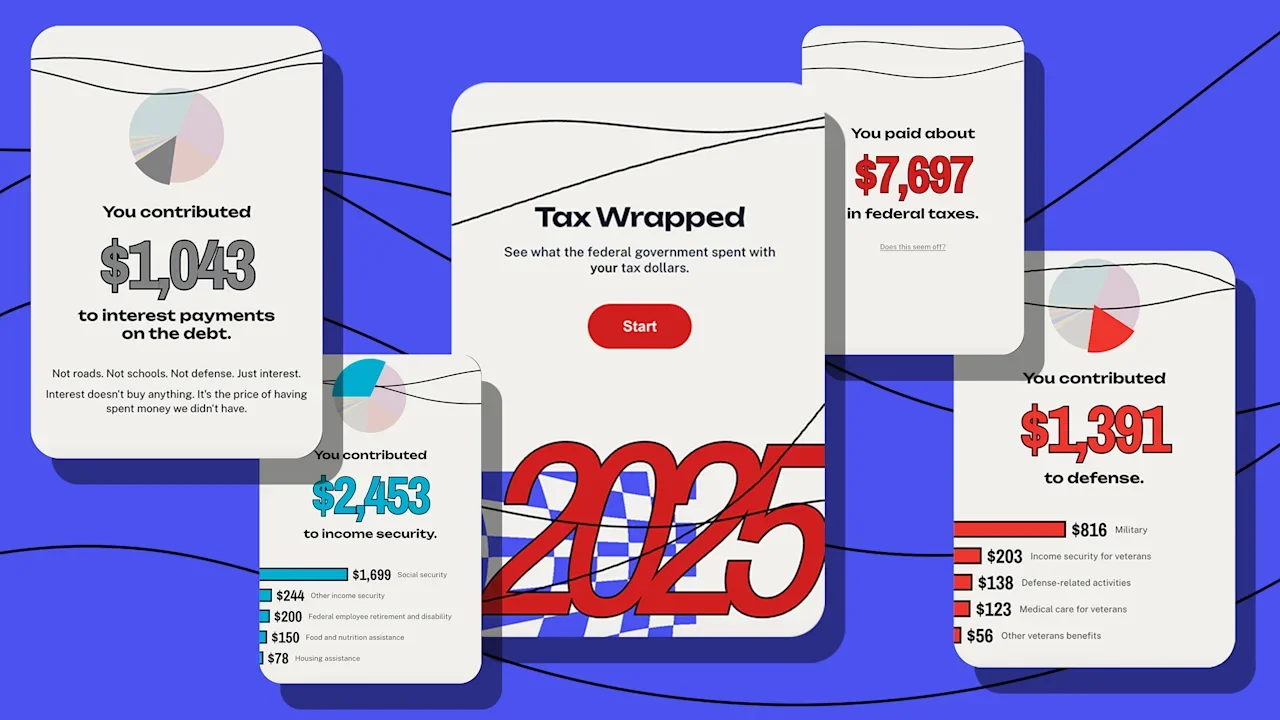
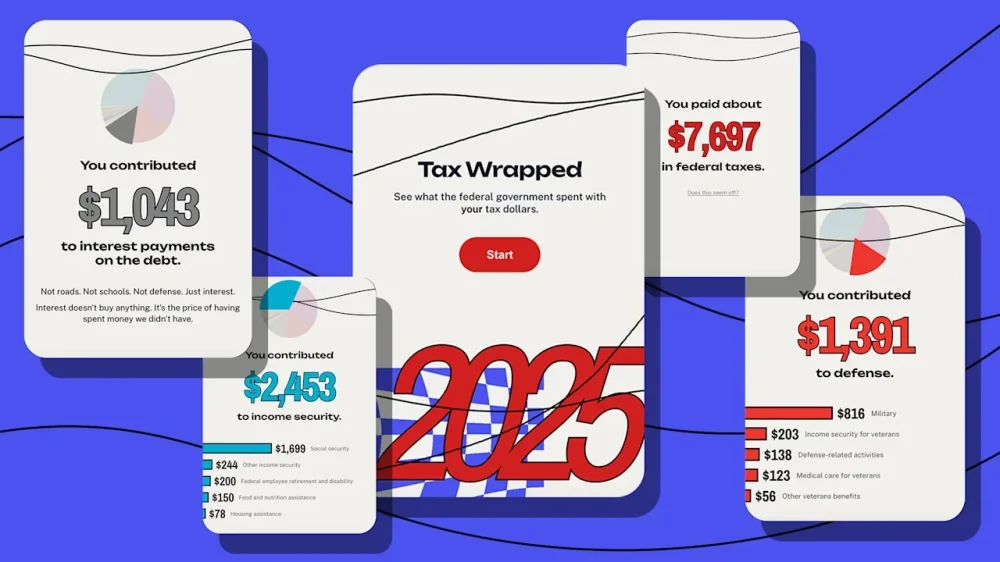
It’s April again, and that means hundreds of millions of Americans have been logging on to H&R Block or heading to their accountant to see how much they owe in taxes for 2025. For many who file, that dreaded number can feel like a nebulous sum. So how does the federal government use that hard-earned cash? There’s a website breaks it down for you, Spotify Wrapped-style. Tax Wrapped is the latest digital project from Riley Walz, the technologist responsible for viral websites including Find My Parking Cops, a tool to track San Francisco’s parking authorities; Looksmapping, a map that ranks restaurants based on the “hotness” of their patrons; and, most recently, the JSuite, a series of tools designed to help users navigate the Epstein files. Walz’s projects almost always combine a trendy, eye-catching format with an underlying thread of social commentary, and Tax Wrapped is no different. It remixes the Wrapped format—which is so popular that it’s become ubiquitous across brands such as Uber Eats, YouTube, Snapchat, and even LinkedIn—with a genuine lesson in financial literacy. How to use Tax Wrapped When users open Tax Wrapped, they’re greeted with a welcome screen that’s clearly taking a page out of 2025’s Spotify Wrapped design—this time rendered in red, white, and blue rather than a mix of neons. The tool requires a few details to calibrate: the user’s total taxable income, filing status, number of dependents, and work status. From there, it makes an educated calculation on how much the user owed in taxes in 2025, which can be manually edited to the exact sum if needed. Walz broke down your contribution to the federal goverment’s annual spending using a few different touchpoints, according to the website’s methodology section. He derived the government’s top-line spending totals from the U.S. Treasury’s monthly treasury statement, which Walz writes is “the standard source for deficit math and official category totals.” For more granular budgetary breakdowns, he pulled data from USAspending’s File A accounts-balance data, which helped him split larger categories, like income security, into smaller subcategories, like Social Security and housing assistance. The data appears in both bar chart and pie chart form to help users digest it visually. By hovering over a given category, users can read a short description of what each subheading means and how it’s calculated. An American who made $50,000 in 2025, for example, can see that they contributed $95 to natural resources, $2,124 to health, and $1,391 to the military (just $123 of which went to medical care for veterans). They can also dive deeper into how the federal government used taxes to pay off national debt—which, as the tool explains, has been racking up since 2001 and currently sits at more than $39 trillion. “The catch?” it reads. “Just like credit cards, the national debt has interest payments the government needs to pay.” The aforementioned worker will have contributed $1,403 to interest payments on the national debt in 2025. “Not roads. Not schools. Not defense,” Tax Wrapped reads. “Just interest. Interest doesn’t buy anything. It’s the price of having spent money we didn’t have.” Tax Wrapped may not necessarily be an uplifting tool, but it’s an eye-opening exercise in understanding how the American tax system works—and in internalizing that our tax money isn’t simply floating into the void. “Federal spending is usually described in ways that feel abstract,” the site reads. “Everything is huge, everything is rounded, and the scale is hard to feel. This project makes those numbers personal.” View the full article
-
Editor’s note: Dr. Cree Scott spent her career solving a critical puzzle: why some leaders inspire unwavering loyalty while others struggle with constant turnover, despite similar technical skills and business acumen. As a psychologist and workplace performance expert, her expertise lay in helping leaders navigate the psychological dynamics that drive performance, organizational resilience, and sustainable growth. She was the CEO/founder of Serenity Psy Consulting and served on the Harvard Business Review Advisory Council. Her book, The Missing Peace in Leadership: Reclaiming Connection and Purpose in a World of Distraction, was published on April 14, 2026. Dr. Scott completed her book just weeks before she passed away in December 2025. She did not live to see it published. What follows is an excerpt from that book. Let me tell you about Paulo. He joined our video call with his usual polished demeanor, revealing none of the turbulence beneath. A mid-level manager with a track record of success, he was the kind of person others described as “driven, sharp, and always in control.” But his team was disengaged, his decisions were being questioned, and his confidence was quietly unraveling. And he had no idea why. At first, he blamed the usual suspects: company politics, shifting market demands, generational differences. But when I asked him to describe his own role in recent conflicts, he paused, genuinely confused by the question. “What do you mean, my role?” Through our coaching sessions, the pattern became clear. Paulo would dominate meetings, cutting off team members mid-sentence without realizing it. He dismissed feedback as “resistance to change” without considering that his approach might be the problem. When frustrated, he’d become cold and withdrawn—with no awareness of how that was shutting his team down. Paulo’s story isn’t unusual. It’s everywhere. Brilliant, capable people unknowingly disconnected from the one thing they need most to lead, succeed, and thrive: themselves. The Myth Leaders Tell Themselves Here’s the story most leaders carry: I’m different at work. I’m on. I’m focused. Whatever is going on at home stays at home. I understand the appeal. It feels like discipline. Like professionalism. Like exactly the kind of thing a high performer should be able to do. But it’s not true. And the cost of believing it is enormous. You’re a whole person—not a work person and a home person operating separately. The leader who learns to pause and respond thoughtfully instead of reacting brings that same presence to a tense board meeting, a difficult conversation with their spouse, and every space in between. You can’t be disconnected at home and magically connected at work, or vice versa. How you show up is who you are. The colleague who stops listening the moment they feel challenged? They’re doing the same thing at dinner. The leader whose team never brings them bad news? Their kids probably don’t either. Disconnection doesn’t respect your calendar. It doesn’t punch out at 6 p.m. It travels with you. What Conscious Connection Actually Is The answer isn’t trying harder to be present. The answer is building what I call integrated connection—a framework rooted in three simultaneous practices: connection to yourself, connection to the people around you, and connection to something larger than any single outcome. Most people focus on one at a time. But sustainable peace—and sustainable leadership—requires all three working together. When any one breaks down, you feel it everywhere. As unease. As irritability. As that low-grade sense that something is off but you can’t name it. Connection to me isn’t self-care Sundays or journaling. It’s uncovering the hidden parts of yourself that are quietly shaping everything you do. What drives you? What holds you back? What are you not seeing about yourself that’s affecting every room you walk into? Organizational psychologist Tasha Eurich found that while 95% of people think they’re self-aware, only 10–15% actually are. That means most of us are walking around with blind spots the size of billboards, completely unaware of how we come across or how our actions affect others. When Paulo finally saw his own pattern—the control, the dismissiveness, the defended confidence—he didn’t just become a better manager. He became a better father. A better partner. Not because he applied a leadership framework to his personal life. But because he was finally seeing himself clearly, and that clarity travels. Finding Your Missing Peace When you lead from integrated connection, something shifts that people can’t quite name but immediately feel. You become the one who makes the difficult look manageable. The one people want to follow. Not because you work harder—but because you’re operating from a fundamentally different foundation. Peace is not separate from leadership. It is the missing piece of leadership. That peace doesn’t live in your office, your title, or your next performance review. It lives in knowing yourself—fully, honestly, without excuses. It lives in the willingness to see that the way you lead and the way you live are not two different things. They never were. View the full article

-
Large investment banks have become increasingly reliant on markets financing, report saysView the full article
-
Loanstream allegedly made over 272,000 calls to over 53,000 unique numbers on the Do Not Call registry over a 10-month period, according to a case filing. View the full article
-
In case you didn’t hear, we just went back to the moon. NASA has been heavily promoting the Artemis II mission for months, which concluded on April 10 after its four astronauts splashed down off the coast of California. No doubt, this venture was an objectively awe-inducing feat. The space agency successfully demonstrated the most powerful rocket it’s ever built, the Space Transportation System, and tested Orion, its crew vehicle, with a crew for the first time. NASA’s astronauts also traveled farther into space than ever before, and humans saw the dark side of the lunar surface with their own eyes (another major first). But how excited did the rest of humanity get? Social media analytics companies that Fast Company reached out to shared the numbers. Muck Rack found that between April 1 and 13, there were more than 42 million engagements on major platforms. On April 6 and 7, around the time the crew passed by the moon, there were about 1.3 million mentions of terms related to Artemis II, according to media intelligence platform Cision. Analytics tool Sprout Social says that overall there were more than 100 million engagements on both TikTok and Instagram related to the mission throughout that week. NASA’s YouTube Live coverage saw 61% growth in views from 2022, during the first Artemis I launch, up from 11.4 million to 18.4 million, again according to Sprout. Most of the streaming platforms that aired the lunar mission didn’t respond to Fast Company’s request for comment, but during the 6 p.m. hour on the day of the launch, NBC News Now saw its fourth-largest audience on record, according to Adobe Analytics and CloudFront. The rocket ship emoji was—unsurprisingly—the most popular emoji used in Artemis-related posts, according to the SaaS platform Sprinklr. NASA, meanwhile, plans to release its own calculations soon. While there certainly was excitement about Artemis and the return to the moon, the viewing numbers came nowhere near those of the Apollo 11 moon landing in 1969, which roughly 500 million people watched on television. To some, this comparatively more limited engagement with Artemis is evidence that space has lost its shine and is no longer as galvanizing as it once was. For others, the attention Artemis II did attract is evidence that space can still be a major global news story, even a positive one, despite an increasingly bifurcated media environment chock-full of serious and often depressing headlines. Consider some other numbers: Nielsen, which tracks networks like Fox News and CNN, reports that about 18.1 million people in the U.S. watched live coverage of the Artemis II launch on the evening of April 1. That’s a lot, but also notably fewer than the Super Bowl on February 8 (125.6 million), or even the president’s State of the Union address later that month (32 million). Muck Rack found that the number of articles written about the Iran war far exceeded coverage of the Artemis mission from launch day on April 1 to splashdown 10 days later. Even NASA administrator Jared Isaacman, before the launch, seemed to acknowledge that Artemis would be competing with other stories. “Space captivates everyone,” Isaacman told Politico. “Now, I understand there’s a lot going on in our lives these days. As I tell a lot of folks, when they’re like, ‘Do people realize that we’re about to send astronauts farther into space than ever before, around the moon, to set up for subsequent lunar landing events—do enough people realize that’s happening right now?’ There’s a lot more than the three channels on the television set than there was in the 1960s.” This is not to say that NASA didn’t plan an impressive publicity operation, which included plenty of social media posts and media engagements. NASA promoted a playlist with songs the crew listened to during the mission, and has continued investing in an astronauts-as-influencers approach. The space agency also partnered with streaming companies like Netflix and HBO Max, and provided coverage on its own streaming service. In fact, NASA has a legal obligation to promote and share its content, per the terms of the 1958 Space Act, to the “widest practicable audience.” “Our goal is to reach as many people as possible, whether that is via NASA+ directly, or through other streaming platforms,” Lauren Low, a NASA spokesperson, tells Fast Company. “We are open to working with all platforms and would like to make sure that NASA is available on the platform of your choice.” This largely paid off. A liftoff post on Instagram picked up more than 6 million likes, nearly as many as NASA’s most popular post ever: a shot of the Carina Nebula, captured by the James Webb telescope. TikTok drove the most engagement, with 121 million interactions, which included likes and reposts, according to Sprout Social. That’s despite NASA employees, including astronauts, not being allowed to use TikTok themselves, due to government regulations on some entities associated with China. The mission got a healthy showing in pop culture, too, though some of the earlier efforts—like interviews with Time—ended up coming far ahead of the actual launch, which was delayed several weeks. There were canonical brand replies to NASA tweets, Pop Base coverage, and Saturday Night Live even put on a playful skit about the mission. But for all that effort, it was hard not to get the feeling that a lot of people simply didn’t care. I, admittedly, have the “space bug” and watched the Artemis II launch alongside my father, who remembers seeing the original moon landing. The rest of my family, however, tuned in for a bit, but seemed mostly uninterested. At a party over the weekend, a friend confessed she wasn’t even sure what this mission was about. At a professional meeting, someone told me they found it objectionable that the media was spending so much time covering something that seemed unconnected to the problems on Earth. The attention we did—and didn’t—pay to the mission is a reflection of how much our media environment has changed since the Apollo era. Space activity is always notable, but audiences are far more used to seeing people, even space tourists, bouncing around in orbit than they were in the 1960s. People increasingly get their news from social media, not cable, a transition that favors short-term videos, not weeklong coverage. Today, audiences are segmented via algorithm, which means people are seeing increasingly personalized, and often radically different, feeds. This makes it very hard to galvanize an entire species to tune in to a singular event. Jack Kiraly, director of government relations at the nonprofit Planetary Society, says it’s remarkable that Artemis received the attention that it did, given the crowded news environment. People are genuinely invested in space exploration and want to see progress toward those goals, he says, adding, “The challenge is making sure we bring them along for the full journey of discovery, not just the headline moments.” Asheley Landrum, a professor at Arizona State University who focuses on science engagement, argues, “This administration is really good at thinking about things in terms of ‘Made for TV.’ They’re really thinking about an audience-first approach . . . making sure people know who the astronauts are, talking about it, having it on streaming as well as on television.” Overall, she says, Artemis II was a rare positive news story. As we settle into the next space age, whatever we’re doing up there might just be in the eye of the beholder. Landrum notes that we may refract our memories of prior space missions onto the milestones of the present. For the Apollo generation, the Artemis program evokes nostalgia. For the generation that witnessed the Challenger and Columbia disasters, this potentially provides some catharsis—a moment to see a major manned space launch actually go well. Meanwhile, for even younger generations it’s difficult to disentangle human missions to space from the tech billionaire class building rockets and going on their own joyrides in low Earth orbit. View the full article

-
There’s a good chance you have a Great Value product in your home right now: perhaps chicken nuggets in the freezer, or paper towels on your counter. The brand (Walmart’s largest private label, which launched in 1993) turns up in 9 out of 10 American households. By Nielsen’s count, that makes it the largest consumer packaged goods brand in the United States—bigger than Coca-Cola and Pampers. Until now, Great Value’s packaging has been designed to telegraph low prices: Walmart estimates that these products save the average family more than 35% annually compared to national brand equivalents. Its white background, blocky letters, and straightforward blue logo were meant to signal a no-frills brand with products that are good for your wallet. But in focus groups, Walmart customers expressed that while they appreciate how much money they save, they’re not necessarily proud to have the products out when company comes over. “They want to be proud to buy Great Value,” says Scott Morris, SVP of private brands, food, consumables, and manufacturing at Walmart U.S. “They want to be proud to have it in their home, to share it with their friends and family.” Walmart has heard its customers. Today, the biggest retailer in America announces a comprehensive redesign of Great Value, the first full refresh of the brand in more than a decade. It’s a big task, involving the overhaul of nearly 10,000 food and consumable items across more than 100 categories, that will take place over the next 18 months. The rise of the “shoppy shop” dupe The timing of the rebrand is apt. Inflation has pushed grocery prices up across the board over the past few years, and consumers who might once have defaulted to Whole Foods or a specialty grocer started filling their carts at Walmart, often for the first time. On the company’s February earnings call, Walmart CFO John David Rainey noted that shoppers earning more than $100,000 a year were among the biggest contributors to growth in the quarter—due to those broad economic headwinds, and to the big-box retailer’s strategic response: a deliberate effort to attract those higher-income shoppers over the past five years. Walmart’s Great Value rebrand is part of a broader effort among retailers to make their private labels as compelling to customers as the premium national brands that sit on their shelves. Given how crowded the consumer packaged goods industry is, upscale direct-to-consumer food startups like Brightland, Fishwife, Fly by Jing, and Ghia have historically broken through online with highly branded packaging. Those brands soon landed in small, curated, upscale boutiques (so-called shoppy shops) before securing deals with big retailers like Whole Foods, Target, and, yes, Walmart. This has influenced how the larger retailers like Walmart have designed the branding and packaging of their private-label brands, by presenting them as an affordable alternative with the same quality and shelf appeal. In 2019 Target launched Good and Gather, a food brand that stands out for its approachable, color-on-color premium branding. And discount grocery chain Aldi modernized its own private-label food products last fall. Meanwhile, Walmart has been quietly reshaping its private-label portfolio for years. It launched a premium food line called Bettergoods in 2024 that focuses on global flavors and better ingredients, with the kind of colorful, illustration-forward branding familiar to modern consumers who might also buy upscale DTC products. In terms of product quality improvements, last fall Walmart committed to removing synthetic dyes from all of its private-label food brands by January 2027. It’s also growing its fresh food business under the Marketside and Freshness Guaranteed labels. The efforts appear to be paying off by driving sales among higher-income shoppers. A 2025 survey conducted by A&M Consumer and Retail Group revealed that higher-income shoppers are increasingly choosing private-label products at least in part because they look just as chic as national brands. Great Value doesn’t have to “look cheap” The redesign is a deliberate move to close the consumer sentiment gap between Great Value products and their look by making the packaging cleaner and more elevated, according to David Hartman, VP of creative design at Walmart. The results follow years of consumer testing, such as at a mock store at Walmart’s Bentonville, Arkansas, headquarters, walking through shelf sets to understand how designs read in context. Customer feedback—from call centers, online ratings, and third-party testing—was collected continuously. “The feedback is always on,” Morris says. “We’re able to aggregate it in a manner that helps us drive action.” Great Value scored well on quality, efficacy, and price, but low on packaging. “We wanted to bring the external expression of the brand up to par to what the customer experiences when they buy the brand,” Hartman says. That called for an aesthetic solution that appropriately communicated the products’ high quality. Walmart’s internal creative team was responsible for every part of the redesign, including redrawing the Great Value logo from scratch in a bespoke typeface. It’s larger and more prominent on the packaging, and it comes in a deeper, richer shade of blue than the old version, giving the brand more gravitas. But it’s still within the blue color palette that Walmart is known for. The team tightened up the typography, with careful attention paid to details that most shoppers will never consciously register: Hartman mentions the angle of the two E’s in “Great Value,” which creates a subtle linking shape, like the hint of a smile. But the team was also interested in making sure the packaging communicated important information clearly. Nutrition information is now consistently placed in the upper right corner across all food items, with a color-coded tab system—yellow for key facts—making it easier for shoppers to quickly parse what they’re grabbing, whether they’re in the aisle or scrolling through the app. “We believe great design should be accessible to everyone,” Hartman says. “At our scale, that means creating something that works clearly and intuitively across thousands of individual items so customers can find what matters, faster.” Morris argues that Walmart has spent decades developing its reputation for offering consumers the lowest prices on the market, so it no longer needs to use the packaging to communicate that these products are inexpensive. “We don’t need to make things look cheap to be inexpensive,” Morris says. After all, a product conveys value when it has a sense of being worth your money, and that happens when a brand communicates great quality—at the right price. View the full article

-
Government fights off claims of ‘complacency’ from former Nato chief George RobertsonView the full article