Newsletter
Want to keep up to date with all our latest news and information?


ResidentialBusiness
Administrators
-
Joined
-
Last visited
Everything posted by ResidentialBusiness
-
When considering top retail franchise opportunities, it’s vital to recognize the key factors that contribute to their success. Strong brand recognition, effective support systems, and adaptability are critical. As consumer preferences shift toward e-commerce and sustainability, franchises that embrace these trends stand out. Comprehending these elements can help you identify promising investments. Next, you’ll want to explore specific franchise options that align with these characteristics and your business goals. Key Takeaways Brands with strong recognition and customer loyalty, like fast-food chains and coffee shops, consistently rank among top retail franchise opportunities. Franchises focusing on e-commerce integration and omnichannel experiences are increasingly attractive due to rising online shopping trends. Green and sustainable franchises appeal to eco-conscious consumers, enhancing brand loyalty and market penetration. High owner satisfaction rates are linked to franchises with comprehensive training and ongoing support systems. Evaluating initial investment, ongoing fees, and potential ROI is essential for selecting the right retail franchise opportunity. Overview of Top Retail Franchises When exploring the terrain of retail franchise opportunities, you’ll find a wide range of options that cater to different consumer preferences and market demands. Top retail franchises typically include both large chain stores and small boutiques, showcasing diverse products that meet various consumer needs. Strong brand recognition and customer loyalty are essential for a successful retail store franchise, helping to drive sales and sustain profitability. During many retail shop franchises focus on brick-and-mortar locations, there’s an increasing trend in the direction of automated retail options, such as vending machines and online sales platforms. The competitive environment of the retail industry pushes franchises to innovate and adapt, with rankings influenced by owner satisfaction, brand reputation, and financial performance, guiding potential franchisees in their decision-making. Benefits of Investing in Retail Franchises Investing in retail franchises offers you a unique opportunity to tap into strong market demand, benefiting from consumer preferences that consistently favor established brands. With recognized names, you gain immediate trust from customers, which can lead to increased loyalty and sales. Furthermore, the all-encompassing support systems provided by franchisors equip you with the necessary tools and training to navigate the operational environment effectively. Strong Market Demand The retail sector presents a compelling opportunity for those looking to invest in a franchise, thanks to its strong market demand. Here are a few reasons why retail franchises are thriving: Increased Consumer Spending: With rising disposable incomes, consumers are more willing to spend on various retail products. Diverse Offerings: Retail store franchise opportunities span multiple categories, including food, fashion, and home goods, appealing to a wide audience. Higher Profit Margins: Retail franchises often enjoy better profit margins compared to other sectors, making them an attractive investment. This robust environment, fueled by the growth of e-commerce and ongoing homeownership trends, boosts the growth potential for retail franchises, ensuring they’re a smart choice for aspiring franchisees. Established Brand Recognition Established brand recognition plays a crucial role in the success of retail franchises, as it markedly improves customer trust and loyalty. When you invest in an established franchise, you benefit from a strong brand that already has a loyal customer base. This can lead to higher sales performance compared to newer brands. Moreover, well-known franchises often have effective marketing strategies, which reduce customer acquisition costs and increase foot traffic to your location. With a proven business model, the risk of failure diminishes, enhancing the likelihood of a positive return on investment. In addition, having a recognized brand can ease access to financing, as lenders typically view established franchises as less risky investments. Comprehensive Support Systems When you consider the benefits of retail franchises, extensive support systems stand out as a significant advantage. These systems guarantee you’re equipped for success from day one. Here are three key components: Comprehensive Training: You’ll receive thorough training programs that cover crucial skills and knowledge for operating your franchise effectively. Ongoing Operational Support: Continuous assistance helps you navigate challenges and optimize your business operations, contributing to your long-term success. Marketing Assistance: Benefit from established brand recognition and promotional strategies that attract customers and drive sales. Additionally, a strong community of franchisees offers networking opportunities, whereas financial guidance helps you manage investments effectively. Together, these elements create a robust support system that improves your franchise experience. Key Characteristics of Successful Retail Franchises Successful retail franchises share several key characteristics that set them apart in a competitive market. First, strong brand recognition improves consumer trust and loyalty, making these franchises more appealing to potential franchisees. Moreover, thorough training and ongoing support systems are imperative, allowing franchisees to operate effectively during the maintenance of high service standards. High owner satisfaction rates often correlate with proven business models and strong operational support, which greatly boost overall franchise performance. Adaptability to market trends and consumer preferences is also important, as it enables franchises to innovate and meet changing demands. Finally, strong community engagement initiatives cultivate local connections, improving brand image and positively impacting customer loyalty and sales growth. These elements are fundamental for long-term success in retail franchising. Top 10 Retail Franchise Opportunities Exploring the top 10 retail franchise opportunities reveals a diverse range of sectors, including fashion, food, and home services, which cater to various consumer needs. Here are three significant options: Discount Card Shops: These franchises require a low cash investment, starting around $9,500, making them accessible for many entrepreneurs. Food Franchises: With high consumer demand, food-related franchises often thrive, offering numerous options from quick service to casual dining. Western Apparel Stores: Though these may demand a higher investment, often exceeding $368,000, they benefit from established brand loyalty and recognition. These franchises not only provide growth potential but also emphasize community engagement, enhancing customer relationships and brand image in today’s competitive market. Investment Considerations for Retail Franchises Investing in a retail franchise involves careful financial planning and analysis to guarantee a sound decision. Initial investment requirements can vary widely; for instance, CardSmart may need only $9,500, whereas Boot N Shoot requires at least $368,863. It’s vital to factor in ongoing fees and royalties, as these can greatly affect your overall profitability. Evaluating potential return on investment (ROI) is important; examining financial projections and historical data from the franchisor can provide insights into the business model’s viability. Understand the cost structure, including initial investments and the franchise system’s financial health. Furthermore, consider market demand for specific retail categories, as economic factors and consumer behavior can heavily influence your investment’s profitability. Franchisee Support and Training Programs A robust support and training program is crucial for franchisees aiming to succeed in their business ventures. Thorough training equips you with the knowledge and tools to operate effectively. Ongoing support tackles operational challenges, ensuring you have access to resources as your business grows. Here are three key aspects of effective franchisee support and training programs: Initial Training: You receive extensive onboarding to understand the franchise model, operations, and customer service. Marketing Assistance: Support includes strategic marketing initiatives that improve your visibility and attract customers. Community Network: Connecting with fellow franchisees encourages shared experiences, allowing you to exchange best practices and receive peer support. These elements contribute to higher satisfaction and profitability, emphasizing their significance for long-term success. Market Trends Influencing Retail Franchising As retail franchising evolves, several market trends are shaping how you approach your business. E-commerce integration strategies are vital, with online sales projected to exceed 25% by 2025, so adapting to this shift is necessary. Furthermore, consumer behavior is leaning in the direction of sustainability and personalized shopping experiences, pushing you to rethink your product offerings and operational practices. E-commerce Integration Strategies E-commerce integration strategies are becoming increasingly important for retail franchises, especially as consumer behaviors shift in the direction of online shopping. To stay competitive, you should consider the following approaches: Multi-channel Approach: Brands that effectively combine physical stores with e-commerce platforms see an average revenue increase of 30%. Click-and-Collect Options: Nearly 70% of consumers prefer seamless online shopping experiences with in-store pickup, making this strategy crucial. Technology Utilization: Integrate mobile apps and personalized marketing to improve customer experiences and drive repeat business. As e-commerce capabilities become critical for franchise growth, focusing on digital sales channels will position you for success in the evolving retail environment. This is especially important as 60% of new franchises will prioritize online engagement by 2025. Sustainable Retail Practices Retail franchises are increasingly recognizing the importance of sustainable practices in response to changing consumer preferences. As demand for eco-friendly products rises, many franchises are integrating sustainability into their business models. This includes reducing waste, utilizing renewable resources, and promoting ethical sourcing. Franchises adopting these practices often improve their brand image, as 66% of global consumers are willing to pay more for sustainable options. Furthermore, eco-friendly franchises are experiencing higher market penetration and success rates compared to traditional models. Consumer Behavior Shifts How have consumer preferences evolved in recent years? You’ve likely noticed significant shifts influencing retail franchises. Comprehending these changes can help you adapt your business strategy. Here are three key trends: Omnichannel Experiences: Consumers now expect a seamless integration of online and in-store shopping, prompting franchises to improve their digital platforms. Sustainability: You’ll find that today’s customers increasingly prefer eco-friendly products and practices, driving franchises to align with these values. Personalization: There’s a growing demand for customized shopping experiences, encouraging franchises to use data analytics and customer feedback to refine their offerings. Additionally, the convenience factor is fundamental, leading to innovative retail formats that cater to busy lifestyles. Staying aware of these trends is vital for future success. Community Engagement in Retail Franchises Although many businesses focus solely on profit, community engagement in retail franchises can greatly improve both brand loyalty and public perception. By participating in local charity events and sponsoring sports teams, you can cultivate strong connections with your community. Implementing social responsibility programs that emphasize sustainability and ethical practices likewise resonates with eco-conscious consumers. When you actively engage in local events, you’ll likely see increased foot traffic, leading to boosted sales and improved customer loyalty. Furthermore, creating customer loyalty programs rewards local patrons, encouraging repeat business and a sense of belonging. Overall, effective community engagement strategies help you differentiate your franchise in a competitive market, strengthening relationships with customers and improving the overall shopping experience. How Can IFPG Help You? Finding the right franchise opportunity can be a complex expedition, but the International Franchise Professionals Group (IFPG) simplifies the process for aspiring franchisees. They provide personalized franchise matching services customized to your interests, financial needs, and location. Here’s how IFPG can help you: Diverse Options: Access a wide range of franchise opportunities across various industries, including retail. Discovery Process: Benefit from an in-depth Discovery Process that offers insights into different franchise models and their growth potential. Expert Guidance: Utilize the free Expert Franchise Buyers Guide, which equips you with crucial resources to navigate the franchise environment effectively. With IFPG, you’ll find the support and resources needed to make informed franchise decisions. Frequently Asked Questions What Is the Most Profitable Franchise to Own? The most profitable franchise to own varies based on factors like market demand and brand strength. Fast food franchises, such as Dunkin’ and 7-Eleven, often lead because of their established customer bases and high sales performance. You should consider investment costs, which can range from $30,000 to $500,000, and profit margins that may exceed 20%. Furthermore, strong franchisee support improves your chances of achieving significant returns on your investment. What Is the Most Profitable Retail Business? The most profitable retail businesses often focus on sectors like health and wellness, where demand for organic products and fitness services is growing. E-commerce is booming, with sales expected to exceed $6 trillion by 2024. Quick-service restaurants typically report high profit margins, sometimes over $1 million in annual sales per location. Furthermore, niche markets, such as eco-friendly products, attract dedicated consumers willing to pay a premium, enhancing profitability for those retailers. What Is the 7 Day Rule for Franchise? The 7 Day Rule requires franchisors to provide you with a Franchise Disclosure Document (FDD) at least seven days before you sign any agreement or pay fees. This rule guarantees you have enough time to review essential information about the franchise, including its financial performance and obligations. Enforced by the Federal Trade Commission in the U.S., the rule helps protect you from potential misrepresentation and nurtures a transparent franchising process. What Franchise Can I Buy for $10,000? If you’re looking to invest in a franchise for $10,000 or less, you have some solid options. CardSmart offers a franchise with a minimum cash requirement of just $9,500, focusing on discount cards and gifts. Vending machine franchises likewise require low initial investments, often under $10,000. Moreover, consider niche markets, which can allow for creativity during keeping costs manageable. Research thoroughly to find the right fit for your interests and budget. Conclusion To summarize, investing in top retail franchises offers numerous advantages, including strong brand recognition and thorough support systems. By grasping the key characteristics that contribute to their success, you can make informed decisions about potential investments. Consider market trends and community engagement as crucial factors when exploring these opportunities. With proper research and guidance, you can find a retail franchise that aligns with your goals and capitalizes on the evolving consumer environment. Image via Google Gemini This article, "Top Retail Franchise Opportunities" was first published on Small Business Trends View the full article
-
When considering top retail franchise opportunities, it’s vital to recognize the key factors that contribute to their success. Strong brand recognition, effective support systems, and adaptability are critical. As consumer preferences shift toward e-commerce and sustainability, franchises that embrace these trends stand out. Comprehending these elements can help you identify promising investments. Next, you’ll want to explore specific franchise options that align with these characteristics and your business goals. Key Takeaways Brands with strong recognition and customer loyalty, like fast-food chains and coffee shops, consistently rank among top retail franchise opportunities. Franchises focusing on e-commerce integration and omnichannel experiences are increasingly attractive due to rising online shopping trends. Green and sustainable franchises appeal to eco-conscious consumers, enhancing brand loyalty and market penetration. High owner satisfaction rates are linked to franchises with comprehensive training and ongoing support systems. Evaluating initial investment, ongoing fees, and potential ROI is essential for selecting the right retail franchise opportunity. Overview of Top Retail Franchises When exploring the terrain of retail franchise opportunities, you’ll find a wide range of options that cater to different consumer preferences and market demands. Top retail franchises typically include both large chain stores and small boutiques, showcasing diverse products that meet various consumer needs. Strong brand recognition and customer loyalty are essential for a successful retail store franchise, helping to drive sales and sustain profitability. During many retail shop franchises focus on brick-and-mortar locations, there’s an increasing trend in the direction of automated retail options, such as vending machines and online sales platforms. The competitive environment of the retail industry pushes franchises to innovate and adapt, with rankings influenced by owner satisfaction, brand reputation, and financial performance, guiding potential franchisees in their decision-making. Benefits of Investing in Retail Franchises Investing in retail franchises offers you a unique opportunity to tap into strong market demand, benefiting from consumer preferences that consistently favor established brands. With recognized names, you gain immediate trust from customers, which can lead to increased loyalty and sales. Furthermore, the all-encompassing support systems provided by franchisors equip you with the necessary tools and training to navigate the operational environment effectively. Strong Market Demand The retail sector presents a compelling opportunity for those looking to invest in a franchise, thanks to its strong market demand. Here are a few reasons why retail franchises are thriving: Increased Consumer Spending: With rising disposable incomes, consumers are more willing to spend on various retail products. Diverse Offerings: Retail store franchise opportunities span multiple categories, including food, fashion, and home goods, appealing to a wide audience. Higher Profit Margins: Retail franchises often enjoy better profit margins compared to other sectors, making them an attractive investment. This robust environment, fueled by the growth of e-commerce and ongoing homeownership trends, boosts the growth potential for retail franchises, ensuring they’re a smart choice for aspiring franchisees. Established Brand Recognition Established brand recognition plays a crucial role in the success of retail franchises, as it markedly improves customer trust and loyalty. When you invest in an established franchise, you benefit from a strong brand that already has a loyal customer base. This can lead to higher sales performance compared to newer brands. Moreover, well-known franchises often have effective marketing strategies, which reduce customer acquisition costs and increase foot traffic to your location. With a proven business model, the risk of failure diminishes, enhancing the likelihood of a positive return on investment. In addition, having a recognized brand can ease access to financing, as lenders typically view established franchises as less risky investments. Comprehensive Support Systems When you consider the benefits of retail franchises, extensive support systems stand out as a significant advantage. These systems guarantee you’re equipped for success from day one. Here are three key components: Comprehensive Training: You’ll receive thorough training programs that cover crucial skills and knowledge for operating your franchise effectively. Ongoing Operational Support: Continuous assistance helps you navigate challenges and optimize your business operations, contributing to your long-term success. Marketing Assistance: Benefit from established brand recognition and promotional strategies that attract customers and drive sales. Additionally, a strong community of franchisees offers networking opportunities, whereas financial guidance helps you manage investments effectively. Together, these elements create a robust support system that improves your franchise experience. Key Characteristics of Successful Retail Franchises Successful retail franchises share several key characteristics that set them apart in a competitive market. First, strong brand recognition improves consumer trust and loyalty, making these franchises more appealing to potential franchisees. Moreover, thorough training and ongoing support systems are imperative, allowing franchisees to operate effectively during the maintenance of high service standards. High owner satisfaction rates often correlate with proven business models and strong operational support, which greatly boost overall franchise performance. Adaptability to market trends and consumer preferences is also important, as it enables franchises to innovate and meet changing demands. Finally, strong community engagement initiatives cultivate local connections, improving brand image and positively impacting customer loyalty and sales growth. These elements are fundamental for long-term success in retail franchising. Top 10 Retail Franchise Opportunities Exploring the top 10 retail franchise opportunities reveals a diverse range of sectors, including fashion, food, and home services, which cater to various consumer needs. Here are three significant options: Discount Card Shops: These franchises require a low cash investment, starting around $9,500, making them accessible for many entrepreneurs. Food Franchises: With high consumer demand, food-related franchises often thrive, offering numerous options from quick service to casual dining. Western Apparel Stores: Though these may demand a higher investment, often exceeding $368,000, they benefit from established brand loyalty and recognition. These franchises not only provide growth potential but also emphasize community engagement, enhancing customer relationships and brand image in today’s competitive market. Investment Considerations for Retail Franchises Investing in a retail franchise involves careful financial planning and analysis to guarantee a sound decision. Initial investment requirements can vary widely; for instance, CardSmart may need only $9,500, whereas Boot N Shoot requires at least $368,863. It’s vital to factor in ongoing fees and royalties, as these can greatly affect your overall profitability. Evaluating potential return on investment (ROI) is important; examining financial projections and historical data from the franchisor can provide insights into the business model’s viability. Understand the cost structure, including initial investments and the franchise system’s financial health. Furthermore, consider market demand for specific retail categories, as economic factors and consumer behavior can heavily influence your investment’s profitability. Franchisee Support and Training Programs A robust support and training program is crucial for franchisees aiming to succeed in their business ventures. Thorough training equips you with the knowledge and tools to operate effectively. Ongoing support tackles operational challenges, ensuring you have access to resources as your business grows. Here are three key aspects of effective franchisee support and training programs: Initial Training: You receive extensive onboarding to understand the franchise model, operations, and customer service. Marketing Assistance: Support includes strategic marketing initiatives that improve your visibility and attract customers. Community Network: Connecting with fellow franchisees encourages shared experiences, allowing you to exchange best practices and receive peer support. These elements contribute to higher satisfaction and profitability, emphasizing their significance for long-term success. Market Trends Influencing Retail Franchising As retail franchising evolves, several market trends are shaping how you approach your business. E-commerce integration strategies are vital, with online sales projected to exceed 25% by 2025, so adapting to this shift is necessary. Furthermore, consumer behavior is leaning in the direction of sustainability and personalized shopping experiences, pushing you to rethink your product offerings and operational practices. E-commerce Integration Strategies E-commerce integration strategies are becoming increasingly important for retail franchises, especially as consumer behaviors shift in the direction of online shopping. To stay competitive, you should consider the following approaches: Multi-channel Approach: Brands that effectively combine physical stores with e-commerce platforms see an average revenue increase of 30%. Click-and-Collect Options: Nearly 70% of consumers prefer seamless online shopping experiences with in-store pickup, making this strategy crucial. Technology Utilization: Integrate mobile apps and personalized marketing to improve customer experiences and drive repeat business. As e-commerce capabilities become critical for franchise growth, focusing on digital sales channels will position you for success in the evolving retail environment. This is especially important as 60% of new franchises will prioritize online engagement by 2025. Sustainable Retail Practices Retail franchises are increasingly recognizing the importance of sustainable practices in response to changing consumer preferences. As demand for eco-friendly products rises, many franchises are integrating sustainability into their business models. This includes reducing waste, utilizing renewable resources, and promoting ethical sourcing. Franchises adopting these practices often improve their brand image, as 66% of global consumers are willing to pay more for sustainable options. Furthermore, eco-friendly franchises are experiencing higher market penetration and success rates compared to traditional models. Consumer Behavior Shifts How have consumer preferences evolved in recent years? You’ve likely noticed significant shifts influencing retail franchises. Comprehending these changes can help you adapt your business strategy. Here are three key trends: Omnichannel Experiences: Consumers now expect a seamless integration of online and in-store shopping, prompting franchises to improve their digital platforms. Sustainability: You’ll find that today’s customers increasingly prefer eco-friendly products and practices, driving franchises to align with these values. Personalization: There’s a growing demand for customized shopping experiences, encouraging franchises to use data analytics and customer feedback to refine their offerings. Additionally, the convenience factor is fundamental, leading to innovative retail formats that cater to busy lifestyles. Staying aware of these trends is vital for future success. Community Engagement in Retail Franchises Although many businesses focus solely on profit, community engagement in retail franchises can greatly improve both brand loyalty and public perception. By participating in local charity events and sponsoring sports teams, you can cultivate strong connections with your community. Implementing social responsibility programs that emphasize sustainability and ethical practices likewise resonates with eco-conscious consumers. When you actively engage in local events, you’ll likely see increased foot traffic, leading to boosted sales and improved customer loyalty. Furthermore, creating customer loyalty programs rewards local patrons, encouraging repeat business and a sense of belonging. Overall, effective community engagement strategies help you differentiate your franchise in a competitive market, strengthening relationships with customers and improving the overall shopping experience. How Can IFPG Help You? Finding the right franchise opportunity can be a complex expedition, but the International Franchise Professionals Group (IFPG) simplifies the process for aspiring franchisees. They provide personalized franchise matching services customized to your interests, financial needs, and location. Here’s how IFPG can help you: Diverse Options: Access a wide range of franchise opportunities across various industries, including retail. Discovery Process: Benefit from an in-depth Discovery Process that offers insights into different franchise models and their growth potential. Expert Guidance: Utilize the free Expert Franchise Buyers Guide, which equips you with crucial resources to navigate the franchise environment effectively. With IFPG, you’ll find the support and resources needed to make informed franchise decisions. Frequently Asked Questions What Is the Most Profitable Franchise to Own? The most profitable franchise to own varies based on factors like market demand and brand strength. Fast food franchises, such as Dunkin’ and 7-Eleven, often lead because of their established customer bases and high sales performance. You should consider investment costs, which can range from $30,000 to $500,000, and profit margins that may exceed 20%. Furthermore, strong franchisee support improves your chances of achieving significant returns on your investment. What Is the Most Profitable Retail Business? The most profitable retail businesses often focus on sectors like health and wellness, where demand for organic products and fitness services is growing. E-commerce is booming, with sales expected to exceed $6 trillion by 2024. Quick-service restaurants typically report high profit margins, sometimes over $1 million in annual sales per location. Furthermore, niche markets, such as eco-friendly products, attract dedicated consumers willing to pay a premium, enhancing profitability for those retailers. What Is the 7 Day Rule for Franchise? The 7 Day Rule requires franchisors to provide you with a Franchise Disclosure Document (FDD) at least seven days before you sign any agreement or pay fees. This rule guarantees you have enough time to review essential information about the franchise, including its financial performance and obligations. Enforced by the Federal Trade Commission in the U.S., the rule helps protect you from potential misrepresentation and nurtures a transparent franchising process. What Franchise Can I Buy for $10,000? If you’re looking to invest in a franchise for $10,000 or less, you have some solid options. CardSmart offers a franchise with a minimum cash requirement of just $9,500, focusing on discount cards and gifts. Vending machine franchises likewise require low initial investments, often under $10,000. Moreover, consider niche markets, which can allow for creativity during keeping costs manageable. Research thoroughly to find the right fit for your interests and budget. Conclusion To summarize, investing in top retail franchises offers numerous advantages, including strong brand recognition and thorough support systems. By grasping the key characteristics that contribute to their success, you can make informed decisions about potential investments. Consider market trends and community engagement as crucial factors when exploring these opportunities. With proper research and guidance, you can find a retail franchise that aligns with your goals and capitalizes on the evolving consumer environment. Image via Google Gemini This article, "Top Retail Franchise Opportunities" was first published on Small Business Trends View the full article
-
Suneil Setiya of Quadrature Capital, a Labour donor, was behind the UK’s most expensive house purchaseView the full article
-
On Wednesday, April 15, Snap CEO Evan Spiegel announced in a letter to employees that the company would lay off about 1,000 people, including 16% of its full-time employees. “We believe that rapid advancements in artificial intelligence enable our teams to reduce repetitive work, increase velocity, and better support our community, partners, and advertisers,” Spiegel said in the letter. That message could have been pulled from a number of tech CEOs recent bold statements that AI will replace employees. Spiegel joins the ranks of CEOs like Block’s Jack Dorsey who have been unabashed in citing AI in their decisions to lay off their staff. In his February letter to shareholders, Dorsey stated: “Intelligence tools have changed what it means to build and run a company. We’re already seeing it internally. A significantly smaller team, using the tools we’re building, can do more and do it better. And intelligence tool capabilities are compounding faster every week.” He then claimed that most companies are “late” to this realization and will soon follow suit. Block laid off about 4,000 employees. Similarly, Spiegel wrote, “We have already witnessed small squads leveraging AI tools to drive meaningful progress across several important initiatives, including Snapchat+, enhanced ad platform performance, and efficiency improvements in our Snap Lite infrastructure.” He claims the changes Snap is implementing will reduce the company’s annualized cost base by over $500 through the end of 2026. Even as Spiegel cited AI for Snap’s layoffs today, the move follows the company’s trend of laying off workers every two years or so. It laid off about 10% of its staff in 2024, and 20% in 2022. Separately, Spiegel also recently posted on Instagram, about attending Coachella over the past weekend with his wife, Miranda Kerr. What’s happening to workers at Snap? Snap has told employees in the United States to work from home today. All impacted U.S.-based employees should have received an email within an hour of the letter. They will receive four months of severance, health coverage, and equity vesting. Individuals outside the U.S. will get more information from HR and leadership — likely with better protections, as Snap has to “follow local processes and seek to provide comparable support aligned with local norms.” Snap is also closing 300 open roles. In response to the news, Snaps shares rose over 6% on Wednesday. View the full article

-
The aptly named Binge is a new app for iPhones, iPads, and Macs that has set its sights on Letterboxd. Like that popular movie-centric social media platform, Binge gives you a way to track what you've watched and what you want to watch. But whereas Letterboxd sticks mostly to movies, Binge covers both movies and TV shows, and adds "jump scare warnings," an innovative feature Letterboxd can't match (though in testing it out, I experienced mixed results). Keeping tabs on my viewing is something I very much need help with, and while I've had a Letterboxd account for a while, I don't log into it or update my viewing history very often. Because it offers one spot to track both movies and TV, I decided to give Binge a try—and despite the aforementioned issues with its standout feature, I mostly liked what I found. Use Binge to track both movies and TV showsYou don't need to sign up for an account to use Binge, but if you do, you can sync your activity in the app across multiple Apple devices. As far as the interface goes, you've got three tabs for checking out new and trending content—Discover, Movies, and Shows. The final tab is the Library, where your viewing is logged. The tracking is really simple: You can mark movies or TV shows as watched or that you'd like to watch in the future; for shows, you can also log how many episodes you've got through. This is all then sifted into a timeline on your Library page. (One non-Letterboxd feature I enjoy is the I do like the option to pick a selection at random from your want-to-watch list—a good bet for those times when you just can't decide what to wathc.) Binge offers a clean and simple layout. Credit: Lifehacker Overall, Binge is simpler than Letterboxd, which crams in so many options—marking something as watched, rating it, adding it to lists, and sharing it with others—into the same pop-up window; while that app offers more to do, it also feels cluttered. Binge provides just the basics, which is a plus for a low-effort media tracker like me. The same goes for the built-in search: It's much more comprehensive on Letterboxd, where you can really dig down into search categories like genre, year of release, and cast and crew members. Binge offers a more straightforward keyword search for matching titles or people associated with a title. Still, Binge is impressive in terms of how much information it presents for each movie or TV show. As well as cast and crew lists, you've got trailers, ratings from across the web, awards and nominations, information on which streaming app you need to watch something, and a parents guide that flags up anything that's frightening, violent, or otherwise adult in nature. You get plenty of information about each title. Credit: Lifehacker The Library tab is well done, sorting everything in an easy to follow way, though you can create collections for movies and shows if you want to organize them more deliberately. I like the idea of the Your Next Watch section, which recommends titles based on what you've already seen, and it turned up some interesting picks for me. You can customize a lot of the interface inside Binge, so if there are features you're not really interested in—like reviews of a movie or lists of how many awards it's picked up—you can disable them with a tap. It's also possible to tone down some of the effects, like parallax and shimmer, that are applied by default. THe jump scare tracker is a great idea, but it didn't quite work for meI'm not much of a fan of horror or violence—I really don't like being scared or grossed out—which can make watching movies tricky. Some of the most critically acclaimed and popular flicks come with these elements included, and so I find myself wanting to watch them while also worrying about being traumatized. Binge provides a solution for this in the form of jump scare warnings: Many title pages offer a timeline showing when the jumps are coming, and details of what happens (so beware spoilers). There's a timer you can start when you begin watching that will ostensibly deliver a jump scare alert to your phone as a "Live Activity" before the scary scene hits. However, while the timeline screen was straightforward enough, I couldn't get the Live Activity notifications to pop up consistently—the app seemed to lose track of what it was tracking and when, and there's no way to manually adjust the time elapsed once you've already started a movie or TV show. Still, the jump scare timeline on its own is useful. The scares are sorted into minor and major categories, and if you don't mind getting advance warnings about a plot point or two, then they're handy to have if you want to know when to cover your eyes. A jump scare timeline. Credit: Lifehacker Unfortunately, jump scare charts aren't available for every movie. In browsing, I found that films like The Invisible Man (2020) and Prometheus (2012) offer them, but they're missing on older fare such as Silence of the Lambs (1991) and Single White Female (1992). I'm not sure where Binge is getting its data from (possibly WhenJumpScare), but it's not guaranteed for every film. The other downside: Jump scares are a paid extra in Binge. You'll need to sign up for a monthly ($1.99), yearly ($17.99), or lifetime ($49.99) package to get them. The subscription also unlocks several other features, like episode ratings graphs, the ability to set custom movie posters (also a paid feature on Letterboxd), and reminders for upcoming movies and shows. The app includes recommendations too. Credit: Lifehacker The app also scores highly for its data import and export tools. You can load in existing information from your accounts on Trakt, Letterboxd, and iMDb, and export everything you've logged in a JSON file to use elsewhere. You can also sync activity with Trakt, though that's another premium feature. Binge is a worthy Letterboxd alternativeWhile hardened film nerds are still going to prefer Letterboxd—not least for the baked-in community and sharing features—Binge is a worthy alternative for the rest of us. You can get up and running in just a few minutes, everything is neatly laid out and easy to parse, and there are numerous cool touches spread throughout. It might finally get me to more faithfully track my media consumption. View the full article
-
The war in the Middle East is adding to a slew of challenges already facing the construction industry in recent years, including elevated mortgage rates, labor constraints and higher prices for materials. View the full article
-
Freshworks is stepping up its game in the IT asset management arena with its latest enhancements to the Freshservice platform. On April 2, 2026, the company unveiled new capabilities that could significantly benefit small businesses struggling with disjointed IT operations. The updates include continuous infrastructure discovery and dependency mapping—features that promise to streamline operations and bolster the reliability of IT services. As many small businesses invest heavily in automation and AI technologies, fragmentation in their IT infrastructure data remains a pressing issue. Significant gaps in visibility can lead to inefficiencies, increased costs, and heightened risks. “Automation alone won’t solve the complexity for IT in today’s environment; without reliable visibility into infrastructure, risk will continue,” said Srini Raghavan, Chief Product Officer at Freshworks. This newly enhanced IT asset management system aims to bridge these gaps by providing a unified, AI-driven service operations platform. One of the key benefits of the newly integrated continuous discovery is its ability to replace static inventory management with dynamic, real-time monitoring. This allows small business IT teams to maintain an accurate record of their IT assets across various environments—cloud, hybrid, and on-premises. As a result, organizations can enhance data quality, a crucial factor for leveraging AI effectively. The system also offers rapid incident response via live dependency mapping. Small business owners can visualize how specific IT resources support core business functions, facilitating faster problem resolution. By identifying related systems during outages, teams can take immediate action—reducing downtime and improving service reliability. Predictive impact analysis is another crucial feature. It allows businesses to foresee which services may be affected by planned updates, enabling IT teams to manage changes judiciously without disrupting operations. Additionally, organizations can leverage enhanced security capabilities through configuration drift detection, ensuring that unauthorized changes and potential compliance gaps don’t pose risks to their operations. The financial aspect isn’t overlooked either. By employing intelligent software asset management tools to track licenses and user activity, businesses can recover unused licenses, decrease waste, and optimize software spending. This financial savvy helps small businesses stretch their IT budgets further, an essential factor for any cost-conscious owner. While the advantages are manifold, implementing a new system isn’t without its challenges. Transitioning to a new IT asset management solution may require time and potentially disrupt established workflows. Small business owners need to assess their current capabilities and whether their teams are equipped to handle this enhanced functionality. For those with limited tech expertise, the learning curve could present a barrier. However, Freshworks aims to make this transition smoother. Their system minimizes implementation complexities, allowing IT leaders to focus more on strategy rather than wrestling with technology. “Data discovery and live dependency mapping contribute to data that helps IT leaders resolve issues faster and make better decisions,” noted Snow Tempest, Research Manager at IDC. Real-world applications of these enhanced capabilities are already being realized by organizations like New Balance. The sportswear company emphasizes the importance of having a unified source of truth for its inventory assets to achieve better change control. Markus Gaulke, Platform Manager at New Balance, remarked, “We wanted to have a single source of truth for all of our inventory assets to be inventoried and also have the transparency and the visibility of everything that’s existing in our network.” For small business owners navigating the complexities of modern IT environments, Freshservice’s redefined IT Asset Management may well serve as a stepping stone toward more efficient operations and robust service delivery. These features can empower small teams, allowing them to gain operational insights that were previously unattainable. With the integration of continuous discovery and dependency mapping into its platform, Freshworks is positioning itself as a valuable ally for small businesses aiming to harness the full potential of their IT investments. To learn more about Freshservice and its new capabilities, visit the original release at Freshworks. Image via Google Gemini This article, "Freshworks Transforms IT Asset Management with AI-Driven Insights" was first published on Small Business Trends View the full article
-
Freshworks is stepping up its game in the IT asset management arena with its latest enhancements to the Freshservice platform. On April 2, 2026, the company unveiled new capabilities that could significantly benefit small businesses struggling with disjointed IT operations. The updates include continuous infrastructure discovery and dependency mapping—features that promise to streamline operations and bolster the reliability of IT services. As many small businesses invest heavily in automation and AI technologies, fragmentation in their IT infrastructure data remains a pressing issue. Significant gaps in visibility can lead to inefficiencies, increased costs, and heightened risks. “Automation alone won’t solve the complexity for IT in today’s environment; without reliable visibility into infrastructure, risk will continue,” said Srini Raghavan, Chief Product Officer at Freshworks. This newly enhanced IT asset management system aims to bridge these gaps by providing a unified, AI-driven service operations platform. One of the key benefits of the newly integrated continuous discovery is its ability to replace static inventory management with dynamic, real-time monitoring. This allows small business IT teams to maintain an accurate record of their IT assets across various environments—cloud, hybrid, and on-premises. As a result, organizations can enhance data quality, a crucial factor for leveraging AI effectively. The system also offers rapid incident response via live dependency mapping. Small business owners can visualize how specific IT resources support core business functions, facilitating faster problem resolution. By identifying related systems during outages, teams can take immediate action—reducing downtime and improving service reliability. Predictive impact analysis is another crucial feature. It allows businesses to foresee which services may be affected by planned updates, enabling IT teams to manage changes judiciously without disrupting operations. Additionally, organizations can leverage enhanced security capabilities through configuration drift detection, ensuring that unauthorized changes and potential compliance gaps don’t pose risks to their operations. The financial aspect isn’t overlooked either. By employing intelligent software asset management tools to track licenses and user activity, businesses can recover unused licenses, decrease waste, and optimize software spending. This financial savvy helps small businesses stretch their IT budgets further, an essential factor for any cost-conscious owner. While the advantages are manifold, implementing a new system isn’t without its challenges. Transitioning to a new IT asset management solution may require time and potentially disrupt established workflows. Small business owners need to assess their current capabilities and whether their teams are equipped to handle this enhanced functionality. For those with limited tech expertise, the learning curve could present a barrier. However, Freshworks aims to make this transition smoother. Their system minimizes implementation complexities, allowing IT leaders to focus more on strategy rather than wrestling with technology. “Data discovery and live dependency mapping contribute to data that helps IT leaders resolve issues faster and make better decisions,” noted Snow Tempest, Research Manager at IDC. Real-world applications of these enhanced capabilities are already being realized by organizations like New Balance. The sportswear company emphasizes the importance of having a unified source of truth for its inventory assets to achieve better change control. Markus Gaulke, Platform Manager at New Balance, remarked, “We wanted to have a single source of truth for all of our inventory assets to be inventoried and also have the transparency and the visibility of everything that’s existing in our network.” For small business owners navigating the complexities of modern IT environments, Freshservice’s redefined IT Asset Management may well serve as a stepping stone toward more efficient operations and robust service delivery. These features can empower small teams, allowing them to gain operational insights that were previously unattainable. With the integration of continuous discovery and dependency mapping into its platform, Freshworks is positioning itself as a valuable ally for small businesses aiming to harness the full potential of their IT investments. To learn more about Freshservice and its new capabilities, visit the original release at Freshworks. Image via Google Gemini This article, "Freshworks Transforms IT Asset Management with AI-Driven Insights" was first published on Small Business Trends View the full article
-
Chicago Federal Reserve president Austan Goolsbee says public may ‘misinterpret’ price rises as persistentView the full article
-
Senate Banking Committee ranking member Elizabeth Warren, D-Mass., is pushing the Federal Reserve for records related to Fed chair-designate Kevin Warsh's actions as a member of the Fed board during the 2008 financial crisis. View the full article
-
One advantage of writing about airlines and business for a long time is perspective. I’ve been covering United Airlines since before the pandemic, which means I’ve been able to watch how CEO Scott Kirby responds when things get difficult. Back then, I was struck by how Kirby often sounded different from some of his competitors — most notably Delta Air Lines CEO Ed Bastian. I’m not going to say one was wrong and one was right, but they were different: Kirby’s approach was straightforward: Describe the situation as it is, even if that meant sounding more cautious than others. Bastian, by contrast, more often emphasized recovery and optimism. If you’ve followed United for a while, this will sound familiar. During Covid-19, Kirby framed the situation in blunt terms, even reaching for a Churchill quote to describe the uncertainty. A year later, he talked about demand returning, but only after laying out the reasons it might not. He has also been willing to move ahead of competitors, including on vaccines. Now there’s another test: war in Iran, sharply higher fuel prices, and a real cost shock for the industry. Kirby addressed it all in a message to employees that was also released publicly. Here’s part of what he told employees will and won’t happen: “Many of you will remember in United’s past that storm clouds like this caused United to furlough employees, defer aircraft orders, downgrade to regional jets, go through cost-cutting exercises, delay investments in the future, etc. We are not going to do that.” Those last seven words jumped out at me because he’s addressing a specific fear. Employees know the pattern. When costs spike and uncertainty rises, airlines cut. Jobs, routes, plans — everything gets smaller. They’ve seen it before. Kirby names that pattern directly, and then overrides it. Now, that promise only works if it’s credible. So he backs it up. United has more cash than it did before Covid-19, stronger margins than most competitors, and a better credit rating than it has had in decades. That gives it room to absorb higher fuel costs without changing direction. He also puts numbers on the problem. Fuel prices have more than doubled in three weeks. If they stay there, the added cost would exceed what United has made in its best year. This is a tough environment, and employees need reassurance — if they can believe it. Look, you’re probably not running an airline, but I’ll bet you’re running a business, or at least you aspire to. That’s why we study lessons like this. In a crisis, leaders often focus on what actions they’ll take. However, sometimes the more important move is to identify the outcome people are expecting — and state clearly that you are not going to allow it. Do that. If your employees believe you and you follow through, you pass the test. —Bill Murphy Jr. This article originally appeared on Fast Company’s sister website, Inc.com. Inc. is the voice of the American entrepreneur. We inspire, inform, and document the most fascinating people in business: the risk-takers, the innovators, and the ultra-driven go-getters that represent the most dynamic force in the American economy. View the full article

-
The US has a shortage of at least 10 million single-family homes, according to a new report from White House economists — a higher figure than some previous estimates from the government and the private sector. View the full article
-
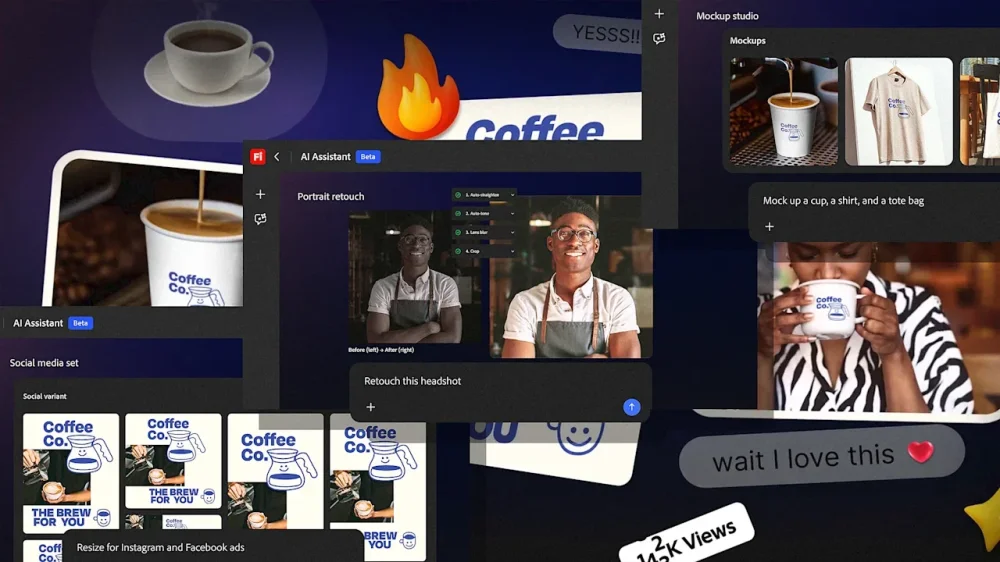
Adobe is rolling out the public beta for its Firefly AI Assistant later this month, turning complex creative workflows into a simple chat interface across applications like Photoshop, Premiere, Illustrator, or Lightroom. You type what you want, and the AI connects the dots behind the scenes to make it happen. Since it’s a multi-modal interface, it can tune with precision via context-aware control panels when needed beyond the text-based prompt. It’s a first step in what creative apps may become in the future, removing the complexity of user interfaces while keeping powerful control. If the final product works like the demo, the new Firefly AI Assistant will change the fundamental way people interact with design software, giving the keys of the walled professional creative castle to anyone willing to pay the money, write in plain English, and move sliders that appear contextually to finely tune aspects of their creations whenever it is needed. Instead of forcing newcomers to memorize a labyrinth of menus, nested palettes, and pop-up windows, the assistant lets them achieve complex results just by asking. At the same time, the new assistant is the first stepping stone into a new type of automation for professionals. It gives veterans a fast track to bypass the tedious grunt work they already know how to do. “We have the full spectrum covered from people coming new to our franchise and they don’t know the full power of Photoshop and they want to achieve some amazing edits they can also tap into it and just talk to the assistant,” Adobe vice president of AI and innovation Alexandru Costin told me in an interview. “On the other side of the spectrum, the creative professionals that fully understand our tools can actually take those assets and continue editing them in our tools.” This tool evolved from Project Moonlight, which Adobe teased at last year’s MAX conference and tested in a private beta. The core idea came directly from working professionals who were looking for a modern upgrade to Photoshop Actions, a decades-old feature that allows users to record and replay mouse clicks. Actions only works for fixed, repeatable chores, like adjusting a thousand images’ hue and saturation using fixed values. But users wanted a smarter type of automation agent that could adapt to what the agent sees in each image, video, or illustration. Adobe decided to create something that goes beyond basic editing, changing things on media according to the context and content of the image or the video itself, even creating new images, mockups and final candidates for art. The new, smart ‘Photoshop Actions’ “At Adobe MAX actually I was meeting a large group of professionals to ask them about agentic,” Costin tells me, using the industry term for an AI that actively executes multi-step tasks across different software on your behalf. “They said ‘look I would love you guys to give me a button like Photoshop actions where I can record in an agent what I’m doing and then have the agent be able to replay that for me so I can basically decide… that this automation is doing the things my way.'” While the new Firefly AI Assistant still has two limitations that will not make it a direct Actions replacement—more on this later—it certainly has the potential to become a huge time saver for any professional willing to work with a crew of AI bots. To make that kind of automation happen, Adobe built what it calls Creative Skills. The AI learns how a specific creator likes to work over time, picking up on their favorite tools and visual style, and can apply that knowledge to handle your files. “You can actually describe your particular taste or approach as a creative professional and then be able to ‘replay’ that using the Firefly AI system, so you save time and you can automate some portion of your work so you have more time for creativity,” Costin says. The current beta provides a standard set of default skills to start, though making those skills fully editable and shareable is coming in a subsequent version (one of the limitations that set it apart from Photoshop Actions, which are fully shareable). Instead of relying on rigid templates, the system acts like an autonomous digital art director. It actively evaluates the raw materials on your canvas to figure out the right context before making a move, rather than just executing blind commands based on file metadata. The software doesn’t just hijack your cursor either; it checks in with you constantly to clarify what you actually want to achieve, ensuring you remain the driver of the final artwork. This integration goes beyond Adobe’s own engines, extending the platform to leading third-party AI models, including Anthropic’s Claude. It also hooks into review platforms like Frame.io. If a client leaves notes on a project, the agent can digest that feedback and execute the revisions on its own, selecting whatever software handles the job best. The path for multi-model, adaptive interfaces The assistant also introduces Precision Flow, replacing the tedious chore of painting pixel-perfect masks with semantic editing. Instead of dealing with raw pixels, the AI recognizes the actual physical objects inside the frame—knowing a coffee cup is a cup and the beans next to it are beans. “Precision flow gives you the opportunity to use generative AI to edit an asset not on the pixel level but on the semantic side,” Costin says. “Like in this case it knows that this is a photo of some coffee with coffee beans so it creates these dynamic semantic sliders that enable you then to change your image semantically without having to re-prompt.” This semantic ability automatically generates new control panels for granular control. In the case of the coffee cup with the coffee beans splashing over the liquid coffee, users will see a panel with sliders like “Coffee beans” and “Splash” that users can move to precisely increase or decrease the amount of beans or coffee splash. This is the right step for future apps. Natural language is great for a starting point, but language is interpretable by nature, leading to imprecision and misunderstandings. There is no imprecision in a slider that can increase the amount of coffee beans in the image, interactively, in real time. Because the assistant is hooked directly into the guts of the Creative Cloud, standard tools like hue and saturation get passed directly into the host application. The result isn’t a dead image file; it generates a native PSD document, Adobe’s standard file format that stacks individual edits on separate, adjustable layers. “This is actually a Photoshop control where once you do these edits behind the scenes we can actually create the PSD and that PSD is loaded in Photoshop,” Costin says. “Using an actual Photoshop feature you will have that full adjustment layer applied in Photoshop.” However, the current beta still hits a hard wall when it comes to those advanced semantic edits. While any regular control panel—like HUE & Saturation—will generate an editable layer in Photoshop, when you use Precision Flow to modify objects in the assistant, those specific changes do not yet cross over into Photoshop as live, manipulable sliders. “We haven’t yet integrated precision flow into Photoshop. You can imagine this is coming to Photoshop too, but I don’t think we’re announcing it yet,” Costin says. “Right now if you do these edits the image that will be passed to Photoshop will be a raster image.” That means the semantic tweaks arrive as a flattened, uneditable layer of pixels. For absolute beginners, this technical hurdle won’t matter much as long as the final image looks good. For the high-end professionals that Adobe is trying to court, I suspect it will be more like a temporary inconvenience. It would be really nice to have it, but I can work without it. It’s clear that the Firefly AI Assistant may be a massive leap forward in making software work for the user rather than the other way around, where you direct an AI to do what you want, with the AI learning your work style, and only surfacing precise controls when needed. View the full article
-
Igas, Charles, Corey, and Ryan are four characters in a popular TikTok skit series where, over Zoom, they discuss how to “proactively realign” their “cross-functional synergy” and ensure “tighter execution” in the face of looming threats like a “shrinking opportunity aperture”—otherwise known as February coming to a close. The spoofs, posted by startup recruitment firm Verso Jobs, are intentionally drenched in nonsense. All the characters are played by one employee, Seamus Harvey, wearing various face filters and cramming in as much corporate jargon as possible. They resonate because they feel real—particularly for Gen Zers and mid-career millennials complaining online about their “corporate icks.” You might not know the term, but you likely recognize the feeling of cringing when a colleague “circles back” on an email, tags you on Slack to appear busy, or a manager subtly switches up their personality when someone senior joins the meeting. What looks like eye-rolling at buzzwords and inauthentic behaviors actually signals a growing impatience with performative workplace culture at a time when job security feels more fragile than ever: The cost of living continues to skyrocket, one steady job is no longer enough for a mortgage, and millennials are navigating a premature career crisis. And a growing number of workers are no longer willing to play along. When work doesn’t feel human Alex Lovell, a political psychologist and vice president of the O.C. Tanner Institute, the research division of O.C. Tanner, the software company that specializes in employee recognition and workplace culture, says a corporate ick emerges when “work stops feeling human and it starts feeling performative.” “The eye roll at jargon or personality shifting is really almost a reaction to low trust,” Lovell tells Fast Company. “People can tell when everyone is impression-managing instead of just being honest about how things are going.” Corporate icks in response to big egos and office lingo have probably always existed, he adds, but what has changed is the amount of patience people have left. Carla Bevins, an associate teaching professor of business management communication at Carnegie Mellon University’s Tepper School of Business, says corporate speak erodes trust because the language and intent do not line up. “If a listener has to translate what you said, the communication has already failed,” she tells Fast Company. “When communication feels like performance, people disengage.” Justin, who doesn’t use his full name on social media for privacy concerns, makes content on social media under the handle Professor Corporate while also working a 9-to-5. He tells Fast Company that people still understand how to play office politics, but they just don’t care enough to perform them anymore. The job market is turbulent, AI is disrupting industries across the board, and layoffs sweep through companies regardless of performance. Many workers are living in this “culture of insecurity,” wondering whether they can afford rent, a mortgage, or children. In that environment, performing enthusiasm for jargon-filled meetings feels especially difficult. “You’re just not safe no matter how good you are,” Justin says. “I’ve noticed people have stopped caring a little bit on how formal they may need to be.” Authenticity was championed—then taken away Justin personally experiences icks when colleagues are clearly angling for advancement but lack the subtlety to mask it. Another trigger is people “not working their wage.” “If you’re a junior person or a mid-level manager, but you’re acting like a director or VP trying to tell people what to do, or being overly enthusiastic about things that nobody cares about, that’s an ick,” he says. “You’re putting on this facade that is so easy to see through.” Authenticity may be one of the few distinctly human signals people crave in the workplace as automation takes over, and employees are increasingly sensitive to when it feels absent. The COVID-19 pandemic and the work-from-home era became something of a “pajama revolution,” Lovell says, where people showed up without makeup or office attire and discovered it had little impact on their careers. This had measurable effects. Employee recognition software and services company O.C. Tanner’s 2026 Global Culture Report found that when employees feel their leaders and coworkers are accountable and transparent, they are five times more likely to trust their organization. Engagement and satisfaction with direct leaders’ communication also increase fivefold. But as return to office mandates have taken hold, it’s as if all that honesty and authenticity is no longer a priority, which feels like a backwards step. When the ick is a breaking point For some, the corporate disconnect is enough for them to leave their career ladders entirely. Sam Loeffler worked at five companies throughout her 20s in brand management roles. A top performer earning around $180,000 a year by age 30, she appeared to be thriving. But the higher she climbed, the more corporate life felt stressful and increasingly “fake.” She quit without another job lined up and took eight months off. Then she began building a different kind of life. Now, she’s a coach and content creator under the handle Sam Beyond Corporate, helping other people explore anti-corporate paths, and she works shifts at an organic olive oil farm in the middle of California. “We were asking each other, do you feel like you wear a mask at work? Are you the same person here as you are at home?” she tells Fast Company of a recent conversation with her colleagues. “And we were all like, 100%, yes, I am fully myself. And I could never do that in corporate no matter what.” While not every jaded, tired worker has the financial cushion to walk away to try something new, Loeffler’s story is one that is increasingly apparent on social media, with creators sharing their decisions to leave their roles with no immediate career plans, or referring to themselves as “corporate dropouts.” Leaving corporate life isn’t realistic for everyone. Many are stuck “hugging” their roles before something better comes along, the icks simmering internally. But there’s a growing sense, Loeffler says, that people want more than that. “I wanted to have more of a purpose led impact on the world,” she says. “I’m not just here to be a corporate slave.” The rise of the corporate ick may signal a turning point where tolerance for pretense is thinning, and younger employees especially don’t feel able to ignore the gap between what the corporate world says and what is actually reality. And they’re reacting—whether that means spending a nest egg on starting a new life, or simply uploading snarky vids to social media. “Younger workers in particular are like, don’t tell me things are good here when they’re not,” Lovell says. “If my workplace culture isn’t great, I am not going to pretend that it is.” View the full article

-
Mediators moved closer Wednesday to extending the ceasefire between the United States and Iran and restarting negotiations to salvage the fragile truce before it expires next week. A senior Iranian military official threatened to halt trade in the region if the U.S. does not lift its naval blockade. The U.S. blockade on Iranian ports and renewed Iranian threats have imperiled the week-old agreement, but regional officials said they were making progress, telling The Associated Press that the United States and Iran had an “in principle agreement” to extend it to allow for more diplomacy. A senior U.S. official said the United States has not formally agreed to extend the ceasefire and that “engagement” with Iran continues. The official spoke on condition of anonymity because they were not authorized to publicly discuss the sensitive negotiations. The commander of Iran’s joint military command warned that Iran would completely block exports and imports across the Persian Gulf region, the Sea of Oman and the Red Sea if the U.S. military does not lift its blockade on Iranian ports. “Iran will act with strength to defend its national sovereignty and its interests,” Ali Abdollahi said. Mediators seek compromise on sticking points Before the two-week ceasefire expires on April 22, mediators are pushing for a compromise on three main sticking points that derailed direct talks last weekend — Iran’s nuclear program, the Strait of Hormuz and compensation for wartime damages, according to a regional official who spoke on condition of anonymity to discuss the mediation efforts. Iranian Foreign Ministry spokesman Esmail Baghaei said Iran is open to discussing the type and level of its uranium enrichment, but his country “based on its needs, must be able to continue enrichment,” Iran’s state-media reported. The fighting has killed at least 3,000 people in Iran, more than 2,100 in Lebanon, 23 in Israel and more than a dozen in Gulf Arab states. Thirteen U.S. service members have also been killed. Future of ceasefire is uncertain The war, now in its seventh week, has jolted markets and rattled the global economy as shipping has been cut off and airstrikes have torn through military and civilian infrastructure across the region. Oil prices fell on hopes for an end to fighting on Wednesday, and U.S. stocks surged close to records set in January. Yet the future of the fragile ceasefire appeared increasingly uncertain as the U.S. pressed ahead with its blockade, which threatens to sever Iran from economic lifelines it has relied on since the war began nearly seven weeks ago. “I think they want to make a deal very badly,” The President said in an excerpt from an interview with Fox Business Network’s “Mornings with Maria” scheduled to air Wednesday morning. He added: “I view it as very close to over.” Muhammad Aurangzeb, Pakistan’s finance minister, told AP that “our leadership is not giving up” on efforts to help the U.S. and Iran end the conflict. The President claimed Wednesday that China has agreed not to provide weapons to Iran as reports circulated that Beijing has considered transferring arms. The President wrote in a social media post that China is “very happy that I am permanently opening the Strait of Hormuz.” He added: “They have agreed not to send weapons to Iran.” He seemed to suggest the two are linked. China has long supported Iran’s ballistic missile program and backed it with dual-use industrial components that can be used for missile production, according to the U.S. government. US military says no ships got past blockade U.S. Central Command said Tuesday that no ships made it past the blockade in the first 24 hours, while six merchant vessels complied with direction from U.S. forces to turn around and reenter Iranian waters. The blockade is intended to pressure Iran, which has exported millions of barrels of oil, mostly to Asia, since the war began Feb. 28. Much of it has likely been carried by so-called dark transits that evade sanctions and oversight, providing cash that’s been vital to keeping Iran running. Since the war began, Iran has curtailed maritime traffic, with most commercial vessels avoiding the waterway. Tehran’s effective closure of the strait, through which a fifth of global oil transits in peacetime, has sent oil prices skyrocketing, pushing up the cost of gasoline, food and other basic goods far beyond the Middle East. Strikes continue in Lebanon after Washington talks Meanwhile, Israel pressed ahead with its aerial and ground war in Lebanon. The country’s National News Agency reported airstrikes and artillery shelling throughout southern Lebanon on Wednesday, including near Bint Jbeil, where Israeli forces have encircled fighters with the Lebanese militant group Hezbollah. The fighting continued after Israeli and Lebanese officials concluded their first direct talks in decades. Israeli Ambassador Yechiel Leiter said the two countries are “on the same side of the equation” in “liberating Lebanon” from Hezbollah. Lebanese Ambassador Nada Hamadeh Moawad called Tuesday’s meeting “constructive” but urged an end to the fighting. Since March, that war has displaced more than 1 million people in Lebanon. Israel and Lebanon have technically been at war since Israel was established in 1948, and Lebanon remains deeply divided over diplomatic engagement with Israel. Associated Press Writer Darlene Superville contributed to this report. —Samy Magdy, Sam Metz and Mike Corder, Associated Press View the full article

-
We may earn a commission from links on this page. Creatine is a rare thing in the world of workout supplements: It actually works, plus it’s cheap and safe. (Protein and caffeine are about the only other common supplements you can say that of.) If you’re trying to build muscle or lift the heaviest things around, you might want to get into the habit of taking creatine every day—but there are, of course, some caveats. What does creatine do?Creatine supplies quick energy in your muscles for short, intense bursts of power. You may have heard of adenosine triphosphate (ATP), which stores energy in our cells. (One main reason you eat food: to be able to make ATP.) When our muscles use ATP, it gets split into ADP and a free phosphate. Creatine can hold onto an extra phosphate, and immediately stick that phosphate onto the ADP so it can become ATP again. Creatine thus provides a very short-term energy supply, one we can use in the middle of a sprint or a weightlifting set. That means that the more creatine you have in your muscles, the better you’ll be at movements that require a short, intense use of muscles. Lifting weights is the main thing creatine helps with, but in some cases runners may benefit, too. If you can lift a little more weight, for a few more reps, you’ll ultimately be able to get a little bit stronger. Creatine likely has a few other effects that help muscle growth as well. Bottom line, it can provide a small but non-zero increase in strength and muscle size for most people. For more basic information on creatine, check out this summary of evidence from Examine.com. Who is creatine for?Nobody needs to supplement with creatine. You can work out just fine without it, and you won’t be passing up huge gainzzz. It just provides a tiny boost for many of us. If your main sport is cardio, creatine won’t help. If you lift weights or are trying to build muscle through strength training (for example, you’re into bodybuilding), it could help. How much it helps will depend on how much creatine you already have. Our bodies produce plenty of creatine on their own, and then we also get some through our diet, especially if you eat meat. Vegetarians and vegans are usually lower on creatine to start with, so they stand to benefit more. And some of us are non-responders. “Some people walk around with (just about) fully topped-off muscle creatine saturation, so they obtain no benefit from creatine supplementation,” sports nutrition researcher and bodybuilder Eric Trexler writes at Stronger by Science. “In reality, being a non-responder is great news. You were genetically pre-selected to win a lifetime supply of free creatine!” The downsides of creatine useAs supplements go, creatine is pretty safe. There are no scary side effects, and the most common downside people notice is that it can cause gastrointestinal distress, especially in large doses and/or on an empty stomach. Also, any supplement comes with the caveat that nobody at the FDA is verifying that they contain what they say they contain. In terms of cost, creatine is also one of the cheaper supplements, especially if you buy it in powder form as creatine monohydrate. For example, it’s not too hard to find a package with 100+ servings for under $25. If you prefer your creatine in capsule form, it tends to be a bit more expensive. Orgain Creatine Monohydrate Micronized Powder, Unflavored, 100 Servings, 17.64 oz $21.84 at Amazon $22.99 Save $1.15 Shop Now Shop Now $21.84 at Amazon $22.99 Save $1.15 One of the biggest concerns you'll see people raise online is the idea that creatine may cause hair loss in men. This idea is based on research from 2009 that showed that athletes who were given creatine tended to have high levels of dihydrotestosterone (DHT) in their blood. DHT is linked with male-pattern hair loss, and when the research was first published it wasn't clear whether creatine might have the ability to accelerate hair loss in men who were already susceptible to it. So the concern was only ever theoretical, and so far no research has shown an actual connection between creatine supplementation and hair loss. A 12-week randomized controlled trial was done in 2025 and found no effect on hair loss or hair follicle health. How to take creatineUnlike most drugs, where the effects wear off in a matter of hours, creatine is stored in our muscles for a fairly long period of time. If you start taking the recommended dose of three to five grams per day (larger people should go with the larger dose and vice versa), it will take about a month to fully load up your muscles with creatine. Or you could get the process over with more quickly by using a “loading dose” of, say, 20 grams a day. Some people get GI issues with such a high dose, so you can skip the loading phase if it doesn't agree with you. After that, just take the usual dose once a day. Exact timing during the day doesn’t seem to matter, but if you already use a pre-workout drink it's often convenient to mix it into that. If you want to stop taking creatine, it will probably take a few weeks for your creatine levels to return to normal. That extra creatine in your body will also cause your muscles to retain more water, making you a few pounds heavier. Physiologically this is fine and may even help contribute to muscle growth. But if you need to worry about weight classes for your sport, or if you psychologically have a hard time watching your weight on the scale inch up, that may feel like a downside. (Athletes who compete in sports with weight classes sometimes stop taking their creatine in the weeks leading up to the competition, in an effort to lose those couple pounds of water weight.) On the bright side, gaining a few pounds when you start creatine is a way you can know that it’s working. So far creatine has been studied more often in untrained people than in experienced athletes. It's also been studied more in men than in women, although we don't have any reason to believe it works differently across genders (sorry to the influencers selling creatine "for women"). We still don’t know exactly how many people are non-responders, and research is still ongoing into the details of all its risks and benefits. But if you want to try one of the rare supplements that actually does what it says it does—usually—consider giving creatine a try. View the full article
-
US president insists Justice Department will not drop criminal probe into central bank chairView the full article
-
Six largest lenders spend $33bn on shares, smashing market forecastsView the full article
-
In terms of effective customer service training, there are seven vital topics you need to cover. These include your company’s core values, product training, active listening, empathy, effective communication, problem-solving skills, and social media support. Each of these topics plays an important role in enhancing your team’s ability to serve customers well. Comprehending how they interconnect can greatly improve customer satisfaction and loyalty. So, what’s the best way to implement these strategies effectively? Key Takeaways Core Values and Company Culture: Emphasize the importance of aligning customer service interactions with the company’s core values to enhance brand loyalty. Product Knowledge and Problem-Solving Skills: Train staff on product features and troubleshooting techniques to boost confidence and efficiency in resolving customer issues. Active Listening Techniques: Develop active listening skills to significantly improve customer satisfaction and ensure customers feel valued and understood. Effective Communication Strategies: Focus on clear messaging and positive language to enhance customer interactions and simplify complex information for better understanding. Empathy in Customer Service: Incorporate empathy training to help staff recognize customer emotions, leading to customized solutions and increased customer loyalty. Company’s Core Values Comprehending a company’s core values is fundamental for effective customer service. These values guide your interactions and decisions, ensuring you align with the brand’s mission and vision. Incorporating core values into customer service training topics improves accountability among staff, reinforcing a consistent approach to customer interactions. For instance, customer service training programs that emphasize these values can boost employee engagement, leading to better performance and higher customer satisfaction scores. Training examples might include role-playing scenarios that focus on real-life situations reflecting core values. By addressing customer care training topics that highlight the importance of trust and loyalty, you’ll learn that 70% of consumers prefer brands with strong values. This focus is significant since a staggering 78% of customers discontinue business because of poor service experiences. In the end, developing customer service skills training around core values promotes a customer-focused culture, crucial for long-term success in customer relationships. Product Training Product training is crucial for equipping you with a solid comprehension of key features and benefits of the products you support. By mastering troubleshooting techniques, you’ll be better prepared to address common customer issues effectively. Regular updates and assessments will help you stay informed and sharp, ensuring you provide accurate and helpful information to improve customer satisfaction. Key Features Overview Grasping key features of your product is essential for delivering exceptional customer service, as it enables you to assist customers with confidence and accuracy. Effective product training improves your comprehension of features and common issues, preparing you for real-world inquiries. Incorporate hands-on training, including simulations and role-playing, into your customer service training programs for employees to boost confidence. Feature Importance Training Method Product Knowledge Accurate assistance Customer service exercises Common Issues Quick response times Role-playing scenarios Customer Profiles Personalized service Case studies Utilizing customer care training ideas and continuous updates keeps your skills sharp, ensuring you provide excellent customer handling skills training. Troubleshooting Techniques Training Effective troubleshooting techniques training is crucial for customer service representatives, as it equips them with systematic methods to identify and resolve customer issues efficiently. This training helps decrease resolution time by up to 30%, enhancing the overall customer experience. Key aspects of this training include: Comprehending common product issues and FAQs Practicing real-time problem diagnosis through role-playing scenarios Utilizing various troubleshooting tools and resources Staying updated on the latest product features and potential issues Active Listening Active listening is a crucial skill in customer service that goes beyond simply hearing words; it involves fully engaging with the speaker to grasp their message and respond appropriately. In your customer service training activities, you’ll learn that effective active listening can greatly improve customer satisfaction. Research shows that it can lead to a 50% increase in satisfaction scores, as customers feel valued and understood. Techniques like summarizing concerns, reflecting emotions, and asking clarifying questions are fundamental components of active listening. Incorporating these into your customer service soft skills training will enhance problem resolution efficiency by up to 30%. This means you’ll diagnose issues more accurately, leading to quicker resolutions. Furthermore, studies indicate that 70% of customers feel more connected to a brand when they believe their concerns are genuinely heard. These insights are important for any customer care training program and should be integral to your customer service discussion topics. Empathy Grasping customers’ feelings and perspectives is vital in customer service, as it cultivates stronger connections and loyalty. Empathy in customer service can considerably boost satisfaction rates and encourage lasting relationships. By incorporating empathy into your training, you can improve your team’s effectiveness. Consider these key points: Empathetic interactions can increase customer satisfaction by up to 70%. Recognizing customer emotions aids in customized problem-solving. Active listening and compassionate responses defuse tense situations. Training exercises, like role-playing, reinforce empathetic responses. These elements are fundamental components of an all-encompassing customer service representative training program. Through interactive customer service training and dedicated customer care skills training, your team can develop the empathy needed to create memorable experiences. In the end, nurturing empathy in customer service not only improves individual interactions but also drives repeat business and boosts overall customer loyalty. Effective Communication Effective communication is crucial in customer service, as it shapes how customers perceive your brand. By mastering clear messaging techniques, employing active listening strategies, and adapting your tone and language, you can greatly improve interactions. Let’s explore these components to make sure you’re equipped to communicate effectively and boost customer satisfaction. Clear Messaging Techniques Clear messaging techniques are vital for effective communication in customer service, as they help you simplify complex concepts, ensuring customers easily grasp the information you provide. By incorporating these techniques into your customer service education, you improve overall interactions and cultivate trust. Here are some key components: Use positive language to shift focus toward solutions Identify customer concerns accurately, showing you value their input Maintain proper grammar and a professional tone in written communication Regularly train to improve your customer service skills Engaging in customer service training courses that emphasize clear messaging techniques will lead to measurable improvements in customer satisfaction. Following a customer care training manual can further guide you in developing these fundamental skills. Active Listening Strategies Even though many aspects of customer service rely on effective communication, active listening stands out as a fundamental skill that can greatly improve the quality of interactions. By fully concentrating on the speaker, you can improve customer satisfaction by up to 40%. Reflecting back what customers say helps clarify misunderstandings and builds trust. It’s vital to avoid interrupting customers, as this can decrease perceived service quality by 70%. Use open-ended questions to encourage them to share more, allowing you to provide customized solutions. At the end of the conversation, summarizing their concerns confirms you’ve accurately understood their issues, showing that their concerns are valued. Incorporating these active listening strategies into your customer service training will greatly improve your client service training efforts. Tone and Language Adaptation Adapting your tone and language to match different customer personalities is crucial for improving communication effectiveness in customer service. Effective tone and language adaptation can greatly improve customer satisfaction and engagement. Consider these key points during your customer care interactions: Use positive language to promote a welcoming atmosphere. Rephrase negative statements to maintain a constructive dialogue. Pay attention to non-verbal cues for better rapport-building. Simplify complex information to avoid customer confusion. Incorporating these strategies in your customer service training modules, customer care training courses, and customer relations training can lead to improved service quality. In the end, mastering tone and language adaptation is a vital component of the best customer service training, resulting in higher first-contact resolution rates and overall customer satisfaction. Problem-Solving Skills Problem-solving skills are vital for customer service representatives, as they directly influence the efficiency and effectiveness of service delivery. When you effectively utilize these skills, you can reduce the time-to-resolution of help desk tickets by an estimated 20–30%. Engaging in customer service training ideas focused on creative problem-solving techniques will equip you to address complex situations swiftly, enhancing overall customer satisfaction. This is fundamental, as 86% of customers indicate they stop doing business because of poor service experiences. Participating in customer service workshops can help you anticipate customer needs and provide preemptive advice, which encourages loyalty. In addition, continuous development of problem-solving skills leads to higher agent productivity and job satisfaction. Social Media Support In today’s digital environment, nearly 70% of consumers turn to social media for customer service, making it a crucial component of modern support strategies. With social media support, you can improve customer satisfaction and loyalty. Quick response times are fundamental; 53% of users expect a reply within an hour. Engaging with customers on these platforms cultivates community and brand loyalty, as 78% feel valued when brands respond to their messages. Consider incorporating the following customer service training ideas into your client service training programs: Develop customer skills training focused on social media engagement. Implement customer service activities that simulate real-life social media interactions. Train staff to respond swiftly and professionally to inquiries. Use positive online reviews to boost team morale and reinforce best practices. Excelling in social media customer service can positively impact your brand’s reputation and strengthen customer relationships. Frequently Asked Questions What Are the 7 Essentials to Excellent Customer Service? To achieve excellent customer service, focus on seven fundamentals: personalized interactions that cater to customer preferences, strong product knowledge for effective problem resolution, diverse communication channels for convenience, proactive updates about service issues, empathy to build rapport, active listening to understand customer needs, and a commitment to follow-up to guarantee satisfaction. What Are the 5 R’s of Customer Service? The 5 R’s of customer service are Respect, Reliability, Responsiveness, Resourcefulness, and Resolution. Respect means treating customers with dignity as you value their concerns. Reliability guarantees you provide consistent service and accurate information. Responsiveness emphasizes timely replies to inquiries, which improves satisfaction. Resourcefulness encourages you to think creatively to solve problems effectively. Finally, Resolution focuses on addressing customer issues successfully, leading to satisfactory outcomes and enhanced customer relationships. What Are the 7 R’s of Customer Service? The 7 R’s of customer service are crucial for creating a positive customer experience. They include the Right product, which meets customer needs, and the Right price, guaranteeing value. The Right place improves convenience, whereas the Right time addresses timely access. Providing the Right quantity makes certain customers get what they want, and delivering the Right information helps them make informed decisions. Finally, the Right service guarantees consistent and empathetic support, nurturing loyalty. What Are the 4 P’s of Customer Service? The 4 P’s of customer service are Personalization, Competency, Proactivity, and Convenience. Personalization means tailoring interactions to fit individual needs, which boosts customer loyalty. Competency involves having the skills and knowledge to effectively solve customer issues, enhancing efficiency. Proactivity focuses on anticipating customer needs and addressing potential problems before they happen, creating a better relationship. Ultimately, Convenience provides multiple accessible communication channels, ensuring a seamless service process that improves customer retention. Conclusion In conclusion, focusing on these seven crucial topics for customer service training can greatly improve your team’s effectiveness. By instilling core values, ensuring thorough product knowledge, and honing skills in communication, empathy, and problem-solving, you create a strong foundation for exceptional service. Furthermore, incorporating social media support strategies and committing to continuous training keeps your staff adaptable and responsive. Prioritizing these areas not just improves customer satisfaction but likewise promotes a positive company culture that benefits everyone involved. Image via Google Gemini and ArtSmart This article, "7 Essential Topics for Customer Service Training" was first published on Small Business Trends View the full article
-
In terms of effective customer service training, there are seven vital topics you need to cover. These include your company’s core values, product training, active listening, empathy, effective communication, problem-solving skills, and social media support. Each of these topics plays an important role in enhancing your team’s ability to serve customers well. Comprehending how they interconnect can greatly improve customer satisfaction and loyalty. So, what’s the best way to implement these strategies effectively? Key Takeaways Core Values and Company Culture: Emphasize the importance of aligning customer service interactions with the company’s core values to enhance brand loyalty. Product Knowledge and Problem-Solving Skills: Train staff on product features and troubleshooting techniques to boost confidence and efficiency in resolving customer issues. Active Listening Techniques: Develop active listening skills to significantly improve customer satisfaction and ensure customers feel valued and understood. Effective Communication Strategies: Focus on clear messaging and positive language to enhance customer interactions and simplify complex information for better understanding. Empathy in Customer Service: Incorporate empathy training to help staff recognize customer emotions, leading to customized solutions and increased customer loyalty. Company’s Core Values Comprehending a company’s core values is fundamental for effective customer service. These values guide your interactions and decisions, ensuring you align with the brand’s mission and vision. Incorporating core values into customer service training topics improves accountability among staff, reinforcing a consistent approach to customer interactions. For instance, customer service training programs that emphasize these values can boost employee engagement, leading to better performance and higher customer satisfaction scores. Training examples might include role-playing scenarios that focus on real-life situations reflecting core values. By addressing customer care training topics that highlight the importance of trust and loyalty, you’ll learn that 70% of consumers prefer brands with strong values. This focus is significant since a staggering 78% of customers discontinue business because of poor service experiences. In the end, developing customer service skills training around core values promotes a customer-focused culture, crucial for long-term success in customer relationships. Product Training Product training is crucial for equipping you with a solid comprehension of key features and benefits of the products you support. By mastering troubleshooting techniques, you’ll be better prepared to address common customer issues effectively. Regular updates and assessments will help you stay informed and sharp, ensuring you provide accurate and helpful information to improve customer satisfaction. Key Features Overview Grasping key features of your product is essential for delivering exceptional customer service, as it enables you to assist customers with confidence and accuracy. Effective product training improves your comprehension of features and common issues, preparing you for real-world inquiries. Incorporate hands-on training, including simulations and role-playing, into your customer service training programs for employees to boost confidence. Feature Importance Training Method Product Knowledge Accurate assistance Customer service exercises Common Issues Quick response times Role-playing scenarios Customer Profiles Personalized service Case studies Utilizing customer care training ideas and continuous updates keeps your skills sharp, ensuring you provide excellent customer handling skills training. Troubleshooting Techniques Training Effective troubleshooting techniques training is crucial for customer service representatives, as it equips them with systematic methods to identify and resolve customer issues efficiently. This training helps decrease resolution time by up to 30%, enhancing the overall customer experience. Key aspects of this training include: Comprehending common product issues and FAQs Practicing real-time problem diagnosis through role-playing scenarios Utilizing various troubleshooting tools and resources Staying updated on the latest product features and potential issues Active Listening Active listening is a crucial skill in customer service that goes beyond simply hearing words; it involves fully engaging with the speaker to grasp their message and respond appropriately. In your customer service training activities, you’ll learn that effective active listening can greatly improve customer satisfaction. Research shows that it can lead to a 50% increase in satisfaction scores, as customers feel valued and understood. Techniques like summarizing concerns, reflecting emotions, and asking clarifying questions are fundamental components of active listening. Incorporating these into your customer service soft skills training will enhance problem resolution efficiency by up to 30%. This means you’ll diagnose issues more accurately, leading to quicker resolutions. Furthermore, studies indicate that 70% of customers feel more connected to a brand when they believe their concerns are genuinely heard. These insights are important for any customer care training program and should be integral to your customer service discussion topics. Empathy Grasping customers’ feelings and perspectives is vital in customer service, as it cultivates stronger connections and loyalty. Empathy in customer service can considerably boost satisfaction rates and encourage lasting relationships. By incorporating empathy into your training, you can improve your team’s effectiveness. Consider these key points: Empathetic interactions can increase customer satisfaction by up to 70%. Recognizing customer emotions aids in customized problem-solving. Active listening and compassionate responses defuse tense situations. Training exercises, like role-playing, reinforce empathetic responses. These elements are fundamental components of an all-encompassing customer service representative training program. Through interactive customer service training and dedicated customer care skills training, your team can develop the empathy needed to create memorable experiences. In the end, nurturing empathy in customer service not only improves individual interactions but also drives repeat business and boosts overall customer loyalty. Effective Communication Effective communication is crucial in customer service, as it shapes how customers perceive your brand. By mastering clear messaging techniques, employing active listening strategies, and adapting your tone and language, you can greatly improve interactions. Let’s explore these components to make sure you’re equipped to communicate effectively and boost customer satisfaction. Clear Messaging Techniques Clear messaging techniques are vital for effective communication in customer service, as they help you simplify complex concepts, ensuring customers easily grasp the information you provide. By incorporating these techniques into your customer service education, you improve overall interactions and cultivate trust. Here are some key components: Use positive language to shift focus toward solutions Identify customer concerns accurately, showing you value their input Maintain proper grammar and a professional tone in written communication Regularly train to improve your customer service skills Engaging in customer service training courses that emphasize clear messaging techniques will lead to measurable improvements in customer satisfaction. Following a customer care training manual can further guide you in developing these fundamental skills. Active Listening Strategies Even though many aspects of customer service rely on effective communication, active listening stands out as a fundamental skill that can greatly improve the quality of interactions. By fully concentrating on the speaker, you can improve customer satisfaction by up to 40%. Reflecting back what customers say helps clarify misunderstandings and builds trust. It’s vital to avoid interrupting customers, as this can decrease perceived service quality by 70%. Use open-ended questions to encourage them to share more, allowing you to provide customized solutions. At the end of the conversation, summarizing their concerns confirms you’ve accurately understood their issues, showing that their concerns are valued. Incorporating these active listening strategies into your customer service training will greatly improve your client service training efforts. Tone and Language Adaptation Adapting your tone and language to match different customer personalities is crucial for improving communication effectiveness in customer service. Effective tone and language adaptation can greatly improve customer satisfaction and engagement. Consider these key points during your customer care interactions: Use positive language to promote a welcoming atmosphere. Rephrase negative statements to maintain a constructive dialogue. Pay attention to non-verbal cues for better rapport-building. Simplify complex information to avoid customer confusion. Incorporating these strategies in your customer service training modules, customer care training courses, and customer relations training can lead to improved service quality. In the end, mastering tone and language adaptation is a vital component of the best customer service training, resulting in higher first-contact resolution rates and overall customer satisfaction. Problem-Solving Skills Problem-solving skills are vital for customer service representatives, as they directly influence the efficiency and effectiveness of service delivery. When you effectively utilize these skills, you can reduce the time-to-resolution of help desk tickets by an estimated 20–30%. Engaging in customer service training ideas focused on creative problem-solving techniques will equip you to address complex situations swiftly, enhancing overall customer satisfaction. This is fundamental, as 86% of customers indicate they stop doing business because of poor service experiences. Participating in customer service workshops can help you anticipate customer needs and provide preemptive advice, which encourages loyalty. In addition, continuous development of problem-solving skills leads to higher agent productivity and job satisfaction. Social Media Support In today’s digital environment, nearly 70% of consumers turn to social media for customer service, making it a crucial component of modern support strategies. With social media support, you can improve customer satisfaction and loyalty. Quick response times are fundamental; 53% of users expect a reply within an hour. Engaging with customers on these platforms cultivates community and brand loyalty, as 78% feel valued when brands respond to their messages. Consider incorporating the following customer service training ideas into your client service training programs: Develop customer skills training focused on social media engagement. Implement customer service activities that simulate real-life social media interactions. Train staff to respond swiftly and professionally to inquiries. Use positive online reviews to boost team morale and reinforce best practices. Excelling in social media customer service can positively impact your brand’s reputation and strengthen customer relationships. Frequently Asked Questions What Are the 7 Essentials to Excellent Customer Service? To achieve excellent customer service, focus on seven fundamentals: personalized interactions that cater to customer preferences, strong product knowledge for effective problem resolution, diverse communication channels for convenience, proactive updates about service issues, empathy to build rapport, active listening to understand customer needs, and a commitment to follow-up to guarantee satisfaction. What Are the 5 R’s of Customer Service? The 5 R’s of customer service are Respect, Reliability, Responsiveness, Resourcefulness, and Resolution. Respect means treating customers with dignity as you value their concerns. Reliability guarantees you provide consistent service and accurate information. Responsiveness emphasizes timely replies to inquiries, which improves satisfaction. Resourcefulness encourages you to think creatively to solve problems effectively. Finally, Resolution focuses on addressing customer issues successfully, leading to satisfactory outcomes and enhanced customer relationships. What Are the 7 R’s of Customer Service? The 7 R’s of customer service are crucial for creating a positive customer experience. They include the Right product, which meets customer needs, and the Right price, guaranteeing value. The Right place improves convenience, whereas the Right time addresses timely access. Providing the Right quantity makes certain customers get what they want, and delivering the Right information helps them make informed decisions. Finally, the Right service guarantees consistent and empathetic support, nurturing loyalty. What Are the 4 P’s of Customer Service? The 4 P’s of customer service are Personalization, Competency, Proactivity, and Convenience. Personalization means tailoring interactions to fit individual needs, which boosts customer loyalty. Competency involves having the skills and knowledge to effectively solve customer issues, enhancing efficiency. Proactivity focuses on anticipating customer needs and addressing potential problems before they happen, creating a better relationship. Ultimately, Convenience provides multiple accessible communication channels, ensuring a seamless service process that improves customer retention. Conclusion In conclusion, focusing on these seven crucial topics for customer service training can greatly improve your team’s effectiveness. By instilling core values, ensuring thorough product knowledge, and honing skills in communication, empathy, and problem-solving, you create a strong foundation for exceptional service. Furthermore, incorporating social media support strategies and committing to continuous training keeps your staff adaptable and responsive. Prioritizing these areas not just improves customer satisfaction but likewise promotes a positive company culture that benefits everyone involved. Image via Google Gemini and ArtSmart This article, "7 Essential Topics for Customer Service Training" was first published on Small Business Trends View the full article
-
The Artemis II moon mission was a full success. Its crew of four astronauts splashed down safely on earth last week after traveling further into outer space than any humans before them. Like most Americans, I followed the mission with a sense of wonder and pride that felt out-of-place in 2026–this was actual history being made, and even my blackened heart swelled. But not everyone was excited; some people are not buying this whole "orbiting the moon" thing and are convinced that the mission never happened. Everyone is lying, the images and videos we've seen are bogus, and spaceflight doesn't even make sense. I've spent a lot of time digging into the many conspiracy theories online surrounding Artemis II, and there are two rough categories. The first is people who nitpick video feeds for "evidence" that the mission wasn't genuine. I'll address some of those theories later, but first, I want to talk about the more interesting kind of space-skepticism—the kind that comes from a failure of imagination. Science-based Artemis II conspiracy theoriesScience-based skepticism questions specifics of this mission and space travel itself with a sense of "it couldn't possibly be real." And I get it. The idea that people, just like you and me, strapped themselves onto a rocket and blasted past the damn moon, then returned safely to earth is so awe-inspiring, it can be seem unbelievable. So I got in touch with Joel Meyers, a theoretical cosmologist and professor at Southern Methodist University, to get some science-based, down-to-earth answers about how space flight really works. But let's get this out of the way first: Stephen Johnson: Was the Artemis mission fake? Joel Meyers: Absolutely not. SJ: ...That's the official line. But off the record, just between you and me, it was fake, right? JM: Still no. It was not faked. SJ: Okay, then. "The rocket's trajectory would lead back to Earth."Many online conspiracy theorists have taken issue with Artemis' trajectory. The rocket did not shoot straight into the sky toward the moon. Instead, it looked like it was heading back to earth to land in the Bermuda Triangle: According to Meyers, that's by design. "The biggest challenges are getting out of the atmosphere, and then getting out of the gravitational well of the Earth," he said. "But it doesn't go vertically upward, but rather on a trajectory that puts it marginally in orbit around the Earth." To put Orion in Earth orbit, NASA chose a trajectory where the curve of its fall matches the curve of the Earth, so the craft is essentially always falling towards the planet but missing the ground. To get to the moon, you first orbit Earth, then widen your orbit until the moon is in your way. "Going straight up, on a straight line trajectory from the Earth to the moon, would be extremely challenging. It would use much more energy, and there's no reason to do it." Meyers said. "How could they see anything on the 'dark side' of the moon?" Credit: NASA Many online took issue with the astronauts' stunning photos of the "dark side" of the moon. "If it's dark, how can they take photographs of it?" people asked. This is mainly a problem with the phrase "dark side of the moon," and I blame Pink Floyd for this (and many other things.) "The same side of the moon always faces the Earth, and we refer to the opposite side of the moon as, more technically, the far side of the moon," Meyers said. "When the side of the moon that's facing the Earth is dark, when it's a new moon, that means the other side of the moon, the far side of the moon, is illuminated. From the perspective of where that picture was taken, the sun was just behind the photographer, so it was illuminating the far side of the moon." "That somebody was up there to take a picture, with the far side of the moon illuminated, actually gives stronger evidence that indeed this was not fake," he added. "How could the speed of the ship be slowed down by just a couple of parachutes?"The Artemis' Orion Crew Module returned to Earth at a speed of around 25,000 miles per hour. Then it slowed down to around 20 mph for splashdown with just three dinky parachutes. How is this even possible? According to Meyers, most of the slowing-down doesn't come from the parachutes. "The drag, or passing through the atmosphere, does a significant amount to slow down the vessel," Meyers said, "They passed through miles of atmosphere that burned off much of the speed by the time the parachutes are deployed ... the parachutes are deployed only at a later stage to slow the descent to a degree that's comfortable for humans to land and splash down." Video evidence of Artemis conspiracy theoriesWith the science out of the way, let's take a look at the video footage conspiracies. There are many videos online that pick apart specific details in the footage sent back from the Artemis mission to indicate it didn't happen. But all of them do more to prove the mission was real than to reveal it as fake. "The food bag floats through the astronaut's ear." In the above video, you can see what looks like a food bag "phasing through" an astronaut's ear. "Don't tell me this is a glitch or an artifact," TikToker @knightfallenangel says in the video. I'm sorry, but I am telling him that it is a video artifact: It's compression noise caused by high-definition video being made small enough to be transmitted from space to Earth and then sent to your iPhone. Crystal-clear video would be a better indication of fakery, because it wouldn't have to travel so far under such unusual circumstances. "The green screen is glitching out." The above video supposedly shows the green screen "glitching out" in footage from the mission. The debunk is contained right in the footage here too. First, this is from a single station's broadcast, not the feed from NASA itself. The same interview on other stations contains no glitch. Best explanation for what's happening here: The local station uses some kind of green screen to display its online graphics. Ride, the mission's plushy mascot, wears a hat that is various shades of green and blue. When the footage contains just the right shade of green/blue, the local feed replaces it with the station's graphics. If the source footage was "shot on green screen," you'd see the background in parts of Ride's hat every time the green/blue parts of the toy appeared on the stream. (My own conspiracy theory is that NASA chose Ride's hat color as subtle proof that it's not freakin' green screen.) "Why isn't the iPad floating?" The iPad in this shot really isn't floating, but I'd guess it's kept in place with Velcro, which was specifically designed to keep things from floating away during space missions. It could be magnets too. Also: The photo that often accompanies this footage that seems to show astronauts on wires in a green screen studio is AI-generated. Credit: @soycastro - TikTok You can tell by the extra fingers, plus those black wires would be prominent on any green screen footage shot in this studio. "Christina Cook's hair proves the mission is fake." Some people have noted that astronaut Christina Cook wears her hair loose during the mission. I'm not sure how this is evidence that the videos are faked, but her hair actually proves the footage is genuine. First, there's the way it fans out from her head, because gravity isn't acting on it. Secondly, green screen does not deal well with translucent things like hair, especially with light coming from behind it. What you'd see is "spill," a green fringe around her head. Overall, Cook's hair would be a special effects person's nightmare. The amount of precision CGI it would take to perfectly animate "weightless hair" while also correcting for the spill might be possible to pull off for a few moments (if you had a large team working on it and several million dollars), but there are hours of this footage. If it was green screened, someone would have just told Cook to pull her hair back or wear a hat. "This launch video shows the astronauts exiting the craft on a zipline."NASA chose to launch the Artemis II mission on April 1. Scientists say the date was chosen based on orbital mechanics, mission requirements, and weather and lighting conditions, but what if it was a subtle signal that the whole mission is a big joke? Joke or not, check out this detail from NASA's launch footage: Credit: NASA At issue are those pods. Right before the rocket lifts off, the pods shoot in the other direction, as you can see here: "See? That's the astronauts not going on the rocket ride," some concluded. But if the mission was faked, why would they bring the astronauts into the Orion in the first place? And why would they make their "exit" so obvious? What you're seeing is actually the Artemis Emergency Egress System, an emergency escape mechanism in case of launch pad problems. Science belongs to everyone The AEES is just one aspect of a mission that was exhaustively documented. NASA lays out every detail. There aren't a lot of secrets here, which makes the spread of these weird theories so perplexing. "There's a bit of an in-group mentality to conspiracy theorists. They see themselves as questioning authority and not taking what's fed to them by the 'mainstream media,'" Meyers says. "But I find it a bit confusing as a scientist, because, unlike a lot of other topics for which conspiracy theories develop, there is no sense of authority in the process of science. It's for everyone. The discoveries we make as a human species belong to the whole species." "Hopefully, seeing some of the science, seeing some of the experiments that astronauts can carry out, will help them understand that this really is an amazing human achievement, and we can all take part in that. It's not a matter of us versus them." View the full article
-
Online business accounting is the use of cloud-based software to manage your financial transactions, allowing you to access and collaborate on your records from anywhere with internet access. This method streamlines bookkeeping, reduces errors, and provides real-time insights into your finances. By enhancing compliance and improving financial management, it plays a vital role in supporting your business’s growth. So, what are the specific benefits and features that make this approach fundamental for your operations? Key Takeaways Online business accounting utilizes cloud-based software for efficient financial transaction management and collaboration from any internet-connected device. It enhances cost efficiency by offering subscription models that scale with business growth and automate tasks like invoicing and expense tracking. Advanced security measures and compliance features protect sensitive data and minimize legal risks associated with financial management. Accurate financial reporting provides real-time insights, enabling informed decision-making and better cash flow management for businesses. Integrated tax compliance features streamline preparation and filing, reducing the risk of non-compliance and associated penalties. Understanding Online Business Accounting As you explore online business accounting, you’ll find that it fundamentally transforms how financial transactions and records are managed. Online business accounting involves using cloud-based software to track your finances, allowing you to access records and collaborate from anywhere with an internet connection. A key component often associated with this concept is the QuickBooks definition; it refers to one of the most widely used accounting software solutions that automates crucial tasks like invoicing and expense tracking. This automation markedly reduces manual bookkeeping efforts and the likelihood of errors. With online business accounting, you can generate customizable financial reports, such as profit and loss statements, almost instantly. Subscription-based pricing makes these solutions cost-effective, adapting as your business grows. Furthermore, advanced security measures, including encryption and regular backups, guarantee your sensitive financial data remains protected and compliant with data protection regulations, making it a reliable choice for modern businesses. Key Benefits of Online Business Accounting When you choose online business accounting, you’re revealing key benefits that can considerably improve your operations. You gain cost efficiency through subscription models that adjust as your business grows, as real-time financial insights help you make informed decisions quickly. Furthermore, built-in compliance and security features protect your sensitive information, ensuring your financial data remains safe and sound. Cost Efficiency and Savings Online business accounting provides significant cost efficiency and savings, especially when you consider the various subscription models available. With platforms like eAccounts, you pay only for the features you need, which cuts down overall accounting costs compared to traditional services. Moreover, by using online accounting software, you can eliminate expenses related to hiring in-house accountants, saving on salaries, benefits, and office space. Automation of tasks such as invoicing and expense tracking saves you hours of manual work each week, enabling you to focus on growth as you reduce labor costs. The flexibility and scalability of these solutions likewise mean you can adapt your financial management without incurring costs from switching systems as your needs evolve. Real-Time Financial Insights Having real-time access to financial reports can greatly improve your ability to track business performance and make informed decisions. Online business accounting provides customizable reports, such as profit and loss statements and cash flow reports, offering detailed insights into your financial health. This allows you to make timely adjustments to your business strategies. Furthermore, automated invoicing and expense tracking save you hours of manual bookkeeping, directing your focus toward growth. Improved visibility into cash flow management enables you to predict future cash flow needs, aiding in effective planning. Here’s a quick overview of these benefits: Benefit Description Impact on Business Real-Time Reports Instant access to financial data Quick decision-making Customizable Insights Customized reports for financial health Timely strategic adjustments Automated Processes Reduced manual bookkeeping More time for business growth Cash Flow Management Improved forecasting of cash flow needs Better planning and stability Enhanced Compliance and Security Maintaining compliance and security in financial management is crucial for any business, especially when sensitive data is involved. Online business accounting offers several features that improve your financial security and compliance with regulations. These benefits include: Advanced encryption methods that protect sensitive financial information from unauthorized access. Regular updates and maintenance protocols to safeguard against potential cybersecurity threats. Compliance with data protection regulations, which mitigates legal risks related to data breaches. User access controls that limit exposure to sensitive information, allowing you to manage who can view or edit financial data. With backup systems in place, you can guarantee financial records are preserved and recoverable in case of system failures or breaches, making online accounting a secure choice for your business. Cost-Effective Financial Management Solutions Cost-effective financial management solutions are crucial for small businesses looking to thrive in a competitive environment. Online accounting services, like eAccounts, eliminate the need for in-house accountants, greatly reducing overhead costs associated with traditional methods. These services often use subscription-based pricing models, allowing you to pay only for the features you actually need, providing flexibility as your business grows. Customized services cater particularly to your financial management needs, ensuring a personalized experience without the high costs of conventional accounting. By utilizing online accounting platforms, you can streamline your financial management processes, saving time and resources that can be redirected for growth. Furthermore, these solutions improve cash flow management and enhance compliance with tax laws, reducing the risk of penalties and ensuring accurate reporting. Embracing these cost-effective options can lead to better financial health and stability for your small business. Time-Saving Automation Features When you utilize online business accounting, you’re tapping into potent time-saving automation features that can transform how you manage your finances. These features streamline various tasks, allowing you to focus on growth rather than paperwork. Automated invoicing: Create and send invoices effortlessly, drastically cutting down your manual workload. Expense tracking: Automatically categorize expenses and sync receipts, saving hours of tedious bookkeeping. Bank reconciliation: Enjoy real-time accuracy with automatic syncing to your bank accounts, eliminating the need for manual entry. 24/7 access: Manage your finances anytime and anywhere from various devices, enhancing flexibility. Importance of Accurate Financial Reporting Accurate financial reporting is crucial for real-time financial monitoring, allowing you to see your business’s performance as it unfolds. With clear data, you can make informed decisions that steer your strategies in the right direction. This precision not only helps manage your cash flow but likewise builds trust with stakeholders by showcasing your financial stability. Real-Time Financial Monitoring In today’s fast-paced business environment, real-time financial monitoring plays a crucial role in ensuring that you have access to the most current financial data, which allows you to make informed decisions quickly. This capability helps you stay agile and responsive to your business needs. Key benefits of real-time financial monitoring include: Timely access to financial reports, enabling quick adjustments to strategies. Customizable reports, like profit and loss statements, for detailed insights into financial health. Identification of trends, allowing you to address potential issues proactively. Enhanced cash flow visibility, helping you predict future cash needs and optimize growth strategies. Informed Decision Making Having access to accurate financial reporting is essential for making informed decisions that drive your business forward. Real-time insights into your business’s performance allow you to rely on current data, avoiding outdated information. Customizable reports, like profit and loss statements and cash flow reports, help you track key financial indicators, enabling timely strategy adjustments to improve financial health. With detailed financial data, you can boost budgeting and forecasting, identifying growth trends and potential challenges. Accurate reporting also improves cash flow management, helping you anticipate shortages and plan for expenses. In addition, real-time insights simplify compliance with tax regulations, making it easier to prepare and file documents as well as reducing the risk of errors and penalties. Ensuring Compliance and Security in Online Accounting As businesses increasingly rely on online accounting services, ensuring compliance and security has become a top priority. To protect sensitive financial information, online accounting platforms implement several key measures: Data Protection Compliance: These services prioritize adherence to data protection regulations, using advanced encryption methods to secure information from unauthorized access. Regular Updates: Ongoing maintenance and updates keep systems secure against threats, safeguarding both business and customer data. User Access Controls: Access is limited to authorized users only, improving data security and compliance efforts. Automated Backups: Backup systems are in place to prevent data loss, ensuring financial records are preserved and recoverable in case of a breach. Additionally, online accounting software helps businesses stay updated with changing tax laws, providing resources to maintain compliance and minimize penalties. Frequently Asked Questions What Is Online Accounting? Online accounting is a cloud-based service that enables you to manage your financial tasks remotely. It automates crucial functions like invoicing and expense tracking, which saves you significant time compared to manual bookkeeping. You can access your financial data anytime, from any internet-connected device, enhancing flexibility. Many platforms operate on a subscription model, allowing you to choose features that suit your needs, ultimately optimizing your financial management and reducing costs over time. What Are the Benefits of Online Business? Online business offers numerous benefits that can greatly improve your operations. It reduces overhead costs, as you only pay for necessary features through subscription-based services. Automation streamlines tasks like invoicing and expense tracking, saving you time. Real-time financial reporting aids in informed decision-making, as improved cash flow management helps you monitor outstanding invoices. Furthermore, online accounting solutions provide scalability and integrate with other tools, adapting to your evolving business needs efficiently. What Is Accounting and Why Is It Important for Businesses? Accounting involves tracking and analyzing financial transactions, which gives you a clear picture of your business’s financial health. It’s important since it guarantees compliance with regulations, helping you avoid penalties. Accurate records allow you to make informed decisions, like identifying profitable areas or adjusting budgets. Furthermore, organized financial data supports effective resource management and promotes transparency, building trust with stakeholders, which is essential for long-term success. Comprehending accounting is critical for any business owner. What Are the 5 Main Reasons Why Accounting Is Important? Accounting is essential for several reasons. First, it provides real-time financial insights, allowing you to make informed decisions. Second, it guarantees compliance with tax regulations, reducing the risk of penalties. Third, effective bookkeeping helps identify profitable products, directing your efforts wisely. Fourth, organized records simplify audits and tax filings. Finally, automated solutions save you time on manual tasks, letting you focus on growth and strategic planning instead of getting lost in financial details. Conclusion In conclusion, online business accounting is an important tool for modern enterprises. It streamlines financial management, improves accuracy in reporting, and guarantees compliance with regulatory requirements. By leveraging cloud-based software, you gain real-time insights into your financial health, which supports informed decision-making. Furthermore, the cost-effective and time-saving features of these solutions can greatly contribute to your business’s growth and stability. Embracing online accounting is not just beneficial; it’s vital for traversing today’s dynamic market. Image via Google Gemini This article, "What Is Online Business Accounting and Why Is It Essential?" was first published on Small Business Trends View the full article
-
Online business accounting is the use of cloud-based software to manage your financial transactions, allowing you to access and collaborate on your records from anywhere with internet access. This method streamlines bookkeeping, reduces errors, and provides real-time insights into your finances. By enhancing compliance and improving financial management, it plays a vital role in supporting your business’s growth. So, what are the specific benefits and features that make this approach fundamental for your operations? Key Takeaways Online business accounting utilizes cloud-based software for efficient financial transaction management and collaboration from any internet-connected device. It enhances cost efficiency by offering subscription models that scale with business growth and automate tasks like invoicing and expense tracking. Advanced security measures and compliance features protect sensitive data and minimize legal risks associated with financial management. Accurate financial reporting provides real-time insights, enabling informed decision-making and better cash flow management for businesses. Integrated tax compliance features streamline preparation and filing, reducing the risk of non-compliance and associated penalties. Understanding Online Business Accounting As you explore online business accounting, you’ll find that it fundamentally transforms how financial transactions and records are managed. Online business accounting involves using cloud-based software to track your finances, allowing you to access records and collaborate from anywhere with an internet connection. A key component often associated with this concept is the QuickBooks definition; it refers to one of the most widely used accounting software solutions that automates crucial tasks like invoicing and expense tracking. This automation markedly reduces manual bookkeeping efforts and the likelihood of errors. With online business accounting, you can generate customizable financial reports, such as profit and loss statements, almost instantly. Subscription-based pricing makes these solutions cost-effective, adapting as your business grows. Furthermore, advanced security measures, including encryption and regular backups, guarantee your sensitive financial data remains protected and compliant with data protection regulations, making it a reliable choice for modern businesses. Key Benefits of Online Business Accounting When you choose online business accounting, you’re revealing key benefits that can considerably improve your operations. You gain cost efficiency through subscription models that adjust as your business grows, as real-time financial insights help you make informed decisions quickly. Furthermore, built-in compliance and security features protect your sensitive information, ensuring your financial data remains safe and sound. Cost Efficiency and Savings Online business accounting provides significant cost efficiency and savings, especially when you consider the various subscription models available. With platforms like eAccounts, you pay only for the features you need, which cuts down overall accounting costs compared to traditional services. Moreover, by using online accounting software, you can eliminate expenses related to hiring in-house accountants, saving on salaries, benefits, and office space. Automation of tasks such as invoicing and expense tracking saves you hours of manual work each week, enabling you to focus on growth as you reduce labor costs. The flexibility and scalability of these solutions likewise mean you can adapt your financial management without incurring costs from switching systems as your needs evolve. Real-Time Financial Insights Having real-time access to financial reports can greatly improve your ability to track business performance and make informed decisions. Online business accounting provides customizable reports, such as profit and loss statements and cash flow reports, offering detailed insights into your financial health. This allows you to make timely adjustments to your business strategies. Furthermore, automated invoicing and expense tracking save you hours of manual bookkeeping, directing your focus toward growth. Improved visibility into cash flow management enables you to predict future cash flow needs, aiding in effective planning. Here’s a quick overview of these benefits: Benefit Description Impact on Business Real-Time Reports Instant access to financial data Quick decision-making Customizable Insights Customized reports for financial health Timely strategic adjustments Automated Processes Reduced manual bookkeeping More time for business growth Cash Flow Management Improved forecasting of cash flow needs Better planning and stability Enhanced Compliance and Security Maintaining compliance and security in financial management is crucial for any business, especially when sensitive data is involved. Online business accounting offers several features that improve your financial security and compliance with regulations. These benefits include: Advanced encryption methods that protect sensitive financial information from unauthorized access. Regular updates and maintenance protocols to safeguard against potential cybersecurity threats. Compliance with data protection regulations, which mitigates legal risks related to data breaches. User access controls that limit exposure to sensitive information, allowing you to manage who can view or edit financial data. With backup systems in place, you can guarantee financial records are preserved and recoverable in case of system failures or breaches, making online accounting a secure choice for your business. Cost-Effective Financial Management Solutions Cost-effective financial management solutions are crucial for small businesses looking to thrive in a competitive environment. Online accounting services, like eAccounts, eliminate the need for in-house accountants, greatly reducing overhead costs associated with traditional methods. These services often use subscription-based pricing models, allowing you to pay only for the features you actually need, providing flexibility as your business grows. Customized services cater particularly to your financial management needs, ensuring a personalized experience without the high costs of conventional accounting. By utilizing online accounting platforms, you can streamline your financial management processes, saving time and resources that can be redirected for growth. Furthermore, these solutions improve cash flow management and enhance compliance with tax laws, reducing the risk of penalties and ensuring accurate reporting. Embracing these cost-effective options can lead to better financial health and stability for your small business. Time-Saving Automation Features When you utilize online business accounting, you’re tapping into potent time-saving automation features that can transform how you manage your finances. These features streamline various tasks, allowing you to focus on growth rather than paperwork. Automated invoicing: Create and send invoices effortlessly, drastically cutting down your manual workload. Expense tracking: Automatically categorize expenses and sync receipts, saving hours of tedious bookkeeping. Bank reconciliation: Enjoy real-time accuracy with automatic syncing to your bank accounts, eliminating the need for manual entry. 24/7 access: Manage your finances anytime and anywhere from various devices, enhancing flexibility. Importance of Accurate Financial Reporting Accurate financial reporting is crucial for real-time financial monitoring, allowing you to see your business’s performance as it unfolds. With clear data, you can make informed decisions that steer your strategies in the right direction. This precision not only helps manage your cash flow but likewise builds trust with stakeholders by showcasing your financial stability. Real-Time Financial Monitoring In today’s fast-paced business environment, real-time financial monitoring plays a crucial role in ensuring that you have access to the most current financial data, which allows you to make informed decisions quickly. This capability helps you stay agile and responsive to your business needs. Key benefits of real-time financial monitoring include: Timely access to financial reports, enabling quick adjustments to strategies. Customizable reports, like profit and loss statements, for detailed insights into financial health. Identification of trends, allowing you to address potential issues proactively. Enhanced cash flow visibility, helping you predict future cash needs and optimize growth strategies. Informed Decision Making Having access to accurate financial reporting is essential for making informed decisions that drive your business forward. Real-time insights into your business’s performance allow you to rely on current data, avoiding outdated information. Customizable reports, like profit and loss statements and cash flow reports, help you track key financial indicators, enabling timely strategy adjustments to improve financial health. With detailed financial data, you can boost budgeting and forecasting, identifying growth trends and potential challenges. Accurate reporting also improves cash flow management, helping you anticipate shortages and plan for expenses. In addition, real-time insights simplify compliance with tax regulations, making it easier to prepare and file documents as well as reducing the risk of errors and penalties. Ensuring Compliance and Security in Online Accounting As businesses increasingly rely on online accounting services, ensuring compliance and security has become a top priority. To protect sensitive financial information, online accounting platforms implement several key measures: Data Protection Compliance: These services prioritize adherence to data protection regulations, using advanced encryption methods to secure information from unauthorized access. Regular Updates: Ongoing maintenance and updates keep systems secure against threats, safeguarding both business and customer data. User Access Controls: Access is limited to authorized users only, improving data security and compliance efforts. Automated Backups: Backup systems are in place to prevent data loss, ensuring financial records are preserved and recoverable in case of a breach. Additionally, online accounting software helps businesses stay updated with changing tax laws, providing resources to maintain compliance and minimize penalties. Frequently Asked Questions What Is Online Accounting? Online accounting is a cloud-based service that enables you to manage your financial tasks remotely. It automates crucial functions like invoicing and expense tracking, which saves you significant time compared to manual bookkeeping. You can access your financial data anytime, from any internet-connected device, enhancing flexibility. Many platforms operate on a subscription model, allowing you to choose features that suit your needs, ultimately optimizing your financial management and reducing costs over time. What Are the Benefits of Online Business? Online business offers numerous benefits that can greatly improve your operations. It reduces overhead costs, as you only pay for necessary features through subscription-based services. Automation streamlines tasks like invoicing and expense tracking, saving you time. Real-time financial reporting aids in informed decision-making, as improved cash flow management helps you monitor outstanding invoices. Furthermore, online accounting solutions provide scalability and integrate with other tools, adapting to your evolving business needs efficiently. What Is Accounting and Why Is It Important for Businesses? Accounting involves tracking and analyzing financial transactions, which gives you a clear picture of your business’s financial health. It’s important since it guarantees compliance with regulations, helping you avoid penalties. Accurate records allow you to make informed decisions, like identifying profitable areas or adjusting budgets. Furthermore, organized financial data supports effective resource management and promotes transparency, building trust with stakeholders, which is essential for long-term success. Comprehending accounting is critical for any business owner. What Are the 5 Main Reasons Why Accounting Is Important? Accounting is essential for several reasons. First, it provides real-time financial insights, allowing you to make informed decisions. Second, it guarantees compliance with tax regulations, reducing the risk of penalties. Third, effective bookkeeping helps identify profitable products, directing your efforts wisely. Fourth, organized records simplify audits and tax filings. Finally, automated solutions save you time on manual tasks, letting you focus on growth and strategic planning instead of getting lost in financial details. Conclusion In conclusion, online business accounting is an important tool for modern enterprises. It streamlines financial management, improves accuracy in reporting, and guarantees compliance with regulatory requirements. By leveraging cloud-based software, you gain real-time insights into your financial health, which supports informed decision-making. Furthermore, the cost-effective and time-saving features of these solutions can greatly contribute to your business’s growth and stability. Embracing online accounting is not just beneficial; it’s vital for traversing today’s dynamic market. Image via Google Gemini This article, "What Is Online Business Accounting and Why Is It Essential?" was first published on Small Business Trends View the full article
-
The Walt Disney Co. on Tuesday began layoffs expected to lead to 1,000 job cuts across the company. Josh D’Amaro, who in February succeeded Bob Iger as chief executive, announced broader layoffs following a move in January to consolidate Disney’s marketing division. The cuts are expected to fall across the Burbank, California-based company’s traditional television businesses, including ESPN, as well as its movie studio. Employees in product and technology, and in certain corporate functions will also be affected. “Over the past several months, we have looked at ways in which we can streamline our operations in various parts of the company to ensure we deliver the world-class creativity and innovation our fans value and expect from Disney,” D’Amaro said in a memo to employees obtained by The Associated Press. “Given the fast-moving pace of our industries, this requires us to constantly assess how to foster a more agile and technologically-enabled workforce to meet tomorrow’s needs.” Disney last went through a round of layoffs soon after Iger returned for a second spell as chief executive office in 2022. The company cut around 8,000 jobs then. As of late 2025, Disney had about 230,000 employees. D’Amaro, who previously oversaw Disney’s lucrative parks division, has been at the company since 1998. Contraction has recently been a widespread concern in Hollywood. Paramount Skydance has shed 2,000 jobs since the studio was taken over by David Ellison’s company, and Ellison has acknowledged layoffs would follow Paramount’s planned merger with Warner Bros. Discovery, if the deal wins approval from shareholders and government regulators. Last week, Sony Pictures Entertainment said it would eliminate hundreds of jobs. —Jake Coyle, AP Film Writer View the full article

-
Flipping the ‘BirdView the full article