Newsletter
Want to keep up to date with all our latest news and information?


ResidentialBusiness
Administrators
-
Joined
-
Last visited
Everything posted by ResidentialBusiness
-
Penalty under the bloc’s Digital Services Act risks escalating tensions with US governmentView the full article
-
Bank statement loans, a home equity credit card and a blockchain investment product are among the new offerings designed to reach an $11 trillion market. View the full article

-
Big players, Wall Street and tech firms stand to gain. Community lenders call for policymakers to protect g-fee parity and the cash window. Part 5 in a series. View the full article
-
Columbia Sportswear just lauched its Endor collection, and I want it all. Inspired by the clothes worn by the rebel squad that took on the Death Star’s shield generator in Return of the Jedi, it’s the latest and largest Star Wars drop from Portland, Oregon-based company. It’s also the best fit for the brand since its Empire Strikes Back‘s Echo Base Han Solo parkas, which I missed back in 2017, and I will forever feel like a dumb Tauntaun for not grabbing one (they run for almost $1,000 each now). The highlight of the collection is General Han Solo’s Trench, a $600 jacket that mimics the camouflage duster that Harrison Ford wore while leading the strike team on the forest moon. Unlike cheap Amazon costumes, this and the rest of the line is built with actual functional specs, using an Interchange system that pairs a waterproof shell with an inner vest lined with Columbia’s Omni-Heat Infinity gold thermal reflectors. Yes, the fabric that literally went to space (unlike Ford). It’s loaded with fan-service details, including Aurebesh messages—the basic galaxy alphabet—and a Rebel Alliance patch, but it’s the practical application that matters. You can wear it to sneak into an Imperial bunker or just to survive a rainy commute in Seattle. Six hundred galactic credits for a trench may seem like a lot, but according to Erin Steele, Special Projects Manager for Columbia Sportswear, the Endor drop’s prices are consistent with similar styles in their product line. Steele says that like the other Star Wars drops they developed closely with Disney and Lucasfilm, this clothing line is very far from cosplay. “The Battle of Endor is such an outdoor rich moment in the film, so we were really excited by the range of silhouettes, especially since outerwear is truly our specialty,” she says. “While we leaned heavily on the original costume pieces for inspiration, we identified silhouettes that are modern and wearable for everyday life.” In the movie, she points out, Han is wearing a standard trench layered over his vest and shirt. In their version, they translated those layers into the company’s 3-in-1 multilayer technology, called Interchange. Plus they added a hood that wasn’t in the original. If you want to look more like Luke or Leia speeding through the redwoods, there is the Endor Issue Poncho, which goes for $400. This piece replicates the hand-sprayed camouflage look of the original film costumes, but adds modern waterproofing. For those who prefer something less flowing, the Endor Issue Cargo Vest ($150) and Endor Issue Pant ($130) offer a more tactical, everyday utility vibe. Both feature the collection’s signature camo print and functional pockets, making them the most wearable items if you don’t want to look like you just walked off a convention floor. There is the $220 Endor Issue Boot, a rugged hiker that has a Rebel insignia on the tongue and comes with two sets of laces, because apparently, even in a galaxy far, far away, shoe customization was a thing, too. And, of course, you can’t do Endor without the anthropophagous murder bears. I hate with a vengeance almost as much as I hate to admit that the Ewok Fleece Jacket is pretty damn cute. It is exactly what it sounds like: a high-pile, ultrasoft fleece jacket that has a Ewok-shaped hood with ears on it. It’s available in adult sizes for $80, and in youth ($75) or infant bunting ($70) versions if you have kids. One bit I like: It features original concept art on the chest patch, a nice nod to the Lucasfilm archives. Same technology as the regular Columbia stuff According to Becca Johnson, the company’s special projects director, the Ewok Bunting and Jacket use “tried-and-true plush, cozy fleece, with warmth as the main objective for those styles.” She says that “during testing with kids, they were so well received that they literally didn’t want to take them off.” They do look comfy. Although they are clearly Star Wars design, the nature of the Endor drop makes it look like a perfect fit for a company like Columbia. They work just the same, too. Johnson tells me that all these products use their core technologies for body and footwear. “All of these materials have already gone through rigorous real-world testing. We know they perform in dense, damp environments here on Earth, so we’re confident they’ll hold up just as well on Endor,” Johnson says. The collection drops on December 11, 2025. If you are a Columbia Greater Rewards member, you get early access at 6:30 a.m. PST; everyone else has to wait until 7 a.m. PST. Given how fast previous drops have sold out (the Empire Strikes Back Han Solo’s parka sold out in just six minutes), you might want to set an alarm and hope the Force is with you. Or just wait five years and pay triple on eBay like I am tempted to do with that damn coat every single winter. View the full article

-
While the iPhone 17 is expected to be one of the hottest gifts this holiday season, some of the early adopters of Apple’s latest phone may be moving on to something different already. New data from B-Stock, a B2B marketplace for wholesale liquidation of returned and overstock inventory, finds that large cellular carriers are already moving “bulk quantities” of iPhone 17s through the resale channels for B2B customers. One sale on the site currently offers 111 iPhone 17 Pro Max units (with bidding for the lot standing at $80,200 as of Wednesday afternoon). All totaled, there were more than 300 iPhone 17 devices up for resale on the site as of Wednesday. The sales aren’t impacting the value of the phones, however. B-Stock says it’s seeing resale prices on the phones maintaining 94% of the retail price. And to be clear, there’s not a big wave of people returning their phones. B-Stock says the return rates are largely in line with predecessors on a percentage basis (and actually lower than the iPhone 16). But with the strong sales of the 17, an overall greater number of units is expected to be returned. The used-phone market has been gaining strength for some time. Earlier this year, tech research and advisory firm CCS Insight said the secondhand smartphone market is growing faster than the primary market, with a growth rate of 6% year over year in 2024. Apple devices make up 60% of the overall used market. “The growing demand for used smartphones is driven by a stronger desire for low-cost devices, increased consumer awareness, and partnerships between telecom operators and retailers,” said Leo Gebbie, CCS Insight’s principal analyst and director for the Americas, in a statement. “Refurbished smartphones, which are often up to 50% cheaper than new devices, now also come with warranties, flexible financing options, and reliable after-sales service, increasing consumer trust.” Last year, secondhand smartphones generated revenues of $7.6 billion in the U.S. (and another $13.2 billion in the Asia-Pacific region). Meanwhile, International Data Corp. (IDC), a market intelligence firm, forecasts global shipments of used smartphones will grow by 3.2% year over year in 2025, which is triple its prediction of sales gains from new smartphones. That’s due to a growing number of trade-in programs, improvements in the quality of refurbished devices, and a rising environmental awareness among consumers. The trend isn’t likely to slow down anytime soon. IDC expects the used smartphone market to see 5.8% growth in 2026 before tapering off slowly to 4.9% by 2029. B-Stock is not the only company seeing the latest round of iPhones hold their value. On SellCell, a marketplace for consumers to sell their smartphones and devices, the iPhone Air had a trade-in value of $760 as of Wednesday, compared with a retail price of $999 for the same model. That’s despite numerous reports that demand for the iPhone Air model was significantly lower than expected, with Apple reportedly cutting production on the line. It’s not just the iPhone 17 that’s seeing sustained demand. The iPhone 16 is retaining 72% of its original price, B-Stock reports. And the iPhone 15 Pro Max, iPhone 16 Pro Max, and iPhone 14 Pro Max are the three most frequently sold models on the site’s B2B platform. The strong demand in the used smartphone market doesn’t seem to be impacting sales of new iPhone models. Apple is expected to have a record year in 2025, thanks to the latest series of phones, with shipment forecasts of 247 million or more, IDC says. The iPhone 17 is selling very well in China, Apple’s largest market, and has reversed the slowdown Apple was seeing in the U.S. and Western Europe. In fact, the popularity of the iPhone 17 was a key reason Apple’s market capitalization topped $4 trillion earlier this year. View the full article

-
The data center boom is fully underway, and the numbers are staggering: billions of dollars in costs, millions of square feet worth of buildings, gigawatts of energy, and millions of gallons of water used per day. But before these AI-fueling behemoths can get up and running, there’s an extensive amount of prep work needed to build the infrastructure those data centers rely upon, with a whole other set of staggering costs, material flows, and resource requirements. The infrastructure behind (and below) the data center boom is in the midst of its own massive scale building boom, with no end in sight. That’s created a thriving business for the companies that provide the raw materials used to make that infrastructure. “The focus for the most part is always on the facility . . . but what gets a lot less attention today is actually what it takes to build the infrastructure around them,” says Nathan Creech, president of the Americas division at CRH, the $81 billion market cap building materials company. “Most people don’t see the below-the-ground infrastructure for water, for telecom, for energy that it takes, or the road systems to get in.” CRH is the largest building materials company in North America and Europe, providing aggregates, cement, road, and water infrastructure for building projects around the world. The company is currently working on more than 100 data centers in the U.S. This data center work was highlighted in the company’s third quarter financial results as a “robust” growth area and part of its $11.1 billion in quarterly revenue, which the company expects to continue to rise for the foreseeable future. Most of CRH’s large data center projects are covered by nondisclosure agreements, but you can probably imagine some of its potential customers. As competition for AI dominance heats up, so-called hyperscalers like Amazon, Meta, Google, Microsoft, and Oracle are investing in ever bigger data centers. AI companies like OpenAI and Anthropic have announced multibillion-dollar data center building sprees. According to one report, total data center construction spending is expected to exceed $52 billion in 2025. These investments will lead to a lot of state-of-the-art buildings. But first, they’ll require even more traditional infrastructure. And with construction material costs rising 40% over the past five years, all that infrastructure is part of the reason so much money is being spent to build these data centers. “Think about the water, energy, and communication systems required to operate them—it’s a huge logistical challenge and demands a significant amount of expertise,” says Creech. What it takes to build a data center Once a big tech company has identified the site for a new data center—a process that requires its own complex calculus to balance spatial demands, electricity generation capacity, and access to water—a significant amount of concrete and asphalt has to be laid down. The estimated size of data centers varies from 20,000 square feet to 100,000 square feet, but CRH notes that average data center building typically requires 150,000 tons of aggregates, or enough to build a four-mile long lane of interstate highway. This is used to lay the concrete foundation for the building, as well as subsurface structures like water retention cisterns and retaining walls. Most of this material is mined and supplied locally. Roads have to be built to access these sites both during construction and operation, requiring even more raw materials. CRH operates more than 2,000 manufacturing plants and quarries across the U.S., and Creech estimates that 85% of U.S. data centers sit within 30 miles of one of these facilities. For those projects that aren’t located near an existing facility, CRH builds them. “You hear about the main investments, but what you never hear about are the investments that we’re making in greenfields and building out new mines and making sure that there’s asphalt plants and concrete plants and pipe plants and paver plants that are in the area,” Creech says. “Because our products, you can’t ship them very far.” Speed has become a priority for many of these projects. Earlier this year Meta revealed that it was accelerating the startup time for new data centers by building them with hurricane-proof tents. A spokesperson told Fast Company at the time that tents are currently being set up as part of at least one of the multi-gigawatt data centers the company is building, located in New Albany, Ohio. Creech says this time pressure has also changed the way CRH approaches these big projects. Typically site works and utility infrastructure can take between three and six months to build, but he says there have been cases where CRH has sped up the delivery timeline of the baseline concrete pad infrastructure to just four weeks. The race to stand up AI data centers has some analysts concerned about overbuilding, cautioning that dynamics in data center technology and future demands may put some of the infrastructure being built at risk of becoming obsolete or even unnecessary. Some have even called this an “infrastructure bubble.” In the near term, none of these concerns seem to be stopping the building boom that’s now underway. And as it continues to progress, it’s going to require a whole lot of concrete. View the full article

-
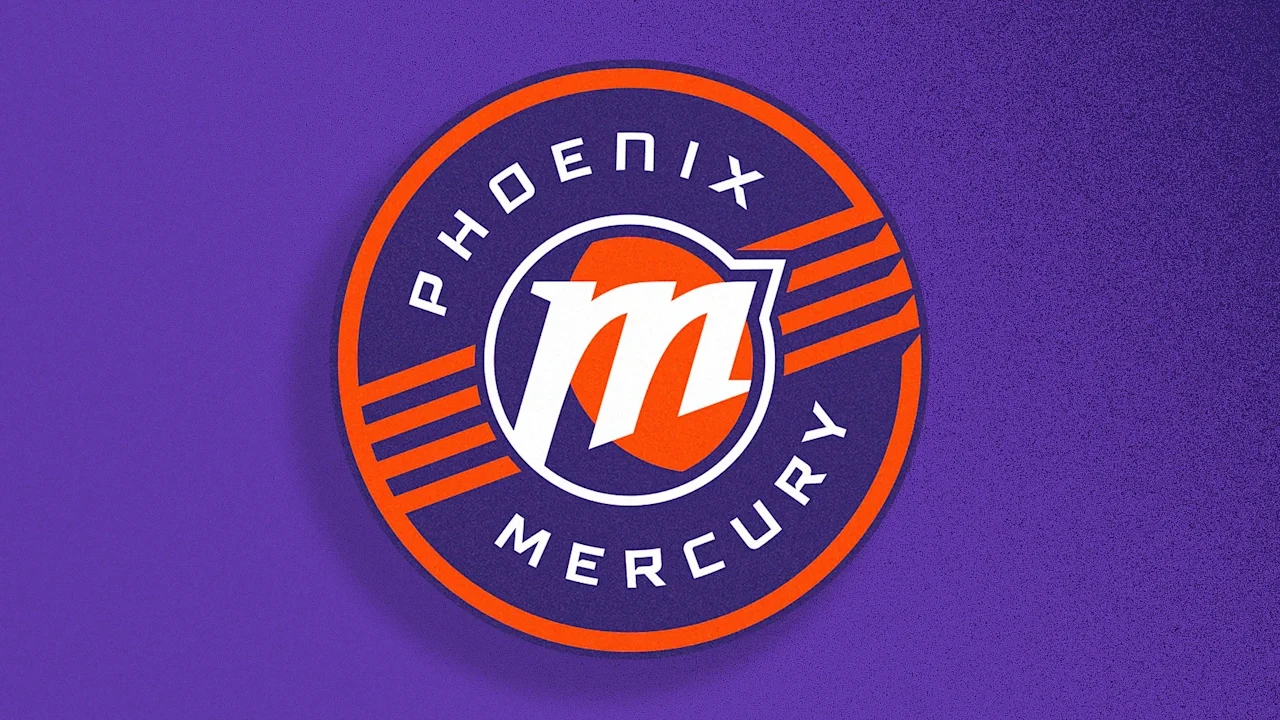
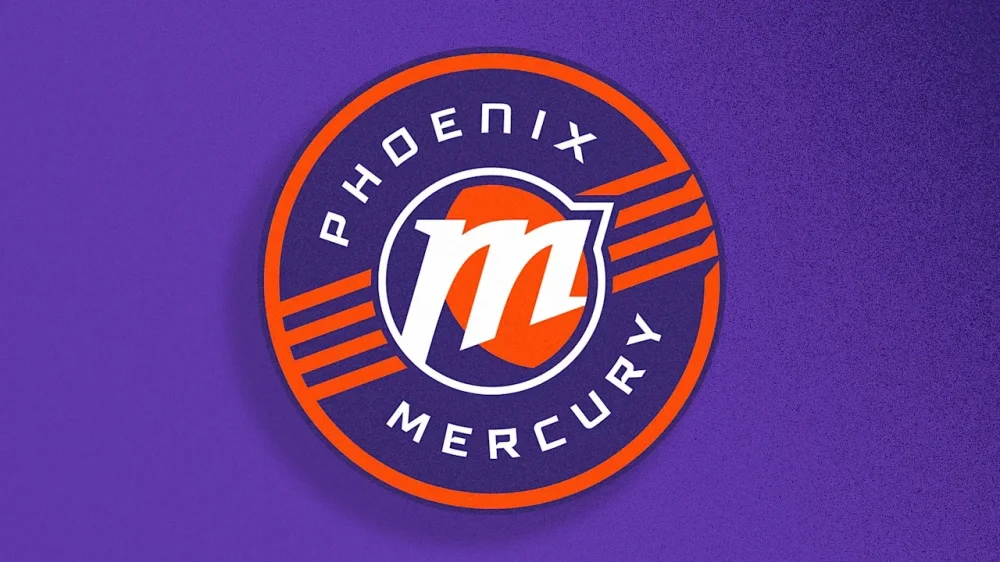
The Phoenix Mercury rebranded for the first time in team history, and the new look is part of a wider trend across the WNBA as teams modernize their logos for a growing league. The new Mercury logo shows an “M” that’s a simplified version of the letter taken from the team’s old script wordmark. The bottom of the “M” is angled up at 19.97 degrees as a nod to the team’s 1997 founding as one of the league’s eight original franchises, and it’s set on a circle with a crescent shadow that represents the planet Mercury. The modernized logo was designed in-house. The rebrand comes at an inflection point for the team, which lost star player Diana Taurasi to retirement in February, and lost the 2025 WNBA championship to the Las Vegas Aces in October. The Mercury are considered the WNBA’s best-run organization, according to an anonymous survey of WNBA players released by The Athletic in July, in part because of their facilities. Mercury President Vince Kozar tells Fast Company, “Our goal is to make it as easy as possible to be a fan.” It also comes at an inflection point for the league. Game attendance is at an all-time high, and the WNBA is expanding. The Golden State Valkyries joined last season, with the Portland Fire and Toronto Tempo set to debut next year, and future franchises planned for Cleveland, Detroit, and Philadelphia, which would bring the league to 18 teams by 2030. In a more crowded league, teams are simplifying their branding to stand out. Before the Mercury, the New York Liberty introduced a simplified version of the team’s Statue of Liberty logo in 2020 that’s just Lady Liberty’s hand holding a torch. And in 2021, the Seattle Storm dropped a logo showing a detailed Space Needle illustration in favor of a simpler form of the landmark. “What we learned looking at the Storm and Liberty examples was you can do a really clean modernization—one that cleans up the ’90s busyness of the logo and streamlines your color scheme—without completely rebooting or reimagining your marks,” Kozar says. The mark is the team’s primary logo, but it has other new marks too, including those that set the team name in a futuristic sans-serif font. There’s a global mark that wraps the Mercury logo in a roundel, a “Merc” logo that writes out the nickname over a map outline of the state of Arizona, and a “PHX” logo that Nike created in 2021. Kozar says these additional marks, which will appear on uniforms, courts, and merchandise, “just give our brand so much more depth and diversity.” View the full article
-
Policy document blasts traditional allies while failing to criticise RussiaView the full article
-
Authenticity is currency. You can spend it recklessly and go broke, or invest it strategically and build wealth. Most leaders are choosing bankruptcy without even realizing it. Right now, workplaces are debating authenticity. Some call “bring your whole self to work” a dangerous myth that punishes marginalized employees. Others claim it’s the secret to engagement and retention. Both are right—and both are missing something. Unfiltered authenticity without skill can be destructive. And yes, marginalized employees pay a higher price when they try to be authentic in systems that weren’t built for them. But your team already knows when you’re faking it. That difference between genuine authenticity and performed authenticity determines everything—trust, safety, retention, innovation. Think about the best leader you’ve ever had. Now the worst. What separated them? Kevin Built Wealth. Nancy Went Broke An employee once described two former managers to me—let’s call them Kevin and Nancy. Kevin had emotional intelligence. When you sent an email that landed wrong, he’d follow up: “Hey, I think you meant this . . .” He remembered small details from weeks ago. You felt seen. He operated from a place of genuine care. Nancy was polished. She said all the right things about supporting her team. But over time, you realized it was packaging—friendly but transactional. Like a car salesman calling you “buddy” while steering you toward the close. Surface-level all the way down. The result? People trusted Kevin enough to be vulnerable, to take risks, to bring their full selves. With Nancy, they performed. Stayed professional. Protected themselves. Kevin built wealth. Nancy went broke—losing her best people in the process. The Cost of Going Broke When leaders perform authenticity instead of practicing it, the price is steep. Trust erodes: Employees start second-guessing everything you say. They stop bringing you problems until they’ve become crises. They smile in meetings but vent about you in private Slack threads. Performance declines: When people feel unheard, they stop trying. They do the minimum, knowing their ideas will be dismissed or reworked later. Half-hearted efforts, wasted hours, and endless redos are all symptoms of leadership that performs authenticity instead of practicing it. Psychological safety vanishes: When you fake authenticity, your team learns to fake it right back. No one risks being vulnerable or challenges ideas. Creativity dies quietly in conference rooms where everyone nods along. Your best people leave: Not always loudly. Not immediately. But they start looking. They stop investing. They give you their labor, not their loyalty. For marginalized employees, the cost is even higher: Research shows the toll of code-switching and masking isn’t just emotional—it’s biological. Black adults, for example, “weather” years faster under chronic workplace stress, aging 6.1 years beyond their peers. Ninety-one percent of neurodivergent employees mask their traits at work, and most report burnout as a direct result. That’s what happens when people spend their careers navigating leaders like Nancy—constantly calculating, code-switching, and self-protecting while leadership performs its way through “authenticity.” It doesn’t just drain engagement—it literally accelerates aging and drives talent out the door. What Building Wealth Actually Looks Like Kevin didn’t just happen to be authentic. He had the emotional intelligence to make authenticity work. Here’s what that looks like in practice—the four pillars of authentic leadership: Self-Awareness (Know Yourself): Kevin knew his triggers and blind spots. When he got impatient, he recognized it and communicated expectations clearly instead of lashing out. Nancy probably had no idea how she came across—or worse, she knew and didn’t care. Transparency & Honesty (Show Yourself): Kevin admitted mistakes and shared challenges thoughtfully. Nancy talked about transparency but never revealed anything real. Her vulnerability was scripted. Consistency & Integrity (Be Yourself): Kevin’s actions matched his words whether you were in the room or not. People knew what to expect. Nancy adapted to the audience—warm in meetings, different behind closed doors. Respectful Adaptation (Balance Yourself): Kevin was authentic without being unfiltered. He knew how to disagree respectfully, to be real without being reckless. Nancy confused polish with professionalism and never learned the difference. Without EQ, authenticity is chaos—bluntness masquerading as bravery, oversharing disguised as vulnerability. With EQ, authenticity becomes the foundation for trust, creativity, and growth. Check Yourself Before You Wreck Yourself Here’s the uncomfortable truth: You might be Nancy and not know it. Cognitive dissonance lets us live with a lie. When we forfeit self-awareness for comfort, we convince ourselves we’re being authentic while we’re actually performing. We package our niceness. We script our vulnerability. We say the right words while our team watches our actions—and knows better. If this stirs some discomfort, that’s your cue to practice emotional intelligence—to pause, reflect, and not defend. Try this on Monday morning: Practice the pause. When someone challenges you, do you immediately defend—or take a beat to ask, “What if they’re right?” Audit yourself. Do you remember what your people tell you? Do you follow up weeks later? When you admit a mistake, are you learning—or just managing your image? These small acts separate the leaders building wealth from those heading toward bankruptcy. The Return on Investment When you invest authenticity wisely—with emotional intelligence as your guide—the returns compound: Trust multiplies: People stop hedging. They bring their full thinking, their wild ideas, their honest concerns. Problems get solved faster because no one’s wasting energy performing. Retention stabilizes: Your best people stay not for perks but for purpose. They don’t just work for you—they work with you. Innovation accelerates: Psychological safety fuels risk-taking. Teams build what matters—not just what looks good in presentations. Culture sustains itself: Authentic leaders create authentic teams. It spreads. New hires learn what’s truly valued—not what’s written on the wall, but what’s modeled in the room. The difference between Kevin and Nancy wasn’t personality or charisma. It was the willingness to do the inner work required to show up authentically and skillfully. Kevin built wealth because he had the emotional intelligence to make authenticity work. Nancy went broke because she never learned the difference between saying the right words and being real. The question isn’t which leader you want to be. The question is: Which leader are your people actually experiencing? View the full article

-
In 1983, Howard Schultz was an employee of Starbucks, a small chain of coffee stores that mainly sold beans (and no drinks), when he was sent to Milan for a trade show. As Schultz observed Italians visiting their local cafés, he loved what he saw, describing it as a “sense of community, a real sense of connection between the barista and the customer.” A few years later, after Schultz convinced Starbucks’s owners to sell him the company, the new owner attempted to build that same type of connection here in the U.S. To do so, Schultz knew he had to take care of his people. He called them “partners,” not employees, a symbol of a more collaborative working relationship. Over the years, Starbucks offered perks that were typically unheard of for part-time workers in food service, benefits like health insurance and contributions to college education. Nowadays, though, Starbucks seems to have lost the reputation for looking after its people. No doubt, at least part of the reason for that is Schultz has stepped down as CEO, multiple times, returning as the company struggled under his successors. A few years ago, after taking over on an interim basis, Schultz even went on a “listening tour,” visiting stores across the country to find out how the company had lost its way. Starbucks’s brass, and even Schultz himself, became hopeful when the company tapped Brian Niccol, former CEO of Chipotle, to take over the helm. In the world of fast food and fast casual dining, Niccol was a superstar. Most recently, he had completed a major turnaround at Chipotle, a company that saw sales double in Niccol’s first year as CEO, along with a major rise in stock price. Everyone wondered the same thing: Could Niccol do the same for Starbucks? In the beginning, I liked what I saw. Niccol vowed to return Starbucks to its roots, with a renewed focus on serving “the finest coffee” and a plan to update stores to make them more welcoming. Niccol also returned fan favorites, like condiment bars so customers have more control over customization. But as more details of Niccol’s turnaround plan surfaced, concern grew. Baristas would be required to adhere to a much stricter dress code. They were given a set of guidelines, even a script, detailing their interactions with customers. Baristas were instructed to write something “genuine” on each customer cup, with threats of repercussions if they didn’t. This is the fatal flaw in Niccol’s turnaround plans. The workplace has evolved, and command-and-control management is no longer effective, at least not long term. That’s especially true in the service industry, where trust empowers employees to connect with customers. Beyond that, Niccol’s latest policies are antithetical to how Schultz built Starbucks in the first place—a company that prided itself on putting its people at the center of everything it did. In contrast, Niccol and his team would benefit from taking a close look at a recent turnaround story, led by a CEO who, like Niccol, had experience resurrecting a dying brand: James Daunt of Barnes & Noble. A former investment banker turned bookstore owner, Daunt took over the helm of America’s largest bookstore chain in 2019, which had been in steady decline for years. Since Daunt took over, Barnes & Noble has experienced a resurgence, leading to an expansion of dozens of new stores in 2023. This wasn’t Daunt’s first successful turnaround. The British businessman did something similar in the U.K., where he revitalized another chain of flailing bookstores, Waterstones. So, how did Daunt get lightning to strike, twice? His hallmark strategy was simple: Give power to local store managers. “We sort of take three steps forward and then one step back,” Daunt once said in an interview with The New York Times. “The forward is my constantly encouraging and pushing for the stores themselves to have the complete freedom to do absolutely whatever they want—how they display their books, price their books, sort their sections, anything. Those freedoms are difficult if you lived in a very straitjacketed world where everything was dictated to you.” In essence, Daunt turned local Barnes & Noble stores, and Waterstones stores before that, into indie bookstores. The strategy worked because of the trust he put in his people, and the power he gave them. Of course, there’s more than one way to turn a company around. Niccol found success at Chipotle. But a focus on efficiency and policies over people is diametrically opposed to Schultz’s dream for Starbucks: that Italian-inspired vision of local connection between barista and customer. I believe Niccol’s overarching goal to return Starbucks to its roots is a good one. But the company’s ability to produce that experience of connection will depend on the people who are serving the drinks—and that will require rebuilding a culture where Starbucks employees feel supported and cared for, not threatened. If Starbucks can get back to taking care of its people, its people will take care of the customers. And the turnaround will take care of itself. —By Justin Bariso Sign up for my newsletter on how to build emotional intelligence in you and your team. This article originally appeared on Fast Company’s sister site, Inc.com. Inc. is the voice of the American entrepreneur. We inspire, inform, and document the most fascinating people in business: the risk-takers, the innovators, and the ultra-driven go-getters that represent the most dynamic force in the American economy. View the full article

-
As Sir Isaac Newton discovered, the core scientific law of gravity is that what goes up must come down. The principle applies in many areas, which is why markets are jittery about the near-unchecked, three-year growth of stock prices fueled by the strength of the generative-AI revolution. The market is on a tear, with a large gap growing even wider between public market valuations and the significantly higher private-market valuations of AI-exposed companies. The top five tech companies in the U.S. are, collectively, valued at more than the combined size of the Euro Stoxx 50, the U.K., India, Japan, and Canada—and account for around 16% of the entire global public equity market, according to Goldman Sachs. It’s not just AI model makers and the firms that provide their infrastructure: It’s the associated industries that help serve the AI market. Earlier this year, Harvard economist Jason Furman estimated that U.S. GDP growth in the first half of 2025 was almost entirely due to investment in data centers. Investors in companies like Nvidia are seeing blockbuster returns, as the firm’s value has risen more than 1,200% in the past five years, thanks to being one of the few companies able to provide the computer chips required for the AI revolution. Even so, some are worried that Nvidia is providing financing to customers looking to buy its chips—a supposedly circular chain that short sellers have quibbled with. (Nvidia, for its part, has issued responses to market analysts to refute those claims.) It all adds up to a tetchy time, with nervousness and debate about an AI bubble. Not helping matters are the public comments about the current moment by some of the industry’s biggest names. OpenAI CEO Sam Altman has said that we’re currently in an AI bubble where “investors as a whole are overexcited about AI.” Microsoft founder Bill Gates has called it a “frenzy.” Meta CEO Mark Zuckerberg said on a podcast in September that an AI bubble, and its potential burst, was “definitely a possibility.” Comparisons have been drawn to the 2000s-era dot-com bubble. Weathering the storm So if we are in an AI bubble and it does burst, then who’ll be left standing at the end of it? The idea that entire economies might be hit by the bursting of any bubble is unlikely to happen, reckons Christopher Tucci, professor of digital strategy and innovation at Imperial College Business School in London. “The internet bubble, for example, wiped out many companies and investors, but the technology itself only grew in importance afterwards,” he says. Tucci sees AI in a similar way, noting, “Even if the investment bubble bursts, the underlying technology will remain critical and will continue to advance.” And while the bubble continues to inflate, Tucci believes that’s good news for smaller companies. “At the moment, large amounts of money are flowing into AI startups,” he says. “This lowers startup costs, increases the number of competing companies, and creates vulnerabilities, mainly for investors.” But if and when that bubble bursts, those smaller companies are more likely to be exposed, while larger companies will be insulated from more significant risks. “Survivors will be the ones that own distribution,” says Sergey Toporov, partner at early-stage VC firm Leta Capital. Toporov is blunt about the lack of a moat for smaller companies, saying, “Nobody cares about your ‘best-in-class AI startup’ unless people actually know it exists.” In that view, companies like the big four AI firms—Google, OpenAI, Anthropic, and Meta—are likely to weather any storm, but smaller competitors could struggle. “The rest will consolidate or become specialized model shops,” Toporov says. Smaller companies that have what Toporov calls “defensible advantages” like proprietary data or deep integration into business workflows could withstand an AI-caused market correction. He says the same is true for firms with “strong distribution, recurring demand, and a deep technical moat.” Companies that piggyback on existing technology, including AI wrapper services that use their larger competitors’ AI models in order to provide answers to their customers, sometimes in specific specialties, may face a tough road ahead. Big unknowns However, not everyone agrees with that vision of the future. “AI apps with high valuations look the riskiest at the moment,” says Sampsa Samila, professor of strategic management at IESE Business School. “They don’t have easy moats against improving foundation models or other apps.” Samila believes even those that operate foundation models, like OpenAI, could be in a difficult position. “Foundation labs burning billions are also looking shaky,” he says. “It’s not at all easy to see how OpenAI will manage, unless it develops winner-take-all superintelligence.” In part, that’s down to what Samila sees as “circular financing deals,” including those supported by Nvidia’s funding in order to obtain Nvidia chips to power their models. While OpenAI could struggle because of its cash burn, Samila contends that bigger, more established names in the space are better placed to weather the problems. “Google is interesting because they control TPUs [tensor processing units], have proprietary data from Search, YouTube, and Gmail, and are already monetizing AI through Cloud,” he explains. But the big unknown for Google is whether its rollout of AI-native ads can replace its search revenue. Another area of concern for Google, given competition from the likes of Microsoft, is that its tech stack doesn’t always integrate well with the existing IT systems being run by organizations. “Amongst the AI apps, deep embedding into customer workflows is going to be key to survival,” Samila says. Many companies tend to use Microsoft’s products rather than Google’s in large part because it’s what they’ve always done. Whatever happens, most people believe there are fundamental differences between a possible imminent burst of the AI bubble and the dot-com stock market crash. The Magnificent Seven tech firms have a 24-month forward price-to-earnings ratio that is 25 times their collective valuation—high, but half the level it was in the dot-com era. Price-to-earnings growth is also around half the level it was a quarter century ago. And many of the biggest names in the space are well-capitalized tech firms with cash reserves that can pay for any financial hiccups ahead in a way that the dot-com era’s biggest names couldn’t. Regardless, those in and around the AI sector need to be aware of what’s ahead. “When a correction comes, venture capital will dry up, potentially for several years,” Tucci predicts. “In the long run, however, AI as a technology will continue to grow in importance, regardless of short-term investment cycles.” View the full article
-
Leaving EU ‘badly damaged our economy’, says deputy prime ministerView the full article
-
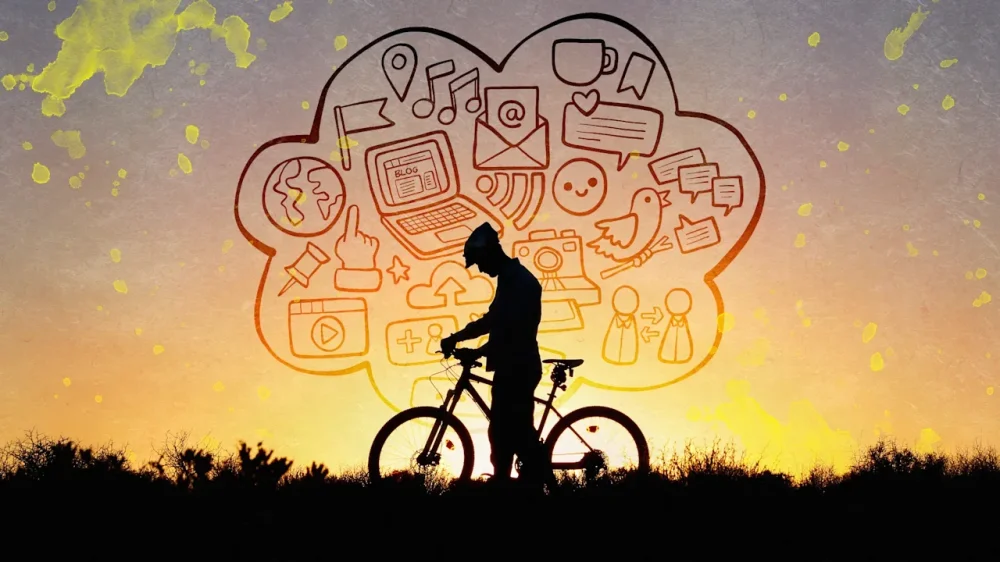
When I was cycling across the country on my bike, I spent anywhere from six to nine hours a day in the saddle—for almost three solid months. It made a lot of people wonder: What did you listen to all day long? “Was it mostly music, or more like audiobooks, podcasts?” asked a friend of mine when we went for a drink at a bar after I got back home. “What was on your playlist?” “Nothing,” I said. She frowned slightly, as if she’d misheard me. “What do you mean, ‘nothing?’” “I mean, nothing. I don’t listen to anything when I ride,” I replied. “I don’t even wear earbuds.” You could see the wheels of her mind grind to a standstill. “What the hell. You . . . you just ride along in . . . in what? In total silence?” “More or less,” I said, laughing. “Allll dayyy longgg??” “Yeah.” She was gobsmacked. “I would go completely out of my mind.” And my friend wasn’t alone in her astonishment. Nearly everyone, upon learning that I’d rawdogged a 4,150-mile cross-country cycling trip, looked utterly dumbstruck—bereft, almost. I began to realize that while most people think it’s pretty daunting to cycle the entire U.S.A., they can vaguely imagine what it would be like as a physical challenge: Daunting, sure, but you just put your butt in the saddle and keep going, and you’ll get there. They don’t want to do that epic, exhausting ride, but they can comprehend it. But the idea of avoiding all media, all day long? They have no mental equipment to imagine that. It completely breaks their model of how the world works. Except here’s the thing: It’s kind of awesome. Silence is golden Now the thing is, I am not some sort of anti-technology, anti-screens guy. I don’t avoid media on principle, like one of our modern wild-eyed destroy-your-phone desert prophets. Quite the opposite. Even when I’m on a road cycling trip, I use my phone a ton—to navigate, to check the weather (tornado alert apps are particularly useful in Kansas, let me tell you), or just to dork around on social media. But during the act of cycling itself? Silence, it turns out, is golden. Part of why I don’t wear earbuds while riding is safety. I’m often riding along smaller county roads with SUVs and 16-wheelers hooshing past, barely a few feet away. I want to sense when they’re coming up behind me. I want to be able to hear the dopplering thrum of an approaching engine. I once tried some earbuds that let the outside sound bleed through, which kind of worked. Still, I worried I might get too absorbed in the music, and stop being vigilant about the traffic. So I ditched them. But I found that I didn’t miss it. It turns out that, when I turn off media for seven hours on end, my cycling brain goes to some really interesting places. One of the things about cycling is that your mind is simultaneously busy and free. Cycling requires you to make a lot of constant, tiny decisions: Avoid that pothole, watch out for that pedestrian, swerve around that constellation of broken glass near the curb. You need to be vigilant. The psychologist Nick Moore writes about how navigating traffic on a bike requires a “minutely focused state.” The world contracts to “a space just a few inches wide and a million miles long, outside which nothing exists.” But these decisions aren’t hard to make, and they’re over quickly, so I don’t wind up being mentally exhausted by them. A feast for the senses Meanwhile, there’s a ton of stimulation. Cycling cross-country is a feast for the senses. While arriving in a city, I’d pass by ornate graffiti inside railway underpasses and marvel at the often-corroded architecture on the outskirts of town. Downtown, I’d hear things—snatches of overheard conversation from people I passed by, or bits of Bhangra music blasting from a fast-food joint. Out in the deep countryside of the Great Plains, I’d pass by sprawling crop-watering machinery—splayed across fields like a massive stick insect—and watch it come alive in the dawn, puffing clouds of mist over the green wheat and corn. I saw road signs dented with bullet holes, a swollen river that had swallowed an SUV during a storm swell, and a massive longhorn that stared closely at me as I nervously rode past. In the Rocky Mountains, I came across a 16-wheeler hauling a single blade for a wind turbine so massive that it was the length of a city block. Your senses feel like they’re constantly engaged in a non-stressed fashion—like your body is constantly taking notes on the world around you. It’s a neat interplay of forces: Cycling occupies your forebrain with a welter of tiny decisions, while also feeding your mind with the chill and gorgeous spectacle of the world at large. Together, it seems to loosen up my hindbrain—shifting it into a new and meditative gear. Pondering ideas Often, I’d find myself pondering ideas triggered by the world around me. While cruising through Trenton, New Jersey, I passed a crumbly little strip mall with a tae kwon do joint next to a hot yoga salon, and it started me marveling at how America has phagocytosed so many of the world’s historic physical/mental/spiritual-fitness cultures and absorbed them, Borg-like, into the Puritan quest of bettering our fallen, lazy gnostic selves. I’ll also discover that, almost without noticing it, I’m meditating on a bigger life issue—some challenge at work, some memory of my late mother, some friend I’ve been meaning to call, a passage in a book I’d forgotten but that now intrigues the hell out of me. I often suspect those deep, arc-of-life thoughts rise up precisely because of the curious, tripartite mental state of cycling. The top layer of vigilance keeps me focused, the stimulus of the world inspires ideas, while the deep ocean of my latent mind churns quietly—until, suddenly, some “aha” moment pierces the surface, like a cresting dolphin. Now, I don’t want to oversell the mental state of cycling in silence! This is not about experiencing soul-shattering Eat-Pray-Love breakthroughs out there in the saddle. I haven’t had any Einstein-level insights. It’s more like it creates a useful atmosphere in the mind. I come back less jittery, more prepared to handle the everyday thinking of life. Would listening to music or podcasts or audiobooks break that spell? Would it block that sense of flow? I suspect so. In my daily life, I’m not about to stop listening to music or stop scrolling around on my phone. I’m a nerd; I love marinating in news and essays about science and technology and culture. But on the road, I need silence. View the full article
-
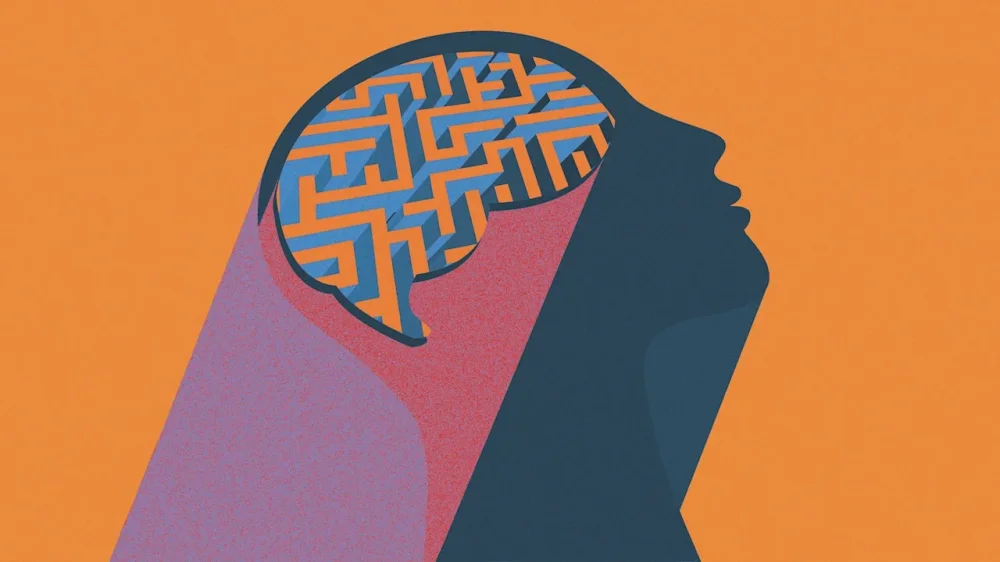
Before becoming a coach for neurodiverse individuals with ADHD, Justine Capelle Collis had a successful advertising career. She worked in Australia and the UK, and also across the US and Canadian markets. Her clients have included Fortune 500 companies and government agencies. And she achieved all this without realizing that she has ADHD. That realization came when she became a mother. Both of her sons were diagnosed with ADHD, and she started asking questions. “How do I advocate” and get “the system to bend” for them, rather than having them “fit into the system and then break?” she asked. She then went on a personal journey to retrain. Collis enrolled in post-graduate study, and went through a specialist coach training in neurodivergent coaching. But along the way, she received her own ADHD diagnosis. Being a mother of two sons with ADHD required “a different way of parenting,” she says. It also highlighted the feeling that something was off. “I couldn’t make sense of it,” Collis recalls. “I can have a successful career, I can achieve all of these incredible things. Why am I failing at this thing that I’m biologically wired to do: which is to have kids?” A conversation with a coach friend of hers, who was also practicing to be a neurodiversity coach, revealed some ‘penny-dropping’ moments. The reason she was able to succeed in her professional career, she explained, was that she had freedom and agency to design her working life in a way that aligned and worked for her. Unfortunately, that’s not always the case with other neurodiverse employees, who are often forced to survive in a world that is not designed or conducive to them doing their best. But some companies are turning to coaching in an attempt to address this. The growing awareness of neurodiversity Like Collis, Dr. George Sachs also built a career while having ADHD. Sachs cofounded an app called Inflow with Levi Epstein and Seb Isaacs after 20 years of working as a clinical psychologist. The app provides support with adults with ADHD through various tools, including coaching. And while their customers are primarily individuals, they do work with organizations and universities that offer Inflow to their employees. Sachs believes that social media has contributed to the rise of awareness in neurodiversity at work. Companies like EYand Microsoft for example, have a range of policies to support neurodiverse individuals. They do that through work arrangements, modified workspaces, and educational resources. Thanks to social media, says Sachs, people have become more aware of diagnostic criteria for various neurodiversity conditions. “At the same time, the concept of ‘disorder’ is changing,” he says. Rather than seeing their conditions as a disorder, he explains, “you’re seeing this movement towards acceptance of difference.” The value of neurodiversity-specific coaching Neurodiversity exists on a spectrum, and even those with similar diagnoses often have unique struggles and challenges. And as a result, companies can’t rely on one-size-fits-all benefits, says Gijo Matthew, Chief Product Officer at Spring Health. The mental health platform launched a neurodiversity hub earlier this year. “We decided to invest in neurodiversity because traditional mental health benefits often fall short for this community, leaving many employees without the resources they need to be successful,” Matthew says. It’s that particular specificity that can make coaching a valuable tool for neurodiverse individuals. Jill Johnson, a coach who works with executive leaders, women, parents, and individuals with ADHD, describes coaching as a ‘partnership.’ The coach might have a particular expertise, Johnson says, but “it’s also the lived experience of the client, who brings an equally important role to figuring out how to help—and taking ownership of how they can be successful in life, or in the workplace.” How coaching helps neurodiverse individuals Roman Peskin, CEO and co-founder of ed-tech startup ELVTR, also didn’t receive a diagnosis until later in his life. He describes trying a series of ‘normal’ jobs in his twenties that he was subsequently fired from, first as a travel agent, then later running a travel website. “Both times I got fired for the same reason,” he says: “not incompetence, but procrastination and inconsistency. I’d do great work in bursts, then mentally disappear.” This is something that Collis is familiar with. “The single biggest thing for brains like ours,” she explains, “is they fire up on interests, not based on external urgency, or what someone else or some external source says it should be. Even though we might know we need to do this thing first, we’re wired that way. So we have to function in a way that harnesses that capability, rather than forcing it into a box.” For Peskin, that’s the value that coaching can potentially bring, though he stresses that the coach needs to understand what it’s like to have a “high-octane brain.” It won’t work if you have “neurotypical productivity guru pushing a GTD masterclass down your throat,” he says. “A good coach could start by naming what’s going on so you stop thinking ‘I’m broken.’ Then help install realistic framework: sprints instead of marathons, accountability, focus blocks, external structure,” Peskin continues. Because neurodiversity encompasses a wide range of conditions, a level of personalization is also necessary. A 2025 University of Reading study that looked at the inclusivity of a neurodiversity coaching program found that some neurodivergent individuals, for example, do better with text-based or audio-only coaching rather than via video conferences. Coaches also need to be flexible and responsive in how they communicate. The study cited that some autistic individuals, for example, may face difficulty with open-ended questions. This means that coaches need to be able to adjust their method in a way that works for the employee. The importance of organizational culture, support, and education Peskin stresses that companies cannot rely on coaching to be the be-all and end-all. “I think of coaching as software,” he says. “Most companies still need to fix the hardware.” “You can’t coach your way out of a toxic system,” says Collis. “So if the culture in a workplace is fundamentally broken, or not safe from a psychological perspective, then those issues need to be addressed first.” For neurodiverse individuals, that support starts with education. There are a lot of misconceptions and stereotypes about neurodiverse individuals, says Sachs. For example, like the idea that those with ADHD might struggle to get their work done, or that everyone on the autism spectrum is blunt and introverted. A coach may be able to help a neurodiverse individual with time management or emotional regulation at work. However, the onus is also on the organization to provide a supportive and flexible environment so they can actually do those things. This starts from the top. As a 2022 study published in AIB Insights concluded, any neurodiverse-inclusive initiative needs to have buy-in from leadership go have any chance of success. It’s also about ensuring that the neurodiverse employee is employed in a role that actually allows them to use their strengths. “If your job is repetitive admin in an open-plan office with Slack on fire all day, no amount of coaching will turn that into a good fit for an ADHD brain,” says Peskin. Coaching is also not a substitute for competent management, Peskin says. “If you bolt coaching onto a culture of constant interruption, vague expectations, and busyness show-offs, it just becomes an expensive Band-Aid on a system that’s causing the wound.” Many neurodiverse employees also struggle with sensory distractions, as a 2025 Ernst and Young study found. For a workplace to be truly inclusive, it needs to facilitate flexible working arrangements or a physical space where neurodiverse employees can work without interruptions. Ultimately, Peskin wants to see an attitude shift that sees neurodivergent talent as a strategic asset. As the 2022 study found, when organizations provide neurodiverse individuals the opportunity to play to their strengths, they’re more likely to make meaningful contributions to the company. In the abstract, the authors wrote, “the actions taken to accommodate neurodivergent employees often spill over to the benefit of all employees.” Peskin says, “Neurodivergent talent is a competitive advantage, not a DEI show off. We don’t need “fixing.” We need the rules of the game adjusted so our strengths actually count.” View the full article
-
It’s the end of the year and the pressure is on, demands are high, and you’re probably close to the end of your rope as you try to wrap up your remaining projects before the holidays start. If that’s you, you’re not alone. Holiday stress is very common: In a survey by LifeStance Health, 57% of respondents said they experience stress over the season. But it’s possible to maintain your energy and momentum and not only get things done but stay engaged and finish strong. Fortunately, there are a few pragmatic strategies to maintain your energy and momentum through the end of the year. 1. Maintain control You’re likely to start feeling out of control. This is because of all the work you must accomplish before the end of the year, all the events you must attend, and all the responsibilities to families and friends for the holidays. Feeling like your work-life balance is out of control can sap your energy and create a barrier to getting things done. This can turn into a vicious circle. You’re out of control, can’t get things done, and then feel even more out of control, and the cycle continues. On the other hand, when you feel greater levels of choice and control, you’re better able to stay clearheaded, get more accomplished, and feel more satisfied as a result. So how can you feel more in control? First, decide what you must do this year and put off the things that don’t need your attention until after the holidays. Be intentional to get things done that will relieve your mind and keep responsibilities from hanging over your head. At the same time, plan for what can be done later on. Additional tactics to take control are deceptively simple. Make lists of what you need to accomplish. Keep a calendar handy so you know what’s coming up. When you accomplish things, check them off your list so you feel a sense of completion and progress, or mark the calendar counting the days you’ve tackled. With all of these, take the approach that works best for you. For some people, it’s an analog and always-visible to-do list. For others it’s an app or the use of your system’s calendar or planning software. Don’t spend a lot of time deciding which to use, just leverage what you’re accustomed to and dig in to take control and maintain your momentum for the year. 2. Prioritize With so much coming at you, it can be tough to find the time and energy for everything. The project is due at work, you have to buy a “secret Santa” gift, and you must figure out what to give your child’s teacher for the holidays. Surprisingly, when you remind yourself that you can’t do it all, you’ll actually enhance your well-being. It’s a mindset that we can do it all that often leads to burnout and emotional upheaval. By giving yourself permission to choose, rather than having to do everything, you liberate yourself to focus on what’s most important. In order to choose well, clarify your values and focus on what’s most important to you. For example, completing the project at work is aligned with your value of excellence or standout performance. Contributing to your child’s party at school is important to your role as an involved and committed parent. But you might choose to forgo the committee meeting this month or miss the neighborhood cookie exchange because these aren’t as important to your identity or your priorities. In fact, the LifeStance Health data found that 64% of people would like to skip at least a few of their holiday gatherings. So while many of the meetings or events still matter, some may not rank as highly when you consider that you can’t do it all. Do what you can and preserve your energy for the activities that are most important to you. 3. Spend meaningful time with others When things get busy, you may feel like everyone is pulling you in different directions, but our community and relationships are among the most important drivers of well-being. You’ll want to maintain connections to maintain your energy. Research shows that strong community and relationships have significant impact on mental, physical, and cognitive well-being. And yet the holidays can be a lonely time. According to LifeStance Health, 51% of people surveyed said they experience loneliness during the holiday season. Reframe the demands you face as opportunities to share meaningful time with others. If you’re under pressure to finish the project before the holiday break, appreciate the bonding opportunity with colleagues as you push forward together. If you’re holiday shopping with your sister-in-law, appreciate the moments to deepen your relationship. Strive to be fully present with others, no matter what you’re doing together. You can also reduce the responsibilities that come with getting together with others. Instead of reading your usual book with your book group this month, get together for conversation without actually reading a book. Or if your singles group normally meets at someone’s house, get together at a restaurant this month so no one has to host. The bottom line: Adjust your patterns during this time so it’s less about the demands and more about the connections. 4. Manage your habits Another way to maintain your energy is to manage the small habits that make a big difference in your physical and emotional energy. Get enough sleep. Stay hydrated. Eat healthfully. Move as much as you can. All of these are proven ways to ensure you’ll be at your best. Also spend as much time as possible in nature, even if the weather is colder. Significant research demonstrates that by spending more time outside, you’re able to maintain perspective and rejuvenate for all the responsibilities you face. In fact, nature is a source of micro joy. Part of the reason that nature is so powerfully positive is that it engages your diffuse attention. You’re generally aware of the light, the breeze, or the brisk air. This is in contrast to the focused attention that work or personal commitments require. Research published in Environment and Behavior found that a shift to a more diffuse focus contributes to well-being and renews you for tasks that require more concentration or intensity. At the same time, avoid habits that detract from your well-being. For example, steer clear of doomscrolling or spending too much time online. These activities can have an especially negative impact because of the overwhelm caused from too much bad news; the urgency of most news sources, which creates a sense of worry; and the comparisons we naturally make to others. Instead, put your device aside or set a timer on your system to limit your time on social media platforms or news outlets. This will free you to spend more time with people or in nature. 5. Focus on gratitude Finally, focus on gratitude. When you’re consciously grateful, you contribute to your well-being and ensure you can keep going through it all. You have a lot of responsibilities at work, which is a signal that others value your contributions and rely on you. You have gifts to wrap, which is a reflection of all the loved ones you’re able to provide for. You have gatherings to attend, which is an indication of how you’re connected to your community. It’s also powerful to remind yourself that you’re not alone. When you’re under a lot of pressure, it can be natural to lose a broader perspective or feel like a victim of too much, too fast, all-at-once circumstances. But research experiments have shown that when people remind themselves that others are also going through hard times or similar challenges, they feel greater levels of happiness and well-being and less isolation, according to a study published in the Journal of Happiness Studies. To embrace gratitude, think of two experiences you’re grateful for before you go to bed or consider one relationship you’re thankful for as you approach each new day. Also remind yourself that you’re not alone, and that while you face a ton of demands, others have similar experiences. Focusing here will help you maintain your energy. You can do it Remember: Just do what you can. You don’t have to be perfect, and you’ll certainly miss things or drop the ball sometimes. Be flexible and optimistic with yourself and others, leaving room for things to go well enough, even if they don’t meet your ideal. Reduce the pressure on yourself and you’ll not only get through such a busy time with your energy stores intact, you’ll also maintain greater joy in the process. View the full article

-
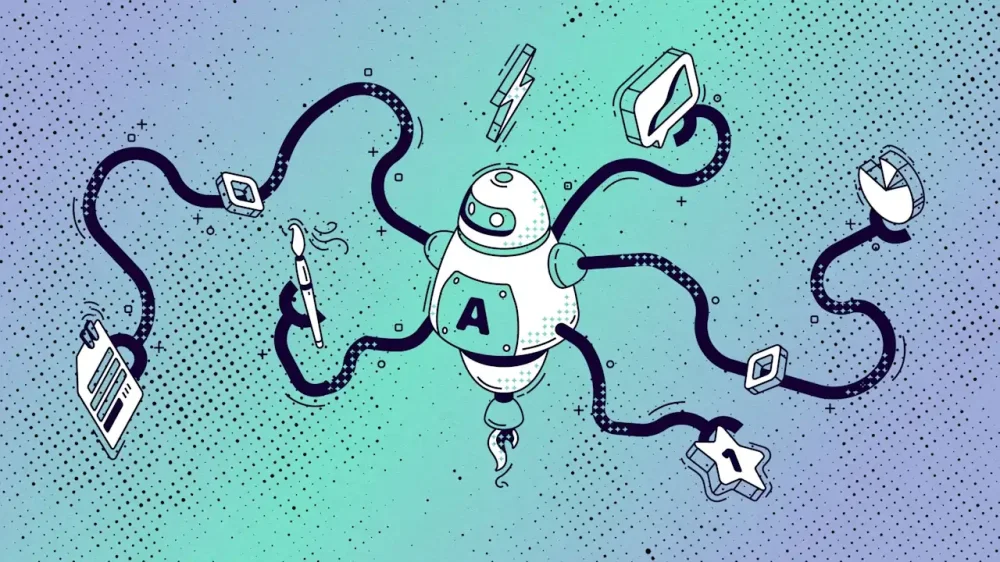
For a while now, we’ve been hearing warnings about AI eliminating jobs. First, it was only at the fringes. But now it’s starting to bite into roles once thought untouchable. It isn’t just administrative work, copywriting, or design anymore; even advisory roles, data analytics, and coding are being reshaped by automation. But history teaches us that technological disruption doesn’t eliminate work, it reshapes it. The industrial revolution, for example, didn’t end human contribution, it simply redefined the places where humans bring the most value. AI is doing the same thing today. While it does, in fact, take (or reduce the need for) some jobs, it can, and will, pave new paths in the form of entrepreneurial opportunities. The rise of no-code tools, automated workflows, and AI-powered tools to support business creation means people can turn ideas into companies faster than ever before. The real challenge now lies in ensuring that the accessibility and utilization of these resources match the level of AI-induced displacement. While employment rates remain relatively stable, the numbers mask deeper shifts in how work gets done. Automation has been advancing for years—accelerated by AI—with many firms quietly cutting labor not through layoffs but by trimming hours, automating tasks, or relying on smaller teams to sustain productivity. This obscured drop in main hours, dubbed “shadow layoffs, paints a far more complex picture of employment health than the headlines and numbers suggest. AI makes independence not just possible, but practical With roughly 80% of U.S. businesses already operating as nonemployer firms (meaning the owner is the only employee), self-driven enterprises have gained popularity since the 1990s. This massive trend is undervalued, and AI’s unique ability to fuel entrepreneurial endeavors will signal a cultural and economic shift toward independence, flexibility, and self-determination. These characteristics are uniquely American, one of the reasons the country has long been the poster child for rags-to-riches capitalism. AI makes the traditional employment model even less reliable and familiar roles less secure, but the benefits of AI-driven entrepreneurship could reshape the workforce in the near future. For individuals, AI removes many of the barriers that once made the process of building a business challenging. AI’s assistance negates, for example, costly and time-consuming marketing campaigns and the difficulties of providing customer support and training materials that drain budgets and slow down the path to business ownership. Launching a brand, opening an online clothing store, or offering a niche service can now happen in days, not months, with tools that streamline product development, go-to-market, and scaling from day one. For example, a laid-off marketing manager can launch a single-person consultancy powered by AI tools and handle everything from accounting and content creation to client management as a one-person show. This is something that in the past would have demanded at least three additional employees. While the technology is proven, individual grit alone isn’t enough. Without proper support systems to close the gap between displaced workers and AI-enabled bootstrapping, an accessible path to entrepreneurship will remain out of reach for most. For future classes of AI entrepreneurs to thrive, they’ll need an ecosystem designed to absorb and launch them forward. Turning disruption into design: Why public-private collaboration matters The ultimate goal for turning AI displacement into entrepreneurial opportunities should be a healthy society and a resilient economy. The key to maximizing these circumstances lies in empowering those who combine a unique vision with AI fluency. Investing in regional AI boot camps, small-business accelerators, or micro-grant programs for displaced workers will provide resources to help them reinvent themselves. Timely support is key: Upskilling workshops, business literacy, and AI fluency need to be accessible before layoffs happen, not after. If laid-off workers can pivot faster, the economic and social repercussions will be minimal. The most effective recipe for success in this regard is when the private and public sectors work in a complementary manner. Public-private entrepreneurial hubs could close this gap. Governments can ensure equitable access, while private companies focus on relevance and innovation. Through upskilling and educational initiatives and incentivized collaborations, the two can turn layoffs into small-business launchpads. In New York, the Department of Labor enacted an initiative to provide free access to Coursera and professional certifications from leading tech companies, including Google. While primarily for reskilling, these certifications and courses specifically support self-employment in the digital economy. If replicated nationwide, this could actually start moving the needle on digital self-employment. The key to kick-starting like-minded programs is through building awareness. They should focus on steering economic and social stability by providing laid-off workers with the necessary tools. If key private-sector leaders and government officials can align around shared goals, AI could redefine the American dream instead of disrupting it. While AI destabilized the traditional employer-employee model, it also opened new doors for the next wave of entrepreneurs. These entrepreneurs won’t necessarily have an Ivy League degree or access to VCs, but they will be those who embrace AI’s powerful capabilities and monetize those skills in original ways. AI will continue to change the paradigm on how and where people earn a living, but the outcome depends on how society responds. With the right infrastructure in place, this wave of automation could become one of the largest drivers of entrepreneurship since the internet’s onset. Without it, expect to see deeper inequality and economic stagnation. Disruption is unavoidable, but reinvention is a worker’s choice. Those who pair their expertise with AI’s capabilities won’t just survive this transition; they’ll be the ones who embrace entrepreneurship, turning passion projects into real businesses faster than ever. The barrier to entry is no longer a team or a budget. It’s a mindset and a small monthly subscription. In this shift, the winners won’t be the ones who fear AI; they’ll be the ones who take one good idea and build. View the full article
-
Paramount and Comcast have also offered diverging paths for media behemothView the full article
-
Fiscal stimulus vs inflation View the full article
-
Payments group will lease 300,000 sq ft at One Canada Square after move from PaddingtonView the full article
-
When Jon LaMantia, a Long Island-based business reporter, was in journalism school, his professor drilled one rule into his students: you get two exclamation points a year and no more. “So if you use them in January,” LaMantia recalls being told, “you better hope there’s nothing to exclaim for the rest of the year.” The rule stuck. LaMantia still thinks about that rigid quota today. “I use exclamation points all the time in texts and emails. If you don’t, the message sounds more stern,” he says. “But I can’t remember the last time I used one in a business article.” Strong feelings about the exclamation point aren’t uncommon. People tend to either love it or loathe it; lean on it constantly, or avoid it religiously. “Personally, I use multiple, but at work I’ll only use one,” says a woman who works in HR at an investment bank in New York City, who wasn’t cleared to speak publicly but said she couldn’t resist chiming in on this topic. “People say I’m bubbly and high-energy, so I use them to let my style come through in email—when appropriate.” A consultant in Ohio, who also asked not to be named, tells me he uses them “to lighten the tone of written communication or reduce formality.” Others tread more cautiously. “I use way too many and then feel embarrassed later on,” admits an artist from Brooklyn. A Boston-based consultant says he’s begun actively “metering” his usage to “set the right tone.” In short, exclamation points matter. They spark surprisingly strong feelings about tone, intention, and even etiquette. But according to new research, they also shape much more than just mood. Warmer, But Less Analytical A recent study published in the Journal of Experimental Social Psychology, titled “Nice to meet you. (!) Gendered norms in punctuation usage,” found that women not only use exclamation points more frequently than men, but that this difference carries real consequences—both for those writing and for those reading. Across several experiments, participants judged writers who used exclamation points differently across measures that included perceived warmth, power, analytical ability, and competence. Heavy users—a group that overwhelmingly skews female—were seen as warmer and more enthusiastic, but also as less analytical. The study also showed that women were more likely to think about their punctuation choices, whether to end a sentence with a period or an exclamation point, for example, underscoring the invisible cognitive labor that often shapes women’s communication. All of it illustrates how something as small as punctuation can reinforce the subtle forces still underpinning stubborn gender norms and divides both at work, and beyond. Unequal Cognitive Load Cheryl Wakslak, associate professor of Management and Organization at Marshall School of Business at the University of Southern California and one of the authors of the study, says she was particularly struck by how much mental energy women devote to these decisions. “Women are putting a lot of thought into this,” she says. On one hand, intentional communication is valuable, she adds, “but it’s also a lot of cognitive energy that men are simply not spending.” Women, she explains, are constantly navigating what she describes as a “warmth–competence tightrope.” “They’re worried about not seeming warm, so they use exclamation points to appear warmer. But they’re also worried about not being seen as competent or powerful, and they may worry that exclamation marks undermine that.” Men, the research shows, largely don’t think about any of that. Another finding that surprised her: the trade-offs of using exclamation points. Heavy users were perceived as more appealing collaborators and more enthusiastic, but also less powerful and less analytical. “For me, the most interesting finding, though, was about competence,” says Wakslak. “We didn’t see a clear effect in either direction. That matters to me because, when I’m walking that tightrope, I’m mostly worried about the competence trade-off,” she adds. “I don’t need to seem powerful in every context, but I do want to seem competent.” Still, she acknowledges that in some work environments, being perceived as analytical is crucial. “In those situations, based on these findings, a woman might want to avoid using exclamation marks.” ‘Perpetuating Stereotypes’ Asked about the exclamation point research, Elaine Lin Hering, author of Unlearning Silence, a book about verbal and nonverbal communication, says she’s not surprised. “[The findings] illustrate the downside of the conditioning women have long received and the contorting women do to try to meet expectations. It is simply one of many examples of the double standards women are held to and the tension that women navigate every day,” she adds. It’s akin, Hering says, to women being told to “smile more” in order to “appear warmer” and more “approachable”—and then finding themselves being taken less seriously because they smile too much. And the issue extends beyond punctuation. “Workplace communication norms are typically defined by the groups with the dominant identity. Not just that everyone should ‘talk like a man,’ but that how people communicate should fit into the stereotypes that the dominant groups have of that other identity,” she says. “Social norms exacerbate inequality by perpetuating existing stereotypes that the dominant group holds,” she explains, “like that ‘women are too emotional’ or ‘Asians are good workers but not leaders’ or that ‘Gen Z is lazy’.” So what can be done? As ever, when the problem is rooted in social conditioning, there’s no easy fix. But Hering says that, especially in workplace settings, systems can be put in place to help control for biases like the ones that creep in when we read something someone’s written. “We can challenge the social norms and exacerbated inequalities by having clear and consistent criteria for evaluating performance,” she says. Research published in 2022, shows that women—because of systemic bias—are often assessed in workplaces based on their actual performance, while men are assessed based on their future potential creating what the academics dub a “gender promotion gap.” Having more rigid criteria for assessment can offset that divergence. A wide awareness of the existence of these biases and this conditioning is also—of course—critical to making workplaces fairer. And Cheryl Wakslak’s coauthor Gil Appel is the first to admit that. Appel, Assistant Professor of Marketing at the GW School of Business at George Washington University, says that spending time researching gender and communication has made him “much more of a feminist.” “There are some things that men just don’t have to think about at all, and women have to think about all the time,” he says. “Whether that’s to ensure their safety, or whether it’s to make sure they’re coming across as competent,” he adds. “They just always have to be thinking.” And beyond becoming more feminist, there’s one other thing that’s changed for Appel since working on the research: “I have to admit,” he says, “I definitely use more exclamation marks now.” View the full article

-
Football’s governing body to hand out first such award at glitzy World Cup draw event featuring Village People View the full article
-
German chancellor has been driving force behind EU plans for reparations loan to KyivView the full article
-
Releases of drug traffickers and fraudsters puzzle allies and send shockwaves through legal circles View the full article
-
Car-sharing group’s exit from Britain overshadows London’s efforts to reduce vehicle use and congestion in the cityView the full article
-
Old assumptions about expectations and targets can no longer be relied uponView the full article