Newsletter
Want to keep up to date with all our latest news and information?


ResidentialBusiness
Administrators
-
Joined
-
Last visited
Everything posted by ResidentialBusiness
-
If you’re looking to improve your lead generation strategy, several innovative examples can help you achieve that. From partnering with influencers to engaging audiences through DM-first lead magnets, these tactics can broaden your reach and deepen connections. Utilizing social polls can provide real-time insights, whereas showcasing customer reviews boosts trust. Each method offers unique benefits that can streamline your efforts and enhance results. Discover how these approaches can transform your lead generation process. Key Takeaways Partner with influencers to reach niche audiences through tailored promotions and engaging giveaway campaigns that drive traffic and conversions. Utilize interactive quizzes as lead magnets to gather insights, generate conversions, and personalize follow-up communications based on audience preferences. Implement social polls to gain audience insights and segment preferences, allowing for targeted marketing strategies and personalized messaging. Create DM-first lead magnets to foster engagement, build trust, and transform passive followers into active leads through direct interactions. Use exit-intent pop-ups with customer reviews and special offers to capture attention, reduce bounce rates, and incentivize immediate action. Partner With Influencers for Expanded Reach Partnering with influencers can greatly boost your brand’s reach and visibility in today’s digital environment. Influencers connect with engaged audiences, which can lead to increased traffic and conversions for your products or services. For effective lead generation campaign examples, consider customized landing pages for influencer promotions, streamlining user experiences and improving conversion rates. Implementing giveaway campaigns or offering special discount codes through influencers can create buzz, encouraging their followers to engage with your brand. Furthermore, targeting unexplored markets via influencer partnerships allows you to tap into niche audiences that may be hard to reach. By using forms or landing sites uniquely designed for these campaigns, you can improve lead capture and guarantee a smoother shift from awareness to conversion. Engage Your Audience With Dm-First Lead Magnets Engaging your audience with DM-first lead magnets can greatly boost your lead generation efforts. By using direct messages to share valuable content, you not only increase interactions but likewise transform passive followers into active participants, which improves your opt-in rates. This approach helps create warmer leads, as potential customers have already engaged with your brand before you follow up, nurturing trust and rapport that traditional methods may lack. Direct Message Engagement Strategies How can you effectively engage your audience and convert them into leads? Direct message (DM) engagement strategies, particularly DM-first lead magnets, can improve your lead generation efforts. These tactics provide valuable resources directly via messages, nurturing a personal touch that encourages higher engagement. You can prompt users to comment on a post for a PDF or other resources, turning passive followers into active opt-ins. Here’s a quick overview of DM-first strategies: Strategy Description Comment to Receive Encourage comments for valuable resources. Personalized Follow-ups Engage in conversation before sharing content. Social Algorithm Boost Greater engagement improves visibility. Warm Lead Generation Build trust through direct interaction. Implementing these lead generation form examples can greatly increase your opt-in rates. Interactive Content for Opt-Ins Using interactive content for opt-ins can greatly improve your lead generation strategy by cultivating deeper connections with your audience. DM-first lead magnets, like interactive polls and quizzes, encourage engagement by prompting users to comment for exclusive content. This turns passive scrolling into active opt-ins, creating warmer leads through pre-engagement. By leveraging these lead generation examples, you can gather insights on your audience’s pain points, allowing for targeted resource delivery via DMs. Furthermore, delivering lead magnets directly through DMs not only increases engagement but additionally makes the content feel more exclusive and personalized. This approach amplifies algorithmic favorability, enhancing visibility and driving even more opt-ins as users interact with your engaging content. Warm Leads Through DMs When you implement DM-first lead magnets, you create a unique opportunity to connect with your audience on a more personal level. This approach delivers valuable resources directly through direct messages, enhancing engagement rates. For instance, a lead generation Facebook ad example might encourage users to comment on a post to receive a PDF, transforming passive scrolling into active opt-ins. Engaging users this way not just boosts participation but also signals to social media algorithms, increasing visibility for your content. As users interact before receiving a message, they become warmer leads, more receptive to follow-ups. In the end, this strategy cultivates trust and interest in your offerings, driving higher conversion rates through intimate connections with potential leads. Utilize Social Polls to Discover Audience Insights Using social polls is an effective way to segment your audience and uncover their preferences and pain points. By asking targeted questions, you can gather valuable insights that inform your marketing strategies and help you connect more directly with your audience. This approach not only increases engagement but additionally positions you to tailor your content and offers, enhancing your overall lead generation efforts. Segment Audience Effectively Social polls serve as an effective method for segmenting your audience, as they allow you to gather vital insights about preferences and pain points. By crafting specific questions, you can uncover intent signals that guide your follow-up strategies and content creation, enhancing engagement rates. Poll results help you divide your audience into distinct groups, enabling you to send personalized marketing messages that resonate deeply. Furthermore, interactive polls can boost engagement on social media, as algorithms favor posts that generate interaction. Following up with customized resources based on poll responses not only adds value but additionally strengthens relationships. To streamline this process, consider using a lead generation form template, which can facilitate data collection and analysis. Identify Pain Points Identifying pain points is vital for customizing your marketing strategies effectively, and social polls can be an influential tool in this process. By engaging your audience directly, you can uncover their key concerns and preferences, which is significant for your lead generation form. Consider these benefits of using social polls: Instagram: Tools like Instagram Stories and Twitter polls offer quick insights into audience needs. Increased Engagement: Polls improve interaction, raising your visibility on social media platforms. Personalized Follow-up: Responding with customized resources cultivates a stronger connection with potential leads. Conduct a LinkedIn Audit for Untapped Opportunities When you take the time to conduct a LinkedIn audit, you’re not just reviewing your profile; you’re uncovering untapped opportunities within your existing network. Start by analyzing your connections to identify potential leads. Focus on nurturing relationships with your top contacts through personalized messages or content shares. Remember, 80% of professionals prefer interacting with those they know. Utilize LinkedIn’s search filters to categorize connections by industry or job title, enhancing your targeted outreach. This approach can lead to a 15% higher response rate. Furthermore, regularly update your profile with relevant content and achievements, as active profiles appear in 20 times more searches. Incorporating lead form examples into your strategy can further optimize your engagement and conversion rates. Schedule Coffee Chats to Build Meaningful Connections Scheduling coffee chats can greatly improve your networking efforts, as these informal meetings often lay the foundation for meaningful connections. Engaging in these discussions not merely helps you understand your audience but likewise promotes trust and rapport, vital elements in any lead generation format. Here are three key benefits of scheduling coffee chats: Genuine Relationships: 70% of professionals believe face-to-face meetings are fundamental for trust. Reciprocal Connections: 63% report personal networks as their primary source for new business opportunities. Enhanced Trust: 92% of consumers trust recommendations from friends and family. Showcase Customer Reviews in Pop-Ups for Trust Showcasing customer reviews in pop-ups can be a potent strategy to build trust and convert hesitant visitors into leads. By utilizing exit-intent pop-ups, you can capture attention just before users leave your site. Including real customer testimonials can increase conversion rates by up to 34%, as potential clients often look for social proof before making decisions. Highlighting diverse reviews that address various pain points can help alleviate hesitations, enhancing your credibility. Strategically timed pop-ups create urgency, encouraging immediate action and reducing bounce rates. Combining these reviews with special offers or discounts in your lead form template further incentivizes conversions, aligning positive experiences with tangible benefits that appeal to a broader audience. Create Interactive Quizzes for Personalized Engagement How can interactive quizzes transform your lead generation strategy? By engaging users in a fun and personalized way, quizzes can greatly improve your lead generation efforts. They can generate twice as many conversions compared to traditional content, making them an influential tool. Here are some key benefits: Personalized results: Tailor follow-up communications based on quiz responses to address individual needs. Insightful data: Assess specific pain points, gathering valuable insights into audience preferences. Social sharing: Encourage participants to share their results, broadening your reach and potential lead pool. At the end of the quiz, incorporate a lead gen form to easily collect contact information. This turns engaging interactions into valuable leads for your future marketing efforts. Frequently Asked Questions Can You Provide an Example of a Successful Lead Generation Campaign or Initiative You Implemented? You could implement a successful lead generation campaign by partnering with influencers to create unique discount codes. This strategy can boost your web traffic considerably, as seen in a past initiative that increased traffic by 25% and conversions by 15% in one month. Furthermore, consider using social media to encourage users to comment for a free PDF guide, which can improve engagement and grow your email subscriber list effectively. What Techniques Can Be Used for Lead Generation? You can use several effective techniques for lead generation. Start by creating engaging interactive content like quizzes or polls, which can boost conversions. Implement personalized email campaigns to improve engagement through customized messaging. Hosting webinars allows you to showcase expertise as you gather leads. Leverage chatbots for instant assistance and lead capture. Furthermore, offering downloadable resources, such as eBooks, as gated content encourages users to provide their contact information for valuable insights. Which of the Following Is an Example of a Lead Generation Strategy? A lead generation strategy involves various techniques aimed at attracting potential customers. For instance, utilizing gated resources like eBooks in exchange for contact information is a common method. You can additionally organize webinars to showcase your expertise during collecting attendee data. Another effective strategy is using interactive quizzes that engage users and encourage sharing. Finally, partnering with influencers can broaden your reach, allowing you to tap into new markets and generate leads effectively. What Are the Strategies You Would Use to Generate Leads? To generate leads effectively, consider several strategies. You can create interactive quizzes to engage your audience and gather valuable data. Collaborating with influencers can furthermore expand your reach considerably. Implementing direct message lead magnets, like valuable resources, may warm up your leads. In addition, utilize personalized email campaigns to increase engagement. Finally, hosting webinars allows you to showcase expertise during collecting attendee information for follow-up, ensuring ongoing engagement with potential leads. Conclusion By implementing these seven innovative lead generation strategies, you can effectively improve your outreach and engagement efforts. Partnering with influencers, utilizing DM-first lead magnets, and conducting social polls will deepen your connection with potential clients. Furthermore, focusing on customer reviews, interactive quizzes, and scheduling coffee chats can uncover valuable insights and cultivate trust. Each approach provides unique opportunities for growth, allowing you to tailor your marketing strategies to meet your audience’s needs and preferences. Start integrating these methods today. Image via Google Gemini This article, "7 Innovative Examples for Lead Generation You Can Implement Today" was first published on Small Business Trends View the full article
-
The longest government shutdown on record cost Delta Air Lines an estimated $200 million, CEO Ed Bastian said Wednesday in the first disclosure by a U.S. airline regarding the shutdown’s financial impact. Bastian told investors that refunds “grew significantly” while bookings slowed amid the uncertainty in air travel caused by the 43-day shutdown, contributing to Delta’s loss of about 25 cents per share. The shutdown, which began Oct. 1, led to long delays at major airports and historic flight cancellations at 40 of the country’s busiest airports as more unpaid air traffic controllers missed work, citing additional stress and the need to take on side jobs. As the shutdown dragged into a second month, the Federal Aviation Administration issued an emergency order requiring commercial airlines to cancel up to 6% of their domestic flights — a decision that Transportation Secretary Sean Duffy described as necessary to guarantee safe air travel. “When you’ve got the secretary of transportation telling people we don’t have controllers, questioning the safety at some level of travel, which has never before happened,” Bastian said, it led to more customers holding off on booking their holiday travel. More than 10,000 flights were cut between Nov. 7, when the FAA’s order took effect, and when the restrictions were fully lifted on Nov. 16, less than two weeks before Thanksgiving, the busiest travel period in the U.S. Despite the disruption to air travel, Bastian said Wednesday he believes the shutdown’s impacts are in the rearview. He said Delta had a busy Thanksgiving week and that bookings through the end of the year, especially around Christmas and New Year’s Day, were “really strong.” “I think we’re through it and it was transitory,” Bastian said of the shutdown. “We’re looking forward to a strong December, a strong close to the year.” Airports impacted by the flight restrictions during the shutdown included large hubs in New York, Chicago, Los Angeles and Atlanta. The flight cuts started at 4% and later grew to 6% before the FAA rolled the restrictions back to 3%, citing continued improvements in air traffic controller staffing after the shutdown ended Nov. 12. Controllers were among the federal employees who had to continue working without pay throughout the shutdown, missing two full paychecks. President Donald The President took to social media during the shutdown to pressure controllers to “get back to work, NOW!!!” He called for a $10,000 bonus for those who stayed on the job and suggested docking pay for those who haven’t. A week after the shutdown ended, the FAA announced only 776 controllers and technicians with perfect attendance during the shutdown would receive bonuses, leaving out nearly 20,000 other workers. On Wednesday, Sen. Tammy Duckworth, ranking member of the Senate Subcommittee on Aviation, Space and Innovation, sent a letter to Duffy demanding that he also award bonuses to the remaining FAA workers. “It is wrong to financially penalize these Federal employees for responsibly managing life events beyond their control while working without pay,” she said. Duffy didn’t immediately respond Wednesday to the letter, but when asked about the bonuses last week at a news conference ahead of the Thanksgiving travel period, Duffy said that both he and the head of the FAA recognize “some of the difficult circumstances our controllers were going through” during the shutdown. But Duffy said a cutoff on the bonuses was necessary. “If you got 100% on your test, you get the sticker that’s a scratch-and-sniff sticker,” Duffy said, adding that all the controllers and technicians who were forced to work unpaid would receive full backpay. Associated Press writer Josh Funk contributed to this report. —Rio Yamat, AP Airlines and Travel Writer View the full article

-
In a way, the Christmas season is more fun if you don’t celebrate it. There’s no pressure. You get to enjoy all the brightly colored lights your neighbors put up, but you don’t have to put up your own. You don’t have to do any duty-shopping. But Christmas Day itself leaves you in a mostly shuttered world that feels like there’s nothing to do. Fortunately, there are still quite a few options to make Dec. 25 a fun day off, regardless of your observances. Un-Christmas classics: Chinese restaurants and moviesYou can’t go wrong with some moo shu pork and a trip to the multiplex. Chinese restaurants and movie theaters traditionally stay open on Christmas day for those who don't celebrate, and they’re often crowded with fellow Christmas refugees. Check Google for the hours of your local Chinese restaurant and give them a call to make a reservation. If you’re more adventurous and you’re in a city large enough to have a Chinatown (or a whatever-town), just head straight there on Christmas and see what happens—that’s how the best days usually start. If Chinese food isn’t your thing, look at restaurants serving any non-European cuisine—Greek places, Japanese places, and Mediterranean places are usually open, as are plenty of Italian restaurants and steakhouses. Just make sure you check first. Lots of chain restaurants are open on Christmas Day, including Applebees, McDonald’s, Benihana, and more. You can even get Christmas breakfast at your local IHOP. But not every location of every outlet follows the same hours, so check first. As for movies, most chain multiplex theaters are open on Dec. 25, and theaters are usually pretty full. The movies attract both people who don't celebrate Christmas and people who celebrate the holiday but want to get away from their families for a couple hours, so make sure and reserve a seat beforehand. Consider hitting up an out-of-the-way spot or that theater with the table service and cushy recliners to make it feel like more of an occasion. Most people going to the movies on Christmas Day aren’t there for Christmas movies, so interesting “secular” movies are often slated for release on the 25th. This year, a ridiculous looking re-boot of Anaconda starring Jack Black will be released on Christmas, so you've got options. Less obvious options for Christmas day funChinese restaurants and movie theaters aren’t the only establishments open on Christmas. Here are some other options: Go skiing or snowboarding: Most mountains are open on Christmas and the lift lines are blissfully empty. There's no better way of celebrating a winter-based holiday than on a wide open mountain. Visit a skating rink: Speaking of winter sports, ice skating rinks are generally open on Christmas too. Pretend to be a tourist: Tourist attractions are often open on Christmas, especially in larger cities. This includes places like Madame Tussaud’s and Ripley’s Believe It or Not, as well as ziplines and Segway tours—so do that touristy thing you’ve never done before. Get a room: If you’ve got some spare cash and have nothing better to do, get a room at a hotel. Hotels don’t usually close on Christmas, and they typically offer plenty of amenities, so take advantage of the pool at the Holiday Inn or the spa at the Four Seasons, depending on your lifestyle. Hiking and biking: Hiking trails and parks are open on Christmas if you want to get outdoors. If you’re into biking, hit the trails or hit the streets: Traffic is minimal on Christmas, so it’s a great time to put in some serious roadwork. Volunteer: Not having anything to do on Christmas isn’t the biggest life problem, especially compared to people who have nowhere to go and nothing to eat. So use Christmas to help people and actually deliver on that whole “good will towards men” thing. Check your local Craigslist for volunteering opportunities. Use Christmas as a catch-up day: This is strictly for type-A people, but if everyone is out of town and no one is going to call you, why not spend the day catching up on neglected chores or personal projects? You can spend at least part of your day knocking a few things off your to-do list and the rest of the time relaxing. That way you’ll get a break and still feel accomplished. Just sleep all day: Type-B personalities like me see a day free of obligations and other people as a golden opportunity to do as little as is humanly possible, a day to fully commit to sloth. Spend time with friends and family at home: Not celebrating Christmas doesn’t mean you can’t spend the day with family and/or friends. Get together with your loved ones, play games, watch a movie, cook together, talk, or whatever else you all enjoy. You don’t have to go out to have fun, so don’t rule out staying in with people you care about. Shopping: This is at the bottom of the list because it’s iffy. Drug stores and convenience stores like 711 are usually open on the 25th. Grocery chains like Kroger’s and Trader Joe’s usually aren’t. Your local shopping mall or retail district might be open, but probably won't be, so check ahead. Make a list and check it twiceBecause so many places are closed on Christmas day, you should plan ahead (unless you like spontaneity and are OK with the possibility of disappointment) by: Making a list of the places you want to go. Calling nearby locations to confirm they’ll be open, as not every chain follows corporate holiday hour recommendations. Making reservations at any restaurant(s) you plan to visit. Putting together a basic timeline of the day, accounting for travel time, so you don’t lose any reservations, miss a movie, or arrive after the store closes. The most important advice here is to do something intentional on Christmas, even if it's sleeping in, so the day doesn't feel depressing or empty. So hit the slopes, suck down some dim sum, or keep your couch from floating away, but be sure you make Christmas your own. View the full article
-
As Americans grapple with $1.23 trillion in credit card balances, Klarna Group is introducing a new way to access premium rewards—one that doesn’t require a credit card at all. The Swedish fintech company launched its Premium ($19.99/month) and Max ($44.99/month) membership tiers in the United States on Thursday, expanding upon its existing Core and Plus offerings and mirroring successful rollouts in the UK and EU. The move positions Klarna squarely in the territory long dominated by high-end credit cards like the Amex Platinum and Chase Sapphire Reserve, but with none of the spending thresholds, APRs, or annual fees that usually define that segment. The timing is strategic: Americans, especially affluent Americans, are increasingly walking away from traditional credit cards and leaning into debit-first financial tools and buy now, pay later (BNPL) options. According to Klarna, 11.2% of U.S. adults cancelled a credit card in the past 12 months, and that jumps to 15.1% among people earning more than $100,000. Nearly one in three high-income consumers (30%) now use BNPL as one of their preferred payment methods. That shift was central to how Klarna designed these new tiers. “Affluent consumers are growing tired of the overspend-to-earn dynamics of traditional credit cards and the eye-watering annual fee that comes with them,” said David Sandström, chief marketing officer at Klarna. “They want premium benefits without carrying a balance, chasing categories, or navigating fine print.” Klarna’s new tiers, he adds, offer “transparent pricing, month-to-month subscriptions, immediate access to meaningful perks they will actually use, and no requirement to take on debt.” A Premium Ecosystem Without Credit Traditional premium rewards in the U.S. have been dictated by the major card networks and issuers. Klarna’s pitch is that the entire system can be rebuilt for consumers who don’t want debt in exchange for access. “The legacy premium card model assumes you’ll spend more to earn more,” Sandström said, adding, “We’re redefining premium by reinventing the economics, not replicating the incumbents’ playbook.” That means U.S. members can access benefits typically found behind $500+ ins annual fees, including travel protection, lounge access, cash back, and subscription bundles, without needing a credit line or hitting a spending minimum. With more than one million Core and Plus signups in the U.S. over the past two months alone, the appetite appears strong. Building a Global Rewards Network One standout feature is Klarna’s ability to convert earned cashback directly into points or miles across major loyalty programs. It’s the kind of benefit usually restricted to premium cardholders, but now available to debit-based and BNPL users. “We focused first on scale and consumer relevance,” Sandström said of Klarna’s partner strategy. “Airlines like United, British Airways, Air France–KLM, and Turkish Airlines and hotel groups like IHG, Accor, Radisson, and Wyndham serve the widest range of global travelers. They also integrate cleanly with cashback conversion, allowing members to unlock value immediately. We’ll continue expanding across regions and loyalty ecosystems to give consumers more choice and deeper travel utility.” This partner ecosystem, built on cash back rather than credit spend, further distinguishes Klarna’s model from the legacy rewards system. Making the Value Impossible to Miss Klarna claims Premium and Max unlock between $3,000 and $5,000 in annual perks, ranging from subscriptions (Vogue, GQ, Headspace, ClassPass, The New York Times, Care.com) to travel coverage and concierge-style offerings. But the company knows consumers are rightfully skeptical in a world filled with subscriptions and fine print. Sandström argues that Klarna deliberately built transparency into the product experience. “Members can track benefits unlocked, used, and saved directly in the app, ensuring the value is transparent, not theoretical,” he said. “Because perks activate instantly and deliver tangible savings, Premium and Max counter subscription fatigue: you use it once and feel the impact immediately.” Klarna Card: The Physical Anchor for a Digital-First Strategy The new tiers are available to any U.S. consumer, but Klarna expects the Klarna Card, its fast-growing debit product, to become a key touchpoint. “The Klarna Card is core to our U.S. and our global strategy,” Sandström said. “With over four million signups since July, it’s one of our fastest-growing products ever.” The Premium and Max tiers each offer a 16g metal card, continuing a trend among financial products that blur the lines between banking utility and lifestyle branding. Premium vs. Max: Two Paths Into Klarna’s New Rewards Ecosystem Klarna’s two new top-end tiers, Premium and Max, are designed to meet different levels of travel frequency, lifestyle needs, and appetite for perks, but both operate under the same promise: predictable pricing and immediate value. Premium, priced at $19.99 per month, is tailored for consumers who want meaningful upgrades to their everyday spending without committing to an expensive annual fee. Members receive more than $3,000 in yearly value, including access to a rotating catalog of premium subscriptions. Premium users also earn 1.5% cash back when they pay from their Klarna balance, and receive global travel protection for trips booked throughout the year. Max, at $44.99 per month, pushes the concept further and is clearly aimed at the frequent traveler who might otherwise carry an Amex Platinum or Chase Sapphire Reserve. Klarna estimates that the plan delivers more than $5,000 in annual perks, anchored by unlimited airport lounge access through LoungeKey, which reaches more than 1,800 lounges worldwide. Max members earn 2% always-on cash back, gain access to elevated travel, rental cars, and cancel-for-any-reason protections, and unlock a broader suite of subscriptions, including the exclusive social and travel community ASmallWorld. The tier’s signature accessory is a rose-gold 16-gram metal card, designed to mirror the tactile satisfaction of high-end credit cards without tying the experience to a revolving line of credit. Together, Premium and Max create a rewards ecosystem that looks familiar, but operates on entirely different economics. Klarna’s approach reframes perks as something to subscribe to rather than earn, untangling them from spending thresholds and debt. The Future of Rewards—Without Credit Sandström believes that American consumers are ready for a shift and that the traditional system’s dependency on credit lines is nearing its expiration date. “In five years, credit-dependent rewards will feel outdated,” he said. “Consumers will expect transparent value without annual fees, debt traps, or points systems that only work for heavy spenders.” “Membership-style rewards will replace bloated card programs,” Sandström predicts. “Klarna intends to lead that shift.” View the full article

-
If you combine the NYSE and TBPN, do you get a BFD? Apparently. The New York Stock Exchange (NYSE) is announcing that it has inked a partnership with the live video podcast TBPN, becoming the show’s exclusive exchange partner. The deal marks another feather in the cap for TBPN, which has become one of the most-talked-about financial and tech-focused media startups in only 11 months, and also marks a further cross-generational shift into new media by the NYSE, which itself is 233 years old. TBPN (“Technology Business Programming Network”) will continue to record and broadcast from its home base in Los Angeles. The show will now have access to the NYSE—similar to other financial networks that have permanent or semipermanent perches on the exchange floor, like CNBC, FintechTV, and others. While TBPN isn’t necessarily a news or journalistic show, it has become a platform that’s become must-see TV (or streaming) for those in and around the tech industry. Its hosts, Jordi Hays and John Coogan, are entrepreneurs in their own right, with Hays having founded crowdfunding VC startup Party Round (among other projects). Coogan is a cofounder of Soylent. Their entrepreneurial chops have helped attract an audience and high-profile guests. The shows also feature numerous interviews in each episode, including from high-profile Silicon Valley executives and leaders such as Mark Zuckerberg and Sam Altman, and others, such as entertainment stalwarts James Cameron and Casey Neistat. The partnership kicks off in earnest in late December, but the initial interest in a long-term courtship between the two materialized when Hays and Coogan, broadcast live from the NYSE’s Wall Street headquarters for design startup Figma’s IPO at the end of July. Hays and Coogan also had Lynn Martin, NYSE’s President, join the podcast that day, laying the ground for what was to come. “Hands down, that was probably the most memorable show this year,” Hays tells Fast Company. “I’m not sure how they discovered the show,” he says, but “they were incredible hosts, allowing us to come in and set up for what was certainly the most notable IPO of the year—to be there, in the exchange, for that was incredible. So, we kept talking, came back for the Klarna IPO, and it made a lot of sense for the NYSE to be our home base as a company when we’re in New York.” Martin agrees and says the exchange is likewise excited about what TBPN, and what Hays and Coogan, are building. “Over the past year, TBPN has covered some of the biggest tech IPOs of 2025 from the NYSE, including Figma and Klarna,” Martin said. “As TBPN’s exclusive exchange partner, we are thrilled to formalize our relationship and to provide the backdrop for their coverage of the next wave of tech-driven innovation. NYSE remains the world’s leading marketplace for tech-driven innovation, and this partnership underscores our commitment to providing the premier platform for companies that shape our future.” “We’ll level each other up” The partnership itself gives Hays, Coogan, and the rest of TBPN’s team, including President Dylan Abruscato, direct access to the NYSE space in all of its grandeur, the numerous events (including future IPOs), executives, analysts, and personalities who filter in and out, in addition to the exchange’s growing stable of media resources. Abruscato, who only joined TBPN in September, says that access to the NYSE can also add a sports-like element to the show. The Figma IPO show, Abruscato says, was one of his favorites as a viewer—it had a certain feel to it, “kind of like Draft Day, or the Combine,” he notes, referencing the two biggest off-season events held annually by the NFL. He hopes that TBPN can capture a similar energy when the show is broadcasting in New York. “I’m really excited about having a place in New York City at the forefront of finance where we can do the show,” he says. “We’re also really excited about leveraging our placement on behalf of our show and guests.” He also says that the partnership will help both the NYSE and TBPN. “We’ll level each other up.” “We are the next generation of content and programming, not just for tech, but for business news. The NYSE is going to bring us into the fold,” he continues, “and take what has initially been a very West Coast-based show, with a diehard Silicon Valley audience, and spread the word around NYC, which has traditionally been very finance-focused,” he says. “But we’ll keep focusing on our bread and butter: Business news, through a tech-lens.” While the NYSE is, at its core, an exchange, there’s another element to it that many people may not realize: The NYSE actively works to build up the companies listed on the exchange through various means. That, in a nutshell, is the driving force behind partnering with TBPN. The NYSE’s growing media muscle Earlier this year, the NYSE launched the NYSE Partnership Network to facilitate media and content operations. That includes helping amplify the companies listed on the exchange—around 2,500 of them—on or around milestones, events, and announcements. The Network works with traditional and new media partners, along with agencies and content creators or startups, such as TBPN, to provide strategic media support. The exchange is also evaluating new partnerships with publishers and content creators to help its listed companies tell stories and generate press. “The NYSE is best known for capital markets and innovation, but it’s also a storytelling powerhouse,” said Joe Benarroch, the head of Content, Media Partnerships and Distribution, at the NYSE. “We’ve anchored our partnerships strategy, so public and private companies have ample opportunity to tell their stories. We are glad to be the official exchange partner of TBPN, which is transforming the creator economy and unlocking a new era of narrative power.” With that in mind, Hays makes it clear that he and his cohost are not planning on becoming corporate cheerleaders. “You would assume that we’re sitting here all the time saying, ‘tech and business can do no wrong! Yay Capitalism!’” he says. Though both he and Coogan have their roots in the tech industry, they do have enough separation to be able to speak candidly about it—something that other podcasts or media offerings may not be able to do. “We both have young children. We’re not itching to get them iPads or on social media. We’re not oblivious about the tech industry—we believe that we’re trying to have honest conversations about a lot of this at a time when broader society has a lot of concerns about what the industry is doing,” he says. “We’re aware of that, and try to push the guests and content to have real conversations about the impact of the work being done in the industry.” Being able to have fun, be honest, and speak truth to power, when warranted, makes TBPN a potentially powerful addition to the NYSE’s media partner ranks. And it gives TBPN more established media firepower to pair with its small, independent media agility and authenticity. Hays says that he thinks, ultimately, it’ll be a boon for both his podcast and for the NYSE, opening each to new opportunities and audiences. “It’s a massive win-win for both of us.” View the full article

-
We may earn a commission from links on this page. Our grandparents could drop some treats in a sock and call it Christmas, secure in the knowledge that their children would be delighted by an orange. These days, though, everyone from your tech-obsessed granny to your cutting-edge teen, wants to be impressed. Luckily, there's a high-tech gadget out there for everyone. Stocking stuffer of the year: Ray-Ban Meta smart glasses (Gen 2)The 2025 line of Ray-Ban Meta smart glasses have a longer battery life than the first generation, as well as better AI and the ability to take longer videos. Those aren't massive improvements, but the original is so solid, it didn't need much done to make it better. Almost any tech lover would be happy with a pair of these in their stocking. I like my 1st-Gen Ray-Ban Meta glasses enough that I had prescription lenses put in them and I wear them daily. The ability to snap a photo, take a video, or start streaming to Instagram instantly takes the documentary-about-your-life aspect of social media to new levels, and the built-in AI and music player make this the stocking stuffer of the year. Check out my full review for more details. For the fitness-obsessed: Whoop Peak 5 It can be hard to buy a gift for a health-focused person. They usually don't want booze and they like putting in effort. But the Whoop Peak 5 fitness tracker will brighten the Christmas morning of the most diehard athlete. It's more versatile than a watch (you can wear it on your bicep and even in your underwear) and it monitors heart rate, respiratory rate, heart rate variability, skin temperature, blood oxygen levels, daily activity, and sleep—basically everything I don't worry about. Check out Lifehacker's senior health editor Beth Skwarecki's in-depth look at the Whoop Peak 5 for more details. WHOOP Peak – 12-Month Membership – 5.0 Health and Fitness Wearable – 24/7 Activity and Sleep Tracker with Heart Rate, HRV, Stress Monitor, Personalized Coaching, Healthspan – 14+ Days Battery Life $199.00 at Amazon $239.00 Save $40.00 Get Deal Get Deal $199.00 at Amazon $239.00 Save $40.00 For the adventurer: GoPro Hero 13You cannot go wrong with a GoPro. The company's easy-to-use, hard-to-break cameras are synonymous with "action photography" and compact enough to fit in a stocking. If there's a snowboarder, skateboarder, kayaker, or BMX racer on your list, this is a must. Even if your giftee isn't an adventurer, the GoPro Hero 13 supports additional lenses and filters that let users go beyond the "gnarly fish-eye, dude" photography and videography of past generations. Check out associate tech editor Michelle Ehrhardt's GoPro Hero 13 review for more details. For the tech-toy lover: DJI Mini 4K DroneSome people want tech products that make their lives easier in some way, but others want the pure joy that comes from impressively useless toys. If you're shopping for the latter this Christmas, I highly recommend a DJI Mini 4K drone: Few have a practical use for a little helicopter, but it's so flippin' cool. It takes off from the palm of your hand, flies in winds up to 38 kph (23.61 mph), and captures stabilized 4K video in all kinds of lighting conditions. You can even set it to follow you around automatically, like a little drone pal. DJI Mini 4K Drone $299.00 at Amazon Shop Now Shop Now $299.00 at Amazon For the gamer: R36Max Retro Handheld Game ConsoleLike the Switch 2, the R36Max retro handheld game console lets you take your gaming anywhere. But unlike the Switch 2, it comes with over 18,000 games pre-installed and ready to go, so you can play every title from classic consoles like the Atari 2600 or the PlayStation 1, as well as every arcade game anyone ever dropped a coin into, all for less than $100. Heck, I payed more than that in quarter just to beat Dragon's Lair. For the musician/producer: Yamaha SeqtrakI'm obsessed with the Yamaha Seqtrak. It crams a drum machine, sequencer, sampler, and synthesizer into a package small enough to put into a Christmas stocking, with room left over for a speaker. It's everything you need to produce a song by itself, and it integrates with your computer and other gear too. It's not even difficult to understand, nor is it super expensive at $300. Yamaha SEQTRAK Mobile Music Ideastation, Orange $299.99 at Amazon $349.99 Save $50.00 Get Deal Get Deal $299.99 at Amazon $349.99 Save $50.00 For the hacker: Flipper ZeroThe Flipper Zero is a must-have device for the hardcore, glasses-wearing, circuit-bender type of techie. Its ability to do evil deeds like hack ATMs is greatly exaggerated, but the Flipper is still a technological Swiss army knife that lets you read and manipulate the invisible waves around you, from radio waves, to RFID, NFC, Bluetooth, and wifi signals. It's educational, fascinating, and powerful; how you use that power is your business. For the scientist: Skybasic digital microscopeIf you're giving a gift to a would-be Antonie van Leeuwenhoek, this miniature, wireless microscope will rock their holiday. It's easy to set up, works with PCs, Android, or iOS devices, magnifies things up to 1000x, and takes 1080p pictures of your discoveries. A non-tech gift for you: Hochstadter's Slow & Low Rock and Rye Credit: Hochstadter's Whether you find Christmas stressful or celebratory, slipping a bottle of liquor into your own stocking is the kind of self-care I support. My suggestion: Hochstadter's Slow and Low. It's a no-effort drink that's classier (and boozier) than a supermarket White Claw, and it has a retro vibe and sweet taste that pairs perfectly with the holidays. View the full article
-
Fifty-two-year-old Dinam Bigny sank into debt and had to get a roommate this year, in part because of health insurance premiums that cost him nearly $900 per month. Next year, those monthly fees will rise by $200 — a significant enough increase that the program manager in Aldie, Virginia, has resigned himself to finding cheaper coverage. “I won’t be able to pay it, because I really drained out any savings that I have right now,” he said. “Emergency fund is still draining out — that’s the scary part.” Bigny is among the many Americans dependent on Affordable Care Act marketplace health insurance plans who are already struggling with the high cost of health care, according to a new survey from the health care research nonprofit KFF. Most of the more than 1,300 enrollees surveyed in early November say they anticipate that their health costs will be impacted next year if Congress doesn’t extend expiring COVID-era tax credits that help more than 90% of enrollees pay for health insurance premiums, per KFF. The possibility of an extension looks increasingly unlikely. The enhanced premium tax credits set to expire at the end of this year have been at the center of recent tensions in Congress, with Democrats calling for a straight extension and several Republican lawmakers vehemently opposed to the idea. Their inability to agree on a path forward fueled a record 43-day government shutdown earlier this fall. President Donald The President and some Republicans in Congress have circulated proposals in recent weeks to offer a short-term extension or reform the Affordable Care Act, but no plan has emerged as a clear winner. Meanwhile, the window for Americans to shop for next year’s plans is well underway with less than a month to go until the subsidies expire. KFF’s poll reveals that marketplace enrollees — most of whom say they would be directly impacted by the subsidies expiring — overwhelmingly support an extension. The survey found this group is more likely to blame The President and Republicans in Congress than Democrats if the tax credits are left to expire. Enrollees already find it challenging to afford health expenses The expiration of the tax credits — which a separate KFF analysis found will more than double monthly payments for the average subsidized enrollee — comes as Americans are already overwhelmed by high health expenses, the poll shows. About 6 in 10 Affordable Care Act enrollees find it “somewhat” or “very” difficult to afford out-of-pocket costs for medical care, such as deductibles and copays. That exceeds the roughly half of enrollees who find it challenging to afford health insurance premiums. Most also say they could not afford a $300 per year increase in their health insurance costs without significantly disrupting their household finances. Cynthia Cox, a vice president of KFF who leads the organization’s ACA research, said the population of Americans on Affordable Care Act health insurance includes some high-earning entrepreneurs and small business owners, but the bulk of enrollees are lower-income and therefore vulnerable to even small increases in health costs. “These are often going to be people who are living paycheck to paycheck, who have volatile or unpredictable incomes as well,” she said. “Increases that many of them are facing are going to be some sort of financial hardship for them.” Most enrollees see cost increases on the horizon Slightly more than half of Affordable Care Act marketplace enrollees believe their health insurance costs will increase “a lot more than usual” next year, according to the poll. About another 4 in 10 anticipate increases that will be “a little more than usual” or “about the same as usual.” Larry Griffin, a 56-year-old investment banker and financial adviser in Paso Robles, California, already pays $920 a month for his gold-level health plan through the state’s insurance marketplace. He says that price will go up to about $1,400 a month next year — alongside jumps in copays and his annual out-of-pocket maximum. He’s concerned the increases will affect his ability to save money for his upcoming retirement, but with the recent amputation of his left leg below the knee, as well as other health issues, he said he can’t risk going off health insurance or downgrading his plan. Griffin is among the roughly three-quarters of marketplace enrollees who say health insurance is “very important” for their ability to access the health care they need. “I’m not going to say that I can’t manage it, I can, but it’s just another one of those things,” he said. “Here’s, you know, knock number 5,000 against me after all of the other things I’ve had to deal with.” Patricia Roberts, 52, a full-time caregiver for her daughter in Auburn, Alabama, expects her monthly health insurance premiums to rise from around $800 a month to $1,100 a month next year — costs she can manage. But her friends across the border in Georgia are staring down doubling monthly fees next year. “I don’t know how people are going to live, with it already being a struggle just to pay for food and all the other things,” Roberts said. Support for an extension stretches across political parties The poll shows allowing the enhanced tax credits to expire would be overwhelmingly unpopular with current marketplace enrollees. Support for continuing the tax credits extends across party lines. Nearly all Democrats and about 8 in 10 independents who are enrolled in marketplace plans say the credits should be extended, as do about 7 in 10 Republicans. Support is similarly high among Republicans and Republican-leaning independents who support the MAGA movement, and those who don’t. Yvette Laugier, 56, a Republican in Chicago, said while her income is too high to qualify her for the enhanced premium tax credits, she supports extending them temporarily with additional fraud protections to give lower-income enrollees more time to consider their options. Among those who think Congress should extend the credits, about 4 in 10 say The President would deserve “most of the blame” if they were allowed to expire and roughly one-third say that about Republicans in Congress. Democrats in Congress are much less likely to receive blame: only 23% of enrollees say they would deserve the bulk of responsibility. Bigny, in Virginia, said the blame should be split between both Democrats and Republicans. But he has hope they can come to a compromise and potentially a temporary extension in the coming weeks. “They should just sit and really look for what’s best for American people overall,” he said. Swenson reported from New York. —Ali Swenson, Linley Sanders and Amelia Thomson-Deveaux, Associated Press View the full article

-
When you’re shopping online, finding the best promo codes can save you significant money. Websites like Swagbucks and RetailMeNot are great for aggregating various discounts, whereas Coupons.com focuses on grocery savings. Slick Deals and Hip2Save allow community engagement for sharing deals, and Savings.com sends personalized alerts to keep you informed. Each site offers unique features, making it important to understand which ones suit your needs best. Let’s explore these platforms further to maximize your savings. Key Takeaways Swagbucks aggregates the latest coupons and promo codes from various retailers, making it easy to find savings. RetailMeNot offers a vast collection of promo codes and cashback opportunities from numerous retailers, enhancing savings on purchases. Coupons.com provides an extensive database of grocery coupons, available for printing or digital use, catering to everyday shopping needs. Slick Deals features user-shared deals and promotions, fostering a community-driven platform for discovering the latest discounts. Hip2Save includes personalized alerts and cashback offers, ensuring users stay informed about exclusive deals tailored to their interests. Swagbucks Swagbucks serves as a valuable resource for anyone looking to save money during shopping online, as it aggregates the latest coupons and promo codes from a wide range of retailers. You can easily find coupon codes that work for anything, from clothing to electronics, making your shopping experience more affordable. To discover promotional codes, simply navigate the user-friendly interface, which allows for quick searches customized to your needs. As a new member, you’ll likewise earn a $10 shopping bonus upon signing up, enhancing your savings right from the start. Plus, by accumulating points (SB) through purchases, you can redeem them for gift cards or cash, incentivizing smarter shopping habits and maximizing your savings. Coupons.com Coupons.com offers an extensive database of grocery coupons that can help you save considerably on your everyday purchases. With a user-friendly interface, you can easily browse or search for specific coupons by product categories or brands. Plus, you have the flexibility to print coupons or use digital versions through their mobile app, making it convenient whether you shop in-store or online. Extensive Coupon Database When you’re looking for an extensive coupon database, Coupons.com stands out by offering a vast array of grocery and everyday shopping discounts that are consistently updated. This platform serves as an effective tool for discount finders, allowing you to explore a wide variety of offers. You can link your store loyalty cards for automatic rebates, making the checkout process smoother. Plus, with both click-and-print coupons and digital options available through their mobile app, you can save whether you’re shopping online or in-store. Browsing the site is easy; simply browse by category or search for specific products. Don’t forget to sign up for email alerts to stay informed about new promo codes online and savings opportunities. User-Friendly Interface Maneuvering through a plethora of discounts can often feel overwhelming, but a user-friendly interface simplifies the process on Coupons.com. The website’s design allows you to easily navigate through a variety of free promo codes that work for everything, making your shopping experience smoother. You can link your store loyalty cards for automatic rebates, eliminating extra effort at checkout. Regular updates keep you informed about the latest deals, enhancing your savings opportunities. If you’re wondering how do you get a promo code, the search function lets you browse by categories or search for specific brands and products. Plus, signing up for email alerts guarantees you won’t miss new offers, keeping your savings game strong. Printable and Digital Options Finding ways to save money on everyday purchases is easier than ever with the variety of printable and digital coupon options available. Coupons.com stands out as a go-to resource, offering: A vast selection of printable and digital coupons for groceries, household items, and personal care products. The ability to link store loyalty cards, enabling automatic rebates without the hassle of physical coupons. Regular updates on new deals and discounts, ensuring you have access to the latest offers. If you’re wondering, “how do I get a discount code?” or want to share promo codes, Coupons.com simplifies the process and makes it user-friendly, allowing you to find and use discounts quickly at checkout. RetailMeNot RetailMeNot stands out as a leading resource for online shoppers seeking to maximize their savings with a vast array of promo codes from numerous retailers. You can easily search for discounts across various categories, from clothing to electronics. The site not only provides a thorough selection of promo codes but also features a cashback program, allowing you to earn money back on your purchases. To improve your shopping experience, you can utilize their browser plugin, Genie, which automatically detects and applies the best coupon codes at checkout, ensuring you never miss a deal. When you find a promo code number, simply submit promo code during checkout to enjoy your discounts seamlessly. Hip2Save Hip2Save stands out by highlighting daily deals that can help you save considerably on your favorite products. Daily Deals Highlights With regard to snagging the best online deals, Hip2Save stands out with its Daily Deals Highlights, showcasing a variety of limited-time offers across numerous retailers. You can easily find incredible discounts that cater to your shopping needs. Here are three reasons why you should check it out: Exclusive Alerts: Sign up to become an insider for personalized notifications on the latest deals. Cashback Offers: Enjoy additional savings on a wide range of products, enhancing your overall discounts. User-Friendly Interface: Navigate effortlessly through a well-organized platform, making it easy to find what you need. If you’re wondering how can I get promo code or discount voucher, Hip2Save is a reliable resource for your online shopping. Coupon Stacking Strategies Maximizing your savings during shopping online can often be achieved through effective coupon stacking strategies. Start by applying any store sales or promotions before you use a first order promo code. Next, submit discount codes from manufacturers, followed by any additional store-specific coupons. Websites like Hip2Save keep you updated on available coupons that can be stacked, ensuring you’re always in the loop about the best savings. Nevertheless, it’s essential to read the fine print, as some retailers impose restrictions on stacking or have specific conditions to meet. To further improve your savings, consider combining traditional coupons with cash-back offers from apps like Ibotta or Rakuten. This approach can greatly amplify your overall discounts on purchases. Brad’s Deals When you’re looking for effective ways to save money during shopping online, Brad’s Deals stands out as a valuable resource. This platform curates the best deals and coupons from your favorite stores, making it simple to save. Here are three key features you should know: Exclusive Offers: Access deals only available to Brad’s Deals readers, maximizing your savings potential. Easy Coupon Browsing: Explore a dedicated section for current promotions and discounts from multiple retailers. Personalized Alerts: Create shopping lists to receive notifications about deals on your preferred items, ensuring you never miss a sale. With Brad’s Deals, you can easily share coupon codes and discover the latest promo brand codes, making your online shopping experience more efficient and cost-effective. Savings.com Savings.com serves as an extensive hub for online shoppers seeking to maximize their savings. The site aggregates promo codes and discounts from thousands of brands, making it a thorough resource for finding offers and promotions. Its user-friendly interface lets you search by category or store, streamlining your shopping experience. You can access exclusive offers and cashback opportunities through partnerships with various retailers, which boosts your savings potential. Each coupon code shop provides detailed information about the promo codes, including expiration dates and usage restrictions, ensuring you’re well-informed before making a purchase. Additionally, Savings.com regularly updates its listings, so you always have access to the latest promotions and discounts available online, making it easier to save money effectively. Slick Deals Slickdeals is a unique platform that thrives on community engagement, where users actively share and discuss the best deals, coupons, and promo codes from a wide range of retailers. Here’s what makes Slickdeals stand out: Deal of the Day: Check out the highlighted bargains that change daily, based on user ratings and interactions. Custom Alerts: Set up notifications for specific products or categories, so you never miss out on savings. User Contributions: You can submit coupon codes and share discount codes, enriching the community’s resource pool. With a user-friendly interface, Slickdeals allows easy navigation through various categories, ensuring you find the latest discounts in electronics, fashion, and home goods effortlessly. Frequently Asked Questions What Is the Best Promo Code Website? Determining the best promo code website depends on your shopping habits. For a wide range of discounts, RetailMeNot is a solid choice, as it combines promo codes with a cash back program. If you focus on groceries, Coupons.com shines by allowing you to link loyalty cards for automatic savings. Swagbucks offers both promo codes and cash back, enhancing your overall savings experience. Evaluate these options based on your preferences to find what suits you best. How to Find Promo Codes That Actually Work? To find promo codes that actually work, follow brands on social media and subscribe to their newsletters for exclusive offers. Use coupon aggregator websites like Swagbucks or RetailMeNot to access updated listings. Consider installing browser extensions like Honey, which automatically apply discounts at checkout. You can likewise search for specific codes by entering the retailer’s name along with “promo code” in your search engine, but always check expiration dates for validity. Where Can We Find a Promo Code? You can find promo codes through various channels. Start by checking popular coupon websites like Coupons.com and RetailMeNot, which compile discounts from numerous retailers. Following your favorite brands on social media or subscribing to their newsletters often reveals exclusive promo codes. Furthermore, consider using browser extensions like Capital One Shopping, which automatically applies available codes during checkout, making it easier to secure discounts without manual searching. Stay updated for the best deals. What Is the WAYDAY20 Promo Code? The WAYDAY20 promo code offers you a 20% discount on eligible purchases during Wayfair’s Way Day sales event. This event features significant markdowns on home goods and furniture, making it a prime opportunity for savings. To use the code, simply enter it at checkout on the Wayfair website. Nevertheless, be sure to check the terms and conditions, as some items may be excluded from the discount. Act quickly, as this offer is time-sensitive. Conclusion In summary, utilizing the right websites for promo codes can greatly improve your online shopping experience. Swagbucks, Coupons.com, RetailMeNot, Hip2Save, Brad’s Deals, Savings.com, and Slick Deals each offer unique features, from cashback options to community-driven deals. By exploring these platforms, you can find valuable discounts and save money on your purchases. Make it a habit to check these sites regularly; doing so will guarantee you never miss out on the best deals available online. Image via Google Gemini This article, "Top 7 Websites for Finding Online Promo Codes" was first published on Small Business Trends View the full article
-
Since Pantone began naming its Color of the Year in 2000, we’ve seen two flavors of both brown and yellow, three variations of purple, blue, and turquoise, and four distinct takes on orange. But for the first time ever, Pantone’s color is essentially a non-color. Or you could call it every color. Pantone’s 2026 Color of the Year is a white. In Pantone language, that’s code 11-4201—aka Cloud Dancer. Pantone—which operates somewhere between a trend forecaster and social psychologist—argues that Cloud Dancer is part of a great cultural reboot. In the era of AI, everything feels like it’s changing on a daily basis, and the overstimulation of the internet is only increasing as we go. Cloud Dancer is a liminal space as we enter an unforeseeable new era. Savoring the physical world, it’s intentionally closer to the white of a piece of paper than an impossibly glowing, AI prompt box. “We’re trying to frame this [era] in a more positive way, looking at this as a transitional time, because it really is,” says Laurie Pressman, VP at the Pantone Color Institute, who notes the color is “a blank slate opening the door to creativity and innovation.” The word “cloud” refers to not just Cloud Dancer’s color, but also its real world texture. Often presented in voluminous textiles, on the runway and in living rooms, it’s literally meant to nod to a puffy cloud in the sky. It’s an almost synaesthetic sensation that’s a counterpoint to the other cloud: dead, unseen data centers answering our intangible queries. Take the psychology for what you will. Functionally, though, Cloud Dancer also serves a practical purpose within design aesthetics. Pressman points out that it’s timeless and genderless, and that it works blown out all on its own or with a wider array of colors beside it. On one hand, of course that’s all true! It’s white! On the other, Cloud Dancer is a very specific white: One that balances warm and cool tones in equal measure. (Note: in many real world examples that Pantone shared, Cloud Dancer appears less gray than it does on the swatch.) That means Cloud Dancer can fit with about any color palette you toss at it. It’s not a white that will leave you squinting, guessing, and regretting. It’s visual tofu, there to absorb the colors around it. In an internet-driven cultural ticker where all tastes live side-by-side at once, and no single color is really in or out anymore for all that long, Cloud Dancer serves as a universal binder. It’s the mortar for wider color expression, as effective on a blinding sneaker collab as a tranquil bedroom set. But is white even a color? Critics may complain that, of all colors, Pantone chose white. It’s a non-color. Is that a cop out? You might also have noticed some thematic overlap with the quiet luxury movement. Peaking some time circa 2023, fashion brands embraced neutrals, like Cloud Dancer and Pantone’s previous color of the year, Mocha Mousse, equating simplicity with style. When I point this out, Pressman nods along, noting that its synergy with quiet luxury was a point of discussion on the team. The difference, she says, is not so much the use of such a white, but the intent underlying it. Quiet luxury masked affluence behind understated hues. (Or, perhaps you might say it performatively masked affluence—offering a wink and nod to those in the know.) Instead, Pressman argues that Cloud Dancer is more about creating a tabula rasa in an era of uncertainty. Indeed, the white has been on trend on runways—but not in some subdued apologetic way. From Jennifer Lawrence’s Dior at the Governor’s Ball, to Rosalía claiming white like a cleansing counterpoint to Charlie XCX’s Brat green, it’s been used as a celebratory statement. A new collaboration between Moncler and Jil Sander “makes a strong case for winter white,” according to W. No doubt it helps that white has long been a shortcut, like black, to casually bolstered taste. We see that in how white button-downs and court shoes (along with every iteration of low white sneaker) has become a staple in wardrobes for years. White—and specifically puffy, textured bouclé—refuses to leave high end living rooms. Likewise, Pantone is announcing new collabs with both Post-it and Play-Doh that feel like a cheat code to elevating taste. Each respective product will be offered in Cloud Dancer. Seeing these colorful, iconic products stripped of their hues is actually arresting. They get a sudden modernist makeover, feeling at-home next to a foam board architecture model. (Huh, maybe white is a color after all!) I think the white works in these creative contexts because it’s being presented as a blank construction material, offering an invitation to craft in an era of automation. “The color name . . . speaks to this whole feeling of gazing into the clouds,” says Pressman, “and wondering what are the possibilities of what’s out there?” View the full article

-
Headlines about a shredded cheese recall affecting more than a quarter of a million cases of various products have been making the rounds for the last few days, understandably alarming consumers. Yet the recall itself is not new, despite only being widely publicized at this time. Here’s what you need to know. What’s happened? Back in early October, a company called Great Lakes Cheese Co of Hiram, Ohio, reportedly issued a large-scale recall that impacted a range of shredded cheese products. The recall was initiated after Great Lakes Cheese was informed by one of its suppliers that some of its “Low-Moisture Part-Skim Mozzarella” may have been contaminated with a foreign material—in this case, metal fragments. The consumption of metal fragments could obviously cause internal injuries to anyone eating the cheese products, posing a health risk. In response to an inquiry from Fast Company, Great Lakes Cheese said that it immediately identified the affected “raw material” at its facilities back in October, and that it instructed retailers to remove any affected products from store shelves. Yet despite this recall happening in October, the information wasn’t widely shared with the public at the time and is only now coming into sharp focus and garnering media attention. That’s because of an enforcement report by the Food and Drug Administration (FDA), which was published on the agency’s website this month. What has the FDA said? On December 2, the FDA published an enforcement report on the October 3 shredded cheese recall. In that report, the agency announced that it was classifying the voluntary recall as a Class II recall and listed the recall as “Ongoing.” The FDA classifies recalls into three categories. Per the FDA: Class I: a situation in which there is a reasonable probability that the use of, or exposure to, a violative product will cause serious adverse health consequences or death. Class II: a situation in which use of, or exposure to, a violative product may cause temporary or medically reversible adverse health consequences or where the probability of serious adverse health consequences is remote. Class III: a situation in which use of, or exposure to, a violative product is not likely to cause adverse health consequences. The FDA’s classification of the Great Lakes Cheese as a Class II means that while consumption of the recalled cheese is unlikely to have serious adverse health consequences, it can cause temporary injury or health consequences that are medically reversible. The status of the recall as “ongoing” suggests that the recall is currently in progress. It’s not unusual for the FDA to issue a classification of a recall months after the recall took place. What has Great Lakes Cheese Co said? In the wake of the media attention sparked by the FDA’s enforcement report, Great Lakes Cheese publicly addressed the recall on Wednesday. In a statement provided to Fast Company, the cheese producer confirmed that in early October, it had been notified by a supplier of possible foreign material contamination in some of its products. The company then said that it took immediate action. “We instructed retailers to remove the products from store shelves after the announcement in October,” the company stated. “When we were confident all recalled products had been removed from store shelves, we distributed new product that did not have the potential to contain foreign material and was safe.” Great Lakes Cheese says that “all recalled products have been removed from markets” and that any of its products currently on store shelves are not products associated with the October recall. The company also addressed the “ongoing” status listed in the FDA’s December enforcement report: “While the status of the recall is marked as ongoing in the enforcement report, our records show all product has been fully removed from store shelves.” What products are included in the recall? The FDA’s enforcement report provides a list of impacted products. In total, there are 263,575 cases of cheese products included in the October recall. As Taste of Home notes, those products have sell-by dates ranging from January to March 2026, meaning consumers could still have the items in their possession. You can find a list of the exact recalled products on the FDA’s enforcement report. Brands on that list include: Always Save Borden Brookshire’s Cache Valley Creamery Chestnut Hill Coburn Farms Econo Food Club Food Lion Freedom’s Choice Gold Rush Creamery Good & Gather Great Lakes Cheese Great Value Happy Farms by Aldi H-E-B Hill Country Fare Know & Love Laura Lynn Lucerne Dairy Farms Nu Farm Publix Schnuck’s Simply Go Sprouts Farmers Market Stater Bros. Markets Sunnyside Farms Where were the recalled products sold? The recalled products were sold at stores in 31 states and Puerto Rico. Stores where the recalled products were sold include major retailers like Aldi, H-E-B, Target, and Walmart, as well as numerous grocery stores. The states and territories the cheese products were sold in include: AL, AR, AZ, CA, CO, FL, GA, ID, IL, IN, KS, KY, LA, MN, MO, MS, NC, NE, NM, NV, NY, OK, OR, PA, SC, TN, TX, UT, VA, WA, WI, and Puerto Rico. What should I do if I have the recalled products? If you’ve bought any cheese products, you should check your refrigerator to see if the recalled products remain in your possession. If you have them, you should not consume them. “Any households with any of the affected items from October in their refrigerators or freezers should discard the product or return it to the store where it was purchased for a refund,” Great Lakes Cheese’s statement says. View the full article

-
Financial Conduct Authority says regulation is not meant to ‘make judgments on political discourse’ View the full article
-
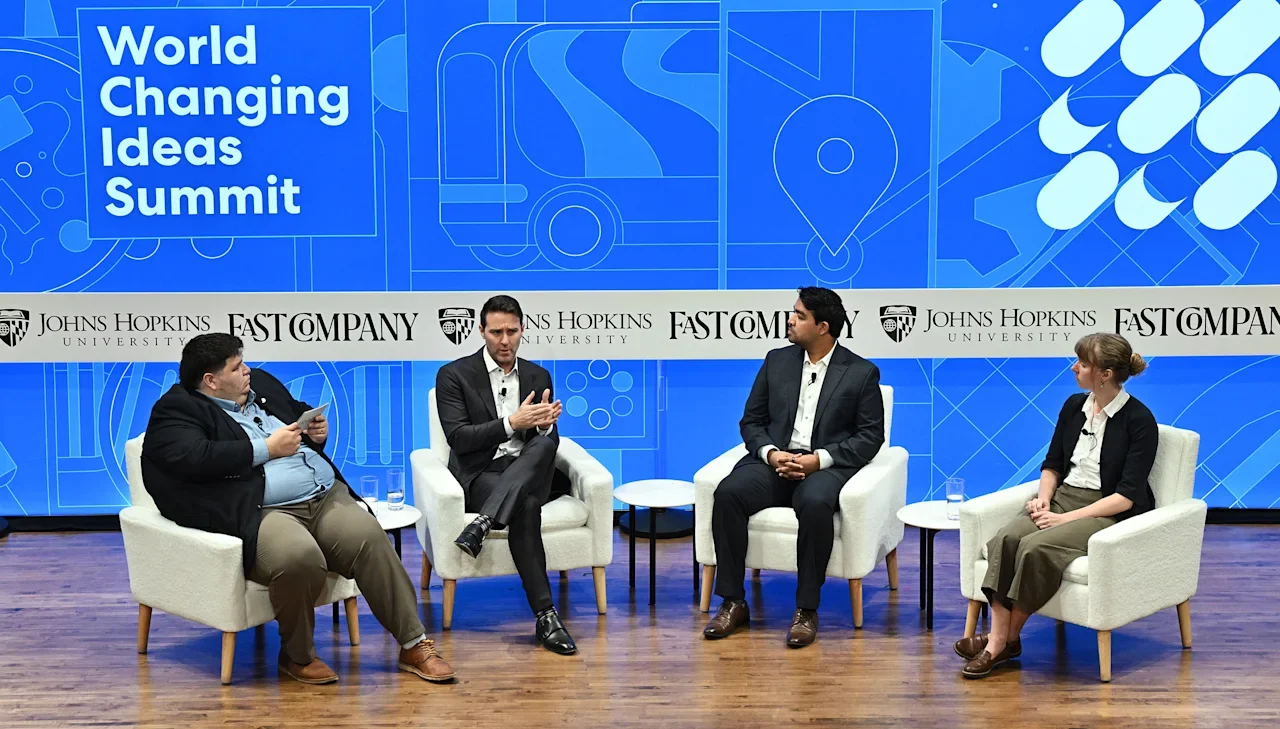
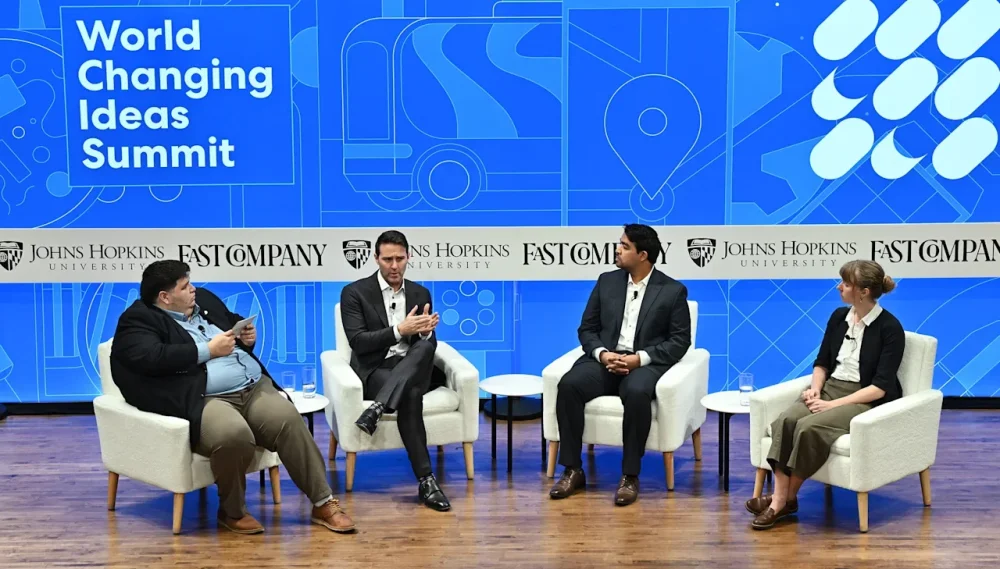
Artificial intelligence is radically changing how healthcare providers tackle vision loss, with tools that can be used from diagnosis to treatment and even follow-up care. One such example is Visilan, which uses smartphone imaging, telemedicine, and AI to screen, diagnose, and monitor patients for vision care. And with this technology, more of the 1 billion-plus patients who live with vision loss can be treated, Jordan Shuff, executive director and founder of Visilan, said at last month’s World Changing Ideas Summit, cohosted by Fast Company and Johns Hopkins University in Washington, D.C. But in this race to expand care, it’s also important to have guardrails in place. To ensure that AI doesn’t diagnose in a vacuum, there are some simple checks incorporated in the process so that a doctor can be pulled in to offer expertise when necessary, Shuff said. “We design these [tools] thinking about what is the workflow, who are other people involved, what is all the data involved, and how can we build guardrails so it works alongside a human,” Shuff said. EVOLUTION OF TOOLS, THINKING The past decade has seen huge improvements in tools used in healthcare settings, while some of the thinking around providing a broader continuum of care to patients has also evolved, said Gabriel Jones, cofounder and CEO of Proprio, a medical tech company. “We’re very fortunate to have these tools that enable automation, where that’s the right answer, really to drive better outcomes,” Jones said. AI can help to be predictive with care—it might help to avoid surgeries in the first place, for example—while its use in the operating room may actually redefine what an outcome is, according to Jones. “The implications for how we treat, who we treat, the types of procedures and pathologies we can address—let your mind go, because the pie is way bigger than whatever it looks like today,” he added. “And that’s why it’s a really exciting moment.” View the full article
-
Considering that America was a relative latecomer to the Christmas tree—the practice didn’t really become popular here until the mid-19th century—we sure have come to love them. While plenty of Christmas traditions have entered the dustbin of history, the mighty Christmas tree has survived the years; about 25-30 million real trees are purchased each year. Unless you have zero plans to celebrate the holiday, chances are you’re one of those people. If you think finding a Christmas tree is just a matter of heading to the empty lot or the tree farm down the road and grabbing one that looks vaguely tree-shaped, you would be wrong. If you want the best possible Christmas tree experience, you have to take a few basic aspects of the tree and your home into consideration. Here’s how to make sure you find the best Christmas tree. How to pick the best spot for a Christmas treeYour first stop toward the best possible Christmas tree is deciding where to set it up. You’ll want to choose a location where the tree will be the centerpiece of your celebration, and people can actually enjoy it, whether that’s in the living room, one corner of your tiny studio, or in the special Holiday Room you had built into the West Wing of the family manse. Once you’ve picked the right general location, you’ll want to avoid putting the tree next to a heat source (which will dry it out), and you’ll want it to be near a power outlet (so you don’t have extension cords tripping people up and/or possibly burning your house down). Once you’ve selected the right spot, you’re going to want to measure. First, measure the height of your ceilings. Take off a foot to accommodate a stand and a topper, if you’re using one, and that’s the maximum height of tree you’re looking for. Measure from the center of the spot where the tree will stand and get an approximate circumference that will ensure branches don’t scratch the walls or block foot traffic, as well. Now you have the basic dimensions of the best tree for your space. Don’t forget to bring the tape measure to the tree lot. How to pick the best type of Christmas treeAlthough the Christmas tree has become a generic symbol of the holiday season, there are a surprising number of varieties. Choosing the best one depends on the look and feel you need: Traditional. If you want that “Christmas card” look, go with a Balsam fir. These trees tend to have the classic triangular shape and deep green color you’re looking for, and they tend to last a long time indoors—this is kind of the default Christmas tree, and it will fill your house with that classic Christmas tree smell. If you want something a little different but still classic, the Fraser fir has more of a blue tint to it, and will last a long time. Kid-friendly. If you have little ones racing about, the stiff, surprisingly sharp needles of some trees might be a concern. The Douglas fir has a classic look but sports soft, bendy needles that won’t poke little eyes, as does the Scotch (or Scots) pine tree. Big room. If you’re putting the tree someplace that could reasonably described as a “Great Room” or similarly large space, you’ll want a tall, full-bodied tree like the Douglas fir to fill the space. You could also go with the majestic Norway spruce (the tree traditionally chosen to stand at Rockefeller Center in New York City), but beware: The Norway is a delicate tree that won’t last very long in your house. Minimalist. If your idea of decorating a home and tree for the holidays is to place a few subtle items around that hint at Christmas, the Grand fir makes a statement with its exceptionally long needles, and does well with just a touch of decoration. Another great choice is the Noble fir, which adds cones to the mix, giving it a ready-made decoration. Modern. If you’re going for a less-classic look, an Arizona cypress tree is a good choice. It’s generally a pale green with reddish-brown branches, resulting in a lush color story that’s still in the traditional realm while adding a touch of drama that other trees won’t have. Inspect the treeOnce you know which tree you want and where it’s going to go, give it a solid inspection to make sure you’re getting the best possible specimen. That means checking for insects and even animals or birds, making sure the needles feel fresh and don’t fall off easily, and actually smelling the tree—it should have a light, fresh scent, not a musty or moldy smell. Now you have the best possible Christmas tree, and all you have to do is take care of it properly so it lasts the whole holiday season. View the full article
-
Bank of America was the leader in this study, with Rocket as the only nonbank mortgage lender which got a score higher than the industry average. View the full article
-
British report concluded Russia’s GRU military intelligence service was responsible for poisoning Dawn SturgessView the full article
-
Insurgent parties to left and right peddle nonsense economics but enjoy dramatically rising supportView the full article
-
Government plans to lift current limit of £118,000 View the full article
-
Small changes in routines can create significant improvements in how much gets accomplished in a day. Here, experts share 15 practical habits that can boost productivity and lead to better results in your work and personal life. Plan Your Week Every Friday Afternoon One small habit that’s made the biggest long-term difference in my productivity is making a plan every Friday for the coming week. Most people start their Mondays feeling behind before they’ve even begun. Their inbox dictates their day, and they spend valuable energy reacting instead of leading. I used to do the same thing—until I started ending each week with a simple Friday planning ritual. Before I wrap up on Friday, I take less than 30 minutes to look ahead at the next week. I review upcoming meetings, identify priorities, and map out where key tasks will fit. When I close my laptop, I know exactly what next week looks like — and I can actually enjoy my weekend because my brain isn’t spinning about what’s waiting for me. When Monday morning comes, I’m energized from actually resting over the weekend, and I hit the ground running with clarity and confidence. I’m not reacting; I’m executing a strategic plan. Over time, this habit has helped me stay focused on meaningful work, protect my time, and feel genuinely present—both at work and at home. It’s a small commitment that delivers massive peace of mind and productivity all week long. Samantha Lane, TEDx Speaker | Time Management Coach & Executive Trainer, Present and Productive | Origami Day Commit to an Earlier Bedtime There’s one habit that changed how I work, and it didn’t come from any kind of glamorous productivity tool. Funny enough, I figured it out by noticing a damaging pattern. My nights were setting me up to fail the next day. For a long time, I kept waking up tired. Not just sleepy-tired, but the kind where your brain feels heavy the moment you open your eyes. I’d load up on coffee, push through my schedule, and hope I’d somehow get more focused as the day went on. Which never happened. I run my own business, so there was always one more email, one more task, one more “quick thing” to do before bed. By the time I finally sat down to relax, the night was basically gone. And then I’d stay up way past 12 a.m. because I felt like I hadn’t had any time to myself. One night, I ended up going to bed around 10:30 p.m. without even planning it. The next morning, I felt completely different. I didn’t need to drag myself out of bed. My brain felt clear. I actually felt awake. I went to bed early the next night, too, just to see if it was a fluke. It wasn’t. The difference was massive. That’s when I realized how much my evenings were affecting everything. My nights were draining the version of me I needed in the morning. Sticking to that bedtime meant I had to stop working earlier. I picked 6 p.m. and held myself to it. At first, it was hard. I kept feeling like I should be doing something. I was antsy. But that one boundary changed how I worked during the day. I stopped wasting time on little tasks and started focusing on what actually mattered. Plus, I got my evenings back. I didn’t need to stay up late anymore because I finally had real time to wind down. It’s not exciting or trendy, but going to bed a few hours earlier (before midnight) changed everything for me. Out of all the things I’ve tried over the years and all the money I’ve spent on flashy “productivity tools,” this caused the biggest difference in how I feel and how well I work. Lisa Jeffs, CEO & Founder, Lisa Jeffs Toronto Life Coach & Toronto Executive Coach Remove Distractions and Focus on One Task The habit that’s changed everything for me is ruthless single-tasking. One task at a time, no exceptions. To make this work, I had to remove every distraction that tempted me to multitask. I used to run three monitors thinking more screen space meant more productivity. The opposite happened. Every open tab, software window, and notification pulled my attention away from the one task I needed to complete. I switched to a single screen and started wearing earplugs to block out noise. It sounds extreme, but it forces me to stay locked in on what actually matters. The results showed up fast. Projects that used to take days now get finished in hours because I’m not context switching every few minutes. Client work gets deeper attention, which means better outcomes and fewer revisions. My team noticed the difference too because I’m more present in conversations instead of half-listening while checking Slack. The hardest part isn’t the setup. It’s saying no to things that feel urgent but aren’t important. Once you get comfortable protecting that single-task focus, the productivity gains compound quickly. Xavier Tai, Founder, EasyScalers Process Action Items Immediately After Every Meeting One small habit that’s had an outsized impact on my productivity is blocking five to ten minutes after every meeting—or block of meetings—to process action items immediately. In most workplaces, meetings end and we rush straight to the next task. We talk about next steps, but then they get lost in the shuffle or buried on an endless to-do list. Taking even a few minutes of transition time changes everything. Here’s how I use it: anything that takes two minutes or less, I do right away—sending a follow-up email, scheduling the next call, or updating a document. Anything that takes longer than two minutes, I don’t put on a to-do list; I schedule it directly on my calendar for a specific day and time. This simple practice prevents small tasks from falling through the cracks and eliminates the mental clutter of wondering what I forgot. Over time, it compounds—projects move faster, communication stays tight, and I end the day with far fewer loose ends. It’s a tiny adjustment that creates exponential gains in focus, reliability, and calm. Marissa McKool MPH, Burnout Coach, The Public Health Burnout Coach Reset Your Workspace Every Evening Most people lose tomorrow because they don’t close today properly. That’s why I swear by a habit I call “The Reset.” Every evening before I close my laptop, I take 10 minutes to reset my workspace, my inbox, and my head. It sounds simple, but it has been a game changer. I clear out the clutter, finish any two-minute tasks, and write down the three most important things I’ll tackle first the next morning. Then I stop working. Because of this, I start every day on the front foot and not playing catch-up. I know what matters, my desk is clear, and I’m not wasting that first hour reacting to whatever is shouting loudest in my inbox. Before I started doing it, I would often end the day in chaos with tabs open everywhere, half-finished thoughts, and energy well and truly spent. The next morning was always about reassembling my focus. Now those 10 minutes buy me hours of clarity. Sean McPheat, Founder & CEO, MTD Training Document Recurring Processes as You Complete Them One habit that may seem small but made a huge impact not only on my productivity but also on how smoothly our operations run is creating standard operating procedures as I go. In our overall operations, there are always recurring tasks like onboarding new hires, processing orders, generating reports, approving content, and managing communications with suppliers. When I was getting started, I always found myself re-explaining the same process or digging through my emails to remember how I did something the last time. It ended up being mentally draining and very inefficient. That’s when I started to make it a rule: if I have to do something more than twice, it needs to have an SOP. So, whenever I complete a certain process, I take a couple of minutes to document it, taking note of each step, the tools I used, and the templates needed. It doesn’t have to be 100% perfect immediately—it just has to exist, and I just refine it as I go along. Over time, that documentation evolves into a solid and scalable process. The impact of this productivity hack has been significant. New hires/team members can get up to speed faster and make fewer mistakes, and I spend less time teaching the entire process and more time focusing on making strategic decisions. Jessica Bane, Director of Business Operations, GoPromotional Take Two-Minute Pauses Between Major Tasks The habit that changed my productivity wasn’t about doing more; it was about transitioning better. For years, I moved through my day as if I were being chased. I had back-to-back meetings. I switched quickly from strategic planning to operational tasks. I jumped from tough conversations to designing training content. There was no pause or transition, just constant forward motion. I thought I was being efficient, but I was losing focus everywhere. The change came during my time at AWS. I balanced UX research, EQ-centered leadership development design, and implementing generative AI solutions, often all in the same afternoon. I noticed my best work happened when I had natural breaks between tasks, but my calendar rarely allowed for that. So, I built it in: a two-minute reset between each major task or meeting. I did not scroll social media or check emails. Instead, I took a genuine mental break. I stepped away from my screen, took three deep breaths, and asked myself: What does the next task really need from me? Sometimes the answer was creative energy; other times, it was focused analysis or empathetic listening. This habit wasn’t just about resting; it was about recalibrating so I could engage with each task using the right mindset, not just leftover energy from before. The impact was immediate and noticeable. When I led research on automating training processes, those two-minute resets helped me shift from technical research to strategic conversations with stakeholders. I could be fully present in each context rather than dragging the last conversation into the next one. My error rate dropped. I stopped rereading emails three times because I was skimming distractedly. I caught mistakes before they became problems. My team noticed I was more responsive to nuances in conversation. The productivity gain wasn’t about fitting more into my day; it was about focusing fully on what was already there. What makes this habit sustainable is that it’s small enough to feel easy but substantial enough to create a real mental reset. You don’t need a meditation app, a special space, or permission. You just need to stop treating your attention like it’s an endless resource and start treating transitions like the productive work they truly are. Your brain isn’t a machine that switches contexts instantly without cost. Respect the transition. Your focus will thank you. Alinnette Casiano, Leadership Strategist, Growing Your EQ Spend 15 Minutes on Your Critical Task I started every workday with exactly 15 minutes on my most critical task, no matter what. Just the first 15 minutes, not the complete thing. It’s simple neuroscience: when you start small and keep going, your anterior cingulate cortex, which controls switching tasks and starting them, gets ready. After two weeks, the neural connection gets stronger, and what used to seem like climbing a mountain becomes second nature. One executive I trained was overwhelmed with leadership duties and hadn’t written a strategic memo in months. We made one rule: every morning for three minutes, just write down one thought. She finished her whole strategy framework in 90 days without once feeling exhausted. She wasn’t suddenly more disciplined; her brain had only changed how it started tasks to make them seem less threatening. The underlying lesson is that you don’t get more done by working harder; you get more done by getting your brain to believe that starting is safe and easy. Sydney Ceruto, Founder, MindLAB Neuroscience Start Each Day with Exercise and Deep Work The single most impactful habit I’ve maintained for two decades is The Habit of Winning the Morning. It’s not about the alarm time; it’s about preloading your day with uninterrupted, high-leverage work. I’m at my desk by 7:00 a.m., having already exercised and cleared my personal mental clutter. This routine engineers a psychological and professional head start that lasts all day. Here is the measurable value this habit delivers: Gain a 2-Hour Head Start on Your Peak Performance: By getting to my desk early, I consistently create a daily buffer of focused, deep work that prevents me from playing reactive catch-up for the rest of the day. Build Mental Resilience Through Physical Movement: Dedicating a full hour to exercise delivers a sustained surge of chemical energy and mental clarity, ensuring I approach high-stakes problem-solving with maximum focus. Achieve Consistent Momentum and Confidence: Starting the day with intentional wins (exercise, deep work) generates a sense of control and efficacy that fuels an energetic and proactive approach throughout the entire workday. Thomas Powner, Executive Career Management Coach * Recruiter * Resume Writer * Career Keynote Speaker, Career Thinker Inc. Brain Dump Weekly Plans to Your Assistant Every Monday morning on my drive, I talk out loud to my custom GPT that acts as my personal assistant. I brain dump everything for the week: projects, errands, client follow-ups, content, even small admin. My assistant organizes it by day of the week and by category, flags blind spots, and asks clarifying questions I usually forget. When we finish, it gives me a single structured list. I move that list into Google Tasks, and Zapier syncs it to my Notion to-do database so my workspace stays current. Each morning, Google’s contextual view with Gemini gives me a quick summary of what matters today and pulls helpful context from Gmail and Drive. The result is simple. I start the week with a clear plan, my tools stay in sync, and I stop carrying the entire to-do list in my head. Fewer dropped balls, better prep for calls, and more focus time because I’m not resorting priorities all day. Gloria Espina, Recruitment Systems Strategist, Recruitment Gal Write Worries Down and Store Them Away When life or work starts to feel overwhelming, I turn to a simple practice I call “the box.” It’s a small wooden box that sits underneath my desk, not for storage, but for clarity. Whenever I’m consumed by stress or distraction, I write each worry on a piece of paper, fold it, and place it inside. Once the lid closes, that thought has been acknowledged and contained. It no longer controls my focus. Weeks or months later, I open the box and read those same notes. Almost without fail, the things that once felt so urgent never materialized, or they resolved with far less impact than I feared. That realization has fundamentally shifted how I manage my energy and productivity. I’ve learned that clutter in your mind is just as costly as clutter in your calendar. This ritual helps me quiet the noise so I can channel energy toward meaningful work, which moves the business forward. By giving my worries a place to live outside my head, I create space for clear thinking, better decisions, and focused execution. It’s a small habit, but one that’s helped me lead with more presence and produce more with intention—not exhaustion. Felicia Gallagher, Founder | CFO | Finance Strategist, ThreeStone Solutions Replace Your Phone with a Dedicated Alarm I stopped using my phone as my alarm device. I started this practice after I realized that, while convenient to have one device next to my bedside, as soon as I woke up to turn the alarm off, I could not help but see several notifications that I had received overnight. Even if I did not look at the notifications, within seconds of waking up my brain was off to the races. The fact that I knew there were messages on my phone was enough to fill my mind with an unhealthy cocktail of curiosity, anxiety, and even fear of what might have happened overnight and needed my immediate attention. Needless to say, whatever recovery and relaxation benefits I had gained with sleep left my mind within seconds. All of this became much worse when I decided to actually read any of the notifications. Switching out my phone as an alarm has saved me from getting the instant info and data hit that would provoke nervous energy. This in turn has allowed me additional mental runway before the brain gets fired up with external data. It took some serious practice to make this transition. Now the anxiety levels are much lower getting out of bed and my ability to thoughtfully engage with business issues on my phone has gone up. It has also helped me be more present with the family and be able to support their early morning needs without me being distracted. Rohit Bassi, Founder & CEO, People Quotient Choose One High-Impact Task Each Morning “The main thing is to keep the main thing the main thing,” said Stephen R. Covey. I got inspired by that quote long ago. Because as leaders, we are always surrounded by priorities, requests, and opinions. But not everything that comes across deserves our attention. So, I adopted this one simple habit inspired by Covey. Every morning, I decide on one task that will make the biggest impact that day. This daily clarity greatly reduces the feeling of overwhelm, alongside giving me room to handle the unexpected without losing sight of what truly matters. It helps me stay intentional. And I end each day with a real sense of accomplishment. Because when the main thing stays the main thing, everything else starts falling into place. Sandeep Kashyap, CEO & Founder, ProofHub Carve Out Dedicated Calendar Blocks Time blocking. It’s not enough just to have a to-do list to be productive because different tasks require different amounts of time and energy. When you carve out time on your calendar, you ensure that there’s enough time in your day to get the right things done. You can also prioritize important tasks to be done first—and at times when you’re at your best. Time blocking pairs well with Cal Newport’s concept of deep work. Save time for yourself to get quality work done, not just a quantity of shallow work. This goes for both professional and personal tasks. I adopted time blocking into my own workflow about six years ago, and it’s been invaluable. I take time every week to set my schedule, and then I don’t have to worry about missing things. Robert Carnes, Marketing Director, GreenMellen Build Daily Rhythm Through Four Reflection Moments For much of my career, I believed productivity meant maximizing output, earlier mornings, longer hours, and tighter schedules. Over time, I learned that real productivity isn’t about doing more. It’s about aligning more often. The most effective habit I’ve built doesn’t require a new system or app. It’s a simple reflection routine that takes just three to five minutes at a time, yet it’s completely changed how I lead, think, and show up for the people who count on me. Morning Reflection—Set Intention Each morning before leaving home, I take a few quiet minutes to ask, What deserves my focus today? That one question sets the tone for the day. It helps me focus on what truly matters instead of reacting to noise. Many of my clients do this same reflection when they first get to their office before opening their email or going into meetings. Whether at home or at work, that intentional pause turns a busy day into a focused one. Pre-Meeting Reset—Regain Presence Before important meetings or tough conversations, I take one to three minutes to reset. A deep breath, a quick stretch, and the reminder: Be fully present here. That short pause helps me show up calm, clear, and attentive. It helps me listen better, respond more thoughtfully, and lead with steadiness instead of urgency. End of Day Reflection—Create Closure At the end of the day, I take a few minutes to look back and ask, What moved forward today, and what needs my attention tomorrow? That simple check-in helps me close the loop mentally. It keeps unfinished thoughts from following me home and allows me to be more present with my family. The result is better rest, stronger relationships, and a clear head for tomorrow. Evening Reflection—End with Gratitude Before bed, I take a moment to ask, What am I grateful for, and what did I learn today? That question helps me reset and end the day. These four moments—morning intention, pre-meeting reset, end of day closure, and evening gratitude—have become my daily rhythm. They’ve helped me lead with greater presence, make clearer decisions, and stay grounded when things get complex. Real productivity isn’t built in big bursts of effort. It’s built in quiet, consistent moments of reflection that reconnect what you do with who you want to be and how you want to show up for others daily. Gearl Loden, Leadership Consultant/Speaker, Loden Leadership + Consulting View the full article

-
The government-sponsored enterprises plan to back off competition with the FHA and some think they'll incentivize different loan types. Part 4 in a series. View the full article
-
The wholesale lender fell victim to a data incursion two years ago in a months-long period marked by several high-profile cybersecurity incidents. View the full article

-
Yes, it’s that time of year again: when we don’t just wrap up one chapter but start anticipating the next, determined to begin with something that resembles a clean slate. The ritual is familiar: a little reflection, a little optimism, and a list of promises to our future selves. New Year’s resolutions are extremely popular, particularly relative to their low execution rate. According to a recent 2025 YouGov survey, 31% of U.S. adults can be expected to set at least one resolution for the new year–with the highest participation among younger adults (under 30), of whom 58% say they will make a resolution. Saving money emerges as the single most common New Year’s resolution among Americans (26%), followed closely by goals related to health and well-being: 22% plan to improve physical health, 22% want to exercise more, another 22% aim simply to “be happier,” and 20% intend to eat healthier. The benefits without the work New year’s resolutions reveal a painful truth about change, namely: everybody seems to love change, until they have to do it. Indeed, even when people say they want to change, what they actually want is to have changed–in other words, to enjoy the benefits of having changed or having achieved the desired transformation, but without the painful and effortful work of undergoing the process to achieve it. We are, in essence, creatures of habits, and though every habit was once a new behavior, it is hard to unlearn behavioral patterns and dispositions that have become defining habits. In the famous words of Samuel Johnson, “the chains of habit are too weak to be felt until they are too strong to be broken.” Although New Year’s resolutions may seem like trivial once-a-year occasions, they paint a bleak picture about our capacity to change. Consider that these are typically borne out of a genuine desire to improve ourselves, and are motivated by intrinsic or at least personal motives, rather than people telling us to change or evolve. In theory, this should put us in an ideal position to achieve our goals, since all change is fundamentally the product of our own desire or will to change–that is, the only way to get someone to do something is to get them to want to do something. Hard to keep In practice, however, we do a dismal job holding our resolutions and are generally likely to break them and then recycle them in future years. In a longitudinal study of 200 resolvers, 77% had maintained their resolutions after one week, but this dropped to 55% after one month, 43% after three months, 40% at six months, and only 19% still held to them after two years. Another study provides more reasons for optimism: it tracked 159 people making New Year’s resolutions and 123 similar non-resolvers for six months. Both groups had comparable backgrounds and goals (mainly weight loss, exercise, and smoking cessation), but their outcomes diverged sharply: 46% of resolvers were still successful at six months, compared with just 4% of non-resolvers. Among resolvers, higher self-efficacy, greater readiness to change, and stronger change skills predicted success, and those who succeeded relied more on practical cognitive-behavioral strategies than on emotional or awareness-raising tactics. The authors conclude that New Year’s resolutions offer a valuable natural window into how real behavior change unfolds. The connection to organizational change That said, when we look at most organizational change interventions (especially the ubiquitous attempts to develop or “transform” leaders), there are even fewer reasons for optimism. Here’s why: (1) Leadership change interventions are rarely driven by internal desire. When organizations ask leaders to change, they usually want them to change in a specific way, aligned with the business agenda. This means the change is externally imposed rather than intrinsically motivated. Unsurprisingly, meta-analytic research shows that intrinsic motivation dramatically increases the success of behavioral change interventions, while externally imposed change often produces compliance without real transformation. (2) Measurable outcomes or quantifiable metrics are often lacking. Many leadership development programs still rely on vague perceptions of improvement or on self-reported progress, rather than objective before-and-after data. Organizations often over-index on participation, sentiment surveys, or anecdotal indicators, while ignoring behavioral KPIs or longitudinal performance outcomes. Success becomes conflated with completion, and leaders often receive credit for attending a program rather than actually changing. (3) Personality often stands in the way of change. Most leadership behaviors that organizations want leaders to change, such as listening more, dominating less, delegating better, becoming less impulsive, or being more emotionally regulated, are deeply rooted in personality. And personality is highly stable. Leaders don’t micromanage, interrupt, or avoid conflict because they “forgot” how to behave differently; they do so because these tendencies are their psychological defaults. Asking someone to act against their personality is rarely sustainable unless supported by strong motivation, environmental scaffolding, and ongoing reinforcement. (4) The environment often pushes leaders back to old habits. Even when leaders make progress, the organizational context often pulls them back. If incentives, culture, role expectations, team dynamics, and senior-leader behaviors remain unchanged, new habits cannot survive. A leader may return from a development program eager to delegate more, only to find that the culture rewards heroic overwork, rapid responsiveness, and “being in control.” In such contexts, reversion to old habits is almost guaranteed. What works And yet, well-designed leadership development interventions do work, typically yielding average improvements of around 30% for approximately 30% of leaders. Crucially, they tend to share certain characteristics: (1) They are enhanced and supported by a coach. Coaching meta-analyses show significant positive effects on behavioral change, goal attainment, and leadership effectiveness. Coaches help leaders translate insight into action, apply new behaviors in context, and stay accountable. (2) They rely on high-quality, evidence-based coaching and expert change professionals. The expertise of the coach matters. Effective coaches draw on validated psychological frameworks, provide accurate diagnosis, challenge constructively, and avoid the vague platitudes common in low-quality coaching. (3) They ensure the organizational context and incentives align with the change expected. If new behaviors are not reinforced (or worse, if the organization rewards the opposite behaviors) change will not stick. Structural alignment (incentives, culture, team expectations) is a critical amplifier. (4) They leverage the science of behavioral change. Small habit formation, nudges, friction reduction, implementation intentions, environment design, and regular prompts all increase the likelihood that new behaviors will persist. (5) Most importantly, they select the right leaders to invest in. Coachability, which largely boils down to openness to feedback, willingness to self-reflect, humility, and a genuine desire to improve, is one of the strongest predictors of leadership development ROI. Whatever you think of personalities like The President or Musk, it’s clear they have little appetite for being coached. In contrast, leaders who are curious, self-aware, and eager to grow are far more likely to change. Viewed through this lens, New Year’s resolutions and leadership development are two versions of the same psychological phenomenon: most people want the outcomes of change without the discomfort of transformation. Leaders, like the rest of human beings, start the year with good intentions, but only a minority translate those intentions into new habits. Perhaps the most important New Year’s resolution for leaders, then, is not to “change everything,” but to commit to the small, unglamorous, sustained behaviors that actually make change possible. After all, lasting leadership growth—like lasting personal change—is less about setting resolutions and more about building habits that survive past January, and perhaps even until the next decade. View the full article

-
Hershey’s has finally jumped on the Dubai chocolate trend, and it typifies the intentional approach the company is taking to viral candy. The Hershey’s Company announced it’s releasing a limited-edition Hershey’s Dubai-Inspired Chocolate Bar that adds green pistachio filling and kadayif pastry to a classic break-apart Hershey’s chocolate. They’re treating the release like a sneaker drop: only 10,000 bars are being released. “We don’t chase every trend, but this one was big enough, and there was an opportunity to do it in a Hershey way,” Dan Mohnshine, Hershey’s vice president of demand creation strategy and brand development, tells Fast Company. To make the bars, Hershey’s flew a small team to Italy to source pistachio and kadayif cream. The company reviewed nine formulas before deciding on the recipe they’re using, which was chosen for its balance of crunch and salt to complement the milk chocolate. “The ingredients and filling we developed are exclusive to the Hershey’s Dubai-inspired bar—you won’t find this exact combination anywhere else,” Mohnshine says. The bars will be available for $8.99 at the Hershey’s Chocolate World Times Square on Thursday or online through Gopuff orders in New York City, Philadelphia, or Chicago. It was a roughly two-month process from late July to September to get the bar from concept to reality, and all 10,000 bars were produced in the company’s Hershey, Pennsylvania, research and development center. The candymaker has a “Velocity Lab” capability that Mohnshine says is “all about taking ideas to consumers quickly by embracing agility, an iterative mindset, and rapid prototyping based on trend signals.” For the Hershey’s Company, choosing when to jump on a trend depends on whether the candymaker believes it can provide a unique offering and value. Hershey’s is late to the food trend, which went viral on TikTok beginning in 2023. Shake Shack introduced a Dubai Chocolate Pistachio Shake in June, and Lindt and Ghirardelli released their takes on the trend in July and October, respectively. Demand for pistachio broke the supply chain. Still, that hasn’t hurt the company’s bottom line. As a limited-edition drop, Hershey’s Dubai-inspired bar is just a sugar rush in its overall sales. Though the company reported on its October earnings call that Halloween sales were disappointing, which CEO Kirk Tanner blamed in part on the day of week, it’s seen a 6.5% increase of consolidated net sales. Though just 10,000 bars will be released, Mohnshine says “never say never.” “We’re really excited to hear what our fans think about Hershey’s version of a Dubai-inspired chocolate bar,” he says. View the full article

-
Just before Friday’s draw for the FIFA men’s World Cup 2026 group stage, Visa is launching an artistic update to its sponsorship of the tournament. The brand just announced a new partnership with Pharrell Williams’ Joopiter auction and e-commerce platform, on a new World Cup-themed art collection, featuring 20 different artists from six continents. The collection aims to show how creativity drives commerce—and how artists are the entrepreneurs shaping communities and culture around the world. Visa has unveiled the first five pieces in the collection at an exclusive Miami showcase called “The Art of the Draw,” hosted by multidisciplinary creator KidSuper. The showcase features the works of artists Darien Birks, Nathan Walker, Cesar Canseco, Ivan Roque, and Rafael Mayani. The rest of the collection is set to come before the tournament kicks off in June. Visa chief marketing officer Frank Cooper III says this collection embodies the brand’s overall approach of using its sponsorships to not just leverage the fan experience around an event like the World cup, but actually add to it. “It’s allowing artists to do what they do best, which is to help us to see things differently and to provoke conversation in ways that may not get provoked through just casual interaction,” says Cooper. “So for me, this opens the aperture of how you can think about the World Cup and football.” Add value, not ads Visa first signed on as a World Cup sponsor back in 2007. This will be Cooper’s second tournament with the brand, having joined shortly before the 2022 World Cup. Back in 2023, in one of his first interviews as CMO, Cooper told me that one of the things he really wanted to do around sponsorship was to move away from what he called “cultural adjacency,” borrowing equity and trying to get a halo off that, and creating awareness by being the proud sponsor of something. “I’m not dismissing that,” he said. “I think it has a role, but can we actually add value to fans’, the athletes’, or artists’ experience? Can we figure out ways that are less interruptive and more about creating momentum around things people want to do? Otherwise, you start to fade into the background and become wallpaper if people see it too much. There is value in traditional sponsorship, but there’s more value in delivering something that would not happen unless we were there.” That’s the playbook. Since then, Cooper has led the brand into music and sports, with a pre-Paris Olympics Post Malone concert at the Louvre, and Benson Boone at The Kennedy Space Center’s Rocket Garden, as well as compelling projects in Formula 1, NFL, and the Olympics. “The mindset that we have is less of, ‘Can I interrupt an experience or insert ourselves into an experience in a way that disrupts people?’ And more of, ‘Can I create original intellectual property that actually makes the experience better?’” he says. This is where supporting artists from around the world to create a collection that shows the connection between creativity and sports culture comes in. “The Art of the Draw” is just the latest piece of work Visa has done around next summer’s World Cup, and it won’t be the last. So far, the brand has given its cardholders exclusive early access to World Cup tickets through its Visa Presale Draw back in September. In June, the brand opened the first of six soccer parks throughout the United States in San Francisco, in partnership with Bank of America and Street Soccer USA. And in September, Visa signed Barcelona and Spain star Lamine Yamal as a global ambassador. Logo Soup Major sports events like the World Cup have long been drenched in ads from sponsors, from logos on the field to exclusive products and services at the games. Cooper says there is still value in this type of traditional brand presence, but what’s changed over the years is what else is required to give that presence value. “What has changed is that there’s very little value given to just the pure advertisement,” says Cooper. “It becomes like logo soup. What is probably the most important thing is that fans are asking for the brands that they care about the most, who are connected to these events like the World Cup, to understand the cultural nuances. If you’re going to be involved, you better understand it.” This is where the level of detail in a brand’s involvement, particularly in fan culture, is key. As Men In Blazers cofounder Roger Bennett told me in August, brands need to get involved in soccer early and often, in order to be more than a tourist at the World Cup in fans’ eyes. Cooper knows this, too. He knows the difference between churning out generic promo T-shirts for fans, and teaming with a local designer for a limited-edition drop. That’s also the strategy behind “The Art of the Draw.” “What I’m seeing is that fans increasingly are really, really smart about which brands understand the cultural nuances of the activity that they’re engaged in,” he says. “And so what we are trying to do is become much more aware of those cultural nuances, how to tease them out, and how to produce something that actually delivers value in that context.” View the full article