Newsletter
Want to keep up to date with all our latest news and information?


ResidentialBusiness
Administrators
-
Joined
-
Last visited
Everything posted by ResidentialBusiness
-
A 1940 self-portrait by famed Mexican artist Frida Kahlo of her asleep in a bed could make history Thursday when it goes on sale by Sotheby’s in New York. With an estimated price of $40 million to $60 million, “El sueño (La cama)” – in English, “The Dream (The Bed)” — may surpass the top price for a work by any female artist when it goes under the hammer. That record currently stands at $44.4 million, paid at Sotheby’s in 2014 for Georgia O’Keeffe’s “Jimson Weed/White Flower No. 1.” The highest price at auction for a Kahlo work is $34.9 million, paid in 2021 for “Diego and I,” depicting the artist and her husband, muralist Diego Rivera. Her paintings are reported to have sold privately for even more. The painting up for auction depicts Kahlo asleep in a wooden colonial-style bed, wrapped in a golden blanket embroidered with crawling vines and leaves. Above her, seemingly levitating atop the bedposts, lies a full-sized skeleton. In its catalog note, Sotheby’s said the painting “offers a spectral meditation on the porous boundary between sleep and death.” Last exhibited publicly in the late 1990s, the painting is the star of a sale of more than 100 surrealist works by artists including Salvador Dalí, René Magritte, Max Ernst, and Dorothea Tanning. They are from a private collection whose owner has not been disclosed. Kahlo vibrantly and unsparingly depicted herself and events from her life, which was upended by a bus accident at 18. She started to paint while bedridden, underwent a series of painful surgeries on her damaged spine and pelvis, then wore casts until her death in 1954 at age 47. “The suspended skeleton is often interpreted as a visualization of her anxiety about dying in her sleep, a fear all too plausible for an artist whose daily existence was shaped by chronic pain and past trauma,” the catalog notes. View the full article

-
Threat comes after lawmakers tell members of US military that they must refuse illegal ordersView the full article
-
Sales of previously owned homes in the US rose in October to the fastest pace in eight months, as buyers took advantage of lower mortgage rates and gained the upper hand over sellers in some markets. View the full article
-
Report criticises culture in Downing Street during Boris Johnson’s tenure View the full article
-
They’re cute, even cuddly, and promise learning and companionship—but artificial intelligence toys are not safe for kids, according to children’s and consumer advocacy groups urging parents not to buy them during the holiday season. These toys, marketed to kids as young as 2 years old, are generally powered by AI models that have already been shown to harm children and teenagers, such as OpenAI’s ChatGPT, according to an advisory published Thursday by the children’s advocacy group Fairplay and signed by more than 150 organizations and individual experts such as child psychiatrists and educators. “The serious harms that AI chatbots have inflicted on children are well-documented, including fostering obsessive use, having explicit sexual conversations, and encouraging unsafe behaviors, violence against others, and self-harm,” Fairplay said. AI toys, made by companies such as Curio Interactive and Keyi Technologies, are often marketed as educational, but Fairplay says they can displace important creative and learning activities. They promise friendship but also disrupt children’s relationships and resilience, the group said. “What’s different about young children is that their brains are being wired for the first time and developmentally it is natural for them to be trustful, for them to seek relationships with kind and friendly characters,” said Rachel Franz, director of Fairplay’s Young Children Thrive Offline Program. Because of this, she added, the amount of trust young children are putting in these toys can exacerbate the harms seen with older children. Fairplay, a 25-year-old organization formerly known as the Campaign for a Commercial-Free Childhood, has been warning about AI toys for more than 10 years. They just weren’t as advanced as they are today. A decade ago, during an emerging fad of internet-connected toys and AI speech recognition, the group helped lead a backlash against Mattel’s talking Hello Barbie doll that it said was recording and analyzing children’s conversations. “Everything has been released with no regulation and no research, so it gives us extra pause when all of a sudden we see more and more manufacturers, including Mattel, who recently partnered with OpenAI, potentially putting out these products,” Franz said. It’s the second big seasonal warning against AI toys since consumer advocates at U.S. PIRG last week called out the trend in its annual “Trouble in Toyland” report that typically looks at a range of product hazards, such as high-powered magnets and button-sized batteries that young children can swallow. This year, the organization tested four toys that use AI chatbots. “We found some of these toys will talk in-depth about sexually explicit topics, will offer advice on where a child can find matches or knives, act dismayed when you say you have to leave, and have limited or no parental controls,” the report said. One of the toys, a teddy bear made by Singapore-based FoloToy, was later withdrawn, its CEO told CNN this week. Dr. Dana Suskind, a pediatric surgeon and social scientist who studies early brain development, said young children don’t have the conceptual tools to understand what an AI companion is. While kids have always bonded with toys through imaginative play, when they do this they use their imagination to create both sides of a pretend conversation, “practicing creativity, language, and problem-solving,” she said. “An AI toy collapses that work. It answers instantly, smoothly, and often better than a human would. We don’t yet know the developmental consequences of outsourcing that imaginative labor to an artificial agent—but it’s very plausible that it undercuts the kind of creativity and executive function that traditional pretend play builds,” Suskind said. Beijing-based Keyi, maker of an AI “petbot” called Loona, didn’t return requests for comment this week, but other AI toymakers sought to highlight their child safety protections. California-based Curio Interactive makes stuffed toys, like Gabbo and rocket-shaped Grok, that have been promoted by the pop singer Grimes. Curio said it has “meticulously designed” guardrails to protect children and the company encourages parents to “monitor conversations, track insights, and choose the controls that work best for their family.” “After reviewing the U.S. PIRG Education Fund’s findings, we are actively working with our team to address any concerns, while continuously overseeing content and interactions to ensure a safe and enjoyable experience for children.” Another company, Miko, based in Mumbai, India, said it uses its own conversational AI model rather than relying on general large language model systems such as ChatGPT in order to make its product—an interactive AI robot—safe for children. “We are always expanding our internal testing, strengthening our filters, and introducing new capabilities that detect and block sensitive or unexpected topics,” said CEO Sneh Vaswani. “These new features complement our existing controls that allow parents and caregivers to identify specific topics they’d like to restrict from conversation. We will continue to invest in setting the highest standards for safe, secure and responsible AI integration for Miko products.” Miko’s products are sold by major retailers such as Walmart and Costco and have been promoted by the families of social media “kidfluencers” whose YouTube videos have millions of views. On its website, it markets its robots as “Artificial Intelligence. Genuine friendship.” Ritvik Sharma, the company’s senior vice president of growth, said Miko actually “encourages kids to interact more with their friends, to interact more with the peers, with the family members etc. It’s not made for them to feel attached to the device only.” Still, Suskind and children’s advocates say analog toys are a better bet for the holidays. “Kids need lots of real human interaction. Play should support that, not take its place. The biggest thing to consider isn’t only what the toy does; it’s what it replaces. A simple block set or a teddy bear that doesn’t talk back forces a child to invent stories, experiment, and work through problems. AI toys often do that thinking for them,” she said. “Here’s the brutal irony: when parents ask me how to prepare their child for an AI world, unlimited AI access is actually the worst preparation possible.” —Barbara Ortutay and Matt O’Brien, AP technology writers View the full article

-
As it does every year, Google has picked its favorite apps, games, and books of 2025 from the Play Store catalog—and the annual selection is always useful as a pointer towards some high-quality titles for your Android devices that you may have missed so far. Topping the pile is Focus Friend from YouTuber Hank Green, which aims to keep you on task and undistracted via a series of cutesy animations and cartoon living spaces. The less you check your phone, the better the experience for your 'bean' inside the app. It's an app we've written about before, and I've given it a go myself while trying to focus on writing this article with as few distractions as possible. I've also cast an eye over the other picks from Google, which you may want to add to your phone or tablet. Focus Friend really does help you focusI'd previously heard a bit of buzz around Focus Friend, but it being picked as Google's favorite Play Store app of the year gave me the nudge I needed to actually install it and give it a go. It's been earning some rave reviews, but it's not actually all that different to the many other focus apps available on mobile. This one does ramp up the cartoon cuteness, giving you your own personal bean character who will get busy knitting as long as you're not checking other apps on your phone. You can trade the socks that get knitted for a variety of furnishings and decorations for the bean's living space, which starts off very bare indeed. Focus Friend is built around a timer system. Credit: Lifehacker It's a well-implemented app that's straightforward and fun to use, and I found it did encourage me to pick up my phone less. There's a pro version—yours for $2 a month—which unlocks access to more items for your bean to knit and more decorations for the surrounding room. I like that you don't even have to sign up for an account to use the app (a constant bind if you write about tech and apps all day), and there's a decent amount of customization here—you've got sound effects and music you can turn on and off, the option to actually block other apps, and a lock screen mode to make use of. The app offers a variety of customization options. Credit: Lifehacker Your mileage may vary depending on how taken you are with the bean character and the various items you can get to kit out its room. This is essentially just a stopwatch with a lot of nice dressing around it, and you can get much the same effect by starting a timer on your phone—without worrying about hurting the feelings of an imaginary bean. It's a good pick by Google, but it's also fair to say there are lots of similar apps out there. I actually prefer Forest (for Android or iOS), which grows a little forest for you rather than having a bean knit socks, but my favorite app of this type is Focus Traveller (only available on iOS, sadly for Android users) that turns your focus sessions into cross-country hikes. More apps, games, and ebooksThere's plenty more in Google's list besides Focus Friend—and I'll confess I haven't used many of these apps or games. The best multi-device app award goes to Luminar, a comprehensive photo editing tool that's packed with tools (and AI, as you would expect). The interface adapts really well across devices, including foldables and Chromebooks. The other apps that made the list are Instagram app Edits (best for fun), audiobook summarizer Wiser (best everyday essential), language tutor Pingo AI (best hidden gem), kids learning game ABCmouse 2 (best for families), sleep alarm SleepisolBio (best for watches), note taker Goodnotes (best for large screens), audio app SoundCloud (best for cars), and meditation app Calm (best for XR headsets). Luminar is the best multi-device app of the year. Credit: Google When it comes to games, the outright winner was Pokémon TCG Pocket, a digital take on the physical Pokémon card game that lets you collect cards on your Android device and battle with other players across the globe. It's going to have limited appeal outside Pokémon fans, but it's certainly well-designed. Google's other game picks are combat racer Disney Speedstorm (best multi-device game), streetball game Dunk City Dynasty (best multi-player), card game Candy Crush Solitaire (best pick up and play), puzzle adventure Chants of Sennaar (best indie), interactive detective story Disco Elysium (best story), open-world RPG Wuthering Waves (best ongoing), dark fishing adventure Dredge (best on Play Pass), and Norse mythology MMORPG Odin: Valhalla Rising (best for Google Play Games on PC). Disney Speedstorm is the best multi-device game. Credit: Google There's a lot to choose from when it comes to ebooks and audiobooks, too, with 17 titles across fiction, non-fiction, and reads for younger people: from fantasy tale "The Raven Scholar" by Antonia Hodgson, to historical fiction title "Herod the Great" by Zora Neal Hurson. You can find the full list here. As for iOS, at the time I'm writing this article Apple has announced a shortlist for the 2025 App Store Awards, but we don't have the final winners yet. View the full article
-
If you’re looking for alternatives to QuickBooks, several options can meet your accounting needs. FreshBooks is ideal for freelancers with its customizable solutions, whereas Xero serves well for established businesses because of its extensive invoicing features. For those integrated into the Zoho ecosystem, Zoho Books offers seamless compatibility. Each software has unique strengths, and comprehending these can help you find the right fit for your business operations. Let’s explore these options further. Key Takeaways FreshBooks offers unlimited invoicing and time tracking, ideal for freelancers and small businesses at $21 to $65 per month. Xero provides robust accounting solutions for established businesses with customizable invoices and multi-currency support for $80 per month. Zoho Books integrates seamlessly with other Zoho applications, offering pricing from free to $60 per month for efficient invoice management. Kashoo simplifies accounting with a user-friendly interface and unlimited invoicing for just $20 per month, perfect for solo entrepreneurs. Square Invoices features cost-effective plans from $0 to $20, supporting diverse payment methods for service-based businesses. FreshBooks: Best for Freelancers If you’re a freelancer or run a solo business, FreshBooks offers a customized solution that simplifies your financial management. Priced between $21 to $65 per month, it’s designed particularly for your needs. With unlimited invoicing capabilities, you can manage client payments seamlessly, although lower-priced plans do have client limits. This software similar to QuickBooks integrates with Gusto for payroll services, making it easier to handle employee payments. Built-in time tracking features furthermore streamline your project management tasks. Plus, you can take advantage of a free 30-day trial to explore its capabilities before committing. FreshBooks is recognized for its intuitive dashboard and strong customer support, ensuring you get the help you need during your use of one of the best QuickBooks alternatives. Xero: Best for Established Businesses Xero stands out as an excellent choice for established businesses looking for an all-encompassing accounting solution. Priced at $80 per month, it offers a robust platform similar to QuickBooks, making it a strong substitute to QuickBooks Desktop. Xero provides unlimited customizable quotes and invoices, which is perfect for businesses with complex billing needs. With features like bill payment and bank reconciliation, it serves as a complete financial management toolset. The integration of Hubdoc simplifies receipt addition and expense tracking, streamlining your documentation process. Furthermore, the highest tier includes project tracking and multi-currency invoicing, making it an ideal substitute to QuickBooks Desktop with no subscription requirements for businesses operating in diverse markets. Zoho Books: Best for Zoho Users If you’re already using Zoho products, Zoho Books could be the perfect fit for your business needs. With pricing plans that range from free to $60 per month, it’s an affordable option that allows you to manage up to 1,000 invoices annually on the free plan. Plus, its seamless integration with other Zoho applications improves functionality, making it a strong choice for those invested in the Zoho ecosystem. Pricing and Plans Overview Zoho Books offers a range of pricing plans designed to accommodate various business needs, making it particularly appealing for users already within the Zoho ecosystem. The pricing starts with a free plan that allows you to manage up to 1,000 invoices annually, perfect for small businesses on a budget. For those needing more features, paid plans range from $15 to $60 per month when billed annually. The Standard plan, priced at $15/month, supports three users and up to 5,000 invoices per year, providing a good balance of cost and functionality. Furthermore, payroll is available as a paid add-on, whereas free time tracking comes with subscriptions, enhancing overall utility for users as their businesses grow. Seamless Zoho Integration Benefits Integrating Zoho Books with other Zoho applications greatly improves your business’s productivity and workflow efficiency. Here’s how: Streamlined Workflows: By connecting with apps like Zoho CRM and Zoho Projects, you can automate data transfer, reducing manual entry and errors. Enhanced Collaboration: Manage up to 15 users on the free plan, ensuring your team can work together efficiently, especially as you shift to paid plans for greater capacity. Automated Billing: Automate recurring invoices and payment reminders to streamline your billing process, enhancing cash flow management without additional effort. These seamless integrations not only save you time but also allow you to focus on growing your business, making Zoho Books an excellent choice for existing Zoho users. QuickBooks Online: Best for Accounting Departments When managing a larger business with a dedicated accounting department, QuickBooks Online stands out as a top choice for thorough financial management. This cloud-based software boasts a 4.3 rating from users and experts alike, reflecting its extensive features. You can easily track income and expenses, send invoices, accept payments, and handle tax deductions. Higher-tier plans offer additional functionalities, such as bill management, time tracking, and advanced analytics, which are crucial for complex accounting tasks. Its subscription model facilitates real-time collaboration among your team members, enhancing efficiency. Nonetheless, keep in mind that QuickBooks Online is often viewed as more expensive than alternatives designed for smaller or less complex businesses, so consider your budget before committing. Quicken: Best for Managing Expenses If you’re looking for an affordable way to manage your expenses, Quicken offers pricing plans ranging from $5.99 to $10.99 per month, often with introductory discounts. This software thrives in tracking spending and managing both personal and business expenses, making it particularly useful for rental property owners. With features like automatic bank reconciliation and customizable reports, Quicken provides valuable insights into your financial health without requiring complex accounting skills. Affordable Pricing Plans Many users find Quicken to be an excellent choice for managing expenses, particularly due to its affordable pricing plans. You can choose from options ranging from $5.99 to $10.99 per month, with discounts available for the first year, making it budget-friendly. Here are three key aspects of Quicken’s pricing: Ease of Use: The plans are straightforward, allowing you to access vital tools without the complexity of advanced accounting features. Expense Management: Quicken specializes in tracking both personal and business expenses, especially for rental properties, making it a practical option for many users. Automatic Features: The software includes automatic bank reconciliation and invoice management, simplifying your financial oversight. With Quicken, you can efficiently manage your expenses without breaking the bank. Expense Tracking Features Quicken stands out as an effective tool for expense tracking, making it a top choice for both individuals and small business owners. Priced between $5.99 and $10.99 per month, it offers an attractive discount for the first year. With its user-friendly interface, you can easily monitor your spending habits and categorize expenses, ensuring better financial insights. Quicken additionally supports automatic bank reconciliation, which helps keep your financial records up to date without hassle. Even though it lacks some standard business management features like payroll, it excels in managing both personal and business expenses effectively. This makes Quicken a practical choice for anyone looking to improve their expense tracking capabilities as well as maintaining clear and organized financial records. NetSuite: Best for Automating Accounting NetSuite stands out as a premier choice for automating accounting processes, especially for midsized businesses and enterprises aiming to improve operational efficiency. This highly customizable software starts at approximately $99 per month and offers a range of features that streamline financial operations. Here are three key benefits you can expect: Automated Invoicing: Save time with automatic invoice generation and bill payments, reducing manual entry errors. Multi-Currency Invoicing: Cater to global clients with ease, making it ideal for businesses with diverse international transactions. Extensive Reporting: Gain real-time insights into your business performance, enabling informed decision-making. While it’s robust, keep in mind that its complexity may not suit smaller businesses. Sage Intacct: Best for Simple Accounting If you’re looking for an affordable option for simple accounting, Sage Intacct might be the right fit for you, with pricing starting at just $10 to $25 per month and a promotional offer of $7.50 for the first six months. This software provides crucial features like automatic bank reconciliation and invoice management, making it easy to handle your finances without the complexity of advanced tools. Although it requires paid add-ons for additional features, its user-friendly interface caters particularly to small and medium-sized businesses seeking an effective, no-frills accounting solution. Pricing and Affordability When considering affordable accounting solutions, Sage Intacct stands out as a compelling option for small businesses. Its pricing ranges from $10 to $25 per month, with a promotional rate of just $7.50 for the first six months. This makes it an appealing choice for budget-conscious users. Here are three key benefits of Sage Intacct’s pricing structure: Basic Accounting Tools: You receive crucial functionalities without paying for advanced features. Included Features: Automatic bank reconciliation and invoice management come standard, enhancing your efficiency. Customizable Options: Although additional features require paid add-ons, this flexibility lets you tailor the software to your specific needs and budget. Basic Accounting Features Sage Intacct is designed with simplicity in mind, making it an ideal choice for small businesses that need basic accounting features without the complexity of more advanced systems. Priced between $10 to $25 per month, it offers a promotional rate of just $7.50 for the first six months. You’ll find crucial tools like automatic bank reconciliation and invoice management, which simplify financial tasks. Although it lacks advanced project and time-tracking capabilities, its straightforward interface allows you to manage finances efficiently. In addition, Sage Intacct provides access to over 200 built-in reports for extensive business monitoring, enhancing your financial oversight. As your business grows, you can explore add-ons for customized accounting features suited to your needs. Square Invoices: Best for Invoicing Solutions Square Invoices stands out as an excellent choice for freelancers and small teams seeking efficient invoicing solutions, especially since it combines affordability with robust features. It’s rated 4.7 for its cost, features, and ease of use, making it an ideal tool for managing finances. Here are some key benefits of using Square Invoices: Cost-Effective Pricing: Plans range from $0 to $20 per month, with transaction fees of 2.6% to 3.5% plus a fixed charge per transaction. Time Tracking Add-On: A free add-on for time tracking improves its utility for service-based businesses. Seamless Payment Integration: It supports digital wallets like Apple Pay and Google Pay, ensuring quick payment processing. This user-friendly platform simplifies managing sales and transactions, making it accessible for all users. Kashoo: Best for Small Businesses Kashoo is customized particularly for small businesses, offering a straightforward approach to accounting that simplifies the financial management process. With a user-friendly interface, it automates transaction categorization and includes crucial invoicing features. Priced at just $20 per month, it’s an affordable choice for solo entrepreneurs and small business owners. You can take advantage of unlimited invoicing and expense tracking, ensuring you have the necessary tools without the complexity of more advanced software. Kashoo additionally supports mobile access through its app, allowing you to manage your finances easily during your travels. This focus on ease of use makes Kashoo ideal for those who want to handle their accounting without needing extensive knowledge or experience in the field. Odoo: Best for Modular ERP Solutions When you’re looking for a versatile solution that can adapt to your business’s unique needs, Odoo stands out as an excellent choice for modular ERP systems. Its open-source platform lets you customize your setup by selecting only the applications essential for your operations. Here are three key features that make Odoo a top choice: Modular Applications: Choose from various modules like accounting, inventory management, and CRM, tailoring the software to your specific requirements. Scalability: Start with a free plan for basic features, then add modules as your business grows, ensuring you only pay for what you need. Flexible Deployment: Enjoy both cloud-based and on-premises options, allowing you to manage your data in the way that suits you best. Frequently Asked Questions Is There Anything Comparable to Quickbooks? Yes, there are several alternatives to QuickBooks that you might find suitable. Options like Xero and FreshBooks offer user-friendly interfaces and strong invoicing features, starting around $21/month. If you’re on a budget, Wave provides free accounting tools, including invoicing and expense tracking. For more advanced needs, consider Sage Accounting or AccountEdge, which deliver robust reporting and multi-company management, starting at approximately $20/month, catering well to various business sizes and intricacies. What Program Do Most Bookkeepers Use? Most bookkeepers often use QuickBooks because of its user-friendly interface and extensive features. Nevertheless, many likewise turn to alternatives like Xero for its strong invoicing capabilities and FreshBooks for its robust reporting functions. If you’re in the Zoho ecosystem, Zoho Books might be ideal for its seamless integration with other Zoho applications. Sage 50 Accounting is another option, known for advanced reporting and inventory management, catering to more established businesses. Why Do Accountants Not Like Quickbooks Online? Many accountants critique QuickBooks Online because of its rising subscription costs, which have surged considerably since 2017. The software imposes user caps, forcing teams to pay more as they grow. Furthermore, its lack of advanced reporting capabilities means you often have to export data to Excel for deeper analysis, which is inefficient. Integration issues likewise lead to manual data entry, increasing the risk of errors and negatively impacting workflow efficiency. Is Quickbooks Being Phased Out? Yes, certain QuickBooks Desktop versions are being phased out for new subscribers by September 30, 2024. This includes Pro Plus, Premier Plus, Mac Plus, and Improved Payroll. Existing users won’t be affected, but it signals a shift in the direction of QuickBooks Online, which remains supported. As subscription costs rise considerably, many users are considering alternatives. It’s essential for businesses to evaluate their options and decide whether to migrate to QuickBooks Online or explore other accounting software. Conclusion In conclusion, exploring alternatives to QuickBooks can greatly improve your financial management experience. FreshBooks shines for freelancers, whereas Xero suits established businesses with its thorough features. If you’re already using Zoho applications, Zoho Books offers seamless integration. For straightforward accounting, consider Sage Intacct, and for small businesses, Kashoo simplifies processes. Each software has unique strengths, so evaluating your specific needs will help you find the best fit for your financial operations. Image via Google Gemini This article, "10 Best Software Similar to QuickBooks" was first published on Small Business Trends View the full article
-
If you’re looking for alternatives to QuickBooks, several options can meet your accounting needs. FreshBooks is ideal for freelancers with its customizable solutions, whereas Xero serves well for established businesses because of its extensive invoicing features. For those integrated into the Zoho ecosystem, Zoho Books offers seamless compatibility. Each software has unique strengths, and comprehending these can help you find the right fit for your business operations. Let’s explore these options further. Key Takeaways FreshBooks offers unlimited invoicing and time tracking, ideal for freelancers and small businesses at $21 to $65 per month. Xero provides robust accounting solutions for established businesses with customizable invoices and multi-currency support for $80 per month. Zoho Books integrates seamlessly with other Zoho applications, offering pricing from free to $60 per month for efficient invoice management. Kashoo simplifies accounting with a user-friendly interface and unlimited invoicing for just $20 per month, perfect for solo entrepreneurs. Square Invoices features cost-effective plans from $0 to $20, supporting diverse payment methods for service-based businesses. FreshBooks: Best for Freelancers If you’re a freelancer or run a solo business, FreshBooks offers a customized solution that simplifies your financial management. Priced between $21 to $65 per month, it’s designed particularly for your needs. With unlimited invoicing capabilities, you can manage client payments seamlessly, although lower-priced plans do have client limits. This software similar to QuickBooks integrates with Gusto for payroll services, making it easier to handle employee payments. Built-in time tracking features furthermore streamline your project management tasks. Plus, you can take advantage of a free 30-day trial to explore its capabilities before committing. FreshBooks is recognized for its intuitive dashboard and strong customer support, ensuring you get the help you need during your use of one of the best QuickBooks alternatives. Xero: Best for Established Businesses Xero stands out as an excellent choice for established businesses looking for an all-encompassing accounting solution. Priced at $80 per month, it offers a robust platform similar to QuickBooks, making it a strong substitute to QuickBooks Desktop. Xero provides unlimited customizable quotes and invoices, which is perfect for businesses with complex billing needs. With features like bill payment and bank reconciliation, it serves as a complete financial management toolset. The integration of Hubdoc simplifies receipt addition and expense tracking, streamlining your documentation process. Furthermore, the highest tier includes project tracking and multi-currency invoicing, making it an ideal substitute to QuickBooks Desktop with no subscription requirements for businesses operating in diverse markets. Zoho Books: Best for Zoho Users If you’re already using Zoho products, Zoho Books could be the perfect fit for your business needs. With pricing plans that range from free to $60 per month, it’s an affordable option that allows you to manage up to 1,000 invoices annually on the free plan. Plus, its seamless integration with other Zoho applications improves functionality, making it a strong choice for those invested in the Zoho ecosystem. Pricing and Plans Overview Zoho Books offers a range of pricing plans designed to accommodate various business needs, making it particularly appealing for users already within the Zoho ecosystem. The pricing starts with a free plan that allows you to manage up to 1,000 invoices annually, perfect for small businesses on a budget. For those needing more features, paid plans range from $15 to $60 per month when billed annually. The Standard plan, priced at $15/month, supports three users and up to 5,000 invoices per year, providing a good balance of cost and functionality. Furthermore, payroll is available as a paid add-on, whereas free time tracking comes with subscriptions, enhancing overall utility for users as their businesses grow. Seamless Zoho Integration Benefits Integrating Zoho Books with other Zoho applications greatly improves your business’s productivity and workflow efficiency. Here’s how: Streamlined Workflows: By connecting with apps like Zoho CRM and Zoho Projects, you can automate data transfer, reducing manual entry and errors. Enhanced Collaboration: Manage up to 15 users on the free plan, ensuring your team can work together efficiently, especially as you shift to paid plans for greater capacity. Automated Billing: Automate recurring invoices and payment reminders to streamline your billing process, enhancing cash flow management without additional effort. These seamless integrations not only save you time but also allow you to focus on growing your business, making Zoho Books an excellent choice for existing Zoho users. QuickBooks Online: Best for Accounting Departments When managing a larger business with a dedicated accounting department, QuickBooks Online stands out as a top choice for thorough financial management. This cloud-based software boasts a 4.3 rating from users and experts alike, reflecting its extensive features. You can easily track income and expenses, send invoices, accept payments, and handle tax deductions. Higher-tier plans offer additional functionalities, such as bill management, time tracking, and advanced analytics, which are crucial for complex accounting tasks. Its subscription model facilitates real-time collaboration among your team members, enhancing efficiency. Nonetheless, keep in mind that QuickBooks Online is often viewed as more expensive than alternatives designed for smaller or less complex businesses, so consider your budget before committing. Quicken: Best for Managing Expenses If you’re looking for an affordable way to manage your expenses, Quicken offers pricing plans ranging from $5.99 to $10.99 per month, often with introductory discounts. This software thrives in tracking spending and managing both personal and business expenses, making it particularly useful for rental property owners. With features like automatic bank reconciliation and customizable reports, Quicken provides valuable insights into your financial health without requiring complex accounting skills. Affordable Pricing Plans Many users find Quicken to be an excellent choice for managing expenses, particularly due to its affordable pricing plans. You can choose from options ranging from $5.99 to $10.99 per month, with discounts available for the first year, making it budget-friendly. Here are three key aspects of Quicken’s pricing: Ease of Use: The plans are straightforward, allowing you to access vital tools without the complexity of advanced accounting features. Expense Management: Quicken specializes in tracking both personal and business expenses, especially for rental properties, making it a practical option for many users. Automatic Features: The software includes automatic bank reconciliation and invoice management, simplifying your financial oversight. With Quicken, you can efficiently manage your expenses without breaking the bank. Expense Tracking Features Quicken stands out as an effective tool for expense tracking, making it a top choice for both individuals and small business owners. Priced between $5.99 and $10.99 per month, it offers an attractive discount for the first year. With its user-friendly interface, you can easily monitor your spending habits and categorize expenses, ensuring better financial insights. Quicken additionally supports automatic bank reconciliation, which helps keep your financial records up to date without hassle. Even though it lacks some standard business management features like payroll, it excels in managing both personal and business expenses effectively. This makes Quicken a practical choice for anyone looking to improve their expense tracking capabilities as well as maintaining clear and organized financial records. NetSuite: Best for Automating Accounting NetSuite stands out as a premier choice for automating accounting processes, especially for midsized businesses and enterprises aiming to improve operational efficiency. This highly customizable software starts at approximately $99 per month and offers a range of features that streamline financial operations. Here are three key benefits you can expect: Automated Invoicing: Save time with automatic invoice generation and bill payments, reducing manual entry errors. Multi-Currency Invoicing: Cater to global clients with ease, making it ideal for businesses with diverse international transactions. Extensive Reporting: Gain real-time insights into your business performance, enabling informed decision-making. While it’s robust, keep in mind that its complexity may not suit smaller businesses. Sage Intacct: Best for Simple Accounting If you’re looking for an affordable option for simple accounting, Sage Intacct might be the right fit for you, with pricing starting at just $10 to $25 per month and a promotional offer of $7.50 for the first six months. This software provides crucial features like automatic bank reconciliation and invoice management, making it easy to handle your finances without the complexity of advanced tools. Although it requires paid add-ons for additional features, its user-friendly interface caters particularly to small and medium-sized businesses seeking an effective, no-frills accounting solution. Pricing and Affordability When considering affordable accounting solutions, Sage Intacct stands out as a compelling option for small businesses. Its pricing ranges from $10 to $25 per month, with a promotional rate of just $7.50 for the first six months. This makes it an appealing choice for budget-conscious users. Here are three key benefits of Sage Intacct’s pricing structure: Basic Accounting Tools: You receive crucial functionalities without paying for advanced features. Included Features: Automatic bank reconciliation and invoice management come standard, enhancing your efficiency. Customizable Options: Although additional features require paid add-ons, this flexibility lets you tailor the software to your specific needs and budget. Basic Accounting Features Sage Intacct is designed with simplicity in mind, making it an ideal choice for small businesses that need basic accounting features without the complexity of more advanced systems. Priced between $10 to $25 per month, it offers a promotional rate of just $7.50 for the first six months. You’ll find crucial tools like automatic bank reconciliation and invoice management, which simplify financial tasks. Although it lacks advanced project and time-tracking capabilities, its straightforward interface allows you to manage finances efficiently. In addition, Sage Intacct provides access to over 200 built-in reports for extensive business monitoring, enhancing your financial oversight. As your business grows, you can explore add-ons for customized accounting features suited to your needs. Square Invoices: Best for Invoicing Solutions Square Invoices stands out as an excellent choice for freelancers and small teams seeking efficient invoicing solutions, especially since it combines affordability with robust features. It’s rated 4.7 for its cost, features, and ease of use, making it an ideal tool for managing finances. Here are some key benefits of using Square Invoices: Cost-Effective Pricing: Plans range from $0 to $20 per month, with transaction fees of 2.6% to 3.5% plus a fixed charge per transaction. Time Tracking Add-On: A free add-on for time tracking improves its utility for service-based businesses. Seamless Payment Integration: It supports digital wallets like Apple Pay and Google Pay, ensuring quick payment processing. This user-friendly platform simplifies managing sales and transactions, making it accessible for all users. Kashoo: Best for Small Businesses Kashoo is customized particularly for small businesses, offering a straightforward approach to accounting that simplifies the financial management process. With a user-friendly interface, it automates transaction categorization and includes crucial invoicing features. Priced at just $20 per month, it’s an affordable choice for solo entrepreneurs and small business owners. You can take advantage of unlimited invoicing and expense tracking, ensuring you have the necessary tools without the complexity of more advanced software. Kashoo additionally supports mobile access through its app, allowing you to manage your finances easily during your travels. This focus on ease of use makes Kashoo ideal for those who want to handle their accounting without needing extensive knowledge or experience in the field. Odoo: Best for Modular ERP Solutions When you’re looking for a versatile solution that can adapt to your business’s unique needs, Odoo stands out as an excellent choice for modular ERP systems. Its open-source platform lets you customize your setup by selecting only the applications essential for your operations. Here are three key features that make Odoo a top choice: Modular Applications: Choose from various modules like accounting, inventory management, and CRM, tailoring the software to your specific requirements. Scalability: Start with a free plan for basic features, then add modules as your business grows, ensuring you only pay for what you need. Flexible Deployment: Enjoy both cloud-based and on-premises options, allowing you to manage your data in the way that suits you best. Frequently Asked Questions Is There Anything Comparable to Quickbooks? Yes, there are several alternatives to QuickBooks that you might find suitable. Options like Xero and FreshBooks offer user-friendly interfaces and strong invoicing features, starting around $21/month. If you’re on a budget, Wave provides free accounting tools, including invoicing and expense tracking. For more advanced needs, consider Sage Accounting or AccountEdge, which deliver robust reporting and multi-company management, starting at approximately $20/month, catering well to various business sizes and intricacies. What Program Do Most Bookkeepers Use? Most bookkeepers often use QuickBooks because of its user-friendly interface and extensive features. Nevertheless, many likewise turn to alternatives like Xero for its strong invoicing capabilities and FreshBooks for its robust reporting functions. If you’re in the Zoho ecosystem, Zoho Books might be ideal for its seamless integration with other Zoho applications. Sage 50 Accounting is another option, known for advanced reporting and inventory management, catering to more established businesses. Why Do Accountants Not Like Quickbooks Online? Many accountants critique QuickBooks Online because of its rising subscription costs, which have surged considerably since 2017. The software imposes user caps, forcing teams to pay more as they grow. Furthermore, its lack of advanced reporting capabilities means you often have to export data to Excel for deeper analysis, which is inefficient. Integration issues likewise lead to manual data entry, increasing the risk of errors and negatively impacting workflow efficiency. Is Quickbooks Being Phased Out? Yes, certain QuickBooks Desktop versions are being phased out for new subscribers by September 30, 2024. This includes Pro Plus, Premier Plus, Mac Plus, and Improved Payroll. Existing users won’t be affected, but it signals a shift in the direction of QuickBooks Online, which remains supported. As subscription costs rise considerably, many users are considering alternatives. It’s essential for businesses to evaluate their options and decide whether to migrate to QuickBooks Online or explore other accounting software. Conclusion In conclusion, exploring alternatives to QuickBooks can greatly improve your financial management experience. FreshBooks shines for freelancers, whereas Xero suits established businesses with its thorough features. If you’re already using Zoho applications, Zoho Books offers seamless integration. For straightforward accounting, consider Sage Intacct, and for small businesses, Kashoo simplifies processes. Each software has unique strengths, so evaluating your specific needs will help you find the best fit for your financial operations. Image via Google Gemini This article, "10 Best Software Similar to QuickBooks" was first published on Small Business Trends View the full article
-
Whether you actually go back and look at photos, watch videos, or review files from years past, you may someday be disappointed if those memories disappear forever, either because you didn't back them up or your one backup was destroyed along the way. I know I have done a poor job of keeping track of media as I have upgraded computers and phones over the years, and I've lost my fair share of photos, videos, and documents along the way, whether on misplaced or damaged external drives or from simply forgetting to back up at all. Here's how to ensure your data is available for years to come. You need multiple backups of your dataOne approach to backing up your data is the 3-2-1 strategy, which says you should keep three copies of your data across two different forms of storage, one of which should be offsite (in case a disaster strikes your home). A simple example: You have your photos and files on your computer, which is backed up regularly to both an external hard drive and a cloud service. That's three copies of your data on two storage types—an onsite physical device and remote cloud storage—the latter of which satisfies the "offsite" requirement because it is geographically separate from your other two copies. This approach protects against a single point of failure, such as a primary device dying, losing an external hard drive, or getting locked out of a cloud account. When it comes to backing up your data, redundancy matters. As Reddit users note, there are different interpretations of how to apply the 3-2-1 rule, such as whether your working copy on your primary device counts as one of three and whether the one offsite copy is included in the two forms of storage. And while a strict 3-2-1 strategy, or variations of it, may be more commonly employed at the enterprise level rather than by the average consumer, you could think about it as a general guideline for improving your backup system, especially if you don't have one at all. How to set up backupsYou never know when a device might fail, so it's a good idea to plan frequent backups, whether your data is syncing regularly to the cloud or you set reminders to manually push updates to your external hard drive. Many users sync their devices automatically to a service like iCloud or Google Drive, but relying on this as your sole backup doesn't guarantee that you'll be able to access all of your files in the future. As HowtoGeek points out, these backups are typically mirroring what's currently on your device rather than historical versions—so once you delete a photo, file, or folder from your computer or phone, it's also deleted from the cloud backup. This is useful for quick access as well as restoring to a new or factory-reset device, but it doesn't do much for the scores of media collected over the years that you don't use daily. You could use a dedicated cloud backup service like IDrive or Backblaze, which come with a lot of storage space for automatic, full device backups. This may be best for users who have large files or a lot of media that is essential to their jobs as well as those who prioritize data privacy. (However, Wirecutter notes that most online backup services leave a lot to be desired.) Others may be fine to manually move files and media to free or low-cost cloud storage, including iCloud, OneDrive, and Google. At a minimum, another backup should live on an external hard drive—and if you're not going to do cloud backups, consider two external drives stored in separate locations. Hardware can obviously be lost, stolen, damaged, or simply degraded over time, so again, you shouldn't rely on a single drive for all of your storage. Apple's Time Machine and Windows File History make it easy to save backups to an external drive. View the full article
-
As cases of potentially deadly botulism in babies who drank ByHeart infant formula continue to grow, state officials say they are still finding the recalled product on some store shelves. Meanwhile, the company reported late Wednesday that laboratory tests confirmed that some samples of formula were contaminated with the type of bacteria that has sickened more than 30 babies in the outbreak. Tests by an independent food safety laboratory found Clostridium botulinum, a bacterium that produces toxins that can lead to potentially life-threatening illness in babies younger than 1, the company said on its website. ByHeart officials said they notified the U.S. Food and Drug Administration of the findings but did not specify how many samples were tested or how many were positive. “We are working to investigate the facts, conduct ongoing testing to identify the source, and ensure this does not happen to families again,” ByHeart said on its website. The FDA did not immediately respond to questions about the findings. The lab results come as investigators in at least three states found ByHeart formula still for sale even after the New York-based company recalled all products nationwide, officials told The Associated Press. At least 31 babies in 15 states who drank ByHeart formula have been hospitalized and treated for infantile botulism since August, federal health officials said Wednesday. They range in age from about 2 weeks to about 6 months, with the most recent case reported on Nov. 13. No deaths have been reported. In Oregon, nine of more than 150 stores checked still had the formula on shelves this week, a state agriculture official said. In Minnesota, investigators conducted 119 checks between Nov. 13 and Nov. 17 and removed recalled products from sale at four sites, an agriculture department official said. An Arizona health official also said they found the product available. Businesses and consumers should remain alert, Minnesota officials said in a statement. “No affected product should be sold or consumed,” they wrote. Investigators with the U.S. Food and Drug Administration conducted inspections at ByHeart manufacturing plants in Allerton, Iowa, and Portland, Oregon. No results from the inspections have been reported. California officials previously confirmed the germ that can lead to illness in an open can of ByHeart formula fed to a baby who fell ill. Infant botulism, which can cause paralysis and death, is caused by a type of bacteria that forms spores that germinate in a baby’s gut and produce a toxin. Symptoms can take up to 30 days to develop and include constipation, poor feeding, a weak cry, drooping eyelids, or a flat facial expression. Babies can develop weakness in their limbs and head and may feel “floppy.” They can have trouble swallowing or breathing. ByHeart had been manufacturing about 200,000 cans of formula per month. It was sold online or at retail stores such as Target and Walmart. A Walmart spokesperson said the company swiftly issued a restriction that prevented sale of the formula, removed the product from stores, and notified consumers who had bought it. Customers can visit any store for a refund of the formula, which sold for about $42 per can. Federal and state health officials are concerned that some parents and caregivers may still have ByHeart products in their homes. They are advising consumers to stop using the product — including formula in cans and any single-serve sticks. They also suggest marking it “DO NOT USE” and keeping it for at least a month in case a baby develops symptoms. In that case, the formula would need to be tested. The California health department operates the Infant Botulism Treatment and Prevention Program, which tracks cases and distributes treatment for the disease. Officials there have launched a public hotline at 833-398-2022, which is staffed with health officials from 7 a.m. to 11 p.m. Pacific Standard Time. The new hotline was created after calls from hundreds of parents and caregivers flooded a different, longstanding hotline for doctors to discuss suspected infant botulism cases, officials said. ___ The Associated Press Health and Science Department receives support from the Howard Hughes Medical Institute’s Department of Science Education and the Robert Wood Johnson Foundation. The AP is solely responsible for all content. —Jonel Aleccia, AP health writer View the full article

-
European Commission cuts cost by two-thirds to €2bn but figure is still far above the €75mn Britain has offeredView the full article
-
With the holiday shopping season approaching, the process of finding the perfect gift can often turn into a frustrating chore for consumers. Fortunately, Google has announced a major update to its AI shopping capabilities, designed to streamline and enhance the shopping experience just in time for the holidays. Small business owners seeking to better connect with customers can significantly benefit from these advancements. One of the highlights of Google’s update is the ability to shop conversationally in Search. This means that consumers can now describe what they’re looking for using natural language, similar to how they might ask a friend for advice. This approach eliminates the need for endless filtering and keyword searching, making shopping less of a hassle. Google’s AI Mode will respond with curated information, including rich visuals alongside key details like prices, reviews, and stock availability. According to Google, this enhanced capability is powered by the Shopping Graph, which boasts over 50 billion product listings, 2 billion of which are updated every hour. This means small business owners can trust that their listings receive real-time visibility, providing consumers with up-to-date information that can influence purchasing decisions. For small businesses, this presents an opportunity to enhance their online presence and drive sales. “The aim is to facilitate a more personalized shopping experience,” said a Google representative. “Small business owners can create listings that resonate with the search behavior of their customers, making it easier for them to find exactly what they want.” Another key advantage of this new AI shopping upgrade is its ability to display tailored responses based on specific customer queries. For example, if a shopper is searching for “cozy sweaters for happy hour in warm autumn colors,” they will be shown visual representations of available products. Alternatively, if a customer is torn between different moisturizers, they will be presented with a comparison table highlighting the unique features of each option, including feedback from reviews. This kind of detailed insight empowers consumers to make informed decisions more quickly. This technological leap not only enhances the customer experience but also puts small business owners at a competitive advantage. By ensuring that product listings are optimized for the new shopping format, businesses can attract more attention during peak purchasing periods. However, while the potential benefits are significant, small business owners should also be aware of certain challenges. The reliance on AI means businesses may need to invest time into understanding how to optimize their product listings to align with the new conversational search features. This may require additional resources, whether in the form of talent or technology, to stay competitive. Moreover, with Google’s AI processing data at an unprecedented rate, there is a learning curve involved. Small business owners may need to familiarize themselves with the AI’s functions to effectively leverage its potential. As AI becomes more integrated into purchasing processes, there may be a need for continuous adaptation and learning, which some small business owners may find daunting. As shopping habits evolve, it is crucial for small business owners to adapt. Google’s recent advancements offer a promising toolkit, but how effectively these tools are utilized could determine whether businesses can fully harness their potential during holiday shopping and beyond. Overall, Google’s AI shopping update holds promise for small businesses looking to modernize their approach to online retail. By making shopping easier for consumers, it can help drive traffic and sales, provided business owners are willing to embrace the necessary adjustments. For more details, visit the original announcement at Google Blog. Image via Google Gemini This article, "Google Gemini Unveils AI Shopping Update to Revolutionize Holiday Gifting" was first published on Small Business Trends View the full article
-
With the holiday shopping season approaching, the process of finding the perfect gift can often turn into a frustrating chore for consumers. Fortunately, Google has announced a major update to its AI shopping capabilities, designed to streamline and enhance the shopping experience just in time for the holidays. Small business owners seeking to better connect with customers can significantly benefit from these advancements. One of the highlights of Google’s update is the ability to shop conversationally in Search. This means that consumers can now describe what they’re looking for using natural language, similar to how they might ask a friend for advice. This approach eliminates the need for endless filtering and keyword searching, making shopping less of a hassle. Google’s AI Mode will respond with curated information, including rich visuals alongside key details like prices, reviews, and stock availability. According to Google, this enhanced capability is powered by the Shopping Graph, which boasts over 50 billion product listings, 2 billion of which are updated every hour. This means small business owners can trust that their listings receive real-time visibility, providing consumers with up-to-date information that can influence purchasing decisions. For small businesses, this presents an opportunity to enhance their online presence and drive sales. “The aim is to facilitate a more personalized shopping experience,” said a Google representative. “Small business owners can create listings that resonate with the search behavior of their customers, making it easier for them to find exactly what they want.” Another key advantage of this new AI shopping upgrade is its ability to display tailored responses based on specific customer queries. For example, if a shopper is searching for “cozy sweaters for happy hour in warm autumn colors,” they will be shown visual representations of available products. Alternatively, if a customer is torn between different moisturizers, they will be presented with a comparison table highlighting the unique features of each option, including feedback from reviews. This kind of detailed insight empowers consumers to make informed decisions more quickly. This technological leap not only enhances the customer experience but also puts small business owners at a competitive advantage. By ensuring that product listings are optimized for the new shopping format, businesses can attract more attention during peak purchasing periods. However, while the potential benefits are significant, small business owners should also be aware of certain challenges. The reliance on AI means businesses may need to invest time into understanding how to optimize their product listings to align with the new conversational search features. This may require additional resources, whether in the form of talent or technology, to stay competitive. Moreover, with Google’s AI processing data at an unprecedented rate, there is a learning curve involved. Small business owners may need to familiarize themselves with the AI’s functions to effectively leverage its potential. As AI becomes more integrated into purchasing processes, there may be a need for continuous adaptation and learning, which some small business owners may find daunting. As shopping habits evolve, it is crucial for small business owners to adapt. Google’s recent advancements offer a promising toolkit, but how effectively these tools are utilized could determine whether businesses can fully harness their potential during holiday shopping and beyond. Overall, Google’s AI shopping update holds promise for small businesses looking to modernize their approach to online retail. By making shopping easier for consumers, it can help drive traffic and sales, provided business owners are willing to embrace the necessary adjustments. For more details, visit the original announcement at Google Blog. Image via Google Gemini This article, "Google Gemini Unveils AI Shopping Update to Revolutionize Holiday Gifting" was first published on Small Business Trends View the full article
-
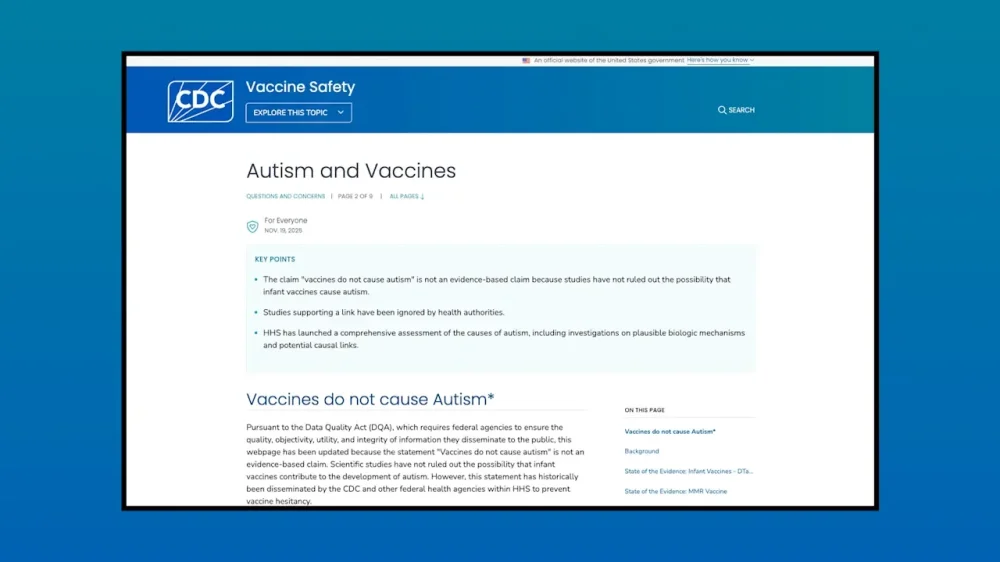
In utterly bleak news, AI Overviews are now more accurate about the lack of a relationship between autism and vaccines than the Centers for Disease Control and Prevention (CDC). On Wednesday, November 19, the CDC published an updated web page that defies broad scientific consensus and even its own past statements. The page now alleges that “‘vaccines do not cause autism’ is not an evidence-based claim because studies have not ruled out the possibility that infant vaccines cause autism.” It must be said as early and clearly as possible that there is no link between vaccines and autism, as overwhelming data has demonstrated. Despite that fact, the first paragraph of the CDC’s guidance on vaccines and autism now reads, “Scientific studies have not ruled out the possibility that infant vaccines contribute to the development of autism.” The update exploits a loophole that allows for fearmongering to continue, experts say. “The CDC can justify changing its stance despite overwhelming evidence by exploiting a quirk of logic: you can’t prove something never happens,” writes Dr. Jake Scott, a board-certified infectious diseases specialist and clinical associate professor at Stanford University School of Medicine. “Scientists can’t prove vaccines never cause autism because proving a universal negative is logically impossible.” He adds that “the public can trust the evidence because it has shown time and time again that there is no link between vaccines and autism.” Debra Houry, the CDC’s former chief medical officer, told the Washington Post that the CDC’s updated language “misrepresents decades of research.” Newly updated page tops Google search results A Google search of “vaccine autism” brings an AI Overview stating that “Scientific evidence from numerous large-scale studies has overwhelmingly demonstrated no causal link between vaccines and autism.” The AI-generated result cites the CDC, World Health Organization, and the American Academy of Pediatrics. At the same time, the CDC’s newly updated page is one of the first links shown on Google after years of building up search credibility. According to its priority statement, the CDC claims that it “must lead with integrity” and “serves the American public—individuals, families, and communities—who rely on accurate data, health guidance, and preventive measures.” Yet it has published a falsehood that appears to bend to the will of U.S. Health Secretary Robert F. Kennedy Jr, who has peddled anti-vax conspiracies along with an unproven link between taking Tylenol while pregnant and babies developing autism. Kennedy was sworn in as U.S. health secretary in February—and his influence has been swift. The next month, news broke that the CDC planned to undertake a large study into the link between vaccines and autism just as declines in vaccinations fueled measles outbreaks in children. Twisting an old headline The newly updated CDC guidance is, even more confusingly, still titled, “Vaccines do not cause autism.” It comes with an asterisk that the headline only remains because of an agreement with Senator Bill Cassidy of Louisiana, chair of the U.S. Senate Health, Education, Labor, and Pensions Committee, to keep it on the CDC website. In February, Cassidy spoke in favor of Kennedy as U.S. health secretary, critically stating that the latter “committed that he would work within the current vaccine approval and safety monitoring systems, and not establish parallel systems.” Cassidy continued: “CDC will not remove statements on their website pointing out that vaccines do not cause autism.” The Republican senator even emphasized earlier in his speech that the evidence shows that vaccines do not cause autism. Yet now the headline is followed with efforts to disprove the scientific evidence behind it. Fast Company has reached out to the U.S. Department of Health and Human Services and Senator Cassidy for comment and will update this post if we hear back. View the full article
-
Maybe your car broke down, your computer was stolen, or you had a surprise visit to urgent care. Emergencies are inevitable, but you can prepare to deal with them by building an emergency fund. “There are so many things that happen in our lives that we don’t expect and most of them require financial means to overcome,” said Miklos Ringbauer, a certified public accountant. The industry standard is to save three to six months of expenses in an emergency fund. However, this can feel daunting if you live paycheck to paycheck or if you have debt. But if you’re in either of these situations, it’s even more crucial to build a financial safety net that can help you in times of crisis. “Emergency funds allow you to prevent further debt,” said Jaime Eckels, certified financial planner and wealth management leader for Plante Moran Financial Advisors. Suppose you’re paying multiple credit cards and other loans. In that case, Rachel Lawrence, head of advice and planning for Monarch Money, a financial planning and budgeting app, recommends that you make the minimum payments while you build your emergency fund. Once you’ve hit an amount that feels right for your lifestyle, you can go back and continue tackling your debt more aggressively. Whether you want to start an emergency fund or create better habits while you save, here are some expert recommendations: Start with small milestones The idea of saving for three to six months’ worth of expenses can be daunting, so it’s best to start with a smaller milestone. Lawrence recommends starting with a goal of saving $1,000, then moving on to save one, three, and six months of expenses. The way you approach this goal can vary depending on your income and your budget. But starting with small, attainable goals can help you build an emergency fund without feeling financially strained. “Starting small is okay. Even if it’s $20 right out of your paycheck, those small things can add up,” Eckels said. She recommends building your emergency fund in a separate account from your regular savings account, ideally a high-yield savings account, which offers a higher interest rate than a traditional savings account. Decide on the appropriate amount for your life Knowing how much to save for your emergency fund depends on your life situation. Lawrence suggests you gauge your own financial responsibilities to estimate how much your ideal emergency fund should be. For single professionals with no significant financial responsibilities, such as a mortgage or a car, the amount might be $2,000 to $3,000. At the same time, people with children and several pets might aim to save for six months’ expenses. “There’s no one-shoe-fits-all solution. Everybody is different, especially if you have variable expenses on a monthly basis,” Ringbauer said. Lawrence recommends that self-employed people maintain two emergency funds: one to buffer low-income months and another for true emergencies. To build your buffer account, Lawrence recommends setting aside some money during high-earning months. “You set that amount aside in your buffer account until you have two or three months of the amount that you want, she said. “Because that way any month where you have less money, you go pull from the buffer and it’s no big deal.” Automate your savings Eckels recommends setting up automatic savings as a low-effort way to build your emergency fund. Scheduling your savings to be withdrawn from your bank account as soon as your paycheck arrives is an effective way to build a savings habit without having to transfer the money manually. “I always tell people if it was never in your bank account, you never had it, right?” Eckels added. She also recommends that her clients open a separate account, one that isn’t at the same bank as their checking account, so they aren’t tempted to transfer the money in a non-emergency. Make it visual As you’re making progress towards your emergency fund goal, making it visual can help you stay motivated, according to Lawrence. She recommends getting creative with how you track your progress, ideally with a method that brings you joy. “You want your brain to get rewarded as often as possible when you’re seeing a bunch of progress,” she said. Some options to make your progress visual include drawing a thermometer-like tracker and keeping it updated as you advance toward your goal, documenting your progress on a habit-building tracker on your phone, or using a budgeting app with a tracking tool. Save windfalls If your budget is really tight and you don’t have much wiggle room to set aside money for an emergency fund, Lawrence recommends saving windfalls. “Unexpected chunks of money that maybe you weren’t expecting, like tax refunds or getting a third paycheck when you normally get paid twice a month, or a bonus, those are your best ways to make progress when you’re tight otherwise,” said Lawrence. In general, Lawrence recommends that people keep 10% of their windfall for themselves and the rest for their emergency fund. With that breakdown, you can both save and feel rewarded by the unexpected income. If you use it, don’t feel guilty Chances are that an emergency will happen, and when it does, you don’t need to feel guilty for using your emergency fund, Lawrence said. Instead, it’s best to think about how you’ve achieved your goal of building a financial safety net for yourself. “You wouldn’t feel bad about using your down payment to buy a house, you wouldn’t feel bad about saving for retirement, actually to retire,” Lawrence said. —— The Associated Press receives support from Charles Schwab Foundation for educational and explanatory reporting to improve financial literacy. The independent foundation is separate from Charles Schwab and Co. Inc. The AP is solely responsible for its journalism. —Adriana Morga, Associated Press View the full article

-
We may earn a commission from links on this page. Deal pricing and availability subject to change after time of publication. Black Friday deals used to be relegated to the day after Thanksgiving. These days, however, they start much earlier—so why not take advantage? If you’re shopping for gifts for your favorite DIY enthusiast, or you just want to take advantage of deals for your own tool set, now is a good time to start looking. I usually take the opportunity to expand my tool battery collection if there isn’t an exciting new cordless tool I haven’t tried yet around this time of year, and that’s how I have kept a rotating collection of batteries to power all of my carpentry and DIY adventures. Best deals on cordless drills and driversA good-quality drill and driver are the foundation for any DIY home tool set because they allow you to drive screws, nuts, and bolts as well as drilling holes. I use my drill and driver set every day at work, and frequently on my own personal projects at home, and having one that’s reliable, comfortable to use, and has a good battery life is key to getting things done efficiently. The Milwaukee 18-volt cordless drill set in on sale for $99, 50% off its regular price. It comes with a 2-amp-hour battery, a charger, and a tool bag, and it’s a good tool for building a new cordless kit or to replace an existing Milwaukee drill. Since batteries are often the most expensive part of a cordless tool set, a quality set that comes with a battery and charger for under $100 is a good deal. The Milwaukee 18-volt cordless quarter-inch impact driver set is also on sale for $99, 50% off its typical price. This set comes with a 2-amp-hour battery, a charger, and a tool bag. This is a good companion to a Milwaukee drill, and a good addition to a tool set that uses 18-volt Milwaukee batteries—it can drive fasteners with more force than a regular drill, and can help you get through tougher materials like 2x4s more easily. A Ryobi 18-volt cordless drill set with three batteries is on sale for $148.97, 44% off its usual price. This set is an excellent starter set because it comes with a 1.5-amp-hour battery, 1 2-amp-hour battery, and a 4-amp-hour battery as well as a charger. It’s helpful to start a cordless tool set with extra batteries so you can expand your tool kit as you develop your skills and interest without needing to buy new batteries as you go. Best deals on cordless saws and cutting toolsSaws are my favorite part of my tool collection, and having the right one can make any DIY project that much simpler and more fun to work on. Cordless saws have improved as batteries have gotten smaller and lighter as well as developing a longer battery life, so they’re a practical addition to a DIY tool kit—in addition to being fun to use. The Ryobi 18-volt cordless reciprocating saw set is on sale for $99, 65% off its regular price. A reciprocating saw can be used for making rough cuts and trimming trees and shrubs. This set comes with a reciprocating saw, a two-amp-hour battery, a 4-amp-hour battery, and a charger. This is a good tool for someone who already uses Ryobi 18-volt tools, or for someone who likes doing outdoor projects like trimming hedges. Ryobi 18-volt cordless reciprocating saw set $99.00 at Home Depot $282.94 Save $183.94 Get Deal Get Deal $99.00 at Home Depot $282.94 Save $183.94 The Milwaukee 18-volt reciprocating saw is on sale for $199, 68% off its usual price. This is a good tool to add to an 18-volt Milwaukee set, or to begin a yard care and landscaping set. It comes with the saw, two 5-amp-hour batteries, and a charger. The Milwaukee 18-volt, 6 ½-inch cordless circular saw is on sale for $199, 62% off its regular price. This saw comes with two 5-amp-hour batteries and a charger. The larger capacity batteries allow you to use your saw for hours while always having a fresh battery on the charger. The Ryobi 18-volt cordless 7 ¼-inch compound miter saw is on sale for $159, 52% off its regular price. This saw can cut compound angles for trim and woodworking projects without needing to be plugged into an outlet. It comes with a 4-amp-hour battery and charger, which makes it a good addition to a Ryobi cordless tool set, as it can make up to 900 cuts per charge on the battery. Although this saw says it can cut up to 900 times a charge, if you’re working with material thicker than about a quarter of an inch, you’ll want to get a second battery so you can swap them out—in my experience, it can draw more power cutting denser or thicker wood. The Milwaukee 18-volt oscillating multitool set is on sale for $99, 50% off its regular price. It comes with a 1.5-amp-hour battery and a charger. This is the tool that saved my sanity when I was replacing the trap on the sink in my 115-year-old craftsman house. I used it to cut the old pipe, shape the pipe coming out from the wall, trim the new PVC to the correct length, trim out the damaged plaster around the leaking drain, trim out the lath to allow the new trap through, and then I even used it to sand the joints in the plaster repair I made. It’s the hardest-working tool in my home DIY set, and $99 is a great price for it. Best deals on cordless tool combo setsCordless tool sets can be a good way to start a new tool set because they usually come with all the basics as well as a few interesting extras. I started my personal tool kit with an 18-volt Milwaukee set over a decade ago and I also use tools from a DeWalt set at work daily. The Milwaukee 18-volt seven-tool combo set is on sale for $500, 50% off its regular price. It comes with a drill, an impact driver, a circular saw, a one-handed compact reciprocating saw, an oscillating multitoo, an angle-grinder, a work light, two 3-amp-hour batteries, a charger, and a tool bag. This is a comprehensive set that will allow you to tackle most home DIY projects and even some professional level ones as well. The DeWalt three-tool combo set is on sale for $399, 33% off its regular price. This set comes with a drill, a driver, an oscillating multitool, two 6-amp-hour batteries, a charger, and a tool bag. This is a solid set for most home maintenance projects and the batteries will last a long time and stand up to abuse. I use this set at work, these tools are going strong after years of use. Our Best Editor-Vetted Early Black Friday Deals Right Now Apple AirPods Pro 3 Noise Cancelling Heart Rate Wireless Earbuds — $219.99 (List Price $249.00) Apple iPad 11" 128GB A16 WiFi Tablet (Blue, 2025) — $279.99 (List Price $349.00) Amazon Fire HD 10 (2023) — $69.99 (List Price $139.99) Sony WH-1000XM5 — $248.00 (List Price $399.99) Blink Outdoor 4 1080p Wireless Security Camera (5-Pack) — $159.99 (List Price $399.99) Ring Floodlight Cam Wired Plus 1080p Security Camera (White) — $99.99 (List Price $179.99) Amazon Fire TV Stick 4K Plus — $24.99 (List Price $49.99) NEW Bose Quiet Comfort Ultra Wireless Noise Cancelling Headphones — $298.00 (List Price $429.00) Shark AI Ultra Matrix Clean Mapping Voice Control Robot Vacuum with XL Self-Empty Base — $249.99 (List Price $599.00) Apple Watch Series 11 (GPS, 42mm, S/M Black Sport Band) — $349.99 (List Price $399.00) Deals are selected by our commerce team View the full article
-
For the 150th episode of my award-winning podcast series, FUTURE OF XYZ, I sat down with Nick Foster, former head of design at Google X and leading futures designer. We quickly found common ground in our strong belief that society doesn’t think about the future in the right way. Too often, the future is reduced to flashy visions, both in media headlines and through messages from leading corporations. The future feels like a sci-fi movie that still seems far away. Nick and I both believe the future isn’t some distant fantasy, but rather a tomorrow already unfolding before us. To prepare, we must pay closer attention to what we know now and how people are acting today. What drives Nick and his work isn’t predictions or bets, but a deeper exploration of how we think about the future itself. That distinction resonated deeply with me. In my own work—whether the podcast, as a leader at iF Design, or in my consulting work, I’ve argued that the future isn’t something just “out there” to predict. Rather, the future is something we actively construct through our choices and the questions we dare to ask. IMAGINE THE FUTURE Nick’s new book, Could Should Might Don’t: How We Think About the Future, emerged from years of conversations inside Google X and beyond, where he noticed a surprising truth: Even among the world’s leading innovators, we often fail to approach the future with real rigor. We rely on hunches, dotted lines, and simplified stories. This lack of discipline not only weakens the conversation, but leaves us ill-equipped for what’s actually to come. Rather than writing a manifesto or prescriptive framework, Nick created a taxonomy—a way to classify the different modes of imagining the future. By delving into how we think about the future, he hopes our collective conversations become more rounded, more actionable, and more honest about uncertainty. During our conversation, we touched on the “future mundane,” the idea that most lived experiences will be found not in extremes, but in the everyday middle of the bell curve. This lens particularly aligns with my own mission at iF Design. Design, after all, is the mediator between big ideas and daily life. From the products we use, to the systems that govern them, to the values they embed, design shapes how we experience change. My role at iF Design is precisely about interrogating this: How do we embed sustainability and impact into design decisions so that what feels “ordinary” tomorrow reflects responsibility and resilience, not just convenience or speed? Nick also reflects on a profound cultural shift we are experiencing. For the first time in modern history, entire generations are less confident about what the future will bring. Having pushed exponential economic growth to its limits, we’re beginning to wrestle with the “well, and now what?” question that undercuts strident narratives of progress. In my own conversations, I’ve seen how this moment of reckoning demands we focus on intentionality, pivoting from chasing growth alone to cultivating resilience. WHAT’S NEXT In Nick’s view, technology currently holds the wheel when it comes to shaping what’s next. With that power comes responsibility—a responsibility corporations and societies alike have yet to fully embrace. I often remind audiences that while technology will remain a critical driver, it’s our values, our courage, and our willingness to collaborate that will ultimately determine the future(s) we design into being. And as Nick reminded me, in a time of unprecedented change, we must resist the urge to cling blindly to what we already believe. Instead, we need to ask deeper questions, demand more rigorous thinking, and recognize that imagining the future is not just for futurists. It’s a collective skill we all must learn—and practice together. That’s precisely why this conversation mattered to me. Every day I explore how leadership, design, and purpose intersect to shape a more human, more sustainable future. Nick’s work underscores that same truth: The future isn’t something happening to us. It’s something we are all responsible for shaping. And that begins with how we choose to think, design, and act today. Lisa Gralnek is global head of sustainability and impact for iF Design, managing director of iF Design USA Inc., and creator/host of the podcast, FUTURE OF XYZ. View the full article

-
As a salesperson, grasping psychology can greatly impact your success. Comprehending principles like reciprocity, commitment, and scarcity allows you to influence customer behavior effectively. By applying these techniques, you can improve trust, nurture connections, and create urgency in purchasing decisions. Each principle plays a critical role in shaping customer interactions. To fully leverage these strategies, you’ll need to explore how they work and how to implement them effectively in your sales approach. Key Takeaways Leverage the Reciprocity Principle by providing valuable content or offers to encourage positive responses from potential customers. Utilize the Commitment Principle to secure small agreements that increase the likelihood of larger purchases. Foster connections through the Liking Principle by building rapport and trust with shared interests and active listening. Establish credibility using the Authority Principle by showcasing expertise and utilizing testimonials to reinforce trust. Create urgency with the Scarcity Principle by highlighting limited-time offers and exclusive products to enhance perceived value. The Reciprocity Principle When you understand the reciprocity principle, you can greatly improve your sales strategies. This principle suggests that when you provide value to prospects—like useful information or resources—they’re more likely to feel compelled to reciprocate, often by making a purchase. Rooted in social norms from childhood, people learn to return favors, enhancing customer engagement and loyalty. Research shows that offering valuable content, advice, or free trials encourages potential customers to respond positively, resulting in genuine leads and improved sales outcomes. Practicing reciprocity creates a cycle of positive interactions, where each act of giving strengthens relationships and increases future sales chances. By aligning your offerings with customer needs, you guarantee that the commitment feels mutual and beneficial, a key aspect of effective principles of selling. The Commitment Principle The Commitment Principle shows how small agreements can greatly influence your decisions. When you make a minor commitment, you start to see yourself in a consistent light, which makes it easier to agree to larger requests later. This connection not merely boosts your likelihood of making further purchases but additionally helps build a sense of trust with the brand you’re engaging with. Small Agreements Impact Decisions Comprehending how small agreements impact decisions is crucial for effective sales strategies. The commitment principle reveals that when customers make minor commitments, they’re 73% more likely to agree to larger requests later. This psychological tendency stems from their desire for consistency in actions and beliefs. By employing techniques like the ‘foot-in-the-door’ method, you can secure small agreements that pave the way for bigger sales. For instance, getting customers to sign up for a newsletter or accept a free trial makes them more inclined to engage with more significant offers. This incremental commitment not only cultivates a positive self-image but also improves the likelihood of compliance with subsequent requests, ultimately increasing your sales success. Consistency and Self-Perception Comprehending how consistency influences self-perception can greatly improve your sales techniques. The commitment principle suggests that once customers make a small commitment, they’re more likely to agree to larger requests later. This happens as they want to see themselves as reliable and consistent individuals. As a salesperson, you should encourage small agreements that lead toward bigger commitments, promoting a positive self-image. When customers engage in minor commitments, they rationalize their actions, feeling obligated to follow through. This psychological difficulty in disengaging increases their likelihood of future purchases. The Liking Principle Liking plays a crucial role in the sales process, influencing how potential customers respond to salespeople. When you connect with clients, they’re more likely to trust you and comply with your requests. To effectively leverage the liking principle, consider these strategies: Build Rapport: Identify common interests or shared experiences with your clients to create a sense of connection. Be Authentic: Engage genuinely with clients; authenticity nurtures trust and improves emotional responses that can lead to sales. Practice Active Listening: Pay attention to your clients’ needs and mirror their body language to promote familiarity and comfort during conversations. The Authority Principle In the competitive terrain of sales, establishing your authority can greatly influence a customer’s decision-making process. The Authority Principle suggests that people are more inclined to follow recommendations when they view the source as credible. You can showcase your expertise by creating thought leadership content, such as white papers and case studies, which demonstrate your knowledge in the field. A well-designed website and strong branding can further improve your perceived authority, making potential customers feel more secure in their choices. Moreover, testimonials and endorsements from industry experts or satisfied clients reinforce your credibility. Research shows that when customers perceive you as an authority, they’re more likely to trust you, reducing their decision-making risk and increasing the likelihood of a purchase. The Social Proof Principle In terms of making a purchase, people often look to others for guidance, which is where the social proof principle comes into play. By showcasing peer influence, familiar endorsements, and the urgency created by popular choices, you can considerably impact a buyer’s decision-making process. Comprehending how to leverage these elements can improve your sales strategy and build trust with potential customers. Peer Influence Dynamics Grasping peer influence dynamics, particularly through the lens of the social proof principle, is critical for salespeople aiming to improve their effectiveness. Recognizing how to leverage social proof can greatly impact your sales strategy. Here are three key aspects to reflect upon: Word-of-Mouth Impact: 88% of individuals trust recommendations from peers, making your customers’ voices fundamental in the purchasing process. Online Reviews: For 84% of Americans, online reviews carry the same weight as personal recommendations, so showcasing positive feedback is imperative. Social Identity: Consumers often prefer products endorsed by their peers to align with group norms, emphasizing the significance of community in marketing. Trust Through Familiarity Trust plays a crucial role in the sales process, and establishing familiarity with customers can greatly increase that trust. By leveraging the social proof principle, you can boost your credibility through testimonials and referrals. Remember, 88% of individuals are influenced by word-of-mouth recommendations, and 84% of Americans trust online reviews as much as personal recommendations. Strategy Impact Share customer testimonials Builds credibility and reassurance Connect through shared interests Cultivates positive relationships Showcase product popularity Amplifies desirability Establish authority Reduces decision-making uncertainty Incorporating these strategies helps you create authentic interactions, encouraging purchases and nurturing long-term customer relationships. Urgency From Popularity Building on the foundation of trust established through familiarity, urgency can especially improve a customer’s motivation to buy. Utilizing the social proof principle, you can boost your sales strategy by focusing on: Testimonials and Reviews: Since 88% of people are influenced by word-of-mouth, showcasing positive feedback can greatly increase credibility. Popularity Metrics: Highlighting the number of satisfied customers or impressive sales figures creates urgency, prompting quicker decisions. Fear of Missing Out (FOMO): Emphasizing how many others have purchased or are considering a product can heighten its perceived value, encouraging potential buyers to act fast. The Scarcity Principle Grasping the scarcity principle is essential for salespeople aiming to improve their effectiveness in driving consumer behavior. This principle suggests that consumers view items as more valuable when they’re less available, prompting urgency in purchasing decisions. The fear of missing out (FOMO) serves as a strong psychological trigger, motivating customers to act quickly. By employing marketing strategies that highlight limited-time offers or low inventory levels, you can create a sense of urgency that encourages immediate purchases. Research shows that the pain of loss outweighs the joy of gain, making scarce items particularly appealing. By emphasizing limited editions or exclusive products, you can effectively increase perceived value and boost customer engagement, leveraging scarcity to increase sales. The Unity Principle When you create a cohesive brand message that resonates with your customers’ values and aspirations, you tap into the Unity Principle, which can greatly improve your sales effectiveness. This principle emphasizes the importance of establishing emotional connections through shared values. To leverage the Unity Principle effectively, consider the following: Consistent Messaging: Guarantee your brand communicates a unified message across all platforms, enhancing authenticity. Highlight Common Values: Focus on social responsibility and align with your audience’s ideals, especially for younger consumers. Strengthen Relationships: Cultivate deeper connections by showcasing shared aspirations, which can differentiate you in a competitive market. Frequently Asked Questions What Are the Key Points of Selling Psychology? Key points of selling psychology include comprehension that emotions drive 80% of purchasing decisions, so connecting with customers is essential. The principle of reciprocity highlights that providing value can encourage customers to reciprocate. Establishing authority through expertise builds trust, whereas social proof, such as testimonials, influences decisions considerably. Finally, the consistency principle suggests that small commitments can lead to larger agreements, as customers aim to maintain a positive self-image and fulfill their commitments. What Type of Psychology Is Used in Sales? In sales, several types of psychology are utilized to influence buyer behavior. Cognitive psychology helps you simplify information for customers based on their mental processes, whereas social psychology emphasizes the impact of peer recommendations. Behavioral psychology focuses on reinforcing immediate rewards that encourage purchasing. Techniques such as reciprocity and commitment are likewise key; they suggest that providing value or obtaining small commitments increases the likelihood of larger purchases. Comprehending these principles improves your sales effectiveness. What Are the Four Psychological Phases of Sales? The four psychological phases of sales are Attention, Interest, Desire, and Action, often referred to as AIDA. In the Attention phase, you capture the prospect’s focus with engaging content. Next, during Interest, you deepen their engagement through storytelling and relevant information. In the Desire phase, you nurture an emotional connection by highlighting benefits that align with their values. Finally, in the Action phase, you create urgency to encourage the prospect to make a purchase. What Is the Psychology of Selling Things? The psychology of selling involves comprehension of how emotions drive purchasing decisions. Buyers often prioritize feelings over logic, making emotional engagement essential. Key concepts include reciprocity, where offering value encourages positive responses, and commitment, where initial small agreements can lead to larger purchases. Building rapport through the principle of liking promotes connection, as social proof, such as reviews, influences decisions. Furthermore, authority and scarcity improve credibility and urgency, respectively, further impacting buyer behavior. Conclusion Acquiring these seven psychology principles can greatly boost your sales effectiveness. By applying the principles of reciprocity, commitment, liking, authority, social proof, scarcity, and unity, you can build stronger connections with customers, improve your credibility, and create urgency around purchases. Each principle offers a unique strategy to influence buyer behavior and encourage loyalty. Integrating these techniques into your sales approach not merely improves your performance but furthermore helps you cultivate lasting relationships with your clients. Image via Google Gemini This article, "7 Psychology Principles Every Salesperson Must Master" was first published on Small Business Trends View the full article
-
As a salesperson, grasping psychology can greatly impact your success. Comprehending principles like reciprocity, commitment, and scarcity allows you to influence customer behavior effectively. By applying these techniques, you can improve trust, nurture connections, and create urgency in purchasing decisions. Each principle plays a critical role in shaping customer interactions. To fully leverage these strategies, you’ll need to explore how they work and how to implement them effectively in your sales approach. Key Takeaways Leverage the Reciprocity Principle by providing valuable content or offers to encourage positive responses from potential customers. Utilize the Commitment Principle to secure small agreements that increase the likelihood of larger purchases. Foster connections through the Liking Principle by building rapport and trust with shared interests and active listening. Establish credibility using the Authority Principle by showcasing expertise and utilizing testimonials to reinforce trust. Create urgency with the Scarcity Principle by highlighting limited-time offers and exclusive products to enhance perceived value. The Reciprocity Principle When you understand the reciprocity principle, you can greatly improve your sales strategies. This principle suggests that when you provide value to prospects—like useful information or resources—they’re more likely to feel compelled to reciprocate, often by making a purchase. Rooted in social norms from childhood, people learn to return favors, enhancing customer engagement and loyalty. Research shows that offering valuable content, advice, or free trials encourages potential customers to respond positively, resulting in genuine leads and improved sales outcomes. Practicing reciprocity creates a cycle of positive interactions, where each act of giving strengthens relationships and increases future sales chances. By aligning your offerings with customer needs, you guarantee that the commitment feels mutual and beneficial, a key aspect of effective principles of selling. The Commitment Principle The Commitment Principle shows how small agreements can greatly influence your decisions. When you make a minor commitment, you start to see yourself in a consistent light, which makes it easier to agree to larger requests later. This connection not merely boosts your likelihood of making further purchases but additionally helps build a sense of trust with the brand you’re engaging with. Small Agreements Impact Decisions Comprehending how small agreements impact decisions is crucial for effective sales strategies. The commitment principle reveals that when customers make minor commitments, they’re 73% more likely to agree to larger requests later. This psychological tendency stems from their desire for consistency in actions and beliefs. By employing techniques like the ‘foot-in-the-door’ method, you can secure small agreements that pave the way for bigger sales. For instance, getting customers to sign up for a newsletter or accept a free trial makes them more inclined to engage with more significant offers. This incremental commitment not only cultivates a positive self-image but also improves the likelihood of compliance with subsequent requests, ultimately increasing your sales success. Consistency and Self-Perception Comprehending how consistency influences self-perception can greatly improve your sales techniques. The commitment principle suggests that once customers make a small commitment, they’re more likely to agree to larger requests later. This happens as they want to see themselves as reliable and consistent individuals. As a salesperson, you should encourage small agreements that lead toward bigger commitments, promoting a positive self-image. When customers engage in minor commitments, they rationalize their actions, feeling obligated to follow through. This psychological difficulty in disengaging increases their likelihood of future purchases. The Liking Principle Liking plays a crucial role in the sales process, influencing how potential customers respond to salespeople. When you connect with clients, they’re more likely to trust you and comply with your requests. To effectively leverage the liking principle, consider these strategies: Build Rapport: Identify common interests or shared experiences with your clients to create a sense of connection. Be Authentic: Engage genuinely with clients; authenticity nurtures trust and improves emotional responses that can lead to sales. Practice Active Listening: Pay attention to your clients’ needs and mirror their body language to promote familiarity and comfort during conversations. The Authority Principle In the competitive terrain of sales, establishing your authority can greatly influence a customer’s decision-making process. The Authority Principle suggests that people are more inclined to follow recommendations when they view the source as credible. You can showcase your expertise by creating thought leadership content, such as white papers and case studies, which demonstrate your knowledge in the field. A well-designed website and strong branding can further improve your perceived authority, making potential customers feel more secure in their choices. Moreover, testimonials and endorsements from industry experts or satisfied clients reinforce your credibility. Research shows that when customers perceive you as an authority, they’re more likely to trust you, reducing their decision-making risk and increasing the likelihood of a purchase. The Social Proof Principle In terms of making a purchase, people often look to others for guidance, which is where the social proof principle comes into play. By showcasing peer influence, familiar endorsements, and the urgency created by popular choices, you can considerably impact a buyer’s decision-making process. Comprehending how to leverage these elements can improve your sales strategy and build trust with potential customers. Peer Influence Dynamics Grasping peer influence dynamics, particularly through the lens of the social proof principle, is critical for salespeople aiming to improve their effectiveness. Recognizing how to leverage social proof can greatly impact your sales strategy. Here are three key aspects to reflect upon: Word-of-Mouth Impact: 88% of individuals trust recommendations from peers, making your customers’ voices fundamental in the purchasing process. Online Reviews: For 84% of Americans, online reviews carry the same weight as personal recommendations, so showcasing positive feedback is imperative. Social Identity: Consumers often prefer products endorsed by their peers to align with group norms, emphasizing the significance of community in marketing. Trust Through Familiarity Trust plays a crucial role in the sales process, and establishing familiarity with customers can greatly increase that trust. By leveraging the social proof principle, you can boost your credibility through testimonials and referrals. Remember, 88% of individuals are influenced by word-of-mouth recommendations, and 84% of Americans trust online reviews as much as personal recommendations. Strategy Impact Share customer testimonials Builds credibility and reassurance Connect through shared interests Cultivates positive relationships Showcase product popularity Amplifies desirability Establish authority Reduces decision-making uncertainty Incorporating these strategies helps you create authentic interactions, encouraging purchases and nurturing long-term customer relationships. Urgency From Popularity Building on the foundation of trust established through familiarity, urgency can especially improve a customer’s motivation to buy. Utilizing the social proof principle, you can boost your sales strategy by focusing on: Testimonials and Reviews: Since 88% of people are influenced by word-of-mouth, showcasing positive feedback can greatly increase credibility. Popularity Metrics: Highlighting the number of satisfied customers or impressive sales figures creates urgency, prompting quicker decisions. Fear of Missing Out (FOMO): Emphasizing how many others have purchased or are considering a product can heighten its perceived value, encouraging potential buyers to act fast. The Scarcity Principle Grasping the scarcity principle is essential for salespeople aiming to improve their effectiveness in driving consumer behavior. This principle suggests that consumers view items as more valuable when they’re less available, prompting urgency in purchasing decisions. The fear of missing out (FOMO) serves as a strong psychological trigger, motivating customers to act quickly. By employing marketing strategies that highlight limited-time offers or low inventory levels, you can create a sense of urgency that encourages immediate purchases. Research shows that the pain of loss outweighs the joy of gain, making scarce items particularly appealing. By emphasizing limited editions or exclusive products, you can effectively increase perceived value and boost customer engagement, leveraging scarcity to increase sales. The Unity Principle When you create a cohesive brand message that resonates with your customers’ values and aspirations, you tap into the Unity Principle, which can greatly improve your sales effectiveness. This principle emphasizes the importance of establishing emotional connections through shared values. To leverage the Unity Principle effectively, consider the following: Consistent Messaging: Guarantee your brand communicates a unified message across all platforms, enhancing authenticity. Highlight Common Values: Focus on social responsibility and align with your audience’s ideals, especially for younger consumers. Strengthen Relationships: Cultivate deeper connections by showcasing shared aspirations, which can differentiate you in a competitive market. Frequently Asked Questions What Are the Key Points of Selling Psychology? Key points of selling psychology include comprehension that emotions drive 80% of purchasing decisions, so connecting with customers is essential. The principle of reciprocity highlights that providing value can encourage customers to reciprocate. Establishing authority through expertise builds trust, whereas social proof, such as testimonials, influences decisions considerably. Finally, the consistency principle suggests that small commitments can lead to larger agreements, as customers aim to maintain a positive self-image and fulfill their commitments. What Type of Psychology Is Used in Sales? In sales, several types of psychology are utilized to influence buyer behavior. Cognitive psychology helps you simplify information for customers based on their mental processes, whereas social psychology emphasizes the impact of peer recommendations. Behavioral psychology focuses on reinforcing immediate rewards that encourage purchasing. Techniques such as reciprocity and commitment are likewise key; they suggest that providing value or obtaining small commitments increases the likelihood of larger purchases. Comprehending these principles improves your sales effectiveness. What Are the Four Psychological Phases of Sales? The four psychological phases of sales are Attention, Interest, Desire, and Action, often referred to as AIDA. In the Attention phase, you capture the prospect’s focus with engaging content. Next, during Interest, you deepen their engagement through storytelling and relevant information. In the Desire phase, you nurture an emotional connection by highlighting benefits that align with their values. Finally, in the Action phase, you create urgency to encourage the prospect to make a purchase. What Is the Psychology of Selling Things? The psychology of selling involves comprehension of how emotions drive purchasing decisions. Buyers often prioritize feelings over logic, making emotional engagement essential. Key concepts include reciprocity, where offering value encourages positive responses, and commitment, where initial small agreements can lead to larger purchases. Building rapport through the principle of liking promotes connection, as social proof, such as reviews, influences decisions. Furthermore, authority and scarcity improve credibility and urgency, respectively, further impacting buyer behavior. Conclusion Acquiring these seven psychology principles can greatly boost your sales effectiveness. By applying the principles of reciprocity, commitment, liking, authority, social proof, scarcity, and unity, you can build stronger connections with customers, improve your credibility, and create urgency around purchases. Each principle offers a unique strategy to influence buyer behavior and encourage loyalty. Integrating these techniques into your sales approach not merely improves your performance but furthermore helps you cultivate lasting relationships with your clients. Image via Google Gemini This article, "7 Psychology Principles Every Salesperson Must Master" was first published on Small Business Trends View the full article
-
We may earn a commission from links on this page. Deal pricing and availability subject to change after time of publication. A price drop always stands out more when the product in question already has a reputation for delivering above its size, and that’s the case with the Bose SoundLink Plus. It hasn’t been on the market for long, but it’s already earned strong reviews—CNET even labeled it “the Goldilocks of Bose Bluetooth speakers.” And right now, ahead of Black Friday, it’s down to $199 from $269, which price trackers show is the lowest it’s ever been. Bose SoundLink Plus Portable Bluetooth Speaker $199.00 at Amazon $269.00 Save $70.00 Get Deal Get Deal $199.00 at Amazon $269.00 Save $70.00 Bose positions it right in the middle of the SoundLink lineup, and you feel that balance in how it’s built. It’s compact enough to clip onto a backpack using its built-in nylon strap, tough enough to handle getting knocked around, and sealed against dust and full water submersion with an IP67 rating. Battery life can last up to 20 hours, depending on the volume, which is sufficient for full-day outings. However, the roughly five-hour recharge time means it’s better to charge it overnight than rely on a quick boost. On the connectivity side, there’s Bluetooth 5.4 with AAC and AptX Adaptive support, as well as the ability to keep two devices paired for smoother switching. What you don’t get is a microphone, aux port, or any voice assistant support, which might matter if you prefer wired options or use speakers for calls. The sound profile of this Bluetooth speaker leans into mid- and high-bass, which gives electronic and pop tracks a lively pulse without turning everything muddy. It doesn’t reach into true low-bass territory, so anyone who wants thumping sub-bass may not get it here, but the punch it does deliver feels clean for its size. Vocals sit a little behind the beat in denser tracks because the mid-range pulls back slightly, though you can adjust this with the app’s EQ tools. It’s also worth knowing that the speaker plays everything in mono, so you lose the space and width you’d hear in a stereo mix, but its directivity is good—you don’t have to stand directly in front of it to hear things clearly. That said, at higher volumes, there’s some compression, which is common in speakers this size. Our Best Editor-Vetted Early Black Friday Deals Right Now Apple AirPods Pro 3 Noise Cancelling Heart Rate Wireless Earbuds — $219.99 (List Price $249.00) Apple iPad 11" 128GB A16 WiFi Tablet (Blue, 2025) — $279.99 (List Price $349.00) Amazon Fire HD 10 (2023) — $69.99 (List Price $139.99) Sony WH-1000XM5 — $248.00 (List Price $399.99) Blink Outdoor 4 1080p Wireless Security Camera (5-Pack) — $159.99 (List Price $399.99) Ring Floodlight Cam Wired Plus 1080p Security Camera (White) — $99.99 (List Price $179.99) Amazon Fire TV Stick 4K Plus — $24.99 (List Price $49.99) NEW Bose Quiet Comfort Ultra Wireless Noise Cancelling Headphones — $298.00 (List Price $429.00) Shark AI Ultra Matrix Clean Mapping Voice Control Robot Vacuum with XL Self-Empty Base — $249.99 (List Price $599.00) Apple Watch Series 11 (GPS, 42mm, S/M Black Sport Band) — $349.99 (List Price $399.00) Deals are selected by our commerce team View the full article
-
Picture the scene. You’ve advertised a job on LinkedIn and received applications from around Europe. The perfect candidate lives in one of the world’s top tech cities—Paris, Berlin, or Amsterdam, for instance. Your company is based somewhere in Europe, so hiring them should be easy, right? Unfortunately, no. Despite their geographical proximity, countries in Europe still vary significantly in their hiring rules and regulations, making it hard to compliantly pay cross-border workers. Let’s take a closer look at the problem. So close, yet so far There’s naturally a certain amount of friction in terms of labor law compatibility between European states inside and outside of the European Union (EU). But even within the umbrella of the EU, countries have their own labor, tax, and social security rules that can turn simple payroll procedures into a nightmare. That’s because EU labor law is issued via directives that allow member states discretion in how they implement rulings. For businesses, this makes an EU-wide hiring strategy impossible, instead requiring individual approaches to each and every country a company might want to hire in—up to and including incorporation. This isn’t something that can be done as an afterthought. Misclassifying a worker, for instance by employing someone as a contractor rather than an employee, may lead to penalties and legal trouble. The state of cross-border hiring in Europe Despite the difficulties, businesses continue to hire across borders for the simple reason that talent is getting harder to find locally. One report found that 54% of European employers expect labour shortages to worsen over the next five years. And a patchwork of talent availability means skills and the businesses that need them are rarely in the same place—forcing businesses to look elsewhere. But hiring across borders isn’t getting easier. While the demand for specialized talent has increased by 112% over the last three years, the complexity of hiring talent has also increased—particularly in the EU, with incoming requirements like the pay transparency directive. The movement of workers between countries is also a minefield. Under EU rules, employees can only be subject to one country’s social security requirements at a time (to avoid double contributions). Some countries have cross-border agreements but employee tax exposure can be hard to fully comprehend, even for the experts. Here’s what that looks like in practice A London startup wants to hire its first engineer in Berlin. Expanding into a new European talent market means a costly and months-long process of establishing a business entity—all to justify a headcount of one. How about a Dutch company trying to support an employee relocating to Spain? The employer wants to be supportive, but there are clear tax residency and other legal implications such as pay transparency that have to be explored. The difficulty of navigating these all-too-common issues is putting a roadblock on progress and forcing businesses to compromise on quality by hiring in their own backyards. The problem with payroll Despite most companies having employees in more than one country, the means of paying them continue to lag behind. Payroll (often the largest expense for a company at around 50-60% of spending) has historically been seen as a back-office burden. Payroll is an essential cost of business, but because of all the challenges we’ve discussed, it’s expensive, complex, and generally fails to add strategic value. When you’re running payroll across borders, the complexity only goes up. Indeed, 85% of global executives say compliance requirements have become more complex in the last three years. In short, it’s all risk and no reward. The right software can help In response to the expanding global workforce, more workforce management companies are developing software designed to help companies hire and pay European workers without the burden of navigating complex administrative requirements. My company, Multiplier, offers one of these solutions. As a centralized platform for payroll operations, our payroll solution enables companies to pay employees in countries where they don’t have a legal entity, fully compliant with local tax and social security rules. This would allow the London startup discussed earlier to hire its first engineer in Berlin without the delay and expense of incorporation in Germany. And if things don’t work out, the startup won’t have to go through the rigmarole of shutting down an entity in Berlin afterwards. Similarly, the Dutch company with a marketer who relocated to Spain doesn’t have to worry about the tax residency implications and potential penalties. They can seamlessly support their employees without disrupting their existing payroll compliance efforts. Unlocking European talent Paying people across borders is a problem unlikely to be solved politically. In an increasingly multipolar world, there’s little prospect of the increased regulatory alignment necessary to enable seamless international payments. In the meantime, payroll solutions will help remove the friction required to pay cross-border workers, helping companies to accelerate their growth and recruit the best European talent—instead of settling for the best available talent locally. Sagar Khatri is CEO and cofounder of Multiplier. View the full article

-
The President's remarks — made in a joking tone — come amid increased pressure on the administration from voters to lower the cost of living.

-
The economy added an unexpectedly robust 119,000 jobs in September, though unemployment edged up to 4.4%. The report, delayed by the federal government shutdown, continues a trend of sluggish job growth in recent months. View the full article

-
Home secretary says ‘brightest and best’ will be fast-tracked while others will have to wait up to 30 yearsView the full article
-
We may earn a commission from links on this page. Deal pricing and availability subject to change after time of publication. I've reviewed a ton of high-tech smart glasses for Lifehacker, and this early Black Friday deal on the RayNeo Air 3s Pro display glasses is excellent. They are on sale for $249 on Amazon (originally $299) until Dec. 1. RayNeo Air 3s $269.00 at Amazon Get Deal Get Deal $269.00 at Amazon If you're not familiar, these smart glasses basically put a high-definition display in your pocket, projecting the equivalent of a 201-inch TV in front of your face—so if someone on your list is tech-inclined and you want to blast 'em with a pure "whoa" present, here you go. They'll even fit in a stocking. There are other glasses that do the same thing, but the Ray Neo Air 3 Pro hit a nice sweet spot between inexpensive and good quality. Check out my review if you want to read about these glasses in more depth, but the bottom line is: if you want to make every flight you'll ever take better or stream videos and games in private, these glasses will do the trick. Our Best Editor-Vetted Early Black Friday Deals Right Now Apple AirPods Pro 3 Noise Cancelling Heart Rate Wireless Earbuds — $219.99 (List Price $249.00) Apple iPad 11" 128GB A16 WiFi Tablet (Blue, 2025) — $279.99 (List Price $349.00) Amazon Fire HD 10 (2023) — $69.99 (List Price $139.99) Sony WH-1000XM5 — $248.00 (List Price $399.99) Blink Outdoor 4 1080p Wireless Security Camera (5-Pack) — $159.99 (List Price $399.99) Ring Floodlight Cam Wired Plus 1080p Security Camera (White) — $99.99 (List Price $179.99) Amazon Fire TV Stick 4K Plus — $24.99 (List Price $49.99) NEW Bose Quiet Comfort Ultra Wireless Noise Cancelling Headphones — $298.00 (List Price $429.00) Shark AI Ultra Matrix Clean Mapping Voice Control Robot Vacuum with XL Self-Empty Base — $249.99 (List Price $599.00) Apple Watch Series 11 (GPS, 42mm, S/M Black Sport Band) — $349.99 (List Price $399.00) Deals are selected by our commerce team View the full article